SB 293: Pupil assessments: California Assessment of Student Performance and Progress: statewide results.
- Session Year: 2023-2024
- House: Senate
- Latest Version Date: 2023-09-08
Current Status:
Passed
(2023-09-08: Chaptered by Secretary of State. Chapter 177, Statutes of 2023.)
Introduced
In Committee
First Chamber
In Committee
Second Chamber
Enacted
What does this bill do?
The bill requires the California Department of Education to publish statewide summative CAASPP test results each year on or before October 15, affecting students, parents, schools, and districts. It also requires the State Board of Education to set its results-delivery calendar so results reach the department in time to meet that October 15 deadline.
The summary is provided by generative AI which can make mistakes. For original language, please view the details in the table below.
Existing law establishes the California Assessment of Student Performance and Progress (CAASPP) as the statewide system of pupil assessments under which certain assessments are required or authorized to be administered in public schools, as specified, including a consortium summative assessment in English language arts and mathematics for grades 3 to 8, inclusive, and grade 11 that measures content standards adopted by the State Board of Education.
Existing law requires the state board to adopt regulations that outline a calendar for delivery and receipt of summative CAASPP results at the pupil, school, grade, district, county, and state levels, and requires the calendar to, among other things, include delivery dates to the State Department of Education and to local educational agencies, provide for the timely return of assessment results, and ensure that individual assessment results are reported to local educational agencies within 8 weeks of receipt by the contractor for scoring.
This bill would require the department to make statewide summative CAASPP results publicly available on or before October 15 each year and would require the state boards calendar for delivering results to the department to be consistent with that deadline.
Existing law establishes the California Assessment of Student Performance and Progress (CAASPP) as the statewide system of pupil assessments under which certain assessments are required or authorized to be administered in public schools, as specified, including a consortium summative assessment in English language arts and mathematics for grades 3 to 8, inclusive, and grade 11 that measures content standards adopted by the State Board of Education.
Existing law requires the state board to adopt regulations that outline a calendar for delivery and receipt of summative CAASPP results at the pupil, school, grade, district, county, and state levels, and requires the calendar to, among other things, include delivery dates to the State Department of Education and to local educational agencies, provide for the timely return of assessment results, and ensure that individual assessment results are reported to local educational agencies within 8 weeks of receipt by the contractor for scoring.
This bill would require the department to make statewide summative CAASPP results publicly available by October 1 15 each year and would require the state boards calendar for delivering results to the department to be consistent with that deadline.
Existing law establishes the California Assessment of Student Performance and Progress (CAASPP) as the statewide system of pupil assessments under which certain assessments are required or authorized to be administered in public schools, as specified, including a consortium summative assessment in English language arts and mathematics for grades 3 to 8, inclusive, and grade 11 that measures content standards adopted by the State Board of Education.
Existing law requires the state board to adopt regulations that outline a calendar for delivery and receipt of summative CAASPP results at the pupil, school, grade, district, county, and state levels, and requires the calendar to, among other things, include delivery dates to the State Department of Education and to local educational agencies, provide for the timely return of assessment results, and ensure that individual assessment results are reported to local educational agencies within 8 weeks of receipt by the contractor for scoring.
This bill would require the department to make statewide summative CAASPP results publicly available by October 1 each year and would require the state boards calendar for delivering results to the department to be consistent with that deadline.
(a)The department shall ensure that local educational agencies comply with each of the following requirements:
(1)The achievement tests provided for in Section 60640 are scheduled to be administered to all pupils, inclusive of pupils enrolled in charter schools and exclusive of pupils exempted pursuant to Section 60640, during the period prescribed in subdivision (b) of Section 60640.
(2)For assessments that produce valid individual pupil results, the individual results of each pupil tested pursuant to Section 60640 shall be reported, in writing, to the parent or guardian of the pupil. The report shall include a clear explanation of the purpose of the test, the score of the pupil, and the intended use by the local educational agency of the test score. This subdivision does not require teachers or other local educational agency personnel to prepare individualized explanations of the test score of each pupil. It is the intent of the Legislature that this section does not preclude a school or school district from meeting the reporting requirement by the use of electronic media formats that secure the confidentiality of the pupil and the pupils results. State agencies or local educational agencies shall not use a comparison resulting from the scores and results of the California Assessment of Student Performance and Progress (CAASPP) assessments and the assessment scores and results from assessments that measured previously adopted content standards.
(3)(A)For assessments that produce valid individual pupil results, the individual results of each pupil tested pursuant to Section 60640 also shall be reported to the school and teachers of a pupil. The local educational agency shall include the test results of a pupil in the pupils records. However, except as provided in this section and Section 60607, personally identifiable pupil test results only may be released with the permission of either the pupils parent or guardian if the pupil is a minor, or the pupil if the pupil has reached the age of majority or is emancipated.
(B)Notwithstanding subparagraph (A) and pursuant to subdivision (c) of Section 60607, a pupil or the pupils parent or guardian may authorize the release of individual pupil results to a postsecondary educational institution for purposes of credit, placement, determination of readiness for college-level coursework, or admission.
(4)The districtwide, school-level, and grade-level results of the CAASPP in each of the grades designated pursuant to Section 60640, but not the score or relative position of any individually ascertainable pupil, shall be reported to the governing board of the school district at a regularly scheduled meeting, and the countywide, school-level, and grade-level results for classes and programs under the jurisdiction of the county office of education shall be similarly reported to the county board of education at a regularly scheduled meeting.
(b)The state board shall adopt regulations that outline a calendar for delivery and receipt of summative assessment results at the pupil, school, grade, district, county, and state levels. The calendar shall include delivery dates to the department, consistent with the deadline specified in subdivision (c), and to local educational agencies. The calendar for delivery shall provide for the timely return of assessment results, and consider the amount of paper-and-pencil administered assessments and number of items requiring hand scoring. The calendar shall also ensure that individual assessment results are reported to local educational agencies within eight weeks of receipt by the contractor for scoring.
(c)The department shall make statewide summative assessment results publicly available on or before October 15 each year.
(d)Aggregated, disaggregated, or group scores or reports that include the results of the CAASPP assessments, inclusive of the reports developed pursuant to Section 60630, shall not be publicly reported to any party other than the school or local educational agency where the pupils were tested, if the aggregated, disaggregated, or group scores or reports are comprised of 10 or fewer individual pupil assessment results. Exclusive of the reports developed pursuant to Section 60630, in no case shall any group score or report be displayed that would deliberately or inadvertently make the score or performance of any individual pupil or teacher identifiable.
(e)The department shall ensure that pupils in grade 11, or parents or legal guardians of those pupils, may request results from grade 11 assessments administered as part of the CAASPP for purposes of determining credit, placement, or readiness for college-level coursework be released to a postsecondary educational institution.
(a)The department shall ensure that local educational agencies comply with each of the following requirements:
(1)The achievement tests provided for in Section 60640 are scheduled to be administered to all pupils, inclusive of pupils enrolled in charter schools and exclusive of pupils exempted pursuant to Section 60640, during the period prescribed in subdivision (b) of Section 60640.
(2)For assessments that produce valid individual pupil results, the individual results of each pupil tested pursuant to Section 60640 shall be reported, in writing, to the parent or guardian of the pupil. The report shall include a clear explanation of the purpose of the test, the score of the pupil, and the intended use by the local educational agency of the test score. This subdivision does not require teachers or other local educational agency personnel to prepare individualized explanations of the test score of each pupil. It is the intent of the Legislature that this section does not preclude a school or school district from meeting the reporting requirement by the use of electronic media formats that secure the confidentiality of the pupil and the pupils results. State agencies or local educational agencies shall not use a comparison resulting from the scores and results of the California Assessment of Student Performance and Progress (CAASPP) assessments and the assessment scores and results from assessments that measured previously adopted content standards.
(3)(A)For assessments that produce valid individual pupil results, the individual results of each pupil tested pursuant to Section 60640 also shall be reported to the school and teachers of a pupil. The local educational agency shall include the test results of a pupil in the pupils records. However, except as provided in this section and Section 60607, personally identifiable pupil test results only may be released with the permission of either the pupils parent or guardian if the pupil is a minor, or the pupil if the pupil has reached the age of majority or is emancipated.
(B)Notwithstanding subparagraph (A) and pursuant to subdivision (c) of Section 60607, a pupil or the pupils parent or guardian may authorize the release of individual pupil results to a postsecondary educational institution for purposes of credit, placement, determination of readiness for college-level coursework, or admission.
(4)The districtwide, school-level, and grade-level results of the CAASPP in each of the grades designated pursuant to Section 60640, but not the score or relative position of any individually ascertainable pupil, shall be reported to the governing board of the school district at a regularly scheduled meeting, and the countywide, school-level, and grade-level results for classes and programs under the jurisdiction of the county office of education shall be similarly reported to the county board of education at a regularly scheduled meeting.
(b)The state board shall adopt regulations that outline a calendar for delivery and receipt of summative assessment results at the pupil, school, grade, district, county, and state levels. The calendar shall include delivery dates to the department, consistent with the deadline specified in subdivision (c), and to local educational agencies. The calendar for delivery shall provide for the timely return of assessment results, and consider the amount of paper-and-pencil administered assessments and number of items requiring hand scoring. The calendar shall also ensure that individual assessment results are reported to local educational agencies within eight weeks of receipt by the contractor for scoring.
(c)The department shall make statewide summative assessment results publicly available on or before October 1 15 each year.
(d)Aggregated, disaggregated, or group scores or reports that include the results of the CAASPP assessments, inclusive of the reports developed pursuant to Section 60630, shall not be publicly reported to any party other than the school or local educational agency where the pupils were tested, if the aggregated, disaggregated, or group scores or reports are comprised of 10 or fewer individual pupil assessment results. Exclusive of the reports developed pursuant to Section 60630, in no case shall any group score or report be displayed that would deliberately or inadvertently make the score or performance of any individual pupil or teacher identifiable.
(e)The department shall ensure that pupils in grade 11, or parents or legal guardians of those pupils, may request results from grade 11 assessments administered as part of the CAASPP for purposes of determining credit, placement, or readiness for college-level coursework be released to a postsecondary educational institution.
REVISIONS: HeadingLine 2.(a)The department shall ensure that local educational agencies comply with each of the following requirements:
(1)The achievement tests provided for in Section 60640 are scheduled to be administered to all pupils, inclusive of pupils enrolled in charter schools and exclusive of pupils exempted pursuant to Section 60640, during the period prescribed in subdivision (b) of Section 60640.
(2)For assessments that produce valid individual pupil results, the individual results of each pupil tested pursuant to Section 60640 shall be reported, in writing, to the parent or guardian of the pupil. The report shall include a clear explanation of the purpose of the test, the score of the pupil, and the intended use by the local educational agency of the test score. This subdivision does not require teachers or other local educational agency personnel to prepare individualized explanations of the test score of each pupil. It is the intent of the Legislature that this section does not preclude a school or school district from meeting the reporting requirement by the use of electronic media formats that secure the confidentiality of the pupil and the pupils results. State agencies or local educational agencies shall not use a comparison resulting from the scores and results of the California Assessment of Student Performance and Progress (CAASPP) assessments and the assessment scores and results from assessments that measured previously adopted content standards.
(3)(A)For assessments that produce valid individual pupil results, the individual results of each pupil tested pursuant to Section 60640 also shall be reported to the school and teachers of a pupil. The local educational agency shall include the test results of a pupil in the pupils records. However, except as provided in this section and Section 60607, personally identifiable pupil test results only may be released with the permission of either the pupils parent or guardian if the pupil is a minor, or the pupil if the pupil has reached the age of majority or is emancipated.
(B)Notwithstanding subparagraph (A) and pursuant to subdivision (c) of Section 60607, a pupil or the pupils parent or guardian may authorize the release of individual pupil results to a postsecondary educational institution for purposes of credit, placement, determination of readiness for college-level coursework, or admission.
(4)The districtwide, school-level, and grade-level results of the CAASPP in each of the grades designated pursuant to Section 60640, but not the score or relative position of any individually ascertainable pupil, shall be reported to the governing board of the school district at a regularly scheduled meeting, and the countywide, school-level, and grade-level results for classes and programs under the jurisdiction of the county office of education shall be similarly reported to the county board of education at a regularly scheduled meeting.
(b)The state board shall adopt regulations that outline a calendar for delivery and receipt of summative assessment results at the pupil, school, grade, district, county, and state levels. The calendar shall include delivery dates to the department department, consistent with the deadline specified in subdivision (c), and to local educational agencies. The calendar for delivery shall provide for the timely return of assessment results, and consider the amount of paper-and-pencil administered assessments and number of items requiring hand scoring. The calendar shall also ensure that individual assessment results are reported to local educational agencies within eight weeks of receipt by the contractor for scoring.
(c)The department shall make statewide summative assessment results publicly available on or before October 1 each year.
(c)(d)Aggregated, disaggregated, or group scores or reports that include the results of the CAASPP assessments, inclusive of the reports developed pursuant to Section 60630, shall not be publicly reported to any party other than the school or local educational agency where the pupils were tested, if the aggregated, disaggregated, or group scores or reports are comprised of 10 or fewer individual pupil assessment results. Exclusive of the reports developed pursuant to Section 60630, in no case shall any group score or report be displayed that would deliberately or inadvertently make the score or performance of any individual pupil or teacher identifiable.
(d)(e)The department shall ensure that pupils in grade 11, or parents or legal guardians of those pupils, may request results from grade 11 assessments administered as part of the CAASPP for purposes of determining credit, placement, or readiness for college-level coursework be released to a postsecondary educational institution.
|
Date
|
Status
|
|---|---|
| Sep 8, 2023 | Chaptered by Secretary of State. Chapter 177, Statutes of 2023. |
| Sep 8, 2023 | Approved by the Governor. |
| Aug 30, 2023 | Enrolled and presented to the Governor at 2 p.m. |
| Aug 24, 2023 | In Senate. Ordered to engrossing and enrolling. |
| Aug 24, 2023 | Read third time. Passed. (Ayes 73. Noes 0. Page 2801.) Ordered to the Senate. |
| Aug 17, 2023 | Read second time. Ordered to consent calendar. |
| Aug 16, 2023 | From committee: Do pass. Ordered to consent calendar. (Ayes 15. Noes 0.) (August 16). |
| Aug 16, 2023 | Coauthors revised. |
| Jun 29, 2023 | From committee: Do pass and re-refer to Com. on APPR. with recommendation: To consent calendar. (Ayes 7. Noes 0.) (June 28). Re-referred to Com. on APPR. |
| May 26, 2023 | Referred to Com. on ED. |
| May 23, 2023 | In Assembly. Read first time. Held at Desk. |
| May 22, 2023 | Read third time. Passed. (Ayes 40. Noes 0. Page 1207.) Ordered to the Assembly. |
| May 2, 2023 | Read second time. Ordered to third reading. |
| May 1, 2023 | From committee: Be ordered to second reading pursuant to Senate Rule 28.8. |
| Apr 25, 2023 | Set for hearing May 1. |
| Apr 20, 2023 | Read second time and amended. Re-referred to Com. on APPR. |
| Apr 19, 2023 | From committee: Do pass as amended and re-refer to Com. on APPR. (Ayes 7. Noes 0. Page 790.) (April 19). |
| Apr 3, 2023 | Set for hearing April 19. |
| Mar 6, 2023 | March 22 set for first hearing canceled at the request of author. |
| Mar 2, 2023 | Set for hearing March 22. |
| Feb 15, 2023 | Referred to Com. on ED. |
| Feb 3, 2023 | From printer. May be acted upon on or after March 5. |
| Feb 2, 2023 | Introduced. Read first time. To Com. on RLS. for assignment. To print. |
|
Date
|
Description
|
Location
|
Votes
|
|
|---|---|---|---|---|
| Aug 24, 2023 | SB 293 Grove Consent Calendar Second Day Regular Session | Assembly Floor |
Passed |
|
| Aug 16, 2023 | Do pass. To Consent Calendar. | Assembly Standing Committee on Appropriations |
Passed |
|
| Jun 28, 2023 | Do pass and be re-referred to the Committee on [Appropriations] with recommendation: To Consent Calendar | Assembly Standing Committee on Education |
Passed |
|
| May 22, 2023 | Senate 3rd Reading SB293 Grove | Senate Floor |
Passed |
|
| Apr 19, 2023 | Do pass as amended, but first amend, and re-refer to the Committee on [Appropriations] | Senate Standing Committee on Education |
Passed |
This list shows positions taken on this bill by organizations on the date displayed, which is linked to the original source.
Positions by individuals are not included.
|
Organization
|
Position
|
Date
|
|---|---|---|
| Association Of California School Administrators | ** Support | |
| California Chamber Of Commerce | ** Support | |
| California Charter Schools Association | ** Support | |
| California for Equal Rights Foundation | ** Support | |
| California Parents Union | ** Support | |
| California Policy Center | ** Support | |
| Kern County Superintendent of Schools Office | ** Support | |
| Los Angeles County Office Of Education | ** Support | |
| Natomas USD for Freedom | ** Support | |
| Sierra Sands Unified School District | ** Support | |
| Stand Up Sacramento County | ** Support | |
| Taft Union High School District | ** Support | |
| Tehachapi Unified School District | ** Support |
Date of Hearing: August 16, 2023
ASSEMBLY COMMITTEE ON APPROPRIATIONS
Chris Holden, Chair
SBPCA Bill Id:SB 293
Author:(Grove) – As Amended Ver:April 20, 2023
Policy Committee: | Education | Vote: | 7 - 0 |
|
| ||
|
|
Urgency: No State Mandated Local Program: No Reimbursable: No
SUMMARY:
This bill requires the California Department of Education (CDE) to make the results of state testing publically available by October 15 of each year.
Specifically, this bill:
- Requires the CDE to make statewide summative California Assessment of Student Performance and Progress (CAASPP) assessment results publically available on or before October 15 of each year.
- Requires the State Board of Education (SBE) to adopt regulations that outline a calendar for delivery and receipt of summative assessment results at the pupil, school, grade, district, county, and state levels. Requires the calendar to include delivery dates to the CDE, consistent with the deadline requiring the CDE to make statewide summative assessment results publically available on or before October 15 each year.
FISCAL EFFECT:
No costs to CDE or SBE.
COMMENTS:
1) Purpose. According to the author:
Delaying the release of student test scores makes it more difficult for teachers, academics, researchers, and policymakers to make decisions or investments to improve student performance. SB 293 will create more transparency and help us understand where students are struggling so we can get them the help they need.
The author is motivated by the delay in releasing the results of the statewide summative assessments to the public in 2022.
- Background. California students must take CAASPP assessments for state and federal accountability purposes. Students typically take the tests annually in grades three through eight and once in high school. For the 2022-23 school year, the statewide testing window was January 10, 2023, through July 17, 2023. Schools receive their summative CAASPP results sometime between June and September, depending on when they administer the tests. CDE posts statewide summative CAASPP results online in the fall of each year for the previous school year.
This bill requires CDE to post the results by October 15 of each year.
Analysis Prepared by: Natasha Collins / APPR. / (916) 319-2081
Date of Hearing: June 28, 2023
ASSEMBLY COMMITTEE ON EDUCATION
Al Muratsuchi, Chair
SBPCA Bill Id:SB 293
Author:(Grove) – As Amended Ver:April 20, 2023
SENATE VOTE:
SUBJECT: Pupil assessments: California Assessment of Student Performance and Progress: statewide results
SUMMARY: Requires the California Department of Education (CDE) to make statewide summative assessment results publically available on or before October 15th of each year. Specifically, this bill:
- Requires the CDE to make statewide summative assessment results publically available on or before October 15th of each year.
- Requires the State Board of Education (SBE) to adopt regulations that outline a calendar for delivery and receipt of summative assessment results at the pupil, school, grade, district, county, and state levels. Requires the calendar to include delivery dates to the CDE, consistent with the deadline requiring the CDE to make statewide summative assessment results publically available on or before October 15th each year.
EXISTING LAW:
- Establishes the California Assessment of Student Performance and Progress (CAASPP), which consists of the following assessments:
- The Smarter Balanced Assessment Consortium (SBAC), which assesses ELA and mathematics;
- The California Alternative Assessment (CAA), which may be administered only to special education students as required by their IEP;
- The California Science Tests (CAST); and
- The California Spanish Assessment (CSA) for Spanish Language Arts.
- Requires the SBAC to be administered in grades 3 through 8, inclusive, and grade 11. (Education Code (EC) 60640)
- Requires the SBE to adopt regulations that outline a calendar for delivery and receipt of summative assessment results at the pupil, school, grade, district, county, and state levels. Requires the calendar to include delivery dates to the department and to LEAs. Requires the calendar for delivery to provide for the timely return of assessment results, and consider the amount of paper-and-pencil administered assessments and number of items requiring hand scoring. Requires the calendar to also ensure that individual assessment results are reported to LEAs within eight weeks of receipt by the contractor for scoring. (EC 60641)
- Requires the CAASPP operational achievement tests to be administered to each pupil at some time during the following available testing windows:
- Requires, unless otherwise stated in regulations, the available testing window to begin on the day in which 66% of the school’s or track’s annual instructional days have been completed, but no earlier than the second Tuesday in January of each year, and authorizes testing to continue up to and including the last day of instruction for the regular school's or track's annual calendar, but in no case later than July 15th, or the next weekday following the 15th if the 15th is not a weekday.
- Requires the California Alternative Assessment (CAA) for science to be administered annually beginning on a date in September as determined by the CDE through the last day of instruction for the regular school’s or track’s annual calendar, but in no case later than July 15th or the next weekday following the 15th if the 15th is not a weekday.
- Requires LEA testing windows to have a minimum of 25 instructional days. (California Code of Regulations, Title 5 (5 CCR) 855)
FISCAL EFFECT: According to the Senate Appropriations Committee, pursuant to Senate Rule 28.8, negligible state costs.
COMMENTS:
Need for the bill. According to the author, “Delaying the release of student test scores makes it more difficult for teachers, academics, researchers, and policymakers to make decisions or investments to improve student performance. SB 293 will create more transparency and help us understand where students are struggling so we can get them the help they need.”
This bill was motivated by the delay in releasing the results of the statewide summative assessments to the public in 2022, reasoning that they wanted to release the assessment results simultaneously with the Dashboard. According to EdSource, “Since California first released Smarter Balanced scores in 2015, the [CDE] has consistently released them separately and sooner than the other Dashboard data. Dates ranged from the last week in August through the first week in October. The exception was the 2020-21 school year, when results were released in January 2022 with Dashboard indicators. Because of the pandemic, districts had a choice of giving local assessments or the Smarter Balanced tests; districts with enrollments totaling fewer than a quarter of the state’s students chose that option and the resulting data was “limited in both scope and use,” the [CDE] said in a news release at the time. No test was given in 2019-20 because of the pandemic.” In response to requests from advocates, the media, and others, the CDE ultimately released the public results of the statewide summative assessments in October 2022, in advance of the Dashboard release.
CAASPP. The CAASPP was established in the 2013-14 school year. The primary purpose of the CAASPP System is to assist teachers, administrators, students, and parents by promoting high-quality teaching and learning through the use of a variety of assessment approaches and item types.
The CAASPP System includes the following summative assessments:
- SBAC. The SBAC is a computer-assisted assessment in ELA and mathematics that is administered in grades 3 through 8, inclusive, and grade 11. SBAC scores are used as part of the state's accountability system, in particular the California School Dashboard, which uses SBAC scores along with other state and local performance measures to evaluate school and LEA performance. All LEAs are required to administer the SBAC assessments to all students except those who opt out (as permitted by existing state law) and special education students who qualify for an alternative assessment. The SBAC is an untimed test, which means students can take as long as they need to complete it.
- CAA for ELA/Literacy and Mathematics. The CAAs for ELA and mathematics are a measure of what students know and can do using alternate achievement standards. Known as the Core Content Connectors, these standards are aligned with the Common Core State Standards for ELA and mathematics. This assessment is designed for students with the most significant cognitive disabilities. Students are eligible to take the CAA only if it is indicated in their active IEP. The CAAs for ELA and mathematics are administered to all eligible students in grades 3–8 and grade 11.
- CAST. In accordance with the federally required science assessments, and in alignment with the Next Generation Science Standards (NGSS), the CAST is administered in grades 5 and 8 and once in high school (i.e., grade ten, eleven, or twelve). Students with an IEP indicating assessment with an alternative test take the CAA for Science.
- CAA for Science. The CAA for Science is designed for students with the most significant cognitive disabilities and measures what students know and can do in science. This assessment is aligned with alternate science standards, called the Science Core Content Connectors, which are drawn from the California NGSS. Students are eligible to take the CAA for Science only if it is indicated in their active IEP. Eligible students take the CAA for Science in grades 5 and 8 and one time in high school (i.e., grade 10, 11, or 12).
- California Spanish Assessment. The CSA measures a student’s competency in Spanish language arts in grades 3–8 and high school in order to provide student-level data in Spanish competency. Any students in grades 3–8 and high school seeking a measure to recognize their Spanish-specific reading, writing mechanics, and listening skills may take this assessment.
CAASPP timelines and reporting. For the 2022-23 school year, the statewide testing window for LEAs is January 10th through July 17th, 2023. All LEAs complete their testing within the statewide testing window. LEAs receive their summative CAASPP results beginning in June through September depending on each LEA’s testing window and when they complete all testing (including ELA, math, science, all alternate assessments for ELA, math, and science as well as Spanish assessment).
Statewide summative CAASPP results are posted to the CAASPP website in the fall of each year. The CAASPP website also includes access to test administration systems, training resources and materials, and important dates regarding administering the CAASPP tests. CAASPP results are used to populate the statewide indicators on the California School Dashboard, which is traditionally released in the winter for the prior school year.
California Schools Dashboard. The Dashboard is an online tool that reports school and LEA performance and progress on both state and local measures. State measures apply to LEAs and charter schools, and student groups, and are based on data that is collected consistently across the state. Local measures apply at the LEA and charter school level and are based on data collected at the local level. Charter schools are displayed as their own LEA on the Dashboard independent of their authorizer. The state and local measures are drawn from the ten priority areas of the LCFF. The data displayed on the Dashboard is used to determine which LEAs and charter schools receive Differentiated Assistance (DA) by COEs and the Statewide System of Support (SOS). Eligibility for DA is based on the LEA and school performance on the state performance indicators (or colors) on the Dashboard.
The Committee may wish to consider that the May Revision includes a provision to gradually move up the annual release date of the Dashboard to October 15th by the 2026-27 school year, in order for policymakers at the state and local level to inform decision-making at an earlier point of the school year.
Arguments in support. The Association of California School Administrators writes, “Local education agencies (LEAs) use data to make informed decisions on many issues, including how to effectively distribute resources to maximize support for students. A mandatory and early publication of the CAASPP data will be more valuable to LEAs as they will be able to make meaningful decisions sooner. Additionally, SB 293 also increases transparency for communities. Parents and guardians will better understand how well their children are performing and how best to help them.”
Related legislation. AB 751 (O’Donnell) of the 2019-20 Session would have established the Pathways to College Act, which would have required the Superintendent of Public Instruction to approve one or more nationally recognized high school assessments that an LEA could, at its own discretion, administer in lieu of the grade 11 Smarter Balanced Summative Assessment. This bill was vetoed by the Governor, with the following message:
Encouraging student access to college and reducing the student testing burden in high school are laudable goals. However, I am concerned that replacing the state's high school assessment with the Scholastic Aptitude Test (SAT) or American College Test (ACT) will have the opposite effect. Specifically, their use exacerbates the inequities for underrepresented students, given that performance on these tests is highly correlated with race and parental income, and is not the best predictor for college success.
It is important to remember that over the last several years California has made great strides towards establishing a coherent accountability system. Measuring how students throughout the state perform on our state's assessments, including the grade 11 assessment, provides critical information to students, families, educators, and our state.
Finally, our K-12 system and public universities continue to discuss the potential for using of California's grade 11 state assessment for college admissions or eligibility purposes in the future. This would be a better approach to improving access to college for underrepresented students and reducing testing fatigue.
AB 908 (O’Donnell) of the 2019-20 Session would have required the CDE to acquire and offer, at no cost to LEAs, an online bank of state standardized test items from prior years for teachers to use in the classroom. The bill would have required the item bank be available online and include information about the academic standard the item tests; items from different grade levels; and scoring rubrics, answer keys and sample student responses. This bill was held in the Assembly Appropriations Committee.
AB 1792 (Salas) of the 2019-20 Session would have required the CASPP to be composed of a consortium summative assessment in ELA and mathematics, be provided for grades 3 to 9, and once during grades 9 to 12, inclusive, and would have required science grade level assessments in grades 5, 8, and 10. This bill was held in the Assembly Education Committee.
AB 3233 (Kiley) of the 2017-18 Session would have allowed certain grade 11 assessment scores to be reported in the Dashboard as a local academic indicator if all grade 11 pupils take the assessment. This bill was held in the Senate Appropriations Committee.
AB 1951 (O’Donnell) of the 2017-18 Session would have required the CDE to approve one or more nationally recognized high school assessments that a LEA could administer in lieu of the Smarter Balanced Assessment Consortium (SBAC) assessment in grade 11, commencing with the 2020-21 school year. This bill would have required the CDE to provide funding to an LEA choosing to administer the alternative assessment that is the lesser of the costs of the SBAC or the alternative assessment. This bill would have specified that the scores on the alternative assessment will be included as part of the state’s existing accountability system. This bill was vetoed by the Governor, with the following message:
Since 2010, California has eliminated standardized testing in grades 9 and 10 and the high school exit exam. While I applaud the author's efforts to improve student access to college and reduce “testing fatigue” in grade 11, I am not convinced that replacing the state's high school assessment with the Scholastic Aptitude Test or American College Test achieves that goal.
Our K-12 system and our public universities are now discussing the possible future use of California's grade 11 state assessment for college admission purposes. This is a better approach to improving access to college for underrepresented students and reducing “testing fatigue.”
REGISTERED SUPPORT / OPPOSITION:
Support
Association of California School Administrators
California Chamber of Commerce
California Charter Schools Association
California Parents Union
California Policy Center
Californians for Equal Rights Foundation
Kern County Superintendent of Schools Office
Los Angeles County Office of Education
Natomas USD for Freedom
Sierra Sands Unified School District
Stand Up Sacramento County
Taft Union High School District
Tehachapi Unified School District
Opposition
None on file
Analysis Prepared by: Marguerite Ries / ED. / (916) 319-2087
SENATE RULES COMMITTEE Office of Senate Floor Analyses (916) 651-1520 Fax: (916) 327-4478 | SB 293 |
THIRD READING
Bill No: SB 293
Author: Grove (R)
Amended: 4/20/23
Vote: 21
SENATE EDUCATION COMMITTEE: 7-0, 4/19/23
AYES: Newman, Ochoa Bogh, Cortese, Glazer, McGuire, Smallwood-Cuevas, Wilk
SENATE APPROPRIATIONS COMMITTEE: Senate Rule 28.8
SUBJECT: Pupil assessments: California Assessment of Student Performance and Progress: statewide results
SOURCE: Author
DIGEST:
This bill requires the California Department of Education (CDE) to make statewide summative California Assessment of Student Performance and Progress (CAASPP) results publicly available by October 15 each year and requires the State Board of Education (SBE) to align its calendar for delivering results to the CDE to be consistent with that deadline.
ANALYSIS:
Existing law:
- Requires, commencing with the 2013–14 school year, the CAASPP to be composed of all of the following:
- A consortium summative assessment in English language arts and mathematics for grades 3 to 8, inclusive, and grade 11 that measures content standards adopted by the SBE.
- Science grade level assessments in grades 5, 8, and 10 that measure content standards, as specified.
- The California Alternate Performance Assessment in grades 2 to 11, inclusive, in English language arts and mathematics and science in grades 5, 8, and 10, which measures content standards adopted, as specified.
- The Early Assessment Program (EAP).
- Authorizes local educational agency (LEA) to administer a primary language assessment aligned to the English language arts standards adopted, as specified, to pupils who are identified as limited English proficient and enrolled in any of grades 2 to 11, inclusive. (Education Code (EDC) § 60640)
- Requires the SBE to adopt regulations that outline a calendar for delivery and receipt by CDE of summative assessment results for the pupil, school, grade, district, county, and state levels. The calendar shall include delivery dates to the CDE and to LEA. The calendar for delivery shall provide for the timely return of assessment results, and consider the amount of paper-and-pencil administered assessments and number of items requiring hand scoring. The calendar shall also ensure that individual assessment results are reported to LEAs within eight weeks of receipt by the contractor for scoring. (EDC § 60641 (b))
This bill requires the CDE to make statewide summative CAASPP results publicly available by October 15 each year and requires the SBE to align its calendar for delivering results to the CDE to be consistent with that deadline.
Comments
- Need for the bill. According to the author, “Delaying the release of student test scores makes it more difficult for teachers, academics, researchers, policymakers to make decisions or investments to improve student performance. SB 293 will create more transparency and help us understand where students are struggling so we can get them the help they need.”
- California Assessment of Student Performance and Progress. The CAASPP was established on January 1, 2014. The CAASPP System replaced the Standardized Testing and Reporting (STAR) Program, which became inoperative on July 1, 2013. The CAASPP System encompasses the following assessments and student participation requirements. Information about the content and format of each test is also provided:
Smarter Balanced Summative Assessments for English Language Arts/Literacy (ELA) and Mathematics in Grades Three through Eight and Grade Eleven. Students at the designated grade levels are required to participate with the following exceptions:
- Students who participate in the alternate assessments.
- ELA only—English learners who are in their first 12 months of attending a school in the United States.
California Alternate Assessments (CAAs) for ELA and Mathematics in Grades Three Through Eight and Grade Eleven. Students with the most significant cognitive disabilities who are unable to take the Smarter Balanced Summative Assessments even with accessibility supports and whose individualized education program (IEP) indicates assessment with an alternate test.
California Science Test (CAST) in Grades Five, Eight, and Once In High School. The CAST is required for all students in grades five and eight and once in high school (i.e., grade ten, eleven, or twelve) unless their IEP indicates assessment with an alternate test. The CAST includes stand-alone or discrete items and performance task (PT).
CAA or Science in Grades Five, Eight, and Once in High School. The CAA for Science is required for students with the most significant cognitive disabilities who are unable to take the CAST even with accessibility supports and whose IEP indicates assessment with an alternate test. The CAA for Science is administered to students in grades five and eight and once in high school (i.e., grade ten, eleven, or twelve).
California Spanish Assessment (CSA) for Spanish Language Arts in Grades Three Through Eight and High School (optional). The CSA is an optional language test in Spanish for students who are seeking a measure to recognize their Spanish-specific reading, writing mechanics, and listening skills, regardless of their current enrollment in Spanish instruction.
- California School Dashboard (Dashboard) and System of Support. The Dashboard is an online tool that shows how LEAs and individual schools are performing on state and local indicators that are included in California's school accountability system. The Dashboard was created to give parents and the public a complete picture of what is happening in our schools and districts and to identify districts and schools that need extra support. The Dashboard is a component of the Local Control Funding Formula (LCFF) law passed in 2013 that significantly changed how California provides funding to public schools and holds LEA accountable for student performance.
The Dashboard includes a concise set of state indicators. State indicators are based on student data that are annually collected across the state and apply to all districts, schools, and student groups. The state indicators are:
- Academic Performance Indicators (reported separately for English language arts/literacy and mathematics assessments);
- English Learner Progress;
- Chronic Absenteeism;
- Graduation Rate;
- Suspension Rate; and
- College/Career Readiness.
Related/Prior Legislation
AB 1792 (Salas, 2019) would have removed the requirement that the CAASPP testing for a consortium summative assessment in English language arts and mathematics be administered in grade 11 and would have required the SPI to specify one year during grades 9 to 12, inclusive, in which this testing will be administered. The bill would also make conforming changes. The bill did not receive a hearing in Assembly Education Committee.
SB 172 (Liu, Chapter 572, Statutes of 2015) suspended the administration of the high school exit examination, and the requirement that students pass this exam as a condition of graduation from high school, during the 2015-16 through 2017-18 school years, and required LEAs to grant a diploma to any student who completed grade 12 in the 2003-04 or subsequent school year and met all applicable graduation requirements other than passage of the exit exam.
SB 267 (Pavley, Chapter 479, Statutes of 2014) extended the implementation date on the use of alternative means for an eligible pupil with a disability to demonstrate academic achievement rather than passing the high school exit exam, thereby extending the exemption from the requirement to pass the exit exam.
AB 484 (Bonilla, Chapter 489, Statutes of 2013) for the 2013-14 and 2014-15 school years, upon approval of the SBE, (1) authorizedthe Superintendent of Public Instruction (SPI) to not assign an Academic Performance Index (API) score to a school or school district due to a determination by the SPI that a transition to new standards-based assessments would compromise comparability of results across schools or school districts; (2) extended the duration of the provisions of the Leroy Greene California Assessment of Academic Achievement Act (Leroy Green Act) by six years so that they become inoperative on July 1, 2020, and be repealed on January 1, 2021; (3) deleted the provisions establishing the STARProgram, and instead establishes the Measurement of Academic Performance and Progress (MAPP), commencing with the 2013-14 school year, as specified; and (4) authorized, commencing with the 2014-15 school year and for the EAP, the replacement of the California Standards Test (CST) and the augmented CSTs in English language arts and mathematics with the grade 11 consortium computer-adaptive assessments in English language arts and mathematics, as provided.
FISCAL EFFECT: Appropriation: No Fiscal Com.: Yes Local: No
SUPPORT: (Verified 5/2/23)
Association of California School Administrators
California Chamber of Commerce
California Charter Schools Association
California Parents Union
California Policy Center
Californians for Equal Rights Foundation
Kern County Superintendent of Schools Office
Los Angeles County Office of Education
Natomas USD for Freedom
Sierra Sands Unified School District
Stand Up Sacramento County
Taft Union High School District
Tehachapi Unified School District
Three individuals
OPPOSITION: (Verified 5/2/23)
None received
ARGUMENTS IN SUPPORT: According to the Association of California School Administrators, “Local education agencies (LEAs) use data to make informed decisions on many issues, including how to effectively distribute resources to maximize support for students. A mandatory and early publication of the CAASPP data will be more valuable to LEAs as they can make meaningful decisions sooner. Additionally, SB 293 also increases transparency for
communities. Parents and guardians will better understand how well their children perform and how best to help them. For these reasons, ACSA supports SB 293.”
Prepared by: Kordell Hampton / ED. / (916) 651-4105
5/3/23 15:07:39
**** END ****
SENATE COMMITTEE ON EDUCATION
Senator Josh Newman, Chair
2023 - 2024 Regular
Bill No: SB 293 Hearing Date: April 19, 2023
Author: | |||
Version: | February 2, 2023 | ||
Urgency: | No | Fiscal: | Yes |
Consultant: | Kordell Hampton | ||
Subject: Pupil assessments: California Assessment of Student Performance and Progress: statewide results.
SUMMARY
This bill would require the California Department of Education (CDE) to make statewide summative California Assessment of Student Performance and Progress (CAASPP) results publicly available by October 1 each year and would require the State Board of Education (SBE) to align its calendar for delivering results to the CDE to be consistent with that deadline.
BACKGROUND
Existing Law
Education Code (EDC)
- Requires, commencing with the 2013–14 school year, the CAASPP to be composed of all of the following:
- A consortium summative assessment in English language arts and mathematics for grades 3 to 8, inclusive, and grade 11 that measures content standards adopted by the SBE.
- Science grade level assessments in grades 5, 8, and 10 that measure content standards, as specified.
- The California Alternate Performance Assessment in grades 2 to 11, inclusive, in English language arts and mathematics and science in grades 5, 8, and 10, which measures content standards adopted, as specified.
- The Early Assessment Program.
- Authorizes local educational agency (LEA) to administer a primary language assessment aligned to the English language arts standards adopted, as specified, to pupils who are identified as limited English proficient and enrolled in any of grades 2 to 11, inclusive. (EDC § C 60640)
- Requires the SBE to adopt regulations that outline a calendar for delivery and receipt by CDE of summative assessment results for the pupil, school, grade, district, county, and state levels. The calendar shall include delivery dates to the CDE and to LEA. The calendar for delivery shall provide for the timely return of assessment results, and consider the amount of paper-and-pencil administered assessments and number of items requiring hand scoring. The calendar shall also ensure that individual assessment results are reported to LEAs within eight weeks of receipt by the contractor for scoring. (EDC § 60641 (b))
ANALYSIS
This bill would require the CDE to make statewide summative CAASPP results publicly available by October 1 each year and would require the SBE to align its calendar for delivering results to the CDE to be consistent with that deadline.
STAFF COMMENTS
- Need for the bill. According to the author, “Delaying the release of student test scores makes it more difficult for teachers, academics, researchers, policymakers to make decisions or investments to improve student performance. SB 293 will create more transparency and help us understand where students are struggling so we can get them the help they need.”
- California Assessment of Student Performance and Progress. The CAASPP was established on January 1, 2014. The CAASPP System replaced the Standardized Testing and Reporting (STAR) Program, which became inoperative on July 1, 2013. The CAASPP System encompasses the following assessments and student participation requirements. Information about the content and format of each test is also provided:
Smarter Balanced Summative Assessments for English Language Arts/Literacy (ELA) and Mathematics in Grades Three through Eight and Grade Eleven. Students at the designated grade levels are required to participate with the following exceptions:
- Students who participate in the alternate assessments.
- ELA only—English learners who are in their first 12 months of attending a school in the United States.
California Alternate Assessments (CAAs) for ELA and Mathematics in Grades Three Through Eight and Grade Eleven. Students with the most significant cognitive disabilities who are unable to take the Smarter Balanced Summative Assessments even with accessibility supports and whose individualized education program (IEP) indicates assessment with an alternate test.
California Science Test (CAST) in Grades Five, Eight, and Once In High School. The CAST is required for all students in grades five and eight and once in high school (i.e., grade ten, eleven, or twelve) unless their IEP indicates assessment with an alternate test. The CAST includes stand-alone or discrete items and performance task (PT).
CAA or Science in Grades Five, Eight, and Once in High School. The CAA for Science is required for students with the most significant cognitive disabilities who are unable to take the CAST even with accessibility supports and whose IEP indicates assessment with an alternate test. The CAA for Science is administered to students in grades five and eight and once in high school (i.e., grade ten, eleven, or twelve).
California Spanish Assessment (CSA) for Spanish Language Arts in Grades Three Through Eight and High School (optional). The CSA is an optional language test in Spanish for students who are seeking a measure to recognize their Spanish-specific reading, writing mechanics, and listening skills, regardless of their current enrollment in Spanish instruction.
- California School Dashboard (Dashboard) and System of Support. The Dashboard is an online tool that shows how LEAs and individual schools are performing on state and local indicators that are included in California's school accountability system. The Dashboard was created to give parents and the public a complete picture of what is happening in our schools and districts and to identify districts and schools that need extra support. The Dashboard is a component of the Local Control Funding Formula (LCFF) law passed in 2013 that significantly changed how California provides funding to public schools and holds LEA accountable for student performance.
The Dashboard includes a concise set of state indicators. State indicators are based on student data that are annually collected across the state and apply to all districts, schools, and student groups. The state indicators are:
- Academic Performance Indicators (reported separately for English language arts/literacy and mathematics assessments);
- English Learner Progress;
- Chronic Absenteeism;
- Graduation Rate;
- Suspension Rate; and
- College/Career Readiness.
The California Dashboard returned in 2022, after reporting requirements were waived for the 2021-22 school year due to COVID-19. The Dashboard, which also contains the CAASPP data, was released December 15, 2022. Dashboard data is typically released between November and January. This bill would require the CDE to release such information in an earlier time framework than when it is normally released. Although the release of data at an earlier time may benefit LEAs, county offices of education, and Charter schools to help set academic performance goals, it is also important to verify that the information contained within the Dashboard is accurate. During the months of November to January, CDE is not only preparing the release of the Dashboard, but also ensuring the credibility of the data.
While the SBE unofficially think, they can meet the deadline proposed by this bill, that may not always be the case. The committee may wish to consider the benefits to schools for having this data (student test scores and state indicators) earlier while ensuring the data released is accurate.
- Committee Amendment. Committee staff recommends, and the author has agreed, the following amendment:
- Move the deadline date for CDE to post CAASPP data to October 15.
- Related legislation.
SB 172 (Liu) Chapter 572, Statutes of 2015, suspended the administration of the high school exit examination, and the requirement that students pass this exam as a condition of graduation from high school, during the 2015-16 through 2017-18 school years, and requires LEAs to grant a diploma to any student who completed grade 12 in the 2003-04 or subsequent school year and met all applicable graduation requirements other than passage of the exit exam.
AB 484 (Bonilla) Chapter 489, Statutes of 2013 for the 2013-14 and 2014-15 school years, upon approval of the SBE, (1) authorizes the Superintendent of Public Instruction (SPI) to not assign an Academic Performance Index (API) score to a school or school district due to a determination by the SPI that a transition to new standards-based assessments would compromise comparability of results across schools or school districts; (2) extends the duration of the provisions of the Leroy Greene California Assessment of Academic Achievement Act (Leroy Green Act) by six years so that they become inoperative on July 1, 2020, and be repealed on January 1, 2021; (3) deletes the provisions establishing the Standardized Testing and Reporting(STAR) Program, and instead establishes the Measurement of Academic Performance and Progress (MAPP), commencing with the 2013-14 school year, as specified; and (4) authorizes, commencing with the 2014-15 school year and for the Early Assessment Program (EAP), the replacement of the California Standards Test (CST) and the augmented CSTs in English language arts and mathematics with the grade 11 consortium computer-adaptive assessments in English language arts and mathematics, as provided.
AB 1792 (Salas, 2019) would remove the requirement that the CAASPP testing for a consortium summative assessment in English language arts and mathematics be administered in grade 11 and would require the SPI to specify one year during grades 9 to 12, inclusive, in which this testing will be administered. The bill would also make conforming changes. This bill did not receive a hearing in Assembly Education Committee.
SB 267 (Pavley) Chapter 479, Statutes of 2014 extended the implementation date on the use of alternative means for an eligible pupil with a disability to demonstrate academic achievement rather than passing the high school exit exam, thereby extending the exemption from the requirement to pass the exit exam.
SUPPORT
Association of California School Administrators
California Chamber of Commerce
California Charter Schools Association
California Parents Union
Californians for Equal Rights Foundation
Natomas USD for Freedom
Stand Up Sacramento County
Taft Union High School District
Tehachapi Unified School District
2 Individuals
OPPOSITION
None received
-- END --
Discussed in Hearing
View Older Hearings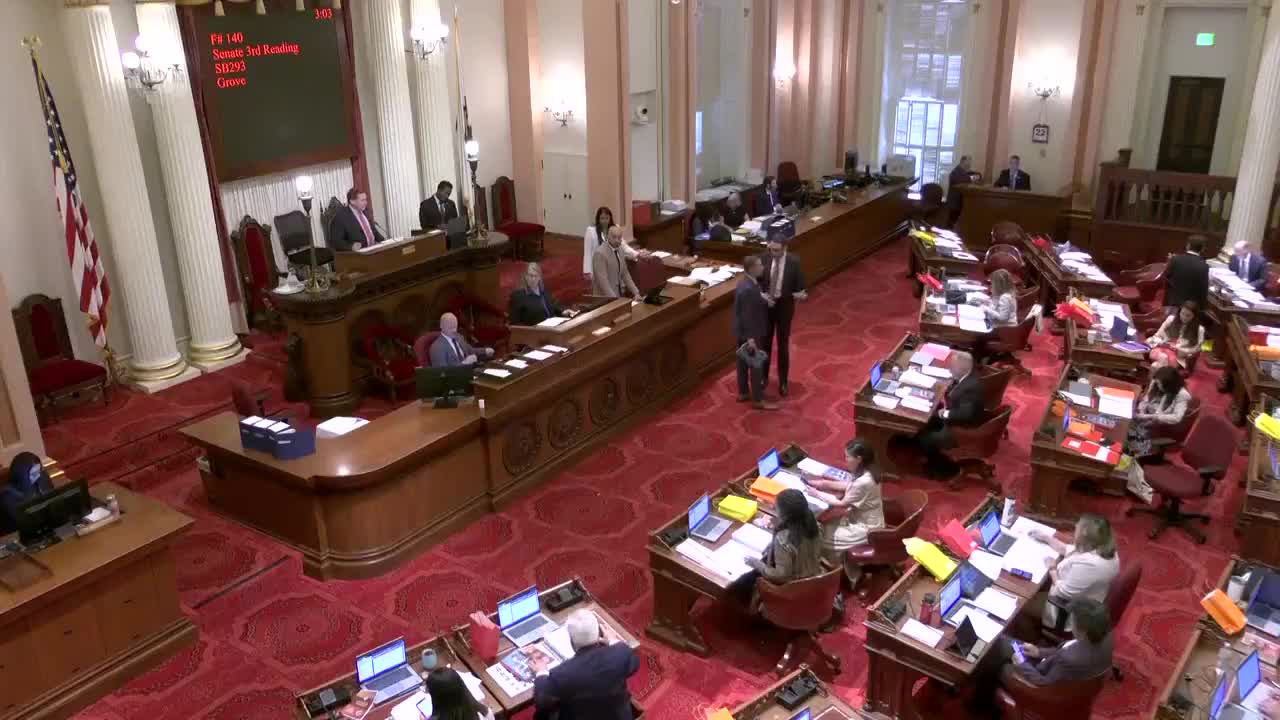
Bill Author