SB 34: Surplus land disposal: violations: County of Orange.
- Session Year: 2023-2024
- House: Senate
- Latest Version Date: 2023-10-11
Current Status:
Passed
(2023-10-11: Chaptered by Secretary of State. Chapter 772, Statutes of 2023.)
Introduced
In Committee
First Chamber
In Committee
Second Chamber
Enacted
What does this bill do?
This bill requires the County of Orange and any city in that county to stop a planned sale or transfer of surplus public land if the state Department of Housing and Community Development says the plan violates the law. They must fix the problem within 60 days and cannot complete the sale until the department confirms they are following the law. This rule expires on January 1, 2030.
The summary is provided by generative AI which can make mistakes. For original language, please view the details in the table below.
Existing law prescribes requirements for the disposal of land determined to be surplus land by a local agency. Those requirements include a requirement that a local agency, prior to disposing of a property or participating in negotiations to dispose of that property with a prospective transferee, send a written notice of availability of the property to specified entities, depending on the propertys intended use, and send specified information in regard to the disposal of the parcel of surplus land to the Department of Housing and Community Development. Existing law, among other enforcement provisions, makes a local agency that disposes of land in violation of these disposal provisions, after receiving notification of violation from the department, liable for a penalty of 30% of the final sale price of the land sold in violation for a first violation and 50% for any subsequent violation. Under existing law, except as specified, a local agency has 60 days to cure or correct an alleged violation before an enforcement action may be brought. Existing law provides for the deposit and use of penalty revenues for housing, as prescribed.
This bill, until January 1, 2030, would require the County of Orange, or any city located within the County of Orange, if notified by the department that its planned disposal of surplus land is in violation of existing law, to cure or correct the alleged violation within 60 days, as prescribed. The bill would prohibit a County of Orange jurisdiction that has not cured or corrected any alleged violation from disposing of the parcel until the department determines that it has complied with existing law or deems the alleged violation not to be a violation. The bill would authorize a local agency that receives that notice to provide to the Department of Housing and Community Development a statement describing the actions taken to cure or correct the alleged violation within 60 days of receipt of the notice, and would require the department, if it receives that statement, to make specified determinations and notify the local agency of those determinations within 30 days of receipt of the statement.
This bill would make legislative findings and declarations as to the necessity of a special statute for the County of Orange.
By imposing new duties on local agencies, the bill would impose a state-mandated local program.
The California Constitution requires the state to reimburse local agencies and school districts for certain costs mandated by the state. Statutory provisions establish procedures for making that reimbursement.
This bill would provide that, if the Commission on State Mandates determines that the bill contains costs mandated by the state, reimbursement for those costs shall be made pursuant to the statutory provisions noted above.
Existing law prescribes requirements for the disposal of land determined to be surplus land by a local agency. Those requirements include a requirement that a local agency, prior to disposing of a property or participating in negotiations to dispose of that property with a prospective transferee, send a written notice of availability of the property to specified entities, depending on the propertys intended use, and send specified information in regard to the disposal of the parcel of surplus land to the Department of Housing and Community Development. Existing law, among other enforcement provisions, makes a local agency that disposes of land in violation of these disposal provisions, after receiving notification of violation from the department, liable for a penalty of 30% of the final sale price of the land sold in violation for a first violation and 50% for any subsequent violation. Under existing law, except as specified, a local agency has 60 days to cure or correct an alleged violation before an enforcement action may be brought. Existing law provides for the deposit and use of penalty revenues for housing, as prescribed.
This bill, until January 1, 2030, would require the County of Orange, or any city located within Orange County, the County of Orange, if notified by the department that its planned sale or lease disposal of surplus land is in violation of existing law, to cure or correct the alleged violation within 60 days, as prescribed. The bill would prohibit an Orange County a County of Orange jurisdiction that has not cured or corrected any alleged violation from disposing of the parcel until the department determines that it has complied with existing law or deems the alleged violation not to be a violation. The bill would authorize a local agency that receives that notice to provide to the Department of Housing and Community Development a statement describing the actions taken to cure or correct the alleged violation within 60 days of receipt of the notice, and would require the department, if it receives that statement, to make specified determinations and notify the local agency of those determinations within 30 days of receipt of the statement.
This bill would make legislative findings and declarations as to the necessity of a special statute for Orange County. the County of Orange.
By imposing new duties on local agencies, the bill would impose a state-mandated local program.
The California Constitution requires the state to reimburse local agencies and school districts for certain costs mandated by the state. Statutory provisions establish procedures for making that reimbursement.
This bill would provide that, if the Commission on State Mandates determines that the bill contains costs mandated by the state, reimbursement for those costs shall be made pursuant to the statutory provisions noted above.
Existing law prescribes requirements for the disposal of land determined to be surplus land by a local agency. Those requirements include a requirement that a local agency, prior to disposing of a property or participating in negotiations to dispose of that property with a prospective transferee, send a written notice of availability of the property to specified entities, depending on the propertys intended use, and send specified information in regard to the disposal of the parcel of surplus land to the Department of Housing and Community Development. Existing law, among other enforcement provisions, makes a local agency that disposes of land in violation of these disposal provisions, after receiving notification of violation from the department, liable for a penalty of 30% of the final sale price of the land sold in violation for a first violation and 50% for any subsequent violation. Under existing law, except as specified, a local agency has 60 days to cure or correct an alleged violation before an enforcement action may be brought. Existing law provides for the deposit and use of penalty revenues for housing, as prescribed.
This bill, until January 1, 2030, would require the County of Orange, or any city located within Orange County, if notified by the department that its planned sale or lease of surplus land is in violation of existing law, to cure or correct the alleged violation within 60 days, as prescribed. The bill would prohibit an Orange County jurisdiction that has not cured or corrected any alleged violation from disposing of the parcel until the department determines that it has complied with existing law or deems the alleged violation not to be a violation. The bill would authorize a local agency that receives that notice to provide to the Department of Housing and Community Development a statement describing the actions taken to cure or correct the alleged violation within 60 days of receipt of the notice, and would require the department, if it receives that statement, to make specified determinations and notify the local agency of those determinations within 30 days of receipt of the statement.
This bill would make legislative findings and declarations as to the necessity of a special statute for Orange County.
By imposing new duties on local agencies, the bill would impose a state-mandated local program.
The California Constitution requires the state to reimburse local agencies and school districts for certain costs mandated by the state. Statutory provisions establish procedures for making that reimbursement.
This bill would provide that, if the Commission on State Mandates determines that the bill contains costs mandated by the state, reimbursement for those costs shall be made pursuant to the statutory provisions noted above.
Existing law prescribes requirements for the disposal of land determined to be surplus land by a local agency. Those requirements include a requirement that a local agency, prior to disposing of a property or participating in negotiations to dispose of that property with a prospective transferee, send a written notice of availability of the property to specified entities, depending on the propertys intended use, and send specified information in regard to the disposal of the parcel of surplus land to the Department of Housing and Community Development. Existing law, among other enforcement provisions, makes a local agency that disposes of land in violation of these disposal provisions, after receiving notification of violation from the department, liable for a penalty of 30% of the final sale price of the land sold in violation for a first violation and 50% for any subsequent violation. Under existing law, except as specified, a local agency has 60 days to cure or correct an alleged violation before an enforcement action may be brought. Existing law provides for the deposit and use of penalty revenues for housing, as prescribed.
This bill, until January 1, 2030, would require the County of Orange, or any city located within Orange County, if notified by the department that its planned sale or lease of surplus land is in violation of existing law, to cure or correct the alleged violation within 60 days, as prescribed. The bill would prohibit an Orange County jurisdiction that has not cured or corrected any alleged violation from disposing of the parcel until the department determines that it has complied with existing law or deems the alleged violation not to be a violation.
This bill would make legislative findings and declarations as to the necessity of a special statute for Orange County.
By imposing new duties on local agencies, the bill would impose a state-mandated local program.
The California Constitution requires the state to reimburse local agencies and school districts for certain costs mandated by the state. Statutory provisions establish procedures for making that reimbursement.
This bill would provide that, if the Commission on State Mandates determines that the bill contains costs mandated by the state, reimbursement for those costs shall be made pursuant to the statutory provisions noted above.
Existing law prescribes requirements for the disposal of land determined to be surplus land by a local agency. Those requirements include a requirement that a local agency, prior to disposing of a property or participating in negotiations to dispose of that property with a prospective transferee, send a written notice of availability of the property to specified entities, depending on the propertys intended use, and send specified information in regard to the disposal of the parcel of surplus land to the Department of Housing and Community Development. Existing law, among other enforcement provisions, makes a local agency that disposes of land in violation of these disposal provisions, after receiving notification of violation from the department, liable for a penalty of 30% of the final sale price of the land sold in violation for a first violation and 50% for any subsequent violation. Under existing law, except as specified, a local agency has 60 days to cure or correct an alleged violation before an enforcement action may be brought. Existing law provides for the deposit and use of penalty revenues for housing, as prescribed.
This bill, until January 1, 2030, would require the County of Orange, or any city located within Orange County, if notified by the department that its planned sale of surplus land is in violation of existing law, to cure or correct the alleged violation within 60 days, as prescribed. The bill would prohibit an Orange County jurisdiction that has not cured or corrected any alleged violation from disposing of the parcel until the department determines that it has complied with existing law or deems the alleged violation not to be a violation.
This bill would make legislative findings and declarations as to the necessity of a special statute for Orange County.
By imposing new duties on local agencies, the bill would impose a state-mandated local program.
The California Constitution requires the state to reimburse local agencies and school districts for certain costs mandated by the state. Statutory provisions establish procedures for making that reimbursement.
This bill would provide that, if the Commission on State Mandates determines that the bill contains costs mandated by the state, reimbursement for those costs shall be made pursuant to the statutory provisions noted above.
(a)If the Department of Housing and Community Development, pursuant to Section 54230.5, notifies the County of Orange, or any city located within the County of Orange, that its planned disposal of surplus land is in violation of this article, the jurisdiction shall have 60 days from the date of receipt of the notification of violation to cure or correct an alleged violation, unless the Department of Housing and Community Development deems the alleged violation not to be a violation in less than 60 days. If the jurisdiction has not cured or corrected any alleged violation within 60 days, it shall not dispose of the parcel until the Department of Housing and Community Development determines that it has complied with this article or deems the alleged violation not to be a violation.
(b)(1)A local agency that receives a notice pursuant to subdivision (a) may provide the Department of Housing and Community Development a statement describing the actions taken to cure or correct the alleged violation within 60 days of receipt of the notice.
(2)If the Department of Housing and Community Development receives a statement pursuant to paragraph (1), the department shall do both of the following:
(A)Determine if the local agencys actions as described in the statement cure or correct the alleged violation and whether the planned disposal of surplus land would constitute a violation of this article.
(B)Notify the local agency of the determinations made pursuant to subparagraph (A) within 30 days of receipt of the statement.
(c)This section shall remain in effect only until January 1, 2030, and as of that date is repealed.
SEC. 2.The Legislature finds and declares that a special statute is necessary and that a general statute cannot be made applicable within the meaning of Section 16 of Article IV of the California Constitution because of the unique circumstances in the County of Orange.
SEC. 3.If the Commission on State Mandates determines that this act contains costs mandated by the state, reimbursement to local agencies and school districts for those costs shall be made pursuant to Part 7 (commencing with Section 17500) of Division 4 of Title 2 of the Government Code.
(a)If the Department of Housing and Community Development, pursuant to Section 54230.5, notifies the County of Orange, or any city located within Orange County, the County of Orange, that its planned sale or lease disposal of surplus land is in violation of this article, the jurisdiction shall have 60 days from the date of receipt of the notification of violation to cure or correct an alleged violation, unless the Department of Housing and Community Development deems the alleged violation not to be a violation in less than 60 days. If the jurisdiction has not cured or corrected any alleged violation within 60 days, it shall not dispose of the parcel until the Department of Housing and Community Development determines that it has complied with this article or deems the alleged violation not to be a violation.
(b)(1)A local agency that receives a notice pursuant to subdivision (a) may provide the Department of Housing and Community Development a statement describing the actions taken to cure or correct the alleged violation within 60 days of receipt of the notice.
(2)If the Department of Housing and Community Development receives a statement pursuant to paragraph (1), the department shall do both of the following:
(A)Determine if the local agencys actions as described in the statement cure or correct the alleged violation and whether the planned disposal of surplus land would constitute a violation of this article.
(B)Notify the local agency of the determinations made pursuant to subparagraph (A) within 30 days of receipt of the statement.
(c)This section shall remain in effect only until January 1, 2030, and as of that date is repealed.
SEC. 2.The Legislature finds and declares that a special statute is necessary and that a general statute cannot be made applicable within the meaning of Section 16 of Article IV of the California Constitution because of the unique circumstances in Orange County. the County of Orange.
SEC. 3.If the Commission on State Mandates determines that this act contains costs mandated by the state, reimbursement to local agencies and school districts for those costs shall be made pursuant to Part 7 (commencing with Section 17500) of Division 4 of Title 2 of the Government Code.
(a)If the Department of Housing and Community Development, pursuant to Section 54230.5, notifies the County of Orange, or any city located within Orange County, that its planned sale or lease of surplus land is in violation of this article, the jurisdiction shall have 60 days from the date of receipt of the notification of violation to cure or correct an alleged violation, unless the Department of Housing and Community Development deems the alleged violation not to be a violation in less than 60 days. If the jurisdiction has not cured or corrected any alleged violation within 60 days, it shall not dispose of the parcel until the Department of Housing and Community Development determines that it has complied with this article or deems the alleged violation not to be a violation.
(b)(1)A local agency that receives a notice pursuant to subdivision (a) may provide the Department of Housing and Community Development a statement describing the actions taken to cure or correct the alleged violation within 60 days of receipt of the notice.
(2)If the Department of Housing and Community Development receives a statement pursuant to paragraph (1), the department shall do both of the following:
(A)Determine if the local agencys actions as described in the statement cure or correct the alleged violation and whether the planned disposal of surplus land would constitute a violation of this article.
(B)Notify the local agency of the determinations made pursuant to subparagraph (A) within 30 days of receipt of the statement.
(b)(c)This section shall remain in effect only until January 1, 2030, and as of that date is repealed.
SEC. 2.The Legislature finds and declares that a special statute is necessary and that a general statute cannot be made applicable within the meaning of Section 16 of Article IV of the California Constitution because of the unique circumstances in Orange County.
SEC. 3.If the Commission on State Mandates determines that this act contains costs mandated by the state, reimbursement to local agencies and school districts for those costs shall be made pursuant to Part 7 (commencing with Section 17500) of Division 4 of Title 2 of the Government Code.
(a)If the Department of Housing and Community Development, pursuant to Section 54230.5, notifies the County of Orange, or any city located within Orange County, that its planned sale or lease of surplus land is in violation of this article, the jurisdiction shall have 60 days from the date of receipt of the notification of violation to cure or correct an alleged violation, unless the Department of Housing and Community Development deems the alleged violation not to be a violation in less than 60 days. If the jurisdiction has not cured or corrected any alleged violation within 60 days, it shall not dispose of the parcel until the Department of Housing and Community Development determines that it has complied with this article or deems the alleged violation not to be a violation.
(b)This section shall remain in effect only until January 1, 2030, and as of that date is repealed.
SEC. 2.The Legislature finds and declares that a special statute is necessary and that a general statute cannot be made applicable within the meaning of Section 16 of Article IV of the California Constitution because of the unique circumstances in Orange County.
SEC. 3.If the Commission on State Mandates determines that this act contains costs mandated by the state, reimbursement to local agencies and school districts for those costs shall be made pursuant to Part 7 (commencing with Section 17500) of Division 4 of Title 2 of the Government Code.
(a)If the Department of Housing and Community Development, pursuant to Section 54230.5, notifies the County of Orange, or any city located within Orange County, that its planned sale of surplus land is in violation of this article, the jurisdiction shall have 60 days from the date of receipt of the notification of violation to cure or correct an alleged violation, unless the Department of Housing and Community Development deems the alleged violation not to be a violation in less than 60 days. If the jurisdiction has not cured or corrected any alleged violation within 60 days, it shall not dispose of the parcel until the Department of Housing and Community Development determines that it has complied with this article or deems the alleged violation not to be a violation.
(b)This section shall remain in effect only until January 1, 2030, and as of that date is repealed.
SEC. 2.The Legislature finds and declares that a special statute is necessary and that a general statute cannot be made applicable within the meaning of Section 16 of Article IV of the California Constitution because of the unique circumstances in Orange County.
SEC. 3.If the Commission on State Mandates determines that this act contains costs mandated by the state, reimbursement to local agencies and school districts for those costs shall be made pursuant to Part 7 (commencing with Section 17500) of Division 4 of Title 2 of the Government Code.
|
Date
|
Status
|
|---|---|
| Oct 11, 2023 | Chaptered by Secretary of State. Chapter 772, Statutes of 2023. |
| Oct 11, 2023 | Approved by the Governor. |
| Sep 18, 2023 | Enrolled and presented to the Governor at 3 p.m. |
| Sep 12, 2023 | Assembly amendments concurred in. (Ayes 31. Noes 7. Page 2617.) Ordered to engrossing and enrolling. |
| Sep 11, 2023 | In Senate. Concurrence in Assembly amendments pending. |
| Sep 11, 2023 | Read third time. Passed. (Ayes 62. Noes 18. Page 3144.) Ordered to the Senate. |
| Aug 28, 2023 | Read second time. Ordered to third reading. |
| Aug 24, 2023 | Read second time and amended. Ordered to second reading. |
| Aug 23, 2023 | From committee: Do pass as amended. (Ayes 10. Noes 4.) (August 23). |
| Jul 12, 2023 | From committee: Do pass and re-refer to Com. on H. & C.D. (Ayes 6. Noes 2.) (July 12). Re-referred to Com. on H. & C.D. |
| Jul 12, 2023 | From committee: Do pass and re-refer to Com. on APPR. (Ayes 6. Noes 2.) (July 12). Re-referred to Com. on APPR. |
| Jun 29, 2023 | Assembly Rule 56 suspended. |
| Jun 27, 2023 | June 28 hearing postponed by committee. |
| Jun 20, 2023 | From committee with author's amendments. Read second time and amended. Re-referred to Com. on L. GOV. |
| May 26, 2023 | Referred to Coms. on L. GOV. and H. & C.D. |
| May 23, 2023 | In Assembly. Read first time. Held at Desk. |
| May 22, 2023 | Read third time. Passed. (Ayes 31. Noes 7. Page 1206.) Ordered to the Assembly. |
| May 2, 2023 | Read second time. Ordered to third reading. |
| May 1, 2023 | From committee: Be ordered to second reading pursuant to Senate Rule 28.8. |
| Apr 21, 2023 | Set for hearing May 1. |
| Apr 19, 2023 | From committee: Do pass and re-refer to Com. on APPR. (Ayes 6. Noes 2. Page 794.) (April 19). Re-referred to Com. on APPR. |
| Apr 10, 2023 | Set for hearing April 19. |
| Feb 22, 2023 | From committee with author's amendments. Read second time and amended. Re-referred to Com. on GOV. & F. |
| Feb 16, 2023 | From committee with author's amendments. Read second time and amended. Re-referred to Com. on GOV. & F. |
| Jan 18, 2023 | Referred to Com. on GOV. & F. |
| Dec 6, 2022 | From printer. May be acted upon on or after January 5. |
| Dec 5, 2022 | Introduced. Read first time. To Com. on RLS. for assignment. To print. |
|
Date
|
Description
|
Location
|
Votes
|
|
|---|---|---|---|---|
| Sep 12, 2023 | Unfinished Business SB34 Umberg et al. Concurrence | Senate Floor |
Passed |
|
| Sep 11, 2023 | SB 34 Umberg Senate Third Reading By Ting | Assembly Floor |
Passed |
|
| Aug 23, 2023 | Do pass as amended. | Assembly Standing Committee on Appropriations |
Passed |
|
| Jul 12, 2023 | Do pass and be re-referred to the Committee on [Appropriations] | Assembly Standing Committee on Housing and Community Development |
Passed |
|
| Jul 12, 2023 | Do pass and be re-referred to the Committee on [Housing and Community Development] | Assembly Standing Committee on Local Government |
Passed |
|
| May 22, 2023 | Senate 3rd Reading SB34 Umberg et al. | Senate Floor |
Passed |
|
| Apr 19, 2023 | Do pass, but first be re-referred to the Committee on [Appropriations] | Senate Standing Committee on Governance and Finance |
Passed |
This list shows positions taken on this bill by organizations on the date displayed, which is linked to the original source.
Positions by individuals are not included.
|
Organization
|
Position
|
Date
|
|---|---|---|
| Association of California Healthcare Districts | ** Against | |
| Association Of California Healthcare Districts The | ** Against | |
| California Association For Local Economic Development | ** Against | |
| California Attorney General Rob Bonta | ** Support | |
| California Housing Partnership Corporation | ** Support | |
| California Special District Association | * Against Unless Amend | Jul 12, 2023 |
| California State Association | * Support | Jul 12, 2023 |
| California State Association Of Counties | ** Against | |
| City Of Tustin | ** Against | |
| El Toro Water District | ** Against | |
| Imperial Irrigation District | * Against | Jul 12, 2023 |
| Irvine Ranch Water District | ** Against | |
| Mesa Water District | ** Against | |
| Non-Profit Housing Association of Northern California | ** Support | |
| Orange County Sanitation District | ** Against | |
| Rancho California Water District | ** Against | |
| Rural County Representatives of California | ** Against | |
| Santa Margarita Water District | ** Against | |
| State of California Attorney General | ** Support | |
| Trabuco Canyon Water District | ** Against | |
| Urban Counties of California | ** Against |
SENATE RULES COMMITTEE Office of Senate Floor Analyses (916) 651-1520 Fax: (916) 327-4478 | SB 34 |
UNFINISHED BUSINESS
Bill No: SB 34
Author: Umberg (D), et al.
Amended: 8/24/23
Vote: 21
SENATE GOVERNANCE & FIN. COMMITTEE: 6-2, 4/19/23
AYES: Caballero, Blakespear, Durazo, Glazer, Skinner, Wiener
NOES: Seyarto, Dahle
SENATE APPROPRIATIONS COMMITTEE: Senate Rule 28.8
SENATE FLOOR: 31-7, 5/22/23
AYES: Allen, Archuleta, Ashby, Atkins, Becker, Blakespear, Bradford, Caballero, Cortese, Dodd, Durazo, Eggman, Glazer, Gonzalez, Hurtado, Laird, Limón, McGuire, Menjivar, Min, Newman, Padilla, Portantino, Roth, Rubio, Skinner, Smallwood-Cuevas, Stern, Umberg, Wahab, Wiener
NOES: Dahle, Grove, Jones, Niello, Ochoa Bogh, Seyarto, Wilk
NO VOTE RECORDED: Alvarado-Gil, Nguyen
ASSEMBLY FLOOR: 62-18, 9/11/23 - See last page for vote
SUBJECT: Surplus land disposal: violations: Orange County
SOURCE: Author
DIGEST:
This bill prohibits Orange County, or any city located therein, from proceeding with a planned disposal of surplus land if it receives a notice of violation (NOV) from the Department of Housing and Community Development (HCD) and the violation is not corrected within 60 days.
Assembly Amendments
(1) allow an Orange County jurisdiction that receives a NOV alleging a violation of the SLA to provide information to HCD regarding actions taken to cure or correct the alleged violation within 60 days of receiving the NOV; (2) require HCD to make determinations with regard to the information provided by the jurisdiction within 30 days of receipt, as specified; and, (3) make other clarifying changes.
ANALYSIS:
Existing law:
- Requires each local agency, on or before December 31 of each year, to make an inventory of all lands held, owned or controlled by it or any of its departments, agencies, or authorities, to determine what land, if any, is in excess of its foreseeable needs;
- Requires a description of each parcel found to be in excess of needs to be made a matter of public record and requires the agency to report this information to HCD no later than April 1 of each year;
- Defines “surplus land” as land owned by any local agency that is determined to be no longer necessary for the agency’s use;
- Exempts certain types of surplus land owned by local agencies from the requirements of the SLA;
- Requires a local agency that is disposing of surplus land to notify certain public entities and housing sponsors that surplus land is available for one of the following purposes:
- Low- and moderate-income housing;
- Park and recreation, and open space;
- School facilities; and
- Infill opportunity zones or transit village plans.
- Requires that, if another agency or housing sponsor wants to buy or lease the surplus land for one of these purposes, it must inform the disposing agency of its interest within 60 day. If multiple entities want to purchase the land, the housing sponsor that proposes to provide the greatest level of affordable housing gets priority. The disposing agency and the purchasing entity have an additional 90 days to negotiate a mutually satisfactory price and terms in good faith. If they can’t agree, the agency that owns the surplus land can dispose of the land on the private market;
- Requires a local agency, prior to agreeing to the terms for the disposition of surplus land, to provide specified information about its disposition process to HCD. Requires HCD to submit to the local agency, within 30 days, written findings of any process violations that have occurred. The law provides a local agency at least 30 days to either correct the violations or adopt a resolution with findings explaining why the process is not in violation; and
- Provides that a local agency that disposes of land in violation of the SLA following a notification from HCD is liable for a penalty of 30 percent of the final sale price for a first violation and 50 percent for subsequent violations.
This bill:
- Requires an Orange County jurisdiction, if notified by HCD that its planned disposal of surplus land is in violation of the SLA, to cure or correct the alleged violation within 60 days, unless HCD deems the alleged violation not to be a violation in less than 60 days.
- Prohibits an Orange County jurisdiction that has not cured or corrected an alleged violation within 60 days from disposing of the parcel until HCD determines that it has complied with the SLA or deems the alleged violation not to be a violation.
- Authorizes an Orange County jurisdiction that receives a NOV alleging a violation of the SLA to provide information to HCD regarding actions taken to cure or correct the alleged violation within 60 days of receiving the NOV.
- Requires HCD to determine if the Orange County jurisdiction's actions cure or correct the alleged violation and whether the planned disposal of surplus land would constitute a violation of the SLA within 30 days of receiving information pursuant to 3), above.
- Contains a sunset date of January 1, 2030.
- Makes findings and declarations that a special law is necessary because of the unique circumstances facing Orange County.
Background
The SLA. The SLA spells out the steps local agencies must follow when they dispose of land they no longer need. Before local officials can dispose of property, they must declare that the land is no longer necessary for the agency's use in a public meeting and declare the land either "surplus land" or "exempt surplus land." The SLA designates certain types of land as "exempt surplus land," which is not subject to the requirements of the SLA. All other surplus land must follow the procedures laid out in the SLA.
AB 1486 (Ting), Chapter 664, Statutes of 2019, substantially revised the SLA to increase the emphasis on affordable housing and address concerns that some local agencies were bypassing the SLA's requirements. Among other changes, AB 1486 broadened the definition of surplus land and required land to be designated as surplus prior to the local agency selling the land, imposed penalties on local agencies that violate the SLA, and established an enforcement process.
Anaheim Stadium transaction. In September 2020, the Anaheim City Council approved the sale of Angel Stadium and 150 acres of surrounding land to the owner of the Los Angeles Angels. At the time, the sale was criticized because the initial offering price for the land was $320 million, which was below the value of $500 million identified in a city-commissioned appraisal of the site, and which was further lowered to the price of $150 million in exchange for the funding of 466 affordable housing units and a seven-acre park on the property. In December 2021, HCD notified the City of Anaheim that the sale violated the SLA, and on April 25, 2022, the City and the Attorney General agreed to a settlement that required the City to pay $123 million for the development of affordable housing on the site, which includes a $96 million fine equivalent to 30 percent of the $320 million final sales price of the land. However, in May 2022, allegations of corruption associated with the deal surfaced. Specifically, reports became public that the Federal Bureau of Investigation (FBI) was investigating the mayor of the City of Anaheim and alleged that he “shared privileged and confidential information with the Angels during stadium sale negotiations, actively concealed same from a grand jury inquiry, and expects to receive campaign contributions as a result.” The mayor subsequently resigned, and on May 24, 2022, the city council voided the deal.
Comments
- Purpose of the bill. According to the author, “SB 34 is a local pilot program in my district to address loopholes in the Surplus Land Act (SLA) by prohibiting an Orange County governmental entity from disposing of parcels of surplus lands once the California Department of Housing and Community Development (HCD) has determined that the agency is in violation of the SLA. Additionally, this bill would require the County of Orange or any city within Orange County to cure or correct their alleged SLA violation within 60 days if notified by the department that its planned sale of surplus land is in violation of existing law. SB 34 is necessary for my district because of troubling circumstances such as the recent Anaheim Angels stadium deal from 2021. Despite being notified of a violation and the possible fine totaling $96 million, the City of Anaheim proceeded to ignore the bidding process and finish processing the stadium land deal. Later, it was revealed through an FBI investigation that the politically motived deal was also motivated by bribes. Furthermore, the FBI found widespread corruption of prominent figures throughout the entire County of Orange, thereby showing that the problem was not just limited to the City of Anaheim. Given these recent events, SB 34 is critically important to preventing unethical or illegally motivated government entities within Orange County from circumventing existing laws in regards to the SLA and affordable housing when leasing or selling public land.”
- Scope. While the City of Anaheim clearly violated the SLA, SB 34 subjects all cities and the County itself to the same restrictions proposed in the bill even though, unlike Anaheim, these other jurisdictions have not violated the SLA. While the author asserts that other officials were involved in the Anaheim transaction, it is unknown if SLA transactions in other cities have involved similarly questionable practices. As a result, the justification for subjecting all cities and the County to increased sanctions solely because one city violated the law is unclear.
FISCAL EFFECT: Appropriation: No Fiscal Com.: Yes Local: Yes
According to the Assembly Appropriations Committee:
- HCD anticipates minor and absorbable costs.
- Local costs to the County of Orange and any city located within the county of an unknown amount, but likely minor, depending on the number of parcels involved, to cure and correct any alleged violation of the SLA, to the extent a city or the county receives a NOV from HCD. These costs are potentially reimbursable by the state, subject to a determination by the Commission on State Mandates.
SUPPORT: (Verified 9/11/23)
California Housing Partnership Corporation
Non-Profit Housing Association of Northern California
State of California Attorney General
OPPOSITION: (Verified 9/11/23)
California Association for Local Economic Development
City of Tustin
ASSEMBLY FLOOR: 62-18, 9/11/23
AYES: Addis, Aguiar-Curry, Alvarez, Arambula, Bains, Bauer-Kahan, Bennett, Berman, Boerner, Bonta, Bryan, Calderon, Juan Carrillo, Wendy Carrillo, Cervantes, Connolly, Mike Fong, Friedman, Gabriel, Garcia, Gipson, Grayson, Haney, Hart, Holden, Irwin, Jackson, Jones-Sawyer, Kalra, Lee, Low, Lowenthal, Maienschein, McCarty, McKinnor, Muratsuchi, Stephanie Nguyen, Ortega, Pacheco, Papan, Pellerin, Petrie-Norris, Quirk-Silva, Ramos, Rendon, Reyes, Luz Rivas, Rodriguez, Blanca Rubio, Santiago, Schiavo, Soria, Ting, Valencia, Villapudua, Ward, Weber, Wicks, Wilson, Wood, Zbur, Robert Rivas
NOES: Alanis, Chen, Megan Dahle, Davies, Dixon, Essayli, Flora, Vince Fong, Gallagher, Hoover, Lackey, Mathis, Jim Patterson, Joe Patterson, Sanchez, Ta, Waldron, Wallis
Prepared by: Cassie Royce / GOV. & F. / (916) 651-4119
9/11/23 19:48:43
**** END ****
SENATE THIRD READING
STR Bill Id:SB 34
Author:(Umberg)
As Amended Ver:August 24, 2023
Majority vote
SUMMARY
Prohibits the County of Orange or a city located within the County of Orange (Orange County jurisdiction) from proceeding with disposal of surplus land if the Department of Housing and Community Development (HCD) issues a notice of violation (NOV) of the Surplus Land Act (SLA).
Major Provisions
- Requires an Orange County jurisdiction, if notified by HCD that its planned disposal of surplus land is in violation of the SLA, to cure or correct the alleged violation within 60 days, unless HCD deems the alleged violation not to be a violation in less than 60 days.
- Prohibits an Orange County jurisdiction that has not cured or corrected an alleged violation within 60 days from disposing of the parcel until HCD determines that it has complied with the SLA or deems the alleged violation not to be a violation.
- Authorizes an Orange County jurisdiction that receives a NOV alleging a violation of the SLA to provide information to HCD regarding actions taken to cure or correct the alleged violation within 60 days of receiving the NOV.
- Requires HCD to determine if the Orange County jurisdiction's actions cure or correct the alleged violation and whether the planned disposal of surplus land would constitute a violation of the SLA within 30 days of receiving information pursuant to 3), above.
- Contains a sunset date of January 1, 2030.
COMMENTS
AB 1486 (Ting), Chapter 664, Statutes of 2019, substantially revised the SLA to increase the emphasis on affordable housing and address concerns that some local agencies were bypassing the SLA's requirements. Among other changes, AB 1486 imposed penalties on local agencies that violate the SLA, totaling 30% of the sales price of land disposed of in violation of the SLA for a first violation, and 50% of the price of the land for subsequent violations. These penalty revenues must be deposited in a local housing trust fund.
The City of Anaheim's attempted sale of city owned property to the Anaheim Angels baseball team is the most high profile surplus land transaction that was subject to HCD enforcement under the SLA after AB 1486 strengthened the law. The attempted deal is a protracted affair that involves the following:
- An initial sales agreement between the City of Anaheim and the Angels.
- A NOV issued by HCD related to the transaction and alleged violations of the SLA.
- A stipulated agreement between the city and the Office of the Attorney General to resolve the alleged violations.
- A revised disposition and development agreement (DDA) between the City of Anaheim and the Angels that sought to reflect the terms and requirements of the stipulated agreement.
- An ongoing FBI probe that, to date, has led to the resignation of several high profile political figures, including the Mayor of Anaheim.
Following the revelation of the FBI probe the City of Anaheim voted unanimously to halt the sale of the stadium property.
According to the Author
"SB 34 is a local pilot program in my district to address loopholes in the SLA by prohibiting an Orange County governmental entity from disposing of parcels of surplus lands once the HCD has determined that the agency is in violation of the SLA. Additionally, this bill would require the County of Orange or any city within Orange County to cure or correct their alleged SLA violation within 60 days if notified by the department that its planned sale of surplus land is in violation of existing law. SB 34 is necessary for my district because of troubling circumstances such as the recent Anaheim Angels stadium deal from 2021. Despite being notified of a violation and the possible fine totaling $96 million, the City of Anaheim proceeded to ignore the bidding process and finish processing the stadium land deal. Later, it was revealed through an FBI investigation that the politically motived deal was also motivated by bribes. Furthermore, the FBI found widespread corruption of prominent figures throughout the entire County of Orange, thereby showing that the problem was not just limited to the City of Anaheim. Given these recent events, SB 34 is critically important to preventing unethical or illegally motivated government entities within Orange County from circumventing existing laws in regards to the SLA and affordable housing when leasing or selling public land."
Arguments in Support
The California Housing Partnership writes in support, "Surplus public properties are an important source of cost-effective land for affordable housing. Current law provides priority for affordable housing when cities and counties dispose of such properties, but the law is only as good as it is enforced. SB 34 establishes reasonable checks and balances by stopping local governments from proceeding with a disposition while under an HCD notice of violation."
Arguments in Opposition
The California Special Districts Association, opposed unless amended to a prior version of this bill, writes, "As written, the bill may create a concerning precedent for all local agencies statewide. Because SB 34 includes a reference to notices of violation from HCD in connection with a 'sale or lease' by a local agency, the bill may establish a statutory precedent that leases are subject to the SLA. Notwithstanding guidelines developed by HCD defining 'disposition of surplus land,' at this time the term 'dispose' is undefined in the SLA, and prior legislative efforts to define 'dispose' to include leases were unsuccessful. Removing and excluding the bill's reference to leases would in no way compromise or otherwise impact the ability of this legislation to address a planned sale of surplus land by the County of Orange or any city located within Orange County. However, including any reference to leases in the bill would be inconsistent with the clear, established legislative intent for the meaning of disposal of surplus land that is subject to the requirements of the SLA as currently written. We therefore oppose SB 34 unless it is amended to remove its reference to leases and HCD notices of violations in connection with planned leases."
FISCAL COMMENTS
According to the Assembly Appropriations Committee:
- HCD anticipates minor and absorbable costs.
- Local costs to the County of Orange and any city located within the county of an unknown amount, but likely minor, depending on the number of parcels involved, to cure and correct any alleged violation of the SLA, to the extent a city or the county receives a NOV from HCD. These costs are potentially reimbursable by the state, subject to a determination by the Commission on State Mandates.
VOTES
SENATE FLOOR: 31-7-2
YES: Allen, Archuleta, Ashby, Atkins, Becker, Blakespear, Bradford, Caballero, Cortese, Dodd, Durazo, Eggman, Glazer, Gonzalez, Hurtado, Laird, Limón, McGuire, Menjivar, Min, Newman, Padilla, Portantino, Roth, Rubio, Skinner, Smallwood-Cuevas, Stern, Umberg, Wahab, Wiener
NO: Dahle, Grove, Jones, Niello, Ochoa Bogh, Seyarto, Wilk
ABS, ABST OR NV: Alvarado-Gil, Nguyen
ASM LOCAL GOVERNMENT: 6-2-0
YES: Juan Carrillo, Boerner, Haney, Pacheco, Ramos, Wilson
NO: Dixon, Waldron
ASM HOUSING AND COMMUNITY DEVELOPMENT: 6-2-0
YES: Wicks, Wendy Carrillo, Grayson, Kalra, Quirk-Silva, Ward
NO: Joe Patterson, Sanchez
ASM APPROPRIATIONS: 10-4-2
YES: Holden, Bryan, Calderon, Wendy Carrillo, Hart, Papan, Pellerin, Soria, Weber, Wilson
NO: Megan Dahle, Dixon, Mathis, Sanchez
ABS, ABST OR NV: Mike Fong, McCarty
UPDATED
VERSION: August 24, 2023
CONSULTANT: Angela Mapp / L. GOV. / (916) 319-3958 FN: 0001364
Date of Hearing: August 23, 2023
ASSEMBLY COMMITTEE ON APPROPRIATIONS
Chris Holden, Chair
SBPCA Bill Id:SB 34
Author:(Umberg) – As Amended Ver:June 20, 2023
Policy Committee: | Housing and Community Development | Vote: | 6 - 2 |
Local Government | 6 - 2 | ||
|
|
Urgency: No State Mandated Local Program: Yes Reimbursable: Yes
SUMMARY:
This bill, until January 1, 2030, prohibits the County of Orange or any city located within the County of Orange from proceeding with a planned sale or lease of surplus land if the county or city receives a notice of violation from the Department of Housing and Community Development (HCD) and the violation is not corrected within 60 days.
Specifically, this bill:
- Requires Orange County, or any city located within Orange County, if notified by HCD its planned sale or lease of surplus land is in violation of the SLA, to cure or correct the alleged violation within 60 days, unless HCD deems the alleged violation not to be a violation in less than 60 days.
- Prohibits Orange County or any city located within Orange County that has not cured or corrected an alleged violation within 60 days from disposing of the parcel until HCD determines it has complied with the SLA or deems the alleged violation not to be a violation.
- Authorizes a jurisdiction that receives an NOV alleging a violation of the SLA pursuant to 1, above, to provide a statement to HCD describing actions taken to cure or correct the alleged violation within 60 days of receiving the NOV.
- Requires HCD to determine if a jurisdiction’s actions described in a statement provided pursuant to 3, above, cure or correct the alleged violation and whether the planned disposal would constitute a violation of the SLA and to notify the jurisdiction of its determination within 30 days of receiving the statement.
- Repeals these provisions on January 1, 2030.
FISCAL EFFECT:
- HCD anticipates minor and absorbable costs.
- Local costs to the County of Orange and any city located within the county of an unknown amount, but likely minor, depending on the number of parcels involved, to cure and correct any alleged violation of the SLA, to the extent a city or the county receives a NOV from HCD. These costs are potentially reimbursable by the state, subject to a determination by the Commission on State Mandates.
COMMENTS:
- Purpose. The author seeks to provide additional scrutiny to Orange County and the cities located within the county regarding the disposal of surplus land if HCD has issued a notice of violation regarding the disposal. The author intends the additional scrutiny to prevent these jurisdictions from circumventing the SLA, as occurred in the City of Anaheim in 2021 with an attempted sale of city-owned property to the owner of the Anaheim Angels baseball team.
- Background.
SLA. Before local officials may dispose of property, they must declare in a public meeting that the land is no longer necessary for the local agency’s use and declare the land either “surplus land” or “exempt surplus land.” The SLA designates certain types of land as “exempt surplus land,” such as transfers to other government entities, which is not subject to the requirements of the SLA. All other surplus land must follow the procedures laid out in the SLA. HCD enforces the SLA’s provisions and issues a NOV to a local agency whose proposed dispositions of surplus land may be in violation of the act.
AB 1486 (Ting), Chapter 664, Statutes of 2019, substantially revised the SLA to increase the emphasis on affordable housing and address concerns that some local agencies were bypassing the act’s requirements. As of April of this year, HCD had reviewed over 500 surplus lands dispositions, and has worked with multiple cities to ensure their dispositions were not in violation of the law.
City of Anaheim. HCD has issued only one NOV of the SLA, which was to the City of Anaheim in December 2021, for the city’s attempted sale of city-owned property to the owner of the Anaheim Angels baseball team. In April 2022, a stipulated agreement involving affordable housing funds and other development incentives was reached between the city and the Office of the Attorney General to resolve alleged violations. Subsequently, a revised disposition and development agreement (DDA) was reached between the city and the owner of the team that sought to reflect the terms and requirements of the stipulated agreement. In May 2022, the agreements were called into question by a Los Angeles Times article.
Shortly after the stipulated judgement and the subsequent DDA, the Federal Bureau of Investigation (FBI) revealed an ongoing investigation into the mayor of Anaheim, related to the sale of the stadium property. Following the revelation of the investigation, the mayor resigned and the City of Anaheim voted unanimously to halt the sale of the stadium property.
The author intends to preclude instances like the one that occurred in the City of Anaheim by prohibiting Orange County and the cities therein from proceeding with a planned sale or lease of surplus land if the local agency receives an NOV from HCD.
Leases vs. Sales. After AB 1486’s enactment, the question of whether a lease, as a surplus land disposal transaction, is subject to the SLA has generated controversy. Specifically, committee amendments to AB 1486 in the Assembly Local Government Committee removed leases from that bill’s changes to the SLA. There is dispute as to whether leases are subject to the SLA: local governments argue they are not, while HCD’s published SLA guidance states they are. The question of whether and in what manner leases are subject to the SLA is being addressed in SB 747 (Caballero), also before this committee.
To conform to those efforts, the Committee recommends the following amendment:
SECTION 1. Section 54230.8 is added to the Government Code, to read:
54230.8. (a) If the Department of Housing and Community Development, pursuant to Section 54230.5, notifies the County of Orange, or any city located within Orange County, that its planned sale or lease disposal of surplus land is in violation of this article, the jurisdiction shall have 60 days from the date of receipt of the notification of violation to cure or correct an alleged violation, unless the Department of Housing and Community Development deems the alleged violation not to be a violation in less than 60 days. If the jurisdiction has not cured or corrected any alleged violation within 60 days, it shall not dispose of the parcel until the Department of Housing and Community Development determines that it has complied with this article or deems the alleged violation not to be a violation.
- Arguments in Support. Supporters of the bill argue that surplus public properties are an important source of cost-effective land for affordable housing, and enforcement of the SLA is important. According to the California Housing Partnership Corporation, “[This bill] establishes reasonable checks and balances by stopping local governments from proceeding with a disposition while under an HCD notice of violation.”
- Arguments in Opposition. Opponents of the bill argue, in the Anaheim case, the enforcement provisions of the SLA worked, and there is no need for additional legislation. According to the California Association for Local Economic Development, “The incident should not mean all other local governments, which just happen to be in the same county, had anything to do with the issues or that they should be singled out for punitive legislation.”
- Related Legislation. AB 480 (Ting) makes changes to the penalty and procedural provisions of the SLA. AB 480 is pending in the Senate Committee on Appropriations.
SB 229 (Umberg) requires a local agency to hold an open and public session to discuss a planned disposal of surplus land if the local agency has been notified by HCD that its disposal of the parcel is in violation of the SLA. SB 229 is pending in this committee.
SB 747 (Caballero) makes numerous changes to the SLA, including a provision to allow leases of more than 15 years to be considered a disposal of surplus land. SB 747 is pending in this committee.
- Prior Legislation. SB 361 (Umberg), of the 2021-22 Legislative Session, would have required the City of Anaheim to comply with additional transparency requirements prior to disposing of surplus land. SB 361 originally contained provisions similar to this bill, as well as the provisions now contained in SB 229. SB 361 was subsequently amended to delete the provisions contained in this bill and to limit the transparency requirements now in SB 229 to only the City of Anaheim. SB 361 died on the inactive file on the Assembly Floor.
Analysis Prepared by: Jennifer Swenson / APPR. / (916) 319-2081
Date of Hearing: July 12, 2023
ASSEMBLY COMMITTEE ON LOCAL GOVERNMENT
Juan Carrillo, Chair
SBPCA Bill Id:SB 34
Author:(Umberg) – As Amended Ver:February 22, 2023
SENATE VOTE: 31-7
SUBJECT: Surplus land disposal: violations: Orange County.
SUMMARY: Prohibits the County of Orange or a city located within the County of Orange (Orange County jurisdiction) from proceeding with disposal of surplus land if the Department of Housing and Community Development (HCD) issues a notice of violation (NOV) of the Surplus Land Act (SLA). Specifically, this bill:
- Requires an Orange County jurisdiction, if notified by HCD that its planned sale or lease of surplus land is in violation of the SLA, to cure or correct the alleged violation within 60 days, unless HCD deems the alleged violation not to be a violation in less than 60 days.
- Prohibits an Orange County jurisdiction that has not cured or corrected an alleged violation within 60 days from disposing of the parcel until HCD determines that it has complied with the SLA or deems the alleged violation not to be a violation.
- Authorizes an Orange County jurisdiction that receives a NOV alleging a violation of the SLA to provide information to HCD regarding actions taken to cure or correct the alleged violation within 60 days of receiving the NOV.
- Requires HCD to determine if the Orange County jurisdiction’s actions cure or correct the alleged violation and whether the planned disposal of surplus land would constitute a violation of the SLA within 30 days of receiving information pursuant to 3) above.
- Repeals these provisions on January 1, 2030.
- Finds and declares that a special law is necessary because of the unique circumstances facing Orange County.
- Provides that that if the Commission on State Mandates determines that this bill contains costs mandated by the state, reimbursement to local agencies and school districts for those costs shall be made pursuant to Part 7 (commencing with Section 17500) of Division 4 of Title 2 of the Government Code.
EXISTING LAW:
- Requires each city and county to prepare, adopt, and administer a general plan for their jurisdiction, which must include a housing element, to shape the future growth of its community (Government Code (GC) § 65300 – 65404).
- Establishes the SLA which, among other provisions, provides the following:
- Requires each local agency, on or before December 31 of each year, to make an inventory of all lands held, owned or controlled by it or any of its departments, agencies, or authorities, to determine what land, if any, is in excess of its foreseeable needs. Requires a description of each parcel found to be in excess of needs to be made a matter of public record and requires the agency to report this information to HCD no later than April 1.
- Defines “surplus land” as land owned by any local agency that is determined to be no longer necessary for the agency’s use.
- Exempts certain types of surplus land owned by local agencies from the requirements of the SLA.
- Requires a local agency that is disposing of surplus land to notify certain public entities and housing sponsors that surplus land is available for one of the following purposes:
- Low- and moderate-income housing.
- Park and recreation, and open space.
- School facilities.
- Infill opportunity zones or transit village plans.
- Requires that, if another agency or housing sponsor wants to buy or lease the surplus land for one of these purposes, it must inform the disposing agency of its interest within 60 days. If multiple entities want to purchase the land, the housing sponsor that proposes to provide the greatest level of affordable housing gets priority. The disposing agency and the entity have an additional 90 days to negotiate a mutually satisfactory price and terms in good faith. If they can’t agree, the agency that owns the surplus land can dispose of the land on the private market.
- Requires a local agency, prior to agreeing to the terms for the disposition of surplus land, to provide specified information about its disposition process to HCD. Requires HCD to submit to the local agency, within 30 days, written findings of any process violations that have occurred. The law provides a local agency at least 30 days to either correct the violations or adopt a resolution with findings explaining why the process is not in violation.
- Provides that a local agency that disposes of land in violation of the SLA, following a notification from HCD, is liable for a penalty of 30 percent of the final sale price for a first violation and 50 percent for subsequent violations. Requires that penalty assessments shall be deposited into a local housing trust fund, the state Building Homes and Jobs Fund, or the Housing Rehabilitation Loan Fund, as specified (GC § 54220-54234).
FISCAL EFFECT: This bill is keyed fiscal and contains a state-mandated local program.
COMMENTS:
- Author’s Statement and Bill Summary. According to the author, “SB 34 is a local pilot program in my district to address loopholes in the SLA by prohibiting an Orange County governmental entity from disposing of parcels of surplus lands once the HCD has determined that the agency is in violation of the SLA. Additionally, this bill would require the County of Orange or any city within Orange County to cure or correct their alleged SLA violation within 60 days if notified by the department that its planned sale of surplus land is in violation of existing law. SB 34 is necessary for my district because of troubling circumstances such as the recent Anaheim Angels stadium deal from 2021. Despite being notified of a violation and the possible fine totaling $96 million, the City of Anaheim proceeded to ignore the bidding process and finish processing the stadium land deal. Later, it was revealed through an FBI investigation that the politically motived deal was also motivated by bribes. Furthermore, the FBI found widespread corruption of prominent figures throughout the entire County of Orange, thereby showing that the problem was not just limited to the City of Anaheim. Given these recent events, SB 34 is critically important to preventing unethical or illegally motivated government entities within Orange County from circumventing existing laws in regards to the SLA and affordable housing when leasing or selling public land.”
This bill prohibits Orange County jurisdictions from proceeding with disposal of surplus land if HCD issues a NOV alleging that the disposal would constitute a violation of the SLA. This bill also authorizes an Orange County jurisdiction to submit information to HCD regarding actions the jurisdiction took to correct the alleged violation within 60 days of receiving the NOV. Finally, this bill requires HCD to determine if the jurisdiction’s actions cure or correct the alleged violation and whether the planned disposal of surplus land would constitute a violation of the SLA within 30 days.
This bill is sponsored by the author.
- Local Surplus Lands. The SLA spells out the steps local agencies must follow when they dispose of land they no longer need. Before local officials can dispose of property, they must declare that the land is no longer necessary for the agency’s use in a public meeting and declare the land either “surplus land” or “exempt surplus land.” The SLA designates certain types of land as “exempt surplus land,” which is not subject to the requirements of the SLA. All other surplus land must follow the procedures laid out in the SLA.
After a local agency declares that a piece of land is surplus to its needs (and is not exempt), the agency must send a written notice of availability to various public agencies and nonprofit groups, referred to as “housing sponsors,” notifying them that land is available for any of the following purposes:
- Low- and moderate-income housing.
- Park and recreation, and open space.
- School facilities.
- Infill opportunity zones or transit village plans.
If another agency or housing sponsor wants to purchase or lease the surplus land for one of these purposes, it must tell the disposing agency within 60 days. Except where the surplus land is currently used for park or recreational purposes, the local agency must give priority to the housing sponsor that proposes to provide the greatest level of affordable housing on the land. If the surplus land is currently used for park or recreational purposes, the disposing agency must give first priority to an entity that agrees to continue to use the site for park or recreational purposes.
If the local agency and any of the prioritized entities are not able to negotiate a mutually satisfactory price after 90 days of good faith negotiations, the local agency may proceed to sell the land on the open market.
- Changes to the SLA. AB 1486 (Ting), Chapter 664, Statutes of 2019, substantially revised the SLA to increase the emphasis on affordable housing and address concerns that some local agencies were bypassing the Act’s requirements. Among other changes, AB 1486 broadened the definition of surplus land and required land to be designated as surplus prior to the local agency selling the land, which ensures that the SLA is triggered such that a local agency must comply with it. AB 1486 prohibited local agencies from counting the sale of land for economic development purposes as being “for the agency’s use.” This means that local agencies must open their properties up to affordable housing developers first, even if they have a different purpose in mind for the property. Additionally, AB 1486 instituted a requirement that if a property sold as surplus is not sold to a housing sponsor, but housing is developed on it later, 15 percent of the units must be sold or rented at an affordable cost to lower income households. Finally, AB 1486 imposed penalties on local agencies that violate the SLA, totaling 30 percent of the sales price of land disposed of in violation of the Act for a first violation, and 50 percent of the price of the land for subsequent violations. These penalty revenues must be deposited in a local housing trust fund.
Prior to the enactment of AB 1486, state law did not require local agencies to always designate land as surplus prior to disposing of it, which meant they could enter into negotiations to dispose of land to further local priorities such as economic development without going through the SLA process. These types of dispositions often include exclusive negotiating agreements (ENAs) between a local agency and a prospective buyer under which a local agency agrees not to make similar deals with other potential buyers for a specified period. ENAs grant local agencies and buyers time to negotiate the terms of the disposition of the property, including development disposition agreements that result in restrictions on the use of the property to the uses desired by the local agency and other public benefits such as affordable housing requirements.
- Anaheim Stadium Deal. The City of Anaheim’s attempted sale of city owned property to the owner of the Anaheim Angels baseball team is the most high profile surplus land transaction that was subject to HCD enforcement under the SLA after AB 1486 strengthened the law. The attempted deal is a protracted affair that involves the following:
- An initial sales agreement between the City of Anaheim and the Angels.
- A NOV issued by HCD related to the transaction and alleged violations of the SLA.
- A stipulated agreement between the city and the California Department of Justice (DOJ) to resolve alleged violations.
- A revised disposition and development agreement (DDA) between the City of Anaheim and the Angels that sought to reflect the terms and requirements of the stipulated agreement.
- An FBI investigation that, to date, has led to the resignation of several high profile political figures, including the Mayor of Anaheim.
The original sales agreement between the City of Anaheim and the Angels included a total sales price of $320 million. In exchange for development credits from the city, the Angels agreed to specific sales terms related to the property, including a guarantee for the Angels to produce at least 466 units of affordable housing on the site. Ultimately, the city provided development credits that reduced the cash price the Angels paid to the city to $150 million.
HCD informed the City of Anaheim in April of 2021 that the planned disposition of the city-owned property at 2000 East Gene Autry Way and 2200 East Katella Boulevard (stadium property) was subject to the SLA, as amended by AB 1486, and that the City of Anaheim may be in violation of the SLA. The City of Anaheim argued that the transaction was initiated prior to the effective date of the SLA changes ushered in by AB 1486 and that the disposition was, therefore, subject to the previous version of the SLA and not in violation of the new terms of the SLA, which did not apply. Whether the SLA, as amended by AB 1486, or the previous version of the SLA applied to the stadium property transaction was never tested in court. Following several exchanges between the City of Anaheim and HCD through the Fall of 2021, HCD issued a NOV to the City of Anaheim on December 8, 2021, alleging that the city’s sale of the stadium property violated the SLA.
Negotiations between the city and the state ensued for several months following HCD’s issuance of the NOV. On April 25, 2022, the Attorney General announced a proposed stipulated judgement resolving the allegations that the city violated the SLA. The City of Anaheim voted to approve the stipulated judgement the following day. The stipulated judgement required the City of Anaheim to:
- Deposit approximately $96 million into a local housing trust fund for the sole purpose of financing new extremely low, very low, and low-income housing in the City of Anaheim over five years.
- Provide DOJ with periodic detailed reports tracing those funds to specific affordable housing development projects, until the funds are fully disbursed.
- Commit an additional $27 million in affordable housing credits to the Angels for the development of up to 466 affordable housing units on the Angel Stadium Property Site.
- Allow the Angels to leverage the $27 million with development incentives and public financing to ensure the timely development of these units.
The $96 million the city agreed to deposit in its housing trust fund represents 30 percent of the final sales price agreed to between the City of Anaheim and the Angels, and therefore represents the maximum penalty that the city could be required to deposit into its housing trust fund under the SLA. On May 6, 2022, The Los Angeles Times reported that the stipulated judgement and the DDA that the City of Anaheim negotiated with the Angels to carry out the terms of the stipulated judgement would result in 80 percent less affordable housing developed near the stadium. Specifically, in return for the Angels forfeiting $96 million in development credits provided by the city in the original deal, the Angels reduced the share of affordable units they promised to develop. Specifically, the original deal required the development of at least 466 affordable units. Under the stipulated judgement, the Angels only committed to develop 84 to 104 affordable units (depending on the depth of affordability). However, there was no penalty to the Angels if the units were not developed. The City of Anaheim agreed to dedicate the $96 million in credits refunded to the city by the Angels to the production of affordable housing, which the city hoped would seed the development of 1,000 units of affordable housing elsewhere in Anaheim. City staff noted that building 1,000 units would require additional government funding, tax credits, and other incentives.
Following the Los Angeles Times report criticizing the stipulated judgement and the DDA, HCD called on the City of Anaheim to reject the new DDA with the Angels. HCD alleged that the DDA violated the terms of the stipulated judgement. It is unclear how HCD concluded that the city violated an agreement reached between the city and DOJ, or what provisions of the judgment HCD would seek to enforce. The stipulated judgement included a penalty equivalent to the maximum penalty authorized under the SLA. Therefore, it is unclear what further action HCD could legally compel the city to perform. At the time of HCD’s announcement, a representative for the City of Anaheim stated, “The development plan is consistent with our agreement, and we remain committed to exploring additional affordable housing beyond what is called for.”
Prior to the parties reaching any resolution on the status of the stipulated judgement and the subsequent DDA, the FBI revealed an ongoing investigation into Harry Sidhu, the Mayor of Anaheim, related to the sale of the stadium property. The FBI agent investigating the mayor wrote in his affidavit, “I believe Sidhu illustrated his intent to solicit campaign contributions, in the amount of $1,000,000… in exchange for performing official acts intended to finalize the stadium deal for the Angels.” Following the revelation of the investigation, Mayor Sidhu resigned and the City of Anaheim voted unanimously to halt the sale of the stadium property.
- Arguments in Support. The California Housing Partnership writes in support, “Surplus public properties are an important source of cost-effective land for affordable housing. Current law provides priority for affordable housing when cities and counties dispose of such properties, but the law is only as good as it is enforced. SB 34 establishes reasonable checks and balances by stopping local governments from proceeding with a disposition while under an HCD notice of violation.”
- Arguments in Opposition. The California Special Districts Association is opposed unless amended and writes, “As written, the bill may create a concerning precedent for all local agencies statewide. Because SB 34 includes a reference to notices of violation from HCD in connection with a ‘sale or lease’ by a local agency, the bill may establish a statutory precedent that leases are subject to the SLA. Notwithstanding guidelines developed by HCD defining ‘disposition of surplus land,’ at this time the term ‘dispose’ is undefined in the SLA, and prior legislative efforts to define ‘dispose’ to include leases were unsuccessful. Removing and excluding the bill’s reference to leases would in no way compromise or otherwise impact the ability of this legislation to address a planned sale of surplus land by the County of Orange or any city located within Orange County. However, including any reference to leases in the bill would be inconsistent with the clear, established legislative intent for the meaning of disposal of surplus land that is subject to the requirements of the SLA as currently written. We therefore oppose SB 34 unless it is amended to remove its reference to leases and HCD notices of violations in connection with planned leases.”
- Double-Referral. This bill is double-referred to the Housing and Community Development Committee.
- Related Legislation. AB 457 (Joe Patterson) creates an SLA exemption for parcels that abut state highway right of way that a local agency identified in its circulation element or capital improvement plan for future roadway development. AB 457 is pending in the Senate Governance and Finance Committee.
AB 480 (Ting) changes the penalty provisions of the SLA and makes procedural changes to noticing provisions that apply to “surplus land” and “exempt surplus land” disposed of by local agencies subject to the SLA. AB 480 is pending in the Senate Governance and Finance Committee.
AB 837 (Alvarez) creates an SLA exemption for land acquired by a local agency for the development of a university and innovation district. AB 837 is pending in the Senate Governance and Finance Committee.
AB 983 (Cervantes) categorizes as exempt surplus land, properties that are designated in an adopted downtown revitalization plan, as specified. AB 983 is pending in this Committee.
AB 1607 (Wendy Carrillo) exempts land transferred within Los Angeles County to the Los Angeles County Affordable Housing Solutions Agency from the SLA. AB 1607 is pending in the Senate Housing Committee.
AB 1734 (Jones-Sawyer) states that the SLA does not apply to the disposition of land for emergency shelter and affordable housing in jurisdictions that meet specified criteria. AB 1734 is pending in the Senate Governance and Finance Committee.
SB 229 (Umberg) requires a local agency to hold an open and public session to discuss a planned disposal of surplus land if it has been notified by HCD that its disposal of a parcel is in violation of the SLA. SB 229 is pending in this Committee.
SB 747 (Caballero) makes numerous changes to the Surplus Land Act to clarify procedures and provide local agencies with economic development opportunities, as specified. SB 747 is pending in this Committee.
- Previous Legislation. SB 361 (Umberg) of 2022 would have required the City of Anaheim to comply with additional transparency requirements prior to disposing of surplus land. SB 361 was ordered to the inactive file on the Assembly Floor.
REGISTERED SUPPORT / OPPOSITION:
Support
California Attorney General Rob Bonta
California Housing Partnership Corporation
Non-profit Housing Association of Northern California (NPH)
Opposition
California Association for Local Economic Development (CALED)
Oppose Unless Amended
Association of California Healthcare Districts (ACHD)
Association of California Healthcare Districts; the
California Special Districts Association
California State Association of Counties (CSAC)
City of Tustin
El Toro Water District
Irvine Ranch Water District
Mesa Water District
Orange County Sanitation District
Rancho California Water District
Rural County Representatives of California (RCRC)
Santa Margarita Water District
Trabuco Canyon Water District
Urban Counties of California (UCC)
Analysis Prepared by: Hank Brady / L. GOV. / (916) 319-3958
Date of Hearing: July 12, 2023
ASSEMBLY COMMITTEE ON HOUSING AND COMMUNITY DEVELOPMENT
Buffy Wicks, Chair
SBPCA Bill Id:SB 34
Author:(Umberg) – As Amended Ver:June 20, 2023
SENATE VOTE: 31-7
SUBJECT: Surplus land disposal: violations: Orange County
SUMMARY: Prohibits the County of Orange or a city located within the County of Orange (Orange County jurisdiction) from proceeding with disposal of surplus land if the Department of Housing and Community Development (HCD) issues a notice of violation (NOV) of the Surplus Land Act (SLA). Specifically, this bill:
- Requires an Orange County jurisdiction, if notified by HCD that its planned sale or lease of surplus land is in violation of the SLA, to cure or correct the alleged violation within 60 days, unless HCD deems the alleged violation not to be a violation in less than 60 days.
- Prohibits an Orange County jurisdiction that has not cured or corrected an alleged violation within 60 days from disposing of the parcel until HCD determines that it has complied with the SLA or deems the alleged violation not to be a violation.
- Authorizes an Orange County jurisdiction that receives a NOV alleging a violation of the SLA to provide information to HCD regarding actions taken to cure or correct the alleged violation within 60 days of receiving the NOV.
- Requires HCD to determine if the Orange County jurisdiction’s actions cure or correct the alleged violation and whether the planned disposal of surplus land would constitute a violation of the SLA within 30 days of receiving information pursuant to 3) above.
- Repeals these provisions on January 1, 2030.
EXISTING LAW: Establishes the SLA, which, among other provisions, provides the following:
- Defines “surplus land” as land owned by any local agency that is determined to be no longer necessary for the agency’s use.
- Requires each local agency, on or before December 31 of each year, to make an inventory of all lands held, owned or controlled by it or any of its departments, agencies, or authorities, to determine what land, if any, is in excess of its foreseeable needs. Requires a description of each parcel found to be in excess of needs to be made a matter of public record and requires the agency to report this information to HCD no later than April 1.
- Requires a local agency that is disposing of surplus land to notify certain public entities and housing sponsors that surplus land is available for one of the following purposes:
- Low- and moderate-income housing;
- Park and recreation, and open space;
- School facilities; and
- Infill opportunity zones or transit village plans.
- Requires that, if another agency or housing sponsor wants to buy or lease the surplus land for one of these purposes, it must inform the disposing agency of its interest within 60 days. If multiple entities want to purchase the land, the housing sponsor that proposes to provide the greatest level of affordable housing gets priority. The disposing agency and the entity have an additional 90 days to negotiate a mutually satisfactory price and terms in good faith. If no agreement is reached, the agency that owns the surplus land can dispose of the land on the private market.
- Requires a local agency, prior to agreeing to the terms for the disposition of surplus land, to provide specified information about its disposition process to HCD. Requires HCD to submit to the local agency, within 30 days, written findings of any process violations that have occurred. The law provides a local agency at least 30 days to either correct the violations or adopt a resolution with findings explaining why the process is not in violation.
- Provides that a local agency that disposes of land in violation of the SLA, following a notification from HCD, is liable for a penalty of 30 percent of the final sale price for a first violation and 50 percent for subsequent violations. Requires that penalty assessments must be deposited into a local housing trust fund, the state Building Homes and Jobs Fund, or the Housing Rehabilitation Loan Fund, as specified. (Government Code Sections 54220-54234)
FISCAL EFFECT: Unknown.
COMMENTS:
Author’s Statement: According to the author, “SB 34 is a local pilot program in my district to address loopholes in the Surplus Land Act (SLA) by prohibiting an Orange County governmental entity from disposing of parcels of surplus lands once the California Department of Housing and Community Development (HCD) has determined that the agency is in violation of the SLA. Additionally, this bill would require the County of Orange or any city within Orange County to cure or correct their alleged SLA violation within 60 days if notified by the department that its planned sale of surplus land is in violation of existing law. SB 34 is necessary for my district because of troubling circumstances such as the recent Anaheim Angels stadium deal from 2021. Despite being notified of a violation and the possible fine totaling $96 million, the City of Anaheim proceeded to ignore the bidding process and finish processing the stadium land deal. Later, it was revealed through an FBI investigation that the politically motived deal was also motivated by bribes. Furthermore, the FBI found widespread corruption of prominent figures throughout the entire County of Orange, thereby showing that the problem was not just limited to the City of Anaheim. Given these recent events, SB 34 is critically important to preventing unethical or illegally motivated government entities within Orange County from circumventing existing laws in regards to the SLA and affordable housing when leasing or selling public land.”
Disposal of Local Surplus Lands: The SLA spells out the steps local agencies must follow when they dispose of land they no longer need. Before local officials can dispose of property, they must declare that the land is no longer necessary for the agency’s use in a public meeting and declare the land either “surplus land” or “exempt surplus land.” The SLA designates certain types of land as “exempt surplus land,” such as transfers to other government entities, which is not subject to the requirements of the SLA. All other surplus land must follow the procedures laid out in the SLA.
AB 1486 (Ting), Chapter 664, Statutes of 2019, substantially revised the SLA to increase the emphasis on affordable housing and address concerns that some local agencies were bypassing the Act’s requirements. Among other changes, AB 1486:
- Broadened the definition of surplus land and required land to be designated as surplus prior to the local agency selling the land, which ensures that the SLA is triggered such that a local agency must comply with it;
- Prohibited local agencies from counting the sale of land for economic development purposes as being “for the agency’s use.” This means that local agencies must open their properties up to affordable housing developers first, even if they have a different purpose in mind for the property;
- Required that first negotiating rights for the land must go to affordable housing developers, except if the site is already a recreational use, first negotiating rights go to those who would keep the use as such; and
- Instituted a requirement that, if a property sold as surplus is not sold to a housing sponsor, but housing is developed on it later, 15 percent of the units must be sold or rented at an affordable cost to lower income households.
Additionally, and most saliently to this bill, AB 1486 imposed penalties on local agencies that violate the SLA, totaling 30 percent of the sales price of land disposed of in violation of the Act for a first violation, and 50 percent of the price of the land for subsequent violations. These penalty revenues must be deposited in a local housing trust fund. As the penalties are indexed to the sales price of land sold in violation of the SLA, if a local agency sells public land for substantially less than market value, the associated penalty will be correspondingly reduced.
Enforcement of the SLA and the Anaheim Stadium Deal: As of April this year, HCD had reviewed over 500 surplus lands disposition, and has worked with multiple cities to ensure that their dispositions were not in violation of the law. HCD has only issued one NOV of the SLA. HCD issued this NOV to the City of Anaheim for their attempted sale of city-owned property to the owner of the Anaheim Angels baseball team. The attempted deal is a protracted affair that involves the following:
- An initial sales agreement between the City of Anaheim (the City) and the Angels;
- A NOV issued by HCD related to the transaction and alleged violations of the SLA;
- A stipulated agreement between the City and the Office of the Attorney General to resolve alleged violations;
- A revised disposition and development agreement (DDA) between the City and the Angels that sought to reflect the terms and requirements of the stipulated agreement;
- A Los Angeles Times article that reported that the stipulated judgement and the DDA that the City negotiated with the Angels to carry out the terms of the stipulated judgement would result in 80 percent less affordable housing developed near the stadium; and
- An ongoing FBI investigation that, to date, has led to the resignation of several high profile political figures, including the Mayor of Anaheim.
Per the author, the intent of this bill is to preclude instances like that occurring in Anaheim, and to create stronger disincentives to deter local authorities and private entities from circumventing the SLA. This bill would do so by prohibiting the County of Orange or a city located within the County of Orange from proceeding with disposal of property if HCD issues a notice of violation on the disposal, unless the jurisdiction corrects the violation within 60 days. This additional scrutiny would provide another check against actions such as those taken by the City of Anaheim. While such scrutiny might be merited statewide, this bill is limited to Orange County jurisdictions based on an amendment taken in the Assembly Committee on Local Government in last year’s version of the bill, SB 361 (Umberg).
Arguments in Support: Supporters of the bill argue that the SLA is an important source of cost-effective land for affordable housing, and enforcement of the SLA is important. According to the California Housing Partnership Corporation, “SB 34 establishes reasonable checks and balances by stopping local governments from proceeding with a disposition while under an HCD notice of violation.”
Arguments in Opposition: Opponents of the bill argue that, in the Anaheim case, the enforcement provisions of the SLA worked, and that there is no need for additional legislation. According to the California Association for Local Economic Development, “The incident should not mean that all other local governments, which just happen to be in the same county, had anything to do with the issues or that they should be singled out for punitive legislation.”
Other opponents of the bill argue that its utilization of the term “lease” for potentially disposed land would cause legal confusion, because the definition of “disposal” in the SLA explicitly does not include that term. According to the California Special Districts Association, “including any reference to leases in the bill would be inconsistent with the clear, established legislative intent for the meaning of disposal of surplus land that is subject to the requirements of the SLA.”
Related Legislation:
AB 480 (Ting), of this legislative session, changes the penalty provisions of the SLA and makes procedural changes to noticing provisions that apply to “surplus land” and “exempt surplus land” disposed of by local agencies subject to the SLA. AB 480 is pending in the Senate Committee on Housing.
SB 229 (Umberg), of this legislative session, requires a local agency to hold an open and public session to discuss a planned disposal of surplus land if it has been notified by HCD that its disposal of a parcel is in violation of the SLA. SB 229 is pending in the Assembly Committee on Local Government.
SB 747 (Caballero), of this legislative session, makes numerous changes to the SLA to clarify procedures and provide local agencies with economic development opportunities, as specified. It would include a provision to allow leases of 15 years or more to be considered a disposal of surplus land. SB 747 is pending in this Committee.
SB 361 (Umberg) of 2022 would have required the City of Anaheim to comply with additional transparency requirements prior to disposing of surplus land. SB 361 was ordered to the inactive file on the Assembly Floor.
AB 1486 (Ting), Chapter 664, Statutes of 2019: This bill expanded the scope of local agencies subject to the SLA, revised the definitions of “surplus land” and “exempt surplus land,” revised the noticing requirements relative to local agencies, housing sponsors and HCD, and added penalties for local agencies that sell land in violation of the SLA.
Double Referred: This bill was also referred to the Assembly Committee on Local Government, where it will be heard on July 12, 2023, same day as it is scheduled to be heard in this committee should it pass out.
REGISTERED SUPPORT / OPPOSITION:
Support
California Housing Partnership Corporation
State of California Attorney General
Opposition
Association of California Healthcare Districts
California Special Districts Association
California State Association of Counties
El Toro Water District
Irvine Ranch Water District
Mesa Water District
Orange County Sanitation District
Rancho California Water District
Rural County Representatives of California
Santa Margarita Water District
Trabuco Canyon Water District
Urban Counties of California
Analysis Prepared by: Steve Wertheim / H. & C.D. / (916) 319-2085
Date of Hearing: June 28, 2023
ASSEMBLY COMMITTEE ON LOCAL GOVERNMENT
Cecilia Aguiar-Curry, Chair
SBPCA Bill Id:SB 34
Author:(Umberg) – As Amended Ver:February 22, 2023
SENATE VOTE: 31-7
SUBJECT: Surplus land disposal: violations: Orange County.
SUMMARY: Prohibits the County of Orange or a city located within the County of Orange (Orange County jurisdiction) from proceeding with disposal of surplus land if the Department of Housing and Community Development (HCD) issues a notice of violation (NOV) of the Surplus Land Act (SLA). Specifically, this bill:
- Requires an Orange County jurisdiction, if notified by HCD that its planned sale or lease of surplus land is in violation of the SLA, to cure or correct the alleged violation within 60 days, unless HCD deems the alleged violation not to be a violation in less than 60 days.
- Prohibits an Orange County jurisdiction that has not cured or corrected an alleged violation within 60 days from disposing of the parcel until HCD determines that it has complied with the SLA or deems the alleged violation not to be a violation.
- Authorizes an Orange County jurisdiction that receives a NOV alleging a violation of the SLA to provide information to HCD regarding actions taken to cure or correct the alleged violation within 60 days of receiving the NOV.
- Requires HCD to determine if the Orange County jurisdiction’s actions cure or correct the alleged violation and whether the planned disposal of surplus land would constitute a violation of the SLA within 30 days of receiving information pursuant to 3) above.
- Repeals these provisions on January 1, 2030.
- Finds and declares that a special law is necessary because of the unique circumstances facing Orange County.
- Provides that that if the Commission on State Mandates determines that this bill contains costs mandated by the state, reimbursement to local agencies and school districts for those costs shall be made pursuant to Part 7 (commencing with Section 17500) of Division 4 of Title 2 of the Government Code.
EXISTING LAW:
- Requires each city and county to prepare, adopt, and administer a general plan for their jurisdiction, which must include a housing element, to shape the future growth of its community (Government Code (GC) § 65300 – 65404).
- Establishes the SLA which, among other provisions, provides the following:
- Requires each local agency, on or before December 31 of each year, to make an inventory of all lands held, owned or controlled by it or any of its departments, agencies, or authorities, to determine what land, if any, is in excess of its foreseeable needs. Requires a description of each parcel found to be in excess of needs to be made a matter of public record and requires the agency to report this information to HCD no later than April 1.
- Defines “surplus land” as land owned by any local agency that is determined to be no longer necessary for the agency’s use.
- Exempts certain types of surplus land owned by local agencies from the requirements of the SLA.
- Requires a local agency that is disposing of surplus land to notify certain public entities and housing sponsors that surplus land is available for one of the following purposes:
- Low- and moderate-income housing.
- Park and recreation, and open space.
- School facilities.
- Infill opportunity zones or transit village plans.
- Requires that, if another agency or housing sponsor wants to buy or lease the surplus land for one of these purposes, it must inform the disposing agency of its interest within 60 days. If multiple entities want to purchase the land, the housing sponsor that proposes to provide the greatest level of affordable housing gets priority. The disposing agency and the entity have an additional 90 days to negotiate a mutually satisfactory price and terms in good faith. If they can’t agree, the agency that owns the surplus land can dispose of the land on the private market.
- Requires a local agency, prior to agreeing to the terms for the disposition of surplus land, to provide specified information about its disposition process to HCD. Requires HCD to submit to the local agency, within 30 days, written findings of any process violations that have occurred. The law provides a local agency at least 30 days to either correct the violations or adopt a resolution with findings explaining why the process is not in violation.
- Provides that a local agency that disposes of land in violation of the SLA, following a notification from HCD, is liable for a penalty of 30 percent of the final sale price for a first violation and 50 percent for subsequent violations. Requires that penalty assessments shall be deposited into a local housing trust fund, the state Building Homes and Jobs Fund, or the Housing Rehabilitation Loan Fund, as specified (GC § 54220-54234).
FISCAL EFFECT: This bill is keyed fiscal and contains a state-mandated local program.
COMMENTS:
- Author’s Statement and Bill Summary. According to the author, “SB 34 is a local pilot program in my district to address loopholes in the SLA by prohibiting an Orange County governmental entity from disposing of parcels of surplus lands once the HCD has determined that the agency is in violation of the SLA. Additionally, this bill would require the County of Orange or any city within Orange County to cure or correct their alleged SLA violation within 60 days if notified by the department that its planned sale of surplus land is in violation of existing law. SB 34 is necessary for my district because of troubling circumstances such as the recent Anaheim Angels stadium deal from 2021. Despite being notified of a violation and the possible fine totaling $96 million, the City of Anaheim proceeded to ignore the bidding process and finish processing the stadium land deal. Later, it was revealed through an FBI investigation that the politically motived deal was also motivated by bribes. Furthermore, the FBI found widespread corruption of prominent figures throughout the entire County of Orange, thereby showing that the problem was not just limited to the City of Anaheim. Given these recent events, SB 34 is critically important to preventing unethical or illegally motivated government entities within Orange County from circumventing existing laws in regards to the SLA and affordable housing when leasing or selling public land.”
This bill prohibits Orange County jurisdictions from proceeding with disposal of surplus land if HCD issues a NOV alleging that the disposal would constitute a violation of the SLA. This bill also authorizes an Orange County jurisdiction to submit information to HCD regarding actions the jurisdiction took to correct the alleged violation within 60 days of receiving the NOV. Finally, this bill requires HCD to determine if the jurisdiction’s actions cure or correct the alleged violation and whether the planned disposal of surplus land would constitute a violation of the SLA within 30 days.
This bill is sponsored by the author.
- Local Surplus Lands. The SLA spells out the steps local agencies must follow when they dispose of land they no longer need. Before local officials can dispose of property, they must declare that the land is no longer necessary for the agency’s use in a public meeting and declare the land either “surplus land” or “exempt surplus land.” The SLA designates certain types of land as “exempt surplus land,” which is not subject to the requirements of the SLA. All other surplus land must follow the procedures laid out in the SLA.
After a local agency declares that a piece of land is surplus to its needs (and is not exempt), the agency must send a written notice of availability to various public agencies and nonprofit groups, referred to as “housing sponsors,” notifying them that land is available for any of the following purposes:
- Low- and moderate-income housing.
- Park and recreation, and open space.
- School facilities.
- Infill opportunity zones or transit village plans.
If another agency or housing sponsor wants to purchase or lease the surplus land for one of these purposes, it must tell the disposing agency within 60 days. Except where the surplus land is currently used for park or recreational purposes, the local agency must give priority to the housing sponsor that proposes to provide the greatest level of affordable housing on the land. If the surplus land is currently used for park or recreational purposes, the disposing agency must give first priority to an entity that agrees to continue to use the site for park or recreational purposes.
If the local agency and any of the prioritized entities are not able to negotiate a mutually satisfactory price after 90 days of good faith negotiations, the local agency may proceed to sell the land on the open market.
- Changes to the SLA. AB 1486 (Ting), Chapter 664, Statutes of 2019, substantially revised the SLA to increase the emphasis on affordable housing and address concerns that some local agencies were bypassing the Act’s requirements. Among other changes, AB 1486 broadened the definition of surplus land and required land to be designated as surplus prior to the local agency selling the land, which ensures that the SLA is triggered such that a local agency must comply with it. AB 1486 prohibited local agencies from counting the sale of land for economic development purposes as being “for the agency’s use.” This means that local agencies must open their properties up to affordable housing developers first, even if they have a different purpose in mind for the property. Additionally, AB 1486 instituted a requirement that if a property sold as surplus is not sold to a housing sponsor, but housing is developed on it later, 15 percent of the units must be sold or rented at an affordable cost to lower income households. Finally, AB 1486 imposed penalties on local agencies that violate the SLA, totaling 30 percent of the sales price of land disposed of in violation of the Act for a first violation, and 50 percent of the price of the land for subsequent violations. These penalty revenues must be deposited in a local housing trust fund.
Prior to the enactment of AB 1486, state law did not require local agencies to always designate land as surplus prior to disposing of it, which meant they could enter into negotiations to dispose of land to further local priorities such as economic development without going through the SLA process. These types of dispositions often include exclusive negotiating agreements (ENAs) between a local agency and a prospective buyer under which a local agency agrees not to make similar deals with other potential buyers for a specified period. ENAs grant local agencies and buyers time to negotiate the terms of the disposition of the property, including development disposition agreements that result in restrictions on the use of the property to the uses desired by the local agency and other public benefits such as affordable housing requirements.
- Anaheim Stadium Deal. The City of Anaheim’s attempted sale of city owned property to the owner of the Anaheim Angels baseball team is the most high profile surplus land transaction that was subject to HCD enforcement under the SLA after AB 1486 strengthened the law. The attempted deal is a protracted affair that involves the following:
- An initial sales agreement between the City of Anaheim and the Angels.
- A NOV issued by HCD related to the transaction and alleged violations of the SLA.
- A stipulated agreement between the city and the California Department of Justice (DOJ) to resolve alleged violations.
- A revised disposition and development agreement (DDA) between the City of Anaheim and the Angels that sought to reflect the terms and requirements of the stipulated agreement.
- An FBI investigation that, to date, has led to the resignation of several high profile political figures, including the Mayor of Anaheim.
The original sales agreement between the City of Anaheim and the Angels included a total sales price of $320 million. In exchange for development credits from the city, the Angels agreed to specific sales terms related to the property, including a guarantee for the Angels to produce at least 466 units of affordable housing on the site. Ultimately, the city provided development credits that reduced the cash price the Angels paid to the city to $150 million.
HCD informed the City of Anaheim in April of 2021 that the planned disposition of the city-owned property at 2000 East Gene Autry Way and 2200 East Katella Boulevard (stadium property) was subject to the SLA, as amended by AB 1486, and that the City of Anaheim may be in violation of the SLA. The City of Anaheim argued that the transaction was initiated prior to the effective date of the SLA changes ushered in by AB 1486 and that the disposition was, therefore, subject to the previous version of the SLA and not in violation of the new terms of the SLA, which did not apply. Whether the SLA, as amended by AB 1486, or the previous version of the SLA applied to the stadium property transaction was never tested in court. Following several exchanges between the City of Anaheim and HCD through the Fall of 2021, HCD issued a NOV to the City of Anaheim on December 8, 2021, alleging that the city’s sale of the stadium property violated the SLA.
Negotiations between the city and the state ensued for several months following HCD’s issuance of the NOV. On April 25, 2022, the Attorney General announced a proposed stipulated judgement resolving the allegations that the city violated the SLA. The City of Anaheim voted to approve the stipulated judgement the following day. The stipulated judgement required the City of Anaheim to:
- Deposit approximately $96 million into a local housing trust fund for the sole purpose of financing new extremely low, very low, and low-income housing in the City of Anaheim over five years.
- Provide DOJ with periodic detailed reports tracing those funds to specific affordable housing development projects, until the funds are fully disbursed.
- Commit an additional $27 million in affordable housing credits to the Angels for the development of up to 466 affordable housing units on the Angel Stadium Property Site.
- Allow the Angels to leverage the $27 million with development incentives and public financing to ensure the timely development of these units.
The $96 million the city agreed to deposit in its housing trust fund represents 30 percent of the final sales price agreed to between the City of Anaheim and the Angels, and therefore represents the maximum penalty that the city could be required to deposit into its housing trust fund under the SLA. On May 6, 2022, The Los Angeles Times reported that the stipulated judgement and the DDA that the City of Anaheim negotiated with the Angels to carry out the terms of the stipulated judgement would result in 80 percent less affordable housing developed near the stadium. Specifically, in return for the Angels forfeiting $96 million in development credits provided by the city in the original deal, the Angels reduced the share of affordable units they promised to develop. Specifically, the original deal required the development of at least 466 affordable units. Under the stipulated judgement, the Angels only committed to develop 84 to 104 affordable units (depending on the depth of affordability). However, there was no penalty to the Angels if the units were not developed. The City of Anaheim agreed to dedicate the $96 million in credits refunded to the city by the Angels to the production of affordable housing, which the city hoped would seed the development of 1,000 units of affordable housing elsewhere in Anaheim. City staff noted that building 1,000 units would require additional government funding, tax credits, and other incentives.
Following the Los Angeles Times report criticizing the stipulated judgement and the DDA, HCD called on the City of Anaheim to reject the new DDA with the Angels. HCD alleged that the DDA violated the terms of the stipulated judgement. It is unclear how HCD concluded that the city violated an agreement reached between the city and DOJ, or what provisions of the judgment HCD would seek to enforce. The stipulated judgement included a penalty equivalent to the maximum penalty authorized under the SLA. Therefore, it is unclear what further action HCD could legally compel the city to perform. At the time of HCD’s announcement, a representative for the City of Anaheim stated, “The development plan is consistent with our agreement, and we remain committed to exploring additional affordable housing beyond what is called for.”
Prior to the parties reaching any resolution on the status of the stipulated judgement and the subsequent DDA, the FBI revealed an ongoing investigation into Harry Sidhu, the Mayor of Anaheim, related to the sale of the stadium property. The FBI agent investigating the mayor wrote in his affidavit, “I believe Sidhu illustrated his intent to solicit campaign contributions, in the amount of $1,000,000… in exchange for performing official acts intended to finalize the stadium deal for the Angels.” Following the revelation of the investigation, Mayor Sidhu resigned and the City of Anaheim voted unanimously to halt the sale of the stadium property.
- Arguments in Support. The California Housing Partnership writes in support, “Surplus public properties are an important source of cost-effective land for affordable housing. Current law provides priority for affordable housing when cities and counties dispose of such properties, but the law is only as good as it is enforced. SB 34 establishes reasonable checks and balances by stopping local governments from proceeding with a disposition while under an HCD notice of violation.”
- Arguments in Opposition. The California Special Districts Association is opposed unless amended and writes, “As written, the bill may create a concerning precedent for all local agencies statewide. Because SB 34 includes a reference to notices of violation from HCD in connection with a ‘sale or lease’ by a local agency, the bill may establish a statutory precedent that leases are subject to the SLA. Notwithstanding guidelines developed by HCD defining ‘disposition of surplus land,’ at this time the term ‘dispose’ is undefined in the SLA, and prior legislative efforts to define ‘dispose’ to include leases were unsuccessful. Removing and excluding the bill’s reference to leases would in no way compromise or otherwise impact the ability of this legislation to address a planned sale of surplus land by the County of Orange or any city located within Orange County. However, including any reference to leases in the bill would be inconsistent with the clear, established legislative intent for the meaning of disposal of surplus land that is subject to the requirements of the SLA as currently written. We therefore oppose SB 34 unless it is amended to remove its reference to leases and HCD notices of violations in connection with planned leases.”
- Double-Referral. This bill is double-referred to the Housing and Community Development Committee.
- Related Legislation. AB 457 (Joe Patterson) creates an SLA exemption for parcels that abut state highway right of way that a local agency identified in its circulation element or capital improvement plan for future roadway development. AB 457 is pending in the Senate Governance and Finance Committee.
AB 480 (Ting) changes the penalty provisions of the SLA and makes procedural changes to noticing provisions that apply to “surplus land” and “exempt surplus land” disposed of by local agencies subject to the SLA. AB 480 is pending in the Senate Governance and Finance Committee.
AB 837 (Alvarez) creates an SLA exemption for land acquired by a local agency for the development of a university and innovation district. AB 837 is pending in the Senate Governance and Finance Committee.
AB 983 (Cervantes) categorizes as exempt surplus land, properties that are designated in an adopted downtown revitalization plan, as specified. AB 983 is pending in this Committee.
AB 1607 (Wendy Carrillo) exempts land transferred within Los Angeles County to the Los Angeles County Affordable Housing Solutions Agency from the SLA. AB 1607 is pending in the Senate Housing Committee.
AB 1734 (Jones-Sawyer) states that the SLA does not apply to the disposition of land for emergency shelter and affordable housing in jurisdictions that meet specified criteria. AB 1734 is pending in the Senate Governance and Finance Committee.
SB 229 (Umberg) requires a local agency to hold an open and public session to discuss a planned disposal of surplus land if it has been notified by HCD that its disposal of a parcel is in violation of the SLA. SB 229 is pending in this Committee.
SB 747 (Caballero) makes numerous changes to the Surplus Land Act to clarify procedures and provide local agencies with economic development opportunities, as specified. SB 747 is pending in this Committee.
- Previous Legislation. SB 361 (Umberg) of 2022 would have required the City of Anaheim to comply with additional transparency requirements prior to disposing of surplus land. SB 361 was ordered to the inactive file on the Assembly Floor.
REGISTERED SUPPORT / OPPOSITION:
Support
California Housing Partnership Corporation
Non-profit Housing Association of Northern California (NPH)
Opposition
California Association for Local Economic Development (CALED)
Oppose Unless Amended
Association of California Healthcare Districts (ACHD)
Association of California Healthcare Districts; the
California Special Districts Association
California State Association of Counties (CSAC)
City of Tustin
El Toro Water District
Irvine Ranch Water District
Mesa Water District
Orange County Sanitation District
Rancho California Water District
Rural County Representatives of California (RCRC)
Santa Margarita Water District
Trabuco Canyon Water District
Urban Counties of California (UCC)
Analysis Prepared by: Hank Brady / L. GOV. / (916) 319-3958
SENATE RULES COMMITTEE Office of Senate Floor Analyses (916) 651-1520 Fax: (916) 327-4478 | SB 34 |
THIRD READING
Bill No: SB 34
Author: Umberg (D), et al.
Amended: 2/22/23
Vote: 21
SENATE GOVERNANCE & FIN. COMMITTEE: 6-2, 4/19/23
AYES: Caballero, Blakespear, Durazo, Glazer, Skinner, Wiener
NOES: Seyarto, Dahle
SENATE APPROPRIATIONS COMMITTEE: Senate Rule 28.8
SUBJECT: Surplus land disposal: violations: Orange County
SOURCE: Author
DIGEST:
This bill prohibits Orange County, or any city located therein, from proceeding with a planned disposal of surplus land if it receives a notice of violation from the Department of Housing and Community Development (HCD) and the violation is not corrected within 60 days.
ANALYSIS: Existing law establishes the SLA (Government Code Sections 54220 – 54234), which, among other provisions:
- Requires each local agency, on or before December 31 of each year, to make an inventory of all lands held, owned or controlled by it or any of its departments, agencies, or authorities, to determine what land, if any, is in excess of its foreseeable needs;
- Requires a description of each parcel found to be in excess of needs to be made a matter of public record and requires the agency to report this information to HCD no later than April 1 of each year;
- Defines “surplus land” as land owned by any local agency that is determined to be no longer necessary for the agency’s use;
- Exempts certain types of surplus land owned by local agencies from the requirements of the SLA;
- Requires a local agency that is disposing of surplus land to notify certain public entities and housing sponsors that surplus land is available for one of the following purposes:
- Low- and moderate-income housing;
- Park and recreation, and open space;
- School facilities; and
- Infill opportunity zones or transit village plans.
- Requires that, if another agency or housing sponsor wants to buy or lease the surplus land for one of these purposes, it must inform the disposing agency of its interest within 60 day. If multiple entities want to purchase the land, the housing sponsor that proposes to provide the greatest level of affordable housing gets priority. The disposing agency and the purchasing entity have an additional 90 days to negotiate a mutually satisfactory price and terms in good faith. If they can’t agree, the agency that owns the surplus land can dispose of the land on the private market;
- Requires a local agency, prior to agreeing to the terms for the disposition of surplus land, to provide specified information about its disposition process to HCD. Requires HCD to submit to the local agency, within 30 days, written findings of any process violations that have occurred. The law provides a local agency at least 30 days to either correct the violations or adopt a resolution with findings explaining why the process is not in violation; and
- Provides that a local agency that disposes of land in violation of the SLA following a notification from HCD is liable for a penalty of 30 percent of the final sale price for a first violation and 50 percent for subsequent violations.
This bill:
- Requires the County of Orange, or any city located within the County, if notified by HCD that its planned sale or lease of surplus land is in violation of the SLA, to cure or correct the alleged violation within 60 days, unless HCD deems the alleged violation not to be a violation in less than 60 days.
- Prohibits an Orange County jurisdiction that has not cured or corrected any alleged violation within 60 days from disposing of the parcel until HCD determines that it has complied with the SLA or deems the alleged violation not to be a violation.
- Repeals these provisions on January 1, 2030.
- Makes findings and declarations that a special law is necessary because of the unique circumstances facing Orange County.
Background
The SLA. The SLA spells out the steps local agencies must follow when they dispose of land they no longer need. Before local officials can dispose of property, they must declare that the land is no longer necessary for the agency's use in a public meeting and declare the land either "surplus land" or "exempt surplus land." The SLA designates certain types of land as "exempt surplus land," which is not subject to the requirements of the SLA. All other surplus land must follow the procedures laid out in the SLA.
AB 1486 (Ting, Chapter 664, Statutes of 2019) substantially revised the SLA to increase the emphasis on affordable housing and address concerns that some local agencies were bypassing the SLA's requirements. Among other changes, AB 1486 broadened the definition of surplus land and required land to be designated as surplus prior to the local agency selling the land, imposed penalties on local agencies that violate the SLA, and established an enforcement process.
Anaheim Stadium transaction. In September 2020, the Anaheim City Council approved the sale of Angel Stadium and 150 acres of surrounding land to the owner of the Los Angeles Angels. At the time, the sale was criticized because the initial offering price for the land was $320 million, which was below the value of $500 million identified in a city-commissioned appraisal of the site, and which was further lowered to the price of $150 million in exchange for the funding of 466 affordable housing units and a seven-acre park on the property. In December 2021, HCD notified the City of Anaheim that the sale violated the SLA, and on April 25, 2022, the City and the Attorney General (AG) agreed to a settlement that required the City to pay $123 million for the development of affordable housing on the site, which includes a $96 million fine equivalent to 30 percent of the $320 million final sales price of the land. However, in May 2022, allegations of corruption associated with the deal surfaced. Specifically, reports became public that the Federal Bureau of Investigation (FBI) was investigating the mayor of the City of Anaheim and alleged that he “shared privileged and confidential information with the Angels during stadium sale negotiations, actively concealed same from a grand jury inquiry, and expects to receive campaign contributions as a result.” The mayor subsequently resigned, and on May 24, 2022, the city council voided the deal.
Comments
- Purpose of the bill. According to the author, “SB 34 is a local pilot program in my district to address loopholes in the Surplus Land Act (SLA) by prohibiting an Orange County governmental entity from disposing of parcels of surplus lands once the California Department of Housing and Community Development (HCD) has determined that the agency is in violation of the SLA. Additionally, this bill would require the County of Orange or any city within Orange County to cure or correct their alleged SLA violation within 60 days if notified by the department that its planned sale of surplus land is in violation of existing law. SB 34 is necessary for my district because of troubling circumstances such as the recent Anaheim Angels stadium deal from 2021. Despite being notified of a violation and the possible fine totaling $96 million, the City of Anaheim proceeded to ignore the bidding process and finish processing the stadium land deal. Later, it was revealed through an FBI investigation that the politically motived deal was also motivated by bribes. Furthermore, the FBI found widespread corruption of prominent figures throughout the entire County of Orange, thereby showing that the problem was not just limited to the City of Anaheim. Given these recent events, SB 34 is critically important to preventing unethical or illegally motivated government entities within Orange County from circumventing existing laws in regards to the SLA and affordable housing when leasing or selling public land.”
- Sure, but will it work? Much more was involved with the attempted Anaheim Stadium sale than a simple violation of the SLA and, ultimately, the transaction was cancelled. Prior to the FBI investigation becoming public, HCD and the AG actually came to an agreement with the City of Anaheim that included payment of the penalties in an amount stipulated by the SLA. Since then, HCD reports there has been one other instance where it has issued a NOV for the SLA; HCD issued a NOV to the City of San Bernardino regarding its Carousel Mall property on March 16, 2023. Per the enforcement process created by AB 1486, the City of San Bernardino must cure or correct the NOV by May 15, 2023. It is unclear what deficiencies in the current SLA enforcement process SB 34 intends to address.
- Leases vs. sale. The question of whether leases are subject to the SLA after AB 1486’s enactment has generated controversy. There is some dispute as to whether leases are subject to the SLA: local governments argue that they are not, while HCD’s published SLA guidance states that they are. SB 229 explicitly includes leases under the types of disposal transactions that must be put on hold until blessed by HCD, which would reinforce HCD’s interpretation. However, subjecting local agency leases to the SLA has added bureaucratic red tape to many transactions with unknown benefit to affordable housing.
- Scope? While the City of Anaheim clearly violated the SLA, SB 34 subjects all cities and the County itself to the same restrictions proposed in the bill even though, unlike Anaheim, these other jurisdictions have not violated the SLA. While the author asserts that other officials were involved in the Anaheim transaction, it is unknown if SLA transactions in other cities have involved similarly questionable practices. As a result, the justification for subjecting all cities and the County to increased sanctions solely because one city violated the law is unclear.
Related/Prior Legislation
SB 34 is substantially similar to a previous version of SB 361 (Umberg, 2022), which died on the Assembly Floor.
FISCAL EFFECT: Appropriation: No Fiscal Com.: Yes Local: Yes
SUPPORT: (Verified 5/1/23)
California Housing Partnership Corporation
Non-Profit Housing Association of Northern California
OPPOSITION: (Verified 5/1/23)
Association of California Healthcare Districts
California Association for Local Economic Development
California Special Districts Association
California State Association of Counties
City of Tustin
El Toro Water District
Irvine Ranch Water District
Mesa Water District
Orange County Sanitation District
Rancho California Water District
Rural County Representatives of California
Santa Margarita Water District
Trabuco Canyon Water District
Urban Counties of California
ARGUMENTS IN SUPPORT: According to the Non-Profit Housing Association of Northern California, “SB 34 ensures that the California Department of Housing and Community Development keeps a close track of surplus land deals in Orange County in order to ensure they abide by the spirit and letter of the law. Given recent developments in public-private land deals in Orange County, we believe this is a wise step forward.”
ARGUMENTS IN OPPOSITION: According to a broad coalition of local agencies, “As written, the bill may create a concerning precedent for all local agencies statewide. Because SB 34 includes a reference to notices of violation from HCD in connection with a “sale or lease” by a local agency, the bill may establish a statutory precedent that leases are subject to the SLA [and] would be inconsistent with the clear, established legislative intent for the meaning of disposal of surplus land that is subject to the requirements of the SLA. We therefore oppose SB 34 unless it is amended to remove its reference to leases and HCD notices of violations in connection with planned leases.”
Prepared by: Cassie Royce / GOV. & F. / (916) 651-4119
5/3/23 15:01:40
**** END ****
SENATE COMMITTEE ON GOVERNANCE AND FINANCE
Senator Anna M. Caballero, Chair
2023 - 2024 Regular
Bill No: | SB 34 | Hearing Date: | 4/19/23 |
Author: | Umberg | Tax Levy: | No |
Version: | 2/22/23 | Fiscal: | Yes |
Consultant: | Royce, Favorini-Csorba | ||
Surplus land disposal: violations: Orange County
Prohibits Orange County, or any city located therein, from proceeding with a planned disposal of surplus land if it receives a notice of violation from the Department of Housing and Community Development and the violation is not corrected within 60 days.
Background
Surplus Lands Act (SLA). Public agencies are major landlords in some communities, owning significant pieces of real estate. When properties become surplus to their needs, public officials want to sell the land to recoup their investments. The SLA spells out the steps local agencies must follow when they want to dispose of land. It requires local governments to give a “first right of refusal” to other governments and nonprofit housing developers, and to negotiate in good faith with them to try to come to agreement.
Before local officials can dispose of property, they must declare that the land is no longer needed for the agency’s use in a public meeting and declare the land either “surplus land” or “exempt surplus land.” Agency use includes land that is being used, or is planned to be used pursuant to a written plan the local agency’s governing board adopts, or is disposed of to support agency work or operations Agency use cannot include commercial or industrial uses or activities, and land disposed of for investment or generating revenue cannot be considered necessary for the agency’s use.
The SLA designates certain types of land as “exempt surplus land,” which does not have to meet the requirements of the SLA. All other surplus land must follow the procedures laid out in the SLA before a local agency can sell it.
Before an agency can enter into negotiations to sell surplus land, they must send a written notice of availability to various public agencies and nonprofit groups, referred to as “housing sponsors,” notifying them that land is available for the following purposes:
- Low- and moderate-income housing;
- Park and recreation, and open space;
- School facilities; or
- Infill opportunity zones or transit village plans.
Housing sponsors can notify the Department of Housing and Community Development (HCD) that they are interested in acquiring surplus land to develop affordable housing. HCD maintains a list of notices of availability on its website.
If another agency or housing sponsor wants to buy or lease the surplus land for one of these purposes, it must tell the disposing agency within 60 days, and if multiple entities want to purchase the land, the housing sponsor that proposes to provide the greatest level of affordable housing gets priority. The agency and the housing sponsor then have an additional 90 days to negotiate a mutually satisfactory price and terms in good faith. If they cannot agree, the agency that owns the surplus land can sell the land on the private market. The SLA specifies that nothing in its provisions prevents a local agency from disposing of the land at or below fair market value, where not in conflict with other law.
AB 1486 (Ting, 2019). In 2019, the Legislature substantially revised the SLA to increase the emphasis on affordable housing and address concerns that some local agencies were bypassing its requirements (AB 1486, Ting). Among other changes, AB 1486 broadened the definition of surplus land and required land to be designated as surplus prior to the local agency selling the land, which ensures that local agencies must comply with the Surplus Land Act. AB 1486 prohibited local agencies from counting the sale of land for economic development purposes as being “for the agency’s use.” This means that local agencies must open their properties up to affordable housing developers first, even if they have a different purpose in mind for the property. Additionally, AB 1486 instituted a requirement that if a property sold as surplus is not sold to a housing sponsor, but housing is developed on it later, 15 percent of the units must be sold or rented at an affordable cost to lower income households.
Finally, AB 1486 imposed penalties on local agencies that dispose of surplus land in violation of the SLA totaling 30 percent of the sales price of land disposed of in violation of the SLA for a first violation, and 50 percent of the price of the land for subsequent violations. These penalty revenues must be deposited in a local housing trust fund. AB 1486 established an enforcement process, as follows:
- Prior to agreeing to terms for the disposition of surplus land, a local agency must provide HCD a description of the notices of availability sent, and negotiations conducted with any responding entities, in regard to the disposal of the parcel of surplus land and a copy of any restrictions to be recorded against the property, in a form prescribed by HCD.
- HCD must submit written findings to the local agency within 30 days of receipt of the description of the disposal if the proposed disposal of the land will violate the SLA.
- A local agency has at least 60 days to respond to the findings before HCD may take further action. The local agency must consider findings made by HCD and then either correct any issues found by HCD or respond in writing why the disposal complied with the SLA.
- If the local agency does not respond or does not address the issues, HCD must notify the local government and may notify the Attorney General that the disposal violates the SLA.
- A local agency cannot be held liable for the penalties under the SLA if HCD does not notify the agency that the agency is in violation within 30 days of receiving the description.
HCD SLA guidelines. AB 1486’s amendments to the SLA gave HCD the authority to adopt guidelines to implement the penalty provisions of the SLA. These guidelines are not subject to the Administrative Procedures Act, which prescribes the state’s procedures for adopting regulations that are designed to provide the public with a meaningful opportunity to participate in the adoption of regulations or rules. HCD issued guidelines pursuant to this authority in April 2021 to implement the SLA, and establish terms, conditions, forms, and procedures for the proper identification and disposition of various types of surplus land. Among other provisions, the guidelines provided that disposal included both sales and leases of land, and required local agencies to notify HCD not only prior to agreeing to terms on surplus land, but also 30 days prior to disposing of exempt surplus land.
To date, HCD has tracked 525 exempt surplus land dispositions and 237 standard surplus land dispositions. Specifically, according to HCD:
“The Department has reviewed a total of 525 exempt surplus land dispositions since AB 1486 took effect in January 2021. These have resulted in 5,393 units of which 4,065 are affordable units.”
“Stemming from the 237 standard SLA dispositions that the Department has reviewed, there are currently 21 projects in the pipeline as a result of the Department’s direct engagement, generating a total of 2,994 housing units of which 1,832 are affordable. These are units that would have been unlikely to be developed in this capacity without the SLA, and the 1,832 affordable units will serve an estimated 36,000 lower-income households over the lifespan of their affordability covenants.”
Anaheim Stadium transaction. In September 2020, the Anaheim City Council approved the sale of Angel Stadium and 150 acres of surrounding land to the owner of the Los Angeles Angels. At the time, the sale was criticized because the initial offering price for the land was $320 million, which was below the value of $500 million identified in a city-commissioned appraisal of the site, and which was further lowered to the final price of $150 million in exchange for the funding of 466 affordable housing units and a seven-acre park on the property. In December 2021, HCD notified the City of Anaheim that the sale violated the SLA, and on April 25, 2022, the City and the Attorney General (AG) agreed to a settlement that required the City to pay $123 million for the development of affordable housing on the site, which included a $96 million fine equivalent to 30 percent of the $320 million final sales price of the land. However, in May 2022, allegations of corruption associated with the deal surfaced. Specifically, reports became public that the Federal Bureau of Investigation was investigating the mayor of the City of Anaheim and alleged that he “shared privileged and confidential information with the Angels during stadium sale negotiations, actively concealed same from a grand jury inquiry, and expects to receive campaign contributions as a result.” The mayor subsequently resigned, and on May 24, 2022, the city council voided the deal.
The author seeks to prevent instances like the Anaheim Stadium situation from re-occurring by prohibiting the County of Orange or any city located within the county, from proceeding with disposal of property if HCD issues a notice of violation (NOV) on the disposal, unless the jurisdiction corrects the violation within 60 days.
Proposed Law
Senate Bill 34 requires the County of Orange, or any city located within the County, if notified by HCD that its planned sale or lease of surplus land is in violation of the SLA, to cure or correct the alleged violation within 60 days, unless HCD deems the alleged violation not to be a violation in less than 60 days.
The measure prohibits an Orange County jurisdiction that has not cured or corrected any alleged violation within 60 days from disposing of the parcel until HCD determines that it has complied with the SLA or deems the alleged violation not to be a violation.
The bill repeals these provisions on January 1, 2030.
The measure also makes findings and declarations that a special law is necessary because of the unique circumstances facing Orange County.
State Revenue Impact
No estimate.
Comments
1. Purpose of the bill. According to the author, “SB 34 is a local pilot program in my district to address loopholes in the Surplus Land Act (SLA) by prohibiting an Orange County governmental entity from disposing of parcels of surplus lands once the California Department of Housing and Community Development (HCD) has determined that the agency is in violation of the SLA. Additionally, this bill would require the County of Orange or any city within Orange County to cure or correct their alleged SLA violation within 60 days if notified by the department that its planned sale of surplus land is in violation of existing law. SB 34 is necessary for my district because of troubling circumstances such as the recent Anaheim Angels stadium deal from 2021. Despite being notified of a violation and the possible fine totaling $96 million, the City of Anaheim proceeded to ignore the bidding process and finish processing the stadium land deal. Later, it was revealed through an FBI investigation that the politically motived deal was also motivated by bribes. Furthermore, the FBI found widespread corruption of prominent figures throughout the entire County of Orange, thereby showing that the problem was not just limited to the City of Anaheim. Given these recent events, SB 34 is critically important to preventing unethical or illegally motivated government entities within Orange County from circumventing existing laws in regards to the SLA and affordable housing when leasing or selling public land.”
2. Sure, but will it work? Much more was involved with the attempted Anaheim Stadium sale than a simple violation of the SLA and, ultimately, the transaction was cancelled. Prior to the FBI investigation becoming public, HCD and the AG actually came to an agreement with the City of Anaheim that included payment of the penalties in an amount stipulated by the SLA. Since then, HCD reports there has been one other instance where it has issued a NOV for the SLA; HCD sent a NOV to the City of San Bernardino regarding its Carousel Mall property on March 16, 2023. Per the enforcement process created by AB 1486, the City of San Bernardino must cure or correct the NOV by May 15, 2023. The Committee may wish to consider what deficiencies in the current SLA enforcement process SB 34 intends to address.
3. Scope? While the City of Anaheim clearly violated the SLA, SB 34 subjects all cities and the County itself to the same restrictions proposed in the bill even though, unlike Anaheim, these other jurisdictions have not violated the SLA. While the author asserts that other officials were involved in the Anaheim transaction, it is unknown if SLA transactions in other cities have involved similarly questionable practices. As a result, the justification for subjecting all cities and the County to increased sanctions solely because one city violated the law is unclear. To address these concerns, the Committee may wish to amend the bill to apply its provisions to the City of Anaheim only.
4. Leases vs. sale. The question of whether leases are subject to the SLA after AB 1486’s enactment has generated controversy. Specifically, committee amendments to AB 1486 in the Assembly Local Government Committee removed leases from that bill’s changes to the SLA. However, AB 1486’s changes were ambiguous because they did not define the term “disposal.” Accordingly, there is some dispute as to whether leases are subject to the SLA: local governments argue that they are not, while HCD’s published SLA guidance states that they are. SB 34 explicitly includes leases under the types of disposal transactions that must be put on hold until blessed by HCD, which would reinforce HCD’s interpretation. However, subjecting local agency leases to the SLA has added bureaucratic red tape to many transactions with unknown benefit to affordable housing. Furthermore, local agencies routinely enter into leases for a variety of purposes related to their work or operations and unrelated to the purposes of the SLA. For these reasons, the Committee may wish to consider setting a threshold for leases that would be subject to this bill or removing them from the bill entirely.
5. Related legislation: more to come. SB 34 is substantially similar to a previous version of SB 361 (Umberg, 2022), which died on the Assembly Floor. Other pending bills this year regarding the SLA include:
- SB 229 (Umberg) requires a local agency to hold an open and public session if HCD notifies the local agency that its disposal of a parcel violates the SLA. The bill is currently pending in the Senate Governance & Finance Committee.
- SB 747 (Caballero) makes numerous changes to the SLA and, among other provisions, specifies that disposals under the SLA only apply to leases of 35 years or more. The bill is currently pending in the Senate Rules Committee.
- SB 693 (Seyarto, 2023) exempts certain parcels in the City of Murrieta from the SLA. The bill is currently pending in the Senate Governance & Finance Committee.
- AB 457 (Joe Patterson, 2023) creates an exemption from the SLA for parcels abutting a state highway right-of-way that a local agency identified in its circulation element or capital improvement plan for future roadway development. The bill is currently pending in the Assembly Housing & Community Development Committee.
- AB 480 (Ting, 2023) changes the penalty provisions of the SLA and makes procedural changes to noticing provisions that apply to “surplus land” and “exempt surplus land” disposed of by local agencies subject to the SLA. The bill is currently pending in the Assembly Housing & Community Development Committee.
- AB 837 (Alvarez, 2023) creates an exemption from the SLA for land acquired by a local agency for the development of a university and innovation district. The bill is currently pending in the Assembly Housing & Community Development Committee.
- AB 983 (Cervantes, 2023) expands the definition of exempt surplus land to include land designated in an adopted downtown revitalization plan not to exceed 1.1 square miles and includes residential, commercial, office, civic, and hospitality uses. The bill is currently pending in the Assembly Local Government Committee.
- AB 1734 (Jones-Sawyer, 2023) makes various changes to the disposal process under the SLA. The bill is currently pending in the Assembly Housing & Community Development Committee.
6. Special legislation. The California Constitution prohibits special legislation when a general law can apply (Article IV, §16). SB 34 finds and declares that legislation that applies only to Orange County is needed due to the unique circumstances facing the County of Orange.
7. Mandate. The California Constitution requires the state to reimburse local governments for the costs of new or expanded state mandated local programs. According to Legislative Counsel, because SB 34 imposes additional duties on local agencies, it imposes a new state mandate. The bill requires the state to reimburse local agencies if the Commission on State Mandates determines that the bill imposes a reimbursable mandate.
Support and Opposition
(4/14/23)
Support:
California Housing Partnership Corporation
Opposition:
Association of California Healthcare Districts (ACHD)
California Association for Local Economic Development (CALED)
California Special Districts Association
California State Association of Counties (CSAC)
City of Tustin
El Toro Water District
Irvine Ranch Water District
Mesa Water District
Orange County Sanitation District
Rancho California Water District
Rural County Representatives of California (RCRC)
Santa Margarita Water District
Trabuco Canyon Water District
Urban Counties of California (UCC)
-- END --
Discussed in Hearing
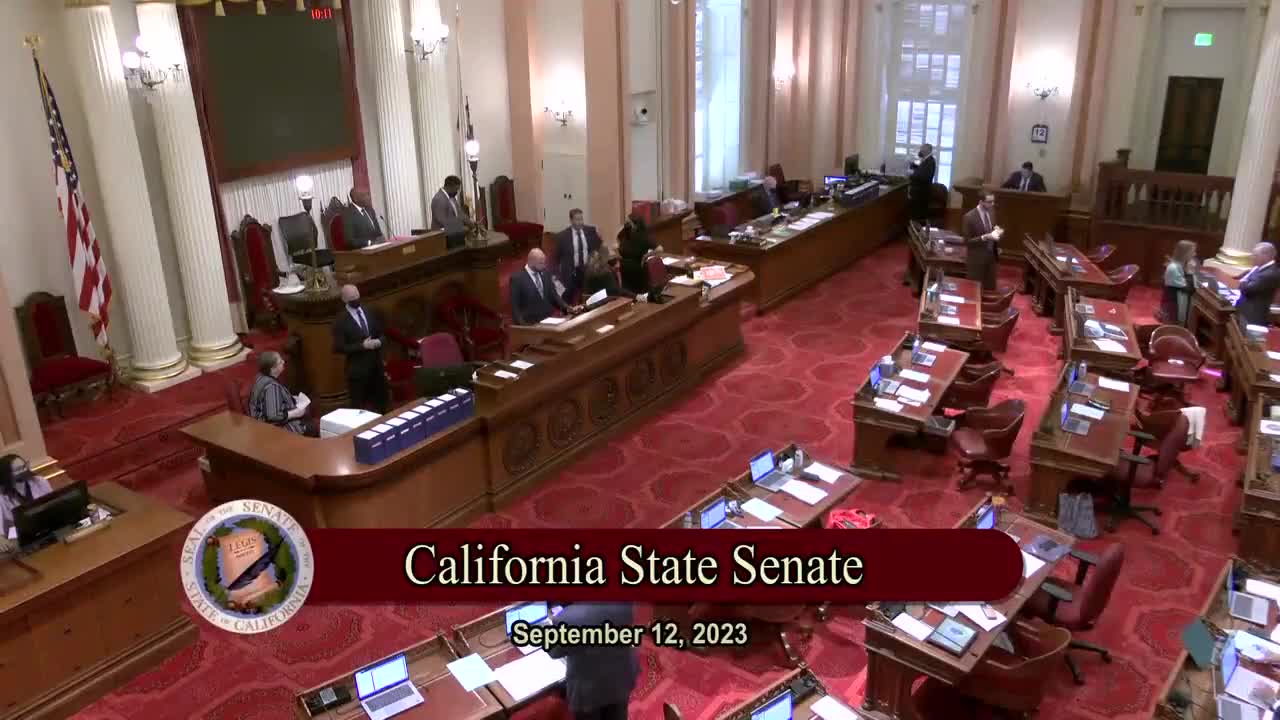 2MIN
Senate Floor
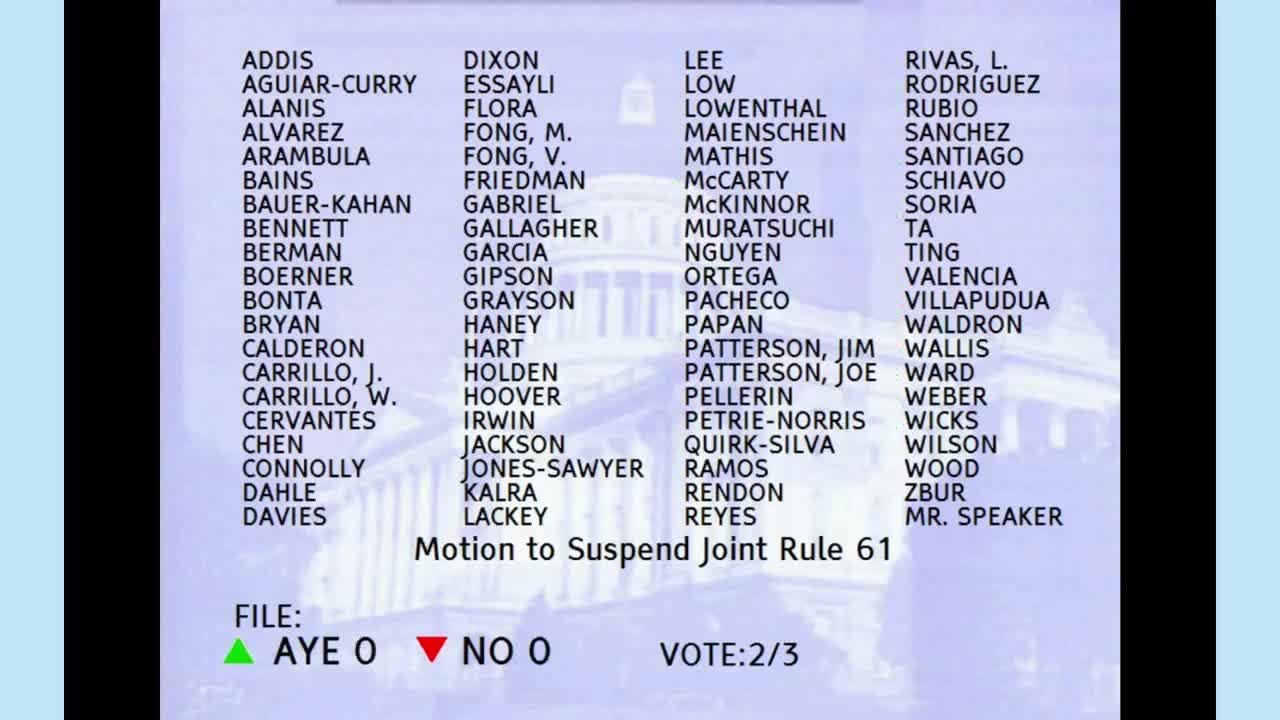 1MIN
Assembly Floor
 3MIN
Assembly Standing Committee on Appropriations
 13MIN
Assembly Standing Committee on Housing and Community Development
 11MIN
Assembly Standing Committee on Local Government
 3MIN
Senate Floor
 22MIN
Senate Standing Committee on Governance and Finance
Bill Author