SB 357: Vehicles: physician and surgeon reporting.
- Session Year: 2023-2024
- House: Senate
- Latest Version Date: 2024-08-23
Current Status:
Failed
(2024-09-28: In Senate. Consideration of Governor's veto pending.)
Introduced
In Committee
First Chamber
In Committee
Second Chamber
Enacted
What does this bill do?
From 2030 to 2037 the bill lets doctors directly report to the DMV, on a discretionary basis, patients age 15 or older (14 with a junior permit) whom the doctor reasonably believes have a condition likely to impair driving, and it requires reporting for patients diagnosed with Alzheimer’s disease or related disorders. It shields health care providers from civil or criminal liability for making or not making those reports, directs the DMV and public health experts to guide and study the change, and then reverts to the prior mandatory reporting system.
The summary is provided by generative AI which can make mistakes. For original language, please view the details in the table below.
Existing law requires a physician and surgeon to report in writing immediately to the local health officer, the name, date of birth, and address of every patient at least 14 years of age or older whom the physician and surgeon has diagnosed as having a disorder characterized by lapses of consciousness. Existing law requires the local health officer to report this information in writing to the Department of Motor Vehicles. Existing law authorizes the department to refuse to issue to, or renew a drivers license of, a person who has a disorder characterized by lapses of consciousness or who has experienced, within the last 3 years, either a lapse of consciousness or an episode of marked confusion caused by any condition that may bring about recurrent lapses.
This bill would delete these existing provisions on January 1, 2030, and instead would authorize, until January 1, 2037, a physician and surgeon to report in writing immediately to the department the name, date of birth, and address of every patient at least 15 years of age, or 14 years of age if the patient has a junior permit, whom the physician and surgeon has diagnosed as having any condition severe enough to be likely to impair the patients ability to operate a motor vehicle if a physician and surgeon reasonably and in good faith believes that reporting the patient will serve the public interest. This bill would require a physician and surgeon to report in writing every above-described patient whom the physician and surgeon has diagnosed as having Alzheimers disease or a related disorder.
This bill would also require, until January 1, 2037, the department, in cooperation with the State Department of Public Health, to guide reporting so that diagnosed cases reported are only those where there is reason to believe that the patients conditions are likely to impair their ability to operate a motor vehicle. The bill would also exempt, until January 1, 2037, a health care provider or health care entity from specified liability, including, among others, civil or criminal liability, for making or not making, or in relation to or arising from making or not making, the report.
This bill would require the Department of Motor Vehicles, by January 1, 2035, to submit a report to the Legislature evaluating the impact of transitioning to a discretionary reporting system. The bill would require the departments report, among other things, to compare the number of reports submitted by physicians and surgeons to the department, before and after this transition. The bill would repeal the departments reporting requirement on January 1, 2037.
This bill would, beginning on January 1, 2037, revert to the physician and surgeon reporting requirements in existing law, except the bill would provide a specific definition of disorders characterized by lapses of consciousness.
Existing law requires a physician and surgeon to report in writing immediately to the local health officer, the name, date of birth, and address of every patient at least 14 years of age or older whom the physician and surgeon has diagnosed as having a disorder characterized by lapses of consciousness. Existing law requires the local health officer to report this information in writing to the Department of Motor Vehicles. Existing law authorizes the department to refuse to issue to, or renew a drivers license of, a person who has a disorder characterized by lapses of consciousness or who has experienced, within the last 3 years, either a lapse of consciousness or an episode of marked confusion caused by any condition that may bring about recurrent lapses.
This bill would delete these existing provisions on January 1, 2030, and instead would authorize, until January 1, 2029, January 1, 2037, a physician and surgeon to report in writing immediately to the department the name, date of birth, and address of every patient at least 15 years of age, or 14 years of age if the patient has a junior permit, whom the physician and surgeon has diagnosed as having any physical or mental disability, disease, or disorder that could affect the safe operation of a motor vehicle, condition severe enough to be likely to impair the patients ability to operate a motor vehicle if a physician and surgeon reasonably and in good faith believes that reporting the patient will serve the public interest. This bill would require a physician and surgeon to report in writing every above-described patient whom the physician and surgeon has diagnosed as having Alzheimers disease or a related disorder.
This bill would also require, until January 1, 2029, January 1, 2037, the department, in cooperation with the State Department of Public Health and in consultation with appropriate professional medical organizations, Health, to guide reporting so that diagnosed cases reported are only those where there is reason to believe that the patients conditions are likely to impair their ability to operate a motor vehicle. The bill would also exempt, until January 1, 2029, January 1, 2037, a health care provider or health care entity from specified liability, including, among others, civil or criminal liability, for making or not making, or in relation to or arising from making or not making, the report.
This bill would require the Department of Motor Vehicles, by January 1, 2027, 2035, to submit a report to the Legislature evaluating the impact of transitioning to a discretionary reporting system. The bill would require the departments report, among other things, to compare the number of reports submitted by physicians and surgeons to the department, before and after this transition. The bill would repeal the departments reporting requirement on January 1, 2029. January 1, 2037.
This bill would would, beginning on January 1, 2029, January 1, 2037, revert to the physician and surgeon reporting requirements in existing law, except the bill would provide a specific definition of disorders characterized by lapses of consciousness.
Existing law requires a physician and surgeon to report in writing immediately to the local health officer, the name, date of birth, and address of every patient at least 14 years of age or older whom the physician and surgeon has diagnosed as having a disorder characterized by lapses of consciousness. Existing law requires the local health officer to report this information in writing to the Department of Motor Vehicles. Existing law authorizes the department to refuse to issue to, or renew a drivers license of, a person who has a disorder characterized by lapses of consciousness or who has experienced, within the last 3 years, either a lapse of consciousness or an episode of marked confusion caused by any condition that may bring about recurrent lapses.
This bill would delete these existing provisions and instead would authorize, until January 1, 2029, a physician and surgeon to report in writing immediately to the department the name, date of birth, and address of every patient at least 15 years of age, or 14 years of age if the patient has a junior permit, whom the physician and surgeon has diagnosed as having any physical or mental disability, disease, or disorder that could affect the safe operation of a motor vehicle, if a physician and surgeon reasonably and in good faith believes that reporting the patient will serve the public interest.
This bill would also require, until January 1, 2029, the department, in cooperation with the State Department of Public Health and in consultation with appropriate professional medical organizations, to guide reporting so that diagnosed cases reported are only those where there is reason to believe that the patients conditions are likely to impair their ability to operate a motor vehicle. The bill would also exempt, until January 1, 2029, a health care provider or health care entity from specified liability, including, among others, civil or criminal liability, for making or not making, or in relation to or arising from making or not making, the report.
This bill would require the Department of Motor Vehicles, by January 1, 2027, to submit a report to the Legislature evaluating the impact of transitioning to a discretionary reporting system. The bill would require the departments report, among other things, to compare the number of reports submitted by physicians and surgeons to the department, before and after this transition. The bill would repeal the departments reporting requirement on January 1, 2029.
This bill would beginning on January 1, 2029, revert to the physician and surgeon reporting requirements in existing law, except the bill would provide a specific definition of disorders characterized by lapses of consciousness.
Existing law requires a physician and surgeon to report in writing immediately to the local health officer, the name, date of birth, and address of every patient at least 14 years of age or older whom the physician and surgeon has diagnosed as having a disorder characterized by lapses of consciousness. Existing law requires the local health officer to report this information in writing to the Department of Motor Vehicles. Existing law authorizes the department to refuse to issue to, or renew a drivers license of, a person who has a disorder characterized by lapses of consciousness or who has experienced, within the last 3 years, either a lapse of consciousness or an episode of marked confusion caused by any condition that may bring about recurrent lapses.
This bill would delete these existing provisions and instead would authorize authorize, until January 1, 2029, a physician and surgeon to report in writing immediately to the department the name, date of birth, and address of every patient at least 15 years of age, or 14 years of age if the patient has a junior permit, whom the physician and surgeon has diagnosed as having any physical or mental disability, disease, or disorder that could affect the safe operation of a motor vehicle, if a physician and surgeon reasonably and in good faith believes that reporting the patient will serve the public interest.
This bill would also require require, until January 1, 2029, the department, in cooperation with the State Department of Public Health and in consultation with appropriate professional medical organizations, to guide reporting so that diagnosed cases reported are only those where there is reason to believe that the patients conditions are likely to impair their ability to operate a motor vehicle. The bill would also exempt exempt, until January 1, 2029, a health care provider or health care entity from specified liability, including, among others, civil or criminal liability, for making or not making, or in relation to or arising from making or not making, the report.
This bill would require the Department of Motor Vehicles, by January 1, 2027, to submit a report to the Legislature evaluating the impact of transitioning to a discretionary reporting system. The bill would require the departments report, among other things, to compare the number of reports submitted by physicians and surgeons to the department, before and after this transition. The bill would repeal the departments reporting requirement on January 1, 2029.
This bill would beginning on January 1, 2029, revert to the physician and surgeon reporting requirements in existing law, except the bill would provide a specific definition of disorders characterized by lapses of consciousness.
Existing law requires a physician and surgeon to report in writing immediately to the local health officer, the name, date of birth, and address of every patient at least 14 years of age or older whom the physician and surgeon has diagnosed as having a disorder characterized by lapses of consciousness. Existing law requires the local health officer to report this information in writing to the Department of Motor Vehicles. Existing law authorizes the department to refuse to issue to, or renew a drivers license of, a person who has a disorder characterized by lapses of consciousness or who has experienced, within the last 3 years, either a lapse of consciousness or an episode of marked confusion caused by any condition that may bring about recurrent lapses.
This bill would delete these existing provisions and instead would authorize a physician and surgeon to report in writing immediately to the department the name, date of birth, and address of every patient at least 15 years of age, or 14 years of age if the patient has a junior permit, whom the physician and surgeon has diagnosed as having any physical or mental disability, disease, or disorder that could affect the safe operation of a motor vehicle, if a physician and surgeon reasonably and in good faith believes that reporting the patient will serve the public interest. The bill would authorize the department, upon receipt of the report, to make a determination to revoke or suspend a license. The bill would also authorize the department to require a road examination for any licensee reported.
This bill would also require the department, in cooperation with the State Department of Public Health and in consultation with appropriate professional medical organizations, to guide reporting so that diagnosed cases reported are only those where there is reason to believe that the patients conditions are likely to impair their ability to operate a motor vehicle. The bill would also exempt a health care provider or health care entity from specified liability, including, among others, civil or criminal liability, for making or not making, or in relation to or arising from making or not making, the report.
(a)The following provisions may operate to exempt certain records, or portions thereof, from disclosure pursuant to this division:
(1)Parole revocation proceedings, confidentiality of information in reports, Section 3063.5 of the Penal Code.
(2)Passenger fishing boat licenses, records, Section 7923 of the Fish and Game Code.
(3)Paternity, acknowledgment, confidentiality of records, Section 102760 of the Health and Safety Code.
(4)Patient-physician confidential communication, Sections 992 and 994 of the Evidence Code.
(5)Patient records, confidentiality of, Section 123135 of the Health and Safety Code.
(6)Payroll records, confidentiality of, Section 1776 of the Labor Code.
(7)Peace officer personnel records, confidentiality of, Sections 832.7 and 832.8 of the Penal Code.
(8)Penitential communication between penitent and clergy, Sections 1032 and 1033 of the Evidence Code.
(9)Personal Care Services Program, exemption from disclosure for information regarding persons paid by the state to provide personal care services, Section 7926.300 of this code.
(10)Personal Income Tax, disclosure of information, Article 2 (commencing with Section 19542) of Chapter 7 of Part 10.2 of Division 2 of the Revenue and Taxation Code.
(11)Personal information, Information Practices Act, prohibitions against disclosure by state agencies, Sections 1798.24 and 1798.75 of the Civil Code.
(12)Personal information, subpoena of records containing, Section 1985.4 of the Code of Civil Procedure.
(13)Personal representative, confidentiality of personal representatives birthdate and drivers license number, Section 8404 of the Probate Code.
(14)Persons formerly classified as mentally abnormal sex offenders committed to a state hospital, confidentiality of records, Section 4135 of the Welfare and Institutions Code.
(15)Persons with mental health disorders, court-ordered evaluation, confidentiality of reports, Section 5202 of the Welfare and Institutions Code.
(16)Persons with mental health disorders, confidentiality of written consent to detainment, Section 5326.4 of the Welfare and Institutions Code.
(17)Persons with mental health disorders voluntarily detained and receiving services, confidentiality of records and information, Sections 5328, 5328.15, 5328.2, 5328.4, 5328.8, and 5328.9 of the Welfare and Institutions Code.
(18)Persons with mental health disorders, weapons restrictions, confidentiality of information about, Section 8103 of the Welfare and Institutions Code.
(19)Petition signatures, Section 18650 of the Elections Code.
(20)Petroleum supply and pricing, confidential information, Sections 25364 and 25366 of the Public Resources Code.
(21)Pharmacist, alcohol or dangerous drug diversion and rehabilitation records, confidentiality of, Section 4372 of the Business and Professions Code.
(22)Physical therapist or assistant, records of dangerous drug or alcohol diversion and rehabilitation, confidentiality of, Section 2667 of the Business and Professions Code.
(23)Physical or mental condition or conviction of controlled substance offense, records in Department of Motor Vehicles, confidentiality of, Section 1808.5 of the Vehicle Code.
(24)Physician assistant, alcohol or dangerous drug diversion and rehabilitation records, confidentiality of, Section 3534.7 of the Business and Professions Code.
(25)Physician competency examination, confidentiality of reports, Section 2294 of the Business and Professions Code.
(26)Physicians and surgeons, confidentiality of reports of patients with a lapse of consciousness disorder, Section 103900 of the Health and Safety Code.
(27)Physician Services Account, confidentiality of patient names in claims, Section 16956 of the Welfare and Institutions Code.
(28)Pilots, confidentiality of personal information, Section 1157.1 of the Harbors and Navigation Code.
(29)California Pollution Control Financing Authority, financial data submitted to, Section 7924.505 of this code.
(30)Postmortem or autopsy photographs, Section 129 of the Code of Civil Procedure.
(b)This section shall remain in effect until January 1, 2030, and as of that date is repealed.
SEC. 2.Section 7930.180 is added to the Government Code, to read:7930.180.(a) The following provisions may operate to exempt certain records, or portions thereof, from disclosure pursuant to this division:
(1)Parole revocation proceedings, confidentiality of information in reports, Section 3063.5 of the Penal Code.
(2)Passenger fishing boat licenses, records, Section 7923 of the Fish and Game Code.
(3)Paternity, acknowledgment, confidentiality of records, Section 102760 of the Health and Safety Code.
(4)Patient-physician confidential communication, Sections 992 and 994 of the Evidence Code.
(5)Patient records, confidentiality of, Section 123135 of the Health and Safety Code.
(6)Payroll records, confidentiality of, Section 1776 of the Labor Code.
(7)Peace officer personnel records, confidentiality of, Sections 832.7 and 832.8 of the Penal Code.
(8)Penitential communication between penitent and clergy, Sections 1032 and 1033 of the Evidence Code.
(9)Personal Care Services Program, exemption from disclosure for information regarding persons paid by the state to provide personal care services, Section 7923.300 of this code.
(10)Personal Income Tax, disclosure of information, Article 2 (commencing with Section 19542) of Chapter 7 of Part 10.2 of Division 2 of the Revenue and Taxation Code.
(11)Personal information, Information Practices Act, prohibitions against disclosure by state agencies, Sections 1798.24 and 1798.75 of the Civil Code.
(12)Personal information, subpoena of records containing, Section 1985.4 of the Code of Civil Procedure.
(13)Personal representative, confidentiality of personal representatives birthdate and drivers license number, Section 8404 of the Probate Code.
(14)Persons formerly classified as mentally abnormal sex offenders committed to a state hospital, confidentiality of records, Section 4135 of the Welfare and Institutions Code.
(15)Persons with mental health disorders, court-ordered evaluation, confidentiality of reports, Section 5202 of the Welfare and Institutions Code.
(16)Persons with mental health disorders, confidentiality of written consent to detainment, Section 5326.4 of the Welfare and Institutions Code.
(17)Persons with mental health disorders voluntarily detained and receiving services, confidentiality of records and information, Sections 5328, 5328.15, 5328.2, 5328.4, 5328.8, and 5328.9 of the Welfare and Institutions Code.
(18)Persons with mental health disorders, weapons restrictions, confidentiality of information about, Section 8103 of the Welfare and Institutions Code.
(19)Petition signatures, Section 18650 of the Elections Code.
(20)Petroleum supply and pricing, confidential information, Sections 25364 and 25366 of the Public Resources Code.
(21)Pharmacist, alcohol or dangerous drug diversion and rehabilitation records, confidentiality of, Section 4372 of the Business and Professions Code.
(22)Physical therapist or assistant, records of dangerous drug or alcohol diversion and rehabilitation, confidentiality of, Section 2667 of the Business and Professions Code.
(23)Physical or mental condition or conviction of controlled substance offense, records in Department of Motor Vehicles, confidentiality of, Section 1808.5 of the Vehicle Code.
(24)Physician assistant, alcohol or dangerous drug diversion and rehabilitation records, confidentiality of, Section 3534.7 of the Business and Professions Code.
(25)Physician competency examination, confidentiality of reports, Section 2294 of the Business and Professions Code.
(26)Physicians and surgeons, confidentiality of reports of patients, Sections 13030 and 13030.5 of the Vehicle Code.
(27)Physician Services Account, confidentiality of patient names in claims, Section 16956 of the Welfare and Institutions Code.
(28)Pilots, confidentiality of personal information, Section 1157.1 of the Harbors and Navigation Code.
(29)California Pollution Control Financing Authority, financial data submitted to, Section 7924.505 of this code.
(30)Postmortem or autopsy photographs, Section 129 of the Code of Civil Procedure.
(b)This section shall become operative on January 1, 2030.
SEC. 3.Section 103900 of the Health and Safety Code is amended to read:103900.(a)Every physician and surgeon shall report immediately to the local health officer in writing, the name, date of birth, and address of every patient at least 14 years of age or older whom the physician and surgeon has diagnosed as having a case of a disorder characterized by lapses of consciousness. However, if a physician and surgeon reasonably and in good faith believes that the reporting of a patient will serve the public interest, he or she may report a patients condition even if it may not be required under the departments definition of disorders characterized by lapses of consciousness pursuant to subdivision (d).
(b)The local health officer shall report in writing to the Department of Motor Vehicles the name, age, and address, of every person reported to it as a case of a disorder characterized by lapses of consciousness.
(c)These reports shall be for the information of the Department of Motor Vehicles in enforcing the Vehicle Code, and shall be kept confidential and used solely for the purpose of determining the eligibility of any person to operate a motor vehicle on the highways of this state.
(d)The department, in cooperation with the Department of Motor Vehicles, shall define disorders characterized by lapses of consciousness based upon existing clinical standards for that definition for purposes of this section and shall include Alzheimers disease and those related disorders that are severe enough to be likely to impair a persons ability to operate a motor vehicle in the definition. The department, in cooperation with the Department of Motor Vehicles, shall list those circumstances that shall not require reporting pursuant to subdivision (a) because the patient is unable to ever operate a motor vehicle or is otherwise unlikely to represent a danger that requires reporting. The department shall consult with professional medical organizations whose members have specific expertise in the diagnosis and treatment of those disorders in the development of the definition of what constitutes a disorder characterized by lapses of consciousness as well as definitions of functional severity to guide reporting so that diagnosed cases reported pursuant to this section are only those where there is reason to believe that the patients conditions are likely to impair their ability to operate a motor vehicle. The department shall complete the definition on or before January 1, 1992.
(e)The Department of Motor Vehicles shall, in consultation with the professional medical organizations specified in subdivision (d), develop guidelines designed to enhance the monitoring of patients affected with disorders specified in this section in order to assist with the patients compliance with restrictions imposed by the Department of Motor Vehicles on the patients licenses to operate a motor vehicle. The guidelines shall be completed on or before January 1, 1992.
(f)A physician and surgeon who reports a patient diagnosed as a case of a disorder characterized by lapses of consciousness pursuant to this section shall not be civilly or criminally liable to any patient for making any report required or authorized by this section.
(g)This section shall remain in effect until January 1, 2030, and as of that date is repealed.
SEC. 4.Section 12806 of the Vehicle Code is amended to read:12806.The department may refuse to issue to, or renew a drivers license of, any person:
(a)Who is rendered incapable of safely operating a motor vehicle because of alcoholism, excessive and chronic use of alcoholic beverages, or addiction to, or habitual use of, any drug.
(b)Who is addicted to the use of narcotic drugs unless the person is participating in a narcotic treatment program approved pursuant to Article 3 (commencing with Section 11875) of Chapter 1 of Part 3 of Division 10.5 of the Health and Safety Code, in which case the person may be issued a probationary license, subject to reasonable terms and conditions, if that drug usage does not affect the persons ability to exercise reasonable and ordinary control in operating a motor vehicle on the highway.
(c)Who has any physical or mental disability, disease, or disorder that could affect the safe operation of a motor vehicle unless the department has medical information that indicates the person may safely operate a motor vehicle. In making its determination, the department may rely on any relevant information available to the department.
SEC. 5.Article 7 (commencing with Section 13030) is added to Chapter 1 of Division 6 of the Vehicle Code, to read:7.Physician and Surgeon Reporting of Medical Conditions13030.(a)Commencing January 1, 2030, a physician and surgeon may report immediately to the Department of Motor Vehicles, in writing, the name, date of birth, and address of every patient at least 15 years of age or older, or 14 years of age if the patient has a junior permit, whom the physician and surgeon has diagnosed as having any condition severe enough to be likely to impair their ability to operate a motor vehicle if a physician and surgeon reasonably and in good faith believes that reporting the patient will serve the public interest. A physician and surgeon shall report immediately to the department in writing the name, date of birth, and address of every patient at least 15 years of age or older, or 14 years of age if the patient has a junior permit, whom the physician and surgeon has diagnosed as having a case of Alzheimers disease or related disorders.
(b)A physician and surgeon who reports a patient pursuant to this article shall contemporaneously complete and transmit to the department the form prepared by the department for this purpose.
(c)The reports transmitted pursuant to this article shall be for use by the department only, and shall be kept confidential and used solely by the department for the purpose of determining the eligibility of any person to operate a motor vehicle on the highways of this state, or for the purpose of a bona fide research project, if the data is solely provided by the department in anonymous form.
(d)The department, in cooperation with the State Department of Public Health, shall consult with professional medical organizations to guide reporting so that diagnosed cases reported pursuant to this section are only those where there is reason to believe that the patients conditions are likely to impair their ability to operate a motor vehicle.
(e)A health care provider or health care entity is not subject to civil, criminal, administrative, licensing, disciplinary, employment, credentialing, professional discipline, contractual liability, or medical staff action, sanction, or penalty or other liability for making or not making, or in relation to or arising from making or not making, a report authorized pursuant to this section.
(f)By January 1, 2035, the department shall submit to the Legislature a report evaluating the impact of transitioning to a discretionary reporting system for medical conditions. This report shall include a comparison of the number of reports submitted by physicians and surgeons to the department and the types of conditions reported before and after this transition. The report shall also include an analysis of the crash rates of individuals reported under the discretionary reporting system. A report submitted pursuant to this subdivision shall be submitted in compliance with Section 9795 of the Government Code.
(g)This section shall remain in effect only until January 1, 2037, and as of that date is repealed.
13030.5.(a)Every physician and surgeon shall report immediately to the local health officer in writing, the name, date of birth, and address of every patient at least 14 years of age or older whom the physician and surgeon has diagnosed as having a case of a disorder characterized by lapses of consciousness. However, if a physician and surgeon reasonably and in good faith believes that the reporting of a patient will serve the public best interest, they may report a patients condition even if it may not be required under the definition of disorders characterized by lapses of consciousness pursuant to subdivision (d).
(b)The local health officer shall report in writing to the Department of Motor Vehicles the name, age, and address, of every person reported to it as a case of a disorder characterized by lapses of consciousness.
(c)These reports shall be for the information of the Department of Motor Vehicles in enforcing the Vehicle Code, and shall be kept confidential and used solely for the purpose of determining the eligibility of any person to operate a motor vehicle on the highways of this state.
(d)As used in this section, disorders characterized by lapses of consciousness means those medical conditions that involve all of the following:
(1)A loss of consciousness or a marked reduction of alertness or responsiveness to external stimuli.
(2)The inability to perform one or more activities of daily living.
(3)The impairment of the sensory motor functions used to operate a motor vehicle.
(e)Examples of medical conditions that do not always, but may progress to the level of functional severity described in subdivision (d) include Alzheimers disease and related disorders, seizure disorders, brain tumors, narcolepsy, sleep apnea, and abnormal metabolic states, including hypo- and hyperglycemia associated with diabetes.
(f)A physician and surgeon who reports a patient diagnosed as a case of a disorder characterized by lapses of consciousness pursuant to this section shall not be civilly or criminally liable to any patient for making any report required or authorized by this section.
(g)This section shall become operative on January 1, 2037.
(a)The following provisions may operate to exempt certain records, or portions thereof, from disclosure pursuant to this division:
Parole(1)Parole revocation proceedings, confidentiality of information in reports, Section 3063.5, 3063.5 of the Penal Code.
Passenger(2)Passenger fishing boat licenses, records, Section 7923, 7923 of the Fish and Game Code.
Paternity,(3)Paternity, acknowledgment, confidentiality of records, Section 102760, 102760 of the Health and Safety Code.
Patient-physician(4)Patient-physician confidential communication, Sections 992 and 994, 994 of the Evidence Code.
Patient(5)Patient records, confidentiality of, Section 123135, 123135 of the Health and Safety Code.
Payroll(6)Payroll records, confidentiality of, Section 1776, 1776 of the Labor Code.
Peace(7)Peace officer personnel records, confidentiality of, Sections 832.7 and 832.8, 832.8 of the Penal Code.
Penitential(8)Penitential communication between penitent and clergy, Sections 1032 and 1033, 1033 of the Evidence Code.
Personal(9)Personal Care Services Program, exemption from disclosure for information regarding persons paid by the state to provide personal care services, Section 7926.300, 7926.300 of this code.
Personal(10)Personal Income Tax, disclosure of information, Article 2 (commencing with Section 19542) of Chapter 7 of Part 10.2 of Division 2, 2 of the Revenue and Taxation Code.
Personal(11)Personal information, Information Practices Act, prohibitions against disclosure by state agencies, Sections 1798.24 and 1798.75, 1798.75 of the Civil Code.
Personal(12)Personal information, subpoena of records containing, Section 1985.4, 1985.4 of the Code of Civil Procedure.
Personal(13)Personal representative, confidentiality of personal representatives birthdate and drivers license number, Section 8404, 8404 of the Probate Code.
Persons(14)Persons formerly classified as mentally abnormal sex offenders committed to a state hospital, confidentiality of records, Section 4135, 4135 of the Welfare and Institutions Code.
Persons(15)Persons with mental health disorders, court-ordered evaluation, confidentiality of reports, Section 5202, 5202 of the Welfare and Institutions Code.
Persons(16)Persons with mental health disorders, confidentiality of written consent to detainment, Section 5326.4, 5326.4 of the Welfare and Institutions Code.
Persons(17)Persons with mental health disorders voluntarily detained and receiving services, confidentiality of records and information, Sections 5328, 5328.15, 5328.2, 5328.4, 5328.8, and 5328.9, 5328.9 of the Welfare and Institutions Code.
Persons(18)Persons with mental health disorders, weapons restrictions, confidentiality of information about, Section 8103, 8103 of the Welfare and Institutions Code.
Petition(19)Petition signatures, Section 18650, 18650 of the Elections Code.
Petroleum(20)Petroleum supply and pricing, confidential information, Sections 25364 and 25366, 25366 of the Public Resources Code.
Pharmacist,(21)Pharmacist, alcohol or dangerous drug diversion and rehabilitation records, confidentiality of, Section 4372, 4372 of the Business and Professions Code.
Physical(22)Physical therapist or assistant, records of dangerous drug or alcohol diversion and rehabilitation, confidentiality of, Section 2667, 2667 of the Business and Professions Code.
Physical(23)Physical or mental condition or conviction of controlled substance offense, records in Department of Motor Vehicles, confidentiality of, Section 1808.5, 1808.5 of the Vehicle Code.
Physician(24)Physician assistant, alcohol or dangerous drug diversion and rehabilitation records, confidentiality of, Section 3534.7, 3534.7 of the Business and Professions Code.
Physician(25)Physician competency examination, confidentiality of reports, Section 2294, 2294 of the Business and Professions Code.
Physicians(26)Physicians and surgeons, confidentiality of reports of patients with a lapse of consciousness disorder, Section 103900, 103900 of the Health and Safety Code.
Physician(27)Physician Services Account, confidentiality of patient names in claims, Section 16956, 16956 of the Welfare and Institutions Code.
Pilots,(28)Pilots, confidentiality of personal information, Section 1157.1, 1157.1 of the Harbors and Navigation Code.
Pollution(29)California Pollution Control Financing Authority, financial data submitted to, Section 7924.505, 7924.505 of this code.
Postmortem(30)Postmortem or autopsy photos, photographs, Section 129, 129 of the Code of Civil Procedure.
(b)This section shall remain in effect until January 1, 2030, and as of that date is repealed.
SEC. 2.Section 7930.180 is added to the Government Code, to read:7930.180.(a) The following provisions may operate to exempt certain records, or portions thereof, from disclosure pursuant to this division:
(1)Parole revocation proceedings, confidentiality of information in reports, Section 3063.5 of the Penal Code.
(2)Passenger fishing boat licenses, records, Section 7923 of the Fish and Game Code.
(3)Paternity, acknowledgment, confidentiality of records, Section 102760 of the Health and Safety Code.
(4)Patient-physician confidential communication, Sections 992 and 994 of the Evidence Code.
(5)Patient records, confidentiality of, Section 123135 of the Health and Safety Code.
(6)Payroll records, confidentiality of, Section 1776 of the Labor Code.
(7)Peace officer personnel records, confidentiality of, Sections 832.7 and 832.8 of the Penal Code.
(8)Penitential communication between penitent and clergy, Sections 1032 and 1033 of the Evidence Code.
(9)Personal Care Services Program, exemption from disclosure for information regarding persons paid by the state to provide personal care services, Section 7923.300 of this code.
(10)Personal Income Tax, disclosure of information, Article 2 (commencing with Section 19542) of Chapter 7 of Part 10.2 of Division 2 of the Revenue and Taxation Code.
(11)Personal information, Information Practices Act, prohibitions against disclosure by state agencies, Sections 1798.24 and 1798.75 of the Civil Code.
(12)Personal information, subpoena of records containing, Section 1985.4 of the Code of Civil Procedure.
(13)Personal representative, confidentiality of personal representatives birthdate and drivers license number, Section 8404 of the Probate Code.
(14)Persons formerly classified as mentally abnormal sex offenders committed to a state hospital, confidentiality of records, Section 4135 of the Welfare and Institutions Code.
(15)Persons with mental health disorders, court-ordered evaluation, confidentiality of reports, Section 5202 of the Welfare and Institutions Code.
(16)Persons with mental health disorders, confidentiality of written consent to detainment, Section 5326.4 of the Welfare and Institutions Code.
(17)Persons with mental health disorders voluntarily detained and receiving services, confidentiality of records and information, Sections 5328, 5328.15, 5328.2, 5328.4, 5328.8, and 5328.9 of the Welfare and Institutions Code.
(18)Persons with mental health disorders, weapons restrictions, confidentiality of information about, Section 8103 of the Welfare and Institutions Code.
(19)Petition signatures, Section 18650 of the Elections Code.
(20)Petroleum supply and pricing, confidential information, Sections 25364 and 25366 of the Public Resources Code.
(21)Pharmacist, alcohol or dangerous drug diversion and rehabilitation records, confidentiality of, Section 4372 of the Business and Professions Code.
(22)Physical therapist or assistant, records of dangerous drug or alcohol diversion and rehabilitation, confidentiality of, Section 2667 of the Business and Professions Code.
(23)Physical or mental condition or conviction of controlled substance offense, records in Department of Motor Vehicles, confidentiality of, Section 1808.5 of the Vehicle Code.
(24)Physician assistant, alcohol or dangerous drug diversion and rehabilitation records, confidentiality of, Section 3534.7 of the Business and Professions Code.
(25)Physician competency examination, confidentiality of reports, Section 2294 of the Business and Professions Code.
(26)Physicians and surgeons, confidentiality of reports of patients, Sections 13030 and 13030.5 of the Vehicle Code.
(27)Physician Services Account, confidentiality of patient names in claims, Section 16956 of the Welfare and Institutions Code.
(28)Pilots, confidentiality of personal information, Section 1157.1 of the Harbors and Navigation Code.
(29)California Pollution Control Financing Authority, financial data submitted to, Section 7924.505 of this code.
(30)Postmortem or autopsy photographs, Section 129 of the Code of Civil Procedure.
(b)This section shall become operative on January 1, 2030.
SEC. 3.Section 103900 of the Health and Safety Code is amended to read:103900.(a)Every physician and surgeon shall report immediately to the local health officer in writing, the name, date of birth, and address of every patient at least 14 years of age or older whom the physician and surgeon has diagnosed as having a case of a disorder characterized by lapses of consciousness. However, if a physician and surgeon reasonably and in good faith believes that the reporting of a patient will serve the public interest, he or she may report a patients condition even if it may not be required under the departments definition of disorders characterized by lapses of consciousness pursuant to subdivision (d).
(b)The local health officer shall report in writing to the Department of Motor Vehicles the name, age, and address, of every person reported to it as a case of a disorder characterized by lapses of consciousness.
(c)These reports shall be for the information of the Department of Motor Vehicles in enforcing the Vehicle Code, and shall be kept confidential and used solely for the purpose of determining the eligibility of any person to operate a motor vehicle on the highways of this state.
(d)The department, in cooperation with the Department of Motor Vehicles, shall define disorders characterized by lapses of consciousness based upon existing clinical standards for that definition for purposes of this section and shall include Alzheimers disease and those related disorders that are severe enough to be likely to impair a persons ability to operate a motor vehicle in the definition. The department, in cooperation with the Department of Motor Vehicles, shall list those circumstances that shall not require reporting pursuant to subdivision (a) because the patient is unable to ever operate a motor vehicle or is otherwise unlikely to represent a danger that requires reporting. The department shall consult with professional medical organizations whose members have specific expertise in the diagnosis and treatment of those disorders in the development of the definition of what constitutes a disorder characterized by lapses of consciousness as well as definitions of functional severity to guide reporting so that diagnosed cases reported pursuant to this section are only those where there is reason to believe that the patients conditions are likely to impair their ability to operate a motor vehicle. The department shall complete the definition on or before January 1, 1992.
(e)The Department of Motor Vehicles shall, in consultation with the professional medical organizations specified in subdivision (d), develop guidelines designed to enhance the monitoring of patients affected with disorders specified in this section in order to assist with the patients compliance with restrictions imposed by the Department of Motor Vehicles on the patients licenses to operate a motor vehicle. The guidelines shall be completed on or before January 1, 1992.
(f)A physician and surgeon who reports a patient diagnosed as a case of a disorder characterized by lapses of consciousness pursuant to this section shall not be civilly or criminally liable to any patient for making any report required or authorized by this section.
(g)This section shall remain in effect until January 1, 2030, and as of that date is repealed.
SEC. 3.SEC. 4.Section 12806 of the Vehicle Code is amended to read:12806.The department may refuse to issue to, or renew a drivers license of, any person:
(a)Who is rendered incapable of safely operating a motor vehicle because of alcoholism, excessive and chronic use of alcoholic beverages, or addiction to, or habitual use of, any drug.
(b)Who is addicted to the use of narcotic drugs unless the person is participating in a narcotic treatment program approved pursuant to Article 3 (commencing with Section 11875) of Chapter 1 of Part 3 of Division 10.5 of the Health and Safety Code, in which case the person may be issued a probationary license, subject to reasonable terms and conditions, if that drug usage does not affect the persons ability to exercise reasonable and ordinary control in operating a motor vehicle on the highway.
(c)Who has any physical or mental disability, disease, or disorder that could affect the safe operation of a motor vehicle unless the department has medical information that indicates the person may safely operate a motor vehicle. In making its determination, the department may rely on any relevant information available to the department.
SEC. 4.SEC. 5.Article 7 (commencing with Section 13030) is added to Chapter 1 of Division 6 of the Vehicle Code, to read:7.Physician and Surgeon Reporting of Medical Conditions13030.(a)A Commencing January 1, 2030, a physician and surgeon may report immediately to the Department of Motor Vehicles, in writing, the name, date of birth, and address of every patient at least 15 years of age or older, or 14 years of age if the patient has a junior permit, whom the physician and surgeon has diagnosed as having any physical or mental disability, disease, or disorder that could affect the safe operation of a motor vehicle, any condition severe enough to be likely to impair their ability to operate a motor vehicle if a physician and surgeon reasonably and in good faith believes that reporting the patient will serve the public interest. A physician and surgeon shall report immediately to the department in writing the name, date of birth, and address of every patient at least 15 years of age or older, or 14 years of age if the patient has a junior permit, whom the physician and surgeon has diagnosed as having a case of Alzheimers disease or related disorders.
(b)A physician and surgeon who reports a patient pursuant to this article shall contemporaneously complete and transmit to the department the form prepared by the department for this purpose.
(c)The reports transmitted pursuant to this article shall be for use by the department only, and shall be kept confidential and used solely by the department for the purpose of determining the eligibility of any person to operate a motor vehicle on the highways of this state, or for the purpose of a bona fide research project, if the data is solely provided by the department in anonymous form.
(d)The department, in cooperation with the State Department of Public Health, shall consult with professional medical organizations whose members have specific expertise in the diagnosis and treatment of those physical or mental disabilities, diseases, or disorders that could affect the safe operation of a motor vehicle as well as definitions of functional severity to guide reporting so that diagnosed cases reported pursuant to this section are only those where there is reason to believe that the patients conditions are likely to impair their ability to operate a motor vehicle.
(e)A health care provider or health care entity is not subject to civil, criminal, administrative, licensing, disciplinary, employment, credentialing, professional discipline, contractual liability, or medical staff action, sanction, or penalty or other liability for making or not making, or in relation to or arising from making or not making, a report authorized pursuant to this section.
(f)By January 1, 2027, 2035, the department shall submit to the Legislature a report evaluating the impact of transitioning to a discretionary reporting system for medical conditions. This report shall include a comparison of the number of reports submitted by physicians and surgeons to the department and the types of conditions reported before and after this transition. The report shall also include an analysis of the crash rates of individuals reported under the discretionary reporting system. A report submitted pursuant to this subdivision shall be submitted in compliance with Section 9795 of the Government Code.
(g)This section shall remain in effect only until January 1, 2029, January 1, 2037, and as of that date is repealed.
13030.5.(a)Every physician and surgeon shall report immediately to the local health officer in writing, the name, date of birth, and address of every patient at least 14 years of age or older whom the physician and surgeon has diagnosed as having a case of a disorder characterized by lapses of consciousness. However, if a physician and surgeon reasonably and in good faith believes that the reporting of a patient will serve the public best interest, they may report a patients condition even if it may not be required under the definition of disorders characterized by lapses of consciousness pursuant to subdivision (d).
(b)The local health officer shall report in writing to the Department of Motor Vehicles the name, age, and address, of every person reported to it as a case of a disorder characterized by lapses of consciousness.
(c)These reports shall be for the information of the Department of Motor Vehicles in enforcing the Vehicle Code, and shall be kept confidential and used solely for the purpose of determining the eligibility of any person to operate a motor vehicle on the highways of this state.
(d)As used in this section, disorders characterized by lapses of consciousness means those medical conditions that involve all of the following:
(1)A loss of consciousness or a marked reduction of alertness or responsiveness to external stimuli.
(2)The inability to perform one or more activities of daily living.
(3)The impairment of the sensory motor functions used to operate a motor vehicle.
(e)Examples of medical conditions that do not always, but may progress to the level of functional severity described in subdivision (d) include Alzheimers disease and related disorders, seizure disorders, brain tumors, narcolepsy, sleep apnea, and abnormal metabolic states, including hypo- and hyperglycemia associated with diabetes.
(f)A physician and surgeon who reports a patient diagnosed as a case of a disorder characterized by lapses of consciousness pursuant to this section shall not be civilly or criminally liable to any patient for making any report required or authorized by this section.
(g)This section shall become operative on January 1, 2029. January 1, 2037.
The following provisions may operate to exempt certain records, or portions thereof, from disclosure pursuant to this division:
Parole revocation proceedings, confidentiality of information in reports, Section 3063.5, Penal Code.
Passenger fishing boat licenses, records, Section 7923, Fish and Game Code.
Paternity, acknowledgment, confidentiality of records, Section 102760, Health and Safety Code.
Patient-physician confidential communication, Sections 992 and 994, Evidence Code.
Patient records, confidentiality of, Section 123135, Health and Safety Code.
Payroll records, confidentiality of, Section 1776, Labor Code.
Peace officer personnel records, confidentiality of, Sections 832.7 and 832.8, Penal Code.
Penitential communication between penitent and clergy, Sections 1032 and 1033, Evidence Code.
Personal Care Services Program, exemption from disclosure for information regarding persons paid by the state to provide personal care services, Section 7926.300, this code.
Personal Income Tax, disclosure of information, Article 2 (commencing with Section 19542) of Chapter 7 of Part 10.2 of Division 2, Revenue and Taxation Code.
Personal information, Information Practices Act, prohibitions against disclosure by state agencies, Sections 1798.24 and 1798.75, Civil Code.
Personal information, subpoena of records containing, Section 1985.4, Code of Civil Procedure.
Personal representative, confidentiality of personal representatives birthdate and drivers license number, Section 8404, Probate Code.
Persons formerly classified as mentally abnormal sex offenders committed to a state hospital, confidentiality of records, Section 4135, Welfare and Institutions Code.
Persons with mental health disorders, court-ordered evaluation, confidentiality of reports, Section 5202, Welfare and Institutions Code.
Persons with mental health disorders, confidentiality of written consent to detainment, Section 5326.4, Welfare and Institutions Code.
Persons with mental health disorders voluntarily detained and receiving services, confidentiality of records and information, Sections 5328, 5328.15, 5328.2, 5328.4, 5328.8, and 5328.9, Welfare and Institutions Code.
Persons with mental health disorders, weapons restrictions, confidentiality of information about, Section 8103, Welfare and Institutions Code.
Petition signatures, Section 18650, Elections Code.
Petroleum supply and pricing, confidential information, Sections 25364 and 25366, Public Resources Code.
Pharmacist, alcohol or dangerous drug diversion and rehabilitation records, confidentiality of, Section 4372, Business and Professions Code.
Physical therapist or assistant, records of dangerous drug or alcohol diversion and rehabilitation, confidentiality of, Section 2667, Business and Professions Code.
Physical or mental condition or conviction of controlled substance offense, records in Department of Motor Vehicles, confidentiality of, Section 1808.5, Vehicle Code.
Physician assistant, alcohol or dangerous drug diversion and rehabilitation records, confidentiality of, Section 3534.7, Business and Professions Code.
Physician competency examination, confidentiality of reports, Section 2294, Business and Professions Code.
Physicians and surgeons, confidentiality of reports of patients, Sections 13030 and 13030.5, Vehicle Code.
Physician Services Account, confidentiality of patient names in claims, Section 16956, Welfare and Institutions Code.
Pilots, confidentiality of personal information, Section 1157.1, Harbors and Navigation Code.
California Pollution Control Financing Authority, financial data submitted to, Section 7924.505, this code.
Postmortem or autopsy photos, Section 129, Code of Civil Procedure.
SEC. 2.Section 103900 of the Health and Safety Code is repealed.SEC. 3.Section 12806 of the Vehicle Code is amended to read:12806.The department may refuse to issue to, or renew a drivers license of, any person:
(a)Who is rendered incapable of safely operating a motor vehicle because of alcoholism, excessive and chronic use of alcoholic beverages, or addiction to, or habitual use of, any drug.
(b)Who is addicted to the use of narcotic drugs unless the person is participating in a narcotic treatment program approved pursuant to Article 3 (commencing with Section 11875) of Chapter 1 of Part 3 of Division 10.5 of the Health and Safety Code, in which case the person may be issued a probationary license, subject to reasonable terms and conditions, if that drug usage does not affect the persons ability to exercise reasonable and ordinary control in operating a motor vehicle on the highway.
(c)Who has any physical or mental disability, disease, or disorder that could affect the safe operation of a motor vehicle unless the department has medical information that indicates the person may safely operate a motor vehicle. In making its determination, the department may rely on any relevant information available to the department.
SEC. 4.Article 7 (commencing with Section 13030) is added to Chapter 1 of Division 6 of the Vehicle Code, to read:7.Physician and Surgeon Reporting of Medical Conditions13030.(a)A physician and surgeon may report immediately to the Department of Motor Vehicles, in writing, the name, date of birth, and address of every patient at least 15 years of age or older, or 14 years of age if the patient has a junior permit, whom the physician and surgeon has diagnosed as having any physical or mental disability, disease, or disorder that could affect the safe operation of a motor vehicle, if a physician and surgeon reasonably and in good faith believes that reporting the patient will serve the public interest.
(b)A physician and surgeon who reports a patient pursuant to this article shall contemporaneously complete and transmit to the department the form prepared by the department for this purpose.
(c)The reports transmitted pursuant to this article shall be for use by the department only, and shall be kept confidential and used solely by the department for the purpose of determining the eligibility of any person to operate a motor vehicle on the highways of this state, or for the purpose of a bona fide research project, if the data is solely provided by the department in anonymous form.
(d)The department, in cooperation with the State Department of Public Health, shall consult with professional medical organizations whose members have specific expertise in the diagnosis and treatment of those physical or mental disabilities, diseases, or disorders that could affect the safe operation of a motor vehicle as well as definitions of functional severity to guide reporting so that diagnosed cases reported pursuant to this section are only those where there is reason to believe that the patients conditions are likely to impair their ability to operate a motor vehicle.
(e)A health care provider or health care entity is not subject to civil, criminal, administrative, licensing, disciplinary, employment, credentialing, professional discipline, contractual liability, or medical staff action, sanction, or penalty or other liability for making or not making, or in relation to or arising from making or not making, a report authorized pursuant to this section.
(f)By January 1, 2027, the department shall submit to the Legislature a report evaluating the impact of transitioning to a discretionary reporting system for medical conditions. This report shall include a comparison of the number of reports submitted by physicians and surgeons to the department and the types of conditions reported before and after this transition. The report shall also include an analysis of the crash rates of individuals reported under the discretionary reporting system. A report submitted pursuant to this subdivision shall be submitted in compliance with Section 9795 of the Government Code.
(g)This section shall remain in effect only until January 1, 2029, and as of that date is repealed.
13030.5.(a)Every physician and surgeon shall report immediately to the local health officer in writing, the name, date of birth, and address of every patient at least 14 years of age or older whom the physician and surgeon has diagnosed as having a case of a disorder characterized by lapses of consciousness. However, if a physician and surgeon reasonably and in good faith believes that the reporting of a patient will serve the public best interest, they may report a patients condition even if it may not be required under the definition of disorders characterized by lapses of consciousness pursuant to subdivision (d).
(b)The local health officer shall report in writing to the Department of Motor Vehicles the name, age, and address, of every person reported to it as a case of a disorder characterized by lapses of consciousness.
(c)These reports shall be for the information of the Department of Motor Vehicles in enforcing the Vehicle Code, and shall be kept confidential and used solely for the purpose of determining the eligibility of any person to operate a motor vehicle on the highways of this state.
(d)As used in this section, disorders characterized by lapses of consciousness means those medical conditions that involve all of the following:
(1)A loss of consciousness or a marked reduction of alertness or responsiveness to external stimuli.
(2)The inability to perform one or more activities of daily living.
(3)The impairment of the sensory motor functions used to operate a motor vehicle.
(e)Examples of medical conditions that do not always, but may progress to the level of functional severity described in subdivision (d) include Alzheimers disease and related disorders, seizure disorders, brain tumors, narcolepsy, sleep apnea, and abnormal metabolic states, including hypo- and hyperglycemia associated with diabetes.
(f)A physician and surgeon who reports a patient diagnosed as a case of a disorder characterized by lapses of consciousness pursuant to this section shall not be civilly or criminally liable to any patient for making any report required or authorized by this section.
(g)This section shall become operative on January 1, 2029.
REVISIONS: HeadingLine 3.The following provisions may operate to exempt certain records, or portions thereof, from disclosure pursuant to this division:
Parole revocation proceedings, confidentiality of information in reports, Section 3063.5, Penal Code.
Passenger fishing boat licenses, records, Section 7923, Fish and Game Code.
Paternity, acknowledgment, confidentiality of records, Section 102760, Health and Safety Code.
Patient-physician confidential communication, Sections 992 and 994, Evidence Code.
Patient records, confidentiality of, Section 123135, Health and Safety Code.
Payroll records, confidentiality of, Section 1776, Labor Code.
Peace officer personnel records, confidentiality of, Sections 832.7 and 832.8, Penal Code.
Penitential communication between penitent and clergy, Sections 1032 and 1033, Evidence Code.
Personal Care Services Program, exemption from disclosure for information regarding persons paid by the state to provide personal care services, Section 7926.300, this code.
Personal Income Tax, disclosure of information, Article 2 (commencing with Section 19542) of Chapter 7 of Part 10.2 of Division 2, Revenue and Taxation Code.
Personal information, Information Practices Act, prohibitions against disclosure by state agencies, Sections 1798.24 and 1798.75, Civil Code.
Personal information, subpoena of records containing, Section 1985.4, Code of Civil Procedure.
Personal representative, confidentiality of personal representatives birthdate and drivers license number, Section 8404, Probate Code.
Persons formerly classified as mentally abnormal sex offenders committed to a state hospital, confidentiality of records, Section 4135, Welfare and Institutions Code.
Persons with mental health disorders, court-ordered evaluation, confidentiality of reports, Section 5202, Welfare and Institutions Code.
Persons with mental health disorders, confidentiality of written consent to detainment, Section 5326.4, Welfare and Institutions Code.
Persons with mental health disorders voluntarily detained and receiving services, confidentiality of records and information, Sections 5328, 5328.15, 5328.2, 5328.4, 5328.8, and 5328.9, Welfare and Institutions Code.
Persons with mental health disorders, weapons restrictions, confidentiality of information about, Section 8103, Welfare and Institutions Code.
Petition signatures, Section 18650, Elections Code.
Petroleum supply and pricing, confidential information, Sections 25364 and 25366, Public Resources Code.
Pharmacist, alcohol or dangerous drug diversion and rehabilitation records, confidentiality of, Section 4372, Business and Professions Code.
Physical therapist or assistant, records of dangerous drug or alcohol diversion and rehabilitation, confidentiality of, Section 2667, Business and Professions Code.
Physical or mental condition or conviction of controlled substance offense, records in Department of Motor Vehicles, confidentiality of, Section 1808.5, Vehicle Code.
Physician assistant, alcohol or dangerous drug diversion and rehabilitation records, confidentiality of, Section 3534.7, Business and Professions Code.
Physician competency examination, confidentiality of reports, Section 2294, Business and Professions Code.
Physicians and surgeons, confidentiality of reports of patients, Section 13030, Sections 13030 and 13030.5, Vehicle Code.
Physician Services Account, confidentiality of patient names in claims, Section 16956, Welfare and Institutions Code.
Pilots, confidentiality of personal information, Section 1157.1, Harbors and Navigation Code.
Pollution California Pollution Control Financing Authority, financial data submitted to, Section 7924.505, this code.
Postmortem or autopsy photos, Section 129, Code of Civil Procedure.
SEC. 2.Section 103900 of the Health and Safety Code is repealed.SEC. 3.Section 12806 of the Vehicle Code is amended to read:12806.The department may refuse to issue to, or renew a drivers license of, any person:
(a)Who is rendered incapable of safely operating a motor vehicle because of alcoholism, excessive and chronic use of alcoholic beverages, or addiction to, or habitual use of, any drug.
(b)Who is addicted to the use of narcotic drugs unless the person is participating in a narcotic treatment program approved pursuant to Article 3 (commencing with Section 11875) of Chapter 1 of Part 3 of Division 10.5 of the Health and Safety Code, in which case the person may be issued a probationary license, subject to reasonable terms and conditions, if that drug usage does not affect the persons ability to exercise reasonable and ordinary control in operating a motor vehicle on the highway.
(c)Who has any physical or mental disability, disease, or disorder that could affect the safe operation of a motor vehicle unless the department has medical information that indicates the person may safely operate a motor vehicle. In making its determination, the department may rely on any relevant information available to the department.
SEC. 4.Article 7 (commencing with Section 13030) is added to Chapter 1 of Division 6 of the Vehicle Code, to read:7.Physician and Surgeon Reporting of Medical Conditions13030.(a)A physician and surgeon may report immediately to the Department of Motor Vehicles, in writing, the name, date of birth, and address of every patient at least 15 years of age or older, or 14 years of age if the patient has a junior permit, whom the physician and surgeon has diagnosed as having any physical or mental disability, disease, or disorder that could affect the safe operation of a motor vehicle, if a physician and surgeon reasonably and in good faith believes that reporting the patient will serve the public interest.
(b)A physician and surgeon who reports a patient pursuant to this article shall contemporaneously complete and transmit to the department the form prepared by the department for this purpose.
(c)The reports transmitted pursuant to this article shall be for use by the department only, and shall be kept confidential and used solely by the department for the purpose of determining the eligibility of any person to operate a motor vehicle on the highways of this state, or for the purpose of a bona fide research project, if the data is solely provided by the department in anonymous form.
(d)The department, in cooperation with the State Department of Public Health, shall consult with professional medical organizations whose members have specific expertise in the diagnosis and treatment of those physical or mental disabilities, diseases, or disorders that could affect the safe operation of a motor vehicle as well as definitions of functional severity to guide reporting so that diagnosed cases reported pursuant to this section are only those where there is reason to believe that the patients conditions are likely to impair their ability to operate a motor vehicle.
(e)A health care provider or health care entity is not subject to civil, criminal, administrative, licensing, disciplinary, employment, credentialing, professional discipline, contractual liability, or medical staff action, sanction, or penalty or other liability for making or not making, or in relation to or arising from making or not making, a report pursuant to this section.
(f)By January 1, 2027, the department shall submit to the Legislature a report evaluating the impact of transitioning to a discretionary reporting system for medical conditions. This report shall include a comparison of the number of reports submitted by physicians and surgeons to the department and the types of conditions reported before and after this transition. The report shall also include an analysis of the crash rates of individuals reported under the discretionary reporting system. A report submitted pursuant to this subdivision shall be submitted in compliance with Section 9795 of the Government Code.
(g)This section shall remain in effect only until January 1, 2029, and as of that date is repealed.
13030.5.(a)Every physician and surgeon shall report immediately to the local health officer in writing, the name, date of birth, and address of every patient at least 14 years of age or older whom the physician and surgeon has diagnosed as having a case of a disorder characterized by lapses of consciousness. However, if a physician and surgeon reasonably and in good faith believes that the reporting of a patient will serve the public best interest, they may report a patients condition even if it may not be required under the definition of disorders characterized by lapses of consciousness pursuant to subdivision (d).
(b)The local health officer shall report in writing to the Department of Motor Vehicles the name, age, and address, of every person reported to it as a case of a disorder characterized by lapses of consciousness.
(c)These reports shall be for the information of the Department of Motor Vehicles in enforcing the Vehicle Code, and shall be kept confidential and used solely for the purpose of determining the eligibility of any person to operate a motor vehicle on the highways of this state.
(d)As used in this section, disorders characterized by lapses of consciousness means those medical conditions that involve all of the following:
(1)A loss of consciousness or a marked reduction of alertness or responsiveness to external stimuli.
(2)The inability to perform one or more activities of daily living.
(3)The impairment of the sensory motor functions used to operate a motor vehicle.
(e)Examples of medical conditions that do not always, but may progress to the level of functional severity described in subdivision (d) include Alzheimers disease and related disorders, seizure disorders, brain tumors, narcolepsy, sleep apnea, and abnormal metabolic states, including hypo- and hyperglycemia associated with diabetes.
(f)A physician and surgeon who reports a patient diagnosed as a case of a disorder characterized by lapses of consciousness pursuant to this section shall not be civilly or criminally liable to any patient for making any report required or authorized by this section.
(g)This section shall become operative on January 1, 2029.
The following provisions may operate to exempt certain records, or portions thereof, from disclosure pursuant to this division:
Parole revocation proceedings, confidentiality of information in reports, Section 3063.5, Penal Code.
Passenger fishing boat licenses, records, Section 7923, Fish and Game Code.
Paternity, acknowledgment, confidentiality of records, Section 102760, Health and Safety Code.
Patient-physician confidential communication, Sections 992 and 994, Evidence Code.
Patient records, confidentiality of, Section 123135, Health and Safety Code.
Payroll records, confidentiality of, Section 1776, Labor Code.
Peace officer personnel records, confidentiality of, Sections 832.7 and 832.8, Penal Code.
Penitential communication between penitent and clergy, Sections 1032 and 1033, Evidence Code.
Personal Care Services Program, exemption from disclosure for information regarding persons paid by the state to provide personal care services, Section 7926.300, this code.
Personal Income Tax, disclosure of information, Article 2 (commencing with Section 19542) of Chapter 7 of Part 10.2 of Division 2, Revenue and Taxation Code.
Personal information, Information Practices Act, prohibitions against disclosure by state agencies, Sections 1798.24 and 1798.75, Civil Code.
Personal information, subpoena of records containing, Section 1985.4, Code of Civil Procedure.
Personal representative, confidentiality of personal representatives birthdate and drivers license number, Section 8404, Probate Code.
Persons formerly classified as mentally abnormal sex offenders committed to a state hospital, confidentiality of records, Section 4135, Welfare and Institutions Code.
Persons with mental health disorders, court-ordered evaluation, confidentiality of reports, Section 5202, Welfare and Institutions Code.
Persons with mental health disorders, confidentiality of written consent to detainment, Section 5326.4, Welfare and Institutions Code.
Persons with mental health disorders voluntarily detained and receiving services, confidentiality of records and information, Sections 5328, 5328.15, 5328.2, 5328.4, 5328.8, and 5328.9, Welfare and Institutions Code.
Persons with mental health disorders, weapons restrictions, confidentiality of information about, Section 8103, Welfare and Institutions Code.
Petition signatures, Section 18650, Elections Code.
Petroleum supply and pricing, confidential information, Sections 25364 and 25366, Public Resources Code.
Pharmacist, alcohol or dangerous drug diversion and rehabilitation records, confidentiality of, Section 4372, Business and Professions Code.
Physical therapist or assistant, records of dangerous drug or alcohol diversion and rehabilitation, confidentiality of, Section 2667, Business and Professions Code.
Physical or mental condition or conviction of controlled substance offense, records in Department of Motor Vehicles, confidentiality of, Section 1808.5, Vehicle Code.
Physician assistant, alcohol or dangerous drug diversion and rehabilitation records, confidentiality of, Section 3534.7, Business and Professions Code.
Physician competency examination, confidentiality of reports, Section 2294, Business and Professions Code.
Physicians and surgeons, confidentiality of reports of patients, Section 13030, Vehicle Code.
Physician Services Account, confidentiality of patient names in claims, Section 16956, Welfare and Institutions Code.
Pilots, confidentiality of personal information, Section 1157.1, Harbors and Navigation Code.
Pollution Control Financing Authority, financial data submitted to, Section 7924.505, this code.
Postmortem or autopsy photos, Section 129, Code of Civil Procedure.
SEC. 2.Section 103900 of the Health and Safety Code is repealed.SEC. 3.Section 12806 of the Vehicle Code is amended to read:12806.The department may refuse to issue to, or renew a drivers license of, any person:
(a)Who is rendered incapable of safely operating a motor vehicle because of alcoholism, excessive and chronic use of alcoholic beverages, or addiction to, or habitual use of, any drug.
(b)Who is addicted to the use of narcotic drugs unless the person is participating in a narcotic treatment program approved pursuant to Article 3 (commencing with Section 11875) of Chapter 1 of Part 3 of Division 10.5 of the Health and Safety Code, in which case the person may be issued a probationary license, subject to reasonable terms and conditions, if that drug usage does not affect the persons ability to exercise reasonable and ordinary control in operating a motor vehicle on the highway.
(c)Who has any physical or mental disability, disease, or disorder that could affect the safe operation of a motor vehicle unless the department has medical information that indicates the person may safely operate a motor vehicle. In making its determination, the department may rely on any relevant information available to the department.
SEC. 4.Section 12818 of the Vehicle Code is amended to read:12818.(a)Upon receipt of a request for reexamination and presentation of a legible copy of a notice of reexamination by a person issued the notice pursuant to Section 21061, the department shall reexamine the persons qualifications to operate a motor vehicle pursuant to Section 13801, notwithstanding the notice requirement of Section 13801.(b)Based on the departments reexamination of the persons qualifications pursuant to subdivision (a), the department shall determine if either of the following actions should be taken:(1)Suspend or revoke the driving privilege of that person if the department finds that any of the grounds exist that authorize the refusal to issue a license.(2)Restrict, make subject to terms and conditions of probation, suspend, or revoke the driving privilege of that person based upon the records of the department as provided in Chapter 3 (commencing with Section 13800).(c)As an alternative to subdivision (a), the department may suspend or revoke the persons driving privilege as provided under Article 2 (commencing with Section 13950) of Chapter 3.(d)Upon request, the department shall notify the law enforcement agency that employs the traffic officer who issued the notice of reexamination of the results of the reexamination.(e)Upon receipt of a report made pursuant to Section 13030, the department may make a determination to revoke or suspend a license pursuant to the requirements of this section. The department may require a road examination, as described in Section 12804.9, for any licensee reported pursuant to subdivision (a) of Section 13030.SEC. 5.SEC. 4.Article 7 (commencing with Section 13030) is added to Chapter 1 of Division 6 of the Vehicle Code, to read:7.Physician and Surgeon Reporting of Medical Conditions13030.(a)A physician and surgeon may report immediately to the Department of Motor Vehicles, in writing, the name, date of birth, and address of every patient at least 15 years of age or older, or 14 years of age if the patient has a junior permit, whom the physician and surgeon has diagnosed as having any physical or mental disability, disease, or disorder that could affect the safe operation of a motor vehicle, if a physician and surgeon reasonably and in good faith believes that reporting the patient will serve the public interest.
(b)A physician and surgeon who reports a patient pursuant to this article shall contemporaneously complete and transmit to the department the form prepared by the department for this purpose.
(c)The reports transmitted pursuant to this article shall be for use by the department only, and shall be kept confidential and used solely by the department for the purpose of determining the eligibility of any person to operate a motor vehicle on the highways of this state, or for the purpose of a bona fide research project, if the data is solely provided by the department in anonymous form.
(d)The department, in cooperation with the State Department of Public Health, shall consult with professional medical organizations whose members have specific expertise in the diagnosis and treatment of those physical or mental disabilities, diseases, or disorders that could affect the safe operation of a motor vehicle as well as definitions of functional severity to guide reporting so that diagnosed cases reported pursuant to this section are only those where there is reason to believe that the patients conditions are likely to impair their ability to operate a motor vehicle.
(e)A health care provider or health care entity is not subject to civil, criminal, administrative, licensing, disciplinary, employment, credentialing, professional discipline, contractual liability, or medical staff action, sanction, or penalty or other liability for making or not making, or in relation to or arising from making or not making, a report pursuant to this section.
The following provisions may operate to exempt certain records, or portions thereof, from disclosure pursuant to this division:
Parole revocation proceedings, confidentiality of information in reports, Section 3063.5, Penal Code.
Passenger fishing boat licenses, records, Section 7923, Fish and Game Code.
Paternity, acknowledgment, confidentiality of records, Section 102760, Health and Safety Code.
Patient-physician confidential communication, Sections 992 and 994, Evidence Code.
Patient records, confidentiality of, Section 123135, Health and Safety Code.
Payroll records, confidentiality of, Section 1776, Labor Code.
Peace officer personnel records, confidentiality of, Sections 832.7 and 832.8, Penal Code.
Penitential communication between penitent and clergy, Sections 1032 and 1033, Evidence Code.
Personal Care Services Program, exemption from disclosure for information regarding persons paid by the state to provide personal care services, Section 7926.300, this code.
Personal Income Tax, disclosure of information, Article 2 (commencing with Section 19542) of Chapter 7 of Part 10.2 of Division 2, Revenue and Taxation Code.
Personal information, Information Practices Act, prohibitions against disclosure by state agencies, Sections 1798.24 and 1798.75, Civil Code.
Personal information, subpoena of records containing, Section 1985.4, Code of Civil Procedure.
Personal representative, confidentiality of personal representatives birthdate and drivers license number, Section 8404, Probate Code.
Persons formerly classified as mentally abnormal sex offenders committed to a state hospital, confidentiality of records, Section 4135, Welfare and Institutions Code.
Persons with mental health disorders, court-ordered evaluation, confidentiality of reports, Section 5202, Welfare and Institutions Code.
Persons with mental health disorders, confidentiality of written consent to detainment, Section 5326.4, Welfare and Institutions Code.
Persons with mental health disorders voluntarily detained and receiving services, confidentiality of records and information, Sections 5328, 5328.15, 5328.2, 5328.4, 5328.8, and 5328.9, Welfare and Institutions Code.
Persons with mental health disorders, weapons restrictions, confidentiality of information about, Section 8103, Welfare and Institutions Code.
Petition signatures, Section 18650, Elections Code.
Petroleum supply and pricing, confidential information, Sections 25364 and 25366, Public Resources Code.
Pharmacist, alcohol or dangerous drug diversion and rehabilitation records, confidentiality of, Section 4372, Business and Professions Code.
Physical therapist or assistant, records of dangerous drug or alcohol diversion and rehabilitation, confidentiality of, Section 2667, Business and Professions Code.
Physical or mental condition or conviction of controlled substance offense, records in Department of Motor Vehicles, confidentiality of, Section 1808.5, Vehicle Code.
Physician assistant, alcohol or dangerous drug diversion and rehabilitation records, confidentiality of, Section 3534.7, Business and Professions Code.
Physician competency examination, confidentiality of reports, Section 2294, Business and Professions Code.
Physicians and surgeons, confidentiality of reports of patients with a lapse of consciousness disorder, Section 103900, Health and Safety Code. patients, Section 13030, Vehicle Code.
Physician Services Account, confidentiality of patient names in claims, Section 16956, Welfare and Institutions Code.
Pilots, confidentiality of personal information, Section 1157.1, Harbors and Navigation Code.
Pollution Control Financing Authority, financial data submitted to, Section 7924.505, this code.
Postmortem or autopsy photos, Section 129, Code of Civil Procedure.
SEC. 2.Section 103900 of the Health and Safety Code is repealed.103900.(a) Every physician and surgeon shall report immediately to the local health officer in writing, the name, date of birth, and address of every patient at least 14 years of age or older whom the physician and surgeon has diagnosed as having a case of a disorder characterized by lapses of consciousness. However, if a physician and surgeon reasonably and in good faith believes that the reporting of a patient will serve the public interest, he or she may report a patients condition even if it may not be required under the departments definition of disorders characterized by lapses of consciousness pursuant to subdivision (d).(b) The local health officer shall report in writing to the Department of Motor Vehicles the name, age, and address, of every person reported to it as a case of a disorder characterized by lapses of consciousness.(c) These reports shall be for the information of the Department of Motor Vehicles in enforcing the Vehicle Code, and shall be kept confidential and used solely for the purpose of determining the eligibility of any person to operate a motor vehicle on the highways of this state.(d) The department, in cooperation with the Department of Motor Vehicles, shall define disorders characterized by lapses of consciousness based upon existing clinical standards for that definition for purposes of this section and shall include Alzheimers disease and those related disorders that are severe enough to be likely to impair a persons ability to operate a motor vehicle in the definition. The department, in cooperation with the Department of Motor Vehicles, shall list those circumstances that shall not require reporting pursuant to subdivision (a) because the patient is unable to ever operate a motor vehicle or is otherwise unlikely to represent a danger that requires reporting. The department shall consult with professional medical organizations whose members have specific expertise in the diagnosis and treatment of those disorders in the development of the definition of what constitutes a disorder characterized by lapses of consciousness as well as definitions of functional severity to guide reporting so that diagnosed cases reported pursuant to this section are only those where there is reason to believe that the patients conditions are likely to impair their ability to operate a motor vehicle. The department shall complete the definition on or before January 1, 1992.(e) The Department of Motor Vehicles shall, in consultation with the professional medical organizations specified in subdivision (d), develop guidelines designed to enhance the monitoring of patients affected with disorders specified in this section in order to assist with the patients compliance with restrictions imposed by the Department of Motor Vehicles on the patients licenses to operate a motor vehicle. The guidelines shall be completed on or before January 1, 1992.(f) A physician and surgeon who reports a patient diagnosed as a case of a disorder characterized by lapses of consciousness pursuant to this section shall not be civilly or criminally liable to any patient for making any report required or authorized by this section.SEC. 3.Section 12806 of the Vehicle Code is amended to read:12806.The department may refuse to issue to, or renew a drivers license of, any person:
(a)Who is rendered incapable of safely operating a motor vehicle because of alcoholism, excessive and chronic use of alcoholic beverages, or addiction to, or habitual use of, any drug.
(b)Who is addicted to the use of narcotic drugs unless the person is participating in a narcotic treatment program approved pursuant to Article 3 (commencing with Section 11875) of Chapter 1 of Part 3 of Division 10.5 of the Health and Safety Code, in which case the person may be issued a probationary license, subject to reasonable terms and conditions, if that drug usage does not affect the persons ability to exercise reasonable and ordinary control in operating a motor vehicle on the highway.
(c)Who has a disorder characterized by lapses of consciousness or who has experienced, within the last three years, either a lapse of consciousness or an episode of marked confusion caused by any condition which may bring about recurrent lapses, or who Who has any physical or mental disability, disease, or disorder which that could affect the safe operation of a motor vehicle unless the department has medical information which that indicates the person may safely operate a motor vehicle. In making its determination, the department may rely on any relevant information available to the department.
SEC. 4.Section 12818 of the Vehicle Code is amended to read:12818.(a)Upon receipt of a request for reexamination and presentation of a legible copy of a notice of reexamination by a person issued the notice pursuant to Section 21061, the department shall reexamine the persons qualifications to operate a motor vehicle pursuant to Section 13801, notwithstanding the notice requirement of Section 13801.
(b)Based on the departments reexamination of the persons qualifications pursuant to subdivision (a), the department shall determine if either of the following actions should be taken:
(1)Suspend or revoke the driving privilege of that person if the department finds that any of the grounds exist which that authorize the refusal to issue a license.
(2)Restrict, make subject to terms and conditions of probation, suspend, or revoke the driving privilege of that person based upon the records of the department as provided in Chapter 3 (commencing with Section 13800).
(c)As an alternative to subdivision (a), the department may suspend or revoke the persons driving privilege as provided under Article 2 (commencing with Section 13950) of Chapter 3.
(d)Upon request, the department shall notify the law enforcement agency which that employs the traffic officer who issued the notice of reexamination of the results of the reexamination.
(e)This section shall become operative on January 1, 2011. Upon receipt of a report made pursuant to Section 13030, the department may make a determination to revoke or suspend a license pursuant to the requirements of this section. The department may require a road examination, as described in Section 12804.9, for any licensee reported pursuant to subdivision (a) of Section 13030.
SEC. 5.Article 7 (commencing with Section 13030) is added to Chapter 1 of Division 6 of the Vehicle Code, to read:7.Physician and Surgeon Reporting of Medical Conditions13030.(a)A physician and surgeon may report immediately to the Department of Motor Vehicles, in writing, the name, date of birth, and address of every patient at least 15 years of age or older, or 14 years of age if the patient has a junior permit, whom the physician and surgeon has diagnosed as having any physical or mental disability, disease, or disorder that could affect the safe operation of a motor vehicle, if a physician and surgeon reasonably and in good faith believes that reporting the patient will serve the public interest.
(b)A physician and surgeon who reports a patient pursuant to this article shall contemporaneously complete and transmit to the department the form prepared by the department for this purpose.
(c)The reports transmitted pursuant to this article shall be for use by the department only, and shall be kept confidential and used solely by the department for the purpose of determining the eligibility of any person to operate a motor vehicle on the highways of this state, or for the purpose of a bona fide research project, if the data is solely provided by the department in anonymous form.
(d)The department, in cooperation with the State Department of Public Health, shall consult with professional medical organizations whose members have specific expertise in the diagnosis and treatment of those physical or mental disabilities, diseases, or disorders that could affect the safe operation of a motor vehicle as well as definitions of functional severity to guide reporting so that diagnosed cases reported pursuant to this section are only those where there is reason to believe that the patients conditions are likely to impair their ability to operate a motor vehicle.
(e)A health care provider or health care entity is not subject to civil, criminal, administrative, licensing, disciplinary, employment, credentialing, professional discipline, contractual liability, or medical staff action, sanction, or penalty or other liability for making or not making, or in relation to or arising from making or not making, a report pursuant to this section.
|
Date
|
Status
|
|---|---|
| Sep 28, 2024 | In Senate. Consideration of Governor's veto pending. |
| Sep 28, 2024 | Vetoed by the Governor. |
| Aug 27, 2024 | Enrolled and presented to the Governor at 2 p.m. |
| Aug 22, 2024 | Assembly amendments concurred in. (Ayes 33. Noes 0. Page 5296.) Ordered to engrossing and enrolling. |
| Aug 20, 2024 | Ordered to special consent calendar. |
| Aug 12, 2024 | In Senate. Concurrence in Assembly amendments pending. |
| Aug 12, 2024 | Read third time. Passed. (Ayes 68. Noes 0. Page 6276.) Ordered to the Senate. |
| May 6, 2024 | Ordered to third reading. |
| May 6, 2024 | Read third time and amended. |
| Apr 29, 2024 | Ordered to third reading. |
| Apr 29, 2024 | From inactive file. |
| Apr 25, 2024 | Notice of intention to remove from inactive file given by Assembly Member Davies. |
| Sep 12, 2023 | Ordered to inactive file on request of Assembly Member Davies. |
| Sep 5, 2023 | Read second time. Ordered to third reading. |
| Sep 1, 2023 | From committee: Do pass. (Ayes 14. Noes 0.) (September 1). |
| Aug 16, 2023 | August 16 set for first hearing. Placed on suspense file. |
| Jul 6, 2023 | From committee: Do pass and re-refer to Com. on APPR. (Ayes 9. Noes 0.) (July 5). Re-referred to Com. on APPR. |
| Jun 27, 2023 | Coauthors revised. |
| Jun 27, 2023 | From committee: Do pass and re-refer to Com. on JUD. (Ayes 15. Noes 0.) (June 26). Re-referred to Com. on JUD. |
| Jun 1, 2023 | Referred to Coms. on TRANS. and JUD. |
| May 25, 2023 | In Assembly. Read first time. Held at Desk. |
| May 24, 2023 | Read third time. Passed. (Ayes 39. Noes 0. Page 1253.) Ordered to the Assembly. |
| May 18, 2023 | Read second time. Ordered to third reading. |
| May 18, 2023 | From committee: Do pass. (Ayes 7. Noes 0. Page 1167.) (May 18). |
| May 16, 2023 | Set for hearing May 18. |
| May 15, 2023 | May 15 hearing: Placed on APPR suspense file. |
| May 5, 2023 | Set for hearing May 15. |
| Apr 27, 2023 | Read second time and amended. Re-referred to Com. on APPR. |
| Apr 26, 2023 | From committee: Do pass as amended and re-refer to Com. on APPR. (Ayes 11. Noes 0. Page 892.) (April 25). |
| Apr 17, 2023 | From committee with author's amendments. Read second time and amended. Re-referred to Com. on JUD. |
| Apr 13, 2023 | Set for hearing April 25. |
| Apr 12, 2023 | From committee: Do pass and re-refer to Com. on JUD. (Ayes 15. Noes 0. Page 689.) (April 11). Re-referred to Com. on JUD. |
| Mar 29, 2023 | From committee with author's amendments. Read second time and amended. Re-referred to Com. on TRANS. |
| Mar 21, 2023 | Set for hearing April 11. |
| Feb 15, 2023 | Referred to Coms. on TRANS. and JUD. |
| Feb 9, 2023 | From printer. May be acted upon on or after March 11. |
| Feb 8, 2023 | Introduced. Read first time. To Com. on RLS. for assignment. To print. |
|
Date
|
Description
|
Location
|
Votes
|
|
|---|---|---|---|---|
| Aug 22, 2024 | Special Consent SB357 Portantino et al. | Senate Floor |
Passed |
|
| Aug 12, 2024 | SB 357 Portantino Senate Third Reading By Davies | Assembly Floor |
Passed |
|
| Sep 1, 2023 | Do pass. | Assembly Standing Committee on Appropriations |
Passed |
|
| Jul 5, 2023 | Do pass and be re-referred to the Committee on [Appropriations] | Assembly Standing Committee on Judiciary |
Passed |
|
| Jun 26, 2023 | Do pass and be re-referred to the Committee on [Judiciary] | Assembly Standing Committee on Transportation |
Passed |
|
| May 24, 2023 | Senate 3rd Reading SB357 Portantino et al. | Senate Floor |
Passed |
|
| May 18, 2023 | Do pass | Senate Standing Committee on Appropriations |
Passed |
|
| May 15, 2023 | Placed on suspense file | Senate Standing Committee on Appropriations |
Passed |
|
| Apr 25, 2023 | Do pass as amended, but first amend, and re-refer to the Committee on [Appropriations] | Senate Standing Committee on Judiciary |
Passed |
|
| Apr 11, 2023 | Do pass, but first be re-referred to the Committee on [Judiciary] | Senate Standing Committee on Transportation |
Passed |
This list shows positions taken on this bill by organizations on the date displayed, which is linked to the original source.
Positions by individuals are not included.
|
Organization
|
Position
|
Date
|
|---|---|---|
| Alzheimer's Association | ** Support | |
| Amalgamated Transit Union | * Support | Jun 26, 2023 |
| American Academy of Neurology | ** Support | |
| American Epilepsy Society | ** Support | |
| American Epilepsy Society | * Support | Apr 11, 2023 |
| California Academy Of Family Physicians | ** Support | |
| California Chapter of the American College of Emergency Physicians | ** Support | |
| California Medical Association | ** Support | |
| California Neurology Society | ** Support | |
| California Teamsters Public Affairs Council | ** Support | |
| Epilepsy Foundation Los Angeles | ** Support | |
| Epilepsy Foundation of America | ** Support | |
| Health Officers Association Of California | ** Support | |
| Medical Board of California | ** Against |
SENATE RULES COMMITTEE Office of Senate Floor Analyses (916) 651-1520 Fax: (916) 327-4478 | SB 357 |
VETO
Bill No: SB 357
Author: Portantino (D), et al.
Enrolled: 8/23/24
Vote: 27
SENATE TRANSPORTATION COMMITTEE: 15-0, 4/11/23
AYES: Gonzalez, Niello, Archuleta, Becker, Blakespear, Cortese, Dahle, Dodd, Limón, McGuire, Newman, Nguyen, Seyarto, Umberg, Wahab
NO VOTE RECORDED: Allen
SENATE JUDICIARY COMMITTEE: 11-0, 4/25/23
AYES: Umberg, Wilk, Allen, Ashby, Caballero, Durazo, Laird, Min, Niello, Stern, Wiener
SENATE APPROPRIATIONS COMMITTEE: 7-0, 5/18/23
AYES: Portantino, Jones, Ashby, Bradford, Seyarto, Wahab, Wiener
SENATE FLOOR: 39-0, 5/24/23
AYES: Allen, Alvarado-Gil, Archuleta, Ashby, Atkins, Becker, Blakespear, Bradford, Caballero, Cortese, Dahle, Dodd, Durazo, Eggman, Glazer, Gonzalez, Grove, Hurtado, Jones, Laird, McGuire, Menjivar, Min, Newman, Nguyen, Niello, Ochoa Bogh, Padilla, Portantino, Roth, Rubio, Seyarto, Skinner, Smallwood-Cuevas, Stern, Umberg, Wahab, Wiener, Wilk
NO VOTE RECORDED: Limón
SENATE FLOOR: 33-0, 8/22/24
AYES: Allen, Alvarado-Gil, Archuleta, Ashby, Blakespear, Caballero, Cortese, Dahle, Dodd, Durazo, Eggman, Glazer, Gonzalez, Grove, Hurtado, Jones, Laird, Limón, McGuire, Min, Newman, Nguyen, Niello, Ochoa Bogh, Padilla, Portantino, Roth, Rubio, Seyarto, Stern, Umberg, Wiener, Wilk
NO VOTE RECORDED: Atkins, Becker, Bradford, Menjivar, Skinner, Smallwood-Cuevas, Wahab
ASSEMBLY FLOOR: 68-0, 8/12/24 - See last page for vote
SUBJECT: Vehicles: physician and surgeon reporting
SOURCE: Epilepsy Foundation Los Angeles
DIGEST:
This bill, from January 1, 2030 until January 1, 2037, permits, instead of requires, a physician and surgeon to report to the Department of Motor Vehicles (DMV) in writing, the name, date of birth, and address of every patient at least 15 years of age or older whom the physician and surgeon has diagnosed as having a condition severe enough to likely impair the patient's ability to operate a motor vehicle if they reasonably believe that reporting the patient will serve the public interest.
ANALYSIS:
Existing law:
- Requires physicians and surgeons to report immediately to the local health officer, who will then report to the Department of Motor Vehicles (DMV), the name, date of birth, and address of any patient at least 14 years or older diagnosed with a disorder characterized by lapses of consciousness. These reports shall be kept confidential and used solely by the DMV for determining eligibility for operating motor vehicles. (HSC §103900)
- Exempts physician and surgeons from this requirement if: (17 CCR §2812)
- The patient’s sensory motor functions are impaired to the extent that the patient is unable to ever operate a motor vehicle;
- The patient states that they do not drive, never intend to drive, and the physician or surgeon believes them;
- The physician or surgeon previously reported the diagnosis and believes the patient has not operated a motor vehicle; and
- There is documentation in the patient’s medical record that another physician or surgeon reported the diagnosis and the current physician or surgeon believes the patient has not operated a motor vehicle.
- Authorizes a physician or surgeon, if they believe that the reporting of a patient will serve the public interest, to similarly report a patient even if their condition is not characterized by lapses of consciousness.
- Directs the State Department of Public Health, in consultation with the DMV and professional medical organizations, to define disorders characterized by lapses of consciousness and definitions of functional severity to guide reporting so that only diagnosed cases where there is reason to believe the condition is likely to impair the ability to operate a motor vehicle are reported.
- Authorizes the DMV, upon reexamination of a person’s qualifications to operate a motor vehicle, to restrict, make subject to terms and conditions of probation, suspend, or revoke the driving privilege of that person. (VEH §12818)
- Requires the DMV to provide notice and an opportunity to be heard whenever they restrict, make subject to the terms of conditions of probation, suspend, or revoke a person’s driving privilege. (VEH §13950-§13954)
- Gives drivers the right to request a hearing within 10 days after they receive notice of the order of driver’s license suspension or revocation if the decision is based on a documented medical condition or disability. (VEH §14100)
This bill:
- Repeals, from January 1, 2030 until January 1, 2037, the requirement for a physicians and surgeon to report to the DMV if a patient has been diagnosed with a disorder characterized by lapses of consciousness unless the disorder is Alzheimer’s disease or a related disorder.
- Authorizes, from January 1, 2030 until January 1, 2037, a physician and surgeon to report immediately to the DMV the name, date of birth, and address of every patient at least 15 years of age or older, or 14 if the patient has a junior permit, who has been diagnosed as having any physical or mental disability, disease, or disorder that could affect the safe operation of a motor vehicle.
- Requires these reports to be used only by the DMV for the purpose of determining eligibility for operating a motor vehicle or for a bona fide research project, if the data is anonymized.
- Exempts a health care provider from any liability for making or not making such a report, as authorized by this bill.
- Requires the DMV, cooperating with the State Department of Public Health, to consult with professional medical organizations to guide reporting so that only cases where there is reason to believe that the patients’ conditions are likely to impair their ability to operate a motor vehicle are reported.
- Requires the DMV, by January 1, 2035, to submit to the Legislature a report evaluating the impact of transitioning to a discretionary reporting system for medical conditions. This report shall include a comparison of the number of reports submitted by physicians and surgeons to the department and the types of conditions reported before and after this transition. The report shall also include an analysis of the crash rates of individuals reported under the discretionary reporting system.
- Sunsets the bill on January 1, 2037.
Comments
- Purpose of the bill. According to the author, “By refining the circumstances under which physicians are required to report patients who experience a lapse of consciousness, SB 357 provides a balance between public safety and physician-patient confidentiality. Existing mandatory reporting of patients who experience lapses of consciousness can adversely affect the long-held confidential nature of the physician-patient relationship. Further, the potential disclosure of sensitive information can cause patients to be less forthcoming to physicians, which may result in inaccurate or inadequate diagnosis and treatment of the condition. Also, there are many individuals who suffer only a single episode of a lapse of consciousness or who have a condition that is easily controlled who do not pose a threat to public safety.”
- Epilepsy. Epilepsy is a group of neurological disorders characterized by recurrent seizures – short changes in normal brain activity. The causes, patterns, lengths, and symptoms of seizures vary between the types of epilepsy. Common symptoms include muscle stiffening or relaxing, convulsions causing jerking in parts of the body, staring into space, confusion and lapses of consciousness. Seizures typically last between a few seconds to a few minutes. Many forms of epilepsy can be managed to reduce seizures through the use of medication, behavior changes, and in some cases, surgery.
Epilepsy is one of the most common neurological disorders. According to the Center for Disease Control (CDC), in 2015 1.2% of the US population had active epilepsy (epilepsy that is characterized by multiple seizures in a year or the use of medication to control the disorder). In that same year, the CDC estimated there were 427,700 Californians with active epilepsy.
- Lapses of consciousness and driving in California. There are several medical conditions besides epilepsy, which can result in momentary lapses of consciousness. If a person experiences a lapse of consciousness (LOC) while driving, they will likely lose control of the vehicle, resulting in serious crashes or death. Epilepsy is one of the most common disorders that may cause LOCs, but other conditions include syncope, hyperglycemia, hypoglycemia, dementia (including Alzheimer’s disease), brain neoplasms, post-stroke symptoms and narcolepsy.
In California, if a physician diagnoses someone with a disorder characterized by a LOC they must report that person to the DMV. The DMV then evaluates the report, which in addition to basic identifying information, contains information on the frequency of the LOCs, when they occur, how likely they are to occur, and whether the medical professional advises driving or an evaluation from the DMV. If the DMV assesses based on the report that the LOCs are stable and controlled, or are ongoing but do not affect driving, they will take no action. According to the DMV, in 2022 they received about 34,500 physician reports on drivers and opted to take no action for about 30% of them. If the LOCs are not controlled or stable they may place the driver under medical probation or suspend or revoke the individual’s license. Upon notice of any of these actions, the person with LOCs has the right to request a hearing or review to present evidence to show that the action should not be sustained.
Several studies have shown that drivers with specific diseases that cause LOCs have higher crash rates than the general population, the exact rates differing based on the specific condition. A 2017 study by the DMV calculated crash rates of drivers in 2007 who had been reported to the DMV and whose resulting evaluation resulted in monitoring by the DMV. The study then compared the crash rates of these drivers to a random sample of the general population. This study found that people being monitored by the DMV for LOCs experienced an average crash rate of 19 crashes per 100 drivers, about 2.7 times higher than the crash rate of the general population and 1.9 times higher than the crash rate for males under 25 years old. It is important to note that the crash rates of the people in this study are likely higher than the crash rates for all people with LOCs, as the study only examined people in that subgroup who the DMV considered to be important to monitor. However, this study does show that the DMV’s current policies and judgements about who in the LOC group require monitoring does align with higher crash risks.
- Epilepsy and driving. Even though epilepsy is marked by LOCs, the breadth of possible symptoms mean that some types of epilepsy can pose no threat to safely operating a vehicle. Some forms of epilepsy only result in seizures during sleep. Others are minor and will not distract a person from driving. Others are characterized by warning signs, called an “aura” that allows a person to cease driving before a seizure fully occurs. Advances in medication and other treatments has made several forms of epilepsy much more controllable, while others can pose a large risk to someone operating a vehicle.
The body of research on the risk of drivers with epilepsy is contradictory, with one study showing crash risks as high as 7 times higher than the general population, while others have found no higher risk at all. Multiple meta-analyses of these studies have been performed, including by the Federal Motor Carrier Safety Administration, which have found that epilepsy does increase the risk of crashes. No consensus on the size of the increased risk has been reached, but common results range from 30% to 70% higher than the general population. Many studies, including the DMV’s, show that however elevated the risk, it is lower than that of other groups that the DMV does not require mandatory reporting for. For example, one study conducted using traffic records from the Netherlands indicated that 1 traffic crash per 10,000 is caused by a seizure at the wheel. This compares to 6 per 10,000 caused by natural death at the wheel and 5,000 per 10,000 caused by alcohol. LOCs are the only condition mandated by California for physicians to report to the DMV.
- Mandatory reporting of lapses of consciousness. Since 1957, California doctors have been required to report to the local health officer patients diagnosed with disorders characterized by lapses of consciousness. Since 1990, doctors have been permitted to report patients whose condition is not categorically required to be reported if the reporting doctor has a reasonable and good faith belief it is in the public interest to report the patient. Doctors are not civilly or criminally liable to their patients for filing a mandatory or voluntary report. California is one of six states that require mandatory reporting, as do several European countries.
Mandatory reporting of LOCs, and indeed, any medical condition, is controversial. On the one hand, mandatory reporting provides the DMV with greater information necessary to promote safety on the roads. It allows the DMV to be proactive in requiring monitoring or suspension of people with LOCs, following the guidelines they’ve developed in concert with professional medical associations and the details provided by the reporting physician. The DMV’s data shows that the actions it takes based on this information is reasonable; the subset of reported people the DMV chooses to take action with do have higher crash rates than the general public. Mandatory reporting may also encourage patients with epilepsy to comply with existing policies, such as self-reporting their condition upon applying for a license or following probation rules. In a 1992 survey of 158 patients with epilepsy, 67% of respondents reported they would observe all licensing laws if their physicians were mandated to report while 47% reported they would if their physicians were not mandated to report.
However, mandatory reporting may also discourage patients concerned about the suspension of their driving privileges from reporting their condition to their physician. According to a 2003 survey performed by the American Academy of Neurology of 208 Californian patients with epilepsy, nine percent said they had concealed relevant information from their physicians. Fifty percent of patients who had experienced a previous license suspension admitted to hiding relevant information from their physicians, compared with 16 percent of patients who had not experienced a previous suspension. This survey aligns with anecdotal claims made by the sponsors of this bill that Californians with epilepsy may not seek treatment for their conditions out of fear of having their license suspended.
People driving with unreported, and therefore unmanaged, epilepsy are much more dangerous on the road than people working with medical professionals to evaluate and control their seizures. Because of these concerns The American Academy of Neurology and the American Epilepsy Society have issued positions opposing mandatory reporting for epilepsy. The American Medical Association’s position has been that physicians should follow the requirements of the state. They acknowledge not all physicians are in a position to evaluate the effect of a medical condition on a patient’s ability to drive and that in such situations it may be advisable to refer a potentially at-risk patient for assessment. They have also asserted that physicians have a “moral responsibility” to report their patients who pose a threat and have disregarded the physician’s advice to cease driving.
Ideally, we would have data comparing crashes caused by drivers with LOCs in the six states with mandatory reporting requirements to the rates in the rest of the country. Unfortunately, research of the effectiveness of mandatory reporting laws is limited. In one study performed in Canada, researchers compared the crash rate between people with epilepsy in two provinces with differing reporting requirements. This study found no significant difference in the number of self-reported accidents between the two provinces, though it suffers from serious limitations of having a sample size of only 200 people in each province and relying on self-reported survey data. Perhaps more convincingly, this question has been explored in another group with mandatory reporting requirements in the US: the elderly. A 2018 study of over 170,000 older driver crash-related hospitalizations from 2004-2009 found that there was no evidence that mandatory physician reporting laws in three states (CA, OR, PA) were associated with a lower crash hospitalization rate among the elderly. Of course, the increased risk elderly drivers may pose is tied to diminished driving ability, which can be readily assessed by the additional driving testing the state requires. Mandatory reporting may simply be redundant in that specific case, but not in the case of LOCs, where there is no reasonable way to test risk behind the wheel.
- Balancing safety, expertise, and trust. Ultimately this bill raises the question of who should be primarily responsible for assessing the threat to public safety caused by a condition with LOCs: the DMV or physicians? California currently places this authority primarily with the DMV, though physicians’ input and judgement is critical to the DMV’s determination of action. This bill would shift that judgement primarily to physicians, though still allowing the DMV to continue current practices to evaluate and take actions for drivers who physicians report. The DMV may be better suited than individual physicians to evaluate a statistical risk to public safety, but physicians are better poised to understand the nuances of a specific condition. Physicians in the CMA primarily follow existing DMV guidelines, and likely will continue to follow whatever guidelines are developed by the DMV as required by this bill. It is difficult to predict if this will significantly change who is reported to the DMV and the resulting change in public safety, but it does seem likely this change will encourage people with epilepsy to be more honest with their physicians leading to fewer drivers with unmanaged epilepsy on the road. This bill also includes a report and a sunset, so the Legislature can evaluate the outcome of this policy change and confirm it does not result in increased crashes before permanently committing to the change.
FISCAL EFFECT: Appropriation: No Fiscal Com.: Yes Local: No
According to the Assembly Appropriations Committee, the DMV reports it is undertaking a comprehensive revamp of its information technology systems, a process DMV calls the “Enterprise Modernization Project—the Digital eXperience Project (DXP),” which DMV expects to last through fiscal year 2025-26. DMV warns this bill, which takes effect January 1, 2024, would require it to make programming changes outside of its “core legacy systems,” and the costs to do so range from the low millions of dollars to multiple millions of dollars (Motor Vehicle Account). Presumably, were DMV to make these programming changes after it completes the DXP, costs to implement this bill would be considerably lower. DMV assumes this bill would lead to it receiving fewer confidential medical condition reports, and a corresponding annual savings of $1.5 million through 2029 (Motor Vehicle Account).”
SUPPORT: (Verified 8/13/24)
Epilepsy Foundation Los Angeles (source)
Alzheimer's Association
American Academy of Neurology
American Epilepsy Society
California Academy of Family Physicians
California Chapter of The American College of Emergency Physicians
California Medical Association
California Neurology Society
California Teamsters Public Affairs Council
Epilepsy Foundation of America
Health Officers Association of California
OPPOSITION: (Verified 8/13/24)
Medical Board of California
ARGUMENTS IN SUPPORT: According to the California Medical Association, "An outdated state law from 1957 discriminates against drivers with epilepsy and other conditions by requiring physicians to automatically report these drivers to the DMV. Research has shown that these requirements can result in patients withholding crucial information from their physicians and not seeking the care they need, out of fear of losing their licenses. When a person with epilepsy withholds such critical information from their doctor they jeopardize their own health, risking an increase in seizure activity or even a loss of seizure control.
ARGUMENTS IN OPPOSITION: According to the Medical Board of California, "The Board recognizes the difficulty that patients may face if they have a condition that inhibits their ability to drive safely, however, the Board believes that the current law is sufficient to promote patient and public safety. The Board is concerned that the bill would lead to fewer reports to the DMV, therefore eroding patient and public safety.
GOVERNOR'S VETO MESSAGE:
This bill would make physician reporting of medical conditions characterized by lapses of consciousness to local health officers and, subsequently, the Department of Motor Vehicles discretionary rather than mandatory.
While I understand the intent to provide physicians more discretion in reporting, I am not convinced that transitioning to a discretionary reporting system would be equally effective in protecting patient and public safety. Additionally, the proposed immunity from liability for physicians raises concerns about accountability. Any changes to these reporting requirements must be carefully evaluated to maintain proper safeguards for public safety.
Lastly, this bill introduces costs not accounted for in the 2024 Budget Act and adds financial pressure to the Motor Vehicle Account. In partnership with the Legislature this year, my Administration has enacted a balanced budget that avoids deep program cuts to vital services and protected investments in education, health care, climate, public safety, housing, and social service programs that millions of Californians rely on. It is important to remain disciplined when considering bills with significant fiscal implications that are not included in the budget, such as this measure.
For these reasons, I cannot sign this bill.
ASSEMBLY FLOOR: 68-0, 8/12/24
AYES: Addis, Aguiar-Curry, Alanis, Alvarez, Arambula, Bauer-Kahan, Berman, Boerner, Bonta, Bryan, Calderon, Juan Carrillo, Wendy Carrillo, Cervantes, Chen, Connolly, Megan Dahle, Davies, Dixon, Flora, Mike Fong, Gabriel, Garcia, Gipson, Grayson, Haney, Hart, Hoover, Irwin, Jackson, Jones-Sawyer, Kalra, Low, Maienschein, McCarty, McKinnor, Muratsuchi, Stephanie Nguyen, Ortega, Pacheco, Papan, Jim Patterson, Pellerin, Petrie-Norris, Quirk-Silva, Ramos, Rendon, Reyes, Luz Rivas, Rodriguez, Blanca Rubio, Sanchez, Santiago, Schiavo, Soria, Ta, Ting, Valencia, Villapudua, Waldron, Wallis, Ward, Weber, Wicks, Wilson, Wood, Zbur, Robert Rivas
NO VOTE RECORDED: Bains, Bennett, Essayli, Friedman, Gallagher, Holden, Lackey, Lee, Lowenthal, Mathis, Joe Patterson
Prepared by: Jacob O'Connor / TRANS. / (916) 651-4121
10/16/24 13:56:03
**** END ****
SENATE RULES COMMITTEE Office of Senate Floor Analyses (916) 651-1520 Fax: (916) 327-4478 | SB 357 |
UNFINISHED BUSINESS
Bill No: SB 357
Author: Portantino (D), et al.
Amended: 5/6/24
Vote: 21
SENATE TRANSPORTATION COMMITTEE: 15-0, 4/11/23
AYES: Gonzalez, Niello, Archuleta, Becker, Blakespear, Cortese, Dahle, Dodd, Limón, McGuire, Newman, Nguyen, Seyarto, Umberg, Wahab
NO VOTE RECORDED: Allen
SENATE JUDICIARY COMMITTEE: 11-0, 4/25/23
AYES: Umberg, Wilk, Allen, Ashby, Caballero, Durazo, Laird, Min, Niello, Stern, Wiener
SENATE APPROPRIATIONS COMMITTEE: 7-0, 5/18/23
AYES: Portantino, Jones, Ashby, Bradford, Seyarto, Wahab, Wiener
SENATE FLOOR: 39-0, 5/24/23
AYES: Allen, Alvarado-Gil, Archuleta, Ashby, Atkins, Becker, Blakespear, Bradford, Caballero, Cortese, Dahle, Dodd, Durazo, Eggman, Glazer, Gonzalez, Grove, Hurtado, Jones, Laird, McGuire, Menjivar, Min, Newman, Nguyen, Niello, Ochoa Bogh, Padilla, Portantino, Roth, Rubio, Seyarto, Skinner, Smallwood-Cuevas, Stern, Umberg, Wahab, Wiener, Wilk
NO VOTE RECORDED: Limón
ASSEMBLY FLOOR: 68-0, 8/12/24 - See last page for vote
SUBJECT: Vehicles: physician and surgeon reporting
SOURCE: Author
DIGEST:
This bill, from January 1, 2030 until January 1, 2037, permits, instead of requires, a physician and surgeon to report to the Department of Motor Vehicles (DMV) in writing, the name, date of birth, and address of every patient at least 15 years of age or older whom the physician and surgeon has diagnosed as having a condition severe enough to likely impair the patient's ability to operate a motor vehicle if they reasonably believe that reporting the patient will serve the public interest.
Assembly Amendments delay implementation of this bill until 2030 and retains the requirement for physicians to report to the DMV individuals diagnosed with Alzheimer’s or related diseases.
ANALYSIS:
Existing law:
- Requires physicians and surgeons to report immediately to the local health officer, who will then report to the Department of Motor Vehicles (DMV), the name, date of birth, and address of any patient at least 14 years or older diagnosed with a disorder characterized by lapses of consciousness. These reports shall be kept confidential and used solely by the DMV for determining eligibility for operating motor vehicles. (HSC §103900)
- Exempts physician and surgeons from this requirement if: (17 CCR §2812)
- The patient’s sensory motor functions are impaired to the extent that the patient is unable to ever operate a motor vehicle;
- The patient states that they do not drive, never intend to drive, and the physician or surgeon believes them;
- The physician or surgeon previously reported the diagnosis and believes the patient has not operated a motor vehicle; and
- There is documentation in the patient’s medical record that another physician or surgeon reported the diagnosis and the current physician or surgeon believes the patient has not operated a motor vehicle.
- Authorizes a physician or surgeon, if they believe that the reporting of a patient will serve the public interest, to similarly report a patient even if their condition is not characterized by lapses of consciousness.
- Directs the State Department of Public Health, in consultation with the DMV and professional medical organizations, to define disorders characterized by lapses of consciousness and definitions of functional severity to guide reporting so that only diagnosed cases where there is reason to believe the condition is likely to impair the ability to operate a motor vehicle are reported.
- Authorizes the DMV, upon reexamination of a person’s qualifications to operate a motor vehicle, to restrict, make subject to terms and conditions of probation, suspend, or revoke the driving privilege of that person. (VEH §12818)
- Requires the DMV to provide notice and an opportunity to be heard whenever they restrict, make subject to the terms of conditions of probation, suspend, or revoke a person’s driving privilege. (VEH §13950-§13954)
- Gives drivers the right to request a hearing within 10 days after they receive notice of the order of driver’s license suspension or revocation if the decision is based on a documented medical condition or disability. (VEH §14100)
This bill:
- From January 1, 2030 until January 1, 2037, repeals the requirement for a physicians and surgeon to report to the DMV if a patient has been diagnosed with a disorder characterized by lapses of consciousness unless the disorder is Alzheimer’s disease or a related disorder.
- From January 1, 2030 until January 1, 2037, authorizes a physician and surgeon to report immediately to the DMV the name, date of birth, and address of every patient at least 15 years of age or older, or 14 if the patient has a junior permit, who has been diagnosed as having any physical or mental disability, disease, or disorder that could affect the safe operation of a motor vehicle.
- Requires these reports to be used only by the DMV for the purpose of determining eligibility for operating a motor vehicle or for a bona fide research project, if the data is anonymized.
- Exempts a health care provider from any liability for making or not making such a report, as authorized by this bill.
- Requires the DMV, cooperating with the State Department of Public Health, to consult with professional medical organizations to guide reporting so that only cases where there is reason to believe that the patients’ conditions are likely to impair their ability to operate a motor vehicle are reported.
- Requires the DMV, by January 1, 2035, to submit to the Legislature a report evaluating the impact of transitioning to a discretionary reporting system for medical conditions. This report shall include a comparison of the number of reports submitted by physicians and surgeons to the department and the types of conditions reported before and after this transition. The report shall also include an analysis of the crash rates of individuals reported under the discretionary reporting system.
- Sunsets the bill on January 1, 2037.
Comments
- Purpose of the bill. According to the author, “By refining the circumstances under which physicians are required to report patients who experience a lapse of consciousness, SB 357 provides a balance between public safety and physician-patient confidentiality. Existing mandatory reporting of patients who experience lapses of consciousness can adversely affect the long-held confidential nature of the physician-patient relationship. Further, the potential disclosure of sensitive information can cause patients to be less forthcoming to physicians, which may result in inaccurate or inadequate diagnosis and treatment of the condition. Also, there are many individuals who suffer only a single episode of a lapse of consciousness or who have a condition that is easily controlled who do not pose a threat to public safety.”
- Epilepsy. Epilepsy is a group of neurological disorders characterized by recurrent seizures – short changes in normal brain activity. The causes, patterns, lengths, and symptoms of seizures vary between the types of epilepsy. Common symptoms include muscle stiffening or relaxing, convulsions causing jerking in parts of the body, staring into space, confusion and lapses of consciousness. Seizures typically last between a few seconds to a few minutes. Many forms of epilepsy can be managed to reduce seizures through the use of medication, behavior changes, and in some cases, surgery.
Epilepsy is one of the most common neurological disorders. According to the Center for Disease Control (CDC), in 2015 1.2% of the US population had active epilepsy (epilepsy that is characterized by multiple seizures in a year or the use of medication to control the disorder). In that same year, the CDC estimated there were 427,700 Californians with active epilepsy.
- Lapses of consciousness and driving in California. There are several medical conditions besides epilepsy, which can result in momentary lapses of consciousness. If a person experiences a lapse of consciousness (LOC) while driving, they will likely lose control of the vehicle, resulting in serious crashes or death. Epilepsy is one of the most common disorders that may cause LOCs, but other conditions include syncope, hyperglycemia, hypoglycemia, dementia (including Alzheimer’s disease), brain neoplasms, post-stroke symptoms and narcolepsy.
In California, if a physician diagnoses someone with a disorder characterized by a LOC they must report that person to the DMV. The DMV then evaluates the report, which in addition to basic identifying information, contains information on the frequency of the LOCs, when they occur, how likely they are to occur, and whether the medical professional advises driving or an evaluation from the DMV. If the DMV assesses based on the report that the LOCs are stable and controlled, or are ongoing but do not affect driving, they will take no action. According to the DMV, in 2022 they received about 34,500 physician reports on drivers and opted to take no action for about 30% of them. If the LOCs are not controlled or stable they may place the driver under medical probation or suspend or revoke the individual’s license. Upon notice of any of these actions, the person with LOCs has the right to request a hearing or review to present evidence to show that the action should not be sustained.
Several studies have shown that drivers with specific diseases that cause LOCs have higher crash rates than the general population, the exact rates differing based on the specific condition. A 2017 study by the DMV calculated crash rates of drivers in 2007 who had been reported to the DMV and whose resulting evaluation resulted in monitoring by the DMV. The study then compared the crash rates of these drivers to a random sample of the general population. This study found that people being monitored by the DMV for LOCs experienced an average crash rate of 19 crashes per 100 drivers, about 2.7 times higher than the crash rate of the general population and 1.9 times higher than the crash rate for males under 25 years old. It is important to note that the crash rates of the people in this study are likely higher than the crash rates for all people with LOCs, as the study only examined people in that subgroup who the DMV considered to be important to monitor. However, this study does show that the DMV’s current policies and judgements about who in the LOC group require monitoring does align with higher crash risks.
- Epilepsy and driving. Even though epilepsy is marked by LOCs, the breadth of possible symptoms mean that some types of epilepsy can pose no threat to safely operating a vehicle. Some forms of epilepsy only result in seizures during sleep. Others are minor and will not distract a person from driving. Others are characterized by warning signs, called an “aura” that allows a person to cease driving before a seizure fully occurs. Advances in medication and other treatments has made several forms of epilepsy much more controllable, while others can pose a large risk to someone operating a vehicle.
The body of research on the risk of drivers with epilepsy is contradictory, with one study showing crash risks as high as 7 times higher than the general population, while others have found no higher risk at all. Multiple meta-analyses of these studies have been performed, including by the Federal Motor Carrier Safety Administration, which have found that epilepsy does increase the risk of crashes. No consensus on the size of the increased risk has been reached, but common results range from 30% to 70% higher than the general population. Many studies, including the DMV’s, show that however elevated the risk, it is lower than that of other groups that the DMV does not require mandatory reporting for. For example, one study conducted using traffic records from the Netherlands indicated that 1 traffic crash per 10,000 is caused by a seizure at the wheel. This compares to 6 per 10,000 caused by natural death at the wheel and 5,000 per 10,000 caused by alcohol. LOCs are the only condition mandated by California for physicians to report to the DMV.
- Mandatory reporting of lapses of consciousness. Since 1957, California doctors have been required to report to the local health officer patients diagnosed with disorders characterized by lapses of consciousness. Since 1990, doctors have been permitted to report patients whose condition is not categorically required to be reported if the reporting doctor has a reasonable and good faith belief it is in the public interest to report the patient. Doctors are not civilly or criminally liable to their patients for filing a mandatory or voluntary report. California is one of six states that require mandatory reporting, as do several European countries.
Mandatory reporting of LOCs, and indeed, any medical condition, is controversial. On the one hand, mandatory reporting provides the DMV with greater information necessary to promote safety on the roads. It allows the DMV to be proactive in requiring monitoring or suspension of people with LOCs, following the guidelines they’ve developed in concert with professional medical associations and the details provided by the reporting physician. The DMV’s data shows that the actions it takes based on this information is reasonable; the subset of reported people the DMV chooses to take action with do have higher crash rates than the general public. Mandatory reporting may also encourage patients with epilepsy to comply with existing policies, such as self-reporting their condition upon applying for a license or following probation rules. In a 1992 survey of 158 patients with epilepsy, 67% of respondents reported they would observe all licensing laws if their physicians were mandated to report while 47% reported they would if their physicians were not mandated to report.
However, mandatory reporting may also discourage patients concerned about the suspension of their driving privileges from reporting their condition to their physician. According to a 2003 survey performed by the American Academy of Neurology of 208 Californian patients with epilepsy, nine percent said they had concealed relevant information from their physicians. Fifty percent of patients who had experienced a previous license suspension admitted to hiding relevant information from their physicians, compared with 16 percent of patients who had not experienced a previous suspension. This survey aligns with anecdotal claims made by the sponsors of this bill that Californians with epilepsy may not seek treatment for their conditions out of fear of having their license suspended.
People driving with unreported, and therefore unmanaged, epilepsy are much more dangerous on the road than people working with medical professionals to evaluate and control their seizures. Because of these concerns The American Academy of Neurology and the American Epilepsy Society have issued positions opposing mandatory reporting for epilepsy. The American Medical Association’s position has been that physicians should follow the requirements of the state. They acknowledge not all physicians are in a position to evaluate the effect of a medical condition on a patient’s ability to drive and that in such situations it may be advisable to refer a potentially at-risk patient for assessment. They have also asserted that physicians have a “moral responsibility” to report their patients who pose a threat and have disregarded the physician’s advice to cease driving.
Ideally, we would have data comparing crashes caused by drivers with LOCs in the six states with mandatory reporting requirements to the rates in the rest of the country. Unfortunately, research of the effectiveness of mandatory reporting laws is limited. In one study performed in Canada, researchers compared the crash rate between people with epilepsy in two provinces with differing reporting requirements. This study found no significant difference in the number of self-reported accidents between the two provinces, though it suffers from serious limitations of having a sample size of only 200 people in each province and relying on self-reported survey data. Perhaps more convincingly, this question has been explored in another group with mandatory reporting requirements in the US: the elderly. A 2018 study of over 170,000 older driver crash-related hospitalizations from 2004-2009 found that there was no evidence that mandatory physician reporting laws in three states (CA, OR, PA) were associated with a lower crash hospitalization rate among the elderly. Of course, the increased risk elderly drivers may pose is tied to diminished driving ability, which can be readily assessed by the additional driving testing the state requires. Mandatory reporting may simply be redundant in that specific case, but not in the case of LOCs, where there is no reasonable way to test risk behind the wheel.
- Balancing safety, expertise, and trust. Ultimately this bill raises the question of who should be primarily responsible for assessing the threat to public safety caused by a condition with LOCs: the DMV or physicians? California currently places this authority primarily with the DMV, though physicians’ input and judgement is critical to the DMV’s determination of action. This bill would shift that judgement primarily to physicians, though still allowing the DMV to continue current practices to evaluate and take actions for drivers who physicians report. The DMV may be better suited than individual physicians to evaluate a statistical risk to public safety, but physicians are better poised to understand the nuances of a specific condition. Physicians in the CMA primarily follow existing DMV guidelines, and likely will continue to follow whatever guidelines are developed by the DMV as required by this bill. It is difficult to predict if this will significantly change who is reported to the DMV and the resulting change in public safety, but it does seem likely this change will encourage people with epilepsy to be more honest with their physicians leading to fewer drivers with unmanaged epilepsy on the road. This bill also includes a report and a sunset, so the Legislature can evaluate the outcome of this policy change and confirm it does not result in increased crashes before permanently committing to the change.
FISCAL EFFECT: Appropriation: No Fiscal Com.: Yes Local: No
According to the Assembly Appropriations Committee, “The DMV reports it is undertaking a comprehensive revamp of its information technology systems, a process DMV calls the “Enterprise Modernization Project—the Digital eXperience Project (DXP),” which DMV expects to last through fiscal year 2025-26. DMV warns this bill, which takes effect January 1, 2024, would require it to make programming changes outside of its “core legacy systems,” and the costs to do so range from the low millions of dollars to multiple millions of dollars (Motor Vehicle Account). Presumably, were DMV to make these programming changes after it completes the DXP, costs to implement this bill would be considerably lower.
DMV assumes this bill would lead to it receiving fewer confidential medical condition reports, and a corresponding annual savings of $1.5 million through 2029 (Motor Vehicle Account).”
SUPPORT: (Verified 8/13/24)
Alzheimer's Association
American Academy of Neurology
American Epilepsy Society
California Academy of Family Physicians
California Chapter of The American College of Emergency Physicians
California Medical Association
California Neurology Society
California Teamsters Public Affairs Council
Epilepsy Foundation Los Angeles
Epilepsy Foundation of America
Health Officers Association of California
OPPOSITION: (Verified 8/13/24)
Medical Board of California
ARGUMENTS IN SUPPORT: According to The California Medical Association, "An outdated state law from 1957 discriminates against drivers with epilepsy and other conditions by requiring physicians to automatically report these drivers to the DMV. Research has shown that these requirements can result in patients withholding crucial information from their physicians and not seeking the care they need, out of fear of losing their licenses. When a person with epilepsy withholds such critical information from their doctor they jeopardize their own health, risking an increase in seizure activity or even a loss of seizure control.
ARGUMENTS IN OPPOSITION: Click or tap here to enter text.
According to the Medical Board of California, "The Board recognizes the difficulty that patients may face if they have a condition that inhibits their ability to drive safely, however, the Board believes that the current law is sufficient to promote patient and public safety. The Board is concerned that the bill would lead to fewer reports to the DMV, therefore eroding patient and public safety.”
ASSEMBLY FLOOR: 68-0, 8/12/24
AYES: Addis, Aguiar-Curry, Alanis, Alvarez, Arambula, Bauer-Kahan, Berman, Boerner, Bonta, Bryan, Calderon, Juan Carrillo, Wendy Carrillo, Cervantes, Chen, Connolly, Megan Dahle, Davies, Dixon, Flora, Mike Fong, Gabriel, Garcia, Gipson, Grayson, Haney, Hart, Hoover, Irwin, Jackson, Jones-Sawyer, Kalra, Low, Maienschein, McCarty, McKinnor, Muratsuchi, Stephanie Nguyen, Ortega, Pacheco, Papan, Jim Patterson, Pellerin, Petrie-Norris, Quirk-Silva, Ramos, Rendon, Reyes, Luz Rivas, Rodriguez, Blanca Rubio, Sanchez, Santiago, Schiavo, Soria, Ta, Ting, Valencia, Villapudua, Waldron, Wallis, Ward, Weber, Wicks, Wilson, Wood, Zbur, Robert Rivas
NO VOTE RECORDED: Bains, Bennett, Essayli, Friedman, Gallagher, Holden, Lackey, Lee, Lowenthal, Mathis, Joe Patterson
Prepared by: Jacob O'Connor / TRANS. / (916) 651-4121
8/14/24 14:03:23
**** END ****
SENATE THIRD READING
STR Bill Id:SB 357
Author:(Portantino)
As Amended Ver:May 6, 2024
Majority vote
SUMMARY
Permits, instead of requires, a physician and surgeon to immediately report to the Department of Motor Vehicles (DMV) in writing, the name, date of birth, and address of every patient at least 15 years of age or older, or 14 years of age if the patient has a junior permit, whom the physician and surgeon have diagnosed as having a condition severe enough to likely impair the patient's ability to operate a motor vehicle if a physician and surgeon reasonably and in good faith believes that reporting the patient will serve the public interest, starting July 1, 2026.
Major Provisions
- Maintains requirement for a physician or surgeon to report patients diagnosed with Alzheimer's to DMV.
- Requires DMV, in cooperation with the State Department of Public Health (CDPH), to consult with professional medical organizations whose members have specific expertise in the diagnosis and treatment of those physical and mental disabilities, diseases, or disorders that could affect the safe operation of a motor vehicle as well as, the definitions of functional severity to guide reporting so that diagnosed cases reported are only those where there is a reason to believe the patients' conditions are likely to impair their ability to operate a motor vehicle.
- Provides that a health care provider or health care entity is not subject to civil, criminal, administrative, licensing, disciplinary employment, credentialing, professional discipline, contractual liability, or medical staff action, sanction, or penalty or other liability for making or not making, or in relation to or arising from making or not making, a report authorized by this section.
- Requires DMV to submit a report to the Legislature evaluating the impact of transitioning to a discretionary reporting system for medical conditions. The report shall include a comparison of the number of reports submitted by physicians and surgeons to DMV and the types of conditions reported before and after the transition. The report shall also include an analysis of the crash rates of individuals reported under the discretionary reporting system.
- Sunsets the above provision on January 1, 2033 and reverts back to existing law mandating reporting.
- Permanently removes the provisions of code authorizing DMV to refuse to issue or renew a driver's license for a person who has a lapse of consciousness or who has experienced, within the last three years, either a lapse of consciousness or an episode of marked confusion caused by any condition which may bring about recurrent lapses while maintaining the authority to refuse to issue a renew a license for any physical or mental disability that could affect the safe operation of a motor vehicle.
- Provides that physician reports made pursuant to this law are not subject to disclosure.
COMMENTS
Since 1957, California doctors have been required to report to local health officers patients diagnosed with disorders characterized by lapses of consciousness. A few examples of conditions that may, but do not necessarily, constitute a "disorder characterized by lapses of consciousness" are Alzheimer's disease, seizure disorders, narcolepsy, abnormal metabolic states including hypo- and hyperglycemia associated with diabetes, recurrent cardiac arrhythmias, and transient ischemic attacks (referred to as "mini-strokes").
Since 1990, doctors have been permitted to report patients whose condition is not categorically required to be reported if the reporting doctor has a reasonable and good faith belief it is in the public interest to report the patient.
According to DMV, last year a total of 34,500 reports were filed with DMV by doctors for their patients having a loss of consciousness event. Of those that were reported, 47% resulted in a license suspension, 23% were placed on medical probation, and no action was taken 30% of the time.
Placing a person on medical probation allows drivers who have experienced a lapse of consciousness to continue driving. Medical Probation Type II is issued if a driver has achieved three to five months of control without lapse of consciousness and requires reports to be issued to DMV by a physician. Medical Probation Type III is for drivers who have achieved six or more months of control, but due to contributing factors, there is still a slight possibility of another seizure. Type III requires the driver to make reports to DMV on their status.
Five states (California, Delaware, Nevada, New Jersey, Oregon, and Pennsylvania) have mandatory reporting requirements for physicians to report to their DMV if a patient has experienced a loss of consciousness event or has epilepsy. Half of the states in the country encourage but do not require, physicians to report medical conditions that result in a loss of consciousness to DMV.
According to a 2003 study from the American Academy of Neurology, California's requirement for mandatory reporting for doctors to report lapse of consciousness has resulted in patients withholding information from their doctors, which may have adverse health impacts. A survey of individuals with epilepsy in the state found that 16% of those in the community with epilepsy who have never had their license suspended withheld information from their doctors. 50% of those who had seen a suspension refused to disclose the loss of consciousness to their doctors in future visits. The survey also found that 39% of patients had been in a crash, with 26% of those patients, or 10% of all respondents, believing the crash occurred because of a seizure.
DMV has conducted multiple studies related to higher crash risks of individuals with epilepsy. Crash Risks of Drivers with Physical and Mental (P&M) Conditions and Changes in Crash Rates Over Time, published in 2017 noted that individuals with medical conditions known to affect driving ability are at higher risk of crashing relative to the general population of California drivers. Drivers with epilepsy, syncope, dementia/ Alzheimer's disease, diabetes, and sleep disorders have the highest rate of referrals to the Driver Safety Branch.
According to the results of the report, "The mean crash rate for the prior two years for each of the six P&M groups (16 to 49 crashes per 100 drivers) was higher than both the general population of drivers (seven crashes per 100 drivers) and the males under 25 group (10 crashes per 100 drivers). However, although still higher than the general population of drivers, there was a drop in the mean crash rates for drivers with a P&M designation of drug addiction, lapses of consciousness, and mental condition relative to what the crash rates for each of the groups were in prior DMV studies. When sex and age were taken into account, the likelihood of a crash occurring in each of the P&M groups increased as compared to prior studies relative to the general population of drivers.
One interesting observation was that the number of individuals who Driver Safety identified as needing additional monitoring as a result of a medical condition dropped dramatically between 1999 and 2007. Specifically, in 1999, 68% of P&M hearings resulted in additional monitoring, driving restrictions, suspension, or revocation. By 2007, this number had dropped to 24%."
The study further indicated that is possible the study is an overestimation of the crash risk for drivers with P&M conditions due to doctors not filing reports to DMV despite being required to under the law. Further, it noted that previous research has found that crash rates of drivers with epilepsy may not be higher than the general population of drivers. Nonetheless, DMV's study concluded that drivers with a lapse of consciousness designation were almost three times more likely to crash relative to the general population of drivers. The researchers note that the increase may be the result of the inclusion of individuals with syncope, which prior research has shown is associated with an increase in crash rates.
According to the Author
According to the author, "By refining the circumstances under which physicians are required to report patients who experience a lapse of consciousness, SB 357 provides a balance between public safety and physician-patient confidentiality. Existing mandatory reporting of patients who experience lapses of consciousness can adversely affect the long-held confidential nature of the physician-patient relationship. Further, the potential disclosure of sensitive information can cause patients to be less forthcoming to physicians, which may result in inaccurate or inadequate diagnosis and treatment of the condition. Also, there are many individuals who suffer only a single episode of a lapse of consciousness or who have a condition that is easily controlled who do not pose a threat to public safety."
Arguments in Support
According to The California Medical Association, "An outdated state law from 1957 discriminates against drivers with epilepsy and other conditions by requiring physicians to automatically report these drivers to the DMV. Research has shown that these requirements can result in patients withholding crucial information from their physicians and not seeking the care they need, out of fear of losing their licenses. When a person with epilepsy withholds such critical information from their doctor they jeopardize their own health, risking an increase in seizure activity or even a loss of seizure control.
Arguments in Opposition
According to the Medical Board of California, "The Board recognizes the difficulty that patients may face if they have a condition that inhibits their ability to drive safely, however, the Board believes that the current law is sufficient to promote patient and public safety. The Board is concerned that the bill would lead to fewer reports to the DMV, therefore eroding patient and public safety.
FISCAL COMMENTS
According to Assembly Appropriations Committee, "The DMV reports it is undertaking a comprehensive revamp of its information technology systems, a process DMV calls the "Enterprise Modernization Project—the Digital eXperience Project (DXP)," which DMV expects to last through fiscal year 2025-26. DMV warns this bill, which takes effect January 1, 2024, would require it to make programming changes outside of its "core legacy systems," and the costs to do so range from the low millions of dollars to multiple millions of dollars (Motor Vehicle Account). Presumably, were DMV to make these programming changes after it completes the DXP, costs to implement this bill would be considerably lower.
DMV assumes this bill would lead to it receiving fewer confidential medical condition reports, and a corresponding annual savings of $1.5 million through 2029 (Motor Vehicle Account)."
VOTES
SENATE FLOOR: 39-0-1
YES: Allen, Alvarado-Gil, Archuleta, Ashby, Atkins, Becker, Blakespear, Bradford, Caballero, Cortese, Dahle, Dodd, Durazo, Eggman, Glazer, Gonzalez, Grove, Hurtado, Jones, Laird, McGuire, Menjivar, Min, Newman, Nguyen, Niello, Ochoa Bogh, Padilla, Portantino, Roth, Rubio, Seyarto, Skinner, Smallwood-Cuevas, Stern, Umberg, Wahab, Wiener, Wilk
ABS, ABST OR NV: Limón
ASM TRANSPORTATION: 15-0-0
YES: Friedman, Vince Fong, Berman, Juan Carrillo, Davies, Gipson, Hart, Jackson, Kalra, Lowenthal, Stephanie Nguyen, Sanchez, Wallis, Ward, Wicks
ASM JUDICIARY: 9-0-2
YES: Maienschein, Connolly, Haney, Kalra, Pacheco, Papan, Reyes, Sanchez, McKinnor
ABS, ABST OR NV: Essayli, Dixon
ASM APPROPRIATIONS: 14-0-2
YES: Holden, Bryan, Calderon, Wendy Carrillo, Mike Fong, Hart, Lowenthal, Mathis, Papan, Pellerin, Sanchez, Soria, Weber, Wilson
ABS, ABST OR NV: Megan Dahle, Dixon
UPDATED
VERSION: May 6, 2024
CONSULTANT: David Sforza / TRANS. / (916) 319-2093 FN: 0002840
SENATE THIRD READING
STR Bill Id:SB 357
Author:(Portantino)
As Amended Ver:April 27, 2023
Majority vote
SUMMARY
Permits, instead of requires, a physician and surgeon to immediately report to the Department of Motor Vehicles (DMV) in writing, the name, date of birth, and address of every patient at least 15 years of age or older, or 14 years of age if the patient has a junior permit, whom the physician and surgeon have diagnosed as having a physical or mental disability, disease or disorder that could affect the safe operation of a motor vehicle if a physician and surgeon reasonably and in good faith believes that reporting the patient will serve the public interest.
Major Provisions
- Requires DMV, in cooperation with the State Department of Public Health (CDPH), to consult with professional medical organizations whose members have specific expertise in the diagnosis and treatment of those physical and mental disabilities, diseases, or disorders that could affect the safe operation of a motor vehicle as well as, the definitions of functional severity to guide reporting so that diagnosed cases reported are only those where there is a reason to believe the patients' conditions are likely to impair their ability to operate a motor vehicle.
- Provides that a health care provider or health care entity is not subject to civil, criminal, administrative, licensing, disciplinary employment, credentialing, professional discipline, contractual liability, or medical staff action, sanction, or penalty or other liability for making or not making, or in relation to or arising from making or not making, a report authorized by this section.
- Requires DMV to submit a report to the Legislature evaluating the impact of transitioning to a discretionary reporting system for medical conditions. The report shall include a comparison of the number of reports submitted by physicians and surgeons to DMV and the types of conditions reported before and after the transition. The report shall also include an analysis of the crash rates of individuals reported under the discretionary reporting system.
- Sunsets the above provision on January 1, 2029, and reverts back to existing law mandating reporting.
- Permanently removes the provisions of code authorizing DMV to refuse to issue or renew a driver's license for a person who has a lapse of consciousness or who has experienced, within the last three years, either a lapse of consciousness or an episode of marked confusion caused by any condition which may bring about recurrent lapses while maintaining the authority to refuse to issue a renew a license for any physical or mental disability that could affect the safe operation of a motor vehicle.
- Provides that physician reports made pursuant to this law are not subject to disclosure.
COMMENTS
Since 1957, California doctors have been required to report to local health officers patients diagnosed with disorders characterized by lapses of consciousness. A few examples of conditions that may, but do not necessarily, constitute a "disorder characterized by lapses of consciousness" are Alzheimer's disease, seizure disorders, narcolepsy, abnormal metabolic states including hypo- and hyperglycemia associated with diabetes, recurrent cardiac arrhythmias, and transient ischemic attacks (referred to as "mini-strokes").
Since 1990, doctors have been permitted to report patients whose condition is not categorically required to be reported if the reporting doctor has a reasonable and good faith belief it is in the public interest to report the patient.
According to DMV, last year a total of 34,500 reports were filed with DMV by doctors for their patients having a loss of consciousness event. Of those that were reported, 47% resulted in a license suspension, 23% were placed on medical probation, and no action was taken 30% of the time.
Placing a person on medical probation allows drivers who have experienced a lapse of consciousness to continue driving. Medical Probation Type II is issued if a driver has achieved three to five months of control without lapse of consciousness and requires reports to be issued to DMV by a physician. Medical Probation Type III is for drivers who have achieved six or more months of control, but due to contributing factors, there is still a slight possibility of another seizure. Type III requires the driver to make reports to DMV on their status.
Five states (California, Delaware, Nevada, New Jersey, Oregon, and Pennsylvania) have mandatory reporting requirements for physicians to report to their DMV if a patient has experienced a loss of consciousness event or has epilepsy. Half of the states in the country encourage but do not require, physicians to report medical conditions that result in a loss of consciousness to DMV.
According to a 2003 study from the American Academy of Neurology, California's requirement for mandatory reporting for doctors to report lapse of consciousness has resulted in patients withholding information from their doctors, which may have adverse health impacts. A survey of individuals with epilepsy in the state found that 16% of those in the community with epilepsy who have never had their license suspended withheld information from their doctors. 50% of those who had seen a suspension refused to disclose the loss of consciousness to their doctors in future visits. The survey also found that 39% of patients had been in a crash, with 26% of those patients, or 10% of all respondents, believing the crash occurred because of a seizure.
DMV has conducted multiple studies related to higher crash risks of individuals with epilepsy. Crash Risks of Drivers with Physical and Mental (P&M) Conditions and Changes in Crash Rates Over Time, published in 2017 noted that individuals with medical conditions known to affect driving ability are at higher risk of crashing relative to the general population of California drivers. Drivers with epilepsy, syncope, dementia/ Alzheimer's disease, diabetes, and sleep disorders have the highest rate of referrals to the Driver Safety Branch.
According to the results of the report, "The mean crash rate for the prior two years for each of the six P&M groups (16 to 49 crashes per 100 drivers) was higher than both the general population of drivers (seven crashes per 100 drivers) and the males under 25 group (10 crashes per 100 drivers). However, although still higher than the general population of drivers, there was a drop in the mean crash rates for drivers with a P&M designation of drug addiction, lapses of consciousness, and mental condition relative to what the crash rates for each of the groups were in prior DMV studies. When sex and age were taken into account, the likelihood of a crash occurring in each of the P&M groups increased as compared to prior studies relative to the general population of drivers.
One interesting observation was that the number of individuals who Driver Safety identified as needing additional monitoring as a result of a medical condition dropped dramatically between 1999 and 2007. Specifically, in 1999, 68% of P&M hearings resulted in additional monitoring, driving restrictions, suspension, or revocation. By 2007, this number had dropped to 24%."
The study further indicated that is possible the study is an overestimation of the crash risk for drivers with P&M conditions due to doctors not filing reports to DMV despite being required to under the law. Further, it noted that previous research has found that crash rates of drivers with epilepsy may not be higher than the general population of drivers. Nonetheless, DMV's study concluded that drivers with a lapse of consciousness designation were almost three times more likely to crash relative to the general population of drivers. The researchers note that the increase may be the result of the inclusion of individuals with syncope, which prior research has shown is associated with an increase in crash rates.
According to the Author
According to the author, "By refining the circumstances under which physicians are required to report patients who experience a lapse of consciousness, SB 357 provides a balance between public safety and physician-patient confidentiality. Existing mandatory reporting of patients who experience lapses of consciousness can adversely affect the long-held confidential nature of the physician-patient relationship. Further, the potential disclosure of sensitive information can cause patients to be less forthcoming to physicians, which may result in inaccurate or inadequate diagnosis and treatment of the condition. Also, there are many individuals who suffer only a single episode of a lapse of consciousness or who have a condition that is easily controlled who do not pose a threat to public safety."
Arguments in Support
According to The California Medical Association, "An outdated state law from 1957 discriminates against drivers with epilepsy and other conditions by requiring physicians to automatically report these drivers to the DMV. Research has shown that these requirements can result in patients withholding crucial information from their physicians and not seeking the care they need, out of fear of losing their licenses. When a person with epilepsy withholds such critical information from their doctor they jeopardize their own health, risking an increase in seizure activity or even a loss of seizure control.
Arguments in Opposition
According to the Medical Board of California, "The Board recognizes the difficulty that patients may face if they have a condition that inhibits their ability to drive safely, however, the Board believes that the current law is sufficient to promote patient and public safety. The Board is concerned that the bill would lead to fewer reports to the DMV, therefore eroding patient and public safety.
FISCAL COMMENTS
According to Assembly Appropriations Committee, "The DMV reports it is undertaking a comprehensive revamp of its information technology systems, a process DMV calls the "Enterprise Modernization Project – the Digital eXperience Project (DXP)," which DMV expects to last through fiscal year 2025-26. DMV warns this bill, which takes effect January 1, 2024, would require it to make programming changes outside of its "core legacy systems," and the costs to do so range from the low millions of dollars to multiple millions of dollars (Motor Vehicle Account). Presumably, were DMV to make these programming changes after it completes the DXP, costs to implement this bill would be considerably lower.
DMV assumes this bill would lead to it receiving fewer confidential medical condition reports, and a corresponding annual savings of $1.5 million through 2029 (Motor Vehicle Account)."
VOTES
SENATE FLOOR: 39-0-1
YES: Allen, Alvarado-Gil, Archuleta, Ashby, Atkins, Becker, Blakespear, Bradford, Caballero, Cortese, Dahle, Dodd, Durazo, Eggman, Glazer, Gonzalez, Grove, Hurtado, Jones, Laird, McGuire, Menjivar, Min, Newman, Nguyen, Niello, Ochoa Bogh, Padilla, Portantino, Roth, Rubio, Seyarto, Skinner, Smallwood-Cuevas, Stern, Umberg, Wahab, Wiener, Wilk
ABS, ABST OR NV: Limón
ASM TRANSPORTATION: 15-0-0
YES: Friedman, Vince Fong, Berman, Juan Carrillo, Davies, Gipson, Hart, Jackson, Kalra, Lowenthal, Stephanie Nguyen, Sanchez, Wallis, Ward, Wicks
ASM JUDICIARY: 9-0-2
YES: Maienschein, Connolly, Haney, Kalra, Pacheco, Papan, Reyes, Sanchez, McKinnor
ABS, ABST OR NV: Essayli, Dixon
ASM APPROPRIATIONS: 14-0-2
YES: Holden, Bryan, Calderon, Wendy Carrillo, Mike Fong, Hart, Lowenthal, Mathis, Papan, Pellerin, Sanchez, Soria, Weber, Wilson
ABS, ABST OR NV: Megan Dahle, Dixon
UPDATED
VERSION: April 27, 2023
CONSULTANT: David Sforza / TRANS. / (916) 319-2093 FN: 0001408
Date of Hearing: August 16, 2023
ASSEMBLY COMMITTEE ON APPROPRIATIONS
Chris Holden, Chair
SBPCA Bill Id:SB 357
Author:(Portantino) – As Amended Ver:April 27, 2023
Policy Committee: | Transportation | Vote: | 15 - 0 |
Judiciary | 9 - 0 | ||
|
|
Urgency: No State Mandated Local Program: No Reimbursable: No
SUMMARY:
This bill temporarily authorizes, but does not require, a physician and surgeon to report to the Department of Motor Vehicles (DMV) a person whom the physician and surgeon has diagnosed as having a condition that could affect the safe operation of a motor vehicle.
Specifically, this bill, until January 1, 2029, repeals existing law that requires a physician and surgeon to report the local health officer the name and other personally identifying information of any person immediately upon diagnosing the person with a case of a disorder characterized by lapses of consciousness.
FISCAL EFFECT:
The DMV reports it is undertaking a comprehensive revamp of its information technology systems, a process DMV calls the “Enterprise Modernization Project—the Digital eXperience Project (DXP),” which DMV expects to last through fiscal year 2025-26. DMV warns this bill, which takes effect January 1, 2024, would require it to make programming changes outside of its “core legacy systems,” and the costs to do so range from the low millions of dollars to multiple millions of dollars (Motor Vehicle Account). Presumably, were DMV to make these programming changes after it completes the DXP, costs to implement this bill would be considerably lower.
DMV assumes this bill would lead to it receiving fewer confidential medical condition reports, and a corresponding annual savings of $1.5 million through 2029 (Motor Vehicle Account).
COMMENTS:
- Purpose. The author intends this bill to provide flexibility to the existing requirement that a physician and surgeon must report to DMV a patient diagnosed with a disorder characterized by lapses of consciousness. According to the author:
By refining the circumstances under which physicians are required to report patients who experience a lapse of consciousness, SB 357 provides a balance between public safety and physician-patient confidentiality. Existing mandatory reporting of patients who experience lapses of consciousness can adversely affect the long-held confidential nature of the physician-patient relationship. Further, the potential disclosure of sensitive information can cause patients to be less forthcoming to physicians, which may result in inaccurate or inadequate diagnosis and treatment of the condition. Also, there are many individuals who suffer only a single episode of a lapse of consciousness or who have a condition that is easily controlled who do not pose a threat to public safety.
- Background. Existing law requires a physician, with limited exception, to immediately report to the local health officer the name, date of birth and address of any patient 14 years or older diagnosed with a disorder characterized by lapses of consciousness. The local health officer is, in turn, to report the personal identifying information to the DMV. Statute provides the following as examples of disorders that may be characterized by lapses of consciousness: Alzheimer’s disease and related disorders, seizure disorders, brain tumors, narcolepsy, sleep apnea, and abnormal metabolic states, including hypo- and hyperglycemia associated with diabetes. The law authorizes the DMV to restrict, suspend or revoke the driver license of any person, upon reexamination of the person’s qualifications to operate a motor vehicle, subject to hearing.
The California Medical Association, writing in support of this bill, summarize well problems created by existing law:
An outdated state law from 1957 discriminates against drivers with epilepsy and other conditions by requiring physicians to automatically report these drivers to the DMV. Research has shown that these requirements can result in patients withholding crucial information from their physicians and not seeking the care they need, out of fear of losing their licenses. When a person with epilepsy withholds such critical information from their doctor they jeopardize their own health, risking an increase in seizure activity or even a loss of seizure control.
There is no registered opposition to this bill.
Analysis Prepared by: Jay Dickenson / APPR. / (916) 319-2081
Date of Hearing: July 5, 2023
ASSEMBLY COMMITTEE ON JUDICIARY
Brian Maienschein, Chair
SBPCA Bill Id:SB 357
Author:(Portantino) – As Amended Ver:April 27, 2023
SENATE VOTE: 39-0
SUBJECT: Vehicles: physician and surgeon reporting
KEY ISSUES:
- should doctors have discretion in deciding whether to report to the department of motor vehicles a patient diagnosed with a condition that causes lapses in consciousness?
- Should a doctor be immune from liability for the consequences of reporting, or not reporting, a patient to the department of motor vehicles?
SYNOPSIS
Existing law requires a physician to report, to the Department of Motor Vehicles (DMV), a patient who has been diagnosed with a medical condition that causes lapses in consciousness, such as epilepsy or narcolepsy. It is then up to the DMV to determine if the person’s driver’s license should be revoked. The existing law is rooted in the assumption that a person who suffers from lapses of consciousness poses a danger to public safety if a lapse should occur while the person was operating a motor vehicle. However, not all persons diagnosed with these disorders present a statistically significant threat to public safety, and each individual’s situation varies depending upon responsiveness to medication and a host of other factors. The result of the existing law has been over-reporting. Not only does over-reporting result in some people unfairly losing their driving privileges, but it may actually create a greater danger to the extent that DMV receives more reports than it can adequately review. In order to address the problem of over-reporting, this bill would give physicians the discretion to report or not report a patient, depending upon an appropriately individualized evaluation. In addition, the bill provides that a health care provider or health care entity shall not be civilly or criminally liable for making or not making the report. All of the bills’ provisions sunset on January 1, 2029, at which point the statute reverts back to currently existing law.
This bill is sponsored by the Epilepsy Foundation Los Angeles (EFLA) and supported by a number of health industry organizations and the California Teamsters Public Affairs Council. There is no known opposition. The bill was previously heard by the Assembly Committee on Transportation and passed out on a vote of 15-0.
SUMMARY: Grants physicians and surgeons the discretion to report patients who have been diagnosed with a physical or mental disability, disease, or disorder that could affect the safe operation of a motor vehicle and grants immunity for making or not making these reports. Specifically, this bill:
- Authorizes a physician and surgeon to report immediately to the Department of Motor Vehicles (DMV), in writing, the name, date of birth, and address of every patient at least 15 years of age or older, or 14 years of age if the patient has a junior permit, whom the physician and surgeon has diagnosed as having any physical or mental disability, disease, or disorder that could affect the safe operation of a motor vehicle, if a physician and surgeon reasonably and in good faith believes that reporting the patient will serve the public interest.
- Requires a physician and surgeon who reports a patient pursuant to 1) to contemporaneously complete and transmit to the DMV the form prepared by the DMV for this purpose.
- Restricts the reports transmitted pursuant to 1) for use by the DMV only, and requires them to be kept confidential and used solely by the DMV for the purpose of determining the eligibility of any person to operate a motor vehicle on the highways of this state, or for the purpose of a bona fide research project, if the data is solely provided by the DMV in anonymous form.
- Requires the DMV, in cooperation with the State Department of Public Health, to consult with professional medical organizations whose members have specific expertise in the diagnosis and treatment of those physical or mental disabilities, diseases, or disorders that could affect the safe operation of a motor vehicle as well as definitions of functional severity to guide reporting so that diagnosed cases reported pursuant to 1) are only those where there is reason to believe that the patients’ conditions are likely to impair their ability to operate a motor vehicle.
- Immunizes a health care provider or health care entity from civil, criminal, administrative, licensing, disciplinary, employment, credentialing, professional discipline, contractual liability, or medical staff action, sanction, or penalty or other liability for making or not making, or in relation to or arising from making or not making, a report authorized pursuant to 1).
- Sunsets the changes to existing law on January 1, 2029, and as of that date reverts back to existing law.
EXISTING LAW:
- Requires physicians and surgeons to report immediately to the local health officer, who will then report to the DMV, the name, date of birth, and address of any patient at least 14 years or older diagnosed with a disorder characterized by lapses of consciousness. These reports shall be kept confidential and used solely by the DMV for determining eligibility for operating motor vehicles. (Health and Safety Code Section 103900.)
- Exempts physicians and surgeons from this requirement if:
- The patient’s sensory motor functions are impaired to the extent that the patient is unable to ever operate a motor vehicle;
- The patient states that they do not drive, never intend to drive, and the physician or surgeon believes them;
- The physician or surgeon previously reported the diagnosis and believes the patient has not operated a motor vehicle; and,
- There is documentation in the patient’s medical record that another physician or surgeon reported the diagnosis and the current physician or surgeon believes the patient has not operated a motor vehicle. (17 CCR 2812.)
- Authorizes a physician or surgeon, if they believe that the reporting of a patient will serve the public interest, to similarly report a patient even if their condition is not characterized by lapses of consciousness. (Health and Safety Code Section 103900.)
- Directs CDPH, in consultation with the DMV and professional medical organizations, to define disorders characterized by lapses of consciousness and definitions of functional severity to guide reporting so that only diagnosed cases where there is reason to believe the condition is likely to impair the ability to operate a motor vehicle are reported. (Health and Safety Code Section 103900.)
- Exempts health records reported as part of this reporting from public records disclosures. (Government Code Section 7930.180.)
- Authorizes the DMV, upon reexamination of a person’s qualifications to operate a motor vehicle, to restrict, make subject to terms and conditions of probation, suspend, or revoke the driving privilege of that person. (Vehicle Code Section 12818.)
- Requires the DMV to provide notice and an opportunity to be heard whenever they restrict, make subject to the terms of conditions of probation, suspend, or revoke a person’s driving privilege. (Vehicle Code Sections 13950-13954.)
- Gives drivers the right to request a hearing within 10 days after they receive notice of the order of driver’s license suspension or revocation if the decision is based on a documented medical condition or disability. (Vehicle Code Section 14100.)
FISCAL EFFECT: As currently in print this bill is keyed fiscal.
COMMENTS: Existing law imposes reporting requirements on physicians and surgeons to identify patients who experience a lapse of consciousness to the Department of Motor Vehicles (DMV), at which point the DMV would determine whether to revoke the person’s driver’s license. The intent behind this requirement is to increase the safety of our state’s roadways by imposing limitations on individuals who may suffer a lapse of consciousness while driving. However, counterbalanced with that interest is the vitality of the physician-patient relationship and the rights of those with specified diagnoses. If a patient knows or suspects that their physician will be required to submit a report to the DMV thus risking their ability to drive, a patient may be less likely to be fully forthcoming with their doctor. Moreover, while many of the identified diagnoses that trigger the existing reporting requirement do cause lapses in consciousness, these diagnoses are often a spectrum of symptoms and each individual presents symptoms in different ways. It is therefore not only inaccurate but potentially unjust to require a physician to report each patient and circumvent the physician’s assessment of their patient on a case-by-case basis. According to the author:
By refining the circumstances under which physicians are required to report patients who experience a lapse of consciousness, SB 357 provides a balance between public safety and physician-patient confidentiality. Existing mandatory reporting of patients who experience lapses of consciousness can adversely affect the long-held confidential nature of the physician-patient relationship. Further, the potential disclosure of sensitive information can cause patients to be less forthcoming to physicians, which may result in inaccurate or inadequate diagnosis and treatment of the condition. Also, there are many individuals who suffer only a single episode of a lapse of consciousness or who have a condition that is easily controlled who do not pose a threat to public safety.
This bill would grant physicians the discretion to report information to the DMV about patients they have diagnosed as having any physical or mental disability, disease, or disorder that could affect the safe operation of a motor vehicle, if they reasonably and in good faith believe that reporting the patient will serve the public interest. Additionally, the bill provides a health care provider or entity with broad immunity, including from civil and criminal liability, for making or not making a report.
Broad immunity provisions are usually concerning, as they can disincentivize thoughtful behaviors by those that enjoy the immunity. There are certain circumstances, however, where the risk of liability may ultimately discourage open communication or risk the diminution of individual rights. In these cases, such immunity may be warranted. In the instant case, it is apparent that the goal is to encourage an open line of communication between a physician and their patient and avoid unreasonably burdening those with certain medical diagnoses. As previously mentioned, the risk of triggering a legal obligation on the part of your physician to report you to the DMV and then lose access to your primary mode of transportation may significantly impede patients’ willingness to be open with their physicians.
Ironically, imposing liability in this circumstance may also discourage thoughtful individualized consideration by doctors of each patient. The knowledge that they may be liable for not reporting a patient that actually poses no risk to the public while driving may result in physicians over-reporting. This may not only result in the unfair treatment of some individuals with qualifying diagnoses but also risk making the reporting itself meaningless as the DMV becomes less able to sort through the influx of reports. In sum, this bill identifies a rare instance in which limiting liability strikes an important balance.
ARGUMENTS IN SUPPORT: This bill is sponsored by the Epilepsy Foundation Los Angeles (EFLA). It is supported by a number of health industry organizations and the California Teamsters Public Affairs Council. In support of the bill, the EFLA writes the following:
Epilepsy and seizures are extremely common for those living in the United States. 1 in 26 will develop epilepsy in their lifetime and 1 in 10 will have a seizure. In California alone, there are more than 425,000 Californians living with epilepsy and seizures.
Although epilepsy is so common, there remains an outdated law from 1957 that discriminates against drivers with epilepsy and other conditions by requiring physicians to automatically report these drivers to the DMV. Research has shown that these requirements often result in patients withholding crucial information and not seeking the care they need, out of fear of losing their license. When a person with epilepsy withholds such critical information from their doctor, they jeopardize their access to appropriate care, risking an increase in seizure activity or even a loss of seizure control
REGISTERED SUPPORT / OPPOSITION:
Support
Epilepsy Foundation Los Angeles (sponsor)
American Academy of Neurology
American Epilepsy Society
California Academy of Family Physicians
California Chapter of the American College of Emergency Physicians
California Medical Association
California Neurology Society
California Teamsters Public Affairs Council
Epilepsy Foundation of America
Health Officers Association of California
Opposition
None on file
Analysis Prepared by: Manuela Boucher-de la Cadena/ JUD. / (916) 319-2334
Date of Hearing: June 26, 2023
ASSEMBLY COMMITTEE ON TRANSPORTATION
Laura Friedman, Chair
SBPCA Bill Id:SB 357
Author:(Portantino) – As Amended Ver:April 27, 2023
SENATE VOTE: 39-0
SUBJECT: Vehicles: physician and surgeon reporting
SUMMARY: Permits, instead of requires, a physician and surgeon to immediately report to the Department of Motor Vehicles (DMV) in writing, the name, date of birth, and address of every patient at least 15 years of age or older, or 14 years of age if the patient has a junior permit, whom the physician and surgeon has diagnosed as having a physical or mental disability, disease or disorder that could affect the safe operation of a motor vehicle, if a physician and surgeon reasonably and in good faith believes that reporting the patient will serve the public interest. Specifically, this bill:
- Requires DMV, in cooperation with the State Department of Public Health (CDPH), to consult with professional medical organizations whose members have specific expertise in the diagnosis and treatment of those physical and mental disabilities, diseases, or disorders that could affect the safe operation of a motor vehicle as well as, the definitions of functional severity to guide reporting so that diagnosed cases reported are only those where there is a reason to believe the patients’ conditions are likely to impair their ability to operate a motor vehicle.
- Provides that a health care provider or health care entity is not subject to civil, criminal, administrative, licensing, disciplinary employment, credentialing, professional discipline, contractual liability, or medical staff action, sanction, or penalty or other liability for making or not making, or in relation to or arising from making or not making, a report authorized by this section.
- Requires DMV to submit a report to the Legislature evaluating the impact of transitioning to a discretionary reporting system for medical conditions. The report shall include a comparison of the number of reports submitted by physicians and surgeons to DMV and the types of conditions reported before and after the transition. The report shall also include an analysis of the crash rates of individuals reported under the discretionary reporting system.
- Sunsets the above provision on January 1, 2029 and reverts back to existing law mandating reporting.
- Permanently removes the provisions of code authorizing DMV to refuse to issue or renew a driver’s license for a person who has a lapse of consciousness or who has experienced, within the last three years, either a lapse of consciousness or an episode of marked confusion caused by any condition which may bring about recurrent lapses while maintaining the authority to refuse to issue a renew a license for any physical or mental disability that could affect the safe operation of a motor vehicle.
- Provides that physician reports made pursuant to this law are not subject to disclosure.
EXISTING LAW:
- Requires physicians and surgeons to report immediately to the local health officer, who will then report to the DMV, the name, date of birth, and address of any patient at least 14 years or older diagnosed with a disorder characterized by lapses of consciousness. These reports shall be kept confidential and used solely by the DMV for determining eligibility for operating motor vehicles. (Health and Safety Code Section (HSC) 103900)
- Exempts physicians and surgeons from this requirement if: (17 CCR 2812)
- The patient’s sensory motor functions are impaired to the extent that the patient is unable to ever operate a motor vehicle;
- The patient states that they do not drive, never intend to drive, and the physician or surgeon believes them;
- The physician or surgeon previously reported the diagnosis and believes the patient has not operated a motor vehicle; and,
- There is documentation in the patient’s medical record that another physician or surgeon reported the diagnosis and the current physician or surgeon believes the patient has not operated a motor vehicle.
- Authorizes a physician or surgeon, if they believe that the reporting of a patient will serve the public interest, to similarly report a patient even if their condition is not characterized by lapses of consciousness. (HSC 103900)
- Directs CDPH, in consultation with the DMV and professional medical organizations, to define disorders characterized by lapses of consciousness and definitions of functional severity to guide reporting so that only diagnosed cases where there is reason to believe the condition is likely to impair the ability to operate a motor vehicle are reported. (HSC 103900)
- Exempts health records reported as part of this reporting from public records disclosures. (Government Code Section 7930.180)
- Authorizes the DMV, upon reexamination of a person’s qualifications to operate a motor vehicle, to restrict, make subject to terms and conditions of probation, suspend, or revoke the driving privilege of that person. (Vehicle Code Section (VEH) 12818)
- Requires the DMV to provide notice and an opportunity to be heard whenever they restrict, make subject to the terms of conditions of probation, suspend, or revoke a person’s driving privilege. (VEH 13950-13954)
- Gives drivers the right to request a hearing within 10 days after they receive notice of the order of driver’s license suspension or revocation if the decision is based on a documented medical condition or disability. (VEH 14100)
FISCAL EFFECT:
According to the Senate Appropriations Committee,
- DMV indicates that it would incur unknown significant costs that could exceed $1 million to make necessary programming changes to build a temporary solution outside of core legacy IT systems for modifying the existing driver’s license records relative to loss of consciousness (LOC) and suspensions. Staff notes that DMV is currently undertaking a multi-year Enterprise Modernization Project, the Digital eXperience Project (DXP) that will not be completed until 2025-26. (Motor Vehicle Account)
- DMV estimates annual savings of approximately $1.5 million until 2028-29 as a result of a predicted reduction in the number of confidential medical condition reports submitted by physicians, and related re-examinations and license suspensions. These savings would offset any moderate costs for DMV to produce the required report that is due on January 1, 2027. (Motor Vehicle Account)
- The CDPH estimates costs of approximately $158,000 for 0.5 PY of staff time to coordinate with DMV and professional medical organizations to determine the types of conditions that are likely to impair driving abilities. (General Fund)
COMMENTS: Since 1957, California doctors have been required to report to local health officers patients diagnosed with disorders characterized by lapses of consciousness. A few examples of conditions that may, but do not necessarily, constitute a "disorder characterized by lapses of consciousness" are Alzheimer's disease, seizure disorders, narcolepsy, abnormal metabolic states including hypo- and hyperglycemia associated with diabetes, recurrent cardiac arrhythmias and transient ischemic attacks (referred to as "mini-strokes").
Since 1990, doctors have been permitted to report patients whose condition is not categorically required to be reported if the reporting doctor has a reasonable and good faith belief it is in the public interest to report the patient.
According to DMV, last year a total of 34,500 reports were filed with DMV by doctors for their patients having a loss of consciousness event. Of those that were reported, 47% resulted in a license suspension, 23% were placed on medical probation, and no action was taken 30% of the time.
Placing a person on medical probation allows drivers who have experienced a lapse of consciousness to continue driving. Medical Probation Type II are issued if a driver has achieved three to five months of control without lapse of consciousness and requires reports to be issued to DMV by a physician. Medical Probation Type III is for drivers who have achieved six or more months of control, but due to contributing factors there is still a slight possibility of another seizure. Type III requires the driver to make reports to DMV on their status.
Five states (California, Delaware, Nevada, New Jersey, Oregon, and Pennsylvania) have mandatory reporting requirements for physicians to report to their DMVs if a patient has experienced a loss of consciousness event or has epilepsy. Half of states in the country encourage, but do not require, physicians to report medical conditions that result in a loss consciousness to DMV.
According to the author, “By refining the circumstances under which physicians are required to report patients who experience a lapse of consciousness, SB 357 provides a balance between public safety and physician-patient confidentiality. Existing mandatory reporting of patients who experience lapses of consciousness can adversely affect the long-held confidential nature of the physician-patient relationship. Further, the potential disclosure of sensitive information can cause patients to be less forthcoming to physicians, which may result in inaccurate or inadequate diagnosis and treatment of the condition. Also, there are many individuals who suffer only a single episode of a lapse of consciousness or who have a condition that is easily controlled who do not pose a threat to public safety.”
According to a 2003 study from the American Academy of Neurology, California’s requirement for mandatory reporting for doctors to report lapse of consciousness has resulted in patients withholding information from their doctors, which may have adverse health impacts. A survey of individuals with epilepsy in the state found that 16% of those in the community with epilepsy who have never had their license suspended withheld information from their doctors. 50% of those who had seen a suspension refused to disclose the loss of consciousness to their doctors in future visits. The survey also found that 39% of patients had been in a crash, with 26% of those patients, or 10% of all respondents, believing the crash occurred because of a seizure.
In 2008, the Legislature passed SB 1394 (Lowenthal) which was nearly identical to this bill. That bill was vetoed by Governor Schwarzenegger. In his veto message, the Governor argued:
“Eliminating mandatory physician reporting would endanger the motoring public. The patient who suffers from a seizure disorder or other severe impairment and continues to operate an automobile is a hazard to himself or herself, as well as to those with whom he or she shares the road.
In vetoing nearly identical legislation in 2005, I noted that it is too great a risk to other motorists to simply eliminate reporting requirements. One of DMV's primary mandates is to ensure that all drivers are competent to safely operate a motor vehicle. The DMV needs physician reports in order to fulfill that mandate.”
DMV has conducted multiple studies related to higher crash risks of individuals with epilepsy. Crash Risks of Drivers with Physical and Mental (P&M) Conditions and Changes in Crash Rates Over Time, published in 2017 noted that individuals with medical conditions known to affect driving ability are at higher risk of crashing relative to the general population of California drivers. Drivers with epilepsy, syncope, dementia/ Alzheimer’s disease, diabetes, and sleep disorders have the highest rate of referrals to the Driver Safety Branch.
According to the results of the report, “The mean crash rate for the prior two years for each of the six P&M groups (16 to 49 crashes per 100 drivers) was higher than both the general population of drivers (seven crashes per 100 drivers) and the males under 25 group (10 crashes per 100 drivers). However, although still higher than the general population of drivers, there was a drop in the mean crash rates for drivers with a P&M designation of drug addiction, lapses of consciousness, and mental condition relative to what the crash rates for each of the groups were in prior DMV studies. When sex and age were taken into account, the likelihood of a crash occurring in each of the P&M groups increased as compared to prior studies relative to the general population of drivers.
One interesting observation was that the number of individuals Driver Safety identified as needing additional monitoring as a result of a medical condition dropped dramatically between 1999 and 2007. Specifically, in 1999, 68% of P&M hearings resulted in additional monitoring, driving restrictions, suspension, or revocation. By 2007, this number had dropped to 24%.”
The study further indicated that is possible the study is an overestimation of the crash risk for drivers with P&M conditions due to doctors not filing reports to DMV despite being required to under law. Further, it noted that previous research has found that crash rates of drivers with epilepsy may not be higher than the general population of drivers. Nonetheless, DMV’s study concluded that drivers with a lapse of consciousness designation were almost three times more likely to crash relative to the general population of drivers. The researchers note that the increase may be result of the inclusion of individuals with syncope, which prior research has shown is associated with an increase in crash rates.
The California Medical Association, writing in support of this bill, argues “An outdated state law from 1957 discriminates against drivers with epilepsy and other conditions by requiring physicians to automatically report these drivers to the DMV. Research has shown that these requirements can result in patients withholding crucial information from their physicians and not seeking the care they need, out of fear of losing their licenses. When a person with epilepsy withholds such critical information from their doctor they jeopardize their own health, risking an increase in seizure activity or even a loss of seizure control.
By refining the circumstances under which physicians are required to report patients, SB 357 seeks to maintain appropriate public safety standards without jeopardizing patient health for individuals with epilepsy and other conditions.”
Since the 2017 DMV study using 2007 data was published, medication for those with epilepsy has improved. As of 2022, there are more than 30 medications approved by the FDA for treatment of seizures, nearly half of which were approved since 2008.
Double Referral: This bill is double referred to Assembly Judiciary Committee, which may evaluate the provisions of the bill providing a liability shield to doctors for reporting or failing to report patients to DMV for a loss of consciousness event.
Previous Legislation:
SB 1394 (Lowenthal of 2008) would have eliminated, with few exceptions, the mandatory requirement that Californian physicians report to the DMV every patient whom they diagnose with a condition characterized by LOC. This bill was vetoed by Governor Schwarzenegger.
AB 2547 (Lowenthal of 2004) and SB 212 (Lowenthal of 2005) would have modified reporting requirements for physicians diagnosing or treating conditions that might impair a licensee's ability to drive. AB 2547 died in the Senate Judiciary Committee. SB 212 was vetoed by the Governor
REGISTERED SUPPORT / OPPOSITION:
Support
American Academy of Neurology
American Epilepsy Society
California Academy of Family Physicians
California Medical Association
California Neurology Society
California Teamsters Public Affairs Council
Epilepsy Foundation Los Angeles
Epilepsy Foundation of America
Health Officers Association of California
Opposition
None on file
Analysis Prepared by: David Sforza / TRANS. / (916) 319-2093
SENATE RULES COMMITTEE Office of Senate Floor Analyses (916) 651-1520 Fax: (916) 327-4478 | SB 357 |
THIRD READING
Bill No: SB 357
Author: Portantino (D), et al.
Amended: 4/27/23
Vote: 21
SENATE TRANSPORTATION COMMITTEE: 15-0, 4/11/23
AYES: Gonzalez, Niello, Archuleta, Becker, Blakespear, Cortese, Dahle, Dodd, Limón, McGuire, Newman, Nguyen, Seyarto, Umberg, Wahab
NO VOTE RECORDED: Allen
SENATE JUDICIARY COMMITTEE: 11-0, 4/25/23
AYES: Umberg, Wilk, Allen, Ashby, Caballero, Durazo, Laird, Min, Niello, Stern, Wiener
SENATE APPROPRIATIONS COMMITTEE: 7-0, 5/18/23
AYES: Portantino, Jones, Ashby, Bradford, Seyarto, Wahab, Wiener
SUBJECT: Vehicles: physician and surgeon reporting
SOURCE: Epilepsy Foundation Los Angeles
DIGEST:
This bill removes the requirement for physicians and surgeons to report to the DMV patients who are diagnosed with a disorder characterized by lapses in consciousness.
ANALYSIS:
Existing law:
- Requires physicians and surgeons to report immediately to the local health officer, who will then report to the Department of Motor Vehicles (DMV), the name, date of birth, and address of any patient at least 14 years or older diagnosed with a disorder characterized by lapses of consciousness. These reports shall be kept confidential and used solely by the DMV for determining eligibility for operating motor vehicles. (Health and Safety Code (HSC) §103900)
- Exempts physician and surgeons from this requirement if: (17CCR §2812)
- The patient’s sensory motor functions are impaired to the extent that the patient is unable to ever operate a motor vehicle;
- The patient states that they do not drive, never intend to drive, and the physician or surgeon believes them;
- The physician or surgeon previously reported the diagnosis and believes the patient has not operated a motor vehicle; and
- There is documentation in the patient’s medical record that another physician or surgeon reported the diagnosis and the current physician or surgeon believes the patient has not operated a motor vehicle.
- Authorizes a physician or surgeon, if they believe that the reporting of a patient will serve the public interest, to similarly report a patient even if their condition is not characterized by lapses of consciousness.
- Directs the State Department of Public Health, in consultation with the DMV and professional medical organizations, to define disorders characterized by lapses of consciousness and definitions of functional severity to guide reporting so that only diagnosed cases where there is reason to believe the condition is likely to impair the ability to operate a motor vehicle are reported.
- Exempts health records reported as part of this reporting from public records disclosures. (Government Code §7930.180)
- Authorizes the DMV, upon reexamination of a person’s qualifications to operate a motor vehicle, to restrict, make subject to terms and conditions of probation, suspend, or revoke the driving privilege of that person. (VEH §12818)
- Requires the DMV to provide notice and an opportunity to be heard whenever they restrict, make subject to the terms of conditions of probation, suspend, or revoke a person’s driving privilege. (VEH §13950-§13954)
- Gives drivers the right to request a hearing within 10 days after they receive notice of the order of driver’s license suspension or revocation if the decision is based on a documented medical condition or disability. (VEH §14100)
This bill:
- Repeals the requirement for physicians or surgeons to report to the DMV if a patient has been diagnosed with a disorder characterized by lapses of consciousness.
- Authorizes physicians or surgeons to report immediately to the DMV the name, date of birth, and address of every patient at least 15 years of age or older, or 14 if the patient has a junior permit, who has been diagnosed as having any physical or mental disability, disease, or disorder that could affect the safe operation of a motor vehicle.
- Requires these reports to be used only by the DMV for the purpose of determining eligibility for operating a motor vehicle or for a bona fide research project, if the data is anonymized.
- Exempts a health care provider from any liability for making or not making such a report, as authorized by this bill.
- Requires the DMV, cooperating with the State Department of Public Health, to consult with professional medical organizations to guide reporting so that only cases where there is reason to believe that the patients’ conditions are likely to impair their ability to operate a motor vehicle are reported.
- Requires the DMV, by January 1, 2027, to submit to the Legislature a report evaluating the impact of transitioning to a discretionary reporting system for medical conditions. This report shall include a comparison of the number of reports submitted by physicians and surgeons to the department and the types of conditions reported before and after this transition. The report shall also include an analysis of the crash rates of individuals reported under the discretionary reporting system.
- Sunsets the changes to the reporting law as of January 1, 2029 and reverts back to the law as it exists today.
Comments
- Purpose of the bill. According to the author, “By refining the circumstances under which physicians are required to report patients who experience a lapse of consciousness, SB 357 provides a balance between public safety and physician-patient confidentiality. Existing mandatory reporting of patients who experience lapses of consciousness can adversely affect the long-held confidential nature of the physician-patient relationship. Further, the potential disclosure of sensitive information can cause patients to be less forthcoming to physicians, which may result in inaccurate or inadequate diagnosis and treatment of the condition. Also, there are many individuals who suffer only a single episode of a lapse of consciousness or who have a condition that is easily controlled who do not pose a threat to public safety.”
- Epilepsy. Epilepsy is a group of neurological disorders characterized by recurrent seizures – short changes in normal brain activity. The causes, patterns, lengths, and symptoms of seizures vary between the types of epilepsy. Common symptoms include muscle stiffening or relaxing, convulsions causing jerking in parts of the body, staring into space, confusion and lapses of consciousness. Seizures typically last between a few seconds to a few minutes. Many forms of epilepsy can be managed to reduce seizures through the use of medication, behavior changes, and in some cases, surgery.
Epilepsy is one of the most common neurological disorders. According to the Center for Disease Control (CDC), in 2015 1.2% of the US population had active epilepsy (epilepsy that is characterized by multiple seizures in a year or the use of medication to control the disorder). In that same year, the CDC estimated there were 427,700 Californians with active epilepsy.
- Lapses of consciousness and driving in California. There are several medical conditions besides epilepsy, which can result in momentary lapses of consciousness. If a person experiences a lapse of consciousness (LOC) while driving, they will likely lose control of the vehicle, resulting in serious crashes or death. Epilepsy is one of the most common disorders that may cause LOCs, but other conditions include syncope, hyperglycemia, hypoglycemia, dementia (including Alzheimer’s disease), brain neoplasms, post-stroke symptoms and narcolepsy.
In California, if a physician diagnoses someone with a disorder characterized by a LOC they must report that person to the DMV. The DMV then evaluates the report, which in addition to basic identifying information, contains information on the frequency of the LOCs, when they occur, how likely they are to occur, and whether the medical professional advises driving or an evaluation from the DMV. If the DMV assesses based on the report that the LOCs are stable and controlled, or are ongoing but do not affect driving, they will take no action. According to the DMV, in 2022 they received about 34,500 physician reports on drivers and opted to take no action for about 30% of them. If the LOCs are not controlled or stable they may place the driver under medical probation or suspend or revoke the individual’s license. Upon notice of any of these actions, the person with LOCs has the right to request a hearing or review to present evidence to show that the action should not be sustained.
Several studies have shown that drivers with specific diseases that cause LOCs have higher crash rates than the general population, the exact rates differing based on the specific condition. A 2017 study by the DMV calculated crash rates of drivers in 2007 who had been reported to the DMV and whose resulting evaluation resulted in monitoring by the DMV. The study then compared the crash rates of these drivers to a random sample of the general population. This study found that people being monitored by the DMV for LOCs experienced an average crash rate of 19 crashes per 100 drivers, about 2.7 times higher than the crash rate of the general population and 1.9 times higher than the crash rate for males under 25 years old. It is important to note that the crash rates of the people in this study are likely higher than the crash rates for all people with LOCs, as the study only examined people in that subgroup who the DMV considered to be important to monitor. However, this study does show that the DMV’s current policies and judgements about who in the LOC group require monitoring does align with higher crash risks.
- Epilepsy and driving. Even though epilepsy is marked by LOCs, the breadth of possible symptoms mean that some types of epilepsy can pose no threat to safely operating a vehicle. Some forms of epilepsy only result in seizures during sleep. Others are minor and will not distract a person from driving. Others are characterized by warning signs, called an “aura” that allows a person to cease driving before a seizure fully occurs. Advances in medication and other treatments has made several forms of epilepsy much more controllable, while others can pose a large risk to someone operating a vehicle.
The body of research on the risk of drivers with epilepsy is contradictory, with one study showing crash risks as high as 7 times higher than the general population, while others have found no higher risk at all. Multiple meta-analyses of these studies have been performed, including by the Federal Motor Carrier Safety Administration, which have found that epilepsy does increase the risk of crashes. No consensus on the size of the increased risk has been reached, but common results range from 30% to 70% higher than the general population. Many studies, including the DMV’s, show that however elevated the risk, it is lower than that of other groups that the DMV does not require mandatory reporting for. For example, one study conducted using traffic records from the Netherlands indicated that 1 traffic crash per 10,000 is caused by a seizure at the wheel. This compares to 6 per 10,000 caused by natural death at the wheel and 5,000 per 10,000 caused by alcohol. LOCs are the only condition mandated by California for physicians to report to the DMV.
- Mandatory reporting of lapses of consciousness. Since 1957, California doctors have been required to report to the local health officer patients diagnosed with disorders characterized by lapses of consciousness. Since 1990, doctors have been permitted to report patients whose condition is not categorically required to be reported if the reporting doctor has a reasonable and good faith belief it is in the public interest to report the patient. Doctors are not civilly or criminally liable to their patients for filing a mandatory or voluntary report. California is one of six states that require mandatory reporting, as do several European countries.
Mandatory reporting of LOCs, and indeed, any medical condition, is controversial. On the one hand, mandatory reporting provides the DMV with greater information necessary to promote safety on the roads. It allows the DMV to be proactive in requiring monitoring or suspension of people with LOCs, following the guidelines they’ve developed in concert with professional medical associations and the details provided by the reporting physician. The DMV’s data shows that the actions it takes based on this information is reasonable; the subset of reported people the DMV chooses to take action with do have higher crash rates than the general public. Mandatory reporting may also encourage patients with epilepsy to comply with existing policies, such as self-reporting their condition upon applying for a license or following probation rules. In a 1992 survey of 158 patients with epilepsy, 67% of respondents reported they would observe all licensing laws if their physicians were mandated to report while 47% reported they would if their physicians were not mandated to report.
However, mandatory reporting may also discourage patients concerned about the suspension of their driving privileges from reporting their condition to their physician. According to a 2003 survey performed by the American Academy of Neurology of 208 Californian patients with epilepsy, nine percent said they had concealed relevant information from their physicians. Fifty percent of patients who had experienced a previous license suspension admitted to hiding relevant information from their physicians, compared with 16 percent of patients who had not experienced a previous suspension. This survey aligns with anecdotal claims made by the sponsors of this bill that Californians with epilepsy may not seek treatment for their conditions out of fear of having their license suspended.
People driving with unreported, and therefore unmanaged, epilepsy are much more dangerous on the road than people working with medical professionals to evaluate and control their seizures. Because of these concerns The American Academy of Neurology and the American Epilepsy Society have issued positions opposing mandatory reporting for epilepsy. The American Medical Association’s position has been that physicians should follow the requirements of the state. They acknowledge not all physicians are in a position to evaluate the effect of a medical condition on a patient’s ability to drive and that in such situations it may be advisable to refer a potentially at-risk patient for assessment. They have also asserted that physicians have a “moral responsibility” to report their patients who pose a threat and have disregarded the physician’s advice to cease driving.
Ideally, we would have data comparing crashes caused by drivers with LOCs in the six states with mandatory reporting requirements to the rates in the rest of the country. Unfortunately, research of the effectiveness of mandatory reporting laws is limited. In one study performed in Canada, researchers compared the crash rate between people with epilepsy in two provinces with differing reporting requirements. This study found no significant difference in the number of self-reported accidents between the two provinces, though it suffers from serious limitations of having a sample size of only 200 people in each province and relying on self-reported survey data. Perhaps more convincingly, this question has been explored in another group with mandatory reporting requirements in the US: the elderly. A 2018 study of over 170,000 older driver crash-related hospitalizations from 2004-2009 found that there was no evidence that mandatory physician reporting laws in three states (CA, OR, PA) were associated with a lower crash hospitalization rate among the elderly. Of course, the increased risk elderly drivers may pose is tied to diminished driving ability, which can be readily assessed by the additional driving testing the state requires. Mandatory reporting may simply be redundant in that specific case, but not in the case of LOCs, where there is no reasonable way to test risk behind the wheel.
- Balancing safety, expertise, and trust. Ultimately this bill raises the question of who should be primarily responsible for assessing the threat to public safety caused by a condition with LOCs: the DMV or physicians? California currently places this authority primarily with the DMV, though physicians’ input and judgement is critical to the DMV’s determination of action. This bill would shift that judgement primarily to physicians, though still allowing the DMV to continue current practices to evaluate and take actions for drivers who physicians report. The DMV may be better suited than individual physicians to evaluate a statistical risk to public safety, but physicians are better poised to understand the nuances of a specific condition. Physicians in the CMA primarily follow existing DMV guidelines, and likely will continue to follow whatever guidelines are developed by the DMV as required by this bill. It is difficult to predict if this will significantly change who is reported to the DMV and the resulting change in public safety, but it does seem likely this change will encourage people with epilepsy to be more honest with their physicians leading to fewer drivers with unmanaged epilepsy on the road. This bill also includes a report and a sunset, so the Legislature can evaluate the outcome of this policy change and confirm it does not result in increased crashes before permanently committing to the change.
FISCAL EFFECT: Appropriation: No Fiscal Com.: Yes Local: No
According to the Senate Appropriations Committee:
- DMV indicates that it would incur unknown significant costs to make necessary programming changes to build a temporary solution outside of core legacy IT systems for modifying the existing driver’s license records relative to LOC and suspensions. Staff notes that DMV is currently undertaking a multi-year Enterprise Modernization Project, the Digital eXperience Project (DXP) that will not be completed until 2025-26. (Motor Vehicle Account)
- DMV estimates annual savings of approximately $1.5 million until 2028-29 as a result of a predicted reduction in the number of confidential medical condition reports submitted by physicians, and related re-examinations and license suspensions. These savings would offset any moderate costs for DMV to produce the required report that is due on January 1, 2027. (Motor Vehicle Account)
- The California Department of Public Health (CDPH) estimates costs of approximately $158,000 for 0.5 PY of staff time to coordinate with DMV and professional medical organizations to determine the types of conditions that are likely to impair driving abilities. (General Fund)
SUPPORT: (Verified 5/19/23)
Epilepsy Foundation Los Angeles (source)
American Academy of Neurology
American Epilepsy Society
California Medical Association
California Neurology Society
California Teamsters Public Affairs Council
Epilepsy Foundation of America
OPPOSITION: (Verified 5/19/23)
None received
Prepared by: Jacob O'Connor / TRANS. / (916) 651-4121
5/20/23 12:44:38
**** END ****
SENATE COMMITTEE ON
Senator Anthony Portantino, Chair
2023 - 2024 Regular Session
SB 357 (Portantino) - Vehicles: physician and surgeon reporting
Version: | Policy Vote: |
Urgency: | Mandate: |
Hearing Date: | Consultant: |
Bill Summary:
SB 357 would, until January 1, 2029, delete the requirement for physicians and surgeons to report information on persons diagnosed with a disorder characterized by lapses of consciousness (LOCs) to the Department of Motor Vehicles (DMV), and instead authorize those medical professionals to report information on persons diagnosed as having any physical or mental disability, disease, or disorder that could affect the safe operation of a motor vehicle, as specified.
Fiscal Impact:
- DMV indicates that it would incur unknown significant costs to make necessary programming changes to build a temporary solution outside of core legacy IT systems for modifying the existing driver’s license records relative to LOC and suspensions. Staff notes that DMV is currently undertaking a multi-year Enterprise Modernization Project, the Digital eXperience Project (DXP) that will not be completed until 2025-26. (Motor Vehicle Account)
- DMV estimates annual savings of approximately $1.5 million until 2028-29 as a result of a predicted reduction in the number of confidential medical condition reports submitted by physicians, and related re-examinations and license suspensions. These savings would offset any moderate costs for DMV to produce the required report that is due on January 1, 2027. (Motor Vehicle Account)
- The California Department of Public Health (CDPH) estimates costs of approximately $158,000 for 0.5 PY of staff time to coordinate with DMV and professional medical organizations to determine the types of conditions that are likely to impair driving abilities. (General Fund)
Background:
Current law specifically requires physicians and surgeons to immediately report the name, date of birth, and address of patients over 14 years of age diagnosed as having a case characterized by lapses of consciousness to the local health officer, who in turn reports this information to DMV. These reports are kept confidential and used solely by the DMV for determining eligibility for operating motor vehicles. After the information is submitted, an administrative hearing is conducted and DMV has the authority to deny, suspend, revoke, or place on medical probation the license of any person diagnosed with a lapse of consciousness disorder. Lapse of consciousness disorders include epilepsy, syncope, hyperglycemia, hypoglycemia, dementia (including Alzheimer’s disease), brain neoplasms, post-stroke symptoms, and narcolepsy.
Proposed Law:
SB 357 would make the following changes to physician and surgeon reporting information on persons diagnosed with a disorder characterized by a LOC. Specifically, this bill would:
- Delete provisions requiring physicians and surgeons to report information on persons diagnosed with a disorder characterized by LOCs to the local health officer, and the requirement for the health officer to report that information to the DMV, as well as current provisions granting medical professionals immunity from criminal and civil liability to patients for making the report.
- Authorize physicians and surgeons to report directly to the DMV the name, date of birth, and address of every patient at least 15 years of age or older, or 14 years of age if the patient has a junior permit, who is diagnosed as having any physical or mental disability, disease, or disorder that could affect the safe operation of a motor vehicle, if the physician or surgeon believes reporting the patient serves the public interest.
- Requires the reports to be kept confidential and only used for the purpose of determining eligibility to safely operate a motor vehicle, or for a bona fide research project, as specified.
- Require DMV, in cooperation with CDPH, to consult with professional medical organizations with specific expertise in the diagnosis and treatment of those disabilities, diseases, or disorders to guide the reporting so that diagnosed cases reported are limited to those where there is a reason to believe the patients’ conditions are likely to impair their ability to operate a motor vehicle.
- Provide a health care provider of health care facility with immunity from civil, criminal, administrative, licensing, disciplinary, employment, credentialing, professional discipline, contractual liability, or medical staff action, sanction, or penalty or other liability for making or not making, or in relation to or arising from making or not making, a report pursuant to the bill.
- Require DMV to submit a report to the Legislature by January 1, 2027 evaluating the impact of transitioning to a discretionary reporting system for medical conditions, as specified.
- Sunset the permissive reporting requirements and reinstate current law requiring mandatory reporting on January 1, 2029. The reinstated provisions would include a definition of “disorders characterized by lapses of consciousness” as medical conditions that involve all of the following:
- A loss of consciousness or a marked reduction of alertness or responsiveness to external stimuli.
- The inability to perform one or more activities of daily living.
- The impairment of the sensory motor functions used to operate a motor vehicle.
Related Legislation:
SB 1394 (Lowenthal), which was vetoed by Governor Schwarzenegger in 2008, would have eliminated, with few exceptions, the mandatory requirement that Californian physicians report to the DMV every patient whom they diagnose with a condition characterized by LOC, and made reporting of certain conditions that affect the safe operation of a vehicle permissive.
Staff Comments:
DMV is currently reliant on aging legacy IT systems to support its operations. The obsolete technology continues to put the state at risk of major disruptions should these applications fail. The department is currently engaged in a multi-year effort to modernize IT systems and expects this “Enterprise Modernization Project – the Digital eXperience Project” (DXP) to last through fiscal year 2025-26. Implementation of this bill would require DMV to make IT changes to legacy systems, and require building a temporary solution in advance of the implementation of the modernization efforts. Specifically, DMV would need to modify driver’s license records to note the specific physical or mental disability, disease, or disorder that could affect the safe operation of a motor vehicle, and make other technical changes to account for process and record keeping changes. DMV indicates that costs to acquire new technology and services could exceed $1 million. Due to the elimination of mandatory reporting, however, the department predicts an unknown reduction in the number of confidential medical condition reports, and estimates annual savings of approximately $1.5 million annually until 2029.
-- END --
Senator Thomas Umberg, Chair
2023-2024 Regular Session
Bill No: SB 357 (Author:Portantino)
Version: April 17, 2023
Hearing Date: April 25, 2023
Fiscal: Yes
Urgency: No
Consultant: CK
SUBJECT
Vehicles: physician and surgeon reporting
DIGEST
This bill removes mandatory reporting by doctors to the Department of Motor Vehicles (DMV) of disorders characterized by lapses of consciousness. The bill instead provides authority to report conditions that may impair driving and provides broader immunity to health care professionals for reporting or not reporting such conditions.
EXECUTIVE SUMMARY
Currently, the law requires physicians and surgeons to report immediately to a local health officer when a patient has been diagnosed with a disorder characterized by lapses of consciousness. There is also discretionary authority granted to these health care professionals to also report a patient condition where the physician reasonably believes in good faith that reporting the patient’s condition will serve the interest of the public. The local health officer is then required to report that information to the DMV, including names, ages, and addresses.
The DMV may use this information to refuse to issue or renew a driver’s license to such persons. The law immunizes a physician and surgeon from civil and criminal liability to a patient for making a report that is required or authorized by the statute.
This bill is sponsored by the Epilepsy Foundation Los Angeles, who argue that this required reporting of only a subset of disorders that could affect driving is discriminatory. This bill makes reporting of any condition discretionary where it could affect the safe operation of a motor vehicle and a physician or surgeon reasonably and in good faith believes that reporting the patient will serve the public interest. The bill expands the immunity provision to cover more persons and entities and more conduct. The bill is supported by various healthcare-related organizations. There is no known opposition. The bill passed out of the Senate Health Committee on a vote of 15 to 0.
PROPOSED CHANGES TO THE LAW
Existing law:
- Requires every physician and surgeon to report immediately to the local health officer in writing, the name, date of birth, and address of every patient at least 14 years of age or older whom the physician and surgeon has diagnosed as having a case of a disorder characterized by lapses of consciousness. (Health & Saf. Code § 103900(a).)
- Authorizes a physician and surgeon, if they reasonably and in good faith believe that the reporting of a patient will serve the public interest, to report a patient’s condition even if it may not be required under the department’s definition of disorders characterized by lapses of consciousness. (Health & Saf. Code § 103900(a).)
- Requires the local health officer to report in writing to the DMV the name, age, and address, of every person reported to it as a case of a disorder characterized by lapses of consciousness. These reports shall be for the information of the Department of Motor Vehicles in enforcing the Vehicle Code, and shall be kept confidential and used solely for the purpose of determining the eligibility of any person to operate a motor vehicle on the highways of this state. (Health & Saf. Code § 103900(b), (c).)
- Defines those “disorders characterized by lapses of consciousness” as those medical conditions that involve:
- a loss of consciousness or a marked reduction of alertness or responsiveness to external stimuli;
- the inability to perform one or more activities of daily living; and
- the impairment of the sensory motor functions used to operate a motor vehicle. (17 C.C.R. § 2806.)
- Provides examples of medical conditions that do not always, but may progress to the level of functional severity described, including Alzheimer's disease and related disorders, seizure disorders, brain tumors, narcolepsy, sleep apnea, and abnormal metabolic states, including hypo- and hyperglycemia associated with diabetes. (17 C.C.R. § 2806.)
- Provides that a physician or surgeon who reports a patient diagnosed as a case of a disorder characterized by lapses of consciousness pursuant to the above law shall not be civilly or criminally liable to any patient for making any report required or authorized by that law. (Health & Saf. Code § 103900(f).)
- The department may refuse to issue to, or renew a driver’s license of, any person who:
- is rendered incapable of safely operating a motor vehicle because of alcoholism, excessive and chronic use of alcoholic beverages, or addiction to, or habitual use of, any drug;
- is addicted to the use of narcotic drugs, except as provided;
- has a disorder characterized by lapses of consciousness or who has experienced, within the last three years, either a lapse of consciousness or an episode of marked confusion caused by any condition which may bring about recurrent lapses, or who has any physical or mental disability, disease, or disorder which could affect the safe operation of a motor vehicle unless the department has medical information which indicates the person may safely operate a motor vehicle. In making its determination, the DMV may rely on any relevant information available to it. (Veh. Code § 12806.)
This bill:
- Repeals the existing statute regarding reporting to the DMV through local health officers.
- Authorizes a physician or surgeon to report immediately to the DMV, in writing, the name, date of birth, and address of every patient whom the physician or surgeon has diagnosed as having any physical or mental disability, disease, or disorder that could affect the safe operation of a motor vehicle, if a physician and surgeon reasonably and in good faith believes that reporting the patient will serve the public interest.
- Requires a physician or surgeon who so reports a patient to contemporaneously complete and transmit to the DMV the form prepared for this purpose.
- Provides that these reports shall be for use by the DMV only, and shall be kept confidential and used solely for the purpose of determining the eligibility of any person to operate a motor vehicle on the highways of this state, or for the purpose of a bona fide research project, if the data is solely provided by the DMV in anonymous form.
- Requires the DMV, in cooperation with the State Department of Public Health, to consult with professional medical organizations whose members have specific expertise in the diagnosis and treatment of those physical or mental disabilities, diseases, or disorders that could affect the safe operation of a motor vehicle as well as definitions of functional severity to guide reporting so that diagnosed cases reported pursuant to this section are only those where there is reason to believe that the patients’ conditions are likely to impair their ability to operate a motor vehicle.
- Immunizes a health care provider or health care entity from civil, criminal, administrative, licensing, disciplinary, employment, credentialing, professional discipline, contractual liability, or medical staff action, sanction, or penalty or other liability for making or not making, or in relation to or arising from making or not making, a report pursuant hereto.
- Makes other conforming changes.
- Requires the DMV, by January 1, 2027, to submit to the Legislature a report evaluating the impact of transitioning to a discretionary reporting system for medical conditions. This report shall include a comparison of the number of reports submitted by physicians and surgeons to the department and the types of conditions reported before and after this transition. The report shall also include an analysis of the crash rates of individuals reported under the discretionary reporting system. A report submitted pursuant to this subdivision shall be submitted in compliance with Section 9795 of the Government Code.
- Sunsets the changes to the reporting law as of January 1, 2029 and reverts back to the law as it exists today.
COMMENTS
- History of reporting certain disorders
Since 1957, California doctors have been required to report to the local health officer patients diagnosed with disorders characterized by lapses of consciousness. A few examples of conditions that may, but do not necessarily, constitute a “disorder characterized by lapses of consciousness” are Alzheimer’s disease, seizure disorders, narcolepsy, and abnormal metabolic states, including hypo- and hyperglycemia associated with diabetes.
Since 1990, doctors have been authorized to report patients whose condition is not categorically required to be reported if the reporting doctor has a reasonable and good faith belief it is in the public interest to report the patient. Since 2001, drivers who are reported by doctors must be reexamined by a behind-the-wheel driving test. Doctors are not civilly or criminally liable to their patients for filing a mandatory or voluntary report that is authorized by this statute.
The DMV can then use this information to determine whether to issue or renew a driver’s license.
- Preventing discrimination
The Epilepsy Foundation Los Angeles, the sponsor of this bill, assert that this law improperly discriminates against drivers with epilepsy:
California is one of only six states that has yet to modernize their laws affecting drivers with epilepsy. These outdated laws discriminate against drivers with epilepsy by mandating clinicians report these drivers to the DMV, with little regard for seizure frequency, control, or severity. According to research, in states with mandated clinician reporting, patients may be apprehensive to seek care for fear of losing their licenses, which can lead to withholding important information from their clinician. In California, according to a 2003 study by the American Academy of Neurology, 16 percent of patients who never had their licenses suspended and 50 percent of patients who previously had their licenses suspended withheld information from their clinician. According to the findings of another study, patients with epilepsy “were six times more likely to compromise their own medical care in favor of driving illegally (49% vs 8%) serving neither the publics nor the patient’s safety interests.”
There have been several attempts at rectifying this issue. AB 2547 (Lowenthal, 2004) proposed to revise the doctors’ reporting requirements to allow them to treat their patients with reportable conditions or disorders for a “clinically reasonable amount of time” before they are required to report, except that patients with Alzheimer’s disease or other dementia disorders would be reported immediately. That bill was held in this Committee due to concerns about the potential increased risk to public safety.
SB 212 (Lowenthal, 2005) proposed to change from mandatory to voluntary a physician’s duty to report when the physician has diagnosed a patient as having a case of a disorder characterized by lapses of consciousness. It would have allowed a physician 30 days to treat a condition without having to report the patient under several conditions, including that the patient’s condition would not pose a risk to public safety while operating a vehicle during the 30-day period of treatment. SB 212 was vetoed by Governor Schwarzenegger. The veto message states:
This bill would eliminate, with few exceptions, the mandatory requirement that California physicians report to the Department of Motor Vehicles (DMV) every patient whom they diagnose with a condition characterized by lapses of consciousness.
While these reporting requirements, which have been in place since 1939, may need to be streamlined, it is too great a risk to other motorists to simply eliminate reporting requirements altogether. One of DMVs primary mandates is to ensure that all drivers are competent to safely operate a motor vehicle. The DMV needs physician reports in order to fulfill that mandate.
SB 1394 (Lowenthal, 2008) would have sunset the existing provisions and narrowed the bases for mandatory reporting, leaving discretion in the hands of health care providers. SB 1394 was again vetoed by Governor Schwarzenegger. In his veto message, he reiterated his concern:
This bill would, with few exceptions, eliminate the mandatory requirement that California physicians report to the Department of Motor Vehicles (DMV) every patient whom they diagnose with a condition characterized by lapses of consciousness.
Eliminating mandatory physician reporting would endanger the motoring public. The patient who suffers from a seizure disorder or other severe impairment and continues to operate an automobile is a hazard to himself or herself, as well as to those with whom he or she shares the road.
In vetoing nearly identical legislation in 2005, I noted that it is too great a risk to other motorists to simply eliminate reporting requirements. One of DMV's primary mandates is to ensure that all drivers are competent to safely operate a motor vehicle. The DMV needs physician reports in order to fulfill that mandate.
- Fourth time’s the charm?
This bill again removes mandated reporting of specific disorders. Instead, the bill simply authorizes reporting of persons whom the physician or surgeon has diagnosed as having any physical or mental disability, disease, or disorder that could affect the safe operation of a motor vehicle, if the physician or surgeon reasonably and in good faith believes that reporting the patient will serve the public interest.
According to the author:
By refining the circumstances under which physicians are required to report patients who experience a lapse of consciousness, SB 357 provides a balance between public safety and physician-patient confidentiality. Existing mandatory reporting of patients who experience lapses of consciousness can adversely affect the long-held confidential nature of the physician-patient relationship. Further, the potential disclosure of sensitive information can cause patients to be less forthcoming to physicians, which may result in inaccurate or inadequate diagnosis and treatment of the condition. Also, there are many individuals who suffer only a single episode of a lapse of consciousness or who have a condition that is easily controlled who do not pose a threat to public safety.
The bill also amends the immunity provision. It provides:
A health care provider or health care entity is not subject to civil, criminal, administrative, licensing, disciplinary, employment, credentialing, professional discipline, contractual liability, or medical staff action, sanction, or penalty or other liability for making or not making, or in relation to or arising from making or not making, a report pursuant to this section.
This immunity provision is distinct from the existing provision in several ways. First, it applies to any health care provider or entity. Second, it applies to affirmative reports as well as not making such reports. Third, it expands the bases of liability to include any other penalty or form of liability. Finally, and most importantly, it does not qualify the immunity at all. Therefore, as written, the language could cover gross negligence in failing to report a clear issue or even intentionally misreporting someone’s disorder.
The existing statute immunizes mandated reports but also reports “authorized” by the law. The terms of the statute authorize reports where the doctor “reasonably and in good faith believes that the reporting of a patient will serve the public interest.” Therefore, it incorporates this standard into the immunity. The bill still authorizes reporting “if a physician and surgeon reasonably and in good faith believes that reporting the patient will serve the public interest.” However, the bill does not limit the legal shield to reports authorized by it, but to any reports or no reporting at all.
As a general rule, California law provides that persons are responsible, not only for the result of their willful acts, but also for an injury occasioned to another by their want of ordinary care or skill in the management of their property or person, except so far as the latter has, willfully or by want of ordinary care, brought the injury upon themselves. (Civ. Code § 1714(a).) Liability has the primary effect of ensuring that some measure of recourse exists for those persons injured by the negligent or willful acts of others; the risk of that liability has the primary effect of ensuring parties act reasonably to avoid harm to those to whom they owe a duty.
Conversely, immunity from liability disincentivizes careful planning and acting on the part of individuals and entities. When one enjoys immunity from civil liability, it is relieved of the responsibility to act with due regard and an appropriate level of care in the conduct of its activities. Immunity provisions are also disfavored because they, by their nature, preclude parties from recovering when they are injured, and force injured parties to absorb losses for which they are not responsible. Liability acts not only to allow a victim to be made whole, but to encourage appropriate compliance with legal requirements.
Although immunity provisions are rarely preferable, the Legislature has in limited scenarios approved measured immunity from liability (as opposed to blanket immunities) to promote other policy goals that could benefit the public. Immunities are generally afforded when needed to ensure the willingness of individuals to continue taking on certain roles that may involve some risk and to incentivize certain conduct, such as the provision of life-saving or other critical services. Examples include protections for use of CPR (Civ. Code § 1714.2); use of an automated external defibrillator (Civ. Code § 1714.21); use of opiate overdose treatment (Civ. Code § 1714.22); providing emergency care at the scene of an emergency (Health & Saf. Code §§ 1799.102, 1799.106); and performing emergency rescue services (Health & Saf. Code § 1799.107). However, as indicated above, rarely is immunity absolute, and these immunities generally do not cover grossly negligent conduct or intentional misconduct.
In response to concerns about the breadth of the immunity provision, the author has agreed to cover only reporting that is “authorized” by the statute, thereby maintaining the existing standard.
Amendment
Amend (e) as follows:
A health care provider or health care entity is not subject to civil, criminal, administrative, licensing, disciplinary, employment, credentialing, professional discipline, contractual liability, or medical staff action, sanction, or penalty or other liability for making or not making, or in relation to or arising from making or not making, a report authorized pursuant to this section.
Writing in support, the California Medical Association argues:
An outdated state law from 1957 discriminates against drivers with epilepsy and other conditions by requiring physicians to automatically report these drivers to the DMV. Research has shown that these requirements can result in patients withholding crucial information from their physicians and not seeking the care they need, out of fear of losing their licenses. When a person with epilepsy withholds such critical information from their doctor they jeopardize their own health, risking an increase in seizure activity or even a loss of seizure control.
By refining the circumstances under which physicians are required to report patients, SB 357 seeks to maintain appropriate public safety standards without jeopardizing patient health for individuals with epilepsy and other conditions.
Amendments agreed to in the previous committee place a reporting requirement on the DMV to evaluate the impact of these changes to the law. The changes sunset January 1, 2029 and essentially revert back to the law as it exists today.
SUPPORT
Epilepsy Foundation Los Angeles (sponsor)
American Academy of Neurology
American Epilepsy Society
California Academy of Family Physicians
California Chapter of the American College of Emergency Physicians
California Medical Association
California Neurology Society
California Teamsters Public Affairs Council
Epilepsy Foundation of America
OPPOSITION
None known
RELATED LEGISLATION
Pending Legislation: None known.
Prior Legislation:
SB 1394 (Lowenthal, 2008) See Comment 2.
SB 212 (Lowenthal, 2005) See Comment 2.
AB 2547 (Lowenthal, 2004) See Comment 2.
PRIOR VOTES:
Senate Transportation Committee (Ayes 15, Noes 0)
**************
SENATE COMMITTEE ON TRANSPORTATION
Senator Lena Gonzalez, Chair
2023 - 2024 Regular
Bill No: SB 357 Hearing Date: 4/11/2023
Author: | Portantino | ||
Version: | 3/29/2023 Amended | ||
Urgency: | No | Fiscal: | Yes |
Consultant: | Jacob O'Connor | ||
SUBJECT: Vehicles: physician and surgeon reporting
DIGEST: This bill removes the requirement for physicians and surgeons to report to the DMV patients who are diagnosed with a disorder characterized by lapses in consciousness.
ANALYSIS:
Existing law:
- Requires physicians and surgeons to report immediately to the local health officer, who will then report to the Department of Motor Vehicles (DMV), the name, date of birth, and address of any patient at least 14 years or older diagnosed with a disorder characterized by lapses of consciousness. These reports shall be kept confidential and used solely by the DMV for determining eligibility for operating motor vehicles. (Health and Safety Code (HSC) §103900)
- Exempts physician and surgeons from this requirement if: (17CCR §2812)
- The patient’s sensory motor functions are impaired to the extent that the patient is unable to ever operate a motor vehicle;
- The patient states that they do not drive, never intend to drive, and the physician or surgeon believes them;
- The physician or surgeon previously reported the diagnosis and believes the patient has not operated a motor vehicle; and
- There is documentation in the patient’s medical record that another physician or surgeon reported the diagnosis and the current physician or surgeon believes the patient has not operated a motor vehicle.
- Authorizes a physician or surgeon, if they believe that the reporting of a patient will serve the public interest, to similarly report a patient even if their condition is not characterized by lapses of consciousness.
- Directs the State Department of Public Health, in consultation with the DMV and professional medical organizations, to define disorders characterized by lapses of consciousness and definitions of functional severity to guide reporting so that only diagnosed cases where there is reason to believe the condition is likely to impair the ability to operate a motor vehicle are reported.
- Exempts health records reported as part of this reporting from public records disclosures. (Government Code §7930.180)
- Authorizes the DMV, upon reexamination of a person’s qualifications to operate a motor vehicle, to restrict, make subject to terms and conditions of probation, suspend, or revoke the driving privilege of that person. (VEH §12818)
- Requires the DMV to provide notice and an opportunity to be heard whenever they restrict, make subject to the terms of conditions of probation, suspend, or revoke a person’s driving privilege. (VEH §13950-§13954)
- Gives drivers the right to request a hearing within 10 days after they receive notice of the order of driver’s license suspension or revocation if the decision is based on a documented medical condition or disability. (VEH §14100)
This bill:
- Repeals the requirement for physicians or surgeons to report to the DMV if a patient has been diagnosed with a disorder characterized by lapses of consciousness.
- Allows physicians or surgeons to report immediately to the DMV the name, date of birth, and address of every patient at least 15 years of age or older, or 14 if the patient has a junior permit, who has been diagnosed as having any physical or mental disability, disease, or disorder that could affect the safe operation of a motor vehicle.
- Requires these reports to be used only by the DMV for the purpose of determining eligibility for operating a motor vehicle or for a bona fide research project, if the data is anonymized.
- Exempts a health care provider from any liability for making or not making such a report.
- Requires the DMV, cooperating with the State Department of Public Health, to consult with professional medical organizations to guide reporting so that only cases where there is reason to believe that the patients’ conditions are likely to impair their ability to operate a motor vehicle are reported.
COMMENTS:
- Purpose of the bill. According to the author, “By refining the circumstances under which physicians are required to report patients who experience a lapse of consciousness, SB 357 provides a balance between public safety and physician-patient confidentiality. Existing mandatory reporting of patients who experience lapses of consciousness can adversely affect the long-held confidential nature of the physician-patient relationship. Further, the potential disclosure of sensitive information can cause patients to be less forthcoming to physicians, which may result in inaccurate or inadequate diagnosis and treatment of the condition. Also, there are many individuals who suffer only a single episode of a lapse of consciousness or who have a condition that is easily controlled who do not pose a threat to public safety.”
- Epilepsy. Epilepsy is a group of neurological disorders characterized by recurrent seizures – short changes in normal brain activity. The causes, patterns, lengths, and symptoms of seizures vary between the types of epilepsy. Common symptoms include muscle stiffening or relaxing, convulsions causing jerking in parts of the body, staring into space, confusion and lapses of consciousness. Seizures typically last between a seconds to a few minutes. Many forms of epilepsy can be managed to reduce seizures through the use of medication, behavior changes, and in some cases, surgery.
Epilepsy is one of the most common neurological disorders. According to the Center for Disease Control (CDC), in 2015 1.2% of the US population had active epilepsy (epilepsy that is characterized by multiple seizures in a year or the use of medication to control the disorder). In that same year, the CDC estimated there were 427,700 Californians with active epilepsy.
- Lapses of consciousness and driving in California. There are several medical conditions, besides epilepsy, that can result in momentary lapses of consciousness. If a person experiences a lapse of consciousness (LOC) while operating a vehicle or vessel they will likely lose control of the vehicle, which can result in serious crashes or death. Epilepsy is one of the most common disorders that may cause LOCs, but other conditions include syncope, hyperglycemia, hypoglycemia, dementia (including Alzheimer’s disease), brain neoplasms, post-stroke symptoms and narcolepsy.
In California, if a physician diagnoses someone with a disorder characterized by a LOC they must report that person to the DMV. The DMV then evaluates the report, which in addition to basic identifying information, contains information on the frequency of the LOCs, when they occur, how likely they are to occur, and whether the medical professional advises driving or an evaluation from the DMV. Based on this information, the DMV can take five types of action. Firstly, if the DMV assesses based on the report that the LOCs are stable and controlled, or are ongoing but do not affect driving, they will take no action. According to the DMV, in 2022 they received about 34,500 physician reports on drivers and opted to take no action for about 30% of them.
If the LOCs have been controlled for three to five months the driver will be placed under Type II medical probation, which allows them to drive but requires their physician to submit a medical evaluation form on a prescribed basis. If the LOCs have been controlled for 6 or more months, but there is a possibility of further lapses, then they are placed on Type III medical probation, which allows them to drive but requires them to report on a regular basis the status of their disorder. If the LOC condition is not controlled and could affect the driver’s ability to safely operate a motor vehicle then the DMV may suspend their license and if the condition is not likely to ever be brought under control they may revoke it. Upon notice of any of these actions, the person with LOCs has the right to request a hearing or review to present evidence to show that the action should not be sustained.
Several studies have shown that drivers with specific diseases that cause LOCs have higher crash rates than the general population, the exact rates differing based on the specific condition. A 2017 study by the DMV calculated crash rates of drivers in 2007 who had been reported to the DMV and whose resulting evaluation resulted in monitoring by the DMV. The study then compared the crash rates of these drivers to a random sample of the general population. This study found that people being monitored by the DMV for LOCs experienced an average crash rate of 19 crashes per 100 drivers, about 2.7 times higher than the crash rate of the general population and 1.9 times higher than the crash rate for males under 25 years old. It is important to note that the crash rates of the people in this study are likely higher than the crash rates for all people with LOCs, as the study only examined people in that subgroup who the DMV considered to be important to monitor. However, this study does show that the DMV’s policies and judgements about who in the LOC group require monitoring does align with higher crash risks.
- Epilepsy and driving. Even though epilepsy is marked by LOCs, the breadth of possible symptoms mean that some types of epilepsy can pose no threat to safely operating a vehicle. Some forms of epilepsy only result in seizures during sleep. Others are minor and will not distract a person from driving. Others are characterized by warning signs, called an “aura” that allows a person to cease driving before a seizure fully occurs. Advances in medication and other treatments has made several forms of epilepsy much more controllable. However, some types of epilepsy cannot easily be controlled by medication and can pose a large risk to someone operating a vehicle.
The body of research on the risk of drivers with epilepsy is contradictory, with one study showing crash risks as high as 7 times higher than the general population, while others have found no higher risk at all. Multiple meta-analyses of these studies have been performed, including by the Federal Motor Carrier Safety Administration, which have found that epilepsy does increase the risk of crashes. No consensus on the size of the increased risk has been reached, but common results range from 30% to 70% higher than the general population. Critically, many studies, including the DMV’s, show that whatever the elevated risk, it is lower than that of other groups that the DMV does not require mandatory reporting for. For example, one study conducted using traffic records from the Netherlands indicated that 1 traffic crash per 10,000 is caused by a seizure at the wheel. This compares to 6 per 10,000 caused by natural death at the wheel and 5,000 per 10,000 caused by alcohol. LOCs are the only condition mandated by California for physicians to report to the DMV, even though conditions like alcoholism or some types of heart disease likely pose a greater risk.
- Mandatory reporting of lapses of consciousness. Since 1957, California doctors have been required to report to the local health officer patients diagnosed with disorders characterized by lapses of consciousness. Since 1990, doctors have been permitted to report patients whose condition is not categorically required to be reported if the reporting doctor has a reasonable and good faith belief it is in the public interest to report the patient. Doctors are not civilly or criminally liable to their patients for filing a mandatory or voluntary report. California is one of six states that require mandatory reporting, as do several European countries.
Mandatory reporting of LOCs, and indeed, any medical condition, is controversial. On the one hand, mandatory reporting provides the DMV with greater information necessary to promote safety on the roads. It allows the DMV to be proactive in requiring monitoring or suspension of people with LOCs, following the guidelines they’ve developed in concert with professional medical associations and the details provided by the reporting physician. The DMV’s data shows that the actions it takes based on this information is reasonable; the subset of reported people the DMV chooses to take action with do have higher crash rates than the general public. Mandatory reporting may also encourage patients with epilepsy to comply with existing policies, such as self-reporting their condition upon applying for a license or following probation rules. In a 1992 survey of 158 patients with epilepsy, 67% of respondents reported they would observe all licensing laws if their physicians were mandated to report while 47% reported they would if their physicians were not mandated to report.
However, mandatory reporting may also discourage patients concerned about the suspension of their driving privileges from reporting their condition to their physician. According to a 2003 survey performed by the American Academy of Neurology of 208 Californian patients with epilepsy, nine percent said they had concealed relevant information from their physicians. Fifty percent of patients who had experienced a previous license suspension admitted to hiding relevant information from their physicians, compared with 16 percent of patients who had not experienced a previous suspension. This survey aligns with anecdotal claims made by the sponsors of this bill that Californians with epilepsy may not seek treatment for their conditions out of fear of having their license suspended.
People driving with unreported and therefore unmanaged epilepsy are much more dangerous on the road than people working with medical professionals to evaluate and control their seizures. Because of these concerns The American Academy of Neurology and the American Epilepsy Society have issued positions opposing mandatory reporting for epilepsy. The American Medical Association’s position has been that physicians should follow the requirements of the state. They acknowledge not all physicians are in a position to evaluate the effect of a medical condition on a patient’s ability to drive and that in such situations it may be advisable to refer a potentially at-risk patient for assessment. They have also asserted that physicians have a “moral responsibility” to report their patients who pose a threat and have disregarded the physician’s advice to cease driving.
Ideally, we would have data comparing crashes caused by drivers with LOCs in the six states with mandatory reporting requirements to the rates in the rest of the country. Unfortunately, research of the effectiveness of mandatory reporting laws is limited. In one study performed in Canada, researchers compared the crash rate between people with epilepsy in two provinces with differing reporting requirements. This study found no significant difference in the number of self-reported accidents between the two provinces, though it suffers from serious limitations of having a sample size of only 200 people in each province and relying on self-reported survey data. Perhaps more convincingly, this question has been explored in another group with mandatory reporting requirements in the US: the elderly. A 2018 study of over 170,000 older driver crash-related hospitalizations from 2004-2009 found that there was no evidence that mandatory physician reporting laws in three states (CA, OR, PA) were associated with a lower crash hospitalization rate among the elderly. Of course, the increased risk elderly drivers may pose is tied to diminished driving ability, which can be readily assessed by the additional driving testing the state requires. Mandatory reporting may simply be redundant in that specific case, but not in the case of LOCs, where there is no reasonable way to test risk behind the wheel.
- Balancing safety, expertise, and trust. Ultimately this bill raises the question of who should be primarily responsible for assessing the threat to public safety caused by a condition with LOCs: the DMV or physicians? California currently places this authority primarily with the DMV, though physicians’ input and judgement is critical to the DMV’s determination of action. This bill would shift that judgement primarily to physicians, though still allowing the DMV to continue current practices to evaluate and take actions for drivers who physicians report. The DMV may be better suited than individual physicians to evaluate a statistical risk to public safety, but physicians are better poised to understand the nuances of a specific condition. Physicians in the CMA primarily follow existing DMV guidelines, and likely will continue to follow whatever guidelines are developed by the DMV as required by this bill. It is difficult to predict if this will significantly change who is reported to the DMV and the resulting change in public safety, but it does seem likely this change will encourage people with epilepsy to be more honest with their physicians leading to fewer drivers with unmanaged epilepsy on the road.
- Should we only exempt mandatory reporting for epilepsy? The sponsors of this bill represent people with epilepsy, but the law this bill modifies affects all conditions that cause lapses of consciousness. Not all conditions come with the same set of risks and needs. For example, the family members of people with Alzheimer’s and other forms of dementia may appreciate mandatory reporting requirements to provide an extra level of review and safety for their loved ones. Conditions like narcolepsy or hyperglycemia might be sufficiently disruptive to one’s life that the risk of underreporting, even due to concerns about reporting to the DMV, is smaller because of an increased need to seek treatment. Evaluating the risks, needs, and concerns of every group that falls under the lapse of consciousness umbrella is impractical, especially as the necessary data to make such an evaluation doesn’t exist for several of these conditions. Instead, it would be simpler to narrow this exemption to mandatory reporting to the group that is actively raising concerns and that has provided evidence that contextualizes the risk they pose. The author or committee may wish to amend the bill to only exempt doctors from having to report patients with seizure disorders from the mandatory reporting requirements.
- Double referral. This bill has been double referred to the Senate Committee on Judiciary.
Related Legislation:
SB 1394 (Lowenthal, 2008) – This bill would have eliminated, with few exceptions, the mandatory requirement that Californian physicians report to the DMV every patient whom they diagnose with a condition characterized by LOC. This bill was vetoed by Governor Schwarzenegger.
FISCAL EFFECT: Appropriation: Fiscal Com.: Local:
Unknown
POSITIONS: (Communicated to the committee before noon on Wednesday, April 5, 2023.)
SUPPORT:
American Academy of Neurology
American Epilepsy Society
California Medical Association
California Neurology Society
California Teamsters Public Affairs Council
Epilepsy Foundation Los Angeles
Epilepsy Foundation of America
OPPOSITION:
None received
-- END --
Discussed in Hearing
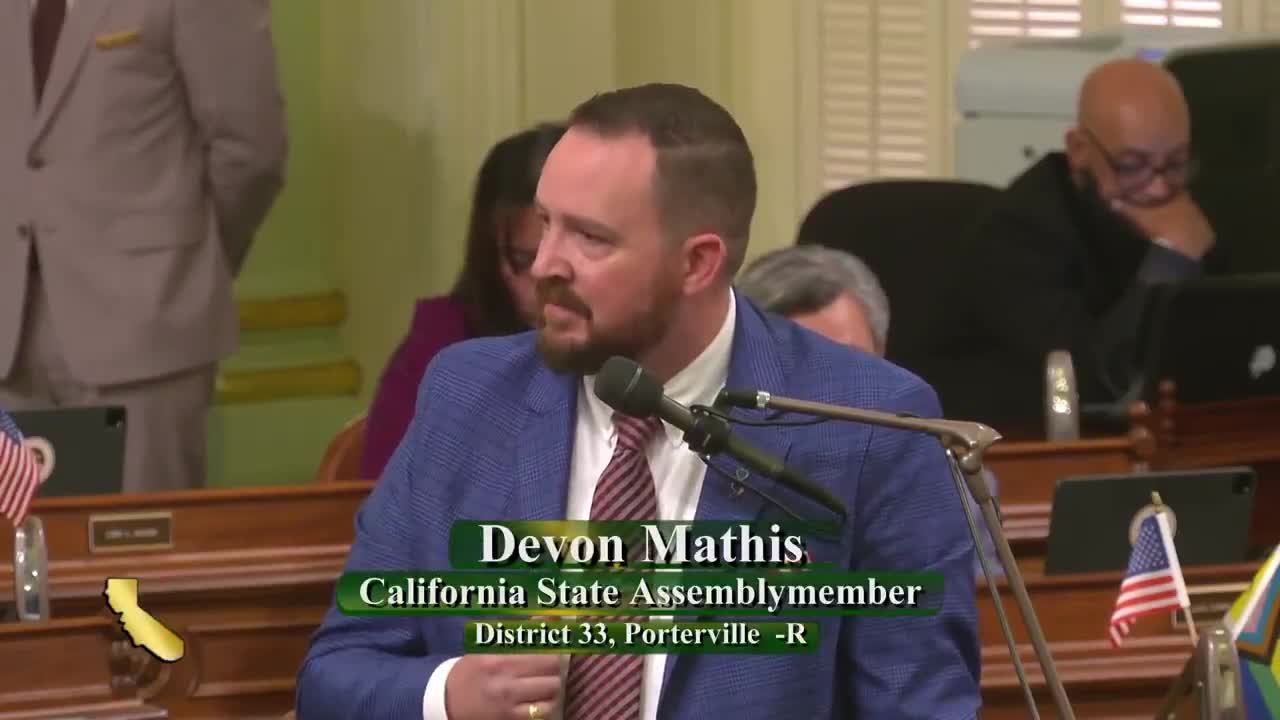 2MIN
Assembly Floor
 2MIN
Assembly Floor
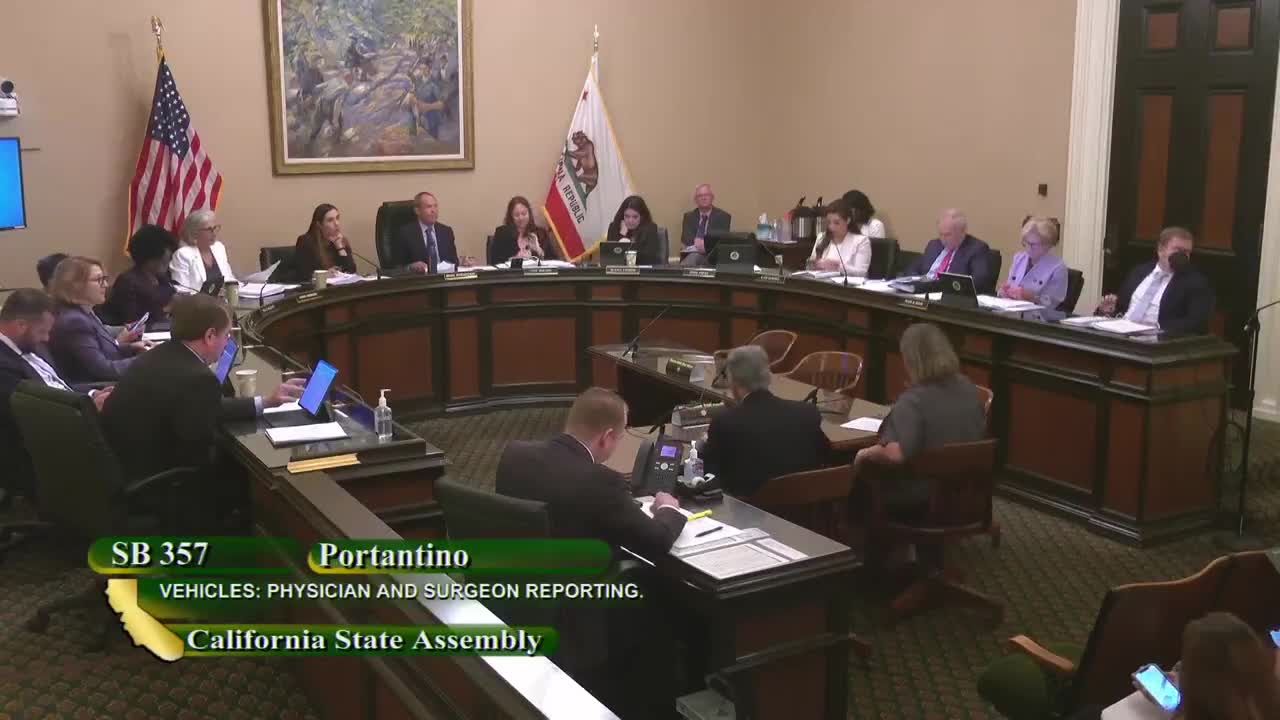 7MIN
Assembly Standing Committee on Judiciary
 5MIN
Assembly Standing Committee on Transportation
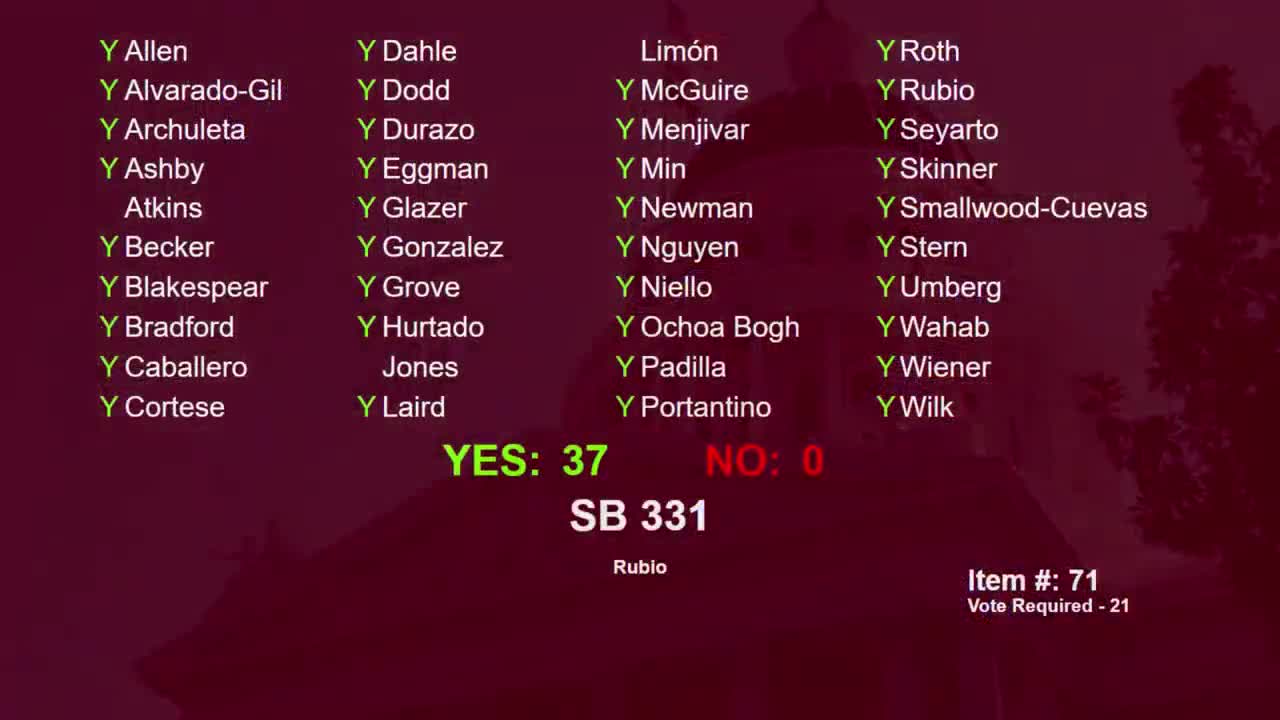 1MIN
Senate Floor
 8MIN
Senate Standing Committee on Judiciary
 12MIN
Senate Standing Committee on Transportation
Bill Author


