SB 360: California Coastal Commission: member voting.
- Session Year: 2023-2024
- House: Senate
- Latest Version Date: 2023-07-21
Current Status:
Passed
(2023-07-21: Chaptered by Secretary of State. Chapter 108, Statutes of 2023.)
Introduced
In Committee
First Chamber
In Committee
Second Chamber
Enacted
Existing law, the California Coastal Act of 1976, establishes the California Coastal Commission and prescribes the membership and duties of the commission. The act provides that its provisions do not preclude or prevent any member or employee of the commission who is also an employee of another public agency, a county supervisor or city councilperson, or a member of specified associations or organizations, and who has in that designated capacity voted or acted upon a particular matter, from voting or otherwise acting upon that matter as a member or employee of the commission.
This bill would apply the latter provision to a member of a joint powers authority and a member of a local agency formation commission. The bill would also correct the name of an organization and make nonsubstantive changes.
Existing law, the California Coastal Act of 1976, establishes the California Coastal Commission and prescribes the membership and duties of the commission. The act provides that its provisions do not preclude or prevent any member or employee of the commission who is also an employee of another public agency, a county supervisor or city councilperson, or a member of specified associations or organizations, and who has in that designated capacity voted or acted upon a particular matter, from voting or otherwise acting upon that matter as a member or employee of the commission.
This bill would apply the latter provision to members a member of a joint powers authority and members a member of the a local agency formation commission. The bill would also correct the name of an organization and make nonsubstantive changes.
Existing law, the California Coastal Act of 1976, establishes the California Coastal Commission and prescribes the membership and duties of the commission. The act provides that its provisions do not preclude or prevent any member or employee of the commission who is also an employee of another public agency, a county supervisor or city councilperson, or a member of specified associations or organizations, and who has in that designated capacity voted or acted upon a particular matter, from voting or otherwise acting upon that matter as a member or employee of the commission.
This bill would apply the latter provision to members of a joint powers authority and members of the local agency formation commission. The bill would also correct the name of an organization and make nonsubstantive changes.
Existing law, the California Coastal Act of 1976, establishes the California Coastal Commission and prescribes the membership and duties of the commission. The act provides that its provisions do not preclude or prevent any member or employee of the commission who is also an employee of another public agency, a county supervisor or city councilperson, or a member of specified associations or organizations, and who has in that designated capacity voted or acted upon a particular matter, from voting or otherwise acting upon that matter as a member or employee of the commission.
This bill would apply the latter provision to members of a joint powers authority and members of the local agency formation commission.
This division shall not preclude or prevent a member or employee of the commission who is also an employee of another public agency, a county supervisor or city councilperson, member of the Association of Bay Area Governments, member of the Association of Monterey Bay Area Governments, member of a joint powers authority, member of a local agency formation commission, delegate to the Southern California Association of Governments, or member of the San Diego Association of Governments, and who has in that designated capacity voted or acted upon a particular matter, from voting or otherwise acting upon that matter as a member or employee of the commission. This section shall not exempt a member or employee of the commission from any other provision of this article.
This division shall not preclude or prevent a member or employee of the commission who is also an employee of another public agency, a county supervisor or city councilperson, member of the Association of Bay Area Governments, member of the Association of Monterey Bay Area Governments, member of a joint powers authority, member of a local agency formation commission, delegate to the Southern California Association of Governments, or member of the San Diego Association of Governments, and who has in that designated capacity voted or acted upon a particular matter, from voting or otherwise acting upon that matter as a member or employee of the commission. This section shall not exempt a member or employee of the commission from any other provision of this article.
This division shall not preclude or prevent a member or employee of the commission who is also an employee of another public agency, a county supervisor or city councilperson, member of the Association of Bay Area Governments, member of the Association of Monterey Bay Area Governments, member of a joint powers authority, member of the a local agency formation commission, delegate to the Southern California Association of Governments, or member of the San Diego Association of Governments, and who has in that designated capacity voted or acted upon a particular matter, from voting or otherwise acting upon that matter as a member or employee of the commission. This section shall not exempt a member or employee of the commission from any other provision of this article.
Nothing in this This division shall not preclude or prevent any a member or employee of the commission who is also an employee of another public agency, a county supervisor or city councilperson, member of the Association of Bay Area Governments, member of the Association of Monterey Bay Area Governments, member of a joint powers authority, member of the local agency formation commission, delegate to the Southern California Association of Governments, or member of the San Diego Comprehensive Planning Organization, Association of Governments, and who has in that designated capacity voted or acted upon a particular matter, from voting or otherwise acting upon that matter as a member or employee of the commission. Nothing in this This section shall not exempt any such a member or employee of the commission from any other provision of this article.
Nothing in this division shall preclude or prevent any member or employee of the commission who is also an employee of another public agency, a county supervisor or city councilperson, member of the Association of Bay Area Governments, member of the Association of Monterey Bay Area Governments, member of a joint powers authority, member of the local agency formation commission, delegate to the Southern California Association of Governments, or member of the San Diego Comprehensive Planning Organization, and who has in that designated capacity voted or acted upon a particular matter, from voting or otherwise acting upon that matter as a member or employee of the commission. Nothing in this section shall exempt any such member or employee of the commission from any other provision of this article.
|
Date
|
Status
|
|---|---|
| Jul 21, 2023 | Chaptered by Secretary of State. Chapter 108, Statutes of 2023. |
| Jul 21, 2023 | Approved by the Governor. |
| Jul 11, 2023 | Enrolled and presented to the Governor at 11 a.m. |
| Jul 6, 2023 | Assembly amendments concurred in. (Ayes 40. Noes 0. Page 1916.) Ordered to engrossing and enrolling. |
| Jul 5, 2023 | Ordered to special consent calendar. |
| Jun 22, 2023 | In Senate. Concurrence in Assembly amendments pending. |
| Jun 22, 2023 | Read third time. Passed. (Ayes 71. Noes 0. Page 2351.) Ordered to the Senate. |
| Jun 15, 2023 | Read second time. Ordered to consent calendar. |
| Jun 14, 2023 | Read second time and amended. Ordered to second reading. |
| Jun 13, 2023 | From committee: Do pass as amended. Ordered to consent calendar. (Ayes 10. Noes 0.) (June 12). |
| May 18, 2023 | Referred to Com. on NAT. RES. |
| May 8, 2023 | In Assembly. Read first time. Held at Desk. |
| May 8, 2023 | Read third time. Passed. (Ayes 36. Noes 0. Page 1020.) Ordered to the Assembly. |
| Apr 18, 2023 | Read second time and amended. Ordered to third reading. |
| Apr 17, 2023 | From committee: Do pass as amended. (Ayes 11. Noes 0. Page 657.) (April 11). |
| Mar 29, 2023 | Set for hearing April 11. |
| Feb 15, 2023 | Referred to Com. on N.R. & W. |
| Feb 9, 2023 | From printer. May be acted upon on or after March 11. |
| Feb 8, 2023 | Introduced. Read first time. To Com. on RLS. for assignment. To print. |
|
Date
|
Description
|
Location
|
Votes
|
|
|---|---|---|---|---|
| Jul 6, 2023 | Special Consent SB360 Blakespear | Senate Floor |
Passed |
|
| Jun 22, 2023 | SB 360 Blakespear Consent Calendar Second Day | Assembly Floor |
Passed |
|
| Jun 12, 2023 | Do pass as amended. To Consent Calendar. | Assembly Standing Committee on Natural Resources |
Passed |
|
| May 8, 2023 | Senate 3rd Reading SB360 Blakespear | Senate Floor |
Passed |
|
| Apr 11, 2023 | Do pass as amended | Senate Standing Committee on Natural Resources and Water |
Passed |
This list shows positions taken on this bill by organizations on the date displayed, which is linked to the original source.
Positions by individuals are not included.
|
Organization
|
Position
|
Date
|
|---|---|---|
| California Association of Local Agency Formation Commissions | ** Support | |
| Orange County Local Agency Formation Commission | ** Support |
SENATE RULES COMMITTEE Office of Senate Floor Analyses (916) 651-1520 Fax: (916) 327-4478 | SB 360 |
UNFINISHED BUSINESS
Bill No: SB 360
Author: Blakespear (D)
Amended: 6/14/23
Vote: 21
SENATE NATURAL RES. & WATER COMMITTEE: 11-0, 4/11/23
AYES: Min, Seyarto, Allen, Becker, Dahle, Eggman, Grove, Hurtado, Laird, Limón, Padilla
SENATE FLOOR: 36-0, 5/8/23
AYES: Allen, Archuleta, Ashby, Atkins, Becker, Blakespear, Bradford, Caballero, Cortese, Dahle, Dodd, Durazo, Eggman, Glazer, Gonzalez, Grove, Jones, Laird, Limón, McGuire, Menjivar, Newman, Nguyen, Niello, Ochoa Bogh, Padilla, Portantino, Rubio, Seyarto, Skinner, Smallwood-Cuevas, Stern, Umberg, Wahab, Wiener, Wilk
NO VOTE RECORDED: Alvarado-Gil, Hurtado, Min, Roth
ASSEMBLY FLOOR: 71-0, 6/22/23 (Consent) - See last page for vote
SUBJECT: California Coastal Commission: member voting
SOURCE: Author
DIGEST:
This bill expands the list of entities that Coastal Commissioners could simultaneously serve on to include membership of a local area formation commission and joint powers authority, and makes an additional technical change.
Assembly Amendments
are technical and non-substantive.
ANALYSIS:
Existing law:
- Establishes the California Coastal Commission (Coastal Commission) in the California Natural Resources Agency via the California Coastal Act of 1976 (Coastal Act) (Public Resources Code (PRC) §§30000 et seq.).
- The Coastal Commission plans for and regulates the use of land and water in the coastal zone (which excludes the San Francisco Bay).
- The Coastal Commission consists of the following 15 members:
- The Secretary of the Natural Resources Agency,
- The Secretary of Transportation,
- The Chair of the State Lands Commission,
- Six public members, and
- Six coastal region representatives.
- The public members and coastal region representatives are the 12 voting members of the Coastal Commission and are appointed by the Governor, Senate Rules Committee, and the Speaker of the Assembly, as provided. (PRC §30301)
- Each coastal region member represents one of the six coastal regions, as defined. (PRC §30301)
- A coastal region representative is selected by the applicable appointing authority from a list of supervisors, mayors, or city council members nominated from the region. (PRC §30301.2)
- Commissioners qualified for office as a locally elected official are required to leave the Coastal Commission 60 days after their term of office as a locally elected official ends. (PRC §30312)
- Any Commissioner or employee of the Coastal Commission who is also an employee of another public agency, a county supervisor or city councilperson, member of the Association of Bay Area Governments, member of the Association of Monterey Bay Area Governments, delegate to the Southern California Association of Governments, or member of the San Diego Comprehensive Planning Organization, and who has in that capacity voted or acted upon a particular matter is authorized to vote or otherwise act on the matter as a Commissioner or employee of the Commission. (PRC §30318)
- Prohibits, generally, a public officer from holding another incompatible public office simultaneously unless compelled or expressly authorized by law, as provided. An incompatible office is, for example, one where there is a possibility of a significant clash of duties or loyalties between offices, among other reasons. (Government Code (GOV) §1099)
- Authorizes, if applicable, two or more public agencies by agreement may jointly exercise any power common to the contracting parties, as provided. (GOV §6502) An entity created pursuant to a joint powers agreement is a joint powers authority.
- Authorizes the establishment of a Local Agency Formation Commission (LAFCO): (GOV §§56300 et seq.)
- A LAFCO is a regulatory agency with countywide jurisdiction established by state law to coordinate logical and timely changes in local government boundaries and to ensure that services are provided efficiently.
- LAFCOs authorize the formation of new, and any changes to existing, special districts. The members of a LAFCO include county, city, and public members, including county supervisors.
This bill expands the list of entities that Coastal Commissioners could simultaneously serve on to include membership of a local area formation commission and joint powers authority, and makes an additional technical change.
Background
The Coastal Commission is an independent, quasi-judicial state agency, and its mission statement states that it “is committed to protecting and enhancing California’s coast and ocean for present and future generations.” The Coastal Commission does so “through careful planning and regulation of environmentally sustainable development, rigorous use of science, strong public participation, education, and effective intergovernmental coordination.”
The requirement that half of the Commissioners be locally elected officials from coastal regions helps to ensure that local decisions are informed by statewide policies and that Coastal Commission decisions reflect locally-specific knowledge. Apparently, it is not uncommon for a Commissioner who is also a county supervisor or city councilmember to vote on projects twice: once at the local level, and again as a member of the Coastal Commission.
According to the author, a locally elected official who is appointed to the Coastal Commission must resign or decline an appointment to a LAFCO or joint powers authority that conducts activities in the coastal zone because the Coastal Act does not specifically authorize participation in these types of entities while serving on the Coastal Commission. However, simultaneous service on the Coastal Commission and certain other planning and government entities is allowed. As local elected officials, these Commissioners are also qualified candidates for service on certain other local or regional public boards and commissions.
FISCAL EFFECT: Appropriation: No Fiscal Com.: No Local: No
SUPPORT: (Verified 6/23/23)
California Association of Local Agency Formation Commissions
Orange County Local Agency Formation Commission
OPPOSITION: (Verified 6/23/23)
None received
ARGUMENTS IN SUPPORT: According to the author, “SB 360 is a common sense change that allows an elected official who is serving on the Coastal Commission to concurrently serve on a Joint Powers Authority (JPA) or on LAFCO (Local Area Formation Commission). Currently, a Coastal Commissioner can serve concurrently on planning and transportation agencies but is prohibited from serving on a JPA or LAFCO. There appears to be no good reason for this prohibition, which forces elected officials to make an either-or decision to serve on the Coastal Commission or a LAFCO or JPA when both could benefit greatly from their expertise on planning and zoning issues.”
ASSEMBLY FLOOR: 71-0, 6/22/23
AYES: Addis, Aguiar-Curry, Alanis, Alvarez, Arambula, Bauer-Kahan, Bennett, Berman, Boerner, Bonta, Bryan, Calderon, Juan Carrillo, Wendy Carrillo, Cervantes, Chen, Connolly, Megan Dahle, Davies, Dixon, Essayli, Flora, Mike Fong, Vince Fong, Friedman, Gallagher, Garcia, Gipson, Grayson, Haney, Hart, Holden, Hoover, Irwin, Jackson, Jones-Sawyer, Kalra, Lackey, Lee, Low, Mathis, McCarty, McKinnor, Muratsuchi, Stephanie Nguyen, Ortega, Pacheco, Papan, Jim Patterson, Joe Patterson, Petrie-Norris, Quirk-Silva, Ramos, Reyes, Luz Rivas, Robert Rivas, Rodriguez, Blanca Rubio, Santiago, Schiavo, Soria, Ta, Villapudua, Waldron, Wallis, Ward, Weber, Wilson, Wood, Zbur, Rendon
NO VOTE RECORDED: Bains, Gabriel, Lowenthal, Maienschein, Pellerin, Sanchez, Ting, Valencia, Wicks
Prepared by: Katharine Moore / N.R. & W. / (916) 651-4116
6/23/23 12:29:19
**** END ****
Date of Hearing: June 12, 2023
ASSEMBLY COMMITTEE ON NATURAL RESOURCES
Luz Rivas, Chair
SBPCA Bill Id:SB 360
Author:(Blakespear) – As Amended Ver:April 18, 2023
SENATE VOTE: 36-0
SUBJECT: California Coastal Commission: member voting.
SUMMARY: Expands the list of entities that Coastal Commissioners could simultaneously serve on to include membership of a local area formation commission (LAFCO) and joint powers authority (JPA).
EXISTING LAW:
- Establishes the California Coastal Act of 1976 (Coastal Act), establishes the California Coastal Commission (Commission), and prescribes the membership and duties of the Commission. (Public Resources Code (PRC) 30301)
- Provides that provisions of the Coastal Act do not preclude or prevent any member or employee of the Commission who is also an employee of another public agency, a county supervisor or city councilperson, or a member of specified associations or organizations, and who has in that designated capacity voted or acted upon a particular matter, from voting or otherwise acting upon that matter as a member or employee of the Commission. (PRC 30318)
- Prohibits a public officer, including, but not limited to, an appointed or elected member of a governmental board, commission, committee, or other body, from simultaneously holding two public offices that are incompatible. Offices are incompatible when specified circumstances are present, unless simultaneous holding of the particular offices is compelled or expressly authorized by law. (Government Code Section(GC) 1099)
- Establishes the Joint Exercise of Powers Act to authorize two or more public agencies, by agreement, to jointly exercise any power common to the contracting parties, even though one or more of the contracting agencies may be located outside this state. (GC 6500.1)
- Authorizes, under the Cortese-Knox-Hertzberg Local Government Reorganization Act, the formation of LAFCOs with planning and regulatory powers. (GC 56300)
THIS BILL:
- Authorizes members of a JPA and a LAFCO to serve on the Commission and vote on matters related to the Commission.
- Makes technical, nonsubstantive changes.
FISCAL EFFECT: This bill is nonfiscal.
COMMENTS:
- Coastal Commission. The Commission was established by voter initiative in 1972 (Proposition 20) and later made permanent by the Legislature through adoption of the California Coastal Act of 1976. In partnership with coastal cities and counties, the Commission plans and regulates the use of land and water in the coastal zone. Development activities, which are broadly defined by the Coastal Act to include (among others) construction of buildings, divisions of land, and activities that change the intensity of use of land or public access to coastal waters, generally require a coastal permit from either the Commission or a local government’s local coastal plan.
The Commission is an independent, quasi-judicial state agency. The Commission is composed of twelve voting members, appointed equally (four each) by the Governor, the Senate Rules Committee, and the Speaker of the Assembly. Six of the voting commissioners are locally elected officials and six are appointed from the public at large. Three ex officio (non-voting) members represent the Natural Resources Agency, the State Transportation Agency, and the State Lands Commission.
- Doctrine of incompatible offices. Current law codifies the common law prohibition against the holding of “incompatible offices.” This doctrine restricts the ability of public officials to hold two different public offices simultaneously if the offices have overlapping and conflicting public duties. The consequence of holding an incompatible office is that the person is “deemed to have forfeited the first office upon acceding to the second.”
The doctrine prevents the six locally elected officials who serve on the Commission from serving in any other public capacity that could overlap with their duties as Commissioners. However, the Coastal Act makes an exception for Commissioners from specific areas (Monterey and San Diego), allowing them to serve on a number of regionally-specific planning organizations. Specifically, that statute provides that a member of the Commission who is also an employee of another public agency, a county supervisor or city councilperson, member of the Association of Bay Area Governments, a member of the Association of Monterey Bay Area Governments, a delegate to the Southern California Association of Governments, or a member of the San Diego Association of Governments and who has in that designated capacity voted or acted upon a particular matter, does not have to recuse him/herself from voting or otherwise acting upon that matter as a member or employee of the Commission.
Commissioners who are locally elected officials from outside of those areas are precluded from serving on regional planning agencies.
SB 360 adds a member of a JPA and member of a LAFCO to the statutory list of offices on which a Coastal Commissioner can serve.
- Author’s statement:
SB 360 is a common sense change that allows an elected official who is serving on the Coastal Commission to concurrently serve on a Joint Powers Authority (JPA) or on LAFCO (Local Area Formation Commission). Currently, a Coastal Commissioner can serve concurrently on planning and transportation agencies but is prohibited from serving on a JPA or LAFCO. There appears to be no good reason for this prohibition, which forces elected officials to make an either-or decision to serve on the Coastal Commission or a LAFCO or JPA when both could benefit greatly from their expertise on planning and zoning issues.
- Committee amendments. The bill should read “a member of a LAFCO,” not “a member of the LAFCO” since there 58 LAFCOs across the state. The Committee may wish to make this technical correction.
REGISTERED SUPPORT / OPPOSITION:
Support
California Association of Local Agency Formation Commissions
Orange County Local Agency Formation Commission
Opposition
None on file
Analysis Prepared by: Paige Brokaw / NAT. RES. /
SENATE RULES COMMITTEE Office of Senate Floor Analyses (916) 651-1520 Fax: (916) 327-4478 | SB 360 |
THIRD READING
Bill No: SB 360
Author: Blakespear (D)
Amended: 4/18/23
Vote: 21
SENATE NATURAL RES. & WATER COMMITTEE: 11-0, 4/11/23
AYES: Min, Seyarto, Allen, Becker, Dahle, Eggman, Grove, Hurtado, Laird, Limón, Padilla
SUBJECT: California Coastal Commission: member voting
SOURCE: Author
DIGEST:
This bill expands the list of entities that Coastal Commissioners could simultaneously serve on to include membership of a local area formation commission and joint powers authority, and makes an additional technical change.
ANALYSIS:
Existing law:
- Establishes the California Coastal Commission (Coastal Commission) in the California Natural Resources Agency via the California Coastal Act of 1976 (Coastal Act) (Public Resources Code (PRC) §§30000 et seq.).
- The Coastal Commission plans for and regulates the use of land and water in the coastal zone (which excludes the San Francisco Bay).
- The Coastal Commission consists of the following 15 members:
- The Secretary of the Natural Resources Agency,
- The Secretary of Transportation,
- The Chair of the State Lands Commission,
- Six public members, and
- Six coastal region representatives.
- The public members and coastal region representatives are the 12 voting members of the Coastal Commission and are appointed by the Governor, Senate Rules Committee, and the Speaker of the Assembly, as provided. (PRC §30301)
- Each coastal region member represents one of the six coastal regions, as defined. (PRC §30301)
- A coastal region representative is selected by the applicable appointing authority from a list of supervisors, mayors, or city council members nominated from the region. (PRC §30301.2)
- Commissioners qualified for office as a locally elected official are required to leave the Coastal Commission 60 days after their term of office as a locally elected official ends. (PRC §30312)
- Any Commissioner or employee of the Coastal Commission who is also an employee of another public agency, a county supervisor or city councilperson, member of the Association of Bay Area Governments, member of the Association of Monterey Bay Area Governments, delegate to the Southern California Association of Governments, or member of the San Diego Comprehensive Planning Organization, and who has in that capacity voted or acted upon a particular matter is authorized to vote or otherwise act on the matter as a Commissioner or employee of the Commission. (PRC §30318)
- Prohibits, generally, a public officer from holding another incompatible public office simultaneously unless compelled or expressly authorized by law, as provided. An incompatible office is, for example, one where there is a possibility of a significant clash of duties or loyalties between offices, among other reasons. (Government Code (GOV) §1099)
- Authorizes, if applicable, two or more public agencies by agreement may jointly exercise any power common to the contracting parties, as provided. (GOV §6502) An entity created pursuant to a joint powers agreement is a joint powers authority.
- Authorizes the establishment of a Local Agency Formation Commission (LAFCO). (GOV §§56300 et seq.)
- A LAFCO is a regulatory agency with countywide jurisdiction established by state law to coordinate logical and timely changes in local government boundaries and to ensure that services are provided efficiently.
- LAFCOs authorize the formation of new, and any changes to existing, special districts. The members of a LAFCO include county, city, and public members, including county supervisors.
This bill expands the list of entities that Coastal Commissioners could simultaneously serve on to include membership of a local area formation commission and joint powers authority, and makes an additional technical change.
Background
The Coastal Commission is an independent, quasi-judicial state agency, and its mission statement states that it “is committed to protecting and enhancing California’s coast and ocean for present and future generations.” The Coastal Commission does so “through careful planning and regulation of environmentally sustainable development, rigorous use of science, strong public participation, education, and effective intergovernmental coordination.”
The requirement that half of the Commissioners be locally elected officials from coastal regions helps to ensure that local decisions are informed by statewide policies and that Coastal Commission decisions reflect locally-specific knowledge. Apparently, it is not uncommon for a Commissioner who is also a county supervisor or city councilmember to vote on projects twice: once at the local level, and again as a member of the Coastal Commission.
According to the author, a locally elected official who is appointed to the Coastal Commission must resign or decline an appointment to a LAFCO or joint powers authority that conducts activities in the coastal zone because the Coastal Act does not specifically authorize participation in these types of entities while serving on the Coastal Commission. However, simultaneous service on the Coastal Commission and certain other planning and government entities is allowed. As local elected officials, these Commissioners are also qualified candidates for service on certain other local or regional public boards and commissions.
FISCAL EFFECT: Appropriation: No Fiscal Com.: No Local: No
SUPPORT: (Verified 4/18/23)
California Association of Local Agency Formation Commissions
Orange County Local Agency Formation Commission
OPPOSITION: (Verified 4/18/23)
None received
ARGUMENTS IN SUPPORT: According to the author, “SB 360 is a common sense change that allows an elected official who is serving on the Coastal Commission to concurrently serve on a Joint Powers Authority (JPA) or on LAFCO (Local Area Formation Commission). Currently, a Coastal Commissioner can serve concurrently on planning and transportation agencies but is prohibited from serving on a JPA or LAFCO. There appears to be no good reason for this prohibition, which forces elected officials to make an either-or decision to serve on the Coastal Commission or a LAFCO or JPA when both could benefit greatly from their expertise on planning and zoning issues.”
Prepared by: Katharine Moore / N.R. & W. / (916) 651-4116
4/19/23 15:20:03
**** END ****
SENATE COMMITTEE ON NATURAL RESOURCES AND WATER
Senator Dave Min, Chair
2023 - 2024 Regular
Bill No: SB Hearing Date: April 11, 2023
Author: | Blakespear | ||
Version: | February 8, 2023 Introduced | ||
Urgency: | No | Fiscal: | No |
Consultant: | Katharine Moore | ||
Subject: California Coastal Commission: member voting
BACKGROUND AND EXISTING LAW
The California Coastal Commission (Coastal Commission) was established by voter initiative in 1972. The Legislature later made the Coastal Commission permanent through the adoption of the California Coastal Act of 1976 (Coastal Act) (Public Resources Code (PRC) §§30000 et seq.). The Coastal Commission plans for and regulates the use of land and water in the coastal zone (which excludes the San Francisco Bay).
The Coastal Commission is an independent, quasi-judicial state agency, and its mission statement states that it “is committed to protecting and enhancing California’s coast and ocean for present and future generations.” The Coastal Commission does so “through careful planning and regulation of environmentally sustainable development, rigorous use of science, strong public participation, education, and effective intergovernmental coordination.”
The Coastal Commission consists of the following 15 members:
- The Secretary of the Natural Resources Agency,
- The Secretary of Transportation,
- The Chair of the State Lands Commission,
- Six public members, and
- Six coastal region representatives.
The public members and coastal region representatives are the 12 voting members of the Coastal Commission and are appointed by the Governor, Senate Rules Committee, and the Speaker of the Assembly, as provided. (PRC §30301)
Each coastal region member represents one of the six coastal regions, as defined. (PRC §30301) A coastal region representative is selected by the applicable appointing authority from a list of supervisors, mayors, or city council members nominated from the region. (PRC §30301.2) Commissioners qualified for office as a locally elected official are required to leave the Coastal Commission 60 days after their term of office as a locally elected official ends. (PRC §30312)
This requirement that half of the Commissioners be locally elected officials from coastal regions helps to ensure that local decisions are informed by statewide policies and that Coastal Commission decisions reflect locally-specific knowledge. Apparently, it is not uncommon for a Commissioner who is also a county supervisor or city councilmember to vote on projects twice: once at the local level, and again as a member of the Coastal Commission.
Existing law generally prohibits a public officer from holding another incompatible public office simultaneously unless compelled or expressly authorized by law, as provided. An incompatible office is, for example, one where there is a possibility of a significant clash of duties or loyalties between offices, among other reasons. (Government Code (GOV) §1099)
Any Commissioner or employee of the Coastal Commission who is also an employee of another public agency, a county supervisor or city councilperson, member of the Association of Bay Area Governments, member of the Association of Monterey Bay Area Governments, delegate to the Southern California Association of Governments, or member of the San Diego Comprehensive Planning Organization, and who has in that capacity voted or acted upon a particular matter is authorized to vote or otherwise act on the matter as a Commissioner or employee of the Commission. (PRC §30318)
If authorized, two or more public agencies by agreement may jointly exercise any power common to the contracting parties, as provided. (GOV §6502) An entity created pursuant to a joint powers agreement is a joint powers authority.
. A Local Agency Formation Commission (LAFCO) is a regulatory agency with countywide jurisdiction established by state law to coordinate logical and timely changes in local government boundaries and to ensure that services are provided efficiently. (GOV §§56300 et seq.) LAFCOs authorize the formation of new, and any changes to existing, special districts. The members of a LAFCO include county, city, and public members, including county supervisors.
According to the author, a locally elected official who is appointed to the Coastal Commission must resign or decline an appointment to a LAFCO or joint powers authority that conducts activities in the coastal zone because the Coastal Act does not specifically authorize participation in these types of entities while serving on the Coastal Commission. However, simultaneous service on the Coastal Commission and certain other planning and government entities is allowed.
PROPOSED LAW
This bill would expand the list of entities that Coastal Commissioners could simultaneously serve on to include membership of a local area formation commission and joint powers authority.
ARGUMENTS IN SUPPORT
According to the author, “SB 360 is a common sense change that allows an elected official who is serving on the Coastal Commission to concurrently serve on a Joint Powers Authority (JPA) or on LAFCO (Local Area Formation Commission). Currently, a Coastal Commissioner can serve concurrently on planning and transportation agencies but is prohibited from serving on a JPA or LAFCO. There appears to be no good reason for this prohibition, which forces elected officials to make an either-or decision to serve on the Coastal Commission or a LAFCO or JPA when both could benefit greatly from their expertise on planning and zoning issues.”
ARGUMENTS IN OPPOSITION
None received
COMMENTS
Existing law requires and provides for simultaneous service already. Half of the voting Commissioners are qualified to serve on the Coastal Commission due to their position as a local elected official. As local elected officials, these Commissioners are also qualified candidates for service on certain other local or regional public boards and commissions. Existing law recognizes some of these opportunities – such as service on the Association of Bay Area Governments – but not all. It is a fair argument that Commissioners bring expertise in coastal zone planning and development to these other boards.
Outdated name. The Committee may wish to update the name of the “San Diego Comprehensive Planning Organization” to its current one – “the San Diego Association of Governments.” [Amendment #1]
SUGGESTED AMENDMENTS
AMENDMENT 1
On p. 2 lines 5 – 6, replace “San Diego Comprehensive Planning Organization” with “San Diego Association of Governments”
SUPPORT
California Association of Local Agency Formation Commissions
OPPOSITION
None Received
-- END --
Discussed in Hearing
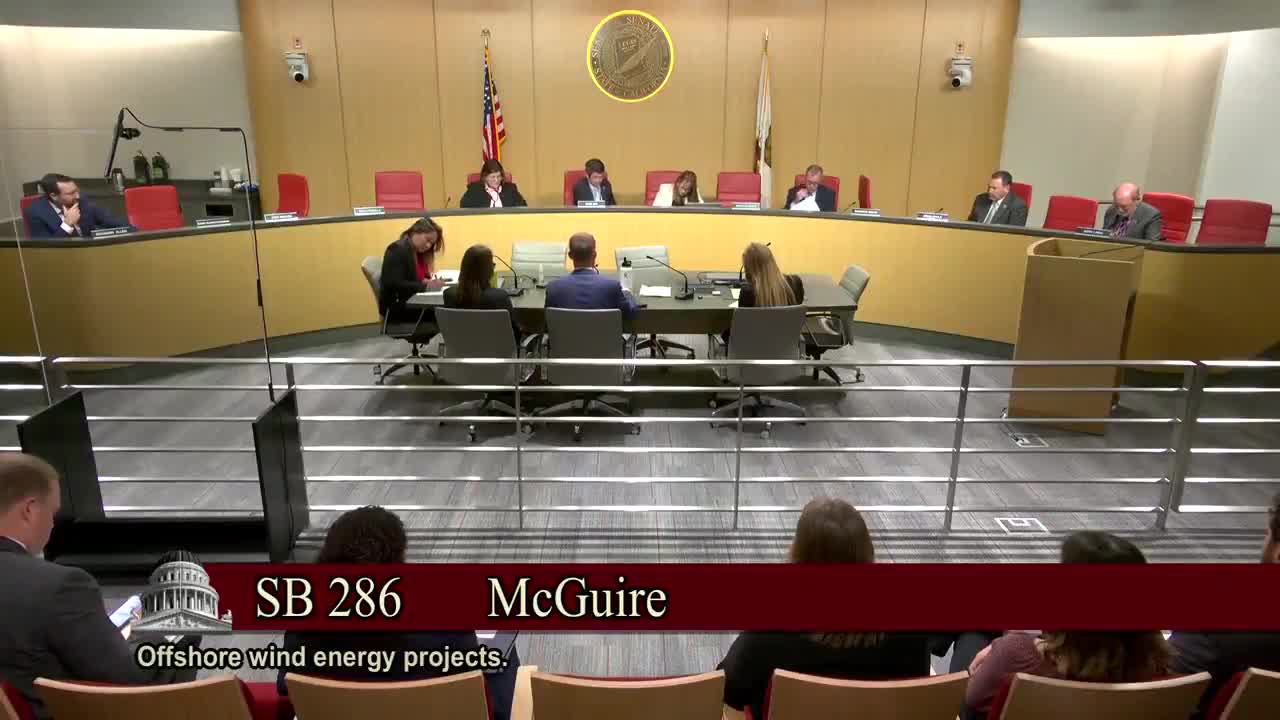 4MIN
Senate Standing Committee on Natural Resources and Water
Bill Author

Bill Co-Author(s):