SB 39: Sierra Nevada Conservancy: Sierra Nevada Region: subregions: climate resilience and equity.
- Session Year: 2023-2024
- House: Senate
- Latest Version Date: 2023-07-13
Current Status:
Passed
(2023-07-13: Chaptered by Secretary of State. Chapter 70, Statutes of 2023.)
Introduced
In Committee
First Chamber
In Committee
Second Chamber
Enacted
Existing law establishes the Sierra Nevada Conservancy in the Natural Resources Agency and prescribes the functions and duties of the conservancy with regard to the preservation of specified lands in the Sierra Nevada Region, as defined, and the 6 subregions, as defined, in which the Sierra Nevada Region is located.
This bill would revise and recast the definition of subregion. The bill would require the conservancy to support efforts that advance climate resilience and equity. The bill would also revise certain legislative findings related to the conservancy and make nonsubstantive and conforming changes.
Existing law establishes the Sierra Nevada Conservancy in the Natural Resources Agency and prescribes the functions and duties of the conservancy with regard to the preservation of specified lands in the Sierra Nevada Region, as defined, and the 6 subregions, as defined, in which the Sierra Nevada Region is located.
This bill would revise and recast the definition of subregion. The bill would require the conservancy to support efforts that advance climate resilience and equity. The bill would also make nonsubstantive and conforming changes.
The Legislature finds and declares all of the following:
(a)The Sierra Nevada Region is a globally significant area, including many national and state parks, the highest peaks in the 48 contiguous states, and large, pristine areas that are open for public use.
(b)The Sierra Nevada Region is an important part of the states economy, providing substantial agricultural products, timber resources, ranching, mining, tourism, and recreation.
(c)The Sierra Nevada Region provides drinking water to 75 percent of Californians and nearly all of the water supply for western Nevada. As Californias principal watershed, the region is the critical source of water for urban and rural parts of northern and southern California.
(d)In cooperation with local governments, private businesses, nonprofit organizations, tribal organizations, federal agencies, other California state governmental entities, and the public, a Sierra Nevada Conservancy can help do all of the following:
(1)Provide increased opportunities for tourism and recreation.
(2)Protect, conserve, and restore the regions physical, cultural, archaeological, historical, and living resources.
(3)Aid in the preservation of working landscapes.
(4)Reduce the risk of natural disasters, such as wildfires.
(5)Protect and improve water and air quality.
(6)Assist the regional economy through the operation of the conservancys program.
(7)Identify the highest priority projects and initiatives for which funding is needed.
(8)Undertake efforts to enhance public use and enjoyment of lands owned by the public.
(9)Support efforts that advance both environmental preservation and the economic well-being of Sierra residents in a complementary manner.
(10)Support efforts that advance climate resilience and equity.
SEC. 2.Section 33302 of the Public Resources Code is amended to read:33302.For purposes of this division, the following terms shall apply:
(a)Board means the Governing Board of the Sierra Nevada Conservancy.
(b)Conservancy means the Sierra Nevada Conservancy.
(c)Fund means the Sierra Nevada Conservancy Fund created pursuant to Section 33355.
(d)Local public agency means a city, county, district, or joint powers authority.
(e)Nonprofit organization means a private, nonprofit organization that qualifies for exempt status under Section 501(c)(3) of Title 26 of the United States Code, and whose charitable purposes are consistent with the purposes of the conservancy as set forth in this division.
(f)(1)Region or Sierra Nevada Region means the area lying within the Counties of Alpine, Amador, Butte, Calaveras, El Dorado, Fresno, Inyo, Kern, Lassen, Madera, Mariposa, Modoc, Mono, Nevada, Placer, Plumas, Shasta, Sierra, Siskiyou, Tehama, Trinity, Tulare, Tuolumne, and Yuba, described as the area bounded as follows:
(2)On the east by the eastern boundary of the State of California; the crest of the White/Inyo ranges; and State Routes 395 and 14 south of Olancha; on the south by State Route 58, Tehachapi Creek, and Caliente Creek; on the west by the line of 1,250 feet above sea level from Caliente Creek to the Kern/Tulare County line; the lower level of the western slopes blue oak woodland, from the Kern/Tulare County line to the Sacramento River near the mouth of Seven-Mile Creek north of Red Bluff; the Sacramento River from Seven-Mile Creek north to Cow Creek below Redding; Cow Creek, Little Cow Creek, Dry Creek, and up to the southern boundary of the Pit River watershed where Bear Creek Mountain Road and Dry Creek Road intersect; the southern boundary of the Pit River watershed; the western boundary of the upper Trinity watershed in the County of Trinity; on the north by the boundary of the upper Trinity watershed in the County of Trinity and the upper Sacramento, McCloud, and Pit River watersheds in the County of Siskiyou; and within the County of Modoc, the easterly boundary of the Klamath River watershed; and on the north in the County of Modoc by the northern boundary of the State of California; excluding both of the following:
(A)The Lake Tahoe Region, as described in Section 66905.5 of the Government Code, where it is defined as region.
(B)The San Joaquin River Parkway, as described in Section 32510.
(g)Subregions means the six subregions in which the Sierra Nevada Region is located, described as follows:
(1)The northwest Sierra subregion, comprising the Counties of Shasta, Siskiyou, Tehama, and Trinity.
(2)The northeast Sierra subregion, comprising the Counties of Lassen, Modoc, Plumas, and Sierra.
(3)The north central Sierra subregion, comprising the Counties of Butte, Nevada, Placer, and Yuba.
(4)The south central Sierra subregion, comprising the Counties of Amador, Calaveras, El Dorado, and Tuolumne.
(5)The southeast Sierra subregion, comprising the Counties of Alpine, Inyo, Kern, and Mono.
(6)The southwest Sierra subregion, comprising the Counties of Fresno, Madera, Mariposa, and Tulare.
(h)Tribal organization means an Indian tribe, band, nation, or other organized group or community, or a tribal agency authorized by a tribe, which is one or both of the following:
(1)Recognized by the United States and identified within the most current Federal Register.
(2)Listed on the contact list maintained by the Native American Heritage Commission as a California Native American tribe.
SEC. 3.Section 33320 of the Public Resources Code is amended to read:33320.There is in the Natural Resources Agency the Sierra Nevada Conservancy, which is created as a state agency to do all of the following, working in collaboration and cooperation with local governments and interested parties:
(a)Provide increased opportunities for tourism and recreation.
(b)Protect, conserve, and restore the regions physical, cultural, archaeological, historical, and living resources.
(c)Aid in the preservation of working landscapes.
(d)Reduce the risk of natural disasters, such as wildfires.
(e)Protect and improve water and air quality.
(f)Assist the regional economy through the operation of the conservancys program.
(g)Identify the highest priority projects and initiatives for which funding is needed.
(h)Undertake efforts to enhance public use and enjoyment of lands owned by the public.
(i)Support efforts that advance both environmental preservation and the economic well-being of Sierra residents in a complementary manner.
(j)Support efforts that advance climate resilience and equity.
SEC. 4.Section 33322 of the Public Resources Code is amended to read:33322.Members and alternates, if any, shall serve terms as follows:
(a)The members appointed pursuant to subparagraphs (C) to (E), inclusive, of paragraph (1) of subdivision (a) of Section 33321 shall serve at the pleasure of the appointing power.
(b)The members and alternates, if any, appointed under subparagraph (F) of paragraph (1) of subdivision (a) of Section 33321 shall serve, as follows:
(1)Members and alternates in the northwest Sierra subregion, the north central Sierra subregion, and the southeast Sierra subregion shall have terms beginning on January 1 in an odd-numbered year and ending on December 31 of the following even-numbered year. All terms shall be for two years.
(2)Members and alternates in the northeast Sierra subregion, the south central Sierra subregion, and the southwest Sierra subregion shall have terms beginning on January 1 in an even-numbered year and ending on December 31 in the following odd-numbered year. Members and alternates who are initially appointed to the board shall serve for a one-year term for the first year. Subsequent terms shall be for two years.
(c)No member of the board, whose appointment to the board was contingent upon meeting a condition of eligibility under this division, shall serve beyond the time when the member ceases to meet that condition.
The Legislature finds and declares all of the following:
(a)The Sierra Nevada Region is a globally significant area, including many national and state parks, the highest peaks in the 48 contiguous states, and large, pristine areas that are open for public use.
(b)The Sierra Nevada Region is an important part of the states economy, providing substantial agricultural products, timber resources, ranching, mining, tourism, and recreation.
(c)The Sierra Nevada Region provides drinking water to 75 percent of Californians and nearly all of the water supply for western Nevada. As Californias principal watershed, the region is the critical source of water for urban and rural parts of northern and southern California.
(d)In cooperation with local governments, federal agencies, private business, businesses, nonprofit organizations, tribal organizations, federal agencies, other California state governmental entities, and the public, a Sierra Nevada Conservancy can help do all of the following:
(1)Provide increased opportunities for tourism and recreation.
(2)Protect, conserve, and restore the regions physical, cultural, archaeological, historical, and living resources.
(3)Aid in the preservation of working landscapes.
(4)Reduce the risk of natural disasters, such as wildfires.
(5)Protect and improve water and air quality.
(6)Assist the regional economy through the operation of the conservancys program.
(7)Identify the highest priority projects and initiatives for which funding is needed.
(8)Undertake efforts to enhance public use and enjoyment of lands owned by the public.
(9)Support efforts that advance both environmental preservation and the economic well-being of Sierra residents in a complementary manner.
(10)Support efforts that advance climate resilience and equity.
SEC. 2.Section 33302 of the Public Resources Code is amended to read:33302.For purposes of this division, the following terms shall apply:
(a)Board means the Governing Board of the Sierra Nevada Conservancy.
(b)Conservancy means the Sierra Nevada Conservancy.
(c)Fund means the Sierra Nevada Conservancy Fund created pursuant to Section 33355.
(d)Local public agency means a city, county, district, or joint powers authority.
(e)Nonprofit organization means a private, nonprofit organization that qualifies for exempt status under Section 501(c)(3) of Title 26 of the United States Code, and whose charitable purposes are consistent with the purposes of the conservancy as set forth in this division.
(f)(1)Region or Sierra Nevada Region means the area lying within the Counties of Alpine, Amador, Butte, Calaveras, El Dorado, Fresno, Inyo, Kern, Lassen, Madera, Mariposa, Modoc, Mono, Nevada, Placer, Plumas, Shasta, Sierra, Siskiyou, Tehama, Trinity, Tulare, Tuolumne, and Yuba, described as the area bounded as follows:
(2)On the east by the eastern boundary of the State of California; the crest of the White/Inyo ranges; and State Routes 395 and 14 south of Olancha; on the south by State Route 58, Tehachapi Creek, and Caliente Creek; on the west by the line of 1,250 feet above sea level from Caliente Creek to the Kern/Tulare County line; the lower level of the western slopes blue oak woodland, from the Kern/Tulare County line to the Sacramento River near the mouth of Seven-Mile Creek north of Red Bluff; the Sacramento River from Seven-Mile Creek north to Cow Creek below Redding; Cow Creek, Little Cow Creek, Dry Creek, and up to the southern boundary of the Pit River watershed where Bear Creek Mountain Road and Dry Creek Road intersect; the southern boundary of the Pit River watershed; the western boundary of the upper Trinity watershed in the County of Trinity; on the north by the boundary of the upper Trinity watershed in the County of Trinity and the upper Sacramento, McCloud, and Pit River watersheds in the County of Siskiyou; and within the County of Modoc, the easterly boundary of the Klamath River watershed; and on the north in the County of Modoc by the northern boundary of the State of California; excluding both of the following:
(A)The Lake Tahoe Region, as described in Section 66905.5 of the Government Code, where it is defined as region.
(B)The San Joaquin River Parkway, as described in Section 32510.
(g)Subregions means the six subregions in which the Sierra Nevada Region is located, described as follows:
(1)The northwest Sierra subregion, comprising the Counties of Shasta, Siskiyou, Tehama, and Trinity.
(2)The northeast Sierra subregion, comprising the Counties of Lassen, Modoc, Plumas, and Sierra.
(3)The north central Sierra subregion, comprising the Counties of Butte, Nevada, Placer, and Yuba.
(4)The south central Sierra subregion, comprising the Counties of Amador, Calaveras, El Dorado, and Tuolumne.
(5)The southeast Sierra subregion, comprising the Counties of Alpine, Inyo, Kern, and Mono.
(6)The southwest Sierra subregion, comprising the Counties of Fresno, Madera, Mariposa, and Tulare.
(h)Tribal organization means an Indian tribe, band, nation, or other organized group or community, or a tribal agency authorized by a tribe, which is one or both of the following:
(1)Recognized by the United States and identified within the most current Federal Register.
(2)Listed on the contact list maintained by the Native American Heritage Commission as a California Native American tribe.
SEC. 3.Section 33320 of the Public Resources Code is amended to read:33320.There is in the Natural Resources Agency the Sierra Nevada Conservancy, which is created as a state agency to do all of the following, working in collaboration and cooperation with local governments and interested parties:
(a)Provide increased opportunities for tourism and recreation.
(b)Protect, conserve, and restore the regions physical, cultural, archaeological, historical, and living resources.
(c)Aid in the preservation of working landscapes.
(d)Reduce the risk of natural disasters, such as wildfires.
(e)Protect and improve water and air quality.
(f)Assist the regional economy through the operation of the conservancys program.
(g)Identify the highest priority projects and initiatives for which funding is needed.
(h)Undertake efforts to enhance public use and enjoyment of lands owned by the public.
(i)Support efforts that advance both environmental preservation and the economic well-being of Sierra residents in a complementary manner.
(j)Support efforts that advance climate resilience and equity.
SEC. 4.Section 33322 of the Public Resources Code is amended to read:33322.Members and alternates, if any, shall serve terms as follows:
(a)The members appointed pursuant to subparagraphs (C) to (E), inclusive, of paragraph (1) of subdivision (a) of Section 33321 shall serve at the pleasure of the appointing power.
(b)The members and alternates, if any, appointed under subparagraph (F) of paragraph (1) of subdivision (a) of Section 33321 shall serve, as follows:
(1)Members and alternates in the northwest Sierra subregion, the north central Sierra subregion, and the southeast Sierra subregion shall have terms beginning on January 1 in an odd-numbered year and ending on December 31 of the following even-numbered year. All terms shall be for two years.
(2)Members and alternates in the northeast Sierra subregion, the south central Sierra subregion, and the southwest Sierra subregion shall have terms beginning on January 1 in an even-numbered year and ending on December 31 in the following odd-numbered year. Members and alternates who are initially appointed to the board shall serve for a one-year term for the first year. Subsequent terms shall be for two years.
(c)No member of the board, whose appointment to the board was contingent upon meeting a condition of eligibility under this division, shall serve beyond the time when the member ceases to meet that condition.
The Legislature finds and declares all of the following:
(a)The Sierra Nevada Region is a globally significant area, including many national and state parks, the highest peaks in the 48 contiguous states, and large, pristine areas that are open for public use.
(b)The Sierra Nevada Region is an important part of the states economy, providing substantial agricultural products, timber resources, ranching, mining, tourism, and recreation.
(c)The Sierra Nevada Region provides 65 percent of Californias developed water supply drinking water to 75 percent of Californians and nearly all of the water supply for western Nevada. As Californias principal watershed, the region is the critical source of water for urban and rural parts of northern and southern California.
(d)In cooperation with local governments, federal agencies, private business, nonprofit organizations, and the public, a Sierra Nevada Conservancy can help do all of the following:
(1)Provide increased opportunities for tourism and recreation.
(2)Protect, conserve, and restore the regions physical, cultural, archaeological, historical, and living resources.
(3)Aid in the preservation of working landscapes.
(4)Reduce the risk of natural disasters, such as wildfires.
(5)Protect and improve water and air quality.
(6)Assist the regional economy through the operation of the conservancys program.
(7)Identify the highest priority projects and initiatives for which funding is needed.
(8)Undertake efforts to enhance public use and enjoyment of lands owned by the public.
(9)Support efforts that advance both environmental preservation and the economic well-being of Sierra residents in a complementary manner.
(10)Support efforts that advance climate resilience and equity.
SEC. 2.Section 33302 of the Public Resources Code is amended to read:33302.For purposes of this division, the following terms have the following meanings: shall apply:
(a)Board means the Governing Board of the Sierra Nevada Conservancy.
(b)Conservancy means the Sierra Nevada Conservancy.
(c)Fund means the Sierra Nevada Conservancy Fund created pursuant to Section 33355.
(d)Local public agency means a city, county, district, or joint powers authority.
(e)Nonprofit organization means a private, nonprofit organization that qualifies for exempt status under Section 501(c)(3) of Title 26 of the United States Code, and whose charitable purposes are consistent with the purposes of the conservancy as set forth in this division.
(f)(1)Region or Sierra Nevada Region means the area lying within the Counties of Alpine, Amador, Butte, Calaveras, El Dorado, Fresno, Inyo, Kern, Lassen, Madera, Mariposa, Modoc, Mono, Nevada, Placer, Plumas, Shasta, Sierra, Siskiyou, Tehama, Trinity, Tulare, Tuolumne, and Yuba, described as the area bounded as follows:
(2)On the east by the eastern boundary of the State of California; the crest of the White/Inyo ranges; and State Routes 395 and 14 south of Olancha; on the south by State Route 58, Tehachapi Creek, and Caliente Creek; on the west by the line of 1,250 feet above sea level from Caliente Creek to the Kern/Tulare County line; the lower level of the western slopes blue oak woodland, from the Kern/Tulare County line to the Sacramento River near the mouth of Seven-Mile Creek north of Red Bluff; the Sacramento River from Seven-Mile Creek north to Cow Creek below Redding; Cow Creek, Little Cow Creek, Dry Creek, and up to the southern boundary of the Pit River watershed where Bear Creek Mountain Road and Dry Creek Road intersect; the southern boundary of the Pit River watershed; the western boundary of the upper Trinity watershed in the County of Trinity; on the north by the boundary of the upper Trinity watershed in the County of Trinity and the upper Sacramento, McCloud, and Pit River watersheds in the County of Siskiyou; and within the County of Modoc, the easterly boundary of the Klamath River watershed; and on the north in the County of Modoc by the northern boundary of the State of California; excluding both of the following:
(A)The Lake Tahoe Region, as described in Section 66905.5 of the Government Code, where it is defined as region.
(B)The San Joaquin River Parkway, as described in Section 32510.
(g)Subregions means the six subregions in which the Sierra Nevada Region is located, described as follows:
(1)The north Sierra subregion, comprising the Counties of Lassen, Modoc, Shasta, Siskiyou, and Trinity.(2)The north central Sierra subregion, comprising the Counties of Butte, Plumas, Sierra, and Tehama.(3)The central Sierra subregion, comprising the Counties of El Dorado, Nevada, Placer, and Yuba.(4)The south central Sierra subregion, comprising the Counties of Amador, Calaveras, Mariposa, and Tuolumne.(5)The east Sierra subregion, comprising the Counties of Alpine, Inyo, and Mono.(6)The south Sierra subregion, comprising the Counties of Fresno, Kern, Madera, and Tulare.(1)The northwest Sierra subregion, comprising the Counties of Shasta, Siskiyou, Tehama, and Trinity.
(2)The northeast Sierra subregion, comprising the Counties of Lassen, Modoc, Plumas, and Sierra.
(3)The north central Sierra subregion, comprising the Counties of Butte, Nevada, Placer, and Yuba.
(4)The south central Sierra subregion, comprising the Counties of Amador, Calaveras, El Dorado, and Tuolumne.
(5)The southeast Sierra subregion, comprising the Counties of Alpine, Inyo, Kern, and Mono.
(6)The southwest Sierra subregion, comprising the Counties of Fresno, Madera, Mariposa, and Tulare.
(h)Tribal organization means an Indian tribe, band, nation, or other organized group or community, or a tribal agency authorized by a tribe, which is one or both of the following:
(1)Recognized by the United States and identified within the most current Federal Register.
(2)Listed on the contact list maintained by the Native American Heritage Commission as a California Native American tribe.
SEC. 3.Section 33320 of the Public Resources Code is amended to read:33320.There is in the Natural Resources Agency the Sierra Nevada Conservancy, which is created as a state agency to do all of the following, working in collaboration and cooperation with local governments and interested parties:
(a)Provide increased opportunities for tourism and recreation.
(b)Protect, conserve, and restore the regions physical, cultural, archaeological, historical, and living resources.
(c)Aid in the preservation of working landscapes.
(d)Reduce the risk of natural disasters, such as wildfires.
(e)Protect and improve water and air quality.
(f)Assist the regional economy through the operation of the conservancys program.
(g)Identify the highest priority projects and initiatives for which funding is needed.
(h)Undertake efforts to enhance public use and enjoyment of lands owned by the public.
(i)Support efforts that advance both environmental preservation and the economic well-being of Sierra residents in a complementary manner.
(j)Support efforts that advance climate resilience and equity.
SEC. 4.Section 33322 of the Public Resources Code is amended to read:33322.Members and alternates, if any, shall serve terms as follows:
(a)The members appointed pursuant to subparagraphs (C) to (E), inclusive, of paragraph (1) of subdivision (a) of Section 33321 shall serve at the pleasure of the appointing power.
(b)The members and alternates, if any, appointed under subparagraph (F) of paragraph (1) of subdivision (a) of Section 33321 shall serve, as follows:
(1)Members and alternates in the north northwest Sierra subregion, the north central Sierra subregion, and the east southeast Sierra subregion shall have terms beginning on January 1 in an odd-numbered year and ending on December 31 of the following even-numbered year. All terms shall be for two years.
(2)Members and alternates in the north central northeast Sierra subregion, the south central Sierra subregion, and the south southwest Sierra subregion shall have terms beginning on January 1 in an even-numbered year and ending on December 31 in the following odd-numbered year. Members and alternates who are initially appointed to the board shall serve for a one-year term for the first year. Subsequent terms shall be for two years.
(c)No member of the board, whose appointment to the board was contingent upon meeting a condition of eligibility under this division, shall serve beyond the time when the member ceases to meet that condition.
|
Date
|
Status
|
|---|---|
| Jul 13, 2023 | Chaptered by Secretary of State. Chapter 70, Statutes of 2023. |
| Jul 13, 2023 | Approved by the Governor. |
| Jul 5, 2023 | Enrolled and presented to the Governor at 4 p.m. |
| Jun 28, 2023 | In Senate. Ordered to engrossing and enrolling. |
| Jun 27, 2023 | Read third time. Passed. (Ayes 78. Noes 0. Page 2426.) Ordered to the Senate. |
| Jun 22, 2023 | Read second time. Ordered to consent calendar. |
| Jun 21, 2023 | From committee: Do pass. Ordered to consent calendar. (Ayes 13. Noes 0.) (June 21). |
| Jun 13, 2023 | From committee: Do pass and re-refer to Com. on APPR. with recommendation: To consent calendar. (Ayes 10. Noes 0.) (June 12). Re-referred to Com. on APPR. |
| May 4, 2023 | Referred to Com. on NAT. RES. |
| Apr 27, 2023 | In Assembly. Read first time. Held at Desk. |
| Apr 27, 2023 | Read third time. Passed. (Ayes 38. Noes 0. Page 920.) Ordered to the Assembly. |
| Apr 11, 2023 | Read second time. Ordered to third reading. |
| Apr 10, 2023 | From committee: Be ordered to second reading pursuant to Senate Rule 28.8. |
| Mar 29, 2023 | Set for hearing April 10. |
| Mar 28, 2023 | From committee: Do pass and re-refer to Com. on APPR. (Ayes 9. Noes 0. Page 546.) (March 28). Re-referred to Com. on APPR. |
| Mar 9, 2023 | From committee with author's amendments. Read second time and amended. Re-referred to Com. on N.R. & W. |
| Mar 7, 2023 | Set for hearing March 28. |
| Jan 18, 2023 | Referred to Com. on N.R. & W. |
| Dec 6, 2022 | From printer. May be acted upon on or after January 5. |
| Dec 5, 2022 | Introduced. Read first time. To Com. on RLS. for assignment. To print. |
|
Date
|
Description
|
Location
|
Votes
|
|
|---|---|---|---|---|
| Jun 27, 2023 | SB 39 Laird Consent Calendar Second Day Regular Session | Assembly Floor |
Passed |
|
| Jun 21, 2023 | Do pass. To Consent Calendar. | Assembly Standing Committee on Appropriations |
Passed |
|
| Jun 12, 2023 | Do pass and be re-referred to the Committee on [Appropriations] with recommendation: To Consent Calendar | Assembly Standing Committee on Natural Resources |
Passed |
|
| Apr 27, 2023 | Senate 3rd Reading SB39 Laird et al. | Senate Floor |
Passed |
|
| Mar 28, 2023 | Do pass, but first be re-referred to the Committee on [Appropriations] | Senate Standing Committee on Natural Resources and Water |
Passed |
This list shows positions taken on this bill by organizations on the date displayed, which is linked to the original source.
Positions by individuals are not included.
|
Organization
|
Position
|
Date
|
|---|---|---|
| Association Of California Water Agencies | ** Support | |
| Eastern Sierra Land Trust | ** Support | |
| Pacific Crest Trail Association | ** Support | |
| Pacific Forest Trust | ** Support | |
| Placer Land Trust | ** Support | |
| Rural County Representatives of California | ** Support | |
| Sierra Business Council | ** Support |
Date of Hearing: June 21, 2023
ASSEMBLY COMMITTEE ON APPROPRIATIONS
Chris Holden, Chair
SBPCA Bill Id:SB 39
Author:(Laird) – As Amended Ver:March 9, 2023
Policy Committee: | Natural Resources | Vote: | 10 - 0 |
|
| ||
|
|
Urgency: No State Mandated Local Program: No Reimbursable: No
SUMMARY:
This bill, among other things, revises and recasts the subregions of the Sierra Nevada Conservancy (Conservancy) and requires the Conservancy to support efforts that advance climate resilience and equity.
FISCAL EFFECT:
Minor and absorbable costs to the Conservancy.
COMMENTS:
1) Purpose. According to the author:
The Conservancy is divided into six subregions, and adding territory requires restructuring of the subregions to ensure equitable management and representation. Senate Bill 39 realigns the six subregions within the Conservancy following the recent expansion to facilitate existing collaboration in counties that tend to work together and have similar characteristics and issues, facilitate travel and access for Conservancy area representatives to ensure that the Conservancy can provide the same services across the whole region, and balance county representation on the Board.
2) Background. The Conservancy, which is housed under the California Natural Resources Agency, is charged with protecting, conserving, and restoring the region’s physical, cultural, archaeological, historical, and living resources. The Conservancy serves the state’s 27-million-acre Sierra Nevada-Cascade region, which includes the mountains and foothills of the Sierra Nevada range, the Mono Basin, Owens Valley, the Modoc Plateau, and parts of the southern Cascade Range and Klamath Mountains. Its governing board is made up of 16 members: 13 voting members and three non-voting members.
SB 208 (Dahle), Chapter 182, Statutes of 2021, expanded the Conservancy’s boundaries to add sections of the Pit watershed and the Trinity, Upper Sacramento, and McCloud watersheds. SB 208 made conforming changes to add Siskiyou and Trinity Counties to the “North Sierra subregion.” Additionally, the bill directed the Conservancy to report to the Legislature on proposed changes to the name of the Conservancy, the makeup of the governing board, and the makeup of the subregions to align with the bill’s expansion. The Conservancy officially released its report with recommendations to the Legislature on February 3, 2023. The report recommended that the Conservancy realign its subregions to include four counties per subregion, as follows:
- Northwest: Shasta, Siskiyou, Tehama, and Trinity.
- Northeast: Lassen, Modoc, Plumas, Sierra.
- North central: Butte, Nevada, Placer, Yuba.
- South central: Amador, Calaveras, El Dorado, Tuolumne.
- Southeast: Alpine, Inyo, Kern, Mono.
- Southwest: Fresno, Madera, Mariposa, Tulare.
The report proposed these new subregions with several factors in mind, including to:
- Facilitate existing collaboration in counties that tend to work together and have similar characteristics or issues. (For example, Lassen and Modoc counties are frequent partners, as are Plumas and Sierra counties. Recreation and tourism are shared concerns for Alpine, Mono, Inyo, and Kern counties. The counties in the new southwestern subregion have all experienced significant tree mortality and share downstream connections to agricultural production.)
- Facilitate travel and access for Conservancy field staff who frequently conduct in-person, on-the-ground work to ensure the Conservancy can provide equitable levels of service across the whole region.
- Balance county representation on the governing board; four counties per subregion ensures each county has an equal opportunity to sit on the governing board.
3) Related Legislation. SB 841 would have expanded the boundaries of the Conservancy to include all of Modoc and Siskiyou counties and would have required the Conservancy to report on the impacts of recent expansions. SB 841 was held on the Senate Appropriations Committee’s suspense file.
Analysis Prepared by: Nikita Koraddi / APPR. / (916) 319-2081
Date of Hearing: June 12, 2023
ASSEMBLY COMMITTEE ON NATURAL RESOURCES
Luz Rivas, Chair
SBPCA Bill Id:SB 39
Author:(Laird) – As Amended Ver:March 9, 2023
SENATE VOTE: 38-0
SUBJECT: Sierra Nevada Conservancy: Sierra Nevada Region: subregions: climate resilience and equity
SUMMARY: Revises and recasts the definition of “subregion” for the Sierra Nevada Conservancy (Conservancy) and requires the Conservancy to support efforts that advance climate resilience and equity.
EXISTING LAW establishes the Conservancy in the Natural Resources Agency (NRA) and prescribes the functions and duties of the Conservancy with regard to the preservation of specified lands in the Sierra Nevada Region, as defined, and the six subregions, as defined, in which the Sierra Nevada Region is located. (Public Resources Code 33320)
THIS BILL:
- Updates findings and declarations to clarify that the Sierra Nevada Region provides drinking water to 75% of Californians, among other things.
- Updates the geography of the subregions of the Conservancy.
- Updates the Conservancy’s requirements to include supporting efforts that advance climate resilience and equity.
- Makes technical, nonsubstantive changes.
FISCAL EFFECT: According to the Senate Appropriations Committee, this bill has negligible state costs.
COMMENTS:
- Author’s statement:
The Conservancy is divided into six subregions, and adding territory requires restructuring of the subregions to ensure equitable management and representation. Senate Bill 39 realigns the six subregions within the Conservancy following the recent expansion to facilitate existing collaboration in counties that tend to work together and have similar characteristics and issues, facilitate travel and access for Conservancy area representatives to ensure that the Conservancy can provide the same services across the whole region, and balance county representation on the Board.
- Sierra Nevada Conservancy. The Conservancy is a state agency under NRA charged with protecting, conserving, and restoring the region’s physical, cultural, archaeological, historical, and living resources. The Conservancy serves California’s 27-million-acre Sierra Nevada-Cascade region, which includes the mountains and foothills of the Sierra Nevada range, the Mono Basin, Owens Valley, the Modoc Plateau, and parts of the southern Cascade Range and Klamath Mountains. Its governing board is made up of 16 members: 13 voting members and 3 non-voting members.
- Recent legislation. SB 208 (Dahle) Chapter 182, Statutes of 2021, expanded the Conservancy’s boundaries to add sections of the Pit watershed and the Trinity, Upper Sacramento, and McCloud watersheds.
SB 208 made conforming changes to add Siskiyou and Trinity Counties to the “North Sierra subregion.” Additionally, the bill directed Conservancy to report to the Legislature on proposed changes to the name of the Conservancy, the makeup of the governing board, and the makeup of the subregions to align with the bill’s expansion. The Conservancy officially released the report with the recommendations to the Legislature on February 3, 2023.
 Report findings. The Conservancy’s report recommended that it should realign its subregions to include four counties per subregion, as follows:
- Northwest: Shasta, Siskiyou, Tehama, and Trinity
- Northeast: Lassen, Modoc, Plumas, Sierra
- North central: Butte, Nevada, Placer, Yuba
- South central: Amador, Calaveras, El Dorado, Tuolumne
- Southeast: Alpine, Inyo, Kern, Mono
- Southwest: Fresno, Madera, Mariposa, Tulare
The report also proposed these new subregions with several factors in mind, including to:
- Facilitate existing collaboration in counties that tend to work together and have similar characteristics and/or issues. For example, Lassen and Modoc counties are frequent partners, as are Plumas and Sierra. Recreation and tourism are shared concerns for Alpine, Mono, Inyo, and Kern counties. The counties in the new southwestern subregion have all experienced significant tree mortality and share downstream connections to agricultural production.
- Facilitate travel and access for Conservancy field staff who frequently conduct in-person, on-the-ground work to ensure that the Conservancy can provide equitable levels of service across the whole region.
- Balance county representation on the governing board. Four counties per subregion ensures that each county has equal opportunity to sit on the governing board.
- Related legislation. SB 841 (Dahle, 2023) would have expanded the Conservancy’s boundary to include all of Siskiyou County, rather than a portion of the county. This proposed expansion would not require further revisions to the Conservancy’s subregions beyond what SB 39 (Laird) proposes. SB 841 was held in the Senate Appropriations Committee.
REGISTERED SUPPORT / OPPOSITION:
Support
Association of California Water Agencies
Eastern Sierra Land Trust
Pacific Crest Trail Association
Pacific Forest Trust
Placer Land Trust
Rural County Representatives of California
Sierra Business Council
Opposition
None on file
Analysis Prepared by: Paige Brokaw / NAT. RES. /
SENATE RULES COMMITTEE Office of Senate Floor Analyses (916) 651-1520 Fax: (916) 327-4478 | SB 39 |
THIRD READING
Bill No: SB 39
Author: Laird (D), et al.
Amended: 3/9/23
Vote: 21
SENATE NATURAL RES. & WATER COMMITTEE: 9-0, 3/28/23
AYES: Min, Allen, Becker, Eggman, Grove, Hurtado, Laird, Limón, Padilla
NO VOTE RECORDED: Seyarto, Dahle
SENATE APPROPRIATIONS COMMITTEE: Senate Rule 28.8
SUBJECT: Sierra Nevada Conservancy: Sierra Nevada Region: subregions: climate resilience and equity
SOURCE: Author
DIGEST:
This bill expands the Sierra Nevada Conservancy’s authorities to include supporting efforts that advance climate resilience and equity, and renames and revises the Conservancy’s six subregions to include four counties per subregion, as specified.
ANALYSIS:
Existing law:
- Establishes the Sierra Nevada Conservancy (SNC) to work in collaboration and cooperation with local governments and interested parties for multiple purposes, including to reduce the risk of natural disasters, such as wildfires; to protect, conserve, and restore the region’s physical, cultural, archaeological, historical, and living resources; and to protect and improve water and air quality.
- Divides SNC into six subregions, as follows:
- North Sierra subregion, comprising the counties of Lassen, Modoc, Shasta, Siskiyou, and Trinity.
- North central Sierra subregion, comprising the counties of Butte, Plumas, Sierra, and Tehama.
- Central Sierra subregion, comprising the counties of El Dorado, Nevada, Placer, and Yuba.
- South central Sierra subregion, comprising the counties of Amador, Calaveras, Mariposa, and Tuolumne.
- East Sierra subregion, comprising the counties of Alpine, Inyo, and Mono.
- South Sierra subregion, comprising the counties of Fresno, Kern, Madera, and Tulare.
- Directs SNC to annually report to the Legislature and the Secretary of the California Natural Resources Agency (CNRA) regarding expenditures, land management costs, and administrative costs.
- For the 2022 report, directs SNC to include recommendations to the Legislature for legislation to change the name of the conservancy and governing board, and to change the structure of the regions, subregions, and governing board, to align the conservancy with its recent expansion in the Counties of Shasta, Siskiyou, and Trinity.
This bill expands SNC’s authorities to include supporting efforts that advance climate resilience and equity, and renames and revises the Conservancy’s six subregions to include four counties per subregion, as specified. Specifically, this bill:
- Expands SNC’s authorities to include supporting efforts that advance climate resilience and equity.
- Renames and revise the composition of the six subregions to include four counties per subregion, as follows:
- Replace the “north Sierra subregion” with the “northwest Sierra subregion,” comprising the counties of Shasta, Siskiyou, Tehama, and Trinity.
- Replace the “north central Sierra subregion” with the “northeast Sierra subregions,” comprising the counties of Lassen, Modoc, Plumas, and Sierra.
- Replace the “central Sierra subregion” with the “north central Sierra subregion,” comprising the counties of Butte, Nevada, Placer, and Yuba.
- Revise the composition of the “south central Sierra subregion” to include the counties of Amador, Calaveras, El Dorado, and Tuolumne.
- Replace the “east Sierra subregion” with the “southeast Sierra subregion,” comprising the counties of Alpine, Inyo, Kern, and Mono.
- Replace the “south Sierra subregion” with the “southwest Sierra subregion,” comprising the counties of Fresno, Madera, Mariposa, and Tulare.
- Updates the findings and declarations in SNC’s authorizing statutes, including that the Sierra Nevada region provides drinking water to 75 percent of Californians and that SNC, in cooperation with federal agencies, tribal organizations, and other state governmental entities, among others, can help to support efforts that advance climate resilience and equity.
- Makes other conforming, technical, and nonsubstantive changes.
Background
SB 208 (Dahle, Chapter 182, Statutes of 2021) expanded SNC’s boundaries to add sections of the Pit watershed and the Trinity, Upper Sacramento, and McCloud watersheds. This added 490,094 acres of Shasta County, 117,248 acres of Trinity County, and 733,266 acres of Siskiyou County to SNC’s service area, bringing SNC’s total area to 26,937,668 acres. This placed all the upper forested watersheds that feed the California State Water Project and the federal Central Valley Project within SNC’s service area.
The addition of Siskiyou and Trinity counties increased the number of counties in the region from all or part of 22 counties to all or part of 24 counties. SB 208 made conforming changes to add Siskiyou and Trinity Counties to the “North Sierra subregion.”
Finally, the bill directed SNC to report to the Legislature on proposed changes to the name of the conservancy, the makeup of the governing board, and the makeup of the subregions to align with the bill’s expansion. During SNC’s September 2022 meeting, the governing board approved recommendations in response to SB 208’s reporting requirements. SNC officially released the report with the recommendations to the Legislature on February 3, 2023.
Comments
This bill revises the SNC subregions in line with SNC’s recommendations. During SNC’s September 2022 meeting, the governing board approved recommendations that SNC should realign its subregions to include four counties per subregion, as follows:
- Northwest: Shasta, Siskiyou, Tehama, and Trinity
- Northeast: Lassen, Modoc, Plumas, Sierra
- North central: Butte, Nevada, Placer, Yuba
- South central: Amador, Calaveras, El Dorado, Tuolumne
- Southeast: Alpine, Inyo, Kern, Mono
- Southwest: Fresno, Madera, Mariposa, Tulare
SNC proposed these new subregions with several factors in mind, including to:
- Facilitate existing collaboration in counties that tend to work together and have similar characteristics and/or issues. For example, Lassen and Modoc counties are frequent partners, as are Plumas and Sierra. Recreation and tourism are shared concerns for Alpine, Mono, Inyo, and Kern counties. The counties in the new southwestern subregion have all experienced significant tree mortality and share downstream connections to agricultural production.
- Facilitate travel and access for SNC field staff who frequently conduct in-person, on-the-ground work to ensure that the SNC can provide equitable levels of service across the whole region.
- Balance county representation on the governing board. Four counties per subregion ensures that each county has equal opportunity to sit on the governing board).
This bill also makes other conforming changes. It is worth noting that the governing board did not recommend changing SNC’s name.
Related/Prior Legislation
SB 841 (Dahle, 2023) expands SNC’s boundary to include all of Siskiyou County, rather than a portion of this county. This proposed expansion would not require further revisions to SNC’s subregions beyond what SB 39 (Laird) proposes. SB 841 is pending before the Senate Natural Resources and Water Committee.
SB 208 (Dahle, Chapter 182, Statutes of 2021) expanded SNC’s boundaries and directed SNC to recommend legislation in 2022 to make changes to the name of the conservancy and board as well as the structure of the regions, subregions, and board to align with the expansion.
FISCAL EFFECT: Appropriation: No Fiscal Com.: Yes Local: No
SUPPORT: (Verified 4/10/23)
Association of California Water Agencies
Eastern Sierra Land Trust
Pacific Forest Trust
Placer Land Trust
Rural County Representatives of California
Sierra Business Council
OPPOSITION: (Verified 4/10/23)
None received
ARGUMENTS IN SUPPORT: According to the author, “Recently, Senate Bill 208 added increased acreage in Shasta, Trinity, and Siskiyou Counties to the Sierra Nevada Conservancy defined region, increasing the number of counties in the region from all or part of 22 counties to all or part of 24 counties.
“The Sierra Nevada Conservancy is divided into six subregions, and adding territory requires restructuring of the subregions to ensure equitable management and representation. Senate Bill 39 realigns the six subregions within the Sierra Nevada Conservancy following the recent expansion to facilitate existing collaboration in counties that tend to work together and have similar characteristics and issues, facilitate travel and access for SNC area representatives to ensure that the SNC can provide the same services across the whole region, and balance county representation on the Board.”
Prepared by: Catherine Baxter / N.R. & W. / (916) 651-4116
4/12/23 14:04:13
SENATE COMMITTEE ON NATURAL RESOURCES AND WATER
Senator Dave Min, Chair
2023 - 2024 Regular
Bill No: SB 39 Hearing Date: March 28, 2023
Author: | |||
Version: | Amended | ||
Urgency: | Fiscal: | ||
Consultant: | |||
Subject: Sierra Nevada Conservancy: Sierra Nevada Region: subregions: climate resilience and equity
BACKGROUND AND EXISTING LAW
Existing law
- Establishes the Sierra Nevada Conservancy (SNC) to work in collaboration and cooperation with local governments and interested parties for multiple purposes, including to reduce the risk of natural disasters, such as wildfires; to protect, conserve, and restore the region’s physical, cultural, archaeological, historical, and living resources; and to protect and improve water and air quality.
- Divides SNC into six subregions, as follows:
- North Sierra subregion, comprising the counties of Lassen, Modoc, Shasta, Siskiyou, and Trinity.
- North central Sierra subregion, comprising the counties of Butte, Plumas, Sierra, and Tehama.
- Central Sierra subregion, comprising the counties of El Dorado, Nevada, Placer, and Yuba.
- South central Sierra subregion, comprising the counties of Amador, Calaveras, Mariposa, and Tuolumne.
- East Sierra subregion, comprising the counties of Alpine, Inyo, and Mono.
- South Sierra subregion, comprising the counties of Fresno, Kern, Madera, and Tulare.
- Directs SNC to annually report to the Legislature and the Secretary of the California Natural Resources Agency (CNRA) regarding expenditures, land management costs, and administrative costs.
- For the 2022 report, directs SNC to include recommendations to the Legislature for legislation to change the name of the conservancy and governing board, and to change the structure of the regions, subregions, and governing board, to align the conservancy with its recent expansion in the Counties of Shasta, Siskiyou, and Trinity.
Background
SB 208 (Dahle, Chapter 182, Statutes of 2021) expanded SNC’s boundaries to add sections of the Pit watershed and the Trinity, Upper Sacramento, and McCloud watersheds. This added 490,094 acres of Shasta County, 117,248 acres of
Trinity County, and 733,266 acres of Siskiyou County to SNC’s service area, bringing SNC’s total area to 26,937,668 acres. This placed all the upper forested watersheds that feed the California State Water Project and the federal Central Valley Project within SNC’s service area.
The addition of Siskiyou and Trinity counties increased the number of counties in the region from all or part of 22 counties to all or part of 24 counties. SB 208 made conforming changes to add Siskiyou and Trinity Counties to the “North Sierra subregion.”
Finally, the bill directed SNC to report to the Legislature on proposed changes to the name of the conservancy, the makeup of the governing board, and the makeup of the subregions to align with the bill’s expansion. During SNC’s September 2022 meeting, the governing board approved recommendations in response to SB 208’s reporting requirements. SNC officially released the report with the recommendations to the Legislature on February 3, 2023.
PROPOSED LAW
This bill would expand SNC’s authorities to include supporting efforts that advance climate resilience and equity, and rename and revise the conservancy’s six subregions to include four counties per subregion, as specified.
Specifically, this bill would:
- Expand SNC’s authorities to include supporting efforts that advance climate resilience and equity.
- Rename and revise the composition of the six subregions to include four counties per subregion, as follows:
- Replace the “north Sierra subregion” with the “northwest Sierra subregion,” comprising the counties of Shasta, Siskiyou, Tehama, and Trinity.
- Replace the “north central Sierra subregion” with the “northeast Sierra subregions,” comprising the counties of Lassen, Modoc, Plumas, and Sierra.
- Replace the “central Sierra subregion” with the “north central Sierra subregion,” comprising the counties of Butte, Nevada, Placer, and Yuba.
- Revise the composition of the “south central Sierra subregion” to include the counties of Amador, Calaveras, El Dorado, and Tuolumne.
- Replace the “east Sierra subregion” with the “southeast Sierra subregion,” comprising the counties of Alpine, Inyo, Kern, and Mono.
- Replace the “south Sierra subregion” with the “southwest Sierra subregion,” comprising the counties of Fresno, Madera, Mariposa, and Tulare.
- Update the findings and declarations in SNC’s authorizing statutes, including that the Sierra Nevada region provides drinking water to 75 percent of Californians and that SNC, in cooperation with federal agencies, tribal organizations, and other state governmental entities, among others, can help to support efforts that advance climate resilience and equity.
- Make other conforming, technical, and nonsubstantive changes.
ARGUMENTS IN SUPPORT
According to the author, “Recently, Senate Bill 208 added increased acreage in Shasta, Trinity, and Siskiyou Counties to the Sierra Nevada Conservancy defined region, increasing the number of counties in the region from all or part of 22 counties to all or part of 24 counties.
The Sierra Nevada Conservancy is divided into six subregions, and adding territory requires restructuring of the subregions to ensure equitable management and representation. Senate Bill 39 realigns the six subregions within the Sierra Nevada Conservancy following the recent expansion to facilitate existing collaboration in counties that tend to work together and have similar characteristics and issues, facilitate travel and access for SNC area representatives to ensure that the SNC can provide the same services across the whole region, and balance county representation on the Board.”
ARGUMENTS IN OPPOSITION
None received.
COMMENTS
This bill revises the SNC subregions in line with SNC’s recommendations. During SNC’s September 2022 meeting, the governing board approved recommendations that SNC should realign its subregions to include four counties per subregion, as follows:
- Northwest: Shasta, Siskiyou, Tehama, and Trinity
- Northeast: Lassen, Modoc, Plumas, Sierra
- North central: Butte, Nevada, Placer, Yuba
- South central: Amador, Calaveras, El Dorado, Tuolumne
- Southeast: Alpine, Inyo, Kern, Mono
- Southwest: Fresno, Madera, Mariposa, Tulare
SNC proposed these new subregions with several factors in mind, including to:
- Facilitate existing collaboration in counties that tend to work together and have similar characteristics and/or issues. For example, Lassen and Modoc counties are frequent partners, as are Plumas and Sierra. Recreation and tourism are shared concerns for Alpine, Mono, Inyo, and Kern counties. The counties in the new southwestern subregion have all experienced significant tree mortality and share downstream connections to agricultural production.
- Facilitate travel and access for SNC field staff who frequently conduct in-person, on-the-ground work to ensure that the SNC can provide equitable levels of service across the whole region.
- Balance county representation on the governing board. Four counties per subregion ensures that each county has equal opportunity to sit on the governing board).
The bill also makes other conforming changes. It is worth noting that the governing board did not recommend changing SNC’s name.
The map below prepared by SNC shows the proposed subregions.

Related legislation.
SB 841 (Dahle, 2023) would expand SNC’s boundary to include all of Siskiyou County, rather than a portion of this county. This proposed expansion would not require further revisions to SNC’s subregions beyond what SB 39 (Laird) proposes. SB 841 is pending before this Committee.
Prior legislation.
SB 208 (Dahle, Chapter 182, Statutes of 2021) expanded SNC’s boundaries and directed SNC to recommend legislation in 2022 to make changes to the name of the conservancy and board as well as the structure of the regions, subregions, and board to align with the expansion.
SUPPORT
Association of California Water Agencies
Pacific Forest Trust
Placer Land Trust
Rural County Representatives of California
OPPOSITION
None Received
-- END --
Discussed in Hearing
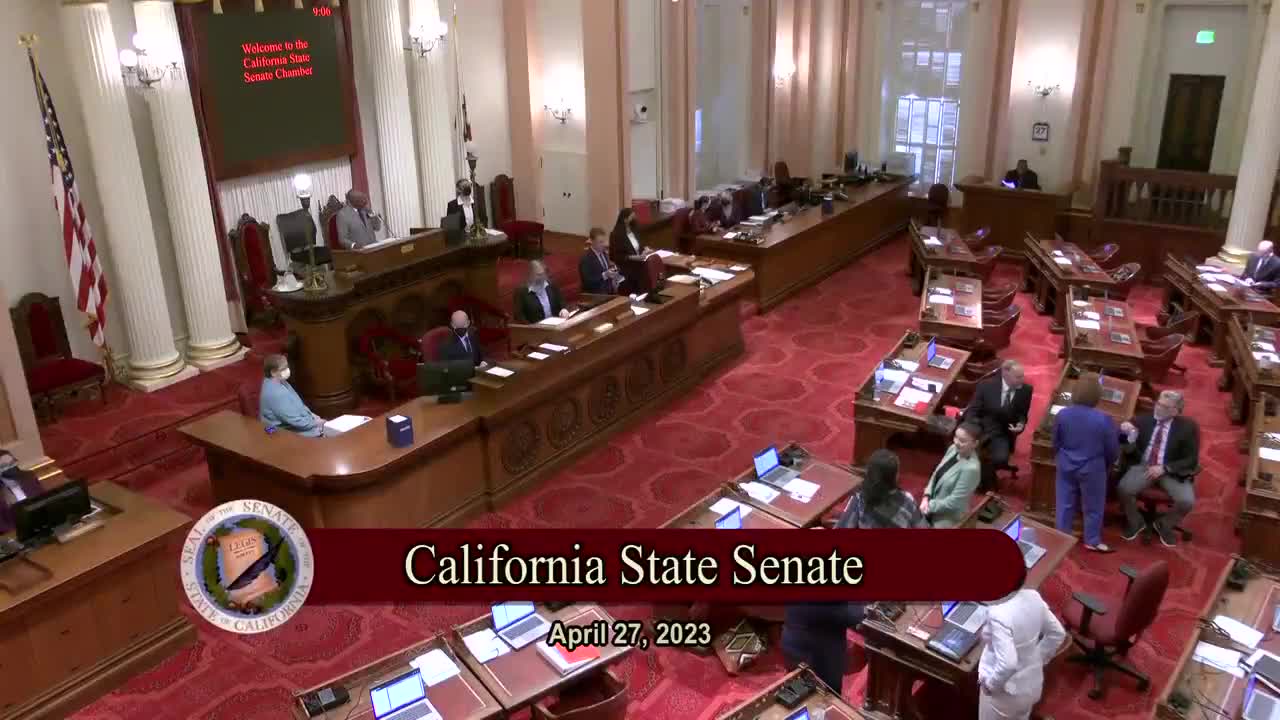 1MIN
Senate Floor
 2MIN
Senate Standing Committee on Natural Resources and Water
1MIN
Senate Standing Committee on Natural Resources and Water
Bill Author

Bill Co-Author(s):
