SB 391: Workers’ compensation: skin cancer.
- Session Year: 2023-2024
- House: Senate
- Latest Version Date: 2023-09-15
Current Status:
Failed
(2024-01-25: Veto sustained.)
Introduced
In Committee
First Chamber
In Committee
Second Chamber
Enacted
What does this bill do?
This bill expands a rule that treats skin cancer in active lifeguards and certain peace officers under state law as presumed to be work-related, so they can receive full workers’ compensation benefits including medical care, disability pay, and death benefits. The presumption can be challenged by other evidence, lasts after employment ends for three months per full year of service (up to 60 months), and does not apply if the skin condition existed before the cancer developed; the lifeguard rule applies only to those employed more than three consecutive months in a year.
The summary is provided by generative AI which can make mistakes. For original language, please view the details in the table below.
Existing law establishes a workers compensation system, administered by the Administrative Director of the Division of Workers Compensation, to compensate an employee for injuries sustained in the course of employment. Existing law provides, among other things, that skin cancer developing in active lifeguards, as defined, is presumed to arise out of and in the course of employment, unless the presumption is rebutted.
This bill would expand the scope of those provisions to certain peace officers of the Department of Fish and Wildlife and the Department of Parks and Recreation.
This bill would incorporate additional changes to Section 3212.11 of the Labor Code proposed by AB 699 to be operative only if this bill and AB 699 are enacted and this bill is enacted last.
Existing law establishes a workers compensation system, administered by the Administrative Director of the Division of Workers Compensation, to compensate an employee for injuries sustained in the course of employment. Existing law provides, among other things, that skin cancer developing in active lifeguards, as defined, is presumed to arise out of and in the course of employment, unless the presumption is rebutted.
This bill would expand the scope of those provisions to certain peace officers of the Department of Fish and Wildlife and the Department of Parks and Recreation.
(a)This section applies to all of the following:
(1)Active lifeguards employed by a city, county, city and county, district, or other public or municipal corporation or political subdivision.
(2)Active state lifeguards employed by the Department of Parks and Recreation.
(3)Peace officers, as defined in subdivisions (e) and (f) of Section 830.2 of the Penal Code.
(b)The term injury, as used in this division, includes skin cancer that develops or manifests itself during the period of the lifeguards or peace officers employment. The compensation awarded for that injury shall include full hospital, surgical, and medical treatment, disability indemnity, and death benefits, as provided by this division.
(c)Skin cancer so developing or manifesting itself shall be presumed to arise out of and in the course of the employment. This presumption is disputable and may be controverted by other evidence, but unless so controverted, the appeals board shall find in accordance with it. This presumption shall be extended to a lifeguard or peace officer following termination of service for a period of three calendar months for each full year of the requisite service, but not to exceed 60 months in any circumstance, commencing with the last date actually worked in the specified capacity.
(d)Skin cancer so developing or manifesting itself in these cases shall not be attributed to any disease existing prior to that development or manifestation.
(e)Paragraphs (1) and (2) of subdivision (a) shall only apply to lifeguards employed for more than three consecutive months in a calendar year.
SEC. 1.5.Section 3212.11 of the Labor Code is amended to read:3212.11.(a)This section applies to all of the following:
(1)Active lifeguards employed by a city, county, city and county, district, or other public or municipal corporation or political subdivision, except lifeguards employed year-round on a regular, full-time basis in the Boating Safety Unit by the City of San Diego Fire-Rescue Department.
(2)Active state lifeguards employed by the Department of Parks and Recreation.
(3)Peace officers, as defined in subdivisions (e) and (f) of Section 830.2 of the Penal Code.
(b)The term injury, as used in this division, includes skin cancer that develops or manifests itself during the period of the lifeguards or peace officers employment. The compensation awarded for that injury shall include full hospital, surgical, and medical treatment, disability indemnity, and death benefits, as provided by this division.
(c)Skin cancer so developing or manifesting itself shall be presumed to arise out of and in the course of the employment. This presumption is disputable and may be controverted by other evidence, but unless so controverted, the appeals board shall find in accordance with it. This presumption shall be extended to a lifeguard or peace officer following termination of service for a period of 3 calendar months for each full year of the requisite service, but not to exceed 60 months in any circumstance, commencing with the last date actually worked in the specified capacity.
(d)Skin cancer so developing or manifesting itself in these cases shall not be attributed to any disease existing prior to that development or manifestation.
(e)Paragraphs (1) and (2) of subdivision (a) shall only apply to lifeguards employed for more than three consecutive months in a calendar year.
SEC. 2.Section 1.5 of this bill incorporates amendments to Section 3212.11 of the Labor Code proposed by both this bill and AB 699. That section of this bill shall only become operative if (1) both bills are enacted and become effective on or before January 1, 2024, (2) each bill amends Section 3212.11 of the Labor Code, and (3) this bill is enacted after AB 699, in which case Section 1 of this bill shall not become operative.
(a)This section applies to all of the following:
(1)Active lifeguards employed by a city, county, city and county, district, or other public or municipal corporation or political subdivision.
(2)Active state lifeguards employed by the Department of Parks and Recreation.
(3)Peace officers, as defined in subdivisions (e) and (f) of Section 830.2 of the Penal Code.
(b)The term injury, as used in this division, includes skin cancer that develops or manifests itself during the period of the lifeguards or peace officers employment. The compensation awarded for that injury shall include full hospital, surgical, and medical treatment, disability indemnity, and death benefits, as provided by this division.
(c)Skin cancer so developing or manifesting itself shall be presumed to arise out of and in the course of the employment. This presumption is disputable and may be controverted by other evidence, but unless so controverted, the appeals board shall find in accordance with it. This presumption shall be extended to a lifeguard or peace officer following termination of service for a period of three calendar months for each full year of the requisite service, but not to exceed 60 months in any circumstance, commencing with the last date actually worked in the specified capacity.
(d)Skin cancer so developing or manifesting itself in these cases shall not be attributed to any disease existing prior to that development or manifestation.
(e)Paragraphs (1) and (2) of subdivision (a) shall only apply to lifeguards employed for more than three consecutive months in a calendar year.
SEC. 1.5.Section 3212.11 of the Labor Code is amended to read:3212.11.This section applies to both of the following: (a) active lifeguards employed by a city, county, city and county, district, or other public or municipal corporation or political subdivision, and (b) active state lifeguards employed by the Department of Parks and Recreation. The 3212.11.(a)This section applies to all of the following:
(1)Active lifeguards employed by a city, county, city and county, district, or other public or municipal corporation or political subdivision, except lifeguards employed year-round on a regular, full-time basis in the Boating Safety Unit by the City of San Diego Fire-Rescue Department.
(2)Active state lifeguards employed by the Department of Parks and Recreation.
(3)Peace officers, as defined in subdivisions (e) and (f) of Section 830.2 of the Penal Code.
(b)The term injury, as used in this division, includes skin cancer that develops or manifests itself during the period of the lifeguards or peace officers employment. The compensation awarded for that injury shall include full hospital, surgical, and medical treatment, disability indemnity, and death benefits, as provided by the provisions of this division.
Skin(c)Skin cancer so developing or manifesting itself shall be presumed to arise out of and in the course of the employment. This presumption is disputable and may be controverted by other evidence, but unless so controverted, the appeals board shall find in accordance with it. This presumption shall be extended to a lifeguard or peace officer following termination of service for a period of three 3 calendar months for each full year of the requisite service, but not to exceed 60 months in any circumstance, commencing with the last date actually worked in the specified capacity.
Skin(d)Skin cancer so developing or manifesting itself in these cases shall not be attributed to any disease existing prior to that development or manifestation.
This section(e)Paragraphs (1) and (2) of subdivision (a) shall only apply to lifeguards employed for more than three consecutive months in a calendar year.
SEC. 2.Section 1.5 of this bill incorporates amendments to Section 3212.11 of the Labor Code proposed by both this bill and AB 699. That section of this bill shall only become operative if (1) both bills are enacted and become effective on or before January 1, 2024, (2) each bill amends Section 3212.11 of the Labor Code, and (3) this bill is enacted after AB 699, in which case Section 1 of this bill shall not become operative.
(a)This section applies to all of the following:
(1)Active lifeguards employed by a city, county, city and county, district, or other public or municipal corporation or political subdivision.
(2)Active state lifeguards employed by the Department of Parks and Recreation.
(3)Peace officers, as defined in subdivisions (e) and (f) of Section 830.2 of the Penal Code.
(b)The term injury, as used in this division, includes skin cancer that develops or manifests itself during the period of the lifeguards or peace officers employment. The compensation awarded for that injury shall include full hospital, surgical, and medical treatment, disability indemnity, and death benefits, as provided by the provisions of this division.
Skin(c)Skin cancer so developing or manifesting itself shall be presumed to arise out of and in the course of the employment. This presumption is disputable and may be controverted by other evidence, but unless so controverted, the appeals board shall find in accordance with it. This presumption shall be extended to a lifeguard or peace officer following termination of service for a period of three calendar months for each full year of the requisite service, but not to exceed 60 months in any circumstance, commencing with the last date actually worked in the specified capacity.
Skin(d)Skin cancer so developing or manifesting itself in these cases shall not be attributed to any disease existing prior to that development or manifestation.
This section(e)Paragraphs (1) and (2) of subdivision (a) shall only apply to lifeguards employed for more than three consecutive months in a calendar year.
|
Date
|
Status
|
|---|---|
| Jan 25, 2024 | Veto sustained. |
| Jan 25, 2024 | Stricken from file. |
| Oct 8, 2023 | In Senate. Consideration of Governor's veto pending. |
| Oct 8, 2023 | Vetoed by the Governor. |
| Sep 20, 2023 | Enrolled and presented to the Governor at 4:30 p.m. |
| Sep 13, 2023 | Assembly amendments concurred in. (Ayes 39. Noes 0. Page 2739.) Ordered to engrossing and enrolling. |
| Sep 12, 2023 | In Senate. Concurrence in Assembly amendments pending. |
| Sep 12, 2023 | Read third time. Passed. (Ayes 80. Noes 0. Page 3261.) Ordered to the Senate. |
| Sep 7, 2023 | Read third time and amended. |
| Sep 7, 2023 | Ordered to third reading. |
| Sep 7, 2023 | Assembly Rule 69 suspended. (Ayes 62. Noes 15. Page 3010.) |
| Sep 5, 2023 | Read second time. Ordered to third reading. |
| Sep 1, 2023 | From committee: Do pass. (Ayes 16. Noes 0.) (September 1). |
| Aug 16, 2023 | August 16 set for first hearing. Placed on suspense file. |
| Jun 28, 2023 | From committee: Do pass and re-refer to Com. on APPR. (Ayes 13. Noes 0.) (June 28). Re-referred to Com. on APPR. |
| Jun 8, 2023 | Referred to Com. on INS. |
| May 25, 2023 | In Assembly. Read first time. Held at Desk. |
| May 25, 2023 | Read third time. Passed. (Ayes 40. Noes 0. Page 1299.) Ordered to the Assembly. |
| May 23, 2023 | Ordered to special consent calendar. |
| May 18, 2023 | Read second time. Ordered to third reading. |
| May 18, 2023 | From committee: Do pass. (Ayes 7. Noes 0. Page 1168.) (May 18). |
| May 12, 2023 | Set for hearing May 18. |
| May 1, 2023 | May 1 hearing: Placed on APPR suspense file. |
| Apr 21, 2023 | Set for hearing May 1. |
| Apr 20, 2023 | From committee: Do pass and re-refer to Com. on APPR with recommendation: To consent calendar. (Ayes 5. Noes 0. Page 832.) (April 19). Re-referred to Com. on APPR. |
| Apr 11, 2023 | Set for hearing April 19. |
| Feb 22, 2023 | Referred to Com. on L., P.E. & R. |
| Feb 10, 2023 | From printer. May be acted upon on or after March 12. |
| Feb 9, 2023 | Introduced. Read first time. To Com. on RLS. for assignment. To print. |
|
Date
|
Description
|
Location
|
Votes
|
|
|---|---|---|---|---|
| Sep 13, 2023 | Unfinished Business SB391 Blakespear Concurrence | Senate Floor |
Passed |
|
| Sep 12, 2023 | SB 391 Blakespear Senate Third Reading By Grayson | Assembly Floor |
Passed |
|
| Sep 1, 2023 | Do pass. | Assembly Standing Committee on Appropriations |
Passed |
|
| Jun 28, 2023 | Do pass and be re-referred to the Committee on [Appropriations] | Assembly Standing Committee on Insurance |
Passed |
|
| May 25, 2023 | Special Consent SB391 Blakespear | Senate Floor |
Passed |
|
| May 18, 2023 | Do pass | Senate Standing Committee on Appropriations |
Passed |
|
| May 1, 2023 | Placed on suspense file | Senate Standing Committee on Appropriations |
Passed |
|
| Apr 19, 2023 | Do pass, but first be re-referred to the Committee on [Appropriations] with the recommendation: To Consent Calendar | Senate Standing Committee on Labor, Public Employment and Retirement |
Passed |
This list shows positions taken on this bill by organizations on the date displayed, which is linked to the original source.
Positions by individuals are not included.
|
Organization
|
Position
|
Date
|
|---|---|---|
| Audubon California | ** Support | |
| California Association Of Professional Scientists | ** Support | |
| California Fish & Game Warden Supervisors and Managers Assn. | ** Support | |
| California Fish & Game Warden Supervisors and Managers Association | ** Support | |
| California Fish And Game Wardens Association | ** Support | |
| California Fish and Game Wardens Supervisors and Managers Association | ** Support | |
| California Statewide Law Enforcement Association | ** Support | |
| California Waterfowl Association | ** Support | |
| California Wildlife Officers Foundation | ** Support | |
| Defenders Of Wildlife | ** Support | |
| Endangered Habitats League | ** Support | |
| Fish and Game Wardens, Supervisors and Managers Association | * Support | Jun 28, 2023 |
| Friends of Fish and Game | ** Support | |
| Monterey Bay Aquarium | ** Support | |
| Mountain Lion Foundation | ** Support | |
| National Wildlife Federation | ** Support | |
| Oceana | ** Support | |
| Peace Officers Research Association Of California | ** Support | |
| Planning And Conservation League | ** Support | |
| The Nature Conservancy | ** Support | |
| Two Dozen Active and Retired California Wildlife Officers | ** Support |
SENATE RULES COMMITTEE Office of Senate Floor Analyses (916) 651-1520 Fax: (916) 327-4478 | SB 391 |
VETO
Bill No: SB 391
Author: Blakespear (D)
Amended: 9/7/23
Vote: 27
SENATE LABOR, PUB. EMP. & RET. COMMITTEE: 5-0, 4/19/23
AYES: Cortese, Wilk, Durazo, Laird, Smallwood-Cuevas
SENATE APPROPRIATIONS COMMITTEE: 7-0, 5/18/23
AYES: Portantino, Jones, Ashby, Bradford, Seyarto, Wahab, Wiener
SENATE FLOOR: 40-0, 5/25/23
AYES: Allen, Alvarado-Gil, Archuleta, Ashby, Atkins, Becker, Blakespear, Bradford, Caballero, Cortese, Dahle, Dodd, Durazo, Eggman, Glazer, Gonzalez, Grove, Hurtado, Jones, Laird, Limón, McGuire, Menjivar, Min, Newman, Nguyen, Niello, Ochoa Bogh, Padilla, Portantino, Roth, Rubio, Seyarto, Skinner, Smallwood-Cuevas, Stern, Umberg, Wahab, Wiener, Wilk
SENATE FLOOR: 39-0, 9/13/23
AYES: Allen, Alvarado-Gil, Archuleta, Ashby, Atkins, Becker, Blakespear, Bradford, Cortese, Dahle, Dodd, Durazo, Eggman, Glazer, Gonzalez, Grove, Hurtado, Jones, Laird, Limón, McGuire, Menjivar, Min, Newman, Nguyen, Niello, Ochoa Bogh, Padilla, Portantino, Roth, Rubio, Seyarto, Skinner, Smallwood-Cuevas, Stern, Umberg, Wahab, Wiener, Wilk
NO VOTE RECORDED: Caballero
ASSEMBLY FLOOR: 80-0, 9/12/23 - See last page for vote
SUBJECT: Workers’ compensation: skin cancer
SOURCE: California Fish and Game Warden Supervisors and Managers
Association
California Statewide Law Enforcement Association
DIGEST:
This bill expands the existing workers’ compensation presumption for skin cancer by including peace officers of the Department of Fish and Wildlife (DFW) and the Department of Parks and Recreation (DPR) whose primary duties are law enforcement.
ANALYSIS:
Existing law:
- Establishes a workers’ compensation system that provides benefits to an employee who suffers from an injury that arises out of and in the course of employment. This system requires all employers to obtain payment of benefits by either securing the consent of the Department of Industrial Relations (DIR) to self insure or by securing insurance against liability from an insurance company duly authorized by the state.
- Establishes within the workers’ compensation system temporary disability benefits that offer wage replacement equal to 2/3 of a specified injured employee’s average weekly wages for up to 240 weeks while an employee is unable to work due to a workplace illness or injury.
- Establishes a disputable presumption that the development or manifestation of skin cancer is work related for active lifeguards employed by a city, county, city and county, district, or other public or municipal corporation or political subdivision and active state lifeguards employed by DPR.
- Entitles specified peace officers to permanent or temporary disability leave, which consists of up to one year of fully paid leave if they are disabled by an injury or illness arising out of and in the course of their duties, paid for out of the Workers’ Compensation Fund.
- Defines the following employees as peace officers:
- Employees of DFW whose primary duties are enforcement of the Fish and Game Code; and
- Employees of DPR whose primary duties are enforcement of the Public Resources Code.
This bill:
- Adds peace officers of DFW and DPR, whose primary duties are law enforcement, to the employees covered by the existing workers’ compensation presumption for skin cancer.
- Contains double jointing language with AB 699 (Weber).
Background
This bill expands the existing presumption pertaining to skin cancer, adding approximately 1,000 peace officers of DFW and DPR whose primary duties are law enforcement. This presumption already exists for most lifeguards due to the sun exposure inherent to their jobs and the relative difficulty in which someone could prove a definitive source of skin cancer. The employees proposed to be added in this bill similarly spend a significant portion of their employment hours outside. Conclusive data on occupational sun exposure and its effect on the propensity of skin cancer are somewhat few and far between; however, both the Canadian and Australian governments have found a correlation between outdoor occupations and skin cancer. The author and sponsors of this bill submitted a study request to the Commission on Health and Safety and Workers’ Compensation (Commission) in February 2020 to obtain more data. In May 2022, the Commission approved the proposal and work commenced. During that timeframe, the sponsors also took the initiative to consult with occupational medical experts at the University of California, who concluded that, from their review of studies, there is ample evidence that occupational sun exposure is strongly associated with melanoma of the head and neck.
Comments
According to the author, “[California] Fish and Wildlife Officers and State Park Rangers often work 10 to 12 hours per day and many of those hours are spent outside in the sun. For career wildlife officers and park rangers, this amounts to decades outside – far more than the average worker. If you earn your living working outdoors, your sun exposure and risk of skin cancer skyrocket. Solar ultraviolet radiation (UVR), the main risk factor for development of skin cancer, is classified as a group 1 carcinogen by the International Agency for Research on Cancer and World Health Organization. A recent meta-analysis reported that occupationally UVR-exposed workers have almost double the risk of developing cutaneous squamous cell carcinoma (cSCC), and at least a 43% higher risk of developing basal cell carcinoma (BCC) compared with non-exposed workers.”
Related/Prior Legislation
SB 1127 (Atkins, Chapter 835, Statutes of 2022) reduced the time period a public safety employer has between the filing of a workers’ compensation claim and when the employer must accept liability for a non-rebutted claim and extended the duration of temporary disability benefits from 104 weeks to 240 weeks for cancer presumption statutes.
AB 334 (Mullin, 2021) would have expanded the existing workers’ compensation presumption pertaining to skin cancer by including peace officers of DFW and DPR whose primary duties are law enforcement. Vetoed by Governor. In his veto message, Governor Newsom stated, “A presumption is not required for an occupational disease to be compensable. Such presumptions should be provided sparingly and should be based on the unique hazards or proven difficulty of establishing a direct relationship between a disease or injury and the employee's work. Although well-intentioned, the need for the presumption envisioned by this bill is not supported by clear and compelling evidence.”
AB 2665 (Mullin, 2020) was substantively similar to AB 334. The bill was held in the Assembly Insurance Committee.
SB 527 (Block, Chapter 66, Statutes of 2013) added full-time lifeguards employed by the City of San Diego to the class of public safety employees who received enhanced temporary disability benefits when unable to work due to illness or injury that arose out of the course of employment.
FISCAL EFFECT: Appropriation: No Fiscal Com.: Yes Local: No
According to the Assembly Appropriations Committee:
- Additional workers’ compensation premium costs of an unknown amount, potentially in excess of $150,000, to DFW and DPR to the extent the presumption results in benefits awarded to specified peace officers that would not have otherwise occurred (General Fund). The magnitude of such costs also depends on the number of affected employees.
- Minor and absorbable administrative costs to DFW, DPR, and the Division of Workers’ Compensation. Although employers have the opportunity to rebut a presumption and establish an injury is not the result of employment, data shows presumptions are rarely rebutted. Thus, it is assumed state efforts to rebut such presumptions are likely to be rare and resulting costs limited.
California Fish and Game Warden Supervisors and Managers Association (source)
California Statewide Law Enforcement Association (source)
Audubon California
California Association of Professional Scientists
California Fish and Game Wardens Association
California Waterfowl Association
California Wildlife Officers Foundation
Defenders of Wildlife
Endangered Habitats League
Friends of Fish and Game
Monterey Bay Aquarium
Mountain Lion Foundation
National Wildlife Federation
Oceana
Peace Officers Research Association of California
Planning and Conservation League
The Nature Conservancy
24 individuals
OPPOSITION: (Verified 10/18/23)
None received
ARGUMENTS IN SUPPORT: According to the California Statewide Law Enforcement Association and the California Fish and Game Warden Supervisors and Managers Association:
California wildlife officers are faced with many dangers ranging from vehicle accidents on remote unimproved forest roads to armed felons who may try to kill us for simply doing their jobs. When the situation goes bad, backup may be many miles or even hours away. These are risks we all accept as wildlife officers. But there is a silent threat that our jobs expose us to that we don’t train for like a violent encounter – and that’s skin cancer. We spend many hours most days of our career in the sun and experience strongly suggests our wildlife officers have a higher than-average incidence of UV exposure and skin cancer… the California Health and Safety and Workers Compensation Commission contracted with occupational medicine experts from UC San Francisco and UC Berkeley to conduct an effort to validate the claim that wildlife officers and park rangers are at increased risk of skin cancer compared to the general public. As Dr. James McNicholas and Dr. Gina Solomon write in the executive summary of their analysis (attached), “the weight of the evidence is supportive of a causal relationship in the occupational setting. On the ultimate question of whether the peace officers under consideration sustain enough exposure to merit presumption, our medical opinion is that this is reasonable… that exposure is at least as comparable to other law enforcement officer groups [which already enjoy a presumption].”
For skin cancer types that are less likely to be “substantially caused by occupational exposure to UV radiation,” the authors remind that “the employer retains the right to rebuttal.” AB 334 passed the legislature unanimously last year but was unfortunately vetoed by Governor Newsom. Nearly 1,000 state employees who put their lives on the line to protect California citizens and our precious natural resources are asking the legislature to have their backs and help us persuade him that this policy is justified and equitable and would be a tremendous benefit to wildlife officers, park rangers, and their families.
GOVERNOR'S VETO MESSAGE:
This bill would create a rebuttable presumption of industrial causation for skin cancer under the workers' compensation system to specified peace officers of the Department of Fish and Wildlife and Department of Parks and Recreation.
A presumption is not required for an occupational disease to be compensable. I vetoed AB 334 in 2021 which was nearly identical to this bill. As stated in my previous veto message, such presumptions should be provided sparingly and should be based on the unique hazards or proven difficulty of establishing a direct relationship between a disease or injury and the employee's work. Although well-intentioned, the need for the presumption envisioned by this bill is not supported by clear and compelling evidence.
ASSEMBLY FLOOR: 80-0, 9/12/23
AYES: Addis, Aguiar-Curry, Alanis, Alvarez, Arambula, Bains, Bauer-Kahan, Bennett, Berman, Boerner, Bonta, Bryan, Calderon, Juan Carrillo, Wendy Carrillo, Cervantes, Chen, Connolly, Megan Dahle, Davies, Dixon, Essayli, Flora, Mike Fong, Vince Fong, Friedman, Gabriel, Gallagher, Garcia, Gipson, Grayson, Haney, Hart, Holden, Hoover, Irwin, Jackson, Jones-Sawyer, Kalra, Lackey, Lee, Low, Lowenthal, Maienschein, Mathis, McCarty, McKinnor, Muratsuchi, Stephanie Nguyen, Ortega, Pacheco, Papan, Jim Patterson, Joe Patterson, Pellerin, Petrie-Norris, Quirk-Silva, Ramos, Rendon, Reyes, Luz Rivas, Rodriguez, Blanca Rubio, Sanchez, Santiago, Schiavo, Soria, Ta, Ting,
Valencia, Villapudua, Waldron, Wallis, Ward, Weber, Wicks, Wilson, Wood, Zbur, Robert Rivas
Prepared by: Dawn Clover / L., P.E. & R. / (916) 651-1556
12/28/23 12:06:53
**** END ****
SENATE RULES COMMITTEE Office of Senate Floor Analyses (916) 651-1520 Fax: (916) 327-4478 | SB 391 |
UNFINISHED BUSINESS
Bill No: SB 391
Author: Blakespear (D)
Amended: 9/7/23
Vote: 21
SENATE LABOR, PUB. EMP. & RET. COMMITTEE: 5-0, 4/19/23
AYES: Cortese, Wilk, Durazo, Laird, Smallwood-Cuevas
SENATE APPROPRIATIONS COMMITTEE: 7-0, 5/18/23
AYES: Portantino, Jones, Ashby, Bradford, Seyarto, Wahab, Wiener
SENATE FLOOR: 40-0, 5/25/23
AYES: Allen, Alvarado-Gil, Archuleta, Ashby, Atkins, Becker, Blakespear, Bradford, Caballero, Cortese, Dahle, Dodd, Durazo, Eggman, Glazer, Gonzalez, Grove, Hurtado, Jones, Laird, Limón, McGuire, Menjivar, Min, Newman, Nguyen, Niello, Ochoa Bogh, Padilla, Portantino, Roth, Rubio, Seyarto, Skinner, Smallwood-Cuevas, Stern, Umberg, Wahab, Wiener, Wilk
ASSEMBLY FLOOR: 80-0, 9/12/23 - See last page for vote
SUBJECT: Workers’ compensation: skin cancer
SOURCE: California Fish and Game Warden Supervisors and Managers
Association
California Statewide Law Enforcement Association
DIGEST:
This bill expands the existing workers’ compensation presumption for skin cancer by including peace officers of the Department of Fish and Wildlife (DFW) and the Department of Parks and Recreation (DPR) whose primary duties are law enforcement.
Assembly Amendments
add double jointing language with AB 699 (Weber) to avoid a chaptering out conflict.
ANALYSIS:
Existing law:
- Establishes a workers’ compensation system that provides benefits to an employee who suffers from an injury that arises out of and in the course of employment. This system requires all employers to obtain payment of benefits by either securing the consent of the Department of Industrial Relations (DIR) to self insure or by securing insurance against liability from an insurance company duly authorized by the state.
- Establishes within the workers’ compensation system temporary disability benefits that offer wage replacement equal to 2/3 of a specified injured employee’s average weekly wages for up to 240 weeks while an employee is unable to work due to a workplace illness or injury.
- Establishes a disputable presumption that the development or manifestation of skin cancer is work related for active lifeguards employed by a city, county, city and county, district, or other public or municipal corporation or political subdivision and active state lifeguards employed by DPR.
- Entitles specified peace officers to permanent or temporary disability leave, which consists of up to one year of fully paid leave if they are disabled by an injury or illness arising out of and in the course of their duties, paid for out of the Workers’ Compensation Fund.
- Defines the following employees as peace officers:
- Employees of DFW whose primary duties are enforcement of the Fish and Game Code; and
- Employees of DPR whose primary duties are enforcement of the Public Resources Code.
This bill adds peace officers of DFW and DPR, whose primary duties are law enforcement, to the employees covered by the existing workers’ compensation presumption for skin cancer.
Background
This bill expands the existing presumption pertaining to skin cancer, adding approximately 1,000 peace officers of DFW and DPR whose primary duties are law enforcement. This presumption already exists for most lifeguards due to the sun exposure inherent to their jobs and the relative difficulty in which someone could prove a definitive source of skin cancer. The employees proposed to be added in this bill similarly spend a significant portion of their employment hours outside. Conclusive data on occupational sun exposure and its effect on the propensity of skin cancer are somewhat few and far between; however, both the Canadian and Australian governments have found a correlation between outdoor occupations and skin cancer. The author and sponsors of this bill submitted a study request to the Commission on Health and Safety and Workers’ Compensation (Commission) in February 2020 to obtain more data. In May 2022, the Commission approved the proposal and work commenced. During that timeframe, the sponsors also took the initiative to consult with occupational medical experts at the University of California, who concluded that, from their review of studies, there is ample evidence that occupational sun exposure is strongly associated with melanoma of the head and neck.
Comments
According to the author, “[California] Fish and Wildlife Officers and State Park Rangers often work 10 to 12 hours per day and many of those hours are spent outside in the sun. For career wildlife officers and park rangers, this amounts to decades outside – far more than the average worker. If you earn your living working outdoors, your sun exposure and risk of skin cancer skyrocket. Solar ultraviolet radiation (UVR), the main risk factor for development of skin cancer, is classified as a group 1 carcinogen by the International Agency for Research on Cancer and World Health Organization. A recent meta-analysis reported that occupationally UVR-exposed workers have almost double the risk of developing cutaneous squamous cell carcinoma (cSCC), and at least a 43% higher risk of developing basal cell carcinoma (BCC) compared with non-exposed workers.”
Related/Prior Legislation
SB 1127 (Atkins, Chapter 835, Statutes of 2022) reduced the time period a public safety employer has between the filing of a workers’ compensation claim and when the employer must accept liability for a non-rebutted claim and extended the duration of temporary disability benefits from 104 weeks to 240 weeks for cancer presumption statutes.
AB 334 (Mullin, 2021) would have expanded the existing workers’ compensation presumption pertaining to skin cancer by including peace officers of DFW and DPR whose primary duties are law enforcement. Vetoed by Governor. In his veto message, Governor Newsom stated, “A presumption is not required for an occupational disease to be compensable. Such presumptions should be provided sparingly and should be based on the unique hazards or proven difficulty of establishing a direct relationship between a disease or injury and the employee's work. Although well-intentioned, the need for the presumption envisioned by this bill is not supported by clear and compelling evidence.”
AB 2665 (Mullin, 2020) was substantively similar to AB 334. This bill was held in the Assembly Committee on Insurance.
SB 527 (Block, Chapter 66, Statutes of 2013) added full-time lifeguards employed
by the City of San Diego to the class of public safety employees who received
enhanced temporary disability benefits when they are unable to work due to illness or injury that arose out of the course of employment.
FISCAL EFFECT: Appropriation: No Fiscal Com.: Yes Local: No
According to the Assembly Appropriations Committee:
- Additional workers’ compensation premium costs of an unknown amount, potentially in excess of $150,000, to DFW and DPR to the extent the presumption results in benefits awarded to specified peace officers that would not have otherwise occurred (General Fund). The magnitude of such costs also depends on the number of affected employees.
- Minor and absorbable administrative costs to DFW, DPR, and the Division of Workers’ Compensation (DWC). Although employers have the opportunity to rebut a presumption and establish an injury is not the result of employment, data shows presumptions are rarely rebutted. Thus, it is assumed state efforts to rebut such presumptions are likely to be rare and resulting costs limited.
SUPPORT: (Verified 9/12/23)
California Fish and Game Warden Supervisors and Managers Association (source) California Statewide Law Enforcement Association (source)
Audubon California
California Association of Professional Scientists
California Fish and Game Wardens Association
California Waterfowl Association
California Wildlife Officers Foundation
Defenders of Wildlife
Endangered Habitats League
Friends of Fish and Game
Monterey Bay Aquarium
Mountain Lion Foundation
National Wildlife Federation
Oceana
Peace Officers Research Association of California
Planning and Conservation League
The Nature Conservancy
Individual Letters: 24
OPPOSITION: (Verified 9/12/23)
None received
ARGUMENTS IN SUPPORT: According to the California Statewide Law Enforcement Association and the California Fish and Game Warden Supervisors and Managers Association,
California wildlife officers are faced with many dangers ranging from vehicle accidents on remote unimproved forest roads to armed felons who may try to kill us for simply doing their jobs. When the situation goes bad, backup may be many miles or even hours away. These are risks we all accept as wildlife officers. But there is a silent threat that our jobs expose us to that we don’t train for like a violent encounter – and that’s skin cancer. We spend many hours most days of our career in the sun and experience strongly suggests our wildlife officers have a higher than-average incidence of UV exposure and skin cancer… the California Health and Safety and Workers Compensation Commission contracted with occupational medicine experts from UC San Francisco and UC Berkeley to conduct an effort to validate the claim that wildlife officers and park rangers are at increased risk of skin cancer compared to the general public. As Dr. James McNicholas and Dr. Gina Solomon write in the executive summary of their analysis (attached), “the weight of the evidence is supportive of a causal relationship in the occupational setting. On the ultimate question of whether the peace officers under consideration sustain enough exposure to merit presumption, our medical opinion is that this is reasonable… that exposure is at least as comparable to other law enforcement officer groups [which already enjoy a presumption].”
For skin cancer types that are less likely to be “substantially caused by occupational exposure to UV radiation,” the authors remind that “the employer retains the right to rebuttal.” AB 334 passed the legislature unanimously last year but was unfortunately vetoed by Governor Newsom. Nearly 1,000 state employees who put their lives on the line to protect California citizens and our precious natural resources are asking the legislature to have their backs and help us persuade him that this policy is justified and equitable and would be a tremendous benefit to wildlife officers, park rangers, and their families.
ASSEMBLY FLOOR: 80-0, 9/12/23
AYES: Addis, Aguiar-Curry, Alanis, Alvarez, Arambula, Bains, Bauer-Kahan, Bennett, Berman, Boerner, Bonta, Bryan, Calderon, Juan Carrillo, Wendy Carrillo, Cervantes, Chen, Connolly, Megan Dahle, Davies, Dixon, Essayli, Flora, Mike Fong, Vince Fong, Friedman, Gabriel, Gallagher, Garcia, Gipson, Grayson, Haney, Hart, Holden, Hoover, Irwin, Jackson, Jones-Sawyer, Kalra, Lackey, Lee, Low, Lowenthal, Maienschein, Mathis, McCarty, McKinnor, Muratsuchi, Stephanie Nguyen, Ortega, Pacheco, Papan, Jim Patterson, Joe Patterson, Pellerin, Petrie-Norris, Quirk-Silva, Ramos, Rendon, Reyes, Luz Rivas, Rodriguez, Blanca Rubio, Sanchez, Santiago, Schiavo, Soria, Ta, Ting, Valencia, Villapudua, Waldron, Wallis, Ward, Weber, Wicks, Wilson, Wood, Zbur, Robert Rivas
Prepared by: Dawn Clover / L., P.E. & R. / (916) 651-1556
9/12/23 19:52:02
**** END ****
SENATE THIRD READING
STR Bill Id:SB 391
Author:(Blakespear)
As Amended Ver:September 7, 2023
Majority vote
SUMMARY
Grants certain peace officers of the Department of Fish and Wildlife and the Department of Parks and Recreation the presumption that skin cancer is a work related condition for purposes of making a workers' compensation claim, unless the presumption is rebutted.
Major Provisions
COMMENTS
Presumptions. Presumptions have never been intended to create work related injuries when, in fact, the injuries in question are not work related. Rather, presumptions of compensability have been adopted, some many decades ago, to reflect unique circumstances where injuries or illnesses appear to logically be work related, but it is difficult for the injured worker to prove it is work related.
With very narrow exceptions for privately employed firefighters for public facilities, presumptions of compensability have been granted only to public safety officers – fire and peace officer employees. Thus, the costs of presumptions are borne only by state and local government employers, and only for the narrow class of employee, broadly referred to as public safety employees, whose jobs regularly place them in harm's way.
The presumption that would be created by this bill is arguably narrow. The only condition it would apply to is skin cancer and the only employees it would apply to are peace officers employed by the Department of Fish and Wildlife (game wardens) and the Department of Parks and Recreation (park rangers). These game wardens and park rangers do not currently receive the benefit of any presumptions. The cost for this presumption would be borne by the state.
Supporting data/Commission on Health and Safety and Workers' Compensation Study (CHSWC). Generally, in order to establish that a new presumption ought to be adopted, proponents must show that the injury is most likely to be related to the job, it is hard to prove this fact, and that when claims are filed, they are denied for lack of proof that the injury is related to the job. A study request was submitted to CHSWC in February 2020 in an attempt to gain data related to skin cancer and the game wardens and park rangers this bill seeks to cover.
CHSWC contracted with occupational medicine experts from University of California (UC), San Francisco and UC Berkeley to conduct the study, which consisted of a literature review, a single-field ride along, and interviews with officers. That study was inconclusive and noted "On the ultimate question of whether the peace officers under consideration sustain enough exposure to merit presumption, our medical opinion is that this is reasonable…However, our position is not that every skin cancer arising in the peace officers under consideration will have been substantially caused by occupational exposure to [ultraviolet (UV)] radiation."
According to the Author
California Fish and Wildlife Officers and State Park Rangers often work 10 to 12 hours per day and many of those hours are spent outside in the sun. For career wildlife officers and park rangers this amounts to decades outside – far more than the average worker. If you earn your living working outdoors, your sun exposure and risk of skin cancer skyrocket. Solar ultraviolet radiation (UVR), the main risk factor for development of skin cancer, is classified as a group 1 carcinogen by the International Agency for Research on Cancer and World Health Organization. A recent meta-analysis reported that occupationally UVR-exposed workers have almost double the risk of developing cutaneous squamous cell carcinoma (cSCC), and at least a 43% higher risk of developing basal cell carcinoma (BCC) compared with non-exposed workers.
Arguments in Support
The California Fish and Game Wardens Association, the sponsor of this bill, write in support noting:
Despite the fact that we spend the majority of our time outdoors exposed to the sun, and come in regular and often unprotected contact with toxins at illicit cannabis grows, Park Rangers and Game Wardens aren't covered by the general cancer presumption granted to nearly all other LEOs in California.
While this bill would solve this issue for a skin cancer diagnosis, there are still a litany of other cancers that Game Wardens and Park Rangers do not have presumptions for. It is a modest first step, but there is still lots of work to be done.
Arguments in Opposition
None on file.
FISCAL COMMENTS
According to the Assembly Appropriations Committee:
- Additional workers' compensation premium costs of an unknown amount, potentially in excess of $150,000, to DFW and DPR to the extent the presumption results in benefits awarded to specified peace officers that would not have otherwise occurred (General Fund). The magnitude of such costs also depends on the number of affected employees.
- Minor and absorbable administrative costs to DFW, DPR, and the Division of Workers' Compensation (DWC). Although employers have the opportunity to rebut a presumption and establish an injury is not the result of employment, data shows presumptions are rarely rebutted. Thus, it is assumed state efforts to rebut such presumptions are likely to be rare and resulting costs limited.
VOTES
SENATE FLOOR: 40-0-0
YES: Allen, Alvarado-Gil, Archuleta, Ashby, Atkins, Becker, Blakespear, Bradford, Caballero, Cortese, Dahle, Dodd, Durazo, Eggman, Glazer, Gonzalez, Grove, Hurtado, Jones, Laird, Limón, McGuire, Menjivar, Min, Newman, Nguyen, Niello, Ochoa Bogh, Padilla, Portantino, Roth, Rubio, Seyarto, Skinner, Smallwood-Cuevas, Stern, Umberg, Wahab, Wiener, Wilk
ASM INSURANCE: 13-0-1
YES: Calderon, Essayli, Berman, Cervantes, Chen, Vince Fong, Gipson, Grayson, Jones‑Sawyer, Ortega, Soria, Valencia, Wood
ABS, ABST OR NV: Rodriguez
ASM APPROPRIATIONS: 16-0-0
YES: Holden, Megan Dahle, Bryan, Calderon, Wendy Carrillo, Dixon, Mike Fong, Hart, Lowenthal, Mathis, Papan, Pellerin, Sanchez, Soria, Weber, Wilson
UPDATED
VERSION: September 7, 2023
CONSULTANT: Claire Wendt / INS. / (916) 319-2086 FN: 0001995
SENATE THIRD READING
STR Bill Id:SB 391
Author:(Blakespear)
As Introduced Ver:February 9, 2023
Majority vote
SUMMARY
Grants certain peace officers of the Department of Fish and Wildlife and the Department of Parks and Recreation the presumption that skin cancer is a work related condition for purposes of making a workers' compensation claim, unless the presumption is rebutted.
COMMENTS
Presumptions. Presumptions have never been intended to create work related injuries when, in fact, the injuries in question are not work related. Rather, presumptions of compensability have been adopted, some many decades ago, to reflect unique circumstances where injuries or illnesses appear to logically be work related, but it is difficult for the injured worker to prove it is work related.
With very narrow exceptions for privately employed firefighters for public facilities, presumptions of compensability have been granted only to public safety officers – fire and peace officer employees. Thus, the costs of presumptions are borne only by state and local government employers, and only for the narrow class of employee, broadly referred to as public safety employees, whose jobs regularly place them in harm's way.
The presumption that would be created by this bill is arguably narrow. The only condition it would apply to is skin cancer and the only employees it would apply to are peace officers employed by the Department of Fish and Wildlife (game wardens) and the Department of Parks and Recreation (park rangers). These game wardens and park rangers do not currently receive the benefit of any presumptions. The cost for this presumption would be borne by the state.
Supporting data/Commission on Health and Safety and Workers' Compensation Study (CHSWC). Generally, in order to establish that a new presumption ought to be adopted, proponents must show that the injury is most likely to be related to the job, it is hard to prove this fact, and that when claims are filed, they are denied for lack of proof that the injury is related to the job. A study request was submitted to CHSWC in February 2020 in an attempt to gain data related to skin cancer and the game wardens and park rangers this bill seeks to cover.
CHSWC contracted with occupational medicine experts from University of California (UC), San Francisco and UC Berkeley to conduct the study, which consisted of a literature review, a single-field ride along, and interviews with officers. That study was inconclusive and noted "On the ultimate question of whether the peace officers under consideration sustain enough exposure to merit presumption, our medical opinion is that this is reasonable…However, our position is not that every skin cancer arising in the peace officers under consideration will have been substantially caused by occupational exposure to [ultraviolet (UV)] radiation."
According to the Author
California Fish and Wildlife Officers and State Park Rangers often work 10 to 12 hours per day and many of those hours are spent outside in the sun. For career wildlife officers and park rangers this amounts to decades outside – far more than the average worker. If you earn your living working outdoors, your sun exposure and risk of skin cancer skyrocket. Solar ultraviolet radiation (UVR), the main risk factor for development of skin cancer, is classified as a group 1 carcinogen by the International Agency for Research on Cancer and World Health Organization. A recent meta-analysis reported that occupationally UVR-exposed workers have almost double the risk of developing cutaneous squamous cell carcinoma (cSCC), and at least a 43% higher risk of developing basal cell carcinoma (BCC) compared with non-exposed workers.
Arguments in Support
The California Fish and Game Wardens Association, the sponsor of this bill, write in support noting:
Despite the fact that we spend the majority of our time outdoors exposed to the sun, and come in regular and often unprotected contact with toxins at illicit cannabis grows, Park Rangers and Game Wardens aren't covered by the general cancer presumption granted to nearly all other LEOs in California.
While this bill would solve this issue for a skin cancer diagnosis, there are still a litany of other cancers that Game Wardens and Park Rangers do not have presumptions for. It is a modest first step, but there is still lots of work to be done.
Arguments in Opposition
None on file.
FISCAL COMMENTS
According to the Assembly Appropriations Committee:
- Additional workers' compensation premium costs of an unknown amount, potentially in excess of $150,000, to DFW and DPR to the extent the presumption results in benefits awarded to specified peace officers that would not have otherwise occurred (General Fund). The magnitude of such costs also depends on the number of affected employees.
- Minor and absorbable administrative costs to DFW, DPR, and the Division of Workers' Compensation (DWC). Although employers have the opportunity to rebut a presumption and establish an injury is not the result of employment, data shows presumptions are rarely rebutted. Thus, it is assumed state efforts to rebut such presumptions are likely to be rare and resulting costs limited.
VOTES
SENATE FLOOR: 40-0-0
YES: Allen, Alvarado-Gil, Archuleta, Ashby, Atkins, Becker, Blakespear, Bradford, Caballero, Cortese, Dahle, Dodd, Durazo, Eggman, Glazer, Gonzalez, Grove, Hurtado, Jones, Laird, Limón, McGuire, Menjivar, Min, Newman, Nguyen, Niello, Ochoa Bogh, Padilla, Portantino, Roth, Rubio, Seyarto, Skinner, Smallwood-Cuevas, Stern, Umberg, Wahab, Wiener, Wilk
ASM INSURANCE: 13-0-1
YES: Calderon, Essayli, Berman, Cervantes, Chen, Vince Fong, Gipson, Grayson, Jones‑Sawyer, Ortega, Soria, Valencia, Wood
ABS, ABST OR NV: Rodriguez
ASM APPROPRIATIONS: 16-0-0
YES: Holden, Megan Dahle, Bryan, Calderon, Wendy Carrillo, Dixon, Mike Fong, Hart, Lowenthal, Mathis, Papan, Pellerin, Sanchez, Soria, Weber, Wilson
UPDATED
VERSION: February 9, 2023
CONSULTANT: Claire Wendt / INS. / (916) 319-2086 FN: 0001441
Date of Hearing: August 16, 2023
ASSEMBLY COMMITTEE ON APPROPRIATIONS
Chris Holden, Chair
SBPCA Bill Id:SB 391
Author:(Blakespear) – As Introduced Ver:February 9, 2023
Policy Committee: | Insurance | Vote: | 13 - 0 |
|
| ||
|
|
Urgency: No State Mandated Local Program: No Reimbursable: No
SUMMARY:
This bill includes skin cancer as a workers’ compensation injury for certain peace officers – game wardens employed by the Department of Fish and Wildlife (DFW) and park rangers employed by the Department of Parks and Recreation (DPR) – and provides a rebuttable presumption that such a diagnosis arose out of and in the course of employment.
Following termination of service, the presumption covers a period of three calendar months for each full year of service by the worker, not to exceed 60 months.
FISCAL EFFECT:
- Additional workers’ compensation premium costs of an unknown amount, potentially in excess of $150,000, to DFW and DPR to the extent the presumption results in benefits awarded to specified peace officers that would not have otherwise occurred (General Fund). The magnitude of such costs also depends on the number of affected employees.
- Minor and absorbable administrative costs to DFW, DPR, and the Division of Workers’ Compensation (DWC). Although employers have the opportunity to rebut a presumption and establish an injury is not the result of employment, data shows presumptions are rarely rebutted. Thus, it is assumed state efforts to rebut such presumptions are likely to be rare and resulting costs limited.
COMMENTS:
- Purpose. According to the author:
[DFW and DPR] Rangers often work 10 to 12 hours per day and many of those hours are spent outside in the sun. For career wildlife officers and park rangers this amounts to decades outside – farm more than the average worker. If you earn your living working outdoors, your sun exposure and risk of skin cancer skyrocket.
This bill is co-sponsored by the California Statewide Law Enforcement Association and the California Fish and Game Warden Supervisors and Managers Association and supported by various wildlife advocacy groups and individual wildlife officers.
- Background.
Rebuttable Presumption. A presumption of compensability in the workers’ compensation system reflects unique circumstances when an injury or illness appears to logically be work-related, but is difficult for the injured worker to prove the condition is work-related. The absence of a presumption does not mean an employee does not qualify for benefits, but that the employee must prove the injury is work-related to qualify.
Existing law provides that skin cancer is presumed to be a workers’ compensation injury for active lifeguards employed by a local jurisdiction or DPR. This bill extends this coverage and presumption to certain peace officers employed by DPR (park rangers) and DFW (game wardens), which the co-sponsors of this bill estimate to be approximately 800 positions. These peace officers do not receive the benefit of existing workers’ compensation presumptions, such as that for all cancers and heart trouble, provided to other specified local and state public safety officers.
Commission on Health and Safety and Workers’ Compensation (CHSWC) Study. AB 2665 (Mullin), of the 2019-20 Legislative Session, was identical to this bill. After AB 2665 was not set for hearing in the Assembly Insurance Committee, the author submitted a February 2020 request to CHSWC to gain data related to skin cancer in game wardens and park rangers and study whether the injury is most likely related to the job and denial of claims is due to lack of such proof, thus justifying the need for a presumption.
CHSWC contracted with occupational medicine experts from the University of California (UC) San Francisco and UC Berkeley to conduct the study, consisting of a literature review, field ride-along with DFW officers, and interviews with other officers. Study results were shared with the author of AB 2665 in July 2022. However, as described in the Assembly Insurance Committee’s analysis of this bill, the results were inconclusive, finding:
On the ultimate question of whether the peace officers under consideration sustain enough exposure to merit presumption, our medical opinion is that this is reasonable…However, our position is not that every skin cancer arising in the peace officers under consideration will have been substantially caused by occupational exposure to [ultraviolet] radiation.
- Related Legislation. AB 1145 (Maienschein) includes, until January 1, 2030, post-traumatic stress disorder as a workers’ compensation injury and provides a rebuttable presumption for a diagnosis that develops or manifests in certain state nurses, psychiatric technicians, and medical and social services specialists. The presumption applies if the worker has performed services for at least six months, unless the injury is caused by a sudden and extraordinary employment condition. AB 1145 is pending on the Senate Appropriations Committee’s suspense file.
- Prior Legislation. AB 334 (Mullin), of the 2021-22 Legislative Session, was identical to this bill. AB 334 was vetoed by Governor Newsom, who stated:
A presumption is not required for an occupational disease to be compensable. Such presumptions should be provided sparingly and should be based on the unique hazards or proven difficulty of establishing a direct relationship between a disease or injury and the employee’s work. Although well-intentioned, the need for the presumption envisioned by this bill is not supported by clear and compelling evidence.
Analysis Prepared by: Irene Ho / APPR. / (916) 319-2081
Date of Hearing: June 28, 2023
ASSEMBLY COMMITTEE ON INSURANCE
Lisa Calderon, Chair
SBPCA Bill Id:SB 391
Author:(Blakespear) – As Introduced Ver:February 9, 2023
SENATE VOTE: 40-0
SUBJECT: Workers’ compensation: skin cancer
SUMMARY: Grants certain peace officers of the Department of Fish and Wildlife and the Department of Parks and Recreation the presumption that skin cancer is a work related condition for purposes of making a workers’ compensation claim, unless the presumption is rebutted.
EXISTING LAW:
- Establishes a workers’ compensation system that provides benefits to an employee who suffers from an injury or illness that arises out of, and in the course of, employment, irrespective of fault. This system requires all employers to secure payment of benefits by either securing the consent of the Department of Industrial Relations (DIR) to self-insure or by securing insurance against liability from an insurance company duly authorized by the state. (California Constitution Article XIV, Section 4)
- Establishes presumptions that certain injuries or conditions are work related for specified public safety officers. Those injuries or conditions that are presumed to be work related for specified public safety officers include:
- Cancer;
- Heart trouble, pneumonia, or hernia;
- Tuberculosis;
- Exposure to a biochemical substance; or
- Meningitis.
The compensation awarded for these injuries must include full hospital, surgical, medical treatment, disability indemnity, and death benefits, as provided by workers compensation law. These presumptions tend to run for 5 to 10 years commencing on their last day of employment, depending on the injury and the peace officer classification involved. Peace officers whose principal duties are clerical, such as stenographers, telephone operators, and other office workers are excluded. (Labor Code Sections 3212 to 3213.2)
- Establishes a presumption that skin cancer is a work related injury for lifeguards employed by specified state and local government agencies. (Labor Code Section 3212.11)
- Provides that the presumptions listed above are disputable and may be controverted by evidence. However, unless controverted, the Workers’ Compensation Appeals Board must find in accordance with the presumption. (Labor Code Sections 3212 to 3213.2)
FISCAL EFFECT: Unknown
COMMENTS:
- Purpose. According to the author:
California Fish and Wildlife Officers and State Park Rangers often work 10 to 12 hours per day and many of those hours are spent outside in the sun. For career wildlife officers and park rangers this amounts to decades outside – far more than the average worker. If you earn your living working outdoors, your sun exposure and risk of skin cancer skyrocket. Solar ultraviolet radiation (UVR), the main risk factor for development of skin cancer, is classified as a group 1 carcinogen by the International Agency for Research on Cancer and World Health Organization. A recent meta-analysis reported that occupationally UVR-exposed workers have almost double the risk of developing cutaneous squamous cell carcinoma (cSCC), and at least a 43% higher risk of developing basal cell carcinoma (BCC) compared with non-exposed workers
- Presumptions. Presumptions have never been intended to create work related injuries when, in fact, the injuries in question are not work related. Rather, presumptions of compensability have been adopted, some many decades ago, to reflect unique circumstances where injuries or illnesses appear to logically be work related, but it is difficult for the injured worker to prove it is work related. There has clearly been some slippage over time from a rigorous application of this rationale, but it remains the underlying premise of presuming injuries or illnesses to be work related.
With very narrow exceptions for privately employed firefighters for public facilities, presumptions of compensability have been granted only to public safety officers – fire and peace officer employees. Thus, the costs of presumptions are borne only by state and local government employers, and only for the narrow class of employee, broadly referred to as public safety employees, whose jobs regularly place them in harm’s way.
The presumption that would be created by this bill is arguably narrow. The only condition it would apply to is skin cancer and the only employees it would apply to are peace officers employed by the Department of Fish and Wildlife (game wardens) and the Department of Parks and Recreation (park rangers). These game wardens and park rangers do not currently receive the benefit of any presumptions. The cost for this presumption would be borne by the state.
- Presumptions are rebuttable. As a matter of law, public employers have the opportunity to rebut the presumption, and establish that the injury or condition was not the result of employment. As a practical matter, however, presumptions are rarely rebutted. Opponents argue that the virtual impossibility of proving a negative renders the presumptions functionally conclusive.
- Supporting data/Commission on Health and Safety and Workers’ Compensation Study (CHSWC). Generally, in order to establish that a new presumption ought to be adopted, proponents must show that the injury is most likely to be related to the job, it is hard to prove this fact, and that when claims are filed, they are denied for lack of proof that the injury is related to the job. A study request was submitted to CHSWC in February 2020 in an attempt to gain data related to skin cancer and the game wardens and park rangers this bill seeks to cover.
CHSWC contracted with occupational medicine experts from UC San Francisco and UC Berkeley to conduct the study, which consisted of a literature review, a single-field ride along, and interviews with officers. That study was inconclusive and noted “On the ultimate question of whether the peace officers under consideration sustain enough exposure to merit presumption, our medical opinion is that this is reasonable…However, our position is not that every skin cancer arising in the peace officers under consideration will have been substantially caused by occupational exposure to UV radiation.”
- Workers' compensation is not the only government-provided benefit for these employees. The implication that these employees must be granted the benefit of a presumption, or they will be left out in the cold, is erroneous. First, the employee can always do what every other employee must do – prove the injury or illness is work related. Second, even if the employee cannot carry that burden of proof, they have health insurance and other employee benefits that assure their conditions can be treated, and sick leave to take time off to recover, and other employer-sponsored disability benefits.
- Related legislation.
- AB 334 (Mullin) of 2021 would have created a skin cancer presumption for game wardens and park rangers that this bill seeks to provide. AB 334 was vetoed by the Governor. In his veto message, Governor Newsom stated:
“A presumption is not required for an occupational disease to be compensable. Such presumptions should be provided sparingly and should be based on the unique hazards or proven difficulty of establishing a direct relationship between a disease or injury and the employee's work. Although well-intentioned, the need for the presumption envisioned by this bill is not supported by clear and compelling evidence.”
- AB 2665 (Mullin) of 2020 would have created a skin cancer presumption for game wardens and park rangers. AB 2665 was not heard in the Assembly Insurance Committee and the previously discussed CHSWC study was requested by the author.
REGISTERED SUPPORT / OPPOSITION:
Support
Audubon California
California Fish & Game Warden Supervisors and Managers Association (CFGWSMA)
California Statewide Law Enforcement Association
California Waterfowl Association
California Wildlife Officers Foundation
Defenders of Wildlife
Endangered Habitats League
Friends of Fish and Game
Monterey Bay Aquarium
Mountain Lion Foundation
National Wildlife Federation
Nature Conservancy; the
Oceana
Peace Officers Research Association of California (PORAC)
Planning and Conservation League
Two Dozen Active and Retired California Wildlife Officers
Opposition
None on file.
Analysis Prepared by: Claire Wendt / INS. / (916) 319-2086
SENATE RULES COMMITTEE Office of Senate Floor Analyses (916) 651-1520 Fax: (916) 327-4478 | SB 391 |
THIRD READING
Bill No: SB 391
Author: Blakespear (D)
Introduced: 2/9/23
Vote: 21
SENATE LABOR, PUB. EMP. & RET. COMMITTEE: 5-0, 4/19/23
AYES: Cortese, Wilk, Durazo, Laird, Smallwood-Cuevas
SENATE APPROPRIATIONS COMMITTEE: 7-0, 5/18/23
AYES: Portantino, Jones, Ashby, Bradford, Seyarto, Wahab, Wiener
SUBJECT: Workers’ compensation: skin cancer
SOURCE: California Fish and Game Warden Supervisors and Managers
Association
California Statewide Law Enforcement Association
DIGEST:
This bill expands the existing workers’ compensation presumption for skin cancer by including peace officers of the Department of Fish and Wildlife (DFW) and the Department of Parks and Recreation (DPR) whose primary duties are law enforcement.
ANALYSIS:
Existing Law:
- Establishes a workers’ compensation system that provides benefits to an employee who suffers from an injury that arises out of and in the course of employment. This system requires all employers to obtain payment of benefits by either securing the consent of the Department of Industrial Relations (DIR) to self insure or by securing insurance against liability from an insurance company duly authorized by the state.
- Establishes within the workers’ compensation system temporary disability benefits that offer wage replacement equal to 2/3 of a specified injured employee’s average weekly wages for up to 240 weeks while an employee is unable to work due to a workplace illness or injury.
- Establishes a disputable presumption that the development or manifestation of skin cancer is work related for active lifeguards employed by a city, county, city and county, district, or other public or municipal corporation or political subdivision and active state lifeguards employed by DPR.
- Entitles specified peace officers to permanent or temporary disability leave, which consists of up to one year of fully paid leave if they are disabled by an injury or illness arising out of and in the course of their duties, paid for out of the Workers’ Compensation Fund.
- Defines the following employees as peace officers:
- Employees of DFW whose primary duties are enforcement of the Fish and Game Code and;
- Employees of DPR whose primary duties are enforcement of the Public Resources Code.
This bill adds peace officers of DFW and DPR, whose primary duties are law enforcement, to the employees covered by the existing workers’ compensation presumption for skin cancer.
Background
This bill expands the existing presumption pertaining to skin cancer, adding approximately 1,000 peace officers of DFW and DPR whose primary duties are law enforcement. This presumption already exists for most lifeguards due to the sun exposure inherent to their jobs and the relative difficulty in which someone could prove a definitive source of skin cancer. The employees proposed to be added in this bill similarly spend a significant portion of their employment hours outside. Conclusive data on occupational sun exposure and its effect on the propensity of skin cancer are somewhat few and far between; however, both the Canadian and Australian governments have found a correlation between outdoor occupations and skin cancer. The author and sponsors of this bill submitted a study request to the Commission on Health and Safety and Workers’ Compensation (Commission) in February 2020 to obtain more data. In May 2022, the Commission approved the proposal and work commenced. During that timeframe, the sponsors also took the initiative to consult with occupational medical experts at the University of California, who concluded that, from their review of studies, there is ample evidence that occupational sun exposure is strongly associated with melanoma of the head and neck.
Comments
Purpose of this bill. According to the author, “[California] Fish and Wildlife
Officers and State Park Rangers often work 10 to 12 hours per day and many of
those hours are spent outside in the sun. For career wildlife officers and park
rangers, this amounts to decades outside – far more than the average worker. If you
earn your living working outdoors, your sun exposure and risk of skin cancer
skyrocket. Solar ultraviolet radiation (UVR), the main risk factor for development
of skin cancer, is classified as a group 1 carcinogen by the International Agency for
Research on Cancer and World Health Organization. A recent meta-analysis
reported that occupationally UVR-exposed workers have almost double the risk of
developing cutaneous squamous cell carcinoma (cSCC), and at least a 43% higher
risk of developing basal cell carcinoma (BCC) compared with non-exposed
workers.”
Related/Prior Legislation
SB 1127 (Atkins, Chapter 835, Statutes of 2022), among other things, reduced the time period a public safety employer has between the filing of a workers’ compensation claim and when the employer must accept liability for a non-rebutted claim and extended the duration of temporary disability benefits from 104 weeks to 240 weeks for cancer presumption statutes.
AB 334 (Mullin, 2021) would have expanded the existing workers’ compensation presumption pertaining to skin cancer by including peace officers of DFW and DPR whose primary duties are law enforcement. In his veto message, Governor Newsom stated “A presumption is not required for an occupational disease to be compensable. Such presumptions should be provided sparingly and should be based on the unique hazards or proven difficulty of establishing a direct relationship between a disease or injury and the employee's work. Although well-intentioned, the need for the presumption envisioned by this bill is not supported by clear and compelling evidence.”
AB 2665 (Mullin, 2020) was substantively similar to AB 334. This bill was held in the Assembly Committee on Insurance.
SB 527 (Block, Chapter 66, Statutes of 2013) added full-time lifeguards employed
by the City of San Diego to the class of public safety employees who received
enhanced temporary disability benefits when they are unable to work due to illness
or injury that arose out of the course of employment.
FISCAL EFFECT: Appropriation: No Fiscal Com.: Yes Local: No
According to the Senate Appropriations Committee, “Extending coverage of presumptive injuries to specified peace officers would likely result in increased workers compensation costs. The magnitude is unknown, and would depend on (1) the number of affected employees, and (2) the frequency of skin cancer claims that would become compensable as a result of the presumption’s expansion. Total annual costs to DFW and DPR could potentially exceed $50,000 (General Fund). The Department of Industrial Relations would incur minor and absorbable administrative costs.”
SUPPORT: (Verified 5/18/23)
California Fish & Game Warden Supervisors and Managers Assn. (co-source)
California Statewide Law Enforcement Association (co-source)
Audubon California
California Association of Professional Scientists
California Fish and Game Wardens Association
California Waterfowl
California Waterfowl Association
California Wildlife Officers Foundation
Defenders of Wildlife
Endangered Habitats League
Friends of Fish and Game
Monterey Bay Aquarium
Mountain Lion Foundation
National Wildlife Federation
Oceana
Peace Officers Research Association of California
Planning and Conservation League
The Nature Conservancy
Individual Letters: 24
OPPOSITION: (Verified 5/18/23)
None received
ARGUMENTS IN SUPPORT: According to the California Statewide Law Enforcement Association and the California Fish and Game Warden Supervisors and Managers Association, “California wildlife officers are faced with many dangers ranging from vehicle accidents on remote unimproved forest roads to armed felons who may try to kill us for simply doing their jobs. When the situation goes bad, backup may be many miles or even hours away. These are risks we all accept as wildlife officers. But there is a silent threat that our jobs expose us to that we don’t train for like a violent encounter – and that’s skin cancer. We spend many hours most days of our career in the sun and experience strongly suggests our wildlife officers have a higher than-average incidence of UV exposure and skin cancer… the California Health and Safety and Workers Compensation Commission contracted with occupational medicine experts from UC San Francisco and UC Berkeley to conduct an effort to validate the claim that wildlife officers and park rangers are at increased risk of skin cancer compared to the general public. As Dr. James McNicholas and Dr. Gina Solomon write in the executive summary of their analysis (attached), “the weight of the evidence is supportive of a causal relationship in the occupational setting. On the ultimate question of whether the peace officers under consideration sustain enough exposure to merit presumption, our medical opinion is that this is reasonable… that exposure is at least as comparable to other law enforcement officer groups [which already enjoy a presumption].” For skin cancer types that are less likely to be “substantially caused by occupational exposure to UV radiation,” the authors remind that “the employer retains the right to rebuttal.” AB 334 passed the legislature unanimously last year but was unfortunately vetoed by Governor Newsom. Nearly 1,000 state employees who put their lives on the line to protect California citizens and our precious natural resources are asking the legislature to have their backs and help us persuade him that this policy is justified and equitable and would be a tremendous benefit to wildlife officers, park rangers, and their families.”
Prepared by: Dawn Clover / L., P.E. & R. / (916) 651-1556
5/20/23 12:44:46
SENATE COMMITTEE ON
Senator Anthony Portantino, Chair
2023 - 2024 Regular Session
SB 391 (Blakespear) - Workers’ compensation: skin cancer
Version: | Policy Vote: |
Urgency: | Mandate: |
Hearing Date: | Consultant: |
Bill Summary:
SB 391 would expand the existing workers’ compensation presumption pertaining to skin cancer by including specified peace officers from the Department of Fish and Wildlife (DFW) and the Department of Parks and Recreation (DPR).
Fiscal Impact:
Extending coverage of presumptive injuries to specified peace officers would likely result in increased workers compensation costs. The magnitude is unknown, and would depend on (1) the number of affected employees, and (2) the frequency of skin cancer claims that would become compensable as a result of the presumption’s expansion. Total annual costs to DFW and DPR could potentially exceed $50,000 (General Fund). The Department of Industrial Relations would incur minor and absorbable administrative costs.
Background:
Current law creates presumptions to reflect unique circumstances where injuries or illnesses appear to be logically work-related, but it is difficult for the worker to prove so. Presumptions are rebuttable, but given that many injuries for which presumptions exist can have a variety of causes, it is also difficult to prove they are not work-related. Thus, it is rare that employers attempt to rebut presumptions. The absence of a presumption does not mean an employee does not qualify for workers' compensation benefits, but that an employee must prove an injury is work-related in order to qualify.
Current law includes presumptions for cancer, lower back impairment, hernia, heart trouble, tuberculosis, pneumonia, meningitis, and biochemical exposures. These presumptions generally apply to peace officers employed by public agencies including firefighters, police and sheriffs, California Highway Patrol, and correctional officers.
Some conditions for which presumptions exist are fairly common in the general population, including cancer (2.8 percent of the US population), lower back impairment (prevalence estimates range from one percent to 58 percent of adults), and heart disease (over 5 percent of California adults and over one-fifth of US adults over 65). Presumptions do not always have a strong evidence basis, due in part to the lack of research that can conclusively demonstrate whether certain job duties are associated with increased risk of certain conditions. Instead, presumptions are specified for certain classes based on the judgment that many of them are likely work-related, but that workers will generally not be able to meet the burden of proof, such as proving a cancer was directly linked to job-related exposure.
There is no specific data available related to the presumption proposed in the bill. A study request was submitted to the Commission on Health and Safety and Workers’ Compensation (CHSWC) in February 2020. In May of 2022, the Commission approved the proposal and work commenced. The study results have yet to be made public.
Proposed Law:
This bill would add peace officers of DFW and DPR, whose primary duties are law enforcement, to the employees covered by the existing workers’ compensation presumption for skin cancer.
Related Legislation:
- AB 334 (Mullin, 2021) would have expanded the existing workers’ compensation presumption pertaining to skin cancer by including peace officers of DFG and DPR whose primary duties are law enforcement. The bill was vetoed by the Governor.
- AB 2665 (Mullin, 2020) was substantively similar to AB 334. This bill was held in the Assembly Committee on Insurance.
- SB 527 (Block, Chapter 66, Statutes of 2013) added full-time lifeguards employed by the City of San Diego to the class of public safety employees who receive enhanced temporary disability benefits when they are unable to work due to illness or injury that arose out of the course of employment.
Staff Comments:
As noted above, the Legislature has required, for specified employees, that the employer assume liability for certain occupational injuries. This bill would expand the existing presumption pertaining to skin cancer, adding roughly 1,000 peace officers of DFW and DPR whose primary duties are law enforcement. This presumption already exists for lifeguards due to (1) the sun exposure inherent to their jobs, and (2) the relative difficulty in which someone could prove a definitive source of skin cancer.
Data from the State Compensation Insurance Fund over the last several years indicate that there were denied claims for skin cancer within both DFW and DPR. While the average denied claim was under $50,000, one exceeded this threshold.
-- END --
SENATE COMMITTEE ON LABOR, PUBLIC EMPLOYMENT AND RETIREMENT
Senator Dave Cortese, Chair
2023 - 2024 Regular
Bill No: SB 391 Hearing Date: April 19, 2023
Author: | Blakespear | ||
Version: | February 9, 2023 | ||
Urgency: | No | Fiscal: | Yes |
Consultant: | Dawn Clover | ||
SUBJECT: Workers’ compensation: skin cancer
KEY ISSUE
Should the Legislature expand the existing workers’ compensation presumption pertaining to skin cancer by including peace officers of the Department of Fish and Wildlife and the Department of Parks and Recreation whose primary duties are law enforcement?
ANALYSIS
Existing law:
1) Establishes a workers’ compensation system that provides benefits to an employee who
suffers from an injury that arises out of and in the course of employment. This system requires all employers to obtain payment of benefits by either securing the consent of the Department of Industrial Relations to self-insure or by securing insurance against liability from an insurance company duly authorized by the state. (Labor Code §3600 et seq.)
2) Establishes within the workers’ compensation system temporary disability benefits that
offer wage replacement equal to 2/3 of a specified injured employee’s average weekly wages
for up to 240 weeks while an employee is unable to work due to a workplace illness or injury.
(Labor Code §§4653-4656)
3) Establishes a disputable presumption that the development or manifestation of skin cancer is
work related for active lifeguards employed by a city, county, city and county, district, or
other public or municipal corporation or political subdivision and active state lifeguards
employed by the Department of Parks and Recreation. (Labor Code §3212.11)
4) Entitles specified peace officers to permanent or temporary disability leave, which consists of
up to one year of fully paid leave if they are disabled by an injury or illness arising out of and
in the course of their duties, paid for out of the Workers’ Compensation Fund. These
employees include:
a) City police officers;
b) City, county, or district firefighters;
c) Sheriffs;
d) Officers or employees of any sheriff’s offices;
e) Inspectors, investigators, detectives, or personnel with comparable titles in any district
attorney’s office;
f) County probation officers and specified employees, group counselors, or juvenile
services officers;
g) Peace officers listed under Section 830.31 of the Penal Code;
h) Lifeguards employed year round on a regular full-time basis by a county of the first
class or by the City of San Diego;
i) Airport law enforcement officers as defined in Section 830.33 of the Penal Code;
j) Harbor or port police officers, wardens, or special officers of a harbor or port district
or city or county harbor department, and;
k) Police officers of the Los Angeles Unified School District. (Labor Code §4850)
5) Defines the following employees as peace officers:
a) Employees of the Department of Fish and Wildlife whose primary duties are
enforcement of the Fish and Game Code and;
b) Employees of the Department of Parks and Recreation whose primary duties are
enforcement of the Public Resources Code. (Penal Code §830.2)
This bill: adds peace officers of the Department of Fish and Wildlife and the Department of
Parks and Recreation, whose primary duties are law enforcement, to the employees
covered by the existing workers’ compensation presumption for skin cancer.
COMMENTS
1. Background:
The creation of presumptive injuries is a deviation that exists within the space of the normal operation of the California workers’ compensation system. Rather than permit the existing system to operate in its normal course, the Legislature has intervened for specific employees to require the employer to assume liability for certain occupational injuries. This bill would expand the existing presumption pertaining to skin cancer, adding approximately 1,000 peace officers of the Department of Fish and Wildlife and the Department of Parks and Recreation whose primary duties are law enforcement. This presumption already exists for lifeguards due to the sun exposure inherent to their jobs and the relative difficulty in which someone could prove a definitive source of skin cancer.
The employees proposed to be added in this bill similarly spend a significant portion of their employment hours outside. Conclusive data on occupational sun exposure and its effect on the propensity of skin cancer are somewhat few and far between; however, both the Canadian and Australian governments have found a correlation between outdoor occupations and skin cancer. The author and sponsors of this bill submitted a study request to the Commission on Health and Safety and Workers’ Compensation (Commission) in February 2020 to obtain more data. In May of 2022, the Commission approved the proposal and work commenced. During that timeframe, the sponsors also took the initiative to consult with occupational medical experts at the University of California, who concluded that, from their review of studies, there is ample evidence that occupational sun exposure is strongly associated with melanoma of the head and neck.
2. Need for the Bill?
According to the author, “[California] Fish and Wildlife Officers and State Park Rangers often work 10 to 12 hours per day and many of those hours are spent outside in the sun. For career wildlife officers and park rangers this amounts to decades outside – far more than the average worker. If you earn your living working outdoors, your sun exposure and risk of skin cancer skyrocket. Solar ultraviolet radiation (UVR), the main risk factor for development of skin cancer, is classified as a group 1 carcinogen by the International Agency for Research on Cancer and World Health Organization. A recent meta-analysis reported that occupationally UVR-exposed workers have almost double the risk of developing cutaneous squamous cell carcinoma (cSCC), and at least a 43% higher risk of developing basal cell carcinoma (BCC) compared with non-exposed workers.”
The author’s office has provided the committee with examples of existing system failures. Pursuant to existing law, if a Department of Fish and Wildlife officer or park ranger is diagnosed with skin cancer, they follow the workers’ compensation application process while seeking and obtaining medical treatment. There have been instances where the application is initially denied, only to have the denial reversed upon appeal. During that time, those affected officers must use their personal leave and health insurance to treat their cancer while navigating the lengthy worker’s compensation process.
3. Proponent Arguments:
According to the co-sponsors, the California Statewide law Enforcement Association and the California Fish and Game Warden Supervisors and Managers Association, “California wildlife officers are faced with many dangers ranging from vehicle accidents on remote unimproved forest roads to armed felons who may try to kill us for simply doing their jobs. When the situation goes bad, backup may be many miles or even hours away. These are risks we all accept as wildlife officers. But there is a silent threat that our jobs expose us to that we don’t train for like a violent encounter – and that’s skin cancer. We spend many hours most days of our career in the sun and experience strongly suggests our wildlife officers have a higher than-average incidence of UV exposure and skin cancer.
For example, when Game Warden Alan Weingarten filed a workers’ compensation claim for his melanoma, it was initially denied. Tragically, he succumbed to the disease in 2017, but right before he died – and only after tremendous efforts by him and his family – the denial was reversed upon appeal.
Park Rangers at the California Department of Parks and Recreation face a similar level of risk. SB 391 creates a rebuttable presumption that wildlife officers or park rangers diagnosed with skin cancer were at higher occupational risk. This presumption already applies to almost every other law enforcement officer in the state (for all cancers). SB 391 proposes a narrow, justified presumption for wildlife officers and park rangers.
At the request of Assemblymember Kevin Mullin, who pursued this policy as Assembly Bill 334 last year, the California Health and Safety and Workers Compensation Commission contracted with occupational medicine experts from UC San Francisco and UC Berkeley to conduct an effort to validate the claim that wildlife officers and park rangers are at increased risk of skin cancer compared to the general public. As Dr. James McNicholas and Dr. Gina Solomon write in the executive summary of their analysis (attached), “the weight of the evidence is supportive of a causal relationship in the occupational setting. On the ultimate question of whether the peace officers under consideration sustain enough exposure to merit presumption, our medical opinion is that this is reasonable… that exposure is at least as comparable to other law enforcement officer groups [which already enjoy a presumption].” For skin cancer types that are less likely to be “substantially caused by occupational exposure to UV radiation,” the authors remind that “the employer retains the right to rebuttal.”
AB 334 passed the legislature unanimously last year but was unfortunately vetoed by Governor Newsom. Nearly 1,000 state employees who put their lives on the line to protect California citizens and our precious natural resources are asking the legislature to have their backs and help us persuade him that this policy is justified and equitable and would be a tremendous benefit to wildlife officers, park rangers, and their families.”
3. Opponent Arguments:
None received
4. Prior Legislation:
SB 1127 (Atkins - Chapter 835, Statutes of 2022), among other things, reduced the time period a public safety employer has between the filing of a workers’ compensation claim and when the employer must accept liability for a non-rebutted claim and extended the duration of temporary disability benefits from 104 weeks to 240 weeks for cancer presumption statutes.
AB 334 (Mullin, 2021) would have expanded the existing workers’ compensation presumption pertaining to skin cancer by including peace officers of the Department of Fish and Game and the Department of Parks and Recreation whose primary duties are law enforcement. In his veto message, Governor Newsom stated “A presumption is not required for an occupational disease to be compensable. Such presumptions should be provided sparingly and should be based on the unique hazards or proven difficulty of establishing a direct relationship between a disease or injury and the employee's work. Although well-intentioned, the need for the presumption envisioned by this bill is not supported by clear and compelling evidence.”
AB 2665 (Mullin, 2020) was substantively similar to AB 334. This bill was held in the Assembly Committee on Insurance.
SB 527 (Block - Chapter 66, Statutes of 2013) added full-time lifeguards employed by the City of San Diego to the class of public safety employees who receive enhanced temporary disability benefits when they are unable to work due to illness or injury that arose out of the course of employment.
SB 863 (De León - Chapter 363, Statutes of 2012) enacted workers’ compensation system reform, which, among other things, revised the method for determining temporary disability benefits.
AB 663 (Vargas - Chapter 846, Statutes of 2001) established a compensable injury presumption under workers’ compensation for lifeguards employed by specified state and local government agencies.
SUPPORT
California Fish & Game Warden Supervisors and Managers Association (Co-sponsor)
California Statewide Law Enforcement Association (Co-sponsor)
Audubon California
California Fish and Game Wardens Association
California Waterfowl Association
California Wildlife Officers Foundation
Defenders of Wildlife
Endangered Habitats League
Friends of Fish and Game
Monterey Bay Aquarium
Mountain Lion Foundation
National Wildlife Federation
Oceana
Peace Officers Research Association of California
Planning and Conservation League
The Nature Conservancy
24 Individual Active and Retired California Wildlife Officers
OPPOSITION
None received
-- END --


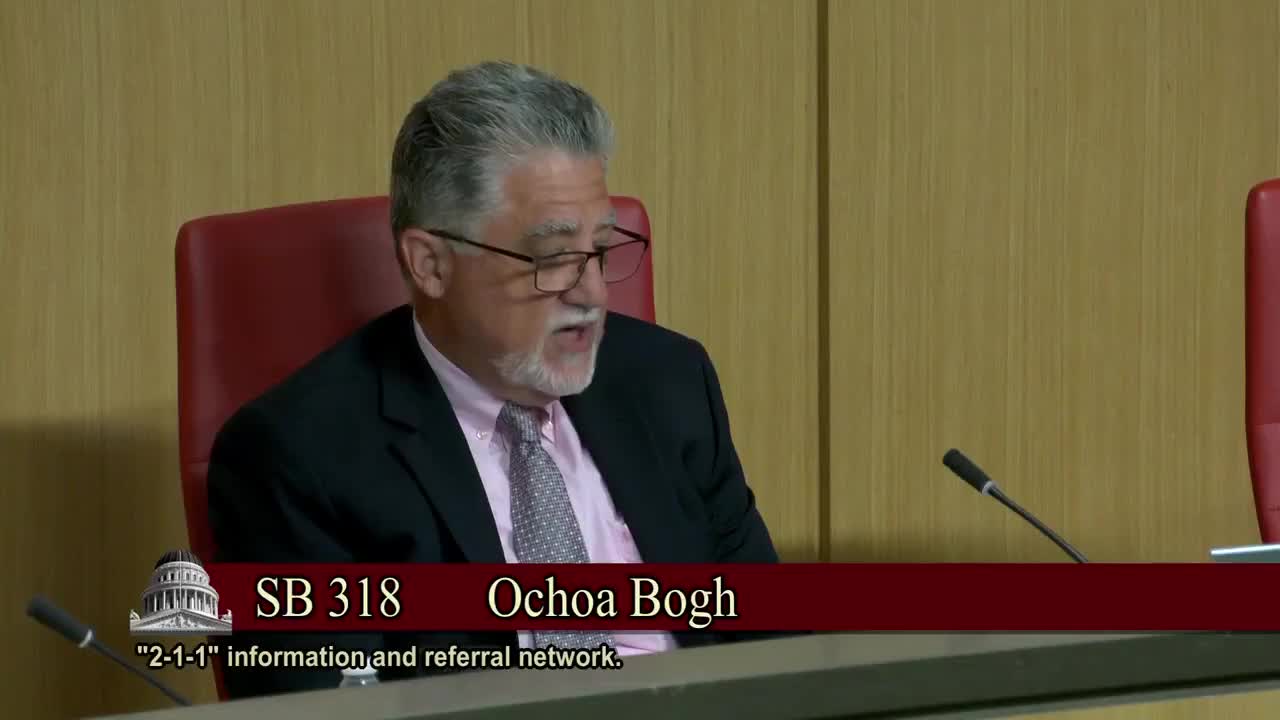
Bill Author

Bill Co-Author(s):