SB 406: California Environmental Quality Act: exemption: financial assistance: residential housing.
- Session Year: 2023-2024
- House: Senate
- Latest Version Date: 2023-09-01
Current Status:
Passed
(2023-09-01: Chaptered by Secretary of State. Chapter 150, Statutes of 2023.)
Introduced
In Committee
First Chamber
In Committee
Second Chamber
Enacted
The California Environmental Quality Act (CEQA) requires a lead agency, as defined, to prepare, or cause to be prepared, and certify the completion of an environmental impact report on a project that it proposes to carry out or approve that may have a significant effect on the environment or to adopt a negative declaration if it finds that the project will not have that effect. CEQA also requires a lead agency to prepare a mitigated negative declaration for a project that may have a significant effect on the environment if revisions in the project would avoid or mitigate that effect and there is no substantial evidence that the project, as revised, would have a significant effect on the environment.
CEQA exempts for its requirements actions taken by the Department of Housing and Community Development or the California Housing Finance Agency to provide financial assistance or insurance for the development and construction of residential housing, as provided.
This bill would extend the above exemption to actions taken by a local agency not acting as the lead agency to provide financial assistance or insurance for the development and construction of residential housing, as provided.
The California Environmental Quality Act (CEQA) requires a lead agency, as defined, to prepare, or cause to be prepared, and certify the completion of an environmental impact report on a project that it proposes to carry out or approve that may have a significant effect on the environment or to adopt a negative declaration if it finds that the project will not have that effect. CEQA also requires a lead agency to prepare a mitigated negative declaration for a project that may have a significant effect on the environment if revisions in the project would avoid or mitigate that effect and there is no substantial evidence that the project, as revised, would have a significant effect on the environment.
CEQA exempts for its requirements actions taken by the Department of Housing and Community Development or the California Housing Finance Agency to provide financial assistance or insurance for the development and construction of residential housing, as provided.
This bill would extend the above exemption to actions taken by a local agency not acting as the lead agency to provide financial assistance or insurance for the development and construction of residential housing. housing, as provided.
The California Environmental Quality Act (CEQA) requires a lead agency, as defined, to prepare, or cause to be prepared, and certify the completion of an environmental impact report on a project that it proposes to carry out or approve that may have a significant effect on the environment or to adopt a negative declaration if it finds that the project will not have that effect. CEQA also requires a lead agency to prepare a mitigated negative declaration for a project that may have a significant effect on the environment if revisions in the project would avoid or mitigate that effect and there is no substantial evidence that the project, as revised, would have a significant effect on the environment.
CEQA exempts for its requirements actions taken by the Department of Housing and Community Development or the California Housing Finance Agency to provide financial assistance or insurance for the development and construction of residential housing, as provided.
This bill would extend the above exemption to actions taken by a local agency to provide financial assistance or insurance for the development and construction of residential housing.
This division does not apply to any of the following:
(a)An extension of time, granted pursuant to Section 65361 of the Government Code, for the preparation and adoption of one or more elements of a city or county general plan.
(b)Actions taken by the Department of Housing and Community Development, the California Housing Finance Agency, or a local agency not acting as the lead agency to provide financial assistance or insurance for the development and construction of residential housing for persons and families of low or moderate income, as defined in Section 50093 of the Health and Safety Code, if the project that is the subject of the application for financial assistance or insurance will be reviewed pursuant to this division by another public agency.
This division does not apply to any of the following:
(a)An extension of time, granted pursuant to Section 65361 of the Government Code, for the preparation and adoption of one or more elements of a city or county general plan.
(b)Actions taken by the Department of Housing and Community Development or Development, the California Housing Finance Agency Agency, or a local agency to provide financial assistance or insurance for the development and construction of residential housing for persons and families of low or moderate income, as defined in Section 50093 of the Health and Safety Code, if the project that is the subject of the application for financial assistance or insurance will be reviewed pursuant to this division by another public agency.
|
Date
|
Status
|
|---|---|
| Sep 1, 2023 | Chaptered by Secretary of State. Chapter 150, Statutes of 2023. |
| Sep 1, 2023 | Approved by the Governor. |
| Aug 22, 2023 | Enrolled and presented to the Governor at 2 p.m. |
| Aug 17, 2023 | Assembly amendments concurred in. (Ayes 38. Noes 0. Page 2142.) Ordered to engrossing and enrolling. |
| Aug 15, 2023 | Ordered to special consent calendar. |
| Jul 6, 2023 | In Senate. Concurrence in Assembly amendments pending. |
| Jul 6, 2023 | Read third time. Passed. (Ayes 70. Noes 0. Page 2572.) Ordered to the Senate. |
| Jun 30, 2023 | Read second time. Ordered to consent calendar. |
| Jun 29, 2023 | From committee: Do pass. Ordered to consent calendar. (Ayes 8. Noes 0.) (June 28). |
| Jun 19, 2023 | Read second time and amended. Re-referred to Com. on H. & C.D. |
| Jun 15, 2023 | From committee: Do pass as amended and re-refer to Com. on H. & C.D. (Ayes 10. Noes 0.) (June 12). |
| May 18, 2023 | Referred to Coms. on NAT. RES. and H. & C.D. |
| May 8, 2023 | In Assembly. Read first time. Held at Desk. |
| May 8, 2023 | Read third time. Passed. (Ayes 36. Noes 0. Page 1025.) Ordered to the Assembly. |
| May 3, 2023 | Read second time. Ordered to consent calendar. |
| May 2, 2023 | From committee: Do pass. Ordered to consent calendar. (Ayes 10. Noes 0. Page 981.) (May 2). |
| Mar 30, 2023 | Set for hearing May 2. |
| Mar 15, 2023 | From committee: Do pass and re-refer to Com. on HOUSING with recommendation: To consent calendar. (Ayes 7. Noes 0. Page 353.) (March 15). Re-referred to Com. on HOUSING. |
| Feb 27, 2023 | Set for hearing March 15. |
| Feb 22, 2023 | Referred to Coms. on E.Q. and HOUSING. |
| Feb 10, 2023 | From printer. May be acted upon on or after March 12. |
| Feb 9, 2023 | Introduced. Read first time. To Com. on RLS. for assignment. To print. |
|
Date
|
Description
|
Location
|
Votes
|
|
|---|---|---|---|---|
| Aug 17, 2023 | Special Consent SB406 Cortese et al. | Senate Floor |
Passed |
|
| Jul 6, 2023 | SB 406 Cortese Consent Calendar Second Day Regular Session | Assembly Floor |
Passed |
|
| Jun 28, 2023 | Do pass. To Consent Calendar. | Assembly Standing Committee on Housing and Community Development |
Passed |
|
| Jun 12, 2023 | Do pass as amended and be re-referred to the Committee on [Housing and Community Development] | Assembly Standing Committee on Natural Resources |
Passed |
|
| May 8, 2023 | Consent Calendar SB406 Cortese | Senate Floor |
Passed |
|
| May 2, 2023 | Do pass and be ordered to the Consent Calendar | Senate Standing Committee on Housing |
Passed |
|
| Mar 15, 2023 | Do pass, but first be re-referred to the Committee on [Housing] with the recommendation: To Consent Calendar | Senate Standing Committee on Environmental Quality |
Passed |
This list shows positions taken on this bill by organizations on the date displayed, which is linked to the original source.
Positions by individuals are not included.
|
Organization
|
Position
|
Date
|
|---|---|---|
| American Planning Association, California Chapter | ** Support | |
| California Apartment Association | ** Support | |
| California Environmental Voters | ** Support | |
| California Housing Partnership Corporation | ** Support | |
| California State Association Of Counties | ** Support | |
| City of San Jose | ** Support | |
| City Of Visalia | * Support | Jun 12, 2023 |
| County of San Bernardino | ** Support | |
| Destination: Home | ** Support | |
| LeadingAge California | ** Support | |
| Mission Street Neighbors | ** Support | |
| New Livable California Dba Livable California | ** Support | |
| Rural County Representatives of California | ** Support | |
| San Bernadino County | * Support | Jun 12, 2023 |
| Santa Clara County | ** Support | |
| Urban Counties of California | ** Support |
SENATE RULES COMMITTEE Office of Senate Floor Analyses (916) 651-1520 Fax: (916) 327-4478 | SB 406 |
UNFINISHED BUSINESS
Bill No: SB 406
Author: Cortese (D), et al.
Amended: 6/19/23
Vote: 21
SENATE ENVIRONMENTAL QUALITY COMMITTEE: 7-0, 3/15/23
AYES: Allen, Dahle, Gonzalez, Hurtado, Menjivar, Nguyen, Skinner
SENATE HOUSING COMMITTEE: 10-0, 5/2/23
AYES: Wiener, Ochoa Bogh, Caballero, Cortese, McGuire, Padilla, Seyarto, Skinner, Umberg, Wahab
NO VOTE RECORDED: Blakespear
SENATE FLOOR: 36-0, 5/8/23 (Consent)
AYES: Allen, Archuleta, Ashby, Atkins, Becker, Blakespear, Bradford, Caballero, Cortese, Dahle, Dodd, Durazo, Eggman, Glazer, Gonzalez, Grove, Jones, Laird, Limón, McGuire, Menjivar, Newman, Nguyen, Niello, Ochoa Bogh, Padilla, Portantino, Rubio, Seyarto, Skinner, Smallwood-Cuevas, Stern, Umberg, Wahab, Wiener, Wilk
NO VOTE RECORDED: Alvarado-Gil, Hurtado, Min, Roth
ASSEMBLY FLOOR: 70-0, 7/6/23 (Consent) - See last page for vote
SUBJECT: California Environmental Quality Act: exemption: financial assistance: residential housing
SOURCE: Santa Clara County
DIGEST:
This bill establishes an exemption from the California Environmental Quality Act of 1970 (CEQA) for actions taken by a local agency to provide financial assistance or insurance for low and moderate income residential housing.
Assembly Amendments
clarify that the local agency using this CEQA exemption is not the same agency acting as the lead agency for a later development project.
ANALYSIS:
Existing law:
- Requires, pursuant to CEQA, that lead agencies with the principal responsibility for carrying out or approving a project to prepare a negative declaration (ND), mitigated negative declaration (MND), or environmental impact report (EIR) for the project, unless the project is exempt from CEQA. (Public Resources Code (PRC) §21000 et seq.). If a project may have a significant effect on the environment, the lead agency must prepare a draft EIR. (CEQA Guidelines §15064(a)(1), (f)(1))
- Exempts from CEQA any extension of time given to a city or county to prepare or adopt any elements of a general plan. (PRC §21080.10)
- Exempts from CEQA actions taken by the Department of Housing and Community Development (HCD) and California Housing Finance Authority (CHFA) to provide financial assistance or insurance to develop and build housing for people with low or moderate incomes as long as the project receiving the financial assistance or insurance is subject to review under CEQA by another public agency. (PRC §21080.10)
This bill extends the exemption enjoyed by HCD and CHFA under 3) above to local agencies provided they meet the same criteria, so that the financial assistance for the projects is not subject to CEQA, but the project itself is subject to CEQA.
Background
- The A, B, C’s of CEQA. CEQA was enacted by the Legislature and signed into law by Governor Ronald Reagan in 1970. While it has evolved into a very complex Act over the past 53 years, at its core the basic principles of CEQA are relatively simple.
It is designed to:
- Make government agencies and the public aware of the environmental impacts of a proposed project,
- Ensure the public can take part in the review process, and
- Identify and implement measures to mitigate or eliminate any negative impact the project may have on the environment.
CEQA is a self-executing statute that is enforced by civil lawsuits that can challenge any project’s environmental review. Public agencies, as well as private individuals and organizations, can file lawsuits under CEQA.
- History of Current Exemption. The exemption this bill seeks to apply to local agencies was re-cast in its current form by SB 1925 (Sher, Chapter 1039, Statutes of 2002). It was part of a larger measure that sought to increase residential infill development and affordable housing while still ensuring environmental protections consistent with CEQA.
Comments
- Purpose of Bill. According to the author, “To help address California’s unprecedented housing crisis, local governments across the State have adopted measures to provide financial assistance for the development and construction of affordable housing. However, local agencies are unclear as to whether state law requires independent CEQA determinations for projects that receive this financial assistance.
“Since the decision to help finance a project could be interpreted as a discretionary approval, financing agencies face pressure to make independent CEQA determinations at the financing stage. Applying CEQA in this context is inefficient, duplicative and ultimately delays and drives up the costs of affordable housing. SB 406 extends to local jurisdictions an existing law that exempts State financial assistance for affordable housing projects – but not the projects themselves – from CEQA.”
- CEQA & Financing Decisions. According to the sponsor, Santa Clara County, the proper place to challenge a CEQA decision is with the lead agency reviewing the substance of the project – not with a public agency whose sole role in the process is to award funding to a project.
Absent an exemption, the sponsor notes its county counsel’s office has to spend considerable staff time and resources preparing CEQA-related documents when seeking approval from the Board of Supervisors to issue project loans.
The sponsor also states the time spent doing this work often delays its ability to approve funding quickly, which is often needed in cases where county funds are being combined with state and local funding.
- Only Affect A Funding Decision. Under the exemption proposed by this bill, local agencies would not have to issue a negative declaration or provide for a 30-day public comment period when it comes to making funding-related decisions. The exemption would only apply in the case where a project itself is subject to CEQA review by another public agency.
Related/Prior Legislation
SB 679 (Kamlager, Chapter 661, Statutes of 2022) exempted from CEQA any action taken by the Los Angeles County Affordable Housing Solutions Agency to finance, fund, or issue grants, loans, or bonds.
AB 1197 (Santiago, Chapter 340, Statutes of 2019) exempted from CEQA any action taken by an eligible public agency in providing financial assistance to provide emergency shelters or supportive housing in the City of Los Angeles.
AB 782 (Berman, Chapter 181, Statutes of 2019) exempted from CEQA funding by a public agency for purposes of transfer of interest in land by a public agency for specified preservation purposes.
SB 850 (Committee on Budget and Fiscal Review, Chapter 48, Statutes of 2018) exempted from CEQA actions taken by a state agency or local government to provide financial assistance to an affordable housing development that receives SB 35 streamlined approval.
AB 2518 (Houston, 2006) proposed, much like SB 406, to extend the HCD & CHFA exemption to local agencies. AB 2518 was defeated in the Assembly Natural Resources Committee on a 3-5 vote.
SB 1925 (Sher, Chapter 1039, Statutes of 2002) revised and re-cast the exemption available to HCD and CHFA.
FISCAL EFFECT: Appropriation: No Fiscal Com.: No Local: No
SUPPORT: (Verified 7/6/23)
Santa Clara County (source)
California Apartment Association
California Housing Partnership Corporation
Destination: Home
Mission Street Neighbors
New Livable California Dba Livable California
Rural County Representatives of California
Urban Counties of California
OPPOSITION: (Verified 7/6/23)
None received
ASSEMBLY FLOOR: 70-0, 7/6/23
AYES: Addis, Aguiar-Curry, Alanis, Alvarez, Arambula, Bauer-Kahan, Berman, Boerner, Bonta, Bryan, Calderon, Juan Carrillo, Wendy Carrillo, Cervantes, Chen, Connolly, Megan Dahle, Davies, Dixon, Essayli, Mike Fong, Vince Fong, Friedman, Gallagher, Garcia, Gipson, Grayson, Haney, Hart, Holden, Hoover, Irwin, Jackson, Jones-Sawyer, Kalra, Lackey, Lee, Low, Maienschein, Mathis, McKinnor, Muratsuchi, Stephanie Nguyen, Ortega, Pacheco, Papan, Jim Patterson, Pellerin, Petrie-Norris, Quirk-Silva, Reyes, Luz Rivas, Rodriguez, Blanca Rubio, Sanchez, Santiago, Schiavo, Soria, Ta, Ting, Valencia, Villapudua, Wallis, Ward, Weber, Wicks, Wilson, Wood, Zbur, Robert Rivas
NO VOTE RECORDED: Bains, Bennett, Flora, Gabriel, Lowenthal, McCarty, Joe Patterson, Ramos, Rendon, Waldron
Prepared by: Brynn Cook / E.Q. / (916) 651-4108
7/7/23 11:08:47
**** END ****
Date of Hearing: June 28, 2023
ASSEMBLY COMMITTEE ON HOUSING AND COMMUNITY DEVELOPMENT
Buffy Wicks, Chair
SBPCA Bill Id:SB 406
Author:(Cortese) – As Amended Ver:June 19, 2023
SENATE VOTE: 36-0
SUBJECT: California Environmental Quality Act: exemption: financial assistance: residential housing
SUMMARY: Establishes an exemption for the provision of financial assistance or insurance for the development and construction of housing for low- or moderate-income households from the California Environmental Quality Act (CEQA). This exemption applies to local agencies that are not the CEQA lead agency, and only applies if the project that is the subject of the application for financial assistance or insurance will be reviewed pursuant to CEQA by another public agency.
EXISTING LAW:
- Defines “lead agency” to mean the public agency which has the principal responsibility for carrying out or approving a project which may have a significant effect upon the environment. (Public Resources Code (PRC) 21067)
- Establishes CEQA, which requires a lead agency to analyze the potential impacts to the environment of any discretionary decision they take, unless the project is exempt from CEQA by statute or regulation. Requires that any significant impacts be mitigated to the degree deemed feasible. Establishes processes for public engagement in the process. Specifies the types and depth of analysis required. (PRC 21000, et seq.)
- Exempts from CEQA actions taken by the Department of Housing and Community Development (HCD) or the California Housing Finance Agency (CalHFA) to provide financial assistance or insurance for the development and construction of affordable housing if the project that is the subject of the application for financial assistance or insurance will be reviewed pursuant to CEQA by another public agency. (PRC 21080.10)
FISCAL EFFECT: Unknown.
COMMENTS:
Author’s Statement: According to the author, “To help address California’s unprecedented housing crisis, local governments across the State have adopted measures to provide financial assistance for the development and construction of affordable housing. However, local agencies are unclear as to whether state law requires independent CEQA determinations for projects that receive this financial assistance. Since the decision to help finance a project could be interpreted as a discretionary approval, financing agencies face pressure to make independent CEQA determinations at the financing stage. Applying CEQA in this context is inefficient, duplicative and ultimately delays and drives up the costs of affordable housing. SB 406 extends to local jurisdictions an existing law that exempts State financial assistance for affordable housing projects – but not the projects themselves – from CEQA.”
CEQA and Housing: CEQA requires state and local government agencies to inform decision makers and the public about the potential environmental impacts of proposed changes to the physical environment, and to reduce those environmental impacts to the extent feasible. If a development project would make significant negative changes to the physical environment, and those impacts could not be mitigated, CEQA requires that the governmental entity approving the project to make findings that justify why the change is merited despite its environmental impact. CEQA provides multiple opportunities for public involvement, and enables members of the public to sue a governmental entity that they believe has not properly followed the process.
Over its 50-plus year history, CEQA has been California’s premier environmental law. However, CEQA has a complicated relationship with housing. For example, it presumes that local governments and its citizens act in good faith, giving them procedural deference to deny or delay projects. The result is that opponents of housing projects are able to utilize the CEQA process to delay and potentially block these projects, or to utilize their leverage into receiving concessions from the developer. To mitigate this risk, project proponents and lead agencies often take a cautious approach that involves a level of analysis and process that may exceed what is necessary to meet the letter of the law.
Affordable Housing Funding and CEQA: To address the state’s housing crisis, the 2022 Statewide Housing Plan adopted by HCD found that California needs approximately 2.5 million units of housing, including one million units affordable to lower income households, over an eight-year period.[1] That would require production of over 300,000 units a year, including over 120,000 units a year of housing affordable to lower income households. By contrast, housing production in the past decade has been under 100,000 units per year – including less than 10,000 units of affordable housing per year.[2]
One way to increase the production of affordable housing is to reduce process-related costs. In recognition of this issue, the state has created multiple statutory and regulatory exemptions from CEQA related to the funding of affordable housing projects. For example, SB 1925 (Sher, Chapter 1039, Statutes of 2002) created a CEQA exemption for the provision of funding and insurance by HCD and CalHFA to affordable housing projects. More recently, CEQA exemptions for pre-development financing actions related to affordable housing have been added for other specific project types and agencies, such as SB 679 (Kamlager, Chapter 661, Statutes of 2022) for the Los Angeles County Affordable Housing Solutions Agency and AB 1319 (Wicks), which is pending in the Senate, for the Bay Area Housing Finance Authority. These exemptions require that projects be separately subject to environmental review.
The proposed bill would extend the CEQA exemption related to the provision of funding and insurance to local agencies that are not the lead agency. According to the sponsor, Santa Clara County, staff spend considerable time and resources preparing CEQA-related documents when seeking approval from the Board of Supervisors to issue project loans. The time spent doing this work often delays the sponsors’ ability to approve funding quickly, which is often needed in cases where county funds are being combined with state and local funding.
Arguments in Support: Supporters of the bill argue that this bill facilitates the construction of affordable housing without impinging on CEQA’s ability to facilitate the physical impacts of a housing project. According to the County of Santa Clara, the sponsor of the bill, “SB 406 helps promote affordable housing development without circumventing environmental review.” They note that this exemption will help them expedite the implementation of their voter-approved $950 million affordable housing bond.
Arguments in Opposition: None on file.
Related Legislation:
AB 1319 (Wicks), of the current legislative session, would exempt from CEQA any action taken by the Bay Area Housing Finance Authority to finance, fund, or issue grants, loans, or bonds. This bill is pending hearing in the Senate Committee on Governance and Finance.
SB 679 (Kamlager, Chapter 661, Statutes of 2022): Exempted from CEQA any action taken by the Los Angeles County Affordable Housing Solutions Agency to finance, fund, or issue grants, loans, or bonds.
AB 1197 (Santiago, Chapter 340, Statutes of 2019): Exempted from CEQA any action taken by an eligible public agency in providing financial assistance to provide emergency shelters or supportive housing in the City of Los Angeles.
SB 850 (Committee on Budget and Fiscal Review, Chapter 48, Statutes of 2018): Exempted from CEQA actions taken by a state agency or local government to provide financial assistance to an affordable housing development that receives SB 35 streamlined approval.
Double Referred: This bill was also referred to the Assembly Committee on Natural Resources, where it was passed on a vote of 10-0.
REGISTERED SUPPORT / OPPOSITION:
Support
County of Santa Clara (Sponsor)
City of San Jose
American Planning Association, California Chapter
California Apartment Association
California Environmental Voters
California Housing Partnership Corporation
California State Association of Counties
LeadingAge California
Livable California
Opposition
None on file.
Analysis Prepared by: Steve Wertheim / H. & C.D. / (916) 319-2085
HCD, March 2022, “California Statewide Housing Plan: A Home for Every Californian”: https://storymaps.arcgis.com/stories/94729ab1648d43b1811c1698a748c136 ↑
https://www.hcd.ca.gov/policy-research/housing-challenges.shtml ↑
Date of Hearing: June 12, 2023
ASSEMBLY COMMITTEE ON NATURAL RESOURCES
Luz Rivas, Chair
SBPCA Bill Id:SB 406
Author:(Cortese) – As Introduced Ver:February 9, 2023
SENATE VOTE: 36-0
SUBJECT: California Environmental Quality Act: exemption: financial assistance: housing
SUMMARY: Establishes an exemption from the California Environmental Quality Act (CEQA) for actions taken by a local agency to provide financial assistance or insurance for the development and construction of residential housing for persons and families of low or moderate income if the project that is the subject of the application for financial assistance or insurance will be reviewed pursuant to CEQA by another public agency.
EXISTING LAW:
- Requires, pursuant to CEQA, lead agencies with the principal responsibility for carrying out or approving a proposed project to prepare a negative declaration, mitigated negative declaration, or environmental impact report (EIR) for this action, unless the project is exempt from CEQA. (Public Resources Code (PRC) 21000, et seq.)
- Exempts from CEQA actions taken by the Department of Housing and Community Development (HCD) or the California Housing Finance Agency (CalHFA) to provide financial assistance or insurance for the development and construction of affordable housing if the project that is the subject of the application for financial assistance or insurance will be reviewed pursuant to CEQA by another public agency. (PRC 21080.10)
THIS BILL amends PRC 21080.10 to offer local agencies the same exemption for action to provide financial assistance for affordable housing that is available to HCD and CalHFA.
FISCAL EFFECT: Non-fiscal
COMMENTS:
- Background. CEQA provides a process for evaluating the environmental effects of applicable projects undertaken or approved by public agencies. If a project is not exempt from CEQA, an initial study is prepared to determine whether the project may have a significant effect on the environment. If the initial study shows that the project would not have a significant effect on the environment, the lead agency must prepare a negative declaration. If the initial study shows that the project may have a significant effect, the lead agency must prepare an EIR.
Generally, an EIR must accurately describe the proposed project, identify, and analyze each significant environmental impact expected to result from the proposed project, identify mitigation measures to reduce those impacts to the extent feasible, and evaluate a range of reasonable alternatives to the proposed project. Prior to approving any project that has received environmental review, an agency must make certain findings. If mitigation measures are required or incorporated into a project, the agency must adopt a reporting or monitoring program to ensure compliance with those measures.
CEQA includes various statutory exemptions, as well as categorical exemptions in the CEQA Guidelines. The exemption this bill seeks to apply to local agencies was enacted in its current form by SB 1925 (Sher), Chapter 1039, Statutes of 2002. SB 1925 was a larger CEQA housing measure that sought to increase infill, affordable and farmworker housing while still ensuring environmental protections consistent with CEQA. More recently, CEQA exemptions for pre-development financing actions related to affordable housing have been added for other specific project types and agencies, such as SB 679 (Kamlager), Chapter 661, Statutes of 2022, for the Los Angeles County Affordable Housing Solutions Agency and AB 1319 (Wicks), which is pending in the Senate, for the Bay Area Housing Finance Authority.
According to the sponsor, Santa Clara County, the proper place to challenge a CEQA decision is with the lead agency reviewing the substance of the project – not with a public agency whose sole role in the process is to award funding to a project. Absent an exemption, the sponsor notes its county counsel’s office has to spend considerable staff time and resources preparing CEQA-related documents when seeking approval from the Board of Supervisors to issue project loans. The sponsor also states the time spent doing this work often delays its ability to approve funding quickly, which is often needed in cases where county funds are being combined with state and local funding.
- Author’s statement:
To help address California’s unprecedented housing crisis, local governments across the State have adopted measures to provide financial assistance for the development and construction of affordable housing. However, local agencies are unclear as to whether state law requires independent CEQA determinations for projects that receive this financial assistance. Since the decision to help finance a project could be interpreted as a discretionary approval, financing agencies face pressure to make independent CEQA determinations at the financing stage. Applying CEQA in this context is inefficient, duplicative and ultimately delays and drives up the costs of affordable housing. SB 406 extends to local jurisdictions an existing law that exempts State financial assistance for affordable housing projects – but not the projects themselves – from CEQA.
- Suggested clarifying amendment. While there is precedent for exempting pre-development funding actions when the development project itself will be subject to CEQA review, the funding decisions are typically made by agencies that do not have land use authority and will not be acting as the lead agency for any other part of the project. The author and the committee may wish to consider the following clarifying amendments to confirm that the local agency using the bill’s exemption is not the same agency acting as the lead agency for a later development project.
(b) Actions taken by the Department of Housing and Community Development, the California Housing Finance Agency, or a local agency not acting as the lead agency to provide financial assistance or insurance for the development and construction of residential housing for persons and families of low or moderate income, as defined in Section 50093 of the Health and Safety Code, if the project that is the subject of the application for financial assistance or insurance will be reviewed pursuant to this division by another public agency.
- Double referral. This bill has been double-referred to the Assembly Housing and Community Development Committee.
REGISTERED SUPPORT / OPPOSITION:
Support
County of Santa Clara (sponsor)
American Planning Association, California Chapter
California Apartment Association
California Environmental Voters
California Housing Partnership Corporation
California State Association of Counties
City of San Jose
City of Visalia
County of San Bernardino
Destination: Home
Mission Street Neighbors
Livable California
Rural County Representatives of California
San Bernardino County
Urban Counties of California
Opposition
None on file
Analysis Prepared by: Lawrence Lingbloom / NAT. RES. /
SENATE RULES COMMITTEE Office of Senate Floor Analyses (916) 651-1520 Fax: (916) 327-4478 | SB 406 |
CONSENT
Bill No: SB 406
Author: Cortese (D)
Introduced: 2/9/23
Vote: 21
SENATE ENVIRONMENTAL QUALITY COMMITTEE: 7-0, 3/15/23
AYES: Allen, Dahle, Gonzalez, Hurtado, Menjivar, Nguyen, Skinner
SENATE HOUSING COMMITTEE: 10-0, 5/2/23
AYES: Wiener, Ochoa Bogh, Caballero, Cortese, McGuire, Padilla, Seyarto, Skinner, Umberg, Wahab
NO VOTE RECORDED: Blakespear
SUBJECT: California Environmental Quality Act: exemption: financial assistance: housing
SOURCE: Santa Clara County
DIGEST:
This bill allows local agencies to utilize a particular CEQA exemption that is currently available to the Department of Housing and Community Development (HCD) and the California Housing Finance Agency (CHFA).
ANALYSIS:
Existing law:
- Requires, pursuant to CEQA, lead agencies with the principal responsibility for carrying out or approving a project to prepare a negative declaration (ND), mitigated negative declaration (MND), or environmental impact report (EIR) for the project, unless the project is exempt from CEQA. (Public Resources Code (PRC) §21000 et seq.). If a project may have a significant effect on the environment, the lead agency must prepare a draft EIR. (CEQA Guidelines §15064(a)(1), (f)(1))
- Exempts from CEQA any extension of time given to a city or county to prepare or adopt any elements of a general plan. (PRC §21080.10)
- Exempts from CEQA actions taken by HCD and CHFA to provide financial assistance or insurance to develop and build housing for people with low or moderate incomes as long as the project receiving the financial assistance or insurance is subject to review under CEQA by another public agency. (PRC §21080.10)
This bill extends the exemption enjoyed by HCD and CHFA under (3) above to local agencies provided they meet the same criteria, so the financial assistance for the projects is not subject to CEQA, but the project itself is subject to CEQA.
Background
- The A, B, C’s of CEQA. CEQA was enacted by the Legislature and signed into law by Governor Ronald Reagan in 1970. While it has evolved into a very complex Act over the past 53 years, at its core the basic principles of CEQA are relatively simple.
It is designed to (a) make government agencies and the public aware of the environmental impacts of a proposed project, (b) ensure the public can take part in the review process, and (c) identify and implement measures to mitigate or eliminate any negative impact the project may have on the environment.
CEQA is self-executing statute that is enforced by civil lawsuits that can challenge any project’s environmental review. Public agencies, as well as private individuals and organizations, can file lawsuits under CEQA.
- History of Current Exemption. The exemption this bill seeks to apply to local agencies was re-cast in its current form by SB 1925 (Sher), Chapter 1039, Statutes of 2002. It was part of a larger measure that sought to increase residential infill development and affordable housing while still ensuring environmental protections consistent with CEQA.
Comments
- Purpose of bill. According to the author, “To help address California’s unprecedented housing crisis, local governments across the State have adopted measures to provide financial assistance for the development and construction of affordable housing. However, local agencies are unclear as to whether state law requires independent CEQA determinations for projects that receive this financial assistance.
“Since the decision to help finance a project could be interpreted as a discretionary approval, financing agencies face pressure to make independent CEQA determinations at the financing stage. Applying CEQA in this context is inefficient, duplicative and ultimately delays and drives up the costs of affordable housing. SB 406 extends to local jurisdictions an existing law that exempts State financial assistance for affordable housing projects – but not the projects themselves – from CEQA.”
- CEQA & Financing Decisions. According to the sponsor, Santa Clara County, the proper place to challenge a CEQA decision is with the lead agency reviewing the substance of the project – not with a public agency whose sole role in the process is to award funding to a project.
Absent an exemption, the sponsor notes its county counsel’s office has to spend considerable staff time and resources preparing CEQA-related documents when seeking approval from the Board of Supervisors to issue project loans.
The sponsor also states the time spent doing this work often delays its ability to approve funding quickly, which is often needed in cases where county funds are being combined with state and local funding.
- Only Affect A Funding Decision. Under the exemption proposed by this bill, local agencies would not have to issue a negative declaration and provide for a 30-day public comment period when it comes to making funding-related decisions. The exemption would only apply in the case where a project itself is subject to CEQA review by another public agency.
FISCAL EFFECT: Appropriation: No Fiscal Com.: No Local: No
SUPPORT: (Verified 5/3/23)
Santa Clara County (source)
California Apartment Association
California Housing Partnership Corporation
Destination: Home
Mission Street Neighbors
New Livable California Dba Livable California
Rural County Representatives of California
Urban Counties of California
OPPOSITION: (Verified 5/3/23)
None received
Prepared by: Brynn Cook / E.Q. / (916) 651-4108
5/3/23 15:16:08
**** END ****
SENATE COMMITTEE ON HOUSING
Senator Scott Wiener, Chair
2023 - 2024 Regular
Bill No: SB 406 Hearing Date: 5/2/2023
Author: | Cortese | ||
Version: | 2/9/2023 Introduced | ||
Urgency: | No | Fiscal: | No |
Consultant: | Alison Hughes | ||
SUBJECT: California Environmental Quality Act: exemption: financial assistance: housing
DIGEST: This bill allows local agencies to utilize a particular California Environmental Quality Act (CEQA) exemption limited to actions taken to provide financial assistance or insurance to develop and build housing for people with low- or moderate-incomes.
ANALYSIS:
Existing law:
- Requires lead agencies with the principal responsibility for carrying out or approving a project to prepare a negative declaration (ND), mitigated negative declaration (MND), or environmental impact report (EIR) for the project, unless the project is exempt from the California Environmental Quality Act (CEQA). If a project may have a significant effect on the environment, the lead agency must prepare a draft EIR.
- Exempts from CEQA any extension of time given to a city or county to prepare or adopt any elements of a general plan.
- Exempts from CEQA actions taken by HCD and CHFA to provide financial assistance or insurance to develop and build housing for people with low or moderate incomes as long as the project receiving the financial assistance or insurance is subject to review under CEQA by another public agency.
This bill:
1) Extends the exemption enjoyed by HCD and CHFA under (3) above to local agencies provided they meet the same criteria, so the financial assistance for the projects is not subject to CEQA, but the project itself is subject to CEQA.
COMMENTS:
- Author’s statement. “To help address California’s unprecedented housing crisis, local governments across the State have adopted measures to provide financial assistance for the development and construction of affordable housing. However, local agencies are unclear as to whether state law requires independent CEQA determinations for projects that receive this financial assistance. Since the decision to help finance a project could be interpreted as a discretionary approval, financing agencies face pressure to make independent CEQA determinations at the financing stage. Applying CEQA in this context is inefficient, duplicative and ultimately delays and drives up the costs of affordable housing. SB 406 extends to local jurisdictions an existing law that exempts State financial assistance for affordable housing projects – but not the projects themselves – from CEQA.”
- CEQA Generally. CEQA was enacted by the Legislature and signed into law by Governor Ronald Reagan in 1970. While it has evolved into a very complex Act over the past 53 years, at its core the basic principles of CEQA are relatively simple. It is designed to: (a) make government agencies and the public aware of the environmental impacts of a proposed project, (b) ensure the public can take part in the review process, and (c) identify and implement measures to mitigate or eliminate any negative impact the project may have on the environment.
CEQA is self-executing statute that is enforced by civil lawsuits that can challenge any project’s environmental review. Public agencies, as well as private individuals and organizations, can file lawsuits under CEQA.
- CEQA & Financing Decisions. According to the sponsor, Santa Clara County, the proper place to challenge a CEQA decision is with the lead agency reviewing the substance of the project – not with a public agency whose sole role in the process is to award funding to a project.
Absent an exemption, the sponsor notes its county counsel’s office has to spend considerable staff time and resources preparing CEQA-related documents when seeking approval from the Board of Supervisors to issue project loans.
The sponsor also states the time spent doing this work often delays its ability to approve funding quickly, which is often needed in cases where county funds are being combined with state and local funding.
- Only Affect A Funding Decision. Under the exemption proposed by this bill, local agencies would not have to issue a negative declaration and provide for a 30-day public comment period when it comes to making funding-related decisions. The exemption would only apply in the case where a project itself is subject to CEQA review by another public agency.
The committee is aware of other enacted legislation that have provided similar CEQA exemptions for local governments. For example, SB 850 (Committee on Budget and Fiscal Review, Chapter 48, Statutes of 2018) exempted from CEQA actions taken by a state agency or local government to provide financial assistance to an affordable housing development that receives SB 35 streamlined approval. AB 1197 (Santiago, Chapter 340, Statutes of 2019) exempted from CEQA any action taken by an eligible public agency in providing financial assistance to provide emergency shelters or supportive housing in the City of Los Angeles. SB 679 (Kamlager, Chapter 661, Statutes of 2022) exempted from CEQA any action taken by the Los Angeles County Affordable Housing Solutions Agency to finance, fund, or issue grants, loans, or bonds.
- Double referral. This bill was heard in the Senate Environmental Quality Committee on March 15th and passed on a vote of 7-0.
Related Legislation:
SB 679 (Kamlager, Chapter 661, Statutes of 2022) — exempted from CEQA any action taken by the Los Angeles County Affordable Housing Solutions Agency to finance, fund, or issue grants, loans, or bonds.
AB 1197 (Santiago, Chapter 340, Statutes of 2019) — exempted from CEQA any action taken by an eligible public agency in providing financial assistance to provide emergency shelters or supportive housing in the City of Los Angeles.
SB 850 (Committee on Budget and Fiscal Review, Chapter 48, Statutes of 2018) — exempted from CEQA actions taken by a state agency or local government to provide financial assistance to an affordable housing development that receives SB 35 streamlined approval.
SB 1925 (Sher, Chapter 1039, Statutes of 2002) — revised and re-cast the exemption available to HCD and CHFA.
FISCAL EFFECT: Appropriation: No Fiscal Com.: No Local: No
POSITIONS: (Communicated to the committee before noon on Wednesday,
April 26, 2023.)
SUPPORT:
County of Santa Clara (Sponsor)
American Planning Association, California Chapter
California Apartment Association
California Housing Partnership Corporation
California State Association of Counties
Destination: Home
Livable California
Mission Street Neighbors
Rural County Representatives of California (RCRC)
Urban Counties of California (UCC)
OPPOSITION:
None received
-- END --
SENATE COMMITTEE ON ENVIRONMENTAL QUALITY
Senator Allen, Chair
2023 - 2024 Regular
Bill No: SB 406
Author: | Cortese | ||
Version: | 2/9/2023 | Hearing Date: | 3/15/2023 |
Urgency: | No | Fiscal: | No |
Consultant: | Evan Goldberg | ||
SUBJECT: California Environmental Quality Act (CEQA): exemption: financial assistance: housing
DIGEST: This bill allows local agencies to utilize a particular CEQA exemption that is currently available to the Department of Housing and Community Development (HCD) and the California Housing Finance Agency (CHFA).
ANALYSIS:
Existing law:
- CEQA requires lead agencies with the principal responsibility for carrying out or approving a project to prepare a negative declaration (ND), mitigated negative declaration (MND), or environmental impact report (EIR) for the project, unless the project is exempt from CEQA. (Public Resources Code (PRC) §21000 et seq.). If a project may have a significant effect on the environment, the lead agency must prepare a draft EIR. (CEQA Guidelines §15064(a)(1), (f)(1))
- Exempts from CEQA any extension of time given to a city or county to prepare or adopt any elements of a general plan. (PRC §21080.10)
- Exempts from CEQA actions taken by HCD and CHFA to provide financial assistance or insurance to develop and build housing for people with low or moderate incomes as long as the project receiving the financial assistance or insurance is subject to review under CEQA by another public agency. (PRC §21080.10)
This bill:
- Extends the exemption enjoyed by HCD and CHFA under (3) above to local agencies provided they meet the same criteria, so the financial assistance for the projects is not subject to CEQA, but the project itself is subject to CEQA.
Background
- The A, B, C’s of CEQA. CEQA was enacted by the Legislature and signed into law by Governor Ronald Reagan in 1970. While it has evolved into a very complex Act over the past 53 years, at its core the basic principles of CEQA are relatively simple.
It is designed to (a) make government agencies and the public aware of the environmental impacts of a proposed project, (b) ensure the public can take part in the review process, and (c) identify and implement measures to mitigate or eliminate any negative impact the project may have on the environment.
CEQA is self-executing statute that is enforced by civil lawsuits that can challenge any project’s environmental review. Public agencies, as well as private individuals and organizations, can file lawsuits under CEQA.
- History of Current Exemption. The exemption this bill seeks to apply to local agencies was re-cast in its current form by SB 1925 (Sher), Chapter 1039, Statutes of 2002. It was part of a larger measure that sought to increase residential infill development and affordable housing while still ensuring environmental protections consistent with CEQA.
Comments
- Purpose of Bill. According to the author, “To help address California’s unprecedented housing crisis, local governments across the State have adopted measures to provide financial assistance for the development and construction of affordable housing. However, local agencies are unclear as to whether state law requires independent CEQA determinations for projects that receive this financial assistance.
“Since the decision to help finance a project could be interpreted as a discretionary approval, financing agencies face pressure to make independent CEQA determinations at the financing stage. Applying CEQA in this context is inefficient, duplicative and ultimately delays and drives up the costs of affordable housing. SB 406 extends to local jurisdictions an existing law that exempts State financial assistance for affordable housing projects – but not the projects themselves – from CEQA.”
- CEQA & Financing Decisions. According to the sponsor, Santa Clara County, the proper place to challenge a CEQA decision is with the lead agency reviewing the substance of the project – not with a public agency whose sole role in the process is to award funding to a project.
Absent an exemption, the sponsor notes its county counsel’s office has to spend considerable staff time and resources preparing CEQA-related documents when seeking approval from the Board of Supervisors to issue project loans.
The sponsor also states the time spent doing this work often delays its ability to approve funding quickly, which is often needed in cases where county funds are being combined with state and local funding.
- Only Affect A Funding Decision. Under the exemption proposed by this bill, local agencies would not have to issue a negative declaration and provide for a 30-day public comment period when it comes to making funding-related decisions. The exemption would only apply in the case where a project itself is subject to CEQA review by another public agency.
DOUBLE REFERRAL:
If this measure is approved by the Senate Environmental Quality Committee, the do pass motion must include the action to re-refer the bill to the Senate Housing Committee.
Related/Prior Legislation
SB 1925 (Sher), Chapter 1039, Statutes of 2002, revised and re-case the exemption available to HCD and CHFA.
AB 2518 (Houston) of 2006 proposed, much like SB 406, to extend the HCD & CHFA exemption to local agencies. AB 2518 was defeated in the Assembly Natural Resources Committee on a 3-5 vote.
SB 850 (Committee on Budget and Fiscal Review), Chapter 48, Statutes of 2018 exempted from CEQA actions taken by a state agency or local government to provide financial assistance to an affordable housing development that receives SB 35 streamlined approval.
AB 782 (Berman), Chapter 181, Statutes of 2019, exempted from CEQA funding by a public agency for purposes of transfer of interest in land by a public agency for specified preservation purposes.
AB 1197 (Santiago), Chapter 340, Statutes of 2019, exempted from CEQA any action taken by an eligible public agency in providing financial assistance to provide emergency shelters or supportive housing in the City of Los Angeles.
SB 679 (Kamlager), Chapter 661, Statutes of 2022, exempted from CEQA any action taken by the Los Angeles County Affordable Housing Solutions Agency to finance, fund, or issue grants, loans, or bonds.
SOURCE:
Santa Clara County
SUPPORT:
Destination: Home
New Livable California Dba Livable California
Rural County Representatives of California (RCRC)
Urban Counties of California (UCC)
OPPOSITION:
None received
ARGUMENTS IN SUPPORT:
According to the sponsor, Santa Clara County:
“To address California's unprecedented housing crisis, local governments have adopted measures to provide financial assistance for the development and construction of affordable housing. ln 2016, Santa Clara County voters approved an affordable housing bond to raise $950 million to support the creation and
preservation of approximately 4,800 affordable units. Low-interest loans from public agencies help create a pipeline of new affordable housing projects and ensure their long-term viability. Similar measures have been adopted in the Counties of Alameda, Los Angeles, and San Francisco.
“However, this financial assistance arguably requires local agencies to make independent CEQA determinations for a project. The Legislature has acknowledged that CEQA review of affordable housing financing creates unnecessary burdens. Under section 21080.10(b) of the Public Resources Code, CEQA does not apply to financial assistance from [HCD] or the [CHFA] to support the development of a qualifying affordable housing project if the project will be subject to CEQA review by another public agency.
“This bill would extend that exemption to local government financing of affordable housing, thereby accelerating development of the most urgently needed housing.”
ARGUMENTS IN OPPOSITION:
None received.
-- END --
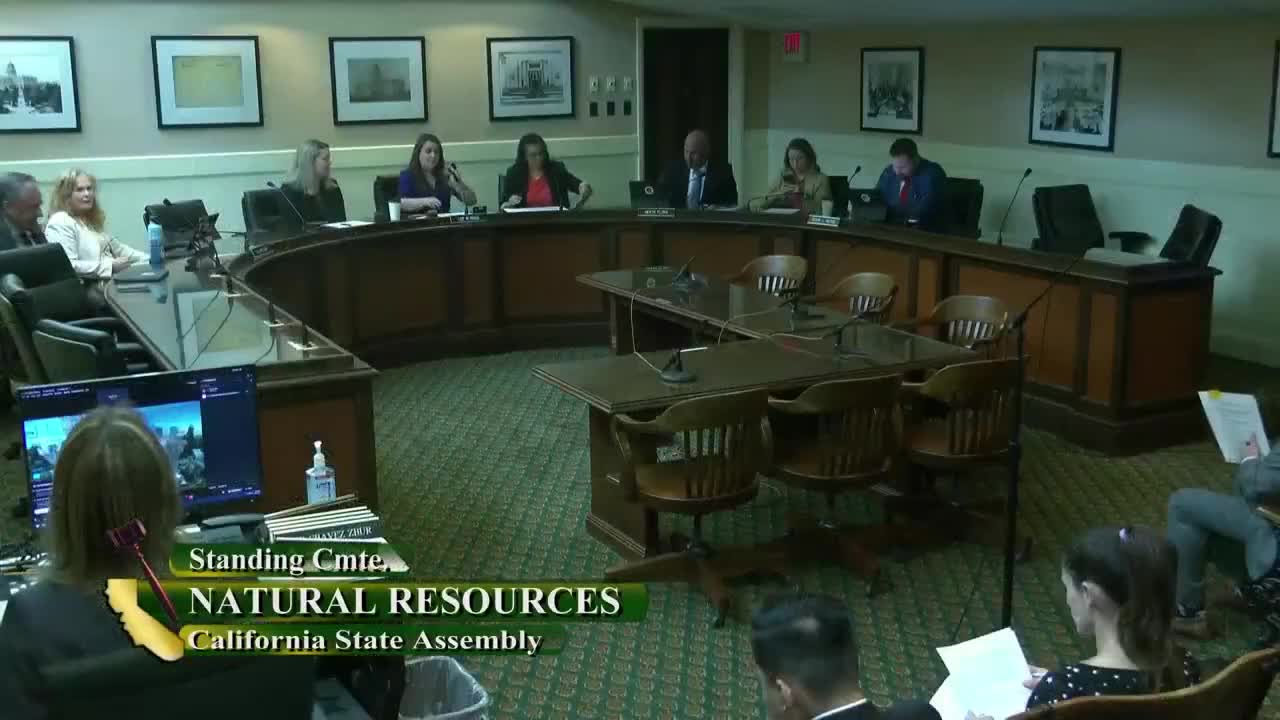
Discussed in Hearing
 10MIN
Assembly Standing Committee on Natural Resources
Bill Author

Bill Co-Author(s):