SB 410: Powering Up Californians Act.
- Session Year: 2023-2024
- House: Senate
- Latest Version Date: 2023-10-07
Current Status:
Passed
(2023-10-07: Chaptered by Secretary of State. Chapter 394, Statutes of 2023.)
Introduced
In Committee
First Chamber
In Committee
Second Chamber
Enacted
Existing law vests the Public Utilities Commission (PUC) with regulatory authority over public utilities, including electrical corporations. Existing law authorizes the PUC to establish an expedited distribution grid interconnection dispute resolution process with the goal of resolving disputes over interconnection applications within the jurisdiction of the PUC in no more than 60 days from the time the dispute is formally brought to the PUC. Existing law requires the State Energy Resources Conservation and Development Commission (Energy Commission), in collaboration with the State Air Resources Board, the PUC, and other relevant stakeholders, to annually gather from state agencies, as provided, specified entities fleet data for on-road and off-road vehicles in the medium- and heavy-duty sectors and share that data with electrical corporations to help inform electrical grid planning efforts, as specified. Existing law requires electrical corporations, as part of their distribution planning processes, to consider that produced fleet data, and other available data, to facilitate the readiness of their distribution systems to support the states anticipated level of electric vehicle charging, as specified.
This bill, the Powering Up Californians Act, would require the PUC to establish, on or before September 30, 2024, reasonable average and maximum target energization time periods, as defined, and a procedure for customers to report energization delays to the PUC, as provided. The bill would require the PUC to require the electrical corporation to take remedial actions necessary to achieve the PUCs targets and would require all reports to be publicly available, among other reporting requirements.
The bill would require, as part of each annual report, including any updates, and in each general rate case application, each electrical corporation to include a detailed analysis of its current qualified staffing level and future required qualified staffing level for each job classification, as specified, among other requirements related to staffing and apprentice training. The bill would, among other requirements placed on electrical corporations, require an electrical corporation to consider, in its annual distribution planning process, known load, and projections of load provided by the Energy Commission, in addition to certain standards, plans, regulations, policies, and requirements. The bill would, until January 1, 2027, require the PUC to ensure that each electrical corporation has sufficient and timely recovery of costs, as specified. If requested by the electrical corporation, the bill would, until January 1, 2027, require the PUC to authorize, within 180 days of the request, the use of a ratemaking mechanism that, among other things, authorizes the electrical corporation to track costs for energization projects placed in service after January 1, 2024, that exceed the costs included in the electrical corporations annual authorized revenue requirement for energization, as specified. The bill would, until January 1, 2027, require an electrical corporation, as part of its request for a ratemaking mechanism, to include in its request specified information, including, among other information, a detailed summary of energization costs authorized in its current general rate case or any other proceeding. The bill would, until July 1, 2028, require an electrical corporation that requests the use of a ratemaking mechanism to agree to retain an independent third-party auditor to, among other things, review the electrical corporations business practices and procedures for energizing new customers and how the electrical corporation is planning for demand growth, prohibit the electrical corporation from recovering the costs of the third-party auditor from ratepayers, and require the third-party auditor to report to the PUC on a biannual basis, as specified. The bill would authorize the PUC to modify or adjust the bills requirements for any electrical corporation with fewer than 100,000 service connections, as individual circumstances merit. The bill would not apply to an electrical cooperative.
Under existing law, a violation of the Public Utilities Act, or of an order, decision, rule, direction, demand, or requirement of the PUC is a crime. Because this bill would be a part of the act, and because a violation of a PUC action implementing its requirements would be a crime, the bill would impose a state-mandated local program.
The California Constitution requires the state to reimburse local agencies and school districts for certain costs mandated by the state. Statutory provisions establish procedures for making that reimbursement.
This bill would provide that no reimbursement is required by this act for a specified reason.
Existing law vests the Public Utilities Commission (PUC) with regulatory authority over public utilities, including electrical corporations. Existing law authorizes the PUC to establish an expedited distribution grid interconnection dispute resolution process with the goal of resolving disputes over interconnection applications within the jurisdiction of the PUC in no more than 60 days from the time the dispute is formally brought to the PUC. Existing law requires the State Energy Resources Conservation and Development Commission (Energy Commission), in collaboration with the State Air Resources Board, the PUC, and other relevant stakeholders, to annually gather from state agencies, as provided, specified entities fleet data for on-road and off-road vehicles in the medium- and heavy-duty sectors and share that data with electrical corporations to help inform electrical grid planning efforts, as specified. Existing law requires electrical corporations, as part of their distribution planning processes, to consider that produced fleet data, and other available data, to facilitate the readiness of their distribution systems to support the states anticipated level of electric vehicle charging, as specified.
This bill, the Powering Up Californians Act, would require the PUC to establish, on or before September 30, 2024, reasonable average and maximum target energization time periods, as defined, certain reporting requirements so that electrical corporation performance can be tracked and improved, and a procedure for customers to report energization delays to the PUC, as provided. The bill would require the PUC to require the electrical corporation to take remedial actions necessary to achieve the PUCs targets and would require all reports to be publicly available, among other reporting requirements.
The bill would require, as part of each report report, including any updates, and in each general rate case application, each electrical corporation to include a detailed analysis of its current qualified staffing level and future required qualified staffing level for each job classification, as specified, among other requirements related to staffing and apprentice training. The bill would, among other requirements placed on electrical corporations, require an electrical corporation to consider, in its annual distribution planning process, known load, and projections of load provided by the Energy Commission, in addition to certain standards, plans, regulations, policies, and requirements. The bill would, until January 1, 2027, require the PUC to ensure that electrical corporations have each electrical corporation has sufficient and timely recovery of costs, as specified. If requested by the electrical corporation, the bill would, until January 1, 2027, require the PUC to authorize, within 90 180 days of the request, the use of a one-way balancing account mechanism or other ratemaking mechanism that, among other things, authorizes electrical corporations the electrical corporation to track costs for emergent energization projects placed in service after January 1, 2024, that exceed the costs included in the electrical corporations annual authorized revenue requirement for energization, as specified. The bill would, until January 1, 2027, require electrical corporations, an electrical corporation, as part of their its request for a one-way balancing account, ratemaking mechanism, to file include in its request specified information, including, among other information, a detailed summary of energization costs authorized in their its current general rate case or any other proceeding. The bill would, until July 1, 2028, require an electrical corporation that requests the use of a one-way balancing account mechanism or other ratemaking mechanism to agree to retain an independent third-party auditor to review the electrical corporations business practices and procedures for energizing new customers and how the electrical corporation is planning for demand growth, prohibit the electrical corporation from recovering the costs of the third-party auditor from ratepayers, and require the third-party auditor to report to the PUC on a biannual basis, as specified. The bill would authorize the PUC to modify or adjust the above-described bills requirements for any electrical corporation with fewer than 100,000 service connections, as individual circumstances merit. The bill would not apply to an electrical cooperative.
Under existing law, a violation of the Public Utilities Act, or of an order, decision, rule, direction, demand, or requirement of the PUC is a crime. Because this bill would be a part of the act, and because a violation of a PUC action implementing its requirements would be a crime, the bill would impose a state-mandated local program.
The California Constitution requires the state to reimburse local agencies and school districts for certain costs mandated by the state. Statutory provisions establish procedures for making that reimbursement.
This bill would provide that no reimbursement is required by this act for a specified reason.
Existing law vests the Public Utilities Commission (PUC) with regulatory authority over public utilities, including electrical corporations. Existing law authorizes the PUC to establish an expedited distribution grid interconnection dispute resolution process with the goal of resolving disputes over interconnection applications within the jurisdiction of the PUC in no more than 60 days from the time the dispute is formally brought to the PUC. Existing law requires the State Energy Resources Conservation and Development Commission (Energy Commission), in collaboration with the State Air Resources Board, the PUC, and other relevant stakeholders, to annually gather from state agencies, as provided, specified entities fleet data for on-road and off-road vehicles in the medium- and heavy-duty sectors and share that data with electrical corporations to help inform electrical grid planning efforts, as specified. Existing law requires electrical corporations, as part of their distribution planning processes, to consider that produced fleet data, and other available data, to facilitate the readiness of their distribution systems to support the states anticipated level of electric vehicle charging, as specified.
This bill, the Powering Up Californians Act, would require the PUC to establish, on or before September 30, 2024, reasonable average and maximum target energization time periods, as defined, certain reporting requirements so that electrical corporation performance can be tracked and improved, and a procedure for customers to report energization delays to the PUC, as provided. The bill would require the PUC to require the electrical corporation to take remedial actions necessary to achieve the PUCs targets and would require all reports to be publicly available, among other reporting requirements.
The bill would require, as part of each report and in each general rate case application, each electrical corporation to include a detailed analysis of its current qualified staffing level and future required qualified staffing level for each job classification, as specified, among other requirements related to staffing and apprentice training. The bill would, among other requirements placed on electrical corporations, require an electrical corporation to consider, in its annual distribution planning process, known load, and projections of load provided by the Energy Commission, in addition to certain standards, plans, regulations, policies, and requirements. The bill would, until January 1, 2027, require the PUC to ensure that electrical corporations have sufficient and timely recovery of costs, as specified. If requested by the electrical corporation, the bill would, until January 1, 2027, require the PUC to authorize, within 90 days of the request, the use of a one-way balancing account mechanism or other mechanism that, among other things, authorizes electrical corporations to track costs for emergent energization projects that exceed the costs included in the electrical corporations annual authorized revenue requirement for energization, as specified. The bill would, until January 1, 2027, require electrical corporations, as part of their request for a one-way balancing account, to file specified information, including, among other information, a detailed summary of energization costs authorized in their current general rate case or any other proceeding. The bill would, until July 1, 2028, require an electrical corporation that requests the use of a one-way balancing account mechanism or other mechanism to agree to retain an independent third-party auditor to review the electrical corporations business practices and procedures for energizing new customers and how the electrical corporation is planning for demand growth, prohibit the electrical corporation from recovering the costs of the third-party auditor from ratepayers, and require the third-party auditor to report to the PUC on a biannual basis, as specified. The bill would authorize the PUC to modify or adjust the above-described requirements for any electrical corporation with fewer than 100,000 service connections, as individual circumstances merit.
Under existing law, a violation of the Public Utilities Act, or of an order, decision, rule, direction, demand, or requirement of the PUC is a crime. Because this bill would be a part of the act, and because a violation of a PUC action implementing its requirements would be a crime, the bill would impose a state-mandated local program.
The California Constitution requires the state to reimburse local agencies and school districts for certain costs mandated by the state. Statutory provisions establish procedures for making that reimbursement.
This bill would provide that no reimbursement is required by this act for a specified reason.
Existing law vests the Public Utilities Commission (PUC) with regulatory authority over public utilities, including electrical corporations. Existing law authorizes the PUC to establish an expedited distribution grid interconnection dispute resolution process with the goal of resolving disputes over interconnection applications within the jurisdiction of the PUC in no more than 60 days from the time the dispute is formally brought to the PUC. Existing law requires the State Energy Resources Conservation and Development Commission (Energy Commission), in collaboration with the State Air Resources Board, the PUC, and other relevant stakeholders, to annually gather from state agencies, as provided, specified entities fleet data for on-road and off-road vehicles in the medium- and heavy-duty sectors and share that data with electrical corporations to help inform electrical grid planning efforts, as specified. Existing law requires electrical corporations, as part of their distribution planning processes, to consider that produced fleet data, and other available data, to facilitate the readiness of their distribution systems to support the states anticipated level of electric vehicle charging, as specified.
This bill, the Powering Up Californians Act, would require the PUC to establish, on or before September 30, 2024, reasonable average and maximum target energization time periods, as defined, certain reporting requirements so that electrical corporation performance can be tracked and improved, and a procedure for customers to report energization delays to the PUC, as provided. The bill would require the PUC to require the electrical corporation to take any remedial actions necessary to achieve the PUCs targets and would require all reports to be publicly available, among other reporting requirements.
The bill would require, as part of each report and in each general rate case application, each electrical corporation to include a detailed analysis of its current qualified staffing level and future required qualified staffing level for each job classification, as specified, among other requirements related to staffing and apprentice training. The bill would, among other requirements placed on electrical corporations, require an electrical corporation to consider, in its annual distribution planning process, known load, and projections of load that exceeds forecasts provided by the Energy Commission, in addition to certain standards, plans, regulations, policies, and requirements. The bill would would, until January 1, 2027, require the PUC to ensure that electrical corporations have sufficient and timely recovery of costs, as specified. If requested by the electrical corporation, the bill would require would, until January 1, 2027, require the PUC to authorize authorize, within 90 days of the request, the use of a one-way balancing account mechanism or other mechanism that, among other things, authorizes electrical corporations to track costs for emergent energization projects that exceed the costs included in the electrical corporations annual authorized revenue requirement for energization, as specified. The bill would, until January 1, 2027, require electrical corporations, as part of their request for a one-way balancing account, to file specified information, including, among other information, a detailed summary of energization costs authorized in their current general rate case or any other proceeding. The bill would authorize the PUC to modify or adjust the above-described requirements for any electrical corporation with fewer than 100,000 service connections, as individual circumstances merit.
Under the existing law, a violation of the Public Utilities Act, a violation or of an order, decision, rule, direction, demand, or requirement of the commission PUC is a crime. Because this bill would be a part of the act, and because a violation of a PUC action implementing its requirements would be a crime, the bill would impose a state-mandated local program.
The California Constitution requires the state to reimburse local agencies and school districts for certain costs mandated by the state. Statutory provisions establish procedures for making that reimbursement.
This bill would provide that no reimbursement is required by this act for a specified reason.
Existing law vests the Public Utilities Commission (PUC) with regulatory authority over public utilities, including electrical corporations. Existing law requires the State Energy Resources Conservation and Development Commission, Commission (Energy Commission), in collaboration with the State Air Resources Board, the PUC, and other relevant stakeholders, to annually gather from state agencies, as provided, specified entities fleet data for on-road and off-road vehicles in the medium- and heavy-duty sectors and share that data with electrical corporations to help inform electrical grid planning efforts, as specified. Existing law requires electrical corporations, as part of their distribution planning processes, to consider that produced fleet data, and other available data, to facilitate the readiness of their distribution systems to support the states anticipated level of electric vehicle charging, as specified.
This bill, the Powering Up Californians Act, would require the PUC to establish, on or before September 30, 2024, reasonable average and maximum target energization time periods, as defined, and certain reporting requirements so that electrical corporation performance can be tracked and improved, and a procedure for customers to report energization delays to the PUC, as provided. The bill would require the PUC to require the electrical corporation to take any remedial actions necessary to achieve the PUCs targets and would require all reports to be publicly available, among other reporting requirements.
The bill would require, as part of each report and in each general rate case application, each electrical corporation to include a detailed analysis of its current qualified staffing level and future required qualified staffing level for each job classification, as specified, among other requirements related to staffing and apprentice training. The bill would, among other requirements placed on electrical corporations, require an electrical corporation to consider, in its annual distribution planning process, known load, and projections of load that exceeds forecasts provided by the Energy Commission, in addition to certain standards, plans, regulations, policies, and requirements. The bill would require the commission PUC to ensure that electrical corporations have sufficient and timely recovery of costs, as specified. If requested by the electrical corporation, the bill would require the commission PUC to authorize the use of a one-way balancing account mechanism or other mechanism that, among other things, authorizes electrical corporations to track costs for energization projects that exceed those the costs included in the electrical corporations annual authorized revenue requirement for energization, as specified.
Under the Public Utilities Act, a violation of an order, decision, rule, direction, demand, or requirement of the commission is a crime.
The California Constitution requires the state to reimburse local agencies and school districts for certain costs mandated by the state. Statutory provisions establish procedures for making that reimbursement.
This bill would provide that no reimbursement is required by this act for a specified reason.
Existing law vests the Public Utilities Commission (PUC) with regulatory authority over public utilities, including electrical corporations. Existing law requires the State Energy Resources Conservation and Development Commission, in collaboration with the State Air Resources Board, the PUC, and other relevant stakeholders, to annually gather from state agencies, as provided, specified entities fleet data for on-road and off-road vehicles in the medium- and heavy-duty sectors and share that data with electrical corporations to help inform electrical grid planning efforts, as specified. Existing law requires electrical corporations, as part of their distribution planning processes, to consider that produced fleet data, and other available data, to facilitate the readiness of their distribution systems to support the states anticipated level of electric vehicle charging, as specified.
This bill, the Powering Up Californians Act, would require the PUC to establish a working group on or before March 1, 2024, as provided, to, among other things, propose processes that would improve the ability of electrical corporations to be informed well in advance of needed increases in distribution system capacity for future housing developments, building electrification, electric vehicle charging infrastructure, and other activities that require increased distribution system capacity. The bill would require the PUC to establish, on or before September 30, 2024, reasonable average and maximum target energization time periods, as defined, and certain reporting requirements so that electrical corporation performance can be tracked and improved, as provided. The bill would require the PUC to require the electrical corporation to take any remedial actions necessary to achieve the PUCs targets and would require all reports to be publicly available, among other reporting requirements.
The bill would require, as part of each report and in each general rate case application, each electrical corporation to include a detailed analysis of its current qualified staffing level and future required qualified staffing level for each job classification, as specified, among other requirements related to staffing and apprentice training. The bill would would, among other requirements placed on electrical corporations, require each electrical corporations an electrical corporation to consider, in its annual evaluation and planning for distribution circuit upgrade needs to consider the transportation and building electrification policies of state law, and state agency, local agency, and local government plans and requirements related to transportation and building electrification. distribution planning process, certain standards, plans, regulations, policies, and requirements. The bill would require the commission to ensure that electrical corporations have sufficient and timely recovery of costs, as specified. If requested by the electrical corporation, the bill would require the commission to authorize the use of a one-way balancing account mechanism or other mechanism that, among other things, authorizes electrical corporations to track costs for energization projects more frequently than the 4-year general rate case cycle. that exceed those included in the electrical corporations annual authorized revenue requirement for energization, as specified.
Under the Public Utilities Act, a violation of an order, decision, rule, direction, demand, or requirement of the commission is a crime.
The California Constitution requires the state to reimburse local agencies and school districts for certain costs mandated by the state. Statutory provisions establish procedures for making that reimbursement.
This bill would provide that no reimbursement is required by this act for a specified reason.
Existing law vests the Public Utilities Commission (PUC) with regulatory authority over public utilities, including electrical corporations. Existing law requires the State Energy Resources Conservation and Development Commission, in collaboration with the State Air Resources Board, the PUC, and other relevant stakeholders, to annually gather from state agencies, as provided, specified entities fleet data for onroad on-road and offroad off-road vehicles in the medium- and heavy-duty sectors and share that data with electrical corporations to help inform electrical grid planning efforts, as specified. Existing law requires electrical corporations, as part of their distribution planning processes, to consider that produced fleet data, and other available data, to facilitate the readiness of their distribution systems to support the states anticipated level of electric vehicle charging, as specified.
This bill, the Powering Up Californians Act, would require the PUC to establish a working group on or before March 1, 2024, as provided, to, among other things, propose processes that would improve the ability of utilities, which the bill would define as electrical corporations that operate electrical distribution systems, electrical corporations to be informed well in advance of needed increases in distribution system capacity for future housing developments, building electrification, electric vehicle charging infrastructure, and other activities that require increased distribution system capacity. The bill would require the PUC to establish, on or before September 30, 2024, reasonable average and maximum target interconnection energization time periods, as defined, and certain reporting requirements so that utility electrical corporation performance can be tracked and improved, as provided. The bill would require the PUC to require a utility the electrical corporation to take any remedial actions necessary to achieve the PUCs targets and would require all utility reporting reports to be publicly available, among other reporting requirements.
The bill would require, as part of each report and in each general rate case application, each utility electrical corporation to include a detailed analysis of its current qualified staffing level and future required qualified staffing level for each job classification, as specified, among other requirements related to staffing and apprentice training. The bill would require each utilitys electrical corporations annual evaluation and planning for distribution circuit upgrade needs to consider the transportation and building electrification policies of state law, and state agency, local agency, and local government plans and requirements related to transportation and building electrification. The bill would require each utility to upgrade a distribution circuit under specified circumstances. The bill would require the commission to ensure that utilities electrical corporations have sufficient and timely recovery of costs, as specified, and would require the PUC to allow costs incurred for interconnection for residential buildings that exceed the electrical corporations allowances, as specified, to be treated as common facility costs to be recovered from all ratepayers. specified. If requested by the electrical corporation, the bill would require the commission to authorize the use of a one-way balancing account mechanism or other mechanism that, among other things, authorizes electrical corporations to track costs for energization projects more frequently than the 4-year general rate case cycle.
Under the Public Utilities Act, a violation of an order, decision, rule, direction, demand, or requirement of the commission is a crime.
The California Constitution requires the state to reimburse local agencies and school districts for certain costs mandated by the state. Statutory provisions establish procedures for making that reimbursement.
This bill would provide that no reimbursement is required by this act for a specified reason.
Existing law vests the Public Utilities Commission (PUC) with regulatory authority over public utilities, including electrical corporations. Existing law requires the State Energy Resources Conservation and Development Commission, in collaboration with the State Air Resources Board, the PUC, and other relevant stakeholders, to annually gather from state agencies, as provided, specified entities fleet data for onroad and offroad vehicles in the medium- and heavy-duty sectors and share that data with electrical corporations to help inform electrical grid planning efforts, as specified. Existing law requires electrical corporations, as part of their distribution planning processes, to consider that produced fleet data, and other available data, to facilitate the readiness of their distribution systems to support the states anticipated level of electric vehicle charging, as specified.
This bill, the Powering Up Californians Act, would require the PUC to establish a working group on or before March 1, 2024, as provided, to, among other things, propose processes that would improve the ability of utilities, which the bill would define as electrical corporations that operate electrical distribution systems, to be informed well in advance of needed increases in distribution system capacity for future housing developments, building electrification, electric vehicle charging infrastructure, and other activities that require increased distribution system capacity. The bill would require the PUC to establish, on or before September 30, 2024, reasonable average and maximum target interconnection time periods, as defined, and certain reporting requirements so that utility performance can be tracked and improved, as provided. The bill would require the PUC to require a utility to take any remedial actions necessary to achieve the PUCs targets and would require all utility reporting to be publicly available, among other reporting requirements.
The bill would require, as part of each report and in each general rate case application, each utility to include a detailed analysis of its current qualified staffing level and future required qualified staffing level for each job classification, as specified, among other requirements related to staffing and apprentice training. The bill would require each utilitys annual evaluation and planning for distribution circuit upgrade needs to consider the transportation and building electrification policies of state law, and state agency, local agency, and local government plans and requirements related to transportation and building electrification. The bill would require each utility to upgrade a distribution circuit under specified circumstances. The bill would require the commission to ensure that utilities have sufficient and timely recovery of costs, as specified, and would require the PUC to allow costs incurred for interconnection for residential buildings that exceed the electrical corporations allowances, as specified, to be treated as common facility costs to be recovered from all ratepayers.
Under the Public Utilities Act, a violation of an order, decision, rule, direction, demand, or requirement of the commission is a crime.
The California Constitution requires the state to reimburse local agencies and school districts for certain costs mandated by the state. Statutory provisions establish procedures for making that reimbursement.
This bill would provide that no reimbursement is required by this act for a specified reason.
Existing law vests the Public Utilities Commission with regulatory authority over public utilities, including electrical corporations. Existing law requires the commission to enforce rules governing the extension of service by electrical corporations.This bill would require each electrical corporation to provide data to the commission on the response time to provide upgraded electrical service to customers for electrification upgrades in buildings, panel upgrades, solar installations, or electric vehicle chargers. The bill would state the intent of the Legislature to improve and report on the time for interconnection for building electrification to help the state meet its 2045 and interim emissions reduction targets.Under the Public Utilities Act, a violation of an order, decision, rule, direction, demand or requirements of the commission is a crime.Because the above provision would be a part of the act, a violation of which would be a crime, this bill would impose a state-mandated local program.The California Constitution requires the state to reimburse local agencies and school districts for certain costs mandated by the state. Statutory provisions establish procedures for making that reimbursement.This bill would provide that no reimbursement is required by this act for a specified reason.Existing law vests the Public Utilities Commission with regulatory authority over public utilities, including electrical corporations. Existing law requires the commission to enforce rules governing the extension of service by electrical corporations.
This bill would require each electrical corporation to provide data to the commission on the response time to provide upgraded electrical service to customers for electrification upgrades in buildings, panel upgrades, solar installations, or electric vehicle chargers. The bill would state the intent of the Legislature to improve and report on the time for interconnection for building electrification to help the state meet its 2045 and interim emissions reduction targets.
Under the Public Utilities Act, a violation of an order, decision, rule, direction, demand or requirements of the commission is a crime.
Because the above provision would be a part of the act, a violation of which would be a crime, this bill would impose a state-mandated local program.
The California Constitution requires the state to reimburse local agencies and school districts for certain costs mandated by the state. Statutory provisions establish procedures for making that reimbursement.
This bill would provide that no reimbursement is required by this act for a specified reason.
This act shall be known, and may be cited, as the Powering Up Californians Act.
931.For purposes of this article, the following definitions apply:
(a)Electrification means any new, expanded, or change in use of electricity related to the policies described in Section 933, including, but not limited to, in the industrial, commercial, agricultural, housing, or transportation sectors.
(b)Energization and energize mean connecting customers to the electrical distribution grid and establishing adequate electrical distribution capacity or upgrading electrical distribution or transmission capacity to provide electrical service for a new customer, or to provide upgraded electrical service to an existing customer. The determination of adequate electrical distribution capacity includes consideration of future load. Energization and energize do not include activities related to connecting electrical supply resources.
(c)Energization time period means the elapsed time beginning when the electrical corporation receives a substantially complete energization project application and ending when the electric service is installed and energized.
932.(a)The Legislature finds and declares all of the following:
(1)It is the policy of the state to reach carbon neutrality no later than 2045 and to maintain net negative emissions of greenhouse gases after 2045. To meet these goals and federal, state, regional, and local air quality and decarbonization standards, plans, and regulations, projections from the commission and the Energy Commission show the need for a large increase in both the quantity of electricity used and the functions for which electricity will be used.
(2)To meet these decarbonization goals and federal, state, regional, and local air quality and decarbonization standards, plans, and regulations, the states electrical distribution systems must be substantially upgraded, new customers must promptly connect to the electrical distribution system, and existing customers must have their service level promptly upgraded.
(3)There are many reports of large housing developments that are unable to be promptly energized. California has an urgent need to increase its supply of housing, requiring both new electrical distribution capacity and the prompt energization of new housing.
(4)There are many reports of individual customers who are unable to have their electrical service promptly upgraded or energized and charging stations for light-duty, medium-duty, and heavy-duty vehicles and off-road vehicles, vessels, trains, and equipment that are unable to be promptly energized. These delays may inhibit the states ability to meet its decarbonization goals and federal, state, regional, and local air quality and decarbonization standards, plans, and regulations.
(5)To improve the speed at which energization and service upgrades are performed, each electrical corporation that distributes electricity must improve its advance planning, engineering, and construction of increased distribution and transmission system capacity.
(6)Paragraph (1) of subdivision (s) of Section 712.8 requires the operator of the Diablo Canyon powerplant to submit annually to the commission for its review the amount of compensation earned under paragraph (5) of subdivision (f) of Section 712.8, how it was spent, and a plan for prioritizing the uses of the compensation the next year. Paragraph (1) of subdivision (s) of Section 712.8 also provides that to the extent that it is not needed for Diablo Canyon, that compensation shall be spent on critical public purpose priorities, one of which is accelerating customer and generator interconnections.
(7)Electrifying transportation and buildings may put downward pressure on rates by spreading fixed costs over more kilowatthours of usage.
(8)Delays in energization, including service upgrades, are costly both to the customers awaiting service and to other customers deprived of the downward pressure on rates.
(9)To carry out the planning, engineering, and construction of electrical distribution systems needed to promptly serve customers, each electrical corporation that distributes electricity must recruit, train, and retain an adequately sized, qualified workforce.
(10)The commission should establish target deadlines for utilities that distribute electricity to energize new customers and upgrade the service of existing customers.
(11)The commission should establish reporting requirements requiring each electrical corporation that distributes electricity to report the extent to which it complied with the target deadlines and the reasons for its noncompliance.
(b)Nothing in paragraph (6) of subdivision (a) changes the requirements of Section 712.8.
933.It is the policy of the state that each electrical corporation does all of the following:
(a)Upgrade the states electrical distribution systems as needed and in time to achieve the states decarbonization goals and implement federal, state, regional, and local air quality and decarbonization standards, plans, and regulations.
(b)Comply with its obligation to serve, as provided in Section 451, by conducting sufficient advance planning, engineering, and construction of increased distribution system capacity so that customers can be energized without substantial delay.
(c)Promptly energize new customers, including by ensuring that new housing, new businesses, new electric equipment in buildings, and new charging for light-duty, medium-duty, and heavy-duty vehicles and off-road vehicles, vessels, trains, and equipment can be used without delay caused by a failure of the electrical corporation to implement energization projects.
(d)Promptly upgrade service when needed by customers.
(e)Recruit, train, and retain an adequately sized and qualified workforce to carry out the planning, engineering, and construction of electrical distribution systems needed to promptly serve customers seeking energization and service upgrades without sacrificing other necessary activities of the workforce.
934.(a)On or before September 30, 2024, the commission shall do both of the following:
(1)Establish reasonable average and maximum target energization time periods. The targets shall ensure that work is completed in a manner that minimizes delay in meeting the date requested by the customer to the greatest extent possible and prioritizes work in a manner consistent with Sections 932 and 933. The targets may vary depending on the complexity and magnitude of the work required and uncertainties regarding the readiness of the customer project needing energization. The targets may also recognize any factors beyond the electrical corporations control.
(2)Establish a procedure for customers to report energization delays to the commission.
(b)If energization time periods exceed the commissions target averages or if the electrical corporation has a substantial number of energization projects that exceed the commissions target maximums, the electrical corporation shall include in its annual report a strategy for meeting the targets in the future. The commission may request modification of the electrical corporations strategy to ensure the electrical corporation meets targets promptly and consistent with the policies set forth in Section 933.
(c)Each electrical corporation shall report anonymized or averaged data to the extent necessary to prevent identifying individual customers. The commission shall require all reports to be publicly available.
(d)The commission shall require the electrical corporation to take remedial actions necessary to achieve the targets established pursuant to paragraph (1) of subdivision (a).
(e)The commission shall periodically update the energization time periods established in paragraph (1) of subdivision (a) and the electrical corporations annual reporting requirements to reflect changed circumstances, new information, and experience.
935.(a)As part of each annual report, including any updates pursuant to subdivision (e) of Section 934, and in each general rate case application, each electrical corporation shall include a detailed analysis of its current qualified staffing level and future required qualified staffing level for each job classification needed to be consistent with the findings and achieve the policies and requirements of this article.
(b)The commission shall require each electrical corporation to have adequate qualified staffing needed to be consistent with the findings and achieve the policies and requirements of this article.
(c)For job classifications that have apprentice training requirements, the commission shall require each electrical corporation to maintain a pipeline of apprentices sufficient to meet future qualified staffing needs, subject to any limitations based on safe staffing ratios.
936.(a)In addition to the requirements of Section 740.21, the commission shall require an electrical corporation to do both of the following:
(1)Consider, in its annual distribution planning process, all of the following:
(A)Federal, state, regional, and local air quality and decarbonization standards, plans, and regulations.
(B)The transportation and building electrification policies of state law.
(C)State agency, local agency, and local government plans and requirements related to housing, economic development, critical facilities, transportation, and building electrification.
(D)Known load, and projections of load provided by the Energy Commission.
(E)Projections of load that exceed forecasts provided by the Energy Commission.
(2)Adopt and implement plans to satisfy the policies set forth in Section 933, to support achieving the requirements listed in subparagraphs (A) to (C), inclusive, of paragraph (1), and to meet the energization time periods established pursuant to paragraph (1) of subdivision (a) of Section 934, including any updates pursuant to subdivision (e) of Section 934.
(b)For purposes of subparagraph (E) of paragraph (1) of subdivision (a), an electrical corporation may only use a projection of load that exceeds forecasts provided by the Energy Commission if the electrical corporation provides to the commission detailed information on how the forecasts are developed and what state or local policies or customer requests necessitated the alternative forecast.
937.(a)The commission shall ensure that each electrical corporation has sufficient and timely recovery of costs to be consistent with the findings and achieve the policies and requirements of this article, including for energization projects.
(b)If requested by the electrical corporation, the commission shall authorize, within 180 days of the request, the use of a ratemaking mechanism that does all of the following:
(1)Authorizes the electrical corporation to track costs for energization projects placed in service after January 1, 2024, that exceed the costs included in the electrical corporations annual authorized revenue requirement for energization, as established in the electrical corporations general rate case or any other proceeding.
(2)Requires the commission to establish an up-front annual cap on the amount that each electrical corporation can recover within the mechanism. Before establishing the cap, the commission shall review all information submitted by the electrical corporation pursuant to subdivision (c).
(3)Requires the commission to authorize the recovery of costs tracked within the mechanism through an annual rate adjustment until it determines whether the costs are just and reasonable in the electrical corporations next general rate case. The commission shall require the electrical corporation to include in its next general rate case application a demonstration that the costs incurred were just and reasonable. Any costs that the commission finds were not just and reasonable shall be subject to refund.
(4)Requires only costs associated with energization to be included in the mechanism and requires costs to be tracked using the same cost categories as used by the electrical corporation in its general rate case application.
(5)Prevents the electrical corporation from recovering any costs through the mechanism in any year until its recorded spending for energization projects exceeds its annualized revenue requirements for energization projects as established in the electrical corporations general rate case.
(c)An electrical corporation, as part of its request for a ratemaking mechanism pursuant to subdivision (b), shall include in its request all of the following:
(1)A detailed summary of energization costs authorized in its current general rate case or any other proceeding.
(2)Requested energization costs in its pending general rate case, if it has a pending case.
(3)Costs authorized for other purposes in its current general rate case or any other proceeding but used for energization.
(4)The number of anticipated energization projects per year that are expected to be started or completed.
(5)If the electrical corporation is an operator, as defined in Section 25548.1 of the Public Resources Code, the amount of the compensation identified in paragraph (1) of subdivision (s) of Section 712.8 that it has forecasted it will spend on energization.
(d)The commission shall ensure that each electrical corporation improves upon energization planning, consistent with the requirements of Section 936, when requesting an authorized revenue requirement during the electrical corporations general rate case, in order to minimize the need for any ratemaking mechanism authorized pursuant to this section.
(e)This section shall be repealed on January 1, 2027.
938.(a)The commission shall require an electrical corporation that requests the use of a ratemaking mechanism, pursuant to Section 937, as a condition of authorizing the use of the mechanism, to satisfy all of the following requirements:
(1)The electrical corporation shall agree to retain an independent third-party auditor, which shall be selected by the commission based on nonbinding recommendations from the electrical corporation, to review the electrical corporations business practices and procedures for energizing new customers and how the electrical corporation is planning for demand growth, including new customer energizations.
(2)The electrical corporation shall not recover the costs of the third-party auditor from ratepayers.
(3)The third-party auditor shall review all of the following:
(A)The electrical corporations customer energization requests for the previous three years.
(B)The electrical corporations projections of customer demand growth included in the electrical corporations distribution plan, including growth in new customers and growth in demand from existing customers.
(C)The electrical corporations qualified staffing levels and future anticipated staffing needs to meet projections for customer demand growth, including the ability of the electrical corporation to sufficiently build its workforce.
(D)Funding requested by the electrical corporation to support energization requests for the previous three years in the general rate case or any other proceeding, and the efficacy of those previous requests in meeting customer demand.
(E)Commission authorized funding for the electrical corporation to support energization for the previous three years, future authorized funding, and authorized changes to the electrical corporations business practices or structures to improve its ability to respond to changing customer demand.
(F)The electrical corporations performance in meeting energization time periods established by the commission pursuant to this article.
(G)The electrical corporations performance in meeting its internally established energization time periods over the prior 10 years or longer, as necessary.
(H)Any other metrics deemed relevant by the commission or third-party auditor to support a thorough evaluation of the electrical corporations energization performance, including to identify and correct past flaws and to identify future best practices.
(4)The third-party auditor shall evaluate the electrical corporations current and future energization performance and make recommendations as to whether the electrical corporation is adequately meeting and anticipating customer demand, adequately training and retaining an adequate workforce, and is funded at sufficient levels to meet forecasted demand growth.
(5)The third-party auditor shall report to the commission on a biannual basis. The reports of the auditor shall be posted on the commissions internet website and reported to the appropriate policy committees of the Legislature.
(b)The electrical corporation shall retain an independent third-party auditor as provided in paragraph (1) of subdivision (a) before the commission authorizes use of the ratemaking mechanism pursuant to Section 937. The work of the auditor described in paragraphs (3), (4), and (5) of subdivision (a) may occur after the electrical corporation requests authorization for the ratemaking mechanism but shall occur before July 1, 2028. The commissions 180-day deadline for authorizing the mechanism provided in paragraph (b) of Section 937 shall not be affected by whether the auditor has completed the work described in paragraphs (3), (4), and (5) of subdivision (a).
(c)This section shall become inoperative on July 1, 2028, and, as of January 1, 2029, is repealed.
939.The commission may modify or adjust the requirements of this article for any electrical corporation with fewer than 100,000 service connections, as individual circumstances merit.
939.5.This article shall not apply to an electrical cooperative, as defined in Section 2776.
SEC. 2.No reimbursement is required by this act pursuant to Section 6 of Article XIIIB of the California Constitution because the only costs that may be incurred by a local agency or school district will be incurred because this act creates a new crime or infraction, eliminates a crime or infraction, or changes the penalty for a crime or infraction, within the meaning of Section 17556 of the Government Code, or changes the definition of a crime within the meaning of Section 6 of Article XIIIB of the California Constitution.
This act shall be known, and may be cited, as the Powering Up Californians Act.
931.For purposes of this article, the following definitions apply:
(a)Electrification means any new, expanded, or change in use of electricity related to the policies described in Section 933, including, but not limited to, in the industrial, commercial, agricultural, housing, or transportation sectors.
(b)Energization and energize mean connecting new customers to the electrical grid, establishing adequate electrical capacity to provide service for a new customer, or upgrading electrical capacity to provide upgraded service to an existing customer. Energization and energize do not include activities related to connecting electricity supply resources.(b)Energization and energize mean connecting customers to the electrical distribution grid and establishing adequate electrical distribution capacity or upgrading electrical distribution or transmission capacity to provide electrical service for a new customer, or to provide upgraded electrical service to an existing customer. The determination of adequate electrical distribution capacity includes consideration of future load. Energization and energize do not include activities related to connecting electrical supply resources.
(c)Energization time period means the elapsed time beginning when the electrical corporation receives a substantially complete energization project application and ending when the electric service is installed and energized.
932.(a)The Legislature finds and declares all of the following:
(a)(1)It is the policy of the state to reach carbon neutrality no later than 2045 and to maintain net negative emissions of greenhouse gases after 2045. To meet these goals and federal, state, regional, and local air quality and decarbonization standards, plans, and regulations, projections from the commission and the Energy Commission show the need for a large increase in both the quantity of electricity used and the functions for which electricity will be used.
(b)(2)To meet these decarbonization goals and federal, state, regional, and local air quality and decarbonization standards, plans, and regulations, the states electrical distribution systems must be substantially upgraded, new customers must promptly connect to the electrical distribution system, and existing customers must have their service level promptly upgraded.
(c)(3)There are many reports of large housing developments that are unable to be promptly energized. California has an urgent need to increase its supply of housing, requiring both new electrical distribution capacity and the prompt energization of new housing.
(d)(4)There are many reports of individual customers who are unable to have their electrical service promptly upgraded or energized and charging stations for light-duty, medium-duty, and heavy-duty vehicles and off-road vehicles, vessels, trains, and equipment that are unable to be promptly energized. These delays may inhibit the states ability to meet its decarbonization goals and federal, state, regional, and local air quality and decarbonization standards, plans, and regulations.
(e)(5)To improve the speed at which energization and service upgrades are performed, electrical corporations that distribute each electrical corporation that distributes electricity must improve their its advance planning, engineering, and construction of increased distribution and transmission system capacity.
(6)Paragraph (1) of subdivision (s) of Section 712.8 requires the operator of the Diablo Canyon powerplant to submit annually to the commission for its review the amount of compensation earned under paragraph (5) of subdivision (f) of Section 712.8, how it was spent, and a plan for prioritizing the uses of the compensation the next year. Paragraph (1) of subdivision (s) of Section 712.8 also provides that to the extent that it is not needed for Diablo Canyon, that compensation shall be spent on critical public purpose priorities, one of which is accelerating customer and generator interconnections.
(f)(7)Electrifying transportation and buildings may put downward pressure on rates by spreading fixed costs over more kilowatthours of usage.
(g)(8)Delays in energization, including service upgrades, are costly both to the customers awaiting service and to other customers deprived of the downward pressure on rates.
(h)(9)To carry out the planning, engineering, and construction of electrical distribution systems needed to promptly serve customers, electrical corporations that distribute each electrical corporation that distributes electricity must recruit, train, and retain an adequately sized, qualified workforce.
(i)(10)The commission should establish target deadlines for utilities that distribute electricity to energize new customers and upgrade the service of existing customers.
(j)(11)The commission should establish reporting requirements for electrical corporations that distribute requiring each electrical corporation that distributes electricity to report the extent to which they comply it complied with the target deadlines and the reasons for their its noncompliance.
(b)Nothing in paragraph (6) of subdivision (a) changes the requirements of Section 712.8.
933.It is the policy of the state that electrical corporations do each electrical corporation does all of the following:
(a)Upgrade the states electrical distribution systems as needed and in time to achieve the states decarbonization goals and implement federal, state, regional, and local air quality and decarbonization standards, plans, and regulations.
(b)Comply with their its obligation to serve, as provided in Section 451, by conducting sufficient advance planning, engineering, and construction of increased distribution system capacity so that customers can be energized without substantial delay.
(c)Promptly energize new customers, including by ensuring that new housing, new businesses, new electric equipment in buildings, and new charging for light-duty, medium-duty, and heavy-duty vehicles and off-road vehicles, vessels, trains, and equipment can be used without delay caused by a failure of the utility electrical corporation to implement energization projects.
(d)Promptly upgrade service when needed by customers.
(e)Recruit, train, and retain an adequately sized and qualified workforce to carry out the planning, engineering, and construction of electrical distribution systems needed to promptly serve customers seeking energization and service upgrades without sacrificing other necessary activities of the workforce.
934.(a)On or before September 30, 2024, the commission shall do all both of the following:
(1)Establish reasonable average and maximum target energization time periods. The targets shall ensure that work is completed in a manner that minimizes delay in meeting the date requested by the customer to the greatest extent possible and prioritizes work in a manner consistent with Sections 932 and 933. The targets may vary depending on the complexity and magnitude of the work required and uncertainties regarding the readiness of the customer project needing energization. The targets may also recognize any factors beyond the electrical corporations control.
(2)Establish requirements for an electrical corporation to report to the commission, at least annually, so that electrical corporation performance can be tracked and improved. Electrical corporation reporting shall include the average, median, and standard deviation time between receiving an application for energizing the electrical service, explanations for energization time periods that exceed the target maximum for energization projects, constraints and obstacles to each type of energization such as funding limitations, qualified staffing availability, or equipment availability, and any other information required by the commission.(3)(2)Establish a procedure for customers to report energization delays to the commission.
(b)If energization time periods exceed the commissions target averages or if the electrical corporation has a substantial number of energization projects that exceed the commissions target maximums, the electrical corporation shall include in its annual report pursuant to paragraph (2) of subdivision (a) a strategy for meeting the targets in the future. The commission may request modification of the electrical corporations strategy to ensure the electrical corporation meets targets promptly and consistent with the policies set forth in Section 933.
(c)Electrical corporations Each electrical corporation shall report anonymized or averaged data to the extent necessary to prevent identifying individual customers. The commission shall require all reports to be publicly available.
(d)The commission shall require the electrical corporation to take remedial actions necessary to achieve the commissions targets. targets established pursuant to paragraph (1) of subdivision (a).
(e)The commission shall periodically update the energization time periods established in paragraph (1) of subdivision (a) and the electrical corporations annual reporting requirements to reflect changed circumstances, new information, and experience.
935.(a)As part of each report required pursuant to paragraph (2) of subdivision (a) of Section 934, annual report, including any updates pursuant to subdivision (e) of Section 934, and in each general rate case application, each electrical corporation shall include a detailed analysis of its current qualified staffing level and future required qualified staffing level for each job classification needed to be consistent with the findings and achieve the policies and requirements of this article.
(b)The commission shall require each electrical corporation to have adequate qualified staffing needed to be consistent with the findings and achieve the policies and requirements of this article.
(c)For job classifications that have apprentice training requirements, the commission shall require each electrical corporation to maintain a pipeline of apprentices sufficient to meet future qualified staffing needs, subject to any limitations based on safe staffing ratios.
936.(a)In addition to the requirements of Section 740.21, the commission shall require an electrical corporation to do both of the following:
(1)Consider, in its annual distribution planning process, all of the following:
(A)Federal, state, regional, and local air quality and decarbonization standards, plans, and regulations.
(B)The transportation and building electrification policies of state law.
(C)State agency, local agency, and local government plans and requirements related to housing, economic development, critical facilities, transportation, and building electrification.
(D)Known load, and projections of load provided by the Energy Commission.
(E)Projections of load that exceed forecasts provided by the Energy Commission.
(2)Adopt and implement plans to satisfy the policies set forth in Section 933 933, to support achieving the requirements listed in subparagraphs (A) to (C), inclusive, of paragraph (1), and to meet the energization time periods established pursuant to paragraph (1) of subdivision (a) of Section 934. 934, including any updates pursuant to subdivision (e) of Section 934.
(b)For purposes of subparagraph (E) of paragraph (1) of subdivision (a), an electrical corporation may only use a projection of load that exceeds forecasts provided by the Energy Commission if the electrical corporation provides to the commission detailed information on how the forecasts are developed and what state or local policies or customer requests necessitated the alternative forecast.
937.(a)The commission shall ensure that electrical corporations have each electrical corporation has sufficient and timely recovery of costs to be consistent with the findings and achieve the policies and requirements of this article, including for emergent electrification energization projects.
(b)If requested by the electrical corporation, the commission shall authorize, within 90 180 days of the request, the use of a one-way balancing account mechanism or other ratemaking mechanism that does all of the following:
(1)Authorizes electrical corporations the electrical corporation to track costs for emergent energization projects placed in service after January 1, 2024, that exceed the costs included in the electrical corporations annual authorized revenue requirement for energization, as established in the electrical corporations general rate case or any other proceeding.
(2)Requires the commission to establish an up-front annual cap on the amount that each electrical corporation can recover within the account. mechanism. Before establishing the cap, the commission shall review all information submitted by the electrical corporation pursuant to subdivision (c).
(3)Requires the commission to authorize the recovery of costs tracked within the account mechanism through an annual rate adjustment if until it determines whether the costs are just and reasonable. The commission may authorize the recovery of costs subject to refund after the commission reviews the reasonableness of the costs in the general rate case or another proceeding. reasonable in the electrical corporations next general rate case. The commission shall require the electrical corporation to include in its next general rate case application a demonstration that the costs incurred were just and reasonable. Any costs that the commission finds were not just and reasonable shall be subject to refund.
(4)Requires only costs associated with energization to be included in the account. mechanism and requires costs to be tracked using the same cost categories as used by the electrical corporation in its general rate case application.
(5)Prevents the electrical corporation from recovering any costs through the account mechanism in any year until its documented revenue requirement recorded spending for energization projects exceeds its annualized revenue requirements for energization projects as established in the electrical corporations general rate case.
(c)Electrical corporations, An electrical corporation, as part of their its request for a one-way balancing account ratemaking mechanism pursuant to subdivision (b), shall file include in its request all of the following:
(1)A detailed summary of energization costs authorized in their its current general rate case or any other proceeding.
(2)Requested energization costs in their its pending general rate case. case, if it has a pending case.
(3)Costs authorized for other purposes in their its current general rate case or any other proceeding but used for energization.
(4)The number of anticipated energization projects per year that are expected to be started or completed.
(5)If the electrical corporation is an operator, as defined in Section 25548.1 of the Public Resources Code, the amount of the compensation identified in paragraph (1) of subdivision (s) of Section 712.8 that it has forecasted it will spend on energization.
(d)The commission shall ensure that electrical corporations improve each electrical corporation improves upon energization planning, consistent with the requirements of Section 936, when requesting an authorized revenue requirement during the electrical corporations general rate case, in order to minimize the need for any account ratemaking mechanism authorized pursuant to this section.
(e)This section shall be repealed on January 1, 2027.
938.(a)The commission shall require an electrical corporation that requests the use of a one-way balancing account mechanism, or other ratemaking mechanism, pursuant to Section 937, as a condition of authorizing the use of the mechanism, to satisfy all of the following requirements:
(1)The electrical corporation shall agree to retain an independent third-party auditor, which shall be selected by the commission based on nonbinding recommendations from the electrical corporation, to review the electrical corporations business practices and procedures for energizing new customers and how the electrical corporation is planning for demand growth, including new customer energizations.
(2)The electrical corporation shall not recover the costs of the third-party auditor from ratepayers.
(3)The third-party auditor shall review all of the following:
(A)The electrical corporations customer energization requests for the previous three years.
(B)The electrical corporations projections of customer demand growth included in the electrical corporations distribution plan, including growth in new customers and growth in demand from existing customers.
(C)The electrical corporations qualified staffing levels and future anticipated staffing needs to meet projections for customer demand growth, including the ability of the electrical corporation to sufficiently build its workforce.
(D)Funding requested by the electrical corporation to support energization requests for the previous three years in the general rate case or any other proceeding, and the efficacy of those previous requests in meeting customer demand.
(E)Commission authorized funding for the electrical corporation to support energization for the previous three years, future authorized funding, and authorized changes to the electrical corporations business practices or structures to improve its ability to respond to changing customer demand.
(F)The electrical corporations performance in meeting energization time periods established by the commission pursuant to this article.
(G)The electrical corporations performance in meeting its internally established energization time periods over the prior 10 years or longer, as necessary.
(H)Any other metrics deemed relevant by the commission or third-party auditor to support a thorough evaluation of the electrical corporations energization performance, including to identify and correct past flaws and to identify future best practices.
(4)The third-party auditor shall evaluate the electrical corporations current and future energization performance and make recommendations as to whether the electrical corporation is adequately meeting and anticipating customer demand, adequately training and retaining an adequate workforce, and is funded at sufficient levels to meet forecasted demand growth.
(5)The third-party auditor shall report to the commission on a biannual basis. The reports of the auditor shall be posted on the commissions internet website and reported to the appropriate policy committees of the Legislature.
(b)The electrical corporation shall retain an independent third-party auditor as provided in paragraph (1) of subdivision (a) before the commission authorizes use of the ratemaking mechanism pursuant to Section 937. The work of the auditor described in paragraphs (3), (4), and (5) of subdivision (a) may occur after the electrical corporation requests authorization for the ratemaking mechanism but shall occur before July 1, 2028. The commissions 180-day deadline for authorizing the mechanism provided in paragraph (b) of Section 937 shall not be affected by whether the auditor has completed the work described in paragraphs (3), (4), and (5) of subdivision (a).
(b)(c)This section shall become inoperative on July 1, 2028, and, as of January 1, 2029, is repealed.
939.The commission may modify or adjust the requirements of this article for any electrical corporation with fewer than 100,000 service connections, as individual circumstances merit.
939.5.This article shall not apply to an electrical cooperative, as defined in Section 2776.
SEC. 2.No reimbursement is required by this act pursuant to Section 6 of Article XIIIB of the California Constitution because the only costs that may be incurred by a local agency or school district will be incurred because this act creates a new crime or infraction, eliminates a crime or infraction, or changes the penalty for a crime or infraction, within the meaning of Section 17556 of the Government Code, or changes the definition of a crime within the meaning of Section 6 of Article XIIIB of the California Constitution.
This act shall be known, and may be cited, as the Powering Up Californians Act.
931.For purposes of this article, the following definitions apply:
(a)Electrification means any new, expanded, or change in use of electricity related to the policies described in Section 933, including, but not limited to, in the industrial, commercial, agricultural, housing, or transportation sectors.
(b)Energization and energize mean connecting new customers to the electrical grid, establishing adequate electrical capacity to provide service for a new customer, or upgrading electrical capacity to provide upgraded service to an existing customer. Energization and energize do not include activities related to connecting electricity supply resources.
(c)Energization time period means the elapsed time beginning when the electrical corporation receives a substantially complete energization project application and ending when the electric service is installed and energized.
932.The Legislature finds and declares all of the following:
(a)It is the policy of the state to reach carbon neutrality no later than 2045 and to maintain net negative emissions of greenhouse gases after 2045. To meet these goals and federal, state, regional, and local air quality and decarbonization standards, plans, and regulations, projections from the commission and the Energy Commission show the need for a large increase in both the quantity of electricity used and the functions for which electricity will be used.
(b)To meet these decarbonization goals and federal, state, regional, and local air quality and decarbonization standards, plans, and regulations, the states electrical distribution systems must be substantially upgraded, new customers must promptly connect to the electrical distribution system, and existing customers must have their service level promptly upgraded.
(c)There are many reports of large housing developments that are unable to be promptly energized. California has an urgent need to increase its supply of housing, requiring both new electrical distribution capacity and the prompt energization of new housing.
(d)There are many reports of individual customers who are unable to have their electrical service promptly upgraded or energized and charging stations for light-duty, medium-duty, and heavy-duty vehicles and off-road vehicles, vessels, trains, and equipment that are unable to be promptly energized. These delays may inhibit the states ability to meet its decarbonization goals and federal, state, regional, and local air quality and decarbonization standards, plans, and regulations.
(e)To improve the speed at which energization and service upgrades are performed, electrical corporations that distribute electricity must improve their advance planning, engineering, and construction of increased distribution and transmission system capacity.
(f)Electrifying transportation and buildings may put downward pressure on rates by spreading fixed costs over more kilowatthours of usage.
(g)Delays in energization, including service upgrades, are costly both to the customers awaiting service and to other customers deprived of the downward pressure on rates.
(h)To carry out the planning, engineering, and construction of electrical distribution systems needed to promptly serve customers, electrical corporations that distribute electricity must recruit, train, and retain an adequately sized, qualified workforce.
(i)The commission should establish target deadlines for utilities that distribute electricity to energize new customers and upgrade the service of existing customers.
(j)The commission should establish reporting requirements for electrical corporations that distribute electricity to report the extent to which they comply with the target deadlines and the reasons for their noncompliance.
933.It is the policy of the state that electrical corporations do all of the following:
(a)Upgrade the states electrical distribution systems as needed and in time to achieve the states decarbonization goals and implement federal, state, regional, and local air quality and decarbonization standards, plans, and regulations.
(b)Comply with their obligation to serve, as provided in Section 451, by conducting sufficient advance planning, engineering, and construction of increased distribution system capacity so that customers can be energized without substantial delay.
(c)Promptly energize new customers, including by ensuring that new housing, new businesses, and new charging for light-duty, medium-duty, and heavy-duty vehicles and off-road vehicles, vessels, trains, and equipment can be used without delay caused by a failure of the utility to implement energization projects.
(d)Promptly upgrade service when needed by customers.
(e)Recruit, train, and retain an adequately sized and qualified workforce to carry out the planning, engineering, and construction of electrical distribution systems needed to promptly serve customers seeking energization and service upgrades without sacrificing other necessary activities of the workforce.
934.(a)On or before September 30, 2024, the commission shall do all of the following:
(1)Establish reasonable average and maximum target energization time periods. The targets shall ensure that work is completed in a manner that minimizes delay in meeting the date requested by the customer to the greatest extent possible and prioritizes work in a manner consistent with Sections 932 and 933. The targets may vary depending on the complexity and magnitude of the work required and uncertainties regarding the readiness of the customer project needing energization. The targets may also recognize any factors beyond the electrical corporations control.
(2)Establish requirements for an electrical corporation to report to the commission, at least annually, so that electrical corporation performance can be tracked and improved. Electrical corporation reporting shall include the average, median, and standard deviation time between receiving an application for energizing the electrical service, explanations for energization time periods that exceed the target maximum for energization projects, constraints and obstacles to each type of energization such as funding limitations, qualified staffing availability, or equipment availability, and any other information required by the commission.
(3)Establish a procedure for customers to report energization delays to the commission.
(b)If energization time periods exceed the commissions target averages or if the electrical corporation has a substantial number of energization projects that exceed the commissions target maximums, the electrical corporation shall include in its report pursuant to paragraph (2) of subdivision (a) a strategy for meeting the targets in the future. The commission may request modification of the electrical corporations strategy to ensure the electrical corporation meets targets promptly and consistent with the policies set forth in Section 933.
(c)Electrical corporations shall report anonymized or averaged data to the extent necessary to prevent identifying individual customers. The commission shall require all reports to be publicly available.
(d)The commission shall require the electrical corporation to take remedial actions necessary to achieve the commissions targets.
935.(a)As part of each report required pursuant to paragraph (2) of subdivision (a) of Section 934, and in each general rate case application, each electrical corporation shall include a detailed analysis of its current qualified staffing level and future required qualified staffing level for each job classification needed to be consistent with the findings and achieve the policies and requirements of this article.
(b)The commission shall require each electrical corporation to have adequate qualified staffing needed to be consistent with the findings and achieve the policies and requirements of this article.
(c)For job classifications that have apprentice training requirements, the commission shall require each electrical corporation to maintain a pipeline of apprentices sufficient to meet future qualified staffing needs, subject to any limitations based on safe staffing ratios.
936.(a)In addition to the requirements of Section 740.21, the commission shall require an electrical corporation to do both of the following:
(1)Consider, in its annual distribution planning process, all of the following:
(A)Federal, state, regional, and local air quality and decarbonization standards, plans, and regulations.
(B)The transportation and building electrification policies of state law.
(C)State agency, local agency, and local government plans and requirements related to housing, economic development, critical facilities, transportation, and building electrification.
(D)Known load, and projections of load provided by the Energy Commission.
(E)Projections of load that exceed forecasts provided by the Energy Commission.
(2)Adopt and implement plans to satisfy the policies set forth in Section 933 and to meet the energization time periods established pursuant to paragraph (1) of subdivision (a) of Section 934.
(b)For purposes of subparagraph (E) of paragraph (1) of subdivision (a), an electrical corporation may only use a projection of load that exceeds forecasts provided by the Energy Commission if the electrical corporation provides to the commission detailed information on how the forecasts are developed and what state or local policies or customer requests necessitated the alternative forecast.
937.(a)The commission shall ensure that electrical corporations have sufficient and timely recovery of costs to be consistent with the findings and achieve the policies and requirements of this article, including for emergent electrification projects.
(b)If requested by the electrical corporation, the commission shall authorize, within 90 days of the request, the use of a one-way balancing account mechanism or other mechanism that does all of the following:
(1)Authorizes electrical corporations to track costs for emergent energization projects that exceed the costs included in the electrical corporations annual authorized revenue requirement for energization, as established in the electrical corporations general rate case or any other proceeding.
(2)Requires the commission to establish an up-front annual cap on the amount that each electrical corporation can recover within the account. Before establishing the cap, the commission shall review all information submitted by the electrical corporation pursuant to subdivision (c).
(3)Requires the commission to authorize the recovery of costs tracked within the account through an annual rate adjustment if the costs are just and reasonable. The commission may authorize the recovery of costs subject to refund after the commission reviews the reasonableness of the costs in the general rate case or another proceeding.
(4)Requires only costs associated with energization to be included in the account.
(5)Prevents the electrical corporation from recovering any costs through the account in any year until its documented revenue requirement for energization projects exceeds its annualized revenue requirements for energization projects as established in the electrical corporations general rate case.
(c)Electrical corporations, as part of their request for a one-way balancing account pursuant to subdivision (b), shall file all of the following:
(1)A detailed summary of energization costs authorized in their current general rate case or any other proceeding.
(2)Requested energization costs in their pending general rate case.
(3)Costs authorized for other purposes in their current general rate case or any other proceeding but used for energization.
(4)The number of anticipated energization projects per year that are expected to be started or completed.
(d)The commission shall ensure that electrical corporations improve upon energization planning, consistent with the requirements of Section 936, when requesting an authorized revenue requirement during the electrical corporations general rate case, in order to minimize the need for any account mechanism authorized pursuant to this section.
(e)This section shall be repealed on January 1, 2027.
938.(a)The commission shall require an electrical corporation that requests the use of a one-way balancing account mechanism, or other mechanism, pursuant to Section 937, as a condition of authorizing the use of the mechanism, to satisfy all of the following requirements:
(1)The electrical corporation shall agree to retain an independent third-party auditor, which shall be selected by the commission based on nonbinding recommendations from the electrical corporation, to review the electrical corporations business practices and procedures for energizing new customers and how the electrical corporation is planning for demand growth, including new customer energizations.
(2)The electrical corporation shall not recover the costs of the third-party auditor from ratepayers.
(3)The third-party auditor shall review all of the following:
(A)The electrical corporations customer energization requests for the previous three years.
(B)The electrical corporations projections of customer demand growth included in the electrical corporations distribution plan, including growth in new customers and growth in demand from existing customers.
(C)The electrical corporations qualified staffing levels and future anticipated staffing needs to meet projections for customer demand growth, including the ability of the electrical corporation to sufficiently build its workforce.
(D)Funding requested by the electrical corporation to support energization requests for the previous three years in the general rate case or any other proceeding, and the efficacy of those previous requests in meeting customer demand.
(E)Commission authorized funding for the electrical corporation to support energization for the previous three years, future authorized funding, and authorized changes to the electrical corporations business practices or structures to improve its ability to respond to changing customer demand.
(F)The electrical corporations performance in meeting energization time periods established by the commission pursuant to this article.
(G)The electrical corporations performance in meeting its internally established energization time periods over the prior 10 years or longer, as necessary.
(H)Any other metrics deemed relevant by the commission or third-party auditor to support a thorough evaluation of the electrical corporations energization performance, including to identify and correct past flaws and to identify future best practices.
(4)The third-party auditor shall evaluate the electrical corporations current and future energization performance and make recommendations as to whether the electrical corporation is adequately meeting and anticipating customer demand, adequately training and retaining an adequate workforce, and is funded at sufficient levels to meet forecasted demand growth.
(5)The third-party auditor shall report to the commission on a biannual basis. The reports of the auditor shall be posted on the commissions internet website and reported to the appropriate policy committees of the Legislature.
(b)This section shall become inoperative on July 1, 2028, and, as of January 1, 2029, is repealed.
938.939.The commission may modify or adjust the requirements of this article for any electrical corporation with fewer than 100,000 service connections, as individual circumstances merit.
SEC. 2.No reimbursement is required by this act pursuant to Section 6 of Article XIIIB of the California Constitution because the only costs that may be incurred by a local agency or school district will be incurred because this act creates a new crime or infraction, eliminates a crime or infraction, or changes the penalty for a crime or infraction, within the meaning of Section 17556 of the Government Code, or changes the definition of a crime within the meaning of Section 6 of Article XIIIB of the California Constitution.
This act shall be known, and may be cited, as the Powering Up Californians Act.
931.For purposes of this article, the following definitions apply:
(a)Electrification means any new, expanded, or change in use of electricity related to the policies described in Section 933, including, but not limited to, in the industrial, commercial, agricultural, housing, or transportation sectors.
(b)Energization and energize mean connecting new customers to the electrical distribution or transmission grid, establishing adequate electrical distribution capacity to provide service for a new customer, or upgrading electrical distribution or transmission capacity to provide upgraded service to an existing customer. Energization and energize do not include activities related to connecting electricity supply resources.
(c)Energization time period means the elapsed time beginning when the electrical corporation receives a substantially complete energization project application and ending when the electric service is installed and energized.
932.The Legislature finds and declares all of the following:
(a)It is the policy of the state to reach carbon neutrality no later than 2045 and to maintain net negative emissions of greenhouse gases after 2045. To meet these goals and federal, state, regional, and local air quality and decarbonization standards, plans, and regulations, projections from the commission and the Energy Commission show the need for a large increase in both the quantity of electricity used and the functions for which electricity will be used.
(b)To meet these decarbonization goals and federal, state, regional, and local air quality and decarbonization standards, plans, and regulations, the states electrical distribution systems must be substantially upgraded, new customers must promptly connect to the electrical distribution system system, and existing customers must have their service level promptly upgraded.
(c)There are many reports of large housing developments that are unable to be promptly energized. California has an urgent need to increase its supply of housing, requiring both new electrical distribution capacity and the prompt energization of new housing.
(d)There are many reports of individual customers who are unable to have their electrical service promptly upgraded or energized and charging stations for light-duty, medium-duty, and heavy-duty vehicles and off-road vehicles, vessels, trains, and equipment that are unable to be promptly energized. These delays may inhibit the states ability to meet its decarbonization goals and federal, state, regional, and local air quality and decarbonization standards, plans, and regulations.
(e)To improve the speed at which energization and service upgrades are performed, electrical corporations that distribute electricity must do both of the following:
(1)Improve improve their advance planning, engineering, and construction of increased distribution and transmission system capacity.
(2)Preorder transformers and other needed equipment.(f)Electrifying transportation and buildings may put downward pressure on rates by spreading fixed costs over more kilowatthours of usage.
(g)Delays in energization, including service upgrades, are costly both to the customers awaiting service and to other customers deprived of the downward pressure on rates.
(h)To carry out the planning, engineering, and construction of electrical distribution systems needed to promptly serve customers, electrical corporations that distribute electricity must recruit, train, and retain an adequately sized, qualified workforce.
(i)The commission should establish target deadlines for utilities that distribute electricity to energize new customers and upgrade the service of existing customers.
(j)The commission should establish reporting requirements for electrical corporations that distribute electricity to report the extent to which they comply with the target deadlines and the reasons for their noncompliance.
933.It is the policy of the state that electrical corporations do all of the following:
(a)Upgrade the states electrical distribution systems as needed and in time to achieve the states decarbonization goals, goals and implement federal, state, regional, and local air quality and decarbonization standards, plans, and regulations, and facilitate community growth and economic development. regulations.
(b)Comply with their obligation to serve, as provided in Section 451, by conducting sufficient advance planning, engineering, and construction of increased distribution system capacity, and preordering transformers and other needed equipment, capacity so that customers can be energized without substantial delay.
(c)Promptly energize new customers, including by ensuring that new housing, new businesses, and new charging, including bidirectional charging, charging for light-duty, medium-duty, and heavy-duty vehicles and off-road vehicles, vessels, trains, and equipment can be used without delay caused by a failure of the utility to implement energization projects.
(d)Promptly upgrade service when requested needed by customers.
(e)Recruit, train, and retain an adequately sized and qualified workforce to carry out the planning, engineering, and construction of electrical distribution systems needed to promptly serve customers seeking energization and service upgrades without sacrificing other necessary activities of the workforce.
934.(a)On or before September 30, 2024, the commission shall do all of the following:
(1)Establish reasonable average and maximum target energization time periods. The targets shall ensure that work is completed in a manner that minimizes delay in meeting the date requested by the customer to the greatest extent possible and prioritizes work in a manner consistent with Sections 932 and 933. The targets may vary depending on the complexity and magnitude of the work required and uncertainties regarding the readiness of the customer project needing energization. The targets may also recognize any factors beyond the electrical corporations control.
(2)Establish requirements for an electrical corporation to report to the commission, at least annually, so that electrical corporation performance can be tracked and improved. Electrical corporation reporting shall include the average, median, and standard deviation time between receiving an application for energizing the electrical service, explanations for energization time periods that exceed the target maximum for energization projects, constraints and obstacles to each type of energization such as funding limitations, qualified staffing availability, or equipment availability, and any other information required by the commission.
(3)Establish a procedure for customers to report energization delays to the commission.
(b)If energization time periods exceed the commissions target averages or if the electrical corporation has a substantial number of energization projects that exceed the commissions target maximums, the electrical corporation shall include in its report pursuant to paragraph (2) of subdivision (a) a strategy for meeting the targets in the future. The commission may request modification of the electrical corporations strategy to ensure the electrical corporation meets targets promptly and consistent with the policies set forth in Section 933.
(c)Electrical corporations shall report anonymized or averaged data to the extent necessary to prevent identifying individual customers. The commission shall require all reports to be publicly available.
(d)The commission shall require the electrical corporation to take any remedial actions necessary to achieve the commissions targets.
935.(a)As part of each report required pursuant to paragraph (2) of subdivision (a) of Section 934, and in each general rate case application, each electrical corporation shall include a detailed analysis of its current qualified staffing level and future required qualified staffing level for each job classification needed to be consistent with the findings and achieve the policies and requirements of this article.
(b)The commission shall require each electrical corporation to have adequate qualified staffing needed to be consistent with the findings and achieve the policies and requirements of this article.
(c)For job classifications that have apprentice training requirements, the commission shall require each electrical corporation to maintain a pipeline of apprentices sufficient to meet future qualified staffing needs, subject to any limitations based on safe staffing ratios.
936.(a)In addition to the requirements of Section 740.21, the commission shall require an electrical corporation to do both of the following:
(a)(1)Consider, in its annual distribution planning process, all of the following:
(1)(A)Federal, state, regional, and local air quality and decarbonization standards, plans, and regulations.
(2)(B)The transportation and building electrification policies of state law.
(3)(C)State agency, local agency, and local government plans and requirements related to housing, economic development, critical facilities, transportation, and building electrification.
(4)(D)Known load, and projections of load that exceed forecasts provided by the Energy Commission.
(E)Projections of load that exceed forecasts provided by the Energy Commission.
(b)(2)Adopt and implement plans to satisfy the policies set forth in Section 933 and to meet the energization time periods established pursuant to paragraph (1) of subdivision (a) of Section 934.
(b)For purposes of subparagraph (E) of paragraph (1) of subdivision (a), an electrical corporation may only use a projection of load that exceeds forecasts provided by the Energy Commission if the electrical corporation provides to the commission detailed information on how the forecasts are developed and what state or local policies or customer requests necessitated the alternative forecast.
937.(a)The commission shall ensure that electrical corporations have sufficient and timely recovery of costs to be consistent with the findings and achieve the policies and requirements of this article, including for emergent electrification projects.
(b)If requested by the electrical corporation, the commission shall authorize authorize, within 90 days of the request, the use of a one-way balancing account mechanism or other mechanism that does all of the following:
(1)Authorizes electrical corporations to track costs for emergent energization projects that exceed the costs included in the electrical corporations annual authorized revenue requirement for energization, as established in the electrical corporations general rate case. case or any other proceeding.
(2)Requires the commission to establish an up-front annual cap on the amount that each electrical corporation can recover within the account. Before establishing the cap, the commission shall review all information submitted by the electrical corporation pursuant to subdivision (c).
(3)Requires the commission to authorize the recovery of costs tracked within the account through an annual rate adjustment. adjustment if the costs are just and reasonable. The commission may authorize the recovery of costs shall be subject to refund until the after the commission reviews the reasonableness of the costs in the general rate case or another proceeding.
(4)Requires only costs associated with energization to be included in the account.
(5)Prevents the electrical corporation from recovering any costs through the account in any year until its documented revenue requirement for energization projects exceeds its annualized revenue requirements for energization projects as established in the electrical corporations general rate case.
(c)Electrical corporations, as part of their request for a one-way balancing account pursuant to subdivision (b), shall file all of the following:
(1)A detailed summary of energization costs authorized in their current general rate case or any other proceeding.
(2)Requested energization costs in their pending general rate case.
(3)Costs authorized for other purposes in their current general rate case or any other proceeding but used for energization.
(4)The number of anticipated energization projects per year that are expected to be started or completed.
(d)The commission shall ensure that electrical corporations improve upon energization planning, consistent with the requirements of Section 936, when requesting an authorized revenue requirement during the electrical corporations general rate case, in order to minimize the need for any account mechanism authorized pursuant to this section.
(e)This section shall be repealed on January 1, 2027.
938.The commission may modify or adjust the requirements of this article for any electrical corporation with fewer than 100,000 service connections, as individual circumstances merit.
SEC. 2.No reimbursement is required by this act pursuant to Section 6 of Article XIIIB of the California Constitution because the only costs that may be incurred by a local agency or school district will be incurred because this act creates a new crime or infraction, eliminates a crime or infraction, or changes the penalty for a crime or infraction, within the meaning of Section 17556 of the Government Code, or changes the definition of a crime within the meaning of Section 6 of Article XIIIB of the California Constitution.
This act shall be known, and may be cited, as the Powering Up Californians Act.
931.For purposes of this article, the following definitions apply:
(a)Electrification means any new, expanded, or change in use of electricity related to the policies described in Section 933, including, but not limited to, in the industrial, commercial, agricultural, housing, or transportation sectors.
(b)Energization and energize mean connecting new customers to the electrical distribution or transmission grid, establishing adequate electrical distribution capacity to provide service for a new customer, or upgrading electrical distribution or transmission capacity to provide upgraded service to an existing customer. Energization and energize do not include activities related to connecting electricity supply resources.
(c)Energization time period means the elapsed time beginning when the electrical corporation receives a substantially complete energization project application and ending when the electric service is installed and energized.
932.The Legislature finds and declares all of the following:
(a)It is the policy of the state to reach carbon neutrality no later than 2045 and to maintain net negative emissions of greenhouse gases after 2045. To meet these goals and federal, state, regional, and local air quality and decarbonization standards, plans, and regulations, projections from the commission and the Energy Commission show the need for a large increase in both the quantity of electricity used and the functions for which electricity will be used.
(b)To meet these decarbonization goals and federal, state, regional, and local air quality and decarbonization standards, plans, and regulations, the states electrical distribution systems must be substantially upgraded, new customers must promptly connect to the electrical distribution system and existing customers must have their service level promptly upgraded.
(c)There are many reports of large housing developments that are unable to be promptly energized. California has an urgent need to increase its supply of housing, requiring both new electrical distribution capacity and the prompt energization of new housing.
(d)There are many reports of individual customers who are unable to have their electrical service promptly upgraded or energized and charging stations for light-duty, medium-duty, and heavy-duty vehicles and off-road vehicles, vessels, trains, and equipment that are unable to be promptly energized. These delays may inhibit the states ability to meet its decarbonization goals and federal, state, regional, and local air quality and decarbonization standards, plans, and regulations.
(e)To improve the speed at which energization and service upgrades are performed, electrical corporations that distribute electricity must improve their advance planning, engineering, and construction of increased distribution system capacity. do both of the following:
(1)Improve their advance planning, engineering, and construction of increased distribution system capacity.
(2)Preorder transformers and other needed equipment.
(f)Electrifying transportation and buildings may put downward pressure on rates by spreading fixed costs over more kilowatthours of usage.
(g)Delays in energization, including service upgrades, are costly both to the customers awaiting service and to other customers deprived of the downward pressure on rates.
(h)To carry out the planning, engineering, and construction of electrical distribution systems needed to promptly serve customers, electrical corporations that distribute electricity must recruit, train, and retain an adequately sized, qualified workforce.
(i)The commission should establish target deadlines for utilities that distribute electricity to energize new customers and upgrade the service of existing customers.
(j)The commission should establish reporting requirements for electrical corporations that distribute electricity to report the extent to which they comply with the target deadlines and the reasons for their noncompliance.
933.It is the policy of the state that electrical corporations do all of the following:
(a)Upgrade the states electrical distribution systems as needed and in time to achieve the states decarbonization goals and goals, implement federal, state, regional, and local air quality and decarbonization standards, plans, and regulations. regulations, and facilitate community growth and economic development.
(b)Conduct Comply with their obligation to serve, as provided in Section 451, by conducting sufficient advance planning, engineering, and construction of increased distribution system capacity capacity, and preordering transformers and other needed equipment, so that customers can be energized without substantial delay.
(c)Promptly energize new customers, including by ensuring that new housing, new businesses, and new charging, including bidirectional charging, for light-duty, medium-duty, and heavy-duty vehicles and off-road vehicles, vessels, trains, and equipment can be used without delay caused by a failure of the utility to implement energization projects.
(d)Promptly upgrade service when requested by customers.
(e)Recruit, train, and retain an adequately sized and qualified workforce to carry out the planning, engineering, and construction of electrical distribution systems needed to promptly serve customers seeking energization and service upgrades without sacrificing other necessary activities of the workforce.
934.(a)On or before September 30, 2024, the commission shall do both all of the following:
(1)Establish reasonable average and maximum target energization time periods. The targets shall ensure that work is completed in a manner that minimizes delay in meeting the date requested by the customer to the greatest extent possible and prioritizes work in a manner consistent with Sections 932 and 933. The targets may vary depending on the complexity and magnitude of the work required and uncertainties regarding the readiness of the customer project needing energization. The targets may also recognize any factors beyond the electrical corporations control.
(2)Establish requirements for an electrical corporation to report to the commission, at least annually, so that electrical corporation performance can be tracked and improved. Electrical corporation reporting shall include the average, median, and standard deviation time between receiving an application for energizing the electrical service, explanations for energization time periods that exceed the target maximum for energization projects, constraints and obstacles to each type of energization such as funding limitations, qualified staffing availability, or equipment availability, and any other information required by the commission.
(3)Establish a procedure for customers to report energization delays to the commission.
(b)If energization time periods exceed the commissions target averages or if the electrical corporation has a substantial number of energization projects that exceed the commissions target maximums, the electrical corporation shall include in its report pursuant to paragraph (2) of subdivision (a) a strategy for meeting the targets in the future.
(c)Electrical corporations shall report anonymized or averaged data to the extent necessary to prevent identifying individual customers. The commission shall require all reports to be publicly available.
(d)The commission shall require the electrical corporation to take any remedial actions necessary to achieve the commissions targets.
935.(a)As part of each report required pursuant to paragraph (2) of subdivision (a) of Section 934, and in each general rate case application, each electrical corporation shall include a detailed analysis of its current qualified staffing level and future required qualified staffing level for each job classification needed to be consistent with the findings and achieve the policies and requirements of this article.
(b)The commission shall require each electrical corporation to have adequate qualified staffing needed to be consistent with the findings and achieve the policies and requirements of this article.
(c)For job classifications that have apprentice training requirements, the commission shall require each electrical corporation to maintain a pipeline of apprentices sufficient to meet future qualified staffing needs, subject to any limitations based on safe staffing ratios.
936.In addition to the requirements of Section 740.21, the commission shall require an electrical corporation to do both of the following:
(a)Consider, in its annual distribution planning process, all of the following:
(1)Federal, state, regional, and local air quality and decarbonization standards, plans, and regulations.
(2)The transportation and building electrification policies of state law.
(3)State agency, local agency, and local government plans and requirements related to transportation housing, economic development, critical facilities, transportation, and building electrification.
(4)Known load, and projections of load that exceed forecasts provided by the Energy Commission.
(b)Adopt and implement plans to satisfy the policies set forth in Section 933 and to meet the energization time periods established pursuant to paragraph (1) of subdivision (a) of Section 934.
937.(a)The commission shall ensure that electrical corporations have sufficient and timely recovery of costs to be consistent with the findings and achieve the policies and requirements of this article, including for emergent electrification projects.
(b)If requested by the electrical corporation, the commission shall authorize the use of a one-way balancing account mechanism or other mechanism that does all of the following:
(1)Authorizes electrical corporations to track costs for energization projects that exceed those the costs included in the electrical corporations annual authorized revenue requirement for energization, as established in the electrical corporations general rate case.
(2)Requires the commission to establish an annual cap on the amount that each electrical corporation can recover within the account.
(3)Requires the commission to authorize the recovery of costs tracked within the account through an annual rate adjustment if the costs are just and reasonable. adjustment. The commission may authorize annual recovery of costs shall be subject to refund after it until the commission reviews the reasonableness of the costs in the general rate case or another proceeding.
(4)Requires only costs associated with energization to be included in the account.
SEC. 2.No reimbursement is required by this act pursuant to Section 6 of Article XIIIB of the California Constitution because the only costs that may be incurred by a local agency or school district will be incurred because this act creates a new crime or infraction, eliminates a crime or infraction, or changes the penalty for a crime or infraction, within the meaning of Section 17556 of the Government Code, or changes the definition of a crime within the meaning of Section 6 of Article XIIIB of the California Constitution.
This act shall be known, and may be cited, as the Powering Up Californians Act.
931.For purposes of this article, the following definitions apply:
(a)Electrification means any new, expanded, or change in use of electricity related to the policies described in Section 933, including, but not limited to, in the industrial, commercial, agricultural, housing, or transportation sectors.
(b)Energization and energize mean connecting new customers to the electrical distribution or transmission grid, establishing adequate electrical distribution capacity to provide service for a new customer, or upgrading electrical distribution or transmission capacity to provide upgraded service to an existing customer. Energization and energize do not include activities related to connecting electricity supply resources.
(c)Energization time period means the elapsed time beginning when the electrical corporation receives a substantially complete energization project application and ending when the electric service is installed and energized.
932.The Legislature finds and declares all of the following:
(a)It is the policy of the state to reach carbon neutrality no later than 2045 and to maintain net negative emissions of greenhouse gases after 2045. To meet these goals, goals and federal, state, regional, and local air quality and decarbonization standards, plans, and regulations, projections from the commission and the Energy Commission show the need for a large increase in both the quantity of electricity used and the functions for which electricity will be used.
(b)To meet these decarbonization goals, goals and federal, state, regional, and local air quality and decarbonization standards, plans, and regulations, the states electrical distribution systems must be substantially upgraded, new customers must promptly connect to the electrical distribution system and existing customers must have their service level promptly upgraded.
(c)There are many reports of large housing developments that are unable to be promptly energized. California has an urgent need to increase its supply of housing, requiring both new electrical distribution capacity and the prompt energization of new housing.
(d)There are many reports of individual customers who are unable to have their electrical service promptly upgraded or energized and electric vehicle charging stations for light-duty, medium-duty, and heavy-duty vehicles and off-road vehicles, vessels, trains, and equipment that are unable to be promptly energized. These delays may inhibit the states ability to meet its decarbonization goals. goals and federal, state, regional, and local air quality and decarbonization standards, plans, and regulations.
(e)To improve the speed at which energization and service upgrades are performed, electrical corporations that distribute electricity must improve their advance planning, engineering, and construction of increased distribution system capacity.
(f)Electrifying transportation and buildings may put downward pressure on rates by spreading fixed costs over more kilowatthours of usage.
(g)Delays in energization, including service upgrades, are costly both to the customers awaiting service and to other customers deprived of the downward pressure on rates.
(h)To carry out the planning, engineering, and construction of electrical distribution systems needed to promptly serve customers, electrical corporations that distribute electricity must recruit, train, and retain an adequately sized, qualified workforce.
(i)The commission should establish target deadlines for utilities that distribute electricity to energize new customers and upgrade the service of existing customers.
(j)The commission should establish reporting requirements for electrical corporations that distribute electricity to report the extent to which they comply with the target deadlines and the reasons for their noncompliance.
933.It is the policy of the state that electrical corporations do all of the following:
(a)Upgrade the states electrical distribution systems as needed and in time to achieve the states decarbonization goals and implement state agency plans to meet those goals. federal, state, regional, and local air quality and decarbonization standards, plans, and regulations.
(b)Conduct sufficient advance planning, engineering, and construction of increased distribution system capacity so that customers can be energized without substantial delay.
(c)Promptly energize new customers, including by ensuring that new housing, new businesses, and new electric vehicle charging stations charging, including bidirectional charging, for light-duty, medium-duty, and heavy-duty vehicles and off-road vehicles, vessels, trains, and equipment can be used without delay caused by a failure of the utility to implement energization projects.
(d)Promptly upgrade service when requested by customers.
(e)Recruit, train, and retain an adequately sized and qualified workforce to carry out the planning, engineering, and construction of electrical distribution systems needed to promptly serve customers seeking energization and service upgrades without sacrificing other necessary activities of the workforce.
934.(a)On or before March 1, 2024, the commission shall establish a working group consisting of interested parties, including representatives of electrical corporations, labor organizations whose members engineer and construct energization projects, developers who submit applications for energization, and others with relevant expertise and experience to do all of the following:(1)Provide advice regarding the development of the requirements described in subdivision (b).(2)Propose processes that would improve the ability of electrical corporations to be informed well in advance of needed increases in distribution system capacity for future housing developments, building electrification, electric vehicle charging infrastructure, and other activities that require increased distribution system capacity.(3)Explore options and opportunities to reduce energization time periods.(b)934.(a)On or before September 30, 2024, the commission shall do both of the following:
(1)Establish reasonable average and maximum target energization time periods. The targets shall ensure that work is completed in a manner that minimizes delay in meeting the date requested by the customer to the greatest extent possible and prioritizes work in a manner consistent with Sections 932 and 933. The targets may vary depending on the complexity and magnitude of the work required and uncertainties regarding the readiness of the customer project needing energization. The targets may also recognize any factors beyond the electrical corporations control.
(2)Establish requirements for a an electrical corporation to report to the commission, at least annually, so that electrical corporation performance can be tracked and improved. Electrical corporation reporting shall include the average, median, and standard deviation time between receiving an application for energizing the electrical service, explanations for energization time periods that exceed the target maximum for energization projects, constraints and obstacles to each type of energization such as funding limitations, qualified staffing availability, or equipment availability, and any other information required by the commission.
(c)(b)If energization time periods exceed the commissions target averages or if the electrical corporation has a substantial number of energization projects that exceed the commissions target maximums, the electrical corporation shall include in its report pursuant to paragraph (2) of subdivision (b) (a) a strategy for meeting the targets in the future.
(d)(c)Electrical corporations shall report anonymized or averaged data to the extent necessary to prevent identifying individual customers. The commission shall require all reports to be publicly available.
(e)(d)The commission shall require the electrical corporation to take any remedial actions necessary to achieve the commissions targets.
935.(a)As part of each report required pursuant to paragraph (2) of subdivision (b) (a) of Section 934, and in each general rate case application, each electrical corporation shall include a detailed analysis of its current qualified staffing level and future required qualified staffing level for each job classification needed to be consistent with the findings and achieve the policies and requirements of this article.
(b)The commission shall require each electrical corporation to have adequate qualified staffing needed to be consistent with the findings and achieve the policies and requirements of this article.
(c)For job classifications that have apprentice training requirements, the commission shall require each electrical corporation to maintain a pipeline of apprentices sufficient to meet future qualified staffing needs, subject to any limitations based on safe staffing ratios.
936.In addition to the requirements of Section 740.21, the commission shall require each electrical corporations annual evaluation and planning for distribution circuit upgrade needs to consider the an electrical corporation to do both of the following:
(a)Consider, in its annual distribution planning process, all of the following:
(1)Federal, state, regional, and local air quality and decarbonization standards, plans, and regulations.
(2)The transportation and building electrification policies of state law, and state law.
(3)State agency, local agency, and local government plans and requirements related to transportation and building electrification.
(b)Adopt and implement plans to meet the energization time periods established pursuant to paragraph (1) of subdivision (a) of Section 934.
937.(a)The commission shall ensure that electrical corporations have sufficient and timely recovery of costs to be consistent with the findings and achieve the policies and requirements of this article, including for emergent electrification projects.
(b)If requested by the electrical corporation, the commission shall authorize the use of a one-way balancing account mechanism or other mechanism that does all of the following:
(1)Authorizes electrical corporations to track costs for energization projects on a more frequent basis than solely the four-year general rate case cycle. that exceed those included in the electrical corporations annual authorized revenue requirement for energization, as established in the electrical corporations general rate case.
(2)Requires the commission to establish an annual cap on the amount that each electrical corporation can track recover within the account that exceeds those included in the electrical corporations annual authorized revenue requirement for energization, as established in the electrical corporations general rate case. account.
(3)Requires the commission to authorize the recovery of costs tracked within the account through an annual rate adjustment if the costs are just and reasonable. The commission may authorize annual recovery of costs subject to refund after it reviews the reasonableness of costs in the general rate case or another proceeding.
(4)Requires only costs associated with energization to be included in the account.
SEC. 2.No reimbursement is required by this act pursuant to Section 6 of Article XIIIB of the California Constitution because the only costs that may be incurred by a local agency or school district will be incurred because this act creates a new crime or infraction, eliminates a crime or infraction, or changes the penalty for a crime or infraction, within the meaning of Section 17556 of the Government Code, or changes the definition of a crime within the meaning of Section 6 of Article XIIIB of the California Constitution.
This act shall be known, and may be cited, as the Powering Up Californians Act.
931.For purposes of this article, the following definitions apply:
(a)Electrification means any new, expanded, or change in use of electricity related to the policies described in Section 933, including, but not limited to, in the industrial, commercial, agricultural, housing, or transportation sectors.
(b)Interconnection means Energization and energize mean connecting new customers to the electrical distribution grid, establishing adequate electrical distribution capacity to provide service for a new customer, or upgrading electrical distribution capacity to provide upgraded service to an existing customer. Interconnection does Energization and energize do not include activities related to connecting electricity supply resources.
(c)Interconnection Energization time period means the elapsed time beginning when the utility electrical corporation receives a substantially complete interconnection energization project application and ending when the electric service is installed and energized.
(d)Utility means any electrical corporation operating an electrical distribution system.932.The Legislature finds and declares all of the following:
(a)It is the policy of the state to reach carbon neutrality no later than 2045 and to maintain net negative emissions of greenhouse gases after 2045. To meet these goals, projections from the commission and the Energy Commission show the need for a large increase in both the quantity of electricity used and the functions for which electricity will be used.
(b)To meet these decarbonization goals, the states electrical distribution systems must be substantially upgraded, new customers must be promptly interconnected, connect to the electrical distribution system and existing customers must have their service level promptly upgraded.
(c)There are many reports of large housing developments that are unable to be promptly interconnected and energized. California has an urgent need to increase its supply of housing, requiring both new electrical distribution capacity and the prompt interconnection energization of new housing.
(d)There are many reports of individual customers who are unable to have their electrical service promptly upgraded and electric vehicle charging stations that are unable to be promptly interconnected and energized. These delays will may inhibit the states ability to meet its decarbonization goals.
(e)To improve the speed at which interconnection energization and service upgrades are performed, utilities electrical corporations that distribute electricity must improve their advance planning, engineering, and construction of increased distribution system capacity.
(f)Electrifying transportation and buildings will may put downward pressure on rates by spreading fixed costs over more kilowatthours of usage.
(g)Delays in interconnection and energization, including service upgrades upgrades, are costly both to the customers awaiting service and to other customers deprived of the downward pressure on rates.
(h)To carry out the planning, engineering, and construction of electrical distribution systems needed to promptly serve customers, utilities electrical corporations that distribute electricity must recruit, train, and retain an adequately sized, qualified workforce.
(i)The commission should establish target deadlines for utilities that distribute electricity to interconnect and energize new customers and upgrade the service of existing customers.
(j)The commission should establish reporting requirements for utilities electrical corporations that distribute electricity to report the extent to which they comply with the target deadlines and the reasons for their noncompliance.
933.It is the policy of the state that utilities electrical corporations do all of the following:
(a)Upgrade the states electrical distribution systems as needed and in time to achieve the states decarbonization goals and implement state agency plans to meet those goals.
(b)Conduct sufficient advance planning, engineering, and construction of increased distribution system capacity so that customers can be interconnected and energized without substantial delay.
(c)Promptly interconnect energize new customers, including by ensuring that new housing, new businesses, and new electric vehicle charging stations can be used without delay caused by a failure of the utility to interconnect. implement energization projects.
(d)Promptly upgrade service when requested by customers.
(e)Recruit, train, and retain an adequately sized and qualified workforce to carry out the planning, engineering, and construction of electrical distribution systems needed to promptly serve customers seeking interconnection energization and service upgrades without sacrificing other necessary activities of the workforce.
934.(a)On or before March 1, 2024, the commission shall establish a working group consisting of interested parties, including representatives of utilities, electrical corporations, labor organizations whose members engineer and construct interconnections, energization projects, developers who submit interconnection applications, applications for energization, and others with relevant expertise and experience to do all of the following:
(1)Provide advice regarding the development of the requirements described in subdivision (b).
(2)Propose processes that would improve the ability of utilities electrical corporations to be informed well in advance of needed increases in distribution system capacity for future housing developments, building electrification, electric vehicle charging infrastructure, and other activities that require increased distribution system capacity.
(3)Explore options and opportunities to reduce interconnection energization time periods.
(b)On or before September 30, 2024, the commission shall do both of the following:
(1)Establish reasonable average and maximum target interconnection energization time periods. The targets shall ensure that work is completed in a manner that minimizes delay in meeting the interconnection date requested by the customer to the greatest extent possible and prioritizes work in a manner consistent with Sections 932 and 933. The targets may vary depending on the complexity and magnitude of the work required and uncertainties regarding the readiness of the customer project needing interconnection. energization. The targets may also recognize any factors beyond the utilitys electrical corporations control.
(2)Establish requirements for a utility electrical corporation to report to the commission, at least annually, so that utility electrical corporation performance can be tracked and improved. Utility Electrical corporation reporting shall include the average, median, and standard deviation time between receiving an application for interconnection and energizing the electrical service, explanations for interconnection energization time periods that exceed the target maximum, maximum for energization projects, constraints and obstacles to each type of interconnection energization such as funding limitations, qualified staffing availability, or equipment availability, and any other information required by the commission.
(c)If utility interconnection energization time periods exceed the commissions target averages or if the utility electrical corporation has a substantial number of interconnections energization projects that exceed the commissions target maximums, the utility electrical corporation shall include in its report pursuant to paragraph (2) of subdivision (b) a strategy for meeting the targets in the future.
(d)Utilities Electrical corporations shall report anonymized or averaged data to the extent necessary to prevent identifying individual customers. The commission shall require all reports to be publicly available.
(e)The commission shall require the utility electrical corporation to take any remedial actions necessary to achieve the commissions targets.
935.(a)As part of each report required pursuant to paragraph (2) of subdivision (b) of Section 934, and in each general rate case application, each utility electrical corporation shall include a detailed analysis of its current qualified staffing level and future required qualified staffing level for each job classification needed to be consistent with the findings and achieve the policies and requirements of this article.
(b)The commission shall require each utility electrical corporation to have adequate qualified staffing needed to be consistent with the findings and achieve the policies and requirements of this article.
(c)For job classifications that have apprentice training requirements, the commission shall require each utility electrical corporation to maintain a pipeline of apprentices sufficient to meet future qualified staffing needs, subject to any limitations based on safe staffing ratios.
936.In addition to the requirements of Section 740.21, the commission shall require both of the following:
(a)Each utilitys require each electrical corporations annual evaluation and planning for distribution circuit upgrade needs shall to consider the transportation and building electrification policies of state law, and state agency, local agency, and local government plans and requirements related to transportation and building electrification.
(b)Each utility shall upgrade any distribution circuit for which the evaluation pursuant to subdivision (a) shows the existing circuit capacity will be exceeded before and in anticipation of the interconnection applications or load growth that would cause the capacity to be exceeded. In meeting this requirement, the utility shall not delay the necessary upgrades because it is relying on an unregulated entity to provide or avoid the need for increased capacity on the circuit.937.(a)The commission shall ensure that utilities electrical corporations have sufficient and timely recovery of costs to be consistent with the findings and achieve the policies and requirements of this article, including for emergent electrification projects.
(b)The commission shall allow costs incurred for interconnection for residential buildings that exceed the electrical corporations allowances established in Electric Tariff Rule 15 (distribution line extensions) and Rule 16 (service line extensions) to be treated as common facility costs to be recovered from all ratepayers.(b)If requested by the electrical corporation, the commission shall authorize the use of a one-way balancing account mechanism or other mechanism that does all of the following:
(1)Authorizes electrical corporations to track costs for energization projects on a more frequent basis than solely the four-year general rate case cycle.
(2)Requires the commission to establish an annual cap on the amount that each electrical corporation can track within the account that exceeds those included in the electrical corporations annual authorized revenue requirement for energization, as established in the electrical corporations general rate case.
(3)Requires the commission to authorize the recovery of costs tracked within the account if the costs are just and reasonable.
(4)Requires only costs associated with energization to be included in the account.
SEC. 2.No reimbursement is required by this act pursuant to Section 6 of Article XIIIB of the California Constitution because the only costs that may be incurred by a local agency or school district will be incurred because this act creates a new crime or infraction, eliminates a crime or infraction, or changes the penalty for a crime or infraction, within the meaning of Section 17556 of the Government Code, or changes the definition of a crime within the meaning of Section 6 of Article XIIIB of the California Constitution.
This act shall be known, and may be cited, as the Powering Up Californians Act.
931.For purposes of this article, the following definitions apply:
(a)Electrification means any new, expanded, or change in use of electricity related to the policies described in Section 933, including, but not limited to, in the industrial, commercial, agricultural, housing, or transportation sectors.
(b)Interconnection means connecting new customers to the electrical distribution grid, establishing adequate electrical distribution capacity to provide service for a new customer, or upgrading electrical distribution capacity to provide upgraded service to an existing customer. Interconnection does not include activities related to connecting electricity supply resources.
(c)Interconnection time period means the elapsed time beginning when the utility receives a substantially complete interconnection application and ending when the electric service is installed and energized.
(d)Utility means any electrical corporation operating an electrical distribution system.
932.The Legislature finds and declares all of the following:
(a)It is the policy of the state to reach carbon neutrality no later than 2045 and to maintain net negative emissions of greenhouse gases after 2045. To meet these goals, projections from the commission and the Energy Commission show the need for a large increase in both the quantity of electricity used and the functions for which electricity will be used.
(b)To meet these decarbonization goals, the states electrical distribution systems must be substantially upgraded, new customers must be promptly interconnected, and existing customers must have their service level promptly upgraded.
(c)There are many reports of large housing developments that are unable to be promptly interconnected and energized. California has an urgent need to increase its supply of housing, requiring both new electrical distribution capacity and the prompt interconnection of new housing.
(d)There are many reports of individual customers who are unable to have their electrical service promptly upgraded and electric vehicle charging stations that are unable to be promptly interconnected and energized. These delays will inhibit the states ability to meet its decarbonization goals.
(e)To improve the speed at which interconnection and service upgrades are performed, utilities that distribute electricity must improve their advance planning, engineering, and construction of increased distribution system capacity.
(f)Electrifying transportation and buildings will put downward pressure on rates by spreading fixed costs over more kilowatthours of usage.
(g)Delays in interconnection and service upgrades are costly both to the customers awaiting service and to other customers deprived of the downward pressure on rates.
(h)To carry out the planning, engineering, and construction of electrical distribution systems needed to promptly serve customers, utilities that distribute electricity must recruit, train, and retain an adequately sized, qualified workforce.
(i)The commission should establish target deadlines for utilities that distribute electricity to interconnect and energize new customers and upgrade the service of existing customers.
(j)The commission should establish reporting requirements for utilities that distribute electricity to report the extent to which they comply with the target deadlines and the reasons for their noncompliance.
933.It is the policy of the state that utilities do all of the following:
(a)Upgrade the states electrical distribution systems as needed and in time to achieve the states decarbonization goals and implement state agency plans to meet those goals.
(b)Conduct sufficient advance planning, engineering, and construction of increased distribution system capacity so that customers can be interconnected and energized without substantial delay.
(c)Promptly interconnect new customers, including by ensuring that new housing, new businesses, and new electric vehicle charging stations can be used without delay caused by a failure of the utility to interconnect.
(d)Promptly upgrade service when requested by customers.
(e)Recruit, train, and retain an adequately sized and qualified workforce to carry out the planning, engineering, and construction of electrical distribution systems needed to promptly serve customers seeking interconnection and service upgrades without sacrificing other necessary activities of the workforce.
934.(a)On or before March 1, 2024, the commission shall establish a working group consisting of interested parties, including representatives of utilities, labor organizations whose members engineer and construct interconnections, developers who submit interconnection applications, and others with relevant expertise and experience to do all of the following:
(1)Provide advice regarding the development of the requirements described in subdivision (b).
(2)Propose processes that would improve the ability of utilities to be informed well in advance of needed increases in distribution system capacity for future housing developments, building electrification, electric vehicle charging infrastructure, and other activities that require increased distribution system capacity.
(3)Explore options and opportunities to reduce interconnection time periods.
(b)On or before September 30, 2024, the commission shall do both of the following:
(1)Establish reasonable average and maximum target interconnection time periods. The targets shall ensure that work is completed in a manner that minimizes delay in meeting the interconnection date requested by the customer to the greatest extent possible and prioritizes work in a manner consistent with Sections 932 and 933. The targets may vary depending on the complexity and magnitude of the work required and uncertainties regarding the readiness of the customer project needing interconnection. The targets may also recognize any factors beyond the utilitys control.
(2)Establish requirements for a utility to report to the commission, at least annually, so that utility performance can be tracked and improved. Utility reporting shall include the average, median, and standard deviation time between receiving an application for interconnection and energizing the electrical service, explanations for interconnection time periods that exceed the target maximum, constraints and obstacles to each type of interconnection such as funding limitations, qualified staffing availability, or equipment availability, and any other information required by the commission.
(c)If utility interconnection time periods exceed the commissions target averages or if the utility has a substantial number of interconnections that exceed the commissions target maximums, the utility shall include in its report pursuant to paragraph (2) of subdivision (b) a strategy for meeting the targets in the future.
(d)Utilities shall report anonymized or averaged data to the extent necessary to prevent identifying individual customers. The commission shall require all reports to be publicly available.
(e)The commission shall require the utility to take any remedial actions necessary to achieve the commissions targets.
935.(a)As part of each report required pursuant to paragraph (2) of subdivision (b) of Section 934, and in each general rate case application, each utility shall include a detailed analysis of its current qualified staffing level and future required qualified staffing level for each job classification needed to be consistent with the findings and achieve the policies and requirements of this article.
(b)The commission shall require each utility to have adequate qualified staffing needed to be consistent with the findings and achieve the policies and requirements of this article.
(c)For job classifications that have apprentice training requirements, the commission shall require each utility to maintain a pipeline of apprentices sufficient to meet future qualified staffing needs, subject to any limitations based on safe staffing ratios.
936.In addition to the requirements of Section 740.21, the commission shall require both of the following:
(a)Each utilitys annual evaluation and planning for distribution circuit upgrade needs shall consider the transportation and building electrification policies of state law, and state agency, local agency, and local government plans and requirements related to transportation and building electrification.
(b)Each utility shall upgrade any distribution circuit for which the evaluation pursuant to subdivision (a) shows the existing circuit capacity will be exceeded before and in anticipation of the interconnection applications or load growth that would cause the capacity to be exceeded. In meeting this requirement, the utility shall not delay the necessary upgrades because it is relying on an unregulated entity to provide or avoid the need for increased capacity on the circuit.
937.(a)The commission shall ensure that utilities have sufficient and timely recovery of costs to be consistent with the findings and achieve the policies and requirements of this article, including for emergent electrification projects.
(b)The commission shall allow costs incurred for interconnection for residential buildings that exceed the electrical corporations allowances established in Electric Tariff Rule 15 (distribution line extensions) and Rule 16 (service line extensions) to be treated as common facility costs to be recovered from all ratepayers.
SEC. 2.No reimbursement is required by this act pursuant to Section 6 of Article XIIIB of the California Constitution because the only costs that may be incurred by a local agency or school district will be incurred because this act creates a new crime or infraction, eliminates a crime or infraction, or changes the penalty for a crime or infraction, within the meaning of Section 17556 of the Government Code, or changes the definition of a crime within the meaning of Section 6 of Article XIIIB of the California Constitution.
SECTION 1.Section 783.3 is added to the Public Utilities Code, to read:783.3.(a)It is the intent of the Legislature to improve and report on the time for interconnection for building electrification to help the state meet its 2045 and interim emissions reduction targets.(b)Each electrical corporation shall provide data to the commission on the response time to provide upgraded electrical service to customers for electrification upgrades in buildings, panel upgrades, solar installations, or electric vehicle chargers. SEC. 2.No reimbursement is required by this act pursuant to Section 6 of Article XIIIB of the California Constitution because the only costs that may be incurred by a local agency or school district will be incurred because this act creates a new crime or infraction, eliminates a crime or infraction, or changes the penalty for a crime or infraction, within the meaning of Section 17556 of the Government Code, or changes the definition of a crime within the meaning of Section 6 of Article XIIIB of the California Constitution.(a)It is the intent of the Legislature to improve and report on the time for interconnection for building electrification to help the state meet its 2045 and interim emissions reduction targets.
(b)Each electrical corporation shall provide data to the commission on the response time to provide upgraded electrical service to customers for electrification upgrades in buildings, panel upgrades, solar installations, or electric vehicle chargers.
SEC. 2.No reimbursement is required by this act pursuant to Section 6 of Article XIIIB of the California Constitution because the only costs that may be incurred by a local agency or school district will be incurred because this act creates a new crime or infraction, eliminates a crime or infraction, or changes the penalty for a crime or infraction, within the meaning of Section 17556 of the Government Code, or changes the definition of a crime within the meaning of Section 6 of Article XIIIB of the California Constitution.
|
Date
|
Status
|
|---|---|
| Oct 7, 2023 | Chaptered by Secretary of State. Chapter 394, Statutes of 2023. |
| Oct 7, 2023 | Approved by the Governor. |
| Sep 21, 2023 | Enrolled and presented to the Governor at 4 p.m. |
| Sep 14, 2023 | Assembly amendments concurred in. (Ayes 32. Noes 8. Page 2827.) Ordered to engrossing and enrolling. |
| Sep 14, 2023 | In Senate. Concurrence in Assembly amendments pending. |
| Sep 14, 2023 | Read third time. Passed. (Ayes 70. Noes 1. Page 3522.) Ordered to the Senate. |
| Sep 11, 2023 | Ordered to third reading. |
| Sep 11, 2023 | Joint Rule 61(a)(13) suspended. (Ayes 61. Noes 18. Page 3136.) |
| Sep 11, 2023 | Read third time and amended. |
| Sep 6, 2023 | Read second time. Ordered to third reading. |
| Sep 5, 2023 | Read second time and amended. Ordered to second reading. |
| Sep 5, 2023 | From committee: Do pass as amended. (Ayes 11. Noes 3.) (September 1). |
| Aug 23, 2023 | August 23 set for first hearing. Placed on suspense file. |
| Aug 14, 2023 | Read second time and amended. Re-referred to Com. on APPR. |
| Jul 13, 2023 | From committee: Do pass as amended and re-refer to Com. on APPR. (Ayes 11. Noes 0.) (July 12). |
| Jun 28, 2023 | June 28 hearing postponed by committee. |
| Jun 19, 2023 | From committee with author's amendments. Read second time and amended. Re-referred to Com. on U. & E. |
| Jun 1, 2023 | Referred to Com. on U. & E. |
| May 25, 2023 | In Assembly. Read first time. Held at Desk. |
| May 24, 2023 | Read third time. Passed. (Ayes 32. Noes 8. Page 1266.) Ordered to the Assembly. |
| May 22, 2023 | Read second time. Ordered to third reading. |
| May 18, 2023 | Read second time and amended. Ordered to second reading. |
| May 18, 2023 | From committee: Do pass as amended. (Ayes 5. Noes 0. Page 1169.) (May 18). |
| May 16, 2023 | Set for hearing May 18. |
| May 15, 2023 | May 15 hearing: Placed on APPR suspense file. |
| May 5, 2023 | Set for hearing May 15. |
| May 2, 2023 | Read second time and amended. Re-referred to Com. on APPR. |
| May 1, 2023 | From committee: Do pass as amended and re-refer to Com. on APPR. (Ayes 17. Noes 0. Page 769.) (April 18). |
| Apr 3, 2023 | Set for hearing April 18. |
| Mar 14, 2023 | From committee with author's amendments. Read second time and amended. Re-referred to Com. on E., U. & C. |
| Feb 22, 2023 | Referred to Com. on E., U. & C. |
| Feb 10, 2023 | From printer. May be acted upon on or after March 12. |
| Feb 9, 2023 | Introduced. Read first time. To Com. on RLS. for assignment. To print. |
|
Date
|
Description
|
Location
|
Votes
|
|
|---|---|---|---|---|
| Sep 14, 2023 | SB 410 Becker Senate Third Reading By Connolly | Assembly Floor |
Passed |
|
| Sep 14, 2023 | Unfinished Business SB410 Becker Concurrence | Senate Floor |
Passed |
|
| Sep 1, 2023 | Do pass as amended. | Assembly Standing Committee on Appropriations |
Passed |
|
| Jul 12, 2023 | Do pass as amended and be re-referred to the Committee on [Appropriations] | Assembly Standing Committee on Utilities and Energy |
Passed |
|
| May 24, 2023 | Senate 3rd Reading SB410 Becker | Senate Floor |
Passed |
|
| May 18, 2023 | Do pass as amended | Senate Standing Committee on Appropriations |
Passed |
|
| May 15, 2023 | Placed on suspense file | Senate Standing Committee on Appropriations |
Passed |
|
| Apr 18, 2023 | Do pass as amended, but first amend, and re-refer to the Committee on [Appropriations] | Senate Standing Committee on Energy, Utilities and Communications |
Passed |
This list shows positions taken on this bill by organizations on the date displayed, which is linked to the original source.
Positions by individuals are not included.
|
Organization
|
Position
|
Date
|
|---|---|---|
| 350 Bay Area Action | ** Support | |
| 350 Humboldt, Grassroots Climate Action | ** Support | |
| Abb E-mobility, INC. | ** Support | |
| Acterra: Action for A Healthy Planet | ** Support | |
| Advanced Energy United | ** Support | |
| Affinity Truck Center, Fresno | ** Support | |
| Alliance For Automobile Innovation | ** Support | |
| Alliance For Automotive Innovation | ** Support | |
| Alliance of Nurses for Healthy Environments | ** Support | |
| American Institute Of Architects California | ** Support | |
| American Lung Association | ** Support | |
| American Nurses AssociationCalifornia | ** Support | |
| An individual | ** Support | |
| Bay Area Air Quality Management District | ** Support | |
| Bp Pulse Fleet | ** Support | |
| Breathe Southern Califoria | ** Support | |
| BUDDIGA Family Allergy | ** Support | |
| Buddiga Family Allergy | Asthma | Skin | Immunology | ** Support | |
| BYD Motors | ** Support | |
| Byd Motors, Inc. | ** Support | |
| California Building Industry Association | ** Support | |
| California Chamber Of Commerce | ** Support | |
| California Community Choice Association | * Support | Jul 12, 2023 |
| California Conference of Carpenters | * Support | Apr 18, 2023 |
| California Housing Partnership | ** Support | |
| California New Car Dealers Association | ** Support | |
| California Resident | * Support | Apr 18, 2023 |
| California State Association Of Counties | * Support | Jul 12, 2023 |
| California State Association Of Electrical Workers | ** Support | |
| California State Council Of Laborers | * Against | Jul 12, 2023 |
| California State Council Of Laborers | * Against Unless Amend | Jul 12, 2023 |
| California Transit Association | ** Support | |
| Calstart | ** Support | |
| Carbon Free Palo Alto | ** Support | |
| Carbon Free Silicon Valley | ** Support | |
| Chargepoint Inc | ** Support | |
| City of San Jose | * Support | Jul 12, 2023 |
| City of San José | ** Support | |
| Clean Power Alliance | ** Support | |
| Climate Action California | ** Support | |
| Climate Action Campaign | ** Support | |
| Coalition For Clean Air | ** Support | |
| Coalition of California Utility Employees | ** Support | |
| Coltura | ** Support | |
| Communities for a Better Environment | ** Support | |
| Contra Costa County | ** Support | |
| County of Butte | ** Support | |
| daimler trucks north america | ** Support | |
| Dependable Highway Express | ** Support | |
| DHL | ** Support | |
| Dobbs Peterbilt | ** Support | |
| E2 | ** Support | |
| East Bay Community Energy | ** Support | |
| Elders Climate Action Norcal Chapter | ** Support | |
| Elders Climate Action Socal Chapter | ** Support | |
| Electric Vehicle Charging Association | ** Support | |
| Electrification Coalition | ** Support | |
| Environment California | ** Support | |
| Environmental Defense Fund | ** Support | |
| Ev Noir | ** Support | |
| Foothill Transit | ** Support | |
| Forum Mobility | ** Support | |
| Gateway Truck & Refrigeration | ** Support | |
| GENERAL MOTORS | ** Support | |
| GreenLatinos | ** Support | |
| Housing Action Coalition | ** Support | |
| Indivisible San Jose | ** Support | |
| Inland Action, Inc. | ** Support | |
| Inland Empire Economic Partnership | ** Support | |
| International Brotherhood of Electrical Workers, Local 11 | ** Support | |
| League Of California Cities | ** Support | |
| Los Angeles Cleantech Incubator | ** Support | |
| Maersk Shipping | ** Support | |
| Menlo Spark | ** Support | |
| Mightycomm | ** Support | |
| Natural Resources Defense Council | ** Support | |
| Navistar, Inc. | ** Support | |
| Navistra Inc. | ** Support | |
| NextEra Energy Resources | ** Support | |
| Nfi Industries | ** Support | |
| Nikola Motor | ** Support | |
| NRDC | ** Support | |
| Pacific Environment | ** Support | |
| Pacific Gas & Electric (PG&E) | * Indeterminate | Apr 18, 2023 |
| Pioneer Community Energy | ** Support | |
| Port of Long Beach | ** Support | |
| Port of San Diego | ** Support | |
| ProLogis | ** Support | |
| Prologis Management, LLC | ** Support | |
| Public Health Advocates | ** Support | |
| RMI | ** Support | |
| Rosenbauer America | ** Support | |
| Rural County Representatives of California | ** Support | |
| San Diego Gas and Electric | * Support | Apr 18, 2023 |
| San Francisco Bay Physicians for Social Responsibility | ** Support | |
| San Jose Clean Energy | ** Support | Jul 12, 2023 |
| San Pedro & Peninsula Homeowners Coalition | ** Support | |
| SanDiego350 | ** Support | |
| Santa Cruz Climate Action Network | ** Support | Jul 12, 2023 |
| Schneider Electric | ** Support | |
| Service Employees International Union, California State Council | ** Support | |
| Sierra Club California | ** Support | |
| Silicon Valley Clean Energy | ** Support | |
| Silicon Valley Leadership Group | ** Support | |
| Sonoma Clean Power | ** Support | |
| South Coast Air Quality Management District | ** Support | |
| SPUR | ** Support | |
| SUSTAINABLE SAN MATEO COUNTY | ** Support | |
| Tesla | ** Support | |
| The Public Advocates Office | ** Against | |
| The Utility Reform Network | ** Against | |
| Trova Commercial Vehicles | ** Support | |
| Trova Commercial Vehicles, Inc. | ** Support | |
| Truck And Engine Manufacturers Association | ** Support | |
| Union Of Concerned Scientists | ** Support | |
| volvo group north america | ** Support | |
| Wattev | ** Support | |
| Western Truck Center | ** Support | |
| Workhorse Group INC. | ** Support | |
| Xos Fleet, INC. | ** Support |
SENATE RULES COMMITTEE Office of Senate Floor Analyses (916) 651-1520 Fax: (916) 327-4478 | SB 410 |
UNFINISHED BUSINESS
Bill No: SB 410
Author: Becker (D)
Amended: 9/11/23
Vote: 21
SENATE ENERGY, U. & C. COMMITTEE: 17-0, 4/18/23
AYES: Bradford, Dahle, Ashby, Becker, Caballero, Dodd, Durazo, Eggman, Gonzalez, Grove, McGuire, Min, Newman, Rubio, Seyarto, Skinner, Wilk
NO VOTE RECORDED: Stern
SENATE APPROPRIATIONS COMMITTEE: 5-0, 5/18/23
AYES: Portantino, Ashby, Bradford, Wahab, Wiener
NO VOTE RECORDED: Jones, Seyarto
SENATE FLOOR: 32-8, 5/24/23
AYES: Allen, Alvarado-Gil, Archuleta, Ashby, Atkins, Becker, Blakespear, Bradford, Caballero, Cortese, Dodd, Durazo, Eggman, Glazer, Gonzalez, Hurtado, Laird, Limón, McGuire, Menjivar, Min, Newman, Padilla, Portantino, Roth, Rubio, Skinner, Smallwood-Cuevas, Stern, Umberg, Wahab, Wiener
NOES: Dahle, Grove, Jones, Nguyen, Niello, Ochoa Bogh, Seyarto, Wilk
ASSEMBLY FLOOR: 57-2, 9/14/23
(ROLL CALL NOT AVAILABLE)
SUBJECT: Powering Up Californians Act
SOURCE: Coalition of California Utility Employees
DIGEST:
This bill requires the California Public Utilities Commission (CPUC) to establish by September 30, 2024, reasonable average and maximum target energization time periods in order to connect new customers and upgrade the service of existing customers to the electrical grid. This bill also requires reporting by electrical corporations and authorizes specified annual cost-recovery, subject to a cap.
Assembly Amendments
require the CPUC to periodically update the energization time periods and establish a procedures for customers to report energization delays; find that accelerating customer and generation interconnections is a critical purpose for which compensation by the operator of the Diablo Canyon power plant can used; clarify how load forecasts can be used; require the CPUC to authorize an electrical corporation within 180 days of the request the use of a ratemaking mechanism; authorize the electrical corporation to track costs for projects placed in service after January 1, 2024; make additional clarifying changes related to the use of a ratemaking mechanism; require the CPUC to require an electrical corporation to agree to retain an independent third-party auditor with specified requirements; and make additional clarifying changes.
ANALYSIS:
Existing law:
- Establishes and vests the CPUC with regulatory authority over public utilities, including electrical corporations. (California Constitution Article XII)
- Requires electrical corporations, as part of their distribution planning processes, to consider that produced fleet data, and other available data, to facilitate the readiness of their distribution systems to support the state’s anticipated level of electric vehicle (EV) charging, as specified. (Public Utilities Code §740.21)
- Authorizes the CPUC to establish an expedited distribution grid interconnection dispute resolution process with the goal of resolving disputes over interconnection applications within the jurisdiction of the CPUC in no more than 60 days from the time the dispute is formally brought to the CPUC. (Public Utilities Code §769.5)
- Requires an electrical corporation to permit any new or existing customer who applies for an extension of service from that electrical corporation to install an electric extension in accordance with the regulations of the CPUC and any applicable specifications of that electrical corporation. (Public Utilities Code §783)
- Establishes guidelines for the design, cost allocation, and responsibilities of a project applicant and a utility for electric distribution line extensions necessary to furnish permanent electric service. (Electric Tariff Rule 15)
- Establishes guidelines for the design, cost allocation, and responsibilities of a project applicant and a utility for the extension of electric service from an investor-owned utility (IOU) distribution line. (Electric Tariff Rule 16)
This bill:
- Requires the CPUC to establish, as part of the Powering Up California Act, on or before September 30, 2024, reasonable average and maximum target energization time periods, as defined, and a procedure for customers to report energization delays to the CPUC.
- Requires the CPUC to require the electrical corporation to take remedial actions necessary to achieve the CPUC’s targets and requires all reports to be publicly available, among other reporting requirements.
- Requires, as part of each report, including any updates, and in each general rate case application, each electrical corporation to include a detailed analysis of its current qualified staffing level and future required qualified staffing level for each job classification, as specified, among other requirements related to staffing and apprentice training.
- Requires an electrical corporation to consider, in its annual distribution planning process, known load, and projections of load provided by the California Energy Commission (CEC), in addition to certain standards, plans, regulations, policies, and requirements.
- Requires the CPUC, until January 1, 2027, to ensure that each electrical corporation has sufficient and timely recovery of costs.
- Requires the CPUC, if requested by the electrical corporation until January 1, 2027, to authorize, within 180 days of the request, the use of a ratemaking mechanism that, among other things, the electrical corporation to track costs for energization projects placed in service after January 1, 2024, that exceed the costs included in the electrical corporation’s annual authorized revenue requirement for energization.
- Requires an electrical corporation, , until January 1, 2027, as part of its request for a ratemaking mechanism, to include in its request specified information, including, among other information, a detailed summary of energization costs authorized in
- Requires, until July 1, 2018, an electrical corporation that requests the use of a ratemaking mechanism, to agree to retain an independent third-party auditor to review the electrical corporation’s business practices and procedures for energizing new customers and how the electrical corporation is planning for demand growth, prohibit the electrical corporation from recovering the costs of the third-party auditor from ratepayers, and require the third-party auditor to report to the CPUC on a biannual basis.
- Authorizes the CPUC to modify or adjust this bill’s requirements for any electrical corporation with fewer than 100,000 service connections, as individual circumstances merit. States that bill does not apply to an electrical cooperative.
Background
Connecting to the electric distribution grid. Rules governing the ability of new buildings and generation and storage resources to connect to the electric distribution grid are generally determined by statute, CPUC rules, and tariffs, (i.e., document that specify rates, charges, rules, and conditions under which an electrical corporation will provide services to the public) for each of the electrical corporations. These service connections include:
New service connections refers to extending an electricity line or expanding distribution infrastructure to service new or expanded customer load, known as “energization.”
Electric Tariff Rules 15 and 16 establish the guidelines for design, cost allocation, and responsibilities of a project applicant and a utility for electric distribution line extensions. The ability to connect to the larger electrical system can take months (if not, years, in some cases) as the process can entail the need for designs, assessments on costs allocations associated with improvements on the electric distribution system to allow for the connection, and other issues. In the case of new building developments, depending on the size of the development, the need for electric service extensions may be needed in phases over months, or years.
Growing backlog of utility energization projects. The demands for new service connections and/or upgrades to existing distribution lines have been increasing, especially as California advances policies to deploy more EVs, shift natural gas usages to electricity in buildings, and increase housing supply, including affordable housing. These projects all rely on access to the electric grid and, often require upgrades to the electric distribution system. Additionally, the COVID-19 pandemic has created supply shortages and challenges affecting many sectors of the economy, including supply shortages for electrical equipment needed to connect new customers or expand energy load, such as transformers. Delays and challenges have been especially acute within the Pacific Gas & Electric (PG&E) service territory as the backlog for energization projects has grown substantially and delays have increased. The utility has acknowledged the growing backlog of identified capacity work that has delayed – sometimes by years – the in-service dates for new business customers. PG&E has shared that it is attempting to better manage their queue for projects. The utility recently formed a monthly Technical Committee work group with representatives from their labor partners, California Building Industry Association, and regional building association staff and members to work on all technical and field issues. These monthly meetings are used to provide updates on the actions underway to improve the new service connection process, the impacts of those actions and next steps. Additionally, these meetings are used to collaborate and collect feedback on the improvement efforts and to address emerging areas of concern or interest. Nonetheless, the backlog is a growing frustration for the project developers, customers, local governments, and others waiting to have their projects energized.
CPUC adopts resolution to address energization timing. In response to a proposal from the electric IOUs, the CPUC issued Resolution E-5247 in December 2022, which establishes an interim 125-business day average service energization timeline for projects taking service under the EV Infrastructure Rules. This timeline excludes projects that must go through Rule 15 for distribution upgrades, projects above two megawatts, and projects that require upgrades to a substation. The resolution directs the IOUs to collect one year of EV Infrastructure Rule implementation data to inform an updated proposal for a permanent service energization timeline.
Comments
Need for legislation. New service connections and upgrades to the distribution system are generally a routine and core electric utility function. Unfortunately, the growing backlog of projects, especially in PG&E service territory, has led to frustrated customers, including affordable housing developers, local governments, and many others. These frustrations have sparked the desire for legislation to address the problem. As the process to energize projects entails many factors and stakeholders, it can be challenging to pinpoint the areas of delay and reasonable timelines for projects whose timing can be affected by many variables, including those outside the control of the utility. The extensive backlog of capacity projects at the state’s largest electric utility may be unique to their service territory, the management of their project queue, and unique issues to their system. However, other utilities could begin to suffer backlogs with the growing demands for: EV charging infrastructure, increased electrification of buildings, and the need for more housing, especially affordable housing, and other demands on the electric distribution system.
Need for certainty – including average reasonable and targets for maximum time periods. This bill requires, by September 30, 2024, the CPUC to establish targets for reasonable average and maximum target energization time periods in order to provide customers with more certainty about the expected time period to connect to the electrical grid. By requiring the time periods and related reporting by the electric IOUs, the bill attempts to provide more accountability of the pace of these projects in the hopes of preventing future delays and backlogs.
Workforce requirements. This bill includes language regarding workforce elements, including requiring adequate qualified staffing and apprentices in the pipeline. The sponsor of this bill notes the language regarding maintaining apprenticeship pipeline that supports safe staffing ratios is reflected in recent PG&E General Rate Case settlements approved by the CPUC. By including similar language in this bill, the sponsors aim to require this provision of the other electric IOUs.
Costs to ratepayers. This bill authorizes electric IOUs to recover costs for energization projects that exceed the approved revenue requirement on an annual basis. This bill attempts to limit impacts on electric ratepayers by subject these costs to CPUC review for just and reasonableness and an annual cap on the amount that may be recovered, as well as, other requirements to mitigate cost impacts. Nonetheless, these cost could result in increasing rates to electric ratepayers. Recent amendments attempt to further address these concerns by stating that the costs of these projects is considered eligible use from the compensation afforded to PG&E as part of the extension of Diablo Canyon powerplant. Additionally, this bill requires electric IOUs who request the use of the ratemaking mechanism to retain a third-party auditor to review the utility’s business practices and procedures for energizing customers and how the utility is planning for demand growth.
Related/Prior Legislation
AB 50 (Wood, 2023) requires the CPUC, by July 1, 2025, to determine the criteria for customers to receive timely electricity service when requesting new service connections or upgraded service, known as “energization.” The bill proposes several policies to address delays in connecting customers to the electrical grid, including improved information sharing with local governments, reporting by electric IOUs, and other measures. The bill is pending on the Senate Floor.
AB 2700 (McCarty, Chapter 354, Statutes of 2022) required the CEC to gather and report fleet data needed to support utilities’ plans for grid reliability and enhanced vehicle electrification. The bill also required utilities to report how distribution investments made pursuant to the bill support climate goals as part of specified filings with the CEC and CPUC.
AB 1026 (Wood, Chapter 446, Statutes of 2019) required an electrical or gas corporation to apply only those construction and design specifications, standards, terms, and conditions that are applicable to a new extension of service project for the 18 months following the date the application for a new extension of service project is approved. Authorized an electrical or gas corporation to adopt modifications, as specified, of the construction and design specifications, standards, terms, and conditions of a new extension of service project.
AB 2861 (Ting, Chapter 672, Statutes of 2016) authorized the CPUC to establish an expedited dispute resolution process for generating facility interconnection disputes.
SB 48 (Vuich, Chapter 1229, Statutes of 1983) established rules governing the extension of service by gas and electrical corporations to new residential, commercial, agricultural, and industrial customers.
FISCAL EFFECT: Appropriation: No Fiscal Com.: Yes Local: Yes
According to the Assembly Appropriations Committee, this bill will entail significant new workload for the CPUC, with anticipated needs of 15 positions at an annual cost of approximately $3 million – two administrative analysts ($120,000 each), two administrative managers ($161,000 each), one attorney ($261,000), one administrative law judge ($237,000), six regulatory analysts (one at $179,000 and five at $210,000), two utilities engineers (one at $209,000 and one at $261,000) and one supervisor ($264,000) – as well as annual costs of $500,000 for five years for third-party contracts to provide engineering, statistical and economic expertise not available at the CPUC.
SUPPORT: (Verified 9/12/23)
Coalition of California Utility Employees (source)
350 Bay Area Action
350 Humboldt, Grassroots Climate Action
ABB E-mobility, Inc.
Acterra: Action for a Healthy Planet
Advanced Energy United
Affinity Truck Center, Fresno
Alliance for Automobile Innovation
Alliance of Nurses for Healthy Environments
American Institute of Architects California
American Lung Association
American Nurses Association-California
Bay Area Air Quality Management District
bp pulse fleet
Breathe Southern California
BUDDIGA Family Allergy
BYD Motors
California Building Industry Association
California Chamber of Commerce
California Housing Partnership
California New Car Dealers Association
California State Association of Electrical Workers
California Transit Association
CALSTART
Carbon Free Palo Alto
Carbon Free Silicon Valley
ChargePoint Inc.
City of San José
Clean Power Alliance
Climate Action California
Climate Action Campaign
Coalition for Clean Air
Coltura
Communities for a Better Environment
Contra Costa County
County of Butte
Daimler Truck North America
Dependable Highway Express
DHL
Dobbs Peterbilt
E2
East Bay Community Energy
Elders Climate Action, NorCal Chapter
Elders Climate Action, SoCal Chapter
Electric Vehicle Charging Association
Electrification Coalition
Environment California
Environmental Defense Fund
EV Noir
Foothill Transit
Forum Mobility
Gateway Truck & Refrigeration
General Motors
Greenlatinos
Housing Action Coalition
Indivisible San Jose
Inland Action, Inc.
Inland Empire Economic Partnership
International Brotherhood of Electrical Workers, Local 11
Los Angeles Cleantech Incubator
Maersk Shipping
Menlo Spark
Mightycomm
Natural Resources Defense Council
Navistra Inc.
NextEra Energy Resources
NFI Industries
Nikola Motor
Pacific Environment
Pioneer Community Energy
Port of Long Beach
Port of San Diego
Prologis
Public Health Advocates
RMI
Rosenbauer America
Rural County Representatives of California
San Francisco Bay Physicians for Social Responsibility
San Pedro & Peninsula Homeowners Coalition
SanDiego350
Schneider Electric
Service Employees International Union California State Council
Sierra Club California
Silicon Valley Clean Energy
Silicon Valley Leadership Group
Sonoma Clean Power
South Coast Air Quality Management District
SPUR
Sustainable San Mateo County
Tesla
Trova Commercial Vehicles, Inc.
Truck and Engine Manufacturers Association
Union of Concerned Scientists
Volvo Group North America
WattEV
Western Truck Center
Workhorse Group Inc.
Xos Fleet, Inc.
One individual
OPPOSITION: (Verified 9/8/23)
The Public Advocates Office
The Utility Reform Network
ARGUMENTS IN SUPPORT: According to the author, “As more homes and businesses are built, as they switch over to climate-friendly electric appliances, and as they install EV chargers or rooftop solar, the upgrades needed to the electricity distribution system continue — and will continue — to grow. In the long run, planning for this increased electricity grid capacity will require planning and cost foresight from electrical utilities, in partnership with the PUC, to meet the SB 100 (de León, 2018) energy transition goals. However, recent complaints from customers around California indicate unreasonable response times to interconnect new resources or upgrade. For example, delays for connecting electric vehicle fast chargers were around 70 weeks in PG&E territory in 2022. The slow connection of critical climate appliances and resources could inhibit California’s targets to decarbonize buildings and clean the grid. This legislation requires the PUC to improve existing delays in interconnections, as well as plan for future ones.”
ARGUMENTS IN OPPOSITION: The Utility Reform Network (TURN) and the Public Advocates Office (PAO) opposed this bill due to the mandatory approval of a financial ratemaking mechanism in this bill. They have sought changes to the cost recovery mechanism in this bill. Recent amendments to this bill are intended to address some of these concerns. However, TURN and PAO remain opposed unless amended. TURN contends: “the full extent of PG&E’s energization backlog, and recent efforts to resolve the backlog is due to poor forecasting or PG&E’s decision to reallocate funds to other projects.”
Prepared by: Nidia Bautista / E., U. & C. / (916) 651-4107
9/14/23 14:57:56
SENATE THIRD READING
STR Bill Id:SB 410
Author:(Becker)
As Amended Ver:September 11, 2023
Majority vote
SUMMARY
Establishes targets by which electrical utilities are to provide electrical service to customers (i.e. customer energization) and authorizes such a utility to annually recover the costs of energization from its ratepayers.
Major Provisions
- Directs the California Public Utilities Commission (CPUC) to establish maximum target energization time periods according to which investor-owned electrical utilities (IOUs) are to provide new or upgraded service to the electrical grid.
- Through January 1, 2027, requires the CPUC to authorize an IOU, upon the IOU's request, to use a "ratemaking mechanism" in which the IOU records customer energization costs that exceed costs for energization the CPUC authorized in the IOU's general rate case or any other proceeding.
- Directs the CPUC to allow the IOU to recover from ratepayers, through an annual rate adjustment, costs the IOU records in the mechanism, and specifies that the CPUC reviews the costs as part of the utility's general rate case after the annual rate adjustments are granted to the utility. Additionally restates that any costs found unreasonable are subject to refund.
- Directs the CPUC to require each IOU have adequate qualified staffing to meet target energization time periods and the state's clean energy goals.
- Requires any IOU that uses a ratemaking mechanism to retain an independent third-party auditor to review the IOU's energization practices, as specified. The auditor shall report to the CPUC and Legislature on their findings. Specifies that the utility's retention of an independent third-party auditor must occur prior to the CPUC authorizing the use of a ratemaking mechanism, but that the work of the auditor need not be complete prior to such authorization.
COMMENTS
Broadly put, energization refers to when customer load, such as a house or other building, is connected to the electrical grid and begins to receive electrical service from the grid. Energization is always important to the utility customer awaiting electric service. But energization serves important public purposes, as well, including enabling electrification of buildings and transportation in furtherance of the state's clean energy goals.
Recently, energization backlogs have grown. This is especially true – though not uniquely so – in the service territory of Pacific Gas and Electric (PG&E). The CPUC and the IOUs have responded. PG&E has formed a technical committee to work on the interconnection process. In December of last year, the electrical utilities proposed an interim 125-business-day average timeline for energization, but only for the subset of projects enabling energization of electric vehicle infrastructure.
In a similar vein, this bill, as described above, requires the CPUC to establish maximum target energization time periods that the IOUs are to meet, and makes related planning requirements. However, bill proponents contend the IOUs – and, again, PG&E in particular – also need access to large amounts of capital today to begin work on projects that allow them to satisfy customer requests for energization. To that end, this bill directs the CPUC to authorize an IOU to use a ratemaking mechanism to record costs related to customer energization requests that exceed cost for energization the CPUC had previously approved the IOU to recover from ratepayers. Under this set up, the IOU may recover annually from ratepayers any costs it records in the mechanism. The CPUC must then find the costs to be just and reasonable, otherwise the IOU must refund its customers. This allows the IOU to recover its costs much more quickly than if it were to include the costs in its general rate case proceeding before the CPUC, which covers several years of costs and takes the CPUC several years to review.
According to the Author
According to the author, "To connect a new appliance or provide an electrical upgrade to a building on the electricity distribution sometimes requires an electrical corporation, like PG&E, to upgrade the capacity of a distribution line or local substation capacity. These energization evaluations and upgrades are necessary for many new resources on the electricity grid, including EV chargers, and home electric appliance installation, but also for the addition of new housing or building developments. As more homes and businesses are built, as they switch over to climate-friendly electric appliances, and as they install EV chargers or rooftop solar, the upgrades needed to the electricity distribution system continue – and will continue – to grow. In the long run, planning for this increased electricity grid capacity will require planning and cost foresight from electrical utilities, in partnership with the Public Utilities Commission, to meet the SB 100 (de León, 2018) energy transition goals. However, recent complaints from customers around California indicate unreasonable response times to interconnect new resources or upgrade. The slow connection of critical climate appliances and resources could inhibit California's targets to decarbonize buildings and clean the grid. This legislation requires the PUC to improve existing delays in interconnections, as well as plan for future ones."
Arguments in Support
A large coalition of environmental organizations, clean air and health organizations, local governments, labor, and housing and EV charging groups support this bill. These proponents say delays to energizing customers slow our clean energy goals and limit ratepayer savings from accelerated electrification. The bill's sponsor – the Coalition of California Utility Employees – note the importance, as enabled by this bill, for utilities to have "sufficient and timely recovery of costs to upgrade their systems;" such quick cost recovery is key, especially for PG&E, which, the utility contends, has limited funds and diminished its ability to raise capital following its declaration of bankruptcy.
Arguments in Opposition
The Utility Reform Network (TURN) and the Public Advocates Office (PAO) object to the mandatory approval of the financial mechanism in this bill. Both have Oppose Unless Amended positions seeking changes to the cost recovery mechanism. TURN asserts the use of such accounts "would relieve the utilities from meaningful spending discipline otherwise instituted by the forecast budget reviewed in the General Rate Case." TURN further asserts "the full extent of PG&E's energization backlog, and recent efforts to resolve the backlog, remains unclear" and "there are concerns that a portion of the backlog is due to poor forecasting or PG&E's decision to reallocate funds to other projects." Recent amendments to this bill seek to address some, but not all, of TURN's and PAO's concerns.
FISCAL COMMENTS
According to the Assembly Appropriations Committee, this bill will entail significant new workload for the CPUC, with anticipated needs of 15 positions at an annual cost of approximately $3 million – two administrative analysts ($120,000 each), two administrative managers ($161,000 each), one attorney ($261,000), one administrative law judge ($237,000), six regulatory analysts (one at $179,000 and five at $210,000), two utilities engineers (one at $209,000 and one at $261,000) and one supervisor ($264,000) – as well as annual costs of $500,000 for five years for third-party contracts to provide engineering, statistical and economic expertise not available at the CPUC.
VOTES
SENATE FLOOR: 32-8-0
YES: Allen, Alvarado-Gil, Archuleta, Ashby, Atkins, Becker, Blakespear, Bradford, Caballero, Cortese, Dodd, Durazo, Eggman, Glazer, Gonzalez, Hurtado, Laird, Limón, McGuire, Menjivar, Min, Newman, Padilla, Portantino, Roth, Rubio, Skinner, Smallwood-Cuevas, Stern, Umberg, Wahab, Wiener
NO: Dahle, Grove, Jones, Nguyen, Niello, Ochoa Bogh, Seyarto, Wilk
ASM UTILITIES AND ENERGY: 11-0-4
YES: Jim Patterson, Wendy Carrillo, Chen, Connolly, Hart, Muratsuchi, Reyes, Santiago, Schiavo, Ting, Wallis
ABS, ABST OR NV: Garcia, Bauer-Kahan, Mathis, Wood
ASM APPROPRIATIONS: 11-3-2
YES: Holden, Bryan, Calderon, Wendy Carrillo, Mike Fong, Hart, Lowenthal, Papan, Pellerin, Weber, Wilson
NO: Megan Dahle, Dixon, Sanchez
ABS, ABST OR NV: Mathis, Soria
UPDATED
VERSION: September 11, 2023
CONSULTANT: Laura Shybut / U. & E. / (916) 319-2083 FN: 0002211
SENATE THIRD READING
STR Bill Id:SB 410
Author:(Becker)
As Amended Ver:September 5, 2023
Majority vote
SUMMARY
Establishes targets by which electrical utilities are to provide electrical service to customers (i.e. customer energization) and authorizes such a utility to annually recover the costs of energization from its ratepayers.
Major Provisions
- Directs the California Public Utilities Commission (CPUC) to establish maximum target energization time periods according to which investor-owned electrical utilities (IOUs) are to provide new or upgraded service to the electrical grid, and makes related reporting requirements.
- Through January 1, 2027, requires the CPUC to authorize an IOU, upon the IOU's request, to use an account, known as a "balancing account," in which the IOU records customer energization costs that exceed costs for energization the CPUC authorized in the IOU's general rate case or any other proceeding.
- Directs the CPUC to allow the IOU to recover from ratepayers, through an annual rate adjustment, costs the IOU records in the balancing account, if the CPUC finds the costs to be just and reasonable and once the costs in the balancing account exceed the amounts for energization projects the CPUC, through the IOU's general rate case, authorized the IOU to recover.
- Directs the CPUC to require each IOU have adequate qualified staffing to meet target energization time periods and the state's clean energy goals.
- Requires any IOU that uses a balancing account to retain an independent third-party auditor to review the IOU's energization practices, as specified. The auditor shall report to the CPUC and Legislature on their findings.
COMMENTS
Broadly put, energization refers to when customer load, such as a house or other building, is connected to the electrical grid and begins to receive electrical service from the grid. Energization is always important to the utility customer awaiting electric service. But energization serves important public purposes, as well, including enabling electrification of buildings and transportation in furtherance of the state's clean energy goals.
Recently, energization backlogs have grown. This is especially true – though not uniquely so – in the service territory of Pacific Gas and Electric (PG&E). The CPUC and the IOUs have responded. PG&E has formed a technical committee to work on the interconnection process. In December of last year, the electrical utilities proposed an interim 125-business-day average timeline for energization, but only for the subset of projects enabling energization of electric vehicle infrastructure.
In a similar vein, this bill, as described above, requires the CPUC to establish maximum target energization time periods that the IOUs are to meet, and makes related reporting and planning requirements. However, bill proponents contend the IOUs—and, again, PG&E in particular—also need access to large amounts of capital, today, to begin work on projects that allow them to satisfy customer requests for energization. To that end, this bill directs the CPUC to authorize an IOU to use a balancing account to record costs related to customer energization requests that exceed cost for energization the CPUC had previously approved the IOU to recover from ratepayers. Under this set up, the IOU may recover annually from ratepayers any costs it records in the balancing account. The CPUC must then find the costs to be just and reasonable, otherwise the IOU must refund its customers. This allows the IOU to recover its costs much more quickly than if it were to include the costs in its general rate case proceeding before the CPUC, which covers several years of costs and takes the CPUC several years to review.
According to the Author
According to the author, "To connect a new appliance or provide an electrical upgrade to a building on the electricity distribution sometimes requires an electrical corporation, like PG&E, to upgrade the capacity of a distribution line or local substation capacity. These energization evaluations and upgrades are necessary for many new resources on the electricity grid, including [electric vehicle (EV)] chargers, and home electric appliance installation, but also for the addition of new housing or building developments. As more homes and businesses are built, as they switch over to climate-friendly electric appliances, and as they install EV chargers or rooftop solar, the upgrades needed to the electricity distribution system continue – and will continue – to grow. In the long run, planning for this increased electricity grid capacity will require planning and cost foresight from electrical utilities, in partnership with the Public Utilities Commission, to meet the SB 100 [(De León), Chapter 312, Statutes of 2018] energy transition goals. However, recent complaints from customers around California indicate unreasonable response times to interconnect new resources or upgrade. The slow connection of critical climate appliances and resources could inhibit California's targets to decarbonize buildings and clean the grid. This legislation requires the PUC to improve existing delays in interconnections, as well as plan for future ones."
Arguments in Support
A large coalition of environmental organizations, clean air and health organizations, local governments, labor, and housing and EV charging groups support this bill. These proponents say delays to energizing customers slow our clean energy goals and limit ratepayer savings from accelerated electrification. This bill's sponsor – the Coalition of California Utility Employees – note the importance, as enabled by this bill, for utilities to have "sufficient and timely recovery of costs to upgrade their systems;" such quick cost recovery is key, especially for PG&E, which, the utility contends, has limited funds and diminished its ability to raise capital following its declaration of bankruptcy.
Arguments in Opposition
The Utility Reform Network (TURN) and the Public Advocates Office (PAO) object to the mandatory approval of balancing accounts; both have Oppose Unless Amended positions seeking changes to the cost recovery mechanism allowed under the bill. TURN asserts the use of such accounts "would relieve the utilities from meaningful spending discipline otherwise instituted by the forecast budget reviewed in the General Rate Case." TURN further asserts "the full extent of PG&E's energization backlog, and recent efforts to resolve the backlog, remains unclear" and "there are concerns that a portion of the backlog is due to poor forecasting or PG&E's decision to reallocate funds to other projects."
FISCAL COMMENTS
According to the Assembly Appropriations Committee, this bill will entail significant new workload for the CPUC, with anticipated needs of 15 positions at an annual cost of approximately $3 million – two administrative analysts ($120,000 each), two administrative managers ($161,000 each), one attorney ($261,000), one administrative law judge ($237,000), six regulatory analysts (one at $179,000 and five at $210,000), two utilities engineers (one at $209,000 and one at $261,000) and one supervisor ($264,000) – as well as annual costs of $500,000 for five years for third-party contracts to provide engineering, statistical and economic expertise not available at the CPUC.
VOTES
SENATE FLOOR: 32-8-0
YES: Allen, Alvarado-Gil, Archuleta, Ashby, Atkins, Becker, Blakespear, Bradford, Caballero, Cortese, Dodd, Durazo, Eggman, Glazer, Gonzalez, Hurtado, Laird, Limón, McGuire, Menjivar, Min, Newman, Padilla, Portantino, Roth, Rubio, Skinner, Smallwood-Cuevas, Stern, Umberg, Wahab, Wiener
NO: Dahle, Grove, Jones, Nguyen, Niello, Ochoa Bogh, Seyarto, Wilk
ASM UTILITIES AND ENERGY: 11-0-4
YES: Jim Patterson, Wendy Carrillo, Chen, Connolly, Hart, Muratsuchi, Reyes, Santiago, Schiavo, Ting, Wallis
ABS, ABST OR NV: Garcia, Bauer-Kahan, Mathis, Wood
ASM APPROPRIATIONS: 11-3-2
YES: Holden, Bryan, Calderon, Wendy Carrillo, Mike Fong, Hart, Lowenthal, Papan, Pellerin, Weber, Wilson
NO: Megan Dahle, Dixon, Sanchez
ABS, ABST OR NV: Mathis, Soria
UPDATED
VERSION: September 5, 2023
CONSULTANT: Laura Shybut / U. & E. / (916) 319-2083 FN: 0001625
Date of Hearing: August 23, 2023
ASSEMBLY COMMITTEE ON APPROPRIATIONS
Chris Holden, Chair
SBPCA Bill Id:SB 410
Author:(Becker) – As Amended Ver:August 14, 2023
Policy Committee: | Utilities and Energy | Vote: | 11 - 0 |
|
| ||
|
|
Urgency: No State Mandated Local Program: Yes Reimbursable: No
SUMMARY:
This bill establishes targets by which electrical utilities are to provide electrical service to customers and authorizes such a utility to annually recover the costs of energization from its ratepayers.
Specifically, this bill, among other things:
- Directs the California Public Utilities Commission (CPUC) to establish maximum target energization time periods according to which investor-owned electrical utilities (IOUs) are to provide new or upgraded service to the electrical grid, and makes related reporting requirements.
- Through January 1, 2027, requires the CPUC to authorize an IOU, upon the IOU’s request, to use an account, known as a “balancing account,” in which the IOU records customer energization costs that exceed costs for energization the CPUC authorized in the IOU’s general rate case or any other proceeding.
- Directs the CPUC to allow the IOU to recover from ratepayers, through an annual rate adjustment, costs the IOU records in the balancing account, if the CPUC finds the costs to be just and reasonable and once the costs in the balancing account exceed the amounts for energization projects the CPUC, through the IOU’s general rate case, authorized the IOU to recover.
- Directs the CPUC to require each IOU have adequate qualified staffing to meet target energization time periods and the state’s clean energy goals.
FISCAL EFFECT:
This bill will entail significant new workload for the CPUC to establish maximum target energization time periods and reporting requirements; review IOU distribution planning processes to determine whether they adequately consider the state’s clean energy goals and related subjects; assess IOU staffing levels; if requested, consider IOU balancing accounts, establish annual caps on cost recovery from such an account, review IOU spending on energization projects and compare those costs against the amount authorized in general rate cases; and develop a process for customers to report energization delays, review any claims of such delays and consider modifications of IOU energization strategies in light of such delays.
For its part, the CPUC anticipates needing 15 positions at an annual cost of approximately $3 million—two administrative analysts ($120,000 each), two administrative managers ($161,000 each), one attorney ($261,000), one administrative law judge ($237,000), six regulatory analysts (one at $179,000 and five at $210,000), two utilities engineers (one at $209,000 and one at $261,000) and one supervisor ($264,000)—as well as annual costs of $500,000 for five years for third-party contracts to provide engineering, statistical and economic expertise not available at the CPUC (Public Utilities Commission Utilities Reimbursement Account).
COMMENTS:
- Purpose. The author asserts achievement of the state’s clean energy goals will require substantial new electrical service and upgrades to existing services. However, the author expresses concern the state is not energizing at the pace its needs to achieve these goals and intends this bill to lead the CPUC and the IOUs to achieve state goals. As the author states:
In the long run, planning for this increased electricity grid capacity will require planning and cost foresight from electrical utilities, in partnership with the Public Utilities Commission, to meet the SB 100 (de León, 2018) energy transition goals. The slow connection of critical climate appliances and resources could inhibit California’s targets to decarbonize buildings and clean the grid. This legislation requires the PUC to improve existing delays in interconnections, as well as plan for future ones.
- Background. Broadly put, energization refers to when customer load, such as a house or other building, is connected to the electrical grid and begins to receive electrical service from the grid. Energization is always important to the utility customer awaiting electric service. But energization serves important public purposes, as well, including enabling electrification of buildings and transportation in furtherance of the state’s clean energy goals.
Recently, energization backlogs have grown. This is especially true—though not uniquely so—in the service territory of Pacific Gas and Electric (PG&E). The CPUC and the IOUs have responded. PG&E has formed a technical committee to work on the interconnection process. In December of last year, the electrical utilities proposed an interim 125-business-day average timeline for energization, but only for the subset of projects enabling energization of electric vehicle infrastructure. Also in December of last year, the CPUC, the California Energy Commission (CEC) and the California Independent System Operator (CAISO) entered into a memorandum of understanding (MOU) that CAISO describes as focused on (a) establishing or reaffirming linkages between the agencies’ energy use forecasts, energy infrastructure planning and permitting processes; (b) affirming the commitment to tighten linkages between planning, procurement direction and the CAISO interconnection process - and local planning - to the greatest extent possible; and (c) folding the existing state agency and single forecast coordination into the MOU.
In a similar vein, this bill, as described above, requires the CPUC to establish maximum target energization time periods that the IOUs are to meet, and makes related reporting and planning requirements. However, bill proponents contend the IOUs—and, again, PG&E in particular—also need access to large amounts of capital, today, to begin work on projects that allow them to satisfy customer requests for energization. To that end, this bill directs the CPUC to authorize an IOU, upon request, to use a balancing account to record costs related to customer energization requests that exceed cost for energization the CPUC had previously approved the IOU to recover from ratepayers. Under this set up, the IOU may recover annually from ratepayers any costs it records in the balancing account that the CPUC has found to be just and reasonable. This allows the IOU to recover its costs much more quickly than if it were to include the costs in its general rate case proceeding before the CPUC, which covers several years of costs and takes the CPUC several years to review. Bill proponents say such quick cost recovery is key, especially for PG&E, which, the utility contends, has limited funds on hand and a diminished ability to raise capital, following its declaration of bankruptcy.
In contrast, The Utility Reform Network (TURN) objects to the mandatory approval of balancing accounts, asserting use of such accounts “would relieve the utilities from meaningful spending discipline otherwise instituted by the forecast budget reviewed in the General Rate Case.” TURN further asserts “the full extent of PG&E’s energization backlog, and recent efforts to resolve the backlog, remains unclear” and “there are concerns that a portion of the backlog is due to poor forecasting or PG&E’s decision to reallocate funds to other projects.”
Analysis Prepared by: Jay Dickenson / APPR. / (916) 319-2081
Date of Hearing: July 12, 2023
ASSEMBLY COMMITTEE ON UTILITIES AND ENERGY
Eduardo Garcia, Chair
SBPCA Bill Id:SB 410
Author:(Becker) – As Amended Ver:June 19, 2023
SENATE VOTE: 32-8
SUBJECT: Powering Up Californians Act
SUMMARY: Requires the California Public Utilities Commission (CPUC) to establish by September 30, 2024, reasonable average and maximum target energization time periods in order to connect new customers and upgrade the service of existing customers to the electrical grid. This bill also requires reporting by electrical corporations. Finally, the bill authorizes specified annual cost-recovery for the utilities to do this work, subject to a cap. Specifically, this bill:
- Establishes the Powering Up Californians Act, which requires the CPUC to establish maximum target energization time periods to energize new customers and upgrade the service of existing customers and certain reporting requirements so that utility performance can be tracked and improved.
- Requires the CPUC to require an electrical corporation to take any remedial actions necessary to achieve the CPUC’s targets and requires all electrical corporations’ reports to be publicly available.
- Requires, as part of each report and in each general rate case application, each electrical corporation to include a detailed analysis of its current qualified staffing level and future required qualified staffing level for each job classification, as specified, among other requirements related to staffing and apprentice training.
- Requires each electrical corporation to consider in its annual distribution planning process federal/state/local standards, plans, and regulations.
- Requires the CPUC to ensure that electrical corporations have sufficient and timely recovery of costs, including authorizing the use of a one-way balancing account to track costs for energization projects that exceed those included in the electrical corporation’s annual authorized revenue requirement for energization.
- Requires the CPUC to establish an annual cap on the amount that each electrical corporation can recover within the balancing account. Requires the CPUC to authorize annual recovery of costs in the balancing account through an annual rate adjustment and specifies the costs are subject to refund based on a CPUC reasonableness review.
EXISTING LAW:
- Requires that all charges demanded or received by any public utility for any product, commodity or service be just and reasonable, and that every unjust or unreasonable charge is unlawful. (Public Utilities Code § 451)
- Defines “electrical corporation” as every corporation or person owning or managing any electric plant for compensation within the state, except as specified. This definition would be inclusive of the three largest investor-owned utilities (IOUs) in the state—Pacific Gas & Electric Company (PG&E), Southern California Edison (SCE), and San Diego Gas & Electric (SDG&E)—but also smaller or multi-state IOUs and rural electric cooperatives. (Public Utilities Code § 218)
- Authorizes the CPUC to establish an expedited distribution grid interconnection dispute resolution process with the goal of resolving disputes over interconnection applications within the jurisdiction of the CPUC in no more than 60 days from the time the dispute is formally brought to the CPUC. (Public Utilities Code § 769.5)
- Requires an electrical corporation to permit any new or existing customer who applies for an extension of service from that electrical corporation to install an electric extension in accordance with the regulations of the CPUC and any applicable specifications of that electrical corporation. (Public Utilities Code § 783)
- Establishes guidelines for the design, cost allocation, and responsibilities of a project applicant and a utility for electric distribution line extensions necessary to furnish permanent electric service. (Electric Rule 15)
- Establishes guidelines for the design, cost allocation, and responsibilities of a project applicant and a utility for the extension of electric service from an IOU distribution line. (Electric Rule 16)
FISCAL EFFECT: According to the Senate Committee on Appropriations, this bill would result in unknown, ongoing costs to the CPUC to implement, and unknown costs to the state as an electric utility ratepayer, to the extent this bill results in higher electricity rates than what otherwise would occur.
BACKGROUND:
Connecting to the Distribution Grid – Rules governing the ability of new buildings, electricity generation, and storage resources to connect to the electric distribution grid are generally determined by statute, CPUC rules, and tariffs[1] for each of the IOUs. These service connections include:
- Interconnections, which generally refer to the interaction of physical connection of an energy generation or storage device to the electric distribution system that is either in front of the meter or behind-the-meter. Interconnection is a defined term in utility tariff rules that generally describe an electric utility’s physical connection to an external source of power. The interconnection process of generation resources is largely structured by Electric Tariff Rule 21.[2]
- New service connections, also known as “energization”, involve extending an electricity line or expanding distribution, or occasionally transmission, infrastructure to service new or expanded customer load. Energizations are subject to provisions specified in Electric Tariff Rule 15 and Electric Tariff Rule 16.
Talking Tariffs – Electric Tariff Rule 21 describes the interconnection, operating, and metering requirements for generation facilities to be connected to an electrical utility’s distribution system. The tariff provides customers who would like to install generating or storage facilities on their premises with access to the electric grid while protecting the safety and reliability of the electric grid at the local and system levels. Each IOU is responsible for administration of the rule in its service territory and maintains its own version of the tariff.[3]
Electric Tariff Rule 15 relates to distribution line extensions. Specifically, new distribution facilities that are a continuation of, or branch from, the nearest available existing permanent distribution line (including any facility rearrangements and relocations necessary to accommodate the extension) to the point of connection of the last service. Rule 15 generally pertains to electric distribution grid equipment used by multiple customers, for example, a transformer serving multiple homes.
Electric Tariff Rule 16 relates to service line extensions. The overhead and underground primary or secondary facilities (including but not limited to utility-owned service facilities and applicant owned service facilities) extending from the point of connection at the distribution line to the service delivery point. Rule 16 generally pertains to network equipment used by just one customer.
Electric Tariff Rules 15 and 16 establish the guidelines for design, cost allocation, and responsibilities of a project applicant and a utility for electric distribution line extensions. The ability to connect to the larger electrical system can take months (or years, in some cases) as the process can require designs and assessments on cost allocations associated with improvements on the electric distribution system to allow for the connection, among other issues. In the case of new building developments, electric service extensions may be required in phases over the span of months or years, depending on the size of the development.
Energization Lifecycle – Customer energization processes and timelines can vary greatly depending on utility territory, project type (ranging in complexity from home panel upgrades to energizing a stadium), system upgrades necessitated by the energization request, or events outside the utilities’ control such as supply chain delays, weather, or pending customer application information or permit completion, among others. The energization requests can take anywhere from a month to years depending on these various factors. As shown in Figure 1, there are many steps—and thus many opportunities for delay—in the customer energization lifecycle.
Figure 1: Customer Project Lifecycle (for complex projects)[4]

Timelines for Electric Lines – The demands for new service connections and/or upgrades to existing distribution lines have been increasing, especially as California advances policies to deploy more infrastructure to charge electric vehicles, shift from natural gas to electricity in buildings, and increase the housing supply.[5] These projects all rely on access to the electrical grid and often require upgrades to the distribution system. Additionally, the COVID-19 pandemic has created supply shortages and challenges affecting many sectors of the economy, including limiting access to electrical equipment needed to connect new customers or expand energy load, such as transformers.[6]
The challenges have been especially acute within the PG&E service territory as the backlog for energization projects has grown substantially and delays have increased.[7],[8] The utility company has acknowledged the growing backlog of identified capacity work that has delayed, sometimes by years, the in-service dates for new business customers. PG&E has taken steps to attempt to better manage their project queue. The utility recently formed a technical committee, led by representatives from labor groups and regional building association members, to work on technical issues in the energization process, evaluate the impact of recent process changes, and determine next steps. Nonetheless, the backlog is a growing frustration for the utility, project developers, customers, and others waiting to have their projects energized.
An Effort to Address Energization Delays – In response to a proposal from the IOUs, the CPUC issued Resolution E-5247 in December 2022, which establishes an interim 125-business day average timeline for the energization of projects under the Electric Vehicle (EV) Infrastructure Rules. This timeline excludes projects that must go through Rule 15 for distribution upgrades, projects above two megawatts, and projects that require upgrades to a substation, and applies only to EV infrastructure projects entering the queue. The CPUC cites lack of data as the rationale for setting an interim timeline requirement and directs the IOUs to collect one year of EV Infrastructure Rule implementation data to inform an updated proposal for a permanent service energization timeline.[9]
COMMENTS:
- Author’s Statement. According to the author, “To connect a new appliance or provide an electrical upgrade to a building on the electricity distribution sometimes requires an electrical corporation, like PG&E, to upgrade the capacity of a distribution line or local substation capacity. These energization evaluations and upgrades are necessary for many new resources on the electricity grid, including EV chargers, and home electric appliance installation, but also for the addition of new housing or building developments. As more homes and businesses are built, as they switch over to climate-friendly electric appliances, and as they install EV chargers or rooftop solar, the upgrades needed to the electricity distribution system continue — and will continue — to grow. In the long run, planning for this increased electricity grid capacity will require planning and cost foresight from electrical utilities, in partnership with the Public Utilities Commission, to meet the SB 100 (de León, 2018) energy transition goals. However, recent complaints from customers around California indicate unreasonable response times to interconnect new resources or upgrade. The slow connection of critical climate appliances and resources could inhibit California’s targets to decarbonize buildings and clean the grid. This legislation requires the PUC to improve existing delays in interconnections, as well as plan for future ones.”
- Need for Action. Broadly put, energization refers to when customer load, such as a house or EV charger, is connected to the electrical grid and begins to receive electrical service from it. Energization is always important to the utility customer awaiting electric service, and is a core utility function. Recently, backlogs for utilities to fulfill requests for energization have grown, especially—though not only—in the service territory of PG&E. Unfortunately, the growing backlog of projects has led to frustrated customers, including affordable housing developers, local governments, and many others. These frustrations have sparked the desire for legislation to address the problem. As the process to energize entails many factors and stakeholders, it can be challenging to pinpoint the areas of delay and reasonable timelines for projects whose timing can be affected by many variables, including those outside the control of the utility. Moreover, the extensive backlog of capacity projects at PG&E may be unique to their service territory, the management of their project queue, and unique issues to their system. While this bill seems to be an effort to address these energization delays at PG&E, it is inclusive of other utilities throughout the state. Given the growing demands for EV charging infrastructure, increased electrification of buildings, and the need for more housing, especially affordable housing, and other demands on the electric distribution system, all utilities could begin to suffer energization backlogs like PG&E if they don’t adequately plan and respond to customer requests.
This bill requires, by September 30, 2024, the CPUC to establish targets for reasonable average and maximum target energization time periods in order to provide customers with more certainty about the expected time period to connect to the electrical grid. By requiring the time periods and related reporting by the electric IOUs, this bill attempts to provide more accountability for the pace of these projects in the hopes of preventing future delays and backlogs.
- Adequate Planning Yields Adequate Financing. This bill authorizes electric corporations to recover costs on an annual basis for energization projects that exceed the amount approved for energization work during their general rate case (GRC). As shared publicly with this committee during our May 24, 2023, informational hearing on distribution planning,[10] PG&E has in recent years spent more on customer energization than authorized in their GRCs. The GRCs are highly litigated proceedings at the CPUC where utilities must justify their cost needs for the subsequent four years. This requires the utilities to adequately forecast their customer energization needs for those years in order to make the most accurate and defensible request.
For distribution planning costs, the utilities use a combination of statewide customer demand forecasts provided by the California Energy Commission (CEC) adjusted against local variables specific to their service territory, such as historic usage, economic indicators, temperature data, and near real-time customer requests to connect. The IOUs typically focus on distribution grid needs on a 3-year time horizon, but also evaluate 5- to 10-years out. Once distribution grid needs are determined, the utilities weigh the various options to address those needs while considering customer cost, forecasted load growth, and impact on current operations.
Ongoing efforts by IOUs to improve their distribution planning process include more direct engagement with customers and communities to understand future electricity demand, with a specific focus on engagement with large fleet operators to obtain multi-year electrification plans from companies subject to the California Air Resources Board’s (CARB) Advanced Clean Cars II, Advanced Clean Trucks, and Advanced Clean Fleets regulations, among others. Recently, AB 2700 (McCarty, Chapter 354, Statutes of 2022) sought to better inform this process by requiring the CEC to gather and report to the IOUs fleet data needed to support their plans for grid reliability and enhanced vehicle electrification.
For utilities, various challenges may arise despite their best efforts to plan for distribution system needs. Currently, supply issues for needed equipment, such as transformers, can delay project timelines and increase system upgrade costs. Much of the frustration in PG&E territory over the past few months has its origins in equipment supply issues. Other challenges include lack of visibility into distributed resources, making it hard for utilities to accurately forecast customer load; difficulty in accurately modeling customer behavior; rapid acceleration of statewide decarbonization goals, such as CARB’s transit electrification rules mentioned above; and extreme weather events.
California is headed toward an electrified future. Much more electricity and electric system infrastructure will be necessary to accommodate the projected increases to electrical load. As such, distribution system upgrades are inevitable and will need to be planned for and invested in if California is to meet its ambitious climate goals. Traditionally, to the extent that energization upgrades are made, those costs get authorized during an IOU’s GRC, added to an IOU’s rate base as capital expenses, and the IOU receives profit on those investments. Yet through inadequate planning, unanticipated customer demand, or a combination of both, IOUs are facing a mismatch (in real-time for PG&E; anticipated for other IOUs) between authorized forecasted spending in their GRCs versus customer needs on the ground. Usually when there is a mismatch between authorized revenue from a GRC and actual work needs—such as an unanticipated influx of customer requests for energization—utilities can divert costs from other spending streams or from built-in headroom in order to cover the urgent need. Then, if the costs are capital expenses as is the case for energization costs, during the next GRC the utility can request those floating cost be covered in the rate base. This incentivizes utilities to forecast as realistically as possible during their GRC, to prevent their balance sheets from carrying too much outside their authorized rate base. Additionally, it incentivizes the utilities to consistently update their GRC forecasts against empirical data from past years.
- Accounting Options. This bill authorizes a financial mechanism that allows electrical corporations to begin to collect ratepayer revenue for customer energization outside of what has been authorized during their GRC. This mechanism is known as a “one-way balancing account,” and is specifically required by this bill to be authorized by the CPUC should the utility apply for such a tool. Currently, utilities can apply at any time to request that the CPUC authorize such accounts; which the CPUC routinely authorizes. As demonstrated in an older survey by the CPUC, electrical corporations had collectively 258 open balancing accounts in 2018.[11] This number has likely increased in recent years due to authorized accounts for wildfire spending. This bill mandates the CPUC authorize balancing accounts for energization costs, a departure from traditional practice where the Legislature provides guidance to the CPUC on ratemaking decisions while affording discretion to the CPUC on how best to weigh what is appropriate for ratemaking purposes.
Writing in opposition, The Utility Reform Network (TURN) proposes an alternative financial mechanism, known as a “memorandum (memo) account,” as the more appropriate tool to address customer energization spending outside the GRC. Rather than providing up-front access to ratepayer revenue, a memo account simply allows a utility to record various expenses it incurs. The utility may later seek authorization—often on a faster timeline than their GRC—to recover the recorded costs from ratepayers. The establishment of either account—memo or one-way balancing—does not guarantee that the utility will recoup the cost tracked, rather expenses in both account types are subject to a reasonableness review by the CPUC at later dates. The difference is that for a balancing account, the IOU has access to ratepayer revenue initially, and would have to refund any expenses deemed unreasonable; whereas with a memo account the IOU would have to float those costs until authorized by the CPUC to begin collecting revenue.
- Show Me the Money. As mentioned above, the IOUs have traditionally maintained headroom in their financing to be able to quickly address customer needs or events outside of anticipated GRC expenses, recouping those costs later. However, as has been reported to the committee by PG&E, energization expenses have ballooned in their service territory in recent years making PG&E unable to address customer needs in real-time and leading to hundreds of millions of dollars per year in overspend. It is unclear whether PG&E’s situation presents a systemic warning of potential cost overruns at other utilities, or is merely unique to PG&E—due to its service territory, the management of its project queue, system age, or financial constraints due to wildfire liability.
This bill provides a solution to PG&E’s financial problem by accelerating their ability to recoup costs much sooner than afforded by their GRC. PG&E’s current GRC has authorized spending for 2020-2022.[12] Its next GRC cycle is for 2023-2026 and was filed with the CPUC in June 2021.[13] So energization costs it incurred in 2022-2023 that were unanticipated would not only be excluded from its current rate base, but are unlikely to be recouped or forecasted in its next GRC cycle, as those applications are filed almost 1.5 years in advance. This could result in utilities potentially carrying costs for 5 or more years until inclusion in their rate base. (Although it is unclear to this committee why it is rare or difficult to adjust funding requests before a GRC is finalized, as has been suggested.) This bill in authorizing an annual rate adjustment for costs recorded in the balancing account, would accelerate a utility’s ability to receive revenue for these costs, sometimes by 4 or more years.
Again, regardless of mechanism (GRC or balancing account), these costs would be subject to a CPUC reasonableness review; the account authorized in this bill would just accelerate when these costs would be available to the utility and would impact customer bills. The downside of authorizing the balancing accounts, however, is that it may be harder for regulators and stakeholders to track the multiple spending streams spread across various accounts and the GRC. The GRC is meant to be comprehensive and inclusive of utility needs across their various lines of business, so that the CPUC can have an accurate portrait of spending system-wide and the subsequent impact on customer bills. When certain lines of utility business (such as energization as proposed by this bill) are separated out into unique accounts it may be more difficult to track spending, or it may be less likely that regulators view the spending proposed in the balancing accounts in the context of the holistic, system-wide picture.
Moreover, while this bill seems to address a current problem experienced by PG&E, PG&E is poised to soon have access to new funding streams to address this very problem, even beyond what their 2023-2026 GRC requests. For instance, under SB 846 (Dodd, Chapter 239, Statutes of 2022) PG&E is authorized to collect $13 per megawatt-hour for Diablo Canyon extended operations.[14] TURN has estimated these costs could sum to almost $450 million between 2024-2026. According to SB 846, these funds must be dedicated to various “critical public purpose priorities” including “accelerating customer and generator interconnections.”[15] It would seem reasonable that PG&E could use these funds to address their energization backlog, without the need for any unique account mechanism as authorized by this bill. However, statute dictates that PG&E cannot receive a profit off any expenditures from these Diablo Canyon funds,[16] likely disincentivizing PG&E from using these funds for energization projects where they would traditionally earn a profit.
Additionally, to address various outstanding wildfire costs, PG&E was recently authorized $1.1 billion in interim rate relief,[17] with an additional $900+ million from pending settlements awaiting authorization soon.[18],[19] If PG&E had reassigned funding from energization to cover wildfire expenses in recent years, as they shared publicly with this committee during our May 24, 2023, informational hearing on distribution planning,[20] this injection of funding may help alleviate some of the financial constraints experienced with their energization work. However, it is currently unknown to this committee the true impact this rate relief would have on PG&E’s backlog in energization costs when their outstanding wildfire costs are also large.
- Additional Guardrails. This bill does attempt to limit impacts on electric ratepayers by affirming that costs recorded in the balancing account are subject to a refund back to ratepayers following a CPUC reasonableness review. The bill likewise requires the CPUC establish an annual cap on the amount that may be recovered within the account. Nonetheless, these costs are likely to result in increasing rates to electric ratepayers. The authorized balancing accounts could also lead the utilities to over-rely on the mechanism (up-front access to revenue without initial justification), while disincentivizing needed improvements to their planning and forecasting, further exacerbating the problem. As such, further guardrails may be appropriate to ensure this tool provides the needed revenue to get customers energized while not creating historical inequities or runaway costs. The author and committee may therefore wish to consider amendments to this bill that reaffirm the CPUC’s just and reasonableness review of costs recorded in the balancing account, require electrical corporations to detail all energization costs approved or requested in other proceedings, prevent an electrical corporation from recovering any costs in the account until its authorized revenue requirement for energization projects is exceeded in that year, require electrical corporations to improve energization planning in their GRCs, and sunset the accounts on January 1, 2027.
- Need for Further Amendments. The author and committee may also wish to consider clarifying amendments throughout that include striking the policy that electrical corporations preorder equipment, facilitate economic growth, or promptly energize bidirectional charging when many of these requirements are either nascent or temporary issues, or outside of a utility’s core mandate; authorizing the CPUC to request changes to an IOU’s strategy to meet deficient energization timelines pursuant to § 934 (b); and allowing the CPUC to modify or adjust the requirements of the bill for electrical corporations with fewer than 100,000 service connections, so that the CPUC may be flexible in implementing this bill for smaller IOUs and rural cooperatives.
- Related Legislation.
AB 643 (Berman) allows the CPUC to impose fines for electrical corporations that routinely violate established interconnection timelines, and consider negligent exceedance of the timeline, as defined, as a violation of CPUC rules subject to a maximum $100,000 penalty per offense. Additionally adds new reporting requirements for interconnections of customer-sited energy generation projects. Status: Held – Assembly Committee on Appropriations.
AB 1293 (Irwin) requires the CPUC to provide guidance to IOUs for the prioritization of interconnection projects, including that the project is shovel-ready, as determined by the CPUC. Status: pending hearing in the Senate Committee on Appropriations after passage in the Senate Committee Energy, Utilities, and Communications on July 3, 2023, on a 15-0-3 vote.
AB 1482 (Gabriel) would establish an average service energization time for electric vehicle charging infrastructure of 125 business days for publicly-owned utilities (POUs), and would require POUs to annually report certain information to the CEC regarding the service energization time for electric vehicle charging infrastructure projects. It would additionally require the CPUC and the CEC, in consultation with IOUs and POUs, to jointly host an annual public workshop to review and evaluate the information submitted and to revise, if needed, the average service energization time for EV charging infrastructure. Status: Held – Assembly Committee on Appropriations.
SB 83 (Wiener) requires IOUs to interconnect development projects to the electrical distribution system within eight weeks for projects defined as interconnection ready. Additionally, this bill requires electrical corporations to compensate development projects for failing to meet the deadline. Status: Held – Senate Committee on Appropriations.
SB 319 (McGuire) would require the CEC, CPUC, and CAISO to jointly develop and recommend an expedited permitting roadmap that describes timeframes and milestones for a coordinated, comprehensive, and efficient permitting process for electrical transmission infrastructure. Status: pending hearing in this committee on July 12, 2023.
- Prior Legislation.
AB 2700 (McCarty) requires the CEC to gather and report fleet data needed to support utilities' plans for grid reliability and enhanced vehicle electrification. Also requires utilities to report how distribution investments made pursuant to this bill support climate goals as part of specified filings with the CEC and CPUC. Status: Chapter 354, Statutes of 2022.
AB 1026 (Wood) requires an electrical or gas corporation to apply only those construction and design specifications, standards, terms, and conditions that are applicable to a new extension of service project for the 18 months following the date the application for a new extension of service project is approved. Authorizes an electrical or gas corporation to adopt modifications, as specified, of the construction and design specifications, standards, terms, and conditions of a new extension of service project. Status: Chapter 446, Statutes of 2019.
AB 2861 (Ting) authorizes the CPUC to establish an expedited dispute resolution process for generating facility interconnection disputes. Status: Chapter 672, Statutes of 2016.
SB 48 (Vuich) establishes rules governing the extension of service by gas and electrical corporations to new residential, commercial, agricultural, and industrial customers. Status: Chapter 1229, Statutes of 1983.
REGISTERED SUPPORT / OPPOSITION:
Support
350 Bay Area Action
350 Humboldt: Grass Roots Climate Action
Abb E-mobility, INC.
Acterra: Action for A Healthy Planet
Advanced Energy United
Affinity Truck Center, Fresno
Alliance for Automotive Innovation
Alliance of Nurses for Healthy Environments
American Lung Association in California
American Nurses Association - California
Bay Area Air Quality Management District
BP Pulse Fleet
Breathe Southern California
Buddiga Family Allergy | Asthma | Skin | Immunology
BYD Motors, INC.
California New Car Dealers Association
California State Association of Counties (CSAC)
California State Association of Electrical Workers
Calstart
Carbon Free Palo Alto
Carbon Free Silicon Valley
City of San Jose
Climate Action California
Climate Action Campaign
Coalition for Clean Air
Coalition of California Utility Employees
Communities for A Better Environment
County of Butte
Daimler Truck North America
Dependable Highway Express
Dhl
Dobbs Peterbilt
E2 (environmental Entrepreneurs)
East Bay Community Energy (EBCE)
Elders Climate Action, Norcal and Socal Chapters
Electric Vehicle Charging Association
Electrification Coalition
Environment California
Environmental Defense Fund
Ev Noir
Forum Mobility
Gateway Truck & Refrigeration
Indivisible San Jose
Inland Action
Inland Empire Economic Partnership
League of California Cities
Long Beach; Port of
Maersk Shipping
Menlo Spark
Mightycomm
Natural Resources Defense Council
Navistar, INC.
NFI Industries
Nikola Motor
NRDC
Pacific Environment
Physicians for Social Responsibility - San Francisco Bay Area Chapter
Pioneer Community Energy
Port of San Diego
Prologis Management, LLC
Public Health Advocates
RMI
Rosenbauer America
Rural County Representatives of California (RCRC)
San Francisco Bay Physicians for Social Responsibility
San Pedro & Peninsula Homeowners Coalition
Sandiego350
Schneider Electric
Sierra Club
Silicon Valley Clean Energy
Sonoma Clean Power
South Coast Air Quality Management District
Spur
Sustainable San Mateo County
Tesla
Tesla INC.
Trova Commercial Vehicles
Truck and Engine Manufacturers Association
Union of Concerned Scientists
Volvo Group North America
Wattev
Western Truck Center
Workhorse Group INC.
Xos Fleet, INC.
Oppose
California State Council of Laborers
Oppose Unless Amended
The Utility Reform Network (TURN)
Analysis Prepared by: Laura Shybut / U. & E. / (916) 319-2083
Documents that specify rates, charges, rules, and conditions under which an IOU will provide service. ↑
CPUC; “Rule 21 Interconnection”; https://www.cpuc.ca.gov/rule21/ ↑
CPUC; “Rule 21 Interconnection”; https://www.cpuc.ca.gov/rule21/ ↑
Example provided by SDG&E and representative of their territory. Timelines and activities reflect those for complex projects (e.g., subdivisions, developments involving design by SDG&E). Requests that do not involve SDG&E design tend to have shorter timelines. Duration of the project phases are estimates only and represent activities managed by SDG&E; i.e., do not include time for activities that are the customer responsibility. ↑
California Energy Markets; “Interconnection Delays Disrupting Housing Markets, Causing 'Chaos'”; March 2023; https://www.newsdata.com/california_energy_markets/regional_roundup/interconnection-delays-disrupting-housing-markets-causing-chaos/article_a577776a-c4fc-11ed-9e15-5ffc130cbd98.html ↑
Bakersfield Californian; “Power connection work delays local development projects”; November 2022; https://www.bakersfield.com/news/power-connection-work-delays-local-development-projects/article_8bc9ed88-6d0f-11ed-b3ee-973f5213928a.html ↑
Fresno Bee; “California homes face PG&E delays for power connections. Frustrated leaders seek options”; October 2022; https://www.fresnobee.com/news/local/article267995517.html ↑
San Francisco Chronicle; “Big holdup for new Northern California housing? PG&E”; March 2023; https://www.sfchronicle.com/politics/article/california-housing-projects-pge-17828169.php ↑
CPUC; “Resolution E-5247”; December 2022. ↑
Electrical Distribution Planning: How Addressing Current Delays in Connecting to the Distribution Grid may Ensure Readiness for an Electrified Future. May 24, 2023; https://autl.assembly.ca.gov/content/informationaloversight-hearings ↑
“California Electric & Gas Utilities – Balancing Account Inventory” CPUC, 2018; https://www.cpuc.ca.gov/-/media/cpuc-website/divisions/energy-division/documents/electric-costs/balancing-account-reports/balancing_account_inventory.xlsx ↑
A. 18-12-009 ↑
A. 21-06-021; https://docs.cpuc.ca.gov/PublishedDocs/Efile/G000/M389/K956/389956574.PDF ↑
Public Utilities Code § 712.8 (f)(5) ↑
Public Utilities Code § 712.8 (t)(1)(A) ↑
Public Utilities Code § 712.8 (t)(2) ↑
D. 23-06-004; Decision Granting Interim Rate Recovery; A. 22-12-009; filed June 13, 2023; https://docs.cpuc.ca.gov/PublishedDocs/Published/G000/M511/K370/511370842.PDF ↑
Joint Motion of the Public Advocates, the Utility Reform Network, and Pacific Gas and Electric Company for Approval of Settlement Agreements; A. 21-09-008; filed January 18, 2023; https://docs.cpuc.ca.gov/PublishedDocs/Efile/G000/M501/K425/501425593.PDF ↑
Joint Motion of Pacific Gas and Electric Company and the Public Adovcates Office at the California Public Utilities Commission for Approval of a Settlement of Track 2 Issues; A. 21-06-021; filed January 6, 2023; https://docs.cpuc.ca.gov/PublishedDocs/Efile/G000/M500/K761/500761887.PDF ↑
Electrical Distribution Planning: How Addressing Current Delays in Connecting to the Distribution Grid may Ensure Readiness for an Electrified Future. May 24, 2023; https://autl.assembly.ca.gov/content/informationaloversight-hearings ↑
Date of Hearing: June 28, 2023
ASSEMBLY COMMITTEE ON UTILITIES AND ENERGY
Eduardo Garcia, Chair
SBPCA Bill Id:SB 410
Author:(Becker) – As Amended Ver:June 19, 2023
SENATE VOTE: 32-8
SUBJECT: Powering Up Californians Act
SUMMARY: Requires the California Public Utilities Commission (CPUC) to establish by September 30, 2024, reasonable average and maximum target energization time periods in order to connect new customers and upgrade the service of existing customers to the electrical grid. This bill also requires reporting by electrical corporations. Finally, the bill authorizes specified annual cost-recovery for the utilities to do this work, subject to a cap. Specifically, this bill:
- Establishes the Powering Up Californians Act, which requires the CPUC to establish maximum target energization time periods to energize new customers and upgrade the service of existing customers and certain reporting requirements so that utility performance can be tracked and improved.
- Requires the CPUC to require an electrical corporation to take any remedial actions necessary to achieve the CPUC’s targets and requires all electrical corporations’ reports to be publicly available.
- Requires, as part of each report and in each general rate case application, each electrical corporation to include a detailed analysis of its current qualified staffing level and future required qualified staffing level for each job classification, as specified, among other requirements related to staffing and apprentice training.
- Requires each electrical corporation to consider in its annual distribution planning process federal/state/local standards, plans, and regulations.
- Requires the CPUC to ensure that electrical corporations have sufficient and timely recovery of costs, including authorizing the use of a one-way balancing account to track costs for energization projects that exceed those included in the electrical corporation’s annual authorized revenue requirement for energization.
- Requires the CPUC to establish an annual cap on the amount that each electrical corporation can recover within the balancing account. Requires the CPUC to authorize annual recovery of costs in the balancing account through an annual rate adjustment and specifies the costs are subject to refund based on a CPUC reasonableness review.
EXISTING LAW:
- Requires that all charges demanded or received by any public utility for any product, commodity or service be just and reasonable, and that every unjust or unreasonable charge is unlawful. (Public Utilities Code § 451)
- Defines “electrical corporation” as every corporation or person owning or managing any electric plant for compensation within the state, except as specified. This definition would be inclusive of the three largest investor-owned utilities (IOUs) in the state—Pacific Gas & Electric Company (PG&E), Southern California Edison (SCE), and San Diego Gas & Electric (SDG&E)—but also smaller or multi-state IOUs and rural electric cooperatives. (Public Utilities Code § 218)
- Authorizes the CPUC to establish an expedited distribution grid interconnection dispute resolution process with the goal of resolving disputes over interconnection applications within the jurisdiction of the CPUC in no more than 60 days from the time the dispute is formally brought to the CPUC. (Public Utilities Code § 769.5)
- Requires an electrical corporation to permit any new or existing customer who applies for an extension of service from that electrical corporation to install an electric extension in accordance with the regulations of the CPUC and any applicable specifications of that electrical corporation. (Public Utilities Code § 783)
- Establishes guidelines for the design, cost allocation, and responsibilities of a project applicant and a utility for electric distribution line extensions necessary to furnish permanent electric service. (Electric Rule 15)
- Establishes guidelines for the design, cost allocation, and responsibilities of a project applicant and a utility for the extension of electric service from an IOU distribution line. (Electric Rule 16)
FISCAL EFFECT: According to the Senate Committee on Appropriations, this bill would result in unknown, ongoing costs to the CPUC to implement, and unknown costs to the state as an electric utility ratepayer, to the extent this bill results in higher electricity rates than what otherwise would occur.
BACKGROUND:
Connecting to the Distribution Grid – Rules governing the ability of new buildings, electricity generation, and storage resources to connect to the electric distribution grid are generally determined by statute, CPUC rules, and tariffs[1] for each of the IOUs. These service connections include:
- Interconnections, which generally refer to the interaction of physical connection of an energy generation or storage device to the electric distribution system that is either in front of the meter or behind-the-meter. Interconnection is a defined term in utility tariff rules that generally describe an electric utility’s physical connection to an external source of power. The interconnection process of generation resources is largely structured by Electric Tariff Rule 21.[2]
- New service connections, also known as “energization”, involve extending an electricity line or expanding distribution, or occasionally transmission, infrastructure to service new or expanded customer load. Energizations are subject to provisions specified in Electric Tariff Rule 15 and Electric Tariff Rule 16.
Talking Tariffs – Electric Tariff Rule 21 describes the interconnection, operating, and metering requirements for generation facilities to be connected to an electrical utility’s distribution system. The tariff provides customers who would like to install generating or storage facilities on their premises with access to the electric grid while protecting the safety and reliability of the electric grid at the local and system levels. Each IOU is responsible for administration of the rule in its service territory and maintains its own version of the tariff.[3]
Electric Tariff Rule 15 relates to distribution line extensions. Specifically, new distribution facilities that are a continuation of, or branch from, the nearest available existing permanent distribution line (including any facility rearrangements and relocations necessary to accommodate the extension) to the point of connection of the last service. Rule 15 generally pertains to electric distribution grid equipment used by multiple customers, for example, a transformer serving multiple homes.
Electric Tariff Rule 16 relates to service line extensions. The overhead and underground primary or secondary facilities (including but not limited to utility-owned service facilities and applicant owned service facilities) extending from the point of connection at the distribution line to the service delivery point. Rule 16 generally pertains to network equipment used by just one customer.
Electric Tariff Rules 15 and 16 establish the guidelines for design, cost allocation, and responsibilities of a project applicant and a utility for electric distribution line extensions. The ability to connect to the larger electrical system can take months (or years, in some cases) as the process can require designs and assessments on cost allocations associated with improvements on the electric distribution system to allow for the connection, among other issues. In the case of new building developments, electric service extensions may be required in phases over the span of months or years, depending on the size of the development.
Energization Lifecycle – Customer energization processes and timelines can vary greatly depending on utility territory, project type (ranging in complexity from home panel upgrades to energizing a stadium), system upgrades necessitated by the energization request, or events outside the utilities’ control such as supply chain delays, weather, or pending customer application information or permit completion, among others. The energization requests can take anywhere from a month to years depending on these various factors. As shown in Figure 1, there are many steps—and thus many opportunities for delay—in the customer energization lifecycle.
Figure 1: Customer Project Lifecycle (for complex projects)[4]
Timelines for Electric Lines – The demands for new service connections and/or upgrades to existing distribution lines have been increasing, especially as California advances policies to deploy more infrastructure to charge electric vehicles, shift from natural gas to electricity in buildings, and increase the housing supply.[5] These projects all rely on access to the electrical grid and often require upgrades to the distribution system. Additionally, the COVID-19 pandemic has created supply shortages and challenges affecting many sectors of the economy, including limiting access to electrical equipment needed to connect new customers or expand energy load, such as transformers.[6]
The challenges have been especially acute within the PG&E service territory as the backlog for energization projects has grown substantially and delays have increased.[7],[8] The utility company has acknowledged the growing backlog of identified capacity work that has delayed, sometimes by years, the in-service dates for new business customers. PG&E has taken steps to attempt to better manage their project queue. The utility recently formed a technical committee, led by representatives from labor groups and regional building association members, to work on technical issues in the energization process, evaluate the impact of recent process changes, and determine next steps. Nonetheless, the backlog is a growing frustration for the utility, project developers, customers, and others waiting to have their projects energized.
Efforts to Address Energization Delays – In response to a proposal from the IOUs, the CPUC issued Resolution E-5247 in December 2022, which establishes an interim 125-business day average timeline for the energization of projects under the Electric Vehicle (EV) Infrastructure Rules. This timeline excludes projects that must go through Rule 15 for distribution upgrades, projects above two megawatts, and projects that require upgrades to a substation, and applies only to EV infrastructure projects entering the queue. The CPUC cites lack of data as the rationale for setting an interim timeline requirement and directs the IOUs to collect one year of EV Infrastructure Rule implementation data to inform an updated proposal for a permanent service energization timeline.[9]
COMMENTS:
- Author’s Statement. According to the author, “To connect a new appliance or provide an electrical upgrade to a building on the electricity distribution sometimes requires an electrical corporation, like PG&E, to upgrade the capacity of a distribution line or local substation capacity. These energization evaluations and upgrades are necessary for many new resources on the electricity grid, including EV chargers, and home electric appliance installation, but also for the addition of new housing or building developments. As more homes and businesses are built, as they switch over to climate-friendly electric appliances, and as they install EV chargers or rooftop solar, the upgrades needed to the electricity distribution system continue — and will continue — to grow. In the long run, planning for this increased electricity grid capacity will require planning and cost foresight from electrical utilities, in partnership with the Public Utilities Commission, to meet the SB 100 (de León, 2018) energy transition goals. However, recent complaints from customers around California indicate unreasonable response times to interconnect new resources or upgrade. The slow connection of critical climate appliances and resources could inhibit California’s targets to decarbonize buildings and clean the grid. This legislation requires the PUC to improve existing delays in interconnections, as well as plan for future ones.”
- Need for Action. Broadly put, energization refers to when customer load, such as a house or EV charger, is connected to the electrical grid and begins to receive electrical service from it. Energization is always important to the utility customer awaiting electric service, and is a core utility function. Recently, backlogs for utilities to fulfill requests for energization have grown, especially—though not only—in the service territory of PG&E. Unfortunately, the growing backlog of projects has led to frustrated customers, including affordable housing developers, local governments, and many others. These frustrations have sparked the desire for legislation to address the problem. As the process to energize entails many factors and stakeholders, it can be challenging to pinpoint the areas of delay and reasonable timelines for projects whose timing can be affected by many variables, including those outside the control of the utility. Moreover, the extensive backlog of capacity projects at PG&E may be unique to their service territory, the management of their project queue, and unique issues to their system. While this bill seems to be an effort to address these energization delays at PG&E, it is inclusive of other utilities throughout the state. Given the growing demands for EV charging infrastructure, increased electrification of buildings, and the need for more housing, especially affordable housing, and other demands on the electric distribution system, all utilities could begin to suffer energization backlogs like PG&E if they don’t adequately plan and respond to customer requests.
This bill requires, by September 30, 2024, the CPUC to establish targets for reasonable average and maximum target energization time periods in order to provide customers with more certainty about the expected time period to connect to the electrical grid. By requiring the time periods and related reporting by the electric IOUs, this bill attempts to provide more accountability of the pace of these projects in the hopes of preventing future delays and backlogs.
- Adequate Planning Yields Adequate Financing. This bill authorizes electric corporations to recover costs on an annual basis for energization projects that exceed the amount approved for energization work during their general rate case (GRCs). As shared publicly with this committee during our May 24, 2023, informational hearing on distribution planning,[10] PG&E has in recent years spent more on customer energization than authorized in their GRCs. The GRCs are highly litigated proceedings at the CPUC where utilities must justify their cost needs for the subsequent four years. This requires the utilities to adequately forecast their customer energization needs for those years in order to make the most accurate and defensible request.
For distribution planning costs, the utilities use a combination of statewide customer demand forecasts provided by the California Energy Commission (CEC) adjusted against local variables specific to their service territory, such as historic usage, economic indicators, temperature data, and near real-time customer requests to connect. The IOUs typically focus on distribution grid needs on a 3-year time horizon, but also evaluate 5- to 10-years out. Once distribution grid needs are determined, the utilities weigh the various options to address those needs while considering customer cost, forecasted load growth, and impact on current operations.
Ongoing efforts by IOUs to improve their distribution planning process include more direct engagement with customers and communities to understand future electricity demand, with a specific focus on engagement with large fleet operators to obtain multi-year electrification plans from companies subject to the California Air Resources Board’s (CARB) Advanced Clean Cars II, Advanced Clean Trucks, and Advanced Clean Fleets regulations, among others. Recently, AB 2700 (McCarty, Chapter 354, Statutes of 2022) sought to better inform this process by requiring the CEC to gather and report to the IOUs fleet data needed to support their plans for grid reliability and enhanced vehicle electrification.
For utilities, various challenges may arise despite their best efforts to plan for distribution system needs. Currently, supply issues for needed equipment, such as transformers, can delay project timelines and increase system upgrade costs. Much of the frustration in PG&E territory over the past few months has its origins in equipment supply issues. Other challenges include lack of visibility into distributed resources, making it hard for utilities to accurately forecast customer load; difficulty in accurately modeling customer behavior; rapid acceleration of statewide decarbonization goals, such as CARB’s transit electrification rules mentioned above; and extreme weather events.
California is headed toward an electrified future. Much more electricity and electric system infrastructure will be necessary to accommodate the projected increases to electrical load. As such, distribution system upgrades are inevitable and will need to be planned for and invested in if California is to meet its ambitious climate goals. Traditionally, to the extent that energization upgrades are made, those costs get authorized during an IOU’s GRC, added to an IOU’s rate base as capital expenses, and the IOU receives profit on those investments. Yet through inadequate planning, unanticipated customer demand, or a combination of both, IOUs are facing a mismatch (in real-time for PG&E, and anticipated for other IOUs) between authorized forecasted spending in their GRCs versus customer needs on the ground.
- Accounting Options. This bill authorizes a financial mechanism that allows for electrical corporations to begin to collect ratepayer revenue for customer energization outside of what has been authorized during their GRC. This mechanism is known as a “balancing account,” and is specifically required by this bill to be authorized by the CPUC should the utility apply for such a tool. Currently, utilities can apply at any time to request that the CPUC authorize such accounts; which the CPUC routinely authorizes. As demonstrated in an older survey by the CPUC, electrical corporations had collectively 258 open balancing accounts in 2018.[11] This number has likely increased in recent years due to authorized accounts for wildfire spending. This bill mandates the CPUC authorize balancing accounts for energization costs, a departure from traditional practice where the Legislature provides guidance to the CPUC on ratemaking decisions while affording discretion to the CPUC on how best to weigh what is an appropriate balance between utility work requests and ratepayer cost impacts.
Writing in opposition, the Utility Reform Network proposes an alternative financial mechanism, known as a “memorandum (memo) account,” as the more appropriate tool to address customer energization spending outside the GRC. Rather than providing up-front access to ratepayer revenue, a memo account simply allows a utility to record various expenses it incurs. The utility may later seek authorization—often on a faster timeline than their GRC—to recover the recorded costs from ratepayers. The establishment of either account—memo or one-way balancing—does not guarantee that the utility will recoup the cost tracked, rather expenses in both account types are subject to a reasonableness review by the CPUC at later dates. The difference is that for a balancing account, the IOU has access to ratepayer revenue initially, and would have to refund any expenses deemed unreasonable; whereas with a memo account the IOU would have to float those costs until authorized by the CPUC to begin collecting revenue.
Traditionally, the IOUs have maintained headroom in their financing to be able to quickly address customer needs or events outside of anticipated GRC expenses, recouping those costs later. However, as has been reported to the committee by PG&E, energization expenses have ballooned in their service territory in recent years making PG&E unable to address customer needs in real-time and leading to hundreds of millions of dollars per year in overspend. It is unclear whether PG&E’s situation presents a systemic warning of potential cost overruns at other utilities, or is merely unique to PG&E—due to its service territory, the management of its project queue, system age, or financial constraints due to wildfire liability.
- Additional Guardrails. This bill does attempt to limit impacts on electric ratepayers by affirming that costs recorded in the balancing account are subject to a refund back to ratepayers following a CPUC reasonableness review. The bill likewise requires the CPUC establish an annual cap on the amount that may be recovered within the account. Nonetheless, these cost are likely to result in increasing rates to electric ratepayers. The authorized balancing accounts could also lead the utilities to over-rely on the mechanism (up-front access to revenue without initial justification), while disincentivizing needed improvements to their planning and forecasting, further exacerbating the problem. As such, further guardrails may be appropriate to ensure this tool provides the needed revenue to get customers energized while not creating historical inequities or runaway costs. The author and committee may therefore wish to consider amendments to this bill that reaffirm the CPUC’s just and reasonableness review of costs recorded in the balancing account, require electrical corporations to detail all energization costs approved or requested in other proceedings, require electrical corporations to improve energization planning in their GRCs, make the authorization of the balancing account at the discretion of the CPUC, and sunset the accounts in 2027.
- Need for Further Amendments. The author and committee may also wish to consider clarifying amendments throughout that include striking the policy that electrical corporations preorder equipment, facilitate economic growth, or promptly energize bidirectional charging when many of these requirements are either nascent or temporary issues, or outside of a utility’s core mandate; authorizing the CPUC to request changes to an IOU’s strategy to meet deficient energization timelines pursuant to § 934 (b); and allowing the CPUC to modify or adjust the requirements of the bill for electrical corporations with fewer than 100,000 service connections, so that the CPUC may be flexible in implementing this bill for smaller IOUs and rural cooperatives.
- Related Legislation.
AB 643 (Berman) allows the CPUC to impose fines for electrical corporations that routinely violate established interconnection timelines, and consider negligent exceedance of the timeline, as defined, as a violation of CPUC rules subject to a maximum $100,000 penalty per offense. Additionally adds new reporting requirements for interconnections of customer-sited energy generation projects. Status: Held – Assembly Committee on Appropriations.
AB 1293 (Irwin) requires the CPUC to provide guidance to IOUs for the prioritization of interconnection projects, including that the project is shovel-ready, as determined by the CPUC. Status: set for hearing in the Senate Committee on Energy, Utilities, and Communications on July 3, 2023.
AB 1482 (Gabriel) would establish an average service energization time for electric vehicle charging infrastructure of 125 business days for publicly-owned utilities (POUs), and would require POUs to annually report certain information to the CEC regarding the service energization time for electric vehicle charging infrastructure projects. It would additionally require the CPUC and the CEC, in consultation with IOUs and POUs, to jointly host an annual public workshop to review and evaluate the information submitted and to revise, if needed, the average service energization time for EV charging infrastructure. Status: Held – Assembly Committee on Appropriations.
SB 83 (Wiener) requires IOUs to interconnect development projects to the electrical distribution system within eight weeks for projects defined as interconnection ready. Additionally, this bill requires electrical corporations to compensate development projects for failing to meet the deadline. Status: Held – Senate Committee on Appropriations.
SB 319 (McGuire) would require the CEC, CPUC, and CAISO to jointly develop and recommend an expedited permitting roadmap that describes timeframes and milestones for a coordinated, comprehensive, and efficient permitting process for electrical transmission infrastructure. Status: pending hearing in this committee on July 12, 2023.
- Prior Legislation.
AB 2700 (McCarty) requires the CEC to gather and report fleet data needed to support utilities' plans for grid reliability and enhanced vehicle electrification. Also requires utilities to report how distribution investments made pursuant to this bill support climate goals as part of specified filings with the CEC and CPUC. Status: Chapter 354, Statutes of 2022.
AB 1026 (Wood) requires an electrical or gas corporation to apply only those construction and design specifications, standards, terms, and conditions that are applicable to a new extension of service project for the 18 months following the date the application for a new extension of service project is approved. Authorizes an electrical or gas corporation to adopt modifications, as specified, of the construction and design specifications, standards, terms, and conditions of a new extension of service project. Status: Chapter 446, Statutes of 2019.
AB 2861 (Ting) authorizes the CPUC to establish an expedited dispute resolution process for generating facility interconnection disputes. Status: Chapter 672, Statutes of 2016.
SB 48 (Vuich) establishes rules governing the extension of service by gas and electrical corporations to new residential, commercial, agricultural, and industrial customers. Status: Chapter 1229, Statutes of 1983.
REGISTERED SUPPORT / OPPOSITION:
Support
350 Bay Area Action
Abb E-mobility, INC.
Acterra: Action for A Healthy Planet
Advanced Energy United
Affinity Truck Center, Fresno
Alliance for Automotive Innovation
Alliance of Nurses for Healthy Environments
American Lung Association in California
American Nurses Associaition - California
Bay Area Air Quality Management District
Breathe Southern California
Buddiga Family Allergy | Asthma | Skin | Immunology
Byd Motors, INC.
California New Car Dealers Association
California State Association of Counties (CSAC)
California State Association of Electrical Workers
Calstart
City of San Jose
Climate Action California
Climate Action Campaign
Coalition for Clean Air
Coalition of California Utility Employees
Communities for A Better Environment
County of Butte
Daimler Truck North America
Dependable Highway Express
DHL
Dobbs Peterbilt
E2 (environmental Entrepreneurs)
East Bay Community Energy (EBCE)
Elders Climate Action, Norcal and Socal Chapters
Electric Vehicle Charging Association
Electrification Coalition
Environment California
Environmental Defense Fund
Ev Noir
Forum Mobility
Gateway Truck & Refrigeration
Indivisible San Jose
Inland Action
Inland Empire Economic Partnership
League of California Cities
Long Beach; Port of
Maersk Shipping
Menlo Spark
Natural Resources Defense Council
Navistar, INC.
Nfi Industries
Nikola Motor
NRDC
Pacific Environment
Physicians for Social Responsibility - San Francisco Bay Area Chapter
Pioneer Community Energy
Port of San Diego
Prologis Management, LLC
Public Health Advocates
RMI
Rosenbauer America
Rural County Representatives of California (RCRC)
San Francisco Bay Physicians for Social Responsibility
San Pedro & Peninsula Homeowners Coalition
Sandiego350
Schneider Electric
Sierra Club
Silicon Valley Clean Energy
Sonoma Clean Power
South Coast Air Quality Management District
Spur
Sustainable San Mateo County
Tesla
Tesla INC.
Trova Commercial Vehicles
Truck and Engine Manufacturers Association
Union of Concerned Scientists
Volvo Group North America
Wattev
Western Truck Center
Workhorse Group INC.
Xos Fleet, INC.
Oppose Unless Amended
The Utility Reform Network (TURN)
Analysis Prepared by: Laura Shybut / U. & E. / (916) 319-2083
Documents that specify rates, charges, rules, and conditions under which an IOU will provide service. ↑
CPUC; “Rule 21 Interconnection”; https://www.cpuc.ca.gov/rule21/ ↑
CPUC; “Rule 21 Interconnection”; https://www.cpuc.ca.gov/rule21/ ↑
Example provided by SDG&E and representative of their territory. Timelines and activities reflect those for complex projects (e.g., subdivisions, developments involving design by SDG&E). Requests that do not involve SDG&E design tend to have shorter timelines. Duration of the project phases are estimates only and represent activities managed by SDG&E; i.e., do not include time for activities that are the customer responsibility. ↑
California Energy Markets; “Interconnection Delays Disrupting Housing Markets, Causing 'Chaos'”; March 2023; https://www.newsdata.com/california_energy_markets/regional_roundup/interconnection-delays-disrupting-housing-markets-causing-chaos/article_a577776a-c4fc-11ed-9e15-5ffc130cbd98.html ↑
Bakersfield Californian; “Power connection work delays local development projects”; November 2022; https://www.bakersfield.com/news/power-connection-work-delays-local-development-projects/article_8bc9ed88-6d0f-11ed-b3ee-973f5213928a.html ↑
Fresno Bee; “California homes face PG&E delays for power connections. Frustrated leaders seek options”; October 2022; https://www.fresnobee.com/news/local/article267995517.html ↑
San Francisco Chronicle; “Big holdup for new Northern California housing? PG&E”; March 2023; https://www.sfchronicle.com/politics/article/california-housing-projects-pge-17828169.php ↑
CPUC; “Resolution E-5247”; December 2022. ↑
Electrical Distribution Planning: How Addressing Current Delays in Connecting to the Distribution Grid may Ensure Readiness for an Electrified Future. May 24, 2023; https://autl.assembly.ca.gov/content/informationaloversight-hearings ↑
“California Electric & Gas Utilities – Balancing Account Inventory” CPUC, 2018; https://www.cpuc.ca.gov/-/media/cpuc-website/divisions/energy-division/documents/electric-costs/balancing-account-reports/balancing_account_inventory.xlsx ↑
SENATE RULES COMMITTEE Office of Senate Floor Analyses (916) 651-1520 Fax: (916) 327-4478 | SB 410 |
THIRD READING
Bill No: SB 410
Author: Becker (D)
Amended: 5/18/23
Vote: 21
SENATE ENERGY, U. & C. COMMITTEE: 17-0, 4/18/23
AYES: Bradford, Dahle, Ashby, Becker, Caballero, Dodd, Durazo, Eggman, Gonzalez, Grove, McGuire, Min, Newman, Rubio, Seyarto, Skinner, Wilk
NO VOTE RECORDED: Stern
SENATE APPROPRIATIONS COMMITTEE: 5-0, 5/18/23
AYES: Portantino, Ashby, Bradford, Wahab, Wiener
NO VOTE RECORDED: Jones, Seyarto
SUBJECT: Powering Up Californians Act
SOURCE: Coalition of California Utility Employees
DIGEST:
This bill requires the California Public Utilities Commission (CPUC) to establish by September 30, 2024, reasonable average and maximum target energization time periods in order to connect new customers and upgrade the service of existing customers to the electrical grid. This bill also requires reporting by electrical corporations and authorizes specified annual cost-recovery, subject to a cap.
ANALYSIS:
Existing law:
- Establishes and vests the CPUC with regulatory authority over public utilities, including electrical corporations. (California Constitution Article XII)
- Requires the State Energy Resources Conservation and Development Commission (California Energy Commission (CEC)), in collaboration with the California Air Resources Board, the CPUC, and other relevant stakeholders, to annually gather from state agencies, as provided, specified entities’ fleet data for on-road and off-road vehicles in the medium- and heavy-duty sectors and share that data with electrical corporations to help inform electrical grid planning efforts, as specified. (Public Resources Code §25328)
- Requires electrical corporations, as part of their distribution planning processes, to consider that produced fleet data, and other available data, to facilitate the readiness of their distribution systems to support the state’s anticipated level of electric vehicle (EV) charging, as specified. (Public Utilities Code §740.21)
- Requires an electrical corporation to permit any new or existing customer who applies for an extension of service from that electrical corporation to install an electric extension in accordance with the regulations of the CPUC and any applicable specifications of that electrical corporation. (Public Utilities Code § 783)
- Establishes guidelines for the design, cost allocation, and responsibilities of a project applicant and a utility for electric distribution line extensions necessary to furnish permanent electric service. (Electric Tariff Rule 15)
- Establishes guidelines for the design, cost allocation, and responsibilities of a project applicant and a utility for the extension of electric service from an investor-owned utility (IOU) distribution line. (Electric Tariff Rule 16)
This bill:
- Establishes the Powering Up Californians Act, which requires the CPUC to establish maximum target energization time periods to energize new customers and upgrade the service of existing customers and certain reporting requirements so that utility performance can be tracked and improved.
- Requires the CPUC to require an electrical corporation to take any remedial actions necessary to achieve the CPUC’s targets and requires all electrical corporations’ reports to be publicly available.
- Requires, as part of each report and in each general rate case application, each electrical corporation to include a detailed analysis of its current qualified staffing level and future required qualified staffing level for each job classification, as specified, among other requirements related to staffing and apprentice training.
- Requires each electrical corporation to consider in its annual distribution planning process, federal/state/local standards, plans, and regulations.
- Requires the CPUC to ensure that electrical corporations have sufficient and timely recovery of costs, including authorizing the use of a mechanism to establish an account in order to track costs for energization projects that exceed those included in the electrical corporation’s annual authorized revenue requirement for energization.
- Requires the CPUC to establish an annual cap on the amount that each electrical corporation can recover within the account. Provides that the CPUC may authorize annual recovery of costs in the account through an annual rate adjustment if the costs are just and reasonable.
Background
Connecting to the electric distribution grid. Rules governing the ability of new buildings and generation and storage resources to connect to the electric distribution grid are generally determined by statute, CPUC rules, and tariffs, (i.e., document that specify rates, charges, rules, and conditions under which an electrical corporation will provide services to the public) for each of the electrical corporations. These service connections include:
New service connections refers to extending an electricity line or expanding distribution infrastructure to service new or expanded customer load, known as “energization.”
Electric Tariff Rules 15 and 16 establish the guidelines for design, cost allocation, and responsibilities of a project applicant and a utility for electric distribution line extensions. The ability to connect to the larger electrical system can take months (if not, years, in some cases) as the process can entail the need for designs, assessments on costs allocations associated with improvements on the electric distribution system to allow for the connection, and other issues. In the case of new building developments, depending on the size of the development, the need for electric service extensions may be needed in phases over months, or years.
Growing backlog of utility energization projects. The demands for new service connections and/or upgrades to existing distribution lines have been increasing, especially as California advances policies to deploy more EVs, shift natural gas usages to electricity in buildings, and increase housing supply, including affordable housing. These projects all rely on access to the electric grid and, often require upgrades to the electric distribution system. Additionally, the COVID-19 pandemic has created supply shortages and challenges affecting many sectors of the economy, including supply shortages for electrical equipment needed to connect new customers or expand energy load, such as transformers. Delays and challenges have been especially acute within the Pacific Gas & Electric (PG&E) service territory as the backlog for energization projects has grown substantially and delays have increased. The utility has acknowledged the growing backlog of identified capacity work that has delayed – sometimes by years – the in-service dates for new business customers. PG&E has shared that it is attempting to better manage their queue for projects. The utility recently formed a monthly Technical Committee work group with representatives from their labor partners, California Building Industry Association, and regional building association staff and members to work on all technical and field issues. These monthly meetings are used to provide updates on the actions underway to improve the new service connection process, the impacts of those actions and next steps. Additionally, these meetings are used to collaborate and collect feedback on the improvement efforts and to address emerging areas of concern or interest. Nonetheless, the backlog is a growing frustration for the project developers, customers, local governments, and others waiting to have their projects energized.
CPUC adopts resolution to address energization timing. In response to a proposal from the electric IOUs, the CPUC issued Resolution E-5247 in December 2022, which establishes an interim 125-business day average service energization timeline for projects taking service under the EV Infrastructure Rules. This timeline excludes projects that must go through Rule 15 for distribution upgrades, projects above two megawatts, and projects that require upgrades to a substation. The resolution directs the IOUs to collect one year of EV Infrastructure Rule implementation data to inform an updated proposal for a permanent service energization timeline.
Comments
Need for legislation. New service connections and upgrades to the distribution system are generally a routine and core electric utility function. Unfortunately, the growing backlog of projects, especially in PG&E service territory, has led to frustrated customers, including affordable housing developers, local governments, and many others. These frustrations have sparked the desire for legislation to address the problem. As the process to energize projects entails many factors and stakeholders, it can be challenging to pinpoint the areas of delay and reasonable timelines for projects whose timing can be affected by many variables, including those outside the control of the utility. The extensive backlog of capacity projects at the state’s largest electric utility may be unique to their service territory, the management of their project queue, and unique issues to their system. However, other utilities could begin to suffer backlogs with the growing demands for: EV charging infrastructure, increased electrification of buildings, and the need for more housing, especially affordable housing, and other demands on the electric distribution system.
Need for certainty – including average reasonable and targets for maximum time periods. This bill requires, by September 30, 2024, the CPUC to establish targets for reasonable average and maximum target energization time periods in order to provide customers with more certainty about the expected time period to connect to the electrical grid. By requiring the time periods and related reporting by the electric IOUs, the bill attempts to provide more accountability of the pace of these projects in the hopes of preventing future delays and backlogs.
Workforce requirements. This bill includes language regarding workforce elements, including requiring adequate qualified staffing and apprentices in the pipeline. The sponsor of this bill notes the language regarding maintaining apprenticeship pipeline that supports safe staffing ratios is reflected in recent PG&E General Rate Case settlements approved by the CPUC. By including similar language in this bill, the sponsors aim to require this provision of the other electric IOUs.
Costs to ratepayers. This bill authorizes electric IOUs to recover costs for energization projects that exceed the approved revenue requirement on an annual basis. This bill attempts to limit impacts on electric ratepayers by subject these costs to CPUC review for just and reasonableness and an annual cap on the amount that may be recovered. Nonetheless, these cost could result in increasing rates to electric ratepayers.
Inclusion of bidirectional charging? This bill mentions bidirectional charging for light-, medium-, and heavy-duty vehicles and off-road vehicles, vessels, trains, and equipment as among the projects that should be promptly connected to the electrical grid. Bidirectional charging is a process by which an EV can receive energy (charge) and provide energy to an external load (discharge), thereby moving in two directions. However, specialized chargers (and likely software) and hardware are needed for the vehicle, the charging equipment, and likely require upgrades to the electrical grid. Currently, one utility is deploying three pilots and several utilities in California have signed a memorandum of understanding with the U.S. Department of Energy to explore bidirectional charging research and opportunities. In essence, much of this exploration is still nascent and may not merit the same urgency and attention as affordable housing developments, hospitals, and businesses that are awaiting energization.
Related/Prior Legislation
AB 2700 (McCarty, Chapter 354, Statutes of 2022) required the CEC to gather and report fleet data needed to support utilities’ plans for grid reliability and enhanced vehicle electrification. The bill also required utilities to report how distribution investments made pursuant to the bill support climate goals as part of specified filings with the CEC and CPUC.
AB 1026 (Wood, Chapter 446, Statutes of 2019) required an electrical or gas corporation to apply only those construction and design specifications, standards, terms, and conditions that are applicable to a new extension of service project for the 18 months following the date the application for a new extension of service project is approved. Authorized an electrical or gas corporation to adopt modifications, as specified, of the construction and design specifications, standards, terms, and conditions of a new extension of service project.
AB 2861 (Ting, Chapter 672, Statutes of 2016) authorized the CPUC to establish an expedited dispute resolution process for generating facility interconnection disputes.
SB 48 (Vuich, Chapter 1229, Statutes of 1983) established rules governing the extension of service by gas and electrical corporations to new residential, commercial, agricultural, and industrial customers.
FISCAL EFFECT: Appropriation: No Fiscal Com.: Yes Local: Yes
According to the Senate Appropriations Committee:
- Unknown ongoing costs (ratepayer funds) for the CPUC to evaluate and propose processes and open a rulemaking, among other things.
- The California Air Resources Board (ARB) anticipates any costs would be minor and absorbable.
- Unknown but likely minor and absorbable costs for the CEC to implement the provisions of this bill.
- Unknown ongoing costs (various funds) to the state as an electric utility ratepayer. The State of California is an electrical customer, purchasing roughly one percent of the state’s electricity. As such, the state incurs costs when electricity rates increase. To the extent this bill results in higher electricity rates than what otherwise would occur, it could result in increased state costs due to more costly electricity purchases by various state entities.
SUPPORT: (Verified 5/18/23)
Coalition of California Utility Employees (source)
California State Association of Electrical Workers
City of San José
E2
Elders Climate Action, NorCal Chapter
Elders Climate Action, SoCal Chapter
Natural Resources Defense Council
Pioneer Community Energy
Rural County Representatives of California
Silicon Valley Clean Energy
Sonoma Clean Power
One individual
OPPOSITION: (Verified 5/18/23)
None received
ARGUMENTS IN SUPPORT: According to the author:
To ensure that the electricity distribution energy lines can hold sufficient energy to power all the buildings in our neighborhoods, utilities and localities monitor the capacity on existing lines to keep the grid stable. To connect a new appliance or provide an electrical upgrade to a building on the electricity distribution grid — colloquially known as an ‘interconnection’ — sometimes requires an electrical corporation, like PG&E, to upgrade the capacity of a distribution line or local substation capacity. These interconnection evaluations and upgrades are necessary for many new resources on the electricity grid, including solar panel installations, EV chargers, and home electric appliance installation, but also for the addition of new housing or building developments. As more homes and businesses are built, as they switch over to climate-friendly electric appliances, and as they install EV chargers or rooftop solar, the upgrades needed to the electricity distribution system continue — and will continue — to grow. In the long run, planning for this increased electricity grid capacity will require planning and cost foresight from electrical utilities, in partnership with the PUC, to meet the SB 100 (de León, 2018) energy transition goals. However, recent complaints from customers around California indicate unreasonable response times to interconnect new resources or upgrade. For example, delays for connecting electric vehicle fast chargers were around 70 weeks in PG&E territory in 2022. The slow connection of critical climate appliances and resources could inhibit California’s targets to decarbonize buildings and clean the grid. This legislation requires the PUC to improve existing delays in interconnections, as well as plan for future ones. SB 410 requires the Public Utilities Commission (PUC) to decrease the time in which electrical utilities connect and upgrade customers to electricity service. To ensure shorter target interconnection times, SB 410 requires the PUC to set a target timeline for utilities to connect different types of resources, convene a working group, report necessary data, and encourage workforce development considerations to meet that timeline.
Prepared by: Nidia Bautista / E., U. & C. / (916) 651-4107
5/23/23 13:28:15
**** END ****
SENATE COMMITTEE ON
Senator Anthony Portantino, Chair
2023 - 2024 Regular Session
SB 410 (Becker) - Powering Up Californians Act
Version: | Policy Vote: |
Urgency: | Mandate: |
Hearing Date: | Consultant: |
Bill Summary:
This bill would require the California Public Utilities Commission (CPUC) to establish a working group to improve electrical corporations' ability to be informed of increases needed in distribution system capacity, establish time periods for energization projects, and provide for project cost recovery from ratepayers.
*********** ANALYSIS ADDENDUM – SUSPENSE FILE ***********
The following information is revised to reflect amendments
adopted by the committee on May 18, 2023
Fiscal Impact:
- Unknown ongoing costs (ratepayer funds) for the CPUC to evaluate and propose processes and open a rulemaking, among other things.
- The California Air Resources Board (ARB) anticipates any costs would be minor and absorbable.
- Unknown but likely minor and absorbable costs for the California Energy Commission (CEC) to implement the provisions of this bill.
- Unknown ongoing costs (various funds) to the state as an electric utility ratepayer. The State of California is an electrical customer, purchasing roughly one percent of the state’s electricity. As such, the state incurs costs when electricity rates increase. To the extent this bill results in higher electricity rates than what otherwise would occur, it could result in increased state costs due to more costly electricity purchases by various state entities.
Author Amendments:
These amendments would require an electrical corporation to consider, in its annual distribution planning process, certain standards, plans, regulations, policies, and requirements. They would also require, if requested by the electrical corporation, the CPUC to authorize the use of a one-way balancing account mechanism or other mechanism that, among other things, authorizes electrical corporations to track costs for energization projects that exceed those included in the electrical corporation’s annual authorized revenue requirement for energization, as specified.
Committee Amendments:
These amendments would strike provisions related to the working group.
-- END --
SENATE COMMITTEE ON APPROPRIATIONS
Senator Anthony Portantino, Chair
2023 - 2024 Regular Session
SB 410 (Becker) - Powering Up Californians Act
Version: May 2, 2023 | Policy Vote: E., U. & C. 17 - 0 |
Urgency: No | Mandate: Yes |
Hearing Date: May 15, 2023 | Consultant: Ashley Ames |
Bill Summary:
This bill would require the California Public Utilities Commission (CPUC) to establish a working group to improve electrical corporations' ability to be informed of increases needed in distribution system capacity, establish time periods for energization projects, and provide for project cost recovery from ratepayers.
Fiscal Impact:
- The CPUC estimates ongoing costs of about $1.7 million annually (ratepayer funds) to establish the working group, evaluate and propose processes, and open a rulemaking, among other things.
- The California Air Resources Board (ARB) anticipates any costs would be minor and absorbable.
- Unknown but likely minor and absorbable costs for the California Energy Commission (CEC) to implement the provisions of this bill.
- Unknown ongoing costs (various funds) to the state as an electric utility ratepayer. The State of California is an electrical customer, purchasing roughly one percent of the state’s electricity. As such, the state incurs costs when electricity rates increase. To the extent this bill results in higher electricity rates than what otherwise would occur, it could result in increased state costs due to more costly electricity purchases by various state entities. (See staff comments.)
Background:
Rules governing the ability of new buildings and generation and storage resources to connect to the electric distribution grid are generally determined by statute, CPUC rules, and tariffs, (i.e., document that specify rates, charges, rules, and conditions under which an electrical corporation will provide services to the public) for each of the electrical corporations.
Interconnections, which generally refers to the interaction of physical connection of an energy generation or storage device to the electric distribution system that is either in front of the meter or behind-the-meter. Interconnection is a defined term in utility tariff rules that generally describes an electric utility’s physical connection to an external source of power. New service connections refers to extending an electricity line or expanding distribution infrastructure to service new or expanded customer load, known as “energization.”
Growing backlog of utility energization projects. The demands for new service connections and/or upgrades to existing distribution lines have been increasing, especially as California advances policies to deploy more electric vehicles, shift natural gas usages to electricity in buildings, and increase housing supply, including affordable housing. These projects all rely on access to the electric utility grid and, often require upgrades to the electric distribution system. Additionally, the COVID-19 pandemic has created supply shortages and challenges affecting many sectors of the economy, including supply shortages for electrical equipment needed to connect new customers or expand energy load, such as transformers. Delays and challenges have been especially acute within the Pacific Gas & Electric (PG&E) service territory as the backlog for energization projects has grown substantially and delays have increased.
The utility has acknowledged the growing backlog of identified capacity work that has delayed – sometimes by years – the in-service dates for new business customers. PG&E has shared that it is attempting to better manage their queue for projects. The utility recently formed a monthly Technical Committee work group with representatives from their labor partners, California Building Industry Association, and regional building association staff and members to work on all technical and field issues. Nonetheless, the backlog is a growing frustration for the project developers, customers, local governments, and others waiting to have their projects energized.
CPUC adopts resolution to address energization timing. In response to a proposal from the electric investor-owned utilities (IOUs), the CPUC issued Resolution E-5247 in December 2022, which establishes an interim 125-business day average service energization timeline for projects taking service under the EV Infrastructure Rules. This timeline excludes projects that must go through Rule 15 for distribution upgrades, projects above two megawatts, and projects that require upgrades to a substation. The resolution directs the IOUs to collect one year of Electric Vehicle (EV) Infrastructure Rule implementation data to inform an updated proposal for a permanent service energization timeline.
Proposed Law:
This bill would require the CPUC to establish a working group to improve electrical corporations' ability to be informed of increases needed in distribution system capacity, establish time periods for energization projects, and provide for project cost recovery from ratepayers. Specifically, this bill would:
- Establish the Powering Up Californians Act, which would require the CPUC to establish a working group by March 1, 2024 to propose processes that would improve the ability of electrical corporations to be informed well in advance of needed increases in distribution system capacity for future housing developments, building electrification, electric vehicle charging infrastructure, and other activities that require increased distribution system capacity.
- Require the CPUC to establish, by September 30, 2024, reasonable average and maximum target energization time periods and certain reporting requirements so that utility performance can be tracked and improved.
- Require an electrical corporation to take any remedial actions necessary to achieve the CPUC’s targets and requires all reports to be publicly available.
- Require, as part of each report and in each general rate case application, each electrical corporation to include a detailed analysis of its current qualified staffing level and future required qualified staffing level for each job classification, as specified, among other requirements related to staffing and apprentice training.
- Require each electrical corporation’s annual evaluation and planning for distribution circuit upgrade needs to consider the transportation and building electrification policies of state law, and state agency, local agency, and local government plans and requirements related to transportation and building electrification.
- Require the CPUC to ensure that electrical corporations have sufficient and timely recovery of costs, as specified.
- Require the CPUC, if requested by the electrical corporation, to authorize the use of a one-way balancing account mechanism or other mechanism that, among other things, authorizes electrical corporations to track costs for energization projects more frequently than the 4-year general rate case cycle.
Related Legislation:
AB 2700 (McCarty, Chapter 354, Statutes of 2022) required the CEC to gather and report fleet data needed to support utilities’ plans for grid reliability and enhanced vehicle electrification. The bill also required utilities to report how distribution investments made pursuant to the bill support climate goals as part of specified filings with the CEC and CPUC.
AB 1026 (Wood, Chapter 446, Statutes of 2019) required an electrical or gas corporation to apply only those construction and design specifications, standards, terms, and conditions that are applicable to a new extension of service project for the 18 months following the date the application for a new extension of service project is approved. Authorized an electrical or gas corporation to adopt modifications, as specified, of the construction and design specifications, standards, terms, and conditions of a new extension of service project.
AB 2861 (Ting, Chapter 672, Statutes of 2016) authorized the CPUC to establish an expedited dispute resolution process for generating facility interconnection disputes.
SB 48 (Vuich, Chapter 1229, Statutes of 1983) established rules governing the extension of service by gas and electrical corporations to new residential, commercial, agricultural, and industrial customers.
Staff Comments:
The State of California is an electrical customer, purchasing roughly one percent of the state’s electricity. As such, the state incurs costs when electricity rates rise. Some provisions of this bill–such as allowing the IOUs to utilize historic processes to provide upgrades to support additional load caused by DERs, requiring expedited responses to any upgrade requested, and requiring cost recovery as specified--could potentially have an impact on electricity rates. To the extent that this occurs, the state as a ratepayer could have associated costs.
-- END --
SENATE COMMITTEE ON ENERGY, UTILITIES AND COMMUNICATIONS
Senator Steven Bradford, Chair
2023 - 2024 Regular
Bill No: SB 410 Hearing Date: 4/18/2023
Author: | Becker | ||
Version: | 3/14/2023 Amended | ||
Urgency: | No | Fiscal: | Yes |
Consultant: | Nidia Bautista | ||
SUBJECT: Powering Up Californians Act
DIGEST: This bill requires the California Public Utilities Commission (CPUC) to establish a working group by March 1, 2024 to propose processes to improve the ability of electrical corporations to be informed of needed increases in distribution system capacity. This bill requires the CPUC to establish time periods for interconnection projects and provides for cost recovery processes from ratepayers for these projects.
ANALYSIS:
Existing law:
- Establishes and vests the CPUC with regulatory authority over public utilities, including electrical corporations. (California Constitution Article XII)
- Requires the State Energy Resources Conservation and Development Commission (California Energy Commission (CEC)), in collaboration with the California Air Resources Board, the CPUC, and other relevant stakeholders, to annually gather from state agencies, as provided, specified entities’ fleet data for onroad and offroad vehicles in the medium- and heavy-duty sectors and share that data with electrical corporations to help inform electrical grid planning efforts, as specified. (Public Resources Code §25328)
- Requires electrical corporations, as part of their distribution planning processes, to consider that produced fleet data, and other available data, to facilitate the readiness of their distribution systems to support the state’s anticipated level of electric vehicle charging, as specified. (Public Utilities Code §740.21)
- Authorizes the CPUC to establish an expedited distribution grid interconnection dispute resolution process with the goal of resolving disputes over interconnection applications within the jurisdiction of the CPUC in no more than 60 days from the time the dispute is formally brought to the CPUC. (Public Utilities Code §769.5)
- Requires an electrical corporation to permit any new or existing customer who applies for an extension of service from that electrical corporation to install an electric extension in accordance with the regulations of the CPUC and any applicable specifications of that electrical corporation. (Public Utilities Code § 783)
- Establishes guidelines for the design, cost allocation, and responsibilities of a project applicant and a utility for electric distribution line extensions necessary to furnish permanent electric service. (Electric Rule 15)
- Establishes guidelines for the design, cost allocation, and responsibilities of a project applicant and a utility for the extension of electric service from an IOU distribution line. (Electric Rule 16)
This bill:
- Established the Powering Up Californians Act, which requires the CPUC to establish a working group by March 1, 2024 to propose processes that would improve the ability of electrical corporations to be informed well in advance of needed increases in distribution system capacity for future housing developments, building electrification, electric vehicle charging infrastructure, and other activities that require increased distribution system capacity.
- Requires the CPUC to establish, by September 30, 2024, reasonable average and maximum target interconnection time periods and certain reporting requirements so that utility performance can be tracked and improved.
- Requires the CPUC to require an electrical corporation to take any remedial actions necessary to achieve the CPUC’s targets and requires all electrical corporations’ reporting to be publicly available.
- Requires, as part of each report and in each general rate case application, each electrical corporation to include a detailed analysis of its current qualified staffing level and future required qualified staffing level for each job classification, as specified, among other requirements related to staffing and apprentice training.
- Requires each electrical corporation’s annual evaluation and planning for distribution circuit upgrade needs to consider the transportation and building electrification policies of state law, and state agency, local agency, and local government plans and requirements related to transportation and building electrification.
- Requires each electrical corporation to upgrade a distribution circuit under specified circumstances. Requires the CPUC to ensure that electrical corporations have sufficient and timely recovery of costs and requires the CPUC to allow costs incurred for interconnection for residential buildings that exceed the electrical corporation’s allowances to be treated as common facility costs to be recovered from all ratepayers.
Background
Connecting to the electric distribution grid. Rules governing the ability of new buildings and generation and storage resources to connect to the electric distribution grid are generally determined by statute, CPUC rules, and tariffs, (i.e., document that specify rates, charges, rules, and conditions under which an electrical corporation will provide services to the public) for each of the electrical corporations. These service connections include:
Interconnections, which generally refers to the interaction of physical connection of an energy generation or storage device to the electric distribution system that is either in front of the meter or behind-the-meter. Interconnection is a defined term in utility tariff rules that generally describes an electric utility’s physical connection to an external source of power.
Electric Tariff Rule 21 is a tariff that describes the interconnection, operating and metering requirements for generation facilities to be connected to an electrical utility’s distribution system. The tariff provides customers who would like to install generating or storage facilities on their premises with access to the electric grid while protecting the safety and reliability of the distribution and transmission systems at the local and system levels. Each electrical corporation is responsible for administration of the rule in its service territory and maintains its own version of the tariff.
.
New service connections refers to extending an electricity line or expanding distribution infrastructure to service new or expanded customer load, known as “energization.”
Electric Tariff Rule 15 (Distribution Line Extensions) relates to distribution line extensions. Specifically, new distribution facilities that are a continuation of, or branch from, the nearest available existing permanent distribution line (including any facility rearrangements and relocations necessary to accommodate the extension) to the point of connection of the last service. Rule 15 generally pertains to electric distribution grid equipment used by multiple customers, for example, a transformer serving multiple homes.
Electric Tariff Rule 16 (Service Line Extensions) relates to service line extensions. The overhead and underground primary or secondary facilities (including but not limited to utility-owned service facilities and applicant owned service facilities) extending from the point of connection at the distribution line to the service delivery point. Rule 16 generally pertains to network equipment used by just one customer.
Electric Tariff Rules 15 and 16 establish the guidelines for design, cost allocation, and responsibilities of a project applicant and a utility for electric distribution line extensions. The ability to connect to the larger electrical system can take months (if not, years, in some cases) as the process can entail the need for designs, assessments on costs allocations associated with improvements on the electric distribution system to allow for the connection, and other issues. In the case of new building developments, depending on the size of the development, the need for electric service extensions may be needed in phases over months, or years.
Growing backlog of utility energization projects. The demands for new service connections and/or upgrades to existing distribution lines have been increasing, especially as California advances policies to deploy more electric vehicles, shift natural gas usages to electricity in buildings, and increase housing supply, including affordable housing. These projects all rely on access to the electric utility grid and, often require upgrades to the electric distribution system. Additionally, the COVID-19 pandemic has created supply shortages and challenges affecting many sectors of the economy, including supply shortages for electrical equipment needed to connect new customers or expand energy load, such as transformers. Delays and challenges have been especially acute within the Pacific Gas & Electric (PG&E) service territory as the backlog for energization projects has grown substantially and delays have increased. The utility has acknowledged the growing backlog of identified capacity work that has delayed – sometimes by years – the in-service dates for new business customers. PG&E has shared that it is attempting to better manage their queue for projects. The utility recently formed a monthly Technical Committee work group with representatives from their labor partners, California Building Industry Association, and regional building association staff and members to work on all technical and field issues. These monthly meetings are used to provide updates on the actions underway to improve the new service connection process, the impacts of those actions and next steps. Additionally, these meetings are used to collaborate and collect feedback on the improvement efforts and to address emerging areas of concern or interest. Nonetheless, the backlog is a growing frustration for the project developers, customers, local governments, and others waiting to have their projects energized.
CPUC adopts resolution to address energization timing. In response to a proposal from the electric investor-owned utilities (IOUs), the CPUC issued Resolution E-5247 in December 2022, which establishes an interim 125-business day average service energization timeline for projects taking service under the EV Infrastructure Rules. This timeline excludes projects that must go through Rule 15 for distribution upgrades, projects above two megawatts, and projects that require upgrades to a substation. The resolution directs the IOUs to collect one year of Electric Vehicle (EV) Infrastructure Rule implementation data to inform an updated proposal for a permanent service energization timeline.
Comments
Need for legislation. New service connections and upgrades to the distribution system are generally a routine and core electric utility function. Unfortunately, the growing backlog of projects, especially in PG&E service territory, has led to frustrated customers, affordable housing developers, local governments, and many others. These frustrations have sparked the desire for legislation to address the problem. As the process to energize projects entails many factors and stakeholders, it can be challenging to pinpoint the areas of delay and reasonable timelines for projects whose timing can be affected by many variables, including those outside the control of the utility. The extensive backlog of capacity projects at the state’s largest electric utility may be unique to their service territory, the management of their project queue, and unique issues to their system. However, other utilities could begin to suffer backlogs, too, with the growing demands: for EV charging infrastructure, increased electrification of buildings, and the need for more housing, especially affordable housing, and other demands on the electric distribution system.
Working group to identify time periods and improvements. This bill acknowledges the uncertainty with pinpointing the exact factors that delay energization projects and requires the CPUC to establish a working group by March 1, 2024 to propose changes to processes to improve the ability of utilities to be informed well in advance of needed distribution capacity, explore options and opportunities to reduce interconnection time periods and provide advice on establishing time period targets. The bill also requires, by September 30, 2024, the CPUC to establish targets for reasonable interconnection time periods. This collaborative approach may not provide immediate resolution on the existing backlog, but can help foster the needed collaboration and increased visibility to better understand the various factors affecting the timing of energization projects.
Workforce elements. This bill includes language regarding workforce elements, including requiring adequate qualified staffing and apprentices in the pipeline. The sponsor of this bill notes the language regarding maintaining apprenticeship pipeline that supports safe staffing ratios is reflected in recent PG&E General Rate Case settlements approved by the CPUC. By including similar language in this bill, the sponsors aim to require this provision of the other electric IOUs.
Costs to ratepayers. This bill also proposes various elements related to the recovery of costs associated with the energization projects. Specifically, this bill requires: (1) each utility to upgrade any distribution circuit identified in anticipation of interconnection applications or load growth that will exceed capacity; (2) prohibits delay of upgrades on an electric system when relying on an unregulated (likely distributed energy resource) to avoid the need for the upgrade; (3) requires the CPUC to ensure utilities have sufficient and timely recovery of costs; (4) requires the CPUC to allow cost recovery for Rule 15 and 16 projects that exceed their allowance, thereby socializing these costs to all ratepayers as common facility costs.
Need for amendments. In order to address the potential for significant, but unknown, costs to ratepayers, the author and committee may wish to amend this bill to:
- Amend subdivision (a) of Section 937 by requiring the CPUC to establish a one-way balancing account with a cap on the dollar amount that can be approved, require just and reasonableness review before cost recovery is approved.
- Delete the language in subdivision (b) of Section 936 which requires distribution circuit upgrades in anticipation of interconnection applications and prohibits delay of these upgrades due to an unregulated entity (likely distributed energy resource) to avoid the need for increased capacity.
- Delete (b) in Section 937 which would authorize utilities to socialize all costs incurred for residential buildings that exceed the allowances established in Electric Rule 15 and 16 and treated as common facility costs.
- Clarify the findings of this bill.
- Clarify language in this bill as “energization projects” not “interconnection projects.”
Prior/Related Legislation
AB 2700 (McCarty, Chapter 354, Statutes of 2022) required the CEC to gather and report fleet data needed to support utilities’ plans for grid reliability and enhanced vehicle electrification. The bill also required utilities to report how distribution investments made pursuant to the bill support climate goals as part of specified filings with the CEC and CPUC.
AB 1026 (Wood, Chapter 446, Statutes of 2019) required an electrical or gas corporation to apply only those construction and design specifications, standards, terms, and conditions that are applicable to a new extension of service project for the 18 months following the date the application for a new extension of service project is approved. Authorized an electrical or gas corporation to adopt modifications, as specified, of the construction and design specifications, standards, terms, and conditions of a new extension of service project.
AB 2861 (Ting, Chapter 672, Statutes of 2016) authorized the CPUC to establish an expedited dispute resolution process for generating facility interconnection disputes.
SB 48 (Vuich, Chapter 1229, Statutes of 1983) established rules governing the extension of service by gas and electrical corporations to new residential, commercial, agricultural, and industrial customers.
FISCAL EFFECT: Appropriation: No Fiscal Com.: Yes Local: Yes
SUPPORT:
Coalition of California Utility Employees, Sponsor
California State Association of Electrical Workers
City of San José
Elders Climate Action, NorCal Chapter
Elders Climate Action, SoCal Chapter
Rural County Representatives of California
Sonoma Clean Power
An Individual
OPPOSITION:
None received
ARGUMENTS IN SUPPORT: According to the author:
To ensure that the electricity distribution energy lines can hold sufficient energy to power all the buildings in our neighborhoods, utilities and localities monitor the capacity on existing lines to keep the grid stable. To connect a new appliance or provide an electrical upgrade to a building on the electricity distribution grid — colloquially known as an ‘interconnection’ — sometimes requires an electrical corporation, like PG&E, to upgrade the capacity of a distribution line or local substation capacity. These interconnection evaluations and upgrades are necessary for many new resources on the electricity grid, including solar panel installations, EV chargers, and home electric appliance installation, but also for the addition of new housing or building developments. As more homes and businesses are built, as they switch over to climate-friendly electric appliances, and as they install EV chargers or rooftop solar, the upgrades needed to the electricity distribution system continue — and will continue — to grow. In the long run, planning for this increased electricity grid capacity will require planning and cost foresight from electrical utilities, in partnership with the PUC, to meet the SB 100 (de León, 2018) energy transition goals. However, recent complaints from customers around California indicate unreasonable response times to interconnect new resources or upgrade. For example, delays for connecting electric vehicle fast chargers were around 70 weeks in PG&E territory in 2022. The slow connection of critical climate appliances and resources could inhibit California’s targets to decarbonize buildings and clean the grid. This legislation requires the PUC to improve existing delays in interconnections, as well as plan for future ones. SB 410 requires the Public Utilities Commission (PUC) to decrease the time in which electrical utilities connect and upgrade customers to electricity service. To ensure shorter target interconnection times, SB 410 requires the PUC to set a target timeline for utilities to connect different types of resources, convene a working group, report necessary data, and encourage workforce development considerations to meet that timeline.
-- END --
Discussed in Hearing
 2MIN
Senate Floor
 8MIN
Assembly Floor
 57SEC
Assembly Floor
 1H
Assembly Standing Committee on Utilities and Energy
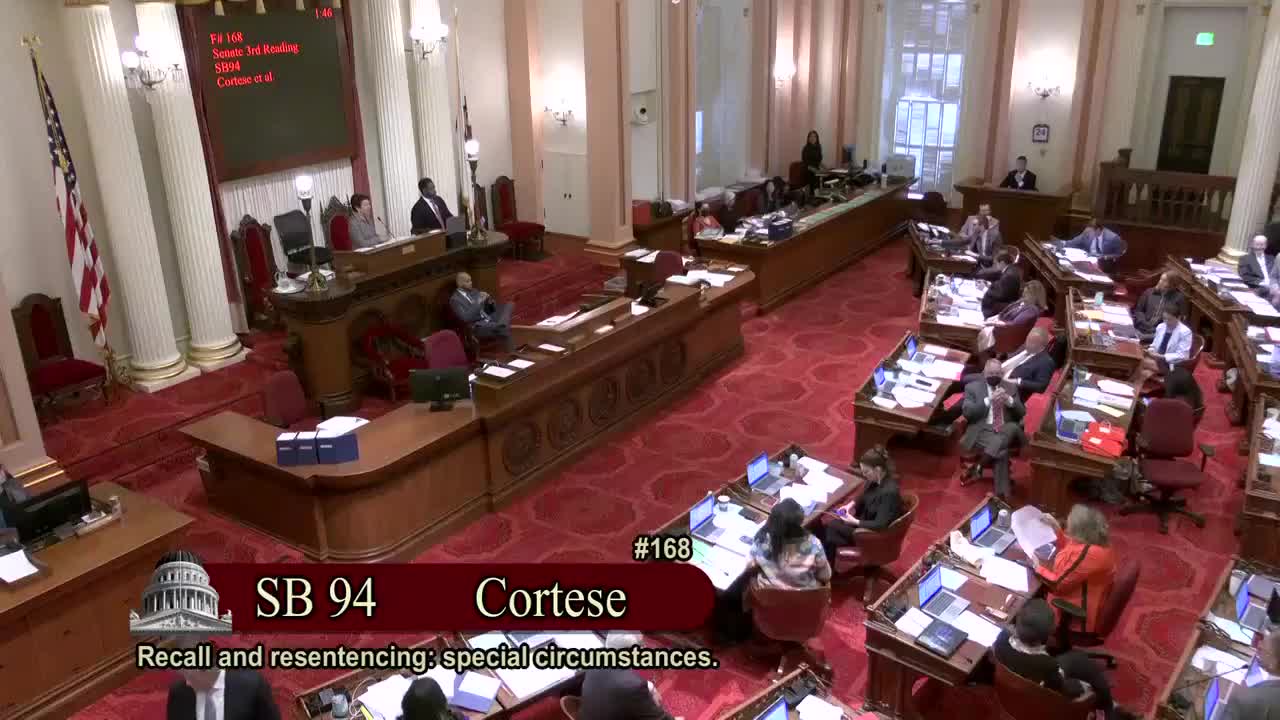 4MIN
Senate Floor
 15MIN
Senate Standing Committee on Energy, Utilities and Communications
Bill Author
Bill Co-Author(s):