SB 416: State agencies: building and renovation projects: LEED certification.
- Session Year: 2023-2024
- House: Senate
- Latest Version Date: 2023-10-07
Current Status:
Passed
(2023-10-07: Chaptered by Secretary of State. Chapter 395, Statutes of 2023.)
Introduced
In Committee
First Chamber
In Committee
Second Chamber
Enacted
Existing law, the State Contract Act, governs the bidding and award of public works contracts by specific state departments and requires an awarding department, before entering into any contract for a project, to prepare full, complete, and accurate plans and specifications and estimates of cost. Existing law, the California Global Warming Solutions Act of 2006, designates the State Air Resources Board as the state agency charged with monitoring and regulating sources of emissions of greenhouse gases and requires all state agencies to consider and implement strategies to reduce their greenhouse gas emissions.
This bill would require all new building and major renovation projects larger than 10,000 gross square feet undertaken by state agencies, and for which the project schematic design documents are initiated by the state agency on or after January 1, 2024, to obtain the Leadership in Energy and Environmental Design or LEED Gold or higher certification, except as provided. The bill would instead require the state agency to obtain LEED Silver certification if the state agency concerned makes a finding that achieving LEED Gold conflicts with critical operational or security requirements, is demonstrably cost ineffective, or conflicts with California Building Code requirements. The bill would authorize certification to an alternative equivalent or higher rating system or standard, if any, only when approved by the Director of General Services.
Existing law, the State Contract Act, governs the bidding and award of public works contracts by specific state departments and requires an awarding department, before entering into any contract for a project, to prepare full, complete, and accurate plans and specifications and estimates of cost. Existing law, the California Global Warming Solutions Act of 2006, designates the State Air Resources Board as the state agency charged with monitoring and regulating sources of emissions of greenhouse gases and requires all state agencies to consider and implement strategies to reduce their greenhouse gas emissions.
This bill would, with certain exceptions, would require all new building and major renovation projects larger than 10,000 gross square feet undertaken by state agencies, and for which the project schematic design documents are initiated by the state agency on or after January 1, 2024, to obtain the Leadership in Energy and Environmental Design or LEED Gold or higher certification and to qualify for at least the minimum points achievable for rainwater management, as described. certification, except as provided. The bill would instead require the state agency to obtain LEED Silver certification if the state agency concerned makes a finding that achieving LEED Gold conflicts with critical operational or security requirements, is demonstrably cost ineffective, or conflicts with California Building Code requirements. The bill would authorize certification to an alternative equivalent or higher rating system or standard, if any, only when approved by the Director of General Services.
Existing law, the State Contract Act, governs the bidding and award of public works contracts by specific state departments and requires an awarding department, before entering into any contract for a project, to prepare full, complete, and accurate plans and specifications and estimates of cost. Existing law, the California Global Warming Solutions Act of 2006, designates the State Air Resources Board as the state agency charged with monitoring and regulating sources of emissions of greenhouse gases and requires all state agencies to consider and implement strategies to reduce their greenhouse gas emissions.
This bill would would, with certain exceptions, require all new building and major renovation projects larger than 10,000 gross square feet undertaken by state agencies, and for which the project schematic design documents are initiated by the state agency on or after January 1, 2024, to obtain the Leadership in Energy and Environmental Design or LEED Gold or higher certification and to qualify for at least the minimum points achievable for rainwater management, as described. The bill would authorize certification to an alternative equivalent or higher rating system or standard, if any, only when approved by the Director of General Services.
Existing law, the State Contract Act, governs the bidding and award of public works contracts by specific state departments and requires an awarding department, before entering into any contract for a project, to prepare full, complete, and accurate plans and specifications and estimates of cost. Existing law, the California Global Warming Solutions Act of 2006, designates the State Air Resources Board as the state agency charged with monitoring and regulating sources of emissions of greenhouse gases and requires all state agencies to consider and implement strategies to reduce their greenhouse gas emissions.
This bill would require all new building and major renovation projects larger than 10,000 gross square feet undertaken by state agencies, and for which the project schematic design documents are initiated by the state agency on or after January 1, 2024, to obtain the Leadership in Energy and Environmental Design or LEED Gold or higher certification and to qualify for at least the minimum points achievable for rainwater management, as described. The bill would authorize certification to an alternative equivalent or higher rating system or standard, if any, only when approved by the Director of General Services.
Existing law, the State Contract Act, governs the bidding and award of public works contracts by specific state departments and requires an awarding department, before entering into any contract for a project, to prepare full, complete, and accurate plans and specifications and estimates of cost. Existing law, the California Global Warming Solutions Act of 2006 2006, designates the State Air Resources Board as the state agency charged with monitoring and regulating sources of emissions of greenhouse gases and requires all state agencies to consider and implement strategies to reduce their greenhouse gas emissions.
This bill would require all new building and major renovation projects larger than 10,000 gross square feet undertaken by state agencies, and for which the project schematic design documents are initiated by the state agency on or after January 1, 2024, to obtain the Leadership in Energy and Environmental Design or LEED Gold or higher certification, certification and to qualify for at least the minimum points achievable for rainwater management, as described. The bill would authorize certification to an alternative equivalent or higher rating system or standard, if any, only when approved by the Director of General Services.
The California Global Warming Solutions Act of 2006 designates the State Air Resources Board as the state agency charged with monitoring and regulating sources of emissions of greenhouse gases and requires all state agencies to consider and implement strategies to reduce their greenhouse gas emissions.
This bill would require all new building and major renovation projects larger than 10,000 gross square feet undertaken by state agencies, and for which the project schematic design documents are initiated by the state agency on or after January 1, 2024, to obtain the Leadership in Energy and Environmental Design or LEED Gold or higher certification, as described. The bill would authorize certification to an equivalent or higher rating system or standard, if any, only when approved by the Director of General Services.
(a)(1)Except as provided in paragraph (2), all new building and major renovation projects larger than 10,000 gross square feet undertaken by state agencies shall obtain LEED Gold or higher certification using the version of LEED that is in effect at the time the project schematic design documents are initiated by the state agency. Certification to an alternative equivalent or higher rating system or standard, if any, is only acceptable when approved by the Director of General Services.
(2)If the state agency concerned makes a finding that achieving LEED Gold conflicts with critical operational or security requirements, can be demonstrated to be cost ineffective, or conflicts with requirements in the California Building Code, the state agency shall instead obtain LEED Silver certification using the version of LEED that is in effect at the time the project schematic design documents are initiated by the state agency.
(b)This section applies to projects for which the project schematic design documents are initiated by the state agency on or after January 1, 2024.
(c)For purposes of this section:
(1)LEED means the Leadership in Energy and Environmental Design building certification program under the auspices of the United States Green Building Council.
(2)Major renovation is a renovation of a structure in which most of the major building systems are either replaced or upgraded.
(3)State agency does not include a district agricultural association as described in Part 3 (commencing with Section 3801) of Division 3 of the Food and Agricultural Code.
(a)All (1)Except as provided in paragraph (2), all new building and major renovation projects larger than 10,000 gross square feet undertaken by state agencies shall obtain LEED Gold or higher certification using the version of LEED that is in effect at the time the project schematic design documents are initiated by the state agency. Certification to an alternative equivalent or higher rating system or standard, if any, is only acceptable when approved by the Director of General Services.
(b)All new building and major renovation projects larger than 10,000 gross square feet undertaken by state agencies shall qualify for at least the minimum number of possible LEED points achievable for rainwater management under the version of LEED that is in effect at the time the project schematic design documents are initiated by the state agency. Inclusion of an alternative rainwater management system is acceptable only if it will be at least equally effective and is approved by the Director of General Services.(2)If the state agency concerned makes a finding that achieving LEED Gold conflicts with critical operational or security requirements, can be demonstrated to be cost ineffective, or conflicts with requirements in the California Building Code, the state agency shall instead obtain LEED Silver certification using the version of LEED that is in effect at the time the project schematic design documents are initiated by the state agency.
(c)(b)This section applies to projects for which the project schematic design documents are initiated by the state agency on or after January 1, 2024.
(d)(c)For purposes of this section:
(1)LEED means the Leadership in Energy and Environmental Design building certification program under the auspices of the United States Green Building Council.
(2)Major renovation has the same meaning used for purposes of LEED certification. is a renovation of a structure in which most of the major building systems are either replaced or upgraded.
(3)State agency does not include a district agricultural association as described in Part 3 (commencing with Section 3801) of Division 3 of the Food and Agriculture Agricultural Code.
(a)All new building and major renovation projects larger than 10,000 gross square feet undertaken by state agencies shall obtain LEED Gold or higher certification using the version of LEED that is in effect at the time the project schematic design documents are initiated by the state agency. Certification to an alternative equivalent or higher rating system or standard, if any, is only acceptable when approved by the Director of General Services.
(b)All new building and major renovation projects larger than 10,000 gross square feet undertaken by state agencies shall qualify for at least the minimum number of possible LEED points achievable for rainwater management under the version of LEED that is in effect at the time the project schematic design documents are initiated by the state agency. Inclusion of an alternative rainwater management system is acceptable only if it will be at least equally effective and is approved by the Director of General Services.
(c)This section applies to projects for which the project schematic design documents are initiated by the state agency on or after January 1, 2024.
(d)For purposes of this section:
(1)LEED means the Leadership in Energy and Environmental Design building certification program under the auspices of the United States Green Building Council.
(2)Major renovation has the same meaning used for purposes of LEED certification.
(3)State agency does not include a district agricultural association as described in Part 3 (commencing with Section 3801) of Division 3 of the Food and Agriculture Code.
(a)All new building and major renovation projects larger than 10,000 gross square feet undertaken by state agencies shall obtain LEED Gold or higher certification using the version of LEED that is in effect at the time the project schematic design documents are initiated by the state agency. Certification to an alternative equivalent or higher rating system or standard, if any, is acceptable only only acceptable when approved by the Director of General Services.
(b)All new building and major renovation projects larger than 10,000 gross square feet undertaken by state agencies shall qualify for at least the minimum number of possible LEED points achievable for rainwater management under the version of LEED that is in effect at the time the project schematic design documents are initiated by the state agency. Inclusion of an alternative rainwater management system is acceptable only if it will be at least equally effective and is approved by the Director of General Services.
(c)This section applies to projects for which the project schematic design documents are initiated by the state agency on or after January 1, 2024.
(d)For purposes of this section:
(1)LEED means the Leadership in Energy and Environmental Design building certification program under the auspices of the United States Green Building Council.
(2)Major renovation has the same meaning used for purposes of LEED certification.
(a)All new building and major renovation projects larger than 10,000 gross square feet undertaken by state agencies shall obtain LEED Gold or higher certification using the version of LEED that is in effect at the time the project schematic design documents are initiated by the state agency. Certification to an alternative equivalent or higher rating system or standard, if any, is acceptable only when approved by the Director of General Services.
(b)All new building and major renovation projects larger than 10,000 gross square feet undertaken by state agencies shall qualify for at least the minimum number of possible LEED points achievable for rainwater management under the version of LEED that is in effect at the time the project schematic design documents are initiated by the state agency. Inclusion of an alternative rainwater management system is acceptable only if it will be at least equally effective and is approved by the Director of General Services.
(c)This section applies to projects for which the project schematic design documents are initiated by the state agency on or after January 1, 2024.
(d)For purposes of this section:
(1)LEED means the Leadership in Energy and Environmental Design building certification program under the auspices of the United States Green Building Council.
(2)Major renovation has the same meaning used for purposes of LEED certification.
SECTION 1.Section 38592 of the Health and Safety Code is amended to read:38592.(a)All state agencies shall consider and implement strategies to reduce their greenhouse gas emissions.(b)All new building and major renovation projects larger than 10,000 gross square feet undertaken by state agencies shall obtain LEED Gold or higher certification using the version of LEED that is in effect at the time the project schematic design documents are initiated by the state agency. Certification to an equivalent or higher rating system or standard, if any, is acceptable only when approved by the Director of General Services.(c)All new building and major renovation projects larger than 10,000 gross square feet undertaken by state agencies shall qualify for at least the minimum number of possible LEED points achievable for rainwater management under the version of LEED that is in effect at the time the project schematic design documents are initiated by the state agency. Inclusion of an alternative rainwater management system is acceptable only if it will be at least equally effective and is approved by the Director of the California Department of General Services.(d)Subdivisions (b) and (c) apply to projects for which the project schematic design documents are initiated by the state agency on or after January 1, 2024.(e)For purposes of this section:(1)LEED means the Leadership in Energy and Environmental Design building certification program under the auspices of the United States Green Building Council.(2)Major renovation has the same meaning used for purposes of LEED certification.(f)This division does not relieve any person, entity, or public agency of compliance with other applicable federal, state, or local laws or regulations, including state air and water quality requirements, and other requirements for protecting public health or the environment.(a)All state agencies shall consider and implement strategies to reduce their greenhouse gas emissions.
(b)All new building and major renovation projects larger than 10,000 gross square feet undertaken by state agencies shall obtain LEED Gold or higher certification using the version of LEED that is in effect at the time the project schematic design documents are initiated by the state agency. Certification to an equivalent or higher rating system or standard, if any, is acceptable only when approved by the Director of General Services.
(c)All new building and major renovation projects larger than 10,000 gross square feet undertaken by state agencies shall qualify for at least the minimum number of possible LEED points achievable for rainwater management under the version of LEED that is in effect at the time the project schematic design documents are initiated by the state agency. Inclusion of an alternative rainwater management system is acceptable only if it will be at least equally effective and is approved by the Director of the California Department of General Services.
(d)Subdivisions (b) and (c) apply to projects for which the project schematic design documents are initiated by the state agency on or after January 1, 2024.
(e)For purposes of this section:
(1)LEED means the Leadership in Energy and Environmental Design building certification program under the auspices of the United States Green Building Council.
(2)Major renovation has the same meaning used for purposes of LEED certification.
(b)Nothing in this division shall
(f)This division does not relieve any person, entity, or public agency of compliance with other applicable federal, state, or local laws or regulations, including state air and water quality requirements, and other requirements for protecting public health or the environment.
|
Date
|
Status
|
|---|---|
| Oct 7, 2023 | Chaptered by Secretary of State. Chapter 395, Statutes of 2023. |
| Oct 7, 2023 | Approved by the Governor. |
| Sep 18, 2023 | Enrolled and presented to the Governor at 3 p.m. |
| Sep 12, 2023 | Assembly amendments concurred in. (Ayes 35. Noes 0. Page 2674.) Ordered to engrossing and enrolling. |
| Sep 11, 2023 | In Senate. Concurrence in Assembly amendments pending. |
| Sep 11, 2023 | Read third time. Passed. (Ayes 68. Noes 4. Page 3157.) Ordered to the Senate. |
| Sep 6, 2023 | Read third time and amended. |
| Sep 6, 2023 | Ordered to third reading. |
| Sep 5, 2023 | Read second time. Ordered to third reading. |
| Sep 1, 2023 | From committee: Do pass. (Ayes 14. Noes 2.) (September 1). |
| Aug 16, 2023 | August 16 set for first hearing. Placed on suspense file. |
| Jun 21, 2023 | From committee: Do pass and re-refer to Com. on APPR. (Ayes 6. Noes 0.) (June 21). Re-referred to Com. on APPR. |
| Jun 13, 2023 | From committee with author's amendments. Read second time and amended. Re-referred to Com. on A. & A.R. |
| Jun 7, 2023 | June 7 hearing postponed by committee. |
| Jun 1, 2023 | Referred to Com. on A. & A.R. |
| May 25, 2023 | In Assembly. Read first time. Held at Desk. |
| May 24, 2023 | Read third time. Passed. (Ayes 36. Noes 0. Page 1266.) Ordered to the Assembly. |
| May 22, 2023 | Read second time. Ordered to third reading. |
| May 18, 2023 | Read second time and amended. Ordered to second reading. |
| May 18, 2023 | From committee: Do pass as amended. (Ayes 5. Noes 0. Page 1169.) (May 18). |
| May 12, 2023 | Set for hearing May 18. |
| Apr 17, 2023 | April 17 hearing: Placed on APPR suspense file. |
| Apr 10, 2023 | Set for hearing April 17. |
| Mar 29, 2023 | Withdrawn from committee. |
| Mar 29, 2023 | Re-referred to Com. on APPR. |
| Mar 28, 2023 | From committee: Do pass and re-refer to Com. on E.Q. (Ayes 12. Noes 0. Page 545.) (March 28). Re-referred to Com. on E.Q. |
| Mar 14, 2023 | Set for hearing March 28. |
| Mar 13, 2023 | From committee with author's amendments. Read second time and amended. Re-referred to Com. on G.O. |
| Feb 22, 2023 | Referred to Coms. on G.O. and E.Q. |
| Feb 10, 2023 | From printer. May be acted upon on or after March 12. |
| Feb 9, 2023 | Introduced. Read first time. To Com. on RLS. for assignment. To print. |
|
Date
|
Description
|
Location
|
Votes
|
|
|---|---|---|---|---|
| Sep 12, 2023 | Unfinished Business SB416 Laird et al. Concurrence | Senate Floor |
Passed |
|
| Sep 11, 2023 | SB 416 Laird Senate Third Reading By Friedman | Assembly Floor |
Passed |
|
| Sep 1, 2023 | Do pass. | Assembly Standing Committee on Appropriations |
Passed |
|
| Jun 21, 2023 | Do pass and be re-referred to the Committee on [Appropriations] | Assembly Standing Committee on Accountability and Administrative Review |
Passed |
|
| May 24, 2023 | Senate 3rd Reading SB416 Laird et al. | Senate Floor |
Passed |
|
| May 18, 2023 | Do pass as amended | Senate Standing Committee on Appropriations |
Passed |
|
| Apr 17, 2023 | Placed on suspense file | Senate Standing Committee on Appropriations |
Passed |
|
| Mar 28, 2023 | Do pass, but first be re-referred to the Committee on [Environmental Quality] | Senate Standing Committee on Governmental Organization |
Passed |
This list shows positions taken on this bill by organizations on the date displayed, which is linked to the original source.
Positions by individuals are not included.
|
Organization
|
Position
|
Date
|
|---|---|---|
| American Subcontractors Association-California | ** Support | |
| California Business Properties Association | ** Against | |
| California State Association Of Electrical Workers | ** Support | |
| California State Pipe Trades Council | ** Support | |
| Coalition of California Utility Employees | ** Support | |
| Coalition of California Utility Workers | ** Support | |
| State Building and Construction Trades Council of California | ** Support | |
| U.S. Green Building Council | ** Support | |
| Western Fairs Association | ** Support | |
| Western State Council of Sheetmetal Workers | ** Support |
SENATE RULES COMMITTEE Office of Senate Floor Analyses (916) 651-1520 Fax: (916) 327-4478 | SB 416 |
UNFINISHED BUSINESS
Bill No: SB 416
Author: Laird (D), et al.
Amended: 9/6/23
Vote: 21
SENATE GOVERNMENTAL ORG. COMMITTEE: 12-0, 3/28/23
AYES: Dodd, Wilk, Alvarado-Gil, Ashby, Bradford, Glazer, Nguyen, Ochoa Bogh, Padilla, Portantino, Roth, Rubio
NO VOTE RECORDED: Archuleta, Jones, Seyarto
SENATE APPROPRIATIONS COMMITTEE: 5-0, 5/18/23
AYES: Portantino, Ashby, Bradford, Wahab, Wiener
NO VOTE RECORDED: Jones, Seyarto
SENATE FLOOR: 36-0, 5/24/23
AYES: Allen, Alvarado-Gil, Archuleta, Ashby, Atkins, Becker, Blakespear, Bradford, Caballero, Cortese, Dodd, Durazo, Eggman, Glazer, Gonzalez, Grove, Hurtado, Laird, Limón, McGuire, Menjivar, Min, Newman, Nguyen, Ochoa Bogh, Padilla, Portantino, Roth, Rubio, Skinner, Smallwood-Cuevas, Stern, Umberg, Wahab, Wiener, Wilk
NO VOTE RECORDED: Dahle, Jones, Niello, Seyarto
ASSEMBLY FLOOR: 68-4, 9/11/23 - See last page for vote
SUBJECT: State agencies: building and renovation projects: LEED certification
SOURCE: State Building and Construction Trades Council of California
DIGEST:
This bill requires any new building or major renovation project undertaken by a state agency on or after January 1, 2024, to obtain the Leadership in Energy and Environmental Design (LEED) Gold or higher certification, except as provided.
Assembly Amendments
remove a previous requirement regarding rainwater management, clarify the allowable exemptions when LEED Silver is acceptable, clarify definitions, and specifically exempt district agricultural associations, as specified, from the requirements of this bill.
ANALYSIS:
Existing law:
- Governs, pursuant to the State Contract Act (Act), the bidding and awarding of public works contracts by specific state departments and requires an awarding department, before entering into any contract for a project, to prepare a full, complete, and accurate plans and specifications and estimates of cost.
- Designates, pursuant to the California Global Warming Solutions Act of 2006, the State Air Resources Board (ARB) as the state agency charged with monitoring and regulating sources of emissions of greenhouse gases (GHGs) and requires all state agencies to consider and implement strategies to reduce their GHG emissions.
- Establishes the California Building Standards Commission within the Department of General Services (DGS) and sets forth its powers and duties, including approval and adoption of building standards and codification of those standards into the California Building Standards Code.
This bill:
- Requires all new building and major renovation projects larger than 10,000 gross square feet undertaken by state agencies to obtain LEED Gold or higher certification, as specified. Certification to an alternative equivalent or higher rating system or standard, if any, is only acceptable when approved by the Director of General Services.
- Provides that if the state agency concerned makes a finding that achieving LEED Gold conflicts with critical operational or security requirements, can be demonstrated to be cost ineffective, or conflicts with the requirements in the California Building Code, the state agency shall instead obtain LEED Silver certification using the version of LEED that is in effect at the time the project schematic design documents are initiated by the state agency.
- Provides that this bill applies to projects for which the project schematic design documents are initiated by the state agency on or after January 1, 2024.
- Defines “LEED” to mean the Leadership in Energy and Environmental Design building certification program under the auspices of the United States Green Building Council.
- Defines “major renovation” to mean a renovation of a structure in which most of the major building systems are either replaced or upgraded.
- Includes an exemption from the requirements of this bill for district agricultural associations, as specified.
Background
Purpose of the bill. According to the author’s office, “California is a leader in the fight against climate change. Our state has some of the most ambitious climate goals in the nation, and it is both the role and obligation of the State to help meet these goals. The energy used in buildings is the second largest contributor to greenhouse gas emissions in California. Under Senate Bill 416, all new State buildings and major renovations undertaken by State agencies are required to be certified LEED Gold or above. Already, 32% of LEED certified State buildings are certified LEED Gold or above. This includes our very own Capitol Annex Swing Space, which is owned by the Department of General Services and is certified LEED Platinum. This bill ensures State buildings continue to meet the highest standards of sustainability to tackle this major source of greenhouse gas emissions, and that the State does its part to meet our ambitious climate goals.”
Executive Order B-18-12. Executive Order (EO) B-18-12 by Governor Jerry Brown, among other things, ordered that any proposed new or major renovation of State buildings larger than 10,000 square feet obtain LEED Silver certification or higher. Additionally, the EO required state agencies to reduce overall water use at the facilities they operate by 10% by 2015 and by 20% by 2020, as measured against a 2010 baseline. The Department of General Services was tasked to develop policies and guidelines for the operation and maintenance of State buildings to achieve operating efficiency improvements and water and resource conservation.
Leadership in Energy and Environmental Design. LEED is the most widely used green building rating system in the world. Available for virtually all building types, LEED provides a framework for healthy, efficient, and cost-saving green buildings. LEED certification is a globally recognized symbol of sustainability achievement and leadership. The LEED framework informs all building types including new construction, interiors, operations and maintenance, and core and shell. Owners and project teams choose LEED certification to inform, benchmark, and celebrate their sustainability goals and achievements. LEED's framework - built on decades of expertise - empowers people to choose green options that align with their project’s vision and needs. Green building is a holistic concept that starts with the understanding that the built environment can have profound effects, both positive and negative, on the natural environment, as well as the people who inhabit buildings every day.
According to the United States Green Building Council’s (GBC’s) internet website, “LEED-certified buildings save money, improve efficiency, lower carbon emissions and create healthier places for people. They are critical to addressing climate change and meeting ESG goals, enhancing resilience, and supporting more equitable communities. LEED categories can also contribute toward meeting the U.N.’s Sustainable Development Goals.”
To achieve LEED certification, a project earns points by adhering to the prerequisites and credits that address carbon, energy, water, waste, transportation, materials, health, and indoor environmental quality. Projects go through a verification and review process and are awarded points that correspond to a level of LEED certification: Certified (40-49 points), Silver (50-59 points), Gold (60-79 points), and Platinum (80+ points).
Supporters of the bill argue that SB 416 takes EO B-18-12 one step further by requiring new buildings and specified major renovations undertaken by state agencies on or after January 1, 2024, to obtain LEED Gold certification or higher. This bill provides that if the state agency concerned makes a finding that achieving LEED Gold conflicts with critical operational or security requirements, can be demonstrated to be cost ineffective, or conflicts with requirements in the California Building Code, the state agency may then obtain LEED Silver certification using the version of LEED that is in effect at the time the project schematic design documents are initiated by the state agency.
This bill defines “major renovation” to mean a renovation of a structure in which most of the major building systems are either replaced or upgraded and specifically exempts district agricultural associations, as specified, from the requirements of the bill.
Related/Prior Legislation
AB 38 (Lee, 2023) would have required a state agency to ensure newly installed outdoor lighting fixtures on state-owned, -leased, or –managed structures meet specified requirements with the goal of minimizing energy use and light pollution and preserving the natural night environment. (Held on the Senate Appropriations Suspense File)
AB 2382 (Lee, 2022) would have required state agencies to ensure that an outdoor lighting fixture that is installed or replaced on a structure or land that is owned, leased, or managed by the state agency is shielded and adhering to additional lighting requirements. (Vetoed by Governor Newsom)
SB 30 (Cortese, 2021) among other things, would have prohibited state agencies from designing or constructing state facilities connected to the natural gas grid, as specified. (Never heard in the Senate Governmental Organization Committee)
FISCAL EFFECT: Appropriation: No Fiscal Com.: Yes Local: No
According to the Assembly Appropriations Committee, costs of an unknown amount, but likely in the millions of dollars annually, to DGS in increased project costs to obtain LEED Gold certification (General Fund or special fund).
For reference, DGS generally estimates costs to move from a minimum LEED Silver to Gold certification to be an additional one percent of total applicable project costs, resulting in additional costs of approximately $101,000 in 2024, $4.0 million in 2025, and $1.0 million in 2026. Although state agencies are required by executive order to obtain LEED Silver certification, the requirement is not in statute and can be rescinded. Thus, this bill’s costs are even more significant and dependent on the direct comparison between a Gold-certified and lower- or non-certified bid for the same project.
SUPPORT: (Verified 9/11/23)
State Building and Construction Trades Council of California (source)
American Subcontractors Association-California
California State Association of Electrical Workers
California State Pipe Trades Council
Coalition of California Utility Workers
U.S. Green Building Council
Western Fairs Association
Western States Council of Sheetmetal Workers
OPPOSITION: (Verified 9/11/23)
California Business Properties Association
ARGUMENTS IN SUPPORT: In support of the bill, the State Building and Construction Trades Council of California writes that “SB 416 would increase California’s commitment to constructing its own buildings energy-efficiently by requiring LEED Gold or higher certification. This would apply only to buildings or major renovation projects larger than 10,000 square feet.”
Further, “[t]o provide a relevant example, please note that the building affectionally known as the ‘Swing Space,’ located at 1021 O Street, is one of 9,143 buildings worldwide to achieve LEED Platinum status. This achievement is highlighted in detail in several common areas within the building, including right behind the main staircase on the first floor. Skilled and trained workers, many of whom were graduates of state-approved apprenticeship programs, constructed the ‘Swing Space’ building with pride, using materials and processes that are less harmful to the environment. In practice, these workers helped the project reach LEED Platinum status by installing state-of-the-art HVAC, glass, water, and electrical systems, all of which were designed to be more energy efficient.”
Additionally, the Western Fairs Association states that, “SB 416 helps implement the goals of Executive Order B-18-12, while acknowledging the financial constraints that fairgrounds are under. Western Fairs Association believes that this bill strikes the right balance between reducing emissions from building construction and allowing for fairs to continue effectively serving their communities. For these reasons, we offer our support of SB 416.”
ARGUMENTS IN OPPOSITION: In opposition to the bill, the California Business Properties Association writes that, “SB 416 increases state costs by applying a duplicative bureaucratic process to state building projects beyond the already most stringent in the nation, California Green Building Code (CALGreen); requires state funds to pay for an unnecessary certification doubling the bureaucracy for state building projects; and limits choice by ‘picking a winner’ among nationally recognized green building programs when multiple valid certifications exist.”
Further, the opponents note that the state “should use the ‘reach code’ in California’s Green Building Standards. The California Building Standards Commission already oversees development of California’s mandatory green building standards for commercial buildings. CalGreen is updated every 18 months and contains two reach codes in the Appendix (Tier 1 and Tier 2). The CALGreen Tier 1 provisions are roughly equivalent to the provisions required for LEED GOLD.
“The State should not mandate formal certification as it is unnecessary and costs a lot of time and money. The state could simply require state buildings to meet CALGreen Tier 1 which would be enforced through existing public compliance processes and obviate the need to go through a private company’s certification process which requires months of administrative work and paying a high price to a private-sector entity.
“The Legislature should not create a monopoly by circumventing the state building code and codifying a mandate for one private-sector green building entity when numerous, well-established programs are available. SB 416 codifies one private program at the expense of other nationally recognized green building programs such as the BOMA 360 Performance Program and the Green Globes Program administered by The Green Building Initiative, as examples.
“Finally, we ask that the bill clarify that it applies only to state-owned buildings so this expensive requirement is not placed on an already struggling to recover from COVID-19 office real estate market. This bill could exacerbate the concerning high vacancy rates in many downtown office buildings that have the state as a tenant.”
ASSEMBLY FLOOR: 68-4, 9/11/23
AYES: Addis, Aguiar-Curry, Alanis, Alvarez, Arambula, Bains, Bauer-Kahan, Bennett, Berman, Boerner, Bonta, Bryan, Calderon, Juan Carrillo, Wendy Carrillo, Cervantes, Chen, Connolly, Davies, Mike Fong, Friedman, Gabriel, Garcia, Gipson, Grayson, Haney, Hart, Holden, Irwin, Jackson, Jones-Sawyer, Kalra, Lee, Low, Lowenthal, Maienschein, Mathis, McCarty, McKinnor, Muratsuchi, Stephanie Nguyen, Ortega, Pacheco, Papan, Pellerin, Petrie-Norris, Quirk-Silva, Ramos, Rendon, Reyes, Luz Rivas, Rodriguez, Blanca Rubio, Santiago, Schiavo, Soria, Ta, Ting, Valencia, Villapudua, Waldron, Ward, Weber, Wicks, Wilson, Wood, Zbur, Robert Rivas
NOES: Megan Dahle, Dixon, Essayli, Gallagher
NO VOTE RECORDED: Flora, Vince Fong, Hoover, Lackey, Jim Patterson, Joe Patterson, Sanchez, Wallis
Prepared by: Brian Duke / G.O. / (916) 651-1530
9/11/23 19:44:45
**** END ****
SENATE THIRD READING
STR Bill Id:SB 416
Author:(Laird)
As Amended Ver:September 6, 2023
Majority vote
SUMMARY
Requires new state building and renovation projects to obtain Leadership in Energy and Environmental Design (LEED) Gold or higher certification, except as provided.
Major Provisions
- Requires a new building or major renovation project larger than 10,000 gross square feed and initiated by a state agency on or after January 1, 2024, to obtain LEED Gold or higher certification. However, if a state agency makes a finding that achieving LEED Gold conflicts with critical operational or security requirements, is demonstrably cost inefficient, or conflicts with California Building Code requirements, the state agency shall achieve LEED Silver certification.
- Allow certification to an alternative equivalent or higher rating system or standard, only if approved by the Department of General Services (DGS).
- Excludes a district agricultural association project from the LEED requirement.
COMMENTS
LEED is the most widely used green building rating system in the world. LEED certification is an industry recognized certification for healthy, efficient, cost-saving buildings. To achieve LEED certification, a project earns points by adhering to prerequisites and credits that promote best practices in carbon, energy, water, waste, transportation, materials, health, and indoor environmental quality. These points correspond to a level of LEED certification: "Certified" (40-49 points), "Silver" (50-59 points), "Gold" (60-79 points), and the "Platinum" (80+ points), with the lowest certification being LEED Certified and the highest being LEED Platinum.
In 2012, Governor Brown issued Executive Order (EO) B-18-12, which requires new state or major renovated buildings and build-to-suit leases larger than 10,000 square feet to obtain LEED Silver Certification or higher. SB 416 codifies EO B-18-12 but requires certification at the LEED Gold level and the project to qualify for at least the minimum number of possible LEED points achievable for rain management.
According to the Author
Already, 32% of LEED certified State buildings are certified LEED Gold or above. This includes our very own Capitol Annex Swing Space, which is owned by [DGS] and is certified LEED Platinum. This bill ensures State buildings continue to meet the highest standards of sustainability to tackle this major source of greenhouse gas emissions, and that the State does its part to meet our ambitious climate goals.
Arguments in Support
In support of this bill, the State Building and Construction Trades Council of California writes:
"With extreme weather conditions becoming more frequent, California is seeing drought conditions more frequently, resulting in water scarcity and a rise in catastrophic wildfires. Additionally, atmospheric rivers have brought about flooding in every corner of the state. Without a doubt, climate change is upending the norms as it relates to our way of life as Californians. Responding to the global climate emergency requires strategic responses in everything we do."
Arguments in Opposition
None on file.
FISCAL COMMENTS
According to the Assembly Appropriations Committee, costs of an unknown amount, but likely in the millions of dollars annually, to DGS in increased project costs to obtain LEED Gold certification (General Fund or special fund).
For reference, DGS generally estimates costs to move from a minimum LEED Silver to Gold certification to be an additional one percent of total applicable project costs, resulting in additional costs of approximately $101,000 in 2024, $4 million in 2025, and $1 million in 2026.
Although state agencies are required by executive order to obtain LEED Silver certification, the requirement is not in statute and can be rescinded. Thus, the bill’s costs are even more significant and dependent on the direct comparison between a Gold-certified bid and a lower- or non-certified bid for the same project.
VOTES
SENATE FLOOR: 36-0-4
YES: Allen, Alvarado-Gil, Archuleta, Ashby, Atkins, Becker, Blakespear, Bradford, Caballero, Cortese, Dodd, Durazo, Eggman, Glazer, Gonzalez, Grove, Hurtado, Laird, Limón, McGuire, Menjivar, Min, Newman, Nguyen, Ochoa Bogh, Padilla, Portantino, Roth, Rubio, Skinner, Smallwood-Cuevas, Stern, Umberg, Wahab, Wiener, Wilk
ABS, ABST OR NV: Dahle, Jones, Niello, Seyarto
ASM ACCOUNTABILITY AND ADMINISTRATIVE REVIEW: 6-0-1
YES: Petrie-Norris, Dixon, Bains, Davies, Stephanie Nguyen, Rodriguez
ABS, ABST OR NV: Wilson
ASM APPROPRIATIONS: 14-2-0
YES: Holden, Bryan, Calderon, Wendy Carrillo, Mike Fong, Hart, Lowenthal, Mathis, Papan, Pellerin, Sanchez, Soria, Weber, Wilson
NO: Megan Dahle, Dixon
UPDATED
VERSION: September 6, 2023
CONSULTANT: Bernie Orozco / A. & A.R. / (916) 319-3600 FN: 0001810
SENATE THIRD READING
STR Bill Id:SB 416
Author:(Laird)
As Amended Ver:June 13, 2023
Majority vote
SUMMARY
Requires new state building and renovation projects to obtain Leadership in Energy and Environmental Design (LEED) Gold or higher certification.
Major Provisions
- Requires a new building or major renovation project larger than 10,000 gross square feet and initiated by a state agency on or after January 1, 2024, to obtain LEED Gold or higher certification and qualify for at least the minimum number of possible LEED points achievable for rainwater management.
- Allows certification to an alternative equivalent or higher rating system or standard, only if approved by the Department of General Services (DGS).
- Excludes a district agricultural association project from the LEED requirement.
COMMENTS
LEED is the most widely used green building rating system in the world. LEED certification is an industry recognized certification for healthy, efficient, cost-saving buildings. To achieve LEED certification, a project earns points by adhering to prerequisites and credits that promote best practices in carbon, energy, water, waste, transportation, materials, health, and indoor environmental quality. These points correspond to a level of LEED certification: "Certified" (40-49 points), "Silver" (50-59 points), "Gold" (60-79 points), and the "Platinum" (80+ points), with the lowest certification being LEED Certified and the highest being LEED Platinum.
In 2012, Governor Brown issued Executive Order (EO) B-18-12, which requires new state or major renovated buildings and build-to-suit leases larger than 10,000 square feet to obtain LEED Silver Certification or higher. SB 416 codifies EO B-18-12 but requires certification at the LEED Gold level and the project to qualify for at least the minimum number of possible LEED points achievable for rain management.
According to the Author
Already, 32% of LEED certified State buildings are certified LEED Gold or above. This includes our very own Capitol Annex Swing Space, which is owned by [DGS] and is certified LEED Platinum. This bill ensures State buildings continue to meet the highest standards of sustainability to tackle this major source of greenhouse gas emissions, and that the State does its part to meet our ambitious climate goals.
Arguments in Support
In support of this bill, the State Building and Construction Trades Council of California writes:
With extreme weather conditions becoming more frequent, California is seeing drought conditions more frequently, resulting in water scarcity and a rise in catastrophic wildfires. Additionally, atmospheric rivers have brought about flooding in every corner of the state. Without a doubt, climate change is upending the norms as it relates to our way of life as Californians. Responding to the global climate emergency requires strategic responses in everything we do.
Arguments in Opposition
None on file.
FISCAL COMMENTS
According to the Assembly Appropriations Committee, costs of an unknown amount, but likely in the millions of dollars annually, to the Department of General Services (DGS) in increased project costs to obtain LEED Gold certification (General Fund or special fund).
For reference, DGS generally estimates costs to move from a minimum LEED Silver to Gold certification to be an additional one percent of total applicable project costs, resulting in additional costs of approximately $101,000 in 2024, $4 million in 2025, and $1 million in 2026.
Although state agencies are required by executive order to obtain LEED Silver certification, the requirement is not in statute and can be rescinded. Thus, the bill's costs are even more significant and dependent on the direct comparison between a Gold-certified bid and a lower- or non-certified bid for the same project.
VOTES
SENATE FLOOR: 36-0-4
YES: Allen, Alvarado-Gil, Archuleta, Ashby, Atkins, Becker, Blakespear, Bradford, Caballero, Cortese, Dodd, Durazo, Eggman, Glazer, Gonzalez, Grove, Hurtado, Laird, Limón, McGuire, Menjivar, Min, Newman, Nguyen, Ochoa Bogh, Padilla, Portantino, Roth, Rubio, Skinner, Smallwood-Cuevas, Stern, Umberg, Wahab, Wiener, Wilk
ABS, ABST OR NV: Dahle, Jones, Niello, Seyarto
ASM ACCOUNTABILITY AND ADMINISTRATIVE REVIEW: 6-0-1
YES: Petrie-Norris, Dixon, Bains, Davies, Stephanie Nguyen, Rodriguez
ABS, ABST OR NV: Wilson
ASM APPROPRIATIONS: 14-2-0
YES: Holden, Bryan, Calderon, Wendy Carrillo, Mike Fong, Hart, Lowenthal, Mathis, Papan, Pellerin, Sanchez, Soria, Weber, Wilson
NO: Megan Dahle, Dixon
UPDATED
VERSION: June 13, 2023
CONSULTANT: Bernie Orozco / A. & A.R. / (916) 319-3600 FN: 0001567
Date of Hearing: August 16, 2023
ASSEMBLY COMMITTEE ON APPROPRIATIONS
Chris Holden, Chair
SBPCA Bill Id:SB 416
Author:(Laird) – As Amended Ver:June 13, 2023
Policy Committee: | Accountability and Administrative Review | Vote: | 6 - 0 |
|
| ||
|
|
Urgency: No State Mandated Local Program: No Reimbursable: No
SUMMARY:
This bill requires new state building and renovation projects to obtain Leadership in Energy and Environmental Design (LEED) Gold or higher certification.
Specifically, this bill:
- Requires a new building or major renovation project larger than 10,000 gross square feet and initiated by a state agency on or after January 1, 2024, to obtain LEED Gold or higher certification and qualify for at least the minimum number of possible LEED points achievable for rainwater management.
- Allows certification to an alternative equivalent or higher rating system or standard, only if approved by the Department of General Services (DGS).
- Excludes a district agricultural association project from the LEED requirement.
FISCAL EFFECT:
Costs of an unknown amount, but likely in the millions of dollars annually, to DGS in increased project costs to obtain LEED Gold certification (General Fund or special fund).
For reference, DGS generally estimates costs to move from a minimum LEED Silver to Gold certification to be an additional one percent of total applicable project costs, resulting in additional costs of approximately $101,000 in 2024, $4.0 million in 2025, and $1.0 million in 2026. Although state agencies are required by executive order to obtain LEED Silver certification, the requirement is not in statute and can be rescinded. Thus, this bill’s costs are even more significant and dependent on the direct comparison between a Gold-certified and lower- or non-certified bid for the same project.
COMMENTS:
- Purpose. According to the author:
Already, 32% of LEED certified State buildings are certified LEED Gold or above. This includes our very own Capitol Annex Swing Space, which is owned by [DGS] and is certified LEED Platinum. This bill ensures State buildings continue to meet the highest standards of sustainability to tackle this major source of greenhouse gas emissions, and that the State does its part to meet our ambitious climate goals.
This bill is sponsored by the State Building and Construction Trades Council of California and supported by other labor unions, U.S. Green Building Council (USGBC), and the Western Fairs Association.
- Background.
LEED Certification. USGBC’s LEED certification is the world’s most widely used green building rating system. A LEED project earns points by adhering to prerequisites and best practices in carbon, energy, water, waste, transportation, materials, health, and indoor environmental quality. Earned points correspond to the level of LEED certification: “Certified” (40-49 points), “Silver” (50-59 points), “Gold” (60-79 points), and “Platinum” (80+ points).
State Building Requirements. In 2012, Governor Brown issued Executive Order (EO) B-18-12, which required new state buildings, major renovations, and build-to-suit leases larger than 10,000 square feet to obtain LEED Silver or higher certification. The state currently has 273 LEED-certified buildings, 32% of which are already LEED Gold or Platinum. This bill generally codifies the EO but updates the certification requirement to LEED Gold or higher and requires the project to earn at least the minimum number of possible LEED points achievable for rainwater management.
Analysis Prepared by: Irene Ho / APPR. / (916) 319-2081
Date of Hearing: June 7, 2023
ASSEMBLY COMMITTEE ON ACCOUNTABILITY AND ADMINISTRATIVE REVIEW
Cottie Petrie-Norris, Chair
SBPCA Bill Id:SB 416
Author:(Laird) – As Amended Ver:May 18, 2023
SENATE VOTE: 36-0
SUBJECT: State agencies: building and renovation projects: LEED certification
SUMMARY: This bill requires any new building or major renovation project undertaken by a state agency to obtain the Leadership in Energy and Environmental Design (LEED) Gold or higher certification and to meet minimum rainwater management standards, as specified. Specifically, this bill:
- Requires all new building and major renovation projects larger than 10,000 gross square feet undertaken by state agencies to obtain LEED Gold or higher certification, as specified. Certification to an alternative equivalent or higher rating system or standard, if any, is only acceptable when approved by the Director of General Services.
- Requires those same building or major renovation projects to qualify for at least the minimum number of possible LEED points achievable for rainwater management under the version of LEED that is in effect at the time the project schematic design documents are initiated by the state agency. Inclusion of an alternative rainwater management system is acceptable only if it will be at least equally effective and is approved by the Director of General Services.
- Provides that the provisions of this bill are only applicable to projects for which the schematic design documents are initiated by the state agency on or after January 1, 2024.
- Defines “LEED” to mean the Leadership in Energy and Environmental Design building certification program under the auspices of the United States Green Building Council (USGBC).
- Exempts district agricultural associations (DAA), as described in Part 3 (commencing with Section 3801) of Division 3 of the Food and Agricultural Code, from the provisions of this bill.
EXISTING LAW:
- Governs, pursuant to the State Contract Act, Part 2 (commencing with Section 10100) of Division 2 of the Public Contract Code, the bidding and awarding of public works contracts by specific state departments and requires an awarding department, before entering into any contract for a project, to prepare a full, complete, and accurate plan with specifications and cost estimates. (Public Contract Code Sec. 10120)
- Designates, pursuant to the California Global Warming Solutions Act of 2006, Part 1 (commencing with Section 38500) of Division 25.5 of the Health and Safety Code, the State Air Resources Board (ARB) as the state agency charged with monitoring and regulating sources of emissions of greenhouse gases (GHGs) and requires all state agencies to consider and implement strategies to reduce their GHG emissions. (Health and Safety Code Sec. 38510 and 38592)
FISCAL EFFECT: The Legislative Counsel has keyed this bill as Fiscal.
COMMENTS:
- According to the Author:
“California is a leader in the fight against climate change. Our state has some of the most ambitious climate goals in the nation, and it is both the role and obligation of the State to help meet these goals.
The energy used in buildings is the second largest contributor to greenhouse gas emissions in California. Under Senate Bill 416, all new State buildings and major renovations undertaken by State agencies are required to be certified LEED Gold or above. Already, 32% of LEED certified State buildings are certified LEED Gold or above. This includes our very own Capitol Annex Swing Space, which is owned by the Department of General Services and is certified LEED Platinum. This bill ensures State buildings continue to meet the highest standards of sustainability to tackle this major source of greenhouse gas emissions, and that the State does its part to meet our ambitious climate goals.”
- What is LEED Certification?
Created by the USGBC, LEED is the most widely used green building rating system in the world. LEED certification is an industry recognized certification for healthy, efficient, cost-saving buildings. To achieve LEED certification, a project earns points by adhering to prerequisites and credits that promote best practices in carbon, energy, water, waste, transportation, materials, health, and indoor environmental quality. These points correspond to a level of LEED certification: “Certified” (40-49 points), “Silver” (50-59 points), “Gold” (60-79 points) and “Platinum” (80+ points), with the lowest certification being LEED Certified, and the highest being LEED Platinum.
- State’s Green Building Efforts.
The California Global Warming Solutions Act of 2006 directs the ARB as the state agency charged with monitoring and regulating sources of emissions of GHGs and requires all state agencies to consider and implement strategies to reduce their GHG emissions. AB 1279 (Muratsuchi), Chapter 337, Statutes of 2022, accelerated targeted GHGs reductions to 85% below 1990 GHGs levels by 2045, and to require carbon neutrality by 2045.
In 2012, Governor Brown issued Executive Order (EO) B-18-12, which requires new state or major renovated buildings and build-to-suit leases larger than 10,000 square feet to obtain LEED Silver Certification or higher. According to the Department of General Services (DGS), the state currently has 273 LEED certified buildings, 32 % of which are already certified LEED Gold or higher. This includes the Legislative Swing Space (1021 O Street) which is certified LEED Platinum.
SB 416 codifies EO B-18-12, which already requires state buildings and major renovations attain LEED certification but requires certification at the LEED Gold level and qualify for at least the minimum number of possible LEED points achievable for rainwater management.
- District Agricultural Association Exemption.
Fairs in California began in 1854 and have since grown to encompass 78 fairs statewide. The network of California fairs is composed of 52 district agricultural associations (DAA), 23 county fairs, two citrus fruit fairs, and the California Exposition and State Fair (Cal Expo). DAAs are state government entities governed by nine-member gubernatorial appointed boards of directors. In contrast, county fairs are either directly operated by counties or not-for-profit organizations and citrus fruit fairs are not-for-profit organizations. Cal Expo is a state agency.
The Division of Fairs and Expositions within the California Department of Food and Agriculture (CDFA) provides fiscal and policy oversight for the network of California fairs, and DGS provides oversight for use of state property, procurement, and services contracts. In 2019, CDFA conducted an infrastructure survey of the network of California fairs. Approximately 108 buildings that are 10,000 square feet or larger are within the 52 DAA fairgrounds and Cal Expo. The survey asked each fair to identify their five most urgent and critical deferred maintenance needs and deficiencies. The total estimated costs identified in the study was $227 million.
The Budget Act of 2011 eliminated the General Fund appropriation for DAAs, requiring DAAs and all other designated fairs to become financially self-sufficient as of January 1, 2012. Given their limited financial resources and backlog of deferred maintenance, this exempts DAAs from the provisions of this bill.
- Arguments in Support.
In support of the bill, the State Building and Construction Trades Council of California writes:
“With extreme weather conditions becoming more frequent, California is seeing drought conditions more frequently, resulting in water scarcity and a rise in catastrophic wildfires. Additionally, atmospheric rivers have brought about flooding in every corner of the state. Without a doubt, climate change is upending the norms as it relates to our way of life as Californians. Responding to the global climate emergency requires strategic responses in everything we do.”
REGISTERED SUPPORT / OPPOSITION:
Support
State Building and Construction Trades Council of California (Sponsor)
American Subcontractors Association-California
California State Association of Electrical Workers
California State Pipe Trades Council
Coalition of California Utility Employees
U.S. Green Building Council
Western Fairs Association
Western States Council Sheet Metal, Air, Rail and Transportation
Opposition
None on file.
Analysis Prepared by: Bernie Orozco / A. & A.R. / (916) 319-3600
SENATE RULES COMMITTEE Office of Senate Floor Analyses (916) 651-1520 Fax: (916) 327-4478 | SB 416 |
THIRD READING
Bill No: SB 416
Author: Laird (D), et al.
Amended: 5/18/23
Vote: 21
SENATE GOVERNMENTAL ORG. COMMITTEE: 12-0, 3/28/23
AYES: Dodd, Wilk, Alvarado-Gil, Ashby, Bradford, Glazer, Nguyen, Ochoa Bogh, Padilla, Portantino, Roth, Rubio
NO VOTE RECORDED: Archuleta, Jones, Seyarto
SENATE APPROPRIATIONS COMMITTEE: 5-0, 5/18/23
AYES: Portantino, Ashby, Bradford, Wahab, Wiener
NO VOTE RECORDED: Jones, Seyarto
SUBJECT: State agencies: building and renovation projects: LEED certification
SOURCE: State Building and Construction Trades Council of California
DIGEST:
This bill requires any new building or major renovation project undertaken by a state agency to obtain the Leadership in Energy and Environmental Design (LEED) Gold or higher certification and to meet minimum rainwater management standards, as specified.
ANALYSIS:
Existing law:
- Governs, pursuant to the State Contract Act (Act), the bidding and awarding of public works contracts by specific state departments and requires an awarding department, before entering into any contract for a project, to prepare a full, complete, and accurate plans and specifications and estimates of cost.
- Designates, pursuant to the California Global Warming Solutions Act of 2006, the State Air Resources Board (ARB) as the state agency charged with monitoring and regulating sources of emissions of greenhouse gases (GHGs) and requires all state agencies to consider and implement strategies to reduce their GHG emissions.
This bill:
- Requires all new building and major renovation projects larger than 10,000 gross square feet undertaken by state agencies to obtain LEED Gold or higher certification, as specified. Certification to an alternative equivalent or higher rating system or standard, if any, is only acceptable when approved by the Director of General Services.
- Requires those same building or major renovation projects to qualify for at least the minimum number of possible LEED points achievable for rainwater management under the version of LEED that is in effect at the time the project schematic design documents are initiated by the state agency. Inclusion of an alternative rainwater management system is acceptable only if it will be at least equally effective and is approved by the Director of General Services.
- Provides that the provisions of this bill are only applicable to projects for which the schematic design documents are initiated by the state agency on or after January 1, 2024.
- Defines “LEED” to mean the Leadership in Energy and Environmental Design building certification program under the auspices of the United States Green Building Council.
Background
Purpose of the bill. According to the author’s office, “California is a leader in the fight against climate change. Our state has some of the most ambitious climate goals in the nation, and it is both the role and obligation of the State to help meet these goals. The energy used in buildings is the second largest contributor to greenhouse gas emissions in California. Under Senate Bill 416, all new State buildings and major renovations undertaken by State agencies are required to be certified LEED Gold or above. Already, 32% of LEED certified State buildings are certified LEED Gold or above. This includes our very own Capitol Annex Swing Space, which is owned by the Department of General Services and is certified LEED Platinum. This bill ensures State buildings continue to meet the highest standards of sustainability to tackle this major source of greenhouse gas emissions, and that the State does its part to meet our ambitious climate goals.”
Executive Order B-18-12. Executive Order (EO) B-18-12 by Governor Jerry Brown, among other things, ordered that any proposed new or major renovation of State buildings larger than 10,000 square feet obtain LEED Silver certification or higher. Additionally, the EO required state agencies to reduce overall water use at the facilities they operate by 10% by 2015 and by 20% by 2020, as measured against a 2010 baseline. The Department of General Services was tasked to develop policies and guidelines for the operation and maintenance of State buildings to achieve operating efficiency improvements and water and resource conservation.
Leadership in Energy and Environmental Design. LEED is the most widely used green building rating system in the world. Available for virtually all building types, LEED provides a framework for healthy, efficient, and cost-saving green buildings. LEED certification is a globally recognized symbol of sustainability achievement and leadership. The LEED framework informs all building types including new construction, interiors, operations and maintenance, and core and shell. Owners and project teams choose LEED certification to inform, benchmark, and celebrate their sustainability goals and achievements. LEED's framework - built on decades of expertise - empowers people to choose green options that align with their project’s vision and needs. Green building is a holistic concept that starts with the understanding that the built environment can have profound effects, both positive and negative, on the natural environment, as well as the people who inhabit buildings every day.
According to the United States Green Building Council’s (GBC’s) internet website, “LEED-certified buildings save money, improve efficiency, lower carbon emissions and create healthier places for people. They are critical to addressing climate change and meeting ESG goals, enhancing resilience, and supporting more equitable communities. LEED categories can also contribute toward meeting the U.N.’s Sustainable Development Goals.”
To achieve LEED certification, a project earns points by adhering to the prerequisites and credits that address carbon, energy, water, waste, transportation, materials, health, and indoor environmental quality. Projects go through a verification and review process and are awarded points that correspond to a level of LEED certification: Certified (40-49 points), Silver (50-59 points), Gold (60-79 points), and Platinum (80+ points).
Supporters of the bill argue that SB 416 takes EO B-18-12 one step further by requiring new buildings and specified major renovations undertaken by state agencies to obtain LEED Gold certification or higher. This bill also requires those projects to qualify for at least the minimum number of possible LEED points achievable for rainwater management under the version of LEED that is in effect at the time the project schematic design documents are initiated by a state agency.
Certification to an alternative equivalent or higher rating system or standard, if any, would be authorized only when approved by the Director of General Services.
Related/Prior Legislation
AB 38 (Lee, 2023) requires, with certain exceptions, a state agency to ensure that an outdoor lighting fixture that is installed or replaced on or after January 1, 2024, on a structure or land that is owned, leased, or managed by the state agency is shielded and meets additional specified criteria. (Pending in the Assembly Business and Professions Committee)
AB 2382 (Lee, 2022) would have required state agencies to ensure that an outdoor lighting fixture that is installed or replaced on a structure or land that is owned, leased, or managed by the state agency is shielded and adhering to additional lighting requirements. (Vetoed by Governor Newsom)
SB 30 (Cortese, 2021) among other things, would have prohibited state agencies from designing or constructing state facilities connected to the natural gas grid, as specified. (Never heard in the Senate Governmental Organization Committee)
FISCAL EFFECT: Appropriation: No Fiscal Com.: Yes Local: No
According to the Senate Appropriations Committee, the Department of General Services (DGS) notes likely increased project costs, estimated at an additional one percent of total project costs, to move from a minimum LEED Silver to LEED Gold certification for those projects the department oversees. Applying this additional one percent to these projects, DGS estimates this bill will result in additional costs of $681,000 in 2023, $101,000 in 2024, $4,047,000 in 2025, and $1,048,000 in 2026. DGS notes the actual fiscal impact of moving projects it oversees to Gold certification would require a direct comparison between Silver and Gold certification bids for the same project.
SUPPORT: (Verified 5/18/23)
State Building and Construction Trades Council of California (source)
California State Association of Electrical Workers
California State Pipe Trades Council
Coalition of California Utility Workers
Western States Council of Sheetmetal Workers
OPPOSITION: (Verified 5/18/23)
None received
ARGUMENTS IN SUPPORT: In support of the bill, the State Building and Construction Trades Council of California write that, “[i]n 2012, Governor Brown identified buildings as the second highest contributor to greenhouse gas emissions in our state. To address the pressing need to take action, he issued executive order B-18-12, requiring new or substantially renovated state buildings larger than 10,000 square feet to obtain LEED ‘Silver’ certification or higher. This globally recognized certification, created at the end of the last century by the U.S. Green Building Alliance, analyzes projects on a points system with the goal of providing guidance to developers and architects about how to create the most energy-efficient buildings most affordably. Through the process, a building can achieve LEED certification (40-49 points), Silver (50-59 points), Gold (60-79 points), and Platinum (80+ points). The LEED Points categories include water efficiency, proximity to transportation, energy and atmosphere, indoor air quality, sustainable materials, and resources, to name a few.”
Further, “please note that the building affectionately known as the ‘Swing Space,’ located at 1021 O Street, is one of 9,143 buildings worldwide to achieve LEED Platinum status. This achievement is highlighted in detail in several common areas within the building, including right behind the main staircase on the first floor. Skilled and trained workers, many of whom were graduates of state-approved apprenticeship programs, constructed the ‘Swing Space’ building with pride, using materials and processes that are less harmful to the environment. In practice, these
workers helped the project reach LEED Platinum status by installing state-of-the-art HVAC, glass, water, and electrical systems, all of which were designed to be more energy efficient.”
Prepared by: Brian Duke / G.O. / (916) 651-1530
5/23/23 13:10:15
**** END ****
SENATE COMMITTEE ON
Senator Anthony Portantino, Chair
2023 - 2024 Regular Session
SB 416 (Laird) - State agencies: building and renovation projects: LEED certification
Version: | Policy Vote: |
Urgency: | Mandate: |
Hearing Date: | Consultant: |
Bill Summary:
SB 416 requires new state building or major renovation projects larger than 10,000 gross square feet and initiated after January 1, 2024 to obtain the Leadership in Energy and Environmental Design (LEED) Gold or higher certification and to meet minimum rainwater management standards.
*********** ANALYSIS ADDENDUM – SUSPENSE FILE ***********
The following information is revised to reflect amendments
adopted by the committee on May 18, 2023
Fiscal Impact:
The Department of General Services (DGS) notes likely increased project costs, estimated at an additional one percent of total project costs, to move from a minimum of LEED Silver to LEED Gold certification for those projects the department oversees. Applying this additional one percent to these projects, DGS estimates this bill will result in additional costs of $681,000 in 2023, $101,000 in 2024, $4,047,000 in 2025, and $1,048,000 in 2026. DGS notes the actual fiscal impact of moving projects it oversees to Gold certification would require a direct comparison between Silver and Gold certification bids for the same project.
Author Amendments:
- Add a coauthor.
- Make a technical change.
-- END --
SENATE COMMITTEE ON
Senator Anthony Portantino, Chair
2023 - 2024 Regular Session
SB 416 (Laird) - State agencies: building and renovation projects: LEED certification
Version: | Policy Vote: |
Urgency: | Mandate: |
Hearing Date: | Consultant: |
Bill Summary:
SB 416 requires new state building or major renovation projects larger than 10,000 gross square feet and initiated after January 1, 2024 to obtain the Leadership in Energy and Environmental Design (LEED) Gold or higher certification and to meet minimum rainwater management standards.
Fiscal Impact:
The Department of General Services (DGS) notes likely increased project costs, estimated at an additional one percent of total project costs, to move from a minimum of LEED Silver to LEED Gold certification for those projects the department oversees. Applying this additional one percent to these projects, DGS estimates this bill will result in additional costs of $681,000 in 2023, $101,000 in 2024, $4,047,000 in 2025, and $1,048,000 in 2026. DGS notes the actual fiscal impact of moving projects it oversees to Gold certification would require a direct comparison between Silver and Gold certification bids for the same project.
Background:
Executive Order (EO) B-18-12 by Governor Jerry Brown, among other things, ordered that any proposed new or major renovation of state buildings larger than 10,000 square feet obtain LEED Silver certification or higher. Additionally, the EO required state agencies to reduce overall water use at the facilities they operate by 10% by 2015 and by 20% by 2020, as measured against a 2010 baseline. DGS was tasked with developing policies and guidelines for the operation and maintenance of state buildings to achieve operating efficiency improvements and water and resource conservation.
LEED certification is a series of rating systems aimed at increasing the environmental and health performance of buildings' sites and structures and of neighborhoods. LEED covers the design, construction, and operation of all types of buildings. The program was developed by the non-profit U.S. Green Building Council (USGBC) and is voluntary, however some U.S. federal, state, and local governments require or reward LEED certification.
To earn LEED certification, a project team must demonstrate compliance with all mandatory prerequisites and select a number of optional credits to pursue. LEED points are awarded on a 100-point scale, and credits are weighted to reflect their potential environmental impacts. Ten bonus credits are available, four of which address regionally specific environmental issues. A project must satisfy all prerequisites and earn a minimum number of points to be certified. Third-party certification is required.
LEED certification includes 4 levels—Certified (40-49 points), Silver (50-59 points), Gold (60-79 points), and Platinum (80+ points). LEED certification subject areas include the following:
- Sustainable sites
- Energy efficiency
- Water efficiency
- Materials and resource use
- Indoor environmental quality
- Emissions
- Operations and maintenance
Proposed Law:
- Requires all new state building and major renovation projects larger than 10,000 gross square feet to obtain LEED Gold or higher certification using the version of LEED that is in effect at the time the project schematic design documents are initiated by the state agency. Provides that an alternative equivalent or higher rating system or standard is only acceptable if DGS approves it.
- Provides that all new state building and major renovation projects larger than 10,000 gross square feet qualify for at least the minimum number of possible LEED points achievable for rainwater management under the version of LEED that is in effect at the same time the project schematic design documents are initiated by the state agency. Provides that inclusion of an alternative rainwater management system is only acceptable if it will be at least equally effective and DGS approves it.
- Provides that the above applies to projects initiated after January 1, 2024.
Related Legislation:
AB 38 (Lee, 2023) would require, with certain exceptions, a state agency to ensure that an outdoor lighting fixture that is installed or replaced after January 1, 2024, on a structure or land that is owned, leased, or managed by the state agency is shielded and meets additional specified criteria. AB 38 is pending in the Assembly Appropriations Committee.
-- END --
SENATE COMMITTEE ON GOVERNMENTAL ORGANIZATION
Senator Bill Dodd
Chair
2023 - 2024 Regular
Bill No: SB Hearing Date: 3/28/2023
Author: | Laird | ||
Version: | Amended | ||
Urgency: | Fiscal: | ||
Consultant: | |||
SUBJECT:
DIGEST: This bill requires any new building or major renovation project undertaken by a state agency to obtain the Leadership in Energy and Environmental Design (LEED) Gold or higher certification and to meet minimum rainwater management standards, as specified.
ANALYSIS:
Existing law:
- The State Contract Act (Act) governs the bidding and awarding of public works contracts by specific state departments and requires an awarding department, before entering into any contract for a project, to prepare a full, complete, and accurate plans and specifications and estimates of cost.
- The California Global Warming Solutions Act of 2006 designates the State Air Resources Board (ARB) as the state agency charged with monitoring and regulating sources of emissions of greenhouse gases (GHGs) and requires all state agencies to consider and implement strategies to reduce their GHG emissions.
This bill:
- Requires all new building and major renovation projects larger than 10,000 gross square feet undertaken by state agencies to obtain LEED Gold or higher certification, as specified. Certification to an alternative equivalent or higher rating system or standard, if any, is acceptable only when approved by Director of General Services.
- Requires those same building or major renovation projects to qualify for at least the minimum number of possible LEED points achievable for rainwater management under the version of LEED that is in effect at the time the project schematic design documents are initiated by the state agency. Inclusion of an alternative rainwater management system is acceptable only if it will be at least equally effective and is approved by the Director of General Services.
- Provides that the provisions of this bill are only applicable to projects for which the schematic design documents are initiated by the state agency on or after January 1, 2024.
- Defines “LEED” to mean the Leadership in Energy and Environmental Design building certification program under the auspices of the United States Green Building Council.
Background
Purpose of the Bill. According to the author’s office, “California is a leader in the fight against climate change. Our state has some of the most ambitious climate goals in the nation, and it is both the role and obligation of the State to help meet these goals. The energy used in buildings is the second largest contributor to greenhouse gas emissions in California. Under Senate Bill 416, all new State buildings and major renovations undertaken by State agencies are required to be certified LEED Gold or above. Already, 32% of LEED certified State buildings are certified LEED Gold or above. This includes our very own Capitol Annex Swing Space, which is owned by the Department of General Services and is certified LEED Platinum. This bill ensures State buildings continue to meet the highest standards of sustainability to tackle this major source of greenhouse gas emissions, and that the State does its part to meet our ambitious climate goals.”
Executive Order B-18-12. Executive Order (EO) B-18-12 by Governor Jerry Brown, among other things, ordered that any proposed new or major renovation of State buildings larger than 10,000 square feet obtain LEED Silver certification or higher. Additionally, the EO required state agencies to reduce overall water use at the facilities they operate by 10% by 2015 and by 20% by 2020, as measured against a 2010 baseline. The Department of General Services was tasked to develop policies and guidelines for the operation and maintenance of State buildings to achieve operating efficiency improvements and water and resource conservation.
Leadership in Energy and Environmental Design. LEED is the most widely used green building rating system in the world. Available for virtually all building types, LEED provides a framework for healthy, efficient, and cost-saving green buildings. LEED certification is a globally recognized symbol of sustainability achievement and leadership. The LEED framework informs all building types including new construction, interiors, operations and maintenance, and core and shell. Owners and project teams choose LEED certification to inform, benchmark, and celebrate their sustainability goals and achievements. LEED's framework - built on decades of expertise - empowers people to choose green options that align with their project’s vision and needs. Green building is a holistic concept that starts with the understanding that the built environment can have profound effects, both positive and negative, on the natural environment, as well as the people who inhabit buildings every day.
According to the United States Green Building Council’s (GBC’s) internet website, “LEED-certified buildings save money, improve efficiency, lower carbon emissions and create healthier places for people. They are critical to addressing climate change and meeting ESG goals, enhancing resilience, and supporting more equitable communities. LEED categories can also contribute toward meeting the U.N.’s Sustainable Development Goals.”
To achieve LEED certification, a project earns points by adhering to the prerequisites and credits that address carbon, energy, water, waste, transportation, materials, health, and indoor environmental quality. Projects go through a verification and review process and are awarded points that correspond to a level of LEED certification: Certified (40-49 points), Silver (50-59 points), Gold (60-79 points), and Platinum (80+ points).
Supporters of the bill argue that SB 416 takes EO B-18-12 one step further by requiring new buildings and specified major renovations undertaken by state agencies to obtain LEED Gold certification or higher. This bill also requires those projects to qualify for at least the minimum number of possible LEED points achievable for rainwater management under the version of LEED that is in effect at the time the project schematic design documents are initiated by a state agency.
Certification to an alternative equivalent or higher rating system or standard, if any, would be authorized only when approved by the Director of General Services.
Prior/Related Legislation
AB 38 (Lee, 2023) would require, with certain exceptions, a state agency to ensure that an outdoor lighting fixture that is installed or replaced on or after January 1, 2024, on a structure or land that is owned, leased, or managed by the state agency is shielded and meets additional specified criteria. (Pending in the Assembly Business and Professions Committee)
AB 2382 (Lee, 2022) would have required state agencies to ensure that an outdoor lighting fixture that is installed or replaced on a structure or land that is owned, leased, or managed by the state agency is shielded and adhering to additional lighting requirements. (Vetoed by Governor Newsom)
SB 30 (Cortese, 2021) among other things, would have prohibited state agencies from designing or constructing state facilities connected to the natural gas grid, as specified. (Never heard in the Senate Governmental Organization Committee)
FISCAL EFFECT: Appropriation: No Fiscal Com.: Yes Local: No
SUPPORT:
State Building and Construction Trades Council of California, AFL-CIO (Source)
OPPOSITION:
None received
ARGUMENTS IN SUPPORT: In support of the bill, the State Building and Construction Trades Council of California, AFL-CIO, write that, “SB 416 would increase California’s commitment to constructing its own buildings energy-efficiently by requiring LEED Gold or higher certification. This would apply only to buildings or major renovation projects larger than 10,000 square feet. It would also require these projects to qualify for the minimum number of possible LEED points for rainwater management, which could help demonstrate to private construction customers the importance of efficiently utilizing water resources. To go from LEED Silver, which is already required, to LEED Gold is a mere 10 points or less at the point of design. This is certainly in line with the goals of Governor Newsom and the State Legislature to reduce the impacts of climate change through commonsense legislation.”
Further, the sponsors of the bill point out that “the building affectionately known as the ‘Swing Space,’ located at 1021 O Street, is one of 9,143 buildings worldwide to achieve LEED Platinum status. This achievement is highlighted in detail in several common areas within the building, including right behind the main staircase on the first floor. Skilled and trained workers, many of whom were graduates of state-approved apprenticeship programs, constructed the ‘Swing Space’ building with pride, using materials and processes that are less harmful to the environment. In practice, these workers helped the project reach LEED Platinum status by installing state-of-the-art HVAC, glass, water, and electrical systems, all of which were designed to be more energy efficient.”
DUAL REFERRAL: Senate Governmental Organization Committee & Senate Environmental Quality Committee
Discussed in Hearing
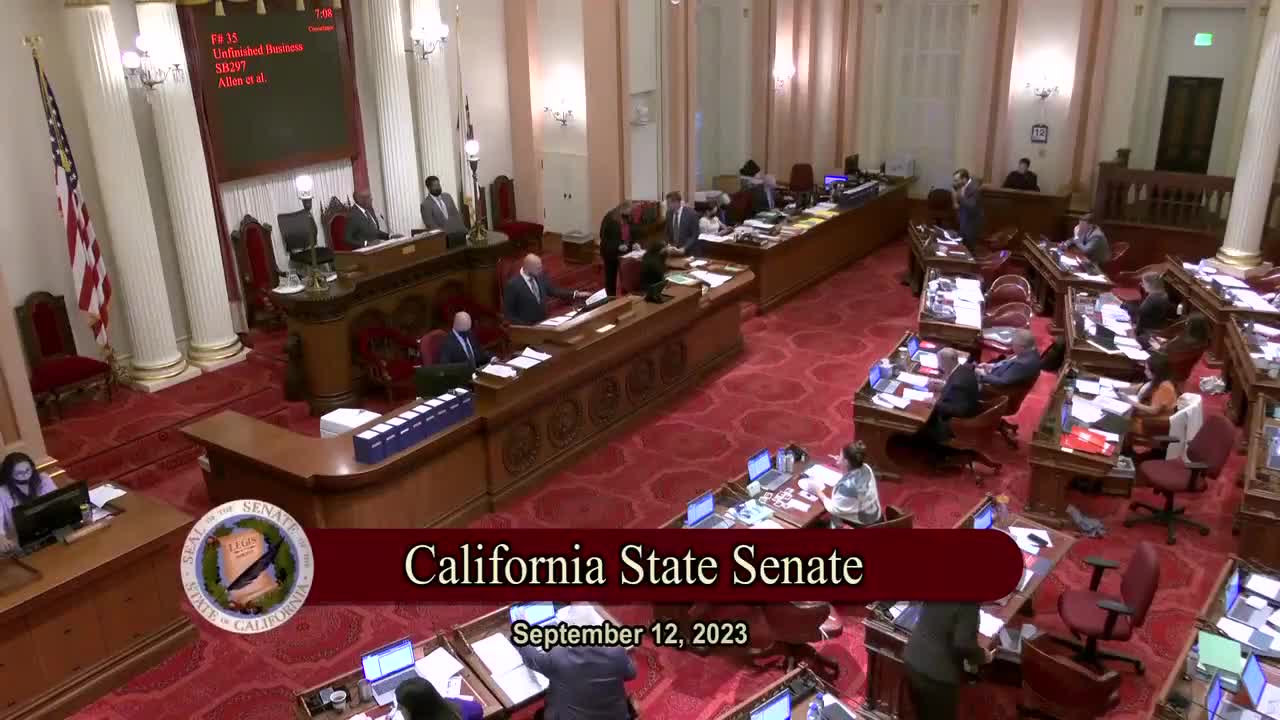 2MIN
Senate Floor
 16SEC
Assembly Floor
 50SEC
Assembly Floor
 3MIN
Assembly Standing Committee on Accountability and Administrative Review
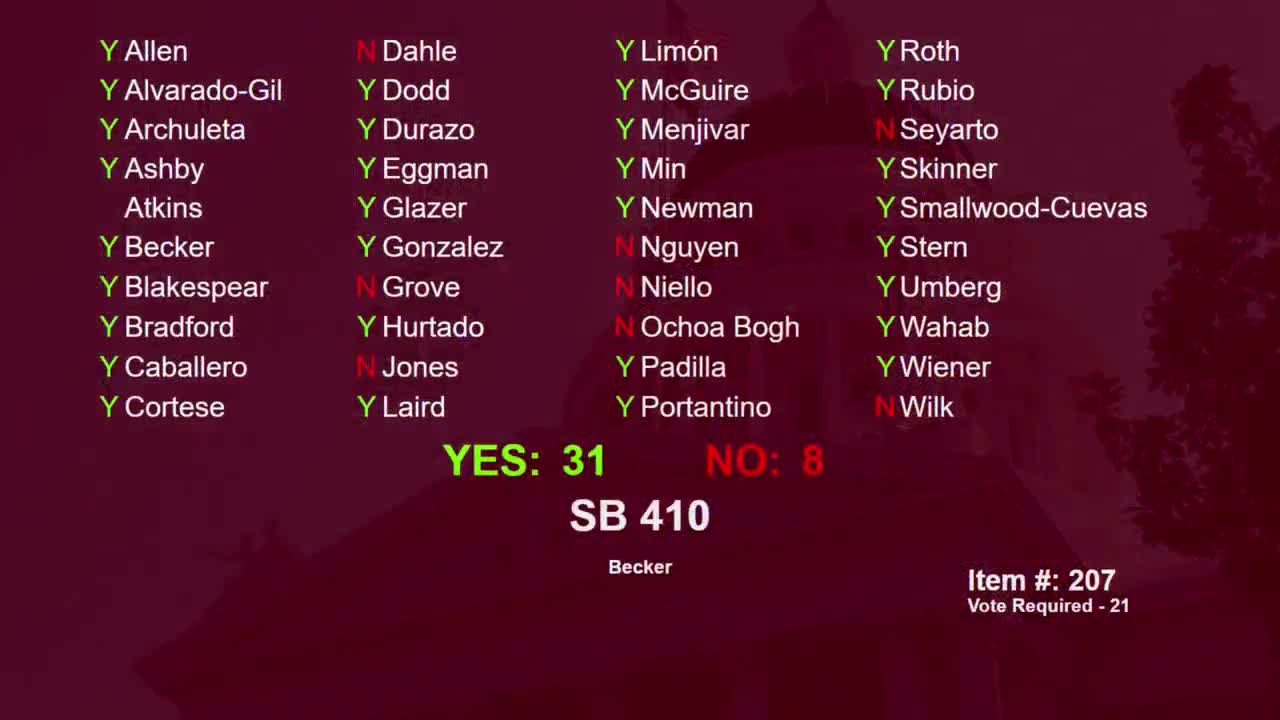 4MIN
Senate Floor
 12MIN
Senate Standing Committee on Governmental Organization
Bill Author

Bill Co-Author(s):
