SB 434: Transit operators: street harassment survey.
- Session Year: 2023-2024
- House: Senate
- Latest Version Date: 2023-10-07
Current Status:
Passed
(2023-10-07: Chaptered by Secretary of State. Chapter 396, Statutes of 2023.)
Introduced
In Committee
First Chamber
In Committee
Second Chamber
Enacted
What does this bill do?
This bill requires transit operators to collect and publish survey data about street harassment and rider safety to help reduce harassment and improve safety for riders, especially women, LGBTQ+ people, riders with disabilities, and limited‑English riders. Agencies must do outreach to underrepresented rider groups, may offer surveys in multiple languages, post the results online without personal identifying details, and may count relevant data and outreach from the prior five years as meeting the requirement.
The summary is provided by generative AI which can make mistakes. For original language, please view the details in the table below.
Existing law creates various transit districts throughout the state, with specified powers and duties relative to providing public transit service. Existing law provides various provisions applicable to all public transit and transit districts. Existing law requires the Mineta Transportation Institute at San Jose State University to, on or before December 31, 2023, develop and make available on its internet website a survey for the purpose of promoting consistency in the collection of specified survey data to inform efforts to improve the safety of riders and reduce street harassment on public transit.
This bill would require a transit operator, as defined, to collect and publish specified survey data for the purpose of informing efforts to improve the safety of riders and reduce street harassment on public transit on or before December 31, 2024, to the extent feasible with the funding it receives to conduct these activities from the Department of Transportation under a funding agreement with a transit operator to collect and publish that survey data, as provided. The bill would require the department to enter into these funding agreements on or before July 1, 2024. The bill would require a transit operator to conduct outreach activities with subpopulations of riders who are underrepresented in surveys and impacted by street harassment to gain insight into the perspectives of these riders based on their experiences. The bill would authorize a transit operator to collect survey data in multiple languages to reach limited-English-proficient riders impacted by street harassment, as provided. The bill would require a transit operator to publish and make publicly available on its internet website the survey data collected pursuant to these provisions and promptly notify the Governor and the Legislature of publication of the survey data. The bill would provide that specified information collected by a transit operator in the 5 years before the effective date of this bill is deemed to be survey data collected by the transit operator for purposes of the bill, and that specified outreach activity conducted by a transit operator in the 5 years before the effective date of this bill is deemed to be outreach activity conducted by the transit operator for purposes of the bill. To the extent the bill imposes additional duties on a local agency, the bill would impose a state-mandated local program.
The California Constitution requires the state to reimburse local agencies and school districts for certain costs mandated by the state. Statutory provisions establish procedures for making that reimbursement.
This bill would provide that, if the Commission on State Mandates determines that the bill contains costs mandated by the state, reimbursement for those costs shall be made pursuant to the statutory provisions noted above.
Existing law creates various transit districts throughout the state, with specified powers and duties relative to providing public transit service. Existing law provides various provisions applicable to all public transit and transit districts. Existing law requires the Mineta Transportation Institute at San Jose State University to, on or before December 31, 2023, develop and make available on its internet website a survey for the purpose of promoting consistency in the collection of specified survey data to inform efforts to improve the safety of riders and reduce street harassment on public transit.
This bill would require a transit operator, as defined, to collect and publish specified survey data for the purpose of informing efforts to improve the safety of riders and reduce street harassment on public transit on or before December 31, 2024, to the extent feasible with the funding it receives to conduct these activities. The bill would also require the activities from the Department of Transportation to enter into under a funding agreement with a transit operator to collect and publish that survey data that the bill would require the department to enter into on or before July 1, 2024. The bill would require a transit operator to conduct outreach activities with subpopulations of riders who are underrepresented in surveys and impacted by street harassment to gain insight into the perspectives of these riders based on their experiences. The bill would authorize a transit operator to collect survey data in multiple languages to reach limited-English-proficient riders impacted by street harassment, as provided. The bill would require a transit operator to publish and make publicly available on its internet website the survey data collected pursuant to these provisions and promptly notify the Governor and the Legislature of publication of the survey data. The bill would provide that specified information collected by a transit operator in the 5 years before the effective date of this bill is deemed to be survey data collected by the transit operator for purposes of the bill, and that specified outreach activity conducted by a transit operator in the 5 years before the effective date of this bill is deemed to be outreach activity conducted by the transit operator for purposes of the bill. To the extent the bill imposes additional duties on a local agency, the bill would impose a state-mandated local program.
The California Constitution requires the state to reimburse local agencies and school districts for certain costs mandated by the state. Statutory provisions establish procedures for making that reimbursement.
This bill would provide that, if the Commission on State Mandates determines that the bill contains costs mandated by the state, reimbursement for those costs shall be made pursuant to the statutory provisions noted above.
Existing law creates various transit districts throughout the state, with specified powers and duties relative to providing public transit service. Existing law provides various provisions applicable to all public transit and transit districts. Existing law requires the Mineta Transportation Institute at San Jose State University to, on or before December 31, 2023, develop and make available on its internet website a survey for the purpose of promoting consistency in the collection of specified survey data to inform efforts to improve the safety of riders and reduce street harassment on public transit.
This bill would require a transit operator, as defined, upon appropriation of funds by the Legislature, to collect and publish specified survey data for the purpose of informing efforts to improve the safety of riders and reduce street harassment on public transit on or before December 31, 2024. 2024, to the extent feasible with the funding it receives to conduct these activities. The bill would also require the Department of Transportation to enter into a funding agreement with a transit operator to collect and publish that survey data on or before July 1, 2024. The bill would require a transit operator to conduct outreach activities with subpopulations of riders who are underrepresented in surveys and impacted by street harassment to gain insight into the perspectives of these riders based on their experiences. The bill would authorize a transit operator to collect survey data in multiple languages to reach limited-English-proficient riders impacted by street harassment, as provided. The bill would require a transit operator to publish and make publicly available on its internet website the survey data collected pursuant to these provisions and promptly notify the Governor and the Legislature of publication of the survey data. The bill would provide that specified information collected by a transit operator in the 5 years before the effective date of this bill is deemed to be survey data collected by the transit operator for purposes of the bill, and that specified outreach activity conducted by a transit operator in the 5 years before the effective date of this bill is deemed to be outreach activities activity conducted by the transit operator for purposes of the bill. To the extent the bill imposes additional duties on a local agency, the bill would impose a state-mandated local program.
The California Constitution requires the state to reimburse local agencies and school districts for certain costs mandated by the state. Statutory provisions establish procedures for making that reimbursement.
This bill would provide that, if the Commission on State Mandates determines that the bill contains costs mandated by the state, reimbursement for those costs shall be made pursuant to the statutory provisions noted above.
Existing law creates various transit districts throughout the state, with specified powers and duties relative to providing public transit service. Existing law provides various provisions applicable to all public transit and transit districts. Existing law requires the Mineta Transportation Institute at San Jose State University to, on or before December 31, 2023, develop and make available on its internet website a survey for the purpose of promoting consistency in the collection of specified survey data to inform efforts to improve the safety of riders and reduce street harassment on public transit.
This bill would require a transit operator, as defined, upon allocation appropriation of certain funds by the Legislature, to collect and publish specified survey data for the purpose of informing efforts to improve the safety of riders and reduce street harassment on public transit on or before June 30, December 31, 2024. The bill would require a transit operator to conduct outreach activities with subpopulations of riders who are underrepresented in surveys and impacted by street harassment to gain insight into the perspectives of these riders based on their experiences. The bill would authorize a transit operator to collect survey data in multiple languages to reach limited-English-proficient riders impacted by street harassment, as provided. The bill would require a transit operator to publish and make publicly available on its internet website the survey data collected pursuant to these provisions and promptly notify the Governor and the Legislature of publication of the survey data. The bill would provide that specified information collected by a transit operator in the 5 years before the effective date of this bill is deemed to be survey data collected by the transit operator for purposes of the bill. bill, and that specified outreach activity conducted by a transit operator in the 5 years before the effective date of this bill is deemed to be outreach activities conducted by the transit operator for purposes of the bill. To the extent the bill imposes additional duties on a local agency, the bill would impose a state-mandated local program.
The California Constitution requires the state to reimburse local agencies and school districts for certain costs mandated by the state. Statutory provisions establish procedures for making that reimbursement.
This bill would provide that, if the Commission on State Mandates determines that the bill contains costs mandated by the state, reimbursement for those costs shall be made pursuant to the statutory provisions noted above.
Existing law creates various transit districts throughout the state, with specified powers and duties relative to providing public transit service. Existing law provides various provisions applicable to all public transit and transit districts. Existing law requires the Mineta Transportation Institute at San Jose State University to, on or before December 31, 2023, develop and make available on its internet website a survey for the purpose of promoting consistency in the collection of specified survey data to inform efforts to improve the safety of riders and reduce street harassment on public transit.
This bill would require a transit operator, as defined, upon allocation of certain funds by the Legislature, to collect specified survey data for the purpose of informing efforts to improve the safety of riders and reduce street harassment on public transit on or before June 30, 2024. The bill would require a transit operator to conduct outreach activities with subpopulations of riders who are underrepresented in surveys and impacted by street harassment to gain insight into the perspectives of these riders based on their experiences. The bill would provide that specified information collected by a transit operator in the 5 years before the effective date of this bill is deemed to be survey data collected by the transit operator for purposes of the bill. To the extent the bill imposes additional duties on a local agency, the bill would impose a state-mandated local program.
The California Constitution requires the state to reimburse local agencies and school districts for certain costs mandated by the state. Statutory provisions establish procedures for making that reimbursement.
This bill would provide that, if the Commission on State Mandates determines that the bill contains costs mandated by the state, reimbursement for those costs shall be made pursuant to the statutory provisions noted above.
The Legislature finds and declares all of the following:
(a)Public transportation ensures that each person may enjoy the freedom of movement. Providing a safe journey for women and other vulnerable communities will increase ridership throughout the public transit system.
(b)The State of California encourages transit operators to recognize a definition of rider safety that acknowledges safety is not merely the freedom from physical harm but also the freedom to take public transit without street harassment.
(c)Street harassment on public transit diminishes ridership growth, undermines riders safety, hurts all riders, and can reinforce social inequality and economic hardship throughout a riders lifetime.
(d)Women and girls, particularly those of color and those in the LGBTQ+ communities, are often the targets of street harassment on public transit. Such harassment includes unwanted sexual and racialized comments and slurs, whistling, leering, and other intimidating actions. According to a 2019 statewide study by the University of California, San Diego Center on Gender Equity and Health, 77 percent of women experience sexual harassment in a public space, including 29 percent on mass transit. Furthermore, women who identify as lesbian or bisexual are more likely to report experiencing sexual harassment than straight women.
(e)A 2019 bay area study by Alliance for Girls found that girls, including transgender girls, cisgender girls, and nonconforming youth, in the Cities of Oakland and San Jose and the City and County of San Francisco expressed feeling unsafe on public transportation due to the daily harassment they experience on buses and trains on their way to and from school.
(f)LGBTQ riders face elevated risk of harassment and discrimination on transit systems, according to a 2018 report by the Movement Advancement Project. Additionally, 2017 data from the Center for American Progress found that 11 percent of transgender people and 9 percent of LGBT people with disabilities avoided public transportation due to fear of discrimination.
(g)According to a 2019 report by the Los Angeles Metropolitan Transportation Authority, safety is the primary barrier to riding transit for women. Fear of harassment leads to behavioral adjustments and precautions by women riders, including leaving a bus or train mid-trip to avoid harassment, avoiding travel in the evening, avoiding certain settings such as crowded buses, and not walking alone.
(h)Low-income women face even greater barriers to movement, including safety concerns, poor walking environments, lower access to drivers licenses, and transit inefficiencies such as long travel times and infrequent service. Unlike more affluent women, low-income women have fewer private transportation options.
(i)Women of color on public transit experience even more threats to their safety. According to the Los Angeles Department of Transportation, women of color report feeling more unsafe on public transportation than women who identify as white.
(j)Data collected by the Stop AAPI Hate coalition finds that nearly 40 percent of the nationwide acts of hate against Asian Americans and Pacific Islanders happen in California, and hate incidents involving women make up nearly two-thirds of all reports in the state. Most of these hate incidents involve verbal harassment and occur in public spaces, including public transit.
(k)Though they experience higher levels of harassment, women of color are also more dependent on public transit. According to the Center for American Progress, women of color experience a persistent gender wage gap in conjunction with racial bias in the workplace, which leaves them perpetually underpaid. Without the economic means for private transportation options, women of color are more likely to be dependent on public transportation.
(l)Riders significantly underreport instances of street harassment. Research published by the University of California, Los Angeles Lewis Center for Regional Policy Studies finds that only 10 percent of people who experienced or observed sexual harassment on transit reported the incident. Research collected by the Mineta Transportation Institute at San Jose State University finds that street harassment is underreported globally as women are often embarrassed and reluctant to report when public culture puts the blame on the victims of harassment.
(m)The Legislature affirms that protecting transit riders safety, combating street harassment that could be experienced in transit journeys, and ensuring equal access to transportation are public policy priorities.
(n)Public transit operators may attract new riders by taking steps to enhance rider safety and to combat street harassment. When riders feel safe waiting at transit stops and riding transit, they may increasingly use public transit. In turn, the growing ridership helps to enable the public transit system to thrive.
SEC. 2.Section 99178 is added to the Public Utilities Code, immediately following Section 99177, to read:99178.(a)For purposes of this section, the terms street harassment, survey data, and transit operator have the same meanings as defined in Section 99177.
(b)(1)On or before December 31, 2024, a transit operator shall collect and publish survey data, in accordance with this section, to the extent feasible with the funding it receives to implement this section from the Department of Transportation pursuant to paragraph (2), for the purpose of informing their efforts to improve the safety of riders and reduce street harassment on public transit.
(2)On or before July 1, 2024, the Department of Transportation shall enter into a funding agreement with a transit operator to collect and publish the survey data described in paragraph (1).
(c)A transit operator shall collect, at a minimum, the information described in paragraph (2) of subdivision (b) of Section 99177.
(d)A transit operator may, but is not required to, use the survey made available pursuant to Section 99177 and may ask additional questions beyond those in the survey.
(e)A transit operator shall conduct outreach activities with subpopulations of riders who are underrepresented in surveys and impacted by street harassment to gain insight into the perspectives of these riders based on their experiences. Activities may include focus groups, participatory workshops, or other methods of engaging riders. Subpopulations may include, but are not limited to, women riders, non-English-speaking riders, LGBTQ+ riders, and riders with disabilities.
(f)A transit operator may collect survey data in multiple languages to reach limited-English-proficient riders impacted by street harassment. The languages may be determined by existing data on riders or the top non-English languages used by limited-English-proficient persons in the community served by the transit operator according to the most recent American Community Survey by the United States Census Bureau.
(g)(1)A transit operator shall publish and make publicly available on its internet website all survey data collected pursuant to this section, including the information described in paragraph (2) of subdivision (b) of Section 99177, as required by subdivision (c).
(2)Notwithstanding paragraph (1), a transit operator shall not publish any personally identifiable information.
(3)A transit operator shall promptly notify the Governor and the Legislature of the publication of the survey data.
(h)Notwithstanding anything in this section to the contrary, any information described in paragraph (2) of subdivision (b) of Section 99177 collected by a transit operator in the five years before the effective date of this section shall be deemed to be survey data collected by the transit operator pursuant to this section, and any outreach activities conducted by a transit operator to collect that information in the five years before the effective date of this section shall be deemed to have been conducted by the transit operator pursuant to this section.
(i)Nothing in this section shall be construed to create new or additional liability for a transit operator for failing to respond to an incident of street harassment.
SEC. 3.If the Commission on State Mandates determines that this act contains costs mandated by the state, reimbursement to local agencies and school districts for those costs shall be made pursuant to Part 7 (commencing with Section 17500) of Division 4 of Title 2 of the Government Code.
The Legislature finds and declares all of the following:
(a)Public transportation ensures that each person may enjoy the freedom of movement. Providing a safe journey for women and other vulnerable communities will increase ridership throughout the public transit system.
(b)The State of California encourages transit operators to recognize a definition of rider safety that acknowledges safety is not merely the freedom from physical harm but also the freedom to take public transit without street harassment.
(c)Street harassment on public transit diminishes ridership growth, undermines riders safety, hurts all riders, and can reinforce social inequality and economic hardship throughout a riders lifetime.
(d)Women and girls, particularly those of color and those in the LGBTQ+ communities, are often the targets of street harassment on public transit. Such harassment includes unwanted sexual and racialized comments and slurs, whistling, leering, and other intimidating actions. According to a 2019 statewide study by the University of California, San Diego Center on Gender Equity and Health, 77 percent of women experience sexual harassment in a public space, including 29 percent on mass transit. Furthermore, women who identify as lesbian or bisexual are more likely to report experiencing sexual harassment than straight women.
(e)A 2019 bay area study by Alliance for Girls found that girls, including transgender girls, cisgender girls, and nonconforming youth, in the Cities of Oakland and San Jose and the City and County of San Francisco expressed feeling unsafe on public transportation due to the daily harassment they experience on buses and trains on their way to and from school.
(f)LGBTQ riders face elevated risk of harassment and discrimination on transit systems, according to a 2018 report by the Movement Advancement Project. Additionally, 2017 data from the Center for American Progress found that 11 percent of transgender people and 9 percent of LGBT people with disabilities avoided public transportation due to fear of discrimination.
(g)According to a 2019 report by the Los Angeles Metropolitan Transportation Authority, safety is the primary barrier to riding transit for women. Fear of harassment leads to behavioral adjustments and precautions by women riders, including leaving a bus or train mid-trip to avoid harassment, avoiding travel in the evening, avoiding certain settings such as crowded buses, and not walking alone.
(h)Low-income women face even greater barriers to movement, including safety concerns, poor walking environments, lower access to drivers licenses, and transit inefficiencies such as long travel times and infrequent service. Unlike more affluent women, low-income women have fewer private transportation options.
(i)Women of color on public transit experience even more threats to their safety. According to the Los Angeles Department of Transportation, women of color report feeling more unsafe on public transportation than women who identify as white.
(j)Data collected by the Stop AAPI Hate coalition finds that nearly 40 percent of the nationwide acts of hate against Asian Americans and Pacific Islanders happen in California, and hate incidents involving women make up nearly two-thirds of all reports in the state. Most of these hate incidents involve verbal harassment and occur in public spaces, including public transit.
(k)Though they experience higher levels of harassment, women of color are also more dependent on public transit. According to the Center for American Progress, women of color experience a persistent gender wage gap in conjunction with racial bias in the workplace, which leaves them perpetually underpaid. Without the economic means for private transportation options, women of color are more likely to be dependent on public transportation.
(l)Riders significantly underreport instances of street harassment. Research published by the University of California, Los Angeles Lewis Center for Regional Policy Studies finds that only 10 percent of people who experienced or observed sexual harassment on transit reported the incident. Research collected by the Mineta Transportation Institute at San Jose State University finds that street harassment is underreported globally as women are often embarrassed and reluctant to report when public culture puts the blame on the victims of harassment.
(m)The Legislature affirms that protecting transit riders safety, combating street harassment that could be experienced in transit journeys, and ensuring equal access to transportation are public policy priorities.
(n)Public transit operators may attract new riders by taking steps to enhance rider safety and to combat street harassment. When riders feel safe waiting at transit stops and riding transit, they may increasingly use public transit. In turn, the growing ridership helps to enable the public transit system to thrive.
SEC. 2.Section 99178 is added to the Public Utilities Code, immediately following Section 99177, to read:99178.(a)For purposes of this section, the terms street harassment, survey data, and transit operator have the same meanings as defined in Section 99177.
(b)(1)On or before December 31, 2024, a transit operator shall collect and publish survey data, in accordance with this section, to the extent feasible with the funding it receives to implement this section, section from the Department of Transportation pursuant to paragraph (2), for the purpose of informing their efforts to improve the safety of riders and reduce street harassment on public transit.
(2)On or before July 1, 2024, the Department of Transportation shall enter into a funding agreement with a transit operator to collect and publish the survey data described in paragraph (1).
(c)A transit operator shall collect, at a minimum, the information described in paragraph (2) of subdivision (b) of Section 99177.
(d)A transit operator may, but is not required to, use the survey made available pursuant to Section 99177 and may ask additional questions beyond those in the survey.
(e)A transit operator shall conduct outreach activities with subpopulations of riders who are underrepresented in surveys and impacted by street harassment to gain insight into the perspectives of these riders based on their experiences. Activities may include focus groups, participatory workshops, or other methods of engaging riders. Subpopulations may include, but are not limited to, women riders, non-English-speaking riders, LGBTQ+ riders, and riders with disabilities.
(f)A transit operator may collect survey data in multiple languages to reach limited-English-proficient riders impacted by street harassment. The languages may be determined by existing data on riders or the top non-English languages used by limited-English-proficient persons in the community served by the transit operator according to the most recent American Community Survey by the United States Census Bureau.
(g)(1)A transit operator shall publish and make publicly available on its internet website all survey data collected pursuant to this section, including the information described in paragraph (2) of subdivision (b) of Section 99177, as required by subdivision (c).
(2)Notwithstanding paragraph (1), a transit operator shall not publish any personally identifiable information.
(3)A transit operator shall promptly notify the Governor and the Legislature of the publication of the survey data.
(h)Notwithstanding anything in this section to the contrary, any information described in paragraph (2) of subdivision (b) of Section 99177 collected by a transit operator in the five years before the effective date of this section shall be deemed to be survey data collected by the transit operator pursuant to this section, and any outreach activities conducted by a transit operator to collect that information in the five years before the effective date of this section shall be deemed to have been conducted by the transit operator pursuant to this section.
(i)Nothing in this section shall be construed to create new or additional liability for a transit operator for failing to respond to an incident of street harassment.
SEC. 3.If the Commission on State Mandates determines that this act contains costs mandated by the state, reimbursement to local agencies and school districts for those costs shall be made pursuant to Part 7 (commencing with Section 17500) of Division 4 of Title 2 of the Government Code.
The Legislature finds and declares all of the following:
(a)Public transportation ensures that each person may enjoy the freedom of movement. Providing a safe journey for women and other vulnerable communities will increase ridership throughout the public transit system.
(b)The State of California encourages transit operators to recognize a definition of rider safety that acknowledges safety is not merely the freedom from physical harm but also the freedom to take public transit without street harassment.
(c)Street harassment on public transit diminishes ridership growth, undermines riders safety, hurts all riders, and can reinforce social inequality and economic hardship throughout a riders lifetime.
(d)Women and girls, particularly those of color and those in the LGBTQ+ communities, are often the targets of street harassment on public transit. Such harassment includes unwanted sexual and racialized comments and slurs, whistling, leering, and other intimidating actions. According to a 2019 statewide study by the University of California, San Diego Center on Gender Equity and Health, 77 percent of women experience sexual harassment in a public space, including 29 percent on mass transit. Furthermore, women who identify as lesbian or bisexual are more likely to report experiencing sexual harassment than straight women.
(e)A 2019 bay area study by Alliance for Girls found that girls, including transgender girls, cisgender girls, and nonconforming youth, in the Cities of San Francisco, San Jose, and Oakland Oakland and San Jose and the City and County of San Francisco expressed feeling unsafe on public transportation due to the daily harassment they experience on buses and trains on their way to and from school.
(f)LGBTQ riders face elevated risk of harassment and discrimination on transit systems, according to a 2018 report by the Movement Advancement Project. Additionally, 2017 data from the Center for American Progress found that 11 percent of transgender people and 9 percent of LGBT people with disabilities avoided public transportation due to fear of discrimination.
(g)According to a 2019 report by the Los Angeles Metropolitan Transportation Authority, safety is the primary barrier to riding transit for women. Fear of harassment leads to behavioral adjustments and precautions by women riders, including leaving a bus or train mid-trip to avoid harassment, avoiding travel in the evening, avoiding certain settings such as crowded buses, and not walking alone.
(h)Low-income women face even greater barriers to movement, including safety concerns, poor walking environments, lower access to drivers licenses, and transit inefficiencies such as long travel times and infrequent service. Unlike more affluent women, low-income women have fewer private transportation options.
(i)Women of color on public transit experience even more threats to their safety. According to the Los Angeles Department of Transportation, women of color report feeling more unsafe on public transportation than women who identify as white.
(j)Data collected by the Stop AAPI Hate coalition finds that nearly 40 percent of the nationwide acts of hate against Asian Americans and Pacific Islanders happen in California, and hate incidents involving women make up nearly two-thirds of all reports in the state. Most of these hate incidents involve verbal harassment and occur in public spaces, including public transit.
(k)Though they experience higher levels of harassment, women of color are also more dependent on public transit. According to the Center for American Progress, women of color experience a persistent gender wage gap in conjunction with racial bias in the workplace, which leaves them perpetually underpaid. Without the economic means for private transportation options, women of color are more likely to be dependent on public transportation.
(l)Riders significantly underreport instances of street harassment. Research published by the University of California, Los Angeles Lewis Center for Regional Policy Studies finds that only 10 percent of people who experienced or observed sexual harassment on transit reported the incident. Research collected by the Mineta Transportation Institute at San Jose State University finds that street harassment is underreported globally as women are often embarrassed and reluctant to report when public culture puts the blame on the victims of harassment.
(m)The Legislature affirms that protecting transit riders safety, combating street harassment that could be experienced in transit journeys, and ensuring equal access to transportation are public policy priorities.
(n)Public transit operators may attract new riders by taking steps to enhance rider safety and to combat street harassment. When riders feel safe waiting at transit stops and riding transit, they may increasingly use public transit. In turn, the growing ridership helps to enable the public transit system to thrive.
SEC. 2.Section 99178 is added to the Public Utilities Code, immediately following Section 99177, to read:99178.(a)For purposes of this section, the terms street harassment, survey data, and transit operator have the same meanings as defined in Section 99177.
(b)(1)On or before December 31, 2024, a transit operator shall, upon appropriation of funds by the Legislature, shall collect and publish survey data, in accordance with this section, to the extent feasible with the funding it receives to implement this section, for the purpose of informing their efforts to improve the safety of riders and reduce street harassment on public transit.
(2)On or before July 1, 2024, the Department of Transportation shall enter into a funding agreement with a transit operator to collect and publish the survey data described in paragraph (1).
(c)A transit operator shall collect, at a minimum, the information described in paragraph (2) of subdivision (b) of Section 99177.
(d)A transit operator may, but is not required to, use the survey made available pursuant to Section 99177 and may ask additional questions beyond those in the survey.
(e)A transit operator shall conduct outreach activities with subpopulations of riders who are underrepresented in surveys and impacted by street harassment to gain insight into the perspectives of these riders based on their experiences. Activities may include focus groups, participatory workshops, or other methods of engaging riders. Subpopulations may include, but are not limited to, women riders, non-English-speaking riders, LGBTQ+ riders, and riders with disabilities.
(f)A transit operator may collect survey data in multiple languages to reach limited-English-proficient riders impacted by street harassment. The languages may be determined by existing data on riders or the top non-English languages used by limited-English-proficient persons in the community served by the transit operator according to the most recent American Community Survey by the United States Census Bureau.
(g)(1)A transit operator shall publish and make publicly available on its internet website all survey data collected pursuant to this section, including the information described in paragraph (2) of subdivision (b) of Section 99177, as required by subdivision (c).
(2)Notwithstanding paragraph (1), a transit operator shall not publish any personally identifiable information.
(3)A transit operator shall promptly notify the Governor and the Legislature of the publication of the survey data.
(h)Notwithstanding anything in this section to the contrary, any information described in paragraph (2) of subdivision (b) of Section 99177 collected by a transit operator in the five years before the effective date of this section shall be deemed to be survey data collected by the transit operator pursuant to this section, and any outreach activities conducted by a transit operator to collect that information in the five years before the effective date of this section shall be deemed to have been conducted by the transit operator pursuant to this section.
(i)Nothing in this section shall be construed to create new or additional liability for a transit operator for failing to respond to an incident of street harassment.
SEC. 3.If the Commission on State Mandates determines that this act contains costs mandated by the state, reimbursement to local agencies and school districts for those costs shall be made pursuant to Part 7 (commencing with Section 17500) of Division 4 of Title 2 of the Government Code.
The Legislature finds and declares all of the following:
(a)Public transportation ensures that each person may enjoy the freedom of movement. Providing a safe journey for women and other vulnerable communities will increase ridership throughout the public transit system.
(b)The State of California encourages transit operators to recognize a definition of rider safety that acknowledges safety is not merely the freedom from physical harm but also the freedom to take public transit without street harassment.
(c)Street harassment on public transit diminishes ridership growth, undermines riders safety, hurts all riders, and can reinforce social inequality and economic hardship throughout a riders lifetime.
(d)Women and girls, particularly those of color and those in the LGBTQ+ communities, are often the targets of street harassment on public transit. Such harassment includes unwanted sexual and racialized comments and slurs, whistling, leering, and other intimidating actions. According to a 2019 statewide study by the University of California, San Diego Center on Gender Equity and Health, 77 percent of women experience sexual harassment in a public space, including 29 percent on mass transit. Furthermore, women who identify as lesbian or bisexual are more likely to report experiencing sexual harassment than straight women.
(e)A 2019 bay area study by Alliance for Girls found that girls, including transgender girls, cisgender girls, and nonconforming youth, in the Cities of San Francisco, San Jose, and Oakland expressed feeling unsafe on public transportation due to the daily harassment they experience on buses and trains on their way to and from school.
(f)LGBTQ riders face elevated risk of harassment and discrimination on transit systems, according to a 2018 report by the Movement Advancement Project. Additionally, 2017 data from the Center for American Progress found that 11 percent of transgender people and 9 percent of LGBT people with disabilities avoided public transportation due to fear of discrimination.
(g)According to a 2019 report by the Los Angeles Metropolitan Transportation Authority, safety is the primary barrier to riding transit for women. Fear of harassment leads to behavioral adjustments and precautions by women riders, including leaving a bus or train mid-trip to avoid harassment, avoiding travel in the evening, avoiding certain settings such as crowded buses, and not walking alone.
(h)Low-income women face even greater barriers to movement, including safety concerns, poor walking environments, lower access to drivers licenses, and transit inefficiencies such as long travel times and infrequent service. Unlike more affluent women, low-income women have fewer private transportation options.
(i)Women of color on public transit experience even more threats to their safety. According to the Los Angeles Department of Transportation, women of color report feeling more unsafe on public transportation than women who identify as white.
(j)Data collected by the Stop AAPI Hate coalition finds that nearly 40 percent of the nationwide acts of hate against Asian Americans and Pacific Islanders happen in California, and hate incidents involving women make up nearly two-thirds of all reports in the state. Most of these hate incidents involve verbal harassment and occur in public spaces, including public transit.
(k)Though they experience higher levels of harassment, women of color are also more dependent on public transit. According to the Center for American Progress, women of color experience a persistent gender wage gap in conjunction with racial bias in the workplace, which leaves them perpetually underpaid. Without the economic means for private transportation options, women of color are more likely to be dependent on public transportation.
(l)Riders significantly underreport instances of street harassment. Research published by the University of California, Los Angeles Lewis Center for Regional Policy Studies finds that only 10 percent of people who experienced or observed sexual harassment on transit reported the incident. Research collected by the Mineta Transportation Institute at San Jose State University finds that street harassment is underreported globally as women are often embarrassed and reluctant to report when public culture puts the blame on the victims of harassment.
(m)The Legislature affirms that protecting transit riders safety, combating street harassment that could be experienced in transit journeys, and ensuring equal access to transportation are public policy priorities.
(n)Public transit operators may attract new riders by taking steps to enhance rider safety and to combat street harassment. When riders feel safe waiting at transit stops and riding transit, they may increasingly use public transit. In turn, the growing ridership helps to enable the public transit system to thrive.
SEC. 2.Section 99178 is added to the Public Utilities Code, immediately following Section 99177, to read:99178.(a)For the purpose purposes of this section, the following definitions apply: terms street harassment, survey data, and transit operator have the same meanings as defined in Section 99177.
(1)Street harassment means words, gestures, or actions directed at a specific person in a public place, without the consent of that person, because of a characteristic listed or defined in Section 11135 of the Government Code, that the person experiences as intimidating, alarming, terrorizing, or threatening to their safety. For the purposes of this section, street harassment because of age shall include any chronological age.(2)Survey data means information regarding public transit riders and their experiences using public transit, including, but not limited to, demographic information about riders and information about their experiences with safety, including, but not limited to, street harassment.(3)Transit operator means the 10 transit operators, as defined in Section 99210, with the most unlinked passenger trips in 2019 in the state, according to the National Transit Database.(b)(1)On or before June 30, December 31, 2024, a transit operator shall, upon allocation appropriation of funds by the Legislature from the Public Transportation Account, Legislature, collect and publish survey data data, in accordance with this section, to the extent feasible with the funding it receives to implement this section, for the purpose of informing their efforts to improve the safety of riders and reduce street harassment on public transit.
(2)The(c)A transit operator shall collect, at a minimum, the information described in paragraph (2) of subdivision (b) of Section 99177. The
(d)A transit operator may, but is not required to, use the survey made available pursuant to Section 99177 and may ask additional questions beyond those in the survey.
(c)(e)A transit operator shall conduct outreach activities with subpopulations of riders who are underrepresented in surveys and impacted by street harassment to gain insight into the perspectives of these riders based on their experiences. These activities Activities may include focus groups, participatory workshops, or other methods of engaging riders. Subpopulations may include, but are not limited to, women riders, non-English-speaking riders, LGBTQ+ riders, and riders with disabilities.
(f)A transit operator may collect survey data in multiple languages to reach limited-English-proficient riders impacted by street harassment. The languages may be determined by existing data on riders or the top non-English languages used by limited-English-proficient persons in the community served by the transit operator according to the most recent American Community Survey by the United States Census Bureau.
(g)(1)A transit operator shall publish and make publicly available on its internet website all survey data collected pursuant to this section, including the information described in paragraph (2) of subdivision (b) of Section 99177, as required by subdivision (c).
(2)Notwithstanding paragraph (1), a transit operator shall not publish any personally identifiable information.
(3)A transit operator shall promptly notify the Governor and the Legislature of the publication of the survey data.
(d)(h)Notwithstanding anything in this section to the contrary, any information described in paragraph (2) of subdivision (b) of Section 99177 collected by a transit operator in the five years before the effective date of this section shall be deemed to be survey data collected by the transit operator pursuant to this section. section, and any outreach activities conducted by a transit operator to collect that information in the five years before the effective date of this section shall be deemed to have been conducted by the transit operator pursuant to this section.
(e)(i)Nothing in this section shall be construed to create new or additional liability for a transit operator for failing to respond to an incident of street harassment.
SEC. 3.If the Commission on State Mandates determines that this act contains costs mandated by the state, reimbursement to local agencies and school districts for those costs shall be made pursuant to Part 7 (commencing with Section 17500) of Division 4 of Title 2 of the Government Code.
The Legislature finds and declares all of the following:
(a)Public transportation ensures that each person may enjoy the freedom of movement. Providing a safe journey for women and other vulnerable communities will increase ridership throughout the public transit system.
(b)The State of California encourages transit operators to recognize a definition of rider safety that acknowledges safety is not merely the freedom from physical harm but also the freedom to take public transit without street harassment.
(c)Street harassment on public transit diminishes ridership growth, undermines riders safety, hurts all riders, and can reinforce social inequality and economic hardship throughout a riders lifetime.
(d)Women and girls, particularly those of color and those in the LGBTQ+ communities, are often the targets of street harassment on public transit. Such harassment includes unwanted sexual and racialized comments and slurs, whistling, leering, and other intimidating actions. According to a 2019 statewide study by the University of California, San Diego Center on Gender Equity and Health, 77 percent of women experience sexual harassment in a public space, including 29 percent on mass transit. Furthermore, women who identify as lesbian or bisexual are more likely to report experiencing sexual harassment than straight women.
(e)A 2019 bay area study by Alliance for Girls found that girls, including transgender girls, cisgender girls, and nonconforming youth, in the Cities of San Francisco, San Jose, and Oakland expressed feeling unsafe on public transportation due to the daily harassment they experience on buses and trains on their way to and from school.
(f)LGBTQ riders face elevated risk of harassment and discrimination on transit systems, according to a 2018 report by the Movement Advancement Project. Additionally, 2017 data from the Center for American Progress found that 11 percent of transgender people and 9 percent of LGBT people with disabilities avoided public transportation due to fear of discrimination.
(g)According to a 2019 report by the Los Angeles Metropolitan Transportation Authority, safety is the primary barrier to riding transit for women. Fear of harassment leads to behavioral adjustments and precautions by women riders, including leaving a bus or train mid-trip to avoid harassment, avoiding travel in the evening, avoiding certain settings such as crowded buses, and not walking alone.
(h)Low-income women face even greater barriers to movement, including safety concerns, poor walking environments, lower access to drivers licenses, and transit inefficiencies such as long travel times and infrequent service. Unlike more affluent women, low-income women have fewer private transportation options.
(i)Women of color on public transit experience even more threats to their safety. According to the Los Angeles Department of Transportation, women of color report feeling more unsafe on public transportation than women who identify as white.
(j)Data collected by the Stop AAPI Hate coalition finds that nearly 40 percent of the nationwide acts of hate against Asian Americans and Pacific Islanders happen in California, and hate incidents involving women make up nearly two-thirds of all reports in the state. Most of these hate incidents involve verbal harassment and occur in public spaces, including public transit.
(k)Though they experience higher levels of harassment, women of color are also more dependent on public transit. According to the Center for American Progress, women of color experience a persistent gender wage gap in conjunction with racial bias in the workplace, which leaves them perpetually underpaid. Without the economic means for private transportation options, women of color are more likely to be dependent on public transportation.
(l)Riders significantly underreport instances of street harassment. Research published by the University of California, Los Angeles Lewis Center for Regional Policy Studies finds that only 10 percent of people who experienced or observed sexual harassment on transit reported the incident. Research collected by the Mineta Transportation Institute at San Jose State University finds that street harassment is underreported globally as women are often embarrassed and reluctant to report when public culture puts the blame on the victims of harassment.
(m)The Legislature affirms that protecting transit riders safety, combating street harassment that could be experienced in transit journeys, and ensuring equal access to transportation are public policy priorities.
(n)Public transit operators may attract new riders by taking steps to enhance rider safety and to combat street harassment. When riders feel safe waiting at transit stops and riding transit, they may increasingly use public transit. In turn, the growing ridership helps to enable the public transit system to thrive.
SEC. 2.Section 99178 is added to the Public Utilities Code, immediately following Section 99177, to read:99178.(a)For the purpose of this section, the following definitions apply:
(1)Street harassment means words, gestures, or actions directed at a specific person in a public place, without the consent of that person, because of a characteristic listed or defined in Section 11135 of the Government Code, that the person experiences as intimidating, alarming, terrorizing, or threatening to their safety. For the purposes of this section, street harassment because of age shall include any chronological age.
(2)Survey data means information regarding public transit riders and their experiences using public transit, including, but not limited to, demographic information about riders and information about their experiences with safety, including, but not limited to, street harassment.
(3)Transit operator means the 10 transit operators, as defined in Section 99210, with the most unlinked passenger trips in 2019 in the state, according to the National Transit Database.
(b)(1)On or before June 30, 2024, a transit operator shall, upon allocation of funds by the Legislature from the Public Transportation Account, collect survey data for the purpose of informing efforts to improve the safety of riders and reduce street harassment on public transit.
(2)The transit operator shall collect, at a minimum, the information described in paragraph (2) of subdivision (b) of Section 99177. The transit operator may, but is not required to, use the survey made available pursuant to Section 99177 and may ask additional questions beyond those in the survey.
(c)A transit operator shall conduct outreach activities with subpopulations of riders who are underrepresented in surveys and impacted by street harassment to gain insight into the perspectives of these riders based on their experiences. These activities may include focus groups, participatory workshops, or other methods of engaging riders.
(d)Notwithstanding anything in this section to the contrary, any information described in paragraph (2) of subdivision (b) of Section 99177 collected by a transit operator in the five years before the effective date of this section shall be deemed to be survey data collected by the transit operator pursuant to this section.
(e)Nothing in this section shall be construed to create new or additional liability for a transit operator for failing to respond to an incident of street harassment.
SEC. 3.If the Commission on State Mandates determines that this act contains costs mandated by the state, reimbursement to local agencies and school districts for those costs shall be made pursuant to Part 7 (commencing with Section 17500) of Division 4 of Title 2 of the Government Code.
|
Date
|
Status
|
|---|---|
| Oct 7, 2023 | Chaptered by Secretary of State. Chapter 396, Statutes of 2023. |
| Oct 7, 2023 | Approved by the Governor. |
| Sep 20, 2023 | Enrolled and presented to the Governor at 4:30 p.m. |
| Sep 12, 2023 | Assembly amendments concurred in. (Ayes 39. Noes 0. Page 2675.) Ordered to engrossing and enrolling. |
| Sep 11, 2023 | In Senate. Concurrence in Assembly amendments pending. |
| Sep 11, 2023 | Read third time. Passed. (Ayes 80. Noes 0. Page 3158.) Ordered to the Senate. |
| Sep 8, 2023 | Read third time and amended. |
| Sep 8, 2023 | Ordered to third reading. |
| Sep 8, 2023 | Assembly Rule 69 suspended. |
| Sep 7, 2023 | Read third time and amended. |
| Sep 7, 2023 | Ordered to third reading. |
| Sep 5, 2023 | Read second time. Ordered to third reading. |
| Sep 1, 2023 | From committee: Do pass. (Ayes 16. Noes 0.) (September 1). |
| Aug 23, 2023 | August 23 set for second hearing. Placed on suspense file. |
| Aug 16, 2023 | August 16 set for first hearing canceled at the request of author. |
| Jul 6, 2023 | From committee: Do pass and re-refer to Com. on APPR. with recommendation: To consent calendar. (Ayes 15. Noes 0.) (July 5). Re-referred to Com. on APPR. |
| Jun 8, 2023 | Referred to Com. on TRANS. |
| May 25, 2023 | In Assembly. Read first time. Held at Desk. |
| May 25, 2023 | Read third time. Passed. (Ayes 40. Noes 0. Page 1299.) Ordered to the Assembly. |
| May 23, 2023 | Ordered to special consent calendar. |
| May 18, 2023 | Read second time. Ordered to third reading. |
| May 18, 2023 | From committee: Do pass. (Ayes 7. Noes 0. Page 1170.) (May 18). |
| May 12, 2023 | Set for hearing May 18. |
| Apr 17, 2023 | April 17 hearing: Placed on APPR suspense file. |
| Apr 10, 2023 | Set for hearing April 17. |
| Mar 29, 2023 | From committee: Do pass and re-refer to Com. on APPR with recommendation: To consent calendar. (Ayes 14. Noes 0. Page 580.) (March 28). Re-referred to Com. on APPR. |
| Mar 16, 2023 | From committee with author's amendments. Read second time and amended. Re-referred to Com. on TRANS. |
| Mar 7, 2023 | Set for hearing March 28. |
| Feb 22, 2023 | Referred to Com. on TRANS. |
| Feb 14, 2023 | From printer. May be acted upon on or after March 16. |
| Feb 13, 2023 | Introduced. Read first time. To Com. on RLS. for assignment. To print. |
|
Date
|
Description
|
Location
|
Votes
|
|
|---|---|---|---|---|
| Sep 12, 2023 | Unfinished Business SB434 Min et al. Concurrence | Senate Floor |
Passed |
|
| Sep 11, 2023 | SB 434 Min Senate Third Reading By Low | Assembly Floor |
Passed |
|
| Sep 1, 2023 | Do pass. | Assembly Standing Committee on Appropriations |
Passed |
|
| Jul 5, 2023 | Do pass and be re-referred to the Committee on [Appropriations] with recommendation: To Consent Calendar | Assembly Standing Committee on Transportation |
Passed |
|
| May 25, 2023 | Special Consent SB434 Min et al. | Senate Floor |
Passed |
|
| May 18, 2023 | Do pass | Senate Standing Committee on Appropriations |
Passed |
|
| Apr 17, 2023 | Placed on suspense file | Senate Standing Committee on Appropriations |
Passed |
|
| Mar 28, 2023 | Do pass, but first be re-referred to the Committee on [Appropriations] with the recommendation: To Consent Calendar | Senate Standing Committee on Transportation |
Passed |
This list shows positions taken on this bill by organizations on the date displayed, which is linked to the original source.
Positions by individuals are not included.
|
Organization
|
Position
|
Date
|
|---|---|---|
| AAPI Equity Alliance | ** Support | |
| Aclu California Action | ** Support | |
| African Advocacy Network | ** Support | |
| Alliance for Girls | ** Support | |
| Apex Express | ** Support | |
| API Council of San Francisco | ** Support | |
| API Forward Movement | ** Support | |
| Asian American Pacific Islander Coalition of The North Bay | ** Support | |
| Asian Americans in Action | ** Support | |
| Asian Law Alliance | ** Support | |
| Asian Pacific American Dispute Resolution Center | ** Support | |
| Asian Pacific American Women Lawyers Alliance | ** Support | |
| Asian Pacific Community Fund | ** Support | |
| Asian Pacific Environmental Network | ** Support | |
| Asian Youth Center | ** Support | |
| Aypal: Building API Community Power | ** Support | |
| Bay Area Council | ** Support | |
| Cair California | ** Support | |
| CalChamber | ** Support | |
| California Association Of Human Relations Organizations | ** Support | |
| California Commission on Asian and Pacific Islander American Affairs | ** Support | |
| California Healthy Nail Salon Collaborative | ** Support | |
| California Transit Association | ** Support | |
| Cambodia Town | ** Support | |
| Cambodia Town, Inc. | ** Support | |
| Center for Asian Americans in Action | ** Support | |
| Center for Asian Americans United for Self Empowerment | ** Support | |
| Center for Leadership, Equity, and Research | ** Support | |
| Chinese Culture Center of San Francisco | ** Support | |
| Chinese for Affirmative Action | ** Support | |
| Chinese Progressive Association | ** Support | |
| City & County of San Francisco Office of Sexual Harassment and Assault, Response and Prevention | ** Support | |
| City and County of San Francisco | ** Support | |
| Community Legal Services in East Palo Alto | ** Support | |
| Consumers For Auto Reliability And Safety | ** Support | |
| Contigo Communications | ** Support | |
| County of Los Angeles Board of Supervisors | ** Support | |
| Disability Rights California | ** Support | |
| East Bay La Raza Lawyers Association | ** Support | |
| Educating Marissa | ** Support | |
| Educating Marissa, LLC | ** Support | |
| El/La Para TransLatinas | ** Support | |
| Empowering Pacific Islander Communities | ** Support | |
| Equal Justice Society | ** Support | |
| Equality California | ** Support | |
| Ethnic Media Services | ** Support | |
| Food Empowerment Project | ** Support | |
| Food for People | ** Support | |
| heart of los angeles | ** Support | |
| Hmong Innovating Politics | ** Support | |
| Inland Empire Immigrant Youth Collective | ** Support | |
| Japantown Task Force | ** Support | |
| Japantown Task Force, INC. | ** Support | |
| Justice in Aging | ** Support | |
| Korean American Center | ** Support | |
| korean american coalition | ** Support | |
| Korean American Coalition - Los Angeles | ** Support | |
| Korean American Coalition of Los Angeles | ** Support | |
| Korean American Federation Of Los Angeles | ** Support | |
| Korean Community Center of the East Bay | ** Support | |
| korean community services | ** Support | |
| LA Raza Community Resource Center | ** Support | |
| Los Angeles County Metropolitan Transportation Authority | ** Support | |
| Macla/movimiento De Arte Y Cultura Latino Americana | ** Support | |
| Mixteco Indigena Community Organizing Project | ** Support | |
| National Pacific Islander Education Network | ** Support | |
| NICOS Chinese Health Coalition | ** Support | |
| North East Medical Services | ** Support | |
| Oakland Lacrosse Club | ** Support | |
| OCA - Sacramento Chapter | ** Support | |
| Orange County Asian and Pacific Islander Community Alliance, INC. | ** Support | |
| Orange County Transportation Authority | ** Support | |
| Pacific Asian Counseling Services | ** Support | |
| People Organizing to Demand Environmental & Economic Rights | ** Support | |
| San Francisco Bay Area Rapid Transit District | ** Support | |
| San Francisco Municipal Transportation Agency | ** Support | |
| San Francisco Senior and Disability Action | ** Support | |
| San Francisco Transit Riders | ** Support | |
| San Gabriel Valley Council Of Governments | ** Support | |
| Santa Monica Democratic Club | ** Support | |
| Self-Help for the Elderly | ** Support | |
| Silicon Valley Asian Pacific American Democratic Club | ** Support | |
| Soma Pilipinas - Sf Filipino Cultural Heritage District | ** Support | |
| South Asian Network | ** Support | |
| Southeast Asian Community Center | ** Support | |
| Southeast Asian Development Center | ** Support | |
| Stop AAPI Hate | ** Support | |
| Streets Are For Everyone | ** Support | |
| Streets for All | ** Support | |
| Thai Community Development Center | ** Support | |
| The Betti Ono Foundation | ** Support | |
| The Santa Monica Democratic Club | ** Support | |
| The Unity Council | ** Support | |
| The Women's Building | ** Support | |
| Transform | ** Support | |
| Tranzito | ** Support | |
| University Of California Student Association | ** Support | |
| Women'S Foundation California | ** Support | |
| Women's Foundation of California | ** Support | |
| Wu Yee Children's Services | ** Support | |
| Youth Against Hate | ** Support | |
| YWCA Berkeley/Oakland | ** Support |
SENATE RULES COMMITTEE Office of Senate Floor Analyses (916) 651-1520 Fax: (916) 327-4478 | SB 434 |
UNFINISHED BUSINESS
Bill No: SB 434
Author: Min (D), et al.
Amended: 9/8/23
Vote: 21
SENATE TRANSPORTATION COMMITTEE: 14-0, 3/28/23
AYES: Gonzalez, Niello, Allen, Becker, Blakespear, Cortese, Dodd, Limón, McGuire, Newman, Nguyen, Seyarto, Umberg, Wahab
NO VOTE RECORDED: Archuleta, Dahle
SENATE APPROPRIATIONS COMMITTEE: 7-0, 5/18/23
AYES: Portantino, Jones, Ashby, Bradford, Seyarto, Wahab, Wiener
SENATE FLOOR: 40-0, 5/25/23
AYES: Allen, Alvarado-Gil, Archuleta, Ashby, Atkins, Becker, Blakespear, Bradford, Caballero, Cortese, Dahle, Dodd, Durazo, Eggman, Glazer, Gonzalez, Grove, Hurtado, Jones, Laird, Limón, McGuire, Menjivar, Min, Newman, Nguyen, Niello, Ochoa Bogh, Padilla, Portantino, Roth, Rubio, Seyarto, Skinner, Smallwood-Cuevas, Stern, Umberg, Wahab, Wiener, Wilk
ASSEMBLY FLOOR: 80-0, 9/11/23 - See last page for vote
SUBJECT: Transit operators: street harassment survey
SOURCE: Stop AAPI Hate
DIGEST:
This bill requires the top ten public transit operators to collect and publish survey data, as specified, and conduct outreach activities, as specified, to the extent feasible with funding they receive to implement the bill from the California Department of Transportation (Caltrans) for the purpose of informing their efforts to improve the safety of riders and reduce street harassment on public transit. This bill requires transit operators, by December 31, 2024, to publish the survey data on their websites and inform the Governor and the Legislature; and requires Caltrans, by July 1, 2024, to enter into a funding agreement with transit operators to collect and publish the survey data.
Assembly Amendments
delete the stipulation that transit operators may implement provision of the bill “upon appropriation of funds by the Legislature,” and instead requires Caltrans, by July 1, 2024, to enter into a funding agreement with transit operators to collect and publish the survey data required by the bill.
ANALYSIS:
Existing law:
- Creates various transit districts throughout the state, with specified powers and duties relative to providing public transit service, and has various provisions applicable to all public transit and transit districts.
- Authorizes a public transportation agency to enact and enforce an ordinance to impose an administrative penalty for a number of activities, such as fare evasion, smoking, and willfully disturbing others by engaging in boisterous or unruly behavior.
- Requires that all persons within the jurisdiction of the state are free and equal, and are entitled to the full and equal accommodations, advantages, facilities, privileges, or services in all business establishments of every kind whatsoever, no matter what their sex, race, color, religion, ancestry, national origin, disability, medical condition, genetic information, marital status, sexual orientation, citizenship, primary language, or immigration status.
- Requires that no person shall, on the basis of sex, race, color, religion, ancestry, national origin, ethnic group identification, age, mental disability, physical disability, medical condition, genetic information, marital status, or sexual orientation, be unlawfully denied full and equal access to the benefits of, or be unlawfully subjected to discrimination under, any program or activity that is conducted, operated, or administered by the state or by any state agency, is funded directly by the state, or receives any financial assistance from the state.
- Requires the Mineta Transportation Institute (MTI) at San Jose State University to, on or before December 31, 2023, develop and make available on its internet website a survey for the purpose of promoting consistency in the collection of specified survey data to inform efforts to improve the safety of riders and reduce street harassment on public transit.
This bill:
- Makes findings and declarations regarding the need to increase safety and security on public transit systems, especially for women and girls. Declares that the Legislature affirms that protecting transit riders’ safety, providing transit journeys free from street harassment, and ensuring equal access to transportation are public policy priorities.
- Defines “street harassment” as words, gestures, or actions directed at a specific person in a public place, without the consent of that person, because of a characteristic listed or defined as discrimination in the California Government Code, that the person experiences as intimidating, alarming, terrorizing, or threatening to their safety. Further defines age shall include any chronological age.
- Defines “survey data” as information regarding public transit riders and their experiences using public transit, including, but not limited to, demographic information about riders and information about their experiences with safety, including, but not limited to, street harassment.
- Defines “transit operator” as the 10 transit operators, as defined in state transit law, with the most unlinked passenger trips in 2019 in the state, according to the National Transit Database.
- Requires transit operators, on or before December 31, 2024, to collect and publish survey data, as defined, for the purposes of informing their efforts to improve safety of riders and reduce street harassment on public transit. Transit operators are required to implement the bill to the extent feasible with the funding the operator receives from Caltrans, as specified.
- Requires Caltrans, by July 1, 2024, to enter into a funding agreement with transit operators to collect and publish the survey data.
- Requires transit operators to collect, at a minimum, specified data including:
- Demographic information regarding riders, including their race, ethnicity, religion, age, disability, income, primary language, sex, gender, gender identity, gender expression, and sexual orientation; and
- Information regarding a rider’s experiences with safety while waiting at public transit stops and riding public transit, including: whether a rider experiences street harassment; the frequency with which a rider experiences street harassment; the type of street harassment experienced by a rider; the actual or perceived characteristics that serve as the basis for street harassment experienced by a rider; where and when a rider experiences street harassment, including on what mode of transit; whether a rider experiencing street harassment is alone or accompanied by others; whether a rider experiencing street harassment reports the incident, and, if so, to whom and the response received; the impact of street harassment on a rider, including whether and how they change their use of transit; and a rider’s perceptions of safety while using transit.
- Authorizes transit operators to utilize the sample survey being developed by MTI for these purposes, including adding additional questions.
- Requires transit operators to conduct outreach activities, as specified, with subpopulations of riders, as specified, who are underrepresented in surveys and impacted by street harassment.
- Authorizes transit operators to collect survey data in multiple languages to reach limited English-proficient riders impacted by street harassment. Languages may be determined by existing data on riders or the top non-English languages used by limited English-proficient persons in the community served by the transit operator according to the most recent American Community Survey by the U.S Census Bureau.
- Requires transit operators to publish and make publically available on its internet website all of the survey data collected pursuant to the bill, except any personally identifiable information. Requires transit operators to notify the Governor and the Legislature of the publication of the survey data.
- Declares that transit operators that have collected such information and conducted outreach activities in the five years before the effective date of the bill be deemed to have met the requirements of the bill.
- Declares that nothing in the bill shall be construed to create new or additional liability for a transit operator for failing to respond to an incident of street harassment. Declares the bill may constitute a reimbursable mandate.
Comments
- Purpose of the bill. According to the author, “California’s public transit systems provide a crucial service to local communities. Unfortunately, studies show that many women (trans and cisgender) and other vulnerable communities experience harassment while using transit services. SB 434 will require California’s 10 largest transit districts to gather qualitative and quantitative ridership data regarding street harassment as riders travel, wait at transit stops, and ride transit vehicles in order to begin to address and prevent street harassment of women and other vulnerable communities on public transit systems.”
- Street Harassment and COVID-19. Harassment in public spaces is a multifaceted issue that affects many groups of people: women, ethnic minorities, members of the LGBTQ+ community, the elderly, adolescents, and people with disabilities. The vast majority of street harassment involves conduct that is not criminal, such as verbal harassment, and takes place in person and in spaces open and accessible to the public, such as streets and sidewalks, businesses, public transit, and parks. Street harassment includes unwanted sexual and racialized comments and slurs, whistling, leering, and other intimidating actions.
The sponsors of SB 434, Stop AAPI Hate, formed as a coalition “in response to the alarming escalation of xenophobia and bigotry resulting from the COVID-19 pandemic.” According to the coalition, more than 9,000 acts of hate against Asian Americans and Pacific Islanders (AAPIs) have been reported to Stop AAPI Hate since the COVID-19 pandemic began in March 2020. Many more incidents continue to go unreported, making the actual number much higher. California leads all states in the number of hate incidents by a wide margin, with over 3,500 hate incidents or 38.6% of all reports. Hate incidents reported by women make up nearly two-thirds of all reports in the state, and a majority of these reports is accounts of verbal harassment or name-calling, including sexist slurs, in public.
- Street harassment and public transit. Transit riders experiencing harassment on public transit systems has been a concern for transit operators. Increasing transit ridership is paramount to meeting our state’s climate goals and permanent mode shift is a priority. One of the concerns of many current and potential transit riders is safety and security on the system, especially women. According to a 2019 California statewide study by UC San Diego Center on Gender Equity and Health, 77% of women experience sexual harassment in public spaces, including 29% on mass transit. Furthermore, women who identify as lesbian or bisexual are more likely to report experiencing sexual harassment than straight women.
- What are transit operators doing? Many transit operators in the state have been focusing on the issue of harassment and the rider experience, and have conducted extensive outreach to try to identify the breadth of the problem and develop potential solutions. In 2019 LA Metro released a study called “Understanding How Women Travel.” LA Metro noted that they conducted the study because women compose over half of all transit ridership in Los Angeles County and their mobility needs, concerns, and preferences have not been critically accounted for in the way our transportation systems are planned.
The women surveyed for the study identified safety concerns as the top barrier to riding transit. 60% of respondents said they felt safe riding LA Metro during the day, but only 20% said they felt safe at night. The study details how women feel compelled to change their behavior due to safety concerns, “some women reported wearing sneakers on the bus or train in case they unexpectedly need to run from an assailant. They also said they would avoid wearing skirts because they did not want their bare skin to touch the seat and out of fear that men would sexually harass them. Women reported that they hide their jewelry on public transit due to fear that it may be stolen, and many shared stories of seeing people robbed on public transportation.”
In addition to the study, LA Metro has ongoing stakeholder outreach and involvement in their operations. The LA Metro Women and Girls Governing Council is working to guide implementation of the findings and recommendations included in the report. LA Metro also has a Public Safety Advisory Committee that reviews and gives input on the agency’s reimagining of public safety.
In the Bay Area, the Bay Area Rapid Transit District (BART) launched the “Not One More Girl” campaign in April 2021 in partnership with the Alliance for Girls, Betti Ono, Black Girls Brilliance, and The Unity Council’s Latinx Mentorship and Achievement Program. According to BART, “BART’s Communications Department partnered with BART’s Art Program Manager and worked through these organizations to engage local girls and gender expansive youth about their experiences on BART and to develop campaign materials to serve as BART’s first ever sexual harassment prevention campaign.”
Since the campaign launched, BART has implemented numerous changes reflecting the feedback received, including launching public awareness campaigns, conducting ongoing stakeholder engagement, clarifying outreach surveys to include relevant questions, increasing unarmed safety personnel at stations, and updating the customer code of conduct to include sexual harassment.
- What strategies can help make transit systems safer? Transit operators are using a variety of strategies to increase safety and security on their systems to bring back and grow ridership. Recently, several California transit agencies have hired unarmed transit ambassadors to provide a security role. BART, for example, has hired 10 transit ambassadors and 15 Crisis Intervention Specialists who work in coordination with sworn officers. On March 6, 2023, LA Metro announced the deployment of 300 transit ambassadors to enhance safety and improve riders’ experience. According to LA Metro, “Metro Ambassadors help riders navigate the transit system, provide extra eyes and ears and support riders who need assistance. They will welcome riders to Metro, answer their questions, connect them to the resources they need and report issues they see.”
Charging fares is another way to increase safety, as it provides a barrier to entry for passengers that may use transit for shelter instead of a means of getting from place to place. With few other places for unhoused individuals to turn, transit settings such as buses, train cars, bus stops, and transit stations, often represent sites of visible homelessness, especially since the pandemic. According to a 2021 survey of transit operators conducted by the University of California Institute of Transportation Studies (UC ITS), homelessness is common on transit with most operators reporting at least 100 unhoused people on their systems daily and some report up to 500 or more people.
Many transit operators have been deploying additional law enforcement, social service and mental health outreach professionals. In 2020, LA Metro launched “Operation Shelter the Unsheltered,” in which police officers and outreach staff at key end-of-line stations ask unsheltered riders to disembark and give them referrals and transport to open shelters. At a recent informational hearing on transit, LA Metro testified they spent over $20 million cleaning the system and providing support for the unhoused.
Finally, increasing transit frequency and providing real time updates on transit enhances safety because it can reduce the amount of time a person waits for the next bus to come.
- SB 434 wants more transit operators to understand their riders’ experiences.
Last year, the Legislature began this work by approving SB 1161 (Min, Chapter 318, Statutes of 2022), which required MTI to develop a standard survey for transit operators to use to gather data related to street harassment. The survey includes specific demographic information and information regarding a riders’ experiences with safety while waiting at transit stops and riding the transit system.
SB 434 takes the next step by requiring the top 10 transit operators in the state, by December 31, 2024, to gather and publish data about riders and their experiences with street harassment on their systems. As part of the survey process, operators would be required to conduct outreach activities with specific subpopulations of riders who are traditionally underrepresented, such as women, non-English speakers, LGBTQ+, and people with disabilities. According to preliminary analysis by the California Transit Association utilizing the National Transit Database, the 10 transit operators would be LA Metro, San Francisco Municipal Transportation Agency (MUNI), BART, San Diego Metropolitan Transit System, Alameda – Contra Costa Transit (AC Transit), Orange County Transportation Authority (OCTA), Long Beach Transit, Santa Clara Valley Transportation Authority (VTA), Sacramento Regional Transit, and the Los Angeles Department of Transportation.
Transit operators would be able to utilize the survey developed by MTI, add additional questions or use their own survey. Additionally, if a transit operator has collected the data or conducted the outreach activities required by the bill in the last 5 years, they are deemed to have met the requirements of the bill. This takes into account the work of systems like LA Metro and BART. Finally, transit operators would be required to publish on their website all survey data collected, expect any personally identifiable data. They must also inform the Governor and the Legislature when the data is published.
- Concerns over costs. The original version of SB 1161 not only required the survey and outreach activities contained in SB 434, but also the development of a plan to tackle the problem. Transit operators expressed concerns over the costs associated with the requirements, with no additional funding provided. Additionally, there are long-term costs to consider to be able to implement the strategies needed to make transit systems safer.
As federal pandemic relief funds are expended, transit operators are facing fiscal emergencies. According to the California Transit Association, statewide transit operators have a $6 to $8 billion operations funding shortfall over the next five years. In June 2023, the Legislature passed and Governor Newsom signed into law the 2023-24 state budget which provides $5.1 billion for transit agencies to use for both capital and operating expenditures. $4 billion (General Fund) of this was approved as part of last year’s state budget and will be allocated to RTPAs through a population-based formula. The additional $1.1 billion (GGRF), will be allocated via the existing STA formula and is available for the purchase of zero-emission buses or overall operating costs. SB 125 (Committee on Budget and Fiscal Review), outlines a so-called accountability framework for transit operators and regional transportation planning agencies to access the funding. And to support long term reform, the bill creates the Transit Transformation Task Force, led by CalSTA to look at ridership growth strategies, operation innovations, and the reform of TDA.
Increasing safety and security and improving the overall transit experience is integral to growing and retaining transit ridership. Understanding the unique concerns and needs of the riders of the top transit systems in California will help inform change and innovation.
Although the activities required in the bill would be an eligible use of existing transit operating funds, the author recognizes the current challenges facing transit systems. Therefore, the survey and outreach activities of SB 434 would only be required to the extent feasible with the funding the transit operator receives to implement the bill. Additionally, the bill requires Caltrans, by July 1, 2024, to enter into a funding agreement with a transit operators to collect and publish the survey data.
FISCAL EFFECT: Appropriation: No Fiscal Com.: Yes Local: Yes
According to the Assembly Appropriations Committee: Not relevant
SUPPORT: (Verified 9/11/23)
Stop AAPI Hate (source)
AAPI Equity Alliance
ACLU California Action
African Advocacy Network
Alliance for Girls
Apex Express
API Council of San Francisco
API Forward Movement
Asian American Pacific Islander Coalition of The North Bay
Asian Americans in Action
Asian Law Alliance
Asian Pacific American Dispute Resolution Center
Asian Pacific American Women Lawyers Alliance
Asian Pacific Community Fund
Asian Pacific Environmental Network
Asian Youth Center
Aypal: Building API Community Power
Bay Area Council
Cair California
Calchamber
California Association of Human Relations Organizations
California Commission on Asian and Pacific Islander American Affairs
California Healthy Nail Salon Collaborative
California Transit Association
Cambodia Town Inc.
Center for Asian Americans in Action
Center for Asian Americans United for Self Empowerment
Center for Leadership, Equity, and Research
Chinese Culture Center of San Francisco
Chinese for Affirmative Action
Chinese Progressive Association
City & County of San Francisco Office of Sexual Harassment and Assault, Response and Prevention
City and County of San Francisco
Community Legal Services in East Palo Alto
Consumers for Auto Reliability and Safety
Contigo Communications
County of Los Angeles Board of Supervisors
Disability Rights California
East Bay LA Raza Lawyers Association
Educating Marissa, LLC
El/la Para Translatinas
Empowering Pacific Islander Communities
Equal Justice Society
Equality California
Ethnic Media Services
Food Empowerment Project
Food for People
Heart of Los Angeles
Hmong Innovating Politics
Inland Empire Immigrant Youth Collective
Japantown Task Force, INC. (San Francisco)
Justice in Aging
Korean American Center
Korean American Coalition
Korean American Coalition - Los Angeles
Korean American Federation of Los Angeles
Korean Community Center of The East Bay
Korean Community Services
LA Raza Community Resource Center
Los Angeles County Metropolitan Transportation Authority
Macla/movimiento De Arte Y Cultura Latino Americana
Mixteco Indigena Community Organizing Project
National Pacific Islander Education Network
Nicos Chinese Health Coalition
North East Medical Services
North East Medical Services (NEMS)
Oakland Lacrosse Club
Oca - Sacramento Chapter
Orange County Asian and Pacific Islander Community Alliance, Inc.
Orange County Transportation Authority
Pacific Asian Counseling Services
People Organizing to Demand Environmental & Economic Rights
San Francisco Bay Area Rapid Transit District
San Francisco Municipal Transportation Agency
San Francisco Senior and Disability Action
San Francisco Transit Riders
San Gabriel Valley Council of Governments
Santa Monica Democratic Club
Self-Help for The Elderly
Silicon Valley Asian Pacific American Democratic Club
Soma Pilipinas - Sf Filipino Cultural Heritage District
South Asian Network
Southeast Asian Community Center
Southeast Asian Development Center
Streets are For Everyone
Streets for All
Thai Community Development Center
The Betti Ono Foundation
The Santa Monica Democratic Club
The Unity Council
The Women's Building
Transform
Tranzito
University of California Student Association
Women's Foundation California
Women's Foundation of California
Wu Yee Children's Services
Youth Against Hate
YWCA Berkeley/Oakland
OPPOSITION: (Verified 9/11/23)
None received
ARGUMENTS IN SUPPORT: Writing in support of the bill, the sponsors, Stop AAPI Hate state, “SB 434 will direct the state’s largest transit operators to measure and center their diverse ridership’s sense of safety, comfort, and dignity as a key priority and metric of success. As transit districts look to increase ridership, efforts to protect rider safety, including the prevention of street harassment on transit, can be a critical tool in rebuilding trust and patronage.”
ASSEMBLY FLOOR: 80-0, 9/11/23
AYES: Addis, Aguiar-Curry, Alanis, Alvarez, Arambula, Bains, Bauer-Kahan, Bennett, Berman, Boerner, Bonta, Bryan, Calderon, Juan Carrillo, Wendy Carrillo, Cervantes, Chen, Connolly, Megan Dahle, Davies, Dixon, Essayli, Flora, Mike Fong, Vince Fong, Friedman, Gabriel, Gallagher, Garcia, Gipson, Grayson, Haney, Hart, Holden, Hoover, Irwin, Jackson, Jones-Sawyer, Kalra, Lackey, Lee, Low, Lowenthal, Maienschein, Mathis, McCarty, McKinnor, Muratsuchi, Stephanie Nguyen, Ortega, Pacheco, Papan, Jim Patterson, Joe Patterson, Pellerin, Petrie-Norris, Quirk-Silva, Ramos, Rendon, Reyes, Luz Rivas, Rodriguez, Blanca Rubio, Sanchez, Santiago, Schiavo, Soria, Ta, Ting,
Valencia, Villapudua, Waldron, Wallis, Ward, Weber, Wicks, Wilson, Wood, Zbur, Robert Rivas
Prepared by: Melissa White / TRANS. / (916) 651-4121
9/11/23 19:44:44
**** END ****
SENATE THIRD READING
STR Bill Id:SB 434
Author:(Min)
As Amended Ver:September 8, 2023
Majority vote
SUMMARY
Requires the ten public transit operators with the most unlinked trips to collect and publish survey data for the purpose of improving the safety of riders and reducing street harassment on public transit on or before December 31, 2024.
Major Provisions
- The Legislature finds and declares: Women of all ages, particularly women of color and members of the LGBTQ+ communities, experience higher levels of street harassment. Ensuring the availability of safe and accessible public transit is a key priority for the legislature.
- Requires transit operators, on or before December 31, 2024, to collect and publish survey data, for the purposes of informing their efforts to improve the safety of riders and reduce street harassment on public transit; to the extent feasible with the funding the operator receives from the Department of Transportation to implement the bill.
- Requires the Caltrans to enter a funding agreement with transit operators to collect and publish the survey data on or before July 1, 2024
- Requires transit operators to collect, at a minimum, specified data including demographic information and information regarding a rider's experiences with safety and street harassment.
- Authorizes transit operators to utilize the sample survey being developed by the Mineta Transportation Institute at San Jose State University (MTI) for these purposes, including adding additional questions.
- Requires transit operators to conduct outreach activities, with subpopulations of riders who are underrepresented in surveys and impacted by street harassment.
- Authorizes transit operators to collect survey data in multiple languages to reach limited English-proficient riders impacted by street harassment.
- Requires transit operators to publish and make publically available on its internet website all of the survey data collected pursuant to the bill, except any personally identifiable information.
- Declares that transit operators that have collected such information and conducted outreach activities in the five years before the effective date of the bill be deemed to have met the requirements of the bill.
- Declares the bill may constitute a reimbursable mandate.
COMMENTS
Harassment in public spaces is a multifaceted issue that affects many groups of people: women, ethnic minorities, members of the LGBTQ+ community, the elderly, adolescents, and people with disabilities. The vast majority of street harassment involves conduct that is not criminal, such as verbal harassment, and takes place in spaces open and accessible to the public, such as streets and sidewalks, businesses, public transit, and parks. Street harassment includes unwanted sexual and racialized comments and slurs, whistling, leering, and other intimidating actions.
The sponsors of this bill, Stop AAPI Hate, formed as a coalition "in response to the alarming escalation of xenophobia and bigotry resulting from the COVID-19 pandemic." According to the coalition, more than 9,000 acts of hate against Asian Americans and Pacific Islanders (AAPIs) have been reported to Stop AAPI Hate since the COVID-19 pandemic began in March 2020. Many more incidents continue to go unreported, making the actual number much higher. California leads all states in the number of hate incidents by a wide margin, with over 3,500 hate incidents or 38.6% of all reports. Hate incidents reported by women make up nearly two-thirds of all reports in the state, and a majority of these reports are accounts of verbal harassment or name-calling, including sexist slurs, in public.
Transit riders experiencing harassment on public transit systems have been a concern for transit operators. Increasing transit ridership is paramount to meeting our state's climate goals and permanent mode shift is a priority. One of the concerns of many current and potential transit riders is safety and security in the system, especially for women. According to a 2019 California statewide study by UC San Diego Center on Gender Equity and Health, 77% of women experience sexual harassment in public spaces, including 29% on mass transit. Furthermore, women who identify as lesbian or bisexual are more likely to report experiencing sexual harassment than straight women.
In 2022, SB 1161 (Min) was passed which required MTI to create a transit survey by December 31, 2023, that operators could use to develop data-driven initiatives to help prevent street harassment on public transit systems.
This bill takes the next step by requiring the top 10 transit operators in the state, by December 31, 2024, to gather and publish data about riders and their experiences with street harassment on their systems. As part of the survey process, operators would be required to conduct outreach activities with specific subpopulations of riders who are traditionally underrepresented, such as women, non-English speakers, LGBTQ+, and people with disabilities.
As written transit operators are permitted but not required to utilize the survey developed by MTI, add additional questions, or use their own survey. Additionally, if a transit operator has collected the data or conducted the outreach activities required by the bill in the last five years, they are deemed to have met the requirements of the bill. This takes into account the work of systems like LA Metro and BART.
Committee comments
Smaller transit operators are excluded. This bill would only apply to the top 10 transit operators which are LA Metro, San Francisco Municipal Transportation Agency (MUNI), BART, San Diego Metropolitan Transit System, Alameda – Contra Costa Transit (AC Transit), Orange County Transportation Authority (OCTA), Long Beach Transit, Santa Clara Valley Transportation Authority (VTA), Sacramento Regional Transit, and the Los Angeles Department of Transportation. While this minimizes the burden placed on smaller transit agencies it also excludes these agencies from receiving funding that might help enhance safety for their riders.
It is unclear how funding would be distributed should this bill become law. There are no provisions creating a structure for the distribution of that funding or a mechanism for considering agencies who have already begun work in this area. The Legislature may want to consider establishing a grant program for all transit agencies and targeting the funding towards activities that enhance safety.
Transit operating funding shortfalls. As federal pandemic relief funds are expended, some transit operators will face funding shortfalls. According to recent testimony by the California Transit Association, statewide transit operators have a $6 to $8 billion operations funding shortfall over the next five years. This bill may be premature as the recently enacted Budget Act will provide $5.1 billion for transit operators and as part of that agreement, the Transit Transformation Task Force will be formed to develop policy recommendations to grow transit ridership and improve the transit experience.
According to the Author
"No Californian should feel unsafe traveling to work, to school, or anywhere. Unfortunately, that is not the reality for many individuals who use public transit, especially women, minorities, members of the LGBTQ+ community, disabled riders, and many more. California's public transit systems provide a crucial service to local communities, but studies show that many women and other vulnerable communities commonly experience harassment while using transit services. SB 434 requires California's 10 largest transit operators to gather qualitative and quantitative data on street harassment of women and other vulnerable communities. This way, transit operators can develop data-driven initiatives to prevent street harassment on public transit systems and bring back riders. This measure will help restore confidence in the safety of public transportation so that everyone – especially those most vulnerable to harassment – can ride from one place to the next without fear."
Arguments in Support
"No Californian should feel unsafe traveling to work, to school, or anywhere. Unfortunately, that is not the reality for many individuals who use public transit, especially women, minorities, members of the LGBTQ+ community, disabled riders, and many more. California's public transit systems provide a crucial service to local communities, but studies show that many women and other vulnerable communities commonly experience harassment while using transit services. SB 434 requires California's 10 largest transit operators to gather qualitative and quantitative data on street harassment of women and other vulnerable communities. This way, transit operators can develop data-driven initiatives to prevent street harassment on public transit systems and bring back riders. This measure will help restore confidence in the safety of public transportation so that everyone – especially those most vulnerable to harassment – can ride from one place to the next without fear."
Arguments in Opposition
None on file
FISCAL COMMENTS
According to the Assembly Appropriations Committee: "Cost pressure of an unknown, but significant, amount to fund transit operators' collection and publication of survey data on street harassment on public transit (General Fund or special fund). The California State Transportation Agency estimates the cost to administer the surveys to be between $2 million and $2.5 million."
VOTES
SENATE FLOOR: 40-0-0
YES: Allen, Alvarado-Gil, Archuleta, Ashby, Atkins, Becker, Blakespear, Bradford, Caballero, Cortese, Dahle, Dodd, Durazo, Eggman, Glazer, Gonzalez, Grove, Hurtado, Jones, Laird, Limón, McGuire, Menjivar, Min, Newman, Nguyen, Niello, Ochoa Bogh, Padilla, Portantino, Roth, Rubio, Seyarto, Skinner, Smallwood-Cuevas, Stern, Umberg, Wahab, Wiener, Wilk
ASM TRANSPORTATION: 15-0-0
YES: Friedman, Vince Fong, Alvarez, Berman, Juan Carrillo, Davies, Gipson, Hart, Jackson, Kalra, Stephanie Nguyen, Sanchez, Wallis, Ward, Wicks
ASM APPROPRIATIONS: 16-0-0
YES: Holden, Megan Dahle, Bryan, Calderon, Wendy Carrillo, Dixon, Mike Fong, Hart, Lowenthal, Mathis, Papan, Pellerin, Sanchez, Soria, Weber, Wilson
UPDATED
VERSION: September 8, 2023
CONSULTANT: Dirk Spencer / TRANS. / (916) 319-2093 FN: 0002168
SENATE THIRD READING
STR Bill Id:SB 434
Author:(Min)
As Amended Ver:September 7, 2023
Majority vote
SUMMARY
Requires the ten public transit operators with the most unlinked trips to collect and publish survey data for the purpose of improving the safety of riders and reducing street harassment on public transit on or before December 31, 2024.
Major Provisions
- The Legislature finds and declares: Women of all ages, particularly women of color and members of the LGBTQ+ communities, experience higher levels of street harassment. Ensuring the availability of safe and accessible public transit is a key priority for the legislature.
- Requires transit operators, on or before December 31, 2024, to collect and publish survey data, for the purposes of informing their efforts to improve the safety of riders and reduce street harassment on public transit; to the extent feasible with the funding the operator receives to implement the bill.
- Requires the Department of Transportation (Caltrans) to enter a funding agreement with transit operators to collect and publish the survey data on or before July 1, 2024
- Requires transit operators to collect, at a minimum, specified data including demographic information and information regarding a rider's experiences with safety and street harassment.
- Authorizes transit operators to utilize the sample survey being developed by the Mineta Transportation Institute at San Jose State University (MTI) for these purposes, including adding additional questions.
- Requires transit operators to conduct outreach activities, with subpopulations of riders who are underrepresented in surveys and impacted by street harassment.
- Authorizes transit operators to collect survey data in multiple languages to reach limited English-proficient riders impacted by street harassment.
- Requires transit operators to publish and make publically available on its internet website all of the survey data collected pursuant to the bill, except any personally identifiable information.
- Declares that transit operators that have collected such information and conducted outreach activities in the five years before the effective date of the bill be deemed to have met the requirements of the bill.
- Declares the bill may constitute a reimbursable mandate.
COMMENTS
Harassment in public spaces is a multifaceted issue that affects many groups of people: women, ethnic minorities, members of the LGBTQ+ community, the elderly, adolescents, and people with disabilities. The vast majority of street harassment involves conduct that is not criminal, such as verbal harassment, and takes place in spaces open and accessible to the public, such as streets and sidewalks, businesses, public transit, and parks. Street harassment includes unwanted sexual and racialized comments and slurs, whistling, leering, and other intimidating actions.
The sponsors of SB 434, Stop AAPI Hate, formed as a coalition "in response to the alarming escalation of xenophobia and bigotry resulting from the COVID-19 pandemic." According to the coalition, more than 9,000 acts of hate against Asian Americans and Pacific Islanders (AAPIs) have been reported to Stop AAPI Hate since the COVID-19 pandemic began in March 2020. Many more incidents continue to go unreported, making the actual number much higher. California leads all states in the number of hate incidents by a wide margin, with over 3,500 hate incidents or 38.6% of all reports. Hate incidents reported by women make up nearly two-thirds of all reports in the state, and a majority of these reports are accounts of verbal harassment or name-calling, including sexist slurs, in public.
Transit riders experiencing harassment on public transit systems have been a concern for transit operators. Increasing transit ridership is paramount to meeting our state's climate goals and permanent mode shift is a priority. One of the concerns of many current and potential transit riders is safety and security in the system, especially for women. According to a 2019 California statewide study by UC San Diego Center on Gender Equity and Health, 77% of women experience sexual harassment in public spaces, including 29% on mass transit. Furthermore, women who identify as lesbian or bisexual are more likely to report experiencing sexual harassment than straight women.
In 2022, SB 1161 (Min) Chapter 318, Statutes of 2022 was passed which required MTI to create a transit survey by December 31, 2023, that operators could use to develop data-driven initiatives to help prevent street harassment on public transit systems.
SB 434 takes the next step by requiring the top 10 transit operators in the state, by December 31, 2024, to gather and publish data about riders and their experiences with street harassment on their systems. As part of the survey process, operators would be required to conduct outreach activities with specific subpopulations of riders who are traditionally underrepresented, such as women, non-English speakers, LGBTQ+, and people with disabilities.
As written transit operators are permitted but not required to utilize the survey developed by MTI, add additional questions, or use their own survey. Additionally, if a transit operator has collected the data or conducted the outreach activities required by the bill in the last five years, they are deemed to have met the requirements of the bill. This takes into account the work of systems like LA Metro and BART.
Committee comments
Smaller transit operators are excluded. This bill would only apply to the top 10 transit operators which are LA Metro, San Francisco Municipal Transportation Agency (MUNI), BART, San Diego Metropolitan Transit System, Alameda – Contra Costa Transit (AC Transit), Orange County Transportation Authority (OCTA), Long Beach Transit, Santa Clara Valley Transportation Authority (VTA), Sacramento Regional Transit, and the Los Angeles Department of Transportation. While this minimizes the burden placed on smaller transit agencies it also excludes these agencies from receiving funding that might help enhance safety for their riders.
It is unclear how funding would be distributed should SB 434 become law. There are no provisions creating a structure for the distribution of that funding or a mechanism for considering agencies who have already begun work in this area. The Legislature may want to consider establishing a grant program for all transit agencies and targeting the funding towards activities that enhance safety.
Transit operating funding shortfalls. As federal pandemic relief funds are expended, some transit operators will face funding shortfalls. According to recent testimony by the California Transit Association, statewide transit operators have a $6 to $8 billion operations funding shortfall over the next five years. This bill may be premature as the recently enacted Budget Act will provide $5.1 billion for transit operators and as part of that agreement, the Transit Transformation Task Force will be formed to develop policy recommendations to grow transit ridership and improve the transit experience.
According to the Author
"No Californian should feel unsafe traveling to work, to school, or anywhere. Unfortunately, that is not the reality for many individuals who use public transit, especially women, minorities, members of the LGBTQ+ community, disabled riders, and many more. California's public transit systems provide a crucial service to local communities, but studies show that many women and other vulnerable communities commonly experience harassment while using transit services. SB 434 requires California's 10 largest transit operators to gather qualitative and quantitative data on street harassment of women and other vulnerable communities. This way, transit operators can develop data-driven initiatives to prevent street harassment on public transit systems and bring back riders. This measure will help restore confidence in the safety of public transportation so that everyone – especially those most vulnerable to harassment – can ride from one place to the next without fear."
Arguments in Support
Stop AAPI hate writing in support, "SB 434 will direct the state's largest transit operators to measure and center their diverse ridership's sense of safety, comfort, and dignity as a key priority and metric of success. As transit districts look to increase ridership, efforts to protect rider safety, including the prevention of street harassment on transit, can be a critical tool in rebuilding trust and patronage."
Arguments in Opposition
None on file.
FISCAL COMMENTS
According to the Assembly Appropriations Committee: "Cost pressure of an unknown, but significant, amount to fund transit operators' collection and publication of survey data on street harassment on public transit (General Fund or special fund). The California State Transportation Agency estimates the cost to administer the surveys to be between $2 million and $2.5 million."
VOTES
SENATE FLOOR: 40-0-0
YES: Allen, Alvarado-Gil, Archuleta, Ashby, Atkins, Becker, Blakespear, Bradford, Caballero, Cortese, Dahle, Dodd, Durazo, Eggman, Glazer, Gonzalez, Grove, Hurtado, Jones, Laird, Limón, McGuire, Menjivar, Min, Newman, Nguyen, Niello, Ochoa Bogh, Padilla, Portantino, Roth, Rubio, Seyarto, Skinner, Smallwood-Cuevas, Stern, Umberg, Wahab, Wiener, Wilk
ASM TRANSPORTATION: 15-0-0
YES: Friedman, Vince Fong, Alvarez, Berman, Juan Carrillo, Davies, Gipson, Hart, Jackson, Kalra, Stephanie Nguyen, Sanchez, Wallis, Ward, Wicks
ASM APPROPRIATIONS: 16-0-0
YES: Holden, Megan Dahle, Bryan, Calderon, Wendy Carrillo, Dixon, Mike Fong, Hart, Lowenthal, Mathis, Papan, Pellerin, Sanchez, Soria, Weber, Wilson
UPDATED
VERSION: September 7, 2023
CONSULTANT: Dirk Spencer / TRANS. / (916) 319-2093 FN: 0001923
SENATE THIRD READING
STR Bill Id:SB 434
Author:(Min)
As Amended Ver:March 16, 2023
Majority vote
SUMMARY
Requires the ten public transit operators with the most unlinked trips to collect and publish survey data for the purpose of improving the safety of riders and reducing street harassment on public transit on or before December 31, 2024.
Major Provisions
- The Legislature finds and declares: Women of all ages, particularly women of color and members of the LGBTQ+ communities, experience higher levels of street harassment. Ensuring the availability of safe and accessible public transit is a key priority for the legislature.
- Requires transit operators, on or before December 31, 2024, to collect and publish survey data, for the purposes of informing their efforts to improve the safety of riders and reduce street harassment on public transit. Transit operators are required to conduct the survey if funds are appropriated by the Legislature and to the extent feasible with the funding the operator receives to implement the bill.
- Requires transit operators to collect, at a minimum, specified data including demographic information and information regarding a rider's experiences with safety and street harassment.
- Authorizes transit operators to utilize the sample survey being developed by the Mineta Transportation Institute at San Jose State University (MTI) for these purposes, including adding additional questions.
- Requires transit operators to conduct outreach activities, with subpopulations of riders who are underrepresented in surveys and impacted by street harassment.
- Authorizes transit operators to collect survey data in multiple languages to reach limited English-proficient riders impacted by street harassment.
- Requires transit operators to publish and make publically available on its internet website all of the survey data collected pursuant to the bill, except any personally identifiable information.
- Declares that transit operators that have collected such information and conducted outreach activities in the five years before the effective date of the bill be deemed to have met the requirements of this bill.
- Declares this bill may constitute a reimbursable mandate.
COMMENTS
Harassment in public spaces is a multifaceted issue that affects many groups of people: women, ethnic minorities, members of the LGBTQ+ community, the elderly, adolescents, and people with disabilities. The vast majority of street harassment involves conduct that is not criminal, such as verbal harassment, and takes place in spaces open and accessible to the public, such as streets and sidewalks, businesses, public transit, and parks. Street harassment includes unwanted sexual and racialized comments and slurs, whistling, leering, and other intimidating actions.
The sponsors of this bill, Stop AAPI Hate, formed as a coalition "in response to the alarming escalation of xenophobia and bigotry resulting from the COVID-19 pandemic." According to the coalition, more than 9,000 acts of hate against Asian Americans and Pacific Islanders (AAPIs) have been reported to Stop AAPI Hate since the COVID-19 pandemic began in March 2020. Many more incidents continue to go unreported, making the actual number much higher. California leads all states in the number of hate incidents by a wide margin, with over 3,500 hate incidents or 38.6% of all reports. Hate incidents reported by women make up nearly two-thirds of all reports in the state, and a majority of these reports are accounts of verbal harassment or name-calling, including sexist slurs, in public.
Transit riders experiencing harassment on public transit systems have been a concern for transit operators. Increasing transit ridership is paramount to meeting our state's climate goals and permanent mode shift is a priority. One of the concerns of many current and potential transit riders is safety and security in the system, especially for women. According to a 2019 California statewide study by UC San Diego Center on Gender Equity and Health, 77% of women experience sexual harassment in public spaces, including 29% on mass transit. Furthermore, women who identify as lesbian or bisexual are more likely to report experiencing sexual harassment than straight women.
In 2022, SB 1161 (Min), Chapter 318, was passed which required MTI to create a transit survey by December 31, 2023, that operators could use to develop data-driven initiatives to help prevent street harassment on public transit systems.
This bill takes the next step by requiring the top 10 transit operators in the state, by December 31, 2024, to gather and publish data about riders and their experiences with street harassment on their systems. As part of the survey process, operators would be required to conduct outreach activities with specific subpopulations of riders who are traditionally underrepresented, such as women, non-English speakers, LGBTQ+, and people with disabilities.
As written transit operators are permitted but not required to utilize the survey developed by MTI, add additional questions, or use their own survey. Additionally, if a transit operator has collected the data or conducted the outreach activities required by the bill in the last five years, they are deemed to have met the requirements of the bill. This takes into account the work of systems like LA Metro and BART.
Committee comments
Smaller transit operators are excluded. This bill would only apply to the top 10 transit operators which are LA Metro, San Francisco Municipal Transportation Agency (MUNI), BART, San Diego Metropolitan Transit System, Alameda – Contra Costa Transit (AC Transit), Orange County Transportation Authority (OCTA), Long Beach Transit, Santa Clara Valley Transportation Authority (VTA), Sacramento Regional Transit, and the Los Angeles Department of Transportation. While this minimizes the burden placed on smaller transit agencies it also excludes these agencies from receiving funding that might help enhance safety for their riders.
It is unclear how funding would be distributed should SB 434 become law. There are no provisions creating a structure for the distribution of that funding or a mechanism for taking into consideration agencies who have already begun work in this area. Should an appropriation be made for this bill, the Legislature may want to consider establishing a grant program for all transit agencies and targeting the funding towards activities that enhance safety.
Transit operating funding shortfalls. As federal pandemic relief funds are expended, some transit operators will face funding shortfalls. According to recent testimony by the California Transit Association, statewide transit operators have a $6 to $8 billion operations funding shortfall over the next five years. This bill may be premature as the recently enacted Budget Act will provide $5.1 billion for transit operators and as part of that agreement, the Transit Transformation Task Force will be formed to develop policy recommendations to grow transit ridership and improve the transit experience.
According to the Author
"No Californian should feel unsafe traveling to work, to school, or anywhere. Unfortunately, that is not the reality for many individuals who use public transit, especially women, minorities, members of the LGBTQ+ community, disabled riders, and many more. California's public transit systems provide a crucial service to local communities, but studies show that many women and other vulnerable communities commonly experience harassment while using transit services. SB 434 requires California's 10 largest transit operators to gather qualitative and quantitative data on street harassment of women and other vulnerable communities. This way, transit operators can develop data-driven initiatives to prevent street harassment on public transit systems and bring back riders. This measure will help restore confidence in the safety of public transportation so that everyone – especially those most vulnerable to harassment – can ride from one place to the next without fear."
Arguments in Support
Stop AAPI hate writing in support, "SB 434 will direct the state's largest transit operators to measure and center their diverse ridership's sense of safety, comfort, and dignity as a key priority and metric of success. As transit districts look to increase ridership, efforts to protect rider safety, including the prevention of street harassment on transit, can be a critical tool in rebuilding trust and patronage."
Arguments in Opposition
None on file
FISCAL COMMENTS
According to the Assembly Appropriations Committee: "Cost pressure of an unknown, but significant, amount to fund transit operators' collection and publication of survey data on street harassment on public transit (General Fund or special fund). The California State Transportation Agency estimates the cost to administer the surveys to be between $2 million and $2.5 million."
VOTES
SENATE FLOOR: 40-0-0
YES: Allen, Alvarado-Gil, Archuleta, Ashby, Atkins, Becker, Blakespear, Bradford, Caballero, Cortese, Dahle, Dodd, Durazo, Eggman, Glazer, Gonzalez, Grove, Hurtado, Jones, Laird, Limón, McGuire, Menjivar, Min, Newman, Nguyen, Niello, Ochoa Bogh, Padilla, Portantino, Roth, Rubio, Seyarto, Skinner, Smallwood-Cuevas, Stern, Umberg, Wahab, Wiener, Wilk
ASM TRANSPORTATION: 15-0-0
YES: Friedman, Vince Fong, Alvarez, Berman, Juan Carrillo, Davies, Gipson, Hart, Jackson, Kalra, Stephanie Nguyen, Sanchez, Wallis, Ward, Wicks
ASM APPROPRIATIONS: 16-0-0
YES: Holden, Megan Dahle, Bryan, Calderon, Wendy Carrillo, Dixon, Mike Fong, Hart, Lowenthal, Mathis, Papan, Pellerin, Sanchez, Soria, Weber, Wilson
UPDATED
VERSION: March 16, 2023
CONSULTANT: Dirk Spencer / TRANS. / (916) 319-2093 FN: 0001477
Date of Hearing: August 23, 2023
ASSEMBLY COMMITTEE ON APPROPRIATIONS
Chris Holden, Chair
SBPCA Bill Id:SB 434
Author:(Min) – As Amended Ver:March 16, 2023
Policy Committee: | Transportation | Vote: | 15 - 0 |
|
| ||
|
|
Urgency: No State Mandated Local Program: Yes Reimbursable: Yes
SUMMARY:
This bill requires a transit operator, on or before December 31, 2024, and only upon appropriation of funds by the Legislature for this purpose, to collect and publish survey data to inform the transit operator’s efforts to improve the safety of riders and reduce street harassment on public transit.
FISCAL EFFECT:
Cost pressure of an unknown, but significant, amount to fund transit operators’ collection and publication of survey data on street harassment on public transit (General Fund or special fund). The California State Transportation Agency estimates the cost to administer the surveys to be between $2 million and $2.5 million.
COMMENTS:
- Purpose. The author intends this bill to improve the safety, and perceived safety, of riders of public transit, especially those most often subject to harassment, so that transit ridership increases. According to the author:
No Californian should feel unsafe traveling to work, to school, or anywhere. Unfortunately, that is not the reality for many individuals who use public transit, especially women, minorities, members of the LGBTQ+ community, disabled riders, and many more. California’s public transit systems provide a crucial service to local communities, but studies show that many women and other vulnerable communities commonly experience harassment while using transit services. SB 434 requires…transit operators to gather qualitative and quantitative data on street harassment of women and other vulnerable communities. This way, transit operators can develop data-driven initiatives to prevent street harassment on public transit systems and bring back riders. This measure will help restore confidence in the safety of public transportation so that everyone — especially those most vulnerable to harassment — can ride from one place to the next without fear.
- Background. Harassment on and around public transit is a problem. It makes riders uncomfortable and it endangers them. It also makes people less likely to use public transit.
Harassment on public transit is not experienced equally by all riders, and potential riders, of public transit. Studies show that women report experiencing public harassment, including harassment while using public transit, more often than men; and women generally feel less safe using public transit than do men. Studies also show that women who identify as lesbian or bisexual are much more likely to report public harassment than women who identify as heterosexual.
A diverse coalition of supporters of this bill, such as Diversity California and Stop AAPI Hate, to name just two of many, also write of disproportionate harassment of their constituencies, including while using, or attempting to use, public transit. And some reports indicate such harassment is increasing.
Last year, the Legislature passed SB 1161 (Min), Chapter 318, Statutes of 2022, which requires the Mineta Transportation Institute at San Jose State University to develop and make available on its website a survey for the purpose of promoting consistency in the collection of survey data by transit agencies to inform efforts to improve the safety of riders and reduce street harassment on public transit. This bill would build upon SB 1161 by requiring a transit operator to collect and publish survey data to inform the transit operator’s efforts to improve the safety of riders and reduce street harassment on public transit. The bill conditions this requirement on appropriation of funds by the Legislature for this purpose. To the committee’s knowledge, the Budget Act of 2023 did not provide funds for the collection and publication of survey data on street harassment on public transit.
The Mineta Transportation Institute describes itself as “an organized research and training unit” that “increases mobility for all by improving the safety, efficiency, accessibility, and convenience of our nation’s transportation system. Created by Congress in 1991, the institute receives funding from the federal government, including United States Department of Transportation, and private sources. In addition, for the past six years, MTI has been chosen by the Chancellor of the California State University (CSU) to administer the $2 million appropriated to the CSU annually from the Road Maintenance and Rehabilitation Account to fund CSU-wide projects on transportation and transportation-related research.
Analysis Prepared by: Jay Dickenson / APPR. / (916) 319-2081
Date of Hearing: July 5, 2023
ASSEMBLY COMMITTEE ON TRANSPORTATION
Laura Friedman, Chair
SBPCA Bill Id:SB 434
Author:(Min) – As Amended Ver:March 16, 2023
SENATE VOTE: 40-0
SUBJECT: Transit operators: street harassment survey
SUMMARY: Requires the ten public transit operators with the most unlinked trips, upon appropriation of funds by the Legislature, to collect and publish survey data, and conduct outreach activities, for the purpose of improving the safety of riders and reducing street harassment on public transit. Specifically, this bill:
- The legislature finds and declares: Women of all ages, particularly women of color and members of the LGBTQ+ communities, experience higher levels of street harassment. Ensuring the availability of safe and accessible public transit is a key priority for the legislature.
- Requires transit operators, on or before December 31, 2024, to collect and publish survey data, for the purposes of informing their efforts to improve the safety of riders and reduce street harassment on public transit. Transit operators are required to conduct the survey if funds are appropriated by the Legislature and to the extent feasible with the funding the operator receives to implement the bill.
- Requires transit operators to collect, at a minimum, specified data including demographic information and information regarding a rider’s experiences with safety and street harassment.
- Authorizes transit operators to utilize the sample survey being developed by the Mineta Transportation Institute at San Jose State University (MTI) for these purposes, including adding additional questions.
- Requires transit operators to conduct outreach activities, with subpopulations of riders who are underrepresented in surveys and impacted by street harassment.
- Authorizes transit operators to collect survey data in multiple languages to reach limited English-proficient riders impacted by street harassment.
- Requires transit operators to publish and make publically available on its internet website all of the survey data collected pursuant to the bill, except any personally identifiable information.
- Declares that transit operators that have collected such information and conducted outreach activities in the five years before the effective date of the bill be deemed to have met the requirements of the bill.
- Declares the bill may constitute a reimbursable mandate.
EXISTING LAW:
- Creates various transit districts throughout the state, with specified powers and duties relative to providing public transit service, and has various provisions applicable to all public transit and transit districts.
- Authorizes a public transportation agency to enact and enforce an ordinance to impose an administrative penalty for a number of activities, such as fare evasion, smoking, and willfully disturbing others by engaging in boisterous or unruly behavior. (Penal Code (PEN) 640)
- Requires that all persons within the jurisdiction of the state are free and equal, and are entitled to the full and equal accommodations, advantages, facilities, privileges, or services in all business establishments of every kind whatsoever, no matter what their sex, race, color, religion, ancestry, national origin, disability, medical condition, genetic information, marital status, sexual orientation, citizenship, primary language, or immigration status. (Civil Code (CIV) 51)
- Requires that no person shall, on the basis of sex, race, color, religion, ancestry, national origin, ethnic group identification, age, mental disability, physical disability, medical condition, genetic information, marital status, or sexual orientation, be unlawfully denied full and equal access to the benefits of, or be unlawfully subjected to discrimination under, any program or activity that is conducted, operated, or administered by the state or by any state agency, is funded directly by the state, or receives any financial assistance from the state. (Government code (GOV) 11135)
- Requires MTI to, on or before December 31, 2023, develop and make available on its internet website a survey for the purpose of promoting consistency in the collection of specified survey data to inform efforts to improve the safety of riders and reduce street harassment on public transit. (PUC 99177)
- Defines “Street harassment” to mean words, gestures, or actions directed at a specific person in a public place, without the consent of that person, because of a characteristic listed or defined in Section 11135 of the Government Code, that the person experiences as intimidating, alarming, terrorizing, or threatening to their safety. For the purposes of this section, street harassment because of age shall include any chronological age;
- Defines “Survey data” to mean information regarding public transit riders and their experiences using public transit, including, but not limited to, demographic information about riders and information about their experiences with safety, including, but not limited to, street harassment; and,
- Defines “Transit operator” to mean the 10 transit operators, as defined in Section 99210, with the most unlinked passenger trips in 2019 in the state, according to the National Transit Database.
FISCAL EFFECT: According to the Senate Appropriations Committee, unknown, significant one-time costs, potentially in excess of $10 million in the aggregate, for the 10 specified transit operators to interface with riders, conduct outreach activities, collect survey data (potentially in multiple languages), redact riders’ personally identifiable information, and publish the data by the end of 2024. (General Fund, Public Transportation Account, and/or other transit-eligible special funds).
COMMENTS: Harassment in public spaces is a multifaceted issue that affects many groups of people: women, ethnic minorities, members of the LGBTQ+ community, the elderly, adolescents, and people with disabilities. The vast majority of street harassment involves conduct that is not criminal, such as verbal harassment, and takes place in spaces open and accessible to the public, such as streets and sidewalks, businesses, public transit, and parks. Street harassment includes unwanted sexual and racialized comments and slurs, whistling, leering, and other intimidating actions.
The sponsors of SB 434, Stop AAPI Hate, formed as a coalition “in response to the alarming escalation of xenophobia and bigotry resulting from the COVID-19 pandemic.” According to the coalition, more than 9,000 acts of hate against Asian Americans and Pacific Islanders (AAPIs) have been reported to Stop AAPI Hate since the COVID-19 pandemic began in March 2020. Many more incidents continue to go unreported, making the actual number much higher. California leads all states in the number of hate incidents by a wide margin, with over 3,500 hate incidents or 38.6% of all reports. Hate incidents reported by women make up nearly two-thirds of all reports in the state, and a majority of these reports are accounts of verbal harassment or name-calling, including sexist slurs, in public.
Transit riders experiencing harassment on public transit systems have been a concern for transit operators. Increasing transit ridership is paramount to meeting our state’s climate goals and permanent mode shift is a priority. One of the concerns of many current and potential transit riders is safety and security in the system, especially for women. According to a 2019 California statewide study by UC San Diego Center on Gender Equity and Health, 77% of women experience sexual harassment in public spaces, including 29% on mass transit. Furthermore, women who identify as lesbian or bisexual are more likely to report experiencing sexual harassment than straight women.
According to the author, “No Californian should feel unsafe traveling to work, to school, or anywhere. Unfortunately, that is not the reality for many individuals who use public transit, especially women, minorities, members of the LGBTQ+ community, disabled riders, and many more. California’s public transit systems provide a crucial service to local communities, but studies show that many women and other vulnerable communities commonly experience harassment while using transit services. SB 434 requires California’s 10 largest transit operators to gather qualitative and quantitative data on street harassment of women and other vulnerable communities. This way, transit operators can develop data-driven initiatives to prevent street harassment on public transit systems and bring back riders. This measure will help restore confidence in the safety of public transportation so that everyone — especially those most vulnerable to harassment — can ride from one place to the next without fear.”
In 2022, SB 1161 (Min) was passed which required MTI to create a transit survey by December 31, 2023, that operators could use to develop data-driven initiatives to help prevent street harassment on public transit systems.
SB 434 takes the next step by requiring the top 10 transit operators in the state, by December 31, 2024, to gather and publish data about riders and their experiences with street harassment on their systems. As part of the survey process, operators would be required to conduct outreach activities with specific subpopulations of riders who are traditionally underrepresented, such as women, non-English speakers, LGBTQ+, and people with disabilities.
As written transit operators are permitted but not required to utilize the survey developed by MTI, add additional questions, or use their own survey. Additionally, if a transit operator has collected the data or conducted the outreach activities required by the bill in the last five years, they are deemed to have met the requirements of the bill. This takes into account the work of systems like LA Metro and BART.
Committee Comments:
Smaller transit operators are excluded. This bill would only apply to the top 10 transit operators which are LA Metro, San Francisco Municipal Transportation Agency (MUNI), BART, San Diego Metropolitan Transit System, Alameda – Contra Costa Transit (AC Transit), Orange County Transportation Authority (OCTA), Long Beach Transit, Santa Clara Valley Transportation Authority (VTA), Sacramento Regional Transit, and the Los Angeles Department of Transportation. While this minimizes the burden placed on smaller transit agencies it also excludes these agencies from receiving funding that might help enhance safety for their riders.
It is unclear how funding would be distributed should SB 434 become law. There are no provisions creating a structure for the distribution of that funding or a mechanism for taking into consideration agencies who have already begun work in this area. Should an appropriation be made for this bill, the Legislature may want to consider establishing a grant program for all transit agencies and targeting the funding towards activities that enhance safety.
Transit operating funding shortfalls. As federal pandemic relief funds are expended, some transit operators will face funding shortfalls. According to recent testimony by the California Transit Association, statewide transit operators have a $6 to $8 billion operations funding shortfall over the next five years. This bill may be premature as the recently enacted Budget Act will provide $5.1 billion for transit operators and as part of that agreement, the Transit Transformation Task Force will be formed to develop policy recommendations to grow transit ridership and improve the transit experience.
Related/PREVIOUS Legislation:
SB 1161 (Min) Chapter 318, Statutes of 2022 required MTI to develop and make available on its internet website a survey for the purpose of promoting consistency in the collection of survey data by transit agencies to inform efforts to improve the safety of riders and reduce street harassment on public transit.
AB 2549 (M. Bonta of 2022) would have required the California Department of Public Health to conduct research and a five-year, statewide, public campaign to raise awareness and understanding of street harassment as a public health problem in the state with the purpose of preventing its occurrence. This bill was held on suspense by the Assembly Appropriations Committee.
REGISTERED SUPPORT / OPPOSITION:
Support
AAPI Equity Alliance
ACLU California Action
African Advocacy Network
Alliance for Girls
Apex Express
API Council of San Francisco
API Forward Movement
Asian American Pacific Islander Coalition of the North Bay
Asian Americans in Action
Asian Law Alliance
Asian Pacific American Dispute Resolution Center
Asian Pacific American Women Lawyers Alliance
Asian Pacific Community Fund
Asian Pacific Environmental Network
Asian Youth Center
Asian Youth Center
AYPAL: Building API Community Power
Bay Area Council
CAIR California
CalChamber
California Association of Human Relations Organizations
California Commission on Asian and Pacific Islander American Affairs
California Healthy Nail Salon Collaborative
Cambodia Town
Center for Asian Americans in Action
Center for Asian Americans United for Self-Empowerment
Center for Leadership, Equity, and Research
Chinese Culture Center of San Francisco
Chinese for Affirmative Action
Chinese Progressive Association
City and County of San Francico
City & County of San Francisco Office of Sexual Harassment and Assault, Response and Prevention
Community Legal Services in East Palo Alto
Consumers for Auto Reliability and Safety
Contigo Communications
County of Los Angeles Board of Supervisors
Disability Rights California
East Bay La Raza Lawyers Association
Educating Marissa
El/La Para Translatinas
Empowering Pacific Islander Communities
Equal Justice Society
Equality California
Ethnic Media Services
Food Empowerment Project
Food for People
Heart of Los Angeles
Hmong Innovating Politics
Inland Empire Immigrant Youth Collective
Japantown Task Force
Justice in Aging
Korean American Center
Korean American Coalition
Korean American Coalition of Los Angeles
Korean American Federation of Los Angeles
Korean Community Center of the East Bay
Korean Community Services
La Raza Community Resource Center
Los Angeles County Metropolitan Transportation Authority
Macla/Movimiento De Arte Y Cultura Latino Americana
Mixteco Indigena Community Organizing Project
National Pacific Islander Education Network
Nicos Chinese Health Coalition
North East Medical Services
Oakland Lacrosse Club
OCA - Sacramento Chapter
Orange County Asian and Pacific Islander Community Alliance
Pacific Asian Counseling Services
People Organizing to Demand Environmental & Economic Rights
San Francisco Bay Area Rapid Transit District
San Francisco Municipal Transportation Agency
San Francisco Senior and Disability Action
San Francisco Transit Riders
San Gabriel Valley Council of Governments
Santa Monica Democratic Club
Self-Help for the Elderly
Silicon Valley Asian Pacific American Democratic Club
Soma Pilipinas - Sf Filipino Cultural Heritage District
South Asian Network
Southeast Asian Community Center
Southeast Asian Development Center
Stop AAPI Hate
Streets for All
Thai Community Development Center
The Betti Ono Foundation
The Unity Council
The Women's Building
Transform
Tranzito
University of California Student Association
Women's Foundation California
Women's Foundation of California
Wu Yee Children's Services
Youth Against Hate
YWCA Berkeley/Oakland
Opposition
None on file
Analysis Prepared by: Dirk Spencer / TRANS. / (916) 319-2093
SENATE RULES COMMITTEE Office of Senate Floor Analyses (916) 651-1520 Fax: (916) 327-4478 | SB 434 |
THIRD READING
Bill No: SB 434
Author: Min (D), et al.
Amended: 3/16/23
Vote: 21
SENATE TRANSPORTATION COMMITTEE: 14-0, 3/28/23
AYES: Gonzalez, Niello, Allen, Becker, Blakespear, Cortese, Dodd, Limón, McGuire, Newman, Nguyen, Seyarto, Umberg, Wahab
NO VOTE RECORDED: Archuleta, Dahle
SENATE APPROPRIATIONS COMMITTEE: 7-0, 5/18/23
AYES: Portantino, Jones, Ashby, Bradford, Seyarto, Wahab, Wiener
SUBJECT: Transit operators: street harassment survey
SOURCE: Stop AAPI Hate
DIGEST:
This bill requires the top ten public transit operators, upon appropriation of funds by the Legislature for this purpose, to collect and publish survey data, as specified, and conduct outreach activities, as specified, for the purpose of informing their efforts to improve the safety of riders and reduce street harassment on public transit. Requires transit operators, by December 31, 2024, to publish the survey data on their websites and inform the Governor and the Legislature.
ANALYSIS:
Existing law:
- Creates various transit districts throughout the state, with specified powers and duties relative to providing public transit service, and has various provisions applicable to all public transit and transit districts.
- Authorizes a public transportation agency to enact and enforce an ordinance to impose an administrative penalty for a number of activities, such as fare evasion, smoking, and willfully disturbing others by engaging in boisterous or unruly behavior.
- Requires that all persons within the jurisdiction of the state are free and equal, and are entitled to the full and equal accommodations, advantages, facilities, privileges, or services in all business establishments of every kind whatsoever, no matter what their sex, race, color, religion, ancestry, national origin, disability, medical condition, genetic information, marital status, sexual orientation, citizenship, primary language, or immigration status.
- Requires that no person shall, on the basis of sex, race, color, religion, ancestry, national origin, ethnic group identification, age, mental disability, physical disability, medical condition, genetic information, marital status, or sexual orientation, be unlawfully denied full and equal access to the benefits of, or be unlawfully subjected to discrimination under, any program or activity that is conducted, operated, or administered by the state or by any state agency, is funded directly by the state, or receives any financial assistance from the state.
- Requires the Mineta Transportation Institute (MTI) at San Jose State University to, on or before December 31, 2023, develop and make available on its internet website a survey for the purpose of promoting consistency in the collection of specified survey data to inform efforts to improve the safety of riders and reduce street harassment on public transit.
This bill:
- Makes findings and declarations regarding the need to increase safety and security on public transit systems, especially for women and girls. Declares that the Legislature affirms that protecting transit riders’ safety, providing transit journeys free from street harassment, and ensuring equal access to transportation are public policy priorities.
- Defines “street harassment” as words, gestures, or actions directed at a specific person in a public place, without the consent of that person, because of a characteristic listed or defined as discrimination in the California Government Code, that the person experiences as intimidating, alarming, terrorizing, or threatening to their safety. Further defines age shall include any chronological age.
- Defines “survey data” as information regarding public transit riders and their experiences using public transit, including, but not limited to, demographic information about riders and information about their experiences with safety, including, but not limited to, street harassment.
- Defines “transit operator” as the 10 transit operators, as defined in state transit law, with the most unlinked passenger trips in 2019 in the state, according to the National Transit Database.
- Requires transit operators, on or before December 31, 2024, to collect and publish survey data, as defined, for the purposes of informing their efforts to improve safety of riders and reduce street harassment on public transit. Transit operators are required to conduct the survey if funds are appropriated by the Legislature and to the extent feasible with the funding the operator receives to implement the bill.
- Requires transit operators to collect, at a minimum, specified data including:
- Demographic information regarding riders, including their race, ethnicity, religion, age, disability, income, primary language, sex, gender, gender identity, gender expression, and sexual orientation; and
- Information regarding a rider’s experiences with safety while waiting at public transit stops and riding public transit, including: whether a rider experiences street harassment; the frequency with which a rider experiences street harassment; the type of street harassment experienced by a rider; the actual or perceived characteristics that serve as the basis for street harassment experienced by a rider; where and when a rider experiences street harassment, including on what mode of transit; whether a rider experiencing street harassment is alone or accompanied by others; whether a rider experiencing street harassment reports the incident, and, if so, to whom and the response received; the impact of street harassment on a rider, including whether and how they change their use of transit; and a rider’s perceptions of safety while using transit.
- Authorizes transit operators to utilize the sample survey being developed by MTI for these purposes, including adding additional questions.
- Requires transit operators to conduct outreach activities, as specified, with subpopulations of riders, as specified, who are underrepresented in surveys and impacted by street harassment.
- Authorizes transit operators to collect survey data in multiple languages to reach limited English-proficient riders impacted by street harassment. Languages may be determined by existing data on riders or the top non-English languages used by limited English-proficient persons in the community served by the transit operator according to the most recent American Community Survey by the U.S Census Bureau.
- Requires transit operators to publish and make publically available on its internet website all of the survey data collected pursuant to the bill, except any personally identifiable information. Requires transit operators to notify the Governor and the Legislature of the publication of the survey data.
- Declares that transit operators that have collected such information and conducted outreach activities in the five years before the effective date of the bill be deemed to have met the requirements of the bill.
- Declares that nothing in the bill shall be construed to create new or additional liability for a transit operator for failing to respond to an incident of street harassment. Declares the bill may constitute a reimbursable mandate.
Comments
- Purpose of the bill. According to the author, “California’s public transit systems provide a crucial service to local communities. Unfortunately, studies show that many women (trans and cisgender) and other vulnerable communities experience harassment while using transit services. SB 434 will require California’s 10 largest transit districts to gather qualitative and quantitative ridership data regarding street harassment as riders travel, wait at transit stops, and ride transit vehicles in order to begin to address and prevent street harassment of women and other vulnerable communities on public transit systems.”
- Street Harassment and COVID-19. Harassment in public spaces is a multifaceted issue that affects many groups of people: women, ethnic minorities, members of the LGBTQ+ community, the elderly, adolescents, and people with disabilities. The vast majority of street harassment involves conduct that is not criminal, such as verbal harassment, and takes place in person and in spaces open and accessible to the public, such as streets and sidewalks, businesses, public transit, and parks. Street harassment includes unwanted sexual and racialized comments and slurs, whistling, leering, and other intimidating actions.
The sponsors of SB 434, Stop AAPI Hate, formed as a coalition “in response to the alarming escalation of xenophobia and bigotry resulting from the COVID-19 pandemic.” According to the coalition, more than 9,000 acts of hate against Asian Americans and Pacific Islanders (AAPIs) have been reported to Stop AAPI Hate since the COVID-19 pandemic began in March 2020. Many more incidents continue to go unreported, making the actual number much higher. California leads all states in the number of hate incidents by a wide margin, with over 3,500 hate incidents or 38.6% of all reports. Hate incidents reported by women make up nearly two-thirds of all reports in the state, and a majority of these reports is accounts of verbal harassment or name-calling, including sexist slurs, in public.
- Street harassment and public transit. Transit riders experiencing harassment on public transit systems has been a concern for transit operators. Increasing transit ridership is paramount to meeting our state’s climate goals and permanent mode shift is a priority. One of the concerns of many current and potential transit riders is safety and security on the system, especially women. According to a 2019 California statewide study by UC San Diego Center on Gender Equity and Health, 77% of women experience sexual harassment in public spaces, including 29% on mass transit. Furthermore, women who identify as lesbian or bisexual are more likely to report experiencing sexual harassment than straight women.
- What are transit operators doing? Many transit operators in the state have been focusing on the issue of harassment and the rider experience, and have conducted extensive outreach to try to identify the breadth of the problem and develop potential solutions. In 2019 LA Metro released a study called “Understanding How Women Travel.” LA Metro noted that they conducted the study because women compose over half of all transit ridership in Los Angeles County and their mobility needs, concerns, and preferences have not been critically accounted for in the way our transportation systems are planned.
The women surveyed for the study identified safety concerns as the top barrier to riding transit. 60% of respondents said they felt safe riding LA Metro during the day, but only 20% said they felt safe at night. The study details how women feel compelled to change their behavior due to safety concerns, “some women reported wearing sneakers on the bus or train in case they unexpectedly need to run from an assailant. They also said they would avoid wearing skirts because they did not want their bare skin to touch the seat and out of fear that men would sexually harass them. Women reported that they hide their jewelry on public transit due to fear that it may be stolen, and many shared stories of seeing people robbed on public transportation.”
In addition to the study, LA Metro has ongoing stakeholder outreach and involvement in their operations. The LA Metro Women and Girls Governing Council is working to guide implementation of the findings and recommendations included in the report. LA Metro also has a Public Safety Advisory Committee that reviews and gives input on the agency’s reimagining of public safety.
In the Bay Area, the Bay Area Rapid Transit District (BART) launched the “Not One More Girl” campaign in April 2021 in partnership with the Alliance for Girls, Betti Ono, Black Girls Brilliance, and The Unity Council’s Latinx Mentorship and Achievement Program. According to BART, “BART’s Communications Department partnered with BART’s Art Program Manager and worked through these organizations to engage local girls and gender expansive youth about their experiences on BART and to develop campaign materials to serve as BART’s first ever sexual harassment prevention campaign.”
Since the campaign launched, BART has implemented numerous changes reflecting the feedback received, including launching public awareness campaigns, conducting ongoing stakeholder engagement, clarifying outreach surveys to include relevant questions, increasing unarmed safety personnel at stations, and updating the customer code of conduct to include sexual harassment.
- What strategies can help make transit systems safer? Transit operators are using a variety of strategies to increase safety and security on their systems to bring back and grow ridership. Recently, several California transit agencies have hired unarmed transit ambassadors to provide a security role. BART, for example, has hired 10 transit ambassadors and 15 Crisis Intervention Specialists who work in coordination with sworn officers. On March 6, 2023, LA Metro announced the deployment of 300 transit ambassadors to enhance safety and improve riders’ experience. According to LA Metro, “Metro Ambassadors help riders navigate the transit system, provide extra eyes and ears and support riders who need assistance. They will welcome riders to Metro, answer their questions, connect them to the resources they need and report issues they see.”
Charging fares is another way to increase safety, as it provides a barrier to entry for passengers that may use transit for shelter instead of a means of getting from place to place. With few other places for unhoused individuals to turn, transit settings such as buses, train cars, bus stops, and transit stations, often represent sites of visible homelessness, especially since the pandemic. According to a 2021 survey of transit operators conducted by the University of California Institute of Transportation Studies (UC ITS), homelessness is common on transit with most operators reporting at least 100 unhoused people on their systems daily and some report up to 500 or more people.
Many transit operators have been deploying additional law enforcement, social service and mental health outreach professionals. In 2020, LA Metro launched “Operation Shelter the Unsheltered,” in which police officers and outreach staff at key end-of-line stations ask unsheltered riders to disembark and give them referrals and transport to open shelters. At a recent informational hearing on transit, LA Metro testified they spent over $20 million cleaning the system and providing support for the unhoused.
Finally, increasing transit frequency and providing real time updates on transit enhances safety because it can reduce the amount of time a person waits for the next bus to come.
- SB 434 wants more transit operators to understand their riders’ experiences.
Last year, the Legislature began this work by approving SB 1161 (Min, Chapter 318, Statutes of 2022), which required MTI to develop a standard survey for transit operators to use to gather data related to street harassment. The survey includes specific demographic information and information regarding a riders’ experiences with safety while waiting at transit stops and riding the transit system.
SB 434 takes the next step by requiring the top 10 transit operators in the state, by December 31, 2024, to gather and publish data about riders and their experiences with street harassment on their systems. As part of the survey process, operators would be required to conduct outreach activities with specific subpopulations of riders who are traditionally underrepresented, such as women, non-English speakers, LGBTQ+, and people with disabilities. According to preliminary analysis by the California Transit Association utilizing the National Transit Database, the 10 transit operators would be LA Metro, San Francisco Municipal Transportation Agency (MUNI), BART, San Diego Metropolitan Transit System, Alameda – Contra Costa Transit (AC Transit), Orange County Transportation Authority (OCTA), Long Beach Transit, Santa Clara Valley Transportation Authority (VTA), Sacramento Regional Transit, and the Los Angeles Department of Transportation.
Transit operators would be able to utilize the survey developed by MTI, add additional questions or use their own survey. Additionally, if a transit operator has collected the data or conducted the outreach activities required by the bill in the last 5 years, they are deemed to have met the requirements of the bill. This takes into account the work of systems like LA Metro and BART. Finally, transit operators would be required to publish on their website all survey data collected, expect any personally identifiable data. They must also inform the Governor and the Legislature when the data is published.
- Concerns over costs. The original version of SB 1161 not only required the survey and outreach activities contained in SB 434, but also the development of a plan to tackle the problem. Transit operators expressed concerns over the costs associated with the requirements, with no additional funding provided. Additionally, there are long-term costs to consider to be able to implement the strategies needed to make transit systems safer.
As federal pandemic relief funds are expended, transit operators are facing fiscal emergencies. According to the California Transit Association, statewide transit operators have a $6 to $8 billion operations funding shortfall over the next five years.
As the Legislature discusses options for this pending financial crisis, innovative, longer-term changes should also be addressed. Increasing safety and security and improving the overall transit experience is integral to growing and retaining transit ridership. Understanding the unique concerns and needs of the riders of the top transit systems in California will help inform change and innovation.
Although the activities required in the bill would be an eligible use of existing transit operating funds, the author recognizes the current challenges facing transit systems. Therefore, the survey and outreach activities of SB 434 would only be required with funding appropriated by Legislature.
FISCAL EFFECT: Appropriation: No Fiscal Com.: Yes Local: Yes
According to the Senate Appropriations Committee:
- Unknown, significant one-time costs, potentially in excess of $10 million in the aggregate, for the 10 specified transit operators to interface with riders, conduct outreach activities, collect survey data (potentially in multiple languages), redact riders’ personally identifiable information, and publish the data by the end of 2024. (General Fund, Public Transportation Account, and/or other transit-eligible special funds)
SUPPORT: (Verified 5/18/23)
Stop AAPI Hate (source)
AAPI Equity Alliance
ACLU California Action
African Advocacy Network
Alliance for Girls
Apex Express
API Council of San Francisco
API Forward Movement
Asian American Pacific Islander Coalition of the North Bay
Asian Americans in Action
Asian Law Alliance
Asian Pacific American Dispute Resolution Center
Asian Pacific American Women Lawyers Alliance
Asian Pacific Community Fund
Asian Youth Center
Asian Youth Center
Aypal: Building Api Community Power
Bay Area Council
Cair California
CalChamber
California Association of Human Relations Organizations
California Commission on Asian and Pacific Islander American Affairs
California Healthy Nail Salon Collaborative
California Transit Association
Cambodia Town Inc.
Center for Asian Americans in Action
Center for Asian Americans United for Self Empowerment
Center for Leadership, Equity, and Research
Chinese Culture Center of San Francisco
Chinese for Affirmative Action
Chinese Progressive Association
City & County of San Francisco Office of Sexual Harassment and Assault, Response and Prevention
City and County of San Francisco
Community Legal Services in East Palo Alto
Consumers for Auto Reliability and Safety
Contigo Communications
Disability Rights California
Educating Marissa, LLC
El/la Para Translatinas
Empowering Pacific Islander Communities
Equal Justice Society
Ethnic Media Services
Food Empowerment Project
Food for People
Heart of Los Angeles
Hmong Innovating Politics
Inland Empire Immigrant Youth Collective
Japantown Task Force, Inc. (San Francisco)
Justice in Aging
Korean American Center
Korean American Coalition - Los Angeles
Korean American Federation of Los Angeles
Korean Community Center of the East Bay
Korean Community Services
LA Raza Community Resource Center
Los Angeles County Metropolitan Transportation Authority
Macla/movimiento De Arte Y Cultura Latino Americana
Mixteco Indigena Community Organizing Project
National Pacific Islander Education Network
Nicos Chinese Health Coalition
North East Medical Services
Oakland Lacrosse Club
OCA - Sacramento Chapter
Orange County Asian and Pacific Islander Community Alliance, Inc.
Orange County Transportation Authority
Pacific Asian Counseling Services
People Organizing to Demand Environmental & Economic Rights
San Francisco Municipal Transportation Agency
San Francisco Senior and Disability Action
San Francisco Transit Riders
San Gabriel Valley Council of Governments
Self-Help for the Elderly
Silicon Valley Asian Pacific American Democratic Club
Soma Pilipinas - Sf Filipino Cultural Heritage District
South Asian Network
Southeast Asian Community Center
Southeast Asian Development Center
Streets are For Everyone
Streets for All
Thai Community Development Center
The Betti Ono Foundation
The Santa Monica Democratic Club
The Unity Council
The Women's Building
Transform
Tranzito
University of California Student Association
Women's Foundation California
Women's Foundation of California
Wu Yee Children's Services
Youth Against Hate
YWCA Berkeley/Oakland
OPPOSITION: (Verified 5/18/23)
None received
ARGUMENTS IN SUPPORT: Writing in support of the bill, the sponsors, Stop AAPI Hate state, “SB 434 will direct the state’s largest transit operators to measure and center their diverse ridership’s sense of safety, comfort, and dignity as a key priority and metric of success. As transit districts look to increase ridership, efforts
to protect rider safety, including the prevention of street harassment on transit, can be a critical tool in rebuilding trust and patronage.”
Prepared by: Melissa White / TRANS. / (916) 651-4121
5/20/23 12:51:32
**** END ****
SENATE COMMITTEE ON
Senator Anthony Portantino, Chair
2023 - 2024 Regular Session
SB 434 (Min) - Transit operators: street harassment survey
Version: | Policy Vote: |
Urgency: | Mandate: |
Hearing Date: | Consultant: |
Bill Summary:
SB 434 would require specified transit operators to collect and publish specified survey data on demographic information and experiences of transit riders by December 31, 2024, upon appropriation of funds by the Legislature, for the purpose of informing their efforts to improve the safety of riders and reduce street harassment on public transit.
Fiscal Impact:
- Unknown, significant one-time costs, potentially in excess of $10 million in the aggregate, for the 10 specified transit operators to interface with riders, conduct outreach activities, collect survey data (potentially in multiple languages), redact riders’ personally identifiable information, and publish the data by the end of 2024. (General Fund, Public Transportation Account, and/or other transit-eligible special funds)
Background:
Existing law specifies the powers, duties, and governance structure of numerous transit districts, imposes various requirements on transit operators, and provides funding for transit services and capital improvements. Transit operators have general authority to set transit fares for the services they provide. Existing law authorizes a public transportation agency to enact and enforce an ordinance to impose an administrative penalty for various offenses occurring in a transit facility or vehicle, including the following: fare evasion, eating/drinking/smoking in prohibited areas, expectorating, willful disturbance of others by engaging in boisterous or unruly behavior, willfully blocking the free movement of others, and selling or peddling goods or services without written consent. Existing law also authorizes transit districts to establish an alternative civil infraction process for transit violations.
Existing law requires that all persons within the jurisdiction of the state are free and equal, and are entitled to the full and equal accommodations, advantages, facilities, privileges, or services in all business establishments of every kind whatsoever, no matter what their sex, race, color, religion, ancestry, national origin, disability, medical condition, genetic information, marital status, sexual orientation, citizenship, primary language, or immigration status. No person shall be denied full and equal access, on the basis of these criteria, to the benefits of, or be unlawfully subjected to discrimination under, any program or activity that is conducted, operated, or administered by the state or by any state agency, is funded directly by the state, or receives any financial assistance from the state.
Existing law provides funding for public transportation through the Transportation Development Act, including the State Transit Assistance (STA) Program. STA funds, which are derived from the state sales tax on diesel fuel, are annually appropriated by the Legislature and allocated by the State Controller’s Office to transportation planning agencies, as specified by statutory formulas. STA funds can be used for transit operations or capital purposes. Transit agencies also receive an allocation of Greenhouse Gas Reduction Funds for operating and capital assistance through the Low-Carbon Transit Operations Program (LCTOP) using the same STA formulas. Existing law also establishes the Transit and Intercity Rail Capital Program (TIRCP), a competitive grant program that funds capital improvements to reduce greenhouse gas emissions and modernize California’s intercity, commuter, and urban rail and bus systems to achieve specific policy objectives.
Existing law, as enacted by SB 1161 (Min), Chap. 318/2022, requires the Mineta Transportation Institute (MTI) at San Jose State University to develop a survey for the purposes of promoting consistency in the collection of specified survey data to inform efforts to improve the safety of riders and reduce street harassment on public transit, and to make the survey available on its website by December 31, 2023. Existing law defines “street harassment,” “survey data,” and “transit operator” for the purposes of the survey development requirements of SB 1161.
Proposed Law:
SB 434 would require the 10 transit operators with the most unlinked passenger trips in 2019 to collect and publish survey data by December 31, 2024, that includes transit riders’ demographic information and experiences with safety on the transit system, for the purpose of informing their efforts to improve safety of riders and reduce street harassment on public transit. Specifically, this bill would:
- Specify that the definitions of “street harassment,” “survey data,” and “transit operator” in SB 1161 would apply to this bill.
- Require the 10 transit operators to collect and publish the survey data, upon appropriation of funds by the Legislature, and to the extent feasible with the funding provided for this purpose.
- Require the transit operators to collect, at a minimum, their riders’ demographic information and experiences with safety on the transit system, as specified in the survey developed by MTI pursuant to SB 1161 (Min, 2022).
- Authorize the transit operators to use the survey developed by MTI, and to ask additional questions at their discretion.
- Require the transit operators to conduct outreach activities with underrepresented subpopulations of riders impacted by street harassment, as specified.
- Authorize the transit operators to collect survey data in multiple languages to reach limited-English-proficient riders impacted by street harassment, as specified.
- Require the transit operators to publish and make publicly available on their websites all the survey data collected pursuant to the bill’s requirements, but prohibit the publication of any personally identifiable information. A transit operator must promptly notify the Governor and Legislature when it publishes the survey data.
- Specify that a transit operator has met the requirements of the bill if it has collected the specified data and conducted specified outreach activities within the five years prior to the bill’s effective date.
- Specify that the bill does not create new or additional liability for a transit operator for failing to respond to an incident of street harassment.
Related Legislation:
SB 1161 (Min), Chap. 318/2022, required the MTI to develop a survey for the purposes of promoting consistency in the collection of specified survey data to inform efforts to improve the safety of riders and reduce street harassment on public transit, and to make the survey available on its website by December 31, 2023.
AB 2549 (M.Bonta), which was held on the Assembly Appropriations Committee’s Suspense File last year, would have required the Department of Public Health to conduct research and prepare a report on street harassment in the state, and to conduct a five-year statewide campaign to raise awareness and understanding of street harassment as a public health problem.
Staff Comments:
According to preliminary analysis by the California Transit Association, this bill would impact the following transit operators: the Los Angeles Metropolitan Transportation Authority (LA Metro), San Francisco Municipal Transportation Agency, the Bay Area Rapid Transit District (BART), San Diego Metropolitan Transit System, Alameda-Contra Costa Transit, Orange County Transportation Authority, Long Beach Transit, Santa Clara Valley Transportation Authority, Sacramento Regional Transit District, and the Los Angeles Department of Transportation.
Legislative Counsel has determined that this bill imposes a state-mandated local program on these transit operators by requiring them to collect survey data, conduct outreach activities, and publish the data, for the purpose of informing their efforts to improve the safety of riders and reduces street harassment on public transit. The costs of these activities would likely be significant. As noted above, transit operators have general authority to set fares to cover the costs of the services they provide, and existing law specifies that no state reimbursement is required if a local agency has the authority to set fees or charges to offset any costs associated with new mandated activities. In addition, the collection and publication of survey data is contingent upon an appropriation by the Legislature to fund the costs of these mandated activities. As such, it appears unlikely that the Commission on State Mandates would approve a claim for reimbursement. Ultimately, however, any such decision would be determined by the Commission, to the extent a transit operator were to submit a claim for reimbursement.
Staff notes that transit ridership has suffered dramatically as a result of the COVID-19 pandemic, and transit operating funds provided under the STA Program, which come primarily from fuel taxes, have also been negatively impacted by the disruptions of the pandemic. While both ridership and STA funding are rebounding to a certain extent, federal pandemic relief funding is no longer available and transit operators are facing fiscal emergencies, with reports of operating deficits in the range of $6 to $8 billion over the next five years. This bill’s requirements would impose significant financial burdens on impacted transit operators in the absence of dedicated funding to collect, analyze, and publish survey data. In recognition of the fiscal impacts, the bill’s requirements are subject to an appropriation of funds by the Legislature, and to the extent feasible with the funding provided to implement the bill. Additionally, to alleviate some of the overall potential costs, SB 434 specifies that a transit operator that has collected data or conducted outreach activities required by the bill in the previous five years is presumed to have met the requirements of the bill. Many transit operators in the state, such as LA Metro and BART, have been focusing on the issue of harassment and the rider experience, conducting extensive research to identify the breadth of the problem and working to develop potential solutions. This provision provides relief to those proactive transit operators.
Staff notes a concern that the bill’s timelines would likely impose significant challenges for affected transit operators. For instance, assuming SB 434 is enacted in 2023, the effective date of the bill would be January 1, 2024. As such, the earliest that funding could be appropriated would be in the 2024-25 Budget Act, which would only leave six months to meet the December 31, 2024 deadline for transit operators to comply with the outreach, data collection, and publication requirements in the bill.
-- END --
SENATE COMMITTEE ON TRANSPORTATION
Senator Lena Gonzalez, Chair
2023 - 2024 Regular
Bill No: Hearing Date: 3/28/2023
Author: | Min | ||
Version: | 3/16/2023 Amended | ||
Urgency: | No | Fiscal: | Yes |
Consultant: | Melissa White | ||
SUBJECT:
DIGEST: This bill requires the top ten public transit operators, upon appropriation of funds by the Legislature for this purpose, to collect and publish survey data, as specified, and conduct outreach activities, as specified, for the purpose of informing their efforts to improve the safety of riders and reduce street harassment on public transit. Requires transit operators, by December 31, 2024, to publish the survey data on their websites and inform the Governor and the Legislature.
ANALYSIS:
Existing law:
- Creates various transit districts throughout the state, with specified powers and duties relative to providing public transit service, and has various provisions applicable to all public transit and transit districts.
- Authorizes a public transportation agency to enact and enforce an ordinance to impose an administrative penalty for a number of activities, such as fare evasion, smoking, and willfully disturbing others by engaging in boisterous or unruly behavior.
- Requires that all persons within the jurisdiction of the state are free and equal, and are entitled to the full and equal accommodations, advantages, facilities, privileges, or services in all business establishments of every kind whatsoever, no matter what their sex, race, color, religion, ancestry, national origin, disability, medical condition, genetic information, marital status, sexual orientation, citizenship, primary language, or immigration status.
- Requires that no person shall, on the basis of sex, race, color, religion, ancestry, national origin, ethnic group identification, age, mental disability, physical disability, medical condition, genetic information, marital status, or sexual orientation, be unlawfully denied full and equal access to the benefits of, or be unlawfully subjected to discrimination under, any program or activity that is conducted, operated, or administered by the state or by any state agency, is funded directly by the state, or receives any financial assistance from the state.
- Requires the Mineta Transportation Institute (MTI) at San Jose State University to, on or before December 31, 2023, develop and make available on its internet website a survey for the purpose of promoting consistency in the collection of specified survey data to inform efforts to improve the safety of riders and reduce street harassment on public transit.
This bill:
- Makes findings and declarations regarding the need to increase safety and security on public transit systems, especially for women and girls. Declares that the Legislature affirms that protecting transit riders’ safety, providing transit journeys free from street harassment, and ensuring equal access to transportation are public policy priorities.
- Defines “street harassment” as words, gestures, or actions directed at a specific person in a public place, without the consent of that person, because of a characteristic listed or defined as discrimination in the California Government Code, that the person experiences as intimidating, alarming, terrorizing, or threatening to their safety. Further defines age shall include any chronological age.
- Defines “survey data” as information regarding public transit riders and their experiences using public transit, including, but not limited to, demographic information about riders and information about their experiences with safety, including, but not limited to, street harassment.
- Defines “transit operator” as the 10 transit operators, as defined in state transit law, with the most unlinked passenger trips in 2019 in the state, according to the National Transit Database.
- Requires transit operators, on or before December 31, 2024, to collect and publish survey data, as defined, for the purposes of informing their efforts to improve safety of riders and reduce street harassment on public transit. Transit operators are required to conduct the survey if funds are appropriated by the Legislature and to the extent feasible with the funding the operator receives to implement the bill.
- Requires transit operators to collect, at a minimum, specified data including:
- Demographic information regarding riders, including their race, ethnicity, religion, age, disability, income, primary language, sex, gender, gender identity, gender expression, and sexual orientation; and
- Information regarding a rider’s experiences with safety while waiting at public transit stops and riding public transit, including: whether a rider experiences street harassment; the frequency with which a rider experiences street harassment; the type of street harassment experienced by a rider; the actual or perceived characteristics that serve as the basis for street harassment experienced by a rider; where and when a rider experiences street harassment, including on what mode of transit; whether a rider experiencing street harassment is alone or accompanied by others; whether a rider experiencing street harassment reports the incident, and, if so, to whom and the response received; the impact of street harassment on a rider, including whether and how they change their use of transit; and a rider’s perceptions of safety while using transit.
- Authorizes transit operators to utilize the sample survey being developed by MTI for these purposes, including adding additional questions.
- Requires transit operators to conduct outreach activities, as specified, with subpopulations of riders, as specified, who are underrepresented in surveys and impacted by street harassment.
- Authorizes transit operators to collect survey data in multiple languages to reach limited English-proficient riders impacted by street harassment. Languages may be determined by existing data on riders or the top non-English languages used by limited English-proficient persons in the community served by the transit operator according to the most recent American Community Survey by the U.S Census Bureau.
- Requires transit operators to publish and make publically available on its internet website all of the survey data collected pursuant to the bill, except any personally identifiable information.
- Requires transit operators to notify the Governor and the Legislature of the publication of the survey data.
- Declares that transit operators that have collected such information and conducted outreach activities in the five years before the effective date of the bill be deemed to have met the requirements of the bill.
- Declares that nothing in the bill shall be construed to create new or additional liability for a transit operator for failing to respond to an incident of street harassment.
- Declares the bill may constitute a reimbursable mandate.
COMMENTS:
- Purpose of the bill. According to the author, “California’s public transit systems provide a crucial service to local communities. Unfortunately, studies show that many women (trans and cisgender) and other vulnerable communities experience harassment while using transit services. SB 434 will require California’s 10 largest transit districts to gather qualitative and quantitative ridership data regarding street harassment as riders travel, wait at transit stops, and ride transit vehicles in order to begin to address and prevent street harassment of women and other vulnerable communities on public transit systems.”
- Street Harassment and COVID-19. Harassment in public spaces is a multifaceted issue that affects many groups of people: women, ethnic minorities, members of the LGBTQ+ community, the elderly, adolescents, and people with disabilities. The vast majority of street harassment involves conduct that is not criminal, such as verbal harassment, and takes place in person and in spaces open and accessible to the public, such as streets and sidewalks, businesses, public transit, and parks. Street harassment includes unwanted sexual and racialized comments and slurs, whistling, leering, and other intimidating actions.
The sponsors of SB 434, Stop AAPI Hate, formed as a coalition “in response to the alarming escalation of xenophobia and bigotry resulting from the COVID-19 pandemic.” According to the coalition, more than 9,000 acts of hate against Asian Americans and Pacific Islanders (AAPIs) have been reported to Stop AAPI Hate since the COVID-19 pandemic began in March 2020. Many more incidents continue to go unreported, making the actual number much higher. California leads all states in the number of hate incidents by a wide margin, with over 3,500 hate incidents or 38.6% of all reports. Hate incidents reported by women make up nearly two-thirds of all reports in the state, and a majority of these reports is accounts of verbal harassment or name-calling, including sexist slurs, in public.
- Street harassment and public transit. Transit riders experiencing harassment on public transit systems has been a concern for transit operators. Increasing transit ridership is paramount to meeting our state’s climate goals and permanent mode shift is a priority. One of the concerns of many current and potential transit riders is safety and security on the system, especially women. According to a 2019 California statewide study by UC San Diego Center on Gender Equity and Health, 77% of women experience sexual harassment in public spaces, including 29% on mass transit. Furthermore, women who identify as lesbian or bisexual are more likely to report experiencing sexual harassment than straight women.
As a result of the street harassment experienced while riding public transit, women adjust their behavior or take precautions. For instance, the Los Angeles Metropolitan Transportation Authority (LA Metro), the largest transit operator in the state, found that in response to street harassment, women leave a bus or train mid-trip to avoid harassment, avoid travel in the evening, avoid certain settings such as crowded buses, and avoid walking alone.
A 2009 study from the MTI entitled, How to Ease Women’s Fear of Transportation Environments: Case Studies and Best Practices, noted that “gender emerges as the most significant factor related to anxiety and fear about victimization in transit environments. Researches have also identified more pronounced levels of fear of public settings among the elderly, certain ethnic groups, and low income people, who typically tend to live in high-crime neighborhoods.” The study further finds that, “crime surveys and empirical studies from different parts of the world show that a majority of women are fearful of the potential violence against them when in public spaces.”
- What are transit operators doing? Many transit operators in the state have been focusing on the issue of harassment and the rider experience, and have conducted extensive outreach to try to identify the breadth of the problem and develop potential solutions. In 2019 LA Metro released a study called “Understanding How Women Travel.” LA Metro noted that they conducted the study because women compose over half of all transit ridership in Los Angeles County and their mobility needs, concerns, and preferences have not been critically accounted for in the way our transportation systems are planned.
The women surveyed for the study identified safety concerns as the top barrier to riding transit. 60% of respondents said they felt safe riding LA Metro during the day, but only 20% said they felt safe at night. The study details how women feel compelled to change their behavior due to safety concerns, “some women reported wearing sneakers on the bus or train in case they unexpectedly need to run from an assailant. They also said they would avoid wearing skirts because they did not want their bare skin to touch the seat and out of fear that men would sexually harass them. Women reported that they hide their jewelry on public transit due to fear that it may be stolen, and many shared stories of seeing people robbed on public transportation.”
Additionally, the women surveyed offered suggestions on what would make them feel safer riding transit. Responses range from physical changes, such as added lighting at stops and security cameras, to increases in staffing of both police and transit security staff. Respondents also noted empathy for the bus operators, who perform many jobs at once, but also expressed frustration that operators may not step in to manage conflict between passengers.
In addition to the study, LA Metro has ongoing stakeholder outreach and involvement in their operations. The LA Metro Women and Girls Governing Council is working to guide implementation of the findings and recommendations included in the report. LA Metro also has a Public Safety Advisory Committee that reviews and gives input on the agency’s reimagining of public safety. Finally, they use customer data, collected multiple times per year through surveys, to assess the quality of service and perception of safety on the system.
In the Bay Area, the Bay Area Rapid Transit District (BART) launched the “Not One More Girl” campaign in April 2021 in partnership with the Alliance for Girls, Betti Ono, Black Girls Brilliance, and The Unity Council’s Latinx Mentorship and Achievement Program. According to BART, “BART’s Communications Department partnered with BART’s Art Program Manager and worked through these organizations to engage local girls and gender expansive youth about their experiences on BART and to develop campaign materials to serve as BART’s first ever sexual harassment prevention campaign.”
Specifically, as part of the campaign, BART and the campaign partners had visual aesthetics and artwork produced as posters, billboards, and other media installed as public art on the facade of select BART stations inside train cars and stations throughout the transit system; led overall strategy discussions to ensure the campaign included structural change and long term plans for policy change; and led efforts to ensure meaningful youth engagement and youth inclusion.
Since the campaign launched, BART has implemented numerous changes reflecting the feedback received, including launching public awareness campaigns, conducting ongoing stakeholder engagement, clarifying outreach surveys to include relevant questions, increasing unarmed safety personnel at stations, and updating the customer code of conduct to include sexual harassment. For example, while BART tracks crime data related to sexual assault and battery, BART did not have a way to track sexual harassment complaints over time. In October 2020, BART added the following question to its ongoing Passenger Environment Survey: Have you experienced gender-based sexual harassment in the last six months at BART? With that question, BART learned that the number of survey respondents who reported experiencing gender-based sexual harassment decreased from 12% in the first quarter of 2021 to 9% percent in the last quarter of 2022.
- What strategies can help make transit systems safer? Transit operators are using a variety of strategies to increase safety and security on their systems to bring back and grow ridership. The MTI report points out that while security cameras help ease the concerns that men have with safety and public transit, women feel more comfortable when there is a transit employee or security officer nearby.
Recently, several California transit agencies have hired unarmed transit ambassadors to provide a security role. BART, for example, has hired 10 transit ambassadors and 15 Crisis Intervention Specialists who work in coordination with sworn officers. On March 6, 2023, LA Metro announced the deployment of 300 transit ambassadors to enhance safety and improve riders’ experience. According to LA Metro, “Metro Ambassadors help riders navigate the transit system, provide extra eyes and ears and support riders who need assistance. They will welcome riders to Metro, answer their questions, connect them to the resources they need and report issues they see.”
Charging fares is another way to increase safety, as it provides a barrier to entry for passengers that may use transit for shelter instead of a means of getting from place to place. With few other places for unhoused individuals to turn, transit settings such as buses, train cars, bus stops, and transit stations, often represent sites of visible homelessness, especially since the pandemic. According to a 2021 survey of transit operators conducted by the University of California Institute of Transportation Studies (UC ITS), homelessness is common on transit with most operators reporting at least 100 unhoused people on their systems daily and some report up to 500 or more people.
Many transit operators have been deploying additional law enforcement, social service and mental health outreach professionals. In 2020, LA Metro launched “Operation Shelter the Unsheltered,” in which police officers and outreach staff at key end-of-line stations ask unsheltered riders to disembark and give them referrals and transport to open shelters. At a recent informational hearing on transit, LA Metro testified they spent over $20 million cleaning the system and providing support for the unhoused.
Finally, increasing transit frequency and providing real time updates on transit enhances safety because it can reduce the amount of time a person waits for the next bus to come.
- SB 434 wants more transit operators to understand their riders’ experiences.
Last year, the Legislature began this work by approving SB 1161 (Min, Chapter 318, Statutes of 2022), which requires MTI to develop a standard survey for transit operators to use to gather data related to street harassment. The survey includes specific demographic information and information regarding a riders’ experiences with safety while waiting at transit stops and riding the transit system.
SB 434 takes the next step by requiring the top 10 transit operators in the state, by December 31, 2024, to gather and publish data about riders and their experiences with street harassment on their systems. As part of the survey process, operators would be required to conduct outreach activities with specific subpopulations of riders who are traditionally underrepresented, such as women, non-English speakers, LGBTQ+, and people with disabilities. According to preliminary analysis by the California Transit Association utilizing the National Transit Database, the 10 transit operators would be LA Metro, San Francisco Municipal Transportation Agency (MUNI), BART, San Diego Metropolitan Transit System, Alameda – Contra Costa Transit (AC Transit), Orange County Transportation Authority (OCTA), Long Beach Transit, Santa Clara Valley Transportation Authority (VTA), Sacramento Regional Transit, and the Los Angeles Department of Transportation.
Transit operators would be able to utilize the survey developed by MTI, add additional questions or use their own survey. Additionally, if a transit operator has collected the data or conducted the outreach activities required by the bill in the last 5 years, they are deemed to have met the requirements of the bill. This takes into account the work of systems like LA Metro and BART.
Finally, transit operators would be required to publish on their website all survey data collected, expect any personally identifiable data. They must also inform the Governor and the Legislature when the data is published.
Writing in support of the bill, the sponsors, Stop AAPI Hate state, “SB 434 will direct the state’s largest transit operators to measure and center their diverse ridership’s sense of safety, comfort, and dignity as a key priority and metric of success. As transit districts look to increase ridership, efforts to protect rider safety, including the prevention of street harassment on transit, can be a critical tool in rebuilding trust and patronage.”
- Concerns over costs. The original version of SB 1161 that was approved by this committee last year, not only required the survey and outreach activities contained in SB 434, but also the development of a plan to tackle the problem. Transit operators expressed concerns over the costs associated with the requirements, with no additional funding provided. Additionally, there are long-term costs to consider to be able to implement the strategies needed to make transit systems safer.
As federal pandemic relief funds are expended, transit operators are facing fiscal emergencies. According to recent testimony by the California Transit Association, statewide transit operators have a $6 to $8 billion operations funding shortfall over the next five years.
As the Legislature discusses options for this pending financial crisis, innovative, longer-term changes should also be addressed. Increasing safety and security and improving the overall transit experience is integral to growing and retaining transit ridership. Understanding the unique concerns and needs of the riders of the top transit systems in California will help inform change and innovation.
Although the activities required in the bill would be an eligible use of existing transit operating funds, the author recognizes the current challenges facing transit systems. Therefore, the survey and outreach activities of SB 434 would only be required with funding appropriated by Legislature.
Related/PREVIOUS Legislation:
SB 1161 (Min, Chapter 318, Statutes of 2022 ) – Required the MTI to develop and make available on its internet website a survey for the purpose of promoting consistency in the collection of survey data by transit agencies to inform efforts to improve the safety of riders and reduce street harassment on public transit.
AB 2549 (M. Bonta, 2022) – Would have required the California Department of Public Health to conduct research and a 5-year, statewide, public campaign to raise awareness and understanding of street harassment as a public health problem in the state with the purpose of preventing its occurrence. This bill was held on suspense by the Assembly Appropriations Committee.
FISCAL EFFECT: Appropriation: No Fiscal Com.: Yes Local: Yes
Unknown.
POSITIONS: (Communicated to the committee before noon on Wednesday,
March 22, 2023.)
SUPPORT:
Stop AAPI Hate (Sponsor)
AAPI Equity Alliance
ACLU California Action
African Advocacy Network
Alliance for Girls
Apex Express
API Council of San Francisco
API Forward Movement
Asian American Pacific Islander Coalition of The North Bay
Asian Americans in Action
Asian Law Alliance
Asian Pacific American Dispute Resolution Center (APADRC)
Asian Pacific American Women Lawyers Alliance (APAWLA)
Asian Pacific Community Fund
Asian Youth Center
Aypal: Building API Community Power
CAIR California
California Association of Human Relations Organizations
California Commission on Asian and Pacific Islander American Affairs
Cambodia Town INC.
Center for Asian Americans in Action
Center for Asian Americans United for Self Empowerment (CAUSE)
Center for Leadership, Equity, and Research (CLEAR)
Chinese Culture Center of San Francisco
Chinese for Affirmative Action
Chinese Progressive Association
City & County of San Francisco Office of Sexual Harassment and Assault, Response and Prevention
Community Legal Services in East Palo Alto
Consumers for Auto Reliability and Safety
Contigo Communications
Educating Marissa, LLC
Equal Justice Society
Ethnic Media Services
Food Empowerment Project
Food for People
Heart of Los Angeles (HOLA)
Hmong Innovating Politics
Inland Empire Immigrant Youth Collective
Japantown Task Force, INC. (san Francisco)
Justice in Aging
Korean American Center
Korean American Coalition - Los Angeles
Korean American Federation of Los Angeles
Korean Community Center of The East Bay
Korean Community Services
LA Raza Community Resource Center
Los Angeles County Metropolitan Transportation Authority
Macla/movimiento De Arte Y Cultura Latino Americana
Mixteco Indigena Community Organizing Project
National Pacific Islander Education Network
Nicos Chinese Health Coalition
North East Medical Services (NEMS)
Oakland Lacrosse Club
Oca - Sacramento Chapter
Orange County Asian and Pacific Islander Community Alliance, INC. (OCAPICA)
Pacific Asian Counseling Services
People Organizing to Demand Environmental & Economic Rights
San Francisco Senior and Disability Action
San Francisco Transit Riders
Self-help for The Elderly
Silicon Valley Asian Pacific American Democratic Club
Soma Pilipinas - Sf Filipino Cultural Heritage District
South Asian Network
Southeast Asian Community Center
Southeast Asian Development Center
Streets for All
Thai Community Development Center
The Betti Ono Foundation
The Unity Council
The Women's Building
Tranzito
University of California Student Association
Women's Foundation of California
Wu Yee Children's Services
Youth Against Hate
YWCA Berkeley/Oakland
OPPOSITION:
None received
-- END --
Discussed in Hearing
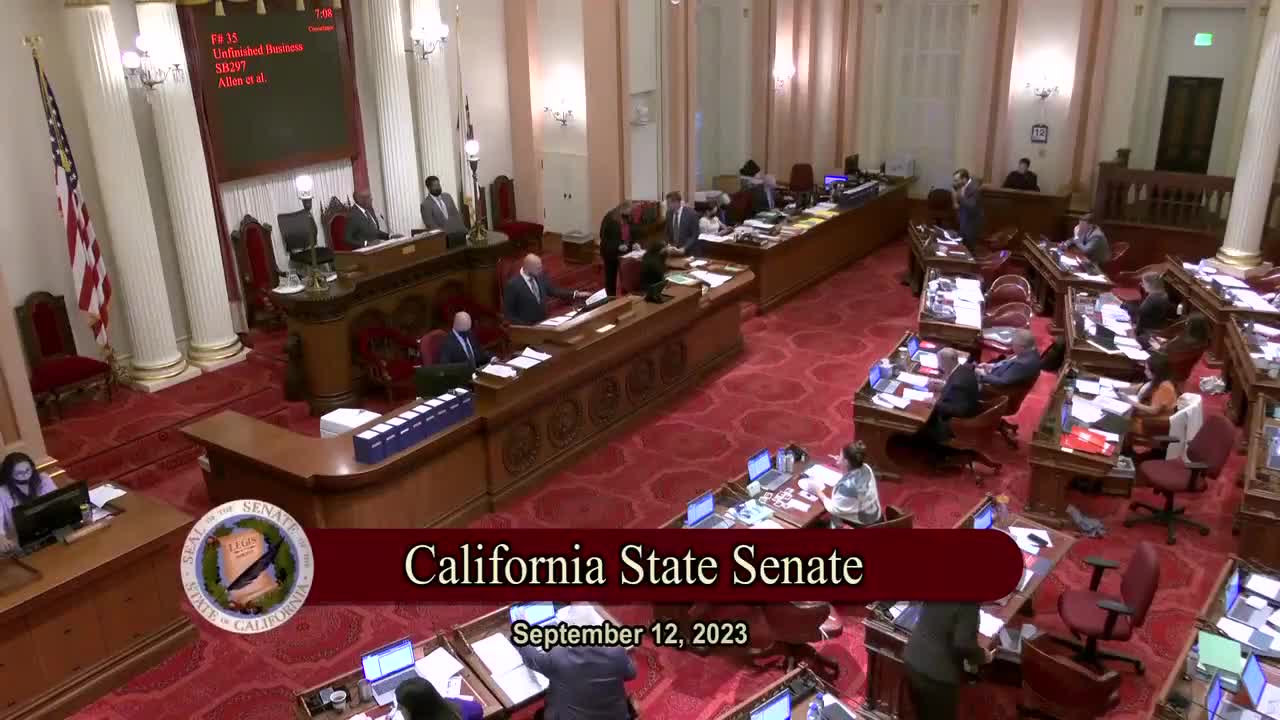 48SEC
Senate Floor
 41SEC
Assembly Floor
 11SEC
Assembly Floor
 31SEC
Assembly Floor
Bill Author