SB 465: Refugees.
- Session Year: 2023-2024
- House: Senate
- Latest Version Date: 2023-10-07
Current Status:
Passed
(2023-10-07: Chaptered by Secretary of State. Chapter 399, Statutes of 2023.)
Introduced
In Committee
First Chamber
In Committee
Second Chamber
Enacted
Existing law requires the State Department of Social Services to allocate federal funds appropriated for refugee social services programs to each eligible county, and authorizes the department, to the extent permitted by federal law, to contract with or award grants to a qualified nonprofit organization for the purpose of administering refugee social services within a county.
This bill would require each county human services agency to post a single page on its internet website with a list of resources available for refugees that includes, among other things, public transportation, financial literacy information, and affordable housing and rental assistance programs. By imposing new duties on counties, the bill would impose a state-mandated local program. The bill would also require the department to post a single page on its internet website with a list of available state resources available for refugees and a link to the internet website of each county human assistance agency.
The California Constitution requires the state to reimburse local agencies and school districts for certain costs mandated by the state. Statutory provisions establish procedures for making that reimbursement.
This bill would provide that, if the Commission on State Mandates determines that the bill contains costs mandated by the state, reimbursement for those costs shall be made pursuant to the statutory provisions noted above.
Existing law requires the State Department of Social Services to allocate federal funds appropriated for refugee social services programs to each eligible county, and authorizes the department, to the extent permitted by federal law, to contract with or award grants to a qualified nonprofit organization for the purpose of administering refugee social services within a county.
This bill would require the department each county human services agency to post a single page on its internet website with a list of resources available for refugees that includes, among other things, public transportation, financial literacy information, and affordable housing and rental assistance programs. By imposing new duties on counties, the bill would impose a state-mandated local program. The bill would also require the department to post a single page on its internet website with a list of available state resources available for refugees and a link to the internet website of each county human assistance agency.
The California Constitution requires the state to reimburse local agencies and school districts for certain costs mandated by the state. Statutory provisions establish procedures for making that reimbursement.
This bill would provide that, if the Commission on State Mandates determines that the bill contains costs mandated by the state, reimbursement for those costs shall be made pursuant to the statutory provisions noted above.
Existing law requires the State Department of Social Services to allocate federal funds appropriated for refugee social services programs to each eligible county, and authorizes the department, to the extent permitted by federal law, to contract with or award grants to a qualified nonprofit organization for the purpose of administering refugee social services within a county.
This bill would state the intent of the Legislature to enact legislation that would create a refugee centralization access department to facilitate access to resources for refugees.This bill would require the department to post on its internet website a list of resources available for refugees that includes, among other things, public transportation, financial literacy information, and affordable housing and rental assistance programs.
Existing law requires the State Department of Social Services to allocate federal funds appropriated for refugee social services programs to each eligible county, and authorizes the department, to the extent permitted by federal law, to contract with or award grants to a qualified nonprofit organization for the purpose of administering refugee social services within a county.
This bill would state the intent of the Legislature to enact legislation that would create a refugee centralization access department to facilitate access to resources for refugees.
(a)The State Department of Social Services shall post a single page on its internet website with a list of available state resources for refugees and a link to the internet website of each county human assistance agency.
(b)Each county human services agency shall post a single page on its internet website with a list of available resources for refugees that may include, but is not limited to, all of the following:
(1)Public transportation, including, but not limited to, schedule information and free or discounted rate information.
(2)Financial literacy information.
(3)Resources for establishing credit.
(4)Job orientation and training programs.
(5)Mental health services.
(6)Affordable housing and rental assistance programs.
SEC. 2.If the Commission on State Mandates determines that this act contains costs mandated by the state, reimbursement to local agencies and school districts for those costs shall be made pursuant to Part 7 (commencing with Section 17500) of Division 4 of Title 2 of the Government Code.
(a)The State Department of Social Services shall post a single page on its internet website with a list of available state resources available for refugees that includes, but it not limited to, all of the following: and a link to the internet website of each county human assistance agency.
(b)Each county human services agency shall post a single page on its internet website with a list of available resources for refugees that may include, but is not limited to, all of the following:
(a)(1)Public transportation, including, but not limited to, schedule information and free or discounted rate information for jurisdictions across the state. information.
(b)(2)Financial literacy information.
(c)(3)Resources for establishing credit.
(d)(4)Job orientation and training. training programs.
(e)(5)Mental health services from the state and counties. services.
(f)(6)Affordable housing and rental assistance programs available from the state and counties. programs.
(g)Information on how to get a special immigrant visa.SEC. 2.If the Commission on State Mandates determines that this act contains costs mandated by the state, reimbursement to local agencies and school districts for those costs shall be made pursuant to Part 7 (commencing with Section 17500) of Division 4 of Title 2 of the Government Code.
The State Department of Social Services shall post on its internet website a list of resources available for refugees that includes, but it not limited to, all of the following:
(a)Public transportation, including, but not limited to, schedule information and free or discounted rate information for jurisdictions across the state.
(b)Financial literacy information.
(c)Resources for establishing credit.
(d)Job orientation and training.
(e)Mental health services from the state and counties.
(f)Affordable housing and rental assistance programs available from the state and counties.
(g)Information on how to get a special immigrant visa.
SECTION 1.It is the intent of the Legislature to enact legislation that would create a refugee centralization access department to facilitate access to resources for refugees.It is the intent of the Legislature to enact legislation that would create a refugee centralization access department to facilitate access to resources for refugees.
|
Date
|
Status
|
|---|---|
| Oct 7, 2023 | Chaptered by Secretary of State. Chapter 399, Statutes of 2023. |
| Oct 7, 2023 | Approved by the Governor. |
| Sep 20, 2023 | Enrolled and presented to the Governor at 4:30 p.m. |
| Sep 12, 2023 | Assembly amendments concurred in. (Ayes 39. Noes 0. Page 2676.) Ordered to engrossing and enrolling. |
| Sep 11, 2023 | In Senate. Concurrence in Assembly amendments pending. |
| Sep 11, 2023 | Read third time. Passed. (Ayes 79. Noes 0. Page 3158.) Ordered to the Senate. |
| Sep 5, 2023 | Read second time. Ordered to third reading. |
| Sep 1, 2023 | From committee: Do pass. (Ayes 15. Noes 0.) (September 1). |
| Jul 12, 2023 | July 12 set for first hearing. Placed on APPR. suspense file. |
| Jun 8, 2023 | Read second time and amended. Re-referred to Com. on APPR. |
| Jun 7, 2023 | From committee: Do pass as amended and re-refer to Com. on APPR. (Ayes 7. Noes 0.) (June 6). |
| May 18, 2023 | Referred to Com. on HUM. S. |
| May 11, 2023 | In Assembly. Read first time. Held at Desk. |
| May 11, 2023 | Read third time. Passed. (Ayes 39. Noes 0. Page 1054.) Ordered to the Assembly. |
| May 9, 2023 | Read second time. Ordered to consent calendar. |
| May 8, 2023 | From committee: Be ordered to second reading pursuant to Senate Rule 28.8 and ordered to consent calendar. |
| May 1, 2023 | Set for hearing May 8. |
| Apr 25, 2023 | From committee: Do pass and re-refer to Com. on APPR with recommendation: To consent calendar. (Ayes 5. Noes 0. Page 876.) (April 24). Re-referred to Com. on APPR. |
| Apr 11, 2023 | Set for hearing April 24. |
| Mar 29, 2023 | Re-referred to Com. on HUMAN S. |
| Mar 20, 2023 | From committee with author's amendments. Read second time and amended. Re-referred to Com. on RLS. |
| Feb 22, 2023 | Referred to Com. on RLS. |
| Feb 14, 2023 | From printer. May be acted upon on or after March 16. |
| Feb 13, 2023 | Introduced. Read first time. To Com. on RLS. for assignment. To print. |
|
Date
|
Description
|
Location
|
Votes
|
|
|---|---|---|---|---|
| Sep 12, 2023 | Unfinished Business SB465 Wahab et al. Concurrence | Senate Floor |
Passed |
|
| Sep 11, 2023 | SB 465 Wahab Senate Third Reading By Jackson | Assembly Floor |
Passed |
|
| Sep 1, 2023 | Do pass. | Assembly Standing Committee on Appropriations |
Passed |
|
| Jun 6, 2023 | Do pass as amended and be re-referred to the Committee on [Appropriations] | Assembly Standing Committee on Human Services |
Passed |
|
| May 11, 2023 | Consent Calendar SB465 Wahab et al. | Senate Floor |
Passed |
|
| Apr 24, 2023 | Do pass, but first be re-referred to the Committee on [Appropriations] with the recommendation: To Consent Calendar | Senate Standing Committee on Human Services |
Passed |
This list shows positions taken on this bill by organizations on the date displayed, which is linked to the original source.
Positions by individuals are not included.
|
Organization
|
Position
|
Date
|
|---|---|---|
| California Health+advocates, Subsidiary of The California Primary Care Association | ** Support | |
| San Francisco Bay Area Rapid Transit District | ** Support |
SENATE RULES COMMITTEE Office of Senate Floor Analyses (916) 651-1520 Fax: (916) 327-4478 | SB 465 |
UNFINISHED BUSINESS
Bill No: SB 465
Author: Wahab (D) and Umberg (D), et al.
Amended: 6/8/23
Vote: 21
SENATE HUMAN SERVICES COMMITTEE: 5-0, 4/24/23
AYES: Alvarado-Gil, Ochoa Bogh, Hurtado, Menjivar, Wahab
SENATE APPROPRIATIONS COMMITTEE: Senate Rule 28.8
SENATE FLOOR: 39-0, 5/11/23 (Consent)
AYES: Allen, Alvarado-Gil, Archuleta, Ashby, Atkins, Becker, Blakespear, Bradford, Caballero, Cortese, Dahle, Dodd, Durazo, Eggman, Glazer, Gonzalez, Hurtado, Jones, Laird, Limón, McGuire, Menjivar, Min, Newman, Nguyen, Niello, Ochoa Bogh, Padilla, Portantino, Roth, Rubio, Seyarto, Skinner, Smallwood-Cuevas, Stern, Umberg, Wahab, Wiener, Wilk
NO VOTE RECORDED: Grove
ASSEMBLY FLOOR: 79-0, 9/11/23 - See last page for vote
SUBJECT: Refugees
SOURCE: Author
DIGEST:
This bill requires the California Department of Social Services (CDSS) to post a list of resources available to refugees and a link to the internet website of each county human assistance agency on its website.
Assembly Amendments
require the California Department of Social Services (CDSS) to post on its website a list of all available state resources for refugees, and requires county human services agencies, rather than CDSS, to post on their websites locally available resources.
ANALYSIS:
Existing law:
- Requires the CDSS to allocate federal funds for refugee social services programs to eligible counties, and, if CDSS exercises their discretion, to a qualified nonprofit organization, based on the number of refugees residing or receiving aid in the country. (WIC 13276)
- Defines “refugee social services” as English language and employment training, as funded through federal appropriations, among others. (WIC 13275(c))
- Requires that CDSS notify each eligible county’s board of supervisors of the funds available for refugee social services programs. (WIC 13277(a))
- Requires that a county administering refugee social services designate an agency responsible for developing and implementing a plan for the provision of services financed by refugee social services funds. (WIC 13277(b)(1))
- Mandates that the plan developed for implanting the provision of services financed by the refugee social services funds meet, at a minimum, the following requirements:
- A county planning process that is designed in such a way as to facilitate refugee participation and public input in that process, as ensured by the eligible county’s board of supervisors;
- A description of how the available funds will be used to provide services to refugees;
- A description of how services will be delivered to refugees receiving aid in each county; and,
- Priority consideration for funding refugee community-based organizations that demonstrate the capacity to implement the proposed programs, as provided. (WIC 13277(d))
- Establishes the federal Temporary Assistance for Needy Families (TANF) program that delivers cash aid and welfare-to-work (WTW) services to eligible families. (42 United States Code (U.S.C.) 601 et seq.)
- Requires that in California, TANF funding for WTW services be administered through the California Work Opportunity and Responsibility to Kids (CalWORKs) program. (WIC 11200 et seq.)
- Provides that the requirements established for the administration of refugee social service shall only be applicable as long as federal funds are available specifically for this purpose. (WIC 13282)
- Requires that CDSS ensure refugee cash assistance (RCA) is available to noncitizen victims of trafficking, domestic violence, and other serious crimes, as specified. Recipients of RCA aid shall be subject to the same work requirements as other participants with an exemption available if physical or psychological trauma impedes their ability to comply. Further mandates that assistance provided to individuals under this section be paid from state funds if federal funding is unavailable. (WIC 13283)
- Provides that, to the extent allowable by federal law, CDSS partner with a qualified nonprofit organization to administer the federally funded RCA within a county and also allows a county to continue the distribution of refugee aid while in contract with a qualified nonprofit organization to facilitate the benefit. (WIC 13284(a))
- Allows CDSS to contract with or issue grants to qualified nonprofit organizations to administer federal refugee cash assistance within a county and requires these qualified nonprofit organizations to report, monitor, or audit the services provided. (WIC 13284(b))
- Exempts a qualified nonprofit organization administering refugee cash assistance through a contract or grant from following the personal services contracting requirements and the Public Contract Code and the State Contracting Manual. (WIC 13285(a))
This bill:
- Requires CDSS to post on its website a list of available state resources available for refugees and a link to the internet website of each county human assistance agency.
- Requires each county human services agency to post a single page on its website with a list of available resources for refugees that may include, but is not limited to, the following:
- Public transportation, including schedule and fare information
- Financial literacy
- Resources for establishing credit
- Job orientation and training programs
- Mental health services
- Affordable housing and rental assistance programs.
Comments
According to the author, “At any given time, California is home to hundreds of refugees seeking assistance and resources following life-changing, and often traumatic, experiences. As programs for refugees such as the Afghan Support & Investment Program (ASIP) begin to expire, it is incumbent upon California to provide easy access to information on ongoing mental health services, public transportation programs, financial literacy training, affordable housing opportunities, and rental assistance programs, among other services, that are currently provided by the state and counties. SB 465 will centralize services for refugees so they can focus on the services they are in desperate need of.”
Refugees and Asylees A refugee is a person outside his or her country of nationality who is unable or unwilling to return to his or her country of nationality because of persecution or a well-founded fear of persecution on account of race, religion, nationality, membership in a particular social group, or political opinion. An asylee is a person who meets the definition of refugee and is already present in the United States or is seeking admission at a port of entry. Refugees are required to apply for Lawful Permanent Resident (“green card”) status one year after being admitted, and asylees may apply for green card status one year after their grant of asylum.
In 2021, the Biden administration announced it would admit 125,000 refugees under the U.S. Refugee Admissions Program, a massive increase following historic lows under the Trump administration and Covid-19 pandemic. The federal government only provides funding for 90 days of case management. This means that refugees who are settled in California—17,500 annually based on historic trends that are expected to hold—will have only 90 days to build their lives all over again. They must navigate the American health care system, find housing, secure employment, and establish a community for themselves, all while living in a country that is foreign to them.
Office of Refugee Resettlement (ORR) At the federal level, refugee benefits and supports are overseen by the Office of Refugee Resettlement (ORR). ORR was created through the Refugee Act of 1980 and provides benefits to the following groups: refugees, asylees, Cuban and Haitian entrants, Special Immigrant Visa holders, Amerasians, and Victims of Trafficking. ORR seeks to provide social services that help refugees become self-sufficient as quickly as possible, including programs focused on supporting mental health, navigating medical assistance, and addressing refugee specific health challenges.
ORR is not responsible for coordinating admissions of refugees, nor are they involved with allocating specific numbers of arrivals to specific cities and resettlement agencies. This is the responsibility of the State Department’s Bureau for Population, Refugees and Migration. ORR is responsible for this population from the date of the refugee’s arrival, when they provide shortterm cash and medical assistance, case management services, English as a Foreign Language Classes, job readiness and employment services, among other services.
Refugee Programs Bureau (RPB) In California the RPB, within CDSS, provides state-level leadership and coordination of programs and services to help refugees successfully resettle within California and assist with the integration of other vulnerable populations, including but not limited to: certified human trafficking victims, Afghan and Iraqi Special Immigrant Visa holders, asylees, Cuban and Haitian entrants, and unaccompanied refugee minors. The RPB oversees culturally-sensitive and linguistically-appropriate services that helps clients attain the skills they need to achieve selfsufficiency and successfully integrate. The RPB works to meet their goals by partnering with counties, resettlement agencies, school districts, and community based organizations.
Refugee Cash Assistance Program (RCA) The RCA program is a federally funded benefit, administered by states, that is extended to refugees who enter the United States and are not otherwise eligible for cash aid. The RCA program is available to refugees, asylees, Cuban/Haitian entrants, Special Immigrant Visa (SIV) holders, Amerasians and certified victims of human trafficking.
In California, the RCA program is facilitated through CDSS, specifically the RPB as part of their Refugee Resettlement programs. The RCA program provides employment services and other social services designed to assist refugees in becoming self-sufficient members of their communities. Specifically, the funds provided through RCA are meant to assist the refugee in meeting basic needs while allowing them time to resettle and obtain employment. Refugees may receive RCA for up to 8 months, beginning at their date of admission into the United States under the qualifying status, date of final grant of asylum, or date of certification of the ORR as a Victim of Trafficking.
To apply for the benefit, a refugee may access the application online through the benefitscal.com website or in person through local county welfare department. Additionally, in localities designated as refugee-impacted, or those counties with large refugee populations, the county may utilize a County Refugee Coordination (CRCs) to develop strategies for overseeing the funding of their local refugee services. CRCs may also act as the point of contact for recipients of the RCA benefit and assist those who need assistance in regard to their aid.
In the 2019 federal fiscal year, California received a total of $24,937,223 from ORR in Refugee Cash and Medical Assistance Program funding. However, this funding was provided for both the RCA program and the Unaccompanied Refugee Minors program. ORR does not provide a funding breakdown by program to the state. According to CDSS, from October 2018 to February 2020, the average RCA monthly caseload on a state wide bases was 555 recipients.
Related/Prior Legislation:
AB 2973 (Santiago, 2019) This bill would have created an agency within state government called the Immigrant and Refugee Affairs Agency (IRAA), would have created the Immigrant and Refugee Integration Fund within the State Treasury, and would have transferred to the IRAA any property of any office, agency or department that relates to functions transferred to the IRAA from other departments. This bill was held in the Assembly Appropriations Committee.
AB 1113 (Chiu 2019) This bill would have created an agency in state government called the Office of Immigrant and Refugee Affairs (OIRA), transferred to the OIRA any property of any office, agency or department that relates to functions transferred to the OIRA by the bill, established the Immigrant and Refugee Integration Fund in the State Treasury, the moneys of which are available to the secretary, upon appropriation by the Legislature, for the office to expend to defray its expenses. This bill would have required the OIRA, among other things, to assist other state agencies in evaluating their programs for accessibility and effectiveness in providing services to immigrants and refugees and to develop and implement grant programs that directly support capacity building and training among other state agencies and state and local communities through technical assistance, training and organization. This bill was held in the Assembly Appropriations Committee.
FISCAL EFFECT: Appropriation: No Fiscal Com.: Yes Local: Yes
According to the Assembly Appropriations Committee,
- CDSS estimates one-time General Fund (GF) costs in the range of $150,000 to $170,000 for one limited-term staff position to gather the material necessary to establish a single page on CDSS’s website listing state resources for refugees and a link to each county’s human assistance agency website. CDSS expects on-going costs for occasional updates to be minor.
- CDSS estimates one-time GF Information Technology costs of $81,200 in fiscal year 2023- 24 to assist counties with the website requirements.
- Local costs of an unknown amount for each county human services agency to create and maintain a single page on its website containing a list of available state and local resources for refugees. County costs will vary depending on the status of existing websites and the extent to which refugee services are currently provided. These costs are potentially reimbursable by the state, subject to a determination by the Commission on State Mandates
SUPPORT: (Verified 9/11/23)
California Health+Advocates, Subsidiary of The California Primary Care Association
San Francisco Bay Area Rapid Transit District
OPPOSITION: (Verified 9/11/23)
None received
ASSEMBLY FLOOR: 79-0, 9/11/23
AYES: Addis, Aguiar-Curry, Alanis, Alvarez, Arambula, Bains, Bauer-Kahan, Bennett, Berman, Boerner, Bonta, Bryan, Calderon, Juan Carrillo, Wendy Carrillo, Cervantes, Chen, Connolly, Megan Dahle, Davies, Dixon, Essayli, Flora, Mike Fong, Vince Fong, Friedman, Gabriel, Gallagher, Garcia, Gipson, Grayson, Haney, Hart, Holden, Hoover, Irwin, Jackson, Jones-Sawyer, Kalra, Lackey, Lee, Low, Lowenthal, Maienschein, Mathis, McCarty, McKinnor, Muratsuchi, Stephanie Nguyen, Ortega, Pacheco, Papan, Jim Patterson, Joe Patterson, Pellerin, Petrie-Norris, Quirk-Silva, Ramos, Rendon, Reyes, Luz Rivas, Rodriguez, Blanca Rubio, Santiago, Schiavo, Soria, Ta, Ting, Valencia, Villapudua, Waldron, Wallis, Ward, Weber, Wicks, Wilson, Wood, Zbur, Robert Rivas
NO VOTE RECORDED: Sanchez
Prepared by: Heather Hopkins / HUMAN S. / (916) 651-1524
9/11/23 19:56:50
**** END ****
SENATE THIRD READING
STR Bill Id:SB 465
Author:(Wahab and Umberg)
As Amended Ver:June 8, 2023
Majority vote
SUMMARY
Requires the California Department of Social Services (CDSS) to post a list of resources available to refugees and a link to the internet website of each county human assistance agency on its website.
Major Provisions
Requires each county human services agency to post the following resource information for refugees on a single page on each respective website:
- Public transportation, including but not limited to:
- Schedule information, and,
- Free or discounted rate information;
- Financial literacy information;
- Resources for establishing credit;
- Job orientation and training;
- Mental health services from the state and counties; and,
- Affordable state and counties housing and rental assistance programs available.
COMMENTS
Background: The Immigration and Nationality Act defines refugees as individuals who are unable or unwilling to return to their country of origin or nationality because of persecution or a well-founded fear of persecution based on race, religion, nationality, membership in a particular social group, or political opinion. The current nationwide refugee ceiling is 125,000 which is a substantial increase from the record low ceiling of only 18,000 in 2020. The Migration Policy Institute reports that as of March 2023, there have been 18,429 refugees admitted this year. California continues to be one of the top resettlement destinations for refugees. According to the California Immigrant Data Portal, 10% of refugees resettled in California. Sacramento, San Diego, and Los Angeles counties were the top destinations in the country for refugees in California.
The Refugee Act of 1980 (Act) was passed by Congress in order to standardize resettlement services for all refugees admitted to the United States (U.S.) The Act also provides the legal basis for the Office of Refugee Resettlement (ORR) to provide federal funding and services to refugees at state and local levels. The state is required to submit a State Plan every federal fiscal year describing how money is spent and what programs exist. The last State Plan was published in 2019 and included a plan for cash and medical assistance, language training, cash assistance, medical screening, social services, and unaccompanied minors. Refugee assistance programs and services are housed within CDSS and the California Department of Public Health (CDPH) and then services are delivered on the local level by counties, community based organization, and local health departments.
CDSS' Refugee Programs Bureau (Bureau) is responsible for coordinating benefits and services to refugees and has statewide administrative responsibility for the Cash Assistance for Immigrants (CAPI), Refugee Cash Assistance and Employment Services, Unaccompanied Refugee Minors Program, Trafficking and Crime Victims Assistance Program, and the Repatriation Program.
In areas where a larger population of refugees reside, CDSS designates these counties as "refugee-impacted". Counties that have received 400 or more refugee arrivals during the most recent five-year period are considered "refugee-impacted." Refugee-impacted counties have a county refugee coordinator (CRC) that develops strategies and operating procedures, and oversees funding for their county's refugee services and programs. The designated counties are currently listed on CDSS' website as: Alameda, Los Angeles, Orange, Sacramento, San Diego, San Francisco, Santa Clara, and Stanislaus. According to a CRC fact sheet published by CDSS:
The CRC is responsible for planning, coordinating and overseeing the delivery of public social services in the county to assist refugees in becoming economically self-sufficient. The CRC has knowledge and experience in both refugee policies and issues, and public assistance programs and services. The CRC works with local governmental and non-governmental organizations to ensure necessary services are available to refugees. The CRC manages Office of Refugee Resettlement, Refugee Social Services, Targeted Assistance (TA), and TA discretionary grant funds allocated to counties by the Refugee Programs Bureau.
The CRCs regularly participate in local refugee forums and community meetings to address concerns in an ongoing effort to improve the provision of services for the refugee population.
The Bureau currently has a landing page on CDSS' website that includes mission, population served, duties, population-specific information, grant information, as well as an area for "other resources" that provides a space for information that does not squarely fit into the former mentioned subject areas. The landing page also includes a long list of relevant links for refugees such as food assistance, Welcome Corps, maps, homelessness fact sheets, the naturalization process and a resource guide.
CDPH oversees the Office of Refugee Health (ORH). ORH coordinates the Refugee Health Assessment Program and the Refugee Medical Assistance Program. CDPH's website provides information for health clinics, mental health, employment, legal, housing, and county specific resources.
Equity Implications. Refugees are fleeing from unsafe and traumatic environments, and as a result, need more assistance and services to get back on their feet. Over the last 10 years, of all the refugees fleeing political or civil unrest in their counties of origin to come to the U.S., 10% settle in California. In 2021, 986 refugees settled in California. In 2018, CDPH reported that, "even with a historically low number of arrivals, the data continues to show significant disparities in regards to infectious disease incidence, chronic disease indicators and health risk factors."
In 2019, ORR's Annual Survey of Refugees reported: 77% of refugees had full-time employment with $13.42 as the average hourly wage, 54.1% of refugees possessed continuous medical coverage throughout previous 12 months, and 20.2% of refugees were homeowners.
Providing clear, succinct, and accessible information to California's refugee population is important to allow stability and ensure basic human needs are met
According to the Author
"At any given time, California is home to hundreds of refugees seeking assistance and resources following life-changing, and often traumatic experiences. As programs for refugees, such as the Afghan Support & Investment Program (ASIP), begin to expire, it is incumbent upon California to provide easy access to information on ongoing mental health services, public transportation programs, financial literacy training, affordable housing opportunities, and rental assistance programs, among other services, that are currently provided by the state and counties. [This bill] will centralize services for refugees so they can focus on the services they are in desperate need of."
Arguments in Support
According to California Health+ Advocates, "At any given time, California is home to hundreds of refugees seeking assistance and resources following life-changing, and often traumatic, experiences. As programs for refugees such as the Afghan Support & Investment Program begin to expire, it is incumbent upon California to provide easy access to information on ongoing mental health services, public transportation programs, financial literacy training, affordable housing opportunities, and rental assistance programs, among other services, that are currently provided by the state and counties. It is important to streamline access to information for immigrant populations, especially those with unique challenges. Having information for both state and county level services at an easily accessible location on the CDSS website may well help refugees to know what resources are available to them and how to access these resources most quickly."
Arguments in Opposition
No opposition on file
FISCAL COMMENTS
According to the Assembly Appropriations Committee on July 10, 2023:
- CDSS estimates one-time General Fund (GF) costs in the range of $150,000 to $170,000 for one limited-term staff position to gather the material necessary to establish a single page on CDSS's website listing state resources for refugees and a link to each county's human assistance agency website. CDSS expects on-going costs for occasional updates to be minor.
- CDSS estimates one-time GF Information Technology costs of $81,200 in fiscal year 2023-24 to assist counties with the website requirements.
- Local costs of an unknown amount for each county human services agency to create and maintain a single page on its website containing a list of available state and local resources for refugees. County costs will vary depending on the status of existing websites and the extent to which refugee services are currently provided. These costs are potentially reimbursable by the state, subject to a determination by the Commission on State Mandates.
VOTES
SENATE FLOOR: 39-0-1
YES: Allen, Alvarado-Gil, Archuleta, Ashby, Atkins, Becker, Blakespear, Bradford, Caballero, Cortese, Dahle, Dodd, Durazo, Eggman, Glazer, Gonzalez, Hurtado, Jones, Laird, Limón, McGuire, Menjivar, Min, Newman, Nguyen, Niello, Ochoa Bogh, Padilla, Portantino, Roth, Rubio, Seyarto, Skinner, Smallwood-Cuevas, Stern, Umberg, Wahab, Wiener, Wilk
ABS, ABST OR NV: Grove
ASM HUMAN SERVICES: 7-0-1
YES: Jackson, Alanis, Arambula, Bonta, Bryan, Calderon, Garcia
ABS, ABST OR NV: Sanchez
ASM APPROPRIATIONS: 15-0-1
YES: Holden, Megan Dahle, Bryan, Calderon, Wendy Carrillo, Dixon, Mike Fong, Hart, Lowenthal, Mathis, Papan, Pellerin, Soria, Weber, Wilson
ABS, ABST OR NV: Sanchez
UPDATED
VERSION: June 8, 2023
CONSULTANT: Alexandria Smith / HUM. S. / (916) 319-2089 FN: 0001600
Date of Hearing: July 12, 2023
ASSEMBLY COMMITTEE ON APPROPRIATIONS
Chris Holden, Chair
SBPCA Bill Id:SB 465
Author:(Wahab) – As Amended Ver:June 8, 2023
Policy Committee: | Human Services | Vote: | 7 - 0 |
|
| ||
|
|
Urgency: No State Mandated Local Program: Yes Reimbursable: Yes
SUMMARY:
This bill requires the California Department of Social Services (CDSS) to post on its website a list of available state resources for refugees and a link to the website of each county human assistance agency. This bill also requires each county human services agency to post on its website a list of available resources for refugees.
Specifically, this bill:
- Requires CDSS to post a single page on its internet website with a list of available state resources for refugees and a link to the website of each county human assistance agency.
- Requires each county human services agency to post a single page on its internet website with a list of available resources for refugees that may include, but is not limited to, all of the following:
- Public transportation, including but not limited to, schedule information and free or discounted rate information.
- Financial literacy information.
- Resources for establishing credit.
- Job orientation and training programs.
- Mental health services.
- Affordable housing and rental assistance programs.
FISCAL EFFECT:
- CDSS estimates one-time General Fund (GF) costs in the range of $150,000 to $170,000 for one limited-term staff position to gather the material necessary to establish a single page on CDSS’s website listing state resources for refugees and a link to each county’s human assistance agency website. CDSS expects on-going costs for occasional updates to be minor.
- CDSS estimates one-time GF Information Technology costs of $81,200 in fiscal year 2023-24 to assist counties with the website requirements.
- Local costs of an unknown amount for each county human services agency to create and maintain a single page on its website containing a list of available state and local resources for refugees. County costs will vary depending on the status of existing websites and the extent to which refugee services are currently provided. These costs are potentially reimbursable by the state, subject to a determination by the Commission on State Mandates.
COMMENTS:
- Purpose. The author seeks to make it easier for refugees to become aware of state and local services available to them by having lists of services and links to county resources centralized and more prominently placed on CDSS and county websites. According to the author:
At any given time, California is home to hundreds of refugees seeking assistance and resources following life-changing, and often traumatic experiences. As programs for refugees begin to expire, it is incumbent upon California to provide easy access to information on ongoing mental health services, public transportation programs, financial literacy training, affordable housing opportunities, and rental assistance programs, among other services, currently provided by the state and counties. [This bill] will centralize services for refugees so they can focus on the services they are in desperate need of.
- Background.
Refugee Services. The federal Office of Refugee Resettlement (ORR) provides federal funding to states and localities for refugee services. To secure funding, a state must submit a State Plan every federal fiscal year describing its programs and how money is used. The most recent California State Plan included a plan for cash and medical assistance, language training, medical screening, social services, and unaccompanied minors. In California, refugee assistance programs and services are housed within CDSS and the California Department of Public Health (CDPH) and are delivered at the local level by counties, community based organizations, and local health departments. Local services vary by county.
CDPH oversees the Office of Refugee Health (ORH). ORH coordinates the Refugee Health Assessment Program and the Refugee Medical Assistance Program. CDPH’s website provides information on health clinics, mental health services, employment, legal assistance, housing, and county specific resources.
CDSS’ Refugee Programs Bureau (Bureau) is responsible for coordinating benefits and services to refugees and has statewide administrative responsibility for the Cash Assistance for Immigrants (CAPI), Refugee Cash Assistance and Employment Services, Unaccompanied Refugee Minors Program, Trafficking and Crime Victims Assistance Program, and the Repatriation Program.
The Bureau has a landing page on CDSS’ website that includes information, resources, and links to services for refugees, including by specific population. The page also includes links to county refugee coordinators in the state’s eight CDSS-designated “refugee-impacted” counties (Alameda, Los Angeles, Orange, Sacramento, San Diego, San Francisco, Santa Clara, and Stanislaus) as well as links to other counties’ refugee programs and to each county’s general website.
This bill requires CDSS to additionally provide a list of available state resources for refugees and direct links to each county human services page on a single page on its website. This bill also requires each county to have a single page on its website listing available resources for refugees.
Refugees in California. The Immigration and Nationality Act defines refugees as individuals who are unable or unwilling to return to their country of origin or nationality because of persecution or a well-founded fear of persecution based on race, religion, nationality, membership in a particular social group, or political opinion. The California Immigrant Data Portal indicates from 2010 to 2020, inclusive, 10% of U.S. refugees resettled in California. In 2021, 986 refugees settled in California. Of those, 278 were from Afghanistan and 197 from Ukraine. In 2022, 1,194 refugees settled in California with 178 coming from Afghanistan, 392 from Ukraine, and 568 from Eastern Europe. During 2017 to 2021, Sacramento, San Diego, and Los Angeles counties were the top destinations for refugees in California.
Analysis Prepared by: Jennifer Swenson / APPR. / (916) 319-2081
Date of Hearing: June 6, 2023
ASSEMBLY COMMITTEE ON HUMAN SERVICES
Corey A. Jackson, Chair
SBPCA Bill Id:SB 465
Author:(Wahab) – As Amended Ver:March 20, 2023
SENATE VOTE: 39-0
SUBJECT: Refugees
SUMMARY: Requires the California Department of Social Services (CDSS) to post a list of resources available to refugees on its website. Specifically, this bill:
- Requires CDSS to post the following resource information for refugees on its website:
- Public transportation, including but not limited to:
- Schedule information, and,
- Free or discounted rate information for jurisdictions across the state;
- Financial literacy information;
- Resources for establishing credit;
- Job orientation and training;
- Mental health services from the state and counties;
- Affordable state and counties housing and rental assistance programs available; and,
- Information on how to get a special immigrant visa.
- Public transportation, including but not limited to:
EXISTING LAW:
- Requires CDSS to allocate federal funds for refugee social services programs to eligible counties, and, if CDSS exercises their discretion, to a qualified nonprofit organization, based on the number of refugees residing or receiving aid in the country. (Welfare and Institution Code Section [WIC] 13276)
- Defines “refugee social services” as English language and employment training, as funded through federal appropriations. (WIC 13275(c))
- Requires that CDSS notify each eligible county’s board of supervisors of the funds available for refugee social services programs. (WIC 13277(a))
- Requires refugee social services programs be available to recipients of refugee cash assistance and refugees receiving county general assistance in eligible counties. (WIC 13279)
FISCAL EFFECT: According to the Senate Appropriations Committee, pursuant to Senate Rule 28.8, this bill would result in negligible state costs.
COMMENTS:
Background: The Immigration and Nationality Act defines refugees as individuals who are unable or unwilling to return to their country of origin or nationality because of persecution or a well-founded fear of persecution based on race, religion, nationality, membership in a particular social group, or political opinion. The current nationwide refugee ceiling is 125,000 which is a substantial increase from the record low ceiling of only 18,000 in 2020. The Migration Policy Institute reports that as of March 2023, there have been 18,429 refugees admitted this year. California continues to be one of the top resettlement destinations for refugees. According to the California Immigrant Data Portal, 10% of refugees resettled in California. Sacramento, San Diego, and Los Angeles counties were the top destinations in the country for refugees in California.
The Refugee Act of 1980 (Act) was passed by Congress in order to standardize resettlement services for all refugees admitted to the United States (U.S.) The Act also provides the legal basis for the Office of Refugee Resettlement (ORR) to provide federal funding and services to refugees at state and local levels. The state is required to submit a State Plan every federal fiscal year describing how money is spent and what programs exist. The last State Plan was published in 2019 and included a plan for cash and medical assistance, language training, cash assistance, medical screening, social services, and unaccompanied minors. Refugee assistance programs and services are housed within CDSS and the California Department of Public Health (CDPH) and then services are delivered on the local level by counties, community based organization, and local health departments.
CDSS’ Refugee Programs Bureau (Bureau) is responsible for coordinating benefits and services to refugees and has statewide administrative responsibility for the Cash Assistance for Immigrants (CAPI), Refugee Cash Assistance and Employment Services, Unaccompanied Refugee Minors Program, Trafficking and Crime Victims Assistance Program, and the Repatriation Program.
In areas where a larger population of refugees reside, CDSS designates these counties as “refugee-impacted”. Counties that have received 400 or more refugee arrivals during the most recent five-year period are considered “refugee-impacted.” Refugee-impacted counties have a county refugee coordinator (CRC) that develops strategies and operating procedures, and oversees funding for their county's refugee services and programs. The designated counties are currently listed on CDSS’ website as: Alameda, Los Angeles, Orange, Sacramento, San Diego, San Francisco, Santa Clara, and Stanislaus. According to a CRC fact sheet published by CDSS:
“The CRC is responsible for planning, coordinating and overseeing the delivery of public social services in the county to assist refugees in becoming economically self-sufficient. The CRC has knowledge and experience in both refugee policies and issues, and public assistance programs and services. The CRC works with local governmental and non-governmental organizations to ensure necessary services are available to refugees. The CRC manages Office of Refugee Resettlement, Refugee Social Services, Targeted Assistance (TA), and TA discretionary grant funds allocated to counties by the Refugee Programs Bureau.
The CRCs regularly participate in local refugee forums and community meetings to address concerns in an ongoing effort to improve the provision of services for the refugee population.”
The Bureau currently has a landing page on CDSS’ website that includes mission, population served, duties, population-specific information, grant information, as well as an area for “other resources” that provides a space for information that does not squarely fit into the former mentioned subject areas. The landing page also includes a long list of relevant links for refugees such as food assistance, Welcome Corps, maps, homelessness fact sheets, the naturalization process and a resource guide.
CDPH oversees the Office of Refugee Health (ORH). ORH coordinates the Refugee Health Assessment Program and the Refugee Medical Assistance Program. CDPH’s website provides information for health clinics, mental health, employment, legal, housing, and county specific resources.
Author’s Statement: According to the Author, “At any given time, California is home to hundreds of refugees seeking assistance and resources following life-changing, and often traumatic experiences. As programs for refugees, such as the Afghan Support & Investment Program (ASIP), begin to expire, it is incumbent upon California to provide easy access to information on ongoing mental health services, public transportation programs, financial literacy training, affordable housing opportunities, and rental assistance programs, among other services, that are currently provided by the state and counties. [This bill] will centralize services for refugees so they can focus on the services they are in desperate need of.”
Equity Implications: Refugees are fleeing from unsafe and traumatic environments, and as a result, need more assistance and services to get back on their feet. Over the last 10 years, of all the refugees fleeing political or civil unrest in their counties of origin to come to the U.S., 10% settle in California. In 2021, 986 refugees settled in California. In 2018, CDPH reported that, “even with a historically low number of arrivals, the data continues to show significant disparities in regards to infectious disease incidence, chronic disease indicators and health risk factors.”
In 2019, ORR’s Annual Survey of Refugees reported: 77% of refugees had full-time employment with $13.42 as the average hourly wage, 54.1% of refugees possessed continuous medical coverage throughout previous 12 months, and 20.2% of refugees were homeowners.
Providing clear, succinct, and accessible information to California’s refugee population is important to allow stability and ensure basic human needs are met.
Policy Considerations: This bill requires a number of different topics be posted on CDSS’ website that range from financial literacy, public transportation, mental health services, housing, and visa information. Currently, information is posted on various different websites such as CDSS, CDPH, and counties which can be confusing and unclear. Services vary from county to county and those seeking services might benefit further from being directed to each county. As such, in order to accomplish the goal of creating a central location for refugees to better navigate available services, the author may wish to amend their bill to direct CDSS to create a single landing page directing refugees to their respective local welfare departments.
Proposed Committee Amendments: The Committee proposes amendments to address policy considerations stated above to do the following:
- Require CDSS to create a single page on their website for refugees with links to county welfare websites.
- Require counties to post information and resources for refugees.
PRIOR AND RELATED BILLS:
AB 1536 (Carrillo) of 2023, would expand eligibility for CAPI to all individuals regardless of immigration status; deletes obsolete language; deletes requirements to apply for Supplemental Security Income/State Supplementary Program for the Aged, Blind, and Disabled (SSI/SSP) in order to qualify for CAPI. AB 1536 is awaiting referral in Senate Rules Committee.
AB 2973 (Santiago) of 2019, would have created an agency within state government called the “Immigrant and Refugee Affairs Agency” (IRAA), would have created the “Immigrant and Refugee Integration Fund” within the State Treasury, and would have transferred to the IRAA any property of any office, agency or department that relates to functions transferred to the IRAA from other departments. AB 2973 was held on the Assembly Appropriations Committee suspense file.
REGISTERED SUPPORT / OPPOSITION:
Support
None on file
Opposition
None on file
Analysis Prepared by: Alexandria Smith / HUM. S. / (916) 319-2089
SENATE RULES COMMITTEE Office of Senate Floor Analyses (916) 651-1520 Fax: (916) 327-4478 | SB 465 |
CONSENT
Bill No: SB 465
Author: Wahab (D) and Umberg (D), et al.
Amended: 3/20/23
Vote: 21
SENATE HUMAN SERVICES COMMITTEE: 5-0, 4/24/23
AYES: Alvarado-Gil, Ochoa Bogh, Hurtado, Menjivar, Wahab
SENATE APPROPRIATIONS COMMITTEE: Senate Rule 28.8
SUBJECT: Refugees
SOURCE: Author
DIGEST:
This bill requires the California Department of Social Services (CDSS) to post on its website a list of resources available for refugees.
ANALYSIS:
Existing law:
- Requires the CDSS to allocate federal funds for refugee social services programs to eligible counties, and, if CDSS exercises their discretion, to a qualified nonprofit organization, based on the number of refugees residing or receiving aid in the country. (Welfare and Institution Code (WIC) 13276)
- Defines “refugee social services” as English language and employment training, as funded through federal appropriations, among others. (WIC 13275(c))
- Requires that CDSS notify each eligible county’s board of supervisors of the funds available for refugee social services programs. (WIC 13277(a))
- Requires that a county administering refugee social services designate an agency responsible for developing and implementing a plan for the provision of services financed by refugee social services funds. (WIC 13277(b)(1))
- Mandates that the plan developed for implanting the provision of services financed by the refugee social services funds meet, at a minimum, the following requirements:
- A county planning process that is designed in such a way as to facilitate refugee participation and public input in that process, as ensured by the eligible county’s board of supervisors;
- A description of how the available funds will be used to provide services to refugees;
- A description of how services will be delivered to refugees receiving aid in each county; and,
- Priority consideration for funding refugee community-based organizations that demonstrate the capacity to implement the proposed programs, as provided. (WIC 13277(d))
- Provides that the requirements established for the administration of refugee social service shall only be applicable as long as federal funds are available specifically for this purpose. (WIC 13282)
- Allows CDSS to contract with or issue grants to qualified nonprofit organizations to administer federal refugee cash assistance within a county and requires these qualified nonprofit organizations to report, monitor, or audit the services provided. (WIC 13284(b))
This bill requires CDSS to post on its website a list of resources available for refugees that includes, but is not limited to, information regarding: public transportation, including schedule and fare information; financial literacy; resources for establishing credit; job orientation and training; mental health services from the state and counties; and affordable housing and rental assistance programs available from the state and counties.
Comments
According to the author, “At any given time, California is home to hundreds of refugees seeking assistance and resources following life-changing, and often traumatic, experiences. As programs for refugees such as the Afghan Support & Investment Program (ASIP) begin to expire, it is incumbent upon California to provide easy access to information on ongoing mental health services, public transportation programs, financial literacy training, affordable housing opportunities, and rental assistance programs, among other services, that are currently provided by the state and counties. SB 465 will centralize services for refugees so they can focus on the services they are in desperate need of.”
Refugees and Asylees A refugee is a person outside his or her country of nationality who is unable or unwilling to return to his or her country of nationality because of persecution or a well-founded fear of persecution on account of race, religion, nationality, membership in a particular social group, or political opinion. An asylee is a person who meets the definition of refugee and is already present in the United States or is seeking admission at a port of entry. Refugees are required to apply for Lawful Permanent Resident (“green card”) status one year after being admitted, and asylees may apply for green card status one year after their grant of asylum.
In 2021, the Biden administration announced it would admit 125,000 refugees under the U.S. Refugee Admissions Program, a massive increase following historic lows under the Trump administration and Covid-19 pandemic. The federal government only provides funding for 90 days of case management. This means that refugees who are settled in California—17,500 annually based on historic trends that are expected to hold—will have only 90 days to build their lives all over again. They must navigate the American health care system, find housing, secure employment, and establish a community for themselves, all while living in a country that is foreign to them.
Office of Refugee Resettlement (ORR) At the federal level, refugee benefits and supports are overseen by the Office of Refugee Resettlement (ORR). ORR was created through the Refugee Act of 1980 and provides benefits to the following groups: refugees, asylees, Cuban and Haitian entrants, Special Immigrant Visa holders, Amerasians, and Victims of Trafficking. ORR seeks to provide social services that help refugees become self-sufficient as quickly as possible, including programs focused on supporting mental health, navigating medical assistance, and addressing refugee specific health challenges.
ORR is not responsible for coordinating admissions of refugees, nor are they involved with allocating specific numbers of arrivals to specific cities and resettlement agencies. This is the responsibility of the State Department’s Bureau for Population, Refugees and Migration. ORR is responsible for this population from the date of the refugee’s arrival, when they provide short-term cash and medical assistance, case management services, English as a Foreign Language Classes, job readiness and employment services, among other services.
Refugee Programs Bureau (RPB) In California the RPB, within CDSS, provides state-level leadership and coordination of programs and services to help refugees successfully resettle within California and assist with the integration of other vulnerable populations, including but not limited to: certified human trafficking victims, Afghan and Iraqi Special Immigrant Visa holders, asylees, Cuban and Haitian entrants, and unaccompanied refugee minors. The RPB oversees culturally-sensitive and linguistically-appropriate services that helps clients attain the skills they need to achieve self-sufficiency and successfully integrate. The RPB works to meet their goals by partnering with counties, resettlement agencies, school districts, and community based organizations.
RPB oversees the following programs: the California Newcomer Education and Well-Being Project; the Refugee Resettlement Program, including RCA, Refugee Medical Assistance, and Refugee Support Services; the Refugee School Impact Program; the Repatriation Program; the Services to Older Refugees Program; the Trafficking and Crime Victims Assistance Program; the Unaccompanied Refugee Minors Program; and the Youth Mentoring Project.
Refugee Cash Assistance Program (RCA) The RCA program is a federally funded benefit, administered by states, that is extended to refugees who enter the United States and are not otherwise eligible for cash aid. The RCA program is available to refugees, asylees, Cuban/Haitian entrants, Special Immigrant Visa (SIV) holders, Amerasians and certified victims of human trafficking.
In California, the RCA program is facilitated through CDSS, specifically the RPB as part of their Refugee Resettlement programs. The RCA program provides employment services and other social services designed to assist refugees in becoming self-sufficient members of their communities. Specifically, the funds provided through RCA are meant to assist the refugee in meeting basic needs while allowing them time to resettle and obtain employment. Refugees may receive RCA for up to 8 months, beginning at their date of admission into the United States under the qualifying status, date of final grant of asylum, or date of certification of the ORR as a Victim of Trafficking.
To apply for the benefit, a refugee may access the application online through the benefitscal.com website or in person through local county welfare department. Additionally, in localities designated as refugee-impacted, or those counties with large refugee populations, the county may utilize a County Refugee Coordination (CRCs) to develop strategies for overseeing the funding of their local refugee services. CRCs may also act as the point of contact for recipients of the RCA benefit and assist those who need assistance in regard to their aid.
In the 2019 federal fiscal year, California received a total of $24,937,223 from ORR in Refugee Cash and Medical Assistance Program funding. However, this funding was provided for both the RCA program and the Unaccompanied Refugee Minors program. ORR does not provide a funding breakdown by program to the state. According to CDSS, from October 2018 to February 2020, the average RCA monthly caseload on a state wide bases was 555 recipients.
Refugees in California Over the last 10 years, of all the refugees fleeing political or civil unrest in their counties of origin to come to the United States, 10% settle in California. In 2021, 986 refugees settled in California. Of those, 278 were from Afghanistan and 197 from Ukraine. In 2022, 1194 refugees settled in California – with 178 coming from Afghanistan, 392 from Ukraine, and 568 from Eastern Europe as a whole. Despite California having a long-standing commitment to refugees, with the affordable housing shortage and high cost of living, many refugees are finding it difficult to remain in the state. This bill would require CDSS to put refugee resources on their website in an attempt to make such resources more easily accessible to the refugee population.
Related/Prior Legislation:
AB 2973 (Santiago, 2019) would have created an agency within state government called the Immigrant and Refugee Affairs Agency (IRAA), would have created the Immigrant and Refugee Integration Fund within the State Treasury, and would have transferred to the IRAA any property of any office, agency or department that relates to functions transferred to the IRAA from other departments. The bill was held in the Assembly Appropriations Committee.
AB 1113 (Chiu 2019) would have created an agency in state government called the Office of Immigrant and Refugee Affairs (OIRA), transferred to the OIRA any property of any office, agency or department that relates to functions transferred to the OIRA by the bill, established the Immigrant and Refugee Integration Fund in the State Treasury, the moneys of which are available to the secretary, upon appropriation by the Legislature, for the office to expend to defray its expenses. The bill would have required the OIRA, among other things, to assist other state agencies in evaluating their programs for accessibility and effectiveness in providing services to immigrants and refugees and to develop and implement grant programs that directly support capacity building and training among other state agencies and state and local communities through technical assistance, training and organization. The bill was held in the Assembly Appropriations Committee.
FISCAL EFFECT: Appropriation: No Fiscal Com.: Yes Local: No
SUPPORT: (Verified 5/8/23)
None received
OPPOSITION: (Verified 5/8/23)
None received
Prepared by: Heather Hopkins / HUMAN S. / (916) 651-1524
5/10/23 15:29:12
**** END ****
SENATE COMMITTEE ON HUMAN SERVICES
Senator Alvarado-Gil, Chair
2023 - 2024 Regular
Bill No: | SB 465 | ||
Author: | Wahab | ||
Version: | March 20, 2023 | Hearing Date: | April 24, 2023 |
Urgency: | No | Fiscal: | Yes |
Consultant: | Heather Hopkins | ||
Subject: Refugees
SUMMARY
This bill requires the California Department of Social Services (CDSS) to post on its website a list of resources available for refugees.
ABSTRACT
Existing Law:
- Requires the CDSS to allocate federal funds for refugee social services programs to eligible counties, and, if CDSS exercises their discretion, to a qualified nonprofit organization, based on the number of refugees residing or receiving aid in the country. (WIC 13276)
- Defines “eligible county” as a county or city designated as impacted through the use of a formula developed by CDSS based on refugee arrivals in the county during the preceding 60-month period for which CDSS has data. (WIC 13275(a))
- Defines “qualified nonprofit organization” as a nonprofit organization that is exempt from federal income taxation and that satisfies any additional eligibility criteria established by CDSS. (WIC 13275(b))
- Defines “refugee social services” as English language and employment training, as funded through federal appropriations, among others. (WIC 13275(c))
- Requires that CDSS notify each eligible county’s board of supervisors of the funds available for refugee social services programs. (WIC 13277(a))
- Requires that a county administering refugee social services designate an agency responsible for developing and implementing a plan for the provision of services financed by refugee social services funds. (WIC 13277(b)(1))
- Mandates that the plan developed for implanting the provision of services financed by the refugee social services funds meet, at a minimum, the following requirements:
- A county planning process that is designed in such a way as to facilitate refugee participation and public input in that process, as ensured by the eligible county’s board of supervisors;
- A description of how the available funds will be used to provide services to refugees;
- A description of how services will be delivered to refugees receiving aid in each county; and,
- Priority consideration for funding refugee community-based organizations that demonstrate the capacity to implement the proposed programs, as provided. (WIC 13277(d))
- Establishes the federal Temporary Assistance for Needy Families (TANF) program that delivers cash aid and welfare-to-work (WTW) services to eligible families. (42 United States Code (U.S.C.) 601 et seq.)
- Requires that in California, TANF funding for WTW services be administered through the California Work Opportunity and Responsibility to Kids (CalWORKs) program. (WIC 11200 et seq.)
- Provides that the requirements established for the administration of refugee social service shall only be applicable as long as federal funds are available specifically for this purpose. (WIC 13282)
- Requires that CDSS ensure refugee cash assistance (RCA) is available to noncitizen victims of trafficking, domestic violence, and other serious crimes, as specified. Recipients of RCA aid shall be subject to the same work requirements as other participants with an exemption available if physical or psychological trauma impedes their ability to comply. Further mandates that assistance provided to individuals under this section be paid from state funds if federal funding is unavailable. (WIC 13283)
- Provides that, to the extent allowable by federal law, CDSS partner with a qualified nonprofit organization to administer the federally funded RCA within a county and also allows a county to continue the distribution of refugee aid while in contract with a qualified nonprofit organization to facilitate the benefit. (WIC 13284(a))
- Allows CDSS to contract with or issue grants to qualified nonprofit organizations to administer federal refugee cash assistance within a county and requires these qualified nonprofit organizations to report, monitor, or audit the services provided. (WIC 13284(b))
- Exempts a qualified nonprofit organization administering refugee cash assistance through a contract or grant from following the personal services contracting requirements and the Public Contract Code and the State Contracting Manual. (WIC 13285(a))
- Requires the federal funds for Refugee Social Services that are allocated to county welfare departments for Title XX social services be allocated to each county in the same proportion that refugees on aid in each county bear to the total refugees on aid in the state. Provides that the allocation be developed from the caseload statistics from the previous fiscal year of the following programs: time-eligible and time-expired refugees in the Aid to Families with Dependent Children (AFDC) program; General Assistance; the Refugee Cash Assistance Program; and, the Refugee Demonstration Program. (WIC 13008 et seq.)
- Prohibits the federal government from returning to their home countries people whose life or freedom would be threatened because of the person’s race, religion, nationality, membership in a particular social group, or political opinion. (8 U.S.C. 1231(b)(3))
- Provides for the protection of people who have fled persecution on account of race, religion, nationality, political opinion, or membership in a particular social group. (UN General Assembly, Universal Declaration of Human Rights, Dec. 10, 1948, 217A(III), Art. 14)
- Protects all asylum seekers by prohibiting the federal government from returning to their home countries people who have fled persecution on account of race, religion, nationality, political opinion, or membership in a particular social group. (8 U.S.C. Sec. 1101(a)(42)(A))
This Bill:
- Requires CDSS to post on its website a list of resources available for refugees that includes, but is not limited to, information regarding:
- Public transportation, including schedule and fare information
- Financial literacy
- Resources for establishing credit
- Job orientation and training
- Mental health services from the state and counties
- Affordable housing and rental assistance programs available from the state and counties.
- Public transportation, including schedule and fare information
FISCAL IMPACT
This bill has not yet been analyzed by a fiscal committee.
BACKGROUND AND DISCUSSION
Purpose of the Bill:
According to the author, “At any given time, California is home to hundreds of refugees seeking assistance and resources following life-changing, and often traumatic, experiences. As programs for refugees such as the Afghan Support & Investment Program (ASIP) begin to expire, it is incumbent upon California to provide easy access to information on ongoing mental health services, public transportation programs, financial literacy training, affordable housing opportunities, and rental assistance programs, among other services, that are currently provided by the state and counties. SB 465 will centralize services for refugees so they can focus on the services they are in desperate need of.”
Refugees and Asylees
A refugee is a person outside his or her country of nationality who is unable or unwilling to return to his or her country of nationality because of persecution or a well-founded fear of persecution on account of race, religion, nationality, membership in a particular social group, or political opinion. An asylee is a person who meets the definition of refugee and is already present in the United States or is seeking admission at a port of entry. Refugees are required to apply for Lawful Permanent Resident (“green card”) status one year after being admitted, and asylees may apply for green card status one year after their grant of asylum.
In 2021, the Biden administration announced it would admit 125,000 refugees under the U.S. Refugee Admissions Program, a massive increase following historic lows under the Trump administration and Covid-19 pandemic. The federal government only provides funding for 90 days of case management. This means that refugees who are settled in California—17,500 annually based on historic trends that are expected to hold—will have only 90 days to build their lives all over again. They must navigate the American health care system, find housing, secure employment, and establish a community for themselves, all while living in a country that is foreign to them.
Office of Refugee Resettlement (ORR)
At the federal level, refugee benefits and supports are overseen by the Office of Refugee Resettlement (ORR). ORR was created through the Refugee Act of 1980 and provides benefits to the following groups: refugees, asylees, Cuban and Haitian entrants, Special Immigrant Visa holders, Amerasians, and Victims of Trafficking. ORR seeks to provide social services that help refugees become self-sufficient as quickly as possible, including programs focused on supporting mental health, navigating medical assistance, and addressing refugee specific health challenges.
ORR is not responsible for coordinating admissions of refugees, nor are they involved with allocating specific numbers of arrivals to specific cities and resettlement agencies. This is the responsibility of the State Department’s Bureau for Population, Refugees and Migration. ORR is responsible for this population from the date of the refugee’s arrival, when they provide short-term cash and medical assistance, case management services, English as a Foreign Language Classes, job readiness and employment services, among other services.
Refugee Programs Bureau (RPB)
In California the RPB, within CDSS, provides state-level leadership and coordination of programs and services to help refugees successfully resettle within California and assist with the integration of other vulnerable populations, including but not limited to: certified human trafficking victims, Afghan and Iraqi Special Immigrant Visa holders, asylees, Cuban and Haitian entrants, and unaccompanied refugee minors. The RPB oversees culturally-sensitive and linguistically-appropriate services that helps clients attain the skills they need to achieve self-sufficiency and successfully integrate. The RPB works to meet their goals by partnering with counties, resettlement agencies, school districts, and community based organizations.
RPB oversees the following programs: the California Newcomer Education and Well-Being Project; the Refugee Resettlement Program, including RCA, Refugee Medical Assistance, and Refugee Support Services; the Refugee School Impact Program; the Repatriation Program; the Services to Older Refugees Program; the Trafficking and Crime Victims Assistance Program; the Unaccompanied Refugee Minors Program; and the Youth Mentoring Project.
Refugee Cash Assistance Program (RCA)
The RCA program is a federally funded benefit, administered by states, that is extended to refugees who enter the United States and are not otherwise eligible for cash aid. The RCA program is available to refugees, asylees, Cuban/Haitian entrants, Special Immigrant Visa (SIV) holders, Amerasians and certified victims of human trafficking.
In California, the RCA program is facilitated through CDSS, specifically the RPB as part of their Refugee Resettlement programs. The RCA program provides employment services and other social services designed to assist refugees in becoming self-sufficient members of their communities. Specifically, the funds provided through RCA are meant to assist the refugee in meeting basic needs while allowing them time to resettle and obtain employment. Refugees may receive RCA for up to 8 months, beginning at their date of admission into the United States under the qualifying status, date of final grant of asylum, or date of certification of the ORR as a Victim of Trafficking.
To apply for the benefit, a refugee may access the application online through the benefitscal.com website or in person through local county welfare department. Additionally, in localities designated as refugee-impacted, or those counties with large refugee populations, the county may utilize a County Refugee Coordination (CRCs) to develop strategies for overseeing the funding of their local refugee services. CRCs may also act as the point of contact for recipients of the RCA benefit and assist those who need assistance in regard to their aid.
In the 2019 federal fiscal year, California received a total of $24,937,223 from ORR in Refugee Cash and Medical Assistance Program funding. However, this funding was provided for both the RCA program and the Unaccompanied Refugee Minors program. ORR does not provide a funding breakdown by program to the state. According to CDSS, from October 2018 to February 2020, the average RCA monthly caseload on a state wide bases was 555 recipients.
Refugees in California
Over the last 10 years, of all the refugees fleeing political or civil unrest in their counties of origin to come to the United States, 10% settle in California. In 2021, 986 refugees settled in California. Of those, 278 were from Afghanistan and 197 from Ukraine. In 2022, 1194 refugees settled in California – with 178 coming from Afghanistan, 392 from Ukraine, and 568 from Eastern Europe as a whole. Despite California having a long-standing commitment to refugees, with the affordable housing shortage and high cost of living, many refugees are finding it difficult to remain in the state. This bill would require CDSS to put refugee resources on their website in an attempt to make such resources more easily accessible to the refugee population.
The author’s office indicates the origins of this bill come from their attempt to navigate the CDSS website to find specific services for refugee families. An inability of trained Senate staff to access such resources led the author’s office to believe there was a need for more easily accessible public-facing information on the CDSS website. Having information for refugees, for both state and county level services, on an easily accessible location on the CDSS website may well help refugees to know what resources are available to them and avail themselves of such resources.
Related/Prior Legislation:
AB 2973 (Santiago, 2019) This bill would have created an agency within state government called the Immigrant and Refugee Affairs Agency (IRAA), would have created the Immigrant and Refugee Integration Fund within the State Treasury, and would have transferred to the IRAA any property of any office, agency or department that relates to functions transferred to the IRAA from other departments. This bill was held in the Assembly Appropriations Committee.
AB 1113 (Chiu 2019) This bill would have created an agency in state government called the Office of Immigrant and Refugee Affairs (OIRA), transferred to the OIRA any property of any office, agency or department that relates to functions transferred to the OIRA by the bill, established the Immigrant and Refugee Integration Fund in the State Treasury, the moneys of which are available to the secretary, upon appropriation by the Legislature, for the office to expend to defray its expenses. This bill would have required the OIRA, among other things, to assist other state agencies in evaluating their programs for accessibility and effectiveness in providing services to immigrants and refugees and to develop and implement grant programs that directly support capacity building and training among other state agencies and state and local communities through technical assistance, training and organization. This bill was held in the Assembly Appropriations Committee.
COMMENTS
This bill would require CDSS to post specific information on its website for refugees. The author may want to consider adding additional direction to CDSS regarding posting resources for refugees. For example, the author may want to direct CDSS to post this information in a conspicuous place that is easy for a person to find on the website. Additionally, the author may want to direct CDSS as to what specific information to post. For example, the author may want to specify regarding public transportation information – should it be for all counties, all cities, major cities only. Given the diversity of persons coming to California as refugees, the author also may wish to consider language access needs of refugees and have the information posted on CDSS’ website in multiple languages.
POSITIONS
Support:
None received
Oppose:
None received
-- END --
Discussed in Hearing
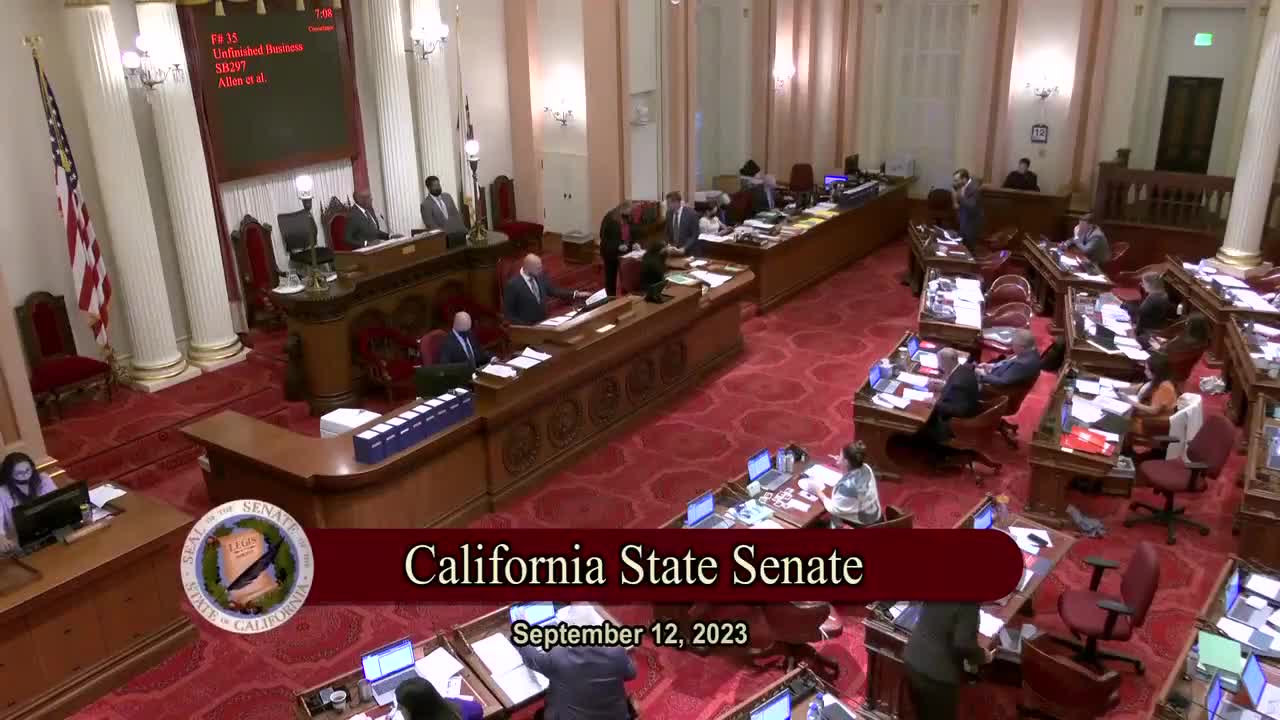 59SEC
Senate Floor
 46SEC
Assembly Floor
 3MIN