SB 469: Housing: publicly funded low-rent housing projects.
- Session Year: 2023-2024
- House: Senate
- Latest Version Date: 2023-09-08
Current Status:
Passed
(2023-09-08: Chaptered by Secretary of State. Chapter 179, Statutes of 2023.)
Introduced
In Committee
First Chamber
In Committee
Second Chamber
Enacted
What does this bill do?
This bill amends state law to say developments that use allocations of federal or state low‑income housing tax credits from the California Tax Credit Allocation Committee are not treated as “low‑rent housing projects” under the California Constitution. That change means projects paid for with those tax credits (including acquisition, rehabilitation, reconstruction, alterations, or new construction of lodging or dwelling units) would not be subject to the constitutional voter‑approval requirement for low‑income housing projects.
The summary is provided by generative AI which can make mistakes. For original language, please view the details in the table below.
The California Constitution prohibits the development, construction, or acquisition in any manner of a low-rent housing project by any state public body, as defined, until a majority of the qualified electors of the city, town, or county in which it is proposed to develop, construct, or acquire the same, voting upon that issue, approve the project by voting in favor at an election. The California Constitution, for purposes of this prohibition, defines low-rent housing project to mean any development composed of urban or rural dwellings, apartments, or other living accommodations for persons of low income, financed in whole or in part by the federal government or a state public body, or to which the federal government or a state public body extends assistance by supplying all or part of the labor, by guaranteeing the payment of liens, or otherwise. Existing law establishes exclusions from this definition of low-rent housing project, including a development that consists of the acquisition, rehabilitation, reconstruction, alterations work, new construction, or any combination thereof, of lodging facilities or dwelling units using moneys appropriated and disbursed pursuant to specified provisions of the Zenovich-Moscone-Chacon Housing and Home Finance Act relating to affordable housing preservation, rental housing development awarded funds from certain multifamily housing direct loan programs, and housing for individuals and families who are experiencing homelessness or who are at risk of homelessness and who are impacted by the COVID-19 pandemic or other communicable diseases.
This bill would expand that exclusion to include a development that consists of the acquisition, rehabilitation, reconstruction, alterations work, new construction, or any combination thereof, of lodging facilities or dwelling units using an allocation of federal or state low-income housing tax credits from the California Tax Credit Allocation Committee or moneys appropriated and disbursed pursuant to the Zenovich-Moscone-Chacon Housing and Home Finance Act, and the Affordable Housing and Sustainable Communities Program, thereby excluding the developments that receive money from the specified funds and programs from the scope of the above-described constitutional provision.
The California Constitution prohibits the development, construction, or acquisition in any manner of a low-rent housing project by any state public body, as defined, until a majority of the qualified electors of the city, town, or county in which it is proposed to develop, construct, or acquire the same, voting upon that issue, approve the project by voting in favor at an election. The California Constitution, for purposes of this prohibition, defines low-rent housing project to mean any development composed of urban or rural dwellings, apartments, or other living accommodations for persons of low income, financed in whole or in part by the federal government or a state public body body, or to which the federal government or a state public body extends assistance by supplying all or part of the labor, by guaranteeing the payment of liens, or otherwise. Existing law establishes exclusions from this definition of low-rent housing project, including a development that consists of the acquisition, rehabilitation, reconstruction, alterations work, or any combination thereof, of lodging facilities or dwelling units using moneys appropriated and disbursed pursuant to specified provisions of the Zenovich-Moscone-Chacon Housing and Home Finance Act relating to affordable housing preservation, rental housing development awarded funds from certain multifamily housing direct loan programs, and housing for individuals and families who are experiencing homelessness or who are at risk of homelessness and who are impacted by the COVID-19 pandemic or other communicable diseases.
This bill would expand that exclusion to include a development that consists of the acquisition, rehabilitation, reconstruction, alterations work, or any combination thereof, of lodging facilities or dwelling units using an allocation of federal or state low-income housing tax credits from the California Tax Credit Allocation Committee or moneys appropriated and disbursed pursuant to any provision of the Zenovich-Moscone-Chacon Housing and Home Finance Act, and the Affordable Housing and Sustainable Communities Program, thereby excluding the developments that receive money from the specified funds and programs from the scope of the above-described constitutional provision.
The California Constitution prohibits the development, construction, or acquisition in any manner of a low-rent housing project by any state public body, as defined, until a majority of the qualified electors of the city, town, or county in which it is proposed to develop, construct, or acquire the same, voting upon that issue, approve the project by voting in favor at an election. The California Constitution, for purposes of this prohibition, defines low-rent housing project to mean any development composed of urban or rural dwellings, apartments, or other living accommodations for persons of low income, financed in whole or in part by the federal government or a state public body or to which the federal government or a state public body extends assistance by supplying all or part of the labor, by guaranteeing the payment of liens, or otherwise. Existing law establishes exclusions from this definition of low-rent housing project, including a development that consists of the acquisition, rehabilitation, reconstruction, alterations work, or any combination thereof, of lodging facilities or dwelling units using moneys appropriated and disbursed pursuant to specified provisions of the Zenovich-Moscone-Chacon Housing and Home Finance Act relating to affordable housing preservation, rental housing development awarded funds from certain multifamily housing direct loan programs, and housing for individuals and families who are experiencing homelessness or who are at risk of homelessness and who are impacted by the COVID-19 pandemic or other communicable diseases.
This bill would expand that exclusion to include a development that consists of the acquisition, rehabilitation, reconstruction, alterations work, or any combination thereof, of lodging facilities or dwelling units using an allocation of federal or state low-income housing tax credits from the California Tax Credit Allocation Committee or moneys appropriated and disbursed pursuant to any provision of the Zenovich-Moscone-Chacon Housing and Home Finance Act, thereby excluding the developments that receive money from the specified funds and programs from the scope of the above-described constitutional provision.
The term low-rent housing project, as defined in Section 1 of Article XXXIV of the California Constitution, does not apply to any development composed of urban or rural dwellings, apartments, or other living accommodations that meets any one of the following criteria:
(a)The development is privately owned housing, receiving no ad valorem property tax exemption, other than exemptions granted pursuant to subdivision (f) or (g) of Section 214 of the Revenue and Taxation Code, not fully reimbursed to all taxing entities; and not more than 49 percent of the dwellings, apartments, or other living accommodations of the development may be occupied by persons of low income.
(b)The development is privately owned housing, is not exempt from ad valorem taxation by reason of any public ownership, and is not financed with direct long-term financing from a public body.
(c)The development is intended for owner-occupancy, which may include a limited equity housing cooperative, as defined in Section 50076.5, or cooperative or condominium ownership, rather than for rental-occupancy.
(d)The development consists of newly constructed, privately owned, one-to-four family dwellings not located on adjoining sites.
(e)The development consists of existing dwelling units leased by the state public body from the private owner of these dwelling units.
(f)The development consists of the rehabilitation, reconstruction, improvement or addition to, or replacement of, dwelling units of a previously existing low-rent housing project, or a project previously or currently occupied by lower income households, as defined in Section 50079.5.
(g)The development consists of the acquisition, rehabilitation, reconstruction, improvement, or any combination thereof, of a rental housing development which, prior to the date of the transaction to acquire, rehabilitate, reconstruct, improve, or any combination thereof, was subject to a contract for federal or state public body assistance for the purpose of providing affordable housing for low-income households and maintains, or enters into, a contract for federal or state public body assistance for the purpose of providing affordable housing for low-income households.
(h)The development consists of the acquisition, rehabilitation, reconstruction, alterations work, new construction, or any combination thereof, of lodging facilities or dwelling units using any of the following:
(1)Moneys received from the Coronavirus Relief Fund established by the federal Coronavirus Aid, Relief, and Economic Security (CARES) Act (Public Law 116-136).
(2)Moneys received from the Coronavirus State Fiscal Recovery Fund established by the federal American Rescue Plan Act of 2021 (ARPA) (Public Law 117-2).
(3)Moneys appropriated and disbursed pursuant to Division 31 (commencing with Section 50000) of this code and Part 1 (commencing with Section 75200) of Division 44 of the Public Resources Code.
(4)An allocation of federal or state low-income housing tax credits from the California Tax Credit Allocation Committee.
The term low-rent housing project, as defined in Section 1 of Article XXXIV of the California Constitution, does not apply to any development composed of urban or rural dwellings, apartments, or other living accommodations that meets any one of the following criteria:
(a)(1)The development is privately owned housing, receiving no ad valorem property tax exemption, other than exemptions granted pursuant to subdivision (f) or (g) of Section 214 of the Revenue and Taxation Code, not fully reimbursed to all taxing entities; and (2) not more than 49 percent of the dwellings, apartments, or other living accommodations of the development may be occupied by persons of low income.
(b)The development is privately owned housing, is not exempt from ad valorem taxation by reason of any public ownership, and is not financed with direct long-term financing from a public body.
(c)The development is intended for owner-occupancy, which may include a limited equity housing cooperative, as defined in Section 50076.5, or cooperative or condominium ownership, rather than for rental-occupancy.
(d)The development consists of newly constructed, privately owned, one-to-four family dwellings not located on adjoining sites.
(e)The development consists of existing dwelling units leased by the state public body from the private owner of these dwelling units.
(f)The development consists of the rehabilitation, reconstruction, improvement or addition to, or replacement of, dwelling units of a previously existing low-rent housing project, or a project previously or currently occupied by lower income households, as defined in Section 50079.5.
(g)The development consists of the acquisition, rehabilitation, reconstruction, improvement, or any combination thereof, of a rental housing development which, prior to the date of the transaction to acquire, rehabilitate, reconstruct, improve, or any combination thereof, was subject to a contract for federal or state public body assistance for the purpose of providing affordable housing for low-income households and maintains, or enters into, a contract for federal or state public body assistance for the purpose of providing affordable housing for low-income households.
(h)The development consists of the acquisition, rehabilitation, reconstruction, alterations work, new construction, or any combination thereof, of lodging facilities or dwelling units using any of the following:
(1)Moneys received from the Coronavirus Relief Fund established by the federal Coronavirus Aid, Relief, and Economic Security (CARES) Act (Public Law 116-136).
(2)Moneys received from the Coronavirus State Fiscal Recovery Fund established by the federal American Rescue Plan Act of 2021 (ARPA) (Public Law 117-2).
(3)Moneys appropriated and disbursed pursuant to Division 31 (commencing with Section 50000). 50000) of this code and Part 1 (commencing with Section 75200) of Division 44 of the Public Resources Code.
(4)An allocation of federal or state low-income housing tax credits from the California Tax Credit Allocation Committee.
The term low-rent housing project, as defined in Section 1 of Article XXXIV of the California Constitution, does not apply to any development composed of urban or rural dwellings, apartments, or other living accommodations, accommodations that meets any one of the following criteria:
(a)(1)The development is privately owned housing, receiving no ad valorem property tax exemption, other than exemptions granted pursuant to subdivision (f) or (g) of Section 214 of the Revenue and Taxation Code, not fully reimbursed to all taxing entities; and (2) not more than 49 percent of the dwellings, apartments, or other living accommodations of the development may be occupied by persons of low income.
(b)The development is privately owned housing, is not exempt from ad valorem taxation by reason of any public ownership, and is not financed with direct long-term financing from a public body.
(c)The development is intended for owner-occupancy, which may include a limited equity housing cooperative cooperative, as defined in Section 50076.5, or cooperative or condominium ownership, rather than for rental-occupancy.
(d)The development consists of newly constructed, privately owned, one-to-four family dwellings not located on adjoining sites.
(e)The development consists of existing dwelling units leased by the state public body from the private owner of these dwelling units.
(f)The development consists of the rehabilitation, reconstruction, improvement or addition to, or replacement of, dwelling units of a previously existing low-rent housing project, or a project previously or currently occupied by lower income households, as defined in Section 50079.5.
(g)The development consists of the acquisition, rehabilitation, reconstruction, improvement, or any combination thereof, of a rental housing development which, prior to the date of the transaction to acquire, rehabilitate, reconstruct, improve, or any combination thereof, was subject to a contract for federal or state public body assistance for the purpose of providing affordable housing for low-income households and maintains, or enters into, a contract for federal or state public body assistance for the purpose of providing affordable housing for low-income households.
(h)The development consists of the acquisition, rehabilitation, reconstruction, alterations work, new construction, or any combination thereof, of lodging facilities or dwelling units using any of the following:
(1)Moneys received from the Coronavirus Relief Fund established by the federal Coronavirus Aid, Relief, and Economic Security (CARES) Act (Public Law 116-136).
(2)Moneys received from the Coronavirus State Fiscal Recovery Fund established by the federal American Rescue Plan Act of 2021 (ARPA) (Public Law 117-2).
(3)Moneys appropriated and disbursed pursuant to Division 31 (commencing with Section 50000).
(4)An allocation of federal or state low-income housing tax credits from the California Tax Credit Allocation Committee.
The term low-rent housing project, as defined in Section 1 of Article XXXIV of the California Constitution, does not apply to any development composed of urban or rural dwellings, apartments, or other living accommodations, that meets any one of the following criteria:
(a)(1)The development is privately owned housing, receiving no ad valorem property tax exemption, other than exemptions granted pursuant to subdivision (f) or (g) of Section 214 of the Revenue and Taxation Code, not fully reimbursed to all taxing entities; and (2) not more than 49 percent of the dwellings, apartments, or other living accommodations of the development may be occupied by persons of low income.
(b)The development is privately owned housing, is not exempt from ad valorem taxation by reason of any public ownership, and is not financed with direct long-term financing from a public body.
(c)The development is intended for owner-occupancy, which may include a limited equity housing cooperative as defined in Section 50076.5, or cooperative or condominium ownership, rather than for rental-occupancy.
(d)The development consists of newly constructed, privately owned, one-to-four family dwellings not located on adjoining sites.
(e)The development consists of existing dwelling units leased by the state public body from the private owner of these dwelling units.
(f)The development consists of the rehabilitation, reconstruction, improvement or addition to, or replacement of, dwelling units of a previously existing low-rent housing project, or a project previously or currently occupied by lower income households, as defined in Section 50079.5.
(g) The development consists of the acquisition, rehabilitation, reconstruction, improvement, or any combination thereof, of a rental housing development which, prior to the date of the transaction to acquire, rehabilitate, reconstruct, improve, or any combination thereof, was subject to a contract for federal or state public body assistance for the purpose of providing affordable housing for low-income households and maintains, or enters into, a contract for federal or state public body assistance for the purpose of providing affordable housing for low-income households.
(h)The development consists of the acquisition, rehabilitation, reconstruction, alterations work, new construction, or any combination thereof, of lodging facilities or dwelling units using any of the following:
(1)Moneys received from the Coronavirus Relief Fund established by the federal Coronavirus Aid, Relief, and Economic Security (CARES) Act (Public Law 116-136).
(2)Moneys received from the Coronavirus State Fiscal Recovery Fund established by the federal American Rescue Plan Act of 2021 (ARPA) (Public Law 117-2).
(3)Moneys appropriated and disbursed pursuant to Chapter 5.5 (commencing with Section 50606) of Part 2 of Division 31. Division 31 (commencing with Section 50000).
(4)Moneys appropriated and disbursed pursuant to Chapter 6.6 (commencing with Section 50672) of Part 2 of Division 31.(5)Moneys appropriated and disbursed to fund the uses and accomplish the objectives specified in Section 50675.1.1 or 50675.1.3.(4)An allocation of federal or state low-income housing tax credits from the California Tax Credit Allocation Committee.
|
Date
|
Status
|
|---|---|
| Sep 8, 2023 | Chaptered by Secretary of State. Chapter 179, Statutes of 2023. |
| Sep 8, 2023 | Approved by the Governor. |
| Aug 30, 2023 | Enrolled and presented to the Governor at 2 p.m. |
| Aug 24, 2023 | Assembly amendments concurred in. (Ayes 40. Noes 0. Page 2182.) Ordered to engrossing and enrolling. |
| Aug 22, 2023 | Ordered to special consent calendar. |
| Aug 17, 2023 | In Senate. Concurrence in Assembly amendments pending. |
| Aug 17, 2023 | Read third time. Passed. (Ayes 75. Noes 0. Page 2743.) Ordered to the Senate. |
| Jul 13, 2023 | Read second time. Ordered to consent calendar. |
| Jul 12, 2023 | From committee: Do pass. Ordered to consent calendar. (Ayes 15. Noes 0.) (July 12). |
| Jun 13, 2023 | Read second time and amended. Re-referred to Com. on APPR. |
| Jun 12, 2023 | From committee: Do pass as amended and re-refer to Com. on APPR. (Ayes 8. Noes 0.) (June 7). |
| May 18, 2023 | Referred to Com. on H. & C.D. |
| May 11, 2023 | In Assembly. Read first time. Held at Desk. |
| May 11, 2023 | Read third time. Passed. (Ayes 39. Noes 0. Page 1050.) Ordered to the Assembly. |
| May 2, 2023 | Read second time. Ordered to third reading. |
| May 1, 2023 | From committee: Be ordered to second reading pursuant to Senate Rule 28.8. |
| Apr 21, 2023 | Set for hearing May 1. |
| Apr 19, 2023 | From committee: Do pass and re-refer to Com. on APPR. (Ayes 10. Noes 0. Page 797.) (April 18). Re-referred to Com. on APPR. |
| Mar 30, 2023 | Set for hearing April 18. |
| Mar 28, 2023 | From committee with author's amendments. Read second time and amended. Re-referred to Com. on HOUSING. |
| Feb 22, 2023 | Referred to Com. on HOUSING. |
| Feb 14, 2023 | From printer. May be acted upon on or after March 16. |
| Feb 13, 2023 | Introduced. Read first time. To Com. on RLS. for assignment. To print. |
|
Date
|
Description
|
Location
|
Votes
|
|
|---|---|---|---|---|
| Aug 24, 2023 | Special Consent SB469 Allen et al. | Senate Floor |
Passed |
|
| Aug 17, 2023 | SB 469 Allen Consent Calendar Second Day Regular Session | Assembly Floor |
Passed |
|
| Jul 12, 2023 | Do pass. To Consent Calendar. | Assembly Standing Committee on Appropriations |
Passed |
|
| Jun 7, 2023 | Do pass as amended and be re-referred to the Committee on [Appropriations] | Assembly Standing Committee on Housing and Community Development |
Passed |
|
| May 11, 2023 | Senate 3rd Reading SB469 Allen et al. | Senate Floor |
Passed |
|
| Apr 18, 2023 | Do pass, but first be re-referred to the Committee on [Appropriations] | Senate Standing Committee on Housing |
Passed |
This list shows positions taken on this bill by organizations on the date displayed, which is linked to the original source.
Positions by individuals are not included.
|
Organization
|
Position
|
Date
|
|---|---|---|
| Abode Communities | ** Support | |
| California Association Of Housing Authorities | ** Support | |
| California Council For Affordable Housing | ** Support | |
| California Housing Consortium | ** Support | |
| California Housing Partnership Corporation | ** Support | |
| California Rural Legal Assistance Foundation | ** Support | |
| City and County of San Francisco | ** Support | |
| City of San Francisco | * Support | Jun 7, 2023 |
| City of San Jose | ** Support | |
| EAH Housing | ** Support | |
| East Bay Housing Organizations | ** Support | |
| East Bay YIMBY | ** Support | |
| Eden Housing | ** Support | |
| Grow the Richmond | ** Support | |
| Housing California | ** Support | |
| How to ADU | ** Support | |
| Jamboree Housing Corporation | ** Support | |
| Mercy Housing California | ** Support | |
| Merritt Community Capital Corporation | ** Support | |
| MidPen Housing Corporation | ** Support | |
| Mountain View YIMBY | ** Support | |
| Napa-Solano for Everyone | ** Support | |
| Northern Neighbors | ** Support | |
| Peninsula for Everyone | ** Support | |
| People For Housing Orange County | ** Support | |
| Progress Noe Valley | ** Support | |
| Resources for Community Development | ** Support | |
| San Diego Housing Commission | ** Support | |
| San Diego Housing Federation | ** Support | |
| San Francisco Yimby | ** Support | |
| San Luis Obispo Yimby | ** Support | |
| Santa Cruz Yimby | ** Support | |
| Santa Monica Democratic Club | ** Support | |
| Santa Rosa Yimby | ** Support | |
| South Bay Yimby | ** Support | |
| Southern California Association of Non-Profit Housing | ** Support | |
| Southside Forward | ** Support | |
| The Western Center on Law and Poverty | * Support | Jun 7, 2023 |
| Union Station Homeless Services | ** Support | |
| Ventura County YIMBY | ** Support | |
| Yimby Action | ** Support |
SENATE RULES COMMITTEE Office of Senate Floor Analyses (916) 651-1520 Fax: (916) 327-4478 | SB 469 |
UNFINISHED BUSINESS
Bill No: SB 469
Author: Allen (D) and Wiener (D), et al.
Amended: 6/13/23
Vote: 21
SENATE HOUSING COMMITTEE: 10-0, 4/18/23
AYES: Wiener, Ochoa Bogh, Blakespear, Caballero, Cortese, McGuire, Seyarto, Skinner, Umberg, Wahab
NO VOTE RECORDED: Padilla
SENATE APPROPRIATIONS COMMITTEE: Senate Rule 28.8
SENATE FLOOR: 39-0, 5/11/23
AYES: Allen, Alvarado-Gil, Archuleta, Ashby, Atkins, Becker, Blakespear, Bradford, Caballero, Cortese, Dahle, Dodd, Durazo, Eggman, Glazer, Gonzalez, Hurtado, Jones, Laird, Limón, McGuire, Menjivar, Min, Newman, Nguyen, Niello, Ochoa Bogh, Padilla, Portantino, Roth, Rubio, Seyarto, Skinner, Smallwood-Cuevas, Stern, Umberg, Wahab, Wiener, Wilk
NO VOTE RECORDED: Grove
ASSEMBLY FLOOR: 75-0, 8/17/23 (Consent) - See last page for vote
SUBJECT: Housing: publicly funded low-rent housing projects
SOURCE: California Housing Partnership Corporation
California Rural Legal Assistance Foundation
DIGEST:
This bill provides that Article 34 requirements do not apply to housing developments that receive funding from specified state housing programs.
Assembly Amendments
provide that Article 34 requirements also do not apply to housing developments that receive funding from the Affordable Housing and Sustainable Communities (AHSC) program.
ANALYSIS:
Existing law:
Under Article 34 of the California Constitution
- Requires majority approval by the voters of a city or county for the development, construction, or acquisition of a publicly funded “low-rent housing project.”
- Provides that the term “low-rent housing project,” as defined in Section 1 of Article 34 does not apply to any development composed of urban or rural dwellings, apartments, or other living accommodations that meets any of the following:
- The development is privately owned housing, receiving no property tax exemption, as specified, and not more than 49% of the dwellings, apartments, or other living accommodations of the development may be occupied by persons of low income.
- The development is privately owned housing, is not exempt from property taxes by reason of any public ownership, and is not financed with direct long-term financing from a public body.
- The development is intended for owner-occupancy rather than for rental-occupancy.
- The development consists of newly constructed, privately owned, one-to-four family dwellings not located on adjoining sites.
- The development consists of existing dwelling units leased by the state public body from the private owner of these dwelling units.
- The development consists of the rehabilitation, reconstruction, improvement or addition to, or replacement of, dwelling units of a previously existing low-rent housing project.
- The development consists of the acquisition, rehabilitation, reconstruction, improvement, or any combination thereof, of a rental housing development which, prior to the date of the transaction to acquire, rehabilitate, reconstruct, improve, or any combination thereof, was subject to a contract for federal or state public body assistance for the purpose of providing affordable housing for low-income households and maintains, or enters into, a contract for federal or state public body assistance for the purpose of providing affordable housing for low-income households.
- The development consists of the acquisition, rehabilitation, reconstruction, alterations work, new construction, or any combination of lodging facilities or dwelling units using any of the following:
- Money from the Coronavirus Relief Fund, established by the federal Coronavirus Aid, Relief, and Economic Security (CARES) Act.
- Money from the Coronavirus State Fiscal Recovery Fund established by the federal American Rescue Plan Act of 2021 (ARPA).
- Money appropriated for purposes of affordable housing preservation.
- Money appropriated in the 2020 budget for purposes of providing housing for persons experiencing homelessness and who are impacted by COVID-19.
This bill provides that the term “low-rent housing project,” as defined in Section 1 of Article 34 does not apply to any development composed of urban or rural dwellings, apartments, or other living accommodations that consists of the acquisition, rehabilitation, reconstruction, alterations work, new construction or any combination of lodging facilities or dwelling units using any of the following:
- Money appropriated and disbursed by the Business, Consumer Services and Housing (BCSH) Agency, Department of Housing and Community Development (HCD), and the California Housing Finance Agency (CalHFA).
- An allocation of federal or state low-income housing tax credits from the California Tax Credit Allocation Committee (TCAC).
- Money appropriated from the Affordable Housing and Sustainable Communities (AHSC) program.
Background
Article 34 was added to the California Constitution in 1950 on the heels of the passage of the federal Housing Act of 1949. The Housing Act of 1949 banned explicit racial segregation in public housing, which left cities scrambling to find alternative ways to separate communities of color from white neighborhoods. The real estate industry, unable to stop the passage of the Housing Act of 1949 at the federal level, sought to slow and stop its implementation at the state and local level.
The enactment of Article 34 grew out of a controversy surrounding a low-income housing project in Eureka, California. The local Housing Authority had applied for federal funding to cover the costs of planning and surveys for a low-income public housing development. After the application for funding was submitted, the City Clerk received a signed petition from more than 15% of the city electorate, requesting any city council approval of the loan application be submitted to the voters for approval. A lawsuit made its way to the California Supreme Court, holding that the power of referendum applies only to legislative acts, not acts that are executive or administrative. Since the acts were administrative and not legislative, the people could not use a referendum to change the city government's decisions, and the court had no jurisdiction.
Given that the citizens of Eureka could not make decisions around low-income housing developments in their community, they joined forces with the California Real Estate Association (known today as the California Association of Realtors) to enact Article 34 on the November 1950 ballot. According to the argument supporting the initiative, a vote in favor of adding Article 34 to the California Constitution was a vote for the right to say yes or no when a community was considering a low-income housing project. Supporters argued the need for community control was necessary because of tax waivers, and other forms of community assistance that a public housing project required.
Campaign materials and internal documents produced by the California Real Estate Association, the organization behind the ballot measure enacting Article 34 indicate that the constitutional change was more than just giving a voters a say in the approval of housing projects. According to the Los Angeles Times, an internal newsletter from the California Real Estate Association legislative committee Chairman stated:
“If you value your property, if you hold liberty dear, if you believe in the dignity of the individual, if you love this land of the free and the home of the brave, if you desire to stop the enemy of socialism that is gnawing at the vitals of America from within, the ballot box is your weapon, the one and only means by which our great Republic will be preserved and improved.”
Comments
- Author’s statement. “Article 34 of the California Constitution is an antiquated relic of the pre-Civil Rights Era that sought to limit the development of affordable housing and to bar families of color from accessing housing in affluent communities. While the deeply problematic nature of the original intent demands action, one unintended interpretation of Article 34 placed the state in a legal grey area that thwarts California’s affordable housing goals. Article 34 requires local voter approval of any “low-rent housing project” that is “developed, constructed, or acquired in any manner by any state public body.” Article 34 was not intended to cover affordable housing that receives state funding and is developed by private entities such as nonprofit affordable-housing developers. However, out of an abundance of caution, the state has required applicants for some funding sources to demonstrate Article 34 compliance before developments proceed. This adds unnecessary costs, delays, and uncertainty to the affordable housing projects. SB 469 exercises the Legislature’s authority to make clear that housing developments that receive loans or grant awards from the California Department of Housing and Community Development or a reservation of low-income housing tax credits from the state’s Tax Credit Allocation Committee do not trigger an Article 34 election.”
- Practical impacts on housing development. Article 34 requires that voter approval be obtained before any “state public body” develops, constructs or acquires a “low rent housing project.” Cities, counties, housing authorities and agencies are all “state public bodies” for purposes of Article 34. As a result, if any of those entities participates in development of a “low rent housing project” and that participation rises to the level of development, construction, or acquisition of the project by the agency, approval by the local electorate is required for the project.
Local agencies usually seek general authority from the electorate to develop low income housing prior to the identification of a specific project. For example, a typical Article 34 election might authorize construction of 500 low income units anywhere in the city or county’s jurisdiction, including its housing authority or other state public bodies. Not all low- and moderate-income housing is a “low rent housing project.” To clarify the requirements of Article 34, the Legislature clarified in statute that specified projects would not require voter approval, such as projects in which less than 49% of the units are occupied by low-income families; and privately owned housing that does not receive public financing; and owner-occupied developments.
Jurisdictions that do not comply with Article 34 requirements are not eligible for state funds.
- Prior attempts at repeal. In 1971, James v. Valtierra tested the constitutionality of Article 34. After low-income housing proposals were defeated by referenda in San Jose and San Mateo County, a group of black and Mexican-American persons who were eligible for low-income housing in these communities filed suit alleging Article 34 violated the federal Constitution’s Supremacy Clause, Privileges and Immunities Clause, and Equal Protection Clause. The US Supreme Court found that Article 34 did not rest on "distinctions based on race” because a referendum was required on any low-income project when the project was within the guidelines set forth in the article, not just projects which were to be occupied by racial minorities. The appellees also argued that Article 34 denied equal protection to low-income households because they were singled out for a mandatory referendum. The Court disagreed with this argument as well by pointing out that a referendum is a democratic decision-making procedure and that California has a long history of using the referendum process to influence or make public policy.
In 1974, Assemblymember Willie Brown authored a bill in the Legislature, which placed the repeal of Article 34 on the ballot as Proposition 15. That measure was defeated. In 1977, Assemblymember Brown authored a modification of Article 34, which placed Proposition 4 on the 1980 ballot. Again this was defeated. The most recent attempt at repeal took place in 1993 as Proposition 168, this time with the support of the California Association of Realtors, which failed passage on a 60% vote.
Presently, no other state constitution requires voter approval for public housing.
Last year, the legislature passed SCA 2 (Allen/Wiener, Chapter 182, Statutes of 2022), which repeals Article 34 all together, subject to voter approval.
4) Statutory changes versus constitutional amendment. This bill provides that Article 34 requirements do not apply to housing developments that receive funding from any state housing program administered by HCD, CalHFA or BCSH, or any housing projects receiving state or federal low income housing tax credits. This exemption would follow precedent of exempting specified funds for COVID-19 relief from provisions of Article 34. The author intends to bolster this exemption with a ballot measure to ask the voters to repeal the Article entirely.
FISCAL EFFECT: Appropriation: No Fiscal Com.: Yes Local: No
According to the Assembly Appropriations Committee:
- Minor, if any, state costs to remove “Article 34 requirements” from specified housing programs that receive funds from HCD, BCSH Agency, CalHFA, or the Tax Credit Allocation Committee (TCAC).
- Potential savings to local agencies from avoided election costs for housing projects that fall within the expanded exclusions.
SUPPORT: (Verified 8/17/23)
California Housing Partnership Corporation (co-source)
California Rural Legal Assistance Foundation (co-source)
Abode Communities
California Association of Housing Authorities
California Council for Affordable Housing
California Housing Consortium
City and County of San Francisco
City of San Jose
EAH Housing
East Bay Housing Organizations
East Bay YIMBY
Eden Housing
Grow the Richmond
Housing California
How to ADU
Jamboree Housing Corporation
Mercy Housing California
Merritt Community Capital Corporation
MidPen Housing Corporation
Mountain View YIMBY
Napa-Solano for Everyone
Northern Neighbors
Peninsula for Everyone
People for Housing - Orange County
Progress Noe Valley
Resources for Community Development
San Diego Housing Commission
San Diego Housing Federation
San Francisco YIMBY
San Luis Obispo YIMBY
Santa Cruz Yimby
Santa Monica Democratic Club
Santa Rosa YIMBY
South Bay YIMBY
Southern California Association of Non-profit Housing
Southside Forward
Union Station Homeless Services
Ventura County YIMBY
YIMBY Action
OPPOSITION: (Verified 8/17/23)
None received
ASSEMBLY FLOOR: 75-0, 8/17/23
AYES: Addis, Alanis, Alvarez, Arambula, Bains, Bauer-Kahan, Bennett, Berman, Boerner, Bonta, Bryan, Calderon, Wendy Carrillo, Cervantes, Chen, Connolly, Megan Dahle, Davies, Dixon, Flora, Mike Fong, Vince Fong, Friedman, Gabriel, Gallagher, Garcia, Gipson, Grayson, Haney, Hart, Holden, Hoover, Irwin, Jackson, Jones-Sawyer, Kalra, Lackey, Lee, Low, Lowenthal, Maienschein, Mathis, McCarty, McKinnor, Muratsuchi, Stephanie Nguyen, Ortega, Pacheco, Papan, Jim Patterson, Joe Patterson, Pellerin, Petrie-Norris, Quirk-Silva, Ramos, Rendon, Reyes, Luz Rivas, Rodriguez, Blanca Rubio, Sanchez, Santiago, Schiavo, Soria, Ta, Ting, Valencia, Villapudua, Wallis, Ward, Wicks, Wilson, Wood, Zbur, Robert Rivas
NO VOTE RECORDED: Aguiar-Curry, Juan Carrillo, Essayli, Waldron, Weber
Prepared by: Alison Hughes / HOUSING / (916) 651-4124
8/18/23 11:42:58
**** END ****
Date of Hearing: July 12, 2023
ASSEMBLY COMMITTEE ON APPROPRIATIONS
Chris Holden, Chair
SBPCA Bill Id:SB 469
Author:(Allen) – As Amended Ver:June 13, 2023
Policy Committee: | Housing and Community Development | Vote: | 8 - 0 |
|
| ||
|
|
Urgency: No State Mandated Local Program: No Reimbursable: No
SUMMARY:
This bill specifies the local-voter-approval requirement for a “low-rent housing project,” as defined in Article 34 of the California Constitution, does not apply to housing developments that receive funding from certain state housing programs.
Specifically, this bill expands the exclusions to the local-voter-approval requirements for a “low-rent housing project,” as defined in Article 34 of the California Constitution, to include developments consisting of the acquisition, rehabilitation, reconstruction, alterations work, or any combination thereof, that use an allocation of federal and state low-income housing tax credits from the California Tax Credit Allocation Committee (TCAC), or moneys appropriated and disbursed by the Department of Housing and Community Development (HCD), the Business, Consumer Services, and Housing (BCSH) Agency, the California Housing Finance Agency (CalHFA), or the Strategic Growth Council (SGC), pursuant to existing law.
FISCAL EFFECT:
- Minor, if any, state costs to remove “Article 34 requirements” from specified housing programs that receive funds from HCD, BCSH Agency, CalHFA, or the Tax Credit Allocation Committee (TCAC).
- Potential savings to local agencies from avoided election costs for housing projects that fall within the expanded exclusions.
COMMENTS:
- Purpose. This bill seeks to remove a barrier to affordable housing production by expanding the statutory exclusions to Article 34 of the State Constitution, which imposes a local voting requirement for publically-funded affordable housing developments.
- Background. Existing law, pursuant to Article 34 of the California Constitution, prohibits the development, construction, or acquisition of a “low-rent housing project” by any state public body until a majority of the qualified electors of the city or county in which the development is proposed approves the project. Existing law establishes specified exclusions from this definition of “low-rent housing project” for purposes of Article 34’s voter-approval requirement, including certain privately owned housing and developments consisting of the acquisition, rehabilitation, reconstruction, alterations work, new construction, or any combination of lodging units or dwelling units using funding from any of the following:
- The Coronavirus Relief Fund, established by the federal CARES Act.
- The Coronavirus State Fiscal Recovery Fund, established by the federal ARPA of 2021.
- Money appropriated for purposes of housing preservation.
- Money appropriated in the 2020 state budget to provide housing for persons experiencing homelessness and who are impacted by COVID-19.
This bill exempts additional projects from Article 34’s requirements by including any housing project receiving funding from any state housing program administered by HCD, CalHFA, BCSH, or SGC, or any housing projects receiving state or federal low-income housing tax credits.
- Prior Legislation. California is the only state with a constitutional voting requirement for affordable housing. Notably, this voter-approval requirement applies only to publically-funded affordable housing, which is disproportionately used by people of color.
SCA 2 (Allen and Wiener), Chapter 182, Statutes of 2022, repeals Article 34 of the California Constitution, subject to voter approval at a statewide election. If SCA 2 is approved by the voters, the provisions of this bill will become obsolete.
Analysis Prepared by: Jennifer Swenson / APPR. / (916) 319-2081
Date of Hearing: June 7, 2023
ASSEMBLY COMMITTEE ON HOUSING AND COMMUNITY DEVELOPMENT
Buffy Wicks, Chair
SBPCA Bill Id:SB 469
Author:(Allen) – As Amended Ver:March 28, 2023
SENATE VOTE: 39-0
SUBJECT: Housing: publicly funded low-rent housing projects
SUMMARY: Provides that the California Constitution’s Article 34 requirements do not apply to housing developments that receive funding from specified state housing programs. Specifically, this bill:
- Provides that the term “low-rent housing project,” as defined in Section 1 of Article 34, does not apply to any development composed of rural or urban dwellings, apartments, or other living accommodations that consists of the acquisition, rehabilitation, reconstruction, alteration work, new construction, or any combination of lodging facilities or dwelling units using any of the following:
- Money appropriated and disbursed by the Business, Consumer Services, and Housing (BCSH) Agency, the Department of Housing and Community Development (HCD), and the California Housing Finance Agency (CalHFA); or
- An allocation of federal or state low-income housing tax credits from the California Tax Credit Allocation Committee (TCAC).
EXISTING LAW:
- Article 34 of the California Constitution requires a majority approval by the voters of a city or county for the development, construction, or acquisition of a publicly funded “low-rent housing project.”
- Provides that the term “low-rent housing project,” as defined in Section 1 of Article 34, does not apply to any development composed of rural or urban dwellings, apartments, or other living accommodations that meet any of the following requirements:
- The development is privately owned housing receiving no property tax exemption, as specified, and not more than 49 percent of the dwellings, apartments, or other living accommodations of the development may be occupied by persons of low income;
- The development is privately owned housing, is not exempt from property taxes by reason of any public ownership, and is not financed with direct long-term financing from a public body;
- The development is intended for owner-occupancy rather than for rental occupancy;
- The development consists of newly constructed, privately owned, one-to-four family dwellings not located on adjoining sites;
- The development consists of existing dwelling units leased by the state public body from the private owner of those dwelling units;
- The development consists of the rehabilitation, reconstruction, improvement, or addition to, or replacement of, dwelling units of a previously existing low-rent housing project;
- The development consists of the acquisition, rehabilitation, reconstruction, improvement, or any combination thereof, of a rental housing development which, prior to the date of the transaction, was subject to a contract for federal or state public assistance to provide affordable housing for low-income households and maintains or enters into a contract for federal or state public assistance to provide affordable housing for low-income households; or
- The development consists of the acquisition, rehabilitation, reconstruction, alteration work, new construction, or any combination of lodging facilities or dwelling units using any of the following:
- Money from the Coronavirus Relief Fund, established by the federal Coronavirus Aid, Relief, and Economic Security (CARES) Act;
- Money from the Coronavirus State Fiscal Recovery Fund established by the federal American Rescue Plan Act of 2021 (ARPA);
- Money appropriated for purposes of affordable housing preservation; or
- Money appropriated in the 2020 budget for purposes of providing housing for persons experiencing homelessness and who are impacted by COVID-19. (Health and Safety Code Section 37001)
FISCAL EFFECT: Unknown.
COMMENTS:
Author’s Statement: According to the author, “Article 34 of the California Constitution is an antiquated relic of the pre-Civil Rights Era that sought to limit the development of affordable housing and to bar families of color from accessing housing in affluent communities. While the deeply problematic nature of the original intent demands action, one unintended interpretation of Article 34 placed the state in a legal grey area that thwarts California’s affordable housing goals. Article 34 requires local voter approval of any ‘low-rent housing project’ that is ‘developed, constructed, or acquired in any manner by any state public body.’ Article 34 was not intended to cover affordable housing that receives state funding and is developed by private entities such as nonprofit affordable-housing developers. However, out of an abundance of caution, the state has required applicants for some funding sources to demonstrate Article 34 compliance before developments proceed. This adds unnecessary costs, delays, and uncertainty to the affordable housing projects. SB 469 exercises the Legislature’s authority to make clear that housing developments that receive loans or grant awards from the California Department of Housing and Community Development or a reservation of low-income housing tax credits from the state’s Tax Credit Allocation Committee do not trigger an Article 34 election.”
Article 34: Article 34 was added to the California Constitution in 1950 on the heels of the passage of the federal Housing Act of 1949. The Housing Act of 1949 banned explicit racial segregation in public housing, which left cities scrambling to find alternative ways to separate communities of color from white neighborhoods. The real estate industry, unable to stop the passage of the Housing Act of 1949 at the federal level, sought to slow and stop its implementation at the state and local level.
The enactment of Article 34 grew out of a controversy surrounding a low-income housing project in Eureka, California. The local Housing Authority had applied for federal funding to cover the costs of planning and surveys for a low-income public housing development. After the application for funding was submitted, the City Clerk received a signed petition from more than 15 percent of the city electorate requesting any city council approval of the loan application be submitted to the voters for approval. A lawsuit made its way to the California Supreme Court, which held that the power of referendum applies only to legislative acts, not acts that are executive or administrative. Since the acts were administrative and not legislative, the people could not use a referendum to change the city government’s decisions, and the court had no jurisdiction.
Given that the citizens of Eureka could not block the low-income housing developments in their community using this tactic, they joined forces with the California Real Estate Association (CREA, the predecessor of the California Association of Realtors) to enact Article 34 on the November 1950 ballot. According to the argument supporting the initiative, a vote in favor of adding Article 34 to the California Constitution was a vote for the right to say yes or no when a community was considering a low-income housing project. Supporters argued the need for community control was necessary because of tax waivers and other forms of community assistance that a public housing project required.
Not surprisingly, campaign materials and internal documents produced by CREA indicate that the constitutional change was about much more than just giving a voters a say in the approval of housing projects. According to the Los Angeles Times, newspaper ads paid for by CREA also blamed “minority pressure groups” for pushing public housing. At the time, the CREA Code of Ethics included a provision barring real estate agents from integrating neighborhoods on the basis of “race or nationality” if doing so would be “clearly detrimental to property values.”[1] CREA was also working at the time to kill the proposed Elysian Park Heights public housing development in Chavez Ravine, against which they warned in mailers and leaflets that “public housing would be the last rung in the ladder toward complete socialism, one step this side of Communism and Our downfall.”[2]
The passage of Article 34 in 1950 and other McCarthyist anti-public housing activities caused the City of Los Angeles to abandon the Elysian Park Heights project in 1953 – for which over 4,000 mostly Mexican residents had been forcibly evicted, and whose land would eventually be sold for Dodger Stadium. The Los Angeles Times further found that by 1969, California voters had rejected nearly half the public housing that had been proposed in Article 34 elections – 15,000 units – and many housing agencies simply chose not to hold elections, fearing that their plans would be rejected.
Impacts on Affordable Housing Development: Article 34 requires that voter approval be obtained before any “state public body” develops, constructs or acquires a “low rent housing project.” Cities, counties, housing authorities and agencies are all “state public bodies” for purposes of Article 34. As a result, if any of those entities participates in development of a “low rent housing project” and that participation rises to the level of development, construction, or acquisition of the project by the agency, approval by the local electorate is required for the project.
Local agencies usually seek general authority from the electorate to develop low income housing prior to the identification of a specific project. For example, a typical Article 34 election might authorize construction of 500 low income units anywhere in the city or county’s jurisdiction, including its housing authority or other state public bodies. Not all low- and moderate-income housing is a “low rent housing project.” To clarify the requirements of Article 34, the Legislature specified in statute that certain projects would not require voter approval, such as projects in which less than 49 percent of the units are occupied by low-income families, privately owned housing that does not receive public financing, and owner-occupied developments.
Jurisdictions that do not comply with Article 34 requirements are not constitutionally eligible for state housing funds.
Prior Attempts at Repeal: In 1971, James v. Valtierra tested the constitutionality of Article 34. After low-income housing proposals were defeated by referenda in San Jose and San Mateo County, a group of Black and Mexican-American persons who were eligible for low-income housing in these communities filed suit alleging Article 34 violated the federal Constitution’s Supremacy Clause, Privileges and Immunities Clause, and Equal Protection Clause. The U.S. Supreme Court found that Article 34 did not rest on “distinctions based on race” because a referendum was required on any low-income project when the project was within the guidelines set forth in the article, not just projects which were to be occupied by racial minorities. The appellees also argued that Article 34 denied equal protection to low-income households because they were singled out for a mandatory referendum. The Court disagreed with this argument as well by pointing out that a referendum is a democratic decision-making procedure and that California has a long history of using the referendum process to influence or make public policy.
In 1974, Assemblymember Willie Brown authored a bill in the Legislature which placed the repeal of Article 34 on the ballot as Proposition 15. That measure was defeated. In 1977, Assemblymember Brown authored a bill modifying Article 34, which placed Proposition 4 on the 1980 ballot. Again this was defeated. The most recent attempt at repeal took place in 1993 as Proposition 168, this time with the support of the California Association of Realtors, which failed passage on a 60 percent vote.
Presently, no other state constitution requires voter approval for public housing. Last year, the legislature passed SCA 2 (Allen/Wiener, Chapter 182, Statutes of 2022), which attempts for a fourth time to repeal Article 34, subject to voter approval.
Statutory Changes vs. Constitutional Amendment: This bill would provide that Article 34 requirements do not apply to housing developments that receive funding from any state housing program administered by HCD, CalHFA or BCSH, or any housing projects receiving state or federal low-income housing tax credits. This exemption would follow precedent of exempting specified funds for COVID-19 relief from provisions of Article 34. Thus, under this bill, only projects that receive all of their funding from local sources would still be subject to Article 34 approval requirements.
Arguments in Support: According to the California Rural Legal Assistance Foundation and the California Housing Partnership, the bill’s cosponsors, “In passing Article 34, voters granted the Legislature the power to enact legislation to implement it, a power the Legislature has exercised numerous times over the ensuing decades. In recent years, as the state has invested additional resources through the state budget process in housing funding programs administered by [HCD], the Legislature has used its authority to make clear that receipt of funds from several new funding programs by an affordable housing developer does not trigger an Article 34 election. For example, the [L]egislature has enacted statutory exemptions for the Homekey Program, the Housing Accelerator Program, the Portfolio Restructuring Program, and the Veterans Housing and Homelessness Prevention Program. SB 469 continues this policy and brings certainty and consistency to all state affordable housing funding programs by clarifying that a housing development that receives any loan or grant award from HCD or a reservation of low-income housing tax credits from [TCAC] is not a ‘low-rent housing project developed, constructed, or acquired in any manger by any state public body’ under Article 34. This will remove a key barrier to the financing and construction of affordable housing as well as reduce the cost of development.”
Arguments in Opposition: None on file.
Committee Amendments: Staff recommends the bill be amended to list funds from the Strategic Growth Council in the Article 34 exemption, to ensure the Affordable Housing and Sustainable Communities program is also excluded from Article 34 requirements.
Related Legislation:
SCA 2 (Allen/Wiener), Chapter 182, Statutes of 2022: Repeals Article 34 of the California Constitution, subject to voter approval.
SCA 1 (Allen) of 2020 would have repealed Article 34 of the California Constitution, which requires majority approval by the voters of a city or county for the development, construction, or acquisition of a publicly funded affordable housing project. This bill died at the Assembly Desk.
REGISTERED SUPPORT / OPPOSITION:
Support
California Housing Partnership Corporation (Sponsor)
California Rural Legal Assistance Foundation (Sponsor)
California Housing Consortium
EAH Housing
Resources for Community Development
Opposition
None on file.
Analysis Prepared by: Nicole Restmeyer / H. & C.D. / (916) 319-2085
SENATE RULES COMMITTEE Office of Senate Floor Analyses (916) 651-1520 Fax: (916) 327-4478 | SB 469 |
THIRD READING
Bill No: SB 469
Author: Allen (D) and Wiener (D)
Amended: 3/28/23
Vote: 21
SENATE HOUSING COMMITTEE: 10-0, 4/18/23
AYES: Wiener, Ochoa Bogh, Blakespear, Caballero, Cortese, McGuire, Seyarto, Skinner, Umberg, Wahab
NO VOTE RECORDED: Padilla
SENATE APPROPRIATIONS COMMITTEE: Senate Rule 28.8
SUBJECT: Housing: publicly funded low-rent housing projects
SOURCE: California Housing Partnership Corporation
California Rural Legal Assistance Foundation
DIGEST:
This bill provides that Article 34 requirements do not apply to housing developments that receive funding from specified state housing programs.
ANALYSIS:
Existing law, under Article 34 of the California Constitution:
- Requires majority approval by the voters of a city or county for the development, construction, or acquisition of a publicly funded “low-rent housing project.”
- Provides that the term “low-rent housing project,” as defined in Section 1 of Article 34 does not apply to any development composed of urban or rural dwellings, apartments, or other living accommodations that meets any of the following:
- The development is privately owned housing, receiving no property tax exemption, as specified, and not more than 49% of the dwellings, apartments, or other living accommodations of the development may be occupied by persons of low income.
- The development is privately owned housing, is not exempt from property taxes by reason of any public ownership, and is not financed with direct long-term financing from a public body.
- The development is intended for owner-occupancy rather than for rental-occupancy.
- The development consists of newly constructed, privately owned, one-to-four family dwellings not located on adjoining sites.
- The development consists of existing dwelling units leased by the state public body from the private owner of these dwelling units.
- The development consists of the rehabilitation, reconstruction, improvement or addition to, or replacement of, dwelling units of a previously existing low-rent housing project.
- The development consists of the acquisition, rehabilitation, reconstruction, improvement, or any combination thereof, of a rental housing development which, prior to the date of the transaction to acquire, rehabilitate, reconstruct, improve, or any combination thereof, was subject to a contract for federal or state public body assistance for the purpose of providing affordable housing for low-income households and maintains, or enters into, a contract for federal or state public body assistance for the purpose of providing affordable housing for low-income households.
- The development consists of the acquisition, rehabilitation, reconstruction, alterations work, new construction, or any combination of lodging facilities or dwelling units using any of the following:
- Money from the Coronavirus Relief Fund, established by the federal Coronavirus Aid, Relief, and Economic Security (CARES) Act.
- Money from the Coronavirus State Fiscal Recovery Fund established by the federal American Rescue Plan Act of 2021 (ARPA).
- Money appropriated for purposes of affordable housing preservation.
- Money appropriated in the 2020 budget for purposes of providing housing for persons experiencing homelessness and who are impacted by COVID-19.
This bill provides that the term “low-rent housing project,” as defined in Section 1 of Article 34 does not apply to any development composed of urban or rural dwellings, apartments, or other living accommodations that consists of the acquisition, rehabilitation, reconstruction, alterations work, new construction or any combination of lodging facilities or dwelling units using any of the following:
- Money appropriated and disbursed by the Business, Consumer Services and Housing (BCSH) Agency, Department of Housing and Community Development (HCD), and the California Housing Finance Agency (CalHFA).
- An allocation of federal or state low-income housing tax credits from the California Tax Credit Allocation Committee (TCAC).
Background
Article 34 was added to the California Constitution in 1950 on the heels of the passage of the federal Housing Act of 1949. The Housing Act of 1949 banned explicit racial segregation in public housing, which left cities scrambling to find alternative ways to separate communities of color from white neighborhoods. The real estate industry, unable to stop the passage of the Housing Act of 1949 at the federal level, sought to slow and stop its implementation at the state and local level.
The enactment of Article 34 grew out of a controversy surrounding a low-income housing project in Eureka, California. The local Housing Authority had applied for federal funding to cover the costs of planning and surveys for a low-income public housing development. After the application for funding was submitted, the City Clerk received a signed petition from more than 15% of the city electorate, requesting any city council approval of the loan application be submitted to the voters for approval. A lawsuit made its way to the California Supreme Court, holding that the power of referendum applies only to legislative acts, not acts that are executive or administrative. Since the acts were administrative and not legislative, the people could not use a referendum to change the city government's decisions, and the court had no jurisdiction.
Given that the citizens of Eureka could not make decisions around low-income housing developments in their community, they joined forces with the California Real Estate Association (known today as the California Association of Realtors) to enact Article 34 on the November 1950 ballot. According to the argument supporting the initiative, a vote in favor of adding Article 34 to the California Constitution was a vote for the right to say yes or no when a community was considering a low-income housing project. Supporters argued the need for community control was necessary because of tax waivers, and other forms of community assistance that a public housing project required.
Campaign materials and internal documents produced by the California Real Estate Association, the organization behind the ballot measure enacting Article 34 indicate that the constitutional change was more than just giving a voters a say in the approval of housing projects. According to the Los Angeles Times, an internal newsletter from the California Real Estate Association legislative committee Chairman stated:
“If you value your property, if you hold liberty dear, if you believe in the dignity of the individual, if you love this land of the free and the home of the brave, if you desire to stop the enemy of socialism that is gnawing at the vitals of America from within, the ballot box is your weapon, the one and only means by which our great Republic will be preserved and improved.”
Comments
- Author’s statement. “Article 34 of the California Constitution is an antiquated relic of the pre-Civil Rights Era that sought to limit the development of affordable housing and to bar families of color from accessing housing in affluent communities. While the deeply problematic nature of the original intent demands action, one unintended interpretation of Article 34 placed the state in a legal grey area that thwarts California’s affordable housing goals. Article 34 requires local voter approval of any “low-rent housing project” that is “developed, constructed, or acquired in any manner by any state public body.” Article 34 was not intended to cover affordable housing that receives state funding and is developed by private entities such as nonprofit affordable-housing developers. However, out of an abundance of caution, the state has required applicants for some funding sources to demonstrate Article 34 compliance before developments proceed. This adds unnecessary costs, delays, and uncertainty to the affordable housing projects. SB 469 exercises the Legislature’s authority to make clear that housing developments that receive loans or grant awards from the California Department of Housing and Community Development or a reservation of low-income housing tax credits from the state’s Tax Credit Allocation Committee do not trigger an Article 34 election.”
- Practical impacts on housing development. Article 34 requires that voter approval be obtained before any “state public body” develops, constructs or acquires a “low rent housing project.” Cities, counties, housing authorities and agencies are all “state public bodies” for purposes of Article 34. As a result, if any of those entities participates in development of a “low rent housing project” and that participation rises to the level of development, construction, or acquisition of the project by the agency, approval by the local electorate is required for the project.
Local agencies usually seek general authority from the electorate to develop low income housing prior to the identification of a specific project. For example, a typical Article 34 election might authorize construction of 500 low income units anywhere in the city or county’s jurisdiction, including its housing authority or other state public bodies. Not all low- and moderate-income housing is a “low rent housing project.” To clarify the requirements of Article 34, the Legislature clarified in statute that specified projects would not require voter approval, such as projects in which less than 49% of the units are occupied by low-income families; and privately owned housing that does not receive public financing; and owner-occupied developments.
Jurisdictions that do not comply with Article 34 requirements are not eligible for state funds.
- Prior attempts at repeal. In 1971, James v. Valtierra tested the constitutionality of Article 34. After low-income housing proposals were defeated by referenda in San Jose and San Mateo County, a group of black and Mexican-American persons who were eligible for low-income housing in these communities filed suit alleging Article 34 violated the federal Constitution’s Supremacy Clause, Privileges and Immunities Clause, and Equal Protection Clause. The US Supreme Court found that Article 34 did not rest on "distinctions based on race” because a referendum was required on any low-income project when the project was within the guidelines set forth in the article, not just projects which were to be occupied by racial minorities. The appellees also argued that Article 34 denied equal protection to low-income households because they were singled out for a mandatory referendum. The Court disagreed with this argument as well by pointing out that a referendum is a democratic decision-making procedure and that California has a long history of using the referendum process to influence or make public policy.
In 1974, Assemblymember Willie Brown authored a bill in the Legislature, which placed the repeal of Article 34 on the ballot as Proposition 15. That measure was defeated. In 1977, Assemblymember Brown authored a modification of Article 34, which placed Proposition 4 on the 1980 ballot. Again this was defeated. The most recent attempt at repeal took place in 1993 as Proposition 168, this time with the support of the California Association of Realtors, which failed passage on a 60% vote.
Presently, no other state constitution requires voter approval for public housing.
Last year, the legislature passed SCA 2 (Allen/Wiener, Chapter 182, Statutes of 2022), which repeals Article 34 all together, subject to voter approval.
4) Statutory changes versus constitutional amendment. This bill provides that Article 34 requirements do not apply to housing developments that receive funding from any state housing program administered by HCD, CalHFA or BCSH, or any housing projects receiving state or federal low income housing tax credits. This exemption would follow precedent of exempting specified funds for COVID-19 relief from provisions of Article 34. The author intends to bolster this exemption with a ballot measure to ask the voters to repeal the Article entirely.
FISCAL EFFECT: Appropriation: No Fiscal Com.: Yes Local: No
SUPPORT: (Verified 5/2/23)
California Housing Partnership Corporation (co-source)
California Rural Legal Assistance Foundation (co-source)
Abode Communities
California Housing Consortium
City of San Jose
EAH Housing
East Bay YIMBY
Eden Housing
Grow the Richmond
How to ADU
Mercy Housing California
Merritt Community Capital Corporation
MidPen Housing Corporation
Mountain View YIMBY
Napa-Solano for Everyone
Northern Neighbors
Peninsula for Everyone
People for Housing - Orange County
Progress Noe Valley
San Diego Housing Federation
San Francisco YIMBY
San Luis Obispo YIMBY
Santa Monica Democratic Club
Santa Rosa YIMBY
South Bay YIMBY
Southern California Association of Non-Profit Housing
Southside Forward
Ventura County YIMBY
YIMBY Action
OPPOSITION: (Verified 5/2/23)
None received
Prepared by: Alison Hughes / HOUSING / (916) 651-4124
5/3/23 15:01:47
**** END ****
SENATE COMMITTEE ON HOUSING
Senator Scott Wiener, Chair
2023 - 2024 Regular
Bill No: SB 469 Hearing Date: 4/18/2023
Author: | Allen | ||
Version: | 3/28/2023 | ||
Urgency: | No | Fiscal: | Yes |
Consultant: | Alison Hughes | ||
SUBJECT: Housing: publicly funded low-rent housing projects
DIGEST: This bill provides that Article 34 requirements do not apply to housing developments that receive funding from specified state housing programs.
ANALYSIS:
Existing law, under Article 34 of the California Constitution:
- Requires majority approval by the voters of a city or county for the development, construction, or acquisition of a publicly funded “low-rent housing project.”
- Provides that the term “low-rent housing project,” as defined in Section 1 of Article 34 does not apply to any development composed of urban or rural dwellings, apartments, or other living accommodations that meets any of the following:
- The development is privately owned housing, receiving no property tax exemption, as specified, and not more than 49% of the dwellings, apartments, or other living accommodations of the development may be occupied by persons of low income.
- The development is privately owned housing, is not exempt from property taxes by reason of any public ownership, and is not financed with direct long-term financing from a public body.
- The development is intended for owner-occupancy rather than for rental-occupancy.
- The development consists of newly constructed, privately owned, one-to-four family dwellings not located on adjoining sites.
- The development consists of existing dwelling units leased by the state public body from the private owner of these dwelling units.
- The development consists of the rehabilitation, reconstruction, improvement or addition to, or replacement of, dwelling units of a previously existing low-rent housing project.
- The development consists of the acquisition, rehabilitation, reconstruction, improvement, or any combination thereof, of a rental housing development which, prior to the date of the transaction to acquire, rehabilitate, reconstruct, improve, or any combination thereof, was subject to a contract for federal or state public body assistance for the purpose of providing affordable housing for low-income households and maintains, or enters into, a contract for federal or state public body assistance for the purpose of providing affordable housing for low-income households.
- The development consists of the acquisition, rehabilitation, reconstruction, alterations work, new construction, or any combination of lodging facilities or dwelling units using any of the following:
- Money from the Coronavirus Relief Fund, established by the federal Coronavirus Aid, Relief, and Economic Security (CARES) Act.
- Money from the Coronavirus State Fiscal Recovery Fund established by the federal American Rescue Plan Act of 2021 (ARPA).
- Money appropriated for purposes of affordable housing preservation.
- Money appropriated in the 2020 budget for purposes of providing housing for persons experiencing homelessness and who are impacted by COVID-19.
This bill:
- Provides that the term “low-rent housing project,” as defined in Section 1 of Article 34 does not apply to any development composed of urban or rural dwellings, apartments, or other living accommodations that consists of the acquisition, rehabilitation, reconstruction, alterations work, new construction or any combination of lodging facilities or dwelling units using any of the following:
- Money appropriated and disbursed by the Business, Consumer Services and Housing (BCSH) Agency, Department of Housing and Community Development (HCD), and the California Housing Finance Agency (CalHFA).
- An allocation of federal or state low-income housing tax credits from the California Tax Credit Allocation Committee (TCAC).
COMMENTS:
- Author’s statement. “Article 34 of the California Constitution is an antiquated relic of the pre-Civil Rights Era that sought to limit the development of affordable housing and to bar families of color from accessing housing in affluent communities. While the deeply problematic nature of the original intent demands action, one unintended interpretation of Article 34 placed the state in a legal grey area that thwarts California’s affordable housing goals. Article 34 requires local voter approval of any “low-rent housing project” that is “developed, constructed, or acquired in any manner by any state public body.” Article 34 was not intended to cover affordable housing that receives state funding and is developed by private entities such as nonprofit affordable-housing developers. However, out of an abundance of caution, the state has required applicants for some funding sources to demonstrate Article 34 compliance before developments proceed. This adds unnecessary costs, delays, and uncertainty to the affordable housing projects. SB 469 exercises the Legislature’s authority to make clear that housing developments that receive loans or grant awards from the California Department of Housing and Community Development or a reservation of low-income housing tax credits from the state’s Tax Credit Allocation Committee do not trigger an Article 34 election.”
- Article 34 history. Article 34 was added to the California Constitution in 1950 on the heels of the passage of the federal Housing Act of 1949. The Housing Act of 1949 banned explicit racial segregation in public housing, which left cities scrambling to find alternative ways to separate communities of color from white neighborhoods. The real estate industry, unable to stop the passage of the Housing Act of 1949 at the federal level, sought to slow and stop its implementation at the state and local level.
The enactment of Article 34 grew out of a controversy surrounding a low-income housing project in Eureka, California. The local Housing Authority had applied for federal funding to cover the costs of planning and surveys for a low-income public housing development. After the application for funding was submitted, the City Clerk received a signed petition from more than 15% of the city electorate, requesting any city council approval of the loan application be submitted to the voters for approval. A lawsuit made its way to the California Supreme Court, holding that the power of referendum applies only to legislative acts, not acts that are executive or administrative. Since the acts were administrative and not legislative, the people could not use a referendum to change the city government's decisions, and the court had no jurisdiction.
Given that the citizens of Eureka could not make decisions around low-income housing developments in their community, they joined forces with the California Real Estate Association (known today as the California Association of Realtors) to enact Article 34 on the November 1950 ballot. According to the argument supporting the initiative, a vote in favor of adding Article 34 to the California Constitution was a vote for the right to say yes or no when a community was considering a low-income housing project. Supporters argued the need for community control was necessary because of tax waivers, and other forms of community assistance that a public housing project required.
Campaign materials and internal documents produced by the California Real Estate Association, the organization behind the ballot measure enacting Article 34 indicate that the constitutional change was more than just giving a voters a say in the approval of housing projects. According to the Los Angeles Times, an internal newsletter from the California Real Estate Association legislative committee Chairman stated:
“If you value your property, if you hold liberty dear, if you believe in the dignity of the individual, if you love this land of the free and the home of the brave, if you desire to stop the enemy of socialism that is gnawing at the vitals of America from within, the ballot box is your weapon, the one and only means by which our great Republic will be preserved and improved.”
- Practical impacts on housing development. Article 34 requires that voter approval be obtained before any “state public body” develops, constructs or acquires a “low rent housing project.” Cities, counties, housing authorities and agencies are all “state public bodies” for purposes of Article 34. As a result, if any of those entities participates in development of a “low rent housing project” and that participation rises to the level of development, construction, or acquisition of the project by the agency, approval by the local electorate is required for the project.
Local agencies usually seek general authority from the electorate to develop low income housing prior to the identification of a specific project. For example, a typical Article 34 election might authorize construction of 500 low income units anywhere in the city or county’s jurisdiction, including its housing authority or other state public bodies. Not all low- and moderate-income housing is a “low rent housing project.” To clarify the requirements of Article 34, the Legislature clarified in statute that specified projects would not require voter approval, such as projects in which less than 49% of the units are occupied by low-income families; and privately owned housing that does not receive public financing; and owner-occupied developments.
Jurisdictions that do not comply with Article 34 requirements are not eligible for state funds.
- Prior attempts at repeal. In 1971, James v. Valtierra tested the constitutionality of Article 34. After low-income housing proposals were defeated by referenda in San Jose and San Mateo County, a group of black and Mexican-American persons who were eligible for low-income housing in these communities filed suit alleging Article 34 violated the federal Constitution’s Supremacy Clause, Privileges and Immunities Clause, and Equal Protection Clause. The US Supreme Court found that Article 34 did not rest on "distinctions based on race” because a referendum was required on any low-income project when the project was within the guidelines set forth in the article, not just projects which were to be occupied by racial minorities. The appellees also argued that Article 34 denied equal protection to low-income households because they were singled out for a mandatory referendum. The Court disagreed with this argument as well by pointing out that a referendum is a democratic decision-making procedure and that California has a long history of using the referendum process to influence or make public policy.
In 1974, Assemblymember Willie Brown authored a bill in the Legislature, which placed the repeal of Article 34 on the ballot as Proposition 15. That measure was defeated. In 1977, Assemblymember Brown authored a modification of Article 34, which placed Proposition 4 on the 1980 ballot. Again this was defeated. The most recent attempt at repeal took place in 1993 as Proposition 168, this time with the support of the California Association of Realtors, which failed passage on a 60% vote.
Presently, no other state constitution requires voter approval for public housing.
Last year, the legislature passed SCA 2 (Allen/Wiener, Chapter 182, Statutes of 2022), which repeals Article 34 all together, subject to voter approval.
- Statutory changes versus constitutional amendment. This bill would provide that Article 34 requirements do not apply to housing developments that receive funding from any state housing program administered by HCD, CalHFA or BCSH, or any housing projects receiving state or federal low income housing tax credits. This exemption would follow precedent of exempting specified funds for COVID-19 relief from provisions of Article 34. The author intends to bolster this exemption with a ballot measure to ask the voters to repeal the Article entirely.
Related Legislation:
SCA 2 (Allen/Wiener, Chapter 182, Statutes of 2022) — repealed Article 34 of the California Constitution, subject to voter approval.
SCA 1 (Allen, 2020) — would have repealed Article 34 of the California Constitution, which requires majority approval by the voters of a city or county for the development, construction, or acquisition of a publicly funded affordable housing project. This bill died at the Assembly Desk.
FISCAL EFFECT: Appropriation: No Fiscal Com.: Yes Local: No
POSITIONS: (Communicated to the committee before noon on Wednesday,
April 12, 2023.)
SUPPORT:
California Housing Partnership Corporation (Co-Sponsor)
California Rural Legal Assistance Foundation (Co-Sponsor)
California Housing Consortium
EAH Housing
East Bay YIMBY
Grow the Richmond
How to ADU
Mercy Housing California
Merritt Community Capital Corporation
MidPen Housing Corporation
Mountain View YIMBY
Napa-Solano for Everyone
Northern Neighbors
Peninsula for Everyone
People for Housing - Orange County
Progress Noe Valley
San Diego Housing Federation
San Francisco YIMBY
San Luis Obispo YIMBY
Santa Rosa YIMBY
South Bay YIMBY
Southern California Association of Non-profit Housing (SCANPH)
Southside Forward
The Santa Monica Democratic Club
Ventura County YIMBY
YIMBY Action
OPPOSITION:
None received.
-- END --
Discussed in Hearing
 6MIN
Assembly Standing Committee on Housing and Community Development
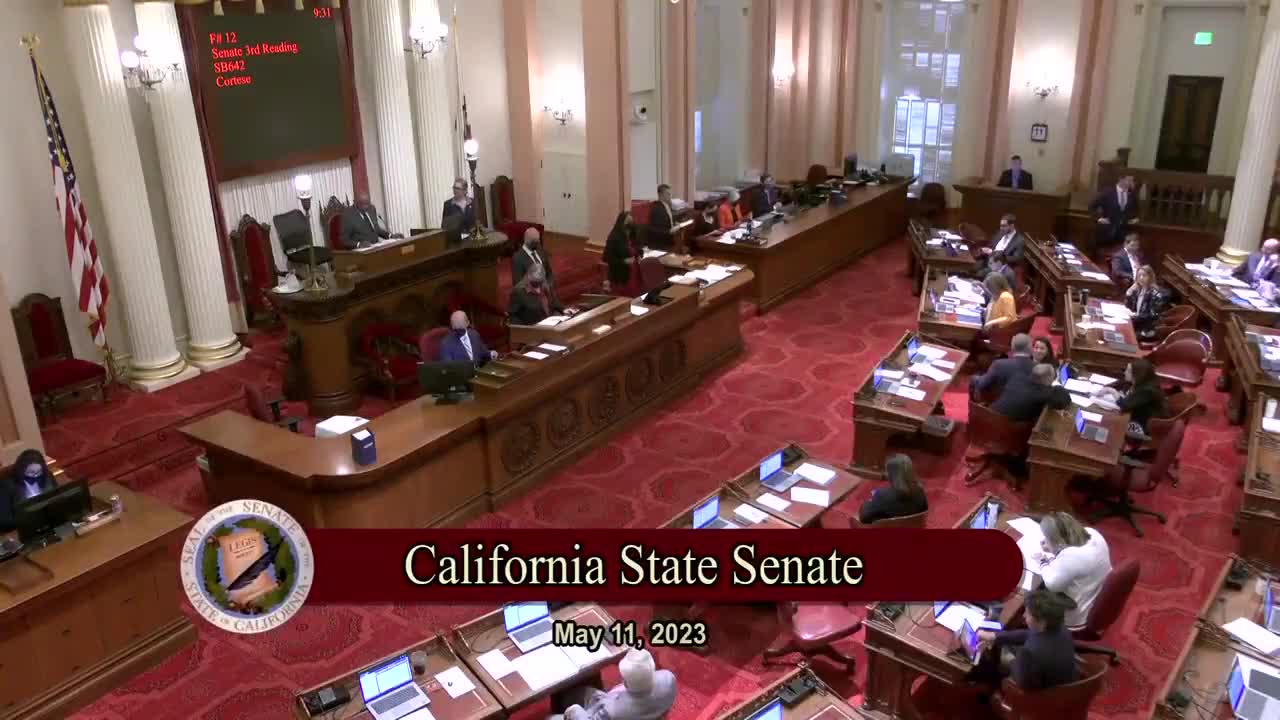 1MIN
Senate Floor
 8MIN
Senate Standing Committee on Housing


Bill Co-Author(s):
