SB 51: Cannabis provisional licenses: local equity applicants.
- Session Year: 2023-2024
- House: Senate
- Latest Version Date: 2023-10-08
Current Status:
Passed
(2023-10-08: Chaptered by Secretary of State. Chapter 593, Statutes of 2023.)
Introduced
In Committee
First Chamber
In Committee
Second Chamber
Enacted
Existing law, the Control, Regulate and Tax Adult Use of Marijuana Act (AUMA), an initiative measure, authorizes a person who obtains a state license under AUMA to engage in commercial adult-use cannabis activity pursuant to that license and applicable local ordinances. Existing law, the Medicinal and Adult-Use Cannabis Regulation and Safety Act (MAUCRSA), among other things, consolidates the licensure and regulation of commercial medicinal and adult-use cannabis activities, and establishes the Department of Cannabis Control to administer its provisions.
Under existing law, the California Cannabis Equity Act, a local equity applicant is an applicant who has submitted, or will submit, an application to a local jurisdiction to engage in commercial cannabis activity and who meets the requirements of that jurisdictions local equity program, which focuses on inclusion and support of individuals and communities in Californias cannabis industry who are linked to populations or neighborhoods that were negatively or disproportionately impacted by cannabis criminalization, as specified.
MAUCRSA, until June 30, 2023, authorized the department, in its sole discretion, to issue a provisional license for a local equity license application if the applicant meets specified requirements. MAUCRSA prohibits the department from renewing a provisional license after January 1, 2025, and provides that no provisional license is effective after January 1, 2026.
This bill, until January 1, 2031, would additionally authorize the department, in its sole discretion, to issue a provisional license for a local equity applicant for retailer activities if the applicant meets specified requirements. The bill would authorize the department, in its sole discretion, to renew a provisional license for a local equity applicant for retailer activities until it issues or denies the provisional licensees annual license, subject to specified requirements, or until 5 years from the date the provisional license was originally issued, whichever is earlier. By extending provisional licensure, the applications for which are required to be signed under penalty of perjury, the bill would expand the scope of the crime of perjury, and would thereby impose a state-mandated local program. The bill would require the department to report to the appropriate committees of the Legislature on, among other things, the number of provisional licenses that have been granted under the bills provisions.
The California Constitution requires the state to reimburse local agencies and school districts for certain costs mandated by the state. Statutory provisions establish procedures for making that reimbursement.
This bill would provide that no reimbursement is required by this act for a specified reason.
AUMA authorizes the Legislature to amend its provisions by a 2/3 vote of each house if the amendment furthers its purposes and intent, except as provided.
This bill would declare that its provisions further the purposes and intent of AUMA.
This bill would declare that it is to take effect immediately as an urgency statute.Existing law, the Control, Regulate and Tax Adult Use of Marijuana Act (AUMA), an initiative measure, authorizes a person who obtains a state license under AUMA to engage in commercial adult-use cannabis activity pursuant to that license and applicable local ordinances. AUMA authorizes legislative amendment of its provisions with a 2/3 vote of both houses, without submission to the voters, to further its purposes and intent. Existing law, the Medicinal and Adult-Use Cannabis Regulation and Safety Act (MAUCRSA), among other things, consolidates the licensure and regulation of commercial medicinal and adult-use cannabis activities, and establishes the Department of Cannabis Control to administer its provisions.
Existing law, the Medicinal and Adult-Use Cannabis Regulation and Safety Act (MAUCRSA), for purposes ofUnder existing law, the California Cannabis Equity Act, defines a local equity applicant is an applicant who has submitted, or will submit, an application to a local jurisdiction to engage in commercial cannabis activity and who meets the requirements of that jurisdictions local equity program as a program adopted or operated by a local jurisdiction that program, which focuses on inclusion and support of individuals and communities in Californias cannabis industry who are linked to populations or neighborhoods that were negatively or disproportionately impacted by cannabis criminalization, as specified. MAUCRSA requires the Governors Office of Business and Economic Development (GO-Biz) to administer a grant program to assist a local jurisdiction with the development of a local equity program or to assist local equity applicants and local equity licensees through a local equity program, as specified.
MAUCRSA, until June 30, 2023, authorizes the Department of Cannabis Control, authorized the department, in its sole discretion, to issue a provisional license for a local equity license application if the applicant meets specified requirements. MAUCRSA prohibits the Department of Cannabis Control department from renewing a provisional license after January 1, 2025, and provides that no provisional license is effective after January 1, 2026.
This bill bill, until January 1, 2031, would additionally authorize the Department of Cannabis Control, department, in its sole discretion, to issue a provisional license for a local equity applicant for retailer activities, indefinitely, activities if the applicant meets specified requirements. This The bill would authorize the department, in its sole discretion, to renew a provisional license for a local equity applicant for retailer activities until it issues or denies the provisional licensees annual license, subject to specified requirements, or until 5 years from the date the provisional license was originally issued, whichever is earlier. By extending provisional licensure, the applications for which are required to be signed under penalty of perjury, the bill would expand the scope of the crime of perjury, and would thereby impose a state-mandated local program. The bill would require the department to report to the appropriate committees of the Legislature on, among other things, the number of provisional licenses that have been granted under the bills provisions.
(2)TheThe California Constitution requires the state to reimburse local agencies and school districts for certain costs mandated by the state. Statutory provisions establish procedures for making that reimbursement.
This bill would provide that no reimbursement is required by this act for a specified reason.
AUMA authorizes the Legislature to amend its provisions by a 2/3 vote of each house if the amendment furthers its purposes and intent, except as provided.
(3)ThisThis bill would declare that its provisions further the purposes and intent of AUMA.
(4)ThisThis bill would declare that it is to take effect immediately as an urgency statute.
(1)Existing law, the Control, Regulate and Tax Adult Use of Marijuana Act (AUMA), an initiative measure, authorizes a person who obtains a state license under AUMA to engage in commercial adult-use cannabis activity pursuant to that license and applicable local ordinances. AUMA authorizes legislative amendment of its provisions with a 2/3 vote of both houses, without submission to the voters, to further its purposes and intent.
Existing law, the Medicinal and Adult-Use Cannabis Regulation and Safety Act (MAUCRSA), for purposes of the California Cannabis Equity Act, defines local equity program as a program adopted or operated by a local jurisdiction that focuses on inclusion and support of individuals and communities in Californias cannabis industry who are linked to populations or neighborhoods that were negatively or disproportionately impacted by cannabis criminalization, as specified. MAUCRSA requires the Governors Office of Business and Economic Development (GO-Biz) to administer a grant program to assist a local jurisdiction with the development of a local equity program or to assist local equity applicants and local equity licensees through a local equity program, as specified.
MAUCRSA, until June 30, 2023, authorizes the Department of Cannabis Control, in its sole discretion, to issue a provisional license for a local equity license application if the applicant meets specified requirements. MAUCRSA prohibits the Department of Cannabis Control from renewing a provisional license after January 1, 2025, and provides that no provisional license is effective after January 1, 2026.
This bill would additionally authorize the Department of Cannabis Control, in its sole discretion, to issue a provisional license for a local equity applicant for retailer activities, indefinitely, if the applicant meets specified requirements. This bill would authorize the department, in its sole discretion, to renew a provisional license for a local equity applicant for retailer activities until it issues or denies the provisional licensees annual license, subject to specified requirements, or until 5 years from the date the provisional license was originally issued, whichever is earlier. By extending provisional licensure, the applications for which are required to be signed under penalty of perjury, the bill would expand the scope of the crime of perjury, and would thereby impose a state-mandated local program.
(2)The California Constitution requires the state to reimburse local agencies and school districts for certain costs mandated by the state. Statutory provisions establish procedures for making that reimbursement.
This bill would provide that no reimbursement is required by this act for a specified reason.
(3)This bill would declare that its provisions further the purposes and intent of AUMA.
(4)This bill would declare that it is to take effect immediately as an urgency statute.
(1)Existing law, the Control, Regulate and Tax Adult Use of Marijuana Act (AUMA), an initiative measure, authorizes a person who obtains a state license under AUMA to engage in commercial adult-use cannabis activity pursuant to that license and applicable local ordinances. AUMA authorizes legislative amendment of its provisions with a 2/3 vote of both houses, without submission to the voters, to further its purposes and intent.
Existing law, the Medicinal and Adult-Use Cannabis Regulation and Safety Act (MAUCRSA), for purposes of the California Cannabis Equity Act, defines local equity program as a program adopted or operated by a local jurisdiction that focuses on inclusion and support of individuals and communities in Californias cannabis industry who are linked to populations or neighborhoods that were negatively or disproportionately impacted by cannabis criminalization, as specified. MAUCRSA requires the Governors Office of Business and Economic Development (GO-Biz) to administer a grant program to assist a local jurisdiction with the development of a local equity program or to assist local equity applicants and local equity licensees through a local equity program, as specified.
MAUCRSA, until June 30, 2023, authorizes the Department of Cannabis Control, in its sole discretion, to issue a provisional license for a local equity license application if the applicant meets specified requirements. MAUCRSA prohibits the Department of Cannabis Control from renewing a provisional license after January 1, 2025, and provides that no provisional license is effective after January 1, 2026.
This bill would additionally authorize the Department of Cannabis Control, in its sole discretion, to issue a provisional license for a local equity applicant for retailer activities, indefinitely, if the applicant meets specified requirements. This bill would authorize the department, in its sole discretion, to renew a provisional license until it issues or denies the provisional licensees annual license, subject to specified requirements, or until 5 years from the date the provisional license was issued, whichever is earlier. By extending provisional licensure, the applications for which are required to be signed under penalty of perjury, the bill would expand the scope of the crime of perjury, and would thereby impose a state-mandated local program.
(2)The California Constitution requires the state to reimburse local agencies and school districts for certain costs mandated by the state. Statutory provisions establish procedures for making that reimbursement.
This bill would provide that no reimbursement is required by this act for a specified reason.
(3)This bill would declare that its provisions further the purposes and intent of AUMA.
(4)This bill would declare that it is to take effect immediately as an urgency statute.
(a)(1)Except as otherwise provided in Section 26050.5, until June 30, 2022, except as provided in paragraphs (3) and (4), the department may, in its sole discretion, issue a provisional license to an applicant if the applicant has submitted a completed license application to the department, including the following, if applicable:
(A)If compliance with the California Environmental Quality Act (Division 13 (commencing with Section 21000) of the Public Resources Code) is not complete, evidence that compliance is underway.
(B)If compliance with local ordinances enacted pursuant to Section 26200 is not complete, evidence that compliance is underway.
(C)Compliance with paragraphs (5) and (11) of subdivision (a) of Section 26051.5.
(D)For a license application that includes cultivation activities, any of the following documents:
(i)A final streambed alteration agreement.
(ii)A draft streambed alteration agreement provided by the Department of Fish and Wildlife and signed and returned to the Department of Fish and Wildlife.
(iii)Written verification by the Department of Fish and Wildlife that a streambed alteration agreement is not needed.
(iv)Written verification by the Department of Fish and Wildlife that the applicant has submitted a notification described in Section 1602 of the Fish and Game Code, submitted payment of applicable fees pursuant to Section 1609 of the Fish and Game Code, and is responsive to the Department of Fish and Wildlife. For purposes of this subparagraph, an applicant is not responsive to the Department of Fish and Wildlife if either of the following apply:
(I)The notification has been deemed incomplete a second time.
(II)After a notification has been deemed incomplete once, the Department of Fish and Wildlife has not received requested information from the applicant for more than 60 days.
(E)The application is submitted to the department on or before March 31, 2022.
(2)If an application for a cultivation license is submitted on or after January 1, 2022, the department shall not issue a provisional license pursuant to this section if issuing the provisional license would cause a licensee to hold multiple cultivation licenses on contiguous premises to exceed one acre of total canopy for outdoor cultivation, or 22,000 square feet for mixed-light or indoor cultivation.
(3)Until June 30, 2023, the department may, in its sole discretion, issue a provisional license for a local equity license application, provided that the applicant meets the following requirements:
(A)The local equity applicant is not a cultivation license applicant for a premises that exceeds one acre of total canopy for outdoor cultivation, or 22,000 square feet for mixed-light or indoor cultivation.
(B)Issuing the license would not cause the applicant to hold multiple cultivation licenses on contiguous premises to exceed one acre of total canopy for outdoor cultivation, or 22,000 square feet for mixed-light or indoor cultivation.
(C)The local equity applicant satisfies all of the requirements in subparagraphs (A) to (D), inclusive, of paragraph (1).
(D)The local equity applicant submits an application to the department on or before March 31, 2023.
(4)Until September 30, 2022, the department may, in its sole discretion, issue a provisional license to a cultivation license applicant, provided that the applicant meets the following requirements:
(A)The applicant is not a cultivation license applicant for a premises that exceeds 20,000 square feet of total canopy for outdoor cultivation.
(B)Issuing the license would not cause the applicant to hold multiple cultivation licenses on contiguous premises to exceed one acre of total canopy for outdoor cultivation, or 22,000 square feet for mixed-light or indoor cultivation.
(C)The cultivation license applicant satisfies all of the requirements in subparagraphs (A) to (D), inclusive, of paragraph (1).
(D)The cultivation license applicant submits an application to the department on or before June 30, 2022.
(b)A provisional license issued pursuant to this section shall be valid for no more than 12 months from the date it was issued or renewed. If the department issues or renews a provisional license, it shall include the outstanding items needed to qualify for an annual license specific to the licensee.
(c)The department may, in its sole discretion, renew a provisional license until it issues or denies the provisional licensees annual license, subject to the requirements of this section.
(d)For a renewal of a provisional license beginning July 1, 2022, through June 30, 2023, the department shall not renew a provisional license pursuant to this section unless the following criteria are met:
(1)For cultivation licenses, to illustrate progress with compliance with Chapter 6 (commencing with Section 1600) of Division 2 of the Fish and Game Code, one of the following documents:
(A)A final streambed alteration agreement issued by the Department of Fish and Wildlife.
(B)A draft streambed alteration agreement provided by the Department of Fish and Wildlife and signed and returned to the Department of Fish and Wildlife by the provisional licensee.
(C)Written verification by the Department of Fish and Wildlife that the provisional licensee has submitted a complete notification described in Section 1602 of the Fish and Game Code.
(D)Written verification by the Department of Fish and Wildlife that a streambed alteration agreement is not needed.
(2)If compliance with the California Environmental Quality Act (Division 13 (commencing with Section 21000) of the Public Resources Code) is not yet complete, a determination from the department that one of the following requirements has been met:
(A)The lead agency is in the process of preparing a site-specific initial study, addendum, or checklist pursuant to Section 15063, 15164, 15168, or 15183 of Title 14 of the California Code of Regulations to demonstrate whether it is consistent with a previously circulated and adopted negative declaration, mitigated negative declaration, or environmental impact report.
(B)If a local jurisdiction is the lead agency, the lead agency has made substantial progress during the previous 12-month licensure term toward completing project-specific environmental review by drafting, preparing, or circulating for public review an environmental document pursuant to the California Environmental Quality Act (Division 13 (commencing with Section 21000) of the Public Resources Code).
(C)If the department is the lead agency, information requested by the department of the provisional licensee that demonstrates the furtherance of environmental review.
(D)Information submitted to the department by the provisional licensee applicant that demonstrates evidence of substantial progress toward compliance with the California Environmental Quality Act (Division 13 (commencing with Section 21000) of the Public Resources Code) during the previous 12-month licensure term.
(e)On or after July 1, 2023, the department shall not renew a provisional license pursuant to this section unless the following criteria are met:
(1)For cultivation licenses, to illustrate progress with compliance with Chapter 6 (commencing with Section 1600) of Division 2 of the Fish and Game Code, one of the following documents:
(A)A final streambed alteration agreement issued by the Department of Fish and Wildlife.
(B)A draft streambed alteration agreement provided by the Department of Fish and Wildlife and signed and returned to the Department of Fish and Wildlife by the provisional licensee.
(C)Written verification from the Department of Fish and Wildlife that a streambed alteration agreement is not needed.
(2)If compliance with the California Environmental Quality Act (Division 13 (commencing with Section 21000) of the Public Resources Code) is not yet complete, to illustrate progress with compliance, a determination from the department that one of the following has been met:
(A)The lead agency for the license has prepared and circulated for public review a negative declaration or a mitigated negative declaration.
(B)The lead agency for the license has determined that an environmental impact report is required pursuant to Section 21157 of the Public Resources Code and has either made substantial progress in preparing that environmental impact report or has a contract or contracts with consultants in place for the preparation of that environmental impact report.
(C)The lead agency has certified to the department that it has conducted a reasonably comprehensive site-specific review and has reviewed, prepared, and deemed complete an initial study, addendum, or checklist pursuant to Section 15063, 15164, 15168, or 15183 of Title 14 of the California Code of Regulations, which demonstrates consistency with a previously circulated and adopted negative declaration, mitigated negative declaration, or environmental impact report, in preparation for approval of an annual license.
(D)The lead agency for the license has reviewed, prepared, and deemed complete a notice of exemption pursuant to Section 21108 or 21152 of the Public Resources Code, except for ministerial projects not subject to the California Environmental Quality Act pursuant to paragraph (1) of subdivision (b) of Section 21080 of the Public Resources Code.
(f)A provisional license authorizing cultivation activities shall not be renewed if the department is notified of either or both of the following:
(1)The State Water Resources Control Board has notified the department that the provisional licensee is not in compliance with subdivision (a) or (b) of Section 26060.1 or the principles, guidelines, and requirements established pursuant to Section 13149 of the Water Code.
(2)The Department of Fish and Wildlife has notified the department that the provisional licensee is not in compliance with any final streambed alteration agreement, any conditions set forth in a signed draft streambed alteration agreement, or a condition established pursuant to subdivision (a) or paragraphs (1) and (2) of subdivision (b) of Section 26060.1.
(g)(1)After January 1, 2023, the department shall not renew a license pursuant to this section for cultivation activities if renewing the license would cause a licensee to hold multiple cultivation licenses on contiguous premises to exceed one acre of total canopy for outdoor cultivation or 22,000 square feet for mixed-light or indoor cultivation.
(2)After January 1, 2024, no provisional license that causes a licensee to hold multiple cultivation licenses on contiguous premises to exceed one acre of total canopy for outdoor cultivation or 22,000 square feet for mixed-light or indoor cultivation shall be in effect.
(h)The department, in its sole discretion, may allow a provisional licensee to move locations after the date provisional licenses can no longer be issued provided that the new location is approved in compliance with the California Environmental Quality Act (Division 13 (commencing with Section 21000) of the Public Resources Code), and Chapter 6 (commencing with Section 1600) of Division 2 of the Fish and Game Code. If all other renewal requirements are satisfied, the department may also renew the license at the new location.
(i)The department may, in its sole discretion, revoke or suspend a provisional license if it determines the licensee failed to actively and diligently pursue requirements for the annual license. The department shall adopt regulations clarifying what constitutes actively and diligently pursuing requirements for the annual license.
(j)The department shall cancel a provisional license upon issuance of an annual license, denial of an annual license, abandonment of an application for licensure, or withdrawal of an application for licensure.
(k)Except as specified in this section, the provisions of this division shall apply to a provisional license in the same manner as to an annual license.
(l)Without limiting any other statutory exemption or categorical exemption, Division 13 (commencing with Section 21000) of the Public Resources Code does not apply to the issuance of a license pursuant to this section by the department, except as otherwise provided in this section.
(m)Refusal by the department to issue a license pursuant to this section or revocation or suspension by the department of a license issued pursuant to this section shall not entitle the applicant or licensee to a hearing or an appeal of the decision. Chapter 2 (commencing with Section 480) of Division 1.5 and Chapter 4 (commencing with Section 26040) of this division and Sections 26031 and 26058 shall not apply to licenses issued pursuant to this section.
(n)For purposes of this section, streambed alteration agreement has the same meaning as the term agreement is defined in Section 1601 of the Fish and Game Code, which includes both individual agreements and general agreements under Section 1617 of the Fish and Game Code.
(o)Except as otherwise provided in Section 26050.5, the Department shall not renew a provisional license after January 1, 2025, and no provisional license shall be effective after January 1, 2026.
(p)This section shall remain in effect only until January 1, 2026, and as of that date is repealed.
(q)It is the intent of the Legislature that no further exemptions from annual licenses be adopted and that any licenses issued under this division after January 1, 2025, be issued in compliance with all relevant environmental laws.
(r)It is the intent of the Legislature that funds appropriated in Item 1115-101-0001 of the Budget Act of 2021 shall be promptly deployed to allow local jurisdictions to meet the deadlines in this act.
SEC. 2.Section 26050.5 is added to the Business and Professions Code, to read:26050.5.(a)Until January 1, 2031, the department may, in its sole discretion, issue a provisional license for a local equity applicant, as defined in Chapter 23 (commencing with Section 26240), for retailer activities, if the applicant has submitted a completed license application to the department, provided that the applicant meets the following requirements:
(1)If compliance with the California Environmental Quality Act (Division 13 (commencing with Section 21000) of the Public Resources Code) is not complete, evidence that compliance is underway.
(2)If compliance with local ordinances enacted pursuant to Section 26200 is not complete, evidence that compliance is underway.
(3)Compliance with paragraphs (5) and (11) of subdivision (a) of Section 26051.5.
(b)A provisional license issued pursuant to this section shall be valid for no more than 12 months from the date it was issued or renewed. If the department issues or renews a provisional license, it shall include the outstanding items needed to qualify for an annual license specific to the licensee.
(c)The department may, in its sole discretion, renew a provisional license for a local equity applicant for retailer activities issued pursuant to this section or Section 26050.2 until it issues or denies the provisional licensees annual license, subject to the requirements of this section, or until five years from the date the provisional license was originally issued pursuant to this section or Section 26050.2, whichever is earlier.
(d)If compliance with the California Environmental Quality Act (Division 13 (commencing with Section 21000) of the Public Resources Code) is not yet complete, the department shall not renew a provisional license pursuant to this section unless the department has determined that one of the following requirements has been met:
(1)The lead agency is in the process of preparing a site-specific initial study, addendum, or checklist pursuant to Section 15063, 15164, 15168, or 15183 of Title 14 of the California Code of Regulations to demonstrate whether it is consistent with a previously circulated and adopted negative declaration, mitigated negative declaration, or environmental impact report.
(2)If a local jurisdiction is the lead agency, the lead agency has made substantial progress during the previous 12-month licensure term toward completing project-specific environmental review by drafting, preparing, or circulating for public review an environmental document pursuant to the California Environmental Quality Act (Division 13 (commencing with Section 21000) of the Public Resources Code).
(3)If the department is the lead agency, information requested by the department of the provisional licensee demonstrates the furtherance of environmental review.
(4)Information submitted to the department by the provisional licensee applicant demonstrates evidence of substantial progress toward compliance with the California Environmental Quality Act (Division 13 (commencing with Section 21000) of the Public Resources Code) during the previous 12-month licensure term.
(e)The department, in its sole discretion, may allow a provisional licensee to move locations after the date provisional licenses can no longer be issued provided that the new location is approved in compliance with the California Environmental Quality Act (Division 13 (commencing with Section 21000) of the Public Resources Code), and Chapter 6 (commencing with Section 1600) of Division 2 of the Fish and Game Code. If all other renewal requirements are satisfied, the department may also renew the license at the new location.
(f)The department may, in its sole discretion, revoke or suspend a provisional license if it determines the licensee failed to actively and diligently pursue requirements for the annual license. The department shall adopt regulations clarifying what constitutes actively and diligently pursuing requirements for the annual license.
(g)The department shall cancel a provisional license upon issuance of an annual license, denial of an annual license, abandonment of an application for licensure, or withdrawal of an application for licensure.
(h)Except as specified in this section, the provisions of this division shall apply to a provisional license in the same manner as to an annual license.
(i)Without limiting any other statutory exemption or categorical exemption, Division 13 (commencing with Section 21000) of the Public Resources Code does not apply to the issuance of a license pursuant to this section by the department, except as otherwise provided in this section.
(j)Refusal by the department to issue a license pursuant to this section or revocation or suspension by the department of a license issued pursuant to this section shall not entitle the applicant or licensee to a hearing or an appeal of the decision. Chapter 2 (commencing with Section 480) of Division 1.5 and Chapter 4 (commencing with Section 26040) of this division and Sections 26031 and 26058 do not apply to licenses issued pursuant to this section.
(k)(1)On or before January 1, 2030, the department shall report to the appropriate committees of the Legislature on the number of provisional licenses that have been granted under this section, the number of provisional licenses that have been canceled for each of the circumstances provided in subdivision (g), and the number of provisional licenses granted under this section that remain active at the time of the report.
(2)The requirement for submitting a report imposed under this subdivision is inoperative on January 1, 2034, pursuant to Section 10231.5 of the Government Code.
(3)A report to be submitted pursuant to this subdivision shall be submitted in compliance with Section 9795 of the Government Code.
SEC. 3.No reimbursement is required by this act pursuant to Section 6 of Article XIIIB of the California Constitution because the only costs that may be incurred by a local agency or school district will be incurred because this act creates a new crime or infraction, eliminates a crime or infraction, or changes the penalty for a crime or infraction, within the meaning of Section 17556 of the Government Code, or changes the definition of a crime within the meaning of Section 6 of Article XIIIB of the California Constitution.
SEC. 4.The Legislature finds and declares that this act furthers the purposes and intent of the Control, Regulate and Tax Adult Use of Marijuana Act.
SEC. 5.This act is an urgency statute necessary for the immediate preservation of the public peace, health, or safety within the meaning of Article IV of the California Constitution and shall go into immediate effect. The facts constituting the necessity are:In order to ensure, as soon as possible, that the cannabis industry, especially local equity licensees, can continue to grow and expand the legal, regulated cannabis industry, it is necessary that this act go into immediate effect.(a)(1)Except as otherwise provided in Section 26050.5, until June 30, 2022, except as provided in paragraphs (3) and (4), the department may, in its sole discretion, issue a provisional license to an applicant if the applicant has submitted a completed license application to the department, including the following, if applicable:
(A)If compliance with the California Environmental Quality Act (Division 13 (commencing with Section 21000) of the Public Resources Code) is not complete, evidence that compliance is underway.
(B)If compliance with local ordinances enacted pursuant to Section 26200 is not complete, evidence that compliance is underway.
(C)Compliance with paragraphs (5) and (11) of subdivision (a) of Section 26051.5.
(D)For a license application that includes cultivation activities, any of the following documents:
(i)A final streambed alteration agreement.
(ii)A draft streambed alteration agreement provided by the Department of Fish and Wildlife and signed and returned to the Department of Fish and Wildlife.
(iii)Written verification by the Department of Fish and Wildlife that a streambed alteration agreement is not needed.
(iv)Written verification by the Department of Fish and Wildlife that the applicant has submitted a notification described in Section 1602 of the Fish and Game Code, submitted payment of applicable fees pursuant to Section 1609 of the Fish and Game Code, and is responsive to the Department of Fish and Wildlife. For purposes of this subparagraph, an applicant is not responsive to the Department of Fish and Wildlife if either of the following apply:
(I)The notification has been deemed incomplete a second time.
(II)After a notification has been deemed incomplete once, the Department of Fish and Wildlife has not received requested information from the applicant for more than 60 days.
(E)The application is submitted to the department on or before March 31, 2022.
(2)If an application for a cultivation license is submitted on or after January 1, 2022, the department shall not issue a provisional license pursuant to this section if issuing the provisional license would cause a licensee to hold multiple cultivation licenses on contiguous premises to exceed one acre of total canopy for outdoor cultivation, or 22,000 square feet for mixed-light or indoor cultivation.
(3)Until June 30, 2023, the department may, in its sole discretion, issue a provisional license for a local equity license application, provided that the applicant meets the following requirements:
(A)The local equity applicant is not a cultivation license applicant for a premises that exceeds one acre of total canopy for outdoor cultivation, or 22,000 square feet for mixed-light or indoor cultivation.
(B)Issuing the license would not cause the applicant to hold multiple cultivation licenses on contiguous premises to exceed one acre of total canopy for outdoor cultivation, or 22,000 square feet for mixed-light or indoor cultivation.
(C)The local equity applicant satisfies all of the requirements in subparagraphs (A) to (D), inclusive, of paragraph (1).
(D)The local equity applicant submits an application to the department on or before March 31, 2023.
(4)Until September 30, 2022, the department may, in its sole discretion, issue a provisional license to a cultivation license applicant, provided that the applicant meets the following requirements:
(A)The applicant is not a cultivation license applicant for a premises that exceeds 20,000 square feet of total canopy for outdoor cultivation.
(B)Issuing the license would not cause the applicant to hold multiple cultivation licenses on contiguous premises to exceed one acre of total canopy for outdoor cultivation, or 22,000 square feet for mixed-light or indoor cultivation.
(C)The cultivation license applicant satisfies all of the requirements in subparagraphs (A) to (D), inclusive, of paragraph (1).
(D)The cultivation license applicant submits an application to the department on or before June 30, 2022.
(b)A provisional license issued pursuant to this section shall be valid for no more than 12 months from the date it was issued or renewed. If the department issues or renews a provisional license, it shall include the outstanding items needed to qualify for an annual license specific to the licensee.
(c)The department may, in its sole discretion, renew a provisional license until it issues or denies the provisional licensees annual license, subject to the requirements of this section.
(d)For a renewal of a provisional license beginning July 1, 2022, through June 30, 2023, the department shall not renew a provisional license pursuant to this section unless the following criteria are met:
(1)For cultivation licenses, to illustrate progress with compliance with Chapter 6 (commencing with Section 1600) of Division 2 of the Fish and Game Code, one of the following documents:
(A)A final streambed alteration agreement issued by the Department of Fish and Wildlife.
(B)A draft streambed alteration agreement provided by the Department of Fish and Wildlife and signed and returned to the Department of Fish and Wildlife by the provisional licensee.
(C)Written verification by the Department of Fish and Wildlife that the provisional licensee has submitted a complete notification described in Section 1602 of the Fish and Game Code.
(D)Written verification by the Department of Fish and Wildlife that a streambed alteration agreement is not needed.
(2)If compliance with the California Environmental Quality Act (Division 13 (commencing with Section 21000) of the Public Resources Code) is not yet complete, a determination from the department that one of the following requirements has been met:
(A)The lead agency is in the process of preparing a site-specific initial study, addendum, or checklist pursuant to Section 15063, 15164, 15168, or 15183 of Title 14 of the California Code of Regulations to demonstrate whether it is consistent with a previously circulated and adopted negative declaration, mitigated negative declaration, or environmental impact report.
(B)If a local jurisdiction is the lead agency, the lead agency has made substantial progress during the previous 12-month licensure term toward completing project-specific environmental review by drafting, preparing, or circulating for public review an environmental document pursuant to the California Environmental Quality Act (Division 13 (commencing with Section 21000) of the Public Resources Code).
(C)If the department is the lead agency, information requested by the department of the provisional licensee that demonstrates the furtherance of environmental review.
(D)Information submitted to the department by the provisional licensee applicant that demonstrates evidence of substantial progress toward compliance with the California Environmental Quality Act (Division 13 (commencing with Section 21000) of the Public Resources Code) during the previous 12-month licensure term.
(e)On or after July 1, 2023, the department shall not renew a provisional license pursuant to this section unless the following criteria are met:
(1)For cultivation licenses, to illustrate progress with compliance with Chapter 6 (commencing with Section 1600) of Division 2 of the Fish and Game Code, one of the following documents:
(A)A final streambed alteration agreement issued by the Department of Fish and Wildlife.
(B)A draft streambed alteration agreement provided by the Department of Fish and Wildlife and signed and returned to the Department of Fish and Wildlife by the provisional licensee.
(C)Written verification from the Department of Fish and Wildlife that a streambed alteration agreement is not needed.
(2)If compliance with the California Environmental Quality Act (Division 13 (commencing with Section 21000) of the Public Resources Code) is not yet complete, to illustrate progress with compliance, a determination from the department that one of the following has been met:
(A)The lead agency for the license has prepared and circulated for public review a negative declaration or a mitigated negative declaration.
(B)The lead agency for the license has determined that an environmental impact report is required pursuant to Section 21157 of the Public Resources Code and has either made substantial progress in preparing that environmental impact report or has a contract or contracts with consultants in place for the preparation of that environmental impact report.
(C)The lead agency has certified to the department that it has conducted a reasonably comprehensive site-specific review and has reviewed, prepared, and deemed complete an initial study, addendum, or checklist pursuant to Section 15063, 15164, 15168, or 15183 of Title 14 of the California Code of Regulations, which demonstrates consistency with a previously circulated and adopted negative declaration, mitigated negative declaration, or environmental impact report, in preparation for approval of an annual license.
(D)The lead agency for the license has reviewed, prepared, and deemed complete a notice of exemption pursuant to Section 21108 or 21152 of the Public Resources Code, except for ministerial projects not subject to the California Environmental Quality Act pursuant to paragraph (1) of subdivision (b) of Section 21080 of the Public Resources Code.
(f)A provisional license authorizing cultivation activities shall not be renewed if the department is notified of either or both of the following:
(1)The State Water Resources Control Board has notified the department that the provisional licensee is not in compliance with subdivision (a) or (b) of Section 26060.1 or the principles, guidelines, and requirements established pursuant to Section 13149 of the Water Code.
(2)The Department of Fish and Wildlife has notified the department that the provisional licensee is not in compliance with any final streambed alteration agreement, any conditions set forth in a signed draft streambed alteration agreement, or a condition established pursuant to subdivision (a) or paragraphs (1) and (2) of subdivision (b) of Section 26060.1.
(g)(1)After January 1, 2023, the department shall not renew a license pursuant to this section for cultivation activities if renewing the license would cause a licensee to hold multiple cultivation licenses on contiguous premises to exceed one acre of total canopy for outdoor cultivation or 22,000 square feet for mixed-light or indoor cultivation.
(2)After January 1, 2024, no provisional license that causes a licensee to hold multiple cultivation licenses on contiguous premises to exceed one acre of total canopy for outdoor cultivation or 22,000 square feet for mixed-light or indoor cultivation shall be in effect.
(h)The department, in its sole discretion, may allow a provisional licensee to move locations after the date provisional licenses can no longer be issued provided that the new location is approved in compliance with the California Environmental Quality Act (Division 13 (commencing with Section 21000) of the Public Resources Code), and Chapter 6 (commencing with Section 1600) of Division 2 of the Fish and Game Code. If all other renewal requirements are satisfied, the department may also renew the license at the new location.
(i)The department may, in its sole discretion, revoke or suspend a provisional license if it determines the licensee failed to actively and diligently pursue requirements for the annual license. The department shall adopt regulations clarifying what constitutes actively and diligently pursuing requirements for the annual license.
(j)The department shall cancel a provisional license upon issuance of an annual license, denial of an annual license, abandonment of an application for licensure, or withdrawal of an application for licensure.
(k)Except as specified in this section, the provisions of this division shall apply to a provisional license in the same manner as to an annual license.
(l)Without limiting any other statutory exemption or categorical exemption, Division 13 (commencing with Section 21000) of the Public Resources Code does not apply to the issuance of a license pursuant to this section by the department, except as otherwise provided in this section.
(m)Refusal by the department to issue a license pursuant to this section or revocation or suspension by the department of a license issued pursuant to this section shall not entitle the applicant or licensee to a hearing or an appeal of the decision. Chapter 2 (commencing with Section 480) of Division 1.5 and Chapter 4 (commencing with Section 26040) of this division and Sections 26031 and 26058 shall not apply to licenses issued pursuant to this section.
(n)For purposes of this section, streambed alteration agreement has the same meaning as the term agreement is defined in Section 1601 of the Fish and Game Code, which includes both individual agreements and general agreements under Section 1617 of the Fish and Game Code.
(o)Except as otherwise provided in Section 26050.5, the Department shall not renew a provisional license after January 1, 2025, and no provisional license shall be effective after January 1, 2026.
(p)This section shall remain in effect only until January 1, 2026, and as of that date is repealed.
(q)It is the intent of the Legislature that no further exemptions from annual licenses be adopted and that any licenses issued under this division after January 1, 2025, be issued in compliance with all relevant environmental laws.
(r)It is the intent of the Legislature that funds appropriated in Item 1115-101-0001 of the Budget Act of 2021 shall be promptly deployed to allow local jurisdictions to meet the deadlines in this Act. act.
SEC. 2.Section 26050.5 is added to the Business and Professions Code, to read:26050.5.(a)The Until January 1, 2031, the department may, in its sole discretion, issue a provisional license for a local equity applicant, as defined in Chapter 23 (commencing with Section 26240), for retailer activities, if the applicant has submitted a completed license application to the department, provided that the applicant meets the following requirements:
(1)If compliance with the California Environmental Quality Act (Division 13 (commencing with Section 21000) of the Public Resources Code) is not complete, evidence that compliance is underway.
(2)If compliance with local ordinances enacted pursuant to Section 26200 is not complete, evidence that compliance is underway.
(3)Compliance with paragraphs (5) and (11) of subdivision (a) of Section 26051.5.
(b)A provisional license issued pursuant to this section shall be valid for no more than 12 months from the date it was issued or renewed. If the department issues or renews a provisional license, it shall include the outstanding items needed to qualify for an annual license specific to the licensee.
(c)The department may, in its sole discretion, renew a provisional license for a local equity applicant for retailer activities issued pursuant to this section or Section 26050.2 until it issues or denies the provisional licensees annual license, subject to the requirements of this section, or until five years from the date the provisional license was originally issued pursuant to this section or Section 26050.2, whichever is earlier.
(d)For a renewal of a provisional license pursuant to this section, the department shall not renew a provisional license unless the following criteria are met:(1)(d)If compliance with the California Environmental Quality Act (Division 13 (commencing with Section 21000) of the Public Resources Code) is not yet complete, a determination from the department shall not renew a provisional license pursuant to this section unless the department has determined that one of the following requirements has been met:
(A)(1)The lead agency is in the process of preparing a site-specific initial study, addendum, or checklist pursuant to Section 15063, 15164, 15168, or 15183 of Title 14 of the California Code of Regulations to demonstrate whether it is consistent with a previously circulated and adopted negative declaration, mitigated negative declaration, or environmental impact report.
(B)(2)If a local jurisdiction is the lead agency, the lead agency has made substantial progress during the previous 12-month licensure term toward completing project-specific environmental review by drafting, preparing, or circulating for public review an environmental document pursuant to the California Environmental Quality Act (Division 13 (commencing with Section 21000) of the Public Resources Code).
(C)(3)If the department is the lead agency, information requested by the department of the provisional licensee that demonstrates the furtherance of environmental review.
(D)(4)Information submitted to the department by the provisional licensee applicant that demonstrates evidence of substantial progress toward compliance with the California Environmental Quality Act (Division 13 (commencing with Section 21000) of the Public Resources Code) during the previous 12-month licensure term.
(e)The department, in its sole discretion, may allow a provisional licensee to move locations after the date provisional licenses can no longer be issued provided that the new location is approved in compliance with the California Environmental Quality Act (Division 13 (commencing with Section 21000) of the Public Resources Code), and Chapter 6 (commencing with Section 1600) of Division 2 of the Fish and Game Code. If all other renewal requirements are satisfied, the department may also renew the license at the new location.
(f)The department may, in its sole discretion, revoke or suspend a provisional license if it determines the licensee failed to actively and diligently pursue requirements for the annual license. The department shall adopt regulations clarifying what constitutes actively and diligently pursuing requirements for the annual license.
(g)The department shall cancel a provisional license upon issuance of an annual license, denial of an annual license, abandonment of an application for licensure, or withdrawal of an application for licensure.
(h)Except as specified in this section, the provisions of this division shall apply to a provisional license in the same manner as to an annual license.
(i)Without limiting any other statutory exemption or categorical exemption, Division 13 (commencing with Section 21000) of the Public Resources Code does not apply to the issuance of a license pursuant to this section by the department, except as otherwise provided in this section.
(j)Refusal by the department to issue a license pursuant to this section or revocation or suspension by the department of a license issued pursuant to this section shall not entitle the applicant or licensee to a hearing or an appeal of the decision. Chapter 2 (commencing with Section 480) of Division 1.5 and Chapter 4 (commencing with Section 26040) of this division and Sections 26031 and 26058 shall do not apply to licenses issued pursuant to this section.
(k)(1)On or before January 1, 2030, the department shall report to the appropriate committees of the Legislature on the number of provisional licenses that have been granted under this section, the number of provisional licenses that have been canceled for each of the circumstances provided in subdivision (g), and the number of provisional licenses granted under this section that remain active at the time of the report.
(2)The requirement for submitting a report imposed under this subdivision is inoperative on January 1, 2034, pursuant to Section 10231.5 of the Government Code.
(3)A report to be submitted pursuant to this subdivision shall be submitted in compliance with Section 9795 of the Government Code.
SEC. 3.No reimbursement is required by this act pursuant to Section 6 of Article XIIIB of the California Constitution because the only costs that may be incurred by a local agency or school district will be incurred because this act creates a new crime or infraction, eliminates a crime or infraction, or changes the penalty for a crime or infraction, within the meaning of Section 17556 of the Government Code, or changes the definition of a crime within the meaning of Section 6 of Article XIIIB of the California Constitution.
SEC. 4.The Legislature finds and declares that this act furthers the purposes and intent of the Control, Regulate and Tax Adult Use of Marijuana Act.
SEC. 5.This act is an urgency statute necessary for the immediate preservation of the public peace, health, or safety within the meaning of Article IV of the California Constitution and shall go into immediate effect. The facts constituting the necessity are:
In order to ensure, as soon as possible, that the cannabis industry, especially local equity licensees, can continue to grow and expand the legal, regulated cannabis industry, it is necessary that this act go into immediate effect.
(a)(1)Except as otherwise provided in Section 26050.5, until June 30, 2022, except as provided in paragraphs (3) and (4), the department may, in its sole discretion, issue a provisional license to an applicant if the applicant has submitted a completed license application to the department, including the following, if applicable:
(A)If compliance with the California Environmental Quality Act (Division 13 (commencing with Section 21000) of the Public Resources Code) is not complete, evidence that compliance is underway.
(B)If compliance with local ordinances enacted pursuant to Section 26200 is not complete, evidence that compliance is underway.
(C)Compliance with paragraphs (5) and (11) of subdivision (a) of Section 26051.5.
(D)For a license application that includes cultivation activities, any of the following documents:
(i)A final streambed alteration agreement.
(ii)A draft streambed alteration agreement provided by the Department of Fish and Wildlife and signed and returned to the Department of Fish and Wildlife.
(iii)Written verification by the Department of Fish and Wildlife that a streambed alteration agreement is not needed.
(iv)Written verification by the Department of Fish and Wildlife that the applicant has submitted a notification described in Section 1602 of the Fish and Game Code, submitted payment of applicable fees pursuant to Section 1609 of the Fish and Game Code, and is responsive to the Department of Fish and Wildlife. For purposes of this subparagraph, an applicant is not responsive to the Department of Fish and Wildlife if either of the following apply:
(I)The notification has been deemed incomplete a second time.
(II)After a notification has been deemed incomplete once, the Department of Fish and Wildlife has not received requested information from the applicant for more than 60 days.
(E)The application is submitted to the department on or before March 31, 2022.
(2)If an application for a cultivation license is submitted on or after January 1, 2022, the department shall not issue a provisional license pursuant to this section if issuing the provisional license would cause a licensee to hold multiple cultivation licenses on contiguous premises to exceed one acre of total canopy for outdoor cultivation, or 22,000 square feet for mixed-light or indoor cultivation.
(3)Until June 30, 2023, the department may, in its sole discretion, issue a provisional license for a local equity license application, provided that the applicant meets the following requirements:
(A)The local equity applicant is not a cultivation license applicant for a premises that exceeds one acre of total canopy for outdoor cultivation, or 22,000 square feet for mixed-light or indoor cultivation.
(B)Issuing the license would not cause the applicant to hold multiple cultivation licenses on contiguous premises to exceed one acre of total canopy for outdoor cultivation, or 22,000 square feet for mixed-light or indoor cultivation.
(C)The local equity applicant satisfies all of the requirements in subparagraphs (A) to (D), inclusive, of paragraph (1).
(D)The local equity applicant submits an application to the department on or before March 31, 2023.
(4)Until September 30, 2022, the department may, in its sole discretion, issue a provisional license to a cultivation license applicant, provided that the applicant meets the following requirements:
(A)The applicant is not a cultivation license applicant for a premises that exceeds 20,000 square feet of total canopy for outdoor cultivation.
(B)Issuing the license would not cause the applicant to hold multiple cultivation licenses on contiguous premises to exceed one acre of total canopy for outdoor cultivation, or 22,000 square feet for mixed-light or indoor cultivation.
(C)The cultivation license applicant satisfies all of the requirements in subparagraphs (A) to (D), inclusive, of paragraph (1).
(D)The cultivation license applicant submits an application to the department on or before June 30, 2022.
(b)A provisional license issued pursuant to this section shall be valid for no more than 12 months from the date it was issued or renewed. If the department issues or renews a provisional license, it shall include the outstanding items needed to qualify for an annual license specific to the licensee.
(c)The department may, in its sole discretion, renew a provisional license until it issues or denies the provisional licensees annual license, subject to the requirements of this section.
(d)For a renewal of a provisional license beginning July 1, 2022, through June 30, 2023, the department shall not renew a provisional license pursuant to this section unless the following criteria are met:
(1)For cultivation licenses, to illustrate progress with compliance with Chapter 6 (commencing with Section 1600) of Division 2 of the Fish and Game Code, one of the following documents:
(A)A final streambed alteration agreement issued by the Department of Fish and Wildlife.
(B)A draft streambed alteration agreement provided by the Department of Fish and Wildlife and signed and returned to the Department of Fish and Wildlife by the provisional licensee.
(C)Written verification by the Department of Fish and Wildlife that the provisional licensee has submitted a complete notification described in Section 1602 of the Fish and Game Code.
(D)Written verification by the Department of Fish and Wildlife that a streambed alteration agreement is not needed.
(2)If compliance with the California Environmental Quality Act (Division 13 (commencing with Section 21000) of the Public Resources Code) is not yet complete, a determination from the department that one of the following requirements has been met:
(A)The lead agency is in the process of preparing a site-specific initial study, addendum, or checklist pursuant to Section 15063, 15164, 15168, or 15183 of Title 14 of the California Code of Regulations to demonstrate whether it is consistent with a previously circulated and adopted negative declaration, mitigated negative declaration, or environmental impact report.
(B)If a local jurisdiction is the lead agency, the lead agency has made substantial progress during the previous 12-month licensure term toward completing project-specific environmental review by drafting, preparing, or circulating for public review an environmental document pursuant to the California Environmental Quality Act (Division 13 (commencing with Section 21000) of the Public Resources Code).
(C)If the department is the lead agency, information requested by the department of the provisional licensee that demonstrates the furtherance of environmental review.
(D)Information submitted to the department by the provisional licensee applicant that demonstrates evidence of substantial progress toward compliance with the California Environmental Quality Act (Division 13 (commencing with Section 21000) of the Public Resources Code) during the previous 12-month licensure term.
(e)On or after July 1, 2023, the department shall not renew a provisional license pursuant to this section unless the following criteria are met:
(1)For cultivation licenses, to illustrate progress with compliance with Chapter 6 (commencing with Section 1600) of Division 2 of the Fish and Game Code, one of the following documents:
(A)A final streambed alteration agreement issued by the Department of Fish and Wildlife.
(B)A draft streambed alteration agreement provided by the Department of Fish and Wildlife and signed and returned to the Department of Fish and Wildlife by the provisional licensee.
(C)Written verification from the Department of Fish and Wildlife that a streambed alteration agreement is not needed.
(2)If compliance with the California Environmental Quality Act (Division 13 (commencing with Section 21000) of the Public Resources Code) is not yet complete, to illustrate progress with compliance, a determination from the department that one of the following has been met:
(A)The lead agency for the license has prepared and circulated for public review a negative declaration or a mitigated negative declaration.
(B)The lead agency for the license has determined that an environmental impact report is required pursuant to Section 21157 of the Public Resources Code and has either made substantial progress in preparing that environmental impact report or has a contract or contracts with consultants in place for the preparation of that environmental impact report.
(C)The lead agency has certified to the department that it has conducted a reasonably comprehensive site-specific review and has reviewed, prepared, and deemed complete an initial study, addendum, or checklist pursuant to Section 15063, 15164, 15168, or 15183 of Title 14 of the California Code of Regulations, which demonstrates consistency with a previously circulated and adopted negative declaration, mitigated negative declaration, or environmental impact report, in preparation for approval of an annual license.
(D)The lead agency for the license has reviewed, prepared, and deemed complete a notice of exemption pursuant to Section 21108 or 21152 of the Public Resources Code, except for ministerial projects not subject to the California Environmental Quality Act pursuant to paragraph (1) of subdivision (b) of Section 21080 of the Public Resources Code.
(f)A provisional license authorizing cultivation activities shall not be renewed if the department is notified of either or both of the following:
(1)The State Water Resources Control Board has notified the department that the provisional licensee is not in compliance with subdivision (a) or (b) of Section 26060.1 or the principles, guidelines, and requirements established pursuant to Section 13149 of the Water Code.
(2)The Department of Fish and Wildlife has notified the department that the provisional licensee is not in compliance with any final streambed alteration agreement, any conditions set forth in a signed draft streambed alteration agreement, or a condition established pursuant to subdivision (a) or paragraphs (1) and (2) of subdivision (b) of Section 26060.1.
(g)(1)After January 1, 2023, the department shall not renew a license pursuant to this section for cultivation activities if renewing the license would cause a licensee to hold multiple cultivation licenses on contiguous premises to exceed one acre of total canopy for outdoor cultivation or 22,000 square feet for mixed-light or indoor cultivation.
(2)After January 1, 2024, no provisional license that causes a licensee to hold multiple cultivation licenses on contiguous premises to exceed one acre of total canopy for outdoor cultivation or 22,000 square feet for mixed-light or indoor cultivation shall be in effect.
(h)The department, in its sole discretion, may allow a provisional licensee to move locations after the date provisional licenses can no longer be issued provided that the new location is approved in compliance with the California Environmental Quality Act (Division 13 (commencing with Section 21000) of the Public Resources Code), and Chapter 6 (commencing with Section 1600) of Division 2 of the Fish and Game Code. If all other renewal requirements are satisfied, the department may also renew the license at the new location.
(i)The department may, in its sole discretion, revoke or suspend a provisional license if it determines the licensee failed to actively and diligently pursue requirements for the annual license. The department shall adopt regulations clarifying what constitutes actively and diligently pursuing requirements for the annual license.
(j)The department shall cancel a provisional license upon issuance of an annual license, denial of an annual license, abandonment of an application for licensure, or withdrawal of an application for licensure.
(k)Except as specified in this section, the provisions of this division shall apply to a provisional license in the same manner as to an annual license.
(l)Without limiting any other statutory exemption or categorical exemption, Division 13 (commencing with Section 21000) of the Public Resources Code does not apply to the issuance of a license pursuant to this section by the department, except as otherwise provided in this section.
(m)Refusal by the department to issue a license pursuant to this section or revocation or suspension by the department of a license issued pursuant to this section shall not entitle the applicant or licensee to a hearing or an appeal of the decision. Chapter 2 (commencing with Section 480) of Division 1.5 and Chapter 4 (commencing with Section 26040) of this division and Sections 26031 and 26058 shall not apply to licenses issued pursuant to this section.
(n)For purposes of this section, streambed alteration agreement has the same meaning as the term agreement is defined in Section 1601 of the Fish and Game Code, which includes both individual agreements and general agreements under Section 1617 of the Fish and Game Code.
(o)Except as otherwise provided in Section 26050.5, the Department shall not renew a provisional license after January 1, 2025, and no provisional license shall be effective after January 1, 2026.
(p)This section shall remain in effect only until January 1, 2026, and as of that date is repealed.
(q)It is the intent of the Legislature that no further exemptions from annual licenses be adopted and that any licenses issued under this division after January 1, 2025, be issued in compliance with all relevant environmental laws.
(r)It is the intent of the Legislature that funds appropriated in Item 1115-101-0001 of the Budget Act of 2021 shall be promptly deployed to allow local jurisdictions to meet the deadlines in this Act.
SEC. 2.Section 26050.5 is added to the Business and Professions Code, to read:26050.5.(a)The department may, in its sole discretion, issue a provisional license for a local equity applicant, as defined in Chapter 23 (commencing with Section 26240), for retailer activities, if the applicant has submitted a completed license application to the department, provided that the applicant meets the following requirements:
(1)If compliance with the California Environmental Quality Act (Division 13 (commencing with Section 21000) of the Public Resources Code) is not complete, evidence that compliance is underway.
(2)If compliance with local ordinances enacted pursuant to Section 26200 is not complete, evidence that compliance is underway.
(3)Compliance with paragraphs (5) and (11) of subdivision (a) of Section 26051.5.
(b)A provisional license issued pursuant to this section shall be valid for no more than 12 months from the date it was issued or renewed. If the department issues or renews a provisional license, it shall include the outstanding items needed to qualify for an annual license specific to the licensee.
(c)The department may, in its sole discretion, renew a provisional license for a local equity applicant for retailer activities issued pursuant to this section or Section 26050.2 until it issues or denies the provisional licensees annual license, subject to the requirements of this section, or until five years from the date the provisional license was issued, originally issued pursuant to this section or Section 26050.2, whichever is earlier.
(d)For a renewal of a provisional license pursuant to this section, the department shall not renew a provisional license unless the following criteria are met:
(1)If compliance with the California Environmental Quality Act (Division 13 (commencing with Section 21000) of the Public Resources Code) is not yet complete, a determination from the department that one of the following requirements has been met:
(A)The lead agency is in the process of preparing a site-specific initial study, addendum, or checklist pursuant to Section 15063, 15164, 15168, or 15183 of Title 14 of the California Code of Regulations to demonstrate whether it is consistent with a previously circulated and adopted negative declaration, mitigated negative declaration, or environmental impact report.
(B)If a local jurisdiction is the lead agency, the lead agency has made substantial progress during the previous 12-month licensure term toward completing project-specific environmental review by drafting, preparing, or circulating for public review an environmental document pursuant to the California Environmental Quality Act (Division 13 (commencing with Section 21000) of the Public Resources Code).
(C)If the department is the lead agency, information requested by the department of the provisional licensee that demonstrates the furtherance of environmental review.
(D)Information submitted to the department by the provisional licensee applicant that demonstrates evidence of substantial progress toward compliance with the California Environmental Quality Act (Division 13 (commencing with Section 21000) of the Public Resources Code) during the previous 12-month licensure term.
(e)The department, in its sole discretion, may allow a provisional licensee to move locations after the date provisional licenses can no longer be issued provided that the new location is approved in compliance with the California Environmental Quality Act (Division 13 (commencing with Section 21000) of the Public Resources Code), and Chapter 6 (commencing with Section 1600) of Division 2 of the Fish and Game Code. If all other renewal requirements are satisfied, the department may also renew the license at the new location.
(f)The department may, in its sole discretion, revoke or suspend a provisional license if it determines the licensee failed to actively and diligently pursue requirements for the annual license. The department shall adopt regulations clarifying what constitutes actively and diligently pursuing requirements for the annual license.
(g)The department shall cancel a provisional license upon issuance of an annual license, denial of an annual license, abandonment of an application for licensure, or withdrawal of an application for licensure.
(h)Except as specified in this section, the provisions of this division shall apply to a provisional license in the same manner as to an annual license.
(i)Without limiting any other statutory exemption or categorical exemption, Division 13 (commencing with Section 21000) of the Public Resources Code does not apply to the issuance of a license pursuant to this section by the department, except as otherwise provided in this section.
(j)Refusal by the department to issue a license pursuant to this section or revocation or suspension by the department of a license issued pursuant to this section shall not entitle the applicant or licensee to a hearing or an appeal of the decision. Chapter 2 (commencing with Section 480) of Division 1.5 and Chapter 4 (commencing with Section 26040) of this division and Sections 26031 and 26058 shall not apply to licenses issued pursuant to this section.
SEC. 3.No reimbursement is required by this act pursuant to Section 6 of Article XIIIB of the California Constitution because the only costs that may be incurred by a local agency or school district will be incurred because this act creates a new crime or infraction, eliminates a crime or infraction, or changes the penalty for a crime or infraction, within the meaning of Section 17556 of the Government Code, or changes the definition of a crime within the meaning of Section 6 of Article XIIIB of the California Constitution.
SEC. 4.The Legislature finds and declares that this act furthers the purposes and intent of the Control, Regulate and Tax Adult Use of Marijuana Act.
SEC. 5.This act is an urgency statute necessary for the immediate preservation of the public peace, health, or safety within the meaning of Article IV of the California Constitution and shall go into immediate effect. The facts constituting the necessity are:
In order to ensure, as soon as possible, that the cannabis industry, especially local equity licensees, can continue to grow and expand the legal, regulated cannabis industry, it is necessary that this act go into immediate effect.
(a)(1)Until Except as otherwise provided in Section 26050.5, until June 30, 2022, except as provided in paragraphs (3) and (4), the department may, in its sole discretion, issue a provisional license to an applicant if the applicant has submitted a completed license application to the department, including the following, if applicable:
(A)If compliance with the California Environmental Quality Act (Division 13 (commencing with Section 21000) of the Public Resources Code) is not complete, evidence that compliance is underway.
(B)If compliance with local ordinances enacted pursuant to Section 26200 is not complete, evidence that compliance is underway.
(C)Compliance with paragraphs (5) and (11) of subdivision (a) of Section 26051.5.
(D)For a license application that includes cultivation activities, any of the following documents:
(i)A final streambed alteration agreement.
(ii)A draft streambed alteration agreement provided by the Department of Fish and Wildlife and signed and returned to the Department of Fish and Wildlife.
(iii)Written verification by the Department of Fish and Wildlife that a streambed alteration agreement is not needed.
(iv)Written verification by the Department of Fish and Wildlife that the applicant has submitted a notification described in Section 1602 of the Fish and Game Code, submitted payment of applicable fees pursuant to Section 1609 of the Fish and Game Code, and is responsive to the Department of Fish and Wildlife. For purposes of this subparagraph, an applicant is not responsive to the Department of Fish and Wildlife if either of the following apply:
(I)The notification has been deemed incomplete a second time.
(II)After a notification has been deemed incomplete once, the Department of Fish and Wildlife has not received requested information from the applicant for more than 60 days.
(E)The application is submitted to the department on or before March 31, 2022.
(2)If an application for a cultivation license is submitted on or after January 1, 2022, the department shall not issue a provisional license pursuant to this section if issuing the provisional license would cause a licensee to hold multiple cultivation licenses on contiguous premises to exceed one acre of total canopy for outdoor cultivation, or 22,000 square feet for mixed-light or indoor cultivation.
(3)Until June 30, 2023, the department may, in its sole discretion, issue a provisional license for a local equity license application, provided that the applicant meets the following requirements:
(A)The local equity applicant is not a cultivation license applicant for a premises that exceeds one acre of total canopy for outdoor cultivation, or 22,000 square feet for mixed-light or indoor cultivation.
(B)Issuing the license would not cause the applicant to hold multiple cultivation licenses on contiguous premises to exceed one acre of total canopy for outdoor cultivation, or 22,000 square feet for mixed-light or indoor cultivation.
(C)The local equity applicant satisfies all of the requirements in subparagraphs (A) to (D), inclusive, of paragraph (1).
(D)The local equity applicant submits an application to the department on or before March 31, 2023.
(4)Until September 30, 2022, the department may, in its sole discretion, issue a provisional license to a cultivation license applicant, provided that the applicant meets the following requirements:
(A)The applicant is not a cultivation license applicant for a premises that exceeds 20,000 square feet of total canopy for outdoor cultivation.
(B)Issuing the license would not cause the applicant to hold multiple cultivation licenses on contiguous premises to exceed one acre of total canopy for outdoor cultivation, or 22,000 square feet for mixed-light or indoor cultivation.
(C)The cultivation license applicant satisfies all of the requirements in subparagraphs (A) to (D), inclusive, of paragraph (1).
(D)The cultivation license applicant submits an application to the department on or before June 30, 2022.
(b)A provisional license issued pursuant to this section shall be valid for no more than 12 months from the date it was issued or renewed. If the department issues or renews a provisional license, it shall include the outstanding items needed to qualify for an annual license specific to the licensee.
(c)The department may, in its sole discretion, renew a provisional license until it issues or denies the provisional licensees annual license, subject to the requirements of this section.
(d)For a renewal of a provisional license beginning July 1, 2022, through June 30, 2023, the department shall not renew a provisional license pursuant to this section unless the following criteria are met:
(1)For cultivation licenses, to illustrate progress with compliance with Chapter 6 (commencing with Section 1600) of Division 2 of the Fish and Game Code, one of the following documents:
(A)A final streambed alteration agreement issued by the Department of Fish and Wildlife.
(B)A draft streambed alteration agreement provided by the Department of Fish and Wildlife and signed and returned to the Department of Fish and Wildlife by the provisional licensee.
(C)Written verification by the Department of Fish and Wildlife that the provisional licensee has submitted a complete notification described in Section 1602 of the Fish and Game Code.
(D)Written verification by the Department of Fish and Wildlife that a streambed alteration agreement is not needed.
(2)If compliance with the California Environmental Quality Act (Division 13 (commencing with Section 21000) of the Public Resources Code) is not yet complete, a determination from the department that one of the following requirements has been met:
(A)The lead agency is in the process of preparing a site-specific initial study, addendum, or checklist pursuant to Section 15063, 15164, 15168, or 15183 of Title 14 of the California Code of Regulations to demonstrate whether it is consistent with a previously circulated and adopted negative declaration, mitigated negative declaration, or environmental impact report.
(B)If a local jurisdiction is the lead agency, the lead agency has made substantial progress during the previous 12-month licensure term toward completing project-specific environmental review by drafting, preparing, or circulating for public review an environmental document pursuant to the California Environmental Quality Act (Division 13 (commencing with Section 21000) of the Public Resources Code).
(C)If the department is the lead agency, information requested by the department of the provisional licensee that demonstrates the furtherance of environmental review.
(D)Information submitted to the department by the provisional licensee applicant that demonstrates evidence of substantial progress toward compliance with the California Environmental Quality Act (Division 13 (commencing with Section 21000) of the Public Resources Code) during the previous 12-month licensure term.
(e)On or after July 1, 2023, the department shall not renew a provisional license pursuant to this section unless the following criteria are met:
(1)For cultivation licenses, to illustrate progress with compliance with Chapter 6 (commencing with Section 1600) of Division 2 of the Fish and Game Code, one of the following documents:
(A)A final streambed alteration agreement issued by the Department of Fish and Wildlife.
(B)A draft streambed alteration agreement provided by the Department of Fish and Wildlife and signed and returned to the Department of Fish and Wildlife by the provisional licensee.
(C)Written verification from the Department of Fish and Wildlife that a streambed alteration agreement is not needed.
(2)If compliance with the California Environmental Quality Act (Division 13 (commencing with Section 21000) of the Public Resources Code) is not yet complete, to illustrate progress with compliance, a determination from the department that one of the following has been met:
(A)The lead agency for the license has prepared and circulated for public review a negative declaration or a mitigated negative declaration.
(B)The lead agency for the license has determined that an environmental impact report is required pursuant to Section 21157 of the Public Resources Code and has either made substantial progress in preparing that environmental impact report or has a contract or contracts with consultants in place for the preparation of that environmental impact report.
(C)The lead agency has certified to the department that it has conducted a reasonably comprehensive site-specific review and has reviewed, prepared, and deemed complete an initial study, addendum, or checklist pursuant to Section 15063, 15164, 15168, or 15183 of Title 14 of the California Code of Regulations, which demonstrates consistency with a previously circulated and adopted negative declaration, mitigated negative declaration, or environmental impact report, in preparation for approval of an annual license.
(D)The lead agency for the license has reviewed, prepared, and deemed complete a notice of exemption pursuant to Section 21108 or 21152 of the Public Resources Code, except for ministerial projects not subject to the California Environmental Quality Act pursuant to paragraph (1) of subdivision (b) of Section 21080 of the Public Resources Code.
(f)A provisional license authorizing cultivation activities shall not be renewed if the department is notified of either or both of the following:
(1)The State Water Resources Control Board has notified the department that the provisional licensee is not in compliance with subdivision (a) or (b) of Section 26060.1 or the principles, guidelines, and requirements established pursuant to Section 13149 of the Water Code.
(2)The Department of Fish and Wildlife has notified the department that the provisional licensee is not in compliance with any final streambed alteration agreement, any conditions set forth in a signed draft streambed alteration agreement, or a condition established pursuant to subdivision (a) or paragraphs (1) and (2) of subdivision (b) of Section 26060.1.
(g)(1)After January 1, 2023, the department shall not renew a license pursuant to this section for cultivation activities if renewing the license would cause a licensee to hold multiple cultivation licenses on contiguous premises to exceed one acre of total canopy for outdoor cultivation or 22,000 square feet for mixed-light or indoor cultivation.
(2)After January 1, 2024, no provisional license that causes a licensee to hold multiple cultivation licenses on contiguous premises to exceed one acre of total canopy for outdoor cultivation or 22,000 square feet for mixed-light or indoor cultivation shall be in effect.
(h)The department, in its sole discretion, may allow a provisional licensee to move locations after the date provisional licenses can no longer be issued provided that the new location is approved in compliance with the California Environmental Quality Act, Act (Division 13 (commencing with Section 21000) of the Public Resources Code), and Chapter 6 (commencing with Section 1600) of Division 2 of the Fish and Game Code. If all other renewal requirements are satisfied, the department may also renew the license at the new location.
(i)The department may, in its sole discretion, revoke or suspend a provisional license if it determines the licensee failed to actively and diligently pursue requirements for the annual license. The department shall adopt regulations clarifying what constitutes actively and diligently pursuing requirements for the annual license.
(j)The department shall cancel a provisional license upon issuance of an annual license, denial of an annual license, abandonment of an application for licensure, or withdrawal of an application for licensure.
(k)Except as specified in this section, the provisions of this division shall apply to a provisional license in the same manner as to an annual license.
(l)Without limiting any other statutory exemption or categorical exemption, Division 13 (commencing with Section 21000) of the Public Resources Code does not apply to the issuance of a license pursuant to this section by the department, except as otherwise provided in this section.
(m)Refusal by the department to issue a license pursuant to this section or revocation or suspension by the department of a license issued pursuant to this section shall not entitle the applicant or licensee to a hearing or an appeal of the decision. Chapter 2 (commencing with Section 480) of Division 1.5 and Chapter 4 (commencing with Section 26040) of this division and Sections 26031 and 26058 shall not apply to licenses issued pursuant to this section.
(n)For purposes of this section, streambed alteration agreement has the same meaning as the term agreement is defined in Section 1601 of the Fish and Game Code, which includes both individual agreements and general agreements under Section 1617 of the Fish and Game Code.
(o)The Except as otherwise provided in Section 26050.5, the Department may shall not renew a provisional license after January 1, 2025 2025, and no provisional license shall be effective after January 1, 2026.
(p)This section shall remain in effect only until January 1, 2026, and as of that date is repealed.
(q)It is the intent of the Legislature that no further exemptions from annual licenses be adopted and that any licenses issued under this division after January 1, 2025, be issued in compliance with all relevant environmental laws.
(r)It is the intent of the Legislature that funds appropriated in Item 1115-101-0001 of the Budget Act of 2021 shall be promptly deployed to allow local jurisdictions to meet the deadlines in this Act.
SEC. 2.Section 26050.5 is added to the Business and Professions Code, to read:26050.5.(a)The department may, in its sole discretion, issue a provisional license for a local equity applicant, as defined in Chapter 23 (commencing with Section 26240), for retailer activities, if the applicant has submitted a completed license application to the department, provided that the applicant meets the following requirements:
(1)If compliance with the California Environmental Quality Act (Division 13 (commencing with Section 21000) of the Public Resources Code) is not complete, evidence that compliance is underway.
(2)If compliance with local ordinances enacted pursuant to Section 26200 is not complete, evidence that compliance is underway.
(3)Compliance with paragraphs (5) and (11) of subdivision (a) of Section 26051.5.
(b)A provisional license issued pursuant to this section shall be valid for no more than 12 months from the date it was issued or renewed. If the department issues or renews a provisional license, it shall include the outstanding items needed to qualify for an annual license specific to the licensee.
(c)The department may, in its sole discretion, renew a provisional license until it issues or denies the provisional licensees annual license, subject to the requirements of this section, or until five years from the date the provisional license was issued, whichever is earlier.
(d)For a renewal of a provisional license pursuant to this section, the department shall not renew a provisional license unless the following criteria are met:
(1)If compliance with the California Environmental Quality Act (Division 13 (commencing with Section 21000) of the Public Resources Code) is not yet complete, a determination from the department that one of the following requirements has been met:
(A)The lead agency is in the process of preparing a site-specific initial study, addendum, or checklist pursuant to Section 15063, 15164, 15168, or 15183 of Title 14 of the California Code of Regulations to demonstrate whether it is consistent with a previously circulated and adopted negative declaration, mitigated negative declaration, or environmental impact report.
(B)If a local jurisdiction is the lead agency, the lead agency has made substantial progress during the previous 12-month licensure term toward completing project-specific environmental review by drafting, preparing, or circulating for public review an environmental document pursuant to the California Environmental Quality Act (Division 13 (commencing with Section 21000) of the Public Resources Code).
(C)If the department is the lead agency, information requested by the department of the provisional licensee that demonstrates the furtherance of environmental review.
(D)Information submitted to the department by the provisional licensee applicant that demonstrates evidence of substantial progress toward compliance with the California Environmental Quality Act (Division 13 (commencing with Section 21000) of the Public Resources Code) during the previous 12-month licensure term.
(e)The department, in its sole discretion, may allow a provisional licensee to move locations after the date provisional licenses can no longer be issued provided that the new location is approved in compliance with the California Environmental Quality Act (Division 13 (commencing with Section 21000) of the Public Resources Code), and Chapter 6 (commencing with Section 1600) of Division 2 of the Fish and Game Code. If all other renewal requirements are satisfied, the department may also renew the license at the new location.
(f)The department may, in its sole discretion, revoke or suspend a provisional license if it determines the licensee failed to actively and diligently pursue requirements for the annual license. The department shall adopt regulations clarifying what constitutes actively and diligently pursuing requirements for the annual license.
(g)The department shall cancel a provisional license upon issuance of an annual license, denial of an annual license, abandonment of an application for licensure, or withdrawal of an application for licensure.
(h)Except as specified in this section, the provisions of this division shall apply to a provisional license in the same manner as to an annual license.
(i)Without limiting any other statutory exemption or categorical exemption, Division 13 (commencing with Section 21000) of the Public Resources Code does not apply to the issuance of a license pursuant to this section by the department, except as otherwise provided in this section.
(j)Refusal by the department to issue a license pursuant to this section or revocation or suspension by the department of a license issued pursuant to this section shall not entitle the applicant or licensee to a hearing or an appeal of the decision. Chapter 2 (commencing with Section 480) of Division 1.5 and Chapter 4 (commencing with Section 26040) of this division and Sections 26031 and 26058 shall not apply to licenses issued pursuant to this section.
SEC. 3.No reimbursement is required by this act pursuant to Section 6 of Article XIIIB of the California Constitution because the only costs that may be incurred by a local agency or school district will be incurred because this act creates a new crime or infraction, eliminates a crime or infraction, or changes the penalty for a crime or infraction, within the meaning of Section 17556 of the Government Code, or changes the definition of a crime within the meaning of Section 6 of Article XIIIB of the California Constitution.
SEC. 4.The Legislature finds and declares that this act furthers the purposes and intent of the Control, Regulate and Tax Adult Use of Marijuana Act.
SEC. 5.This act is an urgency statute necessary for the immediate preservation of the public peace, health, or safety within the meaning of Article IV of the California Constitution and shall go into immediate effect. The facts constituting the necessity are:
In order to ensure, as soon as possible, that the cannabis industry, especially local equity licensees, can continue to grow and expand the legal, regulated cannabis industry, it is necessary that this act go into immediate effect.
|
Date
|
Status
|
|---|---|
| Oct 8, 2023 | Chaptered by Secretary of State. Chapter 593, Statutes of 2023. |
| Oct 8, 2023 | Approved by the Governor. |
| Sep 20, 2023 | Enrolled and presented to the Governor at 4:30 p.m. |
| Sep 13, 2023 | Assembly amendments concurred in. (Ayes 35. Noes 3. Page 2733.) Ordered to engrossing and enrolling. |
| Sep 11, 2023 | In Senate. Concurrence in Assembly amendments pending. |
| Sep 11, 2023 | Read third time. Passed. (Ayes 70. Noes 4. Page 3147.) Ordered to the Senate. |
| Sep 8, 2023 | Read third time and amended. |
| Sep 8, 2023 | Ordered to third reading. |
| Sep 5, 2023 | Read second time. Ordered to third reading. |
| Sep 1, 2023 | From committee: Do pass. (Ayes 12. Noes 1.) (September 1). |
| Aug 23, 2023 | August 23 set for first hearing. Placed on suspense file. |
| Aug 16, 2023 | August 16 hearing postponed by committee. |
| Jul 12, 2023 | Read second time and amended. Re-referred to Com. on APPR. |
| Jul 11, 2023 | From committee: Do pass as amended and re-refer to Com. on APPR. (Ayes 17. Noes 0.) (July 11). |
| Jun 27, 2023 | June 27 set for first hearing canceled at the request of author. |
| Jun 8, 2023 | Referred to Com. on B. & P. |
| Jun 1, 2023 | In Assembly. Read first time. Held at Desk. |
| May 31, 2023 | Read third time. Urgency clause adopted. Passed. (Ayes 34. Noes 3. Page 1402.) Ordered to the Assembly. |
| May 23, 2023 | Read second time. Ordered to third reading. |
| May 22, 2023 | Read third time and amended. |
| May 22, 2023 | Ordered to second reading. |
| May 18, 2023 | Read second time. Ordered to third reading. |
| May 18, 2023 | From committee: Do pass. (Ayes 5. Noes 2. Page 1158.) (May 18). |
| May 12, 2023 | Set for hearing May 18. |
| Apr 10, 2023 | April 10 hearing: Placed on APPR suspense file. |
| Mar 29, 2023 | Set for hearing April 10. |
| Mar 27, 2023 | From committee: Do pass and re-refer to Com. on APPR. (Ayes 11. Noes 0. Page 535.) (March 27). Re-referred to Com. on APPR. |
| Mar 6, 2023 | Set for hearing March 27. |
| Jan 18, 2023 | Referred to Com. on B., P. & E. D. |
| Dec 6, 2022 | From printer. May be acted upon on or after January 5. |
| Dec 5, 2022 | Introduced. Read first time. To Com. on RLS. for assignment. To print. |
|
Date
|
Description
|
Location
|
Votes
|
|
|---|---|---|---|---|
| Sep 13, 2023 | Unfinished Business SB51 Bradford et al. Concurrence | Senate Floor |
Passed |
|
| Sep 11, 2023 | SB 51 Bradford Senate Third Reading By McCarty | Assembly Floor |
Passed |
|
| Sep 1, 2023 | Do pass. | Assembly Standing Committee on Appropriations |
Passed |
|
| Jul 11, 2023 | Do pass as amended and be re-referred to the Committee on [Appropriations] | Assembly Standing Committee on Business and Professions |
Passed |
|
| May 31, 2023 | Senate 3rd Reading SB51 Bradford Urgency Clause | Senate Floor |
Passed |
|
| May 18, 2023 | Do pass | Senate Standing Committee on Appropriations |
Passed |
|
| Apr 10, 2023 | Placed on suspense file | Senate Standing Committee on Appropriations |
Passed |
|
| Mar 27, 2023 | Do pass, but first be re-referred to the Committee on [Appropriations] | Senate Standing Committee on Business, Professions and Economic Development |
Passed |
This list shows positions taken on this bill by organizations on the date displayed, which is linked to the original source.
Positions by individuals are not included.
|
Organization
|
Position
|
Date
|
|---|---|---|
| ADEM 18 | * Support | Jul 11, 2023 |
| Aklien | ** Support | |
| Beyond Equity | * Support | Jul 11, 2023 |
| Big Sur Farmers Association | ** Support | |
| Blunts and Moore | * Support | Jul 11, 2023 |
| Cali Soul | ** Support | |
| California African American Chamber Of Commerce | ** Support | |
| California Cannabis Industry Association | ** Support | |
| California Cannabis Manufacturers Association | ** Support | |
| California Equity Policy Council | ** Support | Mar 27, 2023 |
| California NORML | ** Support | |
| California Urban Partnership | * Support | Jul 11, 2023 |
| Cannabis Equity Policy Council | ** Support | |
| City of Long Beach | ** Support | |
| City Of Los Angeles | ** Support | |
| City of Oakland Cannabis Commission | * Support | Jul 11, 2023 |
| City Of San Diego | * Support | Mar 27, 2023 |
| County Of Los Angeles | * Support | Jul 11, 2023 |
| County of Los Angeles Board of Supervisors | ** Support | |
| County Of San Diego | ** Support | |
| Equity Trade | ** Support | |
| Equity United | * Support | Jul 11, 2023 |
| Flower Policy | * Support | Jul 11, 2023 |
| Forge Distribution | * Support | Jul 11, 2023 |
| Gorilla RX Wellness | * Support | Jul 11, 2023 |
| Gorilla RX Wellness | * Support | Jul 11, 2023 |
| Gorilla RX Wellness | * Support | Jul 11, 2023 |
| Gorilla Rx Wellness Co. | ** Support | Mar 27, 2023 |
| Gorilla Rx Wellness Co. | * Support | Mar 27, 2023 |
| Gorilla Rx Wellness Co. | * Support | Mar 27, 2023 |
| Gorilla Rx Wellness Co. | * Support | Mar 27, 2023 |
| Goverde Delivery Incubator | * Support | Jul 11, 2023 |
| Greater Sacramento Urban League | ** Support | |
| Helmand Valley Growers Company | * Support | Mar 27, 2023 |
| Hood Incubator | ** Support | |
| Hood Incubator | * Support | Jul 11, 2023 |
| Hood Incubator | * Support | Mar 27, 2023 |
| Hood Incubator | * Support | Jul 11, 2023 |
| Humboldt County Growers Alliance | ** Support | |
| Institute for MORE | * Support | Mar 27, 2023 |
| Institute for MORE | * Support | Jul 11, 2023 |
| Kine Hearts Media LLC | ** Support | |
| Kiva Confections | ** Support | |
| Life Development Group | * Support | Jul 11, 2023 |
| Life Development Group | * Support | Jul 11, 2023 |
| Life Development Group | * Support | Mar 27, 2023 |
| Lit Brands | * Support | Mar 27, 2023 |
| Lompoc Valley Cannabis Association, Santa Barbara County | ** Support | |
| Los Angeles County Bar Association's Cannabis Section | * Support | Mar 27, 2023 |
| Love's Connection | * Support | Jul 11, 2023 |
| MCBA | ** Support | |
| Mendocino Cannabis Alliance | ** Support | |
| Natrl Hi | * Support | Jul 11, 2023 |
| NDICA | ** Support | |
| Nevada County Cannabis Alliance | ** Support | |
| Off the Charts | * Support | Jul 11, 2023 |
| Origins Council | ** Support | |
| Our Academy | ** Support | |
| Sacramento Social Equity CORE Community | * Support | Mar 27, 2023 |
| San Diego Mayor Todd Gloria | * Support | Mar 27, 2023 |
| Shaw Yoder Antwih Schmelzer Lange Inc | * Support | Jul 11, 2023 |
| Shryne Group | ** Support | Mar 27, 2023 |
| Smooth Elevations Wellness | * Support | Jul 11, 2023 |
| Social Equity Owners and Workers Association | ** Support | |
| Sonoma County Cannabis Alliance | * Support | Jul 11, 2023 |
| Space Flyt | * Support | Jul 11, 2023 |
| Space Flyt | * Support | Jul 11, 2023 |
| Space Flyt Retail Dispensary | * Support | Mar 27, 2023 |
| Stiiizy | ** Support | |
| Supernova Women | * Support | Jul 11, 2023 |
| Supernova Women | ** Support | |
| The Hood Incubator | ** Support | |
| The Institute for More | ** Support | |
| The Parent Company | ** Support | |
| The Social Impact Center | ** Support | |
| Trinity County Agriculture Alliance | ** Support | |
| UC Berkeley Cannabis Research Center | * Support | Jul 11, 2023 |
| United Cannabis Business Association | * Support | Mar 27, 2023 |
| United Core Alliance | ** Support | |
| Yvette McDowell | ** Support |
SENATE RULES COMMITTEE Office of Senate Floor Analyses (916) 651-1520 Fax: (916) 327-4478 | SB 51 |
UNFINISHED BUSINESS
Bill No: SB 51
Author: Bradford (D), et al.
Amended: 9/8/23
Vote: 27
SENATE BUS., PROF. & ECON. DEV. COMMITTEE: 11-0, 3/27/23
AYES: Roth, Alvarado-Gil, Archuleta, Becker, Dodd, Eggman, Glazer, Niello, Smallwood-Cuevas, Wahab, Wilk
NO VOTE RECORDED: Nguyen, Ashby
SENATE APPROPRIATIONS COMMITTEE: 5-2, 5/18/23
AYES: Portantino, Ashby, Bradford, Wahab, Wiener
NOES: Jones, Seyarto
SENATE FLOOR: 34-3, 5/31/23
AYES: Allen, Alvarado-Gil, Archuleta, Ashby, Atkins, Becker, Blakespear, Bradford, Caballero, Cortese, Dahle, Dodd, Durazo, Eggman, Glazer, Gonzalez, Laird, Limón, McGuire, Menjivar, Min, Newman, Niello, Padilla, Portantino, Roth, Rubio, Skinner, Smallwood-Cuevas, Stern, Umberg, Wahab, Wiener, Wilk
NOES: Jones, Nguyen, Seyarto
NO VOTE RECORDED: Grove, Hurtado, Ochoa Bogh
ASSEMBLY FLOOR: 70-4, 9/11/23 - See last page for vote
SUBJECT: Cannabis provisional licenses: local equity applicants
SOURCE: Author
DIGEST:
This bill authorizes the Department of Cannabis Control (DCC), until January 1, 2031, to issue a provisional license to a local equity applicant, as defined, for retailer activities if specified conditions are met.
Assembly Amendments
sunset the bill’s provisions on December 31, 2030; remove the urgency clause; require DCC to report to the appropriate committees of the Legislature specified information about numbers of provisional licenses and; make various conforming changes.
ANALYSIS:
Existing law:
- Establishes the Medicinal and Adult-Use Cannabis Regulation and Safety Act (MAUCRSA) to regulate the cultivation, distribution, transport, storage, manufacturing, processing, and sale of both medicinal cannabis and adult-use cannabis. (Business and Professions Code (BPC) § 26000)
- Authorizes, until June 30, 2022, unless specified, the DCC in its sole discretion, to issue a provisional license if the applicant has submitted a complete license application to the licensing authority, including evidence that compliance with the California Environmental Quality Act (CEQA) or local cannabis ordinances is underway, if applicable, as specified. (BPC § 26050.2)
- Authorizes the DCC to issue a provisional license to a local equity applicant provided the applicant meets specified criteria until, June 30, 2023. Prohibits the DCC from renewing a provisional license after January 1, 2025, and states that no provisional license is to be effective after January 1, 2026. (BPC §§ 26050.2(a)(3) and (o)).
This bill:
- Authorizes, until January 1, 2031, DCC to issue a provisional license for a local equity applicant, as defined, for retailer activities if the applicant has met specific criteria, and permits the DCC to renew that provisional license. Authorizes a provisional license to be renewed annually until the DCC issues or denies an annual license until five years from when the provisional license was issued.
- Requires DCC, on or before January 1, 2030, to report to the appropriate committees of the Legislature on the number of provisional licenses that have been granted, the number of provisional licenses that have been canceled upon issuance of an annual license, denial of an annual license, abandonment of an application for licensure, or withdrawal of an application for licensure, and the number of provisional licenses that remain active at the time of the report.
Background
Beginning in 2018, Prop 64 permitted adults 21 years of age or older to legally grow, possess, and use cannabis for nonmedical purposes, with certain restrictions. Additionally, in 2018, as a result of Prop 64 and as codified in MAUCRSA, the state implemented a cannabis cultivation and excise tax, which imposes a weight-based tax on production of cannabis and a 15% tax on those who purchase cannabis or cannabis products that are sold in the state.
DCC was designed to centralize and align critical licensing, compliance and enforcement responsibilities to help build a sustainable and successful legal cannabis market by creating a single point of contact for cannabis applicant, licensees and local governments. The goal was to ultimately simplify and centralize state regulatory efforts; improve coordination, including enforcement; reduce barriers to participation in the legal market; and incentivize greater local participation.
The current licensing structure begins both at the local level and then progresses to the state level, essentially creating a dual licensing process. Forty-four percent of cities and counties allow at least one type of cannabis business, but each locality has a different set of rules and a different process these businesses must undergo in order to comply with regulatory requirements. Local requirements for cannabis businesses include, but are not limited to, a physical location, labor peace agreement, financial interest information, and application fees. Under current law, a separate license is required for every corner of the cannabis market, including growing cannabis, transporting cannabis, making cannabis products, testing cannabis products, selling cannabis, and holding an event where cannabis is sold. Each license type is distinct and must be approved before operating.
MAUCRSA originally authorized the licensing authorities to issue four-month temporary licenses to applicants, with opportunities for 90- day extensions, through December 31, 2018. The temporary license required proof of local authorization and entitled the holder to engage in commercial cannabis activity without completing the annual licensing application requirements, including CEQA review. The state issued temporary licenses at no cost, and temporary licensees did not have access to the track and trace system, though they were obligated to maintain paper records. The temporary license was intended as an intermediary step while the state and local jurisdictions managed their own efforts to come into compliance with the cannabis regulatory structure.
To remedy the concern that local and state authorities were not able to issue annual licenses given the substantial number of requirements required to meet licensure, including compliance with, or exemptions to, CEQA. SB 1459, (Cannella, Chapter 857, Statutes of 2018), ultimately allowed an applicant who held a temporary license to obtain a provisional license, with all the rights and responsibilities of an annual license.
The provisional license is subject to annual licensing fees, track and trace, and all other statutory and regulatory obligations, although the decision to issue or deny the provisional license is not subject to a hearing or appeal, similar to the issuance of the temporary license. The intent was that provisional licenses would provide a bridge in the application process to allow more time for CEQA compliance, among others, while permitting individuals and businesses within all aspects of cannabis licenses to open and operate a business, until meeting all of the requirements for an annual license.
SB 1459 only permitted provisional licenses to be valid for 12 months from the date of issuance, and prohibited a provisional license from being renewed. In 2019, AB 97 (Committee on Budget, Chapter 40, Statutes of 2019) extended the provisional license program for two years until January 1, 2022. The bill also deleted the requirement that to obtain a provisional license the applicant hold or held a temporary license. The bill also revised the requirement for a provisional license that the applicant had submitted a completed license application to include evidence that compliance with CEQA or local cannabis ordinances was underway, if applicable.
In 2021, Senator Caballero introduced SB 59, a bill that would have extended the repeal date of the provisional license provisions to July 1, 2028 and sought other significant changes within the CEQA review process. Ultimately, the extension of the expiration date for provisional licenses was resolved in AB 141 (Committee on Budget, Chapter 70, Statutes of 2021) by revising the provisional licensing program again. It was at this time that the DCC was statutorily formed and began the regulatory oversight of cannabis. AB 141 specifically prohibited the DCC from renewing provisional licenses after January 1, 2025, and sunset the provisional licensing program effective January 1, 2026.
Under current law, DCC’s provisional licensing authority allows local equity operators to apply for a new provisional license until March 31, 2023, and cultivation license applicants could apply for a new provisional license only until June 30, 2022. The DCC may only allow existing provisional licenses to renew until January 1, 2025. By January 1, 2026, all licensees must operate under an annual license, as the authorization for the DCC to renew any provisional license will sunset on January 1, 2026. This bill will only permit applicants to apply for a provisional license if they are an equity applicant specifically for retailer activities. Because the DCC’s current authority to issue a provisional license to a local equity applicant expires on June 30, 2023 and the last day for an equity applicant to apply is March 31, 2023, this bill adds an urgency clause to help ensure that new equity applicants would be able to continue to seek a provisional license.
In addition to establishing the provisional license pathway to address challenges with the numerous and complex requirements to obtain an annual license, the Legislature passed and the Governor signed into law SB 1294 (Bradford, Chapter 794, Statutes of 2018) which established the Cannabis Equity Act. SB 1294 created a grant program to provide funding to local jurisdictions. The aim was to develop and operate local assistance programs that focus on the inclusion of cannabis business from those communities negatively or disproportionately impacted by cannabis criminalization, including providing these business owners financial support and technical assistance during the local and state licensing process. Currently, social equity provisional license holders may hold a provisional license for any of the cannabis-license types available. However, the provisions of this bill would be applicable only to those provisional license applicants for retailer activities only.
As of March 8, 2023, the DCC has 11,250 provisional licenses holders and only 6,425 annual licenses. Part of the challenges with transitioning to an annual license are noted to include local approval, access to capital, technical support, workforce development, securing business space, licensing fees and data application processing delays, and avoiding predatory business agreements, locating and maintaining a business premises, complying with CEQA, local Health Department requirements, and inspection delays, among others.
Provisional licenses were meant to address a short-term problem; however as the author and supporters note, the challenges in obtaining a license, which helped establish the provisional licensing program, remain today. In recognition of the phase out of the provisional license program by January 1, 2026, this bill aims to provide a narrow continuation of the provisional program.
FISCAL EFFECT: Appropriation: No Fiscal Com.: Yes Local: Yes
According to the Assembly Appropriations Committee, DCC estimates costs of $319,000 in the first year and $303,000 annually until January 1, 2031, for two staff positions to process and review new equity retail provisional license applications and renewals.
SUPPORT: (Verified 9/11/23)
Big Sur Farmers Association
California African American Chamber of Commerce
California Cannabis Industry Association
California Cannabis Manufacturers Association
California Norml
Cannabis Equity Policy Council
City of Long Beach
City of Los Angeles
County of Los Angeles Board of Supervisors
County of San Diego
Greater Sacramento Urban League
Humboldt County Growers Alliance
Kine Hearts Media LLC
Kiva Confections
Lompoc Valley Cannabis Association, Santa Barbara County
Mendocino Cannabis Alliance
Nevada County Cannabis Alliance
Origins Council
Social Equity Owners and Workers Association
Stiiizy
The Hood Incubator
The Parent Company
Trinity County Agriculture Alliance
United Core Alliance
OPPOSITION: (Verified 9/11/23)
None received
ARGUMENTS IN SUPPORT: Supporters note that this bill helps to increase these cannabis businesses chance for success, helps level the playing field, ensures equitable opportunities to transition to an annual license and the additional time needed to do so.
ASSEMBLY FLOOR: 70-4, 9/11/23
AYES: Addis, Aguiar-Curry, Alanis, Alvarez, Arambula, Bains, Bauer-Kahan, Bennett, Berman, Boerner, Bonta, Bryan, Calderon, Juan Carrillo, Wendy Carrillo, Cervantes, Chen, Connolly, Davies, Flora, Mike Fong, Friedman, Gabriel, Garcia, Gipson, Grayson, Haney, Hart, Holden, Hoover, Irwin, Jackson, Jones-Sawyer, Kalra, Lackey, Lee, Low, Lowenthal, Maienschein, Mathis, McCarty, McKinnor, Stephanie Nguyen, Ortega, Pacheco, Papan, Pellerin, Petrie-Norris, Quirk-Silva, Ramos, Rendon, Reyes, Luz Rivas, Rodriguez, Blanca Rubio, Santiago, Schiavo, Soria, Ting, Valencia, Villapudua, Waldron, Wallis, Ward, Weber, Wicks, Wilson, Wood, Zbur, Robert Rivas
NOES: Megan Dahle, Essayli, Gallagher, Ta
NO VOTE RECORDED: Dixon, Vince Fong, Muratsuchi, Jim Patterson, Joe Patterson, Sanchez
Prepared by: Elissa Silva / B., P. & E.D. / 916-651-4104
9/11/23 19:48:43
**** END ****
SENATE THIRD READING
STR Bill Id:SB 51
Author:(Bradford)
As Amended Ver:September 8, 2023
Majority vote
SUMMARY
Authorizes the Department of Cannabis Control (DCC) to continue to issue and renew provisional licenses to local equity applicants engaged in cannabis retailer activities until 2031.
Major Provisions
- Authorizes the DCC to issue a provisional license to a local equity applicant for retailer activities, if the applicant has submitted a completed license application to the DCC, complies with state license requirements, and is either in compliance with both CEQA and local ordinances or provides evidence that such compliance is underway.
- Provides that a provisional license issued pursuant to the bill is valid for no more than 12 months from the date it was issued or renewed, and that if the DCC issues or renews a provisional license, it shall include the outstanding items needed to qualify for an annual license specific to the licensee.
- Allows the DCC to renew a provisional license for a local equity applicant for retailer activities issued pursuant to the bill or under existing law until an annual license is issued or denied, or until five years from the date the provisional license was originally issued, whichever is earlier.
- Requires the DCC to make specified determinations regarding an applicant's progress in complying with CEQA prior to renewing a provisional license under the bill.
- Authorizes the DCC to allow a provisional licensee to move locations after the date provisional licenses can no longer be issued provided that the new location is approved in compliance with CEQA.
- Empowers the DCC to revoke or suspend a provisional license if it determines the licensee failed to actively and diligently pursue requirements for the annual license, and requires the DCC to adopt regulations clarifying what constitutes actively and diligently pursuing requirements for the annual license.
- Requires the DCC to cancel a provisional license upon issuance of an annual license, denial of an annual license, abandonment of an application for licensure, or withdrawal of an application for licensure.
- Provides that the other provisions of MAUCRSA apply to provisional licenses.
- Exempts the issuance of provisional licenses from the requirements of CEQA except as otherwise provided.
- Provides that refusal by the DCC to issue a provisional license under the bill, or to revoke or suspend a provisional license, shall not entitle the applicant or licensee to a hearing or an appeal of the decision.
- Finds and declares that the bill furthers the purposes and intent of Proposition 64.
- Requires the DCC to report statistical information to the Legislature regarding the provisional licensing program on or before January 1, 2030.
COMMENTS
Equity Programs. Proponents of the AUMA argued that the state's legalization of recreational cannabis should recognize and address the devastating impact of prohibition on low-income and minority populations as a lawful industry begins to profit from the newly regulated marketplace. Throughout the decades in which the sale and use of cannabis was largely illegal, innumerable individuals—the majority of whom are people of color—were incarcerated for engaging in activities made lawful by Proposition 64. Many purport that with the passage of the AUMA representing the state's comfort with allowing for legal sales of cannabis to occur, those communities who were aggressively penalized by the product's previous illegality should be afforded an opportunity to participate in the marketplace.
However, many have pointed out that compliance with the requirements of MAUCRSA, in addition to standard business start-up costs, creates significant barriers to entering into the cannabis industry for populations without capital or financing. In response, programs have been enacted to assist economically disadvantaged communities enter into the cannabis industry through financial assistance. SB 1294 (Bradford)—cited as the California Cannabis Equity Act of 2018—was chaptered to codify the state's recognition of local equity programs designed to enable populations or neighborhoods that were negatively or disproportionately impacted by cannabis criminalization to become approved participants in the cannabis marketplace.
Under the California Cannabis Equity Act, local jurisdictions may apply for and receive grant funding for purposes of providing assistance to local equity applicants or licensees seeking to gain entry to the state's regulated cannabis marketplace. Subsequent trailer bill language relating to cannabis modified the Act to provide that a local jurisdiction must make an "equity assessment" to inform the creation of a local program. These equity assessments include:
- Reference to local historical rates of arrests or convictions for cannabis law violations.
- Identification of the impacts that cannabis-related policies have had historically on communities and populations within that local jurisdiction.
- Other information that demonstrates how individuals and communities within the local jurisdiction have been disproportionately or negatively impacted by the War on Drugs.
Once a local equity program has been established, the jurisdiction may receive grant funding to fund the administration of its local equity program. Under such a program, the local jurisdiction may provide assistance to applicants comprised of low-interest or no-interest loans to fund startup and ongoing costs such as rent, legal assistance, furniture, capital improvements, training, regulatory compliance, and the testing of cannabis. Equity funding may be used to fund the provision of technical assistance and expenses associated with supporting efforts to provide sources of capital and assist in the development or administration of programs.
The Budget Act of 2021 included $20 million to fund the California Cannabis Equity Act. It also changed the grantmaking agency from the DCC to GO-Biz. The Budget additionally authorized the newly established DCC to appoint a Deputy Director of Equity and Inclusion to further the Department's mission to implement inclusive cannabis policies.
In 2019, SB 595 (Bradford) was enacted to provide further relief to local equity applicants and licensees seeking to enter the cannabis marketplace by allowing the DCC to waive or defer fees. This bill provided another form of financial support for individuals seeking to become successful cannabis licensees who are already seeking or who are receiving support through a local equity program. SB 595 was conditioned on the allocation of funds to backfill lost revenue associated with the fee waiver or deferral prior to it being offered by the DCC. The Budget Act of 2021 allocated $30 million to implement the fee waiver and deferral programs and required the DCC to develop and implement a fee waiver program by January 1, 2022, and a fee deferral program by January 1, 2023, for all social equity applicants and who meet certain criteria.
In June of 2022, the DCC modified its interpretation of statute's definition for the term "equity applicants and licensees," increasing the gross revenues threshold applied in its previous regulations from $1.5 million to $5 million. The DCC's regulations also provided that an applicant or licensee may be eligible if they have an immediate family member that was arrested or convicted of a cannabis related offense. In support of this change, the DCC argued that "when an immediate family member was arrested for, or convicted of, an offense related to cannabis activity, the disproportionate impact affected the entire family."
Provisional Licensing and CEQA. Language included in MAUCRSA authorized the state's cannabis licensing authorities to issue four month "temporary licenses" to applicants, which could be extended in 90-day increments. These temporary licenses allowed businesses to engage in commercial cannabis activity under state approval while local governments commenced with establishing their own local authorization processes and reviewing applications for local approval. Temporary licenses were issued without any fees and temporary licensees did not have access to the state's track and trace system.
While the intent of MAUCRSA was to transition businesses to full annual licensure no later than December 31, 2018—at which time temporary license authority was scheduled to expire—many local jurisdictions struggled to launch their approval programs. For example, by August of 2018, Humboldt County regulators had received 2,376 permit applications and only approved 240. Some jurisdictions issued temporary or provisional local permits, but had not completed the full process for local permitting.
One of the driving issues behind the delay with local authorization was the requirement that a "complete" application include evidence of compliance with CEQA. Signed into law by Governor Ronald Reagan in 1970, CEQA public agencies to consider the environmental impact of approving discretionary projects. While the scope of this process can vary based on the nature of the project, CEQA review can frequently be protracted and complex.
To transition away from temporary licensure while local authorization issues remained unresolved, the Legislature passed SB 1459 (Cannella) in 2018, which instead established a new "provisional license" scheme. Unlike temporary licenses, provisional license holders must pay a fee, comply with track and trace requirements, and meet additional responsibilities under MAUCRSA. However, provisional licensure does not require proof of compliance with the requirements of CEQA.
The authority to issue and renew provisional licenses was originally scheduled to sunset on January 1, 2020; this was subsequently extended to January 1, 2022. The 2021/22 Budget Act further extended this expiration date, prohibiting the DCC from renewing a provisional license after January 1, 2025 and sunsetting the provisional licensing program on January 1, 2026. Specific expiration dates and deadlines were applied to provisional licensees and applicants based on the size and nature of the business, and new requirements for certain applicants to submit documentation regarding lake or streambed alteration agreement were enacted.
According to information provided by the DCC in 2022, approximately 70 percent of licenses in California remain provisional. Discussions have continued around how to streamline the CEQA process and eliminate redundant reviews. However, CEQA is not the only barrier to licensees transitioning to full annual licensure, particularly in jurisdictions like Los Angeles where local equity retailers have struggled to become compliant with local ordinances.
This bill seeks to ensure that local equity applicants and licensees seeking to engage in cannabis retailer activities will not be debarred from the legal marketplace due to issues relating to local licensing programs. The bill would effectively create a new provisional licensing scheme whereby local equity businesses could receive and maintain provisional licenses for up to five years as long as they can demonstrate that they are actively working to obtain full annual licensure and otherwise complying with MAUCRSA. The author believes that allowing this specific population of business owners to continue to take advantage of provisional licensure is a meaningful way to continue to help less advantaged operators participate in the economic opportunities of the cannabis industry.
According to the Author
"California's cannabis licensing system is complicated and expensive. The provisional license program was set up to let businesses begin operating while they make progress toward their full annual license. Unfortunately, applications for provisional licenses have stopped being accepted and no provisional licenses will be granted after June 30, 2023. Without this bill, social equity entrepreneurs will be kicked to the curb and unable to enter the cannabis market despite honest efforts to obtain an annual license."
Arguments in Support
The Social Equity Workers and Owners Association and the Hood Incubator, co-sponsors of this bill, writes in a support letter alongside other organizations: "While states have had hopes of creating programs to level the playing field, the results haven't been as promising, to give social equity operators an equal footing with their non-equity peers. We urge you to support Senate Bill 51, which will allow social equity retails the privilege of holding a provisional license for at least five years, consistent with the five years given to existing general operators, before being required to transition to an annual license."
Arguments in Opposition
None on file.
FISCAL COMMENTS
According to the Assembly Committee Appropriations, the DCC estimates costs of $319,000 in the first year and $303,000 annually until January 1, 2031, for two staff positions to process and review new equity retail provisional license applications and renewals.
VOTES
SENATE FLOOR: 34-3-3
YES: Allen, Alvarado-Gil, Archuleta, Ashby, Atkins, Becker, Blakespear, Bradford, Caballero, Cortese, Dahle, Dodd, Durazo, Eggman, Glazer, Gonzalez, Laird, Limón, McGuire, Menjivar, Min, Newman, Niello, Padilla, Portantino, Roth, Rubio, Skinner, Smallwood-Cuevas, Stern, Umberg, Wahab, Wiener, Wilk
NO: Jones, Nguyen, Seyarto
ABS, ABST OR NV: Grove, Hurtado, Ochoa Bogh
ASM BUSINESS AND PROFESSIONS: 17-0-2
YES: Berman, Flora, Alanis, Aguiar-Curry, Bains, Bonta, Chen, Gipson, Grayson, Irwin, Jackson, Lee, Lowenthal, McCarty, McKinnor, Stephanie Nguyen, Ting
ABS, ABST OR NV: Dixon, Joe Patterson
ASM APPROPRIATIONS: 12-1-3
YES: Holden, Bryan, Calderon, Wendy Carrillo, Mike Fong, Hart, Lowenthal, Papan, Pellerin, Soria, Weber, Wilson
NO: Megan Dahle
ABS, ABST OR NV: Dixon, Mathis, Sanchez
UPDATED
VERSION: September 8, 2023
CONSULTANT: Robert Sumner / B. & P. / (916) 319-3301 FN: 0002011
SENATE THIRD READING
STR Bill Id:SB 51
Author:(Bradford)
As Amended Ver:July 12, 2023
2/3 vote. Urgency
SUMMARY
Authorizes the Department of Cannabis Control (DCC) to continue to issue and renew provisional licenses to local equity applicants engaged in cannabis retailer activities until 2031.
Major Provisions
- Authorizes the DCC to issue a provisional license to a local equity applicant for retailer activities, if the applicant has submitted a completed license application to the DCC, complies with state license requirements, and is either in compliance with both the California Environmental Quality Act (CEQA) and local ordinances or provides evidence that such compliance is underway.
- Provides that a provisional license issued pursuant to the bill is valid for no more than 12 months from the date it was issued or renewed, and that if the DCC issues or renews a provisional license, it shall include the outstanding items needed to qualify for an annual license specific to the licensee.
- Allows the DCC to renew a provisional license for a local equity applicant for retailer activities issued pursuant to the bill or under existing law until an annual license is issued or denied, or until five years from the date the provisional license was originally issued, whichever is earlier.
- Requires the DCC to make specified determinations regarding an applicant's progress in complying with CEQA prior to renewing a provisional license under the bill.
- Authorizes the DCC to allow a provisional licensee to move locations after the date provisional licenses can no longer be issued provided that the new location is approved in compliance with CEQA.
- Empowers the DCC to revoke or suspend a provisional license if it determines the licensee failed to actively and diligently pursue requirements for the annual license, and requires the DCC to adopt regulations clarifying what constitutes actively and diligently pursuing requirements for the annual license.
- Requires the DCC to cancel a provisional license upon issuance of an annual license, denial of an annual license, abandonment of an application for licensure, or withdrawal of an application for licensure.
- Provides that the other provisions of the Medicinal and Adult-Use Cannabis Regulation and Safety Act (MAUCRSA) apply to provisional licenses.
- Exempts the issuance of provisional licenses from the requirements of CEQA except as otherwise provided.
- Provides that refusal by the DCC to issue a provisional license under the bill, or to revoke or suspend a provisional license, shall not entitle the applicant or licensee to a hearing or an appeal of the decision.
- Finds and declares that the bill furthers the purposes and intent of Proposition 64 (2016) and that in order to ensure, as soon as possible, that the cannabis industry, especially local equity licensees, can continue to grow and expand the legal, regulated cannabis industry, it is necessary that the bill go into immediate effect.
- Requires the DCC to report statistical information to the Legislature regarding the provisional licensing program on or before January 1, 2030.
COMMENTS
Equity Programs. Proponents of the AUMA argued that the state's legalization of recreational cannabis should recognize and address the devastating impact of prohibition on low-income and minority populations as a lawful industry begins to profit from the newly regulated marketplace. Throughout the decades in which the sale and use of cannabis was largely illegal, innumerable individuals – the majority of whom are people of color – were incarcerated for engaging in activities made lawful by Proposition 64 (2016). Many purport that with the passage of the AUMA representing the state's comfort with allowing for legal sales of cannabis to occur, those communities who were aggressively penalized by the product's previous illegality should be afforded an opportunity to participate in the marketplace.
However, many have pointed out that compliance with the requirements of MAUCRSA, in addition to standard business start-up costs, creates significant barriers to entering into the cannabis industry for populations without capital or financing. In response, programs have been enacted to assist economically disadvantaged communities enter into the cannabis industry through financial assistance. SB 1294 (Bradford)—cited as the California Cannabis Equity Act of 2018—was chaptered to codify the state's recognition of local equity programs designed to enable populations or neighborhoods that were negatively or disproportionately impacted by cannabis criminalization to become approved participants in the cannabis marketplace.
Under the California Cannabis Equity Act, local jurisdictions may apply for and receive grant funding for purposes of providing assistance to local equity applicants or licensees seeking to gain entry to the state's regulated cannabis marketplace. Subsequent trailer bill language relating to cannabis modified the Act to provide that a local jurisdiction must make an "equity assessment" to inform the creation of a local program. These equity assessments include:
- Reference to local historical rates of arrests or convictions for cannabis law violations.
- Identification of the impacts that cannabis-related policies have had historically on communities and populations within that local jurisdiction.
- Other information that demonstrates how individuals and communities within the local jurisdiction have been disproportionately or negatively impacted by the War on Drugs.
Once a local equity program has been established, the jurisdiction may receive grant funding to fund the administration of its local equity program. Under such a program, the local jurisdiction may provide assistance to applicants comprised of low-interest or no-interest loans to fund startup and ongoing costs such as rent, legal assistance, furniture, capital improvements, training, regulatory compliance, and the testing of cannabis. Equity funding may be used to fund the provision of technical assistance and expenses associated with supporting efforts to provide sources of capital and assist in the development or administration of programs.
The Budget Act of 2021 included $20 million to fund the California Cannabis Equity Act. It also changed the grantmaking agency from the DCC to GO-Biz. The Budget additionally authorized the newly established DCC to appoint a Deputy Director of Equity and Inclusion to further the Department's mission to implement inclusive cannabis policies.
In 2019, SB 595 (Bradford) was enacted to provide further relief to local equity applicants and licensees seeking to enter the cannabis marketplace by allowing the DCC to waive or defer fees. This bill provided another form of financial support for individuals seeking to become successful cannabis licensees who are already seeking or who are receiving support through a local equity program. SB 595 was conditioned on the allocation of funds to backfill lost revenue associated with the fee waiver or deferral prior to it being offered by the DCC. The Budget Act of 2021 allocated $30 million to implement the fee waiver and deferral programs and required the DCC to develop and implement a fee waiver program by January 1, 2022, and a fee deferral program by January 1, 2023, for all social equity applicants and who meet certain criteria.
In June of 2022, the DCC modified its interpretation of statute's definition for the term "equity applicants and licensees," increasing the gross revenues threshold applied in its previous regulations from $1.5 million to $5 million. The DCC's regulations also provided that an applicant or licensee may be eligible if they have an immediate family member that was arrested or convicted of a cannabis related offense. In support of this change, the DCC argued that "when an immediate family member was arrested for, or convicted of, an offense related to cannabis activity, the disproportionate impact affected the entire family."
Provisional Licensing and CEQA. Language included in MAUCRSA authorized the state's cannabis licensing authorities to issue four month "temporary licenses" to applicants, which could be extended in 90-day increments. These temporary licenses allowed businesses to engage in commercial cannabis activity under state approval while local governments commenced with establishing their own local authorization processes and reviewing applications for local approval. Temporary licenses were issued without any fees and temporary licensees did not have access to the state's track and trace system.
While the intent of MAUCRSA was to transition businesses to full annual licensure no later than December 31, 2018 – at which time temporary license authority was scheduled to expire – many local jurisdictions struggled to launch their approval programs. For example, by August of 2018, Humboldt County regulators had received 2,376 permit applications and only approved 240. Some jurisdictions issued temporary or provisional local permits, but had not completed the full process for local permitting.
One of the driving issues behind the delay with local authorization was the requirement that a "complete" application include evidence of compliance with CEQA. Signed into law by Governor Ronald Reagan in 1970, CEQA public agencies to consider the environmental impact of approving discretionary projects. While the scope of this process can vary based on the nature of the project, CEQA review can frequently be protracted and complex.
To transition away from temporary licensure while local authorization issues remained unresolved, the Legislature passed SB 1459 (Cannella) in 2018, which instead established a new "provisional license" scheme. Unlike temporary licenses, provisional license holders must pay a fee, comply with track and trace requirements, and meet additional responsibilities under MAUCRSA. However, provisional licensure does not require proof of compliance with the requirements of CEQA.
The authority to issue and renew provisional licenses was originally scheduled to sunset on January 1, 2020; this was subsequently extended to January 1, 2022. The 2021/22 Budget Act further extended this expiration date, prohibiting the DCC from renewing a provisional license after January 1, 2025 and sunsetting the provisional licensing program on January 1, 2026. Specific expiration dates and deadlines were applied to provisional licensees and applicants based on the size and nature of the business, and new requirements for certain applicants to submit documentation regarding lake or streambed alteration agreement were enacted.
According to information provided by the DCC in 2022, approximately 70% of licenses in California remain provisional. Discussions have continued around how to streamline the CEQA process and eliminate redundant reviews. However, CEQA is not the only barrier to licensees transitioning to full annual licensure, particularly in jurisdictions like Los Angeles where local equity retailers have struggled to become compliant with local ordinances.
This bill seeks to ensure that local equity applicants and licensees seeking to engage in cannabis retailer activities will not be debarred from the legal marketplace due to issues relating to local licensing programs. The bill would effectively create a new provisional licensing scheme whereby local equity businesses could receive and maintain provisional licenses for up to five years as long as they can demonstrate that they are actively working to obtain full annual licensure and otherwise complying with MAUCRSA. The author believes that allowing this specific population of business owners to continue to take advantage of provisional licensure is a meaningful way to continue to help less advantaged operators participate in the economic opportunities of the cannabis industry.
According to the Author
"California's cannabis licensing system is complicated and expensive. The provisional license program was set up to let businesses begin operating while they make progress toward their full annual license. Unfortunately, applications for provisional licenses have stopped being accepted and no provisional licenses will be granted after June 30, 2023. Without this bill, social equity entrepreneurs will be kicked to the curb and unable to enter the cannabis market despite honest efforts to obtain an annual license."
Arguments in Support
The Social Equity Workers and Owners Association and the Hood Incubator, co-sponsors of this bill, writes in a support letter alongside other organizations: "While states have had hopes of creating programs to level the playing field, the results haven't been as promising, to give social equity operators an equal footing with their non-equity peers. We urge you to support Senate Bill 51, which will allow social equity retails the privilege of holding a provisional license for at least five years, consistent with the five years given to existing general operators, before being required to transition to an annual license."
Arguments in Opposition
None on file.
FISCAL COMMENTS
According to the Assembly Appropriations Committee, the DCC estimates costs of $319,000 in the first year and $303,000 annually until January 1, 2031, for two staff positions to process and review new equity retail provisional license applications and renewals.
VOTES
SENATE FLOOR: 34-3-3
YES: Allen, Alvarado-Gil, Archuleta, Ashby, Atkins, Becker, Blakespear, Bradford, Caballero, Cortese, Dahle, Dodd, Durazo, Eggman, Glazer, Gonzalez, Laird, Limón, McGuire, Menjivar, Min, Newman, Niello, Padilla, Portantino, Roth, Rubio, Skinner, Smallwood-Cuevas, Stern, Umberg, Wahab, Wiener, Wilk
NO: Jones, Nguyen, Seyarto
ABS, ABST OR NV: Grove, Hurtado, Ochoa Bogh
ASM BUSINESS AND PROFESSIONS: 17-0-2
YES: Berman, Flora, Alanis, Aguiar-Curry, Bains, Bonta, Chen, Gipson, Grayson, Irwin, Jackson, Lee, Lowenthal, McCarty, McKinnor, Stephanie Nguyen, Ting
ABS, ABST OR NV: Dixon, Joe Patterson
ASM APPROPRIATIONS: 12-1-3
YES: Holden, Bryan, Calderon, Wendy Carrillo, Mike Fong, Hart, Lowenthal, Papan, Pellerin, Soria, Weber, Wilson
NO: Megan Dahle
ABS, ABST OR NV: Dixon, Mathis, Sanchez
UPDATED
VERSION: July 12, 2023
CONSULTANT: Robert Sumner / B. & P. / (916) 319-3301 FN: 0001464
Date of Hearing: August 23, 2023
ASSEMBLY COMMITTEE ON APPROPRIATIONS
Chris Holden, Chair
SBPCA Bill Id:SB 51
Author:(Bradford) – As Amended Ver:July 12, 2023
Policy Committee: | Business and Professions | Vote: | 17 - 0 |
|
| ||
|
|
Urgency: Yes State Mandated Local Program: Yes Reimbursable: No
SUMMARY:
This bill authorizes the Department of Cannabis Control (DCC), until January 1, 2031, and under specified conditions, to continue to issue and renew provisional licenses to local equity applicants engaged in cannabis retailer activities.
FISCAL EFFECT:
DCC estimates costs of $319,000 in the first year and $303,000 annually until January 1, 2031, for two staff positions to process and review new equity retail provisional license applications and renewals (Cannabis Control Fund).
COMMENTS:
- Purpose. According to the author:
California’s cannabis licensing system is complicated and expensive. The provisional license program was set up to let businesses begin operating while they make progress toward their full annual license. Unfortunately, applications for provisional licenses have stopped being accepted and no provisional licenses will be granted after June 30, 2023. Without this bill, social equity entrepreneurs will be kicked to the curb and unable to enter the cannabis market despite honest efforts to obtain an annual license.
This bill is sponsored by the Social Equity Workers and Owners Association and the Hood Incubator, which state: “While states have had hopes of creating programs to level the playing field, the results haven’t been as promising, to give social equity operators an equal footing with their non-equity peers.”
- Background.
Equity Licenses. The California Cannabis Equity Act was enacted to ensure that persons most harmed by cannabis criminalization and poverty be offered assistance to enter the cannabis industry. A local equity program is a local program that focuses on inclusion and support of individuals and communities in California’s cannabis industry who are linked to populations or neighborhoods that were negatively or disproportionately affected by cannabis criminalization, as evidenced by the local jurisdiction’s equity assessment. In conducting an equity assessment, a local jurisdiction may consider historical rates of arrests or convictions for cannabis law violations, history of effects of cannabis-related policies on communities and populations within that local jurisdiction, and other information demonstrating how the War on Drugs has harmed individuals and communities within the local jurisdiction. A local equity applicant is defined as a cannabis license applicant who submits an application to a local jurisdiction to engage in commercial cannabis activity within that jurisdiction and meets the requirements of its local equity program.
Provisional Licensing and the California Environmental Quality Act (CEQA). Under CEQA and the Medicinal and Adult Use Cannabis Regulation and Safety Act (MAUCRSA), the state’s cannabis licensing authorities may issue four-month temporary licenses that could be extended in 90-day increments. These temporary licenses allowed businesses to engage in commercial cannabis activity under state approval while local governments commenced with establishing their own local authorization processes and reviewing applications for local approval. Temporary license authority was scheduled to expire in 2018, but many local jurisdictions struggled to launch their approval programs. One reason for delays with local authorization was the requirement for a complete application to include evidence of compliance with CEQA. SB 1459 (Cannella), Chapter 857, Statutes of 2018, established a new “provisional license” scheme. Unlike temporary licenses, provisional license holders were required to pay a license fee, comply with track and trace requirements, and meet additional responsibilities under MAUCRSA, but were not required to prove CEQA compliance. DCC was authorized, until June 30, 2023, to issue a provisional license for an equity applicant, and prohibited from renewing a provisional license after January 1, 2025.
- Related Legislation.
- SB 508 (Laird) establishes conditions under which the DCC is not required to serve as a responsible agency under CEQA. SB 508 is pending in this committee.
- AB 1565 (Jones-Sawyer) requires the DCC to use a disbursement of $15 million from the California Cannabis Tax Fund to assist local equity applicants and licensees. AB 1565 is pending in the Senate Committee on Appropriations.
- SB 508 (Laird) establishes conditions under which the DCC is not required to serve as a responsible agency under CEQA. SB 508 is pending in this committee.
- Prior Legislation.
- AB 141 (Committee on Budget), Chapter 141, Statutes of 2021) extended the timeline for provisional licenses and prohibited renewal after January 1, 2025.
- AB 97 (Committee on Budget), Chapter 40, Statutes of 2019) extended the repeal date for the provisional license authority until January 1, 2022.
- SB 595 (Bradford), Chapter 852, Statutes of 2019, required the DCC to develop and implement a program to provide a license fee deferral or waiver for needs-based applicants and licensees.
- SB 1459 (Cannella), Chapter 857, Statutes of 2018, authorized the state’s cannabis licensing authorities to grant provisional licenses until January 1, 2020.
- SB 1294 (Bradford), Chapter 794, Statutes of 2018, authorized local jurisdictions to request technical assistance and grant funding from the DCC to establish local equity programs.
- AB 141 (Committee on Budget), Chapter 141, Statutes of 2021) extended the timeline for provisional licenses and prohibited renewal after January 1, 2025.
Analysis Prepared by: Allegra Kim / APPR. / (916) 319-2081
Date of Hearing: June 27, 2023
ASSEMBLY COMMITTEE ON BUSINESS AND PROFESSIONS
Marc Berman, Chair
SBPCA Bill Id:SB 51
Author:(Bradford) – As Amended Ver:May 22, 2023
SENATE VOTE: 34-3
SUBJECT: Cannabis provisional licenses: local equity applicants
SUMMARY: Authorizes the Department of Cannabis Control (DCC) to continue to issue and renew provisional licenses to local equity applicants engaged in cannabis retailer activities.
EXISTING LAW:
- Enacts the Medicinal and Adult-Use Cannabis Regulation and Safety Act (MAUCRSA) to provide for a comprehensive regulatory framework for the cultivation, distribution, transport, storage, manufacturing, processing, and sale of medicinal and adult-use cannabis. (Business and Professions Code (BPC) §§ 26000 et seq.)
- Establishes the DCC within the Business, Consumer Services, and Housing Agency (previously established as the Bureau of Cannabis Control, the Bureau of Marijuana Control, the Bureau of Medical Cannabis Regulation, and the Bureau of Medical Marijuana Regulation), for purposes of administering and enforcing MAUCRSA. (BPC § 26010)
- Establishes grounds for disciplinary action against cannabis licensees, including failures to comply with state licensing requirements as well as local laws and ordinances. (BPC § 26030)
- Provides the DCC with authority for issuing twenty total types of cannabis licenses including subtypes for cultivation, manufacturing, testing, retail, distribution, and microbusiness; requires each licensee except for testing laboratories to clearly designate whether their license is for adult-use or medicinal cannabis. (BPC § 26050)
- Prohibits the DCC from approving an application for a state cannabis license if approval of the state license will violate the provisions of any local ordinance or regulation. (BPC § 26055)
- Until June 30, 2022, gives the DCC discretion to issue provisional licenses to applicants who are not yet in compliance with CEQA but who provide evidence that compliance is underway, with specific criteria for demonstrating progress. (BPC § 26050.2)
- Requires the DCC to consider issues relating to water use and environmental impacts when issuing cannabis cultivation licenses and prohibits the DCC from issuing new licenses or increasing the total number of plant identifiers within a watershed or area where the State Water Resources Control Board or the Department of Fish and Wildlife has found that cannabis cultivation is causing significant adverse impacts. (BPC § 26060)
- Authorizes the director of the DCC to appoint a deputy director of equity and inclusion. (BPC § 26010.5)
- Establishes the California Cannabis Equity Act, enacted to ensure that persons most harmed by cannabis criminalization and poverty be offered assistance to enter the cannabis industry. (BPC §§ 26240 et seq.)
- Defines “local equity program” as a local program that focuses on inclusion and support of individuals and communities in California’s cannabis industry who are linked to populations or neighborhoods that were negatively or disproportionately impacted by cannabis criminalization as evidenced by the local jurisdiction’s equity assessment. (BPC § 26240(e))
- Defines “equity assessment” as an assessment conducted by a local jurisdiction that was used to inform the creation of a local equity program, and that assessment may include the following:
- Reference to local historical rates of arrests or convictions for cannabis law violations.
- Identification of the impacts that cannabis-related policies have had historically on communities and populations within that local jurisdiction.
- Other information that demonstrates how individuals and communities within the local jurisdiction have been disproportionately or negatively impacted by the War on Drugs.
(BPC § 26240(b))
- Defines “local equity applicant” as an applicant who has submitted, or will submit, an application to a local jurisdiction to engage in commercial cannabis activity within that jurisdiction and who meets the requirements of its local equity program. (BPC § 26240(c))
- Defines “local equity licensee” as a person who has obtained a license from a local jurisdiction to engage in commercial cannabis activity within that jurisdiction and who meets the requirements of that jurisdiction’s local equity program. (BPC § 26240(d))
- Authorizes the DCC to provide technical assistance to a local equity program that helps local equity applicants or local equity licensees. (BPC § 26242)
- Establishes a grant program wherein local jurisdictions may apply to the Governor’s Office of Business and Economic Development (GO-Biz) for a grant to assist with the development of an equity program or to assist local equity applicants and local equity licensees through that local jurisdiction’s equity program. (BPC § 26244)
- Requires the DCC to serve as a point of contact for local equity programs and to publish on its internet website local equity ordinances that have been enacted by the legislative body of the respective local jurisdiction, and model local equity ordinances created by advocacy groups and experts. (BPC § 26246)
- Requires GO-Biz to annually submit a report to the Legislature regarding the progress of local equity programs that have received funding. (BPC § 26248)
- Requires the DCC to develop and implement programs to provide waivers and deferrals for application fees, licensing fees, and renewal fees for equity applicants and licensees whose businesses are no less than 50 percent owned by persons who satisfy one of the following:
- They have previously been convicted of an offense related to the sale, possession, use, manufacture, or cultivation of cannabis, under past criminal justice policies implementing cannabis prohibition.
- They have previously been arrested for an offense related to the sale, possession, use, manufacture, or cultivation of cannabis, under past criminal justice policies implementing cannabis prohibition.
- Residence in a household with a household income less than or equal to 60 percent of the area median income for the applicable local jurisdiction.
- Residence in an area with a population disproportionately impacted by past criminal justice policies implementing cannabis prohibition.
(BPC § 26249)
- Establishes the California Environmental Quality Act (CEQA), a process through which environmental impact reports are prepared to identify the significant effects on the environment of discretionary projects proposed to be carried out or approved by public agencies, to identify alternatives to those projects, and to indicate the manner in which those significant effects can be mitigated or avoided; provides for various specific exemptions from this process. (Public Resources Code §§ 21000 et seq.)
THIS BILL:
- Authorizes the DCC to issue a provisional license to a local equity applicant for retailer activities, if the applicant has submitted a completed license application to the DCC, complies with state license requirements, and is either in compliance with both CEQA and local ordinances or provides evidence that such compliance is underway.
- Provides that a provisional license issued pursuant to the bill is valid for no more than 12 months from the date it was issued or renewed, and that if the DCC issues or renews a provisional license, it shall include the outstanding items needed to qualify for an annual license specific to the licensee.
- Allows the DCC to renew a provisional license for a local equity applicant for retailer activities issued pursuant to the bill or under existing law until an annual license is issued or denied, or until five years from the date the provisional license was originally issued, whichever is earlier.
- Requires the DCC to make specified determinations regarding an applicant’s progress in complying with CEQA prior to renewing a provisional license under the bill.
- Authorizes the DCC to allow a provisional licensee to move locations after the date provisional licenses can no longer be issued provided that the new location is approved in compliance with CEQA.
- Empowers the DCC to revoke or suspend a provisional license if it determines the licensee failed to actively and diligently pursue requirements for the annual license, and requires the DCC to adopt regulations clarifying what constitutes actively and diligently pursuing requirements for the annual license.
- Requires the DCC to cancel a provisional license upon issuance of an annual license, denial of an annual license, abandonment of an application for licensure, or withdrawal of an application for licensure.
- Provides that the other provisions of MAUCRSA apply to provisional licenses.
- Exempts the issuance of provisional licenses from the requirements of CEQA except as otherwise provided.
- Provides that refusal by the DCC to issue a provisional license under the bill, or to revoke or suspend a provisional license, shall not entitle the applicant or licensee to a hearing or an appeal of the decision.
- Finds and declares that the bill furthers the purposes and intent of Proposition 64 and that in order to ensure, as soon as possible, that the cannabis industry, especially local equity licensees, can continue to grow and expand the legal, regulated cannabis industry, it is necessary that the bill go into immediate effect.
FISCAL EFFECT: According to the Senate Committee on Appropriations, the DCC estimates costs of approximately $319,000 in the first year and $303,000 ongoing annually for workload associated with processing and reviewing provisional retail license applications and renewals.
COMMENTS:
Purpose. This bill is co-sponsored by the Social Equity Workers and Owners Association and Hood Incubator. According to the author:
“California’s cannabis licensing system is complicated and expensive. The provisional license program was set up to let businesses begin operating while they make progress toward their full annual license. Unfortunately, applications for provisional licenses have stopped being accepted and no provisional licenses will be granted after June 30, 2023. Without this bill, social equity entrepreneurs will be kicked to the curb and unable to enter the cannabis market despite honest efforts to obtain an annual license.”
Background.
Brief History of Cannabis Regulation in California. Consumption of cannabis was first made lawful in California in 1996 when voters approved Proposition 215, or the Compassionate Use Act. Proposition 215 protected qualified patients and caregivers from prosecution relating to the possession and cultivation of cannabis for medicinal purposes, if recommended by a physician. This regulatory scheme was further refined by SB 420 (Vasconcellos) in 2003, which established the state’s Medical Marijuana Program. After several years of lawful cannabis cultivation and consumption under state law, a lack of a uniform regulatory framework led to persistent problems across the state. Cannabis’s continued illegality under the federal Controlled Substances Act, which classifies cannabis as a Schedule I drug ineligible for prescription, generated periodic enforcement activities by the United States Department of Justice. Threat of action by the federal government created persistent apprehension within California’s cannabis community.
After several prior attempts to improve the state’s regulation of cannabis, the Legislature passed the Medical Marijuana Regulation and Safety Act—subsequently retitled the Medical Cannabis Regulation and Safety Act (MCRSA)—in 2015. MCRSA established, for the first time, a comprehensive statewide licensing and regulatory framework for the cultivation, manufacture, transportation, testing, distribution, and sale of medicinal cannabis. While entrusting state agencies to promulgate extensive regulations governing the implementation of the state’s cannabis laws, MCRSA fully preserved local control. Under MCRSA, local governments may establish their own ordinances to regulate medicinal cannabis activity. Local jurisdictions could also choose to ban cannabis establishments altogether.
Not long after the Legislature enacted MCRSA, California voters passed Proposition 64, the Adult Use of Marijuana Act (AUMA). The passage of the AUMA legalized cannabis for non-medicinal adult use in a private home or licensed business; allowed adults 21 and over to possess and give away up to approximately one ounce of cannabis and up to eight grams of concentrate; and permitted the personal cultivation of up to six plants. The proponents of the AUMA sought to make use of much of the regulatory framework and authorities set out by MCRSA while making a few notable changes to the structure still being implemented.
In the spring of 2017, SB 94 (Committee on Budget and Fiscal Review) was passed to reconcile the distinct systems for the regulation, licensing, and enforcement of legal cannabis that had been established under the respective authorities of MCRSA and the AUMA. The single consolidated system established by the bill—known as the Medicinal and Adult-Use Cannabis Regulation and Safety Act (MAUCRSA)—created a unified series of cannabis laws. On January 16, 2019, the state’s three cannabis licensing authorities—the Bureau of Cannabis Control, the California Department of Food and Agriculture, and the California Department of Public Health—officially announced that the Office of Administrative Law had approved final cannabis regulations promulgated by the three agencies respectively.
In early 2021, the Department of Finance released trailer bill language to create a new Department with centralized authority for cannabis licensing and enforcement activities. This new department was created through a consolidation of the three prior licensing authorities’ cannabis programs. As of July 1, 2021, the Department has been the single entity responsible for administering and enforcing the majority of MAUCRSA. New regulations went into effect on January 1, 2023 to effectuate the organizational consolidation and make other changes to cannabis regulation.
Equity Programs. Proponents of the AUMA argued that the state’s legalization of recreational cannabis should recognize and address the devastating impact of prohibition on low-income and minority populations as a lawful industry begins to profit from the newly regulated marketplace. Throughout the decades in which the sale and use of cannabis was largely illegal, innumerable individuals—the majority of whom are people of color—were incarcerated for engaging in activities made lawful by Proposition 64. Many purport that with the passage of the AUMA representing the state’s comfort with allowing for legal sales of cannabis to occur, those communities who were aggressively penalized by the product’s previous illegality should be afforded an opportunity to participate in the marketplace.
However, many have pointed out that compliance with the requirements of MAUCRSA, in addition to standard business start-up costs, creates significant barriers to entering into the cannabis industry for populations without capital or financing. In response, many have advocated for programs specifically aimed at assisting economically disadvantaged communities enter into the cannabis industry through financial assistance. SB 1294 (Bradford)—cited as the California Cannabis Equity Act of 2018—was chaptered to codify the state’s recognition of local equity programs designed to enable populations or neighborhoods that were negatively or disproportionately impacted by cannabis criminalization to become approved participants in the cannabis marketplace.
Under the California Cannabis Equity Act, local jurisdictions may apply for and receive grant funding for purposes of providing assistance to local equity applicants or licensees seeking to gain entry to the state’s regulated cannabis marketplace. Subsequent trailer bill language relating to cannabis modified the Act to provide that a local jurisdiction must make an “equity assessment” to inform the creation of a local program. These equity assessments include the following:
- Reference to local historical rates of arrests or convictions for cannabis law violations.
- Identification of the impacts that cannabis-related policies have had historically on communities and populations within that local jurisdiction.
- Other information that demonstrates how individuals and communities within the local jurisdiction have been disproportionately or negatively impacted by the War on Drugs.
Once a local equity program has been established, the jurisdiction may receive grant funding to fund the administration of its local equity program. Under such a program, the local jurisdiction may provide assistance to applicants comprised of low-interest or no-interest loans to fund startup and ongoing costs such as rent, legal assistance, furniture, capital improvements, training, regulatory compliance, and the testing of cannabis. Equity funding may also be used by local jurisdictions to fund the provision of technical assistance and expenses associated with supporting efforts to provide sources of capital and assist in the development or administration of programs.
The Budget Act of 2021 included $20 million to fund the California Cannabis Equity Act. It also changed the grantmaking agency from the DCC to GO-Biz. The Budget additionally authorized the newly established DCC to appoint a Deputy Director of Equity and Inclusion to further the Department’s mission to implement inclusive cannabis policies.
In 2019, SB 595 (Bradford) was enacted to provide further relief to local equity applicants and licensees seeking to enter the cannabis marketplace by allowing the DCC to waive or defer fees. This bill provided another form of financial support for individuals seeking to become successful cannabis licensees who are already seeking or who are receiving support through a local equity program. SB 595 was conditioned on the allocation of funds to backfill lost revenue associated with the fee waiver or deferral prior to it being offered by the DCC. The Budget Act of 2021 allocated $30 million to implement the fee waiver and deferral programs and required the DCC to develop and implement a fee waiver program by January 1, 2022, and a fee deferral program by January 1, 2023, for all social equity applicants and who meet certain criteria.
In June of 2022, the DCC modified its interpretation of statute’s definition for the term “equity applicants and licensees,” increasing the gross revenues threshold applied in its previous regulations from $1.5 million to $5 million. The DCC’s regulations also provided that an applicant or licensee may be eligible if they have an immediate family member that was arrested or convicted of a cannabis related offense. In support of this change, the DCC argued that “when an immediate family member was arrested for, or convicted of, an offense related to cannabis activity, the disproportionate impact affected the entire family.”
Provisional Licensing and CEQA. Language included in MAUCRSA authorized the state’s cannabis licensing authorities to issue four month “temporary licenses” to applicants, which could be extended in 90-day increments. These temporary licenses allowed businesses to engage in commercial cannabis activity under state approval while local governments commenced with establishing their own local authorization processes and reviewing applications for local approval. Temporary licenses were issued without any fees and temporary licensees did not have access to the state’s track and trace system.
While the intent of MAUCRSA was to transition businesses to full annual licensure no later than December 31, 2018—at which time temporary license authority was scheduled to expire—many local jurisdictions struggled to launch their approval programs. For example, by August of 2018, Humboldt County regulators had received 2,376 permit applications and only approved 240. Some jurisdictions issued temporary or provisional local permits, but had not completed the full process for local permitting.
One of the driving issues behind the delay with local authorization was the requirement that a “complete” application include evidence of compliance with CEQA. Signed into law by Governor Ronald Reagan in 1970, CEQA public agencies to consider the environmental impact of approving discretionary projects. While the scope of this process can vary based on the nature of the project, CEQA review can frequently be protracted and complex.
To transition away from temporary licensure while local authorization issues remained unresolved, the Legislature passed SB 1459 (Cannella) in 2018, which instead established a new “provisional license” scheme. Unlike temporary licenses, provisional license holders must pay a fee, comply with track and trace requirements, and meet additional responsibilities under MAUCRSA. However, provisional licensure does not require proof of compliance with the requirements of CEQA.
The authority to issue and renew provisional licenses was originally scheduled to sunset on January 1, 2020; this was subsequently extended to January 1, 2022. The 2021/22 Budget Act further extended this expiration date, prohibiting the DCC from renewing a provisional license after January 1, 2025 and sunsetting the provisional licensing program on January 1, 2026. Specific expiration dates and deadlines were applied to provisional licensees and applicants based on the size and nature of the business, and new requirements for certain applicants to submit documentation regarding lake or streambed alteration agreement were enacted.
According to information provided by the DCC in 2022, approximately 70 percent of licenses in California remain provisional. Discussions have continued around how to streamline the CEQA process and eliminate redundant reviews. However, CEQA is not the only barrier to licensees transitioning to full annual licensure, particularly in jurisdictions like Los Angeles where local equity retailers have struggled to become compliant with local ordinances.
This bill seeks to ensure that local equity applicants and licensees seeking to engage in cannabis retailer activities will not be debarred from the legal marketplace due to issues relating to local licensing programs. The bill would effectively create a new provisional licensing scheme whereby local equity businesses could receive and maintain provisional licenses for up to five years as long as they can demonstrate that they are actively working to obtain full annual licensure and otherwise complying with MAUCRSA. The author believes that allowing this specific population of business owners to continue to take advantage of provisional licensure is a meaningful way to continue to help less advantaged operators participate in the economic opportunities of the cannabis industry.
Current Related Legislation.
SB 508 (Laird) would establish conditions under which the DCC is not required to serve as a responsible agency under CEQA. This bill is pending in the Assembly Committee on Natural Resources.
AB 1565 (Jones-Sawyer) would requires the DCC to use a disbursement of $15 million from the California Cannabis Tax Fund to assist local equity applicants and licensees. This bill is pending in the Senate Committee on Business, Professions, and Economic Development.
Prior Related Legislation.
AB 141 (Committee on Budget, Chapter 141, Statutes of 2021) extended the timeline for provisional licenses, prohibiting renewal after January 1, 2025.
AB 97 (Committee on Budget, Chapter 40, Statutes of 2019) extended the repeal date for the provisional license authority until January 1, 2022.
SB 595 (Bradford, Chapter 852, Statutes of 2019) required the DCC to develop and implement a program that provides a license fee deferral or waiver for needs-based applicants and licensees.
SB 1459 (Cannella, Chapter 857, Statutes of 2018) authorized the state’s cannabis licensing authorities to grant provisional licenses until January 1, 2020.
SB 1294 (Bradford, Chapter 794, Statutes of 2018) authorized local jurisdictions to request technical assistance and grant funding from the DCC to establish local equity programs.
SB 94 (Committee on Budget and Fiscal Review, Chapter 27, Statutes of 2017) enacted MAUCRSA and authorized the state’s cannabis licensing authorities to grant temporary licenses.
ARGUMENTS IN SUPPORT:
The Social Equity Workers and Owners Association and the Hood Incubator, co-sponsors of this bill, writes in a support letter alongside other organizations: “While states have had hopes of creating programs to level the playing field, the results haven’t been as promising, to give social equity operators an equal footing with their non-equity peers. We urge you to support Senate Bill 51, which will allow social equity retails the privilege of holding a provisional license for at least five years, consistent with the five years given to existing general operators, before being required to transition to an annual license.”
ARGUMENTS IN OPPOSITION:
None on file.
POLICY ISSUES:
As proposed in this bill, a provisional license issued to a local equity applicant could not be renewed beyond five years, requiring those businesses to eventually obtain full annual licensure. This would cap the additional time afforded to those applicants who are seeking to engage in cannabis activities within a local jurisdiction that has not effectively implemented their local licensing scheme. However, there is currently no limitation on the authority of the DCC to issue provisional licenses, meaning that applicants could be granted approval to operate without a local license even in a future where local jurisdictions have resolved issues currently recognized to be systemic. The author may wish to consider imposing some form of sunset date on the authority granted by the bill so as not to establish a provisional licensing program in perpetuity.
AMENDMENTS:
To provide for a 7-year sunset date for the new provisional licensing program, amend Section 2 of the bill to amend subdivision (a) and add a new subdivision (k) as follows:
(a) Until January 1, 2031, the department may, in its sole discretion, issue a provisional license for a local equity applicant, as defined in Chapter 23 (commencing with Section 26240), for retailer activities, if the applicant has submitted a completed license application to the department, provided that the applicant meets the following requirements:
…
(k) (1) On or before January 1, 2030, the department shall report to the appropriate committees of the Legislature on the number of provisional licenses that have been granted under this section, the number of provisional licenses that have been canceled for each of the circumstances provided in subdivision (g), and the number of provisional licenses granted under this section that remain active at the time of the report.
(2) The requirement for submitting a report imposed under this subdivision is inoperative on January 1, 2034, pursuant to Section 10231.5 of the Government Code.
(3) A report to be submitted pursuant to this subdivision shall be submitted in compliance with Section 9795 of the Government Code.
REGISTERED SUPPORT:
Social Equity Owners and Workers Association (Co-Sponsor)
The Hood Incubator (Co-Sponsor)
Big Sur Farmers Association
California African American Chamber of Commerce
California Cannabis Industry Association
California Cannabis Manufacturers Association
California NORML
Cannabis Equity Policy Council
City of Long Beach
City of Los Angeles
County of Los Angeles Board of Supervisors
County of San Diego
Greater Sacramento Urban League
Humboldt County Growers Alliance
Kine Hearts Media LLC
Kiva Confections
Lompoc Valley Cannabis Association, Santa Barbara County
Mendocino Cannabis Alliance
Nevada County Cannabis Alliance
Origins Council
Stiiizy
The Parent Company
Trinity County Agriculture Alliance
United Core Alliance
REGISTERED OPPOSITION:
None on file.
Analysis Prepared by: Robert Sumner / B. & P. / (916) 319-3301
SENATE RULES COMMITTEE Office of Senate Floor Analyses (916) 651-1520 Fax: (916) 327-4478 | SB 51 |
THIRD READING
Bill No: SB 51
Author: Bradford (D)
Amended: 5/22/23
Vote: 27 - Urgency
SENATE BUS., PROF. & ECON. DEV. COMMITTEE: 11-0, 3/27/23
AYES: Roth, Alvarado-Gil, Archuleta, Becker, Dodd, Eggman, Glazer, Niello, Smallwood-Cuevas, Wahab, Wilk
NO VOTE RECORDED: Nguyen, Ashby
SENATE APPROPRIATIONS COMMITTEE: 5-2, 5/18/23
AYES: Portantino, Ashby, Bradford, Wahab, Wiener
NOES: Jones, Seyarto
SUBJECT: Cannabis provisional licenses: local equity applicants
SOURCE: Author
DIGEST:
This bill authorizes the Department of Cannabis Control (DCC) to issue a provisional license to a local equity applicant, as defined, for retailer activities if specified conditions are met.
Senate Floor Amendments of 5/22/23 clarify the timeframe in which a local equity applicant for retailer activities may renew a provisional license.
ANALYSIS:
Existing law:
- Establishes the Medicinal and Adult-Use Cannabis Regulation and Safety Act (MAUCRSA) to regulate the cultivation, distribution, transport, storage, manufacturing, processing, and sale of both medicinal cannabis and adult-use cannabis. (Business and Professions Code (BPC) § 26000)
- Authorizes, until June 30, 2022, unless specified, the DCC in its sole discretion, to issue a provisional license if the applicant has submitted a complete license application to the licensing authority, including evidence that compliance with the California Environmental Quality Act (CEQA) or local cannabis ordinances is underway, if applicable, as specified. (BPC § 26050.2)
- Authorizes the DCC to issue a provisional license to a local equity applicant provided the applicant meets specified criteria until, June 30, 2023. Prohibits the DCC from renewing a provisional license after January 1, 2025, and states that no provisional license is to be effective after January 1, 2026. (BPC §§ 26050.2(a)(3) and (o)).
This bill:
- Authorizes DCC to issue a provisional license for a local equity applicant, as defined, for retailer activities if the applicant has met specific criteria, and permits the DCC to renew that provisional license.
- Authorizes a provisional license to be renewed annually until the DCC issues or denies an annual license until five years from when the provisional license was issued.
- Declares this bill as an urgency necessary for the immediate preservation of the public peace, health, or safety in order to ensure, as soon as possible, that the cannabis industry, especially local equity licensees, can continue to grow and expand the legal, regulated cannabis industry.
Background
Beginning in 2018, Prop 64 permitted adults 21 years of age or older to legally grow, possess, and use cannabis for nonmedical purposes, with certain restrictions. Additionally, in 2018, as a result of Prop 64 and as codified in MAUCRSA, the state implemented a cannabis cultivation and excise tax, which imposes a weight-based tax on production of cannabis and a 15% tax on those who purchase cannabis or cannabis products that are sold in the state.
DCC was designed to centralize and align critical licensing, compliance and enforcement responsibilities to help build a sustainable and successful legal cannabis market by creating a single point of contact for cannabis applicant, licensees and local governments. The goal was to ultimately simplify and centralize state regulatory efforts; improve coordination, including enforcement; reduce barriers to participation in the legal market; and incentivize greater local participation.
The current licensing structure begins both at the local level and then progresses to the state level, essentially creating a dual licensing process. Forty-four percent of cities and counties allow at least one type of cannabis business, but each locality has a different set of rules and a different process these businesses must undergo in order to comply with regulatory requirements. Local requirements for cannabis businesses include, but are not limited to, a physical location, labor peace agreement, financial interest information, and application fees. Under current law, a separate license is required for every corner of the cannabis market, including growing cannabis, transporting cannabis, making cannabis products, testing cannabis products, selling cannabis, and holding an event where cannabis is sold. Each license type is distinct and must be approved before operating.
MAUCRSA originally authorized the licensing authorities to issue four-month temporary licenses to applicants, with opportunities for 90- day extensions, through December 31, 2018. The temporary license required proof of local authorization and entitled the holder to engage in commercial cannabis activity without completing the annual licensing application requirements, including CEQA review. The state issued temporary licenses at no cost, and temporary licensees did not have access to the track and trace system, though they were obligated to maintain paper records. The temporary license was intended as an intermediary step while the state and local jurisdictions managed their own efforts to come into compliance with the cannabis regulatory structure.
To remedy the concern that local and state authorities were not able to issue annual licenses given the substantial number of requirements required to meet licensure, including compliance with, or exemptions to, CEQA. SB 1459, (Cannella, Chapter 857, Statutes of 2018), ultimately allowed an applicant who held a temporary license to obtain a provisional license, with all the rights and responsibilities of an annual license.
The provisional license is subject to annual licensing fees, track and trace, and all other statutory and regulatory obligations, although the decision to issue or deny the provisional license is not subject to a hearing or appeal, similar to the issuance of the temporary license. The intent was that provisional licenses would provide a bridge in the application process to allow more time for CEQA compliance, among others, while permitting individuals and businesses within all aspects of cannabis licenses to open and operate a business, until meeting all of the requirements for an annual license.
SB 1459 only permitted provisional licenses to be valid for 12 months from the date of issuance, and prohibited a provisional license from being renewed. In 2019, AB 97 (Committee on Budget, Chapter 40, Statutes of 2019) extended the provisional license program for two years until January 1, 2022. The bill also deleted the requirement that to obtain a provisional license the applicant hold or held a temporary license. The bill also revised the requirement for a provisional license that the applicant had submitted a completed license application to include evidence that compliance with CEQA or local cannabis ordinances was underway, if applicable.
In 2021, Senator Caballero introduced SB 59, a bill that would have extended the repeal date of the provisional license provisions to July 1, 2028 and sought other significant changes within the CEQA review process. Ultimately, the extension of the expiration date for provisional licenses was resolved in AB 141 (Committee on Budget, Chapter 70, Statutes of 2021) by revising the provisional licensing program again. It was at this time that the DCC was statutorily formed and began the regulatory oversight of cannabis. AB 141 specifically prohibited the DCC from renewing provisional licenses after January 1, 2025, and sunset the provisional licensing program effective January 1, 2026.
Under current law, DCC’s provisional licensing authority allows local equity operators to apply for a new provisional license until March 31, 2023, and cultivation license applicants could apply for a new provisional license only until June 30, 2022. The DCC may only allow existing provisional licenses to renew until January 1, 2025. By January 1, 2026, all licensees must operate under an annual license, as the authorization for the DCC to renew any provisional license will sunset on January 1, 2026. This bill will only permit applicants to apply for a provisional license if they are an equity applicant specifically for retailer activities. Because the DCC’s current authority to issue a provisional license to a local equity applicant expires on June 30, 2023, and the last day for an equity applicant to apply is March 31, 2023, this bill adds an urgency clause to help ensure that new equity applicants would be able to continue to seek a provisional license.
In addition to establishing the provisional license pathway to address challenges with the numerous and complex requirements to obtain an annual license, the Legislature passed and the Governor signed into law SB 1294 (Bradford, Chapter 794, Statutes of 2018) which established the Cannabis Equity Act. SB 1294 created a grant program to provide funding to local jurisdictions. The aim was to develop and operate local assistance programs that focus on the inclusion of cannabis business from those communities negatively or disproportionately impacted by cannabis criminalization, including providing these business owners financial support and technical assistance during the local and state licensing process. Currently, social equity provisional license holders may hold a provisional license for any of the cannabis-license types available. However, the provisions of this bill would be applicable only to those provisional license applicants for retailer activities only.
As of March 8, 2023, the DCC has 11,250 provisional licenses holders and only 6,425 annual licenses. Part of the challenges with transitioning to an annual license are noted to include local approval, access to capital, technical support, workforce development, securing business space, licensing fees and data application processing delays, and avoiding predatory business agreements, locating and maintaining a business premises, complying with CEQA, local Health Department requirements, and inspection delays, among others.
Provisional licenses were meant to address a short-term problem; however as the author and supporters note, the challenges in obtaining a license, which helped establish the provisional licensing program, remain today. In recognition of the phase out of the provisional license program by January 1, 2026, this bill aims to provide a narrow continuation of the provisional program, by authorizing the DCC to maintain a provisional license program for designated local equity applicants for retail activities. Although this bill does not contain a sunset provision, like current law, the author’s office noted that the five-year renewal limit is to remain. However, it is unclear how the provisions of this bill would apply to current provisional license holders.
As currently drafted, the compliance requirements for the provisional license holder under this bill mirror those currently in existing law for all provisional license holders, with the exception of the requirements to renew a cultivator provisional license, and a sunset date for the DCC’s authority to issue the provisional a license. This bill permits the DCC to continue to issue a provisional license for a social equity applicant for retailer activities beyond the current January 1, 2026 date.
FISCAL EFFECT: Appropriation: No Fiscal Com.: Yes Local: Yes
According to the Senate Appropriations Committee, DCC estimates costs of approximately $319,000 in the first year and $303,000 ongoing annually for workload associated with processing and reviewing provisional retail license applications and renewals.
SUPPORT: (Verified 5/22/23)
California African American Chamber of Commerce
California Cannabis Industry Association
California Cannabis Manufacturers Association
California NORML
Cannabis Equity Policy Council
City of Long Beach
City of Los Angeles
County of Los Angeles Board of Supervisors
County of San Diego
Greater Sacramento Urban League
Kine Hearts Media LLC
Kiva Confections
Lompoc Valley Cannabis Association, Santa Barbara County
Origins Council
Social Equity Owners and Workers Association
STIIIZY
The Hood Incubator
The Parent Company
United Core Alliance
OPPOSITION: (Verified 5/22/23)
None received
ARGUMENTS IN SUPPORT: Supporters note that this bill helps to increase these cannabis businesses chance for success, helps level the playing field, ensures equitable opportunities to transition to an annual license and the additional time needed to do so.
Prepared by: Elissa Silva / B., P. & E.D. / 0916-651-4104
5/23/23 11:04:15
**** END ****
SENATE COMMITTEE ON APPROPRIATIONS
Senator Anthony Portantino, Chair
2023 - 2024 Regular Session
SB 51 (Bradford) - Cannabis provisional licenses: local equity applicants
Version: December 5, 2022 | Policy Vote: B., P. & E.D. 11 - 0 |
Urgency: Yes | Mandate: Yes |
Hearing Date: April 10, 2023 | Consultant: Janelle Miyashiro |
Bill Summary:
SB 51 authorizes the Department of Cannabis Control (DCC) to issue a provisional license for a local equity applicant, as defined, for retailer activities if the applicant has submitted a completed license application to the DCC and meets specified requirements.
Fiscal Impact:
The DCC estimates costs of approximately $319,000 in the first year and $303,000 ongoing annually for workload associated with processing and reviewing provisional retail license applications and renewals (Cannabis Control Fund). Initial application and annual license renewal revenue may offset, to some extent, costs to the DCC to administer the provisional license program.
Background:
The current cannabis licensing structure begins both at the local level and then progresses to the state level, essentially creating a dual licensing process. Forty-four percent of cities and counties allow at least one type of cannabis business, but each locality has a different set of rules and a different process these businesses must undergo in order to comply with regulatory requirements. Local requirements for cannabis businesses include, but are not limited to, a physical location, labor peace agreement, financial interest information, and application fees.
Currently, DCC uses three separate licensing systems, from those legacy programs, corresponding with the different types of licensing. Due to the complexity and rigorous licensing processes in place at the local and state levels, applicants have utilized provisional licenses to operate while awaiting to complete the requirements necessary to attain annual licensure.
Temporary Cannabis Licenses and the Creation of Provisional Cannabis Licenses. The Medical Cannabis Regulation and Safety Act (MAUCRSA) originally authorized the licensing authorities to issue four-month temporary licenses to applicants, with opportunities for 90- day extensions, through December 31, 2018. The temporary license required proof of local authorization and entitled the holder to engage in commercial cannabis activity without completing the annual licensing application requirements, including California Environmental Quality Act (CEQA) review. The state issued temporary licenses at no cost, and temporary licensees did not have access to the track and trace system, though they were obligated to maintain paper records.
The temporary license was intended as an intermediary step while the state and local jurisdictions managed their own efforts to come into compliance with the cannabis regulatory structure. To remedy the concern that local and state authorities were not able to issue annual licenses given the substantial number of requirements required to meet licensure, including compliance with, or exemptions to, CEQA. SB 1459, (Cannella, Chapter 857, Statutes of 2018), ultimately allowed an applicant who held a temporary license to obtain a provisional license, with all the rights and responsibilities of an annual license.
The provisional license is subject to annual licensing fees, track and trace, and all other statutory and regulatory obligations, although the decision to issue or deny the provisional license is not subject to a hearing or appeal, similar to the issuance of the temporary license. The intention was that provisional licenses would provide a bridge in the application process to allow more time for CEQA compliance, among others, while permitting individuals and businesses within all aspects of cannabis licenses to open and operate a business, until meeting all of the requirements for an annual license.
SB 1459 only permitted provisional licenses to be valid for 12 months from the date of issuance, and prohibited a provisional license from being renewed. In 2019, AB 97 (Committee on Budget, Chapter 40, Statutes of 2019) extended the provisional license program for two years until January 1, 2022. The bill also deleted the requirement that to obtain a provisional license the applicant hold or held a temporary license. The bill also revised the requirement for a provisional license that the applicant had submitted a completed license application to include evidence that compliance with CEQA or local cannabis ordinances was underway, if applicable. It also maintained a provisional license is valid for no more than 12 months from the date issued.
In 2021, Senator Caballero introduced SB 59, a bill that would have extended the repeal date of the provisional license provisions to July 1, 2028 and sought other significant changes within the CEQA review process. Ultimately, the extension of the expiration date for provisional licenses was resolved in AB 141 (Committee on Budget, Chapter 70, Statutes of 2021) by revising the provisional licensing program again. It was at this time that the DCC was statutorily formed and began the regulatory oversight of cannabis.
AB 141 specifically prohibited the DCC from renewing provisional licenses after January 1, 2025, and sunset the provisional licensing program effective January 1, 2026. Because of AB 141, provisional license requirements are specified in statute and mandate that provisional license holders meet detailed compliance requirements to get or renew a provisional license. In order to obtain a provisional license, an applicant had to submit a completed license application for an annual license including evidence that CEQA compliance was underway, evidence that compliance with local ordinances was underway along with a notarized statement about employee size and whether or not labor-peace agreement requirements were met or being met. For cultivation applicants, they must meet the above-mentioned requirements in addition to specified progress with regard to lake and streambed alteration agreements.
The provisional licensure requirements are consistent for social equity applicants as well. However, the timeframe for the application and renewal of provisional licenses is determined based on the license type, and whether or not the applicant is a social equity applicant. March 31, 2022 was the deadline for submission of applications to be considered for a provisional license, with the exception of certain cultivation license types, and social equity applicants. Additionally renewal criteria depend on renewal timeframes (for all provisional license holders) if they are renewing between July 1, 2022-June 30, 2023 or July 1, 2023-December 1, 2024.
Under current law, DCC’s provisional licensing authority allows local equity operators to apply for a new provisional license until March 31, 2023, and cultivation license applicants could apply for a new provisional license only until June 30, 2022. The DCC may only allow existing provisional licenses to renew until January 1, 2025. By January 1, 2026, all licensees must operate under an annual license, as the authorization for the DCC to renew any provisional license will sunset on January 1, 2026. This bill will only permit applicants to apply for a provisional license if they are an equity applicant specifically for retailer activities. Because the DCC’s current authority to issue a provisional license to a local equity applicant expires on June 30, 2023 and the last day for an equity applicant to apply is March 31, 2023, this bill adds an urgency clause to help ensure that new equity applicants would be able to continue to seek a provisional license.
Proposed Law:
- Authorizes the DCC to issue a provisional license for a local equity applicant, as defined, for retailer activities if the applicant has submitted a completed license application to the DCC and meets the following requirements:
- If compliance with the CEQA is not complete, evidence that compliance is underway.
- If compliance with local ordinances, as specified, is not complete, evidence that compliance is underway.
- Compliance with specified labor peace agreements and Division of Occupational Safety and Health (Cal/OSHA) courses, as specified in Business and Professions Code (BPC) Section 26051.5 paragraphs (5) and (11) of subdivision (a).
- Provides that a provisional license is valid for up to 12 months from the date it was issued or renewed.
- Provides that if the DCC issues or renews a provisional license, it shall include the outstanding items needed to qualify for an annual license specific to the licensee.
- Authorizes the DCC to renew a provisional license until it issues or denies the provisional licensee’s annual license, or until five years from the date the provisional license was issued, whichever is earlier.
- Prohibits the DCC from renewing a provisional license unless all of the following criteria are met:
- If CEQA compliance is not yet met, a determination from the DCC that one of the following requirements has been met:
- The lead agency is in the process of preparing a site-specific initial study, addendum, or checklist, as specified, to demonstrate consistency with previously circulated and adopted negative declaration, mitigated negative declaration, or environmental impact report.
- If a local jurisdiction is the lead agency, the lead agency has made substantial progress in during the previous 12-month licensure term toward completing project-specific environmental review by drafting, preparing, or circulating for public review an environmental document pursuant to CEQA.
- If the DCSS is the lead agency, information requested by the DCC of the provisional licensee that demonstrates the furtherance of environmental review.
- Information submitted to the DCC by the provisional licensee applicant that demonstrations evidence of substantial progress toward compliance with CEQA during the previous 12-month licensure term.
- If CEQA compliance is not yet met, a determination from the DCC that one of the following requirements has been met:
- Provides that the DCC may authorize a provisional licensee to move locations after the date provisional licenses can no longer be issued if the new location is approved in compliance with CEQA, and if all renewal requirements are satisfied authorizes the DCC to renew the license at a new location.
- Provides that the DCC may revoke or suspend a provisional license if the DCC determines the licensee failed to activity and diligently pursue annual license requirements. Requires the DCC to adopt regulations for these purposes.
- Provides the DCC shall cancel a provisional license upon issuance, denial, or abandonment of an annual license, or withdrawal of an application for licensure.
- Provides that, except otherwise specified, requirements on annual licenses also apply to provisional licenses.
- Provides that refusal by the DCC to issue a provisional license or revocation or suspension of a provisional license by the DCC shall not entitle the applicant or licensee to a hearing or an appeal of the decision.
- States that this bill is an urgency statute necessary to ensure that the cannabis industry, especially local equity licensees, can continue to grow and expand the legal, regulated cannabis industry.
Staff Comments:
DCC costs include two personnel years (PYs)—one at the Associate Governmental Program Analyst level and one at the Environmental Scientist level. The DCC notes that unlike annual licenses, issuing provisional licenses is more resource intensive, as applicants require extensive case-management until annual licensure is achieved. Therefore these additional positions will be necessary to address an increase in licensing workload. Actual licensing workload will vary and depend on a number of factors, including the volume of applications the DCC receives and how complete a provisional licensee’s application for full licensure is.
Provisional retail license fees may offset additional DCC administrative costs to some extent. Provisional license fees are the same as annual retail cannabis license fees. The following table from the DCC website is a breakdown of those retail application and license fees, which is calculated based on a cannabis business’s gross annual revenue.
Gross annual revenue | Application fee | License fee |
Less than or equal to $500,000 | $1,000 | $2,500 |
$500,001 to $750,000 | $1,000 | $5,500 |
$750,001 to $1,000,000 | $1,000 | $7,500 |
$1,000,001 to $1,500,000 | $1,000 | $11,000 |
$1,500,001 to $2,000,000 | $1,000 | $14,500 |
$2,000,001 to $3,000,000 | $1,000 | $22,500 |
$3,000,001 to $4,000,000 | $1,000 | $30,500 |
$4,000,001 to $5,000,000 | $1,000 | $38,500 |
$5,000,001 to $6,000,000 | $1,000 | $46,500 |
$6,000,001 to $7,500,000 | $1,000 | $57,000 |
More than $7.5 million | $1,000 | $96,000 |
-- END --
SENATE COMMITTEE ON
BUSINESS, PROFESSIONS AND ECONOMIC DEVELOPMENT
Senator Richard Roth, Chair
2023 - 2024 Regular
Bill No: Hearing Date: March 27, 2023
Author: | |||
Version: | December 5, 2022 | ||
Urgency: | Yes | Fiscal: | Yes |
Consultant: | Elissa Silva | ||
Subject:
SUMMARY:
Authorizes the Department of Cannabis Control (DCC) to issue a provisional license to a local equity applicant, as defined, for retailer activities if specified conditions are met.
Existing law:
- Establishes the Medicinal and Adult-Use Cannabis Regulation and Safety Act (MAUCRSA) to regulate the cultivation, distribution, transport, storage, manufacturing, processing, and sale of both medicinal cannabis and adult-use cannabis. (Business and Professions Code (BPC) § 26000)
- Establishes the DCC, under the jurisdiction, of the Business, Consumer Services, and Housing Agency, to administer and regulate provisions of MAUCRSA. (BPC § 26010)
- Prohibits a person from engaging in commercial cannabis activity without a state license issued by the DCC, as specified. (BPC § 26037.5)
- Requires the DCC to make and prescribe reasonable rules and regulations as may be necessary to implement, administer, and enforce its duties, which must be consistent with the purpose and intent of the Control, Regulate and Tax Adult Use of Marijuana Act. (BPC § 26013)
- Establishes twenty licensure classifications for the regulation of cannabis, including a retailer license and specifies that licenses are available for 12-months from the date of issuance. (BPC § 26050)
- Authorizes, until June 30, 2022, unless specified, the DCC in its sole discretion, to issue a provisional license if the applicant has submitted a complete license application to the licensing authority, including evidence that compliance with the California Environmental Quality Act (CEQA) or local cannabis ordinances is underway, if applicable, as specified. (BPC § 26050.2)
- Authorizes the DCC to issue a provisional license to a local equity applicant provided the applicant meets specified criteria until, June 30, 2023 (BPC § 26050.2(a)(3)).
- Prohibits the DCC from renewing a provisional license after January 1, 2025, and states that no provisional license is to be effective after January 1, 2026. (BPC § 26052.2 (o))
- Sunsets the provisions establishing the DCC’s authority to issue or renew a provisional license on January 1, 2026. (BPC 26050.2(j))
- Defines a “local equity applicant” as an applicant who has submitted or will submit an application to a local jurisdiction to engage in commercial cannabis activity within the jurisdiction and who meets the requirement of that local’s jurisdiction’s local equity program. (BPC § 26240(c))
This bill:
- Authorizes the DCC to issue a provisional license for a local equity applicant, as defined, for retailer activities if the applicant has met specific criteria, and permits the DCC to renew that provisional license.
- Authorizes a provisional license to be renewed annually until the DCC issues or denies an annual license until five years from when the provisional license was issued.
- Declares this bill as an urgency necessary for the immediate preservation of the public peace, health, or safety in order to ensure, as soon as possible, that the cannabis industry, especially local equity licensees, can continue to grow and expand the legal, regulated cannabis industry.
FISCAL EFFECT:
Unknown. This bill is keyed fiscal by Legislative Council.
COMMENTS:
- Purpose. This bill would maintain the DCC’s authority to issue provisional licenses to social equity applicants for retailer activities only. This bill is sponsored by the Author. According to the Author, “...Provisional licenses give businesses a way to continue full operations as they apply for and come into compliance with the rules for full annual permits. Applications for provisional licenses will be accepted until March 31, 2023 and no provisional licenses will be granted after June 30, 2023. Without this bill, social equity entrepreneurs will be kicked to the curb and unable to enter the cannabis market despite honest efforts to obtain an annual license.”
The Author states “SB 51 is urgently needed to address this problem by authorizing DCC to issue a provisional license for a local equity applicant for retailer activities for up to five years. Additionally, it would authorize the Department to renew a provisional license until it issues or denies the provisional licensee’s annual license or until five years from the original date the provisional license was issued.”
- Background.
Cannabis Regulatory Background. In 1996, California first legalized medicinal cannabis via Proposition 215, also known as the Compassionate Use Act. Proposition 215 protected qualified patients and primary caregivers from prosecution related to the possession and cultivation of cannabis for medicinal purposes. In 2003, the Legislature authorized the formation of medical marijuana cooperatives—nonprofit organizations that cultivate and distribute marijuana for medical uses to their members through dispensaries.
In 2015, Governor Brown signed three bills into law that created a comprehensive state licensing and regulatory framework governing the commercial cultivation, manufacture, retail sale, transport, distribution, delivery, and testing of medical cannabis in California. AB 243 (Wood, Chapter 688, Statutes of 2015), AB 266 (Bonta, Chapter 689, Statutes of 2015), and SB 643 (McGuire, Chapter 719, Statutes of 2015) collectively established the Medical Marijuana Regulation and Safety Act (later renamed to the Medical Cannabis Regulation and Safety Act (MCRSA)), to be administered by a number of state agencies: a Bureau of Cannabis Control (BCC) within the Department of Consumer Affairs (DCA); the California Department of Public Health (CDPH); and the California Department of Food and Agriculture (CDFA).
Shortly following the passage of MCRSA, in November 2016, California voters passed Proposition 64, the “Control, Regulate and Tax Adult Use of Marijuana Act” (Prop 64), which decriminalized and legalized adult-use cannabis. Less than a year later in June 2017, the California State Legislature passed a budget trailer bill, SB 94 (Committee on Budget and Fiscal Review, Chapter 27, Statutes of 2017), that integrated MCRSA with Prop 64 to create the Medical and Adult-Use Cannabis Regulation and Safety Act (MAUCRSA), the current regulatory structure for both medicinal and adult-use cannabis.
Beginning in 2018, Prop 64 permitted adults 21 years of age or older to legally grow, possess, and use cannabis for nonmedical purposes, with certain restrictions. Additionally, in 2018, as a result of Prop 64 and as codified in MAUCRSA, the state implemented a cannabis cultivation and excise tax, which imposes a weight-based tax on production of cannabis and a 15% tax on those who purchase cannabis or cannabis products that are sold in the state.
In 2020, Governor Newsom proposed consolidation of the three licensing and regulatory programs within separate state agencies to form a single department with a goal of streamlining and simplifying access to licensing and regulatory oversight of cannabis. The onset of the COVID-19 pandemic delayed these efforts for one year, however, in 2021; DCC was formally established with both licensing, regulatory and enforcement authority.
DCC was designed to centralize and align critical licensing, compliance and enforcement responsibilities to help build a sustainable and successful legal cannabis market by creating a single point of contact for cannabis applicant, licensees and local governments. The goal was to ultimately simplify and centralize state regulatory efforts; improve coordination, including enforcement; reduce barriers to participation in the legal market; and incentivize greater local participation. However, key elements of existing structures and processes continue to be administered by various state agencies, including The Cannabis Equity Grants Program being housed within The Governor’s Office of Business and Economic Development (GO-Biz) and ongoing funding through cannabis taxes, remain.
Licensure. The current licensing structure begins both at the local level and then progresses to the state level, essentially creating a dual licensing process. Forty-four percent of cities and counties allow at least one type of cannabis business, but each locality has a different set of rules and a different process these businesses must undergo in order to comply with regulatory requirements. Local requirements for cannabis businesses include, but are not limited to, a physical location, labor peace agreement, financial interest information, and application fees.
Currently, DCC uses three separate licensing systems, from those legacy programs, corresponding with the different types of licensing. Due to the complexity and rigorous licensing processes in place at the local and state levels, applicants have utilized provisional licenses to operate while awaiting to complete the requirements necessary to attain annual licensure.
Under current law, a separate license is required for every corner of the cannabis market, including growing cannabis, transporting cannabis, making cannabis products, testing cannabis products, selling cannabis, and holding an event where cannabis is sold. Each license type is distinct and must be approved before operating.
Applicants can submit an application for a state license before they are fully eligible. The DCC reported the following are average processing times at the state:
• Cultivation Licenses: 221 days
• Manufacturing Licenses: 180 days
• Distribution Licenses: 287 days
• Testing Laboratory Licenses: 851 days
• Retailer Licenses: 183 days
• Microbusiness Licenses: 244 days
• Event Organizer Licenses: 153 days
• Temporary Cannabis Event Licenses: 59 days
Temporary Cannabis Licenses and the Creation of Provisional Cannabis Licenses. MAUCRSA originally authorized the licensing authorities to issue four-month temporary licenses to applicants, with opportunities for 90- day extensions, through December 31, 2018. The temporary license required proof of local authorization and entitled the holder to engage in commercial cannabis activity without completing the annual licensing application requirements, including CEQA review. The state issued temporary licenses at no cost, and temporary licensees did not have access to the track and trace system, though they were obligated to maintain paper records.
The temporary license was intended as an intermediary step while the state and local jurisdictions managed their own efforts to come into compliance with the cannabis regulatory structure. To remedy the concern that local and state authorities were not able to issue annual licenses given the substantial number of requirements required to meet licensure, including compliance with, or exemptions to, CEQA. SB 1459, (Cannella, Chapter 857, Statutes of 2018), ultimately allowed an applicant who held a temporary license to obtain a provisional license, with all the rights and responsibilities of an annual license.
The provisional license is subject to annual licensing fees, track and trace, and all other statutory and regulatory obligations, although the decision to issue or deny the provisional license is not subject to a hearing or appeal, similar to the issuance of the temporary license. The intention was that provisional licenses would provide a bridge in the application process to allow more time for CEQA compliance, among others, while permitting individuals and businesses within all aspects of cannabis licenses to open and operate a business, until meeting all of the requirements for an annual license.
SB 1459 only permitted provisional licenses to be valid for 12 months from the date of issuance, and prohibited a provisional license from being renewed. In 2019, AB 97 (Committee on Budget, Chapter 40, Statutes of 2019) extended the provisional license program for two years until January 1, 2022. The bill also deleted the requirement that to obtain a provisional license the applicant hold or held a temporary license. The bill also revised the requirement for a provisional license that the applicant had submitted a completed license application to include evidence that compliance with CEQA or local cannabis ordinances was underway, if applicable. It also maintained a provisional license is valid for no more than 12 months from the date issued.
In 2021, Senator Caballero introduced SB 59, a bill that would have extended the repeal date of the provisional license provisions to July 1, 2028 and sought other significant changes within the CEQA review process. Ultimately, the extension of the expiration date for provisional licenses was resolved in AB 141 (Committee on Budget, Chapter 70, Statutes of 2021) by revising the provisional licensing program again. It was at this time that the DCC was statutorily formed and began the regulatory oversight of cannabis.
AB 141 specifically prohibited the DCC from renewing provisional licenses after January 1, 2025, and sunset the provisional licensing program effective January 1, 2026. Because of AB 141, provisional license requirements are specified in statute and mandate that provisional license holders meet detailed compliance requirements to get or renew a provisional license. In order to obtain a provisional license, an applicant had to submit a completed license application for an annual license including evidence that CEQA compliance was underway, evidence that compliance with local ordinances was underway along with a notarized statement about employee size and whether or not labor-peace agreement requirements were met or being met. For cultivation applicants, they must meet the above-mentioned requirements in addition to specified progress with regard to lake and streambed alteration agreements.
The provisional licensure requirements are consistent for social equity applicants as well. However, the timeframe for the application and renewal of provisional licenses is determined based on the license type, and whether or not the applicant is a social equity applicant. March 31, 2022 was the deadline for submission of applications to be considered for a provisional license, with the exception of certain cultivation license types, and social equity applicants. Additionally renewal criteria depend on renewal timeframes (for all provisional license holders) if they are renewing between July 1, 2022-June 30, 2023 or July 1, 2023-December 1, 2024.
Under current law, DCC’s provisional licensing authority allows local equity operators to apply for a new provisional license until March 31, 2023, and cultivation license applicants could apply for a new provisional license only until June 30, 2022. The DCC may only allow existing provisional licenses to renew until January 1, 2025. By January 1, 2026, all licensees must operate under an annual license, as the authorization for the DCC to renew any provisional license will sunset on January 1, 2026. This bill will only permit applicants to apply for a provisional license if they are an equity applicant specifically for retailer activities. Because the DCC’s current authority to issue a provisional license to a local equity applicant expires on June 30, 2023 and the last day for an equity applicant to apply is March 31, 2023, this bill adds an urgency clause to help ensure that new equity applicants would be able to continue to seek a provisional license.
Social Equity Program. In addition to establishing the provisional license pathway to address challenges with the numerous and complex requirements to obtain an annual license, the Legislature passed and the Governor signed into law SB 1294 (Bradford, Chapter 794, Statutes of 2018) which established the Cannabis Equity Act. SB 1294 created a grant program to provide funding to local jurisdictions. The aim was to develop and operate local assistance programs that focus on the inclusion of cannabis business from those communities negatively or disproportionately impacted by cannabis criminalization, including providing these business owners financial support and technical assistance during the local and state licensing process. Currently, social equity provisional license holders may hold a provisional license for any of the cannabis-license types available. However, the provisions of this bill would be applicable only to those provisional license applicants for retailer activities only.
As of March 8, 2023, the DCC has 11,250 provisional licenses holders and only 6,425 annual licenses. Part of the challenges with transitioning to an annual license are noted to include local approval, access to capital, technical support, workforce development, securing business space, licensing fees and data application processing delays, and avoiding predatory business agreements, locating and maintaining a business premises, complying with CEQA, local Health Department requirements, and inspection delays, among others.
Provisional licenses were meant to address a short-term problem; however as the author and supporters note, the challenges in obtaining a license, which helped establish the provisional licensing program, remain today. In recognition of the phase out of the provisional license program by January 1, 2026, this bill aims to provide a narrow continuation of the provisional program, by authorizing the DCC to maintain a provisional license program for designated local equity applicants for retail activities. Although this bill does not contain a sunset provision, like current law, the author’s office noted that the five-year renewal limit is to remain. However, it is unclear how the provisions of this bill would apply to current provisional license holders.
As currently drafted, the compliance requirements for the provisional license holder under this bill mirror those currently in existing law for all provisional license holders, with the exception of the requirements to renew a cultivator provisional license, and a sunset date for the DCC’s authority to issue the provisional a license. This bill would permit the DCC to continue to issue a provisional license for a social equity applicant for retailer activities beyond the current January 1, 2026 date.
Social equity licensees are currently defined in BPC § 26240 as “an applicant who has submitted, or will submit, an application to a local jurisdiction to engage in commercial cannabis activity within the jurisdictional boundaries of that jurisdiction and who meets the requirements of that jurisdiction’s local equity program.”
- Related Legislation. AB 141 (Committee on Budget, Chapter 70, Statutes of 2021) among other provisions, prohibits the DCC from renewing a provisional licenses after January 1, 2025, and sunsets the provisional licensing program on January 1, 2026. Licensees will be required to demonstrate specified progress that must be demonstrated with regard to lake and streambed alteration agreements for the issuance of new provisional licenses, and lake and streambed alteration agreements and the California Environmental Quality Act for the renewals of provisional licenses, as specified.
SB 59 (Caballero of 2021) prohibits a licensing authority from issuing a new provisional license to an applicant on or after July 1, 2022, unless the applicant is a qualified equity applicant, as defined by the California Cannabis Equity Act, and authorizes a licensing authority to reinstate a provisional license issued prior to July 1, 2022, to an applicant for the same activity previously licensed at the location. Extends the repeal date of these provisional license provisions to January 1, 2028, and makes findings and declarations that this bill furthers the purposes and intent of the Control, Regulate and Tax Adult Use of Marijuana Act. (Status: This bill died on the Senate Inactive File).
SB 595 (Bradford, Chapter 852, Statutes of 2019) requires a cannabis licensing authority to develop and implement a program by July 1, 2020, that provides a fee deferral or fee waiver to obtain or renew a license for a needs-based applicant or licensee, as specified, contingent upon an appropriation in the annual Budget Act or another statute.
SB 1459 (Canella, Chapter 857, Statutes of 2018) established a provisional cannabis license that may be issued at the sole discretion of a licensing authority, as specified, until January 1, 2020.
SB 1294 (Bradford, Chapter 794, Statutes of 2018) established the California Cannabis Equity Act of 2018, which will allow, upon appropriations by the Legislature, a local jurisdiction to submit an application to the Bureau of Cannabis Control (Bureau) for a grant to assist local equity applicants and local equity licensees through that local jurisdiction’s equity program; requires the Bureau to post model ordinances; and requires the Bureau to publish a report on local jurisdiction equity programs, as specified.
- Arguments in Support. Cannabis Equity Policy Council writes in support and notes, “Equity applicants participating in the retail cannabis industry are challenged to meet all the requirements of the DCC in order to obtain an annual license, which include requirements to meet local licensing requirements.”
The Social Equity Association, Hood Incubator, Beyond Equity, Institute for More, Supernova Women, Equity Trade, Yvette McDowell, Cal Soul, MCBA, The Social Impact Center, Our Academy, NDICA, and Aklien write in support and note, “Five years after the industry opened to existing, general operators, many local jurisdictions are just now preparing to launch their social equity license applications. However, for existing social equity applicants to benefit from the privileges of a state provisional license, they would have to qualify for the local jurisdictions requirements by March 31, 2023. The DCC cannot issue provisional licenses after June 2023. This March deadline is nearly impossible to achieve for existing and new social equity applicants to meet, because of the many time-consuming challenges associated with local approval.”
United CORE Alliance writes in support and notes, “Our main focus areas are 1) Increasing diversity in ownership and workforce within the cannabis industry; 2) Restoring the lives of systems impacted individuals from the war on drugs through legal support services; 3) Developing and supporting the small and equity business environment through collaboration and aggregation of resources; and 4) Assist cities with the creation of policies and procedures that promote equity business ownership for cannabis equity entrepreneurs. We view SB 51 as an important policy that can help us reach our goals.”
Shryne Group writes in support and notes, “Provisional equity licenses are essential to our business. Yet the DCC’s authority to issue a provisional license to an equity applicant will sunset on June 30, 2023. Existing law additionally provides that no provisional license is effective after January 1, 2026.”
California Cannabis Industry Association writes in support and notes, “CCIA believes a narrow extension of the provisional license program for social equity retail applicants and license holders, as provided in SB 51, is essential to meeting the objectives set forth in Prop. 64. It also furthers our organization’s long-standing goal to expand legal retail access across California.”
City of Los Angeles writes in support, “The passage of this legislation would support Social Equity Program Applicants and Licensees in the City of Los Angeles and furthers the mission of the Social Equity Program by ensuring Social Equity Applicants may continue conducting commercial cannabis activity pending the issuance of an annual license from the State.”
City of Long Beach writes in support, “SB 51 will further advance the goals of the City’s Cannabis Social Equity Program by supporting equal opportunity in the Long Beach cannabis industry.”
Kiva Confections and the California Cannabis Manufacturers Association writes in support, “SB 51 creates necessary improvements to the cannabis regulatory system by granting authorization for the Department of Cannabis Control to issue, local equity applicants, a provisional license for retailer activities lasting as long as five years, upon meeting Department requirements. Additionally, this bill provides further support by authorizing the DCC to renew a provisional license, under specified requirements.”
- Policy Considerations.
Will this bill create a new provisional licensing scheme, and if so, what happens to current provisional license holders? Current law comprehensively details the process for an applicant to obtain or renew a provisional license. Statute provides the DCC with sole authority to issue a provisional license if an applicant meets very specified criteria including submitting a complete annual license application, demonstration that the applicant is complying with specified CEQA requirements and local ordinances, a notarized statement that the applicant has entered into a labor peace agreement, if required based on employee size, among others. If the applicant is a cultivation license type, the applicant must submit additional verification that they are complying with requirements related to streambed alteration agreements. Current law only permits provisional licenses be issued/renewed for five years, total. As noted by the Author, the intent of this bill is to maintain the same five-year authorization for a social equity applicant for retailer activities to hold a provisional permit. As it is currently drafted, the bill does not account for those current social equity applicants in the retailer space who hold provisional licenses now. For example, will they be required to reapply under the new provisions of this bill and have an additional five years, or will they have to count the total length of time they possess that provisional license against the five-year limit? Would they need to reapply for a provisional license under the provisions of this bill or could they simply renew their current provisional license? In order to provide certainty for the business owners impacted by this bill, the Author should continue to work with the DCC and stakeholders to determine if creating a new provisional license program, as this bill currently does, is the most efficient approach, or if it may be more prudent to simply extend the DCC’s current authority to issue a provisional license to a local equity applicant for retailer activities. The Author should additionally clarify whether the intention is to allow more than five years for current provisional license holders.
Will the DCC need to adopt new regulations as required by this bill, or do they already exist? As currently drafted, this bill would require the DCC to adopt regulations to clarify what actions constitute “actively and diligently pursuing the requirement for an annual license”. Given that, the DCC was already required to establish regulations outlining criteria a provisional license holder must demonstrate in pursuit of their annual license; this requirement may be redundant, given that DCC could potentially utilize existing regulations. The Author should continue working with DCC to determine if in fact new regulations are necessary and may consider striking duplicative language contained on page 10 in lines 34-36 of this measure.
Do “retailer activities” need to be defined in order to provide specificity as to who would actually be eligible to apply for or possibly renew a provisional license pursuant to the authority in this bill? As currently drafted, this bill would permit the DCC to both issue and renew provisional licenses for social equity applicants for “retailer activities”. The law does not currently specify provisional license authority for social equity applicants based on the type of cannabis activity they are engaged in but rather on the license type the applicant is applying for. Essentially, an applicant receives a provisional license without a designation, with the exception of certain cultivation licenses who must meet additional requirements. Currently, there are 20 license-types in statute, some of which include activities that could be considered “retailer activity”. If the Author intends for the authority created under this bill to only apply to those social equity applicants engaging in retail activities or seeking licensure as retailers, the bill should be amended to specifically refer to those activities or to reference the license types that a social equity applicant should be eligible to receive provisional licensure for. Alternatively, given that so many license types may include retail and retail-related activities, the Author may wish to provide additional clarity and simplify the measure to allow all equity applicants to become licensed provisionally if they meet the requirements to do so, regardless of the exact activity they will engage in under the license type they apply for.
Are there other ways to streamline the licensing process? As noted, the challenges associated with obtaining an annual cannabis license are vast and have negative impacts at every level of the regulated cannabis market, and significant, potential disparate negative outcomes for equity applicants who may face additional obstacles. While this bill allows the provisional pathway to licensure to continue for a very narrow set of social equity applicants, the Legislature and DCC may need to address the broader issue of resolving and streamlining the application process to ensure stability, predictability, fairness, and efficiency.
SUPPORT AND OPPOSITION:
Support:
Aklien
Beyond Equity
Cali Soul
California African American Chamber of Commerce
California Cannabis Industry Association
California Cannabis Manufacturers Association
California Norml
Cannabis Equity Policy Council
City of Long Beach
City of Los Angeles
Hood Incubator
Equity Trade
Kine Hearts Media LLC
Kiva Confections
Parent Company
MCBA
NDICA
Origins Council
Our Academy
Social Equity Owners and Workers Association
Stiiizy
United Core Alliance
Supernova Women
The Institute for More
The Social Impact Center
Yvette McDowell
Opposition:
None received.
-- END --
Discussed in Hearing
 2MIN
Senate Floor
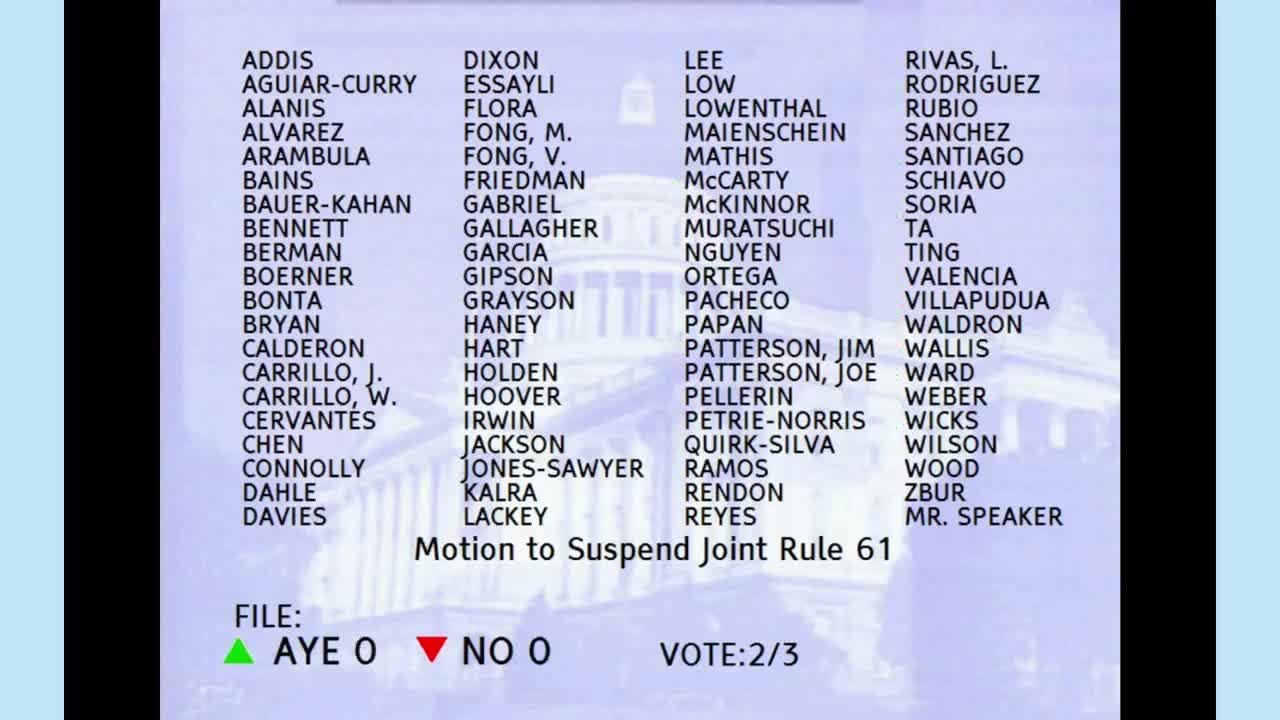 1MIN
Assembly Floor
 42SEC
Assembly Floor
 12MIN
Assembly Standing Committee on Business and Professions
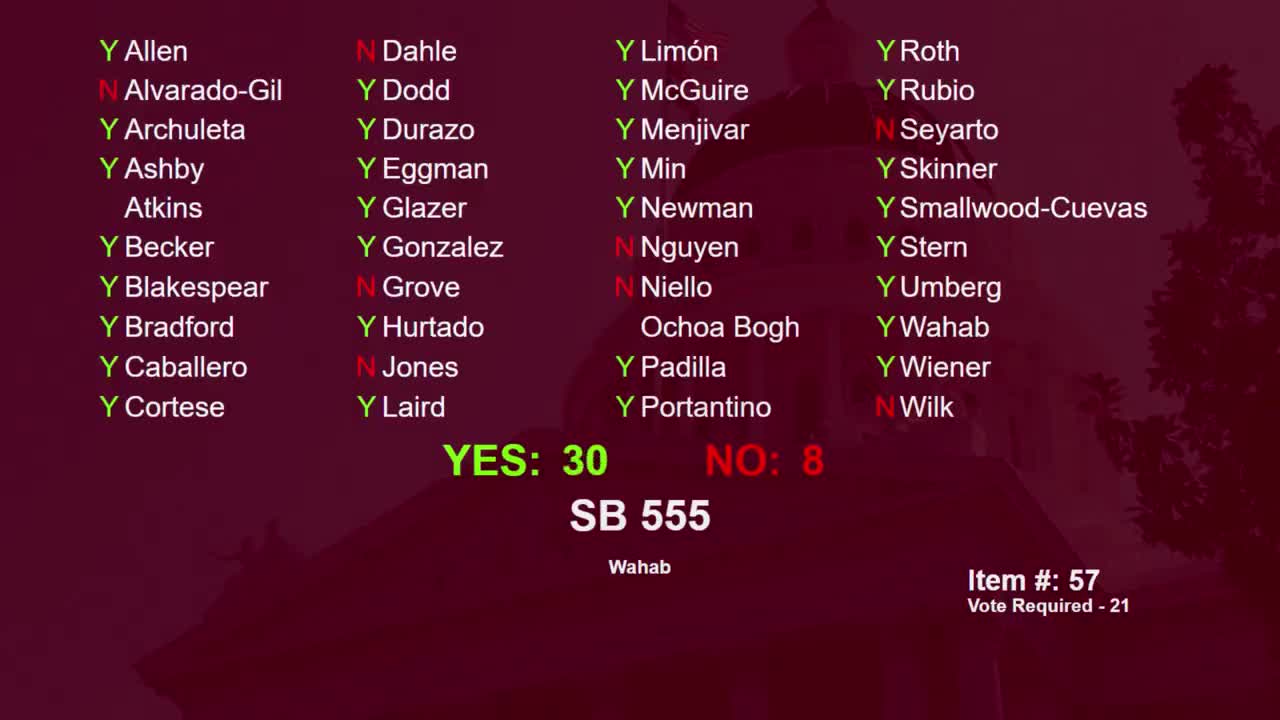 3MIN
Senate Floor
 26MIN
Senate Standing Committee on Business, Professions and Economic Development
Bill Author

Bill Co-Author(s):
