SB 640: California State University: food service contracts and hotel development projects.
- Session Year: 2023-2024
- House: Senate
- Latest Version Date: 2023-09-13
Current Status:
Failed
(2024-01-25: Veto sustained.)
Introduced
In Committee
First Chamber
In Committee
Second Chamber
Enacted
Existing law authorizes the Trustees of the California State University to enter into agreements for the performance of acts or for the furnishing of services, facilities, materials, goods, supplies, or equipment under certain conditions. Existing law requires the trustees to prescribe policies and procedures for the acquisition of services, facilities, materials, goods, supplies, or equipment, subject to specified criteria.
This bill would require the trustees, for each food service contract and participation in a hotel development project, to require the person contracting with the trustees and each food service employer or hotel employer, to be party to a labor peace agreement under that contract or participation with any labor organization that represents or seeks to represent the employees performing work under the food service contract or hotel employees at the hotel development project, as specified. The bill would extend that requirement to any food service contract or hotel development project in which the California State University or the State of California has a proprietary interest and that is performed pursuant to a contract entered into or awarded by a California State University auxiliary organization.
Existing law authorizes the Trustees of the California State University to enter into agreements for the performance of acts or for the furnishing of services, facilities, materials, goods, supplies, or equipment under certain conditions. The trustees are required Existing law requires the trustees to prescribe policies and procedures for the acquisition of services, facilities, materials, goods, supplies, or equipment, subject to specified criteria.
This bill would require the trustees, for each food service contract and participation in a hotel development project, to require the person contracting with the trustees and each food service employer or hotel employer, to be party to a labor peace agreement under that contract or participation with any labor organization that represents or seeks to represent food service the employees performing work under the food service contract or hotel employees at the hotel development project, as specified. The bill would extend that requirement to any food service contract or hotel development project in which the California State University or a California State University auxiliary organization the State of California has a proprietary interest and that is performed pursuant to a contract entered into or awarded by an a California State University auxiliary organization.
Existing law authorizes the Trustees of the California State University to enter into agreements for the performance of acts or for the furnishing of services, facilities, materials, goods, supplies, or equipment under certain conditions. The trustees are required to prescribe policies and procedures for the acquisition of services, facilities, materials, goods, supplies, or equipment, subject to specified criteria.
This bill would require the trustees, for each food service contract and participation in a hotel development project, to require the person contracting with the trustees and each food service employer or hotel employer, to be party to a labor peace agreement with any labor organization that represents or seeks to represent food service employees performing work under the food service contract or hotel employees at the hotel development project, as specified. The bill would extend that requirement to any food service contract or hotel development project in which the California State University or a California State University auxiliary organization has a proprietary interest and that is performed pursuant to a contract entered into or awarded by an auxiliary organization.
The Legislature finds and declares all of the following:
(a)In the course of managing real property it owns or in otherwise carrying out its functions, the Trustees of the California State University may participate in real property developments, such as hotel developments, as a property owner, lessor, proprietor, lender, or guarantor, facing similar risks and liabilities as other business entities participating in those ventures. As a result, the trustees have an ongoing proprietary interest in these developments and a direct interest in their financial performance. The trustees also contract for the provision of food services at campuses, including services provided through auxiliary organizations, and have a proprietary interest in ensuring the efficient procurement and delivery of those services and any revenues derived from such contracts.
(b)The trustees must make prudent management decisions, similar to any private business entity, to ensure efficient management of these business concerns and to maximize benefits and minimize risks. One risk is the possibility of labor-management conflict. Experience has demonstrated that the risk of labor-management conflict is particularly acute in the hotel and food service sectors.
(c)A potential outcome of labor-management conflict is economic action by labor unions against employers. Labor-management conflict can result in delays, work stoppages, picketing, strikes, consumer boycotts, and other forms of adverse economic pressure. Such conflict may adversely affect the trustees financial or other proprietary business interests.
(d)An effective method of reducing the risk to the trustees proprietary interests is to require, as a condition of the trustees economic participation in a hotel development project or a food service contract, that employers taking part in the development project or contract obtain agreements with labor organizations that represent or seek to represent their workforce, in which the labor organizations agree to forbear from adverse economic action against the employers operations.
SEC. 2.Section 89036.5 is added to the Education Code, to read:89036.5.(a)For purposes of this section, the following definitions apply:
(1)Food service contract means a contract with the trustees or the California State University for a cafeteria or food and beverage outlet on or serving a California State University campus.
(2)Food service employer means a person who employs employees performing work at a food service venue under a food service contract or subcontract of that contract.
(3)Hotel means any hotel, motel, bed and breakfast inn, or other similar commercial transient lodging establishment, and shall include any contracted, leased, or sublet premises connected to or operated in conjunction with the hotels purpose.
(4)Hotel development project means a real estate development project that includes or is planned to include one or more hotels and in which the trustees or the California State University have a proprietary interest.
(5)Hotel employer means any person who owns, controls, or operates a hotel in a hotel development project and who employs employees at that hotel.
(6)Labor organization means any organization of any kind, or any agency or employee representation committee or plan, in which employees participate and that exists for the purpose, in whole or in part, of dealing with employers concerning grievances, labor disputes, wages, rates of pay, hours of employment, or conditions of work.
(7)Labor peace agreement means a written agreement with a labor organization that contains, at a minimum, a provision prohibiting the labor organization and its members from engaging in any picketing, work stoppage, boycott, or other economic interference with the performance of a food service contract or a hotel employers operations at a hotel development project.
(8)Person means an individual, corporation, partnership, limited partnership, limited liability partnership, limited liability company, business trust, estate, trust, association, joint venture, agency, or other legal or commercial entity, whether domestic or foreign.
(9)Proprietary interest means an interest in the efficient procurement of goods and services or a financial, nonregulatory interest as a market participant, such as a landlord, contractor, investor, owner, or financier. Proprietary interest may include, but is not limited to, a financial interest in the form of expected lease revenues, expected debt service on a loan provided by the trustees, and underwriting or guaranteeing the development of a hotel development project or loans related to the project.
(b)(1)Notwithstanding any other provision in this part, the trustees shall make it a condition precedent to entering into each food service contract and to the trustees participation in a hotel development project, and an ongoing material requirement of that contract or participation, that the person contracting with the trustees and each food service employer or hotel employer be party to a labor peace agreement under that contract or participation with any labor organization that represents or seeks to represent the employees performing work under the food service contract or hotel employees at the hotel development project.
(2)If a food service employer or hotel employer cannot reach agreement with a labor organization on the terms of a labor peace agreement, the requirements of paragraph (1) may be waived by the office of the Chancellor of the California State University upon a finding, supported by the substantial evidence, that the employer has made a good faith effort to reach a labor peace agreement to protect the trustees proprietary interest, but the labor organization is not interested in negotiations, has not negotiated in good faith, or has abused the negotiation process, such that the trustees proprietary interest would no longer be served by insisting on satisfying the requirements of this subdivision. An employer or labor organization may appeal to the trustees the chancellor offices decision on whether to grant a waiver pursuant to this paragraph.
SEC. 3.Section 89912.5 is added to the Education Code, to read:89912.5.(a)Any food service contract or hotel development project in which the California State University or the State of California has a proprietary interest and that is performed pursuant to a contract entered into or awarded by an auxiliary organization is subject to Section 89036.5, except that, to the extent the definitions in Section 89036.5 conflict with the definitions in this section, the definitions in this section shall apply, and the references to trustees in Section 89036.5 shall refer instead to the auxiliary organization.
(b)As used in this section, the following definitions apply:
(1)Auxiliary organization means those entities that are included as auxiliary organizations pursuant to Section 89901.
(2)Food service contract means a contract for a cafeteria or food and beverage outlet on or serving a California State University campus.
(3)Hotel development project means a real estate development project that includes or is planned to include one or more hotels.
(4)Proprietary interest has the same meaning as that term is defined in Section 89036.5.
The Legislature finds and declares all of the following:
(a)In the course of managing real property it owns or in otherwise carrying out its functions, the Trustees of the California State University may participate in real property developments developments, such as hotel developments, as a property owner, lessor, proprietor, lender, or guarantor, facing similar risks and liabilities as other business entities participating in those ventures. As a result, the trustees have an ongoing proprietary interest in these developments and a direct interest in their financial performance. The trustees also contract for the provision of food services at campuses, including services provided through auxiliary organizations, and have a proprietary interest in the ensuring the efficient procurement and delivery of those services and any revenues derived from such contracts.
(b)The trustees must make prudent management decisions, similar to any private business entity, to ensure efficient management of these business concerns and to maximize benefits and minimize risks. One risk is the possibility of labor-management conflict. Experience has demonstrated that the risk of labor-management conflict is particularly acute in the hotel and food service sectors.
(c)A potential outcome of labor-management conflict is economic action by labor unions against employers. Labor-management conflict can result in delays, work stoppages, picketing, strikes, consumer boycotts, and other forms of adverse economic pressure. Such conflict may adversely affect the trustees financial or other proprietary business interests.
(d)An effective method of reducing the risk to the trustees proprietary interests is to require, as a condition of the trustees economic participation in a hotel development project or a food service contract, that employers taking part in the development project or contract obtain agreements with labor organizations that represent or seek to represent their workforce, in which the labor organizations agree to forbear from adverse economic action against the employers operations.
SEC. 2.Section 89036.5 is added to the Education Code, to read:89036.5.(a)For purposes of this section, the following definitions apply:
(1)Food service contract means a contract with the trustees or the California State University for a cafeteria or food and beverage outlet on or serving a California State University campus.
(2)Food service employer means a person who employs employees performing work at a food service venue under a food service contract. contract or subcontract of that contract.
(3)Hotel means any hotel, motel, bed and breakfast inn, or other similar commercial transient lodging establishment, and shall include any contracted, leased, or sublet premises connected to or operated in conjunction with the hotels purpose.
(4)Hotel development project means a real estate development project that includes or is planned to include one or more hotels and in which the trustees or the California State University have a proprietary interest.
(5)Hotel employer means any person who owns, controls, or operates a hotel in a hotel development project and who employs employees at that hotel.
(6)Labor organization means any organization of any kind, or any agency or employee representation committee or plan, in which employees participate and that exists for the purpose, in whole or in part, of dealing with employers concerning grievances, labor disputes, wages, rates of pay, hours of employment, or conditions of work.
(7)Labor peace agreement means a written agreement with a labor organization that contains, at a minimum, a provision prohibiting the labor organization and its members from engaging in any picketing, work stoppage, boycott, or other economic interference with the performance of a food service contract or hotel operations in which the trustees have a proprietary interest. a hotel employers operations at a hotel development project.
(8)Person means an individual, corporation, partnership, limited partnership, limited liability partnership, limited liability company, business trust, estate, trust, association, joint venture, agency, or other legal or commercial entity, whether domestic or foreign.
(9)Proprietary interest means an interest in the efficient procurement of goods and services or a financial, nonregulatory interest as a market participant, such as a landlord, contractor, investor, owner, or financier. Proprietary interest may include, but is not limited to, a financial interest in the form of expected lease revenues, expected debt service on a loan provided by the trustees, and underwriting or guaranteeing the development of a hotel development project or loans related to the project.
(b)(1)Notwithstanding any other provision in this part, the trustees shall make it a condition precedent to entering into each food service contract and to the trustees participation in a hotel development project, and an ongoing material requirement of that contract or participation, that the person contracting with the trustees and each food service employer or hotel employer be party to a labor peace agreement under that contract or participation with any labor organization that represents or seeks to represent food service the employees performing work under the food service contract or hotel employees at the hotel development project.
(2)If a food service employer or hotel employer cannot reach agreement with a labor organization on the terms of a labor peace agreement, the requirements of paragraph (1) may be waived by the office of the Chancellor of the California State University upon a finding, supported by the substantial evidence, that the employer has made a good faith effort to reach a labor peace agreement to protect the trustees proprietary interest, but the labor organization is not interested in negotiations, has not negotiated in good faith, or has abused the negotiation process, such that the trustees proprietary interest would no longer be served by insisting on satisfying the requirements of this subdivision. An employer or labor organization may appeal to the trustees the chancellor offices decision on whether to grant a waiver pursuant to this paragraph.
SEC. 3.Section 89912.5 is added to the Education Code, to read:89912.5.(a)Any food service contract or hotel development project in which the California State University or an auxiliary organization the State of California has a proprietary interest and that is performed pursuant to a contract entered into or awarded by an auxiliary organization is subject to Section 89036.5. 89036.5, except that, to the extent the definitions in Section 89036.5 conflict with the definitions in this section, the definitions in this section shall apply, and the references to trustees in Section 89036.5 shall refer instead to the auxiliary organization.
(b)As used in this section, the following definitions apply:
(1)Auxiliary organization means those entities that are included as auxiliary organizations pursuant to Section 89901.
(2)Food service contract has the same meaning as in Section 89036.5. means a contract for a cafeteria or food and beverage outlet on or serving a California State University campus.
(3)Hotel development project has the same meaning as in Section 89036.5. means a real estate development project that includes or is planned to include one or more hotels.
(4)Proprietary interest means a financial interest in the form of expected lease revenues, expected debt service on a loan provided by the trustees, underwriting or guaranteeing the development of a project or loans related to the project, or any other significant economic and nonregulatory interest in a project that may be adversely affected by labor-management conflict. has the same meaning as that term is defined in Section 89036.5.
The Legislature finds and declares all of the following:
(a)In the course of managing real property it owns or in otherwise carrying out its functions, the Trustees of the California State University may participate in real property developments as a property owner, lessor, proprietor, lender, or guarantor, facing similar risks and liabilities as other business entities participating in those ventures. As a result, the trustees have an ongoing proprietary interest in these developments and a direct interest in their financial performance. The trustees also contract for the provision of food services at campuses, and have a proprietary interest in the revenues derived from such contracts.
(b)The trustees must make prudent management decisions, similar to any private business entity, to ensure efficient management of these business concerns and to maximize benefits and minimize risks. One risk is the possibility of labor-management conflict. Experience has demonstrated that the risk of labor-management conflict is particularly acute in the hotel and food service sectors.
(c)A potential outcome of labor-management conflict is economic action by labor unions against employers. Labor-management conflict can result in delays, work stoppages, picketing, strikes, consumer boycotts, and other forms of adverse economic pressure. Such conflict may adversely affect the trustees financial or other proprietary business interests.
(d)An effective method of reducing the risk to the trustees proprietary interests is to require, as a condition of the trustees economic participation in a hotel development project or a food service contract, that employers taking part in the development project or contract obtain agreements with labor organizations that represent or seek to represent their workforce, in which the labor organizations agree to forbear from adverse economic action against the employers operations.
SEC. 2.Section 89036.5 is added to the Education Code, to read:89036.5.(a)For purposes of this section, the following definitions apply:
(1)Food service contract means a contract with the trustees or the California State University for a cafeteria or food and beverage outlet on or serving a California State University campus.
(2)Food service employer means a person who employs employees performing work at a food service venue under a food service contract.
(3)Hotel means any hotel, motel, bed and breakfast inn, or other similar commercial transient lodging establishment, and shall include any contracted, leased, or sublet premises connected to or operated in conjunction with the hotels purpose.
(4)Hotel development project means a real estate development project that includes or is planned to include one or more hotels and in which the trustees or the California State University have a proprietary interest.
(5)Hotel employer means any person who owns, controls, or operates a hotel in a hotel development project and who employs employees at that hotel.
(6)Labor organization means any organization of any kind, or any agency or employee representation committee or plan, in which employees participate and that exists for the purpose, in whole or in part, of dealing with employers concerning grievances, labor disputes, wages, rates of pay, hours of employment, or conditions of work.
(7)Labor peace agreement means a written agreement with a labor organization that contains, at a minimum, a provision prohibiting the labor organization and its members from engaging in any picketing, work stoppage, boycott, or other economic interference with food service or hotel operations in which the trustees have a proprietary interest.
(8)Person means an individual, corporation, partnership, limited partnership, limited liability partnership, limited liability company, business trust, estate, trust, association, joint venture, agency, or other legal or commercial entity, whether domestic or foreign.
(b)Notwithstanding any other provision in this part, the trustees shall make it a condition precedent to entering into each food service contract and to the trustees participation in a hotel development project, and an ongoing material requirement of that contract or participation, that the person contracting with the trustees and each food service employer or hotel employer be party to a labor peace agreement with any labor organization that represents or seeks to represent food service employees performing work under the food service contract or hotel employees at the hotel development project.
SEC. 3.Section 89912.5 is added to the Education Code, to read:89912.5.(a)Any food service contract or hotel development project in which the California State University or an auxiliary organization has a proprietary interest and that is performed pursuant to a contract entered into or awarded by an auxiliary organization is subject to Section 89036.5.
(b)As used in this section, the following definitions apply:
(1)Auxiliary organization means those entities that are included as auxiliary organizations pursuant to Section 89901.
(2)Food service contract has the same meaning as in Section 89036.5.
(3)Hotel development project has the same meaning as in Section 89036.5.
(4)Proprietary interest means a financial interest in the form of expected lease revenues, expected debt service on a loan provided by the trustees, underwriting or guaranteeing the development of a project or loans related to the project, or any other significant economic and nonregulatory interest in a project that may be adversely affected by labor-management conflict.
|
Date
|
Status
|
|---|---|
| Jan 25, 2024 | Veto sustained. |
| Jan 25, 2024 | Stricken from file. |
| Oct 8, 2023 | In Senate. Consideration of Governor's veto pending. |
| Oct 8, 2023 | Vetoed by the Governor. |
| Sep 15, 2023 | Enrolled and presented to the Governor at 3 p.m. |
| Sep 11, 2023 | In Senate. Ordered to engrossing and enrolling. |
| Sep 11, 2023 | Read third time. Passed. (Ayes 58. Noes 12. Page 3203.) Ordered to the Senate. |
| Sep 5, 2023 | Read second time. Ordered to third reading. |
| Sep 1, 2023 | From committee: Do pass. (Ayes 12. Noes 3.) (September 1). |
| Aug 23, 2023 | August 23 set for first hearing. Placed on suspense file. |
| Jul 13, 2023 | From committee: Do pass and re-refer to Com. on APPR. (Ayes 6. Noes 0.) (July 12). Re-referred to Com. on APPR. |
| Jun 28, 2023 | From committee: Do pass and re-refer to Com. on L. & E. (Ayes 8. Noes 3.) (June 27). Re-referred to Com. on L. & E. |
| Jun 15, 2023 | Referred to Coms. on HIGHER ED. and L. & E. |
| Jun 1, 2023 | In Assembly. Read first time. Held at Desk. |
| May 31, 2023 | Read third time. Passed. (Ayes 28. Noes 10. Page 1395.) Ordered to the Assembly. |
| May 22, 2023 | Read second time. Ordered to third reading. |
| May 18, 2023 | Read second time and amended. Ordered to second reading. |
| May 18, 2023 | From committee: Do pass as amended. (Ayes 5. Noes 2. Page 1178.) (May 18). |
| May 12, 2023 | Set for hearing May 18. |
| May 1, 2023 | May 1 hearing: Placed on APPR suspense file. |
| Apr 21, 2023 | Set for hearing May 1. |
| Apr 20, 2023 | From committee: Do pass and re-refer to Com. on APPR. (Ayes 4. Noes 1. Page 833.) (April 19). Re-referred to Com. on APPR. |
| Apr 11, 2023 | Set for hearing April 19. |
| Mar 29, 2023 | From committee: Do pass and re-refer to Com. on L., P.E. & R. (Ayes 4. Noes 2. Page 570.) (March 29). Re-referred to Com. on L., P.E. & R. |
| Mar 8, 2023 | Set for hearing March 29. |
| Mar 1, 2023 | Referred to Coms. on ED. and L., P.E. & R. |
| Feb 17, 2023 | From printer. May be acted upon on or after March 19. |
| Feb 16, 2023 | Introduced. Read first time. To Com. on RLS. for assignment. To print. |
|
Date
|
Description
|
Location
|
Votes
|
|
|---|---|---|---|---|
| Sep 11, 2023 | SB 640 Portantino Senate Third Reading By Kalra | Assembly Floor |
Passed |
|
| Sep 1, 2023 | Do pass. | Assembly Standing Committee on Appropriations |
Passed |
|
| Jul 12, 2023 | Do pass and be re-referred to the Committee on [Appropriations] | Assembly Standing Committee on Labor and Employment |
Passed |
|
| Jun 27, 2023 | Do pass and be re-referred to the Committee on [Labor and Employment] | Assembly Standing Committee on Higher Education |
Passed |
|
| May 31, 2023 | Senate 3rd Reading SB640 Portantino et al. | Senate Floor |
Passed |
|
| May 18, 2023 | Do pass as amended | Senate Standing Committee on Appropriations |
Passed |
|
| May 1, 2023 | Placed on suspense file | Senate Standing Committee on Appropriations |
Passed |
|
| Apr 19, 2023 | Do pass, but first be re-referred to the Committee on [Appropriations] | Senate Standing Committee on Labor, Public Employment and Retirement |
Passed |
|
| Mar 29, 2023 | Do pass, but first be re-referred to the Committee on [Labor, Public Employment and Retirement ] | Senate Standing Committee on Education |
Passed |
This list shows positions taken on this bill by organizations on the date displayed, which is linked to the original source.
Positions by individuals are not included.
|
Organization
|
Position
|
Date
|
|---|---|---|
| Cal State Long Beach | * Support | Apr 19, 2023 |
| Cal State University | * Neutral | Apr 19, 2023 |
| California Faculty Associaiton | * Support | Jul 12, 2023 |
| California State Students Association | * Indeterminate | Jun 27, 2023 |
| California State University Chancellor's Office | * Indeterminate | Mar 29, 2023 |
| Labor and Community Center at UC Davis | * Support | Jun 27, 2023 |
| Power Plant Restaurant Group | ** Against | |
| Santa Monica College | * Support | Apr 19, 2023 |
| Shakesmart INC. | ** Against | |
| UC Davis Law | * Support | Apr 19, 2023 |
SENATE RULES COMMITTEE Office of Senate Floor Analyses (916) 651-1520 Fax: (916) 327-4478 | SB 640 |
VETO
Bill No: SB 640
Author: Portantino (D), et al.
Amended: 5/18/23
Vote: 27
SENATE EDUCATION COMMITTEE: 4-2, 3/29/23
AYES: Newman, Cortese, McGuire, Smallwood-Cuevas
NOES: Ochoa Bogh, Wilk
NO VOTE RECORDED: Glazer
SENATE LABOR, PUB. EMP. & RET. COMMITTEE: 4-1, 4/19/23
AYES: Cortese, Durazo, Laird, Smallwood-Cuevas
NOES: Wilk
SENATE APPROPRIATIONS COMMITTEE: 5-2, 5/18/23
AYES: Portantino, Ashby, Bradford, Wahab, Wiener
NOES: Jones, Seyarto
SENATE FLOOR: 28-10, 5/31/23
AYES: Archuleta, Ashby, Atkins, Becker, Blakespear, Bradford, Cortese, Dodd, Durazo, Eggman, Gonzalez, Hurtado, Laird, Limón, McGuire, Menjivar, Min, Newman, Padilla, Portantino, Roth, Rubio, Skinner, Smallwood-Cuevas, Stern, Umberg, Wahab, Wiener
NOES: Alvarado-Gil, Dahle, Glazer, Grove, Jones, Nguyen, Niello, Ochoa Bogh, Seyarto, Wilk
NO VOTE RECORDED: Allen, Caballero
ASSEMBLY FLOOR: 58-12, 9/11/23 - See last page for vote
SUBJECT: California State University: food service contracts and hotel development projects
SOURCE: Author
DIGEST:
This bill prohibits the California State University (CSU) from entering into a food service contract or undertaking a hotel development project unless the food service employer or hotel employer is party to a labor peace agreement with a labor organization.
ANALYSIS:
Existing law:
- Authorizes the Trustees of the CSU to enter into agreements for the performance of acts or for the furnishing of services, facilities, materials, goods, supplies, or equipment under certain conditions.
- Requires the Trustees to prescribe policies and procedures for the acquisition of services, facilities, materials, goods, supplies, or equipment, subject to specified criteria.
This bill:
- Requires the CSU Trustees to make it a condition precedent to entering into each food service contract and to the Trustees’ participation in a hotel development project, and an ongoing material requirement of that contract or participation, that the person contracting with the Trustees and each food service employer or hotel employer be party to a labor peace agreement with any labor organization that represents or seeks to represent food service employees performing work under the food service contract or hotel employees at the hotel development project.
- Defines “food service contract” to mean a contract with the Trustees or the CSU for a cafeteria or food and beverage outlet on or serving a CSU campus.
- Defines “food service employer” to mean a person who employs employees performing work at a food service venue under a food service contract or subcontract of that contract.
- Defines “hotel” to mean any hotel, motel, bed and breakfast inn, or other similar commercial transient lodging establishment, and shall include any contracted, leased, or sublet premises connected to or operated in conjunction with the hotel’s purpose.
- Defines “hotel development project” to mean a real estate development project that includes or is planned to include one or more hotels and in which the Trustees or the CSU have a proprietary interest.
- Define “hotel employer” to mean any person who owns, controls, or operates a hotel in a hotel development project and who employs employees at that hotel.
- Defines “labor organization” to mean any organization of any kind, or any agency or employee representation committee or plan, in which employees participate and that exists for the purpose, in whole or in part, of dealing with employers concerning grievances, labor disputes, wages, rates of pay, hours of employment, or conditions of work.
- Defines “labor peace agreement” to mean a written agreement with a labor organization that contains, at a minimum, a provision prohibiting the labor organization and its members from engaging in any picketing, work stoppage, boycott, or other economic interference with the performance of a food service contract or a hotel employer’s operations at a hotel development project.
- Defines “person” to mean an individual, corporation, partnership, limited partnership, limited liability partnership, limited liability company, business trust, estate, trust, association, joint venture, agency, or other legal or commercial entity, whether domestic or foreign.
- Defines “proprietary interest” to mean an interest in the efficient procurement of goods and services or a financial, nonregulatory interest as a market participant, such as a landlord, contractor, investor, owner, or financier. “Proprietary interest” may include, but is not limited to, a financial interest in the form of expected lease revenues, expected debt service on a loan provided by the trustees, and underwriting or guaranteeing the development of a hotel development project or loans related to the project.
- Specifies that any food service contract or hotel development project in which the CSU or an auxiliary organization has a proprietary interest and that is performed pursuant to a contract entered into or awarded by an auxiliary organization is subject to the requirement outlined above.
- States that if a food service employer or hotel employer cannot reach agreement with a labor organization on the terms of a labor peace agreement, the requirements may be waived by the office of the Chancellor of the California State University upon a finding, supported by the substantial evidence, that the employer has made a good faith effort to reach a labor peace agreement to protect the trustees’ proprietary interest, but the labor organization is not interested in negotiations, has not negotiated in good faith, or has abused the negotiation process, such that the trustees’ proprietary interest would no longer be served by insisting on satisfying the requirements of this subdivision. An employer or labor organization may appeal to the trustees the chancellor office’s decision on whether to grant a waiver pursuant to this paragraph.
Comments
- Need for the bill. According to the author, “In 2022, there were over 20 strikes across the country – with the largest higher education strike happening in California. Siting unfair labor practices, wanting better pay and benefits, and job security, University of California (UC) academic workers (many whom are graduate students themselves) made the decision to strike. Strikes bring work stoppage, and for California’s higher education system, this meant canceled classes, delayed grading, interrupted course finals season and wasted tax dollars.
“As CSU campuses continue to grow and evolve, more campus will develop campus plans with more hospitality and food service needs. Because the State of California has a proprietary interest in the activities and business of CSUs, it is essential to minimize future labor disruptions as much as possible through labor peace agreements.
“By requiring CSU and their auxiliaries to enter a labor peace agreement, the CSU, its auxiliaries, and associated labor organizations, will then have mechanisms in place to avoid disruptive actions and ensure the State and its interests can continue fulfilling its mission continuously and without interruption.”
- Food service contracts at CSU. According to the CSU, most campuses contract their food service and hospitality programs to service management companies, whereas other campuses provide these services to students and staff “in-house”. It has become increasingly common for self-operating campuses to engage in hospitality assessments to determine whether their food service programs are efficient enough to maintain profitability, particularly as student housing needs expand. In-house providers typically employ CSU workers and students. For campuses that contract out, the three food service management companies being used are Chartwells Higher Education, Aramark, and Sodexo. In addition, CSU campuses have food and beverage tenants, such as Starbucks, Panda Express, and Subway that lease retail space.
As currently drafted, this bill applies to all “food service contracts”, defined to mean a contract with the Trustees of the CSU for a cafeteria or food and beverage outlet on or serving a CSU campus, and “food service employers” defined to mean a person who employs employees performing work at a food service venue under a food service contract. Would food and beverage retailers be required to comply with this bill?
- Hotel development projects at CSU. Currently, the CSU operates two hotels—the Kellogg West Conference Center & Hotel at CSU Pomona and the CSU Fullerton Marriot. The Pomona hotel is operated exclusively by CSU students of the Collins College of Hospitality Management. The Fullerton Marriot is not operated by college students or staff, but is located on the CSU campus. Because the CSU Fullerton Marriot is located on the campus, the CSU collects lease revenue and, therefore, has a proprietary interest. There are also a number of CSU campuses with hotel development projects included in their facilities master plans. It is unclear if this bill would apply to the two existing hotels, one of which is exclusively run by students, or only prospective hotel projects on CSU campuses.
- Do labor peace agreements require all workers to unionize and collectively bargain? Generally, a labor peace agreement is a contract between an employer and a union, in which the employer agrees to be neutral during a union organizing campaign and not interfere with union organizing. The union agrees not to engage in picketing, work stoppages, boycotts, and any other economic interference with the employer.
This bill requires each food service employer (either a CSU campus, its auxiliary, or the entity it contracts with for food service) or hotel employer be party to a labor peace agreement with a labor union. This bill defines a labor peace agreement as “a written agreement with a labor organization that contains, at a minimum, a provision prohibiting the labor organization and its members from engaging in any picketing, work stoppage, boycott, or other economic interference with food service or hotel operations in which the trustees have a proprietary interest.”
Labor peace agreements appear far more limited in scope than collective bargaining agreements because they only cover parties’ rights with respect to union organizing. Collective bargaining agreements, by contrast, are broader and include the terms and conditions of employment, such as wages, hours, benefits, working conditions, and more.
FISCAL EFFECT: Appropriation: No Fiscal Com.: Yes Local: No
According to the Assembly Appropriations Committee, potential General Fund cost increases to CSU campuses for more expensive food service and hotel contracts to the extent this bill results in increased labor costs for food service and hotel development employees. Some of the increase in labor costs may be passed down to students in the form of higher food prices or more expensive meal plans.
SUPPORT: (Verified 10/17/23)
None received
OPPOSITION: (Verified 10/17/23)
None received
GOVERNOR'S VETO MESSAGE:
This bill would require any food service contract or hotel development project undertaken by the California State University (CSU) Board of Trustees to be with an employer that is party to a labor peace agreement with a labor organization. This requirement extends to any food service and hotel development contract in which the CSU or the State of California has a proprietary interest and that is performed in accordance with a contract entered into or awarded by a CSU auxiliary organization.
California State University campuses have a long history of organizing. Faculty and staff have been organized for decades, and this year a labor organization submitted more than 8,500 digital cards signed by students to the Public Employment Relations Board to advance towards a union vote. Additionally, six campuses have auxiliary organizations that have been unionized. It is the understanding of my Administration that recent organizing on CSU campuses has been largely respectful. In light of this history, it is not clear that this legislation is needed to facilitate successful organizing on CSU campuses. While I support minimizing disruptions to students from work stoppages on campus, this bill is premature.
ASSEMBLY FLOOR: 58-12, 9/11/23
AYES: Addis, Aguiar-Curry, Alanis, Alvarez, Arambula, Bains, Bauer-Kahan, Bennett, Boerner, Bonta, Bryan, Calderon, Juan Carrillo, Wendy Carrillo, Cervantes, Chen, Connolly, Flora, Mike Fong, Friedman, Gabriel, Garcia, Gipson, Grayson, Haney, Hart, Holden, Hoover, Irwin, Jackson, Jones-Sawyer, Kalra, Lee, Low, Lowenthal, Maienschein, McCarty, McKinnor, Muratsuchi, Stephanie Nguyen, Ortega, Papan, Pellerin, Petrie-Norris, Quirk-Silva, Rendon, Reyes, Luz Rivas, Rodriguez, Santiago, Soria, Ting, Ward, Wicks, Wilson, Wood, Zbur, Robert Rivas
NOES: Megan Dahle, Davies, Dixon, Essayli, Vince Fong, Gallagher, Jim Patterson, Joe Patterson, Sanchez, Ta, Waldron, Wallis
NO VOTE RECORDED: Berman, Lackey, Mathis, Pacheco, Ramos, Blanca Rubio, Schiavo, Valencia, Villapudua, Weber
Prepared by: Ian Johnson / ED. / (916) 651-4105
12/28/23 12:06:53
**** END ****
SENATE THIRD READING
STR Bill Id:SB 640
Author:(Portantino)
As Amended Ver:May 18, 2023
Majority vote
SUMMARY
Prohibits the California State University (CSU) from entering into a food service contract or undertaking a hotel development project unless the food service employer or hotel employer is party to a labor peace agreement with a labor organization.
Major Provisions
- Requires the CSU Trustees to make it a condition precedent to entering into each food service contract and to the Trustees' participation in a hotel development project, and an ongoing material requirement of that contract or participation, that the person contracting with the Trustees and each food service employer or hotel employer be party to a labor peace agreement with any labor organization that represents or seeks to represent food service employees performing work under the food service contract or hotel employees at the hotel development project.
- Defines "food service contract" to mean a contract with the Trustees or the CSU for a cafeteria or food and beverage outlet on or serving a CSU campus.
- Defines "food service employer" to mean a person who employs employees performing work at a food service venue under a food service contract or subcontract of that contract.
- Defines "hotel" to mean any hotel, motel, bed and breakfast inn, or other similar commercial transient lodging establishment, and shall include any contracted, leased, or sublet premises connected to or operated in conjunction with the hotel's purpose.
- Defines "hotel development project" to mean a real estate development project that includes or is planned to include one or more hotels and in which the Trustees or the CSU have a proprietary interest.
- Define "hotel employer" to mean any person who owns, controls, or operates a hotel in a hotel development project and who employs employees at that hotel.
- Defines "labor organization" to mean any organization of any kind, or any agency or employee representation committee or plan, in which employees participate and that exists for the purpose, in whole or in part, of dealing with employers concerning grievances, labor disputes, wages, rates of pay, hours of employment, or conditions of work.
- Defines "labor peace agreement" to mean a written agreement with a labor organization that contains, at a minimum, a provision prohibiting the labor organization and its members from engaging in any picketing, work stoppage, boycott, or other economic interference with the performance of a food service contract or a hotel employer's operations at a hotel development project.
- Defines "person" to mean an individual, corporation, partnership, limited partnership, limited liability partnership, limited liability company, business trust, estate, trust, association, joint venture, agency, or other legal or commercial entity, whether domestic or foreign.
- Defines "proprietary interest" to mean an interest in the efficient procurement of goods and services or a financial, nonregulatory interest as a market participant, such as a landlord, contractor, investor, owner, or financier. "Proprietary interest" may include, but is not limited to, a financial interest in the form of expected lease revenues, expected debt service on a loan provided by the trustees, and underwriting or guaranteeing the development of a hotel development project or loans related to the project.
- Specifies that any food service contract or hotel development project in which the CSU or an auxiliary organization has a proprietary interest and that is performed pursuant to a contract entered into or awarded by an auxiliary organization is subject to the requirement outlined above.
- States that if a food service employer or hotel employer cannot reach agreement with a labor organization on the terms of a labor peace agreement, the requirements may be waived by the office of the Chancellor of the California State University upon a finding, supported by the substantial evidence, that the employer has made a good faith effort to reach a labor peace agreement to protect the trustees' proprietary interest, but the labor organization is not interested in negotiations, has not negotiated in good faith, or has abused the negotiation process, such that the trustees' proprietary interest would no longer be served by insisting on satisfying the requirements of this subdivision. An employer or labor organization may appeal to the trustees the chancellor office's decision on whether to grant a waiver pursuant to this paragraph.
COMMENTS
Food service contracts at CSU. According to the CSU, most campuses contract their food service and hospitality programs to service management companies, whereas other campuses provide these services to students and staff "in-house". It has become increasingly common for self-operating campuses to engage in hospitality assessments to determine whether their food service programs are efficient enough to maintain profitability, particularly as student housing needs expand. In-house providers typically employ CSU workers and students. For campuses that contract out, the three food service management companies being used are Chartwells Higher Education, Aramark, and Sodexo. In addition, CSU campuses have food and beverage tenants, such as Starbucks, Panda Express, and Subway that lease retail space.
Hotel development projects at CSU. Currently, the CSU operates two hotels—the Kellogg West Conference Center & Hotel at CSU Pomona and the CSU Fullerton Marriot. The Pomona hotel is operated exclusively by CSU students of the Collins College of Hospitality Management. The Fullerton Marriot is not operated by college students or staff, but is located on the CSU campus. Because the CSU Fullerton Marriot is located on the campus, the CSU collects lease revenue and, therefore, has a proprietary interest. There are also a number of CSU campuses with hotel development projects included in their facilities master plans. It is unclear if this bill would apply to the two existing hotels, one of which is exclusively run by students, or only prospective hotel projects on CSU campuses.
Do labor peace agreements require all workers to unionize and collectively bargain? Generally, a labor peace agreement is a contract between an employer and a union, in which the employer agrees to be neutral during a union organizing campaign and not interfere with union organizing. The union agrees not to engage in picketing, work stoppages, boycotts, and any other economic interference with the employer.
This bill requires each food service employer (either a CSU campus, its auxiliary, or the entity it contracts with for food service) or hotel employer be party to a labor peace agreement with a labor union. This bill defines a labor peace agreement as "a written agreement with a labor organization that contains, at a minimum, a provision prohibiting the labor organization and its members from engaging in any picketing, work stoppage, boycott, or other economic interference with food service or hotel operations in which the trustees have a proprietary interest."
Labor peace agreements appear far more limited in scope than collective bargaining agreements because they only cover parties' rights with respect to union organizing. Collective bargaining agreements, by contrast, are broader and include the terms and conditions of employment, such as wages, hours, benefits, working conditions, and more.
According to the Author
According to the author, "In 2022 alone, there were over 20 strikes across the country – with the largest higher education strike happening in California. Siting unfair labor practices, wanting better pay and benefits, and job security, UC academic workers (many whom are graduate students themselves) made the decision to strike. Across the nation, Starbucks employees are organizing and striking for better working conditions. Strikes bring work stoppage, and for California's higher education system, this brought canceled classes, delayed grading, interrupted course finals season and wasted tax dollars."
"As CSU campuses continue to grow and evolve, more campus will develop campus plans with more hospitality and food service needs. Because the State of California has a proprietary interest in the activities and business of CSUs, it is essential to minimize future labor disruptions as much as possible through labor peace agreements. By requiring CSU and their auxiliaries to enter a labor peace agreement, the CSU, its auxiliaries, and associated labor organizations, will then have mechanisms in place to avoid disruptive actions and ensure the State can continue fulfilling its mission without interruption."
Arguments in Support
The California Faculty Association writes that "…higher education institutions have not been immune from labor strikes in recent years. Disruptions resulting from such labor conflicts have profound impacts, from canceled classes to delayed grading, all of which inhibit our primary mission of education. SB 640 provides a clear mechanism to minimize these disruptions by mandating labor peace agreements within CSU's expanding hospitality and food service sectors."
"We acknowledge that a number of CSU campuses currently contract their food service and hospitality programs to service management companies while others operate these services in-house. However, regardless of the operational structure, we believe that fostering labor peace is essential for continuity of services and the overall stability of our campuses. We also recognize that CSU operates two hotels and is planning for additional ones. Ensuring labor peace within these facilities is equally critical. Students, faculty, staff, and visitors who utilize these establishments should not be inconvenienced by labor conflicts."
Arguments in Opposition
The California State Student Association (CSSA) wrote in opposition, noting that "Associated Students Inc. (AS/I) are student-led nonprofit auxiliaries on each campus that frequently oversee the Student Unions (buildings) where nearly all food options are located. The Unions (buildings) have either a separate student governing board or are part of the larger Associated Students board. In conversations with several of our campuses, if enacted, this bill could result in vendors pulling out or not re-signing lease agreements within the Unions and/or increasing on campus food prices. Our students are already facing a basic needs crisis on campuses, with 41.6% of CSU students experiencing food insecurity, so any additional limitations or price increases will have a negative impact on the daily lives of our students. All options ultimately are a detriment to students, both in their student experience on the campus but also in their fiduciary responsibilities as governing board members of these Boards. Additionally, there are concerns from our students that this bill may inadvertently result in the loss of student jobs on campuses."
The California Restaurant Association and California Chamber of Commerce wrote jointly in opposition, stating that they are "concerned that SB 640 will lead to increased labor and operational costs for restaurants on CSU campuses. Restaurants across California are currently grappling with operating challenges including workforce shortages, supply chain issues and inflationary cost pressures, as well as ongoing increases in labor costs. SB 640 will only add to these cost pressures and our concern is it will lead to higher food prices for CSU students and loss of on campus employment opportunities. It is important to consider some restaurants may choose to not renew or discontinue their lease in order to mitigate these cost increases and operational restrictions. The impact of this decision would create limitations in on campus food options for CSU students and a loss in lease revenue for Associated Students Inc on CSU campuses."
FISCAL COMMENTS
According to the Assembly Appropriations Committee:
Potential General Fund cost increases to CSU campuses for more expensive food service and hotel contracts to the extent this bill results in increased labor costs for food service and hotel development employees. Some of the increase in labor costs may be passed down to students in the form of higher food prices or more expensive meal plans.
VOTES
SENATE FLOOR: 28-10-2
YES: Archuleta, Ashby, Atkins, Becker, Blakespear, Bradford, Cortese, Dodd, Durazo, Eggman, Gonzalez, Hurtado, Laird, Limón, McGuire, Menjivar, Min, Newman, Padilla, Portantino, Roth, Rubio, Skinner, Smallwood-Cuevas, Stern, Umberg, Wahab, Wiener
NO: Alvarado-Gil, Dahle, Glazer, Grove, Jones, Nguyen, Niello, Ochoa Bogh, Seyarto, Wilk
ABS, ABST OR NV: Allen, Caballero
ASM HIGHER EDUCATION: 8-3-1
YES: Mike Fong, Addis, Arambula, Gabriel, Irwin, Ortega, Santiago, Weber
NO: Ta, Sanchez, Wallis
ABS, ABST OR NV: Low
ASM LABOR AND EMPLOYMENT: 6-0-1
YES: Kalra, Flora, Haney, Ortega, Reyes, Ward
ABS, ABST OR NV: Chen
ASM APPROPRIATIONS: 12-3-1
YES: Holden, Bryan, Calderon, Wendy Carrillo, Mike Fong, Hart, Lowenthal, Papan, Pellerin, Soria, Weber, Wilson
NO: Megan Dahle, Dixon, Sanchez
ABS, ABST OR NV: Mathis
UPDATED
VERSION: May 18, 2023
CONSULTANT: Kevin J. Powers / HIGHER ED. / (916) 319-3960 FN: 0001564
Date of Hearing: August 23, 2023
ASSEMBLY COMMITTEE ON APPROPRIATIONS
Chris Holden, Chair
SBPCA Bill Id:SB 640
Author:(Portantino) – As Amended Ver:May 18, 2023
Policy Committee: | Higher Education | Vote: | 8 - 3 |
Labor and Employment | 6 - 0 | ||
|
|
Urgency: No State Mandated Local Program: No Reimbursable: No
SUMMARY:
This bill prohibits the California State University (CSU) from entering into a food service contract or undertaking a hotel development project unless the food service employer or hotel employer is party to a labor peace agreement with a labor organization. The bill provides a waiver to this requirement in certain cases.
Specifically, this bill provides an exemption in cases where a food service employer or hotel employer cannot reach agreement with a labor organization on the terms of a labor peace agreement. In these cases, the requirements may be waived by the CSU Chancellor’s Office upon a finding that the employer has made a good faith effort to reach a labor peace agreement to protect the trustees’ proprietary interest, but the labor organization is not interested in negotiations, has not negotiated in good faith, or has abused the negotiation process. An employer or labor organization may appeal to the CSU trustees the CSU Chancellor’s Office decision on whether to grant a waiver.
FISCAL EFFECT:
Potential General Fund cost increases to CSU campuses for more expensive food service and hotel contracts to the extent this bill results in increased labor costs for food service and hotel development employees. Some of the increase in labor costs may be passed down to students in the form of higher food prices or more expensive meal plans.
COMMENTS:
- Purpose. According to the California Faculty Association, the only registered supporter of this bill:
As you know, higher education institutions have not been immune from labor strikes in recent years. Disruptions resulting from such labor conflicts have profound impacts, from canceled classes to delayed grading, all of which inhibit our primary mission of education. SB 640 provides a clear mechanism to minimize these disruptions by mandating labor peace agreements within CSU's expanding hospitality and food service sectors.
We acknowledge that a number of CSU campuses currently contract their food service and hospitality programs to service management companies while others operate these services in-house. However, regardless of the operational structure, we believe that fostering labor peace is essential for continuity of services and the overall stability of our campuses.
- Background. A labor peace agreement is a contract between an employer and a union that represents employees. The contract stipulates that the employer will be neutral during a union organizing campaign and will not interfere with union organizing. In return, the union that represents the employees, or, if the employees are not represented, the union that is trying to represent the employees, agrees not to engage in picketing, work stoppages, boycotts, and any other economic interference with the employer.
This bill requires CSU to enter into contracts with food and hotel contractors who have labor peace agreements, with limited exceptions. Businesses opposed to this bill indicate the labor peace agreement requirement may increase the costs of doing business, presumably because employees would be more likely to unionize, if they are not unionized already, therefore driving up food prices for students or resulting in the businesses no longer doing business on CSU campuses. The California State Student Association is also opposed to this bill. It writes, “In conversations with several of our campuses, if enacted, this bill could result in vendors pulling out or not re-signing lease agreements within the Unions and/or increasing on campus food prices.” The association also indicates this bill could result in the loss of student jobs on campus if food vendors leave campus.
- Prior Legislation. SB 1444 (Durazo), of the 2019-2020 Legislative Session, was nearly identical to this bill. The Senate Education Committee held the bill without a hearing due to the Covid-19 pandemic.
Analysis Prepared by: Natasha Collins / APPR. / (916) 319-2081
Date of Hearing: July 12, 2023
ASSEMBLY COMMITTEE ON LABOR AND EMPLOYMENT
Ash Kalra, Chair
SBPCA Bill Id:SB 640
Author:(Portantino) – As Amended Ver:May 18, 2023
SENATE VOTE: 28-10
SUBJECT: California State University: food service contracts and hotel development projects
SUMMARY: Requires the Trustees of the California State University (CSU) when entering into food service contracts or hotel development projects, to require the person contracting with the trustees and each food service employer or hotel employer to be party to a labor peace agreement with a labor organization. Specifically, this bill:
- Finds and declares, among other things, that the CSU trustees must make prudent management decisions, similar to any private business entity, to ensure efficient management of these business concerns and to maximize benefits and minimize risks.
- Defines “food service contract” to mean a contract with the trustees or CSU for a cafeteria or food and beverage outlet on or serving a CSU campus.
- Defines “food service employer” to mean a person who employs employees performing work at a food service venue under a food service contract or subcontract of that contract.
- Defines “hotel” to mean any hotel, motel, bed and breakfast inn, or other similar commercial transient lodging establishment, and shall include any contracted, leased, or sublet premises connected to or operated in conjunction with the hotel’s purpose.
- Defines “hotel development project” to mean a real estate development project that includes or is planned to include one or more hotels and in which the trustees or the CSU have a proprietary interest.
- Defines “hotel employer” to mean any person who owns, controls, or operates a hotel in a hotel development project and who employs employees at that hotel.
- Defines “labor organization” to mean any organization of any kind, or any agency or employee representation committee or plan, in which employees participate and that exists for the purpose, in whole or in part, of dealing with employers concerning grievances, labor disputes, wages, rates of pay, hours of employment, or conditions of work.
- Defines “labor peace agreement” to mean a written agreement with a labor organization that contains, at a minimum, a provision prohibiting the labor organization and its members from engaging in any picketing, work stoppage, boycott, or other economic interference with the performance of a food service contract or a hotel employer’s operations at a hotel development project.
- Defines “person” to mean an individual, corporation, partnership, limited partnership, limited liability partnership, limited liability company, business trust, estate, trust, association, joint venture, agency, or other legal or commercial entity, whether domestic or foreign.
- Defines “proprietary interest” to mean an interest in the efficient procurement of goods and services or a financial, nonregulatory interest as a market participant, such as a landlord, contractor, investor, owner, or financier.
- Specifies that “proprietary interest” may include, but is not limited to, a financial interest in the form of expected lease revenues, expected debt service on a loan provided by the trustees, and underwriting or guaranteeing the development of a hotel development project or loans related to the project.
- Requires the CSU trustees to make as a condition precedent to entering into each food service contract or hotel development project, that the counterparty and each food service employer or hotel employer be party to a labor peace agreement with labor organizations representing or seeking to represent the corresponding food service or hotel employees, as specified.
- Provides that in specified situations where a food service employer or hotel employer cannot reach an agreement with a labor organization on the terms of the labor peace agreement, the Chancellor of the CSU may waive the requirement in 11) above.
- Defines “auxiliary organization” to mean, among other things, any entity in which any official of the CSU participates as a director as part of their official position.
- Provides that any food service contract or hotel development project in which the CSU or the State of California has a proprietary interest and that is performed pursuant to a contract entered into or awarded by an auxiliary organization is subject to the requirement in 11) above.
EXISTING LAW:
- Authorizes the CSU trustees to enter into contracts, as specified, for the performance of acts or the furnishing of services, facilities, materials, goods, supplies, or equipment. (Education Code, § 89036 (a)(1).)
- Requires the CSU trustees to prescribe policies and procedures for the acquisition of services, facilities, materials, goods, supplies, or equipment; and for the procedures to include competitive bids or proposals, as specified. (Education Code, § 89036(a)(2).)
- Establishes the Higher Education Employer-Employee Relations Act (HEERA) of 1979, which, among other things, grants collective bargaining rights to employees of the CSU and University of California (UC). (Gov. Code, § 3560 et seq.)
- Prohibits a California higher education employer from imposing or threatening to impose reprisals on employees, discriminating or threatening to discriminate against employees, or otherwise interfering with, restraining, or coercing employees because of their exercise of rights guaranteed by HEERA. (Gov. Code, § 3571.)
- Prohibits public employers from deterring or discouraging public employees or applicants to be public employees from becoming or remaining members of an employee organization, or from authorizing representation by an employee organization, or from authorizing dues or fee deductions to an employee organization. (Gov. Code, § 3550.)
FISCAL EFFECT: According to the Senate Appropriations Committee, this bill could result in indeterminate costs to the CSU. To the extent that it creates an increase in union membership by food service and hotel development employees, the bill could result in increased labor costs at the CSU. This could then lead to cost increases by the food service providers which could, in turn, be passed along to students in the form of higher food prices or more expensive meal plans.
COMMENTS: According to the author, “In 2022, there were over 20 strikes across the country – with the largest higher education strike happening in California. Siting unfair labor practices, wanting better pay and benefits, and job security, UC academic workers (many whom are graduate students themselves) made the decision to strike. Strikes bring work stoppage, and for California’s higher education system, this meant canceled classes, delayed grading, interrupted course finals season and wasted tax dollars.
As CSU campuses continue to grow and evolve, more campus will develop campus plans with more hospitality and food service needs. Because the State of California has a proprietary interest in the activities and business of CSUs, it is essential to minimize future labor disruptions as much as possible through labor peace agreements.
By requiring CSU and their auxiliaries to enter a labor peace agreement, the CSU, its auxiliaries, and associated labor organizations, will then have mechanisms in place to avoid disruptive actions and ensure the State and its interests can continue fulfilling its mission continuously and without interruption.”
In addition, the author notes that this bill will promote equity solutions and maximize benefits for underserved and marginalized communities because “CSU’s across the state provide many services for their students and many of which come from underserved and marginalized communities. By establishing a labor peace agreement, the CSU, its auxiliaries and associated labor organizations will be able to have the tools in place to avoid disruptive actions and ensure the State and its interests can continue fulfilling its mission without interruption.”
Labor Peace Agreements
A labor peace agreement is an arrangement between a labor organization and an employer under which one or both sides agree to waive certain rights under federal law with regard to union organizing and related activity. Under labor peace agreements, employers typically pledge to respect the labor organization's endeavors to communicate, organize, and represent their employees. In reciprocation, the labor organization and its members agree to refrain from engaging in picketing, work stoppages, boycotts, or any other activities that could cause economic disruption to the employer's operations.
Labor peace agreements often arise when a government entity asserts a proprietary interest in a particular facility or development project, usually as the result of financial assistance to a private sector employer. The government entity then requires firms doing business at this location to sign a labor peace agreement with a labor organization. The idea is that these agreements are desirable because they ensure that labor disruptions such as strikes, pickets, or protests will not disturb the government entity’s financial interest. Labor peace ordinances and laws have been passed in multiple jurisdictions nationwide and typically cover hotels, restaurants, casinos, other hospitality facilities, and airports.
It is important to note that labor peace agreements are not equal to or a substitution for collective bargaining agreements. Labor peace agreements are far more limited in scope than collective bargaining agreements because they only cover parties’ rights with respect to union organizing. By contrast, collective bargaining agreements are broader and include the terms and conditions of employment, such as wages, hours, benefits, working conditions, and more.
Food Service Contracts at CSU
According to the Senate Education Committee analysis, most campuses contract their food service and hospitality programs to service management companies, whereas other campuses provide these services to students and staff in-house. It has become increasingly common for self-operating campuses to engage in hospitality assessments to determine whether their food service programs are efficient enough to maintain profitability, particularly as student housing needs expand. In-house providers typically employ CSU workers and students. For campuses that contract out, the three food service management companies being used are Chartwells Higher Education, Aramark, and Sodexo. In addition, CSU campuses have food and beverage tenants, such as Starbucks, Panda Express, and Subway that lease retail space.
Hotel Development Projects at CSU
As noted in the Senate Education Committee analysis, the CSU currently operates two hotels—the Kellogg West Conference Center & Hotel at CSU Pomona and the CSU Fullerton Marriott. The Pomona hotel is operated exclusively by CSU students of the Collins College of Hospitality Management. The Fullerton Marriott is not operated by college students or staff, but is located on the CSU campus. Since the CSU Fullerton Marriott is located on the campus, the CSU collects lease revenue and, therefore, has a proprietary interest. There are also a number of CSU campuses with hotel development projects included in their facilities master plans.
Arguments in Support
The California Faculty Association, in support, states “Higher education institutions have not been immune from labor strikes in recent years. Disruptions resulting from such labor conflicts have profound impacts, from canceled classes to delayed grading, all of which inhibit our primary mission of education. [This bill] provides a clear mechanism to minimize these disruptions by mandating labor peace agreements within CSU's expanding hospitality and food service sectors.
We acknowledge that a number of CSU campuses currently contract their food service and hospitality programs to service management companies while others operate these services in-house. However, regardless of the operational structure, we believe that fostering labor peace is essential for continuity of services and the overall stability of our campuses.
We also recognize that CSU operates two hotels and is planning for additional ones. Ensuring labor peace within these facilities is equally critical. Students, faculty, staff, and visitors who utilize these establishments should not be inconvenienced by labor conflicts.”
Arguments in Opposition
Shake Smart, a food service contractor with six locations in the CSU system, states, “Shake Smart, like many foodservice operations on universities, heavily employs college students. In fact, Shake Smart’s entire staff is student employees except for our General Manager. We employ over 700 students across our company, with over 300 specifically being CSU students. These are individuals who in many cases MUST work to stay in school. They enjoy working on campus (vs. off campus) as concepts on campus are familiar with working around their class schedules, are accommodating to them only able to work 10 – 20 hours a week, etc. [This bill] would give priority to union employees, taking opportunities away from the students, which the students are why we are all here in the first place.
Aside from that, the cost increase with hiring non-students as part of a labor union will dramatically increase costs to operations. Food service is already a small margin business. Any increase in labor will require a raise in prices, which may create uneconomical solutions for students across campus. This would not only create a major cost increase to these students, but it would also create unfair financial models from concepts on campus vs. off campus. Furthermore, many small business are unfamiliar with how to navigate or manage labor peace agreements. These type of agreements can be very confusing, have many barriers, and are unviable for small businesses to learn how to navigate.”
Committee Comments
The author may wish to further define the term “labor peace agreement” as it applies under this bill. As currently drafted, the definition provided in the bill solely prohibits labor organizations from striking or participating in work stoppages. However, this definition aligns more closely with a no-strike provision rather than a comprehensive labor peace agreement.
As highlighted in this analysis, typical labor peace agreements encompass various components to ensure adherence to specified terms by both the employer and the labor organization. To better align with established definitions of labor peace agreements, it may be advisable for the author to incorporate the employer's obligations into the definition of "labor peace agreement" within the bill.
Additionally, the author might consider providing a specific effective date for the implementation of this bill's requirements, taking into account that numerous contracts have already been executed or will soon take effect. For example, the author may wish to consider adding the following language for clarification: “This section shall apply to contracts awarded, extended, or renewed on or after January 1, 2024.”
Prior Legislation
SB 1444 (Durazo) of 2020 was nearly identical to this bill and would have required the Trustees of the CSU when entering into food service contracts or hotel development projects, to require the person contracting with the trustees and each food service employer or hotel employer, to be party to a labor peace agreement with a labor organization. This bill died in the Senate Education Committee.
AB 195 (Committee on Budget) Chapter 56, Statutes of 2022, requires, among other things, beginning on July, 1, 2024, an applicant for a state cannabis license with 10 or more employees to provide a notarized statement that the applicant will enter into, or demonstrate that it has already entered into, and abide by the terms of a labor peace agreement.
REGISTERED SUPPORT / OPPOSITION:
Support
California Faculty Association
Opposition
Power Plant Restaurant Group
Shake Smart Inc.
Analysis Prepared by: Martin Vindiola / L. & E. /
Date of Hearing: June 27, 2023
ASSEMBLY COMMITTEE ON HIGHER EDUCATION
Mike Fong, Chair
SBPCA Bill Id:SB 640
Author:(Portantino) – As Amended Ver:May 18, 2023
[Note: This bill is doubled referred to the Assembly Committee on Labor and Employment and will be heard by that Committee as it relates to issues under its jurisdiction.]
SENATE VOTE: 28-10
SUBJECT: California State University: food service contracts and hotel development projects
SUMMARY: Prohibits the California State University (CSU) from entering into a food service contract or undertaking a hotel development project unless the food service employer or hotel employer is party to a labor peace agreement with a labor organization. Specifically, this bill:
- Requires the CSU Trustees to make it a condition precedent to entering into each food service contract and to the Trustees’ participation in a hotel development project, and an ongoing material requirement of that contract or participation, that the person contracting with the Trustees and each food service employer or hotel employer be party to a labor peace agreement with any labor organization that represents or seeks to represent food service employees performing work under the food service contract or hotel employees at the hotel development project.
- Defines “food service contract” to mean a contract with the Trustees or the CSU for a cafeteria or food and beverage outlet on or serving a CSU campus.
- Defines “food service employer” to mean a person who employs employees performing work at a food service venue under a food service contract or subcontract of that contract.
- Defines “hotel” to mean any hotel, motel, bed and breakfast inn, or other similar commercial transient lodging establishment, and shall include any contracted, leased, or sublet premises connected to or operated in conjunction with the hotel’s purpose.
- Defines “hotel development project” to mean a real estate development project that includes or is planned to include one or more hotels and in which the Trustees or the CSU have a proprietary interest.
- Define “hotel employer” to mean any person who owns, controls, or operates a hotel in a hotel development project and who employs employees at that hotel.
- Defines “labor organization” to mean any organization of any kind, or any agency or employee representation committee or plan, in which employees participate and that exists for the purpose, in whole or in part, of dealing with employers concerning grievances, labor disputes, wages, rates of pay, hours of employment, or conditions of work.
- Defines “labor peace agreement” to mean a written agreement with a labor organization that contains, at a minimum, a provision prohibiting the labor organization and its members from engaging in any picketing, work stoppage, boycott, or other economic interference with the performance of a food service contract or a hotel employer’s operations at a hotel development project.
- Defines “person” to mean an individual, corporation, partnership, limited partnership, limited liability partnership, limited liability company, business trust, estate, trust, association, joint venture, agency, or other legal or commercial entity, whether domestic or foreign.
- Defines “proprietary interest” to mean an interest in the efficient procurement of goods and services or a financial, nonregulatory interest as a market participant, such as a landlord, contractor, investor, owner, or financier. “Proprietary interest” may include, but is not limited to, a financial interest in the form of expected lease revenues, expected debt service on a loan provided by the trustees, and underwriting or guaranteeing the development of a hotel development project or loans related to the project.
- Specifies that any food service contract or hotel development project in which the CSU or an auxiliary organization has a proprietary interest and that is performed pursuant to a contract entered into or awarded by an auxiliary organization is subject to the requirement outlined above.
- States that if a food service employer or hotel employer cannot reach agreement with a labor organization on the terms of a labor peace agreement, the requirements may be waived by the office of the Chancellor of the California State University upon a finding, supported by the substantial evidence, that the employer has made a good faith effort to reach a labor peace agreement to protect the trustees’ proprietary interest, but the labor organization is not interested in negotiations, has not negotiated in good faith, or has abused the negotiation process, such that the trustees’ proprietary interest would no longer be served by insisting on satisfying the requirements of this subdivision. An employer or labor organization may appeal to the trustees the chancellor office’s decision on whether to grant a waiver pursuant to this paragraph.
EXISTING LAW:
- Provides several statutory frameworks under California law to provide public employees collective bargaining rights, govern public employer-employee relations, and limit labor strife and economic disruption in the public sector through a reasonable method of resolving disputes regarding wages, hours and other terms and conditions of employment between public employers and recognized public employee organizations or their exclusive representatives. These include the Higher Education Employer-Employee Relations Act (HEERA) which provides a statutory framework to regulate labor relations between University of California (UC), the CSU, and their respective employees. (Government Code (GC) § 3500 et seq.)
- Prohibits a public employer from deterring or discouraging public employees or applicants to be public employees from becoming or remaining members of an employee organization, or from authorizing representation by an employee organization, or from authorizing dues or fee deductions to an employee organization. (GC § 3550)
- Prohibits a California higher education employer from imposing or threatening to impose reprisals on employees, discriminating or threatening to discriminate against employees, or otherwise interfering with, restraining, or coercing employees because of their exercise of rights guaranteed by HEERA. Nor may the employer dominate or interfere with the formation or administration of any employee organization, or contribute financial or other support to it, or in any way encourage employees to join any organization in preference to another. (GC § 3571)
- Provides that the expression of any views, arguments, or opinions, or the dissemination thereof, whether in written, printed, graphic, or visual form, shall not constitute, or be evidence of, an unfair labor practice under any provision of HEERA, unless such expression contains a threat of reprisal, force, or promise of benefit; provided, however, that the employer shall not express a preference for one employee organization over another employee organization. (GC § 3575.5)
- Authorizes the Trustees of the CSU to enter into agreements for the performance of acts or for the furnishing of services, facilities, materials, goods, supplies, or equipment under certain conditions, and requires the Trustees to prescribe policies and procedures for the acquisition of services, facilities, materials, goods, supplies, or equipment, subject to specified criteria. (Education Code (EDC) Section 89036)
FISCAL EFFECT: According to the Senate Committee on Appropriations, this bill could result in indeterminate costs to the CSU. To the extent that it creates an increase in union membership by food service and hotel development employees, the bill could result in increased labor costs at the CSU. This could then lead to cost increases by the food service providers which could, in turn, be passed along to students in the form of higher food prices or more expensive meal plans.
COMMENTS: Purpose. According to the author, “In 2022 alone, there were over 20 strikes across the country – with the largest higher education strike happening in California. Siting unfair labor practices, wanting better pay and benefits, and job security, UC academic workers (many whom are graduate students themselves) made the decision to strike. Across the nation, Starbucks employees are organizing and striking for better working conditions. Strikes bring work stoppage, and for California’s higher education system, this brought canceled classes, delayed grading, interrupted course finals season and wasted tax dollars.”
“As CSU campuses continue to grow and evolve, more campus will develop campus plans with more hospitality and food service needs. Because the State of California has a proprietary interest in the activities and business of CSUs, it is essential to minimize future labor disruptions as much as possible through labor peace agreements. By requiring CSU and their auxiliaries to enter a labor peace agreement, the CSU, its auxiliaries, and associated labor organizations, will then have mechanisms in place to avoid disruptive actions and ensure the State can continue fulfilling its mission without interruption.”
Food service contracts at CSU. According to the CSU, most campuses contract their food service and hospitality programs to service management companies, whereas other campuses provide these services to students and staff “in-house”. It has become increasingly common for self-operating campuses to engage in hospitality assessments to determine whether their food service programs are efficient enough to maintain profitability, particularly as student housing needs expand. In-house providers typically employ CSU workers and students. For campuses that contract out, the three food service management companies being used are Chartwells Higher Education, Aramark, and Sodexo. In addition, CSU campuses have food and beverage tenants, such as Starbucks, Panda Express, and Subway that lease retail space.
As currently drafted, this bill applies to all “food service contracts”, defined to mean a contract with the Trustees of the CSU for a cafeteria or food and beverage outlet on or serving a CSU campus, and “food service employers” defined to mean a person who employs employees performing work at a food service venue under a food service contract. Would food and beverage retailers be required to comply with this bill?
Hotel development projects at CSU. Currently, the CSU operates two hotels—the Kellogg West Conference Center & Hotel at CSU Pomona and the CSU Fullerton Marriot. The Pomona hotel is operated exclusively by CSU students of the Collins College of Hospitality Management. The Fullerton Marriot is not operated by college students or staff, but is located on the CSU campus. Because the CSU Fullerton Marriot is located on the campus, the CSU collects lease revenue and, therefore, has a proprietary interest. There are also a number of CSU campuses with hotel development projects included in their facilities master plans. It is unclear if this bill would apply to the two existing hotels, one of which is exclusively run by students, or only prospective hotel projects on CSU campuses.
Do labor peace agreements require all workers to unionize and collectively bargain? Generally, a labor peace agreement is a contract between an employer and a union, in which the employer agrees to be neutral during a union organizing campaign and not interfere with union organizing. The union agrees not to engage in picketing, work stoppages, boycotts, and any other economic interference with the employer.
This bill requires each food service employer (either a CSU campus, its auxiliary, or the entity it contracts with for food service) or hotel employer be party to a labor peace agreement with a labor union. This bill defines a labor peace agreement as “a written agreement with a labor organization that contains, at a minimum, a provision prohibiting the labor organization and its members from engaging in any picketing, work stoppage, boycott, or other economic interference with food service or hotel operations in which the trustees have a proprietary interest.”
Labor peace agreements appear far more limited in scope than collective bargaining agreements because they only cover parties’ rights with respect to union organizing. Collective bargaining agreements, by contrast, are broader and include the terms and conditions of employment, such as wages, hours, benefits, working conditions, and more.
Arguments in support. The California Faculty Association writes that “…higher education institutions have not been immune from labor strikes in recent years. Disruptions resulting from such labor conflicts have profound impacts, from canceled classes to delayed grading, all of which inhibit our primary mission of education. SB 640 provides a clear mechanism to minimize these disruptions by mandating labor peace agreements within CSU's expanding hospitality and food service sectors.”
“We acknowledge that a number of CSU campuses currently contract their food service and hospitality programs to service management companies while others operate these services in-house. However, regardless of the operational structure, we believe that fostering labor peace is essential for continuity of services and the overall stability of our campuses. We also recognize that CSU operates two hotels and is planning for additional ones. Ensuring labor peace within these facilities is equally critical. Students, faculty, staff, and visitors who utilize these establishments should not be inconvenienced by labor conflicts.”
Arguments in opposition. Shake Smart, a foodservice vendor with locations at five CSU campuses, wrote that “Shake Smart’s entire staff is student employees except for our General
Manager. We employ over 700 students across our company, with over 300 specifically being
CSU students. These are individuals who in many cases [must] work to stay in school. They enjoy working on campus (vs. off campus) as concepts on campus are familiar with working around their class schedules, are accommodating to them only able to work 10 – 20 hours a week, etc. SB 640 would give priority to union employees, taking opportunities away from the students, which the students are why we are all here in the first place.”
“Aside from that, the cost increase with hiring non-students as part of a labor union will dramatically increase costs to operations. Food service is already a small margin business. Any increase in labor will require a raise in prices, which may create uneconomical solutions for students across campus. This would not only create a major cost increase to these students, but it would also create unfair financial models from concepts on campus vs. off campus.
Furthermore, many small business are unfamiliar with how to navigate or manage labor peace agreements. These type of agreements can be very confusing, have many barriers, and are unviable for small businesses to learn how to navigate. Ultimately, as a small business that operates a Food Service operation on [five CSU] campuses, this bill would severely impact our ability to provide quality food services to Students at a reasonable price.”
Concerns from CSU Students? The Cal State Student Association (CSSA), an organization comprised of elected student leaders representing all 23 CSU campuses, wrote to the Committee regarding SB 640. Though they do not have an official position on the measure, CSSA noted that “most Associated Students Inc. (AS/I) oversee the Student Unions (buildings) on our campuses where most food options are located, others are a separate entity from the AS/I. The Unions (buildings) have either a separate student governing board or are part of the larger Associated Students board. In conversations with several of our campuses, if enacted, this bill could result in vendors pulling out or not resigning lease agreements within the Unions or increasing food prices. All options ultimately are a detriment to students, both in their student experience on the campus but also in their fiduciary responsibilities as governing board members of these Boards.”
“With potential unintended consequences, we believe that additional time is needed to evaluate those and the impacts this may have on students. The CSU is reviewing proposals to increase tuition beginning academic year 2024/2025 and in the midst of this, campuses and the legislature should not adopt measures that would increase the cost of attendance for students.”
Committee comments. As noted in CSSA’s comments to the Committee, staff understands that CSU is contemplating a tuition increase that would impact students in the 24-25 academic year. While it is unknown what direct impact this measure would have on food prices, the Senate Appropriations Committee noted that “…the bill could result in increased labor costs at the CSU. This could then lead to cost increases by the food service providers which could, in turn, be passed along to students in the form of higher food prices or more expensive meal plans.”
Committee staff also notes that the definition of labor peace agreement provided in SB 640 (Portantino) makes no mention of the employer’s obligations under the labor peace agreement. Moving forward, the author may wish to consider working with stakeholders to expand the definition of labor peace agreement to include both labor organizations and the employer.
Prior Legislation. SB 1444 (Durazo, 2020), was substantially identical to this bill. The Senate Rules Committee referred the bill to the Senate Education which held the bill without a hearing during the Covid pandemic.
REGISTERED SUPPORT / OPPOSITION:
Support
California Faculty Association
Opposition
Shakesmart INC.
Analysis Prepared by: Kevin J. Powers / HIGHER ED. / (916) 319-3960
SENATE RULES COMMITTEE Office of Senate Floor Analyses (916) 651-1520 Fax: (916) 327-4478 | SB 640 |
THIRD READING
Bill No: SB 640
Author: Portantino (D), et al.
Amended: 5/18/23
Vote: 21
SENATE EDUCATION COMMITTEE: 4-2, 3/29/23
AYES: Newman, Cortese, McGuire, Smallwood-Cuevas
NOES: Ochoa Bogh, Wilk
NO VOTE RECORDED: Glazer
SENATE LABOR, PUB. EMP. & RET. COMMITTEE: 4-1, 4/19/23
AYES: Cortese, Durazo, Laird, Smallwood-Cuevas
NOES: Wilk
SENATE APPROPRIATIONS COMMITTEE: 5-2, 5/18/23
AYES: Portantino, Ashby, Bradford, Wahab, Wiener
NOES: Jones, Seyarto
SUBJECT: California State University: food service contracts and hotel development projects
SOURCE: Author
DIGEST:
This bill prohibits the California State University (CSU) from entering into a food service contract or undertaking a hotel development project unless the food service employer or hotel employer is party to a labor peace agreement with a labor organization.
ANALYSIS:
Existing law:
- Authorizes the Trustees of the CSU to enter into agreements for the performance of acts or for the furnishing of services, facilities, materials, goods, supplies, or equipment under certain conditions.
- Requires the Trustees to prescribe policies and procedures for the acquisition of services, facilities, materials, goods, supplies, or equipment, subject to specified criteria.
This bill:
- Requires the CSU Trustees to make it a condition precedent to entering into each food service contract and to the Trustees’ participation in a hotel development project, and an ongoing material requirement of that contract or participation, that the person contracting with the Trustees and each food service employer or hotel employer be party to a labor peace agreement with any labor organization that represents or seeks to represent food service employees performing work under the food service contract or hotel employees at the hotel development project.
- Defines “food service contract” to mean a contract with the Trustees or the CSU for a cafeteria or food and beverage outlet on or serving a CSU campus.
- Defines “food service employer” to mean a person who employs employees performing work at a food service venue under a food service contract or subcontract of that contract.
- Defines “hotel” to mean any hotel, motel, bed and breakfast inn, or other similar commercial transient lodging establishment, and shall include any contracted, leased, or sublet premises connected to or operated in conjunction with the hotel’s purpose.
- Defines “hotel development project” to mean a real estate development project that includes or is planned to include one or more hotels and in which the Trustees or the CSU have a proprietary interest.
- Define “hotel employer” to mean any person who owns, controls, or operates a hotel in a hotel development project and who employs employees at that hotel.
- Defines “labor organization” to mean any organization of any kind, or any agency or employee representation committee or plan, in which employees participate and that exists for the purpose, in whole or in part, of dealing with employers concerning grievances, labor disputes, wages, rates of pay, hours of employment, or conditions of work.
- Defines “labor peace agreement” to mean a written agreement with a labor organization that contains, at a minimum, a provision prohibiting the labor organization and its members from engaging in any picketing, work stoppage, boycott, or other economic interference with the performance of a food service contract or a hotel employer’s operations at a hotel development project.
- Defines “person” to mean an individual, corporation, partnership, limited partnership, limited liability partnership, limited liability company, business trust, estate, trust, association, joint venture, agency, or other legal or commercial entity, whether domestic or foreign.
- Defines “proprietary interest” to mean an interest in the efficient procurement of goods and services or a financial, nonregulatory interest as a market participant, such as a landlord, contractor, investor, owner, or financier. “Proprietary interest” may include, but is not limited to, a financial interest in the form of expected lease revenues, expected debt service on a loan provided by the trustees, and underwriting or guaranteeing the development of a hotel development project or loans related to the project.
- Specifies that any food service contract or hotel development project in which the CSU or an auxiliary organization has a proprietary interest and that is performed pursuant to a contract entered into or awarded by an auxiliary organization is subject to the requirement outlined above.
- States that if a food service employer or hotel employer cannot reach agreement with a labor organization on the terms of a labor peace agreement, the requirements may be waived by the office of the Chancellor of the California State University upon a finding, supported by the substantial evidence, that the employer has made a good faith effort to reach a labor peace agreement to protect the trustees’ proprietary interest, but the labor organization is not interested in negotiations, has not negotiated in good faith, or has abused the negotiation process, such that the trustees’ proprietary interest would no longer be served by insisting on satisfying the requirements of this subdivision. An employer or labor organization may appeal to the trustees the chancellor office’s decision on whether to grant a waiver pursuant to this paragraph.
Comments
- Need for the bill. According to the author, “In 2022, there were over 20 strikes across the country – with the largest higher education strike happening in California. Siting unfair labor practices, wanting better pay and benefits, and job security, University of California (UC) academic workers (many whom are graduate students themselves) made the decision to strike. Strikes bring work stoppage, and for California’s higher education system, this meant canceled classes, delayed grading, interrupted course finals season and wasted tax dollars.
“As CSU campuses continue to grow and evolve, more campus will develop campus plans with more hospitality and food service needs. Because the State of California has a proprietary interest in the activities and business of CSUs, it is essential to minimize future labor disruptions as much as possible through labor peace agreements.
“By requiring CSU and their auxiliaries to enter a labor peace agreement, the CSU, its auxiliaries, and associated labor organizations, will then have mechanisms in place to avoid disruptive actions and ensure the State and its interests can continue fulfilling its mission continuously and without interruption.”
- Food service contracts at CSU. According to the CSU, most campuses contract their food service and hospitality programs to service management companies, whereas other campuses provide these services to students and staff “in-house”. It has become increasingly common for self-operating campuses to engage in hospitality assessments to determine whether their food service programs are efficient enough to maintain profitability, particularly as student housing needs expand. In-house providers typically employ CSU workers and students. For campuses that contract out, the three food service management companies being used are Chartwells Higher Education, Aramark, and Sodexo. In addition, CSU campuses have food and beverage tenants, such as Starbucks, Panda Express, and Subway that lease retail space.
As currently drafted, this bill applies to all “food service contracts”, defined to mean a contract with the Trustees of the CSU for a cafeteria or food and beverage outlet on or serving a CSU campus, and “food service employers” defined to mean a person who employs employees performing work at a food service venue under a food service contract. Would food and beverage retailers be required to comply with this bill?
- Hotel development projects at CSU. Currently, the CSU operates two hotels—the Kellogg West Conference Center & Hotel at CSU Pomona and the CSU Fullerton Marriot. The Pomona hotel is operated exclusively by CSU students of the Collins College of Hospitality Management. The Fullerton Marriot is not operated by college students or staff, but is located on the CSU campus. Because the CSU Fullerton Marriot is located on the campus, the CSU collects lease revenue and, therefore, has a proprietary interest. There are also a number of CSU campuses with hotel development projects included in their facilities master plans. It is unclear if this bill would apply to the two existing hotels, one of which is exclusively run by students, or only prospective hotel projects on CSU campuses.
- Do labor peace agreements require all workers to unionize and collectively bargain? Generally, a labor peace agreement is a contract between an employer and a union, in which the employer agrees to be neutral during a union organizing campaign and not interfere with union organizing. The union agrees not to engage in picketing, work stoppages, boycotts, and any other economic interference with the employer.
This bill requires each food service employer (either a CSU campus, its auxiliary, or the entity it contracts with for food service) or hotel employer be party to a labor peace agreement with a labor union. This bill defines a labor peace agreement as “a written agreement with a labor organization that contains, at a minimum, a provision prohibiting the labor organization and its members from engaging in any picketing, work stoppage, boycott, or other economic interference with food service or hotel operations in which the trustees have a proprietary interest.”
Labor peace agreements appear far more limited in scope than collective bargaining agreements because they only cover parties’ rights with respect to union organizing. Collective bargaining agreements, by contrast, are broader and include the terms and conditions of employment, such as wages, hours, benefits, working conditions, and more.
FISCAL EFFECT: Appropriation: No Fiscal Com.: Yes Local: No
According to the Senate Appropriations Committee, this bill could result in indeterminate costs to the CSU. To the extent that it creates an increase in union membership by food service and hotel development employees, the bill could result in increased labor costs at the CSU. This could then lead to cost increases by the food service providers which could, in turn, be passed along to students in the form of higher food prices or more expensive meal plans.
SUPPORT: (Verified 5/18/23)
None received
OPPOSITION: (Verified 5/18/23)
Prepared by: Ian Johnson / ED. / (916) 651-4105
5/23/23 13:28:29
**** END ****
SENATE COMMITTEE ON
Senator Anthony Portantino, Chair
2023 - 2024 Regular Session
SB 640 (Portantino) - California State University: food service contracts and hotel development projects
Version: | Policy Vote: |
Urgency: | Mandate: |
Hearing Date: | Consultant: |
Bill Summary:
This bill prohibits the California State University (CSU) from entering into a food service contract or undertaking a hotel development project unless the food service employer or hotel employer is party to a labor peace agreement with a labor organization.
*********** ANALYSIS ADDENDUM – SUSPENSE FILE ***********
The following information is revised to reflect amendments
adopted by the committee on May 18, 2023
Fiscal Impact:
This bill could result in indeterminate costs to the CSU. To the extent that it creates an increase in union membership by food service and hotel development employees, the bill could result in increased labor costs at the CSU. This could then lead to cost increases by the food service providers which could, in turn, be passed along to students in the form of higher food prices or more expensive meal plans.
Author Amendments:
Provide that if a food service employer or hotel employer cannot reach agreement with a labor organization on the terms of a labor peace agreement, then the bill’s requirements may be waived by the Chancellor of the CSU upon a finding that the employer has made a good faith effort to reach a labor peace agreement to protect the trustee’s proprietary interest, as specified. The amendments also define “proprietary interest” as an interest in the efficient procurement of goods and services or a financial, nonregulatory interest as a market participant, such as a landlord, contractor, investor, owner, or financier, and make other clarifying changes.
-- END --
SENATE COMMITTEE ON APPROPRIATIONS
Senator Anthony Portantino, Chair
2023 - 2024 Regular Session
SB 640 (Portantino) - California State University: food service contracts and hotel development projects
Version: February 16, 2023 | Policy Vote: ED. 4 - 2, L., P.E. & R. 4 - 1 |
Urgency: No | Mandate: No |
Hearing Date: May 1, 2023 | Consultant: Lenin Del Castillo |
Bill Summary:
This bill prohibits the California State University (CSU) from entering into a food service contract or undertaking a hotel development project unless the food service employer or hotel employer is party to a labor peace agreement with a labor organization.
Fiscal Impact:
This bill could result in indeterminate costs to the CSU. To the extent that it creates an increase in union membership by food service and hotel development employees, the bill could result in increased labor costs at the CSU. This could then lead to cost increases by the food service providers which could, in turn, be passed along to students in the form of higher food prices or more expensive meal plans.
Background:
Existing law authorizes the Trustees of the CSU to enter into agreements for the performance of acts or for the furnishing of services, facilities, materials, goods, supplies, or equipment under certain conditions. It also requires the Trustees to prescribe policies and procedures for the acquisition of services, facilities, materials, goods, supplies, or equipment, subject to specified criteria.
A labor peace agreement is a contract between an employer and a union, in which the employer agrees to be neutral during a union organizing campaign and not interfere with union organizing. The union agrees not to engage in picketing, work stoppages, boycotts, and any other economic interference with the employer. According to the CSU, most campuses contract their food service and hospitality programs to service management companies, whereas other campuses provide these services to students and staff “in-house”. It has become increasingly common for self-operating campuses to engage in hospitality assessments to determine whether their food service programs are efficient enough to maintain profitability, particularly as student housing needs expand. In-house providers typically employ CSU workers and students. For campuses that contract out, the three food service management companies being used are Chartwells Higher Education, Aramark, and Sodexo.
Proposed Law:
This bill requires the CSU Trustees to make it a condition precedent to entering into each food service contract and to the Trustees’ participation in a hotel development project, and an ongoing material requirement of that contract or participation, that the person contracting with the Trustees and each food service employer or hotel employer be party to a labor peace agreement with any labor organization that represents or seeks to represent food service employees performing work under the food service contract or hotel employees at the hotel development project.
This bill defines “food service contract” to mean a contract with the Trustees or the CSU for a cafeteria or food and beverage outlet on or serving a CSU campus, and “food service employer” to mean a person who employs employees performing work at a food service venue under a food service contract.
This bill defines “labor organization” to mean any organization of any kind, or any agency or employee representation committee or plan, in which employees participate and that exists for the purpose, in whole or in part, of dealing with employers concerning grievances, labor disputes, wages, rates of pay, hours of employment, or conditions of work. It also defines “labor peace agreement” to mean a written agreement with a labor organization that contains, at a minimum, a provision prohibiting the labor organization and its members from engaging in any picketing, work stoppage, boycott, or other economic interference with food service or hotel operations in which the Trustees have a proprietary interest. This bill includes other definitions, as specified, including hotel development project and proprietary interest.
This bill specifies that any food service contract or hotel development project in which the CSU or an auxiliary organization has a proprietary interest and that is performed pursuant to a contract entered into or awarded by an auxiliary organization is subject to its requirements.
Staff Comments:
This bill applies to all “food service contracts”, defined to mean a contract with the Trustees of the CSU for a cafeteria or food and beverage outlet on or serving a CSU campus, and “food service employers” defined to mean a person who employs employees performing work at a food service venue under a food service contract. This bill would require each food service employer (either a CSU campus, its auxiliary, or the entity it contracts with for food service) or hotel employer be party to a labor peace agreement with a labor union. At a minimum, this would prohibit the labor organization and its members from engaging in any picketing, work stoppage, boycott, or other economic interference with food service or hotel operations in which the trustees have a proprietary interest.
-- END --
SENATE COMMITTEE ON LABOR, PUBLIC EMPLOYMENT AND RETIREMENT
Senator Dave Cortese, Chair
2023 - 2024 Regular
Bill No: SB 640 Hearing Date: April 19, 2023
Author: | Portantino | ||
Version: | February 16, 2023 | ||
Urgency: | No | Fiscal: | Yes |
Consultant: | Glenn Miles | ||
SUBJECT: California State University: food service contracts and hotel development projects
KEY ISSUE
Should the state prohibit the Trustees of the California State University (CSU) from entering into a food service contract or undertaking a hotel development project unless the counterparty and the food service employer or hotel employer is party to a labor peace agreement with a labor organization?
ANALYSIS
Existing law:
- Governs collective bargaining in the private sector under the federal National Relations Labor Relations Act (NLRA) but leaves to the states the regulation of collective bargaining in their respective public sectors. (29 USC 151-169)
- Provides that the NLRA contains no express preemption provision; however, two categories of state action are implicitly preempted: (1) laws that regulate conduct that is either protected or prohibited by NLRA (Garmon preemption), and (2) laws that regulate in an area Congress intended to leave unregulated or controlled by free play of economic forces (Machinists preemption). (National Labor Relations Act, § 1 et seq., 29 U.S.C.A. § 151 et seq.)
- Does not, under the NLRA, “bar an employer from communicating the employers views on unions—even anti-union views—to his employees, but he cannot threaten employees with reprisals or promise them benefits in relation to unionization.” NLRB v. Garry Mfg. Co., 630 F.2d 934, 938 (3d Cir. 1980) (citing NLRB v. Gissel Packing Co., 395 U.S. 575 (1969)); 29 U.S.C. § 158(c).
- Requires any collective bargaining agreement between an employer and a labor organization to be enforceable at law or in equity, and provides that a breach of such collective bargaining agreement by any party thereto is subject to the same remedies, including injunctive relief, as are available on other contracts in the courts of this State. (Labor Code § 1126)
- Provides that while the NLRA and the decisions of its National Labor Relations Board (NLRB) often provide persuasive precedent in interpreting state collective bargaining law, public employees generally have no collective bargaining rights absent specific statutory authority establishing those rights and are not subject to the NLRA. (29 USC 152)
- Provides several statutory frameworks under California law to provide public employees collective bargaining rights, govern public employer-employee relations, and limit labor strife and economic disruption in the public sector through a reasonable method of resolving disputes regarding wages, hours and other terms and conditions of employment between public employers and recognized public employee organizations or their exclusive representatives. These include the Higher Education Employer-Employee Relations Act (HEERA) which provides a statutory framework to regulate labor relations between UC, the California State University (CSU), and the UC Hastings College of Law (Hastings) and their respective employees. (Government Code (GC) § 3500 et seq.)
- Prohibits a public employer from deterring or discouraging public employees or applicants to be public employees from becoming or remaining members of an employee organization, or from authorizing representation by an employee organization, or from authorizing dues or fee deductions to an employee organization. (GC § 3550)
- Prohibits a California higher education employer from imposing or threatening to impose reprisals on employees, discriminating or threatening to discriminate against employees, or otherwise interfering with, restraining, or coercing employees because of their exercise of rights guaranteed by HEERA. Nor may the employer dominate or interfere with the formation or administration of any employee organization, or contribute financial or other support to it, or in any way encourage employees to join any organization in preference to another. (GC § 3571)
- Provides that the expression of any views, arguments, or opinions, or the dissemination thereof, whether in written, printed, graphic, or visual form, shall not constitute, or be evidence of, an unfair labor practice under any provision of HEERA, unless such expression contains a threat of reprisal, force, or promise of benefit; provided, however, that the employer shall not express a preference for one employee organization over another employee organization. (GC § 3575.5)
- Authorizes CSU’s Trustees to enter into contracts, as specified, for the performance of acts or the furnishing of services, facilities, materials, goods, supplies, or equipment. (Education Code (ED) § 89036)
- Requires the Trustees to prescribe policies and procedures for the acquisition of services, facilities, materials, goods, supplies, or equipment; and for the procedures to include competitive bids or proposals, as specified. (ED § 89036)
This bill:
- Requires the Trustees to make as a condition precedent to entering into each food service contract or hotel development project, that the counterparty and each food service employer or hotel employer be party to a labor peace agreement with unions representing or seeking to represent the corresponding food service or hotel employees, as specified.
- Specifies that any food service contract or hotel development project in which the CSU or a CSU auxiliary organization has a proprietary interest and that is performed pursuant to a contract entered into or awarded by an auxiliary organization is subject to the requirement to have a labor peace agreement.
- Defines “food service contract” to mean a contract with the Trustees or the CSU for a cafeteria or food and beverage outlet on or serving a CSU campus.
- Defines “food service employer” to mean a person who employs employees performing work at a food service venue under a food service contract.
- Defines “hotel” to mean any hotel, motel, bed and breakfast inn, or other similar commercial transient lodging establishment, and shall include any contracted, leased, or sublet premises connected to or operated in conjunction with the hotel’s purpose.
- Defines “hotel development project” to mean a real estate development project that includes or is planned to include one or more hotels and in which the Trustees or the CSU have a proprietary interest.
- Defines “hotel employer” to mean any person who owns, controls, or operates a hotel in a hotel development project and who employs employees at that hotel.
- Defines “labor organization” to mean any organization of any kind, or any agency or employee representation committee or plan, in which employees participate and that exists for the purpose, in whole or in part, of dealing with employers concerning grievances, labor disputes, wages, rates of pay, hours of employment, or conditions of work.
- Defines “labor peace agreement” to mean a written agreement with a labor organization that contains, at a minimum, a provision prohibiting the labor organization and its members from engaging in any picketing, work stoppage, boycott, or other economic interference with food service or hotel operations in which the Trustees have a proprietary interest.
- Defines “person” to mean an individual, corporation, partnership, limited partnership, limited liability partnership, limited liability company, business trust, estate, trust, association, joint venture, agency, or other legal or commercial entity, whether domestic or foreign.
- Defines “Auxiliary organization” to mean those entities that are included as auxiliary organizations pursuant to EDC § 89901, which include: entities where a CSU official serves as a director; entities established and/or operated by CSU students; entities which operate a commercial service for the benefit of a CSU campus or property; entities whose purpose benefits CSU or whose leadership is provided by CSU, as specified; entities whose purpose is to promote CSU or receive gifts for the CSU’s benefit, as specified, or whose leadership is provided by CSU, as specified; and any entity designated by CSU as an auxiliary entity.
- Defines “proprietary interest” to mean a financial interest in the form of expected lease revenues, expected debt service on a loan provided by the trustees, underwriting or guaranteeing the development of a project or loans related to the project, or any other significant economic and nonregulatory interest in a project that may be adversely affected by labor-management conflict.
COMMENTS
1. Background
The antecedents of this bill appear to originate in a defunct plan by California State University Northridge’s (CSUN) non-profit auxiliary corporation, The University Corporation (TUC), to construct a hotel and conference center on the CSUN campus. [1] TUC operates several divisions including CSUN’s food service division. Apparently, TUC contracted out food service operations to a private company during the pandemic and may have intended to do the same with hotel operations upon completion of the planned hotel and conference center development project.
According to media reports the project experienced problems with its first developer but TUC found another development partner who came under severe national criticism from members of Congress and union officials for its management practices related to other projects. [2] CSUN and TUC subsequently suspended the project.
This bill prohibits, among other things, projects like CSUN’s unless CSUN or TUC (or their counterparts at other CSU campuses) require their service contract counterparties to have a labor peace agreement with the unions representing or seeking to represent the contractors’ employees.
A labor peace agreement often limits how or if an employer can discuss its views on whether its workforce should organize into a union. In exchange, a union may agree not to strike or picket the employer. Union representatives may seek such provisions in a labor peace agreement because they view employer communications to employees regarding collective organizing activities as unlawful intimidation and interference with the employees’ constitutional right to association given the asymmetry in employer- employee power and a violation of employer neutrality as envisioned by the NLRA. This view generally comports with California labor policy, and where it can effect such neutrality, this Legislature has generally done so.
Unsurprisingly, employers often vigorously assert first amendment speech rights to express their views on collective organizing actions to their workforce and effectively cite the NLRA’s own accommodation to those rights provided that doing so contains no threat of reprisal or force or promise of benefit.[3]
One can see this tension in the NLRA in current organizing campaigns involving high profile companies like Starbucks and Amazon, where employers refuse to renounce communication activities presumably aimed at discouraging employees from organizing while union representatives accuse the employers of unfair labor practices before the NLRB.
Certain companies like Starbucks are unlikely to agree to a labor peace agreement. Thus, this law would likely prevent them from providing services at CSU campuses. Moreover, since the bill applies broadly to CSU auxiliary entities (like TUC) and to their proprietary interests, which include lease revenues, any CSU retail lessee providing cafeteria or food and beverage services would be subject to the bill’s requirements.
Nevertheless, the committee’s understanding from the author’s office is that the author primarily intends to prevent CSU from contracting out food and hotel service jobs that represented CSU employees should perform. The committee is unclear how this bill would accomplish that particular objective since even modified by this bill the law would continue to permit CSU or its auxiliaries to contract out food and hotel services provided that the counterparty agrees to a labor peace agreement. Some large food service providers that service educational institutions not only have labor peace agreements but also have collective bargaining agreements with a workforce represented by important unions. This bill could result in aiding those companies win CSU food and hotel service contracts or could promote collective organizing at companies that currently are not unionized.
The author has also communicated to the committee that there have been several strikes at educational institutions across the country and that the bill is essential to minimize future labor disruptions as much as possible.
Meanwhile, the CSU Chancellor’s office has communicated to the committee that CSU has various concerns about possible unintended effects the bill may have, for example, on one campus’ student hospitality program that utilizes students as part of their curricula in the campus’ food and hotel operations or on the potential deterrent effect the bill could have on proceeding with any future hotel or other auxiliary entity-driven development projects which otherwise could contribute revenues to CSU campuses. It is further confused on how the bill aids in labor peace among CSU employees when those employees are guaranteed collective bargaining rights under HEERA or how the bill protects against contracting out CSU employee positions when it does not implicate existing public contract law provisions.
Since the committee has received no letters of support or opposition for this bill, it is difficult to assess its impact and importance to California labor and education policy.
2. Need for this bill?
According to the author,
“In 2022, there were over 20 strikes across the country – with the largest higher education strike happening in California. Siting unfair labor practices, wanting better pay and benefits, and job security, University of California (UC) academic workers (many whom are graduate students themselves) made the decision to strike. Strikes bring work stoppage, and for California’s higher education system, this meant canceled classes, delayed grading, interrupted course finals season and wasted tax dollars.”
“As CSU campuses continue to grow and evolve, more campus will develop campus plans with more hospitality and food service needs. Because the State of California has a proprietary interest in the activities and business of CSUs, it is essential to minimize future labor disruptions as much as possible through labor peace agreements.”
3. Proponent Arguments
According to the author,
“In entering a labor peace agreement, the CSU, its auxiliaries, and associated labor organizations will then have mechanisms in place to avoid disruptive actions and ensure the State and its interests can continue fulfilling its mission continuously and without interruption.”
4. Opponent Arguments:
None received.
5. Dual Referral:
The Senate Rules Committee referred this bill to the Senate Education Committee, which heard and passed the bill, and to the Senate Labor, Public Employment and Retirement Committee.
6. Prior Legislation:
SB 1444 (Durazo, 2020), was substantially identical to this bill. The Senate Rules Committee referred the bill to the Senate Education which held the bill without a hearing during the Covid pandemic.
SUPPORT
None received
OPPOSITION
None received
-- END --
https://csunshinetoday.csun.edu/university-news/csun-forms-public-private-partnership-to-develop-on-campus-hotel-and-restaurant/ ↑
https://sundial.csun.edu/142155/news/csun-forced-to-start-over-on-campus-hotel/; http://www.golocalworcester.com/news/ris-picerne-and-other-military-housing-violators-targeted-by-presidential-c; https://www.gpb.org/news/2020/09/02/us-sen-elizabeth-warren-pushes-for-answers-georgia-dorm-operator. ↑
29 USC § 158 (c); N.L.R.B v. Gissel Packing Co., 395 U.S. 575; ↑
SENATE COMMITTEE ON EDUCATION
Senator Josh Newman, Chair
2023 - 2024 Regular
Bill No: SB 640 Hearing Date: March 29, 2023
Author: | |||
Version: | February 16, 2023 | ||
Urgency: | No | Fiscal: | Yes |
Consultant: | Ian Johnson | ||
Subject: California State University: food service contracts and hotel development projects.
NOTE: This bill has been referred to the Committees on Education and Labor, Public Employment, and Retirement. A "do pass" motion should include referral to the Committee on Labor, Public Employment, and Retirement.
SUMMARY
This bill prohibits the California State University (CSU) from entering into a food service contract or undertaking a hotel development project unless the food service employer or hotel employer is party to a labor peace agreement with a labor organization.
BACKGROUND
Existing law:
- Authorizes the Trustees of the CSU to enter into agreements for the performance of acts or for the furnishing of services, facilities, materials, goods, supplies, or equipment under certain conditions.
- Requires the Trustees to prescribe policies and procedures for the acquisition of services, facilities, materials, goods, supplies, or equipment, subject to specified criteria.
ANALYSIS
This bill:
- Requires the CSU Trustees to make it a condition precedent to entering into each food service contract and to the Trustees’ participation in a hotel development project, and an ongoing material requirement of that contract or participation, that the person contracting with the Trustees and each food service employer or hotel employer be party to a labor peace agreement with any labor organization that represents or seeks to represent food service employees performing work under the food service contract or hotel employees at the hotel development project.
- Defines “food service contract” to mean a contract with the Trustees or the CSU for a cafeteria or food and beverage outlet on or serving a CSU campus.
- Defines “food service employer” to mean a person who employs employees performing work at a food service venue under a food service contract.
- Defines “hotel” to mean any hotel, motel, bed and breakfast inn, or other similar commercial transient lodging establishment, and shall include any contracted, leased, or sublet premises connected to or operated in conjunction with the hotel’s purpose.
- Defines “hotel development project” to mean a real estate development project that includes or is planned to include one or more hotels and in which the Trustees or the CSU have a proprietary interest.
- Define “hotel employer” to mean any person who owns, controls, or operates a hotel in a hotel development project and who employs employees at that hotel.
- Defines “labor organization” to mean any organization of any kind, or any agency or employee representation committee or plan, in which employees participate and that exists for the purpose, in whole or in part, of dealing with employers concerning grievances, labor disputes, wages, rates of pay, hours of employment, or conditions of work.
- Defines “labor peace agreement” to mean a written agreement with a labor organization that contains, at a minimum, a provision prohibiting the labor organization and its members from engaging in any picketing, work stoppage, boycott, or other economic interference with food service or hotel operations in which the Trustees have a proprietary interest.
- Defines “person” to mean an individual, corporation, partnership, limited partnership, limited liability partnership, limited liability company, business trust, estate, trust, association, joint venture, agency, or other legal or commercial entity, whether domestic or foreign.
- Specifies that any food service contract or hotel development project in which the CSU or an auxiliary organization has a proprietary interest and that is performed pursuant to a contract entered into or awarded by an auxiliary organization is subject to the requirement outlined in #1 above.
- Defines “proprietary interest” to mean a financial interest in the form of expected lease revenues, expected debt service on a loan provided by the trustees, underwriting or guaranteeing the development of a project or loans related to the project, or any other significant economic and nonregulatory interest in a project that may be adversely affected by labor-management conflict.
STAFF COMMENTS
- Need for the bill. According to the author, “In 2022, there were over 20 strikes across the country – with the largest higher education strike happening in California. Siting unfair labor practices, wanting better pay and benefits, and job security, University of California (UC) academic workers (many whom are graduate students themselves) made the decision to strike. Strikes bring work stoppage, and for California’s higher education system, this meant canceled classes, delayed grading, interrupted course finals season and wasted tax dollars.
“As CSU campuses continue to grow and evolve, more campus will develop campus plans with more hospitality and food service needs. Because the State of California has a proprietary interest in the activities and business of CSUs, it is essential to minimize future labor disruptions as much as possible through labor peace agreements.
“By requiring CSU and their auxiliaries to enter a labor peace agreement, the CSU, its auxiliaries, and associated labor organizations, will then have mechanisms in place to avoid disruptive actions and ensure the State and its interests can continue fulfilling its mission continuously and without interruption.”
- Food service contracts at CSU. According to the CSU, most campuses contract their food service and hospitality programs to service management companies, whereas other campuses provide these services to students and staff “in-house”. It has become increasingly common for self-operating campuses to engage in hospitality assessments to determine whether their food service programs are efficient enough to maintain profitability, particularly as student housing needs expand. In-house providers typically employ CSU workers and students. For campuses that contract out, the three food service management companies being used are Chartwells Higher Education, Aramark, and Sodexo. In addition, CSU campuses have food and beverage tenants, such as Starbucks, Panda Express, and Subway that lease retail space.
As currently drafted, this bill applies to all “food service contracts”, defined to mean a contract with the Trustees of the CSU for a cafeteria or food and beverage outlet on or serving a CSU campus, and “food service employers” defined to mean a person who employs employees performing work at a food service venue under a food service contract. Would food and beverage retailers be required to comply with this bill?
- Hotel development projects at CSU. Currently, the CSU operates two hotels—the Kellogg West Conference Center & Hotel at CSU Pomona and the CSU Fullerton Marriot. The Pomona hotel is operated exclusively by CSU students of the Collins College of Hospitality Management. The Fullerton Marriot is not operated by college students or staff, but is located on the CSU campus. Because the CSU Fullerton Marriot is located on the campus, the CSU collects lease revenue and, therefore, has a proprietary interest. There are also a number of CSU campuses with hotel development projects included in their facilities master plans. It is unclear if this bill would apply to the two existing hotels, one of which is exclusively run by students, or only prospective hotel projects on CSU campuses.
- Do labor peace agreements require all workers to unionize and collectively bargain? Generally, a labor peace agreement is a contract between an employer and a union, in which the employer agrees to be neutral during a union organizing campaign and not interfere with union organizing. The union agrees not to engage in picketing, work stoppages, boycotts, and any other economic interference with the employer.
This bill would require each food service employer (either a CSU campus, its auxiliary, or the entity it contracts with for food service) or hotel employer be party to a labor peace agreement with a labor union. The bill defines a labor peace agreement as “a written agreement with a labor organization that contains, at a minimum, a provision prohibiting the labor organization and its members from engaging in any picketing, work stoppage, boycott, or other economic interference with food service or hotel operations in which the trustees have a proprietary interest.”
Labor peace agreements appear far more limited in scope than collective bargaining agreements because they only cover parties’ rights with respect to union organizing. Collective bargaining agreements, by contrast, are broader and include the terms and conditions of employment, such as wages, hours, benefits, working conditions, and more.
- The impact of this bill on CSU food service and hotel development operations is unclear, but will be discussed further in the Senate Labor Committee. Given that labor peace agreements appear to be narrower in scope than collective bargaining agreements, and that the Higher Education Employer-Employee Relations Act already prohibits the CSU from interfering with employees’ right to unionize, it is unclear what impact this bill would have. Does requiring the entities that the CSU or its auxiliaries contract with (such as Aramark) to enter into a peace agreement with a union (such as UNITE-HERE) provide the opportunity for more employees to join that union? If so, would an increase in union membership by food service and hotel development employees increase labor costs at the CSU? If so, would those costs be passed onto students in the form of more expensive meal plans? Conversely, would ensuring CSU food service contractors and hotel development projects have labor peace agreements in place help to alleviate any concerns about labor strikes disrupting the learning environment at CSU campuses?
Staff notes that this bill is double referred and would go to the Senate Committee on Labor, Public Employment, and Retirement next. Much of the impact that this bill would have on the operations of the CSU appear to fall within that committee’s jurisdiction and expertise.
SUPPORT
None received
OPPOSITION
None received
-- END --
Discussed in Hearing
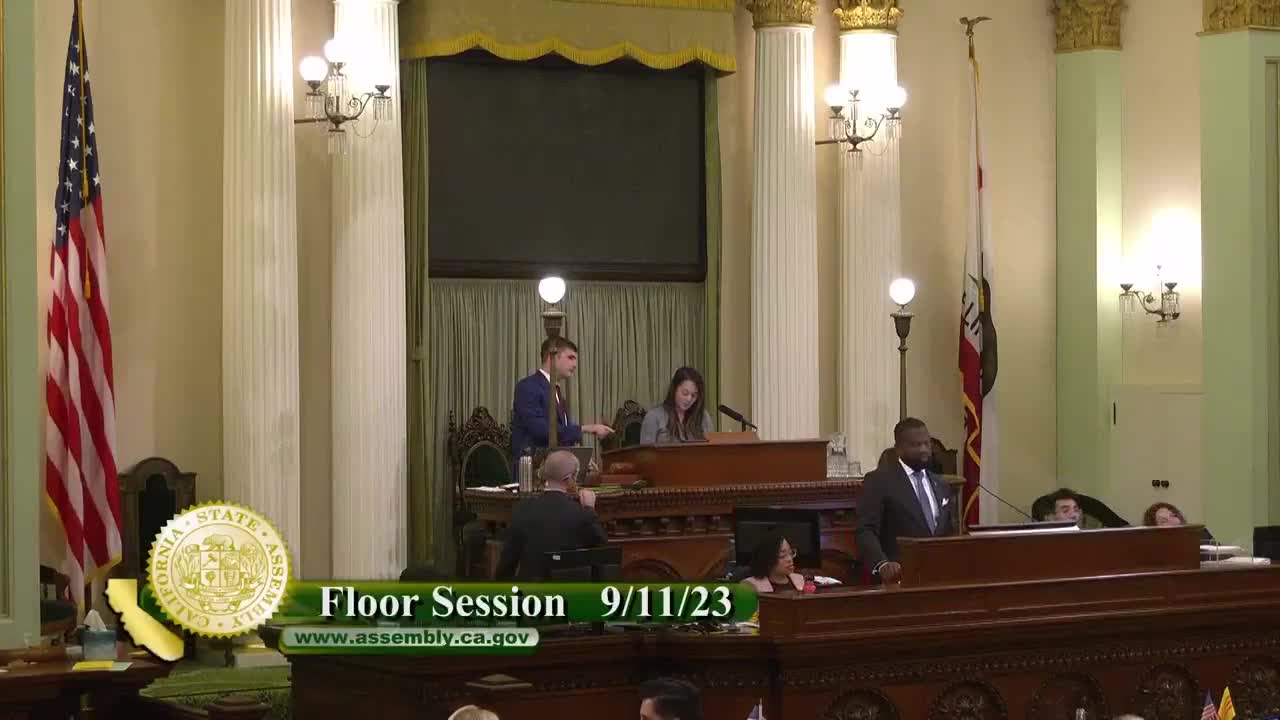 1MIN
Assembly Floor
 6MIN
Assembly Standing Committee on Labor and Employment
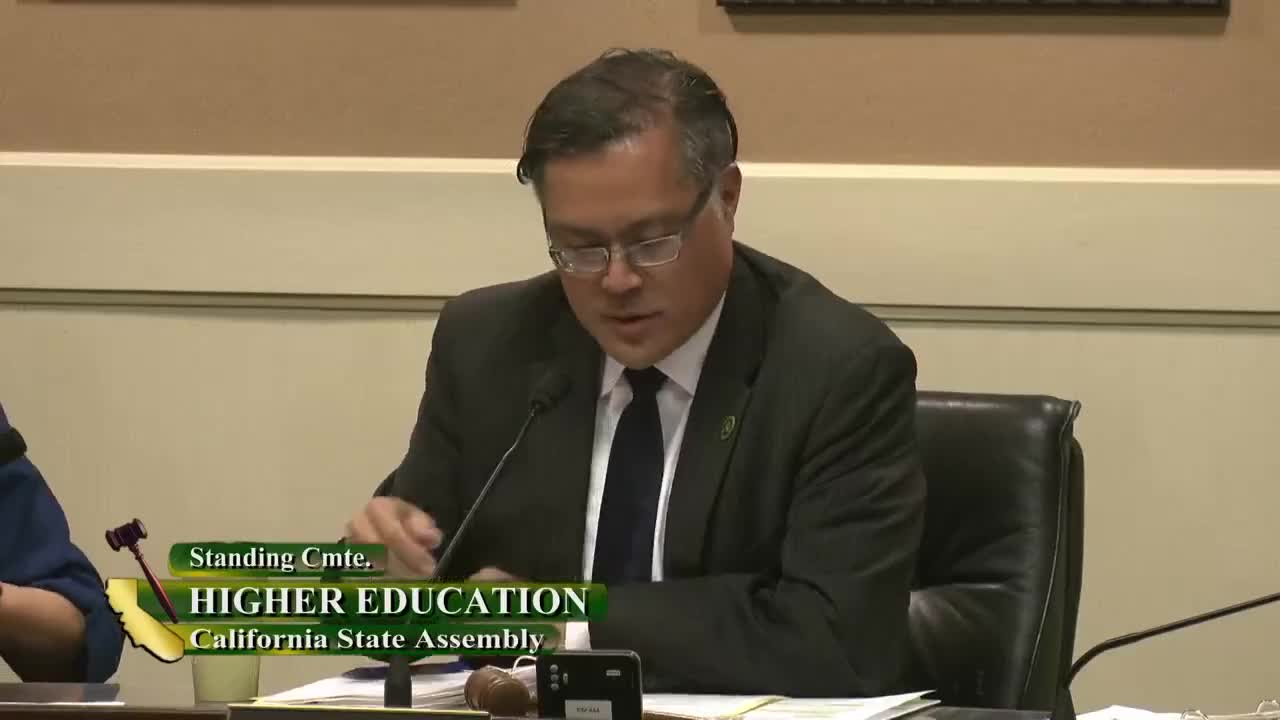 10MIN
Assembly Standing Committee on Higher Education
 3MIN
Senate Floor
 8MIN
Senate Standing Committee on Labor, Public Employment and Retirement
 11MIN
Senate Standing Committee on Education
Bill Author