SB 664: Energy: reliability planning assessment: integrated energy policy report.
- Session Year: 2023-2024
- House: Senate
- Latest Version Date: 2023-09-15
Current Status:
Failed
(2024-01-25: Veto sustained.)
Introduced
In Committee
First Chamber
In Committee
Second Chamber
Enacted
What does this bill do?
The bill expands what the state’s joint reliability planning assessment must track and requires the Energy Commission to publish a quarterly online dashboard showing that information, affecting the Energy Commission, the Public Utilities Commission, grid operators, utilities, and project developers. It adds detailed tracking of transmission upgrades, interconnection and permit status (including PUC approvals and the grid operator’s project queue), expected completion dates and retirements, and reporting on any fossil fuel use by certain Department of Water Resources facilities, and it requires demand forecasts and wind/solar profiles to account for increased weather variability and multiday heat events from climate change to inform planning.
The summary is provided by generative AI which can make mistakes. For original language, please view the details in the table below.
Existing law requires the State Energy Resources Conservation and Development Commission (Energy Commission) and the Public Utilities Commission (PUC), on or before December 15, 2022, and quarterly thereafter, to submit to the Legislature a joint Reliability Planning Assessment that, among other things, includes prospective information on existing and expected resources, including updates on the interconnection status for renewable projects and any delays in interconnection, and expected retirements for both system and local resources. Existing law requires the Energy Commission to report in the energy almanac on California energy resources that serve load in California.
This bill would require that the assessment also include the status of utility transmission upgrades and electrical grid infrastructure capacity, PUC approvals of applications for certificates of public convenience and necessity and permits to construct utility and independent projects, and applications for permits for projects from the Energy Commission and the queue of projects from the Independent System Operator, include the expected completion dates for both system and local resources, and report on the use of fossil fuel by certain facilities constructed by, purchased by, or under contract with the Department of Water Resources, as specified. The bill would require the Energy Commission to quarterly publish on its internet website and update a tracking energy development dashboard that synthesizes and publishes the information included in the assessment and reported on California energy resources in the energy almanac.
Existing law requires the Energy Commission, on a biennial basis, to adopt an integrated energy policy report containing an overview of major trends and issues facing the state. Existing law requires the report to include an assessment and forecast of system reliability and the need for resource additions, efficiency, and conservation that considers all aspects of energy industries and markets that are essential for the state economy, general welfare, public health and safety, energy diversity, and protection of the environment.
This bill would require the Energy Commission to ensure that the demand forecasts in the integrated energy policy report and wind and solar energy generation profiles account for increased weather variability, interactive weather effects, and increased likelihood of heat events, including multiday events, due to climate change, and to use the demand forecasts and those energy generation profiles to inform its energy planning, as specified.
Existing law requires the State Energy Resources Conservation and Development Commission (Energy Commission) and the Public Utilities Commission (PUC), on or before December 15, 2022, and quarterly thereafter, to submit to the Legislature a joint Reliability Planning Assessment that, among other things, includes prospective information on existing and expected resources, including updates on the interconnection status for renewable projects and any delays in interconnection, and expected retirements for both system and local resources. Existing law requires the Energy Commission to report in the energy almanac on California energy resources that serve load in California.
This bill would require that the assessment also include the status of utility transmission upgrades and electrical grid infrastructure capacity, PUC approvals of applications for certificates of public convenience and necessity and permits to construct utility and independent projects, and applications for permits for projects from the Energy Commission and the queue of projects from the Independent System Operator, include the expected completion dates for both system and local resources, and report on the use of fossil fuel by certain facilities constructed by, purchased by, or under contract with the Department of Water Resources, as specified. The bill would require the Energy Commission to quarterly publish on its internet website and update a tracking energy development dashboard that synthesizes and publishes the information included in the assessment and reported on California energy resources in the energy almanac.
Existing law requires the Energy Commission, on a biennial basis, to adopt an integrated energy policy report containing an overview of major trends and issues facing the state. Existing law requires the report to include an assessment and forecast of system reliability and the need for resource additions, efficiency, and conservation that considers all aspects of energy industries and markets that are essential for the state economy, general welfare, public health and safety, energy diversity, and protection of the environment.
This bill would require the Energy Commission to ensure that the demand forecasts in the integrated energy policy report and wind and solar energy generation profiles account for multiday extreme and atypical weather events. increased weather variability, interactive weather effects, and increased likelihood of heat events, including multiday events, due to climate change, and to use the demand forecasts and those energy generation profiles to inform its energy planning, as specified.
Existing law requires the State Energy Resources Conservation and Development Commission (Energy Commission) and the Public Utilities Commission (PUC), on or before December 15, 2022, and quarterly thereafter, to submit to the Legislature a joint Reliability Planning Assessment that, among other things, includes prospective information on existing and expected resources, including updates on the interconnection status for renewable projects and any delays in interconnection, and expected retirements for both system and local resources. Existing law requires the Energy Commission to report in the energy almanac on California energy resources that serve load in California.
This bill would require that the assessment also include the status of utility transmission upgrades and electrical grid infrastructure capacity, PUC approvals of applications for certificates of public convenience and necessity and permits to construct utility and independent projects, and applications for permits for projects from the Energy Commission and the queue of projects from the Independent System Operator, include the expected completion dates for both system and local resources, and report on the use of fossil fuel by certain facilities constructed by, purchased by, or under contract with the Department of Water Resources, as specified. The bill would require the Energy Commission to quarterly publish on its internet website and update a tracking energy development dashboard that synthesizes and publishes the information included in the assessment and reported on California energy resources in the energy almanac.
Existing law requires the State Energy Resources Conservation and Development Commission (Energy Commission), Commission, on a biennial basis, to adopt an integrated energy policy report containing an overview of major trends and issues facing the state. Existing law requires the report to include an assessment and forecast of system reliability and the need for resource additions, efficiency, and conservation that considers all aspects of energy industries and markets that are essential for the state economy, general welfare, public health and safety, energy diversity, and protection of the environment.
This bill would require the Energy Commission to ensure that the demand forecasts in the integrated energy policy report account for multiday extreme and atypical weather events.
Existing law requires the State Energy Resources Conservation and Development Commission (Energy Commission), on a biennial basis, to adopt an integrated energy policy report containing an overview of major trends and issues facing the state. Existing law requires the report to include an assessment and forecast of system reliability and the need for resource additions, efficiency, and conservation that considers all aspects of energy industries and markets that are essential for the state economy, general welfare, public health and safety, energy diversity, and protection of the environment.
This bill would require the Energy Commission ensure that the demand forecasts in the integrated energy policy report account for multiday extreme and atypical weather events and include, at a minimum, one-in-10-year, one-in-20-year, and one-in-40-year peak demand forecasts. events.
Existing law created the Strategic Reliability Reserve Fund, a continuously appropriated fund, for purposes of adding resources to the electrical grid to ensure electrical grid reliability and support the clean energy transition. Existing law authorizes the Energy Commission to approve a contract, grant, or loan entered into for those purposes.This bill would require a contracted resource for which a contract, grant, or loan is entered into on or after January 1, 2024, to be an eligible renewable energy resource or a zero-carbon resource.Existing law states the state policy that eligible renewable energy resources and zero-carbon resources supply 90% of all retail sales of electricity to California end-use customer by December 31, 2035, 95% by December 31, 2040, and 100% by December 31, 2045, and 100% of electricity procured to serve all state agencies by December 31, 2035. Existing law requires the Public Utilities Commission, the Energy Commission, and the State Air Resources Board, on a 4-year basis, to issue a joint report to the Legislature that includes, among other things, alternative scenarios in which that state policy can be achieved and the estimated costs and benefits of each scenario.This bill would require that the alternative scenarios include scenarios achieving zero or near zero greenhouse gas emissions in the electricity sector in the 203545 timeframe and the estimated greenhouse gas emissions reductions for each scenario.Existing law requires the State Energy Resources Conservation and Development Commission (Energy Commission), on a biennial basis, to adopt an integrated energy policy report containing an overview of major trends and issues facing the state. Existing law requires the report to include an assessment and forecast of system reliability and the need for resource additions, efficiency, and conservation that considers all aspects of energy industries and markets that are essential for the state economy, general welfare, public health and safety, energy diversity, and protection of the environment.
This bill would require the Energy Commission ensure that the demand forecasts in the integrated energy policy report account for multiday extreme and atypical weather events and include, at a minimum, one-in-10-year, one-in-20-year, and one-in-40-year peak demand forecasts.
Existing law created the Strategic Reliability Reserve Fund, a continuously appropriated fund, for purposes of adding resources to the electrical grid to ensure electrical grid reliability and support the clean energy transition. Existing law authorizes the Energy Commission to approve a contract, grant, or loan entered into for those purposes.
This bill would require a contracted resource for which a contract, grant, or loan is entered into on or after January 1, 2024, to be an eligible renewable energy resource or a zero-carbon resource.
Existing law states the state policy that eligible renewable energy resources and zero-carbon resources supply 90% of all retail sales of electricity to California end-use customer by December 31, 2035, 95% by December 31, 2040, and 100% by December 31, 2045, and 100% of electricity procured to serve all state agencies by December 31, 2035. Existing law requires the Public Utilities Commission, the Energy Commission, and the State Air Resources Board, on a 4-year basis, to issue a joint report to the Legislature that includes, among other things, alternative scenarios in which that state policy can be achieved and the estimated costs and benefits of each scenario.
This bill would require that the alternative scenarios include scenarios achieving zero or near zero greenhouse gas emissions in the electricity sector in the 203545 timeframe and the estimated greenhouse gas emissions reductions for each scenario.
(a)Notwithstanding Section 10231.5 of the Government Code, on or before December 15, 2022, and quarterly thereafter, the commission and the Public Utilities Commission shall submit a joint Reliability Planning Assessment to the Legislature in accordance with Section 9795 of the Government Code.
(1)The assessment shall identify estimates for the electrical supply and demand balance, for the forward 5- and 10-year periods, under high-, medium-, and low-risk scenarios. The assessment shall identify loads and resources online and loads and resources expected by reliability year ending September 30.
(2)The assessment shall focus on the Independent System Operator system, with an emphasis on the electrical demand, load, supply, or resources for load-serving entities subject to the Public Utilities Commissions jurisdiction. The assessment shall break down loads and resources by type of load-serving entity by year by transmission access charge area.
(3)The assessment shall include information about imports, by amount, source if known, and other relevant factors, and transmission capacity for imports by date and transmission access area or balancing authority.
(4)The commission shall provide an estimate for the loads and resources for the entities that are not subject to the Public Utilities Commissions jurisdiction that are part of the Independent System Operator system supply and demand balance.
(5)The assessment shall include prospective information on existing and expected resources, including updates on the interconnection status for renewable projects and any delays in interconnection, the status of utility transmission upgrades and electrical grid infrastructure capacity, including substations and expanded transmission in existing corridors, the status of Public Utilities Commission approvals of applications for certificates of public convenience and necessity and permits to construct utility and independent projects, the status of applications for permits for projects from the commission and the queue of projects from the Independent System Operator, filtered by geographic region and energy resource type, and expected completion dates and retirements for both system and local resources. This shall include updates based on actions taken directly by, or as a result of, the Tracking Energy Development Task Force. The assessment shall include an accompanying Gantt chart to track progress.
(6)The assessment shall maintain confidentiality of market sensitive information.
(7)The assessment shall rely upon the most recently available integrated energy policy report prepared pursuant to Section 25302 for the demand assessment.
(8)The assessment shall report on any other significant delays or barriers affecting timely deployment of renewable energy and zero-carbon resources, including, but not limited to, supply chain disruptions, land use restrictions, and permitting processes.
(9)The assessment shall make recommendations to the Legislature on actions needed to resolve any delays or barriers reported in the assessment.
(10)The assessment shall report on any regulatory barriers and challenges to increasing deployment of other preferred resources, including energy efficiency and demand response programs.
(11)The assessment shall report on the use of fossil fuel by a facility constructed by, purchased by, or under contract with the Department of Water Resources pursuant to subdivision (a) of, or paragraph (1) of subdivision (b) of, Section 80710 of the Water Code.
(b)The commission shall continue to report on California energy resources that serve load in California in the energy almanac. The commission shall expand the energy almanac report to include storage resources that serve wholesale load. The commission shall report on energy resources that serve load in the Independent System Operator system, which is a subset of its current reporting of all California resources, and may include energy resources located outside the state.
(c)The commission shall quarterly publish on its internet website and update a tracking energy development dashboard that synthesizes and publishes the information included in the assessments submitted, and reports made, pursuant this section.
SEC. 2.Section 25302.8 is added to the Public Resources Code, to read:25302.8.The commission shall ensure that the demand forecasts in the integrated energy policy report required pursuant to Section 25302 and wind and solar energy generation profiles account for increased weather variability, interactive weather effects, and increased likelihood of heat events, including multiday events, due to climate change. The demand forecasts shall include an estimate of weather-normal peak electrical demand and of peak electrical demand expected to occur given the increased likelihood of heat events due to climate change. The commission shall use the demand forecasts and wind and solar energy generation profiles to inform its energy planning in the state beginning with the integrated energy policy report adopted in 2025.
(a)Notwithstanding Section 10231.5 of the Government Code, on or before December 15, 2022, and quarterly thereafter, the commission and the Public Utilities Commission shall submit a joint Reliability Planning Assessment to the Legislature in accordance with Section 9795 of the Government Code.
(1)The assessment shall identify estimates for the electrical supply and demand balance, for the forward 5- and 10-year periods, under high-, medium-, and low-risk scenarios. The assessment shall identify loads and resources online and loads and resources expected by reliability year ending September 30.
(2)The assessment shall focus on the Independent System Operator system, with an emphasis on the electrical demand, load, supply, or resources for load-serving entities subject to the Public Utilities Commissions jurisdiction. The assessment shall break down loads and resources by type of load-serving entity by year by transmission access charge area.
(3)The assessment shall include information about imports, by amount, source if known, and other relevant factors, and transmission capacity for imports by date and transmission access area or balancing authority.
(4)The commission shall provide an estimate for the loads and resources for the entities that are not subject to the Public Utilities Commissions jurisdiction that are part of the Independent System Operator system supply and demand balance.
(5)The assessment shall include prospective information on existing and expected resources, including updates on the interconnection status for renewable projects and any delays in interconnection, the status of utility transmission upgrades and electrical grid infrastructure capacity, including substations and expanded transmission in existing corridors, the status of Public Utilities Commission approvals of applications for certificates of public convenience and necessity and permits to construct utility and independent projects, the status of applications for permits for projects from the commission and the queue of projects from the Independent System Operator, filtered by geographic region and energy resource type, and expected completion dates and retirements for both system and local resources. This shall include updates based on actions taken directly by, or as a result of, the Tracking Energy Development Task Force. The assessment shall include an accompanying Gantt chart to track progress.
(6)The assessment shall maintain confidentiality of market sensitive information.
(7)The assessment shall rely upon the most recently available integrated energy policy report prepared pursuant to Section 25302 for the demand assessment.
(8)The assessment shall report on any other significant delays or barriers affecting timely deployment of renewable energy and zero-carbon resources, including, but not limited to, supply chain disruptions, land use restrictions, and permitting processes.
(9)The assessment shall make recommendations to the Legislature on actions needed to resolve any delays or barriers reported in the assessment.
(10)The assessment shall report on any regulatory barriers and challenges to increasing deployment of other preferred resources, including energy efficiency and demand response programs.
(11)The assessment shall report on the use of fossil fuel by a facility constructed by, purchased by, or under contract with the Department of Water Resources pursuant to subdivision (a) of, or paragraph (1) of subdivision (b) of, Section 80710 of the Water Code.
(b)The commission shall continue to report on California energy resources that serve load in California in the energy almanac. The commission shall expand the energy almanac report to include storage resources that serve wholesale load. The commission shall report on energy resources that serve load in the Independent Systems System Operator system, which is a subset of its current reporting of all California resources, and may include energy resources located outside the state.
(c)The commission shall quarterly publish on its internet website and update a tracking energy development dashboard that synthesizes and publishes the information included in the assessments submitted, and reports made, pursuant this section.
SEC. 2.Section 25302.8 is added to the Public Resources Code, to read:25302.8.The commission shall ensure that the demand forecasts in the integrated energy policy report required pursuant to Section 25302 and wind and solar energy generation profiles account for multiday extreme and atypical weather events. increased weather variability, interactive weather effects, and increased likelihood of heat events, including multiday events, due to climate change. The demand forecasts shall include an estimate of weather-normal peak electrical demand and of peak electrical demand expected to occur given the increased likelihood of heat events due to climate change. The commission shall use the demand forecasts and wind and solar energy generation profiles to inform its energy planning in the state beginning with the integrated energy policy report adopted in 2025.
(a)Notwithstanding Section 10231.5 of the Government Code, on or before December 15, 2022, and quarterly thereafter, the commission and the Public Utilities Commission shall submit a joint Reliability Planning Assessment to the Legislature in accordance with Section 9795 of the Government Code.
(1)The assessment shall identify estimates for the electrical supply and demand balance, for the forward 5- and 10-year periods, under high-, medium-, and low-risk scenarios. The assessment shall identify loads and resources online and loads and resources expected by reliability year ending September 30.
(2)The assessment shall focus on the Independent System Operator system, with an emphasis on the electrical demand, load, supply, or resource resources for load-serving entities subject to the Public Utilities Commissions jurisdiction. The assessment shall break down loads and resources by type of load-serving entity by year by transmission access charge area.
(3)The assessment shall include information about imports, by amount, source if known, and other relevant factors, and transmission capacity for imports by date and transmission access area or balancing authority.
(4)The commission shall provide an estimate for the loads and resources for the entities that are not subject to the Public Utilities Commissions jurisdiction that are part of the Independent System Operator system supply and demand balance.
(5)The assessment shall include prospective information on existing and expected resources, including updates on the interconnection status for renewable projects and any delays in interconnection, the status of utility transmission upgrades and electrical grid infrastructure capacity, including substations and expanded transmission in existing corridors, the status of Public Utilities Commission approvals of applications for certificates of public convenience and necessity and permits to construct utility and independent projects, the status of applications for permits for projects from the commission and the queue of projects from the Independent System Operator, filtered by geographic region and energy resource type, and expected completion dates and retirements for both system and local resources. This shall include updates based on actions taken directly by, or as a result of, the Tracking Energy Development Task Force. The assessment shall include an accompanying Gantt chart to track progress.
(6)The assessment shall maintain confidentiality of market sensitive information.
(7)The assessment shall rely upon the most recently available integrated energy policy report prepared pursuant to Section 25302 for the demand assessment.
(8)The assessment shall report on any other significant delays or barriers affecting timely deployment of renewable energy and zero-carbon resources, including, but not limited to, supply chain disruptions, land use restrictions, and permitting processes.
(9)The assessment shall make recommendations to the Legislature on actions needed to resolve any delays or barriers reported in the assessment.
(10)The assessment shall report on any regulatory barriers and challenges to increasing deployment of other preferred resources, including energy efficiency and demand response programs.
(11)The assessment shall report on the use of fossil fuel by a facility constructed by, purchased by, or under contract with the Department of Water Resources pursuant to subdivision (a) of, or paragraph (1) of subdivision (b) of, Section 80710 of the Water Code.
(b)The commission shall continue to report on California energy resources that serve load in California in the energy almanac. The commission shall expand the energy almanac report to include storage resources that serve wholesale load. The commission shall report on energy resources that serve load in the Independent Systems Operator system, which is a subset of its current reporting of all California resources, and may include energy resources located outside the state.
(c)The commission shall quarterly publish on its internet website and update a tracking energy development dashboard that synthesizes and publishes the information included in the assessments submitted, and reports made, pursuant this section.
SECTION 1.SEC. 2.Section 25302.8 is added to the Public Resources Code, to read:25302.8.The commission shall ensure that the demand forecasts in the integrated energy policy report required pursuant to Section 25302 account for multiday extreme and atypical weather events.
The commission shall ensure that the demand forecasts in the integrated energy policy report required pursuant to Section 25302 account for multiday extreme and atypical weather events, including periods of low renewable energy generation, and include, at a minimum, one-in-10-year, one-in-20-year, and one-in-40-year peak demand forecasts. events.
SEC. 2.Section 25793 of the Public Resources Code is amended to read:25793.(a)The Strategic Reliability Reserve Fund is hereby created in the State Treasury. Notwithstanding Section 13340 of the Government Code, the moneys in the fund and the accounts contained in the fund are hereby continuously appropriated without regard to fiscal year to be expended by the commission for purposes of adding resources to the electrical grid to ensure electrical grid reliability and support the clean energy transition.(b)The Distributed Electricity Backup Assets Account is hereby created in the fund, to be administered by the commission to implement the Distributed Electricity Backup Assets Program in accordance with Article 2 (commencing with Section 25791).(c)The Demand Side Grid Support Account is hereby created in the fund, to be administered by the commission to implement the Demand Side Grid Support Program in accordance with Article 3 (commencing with Section 25792). Revenue generated by the sale of energy services within the Demand Side Grid Support Program shall be deposited into the Demand Side Grid Support Account.(d)The commission may accept nonstate moneys, including, but not limited to, federal moneys, for purposes of this chapter.(e)The commission shall adopt emergency regulations to implement this chapter at a commission business meeting. Notwithstanding Sections 11346.1 and 11349.6 of the Government Code, a finding of emergency or necessity to address an emergency shall not be required. Notwithstanding any other law, these emergency regulations shall be valid for three years, or until replaced by nonemergency regulations, whichever is sooner.(f)(1)The executive director, or a designee, of the commission may approve any contract, grant, or loan entered into for purposes of this chapter until October 31, 2023. After October 31, 2023, any contract, grant, or loan entered into for purposes of this chapter shall be approved in a commission meeting held consistent with Chapter 3 (commencing with Section 25200) of Division 15. For any contract, grant, or loan entered into for purposes of this chapter, no later than 10 days after the commission, executive director, or their designee, approves the contract, grant, or loan, the executive director of the commission shall give written notice to the Joint Legislative Budget Committee of the action.(2)A contracted resource for which a contract, grant, or loan pursuant to paragraph (1) is entered into on or after January 1, 2024, shall be an eligible renewable energy resource, as defined in Section 399.12 of the Public Utilities Code, or a zero-carbon resource, including a firm zero-carbon resource, as defined in Section 25216.7.(g)(1)Notwithstanding any other law, a contract, grant, or loan entered into for purposes of this chapter for an activity that is needed for ensuring electrical grid reliability by October 31, 2023, shall not require competitive bidding, or the review, consent, or approval of the Department of General Services or any other state department or agency and is not required to comply with the requirements of the State Contracting Manual, the Public Contract Code, or the personal services contracting requirements of Article 4 (commencing with Section 19130) of Chapter 5 of Part 2 of Division 5 of Title 2 of the Government Code.(2)This subdivision does not apply to any contract, grant, or loan entered into for purposes of this chapter that is not needed for ensuring electrical grid reliability by October 31, 2023.(3)This subdivision is inoperative on November 1, 2023.(h)Notwithstanding any other law, the commission may pay an incentive up front if not doing so would inhibit participation in the programs established pursuant to this chapter.SEC. 3.Section 454.53 of the Public Utilities Code is amended to read:454.53.(a)It is the policy of the state that eligible renewable energy resources and zero-carbon resources supply 90 percent of all retail sales of electricity to California end-use customers by December 31, 2035, 95 percent of all retail sales of electricity to California end-use customers by December 31, 2040, 100 percent of all retail sales of electricity to California end-use customers by December 31, 2045, and 100 percent of electricity procured to serve all state agencies by December 31, 2035. The achievement of this policy for California shall not increase carbon emissions elsewhere in the western grid and shall not allow resource shuffling. The commission and Energy Commission, in consultation with the State Air Resources Board, shall take steps to ensure that a transition to a zero-carbon electric system for the State of California does not cause or contribute to greenhouse gas emissions increases elsewhere in the western grid, and is undertaken in a manner consistent with clause 3 of Section 8 of Article I of the United States Constitution. The commission, the Energy Commission, the State Air Resources Board, and all other state agencies shall incorporate this policy into all relevant planning.(b)The commission, Energy Commission, State Air Resources Board, and all other state agencies shall ensure that actions taken in furtherance of subdivision (a) do all of the following:(1)Maintain and protect the safety, reliable operation, and balancing of the electric system.(2)Prevent unreasonable impacts to electricity, gas, and water customer rates and bills resulting from implementation of this section, taking into full consideration the economic and environmental costs and benefits of renewable energy and zero-carbon resources.(3)To the extent feasible and authorized under law, lead to the adoption of policies and taking of actions in other sectors to obtain greenhouse gas emission reductions that ensure equity between other sectors and the electricity sector.(4)Not affect in any manner the rules and requirements for the oversight of, and enforcement against, retail sellers and local publicly owned utilities pursuant to the California Renewables Portfolio Standard Program (Article 16 (commencing with Section 399.11) of Chapter 2.3) and Sections 454.51, 454.52, 9621, and 9622.(c)Nothing in this section shall affect a retail sellers obligation to comply with the federal Public Utility Regulatory Policies Act of 1978 (16 U.S.C. Sec. 2601 et seq.).(d)The commission, Energy Commission, and State Air Resources Board shall do all of the following:(1)Use programs authorized under existing statutes to achieve the policy described in subdivision (a).(2)In consultation with all California balancing authorities, as defined in subdivision (d) of Section 399.12, as part of a public process, issue a joint report to the Legislature, submitted in accordance with Section 9795 of the Government Code, by January 1, 2021, and at least every four years thereafter. The joint report shall include all of the following:(A)A review of the policy described in subdivision (a) focused on technologies, forecasts, then-existing transmission, and maintaining safety, environmental and public safety protection, affordability, and system and local reliability.(B)An evaluation identifying the potential benefits and impacts on system and local reliability associated with achieving the policy described in subdivision (a).(C)An evaluation identifying the nature of any anticipated financial costs and benefits to electric, gas, and water utilities, including customer rate impacts and benefits.(D)The barriers to, and benefits of, achieving the policy described in subdivision (a).(E)Alternative scenarios, including scenarios achieving zero or near zero greenhouse gas emissions in the electricity sector in the 203545 timeframe, in which the policy described in subdivision (a) can be achieved and the estimated costs, greenhouse gas emissions reductions, and other benefits of each scenario.(3)On or before December 1, 2023, and annually thereafter, in consultation with California balancing authorities, as defined in subdivision (d) of Section 399.12, and as part of, or an interim addendum to, the quadrennial joint report required by paragraph (2), as applicable, issue a joint reliability progress report that reviews system and local reliability within the context of the policy described in subdivision (a), with a particular focus on summer reliability. The joint reliability progress report shall identify challenges and gaps, if any, to achieving system and local reliability and identify the amount and cause of any delays to achieving compliance with all energy and capacity procurement requirements set by the commission.(e)Nothing in this section authorizes the commission to establish any requirements on a nonmobile self-cogeneration or cogeneration facility that served onsite load, or that served load pursuant to an over-the-fence arrangement if that arrangement existed on or before December 20, 1995.(f)This section does not limit any entity, including local governments, from accelerating their achievement of the states electric sector decarbonization targets.The commission shall ensure that the demand forecasts in the integrated energy policy report required pursuant to Section 25302 account for multiday extreme and atypical weather events, including periods of low renewable energy generation, and include, at a minimum, one-in-10-year, one-in-20-year, and one-in-40-year peak demand forecasts.
SEC. 2.Section 25793 of the Public Resources Code is amended to read:25793.(a)The Strategic Reliability Reserve Fund is hereby created in the State Treasury. Notwithstanding Section 13340 of the Government Code, the moneys in the fund and the accounts contained in the fund are hereby continuously appropriated without regard to fiscal year to be expended by the commission for purposes of adding resources to the electrical grid to ensure electrical grid reliability and support the clean energy transition.
(b)The Distributed Electricity Backup Assets Account is hereby created in the fund, to be administered by the commission to implement the Distributed Electricity Backup Assets Program in accordance with Article 2 (commencing with Section 25791).
(c)The Demand Side Grid Support Account is hereby created in the fund, to be administered by the commission to implement the Demand Side Grid Support Program in accordance with Article 3 (commencing with Section 25792). Revenue generated by the sale of energy services within the Demand Side Grid Support Program shall be deposited into the Demand Side Grid Support Account.
(d)The commission may accept nonstate moneys, including, but not limited to, federal moneys, for purposes of this chapter.
(e)The commission shall adopt emergency regulations to implement this chapter at a commission business meeting. Notwithstanding Sections 11346.1 and 11349.6 of the Government Code, a finding of emergency or necessity to address an emergency shall not be required. Notwithstanding any other law, these emergency regulations shall be valid for three years, or until replaced by nonemergency regulations, whichever is sooner.
(f)(1)The executive director, or a designee, of the commission may approve any contract, grant, or loan entered into for purposes of this chapter until October 31, 2023. After October 31, 2023, any contract, grant, or loan entered into for purposes of this chapter shall be approved in a commission meeting held consistent with Chapter 3 (commencing with Section 25200) of Division 15. For any contract, grant, or loan entered into for purposes of this chapter, no later than 10 days after the commission, executive director, or their designee, approves the contract, grant, or loan, the executive director of the commission shall give written notice to the Joint Legislative Budget Committee of the action.
(2)A contracted resource for which a contract, grant, or loan pursuant to paragraph (1) is entered into on or after January 1, 2024, shall be an eligible renewable energy resource, as defined in Section 399.12 of the Public Utilities Code, or a zero-carbon resource, including a firm zero-carbon resource, as defined in Section 25216.7.
(g)(1)Notwithstanding any other law, a contract, grant, or loan entered into for purposes of this chapter for an activity that is needed for ensuring electrical grid reliability by October 31, 2023, shall not require competitive bidding, or the review, consent, or approval of the Department of General Services or any other state department or agency and is not required to comply with the requirements of the State Contracting Manual, the Public Contract Code, or the personal services contracting requirements of Article 4 (commencing with Section 19130) of Chapter 5 of Part 2 of Division 5 of Title 2 of the Government Code.
(2)This subdivision does not apply to any contract, grant, or loan entered into for purposes of this chapter that is not needed for ensuring electrical grid reliability by October 31, 2023.
(3)This subdivision is inoperative on November 1, 2023.
(h)Notwithstanding any other law, the commission may pay an incentive up front if not doing so would inhibit participation in the programs established pursuant to this chapter.
SEC. 3.Section 454.53 of the Public Utilities Code is amended to read:454.53.(a)It is the policy of the state that eligible renewable energy resources and zero-carbon resources supply 90 percent of all retail sales of electricity to California end-use customers by December 31, 2035, 95 percent of all retail sales of electricity to California end-use customers by December 31, 2040, 100 percent of all retail sales of electricity to California end-use customers by December 31, 2045, and 100 percent of electricity procured to serve all state agencies by December 31, 2035. The achievement of this policy for California shall not increase carbon emissions elsewhere in the western grid and shall not allow resource shuffling. The commission and Energy Commission, in consultation with the State Air Resources Board, shall take steps to ensure that a transition to a zero-carbon electric system for the State of California does not cause or contribute to greenhouse gas emissions increases elsewhere in the western grid, and is undertaken in a manner consistent with clause 3 of Section 8 of Article I of the United States Constitution. The commission, the Energy Commission, the State Air Resources Board, and all other state agencies shall incorporate this policy into all relevant planning.
(b)The commission, Energy Commission, State Air Resources Board, and all other state agencies shall ensure that actions taken in furtherance of subdivision (a) do all of the following:
(1)Maintain and protect the safety, reliable operation, and balancing of the electric system.
(2)Prevent unreasonable impacts to electricity, gas, and water customer rates and bills resulting from implementation of this section, taking into full consideration the economic and environmental costs and benefits of renewable energy and zero-carbon resources.
(3)To the extent feasible and authorized under law, lead to the adoption of policies and taking of actions in other sectors to obtain greenhouse gas emission reductions that ensure equity between other sectors and the electricity sector.
(4)Not affect in any manner the rules and requirements for the oversight of, and enforcement against, retail sellers and local publicly owned utilities pursuant to the California Renewables Portfolio Standard Program (Article 16 (commencing with Section 399.11) of Chapter 2.3) and Sections 454.51, 454.52, 9621, and 9622.
(c)Nothing in this section shall affect a retail sellers obligation to comply with the federal Public Utility Regulatory Policies Act of 1978 (16 U.S.C. Sec. 2601 et seq.).
(d)The commission, Energy Commission, and State Air Resources Board shall do all of the following:
(1)Use programs authorized under existing statutes to achieve the policy described in subdivision (a).
(2)In consultation with all California balancing authorities, as defined in subdivision (d) of Section 399.12, as part of a public process, issue a joint report to the Legislature Legislature, submitted in accordance with Section 9795 of the Government Code, by January 1, 2021, and at least every four years thereafter. The joint report shall include all of the following:
(A)A review of the policy described in subdivision (a) focused on technologies, forecasts, then-existing transmission, and maintaining safety, environmental and public safety protection, affordability, and system and local reliability.
(B)An evaluation identifying the potential benefits and impacts on system and local reliability associated with achieving the policy described in subdivision (a).
(C)An evaluation identifying the nature of any anticipated financial costs and benefits to electric, gas, and water utilities, including customer rate impacts and benefits.
(D)The barriers to, and benefits of, achieving the policy described in subdivision (a).
(E)Alternative scenarios scenarios, including scenarios achieving zero or near zero greenhouse gas emissions in the electricity sector in the 203545 timeframe, in which the policy described in subdivision (a) can be achieved and the estimated costs and costs, greenhouse gas emissions reductions, and other benefits of each scenario.
(3)On or before December 1, 2023, and annually thereafter, in consultation with California balancing authorities, as defined in subdivision (d) of Section 399.12, and as part of, or an interim addendum to, the quadrennial joint report required by paragraph (2), as applicable, issue a joint reliability progress report that reviews system and local reliability within the context of the policy described in subdivision (a), with a particular focus on summer reliability. The joint reliability progress report shall identify challenges and gaps, if any, to achieving system and local reliability and identify the amount and cause of any delays to achieving compliance with all energy and capacity procurement requirements set by the commission.
(e)Nothing in this section authorizes the commission to establish any requirements on a nonmobile self-cogeneration or cogeneration facility that served onsite load, or that served load pursuant to an over-the-fence arrangement if that arrangement existed on or before December 20, 1995.
(f)This section does not limit any entity, including local governments, from accelerating their achievement of the states electric sector decarbonization targets.
|
Date
|
Status
|
|---|---|
| Jan 25, 2024 | Veto sustained. |
| Jan 25, 2024 | Stricken from file. |
| Oct 8, 2023 | In Senate. Consideration of Governor's veto pending. |
| Oct 8, 2023 | Vetoed by the Governor. |
| Sep 20, 2023 | Enrolled and presented to the Governor at 4:30 p.m. |
| Sep 13, 2023 | Assembly amendments concurred in. (Ayes 39. Noes 0. Page 2742.) Ordered to engrossing and enrolling. |
| Sep 12, 2023 | In Senate. Concurrence in Assembly amendments pending. |
| Sep 12, 2023 | Read third time. Passed. (Ayes 80. Noes 0. Page 3264.) Ordered to the Senate. |
| Sep 8, 2023 | Read third time and amended. (Ayes 63. Noes 0. Page 3127.) |
| Sep 8, 2023 | Ordered to third reading. |
| Sep 8, 2023 | Assembly Rule 69 suspended. (Ayes 60. Noes 15. Page 3126.) |
| Sep 5, 2023 | Read second time. Ordered to third reading. |
| Sep 1, 2023 | From committee: Do pass. (Ayes 16. Noes 0.) (September 1). |
| Aug 23, 2023 | August 23 set for first hearing. Placed on suspense file. |
| Jul 13, 2023 | From committee: Do pass and re-refer to Com. on APPR. with recommendation: To consent calendar. (Ayes 14. Noes 0.) (July 12). Re-referred to Com. on APPR. |
| Jul 3, 2023 | From committee with author's amendments. Read second time and amended. Re-referred to Com. on U. & E. |
| Jun 7, 2023 | June 14 set for first hearing canceled at the request of author. |
| May 26, 2023 | Referred to Com. on U. & E. |
| May 23, 2023 | In Assembly. Read first time. Held at Desk. |
| May 22, 2023 | Read third time. Passed. (Ayes 40. Noes 0. Page 1214.) Ordered to the Assembly. |
| May 16, 2023 | Read second time. Ordered to third reading. |
| May 15, 2023 | From committee: Be ordered to second reading pursuant to Senate Rule 28.8. |
| May 5, 2023 | Set for hearing May 15. |
| May 2, 2023 | Read second time and amended. Re-referred to Com. on APPR. |
| May 1, 2023 | From committee: Do pass as amended and re-refer to Com. on APPR. (Ayes 16. Noes 0. Page 871.) (April 24). |
| Apr 12, 2023 | Set for hearing April 24. |
| Mar 1, 2023 | Referred to Com. on E., U. & C. |
| Feb 17, 2023 | From printer. May be acted upon on or after March 19. |
| Feb 16, 2023 | Introduced. Read first time. To Com. on RLS. for assignment. To print. |
|
Date
|
Description
|
Location
|
Votes
|
|
|---|---|---|---|---|
| Sep 13, 2023 | Unfinished Business SB664 Stern Concurrence | Senate Floor |
Passed |
|
| Sep 12, 2023 | SB 664 Stern Senate Third Reading By Schiavo | Assembly Floor |
Passed |
|
| Sep 8, 2023 | SB 664 Stern Senate Third Reading Amend By SCHIAVO Set #1 | Assembly Floor |
Passed |
|
| Sep 1, 2023 | Do pass. | Assembly Standing Committee on Appropriations |
Passed |
|
| Jul 12, 2023 | Do pass and be re-referred to the Committee on [Appropriations] with recommendation: To Consent Calendar | Assembly Standing Committee on Utilities and Energy |
Passed |
|
| May 22, 2023 | Senate 3rd Reading SB664 Stern | Senate Floor |
Passed |
|
| Apr 24, 2023 | Do pass as amended, but first amend, and re-refer to the Committee on [Appropriations] | Senate Standing Committee on Energy, Utilities and Communications |
Passed |
This list shows positions taken on this bill by organizations on the date displayed, which is linked to the original source.
Positions by individuals are not included.
|
Organization
|
Position
|
Date
|
|---|---|---|
| California Municipal Utilities Association | ** Support | |
| Clean Power Campaign | ** Support | |
| Elders Climate Action Norcal Chapter | ** Support | |
| Elders Climate Action Socal Chapter | ** Support | |
| Environment California | * Support | Apr 24, 2023 |
| Fervo Energy | ** Support | |
| Form Energy | ** Support | |
| Sempra Energy And Its Affiliates: San Diego Gas & Electric Company And Southern California Gas Company | ** Support |
SENATE RULES COMMITTEE Office of Senate Floor Analyses (916) 651-1520 Fax: (916) 327-4478 | SB 664 |
VETO
Bill No: SB 664
Author: Stern (D)
Amended: 9/8/23
Vote: 27
SENATE ENERGY, U. & C. COMMITTEE: 16-0, 4/24/23
AYES: Bradford, Ashby, Becker, Caballero, Dodd, Durazo, Eggman, Gonzalez, McGuire, Min, Newman, Rubio, Seyarto, Skinner, Stern, Wilk
NO VOTE RECORDED: Dahle, Grove
SENATE APPROPRIATIONS COMMITTEE: Senate Rule 28.8
SENATE FLOOR: 40-0, 5/22/23
AYES: Allen, Alvarado-Gil, Archuleta, Ashby, Atkins, Becker, Blakespear, Bradford, Caballero, Cortese, Dahle, Dodd, Durazo, Eggman, Glazer, Gonzalez, Grove, Hurtado, Jones, Laird, Limón, McGuire, Menjivar, Min, Newman, Nguyen, Niello, Ochoa Bogh, Padilla, Portantino, Roth, Rubio, Seyarto, Skinner, Smallwood-Cuevas, Stern, Umberg, Wahab, Wiener, Wilk
SENATE FLOOR: 39-0, 9/13/23
AYES: Allen, Alvarado-Gil, Archuleta, Ashby, Atkins, Becker, Blakespear, Bradford, Cortese, Dahle, Dodd, Durazo, Eggman, Glazer, Gonzalez, Grove, Hurtado, Jones, Laird, Limón, McGuire, Menjivar, Min, Newman, Nguyen, Niello, Ochoa Bogh, Padilla, Portantino, Roth, Rubio, Seyarto, Skinner, Smallwood-Cuevas, Stern, Umberg, Wahab, Wiener, Wilk
NO VOTE RECORDED: Caballero
ASSEMBLY FLOOR: 80-0, 9/12/23 - See last page for vote
SUBJECT: Energy: reliability planning assessment: integrated energy policy report
SOURCE: Clean Power Campaign
DIGEST:
This bill requires the California Energy Commission (CEC) to include extreme weather events within the existing energy demand forecasts and, as part of an existing assessment with the California Public Utilities Commission (CPUC), include specified reporting on the status of electric infrastructure projects and the contracting of fossil fuel resources as part of a statewide program for electricity supply reliability.
ANALYSIS:
Existing law:
- Requires an electrical corporation that owns electrical transmission facilities to annually prepare a report identifying the changes to any in-service dates of any electrical transmission and interconnection facility, upgrade, or enhancement that was previously reported and is reasonably necessary to achieve the procurement requirements of the California Renewal Portfolio Standards Program and to submit that report to the CPUC. (Public Utilities Code §399.13)
- Requires the CEC and CPUC, on or before December 15, 2022, and quarterly thereafter, to submit to the Legislature a Joint Reliability Planning Assessment that, among other things, includes prospective information on existing and expected resources, including updates on the interconnection status for renewable projects and any delays in interconnection, and expected retirements for both system and local resources. Requires the CEC to report in the energy almanac on California energy resources that serve load in California. (Public Resources Code §25233)
- Requires the CEC, on a biennial basis, to adopt an integrated energy policy report (IEPR) containing an overview of major trends and issues facing the state. Requires the report to include an assessment and forecast of system reliability and the need for resource additions, efficiency, and conservation that considers all aspects of energy industries and markets that are essential for the state economy, general welfare, public health and safety, energy diversity, and protection of the environment. (Public Resources Code §25302)
- Establishes the Electricity Supply Strategic Reliability Reserve Program (ESSRRP), administered by the Department of Water Resources (DWR), to expand the resources capable of managing or reducing net-peak demand during extreme events. Provides funding to secure conventional generation, efficiency upgrades at existing natural gas plants, demand response, distributed generation, and long-duration storage. (Water Code §§80710-80712)
- Creates the Electricity Supply Strategic Reliability Reserve Fund (ESSRRF), a continuously appropriated fund, for purposes of adding resources to the electrical grid to ensure electrical grid reliability and support the clean energy transition. Authorizes the CEC to approve an investment plan provided by the DWR regarding the terms, cost, and scope of the contracts, entered into for those purposes. (Public Resources Code §25793)
This bill:
- Requires the Joint Reliability Assessment to also include:
- The status of electric utility transmission upgrades and electrical grid infrastructure capacity.
- CPUC approvals of applications for certificates of public convenience and necessity (CPCN) and permits to construct utility and independent projects, and applications for permits for projects from the CEC and the queue of projects from the California Independent System Operator (CAISO), include the expected completion dates for both system and local resource.
- Report on the use of fossil fuel by facilities constructed by, purchased by, or under contract with the DWR, as part of the ESSRRP and ESSRRF.
- Requires the CEC to quarterly publish on its internet website and update a tracking energy development dashboard that synthesizes and publishes the information included in the Joint Reliability Planning assessment and reported on state’s energy resources in the energy almanac.
- Requires the CEC to ensure that the demand forecasts in the IEPR and wind and solar energy generation profiles account for increased weather variability, interactive weather effects, and increased likelihood of heat events, including multiday events, due to climate change, and to use the demand forecasts and those energy generation profiles to inform its energy planning.
Background
Extreme weather events. In recent years, California has experienced challenges ensuring adequate electricity supply reliability during extreme heat events when demand peaks and generation has been reduced or constrained. In August 2020, electric generation and transmission capacity was strained to keep up with the increased electricity demand – setting a peak demand record in the Western Interconnection of just over 162,000 megawatts (MW) on August 18, 2020. During this heat wave, many balancing authorities were forced to declare energy emergencies as they were unable to meet their load obligations, including the CAISO and five balancing authorities outside California. Within the CAISO, for the first time in about 20 years, utilities were forced to shed load – via rotating outages – to help balance the electrical grid. The outages ranged from 8 minutes to 2.5 hour durations, depending the utility, while affected customers experienced between 8 minutes to 20 minute outages, generally. The following year, in the midst of a heat wave, a wildfire in Oregon compromised an electric transmission line, dramatically reducing a critical source of energy imports for the state. Last year, a ten-day heat wave resulted in the CAISO setting an all-time record for electricity demand of over 52,000 megawatts on September 6th. The combination of increased demand and variability and constrained electricity supply, resulted in the state for the first-time issuing a wireless emergency alert calling on Californians to conserve.
CEC and CPUC joint Reliability Planning Assessment. As part of SB 846 (Dodd, Chapter 239, Statutes of 2022) authorized the extension of the Diablo Canyon Power Plant (DCPP)—which was scheduled to retire by 2025—through 2030. SB 846 also included legislative intent to provide a total of $1 billion from the General Fund from 2023-24 through 2025-26—$100 million in 2023-24, $400 million in 2024-25, and $500 million in 2025-26—to support the Clean Energy Reliability Investment Plan, which CEC recently updated. The legislation required the plan to support investments that address near- and mid-term reliability needs and the state’s greenhouse gas (GHG) and clean energy goals. The plan adopted by the CEC incorporates a combination of planning and enabling structures to support clean energy deployment and augmenting for extreme events for the first year $100 million funding. Additionally, the legislation requires the CEC and CPUC to quarterly publish a reliability planning assessment to include estimates of supply and demand for the next 10 years under different risk scenarios, information on existing and new resources and delays, and a description of barriers to timely deployment of resources. The agencies have issued their third quarterly report since the passage of SB 846.
Integrated Energy Policy Report (IEPR). The IEPR provides a cohesive approach to identifying and solving the state’s pressing energy needs and issues. The report, which is crafted in collaboration with a range of stakeholders, develops and implements energy plans and policies. SB 1389 (Bowen, Chapter 568, Statutes of 2002) required the CEC to conduct assessments and forecasts of all 10 aspects of energy industry supply, production, transportation, delivery and distribution, demand, and prices. The CEC is then required to use these assessments and forecasts to “develop energy policies that conserve resources, protect the environment, ensure energy reliability, enhance the state's economy, and protect public health and safety.” The CEC adopts an IEPR every two years and an update every other year.
Transmission Development Forum. The Transmission Development Forum is a joint effort between the CAISO and the CPUC to discuss and track Participating Transmission Owners expansion, network upgrade projects, and schedules. The Transmission Development Forum creates a single forum to track the status of transmission network upgrade projects that affect generators and all other transmission projects approved in the CAISO’s transmission planning process. The effort allows for increased transparency for all stakeholders about transmission projects and enhances accountability of transmission owners by having them explain schedule changes, delays, and address stakeholders’ questions, particularly for projects in the transmission queue.
Tracking Energy Development (TED) Task Force. The TED Taskforce is complimentary joint effort of the CPUC, CEC, CAISO, and Office of Business and Economic Development (GO-Biz) to track new energy projects under development. According to the CPUC, the objective is to build on the success of ad hoc 2021 efforts to provide energy resource project development support, as appropriate, and identify barriers and mitigation strategies to accelerate energy project development.
Electricity Supply Strategic Reliability Reserve Program at the DWR (funded at $2.3 billion). In June 2022, Budget Trailer Bills, AB 205 (Committee on Budget, Chapter 61, Statutes of 2022), AB 178 (Ting, Chapter 45, Statutes of 2022), and AB 180 (Ting, Chapter 44, Statutes of 2022) collectively established the ESSRRP and set forth new responsibilities and activities by DWR, funded by the newly established ESSRRF, and separate from the State Water Project. DWR established temporary energy resources and created a new deputy director-level division with 25 staff – the Division of Statewide Water and Energy – which oversees the ESSRRP along with the State Power Augmentation Program which was developed in July 2021 in response to executive order direction to quickly deploy 120 MW of new generation. Under the ESSRRP, DWR acts as contingency insurance to help maintain electricity reliability. As part of the program, DWR contracts directly with power facilities and also enters into agreements with the state’s large electric IOUs to reimburse for the value of imported firm energy resources to support summer reliability.
DWR ESSRRP contracting for fossil fuel resources. As part of the ESSRRP, DWR has contracted with natural gas turbine generator units, including three natural gas powerplants subject to the State Water Resources Control Board’s once-through-cooling regulations. These natural gas power plants – AES Alamitos, AES Huntington Beach, and Ormond – are in addition to contracts for imported energy and four temporary natural gas turbine generator units totaling 120 MW at existing power generation sites located in the Cities of Roseville (two units owned by Roseville) and Yuba City (two units owned by Calpine). Current agreements allow the units to remain available for operation until the end of 2023. DWR is also in entered into of contracts for other resources, including a gas plant owned by California State University at Channel Islands and Enchanted Rock Electric LLC for three separate plants operating in local publicly owned utilities service territories within the San Joaquin Valley (City of Lodi, Modesto Irrigation District, and Turlock Irrigation District). DWR has also entered into an agreement with Pacific Gas & Electric as the owner and operator of the DCPP to secure necessary funding for fuel purchases and management to maintain the option of extending the use of the facility (contingent on extended licensing) beyond the current retirement dates.
The need for this bill. This bill requires additional reporting of the CEC and CPUC as part of the joint Reliability Planning Report, including identifying fossil fuel resources contracted by DWR. This bill also largely codifies the CEC’s current and intended near- and longer-term efforts to better incorporate extreme events in its demand forecast, as part of the IEPR. Since August 2020 heat wave when CAISO was forced to institute rotating electricity outages, the CEC has instituted a number of changes to its demand forecasts to better account for extreme weather events, specifically incorporating 1-in-2-year weather events, 1-in-5-year weather events, 1-in-10-year weather events, and 1-in-20-year weather events to better account for the impacts of climate change on electricity peak demand. For the 2023 IEPR forecast, the CEC is exploring shifting to a methodology that uses climate projections to develop the one-in-X peak demand forecast. The climate change projections account for the increasing frequency and intensity of extreme heat, and an increase in the number of consecutive days with extreme temperatures. As a longer-term project, the CEC is also looking into the electricity output impacts of extreme heat on generation resources, including solar photovoltaic and wind energy.
Related/Prior Legislation
SB 124 (Committee on Budget and Fiscal Review, Chapter 53, Statutes of 2023) required the CEC, CAISO, and DWR to submit a report to the Legislature each year on the status of the impact of new resource additions and revisions to the state’s electric demand forecast, and the impact of these updates and needed for keeping the DCPP online.
SB 319 (McGuire, Chapter 390, Statutes of 2023) required the CEC and the CPUC, in coordination with the CAISO, to better and regularly coordinate planning and permitting of energy transmission infrastructure to ensure the state meets its clean energy goals and to evaluate and report on that planning and related infrastructure development. The bill also required these state energy agencies to jointly develop an electrical transmission infrastructure development guidebook.
SB 420 (Becker, 2023) would have exempted construction of certain low-voltage electrical lines and associated equipment from the need to receive a discretionary permit from the CPUC. The bill was vetoed.
AB 1373 (E. Garcia, Chapter 367, Statutes of 2023) made numerous changes to electricity policy, most notably, authorizes the DWR to serve as a central procurement entity to procure energy resources in order to help the state meet its renewable and zero-carbon energy resources and reliability goals. This bill also includes numerous related and additional provisions.
SB 529 (Hertzberg, Chapter 357, Statutes of 2022) exempted an extension, expansion, upgrade, or other modification of an existing transmission line or substations from the requirement of a CPCN and directs the CPUC to revise its general orders, by January 1, 2024, to instead use its permit to construct process for these approvals.
SB 887 (Becker, Chapter 358, Statutes of 2022) directed, among other provisions, the CPUC, on or before January 15, 2023, to request CAISO to identify the highest priority anticipated transmission facilities that are needed to deliver renewable energy resources or zero-carbon resources.
SB 846 (Dodd, Chapter 239, Statutes of 2022) included a requirement that the CEC and CPUC submit a Joint Agency Reliability Report by December 15, 2022 and quarterly thereafter.
SB 1174 (Herzberg, Chapter 229, Statutes of 2022) required certain CPUC reports and assessments, including reporting relating to the California Renewables Portfolio Standard Program, to consider the role of transmission.
AB 205 (Committee on Budget, Chapter 21, Statutes of 2022) allowed certain energy projects, including electric transmission lines between certain non-fossil fuel energy generation facilities to become certified leadership projects under the Jobs and Economic Improvement Through Environmental Leadership Act of 2021 through a certification process through the CEC. With this certification, actions or proceedings related to the certification of an environmental impact report need to be resolve within 270 days to the extent feasible.
FISCAL EFFECT: Appropriation: No Fiscal Com.: Yes Local: No
According to the Assembly Committee on Appropriations:
This bill will likely result in cost in excess of $150,000.
- The CPUC estimates costs of $210,000 annually to support one permanent high-level regulatory analyst, as well as about $10,000 annually in related miscellaneous and travel costs, to coordinate internally with CPUC staff and consultants, and with staff of the CEC and the CAISO, in preparation of the quarterly reliability reports, as this bill expands those reports (Public Utilities Commission Utilities Reimbursement Account).
- The CEC was unable to provide the committee with an estimate of costs at the time this analysis was written. However, CEC costs will likely be comparable to CPUC costs—in the low to mid hundreds of thousands of dollars annually for one or two permanent positions (Energy Resources Program Account (ERPA)).
ERPA is in a structural deficit. The CEC has overspent revenues by more than $17.4 million since fiscal year 2014-15. The CEC attributes the structural deficit to the CEC’s growing role in implementing aggressive climate policies that reduce electricity consumption, thereby reducing ERPA revenues. This structural deficit limits ERPA’s ability to support new programs.
SUPPORT: (Verified 10/13/23)
Clean Power Campaign (source)
Elders Climate Action, NorCal Chapter
Elders Climate Action, SoCal Chapter
Fervo Energy
Form Energy
OPPOSITION: (Verified 10/13/23)
None received
ARGUMENTS IN SUPPORT: According to the author:
Our grid is under stress, especially as the impacts of climate change hit sooner than expected. And while California is strongly committed to accelerating clean energy deployment, it has yet to tackle plans for achieving a truly zero carbon, reliable electricity grid. In fact, in just the past few months several of our state agencies responsible for grid reliability have opted for extending the life of once through cooled power plants to address emergency energy demand, and increasing natural gas storage at the Aliso Canyon Natural Gas storage facility. In order for the state to meet its clean energy and reliability goals, it needs to add more transparency and better energy forecasting and planning. Tracking the progress and impediments to meeting our state energy goals should not be buried in multiple links and online reports but accessible through a user friendly dashboard charter both progress and shortcomings in order for both state and public/private partners to find the best solutions to improve our grid reliance and decarbonization.
GOVERNOR'S VETO MESSAGE:
This bill would require the California Energy Commission (CEC) and the California Public Utilities Commission (CPUC) to include in their quarterly Joint Reliability Planning Assessment (JRPA) status updates on transmission projects, energy infrastructure projects, and the use of fossil fuels as part of the Strategic Reliability Reserve, and to post this information online.
While I support the author's attempt to daylight the development and use of specific energy infrastructure, this bill is redundant of existing efforts and duplicates requirements in other bills that I recently signed. To achieve our clean energy and climate goals, we must ensure that the relevant agencies' planning and reporting efforts are coordinated and aligned. Unfortunately, this bill does not achieve that objective.
ASSEMBLY FLOOR: 80-0, 9/12/23
AYES: Addis, Aguiar-Curry, Alanis, Alvarez, Arambula, Bains, Bauer-Kahan, Bennett, Berman, Boerner, Bonta, Bryan, Calderon, Juan Carrillo, Wendy Carrillo, Cervantes, Chen, Connolly, Megan Dahle, Davies, Dixon, Essayli, Flora, Mike Fong, Vince Fong, Friedman, Gabriel, Gallagher, Garcia, Gipson, Grayson, Haney, Hart, Holden, Hoover, Irwin, Jackson, Jones-Sawyer, Kalra, Lackey, Lee, Low, Lowenthal, Maienschein, Mathis, McCarty, McKinnor, Muratsuchi, Stephanie Nguyen, Ortega, Pacheco, Papan, Jim Patterson, Joe Patterson, Pellerin, Petrie-Norris, Quirk-Silva, Ramos, Rendon, Reyes, Luz Rivas, Rodriguez, Blanca Rubio, Sanchez, Santiago, Schiavo, Soria, Ta, Ting, Valencia, Villapudua, Waldron, Wallis, Ward, Weber, Wicks, Wilson, Wood, Zbur, Robert Rivas
Prepared by: Nidia Bautista / E., U. & C. / (916) 651-4107
10/19/23 11:12:59
**** END ****
SENATE RULES COMMITTEE Office of Senate Floor Analyses (916) 651-1520 Fax: (916) 327-4478 | SB 664 |
UNFINISHED BUSINESS
Bill No: SB 664
Author: Stern (D)
Amended: 9/8/23
Vote: 21
SENATE ENERGY, U. & C. COMMITTEE: 16-0, 4/24/23
AYES: Bradford, Ashby, Becker, Caballero, Dodd, Durazo, Eggman, Gonzalez, McGuire, Min, Newman, Rubio, Seyarto, Skinner, Stern, Wilk
NO VOTE RECORDED: Dahle, Grove
SENATE APPROPRIATIONS COMMITTEE: Senate Rule 28.8
SENATE FLOOR: 40-0, 5/22/23
AYES: Allen, Alvarado-Gil, Archuleta, Ashby, Atkins, Becker, Blakespear, Bradford, Caballero, Cortese, Dahle, Dodd, Durazo, Eggman, Glazer, Gonzalez, Grove, Hurtado, Jones, Laird, Limón, McGuire, Menjivar, Min, Newman, Nguyen, Niello, Ochoa Bogh, Padilla, Portantino, Roth, Rubio, Seyarto, Skinner, Smallwood-Cuevas, Stern, Umberg, Wahab, Wiener, Wilk
ASSEMBLY FLOOR: 80-0, 9/12/23 - See last page for vote
SUBJECT: Energy: reliability planning assessment: integrated energy policy report
SOURCE: Clean Power Campaign
DIGEST:
This bill requires the California Energy Commission (CEC) to include extreme weather events within the existing energy demand forecasts and, as part of an existing assessment with the California Public Utilities Commission (CPUC), include specified reporting on the status of electric infrastructure projects and the contracting of fossil fuel resources as part of a statewide program for electricity supply reliability.
Assembly Amendments
add a new section of this bill to require reporting within a required assessment, specifically: (1) the status of specified electric utility interconnections, permits, capacity upgrades, and others; (2) fossil fuel facilities contracted or constructed by the Department of Water Resources (DWR); and requires the CEC to quarterly publish a tracking development dashboard. The amendments also expand on the requirements of the demand forecasts as part of the CEC’s integrated energy policy report.
ANALYSIS:
Existing law:
- Requires an electrical corporation that owns electrical transmission facilities to annually prepare a report identifying the changes to any in-service dates of any electrical transmission and interconnection facility, upgrade, or enhancement that was previously reported and is reasonably necessary to achieve the procurement requirements of the California Renewal Portfolio Standards Program and to submit that report to the CPUC. (Public Utilities Code §399.13)
- Requires the CEC and CPUC, on or before December 15, 2022, and quarterly thereafter, to submit to the Legislature a Joint Reliability Planning Assessment that, among other things, includes prospective information on existing and expected resources, including updates on the interconnection status for renewable projects and any delays in interconnection, and expected retirements for both system and local resources. Requires the CEC to report in the energy almanac on California energy resources that serve load in California. (Public Resources Code §25233)
- Requires the CEC, on a biennial basis, to adopt an integrated energy policy report (IEPR) containing an overview of major trends and issues facing the state. Requires the report to include an assessment and forecast of system reliability and the need for resource additions, efficiency, and conservation that considers all aspects of energy industries and markets that are essential for the state economy, general welfare, public health and safety, energy diversity, and protection of the environment. (Public Resources Code §25302)
- Establishes the Electricity Supply Strategic Reliability Reserve Program (ESSRRP), administered by the DWR, to expand the resources capable of managing or reducing net-peak demand during extreme events. Provides funding to secure conventional generation, efficiency upgrades at existing natural gas plants, demand response, distributed generation, and long-duration storage. (Water Code §§80710-80712)
- Creates the Electricity Supply Strategic Reliability Reserve Fund (ESSRRF), a continuously appropriated fund, for purposes of adding resources to the electrical grid to ensure electrical grid reliability and support the clean energy transition. Authorizes the CEC to approve an investment plan provided by the DWR regarding the terms, cost, and scope of the contracts, entered into for those purposes. (Public Resources Code §25793)
This bill:
- Requires the Joint Reliability Assessment to also include:
- The status of electric utility transmission upgrades and electrical grid infrastructure capacity.
- CPUC approvals of applications for certificates of public convenience and necessity (CPCN) and permits to construct utility and independent projects, and applications for permits for projects from the CEC and the queue of projects from the California Independent System Operator (CAISO), include the expected completion dates for both system and local resource.
- Report on the use of fossil fuel by facilities constructed by, purchased by, or under contract with the DWR, as part of the ESSRRP and ESSRRF.
- Requires the CEC to quarterly publish on its internet website and update a tracking energy development dashboard that synthesizes and publishes the information included in the Joint Reliability Planning assessment and reported on state’s energy resources in the energy almanac.
- Requires the CEC to ensure that the demand forecasts in the IEPR and wind and solar energy generation profiles account for increased weather variability, interactive weather effects, and increased likelihood of heat events, including multiday events, due to climate change, and to use the demand forecasts and those energy generation profiles to inform its energy planning.
Background
Extreme weather events. In recent years, California has experienced challenges ensuring adequate electricity supply reliability during extreme heat events when demand peaks and generation has been reduced or constrained. In August 2020, electric generation and transmission capacity was strained to keep up with the increased electricity demand – setting a peak demand record in the Western Interconnection of just over 162,000 megawatts (MW) on August 18, 2020. During this heat wave, many balancing authorities were forced to declare energy emergencies as they were unable to meet their load obligations, including the CAISO and five balancing authorities outside California. Within the CAISO, for the first time in about 20 years, utilities were forced to shed load – via rotating outages – to help balance the electrical grid. The outages ranged from 8 minutes to 2.5 hour durations, depending the utility, while affected customers experienced between 8 minutes to 20 minute outages, generally. The following year, in the midst of a heat wave, a wildfire in Oregon compromised an electric transmission line, dramatically reducing a critical source of energy imports for the state. Last year, a ten-day heat wave resulted in the CAISO setting an all-time record for electricity demand of over 52,000 megawatts on September 6th. The combination of increased demand and variability and constrained electricity supply, resulted in the state for the first-time issuing a wireless emergency alert calling on Californians to conserve.
CEC and CPUC joint Reliability Planning Assessment. As part of SB 846 (Dodd, Chapter 239, Statutes of 2022) authorized the extension of the Diablo Canyon Power Plant (DCPP)—which was scheduled to retire by 2025—through 2030. SB 846 also included legislative intent to provide a total of $1 billion from the General Fund from 2023-24 through 2025-26—$100 million in 2023-24, $400 million in 2024-25, and $500 million in 2025-26—to support the Clean Energy Reliability Investment Plan, which CEC recently updated. The legislation required the plan to support investments that address near- and mid-term reliability needs and the state’s greenhouse gas (GHG) and clean energy goals. The plan adopted by the CEC incorporates a combination of planning and enabling structures to support clean energy deployment and augmenting for extreme events for the first year $100 million funding. Additionally, the legislation requires the CEC and CPUC to quarterly publish a reliability planning assessment to include estimates of supply and demand for the next 10 years under different risk scenarios, information on existing and new resources and delays, and a description of barriers to timely deployment of resources. The agencies have issued their third quarterly report since the passage of SB 846.
Integrated Energy Policy Report (IEPR). The IEPR provides a cohesive approach to identifying and solving the state’s pressing energy needs and issues. The report, which is crafted in collaboration with a range of stakeholders, develops and implements energy plans and policies. SB 1389 (Bowen, Chapter 568, Statutes of 2002) required the CEC to conduct assessments and forecasts of all 10 aspects of energy industry supply, production, transportation, delivery and distribution, demand, and prices. The CEC is then required to use these assessments and forecasts to “develop energy policies that conserve resources, protect the environment, ensure energy reliability, enhance the state's economy, and protect public health and safety.” The CEC adopts an IEPR every two years and an update every other year.
Transmission Development Forum. The Transmission Development Forum is a joint effort between the CAISO and the CPUC to discuss and track Participating Transmission Owners expansion, network upgrade projects, and schedules. The Transmission Development Forum creates a single forum to track the status of transmission network upgrade projects that affect generators and all other transmission projects approved in the CAISO’s transmission planning process. The effort allows for increased transparency for all stakeholders about transmission projects and enhances accountability of transmission owners by having them explain schedule changes, delays, and address stakeholders’ questions, particularly for projects in the transmission queue.
Tracking Energy Development (TED) Task Force. The TED Taskforce is complimentary joint effort of the CPUC, CEC, CAISO, and Office of Business and Economic Development (GO-Biz) to track new energy projects under development. According to the CPUC, the objective is to build on the success of ad hoc 2021 efforts to provide energy resource project development support, as appropriate, and identify barriers and mitigation strategies to accelerate energy project development.
Electricity Supply Strategic Reliability Reserve Program at the DWR (funded at $2.3 billion). In June 2022, Budget Trailer Bills, AB 205 (Committee on Budget, Chapter 61, Statutes of 2022), AB 178 (Ting, Chapter 45, Statutes of 2022), and AB 180 (Ting, Chapter 44, Statutes of 2022) collectively established the ESSRRP and set forth new responsibilities and activities by DWR, funded by the newly established ESSRRF, and separate from the State Water Project. DWR established temporary energy resources and created a new deputy director-level division with 25 staff – the Division of Statewide Water and Energy – which oversees the ESSRRP along with the State Power Augmentation Program which was developed in July 2021 in response to executive order direction to quickly deploy 120 MW of new generation. Under the ESSRRP, DWR acts as contingency insurance to help maintain electricity reliability. As part of the program, DWR contracts directly with power facilities and also enters into agreements with the state’s large electric IOUs to reimburse for the value of imported firm energy resources to support summer reliability.
DWR ESSRRP contracting for fossil fuel resources. As part of the ESSRRP, DWR has contracted with natural gas turbine generator units, including three natural gas powerplants subject to the State Water Resources Control Board’s once-through-cooling regulations. These natural gas power plants – AES Alamitos, AES Huntington Beach, and Ormond – are in addition to contracts for imported energy and four temporary natural gas turbine generator units totaling 120 MW at existing power generation sites located in the Cities of Roseville (two units owned by Roseville) and Yuba City (two units owned by Calpine). Current agreements allow the units to remain available for operation until the end of 2023. DWR is also in entered into of contracts for other resources, including a gas plant owned by California State University at Channel Islands and Enchanted Rock Electric LLC for three separate plants operating in local publicly owned utilities service territories within the San Joaquin Valley (City of Lodi, Modesto Irrigation District, and Turlock Irrigation District). DWR has also entered into an agreement with Pacific Gas & Electric as the owner and operator of the DCPP to secure necessary funding for fuel purchases and management to maintain the option of extending the use of the facility (contingent on extended licensing) beyond the current retirement dates.
The need for this bill. This bill requires additional reporting of the CEC and CPUC as part of the joint Reliability Planning Report, including identifying fossil fuel resources contracted by DWR. This bill also largely codifies the CEC’s current and intended near- and longer-term efforts to better incorporate extreme events in its demand forecast, as part of the IEPR. Since August 2020 heat wave when CAISO was forced to institute rotating electricity outages, the CEC has instituted a number of changes to its demand forecasts to better account for extreme weather events, specifically incorporating 1-in-2-year weather events, 1-in-5-year weather events, 1-in-10-year weather events, and 1-in-20-year weather events to better account for the impacts of climate change on electricity peak demand. For the 2023 IEPR forecast, the CEC is exploring shifting to a methodology that uses climate projections to develop the one-in-X peak demand forecast. The climate change projections account for the increasing frequency and intensity of extreme heat, and an increase in the number of consecutive days with extreme temperatures. As a longer-term project, the CEC is also looking into the electricity output impacts of extreme heat on generation resources, including solar photovoltaic and wind energy.
Related/Prior Legislation
SB 124 (Committee on Budget and Fiscal Review, Chapter 53, Statutes of 2023) required the CEC, CAISO, and DWR to submit a report to the Legislature each year on the status of the impact of new resource additions and revisions to the state’s electric demand forecast, and the impact of these updates and needed for keeping the DCPP online.
SB 319 (McGuire, 2023) requires the CEC and the CPUC, in coordination with the CAISO, to better and regularly coordinate planning and permitting of energy transmission infrastructure to ensure the state meets its clean energy goals and to evaluate and report on that planning and related infrastructure development. The bill also requires these state energy agencies to jointly develop an electrical transmission infrastructure development guidebook. The bill is pending on the Assembly Floor.
SB 420 (Becker, 2023) exempts construction of certain low-voltage electrical lines and associated equipment from the need to receive a discretionary permit from the CPUC. The bill is pending in the Senate.
AB 1373 (E. Garcia, 2023) makes numerous changes to electricity policy, most notably, authorizes the DWR to serve as a central procurement entity to procure energy resources in order to help the state meet its renewable and zero-carbon energy resources and reliability goals. This bill also includes numerous related and additional provisions. The bill is pending in the Senate Committee on Appropriations.
SB 529 (Hertzberg, Chapter 357, Statutes of 2022) exempted an extension, expansion, upgrade, or other modification of an existing transmission line or substations from the requirement of a CPCN and directs the CPUC to revise its general orders, by January 1, 2024, to instead use its permit to construct process for these approvals.
SB 887 (Becker, Chapter 358, Statutes of 2022) directed, among other provisions, the CPUC, on or before January 15, 2023, to request CAISO to identify the highest priority anticipated transmission facilities that are needed to deliver renewable energy resources or zero-carbon resources.
SB 846 (Dodd, Chapter 239, Statutes of 2022) included a requirement that the CEC and CPUC submit a Joint Agency Reliability Report by December 15, 2022 and quarterly thereafter.
SB 1174 (Herzberg, Chapter 229, Statutes of 2022) required certain CPUC reports and assessments, including reporting relating to the California Renewables Portfolio Standard Program, to consider the role of transmission.
AB 205 (Committee on Budget, Chapter 21, Statutes of 2022) allowed certain energy projects, including electric transmission lines between certain non-fossil fuel energy generation facilities to become certified leadership projects under the Jobs and Economic Improvement Through Environmental Leadership Act of 2021 through a certification process through the CEC. With this certification, actions or proceedings related to the certification of an environmental impact report need to be resolve within 270 days to the extent feasible.
FISCAL EFFECT: Appropriation: No Fiscal Com.: Yes Local: No
According to the Assembly Committee on Appropriations:
This bill will likely result in cost in excess of $150,000.
- The CPUC estimates costs of $210,000 annually to support one permanent high-level regulatory analyst, as well as about $10,000 annually in related miscellaneous and travel costs, to coordinate internally with CPUC staff and consultants, and with staff of the CEC and the CAISO, in preparation of the quarterly reliability reports, as this bill expands those reports (Public Utilities Commission Utilities Reimbursement Account).
- The CEC was unable to provide the committee with an estimate of costs at the time this analysis was written. However, CEC costs will likely be comparable to CPUC costs—in the low to mid hundreds of thousands of dollars annually for one or two permanent positions (Energy Resources Program Account (ERPA)).
ERPA is in a structural deficit. The CEC has overspent revenues by more than $17.4 million since fiscal year 2014-15. The CEC attributes the structural deficit to the CEC’s growing role in implementing aggressive climate policies that reduce electricity consumption, thereby reducing ERPA revenues. This structural deficit limits ERPA’s ability to support new programs.
SUPPORT: (Verified 9/11/23)
Clean Power Campaign (source)
Elders Climate Action, NorCal Chapter
Elders Climate Action, SoCal Chapter
Fervo Energy
Form Energy
OPPOSITION: (Verified 9/11/23)
None received
ARGUMENTS IN SUPPORT: According to the author:
Our grid is under stress, especially as the impacts of climate change hit sooner than expected. And while California is strongly committed to accelerating clean energy deployment, it has yet to tackle plans for achieving a truly zero carbon, reliable electricity grid. In fact, in just the past few months several of our state agencies responsible for grid reliability have opted for extending the life of once through cooled power plants to address emergency energy demand, and increasing natural gas storage at the Aliso Canyon Natural Gas storage facility. In order for the state to meet its clean energy and reliability goals, it needs to add more transparency and better energy forecasting and planning. Tracking the progress and impediments to meeting our state energy goals should not be buried in multiple links and online reports but accessible through a user friendly dashboard charter both progress and shortcomings in order for both state and public/private partners to find the best solutions to improve our grid reliance and decarbonization.
ASSEMBLY FLOOR: 80-0, 9/12/23
AYES: Addis, Aguiar-Curry, Alanis, Alvarez, Arambula, Bains, Bauer-Kahan, Bennett, Berman, Boerner, Bonta, Bryan, Calderon, Juan Carrillo, Wendy Carrillo, Cervantes, Chen, Connolly, Megan Dahle, Davies, Dixon, Essayli, Flora, Mike Fong, Vince Fong, Friedman, Gabriel, Gallagher, Garcia, Gipson, Grayson, Haney, Hart, Holden, Hoover, Irwin, Jackson, Jones-Sawyer, Kalra, Lackey, Lee, Low, Lowenthal, Maienschein, Mathis, McCarty, McKinnor, Muratsuchi, Stephanie Nguyen, Ortega, Pacheco, Papan, Jim Patterson, Joe Patterson, Pellerin, Petrie-Norris, Quirk-Silva, Ramos, Rendon, Reyes, Luz Rivas, Rodriguez, Blanca Rubio, Sanchez, Santiago, Schiavo, Soria, Ta, Ting, Valencia, Villapudua, Waldron, Wallis, Ward, Weber, Wicks, Wilson, Wood, Zbur, Robert Rivas
Prepared by: Melanie Cain / E., U. & C. / (916) 651-4107
9/12/23 19:37:21
**** END ****
SENATE THIRD READING
STR Bill Id:SB 664
Author:(Stern)
As Amended Ver:September 8, 2023
Majority vote
SUMMARY
Expands the information the California Energy Commission (CEC) and the California Public Utilities Commission (CPUC) are to include in the Joint Reliability Planning Assessment (JRPA), which existing law requires the agencies to prepare and submit quarterly to the Legislature.
Major Provisions
- Requires the JRPA to include the status of transmission upgrades and grid infrastructure capacity, CPUC approvals of applications for permits, applications for permits for projects from the CEC, and the project queue at the California Independent System Operator (CAISO).
- Requires the JRPA to include the use of fossil fuel by certain facilities constructed by, purchased by, or under contract with the Department of Water Resources (DWR) as part of the Strategic Reliability Reserve, as specified.
- Makes changes to the calculations the CEC uses to forecast demand and profile renewable generation beginning in the 2025 integrated energy policy report, specifically to account for increased weather variability, as specified.
COMMENTS
August 2020 Heatwave. In August of 2020, California sweltered under an unusually intense and protracted heatwave that extended across the Western United States. In response, the state's electric grid operator—the CAISO—instituted, for the first time in 20 years, "rolling blackouts," meaning planned, sequenced and limited reductions of electrical supply to prevent widespread collapse of the electrical grid. In early September of 2022, California's electrical grid again struggled to meet demand caused by another grueling heatwave, though CAISO was able to avoid instituting rolling blackouts. These heatwaves, and associated demand for electricity, exceeded assumptions in the CEC's demand forecasts.
SB 846, Diablo Canyon and the JRPA. Following the heat waves and strains to the electrical grid in 2020 and 2022, the Newsom administration proposed an extension of operation of the
Diablo Canyon Nuclear power plant (DCPP) beyond the then-planned expiration dates (of 2024 for Unit 1 and 2025 for Unit 2). Ultimately, the proposal established in SB 846 (Dodd, Chapter 293, Statutes of 2022), approved an extension of DCPP by five years. SB 846 requires the CEC and CPUC, on or before December 15, 2022, and quarterly thereafter, to provide to the Legislature a JRPA to identify estimates for the electrical supply and demand balance for the forward five- and 10-year periods under high-, medium- and low-risk scenarios, and include the status of interconnection projects.
Strategic Reliability Reserve program (SRR, $2.2 Billion). In June 2022, AB 205 ((Committee on Budget), Chapter 61, Statutes of 2022), AB 178 (Ting, Budget Act of 2022, Chapter 45, Statutes of 2022), and AB 180 (Ting, Budget Act of 2021, Chapter 44, Statutes of 2022) were signed into law. These three pieces of legislation collectively established the Electricity Supply Strategic Reliability Reserve Program (SRR), which set forth new responsibilities and activities for DWR, separate from the State Water Project, to procure—or even outright own and operate—energy resources to provide backstop reliability for the CAISO balancing area. Under this authority, DWR secured agreements with for 82.4 megawatts (MW) of back-up generating units that were installed and operational by September 1, 2022. For 2022, DWR procured approximately 1.6 gigawatts (GW) of imported energy and 202 MW of emergency and temporary power generators. Nearly all this electricity was from fossil-fuel powered generators, including generators powered by diesel fuel.
Integrated Energy Policy Report (IEPR). The CEC conducts an IEPR to forecast all aspects of energy industry supply, production, transportation, delivery, distribution, demand, and pricing. The CEC is then required to use these assessments and forecasts to develop energy policies that conserve resources, protect the environment, ensure energy reliability, enhance the state's economy, and protect public health and safety. The CEC has instituted a number of changes to its demand forecasts since the August 2020 West-wide extreme heat wave when CAISO was forced to institute rotating electricity outages for its balancing authority area. Part of these efforts include the CEC incorporating one-in-two-year weather events, one-in-five-year weather events, one-in-10-year weather events, and one-in-20-year weather events to better account for the impacts of climate change on electricity peak demand.
This bill requires the CEC to account for specified weather variability in the demand forecasts and renewable generation profiles used in the IEPR, specifically, increased weather variability, interactive weather effects, and increased likelihood of heat events, including multiday events. Additionally, the bill requires demand forecasts to include an estimate of weather-normal peak electrical demand and of peak electrical demand expected to occur given the increased likelihood of heat events due to climate change. These changes shall be in effect beginning with the IEPR policy report adopted in 2025.
According to the Author
According to the author, "Abundantly clear are that the worsening effects of climate change on California are resulting in more frequent and sustained extreme weather events. Most notably, the past three summers have resulted in searing temperatures across the West and all across California placing a tremendous strain on our energy grid, almost to the brink of collapse. Ensuring we have a resilient grid requires thoughtful planning, analysis and accurate modeling. The California Energy Commission (CEC) is tasked with developing an annual energy forecast with resource planning and capacity expansion modeling using hourly demand forecasts based on 1-in-2 weather years. However, in today's energy grid, atypical weather magnifies reliability risks because the availability of generation is increasingly weather-dependent. Essential to grid reliability, is ensuring the CEC includes in its demand forecasts an account for multiday extreme and atypical weather events."
Arguments in Support
The bill is supported by Clean Power Campaign which argues "Heat waves and other atypical weather events are becoming more frequent, more extreme, and lasting longer durations, and our lack of preparedness has greatly reduced reliability. It is time that we more effectively use
public funding to increase reliability while also planning for a fully clean, reliable electricity grid, and we cannot do that when we are still relying on polluting energy resources. SB 664 will strengthen the State's energy reliability planning while also supporting the resources needed to provide clean, reliable energy through its ongoing investments through the Strategic Reliability Reserve."
Arguments in Opposition
None on file.
FISCAL COMMENTS
According to the Assembly Committee on Appropriations, "The CPUC estimates costs of $210,000 annually to support one permanent high-level regulatory analyst, as well as about $10,000 annually in related miscellaneous and travel costs, to coordinate internally with CPUC staff and consultants, and with staff of the CEC and the CAISO, in preparation of the quarterly reliability reports, as this bill expands those reports. The Committee also estimates CEC costs will likely be comparable to CPUC costs—in the low to mid hundreds of thousands of dollars annually for one or two permanent positions.
VOTES
SENATE FLOOR: 40-0-0
YES: Allen, Alvarado-Gil, Archuleta, Ashby, Atkins, Becker, Blakespear, Bradford, Caballero, Cortese, Dahle, Dodd, Durazo, Eggman, Glazer, Gonzalez, Grove, Hurtado, Jones, Laird, Limón, McGuire, Menjivar, Min, Newman, Nguyen, Niello, Ochoa Bogh, Padilla, Portantino, Roth, Rubio, Seyarto, Skinner, Smallwood-Cuevas, Stern, Umberg, Wahab, Wiener, Wilk
ASM UTILITIES AND ENERGY: 14-0-1
YES: Jim Patterson, Bauer-Kahan, Wendy Carrillo, Chen, Connolly, Hart, Mathis, Muratsuchi, Reyes, Santiago, Schiavo, Ting, Wallis, Wood
ABS, ABST OR NV: Garcia
ASM APPROPRIATIONS: 16-0-0
YES: Holden, Megan Dahle, Bryan, Calderon, Wendy Carrillo, Dixon, Mike Fong, Hart, Lowenthal, Mathis, Papan, Pellerin, Sanchez, Soria, Weber, Wilson
ASSEMBLY FLOOR: 63-0-17
YES: Addis, Aguiar-Curry, Arambula, Bauer-Kahan, Bennett, Berman, Boerner, Bonta, Bryan, Calderon, Juan Carrillo, Wendy Carrillo, Cervantes, Chen, Connolly, Davies, Dixon, Flora, Mike Fong, Friedman, Gabriel, Garcia, Gipson, Haney, Hart, Holden, Irwin, Jackson, Jones‑Sawyer, Kalra, Lackey, Lee, Low, Lowenthal, Maienschein, McKinnor, Muratsuchi, Stephanie Nguyen, Ortega, Pacheco, Papan, Pellerin, Petrie-Norris, Quirk-Silva, Ramos, Rendon, Reyes, Luz Rivas, Rodriguez, Sanchez, Santiago, Schiavo, Ta, Ting, Villapudua, Waldron, Ward, Weber, Wicks, Wilson, Wood, Zbur, Robert Rivas
ABS, ABST OR NV: Alanis, Alvarez, Bains, Megan Dahle, Essayli, Vince Fong, Gallagher, Grayson, Hoover, Mathis, McCarty, Jim Patterson, Joe Patterson, Blanca Rubio, Soria, Valencia, Wallis
UPDATED
VERSION: September 8, 2023
CONSULTANT: Lina Malova / U. & E. / (916) 319-2083 FN: 0002197
SENATE THIRD READING
STR Bill Id:SB 664
Author:(Stern)
As Amended Ver:July 3, 2023
Majority vote
SUMMARY
Expands the information the California Energy Commission (CEC) and the California Public Utilities Commission (CPUC) are to include in the Joint Reliability Planning Assessment (JRPA), which existing law requires the agencies to prepare and submit quarterly to the Legislature.
Major Provisions
- Requires the JRPA to include the status of transmission upgrades and grid infrastructure capacity, CPUC approvals of applications for permits, applications for permits for projects from the CEC, and the project queue at the California Independent System Operator (CAISO).
- Requires the JRPA to report on the use of fossil fuel by certain facilities constructed by, purchased by, or under contract with the Department of Water Resources (DWR) as part of the Strategic Reliability Reserve, as specified.
- Requires the CEC to ensure that the demand forecasts in the integrated energy policy report (IEPR) account for multiday extreme and atypical weather events.
COMMENTS
August 2020 Heatwave. In August of 2020, California sweltered under an unusually intense and protracted heatwave that extended across the Western United States. In response, the state's electric grid operator – the CAISO – instituted, for the first time in 20 years, "rolling blackouts," meaning planned, sequenced and limited reductions of electrical supply to prevent widespread collapse of the electrical grid. In early September of 2022, California's electrical grid again struggled to meet demand caused by another grueling heatwave, though CAISO was able to avoid instituting rolling blackouts. These heatwaves, and associated demand for electricity, exceeded assumptions in the CEC’s demand forecasts.
SB 846 (Dodd), Chapter 293, Statutes of 2022,, Diablo Canyon and the JRPA. Following the heat waves and strains to the electrical grid in 2020 and 2022, the Newsom administration proposed an extension of operation of the
Diablo Canyon Nuclear power plant (DCPP) beyond the then-planned expiration dates (of 2024 for Unit 1 and 2025 for Unit 2). Ultimately, the proposal established in SB 846, approved an extension of DCPP by five years. SB 846 requires the CEC and CPUC, on or before December 15, 2022, and quarterly thereafter, to provide to the Legislature a JRPA to identify estimates for the electrical supply and demand balance for the forward five- and 10-year periods under high-, medium- and low-risk scenarios, and include the status of interconnection projects.
Strategic Reliability Reserve program (SRR, $2.2 Billion). In June 2022, AB 205 (Committee on Budget, Chapter 61, Statutes of 2022), AB 178 (Ting), Budget Act of 2022, Chapter 45, Statutes of 2022), and AB 180 (Ting), Budget Act of 2021, Chapter 44, Statutes of 2022) were signed into law. These three pieces of legislation collectively established the Electricity Supply Strategic Reliability Reserve Program (SRR), which set forth new responsibilities and activities for DWR, separate from the State Water Project, to procure – or even outright own and operate – energy resources to provide backstop reliability for the CAISO balancing area. Under this authority, DWR secured agreements with for 82.4 megawatts (MW) of back-up generating units that were installed and operational by September 1, 2022. For 2022, DWR procured approximately 1.6 gigawatts (GW) of imported energy and 202 MW of emergency and temporary power generators. Nearly all this electricity was from fossil-fuel powered generators, including generators powered by diesel fuel.
Integrated Energy Policy Report (IEPR). The CEC conducts an IEPR to forecast all aspects of energy industry supply, production, transportation, delivery, distribution, demand, and pricing. The CEC is then required to use these assessments and forecasts to develop energy policies that conserve resources, protect the environment, ensure energy reliability, enhance the state's economy, and protect public health and safety.
The CEC has instituted a number of changes to its demand forecasts since the August 2020 West-wide extreme heat wave when CAISO was forced to institute rotating electricity outages for its balancing authority area. Part of these efforts includes the CEC incorporating one-in-two-year weather events, one-in-five-year weather events, one-in-10-year weather events, and one-in-20-year weather events to better account for the impacts of climate change on electricity peak demand.
According to the Author
According to the author, "Abundantly clear are that the worsening effects of climate change on California are resulting in more frequent and sustained extreme weather events. Most notably, the past three summers have resulted in searing temperatures across the West and all across California placing a tremendous strain on our energy grid, almost to the brink of collapse. Ensuring we have a resilient grid requires thoughtful planning, analysis and accurate modeling. The California Energy Commission (CEC) is tasked with developing an annual energy forecast with resource planning and capacity expansion modeling using hourly demand forecasts based on 1-in-2 weather years. However, in today's energy grid, atypical weather magnifies reliability risks because the availability of generation is increasingly weather-dependent. Essential to grid reliability, is ensuring the CEC includes in its demand forecasts an account for multiday extreme and atypical weather events."
Arguments in Support
The bill is supported by Clean Power Campaign which argues "Heat waves and other atypical weather events are becoming more frequent, more extreme, and lasting longer durations, and our lack of preparedness has greatly reduced reliability. It is time that we more effectively use public funding to increase reliability while also planning for a fully clean, reliable electricity grid, and we cannot do that when we are still relying on polluting energy resources. This bill will strengthen the State's energy reliability planning while also supporting the resources needed to provide clean, reliable energy through its ongoing investments through the Strategic Reliability Reserve."
Arguments in Opposition
None on file.
FISCAL COMMENTS
According to the Assembly Appropriations Committee, "The CPUC estimates costs of $210,000 annually to support one permanent high-level regulatory analyst, as well as about $10,000 annually in related miscellaneous and travel costs, to coordinate internally with CPUC staff and consultants, and with staff of the CEC and the CAISO, in preparation of the quarterly reliability reports, as this bill expands those reports. The Committee estimates CEC costs will likely be comparable to CPUC costs – in the low to mid hundreds of thousands of dollars annually for one or two permanent positions."
VOTES
SENATE FLOOR: 40-0-0
YES: Allen, Alvarado-Gil, Archuleta, Ashby, Atkins, Becker, Blakespear, Bradford, Caballero, Cortese, Dahle, Dodd, Durazo, Eggman, Glazer, Gonzalez, Grove, Hurtado, Jones, Laird, Limón, McGuire, Menjivar, Min, Newman, Nguyen, Niello, Ochoa Bogh, Padilla, Portantino, Roth, Rubio, Seyarto, Skinner, Smallwood-Cuevas, Stern, Umberg, Wahab, Wiener, Wilk
ASM UTILITIES AND ENERGY: 14-0-1
YES: Jim Patterson, Bauer-Kahan, Wendy Carrillo, Chen, Connolly, Hart, Mathis, Muratsuchi, Reyes, Santiago, Schiavo, Ting, Wallis, Wood
ABS, ABST OR NV: Garcia
ASM APPROPRIATIONS: 16-0-0
YES: Holden, Megan Dahle, Bryan, Calderon, Wendy Carrillo, Dixon, Mike Fong, Hart, Lowenthal, Mathis, Papan, Pellerin, Sanchez, Soria, Weber, Wilson
UPDATED
VERSION: July 3, 2023
CONSULTANT: Lina Malova / U. & E. / (916) 319-2083 FN: 0001516
664
Date of Hearing: August 23, 2023
ASSEMBLY COMMITTEE ON APPROPRIATIONS
Chris Holden, Chair
SBPCA Bill Id:SB 664
Author:(Stern) – As Amended Ver:July 3, 2023
Policy Committee: | Utilities and Energy | Vote: | 14 - 0 |
|
| ||
|
|
Urgency: No State Mandated Local Program: No Reimbursable: No
SUMMARY:
This bill expands the information the California Energy Commission (CEC) and the California Public Utilities Commission (CPUC) are to include in the joint Reliability Planning Assessment, which existing law requires the agencies to prepare and submit quarterly to the Legislature.
Specifically, this bill:
- Requires the CEC to ensure that the demand forecasts in the integrated energy policy report (IEPR) account for multiday extreme and atypical weather events.
- Requires the assessment to include the status of transmission upgrades and grid infrastructure capacity, CPUC approvals of applications for permits, applications for permits for projects from the CEC and the project queue at the California Independent System Operator (CAISO).
- Requires the assessment to report on the use of fossil fuel by certain facilities constructed by, purchased by or under contract with the Department of Water Resources (DWR) as part of the Strategic Reliability Reserve.
FISCAL EFFECT:
This bill will likely result in cost in excess of $150,000.
- The CPUC estimates costs of $210,000 annually to support one permanent high-level regulatory analyst, as well as about $10,000 annually in related miscellaneous and travel costs, to coordinate internally with CPUC staff and consultants, and with staff of the CEC and the California Independent Service Operator (CAISO,) in preparation of the quarterly reliability reports, as this bill expands those reports (Public Utilities Commission Utilities Reimbursement Account).
- The CEC was unable to provide the committee with an estimate of costs at the time this analysis was written. However, CEC costs will likely be comparable to CPUC costs—in the low to mid hundreds of thousands of dollars annually for one or two permanent positions (Energy Resources Program Account (ERPA)).
ERPA is in a structural deficit. The CEC has overspent revenues by more than $17.4 million since fiscal year 2014-15. The CEC attributes the structural deficit to the CEC’s growing role in implementing aggressive climate policies that reduce electricity consumption, thereby reducing ERPA revenues. This structural deficit limits ERPA’s ability to support new programs.
COMMENTS:
- Purpose. The author intends this bill to ensure the state’s energy agencies account for extreme and unusual weather events, which the author describes as “more frequent and sustained” when forecasting demand for electricity and the development of energy infrastructure to support that demand. According to the author:
Ensuring we have a resilient grid requires thoughtful planning, analysis and accurate modeling. The California Energy Commission (CEC) is tasked with developing an annual energy forecast with resource planning and capacity expansion modeling using hourly demand forecasts based on 1-in-2 weather years. However, in today’s energy grid, atypical weather magnifies reliability risks because the availability of generation is increasingly weather-dependent. Essential to grid reliability, is ensuring the CEC includes in its demand forecasts an account for multiday extreme and atypical weather events.
- Background.
CEC Forecast of Energy Demand. State law charges the CEC with assessing and forecasting all aspects of energy industry supply, production, transportation, delivery and distribution, demand and prices. The CEC uses these assessments and forecasts to develop and evaluate energy policies and programs that conserve resources, protect the environment, ensure energy reliability, enhance the state’s economy and protect public health and safety. CEC forecasts demand for electricity and natural gas, both for California as a whole, but also for regions and subregions. Traditionally, the CEC’s demand forecast has looked out 10 years, but CEC’s demand forecast published in January 2022 looked out 15 years.
Every two years, the CEC produces and adopts a document known as the IEPR, which statute requires provide an overview of major energy trends and issues facing the state, including supply, demand, pricing, reliability, efficiency, and impacts on public health and safety, the economy, resources and the environment.
In August of 2020, California sweltered under an unusually intense and protracted heatwave that extended across the Western United States. In response, the state’s electric grid operator—the California Independent System Operator, or CAISO—instituted, for the first time in 20 years, “rolling blackouts,” meaning planned, sequenced and limited reductions of electrical supply to prevent widespread collapse of the electrical grid. In early September of 2022, California’s electrical grid again struggled to meet demand caused by another grueling heatwave, though CAISO was able to avoid instituting rolling blackouts. These heatwaves, and associated demand for electricity, exceeded assumptions in CEC’s demand forecasts.
SB 846, Diablo Canyon and the JRPA. Following the heat waves and strains to the electrical grid in 2020 and 2022, the Newsom administration proposed an extension of operation of the Diablo Canyon Nuclear power plant (DCPP) beyond the then-planned expiration dates (of 2024 for Unit 1 and 2025 for Unit 2), of up to five additional years. Ultimately, the proposal manifested in SB 846 (Dodd), Chapter 293, Statutes of 2022, which, among other things, approved the extension proposed by the Governor.
In addition, SB 846 requires the CEC and the CPUC, on or before December 15, 2022, and quarterly thereafter, to provide to the Legislature a joint Reliability Planning Assessment (JRPA) to identify estimates for the electrical supply and demand balance for the forward five- and 10-year periods under high-, medium- and low-risk scenarios, and include the status of interconnection projects. This bill expands the information the state energy agencies are to include in the JPRA, as described in the summary of this bill, above.
ESSRRP. In 2022, the Legislature approved three budget bills—AB 205 (Ting), Chapter 61; AB 178 (Ting), Chapter 45; and AB 180 (Ting), Chapter 44—collectively established the Electricity Supply Strategic Reliability Reserve Program (ESSRRP). The legislation, among other things, authorized the Department of Water Resources (DWR) to procure or own and operate energy resources to provide emergency “backstop” reliability for the balancing area under the control of the CAISO, which covers the about 80% of the state’s electric system.
Under this authority, DWR secured agreements with for 82.4 megawatts (MW) of back-up generating units that were installed and operational by September 1, 2022. This procurement augmented 120 MW of new electrical generation DWR procured in 2021 pursuant to executive order. For 2022, DWR procured approximately 1.6 gigawatts (GW) of imported energy and 202 MW of emergency and temporary power generators. Nearly all this electricity was from fossil-fuel powered generators, including generators powered by diesel fuel. The Newsom administration reports it intends the ESSRRP program, and other, related programs, to procure increasing amounts of electricity products from renewable and zero-emission resources, though it affirms the need to rely on fossil fuel resources in the near future, at least.
Support and Opposition. The Clean Power Campaign advocates for inclusion of extreme weather events in the CEC’s energy forecasts, and for relying on cleaner resources to supply California’s electrical power, including during extreme weather events. The campaign writes:
Heat waves and other atypical weather events are becoming more frequent, more extreme, and lasting longer durations, and our lack of preparedness has greatly reduced reliability…the Department of Water Resources has focused on securing temporary solutions relying on fossil fuel power plants funded by taxpayers…California can reach its clean energy legislative goals without jeopardizing energy reliability. This bill will strengthen the State’s energy reliability planning while also supporting the resources needed to provide clean, reliable energy through its ongoing investments through the Strategic Reliability Reserve.
There is no opposition registered to the latest version of this bill.
Analysis Prepared by: Jay Dickenson / APPR. / (916) 319-2081
Date of Hearing: July 12, 2023
ASSEMBLY COMMITTEE ON UTILITIES AND ENERGY
Eduardo Garcia, Chair
SBPCA Bill Id:SB 664
Author:(Stern) – As Amended Ver:July 3, 2023
SENATE VOTE: 40-0
SUBJECT: Energy: reliability planning assessment: integrated energy policy report
SUMMARY: Requires the California Energy Commission (CEC) and the California Public Utilities Commission (CPUC) in their Joint Reliability Planning Assessment (JRPA) to account for the status of transmission projects, the status of approvals for new energy infrastructure projects, and the use of fossil fuels by certain facilities under contract with the Department of Water Resources (DWR). This bill among other requirements requires the CEC to publish on its internet website a tracking energy development dashboard that synthesizes and publishes the information included in the assessment.
Specifically, this bill:
- Requires the JRPA to include the status of transmission upgrades and grid infrastructure capacity, CPUC approvals of applications for certificates of public convenience and necessity (CPCN) and permits to, applications for permits for projects from the CEC, the project queue at the California Independent System Operator (CAISO).
- Requires the assessment to report on the use of fossil fuel by certain facilities constructed by, purchased by, or under contract with DWR as part of the Strategic Reliability Reserve, as specified.
- Requires the CEC to ensure that the demand forecasts in the integrated energy policy report (IEPR) account for multiday extreme and atypical weather events.
EXISTING LAW:
- Requires CEC on a biennial basis, to adopt an IEPR containing an overview of major energy trends and issues facing the state. The IEPR includes an assessment and forecast of system reliability and the need for resource additions, efficiency, and conservation that considers all aspects of energy industries and markets that are essential for the state economy, general welfare, public health and safety, energy diversity, and protection of the environment. (Public Resources Code § 25302)
- Requires the CEC and the CPUC on or before December 15, 2022, and quarterly thereafter, the commission and the CPUC shall submit a JRPA to the Legislature. The assessment shall identify estimates for the electrical supply and demand balance, for the forward 5- and 10-year periods, under high-, medium-, and low-risk scenarios. The assessment shall identify loads and resources online and loads and resources expected by reliability year ending September 30. (Public Resources Code § 25233)
- Establishes the Electricity Supply Strategic Reliability Reserve (SRR), maintained by DWR, to expand the resources capable of managing or reducing net-peak demand during extreme events. The SRR provides funding to secure conventional generation, efficiency upgrades at existing natural gas plants, demand response, distributed generation, and long-duration storage. (Water Code §§ 80710-80712)
- Creates the Strategic Reliability Reserve Fund, a continuously appropriated fund, for purposes of adding resources to the electrical grid to ensure electrical grid reliability and support the clean energy transition. Existing law authorizes the CEC to approve a contract, grant, or loan entered into for those purposes. (Public Resources Code § 25793)
FISCAL EFFECT: Unknown. Pursuant to Senate Rule 28.8, this bill did not receive a hearing in the Senate Committee on Appropriations due to a determination that any state costs of the bill are not significant. Recent amendments taken in the Assembly add new requirements for state agencies to update their quarterly assessment, which may impact previous cost estimates.
BACKGROUND:
Extreme Weather Events. Energy reliability in California is increasingly impacted by highly variable and extreme weather events driven by climate change. In 2020, two extreme heat waves impacted the western United States and strained electric system operations in California.[1] One of the heatwaves resulted in two days (August 14-15) of rotating outages in the CAISO territory. These outages marked the first time in nearly 20 years that such rotating outages occurred in California.[2] In 2021, dry conditions resulted in a wildfire in Oregon that impacted transmission lines that the state depends on for reliability, resulting in a loss of 3,000 megawatts (MW) of imports to the CAISO territory and 4,000 MW of overall import capacity to the state.[3] In 2022, California experienced record-high temperatures between August 31 and September 9. Specifically, on September 6, 2022, CAISO recorded a new record on energy demand, despite significant efforts to reduce load during this peak period.[4] Last year’s budget included programs and funding to support electric grid reliability needs during extreme events when demand for electricity is high and supply may be limited, as has been experienced in recent years.
Clean Energy Reliability Investment Plan (CERIP, $1 Billion). Senate Bill 846 (Dodd, Chapter 239, Statutes of 2022) requires the CEC to develop a $ 1 billion investment plan—$100 million in 2023-24, $400 million in 2024-25, and $500 million in 2025-26—to support projects that would accelerate the deployment of clean energy resources to meet greenhouse gas (GHG) goals, support demand response, assist ratepayers, and address near- and mid-term reliability needs. Additionally, SB 846 requires the CEC and CPUC to develop a quarterly joint agency reliability planning assessment. The assessment is required to include estimates of supply and demand for the next 10 years under different risk scenarios, information on existing and new resources and delays, and a description of barriers to timely deployment of resources. The details of the CERIP are still being discussed as part of the 2023 budget package.
Provisions in AB 205.AB 205 (Committee on Budget, Chapter 61, Statutes of 2022) contained a series of provisions that include:
- Strategic Reliability Reserve program (SRR, $2.2 Billion). In June 2022, AB 205 (Committee on Budget, Chapter 61, Statutes of 2022), AB 178 (Ting, Budget Act of 2022, Chapter 45, Statutes of 2022), and AB 180 (Ting, Budget Act of 2021, Chapter 44, Statutes of 2022) were signed into law. These three pieces of legislation collectively established the Electricity Supply Strategic Reliability Reserve Program (SRR),[5] which set forth new responsibilities and activities for DWR, separate from the State Water Project, to procure—or even outright own and operate—energy resources to provide backstop reliability for the CAISO balancing area. These resources are meant to operate “outside” of CAISO’s market, meaning they do not regularly schedule into the market, and only operate during grid emergency events, as specified.
For 2022 (which only encompassed 6 months of program development, given the June passage of the statute), DWR procured approximately 1.6 gigawatts (GW) of imported energy and 202 MW of emergency and temporary power generators,[6] with an allocated combined budget of roughly $249 million for the year.[7] The 2023 activities of the SRR include up to 171 MW of procured emergency and temporary power generation, as well as ongoing negotiations to include retiring once-through cooling natural gas powerplants into the SRR portfolio. Procurement of resources in the SRR is currently paid for through budget appropriation, with the Governor’s January 2023 budget requesting an additional $800 million over 4 years after $1.5 billion was authorized in 2022 to stand up the program.[8] However, the longevity of such appropriation, and the longevity of the SRR itself, remains a topic of ongoing discussion.
- Distributed Electricity Backup Assets (DEBA, $700 Million). This program, administered by the CEC, provides incentives for certain distributed energy resources that can be used to support the state’s electrical grid during extreme events. The CEC is still developing the program, which is intended to support zero- or low-emissions technologies such as fuel cells and energy storage at both existing energy facilities and new facilities, and efficiency upgrades to existing power generators. This program requires resources funded to be available to respond during an extreme event to support grid reliability.
- Demand Side Grid Support (DSGS, $295 Million). This program, administered by the CEC, provides customer incentives to reduce net electricity load during extreme events. In the summer of 2022, utilities began enrolling participants in the program, which pays customers to reduce their energy usage during summer peak evening hours when the electric grid is strained. The Administration reported in March 2023 that approximately 300 MW had been enrolled over the summer into the program, with $14 million of the funds committed.
Integrated Energy Policy Report (IEPR). The CEC conducts an IEPR to forecast all aspects of energy industry supply, production, transportation, delivery, distribution, demand, and pricing. The CEC is then required to use these assessments and forecasts to develop energy policies that conserve resources, protect the environment, ensure energy reliability, enhance the state's economy, and protect public health and safety. To carry out these assessments, “the Commission may require submission of demand forecasts, resource plans, market assessments, and related outlooks from electric, natural gas utilities, transportation fuel and technology suppliers, and other market participants.”[9] The CEC is also required to publish a strategic plan for California’s transmission grid and include it in the IEPR.[10] The CEC adopts the IEPR every two years with updates every other year.
Changes to IEPR after Extreme Weather Events. The CEC has instituted a number of changes to its demand forecasts since the August 2020 West-wide extreme heat wave when CAISO was forced to institute rotating electricity outages for its balancing authority area. Part of these efforts includes the CEC incorporating one-in-two-year weather events, one-in-five-year weather events, one-in-10-year weather events, and one-in-20-year weather events to better account for the impacts of climate change on electricity peak demand. For the 2023 IEPR forecast, the CEC is exploring shifting to a methodology that uses climate projections to develop the one-in-X peak demand forecast. The climate change projections account for the increasing frequency and intensity of extreme heat, and an increase in the number of consecutive days with extreme temperatures. As a longer-term project, the CEC is also looking into the electricity output impacts of extreme heat on generation resources, including solar photovoltaic and wind energy.
COMMENTS:
- Author’s Statement. According to the author, “Abundantly clear are that the worsening effects of climate change on California are resulting in more frequent and sustained extreme weather events. Most notably, the past three summers have resulted in searing temperatures across the West and all across California placing a tremendous strain on our energy grid, almost to the brink of collapse. Ensuring we have a resilient grid requires thoughtful planning, analysis and accurate modeling. The California Energy Commission (CEC) is tasked with developing an annual energy forecast with resource planning and capacity expansion modeling using hourly demand forecasts based on 1-in-2 weather years. However, in today’s energy grid, atypical weather magnifies reliability risks because the availability of generation is increasingly weather-dependent. Essential to grid reliability, is ensuring the CEC includes in its demand forecasts an account for multiday extreme and atypical weather events.”
- New Requirements. As indicated in the background, energy planning processes span various state agencies to support timely deployment of clean resources. In the wake of weather-related extreme events over the last few years, additional funding has been authorized to increase energy planning and shore up additional resources needed during the most extreme grid scenarios. One aspect of this increased focus on reliability planning has been the requirement of the CEC and CPUC to issue a joint report, the JRPA, detailing the various aspects of the energy market that impact system reliability. This bill adds new requirements to what the agencies need to report as part of reliability assessment and requires the assessment and related information to be published online by the CEC to provide greater public transparency and access. As such, this bill seems to reiterate efforts at various state agencies to gain greater access and insight into energy system information—especially as it pertains to reliability and resource development.
- Prior Legislation
AB 205 (Committee on Budget), among its many provisions, established the SRR at DWR to fund procurement of backstop resources to provide reliability to CAISO’s grid. Status: Chapter 61, Statutes of 2022.
SB 846 (Dodd) among its provisions required the development of the CERIP. Status: Chapter 239, Statutes of 2022.
SB 1020 (Laird) established interim targets to reach SB 100 clean energy goals and required state agencies to purchase 100 percent zero-carbon electricity by 2035 to serve their load, including obligations on State Water Project. Chapter 361, Statutes of 2022.
SB 423 (Stern) required the CEC to submit to the Legislature an assessment by December 31, 2023, of firm zero-carbon resources that support a clean, reliable, and resilient electrical grid and will help achieve the existing statutory goal of ensuring renewable energy and zero-carbon resources supply 100 percent of all retail sales of electricity to California customers by December 31, 2045. Chapter 243, Statutes of 2021.
SB 100 (De León) established the 100 Percent Clean Energy Act of 2017 which increases the RPS requirement from 50%by 2030 to 60%, and created the policy of planning to meet all of the state's retail electricity supply with a mix of RPS-eligible and zero-carbon resources by December 31, 2045, for a total of 100%clean energy. Chapter 312, Statutes of 2018.
REGISTERED SUPPORT / OPPOSITION:
Support
Clean Power Campaign
Elders Climate Action, Norcal and Socal Chapters
Fervo Energy
Form Energy
Other
California Municipal Utilities Association
Sempra Energy and Its Affiliates: San Diego Gas & Electric Company and Southern California Gas Company
Opposition
None on file.
COMMENTS:
Analysis Prepared by: Lina V. Malova / U. & E. / (916) 319-2083
Berardelli, Jeff, “Another record-breaking heat wave is building in the West,” CBS News, September 3, 2020; https://www.cbsnews.com/news/labor-day-weekend-heat-wave-forcast-western-united-states/ ↑
Pg. 3, CAISO, CPUC, and CEC; “Preliminary Root Cause Analysis: Mid-August 2020 Heat Storm”; October 6, 2020; http://www.caiso.com/Documents/Preliminary-Root-Cause-Analysis-Rotating-Outages-August-2020.pdf ↑
Pg. 1, CEC: “Clean Energy Reliability Investment Plan”; https://www.energy.ca.gov/publications/2023/clean-energy-reliability-investment-plan; March 2023 ↑
Ibid ↑
Confusingly, the administration uses the term Strategic Reliability Reserve (SRR) as an umbrella term for three programs – the Electricity Supply Strategic Reliability Reserve program mentioned here, the Demand Side Grid Support program, and the Distributed Electricity Backup Assets program. ↑
202 MW represents total from both the 82MW from the “>5 MW” generator bucket and the 120MW from the State Power Augmentation Program. ↑
DWR, Progress Report: Electricity Supply Reliability Reserve Fund, January 31, 2023. ↑
Cornett, Sarah; LAO, The 2023-24 Budget: Proposed Energy Policy Changes, March 2023; https://lao.ca.gov/reports/2023/4735/Proposed-Energy-Policy-Changes-031023.pdf ↑
California Public Resources Code Section 25301(a)(2) ↑
California Public Resources Code Section 25324 ↑
SENATE RULES COMMITTEE Office of Senate Floor Analyses (916) 651-1520 Fax: (916) 327-4478 | SB 664 |
THIRD READING
Bill No: SB 664
Author: Stern (D)
Amended: 5/2/23
Vote: 21
SENATE ENERGY, U. & C. COMMITTEE: 16-0, 4/24/23
AYES: Bradford, Ashby, Becker, Caballero, Dodd, Durazo, Eggman, Gonzalez, McGuire, Min, Newman, Rubio, Seyarto, Skinner, Stern, Wilk
NO VOTE RECORDED: Dahle, Grove
SENATE APPROPRIATIONS COMMITTEE: Senate Rule 28.8
SUBJECT: Energy: demand forecast: weather events
SOURCE: Clean Power Campaign
DIGEST:
This bill requires the California Energy Commission (CEC) to ensure that the demand forecasts in the integrated energy policy report account for multiday extreme and atypical weather events.
ANALYSIS:
Existing law:
- Requires the State Energy Resources Conservation and Development Commission (known as the California Energy Commission (CEC)), on a biennial basis, to adopt an integrated energy policy report containing an overview of major trends and issues facing the state. Requires the report to include an assessment and forecast of system reliability and the need for resource additions, efficiency, and conservation that considers all aspects of energy industries and markets that are essential for the state economy, general welfare, public health and safety, energy diversity, and protection of the environment. (Public Resources Code §25302)
- States the state policy that eligible renewable energy resources and zero-carbon resources supply 90 percent of all retail sales of electricity to California end-use customer by December 31, 2035, 95 percent by December 31, 2040, and 100 percent by December 31, 2045, and 100 percent of electricity procured to serve all state agencies by December 31, 2035. (Public Utilities Code §454.53(a))
- Requires the California Public Utilities Commission (CPUC), the CEC, and the California Air Resources Board (CARB), on a four-year basis, to issue a joint report to the Legislature that includes, among other things, alternative scenarios in which that state policy can be achieved and the estimated costs and benefits of each scenario. (Public Utilities Code §454.53(d)(2))
This bill requires the CEC to ensure that the demand forecasts in the integrated energy policy report account for multiday extreme and atypical weather events.
Background
Integrated Energy Policy Report (IEPR). The IEPR provides a cohesive approach to identifying and solving the state’s pressing energy needs and issues. The report, which is crafted by the CEC in collaboration with a range of stakeholders, develops and implements energy plans and policies. SB 1389 (Bowen and Sher, Chapter 568, Statutes of 2002) required the CEC to conduct assessments and forecasts of all aspects of energy industry supply, production, transportation, delivery and distribution, demand, and prices. The CEC is then required to use these assessments and forecasts to develop energy policies that conserve resources, protect the environment, ensure energy reliability, enhance the state’s reliability, enhance the state’s economy, and protect public health and safety. The CEC adopts an IEPR every two years and an update every other year.
IEPR demand forecasts. As part of the IEPR, the CEC develops and adopts long-term electricity and natural gas demand forecasts. The CEC develops and adopts new forecasts in odd-numbered years, with updates in the intervening years. The inputs, assumptions and methods used to develop these forecasts are presented and discussed publicly at various IEPR workshops throughout each year. Since 2013, the CEC, the CPUC, and the California Independent System Operator (CAISO) have engaged in collaborative discussions around developing the IEPR demand forecast and its use in each organization’s respective planning processes. The peak electricity demand is largely impacted by the increased use of air conditioning to cool buildings (especially residential use) during extended heat waves (particularly during the evenings when many residents are home and solar energy resources are no longer available).
Recent changes to IEPR demand forecasts. The CEC has instituted a number of changes to its demand forecasts since the August 2020 West-wide extreme heat wave when CAISO was forced to institute rotating electricity outages for its balancing authority area. These changes include more heavily weighting recent years to better capture climate change trends, as previously, the CEC forecast was based on 30 years of historical weather data. As part of that effort, the CEC has incorporated one-in-two year weather events, one-in-five year weather events, one-in-10 year weather events, and one-in-20 year weather events to better account for the impacts of climate change on electricity peak demand. The CEC has also contracted with climate change researchers to improve how climate change impacts are included in the forecast moving forward. According to the CEC, for the 2023 IEPR forecast, the CEC is exploring shifting to a methodology that uses climate projections to develop the one-in-X peak demand forecast. With the climate change projections accounting for the increasing frequency and intensity of extreme heat, and an increase in the number of consecutive days with extreme temperatures. As a longer-term project, the researchers are also looking into the electricity output impacts of extreme heat on generation resources, including solar photovoltaic and wind energy.
SB 664. This bill explicitly requires the CEC to account for multiday extreme and atypical weather events in the electricity demand forecast as part of the IEPR. As such, this bill codifies the existing efforts of the CEC to improve its demand forecasts and continue to better account for the impacts of climate change moving forward.
Related/Prior Legislation
SB 1389 (Bowen and Sher, Chapter 568, Statutes of 2002) required the CEC to conduct assessments and forecasts of all aspects of energy industry supply, production, transportation, delivery and distribution, demand, and prices.
FISCAL EFFECT: Appropriation: No Fiscal Com.: Yes Local: No
SUPPORT: (Verified 5/15/23)
Clean Power Campaign (source)
Elders Climate Action, NorCal Chapter
Elders Climate Action, SoCal Chapter
Fervo Energy
Form Energy
OPPOSITION: (Verified 5/15/23)
None received
ARGUMENTS IN SUPPORT: According to the author:
Our grid is under stress, especially as the impacts of climate change hit sooner than expected. And while California is strongly committed to accelerating clean energy deployment, it has yet to tackle plans for achieving a truly zero carbon, reliable electricity grid. To get there, we need to start by planning for our new climate-impacted weather and grid conditions, and evaluating how to develop a reliable electricity sector without ongoing reliance on fossil fuels. Going forward, the state should also align its investments through the Strategic Reliability Reserve with the state’s priorities around zero carbon energy. These are straight-forward, common sense steps to help put the state on a path to a truly clean, and reliable electricity grid.
Prepared by: Nidia Bautista / E., U. & C. / (916) 651-4107
5/17/23 15:09:40
**** END ****
SENATE COMMITTEE ON ENERGY, UTILITIES AND COMMUNICATIONS
Senator Steven Bradford, Chair
2023 - 2024 Regular
Bill No: SB 664 Hearing Date: 4/24/2023
Author: | Stern | ||
Version: | 2/16/2023 Introduced | ||
Urgency: | No | Fiscal: | Yes |
Consultant: | Nidia Bautista | ||
SUBJECT: Energy: renewable energy resources and zero-carbon resources
DIGEST: This bill proposes (1) to require the California Energy Commission (CEC) to include extreme weather events in its demand forecast, (2) require the Department of Water Resources (DWR) to procure only zero-carbon and renewable energy resources, and (3) requires specified extreme weather scenarios to be included in the SB 100 Joint Agency Report.
ANALYSIS:
Existing law:
- Requires the State Energy Resources Conservation and Development Commission (California Energy Commission (CEC)), on a biennial basis, to adopt an integrated energy policy report containing an overview of major trends and issues facing the state. Existing law requires the report to include an assessment and forecast of system reliability and the need for resource additions, efficiency, and conservation that considers all aspects of energy industries and markets that are essential for the state economy, general welfare, public health and safety, energy diversity, and protection of the environment. (Public Resources Code §25302)
- Created the Strategic Reliability Reserve Fund, a continuously appropriated fund, for purposes of adding resources to the electrical grid to ensure electrical grid reliability and support the clean energy transition. Existing law authorizes the CEC to approve a contract, grant, or loan entered into for those purposes. (Public Resources Code §25793)
- States the state policy that eligible renewable energy resources and zero-carbon resources supply 90 percent of all retail sales of electricity to California end-use customer by December 31, 2035, 95 percent by December 31, 2040, and 100 percent by December 31, 2045, and 100 percent of electricity procured to serve all state agencies by December 31, 2035. (Public Utilities Code §454.53(a))
- Requires the California Public Utilities Commission (CPUC), the CEC, and the California Air Resources Board (CARB), on a four-year basis, to issue a joint report to the Legislature that includes, among other things, alternative scenarios in which that state policy can be achieved and the estimated costs and benefits of each scenario. (Public Utilities Code §454.53(d)(2))
This bill:
- Requires the CEC to ensure that the demand forecasts in the integrated energy policy report account for multiday extreme and atypical weather events and include, at a minimum, one-in-10-year, one-in-20-year, and one-in-40-year peak demand forecasts.
- Requires a contracted resource for which a contract, grant, or loan is entered into on or after January 1, 2024, to be an eligible renewable energy resource or a zero-carbon resource.
- Requires that the alternative scenarios include scenarios achieving zero or near zero greenhouse gas emissions in the electricity sector in the 2035–45 timeframe and the estimated greenhouse gas emissions reductions for each scenario.
Background
Last year’s state budget included programs and funding to support electric grid reliability needs during extreme events when demand for electricity is high and supply may be limited, as has been experienced in recent years.
Strategic Reliability Reserve (SRR). The budget trailer bill adopted last year, AB 205 (Committee on Budget, Chapter 61, Statues of 2022), established the SRR to be administered by the DWR to support electrical grid reliability. The program authorizes DWR to contract for, purchase, finance or otherwise secure electrical generation to create additional capacity available during extreme energy grid events. Specifically, DWR may use the SRR for new energy storage systems, new emergency and temporary generators, generation facilities using clean, zero-emission fuel technology generation, and the extension of operations at existing facilities planned for retirement.
The statute requires DWR to prepare a plan for its actions to invest in electric reliability for the CEC to consider and approve. DWR is also required to consult with the CEC, CPUC and the California Independent System Operator (CAISO) or other applicable balancing authorities, and CARB when carrying out the duties of SRR. The budget trailer also authorized the CEC to permit the siting of facilities by DWR in implementing SRR programs, and establish an expedited review of applications. Additionally, the CEC is required in reviewing permitting requests to determine optimal location for resources based on electric reliability, reducing public safety power shutoffs, decreasing the use of high-emission resources and minimizing air pollution. DWR is required to submit a report to the Joint Legislative Budget Committee starting on January 31, 2023, and in specified intervals, on expenditures related the program, along with quarterly reports to the CEC.
Distributed Electricity Backup Assets Program. AB 205 also established the Distributed Electricity Backup Assets Program to be administered by the CEC to incentivize cleaner and more efficient distributed energy assets that would serve as on-call emergency supply or load reduction for the state’s electrical grid during extreme events. Funding shall be used to support: (1) efficiency upgrades to existing power generators, and (2) deployment of new zero- or low-emission technologies, including but not limited to fuel cells or energy storage, at new or existing facilities. The CEC is required to establish program guidelines that include a loading order. This program requires resources funded to be available to respond during an extreme event to support grid reliability.
Demand Side Grid Support. Last year’s budget also appropriated $200 million to the CEC to provide payments for demand response actions to reduce grid stresses during net peak periods.
Clean Energy Reliability Investment Plan (CERIP). SB 846 (Dodd, Chapter 239, Statutes of 2022) established the CERIP is plan, developed in consultation with the CPUC and CARB, provides justification and recommendations for clean energy investments that accelerate the deployment of clean energy resources, support demand response, assist ratepayers, and increase energy reliability. CERIP funding is allocated over several years.
Comments
Is a bill needed? This bill is perhaps best characterized as frustration with recent efforts to continue to rely on fossil-fuel based resources to provide reliability for the electric grid and a desire to advance clean energy resources. However, the proposals in this bill may be premature given the recent legislative actions to establish the various programs to address emergency electric grid situations including as part of AB 205, as well as, the CEC’s current efforts to refine their demand forecasts, and the recent adoption of interim targets towards the SB 100 clean energy goals by SB 1020 (Laird, Chapter 361, Statutes of 2022). As noted by the opposition, the policies adopted in AB 205, only less than a year ago, are intended to help ensure reliability. DWR’s recent quarterly presentation to the CEC also acknowledged that they are also trying to be mindful about their impact on the Resources Adequacy market which is currently a tight market with higher prices. DWR also shared they are actively investigating clean resources for 2024, but the market prices, ability to deploy, and ensure reliability will likely inform ultimate contracting decisions. Given the recent experiences with electric grid emergency events, the Legislature may wish to continue to actively monitor implementation of the various programs before requiring new direction. In this regard, the author and committee may wish to amend this bill to strike Sections 2 and Sections 3 from this bill. Additionally, the author and committee may wish to delete the specific references to one-in-X year events from Section 1 of this bill related to the CEC’s demand forecast.
Prior/Related Legislation
AB 205 (Committee on Budget, Chapter 61, Statutes of 2022) established the SRR.
SB 846 (Dodd, Chapter 239, Statutes of 2022) among its provisions required the development of the CERIP.
SB 1020 (Laird, Chapter 361, Statutes of 2022) established interim targets to reach SB 100 clean energy goals and required state agencies to purchase 100 percent zero carbon electricity by 2035 to serve their load, including obligations on State Water Project.
SB 423 (Stern, Chapter 243, Statutes of 2021) required the CEC to submit to the Legislature an assessment by December 31, 2023, of firm zero-carbon resources that support a clean, reliable, and resilient electrical grid and will help achieve the existing statutory goal of ensuring renewable energy and zero-carbon resources supply 100 percent of all retail sales of electricity to California customers by December 31, 2045.
SB 100 (De León, Chapter 312, Statutes of 2018) established the 100 Percent Clean Energy Act of 2017 which increases the RPS requirement from 50 percent by 2030 to 60 percent, and created the policy of planning to meet all of the state's retail electricity supply with a mix of RPS-eligible and zero-carbon resources by December 31, 2045, for a total of 100 percent clean energy
FISCAL EFFECT: Appropriation: No Fiscal Com.: Yes Local: No
SUPPORT:
Clean Power Campaign, Sponsor
Elders Climate Action, NorCal Chapter
Elders Climate Action, SoCal Chapter
Fervo Energy
Form Energy
OPPOSITION:
California Municipal Utilities Association, unless amended
San Diego Gas & Electric Company, unless amended
ARGUMENTS IN SUPPORT: According to the author:
Our grid is under stress, especially as the impacts of climate change hit sooner than expected. And while California is strongly committed to accelerating clean energy deployment, it has yet to tackle plans for achieving a truly zero carbon, reliable electricity grid. To get there, we need to start by planning for our new climate-impacted weather and grid conditions, and evaluating how to develop a reliable electricity sector without ongoing reliance on fossil fuels. Going forward, the state should also align its investments through the Strategic Reliability Reserve with the state’s priorities around zero carbon energy. These are straight-forward, common sense steps to help put the state on a path to a truly clean, reliable electricity grid.
ARGUMENTS IN OPPOSITION: The California Municipal Utilities Association and San Diego Gas & Electric oppose this bill’s proposal to require only zero-carbon and renewable energy resources for the programs funded established under AB 205. Both entities note the need to address electric grid reliability with emergency resources, which today are primarily fossil fuel assets given the variability of renewable resources. They note the maintaining reliability is a complex task and it would be short-sighted to eliminate resources that can perform during an emergency.
-- END --
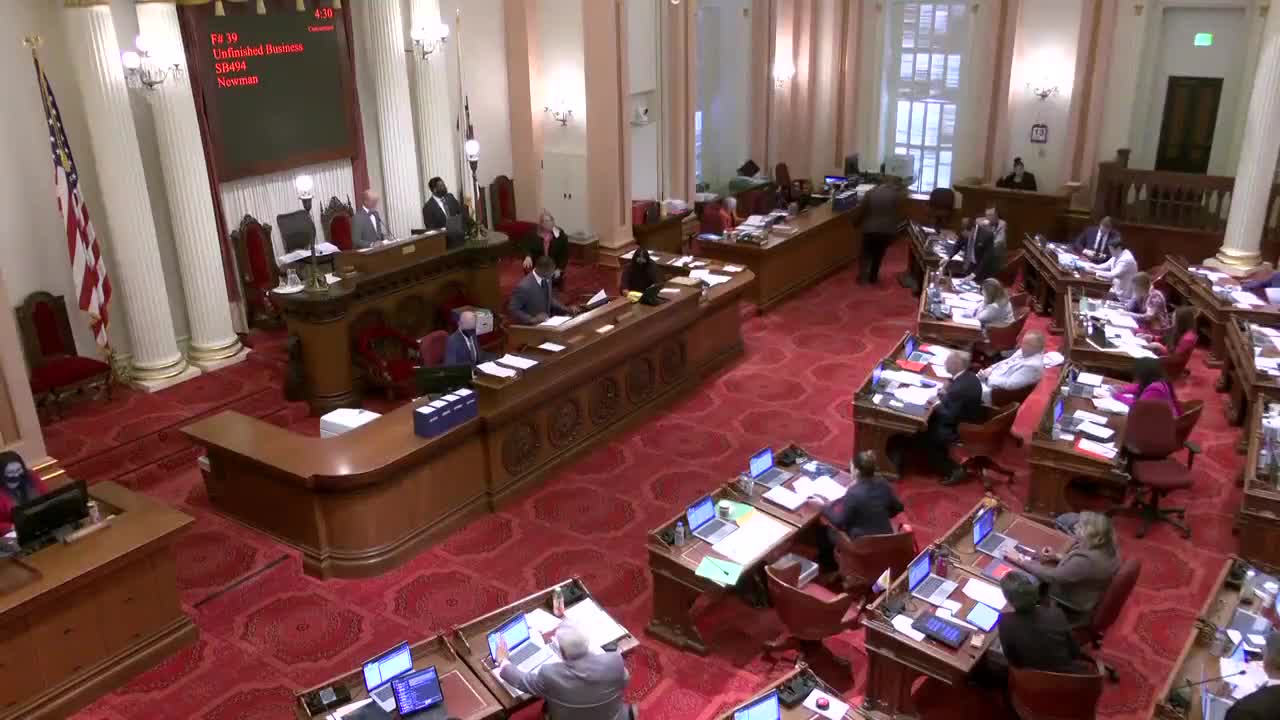
Bill Author

Bill Co-Author(s):