SB 69: California Environmental Quality Act: local agencies: filing of notices of determination or exemption.
- Session Year: 2023-2024
- House: Senate
- Latest Version Date: 2023-10-13
Current Status:
Passed
(2023-10-13: Chaptered by Secretary of State. Chapter 860, Statutes of 2023.)
Introduced
In Committee
First Chamber
In Committee
Second Chamber
Enacted
The California Environmental Quality Act (CEQA) requires, among other things, a lead agency, as defined, to prepare, or cause to be prepared, and certify the completion of an environmental impact report on a project that it proposes to carry out or approve that may have a significant effect on the environment or to adopt a negative declaration if it finds that the project will not have that effect.
CEQA requires a local agency that approves or determines to carry out a project subject to CEQA to file a notice of determination with the county clerk of each county in which the project will be located, as provided. CEQA authorizes a local agency that determines that a project is not subject to CEQA to file a notice of exemption with the county clerk of each county in which the project will be located, as provided. CEQA requires the county clerk to make the notice available for public inspection and post the notice within 24 hours of receipt in the office or on the internet website of the county clerk, as specified.
CEQA requires an action or proceeding challenging an act or decision of a public agency, including a local agency, on the grounds of noncompliance with CEQA to be commenced within certain time periods, as specified.
This bill would require a local agency to file a notice of determination with the State Clearinghouse in the Office of Planning and Research in addition to the county clerk of each county in which the project will be located. The bill would authorize a local agency to file a notice of exemption with the State Clearinghouse in the Office of Planning and Research in addition to the county clerk of each county in which the project will be located. The bill would require the notice, including any subsequent or amended notice, to be posted both in the office and on the internet website of the county clerk and by the Office of Planning and Research on the State Clearinghouse internet website within 24 hours of receipt. The bill would specify that the posting of the notice by the Office of Planning and Research would not affect the applicable time periods to challenge an act or decision of a local agency, as described above. By imposing duties on local agencies, the bill would create a state-mandated local program.
The California Constitution requires the state to reimburse local agencies and school districts for certain costs mandated by the state. Statutory provisions establish procedures for making that reimbursement.
This bill would provide that no reimbursement is required by this act for a specified reason.
The California Environmental Quality Act (CEQA) requires, among other things, a lead agency, as defined, to prepare, or cause to be prepared, and certify the completion of an environmental impact report on a project that it proposes to carry out or approve that may have a significant effect on the environment or to adopt a negative declaration if it finds that the project will not have that effect.
CEQA requires a local agency that approves or determines to carry out a project subject to CEQA to file a notice of determination with the county clerk of each county in which the project will be located, as provided. CEQA authorizes a local agency that determines that a project is not subject to CEQA to file a notice of exemption with the county clerk of each county in which the project will be located, as provided. CEQA requires the county clerk to make the notice available for public inspection and post the notice within 24 hours of receipt in the office or on the internet website of the county clerk, as specified.
CEQA requires an action or proceeding challenging an act or decision of a public agency, including a local agency, on the grounds of noncompliance with CEQA to be commenced within certain time periods, as specified.
This bill would require a local agency to file a notice of determination with the State Clearinghouse in the Office of Planning and Research in addition to the county clerk of each county in which the project will be located. The bill would authorize a local agency to file a notice of exemption with the State Clearinghouse in the Office of Planning and Research in addition to the county clerk of each county in which the project will be located. The bill would require the notice, including any subsequent or amended notice, to be posted both in the office and on the internet website of the county clerk and by the Office of Planning and Research on the State Clearinghouse internet website of the Office of Planning and Research within 24 hours of receipt. The bill would specify that the posting of the notice by the Office of Planning and Research would not affect the applicable time periods to challenge an act or decision of a local agency, as described above. By imposing duties on local agencies, the bill would create a state-mandated local program.
The California Constitution requires the state to reimburse local agencies and school districts for certain costs mandated by the state. Statutory provisions establish procedures for making that reimbursement.
This bill would provide that no reimbursement is required by this act for a specified reason.
The California Environmental Quality Act (CEQA) requires, among other things, a lead agency, as defined, to prepare, or cause to be prepared, and certify the completion of an environmental impact report on a project that it proposes to carry out or approve that may have a significant effect on the environment or to adopt a negative declaration if it finds that the project will not have that effect.
CEQA requires a state agency or a local agency that approves or determines to carry out a project subject to CEQA to file a notice of determination with the Office of Planning and Research or the county clerk of each county in which the project will be located, as provided. CEQA authorizes a state agency or a local agency that determines that a project is not subject to CEQA to file a notice of exemption with the office or the county clerk of each county in which the project will be located, as provided. CEQA requires the county clerk to make the notice available for public inspection and post the notice within 24 hours of receipt in the office or on the internet website of the county clerk, as specified. If a person has made a written request to a public agency for a copy of a notice of determination or notice of exemption for a project before the date on which the public agency approves or determines to carry out the project, CEQA requires the public agency, no later than 5 days from the date of the public agencys action, to deposit a copy of the written notice addressed to that person in the United States mail, first-class postage prepaid. CEQA provides that the date upon which the notice is mailed does not affect the limitations periods applicable to specified actions or proceedings to attack, review, set aside, void, or annul specified acts or decisions of a public agency on the grounds of noncompliance with CEQA.
The bill would require the county clerk to post the notice both in the office and on the internet website of the county clerk within 24 hours of receipt. The bill would require a public agency to provide both the notice and any subsequent amended, corrected, or revised notice, as specified, in response to a written request for the notice, regardless of the delivery method. The bill would toll, except as provided, the limitations periods applicable to specified actions or proceedings to attack, review, set aside, void, or annul specified acts or decisions of a public agency until the date on which the public agency deposits in the mail or sends by email to the requestor a copy of the notice, including any subsequent amended, corrected, or revised notice, or the date on which the public agency submits the notice to a specified state entity, as described. The bill would also require the public agency to submit the notice of determination or notice of exemption for all projects to a specified state entity within 5 days of its action on the project.This bill would require a local agency to file a notice of determination with the Office of Planning and Research in addition to the county clerk of each county in which the project will be located. The bill would authorize a local agency to file a notice of exemption with the Office of Planning and Research in addition to the county clerk of each county in which the project will be located. The bill would require the notice, including any subsequent or amended notice, to be posted both in the office and on the internet website of the county clerk and on the State Clearinghouse website of the Office of Planning and Research within 24 hours of receipt. By imposing duties on local agencies, the bill would create a state-mandated local program.
This bill would make conforming and nonsubstantive changes to other CEQA provisions.The California Constitution requires the state to reimburse local agencies and school districts for certain costs mandated by the state. Statutory provisions establish procedures for making that reimbursement.
This bill would provide that no reimbursement is required by this act for a specified reason.
The California Environmental Quality Act (CEQA) requires, among other things, a lead agency, as defined, to prepare, or cause to be prepared, and certify the completion of an environmental impact report on a project that it proposes to carry out or approve that may have a significant effect on the environment or to adopt a negative declaration if it finds that the project will not have that effect.
CEQA requires a state agency or a local agency that approves or determines to carry out a project subject to CEQA to file a notice of determination with the Office of Planning and Research or the county clerk of each county in which the project will be located, as provided. CEQA authorizes a state agency or a local agency that determines that a project is not subject to CEQA to file a notice of exemption with the office or the county clerk of each county in which the project will be located, as provided. CEQA requires the county clerk to make the notice available for public inspection and post the notice within 24 hours of receipt in the office or on the internet website of the county clerk, as specified. If a person has made a written request to a public agency for a copy of a notice of determination or notice of exemption for a project before the date on which the public agency approves or determines to carry out the project, CEQA requires the public agency, no later than 5 days from the date of the public agencys action, to deposit a copy of the written notice addressed to that person in the United States mail, first-class postage prepaid. CEQA provides that the date upon which the notice is mailed does not affect the limitations periods applicable to specified actions or proceedings to attack, review, set aside, void, or annul specified acts or decisions of a public agency on the grounds of noncompliance with CEQA.
The bill would require a the county clerk to post the notice both in the office and on the internet website of the county clerk within 24 hours of receipt. The bill would require a public agency to provide both the notice and any subsequent amended, corrected, or revised notice, as specified, in response to a written request for the notice, regardless of the delivery method. By requiring a local agency to provide a copy of any subsequent amended, corrected, or revised notice, along with the notice, the bill would impose a state-mandated local program. The bill would toll, except as provided, the limitations periods applicable to specified actions or proceedings to attack, review, set aside, void, or annul specified acts or decisions of a public agency until the date on which the public agency deposits in the mail or sends by email to the requestor a copy of the notice, including any subsequent amended, corrected, or revised notice, or the date on which the public agency submits the notice to a specified state entity, as described. The bill would also require the public agency to submit the notice of determination or notice of exemption for all projects to a specified state entity within 5 days of its action on the project. By imposing duties on local agencies, the bill would create a state-mandated local program.
This bill would make conforming and nonsubstantive changes to other CEQA provisions.
The California Constitution requires the state to reimburse local agencies and school districts for certain costs mandated by the state. Statutory provisions establish procedures for making that reimbursement.
This bill would provide that no reimbursement is required by this act for a specified reason.
The California Environmental Quality Act (CEQA) requires, among other things, a lead agency, as defined, to prepare, or cause to be prepared, and certify the completion of an environmental impact report on a project that it proposes to carry out or approve that may have a significant effect on the environment or to adopt a negative declaration if it finds that the project will not have that effect.
CEQA requires a state agency or a local agency that approves or determines to carry out a project subject to CEQA to file a notice of determination with the Office of Planning and Research or the county clerk of each county in which the project will be located, as provided. CEQA authorizes a state agency or a local agency that determines that a project is not subject to CEQA to file a notice of exemption with the office or the county clerk of each county in which the project will be located, as provided. If a person has made a written request to a public agency for a copy of a notice of determination or notice of exemption for a project before the date on which the public agency approves or determines to carry out the project, CEQA requires the public agency, no later than 5 days from the date of the public agencys action, to deposit a copy of the written notice addressed to that person in the United States mail, first-class postage prepaid. CEQA provides that the date upon which the notice is mailed does not affect the limitations periods applicable to specified actions or proceedings to attack, review, set aside, void, or annul specified acts or decisions of a public agency on the grounds of noncompliance with CEQA.
The bill would require a public agency to provide both the notice and any subsequent amended, corrected, or revised notice, as specified, in response to a written request for the notice, regardless of the delivery method. By requiring a local agency to provide a copy of any subsequent amended, corrected, or revised notice, along with the notice, the bill would impose a state-mandated local program. The bill would toll, except as provided, the limitations periods applicable to specified actions or proceedings to attack, review, set aside, void, or annul specified acts or decisions of a public agency until the date on which the public agency deposits in the mail or sends by email to the requestor a copy of the notice, including any subsequent amended, corrected, or revised notice, or the date on which the public agency submits the notice to a specified state entity, as described. The bill would also require the public agency to submit the notice of determination or notice of exemption for all projects to a specified state entity within 5 days of its action on the project.
This bill would make conforming and nonsubstantive changes to other CEQA provisions.
The California Constitution requires the state to reimburse local agencies and school districts for certain costs mandated by the state. Statutory provisions establish procedures for making that reimbursement.
This bill would provide that no reimbursement is required by this act for a specified reason.
It is the intent of the Legislature that, for purposes of Section 21167 of the Public Resources Code, a notice required by subdivision (a) of Section 21152 of the Public Resources Code or a notice authorized by subdivision (b) of Section 21152 of the Public Resources Code is filed, and the applicable limitations periods under subdivisions (b), (c), (d), and (e) of Section 21167 of the Public Resources Code commence when, the local agency complies with the requirements in subdivision (a) or (b) of Section 21152 of the Public Resources Code, as appropriate.
SEC. 2.Section 21152 of the Public Resources Code is amended to read:21152.(a)If a local agency approves or determines to carry out a project that is subject to this division, the local agency shall file a notice of determination within five working days after the approval or determination becomes final, with the county clerk of each county in which the project will be located and with the State Clearinghouse in the Office of Planning and Research. The notice shall identify the person or persons in subdivision (b) or (c) of Section 21065, as reflected in the agencys record of proceedings, and indicate the determination of the local agency whether the project will, or will not, have a significant effect on the environment and shall indicate whether an environmental impact report has been prepared pursuant to this division. The notice shall also include certification that the final environmental impact report, if one was prepared, together with comments and responses, is available to the general public.
(b)If a local agency determines that a project is not subject to this division pursuant to subdivision (b) of Section 21080, and the local agency approves or determines to carry out the project, the local agency or the person specified in subdivision (b) or (c) of Section 21065 may file a notice of exemption with the county clerk of each county in which the project will be located and with the State Clearinghouse in the Office of Planning and Research. A notice filed pursuant to this subdivision shall identify the person or persons in subdivision (b) or (c) of Section 21065, as reflected in the agencys record of proceedings. A notice filed pursuant to this subdivision by a person specified in subdivision (b) or (c) of Section 21065 shall have a certificate of determination attached to it issued by the local agency responsible for making the determination that the project is not subject to this division pursuant to subdivision (b) of Section 21080. The certificate of determination may be in the form of a certified copy of an existing document or record of the local agency.
(c)(1)A notice filed pursuant to this section, including any subsequent or amended notice, shall be available for public inspection, and shall be posted within 24 hours of receipt in the office and on the internet website of the county clerk. A notice shall remain posted for a period of 30 days. Thereafter, the clerk shall return the notice to the local agency with a notation of the period it was posted. The local agency shall retain the notice for not less than 12 months.
(2)A notice filed pursuant to this section, including any subsequent or amended notice, shall be posted by the Office of Planning and Research within 24 hours of receipt on the State Clearinghouse internet website. A notice shall remain posted for a period of 30 days. Provided that notices have been filed in accordance with subdivision (a) or (b), as applicable, nothing in this paragraph shall affect the time limitations contained in Section 21167.
(d)A notice filed by a local agency pursuant to this section shall be filed electronically with the State Clearinghouse in the Office of Planning and Research and with the county clerk if that option is offered by the county clerk.
SEC. 3.No reimbursement is required by this act pursuant to Section 6 of Article XIIIB of the California Constitution because a local agency or school district has the authority to levy service charges, fees, or assessments sufficient to pay for the program or level of service mandated by this act, within the meaning of Section 17556 of the Government Code.
It is the intent of the Legislature that, for purposes of Section 21167 of the Public Resources Code, a notice required by subdivision (a) of Section 21152 of the Public Resources Code or a notice authorized by subdivision (b) of Section 21152 of the Public Resources Code is not considered filed unless, filed, and the applicable limitations periods under subdivisions (b), (c), (d), and (e) of Section 21167 of the Public Resources Code do not commence until, commence when, the local agency complies with all the requirements relating to the filing and content of the notice, as specified in subdivisions (a) and in subdivision (a) or (b) of Section 21152 of the Public Resources Code. Code, as appropriate.
SEC. 2.Section 21152 of the Public Resources Code is amended to read:21152.(a)If a local agency approves or determines to carry out a project that is subject to this division, the local agency shall file a notice of determination within five working days after the approval or determination becomes final, with the county clerk of each county in which the project will be located and with the State Clearinghouse in the Office of Planning and Research. The notice shall identify the person or persons in subdivision (b) or (c) of Section 21065, as reflected in the agencys record of proceedings, and indicate the determination of the local agency whether the project will, or will not, have a significant effect on the environment and shall indicate whether an environmental impact report has been prepared pursuant to this division. The notice shall also include certification that the final environmental impact report, if one was prepared, together with comments and responses, is available to the general public.
(b)If a local agency determines that a project is not subject to this division pursuant to subdivision (b) of Section 21080, and the local agency approves or determines to carry out the project, the local agency or the person specified in subdivision (b) or (c) of Section 21065 may file a notice of exemption with the county clerk of each county in which the project will be located and with the State Clearinghouse in the Office of Planning and Research. A notice filed pursuant to this subdivision shall identify the person or persons in subdivision (b) or (c) of Section 21065, as reflected in the agencys record of proceedings. A notice filed pursuant to this subdivision by a person specified in subdivision (b) or (c) of Section 21065 shall have a certificate of determination attached to it issued by the local agency responsible for making the determination that the project is not subject to this division pursuant to subdivision (b) of Section 21080. The certificate of determination may be in the form of a certified copy of an existing document or record of the local agency.
(c)(1)A notice filed pursuant to this section, including any subsequent or amended notice, shall be available for public inspection, and shall be posted within 24 hours of receipt in the office and on the internet website of the county clerk. A notice shall remain posted for a period of 30 days. Thereafter, the clerk shall return the notice to the local agency with a notation of the period it was posted. The local agency shall retain the notice for not less than 12 months.
(2)A notice filed pursuant to this section, including any subsequent or amended notice, shall be posted by the Office of Planning and Research within 24 hours of receipt on the State Clearinghouse internet website. A notice shall remain posted for a period of 30 days. Provided that notices have been filed in accordance with subdivision (a) or (b), as applicable, nothing in this paragraph shall affect the time limitations contained in Section 21167.
(d)A notice filed by a local agency pursuant to this section shall be filed electronically with the State Clearinghouse in the Office of Planning and Research and with the county clerk if that option is offered by the county clerk.
SEC. 3.No reimbursement is required by this act pursuant to Section 6 of Article XIIIB of the California Constitution because a local agency or school district has the authority to levy service charges, fees, or assessments sufficient to pay for the program or level of service mandated by this act, within the meaning of Section 17556 of the Government Code.
It is the intent of the Legislature that, for purposes of Section 21167 of the Public Resources Code, a notice required by subdivision (a) of Section 21152 of the Public Resources Code or a notice authorized by subdivision (b) of Section 21152 of the Public Resources Code is not considered filed unless, and the applicable limitations periods under subdivisions (b), (c), (d), and (e) of Section 21167 of the Public Resources Code do not commence until, the local agency complies with all the requirements relating to the filing and content of the notice, as specified in subdivisions (a) and (b) of Section 21152 of the Public Resources Code.
SECTION 1.SEC. 2.Section 21152 of the Public Resources Code is amended to read:21152.(a)If a local agency approves or determines to carry out a project that is subject to this division, the local agency shall file a notice of determination within five working days after the approval or determination becomes final, with the county clerk of each county in which the project will be located and with the State Clearinghouse in the Office of Planning and Research. The notice shall identify the person or persons in subdivision (b) or (c) of Section 21065, as reflected in the agencys record of proceedings, and indicate the determination of the local agency whether the project will, or will not, have a significant effect on the environment and shall indicate whether an environmental impact report has been prepared pursuant to this division. The notice shall also include certification that the final environmental impact report, if one was prepared, together with comments and responses, is available to the general public.
(b)If a local agency determines that a project is not subject to this division pursuant to subdivision (b) of Section 21080, and the local agency approves or determines to carry out the project, the local agency or the person specified in subdivision (b) or (c) of Section 21065 may file a notice of exemption with the county clerk of each county in which the project will be located and with the State Clearinghouse in the Office of Planning and Research. A notice filed pursuant to this subdivision shall identify the person or persons in subdivision (b) or (c) of Section 21065, as reflected in the agencys record of proceedings. A notice filed pursuant to this subdivision by a person specified in subdivision (b) or (c) of Section 21065 shall have a certificate of determination attached to it issued by the local agency responsible for making the determination that the project is not subject to this division pursuant to subdivision (b) of Section 21080. The certificate of determination may be in the form of a certified copy of an existing document or record of the local agency.
(c)(1)A notice filed pursuant to this section, including any subsequent or amended notice, shall be available for public inspection, and shall be posted within 24 hours of receipt in the office and on the internet website of the county clerk and on the State Clearinghouse website of the Office of Planning and Research. clerk. A notice shall remain posted for a period of 30 days. Thereafter, the clerk shall return the notice to the local agency with a notation of the period it was posted. The local agency shall retain the notice for not less than 12 months.
(2)A notice filed pursuant to this section, including any subsequent or amended notice, shall be posted by the Office of Planning and Research within 24 hours of receipt on the State Clearinghouse internet website. A notice shall remain posted for a period of 30 days. Provided that notices have been filed in accordance with subdivision (a) or (b), as applicable, nothing in this paragraph shall affect the time limitations contained in Section 21167.
(d)A notice filed by a local agency pursuant to this section shall be filed electronically with the State Clearinghouse in the Office of Planning and Research and with the county clerk if that option is offered by the county clerk.
SEC. 2.SEC. 3.No reimbursement is required by this act pursuant to Section 6 of Article XIIIB of the California Constitution because a local agency or school district has the authority to levy service charges, fees, or assessments sufficient to pay for the program or level of service mandated by this act, within the meaning of Section 17556 of the Government Code.
(a)If a local agency approves or determines to carry out a project that is subject to this division, the local agency shall file a notice of determination within five working days after the approval or determination becomes final, with the county clerk of each county in which the project will be located. located and with the Office of Planning and Research. The notice shall identify the person or persons in subdivision (b) or (c) of Section 21065, as reflected in the agencys record of proceedings, and indicate the determination of the local agency whether the project will, or will not, have a significant effect on the environment and shall indicate whether an environmental impact report has been prepared pursuant to this division. The notice shall also include certification that the final environmental impact report, if one was prepared, together with comments and responses, is available to the general public.
(b)If a local agency determines that a project is not subject to this division pursuant to subdivision (b) of Section 21080, and the local agency approves or determines to carry out the project, the local agency or the person specified in subdivision (b) or (c) of Section 21065 may file a notice of exemption with the county clerk of each county in which the project will be located. located and with the Office of Planning and Research. A notice filed pursuant to this subdivision shall identify the person or persons in subdivision (b) or (c) of Section 21065, as reflected in the agencys record of proceedings. A notice filed pursuant to this subdivision by a person specified in subdivision (b) or (c) of Section 21065 shall have a certificate of determination attached to it issued by the local agency responsible for making the determination that the project is not subject to this division pursuant to subdivision (b) of Section 21080. The certificate of determination may be in the form of a certified copy of an existing document or record of the local agency.
(c)A notice filed pursuant to this section section, including any subsequent or amended notice, shall be available for public inspection, and shall be posted within 24 hours of receipt in the office and on the internet website of the county clerk. clerk and on the State Clearinghouse website of the Office of Planning and Research. A notice shall remain posted for a period of 30 days. Thereafter, the clerk shall return the notice to the local agency with a notation of the period it was posted. The local agency shall retain the notice for not less than 12 months.
(d)A notice filed by a local agency pursuant to this section shall be filed electronically with the Office of Planning and Research and with the county clerk if that option is offered by the county clerk.
SEC. 2.Section 21167 of the Public Resources Code is amended to read:21167.(a)An action or proceeding to attack, review, set aside, void, or annul the following acts or decisions of a public agency on the grounds of noncompliance with this division shall be commenced as follows:(1)An action or proceeding alleging that a public agency is carrying out or has approved a project that may have a significant effect on the environment without having determined whether the project may have a significant effect on the environment shall be commenced within 180 days from the date of the public agencys decision to carry out or approve the project, or, if a project is undertaken without a formal decision by the public agency, within 180 days from the date of commencement of the project.(2)Except as provided in paragraph (2) of subdivision (b), an action or proceeding alleging that a public agency has improperly determined whether a project may have a significant effect on the environment shall be commenced within 30 days from the date of the filing of the notice required by subdivision (a) of Section 21108 or subdivision (a) of Section 21152.(3)Except as provided in paragraph (2) of subdivision (b), an action or proceeding alleging that an environmental impact report does not comply with this division shall be commenced within 30 days from the date of the filing of the notice required by subdivision (a) of Section 21108 or subdivision (a) of Section 21152 by the lead agency.(4)Except as provided in paragraph (2) of subdivision (b), an action or proceeding alleging that a public agency has improperly determined that a project is not subject to this division pursuant to subdivision (b) of Section 21080 shall be commenced within 35 days from the date of the filing by the public agency, or person specified in subdivision (b) or (c) of Section 21065, of the notice authorized by subdivision (b) of Section 21108 or subdivision (b) of Section 21152. If the notice has not been filed, the action or proceeding shall be commenced within 180 days from the date of the public agencys decision to carry out or approve the project, or, if a project is undertaken without a formal decision by the public agency, within 180 days from the date of commencement of the project.(5)Except as provided in paragraph (2) of subdivision (b), an action or proceeding alleging that another act or omission of a public agency does not comply with this division shall be commenced within 30 days from the date of the filing of the notice required by subdivision (a) of Section 21108 or subdivision (a) of Section 21152.(b)(1)(A)If a person has made a written request to a public agency for a copy of a notice specified in Section 21108 or 21152 after the agency notices the project for the public hearing, if any, and before the date on which the public agency approves or determines to carry out a project, then no later than five days from the date of the public agencys action, the public agency shall deposit a written copy of the notice, including any subsequent amended, corrected, or revised notices, addressed to that person in the United States mail, first-class postage prepaid. If the public agency files an amended, corrected, or revised notice more than five days after its action on the project, then within five days of that filing, the agency shall deposit a written copy of the notice addressed to the person making a written request in the United States mail, first-class postage prepaid.(B)If the public agency offers to provide a notice specified in Section 21108 or 21152 by email, a person may ask in their written request pursuant to subparagraph (A) that the notice be provided to that person by email. If a person requests, within the timeframe specified in subparagraph (A), to receive a notice by email, then no later than five days from the date of the public agencys action, the public agency shall provide to that person by email a copy of the notice, including any subsequent amended, corrected, or revised notice. If the public agency files an amended, corrected, or revised notice more than five days after its action on the project, then within five days of that filing, the agency shall provide to the requesting person by email a copy of the notice.(2)If a person makes a timely written request for a copy of a notice in accordance with subparagraph (A) or (B) of paragraph (1), and the public agency fails to timely provide the notice to that person pursuant to the relevant subparagraph, then the time periods specified in paragraphs (2), (3), (4), and (5) of subdivision (a) shall commence on the earlier of the following:(A)The date that the public agency provides notice in the manner set forth in subparagraph (A) or (B) of paragraph (1), including any subsequent amended, corrected, or revised notice. This paragraph does not affect the time periods set forth in paragraph (1) of subdivision (a).(B)The date on which the public agency submits to the State Clearinghouse the notice.(3)Notwithstanding paragraph (2), an action or proceeding described in subdivision (a) shall be commenced no later than 180 days from the date of the public agencys decision to carry out or approve the project, or, if a project is undertaken without a formal decision by the public agency, within 180 days from the date of commencement of the project.(4)The extension of the commencement of the time periods set forth in subdivision (a) by the actions set forth in paragraph (2) shall apply only to the person requesting a copy of the notice in accordance with subparagraph (A) or (B) of paragraph (1) who is not timely sent a copy of the notice.(5)The public agency shall submit the notice of determination or notice of exemption for all projects to the State Clearinghouse within five days of its action on the project.SEC. 3.Section 21167.2 of the Public Resources Code is amended to read:21167.2.If no action or proceeding alleging that an environmental impact report does not comply with this division is commenced during the period prescribed in paragraph (3) of subdivision (a) of Section 21167, the environmental impact report shall be conclusively presumed to comply with this division for purposes of its use by responsible agencies, unless Section 21166 applies.SEC. 4.Section 21167.3 of the Public Resources Code is amended to read:21167.3.(a)If an action or proceeding alleging that an environmental impact report or a negative declaration does not comply with this division is commenced during the period described in paragraph (2) or (3) of subdivision (a) of Section 21167, and if an injunction or stay is issued prohibiting the project from being carried out or approved pending final determination of compliance, responsible agencies shall assume that the environmental impact report or the negative declaration for the project complies with this division and shall issue a conditional approval or disapproval of the project according to the timetable for agency action in Article 5 (commencing with Section 65950) of Chapter 4.5 of Division 1 of Title 7 of the Government Code. A conditional approval shall constitute permission to proceed with a project only when the action or proceeding results in a final determination that the environmental impact report or negative declaration complies with this division.(b)In the event that an action or proceeding is commenced as described in subdivision (a), but no injunction or similar relief is sought and granted, responsible agencies shall assume that the environmental impact report or negative declaration for the project complies with this division and shall approve or disapprove the project according to the timetable for agency action in Article 5 (commencing with Section 65950) of Chapter 4.5 of Division 1 of Title 7 of the Government Code. An approval shall constitute permission to proceed with the project at the applicants risk pending final determination of the action or proceeding.SEC. 5.Section 21167.6.2 of the Public Resources Code is amended to read:21167.6.2.(a)(1)Notwithstanding Section 21167.6, upon the written request of a project applicant received no later than 30 days after the date that the lead agency makes a determination pursuant to subdivision (a) of Section 21080.1, Section 21094.5, or Chapter 4.2 (commencing with Section 21155) and with the consent of the lead agency as provided in subdivision (e), the lead agency shall prepare and certify the record of proceedings in the following manner:(A)The lead agency for the project shall prepare the record of proceedings pursuant to this division concurrently with the administrative process.(B)All documents and other materials placed in the record of proceedings shall be posted on, and be downloadable from, an internet website maintained by the lead agency commencing with the date of the release of the draft environmental document for the project. If the lead agency cannot maintain an internet website with the information required pursuant to this section, the lead agency shall provide a link on the agencys internet website to that information.(C)The lead agency shall make available to the public in a readily accessible electronic format the draft environmental document for the project, and all other documents submitted to, cited by, or relied on by the lead agency, in the preparation of the draft environmental document for the project.(D)A document prepared by the lead agency or submitted by the applicant after the date of the release of the draft environmental document for the project that is a part of the record of the proceedings shall be made available to the public in a readily accessible electronic format within five business days after the document is released or received by the lead agency.(E)The lead agency shall encourage written comments on the project to be submitted in a readily accessible electronic format, and shall make any comment available to the public in a readily accessible electronic format within five business days of its receipt.(F)Within seven business days after the receipt of any comment that is not in an electronic format, the lead agency shall convert that comment into a readily accessible electronic format and make it available to the public in that format.(G)The lead agency shall certify the record of proceedings within 30 days after the filing of the notice required pursuant to Section 21108 or 21152.(2)This subdivision does not require the disclosure or posting of any trade secret as defined in Section 7924.510 of the Government Code, information about the location of archaeological sites or sacred lands, or any other information that is subject to the disclosure restrictions of any provision listed in Section 7920.505 of the Government Code.(b)Any dispute regarding the record of proceedings prepared pursuant to this section shall be resolved by the court in an action or proceeding brought pursuant to paragraph (2) or (3) of subdivision (a) of Section 21167.(c)The content of the record of proceedings shall be as specified in subdivision (e) of Section 21167.6.(d)The negative declaration, mitigated negative declaration, draft and final environmental impact report, or other environmental document shall include a notice in no less than 12-point type stating the following:THIS DOCUMENT IS SUBJECT TO SECTION 21167.6.2 OF THE PUBLIC RESOURCES CODE, WHICH REQUIRES THE RECORD OF PROCEEDINGS FOR THIS PROJECT TO BE PREPARED CONCURRENTLY WITH THE ADMINISTRATIVE PROCESS; DOCUMENTS PREPARED BY, OR SUBMITTED TO, THE LEAD AGENCY TO BE POSTED ON THE LEAD AGENCYS INTERNET WEBSITE; AND THE LEAD AGENCY TO ENCOURAGE WRITTEN COMMENTS ON THE PROJECT TO BE SUBMITTED TO THE LEAD AGENCY IN A READILY ACCESSIBLE ELECTRONIC FORMAT.(e)(1)The lead agency shall respond to a request by the project applicant within 10 business days from the date that the request pursuant to subdivision (a) is received by the lead agency.(2)A project applicant and the lead agency may mutually agree, in writing, to extend the time period for the lead agency to respond pursuant to paragraph (1), but they shall not extend that period beyond the commencement of the public review period for the proposed negative declaration, mitigated negative declaration, draft environmental impact report, or other environmental document.(3)The request to prepare a record of proceedings pursuant to this section shall be deemed denied if the lead agency fails to respond within 10 business days of receiving the request or within the time period agreed upon pursuant to paragraph (2), whichever ends later.(f)The written request of the applicant submitted pursuant to subdivision (a) shall include an agreement to pay all of the lead agencys costs of preparing and certifying the record of proceedings pursuant to this section and complying with the requirements of this section, in a manner specified by the lead agency.(g)The costs of preparing the record of proceedings pursuant to this section and complying with the requirements of this section are not recoverable costs pursuant to Section 1032 of the Code of Civil Procedure.(h)Pursuant to subdivision (f) and Section 21089, the lead agency may charge and collect a reasonable fee from the person making the request pursuant to subdivision (a) to recover the costs incurred by the lead agency in preparing the record of proceedings pursuant to this section.SEC. 6.SEC. 2.No reimbursement is required by this act pursuant to Section 6 of Article XIIIB of the California Constitution because a local agency or school district has the authority to levy service charges, fees, or assessments sufficient to pay for the program or level of service mandated by this act, within the meaning of Section 17556 of the Government Code.
(a)If a local agency approves or determines to carry out a project that is subject to this division, the local agency shall file a notice of determination within five working days after the approval or determination becomes final, with the county clerk of each county in which the project will be located. The notice shall identify the person or persons in subdivision (b) or (c) of Section 21065, as reflected in the agencys record of proceedings, and indicate the determination of the local agency whether the project will, or will not, have a significant effect on the environment and shall indicate whether an environmental impact report has been prepared pursuant to this division. The notice shall also include certification that the final environmental impact report, if one was prepared, together with comments and responses, is available to the general public.
(b)If a local agency determines that a project is not subject to this division pursuant to subdivision (b) of Section 21080, and the local agency approves or determines to carry out the project, the local agency or the person specified in subdivision (b) or (c) of Section 21065 may file a notice of exemption with the county clerk of each county in which the project will be located. A notice filed pursuant to this subdivision shall identify the person or persons in subdivision (b) or (c) of Section 21065, as reflected in the agencys record of proceedings. A notice filed pursuant to this subdivision by a person specified in subdivision (b) or (c) of Section 21065 shall have a certificate of determination attached to it issued by the local agency responsible for making the determination that the project is not subject to this division pursuant to subdivision (b) of Section 21080. The certificate of determination may be in the form of a certified copy of an existing document or record of the local agency.
(c)A notice filed pursuant to this section shall be available for public inspection, and shall be posted within 24 hours of receipt in the office or and on the internet website of the county clerk. A notice shall remain posted for a period of 30 days. Thereafter, the clerk shall return the notice to the local agency with a notation of the period it was posted. The local agency shall retain the notice for not less than 12 months.
(d)A notice filed by a local agency pursuant to this section shall be filed electronically with the county clerk if that option is offered by the county clerk.
SECTION 1.SEC. 2.Section 21167 of the Public Resources Code, as amended by Section 1 of Chapter 38 of the Statutes of 2022, Code is amended to read:21167.(a)An action or proceeding to attack, review, set aside, void, or annul the following acts or decisions of a public agency on the grounds of noncompliance with this division shall be commenced as follows:
(1)An action or proceeding alleging that a public agency is carrying out or has approved a project that may have a significant effect on the environment without having determined whether the project may have a significant effect on the environment shall be commenced within 180 days from the date of the public agencys decision to carry out or approve the project, or, if a project is undertaken without a formal decision by the public agency, within 180 days from the date of commencement of the project.
(2)Except as provided in paragraph (2) of subdivision (b), an action or proceeding alleging that a public agency has improperly determined whether a project may have a significant effect on the environment shall be commenced within 30 days from the date of the filing of the notice required by subdivision (a) of Section 21108 or subdivision (a) of Section 21152.
(3)Except as provided in paragraph (2) of subdivision (b), an action or proceeding alleging that an environmental impact report does not comply with this division shall be commenced within 30 days from the date of the filing of the notice required by subdivision (a) of Section 21108 or subdivision (a) of Section 21152 by the lead agency.
(4)Except as provided in paragraph (2) of subdivision (b), an action or proceeding alleging that a public agency has improperly determined that a project is not subject to this division pursuant to subdivision (b) of Section 21080 shall be commenced within 35 days from the date of the filing by the public agency, or person specified in subdivision (b) or (c) of Section 21065, of the notice authorized by subdivision (b) of Section 21108 or subdivision (b) of Section 21152. If the notice has not been filed, the action or proceeding shall be commenced within 180 days from the date of the public agencys decision to carry out or approve the project, or, if a project is undertaken without a formal decision by the public agency, within 180 days from the date of commencement of the project.
(5)Except as provided in paragraph (2) of subdivision (b), an action or proceeding alleging that another act or omission of a public agency does not comply with this division shall be commenced within 30 days from the date of the filing of the notice required by subdivision (a) of Section 21108 or subdivision (a) of Section 21152.
(b)(1)(A)If a person has made a written request to a public agency for a copy of a notice specified in Section 21108 or 21152 after the agency notices the project for the public hearing, if any, and before the date on which the public agency approves or determines to carry out a project, then no later than five days from the date of the public agencys action, the public agency shall deposit a written copy of the notice, including any subsequent amended, corrected, or revised notices, addressed to that person in the United States mail, first-class postage prepaid. If the public agency files an amended, corrected, or revised notice more than five days after its action on the project, then within five days of that filing, the agency shall deposit a written copy of the notice addressed to the person making a written request in the United States mail, first-class postage prepaid.
(B)If the public agency offers to provide a notice specified in Section 21108 or 21152 by email, a person may ask in their written request pursuant to subparagraph (A) that the notice be provided to that person by email. If a person requests, within the timeframe specified in subparagraph (A), to receive a notice by email, then no later than five days from the date of the public agencys action, the public agency shall provide to that person by email a copy of the notice, including any subsequent amended, corrected, or revised notice. If the public agency files an amended, corrected, or revised notice more than five days after its action on the project, then within five days of that filing, the agency shall provide to the requesting person by email a copy of the notice.
(2)If a person makes a timely written request for a copy of a notice in accordance with subparagraph (A) or (B) of paragraph (1), and the public agency fails to timely provide the notice to that person pursuant to the relevant subparagraph, then the time periods specified in paragraphs (2), (3), (4), and (5) of subdivision (a) shall commence on the earlier of the following:
(A)The date that the public agency provides notice in the manner set forth in subparagraph (A) or (B) of paragraph (1), including any subsequent amended, corrected, or revised notice. This paragraph does not affect the time periods set forth in paragraph (1) of subdivision (a).
(B)The date on which the public agency submits to the State Clearinghouse the notice.
(3)Notwithstanding paragraph (2), an action or proceeding described in subdivision (a) shall be commenced no later than 180 days from the date of the public agencys decision to carry out or approve the project, or, if a project is undertaken without a formal decision by the public agency, within 180 days from the date of commencement of the project.
(4)The extension of the commencement of the time periods set forth in subdivision (a) by the actions set forth in paragraph (2) shall apply only to the person requesting a copy of the notice in accordance with subparagraph (A) or (B) of paragraph (1) who is not timely sent a copy of the notice.
(5)The public agency shall submit the notice of determination or notice of exemption for all projects to the State Clearinghouse within five days of its action on the project.
SEC. 2.SEC. 3.Section 21167.2 of the Public Resources Code is amended to read:21167.2.If no action or proceeding alleging that an environmental impact report does not comply with this division is commenced during the period prescribed in paragraph (3) of subdivision (a) of Section 21167, the environmental impact report shall be conclusively presumed to comply with this division for purposes of its use by responsible agencies, unless Section 21166 applies.
SEC. 3.SEC. 4.Section 21167.3 of the Public Resources Code is amended to read:21167.3.(a)If an action or proceeding alleging that an environmental impact report or a negative declaration does not comply with this division is commenced during the period described in paragraph (2) or (3) of subdivision (a) of Section 21167, and if an injunction or stay is issued prohibiting the project from being carried out or approved pending final determination of compliance, responsible agencies shall assume that the environmental impact report or the negative declaration for the project complies with this division and shall issue a conditional approval or disapproval of the project according to the timetable for agency action in Article 5 (commencing with Section 65950) of Chapter 4.5 of Division 1 of Title 7 of the Government Code. A conditional approval shall constitute permission to proceed with a project only when the action or proceeding results in a final determination that the environmental impact report or negative declaration complies with this division.
(b)In the event that an action or proceeding is commenced as described in subdivision (a), but no injunction or similar relief is sought and granted, responsible agencies shall assume that the environmental impact report or negative declaration for the project complies with this division and shall approve or disapprove the project according to the timetable for agency action in Article 5 (commencing with Section 65950) of Chapter 4.5 of Division 1 of Title 7 of the Government Code. An approval shall constitute permission to proceed with the project at the applicants risk pending final determination of the action or proceeding.
SEC. 4.SEC. 5.Section 21167.6.2 of the Public Resources Code, as amended by Section 381 of Chapter 615 of the Statutes of 2021, Code is amended to read:21167.6.2.(a)(1)Notwithstanding Section 21167.6, upon the written request of a project applicant received no later than 30 days after the date that the lead agency makes a determination pursuant to subdivision (a) of Section 21080.1, Section 21094.5, or Chapter 4.2 (commencing with Section 21155) and with the consent of the lead agency as provided in subdivision (e), the lead agency shall prepare and certify the record of proceedings in the following manner:
(A)The lead agency for the project shall prepare the record of proceedings pursuant to this division concurrently with the administrative process.
(B)All documents and other materials placed in the record of proceedings shall be posted on, and be downloadable from, an internet website maintained by the lead agency commencing with the date of the release of the draft environmental document for the project. If the lead agency cannot maintain an internet website with the information required pursuant to this section, the lead agency shall provide a link on the agencys internet website to that information.
(C)The lead agency shall make available to the public in a readily accessible electronic format the draft environmental document for the project, and all other documents submitted to, cited by, or relied on by the lead agency, in the preparation of the draft environmental document for the project.
(D)A document prepared by the lead agency or submitted by the applicant after the date of the release of the draft environmental document for the project that is a part of the record of the proceedings shall be made available to the public in a readily accessible electronic format within five business days after the document is released or received by the lead agency.
(E)The lead agency shall encourage written comments on the project to be submitted in a readily accessible electronic format, and shall make any comment available to the public in a readily accessible electronic format within five business days of its receipt.
(F)Within seven business days after the receipt of any comment that is not in an electronic format, the lead agency shall convert that comment into a readily accessible electronic format and make it available to the public in that format.
(G)The lead agency shall certify the record of proceedings within 30 days after the filing of the notice required pursuant to Section 21108 or 21152.
(2)This subdivision does not require the disclosure or posting of any trade secret as defined in Section 7924.510 of the Government Code, information about the location of archaeological sites or sacred lands, or any other information that is subject to the disclosure restrictions of any provision listed in Section 7920.505 of the Government Code.
(b)Any dispute regarding the record of proceedings prepared pursuant to this section shall be resolved by the court in an action or proceeding brought pursuant to paragraph (2) or (3) of subdivision (a) of Section 21167.
(c)The content of the record of proceedings shall be as specified in subdivision (e) of Section 21167.6.
(d)The negative declaration, mitigated negative declaration, draft and final environmental impact report, or other environmental document shall include a notice in no less than 12-point type stating the following:
THIS DOCUMENT IS SUBJECT TO SECTION 21167.6.2 OF THE PUBLIC RESOURCES CODE, WHICH REQUIRES THE RECORD OF PROCEEDINGS FOR THIS PROJECT TO BE PREPARED CONCURRENTLY WITH THE ADMINISTRATIVE PROCESS; DOCUMENTS PREPARED BY, OR SUBMITTED TO, THE LEAD AGENCY TO BE POSTED ON THE LEAD AGENCYS INTERNET WEBSITE; AND THE LEAD AGENCY TO ENCOURAGE WRITTEN COMMENTS ON THE PROJECT TO BE SUBMITTED TO THE LEAD AGENCY IN A READILY ACCESSIBLE ELECTRONIC FORMAT.
(e)(1)The lead agency shall respond to a request by the project applicant within 10 business days from the date that the request pursuant to subdivision (a) is received by the lead agency.
(2)A project applicant and the lead agency may mutually agree, in writing, to extend the time period for the lead agency to respond pursuant to paragraph (1), but they shall not extend that period beyond the commencement of the public review period for the proposed negative declaration, mitigated negative declaration, draft environmental impact report, or other environmental document.
(3)The request to prepare a record of proceedings pursuant to this section shall be deemed denied if the lead agency fails to respond within 10 business days of receiving the request or within the time period agreed upon pursuant to paragraph (2), whichever ends later.
(f)The written request of the applicant submitted pursuant to subdivision (a) shall include an agreement to pay all of the lead agencys costs of preparing and certifying the record of proceedings pursuant to this section and complying with the requirements of this section, in a manner specified by the lead agency.
(g)The costs of preparing the record of proceedings pursuant to this section and complying with the requirements of this section are not recoverable costs pursuant to Section 1032 of the Code of Civil Procedure.
(h)Pursuant to subdivision (f) and Section 21089, the lead agency may charge and collect a reasonable fee from the person making the request pursuant to subdivision (a) to recover the costs incurred by the lead agency in preparing the record of proceedings pursuant to this section.
SEC. 5.SEC. 6.No reimbursement is required by this act pursuant to Section 6 of Article XIIIB of the California Constitution because a local agency or school district has the authority to levy service charges, fees, or assessments sufficient to pay for the program or level of service mandated by this act, within the meaning of Section 17556 of the Government Code.
(a)An action or proceeding to attack, review, set aside, void, or annul the following acts or decisions of a public agency on the grounds of noncompliance with this division shall be commenced as follows:
(a)An(1)An action or proceeding alleging that a public agency is carrying out or has approved a project that may have a significant effect on the environment without having determined whether the project may have a significant effect on the environment shall be commenced within 180 days from the date of the public agencys decision to carry out or approve the project, or, if a project is undertaken without a formal decision by the public agency, within 180 days from the date of commencement of the project.
(b)An(2)Except as provided in paragraph (2) of subdivision (b), an action or proceeding alleging that a public agency has improperly determined whether a project may have a significant effect on the environment shall be commenced within 30 days from the date of the filing of the notice required by subdivision (a) of Section 21108 or subdivision (a) of Section 21152.
(c)An(3)Except as provided in paragraph (2) of subdivision (b), an action or proceeding alleging that an environmental impact report does not comply with this division shall be commenced within 30 days from the date of the filing of the notice required by subdivision (a) of Section 21108 or subdivision (a) of Section 21152 by the lead agency.
(d)An(4)Except as provided in paragraph (2) of subdivision (b), an action or proceeding alleging that a public agency has improperly determined that a project is not subject to this division pursuant to subdivision (b) of Section 21080 shall be commenced within 35 days from the date of the filing by the public agency, or person specified in subdivision (b) or (c) of Section 21065, of the notice authorized by subdivision (b) of Section 21108 or subdivision (b) of Section 21152. If the notice has not been filed, the action or proceeding shall be commenced within 180 days from the date of the public agencys decision to carry out or approve the project, or, if a project is undertaken without a formal decision by the public agency, within 180 days from the date of commencement of the project.
(e)An(5)Except as provided in paragraph (2) of subdivision (b), an action or proceeding alleging that another act or omission of a public agency does not comply with this division shall be commenced within 30 days from the date of the filing of the notice required by subdivision (a) of Section 21108 or subdivision (a) of Section 21152.
(f)(b)(1)(A)If a person has made a written request to the a public agency for a copy of the a notice specified in Section 21108 or 21152 after the agency notices the project for the public hearing, if any, and before the date on which the public agency approves or determines to carry out the a project, then not no later than five days from the date of the public agencys action, the public agency shall deposit a written copy of the notice notice, including any subsequent amended, corrected, or revised notices, addressed to that person in the United States mail, first class first-class postage prepaid. The date upon which this notice is mailed shall not affect the time periods specified in subdivisions (b), (c), (d), and (e). If the public agency files an amended, corrected, or revised notice more than five days after its action on the project, then within five days of that filing, the agency shall deposit a written copy of the notice addressed to the person making a written request in the United States mail, first-class postage prepaid.
(B)If the public agency offers to provide a notice specified in Section 21108 or 21152 by email, a person may ask in their written request pursuant to subparagraph (A) that the notice be provided to that person by email. If a person requests, within the timeframe specified in subparagraph (A), to receive a notice by email, then no later than five days from the date of the public agencys action, the public agency shall provide to that person by email a copy of the notice, including any subsequent amended, corrected, or revised notice. If the public agency files an amended, corrected, or revised notice more than five days after its action on the project, then within five days of that filing, the agency shall provide to the requesting person by email a copy of the notice.
(2)If a person makes a timely written request for a copy of a notice in accordance with subparagraph (A) or (B) of paragraph (1), and the public agency fails to timely provide the notice to that person pursuant to the relevant subparagraph, then the time periods specified in paragraphs (2), (3), (4), and (5) of subdivision (a) shall commence on the earlier of the following:
(A)The date that the public agency provides notice in the manner set forth in subparagraph (A) or (B) of paragraph (1), including any subsequent amended, corrected, or revised notice. This paragraph does not affect the time periods set forth in paragraph (1) of subdivision (a).
(B)The date on which the public agency submits to the State Clearinghouse the notice.
(3)Notwithstanding paragraph (2), an action or proceeding described in subdivision (a) shall be commenced no later than 180 days from the date of the public agencys decision to carry out or approve the project, or, if a project is undertaken without a formal decision by the public agency, within 180 days from the date of commencement of the project.
(4)The extension of the commencement of the time periods set forth in subdivision (a) by the actions set forth in paragraph (2) shall apply only to the person requesting a copy of the notice in accordance with subparagraph (A) or (B) of paragraph (1) who is not timely sent a copy of the notice.
(5)The public agency shall submit the notice of determination or notice of exemption for all projects to the State Clearinghouse within five days of its action on the project.
SEC. 2.Section 21167.2 of the Public Resources Code is amended to read:21167.2.If no action or proceeding alleging that an environmental impact report does not comply with the provisions of this division is commenced during the period prescribed in subdivision (c) paragraph (3) of subdivision (a) of Section 21167, the environmental impact report shall be conclusively presumed to comply with the provisions of this division for purposes of its use by responsible agencies, unless the provisions of Section 21166 are applicable. applies.
SEC. 3.Section 21167.3 of the Public Resources Code is amended to read:21167.3.(a)If an action or proceeding alleging that an environmental impact report or a negative declaration does not comply with the provisions of this division is commenced during the period described in subdivision (b) or (c) paragraph (2) or (3) of subdivision (a) of Section 21167, and if an injunction or stay is issued prohibiting the project from being carried out or approved pending final determination of the issue of such compliance, responsible agencies shall assume that the environmental impact report or the negative declaration for the project does comply complies with the provisions of this division and shall issue a conditional approval or disapproval of such the project according to the timetable for agency action in Article 5 (commencing with Section 65950) of Chapter 4.5 of Division 1 of Title 7 of the Government Code. A conditional approval shall constitute permission to proceed with a project when and only when such the action or proceeding results in a final determination that the environmental impact report or negative declaration does comply with the provisions of complies with this division.
(b)In the event that an action or proceeding is commenced as described in subdivision (a) (a), but no injunction or similar relief is sought and granted, responsible agencies shall assume that the environmental impact report or negative declaration for the project does comply with the provisions of complies with this division and shall approve or disapprove the project according to the timetable for agency action in Article 5 (commencing with Section 65950) of Chapter 4.5 of Division 1 of Title 7 of the Government Code. Such An approval shall constitute permission to proceed with the project at the applicants risk pending final determination of such the action or proceeding.
SEC. 4.Section 21167.6.2 of the Public Resources Code, as amended by Section 381 of Chapter 615 of the Statutes of 2021, is amended to read:21167.6.2.(a)(1)Notwithstanding Section 21167.6, upon the written request of a project applicant received no later than 30 days after the date that the lead agency makes a determination pursuant to subdivision (a) of Section 21080.1, Section 21094.5, or Chapter 4.2 (commencing with Section 21155) and with the consent of the lead agency as provided in subdivision (e), the lead agency shall prepare and certify the record of proceedings in the following manner:
(A)The lead agency for the project shall prepare the record of proceedings pursuant to this division concurrently with the administrative process.
(B)All documents and other materials placed in the record of proceedings shall be posted on, and be downloadable from, an internet website maintained by the lead agency commencing with the date of the release of the draft environmental document for the project. If the lead agency cannot maintain an internet website with the information required pursuant to this section, the lead agency shall provide a link on the agencys internet website to that information.
(C)The lead agency shall make available to the public in a readily accessible electronic format the draft environmental document for the project, and all other documents submitted to, cited by, or relied on by the lead agency, in the preparation of the draft environmental document for the project.
(D)A document prepared by the lead agency or submitted by the applicant after the date of the release of the draft environmental document for the project that is a part of the record of the proceedings shall be made available to the public in a readily accessible electronic format within five business days after the document is released or received by the lead agency.
(E)The lead agency shall encourage written comments on the project to be submitted in a readily accessible electronic format, and shall make any comment available to the public in a readily accessible electronic format within five business days of its receipt.
(F)Within seven business days after the receipt of any comment that is not in an electronic format, the lead agency shall convert that comment into a readily accessible electronic format and make it available to the public in that format.
(G)The lead agency shall certify the record of proceedings within 30 days after the filing of the notice required pursuant to Section 21108 or 21152.
(2)This subdivision does not require the disclosure or posting of any trade secret as defined in Section 7924.510 of the Government Code, information about the location of archaeological sites or sacred lands, or any other information that is subject to the disclosure restrictions of any provision listed in Section 7920.505 of the Government Code.
(b)Any dispute regarding the record of proceedings prepared pursuant to this section shall be resolved by the court in an action or proceeding brought pursuant to subdivision (b) or (c) paragraph (2) or (3) of subdivision (a) of Section 21167.
(c)The content of the record of proceedings shall be as specified in subdivision (e) of Section 21167.6.
(d)The negative declaration, mitigated negative declaration, draft and final environmental impact report, or other environmental document shall include a notice in no less than 12-point type stating the following:
THIS DOCUMENT IS SUBJECT TO SECTION 21167.6.2 OF THE PUBLIC RESOURCES CODE, WHICH REQUIRES THE RECORD OF PROCEEDINGS FOR THIS PROJECT TO BE PREPARED CONCURRENTLY WITH THE ADMINISTRATIVE PROCESS; DOCUMENTS PREPARED BY, OR SUBMITTED TO, THE LEAD AGENCY TO BE POSTED ON THE LEAD AGENCYS INTERNET WEBSITE, WEBSITE; AND THE LEAD AGENCY TO ENCOURAGE WRITTEN COMMENTS ON THE PROJECT TO BE SUBMITTED TO THE LEAD AGENCY IN A READILY ACCESSIBLE ELECTRONIC FORMAT.
(e)(1)The lead agency shall respond to a request by the project applicant within 10 business days from the date that the request pursuant to subdivision (a) is received by the lead agency.
(2)A project applicant and the lead agency may mutually agree, in writing, to extend the time period for the lead agency to respond pursuant to paragraph (1), but they shall not extend that period beyond the commencement of the public review period for the proposed negative declaration, mitigated negative declaration, draft environmental impact report, or other environmental document.
(3)The request to prepare a record of proceedings pursuant to this section shall be deemed denied if the lead agency fails to respond within 10 business days of receiving the request or within the time period agreed upon pursuant to paragraph (2), whichever ends later.
(f)The written request of the applicant submitted pursuant to subdivision (a) shall include an agreement to pay all of the lead agencys costs of preparing and certifying the record of proceedings pursuant to this section and complying with the requirements of this section, in a manner specified by the lead agency.
(g)The costs of preparing the record of proceedings pursuant to this section and complying with the requirements of this section are not recoverable costs pursuant to Section 1032 of the Code of Civil Procedure.
(h)Pursuant to subdivision (f) and Section 21089, the lead agency may charge and collect a reasonable fee from the person making the request pursuant to subdivision (a) to recover the costs incurred by the lead agency in preparing the record of proceedings pursuant to this section.
SEC. 5.No reimbursement is required by this act pursuant to Section 6 of Article XIIIB of the California Constitution because a local agency or school district has the authority to levy service charges, fees, or assessments sufficient to pay for the program or level of service mandated by this act, within the meaning of Section 17556 of the Government Code.
|
Date
|
Status
|
|---|---|
| Oct 13, 2023 | Chaptered by Secretary of State. Chapter 860, Statutes of 2023. |
| Oct 13, 2023 | Approved by the Governor. |
| Sep 13, 2023 | Enrolled and presented to the Governor at 4 p.m. |
| Sep 7, 2023 | Assembly amendments concurred in. (Ayes 40. Noes 0. Page 2465.) Ordered to engrossing and enrolling. |
| Sep 6, 2023 | In Senate. Concurrence in Assembly amendments pending. |
| Sep 6, 2023 | Read third time. Passed. (Ayes 73. Noes 0. Page 2973.) Ordered to the Senate. |
| Sep 5, 2023 | Read second time. Ordered to third reading. |
| Sep 1, 2023 | From committee: Do pass. (Ayes 16. Noes 0.) (September 1). |
| Aug 16, 2023 | August 16 set for first hearing. Placed on suspense file. |
| Jul 12, 2023 | Read second time and amended. Re-referred to Com. on APPR. |
| Jul 11, 2023 | From committee: Do pass as amended and re-refer to Com. on APPR. (Ayes 11. Noes 0.) (July 10). |
| Jun 22, 2023 | June 26 set for first hearing canceled at the request of author. |
| Jun 22, 2023 | From committee with author's amendments. Read second time and amended. Re-referred to Com. on NAT. RES. |
| Jun 15, 2023 | Referred to Com. on NAT. RES. |
| May 31, 2023 | In Assembly. Read first time. Held at Desk. |
| May 30, 2023 | Read third time. Passed. (Ayes 40. Noes 0. Page 1358.) Ordered to the Assembly. |
| May 22, 2023 | Read second time. Ordered to third reading. |
| May 18, 2023 | Read second time and amended. Ordered to second reading. |
| May 18, 2023 | From committee: Do pass as amended. (Ayes 5. Noes 1. Page 1159.) (May 18). |
| May 12, 2023 | Set for hearing May 18. |
| Apr 24, 2023 | April 24 hearing: Placed on APPR suspense file. |
| Apr 14, 2023 | Set for hearing April 24. |
| Apr 12, 2023 | From committee: Do pass and re-refer to Com. on APPR. (Ayes 9. Noes 0. Page 685.) (April 11). Re-referred to Com. on APPR. |
| Mar 21, 2023 | Set for hearing April 11. |
| Mar 16, 2023 | Read second time and amended. Re-referred to Com. on JUD. |
| Mar 15, 2023 | From committee: Do pass as amended and re-refer to Com. on JUD. (Ayes 5. Noes 0. Page 352.) (March 15). |
| Feb 10, 2023 | Set for hearing March 15. |
| Jan 18, 2023 | Referred to Coms. on E.Q. and JUD. |
| Jan 6, 2023 | From printer. May be acted upon on or after February 5. |
| Jan 5, 2023 | Introduced. Read first time. To Com. on RLS. for assignment. To print. |
|
Date
|
Description
|
Location
|
Votes
|
|
|---|---|---|---|---|
| Sep 7, 2023 | Unfinished Business SB69 Cortese et al. Concurrence | Senate Floor |
Passed |
|
| Sep 6, 2023 | SB 69 Cortese Senate Third Reading By Boerner | Assembly Floor |
Passed |
|
| Sep 1, 2023 | Do pass. | Assembly Standing Committee on Appropriations |
Passed |
|
| Jul 10, 2023 | Do pass as amended and be re-referred to the Committee on [Appropriations] | Assembly Standing Committee on Natural Resources |
Passed |
|
| May 30, 2023 | Senate 3rd Reading SB69 Cortese et al. | Senate Floor |
Passed |
|
| May 18, 2023 | Do pass as amended | Senate Standing Committee on Appropriations |
Passed |
|
| Apr 24, 2023 | Placed on suspense file | Senate Standing Committee on Appropriations |
Passed |
|
| Apr 11, 2023 | Do pass, but first be re-referred to the Committee on [Appropriations] | Senate Standing Committee on Judiciary |
Passed |
|
| Mar 15, 2023 | Do pass as amended, but first amend, and re-refer to the Committee on [Judiciary] | Senate Standing Committee on Environmental Quality |
Passed |
This list shows positions taken on this bill by organizations on the date displayed, which is linked to the original source.
Positions by individuals are not included.
|
Organization
|
Position
|
Date
|
|---|---|---|
| Alviso in Action | ** Support | |
| California Enviromental Voters | * Support | Jul 10, 2023 |
| California Environmental Justice Alliance Action | ** Support | |
| California Labor Federation, Afl-Cio | ** Support | |
| California State Council Of Laborers | ** Support | |
| Center For Biological Diversity | ** Support | |
| Center on Race, Poverty & the Environment | ** Support | |
| Citizens for Environmental and Economic Justice | ** Support | |
| CleanEarth4Kids | * Support | Jul 10, 2023 |
| District Council Of Iron Workers Of The State Of California And Vicinity | ** Support | |
| District Council of Ironworkers of the State of California | * Support | Apr 11, 2023 |
| International Union of Operating Engineers, Cal-Nevada Conference | ** Support | |
| Leadership Counsel for Justice & Accountability | ** Support | |
| League Of California Cities | * Indeterminate | Apr 11, 2023 |
| Rural County Represenatatives of California | * Support | Jul 10, 2023 |
| Student Environmental Health Association | * Support | Jul 10, 2023 |
| Valley Ag Water Coalition | ** Against |
SENATE RULES COMMITTEE Office of Senate Floor Analyses (916) 651-1520 Fax: (916) 327-4478 | SB 69 |
UNFINISHED BUSINESS
Bill No: SB 69
Author: Cortese (D), et al.
Amended: 7/12/23
Vote: 21
SENATE ENVIRONMENTAL QUALITY COMMITTEE: 5-0, 3/15/23
AYES: Allen, Gonzalez, Hurtado, Menjivar, Skinner
NO VOTE RECORDED: Dahle, Nguyen
SENATE JUDICIARY COMMITTEE: 9-0, 4/11/23
AYES: Umberg, Wilk, Allen, Ashby, Durazo, Laird, McGuire, Min, Wiener
NO VOTE RECORDED: Niello, Stern
SENATE APPROPRIATIONS COMMITTEE: 5-1, 5/18/23
AYES: Portantino, Ashby, Bradford, Wahab, Wiener
NOES: Seyarto
NO VOTE RECORDED: Jones
SENATE FLOOR: 40-0, 5/30/23
AYES: Allen, Alvarado-Gil, Archuleta, Ashby, Atkins, Becker, Blakespear, Bradford, Caballero, Cortese, Dahle, Dodd, Durazo, Eggman, Glazer, Gonzalez, Grove, Hurtado, Jones, Laird, Limón, McGuire, Menjivar, Min, Newman, Nguyen, Niello, Ochoa Bogh, Padilla, Portantino, Roth, Rubio, Seyarto, Skinner, Smallwood-Cuevas, Stern, Umberg, Wahab, Wiener, Wilk
ASSEMBLY FLOOR: 73-0, 9/6/23 - See last page for vote
SUBJECT: California Environmental Quality Act: local agencies: filing of notices of determination or exemption
SOURCE: Author
DIGEST:
This bill requires local agencies in charge of California Environmental Quality Act (CEQA) projects to provide additional public notices about the project on specified timelines.
Assembly Amendments
state that it is the intent of the Legislature that a local agency CEQA notice is only considered filed when the local agency meets the requirements for filing and content of the notice, and add specificity that notices filed pursuant to this section will be posted by the Office of Planning and Research within 24 hours of receipt on the State Clearinghouse internet website and remain posted for 30 days.
ANALYSIS:
Existing law:
- Requires, pursuant to CEQA, lead agencies with the principal responsibility for carrying out or approving a project to prepare a negative declaration, mitigated negative declaration, or environmental impact report (EIR) for the project, unless the project is exempt from CEQA. (Public Resources Code (PRC) §21000 et seq.). If a project may have a significant effect on the environment, the lead agency must prepare a draft EIR. (CEQA Guidelines §15064(a)(1), (f)(1)).
- Provides that if a state agency moves ahead with a project, it has to file a notice with the Governor’s Office of Planning and Research (OPR) Statewide Clearinghouse providing certain information about the project. The notices are made available to the public via OPR’s website for a minimum of 12 months. (PRC §21108)
- Provides that if a local agency moves ahead with a project, it has to file a notice with the county clerk of each county where the project will be located within five working days after the approval or determination becomes final. The notice must be made available for public inspection or be put on the agency’s website within 24 hours of being received and must remain posted for 30 days. The local agency shall also retain the notice for a minimum of 12 months. (PRC §21152).
This bill:
- Requires local agency CEQA notices to be filed with OPR.
- Requires OPR to post on the State Clearinghouse internet website CEQA notices filed by local agencies, including any subsequent or amended notice, within 24 hours of receipt, and remain posted for a period of 30 days.
- Declares the intent of the Legislature that a local agency CEQA notice is considered filed, and the applicable limitations periods commence, when the local agency complies with the applicable requirements relating to the filing and content of the notice.
Background
- The A, B, C’s of CEQA. CEQA was enacted by the Legislature and signed into law by Governor Ronald Reagan in 1970. While it has evolved into a very complex Act over the past 53 years, at its core the basic principles of CEQA are relatively simple.
It is designed to (a) make government agencies and the public aware of the environmental impacts of a proposed project, (b) ensure the public can take part in the review process, and (c) identify and implement measures to mitigate or eliminate any negative impact the project may have on the environment.
CEQA is self-executing statute that is enforced by civil lawsuits that can challenge any project’s environmental review. Public agencies as well as private individuals and organizations can file lawsuits under CEQA.
- De Alviso vs. City of San Jose. In this 2021 court case decided by the Sixth Appellate District Court of Appeal, the plaintiff (Organizacion Comunidad de Alviso) sued the City of San Jose for failing to provide it with a notice related to certain project as required under CEQA.
While the court did find the City of San Jose violated CEQA by failing to send one particular notice to the plaintiff, it also found the City provided the plaintiff with “constructive notice” so it could file a lawsuit in a timely fashion, but the plaintiff did not do so.
As the Court noted:
Although the city failed to send the second [notice] to [the plaintiff], that [notice] was duly filed with the county clerk and available for review by all potential litigants before plaintiff filed its initial petition.
… the legally operative [notice], which was filed with the county clerk and readily available to potential litigants, correctly referred to [the project proponent]. The city's filing of the [notice] with the county clerk provided constructive notice of [the defendant’s] identity precluding plaintiff's ability to claim genuine ignorance.
Comments
- Purpose of Bill. According to the author, “SB 69 adds transparency to the CEQA notification process. Under current law, only state agencies are required to post CEQA notices of determination or exemption on the State Clearinghouse website. This bill would require all local agencies to do so. This ensures timely and uniform online access to notices.”
- Increased Notification. This bill requires local agencies – which now send such notices to the county clerks where the project is located, as well as to interested parties who ask to receive them directly – to also send notices to OPR’s Statewide Clearinghouse, just as state agencies must do. It further requires OPR to post on the State Clearinghouse internet website CEQA notices filed by local agencies, including any subsequent or amended notice, within 24 hours of receipt, and remain posted for a period of 30 days.
FISCAL EFFECT: Appropriation: No Fiscal Com.: Yes Local: Yes
According to the Assembly Appropriations Committee, OPR estimates ongoing annual costs of approximately $433,000 (General Fund or special fund) for two positions and information technology expenses to accommodate the expected increase in notice filings by local agencies with the State Clearinghouse.
SUPPORT: (Verified 9/6/23)
California Labor Federation, AFL-CIO
California State Council of Laborers
Center for Biological Diversity
District Council of Iron Workers of the State of California and Vicinity
International Union of Operating Engineers, Cal-Nevada Conference
Leadership Counsel for Justice & Accountability
OPPOSITION: (Verified 9/6/23)
None received
ASSEMBLY FLOOR: 73-0, 9/6/23
AYES: Addis, Aguiar-Curry, Alanis, Alvarez, Arambula, Bauer-Kahan, Bennett, Berman, Boerner, Bonta, Bryan, Calderon, Juan Carrillo, Wendy Carrillo, Cervantes, Chen, Connolly, Megan Dahle, Davies, Dixon, Flora, Mike Fong, Vince Fong, Friedman, Gabriel, Gallagher, Garcia, Gipson, Haney, Hart, Holden, Hoover, Jackson, Jones-Sawyer, Kalra, Lackey, Lee, Low, Lowenthal, Maienschein, Mathis, McCarty, McKinnor, Muratsuchi, Stephanie Nguyen, Ortega, Pacheco, Papan, Jim Patterson, Joe Patterson, Pellerin, Petrie-Norris, Quirk-Silva, Ramos, Rendon, Reyes, Luz Rivas, Rodriguez, Sanchez, Santiago, Soria, Ta, Ting, Valencia, Villapudua, Waldron, Wallis, Ward, Weber, Wicks, Wood, Zbur, Robert Rivas
NO VOTE RECORDED: Bains, Essayli, Grayson, Irwin, Blanca Rubio, Schiavo, Wilson
Prepared by: Brynn Cook / E.Q. / (916) 651-4108
9/6/23 18:15:43
SENATE THIRD READING
STR Bill Id:SB 69
Author:(Cortese)
As Amended Ver:July 12, 2023
Majority vote
SUMMARY
Revises and clarifies California Environmental Quality Act (CEQA) filing and posting requirements for local lead agency notices of determination and exemption.
Major Provisions
- Requires local agency CEQA notices to be filed with the Office of Planning and Research (OPR).
- Requires OPR to post on the State Clearinghouse internet website CEQA notices filed by local agencies, including any subsequent or amended notice, within 24 hours of receipt, and remain posted for a period of 30 days.
- Declares the intent of the Legislature that a local agency CEQA notice is considered filed, and the applicable limitations periods commence, when the local agency complies with the applicable requirements relating to the filing and content of the notice.
COMMENTS
Once a lead agency has approved a project under CEQA, the agency must file a notice of determination. State agencies are required to file notice with OPR, which is then posted on OPR's CEQAnet website. Local agencies are required to file notice within five working days with the county clerk of each county in which the project will be located. These notices may be posted on the county's website, but this is not required. Depending on the county's practices, the notice may simply be posted on a bulletin board in the clerk's office. CEQA also requires notices to be sent upon request to any interested person. When a public agency decides that a project is exempt from CEQA, and the public agency approves or determines to carry out the project, the agency may file a notice of exemption.
Generally, CEQA actions taken by public agencies can be challenged in Superior Court once the agency approves or determines to carry out the project. CEQA appeals are subject to unusually short statutes of limitations, which are tied to the date the notice was filed. Under current law, court challenges of CEQA decisions generally must be filed within 30 to 35 days, depending on the type of decision. Failure to file a notice in time may increase the statute of limitations to 180 days.
In a 2021 court case decided by the Sixth Appellate District Court of Appeal, the plaintiff (Organizacion Comunidad de Alviso) sued the City of San Jose for failing to provide it with a notice related to a project as required under CEQA. While the court did find the City of San Jose violated CEQA by failing to send one particular notice to the plaintiff, it also found the City provided the plaintiff with "constructive notice" so it could file a lawsuit in a timely fashion, but the plaintiff did not do so. As the Court noted:
Although the city failed to send the second [notice] to [the plaintiff], that [notice] was duly filed with the county clerk and available for review by all potential litigants before plaintiff filed its initial petition… the legally operative [notice], which was filed with the county clerk and readily available to potential litigants, correctly referred to [the project proponent]. The city's filing of the [notice] with the county clerk provided constructive notice of [the defendant's] identity precluding plaintiff's ability to claim genuine ignorance.
According to the Author
SB 69 adds transparency to the CEQA notification process. Under current law, only state agencies are required to post CEQA notices of determination or exemption on the State Clearinghouse website. This bill would require all public agencies to do so. This ensures timely and uniform online access to notices and provides an opportunity for the public to comment on projects. Members of the public deserve easily-accessible disclosures and accountability in the environmental review process. SB 69 improves the notification process to provide that transparency.
Arguments in Support
According to the State Council of Laborers, SB 69 clarifies that any statute of limitations…will not begin to run until the respective local agency provides written notice to anyone who has requested such notice.
Public notices provide an opportunity to comment and are critical to an open and transparent government. Despite this requirement found in CEQA, there is currently no remedy in place for a violation. Unfortunately, a growing number of local agencies have been failing to provide the proper notice to stakeholders. Subsequent legal actions associated with these violations have been barred by the statute of limitations.
Arguments in Opposition
None received.
FISCAL COMMENTS
According to the Assembly Appropriations Committee, OPR estimates ongoing annual costs of approximately $433,000 (General Fund or special fund) for two positions and information technology expenses to accommodate the expected increase in notice filings by local agencies with the State Clearinghouse.
VOTES
SENATE FLOOR: 40-0-0
YES: Allen, Alvarado-Gil, Archuleta, Ashby, Atkins, Becker, Blakespear, Bradford, Caballero, Cortese, Dahle, Dodd, Durazo, Eggman, Glazer, Gonzalez, Grove, Hurtado, Jones, Laird, Limón, McGuire, Menjivar, Min, Newman, Nguyen, Niello, Ochoa Bogh, Padilla, Portantino, Roth, Rubio, Seyarto, Skinner, Smallwood-Cuevas, Stern, Umberg, Wahab, Wiener, Wilk
ASM NATURAL RESOURCES: 11-0-0
YES: Luz Rivas, Flora, Addis, Friedman, Hoover, Mathis, Muratsuchi, Pellerin, Ward, Wood, Zbur
ASM APPROPRIATIONS: 16-0-0
YES: Holden, Megan Dahle, Bryan, Calderon, Wendy Carrillo, Dixon, Mike Fong, Hart, Lowenthal, Mathis, Papan, Pellerin, Sanchez, Soria, Weber, Wilson
UPDATED
VERSION: July 12, 2023
CONSULTANT: Lawrence Lingbloom / NAT. RES. / (916) 319-2092 FN: 0001453
Date of Hearing: August 16, 2023
ASSEMBLY COMMITTEE ON APPROPRIATIONS
Chris Holden, Chair
SBPCA Bill Id:SB 69
Author:(Cortese) – As Amended Ver:July 12, 2023
Policy Committee: | Natural Resources | Vote: | 11 - 0 |
|
| ||
|
|
Urgency: No State Mandated Local Program: Yes Reimbursable: No
SUMMARY:
This bill revises and clarifies California Environmental Quality Act (CEQA) filing and posting requirements for local lead agency notices of determination (NODs) and notices of exemption (NOEs).
Specifically, this bill, among other things:
- Requires local agency NODs and authorizes local agency NOEs to be filed with the State Clearinghouse in the Office of Planning and Research (OPR) in addition to with the county clerk of each county in which the project will be located.
- Requires OPR to post on the State Clearinghouse website a notice filed by a local agency, including any subsequent or amended notice, within 24 hours of receipt, and requires the notice to remain posted for a period of 30 days.
- Declares the intent of the Legislature that a local agency NOD or NOE is filed and the applicable limitations periods, as defined, commence when the local agency complies with the requirements related to the filing and content of the notice.
FISCAL EFFECT:
OPR estimates ongoing annual costs of approximately $433,000 (General Fund or special fund) for two positions and information technology expenses to accommodate the expected increase in NOD and NOE filings by local agencies with the State Clearinghouse.
COMMENTS:
1) Purpose. According to the author:
Under current law, only state agencies are required to post CEQA notices of determination or exemption on the State Clearinghouse website. This bill would require all public agencies to do so. This ensures timely and uniform online access to notices and provides an opportunity for the public to comment on projects. Members of the public deserve easily-accessible disclosures and accountability in the environmental review process. SB 69 improves the notification process to provide that transparency.
2) Background.
CEQA. CEQA provides a process for evaluating the environmental effects of applicable projects undertaken or approved by public agencies. If a project is not exempt from CEQA, the lead agency prepares an initial study to determine whether the project may have a significant effect on the environment. If the initial study shows the project would not have a significant effect on the environment, the lead agency must prepare a negative declaration. If the initial study shows the project may have a significant effect, the lead agency must prepare an environmental impact report (EIR).
Once a lead agency has approved a project, the agency must file an NOD. State agencies are required to file notice with OPR, which OPR posts on its CEQAnet website. Local agencies are required to file notice with the county clerk of each county in which the project will be located. These notices may be posted on the county's website, but this is not required. Depending on the county's practices, the notice may simply be posted on a bulletin board in the clerk's office. CEQA also requires a lead agency to send a notice to any interested person upon request. When a lead agency decides that a project is exempt from CEQA, and the agency approves or determines to carry out the project, the agency may file an NOE with OPR (for a state agency) or the county clerk of each county in which the project will be located (for a local agency).
As detailed in the Assembly Natural Resources Committee analysis of this bill, generally, CEQA actions taken by a public agency can be challenged in Superior Court once the agency approves or determines to carry out the project. CEQA appeals are tied to the date the lead agency files an NOD or NOE with OPR or the county clerk. Under current law, court challenges of CEQA decisions generally must be filed within 30 to 35 days, depending on the type of decision. If a public agency fails to file a notice within 30 to 35 days, opponents may then have up to 180 days to file a challenge.
Organizacion Comunidad de Alviso v. City of San Jose. In this 2021 court case decided by the Sixth District Court of Appeal, the plaintiff (Organizacion Comunidad de Alviso) sued the City of San Jose for failing to provide it with a notice related to a certain project as required under CEQA. While the court did find the City of San Jose violated CEQA by failing to send one particular notice to the plaintiff, it also found the city provided the plaintiff with “constructive notice” so it could file a lawsuit in a timely fashion, but the plaintiff did not do so. The court noted:
Although the city failed to send the second [notice] to [the plaintiff], that [notice] was duly filed with the county clerk and available for review by all potential litigants before plaintiff filed its initial petition… the legally operative [notice], which was filed with the county clerk and readily available to potential litigants, correctly referred to [the project proponent]. The city's filing of the [notice] with the county clerk provided constructive notice of [the defendant’s] identity precluding plaintiff's ability to claim genuine ignorance.
This bill requires local agencies to post notices to the State Clearinghouse website to make notices more accessible to members of the public.
Analysis Prepared by: Nikita Koraddi / APPR. / (916) 319-2081
Date of Hearing: July 10, 2023
ASSEMBLY COMMITTEE ON NATURAL RESOURCES
Luz Rivas, Chair
SBPCA Bill Id:SB 69
Author:(Cortese) – As Amended Ver:June 22, 2023
SENATE VOTE: 40-0
SUBJECT: California Environmental Quality Act: local agencies: filing of notices of determination or exemption
SUMMARY: Revises and clarifies California Environmental Quality Act (CEQA) filing and posting requirements for local lead agency notices of determination (NODs).
EXISTING LAW:
- Requires, under CEQA, lead agencies with the principal responsibility for approving or carrying out a proposed project to prepare a negative declaration, mitigated negative declaration, or environmental impact report (EIR) for this action, unless the project is exempt from CEQA. (Public Resources Code (PRC) 21000, et seq.)
- When a project is approved or carried out by a state agency, requires the state agency to file a NOD, and authorizes the agency to file a notice of exemption (NOE), with the Office of Planning and Research (OPR). (PRC 21108)
- When a project is approved or carried out by a local agency, requires the local agency to file a NOD, and authorizes the agency to file a NOE, with the county clerk of each county in which the project will be located. (PRC 21152)
- Authorizes judicial review of CEQA actions taken by public agencies, following the agency’s decision to carry out or approve the project. Challenges alleging improper determination that a project may have a significant effect on the environment, or alleging an EIR does not comply with CEQA, must be filed in the superior court within 30 days of filing of the NOD. (PRC 21167)
THIS BILL:
- Requires local agency NODs and NOEs to be filed with OPR.
- Requires OPR to post on the State Clearinghouse internet website notices filed by local agencies, including any subsequent or amended notice, within 24 hours of receipt, and remain posted for a period of 30 days.
- Declares the intent of the Legislature that a local agency NOD or NOE is not considered filed unless, and the applicable limitations periods under PRC 21167 do not commence until, the local agency complies with all the requirements relating to the filing and content of the notice.
FISCAL EFFECT: According to the Senate Appropriations Committee, OPR estimates ongoing costs of $340,000 annually to support two positions at the State Clearinghouse that would be needed to accommodate the expected increase in NOE submissions by public agencies.
COMMENTS:
- Background. CEQA provides a process for evaluating the environmental effects of applicable projects undertaken or approved by public agencies. If a project is not exempt from CEQA, an initial study is prepared to determine whether the project may have a significant effect on the environment. If the initial study shows that there would not be a significant effect on the environment, the lead agency must prepare a negative declaration. If the initial study shows that the project may have a significant effect on the environment, the lead agency must prepare an EIR.
Once a lead agency has approved a project, the agency must file a NOD. State agencies are required to file notice with OPR, which is then posted on OPR's CEQAnet website. Local agencies are required to file notice within five working days with the county clerk of each county in which the project will be located. These notices may be posted on the county's website, but this is not required. Depending on the county's practices, the notice may simply be posted on a bulletin board in the clerk's office. CEQA also requires notices to be sent upon request to any interested person. When a public agency decides that a project is exempt from CEQA, and the public agency approves or determines to carry out the project, the agency may file a NOE.
Generally, CEQA actions taken by public agencies can be challenged in Superior Court once the agency approves or determines to carry out the project. CEQA appeals are subject to unusually short statutes of limitations, which are tied to the date the notice was filed. Under current law, court challenges of CEQA decisions generally must be filed within 30 to 35 days, depending on the type of decision. Failure to file a notice in time may increase the statute of limitations to 180 days.
- Author’s statement:
SB 69 adds transparency to the CEQA notification process. Under current law, only state agencies are required to post CEQA notices of determination or exemption on the State Clearinghouse website. This bill would require all public agencies to do so. This ensures timely and uniform online access to notices and provides an opportunity for the public to comment on projects. Members of the public deserve easily-accessible disclosures and accountability in the environmental review process. SB 69 improves the notification process to provide that transparency.
- De Alviso vs. City of San Jose. In this 2021 court case decided by the Sixth Appellate District Court of Appeal, the plaintiff (Organizacion Comunidad de Alviso) sued the City of San Jose for failing to provide it with a notice related to certain project as required under CEQA. While the court did find the City of San Jose violated CEQA by failing to send one particular notice to the plaintiff, it also found the City provided the plaintiff with “constructive notice” so it could file a lawsuit in a timely fashion, but the plaintiff did not do so. As the Court noted:
Although the city failed to send the second [notice] to [the plaintiff], that [notice] was duly filed with the county clerk and available for review by all potential litigants before plaintiff filed its initial petition… the legally operative [notice], which was filed with the county clerk and readily available to potential litigants, correctly referred to [the project proponent]. The city's filing of the [notice] with the county clerk provided constructive notice of [the defendant’s] identity precluding plaintiff's ability to claim genuine ignorance.
- Author’s amendments. The author proposes the following clarifying amendments to the intent section:
SECTION 1. It is the intent of the Legislature that, for purposes of Section 21167 of the Public Resources Code, a notice required by subdivision (a) of Section 21152 of the Public Resources Code or a notice authorized by subdivision (b) of Section 21152 of the Public Resources Code is not considered filed unless, and the applicable limitations periods under subdivisions (b), (c), (d), and (e) of Section 21167 of the Public Resources Code do not commence until, when the local agency complies with all the requirements relating to the filing and content of the notice, as specified in subdivisions (a) and (b) of Section 21152 of the Public Resources Code.
REGISTERED SUPPORT / OPPOSITION:
Support
California Environmental Justice Alliance Action
California Labor Federation
Center on Race, Poverty & the Environment
International Union of Operating Engineers, California-Nevada Conference
Opposition
None on file
Analysis Prepared by: Lawrence Lingbloom / NAT. RES. /
SENATE RULES COMMITTEE Office of Senate Floor Analyses (916) 651-1520 Fax: (916) 327-4478 | SB 69 |
THIRD READING
Bill No: SB 69
Author: Cortese (D), et al.
Amended: 5/18/23
Vote: 21
SENATE ENVIRONMENTAL QUALITY COMMITTEE: 5-0, 3/15/23
AYES: Allen, Gonzalez, Hurtado, Menjivar, Skinner
NO VOTE RECORDED: Dahle, Nguyen
SENATE JUDICIARY COMMITTEE: 9-0, 4/11/23
AYES: Umberg, Wilk, Allen, Ashby, Durazo, Laird, McGuire, Min, Wiener
NO VOTE RECORDED: Niello, Stern
SENATE APPROPRIATIONS COMMITTEE: 5-1-1, 5/18/23
AYES: Ashby, Bradford, Jones, Portantino, Seyarto, Wahab, Wiener
NOES: Seyarto
NO VOTE RECORDED: Jones
SUBJECT: California Environmental Quality Act: local agencies: filing of notices of determination or exemption
SOURCE: California State Council of Laborers
DIGEST:
This bill requires local agencies in charge of CEQA projects to provide additional public notices about the project.
ANALYSIS:
Existing law:
- Requires, under CEQA, lead agencies with the principal responsibility for carrying out or approving a project to prepare a negative declaration (ND), mitigated negative declaration (MND), or environmental impact report (EIR) for the project, unless the project is exempt from CEQA. (Public Resources Code (PRC) §21000 et seq.). If a project may have a significant effect on the environment, the lead agency must prepare a draft EIR. (CEQA Guidelines §15064(a)(1), (f)(1)).
- Provides that if a state agency moves ahead with a project, it has to file a notice with the Governor’s Office of Planning and Research (OPR) Statewide Clearinghouse providing certain information about the project. The notices are made available to the public via OPR’s website for a minimum of 12 months. (PRC §21108)
- Provides that if a local agency moves ahead with a project, it has to file a notice with the county clerk of each county where the project will be located within five working days after the approval or determination becomes final. The notice must be made available for public inspection or be put on the agency’s website within 24 hours of being received and must remain posted for 30 days. The local agency shall also retain the notice for a minimum of 12 months. (PRC §21152).
- Provides that if a person has made a written request to the public agency for a copy of the notice specified in 2) or 3) above before the agency decides to carry out the project, the agency – within five days – must mail, via postage paid first class U.S. mail, a copy of the notice to that person. The date when this notice is mailed does not affect any of the time periods, as specified. (PRC §21167)
This bill:
- Requires local agency to file a notice of determination with OPR in addition to the county clerk of each county in which the project will be located.
- Authorizes a local agency to file a notice of exemption with OPR in addition to the county clerk of each county in which the project will be located.
- Requires the notice, including any subsequent or amended notice, to be posted both in the office and on the internet website of the county clerk and on the State Clearinghouse website of OPR within 24 hours of receipt.
Background
- The A, B, C’s of CEQA. CEQA was enacted by the Legislature and signed into law by Governor Ronald Reagan in 1970. While it has evolved into a very complex Act over the past 53 years, at its core the basic principles of CEQA are relatively simple.
It is designed to (a) make government agencies and the public aware of the environmental impacts of a proposed project, (b) ensure the public can take part in the review process, and (c) identify and implement measures to mitigate or eliminate any negative impact the project may have on the environment.
CEQA is self-executing statute that is enforced by civil lawsuits that can challenge any project’s environmental review. Public agencies as well as private individuals and organizations can file lawsuits under CEQA.
- De Alviso vs. City of San Jose. In this 2021 court case decided by the Sixth Appellate District Court of Appeal, the plaintiff (Organizacion Comunidad de Alviso) sued the City of San Jose for failing to provide it with a notice related to certain project as required under CEQA.
While the court did find the City of San Jose violated CEQA by failing to send one particular notice to the plaintiff, it also found the City provided the plaintiff with “constructive notice” so it could file a lawsuit in a timely fashion, but the plaintiff did not do so.
As the Court noted:
“Although the city failed to send the second [notice] to [the plaintiff], that [notice] was duly filed with the county clerk and available for review by all potential litigants before plaintiff filed its initial petition.
“… the legally operative [notice], which was filed with the county clerk and readily available to potential litigants, correctly referred to [the project proponent]. The city's filing of the [notice] with the county clerk provided constructive notice of [the defendant’s] identity precluding plaintiff's ability to claim genuine ignorance.”
Comments
- Purpose of Bill. According to the author, “SB 69 adds transparency to the CEQA notification process. Under current law, only state agencies are required to post CEQA notices of determination or exemption on the State Clearinghouse website. This bill would require all local agencies to do so. This ensures timely and uniform online access to notices.”
- Increased Notification. This bill updates current law in two ways.
- First, under current law, anyone interested in receiving notices about agency decisions in CEQA cases can sign up to be notified by postage paid, first class U.S. mail. This measure requires public agencies to – if they have email – update someone via email if the person asks to receive notifications in that fashion.
- Second, it requires local agencies – which now send such notices to the county clerks where the project is located, as well as to interested parties who ask to receive them directly – to also send notices to OPR’s Statewide Clearinghouse, just as state agencies must do.
FISCAL EFFECT: Appropriation: No Fiscal Com.: Yes Local: Yes
According to the Senate Appropriations Committee, the OPR estimates ongoing costs of $340,000 annually to support two positions at the State Clearinghouse that would be needed to accommodate the expected increase in NOE submissions by public agencies
SUPPORT: (Verified 5/18/23)
California State Council of Laborers (source)
California Labor Federation, AFL-CIO
Center for Biological Diversity
District Council of Iron Workers of the State of California and Vicinity
International Union of Operating Engineers, Cal-Nevada Conference
Leadership Counsel for Justice & Accountability
OPPOSITION: (Verified 5/18/23)
None received
Prepared by: Evan Goldberg / E.Q. / (916) 651-4108
5/23/23 11:06:02
**** END ****
SENATE COMMITTEE ON
Senator Anthony Portantino, Chair
2023 - 2024 Regular Session
SB 69 (Cortese) - California Environmental Quality Act: judicial and administrative proceedings: limitations
Version: | Policy Vote: |
Urgency: | Mandate: |
Hearing Date: | Consultant: |
Bill Summary:
This bill would require local agencies in charge of California Environmental Quality Act (CEQA) projects to provide additional public notices about the project. It would also toll the period (stop the clock) in which a person or entity has to raise objections to the project if two specific notices are not provided.
*********** ANALYSIS ADDENDUM – SUSPENSE FILE ***********
The following information is revised to reflect amendments
adopted by the committee on May 18, 2023
Fiscal Impact:
- The Office of Planning and Research (OPR) estimates ongoing costs of $340,000 annually (General Fund or special fund) to support two positions at the State Clearinghouse that would be needed to accommodate the expected increase in NOE submissions by public agencies.
Author Amendments:
These amendments would clarify that addenda are included in addition to EIRs, Negative Declarations and Exemptions.
-- END --
SENATE COMMITTEE ON
Senator Anthony Portantino, Chair
2023 - 2024 Regular Session
SB 69 (Cortese) - California Environmental Quality Act: judicial and administrative proceedings: limitations
Version: | Policy Vote: |
Urgency: | Mandate: |
Hearing Date: April 24, 2023 | Consultant: |
Bill Summary:
This bill would require local agencies in charge of California Environmental Quality Act (CEQA) projects to provide additional public notices about the project. It would also toll the period (stop the clock) in which a person or entity has to raise objections to the project if two specific notices are not provided.
Fiscal Impact:
- The Office of Planning and Research (OPR) estimates ongoing costs of $340,000 annually (General Fund or special fund) to support two positions at the State Clearinghouse that would be needed to accommodate the expected increase in NOE submissions by public agencies.
Background:
CEQA was enacted by the Legislature and signed into law by Governor Ronald Reagan in 1970. While it has evolved into a very complex Act over the past 53 years, at its core the basic principles of CEQA are relatively simple.
It is designed to (a) make government agencies and the public aware of the environmental impacts of a proposed project, (b) ensure the public can take part in the review process, and (c) identify and implement measures to mitigate or eliminate any negative impact the project may have on the environment.
CEQA is self-executing statute that is enforced by civil lawsuits that can challenge any project’s environmental review. Public agencies as well as private individuals and organizations can file lawsuits under CEQA.
De Alviso vs. City of San Jose. In this 2021 court case decided by the Sixth Appellate District Court of Appeal, the plaintiff (Organizacion Comunidad de Alviso) sued the City of San Jose for failing to provide it with a notice related to certain project as required under CEQA.
While the court did find the City of San Jose violated CEQA by failing to send one particular notice to the plaintiff, it also found the City provided the plaintiff with “constructive notice” so it could file a lawsuit in a timely fashion, but the plaintiff did not do so.
As the Court noted:
“Although the city failed to send the second [notice] to [the plaintiff], that [notice] was duly filed with the county clerk and available for review by all potential litigants before plaintiff filed its initial petition.
“… the legally operative [notice], which was filed with the county clerk and readily available to potential litigants, correctly referred to [the project proponent]. The city's filing of the [notice] with the county clerk provided constructive notice of [the defendant’s] identity precluding plaintiff's ability to claim genuine ignorance.”
Proposed Law:
This bill would:
- Require the county clerk to post the notice both in the office and on the internet website of the county clerk within 24 hours of receipt.
- Require a public agency to submit a notice of determination or notice of exemption for all projects to the OPR State Clearinghouse within five days of its action on the project.
- Provide that if a public agency files an amended, corrected, or revised notice more than five days after its action on the project, then within five days of that filing, the agency must deposit a written copy of the notice addressed to a person who made a written request to receive a notice in the United States mail, first-class postage prepaid.
- Provide that if the public agency offers to provide a notice by email, a person may ask in their written request that the notice be provided to them by email. If a person requests within the specified timeframes to receive a notice by email the public agency is required to provide to that person by email a copy of the notice, including any subsequent amended, corrected, or revised notice, no later than five days from the date of the public agency’s action.
- If the public agency files an amended, corrected, or revised notice more than five days after its action on the project, then within five days of that filing, the agency must provide to the requesting person by email a copy of the notice.
- Revise the time periods for instituting a challenge on actions taken by public agencies under CEQA when a person makes a timely written request for a copy of a notice and the public agency fails to timely provide the notice to commence on the earlier of either:
- the date that the public agency provides notice in the specified manner including any subsequent amended, corrected, or revised notices; or
- the date on which the public agency submits the notice to the State Clearinghouse the notice.
- Specify that the revised time periods for instituting a challenge in 4) above only apply to the person requesting a copy of the notice who is not timely sent a copy of the notice.
Related Legislation:
AB 819 (Levine), Chapter 97, Statutes of 2021, required lead agencies at the state level to post CEQA-related documents and notices on their website and to file them with OPR’s Statewide Clearinghouse.
Staff Comments:
By imposing additional requirements on local agencies, Legislative Council says that the bill would create a state-mandated local program. The California Constitution requires the state to reimburse local agencies and school districts for certain costs mandated by the state. This bill states that no reimbursement would be required because a local agency or school district has the authority to levy service charges, fees, or assessments sufficient to pay for associated costs.
-- END --
Senator Thomas Umberg, Chair
2023-2024 Regular Session
Bill No: SB 69 (Author:Cortese)
Version: March 16, 2023
Hearing Date: April 11, 2023
Fiscal: Yes
Urgency: No
Consultant: AM
SUBJECT
California Environmental Quality Act: judicial and administrative proceedings: limitations
DIGEST
This bill would toll the limitations periods to institute an action or proceeding to attack, review, set aside, void, or annul specified acts or decisions of a public agency under the California Environmental Quality Act (CEQA) until the date on which the public agency provides a requestor a copy of the requested notice of determination or exemption, as specified, or the date the public agency posts the notice on a specified website. The bill requires all public agencies to post a notice of determination or notice of exemption for all projects on a specified website within 5 days of its action on the project and requires the county clerk to post the notice in the clerk’s office and on the county clerk’s website within 24 hours of receipt.
EXECUTIVE SUMMARY
The court stated that it could not extend the existing limitations periods to commence an action under CEQA when a public agency fails to provide a person notice that they timely requested, even though the public agency is required to provide such notice under the law, because CEQA does not provide a statutory remedy for this scenario. This bill seeks to create such a statutory remedy by tolling the 30 and 35 day limitations periods to commence an action when a person makes a timely written request for a copy of a notice and the public agency fails to timely provide the notice until the earlier of either: (1) the date that the public agency provides the requested notice, or (2) the date on which the public agency submits the notice to a specified website. The bill also makes various other changes such as allowing the requested notice to be provided by email, and specifying that the notice provisions also apply to any subsequent amended, corrected, or revised notices. The bill is sponsored by the California State Council of Laborers and supported by various environmental organizations and labor associations. There is no known opposition. The bill passed the Senate Environemntal Equality Committee on a vote of 5 to 0.
PROPOSED CHANGES TO THE LAW
Existing law:
- Requires lead agencies with the principal responsibility for carrying out or approving a proposed discretionary project to prepare a negative declaration, mitigated declaration, or environmental impact report (EIR) for this action, unless the project is exempt from CEQA (CEQA includes various statutory exemptions, as well as categorical exemptions in the CEQA Guidelines). (Pub. Res. Code § 21100 et seq.)[1]
- If a state agency moves ahead with a project, it has to file a notice with the Governor’s Office of Planning & Research (OPR) Statewide Clearinghouse providing certain information about the project. The notices are made available to the public via OPR’s website for a minimum of 12 months. (§ 21108.)
- If a local agency moves ahead with a project, it has to file a notice with the county clerk of each county where the project will be located within five working days after the approval or determination becomes final. The notice must be made available for public inspection or be put on the agency’s website within 24 hours of being received and must remain posted for 30 days. The local agency shall also retain the notice for a minimum of 12 months. (§ 21152.)
- Sets requirements relating to the preparation, review, comment, approval and certification of environmental documents, as well as procedures relating to an action or proceeding to attack, review, set aside, void, or annul various actions of a public agency on the grounds of noncompliance with CEQA. (§ 21165 et seq.)
- Authorizes judicial review of CEQA actions taken by public agencies, following the agency’s decision to carry out or approve the project, and specifies certain time periods in which an action must be instituted depending on the type of claim alleged. (§ 21167.)
- Challenges alleging improper determinations that a project may have a significant effect on the environment, or alleging that an EIR does not comply with CEQA, must be filed with the Superior Court within 30 days of filing of the notice of approval. (§ 21167(b) & (c).)
- Challenges alleging that a public agency is carrying out or has approved a project that may have a significant effect on the environment without having determined whether the project may have a significant effect on the environment must be commenced within 180 days from the date of the public agency’s decision to carry out or approve the project, or, if a project is undertaken without a formal decision by the public agency, within 180 days from the date of commencement of the project. (§ 21167(a).)
- Challenges alleging improper determinations that a project is not subject to CEQA must be commenced within 35 days of the date of the filing by the public agency. If the notice has not been filed, the action or proceeding must be commenced within 180 days from the date of the public agency’s decision to carry out or approve the project, or, if a project is undertaken without a formal decision by the public agency, within 180 days from the date of commencement of the project. (§ 21167(d).)
- Challenges alleging that another act or omission of a public agency does not comply with CEQA must be commenced within 30 days from the date of the filing of a specified notice. (§ 21167(e).)
- Requires a public agency to mail a written copy of a specified notice to a person who has made a written request to the agency for a copy of the notice before the date on which the agency approves or determines to carry out the project. The date upon which the notice is mailed does not affect the time periods for instituting a challenge described in 3)(a)-(d) above (§ 21167(f).)
This bill:
- Requires a public agency to submit a notice of determination or notice of exemption for all projects to the OPR State Clearinghouse within five days of its action on the project.
- Provides that if a public agency files an amended, corrected, or revised notice more than five days after its action on the project, then within five days of that filing, the agency must deposit a written copy of the notice addressed to a person who made a written request to receive a notice in the United States mail, first-class postage prepaid.
- Provides that if the public agency offers to provide a notice by email, a person may ask in their written request that the notice be provided to them by email. If a person requests within the specified timeframes to receive a notice by email the public agency is required to provide to that person by email a copy of the notice, including any subsequent amended, corrected, or revised notice, no later than five days from the date of the public agency’s action.
- If the public agency files an amended, corrected, or revised notice more than five days after its action on the project, then within five days of that filing, the agency must provide to the requesting person by email a copy of the notice.
- Revises the time periods for instituting a challenge on actions taken by public agencies under CEQA when a person makes a timely written request for a copy of a notice and the public agency fails to timely provide the notice to commence on the earlier of either:
- the date that the public agency provides notice in the specified manner including any subsequent amended, corrected, or revised notices; or
- the date on which the public agency submits the notice to the State Clearinghouse the notice.
- Specifies that the revised time periods for instituting a challenge in 4) above only apply to the person requesting a copy of the notice who is not timely sent a copy of the notice.
COMMENTS
- Stated need for the bill
The author writes:
SB 69 adds transparency to the CEQA notification process. Under current law, only state agencies are required to post CEQA notices of determination or exemption on the State Clearinghouse website. This bill would require all public agencies to do so. This ensures timely and uniform online access to notices.
Additionally, stakeholders are already entitled to written notice regarding the approval of a project if they request it, but there is no remedy for a violation of this notice requirement. SB 69 addresses this issue by clarifying that any statute of limitations associated with CEQA projects will not begin to run until the earlier of the following actions by the respective local agency: 1) provide written notice to anyone who has requested such notice prior to project approval or 2) submit the notice to the State Clearinghouse. This ensures there is still public notice if the respective agency fails to provide direct written notice while also preventing projects from being delayed significantly. The statute of limitations is reset if the notice is amended, corrected, or revised. Members of the public deserve transparency and accountability in the environmental review process. Timely notice provides an opportunity for the public to comment on projects. SB 69 improves the notification process to provide that transparency.
- No remedy under CEQA if public agency fails to provide timely requested notice
Enacted in 1970, CEQA requires state and local agencies to follow a set protocol to disclose and evaluate the significant environmental impacts of proposed projects and to adopt feasible measures to mitigate those impacts. CEQA itself applies to projects undertaken or requiring approval by public agencies, and, if more than one agency is involved, CEQA requires one of the agencies to be designated as the “lead agency.” The environmental review process required by CEQA consists of: (1) determining if the activity is a project; (2) determining if the project is exempt from CEQA; and (3) performing an initial study to identify the environmental impacts and, depending on the findings, preparing either a Negative Declaration (for projects with no significant impacts), a Mitigated Negative Declaration (for projects with significant impacts but that are revised in some form to avoid or mitigate those impacts), or an EIR (for projects with significant impacts).
An EIR must accurately describe the proposed project, identify and analyze each significant environmental impact expected to result from the proposed project, identify mitigation measures to reduce those impacts to the extent feasible, and evaluate a range of reasonable alternatives to the proposed project. Before approving any project that has received environmental review, an agency must make certain findings pertaining to the project’s environmental impact and any associated mitigation measures. If mitigation measures are required or incorporated into a project, the public agency must adopt a reporting or monitoring program to ensure compliance with those measures. If a local agency approves or determines to carry out a project the must file a notice of determination with the county clerk of each county in which the project will be located within five working days after the approval or determination becomes final. Existing law provides that if a person has made a written request to a public agency for a notice of determination or exemption before the date on which the agency approves or determines to carry out a project, then the public agency is required to provide that notice no later than five days from the date of the public agency’s action via first class mail.
To enforce the requirements of CEQA, a civil action may be brought to attack, review, set aside, void, or annul the acts or decisions of a public agency for noncompliance with the act. There are limitations periods on when an action or proceeding to attack, review, set aside, void, or annul specified actions of a public agency may be commenced. An action or proceeding alleging that a public agency has improperly determined whether a project may have a significant effect on the environment, that an environmental impact report does not comply with CEQA, or that another act or omission of a public agency does not comply with CEQA has to be commenced within 30 days of the filing of a notice of determination. An action or proceeding alleging that a public agency has improperly determined that a project is not subject to CEQA must be commenced within 35 days from the filing of the notice of exemption. As a fall back, CEQA provides that any action or proceeding alleging that a public agency is carrying out or has approved a project that may have a significant effect on the environment without having determined whether the project may have a significant effect on the environment must be commenced within 180 days from the date of the public agency’s decision to carry out or approve the project or, if a project is undertaken without a formal decision by the public agency, within 180 days from the date of commencement of the project.
A recent appellate district court case held that even though a public agency failed to send a requested notice of determination to a person who timely requested it as required by CEQA, the failure of the public agency to send that notice did not change the limitations periods for instituting a challenge. (Organizacion Comunidad de Alviso v. City of San Jose (2021) 60 Cal.App.5th 783.) The plaintiff in the case filed their action after the 30 days limitation period but argued to the court that since the public agency failed to provide the notice of determination to the plaintiff who had timely requested it the 30 days limitation period should be extended or tolled. (Id. at 792-93.) The court rejected plaintiff’s argument and held that under CEQA it is the issuance of the notice of determination by the public agency that triggers the limitations period and stated “it is not properly our role to create [a remedy for the city’s violation] where the Legislature has not.” (Ibid.)
This bill seeks to address this issue by providing a statutory remedy for when a public agency fails to provide notice to those who have timely requested it. The bill does this by tolling the 30 and 35 day limitations periods if a person makes a timely written request for a copy of a notice and the public agency fails to timely provide the notice until the earlier of either the date that the public agency provides the requested notice or the date on which the public agency submits the notice to the OPR State Clearinghouse. The bill makes it clear that this remedy only applies to the person who requested a copy of a notice and was not timely sent a copy. The bill does not change the 180 day fall back limitations period under CEQA. The bill specifies that the notice provisions additionally apply to any subsequent amended, corrected, or revised notices as well.
The bill also makes several other changes. It requires local agencies to post notices to the OPR State Clearinghouse within five days of its action on the project, which is required by state agencies under existing law. It authorizes a public agency to provide notice to a requester via email, as specified. The bill also requires a notice of determination or notice or exemption issued by a local agency to be posted within 24 hours of receipt in the office of the county clerk and on the county clerk’s website, instead of in either place.
- Statements in support:
The California State Council of Laborers, sponsor of the bill, writes in support stating:
Public notices provide an opportunity to comment and are critical to an open and transparent government. Despite this requirement found in CEQA, there is currently no remedy in place for a violation. Unfortunately, a growing number of local agencies have been failing to provide the proper notice to stakeholders. Subsequent legal actions associated with these violations have been barred by statute of limitations.
As an organization comprised of 70,000 members statewide that work in the heavy construction industry, including critical transportation and water infrastructure projects subject to CEQA, the Laborers often engage in the public stakeholder process to address concerns, identify opportunities, and negotiate terms pertaining to proposed projects. SB 69 will strengthen the transparency within this process and add protections for stakeholders, should local agencies fail to comply.
For these reasons we strongly support SB 69 and urge your "AYE" vote when it is heard in your committee.
- Statements in opposition
The Valley Ag Water Coalition (VAWC) writes in opposition stating:
SB 69 would require a public agency to provide both the notice and any subsequent amended, corrected, or revised notice, in response to a written request for the notice, regardless of the delivery method. This legislation would toll, except as provided, the limitations periods applicable to specified actions or proceedings to attack, review, set aside, void, or annul specified acts or decisions of a public agency until (1) the date on which the public agency deposits in the mail or sends by email to the requestor a copy of the notice, including any subsequent amended, corrected, or revised notice, or (2) the date on which the public agency submits the notice to the State Clearinghouse.
VAWC is a lobbying coalition representing several local agencies, mutual water companies and ditch companies that deliver farm water supplies in the San Joaquin Valley. The Coalition opposes SB 69 as the procedural requirements related to CEQA are already complex. This bill increases a lead agency’s litigation risk for a procedural error.
SUPPORT
California State Council of Laborers (sponsor)
Alviso in Action
California Labor Federation
California Environmental Voters
California-Nevada Conference International Union of Operating Engineers
Center for Biological Diversity
Citizens for Environmental and Economic Justice
District Council of Iron Workers of the State of California and Vicinity
Leadership Council for Justice and Accountability
OPPOSITION
Valley Ag Water Coalition
RELATED LEGISLATION
Pending Legislation: None known.
Prior Legislation: AB 819 (Levine, Ch. 97, Stats. 2021) required lead agencies at the state level to post CEQA-related documents and notices on their website and to file them with OPR’s Statewide Clearinghouse.
PRIOR VOTES:
Senate Environemntal Equality Committee (Ayes 5, Noes 0)
**************
All further references are to the Public Resources Code unless otherwise indicated. ↑
SENATE COMMITTEE ON ENVIRONMENTAL QUALITY
Senator Allen, Chair
2023 - 2024 Regular
Bill No: SB 69
Author: | Cortese | ||
Version: | 1/5/2023 | Hearing Date: | 3/15/2023 |
Urgency: | No | Fiscal: | Yes |
Consultant: | Evan Goldberg | ||
SUBJECT: California Environmental Quality Act (CEQA): judicial and administrative proceedings: limitations
DIGEST: This bill requires local agencies in charge of CEQA projects to provide additional public notices about the project. It also tolls the period (stops the clock) in which a person or entity has to raise objections to the project if two specific notices are not provided.
ANALYSIS:
Existing law:
- CEQA requires lead agencies with the principal responsibility for carrying out or approving a project to prepare a negative declaration (ND), mitigated negative declaration (MND), or environmental impact report (EIR) for the project, unless the project is exempt from CEQA. (Public Resources Code (PRC) §21000 et seq.). If a project may have a significant effect on the environment, the lead agency must prepare a draft EIR. (CEQA Guidelines §15064(a)(1), (f)(1)).
- If a state agency moves ahead with a project, it has to file a notice with the Governor’s Office of Planning & Research (OPR) Statewide Clearinghouse providing certain information about the project. The notices are made available to the public via OPR’s website for a minimum of 12 months. (PRC §21108)
- If a local agency moves ahead with a project, it has to file a notice with the county clerk of each county where the project will be located within five working days after the approval or determination becomes final. The notice must be made available for public inspection or be put on the agency’s website within 24 hours of being received and must remain posted for 30 days. The local agency shall also retain the notice for a minimum of 12 months. (PRC §21152).
- Actions challenging projects have to be filed within certain time frames, generally between 30 and 180 days after the notices described in (2) and (3) above have been filed. (PRC §21167)
- If a person has made a written request to the public agency for a copy of the notice specified in (2) or (3) above before the agency decides to carry out the project, the agency – within five days – must mail, via postage paid first class U.S. mail, a copy of the notice to that person. The date when this notice is mailed does not affect any of the time periods specified in (4) above. (PRC §21167)
This bill requires:
- If the public agency offers to notify people by email about decisions related to a CEQA project, then a person can ask to be notified by email, not just by U.S. postal mail.
- The public agency to submit all notices regarding the project to the OPR State Clearinghouse within five days of its action on the project.
- If the public agency does not provide the notices within the five days, then the 30 or 35 day clocks under PRC §21167 do not start until the earlier of:
- When the public agency does provide the email or U.S. mail notice required by current law and this bill, or
- When the public agency submits its notice to the OPR State Clearinghouse.
The bill has no effect on the 180 day clock under §21167, which is the timeframe a person has to file an action if they believe a public agency has approved a project without having determined if the project may have a significant effect on the environment.
Background
- The A, B, C’s of CEQA. CEQA was enacted by the Legislature and signed into law by Governor Ronald Reagan in 1970. While it has evolved into a very complex Act over the past 53 years, at its core the basic principles of CEQA are relatively simple.
It is designed to (a) make government agencies and the public aware of the environmental impacts of a proposed project, (b) ensure the public can take part in the review process, and (c) identify and implement measures to mitigate or eliminate any negative impact the project may have on the environment.
CEQA is self-executing statute that is enforced by civil lawsuits that can challenge any project’s environmental review. Public agencies as well as private individuals and organizations can file lawsuits under CEQA.
- De Alviso vs. City of San Jose. In this 2021 court case decided by the Sixth Appellate District Court of Appeal, the plaintiff (Organizacion Comunidad de Alviso) sued the City of San Jose for failing to provide it with a notice related to certain project as required under CEQA.
While the court did find the City of San Jose violated CEQA by failing to send one particular notice to the plaintiff, it also found the City provided the plaintiff with “constructive notice” so it could file a lawsuit in a timely fashion, but the plaintiff did not do so.
As the Court noted:
“Although the city failed to send the second [notice] to [the plaintiff], that [notice] was duly filed with the county clerk and available for review by all potential litigants before plaintiff filed its initial petition.
“… the legally operative [notice], which was filed with the county clerk and readily available to potential litigants, correctly referred to [the project proponent]. The city's filing of the [notice] with the county clerk provided constructive notice of [the defendant’s] identity precluding plaintiff's ability to claim genuine ignorance.”
Comments
- Purpose of Bill. According to the author, “SB 69 adds transparency to the CEQA notification process. Under current law, only state agencies are required to post CEQA notices of determination or exemption on the State Clearinghouse website. This bill would require all public agencies to do so. This ensures timely and uniform online access to notices.
“Additionally, stakeholders are already entitled to written notice regarding the approval of a project if they request it, but there is no remedy for a violation of this notice requirement. SB 69 addresses this issue by clarifying that any statute of limitations associated with CEQA projects will not begin to run until the earlier of the following actions by the respective local agency: 1) provide written notice to anyone who has requested such notice prior to project approval or 2) submit the notice to the State Clearinghouse.”
- Increased Notification. The first part of this bill updates current law in two ways.
First, under current law, anyone interested in receiving notices about agency decisions in CEQA cases can sign up to be notified by postage paid, first class U.S. mail. This measure requires public agencies to – if they have email – update someone via email if the person asks to receive notifications in that fashion.
Second, it requires local agencies – which now send such notices to the county clerks where the project is located, as well as to interested parties who ask to receive them directly – to also send notices to OPR’s Statewide Clearinghouse, just as state agencies must do.
- Stop The Clock. As the court noted in De Alviso vs. City of San Jose, when an agency fails to send a notice as required by law, there is no remedy or enforcement action. The remedy proposed by this bill is to stop the clock and allow someone who should have gotten the notice, but didn’t, more time to file an action against the public agency. Instead of starting the clock when the notice was required to be sent, this bill starts the clock when the notice is actually sent to the interested party who asked to receive it OR when it is sent to OPR’s Statewide Clearinghouse.
However, it’s worth noting that in De Alviso vs. City of San Jose, the court found even though the plaintiff did not receive the notice it had requested by mail, the court stated the plaintiff had a responsibility to check the county clerk’s website to discover the information.
This bill requires a third notice to be filed (with OPR’s Statewide Clearinghouse) and stops the clock (1) if the local entity fails to send notices directly to a person who has requested them, AND (2) fails to file them with OPR’s Statewide Clearinghouse – even if the local entity has filed its notice with the county clerks where the project is located. Therefore, the bill effectively overrides the court’s ruling that the plaintiff had a responsibility to check the county clerk’s website for information on a project it was concerned about.
There is no penalty imposed – in current law or as proposed by this bill – if the local entity does not file its notice with the county clerk or if that notice is not posted on the county clerk’s website.
- While We’re Here, Shouldn’t We Also ... This bill proposes to modernize the CEQA notification system by allowing for email notices to be sent and require public posting of local agency actions on the OPR Statewide Clearinghouse. However, PRC §21152(c), which is not affected by this bill, still gives local agencies the option to, when posting certain CEQA-related notices, to do so on the county clerk’s website OR in the county clerk’s office. For the sake of consistency and transparency, the author and committee may wish to consider whether it would be appropriate to change that “or” to an “and” to require these notices to be posed in the local agency office AND on the county clerk’s website.
- Chances for Increased Litigation? Stopping the clock, or extending the timelines in which a person has to challenge a project under CEQA until the notices required by law are provided, arguably provides more opportunities for legal challenges against a project to be brought forward.
On the other hand, one of the core tenants of CEQA is the public’s right to participate in the process. If the notices mandated by law are not provided, that jeopardizes the public’s ability to take part in the CEQA process. This bill proposes an arguably logical consequence for a local entity’s failure to provide the proper public notice – don’t start the clock until the notice is provided.
DOUBLE REFERRAL:
If this measure is approved by the Senate Environmental Quality Committee, the do pass motion must include the action to re-refer the bill to the Senate Judiciary Committee.
Related/Prior Legislation
AB 819 (Levine), Chapter 97, Statutes of 2021, required lead agencies at the state level to post CEQA-related documents and notices on their website and to file them with OPR’s Statewide Clearinghouse.
SOURCE:
California State Council of Laborers
SUPPORT:
California State Council of Laborers
Center for Biological Diversity
District Council of Iron Workers of the State of California and Vicinity
International Union of Operating Engineers, Cal-Nevada Conference
OPPOSITION:
None received
ARGUMENTS IN SUPPORT:
According to the California-Nevada Conference of Operating Engineers:
“Public notices within the CEQA process provide an opportunity to comment and are critical to an open and transparent review of projects subject to the Act. Despite the notification requirements found in CEQA, there is currently no remedy in place for a violation. Unfortunately, a growing number of local agencies have been failing to provide the proper notice to stakeholders. Subsequent legal actions associated with these violations have been barred by statute of limitations.
“The International Union of Operating Engineers and our Local Unions regularly perform work on projects that are subject to CEQA. These projects include but are not limited to critical transportation and water infrastructure projects. The notifications required under CEQA provide our organization the opportunity to address concerns and negotiate terms pertaining to proposed projects. SB 69 will strengthen transparency within this process and add protections for stakeholders, should local agencies fail to comply.”
ARGUMENTS IN OPPOSITION:
None received.
-- END –
Discussed in Hearing
 1MIN
Senate Floor
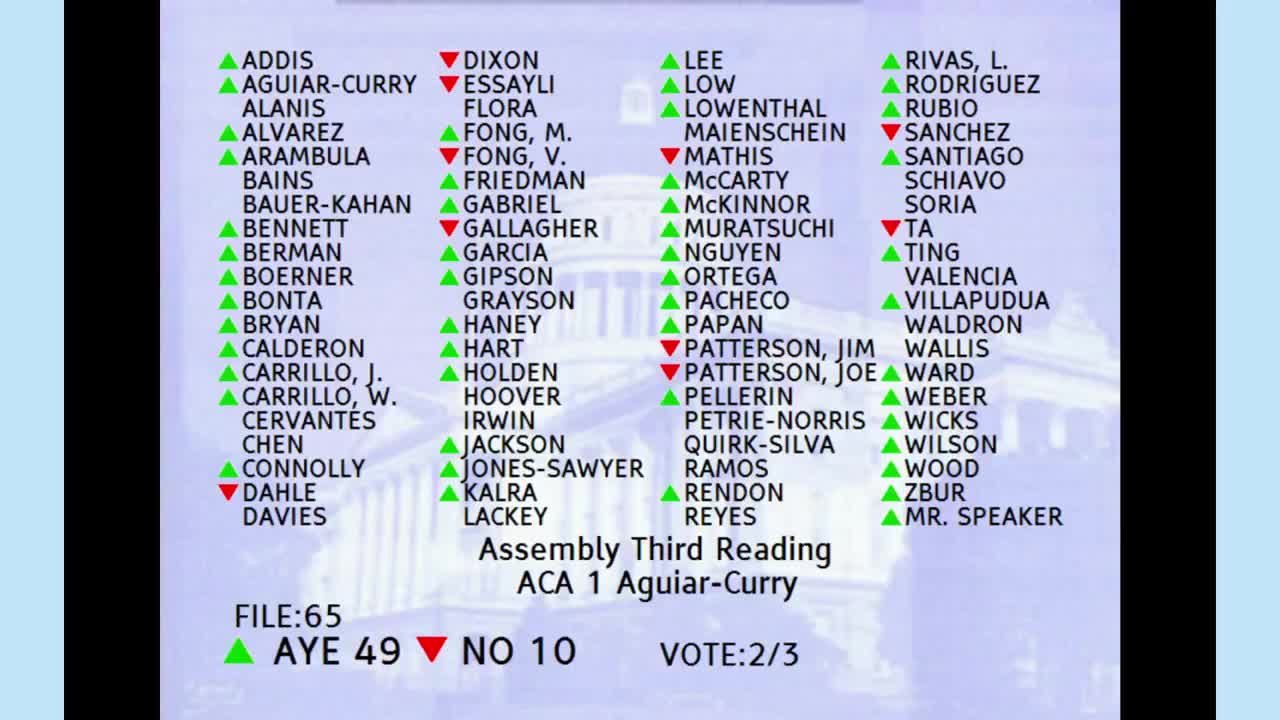 3MIN
Assembly Floor
 7MIN
Assembly Standing Committee on Natural Resources
 2MIN
Senate Floor
 15MIN
Senate Standing Committee on Judiciary
 16MIN
Senate Standing Committee on Environmental Quality
Bill Author

Bill Co-Author(s):
