SB 701: Fruit and vegetable wholesalers: registration fees.
- Session Year: 2023-2024
- House: Senate
- Latest Version Date: 2023-10-07
Current Status:
Passed
(2023-10-07: Chaptered by Secretary of State. Chapter 409, Statutes of 2023.)
Introduced
In Committee
First Chamber
In Committee
Second Chamber
Enacted
Existing law authorizes the board of supervisors of a county with a population of 6,000,000 or more to require registration, and establish a schedule of annual registration fees, not to exceed $250, to be paid by any person who acts as a wholesaler of fresh fruit and vegetables under certain required licenses and who maintains an office or salesroom or conducts that business in the county. Existing law requires that the schedule be designed to pay not more than 1/3 of the costs of the county for its administration and enforcement of specified laws and regulations pertaining generally to fruit, nut, and vegetable standards.
This bill would delete this fee schedule design requirement, authorize the board of supervisors of a county to set the fee schedule up to a maximum registration fee of $500, and authorize the board of supervisors of any county, regardless of population, to require registration and establish a schedule of annual registration fees, as described above.
Existing law, the Sherman Food, Drug, and Cosmetic Law, requires the State Department of Public Health, whenever the department finds that a class of food distributed in the state may, by reason of contamination with micro-organisms during manufacture, packing, or storage, be injurious to the health of a man or other animal that consumes it, and that the injurious nature cannot be adequately determined after the food has entered commerce, to adopt regulations providing for the issuance of permits to manufacturers, processors, or packers of the class of food. Existing law, the California Retail Food Code, requires all food to be manufactured, produced, prepared, compounded, packed, stored, transported, kept for sale, and served so as to be pure and free from adulteration and spoilage.This bill would state the intent of the Legislature to enact legislation regarding food and safety standards to ensure general food safety requirements are updated and aligned with the evolving goals of the Legislature.Existing law, the Sherman Food, Drug, and Cosmetic Law, requires the State Department of Public Health, whenever the department finds that a class of food distributed in the state may, by reason of contamination with micro-organisms during manufacture, packing, or storage, be injurious to the health of a man or other animal that consumes it, and that the injurious nature cannot be adequately determined after the food has entered commerce, to adopt regulations providing for the issuance of permits to manufacturers, processors, or packers of the class of food. Existing law, the California Retail Food Code, requires all food to be manufactured, produced, prepared, compounded, packed, stored, transported, kept for sale, and served so as to be pure and free from adulteration and spoilage.
This bill would state the intent of the Legislature to enact legislation regarding food and safety standards to ensure general food safety requirements are updated and aligned with the evolving goals of the Legislature.
(a)The board of supervisors of a county may require registration and establish a schedule of annual registration fees to be paid by any person who acts as a wholesaler of fresh fruit and vegetables under any license required under Chapter 7 (commencing with Section 56101) of Division 20, and who maintains an office or salesroom or conducts that business in the county.
(b)Any funds derived under this section shall be used only for the enforcement of wholesale inspections of fruits and vegetables pursuant to this division.
(c)The maximum fee that may be established pursuant to this section shall be determined at the discretion of the board of supervisors of a county and shall not exceed five hundred dollars ($500).
SEC. 2.Section 43062 of the Food and Agricultural Code is amended to read:43062.Section 43061 does not apply to any of the following:
(a)Any person acting as a retail merchant, as that term is described in Section 56161, or any person acting as a producer, as that term is defined in Section 56110.
(b)Any person who only handles products other than fruits and vegetables, as defined in Section 42510.
(c)Any person that is licensed only as a broker, as defined in Section 56103.
(a)The board of supervisors of a county may require registration and establish a schedule of annual registration fees to be paid by any person who acts as a wholesaler of fresh fruit and vegetables under any license required under Chapter 7 (commencing with Section 56101) of Division 20, and who maintains an office or salesroom or conducts that business in the county. The schedule shall be designed to pay not more than one-third of the costs of the county for the administration and enforcement of this division or any regulations adopted pursuant to this division. Any funds derived under this section shall be used only for the enforcement of wholesale inspections of fruits and vegetables pursuant to this division. The maximum fee that may be established pursuant to this section shall not exceed two hundred fifty dollars ($250).
(b)Any funds derived under this section shall be used only for the enforcement of wholesale inspections of fruits and vegetables pursuant to this division.
(c)The maximum fee that may be established pursuant to this section shall be determined at the discretion of the board of supervisors of a county and shall not exceed five hundred dollars ($500).
SEC. 2.Section 43062 of the Food and Agricultural Code is amended to read:43062.Section 43061 does not apply to any of the following:
(a)Any person acting as a retail merchant, as that term is described in Section 56161, or any person acting as a producer, as that term is defined in Section 56110.
(b)Any person who only handles products other than fruits and vegetables, as defined in Section 42510.
(c)Any person that is licensed only as a broker, as defined in Section 56103.
(d)Any county with a population of less than 6,000,000. SECTION 1.It is the intent of the Legislature to enact legislation regarding food and safety standards to ensure general food safety requirements are updated and aligned with the evolving goals of the Legislature.It is the intent of the Legislature to enact legislation regarding food and safety standards to ensure general food safety requirements are updated and aligned with the evolving goals of the Legislature.
|
Date
|
Status
|
|---|---|
| Oct 7, 2023 | Chaptered by Secretary of State. Chapter 409, Statutes of 2023. |
| Oct 7, 2023 | Approved by the Governor. |
| Sep 7, 2023 | Enrolled and presented to the Governor at 4 p.m. |
| Aug 31, 2023 | In Senate. Ordered to engrossing and enrolling. |
| Aug 31, 2023 | Read third time. Passed. (Ayes 73. Noes 0. Page 2860.) Ordered to the Senate. |
| Jun 22, 2023 | Read second time. Ordered to third reading. |
| Jun 21, 2023 | From committee: Do pass. (Ayes 10. Noes 0.) (June 21). |
| Jun 1, 2023 | Referred to Com. on AGRI. |
| May 23, 2023 | In Assembly. Read first time. Held at Desk. |
| May 22, 2023 | Read third time. Passed. (Ayes 37. Noes 2. Page 1222.) Ordered to the Assembly. |
| May 4, 2023 | Read second time. Ordered to third reading. |
| May 3, 2023 | From committee: Do pass. (Ayes 5. Noes 0. Page 994.) (May 3). |
| Apr 20, 2023 | Set for hearing May 3. |
| Apr 10, 2023 | Set for hearing April 19. |
| Apr 10, 2023 | April 19 hearing postponed by committee. |
| Mar 29, 2023 | Re-referred to Com. on GOV. & F. |
| Mar 21, 2023 | From committee with author's amendments. Read second time and amended. Re-referred to Com. on RLS. |
| Mar 1, 2023 | Referred to Com. on RLS. |
| Feb 17, 2023 | From printer. May be acted upon on or after March 19. |
| Feb 16, 2023 | Introduced. Read first time. To Com. on RLS. for assignment. To print. |
|
Date
|
Description
|
Location
|
Votes
|
|
|---|---|---|---|---|
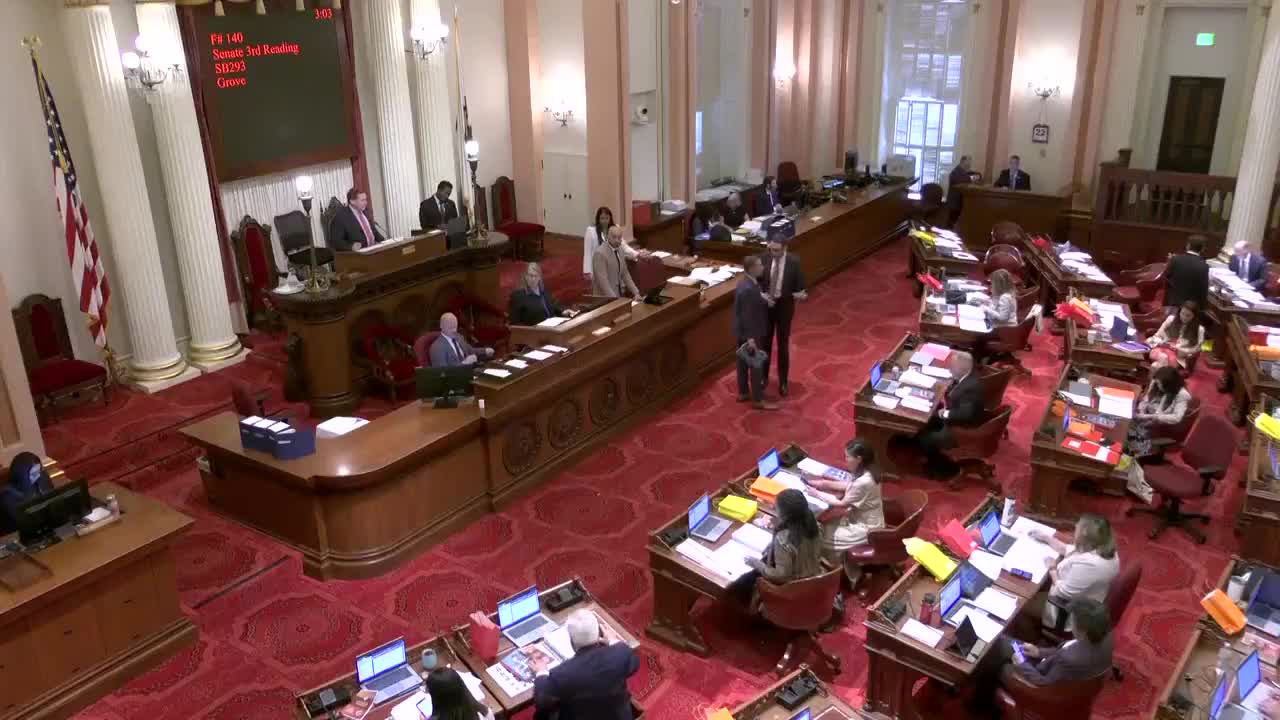
| Aug 31, 2023 | SB 701 Hurtado Senate Third Reading By Irwin | Assembly Floor |
Passed |
|
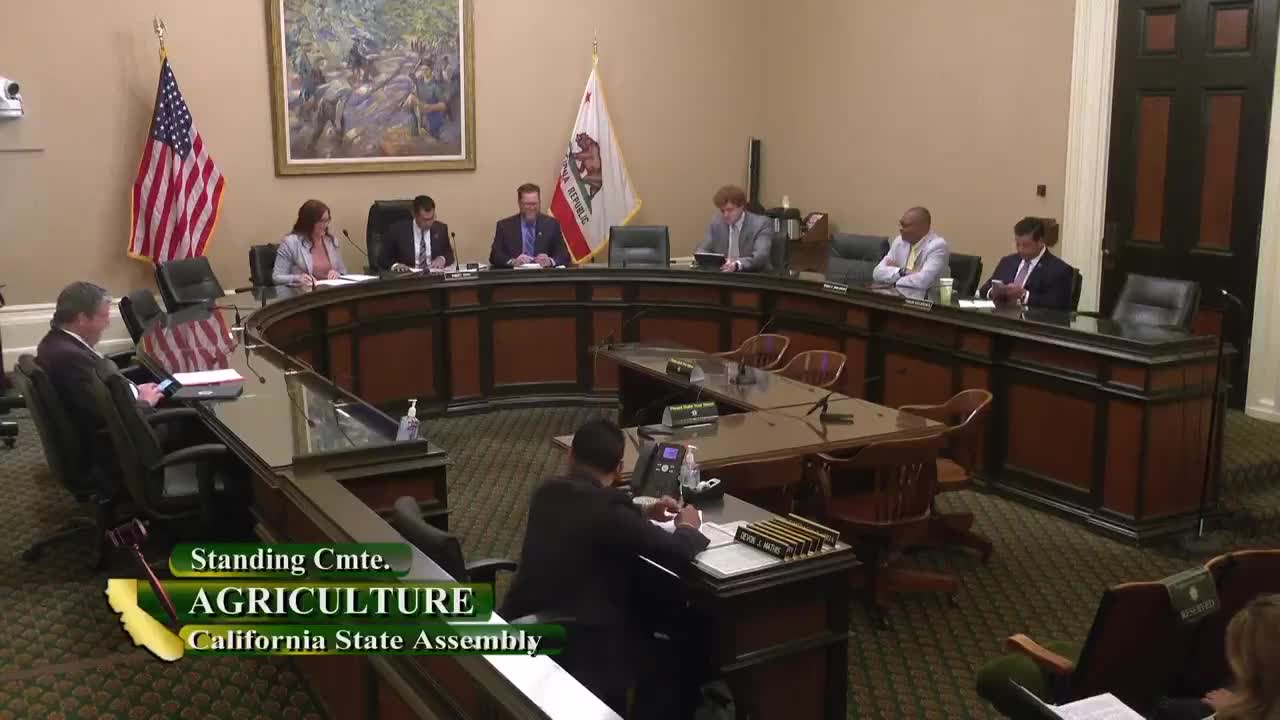
| Jun 21, 2023 | Do pass. | Assembly Standing Committee on Agriculture |
Passed |
|
| May 22, 2023 | Senate 3rd Reading SB701 Hurtado | Senate Floor |
Passed |
|
| May 3, 2023 | Do pass | Senate Standing Committee on Governance and Finance |
Passed |
This list shows positions taken on this bill by organizations on the date displayed, which is linked to the original source.
Positions by individuals are not included.
|
Organization
|
Position
|
Date
|
|---|---|---|
| Board of Supervisors county of ventura | * Support | Jun 21, 2023 |
| California Agricultural Commissioners And Sealers Association | * Support | Jun 21, 2023 |
| California Fresh Food Association | * Support | Jun 21, 2023 |
| County of Los Angeles Board of Supervisors | ** Support |
SENATE THIRD READING
STR Bill Id:SB 701
Author:(Hurtado)
As Amended Ver:March 21, 2023
Majority vote
SUMMARY
This bill makes changes to the authority for a board of supervisors to impose a registration requirement and annual fee schedule on fruit and vegetable wholesalers.
Major Provisions
- Deletes the limitation of the authority of a county board of supervisors to impose the fee only to counties of more than six million people, thereby allowing any county to impose the fee.
- Increases the maximum amount of the fee from $250 to $500.
- Removes the requirement that the county board of supervisors design the fee schedule to pay not more than one third of the costs of county standardization administration and enforcement.
COMMENTS
In 1915, the Legislature first established minimum standards for all fresh fruits, nuts, and vegetables at the behest of California's fresh fruit and vegetable industry to protect consumers and industry from substandard products. Known today as the Standardization Program, over 40 major commodities must meet specific standards, while all other commodities must meet at least minimum standards established by the Food and Agriculture Code. Standardization seeks to remove fruits, vegetables, and honey not complying with minimum standards from trade channels to assure consumers that they are purchasing commodities at a level of acceptable quality. Among the many standards enforced in the standardization inspections are requirements for wholesomeness, absence of contamination or decay, standard containers and labelling, as well as accurate responsibility statements, which helps trace products back to origins in the event of food-borne illness.
According to the Author
California Department of Food and Agriculture (CDFA) uses proceeds from industry assessments to fund its Standardization Program enforcement in concert with County Agricultural Commissioners. CDFA has cooperative agreements with 18 counties annually for enforcement at the production and wholesale level. The local fee on fruit and vegetable wholesalers is currently in place in Los Angeles County, the only county in California with more than six million people. According to the Los Angeles County Agricultural Commissioner, the fee generated $126,000 in revenue in 2021-22, which when combined with CDFA-funding comprises its entire inspection budget. The Commissioner states that of the 504 registered wholesale distributors, they inspect the 300 located in Downtown LA (specifically the Los Angeles Wholesale Produce Market and the "New" Market, established in the mid-1980s) once every three months, but they only have the resources to inspect others in the County once per year or not at all.
Arguments in Support
The Los Angeles County Agricultural Commissioner wants to conduct more frequent inspections of fruit and vegetable wholesalers in other parts of Los Angeles County to ensure food quality and enforce safety standards. Additionally, agricultural commissioners in other counties want to generate fee revenue to pair with CDFA funds to increase inspections too.
Arguments in Opposition
None on file.
FISCAL COMMENTS
Unknown.
VOTES
SENATE FLOOR: 37-2-1
YES: Allen, Alvarado-Gil, Archuleta, Ashby, Atkins, Becker, Blakespear, Bradford, Caballero, Cortese, Dodd, Durazo, Eggman, Glazer, Gonzalez, Hurtado, Jones, Laird, Limón, McGuire, Menjivar, Min, Newman, Niello, Ochoa Bogh, Padilla, Portantino, Roth, Rubio, Seyarto, Skinner, Smallwood-Cuevas, Stern, Umberg, Wahab, Wiener, Wilk
NO: Dahle, Grove
ABS, ABST OR NV: Nguyen
ASM AGRICULTURE: 10-0-1
YES: Robert Rivas, Aguiar-Curry, Alanis, Connolly, Flora, Irwin, Jones-Sawyer, Soria, Villapudua, Wood
ABS, ABST OR NV: Mathis
UPDATED
VERSION: March 21, 2023
CONSULTANT: Victor Francovich / AGRI. / (916) 319-2084 FN: 0001091
Date of Hearing: June 21, 2023
ASSEMBLY COMMITTEE ON AGRICULTURE
Robert Rivas, Chair
SBPCA Bill Id:SB 701
Author:(Hurtado) – As Amended Ver:March 21, 2023
SENATE VOTE: 37-2
SUBJECT: Fruit and vegetable wholesalers: registration fees
SUMMARY: This bill makes changes to the authority for a board of supervisors to impose a registration requirement and annual fee schedule on fruit and vegetable wholesalers. Specifically, this bill:
1) Deletes the limitation of the authority of a county board of supervisors to impose the fee only to counties of more than six million people, thereby allowing any county to impose the fee.
2) Increases the maximum amount of the fee from $250 to $500.
3) Removes the requirement that the county board of supervisors design the fee schedule to pay not more than one third of the costs of county standardization administration and enforcement.
EXISTING LAW:
- Allows a county board of supervisors to levy authorized fees or charges in amounts reasonably necessary to recover the costs of providing products or services or the cost of enforcing regulations. Food and Agriculture code (FAC) 43061
- Establishes minimum standards for all fresh fruits, nuts, and vegetables at the behest of California’s fresh fruit and vegetable industry to protect consumers and industry from substandard products. FAC 42651 – 43100
- Allows the Secretary of Agriculture to adopt regulations to enforce the minimum standards, including establishing assessment rates and procedures for payment of assessments. FAC 42681 – 42685
- Permits a county board of supervisors in a county with more than six million people to require a fruit and vegetable wholesaler licensed by the California Department of Food and Agriculture (CDFA) to register with the county and establish a fee schedule to supplement local Standardization Program enforcement. FAC 43062
- Provides that it is unlawful for any person to operate as a wholesaler of fruits and vegetables in any county with a registration requirement unless that person is registered and has paid the fee. FAC 43064
- Caps the fee at $250 per wholesale operator. FAC 43061
FISCAL EFFECT: Unknown.
COMMENTS: In 1915, the Legislature first established minimum standards for all fresh fruits, nuts, and vegetables at the behest of California’s fresh fruit and vegetable industry to protect consumers and industry from substandard products. Known today as the Standardization Program, over 40 major commodities must meet specific standards, while all other commodities must meet at least minimum standards established by the Food and Agriculture Code. Standardization seeks to remove fruits, vegetables, and honey not complying with minimum standards from trade channels to assure consumers that they are purchasing commodities at a level of acceptable quality. Among the many standards enforced in the standardization inspections are requirements for wholesomeness, absence of contamination or decay, standard containers and labelling, as well as accurate responsibility statements, which helps trace products back to origins in the event of food-borne illness.
CDFA uses proceeds from industry assessments to fund its Standardization Program enforcement in concert with County Agricultural Commissioners. CDFA has cooperative agreements with 18 counties annually for enforcement at the production and wholesale level
The local fee on fruit and vegetable wholesalers is currently in place in Los Angeles County, the only county in California with more than six million people. According to the Los Angeles County Agricultural Commissioner, the fee generated $126,000 in revenue in 2021-22, which when combined with CDFA-funding comprises its entire inspection budget. The Commissioner states that of the 504 registered wholesale distributors, they inspect the 300 located in Downtown LA (specifically the Los Angeles Wholesale Produce Market and the “New” Market, established in the mid-1980s) once every 3 months, but they only have the resources to inspect others in the County once per year or not at all.
The Los Angeles County Agricultural Commissioner wants to conduct more frequent inspections of fruit and vegetable wholesalers in other parts of Los Angeles County to ensure food quality and enforce safety standards. Additionally, agricultural commissioners in other counties want to generate fee revenue to pair with CDFA funds to increase inspections too.
REGISTERED SUPPORT / OPPOSITION:
Support
California Agricultural Commissioners & Sealers Association (Sponsor)
County of Los Angeles Board of Supervisors
County of Ventura
Opposition
None on file
Analysis Prepared by: Victor Francovich / AGRI. / (916) 319-2084
SENATE RULES COMMITTEE Office of Senate Floor Analyses (916) 651-1520 Fax: (916) 327-4478 | SB 701 |
THIRD READING
Bill No: SB 701
Author: Hurtado (D)
Amended: 3/21/23
Vote: 21
SENATE GOVERNANCE & FIN. COMMITTEE: 5-0, 5/3/23
AYES: Caballero, Seyarto, Durazo, Skinner, Wiener
NO VOTE RECORDED: Blakespear, Dahle, Glazer
SUBJECT: Fruit and vegetable wholesalers: registration fees
SOURCE: California Agricultural Commissioners and Sealers Association
DIGEST:
This bill makes changes to the authority for a board of supervisors to impose a registration requirement and annual fee schedule on fruit and vegetable wholesalers.
ANALYSIS:
Existing law:
- Allows a county boards of supervisors to levy authorized fees or charges in amounts reasonably necessary to recover the costs of providing products or services or the cost of enforcing regulations.
- Establishes minimum standards for all fresh fruits, nuts and vegetables at the behest of California’s fresh fruit and vegetable industry to protect consumers and industry from substandard products.
- Allows the Secretary for Agriculture to adopt regulations to enforce the minimum standards, including establishing assessment rates and procedures for payment of assessments.
- Permits a county board of supervisors in a county with more than six million people to require a fruit and vegetable wholesaler licensed by the California Department of Food and Agriculture (CDFA) to register with the county and establish a fee schedule to supplement local Standardization Program enforcement.
- Provides that the wholesaler must maintain an office or salesroom or conduct business in that county to be subject to the registration requirement and fee.
- Requires counties to design fee schedules to pay not more than 1/3 of its costs of administration and enforcement of fruit and vegetable standards, and directs funds derived solely for the enforcement of wholesale inspections of fruits and vegetables.
- Provides that it is unlawful for any person to operate as a wholesaler of fruits and vegetables in any county with a registration requirement unless that person is registered and has paid the fee.
- Caps the fee at $250 per wholesale operator.
This bill:
- Deletes the limitation of the authority of a county board of supervisors to impose the fee only to counties of more than six million people, thereby allowing any county to impose the fee.
- Increases the maximum amount of the fee from $250 to $500.
- Removes the requirement that the county board of supervisors design the fee schedule to pay not more than one third of the costs of county standardization administration and enforcement.
Background
In 1915, the Legislature first established minimum standards for all fresh fruits, nuts and vegetables at the behest of California’s fresh fruit and vegetable industry to protect consumers and industry from substandard products. Known today as the Standardization Program, over 40 major commodities must meet specific standards, while all other commodities must meet at least minimum standards established by the Food and Agriculture Code. Standardization seeks to remove fruits, vegetables, and honey not complying with minimum standards from trade channels to assure consumers that they are purchasing commodities at a level of acceptable quality. Among the many standards enforced in the standardization inspections are requirements for wholesomeness, absence of contamination or decay, standard containers and labelling, as well as accurate responsibility statements, which help trace products back to origins in the event of food-borne illness.
CDFA uses proceeds from industry assessments to fund its Standardization Program enforcement in concert with County Agricultural Commissioners. CDFA has cooperative agreements with 18 counties annually for enforcement at the production and wholesale level
The local fee on fruit and vegetable wholesalers is currently in place in Los Angeles County, the only county in California with more than six million people. According to the Los Angeles County Agricultural Commissioner, the fee generated $126,000 in revenue in 2021-22, which when combined with CDFA-funding comprises its entire inspection budget. The Commissioner states that of the 504 registered wholesale distributors, they inspect the 300 located in Downtown LA (specifically the Los Angeles Wholesale Produce Market and the “New” Market, established in the mid-1980s) once every 3 months, but they only have the resources to inspect others in the County once per year or not at all.
The Los Angeles County Agricultural Commissioner wants to conduct more frequent inspections of fruit and vegetable wholesalers in other parts of Los Angeles County to ensure food quality and enforce safety standards. Additionally, agricultural commissioners in other counties want to generate fee revenue to pair with CDFA funds to increase inspections too.
FISCAL EFFECT: Appropriation: No Fiscal Com.: No Local: No
SUPPORT: (Verified 5/5/23)
California Agricultural Commissioners and Sealers Association (source)
County of Ventura
OPPOSITION: (Verified 5/5/23)
None received
ARGUMENTS IN SUPPORT: According to the author, “California ranks first in the United States for agricultural production and is the nation’s largest food producer. Despite California being the country’s top agricultural product exporter, the state must still import significant amounts of fruits and vegetables each and every day. Ensuring the quality and safety of produce in the California marketplace is complex, requiring collaboration from individuals up and down the supply chain. Current law authorizes a fruit and vegetable inspection program regulated by the CDFA and enforced by County Agricultural Commissioners. SB 701 updates that program and authorizes the board of supervisors of any interested county to adopt a registration program to assist in covering the operational cost associated with fruit and vegetable standardization inspections conducted by County Agricultural Commissioners. The interconnectivity of our food system requires thorough and consistent oversight to ensure the food safety of produce consumed by Californians.”
Prepared by: Colin Grinnell / GOV. & F. / (916) 651-4119
5/5/23 14:10:43
**** END ****
SENATE COMMITTEE ON GOVERNANCE AND FINANCE
Senator Anna M. Caballero, Chair
2023 - 2024 Regular
Bill No: | SB 701 | Hearing Date: | 5/3/23 |
Author: | Hurtado | Tax Levy: | No |
Version: | 3/21/23 | Fiscal: | No |
Consultant: | Grinnell | ||
Fruit and vegetable wholesalers: registration fees
Makes three changes to the authority for a board of supervisors to impose a registration requirement and annual fee schedule on fruit and vegetable wholesalers.
Background
County fees. County boards of supervisors can levy authorized fees or charges in amounts reasonably necessary to recover the costs of providing products or services or the cost of enforcing regulations. (AB 151, Hannigan, 1983). The fees or charges may reflect the average cost of providing products or services or enforcing regulations, plus limited indirect costs.
While the Legislature updated many county fees in 2009 (SB 676, Wolk), others in state law still are fixed at specified amounts that haven’t been updated in years, or even decades.
Standardization. In 1915, the Legislature first established minimum standards for all fresh fruits, nuts and vegetables at the behest of California’s fresh fruit and vegetable industry to protect consumers and industry from substandard products. Known today as the Standardization Program, over 40 major commodities must meet specific standards, while all other commodities must meet at least minimum standards established by the Food and Agriculture Code. Standardization seeks to remove fruits, vegetables, and honey not complying with minimum standards from trade channels to assure consumers that they are purchasing commodities at a level of acceptable quality. Among the many standards enforced in the standardization inspections are requirements for wholesomeness, absence of contamination or decay, standard containers and labelling, as well as accurate responsibility statements, which help trace products back to origins in the event of food-borne illness.
In 1992, the California Secretary of Agriculture first established assessments on packages of fresh fruits, nuts and vegetables to pay for the cost of conducting the Standardization Program, shifting the cost from the General Fund. The California Department of Food and Agriculture (CDFA) uses these assessments to fund its Standardization Program enforcement in concert with County Agricultural Commissioners. CDFA has cooperative agreements with 18 counties annually for enforcement at the production and wholesale level.
In 1983, the Legislature allowed a county board of supervisors in a county with more than six million people to require a fruit and vegetable wholesaler licensed by CDFA to register with the county and establish a fee schedule to supplement local Standardization Program enforcement (AB 1131, Vicencia). The wholesaler must maintain an office or salesroom or conduct business in that county to be subject to the registration requirement and fee. Counties must design fee schedules to pay not more than 1/3 of its costs of administration and enforcement of fruit and vegetable standards, and funds derived can be used only for the enforcement of wholesale inspections of fruits and vegetables. It is unlawful for any person to operate as a wholesaler of fruits and vegetables in any county with a registration requirement unless that person is registered and has paid the fee. Producers, retail merchants, and brokers are exempt from the fee.
AB 1131 capped the fee at $250 per wholesale operator, which is currently in place in Los Angeles County, the only county in California with more than six million people. According to the Los Angeles County Agricultural Commissioner, the fee generated $126,000 in revenue in 2021-22, which when combined with CDFA-funding comprises its entire inspection budget. The Commissioner states that of the 504 registered wholesale distributors, they inspect the 300 located in Downtown LA (specifically the Los Angeles Wholesale Produce Market and the “New” Market, established in the mid-1980s) once every 3 months, but they only have the resources to inspect others in the County once per year or not at all.
The Los Angeles County Agricultural Commissioner wants to conduct more frequent inspections of fruit and vegetable wholesalers in other parts of Los Angeles County to ensure food quality and enforce safety standards. Additionally, agricultural commissioners in other counties want to generate fee revenue to pair with CDFA funds to increase inspections too. The California Agricultural Commissioners and Sealers Association wants to allow other counties to impose the registration requirement and fee, and lift the cap to $500 per year.
Proposed Law
Senate Bill 701 makes three changes to the authority for a board of supervisors to impose a registration requirement and annual fee schedule on fruit and vegetable wholesalers:
- Deletes the limitation of the authority of a county board of supervisors to impose the fee only to counties of more than six million people, thereby allowing any county to impose the fee.
- Increases the maximum amount of the fee from $250 to $500.
- Removes the requirement that the county board of supervisors design the fee schedule to pay not more than one third of the costs of county Standardization Program administration and enforcement.
State Revenue Impact
No estimate.
Comments
1. Purpose of the bill. According to the author, “California ranks first in the United States for agricultural production and is the nation’s largest food producer. Despite California being the country’s top agricultural product exporter, the state must still import significant amounts of fruits and vegetables each and every day. Ensuring the quality and safety of produce in the California marketplace is complex, requiring collaboration from individuals up and down the supply chain. Current law authorizes a fruit and vegetable inspection program regulated by the CDFA and enforced by County Agricultural Commissioners. SB 701 updates that program and authorizes the board of supervisors of any interested county to adopt a registration program to assist in covering the operational cost associated with fruit and vegetable standardization inspections conducted by County Agricultural Commissioners. The interconnectivity of our food system requires thorough and consistent oversight to ensure the food safety of produce consumed by Californians.”
2. Who does this apply to? SB 701 applies to fruit and vegetable wholesalers, who operate in some, but not all, of California’s 58 counties. According to county agricultural commissioners, wholesale distributors supply fresh produce to hotels, cruise ships, resorts, as well as small or medium-size grocers for sale to the public. They can be large operations that continuously purchase fruits and vegetables for resale, or individuals who occasionally purchase small amounts of product for resale to restaurants or fruit stands and markets, or direct sales to the public. Wholesalers affected by SB 701 do not include large grocers, who control their own distribution and deploy their own process for acquiring and inspecting their bulk purchases. Under SB 701, only counties where wholesalers operate will generate any revenue from the fee and registration requirement. Additionally, fee revenue can only be spent on Standardization Program enforcement.
Support and Opposition
(4/28/23)
Support: California Agricultural Commissioners & Sealers Association
Opposition: None received.
-- END --
Discussed in Hearing
 5MIN
Assembly Standing Committee on Agriculture
 4MIN
Senate Floor
 8MIN
Senate Standing Committee on Governance and Finance
Bill Author

Bill Co-Author(s):