SB 728: Plastic gift cards: prohibition.
- Session Year: 2023-2024
- House: Senate
- Latest Version Date: 2023-09-15
Current Status:
Failed
(2024-01-25: Veto sustained.)
Introduced
In Committee
First Chamber
In Committee
Second Chamber
Enacted
Existing law regulates the manufacture, sale, and disposal of various plastic products, including, but not limited to, single-use foodware accessories, single-use carryout bags, trash bags, packaging containers, and microbeads.
This bill would prohibit, beginning January 1, 2027, a retailer from selling, offering for sale, or distributing plastic gift cards, except those that are both usable with multiple unaffiliated sellers of goods and that have the expiration date, if any, printed on the card. The bill would authorize a retailer to continue to sell, offer for sale, or distribute an existing stock of plastic gift cards until January 1, 2028, as specified. The bill would authorize various entities to enforce these provisions, and would impose specified civil penalties for violations of these provisions. The bill would specify that its provisions do not apply to a plastic card used to pay public transit fares.
Existing law regulates the manufacture, sale, and disposal of various plastic products, including, but not limited to, single-use foodware accessories, single-use carryout bags, trash bags, packaging containers, and microbeads.
This bill would prohibit, beginning January 1, 2026, the sale or distribution of 2027, a retailer from selling, offering for sale, or distributing plastic gift cards, except those that are both usable with multiple unaffiliated sellers of goods and that have the expiration date, if any, printed on the card. The bill would authorize a retailer to continue to sell, offer for sale, or distribute an existing stock of plastic gift cards until January 1, 2028, as specified. The bill would authorize various entities to enforce these provisions, and would impose specified civil penalties for violations of these provisions.
Existing law regulates the manufacture, sale, and disposal of various plastic products, including, but not limited to, single-use foodware accessories, single-use carryout bags, trash bags, packaging containers, and microbeads.
This bill would prohibit prohibit, beginning January 1, 2026, the sale or distribution of plastic gift cards beginning January 1, 2026. cards, except those that are both usable with multiple unaffiliated sellers of goods and that have the expiration date, if any, printed on the card.
Existing law regulates the sale of gift certificates. (CIV 1749.45-1749.6.) The definition of a gift certificate includes gift cards, but also specifically exempts gift cards that are usable with multiple sellers of goods or services provided that the expiration date, if any, is printed on the card. (CIV 1749.45.)
Existing law regulates the manufacture, sale, and disposal of various plastic products, including, but not limited to, single-use foodware accessories, single-use carryout bags, trash bags, packaging containers, and microbeads.
This bill would prohibit the sale or distribution of plastic gift cards beginning January 1, 2026.
Existing law regulates the sale of gift certificates. (CIV 1749.45-1749.6.) The definition of a gift certificate includes gift cards, but also specifically exempts gift cards that are usable with multiple sellers of goods or services provided that the expiration date, if any, is printed on the card. (CIV 1749.45.)
This bill would prohibit the sale or distribution of plastic gift cards beginning January 1, 2026.
Existing law, among other things, prohibits a food facility from providing a single-use foodware accessory or standard condiment packaged for single use, as defined, to a consumer unless requested by the consumer, as provided. Existing law prohibits those items from being bundled or packaged in a way that prohibits the consumer from taking only the item desired. Existing law requires a food facility using a third-party food delivery platform to list on its menu the availability of single-use foodware accessories and standard condiments and only provide those items when requested, as provided. Existing law requires a city, county, or city and county, on or before June 1, 2022, to authorize an enforcement agency to enforce these requirements. Existing law requires the first and 2nd violations of these provisions to result in a notice of violation, and any subsequent violation is an infraction punishable by a fine of $25 for each day in violation, but not to exceed an annual total of $300.This bill would make nonsubstantive changes to that latter provision.Existing law, among other things, prohibits a food facility from providing a single-use foodware accessory or standard condiment packaged for single use, as defined, to a consumer unless requested by the consumer, as provided. Existing law prohibits those items from being bundled or packaged in a way that prohibits the consumer from taking only the item desired. Existing law requires a food facility using a third-party food delivery platform to list on its menu the availability of single-use foodware accessories and standard condiments and only provide those items when requested, as provided.
Existing law requires a city, county, or city and county, on or before June 1, 2022, to authorize an enforcement agency to enforce these requirements. Existing law requires the first and 2nd violations of these provisions to result in a notice of violation, and any subsequent violation is an infraction punishable by a fine of $25 for each day in violation, but not to exceed an annual total of $300.
This bill would make nonsubstantive changes to that latter provision.
(a)For purposes of this chapter, the following definitions apply:
(1)Gift card has the same definition as gift certificate as defined in Section 1749.45 of the Civil Code.
(2)Retailer has the same definition as retailer as defined in subdivision (l) of Section 1791 of the Civil Code.
(b)On and after January 1, 2027, a retailer shall not sell, offer for sale, or distribute a gift card made of plastic in this state.
(c)A retailer may continue to sell, offer for sale, or distribute an existing stock of plastic gift cards that were acquired before January 1, 2027, until January 1, 2028.
(d)The Attorney General, a district attorney, a county counsel, or a city attorney may enforce this section. The first violation shall be punishable by a civil penalty of twenty-five dollars ($25) per retailer for the day the violation occurs. A subsequent violation shall be punishable by a civil penalty of one hundred dollars ($100) per retailer for each day the violation occurs. A civil penalty collected pursuant to this subdivision shall be paid to the entity that brought the action.
(e)This chapter shall not be construed to apply to a plastic card used to pay public transit fares.
(a)For purposes of this chapter, gift the following definitions apply:
(1)Gift card has the same definition as gift certificate as defined in Section 1749.45 of the Civil Code.
(2)Retailer has the same definition as retailer as defined in subdivision (l) of Section 1791 of the Civil Code.
(b)On and after January 1, 2027, a retailer shall not sell, offer for sale, or distribute a gift card made of plastic in this state.
(c)A retailer may continue to sell, offer for sale, or distribute an existing stock of plastic gift cards that were acquired before January 1, 2027, until January 1, 2028.
(d)The Attorney General, a district attorney, a county counsel, or a city attorney may enforce this section. The first violation shall be punishable by a civil penalty of twenty-five dollars ($25) per retailer for the day the violation occurs. A subsequent violation shall be punishable by a civil penalty of one hundred dollars ($100) per retailer for each day the violation occurs. A civil penalty collected pursuant to this subdivision shall be paid to the entity that brought the action.
(e)This chapter shall not be construed to apply to a plastic card used to pay public transit fares.
(a)For purposes of this chapter, gift card has the same definition as gift certificate as defined in Section 1749.45 of the Civil Code.
(b)On and after January 1, 2027, a retailer shall not sell, offer for sale, or distribute a gift card made of plastic in this state.
(c)A retailer may continue to sell, offer for sale, or distribute an existing stock of plastic gift cards that were acquired before January 1, 2027, until January 1, 2028.
(d)The Attorney General, a district attorney, a county counsel, or a city attorney may enforce this section. The first violation shall be punishable by a civil penalty of twenty-five dollars ($25) for the day the violation occurs. A subsequent violation shall be punishable by a civil penalty of one hundred dollars ($100) for each day the violation occurs. A civil penalty collected pursuant to this subdivision shall be paid to the entity that brought the action.
(a)On and after January 1, 2026, a gift card made of plastic shall not be sold, offered for sale, or distributed in this state.
(b)For purposes of this chapter, gift card has the same definition as gift certificate as defined in Section 1749.45 of the Civil Code.
On and after January 1, 2026, a gift card made of plastic shall not be sold, offered for sale, or distributed in this state.
SECTION 1.Section 1749.47 is added to the Civil Code, to read:1749.47.On and after January 1, 2026, a gift card made of plastic shall not be sold, offered for sale, or distributed in this state.On and after January 1, 2026, a gift card made of plastic shall not be sold, offered for sale, or distributed in this state.
SECTION 1.Section 42272 of the Public Resources Code is amended to read:42272.(a)On or before June 1, 2022, a city, county, or city and county shall authorize an enforcement agency to enforce this chapter.(b)The first and second violations of this chapter shall result in a notice of violation, and any subsequent violation shall constitute an infraction punishable by a fine of twenty-five dollars ($25) for each day in violation, but the fines shall not exceed three hundred dollars ($300) annually.(a)On or before June 1, 2022, a city, county, or city and county shall authorize an enforcement agency to enforce this chapter.
(b)The first and second violations of this chapter shall result in a notice of violation, and any subsequent violation shall constitute an infraction punishable by a fine of twenty-five dollars ($25) for each day in violation, but not to the fines shall not exceed three hundred dollars ($300) annually.
|
Date
|
Status
|
|---|---|
| Jan 25, 2024 | Veto sustained. |
| Jan 25, 2024 | Stricken from file. |
| Oct 8, 2023 | In Senate. Consideration of Governor's veto pending. |
| Oct 8, 2023 | Vetoed by the Governor. |
| Sep 20, 2023 | Enrolled and presented to the Governor at 4:30 p.m. |
| Sep 13, 2023 | Assembly amendments concurred in. (Ayes 30. Noes 9. Page 2743.) Ordered to engrossing and enrolling. |
| Sep 12, 2023 | In Senate. Concurrence in Assembly amendments pending. |
| Sep 12, 2023 | Read third time. Passed. (Ayes 53. Noes 18. Page 3250.) Ordered to the Senate. |
| Sep 7, 2023 | Read third time and amended. |
| Sep 7, 2023 | Ordered to third reading. |
| Jul 13, 2023 | Read second time. Ordered to third reading. |
| Jul 12, 2023 | From committee: Do pass. (Ayes 10. Noes 4.) (July 12). |
| Jun 22, 2023 | Read second time. Ordered to third reading. |
| Jun 22, 2023 | Re-referred to Com. on APPR. pursuant to Joint Rule 10.5. |
| Jun 21, 2023 | Read second time and amended. Ordered to second reading. |
| Jun 20, 2023 | From committee: Do pass as amended. (Ayes 8. Noes 3.) (June 19). |
| May 26, 2023 | Referred to Com. on NAT. RES. |
| May 23, 2023 | In Assembly. Read first time. Held at Desk. |
| May 22, 2023 | Read third time. Passed. (Ayes 31. Noes 9. Page 1206.) Ordered to the Assembly. |
| May 1, 2023 | Read second time and amended. Ordered to third reading. |
| Apr 27, 2023 | From committee: Do pass as amended. (Ayes 5. Noes 2. Page 937.) (April 26). |
| Apr 18, 2023 | Set for hearing April 26. |
| Apr 13, 2023 | Withdrawn from committee. |
| Apr 13, 2023 | Re-referred to Com. on E.Q. |
| Apr 12, 2023 | From committee with author's amendments. Read second time and amended. Re-referred to Com. on JUD. |
| Mar 29, 2023 | Re-referred to Coms. on JUD. and E.Q. |
| Mar 20, 2023 | From committee with author's amendments. Read second time and amended. Re-referred to Com. on RLS. |
| Mar 1, 2023 | Referred to Com. on RLS. |
| Feb 21, 2023 | From printer. May be acted upon on or after March 20. |
| Feb 17, 2023 | Introduced. Read first time. To Com. on RLS. for assignment. To print. |
|
Date
|
Description
|
Location
|
Votes
|
|
|---|---|---|---|---|
| Sep 13, 2023 | Unfinished Business SB728 Limón Concurrence | Senate Floor |
Passed |
|
| Sep 12, 2023 | SB 728 Limón Senate Third Reading By Luz Rivas | Assembly Floor |
Passed |
|
| Jul 12, 2023 | Do pass. | Assembly Standing Committee on Appropriations |
Passed |
|
| Jun 19, 2023 | Do pass as amended. | Assembly Standing Committee on Natural Resources |
Passed |
|
| May 22, 2023 | Senate 3rd Reading SB728 Limón | Senate Floor |
Passed |
|
| Apr 26, 2023 | Do pass as amended | Senate Standing Committee on Environmental Quality |
Passed |
This list shows positions taken on this bill by organizations on the date displayed, which is linked to the original source.
Positions by individuals are not included.
|
Organization
|
Position
|
Date
|
|---|---|---|
| Azul | * Support | Apr 26, 2023 |
| California Chamber Of Commerce | ** Against | |
| California Fuels And Convenience Alliance | ** Against | |
| California Grocers Association | ** Against | |
| California Manufacturers And Technology Association | ** Against | |
| California Restaurant Association | ** Against | |
| California Retailers Association | ** Against | |
| Californians Against Waste | ** Support | |
| Capitol Advocacy | * Against | Jun 19, 2023 |
| Clean Water Action | ** Support | |
| Climate Action California | * Support | Jun 19, 2023 |
| Incomm Payments | ** Against | |
| National Stewardship Action Council | ** Support | |
| Natural Resources Defense Council | ** Support | |
| Plastics Industry Association | ** Against | |
| Shaw Yoder Antwih Schmelzer & Lange | * Support | Jun 19, 2023 |
| Surfrider Foundation | * Support | Jun 19, 2023 |
SENATE RULES COMMITTEE Office of Senate Floor Analyses (916) 651-1520 Fax: (916) 327-4478 | SB 728 |
VETO
Bill No: SB 728
Author: Limón (D)
Amended: 9/7/23
Vote: 27
SENATE ENVIRONMENTAL QUALITY COMMITTEE: 5-2, 4/26/23
AYES: Allen, Gonzalez, Hurtado, Menjivar, Skinner
NOES: Dahle, Jones
SENATE FLOOR: 31-9, 5/22/23
AYES: Allen, Archuleta, Ashby, Atkins, Becker, Blakespear, Bradford, Caballero, Cortese, Dodd, Durazo, Eggman, Glazer, Gonzalez, Hurtado, Laird, Limón, McGuire, Menjivar, Min, Newman, Padilla, Portantino, Roth, Rubio, Skinner, Smallwood-Cuevas, Stern, Umberg, Wahab, Wiener
NOES: Alvarado-Gil, Dahle, Grove, Jones, Nguyen, Niello, Ochoa Bogh, Seyarto, Wilk
SENATE FLOOR: 30-9, 9/13/23
AYES: Allen, Archuleta, Ashby, Atkins, Becker, Blakespear, Bradford, Cortese, Dodd, Durazo, Eggman, Glazer, Gonzalez, Hurtado, Laird, Limón, McGuire, Menjivar, Min, Newman, Padilla, Portantino, Roth, Rubio, Skinner, Smallwood-Cuevas, Stern, Umberg, Wahab, Wiener
NOES: Alvarado-Gil, Dahle, Grove, Jones, Nguyen, Niello, Ochoa Bogh, Seyarto, Wilk
NO VOTE RECORDED: Caballero
ASSEMBLY FLOOR: 53-18, 9/12/23 - See last page for vote
SUBJECT: Plastic gift cards: prohibition
SOURCE: Author
DIGEST:
This bill prohibits plastic gift cards from being sold, offered for sale, or distributed in the state on and after January 1, 2027, except that retailers are authorized to sell their existing stock until January 1, 2028. These provisions are enforced through a civil penalty up to $100 per day.
ANALYSIS:
Existing law:
- Establishes the Integrated Waste Management Act of 1989 (IWMA), administered by the Department of Resources Recycling and Recovery (CalRecycle). The IWMA establishes a state recycling goal that 75% of solid waste should be diverted from landfill disposal through source reduction, recycling, and composting by 2020. (Public Resources Code (PRC) §§ 40000 et. seq.)
- Establishes a statewide “bag ban” on stores that prohibits from providing a plastic single-use carryout bag to a customer at the point of sale unless it is a reusable, compostable bag sold at not less than $0.10. (PRC §42283-42284)
- Establishes a “plastic straw ban” that prohibits restaurants from providing single-use plastic straws to consumers unless requested by the consumer. (PRC § 42270)
This bill:
- Bans a retail from selling, distributing, or offering for sale, plastic gift cards beginning Jan 1, 2027.
- Allows a retailer to continue to sell, offer for sale, or distribute an existing stock of gift cards through January 1, 2028.
- Authorizes the Attorney General, a district attorney, a county counsel, or a city attorney to enforce the bill and sets civil penalties of $25 for the first day a violation occurs and $100 per day for any subsequent violations.
- Defines "gift card" to exclude any gift card usable with multiple sellers of goods or services, provided the expiration date is printed on the card.
Background
- California’s waste goals. Under the IWMA, CalRecycle is tasked with reducing the amount of waste that gets landfilled in California. The IWMA establishes a goal that 75% of solid waste generated in the state be diverted from landfills through source reduction, recycling, and composting by 2020. However, according to CalRecycle’s 2021 State of Disposal and Recycling, the state’s 2021 recycling rate was just 40%, down from a peak of 50% in 2014. The single largest contributor to the drop comes from recyclables that were exported out of the state, though that may change given new global policies like China’s National SWORD and the Basel Convention, which restrict the amount of foreign waste these countries will accept.
- The problem with plastic (and paths forward). Plastics pose a threat to the environment from origin to end-of-life. Plastics are petroleum-based and have a large carbon footprint. Plastic production is responsible for three and a half percent of all greenhouse gas emissions—more than the entire aviation sector. In 2021, global plastics production was estimated at 390.7 million metric tons, a four percent increase from the previous year. The United Nations Environment Program reports that only nine percent of all plastic ever made has been recycled. A further 12% has been incinerated, and the remaining 79% has accumulated in landfills or natural environments.
Once plastics enter the environment, they remain there for hundreds to thousands of years. Plastics do not break down into their constituent parts, but instead break down into very small particles of plastic, or microplastics (plastics under five millimeters). Because they are so small, microplastics can travel in the air, and water, and can be easily absorbed by living things and accumulate up the food chain. Microplastics have been found in the most pristine natural environments on earth, including in the deep ocean, Antarctic sea ice, and human placentas. Laboratory studies have found that microplastics increase the risk of cancer and disrupt hormone pathways in lab rats.
To reduce plastic consumption and ultimately plastic waste, the Legislature passed the Plastic Pollution Prevention and Packaging Producer Responsibility Act (SB 54, Allen, Chapter 75, Statutes of 2022) which sets ambitious targets to reduce plastics in packaging and single-use serviceware, including requiring all of those items to be recyclable or compostable and meet a recycling rate of 65% by 2023. This landmark legislation is one of the most sweeping measures the state has enacted to address plastic waste,
- Significance of gift cards in the waste stream. Products can cause problems in the waste stream when they exist in such high volumes that they strain waste infrastructure, or contaminate the waste stream.
- Amount of gift cards as plastic waste. In 2021, nearly 3.5 billion gift cards were sold in the United States. Gift cards typically weigh one to two ounces, meaning in 2021, approximately 89 tons of gift card waste were generated. Since California makes up roughly 10% of the population of the United States, this would translate to 8.9 tons of gift card waste in California per year – a drop in the waste bucket. CalRecycle estimates that in 2018 alone, 4.5 million tons of plastic entered landfills in California.
- Gift cards as waste contaminants. California does not consider gift cards, 70% of which are made from polyvinyl chloride (PVC) plastic, to be hazardous or toxic waste. However, in the early 2000s, PVC made headlines for its harm to human and environmental health. In a 2003 article, Greenpeace wrote, “PVC is the single most environmentally damaging of all plastics.” New Jersey’s Department of Human Services wrote in 2008 that “PVC contains dangerous chemical additives…which can be toxic to your child's health.” In 2014, the Center for Biological Diversity (CBD) petitioned the U.S. Environmental Protection Agency (EPA) to classify discarded PVC as hazardous waste. After no movement, CBD ultimately sued EPA in 2021 in Center for Biological Diversity v. U.S. Environmental Protection Agency, et al. In 2022, CBD and EPA reached a settlement on this case.
Despite the longstanding concern that PVC is dangerous, only a handful of studies support this conclusion. Most notably, a study by the EPA found that PVC pipes can leach vinyl chloride, a human carcinogen, into drinking water. Additional studies found that when PVC is burned, it releases dangerous chemicals, including dioxin and pyrene (chemicals that are released from many plastics when they are burned) phosgene, and hydrogen chloride that becomes hydrochloric acid in human lungs. High concentrations of these chemicals can harm human lungs and livers, and can cause vomiting and unconsciousness. While properly maintained landfills safely retain these harmful chemicals, unexpected fires or leaks into groundwater could unleash PVC’s toxicity. However, there is no evidence that PVC would have an outsized impact compared to all other plastics in the case of a landfill catastrophe.
Non-plastic alternatives to gift cards. There are several alternatives to plastic gift cards already on the market, including electronic, paper, bioplastic, and even gift cards made from wooden chips. Retailers, including Amazon, Target, and iTunes, also allow customers to purchase gift codes that can be used online or through a mobile app.
Comments
- Purpose of Bill. According to the author, “More than 3.4 billion gift cards were sold in the United States in 2021. The majority of these gift cards are made from PVC, which is not typically accepted for recycling. These cards often end up in the waste stream after only a single use, which is why some companies have made the switch away from plastic gift cards opting for paper, cardboard, sustainable wood, and bamboo options. SB 728 will transition from the use of plastic gift cards and ensure that businesses continue this towards more sustainable products.”
- A small step forward. While plastic gift cards make up just a small portion of the total plastic waste going to landfills and do not seem to be an outsized contaminant in the waste stream, they are low-hanging fruit. Given that alternatives to plastic gift cards are already on the market, banning plastic cards could be a small step towards helping the state meet its waste reduction goals.
- SB 54, the bill to end all bans. In 2022, the Legislature passed the Plastic Pollution Prevention and Packaging Producer Responsibility Act (SB 54). This bill marked a significant shift in California's legislative approach to plastic-reduction policy. Rather than targeting just one waste item per bill, SB 54 encompassed a broad swath of items, including all packaging and single-use serviceware. By targeting a number of products based on their use, SB 54 avoids the “whack-a-mole” pitfall that bans can face when new products, with equivalent impacts on the waste stream, emerge to take the space of banned items. Because there are already non-plastic alternatives to gift cards on the market, SB 728 may be justified in its single focus. However, there may be related items, either by use or material type, that should be included in a plastic gift card ban to increase the impact and efficacy of this measure.
FISCAL EFFECT: Appropriation: No Fiscal Com.: Yes Local: No
According to the Assembly Appropriations Committee, the Department of Justice anticipates minor and absorbable costs as a result of this bill.
SUPPORT: (Verified 10/12/23)
Californians Against Waste
OPPOSITION: (Verified 10/12/23)
California Chamber of Commerce
California Fuels and Convenience Alliance
California Grocers Association
California Manufacturers and Technology Association
California Restaurant Association
California Retailers Association
InComm Payments
Plastics Industry Association
ARGUMENTS IN SUPPORT: Californians Against Waste writes in support of this bill:
The billions of gift cards sold each year are almost entirely made from hard plastic. The vast majority of these plastic gift cards, around 70 percent, are made from polyvinyl chloride plastic (PVC), considered by Greenpeace to be the “single most environmentally damaging of all plastics.” PVC produces CO2 upon its creation and contains certain chemicals deemed hazardous by the United States Environmental Protection Agency that can pose environmental issues and concerns when discarded improperly.
Plastic gift cards are also difficult to recycle. They can be melted down and shaped into new gift cards but there are serious concerns with chemical releases in this process. Also, many local recycling centers do not accept PVC gift cards due to their small and thin size interacting poorly with recycling machinery so cards intended for recycling may end up in a landfill as waste.
SB 728 focuses the plastic removal effort on a long ignored and overlooked supply of harmful plastic waste and an industry that already has safe and sustainable alternatives to plastic. By prohibiting the sale of plastic gift cards, this bill may also reduce the overall plastic waste disposed in landfills, both in the United States and the plastic PVC waste exported abroad.
ARGUMENTS IN OPPOSITION: According to the Plastics Industry Association:
While some retailers, grocers, and restaurants have moved to alternative products for gift cards, many continue to use plastic gift cards because they are a popular choice among consumers for their durability. Further, they are less likely to be damaged or rendered unusable. In addition, while digital gift cards seem like a viable alternative, this is simply not a feasible option for many. There are a substantial number of Californians, especially disadvantaged communities, who do not have access to or are not comfortable with the use of digital platforms.
GOVERNOR'S VETO MESSAGE:
This bill prohibits the sale or distribution of plastic gift cards in the state after January 2027, and enforces the ban through civil penalties of up to $100 per day.
While I support the author's goal to reduce our reliance on single-use plastic materials, I am concerned that an outright ban without any incentives for compliance will disproportionately impact the state's small business community, as digital gift cards may not be a feasible option for many businesses or consumers.
California has successfully implemented many programs to reduce our reliance on single-use plastic while incentivizing businesses to transition towards more sustainable products and materials. I encourage the Legislature to consider alternatives to a statutory, single-product ban to help meet the state's plastic waste reduction goals.
ASSEMBLY FLOOR: 53-18, 9/12/23
AYES: Addis, Aguiar-Curry, Alvarez, Arambula, Bauer-Kahan, Bennett, Berman, Boerner, Bonta, Bryan, Calderon, Juan Carrillo, Wendy Carrillo, Cervantes, Connolly, Mike Fong, Friedman, Gabriel, Garcia, Gipson, Grayson, Haney, Hart, Holden, Irwin, Jones-Sawyer, Kalra, Lee, Low, Lowenthal, Maienschein, McCarty, McKinnor, Muratsuchi, Ortega, Papan, Pellerin, Petrie-Norris, Quirk-Silva, Rendon, Reyes, Luz Rivas, Blanca Rubio, Santiago, Schiavo, Ting, Ward, Weber, Wicks, Wilson, Wood, Zbur, Robert Rivas
NOES: Alanis, Chen, Megan Dahle, Davies, Dixon, Essayli, Flora, Vince Fong, Gallagher, Hoover, Lackey, Mathis, Jim Patterson, Joe Patterson, Sanchez, Ta, Waldron, Wallis
NO VOTE RECORDED: Bains, Jackson, Stephanie Nguyen, Pacheco, Ramos, Rodriguez, Soria, Valencia, Villapudua
Prepared by: Brynn Cook / E.Q. / (916) 651-4108
10/25/23 15:29:59
**** END ****
SENATE RULES COMMITTEE Office of Senate Floor Analyses (916) 651-1520 Fax: (916) 327-4478 | SB 728 |
UNFINISHED BUSINESS
Bill No: SB 728
Author: Limón (D)
Amended: 9/7/23
Vote: 21
SENATE ENVIRONMENTAL QUALITY COMMITTEE: 5-2, 4/26/23
AYES: Allen, Gonzalez, Hurtado, Menjivar, Skinner
NOES: Dahle, Jones
SENATE FLOOR: 31-9, 5/22/23
AYES: Allen, Archuleta, Ashby, Atkins, Becker, Blakespear, Bradford, Caballero, Cortese, Dodd, Durazo, Eggman, Glazer, Gonzalez, Hurtado, Laird, Limón, McGuire, Menjivar, Min, Newman, Padilla, Portantino, Roth, Rubio, Skinner, Smallwood-Cuevas, Stern, Umberg, Wahab, Wiener
NOES: Alvarado-Gil, Dahle, Grove, Jones, Nguyen, Niello, Ochoa Bogh, Seyarto, Wilk
ASSEMBLY FLOOR: 53-18, 9/12/23 - See last page for vote
SUBJECT: Plastic gift cards: prohibition
SOURCE: Author
DIGEST:
This bill prohibits plastic gift cards from being sold, offered for sale, or distributed in the state on and after January 1, 2027, except that retailers are authorized to sell their existing stock until January 1, 2028. These provisions are enforced through a civil penalty up to $100 per day.
Assembly Amendments
push back the deadline to end the sale or distribution of plastic gift cards from January 1, 2026, to January 1, 2027, and authorize a retailer to sell their existing stock of gift cards until Jan 1, 2028. Amendments further change the enforcement mechanism to be accomplished through civil penalties and set the civil penalties at $25 day for a first violation, $100 per day for subsequent violations.
ANALYSIS:
Existing law:
- Establishes the Integrated Waste Management Act of 1989 (IWMA), administered by the Department of Resources Recycling and Recovery (CalRecycle). The IWMA establishes a state recycling goal that 75% of solid waste should be diverted from landfill disposal through source reduction, recycling, and composting by 2020. (Public Resources Code (PRC) §§ 40000 et. seq.)
- Establishes a statewide “bag ban” on stores that prohibits from providing a plastic single-use carryout bag to a customer at the point of sale unless it is a reusable, compostable bag sold at not less than $0.10. (PRC §42283-42284)
- Establishes a “plastic straw ban” that prohibits restaurants from providing single-use plastic straws to consumers unless requested by the consumer. (PRC § 42270)
This bill:
- Bans a retail from selling, distributing, or offering for sale, plastic gift cards beginning Jan 1, 2027.
- Allows a retailer to continue to sell, offer for sale, or distribute an existing stock of gift cards through January 1, 2028.
- Authorizes the Attorney General, a district attorney, a county counsel, or a city attorney to enforce the bill and sets civil penalties of $25 for the first day a violation occurs and $100 per day for any subsequent violations.
- Defines "gift card" to exclude any gift card usable with multiple sellers of goods or services, provided the expiration date is printed on the card.
Background
- California’s waste goals. Under the IWMA, CalRecycle is tasked with reducing the amount of waste that gets landfilled in California. The IWMA establishes a goal that 75% of solid waste generated in the state be diverted from landfills through source reduction, recycling, and composting by 2020. However, according to CalRecycle’s 2021 State of Disposal and Recycling, the State’s 2021 recycling rate was just 40%, down from a peak of 50% in 2014. The single largest contributor to the drop comes from recyclables that were exported out of the state, though that may change given new global policies like China’s National SWORD and the Basel Convention, which restrict the amount of foreign waste these countries will accept.
- The problem with plastic (and paths forward). Plastics pose a threat to the environment from origin to end-of-life. Plastics are petroleum-based and have a large carbon footprint. Plastic production is responsible for three and a half percent of all greenhouse gas emissions—more than the entire aviation sector. In 2021, global plastics production was estimated at 390.7 million metric tons, a four percent increase from the previous year. The United Nations Environment Program reports that only nine percent of all plastic ever made has been recycled. A further 12% has been incinerated, and the remaining 79% has accumulated in landfills or natural environments.
Once plastics enter the environment, they remain there for hundreds to thousands of years. Plastics do not break down into their constituent parts, but instead break down into very small particles of plastic, or microplastics (plastics under five millimeters). Because they are so small, microplastics can travel in the air, and water, and can be easily absorbed by living things and accumulate up the food chain. Microplastics have been found in the most pristine natural environments on earth, including in the deep ocean, Antarctic sea ice, and human placentas. Laboratory studies have found that microplastics increase the risk of cancer and disrupt hormone pathways in lab rats.
To reduce plastic consumption and ultimately plastic waste, the Legislature passed the Plastic Pollution Prevention and Packaging Producer Responsibility Act (SB 54, Allen, Chapter 75, Statutes of 2022) which sets ambitious targets to reduce plastics in packaging and single-use serviceware, including requiring all of those items to be recyclable or compostable and meet a recycling rate of 65% by 2023. This landmark legislation is one of the most sweeping measures the state has enacted to address plastic waste,
- Significance of gift cards in the waste stream. Products can cause problems in the waste stream when they exist in such high volumes that they strain waste infrastructure, or contaminate the waste stream.
- Amount of gift cards as plastic waste. In 2021, nearly 3.5 billion gift cards were sold in the United States. Gift cards typically weigh 1-2 ounces, meaning in 2021, approximately 89 tons of gift card waste were generated. Since California makes up roughly 10% of the population of the United States, this would translate to 8.9 tons of gift card waste in California per year – a drop in the waste bucket. CalRecycle estimates that in 2018 alone, 4.5 million tons of plastic entered landfills in California.
- Gift cards as waste contaminants. California does not consider gift cards, 70% of which are made from polyvinyl chloride (PVC) plastic, to be hazardous or toxic waste. However, in the early 2000s, PVC made headlines for its harm to human and environmental health. In a 2003 article, Greenpeace wrote “PVC is the single most environmentally damaging of all plastics.” New Jersey’s Department of Human Services wrote in 2008 that “PVC contains dangerous chemical additives…which can be toxic to your child's health.” In 2014, the Center for Biological Diversity (CBD) petitioned the U.S. Environmental Protection Agency (EPA) to classify discarded PVC as hazardous waste. After no movement, CBD ultimately sued EPA in 2021 in Center for Biological Diversity v. U.S. Environmental Protection Agency, et al. In 2022, CBD and EPA reached a settlement on this case.
Despite the longstanding concern that PVC is dangerous, only a handful of studies support this conclusion. Most notably, a study by the EPA found that PVC pipes can leach vinyl chloride, a human carcinogen, into drinking water. Additional studies found that when PVC is burned, it releases dangerous chemicals, including dioxin and pyrene (chemicals that are released from many plastics when they are burned) phosgene, and hydrogen chloride that becomes hydrochloric acid in human lungs. High concentrations of these chemicals can harm human lungs and livers, and can cause vomiting and unconsciousness. While properly maintained landfills safely retain these harmful chemicals, unexpected fires or leaks into groundwater could unleash PVC’s toxicity. However, there is no evidence that PVC would have an outsized impact compared to all other plastics in the case of a landfill catastrophe.
- Non-plastic alternatives to gift cards. There are several alternatives to plastic gift cards already on the market, including electronic, paper, bioplastic, and even gift cards made from wooden chips. Retailers, including Amazon, Target, and iTunes, also allow customers to purchase gift codes that can be used online or through a mobile app.
Comments
- Purpose of Bill. According to the author, “More than 3.4 billion gift cards were sold in the United States in 2021. The majority of these gift cards are made from PVC, which is not typically accepted for recycling. These cards often end up in the waste stream after only a single use, which is why some companies have made the switch away from plastic gift cards opting for paper, cardboard, sustainable wood, and bamboo options. SB 728 will transition from the use of plastic gift cards and ensure that businesses continue this towards more sustainable products.”
- A small step forward. While plastic gift cards make up just a small portion of the total plastic waste going to landfills and do not seem to be an outsized contaminant in the waste stream, they are low-hanging fruit. Given that alternatives to plastic gift cards are already on the market, banning plastic cards could be a small step towards helping the state meet its waste reduction goals.
- SB 54, the bill to end all bans. In 2022, the Legislature passed the Plastic Pollution Prevention and Packaging Producer Responsibility Act (SB 54). This bill marked a significant shift in California's legislative approach to plastic-reduction policy. Rather than targeting just one waste item per bill, SB 54 encompassed a broad swath of items, including all packaging and single-use serviceware. By targeting a number of products based on their use, SB 54 avoids the “whack-a-mole” pitfall that bans can face when new products, with equivalent impacts on the waste stream, emerge to take the space of banned items. Because there are already non-plastic alternatives to gift cards on the market, SB 728 may be justified in its single focus. However, there may be related items, either by use or material type, that should be included in a plastic gift card ban to increase the impact and efficacy of this measure.
FISCAL EFFECT: Appropriation: No Fiscal Com.: Yes Local: No
According to the Assembly Appropriations Committee, the Department of Justice (DOJ) anticipates minor and absorbable costs as a result of this bill.
SUPPORT: (Verified 9/12/23)
Californians Against Waste
OPPOSITION: (Verified 9/12/23)
California Chamber of Commerce
California Fuels and Convenience Alliance
California Grocers Association
California Manufacturers and Technology Association
California Restaurant Association
California Retailers Association
Incomm Payments
Plastics Industry Association
ARGUMENTS IN SUPPORT: According to Clean Water Action and the Natural Resources Defense Council: Billions of gift cards made from hard plastic are sold each year. The vast majority of these plastic gift cards – around 70% – are made from polyvinyl chloride (PVC). PVC is arguably SB 728 Page 3 one of the most toxic chemicals in production and the substance released during the recent New Palestine, Ohio train derailment that has polluted local water sources. As a result, plastic gift cards can add both PVC and overall plastic pollution to the environment when disposed of. Furthermore, plastic gift cards are often not accepted by recycling centers or they reintroduce toxic materials in the rare cases when they are made into new cards. This can be addressed easily since reusable and recyclable alternatives exist, such as digital or paper cards.
ARGUMENTS IN OPPOSITION: According to the Plastic Industry Association: While some retailers, grocers, and restaurants have moved to alternative products for gift cards, many continue to use plastic gift cards because they are a popular choice among consumers for their durability. Further, they are less likely to be damaged or rendered unusable. In addition, while digital gift cards seem like a viable alternative, this is simply not a feasible option for many. There are a substantial number of Californians, especially disadvantaged communities, who do not have access to or are not comfortable with the use of digital platforms.
ASSEMBLY FLOOR: 53-18, 9/12/23
AYES: Addis, Aguiar-Curry, Alvarez, Arambula, Bauer-Kahan, Bennett, Berman, Boerner, Bonta, Bryan, Calderon, Juan Carrillo, Wendy Carrillo, Cervantes, Connolly, Mike Fong, Friedman, Gabriel, Garcia, Gipson, Grayson, Haney, Hart, Holden, Irwin, Jones-Sawyer, Kalra, Lee, Low, Lowenthal, Maienschein, McCarty, McKinnor, Muratsuchi, Ortega, Papan, Pellerin, Petrie-Norris, Quirk-Silva, Rendon, Reyes, Luz Rivas, Blanca Rubio, Santiago, Schiavo, Ting, Ward, Weber, Wicks, Wilson, Wood, Zbur, Robert Rivas
NOES: Alanis, Chen, Megan Dahle, Davies, Dixon, Essayli, Flora, Vince Fong, Gallagher, Hoover, Lackey, Mathis, Jim Patterson, Joe Patterson, Sanchez, Ta, Waldron, Wallis
NO VOTE RECORDED: Bains, Jackson, Stephanie Nguyen, Pacheco, Ramos, Rodriguez, Soria, Valencia, Villapudua
Prepared by: Brynn Cook / E.Q. / (916) 651-4108
9/12/23 19:10:57
**** END ****
SENATE THIRD READING
STR Bill Id:SB 728
Author:(Limón)
As Amended Ver:June 21, 2023
Majority vote
SUMMARY
Prohibits plastic gift cards from being sold, offered for sale, or distributed in the state on and after January 1, 2027, as specified
Major Provisions
- Prohibits, on and after January 1, 2027, a retailer from selling, offering for sale, or distributing a gift card made from plastic in the state.
- Defines "gift card" to exclude any gift card usable with multiple sellers of goods or services, provided the expiration date is printed on the card.
- Allows a retailer to continue to sell, offer for sale, or distribute an existing stock of gift cards through January 1, 2028.
- Authorizes the Attorney General, a district attorney, a county counsel, or a city attorney to enforce the requirements of the bill. Establishes civil penalties of $25 for the first day a violation occurs and $100 per day for any subsequent violations. Specifies that any penalties collected be paid to the entity that brought the action.
COMMENTS
Plastic pollution. Plastics pose a threat to the environment from origin to end-of-life. Plastic production is responsible for three and a half percent of all greenhouse gas emissions-more than the entire aviation sector. In 2021, global plastics production was estimated at 390.7 million metric tons, a 4% increase from the previous year. The United Nations Environment Programme reports that only 9%of all plastic ever made has been recycled, 12% has been incinerated, and the remaining 79% has accumulated in landfills or the environment.
Once plastics enter the environment, they remain there for hundreds to thousands of years. Plastics do not break down into their constituent parts, but instead break down into smaller and smaller particles, or microplastics. Because they are so small, microplastics can travel in the air and water, and can be easily absorbed by living things and accumulate up the food chain. Microplastics have been found in the most pristine natural environments on earth, including in the deep ocean, Antarctic sea ice, and in the sand of remote deserts. Laboratory studies have found that microplastics increase the risk of cancer and disrupt hormone pathways in lab rats.
Recycling plastic into new products is one way to reduce plastic pollution, as it keeps the recycled plastic out of the environment and reduces our dependence on virgin resin. However, recycling is currently only feasible for some of the more common, and least toxic, forms of plastic.
Gift cards. Plastic gift cards make up a small portion of the state's waste stream, but not an insignificant amount of plastic. Approximately 3.5 billion gift cards were sold in the United States in 2021. Based on their average weight of 1-2 ounces, approximately 89 tons of gift card waste were generated. Since California comprises about 10% of the population, roughly 8.9 tons of gift cards are generated in the state annually.
Most gift cards are made of polyvinyl chloride (PVC), a plastic produced from vinyl chloride. According to the United States Environmental Protection Agency (USEPA), acute exposure to vinyl chloride in air can cause central nervous system effects. Chronic exposure through inhalation or oral exposure can result in liver damage. The USEPA has classified vinyl chloride as a human carcinogen.
PVC commonly contains additives, including as phthalates and per- and polyfluoroalkyl substances (PFAS). Measurable amounts of both phthalates and PFAS have been found in the general population, based on urine, blood, and tissue testing performed by the Centers for Disease Control. In animal studies, phthalates have been shown to be anti-androgenic (i.e., decrease testosterone). Human studies appear to show similar results. Prenatal exposure to phthalates show effects on children's neurodevelopmental and neurobehavioral outcomes, increasing the risk of learning, attention, and behavioral disorders. Studies of human health impacts of PFAS show that exposures may cause increased cholesterol levels, damage to the liver and immune system, and increased risk of kidney and testicular cancer.
Gift cards are generally not recyclable. The small size of gift cards makes them nearly impossible to collect in conventional recycling systems. Even if they are collected, PVC is the least recycled plastic, with less than one-quarter of 1% recovered for recycling.
Gift card alternatives. There are alternatives to plastic gift cards. Both physical gift cards, such as those of paper, cardboard, bamboo, or other non-plastic materials and electronic gift cards would be permitted under this bill. However, these alternatives may not provide the durability of plastic gift cards.
This bill. This bill is intended to reduce the amount of PVC waste generated in the state by banning the distribution of plastic gift cards beginning January 1, 2027, with the exception of a sell through date of January 1, 2028. This bill defines gift cards to include cards that function like gift certificates and excludes cards that can be used at multiple retailers and have an expiration date, like pre-paid debit cards. Gift cards that are reloadable would fall under the prohibition in this bill, but nothing in the bill precludes the ongoing use of reloadable plastic gift cards that were initially sold prior to January 1, 2027.
According to the Author
More than 3.4 billion gift cards were sold in the United States in 2021. The majority of these gift cards are made from PVC, which is not typically accepted for recycling. Regardless of being reusable in many cases, these cards often end up in the waste stream after only a single use, which is why some companies have made the switch away from plastic gift cards opting for paper, cardboard, sustainable wood, bamboo, and electronic options. SB 728 will transition away from the use of plastic gift cards and ensure that businesses continue the transition towards more sustainable products.
Arguments in Support
According to Clean Water Action and the Natural Resources Defense Council:
Billions of gift cards made from hard plastic are sold each year. The vast majority of these plastic gift cards – around 70% – are made from polyvinyl chloride (PVC). PVC is arguably one of the most toxic chemicals in production and the substance released during the recent New Palestine, Ohio train derailment that has polluted local water sources. As a result, plastic gift cards can add both PVC and overall plastic pollution to the environment when disposed of. Furthermore, plastic gift cards are often not accepted by recycling centers or they reintroduce toxic materials in the rare cases when they are made into new cards. This can be addressed easily since reusable and recyclable alternatives exist, such as digital or paper cards.
Arguments in Opposition
According to the Plastic Industry Association:
While some retailers, grocers, and restaurants have moved to alternative products for gift cards, many continue to use plastic gift cards because they are a popular choice among consumers for their durability. Further, they are less likely to be damaged or rendered unusable. In addition, while digital gift cards seem like a viable alternative, this is simply not a feasible option for many. There are a substantial number of Californians, especially disadvantaged communities, who do not have access to or are not comfortable with the use of digital platforms.
FISCAL COMMENTS
Unknown. This bill is keyed non-fiscal by the Legislative Counsel.
VOTES
SENATE FLOOR: 31-9-0
YES: Allen, Archuleta, Ashby, Atkins, Becker, Blakespear, Bradford, Caballero, Cortese, Dodd, Durazo, Eggman, Glazer, Gonzalez, Hurtado, Laird, Limón, McGuire, Menjivar, Min, Newman, Padilla, Portantino, Roth, Rubio, Skinner, Smallwood-Cuevas, Stern, Umberg, Wahab, Wiener
NO: Alvarado-Gil, Dahle, Grove, Jones, Nguyen, Niello, Ochoa Bogh, Seyarto, Wilk
ASM NATURAL RESOURCES: 8-3-0
YES: Luz Rivas, Addis, Friedman, Muratsuchi, Pellerin, Ward, Wood, Zbur
NO: Flora, Hoover, Mathis
UPDATED
VERSION: June 21, 2023
CONSULTANT: Elizabeth MacMillan / NAT. RES. / (916) 319-2092 FN: 0001087
Date of Hearing: July 12, 2023
ASSEMBLY COMMITTEE ON APPROPRIATIONS
Chris Holden, Chair
SBPCA Bill Id:SB 728
Author:(Limón) – As Amended Ver:June 21, 2023
Policy Committee: | Natural Resources | Vote: | 8 - 3 |
|
| ||
|
|
Urgency: No State Mandated Local Program: No Reimbursable: No
SUMMARY:
This bill (1) prohibits, on or after January 1, 2027, a retailer from selling, offering for sale, or distributing a gift card made of plastic in the state; (2) provides that a retailer may continue to sell, offer for sale, or distribute an existing stock of plastic gift cards that were acquired before January 1, 2027, until January 1, 2028; (3) authorizes the Attorney General, a district attorney, a county counsel, or a city attorney to enforce this prohibition; and (4) specifies civil penalty amounts and requires civil penalties collected pursuant to this bill be paid to the entity that brought the action.
FISCAL EFFECT:
The Department of Justice (DOJ) anticipates minor and absorbable costs as a result of this bill but notes as numerous bills this session may result in no significant impact to DOJ, should an aggregate of these bills become law, DOJ would need to request additional resources to process the increase to its workload.
COMMENTS:
1) Purpose. According to the author:
More than 3.4 billion gift cards were sold in the United States in 2021. The majority of these gift cards are made from PVC, which is not typically accepted for recycling. Regardless of being reusable in many cases, these cards often end up in the waste stream after only a single use, which is why some companies have made the switch away from plastic gift cards opting for paper, cardboard, sustainable wood, bamboo, and electronic options. SB 728 will transition away from the use of plastic gift cards and ensure that businesses continue the transition towards more sustainable products.
2) Background. According to the Assembly Natural Resources Committee analysis of this bill, approximately 3.5 billion gift cards were sold in the United States in 2021. Gift cards typically weigh between one and two ounces, meaning in 2021, approximately 89 tons of gift card waste were generated. Most gift cards are made of polyvinyl chloride (PVC), a plastic produced from vinyl chloride. According to the United States Environmental Protection Agency (US EPA), acute exposure to vinyl chloride in the air can cause central nervous system effects. Chronic exposure through inhalation or oral exposure can result in liver damage. US EPA has classified vinyl chloride as a human carcinogen.
PVC commonly contains additives, including phthalates and per- and polyfluoroalkyl substances (PFAS). Measurable amounts of both phthalates and PFAS have been found in the general population. In animal studies, phthalates have been shown to be anti-androgenic, and human studies appear to show similar results. Prenatal exposure to phthalates show effects on children’s neurodevelopmental and neurobehavioral outcomes, increasing the risk of learning, attention, and behavioral disorders. Studies of human health impacts of PFAS show that exposures may cause increased cholesterol levels, damage to the liver and immune system, and increased risk of kidney and testicular cancer, among other health effects.
Gift cards are generally not recyclable. The small size of gift cards makes them nearly impossible to collect in conventional recycling systems. Even if they are collected, PVC is the least recycled plastic, with less than one-quarter of 1% recovered for recycling. There are alternatives to plastic gift cards. Both physical gift cards, such as those made of paper, cardboard, bamboo, or other non-plastic materials, and electronic gift cards would be permitted under this bill.
Along with other environmental groups in support, Californians Against Waste writes:
Plastic gift cards are also difficult to recycle. They can be melted down and shaped into new gift cards but there are serious concerns with chemical releases in this process. Also, many local recycling centers do not accept PVC gift cards due to their small and thin size interacting poorly with recycling machinery so cards intended for recycling may end up in a landfill as waste. SB 728 focuses the plastic removal effort on a long ignored and overlooked supply of harmful plastic waste and an industry that already has safe and sustainable alternatives to plastic.
A coalition of business organizations writing in opposition to this bill argues that while a few retailers, grocers, and restaurants have moved to alternative products for gift cards, many continue to use plastic gift cards because consumers like them and they are less likely to be damaged or rendered unusable. The coalition also contends that businesses have recently faced serious shortages in a variety of materials, and it is unclear at this time whether there is, or will be by the bill’s implementation date, an adequate market available for alternatives. Finally, the coalition notes that while digital gift cards may seem like a viable alternative, there “are a substantial number of Californians, especially disadvantaged communities, that do not have access or are not comfortable with the use of digital platforms.”
Analysis Prepared by: Nikita Koraddi / APPR. / (916) 319-2081
Date of Hearing: June 19, 2023
ASSEMBLY COMMITTEE ON NATURAL RESOURCES
Luz Rivas, Chair
SBPCA Bill Id:SB 728
Author:(Limón) – As Amended Ver:May 1, 2023
SENATE VOTE: 31-9
SUBJECT: Plastic gift cards: prohibition
SUMMARY: Prohibits plastic gift cards from being sold, offered for sale, or distributed in the state on and after January 1, 2026. Specifies that “gift card” has the same definition as “gift certificate” as defined in Civil Code (CC) 1749.45.
EXISTING LAW:
- Defines “gift certificate” to include gift cards, but does not include any gift card usable with multiple sellers of goods or services, provided the expiration date, if any, is printed on the card. (CC 1749.45)
- Prohibits the sale of gift certificates, as defined, that contain an expiration date or a service fee. (CC 1749.5)
- Requires that gift certificates are redeemable for cash value or subject to replacement with a new gift certificate at no cost to the consumer. Requires that gift certificates with cash value of less than $10 to be redeemable for cash. (CC 1749.5)
- Pursuant to the Integrated Waste Management Act (Public Resources Code (PRC) 40000 et seq.):
- Requires that local governments divert at least 50% of solid waste from landfill disposal and establishes a statewide goal that 75% of solid waste be diverted from landfill disposal by 2020.
- Requires commercial and organic waste generators, including multi-family dwellings, to arrange for recycling services for that material.
- Prohibits the sale or distribution of single-use carryout bags at the point of sale, as specified. (PRC 42283)
- Prohibits lodging establishments from providing small plastic bottles, as defined, containing personal care products to any person staying in the establishment. (PRC 42372)
- Prohibits a food facility from providing single-use foodware or condiments to a consumer except upon request. (PRC 42271)
FISCAL EFFECT: Nonfiscal
COMMENTS:
- Author’s statement:
More than 3.4 billion gift cards were sold in the United States in 2021. The majority of these gift cards are made from PVC, which is not typically accepted for recycling. Regardless of being reusable in many cases, these cards often end up in the waste stream after only a single use, which is why some companies have made the switch away from plastic gift cards opting for paper, cardboard, sustainable wood, bamboo, and electronic options. SB 728 will transition away from the use of plastic gift cards and ensure that businesses continue the transition towards more sustainable products.
- Plastic pollution. Plastics pose a threat to the environment from origin to end-of-life. Plastic production is responsible for three and a half percent of all greenhouse gas emissions—more than the entire aviation sector. In 2021, global plastics production was estimated at 390.7 million metric tons, a 4% increase from the previous year. The United Nations Environment Programme reports that only 9%of all plastic ever made has been recycled, 12% has been incinerated, and the remaining 79% has accumulated in landfills or the environment.
Once plastics enter the environment, they remain there for hundreds to thousands of years. Plastics do not break down into their constituent parts, but instead break down into smaller and smaller particles, or microplastics. Because they are so small, microplastics can travel in the air and water, and can be easily absorbed by living things and accumulate up the food chain. Microplastics have been found in the most pristine natural environments on earth, including in the deep ocean, Antarctic sea ice, and in the sand of remote deserts. Laboratory studies have found that microplastics increase the risk of cancer and disrupt hormone pathways in lab rats.
Recycling plastic into new products is one way to reduce plastic pollution, as it keeps the recycled plastic out of the environment and reduces our dependence on virgin resin. However, recycling is currently only feasible for some of the more common, and least toxic, forms of plastic. - Gift cards. Plastic gift cards make up a small portion of the state’s waste stream, but not an insignificant amount of plastic. Approximately 3.5 billion gift cards were sold in the United States in 2021. Based on their average weight of 1-2 ounces, approximately 89 tons of gift card waste were generated. Since California comprises about 10% of the population, roughly 8.9 tons of gift cards are generated in the state annually.
Most gift cards are made of polyvinyl chloride (PVC), a plastic produced from vinyl chloride. According to the United States Environmental Protection Agency (USEPA), acute exposure to vinyl chloride in air can cause central nervous system effects. Chronic exposure through inhalation or oral exposure can result in liver damage. The USEPA has classified vinyl chloride as a human carcinogen.
PVC commonly contains additives, including as phthalates and per- and polyfluoroalkyl substances (PFAS). Measurable amounts of both phthalates and PFAS have been found in the general population, based on urine, blood, and tissue testing performed by the Centers for Disease Control. In animal studies, phthalates have been shown to be anti-androgenic (i.e., decrease testosterone). Human studies appear to show similar results. Prenatal exposure to phthalates show effects on children’s neurodevelopmental and neurobehavioral outcomes, increasing the risk of learning, attention, and behavioral disorders. Studies of human health impacts of PFAS show that exposures may cause increased cholesterol levels, damage to the liver and immune system, and increased risk of kidney and testicular cancer.
Gift cards are generally not recyclable. The small size of gift cards makes them nearly impossible to collect in conventional recycling systems. Even if they are collected, PVC is the least recycled plastic, with less than one-quarter of one percent recovered for recycling.
- Gift card alternatives. There are alternatives to plastic gift cards. Both physical gift cards, such as those of paper, cardboard, bamboo, or other non-plastic materials and electronic gift cards would be permitted under this bill. However, these alternatives may not provide the durability of plastic gift cards.
- This bill. This bill is intended to reduce the amount of PVC waste generated in the state by banning the distribution of plastic gift cards beginning January 1, 2026. This bill defines gift cards to include cards that function like gift certificates and excludes cards that can be used at multiple retailers and have an expiration date, like pre-paid debit cards. Gift cards that are reloadable would fall under the prohibition in this bill, but nothing in the bill precludes the ongoing use of reloadable plastic gift cards that were initially sold prior to January 1, 2026.
- Suggested amendments. This bill does not include an enforcement mechanism to ensure that stores that distribute gift cards will comply. The committee may wish to amend the bill to include an enforcement provision that would allow the Attorney General, city attorney, county counsel, or district attorney to enforce its provisions by issuing civil penalties in the amount of $25 for a first violation and $100 for subsequent violations.
The committee may further wish to amend the bill to clarify that the prohibition on the sale and distribution of plastic gift card applies to retailers.
Finally, the committee may wish to amend the bill to include amendments requested by the author to extend the implementation date one year, to January 1, 2027, and to allow a one year “sell through” period to allow retailers to distribute gift cards already in their possession.
REGISTERED SUPPORT / OPPOSITION:
Support
Clean Water Action
National Stewardship Action Council
Natural Resources Defense Council
Opposition
Plastics Industry Association
Analysis Prepared by: Elizabeth MacMillan / NAT. RES. /
SENATE RULES COMMITTEE Office of Senate Floor Analyses (916) 651-1520 Fax: (916) 327-4478 | SB 728 |
THIRD READING
Bill No: SB 728
Author: Limón (D)
Amended: 5/1/23
Vote: 21
SENATE ENVIRONMENTAL QUALITY COMMITTEE: 5-2, 4/26/23
AYES: Allen, Gonzalez, Hurtado, Menjivar, Skinner
NOES: Dahle, Jones
SUBJECT: Plastic gift cards: prohibition
SOURCE: Author
DIGEST:
This bill bans the manufacture and sale of plastic gift cards beginning January 1, 2026.
ANALYSIS:
Existing law:
- Establishes the Integrated Waste Management Act of 1989 (IWMA), administered by the Department of Resources Recycling and Recovery (CalRecycle). The IWMA establishes a state recycling goal that 75% of solid waste should be diverted from landfill disposal through source reduction, recycling, and composting by 2020. (Public Resources Code (PRC) §§ 40000 et. seq.)
- Establishes a statewide “bag ban” on stores that prohibits from providing a plastic single-use carryout bag to a customer at the point of sale unless it is a reusable, compostable bag sold at not less than $0.10. (PRC §42283-42284)
- Establishes a “plastic straw ban” that prohibits restaurants from providing single-use plastic straws to consumers unless requested by the consumer. (PRC § 42270)
This bill bans the manufacture and sale of plastic gift cards beginning January 1, 2026.
Background
- California’s waste goals. Under the IWMA, CalRecycle is tasked with reducing the amount of waste that gets landfilled in California. The IWMA establishes a goal that 75% of solid waste generated in the state be diverted from landfills through source reduction, recycling, and composting by 2020. However, according to CalRecycle’s 2021 State of Disposal and Recycling, the State’s 2021 recycling rate was just 40%, down from a peak of 50% in 2014. The single largest contributor to the drop comes from recyclables that were exported out of the state, though that may change given new global policies like China’s National SWORD and the Basel Convention, which restrict the amount of foreign waste these countries will accept.
- The problem with plastic (and paths forward). Plastics pose a threat to the environment from origin to end-of-life. Plastics are petroleum-based and have a large carbon footprint. Plastic production is responsible for three and a half percent of all greenhouse gas emissions—more than the entire aviation sector. In 2021, global plastics production was estimated at 390.7 million metric tons, a four percent increase from the previous year. The United Nations Environment Program reports that only nine percent of all plastic ever made has been recycled. A further 12% has been incinerated, and the remaining 79% has accumulated in landfills or natural environments.
Once plastics enter the environment, they remain there for hundreds to thousands of years. Plastics do not break down into their constituent parts, but instead break down into very small particles of plastic, or microplastics (plastics under five millimeters). Because they are so small, microplastics can travel in the air, and water, and can be easily absorbed by living things and accumulate up the food chain. Microplastics have been found in the most pristine natural environments on earth, including in the deep ocean, Antarctic sea ice, and human placentas. Laboratory studies have found that microplastics increase the risk of cancer and disrupt hormone pathways in lab rats.
To reduce plastic consumption and ultimately plastic waste, the Legislature passed the Plastic Pollution Prevention and Packaging Producer Responsibility Act (SB 54, Allen, Chapter 75, Statutes of 2022) which sets ambitious targets to reduce plastics in packaging and single-use serviceware, including requiring all of those items to be recyclable or compostable and meet a recycling rate of 65% by 2023. This landmark legislation is one of the most sweeping measures the state has enacted to address plastic waste,
- Significance of gift cards in the waste stream. Products can cause problems in the waste stream when they exist in such high volumes that they strain waste infrastructure, or contaminate the waste stream.
- Amount of gift cards as plastic waste. In 2021, nearly 3.5 billion gift cards were sold in the United States. Gift cards typically weigh one to two ounces, meaning in 2021, approximately 89 tons of gift card waste were generated. Since California makes up roughly 10% of the population of the United States, this would translate to 8.9 tons of gift card waste in California per year – a drop in the waste bucket. CalRecycle estimates that in 2018 alone, 4.5 million tons of plastic entered landfills in California.
- Gift cards as waste contaminants. California does not consider gift cards, 70% of which are made from polyvinyl chloride (PVC) plastic, to be hazardous or toxic waste. However, in the early 2000s, PVC made headlines for its harm to human and environmental health. In a 2003 article, Greenpeace wrote “PVC is the single most environmentally damaging of all plastics.” New Jersey’s Department of Human Services wrote in 2008 that “PVC contains dangerous chemical additives…which can be toxic to your child's health.” In 2014, the Center for Biological Diversity (CBD) petitioned the U.S. Environmental Protection Agency (EPA) to classify discarded PVC as hazardous waste. After no movement, CBD ultimately sued EPA in 2021 in Center for Biological Diversity v. U.S. Environmental Protection Agency, et al. In 2022, CBD and EPA reached a settlement on this case.
Despite the longstanding concern that PVC is dangerous, only a handful of studies support this conclusion. Most notably, a study by the EPA found that PVC pipes can leach vinyl chloride, a human carcinogen, into drinking water. Additional studies found that when PVC is burned, it releases dangerous chemicals, including dioxin and pyrene (chemicals that are released from many plastics when they are burned) phosgene, and hydrogen chloride that becomes hydrochloric acid in human lungs. High concentrations of these chemicals can harm human lungs and livers, and can cause vomiting and unconsciousness. While properly maintained landfills safely retain these harmful chemicals, unexpected fires or leaks into groundwater could unleash PVC’s toxicity. However, there is no evidence that PVC would have an outsized impact compared to all other plastics in the case of a landfill catastrophe.
- Non-plastic alternatives to gift cards. There are several alternatives to plastic gift cards already on the market, including electronic, paper, bioplastic, and even gift cards made from wooden chips. Retailers, including Amazon, Target, and iTunes, also allow customers to purchase gift codes that can be used online or through a mobile app.
Comments
- Purpose of Bill. According to the author, “More than 3.4 billion gift cards were sold in the United States in 2021. The majority of these gift cards are made from PVC, which is not typically accepted for recycling. These cards often end up in the waste stream after only a single use, which is why some companies have made the switch away from plastic gift cards opting for paper, cardboard, sustainable wood, and bamboo options. SB 728 will transition from the use of plastic gift cards and ensure that businesses continue this towards more sustainable products.”
- A small step forward. While plastic gift cards make up just a small portion of the total plastic waste going to landfills and do not seem to be an outsized contaminant in the waste stream, they are low-hanging fruit. Given that alternatives to plastic gift cards are already on the market, banning plastic cards could be a small step towards helping the state meet its waste reduction goals.
- Where are the teeth? SB 728 does not have an enforcement mechanism. Other bills that ban single items have used fines, enforced by local entities or the Attorney General (AG), to make businesses follow the law. For example, the plastic straw ban fines stores up to $300 a day if they give out plastic straws that were not requested by customers. The fines are enforced by local environmental health regulatory agencies. The plastic bag ban, which prohibits stores from providing customers with single-use carryout plastic bags at checkout, does not specify a fine amount, relying instead on local jurisdictions or the state to set and impose those fines.
- SB 54, the bill to end all bans. In 2022, the Legislature passed the Plastic Pollution Prevention and Packaging Producer Responsibility Act (SB 54). This bill marked a significant shift in California's legislative approach to plastic-reduction policy. Rather than targeting just one waste item per bill, SB 54 encompassed a broad swath of items, including all packaging and single-use serviceware. By targeting a number of products based on their use, SB 54 avoids the “whack-a-mole” pitfall that bans can face when new products, with equivalent impacts on the waste stream, emerge to take the space of banned items. Because there are already non-plastic alternatives to gift cards on the market, SB 728 may be justified in its single focus. However, there may be related items, either by use or material type, that should be included in a plastic gift card ban to increase the impact and efficacy of this measure.
FISCAL EFFECT: Appropriation: No Fiscal Com.: No Local: No
SUPPORT: (Verified 5/2/23)
Californian’s Against Waste
OPPOSITION: (Verified 5/2/23)
California Chamber of Commerce
California Fuels and Convenience Alliance
California Grocers Association
California Manufacturers and Technology Association
California Restaurant Association
California Retailers Association
InComm Payments
Plastics Industry Association
Prepared by: Brynn Cook / E.Q. / (916) 651-4108
5/3/23 15:16:14
**** END ****
SENATE COMMITTEE ON ENVIRONMENTAL QUALITY
Senator Allen, Chair
2023 - 2024 Regular
Bill No: SB 728
Author: | Limón | ||
Version: | 4/12/2023 | Hearing Date: | 4/26/2023 |
Urgency: | No | Fiscal: | No |
Consultant: | Brynn Cook | ||
SUBJECT: Plastic gift cards: prohibition
DIGEST: Bans the manufacture and sale of plastic gift cards beginning January 1, 2026.
ANALYSIS:
Existing law:
- Establishes the Integrated Waste Management Act of 1989 (IWMA), administered by the Department of Resources Recycling and Recovery (CalRecycle). The IWMA establishes a state recycling goal that 75% of solid waste should be diverted from landfill disposal through source reduction, recycling, and composting by 2020. (Public Resources Code (PRC) §§ 40000 et. seq.)
- Establishes a statewide “bag ban” on stores that prohibits from providing a plastic single-use carryout bag to a customer at the point of sale unless it is a reusable, compostable bag sold at not less than $0.10. (PRC §42283-42284)
- Establishes a “plastic straw ban” that prohibits restaurants from providing single-use plastic straws to consumers unless requested by the consumer. (PRC § 42270)
This bill:
- Bans the manufacture and sale of plastic gift cards beginning Jan 1, 2026.
Background
- California’s waste goals. Under the IWMA, CalRecycle is tasked with reducing the amount of waste that gets landfilled in California. The IWMA establishes a goal that 75% of solid waste generated in the state be diverted from landfills through source reduction, recycling, and composting by 2020. However, according to CalRecycle’s 2021 State of Disposal and Recycling, the State’s 2021 recycling rate was just 40%, down from a peak of 50% in 2014. The single largest contributor to the drop comes from recyclables that were exported out of the state, though that may change given new global policies like China’s National SWORD and the Basel Convention, which restrict the amount of foreign waste these countries will accept.
- The problem with plastic (and paths forward). Plastics pose a threat to the environment from origin to end-of-life. Plastics are petroleum-based and have a large carbon footprint. Plastic production is responsible for three and a half percent of all greenhouse gas emissions—more than the entire aviation sector. In 2021, global plastics production was estimated at 390.7 million metric tons, a four percent increase from the previous year. The United Nations Environment Programme reports that only nine percent of all plastic ever made has been recycled. A further 12% has been incinerated, and the remaining 79% has accumulated in landfills or natural environments.
Once plastics enter the environment, they remain there for hundreds to thousands of years. Plastics do not break down into their constituent parts, but instead break down into very small particles of plastic, or microplastics (plastics under five millimeters). Because they are so small, microplastics can travel in the air, and water, and can be easily absorbed by living things and accumulate up the food chain. Microplastics have been found in the most pristine natural environments on earth, including in the deep ocean, Antarctic sea ice, and human placentas. Laboratory studies have found that microplastics increase the risk of cancer and disrupt hormone pathways in lab rats.
To reduce plastic consumption and ultimately plastic waste, the Legislature passed the Plastic Pollution Prevention and Packaging Producer Responsibility Act (SB 54, Allen, Chapter 75, Statutes of 2022) which sets ambitious targets to reduce plastics in packaging and single-use serviceware, including requiring all of those items to be recyclable or compostable and meet a recycling rate of 65% by 2023. This landmark legislation is one of the most sweeping measures the state has enacted to address plastic waste,
- Significance of gift cards in the waste stream. Products can cause problems in the waste stream when they exist in such high volumes that they strain waste infrastructure, or contaminate the waste stream.
- Amount of gift cards as plastic waste. In 2021, nearly 3.5 billion gift cards were sold in the United States. Gift cards typically weigh 1-2 ounces, meaning in 2021, approximately 89 tons of gift card waste were generated. Since California makes up roughly 10% of the population of the United States, this would translate to 8.9 tons of gift card waste in California per year – a drop in the waste bucket. CalRecycle estimates that in 2018 alone, 4.5 million tons of plastic entered landfills in California.
- Gift cards as waste contaminants. California does not consider gift cards, 70% of which are made from polyvinyl chloride (PVC) plastic, to be hazardous or toxic waste. However, in the early 2000s, PVC made headlines for its harm to human and environmental health. In a 2003 article, Greenpeace wrote “PVC is the single most environmentally damaging of all plastics.” New Jersey’s Department of Human Services wrote in 2008 that “PVC contains dangerous chemical additives…which can be toxic to your child's health.” In 2014, the Center for Biological Diversity (CBD) petitioned the U.S. Environmental Protection Agency (EPA) to classify discarded PVC as hazardous waste. After no movement, CBD ultimately sued EPA in 2021 in Center for Biological Diversity v. U.S. Environmental Protection Agency, et al. In 2022, CBD and EPA reached a settlement on this case.
Despite the longstanding concern that PVC is dangerous, only a handful of studies support this conclusion. Most notably, a study by the EPA found that PVC pipes can leach vinyl chloride, a human carcinogen, into drinking water. Additional studies found that when PVC is burned, it releases dangerous chemicals, including dioxin and pyrene (chemicals that are released from many plastics when they are burned) phosgene, and hydrogen chloride that becomes hydrochloric acid in human lungs. High concentrations of these chemicals can harm human lungs and livers, and can cause vomiting and unconsciousness. While properly maintained landfills safely retain these harmful chemicals, unexpected fires or leaks into groundwater could unleash PVC’s toxicity. However, there is no evidence that PVC would have an outsized impact compared to all other plastics in the case of a landfill catastrophe.
- Non-plastic alternatives to gift cards. There are several alternatives to plastic gift cards already on the market, including electronic, paper, bioplastic, and even gift cards made from wooden chips. Retailers, including Amazon, Target, and iTunes, also allow customers to purchase gift codes that can be used online or through a mobile app.
Comments
- Purpose of Bill. According to the author, “More than 3.4 billion gift cards were sold in the United States in 2021. The majority of these gift cards are made from PVC, which is not typically accepted for recycling. These cards often end up in the waste stream after only a single use, which is why some companies have made the switch away from plastic gift cards opting for paper, cardboard, sustainable wood, and bamboo options. SB 728 will transition from the use of plastic gift cards and ensure that businesses continue this towards more sustainable products.”
- A small step forward. While plastic gift cards make up just a small portion of the total plastic waste going to landfills and do not seem to be an outsized contaminant in the waste stream, they are low-hanging fruit. Given that alternatives to plastic gift cards are already on the market, banning plastic cards could be a small step towards helping the state meet its waste reduction goals.
- Where are the teeth? SB 728 does not have an enforcement mechanism. Other bills that ban single items have used fines, enforced by local entities or the Attorney General (AG), to make businesses follow the law. For example, the plastic straw ban fines stores up to $300 a day if they give out plastic straws that were not requested by customers. The fines are enforced by local environmental health regulatory agencies. The plastic bag ban, which prohibits stores from providing customers with single-use carryout plastic bags at checkout, does not specify a fine amount, relying instead on local jurisdictions or the state to set and impose those fines.
To ensure SB 728 can be implemented, the committee may wish to direct the author to develop a clear enforcement mechanism for the bill.
- SB 54, the bill to end all bans. In 2022, the Legislature passed the Plastic Pollution Prevention and Packaging Producer Responsibility Act (SB 54). This bill marked a significant shift in California's legislative approach to plastic-reduction policy. Rather than targeting just one waste item per bill, SB 54 encompassed a broad swath of items, including all packaging and single-use serviceware. By targeting a number of products based on their use, SB 54 avoids the “whack-a-mole” pitfall that bans can face when new products, with equivalent impacts on the waste stream, emerge to take the space of banned items.
Because there are already non-plastic alternatives to gift cards on the market, SB 728 may be justified in its single focus. However, the committee may wish to direct the author to consider if there are related items, either by use (like transit passes or event badges) or material type (PVC), that should be included in a plastic gift card ban to increase the impact and efficacy of this measure.
- What is a gift card? SB 728 currently does not define ‘gift card’. Without that definition, it is unclear whether “open” gift cards (which can be spent at many different shops like VISA or Master gift cards) are included in the bill.
To clarify the scope of the bill, the committee and author may wish to include a definition of “gift card” using the definition of “gift certificate” in current law which excludes open gift cards.
- Committee amendments. Staff recommends the committee adopt the bolded amendment contained in comment 5 above.
Related/Prior Legislation
AB 1347 (Ting, 2023) would ban BPA/BPS coated receipts, and require businesses to only print paper receipts upon request. The bill passed out of the Assembly Natural Resources Committee and is set for hearing in the Assembly Privacy and Consumer Protection Committee.
AB 954 (Brownley, 2008) would have banned businesses from selling any polyvinyl chloride packaging container beginning January 1, 2009. The bill was held by the author in its first committee.
SOURCE: Author
SUPPORT:
None
OPPOSITION:
California Chamber of Commerce |
California Fuels and Convenience Alliance |
California Grocers Association |
California Manufacturers and Technology Association |
California Restaurant Association |
California Retailers Association |
Incomm Payments |
Plastics Industry Association |
ARGUMENTS IN SUPPORT:
ARGUMENTS IN OPPOSITION: InComm payments, a global payments technology company that manufactures and distributes gift cards writes in opposition saying: “[SB 728] does not include any definition of “gift card.” If the intention is to exclude gift cards that apply to multiple sellers of goods, a cross reference should be included to Civil Code section 1749.45. If this is not the intention, a definition of gift card should be included. Is a rebate card a gift card? Is a stimulus payment a gift card? Without a definition, it is unclear what is covered by this language.”
“Another reason some cards need to be plastic is for the physical rigidity. When consumers go to a gas station, grocery store or any other location that requires a card to be inserted, the point-of-sale device requires contact on both sides to read the magnetic stripes. This creates a tight physical contact with the card. A non-plastic card would not hold up to the force required to insert the card and have it read. Non-plastic cards would easily be destroyed, and the value of the card lost.”
The California Retailers and coalition members write in opposition saying: “…many [retailers] use plastic gift cards because consumers like them and they are less likely to be damaged or rendered unusable. Under California law, gift cards cannot expire. If a customer loses a gift card without utilizing the total dollar amount of the card, they may be unable to receive the full value.”
“Lastly, while digital gift cards may seem like a viable alternative, this is simply not a feasible option for many. There are a substantial number of Californians, especially disadvantaged communities, that do not have access or are not comfortable with the use of digital platforms.”
-- END --
Discussed in Hearing
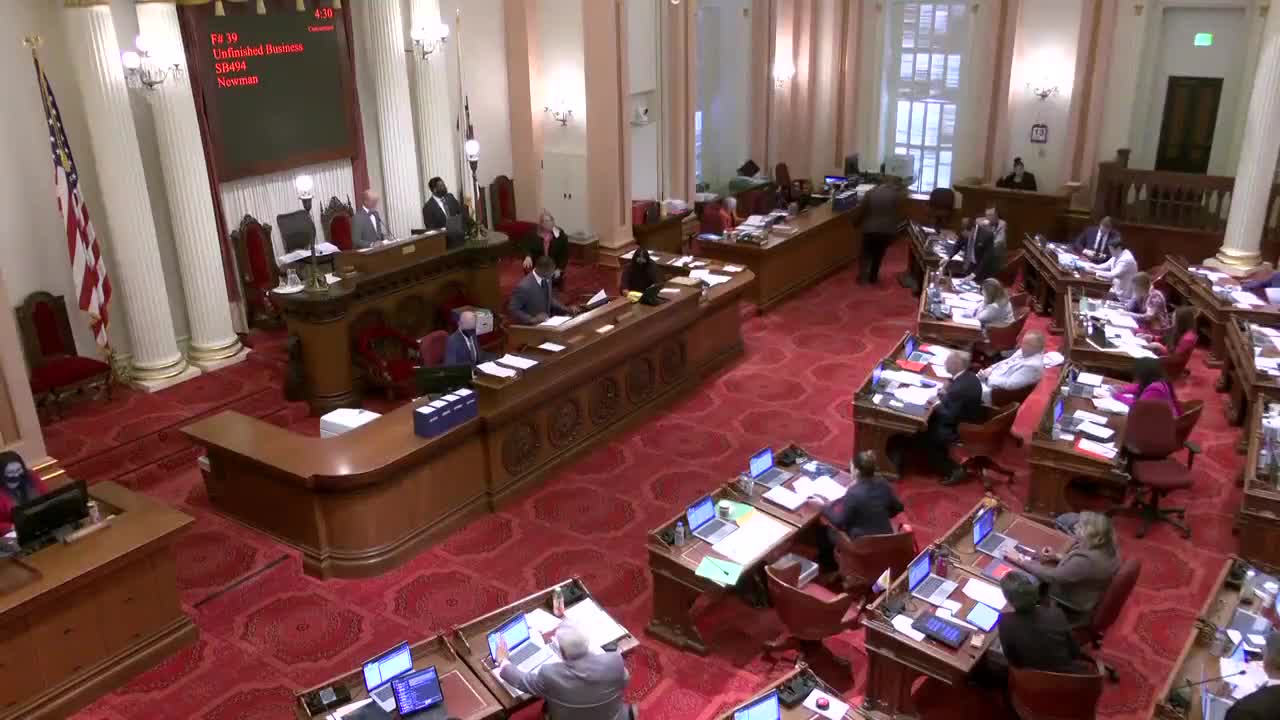 2MIN
Senate Floor
 1MIN
Assembly Floor
 56SEC
Assembly Floor
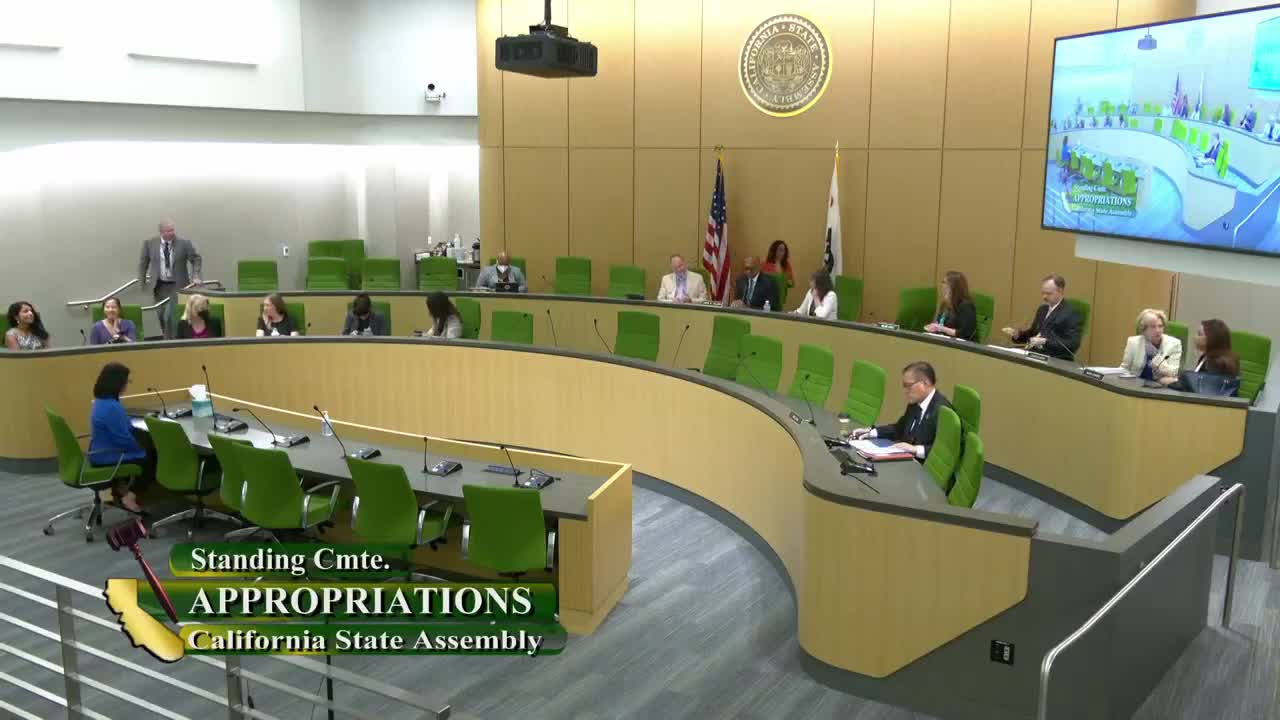 3MIN
Assembly Standing Committee on Appropriations
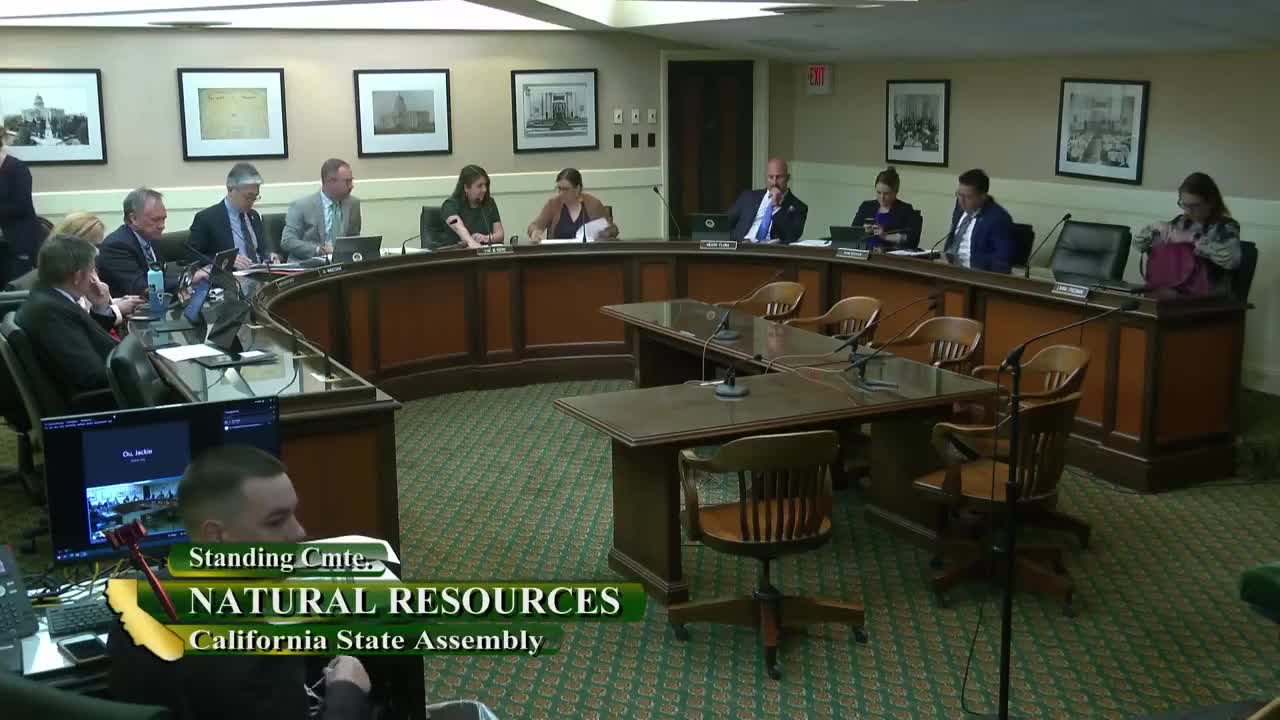 8MIN
Assembly Standing Committee on Natural Resources
 6MIN
Senate Floor
 11MIN
Senate Standing Committee on Environmental Quality
Bill Author

Bill Co-Author(s):