SB 736: Tribal gaming: compact ratification.
- Session Year: 2023-2024
- House: Senate
- Latest Version Date: 2023-06-23
Current Status:
Passed
(2023-06-23: Chaptered by Secretary of State. Chapter 11, Statutes of 2023.)
Introduced
In Committee
First Chamber
In Committee
Second Chamber
Enacted
Existing federal law, the Indian Gaming Regulatory Act of 1988, provides for the negotiation and execution of tribal-state gaming compacts for the purpose of authorizing certain types of gaming on Indian lands within a state. The California Constitution authorizes the Governor to negotiate and conclude those compacts, subject to ratification by the Legislature. Existing law expressly ratifies a number of tribal-state gaming compacts, and amendments to tribal-state gaming compacts, between the State of California and specified Indian tribes.
The California Environmental Quality Act (CEQA) requires a lead agency to prepare, or cause to be prepared, and certify the completion of, an environmental impact report on a project, as defined, that it proposes to carry out or approve that may have a significant effect on the environment, as defined, or to adopt a negative declaration if it finds that the project will not have that effect.
This bill would ratify amendments to the existing tribal-state gaming compact entered into between the State of California and the Middletown Rancheria of Pomo Indians of California to extend the terms of that compact. The bill would also ratify a new tribal-state gaming compact entered into between the State of California and the Middletown Rancheria of Pomo Indians of California. The bill would provide that, in deference to tribal sovereignty, certain actions related to these compacts are not projects for the purposes of CEQA.
This bill would declare that it is to take effect immediately as an urgency statute.
Existing federal law, the Indian Gaming Regulatory Act of 1988, provides for the negotiation and execution of tribal-state gaming compacts for the purpose of authorizing certain types of gaming on Indian lands within a state. The California Constitution authorizes the Governor to negotiate and conclude those compacts, subject to ratification by the Legislature. Existing law expressly ratifies a number of tribal-state gaming compacts, and amendments to tribal-state gaming compacts, between the State of California and specified Indian tribes.
The California Environmental Quality Act (CEQA) requires a lead agency to prepare, or cause to be prepared, and certify the completion of, an environmental impact report on a project, as defined, that it proposes to carry out or approve that may have a significant effect on the environment, as defined, or to adopt a negative declaration if it finds that the project will not have that effect.
This bill would ratify amendments to the existing tribal-state gaming compact entered into between the State of California and the Middletown Rancheria of Pomo Indians of California to extend the terms of that compact. The bill would also ratify a new tribal-state gaming compact entered into between the State of California and the Middletown Rancheria of Pomo Indians of California. The bill would provide that, in deference to tribal sovereignty, certain actions related to these compacts are not projects for the purposes of CEQA.
Existing law, the Permit Streamlining Act, which is part of the Planning and Zoning Law, requires each public agency to provide a development project applicant with a list that specifies the information that will be required from any applicant for a development project. Specifically, existing law establishes time limits for completing reviews regarding whether an application for a postentitlement phase permit is complete and compliant, and whether to approve or deny an application, as specified. Existing law requires a local agency, if a postentitlement phase permit is determined to be incomplete, denied, or determined to be noncompliant, to provide a process for the applicant to appeal that decision in writing to the governing body of the agency or, if there is no governing body, to the director of the agency, as provided by that agency.This bill would delete the provision for the applicant to appeal a decision to the director of the local agency, as described above, and, instead, require a local agency to provide a process for the applicant to appeal that decision in writing to the governing body of the agency only.Existing law, the Permit Streamlining Act, which is part of the Planning and Zoning Law, requires each public agency to provide a development project applicant with a list that specifies the information that will be required from any applicant for a development project. Specifically, existing law establishes time limits for completing reviews regarding whether an application for a postentitlement phase permit is complete and compliant, and whether to approve or deny an application, as specified. Existing law requires a local agency, if a postentitlement phase permit is determined to be incomplete, denied, or determined to be noncompliant, to provide a process for the applicant to appeal that decision in writing to the governing body of the agency or, if there is no governing body, to the director of the agency, as provided by that agency.
This bill would delete the provision for the applicant to appeal a decision to the director of the local agency, as described above, and, instead, require a local agency to provide a process for the applicant to appeal that decision in writing to the governing body of the agency only.
(a)The amendment between the State of California and the Middletown Rancheria of Pomo Indians of California, executed on May 15, 2023, entered into in accordance with the federal Indian Gaming Regulatory Act of 1988 (18 U.S.C. Secs. 1166 to 1168, inclusive, and 25 U.S.C. Sec. 2701 et seq.) for the sole purpose of extending the terms of the tribal-state gaming compact, is hereby ratified.
(b)(1)In deference to tribal sovereignty, none of the following shall be deemed a project for purposes of the California Environmental Quality Act (Division 13 (commencing with Section 21000) of the Public Resources Code):
(A)The execution of an amendment to a tribal-state gaming compact ratified by this section.
(B)The execution of an amended tribal-state gaming compact ratified by this section.
(C)The execution of an intergovernmental agreement between a tribe and a county or city government negotiated pursuant to the express authority of, or as expressly referenced in, an amended tribal-state gaming compact ratified by this section.
(D)The execution of an intergovernmental agreement between a tribe and the Department of Transportation, or other state agency, negotiated pursuant to the express authority of, or as expressly referenced in, an amended tribal-state gaming compact ratified by this section.
(E)The on-reservation impacts of compliance with the terms of an amended tribal-state gaming compact ratified by this section.
(2)Except as expressly provided in this section, this subdivision does not exempt a city, county, or city and county, or the Department of Transportation, or any state agency or local jurisdiction, from the requirements of the California Environmental Quality Act.
SEC. 2.Section 12012.110 is added to the Government Code, to read:12012.110.(a)The tribal-state gaming compact entered into in accordance with the federal Indian Gaming Regulatory Act of 1988 (18 U.S.C. Secs. 1166 to 1168, inclusive, and 25 U.S.C. Sec. 2701 et seq.) between the State of California and the Middletown Rancheria of Pomo Indians of California, executed on March 30, 2023, is hereby ratified.
(b)(1)In deference to tribal sovereignty, none of the following shall be deemed a project for purposes of the California Environmental Quality Act (Division 13 (commencing with Section 21000) of the Public Resources Code):
(A)The execution of the tribal-state gaming compact ratified by this section.
(B)The execution of an amendment to the tribal-state gaming compact ratified by this section.
(C)The execution of an intergovernmental agreement between the tribe and a county or city government negotiated pursuant to the express authority of, or as expressly referenced in, the tribal-state gaming compact ratified by this section.
(D)The execution of an intergovernmental agreement between the tribe and the Department of Transportation, or other state agency, negotiated pursuant to the express authority of, or as expressly referenced in, the tribal-state gaming compact ratified by this section.
(E)The on-reservation impacts of compliance with the terms of the tribal-state gaming compact ratified by this section.
(2)Except as expressly provided in this section, this subdivision does not exempt a city, county, or city and county, or the Department of Transportation, or any state agency or local jurisdiction, from the requirements of the California Environmental Quality Act.
SEC. 3.This act is an urgency statute necessary for the immediate preservation of the public peace, health, or safety within the meaning of Article IV of the California Constitution and shall go into immediate effect. The facts constituting the necessity are:
In order to enhance the economic development, stability, and self-sufficiency of the Middletown Rancheria of Pomo Indians of California, and to protect the interests of these tribes and their members, the surrounding communities, and the California public at the earliest possible time, it is necessary that this act take effect immediately.
(a)The amendment between the State of California and the Middletown Rancheria of Pomo Indians of California, executed on May 15, 2023, entered into in accordance with the federal Indian Gaming Regulatory Act of 1988 (18 U.S.C. Secs. 1166 to 1168, inclusive, and 25 U.S.C. Sec. 2701 et seq.) for the sole purpose of extending the terms of the tribal-state gaming compact, is hereby ratified.
(b)(1)In deference to tribal sovereignty, none of the following shall be deemed a project for purposes of the California Environmental Quality Act (Division 13 (commencing with Section 21000) of the Public Resources Code):
(A)The execution of an amendment to a tribal-state gaming compact ratified by this section.
(B)The execution of an amended tribal-state gaming compact ratified by this section.
(C)The execution of an intergovernmental agreement between a tribe and a county or city government negotiated pursuant to the express authority of, or as expressly referenced in, an amended tribal-state gaming compact ratified by this section.
(D)The execution of an intergovernmental agreement between a tribe and the Department of Transportation, or other state agency, negotiated pursuant to the express authority of, or as expressly referenced in, an amended tribal-state gaming compact ratified by this section.
(E)The on-reservation impacts of compliance with the terms of an amended tribal-state gaming compact ratified by this section.
(2)Except as expressly provided in this section, this subdivision does not exempt a city, county, or city and county, or the Department of Transportation, or any state agency or local jurisdiction, from the requirements of the California Environmental Quality Act.
SEC. 2.Section 12012.110 is added to the Government Code, to read:12012.110.(a)The tribal-state gaming compact entered into in accordance with the federal Indian Gaming Regulatory Act of 1988 (18 U.S.C. Secs. 1166 to 1168, inclusive, and 25 U.S.C. Sec. 2701 et seq.) between the State of California and the Middletown Rancheria of Pomo Indians of California, executed on March 30, 2023, is hereby ratified.
(b)(1)In deference to tribal sovereignty, none of the following shall be deemed a project for purposes of the California Environmental Quality Act (Division 13 (commencing with Section 21000) of the Public Resources Code):
(A)The execution of the tribal-state gaming compact ratified by this section.
(B)The execution of an amendment to the tribal-state gaming compact ratified by this section.
(C)The execution of an intergovernmental agreement between the tribe and a county or city government negotiated pursuant to the express authority of, or as expressly referenced in, the tribal-state gaming compact ratified by this section.
(D)The execution of an intergovernmental agreement between the tribe and the Department of Transportation, or other state agency, negotiated pursuant to the express authority of, or as expressly referenced in, the tribal-state gaming compact ratified by this section.
(E)The on-reservation impacts of compliance with the terms of the tribal-state gaming compact ratified by this section.
(2)Except as expressly provided in this section, this subdivision does not exempt a city, county, or city and county, or the Department of Transportation, or any state agency or local jurisdiction, from the requirements of the California Environmental Quality Act.
SECTION 1.Section 65913.3 of the Government Code, as added by Section 2 of Chapter 651 of the Statutes of 2022, is amended to read:65913.3.(a)(1)A local agency shall compile one or more lists that shall specify in detail the information that will be required from any applicant for a postentitlement phase permit. The local agency may revise the lists of information required from an applicant. Any revised list shall not apply to any permit pending review.(2)A local agency shall post an example of a complete, approved application and an example of a complete set of postentitlement phase permits for at least five types of housing development projects in the jurisdiction, including, but not limited to, accessory dwelling unit, duplex, multifamily, mixed use, and townhome.(3)A local agency shall make the items required by paragraphs (1) and (2) available on the agencys internet website no later than January 1, 2024.(b)(1)(A)A local agency shall determine whether an application for a postentitlement phase permit is complete and provide written notice of this determination to the applicant not later than 15 business days after the local agency received the application.(B)If the local agency determines an application is incomplete, the local agency shall provide the applicant with a list of incomplete items and a description of how the application can be made complete. The list shall be limited to incomplete items that are included on the lists required by paragraph (1) of subdivision (a). The list and description shall be provided with the written notice required by subparagraph (A).(2)(A)After receiving a notice that the application was incomplete, an applicant may cure and address the items that are deemed to be incomplete by the local agency.(B)In the review of an application submitted pursuant to subparagraph (A), the local agency shall not require the application to include an item that was not included in the list required by subparagraph (B) of paragraph (1).(C)If an applicant submits an application pursuant to subparagraph (A), the local agency shall determine whether the additional application has remedied all incomplete items listed in the determination issued pursuant to subparagraph (B) of paragraph (1). This additional application is subject to the timelines and requirements specified in subparagraph (A) of paragraph (1).(3)If a local agency does not make a timely determination as required by paragraph (1) or (2) and the application or resubmitted application states that it is for a postentitlement phase permit, the application or resubmitted application shall be deemed to be complete for the purposes of this chapter.(c)(1)For housing development projects with 25 units or fewer, a local agency shall complete the review and either return in writing a full set of comments to the applicant with a comprehensive request for revisions or return the approved permit application on each postentitlement phase permit requested, and immediately transmit that determination to the applicant by electronic mail and, if applicable, by posting the response on its internet website in the manner prescribed in subdivision (b) of Section 65913.3.5 not later than 30 business days after the local agency determines that an application for a postentitlement phase permit is complete pursuant to subdivision (b).(2)For housing development projects with 26 units or more, a local agency shall complete the review and either return in writing a full set of comments to the applicant with a comprehensive request for revisions or return the approved permit application on each postentitlement phase permit requested, and immediately transmit that determination to the applicant by electronic mail and, if applicable, by posting the response on its internet website in the manner prescribed in subdivision (b) of Section 65913.3.5 not later than 60 business days after the local agency determines that an application for a postentitlement phase permit is complete pursuant to subdivision (b).(3)(A)The time limits in this subdivision shall not apply if the local agency makes written findings within the time limits specified in paragraph (1) or (2) based on substantial evidence in the record that the proposed postentitlement phase permit might have a specific, adverse impact on public health or safety and that additional time is necessary to process the application.(B)For the purposes of this paragraph, specific, adverse impact means a significant, quantifiable, direct, and unavoidable impact, based on objective, identified, and written public health or safety standards, policies, or conditions as they existed on the date the application was deemed complete.(4)If the local agency requires review of the application by an outside entity, the time limits in this subdivision shall be tolled until the outside entity completes the review and returns the application to the local agency, at which point the local agency shall complete the review within the time remaining under the time limit, provided that the local agency notifies the applicant within three business days by electronic mail and, if applicable, by posting the notification on its internet website in the manner prescribed in subdivision (b) of Section 65913.3.5 of the tolling and resumption of the time limit.(d)(1)If a local agency finds that a complete application is noncompliant, the local agency shall provide the applicant with a list of items that are noncompliant and a description of how the application can be remedied by the applicant within the time limits specified in subdivision (c).(2)The local agency shall provide the list and description authorized by paragraph (1) when it transmits its determination to the applicant as required by subdivision (c).(3)If a local agency denies a postentitlement phase permit application based on a determination that the application is noncompliant, the applicant may attempt to remedy the application.(4)If an applicant submits an application pursuant to paragraph (3), the additional application is subject to the timelines of a new application as specified in subdivision (c).(e)(1)If a postentitlement phase permit is determined to be incomplete under subdivision (b) or denied or determined to be noncompliant under subdivision (c) or (d), the local agency shall provide a process for the applicant to appeal that decision in writing to the governing body of the agency. A city or county shall provide that the right of appeal is to the governing body or, at their option, the planning commission, or both.(2)(A)With respect to a postentitlement phase permit concerning housing development projects with 25 units or fewer, a local agency on the appeal shall provide a final written determination by not later than 60 business days after receipt of the applicants written appeal. The fact that an appeal is permitted to both the planning commission and to the governing body does not extend the 60-business-day period.(B)With respect to a postentitlement phase permit concerning housing development projects with 26 units or more, a local agency on the appeal shall provide a final written determination by not later than 90 business days after receipt of the applicants written appeal. The fact that an appeal is permitted to both the planning commission and to the governing body does not extend the 90-business-day period.(f)If a local agency fails to meet the time limits in this section, it shall be in violation of Section 65589.5.(g)This section does not place limitations on the amount of feedback that a local agency may provide or revisions that a local agency may request of an applicant.(h)For residential or residential mixed-use developments that are subject to the requirements set forth in Section 65913.4, the provisions of paragraph (2) of subdivision (h) of Section 65913.4 shall apply. Permits for these developments that are subject to paragraph (2) of subdivision (h) of Section 65913.4 shall not be in conflict with the requirements of this section. The local agency shall comply with both sets of standards.(i)This section does not preclude an applicant and a local agency from mutually agreeing to an extension of any time limit provided by this section. However, a local agency shall not require an agreement as a condition of accepting the application for, or processing of, a postentitlement phase permit, unless the agreement is obtained for the purpose of permitting concurrent processing of related approvals or an environmental review on the same housing development project.(j)For purposes of this section, the following definitions apply:(1)Housing development project has the same meaning as in paragraph (3) of subdivision (b) of Section 65905.5.(2)Local agency means any county, city, or city and county.(3)(A)Postentitlement phase permit includes all nondiscretionary permits and reviews filed after the entitlement process has been completed that are required or issued by the local agency to begin construction of a development that is intended to be at least two-thirds residential, excluding discretionary and ministerial planning permits, entitlements, and other permits and reviews that are covered under Chapter 4.5 (commencing with Section 65920). A postentitlement phase permit includes, but is not limited to, all of the following:(i)Building permits, and all inter-departmental review required for the issuance of a building permit.(ii)Permits for minor or standard off-site improvements.(iii)Permits for demolition.(iv)Permits for minor or standard excavation and grading.(B)A local agency may identify by ordinance a threshold for determining whether a permit constitutes a minor or standard permit for the purposes of this paragraph, which shall be supported by written findings adopted by the jurisdiction.(C)A postentitlement phase permit does not include a permit required and issued by the California Coastal Commission, a special district, a utility that is not owned and operated by a local agency, or any other entity that is not a city, county, or city and county.(a)(1)A local agency shall compile one or more lists that shall specify in detail the information that will be required from any applicant for a postentitlement phase permit. The local agency may revise the lists of information required from an applicant. Any revised list shall not apply to any permit pending review.
(2)A local agency shall post an example of a complete, approved application and an example of a complete set of postentitlement phase permits for at least five types of housing development projects in the jurisdiction, including, but not limited to, accessory dwelling unit, duplex, multifamily, mixed use, and townhome.
(3)A local agency shall make the items required by paragraphs (1) and (2) available on the agencys internet website no later than January 1, 2024.
(b)(1)(A)A local agency shall determine whether an application for a postentitlement phase permit is complete and provide written notice of this determination to the applicant not later than 15 business days after the local agency received the application.
(B)If the local agency determines an application is incomplete, the local agency shall provide the applicant with a list of incomplete items and a description of how the application can be made complete. The list shall be limited to incomplete items that are included on the lists required by paragraph (1) of subdivision (a). The list and description shall be provided with the written notice required by subparagraph (A).
(2)(A)After receiving a notice that the application was incomplete, an applicant may cure and address the items that are deemed to be incomplete by the local agency.
(B)In the review of an application submitted pursuant to subparagraph (A), the local agency shall not require the application to include an item that was not included in the list required by subparagraph (B) of paragraph (1).
(C)If an applicant submits an application pursuant to subparagraph (A), the local agency shall determine whether the additional application has remedied all incomplete items listed in the determination issued pursuant to subparagraph (B) of paragraph (1). This additional application is subject to the timelines and requirements specified in subparagraph (A) of paragraph (1).
(3)If a local agency does not make a timely determination as required by paragraph (1) or (2) and the application or resubmitted application states that it is for a postentitlement phase permit, the application or resubmitted application shall be deemed to be complete for the purposes of this chapter.
(c)(1)For housing development projects with 25 units or fewer, a local agency shall complete the review and either return in writing a full set of comments to the applicant with a comprehensive request for revisions or return the approved permit application on each postentitlement phase permit requested, and immediately transmit that determination to the applicant by electronic mail and, if applicable, by posting the response on its internet website in the manner prescribed in subdivision (b) of Section 65913.3.5 not later than 30 business days after the local agency determines that an application for a postentitlement phase permit is complete pursuant to subdivision (b).
(2)For housing development projects with 26 units or more, a local agency shall complete the review and either return in writing a full set of comments to the applicant with a comprehensive request for revisions or return the approved permit application on each postentitlement phase permit requested, and immediately transmit that determination to the applicant by electronic mail and, if applicable, by posting the response on its internet website in the manner prescribed in subdivision (b) of Section 65913.3.5 not later than 60 business days after the local agency determines that an application for a postentitlement phase permit is complete pursuant to subdivision (b).
(3)(A)The time limits in this subdivision shall not apply if the local agency makes written findings within the time limits specified in paragraph (1) or (2) based on substantial evidence in the record that the proposed postentitlement phase permit might have a specific, adverse impact on public health or safety and that additional time is necessary to process the application.
(B)For the purposes of this paragraph, specific, adverse impact means a significant, quantifiable, direct, and unavoidable impact, based on objective, identified, and written public health or safety standards, policies, or conditions as they existed on the date the application was deemed complete.
(4)If the local agency requires review of the application by an outside entity, the time limits in this subdivision shall be tolled until the outside entity completes the review and returns the application to the local agency, at which point the local agency shall complete the review within the time remaining under the time limit, provided that the local agency notifies the applicant within three business days by electronic mail and, if applicable, by posting the notification on its internet website in the manner prescribed in subdivision (b) of Section 65913.3.5 of the tolling and resumption of the time limit.
(d)(1)If a local agency finds that a complete application is noncompliant, the local agency shall provide the applicant with a list of items that are noncompliant and a description of how the application can be remedied by the applicant within the time limits specified in subdivision (c).
(2)The local agency shall provide the list and description authorized by paragraph (1) when it transmits its determination to the applicant as required by subdivision (c).
(3)If a local agency denies a postentitlement phase permit application based on a determination that the application is noncompliant, the applicant may attempt to remedy the application.
(4)If an applicant submits an application pursuant to paragraph (3), the additional application is subject to the timelines of a new application as specified in subdivision (c).
(e)(1)If a postentitlement phase permit is determined to be incomplete under subdivision (b) or denied or determined to be noncompliant under subdivision (c) or (d), the local agency shall provide a process for the applicant to appeal that decision in writing to the governing body of the agency or, if there is no governing body, to the director of the agency, as provided by that agency. A city or county shall provide that the right of appeal is to the governing body or, at their option, the planning commission, or both.
(2)(A)With respect to a postentitlement phase permit concerning housing development projects with 25 units or fewer, a local agency on the appeal shall provide a final written determination by not later than 60 business days after receipt of the applicants written appeal. The fact that an appeal is permitted to both the planning commission and to the governing body does not extend the 60-business-day period.
(B)With respect to a postentitlement phase permit concerning housing development projects with 26 units or more, a local agency on the appeal shall provide a final written determination by not later than 90 business days after receipt of the applicants written appeal. The fact that an appeal is permitted to both the planning commission and to the governing body does not extend the 90-business-day period.
(f)If a local agency fails to meet the time limits in this section, it shall be in violation of Section 65589.5.
(g)This section does not place limitations on the amount of feedback that a local agency may provide or revisions that a local agency may request of an applicant.
(h)For residential or residential mixed-use developments that are subject to the requirements set forth in Section 65913.4, the provisions of paragraph (2) of subdivision (h) of Section 65913.4 shall apply. Permits for these developments that are subject to paragraph (2) of subdivision (h) of Section 65913.4 shall not be in conflict with the requirements of this section. The local agency shall comply with both sets of standards.
(i)This section does not preclude an applicant and a local agency from mutually agreeing to an extension of any time limit provided by this section. However, a local agency shall not require an agreement as a condition of accepting the application for, or processing of, a postentitlement phase permit, unless the agreement is obtained for the purpose of permitting concurrent processing of related approvals or an environmental review on the same housing development project.
(j)For purposes of this section, the following definitions apply:
(1)Housing development project has the same meaning as in paragraph (3) of subdivision (b) of Section 65905.5.
(2)Local agency means any county, city, or city and county.
(3)(A)Postentitlement phase permit includes all nondiscretionary permits and reviews filed after the entitlement process has been completed that are required or issued by the local agency to begin construction of a development that is intended to be at least two-thirds residential, excluding discretionary and ministerial planning permits, entitlements, and other permits and reviews that are covered under Chapter 4.5 (commencing with Section 65920). A postentitlement phase permit includes, but is not limited to, all of the following:
(i)Building permits, and all inter-departmental review required for the issuance of a building permit.
(ii)Permits for minor or standard off-site improvements.
(iii)Permits for demolition.
(iv)Permits for minor or standard excavation and grading.
(B)A local agency may identify by ordinance a threshold for determining whether a permit constitutes a minor or standard permit for the purposes of this paragraph, which shall be supported by written findings adopted by the jurisdiction.
(C)A postentitlement phase permit does not include a permit required and issued by the California Coastal Commission, a special district, a utility that is not owned and operated by a local agency, or any other entity that is not a city, county, or city and county.
|
Date
|
Status
|
|---|---|
| Jun 23, 2023 | Chaptered by Secretary of State. Chapter 11, Statutes of 2023. |
| Jun 23, 2023 | Approved by the Governor. |
| Jun 23, 2023 | Enrolled and presented to the Governor at 11 a.m. |
| Jun 22, 2023 | Urgency clause adopted. |
| Jun 22, 2023 | Assembly amendments concurred in. (Ayes 38. Noes 0. Page 1679.) Ordered to engrossing and enrolling. |
| Jun 20, 2023 | In Senate. Concurrence in Assembly amendments pending. |
| Jun 19, 2023 | Read third time. Urgency clause adopted. Passed. (Ayes 73. Noes 0. Page 2288.) Ordered to the Senate. |
| Jun 12, 2023 | Read third time and amended. |
| Jun 12, 2023 | Read second time. Ordered to third reading. |
| Jun 12, 2023 | Ordered to third reading. |
| Jun 8, 2023 | Assembly Rule 96 suspended. |
| Jun 8, 2023 | Withdrawn from committee. |
| Jun 8, 2023 | Ordered to second reading. |
| May 26, 2023 | From committee with author's amendments. Read second time and amended. Re-referred to Com. on G.O. |
| May 26, 2023 | Referred to Com. on G.O. |
| May 1, 2023 | In Assembly. Read first time. Held at Desk. |
| May 1, 2023 | Read third time. Passed. (Ayes 37. Noes 0. Page 962.) Ordered to the Assembly. |
| Apr 26, 2023 | Read second time. Ordered to consent calendar. |
| Apr 25, 2023 | From committee: Do pass. Ordered to consent calendar. (Ayes 11. Noes 0. Page 875.) (April 24). |
| Apr 18, 2023 | Set for hearing April 24. |
| Apr 12, 2023 | From committee: Do pass and re-refer to Com. on HOUSING with recommendation: To consent calendar. (Ayes 8. Noes 0. Page 684.) (April 12). Re-referred to Com. on HOUSING. |
| Mar 29, 2023 | Set for hearing April 12. |
| Mar 1, 2023 | Referred to Coms. on GOV. & F. and HOUSING. |
| Feb 21, 2023 | From printer. May be acted upon on or after March 20. |
| Feb 17, 2023 | Introduced. Read first time. To Com. on RLS. for assignment. To print. |
|
Date
|
Description
|
Location
|
Votes
|
|
|---|---|---|---|---|
| Jun 22, 2023 | Unfinished Business SB736 McGuire et al. Urgency Clause Concurrence | Senate Floor |
Passed |
|
| Jun 19, 2023 | SB 736 McGuire Third Reading Urgency By Aguiar-Curry | Assembly Floor |
Passed |
|
| May 1, 2023 | Consent Calendar SB736 McGuire | Senate Floor |
Passed |
|
| Apr 24, 2023 | Do pass and be ordered to the Consent Calendar | Senate Standing Committee on Housing |
Passed |
|
| Apr 12, 2023 | Do pass, but first be re-referred to the Committee on [Housing] with the recommendation: To Consent Calendar | Senate Standing Committee on Governance and Finance |
Passed |
This list shows positions taken on this bill by organizations on the date displayed, which is linked to the original source.
Positions by individuals are not included.
SENATE RULES COMMITTEE Office of Senate Floor Analyses (916) 651-1520 Fax: (916) 327-4478 | SB 736 |
UNFINISHED BUSINESS
Bill No: SB 736
Author: McGuire (D), et al.
Amended: 6/12/23
Vote: 27 - Urgency
PRIOR SENATE VOTES NOT RELEVANT
ASSEMBLY FLOOR: 73-0, 6/19/23 - See last page for vote
SUBJECT: Tribal gaming: compact ratification
SOURCE: Author
DIGEST:
This bill ratifies the tribal-State Gaming Compact between the State of California (State) and the Middletown Rancheria of Pomo Indians (hereafter “Tribe), executed on March 30, 2023. Additionally, this bill ratifies the second amendment to the tribal-state gaming compact between the State and the Tribe, executed on May 15, 2023.
Assembly Amendments
delete the contents of the bill and instead ratifies the tribal-state gaming compact between the State and the Tribe, executed on March 30, 2023 and ratifies the tribal-state gaming compact between the State and the Tribe, executed on May 15, 2023.
Existing law:
- Provides, under the Indian Gaming Regulatory Act (IGRA), for the negotiation and conclusion of compacts between federally recognized Indian tribes and the State for the purpose of conducting Class III gaming activities on Indian lands within a State as a means of promoting tribal economic development, self-sufficiency, and strong tribal governments.
- Authorizes expressly a number of tribal-state gaming compacts between the State of California and specified Indian tribes.
- Authorizes the conduct of Class III gaming activities to the extent such activities are permitted by state law, a gaming compact has been concluded by a federally recognized tribe and the State, and the compact has been approved by the Secretary of the Interior.
- Limits the operation of Class III gaming activities to Indian lands acquired on or before October 17, 1988. Provides, for certain exceptions to conduct gaming activities on Indian lands acquired after October 17, 1988.
- Defines “Indian lands” to mean all lands within the limits of any Indian reservation, and any lands title to which is either held in trust by the United States for the benefit of any Indian tribe, or individual, or held by any Indian tribe or individual subject to restriction by the U.S. against alienation and over which an Indian tribe exercises governmental power.
- Requires the State to negotiate to conclude a compact in good faith with an Indian tribe having jurisdiction over the Indian lands upon which the Class III gaming activity is to be conducted. Provides the U.S. district courts with jurisdiction over any cause of action initiated by a tribal government alleging that the State failed to negotiate in good faith to conclude a compact. Prescribes the remedy, mediation supervised by the courts, if it is found that the State failed to negotiate in good faith to conclude a compact.
- Authorizes the Governor, under the California Constitution, to negotiate and conclude compacts, subject to ratification by the Legislature.
This bill:
- Ratifies the tribal-state gaming compact between the State and the Tribe, executed on March 30, 2023.
- Ratifies the second amendment to the tribal-state gaming compact between the state and the Tribe, executed on May 15, 2023
- Provides that, in deference to tribal sovereignty, certain actions are not deemed projects for purposes of the California Environmental Quality Act (CEQA); and, stipulate, except as expressly provided, that none of the provisions shall be construed to exempt a city, county, or city and county, or the Department of Transportation, or any state agency or local jurisdiction, from CEQA requirements.
- Contains an Urgency Clause.
Background
Middletown Compact. The Compact authorizes the Tribe to operate a maximum of 1,200 slot machines at no more than two gaming facilities located on eligible Indian lands held in trust for the Tribe, and located within the boundaries of the Tribe’s reservation.
The Tribe has agreed to pay the State its pro rata share of costs the State incurs for the performance of its duties under the Compact. The Compact provides that the Tribe is eligible for a reduction or elimination of its SDF pro rata contribution if the Tribe remains a limited-gaming tribe and there are sufficient funds in the SDF. If SDF payments are due, the Tribe may apply a credit of $437,500 that it pre-paid for gaming device license under its 1999 compact. The Compact does not require the Tribe to pay into the Revenue Sharing Trust Fund (RSTF) or the Tribal Nation Grant Fund (TNGF).
The Compact requires the Tribe to pay .25% of Net Win to neighboring jurisdictions, public agencies, and local charitable organizations to mitigate impacts upon those entities resulting from the operation of the Gaming Facility, or other purposes as the Tribe may see fit, consistent with the request of a recipient.
Certain terms of the Compact related to licensing, regulatory, patron protection, and public health provisions are substantially the same as recent compacts. Specifically, the Compact includes a Tribal Labor Relations Ordinance (TLRO), which provides that gaming may commence only after the Tribe has adopted a TLRO that allows for a secret ballot election and union neutrality.
Once effective (legislative ratification and federal approval required), this Compact will be in full force and effect for 25 years following the effective date.
Second Amendment to the Compact. Last year the State of California agreed to an 18-month extension with approximately 26 tribes who were still operating under their original 1999 compact. In addition, the State of California agreed to a one-year extension with the Middletown Rancheria, which extended their 1999 Compact until June 30, 2023. At the time, the State and the Tribe believed that a one-year extension was sufficient to ensure that the Tribe would be able to complete the ratification process on a new compact.
As such, for the second time in one year, last year the California Legislature ratified a new compact for the Middletown Rancheria that was to replace the Tribes’ 1999 Compact. The compact was submitted to the Secretary of the United States Department of Interior (Secretary) for a required 45-day review. In July 2022, the Assistant Secretary – Indian Affairs, pursuant to authority delegated from the Secretary, once again disapproved the Tribe’s compact claiming that the Compact contained several provisions that exceed the limitations on compact negotiations.
On March 30, 2023, the State of California and the Tribe once again executed a new compact to replace the Tribe’s 1999 (See above). That compact made several changes, including; reorienting the definition of gaming facility, and eliminating environmental review provisions in favor of mitigation payments to neighboring jurisdictions. While the State and the Tribe fully expect that these changes will be sufficient to ensure approval by the Secretary, it is extremely unlikely that approval will be completed before June 30, 2023. Thus, without this extension, the Middletown Rancheria will be unable to continue Class III gaming past June 30, 2023.
Middletown Rancheria of Pomo Indians of California. The Middletown Rancheria of Pomo Indians of California is a federally recognized Indian Tribe of Pomo people in Middletown, California. Middletown Rancheria is located north-northeast of Santa Rosa in Lake County. It was established in July of 1910 and occupies 108 acres.
With the establishment of the Middletown Rancheria at the turn of the century, members of other Tribal groups, such as Pomo, Wappo and Wintun joined, either through marriage or customary adoption. The native language of the Tribe is Lake Miwok. The original five families comprise the present Tribal Membership of 118 recognized adult Tribal Members, which is the General Council, and 83 recognized Tribal minor children. The Middletown Rancheria’s entire membership is approximately 201 Tribal Members. There are approximately 25 families that reside on the Rancheria and Tribal Members reside in the Middletown Lake County area, throughout California, and various states across the United States.
The Tribe has an adopted Constitution, which provides for the basis of all governing laws created by the Tribe. Ordinances are governing laws created and established by the Tribe such as, Gaming Ordinance, Election Procedures & Ordinance, Tribal Tax Code, and Water Quality. The General Council is comprised of the adult Tribal membership, who are 18 years of age and older. The General Council conducts duly called monthly meetings to review all reporting and business of the Tribe. The General Council elects Tribal Council Officials pursuant to its ordinance. Tribal Council Officials consist of five elected officials voted into office by the adult Tribal Membership. The Tribal Council oversees all Tribal Government day-to-day business on behalf of the Tribe.
The Tribe began operating Twin Pine Casino in a modular building in November of 1994. The Tribe entered into a Tribal-State Compact with the State of California in 1999. In November 2008, the Tribe began its first phase of expansion of the permanent gaming facility. In March of 2009, the three story hotel construction was completed. The casino offers over 500 slot machines and a variety of table games including Double Deck Blackjack, 6 Deck Shoe Blackjack, and Three Card Super Shot Poker. The hotel features over 59 rooms including luxury suites. Additionally, the facilities include dining options such as the Manzanita Restaurant and Grapevine Bar & Lounge. In October 2002, the Tribe purchased the Mount St. Helena Brewing Co., which is a micro-brewery and restaurant located in Middletown. In doing so, the Tribe became the first tribe in California and the United States to own and operate a microbrewery and distribute beer.
The Tribe opened its first medical satellite clinic in September of 2011, in conjunction with Lake County Tribal Health Consortium, Inc. The satellite clinic is open twice a month with the capability of up to ten appointments per day. The satellite clinic provides health care with a physician, nurse, and receptionist. Medications are delivered to the Rancheria for Tribal Members and community members that utilize the facility. The satellite clinic also provides diabetic classes on a weekly basis. The clinic is open to Middletown Rancheria Tribal Members, Native Americans, and Non-Native people.
Indian Gaming Regulatory Act. In 1988, Congress enacted IGRA to provide a statutory basis for the operation and regulation of gaming on Indian lands. IGRA provides that an Indian tribe may conduct gaming activity on Indian lands if the activity “is not specifically prohibited by federal law and is conducted within a State which does not prohibit such gaming activity.”
IGRA distinguishes between three classes of gaming (Class I, Class II, and Class III) and provides for different forms of regulation for each class. Class I gaming includes “social games” for minor prizes or “traditional forms of Indian gaming.” Class II gaming is defined to include bingo and card games that are explicitly authorized by the laws of the state, or that are not explicitly prohibited by the laws of the state and are played at any location in the State, so long as the card games are played in conformity with those laws and regulations. Class III gaming includes such things as slot machines, casino games, and banked card games such as black jack and baccarat. Class III gaming may only be conducted under terms of a compact negotiated between an Indian tribe and a State.
IGRA was enacted against a legal background in which Indian tribes and individuals generally are exempt from state taxation within their own territory. IGRA provides that with the exception of assessments permitted under the statute, to defray the State’s costs of regulating gaming activity, IGRA shall not be interpreted as conferring upon a State authority to impose any tax, fee, charge, or other assessment upon an Indian tribe to engage in Class III activity. Nor may a State refuse to enter into negotiations based on the lack of authority to impose such a tax, fee, charge, or other assessment.
When a tribe requests negotiations for a Class III compact, IGRA requires the State to negotiate with the Indian tribe in good faith. IGRA provides a comprehensive process to prevent an impasse in compact negotiations, which is triggered when a tribe files suit alleging that the State has refused to negotiate or has failed to negotiate in good faith.
Before 2000, the California Constitution prohibited Class III gaming. In 2000, California voters approved Proposition 1A, which had been proposed by the Governor and passed by the Legislature. Proposition 1A amended the California Constitution to permit the State to negotiate compacts with federally recognized Indian tribes for certain Class III gaming activities. Because non-Indian parties were still forbidden from operating gaming facilities, Proposition 1A granted Indian tribes a “constitutionally protected monopoly on most types of Class III games in California.”
FISCAL EFFECT: Appropriation: No Fiscal Com.: Yes Local: No
SUPPORT: (Verified 6/20/23)
None received
OPPOSITION: (Verified 6/20/23)
None received
ASSEMBLY FLOOR: 73-0, 6/19/23
AYES: Addis, Aguiar-Curry, Alanis, Alvarez, Arambula, Bains, Bauer-Kahan, Bennett, Boerner, Bonta, Calderon, Juan Carrillo, Wendy Carrillo, Cervantes, Chen, Connolly, Megan Dahle, Davies, Dixon, Flora, Mike Fong, Vince Fong, Friedman, Gabriel, Garcia, Gipson, Grayson, Haney, Hart, Holden, Hoover, Irwin, Jackson, Jones-Sawyer, Kalra, Lackey, Lee, Low, Lowenthal, Maienschein, Mathis, McCarty, Muratsuchi, Stephanie Nguyen, Ortega, Pacheco, Papan, Jim Patterson, Joe Patterson, Pellerin, Petrie-Norris, Quirk-Silva, Ramos, Reyes, Luz Rivas, Robert Rivas, Rodriguez, Blanca Rubio, Santiago, Schiavo, Soria, Ta, Ting, Valencia, Villapudua, Waldron, Wallis, Ward, Wicks, Wilson, Wood, Zbur, Rendon
NO VOTE RECORDED: Berman, Bryan, Essayli, Gallagher, McKinnor, Sanchez, Weber
Prepared by: Felipe Lopez / G.O. / (916) 651-1530
6/21/23 14:30:36
**** END ****
SENATE THIRD READING
STR Bill Id:SB 736
Author:(McGuire)
As Amended Ver:June 12, 2023
2/3 vote. Urgency
SUMMARY
This bill ratifies a Tribal-State Gaming Compact (Compact) between the State of California
(State) and the Middletown Rancheria of Pomo Indians of California (Tribe) pursuant to the Indian Gaming Regulatory Act of 1988 (IGRA). Additionally, this bill would ratify amendments to extend the terms, up to 18 months (December 31, 2024), of a previous 1999 tribal-state gaming compact between the State of California and the Tribe, as specified.
Major Provisions
- Ratifies a tribal-state gaming compact between the State of California and the Middletown Rancheria of Pomo Indians of California which was executed on March 30, 2023.
- Provides that, in deference to tribal sovereignty, certain actions are not deemed projects for purposes of the California Environmental Quality Act (CEQA); and, stipulate, except as expressly provided, that none of the provisions shall be construed to exempt a city, county, or city and county, or the Department of Transportation, or any state agency or local jurisdiction, from CEQA requirements.
- Provides, once effective (legislative ratification and federal approval required), the compact will be in full force and effect for 25 years following the effective date.
- Ratifies an amendment between the State and the Tribe, executed on May 15, 2023, entered into in accordance with IGRA for the sole purpose of extending the terms of an existing tribal-state gaming compact until December 31, 2024. The Tribe's original compact execution date was on September 10, 1999. The tribal-state compact between the State and the Tribe, which was signed on March 30, 2023, will take the place of this amendment once it becomes operative.
EXISTING LAW:
- Provides, under the IGRA, for the negotiation and conclusion of compacts between federally recognized Indian tribes and the State for the purpose of conducting Class III gaming activities on Indian lands within a State as a means of promoting tribal economic development, self-sufficiency, and strong tribal governments.
- Authorizes expressly a number of tribal-state gaming compacts between the State and specified Indian tribes.
- Authorizes the conduct of Class III gaming activities to the extent such activities are permitted by state law, a gaming compact has been concluded by a federally recognized tribe and the State, and the compact has been approved by the Secretary of the Interior. 4
- Limits the operation of Class III gaming activities to Indian lands acquired on or before October 17, 1988. Provides exceptions to conduct gaming activities on Indian lands acquired after October 17, 1988.
- Defines Indian lands to mean all lands within the limits of any Indian reservation, and any lands title to which is either held in trust by the United States (U.S.) for the benefit of any Indian tribe, or individual, or held by any Indian tribe or individual subject to restriction by the U.S. against alienation and over which an Indian tribe exercises governmental power.
- Requires the State to negotiate to conclude a compact in good faith with an Indian tribe having jurisdiction over the Indian lands upon which the Class III gaming activity is to be conducted. Provides the U.S. district courts with jurisdiction over any cause of action initiated by a tribal government alleging that the State failed to negotiate in good faith to conclude a compact. Prescribes the remedy, mediation supervised by the courts, if it is found that the State failed to negotiate in good faith to conclude a compact.
- Authorizes the Governor, under the California Constitution, to negotiate and conclude compacts, subject to ratification by the Legislature.
COMMENTS
Background:
The Compact between the State of California and the Middletown Rancheria of Pomo Indians of California was executed on March 30, 2023. The Compact authorizes the Tribe to operate a maximum of 1,200 slot machines at no more than two gaming facilities located on eligible Indian lands held in trust for the Tribe, and located within the boundaries of the Tribe's reservation.
The Tribe has agreed to pay the State its pro rata share of costs the State incurs for the performance of its duties under the Compact. The Compact provides that the Tribe is eligible for a reduction or elimination of its Special Distribution Fund (SDF) pro rata contribution if the Tribe remains a limited-gaming tribe and there are sufficient funds in the SDF. If SDF payments are due, the Tribe may apply a credit of $437,500 that it pre-paid for gaming device license under its 1999 compact. The Compact does not require the Tribe to pay into the Revenue Sharing Trust Fund (RSTF) or the Tribal Nation Grant Fund (TNGF).
The Compact requires the Tribe to pay .25% of Net Win to neighboring jurisdictions, public agencies, and local charitable organizations to mitigate impacts upon those entities resulting from the operation of the gaming facility, or other purposes as the Tribe may see fit, consistent with the request of a recipient.
Certain terms of the Compact related to licensing, regulatory, patron protection, and public health provisions are substantially the same as recent compacts. Specifically, the Compact includes a Tribal Labor Relations Ordinance (TLRO), which provides that gaming may commence only after the Tribe has adopted a TLRO that allows for a secret ballot election and union neutrality.
The Tribe began operating Twine Pine Casino in a modular building in November of 1994. The casino offers over 500 machines, not all of them are Class III slot machines, and a variety of table games including Double Deck Blackjack, 6 Deck Shoe Blackjack, and Three Card Super Shot Poker.
Last year, for the second time in one year, the California Legislature ratified a new compact for the Middletown Rancheria that was to replace the Tribes' 1999 Compact. The compact was submitted to the Secretary of the United States Department of Interior for a required 45-day review. In July 2022, the Assistant Secretary – Indian Affairs, pursuant to authority delegated from the Secretary, once again disapproved the Tribe's compact claiming that the Compact contained several provisions that exceed the limitations on compact negotiations. As such, this Compact has made several changes, including; reorienting the definition of gaming facility, and eliminating environmental review provisions in favor of mitigation payments to neighboring jurisdictions.
The Compact goes into effect following legislative ratification and approval by the U.S. Secretary of the Interior. The Compact will be in full force and effect for 25 years following the effective date.
Brief History and Background on the Tribe:
The Middletown Rancheria of Pomo Indians of California is a federally recognized Indian Tribe of the Pomo Indians located in Middletown, California. The Middletown Rancheria is located in the north-northeast of Santa Rosa in Lake County. It was established in July of 1910 and occupies 108 acres.
With the establishment of the Middletown Rancheria at the turn of the century, members of other Tribal groups, such as Pomo, Wappo and Wintun joined, either through marriage or customary adoption. The native language of the Tribe is Lake Miwok. The original five families comprise the present Tribal Membership of 118 recognized adult Tribal Members, which is the General Council, and 83 recognized Tribal minor children. The Middletown Rancheria's entire membership is approximately 201 Tribal Members. There are approximately 25 families that reside on the Rancheria and Tribal Members reside in the Middletown Lake County area, throughout California, and various states across the United States.
The Tribe has an adopted Constitution, which provides for the basis of all governing laws created by the Tribe. Ordinances are governing laws created and established by the Tribe such as, Gaming Ordinance, Election Procedures & Ordinance, Tribal Tax Code, and Water Quality. The General Council is comprised of the adult Tribal membership, who are 18 years of age and older. The General Council conducts duly called monthly meetings to review all reporting and business of the Tribe. The General Council elects Tribal Council Officials pursuant to ordinance. Tribal Council Officials consist of five elected officials voted into office by the adult Tribal Membership. The Tribal Council oversees all Tribal Government day-to-day business on behalf of the Tribe.
The Tribe began operating Twin Pine Casino in a modular building in November of 1994. The Tribe entered into a Tribal-State Compact with the State of California in 1999. In November, 2008, the Tribe began its first phase of expansion of the permanent gaming facility. In March of 2009 the three story hotel construction was completed. The casino offers over 500 slot machines and a variety of table games including Double Deck Blackjack, 6 Deck Shoe Blackjack, and Three Card Super Shot Poker. The hotel features over 59 rooms including luxury suites. Additionally, the facilities include dining options such as the Manzanita Restaurant and Grapevine Bar & Lounge. In October 2002, the Tribe purchased the Mount St. Helena Brewing Co. which is a micro-brewery and restaurant located in Middletown. In doing so, the Tribe became the first tribe in California and the United States to own and operate a micro-brewery and distribute beer.
The Tribe opened its first medical satellite clinic in September of 2011, in conjunction with Lake County Tribal Health Consortium, Inc. The satellite clinic is open twice a month with the capability of up to ten appointments per day. The satellite clinic provides health care with a physician, nurse, and receptionist. Medications are delivered to the Rancheria for Tribal Members and community members that utilize the facility. The satellite clinic also provides diabetic classes on a weekly basis. The clinic is open to Middletown Rancheria Tribal Members, Native Americans, and Non-Native people.
Key Provisions of the Compact
Scope of Class III Gaming Authorized. The Tribe is authorized to operate up to 1,200 slot machines, banking or percentage card games, and any devices or games that are authorized under state law to the California State Lottery, provided that the Tribe will not offer such games through use of the Internet unless others in the state not affiliated with or licensed by the California State Lottery are permitted to do so under state and federal law. The Tribe can operate off-track wagering on horse races at a satellite wagering facility pursuant to the requirements outlined in the Compact. The Tribe shall not engage in Class III gaming that is not expressly authorized in the Compact.
Authorized Gaming Facility. The Tribe may establish and operate no more than two gaming facilities and engage in Class III gaming only on eligible Indian lands held in trust for the Tribe, located within the boundaries of the Tribe's reservation.
Payments to the Special Distribution Fund. The Tribe shall pay to the State, on a pro rata basis, the costs the State incurs for the performance of all its duties under this Compact, as established by the monies appropriated in the annual Budget Act for the performance of their duties under the Class III gaming compacts. The Compact provides that the Tribe is eligible for a reduction or elimination of its SDF pro rata contribution if the Tribe remains a limited-gaming tribe and there are sufficient funds in the SDF. If SDF payments are due, the Tribe may apply a credit of $437,500 that it pre-paid for gaming device license under its 1999 compact.
Payments to the RSTF or the TNGF. The Compact does not require the Tribe to pay into either the RSTF or the TNGF.
Distribution by Tribe to Local Governments. The Compact requires the Tribe to pay .25% of Net Win to neighboring jurisdictions, public agencies, and local charitable organizations to mitigate impacts upon those entities resulting from the operation of the Gaming Facility, or other purposes as the Tribe may see fit, consistent with the request of a recipient.
Exclusivity. Provides that in the event the exclusive right of Indian tribes to operate Class III gaming in California pursuant to the California Constitution is abrogated by the enactment, amendment, or repeal of a state statute or constitutional provision or the conclusive and dispositive judicial construction of a statute or the State Constitution by a California appellate court after the effective date of this Compact, that gaming devices may lawfully be operated by non-Indian entities, the Tribe shall have the right to terminate this Compact, as specified.
Labor Provisions. Provides that the gaming activities authorized by this Compact may only commence after the Tribe has adopted an ordinance identical to the TRLO, referenced as Appendix D of the Compact, and the gaming activities may only continue as long as the Tribe maintains the ordinance. If the Tribe employs 250 or more persons in a tribal casino facility, then the provisions of the TLRO become effective. The TLRO makes it clear that employees shall have the right to self-organization, to form, to join, or assist employee organizations, to bargain collectively through representatives of their own choosing. The TLRO provides for a secret ballot election and union neutrality. After the certification that 30% of the eligible employees in a bargaining unit have expressed an interest in the union, a notice of election shall be issued and the election shall be concluded within 30 calendar days thereafter. Employees may mail in ballots provided they are received by election day. Union representation requires an affirmative vote of 50% plus one of all votes cast.
Effective Date. This Compact shall not be effective unless and until all of the following have occurred: the Compact is ratified by statute in accordance with state law and notice of approval or constructive approval is published in the Federal Register. Once effective, this Compact shall be in full force and effect for 25 years following the effective date.
Amendment by Agreement. The terms and conditions of this Compact may be amended at any time by the mutual and written agreement of both parties, provided that each party voluntarily consents to such negotiations in writing. Any amendments to this Compact shall be deemed to supersede, supplant and extinguish all previous understandings and agreements on the subject.
According to the Author
The Compact's preamble notes that the State and the Tribe have concluded that this Compact protects the interests of the Tribe and its members, the surrounding community, and the California public, and will promote and secure long-term stability, mutual respect, and mutual benefits. The State and the Tribe agree that all terms of this Compact are intended to be binding and enforceable.
Arguments in Support
None on file.
Arguments in Opposition
None on file.
FISCAL COMMENTS
Unknown
VOTES
SENATE FLOOR: 37-0-3
YES: Allen, Alvarado-Gil, Archuleta, Ashby, Atkins, Becker, Bradford, Caballero, Cortese, Dahle, Dodd, Durazo, Eggman, Gonzalez, Grove, Hurtado, Jones, Laird, Limón, McGuire, Menjivar, Min, Newman, Nguyen, Niello, Ochoa Bogh, Padilla, Portantino, Roth, Rubio, Seyarto, Skinner, Smallwood-Cuevas, Stern, Umberg, Wahab, Wiener
ABS, ABST OR NV: Blakespear, Glazer, Wilk
UPDATED
VERSION: June 12, 2023
CONSULTANT: Eric Johnson / G.O. / (916) 319-2531 FN: 0001068
SENATE RULES COMMITTEE Office of Senate Floor Analyses (916) 651-1520 Fax: (916) 327-4478 | SB 736 |
CONSENT
Bill No: SB 736
Author: McGuire (D)
Introduced: 2/17/23
Vote: 21
SENATE GOVERNANCE & FIN. COMMITTEE: 8-0, 4/12/23
AYES: Caballero, Seyarto, Blakespear, Dahle, Durazo, Glazer, Skinner, Wiener
SENATE HOUSING COMMITTEE: 11-0, 4/24/23
AYES: Wiener, Ochoa Bogh, Blakespear, Caballero, Cortese, McGuire, Padilla, Seyarto, Skinner, Umberg, Wahab
SUBJECT: Planning and zoning: housing: postentitlement phase permits
SOURCE: Author
DIGEST:
This bill clarifies the appeal process for a development proposal applicant whose postentitlement phase permit has been determined to be incomplete, denied or noncompliant by a local agency.
ANALYSIS:
Existing law:
- Requires a local agency, defined to include a city or county, to compile one or more lists of information that will be required from any applicant for a postentitlement phase permit.
- Requires a local agency to determine whether an application for a postentitlement phase permit is complete and provide written notice of this determination to the applicant within 15 business days after the local agency received the application.
- Provides a process for approving postentitlement permits, as specified.
- Requires, if a postentitlement phase permit is determined to be incomplete or denied or determined to be noncompliant, the local agency to provide a process for the applicant to appeal that decision in writing to the governing body of the agency, or, if there is no governing body, to the director of the agency.
This bill removes the requirement for local agencies to provide a process for applicants with incomplete, denied or noncompliant postentitlement permit determinations to appeal to the director of a local agency with no governing body.
Background
Planning and Zoning Law. The California Constitution allows cities and counties to “make and enforce within its limits, all local, police, sanitary and other ordinances and regulations not in conflict with general laws.” It is from this fundamental “police power” that cities and counties derive their authority to regulate behavior to preserve the health, safety, and welfare of the public, including land use authority. Cities and counties enforce this land use authority through zoning regulations, as well as through an “entitlement process” for obtaining both discretionary and ministerial approvals.
The Permit Streamlining Act (PSA). The PSA requires public agencies to act fairly and promptly on applications for development proposals, including housing developments. Under the PSA, public agencies have 30 days to determine whether applications for development projects are complete and request additional information; failure to act results in an application being “deemed complete.” The PSA applies to the discretionary approval phase of a development review process. This is the phase where the local agency, in its discretion, decides whether to approve the concept outlined in the development proposal. Since the local agency is exercising discretion, the approval decision is subject to California Environmental Quality Act.
Non-discretionary postentitlement permits. A development proposal that is approved and entitled by a local agency is still required to obtain approval for a range of non-discretionary permits to ensure the proposal complies with state and local building codes and other measures that protect public health, safety and the environment. These postentitlement permits can cover demolition, paving, site remediation, and other activities necessary for the physical construction of the proposed project and are only issued after the project has undergone discretionary review and been approved. This stage of the review process is often ministerial, as these particular postentitlement permits are typically objective in nature.
Generally, once a local agency invests the time and effort to approve and entitle a development proposal, there is an incentive for the agency to process the postentitlement permits in a timely fashion. In order to expedite this stage of the development approval process, AB 2234 (Robert Rivas, Chapter 651, Statutes of 2022) required local agencies to process these permits within specified timelines depending on the size of the project, unless the local agency makes a finding that the permit might have a specific, adverse impact on public health or safety, within the applicable time limit, as specified.
Under AB 2234, a local agency must provide an applicant whose permit is determined to be incomplete, denied or noncompliant an appeal process to the governing body of the agency or to the director of the agency, if there is no governing body. Given that all local agencies in the state have a governing body, the author wants to delete this incorrect statutory reference to an agency with no governing body.
Comments
Purpose of the bill. According to the author, “After a developer has planning level approval, current law sets timelines for local governments to review permits for such things like building permits, grading, and demolition. Local governments must allow appeal of those post planning permits to their governing body, such as their city council or board of supervisors. Current law also allows appeals to go to the director of a local agency when there is no governing body, but there is no local agency across the golden state that doesn't have a governing body. SB 736 is an important clean up measure that strikes out the incorrect reference to agencies with no governing body.”
FISCAL EFFECT: Appropriation: No Fiscal Com.: No Local: No
SUPPORT: (Verified 4/26/23)
None received
OPPOSITION: (Verified 4/26/23)
Prepared by: Cassie Royce / GOV. & F. / (916) 651-4119
4/26/23 15:11:59
**** END ****
SENATE COMMITTEE ON HOUSING
Senator Scott Wiener, Chair
2023 - 2024 Regular
Bill No: SB 736 Hearing Date: 4/24/2023
Author: | McGuire | ||
Version: | 2/17/2023 Introduced | ||
Urgency: | No | Fiscal: | No |
Consultant: | Alison Hughes | ||
SUBJECT: Planning and zoning: housing: postentitlement phase permits
DIGEST: This bill makes clarifications to provisions establishing time limits for approval and permitting of postentitlement permits.
ANALYSIS:
Existing law:
- Requires a local agency, defined to include a city or county, to compile one or more lists of information that will be required from any applicant for a postentitlement phase permit.
- Requires a local agency to determine whether an application for a postentitlement phase permit is complete and provide written notice of this determination to the applicant within 15 business days after the local agency received the application.
- Specifies a process for approving postentitlement permits, as specified.
- Requires, if a postentitlement phase permit is determined to be incomplete or denied or determined to be noncompliant, the local agency to provide a process for the applicant to appeal that decision in writing to the governing body of the agency, or, if there is no governing body, to the director of the agency.
This bill:
- Removes provisions that are specific to local governments that do not have a governing body.
COMMENTS:
- Author’s statement. “After a developer has planning level approval, current law sets timelines for local governments to review permits for such things like building permits, grading, and demolition. Local governments must allow appeal of those post planning permits to their governing body, such as their city council or board of supervisors. Current law also allows appeals to go to the director of a local agency when there is no governing body, but there is no local agency across the golden state that doesn't have a governing body. SB 736 is an important clean up measure that strikes out the incorrect reference to agencies with no governing body.”
- AB 2234 (Rivas, 2022). The Permit Streamlining Act (PSA) establishes timelines for agencies to determine whether a permit for an entitlement is complete and timelines for approving or denying a development proposal that is deemed complete. Once a development proposal is approved by the local agency, the developer is still required to submit a range of nondiscretionary permits to the local agency for approval in order to actually complete the work to construct the building. These permits can include building permits and other permits for: demolition; grading; excavation; electrical, plumbing, or mechanical work; encroachment in the public right-of-way; roofing; water and sewer connections or septic systems; fire sprinklers; and home occupations.
The PSA applies to the discretionary approval phase of a development review process, this is the phase where the local agency, in its discretion, decides whether or not it approves of the concept outlined in the development proposal. Because the local agency is exercising discretion, these approval decisions are subject to CEQA. Once the development proposal is approved by the local agency, the next phase of review involves the ministerial review of objective permits associated with the development proposal that ensure the proposal is compliant with state and local building codes and other measures that protect public health, safety and the environment. The timelines established in the PSA do not apply to these nondiscretionary permits. AB 2234 required local agencies to act within certain periods on these post-entitlement projects.
- Governing bodies at the local level. AB 2234 provided a specific process for the approval of post-entitlement permits. In addition, local governments must allow appeal of those post-entitlement permits to their governing body, or if there is no governing body, to the agency director. There are no local agencies that don’t have a governing body -- they all have a board or city council. This bill strikes out the incorrect reference to agencies with no governing body.
- Double referral. This bill passed out of the Governance and Finance Committee on April 12th on an 8-0 vote.
Related Legislation:
AB 2234 (Rivas, Chapter 651, Statutes of 2022) — established time limits for approval and requires online permitting of postentitlement permits.
FISCAL EFFECT: Appropriation: Fiscal Com.: Local:
POSITIONS: (Communicated to the committee before noon on Wednesday,
April 19, 2023.)
SUPPORT:
None received.
OPPOSITION:
None received.
-- END --
SENATE COMMITTEE ON GOVERNANCE AND FINANCE
Senator Anna M. Caballero, Chair
2023 - 2024 Regular
Bill No: | SB 736 | Hearing Date: | 4/12/23 |
Author: | McGuire | Tax Levy: | No |
Version: | 2/17/23 | Fiscal: | No |
Consultant: | Royce, Favorini-Csorba | ||
Planning and zoning: housing: postentitlement phase permits
Clarifies the appeal process for a development proposal applicant whose postentitlement phase permit has been determined to be incomplete, denied or noncompliant by a local agency.
Background
Planning and Zoning Law. The California Constitution allows cities and counties to “make and enforce within its limits, all local, police, sanitary and other ordinances and regulations not in conflict with general laws.” It is from this fundamental ‘police power’ that cities and counties derive their authority to regulate behavior to preserve the health, safety, and welfare of the public, including land use authority. Cities and counties enforce this land use authority through zoning regulations, as well as through an “entitlement process” for obtaining both discretionary and ministerial approvals.
The scale of the proposed development, as well as the existing environmental setting, determine the degree of local review that occurs. For example, the local entitlement process for larger developments often requires multiple discretionary decisions regarding the subdivision of land, environmental review per the California Environmental Quality Act (CEQA), design review, and project review by the local agency’s legislative body (city council or county board) or by a planning commission that the legislative body has delegated this authority to.
The Permit Streamlining Act (PSA). The PSA requires public agencies to act fairly and promptly on applications for development proposals, including housing developments. Under the PSA, public agencies have 30 days to determine whether applications for development projects are complete and request additional information; failure to act results in an application being “deemed complete.” The PSA applies to the discretionary approval phase of a development review process. This is the phase where the local agency, in its discretion, decides whether to approve the concept outlined in the development proposal. Since the local agency is exercising discretion, the approval decision is subject to CEQA.
Non-discretionary postentitlement permits. A development proposal that is approved and entitled by a local agency is still required to obtain approval for a range of non-discretionary permits to ensure the proposal complies with state and local building codes and other measures that protect public health, safety and the environment. These postentitlement permits can cover demolition, paving, site remediation, and other activities necessary for the physical construction of the proposed project and are only issued after the project has undergone discretionary review and been approved. This stage of the review process is often ministerial, as these particular postentitlement permits are typically objective in nature.
Generally, once a local agency invests the time and effort to approve and entitle a development proposal, there is an incentive for the agency to process the postentitlement permits in a timely fashion. In order to expedite this stage of the development approval process, AB 2234 (Rivas, 2022) requires local agencies to process these permits within specified timelines depending on the size of the project, unless the local agency makes a finding that the permit might have a specific, adverse impact on public health or safety, within the applicable time limit, as specified.
Under AB 2234, a local agency must provide an applicant whose permit is determined to be incomplete, denied or noncompliant an appeal process to the governing body of the agency or to the director of the agency, if there is no governing body. Given that all local agencies in the state have a governing body, the author wants to delete this incorrect statutory reference to an agency with no governing body.
Proposed Law
Senate Bill 736 removes the requirement for local agencies to provide a process for applicants with certain postentitlement permit determinations to appeal to the director of a local agency with no governing body.
State Revenue Impact
No estimate.
Comments
1. Purpose of the bill. According to the author, “After a developer has planning level approval, current law sets timelines for local governments to review permits for such things like building permits, grading, and demolition. Local governments must allow appeal of those post planning permits to their governing body, such as their city council or board of supervisors. Current law also allows appeals to go to the director of a local agency when there is no governing body, but there is no local agency across the golden state that doesn't have a governing body. SB 736 is an important clean up measure that strikes out the incorrect reference to agencies with no governing body.”
2. Double-referred. The Senate Rules Committee has ordered a double referral of SB 736: first to the Senate Governance and Finance Committee to hear issues related to local permitting, and second to the Senate Housing Committee.
Support and Opposition
(4/7/23)
Support: None submitted.
Opposition: None submitted.
-- END --
Discussed in Hearing
View Older Hearings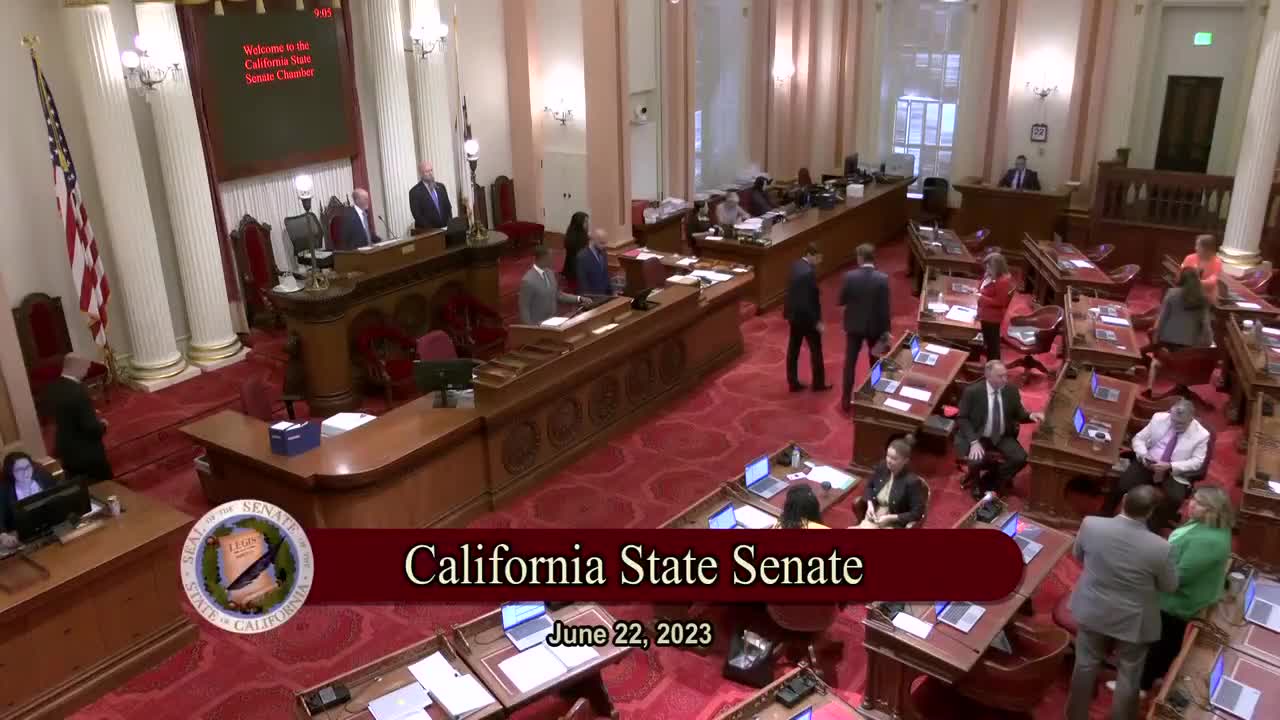
Bill Author

Bill Co-Author(s):
