SB 757: Railroads: contract crew transportation vehicles.
- Session Year: 2023-2024
- House: Senate
- Latest Version Date: 2023-10-07
Current Status:
Passed
(2023-10-07: Chaptered by Secretary of State. Chapter 411, Statutes of 2023.)
Introduced
In Committee
First Chamber
In Committee
Second Chamber
Enacted
The Passenger Charter-party Carriers Act, with certain exceptions, requires a charter-party carrier of passengers that engages in transportation services subject to regulation by the Public Utilities Commission to obtain a specified certificate or permit, as appropriate, from the commission, subject to various requirements. A violation of the act is a crime.
This bill would define the term contract crew transportation vehicle as a motor vehicle primarily used by third parties under contract with a railroad corporation to transport railroad crews, as specified. The bill would prohibit the operation of a contract crew transportation vehicle without a valid permit, as determined by the commission. The bill would specify insurance requirements for operating a contract crew transportation vehicle. The bill would exempt carpools and motor vehicles operated by railroad employees from the bills provisions. Because a violation of these provisions, as part of the act, would be a crime, the bill would impose a state-mandated local program.
The California Constitution requires the state to reimburse local agencies and school districts for certain costs mandated by the state. Statutory provisions establish procedures for making that reimbursement.
This bill would provide that no reimbursement is required by this act for a specified reason.
The Passenger Charter-party Carriers Act, with certain exceptions, requires a charter-party carrier of passengers that engages in transportation services subject to regulation by the Public Utilities Commission to obtain a specified certificate or permit, as appropriate, from the commission, subject to various requirements. A violation of the act is a crime.
This bill would define the term contract crew transportation vehicle as a motor vehicle primarily used by third parties under contract with a railroad corporation to transport railroad crews, as specified. The bill would prohibit the operation of a contract crew transportation vehicle without a valid permit, as determined by the commission. The bill would require insurance that meets standards established by the commission specify insurance requirements for operating a contract crew transportation vehicle. The bill would exempt carpools and railroad employee operated motor vehicles operated by railroad employees from the bills provisions. Because a violation of these provisions, as part of the act, would be a crime, the bill would impose a state-mandated local program.
The California Constitution requires the state to reimburse local agencies and school districts for certain costs mandated by the state. Statutory provisions establish procedures for making that reimbursement.
This bill would provide that no reimbursement is required by this act for a specified reason.
The Passenger Charter-party Carriers Act, with certain exceptions, requires a charter-party carrier of passengers that engages in transportation services subject to regulation by the Public Utilities Commission to obtain a specified certificate or permit, as appropriate, from the commission, subject to various requirements. Existing law requires specialized carriers that do not hold themselves out to serve the general public, but only provide service under contract for industrial and business firms, and other specified entities, to obtain a Z permit. A violation of the act is a crime.
This bill would define the term contract crew transportation vehicle as a motor vehicle primarily used by third parties under contract with a railroad corporation to transport railroad crews, as specified. The bill would prohibit the operation of a contract crew transportation vehicle without a Z permit. valid permit, as determined by the commission. The bill would specify insurance requirements require insurance that meets standards established by the commission for operating a contract crew transportation vehicle. The bill would exempt specified carpools and railroad employee operated vehicles from the bills provisions. Because a violation of these provisions, as part of the act, would be a crime, the bill would impose a state-mandated local program.
The California Constitution requires the state to reimburse local agencies and school districts for certain costs mandated by the state. Statutory provisions establish procedures for making that reimbursement.
This bill would provide that no reimbursement is required by this act for a specified reason.
The Passenger Charter-party Carriers Act, with certain exceptions, requires a charter-party carrier of passengers that engages in transportation services subject to regulation by the Public Utilities Commission to obtain a specified certificate or permit, as appropriate, from the commission, subject to various requirements. Existing law requires specialized carriers that do not hold themselves out to serve the general public, but only provide service under contract for industrial and business firms, and other specified entities, to obtain a Z permit. A violation of the act is a crime.
This bill would define the term contract crew transportation vehicle as a motor vehicle primarily used by third parties under contract with a railroad corporation to transport railroad crews, as specified. The bill would prohibit the operation of a contract crew transportation vehicle without a Z permit. The bill would specify insurance requirements for operating a contract crew transportation vehicle. The bill would exempt specified carpools and employee operated vehicles from the bills provisions. Because a violation of these provisions, as part of the act, would be a crime, the bill would impose a state-mandated local program.
The California Constitution requires the state to reimburse local agencies and school districts for certain costs mandated by the state. Statutory provisions establish procedures for making that reimbursement.
This bill would provide that no reimbursement is required by this act for a specified reason.
The Passenger Charter-party Carriers Act provides for the regulation of charter-party carriers of passengers by the Public Utilities Commission and includes specific requirements for liability insurance coverage and background checks for persons engaged in specified transportation services over a public highway. The Federal Railroad Safety Act (FRSA) authorizes the Secretary of Transportation to adopt regulations relating to railroad safety. The act authorizes a state to regulate railroad safety until the secretary prescribes a regulation or issues an order covering the subject matter of the state requirement. This bill would define the term contract crew transportation vehicle as a motor vehicle primarily used by third parties under contract with a railroad corporation to transport railroad crews, as specified. The bill would require the Public Utilities Commission to regulate contract crew transportation vehicles and their operators. The bill would prohibit a person convicted of specified infractions and crimes from operating a contract crew transportation vehicle for 3 years. The bill would require the commission to compile data regarding any reported safety complaints, accidents, regulatory violations and fines, and corrective actions taken by the commission involving a contract crew transportation vehicle. The bill would exempt the identity of a person who submits a complaint under the bill from public disclosure. The bill would make a violation of its requirements an infraction punishable by a fine of no less than $1,000 and no more than $5,000.Existing constitutional provisions require that a statute that limits the right of access to the meetings of public bodies or the writings of public officials and agencies be adopted with findings demonstrating the interest protected by the limitation and the need for protecting that interest.This bill would make legislative findings to that effect.The Passenger Charter-party Carriers Act provides for the regulation of charter-party carriers of passengers by the Public Utilities Commission and includes specific requirements for liability insurance coverage and background checks for persons engaged in specified transportation services over a public highway.
The Federal Railroad Safety Act (FRSA) authorizes the Secretary of Transportation to adopt regulations relating to railroad safety. The act authorizes a state to regulate railroad safety until the secretary prescribes a regulation or issues an order covering the subject matter of the state requirement.
This bill would define the term contract crew transportation vehicle as a motor vehicle primarily used by third parties under contract with a railroad corporation to transport railroad crews, as specified. The bill would require the Public Utilities Commission to regulate contract crew transportation vehicles and their operators. The bill would prohibit a person convicted of specified infractions and crimes from operating a contract crew transportation vehicle for 3 years. The bill would require the commission to compile data regarding any reported safety complaints, accidents, regulatory violations and fines, and corrective actions taken by the commission involving a contract crew transportation vehicle. The bill would exempt the identity of a person who submits a complaint under the bill from public disclosure. The bill would make a violation of its requirements an infraction punishable by a fine of no less than $1,000 and no more than $5,000.
Existing constitutional provisions require that a statute that limits the right of access to the meetings of public bodies or the writings of public officials and agencies be adopted with findings demonstrating the interest protected by the limitation and the need for protecting that interest.
This bill would make legislative findings to that effect.
(a)For purposes of this article, the following terms have the following meanings:
(1)Contract crew transportation vehicle means a motor vehicle designed to transport 15 or fewer people, including the driver, that is owned, leased, operated, or maintained by a person contracting with a railroad corporation or its agents, contractors, subcontractors, vendors, subvendors, secondary vendors, or subcarriers, and used primarily to provide railroad crew transportation.
(2)Crew transportation operator means the person or entity that operates a contract crew transportation vehicle pursuant to a contract with a railroad corporation or its agents, contractors, subcontractors, vendors, subvendors, secondary vendors, or subcarriers.
(3)Motor vehicle has the same meaning as in Section 415 of the Vehicle Code.
(b)A crew transportation operator shall not operate a contract crew transportation vehicle without a valid permit, as determined by the commission.
(c)A crew transportation operator shall provide the commission with proof of insurance coverage that meets all of the following:
(1)Provides at least five million dollars ($5,000,000) in combined single limit coverage for bodily injury and property damage liability coverage.
(2)Provides at least one million dollars ($1,000,000) in uninsured and underinsured motorist coverage.
(3)Names the crew transportation operator as a named insured or an additional insured.
(d)This section does not apply to either of the following:
(1)Carpools, regardless if all persons work for a railroad corporation or not.
(2)Motor vehicles operated by an employee of a railroad corporation.
SEC. 2.No reimbursement is required by this act pursuant to Section 6 of Article XIIIB of the California Constitution because the only costs that may be incurred by a local agency or school district will be incurred because this act creates a new crime or infraction, eliminates a crime or infraction, or changes the penalty for a crime or infraction, within the meaning of Section 17556 of the Government Code, or changes the definition of a crime within the meaning of Section 6 of Article XIIIB of the California Constitution.
(a)For purposes of this article, the following terms have the following meanings:
(1)Contract crew transportation vehicle means a motor vehicle designed to transport 15 or fewer people, including the driver, that is owned, leased, operated, or maintained by a person contracting with a railroad corporation or its agents, contractors, subcontractors, vendors, subvendors, secondary vendors, or subcarriers, and used primarily to provide railroad crew transportation.
(2)Crew transportation operator means the person or entity that operates a contract crew transportation vehicle pursuant to a contract with a railroad corporation or its agents, contractors, subcontractors, vendors, subvendors, secondary vendors, or subcarriers.
(3)Motor vehicle has the same meaning as in Section 415 of the Vehicle Code.
(b)A crew transportation operator shall not operate a contract crew transportation vehicle without a valid permit, as determined by the commission.
(c)A crew transportation operator shall provide the commission with proof of insurance coverage that meets standards established by the commission. all of the following:
(1)Provides at least five million dollars ($5,000,000) in combined single limit coverage for bodily injury and property damage liability coverage.
(2)Provides at least one million dollars ($1,000,000) in uninsured and underinsured motorist coverage.
(3)Names the crew transportation operator as a named insured or an additional insured.
(d)This section does not apply to either of the following:
(1)Carpools, regardless if all persons work for a railroad corporation or not.
(2)Motor vehicles operated by an employee of a railroad corporation.
SEC. 2.No reimbursement is required by this act pursuant to Section 6 of Article XIIIB of the California Constitution because the only costs that may be incurred by a local agency or school district will be incurred because this act creates a new crime or infraction, eliminates a crime or infraction, or changes the penalty for a crime or infraction, within the meaning of Section 17556 of the Government Code, or changes the definition of a crime within the meaning of Section 6 of Article XIIIB of the California Constitution.
(a)For purposes of this article, the following terms have the following meanings:
(1)Contract crew transportation vehicle means a motor vehicle designed to transport 15 or fewer people, including the driver, that is owned, leased, operated, or maintained by a person contracting with a railroad corporation or its agents, contractors, subcontractors, vendors, subvendors, secondary vendors, or subcarriers, and used primarily to provide railroad crew transportation.
(2)Crew transportation operator means the person or entity that operates a contract crew transportation vehicle pursuant to a contract with a railroad corporation or its agents, contractors, subcontractors, vendors, subvendors, secondary vendors, or subcarriers.
(3)Motor vehicle has the same meaning as in Section 415 of the Vehicle Code.
(4)Z permit has the same meaning as in Section 5384.(b)A crew transportation operator shall not operate a contract crew transportation vehicle without a valid Z permit, nor shall a crew transportation operator subcontract with another crew transportation operator that does not possess a valid Z permit. permit, as determined by the commission.
(c)A crew transportation operator shall provide the commission with proof of insurance coverage that meets all of the following: standards established by the commission.
(1)Provides at least five million dollars ($5,000,000) in combined single limit coverage for bodily injury and property damage liability coverage.(2)Provides at least one million dollars ($1,000,000) in uninsured and underinsured motorist coverage.(3)Names the crew transportation operator as a named insured or an additional insured.(d)This section does not apply to either of the following:
(1)Carpools, regardless if all persons work for a railroad corporation or not.
(2)Motor vehicles operated by an employee of a railroad corporation.
SEC. 2.No reimbursement is required by this act pursuant to Section 6 of Article XIIIB of the California Constitution because the only costs that may be incurred by a local agency or school district will be incurred because this act creates a new crime or infraction, eliminates a crime or infraction, or changes the penalty for a crime or infraction, within the meaning of Section 17556 of the Government Code, or changes the definition of a crime within the meaning of Section 6 of Article XIIIB of the California Constitution.
(a)For purposes of this article, the following terms have the following meanings:
(1)Contract crew transportation vehicle means a motor vehicle designed to transport 15 or fewer people, including the driver, that is owned, leased, operated, or maintained by a person contracting with a railroad corporation or its agents, contractors, subcontractors, vendors, subvendors, secondary vendors, or subcarriers, and used primarily to provide railroad crew transportation.
(2)Crew transportation operator means the person or entity that operates a contract crew transportation vehicle pursuant to a contract with a railroad corporation or its agents, contractors, subcontractors, vendors, subvendors, secondary vendors, or subcarriers.
(3)Motor vehicle has the same meaning as in Section 415 of the Vehicle Code.
(4)Z permit has the same meaning as in Section 5384.
(b)A crew transportation operator shall not operate a contract crew transportation vehicle without a valid Z permit, nor shall a crew transportation operator subcontract with another crew transportation operator that does not possess a valid Z permit.
(c)A crew transportation operator shall provide the commission with proof of insurance coverage that meets all of the following:
(1)Provides at least five million dollars ($5,000,000) in combined single limit coverage for bodily injury and property damage liability coverage.
(2)Provides at least one million dollars ($1,000,000) in uninsured and underinsured motorist coverage.
(3)Names the crew transportation operator as a named insured or an additional insured.
(d)This section does not apply to either of the following:
(1)Carpools, regardless if all persons work for a railroad corporation or not.
(2)Motor vehicles operated by an employee of a railroad corporation without compensation and outside work hours. corporation.
SEC. 2.No reimbursement is required by this act pursuant to Section 6 of Article XIIIB of the California Constitution because the only costs that may be incurred by a local agency or school district will be incurred because this act creates a new crime or infraction, eliminates a crime or infraction, or changes the penalty for a crime or infraction, within the meaning of Section 17556 of the Government Code, or changes the definition of a crime within the meaning of Section 6 of Article XIIIB of the California Constitution.
(a)For purposes of this article, the following terms have the following meanings:
(1)Contract crew transportation vehicle means a motor vehicle designed to transport 15 or fewer people, including the driver, that is owned, leased, operated, or maintained by a person contracting with a railroad corporation or its agents, contractors, subcontractors, vendors, subvendors, secondary vendors, or subcarriers, and used primarily to provide railroad crew transportation.
(2)Crew transportation operator means the person or entity that operates a contract crew transportation vehicle pursuant to a contract with a railroad corporation or its agents, contractors, subcontractors, vendors, subvendors, secondary vendors, or subcarriers.
(3)Motor vehicle has the same meaning as in Section 415 of the Vehicle Code.
(4)Z permit has the same meaning as in Section 5384.
(b)A crew transportation operator shall not operate a contract crew transportation vehicle without a valid Z permit, nor shall a crew transportation operator subcontract with another crew transportation operator that does not possess a valid Z permit.
(c)A crew transportation operator shall provide the commission with proof of insurance coverage that meets all of the following:
(1)Provides at least five million dollars ($5,000,000) in combined single limit coverage for bodily injury and property damage liability coverage.
(2)Provides at least one million dollars ($1,000,000) in uninsured and underinsured motorist coverage.
(3)Names the crew transportation operator as a named insured or an additional insured.
(d)This section does not apply to either of the following:
(1)Carpools, regardless if all persons work for a railroad corporation or not.
(2)Motor vehicles operated by an employee of a railroad corporation without compensation and outside work hours.
SEC. 2.No reimbursement is required by this act pursuant to Section 6 of Article XIIIB of the California Constitution because the only costs that may be incurred by a local agency or school district will be incurred because this act creates a new crime or infraction, eliminates a crime or infraction, or changes the penalty for a crime or infraction, within the meaning of Section 17556 of the Government Code, or changes the definition of a crime within the meaning of Section 6 of Article XIIIB of the California Constitution.
All matter omitted in this version of the bill appears in the bill as introduced in the Senate, February 17, 2023. (JR11)The following provisions may operate to exempt certain records, or portions thereof, from disclosure pursuant to this division:
Radioactive materials, dissemination of information about transportation of, Section 33002, Vehicle Code.
Railroad contract crew transportation vehicles, nondisclosure of identity of person complaining of alleged violation, Section 7736, Government Code.
Railroad infrastructure protection program, disclosure not required for risk assessments filed with the Public Utilities Commission, the Director of Emergency Services, or the Office of Emergency Services, Section 7929.215, this code.
Real estate broker, annual report to Bureau of Real Estate of financial information, confidentiality of, Section 10232.2, Business and Professions Code.
Real property, acquisition by state or local government, information relating to feasibility, Section 7928.705, this code.
Real property, change in ownership statement, confidentiality of, Section 27280, this code.
Records described in Section 1620, Penal Code.
Records of contract purchasers, inspection by public prohibited, Section 85, Military and Veterans Code.
Records of persons committed to a state hospital pursuant to Section 4135, Welfare and Institutions Code.
Registered public obligations, inspection of records of security interests in, Section 5060, this code.
Registration of exempt vehicles, nondisclosure of name of person involved in alleged violation, Section 5003, Vehicle Code.
Rehabilitation, Department of, confidential information, Section 19016, Welfare and Institutions Code.
Reinsurance intermediary-broker license information, confidentiality of, Section 1781.3, Insurance Code.
Relocation assistance, confidential records submitted to a public entity by a business or farm operation, Section 7262, this code.
Rent control ordinance, confidentiality of information concerning accommodations sought to be withdrawn from, Section 7060.4, this code.
Report of probation officer, inspection, copies, Section 1203.05, Penal Code.
Repossession agency licensee application, confidentiality of information, Sections 7503, 7504, and 7506.5, Business and Professions Code.
Reproductive health facilities, disclosure not required for personal information regarding employees, volunteers, board members, owners, partners, officers, and contractors of a reproductive health services facility who have provided requisite notification, Sections 7926.400 to 7926.430, inclusive, this code.
Residence address in any record of Department of Housing and Community Development, confidentiality of, Section 7927.415, this code.
Residence address in any record of Department of Motor Vehicles, confidentiality of, Section 7927.405, this code, and Section 1808.21, Vehicle Code.
Residence and mailing addresses in records of Department of Motor Vehicles, confidentiality of, Section 1810.7, Vehicle Code.
Residential care facilities, confidentiality of resident information, Section 1568.08, Health and Safety Code.
Residential care facilities for the elderly, confidentiality of client information, Section 1569.315, Health and Safety Code.
Resource families, identifying information, Section 16519.55, Welfare and Institutions Code.
Respiratory care practitioner, professional competency examination reports, confidentiality of, Section 3756, Business and Professions Code.
Restraint of trade, civil action by district attorney, confidential memorandum, Section 16750, Business and Professions Code.
Reward by Governor for information leading to arrest and conviction, confidentiality of person supplying information, Section 1547, Penal Code.
SEC. 2.Article 11 (commencing with Section 7730) is added to Chapter 1 of Division 4 of the Public Utilities Code, to read:11.Contract Crew Transportation Vehicles7730.For purposes of this article, the following terms have the following meanings:
(a)Contract crew transportation vehicle means a motor vehicle designed to transport 15 or fewer people, including the driver, that is owned, leased, operated, or maintained by a person contracting with a railroad corporation or its agents, contractors, subcontractors, vendors, subvendors, secondary vendors, or subcarriers, and used primarily to provide railroad crew transportation.
(b)Crew transportation operator means the person or entity that operates a contract crew transportation vehicle pursuant to a contract with a railroad corporation or its agents, contractors, subcontractors, vendors, subvendors, secondary vendors, or subcarriers.
(c)Motor vehicle has the same meaning as in Section 415 of the Vehicle Code.
7731.The commission shall set standards for a crew transportation operator including, but not limited to, the following:
(a)Use of a contract crew transportation vehicle.
(b)Equipment safety.
(c)Driver qualifications.
(d)Safety of operations.
(e)Hours of service by drivers.
(f)Passenger safety.
(g)Drug testing.
(h)Record retention.
7732.A crew transportation operator shall provide the commission with proof of insurance coverage that meets all the following:
(a)Provides at least five million dollars ($5,000,000) in combined single limit coverage for bodily injury and property damage liability coverage.
(b)Provides at least one million dollars ($1,000,000) in uninsured and underinsured motorist coverage.
(c)Names the operator as a named insured or an additional insured.
7733.A contract crew transportation vehicle shall have a notice posted in a conspicuous location to advise railroad employee passengers of their rights, including, but not limited to, the opportunity to submit safety complaints to the commission, the complaint process, and contact information for the commission. The commission shall specify the form and content of this notice.
7734.The commission shall specify training requirements for a driver of a contract crew transportation vehicle. The required training shall be at least eight hours and include, but not be limited to, vehicle and passenger safety awareness, railyard safety, load securement, and distracted and fatigued driving.
7735.(a)A person shall not operate a contract crew transportation vehicle for three years following either:
(1)A conviction of two or more traffic violations that result in suspension or revocation of the persons drivers license within a three-year period, for a reason other than the nonpayment of fines.
(2)A conviction of a drug or alcohol-related traffic offense, using a vehicle to commit a felony, leaving the scene of an accident, a prohibited passing of another vehicle, a railroad-highway grade crossing offense, or driving with a suspended, revoked, or canceled license.
(b)A person employed as a driver of a contract crew transportation vehicle who sustains a conviction or a traffic violation described in subdivision (a) shall report the conviction or infraction to the employing crew transportation operator within 10 days of the date of conviction or the finding that the infraction was committed.
7736.(a)The commission shall compile data regarding any reported safety complaints, accidents, regulatory violations and fines, and corrective actions taken by the commission involving vehicles regulated by this article.
(b)A railroad corporation and a crew transportation operator shall, at the request of the commission, provide data relevant to any complaints and accidents, including location, time of day, visibility, a description of the event, whether any property damage or personal injuries resulted, and any corrective action taken by the railroad corporation, the crew transportation operator, or the commission.
(c)The commission shall not disclose information that identifies an employee who submitted a complaint. The identity of a person who submits a complaint under this article is confidential and shall not be disclosable pursuant to Division 10 (commencing with Section 7920.000) of Title 1 of the Government Code.
7737.(a)For the purpose of enforcing this article, the commission may inspect a contract crew transportation vehicle.
(b)The commission shall develop an inspection program for contract crew transportation vehicles. This programs shall require periodic inspection of each vehicle, including a review of operational practices.
7738.The commission shall enforce the provisions of this article. The commission shall investigate a complaint alleging a violation of this article. A violation of this article is an infraction punishable by a fine of not less than one thousand dollars ($1,000) and not more than five thousand dollars ($5,000).
7739.The commission shall adopt regulations for carrying out this article. The regulations shall be consistent with Title 49 of the Code of Federal Regulations.
SEC. 3.The Legislature finds and declares that Section 1 of this act, which adds Section 7736 of the Public Utilities Code, imposes a limitation on the publics right of access to the meetings of public bodies or the writings of public officials and agencies within the meaning of Section 3 of Article I of the California Constitution. Pursuant to that constitutional provision, the Legislature makes the following findings to demonstrate the interest protected by this limitation and the need for protecting that interest:
In order to protect a person who submits a complaint under this act from retaliation, it is necessary that this act limit the publics right to know the identity of a person who submits a complaint under this act.
|
Date
|
Status
|
|---|---|
| Oct 7, 2023 | Chaptered by Secretary of State. Chapter 411, Statutes of 2023. |
| Oct 7, 2023 | Approved by the Governor. |
| Sep 21, 2023 | Enrolled and presented to the Governor at 4 p.m. |
| Sep 14, 2023 | Assembly amendments concurred in. (Ayes 30. Noes 8. Page 2825.) Ordered to engrossing and enrolling. |
| Sep 14, 2023 | In Senate. Concurrence in Assembly amendments pending. |
| Sep 14, 2023 | Read third time. Passed. (Ayes 63. Noes 16. Page 3576.) Ordered to the Senate. |
| Sep 7, 2023 | Read third time and amended. (Ayes 61. Noes 16. Page 3063.) |
| Sep 7, 2023 | Ordered to third reading. |
| Sep 7, 2023 | Assembly Rule 69 suspended. (Ayes 62. Noes 15. Page 3010.) |
| Sep 5, 2023 | Read second time. Ordered to third reading. |
| Sep 1, 2023 | Read second time and amended. Ordered to second reading. |
| Sep 1, 2023 | From committee: Do pass as amended. (Ayes 11. Noes 4.) (September 1). |
| Aug 23, 2023 | August 23 set for first hearing. Placed on suspense file. |
| Jul 5, 2023 | From committee: Do pass and re-refer to Com. on APPR. (Ayes 9. Noes 2.) (July 5). Re-referred to Com. on APPR. |
| Jun 15, 2023 | Referred to Com. on C. & C. |
| May 31, 2023 | In Assembly. Read first time. Held at Desk. |
| May 30, 2023 | Read third time. Passed. (Ayes 29. Noes 8. Page 1349.) Ordered to the Assembly. |
| May 18, 2023 | Read second time. Ordered to third reading. |
| May 18, 2023 | From committee: Do pass. (Ayes 5. Noes 2. Page 1182.) (May 18). |
| May 12, 2023 | Set for hearing May 18. |
| May 1, 2023 | May 1 hearing: Placed on APPR suspense file. |
| Apr 21, 2023 | Set for hearing May 1. |
| Apr 19, 2023 | Withdrawn from committee. |
| Apr 19, 2023 | Re-referred to Com. on APPR. |
| Apr 18, 2023 | Read second time and amended. Re-referred to Com. on TRANS. |
| Apr 17, 2023 | From committee: Do pass as amended and re-refer to Com. on TRANS. (Ayes 12. Noes 3. Page 638.) (April 10). |
| Apr 3, 2023 | Set for hearing April 10. |
| Mar 30, 2023 | From committee with author's amendments. Read second time and amended. Re-referred to Com. on E., U. & C. |
| Mar 1, 2023 | Referred to Coms. on E., U. & C. and TRANS. |
| Feb 21, 2023 | From printer. May be acted upon on or after March 20. |
| Feb 17, 2023 | Introduced. Read first time. To Com. on RLS. for assignment. To print. |
|
Date
|
Description
|
Location
|
Votes
|
|
|---|---|---|---|---|
| Sep 14, 2023 | SB 757 Archuleta Senate Third Reading By Santiago | Assembly Floor |
Passed |
|
| Sep 14, 2023 | Unfinished Business SB757 Archuleta Concurrence | Senate Floor |
Passed |
|
| Sep 7, 2023 | SB 757 Archuleta Senate Third Reading By Santiago Amendment Set #1 | Assembly Floor |
Passed |
|
| Sep 1, 2023 | Do pass as amended. | Assembly Standing Committee on Appropriations |
Passed |
|
| Jul 5, 2023 | Do pass and be re-referred to the Committee on [Appropriations] | Assembly Standing Committee on Communications and Conveyance |
Passed |
|
| May 30, 2023 | Senate 3rd Reading SB757 Archuleta | Senate Floor |
Passed |
|
| May 18, 2023 | Do pass | Senate Standing Committee on Appropriations |
Passed |
|
| May 1, 2023 | Placed on suspense file | Senate Standing Committee on Appropriations |
Passed |
|
| Apr 10, 2023 | Do pass as amended, but first amend, and re-refer to the Committee on [Transportation] | Senate Standing Committee on Energy, Utilities and Communications |
Passed |
This list shows positions taken on this bill by organizations on the date displayed, which is linked to the original source.
Positions by individuals are not included.
|
Organization
|
Position
|
Date
|
|---|---|---|
| BNSF Railway Company | ** Against | |
| California Labor Federation | ** Support | |
| California Short Line Railroad Association | ** Against | |
| California State Legislative Board, Brotherhood of Locomotive Engineers & Trainmen | ** Support | |
| California State Legislative Board, Sheet Metal, Air, Rail and Transportation Workers - Transportation Division | ** Support | |
| California Teamsters Public Affairs Council | ** Support | |
| SMART Transportation Division | * Support | Jul 5, 2023 |
| Union Pacific Railroad Company | ** Against |
SENATE RULES COMMITTEE Office of Senate Floor Analyses (916) 651-1520 Fax: (916) 327-4478 | SB 757 |
UNFINISHED BUSINESS
Bill No: SB 757
Author: Archuleta (D)
Amended: 9/7/23
Vote: 21
SENATE ENERGY, U. & C. COMMITTEE: 12-3, 4/10/23
AYES: Bradford, Ashby, Becker, Dodd, Durazo, Eggman, Gonzalez, McGuire, Min, Newman, Rubio, Skinner
NOES: Dahle, Seyarto, Wilk
NO VOTE RECORDED: Caballero, Grove, Stern
SENATE APPROPRIATIONS COMMITTEE: 5-2, 5/18/23
AYES: Portantino, Ashby, Bradford, Wahab, Wiener
NOES: Jones, Seyarto
SENATE FLOOR: 29-8, 5/30/23
AYES: Allen, Archuleta, Ashby, Atkins, Becker, Blakespear, Bradford, Caballero, Cortese, Dodd, Eggman, Gonzalez, Hurtado, Laird, Limón, McGuire, Menjivar, Min, Newman, Padilla, Portantino, Roth, Rubio, Skinner, Smallwood-Cuevas, Stern, Umberg, Wahab, Wiener
NOES: Alvarado-Gil, Dahle, Grove, Jones, Nguyen, Ochoa Bogh, Seyarto, Wilk
NO VOTE RECORDED: Durazo, Glazer, Niello
ASSEMBLY FLOOR: 47-12, 9/14/23
(ROLL CALL NOT AVAILABLE)
SUBJECT: Railroads: contract crew transportation vehicles
SOURCE: California State Legislative Board, Brotherhood of Locomotive Engineers & Trainmen
California State Legislative Board, Sheet Metal, Air, Rail & Transportation Workers - Transportation Division
California Teamsters Public Affairs Council
DIGEST:
This bill clarifies licensing requirements for rail crew transportation providers, prohibits certain subcontracting for these services, and increases minimum insurance requirements for rail crew transportation operators.
Assembly Amendments
delete provisions requiring crew transportation operators to obtain a specific type of permit from the CPUC and instead require these operators to have a valid permit.
ANALYSIS:
Existing law:
- Authorizes the California Public Utilities Commission (CPUC) to supervise and regulate every charter-party carrier of passengers. (Public Utilities Code §5381)
- Defines a charter-party carrier of passengers as every person engaged in the transportation of persons by motor vehicle for compensation over any public highway in this state. A charter-party carrier of passengers includes any person, corporation, or other entity engaged in the provision of a hired driver service when a rented motor vehicle is being operated by a hired driver. (Public Utilities Code §5360)
- Requires each charter-party carrier of passengers to demonstrate its ability and financial capacity to provide transportation services before the CPUC can issue or renew a license to operate. Existing law prohibits the CPUC from issuing a license to any entity that fails to demonstrate that it meets licensure requirements. Existing law also specifies various criteria companies must meet prior to licensure, including, but not limited to, providing proof of insurance as required by the CPUC. (Public Utilities Code §5372)
- Establishes minimum accident liability insurance requirements for charter-party carriers and specifies that this insurance must provide adequate protection against liability for property damage, bodily injury, and death resulting from an accident. Existing law authorizes differing insurance requirements for differing seating capacities and it specifies that the insurance requirements for charter-party carriers may not be less than those set for passenger stage corporations. Existing law specifies that charter-party carriers holding a “C” certificate for providing transportation incidental to commercial balloon operations, commercial river rafting, or skiing must carry at least $750,000 per accident in liability insurance. (Public Utilities Code §5391 et. seq.)
- Requires the CPUC to create the following permit categories for charter-party carriers:
- “A” Certificate: from any point or points within the state to other points in or out of this state, including, but not limited to, the conduction of round-trip sightseeing tour service.
- “B” Certificate: from any point within the territory of origin specified in the certificate to any points in the state, or territory of origin.
- “C” Certificate: services provided incidental to commercial balloon operations, commercial river rafting, or skiing where no additional compensation is provided for the transportation.
- “P” Permit: Carriers using only vehicles under 15-passenger seating capacity.
- “S” Permit: Carriers conducting round-trip sightseeing tour service.
- “Z” Permit: Specialized carriers, who do not hold themselves out to serve the general public, but only provide service under contract with industrial and business firms, governmental agencies, and private schools or who only transport agricultural workers to and from farms for compensation or who only conduct transportation services, which are incidental to another business. (Public Utilities Code §5383-5384)
This bill:
- Defines a “Contract crew transportation vehicle” as a motor vehicle designed to transport 15 or fewer people, including the driver, that is owned, leased, operated, or maintained by a person contracting with a railroad corporation or its agents, contractors, subcontractors, vendors, subvendors, secondary vendors, or subcarriers, and used primarily to provide railroad crew transportation.
- Defines a “Crew transportation operator” as the person or entity that operates a contract crew transportation vehicle pursuant to a contract with a railroad corporation or its agents, contractors, subcontractors, vendors, subvendors, secondary vendors, or subcarriers.
- Prohibits a rail crew transportation operator from operating a contract crew transportation vehicle without a valid permit issued by the CPUC.
- Increases minimum insurance requirements for rail crew transportation operators by requiring these transportation providers to provide the CPUC with proof that their insurance includes the following:
- At least $5 million in combined single limit coverage for bodily injury and property damage liability coverage.
- At least $1 million in uninsured and underinsured motorist coverage.
- Names the crew transportation operator as a named insured or an additional insured.
- Exempts the following from this bill’s requirements:
- Carpools, regardless if all persons work for a railroad corporation or not.
- Motor vehicles operated by an employee of a railroad corporation.
Background
What are rail crew transportation contractors? Railroads contract with third-party companies that provide 24-hour, year-round transportation services that pick up rail workers and deliver them to worksites and also transport rail workers home. While some companies primarily specialize in providing rail crew transportation, other companies may subcontract with these companies to transport rail crew workers. This bill defines a rail crew transportation operator as any person or company contracted to transport rail crews using a vehicle that meets all the following criteria:
- The vehicle is designed to carry no more than 15 people.
- The vehicle is owned, leased, maintained, or operated by a person or company that contracts with or subcontracts to a railroad.
- The vehicle is primarily used for rail crew transportation.
While existing law does not separately define rail crew transportation operators, existing law classifies chartered transportation providers as charter-party carriers and establishes a framework for licensing charter-party carriers. While both charter-party carriers and taxis provide passenger transportation services, taxis are regulated by local governments and charter-party carriers are regulated by the CPUC. Companies that subcontract to provide rail crew transportation do not necessarily specialize in transporting railroad employees; however, these subcontractors would still meet the definition of a taxi or charter-party carrier.
Bill increases minimum insurance requirements for rail crew transportation operators. While existing law requires the CPUC to set insurance requirements for charter-party carriers and guarantees certain minimum coverage thresholds, this bill increases minimum insurance requirements for crew transportation operators. Under this bill, crew transportation operators would be required to carry at least $5 million in liability coverage and at least $1 million in underinsured and uninsured motorist coverage. The CPUC’s General Order (GO) 115 sets out the minimum insurance requirements for charter-party carriers. Those insurance minimums are shown in the chart below.

The liability and uninsured motorist coverage required by this bill would be the highest coverage minimums for any charter-party carrier vehicles that carry less than 16 passengers. This bill will likely require the CPUC to update GO 115 to reflect this bill’s specific insurance requirements for crew transportation operators.
Related/Prior Legislation
AB 711 (Patterson, 2023) authorizes transportation network company (TNC) drivers to use a lawful electronic proof of insurance on their mobile phones to meet personal insurance requirements for TNC drivers. The bill is pending in the Assembly.
AB 2716 (Grayson, 2022) would have codified minimum safety training requirements for TNC drivers. The bill was vetoed.
SB 730 (Wolk, Chapter 283, Statutes of 2015) prohibited a freight train or light engine from being operated unless it has at least a two-person crew. The bill authorized the CPUC to assess civil penalties against any person who willfully violates this crew staffing requirement.
FISCAL EFFECT: Appropriation: No Fiscal Com.: Yes Local: Yes
According to the Assembly Appropriations Committee, the CPUC contends this bill will entail $200,000 in one-time costs to conduct a new rulemaking to develop regulations specific to the railroad crew transportation operations and to update the online charter-party carrier licensing portal and $100,000 in ongoing costs for electronic storage and licensing (special fund).
SUPPORT: (Verified 9/8/23)
California State Legislative Board, Brotherhood of Locomotive Engineers & Trainmen (co-source)
California State Legislative Board, Sheet Metal, Air, Rail & Transportation Workers - Transportation Division (co-source)
California Teamsters Public Affairs Council (co-source)
California Labor Federation
OPPOSITION: (Verified 9/8/23)
None received
ARGUMENTS IN SUPPORT: According to the author, “Rail workers are the backbone on which our economy runs. They work long hours to ensure our stores are shelved and people have food to eat. It is not a surprise that rail work is a dangerous job. However, anyone outside of the industry would not know that transportation in vans between worksites is one of the most dangerous aspects of the work. Rail workers are often transported from one train to another using third parties contractors, which have had a lack of oversight and can be underinsured or uninsured. Legislation is needed to cover this gap. SB 757 does this by establishing reasonable minimum insurance standards and requires that these third party contract transportation companies operate under a “Z” permit. SB 757 would also prohibit these third party contractors from subcontracting with a company that does not have a “Z” permit. This is necessary to improve transportation safety and ensure adequate insurance coverage for injured workers.”
Prepared by: Sarah Smith / E., U. & C. / (916) 651-4107
9/14/23 17:02:36
SENATE THIRD READING
STR Bill Id:SB 757
Author:(Archuleta)
As Amended Ver:September 7, 2023
Majority vote
SUMMARY
This bill would clarify existing licensing and increase insurance requirements for operators of vehicles used primarily to provide railroad crew transportation.
Major Provisions
- Defines a "Contract crew transportation vehicle" as a motor vehicle designed to transport 15 or fewer people, including the driver, that is owned, leased, operated, or maintained by a person contracting with a railroad corporation or its agents, contractors, subcontractors, vendors, subvendors, secondary vendors, or subcarriers, and used primarily to provide railroad crew transportation.
- Defines a "Crew transportation operator" as the person or entity that operates a contract crew transportation vehicle pursuant to a contract with a railroad corporation or its agents, contractors, subcontractors, vendors, subvendors, secondary vendors, or subcarriers.
- Requires crew transportation operator to obtain a permit, as required by the California Public Utilities Commission (CPUC), prior to operating a contract crew transportation vehicle.
- Prohibits a crew transportation operator from subcontracting with a crew transportation operator that does not possess a valid permit from the CPUC.
- Requires a crew transportation operator to provide the CPUC with proof of insurance that meets the following requirements:
- Provides at least five million dollars ($5,000,000) in combined single limit coverage for bodily injury and property damage liability coverage.
- Provides at least one million dollars ($1,000,000) in uninsured and underinsured motorist coverage.
- Names the crew transportation operator as a named insured and additional interest
- Exempts the following from the bill's requirements:
- Carpools, regardless if all persons work for a railroad corporation or not.
- Motor vehicles operated by an employee of a railroad corporation.
COMMENTS
- Existing law requires permits for passenger carriers, this bill would clarify those requirements. With limited exemptions, the Passenger Charter-Party Carriers Act applies broadly to every person engaged in the transportation of persons by motor vehicle for compensation over any public highway in this state. Existing law requires the CPUC to establish specified permit categories for different types of passenger carriers, depending on the type of service typically offered. Existing law also vests the CPUC with the authority to establish insurance requirements for permitted entities. This bill would clarify the existing licensing and insurance requirements for operators of vehicles used primarily to provide railroad crew transportation, and increase the insurance requirements for those carriers. While this bill establishes a new category of carrier – namely, a crew transportation operator – such an operator would fall within the existing definition of a "charter party carrier of passengers".
- Recent amendments remove provisions of the bill mandating a Z-Permit. Amendments adopted in the Assembly Appropriations strike provisions of this bill that would have required a crew transportation operator to specifically obtain a "Z-permit" from the CPUC. Instead, this bill now allows the CPUC to determine the appropriate permit category. A Z-permit is a category of permit for charter-party carriers that a) do not hold themselves out to serve the general public and b) provide service only under contract with industrial and business firms, governmental agencies and private schools or who only transport agricultural workers to and from farms for compensation or who only conduct transportation services, which are incidental to another business. While a crew transportation operator may generally fall within this category, there may be particular situations where this permit type is not the most appropriate. The recent amendments therefore provide more flexibility for the CPUC to require a different type of permit for a crew transportation operator.
- This bill increases insurance requirements for crew transportation operators. This bill establishes specific insurance requirements for crew transportation operators that are distinct from other classes of charter-party carriers. The insurance requirements proposed by this bill exceed the existing insurance requirements for other charter-party carrier permit holders. Under this bill, crew transportation operators would be required to carry at least $5 million in liability coverage and at least $1 million in underinsured and uninsured motorist coverage. The CPUC's General Order (GO) 115 sets out the minimum insurance requirements for other charter-party carriers The existing insurance minimums are shown in the chart below, compared to the proposed insurance minimums under this bill:
INSURANCE REQUIREMENTS | |||
Vehicle Capacity | General Order 115 | SB 757 Proposed | |
16 passengers or more | $5 million | Not covered by this bill. | |
8-15 passengers | $1.5 million total liability for damages | $5 million total liability for damager | $1 million uninsured motorist |
7 passengers or fewer | $750,000 total liability for damages | $5 million total liability for damages | $1 million uninsured motorist |
The liability and uninsured motorist coverage required by this bill would be the highest coverage minimums for any charter-party carrier vehicles that carry less than 16 passengers. In addition, this bill would require operators to obtain uninsured motorist insurance at $1 million dollars. Due to the fact that the insurance requirements proposed to be established by this bill are distinct from the existing requirements for charter-party carriers permit holders generally, this bill would likely require the CPUC to update General Order 115 to reflect this bill's specific insurance requirements for crew transportation operators. While additional insurance potentially serves to better protect railroad employees against uncompensated harm, it's unclear whether the existing insurance requirements for properly registered vehicles are not sufficient. Certainly, the basic insurance requirements on an unlicensed vehicle would not be sufficient to cover an accident harming various employees. In addition, protection against uninsured motorists might not be necessary if the operator carries sufficient total liability insurance. Nonetheless, the underlying issue would seem to rest on whether a carrier transporting railroad employees are properly licensed and uninsured; if they are not, the insurance requirements will continue to be disregarded. In conclusion, the likelihood the additional requirements imposed by this bill solve the issue at hand will depend on whether the provisions of this bill are better enforced than existing law.
- There is not adequate enforcement of existing requirements, and further clarification may help the situation. While there are limited exemptions to the applicability of existing law, supporters of this bill raise legitimate concerns about the safety and wellbeing of railroad workers traveling in third-party, unlicensed, or underinsured vehicles between job sites while on the clock. According to supporters of this bill, while railroads may have contracts with appropriately permitted carriers, those carriers have at times subcontracted with unpermitted carriers using underinsured vehicles. As a result, rail workers have been left with little recourse except accepting a ride in unpermitted and underinsured vehicles. Such a situation is particularly precarious for railroad workers in particular because they are generally less protected under worker's compensation benefits while riding in a crew vehicle not directly operated by the railroad. The changes proposed by this bill, as a whole, may serve to help bolster further enforcement of existing requirements and better protect rail crews in particular.
According to the Author
"Rail workers are often transported from one train to another using third parties contractors, which have a lack of oversight and are often uninsured or underinsured. [Railroad] employees are not covered by workers compensation and have no insurance coverage if an accident is caused by third party transportation. They are covered at work, but not when being transported. There have been many recent incidents where workers weren't properly covered. Legislation is needed to cover this gap. SB 757 does this by establishing reasonable minimum insurance standards and requiring these drivers operate under a [valid] permit. This is necessary to ensure safety when moving rail workers between sites."
Arguments in Support
Labor organizations in support of this bill argue that the current situation with third-party transportation crews, which may occur in poorly maintained and underinsured vehicles, puts the highly skilled railroad employees at risk. They view SB 757 as a step towards achieving the goal of requiring uniform permitting and licensing.
Arguments in Opposition
No opposition on file.
FISCAL COMMENTS
According to the Assembly Appropriations Committee, the CPUC contends this bill will entail $200,000 in one-time costs to conduct a new rulemaking to develop regulations specific to the railroad crew transportation operations and to update the online charter-party carrier licensing portal and $100,000 in ongoing costs for electronic storage and licensing (special fund).
VOTES
SENATE FLOOR: 29-8-3
YES: Allen, Archuleta, Ashby, Atkins, Becker, Blakespear, Bradford, Caballero, Cortese, Dodd, Eggman, Gonzalez, Hurtado, Laird, Limón, McGuire, Menjivar, Min, Newman, Padilla, Portantino, Roth, Rubio, Skinner, Smallwood-Cuevas, Stern, Umberg, Wahab, Wiener
NO: Alvarado-Gil, Dahle, Grove, Jones, Nguyen, Ochoa Bogh, Seyarto, Wilk
ABS, ABST OR NV: Durazo, Glazer, Niello
ASM COMMUNICATIONS AND CONVEYANCE: 9-2-2
YES: Boerner, Bonta, Garcia, Holden, Low, Papan, Luz Rivas, Rodriguez, Weber
NO: Jim Patterson, Hoover
ABS, ABST OR NV: Davies, Maienschein
ASM APPROPRIATIONS: 11-4-1
YES: Holden, Bryan, Calderon, Wendy Carrillo, Mike Fong, Hart, Lowenthal, Papan, Pellerin, Weber, Wilson
NO: Megan Dahle, Dixon, Mathis, Sanchez
ABS, ABST OR NV: Soria
ASSEMBLY FLOOR: 61-16-3
YES: Addis, Aguiar-Curry, Alvarez, Arambula, Bauer-Kahan, Bennett, Berman, Boerner, Bonta, Bryan, Calderon, Juan Carrillo, Wendy Carrillo, Cervantes, Connolly, Mike Fong, Friedman, Gabriel, Garcia, Gipson, Grayson, Haney, Hart, Holden, Irwin, Jackson, Jones-Sawyer, Kalra, Lee, Low, Lowenthal, Maienschein, McCarty, McKinnor, Muratsuchi, Stephanie Nguyen, Ortega, Pacheco, Papan, Pellerin, Petrie-Norris, Quirk-Silva, Ramos, Rendon, Reyes, Luz Rivas, Rodriguez, Blanca Rubio, Santiago, Schiavo, Soria, Ting, Valencia, Villapudua, Ward, Weber, Wicks, Wilson, Wood, Zbur, Robert Rivas
NO: Alanis, Chen, Megan Dahle, Dixon, Flora, Vince Fong, Gallagher, Hoover, Lackey, Mathis, Jim Patterson, Joe Patterson, Sanchez, Ta, Waldron, Wallis
ABS, ABST OR NV: Bains, Davies, Essayli
UPDATED
VERSION: September 7, 2023
CONSULTANT: Emilio Perez / C. & C. / (916) 319-2637 FN: 0001988
SENATE THIRD READING
STR Bill Id:SB 757
Author:(Archuleta)
As Amended Ver:September 1, 2023
Majority vote
SUMMARY
This bill would clarify existing licensing and insurance requirements for operators of vehicles used primarily to provide railroad crew transportation.
Major Provisions
- Defines a "Contract crew transportation vehicle" as a motor vehicle designed to transport 15 or fewer people, including the driver, that is owned, leased, operated, or maintained by a person contracting with a railroad corporation or its agents, contractors, subcontractors, vendors, subvendors, secondary vendors, or subcarriers, and used primarily to provide railroad crew transportation.
- Defines a "Crew transportation operator" as the person or entity that operates a contract crew transportation vehicle pursuant to a contract with a railroad corporation or its agents, contractors, subcontractors, vendors, subvendors, secondary vendors, or subcarriers.
- Requires crew transportation operator to obtain a permit, as required by the California Public Utilities Commission (CPUC), prior to operating a contract crew transportation vehicle.
- Prohibits a crew transportation operator from subcontracting with a crew transportation operator that does not possess a valid permit from the CPUC.
- Require a crew transportation operator to provide the CPUC with proof of insurance that meets standards established by the CPUC.
- Exempts the following from the bill's requirements:
- Carpools, regardless if all persons work for a railroad corporation or not.
- Motor vehicles operated by an employee of a railroad corporation.
COMMENTS
- Existing law requires permits for passenger carriers, this bill would clarify those requirements. With limited exemptions, the Passenger Charter-Party Carriers Act applies broadly to every person engaged in the transportation of persons by motor vehicle for compensation over any public highway in this state. Existing law requires the CPUC to establish specified permit categories for different types of passenger carriers, depending on the type of service typically offered. Existing law also vests the CPUC with the authority to establish insurance requirements for permitted entities. This bill would clarify the existing licensing and insurance requirements for operators of vehicles used primarily to provide railroad crew transportation. While this bill establishes a new category of carrier – namely, a crew transportation operator – such an operator would fall within the existing definition of a "charter party carrier of passengers" and therefore would likely be covered by existing law and regulations established by the CPUC.
- Recent amendments remove provisions of the bill mandating a particular type of license and insurance level. Amendments adopted in the Assembly Appropriations strike provisions of this bill that would have required a crew transportation operator to obtain a "Z-permit" from the CPUC. A Z-permit is a category of permit for charter-party carriers that (a) do not hold themselves out to serve the general public and (b) provide service only under contract with industrial and business firms, governmental agencies and private schools or who only transport agricultural workers to and from farms for compensation or who only conduct transportation services, which are incidental to another business. While a crew transportation operator may generally fall within this category, there may be particular situations where this permit type is not the most appropriate. The recent amendments therefore provide more flexibility for the CPUC to require a different type of permit for a crew transportation operator. Recent amendments adopted in the Assembly Appropriations Committee also strike provisions of this bill that would have required specified levels of insurance for crew transportation operators, distinct from existing insurance levels established by the CPUC. By removing this portion of this bill, the CPUC will likely not need to open a new rulemaking to establish new regulations specific to crew transportation operators or contract crew transportation vehicles.
- There is not adequate enforcement of existing requirements, and further clarification may help the situation. While there are limited exemptions to the applicability of existing law, supporters of this bill raise legitimate concerns about the safety and wellbeing of railroad workers traveling in third-party, unlicensed, or underinsured vehicles between job sites while on the clock. According to supporters of this bill, while railroads may have contracts with appropriately permitted carriers, those carriers have at times subcontracted with unpermitted carriers using underinsured vehicles. As a result, rail workers have been left with little recourse except accepting a ride in unpermitted and underinsured vehicles. Such a situation is particularly precarious for railroad workers in particular because they are generally less protected under worker's compensation benefits while riding in a crew vehicle not directly operated by the railroad. While the provisions of this bill simply clarify the licensing and insurance requirements for carriers transporting rail workers, further clarification of existing law may serve to help bolster further enforcement of existing requirements.
According to the Author
"Rail workers are often transported from one train to another using third parties contractors, which have a lack of oversight and are often uninsured or underinsured. [Railroad] employees are not covered by workers compensation and have no insurance coverage if an accident is caused by third party transportation. They are covered at work, but not when being transported. There have been many recent incidents where workers weren't properly covered. Legislation is needed to cover this gap. SB 757 does this by establishing reasonable minimum insurance standards and requiring these drivers operate under a [valid] permit. This is necessary to ensure safety when moving rail workers between sites."
Arguments in Support
Labor organizations in support of this bill argue that the current situation with third-party transportation crews, which may occur in poorly maintained and underinsured vehicles, puts the highly skilled railroad employees at risk. They view SB 757 as a step towards achieving the goal of requiring uniform permitting and licensing.
Arguments in Opposition
No opposition on file.
FISCAL COMMENTS
According to the Assembly Appropriations Committee, the CPUC contends this bill will entail $200,000 in one-time costs to conduct a new rulemaking to develop regulations specific to the railroad crew transportation operations and to update the online charter-party carrier licensing portal and $100,000 in ongoing costs for electronic storage and licensing (special fund).
VOTES
SENATE FLOOR: 29-8-3
YES: Allen, Archuleta, Ashby, Atkins, Becker, Blakespear, Bradford, Caballero, Cortese, Dodd, Eggman, Gonzalez, Hurtado, Laird, Limón, McGuire, Menjivar, Min, Newman, Padilla, Portantino, Roth, Rubio, Skinner, Smallwood-Cuevas, Stern, Umberg, Wahab, Wiener
NO: Alvarado-Gil, Dahle, Grove, Jones, Nguyen, Ochoa Bogh, Seyarto, Wilk
ABS, ABST OR NV: Durazo, Glazer, Niello
ASM COMMUNICATIONS AND CONVEYANCE: 9-2-2
YES: Boerner, Bonta, Garcia, Holden, Low, Papan, Luz Rivas, Rodriguez, Weber
NO: Jim Patterson, Hoover
ABS, ABST OR NV: Davies, Maienschein
ASM APPROPRIATIONS: 11-4-1
YES: Holden, Bryan, Calderon, Wendy Carrillo, Mike Fong, Hart, Lowenthal, Papan, Pellerin, Weber, Wilson
NO: Megan Dahle, Dixon, Mathis, Sanchez
ABS, ABST OR NV: Soria
UPDATED
VERSION: September 1, 2023
CONSULTANT: Emilio Perez / C. & C. / (916) 319-2637 FN: 0001639
Date of Hearing: August 23, 2023
ASSEMBLY COMMITTEE ON APPROPRIATIONS
Chris Holden, Chair
SBPCA Bill Id:SB 757
Author:(Archuleta) – As Amended Ver:April 18, 2023
Policy Committee: | Communications and Conveyance | Vote: | 9 - 2 |
|
| ||
|
|
Urgency: No State Mandated Local Program: Yes Reimbursable: No
SUMMARY:
This bill requires rail crew transportation operators to obtain a permit prior to operating a contract crew transportation vehicle and establishes minimum insurance requirements for rail crew transportation.
Specifically, this bill:
- Requires rail crew transportation operators to obtain a “Z” permit from the California Public Utilities Commission (CPUC) prior to operating a contract crew transportation vehicle.
- Requires transportation providers to provide the CPUC with proof that their insurance includes (a) at least $5 million in combined single-limit coverage for bodily injury and property damage liability coverage and (b) at least $1 million in uninsured and underinsured motorist coverage and names the crew transportation operator as a named insured or an additional insured.
- Exempts from this bill’s requirements carpools, regardless of whether all persons in the carpool work for a railroad corporation or not, and motor vehicles operated by an employee of a railroad corporation.
FISCAL EFFECT:
The CPUC contends the bill will entail $200,000 in one-time costs to conduct a new rulemaking to develop regulations specific to the railroad crew transportation operations and to update the online charter-party carrier licensing portal and $100,000 in ongoing costs for electronic storage and licensing (special fund).
COMMENTS:
- Purpose. The author and labor organizations that support this bill note that rail workers are often transported from one train to another using third-party contractors, and that such contractors “lack oversight” and are “often uninsured or underinsured.” The author contends this bill will “cover this gap…by establishing reasonable minimum insurance standards and requiring these drivers operate under a “Z” permit,” which the author argues, will ensure safety when moving rail workers between sites.
- Background. Existing law defines a charter-party carrier of passengers as every person engaged in the transportation of persons by motor vehicle for compensation over any public highway in this state, including any person, corporation or other entity engaged in the provision of a hired driver service when a rented motor vehicle is being operated by a hired driver. The law provides the CPUC with general oversight and regulatory authority over charter-party carriers.
Statute requires a charter-party carrier, with some exceptions, prior to starting operation, to receive from the CPUC a certificate that public convenience and necessity require the charter-party carrier’s operation. Statute directs the CPUC to issue a charter-party carrier one of several types of certificates. Of interest to this analysis is the “A certificate,” which the CPUC may issue for service that is from any point within the state to other points in or out of this state, including, but not limited to, the conduction of round-trip sightseeing tour service.
In addition, statute directs the CPUC to issue one of several types of permits to a charter-party carrier that provides certain “special” services. Of interest to this analysis is the “Z permit,” which the CPUC may issue to a charter-party carrier who (a) does not hold themselves out to serve the general public and (b) provides service only under contract with industrial and business firms, governmental agencies and private schools or who only transport agricultural workers to and from farms for compensation or who only conduct transportation services, which are incidental to another business.
As described by the CPUC, a company that transports rail crews between job sites during work hours is a charter-party carrier; therefore, such a company would need a permit from the CPUC prior to beginning operation. The CPUC cites two examples of such companies that provide rail crew transport in California under permit from the CPUC—Hallcon (Loop Transportation), which operates under an A certificate, and Professional Transportation Inc. (PTI), which operates under a Z permit. In this sense, the bill seems to duplicate existing law, though it does so to specify a charter-party carrier that transports rail crews between job sites must obtain a Z permit, specifically, from the CPUC. Nonetheless, the California Teamsters Public Affairs Council describes “numerous accidents, serious injuries, and fatalities…Tired drivers, poorly maintained vehicles, and minimal insurance.” The Teamsters contend requiring that all rail crew transportation companies have a Z permit from the CPUC “will allow for uniform regulation and oversight.” Perhaps. But, as detailed above, and as asserted by the CPUC, existing law and CPUC rules require a rail transport company have a permit from the CPUC (though, it seems, the permit might be a type other than a Z permit). If that is the case, it seems the problem is one of enforcement, not of law.
The bill also specifies that a rail crew transporter, to legally operate in California, must show the CPUC proof of (a) at least $5 million in combined single-limit coverage for bodily injury and property damage liability coverage and (b) at least $1 million in uninsured and underinsured motorist coverage and names the crew transportation operator as a named insured or an additional insured. This differs from existing CPUC regulations, which requires a charter-party carrier to show CPUC proof of insurance in the following amounts: (a) $1.5 million in insurance for vehicles with eight to 15 passengers and (b) $750,000 for vehicles with seven or fewer passengers. The CPUC asserts it is unclear why the operation of a rail crew transportation vehicle merits a $5 million coverage requirement irrespective of the vehicle’s seating capacity. The Teamsters, in contrast, assert “requiring that vehicles transporting rail crews are adequately insured is perhaps the most important component of this legislation,” justifying the higher insurance amount by noting rail workers, unlike other workers in California, are not covered by the workers compensation system.
Analysis Prepared by: Jay Dickenson / APPR. / (916) 319-2081
Date of Hearing: July 5, 2023
ASSEMBLY COMMITTEE ON COMMUNICATIONS AND CONVEYANCE
Tasha Boerner, Chair
SBPCA Bill Id:SB 757
Author:(Archuleta) – As Amended Ver:April 18, 2023
SENATE VOTE: 29-8
SUBJECT: Railroads: contract crew transportation vehicles
SUMMARY: This bill would establish licensing requirements, insurance requirements, and relevant definitions for vehicles used primarily to provide railroad crew transportation. Thi bill would also establish specified exemptions to the bill’s applicability for carpools and railroad employees. Specifically, this bill:
- Defines a “Contract crew transportation vehicle” as a motor vehicle designed to transport 15 or fewer people, including the driver, that is owned, leased, operated, or maintained by a person contracting with a railroad corporation or its agents, contractors, subcontractors, vendors, subvendors, secondary vendors, or subcarriers, and used primarily to provide railroad crew transportation.
- Defines a “Crew transportation operator” as the person or entity that operates a contract crew transportation vehicle pursuant to a contract with a railroad corporation or its agents, contractors, subcontractors, vendors, subvendors, secondary vendors, or subcarriers.
- Requires rail crew transportation operators to obtain a “Z” permit prior to operating a contract crew transportation vehicle.
- Prohibits a rail crew transportation operator from subcontracting with a crew transportation operator that does not possess a valid “Z” permit.
- Establishes minimum insurance requirements for rail crew transportation operators by requiring these transportation providers to provide the California Public Utilities Commission (CPUC) with proof that their insurance includes the following:
- At least $5,000,000 in combined single limit coverage for bodily injury and property damage liability coverage.
- At least $1,000,000 in uninsured and underinsured motorist coverage.
- Names the crew transportation operator as a named insured or an additional insured.
- Exempts the following from this bill’s requirements:
- Carpools, regardless if all persons work for a railroad corporation or not.
- Motor vehicles operated by an employee of a railroad corporation.
EXISTING LAW:
- Establishes the “Passenger Charter-Party Carriers’ Act” to, in part, promote carrier and public safety through safety enforcement regulations. (Public Utilities Code §5351 et. seq.)
- Provides various specified exemptions to the applicability of the Passenger Charter-Party Carriers’ Act such as for public transit, transportation of pupils pursuant to the Education Code, common carriers, noncommercial vehicles, taxis, hotel vehicles, etc. (Public Utilities Code §5353)
- Defines a charter-party carrier of passengers as every person engaged in the transportation of persons by motor vehicle for compensation over any public highway in this state. A charter-party carrier of passengers includes any person, corporation, or other entity engaged in the provision of a hired driver service when a rented motor vehicle is being operated by a hired driver. (Public Utilities Code §5360)
- Authorizes the California Public Utilities Commission (CPUC) to supervise and regulate every charter-party carrier of passengers. (Public Utilities Code §5381)
- Requires each charter party carrier of passengers to demonstrate its ability and financial capacity to provide transportation services before the CPUC can issue or renew a license to operate. Existing law prohibits the CPUC from issuing a license to any entity that fails to demonstrate that it meets licensure requirements. Existing law also specifies various criteria companies must meet prior to licensure, including, but not limited to, providing proof of insurance as required by the CPUC. (Public Utilities Code §5372)
- Establishes minimum accident liability insurance requirements for charter-party-carriers and specifies that this insurance must provide adequate protection against liability for property damage, bodily injury, and death resulting from an accident. Existing law authorizes differing insurance requirements for differing seating capacities and it specifies that the insurance requirements for charter-party-carriers may not be less than those set for passenger stage corporations. Existing law specifies that charter-party-carriers holding a “C” certificate for providing transportation incidental to commercial balloon operations, commercial river rafting, or skiing must carry at least $750,000 per accident in liability insurance. (Public Utilities Code § 5391 et. seq.)
- Requires the CPUC to create the following permit categories for charter-party carriers:
- “A” Certificate: from any point or points within the state to other points in or out of this state, including, but not limited to, the conduction of round-trip sightseeing tour service.
- “B” Certificate: from any point within the territory of origin specified in the certificate to any points in the state, or territory of origin.
- “C” Certificate: services provided incidental to commercial balloon operations, commercial river rafting, or skiing where no additional compensation is provided for the transportation.
- “P” Permit: Carriers using only vehicles under 15-passenger seating capacity.
- “S” Permit: Carriers conducting round-trip sightseeing tour service.
- “Z” Permit: Specialized carriers, who do not hold themselves out to serve the general public, but only provide service under contract with industrial and business firms, governmental agencies, and private schools or who only transport agricultural workers to and from farms for compensation or who only conduct transportation services, which are incidental to another business. (Public Utilities Code §5383-5384)
FISCAL EFFECT: According to the Senate Appropriations Committee, the CPUC estimates one-time costs of $200,000 and ongoing costs $100,000 annually (PUC Transportation Reimbursement Account) in order to undertake a new rulemaking for development of regulations specific to railroad crew transportation operations as well as to make modifications to its Transportation Carrier Portal in order to track and monitor the new requirements.
COMMENTS:
- Author’s statement. “Rail workers are often transported from one train to another using third parties contractors, which have a lack of oversight and are often uninsured or underinsured. [Railroad] employees are not covered by workers compensation and have no insurance coverage if an accident is caused by third party transportation. They are covered at work, but not when being transported. There have been many recent incidents where workers weren’t properly covered. Legislation is needed to cover this gap. SB 757 does this by establishing reasonable minimum insurance standards and requiring these drivers operate under a “Z” permit. This is necessary to ensure safety when moving rail workers between sites.”
- Existing law covers the issue raised by this bill, but there is not adequate enforcement. With limited exemptions, the Passenger Charter-Party Carriers Act applies broadly to every person engaged in the transportation of persons by motor vehicle for compensation over any public highway in this state. While there are limited exemptions to the applicability of existing law for certain forms of transportation, the situation described by this bill – the transportation of railroad crews - does not appear to meet any of those exemptions and the author has not challenged this reading of the existing law. Nonetheless, supporters of this bill raise legitimate concerns about the safety and wellbeing of railroad workers traveling in third-party, unlicensed, or underinsured vehicles between job sites while on the clock. In fact, the transportation of rail employees between jobs sites is a regular occurrence in normal railroad operations so it is of the utmost importance for worker safety to ensure those companies carrying the workers are properly licensed and insured.
Typically, railroads contract with third-party carriers that provide 24-hour, year-round transportation services that pick up rail workers and deliver them to worksites and also transport rail workers home. While some carriers primarily specialize in providing rail crew transportation, other companies may subcontract with these carriers to transport rail crew workers. Railroad employees that are injured on the job while being transported by a third-party carrier have limited recourse against their employer because of existing federal law shielding railroads from liability unless they are directly at-fault. Additionally, railroad employees are not covered by workers' compensation and have limited insurance coverage if an accident is caused by third party transportation. Although the Charter-Party Carrier’s Act clearly is intended to cover passengers being transported, including railroad employees, there seemingly is not adequate enforcement of existing law if railroad workers are being transported in unlicensed and underinsured vehicles between job sites.
- This bill specifically addresses the transportation of rail crews by establishing distinct licensing and insurance requirements. Existing law establishes a specific permit, known as a “Z” permit, for specialized transportation providers that do not serve the general public and contract with industrial firms and businesses. To address the specific issues faced by railroad employees being transported between work sites, this bill establishes a definition of a contract crew transportation vehicle and crew transportation operator. Under the provisions of this bill, a crew transportation operator shall not operate a crew transportation vehicle without a valid “Z” permit nor shall they subcontract with another operator that does possess a valid “Z” permit. To the extent that such a vehicle or operator would already be covered by the Charter-Party Carriers Act, this licensing requirement is duplicative of existing law. Unfortunately, if lax enforcement of existing law is indeed the underlying issue, then creating a new licensing requirement may not serve to fully address the legitimate issues raised by the supporters. Nonetheless, additional clarification of existing law may serve as a necessary reminder to the railroads and their third-party contractors about the specific licensing requirements for carrying railroad employee crews. In that regard, this bill could tip the scales towards adequate registration of contract crew transportation vehicles.
In addition to the requirement to obtain a “Z” permit, this bill also establishes specific insurance requirements for crew transportation operators. The insurance requirements proposed by this bill exceed the existing insurance requirements for other “Z” permit holders. Under this bill, crew transportation operators would be required to carry at least $5 million in liability coverage and at least $1 million in underinsured and uninsured motorist coverage. The CPUC’s General Order (GO) 115 sets out the minimum insurance requirements for other charter-party carriers, such as “Z” permit holders. The existing insurance minimums are shown in the chart below, compared to the proposed insurance minimums under this bill:
INSURANCE REQUIREMENTS | |||
Vehicle Capacity | General Order 115 | SB 757 Proposed | |
16 passengers or more | $5 million | Not covered by this bill. | |
8-15 passengers | $1.5 million total liability for damages | $5 million total liability for damager | $1 million uninsured motorist |
7 passengers or fewer | $750,000 total liability for damages | $5 million total liability for damages | $1 million uninsured motorist |
The liability and uninsured motorist coverage required by this bill would be the highest coverage minimums for any charter-party carrier vehicles that carry less than 16 passengers. In addition, this bill would require operators to obtain uninsured motorist insurance at $1 million dollars. Due to the fact that the insurance requirements proposed to be established by this bill are different than existing requirements for “Z” permit holders generally, this bill would likely require the CPUC to update General Order 115 to reflect the bill’s specific insurance requirements for crew transportation operators. While additional insurance potentially serves to better protect railroad employees against uncompensated harm, it’s unclear whether the existing insurance requirements for properly registered vehicles are not sufficient. Certainly, the basic insurance requirements on an unlicensed vehicle would not be sufficient to cover an accident harming various employees. In addition, protection against uninsured motorists might not be necessary if the operator carries sufficient total liability insurance. Nonetheless, the underlying issue would seem to rest on whether a carrier transporting railroad employees are properly licensed and uninsured; if they are not, the insurance requirements will continue to be disregarded. In conclusion, the likelihood the additional requirements imposed by this bill solve the issue at hand will depend on whether the provisions of this bill are better enforced than existing law.
- Arguments in support. Labor organizations in support of this bill argue that the current situation with third-party transportation crews, which may occur in poorly maintained and underinsured vehicles, puts the highly skilled railroad employees at risk. They view SB 757 as a step towards achieving the goal of requiring uniform permitting and licensing.
REGISTERED SUPPORT / OPPOSITION:
Support
California Labor Federation, Afl-cio
California State Legislative Board, Sheet Metal, Air, Rail and Transportation Workers - Transportation Division (SMART-TD)
California Teamsters Public Affairs Council
Cslb-blet-ibt
Opposition
None on file.
Analysis Prepared by: Emilio Perez / C. & C. / (916) 319-2637
SENATE RULES COMMITTEE Office of Senate Floor Analyses (916) 651-1520 Fax: (916) 327-4478 | SB 757 |
THIRD READING
Bill No: SB 757
Author: Archuleta (D)
Amended: 4/18/23
Vote: 21
SENATE ENERGY, U. & C. COMMITTEE: 12-3, 4/10/23
AYES: Bradford, Ashby, Becker, Dodd, Durazo, Eggman, Gonzalez, McGuire, Min, Newman, Rubio, Skinner
NOES: Dahle, Seyarto, Wilk
NO VOTE RECORDED: Caballero, Grove, Stern
SENATE APPROPRIATIONS COMMITTEE: 5-2, 5/18/23
AYES: Portantino, Ashby, Bradford, Wahab, Wiener
NOES: Jones, Seyarto
SUBJECT: Railroads: contract crew transportation vehicles
SOURCE: California State Legislative Board, Brotherhood of Locomotive Engineers & Trainmen
California State Legislative Board, Sheet Metal, Air, Rail & Transportation Workers - Transportation Division
California Teamsters Public Affairs Council
DIGEST:
This bill clarifies licensing requirements for rail crew transportation providers, prohibits certain subcontracting for these services, and increases minimum insurance requirements for rail crew transportation operators.
ANALYSIS:
Existing law:
- Authorizes the California Public Utilities Commission (CPUC) to supervise and regulate every charter-party carrier of passengers. (Public Utilities Code §5381)
- Defines a charter-party carrier of passengers as every person engaged in the transportation of persons by motor vehicle for compensation over any public highway in this state. A charter-party carrier of passengers includes any person, corporation, or other entity engaged in the provision of a hired driver service when a rented motor vehicle is being operated by a hired driver. (Public Utilities Code §5360)
- Requires each charter-party carrier of passengers to demonstrate its ability and financial capacity to provide transportation services before the CPUC can issue or renew a license to operate. Existing law prohibits the CPUC from issuing a license to any entity that fails to demonstrate that it meets licensure requirements. Existing law also specifies various criteria companies must meet prior to licensure, including, but not limited to, providing proof of insurance as required by the CPUC. (Public Utilities Code §5372)
- Establishes minimum accident liability insurance requirements for charter-party carriers and specifies that this insurance must provide adequate protection against liability for property damage, bodily injury, and death resulting from an accident. Existing law authorizes differing insurance requirements for differing seating capacities and it specifies that the insurance requirements for charter-party carriers may not be less than those set for passenger stage corporations. Existing law specifies that charter-party carriers holding a “C” certificate for providing transportation incidental to commercial balloon operations, commercial river rafting, or skiing must carry at least $750,000 per accident in liability insurance. (Public Utilities Code § 5391 et. seq.)
- Requires the CPUC to create the following permit categories for charter-party carriers:
- “A” Certificate: from any point or points within the state to other points in or out of this state, including, but not limited to, the conduction of round-trip sightseeing tour service.
- “B” Certificate: from any point within the territory of origin specified in the certificate to any points in the state, or territory of origin.
- “C” Certificate: services provided incidental to commercial balloon operations, commercial river rafting, or skiing where no additional compensation is provided for the transportation.
- “P” Permit: Carriers using only vehicles under 15-passenger seating capacity.
- “S” Permit: Carriers conducting round-trip sightseeing tour service.
- “Z” Permit: Specialized carriers, who do not hold themselves out to serve the general public, but only provide service under contract with industrial and business firms, governmental agencies, and private schools or who only transport agricultural workers to and from farms for compensation or who only conduct transportation services, which are incidental to another business. (Public Utilities Code §5383-5384)
This bill:
- Defines a “Contract crew transportation vehicle” as a motor vehicle designed to transport 15 or fewer people, including the driver, that is owned, leased, operated, or maintained by a person contracting with a railroad corporation or its agents, contractors, subcontractors, vendors, subvendors, secondary vendors, or subcarriers, and used primarily to provide railroad crew transportation.
- Defines a “Crew transportation operator” as the person or entity that operates a contract crew transportation vehicle pursuant to a contract with a railroad corporation or its agents, contractors, subcontractors, vendors, subvendors, secondary vendors, or subcarriers.
- Requires rail crew transportation operators to obtain a “Z” permit prior to operating a contract crew transportation vehicle.
- Prohibits a rail crew transportation operator from subcontracting with a crew transportation operator that does not possess a valid “Z” permit.
- Increases minimum insurance requirements for rail crew transportation operators by requiring these transportation providers to provide the CPUC with proof that their insurance includes the following:
- At least $5,000,000 in combined single limit coverage for bodily injury and property damage liability coverage.
- At least $1,000,000 in uninsured and underinsured motorist coverage.
- Names the crew transportation operator as a named insured or an additional insured.
- Exempts the following from this bill’s requirements:
- Carpools, regardless if all persons work for a railroad corporation or not.
- Motor vehicles operated by an employee of a railroad corporation.
Background
What are rail crew transportation contractors? Railroads contract with third-party companies that provide 24-hour, year-round transportation services that pick up rail workers and deliver them to worksites and also transport rail workers home. While some companies primarily specialize in providing rail crew transportation, other companies may subcontract with these companies to transport rail crew workers. This bill defines a rail crew transportation operator as any person or company contracted to transport rail crews using a vehicle that meets all the following criteria:
- The vehicle is designed to carry no more than 15 people.
- The vehicle is owned, leased, maintained, or operated by a person or company that contracts with or subcontracts to a railroad.
- The vehicle is primarily used for rail crew transportation.
While existing law does not separately define rail crew transportation operators, existing law classifies chartered transportation providers as charter-party carriers and establishes a framework for licensing charter-party carriers. While both charter-party carriers and taxis provide passenger transportation services, taxis are regulated by local governments and charter-party carriers are regulated by the CPUC. Companies that subcontract to provide rail crew transportation do not necessarily specialize in transporting railroad employees; however, these subcontractors would still meet the definition of a taxi or charter-party carrier.
Bill would require rail crew transportation operators to obtain a “Z” permit. Existing law establishes a specific permit, known as a “Z” permit, for specialized transportation providers that do not serve the general public and contract with industrial firms and businesses. While some rail crew transportation operators already hold a “Z” permit, other providers may hold different permits based on their business models. To the extent that a crew transportation operator also provides transportation services to the general public, they may not meet the criteria for a “Z” permit; however, it is unclear if such a transportation provider currently exists.
Bill prohibits crew transportation operators from subcontracting with unpermitted crew transportation operators. Under existing law, railroads and primary crew transportation operators may subcontract for crew transportation services. Railroads may seek to expand crew transportation services at given times due to increased staffing needs and emergencies. In the absence of reliable transportation to and from worksites, train operations may be delayed. This bill prohibits a crew transportation operator from subcontracting with a crew transportation operator that has not obtained a “Z” permit. However, this prohibition does not necessarily prohibit a crew transportation operator from subcontracting with a licensed transportation provider that is not a crew transportation operator.
Bill increases minimum insurance requirements for rail crew transportation operators. While existing law requires the CPUC to set insurance requirements for charter-party carriers and guarantees certain minimum coverage thresholds, this bill increases minimum insurance requirements for crew transportation operators. Under this bill, crew transportation operators would be required to carry at least $5 million in liability coverage and at least $1 million in underinsured and uninsured motorist coverage. The CPUC’s General Order (GO) 115 sets out the minimum insurance requirements for charter-party carriers. Those insurance minimums are shown in the chart below.
The liability and uninsured motorist coverage required by this bill would be the highest coverage minimums for any charter-party carrier vehicles that carry less than 16 passengers. This bill will likely require the CPUC to update GO 115 to reflect the bill’s specific insurance requirements for crew transportation operators.
Related/Prior Legislation
AB 711 (Patterson, 2023) authorizes transportation network company (TNC) drivers to use a lawful electronic proof of insurance on their mobile phones to meet personal insurance requirements for TNC drivers. The bill is pending in the Assembly.
AB 2716 (Grayson, 2022) would have codified minimum safety training requirements for TNC drivers. The bill was vetoed.
SB 730 (Wolk, Chapter 283, Statutes of 2015) prohibited a freight train or light engine from being operated unless it has at least a two-person crew. The bill authorized the CPUC to assess civil penalties against any person who willfully violates this crew staffing requirement.
FISCAL EFFECT: Appropriation: No Fiscal Com.: Yes Local: Yes
According to the Senate Appropriations Committee; the CPUC estimates one-time costs of $200,000 and ongoing costs $100,000 annually (PUC Transportation Reimbursement Account) in order to undertake a new rulemaking for development of regulations specific to railroad crew transportation operations as well as to make modifications to its Transportation Carrier Portal in order to track and monitor the new requirements.
SUPPORT: (Verified 5/18/23)
California State Legislative Board, Brotherhood of Locomotive Engineers & Trainmen (co-source)
California State Legislative Board, Sheet Metal, Air, Rail & Transportation Workers - Transportation Division (co-source)
California Teamsters Public Affairs Council (co-source)
California Labor Federation
OPPOSITION: (Verified 5/18/23)
BNSF Railway Company
California Short Line Railroad Association
Union Pacific Railroad Company
ARGUMENTS IN SUPPORT: According to the author:
Rail workers are the backbone on which our economy runs. They work long hours to ensure our stores are shelved and people have food to eat. It is not a surprise that rail work is a dangerous job. However, anyone outside of the industry would not know that transportation in vans between worksites is one of the most dangerous aspects of the work. Rail workers are often transported from one train to another using third parties contractors, which have had a lack of oversight and can be underinsured or uninsured. Legislation is needed to cover this gap. SB 757 does this by establishing reasonable minimum insurance standards and requires that these third party contract transportation companies operate under a “Z” permit. SB 757 would also prohibit these third party contractors from subcontracting with a company that does not have a “Z” permit. This is necessary to improve transportation safety and ensure adequate insurance coverage for injured workers.
ARGUMENTS IN OPPOSITION: Opponents from several railroads oppose this bill unless it is amended to address several provisions that they believe are too ambiguous and could create unequal application of charter-party carrier rules, confusion about applicable insurance coverage, and unintended loss of certain transportation options for rail workers. These opponents state:
SB 757 would arbitrarily establish two classes of passengers transported in vehicles operated by Z-permit holders. This approach poses several policy questions, including: If the current insurance coverage is inadequate for railroad employees, is it also inadequate for passengers working for other businesses, government agencies, agricultural workers, private school employees and students and other passengers in vehicles in charter-party carriers holding Z-permits and P-Permits? How should the CPUC reconcile instances when a Z-Permit holder operates both a “contract crew transportation vehicle” and the same or other vehicles providing transportation as specialized carriers for other businesses?
Prepared by: Sarah Smith / E., U. & C. / (916) 651-4107
5/20/23 13:05:45
SENATE COMMITTEE ON APPROPRIATIONS
Senator Anthony Portantino, Chair
2023 - 2024 Regular Session
SB 757 (Archuleta) - Railroads: contract crew transportation vehicles
Version: April 18, 2023 | Policy Vote: E., U. & C. 12 - 3 |
Urgency: No | Mandate: Yes |
Hearing Date: May 1, 2023 | Consultant: Ashley Ames |
Bill Summary:
This bill would clarify licensing requirements for rail crew transportation providers, prohibit certain subcontracting for these services, and increase minimum insurance requirements for rail crew transportation operators.
Fiscal Impact:
- The California Public Utilities Commission (CPUC) estimates one-time costs of $200,000 and ongoing costs $100,000 annually (PUC Transportation Reimbursement Account) in order to undertake a new rulemaking for development of regulations specific to railroad crew transportation operations as well as to make modifications to its Transportation Carrier Portal in order to track and monitor the new requirements.
Background:
Railroads contract with third-party companies that provide 24-hour, year-round transportation services that pick up rail workers and deliver them to worksites and also transport rail workers home. While some companies primarily specialize in providing rail crew transportation, other companies may subcontract with these companies to transport rail crew workers. This bill defines a rail crew transportation operator as any person or company contracted to transport rail crews using a vehicle that meets all the following criteria:
- The vehicle is designed to carry no more than 15 people.
- The vehicle is owned, leased, maintained, or operated by a person or company that contracts with or subcontracts to a railroad.
- The vehicle is primarily used for rail crew transportation.
While existing law does not separately define rail crew transportation operators, existing law classifies chartered transportation providers as charter-party carriers and establishes a framework for licensing charter-party carriers. While both charter-party carriers and taxis provide passenger transportation services, taxis are regulated by local governments and charter-party carriers are regulated by the CPUC. Companies that subcontract to provide rail crew transportation do not necessarily specialize in transporting railroad employees; however, these subcontractors would still meet the definition of a taxi or charter-party carrier.
Proposed Law:
This bill would clarify licensing requirements for rail crew transportation providers, prohibit certain subcontracting for these services, and increase minimum insurance requirements for rail crew transportation operators. Specifically, this bill would:
- Define a “Contract crew transportation vehicle” as a motor vehicle designed to transport 15 or fewer people, including the driver, that is owned, leased, operated, or maintained by a person contracting with a railroad corporation or its agents, contractors, subcontractors, vendors, subvendors, secondary vendors, or subcarriers, and used primarily to provide railroad crew transportation.
- Define a “Crew transportation operator” as the person or entity that operates a contract crew transportation vehicle pursuant to a contract with a railroad corporation or its agents, contractors, subcontractors, vendors, subvendors, secondary vendors, or subcarriers.
- Require rail crew transportation operators to obtain a “Z” permit prior to operating a contract crew transportation vehicle.
- Prohibit a rail crew transportation operator from subcontracting with a crew transportation operator that does not possess a valid “Z” permit.
- Increase minimum insurance requirements for rail crew transportation operators by requiring these transportation providers to provide the CPUC with proof that their insurance includes the following:
- At least $5,000,000 in combined single limit coverage for bodily injury and property damage liability coverage.
- At least $1,000,000 in uninsured and underinsured motorist coverage.
- Names the crew transportation operator as a named insured or an additional insured.
- Exempt the following from this bill’s requirements:
- Carpools, regardless if all persons work for a railroad corporation or not.
- Motor vehicles operated by an employee of a railroad corporation.
Related Legislation:
AB 711 (Patterson, 2023) would authorize transportation network company (TNC) drivers to use a lawful electronic proof of insurance on their mobile phones to meet personal insurance requirements for TNC drivers. The bill is pending in the Assembly.
AB 2716 (Grayson, 2022) would have codified minimum safety training requirements for TNC drivers. The bill was vetoed.
SB 730 (Wolk, Chapter 283, Statutes of 2015) prohibited a freight train or light engine from being operated unless it has at least a two-person crew. The bill authorized the CPUC to assess civil penalties against any person who willfully violates this crew staffing requirement.
-- END --
SENATE COMMITTEE ON ENERGY, UTILITIES AND COMMUNICATIONS
Senator Steven Bradford, Chair
2023 - 2024 Regular
Bill No: SB 757 Hearing Date: 4/10/2023
Author: | Archuleta | ||
Version: | 3/30/2023 Amended | ||
Urgency: | No | Fiscal: | Yes |
Consultant: | Sarah Smith | ||
SUBJECT: Railroads: contract crew transportation vehicles
DIGEST: This bill clarifies licensing requirements for rail crew transportation providers, prohibits certain subcontracting for these services, and increases minimum insurance requirements for rail crew transportation operators.
ANALYSIS:
Existing law:
- Authorizes the California Public Utilities Commission (CPUC) to supervise and regulate every charter-party carrier of passengers. (Public Utilities Code §5381)
- Defines a charter-party carrier of passengers as every person engaged in the transportation of persons by motor vehicle for compensation over any public highway in this state. A charter-party carrier of passengers includes any person, corporation, or other entity engaged in the provision of a hired driver service when a rented motor vehicle is being operated by a hired driver. (Public Utilities Code §5360)
- Requires each charter party carrier of passengers to demonstrate its ability and financial capacity to provide transportation services before the CPUC can issue or renew a license to operate. Existing law prohibits the CPUC from issuing a license to any entity that fails to demonstrate that it meets licensure requirements. Existing law also specifies various criteria companies must meet prior to licensure, including, but not limited to, providing proof of insurance as required by the CPUC. (Public Utilities Code §5372)
- Establishes minimum accident liability insurance requirements for charter-party-carriers and specifies that this insurance must provide adequate protection against liability for property damage, bodily injury, and death resulting from an accident. Existing law authorizes differing insurance requirements for differing seating capacities and it specifies that the insurance requirements for charter-party-carriers may not be less than those set for passenger stage corporations. Existing law specifies that charter-party-carriers holding a “C” certificate for providing transportation incidental to commercial balloon operations, commercial river rafting, or skiing must carry at least $750,000 per accident in liability insurance. (Public Utilities Code § 5391 et. seq.)
- Requires the CPUC to create the following permit categories for charter-party carriers:
- “A” Certificate: from any point or points within the state to other points in or out of this state, including, but not limited to, the conduction of round-trip sightseeing tour service.
- “B” Certificate: from any point within the territory of origin specified in the certificate to any points in the state, or territory of origin.
- “C” Certificate: services provided incidental to commercial balloon operations, commercial river rafting, or skiing where no additional compensation is provided for the transportation.
- “P” Permit: Carriers using only vehicles under 15-passenger seating capacity.
- “S” Permit: Carriers conducting round-trip sightseeing tour service.
- “Z” Permit: Specialized carriers, who do not hold themselves out to serve the general public, but only provide service under contract with industrial and business firms, governmental agencies, and private schools or who only transport agricultural workers to and from farms for compensation or who only conduct transportation services, which are incidental to another business. (Public Utilities Code §5383-5384)
This bill:
- Defines a “Contract crew transportation vehicle” as a motor vehicle designed to transport 15 or fewer people, including the driver, that is owned, leased, operated, or maintained by a person contracting with a railroad corporation or its agents, contractors, subcontractors, vendors, subvendors, secondary vendors, or subcarriers, and used primarily to provide railroad crew transportation.
- Defines a “Crew transportation operator” as the person or entity that operates a contract crew transportation vehicle pursuant to a contract with a railroad corporation or its agents, contractors, subcontractors, vendors, subvendors, secondary vendors, or subcarriers.
- Requires rail crew transportation operators to obtain a “Z” permit prior to operating a contract crew transportation vehicle.
- Prohibits a rail crew transportation operator from subcontracting with a crew transportation operator that does not possess a valid “Z” permit.
- Increases minimum insurance requirements for rail crew transportation operators by requiring these transportation providers to provide the CPUC with proof that their insurance includes the following:
- At least $5,000,000 in combined single limit coverage for bodily injury and property damage liability coverage.
- At least $1,000,000 in uninsured and underinsured motorist coverage.
- Names the crew transportation operator as a named insured or an additional insured.
- Exempts the following from this bill’s requirements:
- Carpools, regardless if all persons work for a railroad corporation or not.
- Motor vehicles operated by an employee of a railroad corporation without compensation and outside work hours.
Background
What are rail crew transportation contractors? Railroads contract with third-party companies that provide 24-hour, year-round transportation services that pick up rail workers and deliver them to worksites and also transport rail workers home. While some companies primarily specialize in providing rail crew transportation, other companies may subcontract with these companies to transport rail crew workers. This bill defines a rail crew transportation operator as any person or company contracted to transport rail crews using a vehicle that meets all the following criteria:
- The vehicle is designed to carry no more than 15 people.
- The vehicle is owned, leased, maintained, or operated by a person or company that contracts with or subcontracts to a railroad.
- The vehicle is primarily used for rail crew transportation.
While existing law does not separately define rail crew transportation operators, existing law classifies chartered transportation providers as charter-party carriers and establishes a framework for licensing charter-party carriers. While both charter-party carriers and taxis provide passenger transportation services, taxis are regulated by local governments and charter-party carriers are regulated by the CPUC. Companies that subcontract to provide rail crew transportation do not necessarily specialize in transporting railroad employees; however, these subcontractors would still meet the definition of a taxi or charter-party carrier.
Bill would require rail crew transportation operators to obtain a “Z” permit. Existing law establishes a specific permit, known as a “Z” permit, for specialized transportation providers that do not serve the general public and contract with industrial firms and businesses. While some rail crew transportation operators already hold a “Z” permit, other providers may hold different permits based on their business models. To the extent that a crew transportation operator also provides transportation services to the general public, they may not meet the criteria for a “Z” permit; however, it is unclear if such a transportation provider currently exists.
Bill prohibits crew transportation operators from subcontracting with unpermitted crew transportation operators. Under existing law, railroads and primary crew transportation operators may subcontract for crew transportation services. Railroads may seek to expand crew transportation services at given times due to increased staffing needs and emergencies. In the absence of reliable transportation to and from worksites, train operations may be delayed. This bill prohibits a crew transportation operator from subcontracting with a crew transportation operator that has not obtained a “Z” permit. However, this prohibition does not necessarily prohibit a crew transportation operator from subcontracting with a licensed transportation provider that is not a crew transportation operator.
Bill increases minimum insurance requirements for rail crew transportation operators. While existing law requires the CPUC to set insurance requirements for charter-party carriers and guarantees certain minimum coverage thresholds, this bill increases minimum insurance requirements for crew transportation operators. Under this bill, crew transportation operators would be required to carry at least $5 million in liability coverage and at least $1 million in underinsured and uninsured motorist coverage. The CPUC’s General Order (GO) 115 sets out the minimum insurance requirements for charter-party carriers. Those insurance minimums are shown in the chart below.
The liability and uninsured motorist coverage required by this bill would be the highest coverage minimums for any charter-party carrier vehicles that carry less than 16 passengers. This bill will likely require the CPUC to update GO 115 to reflect the bill’s specific insurance requirements for crew transportation operators.
Need for amendments. As currently drafted, this bill could be interpreted as prohibiting railroad employees from driving other railroad workers while in the commission of their work. As a result, the author and committee may wish to amend this bill to clarify that this bill does not apply in circumstances where a rail crew worker is driven in a motor vehicle operated by an employee of a railroad corporation.
Double Referral. This bill is also referred to the Senate Committee on Transportation.
Prior/Related Legislation
AB 711 (Patterson, 2023) would authorize transportation network company (TNC) drivers to use a lawful electronic proof of insurance on their mobile phones to meet personal insurance requirements for TNC drivers. The bill is pending in the Assembly.
AB 2716 (Grayson, 2022) would have codified minimum safety training requirements for TNC drivers. The bill was vetoed.
SB 730 (Wolk, Chapter 283, Statutes of 2015) prohibited a freight train or light engine from being operated unless it has at least a two-person crew. The bill authorized the CPUC to assess civil penalties against any person who willfully violates this crew staffing requirement.
FISCAL EFFECT: Appropriation: No Fiscal Com.: Yes Local: No
SUPPORT:
Brotherhood of Locomotive Engineers and Trainmen, Co-sponsor
California Teamsters Public Affairs Council, Co-sponsor
California State Legislative Board, Sheet Metal, Air, Rail and Transportation
Workers - Transportation Division, Co-sponsor
OPPOSITION:
BNSF Railway Company
California Short Line Railroad Association
Union Pacific Railroad Company
ARGUMENTS IN SUPPORT: According to the author:
Rail workers are the backbone on which our economy runs. They work long hours to ensure our stores are shelved and people have food to eat. It is not a surprise that rail work is a dangerous job. However, anyone outside of the industry would not know that transportation in vans between worksites is one of the most dangerous aspects of the work. Rail workers are often transported from one train to another using third parties contractors, which have had a lack of oversight and can be underinsured or uninsured. Legislation is needed to cover this gap. SB 757 does this by establishing reasonable minimum insurance standards and requires that these third party contract transportation companies operate under a “Z” permit. SB 757 would also prohibit these third party contractors from subcontracting with a company that does not have a “Z” permit. This is necessary to improve transportation safety and ensure adequate insurance coverage for injured workers.
ARGUMENTS IN OPPOSITION: Opponents from several railroads oppose this bill unless it is amended to address several provisions that they believe are too ambiguous and could create unequal application of charter-party carrier rules, confusion about applicable insurance coverage, and unintended loss of certain transportation options for rail workers. These opponents state:
SB 757 would arbitrarily establish two classes of passengers transported in vehicles operated by Z-permit holders. This approach poses several policy questions, including: If the current insurance coverage is inadequate for railroad employees, is it also inadequate for passengers working for other businesses, government agencies, agricultural workers, private school employees and students and other passengers in vehicles in charter-party carriers holding Z-permits and P-Permits? How should the CPUC reconcile instances when a Z-Permit holder operates both a “contract crew transportation vehicle” and the same or other vehicles providing transportation as specialized carriers for other businesses?
-- END --
Discussed in Hearing
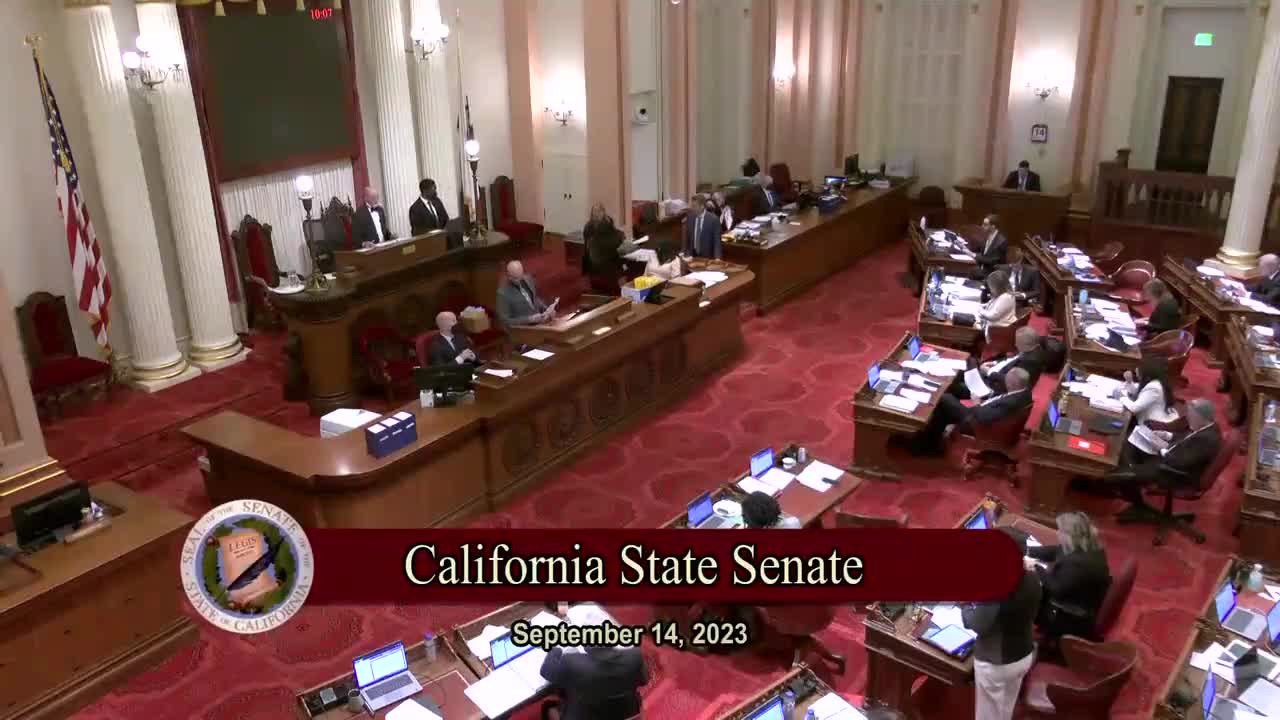 2MIN
Senate Floor
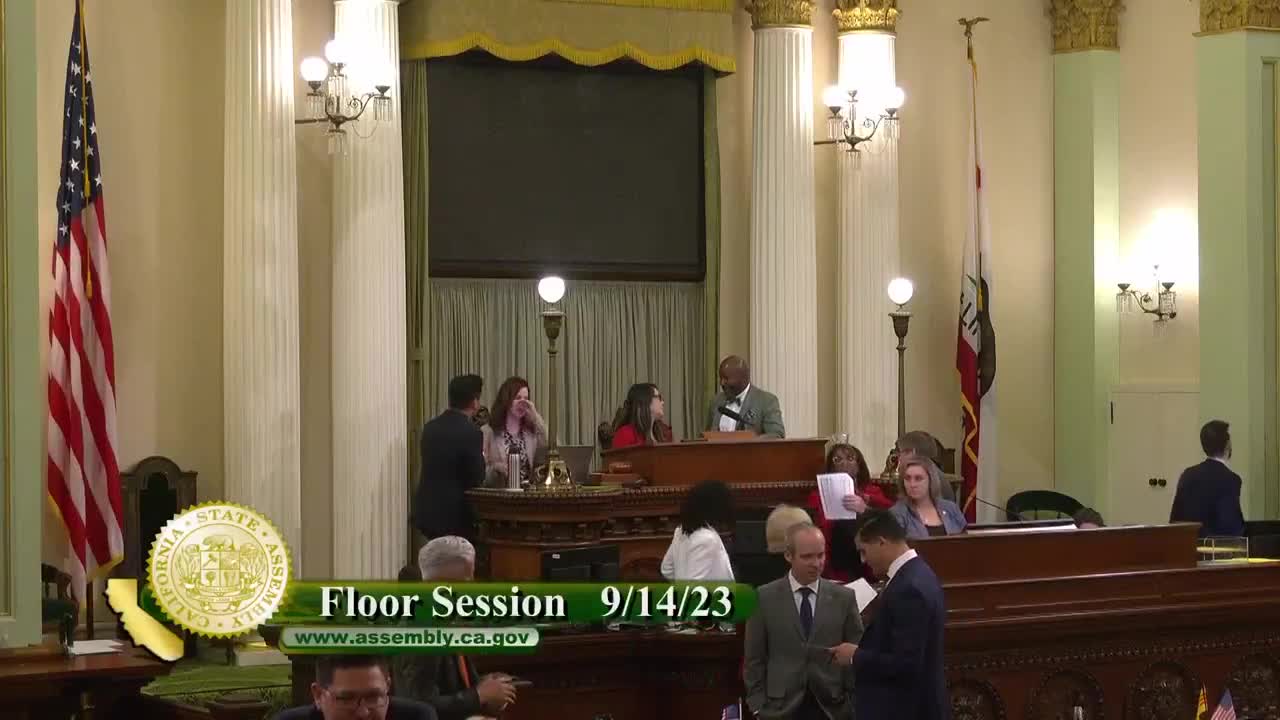 4MIN
Assembly Floor
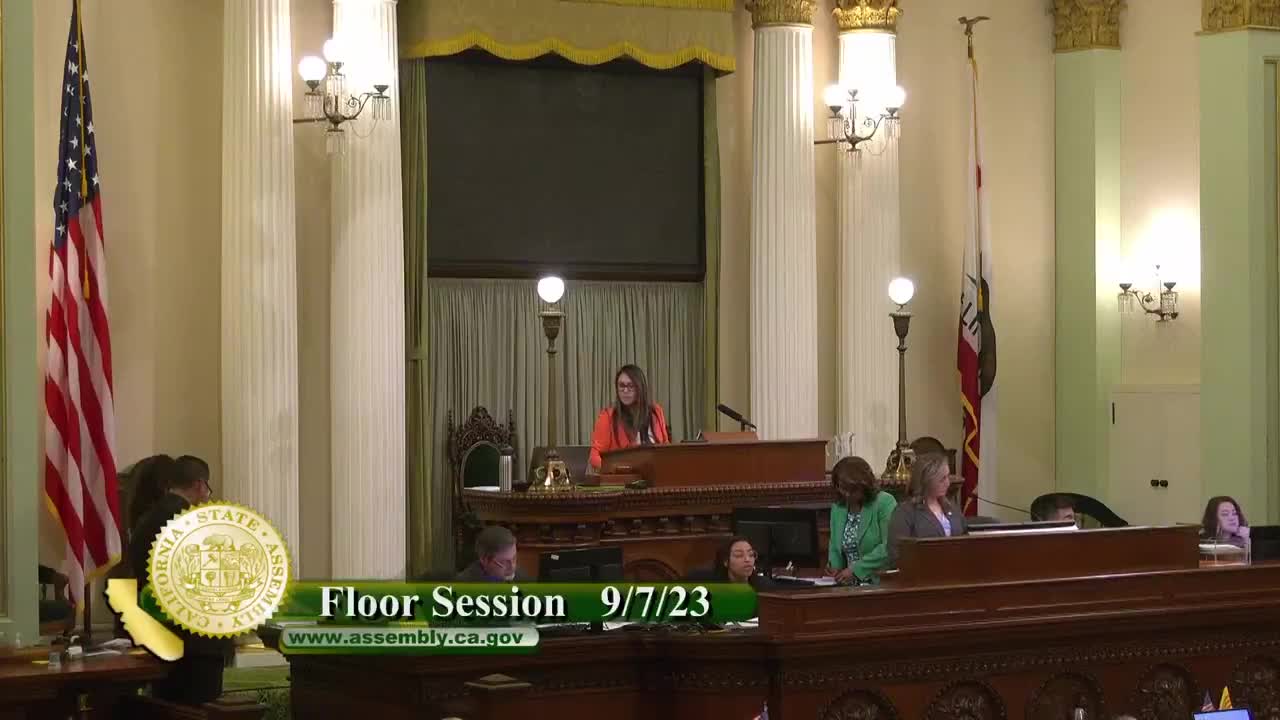 32SEC
Assembly Floor
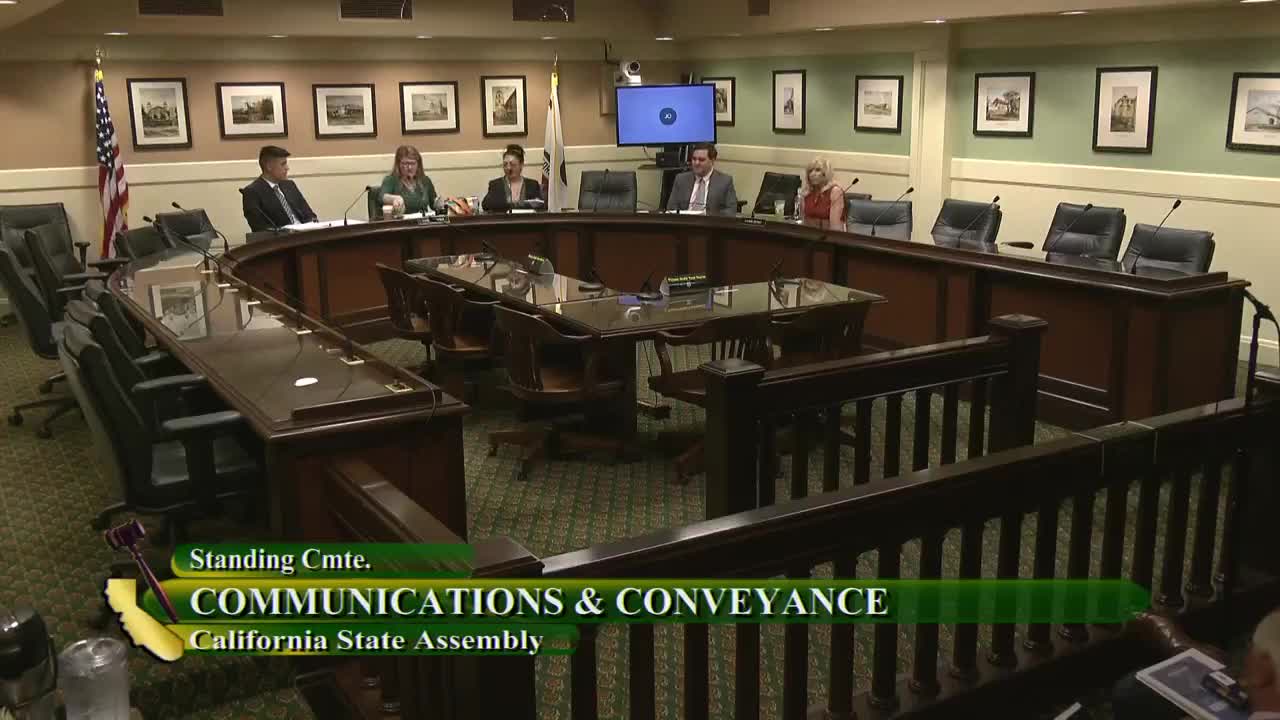 10MIN
Assembly Standing Committee on Communications and Conveyance
 3MIN
Senate Floor
 18MIN
Senate Standing Committee on Energy, Utilities and Communications
Bill Author
Bill Co-Author(s):