SB 786: Prescription drug pricing.
- Session Year: 2023-2024
- House: Senate
- Latest Version Date: 2023-10-07
Current Status:
Passed
(2023-10-07: Chaptered by Secretary of State. Chapter 414, Statutes of 2023.)
Introduced
In Committee
First Chamber
In Committee
Second Chamber
Enacted
What does this bill do?
This bill stops pharmacy benefit managers (PBMs) — the companies that manage drug benefits for insurers and health plans — from discriminating against health care providers and their pharmacies that buy drugs through the federal 340B discount program or from preventing those providers from keeping those discounts. It bans actions like less favorable payment terms, excluding or terminating contracts, special audit rules, interfering with a patient’s choice, retaliation, or gagging complaints, and while it does not directly apply to Medi‑Cal or Medicare, it covers PBMs that contract with managed care plans serving those members.
The summary is provided by generative AI which can make mistakes. For original language, please view the details in the table below.
Existing federal law requires the United States Secretary of Health and Human Services to enter into an agreement with each manufacturer of covered outpatient drugs to ensure the amount a covered entity is required to pay for those drugs does not exceed the average manufacturer price of the drug under the federal Medicaid program. Existing state law requires a covered entity to dispense only drugs subject to these federal pricing requirements to Medi-Cal beneficiaries. Existing law defines a covered entity to include a federally qualified health center and entities receiving specified grants and federal funding.
This bill would prohibit a pharmacy benefit manager from discriminating against a covered entity or its pharmacy in connection with dispensing a drug subject to federal pricing requirements or preventing a covered entity from retaining the benefit of discounted pricing for those drugs.
For purposes of this article:
(a)Covered drug means a drug purchased by a covered entity that is subject to the federal pricing requirements set forth in Section 256b of Title 42 of the United States Code.
(b)Covered entity means a provider defined as a covered entity in Section 256b of Title 42 of the United States Code.
(c)Pharmacy benefit manager has the same meaning as defined in Section 4430 of the Business and Professions Code and includes a wholly or partially owned or controlled subsidiary of a pharmacy benefit manager.
(d)Specified pharmacy means a pharmacy owned by, or under contract with, a covered entity that is registered with the 340B discount drug purchasing program to dispense covered drugs on behalf of the covered entity, whether in person or via mail.
127471.(a)A pharmacy benefit manager shall not impose any requirements, conditions, or exclusions that do either of the following:
(1)Discriminate against a covered entity or a specified pharmacy in connection with dispensing covered drugs.
(2)Prevent a covered entity from retaining the benefit of discounted pricing for the purchase of covered drugs.
(b)Discrimination prohibited pursuant to subdivision (a) includes, but is not limited to, all of the following:
(1)Payment terms, reimbursement methodologies, or other terms and conditions that distinguish between covered drugs and other drugs, account for the availability of discounts under the 340B discount drug purchasing program described in Section 256b of Title 42 of the United States Code in determining reimbursement, or are less favorable than the payment terms or reimbursement methodologies for similarly situated entities that are not furnishing or dispensing covered drugs.
(2)Terms or conditions applied to covered entities or specified pharmacies based on the furnishing or dispensing of covered drugs or their status as a covered entity or specified pharmacy, including restrictions or requirements for participation in specialty, standard, or preferred pharmacy networks, or requirements related to the frequency or scope of audits.
(3)Refusing to contract with or terminating a contract with a covered entity or specified pharmacy, or otherwise excluding a covered entity or specified pharmacy from a specialty, standard or preferred network, on the basis that the entity or pharmacy is a covered entity or a specified pharmacy or for reasons other than those that apply equally to entities or pharmacies that are not covered entities or specified pharmacies.
(4)Retaliation against a covered entity or specified pharmacy based on its exercise of any right or remedy under this article.
(5)Interfering with an individuals choice to receive a covered drug from a covered entity or specified pharmacy, whether in person or via direct delivery, mail, or other form of shipment.
(6)Restricting or prohibiting a covered entity from raising a grievance or speaking publicly about any pharmacy benefit manager that violates this subdivision or from filing a legal action against a pharmacy benefit manager for violating this subdivision.
(c)This section does not apply to the Medi-Cal program or the federal Medicare Program but does apply to pharmacy benefit managers that contract with managed care organizations that serve Medi-Cal or Medicare members.
(d)The provisions of this section shall not be waived, voided, or nullified by contract.
(e)This article shall only be implemented to the extent that it is consistent with Section 256b of Title 42 of the United States Code or any rules or regulations adopted thereunder.
For purposes of this article:
(a)Covered drug means a drug purchased by a covered entity that is subject to the federal pricing requirements set forth in Section 256b of Title 42 of the United States Code.
(b)Covered entity means a provider defined as a covered entity in Section 256b of Title 42 of the United States Code.
(c)Payer means a pharmacy benefit manager.(d)(c)Pharmacy benefit manager has the same meaning as defined in Section 4430 of the Business and Professions Code and includes a wholly or partially owned or controlled subsidiary of a pharmacy benefit manager.
(e)(d)Specified pharmacy means a pharmacy owned by, or under contract with, a covered entity that is registered with the 340B discount drug purchasing program described in Section 256b of Title 42 of the United States Code to dispense covered drugs on behalf of the covered entity, whether in person or via mail.
127471.(a)A payer pharmacy benefit manager shall not impose any requirements, conditions, or exclusions that do either of the following:
(1)Discriminate against a covered entity or a specified pharmacy in connection with dispensing covered drugs.
(2)Prevent a covered entity from retaining the benefit of discounted pricing for the purchase of covered drugs.
(b)Discrimination prohibited pursuant to subdivision (a) includes, but is not limited to, all of the following:
(1)Payment terms, reimbursement methodologies, or other terms and conditions that distinguish between covered drugs and other drugs, account for the availability of discounts under the 340B discount drug purchasing program described in Section 256b of Title 42 of the United States Code in determining reimbursement, or are less favorable than the payment terms or reimbursement methodologies for similarly situated entities that are not furnishing or dispensing covered drugs.
(2)Terms or conditions applied to covered entities or specified pharmacies based on the furnishing or dispensing of covered drugs or their status as a covered entity or specified pharmacy, including restrictions or requirements for participation in specialty, standard, or preferred pharmacy networks, or requirements related to the frequency or scope of audits.
(3)Requiring a covered entity or specified pharmacy to identify, either directly or through a third party, covered drugs or covered drug costs.(4)(3)Refusing to contract with or terminating a contract with a covered entity or specified pharmacy, or otherwise excluding a covered entity or specified pharmacy from a specialty, standard or preferred network, on the basis that the entity or pharmacy is a covered entity or a specified pharmacy or for reasons other than those that apply equally to entities or pharmacies that are not covered entities or specified pharmacies.
(5)(4)Retaliation against a covered entity or specified pharmacy based on its exercise of any right or remedy under this article.
(6)(5)Interfering with an individuals choice to receive a covered drug from a covered entity or specified pharmacy, whether in person or via direct delivery, mail, or other form of shipment.
(7)(6)Restricting or prohibiting a covered entity from raising a grievance or speaking publicly about any payer pharmacy benefit manager that violates this subdivision or from filing a legal action against a payer pharmacy benefit manager for violating this subdivision.
(c)This section does not apply to the Medi-Cal program or the federal Medicare Program but does apply to entities that contract with Medi-Cal or Medicare if they meet the definition of a payer. pharmacy benefit managers that contract with managed care organizations that serve Medi-Cal or Medicare members.
(d)The provisions of this section shall not be waived, voided, or nullified by contract.
(e)This article shall only be implemented to the extent that it is consistent with Section 256b of Title 42 of the United States Code or any rules or regulations adopted thereunder.
For purposes of this article:
(a)Covered drug means a drug purchased by a covered entity that is subject to the federal pricing requirements set forth in Section 256b of Title 42 of the United States Code.
(b)Covered entity means a provider defined as a covered entity in Section 256b of Title 42 of the United States Code.
(c)Payer means a pharmacy benefit manager.
(d)Pharmacy benefit manager has the same meaning as defined in Section 4430 of the Business and Professions Code and includes a wholly or partially owned or controlled subsidiary of a pharmacy benefit manager.
(e)Specified pharmacy means a pharmacy owned by, or under contract with, a covered entity that is registered with the 340B discount drug purchasing program described in Section 256b of Title 42 of the United States Code to dispense covered drugs on behalf of the covered entity, whether in person or via mail.
127471.(a)A payer shall not impose any requirements, conditions, or exclusions that do either of the following:
(1)Discriminate against a covered entity or a specified pharmacy in connection with dispensing covered drugs.
(2)Prevent a covered entity from retaining the benefit of discounted pricing for the purchase of covered drugs.
(b)Discrimination prohibited pursuant to subdivision (a) includes, but is not limited to, all of the following:
(1)Payment terms, reimbursement methodologies, or other terms and conditions that distinguish between covered drugs and other drugs, account for the availability of discounts under the 340B discount drug purchasing program described in Section 256b of Title 42 of the United States Code in determining reimbursement, or are less favorable than the payment terms or reimbursement methodologies for similarly situated entities that are not furnishing or dispensing covered drugs.
(2)Terms or conditions applied to covered entities or specified pharmacies based on the furnishing or dispensing of covered drugs or their status as a covered entity or specified pharmacy, including restrictions or requirements for participation in specialty, standard, or preferred pharmacy networks, or requirements related to the frequency or scope of audits.
(3)Requiring a covered entity or specified pharmacy to identify, either directly or through a third party, covered drugs or covered drug costs.
(4)Refusing to contract with or terminating a contract with a covered entity or specified pharmacy, or otherwise excluding a covered entity or specified pharmacy from a specialty, standard or preferred network, on the basis that the entity or pharmacy is a covered entity or a specified pharmacy or for reasons other than those that apply equally to entities or pharmacies that are not covered entities or specified pharmacies.
(5)Retaliation against a covered entity or specified pharmacy based on its exercise of any right or remedy under this article.
(6)Interfering with an individuals choice to receive a covered drug from a covered entity or specified pharmacy, whether in person or via direct delivery, mail, or other form of shipment.
(7)Restricting or prohibiting a covered entity from raising a grievance or speaking publicly about any payer that violates this subdivision or from filing a legal action against a payer for violating this subdivision.
(c)This section does not apply to the Medi-Cal program or the federal Medicare Program but does apply to entities that contract with Medi-Cal or Medicare if they meet the definition of a payer.
(d)The provisions of this section shall not be waived, voided, or nullified by contract.
(e)This article shall only be implemented to the extent that it is consistent with Section 256b of Title 42 of the United States Code or any rules or regulations adopted thereunder.
For purposes of this article:
(a)Covered drug means a drug purchased by a covered entity that is subject to the federal pricing requirements set forth in Section 256b of Title 42 of the United States Code.
(b)Covered entity means a provider defined as a covered entity in Section 256b of Title 42 of the United States Code.
(c)Payer means a pharmacy benefit manager.
(d)Pharmacy benefit manager has the same meaning as defined in Section 4430 of the Business and Professions Code and includes a wholly or partially owned or controlled subsidiary of a pharmacy benefit manager.
(e)Specified pharmacy means a pharmacy owned by, or under contract with, a covered entity that is registered with the 340B discount drug purchasing program described in Section 256b of Title 42 of the United States Code to dispense covered drugs on behalf of the covered entity, whether in person or via mail.
127471.(a)A payer, on its behalf or on behalf a health care service plan or health insurer, payer shall not impose any requirements, conditions, or exclusions that do either of the following:
(1)Discriminate against a covered entity or a specified pharmacy in connection with dispensing covered drugs.
(2)Prevent a covered entity from retaining the benefit of discounted pricing for the purchase of covered drugs.
(b)Discrimination prohibited pursuant to subdivision (a) includes, but is not limited to, all of the following:
(1)Payment terms, reimbursement methodologies, or other terms and conditions that distinguish between covered drugs and other drugs, account for the availability of discounts under the 340B discount drug purchasing program described in Section 256b of Title 42 of the United States Code in determining reimbursement, or are less favorable than the payment terms or reimbursement methodologies for similarly situated entities that are not furnishing or dispensing covered drugs.
(2)Terms or conditions applied to covered entities or specified pharmacies based on the furnishing or dispensing of covered drugs or their status as a covered entity or specified pharmacy, including restrictions or requirements for participation in specialty, standard, or preferred pharmacy networks, or requirements related to the frequency or scope of audits.
(3)Requiring a covered entity or specified pharmacy to identify, either directly or through a third party, covered drugs or covered drug costs.
(4)Refusing to contract with or terminating a contract with a covered entity or specified pharmacy, or otherwise excluding a covered entity or specified pharmacy from a specialty, standard or preferred network, on the basis that the entity or pharmacy is a covered entity or a specified pharmacy or for reasons other than those that apply equally to entities or pharmacies that are not covered entities or specified pharmacies.
(5)Retaliation against a covered entity or specified pharmacy based on its exercise of any right or remedy under this article.
(6)Interfering with an individuals choice to receive a covered drug from a covered entity or specified pharmacy, whether in person or via direct delivery, mail, or other form of shipment.
(7)Restricting or prohibiting a covered entity from raising a grievance or speaking publicly about any payer that violates this subdivision or from filing a legal action against a payer for violating this subdivision.
(c)This section does not apply to the Medi-Cal program or the federal Medicare Program but does apply to entities that contract with Medi-Cal or Medicare if they meet the definition of a payer.
(d)The provisions of this section shall not be waived, voided, or nullified by contract.
For purposes of this article:
(a)Covered drug means a drug purchased by a covered entity that is subject to the federal pricing requirements set forth in Section 256b of Title 42 of the United States Code.
(b)Covered entity means a provider defined as a covered entity in Section 256b of Title 42 of the United States Code.
(c)Payer means a pharmacy benefit manager.
(d)Pharmacy benefit manager has the same meaning as defined in Section 4430 of the Business and Professions Code and includes a wholly or partially owned or controlled subsidiary of a pharmacy benefit manager.
(e)Specified pharmacy means a pharmacy owned by, or under contract with, a covered entity that is registered with the 340B discount drug purchasing program described in Section 256b of Title 42 of the United States Code to dispense covered drugs on behalf of the covered entity, whether in person or via mail.
127471.(a)A payer, on its behalf or on behalf a health care service plan or health insurer, shall not impose any requirements, conditions, or exclusions that do either of the following:
(1)Discriminate against a covered entity or a specified pharmacy in connection with dispensing covered drugs.
(2)Prevent a covered entity from retaining the benefit of discounted pricing for the purchase of covered drugs.
(b)Discrimination prohibited pursuant to subdivision (a) includes, but is not limited to, all of the following:
(1)Payment terms, reimbursement methodologies, or other terms and conditions that distinguish between covered drugs and other drugs, account for the availability of discounts under the 340B discount drug purchasing program described in Section 256b of Title 42 of the United States Code in determining reimbursement, or are less favorable than the payment terms or reimbursement methodologies for similarly situated entities that are not furnishing or dispensing covered drugs.
(2)Terms or conditions applied to covered entities or specified pharmacies based on the furnishing or dispensing of covered drugs or their status as a covered entity or specified pharmacy, including restrictions or requirements for participation in specialty, standard, or preferred pharmacy networks, or requirements related to the frequency or scope of audits.
(3)Requiring a covered entity or specified pharmacy to identify, either directly or through a third party, covered drugs or covered drug costs.
(4)Refusing to contract with or terminating a contract with a covered entity or specified pharmacy, or otherwise excluding a covered entity or specified pharmacy from a specialty, standard or preferred network, on the basis that the entity or pharmacy is a covered entity or a specified pharmacy or for reasons other than those that apply equally to entities or pharmacies that are not covered entities or specified pharmacies.
(5)Retaliation against a covered entity or specified pharmacy based on its exercise of any right or remedy under this article.
(6)Interfering with an individuals choice to receive a covered drug from a covered entity or specified pharmacy, whether in person or via direct delivery, mail, or other form of shipment.
(7)Restricting or prohibiting a covered entity from raising a grievance or speaking publicly about any payer that violates this subdivision or from filing a legal action against a payer for violating this subdivision.
(c)This section does not apply to the Medi-Cal program or the federal Medicare Program but does apply to entities that contract with Medi-Cal or Medicare if they meet the definition of a payer.
(d)The provisions of this section shall not be waived, voided, or nullified by contract.
|
Date
|
Status
|
|---|---|
| Oct 7, 2023 | Chaptered by Secretary of State. Chapter 414, Statutes of 2023. |
| Oct 7, 2023 | Approved by the Governor. |
| Sep 11, 2023 | Enrolled and presented to the Governor at 3 p.m. |
| Sep 6, 2023 | Assembly amendments concurred in. (Ayes 40. Noes 0. Page 2419.) Ordered to engrossing and enrolling. |
| Aug 24, 2023 | In Senate. Concurrence in Assembly amendments pending. |
| Aug 24, 2023 | Read third time. Passed. (Ayes 76. Noes 0. Page 2794.) Ordered to the Senate. |
| Jul 13, 2023 | Read second time. Ordered to third reading. |
| Jul 12, 2023 | From committee: Do pass. (Ayes 15. Noes 0.) (July 11). |
| Jun 15, 2023 | From committee with author's amendments. Read second time and amended. Re-referred to Com. on HEALTH. |
| May 26, 2023 | Referred to Com. on HEALTH. |
| May 23, 2023 | In Assembly. Read first time. Held at Desk. |
| May 22, 2023 | Read third time. Passed. (Ayes 35. Noes 0. Page 1205.) Ordered to the Assembly. |
| Apr 24, 2023 | Read second time and amended. Ordered to third reading. |
| Apr 20, 2023 | From committee: Do pass as amended. (Ayes 9. Noes 0. Page 832.) (April 19). |
| Apr 3, 2023 | Set for hearing April 19. |
| Mar 27, 2023 | From committee with author's amendments. Read second time and amended. Re-referred to Com. on HEALTH. |
| Mar 1, 2023 | Referred to Com. on HEALTH. |
| Feb 21, 2023 | From printer. May be acted upon on or after March 20. |
| Feb 17, 2023 | Introduced. Read first time. To Com. on RLS. for assignment. To print. |
|
Date
|
Description
|
Location
|
Votes
|
|
|---|---|---|---|---|
| Sep 6, 2023 | Unfinished Business SB786 Portantino Concurrence | Senate Floor |
Passed |
|
| Aug 24, 2023 | SB 786 Portantino Senate Third Reading By Zbur | Assembly Floor |
Passed |
|
| Jul 11, 2023 | Do pass. | Assembly Standing Committee on Health |
Passed |
|
| May 22, 2023 | Senate 3rd Reading SB786 Portantino | Senate Floor |
Passed |
|
| Apr 19, 2023 | Do pass as amended | Senate Standing Committee on Health |
Passed |
This list shows positions taken on this bill by organizations on the date displayed, which is linked to the original source.
Positions by individuals are not included.
|
Organization
|
Position
|
Date
|
|---|---|---|
| Aids Healthcare Foundation | ** Support | |
| APLA Health | ** Support | |
| Biotechnology Innovation Organization | ** Against | |
| California Academy Of Family Physicians | ** Support | |
| California Hospital Association | ** Support | |
| California Medical Association | * Support | Apr 19, 2023 |
| California Pharmacists Association | ** Support | |
| California Primary Care Association | * Support | Apr 19, 2023 |
| CaliforniaHealth+ Advocates | ** Support | |
| Community Clinic Association of Los Angeles County | ** Support | |
| Keck Medicine Of University Of Southern California | ** Support | |
| Los Angeles LGBT Center | ** Support | |
| National Community Pharmacists Association | ** Support | |
| OCHIN | ** Support | |
| PCMA | * Neutral | Apr 19, 2023 |
| PhRMA | * Indeterminate | Apr 19, 2023 |
| Stanford Health Care | ** Support | |
| University of California | ** Support |
SENATE RULES COMMITTEE Office of Senate Floor Analyses (916) 651-1520 Fax: (916) 327-4478 | SB 786 |
UNFINISHED BUSINESS
Bill No: SB 786
Author: Portantino (D)
Amended: 6/15/23
Vote: 21
SENATE HEALTH COMMITTEE: 9-0, 4/19/23
AYES: Eggman, Dahle, Gonzalez, Limón, Menjivar, Roth, Rubio, Wahab, Wiener
NO VOTE RECORDED: Nguyen, Glazer, Hurtado
SENATE FLOOR: 35-0, 5/22/23
AYES: Allen, Archuleta, Ashby, Atkins, Becker, Blakespear, Bradford, Caballero, Cortese, Dahle, Dodd, Durazo, Eggman, Gonzalez, Grove, Jones, Laird, Limón, McGuire, Menjivar, Newman, Niello, Ochoa Bogh, Padilla, Portantino, Roth, Rubio, Seyarto, Skinner, Smallwood-Cuevas, Stern, Umberg, Wahab, Wiener, Wilk
NO VOTE RECORDED: Alvarado-Gil, Glazer, Hurtado, Min, Nguyen
ASSEMBLY FLOOR: 76-0, 8/24/23 - See last page for vote
SUBJECT: Prescription drug pricing
SOURCE: AIDS Healthcare Foundation
DIGEST:
This bill prohibits a pharmacy benefit manager (PBM) from imposing any requirements, conditions, or exclusions that discriminate against a federal 340B Drug Pricing Program Covered Entity (CE) or a specified pharmacy in connection with dispensing covered drugs, or, prevent a CE from retaining the benefit of discounted pricing for the purchase of covered drugs. (CEs are certain clinics, AIDS/HIV/sexually transmitted and other disease program grantees, and certain hospitals.)
Assembly Amendments
delete a federal citation and a provision that includes as discrimination requiring a covered entity or specified pharmacy to identify, either directly or through a third party, covered drugs or covered drug costs. Additionally, the amendments make clarifying changes.
ANALYSIS:
Existing federal law:
- Requires drug manufacturers to limit the price of outpatient drugs purchased by a CE, as specified, in order for the outpatient drugs to be covered by Medicaid. This is referred to as the federal 340B Drug Pricing Program (340B Program). [42 U.S.C. §256b]
- Defines “CE” as an entity described below that also meets requirements for CEs such as prohibiting duplicate discounts or rebates related to the Medicaid program, prohibiting resale or transfer of covered drugs to a person who is not a patient of the entity, allowing auditing by the Secretary of the federal Department of Health and Human Services (HHS) and a manufacturer of a covered drug, and, being subject to liability to manufacturers in an amount equal to the reduction in the price of the drug. CEs are:
- An Federally Qualified Health Center (FQHC);
- An entity receiving a grant under specified federal law;
- A family planning project receiving a grant or contract under federal law;
- An entity receiving a grant for outpatient early intervention services for HIV disease;
- A state-operated AIDS drug purchasing assistance program, as specified;
- A black lung clinic, as specified;
- A comprehensive hemophilia diagnostic treatment center, as specified;
- A Native Hawaiian Health Center, as specified;
- An urban Indian organization, as specified;
- Any certified entity receiving assistance under specified federal law;
- A certified entity receiving federal funding relating to treatment of sexually transmitted disease, or tuberculosis, as specified;
- Specified hospitals that are owned or operated by government, a public or private non-profit corporation granted government powers, or private non-profit hospital under contract with government to provide health care services to low-income individuals who are not entitled to benefits under Medicare or Medicaid; had a specified disproportionate share adjustment percentage or was described in a specified section of federal law; and does not obtain covered outpatient drugs through a group purchasing organization or other group purchasing arrangement;
- A children’s hospital, or, a free-standing cancer hospital, excluded from Medicare prospective payment system, as specified;
- An entity that is a critical access hospital, as specified; and,
- An entity that is a rural referral center, or a sole community hospital, and that meets other requirements, as specified. [42 U.S.C. §256b]
Existing state law:
- Defines 340B as the discount drug purchasing program described in federal law. [WIC §14105.46]
- Requires a CE to dispense only 340B drugs to Medi-Cal enrollees, and permits if a CE is unable to purchase a specific 340B drug, the CE to dispense a drug purchased at regular drug wholesale rates to a Medi-Cal beneficiary, and requires the CE to maintain documentation of their inability to obtain the 340B drug. Requires a CE to bill an amount not to exceed the entity’s actual acquisition cost for the drug, as charged by the manufacturer at a price consistent with federal law plus the professional fee, as specified, or the dispensing fee, as specified. [WIC §14105.46]
- Requires a CE to identify a 340B drug on the claim submitted to the Medi-Cal program for reimbursement. [WIC §14105.46]
This bill:
- Prohibits a PBM from imposing any requirements, conditions, or exclusions that do either of the following:
- Discriminate against a CE or a specified pharmacy in connection with dispensing covered drugs; or,
- Prevent a CE from retaining the benefit of discounted pricing for the purchase of covered drugs.
- Defines discrimination for purposes of 1) above as all of the following:
- Payment terms, reimbursement methodologies, or other terms and conditions that distinguish between covered drugs and other drugs, account for the availability of discounts under the 340B program in determining reimbursement, or are less favorable than the payment terms or reimbursement methodologies for similarly situated entities that are not furnishing or dispensing 340B program drugs;
- Terms or conditions applied to CEs or specified pharmacies based on the furnishing or dispensing of covered drugs or their status as a CE or specified pharmacy, including restrictions or requirements for participation in specialty, standard, or preferred pharmacy networks, or requirements related to the frequency or scope of audits;
- Refusing to contract with or terminating a contract with a CE or specified pharmacy, or otherwise excluding a CE or specified pharmacy from a specialty, standard or preferred network, on the basis that the entity or pharmacy is a CE or a specified pharmacy or for reasons other than those that apply equally to entities or pharmacies that are not covered entities or specified pharmacies;
- Retaliation against a CE or specified pharmacy based on its exercise of any right or remedy under this bill;
- Interfering with an individual’s choice to receive a 340B program drug from a CE or specified pharmacy, whether in person or via direct delivery, mail, or other form of shipment; and,
- Restricting or prohibiting a CE from raising a grievance or speaking publicly about any PBM that violates this bill or from filing a legal action against a PBM for violating this bill.
- Defines “Specified pharmacy” as a pharmacy owned by, or under contract with, a CE that is registered with the 340B program to dispense covered drugs on behalf of the CE, whether in person or via mail.
- Excludes Medi-Cal and Medicare from the provisions of this bill, but not PBMs that contract with those programs.
- Prohibits the provisions of this bill from being waived, voided, or nullified by contract.
- Requires this bill to only be implemented to the extent that is consistent with federal law, or any rules or regulations adopted thereunder.
Comments
Author’s statement. According to the author, the federal 340B program is an essential source of support for safety net providers, or CEs. Under 340B, CEs are allowed to purchase outpatient drugs at significantly reduced costs, facilitating the ability for CEs to invest these additional savings to expand access and improve health outcomes for uninsured and under-insured Californians, at no additional cost to taxpayers. For-profit PBMs are increasingly looking for ways to appropriate the 340B Program revenue to CEs for their own profit. This bill is needed to protect CEs from discriminatory actions by PBMs who are employing actions to interfere with the 340B discounts provided to CEs.
340B program. The 340B program is named for the statutory provision authorizing it in the federal Public Health Services Act. The Legislative Analyst’s Office (LAO) provided the following background information on 340B related to a 2018-19 Budget proposal from then-Governor Brown. The federal 340B program, established in 1992, requires drug manufacturers to provide discounts on the outpatient prescription drugs they sell to certain eligible health care providers, referred to as “CEs.” There are various criteria that health care providers may meet in order to be designated as CEs that are eligible for the 340B Program. Major health care providers that are generally eligible to participate in the program include certain hospitals that serve large numbers of low‑income patients (including both the uninsured and Medicaid enrollees), certain rural hospitals and Community Health Centers, such as FQHCs. Under the 340B program, discounted prescription drugs are available to CE patients regardless of payer. Under federal law, CEs may dispense or arrange for the dispensing of 340B prescription drugs to their own patients, regardless of who ultimately pays for the prescription drugs. As such, the 340B discounts apply regardless of whether the CE is ultimately reimbursed for the dispensed prescription drugs by Medicaid, Medicare, commercial health insurance, or the patient. The 340B program provides significant discounts for CEs. The 340B program generally requires CEs to receive prescription drug discounts that reduce the prices paid by a CE to at least the lower of: (1) the best price offered to most public and private entities; or, (2) the average manufacturer sales prices minus a percentage of between 13% and 23.1% (depending on the type of the prescription drug).
In 2015 (the most recent year for which the information was available to the LAO for their report), CEs are estimated to have saved around $6 billion on prescription drugs through the 340B program. Net of the 340B discounts, CEs are estimated to have spent over $12 billion on 340B prescription drugs in 2015. CEs retain a portion of 340B savings. 340B savings result from the lower relative cost of 340B prescription drugs compared to non‑340B drugs. Ultimately, the LAO states that savings resulting from the 340B program are likely shared by multiple participants in the health care system rather than entirely retained by CEs themselves.
Retained savings. CEs retain 340B savings by charging external payers of 340B prescription drugs, such as health insurers, prices that are higher than the 340B prices at which they acquired the drugs. The 340B program does not place restrictions on how CEs may use any retained savings. To the extent CEs charge external payers lower prices for prescription drugs than they would have if the drugs had been purchased without the 340B discounts, then these external payers benefit from the 340B discounts as well.
Medi-Cal. Medi-Cal pharmacy services have been transitioned from managed care to fee-for-service under Medi-Cal Rx. Under Medi-Cal, CEs are required to identify a 340B drug on the claim submitted to the Medi-Cal program for reimbursement in order to avoid prohibited duplicate discounts. This shift has had an impact on 340B savings/revenue for CEs. To mitigate the revenue impact to non-hospital based 340B clinics, DHCS proposed a supplemental payment pool to support their overall safety net services that might otherwise be limited or eliminated due to the change in billing to a fee-for-services delivery system and is now receiving applications from non-hospital based 340B health centers.
Federal rules and audits. Participation in the 340B program has grown from nearly 9,700 CEs in 2010 to 12,700 CEs in 2020. According to the federal Health Resources and Services Administration (HRSA), about 80% of CEs are grantees (e.g., a family planning clinic), and 20% are hospitals. However, a CE may have multiple sites of operation, and about three-quarters of the approximately 37,500 CE sites participating in the program are affiliated with hospitals. Since the establishment of the 340B program, participation of these CEs has been contingent on compliance with statutory program requirements; HRSA has issued interpretive guidance and statements of policy to assist CEs in complying. For example, CEs must maintain compliance with the statutory definitions pertaining to eligibility to continue participating in the program. CEs are also prohibited from diverting 340B drugs, that is, transferring 340B drugs to individuals who are not eligible patients of the CEs. Finally, CEs cannot subject manufacturers to duplicate discounts in which drugs prescribed to Medicaid beneficiaries are subject to both the 340B price and a rebate through the Medicaid Drug Rebate Program. To oversee CEs continued compliance with these requirements, in fiscal year 2012 HRSA implemented a systematic approach for auditing covered entities. HRSA issues findings for noncompliance with 340B program requirements based on information gathered through its audit process. CEs must address findings to avoid termination from the program. As of September 2020, HRSA finalized over 1,240 audits conducted from fiscal years 2012 through 2019, and almost 900 of them resulted in at least one finding. These findings, which address violations of statutory requirements and a failure to follow guidance that HRSA developed to clarify these requirements, were in the areas of eligibility (561), diversion (546), and duplicate discounts (429). With respect to contract pharmacies, as part of the HRSA’s quarterly program integrity checks from fiscal years 2017 through 2019, less than 2% of the 589 contract pharmacy arrangements reviewed were terminated because a CE failed to provide HRSA the contract.
Pharmaceutical Research and Manufacturers of America (PhRMA) study. A 2020 study funded by PhRMA suggests that the 340B program has evolved into a “profit-centric corporate initiative” and that half of the twenty largest for-profit corporations in the United States are active participants through contract pharmacy arrangements. The study says the average profit margin on 340B medicines commonly dispensed through contract pharmacies is an estimated 72%, compared with just 22% for non-340B medicines dispensed through independent pharmacies. According to the PhRMA study, CEs and their contracted pharmacies generated an estimated $23 billion in gross profits on 340B purchased medicines in 2018. The study says profits on 340B purchased medicines are now distributed across a vertically integrated supply chain that includes CEs, pharmacies, contract pharmacy administrators, PBMs, health plans and employer groups. CEs are often in competition with contract pharmacies when these pharmacies offer lower cost-sharing to fill drugs than what a CE would charge at their own pharmacy. The study also says the outsized profit margins on 340B medicines may contribute to additional consolidation and vertical integration. According to the study, contract pharmacy administrators develop and operate the software algorithms that determine 340B eligibility and enable the for-profit pharmacies to influence which prescriptions are classified as 340B.
Neutral positions. Biotechnology Innovation Organization and California Life Sciences are neutral on this bill based on the amendments adopted in the Assembly.
FISCAL EFFECT: Appropriation: No Fiscal Com.: No Local: No
SUPPORT: (Verified 8/24/23)
AIDS Healthcare Foundation (source)
APLA Health
California Academy of Family Physicians
California Hospital Association
California Pharmacists Association
CaliforniaHealth+ Advocates
Community Clinic Association of Los Angeles County
Keck Medicine of University of Southern California
Los Angeles LGBTQ Center
National Community Pharmacists Association
OCHIN
Stanford Health Care
University of California
OPPOSITION: (Verified 8/24/23)
None received
ARGUMENTS IN SUPPORT: This bill is sponsored by the AIDS Healthcare Foundation, which writes 340B CEs must serve the healthcare needs of uninsured and low-income people. In exchange, the program allows CEs to purchase prescription drugs at a lower cost and use the difference between the acquisition cost and the reimbursement payment from third party payers to stretch limited state and federal health care resources farther. As a result, more eligible patients are served, and more comprehensive services are provided at no cost to taxpayers. The Government Accountability Office estimates that savings accruing to covered entities range from 20% to 50% with those savings directed to safety net healthcare services. Unfortunately, for-profit PBMs view the 340B program as a profit-center for their own shareholders. The PBMs are increasingly demanding that safety net providers accept less in payment for the providers’ pharmacy services than other, non-safety net pharmacies. As a result, safety net providers have fewer resources to provide the vital services needed by their communities. Not only does this impede the ability to provide services to more disadvantaged patients, this practice contributes to the demise of independent pharmacies and adds to the growth of pharmacy deserts in rural and some suburban areas of the state. HRSA views discriminatory reimbursement as a threat to the 340B program. According to the 340B website, the purpose of giving qualified safety net providers access to 340B pricing is to enable them “to stretch scarce federal resources as far as possible, reaching more eligible patients and providing more comprehensive services.” This purpose cannot be achieved if 340B providers must pass their savings to third party payers, like PBMs. The 340B program was not intended to benefit PBMs, especially those that are for-profit.
ASSEMBLY FLOOR: 76-0, 8/24/23
AYES: Addis, Aguiar-Curry, Alanis, Alvarez, Arambula, Bains, Bauer-Kahan, Bennett, Berman, Boerner, Bryan, Calderon, Juan Carrillo, Wendy Carrillo, Cervantes, Chen, Connolly, Megan Dahle, Davies, Dixon, Essayli, Flora, Mike Fong, Vince Fong, Friedman, Gabriel, Gipson, Grayson, Haney, Hart, Holden, Hoover, Irwin, Jackson, Kalra, Lackey, Lee, Low, Lowenthal, Maienschein, Mathis, McCarty, McKinnor, Muratsuchi, Stephanie Nguyen, Ortega, Pacheco, Papan, Jim Patterson, Joe Patterson, Pellerin, Petrie-Norris, Quirk-Silva, Ramos, Rendon, Reyes, Luz Rivas, Rodriguez, Blanca Rubio, Sanchez, Santiago, Schiavo, Soria, Ta, Ting, Valencia, Villapudua, Waldron, Wallis, Ward, Weber, Wicks, Wilson, Wood, Zbur, Robert Rivas
NO VOTE RECORDED: Bonta, Gallagher, Garcia, Jones-Sawyer
Prepared by: Teri Boughton / HEALTH / (916) 651-4111
8/25/23 13:37:45
**** END ****
SENATE THIRD READING
STR Bill Id:SB 786
Author:(Portantino)
As Amended Ver:June 15, 2023
Majority vote
SUMMARY
Prohibits a pharmacy benefit manager (PBM) from imposing any requirements, conditions, or exclusions that impact the discounts that covered entities (CE) or specified pharmacies participating in the federal 340B drug discount program receive.
Major Provisions
COMMENTS
- PBMs. This bill prohibits PBMs from imposing any requirements, conditions, or exclusions that impact the discounts that CEs or specified pharmacies participating in the federal 340B drug discount program receive. According to the Federal Trade Commission (FTC), PBMs are companies that manage prescription drug benefits on behalf of private health insurers, Medicare Part D drug plans, large employers, and other payers. By negotiating with drug manufacturers and pharmacies on prescription drug pricing, PBMs have a significant behind-the-scenes impact in determining total drug costs for insurers, shaping patients' access to medications, and determining how much pharmacies are paid. The FTC states the six largest PBMs are: CVS Caremark; Express Scripts, Inc.; OptumRx, Inc.; Humana Pharmacy Solutions, Inc.; Prime Therapeutics LLC; and MedImpact Healthcare Systems, Inc. According to newspaper articles, OptumRx, CVS Caremark and Express Scripts control about 80% of prescription drug sales in America. As part of its ongoing study on PBMs and their impact on the accessibility and affordability of prescription drugs, the FTC has sought information from the biggest PBMs in the country. According to the FTC, this inquiry aims to shed light on unfair PBM practices, which include directing patients towards PBM-owned pharmacies, using "complicated and opaque" reimbursement methods, as well as negotiating rebates and fees with drug manufacturers that may impact the cost of prescription drugs to payers and patients.
According to the author and AIDS Healthcare Foundation, the sponsor of this bill, for-profit PBMs view the 340B programs as a profit-center for their own shareholders. The PBMs are increasingly demanding that safety net providers accept less in payment for providers' pharmacy services than other, non-safety net pharmacies.
- 340B program. The federal 340B program is administered by the federal Health Resources and Services Administration (HRSA). Established in 1992, it requires drug manufacturers to provide discounts on the outpatient prescription drugs they sell to certain eligible health care providers, referred to as "CEs" which must recertify their eligibility yearly. HRSA identifies the CEs eligible to participate in the 340B program to include the following entities:
- Health Centers: federally qualified health centers (FQHCs); FQHC Look-Alikes; Native Hawaiian Health Centers; Tribal / Urban Indian Health Centers;
- Ryan White HIV/AIDS Program Grantees;
- Hospitals: Children's Hospitals, Critical Access Hospitals, Disproportionate Share Hospitals, Free Standing Cancer Hospitals, Rural Referral Centers, Sole Community Hospitals; and,
- Specialized Clinics: Black Lung Clinics, Comprehensive Hemophilia Diagnostic Treatment Centers, Title X Family Planning Clinics, Sexually Transmitted Disease Clinics, and Tuberculosis Clinics;
The 340B program provides significant discounts for CEs. The 340B program generally requires CEs to receive prescription drug discounts from drug manufacturers that reduce the prices paid by a CE to at least the lower of: a) the best price offered to most public and private entities; or, b) the average manufacturer sales prices minus a percentage of between 13% and 23.1% (depending on the type of the prescription drug). Under 340B, discounted prescription drugs are available to CEs' patients regardless of payer. Under federal law, CEs may dispense or arrange for the dispensing of 340B prescription drugs to their own patients, regardless of who ultimately pays for the prescription drugs. According to a January 2020 Governmental Accountability Office report, from 2010 to 2019, the national number of CEs participating in the 340B program increased from nearly 9,700 to nearly 13,000. According to HRSA, in calendar year 2021, 340B covered entities purchased $43.9 billion in covered outpatient drugs under the 340B program.
According to the Author
The federal 340B Drug Pricing Program is an essential source of support for safety net providers, or CEs. Under 340B, CEs are allowed to purchase outpatient drugs at significantly reduced costs, facilitating the ability for CEs to invest these additional savings to expand access and improve health outcomes for uninsured and under-insured Californians, at no additional cost to taxpayers. The author states that for-profit PBMs manipulate the pricing of prescription drugs so they may retain a larger sum of the 340B program revenue, thereby diverting investments from CEs for their own profit. This bill is needed to protect CEs, and the communities they serve, from discriminatory actions by PBMs who are employing actions to interfere with the 340B discounts provided to CEs.
Arguments in Support
The sponsor, AIDS Healthcare Foundation, and supporters such as the Los Angeles LGBTQ Center, California Health+ Advocates and Stanford Health Care state this bill would ensure that 340B savings remain with safety-net providers, as intended by Congress, who use them to expand access to care for low-income and underserved patients. They also state that this bill will also ensure that patients can continue to access affordable medications in their own neighborhood through contract pharmacies and prevent the upfront 340B discount from becoming a backend rebate.
Arguments in Opposition
There is no known opposition to this bill.
FISCAL COMMENTS
None
VOTES
SENATE FLOOR: 35-0-5
YES: Allen, Archuleta, Ashby, Atkins, Becker, Blakespear, Bradford, Caballero, Cortese, Dahle, Dodd, Durazo, Eggman, Gonzalez, Grove, Jones, Laird, Limón, McGuire, Menjivar, Newman, Niello, Ochoa Bogh, Padilla, Portantino, Roth, Rubio, Seyarto, Skinner, Smallwood‑Cuevas, Stern, Umberg, Wahab, Wiener, Wilk
ABS, ABST OR NV: Alvarado-Gil, Glazer, Hurtado, Min, Nguyen
ASM HEALTH: 15-0-0
YES: Wood, Waldron, Aguiar-Curry, Arambula, Boerner, Wendy Carrillo, Flora, Vince Fong, Maienschein, McCarty, Joe Patterson, Rodriguez, Santiago, Villapudua, Weber
UPDATED
VERSION: June 15, 2023
CONSULTANT: Rosielyn Pulmano / HEALTH / (916) 319-2097 FN: 0001216
Date of Hearing: July 11, 2023
ASSEMBLY COMMITTEE ON HEALTH
Jim Wood, Chair
SBPCA Bill Id:SB 786
Author:(Portantino) – As Amended Ver:June 15, 2023
SENATE VOTE: 35-0
SUBJECT: Prescription drug pricing.
SUMMARY: Prohibits a pharmacy benefit manager (PBM) from imposing any requirements, conditions, or exclusions that impact the discounts that covered entities (CE) or specified pharmacies participating in the federal 340B drug discount program receive. Specifically, this bill:
- Prohibits a PBM from imposing any requirements, conditions, or exclusions that do either of the following:
- Discriminate against a CE or a specified pharmacy in connection with dispensing covered drugs; or,
- Prevent a CE from retaining the benefit of discounted pricing for the purchase of covered drugs.
- Specifies that discrimination prohibited pursuant to 1) a) above includes, but is not limited to, all of the following:
- Payment terms, reimbursement methodologies, or other terms and conditions that distinguish between covered drugs and other drugs, account for the availability of discounts under the 340B discount drug purchasing program in determining reimbursement, or are less favorable than the payment terms or reimbursement methodologies for similarly situated entities that are not furnishing or dispensing covered drugs;
- Terms or conditions applied to CEs or specified pharmacies based on the furnishing or dispensing of covered drugs or their status as a CE or specified pharmacy, including restrictions or requirements for participation in specialty, standard, or preferred pharmacy networks, or requirements related to the frequency or scope of audits;
- Refusing to contract with or terminating a contract with a CE or specified pharmacy, or otherwise excluding a CE or specified pharmacy from a specialty, standard or preferred network, on the basis that the entity or pharmacy is a CE or a specified pharmacy or for reasons other than those that apply equally to entities or pharmacies that are not covered entities or specified pharmacies;
- Retaliation against a CE or specified pharmacy based on its exercise of any right or remedy under this bill;
- Interfering with an individual’s choice to receive a covered drug from a CE or specified pharmacy, whether in person or via direct delivery, mail, or other form of shipment; and,
- Restricting or prohibiting a CE from raising a grievance or speaking publicly about any PBM that violates this bill or from filing a legal action against a PBM for violating this bill.
- Payment terms, reimbursement methodologies, or other terms and conditions that distinguish between covered drugs and other drugs, account for the availability of discounts under the 340B discount drug purchasing program in determining reimbursement, or are less favorable than the payment terms or reimbursement methodologies for similarly situated entities that are not furnishing or dispensing covered drugs;
- Exempts the Medi-Cal program or the federal Medicare Program from this bill. Applies this bill to PBMs that contract with managed care organizations that serve Medi-Cal or Medicare members.
- Specifies that the provisions of this bill cannot be waived, voided, or nullified by contract.
- Requires implementation of this bill only to the extent that it is consistent with the 340B program or any rules or regulations, as specified.
EXISTING FEDERAL LAW:
- Requires drug manufacturers to limit the price of outpatient drugs purchased by a CE, as specified, in order for the outpatient drugs to be covered by Medicaid. This is referred to as the federal 340B Drug Pricing Program (340B program). [42 United States Code (USC) §256b]
- Defines “CE” as an entity described below that also meets requirements for CEs such as prohibiting duplicate discounts or rebates related to the Medicaid program, prohibiting resale or transfer of covered drugs to a person who is not a patient of the entity, allowing auditing by the Secretary of the federal Department of Health and Human Services (HHS) and a manufacturer of a covered drug, and, being subject to liability to manufacturers in an amount equal to the reduction in the price of the drug. CEs are:
- A Federally Qualified Health Center (FQHC);
- An entity receiving a grant under federal law;
- A family planning project receiving a grant or contract under federal law;
- An entity receiving a grant for outpatient early intervention services for HIV disease;
- A state-operated AIDS drug purchasing assistance program, as specified;
- A black lung clinic, as specified;
- A comprehensive hemophilia diagnostic treatment center, as specified;
- A Native Hawaiian Health Center, as specified;
- An urban Indian organization, as specified;
- Any certified entity receiving assistance under specified federal law;
- A certified entity receiving federal funding relating to treatment of sexually transmitted disease, or tuberculosis, as specified;
- Specified hospitals that are owned or operated by government, a public or private non-profit corporation granted government powers, or private non-profit hospital under contract with government to provide health care services to low-income individuals who are not entitled to benefits under Medicare or Medicaid; had a specified disproportionate share adjustment percentage or was described in a specified section of federal law; and does not obtain covered outpatient drugs through a group purchasing organization or other group purchasing arrangement;
- A children’s hospital, or, a free-standing cancer hospital, excluded from Medicare prospective payment system, as specified;
- An entity that is a critical access hospital (CAH), as specified; and,
- An entity that is a rural referral center, or a sole community hospital, and that meets other requirements, as specified. [42 U.S.C. §256b]
EXISTING STATE LAW:
- Defines 340B as the discount drug purchasing program described in federal law. [Welfare and Institutions Code (WIC) §14105.46]
- Requires a CE to dispense only 340B drugs to Medi-Cal enrollees, and permits if a CE is unable to purchase a specific 340B drug, the CE to dispense a drug purchased at regular drug wholesale rates to a Medi-Cal beneficiary, and requires the CE to maintain documentation of their inability to obtain the 340B drug. Requires a CE to bill an amount not to exceed the entity’s actual acquisition cost for the drug, as charged by the manufacturer at a price consistent with federal law plus the professional fee, as specified, or the dispensing fee, as specified. [WIC §14105.46]
- Requires a CE to identify a 340B drug on the claim submitted to the Medi-Cal program for reimbursement. [WIC §14105.46]
- Defines a “qualifying nonhospital 340B community clinic” as a licensed center or clinic, as specified, or a clinic operated by a city, county, city and county, or hospital authority that is exempt from licensure, as specified, and that is a 340B CE under federal law for the duration of each applicable fiscal year for which the Department of Health Care Services (DHCS) implements a supplemental payment pool, as specified. [WIC §14105.467]
- Defines a PBM as a person, business, or other entity that, pursuant to a contract or under an employment relationship with a carrier, health benefit plan sponsor, or other third-party payer, either directly or through an intermediary, manages the prescription drug coverage provided by the carrier, plan sponsor, or other third-party payer, including, but not limited to, the processing and payment of claims for prescription drugs, the performance of drug utilization review, the processing of drug prior authorization requests, the adjudication of appeals or grievances related to prescription drug coverage, contracting with network pharmacies, and controlling the cost of covered prescription drugs. [Business& Professions Code §4430]
FISCAL EFFECT: None.
COMMENTS:
- PURPOSE OF THIS BILL. According to the author, the federal 340B Drug Pricing Program is an essential source of support for safety net providers, or CEs. Under 340B, CEs are allowed to purchase outpatient drugs at significantly reduced costs, facilitating the ability for CEs to invest these additional savings to expand access and improve health outcomes for uninsured and under-insured Californians, at no additional cost to taxpayers. The author states that for-profit PBMs manipulate the pricing of prescription drugs so they may retain a larger sum of the 340B program revenue, thereby diverting investments from CEs for their own profit. This bill is needed to protect CEs, and the communities they serve, from discriminatory actions by PBMs who are employing actions to interfere with the 340B discounts provided to CEs
- BACKGROUND.
- PBMs. This bill prohibits PBMs from imposing any requirements, conditions, or exclusions that impact the discounts that CEs or specified pharmacies participating in the federal 340B drug discount program receive. According to the Federal Trade Commission (FTC), PBMs are companies that manage prescription drug benefits on behalf of private health insurers, Medicare Part D drug plans, large employers, and other payers. By negotiating with drug manufacturers and pharmacies on prescription drug pricing, PBMs have a significant behind-the-scenes impact in determining total drug costs for insurers, shaping patients’ access to medications, and determining how much pharmacies are paid. The FTC states the six largest PBMs are: CVS Caremark; Express Scripts, Inc.; OptumRx, Inc.; Humana Pharmacy Solutions, Inc.; Prime Therapeutics LLC; and MedImpact Healthcare Systems, Inc. According to newspaper articles, OptumRx, CVS Caremark and Express Scripts control about 80% of prescription drug sales in America. As part of its ongoing study on PBMs and their impact on the accessibility and affordability of prescription drugs, the FTC has sought information from the biggest PBMs in the country. According to the FTC, this inquiry aims to shed light on unfair PBM practices, which include directing patients towards PBM-owned pharmacies, using "complicated and opaque" reimbursement methods, as well as negotiating rebates and fees with drug manufacturers that may impact the cost of prescription drugs to payers and patients.
According to the author and AIDS Healthcare Foundation, the sponsor of this bill, for-profit PBMs view the 340B programs as a profit-center for their own shareholders. The PBMs are increasingly demanding that safety net providers accept less in payment for providers’ pharmacy services than other, non-safety net pharmacies. - 340B program. The federal 340B program is administered by the federal Health Resources and Services Administration (HRSA). Established in 1992, it requires drug manufacturers to provide discounts on the outpatient prescription drugs they sell to certain eligible health care providers, referred to as “CEs” which must recertify their eligibility yearly. HRSA identifies the CEs eligible to participate in the 340B program to include the following entities:
- Health Centers: FQHCs; FQHC Look-Alikes; Native Hawaiian Health Centers; Tribal / Urban Indian Health Centers;
- Ryan White HIV/AIDS Program Grantees;
- Hospitals: Children’s Hospitals, CAHs, Disproportionate Share Hospitals, Free Standing Cancer Hospitals, Rural Referral Centers, Sole Community Hospitals; and,
- Specialized Clinics: Black Lung Clinics, Comprehensive Hemophilia Diagnostic Treatment Centers, Title X Family Planning Clinics, Sexually Transmitted Disease Clinics, and Tuberculosis Clinics;
- PBMs. This bill prohibits PBMs from imposing any requirements, conditions, or exclusions that impact the discounts that CEs or specified pharmacies participating in the federal 340B drug discount program receive. According to the Federal Trade Commission (FTC), PBMs are companies that manage prescription drug benefits on behalf of private health insurers, Medicare Part D drug plans, large employers, and other payers. By negotiating with drug manufacturers and pharmacies on prescription drug pricing, PBMs have a significant behind-the-scenes impact in determining total drug costs for insurers, shaping patients’ access to medications, and determining how much pharmacies are paid. The FTC states the six largest PBMs are: CVS Caremark; Express Scripts, Inc.; OptumRx, Inc.; Humana Pharmacy Solutions, Inc.; Prime Therapeutics LLC; and MedImpact Healthcare Systems, Inc. According to newspaper articles, OptumRx, CVS Caremark and Express Scripts control about 80% of prescription drug sales in America. As part of its ongoing study on PBMs and their impact on the accessibility and affordability of prescription drugs, the FTC has sought information from the biggest PBMs in the country. According to the FTC, this inquiry aims to shed light on unfair PBM practices, which include directing patients towards PBM-owned pharmacies, using "complicated and opaque" reimbursement methods, as well as negotiating rebates and fees with drug manufacturers that may impact the cost of prescription drugs to payers and patients.
The 340B program provides significant discounts for CEs. The 340B program generally requires CEs to receive prescription drug discounts from drug manufacturers that reduce the prices paid by a CE to at least the lower of: a) the best price offered to most public and private entities; or; b) the average manufacturer sales prices minus a percentage of between 13% and 23.1% (depending on the type of the prescription drug). Under 340B, discounted prescription drugs are available to CEs’ patients regardless of payer. Under federal law, CEs may dispense or arrange for the dispensing of 340B prescription drugs to their own patients, regardless of who ultimately pays for the prescription drugs. According to a January 2020 Governmental Accountability Office (GAO) report, from 2010 to 2019, the national number of CEs participating in the 340B program increased from nearly 9,700 to nearly 13,000. According to HRSA, in calendar year 2021, 340B covered entities purchased $43.9 billion in covered outpatient drugs under the 340B program.
- 340B program Integrity. In addition to the annual recertification of CEs, the 340B program requires CEs to ensure program integrity and maintain accurate records documenting compliance with all 340B program requirements. The 340B program requires audits of CEs and drug manufacturers. HRSA, on its own or pursuant to a request by a pharmaceutical manufacturer, is authorized to audit a CE. Only one audit of a CE is permitted at any one time. When HRSA has received a request from a manufacturer to conduct an audit, HRSA determines whether an audit should be performed by the Government or the manufacturer. A manufacturer is authorized to audit a CE in accordance with procedures established by HRSA relating to the number, duration, and scope of audits. These manufacturer audits must be conducted to ensure CE compliance of the following two requirements:
- Prohibition on Duplicate Discounts or Rebates. The 340B statute prohibits duplicate discounts, which occur when a CE obtains a 340B discount on a drug and a Medicaid agency obtains a discount in the form of a rebate from the manufacturer for the same medication. Covered entities must have mechanisms in place to prevent duplicate discounts; and,
- Resale or Diversion of Drugs. The 340B program also prohibit CEs from reselling or otherwise transferring 340B drugs to ineligible patients.
- CE and In-house and Contract Pharmacy Arrangements. CEs may dispense 340B drugs either through in-house pharmacies they own, or through the use of contract pharmacy arrangements, in which they contract with outside pharmacies, or both. According to a 2014 RAND Corporation perspective “The 340B Prescription Drug Discount Program - Origins, Implementation, and Post-Reform Future” at the inception of the 340B program, 340B covered drugs could only be dispensed through an in-house pharmacy. With less than 5% of CEs using an in-house pharmacy at that time, many CEs could not use the 340B. Beginning in 1996, the 340B program allowed CEs without an in-house pharmacy to use a single contract pharmacy to distribute 340B drugs to their patients. The use of contract pharmacies was expanded in 2010, when CEs were allowed to contract with an unlimited number of pharmacies to provide 340B-discounted drugs.
Contract pharmacy arrangements vary but generally involve a contract pharmacy and the CE sharing in the savings resulting from the lower acquisition cost of a 340B prescription drug and the higher reimbursement provided by what a health plan pays the contract pharmacy for a drug dispensed to a patient with commercial health plan coverage. The savings are shared between the contract pharmacy and the CE in order to encourage both entities to participate in the contract pharmacy 340B arrangement. A CE with an in-house pharmacy also benefits from dispensing 340B drugs as the CE with an in-house pharmacy can bill health plans for the drug at the regular pharmacy reimbursement rate for a drug the CE acquired at lower 340B price.
According to a January 2020 General Accounting Office report, from 2010 to 2019, since the change in HRSA guidance allowing CEs to have an unlimited number of contract pharmacies, there also has been a large increase in the number of contract pharmacies. Specifically, the national number of contract pharmacies increased from about 1,300 at the beginning of 2010 to around 23,000 in 2019.
Contract pharmacies provide a means for CEs without in-house pharmacies to access the 340B program, and for CEs with an in-house pharmacy to reach patients who opt to use external pharmacies. According to a October 2021 University of Southern California (USC) white paper on the 340B program entitled “The 340B Drug Pricing Program: Background, Ongoing Challenges, and Recent Developments,” their growth since 2010 has been controversial in part because they are not mentioned in the federal 340B statute, HRSA guidance allows for an unlimited number of contract pharmacies, and because they were not originally meant to benefit financially from the 340B program. As of July 2017, approximately one-third of CEs used a contract pharmacy and hospitals were more likely to have a contract pharmacy than other types of CEs. The share of major pharmacy chains such as Walgreens and CVS that serve as contract pharmacies has increased since 2010. Specifically, Walgreens, CVS, and Walmart accounted for 28%, 20% and 10% of contract pharmacy locations in 2020 (nearly 28,000 total). The USC white paper states that whether contract pharmacies pass 340B savings on to their low-income, uninsured or underinsured customers is unknown. The USC white paper states that, although comprehensive data are not available, in surveys of CEs by the GAO and Office of Inspector General, 25 out of 55 and eight out of 30, respectively, do not offer discounts to patients on 340B prescriptions filled at contract pharmacies. - 340B program Controversies. Recently, the 340B program has come under increasing scrutiny and has been the subject of litigation, including with pharmaceutical manufacturers and payors, including the Medicare program. A summary of some of these issues is below.
- 340B and Pharmaceutical Manufacturers. The 340B program has been the subject of litigation, Congressional hearings and federal guidance. According to the October 2021 USC white paper on the issue, in 2020, both Eli Lilly and AstraZeneca announced they would limit distribution of 340B-priced drugs to CEs and their affiliate sites and would no longer distribute 340B-priced drugs to contract pharmacies. The USC white paper states Merck, Sanofi and Novartis have taken a different approach, notifying CEs that they must provide contract pharmacy claims data to an entity to prevent duplicate discounts. Because these actions would essentially have manufacturers scaling back the 340B program, they were met with complaints from hospital and provider organizations such as the American Hospital Association and 340B Health, and 28 state Attorneys General. In response, DHHS issued advisory guidance stating that manufacturers participating in 340B must provide 340B discounts to CEs’ contract pharmacies. Eli Lilly, Sanofi and AstraZeneca have all separately challenged the DHHS guidance in court.
In a letter to one manufacturer, HRSA stated the 340B statute requires that manufacturers offer each CE covered outpatient drugs for purchase at or below the applicable ceiling price, and this requirement is not qualified, restricted on, or qualified on how the CE chooses to distribute the covered outpatient drugs. HRSA further stated the 340B statute does not permit manufacturers to impose conditions on CEs’ access to 340B pricing, including the production of claims data. Further, HRSA stated that manufacturers have signed a pharmaceutical pricing agreement (PPA) to comply with 340B requirements, and the manufacturer is bound by the terms of the PPA and must ensure that the 340B ceiling price is available to all CEs. HRSA indicated to the manufacturer that the 340B statute provides a mechanism by which a manufacturer can address concerns with compliance issues arising from contract pharmacy arrangements by conducting an audit and submitting a claim through the Administrative Dispute Resolution process contained in the 340B statute, and that the 340B statute does not permit a manufacturer to impose industry-wide universal restrictions. - 340B and Payors. The 340B program was aimed at enabling certain health care providers that met the federal definition of CEs “to stretch scarce federal resources to reach more eligible patients or provide more comprehensive services.” Since its inception, the number of CEs has been expanded legislatively, and administrative actions authorized contract pharmacies, initially on a limited basis and then subsequently expanded without limit. The dollar volume and number of 340B drugs dispensed has grown significantly. As the program has expanded, payors have taken note of the lower prices and attempted to reduce reimbursements based on the availability of 340B prices, including PBMs, the federal Medicare program and the State of California.
- California’s Medi-Cal Program. In California, existing law (for purposes of the Medi-Cal program), requires CEs to bill an amount not to exceed the entity’s actual acquisition cost for a drug, as charged by the manufacturer at a price consistent with 340B, plus the Medi-Cal pharmacy professional dispensing fee. CEs must also identify a 340B drug on the claim submitted to the Medi-Cal program for reimbursement. In 2018, Governor Brown unsuccessfully proposed to prohibit CEs from billing Medi-Cal for 340B drugs in response to concerns about duplicative discounts and loss of drug rebate revenue to the state.
In January 2019, Governor Newsom issued Executive Order N-01-19 with the stated purpose of achieving cost-savings for drug purchases made by the state. A key component of the Executive Order requires DHCS to transition all Medi-Cal outpatient pharmacy services from Medi-Cal managed care (MCMC plans) to fee-for-service (FFS) by January 1, 2021. This transition, originally scheduled for January 1, 2021, took effect January 1, 2022, affected CEs and contract pharmacies as these entities could no longer financially benefit from the difference between their lower drug acquisition cost under 340B and the higher reimbursement provided by MCMC plans. A coalition of clinics sued to block the transition, legislation was introduced on the topic (AB 1050, described below) and a supplemental payment program was established (AB 80, described below) to backfill a portion of the losses assumed by non-hospital based 340B clinics. DHCS assumes total fund savings related to 340B from non-hospital clinics from this transition of the outpatient pharmacy benefit to FFS of $147 million ($73.5 million General Fund (GF)) annually, and costs for the supplemental payment program of $52.5 million ($22.9 GF) in 2022-23 and $105 million ($52.5 million GF) in 2023-24. - Federal Medicare Program. The federal government has also sought to achieve savings in Medicare based on the availability of 340B prices for 340B hospitals. On June 15, 2022, the U.S. Supreme Court issued a unanimous decision finding Medicare payment cuts to hospitals participating in the 340B drug pricing program to be illegal. The case challenged a reimbursement policy implemented by the Centers for Medicare and Medicaid Services in Medicare whereby Medicare began paying most 340B hospitals for certain outpatient drugs using a payment methodology that resulted in lower payments to 340B hospitals. The Court ruled that Medicare cannot vary payment rates by hospital groups unless the agency has first surveyed acquisition costs.
- 340B and Pharmaceutical Manufacturers. The 340B program has been the subject of litigation, Congressional hearings and federal guidance. According to the October 2021 USC white paper on the issue, in 2020, both Eli Lilly and AstraZeneca announced they would limit distribution of 340B-priced drugs to CEs and their affiliate sites and would no longer distribute 340B-priced drugs to contract pharmacies. The USC white paper states Merck, Sanofi and Novartis have taken a different approach, notifying CEs that they must provide contract pharmacy claims data to an entity to prevent duplicate discounts. Because these actions would essentially have manufacturers scaling back the 340B program, they were met with complaints from hospital and provider organizations such as the American Hospital Association and 340B Health, and 28 state Attorneys General. In response, DHHS issued advisory guidance stating that manufacturers participating in 340B must provide 340B discounts to CEs’ contract pharmacies. Eli Lilly, Sanofi and AstraZeneca have all separately challenged the DHHS guidance in court.
- 340B program Integrity. In addition to the annual recertification of CEs, the 340B program requires CEs to ensure program integrity and maintain accurate records documenting compliance with all 340B program requirements. The 340B program requires audits of CEs and drug manufacturers. HRSA, on its own or pursuant to a request by a pharmaceutical manufacturer, is authorized to audit a CE. Only one audit of a CE is permitted at any one time. When HRSA has received a request from a manufacturer to conduct an audit, HRSA determines whether an audit should be performed by the Government or the manufacturer. A manufacturer is authorized to audit a CE in accordance with procedures established by HRSA relating to the number, duration, and scope of audits. These manufacturer audits must be conducted to ensure CE compliance of the following two requirements:
- SUPPORT. The sponsor, AIDS Healthcare Foundation, and supporters such as the Los Angeles LGBTQ Center, California Health+ Advocates and Stanford Health Care state this bill would ensure that 340B savings remain with safety-net providers, as intended by Congress, who use them to expand access to care for low-income and underserved patients. They also state that this bill will also ensure that patients can continue to access affordable medications in their own neighborhood through contract pharmacies and prevent the upfront 340B discount from becoming a backend rebate.
- PREVIOUS LEGISLATION.
- SB 939 (Pan) of 2022 would have prohibited payers and drug manufacturers from imposing requirements, conditions, or exclusions that discriminate against certain health care entities participating in a federal drug discount program, including contracted pharmacies of the health care entities. SB 939 was not heard in the Assembly Health Committee at the request of the author.
- AB 1050 (Gray) of 2021 would have prohibited DHCS from taking any action that materially increases the administrative burden or cost of dispensing 340B drugs by FQHCs and rural health clinics, including, but not limited to, changes that adversely impact the use of contract pharmacy arrangements. AB 1050 would have required DHCS before taking an action that materially impacts the 340B program, to prepare a detailed report describing the proposed action, including a determination that the action does not violate this provision. AB 1050 would have required the application for enrollment for Medi-Cal to include a statement that permits DHCS, the county welfare department, and a Medi-Cal managed care organization or health care provider to which the person is assigned to communicate with the applicant regarding appointment reminders or outreach efforts through Free to End User text messaging, unless the person opts out. AB 1050 was held in the Assembly Appropriations Committee.
- AB 80 (Committee on Budget), Chapter 12, Statues of 2020, among other provisions, requires DHCS, contingent on an appropriation by the Legislature, to make available fee-for-service-based supplemental payments from a fixed-amount payment pool to qualifying nonhospital 340B community clinics, beginning January 1, 2021. AB 80 requires DHCS to establish a stakeholder process on or before July 15, 2020, to develop and implement the methodology for distribution of payments, including the eligibility criteria for receipt of payments, the aggregate amount of pool funding, the criteria for apportioning the funding, and timing of payments.
- REGISTERED SUPPORT / OPPOSITION:
Support
AIDS Healthcare Foundation (sponsor)
Apla Health
California Academy of Family Physicians
California Health+advocates, Subsidiary of The California Primary Care Association
California Hospital Association
California Pharmacists Association
Community Clinic Association of Los Angeles County
Keck Medicine of University of Southern California
Los Angeles LGBT Center
National Community Pharmacists Association
Ochin, INC.
Stanford Health Care
University of California
Opposition
None on file.
Analysis Prepared by: Rosielyn Pulmano / HEALTH / (916) 319-2097
SENATE HEALTH COMMITTEE Office of Senate Floor Analyses (916) 651-1520 Fax: (916) 327-4478 | SB 786 |
THIRD READING
Bill No: SB 786
Author: Portantino (D)
Amended: 4/24/23
Vote: 21
SENATE HEALTH COMMITTEE: 9-0, 4/19/23
AYES: Eggman, Dahle, Gonzalez, Limón, Menjivar, Roth, Rubio, Wahab, Wiener
NO VOTE RECORDED: Nguyen, Glazer, Hurtado
SUBJECT: Prescription drug pricing
SOURCE: AIDS Healthcare Foundation
DIGEST:
This bill prohibits a pharmacy benefit manager from imposing any requirements, conditions, or exclusions that discriminate against a federal 340B Drug Pricing Program Covered Entity (CE) or a specified pharmacy in connection with dispensing covered drugs, or, prevent a CE from retaining the benefit of discounted pricing for the purchase of covered drugs. (CEs are certain clinics, AIDS/HIV/sexually transmitted and other disease program grantees, and certain hospitals.)
ANALYSIS:
Existing federal law:
- Requires drug manufacturers to limit the price of outpatient drugs purchased by a covered entity (CE), as specified, in order for the outpatient drugs to be covered by Medicaid. This is referred to as the federal 340B Drug Pricing Program (340B Program). [42 U.S.C. §256b]
- Defines “CE” as an entity described below that also meets requirements for CEs such as prohibiting duplicate discounts or rebates related to the Medicaid program, prohibiting resale or transfer of covered drugs to a person who is not a patient of the entity, allowing auditing by the Secretary of the federal Department of Health and Human Services (HHS) and a manufacturer of a covered drug, and, being subject to liability to manufacturers in an amount equal to the reduction in the price of the drug. CEs are:
- An Federally Qualified Health Center (FQHC);
- An entity receiving a grant under specified federal law;
- A family planning project receiving a grant or contract under federal law;
- An entity receiving a grant for outpatient early intervention services for HIV disease;
- A state-operated AIDS drug purchasing assistance program, as specified;
- A black lung clinic, as specified;
- A comprehensive hemophilia diagnostic treatment center, as specified;
- A Native Hawaiian Health Center, as specified;
- An urban Indian organization, as specified;
- Any certified entity receiving assistance under specified federal law;
- A certified entity receiving federal funding relating to treatment of sexually transmitted disease, or tuberculosis, as specified;
- Specified hospitals that are owned or operated by government, a public or private non-profit corporation granted government powers, or private non-profit hospital under contract with government to provide health care services to low-income individuals who are not entitled to benefits under Medicare or Medicaid; had a specified disproportionate share adjustment percentage or was described in a specified section of federal law; and does not obtain covered outpatient drugs through a group purchasing organization or other group purchasing arrangement;
- A children’s hospital, or, a free-standing cancer hospital, excluded from Medicare prospective payment system, as specified;
- An entity that is a critical access hospital, as specified; and,
- An entity that is a rural referral center, or a sole community hospital, and that meets other requirements, as specified. [42 U.S.C. §256b]
Existing state law:
- Defines 340B as the discount drug purchasing program described in federal law. [WIC §14105.46]
- Requires a CE to dispense only 340B drugs to Medi-Cal enrollees, and permits if a CE is unable to purchase a specific 340B drug, the CE to dispense a drug purchased at regular drug wholesale rates to a Medi-Cal beneficiary, and requires the CE to maintain documentation of their inability to obtain the 340B drug. Requires a CE to bill an amount not to exceed the entity’s actual acquisition cost for the drug, as charged by the manufacturer at a price consistent with federal law plus the professional fee, as specified, or the dispensing fee, as specified. [WIC §14105.46]
- Requires a CE to identify a 340B drug on the claim submitted to the Medi-Cal program for reimbursement. [WIC §14105.46]
This bill:
- Prohibits a payer (pharmacy benefit manger or PBM) from imposing any requirements, conditions, or exclusions that do either of the following:
- Discriminate against a CE or a specified pharmacy in connection with dispensing covered drugs; or,
- Prevent a CE from retaining the benefit of discounted pricing for the purchase of covered drugs.
- Defines discrimination for purposes of 1) above as all of the following:
- Payment terms, reimbursement methodologies, or other terms and conditions that distinguish between covered drugs and other drugs, account for the availability of discounts under the 340B program in determining reimbursement, or are less favorable than the payment terms or reimbursement methodologies for similarly situated entities that are not furnishing or dispensing 340B program drugs;
- Terms or conditions applied to CEs or specified pharmacies based on the furnishing or dispensing of covered drugs or their status as a CE or specified pharmacy, including restrictions or requirements for participation in specialty, standard, or preferred pharmacy networks, or requirements related to the frequency or scope of audits;
- Requiring a CE or specified pharmacy to identify, either directly or through a third party, 340B program drugs or drug costs;
- Refusing to contract with or terminating a contract with a CE or specified pharmacy, or otherwise excluding a CE or specified pharmacy from a specialty, standard or preferred network, on the basis that the entity or pharmacy is a CE or a specified pharmacy or for reasons other than those that apply equally to entities or pharmacies that are not covered entities or specified pharmacies;
- Retaliation against a CE or specified pharmacy based on its exercise of any right or remedy under this bill;
- Interfering with an individual’s choice to receive a 340B program drug from a CE or specified pharmacy, whether in person or via direct delivery, mail, or other form of shipment; and,
- Restricting or prohibiting a CE from raising a grievance or speaking publicly about any PBM that violates this bill or from filing a legal action against a PBM for violating this bill.
- Defines “Specified pharmacy” as a pharmacy owned by, or under contract with, a CE that is registered with the 340B program to dispense covered drugs on behalf of the CE, whether in person or via mail.
- Excludes Medi-Cal and Medicare from the provisions of this bill, but not entities that contract with those programs if they meet the definition of payer.
- Prohibits the provisions of this bill from being waived, voided, or nullified by contract.
- Indicates this bill shall only be implemented to the extent that is consistent with federal law, or any rules or regulations adopted thereunder.
Comments
Author’s statement. According to the author, the federal 340B program is an essential source of support for safety net providers, or CEs. Under 340B, CEs are allowed to purchase outpatient drugs at significantly reduced costs, facilitating the ability for CEs to invest these additional savings to expand access and improve health outcomes for uninsured and under-insured Californians, at no additional cost to taxpayers. For-profit PBMs are increasingly looking for ways to appropriate the 340B Program revenue to CEs for their own profit. This bill is needed to protect CEs from discriminatory actions by PBMs who are employing actions to interfere with the 340B discounts provided to CEs.
340B program. The 340B program is named for the statutory provision authorizing it in the federal Public Health Services Act. The Legislative Analyst’s Office (LAO) provided the following background information on 340B related to a 2018-19 budget proposal from then-Governor Brown. The federal 340B program, established in 1992, requires drug manufacturers to provide discounts on the outpatient prescription drugs they sell to certain eligible health care providers, referred to as “CEs.” There are various criteria that health care providers may meet in order to be designated as CEs that are eligible for the 340B Program. Major health care providers that are generally eligible to participate in the program include certain hospitals that serve large numbers of low‑income patients (including both the uninsured and Medicaid enrollees), certain rural hospitals and Community Health Centers, such as FQHCs. Under the 340B program, discounted prescription drugs are available to CE patients regardless of payer. Under federal law, CEs may dispense or arrange for the dispensing of 340B prescription drugs to their own patients, regardless of who ultimately pays for the prescription drugs. As such, the 340B discounts apply regardless of whether the CE is ultimately reimbursed for the dispensed prescription drugs by Medicaid, Medicare, commercial health insurance, or the patient. The 340B program provides significant discounts for CEs. The 340B program generally requires CEs to receive prescription drug discounts that reduce the prices paid by a CE to at least the lower of: a) the best price offered to most public and private entities; or, b) the average manufacturer sales prices minus a percentage of between 13% and 23.1% (depending on the type of the prescription drug).
In 2015 (the most recent year for which the information was available to the LAO for their report), CEs are estimated to have saved around $6 billion on prescription drugs through the 340B program. Net of the 340B discounts, CEs are estimated to have spent over $12 billion on 340B prescription drugs in 2015. CEs retain a portion of 340B savings. 340B savings result from the lower relative cost of 340B prescription drugs compared to non‑340B drugs. Ultimately, the LAO states that savings resulting from the 340B program are likely shared by multiple participants in the health care system rather than entirely retained by CEs themselves.
Retained savings. CEs retain 340B savings by charging external payers of 340B prescription drugs, such as health insurers, prices that are higher than the 340B prices at which they acquired the drugs. The 340B program does not place restrictions on how CEs may use any retained savings. To the extent CEs charge external payers lower prices for prescription drugs than they would have if the drugs had been purchased without the 340B discounts, then these external payers benefit from the 340B discounts as well.
Medi-Cal. Medi-Cal pharmacy services have been transitioned from managed care to fee-for-service under Medi-Cal Rx. Under Medi-Cal, CEs are required to identify a 340B drug on the claim submitted to the Medi-Cal program for reimbursement in order to avoid prohibited duplicate discounts. This shift has had an impact on 340B savings/revenue for CEs. To mitigate the revenue impact to non-hospital based 340B clinics, DHCS proposed a supplemental payment pool to support their overall safety net services that might otherwise be limited or eliminated due to the change in billing to a fee-for-services delivery system and is now receiving applications from non-hospital based 340B health centers.
Federal rules and audits. Participation in the 340B program has grown from nearly 9,700 CEs in 2010 to 12,700 CEs in 2020. According to the federal Health Resources and Services Administration (HRSA), about 80% of CEs are grantees (e.g., a family planning clinic), and 20% are hospitals. However, a CE may have multiple sites of operation, and about three-quarters of the approximately 37,500 CE sites participating in the program are affiliated with hospitals. Since the establishment of the 340B program, participation of these CEs has been contingent on compliance with statutory program requirements; HRSA has issued interpretive guidance and statements of policy to assist CEs in complying. For example, CEs must maintain compliance with the statutory definitions pertaining to eligibility to continue participating in the program. CEs are also prohibited from diverting 340B drugs, that is, transferring 340B drugs to individuals who are not eligible patients of the CEs. Finally, CEs cannot subject manufacturers to duplicate discounts in which drugs prescribed to Medicaid beneficiaries are subject to both the 340B price and a rebate through the Medicaid Drug Rebate Program. To oversee CEs continued compliance with these requirements, in fiscal year 2012 HRSA implemented a systematic approach for auditing covered entities. HRSA issues findings for noncompliance with 340B program requirements based on information gathered through its audit process. CEs must address findings to avoid termination from the program. As of September 2020, HRSA finalized over 1,240 audits conducted from fiscal years 2012 through 2019, and almost 900 of them resulted in at least one finding. These findings, which address violations of statutory requirements and a failure to follow guidance that HRSA developed to clarify these requirements, were in the areas of eligibility (561), diversion (546), and duplicate discounts (429). With respect to contract pharmacies, as part of the HRSA’s quarterly program integrity checks from fiscal years 2017 through 2019, less than 2% of the 589 contract pharmacy arrangements reviewed were terminated because a CE failed to provide HRSA the contract.
Pharmaceutical Research and Manufacturers of America (PhRMA) study. A 2020 study funded by PhRMA suggests that the 340B program has evolved into a “profit-centric corporate initiative” and that half of the twenty largest for-profit corporations in the United States are active participants through contract pharmacy arrangements. The study says the average profit margin on 340B medicines commonly dispensed through contract pharmacies is an estimated 72%, compared with just 22% for non-340B medicines dispensed through independent pharmacies. According to the PhRMA study, CEs and their contracted pharmacies generated an estimated $23 billion in gross profits on 340B purchased medicines in 2018. The study says profits on 340B purchased medicines are now distributed across a vertically integrated supply chain that includes CEs, pharmacies, contract pharmacy administrators, PBMs, health plans and employer groups. CEs are often in competition with contract pharmacies when these pharmacies offer lower cost-sharing to fill drugs than what a CE would charge at their own pharmacy. The study also says the outsized profit margins on 340B medicines may contribute to additional consolidation and vertical integration. According to the study, contract pharmacy administrators develop and operate the software algorithms that determine 340B eligibility and enable the for-profit pharmacies to influence which prescriptions are classified as 340B.
FISCAL EFFECT: Appropriation: No Fiscal Com.: No Local: No
SUPPORT: (Verified 4/24/23)
AIDS Healthcare Foundation (source)
CaliforniaHealth+ Advocates
California Pharmacists Association
Community Clinic Association of Los Angeles County
Los Angeles LGBTQ Center
National Community Pharmacists Association
OCHIN
Stanford Health Care
OPPOSITION: (Verified 4/24/23)
Biotechnology Innovation Organization
ARGUMENTS IN SUPPORT: This bill is sponsored by the AIDS Healthcare Foundation, which writes 340B CEs must serve the healthcare needs of uninsured and low-income people. In exchange, the program allows CEs to purchase prescription drugs at a lower cost and use the difference between the acquisition cost and the reimbursement payment from third party payers to stretch limited state and federal health care resources farther. As a result, more eligible patients are served, and more comprehensive services are provided at no cost to taxpayers. The GAO estimates that savings accruing to covered entities range from 20% to 50% with those savings directed to safety net healthcare services. Unfortunately, for-profit PBMs view the 340B program as a profit-center for their own shareholders. The PBMs are increasingly demanding that safety net providers accept less in payment for the providers’ pharmacy services than other, non-safety net pharmacies. As a result, safety net providers have fewer resources to provide the vital services needed by their communities. Not only does this impede the ability to provide services to more disadvantaged patients, this practice contributes to the demise of independent pharmacies and adds to the growth of pharmacy deserts in rural and some suburban areas of the state. HRSA views discriminatory reimbursement as a threat to the 340B program. According to the 340B website, the purpose of giving qualified safety net providers access to 340B pricing is to enable them “to stretch scarce federal resources as far as possible, reaching more eligible patients and providing more comprehensive services.” This purpose cannot be achieved if 340B providers must pass their savings to third party payers, like PBMs. The 340B program was not intended to benefit PBMs, especially those that are for-profit.
ARGUMENTS IN OPPOSITION: Biotechnology Innovation Organization (BIO) writes among other things, this bill would prohibit a PBM from requiring pharmacies to identify claims where a drug discounted under the federal 340B Drug Discount Program has been dispensed to a patient. BIO opposes this provision because it can make it more difficult for states, payers, and manufacturers to identify illegal duplicate discounts and diversion of 340B drugs. BIOs concerns are with Section 127471(b)(3), which defines discrimination prohibited by this bill as including a requirement by a PBM for a covered entity or pharmacy to “identify, either directly or through a third party, covered drugs or covered drug costs.” The intent of these provisions is to stop PBMs from reimbursing CEs or their pharmacies, less for claims when 340B drugs are dispensed and to prevent PBMs from establishing or enforcing requirements that are overly burdensome or difficult to comply with. BIO does not oppose these goals. BIO states this bill already explicitly prohibits a PBM from reimbursing a CE or pharmacy for a 340B drug pursuant to any different terms or methodologies than non-340B drugs. This bill also currently exempts the Medi-Cal program because DHCS already requires pharmacies to identify claims where a 340B drug is dispensed to a Medi-Cal beneficiary using a “claim modifier.” CEs and pharmacies are already complying with a claim modifier requirement within the Medi-Cal program and they should be able to comply with a similar requirement for non-Medi-Cal claims as well.
Prepared by: Teri Boughton / HEALTH / (916) 651-4111
4/26/23 15:12:02
**** END ****
SENATE COMMITTEE ON HEALTH
Senator Dr. Susan Talamantes Eggman, Chair
BILL NO: SB 786
AUTHOR: | Portantino | ||
VERSION: | March 27, 2023 Amended | ||
HEARING DATE: | April 19, 2023 | ||
CONSULTANT: | Teri Boughton | ||
SUBJECT: Prescription drug pricing
SUMMARY:
- Prohibits a pharmacy benefit manager from imposing any requirements, conditions, or exclusions that discriminate against a federal 340B Drug Pricing Program Covered Entity (CE) or a specified pharmacy in connection with dispensing covered drugs, or, prevent a CE from retaining the benefit of discounted pricing for the purchase of covered drugs. (CEs are certain clinics, AIDS/HIV/sexually transmitted and other disease program grantees, and certain hospitals.)
Existing federal law:
- Requires drug manufacturers to limit the price of outpatient drugs purchased by a covered entity (CE), as specified, in order for the outpatient drugs to be covered by Medicaid. This is referred to as the federal 340B Drug Pricing Program (340B Program). [42 U.S.C. §256b]
- Defines “CE” as an entity described below that also meets requirements for CEs such as prohibiting duplicate discounts or rebates related to the Medicaid program, prohibiting resale or transfer of covered drugs to a person who is not a patient of the entity, allowing auditing by the Secretary of the federal Department of Health and Human Services (HHS) and a manufacturer of a covered drug, and, being subject to liability to manufacturers in an amount equal to the reduction in the price of the drug. CEs are:
- An Federally Qualified Health Center (FQHC);
- An entity receiving a grant under specified federal law;
- A family planning project receiving a grant or contract under federal law;
- An entity receiving a grant for outpatient early intervention services for HIV disease;
- A state-operated AIDS drug purchasing assistance program, as specified;
- A black lung clinic, as specified;
- A comprehensive hemophilia diagnostic treatment center, as specified;
- A Native Hawaiian Health Center, as specified;
- An urban Indian organization, as specified;
- Any certified entity receiving assistance under specified federal law;
- A certified entity receiving federal funding relating to treatment of sexually transmitted disease, or tuberculosis, as specified;
- Specified hospitals that are owned or operated by government, a public or private non-profit corporation granted government powers, or private non-profit hospital under contract with government to provide health care services to low-income individuals who are not entitled to benefits under Medicare or Medicaid; had a specified disproportionate share adjustment percentage or was described in a specified section of federal law; and does not obtain covered outpatient drugs through a group purchasing organization or other group purchasing arrangement;
- A children’s hospital, or, a free-standing cancer hospital, excluded from Medicare prospective payment system, as specified;
- An entity that is a critical access hospital, as specified; and,
- An entity that is a rural referral center, or a sole community hospital, and that meets other requirements, as specified. [42 U.S.C. §256b]
Existing state law:
- Defines 340B as the discount drug purchasing program described in federal law. [WIC §14105.46]
- Requires a CE to dispense only 340B drugs to Medi-Cal enrollees, and permits if a CE is unable to purchase a specific 340B drug, the CE to dispense a drug purchased at regular drug wholesale rates to a Medi-Cal beneficiary, and requires the CE to maintain documentation of their inability to obtain the 340B drug. Requires a CE to bill an amount not to exceed the entity’s actual acquisition cost for the drug, as charged by the manufacturer at a price consistent with federal law plus the professional fee, as specified, or the dispensing fee, as specified. [WIC §14105.46]
- Requires a CE to identify a 340B drug on the claim submitted to the Medi-Cal program for reimbursement. [WIC §14105.46]
- Defines a “qualifying nonhospital 340B community clinic” as a licensed center or clinic, as specified, or a clinic operated by a city, county, city and county, or hospital authority that is exempt from licensure, as specified, and that is a 340B CE under federal law for the duration of each applicable fiscal year for which DHCS implements a supplemental payment pool, as specified. [WIC §14105.467]
- Defines a pharmacy benefit manager (PBM) as a person, business, or other entity that, pursuant to a contract or under an employment relationship with a carrier, health benefit plan sponsor, or other third-party payer, either directly or through an intermediary, manages the prescription drug coverage provided by the carrier, plan sponsor, or other third-party payer, including, but not limited to, the processing and payment of claims for prescription drugs, the performance of drug utilization review, the processing of drug prior authorization requests, the adjudication of appeals or grievances related to prescription drug coverage, contracting with network pharmacies, and controlling the cost of covered prescription drugs. [BPC §4430]
This bill:
- Prohibits a payer from imposing any requirements, conditions, or exclusions that do either of the following:
- Discriminate against a CE or a specified pharmacy in connection with dispensing covered drugs; or,
- Prevent a CE from retaining the benefit of discounted pricing for the purchase of covered drugs.
- Defines discrimination for purposes of 1) above as all of the following:
- Payment terms, reimbursement methodologies, or other terms and conditions that distinguish between covered drugs and other drugs, account for the availability of discounts under the 340B program in determining reimbursement, or are less favorable than the payment terms or reimbursement methodologies for similarly situated entities that are not furnishing or dispensing 340B program drugs;
- Terms or conditions applied to CEs or specified pharmacies based on the furnishing or dispensing of covered drugs or their status as a CE or specified pharmacy, including restrictions or requirements for participation in specialty, standard, or preferred pharmacy networks, or requirements related to the frequency or scope of audits;
- Requiring a CE or specified pharmacy to identify, either directly or through a third party, 340B program drugs or drug costs;
- Refusing to contract with or terminating a contract with a CE or specified pharmacy, or otherwise excluding a CE or specified pharmacy from a specialty, standard or preferred network, on the basis that the entity or pharmacy is a CE or a specified pharmacy or for reasons other than those that apply equally to entities or pharmacies that are not covered entities or specified pharmacies;
- Retaliation against a CE or specified pharmacy based on its exercise of any right or remedy under this bill;
- Interfering with an individual’s choice to receive a 340B program drug from a CE or specified pharmacy, whether in person or via direct delivery, mail, or other form of shipment; and,
- Restricting or prohibiting a CE from raising a grievance or speaking publicly about any PBM that violates this bill or from filing a legal action against a PBM for violating this bill.
- Establishes the following definitions:
- “Covered drug” is a drug purchased by a CE that is subject to 340B program pricing;
- “CE” is a 340B provider defined in federal law;
- “Payer” is a PBM;
- “PBM” has the same meaning as defined in law and includes a wholly or partially owned or controlled subsidiary of a PBM; and,
- “Specified pharmacy” is a pharmacy owned by, or under contract with, a CE that is registered with the 340B program to dispense covered drugs on behalf of the CE, whether in person or via mail.
- Excludes Medi-Cal and Medicare from the provisions of this bill, but not entities that contract with those programs if they meet the definition of payer.
- Prohibits the provisions of this bill from being waived, voided, or nullified by contract.
FISCAL EFFECT:
This bill is keyed non-fiscal.
COMMENTS:
- Author’s statement. According to the author, the federal 340B program is an essential source of support for safety net providers, or CEs. Under 340B, CEs are allowed to purchase outpatient drugs at significantly reduced costs, facilitating the ability for CEs to invest these additional savings to expand access and improve health outcomes for uninsured and under-insured Californians, at no additional cost to taxpayers. For-profit PBMs are increasingly looking for ways to appropriate the 340B Program revenue to CEs for their own profit. This bill is needed to protect CEs from discriminatory actions by PBMs who are employing actions to interfere with the 340B discounts provided to CEs.
- 340B program background. The 340B program is named for the statutory provision authorizing it in the federal Public Health Services Act. The Legislative Analyst’s Office (LAO) provided the following background information on 340B related to a 2018-19 budget proposal from then-Governor Brown. The federal 340B program, established in 1992, requires drug manufacturers to provide discounts on the outpatient prescription drugs they sell to certain eligible health care providers, referred to as “CEs.” There are various criteria that health care providers may meet in order to be designated as CEs that are eligible for the 340B Program. Major health care providers that are generally eligible to participate in the program include certain hospitals that serve large numbers of low‑income patients (including both the uninsured and Medicaid enrollees), certain rural hospitals and Community Health Centers, such as FQHCs. Under the 340B program, discounted prescription drugs are available to CE patients regardless of payer. Under federal law, CEs may dispense or arrange for the dispensing of 340B prescription drugs to their own patients, regardless of who ultimately pays for the prescription drugs. As such, the 340B discounts apply regardless of whether the CE is ultimately reimbursed for the dispensed prescription drugs by Medicaid, Medicare, commercial health insurance, or the patient. The 340B program provides significant discounts for CEs. The 340B program generally requires CEs to receive prescription drug discounts that reduce the prices paid by a CE to at least the lower of: a) the best price offered to most public and private entities; or, b) the average manufacturer sales prices minus a percentage of between 13% and 23.1% (depending on the type of the prescription drug).
In 2015 (the most recent year for which the information was available to the LAO for their report), CEs are estimated to have saved around $6 billion on prescription drugs through the 340B program. Net of the 340B discounts, CEs are estimated to have spent over $12 billion on 340B prescription drugs in 2015. CEs retain a portion of 340B savings. 340B savings result from the lower relative cost of 340B prescription drugs compared to non‑340B drugs. Ultimately, the LAO states that savings resulting from the 340B program are likely shared by multiple participants in the health care system rather than entirely retained by CEs themselves. - Retained savings. CEs retain 340B savings by charging external payers of 340B prescription drugs, such as health insurers, prices that are higher than the 340B prices at which they acquired the drugs. The 340B program does not place restrictions on how CEs may use any retained savings. To the extent CEs charge external payers lower prices for prescription drugs than they would have if the drugs had been purchased without the 340B discounts, then these external payers benefit from the 340B discounts as well.
- Contract pharmacies. The LAO report offered an example of complexities associated with the use of “contract pharmacies” in the 340B program. Contract pharmacies are pharmacies that are owned and operated separately from a CE but have a contract with a CE to dispense 340B prescription drugs on the CE’s behalf. The use of contract pharmacies has increased significantly following federal guidance, released in 2010, that authorized their expanded use. While CE arrangements with contract pharmacies vary, an example of how the use of a contract pharmacy can work is as follows: the contract pharmacy purchases a prescription drug from a manufacturer at a negotiated sales price ($13), which generally would be higher than the 340B price at which that drug would have been sold to a CE. An enrollee visits a CE for a medical appointment and obtains a prescription. The enrollee then visits the contract pharmacy, which dispenses the prescribed drug. Without identifying at the time of the transaction that the enrollee was a patient of a contracted CE, the contract pharmacy would bill the enrollee’s plan at the customary non 340B prescription drug reimbursement rate ($14) agreed to between the pharmacy and the plan. Later, the contract pharmacy and CE would review the pharmacy’s records to determine whether any prescription drugs were dispensed to patients of the CE. After it is determined that the enrollee who obtained the prescription was a patient of the CE, the CE and the contract pharmacy would go through a reconciliation process with the manufacturer that effectively lowers the purchase price of the dispensed drug to its 340B price ($10). The contract pharmacy and CE share in the savings.
- Medi-Cal. Medi-Cal pharmacy services have been transitioned from managed care to fee-for-service under Medi-Cal Rx. Under Medi-Cal, CEs are required to identify a 340B drug on the claim submitted to the Medi-Cal program for reimbursement in order to avoid prohibited duplicate discounts. This shift has had an impact on 340B savings/revenue for CEs. To mitigate the revenue impact to non-hospital based 340B clinics, DHCS proposed a supplemental payment pool to support their overall safety net services that might otherwise be limited or eliminated due to the change in billing to a fee-for-services delivery system and is now receiving applications from non-hospital based 340B health centers.
- Federal rules and audits. Participation in the 340B program has grown from nearly 9,700 CEs in 2010 to 12,700 CEs in 2020. According to the federal Health Resources and Services Administration (HRSA), about 80% of CEs are grantees (e.g., a family planning clinic), and 20% are hospitals. However, a CE may have multiple sites of operation, and about three-quarters of the approximately 37,500 CE sites participating in the program are affiliated with hospitals. Since the establishment of the 340B program, participation of these CEs has been contingent on compliance with statutory program requirements; HRSA has issued interpretive guidance and statements of policy to assist CEs in complying. For example, CEs must maintain compliance with the statutory definitions pertaining to eligibility to continue participating in the program. CEs are also prohibited from diverting 340B drugs, that is, transferring 340B drugs to individuals who are not eligible patients of the CEs. Finally, CEs cannot subject manufacturers to duplicate discounts in which drugs prescribed to Medicaid beneficiaries are subject to both the 340B price and a rebate through the Medicaid Drug Rebate Program. To oversee CEs continued compliance with these requirements, in fiscal year 2012 HRSA implemented a systematic approach for auditing covered entities. HRSA issues findings for noncompliance with 340B program requirements based on information gathered through its audit process. CEs must address findings to avoid termination from the program. As of September 2020, HRSA finalized over 1,240 audits conducted from fiscal years 2012 through 2019, and almost 900 of them resulted in at least one finding. These findings, which address violations of statutory requirements and a failure to follow guidance that HRSA developed to clarify these requirements, were in the areas of eligibility (561), diversion (546), and duplicate discounts (429). With respect to contract pharmacies, as part of the HRSA’s quarterly program integrity checks from fiscal years 2017 through 2019, less than 2% of the 589 contract pharmacy arrangements reviewed were terminated because a CE failed to provide HRSA the contract.
- 2021 federal General Accounting Office (GAO) report. The GAO’s main conclusion pertains to nongovernmental hospitals. Specifically, the GAO remains concerned that HRSA lacks reasonable assurance that the audits are appropriately identifying nongovernmental hospitals that may be participating in the 340B program based on contracts that are inconsistent with program requirements or HRSA’s guidance. The GAO continues to believe that allowing hospitals that fail to demonstrate that they meet the statutory requirement of having contracts in place that cover the audit’s period of review to continue to participate in the 340B program without consequences undermines the effectiveness of HRSA's audit process and increases the risk that ineligible hospitals will receive discounts under the program.
- Pharmaceutical Research and Manufacturers of America (PhRMA) study. A 2020 study funded by PhRMA suggests that the 340B program has evolved into a “profit-centric corporate initiative” and that half of the twenty largest for-profit corporations in the United States are active participants through contract pharmacy arrangements. The study says the average profit margin on 340B medicines commonly dispensed through contract pharmacies is an estimated 72%, compared with just 22% for non-340B medicines dispensed through independent pharmacies. According to the PhRMA study, CEs and their contracted pharmacies generated an estimated $23 billion in gross profits on 340B purchased medicines in 2018. The study says profits on 340B purchased medicines are now distributed across a vertically integrated supply chain that includes CEs, pharmacies, contract pharmacy administrators, PBMs, health plans and employer groups. CEs are often in competition with contract pharmacies when these pharmacies offer lower cost-sharing to fill drugs than what a CE would charge at their own pharmacy. The study also says the outsized profit margins on 340B medicines may contribute to additional consolidation and vertical integration. According to the study, contract pharmacy administrators develop and operate the software algorithms that determine 340B eligibility and enable the for-profit pharmacies to influence which prescriptions are classified as 340B.
- HRSA update. In calendar year 2021, 340B CEs purchased at least $43.9 billion in covered outpatient drugs under the 340B Program, enabling safety-net providers to stretch scarce federal resources as far as possible, reaching more eligible patients and providing more comprehensive services for the communities that they serve.
- Prior legislation. SB 939 (Pan of 2022) would have prohibited payers and drug manufacturers from imposing requirements, conditions, or exclusions that discriminate against certain health care entities participating in a federal drug discount program, including contracted pharmacies of the health care entities. SB 939 was not heard in the Assembly Health Committee at the request of the author.
AB 1050 (Gray of 2021) would have prohibited DHCS from taking any action that materially increases the administrative burden or cost of dispensing 340B drugs by FQHCs and rural health clinics, including, but not limited to, changes that adversely impact the use of contract pharmacy arrangements. AB 1050 would have required DHCS before taking an action that materially impacts the 340B program, to prepare a detailed report describing the proposed action, including a determination that the action does not violate this provision. AB 1050 would have required the application for enrollment for Medi-Cal to include a statement that permits DHCS, the county welfare department, and a Medi-Cal managed care organization or health care provider to which the person is assigned to communicate with the applicant regarding appointment reminders or outreach efforts through Free to End User text messaging, unless the person opts out. AB 1050 was held in the Assembly Appropriations Committee.
AB 80 (Committee on Budget, Chapter 12, Statues of 2020) among other provisions, requires DHCS, contingent on an appropriation by the Legislature, to make available fee-for-service-based supplemental payments from a fixed-amount payment pool to qualifying nonhospital 340B community clinics, beginning January 1, 2021. AB 80 requires DHCS to establish a stakeholder process on or before July 15, 2020, to develop and implement the methodology for distribution of payments, including the eligibility criteria for receipt of payments, the aggregate amount of pool funding, the criteria for apportioning the funding, and timing of payments. - Support. This bill is sponsored by the AIDS Healthcare Foundation, which writes 340B CEs must serve the healthcare needs of uninsured and low-income people. In exchange, the program allows CEs to purchase prescription drugs at a lower cost and use the difference between the acquisition cost and the reimbursement payment from third party payers to stretch limited state and federal health care resources farther. As a result, more eligible patients are served, and more comprehensive services are provided at no cost to taxpayers. The GAO estimates that savings accruing to covered entities range from 20% to 50% with those savings directed to safety net healthcare services. Unfortunately, for-profit PBMs view the 340B program as a profit-center for their own shareholders. The PBMs are increasingly demanding that safety net providers accept less in payment for the providers’ pharmacy services than other, non-safety net pharmacies. As a result, safety net providers have fewer resources to provide the vital services needed by their communities. Not only does this impede the ability to provide services to more disadvantaged patients, this practice contributes to the demise of independent pharmacies and adds to the growth of pharmacy deserts in rural and some suburban areas of the state. HRSA views discriminatory reimbursement as a threat to the 340B program. According to the 340B website, the purpose of giving qualified safety net providers access to 340B pricing is to enable them “to stretch scarce federal resources as far as possible, reaching more eligible patients and providing more comprehensive services.” This purpose cannot be achieved if 340B providers must pass their savings to third party payers, like PBMs. The 340B program was not intended to benefit PBMs, especially those that are for-profit.
- Opposition unless amended. Biotechnology Innovation Organization (BIO) writes among other things, this bill would prohibit a PBM from requiring pharmacies to identify claims where a drug discounted under the federal 340B Drug Discount Program has been dispensed to a patient. BIO opposes this provision because it can make it more difficult for states, payers, and manufacturers to identify illegal duplicate discounts and diversion of 340B drugs. BIOs concerns are with Section 127471(b)(3), which defines discrimination prohibited by this bill as including a requirement by a PBM for a covered entity or pharmacy to “identify, either directly or through a third party, covered drugs or covered drug costs.” The intent of these provisions is to stop PBMs from reimbursing CEs or their pharmacies, less for claims when 340B drugs are dispensed and to prevent PBMs from establishing or enforcing requirements that are overly burdensome or difficult to comply with. BIO does not oppose these goals. BIO states this bill already explicitly prohibits a PBM from reimbursing a CE or pharmacy for a 340B drug pursuant to any different terms or methodologies than non-340B drugs. This bill also currently exempts the Medi-Cal program because DHCS already requires pharmacies to identify claims where a 340B drug is dispensed to a Medi-Cal beneficiary using a “claim modifier.” CEs and pharmacies are already complying with a claim modifier requirement within the Medi-Cal program and they should be able to comply with a similar requirement for non-Medi-Cal claims as well.
- Amendments. SB 939 contained the following provision, which was intended to ensure its implementation stays consistent with evolving federal rules. The author may wish to amend this bill to include the requirement:
This article shall only be implemented to the extent that is consistent with Section 256b of Title 42 of the United States Code, or any rules or regulations adopted thereunder.
SUPPORT AND OPPOSITION:
Support: AIDS Healthcare Foundation (sponsor)
CaliforniaHealth+ Advocates
California Pharmacists Association
Community Clinic Association of Los Angeles County
Los Angeles LGBTQ Center
National Community Pharmacists Association
Stanford Health Care
Oppose: Biotechnology Innovation Organization (unless amended)
-- END --
Discussed in Hearing
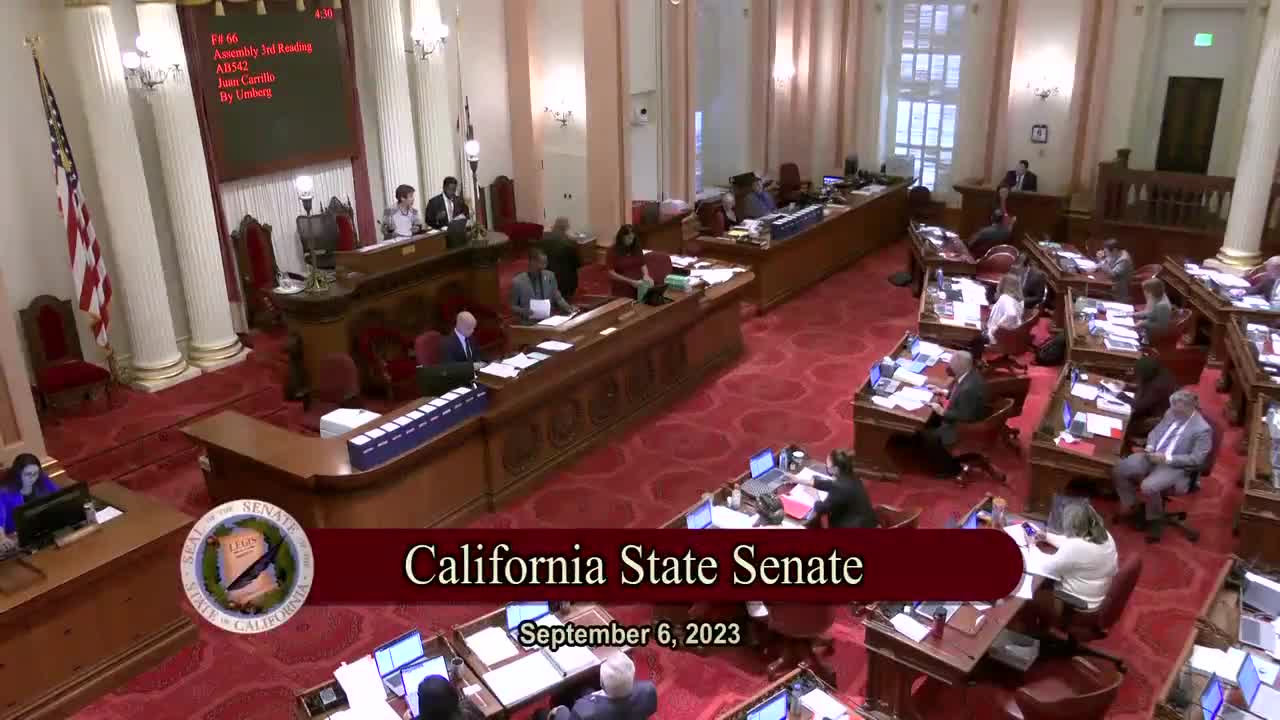 43SEC
Senate Floor
 1MIN
Assembly Floor
 3MIN
Senate Floor
 22MIN
Senate Standing Committee on Health
Bill Author

Bill Co-Author(s):