SB 799: Unemployment insurance: trade disputes: eligibility for benefits.
- Session Year: 2023-2024
- House: Senate
- Latest Version Date: 2023-09-19
Current Status:
Failed
(2024-01-25: Veto sustained.)
Introduced
In Committee
First Chamber
In Committee
Second Chamber
Enacted
Existing law provides for the payment of unemployment compensation benefits and extended benefits to eligible individuals who meet specified requirements.
Under existing law, unemployment benefits are paid from the Unemployment Fund, which is continuously appropriated for these purposes.
Existing law makes an employee ineligible for benefits if the employee left work because of a trade dispute and specifies that the employee remains ineligible for the duration of the trade dispute. Existing case law holds that employees who left work due to a lockout by the employer, even if it was in anticipation of a trade dispute, are eligible for benefits.
This bill would restore eligibility after the first 2 weeks for an employee who left work because of a trade dispute. The bill would codify specified case law that holds that employees who left work due to a lockout by the employer, even if it was in anticipation of a trade dispute, are eligible for benefits. The bill would specify that the bills provisions do not diminish eligibility for benefits of individuals deprived of work due to an employer lockout or similar action, as specified.
Because this bill would expand the categories of people eligible to receive benefits from a continuously appropriated fund, it would make an appropriation.
Existing law authorizes the Secretary of the Department of Corrections and Rehabilitation to prescribe and amend rules and regulations for the administration of prisons, and requires regulations, which are adopted by the Department of Corrections and Rehabilitation, that may impact the visitation of inmates to recognize and consider the value of inmate visitation as a means of increasing safety in prisons, maintaining family and community connections, and preparing inmates for successful release and rehabilitation. Existing regulations establish the framework for establishing a visiting process in prisons that is conducted in as accommodating a manner as possible, subject to the need to maintain order, the safety of persons, the security of institutions and facilities, and required prison activities and operations.This bill would require the department to, upon request by a visitor, scan certain documents into the Strategic Offender Management Systems (SOMS), including, among other documents, a birth certificate for a visiting minor, as specified. The bill would require the department to allow a visitor for an in-person visit or an approved family visit to bring certain items for the visit, including, among other things, items for infants and toddlers, as specified.Existing law authorizes the Secretary of the Department of Corrections and Rehabilitation to prescribe and amend rules and regulations for the administration of prisons, and requires regulations, which are adopted by the Department of Corrections and Rehabilitation, that may impact the visitation of inmates to recognize and consider the value of inmate visitation as a means of increasing safety in prisons, maintaining family and community connections, and preparing inmates for successful release and rehabilitation. Existing regulations establish the framework for establishing a visiting process in prisons that is conducted in as accommodating a manner as possible, subject to the need to maintain order, the safety of persons, the security of institutions and facilities, and required prison activities and operations.
This bill would require the department to, upon request by a visitor, scan certain documents into the Strategic Offender Management Systems (SOMS), including, among other documents, a birth certificate for a visiting minor, as specified. The bill would require the department to allow a visitor for an in-person visit or an approved family visit to bring certain items for the visit, including, among other things, items for infants and toddlers, as specified.
(a)An individual is not eligible for unemployment compensation benefits, and these benefits shall not be payable, if the individual left work because of a trade dispute, other than a lockout in the establishment where the individual was employed. For purposes of this subdivision, lockout has the same meaning as defined in Section 1132.8 of the Labor Code.
(b)The ineligibility of an individual to receive benefits pursuant to subdivision (a) shall expire after the first two weeks of the trade dispute.
(c)This section shall not diminish the eligibility of individuals who were deprived of work as a result of an employer lockout or similar action under the principles set out in Coast Packing Co. v. California Unemployment Ins. Appeals Bd. (1966) 64 Cal.2d 76.
(a)An individual is not eligible for unemployment compensation benefits, and these benefits shall not be payable to him or her, payable, if the individual left his or her work because of a trade dispute. The individual shall remain ineligible for the period during which he or she continues out of work by reason of the fact that the trade dispute is still dispute, other than a lockout in active progress in the establishment in which he or she where the individual was employed. For purposes of this subdivision, lockout has the same meaning as defined in Section 1132.8 of the Labor Code.
(b)The ineligibility of an individual to receive benefits pursuant to subdivision (a) shall expire after the first two weeks of the trade dispute.
(c)This section shall not diminish the eligibility of individuals who were deprived of work as a result of an employer lockout or similar action under the principles set out in Coast Packing Co. v. California Unemployment Ins. Appeals Bd. (1966) 64 Cal.2d 76.
SECTION 1.Section 6405 is added to the Penal Code, to read:6405.(a)Upon request by a visitor, the department shall scan documents into the Strategic Offender Management Systems (SOMS), including, but not limited to, all of the following:(1)A birth certificate for a visiting minor.(2)A parental consent form for a visiting minor.(3)A marriage license or domestic partnership form for a person attending an approved family visit.(4)A birth certificate for a parent or sibling attending an approved family visit.(5)A medical note for a visitor.(b)For an in-person visit, the department shall allow a visitor with an infant or toddler to bring all of the following:(1)A combination of six factory-sealed single-serving packets of baby formula or four transparent plastic baby bottles or cups that are empty or contain premixed formula, milk, almond milk, soy milk, rice milk, lactose-free milk, juice, or water.(2)Six nonglass containers of baby food or snacks in sealed packaging.(3)Two plastic spoons.(4)Ten disposable diapers.(5)One sealed package of baby wipes.(6)Three changes of clothing.(7)Two small blankets.(8)Two pacifiers.(9)Three burp cloths.(10)Diaper cream.(11)A baby carrier or wrap.(12)A clear plastic diaper bag.(13)Toys, including an electronic toy, two childrens books, and up to 10 pages of homework or coloring pages.(c)For an approved family visit, the department shall allow a visitor to bring all of the following:(1)Personal linens, including a mattress cover, flat sheet, fitted sheet, single layer blanket, bath towel, hand towel, and washcloth, for each person and for the length of the visit.(2)A bath mat and disposable shower curtain.(3)A sealed lubricant bottle.(4)Items for infants or toddlers, including all of the following:(A)A combination of 14 factory-sealed single-serving packets of baby formula; one factory-sealed container of milk for each day of the visit, including formula milk, almond milk, soy milk, oat milk, rice milk, or lactose-free milk; or four transparent plastic baby bottles or cups.(B)Two gallons of factory-sealed distilled water.(C)Factory-sealed juice.(D)Six nonglass containers of baby food or snacks in sealed packaging for each day of the visit.(E)Two plastic spoons.(F)One package of diapers.(G)One sealed package of baby wipes.(H)Three changes of clothing for each day of the visit.(I)Two small blankets.(J)Two pacifiers.(K)Three burp cloths.(L)Diaper cream.(M)A baby carrier or wrap.(N)A clear plastic diaper bag.(O)Toys, including an electronic toy, two childrens books, and up to 10 pages of homework or coloring pages. REVISIONS: HeadingLines 5 and 7.(a)Upon request by a visitor, the department shall scan documents into the Strategic Offender Management Systems (SOMS), including, but not limited to, all of the following:
(1)A birth certificate for a visiting minor.
(2)A parental consent form for a visiting minor.
(3)A marriage license or domestic partnership form for a person attending an approved family visit.
(4)A birth certificate for a parent or sibling attending an approved family visit.
(5)A medical note for a visitor.
(b)For an in-person visit, the department shall allow a visitor with an infant or toddler to bring all of the following:
(1)A combination of six factory-sealed single-serving packets of baby formula or four transparent plastic baby bottles or cups that are empty or contain premixed formula, milk, almond milk, soy milk, rice milk, lactose-free milk, juice, or water.
(2)Six nonglass containers of baby food or snacks in sealed packaging.
(3)Two plastic spoons.
(4)Ten disposable diapers.
(5)One sealed package of baby wipes.
(6)Three changes of clothing.
(7)Two small blankets.
(8)Two pacifiers.
(9)Three burp cloths.
(10)Diaper cream.
(11)A baby carrier or wrap.
(12)A clear plastic diaper bag.
(13)Toys, including an electronic toy, two childrens books, and up to 10 pages of homework or coloring pages.
(c)For an approved family visit, the department shall allow a visitor to bring all of the following:
(1)Personal linens, including a mattress cover, flat sheet, fitted sheet, single layer blanket, bath towel, hand towel, and washcloth, for each person and for the length of the visit.
(2)A bath mat and disposable shower curtain.
(3)A sealed lubricant bottle.
(4)Items for infants or toddlers, including all of the following:
(A)A combination of 14 factory-sealed single-serving packets of baby formula; one factory-sealed container of milk for each day of the visit, including formula milk, almond milk, soy milk, oat milk, rice milk, or lactose-free milk; or four transparent plastic baby bottles or cups.
(B)Two gallons of factory-sealed distilled water.
(C)Factory-sealed juice.
(D)Six nonglass containers of baby food or snacks in sealed packaging for each day of the visit.
(E)Two plastic spoons.
(F)One package of diapers.
(G)One sealed package of baby wipes.
(H)Three changes of clothing for each day of the visit.
(I)Two small blankets.
(J)Two pacifiers.
(K)Three burp cloths.
(L)Diaper cream.
(M)A baby carrier or wrap.
(N)A clear plastic diaper bag.
(O)Toys, including an electronic toy, two childrens books, and up to 10 pages of homework or coloring pages.
|
Date
|
Status
|
|---|---|
| Jan 25, 2024 | Veto sustained. |
| Jan 25, 2024 | Stricken from file. |
| Sep 30, 2023 | In Senate. Consideration of Governor's veto pending. |
| Sep 30, 2023 | Vetoed by the Governor. |
| Sep 21, 2023 | Enrolled and presented to the Governor at 4 p.m. |
| Sep 14, 2023 | Assembly amendments concurred in. (Ayes 27. Noes 12. Page 2777.) Ordered to engrossing and enrolling. |
| Sep 13, 2023 | From committee: That the Assembly amendments be concurred in. (Ayes 4. Noes 1. Page 2770.) |
| Sep 12, 2023 | From committee: Be re-referred to Com. on L., P.E. & R. pursuant to Senate Rule 29.10(d). (Ayes 4. Noes 0. Page 2611.) Re-referred to Com. on L., P.E. & R. |
| Sep 12, 2023 | Re-referred to Com. on RLS pursuant to Senate Rule 29.10(d). |
| Sep 11, 2023 | In Senate. Concurrence in Assembly amendments pending. |
| Sep 11, 2023 | Read third time. Passed. (Ayes 59. Noes 18. Page 3180.) Ordered to the Senate. |
| Sep 8, 2023 | Read second time. Ordered to third reading. |
| Sep 7, 2023 | From committee: Do pass. (Ayes 12. Noes 4.) (September 7). |
| Sep 7, 2023 | Coauthors revised. |
| Sep 6, 2023 | Joint Rule 62(a) suspended. |
| Sep 6, 2023 | Assembly Rule 56 suspended. |
| Aug 31, 2023 | From committee: Do pass and re-refer to Com. on APPR. (Ayes 11. Noes 2.) (August 31). Re-referred to Com. on APPR. |
| Aug 24, 2023 | Re-referred to Com. on INS. |
| Aug 24, 2023 | Joint Rule 61 suspended. (Ayes 60. Noes 16. Page 2777.) |
| Aug 22, 2023 | From committee with author's amendments. Read second time and amended. Re-referred to Com. on PUB. S. |
| Jul 6, 2023 | July 11 hearing postponed by committee. |
| Jun 8, 2023 | Referred to Com. on PUB. S. |
| May 25, 2023 | In Assembly. Read first time. Held at Desk. |
| May 25, 2023 | Read third time. Passed. (Ayes 40. Noes 0. Page 1305.) Ordered to the Assembly. |
| May 23, 2023 | Ordered to special consent calendar. |
| May 18, 2023 | Read second time. Ordered to third reading. |
| May 18, 2023 | From committee: Do pass. (Ayes 7. Noes 0. Page 1184.) (May 18). |
| May 12, 2023 | Set for hearing May 18. |
| May 1, 2023 | May 1 hearing: Placed on APPR suspense file. |
| Apr 21, 2023 | Set for hearing May 1. |
| Apr 19, 2023 | From committee: Do pass and re-refer to Com. on APPR with recommendation: To consent calendar. (Ayes 5. Noes 0. Page 803.) (April 18). Re-referred to Com. on APPR. |
| Mar 15, 2023 | Set for hearing April 18. |
| Mar 1, 2023 | Referred to Com. on PUB S. |
| Feb 21, 2023 | From printer. May be acted upon on or after March 20. |
| Feb 17, 2023 | Introduced. Read first time. To Com. on RLS. for assignment. To print. |
|
Date
|
Description
|
Location
|
Votes
|
|
|---|---|---|---|---|
| Sep 14, 2023 | Unfinished Business SB799 Portantino et al. Concurrence | Senate Floor |
Passed |
|
| Sep 13, 2023 | That the Assembly amendments be concurred in | Senate Standing Committee on Labor, Public Employment and Retirement |
Passed |
|
| Sep 11, 2023 | SB 799 Portantino Senate Third Reading By Holden | Assembly Floor |
Passed |
|
| Sep 7, 2023 | Do pass. | Assembly Standing Committee on Appropriations |
Passed |
|
| Aug 31, 2023 | Do pass and be re-referred to the Committee on [Appropriations] | Assembly Standing Committee on Insurance |
Passed |
|
| May 25, 2023 | Special Consent SB799 Durazo | Senate Floor |
Passed |
|
| May 18, 2023 | Do pass | Senate Standing Committee on Appropriations |
Passed |
|
| May 1, 2023 | Placed on suspense file | Senate Standing Committee on Appropriations |
Passed |
|
| Apr 18, 2023 | Do pass, but first be re-referred to the Committee on [Appropriations] with the recommendation: To Consent Calendar | Senate Standing Committee on Public Safety |
Passed |
This list shows positions taken on this bill by organizations on the date displayed, which is linked to the original source.
Positions by individuals are not included.
|
Organization
|
Position
|
Date
|
|---|---|---|
| Acclamation Insurance Management Services | ** Against | |
| Actor's Equity | * Support | Sep 13, 2023 |
| Agricultural Council Of California | ** Against | |
| Air Conditioning Sheet Metal Association | ** Against | |
| Alameda Chamber of Commerce | ** Against | |
| Allied Managed Care | ** Against | |
| american council of engineering companies | ** Against | |
| American Federation of State, County and Municipal Employees | ** Support | |
| Anaheim Chamber Of Commerce | ** Against | |
| Associated General Contractors | ** Against | |
| Associated General Contractors - San Diego Chapter | ** Against | |
| Association of California Healthcare Districts | ** Against | |
| Association Of California School Administrators | ** Against | |
| Association Of Western Employers | ** Against | |
| Attorney General Rob Bonta | ** Support | |
| Auto Care Association | ** Against | |
| AXA | * Against | Aug 31, 2023 |
| Bay Area Council | ** Against | |
| Bizfed Los Angeles County Business Federation | ** Against | |
| Brea Chamber of Commerce | ** Against | |
| Building Owners and Managers Association | ** Against | |
| Calforests | ** Against | |
| California Alliance For Retired Americans | ** Support | |
| California Alliance for Youth and Community Justice | ** Support | |
| California Asian Pacific Chamber Of Commerce | ** Against | |
| California Association Of Joint Powers Authorities | ** Against | |
| California Association Of Licensed Security Agencies, Guards & Associates | ** Against | |
| California Association Of Professional Scientists | * Support | Sep 13, 2023 |
| California Association Of Recreation & Park Districts | ** Against | |
| California Association of Sheet Metal & Air Conditioning Contractors National | ** Against | |
| California Association of Wine Group Growers | * Against | Aug 31, 2023 |
| California Association Of Winegrape Growers | ** Against | |
| California Attractions And Parks Association | ** Against | |
| California Bankers Association | ** Against | |
| California Building Industry Association | ** Against | |
| California Business Properties Association | ** Against | |
| California Business Roundtable | ** Against | |
| California Catholic Conference | ** Support | |
| California Chamber Of Commerce | ** Against | |
| California Conference Board Of The Amalgamated Transit Union | ** Support | |
| California Conference Of Machinists | ** Support | |
| California Democratic Socialists of America | ** Support | |
| California Employment Law Council | ** Against | |
| California Faculty Association | ** Support | |
| California Families Against Solitary Confinement | ** Support | |
| California Farm Bureau | ** Against | |
| California Federation of Teachers, AFL-CIO | ** Support | |
| California Forestry Association | * Against | Sep 13, 2023 |
| California Fresh Fruit Association | * Against | Sep 13, 2023 |
| California Fuels And Convenience Alliance | ** Against | |
| California Golf Course Owners Association | ** Against | |
| California Grocers Association | ** Against | |
| California Hospital Association | ** Against | |
| California Hotel & Lodging Association | ** Against | |
| California Iatse Council | ** Support | |
| California Labor Federation, Afl-Cio | ** Support | |
| California League of Food Producers | ** Against | |
| California Manufacturers & Technology Association | ** Against | |
| California Nurses Association | ** Support | |
| California Professional Firefighters | ** Support | |
| California Public Defenders Association | ** Support | |
| California Restaurant Association | ** Against | |
| California Retailers Association | ** Against | |
| California Rural Legal Assistance Foundation | ** Support | |
| California School Employees Association | ** Support | |
| California Special Districts Association | ** Against | |
| California Staffing Professionals | ** Against | |
| California State Association Of Counties | ** Against | |
| California State Legislative Board of the SMART – Transportation Division | ** Support | |
| California State Pipe Trades Council | ** Support | |
| California State Treasurer Fiona Ma | ** Support | |
| California State University Employees Union | ** Support | |
| California Student Aid Comission | * Against | Aug 31, 2023 |
| California Taxpayers Association | ** Against | |
| California Teachers Association | ** Support | |
| California Teamsters Public Affairs Council | ** Support | |
| California Tire Dealers Association | ** Against | |
| California Travel Association | ** Against | |
| California Trucking Association | ** Against | |
| California-Nevada Conference Of Operating Engineers | ** Support | |
| Can Manufacturers Institute | ** Against | |
| CAWA - Representing the Automotive Parts Industry | ** Against | |
| Central Coast Labor Council | ** Against | |
| Central Coast Labor Council | ** Support | |
| City Of Oakland | ** Support | |
| City of West Hollywood | ** Support | |
| Coalition of Small and Disabled Veteran Businesses | ** Against | |
| Communication Workers of America, District 9 | ** Support | |
| Communities United for Restorative Youth Justice | ** Support | |
| Community Works | ** Support | |
| Construction Employers' Association | ** Against | |
| Corona Chamber of Commerce | ** Against | |
| Directors Guild Of America, Inc. | ** Support | |
| Dixon District Chamber of Commerce | ** Against | |
| El Dorado County Chamber of Commerce | ** Against | |
| El Dorado Hills Chamber of Commerce | ** Against | |
| Elk Grove Chamber Of Commerce | ** Against | |
| Ella Baker Center For Human Rights | ** Support | |
| Engineers and Scientists of California, IFPTE Local 20 | ** Support | |
| Entertainment Union Coalition | ** Support | |
| Family Business Association of California | ** Against | |
| Family Winemakers Of California | ** Against | |
| Finishing Contractors Association Of Southern California | ** Against | |
| Flasher Barricade Association | ** Against | |
| Folsom Chamber Of Commerce | ** Against | |
| Fremont Chamber of Commerce | ** Against | |
| Fresno Chamber of Commerce | ** Against | |
| Gateway Chambers Alliance | ** Against | |
| Govern for California | * Against | Sep 13, 2023 |
| Greater Coachella Valley Chamber of Commerce | ** Against | |
| Greater Conejo Valley Chamber of Commerce | ** Against | |
| Greater High Desert Chamber of Commerce | ** Against | |
| Hawthorne Cat | ** Against | |
| Holt of California | ** Against | |
| Housing Contractors Of California | ** Against | |
| Huntington Beach Chamber of Commerce | ** Against | |
| Indivisible California StateStrong | * Support | Aug 31, 2023 |
| Insurance Commissioner Ricardo Lara / California Department of Insurance | ** Support | |
| International Brotherhood Of Electrical Workers, Local 18 | ** Support | |
| Jesse’s Place Organization | ** Support | |
| Kern County Board of Supervisors | ** Against | |
| Laguna Nigel Chamber of Commerce | ** Against | |
| League Of California Cities | ** Against | |
| Legal Services for Prisoners with Children | ** Support | |
| livermore valley chamber of commerce | ** Against | |
| Lodi Chamber of Commerce | ** Against | |
| Lomita Chamber of Commerce | ** Against | |
| Los Angeles Area Chamber Of Commerce | ** Against | |
| Los Angeles County Business Federation | * Against | Sep 13, 2023 |
| Los Angeles Dependency Lawyers | ** Support | |
| Machinist Union | * Support | Aug 31, 2023 |
| Manteca Chamber of Commerce | ** Against | |
| Monterey Bay Central Labor Council, AFL-CIO | ** Support | |
| Murrieta/Wildomar Chamber of Commerce | ** Against | |
| Naiop California | ** Against | |
| National Electrical Contractors Association | ** Against | |
| National Employment Law Project | * Support | Aug 31, 2023 |
| National Federation Of Independent Business | ** Against | |
| National Union Of Healthcare Workers | ** Support | |
| New California Coalition | * Against | Aug 31, 2023 |
| North Bay Leadership Council | ** Against | |
| Northern California Allied Trades | ** Against | |
| Northern California District Council – Int. Longshore and Warehouse Union | ** Support | |
| Norwalk Chamber Of Commerce | ** Against | |
| Orange County Business Council | ** Against | |
| Orange County Taxpayers Association | ** Against | |
| Palos Verdes Peninsula Chamber Of Commerce | ** Against | |
| Paso Robles & Templeton Chamber of Commerce | ** Against | |
| Peace and Freedom Party of California | ** Support | |
| Peterson CAT | ** Against | |
| Peterson Power Systems | ** Against | |
| Peterson Tractor | ** Against | |
| Peterson Trucks | ** Against | |
| Political Solutions LLC | * Against | Aug 31, 2023 |
| Prison From the Inside Out | ** Support | |
| Rancho Cordova Area Chamber of Commerce | ** Against | |
| Resource Recovery Coalition Of California | ** Against | |
| Ridgecrest Chamber of Commerce | ** Against | |
| Roofing Contractors Association Of California | ** Against | |
| Root & Rebound | ** Support | |
| Roseville Area Chamber Of Commerce | ** Against | |
| Rural County Representatives of California | ** Against | |
| Sacramento Metropolitan Chamber of Commerce | ** Against | |
| SAG-AFTRA | ** Support | |
| San Fernando Valley Young Democrats | ** Support | |
| Santa Ana Chamber of Commerce | ** Against | |
| Santa Barbara South Coast Chamber of Commerce | ** Against | |
| Santa Clarita Valley Chamber of Commerce | ** Against | |
| Santa Maria Valley Chamber of Commerce | ** Against | |
| Service Employees International Union, California State Council | ** Support | |
| Service Employees International Union, Local 1000 | ** Support | |
| Silicon Valley Leadership Group | ** Against | |
| Simi Valley Chamber of Commerce | ** Against | |
| Smiley and RA Reentry Program | ** Support | |
| Southern California Contractors Association | ** Against | |
| Southern California Glass Management Association | ** Against | |
| Southwest California Legislative Council | ** Against | |
| Starting Over, Inc. | ** Support | |
| State Building and Construction Trades Council of California | ** Support | |
| State Superintendent of Public Instruction Tony Thurmond | ** Support | |
| Teamsters Amalgamated Transit Union and Machinists | * Support | Sep 7, 2023 |
| Technet | ** Against | |
| The Place4grace | ** Support | |
| Torrance Area Chamber of Commerce | ** Against | |
| Transformative In-Prison Workgroup | ** Support | |
| Transport Workers Union of America | ** Support | |
| Tri County Chamber Alliance | ** Against | |
| Tulare Chamber of Commerce | ** Against | |
| Twenty First Century Alliance | ** Against | |
| UCAN | * Against | Sep 13, 2023 |
| Union of American Physicians & Dentists | ** Support | |
| UNITE-HERE, AFL-CIO | ** Support | |
| United Auto Workers Region 6 | ** Support | |
| United Chamber Advocacy Network | ** Against | |
| United Contractors | ** Against | |
| United Domestic Workers/AFSCME, Local 3930 | ** Support | |
| United Farm Workers | ** Support | |
| United Food & Commercial Workers Western States Council | ** Support | |
| United Nurses Associations Of California/Union Of Health Care Professionals | ** Support | |
| United Steelworkers, District 12 | ** Support | |
| Universidad Popular | ** Support | |
| University of California | ** Against | |
| Urban Counties of California | ** Against | |
| Utility Workers Union of America | ** Support | |
| Vacaville Chamber of Commerce | ** Against | |
| Vista Chamber Of Commerce | ** Against | |
| Wall and Ceiling Alliance | ** Against | |
| Walnut Creek Chamber of Commerce | ** Against | |
| West Ventura County Business Alliance | ** Against | |
| Western Carwash Association | ** Against | |
| Western Center On Law And Poverty Inc. | * Support | Aug 31, 2023 |
| Western Electrical Contractors Association | ** Against | |
| Western Growers Association | ** Against | |
| Western Line Constructors Chapter | ** Against | |
| Western Line Constructors Chapter, Inc., Neca, Inc. | ** Against | |
| Western Painting & Coating Contractors Association | ** Against | |
| Western States Council of Sheet Metal, Air, Rail, & Transportation Workers | ** Support | |
| Western Wall & Ceiling Contractors Association | ** Against | |
| Writers Guild Of America West | ** Support | |
| Yorba Linda Chamber of Commerce | ** Against | |
| Yuba Sutter Chamber of Commerce | ** Against |
SENATE RULES COMMITTEE Office of Senate Floor Analyses (916) 651-1520 Fax: (916) 327-4478 | SB 799 |
VETO
Bill No: SB 799
Author: Portantino (D), Durazo (D) and Holden (D), et al.
Amended: 8/22/23
Vote: 27
PRIOR SENATE VOTES NOT RELEVANT
SENATE LABOR, PUB. EMP. & RET. COMMITTEE: 4-1, 9/13/23 (Pursuant to Senate Rule 29.10)
AYES: Cortese, Durazo, Laird, Smallwood-Cuevas
NOES: Wilk
SENATE FLOOR: 27-12, 9/14/23
AYES: Allen, Archuleta, Ashby, Atkins, Becker, Blakespear, Bradford, Caballero, Cortese, Durazo, Gonzalez, Hurtado, Laird, Limón, McGuire, Menjivar, Min, Padilla, Portantino, Roth, Rubio, Skinner, Smallwood-Cuevas, Stern, Umberg, Wahab, Wiener
NOES: Alvarado-Gil, Dahle, Dodd, Eggman, Glazer, Grove, Jones, Nguyen, Niello, Ochoa Bogh, Seyarto, Wilk
NO VOTE RECORDED: Newman
ASSEMBLY FLOOR: 59-18, 9/11/23 - See last page for vote
SUBJECT: Unemployment insurance: trade disputes: eligibility for benefits
SOURCE: California State Treasurer Fiona Ma
AFSCME
California Labor Federation
California State Legislative Board of the SMART – Transportation
Division
United Food & Commercial Workers Western States Council
DIGEST:
This bill authorizes workers involved in a trade dispute to collect unemployment insurance (UI) benefits, after a two-week wait period, while they are on strike.
ANALYSIS:
Existing law:
- Creates a comprehensive UI system, administered by the Employment Development Department (EDD), where employers pay an experienced-based tax on total payroll that are used to fund UI benefits to unemployed workers. (UI Code §§ 301, 602, 675, 926, 970, 977 & 1251)
- Defines a worker as “unemployed” in any week in which they meet any of the following conditions:
- Any week during which they perform no services and with respect to which no wages are payable to them;
- Any week of less than full-time work, if the wages payable to them with respect to the week, when reduced by $25 or 25% of the wages payable, whichever is greater, do not equal or exceed the worker’s weekly benefit;
- Any week for which, a worker is unable to work due to mental or physical health illness or injury, as specified; or,
- Any week during which they perform full-time work for five days as a juror, or as a witness under subpoena. (UI Code §1252)
- Provides that an individual is disqualified for UI benefits if the individual left their most recent work voluntarily without good cause or have been discharged for misconduct connected with their most recent work. (UI Code §1256)
- Provides that an individual is not eligible for UI benefits if the individual left their work because of a trade dispute; individual shall remain ineligible for the period during which they continue out of work because of the fact that the trade dispute is still in active progress. (UI Code §1262)
- Provides that, when EDD learns that a trade dispute is in progress, EDD must promptly conduct an investigation and make investigation findings as to the nature, location, labor organizations and employers involved, and other relevant facts it deems necessary. Provides that the EDD shall provide its findings to its field offices in locations affected by the trade dispute, and must, upon request, make its findings available to any employer, employers’ association or labor organization involved in the trade dispute. (UI Code §1262.5)
This bill:
- Permits individuals involved in a trade dispute, other than a lockout, to be eligible to collect UI benefits after a two-week waiting period.
- Defines “lockout” to mean any refusal by an employer to permit any group of five or more employees to work as a result of a dispute with such employees affecting wages, hours or other terms or conditions of employment of such employees.
- Codifies a California Supreme Court Decision (Coast Packing Co. v. California Unemployment Insurance Appeals Board (1966) 64 Cal. 2d 76) that found individuals who were deprived of work as a result of an employer lockout or similar action eligible for UI benefits.
Background
- UI Benefits. UI provides weekly benefits, for up to a maximum of 26 weeks, unless extended by law, to workers who are unemployed (or underemployed) through no fault of their own and who are able to, available for and actively seeking work. Eligibility for UI benefits is set by law and administered by California’s Employment Development Department (EDD).
- Claimant Benefit Calculations. A claimant's eligibility for benefits depends on their attachment to the labor force determined by computing a minimum earnings test. This requirement denies benefits to claimants whose earnings in a 12-month "base period" are below a specified minimum. UI benefits range from $40 to a maximum of $450 per week. In 2022, the average benefit amount was $342 per week. The United States total for the 12 month average of weekly benefit amounts ranged from $352.67 to $401.44.[1]
- Financing Structure. The UI program is financed by employers who pay unemployment taxes on the first $7,000 in wages paid to each worker. The tax rates are set based on schedules laid out in state law, which require higher rates, up to a maximum of 6.2 percent, when the condition of the UI trust fund is poor.[2] Working much like other insurance programs, the actual tax rate varies for each employer, depending in part on the amount of UI benefits paid to former employees. Referred to as being “experience rated,” this method of taxing ensures that employers who lay off or otherwise discharge more workers bear more of the costs of paying for the UI system. An employer may earn a lower tax rate when fewer claims are made on the employer's account by former employees.
It is important to remember that UI benefits only provide up to a maximum of $450 a week. Considering the median weekly income of a Californian is roughly triple that amount, a worker is not likely to be incentivized to go on strike simply because they can get UI benefits. Because UI is “experience rated,” striking workers who claim UI benefits impact their employer’s UI tax rate for that year and not the rates of other employers. The UI system as a whole, however, faces insolvency which impacts all employers and a remedy for this long-standing problem has yet to be addressed.
- UI Trust Fund Status. Due to the sudden and immense impact of COVID-19, the UI Fund became temporarily insolvent on April 29, 2020, and fluctuated in and out of solvency until maintaining a deficit starting June 3, 2020. As a result, in 2020, California began borrowing from the federal government to pay regular UI benefits, and ended the year with a federal loan balance of $17.8 billion. The loan balance is estimated to be $20.3 billion by the end of 2024.[3]
In order to repay the principal on the federal loan, federal law imposes a tax increase on employers, referred to as the Federal Unemployment Tax Act (FUTA) credit reduction. This happens when a state UI Fund is in deficit for two consecutive years. Once this occurs, the state loses 0.3 percent of the FUTA tax credit each year, which is the equivalent of an increase in federal taxes of $21 per worker per year. An estimation of $423 million in 2023 and $872 million in 2024 are expected to be collected.[4]
The state pays the interest on these loans from the General Fund. This interest payment is expected to be about $300 million in 2023-24.”[5] The federal loan is not expected to be paid off until between 2030 and 2032, depending on low and high-cost scenarios. In 2022, the Legislature passed and signed AB 178 (Ting, Chapter 45, Statutes of 2022) which, among other things, included a $250 million appropriation from the General Fund to go towards paying down some of the federal UI loan.
- How does California’s taxable wage base compare to other states? According to the United States Department of Labor, almost all states have adopted a higher taxable wage base than applicable under FUTA ($7,000) for purposes of assessing state UI taxes. Some states have established flexible taxable wage bases that are automatically adjusted, generally on an annual basis. According to the US DOL, most of these states index the taxable wage base to the state’s average annual wage. Other states tie the taxable wage base to the health of the state’s trust fund balance.
California, however, has neither a taxable wage base above $7,000 nor a provision in law that automatically adjusts the taxable wage base if FUTA is amended to apply to a higher amount.[6] In reviewing the US DOL data comparisons, it appears that Washington is the state with the highest taxable wage base at $62,500. At the lower end, California shares the lowest $7,000 taxable wage base with Tennessee, Arizona, Florida, Puerto Rico and Louisiana at $7,700.[7] According to the US DOL, besides the U.S. Virgin Islands, California’s trust fund was the least adequately funded of all 53 UI programs heading into the pandemic.[8]
- Data on Strikes. According to data from the Bureau of Labor Statistics (BLS), from 2012-2022, there were at least 56 strikes in California with only two that lasted over two weeks. BLS tracks strikes where at least 1,000 workers participated. The two strikes that lasted over two weeks both occurred in 2022, with one lasting 64 days total (Kaiser Permanente 8/15/22 to 10/18/22) and the other lasting 39 days total (University of California 11/14/22 to 12/23/22).[9] Currently, the Writers Guild of America members have been on strike since May 2023 and members of SAG-AFTRA have been on strike since July 2023.
- Need for this bill? According to the author, “There is tremendous concern within our workforce across California. Currently, we see writers, hotel workers, nurses, city and county workers all striking, and it is deeply concerning. It’s better for the worker and the economy to have job security and a seat at the table as we negotiate the future of the workforce, while business and economic models change. Even coming out of a strike, when folks eventually get a contract that they agree on, their families have suffered during this time. SB 799 will help workers put food on their table when they need it most, in the middle of a labor negotiation.”
Related/Prior Legislation
SB 227 (Durazo, 2023) establishes the Excluded Workers Program within EDD to provide income assistance to unemployed excluded workers who are not eligible for regular state or federal UI benefits due to their immigration status.
AB 1066 (Gonzalez, 2019) would have permitted individuals in a trade dispute to collect UI compensation after a three-week waiting period. AB 1066 failed on the Senate Floor and was later amended to address another issue in the UI Code.
FISCAL EFFECT: Appropriation: Yes Fiscal Com.: Yes Local: No
According to the Assembly Appropriations Committee:
- One-time costs of an unknown amount, likely in the low-to-mid hundreds of thousands of dollars, to the Employment Development Department (EDD) to update administrative practices due to this bill. The majority of the costs would be for information technology modifications, but also staff resources to review and modify certain forms, policies, procedures, and training (Unemployment Administration Fund).
- Ongoing costs of an unknown amount, likely in the low millions to tens of millions of dollars, to the state’s UI Fund in additional payments to employees newly eligible for benefits (Unemployment Fund). The magnitude of the impact is difficult to predict, but ultimately depends on the number of strikes that occur, the duration of the strikes, and the number of impacted employees. According to data from the Bureau of Labor Statistics, which tracks strikes involving at least 1,000 workers, there were at least 56 strikes in California from 2012 to 2022, with only two strikes lasting over two weeks (one lasted 64 days and the other lasted 39 days). However, there are currently two strikes ongoing in California that have each exceeded two weeks.
In addition to the direct impact of additional benefit payments, EDD notes this bill could indirectly impact the repayment of California’s outstanding federal UI loan, further discussed in comment 3 of their analysis.
SUPPORT: (Verified 9/13/23)
California State Treasurer Fiona Ma (co-source)
American Federation of State, County and Municipal Employees, CA (co-source)
California Labor Federation, AFL-CIO (co- source)
California State Legislative Board of the SMART – Transportation Division (co-source)
United Food & Commercial Workers Western States Council (co- source)
Attorney General Rob Bonta
State Superintendent of Public Instruction Tony Thurmond
Insurance Commissioner Ricardo Lara/California Department of Insurance
Actors Equity Association
California-Nevada Conference of Operating Engineers
California Alliance for Retired Americans
California Conference Board of The Amalgamated Transit Union
California Conference of Machinists
California Democratic Socialists of America
California Faculty Association
California Federation of Teachers, AFL-CIO
California IATSE Council
California Nurses Association
California Professional Firefighters
California Rural Legal Assistance Foundation
California School Employees Association
California State Pipe Trades Council
California State University Employees Union
California Teachers Association
California Teamsters Public Affairs Council
Central Coast Labor Council
City of Oakland
City of West Hollywood
Communication Workers of America, District 9
Directors Guild of America, Inc.
Engineers and Scientists of California, IFPTE Local 20
Entertainment Union Coalition
International Brotherhood of Electrical Workers, Local 18
Monterey Bay Central Labor Council, AFL-CIO
National Union of Healthcare Workers
Northern California District Council – Int. Longshore and Warehouse Union
Peace and Freedom Party of California
SAG-AFTRA
San Fernando Valley Young Democrats
Service Employees International Union, California State Council
Service Employees International Union, Local 1000
State Building and Construction Trades Council of California
Transport Workers Union of America
United Auto Workers, Region 6
United Domestic Workers/AFSCME Local 3930
Union of American Physicians & Dentists
UNITE-HERE, AFL-CIO
United Farm Workers
United Nurses Associations of California/Union of Health Care Professionals
United Steelworkers, District 12
Utility Workers Union of America
Western States Council of Sheet Metal, Air, Rail, & Transportation Workers
Writers Guild of America West
OPPOSITION: (Verified 9/13/23)
Acclamation Insurance Management Services
Agricultural Council of California
Air Conditioning Sheet Metal Association
Alameda Chamber of Commerce
Allied Managed Care
American Council of Engineering Companies
Anaheim Chamber of Commerce
Association of California School Administrators
Associated General Contractors
Associated General Contractors - San Diego Chapter
Association of California Healthcare Districts
Association of Western Employers
Auto Care Association
Bay Area Council
BizFed Los Angeles County Business Federation
Brea Chamber of Commerce
Building Owners and Managers Association
Calforests
California Asian Pacific Chamber of Commerce
California Association of Joint Powers Authorities
California Association of Licensed Security Agencies, Guards & Associates
California Association of Recreation & Park Districts
California Association of Sheet Metal & Air Conditioning Contractors National
California Association of Winegrape Growers
California Attractions and Parks Association
California Bankers Association
California Building Industry Association
California Business Properties Association
California Business Roundtable
California Chamber of Commerce
California Employment Law Council
California Farm Bureau
California Fuels and Convenience Alliance
California Golf Course Owners Association
California Grocers Association
California Hospital Association
California Hotel & Lodging Association
California League of Food Producers
California Manufacturers & Technology Association
California Restaurant Association
California Retailers Association
California Special Districts Association
California Staffing Professionals
California State Association of Counties
California Taxpayers Association
California Tire Dealers Association
California Travel Association
California Trucking Association
Can Manufacturers Institute
CAWA - Representing the Automotive Parts Industry
Central Coast Labor Council
Coalition of Small and Disabled Veteran Businesses
Construction Employers' Association
Corona Chamber of Commerce
Dixon District Chamber of Commerce
El Dorado County Chamber of Commerce
El Dorado Hills Chamber of Commerce
Elk Grove Chamber of Commerce
Family Business Association of California
Family Winemakers of California
Finishing Contractors Association of Southern California
Flasher Barricade Association
Folsom Chamber of Commerce
Fremont Chamber of Commerce
Fresno Chamber of Commerce
Gateway Chambers Alliance
Greater Coachella Valley Chamber of Commerce
Greater Conejo Valley Chamber of Commerce
Greater High Desert Chamber of Commerce
Hawthorne Cat
HOLT of California
Housing Contractors of California
Huntington Beach Chamber of Commerce
Kern County Board of Supervisors
Laguna Niguel Chamber of Commerce
League of California Cities
Livermore Valley Chamber of Commerce
Lodi Chamber of Commerce
Lomita Chamber of Commerce
Los Angeles Area Chamber of Commerce
Manteca Chamber of Commerce
Murrieta/Wildomar Chamber of Commerce
NAIOP California
National Electrical Contractors Association
National Federation of Independent Business
North Bay Leadership Council
Northern California Allied Trades
Norwalk Chamber of Commerce
Orange County Business Council
Orange County Taxpayers Association
Palos Verdes Peninsula Chamber of Commerce
Paso Robles & Templeton Chamber of Commerce
Peterson CAT
Peterson Power Systems
Peterson Tractor
Peterson Trucks
Rancho Cordova Area Chamber of Commerce
Resource Recovery Coalition of California
Ridgecrest Chamber of Commerce
Roofing Contractors Association of California
Roseville Area Chamber of Commerce
Rural County Representatives of California
Sacramento Metropolitan Chamber of Commerce
Santa Ana Chamber of Commerce
Santa Barbara South Coast Chamber of Commerce
Santa Clarita Valley Chamber of Commerce
Santa Maria Valley Chamber of Commerce
Silicon Valley Leadership Group
Simi Valley Chamber of Commerce
Southern California Contractors Association
Southern California Glass Management Association
Southwest California Legislative Council
TechNet
Torrance Area Chamber of Commerce
Tri County Chamber Alliance
Tulare Chamber of Commerce
Twenty First Century Alliance
United Chamber Advocacy Network
United Contractors
University of California
Urban Counties of California
Vacaville Chamber of Commerce
Vista Chamber of Commerce
Wall and Ceiling Alliance
Walnut Creek Chamber of Commerce
West Ventura County Business Alliance
Western Carwash Association
Western Electrical Contractors Association
Western Growers Association
Western Line Constructors Chapter
Western Painting & Coating Contractors Association
Western Wall & Ceiling Contractors Association
Yorba Linda Chamber of Commerce
Yuba Sutter Chamber of Commerce
ARGUMENTS IN SUPPORT: According to proponents, “The decision to go on strike is not one that union members take lightly. Striking workers lose all income for the duration of their job action. Workers deplete their savings as bills pile up, rent and mortgages go unpaid, and debt accumulates. Corporations rely on the expectation that striking workers will have few resources, and their strategy is often to starve workers until they give up their demands for better wages, fair compensation, and job security.”
In response to opponent arguments, they write, “the opposition, claims that this bill will extend tax increases on all employers, but that is due to the existing UI debt caused by the structural insolvency of our system. UI benefits are generally charged to an individual employer, not the system overall. Employers that drag out strikes to force workers from their homes and into debt would bear any increase in UI taxes, not all employers.”
ARGUMENTS IN OPPOSITION: A coalition of employers, including the California Chamber of Commerce, are opposed to this bill arguing that it would effectively require employers to subsidize striking workers, even if those workers or labor strikes had nothing to do with the employer. They argue that giving striking workers the ability to claim unemployment will add the cost of those benefits to California’s outstanding loans. They note that, though the amount that such strikes would add to the UI Fund debt is hard to calculate specifically – due to uncertainty as to how many strikes occur, how long they last, and how many workers take part – they “estimate that, if SB 799 had been in effect during the previous twelve months, it would have added approximately $215 million to the UI Fund’s debt. Additionally, we would expect it to add approximately $30 million per week if it were in effect now.” Furthermore, they write that, “SB 799 will also add to the state’s general fund obligation regarding the UI Fund. For example, in 2023-2024, the interest payment is expected to cost the state approximately $300 million – and similar payments will continue until the UI Fund returns to solvency.”
GOVERNOR'S VETO MESSAGE:
This bill allows individuals who left work due to a trade dispute to become eligible for Unemployment Insurance (UI) benefits. The bill also codifies case law that employees who left work due to a lockout by their employer, even if it was in anticipation of a trade dispute, are eligible for UI benefits.
California employers fund UI benefits through contributions to the state's UI Trust Fund on behalf of each employee. The UI financing structure has not been updated since 1984, which has made the UI Trust Fund vulnerable to insolvency. Any expansion of eligibility for UI benefits could increase California's outstanding federal UI debt projected to be nearly $20 billion by the end of the year and could jeopardize California's Benefit Cost Ratio add-on waiver application, significantly increasing taxes on employers. Furthermore, the state is responsible for the interest payments on the federal UI loan and to date has paid $362.7 million in interest with another $302 million due this month. Now is not the time to increase costs or incur this sizable debt.
I have deep appreciation and respect for workers who fight for their rights and come together in collective action. I look forward to building on the progress we have made over the past five years to improve conditions for all workers in California.
ASSEMBLY FLOOR: 59-18, 9/11/23
AYES: Addis, Aguiar-Curry, Alvarez, Arambula, Bains, Bauer-Kahan, Bennett, Berman, Boerner, Bonta, Bryan, Calderon, Juan Carrillo, Wendy Carrillo, Cervantes, Connolly, Mike Fong, Friedman, Gabriel, Garcia, Gipson, Grayson, Haney, Hart, Holden, Jackson, Jones-Sawyer, Kalra, Lee, Low, Lowenthal, Maienschein, McCarty, McKinnor, Muratsuchi, Stephanie Nguyen, Ortega, Pacheco, Papan, Pellerin, Quirk-Silva, Ramos, Rendon, Reyes, Luz Rivas, Rodriguez, Blanca Rubio, Santiago, Schiavo, Soria, Ting, Valencia, Ward, Weber, Wicks, Wilson, Wood, Zbur, Robert Rivas
NOES: Alanis, Chen, Megan Dahle, Davies, Dixon, Essayli, Flora, Vince Fong, Gallagher, Hoover, Lackey, Mathis, Jim Patterson, Joe Patterson, Sanchez, Ta, Waldron, Wallis
NO VOTE RECORDED: Irwin, Petrie-Norris, Villapudua
Prepared by: Alma Perez-Schwab / L., P.E. & R. / (916) 651-1556
10/19/23 10:46:02
U.S. Department of Labor, State UI Program Data, US totals https://oui.doleta.gov/unemploy/claimssum/5159report.asp ↑
Alamo, Chas. “Repaying the State’s Federal Unemployment Insurance Loan,” Legislative Analyst’s Office, May 26, 2021. https://lao.ca.gov/Publications/Report/4442 ↑
EDD May 2023 UI Fund Forecast ↑
Employment Development Department: May 2023 Unemployment Insurance (UI) Fund Forecast. https://edd.ca.gov/siteassets/files/pdf/edduiforecastmay23.pdf ↑
Alamo, Chas. “New Unemployment Insurance Fund Forecast Shows Imbalance,” Legislative Analyst’s Office, July 7, 2023. https://lao.ca.gov/LAOEconTax/article/Detail/779 ↑
U.S. Department of Labor, Comparison of State Unemployment Laws 2022. Chapter 2 – Financing, 2-4 and 2-5. https://oui.doleta.gov/unemploy/pdf/uilawcompar/2022/complete.pdf ↑
U.S. Department of Labor, Comparison of State Unemployment Laws 2022. Chapter 2 – Financing, 2-5. https://oui.doleta.gov/unemploy/pdf/uilawcompar/2022/complete.pdf ↑
U.S. Department of Labor, “State Unemployment Insurance Trust Fund Solvency Report 2020,” https://oui.doleta.gov/unemploy/docs/trustFundSolvReport2020.pdf ↑
U.S. Bureau of Labor Statistics, https://www.bls.gov/web/wkstp/monthly-listing.htm. ↑
SENATE RULES COMMITTEE Office of Senate Floor Analyses (916) 651-1520 Fax: (916) 327-4478 | SB 799 |
UNFINISHED BUSINESS
Bill No: SB 799
Author: Portantino (D), Durazo (D) and Holden (D), et al.
Amended: 8/22/23
Vote: 21
PRIOR SENATE VOTES NOT RELEVANT
SENATE LABOR, PUB. EMP. & RET. COMMITTEE: 4-1, 9/13/23 (Pursuant to Senate Rule 29.10)
AYES: Cortese, Durazo, Laird, Smallwood-Cuevas
NOES: Wilk
ASSEMBLY FLOOR: 59-18, 9/11/23 - See last page for vote
SUBJECT: Unemployment insurance: trade disputes: eligibility for benefits
SOURCE: California State Treasurer Fiona Ma
AFSCME
California Labor Federation
California State Legislative Board of the SMART – Transportation
Division
United Food & Commercial Workers Western States Council
DIGEST:
This bill authorizes workers involved in a trade dispute to collect unemployment insurance (UI) benefits, after a two-week wait period, while they are on strike.
Assembly Amendments
struck previous contents dealing with the California Department of Corrections and Rehabilitation to address UI for striking workers.
ANALYSIS:
Existing law:
- Creates a comprehensive UI system, administered by the Employment Development Department (EDD), where employers pay an experienced-based tax on total payroll that are used to fund UI benefits to unemployed workers. (UI Code §§ 301, 602, 675, 926, 970, 977 & 1251)
- Defines a worker as “unemployed” in any week in which they meet any of the following conditions:
- Any week during which they perform no services and with respect to which no wages are payable to them;
- Any week of less than full-time work, if the wages payable to them with respect to the week, when reduced by $25 or 25% of the wages payable, whichever is greater, do not equal or exceed the worker’s weekly benefit;
- Any week for which, a worker is unable to work due to mental or physical health illness or injury, as specified; or,
- Any week during which they perform full-time work for five days as a juror, or as a witness under subpoena. (UI Code §1252)
- Provides that an individual is disqualified for UI benefits if the individual left their most recent work voluntarily without good cause or have been discharged for misconduct connected with their most recent work. (UI Code §1256)
- Provides that an individual is not eligible for UI benefits if the individual left their work because of a trade dispute; individual shall remain ineligible for the period during which they continue out of work because of the fact that the trade dispute is still in active progress. (UI Code §1262)
- Provides that, when EDD learns that a trade dispute is in progress, EDD must promptly conduct an investigation and make investigation findings as to the nature, location, labor organizations and employers involved, and other relevant facts it deems necessary. Provides that the EDD shall provide its findings to its field offices in locations affected by the trade dispute, and must, upon request, make its findings available to any employer, employers’ association or labor organization involved in the trade dispute. (UI Code §1262.5)
This bill:
- Permits individuals involved in a trade dispute, other than a lockout, to be eligible to collect UI benefits after a two-week waiting period.
- Defines “lockout” to mean any refusal by an employer to permit any group of five or more employees to work as a result of a dispute with such employees affecting wages, hours or other terms or conditions of employment of such employees.
- Codifies a California Supreme Court Decision (Coast Packing Co. v. California Unemployment Insurance Appeals Board (1966) 64 Cal. 2d 76) that found individuals who were deprived of work as a result of an employer lockout or similar action eligible for UI benefits.
Background
- UI Benefits. UI provides weekly benefits, for up to a maximum of 26 weeks, unless extended by law, to workers who are unemployed (or underemployed) through no fault of their own and who are able to, available for and actively seeking work. Eligibility for UI benefits is set by law and administered by California’s Employment Development Department (EDD).
- Claimant Benefit Calculations. A claimant's eligibility for benefits depends on their attachment to the labor force determined by computing a minimum earnings test. This requirement denies benefits to claimants whose earnings in a 12-month "base period" are below a specified minimum. UI benefits range from $40 to a maximum of $450 per week. In 2022, the average benefit amount was $342 per week. The United States total for the 12 month average of weekly benefit amounts ranged from $352.67 to $401.44.[1]
- Financing Structure. The UI program is financed by employers who pay unemployment taxes on the first $7,000 in wages paid to each worker. The tax rates are set based on schedules laid out in state law, which require higher rates, up to a maximum of 6.2 percent, when the condition of the UI trust fund is poor.[2] Working much like other insurance programs, the actual tax rate varies for each employer, depending in part on the amount of UI benefits paid to former employees. Referred to as being “experience rated,” this method of taxing ensures that employers who lay off or otherwise discharge more workers bear more of the costs of paying for the UI system. An employer may earn a lower tax rate when fewer claims are made on the employer's account by former employees.
It is important to remember that UI benefits only provide up to a maximum of $450 a week. Considering the median weekly income of a Californian is roughly triple that amount, a worker is not likely to be incentivized to go on strike simply because they can get UI benefits. Because UI is “experience rated,” striking workers who claim UI benefits impact their employer’s UI tax rate for that year and not the rates of other employers. The UI system as a whole, however, faces insolvency which impacts all employers and a remedy for this long-standing problem has yet to be addressed.
- UI Trust Fund Status. Due to the sudden and immense impact of COVID-19, the UI Fund became temporarily insolvent on April 29, 2020, and fluctuated in and out of solvency until maintaining a deficit starting June 3, 2020. As a result, in 2020, California began borrowing from the federal government to pay regular UI benefits, and ended the year with a federal loan balance of $17.8 billion. The loan balance is estimated to be $20.3 billion by the end of 2024.[3]
In order to repay the principal on the federal loan, federal law imposes a tax increase on employers, referred to as the Federal Unemployment Tax Act (FUTA) credit reduction. This happens when a state UI Fund is in deficit for two consecutive years. Once this occurs, the state loses 0.3 percent of the FUTA tax credit each year, which is the equivalent of an increase in federal taxes of $21 per worker per year. An estimation of $423 million in 2023 and $872 million in 2024 are expected to be collected.[4]
The state pays the interest on these loans from the General Fund. This interest payment is expected to be about $300 million in 2023-24.”[5] The federal loan is not expected to be paid off until between 2030 and 2032, depending on low and high-cost scenarios. In 2022, the Legislature passed and signed AB 178 (Ting, Chapter 45, Statutes of 2022) which, among other things, included a $250 million appropriation from the General Fund to go towards paying down some of the federal UI loan.
- How does California’s taxable wage base compare to other states? According to the United States Department of Labor, almost all states have adopted a higher taxable wage base than applicable under FUTA ($7,000) for purposes of assessing state UI taxes. Some states have established flexible taxable wage bases that are automatically adjusted, generally on an annual basis. According to the US DOL, most of these states index the taxable wage base to the state’s average annual wage. Other states tie the taxable wage base to the health of the state’s trust fund balance.
California, however, has neither a taxable wage base above $7,000 nor a provision in law that automatically adjusts the taxable wage base if FUTA is amended to apply to a higher amount.[6] In reviewing the US DOL data comparisons, it appears that Washington is the state with the highest taxable wage base at $62,500. At the lower end, California shares the lowest $7,000 taxable wage base with Tennessee, Arizona, Florida, Puerto Rico and Louisiana at $7,700.[7] According to the US DOL, besides the U.S. Virgin Islands, California’s trust fund was the least adequately funded of all 53 UI programs heading into the pandemic.[8]
- Data on Strikes. According to data from the Bureau of Labor Statistics (BLS), from 2012-2022, there were at least 56 strikes in California with only two that lasted over two weeks. BLS tracks strikes where at least 1,000 workers participated. The two strikes that lasted over two weeks both occurred in 2022, with one lasting 64 days total (Kaiser Permanente 8/15/22 to 10/18/22) and the other lasting 39 days total (University of California 11/14/22 to 12/23/22).[9] Currently, the Writers Guild of America members have been on strike since May 2023 and members of SAG-AFTRA have been on strike since July 2023.
- Need for this bill? According to the author, “There is tremendous concern within our workforce across California. Currently, we see writers, hotel workers, nurses, city and county workers all striking, and it is deeply concerning. It’s better for the worker and the economy to have job security and a seat at the table as we negotiate the future of the workforce, while business and economic models change. Even coming out of a strike, when folks eventually get a contract that they agree on, their families have suffered during this time. SB 799 will help workers put food on their table when they need it most, in the middle of a labor negotiation.”
Related/Prior Legislation
SB 227 (Durazo, 2023) establishes the Excluded Workers Program within EDD to provide income assistance to unemployed excluded workers who are not eligible for regular state or federal UI benefits due to their immigration status.
AB 1066 (Gonzalez, 2019) would have permitted individuals in a trade dispute to collect UI compensation after a three-week waiting period. AB 1066 failed on the Senate Floor and was later amended to address another issue in the UI Code.
FISCAL EFFECT: Appropriation: Yes Fiscal Com.: Yes Local: No
According to the Assembly Appropriations Committee:
- One-time costs of an unknown amount, likely in the low-to-mid hundreds of thousands of dollars, to the Employment Development Department (EDD) to update administrative practices due to this bill. The majority of the costs would be for information technology modifications, but also staff resources to review and modify certain forms, policies, procedures, and training (Unemployment Administration Fund).
- Ongoing costs of an unknown amount, likely in the low millions to tens of millions of dollars, to the state’s UI Fund in additional payments to employees newly eligible for benefits (Unemployment Fund). The magnitude of the impact is difficult to predict, but ultimately depends on the number of strikes that occur, the duration of the strikes, and the number of impacted employees. According to data from the Bureau of Labor Statistics, which tracks strikes involving at least 1,000 workers, there were at least 56 strikes in California from 2012 to 2022, with only two strikes lasting over two weeks (one lasted 64 days and the other lasted 39 days). However, there are currently two strikes ongoing in California that have each exceeded two weeks.
In addition to the direct impact of additional benefit payments, EDD notes this bill could indirectly impact the repayment of California’s outstanding federal UI loan, further discussed in comment 3 of their analysis.
SUPPORT: (Verified 9/13/23)
California State Treasurer Fiona Ma (co-source)
American Federation of State, County and Municipal Employees, CA (co-source)
California Labor Federation, AFL-CIO (co- source)
California State Legislative Board of the SMART – Transportation Division (co-source)
United Food & Commercial Workers Western States Council (Co- source)
Attorney General Rob Bonta
Actors Equity Association
California-Nevada Conference of Operating Engineers
California Alliance for Retired Americans
California Conference Board of The Amalgamated Transit Union
California Conference of Machinists
California Democratic Socialists of America
California Faculty Association
California Federation of Teachers, AFL-CIO
California IATSE Council
California Nurses Association
California Professional Firefighters
California Rural Legal Assistance Foundation
California School Employees Association
California State Pipe Trades Council
California State University Employees Union
California Teachers Association
California Teamsters Public Affairs Council
Central Coast Labor Council
City of Oakland
City of West Hollywood
Communication Workers of America, District 9
Directors Guild of America, Inc.
Engineers and Scientists of California, IFPTE Local 20
Entertainment Union Coalition
International Brotherhood of Electrical Workers, Local 18
Insurance Commissioner Ricardo Lara / California Department of Insurance
Monterey Bay Central Labor Council, AFL-CIO
National Union of Healthcare Workers
Northern California District Council – Int. Longshore and Warehouse Union
Peace and Freedom Party of California
SAG-AFTRA
San Fernando Valley Young Democrats
Service Employees International Union, California State Council
Service Employees International Union, Local 1000
State Building and Construction Trades Council of California
State Superintendent of Public Instruction Tony Thurmond
Transport Workers Union of America
United Auto Workers, Region 6
United Domestic Workers/AFSCME Local 3930
Union of American Physicians & Dentists
UNITE-HERE, AFL-CIO
United Farm Workers
United Nurses Associations of California/Union of Health Care Professionals
United Steelworkers, District 12
Utility Workers Union of America
Western States Council of Sheet Metal, Air, Rail, & Transportation Workers
Writers Guild of America West
OPPOSITION: (Verified 9/13/23)
Acclamation Insurance Management Services
Agricultural Council of California
Air Conditioning Sheet Metal Association
Alameda Chamber of Commerce
Allied Managed Care
American Council of Engineering Companies
Anaheim Chamber of Commerce
Association of California School Administrators
Associated General Contractors
Associated General Contractors - San Diego Chapter
Association of California Healthcare Districts
Association of Western Employers
Auto Care Association
Bay Area Council
BizFed Los Angeles County Business Federation
Brea Chamber of Commerce
Building Owners and Managers Association
Calforests
California Asian Pacific Chamber of Commerce
California Association of Joint Powers Authorities
California Association of Licensed Security Agencies, Guards & Associates
California Association of Recreation & Park Districts
California Association of Sheet Metal & Air Conditioning Contractors National
California Association of Winegrape Growers
California Attractions and Parks Association
California Bankers Association
California Building Industry Association
California Business Properties Association
California Business Roundtable
California Chamber of Commerce
California Employment Law Council
California Farm Bureau
California Fuels and Convenience Alliance
California Golf Course Owners Association
California Grocers Association
California Hospital Association
California Hotel & Lodging Association
California League of Food Producers
California Manufacturers & Technology Association
California Restaurant Association
California Retailers Association
California Special Districts Association
California Staffing Professionals (CSP)
California State Association of Counties (CSAC)
California Taxpayers Association
California Tire Dealers Association
California Travel Association
California Trucking Association
Can Manufacturers Institute
CAWA - Representing the Automotive Parts Industry
Central Coast Labor Council
Coalition of Small and Disabled Veteran Businesses
Construction Employers' Association
Corona Chamber of Commerce
Dixon District Chamber of Commerce
El Dorado County Chamber of Commerce
El Dorado Hills Chamber of Commerce
Elk Grove Chamber of Commerce
Family Business Association of California
Family Winemakers of California
Finishing Contractors Association of Southern California
Flasher Barricade Association
Folsom Chamber of Commerce
Fremont Chamber of Commerce
Fresno Chamber of Commerce
Gateway Chambers Alliance
Greater Coachella Valley Chamber of Commerce
Greater Conejo Valley Chamber of Commerce
Greater High Desert Chamber of Commerce
Hawthorne Cat
HOLT of California
Housing Contractors of California
Huntington Beach Chamber of Commerce
Kern County Board of Supervisors
Laguna Niguel Chamber of Commerce
League of California Cities
Livermore Valley Chamber of Commerce
Lodi Chamber of Commerce
Lomita Chamber of Commerce
Los Angeles Area Chamber of Commerce
Manteca Chamber of Commerce
Murrieta/Wildomar Chamber of Commerce
NAIOP California
National Electrical Contractors Association
National Federation of Independent Business
North Bay Leadership Council
Northern California Allied Trades
Norwalk Chamber of Commerce
Orange County Business Council
Orange County Taxpayers Association
Palos Verdes Peninsula Chamber of Commerce
Paso Robles & Templeton Chamber of Commerce
Peterson CAT
Peterson Power Systems
Peterson Tractor
Peterson Trucks
Rancho Cordova Area Chamber of Commerce
Resource Recovery Coalition of California
Ridgecrest Chamber of Commerce
Roofing Contractors Association of California
Roseville Area Chamber of Commerce
Rural County Representatives of California
Sacramento Metropolitan Chamber of Commerce
Santa Ana Chamber of Commerce
Santa Barbara South Coast Chamber of Commerce
Santa Clarita Valley Chamber of Commerce
Santa Maria Valley Chamber of Commerce
Silicon Valley Leadership Group
Simi Valley Chamber of Commerce
Southern California Contractors Association
Southern California Glass Management Association (SCGMA)
Southwest California Legislative Council
TechNet
Torrance Area Chamber of Commerce
Tri County Chamber Alliance
Tulare Chamber of Commerce
Twenty First Century Alliance
United Chamber Advocacy Network
United Contractors
University of California
Urban Counties of California
Vacaville Chamber of Commerce
Vista Chamber of Commerce
Wall and Ceiling Alliance
Walnut Creek Chamber of Commerce
West Ventura County Business Alliance
Western Carwash Association
Western Electrical Contractors Association
Western Growers Association
Western Line Constructors Chapter
Western Painting & Coating Contractors Association
Western Wall & Ceiling Contractors Association
Yorba Linda Chamber of Commerce
Yuba Sutter Chamber of Commerce
ARGUMENTS IN SUPPORT: According to proponents, “The decision to go on strike is not one that union members take lightly. Striking workers lose all income for the duration of their job action. Workers deplete their savings as bills pile up, rent and mortgages go unpaid, and debt accumulates. Corporations rely on the expectation that striking workers will have few resources, and their strategy is often to starve workers until they give up their demands for better wages, fair compensation, and job security.”
In response to opponent arguments, they write, “the opposition, claims that this bill will extend tax increases on all employers, but that is due to the existing UI debt caused by the structural insolvency of our system. UI benefits are generally charged to an individual employer, not the system overall. Employers that drag out strikes to force workers from their homes and into debt would bear any increase in UI taxes, not all employers.”
ARGUMENTS IN OPPOSITION: A coalition of employers, including the California Chamber of Commerce, are opposed to this bill arguing that it would effectively require employers to subsidize striking workers, even if those workers or labor strikes had nothing to do with the employer. They argue that giving striking workers the ability to claim unemployment will add the cost of those benefits to California’s outstanding loans. They note that, though the amount that such strikes would add to the UI Fund debt is hard to calculate specifically – due to uncertainty as to how many strikes occur, how long they last, and how many workers take part – they “estimate that, if SB 799 had been in effect during the previous twelve months, it would have added approximately $215 million to the UI Fund’s debt. Additionally, we would expect it to add approximately $30 million per week if it were in effect now.” Furthermore, they write that, “SB 799 will also add to the state’s general fund obligation regarding the UI Fund. For example, in 2023-2024, the interest payment is expected to cost the state approximately $300 million – and similar payments will continue until the UI Fund returns to solvency.”
ASSEMBLY FLOOR: 59-18, 9/11/23
AYES: Addis, Aguiar-Curry, Alvarez, Arambula, Bains, Bauer-Kahan, Bennett, Berman, Boerner, Bonta, Bryan, Calderon, Juan Carrillo, Wendy Carrillo, Cervantes, Connolly, Mike Fong, Friedman, Gabriel, Garcia, Gipson, Grayson, Haney, Hart, Holden, Jackson, Jones-Sawyer, Kalra, Lee, Low, Lowenthal, Maienschein, McCarty, McKinnor, Muratsuchi, Stephanie Nguyen, Ortega, Pacheco, Papan, Pellerin, Quirk-Silva, Ramos, Rendon, Reyes, Luz Rivas, Rodriguez, Blanca Rubio, Santiago, Schiavo, Soria, Ting, Valencia, Ward, Weber, Wicks, Wilson, Wood, Zbur, Robert Rivas
NOES: Alanis, Chen, Megan Dahle, Davies, Dixon, Essayli, Flora, Vince Fong, Gallagher, Hoover, Lackey, Mathis, Jim Patterson, Joe Patterson, Sanchez, Ta, Waldron, Wallis
NO VOTE RECORDED: Irwin, Petrie-Norris, Villapudua
Prepared by: Alma Perez-Schwab / L., P.E. & R. / (916) 651-1556
9/14/23 10:44:56
U.S. Department of Labor, State UI Program Data, US totals https://oui.doleta.gov/unemploy/claimssum/5159report.asp ↑
Alamo, Chas. “Repaying the State’s Federal Unemployment Insurance Loan,” Legislative Analyst’s Office, May 26, 2021. https://lao.ca.gov/Publications/Report/4442 ↑
EDD May 2023 UI Fund Forecast ↑
Employment Development Department: May 2023 Unemployment Insurance (UI) Fund Forecast. https://edd.ca.gov/siteassets/files/pdf/edduiforecastmay23.pdf ↑
Alamo, Chas. “New Unemployment Insurance Fund Forecast Shows Imbalance,” Legislative Analyst’s Office, July 7, 2023. https://lao.ca.gov/LAOEconTax/article/Detail/779 ↑
U.S. Department of Labor, Comparison of State Unemployment Laws 2022. Chapter 2 – Financing, 2-4 and 2-5. https://oui.doleta.gov/unemploy/pdf/uilawcompar/2022/complete.pdf ↑
U.S. Department of Labor, Comparison of State Unemployment Laws 2022. Chapter 2 – Financing, 2-5. https://oui.doleta.gov/unemploy/pdf/uilawcompar/2022/complete.pdf ↑
U.S. Department of Labor, “State Unemployment Insurance Trust Fund Solvency Report 2020,” https://oui.doleta.gov/unemploy/docs/trustFundSolvReport2020.pdf ↑
U.S. Bureau of Labor Statistics, https://www.bls.gov/web/wkstp/monthly-listing.htm. ↑
SENATE COMMITTEE ON LABOR, PUBLIC EMPLOYMENT AND RETIREMENT
Senator Dave Cortese, Chair
2023 - 2024 Regular
Bill No: SB 799 Hearing Date: September 13, 2023
Author: | Portantino | ||
Version: | August 22, 2023 | ||
Urgency: | No | Fiscal: | Yes |
Consultant: | Alma Perez-Schwab | ||
SUBJECT: Unemployment insurance: trade disputes: eligibility for benefits
KEY ISSUE
Should the Legislature permit workers involved in a trade dispute to collect unemployment insurance (UI) benefits while they are on strike?
ANALYSIS
Existing law:
- Creates a comprehensive Unemployment Insurance (UI) system, administered by the Employment Development Department (EDD), where employers pay an experienced-based tax on total payroll that are used to fund UI benefits to unemployed workers. (UI Code §§ 301, 602, 675, 926, 970, 977 & 1251)
- Defines a worker as “unemployed” in any week in which they meet any of the following conditions:
- Any week during which they perform no services and with respect to which no wages are payable to them;
- Any week of less than full-time work, if the wages payable to them with respect to the week, when reduced by $25 or 25% of the wages payable, whichever is greater, do not equal or exceed the worker’s weekly benefit;
- Any week for which, a worker is unable to work due to mental or physical health illness or injury, as specified; or,
- Any week during which they perform full-time work for five days as a juror, or as a witness under subpoena. (UI Code §1252)
- Provides that an individual is disqualified for UI benefits if the individual left their most recent work voluntarily without good cause or that they have been discharged for misconduct connected with their most recent work. (UI Code §1256)
- Provides that an individual is not eligible for UI benefits if the individual left their work because of a trade dispute. The individual shall remain ineligible for the period during which they continue out of work because of the fact that the trade dispute is still in active progress. (UI Code §1262)
- Provides that, when EDD learns that a trade dispute is in progress, EDD must promptly conduct an investigation and make investigation findings as to the nature, location, labor organizations and employers involved, and other relevant facts it deems necessary. EDD shall provide its findings to its field offices in locations affected by the trade dispute, and must, upon request, make its findings available to any employer, employers’ association or labor organization involved in the trade dispute. (UI Code §1262.5)
This bill:
- Permits individuals involved in a trade dispute, other than a lockout, to be eligible to collect UI benefits after a two-week waiting period.
- Defines “lockout” to mean any refusal by an employer to permit any group of five or more employees to work as a result of a dispute with such employees affecting wages, hours or other terms or conditions of employment of such employees.
- Codifies a California Supreme Court Decision (Coast Packing Co. v. California Unemployment Insurance Appeals Board (1966) 64 Cal. 2d 76) that found individuals who were deprived of work as a result of an employer lockout or similar action eligible for UI benefits.
COMMENTS
1. Background on the Unemployment Insurance Program:
Created in 1935 as part of the Social Security Act of 1935, the UI program is a unique federal-state program, created by federal law and administered under state and federal laws by state employees. UI provides weekly benefits, for up to a maximum of 26 weeks, unless extended by law, to workers who are unemployed (or underemployed) through no fault of their own and who are able to, available for and actively seeking work. Eligibility for UI benefits is set by law and administered by California’s Employment Development Department (EDD).
Claimant Benefit Calculations
A claimant's eligibility for benefits depends on their attachment to the labor force determined by computing a minimum earnings test. This requirement denies benefits to claimants whose earnings in a 12-month "base period" are below a specified minimum. The quarter in which the highest wages were received determines the weekly benefit amount. UI benefits range from $40 to a maximum of $450 per week. In 2022, the average benefit amount was $342 per week. The United States total for the12 month average of weekly benefit amounts ranged from $352.67 to $401.44.[1]
Financing Structure
The UI program is financed by employers who pay unemployment taxes on the first $7,000 in wages paid to each worker. The tax rates are set based on schedules laid out in state law, which require higher rates, up to a maximum of 6.2 percent, when the condition of the UI trust fund is poor.[2] Working much like other insurance programs, the actual tax rate varies for each employer, depending in part on the amount of UI benefits paid to former employees. Referred to as being “experience rated,” this method of taxing ensures that employers who lay off or otherwise discharge more workers bear more of the costs of paying for the UI system. An employer may earn a lower tax rate when fewer claims are made on the employer's account by former employees.
It is important to remember that UI benefits only provide up to a maximum of $450 a week. Considering the median weekly income of a Californian is roughly triple that amount, a worker is not likely to be incentivized to go on strike simply because they can get UI benefits.
Because UI is “experience rated,” striking workers who claim UI benefits impact their employer’s UI tax rate for that year and not the rates of other employers. The UI system as a whole, however, faces insolvency which impacts all employers and a remedy for this long-standing problem has yet to be addressed. (Please see section 3 and 4 below)
2. COVID-19 Pandemic and EDD:
The COVID-19 pandemic and the shutdown orders to mitigate the spread of the virus lead to a dramatic increase in unemployment beginning in March 2020. Millions of Californians were left unemployed and in critical need of assistance to replace some of the income in which they relied to pay for essentials. Supplemental benefits authorized by the federal CARES Act, including Pandemic Unemployment Assistance and Pandemic Emergency Unemployment Compensation, further increased the volume and dollar amount of payments. By April 2020, the unemployment rate had surpassed previous peaks observed during the Great Recession. At its peak, the unemployment rate in California reached 16% in April 2020. According to EDD, since March 2020, 30.1 million UI claims have been filed and EDD has paid more than $190 billion in UI benefits.
EDD struggled to service this unprecedented volume of claims and because of the new populations of unemployed individuals eligible for UI under the Pandemic Unemployment Assistance program (the self-employed), EDD was exposed to a range of fraudulent activity. Under scrutiny for its handling of claims and ensuing fraudulent activity, EDD has been the subject of several State Auditor reports, Legislative Analyst’s Office reports and a Governor directed EDD Strike Team to set a path for needed reforms at EDD. In addition, the Legislature held several oversight hearings on the department and passed, and the Governor signed, numerous bills that addressed the various issues facing EDD. EDD has begun implementing many of the recommendations put forth by the various reports and teams.
3. UI Trust Fund Status:
Due to the sudden and immense impact of COVID-19, the UI Fund became temporarily insolvent on April 29, 2020, and fluctuated in and out of solvency until maintaining a deficit starting June 3, 2020. As a result, in 2020, California began borrowing from the federal government to pay regular UI benefits, and ended the year with a federal loan balance of $17.8 billion. The loan balance is estimated to be $20.3 billion by the end of 2024.[3]
In order to repay the principal on the federal loan, federal law imposes a tax increase on
employers, referred to as the Federal Unemployment Tax Act (FUTA) credit reduction. This happens when a state UI Fund is in deficit for two consecutive years. Once this occurs, the state loses 0.3 percent of the FUTA tax credit each year, which is the equivalent of an increase in federal taxes of $21 per worker per year. Despite a loan balance at the end of 2020, the FUTA tax credit reduction was not assessed in that year as California had not been in deficit for two consecutive years. The FUTA credit reductions started occurring for tax year 2022, with the higher federal taxes due in January 2023. An estimation of $423 million in 2023 and $872 million in 2024 are expected to be collected.[4]
According to the LAO, “As the administration expects the underlying gap to worsen faster than the federal surcharge revenues increase, the annual fund imbalance is expected to continue despite federal payroll tax surcharges. Consequently, the administration expects the outstanding federal UI loan balance to increase by more than $1 billion over the two-year period, from $19 billion in 2022 to $20.3 billion in 2024. The state pays the interest on these loans from the General Fund. This interest payment is expected to be about $300 million in 2023-24.”[5] The federal loan is not expected to be paid off until between 2030 and 2032, depending on low and high-cost scenarios. In 2022, the Legislature passed and signed AB 178 (Chapter 45, Statutes of 2022) which, among other things, included a $250 million appropriation from the General Fund to go towards paying down some of the federal UI loan.
4. How does California’s taxable wage base compare to other states?
According to the United States Department of Labor (US DOL), almost all states have adopted a higher taxable wage base than applicable under FUTA ($7,000) for purposes of assessing state UI taxes. Some states have established flexible taxable wage bases that are automatically adjusted, generally on an annual basis. According to the US DOL, most of these states index the taxable wage base to the state’s average annual wage. Other states tie the taxable wage base to the health of the state’s trust fund balance.
California, however, has neither a taxable wage base above $7,000 nor a provision in law that automatically adjusts the taxable wage base if FUTA is amended to apply to a higher amount.[6] In reviewing the US DOL data comparisons, it appears that Washington is the state with the highest taxable wage base at $62,500. At the lower end, California shares the lowest $7,000 taxable wage base with Tennessee, Arizona, Florida, Puerto Rico and Louisiana at $7,700.[7] According to the US DOL, besides the U.S. Virgin Islands, California’s trust fund was the least adequately funded of all 53 UI programs heading into the pandemic.[8]
5. Other Challenges and Changes Facing EDD:
EDD – High-Risk Agency:
Unfortunately, EDD continues to face scrutiny and on August 24, 2023, as part of its State High-Risk Audit Program, the California State Auditor included EDD as a “new high-risk agency.” According to the State Auditor, EDD is on the list “because of its mismanagement of the UI program. Specifically, EDD is unable to reliably estimate improper payments under the UI program, thus adversely affecting the State’s financial statements as well as impairing efforts to independently evaluate the efficacy of EDD’s own fraud prevention activities. Further, EDD needs to improve customer service to unemployment insurance claimants, while also taking steps to ensure its eligibility decisions are not frequently overturned on appeal. EDD’s mismanagement of the UI program has resulted in a substantial risk of serious detriment to the State and its residents.[9]”
EDD disagreed with the classification citing compliance with all the State Auditor recommendations and notes, “The Auditor’s risk scenarios in this high-risk report do not reflect the fraud prevention measures in place today and instead reflect outdated challenges that impacted the department at the height of the pandemic. EDD’s significant advancements and enhancements to its fraud prevention and detection measures have proven highly effective in safeguarding benefit payments from fraudsters.”[10]
EDDNext System Modernization:
Additionally, as noted by the Assembly Insurance Committee analysis of this bill, “EDD is currently in the middle of a multi-year project called “EDDNext.” EDDNext is a full system modernization of EDD that is expected to take at least five years to fully implement. The project is currently in its second year. The purpose of EDDNext is to create a user-centric and secure technology environment to support timely and quality service to California’s workers. EDDNext includes updates to online applications, call centers, the claims process, policies, procedures, and forms.
It is unclear if any changes to UI eligibility requirements, such as the ones sought by this bill, would impact the rollout of EDDNext and how long it would take EDD to make system changes to add new classifications (i.e. striking workers).”
6. Similar Laws in New York & New Jersey:
As noted by the Assembly Insurance Committee analysis on this bill, “New York and New Jersey are currently the only two states that allow individuals on strike to collect UI benefits. In 2020, New York reduced the amount of time an employee has to be on strike before they can begin collecting unemployment, from seven weeks to 14 days. In 2018, New Jersey enacted a law allowing striking workers to collect UI benefits. Recently, that law was amended to decrease the waiting period from 30 days to 14 days.”
New York Telephone Company v. New York State Department of Labor:
The issue of striking workers receiving UI and whether it complies with federal law was the subject of a lawsuit and eventual 1979 SCOTUS decision. In 1971, the Communication Workers of America recommended a nationwide strike when negotiations for a labor contract with Bell Telephone Company and affiliated companies had reached an impasse. The strike began on July 14, 1971, and lasted only a week for most workers. In New York, however, the 38,000 union members employed by the New York Telephone Company remained on strike for seven months. After an eight-week period, the striking employees began to collect unemployment insurance benefits.
The employer sued the New York State Department of Labor arguing that the New York provision authorizing the payment of UI benefits to strikers was in conflict with Federal labor law and was, therefore, invalid.[11] The District Court granted the relief sought, holding that the benefits paid had a measurable impact on the strike's progress, and their payment conflicted "with the policy of free collective bargaining established in the Federal labor laws and was, therefore, invalid under the Supremacy Clause of the United States Constitution."
The Court of Appeals for the Second Circuit reversed, upon appeal, noting that Congress had not expressly forbidden State unemployment benefits for strikers. In 1979, the U.S. Supreme Court, upon further appeal, affirmed the Court of Appeals decision agreeing that the National Labor Relations Act does not preempt the New York law.
Opponents of this measure note that this decision preceded (and therefore did not consider) the recent 2012 change to federal law enacted by the Middle Class Tax Relief and Job Creation (Public Law 112-96, February 22, 2012) which required claimants to “be able to work, available to work, and actively seeking work’ in order to qualify for benefits.”
7. California’s Hot Labor Summer:
Dubbed as the “hot labor summer,” the past couple of months in California have been challenging for many workers who are taking action and striking against their employers demanding higher wages and better working conditions. With dozens of strikes since May covering a wide range of industries, from Hollywood writers and actors, university employees to city and hospital workers, the impact of strikes is being felt across the state.
According to data from the Bureau of Labor Statistics (BLS), from 2012-2022, there were at least 56 strikes in California with only two that lasted over two weeks. BLS tracks strikes where at least 1,000 workers participated. The two strikes that lasted over two weeks both occurred in 2022, with one lasting 64 days total (Kaiser Permanente 8/15/22 to 10/18/22) and the other lasting 39 days total (University of California 11/14/22 to 12/23/22).[12] Currently, the Writers Guild of America members have been on strike since May 2023 and members of SAG-AFTRA have been on strike since July 2023.
The National Employment Law Project, after analyzing the potential impact of this bill, found that expanding UI to striking workers whose employers have been paying into the UI trust fund on their behalf will not change California’s longstanding UI trust fund crisis. They note “that the number of potentially eligible striking workers simply pales in comparison to the overall pool of UI claimants, including the 157,000 workers who are, on average, laid off each month.[13] For context, in 2022, California paid out nearly $5 billion in regular state UI benefits to 890,000 workers.[14] In comparison, from 2012 to 2022, there were only two strikes that lasted over two weeks.[15] Additionally, it is highly unlikely that all eligible striking workers would receive UI. In 2022, only 43% of California’s unemployed workers received UI.[16]”
8. Need for this bill?
According to the author, “There is tremendous concern within our workforce across California. Currently, we see writers, hotel workers, nurses, city and county workers all striking, and it is deeply concerning. It’s better for the worker and the economy to have job security and a seat at the table as we negotiate the future of the workforce, while business and economic models change. Even coming out of a strike, when folks eventually get a contract that they agree on, their families have suffered during this time. SB 799 will help workers put food on their table when they need it most, in the middle of a labor negotiation.”
9. Proponent Arguments:
According to proponents, “Workers have gone on strike in part because of the intransigence of employers to come to fair and reasonable agreements. The entertainment industry employers, represented by the Alliance of Motion Picture and Television Producers (AMPTP), have made it clear that they are willing to exploit workers’ financial precarity in order to break the strike. One studio executive was quoted saying the employer’s strategy is to “allow things to drag on until union members start losing their apartments and losing their houses.” Another executive doubled down on that strategy calling it “a cruel but necessary evil.””
Proponents further argue that, “The decision to go on strike is not one that union members take lightly. Striking workers lose all income for the duration of their job action. Workers deplete their savings as bills pile up, rent and mortgages go unpaid, and debt accumulates. Corporations rely on the expectation that striking workers will have few resources, and their strategy is often to starve workers until they give up their demands for better wages, fair compensation, and job security.”
In response to opponent arguments, they write, “the opposition, claims that this bill will extend tax increases on all employers, but that is due to the existing UI debt caused by the structural insolvency of our system. UI benefits are generally charged to an individual employer, not the system overall. Employers that drag out strikes to force workers from their homes and into debt would bear any increase in UI taxes, not all employers.”
Lastly, they argue that, “As long as striking workers are ineligible for UI benefits, the State is giving employers a weapon against the interests of workers, their families, and communities. The prohibition on striking workers receiving UI enables employers to wait out a strike, hoping that the precarious financial situation of their workers, many of whom will face inability to stay in their homes, loss of health care, and strangling debt, will lead to a swifter end to the strike.”
10. Opponent Arguments:
A coalition of employers, including the California Chamber of Commerce, are opposed to the measure arguing that it would effectively require employers to subsidize striking workers, even if those workers or labor strikes had nothing to do with the employer. They argue that giving striking workers the ability to claim unemployment will add the cost of those benefits to California’s outstanding loans. They note that, though the amount that such strikes would add to the UI Fund debt is hard to calculate specifically – due to uncertainty as to how many strikes occur, how long they last, and how many workers take part – they “estimate that, if SB 799 had been in effect during the previous twelve months, it would have added approximately $215 million to the UI Fund’s debt. Additionally, we would expect it to add approximately $30 million per week if it were in effect now.” Furthermore, they write that, “SB 799 will also add to the state’s general fund obligation regarding the UI Fund. For example, in 2023-2024, the interest payment is expected to cost the state approximately $300 million – and similar payments will continue until the UI Fund returns to solvency.”
Additionally, they argue that, “SB 799 creates a fundamental unfairness by forcing employers with absolutely no involvement in any strikes to pay for labor disputes that they have no involvement in. As noted above, UI Fund loans from the federal government are paid off via tax increases on all employers across the state – not just employers who have striking workers. Though individual strikes will have different facts – some caused by unreasonableness on one side of a negotiation, some caused by new technology or new conditions – they are part of a negotiation between two parties. Taking money from every other employer in the state (small employers included) and forcing those uninvolved parties to pay the costs of one side of a labor dispute is profoundly unfair.”
Regarding EDDNext, the coalitions writes, “we are concerned that the EDDNext overhaul will be slowed by SB 799, which will add an entirely new category of UI claimant (a person on strike). In order to verify this new claimant is properly qualified, EDD will need to develop new processes to investigate what strikes are ongoing, how long those strikes have been ongoing, whether the covered individual is engaged in such a strike, and potentially also monitor when those strikes end. We believe EDD has enough work on its plate with improving its process to ensure truly unemployed claimants get benefits – and that process should not be slowed by introducing an entirely new class of claimants who are employed but choosing not to work.”
Lastly, opponents argue that, “SB 799 fundamentally alters the nature of UI by providing unemployment to workers who still have a job and have chosen to temporarily refuse to work as a negotiating tactic. Striking is obviously a federally protected right and has historically been a key strategy in labor disputes. But – to put it simply – being on strike is not the same as being terminated.”
11. Prior Legislation:
AB 1066 (Gonzalez, 2019) would have permitted individuals in a trade dispute to collect UI compensation after a three-week waiting period. AB 1066 failed on the Senate Floor and was later amended to address another issue in the UI Code (authorizing the director of EDD to delegate its authority to collect and recover funds from a business or employer to the Attorney General when the business or employer has 500 or more employees, including misclassified independent contractors). That subsequent version of AB 1066 was then vetoed by the Governor.
SB 227 (Durazo, 2023), upon an appropriation by the Legislature, establishes the Excluded Workers Program within the Employment Development Department (EDD) to provide income assistance to unemployed excluded workers who are not eligible for regular state or federal unemployment insurance benefits due to their immigration status. Pending in Assembly Appropriations Committee.
AB 2847 (E. Garcia, 2022, Vetoed), SB 227 is substantially similar to AB 2847 from last year which would have established a pilot program to provide UI type benefits, at slightly lower rates, to workers who are not eligible for regular state or federal unemployment insurance benefits due to their immigration status. The measure was vetoed by the Governor.
SUPPORT
American Federation of State, County and Municipal Employees, California (Co-Sponsor)
California Labor Federation, AFL-CIO (Co-Sponsor)
California State Legislative Board of the SMART-Transportation Division (Co-Sponsor)
California State Treasurer Fiona Ma (Co-Sponsor)
United Food & Commercial Workers Western States Council (Co-Sponsor)
Actors Equity Association
Attorney General Rob Bonta
California-Nevada Conference of Operating Engineers
California Alliance for Retired Americans (CARA)
California Conference Board of The Amalgamated Transit Union
California Conference of Machinists
California Democratic Socialists of America
California Faculty Association
California Federation of Teachers, AFL-CIO
California IATSE Council
California Nurses Association
California Professional Firefighters
California Rural Legal Assistance Foundation
California School Employees Association
California State Pipe Trades Council
California State University Employees Union (CSUEU)
California Teachers Association
California Teamsters Public Affairs Council
Central Coast Labor Council
City of Oakland
City of West Hollywood
Communication Workers of America, District 9
Directors Guild of America, INC.
Engineers and Scientists of California, IFPTE Local 20
Entertainment Union Coalition
International Brotherhood of Electrical Workers, Local 18
Insurance Commissioner Ricardo Lara / California Department of Insurance
Monterey Bay Central Labor Council, AFL-CIO
National Union of Healthcare Workers (NUHW)
Northern California District Council of the International Longshore and Warehouse Union
Peace and Freedom Party of California
SAG-AFTRA
Service Employees International Union, California State Council
Service Employees International Union, Local 1000
State Building and Construction Trades Council of California
State Superintendent of Public Instruction Tony Thurmond
Transport Workers Union of America
United Auto Workers, Region 6
United Domestic Workers/AFSCME Local 3930
Union of American Physicians & Dentists
UNITE-HERE, AFL-CIO
United Farm Workers
United Nurses Associations of California/Union of Health Care Professionals
United Steelworkers, District 12
Utility Workers Union of America
Western States Council of Sheet Metal, Air, Rail, & Transportation Workers
Writers Guild of America West
OPPOSITION
Acclamation Insurance Management Services
Agricultural Council of California
Air Conditioning Sheet Metal Association
Alameda Chamber of Commerce
Allied Managed Care
American Council of Engineering Companies
Anaheim Chamber of Commerce
Association of California School Administrators
Associated General Contractors
Associated General Contractors - San Diego Chapter
Association of California Healthcare Districts (ACHD)
Association of Western Employers
Auto Care Association
Bay Area Council
BizFed Los Angeles County Business Federation
Brea Chamber of Commerce
Building Owners and Managers Association
Calforests
California Asian Pacific Chamber of Commerce
California Association of Joint Powers Authorities (CAJPA)
California Association of Licensed Security Agencies, Guards & Associates
California Association of Recreation & Park Districts
California Association of Sheet Metal & Air Conditioning Contractors National
California Association of Winegrape Growers
California Attractions and Parks Association
California Bankers Association
California Building Industry Association
California Business Properties Association
California Business Roundtable
California Chamber of Commerce
California Employment Law Council
California Farm Bureau
California Fuels and Convenience Alliance
California Golf Course Owners Association
California Grocers Association
California Hospital Association
California Hotel & Lodging Association
California League of Food Producers
California Manufacturers & Technology Association
California Restaurant Association
California Retailers Association
California Special Districts Association
California Staffing Professionals (CSP)
California State Association of Counties (CSAC)
California Taxpayers Association
California Tire Dealers Association
California Travel Association
California Trucking Association
Can Manufacturers Institute
CAWA - Representing the Automotive Parts Industry
Central Coast Labor Council
Coalition of Small and Disabled Veteran Businesses
Construction Employers' Association
Corona Chamber of Commerce
Dixon District Chamber of Commerce
El Dorado County Chamber of Commerce
El Dorado Hills Chamber of Commerce
Elk Grove Chamber of Commerce
Family Business Association of California
Family Winemakers of California
Finishing Contractors Association of Southern California
Flasher Barricade Association
Folsom Chamber of Commerce
Fremont Chamber of Commerce
Fresno Chamber of Commerce
Gateway Chambers Alliance
Greater Coachella Valley Chamber of Commerce
Greater Conejo Valley Chamber of Commerce
Greater High Desert Chamber of Commerce
Hawthorne Cat
HOLT of California
Housing Contractors of California
Huntington Beach Chamber of Commerce
Laguna Niguel Chamber of Commerce
League of California Cities
Livermore Valley Chamber of Commerce
Lodi Chamber of Commerce
Lomita Chamber of Commerce
Los Angeles Area Chamber of Commerce
Manteca Chamber of Commerce
Murrieta/Wildomar Chamber of Commerce
NAIOP California
National Electrical Contractors Association (NECA)
National Federation of Independent Business
North Bay Leadership Council
Northern California Allied Trades
Norwalk Chamber of Commerce
Orange County Business Council
Orange County Taxpayers Association
Palos Verdes Peninsula Chamber of Commerce
Paso Robles & Templeton Chamber of Commerce
Peterson CAT
Peterson Power Systems
Peterson Tractor
Peterson Trucks
Rancho Cordova Area Chamber of Commerce
Resource Recovery Coalition of California
Ridgecrest Chamber of Commerce
Roofing Contractors Association of California
Roseville Area Chamber of Commerce
Rural County Representatives of California (RCRC)
Sacramento Metropolitan Chamber of Commerce
Santa Ana Chamber of Commerce
Santa Barbara South Coast Chamber of Commerce
Santa Clarita Valley Chamber of Commerce
Santa Maria Valley Chamber of Commerce
Silicon Valley Leadership Group
Simi Valley Chamber of Commerce
Southern California Contractors Association
Southern California Glass Management Association (SCGMA)
Southwest California Legislative Council
TechNet
Torrance Area Chamber of Commerce
Tri County Chamber Alliance
Tulare Chamber of Commerce
Twenty First Century Alliance
United Chamber Advocacy Network
United Contractors (UCON)
Urban Counties of California (UCC)
Vacaville Chamber of Commerce
Vista Chamber of Commerce
Wall and Ceiling Alliance
Walnut Creek Chamber of Commerce
West Ventura County Business Alliance
Western Carwash Association
Western Electrical Contractors Association
Western Growers Association
Western Line Constructors Chapter
Western Painting & Coating Contractors Association
Western Wall & Ceiling Contractors Association (WWCCA)
Yorba Linda Chamber of Commerce
Yuba Sutter Chamber of Commerce
-- END --
U.S. Department of Labor, State UI Program Data, US totals https://oui.doleta.gov/unemploy/claimssum/5159report.asp ↑
Alamo, Chas. “Repaying the State’s Federal Unemployment Insurance Loan,” Legislative Analyst’s Office, May 26, 2021. https://lao.ca.gov/Publications/Report/4442 ↑
EDD May 2023 UI Fund Forecast ↑
Employment Development Department: May 2023 Unemployment Insurance (UI) Fund Forecast. https://edd.ca.gov/siteassets/files/pdf/edduiforecastmay23.pdf ↑
Alamo, Chas. “New Unemployment Insurance Fund Forecast Shows Imbalance,” Legislative Analyst’s Office, July 7, 2023. https://lao.ca.gov/LAOEconTax/article/Detail/779 ↑
U.S. Department of Labor, Comparison of State Unemployment Laws 2022. Chapter 2 – Financing, 2-4 and 2-5. https://oui.doleta.gov/unemploy/pdf/uilawcompar/2022/complete.pdf ↑
U.S. Department of Labor, Comparison of State Unemployment Laws 2022. Chapter 2 – Financing, 2-5. https://oui.doleta.gov/unemploy/pdf/uilawcompar/2022/complete.pdf ↑
U.S. Department of Labor, “State Unemployment Insurance Trust Fund Solvency Report 2020,” https://oui.doleta.gov/unemploy/docs/trustFundSolvReport2020.pdf ↑
http://auditor.ca.gov/reports/2023-601/index.html#section2 ↑
http://auditor.ca.gov/reports/2023-601/index.html#section5 ↑
New York Telephone Company, et al v. New York State Department of Labor, et al, (U.S. Supreme Court, No. 77-961, 1979). ↑
U.S. Bureau of Labor Statistics, https://www.bls.gov/web/wkstp/monthly-listing.htm. ↑
U.S. Bureau of Labor Statistics, https://bls.gov/regions/west/news-release/jobopeningslaborturnover_california.htm. ↑
U.S. Department of Labor, Unemployment Insurance Data, Benefits Paid Reports, https://oui.doleta.gov/unemploy/data_summary/DataSummTable.asp. ↑
U.S. Bureau of Labor Statistics, https://bls.gov/web/wkstp/monthly-listing.htm ↑
U.S. Department of Labor, Unemployment Insurance Chartbook, “Recipiency Rates by State,” https://oui.doleta.gov/unemploy/chartbook.asp. ↑
SENATE THIRD READING
STR Bill Id:SB 799
Author:(Portantino, et al.)
As Amended Ver:August 22, 2023
Majority vote
SUMMARY
Allows individuals involved in a trade dispute to collect unemployment insurance (UI) benefits.
Major Provisions
- Permits individuals involved in a trade dispute to be eligible to collect UI benefits after a two-week waiting period.
- Codifies a California Supreme Court Decision (Coast Packing Co. v. California Unemployment Insurance Appeals Board (1966) 64 Cal. 2d 76) that found individuals subject to a lockout eligible for UI benefits.
COMMENTS
California employers fund UI benefits through contributions to the state's UI Trust Fund on behalf of each employee. Employers also pay Federal Unemployment Tax Act (FUTA) taxes to the federal government to help pay for: administration of the UI program; UI loans to insolvent states; and federal extension benefits.
Due to the impact of the pandemic, California began borrowing from the federal government starting June 3, 2020 in order to maintain solvency of the UI fund. According to the U.S. Department of Labor, as of August 23, 2023, California's federal loan balance was more than $18 billion. The Legislative Analyst's Office (LAO) estimates that the federal loan could be paid-off by 2032. However, that does not capture the possibility of any actions that could impact the solvency of the fund or another recession. Should that occur, the LAO estimates that payoff of the federal loan would extend well beyond 2032.
Additionally, the Employment Development Department (EDD) is currently in the middle of a multi-year project called "EDDNext." EDDNext is a full system modernization of EDD that is expected to take at least five years to fully implement. The project is currently in its second year. It is unclear if any changes to UI eligibility requirements, such as the ones sought by this bill, would impact the rollout of EDDNext and how long it would take EDD to make system changes to add new classifications (i.e. striking workers).
According to data from the Bureau of Labor Statistics (BLS), from 2012-2022, there were at least 56 strikes in California with only two that lasted over two weeks. BLS records strikes where at least 1,000 workers participated. The two strikes that lasted over two weeks both occurred in 2022, with one lasting 64 days total and the other lasting 39 days total. Currently, Writers Guild of America members have been on strike since May 2023 and members of SAG-AFTRA have been on strike since July 2023. Similar laws providing UI benefits to striking workers are also in effect in New York and New Jersey.
Please see the policy committee analysis for a full discussion of this bill.
According to the Author
There is tremendous concern within our workforce across California. Currently, we see writers, hotel workers, nurses, city and county workers all striking and it is deeply concerning. It's better for the worker and the economy to have job security and a seat at the table as we negotiate the future of the workforce, while business and economic models change. Even coming out of a strike, when folks eventually get a contract that they agree on, their families have suffered during this time. SB 799 will help workers put food on their table when they need it most, in the middle of a labor negotiation.
Arguments in Support
The California Labor Federation, the sponsor of this bill, writes in support on behalf of a coalition of labor groups: "As long as striking workers are ineligible for UI benefits, the State is giving employers a weapon against the interests of workers, their families, and communities. The prohibition on striking workers receiving UI enables employers to wait out a strike, hoping that the precarious financial situation of their workers, many of whom will face inability to stay in their homes, loss of health care, and strangling debt, will lead to a swifter end to the strike."
Arguments in Opposition
The California Chamber of Commerce has labeled this bill a "job killer." In opposition the Cal Chamber and other employer organizations write: "Striking workers have a job – they are just choosing not to work in order to create economic pressure and negotiate. That is not the same as having no idea where your next paycheck comes from. SB 799 is a profound departure from UI's history, and a significant tax increase on California's employers, including those who have no involvement in any labor disputes. Moreover, with a recession potentially in our future, SB 799 risks compounding UI's insolvency – which will weigh heavily on the State, California's employers, and California's truly unemployed."
FISCAL COMMENTS
According to the Assembly Appropriations Committee:
- One-time costs of an unknown amount, likely in the low-to-mid hundreds of thousands of dollars, to the Employment Development Department (EDD) to update administrative practices due to this bill. The majority of the costs would be for information technology modifications, but also staff resources to review and modify certain forms, policies, procedures, and training (Unemployment Administration Fund).
- Ongoing costs of an unknown amount, likely in the low millions to tens of millions of dollars, to the state's UI Fund in additional payments to employees newly eligible for benefits (Unemployment Fund). The magnitude of the impact is difficult to predict, but ultimately depends on the number of strikes that occur, the duration of the strikes, and the number of impacted employees. According to data from the Bureau of Labor Statistics, which tracks strikes involving at least 1,000 workers, there were at least 56 strikes in California from 2012 to 2022, with only two strikes lasting over two weeks (one lasted 64 days and the other lasted 39 days). However, there are currently two strikes ongoing in California that have each exceeded two weeks.
In addition to the direct impact of additional benefit payments, EDD notes this bill could indirectly impact the repayment of California's outstanding federal UI loan
VOTES
SENATE FLOOR: 40-0-0
YES: Allen, Alvarado-Gil, Archuleta, Ashby, Atkins, Becker, Blakespear, Bradford, Caballero, Cortese, Dahle, Dodd, Durazo, Eggman, Glazer, Gonzalez, Grove, Hurtado, Jones, Laird, Limón, McGuire, Menjivar, Min, Newman, Nguyen, Niello, Ochoa Bogh, Padilla, Portantino, Roth, Rubio, Seyarto, Skinner, Smallwood-Cuevas, Stern, Umberg, Wahab, Wiener, Wilk
ASM INSURANCE: 11-2-1
YES: Calderon, Berman, Cervantes, Gipson, Grayson, Jones-Sawyer, Ortega, Bonta, Lee, Valencia, Wood
NO: Essayli, Vince Fong
ABS, ABST OR NV: Chen
ASM APPROPRIATIONS: 12-4-0
YES: Holden, Bryan, Calderon, Wendy Carrillo, Mike Fong, Hart, Lowenthal, Papan, Pellerin, Friedman, Weber, Wilson
NO: Megan Dahle, Dixon, Mathis, Sanchez
UPDATED
VERSION: August 22, 2023
CONSULTANT: Claire Wendt / INS. / (916) 319-2086 FN: 0002030
Date of Hearing: September 7, 2023
ASSEMBLY COMMITTEE ON APPROPRIATIONS
Chris Holden, Chair
SBPCA Bill Id:SB 799
Author:(Portantino) – As Amended Ver:August 22, 2023
Policy Committee: | Insurance | Vote: | 11 - 2 |
|
| ||
|
|
Urgency: No State Mandated Local Program: No Reimbursable: No
SUMMARY:
This bill allows workers involved in a trade dispute to collect unemployment insurance (UI) benefits after a two-week waiting period.
This bill also codifies a California Supreme Court Decision (Coast Packing Co. v. California Unemployment Insurance Appeals Board (1966) 64 Cal. 2d 76) finding workers subject to a lockout eligible for UI benefits.
FISCAL EFFECT:
- One-time costs of an unknown amount, likely in the low-to-mid hundreds of thousands of dollars, to the Employment Development Department (EDD) to update administrative practices due to this bill. The majority of the costs would be for information technology modifications, but also staff resources to review and modify certain forms, policies, procedures, and training (Unemployment Administration Fund).
- Ongoing costs of an unknown amount, likely in the low millions to tens of millions of dollars, to the state’s UI Fund in additional payments to employees newly eligible for benefits (Unemployment Fund). The magnitude of the impact is difficult to predict, but ultimately depends on the number of strikes that occur, the duration of the strikes, and the number of impacted employees. According to data from the Bureau of Labor Statistics, which tracks strikes involving at least 1,000 workers, there were at least 56 strikes in California from 2012 to 2022, with only two strikes lasting over two weeks (one lasted 64 days and the other lasted 39 days). However, there are currently two strikes ongoing in California that have each exceeded two weeks.
In addition to the direct impact of additional benefit payments, EDD notes this bill could indirectly impact the repayment of California’s outstanding federal UI loan, further discussed in comment 3 below.
COMMENTS:
- Purpose. According to the author:
There is tremendous concern within our workforce across California. Currently, we see writers, hotel workers, nurses, city and county workers all striking and it is deeply concerning. It’s better for the worker and the economy to have job security and a seat at the table as we negotiate the future of the workforce, while business and economic models change. Even coming out of a strike, when folks eventually get a contract that they agree on, their families have suffered during this time. SB 799 will help workers put food on their table when they need it most, in the middle of a labor negotiation.
- Support and Opposition. This bill is co-sponsored by the California Labor Federation, AFSCME California, California State Legislative Board of the SMART – Transportation Division, and United Food and Commercial Workers Western States Council, which argue the existing prohibition on striking workers receiving UI benefits “enables employers to wait out a strike, hoping that the precarious financial situation of their workers, many of whom will face inability to stay in their homes, loss of health care, and strangling debt, will lead to a swifter end to the strike.” This bill is also supported by a large coalition of other labor organizations and three statewide constitutional officers.
This bill is opposed by a large coalition of business groups, led by the California Chamber of Commerce, which argues “Striking workers have a job – they are just choosing not to work in order to create economic pressure and negotiate” and that this bill “is a profound departure from UI’s history, and a significant tax increase on California’s employers, including those who have no involvement in any labor disputes.” This bill is also opposed by public employer associations.
- Background.
UI System. As a joint federal-state program, California’s UI system is administered by EDD and funded through two employer taxes. Employer UI payroll taxes average 3.6%, applied to the first $7,000 of each employee’s wages, but the exact rate in effect for the year depends on how much the employer has paid in UI benefits. The Federal Unemployment Tax Act (FUTA) also imposes an employer tax equal to 6% of the first $7,000 in wages paid to each qualifying employee, which funds system administration and the federal Unemployment Trust Fund from which states may borrow (if needed) to pay benefits. States must repay these loans, with interest.
FUTA Credit. FUTA provides employers a tax credit of 5.4% against the federal tax, making the net federal tax 0.6%. However, the full credit is allowed only if the employer’s state’s UI Fund is solvent and in compliance with federal law. If a state’s UI Fund is not solvent and borrowing from the federal Unemployment Trust Fund to meet its state unemployment benefits liabilities, the FUTA tax credit is reduced at a rate of 0.3% per year, with the increased tax revenues (equivalent to an increase of $21 per worker per year) going to repay the borrowed federal funds. Additional credit reductions will continue every year, meaning the employer’s federal payroll taxes increase by 0.3%, until the employers are paying the full 6% tax or the state’s UI Fund becomes solvent. States can request a waiver to avoid the credit reduction if certain criteria are met, such as not taking legislative action to decrease the net solvency of the state’s UI Fund.
UI System Not Sustainable. During the Great Recession, California began borrowing from the federal government to pay UI benefits, triggering a FUTA tax credit reduction, beginning in 2012, until the loan balance was repaid in 2018. At the time, EDD noted that the UI system’s financing structure leaves the UI Fund unable to self-correct and achieve a fund balance sufficient to withstand an economic downturn, indicating that this scenario may repeat itself in the future.
Despite having $3.3 billion in state UI Fund reserves at the beginning of 2020, the state’s reserves were depleted and California borrowed approximately $20 billion from the federal government to pay claims in light of the unprecedented unemployment caused by the COVID-19 pandemic. According to the U.S. Department of Labor, as of August 23, 2023, California’s federal loan balance was more than $18 billion. As a result, California’s FUTA tax credit was reduced by 0.3% in January 2023. The Legislative Analyst’s Office estimates the federal loan could be repaid by 2032, absent any other actions impacting the solvency of the fund or another recession.
Striking Workers. Strikes are often undertaken as a last resort by workers seeking to resolve a significant labor dispute with their employer or when matters are at an impasse and all other options have been exhausted. Striking workers may receive a modest level of financial assistance through their union’s strike fund, but the amount is not typically enough to replace a significant portion of lost income. Existing law provides that an employee is ineligible for UI benefits if the employee left work because of a trade dispute. This bill additionally provides that such an employee’s ineligibility to receive benefits expires after the first two weeks of the trade dispute, similar to the states of New York and New Jersey, which allow striking workers to collect UI benefits after a 14-day waiting period.
- Prior Legislation. AB 1066 (Gonzalez), of the 2019-2020 Legislative Session, was similar to this bill, except AB 1066 provided a three-week waiting period. AB 1066 failed passage on the Senate Floor and was subsequently amended to address a different UI issue.
AB 2197 (Cristina Garcia), of the 2015-16 Legislative Session, would have authorized, upon appropriation of funds in the state budget, classified school employees to collect UI benefits between school years. This bill was vetoed by Governor Brown, who stated “This bill creates several conformity issues with the federal [UI] laws, which could result in sanctions from the federal government, including the loss of significant tax credits for California’s employers.”
Analysis Prepared by: Irene Ho / APPR. / (916) 319-2081
Date of Hearing: August 31, 2023
ASSEMBLY COMMITTEE ON INSURANCE
Lisa Calderon, Chair
SBPCA Bill Id:SB 799
Author:(Portantino) – As Amended Ver:August 22, 2023
SENATE VOTE: Vote not relevant
SUBJECT: Unemployment insurance: trade disputes: eligibility for benefits
SUMMARY: Allows individuals involved in a trade dispute to collect unemployment insurance (UI) benefits. Specifically, this bill:
- Permits individuals involved in a trade dispute to be eligible to collect UI benefits after a two-week waiting period.
- Codifies a California Supreme Court Decision (Coast Packing Co. v. California Unemployment Insurance Appeals Board (1966) 64 Cal. 2d 76) that found individuals subject to a lockout eligible for UI benefits.
EXISTING LAW:
- Creates a comprehensive unemployment insurance system, administered by the Employment Development Department (EDD), where employers pay an experienced-based tax on total payroll that are used to fund unemployment benefits to unemployed workers. (UI Code Sections 301, 602, 675, 926, 970, 977 & 1251)
- Defines a worker as “unemployed” in any week in which they meet any of the following conditions:
- Any week during which they perform no services and with respect to which no wages are payable to them;
- Any week of less than full-time work, if the wages payable to them with respect to the week, when reduced by $25 or 25% of the wages payable, whichever is greater, do not equal or exceed the worker’s weekly benefit;
- Any week for which, a worker is unable to work due to mental or physical health illness or injury, as specified; or,
- Any week during which they perform full-time work for five days as a juror, or as a witness under subpoena. (UI Code Section 1252)
- Provides that an individual is disqualified for unemployment compensation benefits if the individual left their most recent work voluntarily without good cause or that they have been discharged for misconduct connected with their most recent work. (UI Code Section 1256)
- Provides that an individual is not eligible for unemployment compensation benefits if the individual left their work because of a trade dispute. The individual shall remain ineligible for the period during which he or she continues out of work because of the fact that the trade dispute is still in active progress. (UI Code Section 1262)
- Provides that, when EDD learns that a trade dispute is in progress, EDD must promptly conduct an investigation and make investigation findings as to the nature, location, labor organizations and employers involved, and other relevant facts concerning the trade dispute as it deems necessary. EDD shall provide its findings to its field offices in locations affected by the trade dispute, and must, upon request, make its findings available to any employer, employers’ association or labor organization involved in the trade dispute. (UI Code Section 1262.5)
FISCAL EFFECT: Unknown
COMMENTS:
- Purpose. According to the Author:
There is tremendous concern within our workforce across California. Currently, we see writers, hotel workers, nurses, city and county workers all striking and it is deeply concerning. It’s better for the worker and the economy to have job security and a seat at the table as we negotiate the future of the workforce, while business and economic models change. Even coming out of a strike, when folks eventually get a contract that they agree on, their families have suffered during this time. SB 799 will help workers put food on their table when they need it most, in the middle of a labor negotiation.
- Background. This measure is substantially similar to the April 22, 2019 version of AB 1066 (Gonzalez). It should be noted that AB 1066 passed out of the Assembly Insurance Committee with amendments on April 24, 2019 with a vote of 8-2 with four members absent, abstaining, or not-voting. The amendments accepted in the Assembly Insurance Committee at that hearing extended the waiting period from 2-weeks to 4-weeks.
It must be emphasized that since the Assembly Insurance Committee passed the bill with amendments in 2019 that California has gone through a (COVID-19) pandemic and continues to recover. As presented at several informational hearings conducted by the Assembly Insurance Committee in the last three years, EDD went through, to say it nicely, a number of challenges and obstacles. The Legislature responded by introducing, passing, and the Governor signing almost two dozen pieces of legislation in the last two years that addressed the weaknesses of EDD. Additionally, EDD is going through a massive, multi-year over haul to the EDD user experience and IT system, EDDNext.
- Issues Related to EDD
UI Trust Fund. California employers fund UI benefits through contributions to the state’s UI Trust Fund on behalf of each employee. Employers also pay Federal Unemployment Tax Act (FUTA) taxes to the federal government to help pay for: administration of the UI program; UI loans to insolvent states; and federal extension benefits.
Due to the impact of the pandemic, California began borrowing from the federal government starting June 3, 2020 in order to maintain solvency of the UI fund. According to the U.S. Department of Labor, as of August 23, 2023, California’s federal loan balance was more than $18 billion.[1]
Generally, federal law provides employers with a 5.4% FUTA tax credit toward the 6.0% regular tax when they file their Employer’s Annual FUTA Return (Form 940). However, when a state UI Fund is in deficit for two consecutive years federal law imposes a tax increase on employers to repay the principal on the federal UI loan. This actually occurs as a reduction of the 5.4% FUTA tax credit. The state loses 0.3% of the FUTA tax credit each year, which is the equivalent of an increase in federal taxes of $21 per worker per year.
States can request waivers (for example, a Benefit Cost Ratio (BCR) add-on waiver) for these credit reductions if they meet certain criteria. One criteria requires states to take no legislative or other action to decrease the net solvency of their UI Fund within a specified time period. Therefore, any new actions or legislation, such as this bill, that impact the solvency of the fund could jeopardize California’s eligibility for the BCR waiver and the state could be assessed the FUTA tax credit reduction.
The Legislative Analyst’s Office (LAO) estimates that the federal loan could be paid-off by 2032. However, that does not capture the possibility of any actions that could impact the solvency of the fund or another recession. Should that occur, the LAO estimates that payoff of the federal loan would extend well beyond 2032.[2]
EDDNext System Modernization
As mentioned above, EDD is currently in the middle of a multi-year project called “EDDNext.” EDDNext is a full system modernization of EDD that is expected to take at least five years to fully implement. The project is currently in its second year. The purpose of EDDNext is to create a user-centric and secure technology environment to support timely and quality service to California’s workers. EDDNext includes updates to online applications, call centers, the claims process, policies, procedures, and forms.
It is unclear if any changes to UI eligibility requirements, such as the ones sought by this bill, would impact the rollout of EDDNext and how long it would take EDD to make system changes to add new classifications (i.e. striking workers).
EDD Recently Labeled a “High Risk” Agency by the State Auditor
On August 24, 2023, the California State Auditor released its list of “high risk” agencies. This year, EDD was added to that list. The Auditor notes:
EDD is a high-risk agency because of its mismanagement of the UI program. Specifically, EDD is unable to reliably estimate improper payments under the UI program, thus adversely affecting the State’s financial statements as well as impairing efforts to independently evaluate the efficacy of EDD’s own fraud prevention activities. Further, EDD needs to improve customer service to unemployment insurance claimants, while also taking steps to ensure its eligibility decisions are not frequently overturned on appeal. EDD’s mismanagement of the UI program has resulted in a substantial risk of serious detriment to the State and its residents.[3]
- Similar Laws in New York & New Jersey. New York and New Jersey are currently the only two states that allow individuals on strike to collect UI benefits. In 2020, New York reduced the amount of time an employee has to be on strike before they can begin collecting unemployment, from seven weeks to 14 days. In 2018, New Jersey enacted a law allowing striking workers to collect UI benefits. Recently, that law was amended to decrease the waiting period from 30 days to 14 days.
- Recent Strikes in California. According to data from the Bureau of Labor Statistics (BLS), from 2012-2022, there were at least 56 strikes in California with only two that lasted over two weeks. BLS records strikes where at least 1,000 workers participated. The two strikes that lasted over two weeks both occurred in 2022, with one lasting 64 days total and the other lasting 39 days total. Currently, Writers Guild of America members have been on strike since May 2023 and members of SAG-AFTRA have been on strike since July 2023. BLS data also shows members of Unite Here that work at Los Angeles and Orange County hotels have had several work stoppages since July 2023, however the longest single duration appears to have been eight days.
- Previous Legislation. AB 1066 (Gonzalez) of 2019, would have permitted individuals in a trade dispute to collect UI compensation after a three-week waiting period. AB 1066 failed on the Senate Floor and was later amended to address another issue in the UI Code. That subsequent version of AB 1066 was then vetoed by the Governor.
- Arguments in Support. The California Labor Federation, the sponsor of this bill, writes in support on behalf of a coalition of labor groups: “As long as striking workers are ineligible for UI benefits, the State is giving employers a weapon against the interests of workers, their families, and communities. The prohibition on striking workers receiving UI enables employers to wait out a strike, hoping that the precarious financial situation of their workers, many of whom will face inability to stay in their homes, loss of health care, and strangling debt, will lead to a swifter end to the strike.”
- Arguments in Opposition. The California Chamber of Commerce has labeled this bill a “job killer.” In opposition the Cal Chamber and other employer organizations write: “Striking workers have a job – they are just choosing not to work in order to create economic pressure and negotiate. That is not the same as having no idea where your next paycheck comes from. SB 799 is a profound departure from UI’s history, and a significant tax increase on California’s employers, including those who have no involvement in any labor disputes. Moreover, with a recession potentially in our future, SB 799 risks compounding UI’s insolvency – which will weigh heavily on the State, California’s employers, and California’s truly unemployed.”
- Suggested Amendments. Should this measure move forward, the author may wish to consider a delayed implementation date until the UI Trust Fund is no longer suffering a deficit or, at the very least, until the new IT system EDDNext is complete in Fiscal Year 2026-27.
REGISTERED SUPPORT / OPPOSITION:
Support
Actors Equity Association
AFSCME California
Attorney General Rob Bonta
California-Nevada Conference of Operating Engineers
California Alliance for Retired Americans (CARA)
California Conference Board of the Amalgamated Transit Union
California Conference of Machinists
California Faculty Association
California Federation of Teachers Afl-cio
California IATSE Council
California Labor Federation, Afl-cio
California Nurses Association
California Rural Legal Assistance Foundation (CRLA Foundation)
California School Employees Association
California State Legislative Board of the Sheet Metal, Air, Rail and Transportation Workers - Transportation Division (SMART-TD)
California State Pipe Trades Council
California State University Employees Union (CSUEU)
California Teachers Association
California Teamsters Public Affairs Council
Communication Workers of America, District 9
Directors Guild of America, INC.
Engineers and Scientists of California, IFPTE Local 20, Afl-cio
Entertainment Union Coalition
IBEW Local 18
Insurance Commissioner Ricardo Lara / California Department of Insurance
National Union of Healthcare Workers (NUHW)
Northern California District Council of the International Longshore and Warehouse Union (ILWU)
Sag-AFTRA, AFL-CIO
Service Employees International Union, California State Council
Service Employees International Union, Local 1000
State Building and Construction Trades Council of California, Afl-cio
State Superintendent of Public Instruction Tony Thurmond
Transport Workers Union of America, AFL-CIO
UAW Region 6
UDW/AFSCME Local 3930
Union of American Physicians and Dentists
Unite-Here, AFL-CIO
United Farm Workers
United Food and Commercial Workers, Western States Council
United Nurses Associations of California/Union of Health Care Professionals
United Steelworkers District 12
Utility Workers Union of America, AFL-CIO
Western States Council of Sheet Metal, Air, Rail, & Transportation
Writers Guild of America West
Opposition
Acclamation Insurance Management Services
Agricultural Council of California
Air Conditioning Sheet Metal Association
Alameda Chamber of Commerce
Allied Managed Care
American Council of Engineering Companies
Anaheim Chamber of Commerce
Association of California School Administrators
Associated General Contractors
Associated General Contractors-san Diego Chapter
Association of California Healthcare Districts (ACHD)
Association of Western Employers
Auto Care Association
Bay Area Council
Bizfed - Los Angeles County
Brea Chamber of Commerce
Building Owners and Managers Association
Calforests
California Asian Pacific Chamber of Commerce
California Association of Joint Powers Authorities (CAJPA)
California Association of Licensed Security Agencies, Guards & Associates
California Association of Recreation & Park Districts
California Association of Sheet Metal & Air Conditioning Contractors National Association
California Association of Winegrape Growers
California Attractions and Parks Association
California Bankers Association
California Building Industry Association
California Business Properties Association
California Business Roundtable
California Chamber of Commerce
California Employment Law Council
California Farm Bureau
California Fuels and Convenience Alliance
California Golf Course Owners Association
California Grocers Association
California Hospital Association
California Hotel & Lodging Association
California League of Food Producers
California Manufacturers & Technology Association
California Restaurant Association
California Retailers Association
California Special Districts Association
California Staffing Professionals (CSP)
California State Association of Counties (CSAC)
California Taxpayers Association
California Tire Dealers Association
California Travel Association
California Trucking Association
CAWA - Representing the Automotive Parts Industry
Coalition of Small and Disabled Veteran Businesses
Construction Employers' Association
Corona Chamber of Commerce
Dixon District Chamber of Commerce
El Dorado County Chamber of Commerce
El Dorado Hills Chamber of Commerce
Family Business Association of California
Family Winemakers of California
Finishing Contractors Association of Southern California
Flasher Barricade Association
Folsom Chamber of Commerce
Fremont Chamber of Commerce
Fresno Chamber of Commerce
Gateway Chambers Alliance
Greater Coachella Valley Chamber of Commerce
Greater Conejo Valley Chamber of Commerce
Greater High Desert Chamber of Commerce
Hawthorne Cat
Holt of California
Housing Contractors of California
Huntington Beach Chamber of Commerce
Laguna Niguel Chamber of Commerce
League of California Cities
Livermore Valley Chamber of Commerce
Lodi Chamber of Commerce
Lomita Chamber of Commerce
Los Angeles Area Chamber of Commerce
Manteca Chamber of Commerce
Murrieta Wildomar Chamber of Commerce
Naiop California
National Electrical Contractors Association (NECA)
National Federation of Independent Business
Northern California Allied Trades
Norwalk Chamber of Commerce
Orange County Business Council
Orange County Taxpayers Association
Palos Verdes Peninsula Chamber of Commerce
Paso Robles & Templeton Chamber of Commerce & Visitor Centers
Peterson Cat
Peterson Power Systems
Peterson Tractor
Peterson Trucks
Rancho Cordova Area Chamber of Commerce
Resource Recovery Coalition of California
Ridgecrest Chamber of Commerce
Roofing Contractors Association of California
Roseville Area Chamber of Commerce
Rural County Representatives of California (RCRC)
Sacramento Metropolitan Chamber of Commerce
Santa Ana Chamber of Commerce
Santa Barbara South Coast Chamber of Commerce
Santa Clarita Valley Chamber of Commerce
Santa Maria Valley Chamber of Commerce
Silicon Valley Leadership Group
Simi Valley Chamber of Commerce
Southern California Contractors Association
Southern California Glass Management Association (SCGMA)
Southwest California Legislative Council
Technet
Torrance Area Chamber of Commerce
Tri County Chamber Alliance
Tulare Chamber of Commerce
Twenty First Century Alliance
United Chamber Advocacy Network
United Contractors (UCON)
Urban Counties of California (UCC)
Vacaville Chamber of Commerce
Vista Chamber of Commerce
Wall and Ceiling Alliance
Walnut Creek Chamber of Commerce
West Ventura County Business Alliance
Western Car Wash Association
Western Electrical Contractors Association
Western Growers Association
Western Line Constructors Chapter, Inc., Neca, INC.
Western Painting and Coating Contractors Association
Western Wall and Ceiling Contractors Association (WWCCA)
Yorba Linda Chamber of Commerce
Yuba Sutter Chamber of Commerce
Analysis Prepared by: Claire Wendt / INS. / (916) 319-2086
SENATE RULES COMMITTEE Office of Senate Floor Analyses (916) 651-1520 Fax: (916) 327-4478 | SB 799 |
THIRD READING
Bill No: SB 799
Author: Durazo (D)
Introduced: 2/17/23
Vote: 21
SENATE PUBLIC SAFETY COMMITTEE: 5-0, 4/18/23
AYES: Wahab, Ochoa Bogh, Bradford, Skinner, Wiener
SENATE APPROPRIATIONS COMMITTEE: 7-0, 5/18/23
AYES: Portantino, Jones, Ashby, Bradford, Seyarto, Wahab, Wiener
SUBJECT: Prisons: inmate visitation
SOURCE: Jesse’s Place Organization
Prison From the Inside Out
The Place4Grace
DIGEST:
This bill requires the California Department of Corrections and Rehabilitation (CDCR) to, upon request by a visitor, scan certain documents into its computer information system, as specified, and to require the department to allow a visitor for an in-person visit or an approved family visit to bring certain items for the visit, as specified.
ANALYSIS:
Existing law:
- Vests the Secretary of the CDCR with the supervision, management and control of state prisons. Provides that the Secretary is also responsible for the care, custody, treatment, training, discipline and employment of a person confined in those prisons. (Pen. Code, § 5054.)
- Provides that the Secretary may prescribe and amend the rules and regulations for the administration of the prisons. (Pen. Code, § 5058.)
- Requires that any amendments to existing regulations and any future regulations adopted by CDCR which may impact the visitation of inmates do all of the following:
- Recognize and consider the value of visiting as a means to improve the safety of prisons for both staff and inmates.
- Recognize and consider the important role of inmate visitation in establishing and maintaining a meaningful connection with family and community.
- Recognize and consider the important role of inmate visitation in preparing an inmate for successful release and rehabilitation. (Pen. Code, § 6400.)
- Prohibits an incarcerated individual from being denied family visits based solely on the fact that the individual was sentenced to life without the possibility of parole or was sentenced to life and is without a parole date established by the Board of Parole Hearings. (Pen. Code, § 6404.)
This bill:
- Requires CDCR, upon request by a visitor, to scan documents into the Strategic Offender Management Systems (SOMS), including, but not limited to, all of the following:
- A birth certificate for a visiting minor.
- A parental consent form for a visiting minor.
- A marriage license or domestic partnership form for a person attending an approved family visit.
- A birth certificate for a parent or sibling attending an approved family visit.
- A medical note for a visitor.
- Requires CDCR, for an in-person visit, to allow a visitor with an infant or toddler to bring all of the following:
- A combination of six factory-sealed single-serving packets of baby formula or four transparent plastic baby bottles or cups that are empty or contain premixed formula, milk, almond milk, soy milk, rice milk, lactose-free milk, juice, or water.
- Six nonglass containers of baby food or snacks in sealed packaging.
- Two plastic spoons.
- Ten disposable diapers.
- One sealed package of baby wipes.
- Three changes of clothing.
- Two small blankets.
- Two pacifiers.
- Three burp cloths.
- Diaper cream.
- A baby carrier or wrap.
- A clear plastic diaper bag.
- Toys, including an electronic toy, two children’s books, and up to 10 pages of homework or coloring pages.
- Requires CDCR, for an approved family visit, to allow a visitor to bring all of the following:
- Personal linens, including a mattress cover, flat sheet, fitted sheet, single layer blanket, bath towel, hand towel, and washcloth, for each person and for the length of the visit.
- A bath mat and disposable shower curtain.
- A sealed lubricant bottle.
- Items for infants or toddlers, including all of the following: a combination of 14 factory-sealed single-serving packets of baby formula; one factory-sealed container of milk for each day of the visit, including formula milk, almond milk, soy milk, oat milk, rice milk, or lactose-free milk; or four transparent plastic baby bottles or cups; two gallons of factory-sealed distilled water; factory-sealed juice; six nonglass containers of baby food or snacks in sealed packaging for each day of the visit; two plastic spoons; one package of diapers; one sealed package of baby wipes; three changes of clothing for each day of the visit; two small blankets; two pacifiers; three burp cloths; diaper cream; a baby carrier or wrap; a clear plastic diaper bag; and toys, including an electronic toy, two children’s books, and up to 10 pages of homework or coloring pages.
Background
Visitation Generally
There are three types of visits in CDCR institutions: contact visits, no-contact visits, and family visits. Most incarcerated individuals who are housed in a general population setting may receive contact visits which are not limited in duration except for normal visiting hours or terminations caused by overcrowding to allow other visits to begin. Incarcerated individuals who are still in reception or are segregated from the general population (e.g., Administrative Segregation) are restricted to non-contact visits which occur with a glass partition in between the incarcerated person and the visitor and are limited in time. Finally, some incarcerated individuals are eligible for family visits which take place in private, apartment-like facilities on prison grounds and last approximately 30-40 hours. (https://www.cdcr.ca.gov/visitors/types-of-visits/)
CDCR regulations provide for the general policies and protocols related to visits. As required by state law, the department’s regulations “are made in recognition and consideration of the value of inmate visitation as a means of increasing safety in prisons, maintaining family and community connections, and preparing inmates for successful release and rehabilitation.” (Cal. Code Regs., tit. 15, § 3170, subd. (a).) The regulations additionally provide that “[i]t is the intent of these regulations to establish a visiting process in the institutions/facilities of the department that is conducted in as accommodating a manner as possible, subject to the need to maintain order, the safety of persons, the security of the institution/facility, and required prison activities and operations.” (Id.) The institution head is required to maintain visiting procedures for inmate visiting at each institution; local visiting procedures are prohibited from conflicting with CDCR regulations. (Cal. Code Regs., tit. 15, § 3171, subd. (a).) Local visiting procedures summarizing all rules, regulations and procedures governing visiting must be given in writing to all of the incarcerated individuals at the institution. (Cal. Code Regs., tit. 15, § 3171, subd. (b).)
Before a person may be permitted to visit someone incarcerated in one of CDCR’s institutions, the person must apply for approval using the department’s questionnaire. (Cal. Code Regs., tit. 15, § 3172, subd. (b).) Regulations require that the visiting approval application process include an inquiry of personal, identifying, and the arrest history information of the prospective visitor sufficient to complete a criminal records clearance and a decision by the staff at the institution to approve or disapprove based upon the information provided. (Cal. Code Regs., tit. 15, § 3172, subd. (e).)
Approved visitors must complete a visitor pass upon their arrival at the institution’s visitor processing center and the visitor’s approval to visit must be verified. (Cal. Code Regs., tit. 15, § 3173, subd. (a).) All adult visitors are required to present picture identification before being permitted to visit, and a certified record of birth must be presented during each visit for each minor. (Cal. Code Regs., tit. 15, § 3173, subd. (b).) Regulations specify that acceptable proof of picture identification for visitors may be, but is not restricted to, the following valid documents: driver’s license with picture; Department of Motor Vehicles identification card with picture; picture passport; armed forces identification card with picture; picture identification cards issued by the U.S. Department of Justice; or picture identification issued by the Mexican Consulate. (Cal. Code Regs., tit. 15, § 3173, subd. (c).)
Regulations require institution heads to maintain family visiting policies and procedures, and describe family visits as “extended overnight visits, provided for eligible inmates and their immediate family members…commensurate with institution security, space availability, and pursuant to these regulations.” (Cal. Code Regs., tit. 15, § 3177.)
Specific Items for Visits
The Department Operations Manual (DOM) provides additional guidelines regarding specific items that a visitor may bring into a prison during a visit. The DOM provides that a visitor is authorized to bring the following items for each baby to an in-person visit:
- One transparent diaper bag
- Six disposable diapers
- Three factory-sealed jars of baby food
- Any combination of the following; two factory-sealed single serving
size, ready to feed bottles of baby formula or two transparent plastic baby
bottles, either empty or containing pre-mixed formula/milk/juice/water - Two factory-sealed, single serving size packets of powdered baby
formula - One change of clothes
- Single-layer baby blanket
- One transparent pacifier
- Factory-sealed baby wipes
- One plastic baby feeding spoon
- One single-layer burp cloth
- One infant carrier (DOM § 54020.15)
The DOM additionally provides that visitors are authorized to possess the following items during a family visit: one bag of clothing per visitor; basic personal hygiene items in the amount necessary for the length of the family visit; disposable diapers; children’s toys; and simple games, coloring books, crayons, or pencils, as authorized by the institution. (DOM § 54020.33.15 (items not relevant to the provisions of this bill were excluded).) Finally, visitors with infants may be allowed powdered or bottled formula in vendor-sealed containers and baby food in vendor-sealed jars during a family visit. (DOM § 54020.33.16.)
Advocates contend that the requirement that a visitor present certain documents or records to prison staff upon every visit can be overly burdensome or challenging to comply with. To address this concern, this bill requires CDCR to scan specified documents into SOMS, including, but not limited to, a birth certificate for a visiting minor; a parental consent form for a visiting minor; a marriage license or domestic partnership form for a person attending an approved family visit; a birth certificate for a parent or sibling attending an approved family visit; and a medical note for a visitor. The bill specifies that the visitor must request that the department scan these documents into SOMS.
This bill additionally specifies items that a visitor with an infant or toddler must be allowed to bring for an in-person visit, including specified numbers of single-serving packets of baby formula or baby bottles containing premixed formula or other appropriate liquids, specified amounts of nonglass containers of baby food or snacks in sealed packaging, a clear plastic diaper bag, and specified numbers of plastic spoons, diapers, baby wipes, blankets, pacifiers, and toys, among other things. Finally, this bill specifies items that a visitor must be allowed to bring for an approved family visit, including personal linens, a bath mat, a disposable shower curtain, a sealed lubricant bottle, and items related to caring for infants or toddlers, as specified.
FISCAL EFFECT: Appropriation: No Fiscal Com.: Yes Local: No
According to the Senate Appropriations Committee, CDCR reports ongoing costs in the hundreds of thousands for staff resources to conduct searches of the additional items that visitors would be authorized to bring into institutions during family visits (General Fund). Actual costs will likely depend on whether and how many additional staff and/or overtime hours are required to accommodate family visits under the provisions of the bill.
SUPPORT: (Verified 5/18/23)
Jesse’s Place Organization (co-source)
Prison From the Inside Out (co-source)
The Place4Grace (co-source)
California Alliance for Youth and Community Justice
California Catholic Conference
California Families Against Solitary Confinement
California Public Defenders Association
Communities United for Restorative Youth Justice
Community Works
Ella Baker Center for Human Rights
Legal Services for Prisoners With Children
Los Angeles Dependency Lawyers
Root & Rebound
Smiley and RA Reentry Program
Starting Over, Inc.
Transformative In-Prison Workgroup
Universidad Popular
Fifteen individuals
OPPOSITION: (Verified 5/18/53)
None received
Prepared by: Stephanie Jordan / PUB. S. /
5/20/23 13:09:38
**** END ****
SENATE COMMITTEE ON
Senator Anthony Portantino, Chair
2023 - 2024 Regular Session
SB 799 (Durazo) - Prisons: inmate visitation
Version: | Policy Vote: |
Urgency: | Mandate: |
Hearing Date: | Consultant: |
Bill Summary:
SB 799 would require the California Department of Corrections and Rehabilitation (CDCR) to, upon request by a visitor, scan certain documents into its computer information system, as specified, and to require the department to allow a visitor for an in-person visit or an approved family visit to bring certain items for the visit, as specified.
Fiscal Impact:
CDCR reports ongoing costs in the hundreds of thousands for staff resources to conduct searches of the additional items that visitors would be authorized to bring into institutions during family visits (General Fund). Actual costs will likely depend on whether and how many additional staff and/or overtime hours are required to accommodate family visits under the provisions of the bill.
Background:
There are three types of visits in CDCR institutions: contact visits, no-contact visits, and family visits. Most incarcerated individuals who are housed in a general population setting may receive contact visits which are not limited in duration except for normal visiting hours or terminations caused by overcrowding to allow other visits to begin. Incarcerated individuals who are still in reception or are segregated from the general population (e.g., Administrative Segregation) are restricted to non-contact visits which occur with a glass partition in between the incarcerated person and the visitor and are limited in time. Finally, some incarcerated individuals are eligible for family visits which take place in private, apartment-like facilities on prison grounds and last approximately 30-40 hours.
CDCR regulations provide for the general policies and protocols related to visits. As required by state law, the department’s regulations are made in recognition and consideration of the value of inmate visitation as a means of increasing safety in prisons, maintaining family and community connections, and preparing inmates for successful release and rehabilitation. The regulations additionally provide that their intent is to establish a visiting process in the institutions/facilities of the department that is conducted in as accommodating a manner as possible, subject to the need to maintain order, the safety of persons, the security of the institution/facility, and required prison activities and operations. The institution head is required to maintain visiting procedures for inmate visiting at each institution; local visiting procedures are prohibited from conflicting with CDCR regulations. Local visiting procedures summarizing all rules, regulations and procedures governing visiting must be given in writing to all of the incarcerated individuals at the institution.
Before a person may be permitted to visit someone incarcerated in one of CDCR’s institutions, the person must apply for approval using the department’s questionnaire. Regulations require that the visiting approval application process include an inquiry of personal, identifying, and the arrest history information of the prospective visitor sufficient to complete a criminal records clearance and a decision by the staff at the institution to approve or disapprove based upon the information provided.
Approved visitors must complete a visitor pass upon their arrival at the institution’s visitor processing center and the visitor’s approval to visit must be verified. All adult visitors are required to present picture identification before being permitted to visit, and a certified record of birth must be presented during each visit for each minor. Regulations specify that acceptable proof of picture identification for visitors may be, but is not restricted to, the following valid documents: driver’s license with picture; Department of Motor Vehicles identification card with picture; picture passport; armed forces identification card with picture; picture identification cards issued by the U.S. Department of Justice; or picture identification issued by the Mexican Consulate. Regulations require institution heads to maintain family visiting policies and procedures, and describe family visits as extended overnight visits, provided for eligible inmates and their immediate family member, commensurate with institution security, space availability, and pursuant to these regulations.
The Department Operations Manual (DOM) provides additional guidelines regarding specific items that a visitor may bring into a prison during a visit. The DOM provides that a visitor is authorized to bring the following items for each baby to an in-person visit:
- One transparent diaper bag
- Six disposable diapers
- Three factory-sealed jars of baby food
- Any combination of the following; two factory-sealed single serving size, ready to feed bottles of baby formula or two transparent plastic baby bottles, either empty or containing pre-mixed formula/milk/juice/water
- Two factory-sealed, single serving size packets of powdered baby formula
- One change of clothes
- Single-layer baby blanket
- One transparent pacifier
- Factory-sealed baby wipes
- One plastic baby feeding spoon
- One single-layer burp cloth
- One infant carrier
Proposed Law:
- Requires CDCR, upon request by a visitor, to scan documents into the Strategic Offender Management Systems (SOMS), including, but not limited to, all of the following:
- A birth certificate for a visiting minor.
- A parental consent form for a visiting minor.
- A marriage license or domestic partnership form for a person attending an approved family visit.
- A birth certificate for a parent or sibling attending an approved family visit.
- A medical note for a visitor.
- Requires CDCR, for an in-person visit, to allow a visitor with an infant or toddler to bring all of the following:
- A combination of six factory-sealed single-serving packets of baby formula or four transparent plastic baby bottles or cups that are empty or contain premixed formula, milk, almond milk, soy milk, rice milk, lactose-free milk, juice, or water.
- Six nonglass containers of baby food or snacks in sealed packaging.
- Two plastic spoons.
- Ten disposable diapers.
- One sealed package of baby wipes.
- Three changes of clothing.
- Two small blankets.
- Two pacifiers.
- Three burp cloths.
- Diaper cream.
- A baby carrier or wrap.
- A clear plastic diaper bag.
- Toys, including an electronic toy, two children’s books, and up to 10 pages of homework or coloring pages.
- Requires CDCR, for an approved family visit, to allow a visitor to bring all of the following:
- Personal linens, including a mattress cover, flat sheet, fitted sheet, single layer blanket, bath towel, hand towel, and washcloth, for each person and for the length of the visit.
- A bath mat and disposable shower curtain.
- A sealed lubricant bottle.
- Items for infants or toddlers, including all of the following: a combination of 14 factory-sealed single-serving packets of baby formula; one factory-sealed container of milk for each day of the visit, including formula milk, almond milk, soy milk, oat milk, rice milk, or lactose-free milk; or four transparent plastic baby bottles or cups; two gallons of factory-sealed distilled water; factory-sealed juice; six nonglass containers of baby food or snacks in sealed packaging for each day of the visit; two plastic spoons; one package of diapers; one sealed package of baby wipes; three changes of clothing for each day of the visit; two small blankets; two pacifiers; three burp cloths; diaper cream; a baby carrier or wrap; a clear plastic diaper bag; and toys, including an electronic toy, two children’s books, and up to 10 pages of homework or coloring pages.
Related Legislation:
- SB 1139 (Kamlager), Ch. 837, Stats. 2022, required the Department of Corrections and Rehabilitation (CDCR) to make emergency phone calls available to an incarcerated person and specified people outside of CDCR when the incarcerated person has been hospitalized for a serious medical reason or when the incarcerated person’s family member has become critically ill or died.
- SB 843 (Comm. on Budget & Fiscal Rev.), Ch. 33, Stats. 2016, among other provisions, provided that inmates shall not be prohibited from family visits based solely on the fact that the inmate was sentenced to life without the possibility of parole.
-- END --
SENATE COMMITTEE ON PUBLIC SAFETY
Senator Aisha Wahab, Chair
2023 - 2024 Regular
Bill No: SB 799 Hearing Date: April 18, 2023
Author: | Durazo | ||
Version: | February 17, 2023 | ||
Urgency: | No | Fiscal: | Yes |
Consultant: | SJ | ||
Subject: Prisons: inmate visitation
HISTORY
Source: The Place4Grace
Prison from the Inside Out
Jesse’s Place Organization
Prior Legislation: SB 1139 (Kamlager), Ch. 837, Stats. 2022
AB 990 (Santiago), vetoed in 2021
SB 843 (Comm. on Budget & Fiscal Rev.), Ch. 33, Stats. 2016
AB 2133 (Goldberg), Ch. 238, Stats. 2002
Support: California Alliance for Youth and Community Justice; California Catholic Conference; California Families Against Solitary Confinement; California Public Defenders Association; Communities United for Restorative Youth Justice; Community Works; Ella Baker Center for Human Rights; Legal Services for Prisoners With Children; Los Angeles Dependency Lawyers; Root & Rebound; Smiley and RA Reentry Program; Starting Over, Inc.; Transformative In-Prison Workgroup; Universidad Popular; several individuals
Opposition: None known
PURPOSE
The purpose of this bill is to require the California Department of Corrections and Rehabilitation (CDCR) to, upon request by a visitor, scan certain documents into its computer information system, as specified, and to require the department to allow a visitor for an in-person visit or an approved family visit to bring certain items for the visit, as specified.
Existing law vests the Secretary of the CDCR with the supervision, management and control of state prisons. Provides that the Secretary is also responsible for the care, custody, treatment, training, discipline and employment of a person confined in those prisons. (Pen. Code, § 5054.)
Existing law provides that the Secretary may prescribe and amend the rules and regulations for the administration of the prisons. (Pen. Code, § 5058.)
Existing law requires that any amendments to existing regulations and any future regulations adopted by CDCR which may impact the visitation of inmates do all of the following:
- Recognize and consider the value of visiting as a means to improve the safety of prisons for both staff and inmates.
- Recognize and consider the important role of inmate visitation in establishing and maintaining a meaningful connection with family and community.
- Recognize and consider the important role of inmate visitation in preparing an inmate for successful release and rehabilitation. (Pen. Code, § 6400.)
Existing law prohibits an incarcerated individual from being denied family visits based solely on the fact that the individual was sentenced to life without the possibility of parole or was sentenced to life and is without a parole date established by the Board of Parole Hearings. (Pen. Code, § 6404.)
This bill requires CDCR, upon request by a visitor, to scan documents into the Strategic Offender Management Systems (SOMS), including, but not limited to, all of the following:
- A birth certificate for a visiting minor.
- A parental consent form for a visiting minor.
- A marriage license or domestic partnership form for a person attending an approved family visit.
- A birth certificate for a parent or sibling attending an approved family visit.
- A medical note for a visitor.
This bill requires CDCR, for an in-person visit, to allow a visitor with an infant or toddler to bring all of the following:
- A combination of six factory-sealed single-serving packets of baby formula or four transparent plastic baby bottles or cups that are empty or contain premixed formula, milk, almond milk, soy milk, rice milk, lactose-free milk, juice, or water.
- Six nonglass containers of baby food or snacks in sealed packaging.
- Two plastic spoons.
- Ten disposable diapers.
- One sealed package of baby wipes.
- Three changes of clothing.
- Two small blankets.
- Two pacifiers.
- Three burp cloths.
- Diaper cream.
- A baby carrier or wrap.
- A clear plastic diaper bag.
- Toys, including an electronic toy, two children’s books, and up to 10 pages of homework or coloring pages.
This bill requires CDCR, for an approved family visit, to allow a visitor to bring all of the following:
- Personal linens, including a mattress cover, flat sheet, fitted sheet, single layer blanket, bath towel, hand towel, and washcloth, for each person and for the length of the visit.
- A bath mat and disposable shower curtain.
- A sealed lubricant bottle.
- Items for infants or toddlers, including all of the following: a combination of 14 factory-sealed single-serving packets of baby formula; one factory-sealed container of milk for each day of the visit, including formula milk, almond milk, soy milk, oat milk, rice milk, or lactose-free milk; or four transparent plastic baby bottles or cups; two gallons of factory-sealed distilled water; factory-sealed juice; six nonglass containers of baby food or snacks in sealed packaging for each day of the visit; two plastic spoons; one package of diapers; one sealed package of baby wipes; three changes of clothing for each day of the visit; two small blankets; two pacifiers; three burp cloths; diaper cream; a baby carrier or wrap; a clear plastic diaper bag; and toys, including an electronic toy, two children’s books, and up to 10 pages of homework or coloring pages.
COMMENTS
- Need For This Bill
According to the author:
SB 799 protects the dignity of families and their critically valuable time with loved ones who are incarcerated by requiring the California Department of Corrections and Rehabilitation (CDCR) to scan visiting documents into the Strategic Offender Management Systems upon request. The Family Dignity Act would require CDCR to allow a visitor for an in-person visit or an approved family visit to bring certain items for the visit, including basic and necessary items for infants and toddlers.
Visitation increases safety in prisons, maintains family and community connections, and prepares incarcerated people for successful release. This is why as chair of Senate Budget Subcommittee 5, I prioritized $20.3 million a year to add a third day of in-person visitation at all California prisons and to provide visitors with free transportation throughout the year to all prisons via chartered buses.
We continue to hear from families desperate to see their loved ones—often traveling hundreds of miles for this time together—who face struggles every step of the way, including with online scheduling, cancellations, and travel costs. Imagine overcoming these struggles only to be turned away because of a torn birth certificate or because you’re a grandmother who forgot the parental consent document at home. Even though you’ve been to that same prison with your grandchildren multiple times, you still get turned away. Imagine not having enough formula to feed your baby, or having to choose between coloring pages and homework?
SB 799 upholds the dignity of families so that they can be together, children can thrive, loved ones can heal, and rehabilitation becomes possible.
- CDCR Visitation Policies
Visitation Generally
There are three types of visits in CDCR institutions: contact visits, no-contact visits, and family visits. Most incarcerated individuals who are housed in a general population setting may receive contact visits which are not limited in duration except for normal visiting hours or terminations caused by overcrowding to allow other visits to begin. Incarcerated individuals who are still in reception or are segregated from the general population (e.g., Administrative Segregation) are restricted to non-contact visits which occur with a glass partition in between the incarcerated person and the visitor and are limited in time. Finally, some incarcerated individuals are eligible for family visits which take place in private, apartment-like facilities on prison grounds and last approximately 30-40 hours. (https://www.cdcr.ca.gov/visitors/types-of-visits/)
CDCR regulations provide for the general policies and protocols related to visits. As required by state law, the department’s regulations “are made in recognition and consideration of the value of inmate visitation as a means of increasing safety in prisons, maintaining family and community connections, and preparing inmates for successful release and rehabilitation.” (Cal. Code Regs., tit. 15, § 3170, subd. (a).) The regulations additionally provide that “[i]t is the intent of these regulations to establish a visiting process in the institutions/facilities of the department that is conducted in as accommodating a manner as possible, subject to the need to maintain order, the safety of persons, the security of the institution/facility, and required prison activities and operations.” (Id.) The institution head is required to maintain visiting procedures for inmate visiting at each institution; local visiting procedures are prohibited from conflicting with CDCR regulations. (Cal. Code Regs., tit. 15, § 3171, subd. (a).) Local visiting procedures summarizing all rules, regulations and procedures governing visiting must be given in writing to all of the incarcerated individuals at the institution. (Cal. Code Regs., tit. 15, § 3171, subd. (b).)
Before a person may be permitted to visit someone incarcerated in one of CDCR’s institutions, the person must apply for approval using the department’s questionnaire. (Cal. Code Regs., tit. 15, § 3172, subd. (b).) Regulations require that the visiting approval application process include an inquiry of personal, identifying, and the arrest history information of the prospective visitor sufficient to complete a criminal records clearance and a decision by the staff at the institution to approve or disapprove based upon the information provided. (Cal. Code Regs., tit. 15, § 3172, subd. (e).)
Approved visitors must complete a visitor pass upon their arrival at the institution’s visitor processing center and the visitor’s approval to visit must be verified. (Cal. Code Regs., tit. 15, § 3173, subd. (a).) All adult visitors are required to present picture identification before being permitted to visit, and a certified record of birth must be presented during each visit for each minor. (Cal. Code Regs., tit. 15, § 3173, subd. (b).) Regulations specify that acceptable proof of picture identification for visitors may be, but is not restricted to, the following valid documents: driver’s license with picture; Department of Motor Vehicles identification card with picture; picture passport; armed forces identification card with picture; picture identification cards issued by the U.S. Department of Justice; or picture identification issued by the Mexican Consulate. (Cal. Code Regs., tit. 15, § 3173, subd. (c).)
Regulations require institution heads to maintain family visiting policies and procedures, and describe family visits as “extended overnight visits, provided for eligible inmates and their immediate family members…commensurate with institution security, space availability, and pursuant to these regulations.” (Cal. Code Regs., tit. 15, § 3177.)
Specific Items for Visits
The Department Operations Manual (DOM) provides additional guidelines regarding specific items that a visitor may bring into a prison during a visit. The DOM provides that a visitor is authorized to bring the following items for each baby to an in-person visit:
- One transparent diaper bag
- Six disposable diapers
- Three factory-sealed jars of baby food
- Any combination of the following; two factory-sealed single serving
size, ready to feed bottles of baby formula or two transparent plastic baby
bottles, either empty or containing pre-mixed formula/milk/juice/water - Two factory-sealed, single serving size packets of powdered baby
formula - One change of clothes
- Single-layer baby blanket
- One transparent pacifier
- Factory-sealed baby wipes
- One plastic baby feeding spoon
- One single-layer burp cloth
- One infant carrier
(DOM § 54020.15)
The DOM additionally provides that visitors are authorized to possess the following items during a family visit: one bag of clothing per visitor; basic personal hygiene items in the amount necessary for the length of the family visit; disposable diapers; children’s toys; and simple games, coloring books, crayons, or pencils, as authorized by the institution. (DOM § 54020.33.15 (items not relevant to the provisions of this bill were excluded).) Finally, visitors with infants may be allowed powdered or bottled formula in vendor-sealed containers and baby food in vendor-sealed jars during a family visit. (DOM § 54020.33.16.)
- Effect of This Bill
Advocates contend that the requirement that a visitor present certain documents or records to prison staff upon every visit can be overly burdensome or challenging to comply with. To address this concern, this bill requires CDCR to scan specified documents into SOMS, including, but not limited to, a birth certificate for a visiting minor; a parental consent form for a visiting minor; a marriage license or domestic partnership form for a person attending an approved family visit; a birth certificate for a parent or sibling attending an approved family visit; and a medical note for a visitor. The bill specifies that the visitor must request that the department scan these documents into SOMS.
This bill additionally specifies items that a visitor with an infant or toddler must be allowed to bring for an in-person visit, including specified numbers of single-serving packets of baby formula or baby bottles containing premixed formula or other appropriate liquids, specified amounts of nonglass containers of baby food or snacks in sealed packaging, a clear plastic diaper bag, and specified numbers of plastic spoons, diapers, baby wipes, blankets, pacifiers, and toys, among other things. Finally, this bill specifies items that a visitor must be allowed to bring for an approved family visit, including personal linens, a bath mat, a disposable shower curtain, a sealed lubricant bottle, and items related to caring for infants or toddlers, as specified.
- Argument in Support
Community Works writes:
There are approximately 97,000 people incarcerated in California’s prisons at present, some of whom receive regular visits from their loved ones and many more who have loved ones interested in visiting but who nevertheless encounter barriers doing so.
Families and friends travel to prisons each week and have to carry documents that most have filed away for protection and privacy. These same people have been turned away from visiting their incarcerated loved ones for misplacing birth certificates, marriage licenses, and identification cards.
Furthermore, CDCR currently does not allow families to bring in several important items that support the comfort and success of a visit, such as age-appropriate food, toys, and objects of stimulation in the case of parent-child visits with infants or toddlers.
SB 799 would address these ongoing obstacles for people visiting their incarcerated loved ones by streamlining the process for tracking required documentation for visits and permitting a broader range of harmless yet helpful items for visitors to bring inside along with them.
-- END --
Discussed in Hearing
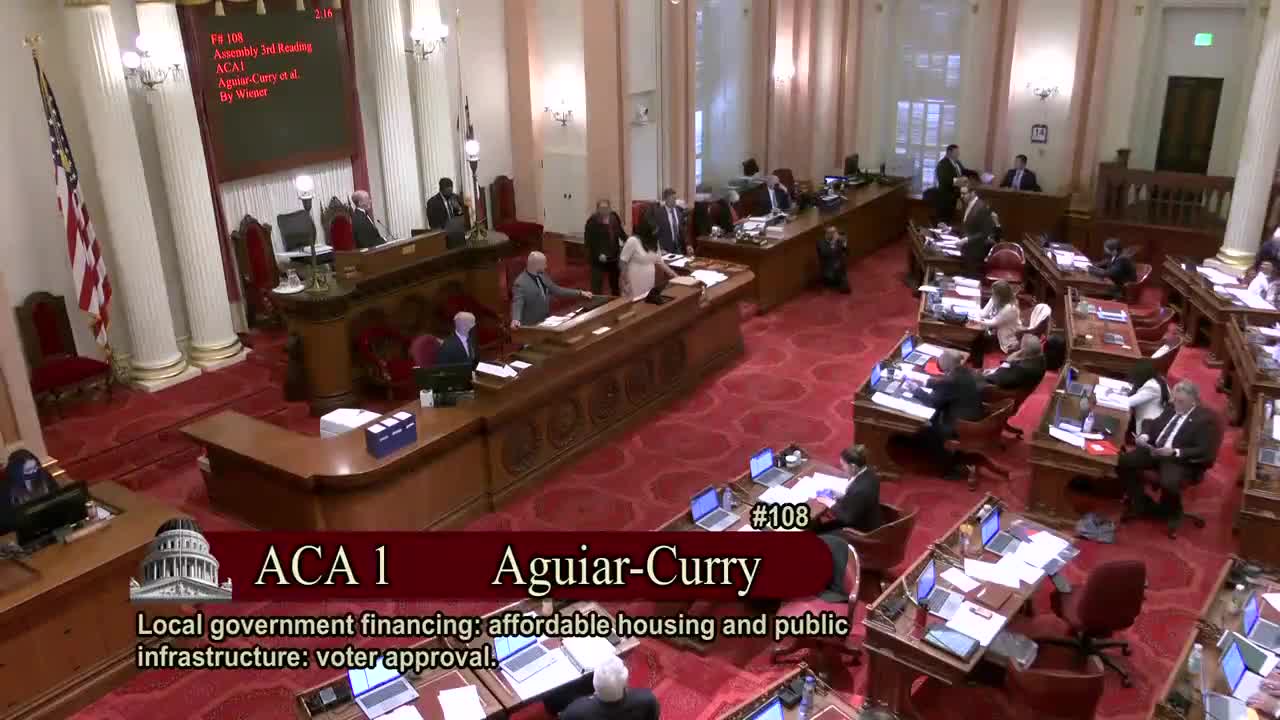 31MIN
Senate Floor
 30MIN
Senate Standing Committee on Labor, Public Employment and Retirement
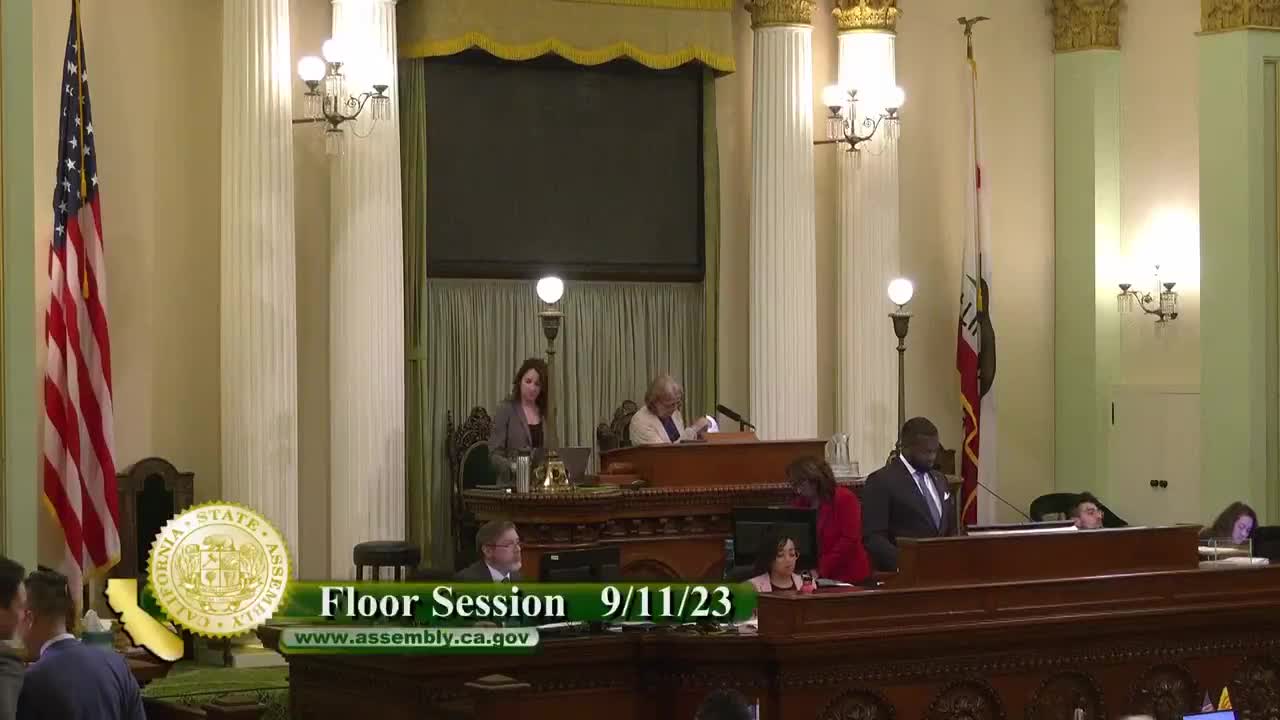 23MIN
Assembly Floor
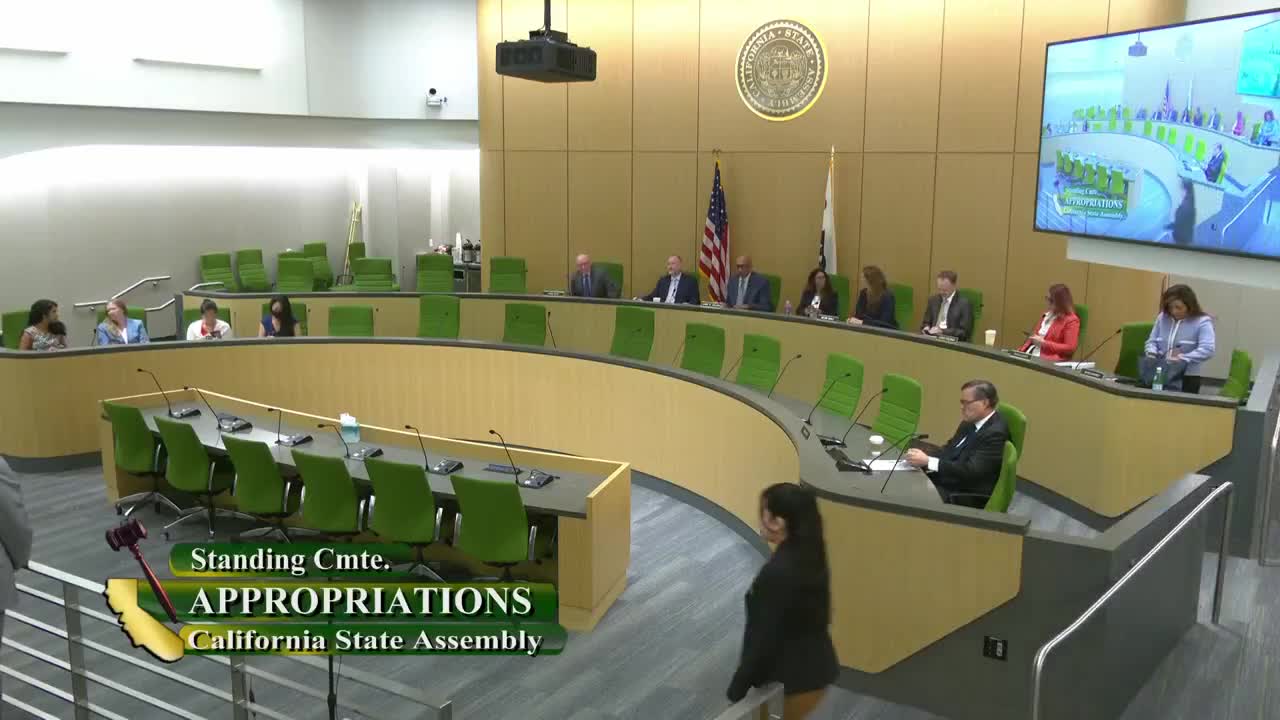 48MIN
Assembly Standing Committee on Appropriations
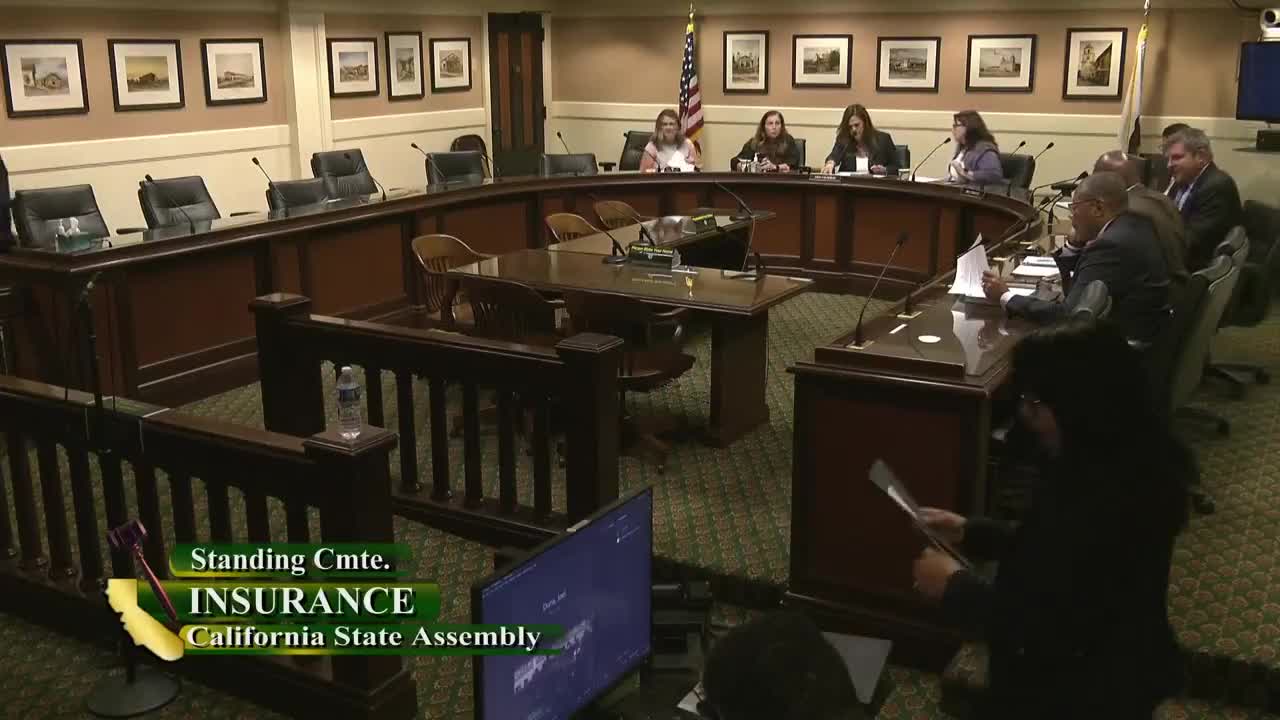 46MIN
Assembly Standing Committee on Insurance
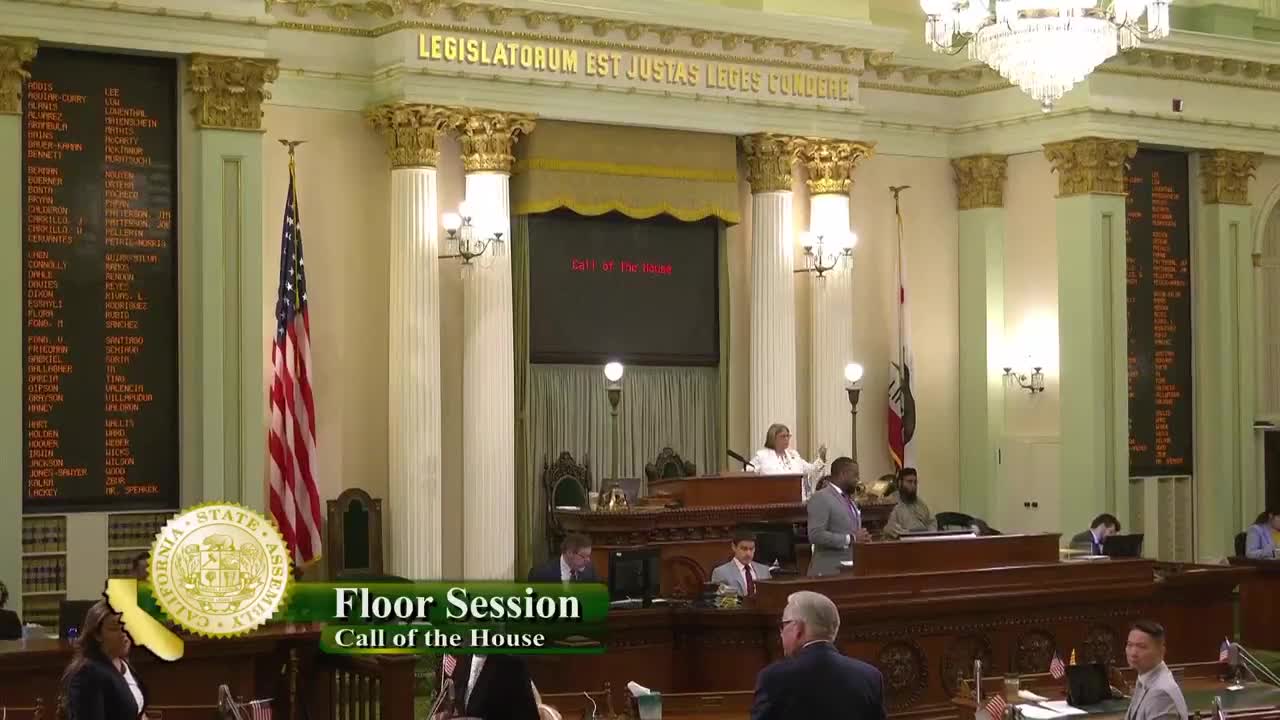 1MIN
Assembly Floor



Bill Co-Author(s):