SB 836: Landowner: water right holder: jointly used conduits: County of Siskiyou.
- Session Year: 2023-2024
- House: Senate
- Latest Version Date: 2023-10-13
Current Status:
Passed
(2023-10-13: Chaptered by Secretary of State. Chapter 889, Statutes of 2023.)
Introduced
In Committee
First Chamber
In Committee
Second Chamber
Enacted
What does this bill do?
This bill lets landowners and water right holders in Siskiyou County modify or replace conduits (pipes or channels) that run across or under multiple private properties when the conduit is not controlled by a public agency. The work must not reduce water flow to other water right holders (people entitled to use the water), and the person doing the work must pay any higher operation or maintenance costs and is liable for damage to private property. Written permission is required for work on public land and owners must get 30 days’ notice, and any recorded easement or agreement that conflicts with this law controls.
The summary is provided by generative AI which can make mistakes. For original language, please view the details in the table below.
Existing law declares that the general welfare requires that the water resources of the state be put to beneficial use to the fullest extent of which they are capable, that the waste or unreasonable use or unreasonable method of use of water be prevented, and that the conservation of water is to be exercised with a view to the reasonable and beneficial use of water in the interest of the people and for the public welfare.
Existing law provides for contribution of expenses of, and proceedings for declaration of rights in, jointly used wells, pumping plants, or conduits used by 2 or more persons.
This bill would authorize a landowner, in the County of Siskiyou, where a conduit is constructed across or buried beneath the lands of 2 or more landowners, and the conduit is not under the control or management of any public agency or authority, to modify or replace the conduit on or beneath their land if the modification or replacement is made in a manner that does not impede the flow of the water to any other water right holder receiving a benefit of the conduit.
This bill would authorize a water right holder, in the County of Siskiyou, where a conduit is constructed across or buried beneath the lands of 2 or more landowners, and the conduit is not under the control or management of any public agency or authority, to modify or replace the conduit on or beneath the land of any other landowner whose land the conduit is constructed across or buried beneath. The bill would require the landowner or water right holder making the change to receive written permission from a public landowner, as defined, on whose land the conduit will be changed, as specified. The bill would require the landowner or water right holder proposing a modification or replacement of a conduit to be liable for any damage to a private landowners property that may occur during the replacement or modification. The bill would require the modification or replacement to be made in a manner that does not impede the flow of the water to any other water right holders that benefit from use of the conduit. The bill would provide an exception to these provisions regarding access to, or a modification or replacement of, a conduit if a recorded easement or an agreement among the affected landowners or water right holders contains requirements that are inconsistent with these provisions.
This bill would require any increased operation, maintenance, or other expenses involved in the modification or replacement of the conduit to be the responsibility of the landowner or water right holder who makes the change. The bill would provide that these provisions are only applicable to conduits located within the County of Siskiyou.
This bill would make legislative findings and declarations as to the necessity of a special statute for County of Siskiyou.
Existing law declares that the general welfare requires that the water resources of the state be put to beneficial use to the fullest extent of which they are capable, that the waste or unreasonable use or unreasonable method of use of water be prevented, and that the conservation of water is to be exercised with a view to the reasonable and beneficial use of water in the interest of the people and for the public welfare.
Existing law provides for contribution of expenses of, and proceedings for declaration of rights in, jointly used wells, pumping plants, or conduits used by 2 or more persons.
This bill would authorize a landowner, in the County of Siskiyou, where a conduit is constructed across or buried beneath the lands of 2 or more landowners, and the conduit is not under the control or management of any public agency or authority, to modify or replace the conduit on or beneath their land if the modification or replacement is made in a manner that does not impede the flow of the water to any other water right holder receiving a benefit of the conduit.
The
This bill would authorize a water right holder, in the County of Siskiyou, where a conduit is constructed across or buried beneath the lands of 2 or more landowners, and the conduit is not under the control or management of any public agency or authority, to modify or replace the conduit on or beneath the land of any other landowner whose land the conduit is constructed across or buried beneath. The bill would require the landowner or water right holder making the change to receive written permission from a public landowner, as defined, on whose land the conduit will be changed, as specified. The bill would require the modification or replacement to be made in a manner that does not impede the flow of the water to any other water right holders that benefit from use of the conduit. The bill would provide an exception to these provisions regarding access to, or a modification or replacement of, a conduit if a recorded easement or an agreement among the affected landowners or water right holders contains requirements that are inconsistent with these provisions.
The
This bill would require any increased operation, maintenance, or other expenses involved in the modification or replacement of the conduit to be the responsibility of the landowner or water right holder who makes the change. The bill would provide that these provisions are only applicable to conduits located within the County of Siskiyou.
This bill would make legislative findings and declarations as to the necessity of a special statute for County of Siskiyou.
Existing law declares that the general welfare requires that the water resources of the state be put to beneficial use to the fullest extent of which they are capable, that the waste or unreasonable use or unreasonable method of use of water be prevented, and that the conservation of water is to be exercised with a view to the reasonable and beneficial use of water in the interest of the people and for the public welfare.
Existing law provides for contribution of expenses of, and proceedings for declaration of rights in, jointly used wells, pumping plants, or conduits used by 2 or more persons.
This bill would authorize a landowner, in the County of Siskiyou, where a conduit is constructed across or buried beneath the lands of 2 or more landowners, and the conduit is not under the control or management of any public agency or authority, to modify or replace the conduit on or beneath their land if the modification or replacement is made in a manner that does not impede the flow of the water to any other water right holder receiving a benefit of the conduit.
The bill would authorize a water right holder, in the County of Siskiyou, where a conduit is constructed across or buried beneath the lands of 2 or more landowners, and the conduit is not under the control or management of any public agency or authority, to modify or replace the conduit on or beneath the land of any other landowner whose land the conduit is constructed across or buried beneath. The bill would require the landowner or water right holder making the change to receive written permission from a public landowner, as defined, on whose land the conduit will be changed, as specified. The bill would require the modification or replacement to be made in a manner that does not impede the flow of the water to any other water right holders that benefit from use of the conduit.
The bill would require any increased operation, maintenance, or other expenses involved in the modification or replacement of the conduit to be the responsibility of the landowner or water right holder who makes the change. The bill would provide that these provisions are only applicable to conduits located within the County of Siskiyou.
This bill would make legislative findings and declarations as to the necessity of a special statute for County of Siskiyou.
(a)This article shall only apply to conduits located within the County of Siskiyou.
(b)Where a conduit is constructed across or buried beneath the lands of two or more landowners, and the conduit is not under the control or management of any public agency or authority, a landowner whose property the conduit is constructed across or buried beneath may modify or replace the conduit on or beneath their land if the modification or replacement is made in a manner that does not impede the flow of the water to any other water right holder receiving a benefit of the conduit.
(c)Where a conduit is constructed across or buried beneath the lands of two or more landowners, and the conduit is not under the control or management of any public agency or authority, a water right holder to the water in the conduit may modify or replace the conduit on or beneath the land of any landowner whose land the conduit is constructed across or buried beneath if the modification or replacement is made in a manner that does not impede the flow of the water to any other water right holder receiving a benefit of the conduit.
(d)(1)If a water right holder makes a modification or replacement pursuant to subdivision (c), written permission is required if the conduit is constructed across or buried beneath lands owned by a public landowner.
(2)A water right holder proposing a modification or replacement pursuant to subdivision (c) shall provide written notice at least 30 days before the start of the modification or replacement when proposing work on land owned by a public landowner, including detailed information on the proposed work and access to the conduit on the land.
(3)A public landowner may condition its permission or deny a request.
(4)A public landowner granting permission has no obligation to investigate the applicability of subdivision (c) to the proposed modification or replacement and shall not be liable to any other affected landowner if the landowner requesting to do the modification or replacement does not have the authority pursuant to that subdivision.
(e)A landowner or water right holder proposing a modification or replacement pursuant to subdivision (c) shall provide written notice to a private landowner at least 30 days before the start of the modification or replacement when proposing work on land owned by the private landowner, and shall include detailed information on the proposed work and access to the conduit on the land in the written notice. The landowner or water right holder proposing a modification or replacement of a conduit shall be liable for any damage to a private landowners property that may occur during the replacement or modification.
(f)Any increased operation costs, maintenance costs, or other expenses involved in the modification or replacement of the conduit shall be the responsibility of the landowner or water right holder who makes the change.
(g)Nothing in this section gives a landowner or water right holder the right to alter the flow of water in a manner that would negatively affect other water right holders that benefit from use of the conduit.
(h)If provisions regarding access to, or a modification or replacement of, a conduit are provided for in a recorded easement or an agreement among the affected landowners or water right holders that is inconsistent with this section, the provisions of the easement or agreement shall control.
(i)For purposes of this article, the following definitions apply:
(1)Modify or replace includes the ability to install new, or improve existing, piping, lining, or other methods that provide for conservation and beneficial use of water, as provided in Section 100.
(2)Public landowner means any district, governmental agency, or other governmental entity that owns an easement or any other right to land.
SEC. 2.The heading of Article 2 (commencing with Section 7001) of Chapter 1 of Division 4 of the Water Code is amended and renumbered to read:3.Contribution of Expenses of Jointly Used Wells, Pumping Plants or ConduitsSEC. 3.The heading of Article 3 (commencing with Section 7005) of Chapter 1 of Division 4 of the Water Code is amended and renumbered to read:4.Proceeding for Declaration of Rights in Jointly Used Wells, Pumping Plants or ConduitsSEC. 4.The Legislature finds and declares that a special statute is necessary and that a general statute cannot be made applicable within the meaning of Section 16 of Article IV of the California Constitution because of the unique rural water systems that traverse through open ditches over many properties with multiple landowners in the County of Siskiyou.
(a)This article shall only apply to conduits located within the County of Siskiyou.
(b)Where a conduit is constructed across or buried beneath the lands of two or more landowners, and the conduit is not under the control or management of any public agency or authority, a landowner whose property the conduit is constructed across or buried beneath may modify or replace the conduit on or beneath their land if the modification or replacement is made in a manner that does not impede the flow of the water to any other water right holder receiving a benefit of the conduit.
(c)Where a conduit is constructed across or buried beneath the lands of two or more landowners, and the conduit is not under the control or management of any public agency or authority, a water right holder to the water in the conduit may modify or replace the conduit on or beneath the land of any landowner whose land the conduit is constructed across or buried beneath if the modification or replacement is made in a manner that does not impede the flow of the water to any other water right holder receiving a benefit of the conduit.
(d)(1)If a water right holder makes a modification or replacement pursuant to subdivision (c), written permission is required if the conduit is constructed across or buried beneath lands owned by a public landowner.
(2)A water right holder proposing a modification or replacement pursuant to subdivision (c) shall provide written notice at least 30 days before the start of the modification or replacement when proposing work on land owned by a public landowner, including detailed information on the proposed work and access to the conduit on the land.
(3)A public landowner may condition its permission or deny a request.
(4)A public landowner granting permission has no obligation to investigate the applicability of subdivision (c) to the proposed modification or replacement and shall not be liable to any other affected landowner if the landowner requesting to do the modification or replacement does not have the authority pursuant to that subdivision.
(e)A landowner or water right holder proposing a modification or replacement pursuant to subdivision (c) shall provide written notice to a private landowner at least 30 days before the start of the modification or replacement when proposing work on land owned by the private landowner, and shall include detailed information on the proposed work and access to the conduit on the land in the written notice.
(f)Any increased operation costs, maintenance costs, or other expenses involved in the modification or replacement of the conduit shall be the responsibility of the landowner or water right holder who makes the change.
(g)Nothing in this section gives a landowner or water right holder the right to alter the flow of water in a manner that would negatively affect other water right holders that benefit from use of the conduit.
(h)If provisions regarding access to, or a modification or replacement of, a conduit are provided for in a recorded easement or an agreement among the affected landowners or water right holders that is inconsistent with this section, the provisions of the easement or agreement shall control.
(h)(i)For purposes of this article, the following definitions apply:
(1)Modify or replace includes the ability to install new, or improve existing, piping, lining, or other methods that provide for conservation and beneficial use of water, as provided in Section 100.
(2)Public landowner means any district, governmental agency, or other governmental entity that owns an easement or any other right to land.
SEC. 2.The heading of Article 2 (commencing with Section 7001) of Chapter 1 of Division 4 of the Water Code is amended and renumbered to read:3.Contribution of Expenses of Jointly Used Wells, Pumping Plants or ConduitsSEC. 3.The heading of Article 3 (commencing with Section 7005) of Chapter 1 of Division 4 of the Water Code is amended and renumbered to read:4.Proceeding for Declaration of Rights in Jointly Used Wells, Pumping Plants or ConduitsSEC. 4.The Legislature finds and declares that a special statute is necessary and that a general statute cannot be made applicable within the meaning of Section 16 of Article IV of the California Constitution because of the unique rural water systems that traverse through open ditches over many properties with multiple landowners in the County of Siskiyou.
(a)This article shall only apply to conduits located within the County of Siskiyou.
(b)Where a conduit is constructed across or buried beneath the lands of two or more landowners, and the conduit is not under the control or management of any public agency or authority, a landowner whose property the conduit is constructed across or buried beneath may modify or replace the conduit on or beneath their land if the modification or replacement is made in a manner that does not impede the flow of the water to any other water right holder receiving a benefit of the conduit.
(c)Where a conduit is constructed across or buried beneath the lands of two or more landowners, and the conduit is not under the control or management of any public agency or authority, a water right holder to the water in the conduit may modify or replace the conduit on or beneath the land of any landowner whose land the conduit is constructed across or buried beneath if the modification or replacement is made in a manner that does not impede the flow of the water to any other water right holder receiving a benefit of the conduit.
(d)(1)If a water right holder makes a modification or replacement pursuant to subdivision (c), written permission is required if the conduit is constructed across or buried beneath lands owned by a public landowner.
(2)A water right holder proposing a modification or replacement pursuant to subdivision (c) shall provide written notice at least 30 days before the start of the modification or replacement when proposing work on land owned by a public landowner, including detailed information on the proposed work and access to the conduit on the land.
(3)A public landowner may condition its permission or deny a request.
(4)A public landowner granting permission has no obligation to investigate the applicability of subdivision (c) to the proposed modification or replacement and shall not be liable to any other affected landowner if the landowner requesting to do the modification or replacement does not have the authority pursuant to that subdivision.
(e)A landowner or water right holder proposing a modification or replacement pursuant to subdivision (c) shall provide written notice to a private landowner at least 30 days before the start of the modification or replacement when proposing work on land owned by the private landowner, and shall include detailed information on the proposed work and access to the conduit on the land in the written notice.
(f)Any increased operation costs, maintenance costs, or other expenses involved in the modification or replacement of the conduit shall be the responsibility of the landowner or water right holder who makes the change.
(g)Nothing in this section gives a landowner or water right holder the right to alter the flow of water in a manner that would negatively affect other water right holders that benefit from use of the conduit.
(h)For purposes of this article, the following definitions apply:
(1)Modify or replace includes the ability to install new, or improve existing, piping, lining, or other methods that provide for conservation and beneficial use of water, as provided in Section 100.
(2)Public landowner means any district, governmental agency, or other governmental entity that owns an easement or any other right to land.
SEC. 2.The heading of Article 2 (commencing with Section 7001) of Chapter 1 of Division 4 of the Water Code is amended and renumbered to read:2.3.Contribution of Expenses of Jointly Used Wells, Pumping Plants or ConduitsSEC. 3.The heading of Article 3 (commencing with Section 7005) of Chapter 1 of Division 4 of the Water Code is amended and renumbered to read:3.4.Proceeding for Declaration of Rights in Jointly Used Wells, Pumping Plants or ConduitsSEC. 4.The Legislature finds and declares that a special statute is necessary and that a general statute cannot be made applicable within the meaning of Section 16 of Article IV of the California Constitution because of the unique rural water systems that traverse through open ditches over many properties with multiple landowners in the County of Siskiyou.
|
Date
|
Status
|
|---|---|
| Oct 13, 2023 | Chaptered by Secretary of State. Chapter 889, Statutes of 2023. |
| Oct 13, 2023 | Approved by the Governor. |
| Sep 20, 2023 | Enrolled and presented to the Governor at 4:30 p.m. |
| Sep 12, 2023 | Assembly amendments concurred in. (Ayes 38. Noes 0. Page 2667.) Ordered to engrossing and enrolling. |
| Sep 7, 2023 | In Senate. Concurrence in Assembly amendments pending. |
| Sep 7, 2023 | Read third time. Passed. (Ayes 72. Noes 2. Page 2989.) Ordered to the Senate. |
| Jul 13, 2023 | Read second time. Ordered to third reading. |
| Jul 12, 2023 | Read second time and amended. Ordered to second reading. |
| Jul 11, 2023 | From committee: Do pass as amended. (Ayes 12. Noes 0.) (July 11). |
| Jun 20, 2023 | June 20 hearing postponed by committee. |
| May 18, 2023 | Referred to Com. on W., P., & W. |
| May 11, 2023 | In Assembly. Read first time. Held at Desk. |
| May 11, 2023 | Read third time. Passed. (Ayes 39. Noes 0. Page 1057.) Ordered to the Assembly. |
| May 9, 2023 | Ordered to special consent calendar. |
| Apr 27, 2023 | Read second time and amended. Ordered to third reading. |
| Apr 26, 2023 | From committee: Do pass as amended. (Ayes 10. Noes 0. Page 900.) (April 25). |
| Apr 11, 2023 | Set for hearing April 25. |
| Mar 9, 2023 | March 28 set for first hearing canceled at the request of author. |
| Mar 7, 2023 | Set for hearing March 28. |
| Mar 1, 2023 | Referred to Com. on N.R. & W. |
| Feb 21, 2023 | From printer. May be acted upon on or after March 20. |
| Feb 17, 2023 | Introduced. Read first time. To Com. on RLS. for assignment. To print. |
|
Date
|
Description
|
Location
|
Votes
|
|
|---|---|---|---|---|
| Sep 12, 2023 | Unfinished Business SB836 Dahle Concurrence | Senate Floor |
Passed |
|
| Sep 7, 2023 | SB 836 Dahle Senate Third Reading By Megan Dahle | Assembly Floor |
Passed |
|
| Jul 11, 2023 | Do pass as amended. | Assembly Standing Committee on Water, Parks, and Wildlife |
Passed |
|
| May 11, 2023 | Special Consent SB836 Dahle | Senate Floor |
Passed |
|
| Apr 25, 2023 | Do pass as amended | Senate Standing Committee on Natural Resources and Water |
Passed |
This list shows positions taken on this bill by organizations on the date displayed, which is linked to the original source.
Positions by individuals are not included.
SENATE RULES COMMITTEE Office of Senate Floor Analyses (916) 651-1520 Fax: (916) 327-4478 | SB 836 |
UNFINISHED BUSINESS
Bill No: SB 836
Author: Dahle (R)
Amended: 7/12/23
Vote: 21
SENATE NATURAL RES. & WATER COMMITTEE: 10-0, 4/25/23
AYES: Min, Seyarto, Allen, Dahle, Eggman, Grove, Hurtado, Laird, Limón, Padilla
NO VOTE RECORDED: Stern
SENATE FLOOR: 39-0, 5/11/23
AYES: Allen, Alvarado-Gil, Archuleta, Ashby, Atkins, Becker, Blakespear, Bradford, Caballero, Cortese, Dahle, Dodd, Durazo, Eggman, Glazer, Gonzalez, Hurtado, Jones, Laird, Limón, McGuire, Menjivar, Min, Newman, Nguyen, Niello, Ochoa Bogh, Padilla, Portantino, Roth, Rubio, Seyarto, Skinner, Smallwood-Cuevas, Stern, Umberg, Wahab, Wiener, Wilk
NO VOTE RECORDED: Grove
ASSEMBLY FLOOR: 72-2, 9/7/23 - See last page for vote
SUBJECT: Landowner: water right holder: jointly used conduits: County of Siskiyou
SOURCE: Author
DIGEST:
This bill permits a landowner or water right holder, in the County of Siskiyou, to modify or replace segments of a conduit if the conduit crosses the landowner’s property or conveys water to which the water right holder has a right, the conduit is not under the authority of a public agency, and the modification does not impede the flow of water to a water right holder.
Assembly Amendments
require a landowner or water right holder that proposes a modification or replacement of a conduit to be liable for any damage to a private landowner’s property that occurs during the modification or replacement.
ANALYSIS:
Existing law:
- Makes every person who willfully commits trespass by entering and occupying real property or structures without the consent of the owner, the owner’s agent, or the person in lawful possession guilty of a misdemeanor. (Penal Code §602(m))
- Provides that the diversion or use of water other than as authorized is a trespass and an action for the issuance of injunctive relief may be warranted by way of temporary restraining order, preliminary injunction, or permanent injunction and may be brought by the Attorney General on behalf of SWRCB, or in the Attorney General’s independent capacity in the name of the people of the State of California, where the diversion or use of water is threatened, is occurring, or has occurred. (Water Code (Wat. C.) §1052)
- Defines “conduit” as a ditch, pipe line, or flume. (Wat. C. §7000)
- Provides that when two or more persons share the use of a conduit, well, or pumping plant to convey and lawfully use water, each is responsible for reasonable expenses to maintain and repair the conduit, well, or pumping plant in proportion to the use, unless a written agreement specifies another arrangement. (Wat. C. §7001)
- Provides that if a landowner neglects to pay their proportion for the repair or maintenance of a conduit, well, or pumping plant, the landowner is liable in an action by other landowners that share the use of the conduit, well, or pumping plant to obtain that landowner’s contribution. (Wat. C. §7002)
This bill permits a landowner or water right holder, in the County of Siskiyou, to modify or replace segments of a conduit if the conduit crosses the landowner’s property or conveys water to which the water right holder has a right, the conduit is not under the authority of a public agency, and the modification does not impede the flow of water to a water right holder. Specifically, this bill:
- Authorizes a landowner, where a conduit is constructed across or buried beneath the lands of two or more landowners, and the conduit is not under the control of a public agency or authority, to modify or replace the conduit on or beneath their land if the modification or replacement does not impede the flow of water to any other water right holder receiving a benefit of the conduit.
- “Modify or replace” includes the ability to install new, or improve existing, piping, lining, or other methods that provide for conservation and beneficial use of water, as specified.
- “Modify or replace” includes the ability to install new, or improve existing, piping, lining, or other methods that provide for conservation and beneficial use of water, as specified.
- Authorizes a water right holder to the water in a conduit, where the conduit is constructed across or buried beneath the lands of two or more landowners and the conduit is not under the control or management of a public agency or authority, to modify or replace the conduit on or beneath the land of any landowner whose land the conduit is constructed across or buried beneath if the modification or replacement does not impede the flow of the water to any other water right holder receiving a benefit of the conduit.
- Requires written permission of the public landowner if a water right holder makes a modification or replacement and the conduit is constructed across or buried beneath lands owned by a public landowner. Defines “public landowner” as any district, governmental agency, or other governmental entity that owns the easement or any other right to the land.
- Requires a water right holder, when proposing work on land owned by a public landowner, to provide written notice at least 30 days before the start of the modification or replacement, as specified.
- Authorizes a public landowner to condition its permission or deny a request.
- Provides that a public landowner granting permission has no obligation to investigate the applicability of the authorization of the water right holder to modify or replace the conduit and prohibits the public landowner from being liable to any other affected landowner if the landowner requesting to do the modification or replacement does not have that authority.
- Requires a water right holder, when proposing work on land owned by a public landowner, to provide written notice at least 30 days before the start of the modification or replacement, as specified.
- If a landowner or water right holder proposes a modification or replacement of a conduit constructed across or buried beneath the lands of two or more landowners, requires the landowner or water right holder proposing the modification or replacement to provide written notice to a private landowner at least 30 days before the start of the modification or replacement when proposing work on land owned by the private landowner, as specified.
- Makes a landowner or water right holder proposing a modification or replacement of a conduit liable for any damage to a private landowner’s property that occurs during replacement or modification.
- Requires any increased operation costs, maintenance costs, or other expenses involved in the modification or replacement of the conduit to be the responsibility of the landowner or water right holder who makes the change.
- Provides that provisions regarding access to, or a modification or replacement of, a conduit provided for in a recorded easement or agreement among the affected landowners control if those provisions are inconsistent with the provisions of this bill.
- Provides that nothing in these provisions gives a landowner or water right holder the right to alter the flow of water in a manner that would negatively affect other water right holders that benefit from use of the conduit.
Background
In some parts of the state, water is supplied via jointly owned ditches, flumes, and other conduits originally built during the gold rush area.
Comments
Author’s statement. According to the author, “SB 836 would reduce water waste and contamination through earthen ditches over an easement by allowing them to be modified with an impervious material. In many cases across California, water loss to agriculture and residential property is a result of a poor delivery system. Piping can help to solve these issues for the consumer and can often reduce water waste by up to 50%. In order to achieve the State’s ambitious green policy goals and ease the burden of ratepayers, the Legislature needs to update policies to preserve this important resource. Recent drought and demands on our water system have shown that the State desperately needs water conservation solutions. This is a common sense measure to allow the possessors of water rights to improve accessibility and easily resolve easement issues between landowners.”
FISCAL EFFECT: Appropriation: No Fiscal Com.: No Local: No
SUPPORT: (Verified 9/7/23)
None received
OPPOSITION: (Verified 9/7/23)
None received
ASSEMBLY FLOOR: 72-2, 9/7/23
AYES: Addis, Alanis, Alvarez, Arambula, Bains, Bennett, Boerner, Bonta, Bryan, Calderon, Juan Carrillo, Wendy Carrillo, Cervantes, Chen, Connolly, Megan Dahle, Davies, Dixon, Flora, Mike Fong, Vince Fong, Friedman, Gabriel, Gallagher, Garcia, Gipson, Grayson, Haney, Hart, Holden, Hoover, Jackson, Jones-Sawyer, Lackey, Lee, Low, Lowenthal, Maienschein, Mathis, McCarty, McKinnor, Stephanie Nguyen, Ortega, Pacheco, Papan, Jim Patterson, Joe Patterson, Pellerin, Petrie-Norris, Quirk-Silva, Ramos, Rendon, Reyes, Luz Rivas, Rodriguez, Blanca Rubio, Sanchez, Santiago, Soria, Ta, Ting, Valencia, Villapudua, Waldron, Wallis, Ward, Weber, Wicks, Wilson, Wood, Zbur, Robert Rivas
NOES: Bauer-Kahan, Irwin
NO VOTE RECORDED: Aguiar-Curry, Berman, Essayli, Kalra, Muratsuchi, Schiavo
Prepared by: Genevieve Wong / N.R. & W. / (916) 651-4116
9/8/23 14:19:18
**** END ****
SENATE THIRD READING
STR Bill Id:SB 836
Author:(Dahle)
As Amended Ver:July 12, 2023
Majority vote
SUMMARY
Permits a landowner or a water right holder, in the County of Siskiyou, to modify or replace segments of a conduit if the conduit either crosses the landowner's property or conveys water to which the water right holder has a right, the conduit is not under the authority of a public agency, and the modification does not impede the flow of water to a water right holder.
Major Provisions
- Permits a landowner, in Siskiyou County, to modify or replace the portions of a conduit that crosses or runs beneath their land or another landowner's property if the conduit is not managed by a public agency and the modification does not impede the flow of water to another water right holder that uses the conduit.
- Requires a water right holder that modifies or replaces a conduit in Siskiyou County that crosses or runs beneath lands owned by a public landowner to obtain written permission from said public landowner. A public landowner may condition its permission or deny the request.
- Requires a water right holder that modifies or replaces portions of a conduit in Siskiyou County that crosses or runs beneath lands owned by a public landowner to provide a written notice about the proposed work at least 30 days before start of the work.
- Provides that a landowner or water right holder proposing a modification or replacement of a conduit on another's private land in Siskiyou County shall provide written notice to a private landowner at least 30 days before start of the modification or replacement that provides detailed information on the proposed work and access to the conduit on the land.
- Provides that a landowner modifying a conduit on another's private property in Siskiyou County is liable for any damage that occurs during the course of the modification work.
- Provides that any increase in operations or maintenance costs due to a modification or replacement of a conduit shall be the responsibility of the landowner or water right holder that makes the change.
- Provides that a recorded easement or agreement that contains provisions regarding access to, or modification or replacement of, a conduit shall control if this bill is inconsistent with such a document.
COMMENTS
This bill arises out of a specific dispute in the author's district, but would make a significant change in property rights law. Many property owners have water conveyance facilities or conduits (e.g., earthen ditches) crossing their land. In some cases, the landowner may have granted an easement or the conduit may be shared, and an agreement specifies conditions for maintenance or modification. In other cases, the rights of the conduit's owner may not be clear, requiring the parties to seek judicial intervention to clarify those rights when conduit maintenance requires one property owner to enter the other owner's property. This bill would transform these legal relationships between neighboring property owners with water conveyance facilities in Siskiyou County.
The author introduced a similar bill in the 2021-22 Legislative Session (SB 463). This bill is narrower than SB 463 in that it only applies to properties in Siskiyou County. The author also made the following changes to address concerns raised with SB 463:
- Removes "repair" of a conduit from its scope so that this bill only applies to modifications or replacements of conduits;
- Requires a landowner proposing a modification or replacement of a conduit on another's private property to provide at least 30 days written notice before commencing the modification or replacement; and
- Strikes "notwithstanding any other law," the removal of which preserves the validity of any other provisions of law that may be in conflict with this bill.
While this bill is re-written to address some of the concerns raised previously, it continues to allow a landowner or water right holder to access another's private property to modify or replace a conduit without first obtaining permission to do so.
According to the Author
"[This bill] would reduce water waste and contamination through earthen ditches over an easement by allowing them to be modified with an impervious material. In many cases across California, water loss to agriculture and residential property is a result of a poor delivery system. Piping can help to solve these issues for the consumer and can often reduce water waste by up to 50%. In order to achieve the State's ambitious green policy goals and ease the burden of ratepayers, the Legislature needs to update policies to preserve this important resource. Recent drought and demands on our water system have shown that the State desperately needs water conservation solutions. This is a common sense measure to allow the possessors of water rights to improve accessibility and easily resolve easement issues between landowners."
Arguments in Support
None on file.
Arguments in Opposition
None on file.
FISCAL COMMENTS
None. This bill is keyed non-fiscal and will have no fiscal impact on the state.
VOTES
SENATE FLOOR: 39-0-1
YES: Allen, Alvarado-Gil, Archuleta, Ashby, Atkins, Becker, Blakespear, Bradford, Caballero, Cortese, Dahle, Dodd, Durazo, Eggman, Glazer, Gonzalez, Hurtado, Jones, Laird, Limón, McGuire, Menjivar, Min, Newman, Nguyen, Niello, Ochoa Bogh, Padilla, Portantino, Roth, Rubio, Seyarto, Skinner, Smallwood-Cuevas, Stern, Umberg, Wahab, Wiener, Wilk
ABS, ABST OR NV: Grove
ASM WATER, PARKS, AND WILDLIFE: 12-0-3
YES: Mathis, Alanis, Bennett, Megan Dahle, Davies, Friedman, Hart, Pellerin, Schiavo, Villapudua, Ward, Weber
ABS, ABST OR NV: Bauer-Kahan, Kalra, Blanca Rubio
UPDATED
VERSION: July 12, 2023
CONSULTANT: Pablo Garza / W., P., & W. / (916) 319-2096 FN: 0001224
Date of Hearing: July 11, 2023
ASSEMBLY COMMITTEE ON WATER, PARKS, AND WILDLIFE
Rebecca Bauer-Kahan, Chair
SBPCA Bill Id:SB 836
Author:(Dahle) – As Amended Ver:April 27, 2023
SENATE VOTE: 39-0
SUBJECT: Landowner: water right holder: jointly used conduits: County of Siskiyou
SUMMARY: Permits a landowner or a water right holder, in the County of Siskiyou, to modify or replace segments of a conduit if the conduit either crosses the landowner’s property or conveys water to which the water right holder has a right, the conduit is not under the authority of a public agency, and the modification does not impede the flow of water to a water right holder. Specifically, this bill:
- Permits a landowner to modify or replace the portions of a conduit that crosses or runs beneath their land if the conduit is not managed by a public agency and the modification does not impede the flow of water to another water right holder that uses the conduit.
- Permits a water right holder to modify or replace portions of a conduit that crosses or runs beneath another landowner’s property if the conduit is not managed by a public agency and the modification or replacement does not impede the flow of water to another water right holder that uses the conduit.
- Requires a water right holder that modifies or replaces a conduit that crosses or runs beneath lands owned by a public landowner to obtain written permission from said public landowner. A public landowner may condition their permission or deny the request.
- Requires a water right holder that modifies or replaces portions of a conduit that crosses or runs beneath lands owned by a public landowner to provide a written notice with detailed information about the proposed work at least 30 days before start of the work.
- Provides that a public landowner is not liable to any other landowner affected by a modification or replacement of a conduit that they permit to proceed on or under their land.
- Provides that a landowner or water right holder proposing a modification or replacement of a conduit on another’s private land shall provide written notice to a private landowner at least 30 days before start of the modification or replacement that provides detailed information on the proposed work and access to the conduit on the land.
- Provides that any increase in operations or maintenance costs due to a modification or replacement of a conduit shall be the responsibility of the landowner or water right holder that makes the change.
- Provides that nothing in this bill gives a landowner or water right holder the right to alter the flow of water in a manner that negatively affects another water right holder that benefits from use of the conduit.
- Provides that a recorded easement or agreement that contains provisions regarding access to, or modification or replacement of, a conduit shall control if this bill is inconsistent with such a document.
- Defines key terms for purposes of this bill and makes technical and conforming changes.
EXISTING LAW:
- Defines “conduit” as a ditch, pipe line, or flume (Water Code § 7000).
- Provides that when two or more landowners share the use of a conduit, well, or pumping plant to convey and lawfully use water, each landowner is responsible for reasonable expenses to maintain and repair the conduit, well, or pumping plant in proportion to each landowner’s use, unless a written agreement specifies another arrangement (Water Code § 7001).
- Provides that if a landowner neglects to pay their proportion for the repair or maintenance of a conduit, well, or pumping plant, that landowner is liable in an action by other landowners that share the use of the conduit, well, or pumping plant to obtain that landowner’s contribution (Water Code § 7002).
FISCAL EFFECT: None. This bill is keyed non-fiscal.
COMMENTS:
- Purpose of this bill. According to the author, “[this bill] would reduce water waste and contamination through earthen ditches over an easement by allowing them to be modified with an impervious material. In many cases across California, water loss to agriculture and residential property is a result of a poor delivery system. Piping can help to solve these issues for the consumer and can often reduce water waste by up to 50%. In order to achieve the State’s ambitious green policy goals and ease the burden of ratepayers, the Legislature needs to update policies to preserve this important resource. Recent drought and demands on our water system have shown that the State desperately needs water conservation solutions. This is a common sense measure to allow the possessors of water rights to improve accessibility and easily resolve easement issues between landowners.”
- Background. This bill arises out of a specific dispute in the author’s district, but would make a significant change in property rights law. Many property owners have water conveyance facilities crossing their land. In some cases, the landowner may have granted an easement or the conduit may be shared, and an agreement specifies conditions for maintenance or modification. In other cases, the rights of the conduit’s owner may not be clear, requiring the parties to seek judicial intervention to clarify those rights when conduit maintenance requires one property owner to enter the other owner’s property. This bill would transform these legal relationships between neighboring property owners with water conveyance facilities in Siskiyou County.
A previous version of this bill (SB 463) was heard by this committee last session. This bill is more narrow than SB 463 in the following ways:
- It limits this bill’s application to conduits in Siskiyou County (rather than statewide);
- It removes “repair” of a conduit from its scope so that this bill only applies to modifications or replacements of conduits;
- It requires a landowner proposing a modification or replacement of a conduit on another’s private property to provide at least 30 days written notice before commencing the modification or replacement; and
- It strikes “notwithstanding any other law,” the removal of which preserves the validity of any other provisions of law that may be in conflict with this bill.
The committee’s analysis of SB 463 raised a number of concerns. While this bill is re-written to address some of these concerns, it continues to allow a landowner or water right holder to access another’s private property to modify or replace a conduit without first obtaining permission to do so.
- Suggested committee amendments. The Committee may wish to request that the author make the following amendments to protect private property rights and ensure that a landowner or water right holder proposing a modification or replacement of a conduit on another’s private property is liable for any problems that arise during the course of the modification or replacement work:
7000.5… (e) A landowner or water right holder proposing a modification or replacement pursuant to (c) shall provide written notice to a private landowner at least 30 days before the start of the modification or replacement when proposing work on land owned by the private landowner, and shall include detailed information on the proposed work and access to the conduit on the land in the written notice. The landowner or water right holder proposing a modification or replacement of a conduit shall be liable for any damage to a private landowner’s property that may occur during the replacement or modification. - Related legislation. SB 463 (Dahle) of 2022 was substantially similar to this bill except that it applied statewide. SB 463 failed passage by a 5-4 vote in this committee on June 28, 2022.
REGISTERED SUPPORT / OPPOSITION:
Support
None on file
Opposition
None on file
Analysis Prepared by: Pablo Garza / W., P., & W. / (916) 319-2096
Date of Hearing: June 20, 2023
ASSEMBLY COMMITTEE ON WATER, PARKS, AND WILDLIFE
Rebecca Bauer-Kahan, Chair
SBPCA Bill Id:SB 836
Author:(Dahle) – As Amended Ver:April 27, 2023
SENATE VOTE: 39-0
SUBJECT: Landowner: water right holder: jointly used conduits: County of Siskiyou
SUMMARY: Permits a landowner or a water right holder to modify or replace segments of a conduit if the conduit either crosses the landowner’s property or conveys water to which the water right holder has a right, the conduit is not under the authority of a public agency, and the modification does not impede the flow of water to a water right holder. Specifically, this bill:
- Permits a landowner to modify or replace the portions of a conduit that crosses or runs beneath their land if the conduit is not managed by a public agency and the modification does not impede the flow of water to another water right holder that uses the conduit.
- Permits a water right holder to modify or replace portions of a conduit that crosses or runs beneath another landowner’s property if the conduit is not managed by a public agency and the modification or replacement does not impede the flow of water to another water right holder that uses the conduit.
- Requires a water right holder that modifies or replaces a conduit that crosses or runs beneath lands owned by a public landowner to obtain written permission from said public landowner. A public landowner may condition their permission or deny the request.
- Requires a water right holder that modifies or replaces portions of a conduit that crosses or runs beneath lands owned by a public landowner to provide a written notice with detailed information about the proposed work at least 30 days before start of the work.
- Provides that a public landowner is not liable to any other landowner affected by a modification or replacement of a conduit that they permit to proceed on or under their land.
- Provides that a landowner or water right holder proposing a modification or replacement of a conduit on another’s private land shall provide written notice to a private landowner at least 30 days before start of the modification or replacement that provides detailed information on the proposed work and access to the conduit on the land.
- Provides that any increase in operations or maintenance costs due to a modification or replacement of a conduit shall be the responsibility of the landowner or water right holder that makes the change.
- Provides that nothing in this bill gives a landowner or water right holder the right to alter the flow of water in a manner that negatively affects another water right holder that benefits from use of the conduit.
- Provides that a recorded easement or agreement that contains provisions regarding access to, or modification or replacement of, a conduit shall control if this bill is inconsistent with such a document.
- Defines key terms for purposes of this bill and makes technical and conforming changes.
EXISTING LAW:
- Defines “conduit” as a ditch, pipe line, or flume (Water Code § 70000).
- Provides that when two or more landowners share the use of a conduit, well, or pumping plant to convey and lawfully use water, each landowner is responsible for reasonable expenses to maintain and repair the conduit, well, or pumping plant in proportion to each landowner’s use, unless a written agreement specifies another arrangement (Water Code § 7001).
- Provides that if a landowner neglects to pay their proportion for the repair or maintenance of a conduit, well, or pumping plant, that landowner is liable in an action by other landowners that share the use of the conduit, well, or pumping plant to obtain that landowner’s contribution (Water Code § 7002).
FISCAL EFFECT: None. This bill is keyed non-fiscal.
COMMENTS:
- Purpose of this bill. According to the author, “[this bill] would reduce water waste and contamination through earthen ditches over an easement by allowing them to be modified with an impervious material. In many cases across California, water loss to agriculture and residential property is a result of a poor delivery system. Piping can help to solve these issues for the consumer and can often reduce water waste by up to 50%. In order to achieve the State’s ambitious green policy goals and ease the burden of ratepayers, the Legislature needs to update policies to preserve this important resource. Recent drought and demands on our water system have shown that the State desperately needs water conservation solutions. This is a common sense measure to allow the possessors of water rights to improve accessibility and easily resolve easement issues between landowners.”
- Background. This bill arises out of a specific dispute in the author’s district, but would make a significant change in property rights law. Many property owners have water conveyance facilities crossing their land. In some cases, the landowner may have granted an easement or the conduit may be shared, and an agreement specifies conditions for maintenance or modification. In other cases, the rights of the conduit’s owner may not be clear, requiring the parties to seek judicial intervention to clarify those rights when conduit maintenance requires one property owner to enter the other owner’s property. This bill would transform these legal relationships between neighboring property owners with water conveyance facilities in Siskiyou County.
A previous version of this bill (SB 463) was heard by this committee last session. This bill is more narrow than SB 463 in the following ways:
- It limits this bill’s application to conduits in Siskiyou County (rather than statewide);
- It removes “repair” of a conduit from its scope so that this bill only applies to modifications or replacements of conduits;
- It requires a landowner proposing a modification or replacement of a conduit on another’s private property to provide at least 30 days written notice before commencing the modification or replacement; and
- It strikes “notwithstanding any other law,” the removal of which preserves the validity of any other provisions of law that may be in conflict with this bill.
The committee’s analysis of SB 463 raised a number of concerns with SB 463. While this bill is re-written to address some of these concerns, it continues to allow a landowner or water right holder to access another’s private property to modify or replace a conduit without first obtaining permission to do so.
- Suggested committee amendments. The committee may wish to request that the author make the following amendments to protect private property rights and ensure that a landowner or water right holder proposing a modification or replacement of a conduit on another’s private property is liable for any problems that arise during the course of the modification or replacement work:
7000.5… (e) (1) A landowner or water right holder proposing a modification or replacement pursuant to (c) must obtain written consent from a private landowner before commencing the modification or replacement work on land owned by the private landowner. Written permission to modify or replace a conduit on a private landowner’s property shall not be unreasonably withheld.
(2) A landowner or water right holder proposing a modification or replacement pursuant to (c) shall provide written notice to a private landowner at least 30 days before the start of the modification or replacement when proposing work on land owned by the private landowner, and shall include detailed information on the proposed work and access to the conduit on the land in the written notice.
(3) A landowner or water right holder proposing a modification or replacement of a conduit pursuant to (c) shall agree to indemnify and hold harmless each private landowner to whom notice was provided under (2).
- Related legislation. SB 463 (Dahle) of 2022 was substantially similar to this bill except that it applied statewide. SB 463 failed passage by a 5-4 vote in this committee on June 28, 2022.
REGISTERED SUPPORT / OPPOSITION:
Support
None on file
Opposition
None on file
Analysis Prepared by: Pablo Garza / W., P., & W. / (916) 319-2096
SENATE RULES COMMITTEE Office of Senate Floor Analyses (916) 651-1520 Fax: (916) 327-4478 | SB 836 |
THIRD READING
Bill No: SB 836
Author: Dahle (R)
Amended: 4/27/23
Vote: 21
SENATE NATURAL RES. & WATER COMMITTEE: 10-0, 4/25/23
AYES: Min, Seyarto, Allen, Dahle, Eggman, Grove, Hurtado, Laird, Limón, Padilla
NO VOTE RECORDED: Stern
SUBJECT: Landowner: water right holder: jointly used conduits: County of Siskiyou
SOURCE: Author
DIGEST:
This bill, for conduits located in Siskiyou County, authorizes a water right holder to water in a conduit, where the conduit is constructed across or buried beneath the lands of two or more landowners to modify or replace the conduit if, in the case of a public landowner, the water right holder gives notice to and obtains written permission from, the public landowner; or if, in the case of a private landowner, the water right holder gives notice to the private land owner.
ANALYSIS:
Existing law:
- Makes every person who willfully commits trespass by entering and occupying real property or structures without the consent of the owner, the owner’s agent, or the person in lawful possession guilty of a misdemeanor. (Penal Code §602(m))
- Provides that the diversion or use of water other than as authorized is a trespass and an action for the issuance of injunctive relief may be warranted by way of temporary restraining order, preliminary injunction, or permanent injunction and may be brought by the Attorney General on behalf of SWRCB, or in the Attorney General’s independent capacity in the name of the people of the State of California, where the diversion or use of water is threatened, is occurring, or has occurred. (Water Code (Wat. C.) §1052)
- Defines “conduit” as a ditch, pipe line, or flume. (Wat. C. §7000)
- Provides that when two or more persons share the use of a conduit, well, or pumping plant to convey and lawfully use water, each is responsible for reasonable expenses to maintain and repair the conduit, well, or pumping plant in proportion to the use, unless a written agreement specifies another arrangement. (Wat. C. §7001)
- Provides that if a landowner neglects to pay their proportion for the repair or maintenance of a conduit, well, or pumping plant, the landowner is liable in an action by other landowners that share the use of the conduit, well, or pumping plant to obtain that landowner’s contribution. (Wat. C. §7002)
This bill, for conduits located in the County of Siskiyou:
- Authorizes a landowner, where a conduit is constructed across or buried beneath the lands of two or more landowners, and the conduit is not under the control of a public agency or authority, to modify or replace the conduit on or beneath their land if the modification or replacement does not impede the flow of water to any other water right holder receiving a benefit of the conduit.
- “Modify or replace” includes the ability to install new, or improve existing, piping, lining, or other methods that provide for conservation and beneficial use of water, as specified.
- “Modify or replace” includes the ability to install new, or improve existing, piping, lining, or other methods that provide for conservation and beneficial use of water, as specified.
- Authorizes a water right holder to the water in a conduit, where the conduit is constructed across or buried beneath the lands of two or more landowners and the conduit is not under the control or management of a public agency or authority, to modify or replace the conduit on or beneath the land of any landowner whose land the conduit is constructed across or buried beneath if the modification or replacement does not impede the flow of the water to any other water right holder receiving a benefit of the conduit.
- Requires, if a water right holder makes a modification or replacement and the conduit is constructed across or buried beneath lands owned by a public landowner, written permission of the public landowner. Defines “public landowner” as any district, governmental agency, or other governmental entity that owns the easement or any other right to the land.
- Requires a water right holder, when proposing work on land owned by a public landowner, to provide written notice at least 30 days before the start of the modification or replacement, as specified.
- Authorizes a public landowner to condition its permission or deny a request.
- Provides that a public landowner granting permission has no obligation to investigate the applicability of the authorization of the water right holder to modify or replace the conduit and prohibits the public landowner from being liable to any other affected landowner if the landowner requesting to do the modification or replacement does not have that authority.
- Requires a water right holder, when proposing work on land owned by a public landowner, to provide written notice at least 30 days before the start of the modification or replacement, as specified.
- Requires, if a landowner or water right holder proposes a modification or replacement of a conduit constructed across or buried beneath the lands of two or more landowners, the landowner or water right holder proposing the modification or replacement to provide written notice to a private landowner at least 30 days before the start of the modification or replacement when proposing work on land owned by the private landowner, as specified.
- Requires any increased operation costs, maintenance costs, or other expenses involved in the modification or replacement of the conduit to be the responsibility of the landowner or water right holder who makes the change.
- Provides that provisions regarding access to, or a modification or replacement of, a conduit provided for in a recorded easement or agreement among the affected landowners control if those provisions are inconsistent with the provisions of this bill.
- Provides that nothing in these provisions gives a landowner or water right holder the right to alter the flow of water in a manner that would negatively affect other water right holders that benefit from use of the conduit.
Background
In some parts of the state, water is supplied via jointly owned ditches, flumes, and other conduits originally built during the gold rush area.
Comments
Author’s statement. According to the author, “SB 836 would reduce water waste and contamination through earthen ditches over an easement by allowing them to be modified with an impervious material. In many cases across California, water loss to agriculture and residential property is a result of a poor delivery system. Piping can help to solve these issues for the consumer and can often reduce water waste by up to 50%. In order to achieve the State’s ambitious green policy goals and ease the burden of ratepayers, the Legislature needs to update policies to preserve this important resource. Recent drought and demands on our water system have shown that the State desperately needs water conservation solutions. This is a common sense measure to allow the possessors of water rights to improve accessibility and easily resolve easement issues between landowners.”
Take two. During the 2021-22 Legislative Session, SB 463 (Dahle), which is similar to this bill, was ordered to the Senate Floor consent calendar and passed to the Assembly. SB 463, as it passed to the Assembly, would have authorized, where a conduit is constructed across or buried beneath the lands of two or more landowners, a landowner whose property the conduit is constructed across or buried beneath to modify, repair, or replace the conduit on or beneath their land, as specified. The bill also would have authorized, where a conduit is constructed across or buried beneath the lands or two or more landowners, a landowner whose property the conduit is constructed across or buried beneath to modify, repair, or replace the conduit on or beneath the land of any other landowner that the conduit is constructed across or buried beneath if the landowner seeking the changes receives written permission from every landowner on whose land the conduit will be changed, as specified.
SB 463 was later amended in the Assembly to also allow a water right holder to the water in the conduit to modify, repair, or replace the conduit, and required notice and permission if the conduit is constructed across or buried beneath lands owned by a public landowner. The requirement to receive written permission from every landowner, which would include private landowners, was removed from the bill. SB 463 failed passage in the Assembly Water, Parks, and Wildlife Committee (5-4-6).
The main differences between this bill and SB 463, as it was heard in Assembly Water, Parks, and Wildlife, are that this bill:
- Is limited to conduits in Siskiyou County whereas SB 463 would have applied statewide.
- Requires a landowner or water right holder proposing a modification or replacement to provide at least 30 days written notice to a private landowner when proposing work on land owned by the private landowner. SB 463 did not require written notice to private landowners.
- Strikes “notwithstanding any other law,” the removal of which preserves the validity of any other provisions of law that may be in conflict with SB 836.
Permission of private landowner not required. SB 836 requires a water right holder to provide at least 30 days written notice when proposing work on land owned by a public landowner and to obtain written permission from the public landowner. In comparison, SB 836 requires a water right holder to provide the same 30 days written notice to a private landowner, but does not require that the water right holder receive written permission from the landowner.
While there is an argument that access to the conduit, well, or pumping plant would be considered an easement, and the notice would include detailed information on the proposed work and access to the conduit, the notice does not give a private landowner an opportunity to modify or deny the access. Depending on the specifics of any particular replacement or modification, the burden of access on the landowner may outweigh the easement.
Is recourse already provided? According to the author’s office, this bill is to help solve the issue of water right holders not being able to obtain permission onto private land to access a conduit. Landowners are denying permission, allowing them to continue to illegally take water from the conduit. Under existing law, the diversion or use of water other than as authorized is a trespass (Wat. C. §1052(a)). The Attorney General, either on behalf of SWRCB or in its own capacity in the name of the State, may bring an action for injunctive relief through either a temporary restraining order, preliminary injunction, or permanent injunction where the diversion or use is threatened, is occurring, or has occurred. Additionally, a person may be civilly liable for $500 per day for the unauthorized diversion or use.
According to the author’s office, this avenue of recourse would not help address the issue SB 836 is seeking to solve. According to author’s staff, proceeding through the Attorney General’s office is a long process and often a party needs to access the land in question immediately.
FISCAL EFFECT: Appropriation: No Fiscal Com.: No Local: No
SUPPORT: (Verified 4/27/23)
None received
OPPOSITION: (Verified 4/27/23)
None received
Prepared by: Genevieve Wong / N.R. & W. / (916) 651-4116
4/28/23 15:18:20
**** END ****
SENATE COMMITTEE ON NATURAL RESOURCES AND WATER
Senator Dave Min, Chair
2023 - 2024 Regular
Bill No: SB Hearing Date: April 25, 2023
Author: | Dahle | ||
Version: | February 17, 2023 Introduced | ||
Urgency: | No | Fiscal: | No |
Consultant: | Genevieve Wong | ||
Subject: Landowner: water right holder: jointly used conduits: County of Siskiyou
BACKGROUND AND EXISTING LAW
In many parts of the state, water is supplied via jointly owned ditches, flumes, and other conduits originally built during the gold rush era.
Existing law:
- Makes every person who willfully commits trespass by entering and occupying real property or structures without the consent of the owner, the owner’s agent, or the person in lawful possession guilty of a misdemeanor. (Penal Code §602(m))
- Provides that the diversion or use of water other than as authorized is a trespass and an action for the issuance of injunctive relief may be warranted by way of temporary restraining order, preliminary injunction, or permanent injunction and may be brought by the Attorney General on behalf of SWRCB, or in the Attorney General’s independent capacity in the name of the people of the State of California, where the diversion or use of water is threatened, is occurring, or has occurred. (Water Code (Wat. C.) §1052)
- Defines “conduit” as a ditch, pipe line, or flume. (Wat. C. §7000)
- Provides that when two or more persons share the use of a conduit, well, or pumping plant to convey and lawfully use water, each is responsible for reasonable expenses to maintain and repair the conduit, well, or pumping plant in proportion to the use, unless a written agreement specifies another arrangement. (Wat. C. §7001)
- Provides that if a landowner neglects to pay their proportion for the repair or maintenance of a conduit, well, or pumping plant, the landowner is liable in an action by other landowners that share the use of the conduit, well, or pumping plant to obtain that landowner’s contribution. (Wat. C. §7002)
PROPOSED LAW
This bill, for conduits located in the County of Siskiyou:
- Authorizes a landowner, where a conduit is constructed across or buried beneath the lands of two or more landowners, and the conduit is not under the control of a public agency or authority, to modify or replace the conduit on or beneath their land if the modification or replacement does not impede the flow of water to any other water right holder receiving a benefit of the conduit.
- “Modify or replace” includes the ability to install new, or improve existing, piping, lining, or other methods that provide for conservation and beneficial use of water, as specified.
- “Modify or replace” includes the ability to install new, or improve existing, piping, lining, or other methods that provide for conservation and beneficial use of water, as specified.
- Authorizes a water right holder to the water in a conduit, where the conduit is constructed across or buried beneath the lands of two or more landowners and the conduit is not under the control or management of a public agency or authority, to modify or replace the conduit on or beneath the land of any landowner whose land the conduit is constructed across or buried beneath if the modification or replacement does not impede the flow of the water to any other water right holder receiving a benefit of the conduit.
- If a water right holder makes a modification or replacement and the conduit is constructed across or buried beneath lands owned by a public landowner, requires written permission of the public landowner. Defines “public landowner” as any district, governmental agency, or other governmental entity that owns the easement or any other right to the land.
- Requires a water right holder, when proposing work on land owned by a public landowner, to provide written notice at least 30 days before the start of the modification or replacement, as specified.
- Authorizes a public landowner to condition its permission or deny a request.
- Provides that a public landowner granting permission has no obligation to investigate the applicability of the authorization of the water right holder to modify or replace the conduit and prohibits the public landowner from being liable to any other affected landowner if the landowner requesting to do the modification or replacement does not have that authority.
- Requires a water right holder, when proposing work on land owned by a public landowner, to provide written notice at least 30 days before the start of the modification or replacement, as specified.
- If a landowner or water right holder proposes a modification or replacement of a conduit constructed across or buried beneath the lands of two or more landowners, requires the landowner or water right holder proposing the modification or replacement to provide written notice to a private landowner at least 30 days before the start of the modification or replacement when proposing work on land owned by the private landowner, as specified.
- Requires any increased operation costs, maintenance costs, or other expenses involved in the modification or replacement of the conduit to be the responsibility of the landowner or water right holder who makes the change.
- Provides that nothing in these provisions gives a landowner or water right holder the right to alter the flow of water in a manner that would negatively affect other water right holders that benefit from use of the conduit.
ARGUMENTS IN SUPPORT
According to the author, “SB 836 would reduce water waste and contamination through earthen ditches over an easement by allowing them to be modified with an impervious material. In many cases across California, water loss to agriculture and residential property is a result of a poor delivery system. Piping can help to solve these issues for the consumer and can often reduce water waste by up to 50%. In order to achieve the State’s ambitious green policy goals and ease the burden of ratepayers, the Legislature needs to update policies to preserve this important resource. Recent drought and demands on our water system have shown that the State desperately needs water conservation solutions. This is a common sense measure to allow the possessors of water rights to improve accessibility and easily resolve easement issues between landowners.”
ARGUMENTS IN OPPOSITION
None received.
COMMENTS
Take two. During the 2021-22 Legislative Session, this committee heard SB 463 (Dahle), which is similar to this bill. SB 463, as heard by this committee, would have authorized, where a conduit is constructed across or buried beneath the lands of two or more landowners, a landowner whose property the conduit is constructed across or buried beneath to modify, repair, or replace the conduit on or beneath their land, as specified. The bill also would have authorized, where a conduit is constructed across or buried beneath the lands or two or more landowners, a landowner whose property the conduit is constructed across or buried beneath to modify, repair, or replace the conduit on or beneath the land of any other landowner that the conduit is constructed across or buried beneath if the landowner seeking the changes receives written permission from every landowner on whose land the conduit will be changed, as specified. SB 463, in this form, passed out of this committee (9-0-0) and passed the Senate Floor (38-0-2).
SB 463 was later amended to also allow a water right holder to the water in the conduit to modify, repair, or replace the conduit, and required notice and permission if the conduit is constructed across or buried beneath lands owned by a public landowner. The requirement to receive written permission from every landowner, including private landowners, was removed from the bill. SB 463 failed passage in the Assembly Water, Parks, and Wildlife Committee (5-4-6).
The main differences between this bill and SB 463, as it was heard in Assembly Water, Parks, and Wildlife, are that this bill:
- Is limited to conduits in Siskiyou County.
- Requires a landowner or water right holder proposing a modification or replacement to provide at least 30 days written notice to a private landowner when proposing work on land owned by the private landowner.
- Strikes “notwithstanding any other law,” the removal of which preserves the validity of any other provisions of law that may be in conflict with SB 836.
Permission of private landowner not required. SB 836 requires a water right holder to provide at least 30 days written notice when proposing work on land owned by a public landowner and to obtain written permission from the public landowner. In comparison, SB 836 requires a water right holder to provide the same 30 days written notice to a private landowner, but does not require that the water right holder receive written permission from the landowner. A question arises if this may constitute a “trespass.”
While there is an argument that access to the conduit, well, or pumping plant would be considered an easement, and the notice would include detailed information on the proposed work and access to the conduit, the notice does not give a private landowner an opportunity to modify or deny the access. Depending on the specifics of any particular replacement or modification, the burden of access on the landowner may outweigh the easement.
Is recourse already provided? Under existing law, the diversion or use of water other than as authorized is a trespass (Wat. C. §1052(a)). The Attorney General, either on behalf of SWRCB or in its own capacity in the name of the State, may bring an action for injunctive relief through either a temporary restraining order, preliminary injunction, or permanent injunction where the diversion or use is threatened, is occurring, or has occurred. Additionally, a person may be civilly liable for $500 per day for the unauthorized diversion or use.
According to the author’s office, this avenue of recourse would not help address the issue SB 836 is seeking to solve. According to author’s staff, proceeding through the Attorney General’s office is a long process and often a party needs to access the land in question immediately.
Author’s amendments. The committee may wish to amend the bill to include author’s amendments that are, according to author’s staff, requested by the California Land Title Association and remove their concerns. (See Amendment 1)
SUGGESTED AMENDMENT
AMENDMENT 1
Amend proposed Water Code §7000.5 to add a new subdivision (h) as follows:
(h) If provisions regarding access to, or a modification or replacement of, a conduit are provided for in a recorded easement or an agreement among the affect landowners or water right holders that is inconsistent with this section, the provisions of the easement or agreement control.
SUPPORT
None Received
OPPOSITION
None Received
-- END --
Discussed in Hearing
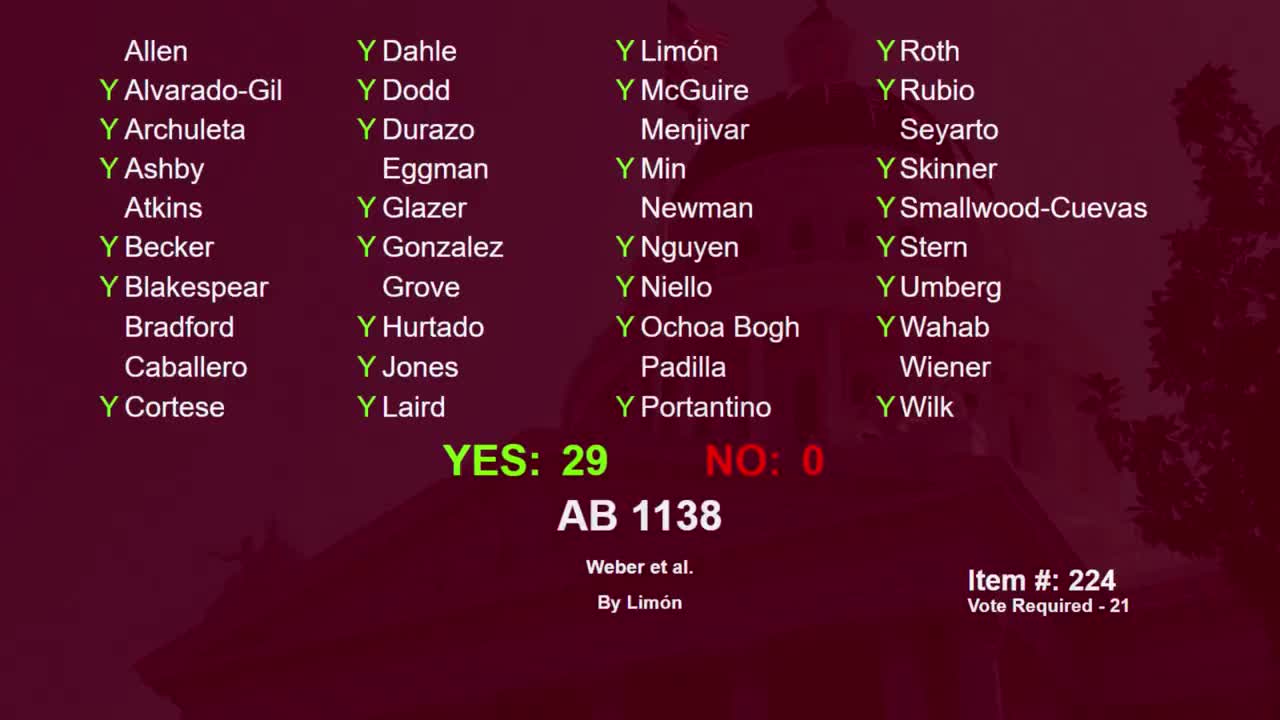 42SEC
Senate Floor
 1MIN
Assembly Floor
 12MIN
Assembly Standing Committee on Water, Parks, and Wildlife
 6MIN
Senate Standing Committee on Natural Resources and Water
Bill Author

Bill Co-Author(s):