SB 844: Alcoholic beverage control: retail license transfers and beer returns.
- Session Year: 2023-2024
- House: Senate
- Latest Version Date: 2023-09-30
Current Status:
Passed
(2023-09-30: Chaptered by Secretary of State. Chapter 295, Statutes of 2023.)
Introduced
In Committee
First Chamber
In Committee
Second Chamber
Enacted
Existing law, the Alcoholic Beverage Control Act, which is administered by the Department of Alcoholic Beverage Control, regulates the application for, and the issuance and suspension of, alcoholic beverage licenses. Existing law allows licenses for the retail sale of alcoholic beverages to be issued for, or transferred to, premises that are to be constructed or are in the process of construction.
This bill would require a licensee transferring a license, as described above, to follow specified notification requirements.
The Alcoholic Beverage Control Act allows a wholesaler or manufacturer of beer to accept the return of a beer from a retail licensee under specified conditions. In this regard, existing law allows, with department approval, a wholesaler or manufacturer, or a successor, to accept the return of a seasonal brand of beer from a retail licensee if the beer is exchanged for a quantity of beer of a brand produced or sold by the same manufacturer with a value no greater than the original sales price to the retail licensee of the returned beer. Existing law defines seasonal brand of beer for this purpose, in part, as a brand of beer that is brewed by a manufacturer to commemorate a specific holiday season.
This bill would revise that part of the definition of seasonal brand of beer to instead mean a brand of beer that is brewed by a manufacturer to recognize a season or a holiday.
This bill would declare that it is to take effect immediately as an urgency statute.
Existing law, the Alcoholic Beverage Control Act, which is administered by the Department of Alcoholic Beverage Control, regulates the application for, and the issuance and suspension of, alcoholic beverage licenses. Existing law allows licenses for the retail sale of alcoholic beverages to be issued for, or transferred to, premises that are to be constructed or are in the process of construction.
This bill would require a licensee transferring a license, as described above, to follow specified notification requirements.
The Alcoholic Beverage Control Act allows a wholesaler or manufacturer of beer to accept the return of a beer from a retail licensee under specified conditions. In this regard, existing law allows, with department approval, a wholesaler or manufacturer, or a successor, to accept the return of a seasonal brand of beer from a retail licensee if the beer is exchanged for a quantity of beer of a brand produced or sold by the same manufacturer with a value no greater than the original sales price to the retail licensee of the returned beer. Existing law defines seasonal brand of beer for this purpose, in part, as a brand of beer that is brewed by a manufacturer to commemorate a specific holiday season.
This bill would revise that part of the definition of seasonal brand of beer to instead mean a brand of beer that is brewed by a manufacturer to recognize a season or a holiday.
Existing law, the Alcoholic Beverage Control Act, which is administered by the Department of Alcoholic Beverage Control, regulates the application for, and the issuance and suspension of, alcoholic beverage licenses. Existing law specifies that those provisions do not apply to the manufacture, sale, or use of completely denatured ethyl alcohol or special denatured ethyl alcohol, as defined. Existing law allows licenses for the retail sale of alcoholic beverages to be issued for, or transferred to, premises that are to be constructed or are in the process of construction.
This bill would make nonsubstantive changes to those provisions. require a licensee transferring a license, as described above, to follow specified notification requirements.
Existing law, the Alcoholic Beverage Control Act, which is administered by the Department of Alcoholic Beverage Control, regulates the application for, and the issuance and suspension of, alcoholic beverage licenses. Existing law specifies that those provisions do not apply to the manufacture, sale, or use of completely denatured ethyl alcohol or special denatured ethyl alcohol, as defined.
This bill would make nonsubstantive changes to those provisions.
(a)Subject to the exceptions specified in subdivision (b), a retail licensee may return beer to the wholesaler or manufacturer from whom the retail licensee purchased the beer, or any successor thereto, and the wholesaler, manufacturer, or successor thereto may accept that return if the beer is returned in exchange for the identical quantity and brand of beer. A wholesaler or manufacturer, or any successor thereto, shall not accept the return of any beer from a retail licensee except when the beer delivered was not the brand or size container ordered by the retail licensee or the amount delivered was other than the amount ordered, in which case the order may be corrected by the wholesaler or manufacturer who sold the beer, or any successor thereto. If a package had been broken or otherwise damaged prior to or at the time of actual delivery, a credit memorandum may be issued for the returned package by the wholesaler or manufacturer who sold the beer, or any successor thereto, in lieu of exchange for an identical package when the return and corrections are completed within 15 days from the date the beer was delivered to the retail licensee.
(b)Notwithstanding subdivision (a), a wholesaler or manufacturer, or any successor thereto, may accept the return of beer purchased from that wholesaler, manufacturer, or successor thereto, as follows:
(1)(A)From a seasonal or temporary licensee if at the termination of the period of the license the seasonal or temporary licensee has beer remaining unsold, or from an annual licensee operating on a temporary basis if at the termination of the temporary period the annual licensee has beer remaining unsold.
(B)For purposes of subparagraph (A), an annual licensee shall be considered to be operating on a temporary basis if the licensee operates at seasonal resorts, including summer and winter resorts, or at sporting or entertainment facilities, including racetracks, arenas, concert halls, and convention centers. Temporary status shall be deemed terminated when operations cease for 15 days or more. No wholesaler or manufacturer, or successor thereto, shall accept the return of beer from an annual licensee considered to be operating on a temporary basis unless the licensee notifies that wholesaler or manufacturer, or successor thereto, within 15 days of the date the licensees operations ceased.
(2)(A)Subject to subparagraph (B), a wholesaler or manufacturer, or any successor thereto, may, with department approval, accept the return of a brand of beer discontinued in a California market area or a seasonal brand of beer from a retail licensee, provided that the beer is exchanged for a quantity of beer of a brand produced or sold by the same manufacturer with a value no greater than the original sales price to the retail licensee of the returned beer. For purposes of this subparagraph, seasonal brand of beer means a brand of beer, as defined in Section 23006, that is brewed by a manufacturer to recognize a season or a holiday and is so identified by appropriate product packaging and labeling.
(B)A discontinued brand of beer may not be reintroduced for a period of 12 months in the same California market area in which a return and exchange of that beer as described in subparagraph (A) has taken place. A seasonal brand of beer may not be reintroduced for a period of six months in the same California market area in which a return and exchange of that beer as described in subparagraph (A) has taken place.
(c)Notwithstanding subdivision (a), a wholesaler or manufacturer, or any successor thereto, may accept the return of beer purchased from that wholesaler or manufacturer, or any successor thereto, by the holder of a retail license following the revocation of, suspension of, voluntary surrender of, or failure to renew the retail license.
(d)A wholesaler or manufacturer, or any successor thereto, may credit the account of the retailer identified in subdivision (c) in an amount not to exceed the original sales price to the retailer of the returned beer, provided that the beer has been paid for in full.
(e)(1)Notwithstanding the 15-day time limit for the return of beer described in subdivision (a), beer that is recalled or that is considered by a manufacturer, importer, or governmental entity to present health, safety, or product quality issues if distributed, offered for sale, or sold in the state may be accepted for return at anytime from a retailer and be picked up by the seller of beer. The seller of beer may exchange the returned beer for identical product, if safe inventory or quality-controlled product inventory is available, issue a deferred exchange memorandum showing the beer was picked up and is to be replaced when inventory is available, or issue a credit memorandum to the retailer for the returned beer. The seller of beer may exchange with the manufacturer or importer the returned beer and the seller of beers inventory that was recalled or considered to present health, safety, or product quality issues. The returned beer may be exchanged for identical product, if safe inventory or quality-controlled product inventory is available, or the seller of beer may elect to receive either a refund from or be issued a credit memorandum by the manufacturer or importer for the returned beer and seller of beers inventory that was recalled or considered to present health, safety, or product quality issues.
(2)Returns for manufacturer or importer product quality issues pursuant to this subdivision are subject to department approval, and shall not include the return of beer due to the aging of beer.
(f)Notwithstanding subdivision (a), a licensee may accept the return of unsold and unopened beer from an organization that obtained a temporary license pursuant to Section 24045 or 24045.1. The licensee may credit the account of the organization in an amount not to exceed the original sales price of the returned beer, provided that the beer has been paid for in full.
(g)(1)Notwithstanding subdivision (a), an on-sale retail licensee that purchases beer for sale at an event for which a catering authorization is issued by the department pursuant to Section 23399 may return the unused and unopened beer to the original selling licensee at the conclusion of the catered event or upon expiration of the catering authorization, provided the beer was purchased for use or sale only at that event and the on-sale retail licensee does not also provide any beer for use or sale at the event from its permanent licensed premises. The on-sale retail licensee holding the catering authorization shall record and maintain a record of the inventory of all unused and unopened beer to be returned at the conclusion of the catering event. The original selling licensee shall prepare an invoice to reflect the returned beer that shall reference the original sales invoice and shall provide the on-sale retail licensee holding the catering authorization with a copy of the invoice.
(2)Any beer returned pursuant to this subdivision must be returned to the original selling licensee at the conclusion of the catered event or upon expiration of the catering authorization. The original selling licensee may credit the account of the on-sale retail licensee in an amount not to exceed the original sales price of the returned beer, provided the beer has been paid for in full.
SEC. 2.Section 24044 of the Business and Professions Code is amended to read:24044.(a)Licenses for the retail sale of alcoholic beverages may be issued for or transferred to premises that are to be constructed or that are in the process of construction. Alcoholic beverages shall not be sold pursuant to the license until the premises have been completed.
(b)A licensee transferring a license to a premises pursuant to this section shall follow the notification requirements prescribed in Section 23985. Nothing in this section shall require an existing licensee to comply with the notification requirements if the construction is taking place on the existing premises of the existing license.
SEC. 3.This act is an urgency statute necessary for the immediate preservation of the public peace, health, or safety within the meaning of Article IV of the California Constitution and shall go into immediate effect. The facts constituting the necessity are:
In order to provide the least interruption to the beer market as possible, and allow seasonal beverages to be exchanged in the most effective and compliant manner to ensure that expired seasonal beverages are removed from the retailer shelves, it is necessary for this act to take effect immediately.
(a)Subject to the exceptions specified in subdivision (b), a retail licensee may return beer to the wholesaler or manufacturer from whom the retail licensee purchased the beer, or any successor thereto, and the wholesaler, manufacturer, or successor thereto may accept that return if the beer is returned in exchange for the identical quantity and brand of beer. No A wholesaler or manufacturer, or any successor thereto, shall not accept the return of any beer from a retail licensee except when the beer delivered was not the brand or size container ordered by the retail licensee or the amount delivered was other than the amount ordered, in which case the order may be corrected by the wholesaler or manufacturer who sold the beer, or any successor thereto. If a package had been broken or otherwise damaged prior to or at the time of actual delivery, a credit memorandum may be issued for the returned package by the wholesaler or manufacturer who sold the beer, or any successor thereto, in lieu of exchange for an identical package when the return and corrections are completed within 15 days from the date the beer was delivered to the retail licensee.
(b)Notwithstanding subdivision (a), a wholesaler or manufacturer, or any successor thereto, may accept the return of beer purchased from that wholesaler, manufacturer, or successor thereto, as follows:
(1)(A)From a seasonal or temporary licensee if at the termination of the period of the license the seasonal or temporary licensee has beer remaining unsold, or from an annual licensee operating on a temporary basis if at the termination of the temporary period the annual licensee has beer remaining unsold.
(B)For purposes of subparagraph (A), an annual licensee shall be considered to be operating on a temporary basis if he or she the licensee operates at seasonal resorts, including summer and winter resorts, or at sporting or entertainment facilities, including racetracks, arenas, concert halls, and convention centers. Temporary status shall be deemed terminated when operations cease for 15 days or more. No wholesaler or manufacturer, or successor thereto, shall accept the return of beer from an annual licensee considered to be operating on a temporary basis unless the licensee notifies that wholesaler or manufacturer, or successor thereto, within 15 days of the date the licensees operations ceased.
(2)(A)Subject to subparagraph (B), a wholesaler or manufacturer, or any successor thereto, may, with department approval, accept the return of a brand of beer discontinued in a California market area or a seasonal brand of beer from a retail licensee, provided that the beer is exchanged for a quantity of beer of a brand produced or sold by the same manufacturer with a value no greater than the original sales price to the retail licensee of the returned beer. For purposes of this subparagraph, seasonal brand of beer means a brand of beer, as defined in Section 23006, that is brewed by a manufacturer to commemorate a specific holiday recognize a season or a holiday and is so identified by appropriate product packaging and labeling.
(B)A discontinued brand of beer may not be reintroduced for a period of 12 months in the same California market area in which a return and exchange of that beer as described in subparagraph (A) has taken place. A seasonal brand of beer may not be reintroduced for a period of six months in the same California market area in which a return and exchange of that beer as described in subparagraph (A) has taken place.
(c)Notwithstanding subdivision (a), a wholesaler or manufacturer, or any successor thereto, may accept the return of beer purchased from that wholesaler or manufacturer, or any successor thereto, by the holder of a retail license following the revocation of, suspension of, voluntary surrender of, or failure to renew the retail license.
(d)A wholesaler or manufacturer, or any successor thereto, may credit the account of the retailer identified in subdivision (c) in an amount not to exceed the original sales price to the retailer of the returned beer, provided that the beer has been paid for in full.
(e)(1)Notwithstanding the 15-day time limit for the return of beer described in subdivision (a), beer that is recalled or that is considered by a manufacturer, importer, or governmental entity to present health, safety, or product quality issues if distributed, offered for sale, or sold in the state may be accepted for return at anytime from a retailer and be picked up by the seller of beer. The seller of beer may exchange the returned beer for identical product, if safe inventory or quality-controlled product inventory is available, issue a deferred exchange memorandum showing the beer was picked up and is to be replaced when inventory is available, or issue a credit memorandum to the retailer for the returned beer. The seller of beer may exchange with the manufacturer or importer the returned beer and the seller of beers inventory that was recalled or considered to present health, safety, or product quality issues. The returned beer may be exchanged for identical product, if safe inventory or quality-controlled product inventory is available, or the seller of beer may elect to receive either a refund from or be issued a credit memorandum by the manufacturer or importer for the returned beer and seller of beers inventory that was recalled or considered to present health, safety, or product quality issues.
(2)Returns for manufacturer or importer product quality issues pursuant to this subdivision are subject to department approval, and shall not include the return of beer due to the aging of beer.
(f)Notwithstanding subdivision (a), a licensee may accept the return of unsold and unopened beer from an organization that obtained a temporary license pursuant to Section 24045 or 24045.1. The licensee may credit the account of the organization in an amount not to exceed the original sales price of the returned beer, provided that the beer has been paid for in full.
(g)(1)Notwithstanding subdivision (a), an on-sale retail licensee that purchases beer for sale at an event for which a catering authorization is issued by the department pursuant to Section 23399 may return the unused and unopened beer to the original selling licensee at the conclusion of the catered event or upon expiration of the catering authorization, provided the beer was purchased for use or sale only at that event and the on-sale retail licensee does not also provide any beer for use or sale at the event from its permanent licensed premises. The on-sale retail licensee holding the catering authorization shall record and maintain a record of the inventory of all unused and unopened beer to be returned at the conclusion of the catering event. The original selling licensee shall prepare an invoice to reflect the returned beer that shall reference the original sales invoice and shall provide the on-sale retail licensee holding the catering authorization with a copy of the invoice.
(2)Any beer returned pursuant to this subdivision must be returned to the original selling licensee at the conclusion of the catered event or upon expiration of the catering authorization. The original selling licensee may credit the account of the on-sale retail licensee in an amount not to exceed the original sales price of the returned beer, provided the beer has been paid for in full.
SECTION 1.SEC. 2.Section 24044 of the Business and Professions Code is amended to read:24044.(a)Licenses for the retail sale of alcoholic beverages may be issued for or transferred to premises that are to be constructed or that are in the process of construction. Alcoholic beverages shall not be sold pursuant to the license until the premises have been completed.
(b)A licensee transferring a license to a premises pursuant to this section shall follow the notification requirements prescribed in Section 23985. Nothing in this section shall require an existing licensee to comply with the notification requirements if the construction is taking place on the existing premises of the existing license.
(a)Licenses for the retail sale of alcoholic beverages may be issued for or transferred to premises which that are to be constructed or which that are in the process of construction. No alcoholic Alcoholic beverages shall not be sold pursuant to the license until the premises have been completed.
(b)A licensee transferring a license to a premises pursuant to this section shall follow the notification requirements prescribed in Section 23985. Nothing in this section shall require an existing licensee to comply with the notification requirements if the construction is taking place on the existing premises of the existing license.
SECTION 1.Section 23110 of the Business and Professions Code is amended to read:23110.This division shall not apply to the manufacture, sale, or use of completely denatured ethyl alcohol or special denatured ethyl alcohol, as these substances are defined in the various statutes and regulations of the United States Government relating thereto.This division does shall not apply to the manufacture, sale, or use of completely denatured ethyl alcohol or special denatured ethyl alcohol, as these substances are defined in the various statutes and regulations of the United States Government relating thereto.
|
Date
|
Status
|
|---|---|
| Sep 30, 2023 | Chaptered by Secretary of State. Chapter 295, Statutes of 2023. |
| Sep 30, 2023 | Approved by the Governor. |
| Sep 21, 2023 | Enrolled and presented to the Governor at 4 p.m. |
| Sep 14, 2023 | Urgency clause adopted. |
| Sep 14, 2023 | Assembly amendments concurred in. (Ayes 39. Noes 0. Page 2836.) Ordered to engrossing and enrolling. |
| Sep 11, 2023 | In Senate. Concurrence in Assembly amendments pending. |
| Sep 11, 2023 | Read third time. Urgency clause adopted. Passed. (Ayes 80. Noes 0. Page 3143.) Ordered to the Senate. |
| Sep 8, 2023 | Read third time and amended. |
| Sep 8, 2023 | Ordered to third reading. |
| Aug 24, 2023 | Ordered to third reading. |
| Aug 24, 2023 | From consent calendar on motion of Assembly Member Bryan. |
| Aug 24, 2023 | Read second time. Ordered to consent calendar. |
| Aug 23, 2023 | From committee: Do pass. Ordered to consent calendar. (Ayes 15. Noes 0.) (August 23). |
| Jul 12, 2023 | From committee: Do pass and re-refer to Com. on APPR. with recommendation: To consent calendar. (Ayes 20. Noes 0.) (July 12). Re-referred to Com. on APPR. |
| Jun 15, 2023 | From committee with author's amendments. Read second time and amended. Re-referred to Com. on G.O. |
| May 18, 2023 | Referred to Com. on G.O. |
| May 11, 2023 | In Assembly. Read first time. Held at Desk. |
| May 11, 2023 | Read third time. Passed. (Ayes 39. Noes 0. Page 1055.) Ordered to the Assembly. |
| May 9, 2023 | Read second time. Ordered to consent calendar. |
| May 8, 2023 | From committee: Be ordered to second reading pursuant to Senate Rule 28.8 and ordered to consent calendar. |
| May 1, 2023 | Set for hearing May 8. |
| Apr 25, 2023 | From committee: Do pass and re-refer to Com. on APPR with recommendation: To consent calendar. (Ayes 15. Noes 0. Page 874.) (April 25). Re-referred to Com. on APPR. |
| Apr 18, 2023 | Set for hearing April 25. |
| Mar 29, 2023 | Re-referred to Com. on G.O. |
| Mar 20, 2023 | From committee with author's amendments. Read second time and amended. Re-referred to Com. on RLS. |
| Mar 1, 2023 | Referred to Com. on RLS. |
| Feb 21, 2023 | From printer. May be acted upon on or after March 20. |
| Feb 17, 2023 | Introduced. Read first time. To Com. on RLS. for assignment. To print. |
|
Date
|
Description
|
Location
|
Votes
|
|
|---|---|---|---|---|
| Sep 14, 2023 | Unfinished Business SB844 Jones Urgency Clause Concurrence | Senate Floor |
Passed |
|
| Sep 11, 2023 | SB 844 Jones Third Reading Urgency By Villapudua | Assembly Floor |
Passed |
|
| Aug 23, 2023 | Do pass. To Consent Calendar. | Assembly Standing Committee on Appropriations |
Passed |
|
| Jul 12, 2023 | Do pass and be re-referred to the Committee on [Appropriations] with recommendation: To Consent Calendar | Assembly Standing Committee on Governmental Organization |
Passed |
|
| May 11, 2023 | Consent Calendar SB844 Jones | Senate Floor |
Passed |
|
| Apr 25, 2023 | Do pass, but first be re-referred to the Committee on [Appropriations] with the recommendation: To Consent Calendar | Senate Standing Committee on Governmental Organization |
Passed |
This list shows positions taken on this bill by organizations on the date displayed, which is linked to the original source.
Positions by individuals are not included.
|
Organization
|
Position
|
Date
|
|---|---|---|
| California Beer and Beverage Distributors | ** Support |
SENATE RULES COMMITTEE Office of Senate Floor Analyses (916) 651-1520 Fax: (916) 327-4478 | SB 844 |
UNFINISHED BUSINESS
Bill No: SB 844
Author: Jones (R)
Amended: 9/8/23
Vote: 27- Urgency
SENATE GOVERNMENTAL ORG. COMMITTEE: 15-0, 4/25/23
AYES: Dodd, Wilk, Alvarado-Gil, Archuleta, Ashby, Bradford, Glazer, Jones, Nguyen, Ochoa Bogh, Padilla, Portantino, Roth, Rubio, Seyarto
SENATE APPROPRIATIONS COMMITTEE: Senate Rule 28.8
SENATE FLOOR: 39-0, 5/11/23 (Consent)
AYES: Allen, Alvarado-Gil, Archuleta, Ashby, Atkins, Becker, Blakespear, Bradford, Caballero, Cortese, Dahle, Dodd, Durazo, Eggman, Glazer, Gonzalez, Hurtado, Jones, Laird, Limón, McGuire, Menjivar, Min, Newman, Nguyen, Niello, Ochoa Bogh, Padilla, Portantino, Roth, Rubio, Seyarto, Skinner, Smallwood-Cuevas, Stern, Umberg, Wahab, Wiener, Wilk
NO VOTE RECORDED: Grove
ASSEMBLY FLOOR: 80-0, 9/11/23 - See last page for vote
SUBJECT: Alcoholic beverage control: retail license transfers and beer returns
SOURCE: Author
DIGEST:
This bill clarifies that an alcohol licensee who transfers an alcoholic beverage license to a premise that is under construction must follow certain notification requirements unless the construction is taking place on the premise of the existing license. Additionally, this bill revises the definition of “season brand of beer” in the Alcoholic Beverage Control (ABC) Act to also mean a brand of beer that is brewed by a manufacturer to recognize a season or holiday, as specified.
Assembly Amendments
revise the definition of “season brand of beer” and add an urgency clause.
ANALYSIS:
Existing law:
- Establishes the Department of Alcoholic Beverage Control (ABC) and grants it the exclusive authority to administer the provisions of the ABC Act in accordance with laws enacted by the Legislature. This involves licensing individuals and businesses associated with the manufacture, importation, and sale of alcoholic beverages in this state and the collection of license fees for this purpose.
- Allows licenses for the retail sale of alcoholic beverages to be issued for, or transferred to, premises that are to be constructed or are in the process of construction. No alcoholic beverages shall be sold until the premises have been completed.
- Requires that an application be signed by both the present licensee and the transferee and for the application to be filed with the Department of ABC. The Department of ABC must proceed as it would on a new application and may deny the transfer if the transferee-applicant is not qualified for a license. If such transfer also involves a change of premises, the department’s approval of the new premises is required.
- States that neither the transferor nor the transferee should assume that the license would be transferred on a particular date, or at all, merely because the application has been filed. The Department of ABC may deny the application, or protests or accusations may be filed which may result in delay or denial of the transfer. The Department of ABC is not required to investigate the personal qualifications or premises of a currently licensed person when a license is being transferred between partners and no new partner is being licensed.
- Provides that after filing an application to engage in the sale of any alcoholic beverage at any premises, notice of intention to commence shall be posted in a conspicuous place at the entrance to the premises. The applicant is required to notify the department of the date when such a notice is first posted. No license shall be issued for the premises until the notice has been posted for at least 30 consecutive days.
- Allows, with the Department of ABC’s approval, a wholesaler or manufacturer, or a successor, to accept the return of a seasonal brand of beer from a retail licensee if the beer is exchanged for a quantity of beer of a brand produced or sold by the same manufacturer with a value no greater than the original sales price to the retail licensee of the returned beer.
- Defines “season brand of beer” for the provisions described above, in part, as a brand of beer that is brewed by a manufacturer to commemorate a specific holiday season.
This bill:
Clarifies that a licensee transferring a license to another premise that is in the process of being constructed must follow the existing 30-day notification requirement unless the construction is taking place on the premise of the existing license.
Revises the definition of “season brand of beer,” for the above-described provision to instead mean a brand of beer that is brewed by a manufacturer to recognize a season or a holiday.
- Contains an urgency clause.
Background
Purpose of the bill. According to the author’s office, “to ensure public safety, it is important to inform people about new locations that may be authorized to sell alcoholic beverages. Under current law, a new applicant must post public notice of applications for 30 days. In some cases, they must go even further and mail a notice to anyone living within 500 feet or publish a notice in the newspaper. However, those transferring a license to a new location are not always required to follow the same requirement. Current law does not address this. The public needs to know about any new distribution point for alcohol whether the license itself is new or not. SB 844 clarifies the law to ensure that the same rules are enforced across the board.”
In addition this bill addresses “a recent determination by the [Department of] ABC that will now only allow for the distribution of seasonal beers affiliated with specific holidays, a deviance from long standing practice. SB 844 restores freedom to the market and clarifies the definition of seasonal to include those that honor the four seasons. Furthermore, SB 844 encourages investment by reducing the risk faced by retailers. This bill allows a retail licensee to return the previous season’s unsold stock to a distributor in exchange for an equal amount of the upcoming season’s stock from the same manufacturer.”
Public Notice Requirements. Alcohol licensees in California are subject to strict regulation by the Department of ABC. When an alcohol license is transferred from one location to another, the transaction is referred to as a “premises-to-premises” transfer. When an alcohol license is transferred from one person or entity to another person or entity, the transaction is referred to as a “person-to-person” transfer. Both types of transfers may occur simultaneously, depending on the situation.
Generally, investigations for the issuance or transfer of a license take approximately 55 to 65 days, and by law the license cannot be issued for a minimum of 30 days. Circumstances often result in a longer waiting period; therefore, before final approval and issuance of a license, applicants are cautioned against financial commitments, plans for grand openings, etc. If new construction or considerable remodeling is necessary, the applicant should seek prior approval before beginning any actual work.
Ultimately, it is the applicants’ responsibility to post the Public Notice of Application at the premises for 30 days, and to provide information to the department as needed for the investigation. In some cases, the Department of ABC may require the applicant to publish a notice in the newspaper, mail a notice to all persons living within a 500 foot radius of the premises, and/or to obtain proof from the local planning department that the zoning permits an alcohol license.
The intended transferee is authorized to operate the licensed premises during the transfer period if a 120-day permit has been obtained. To qualify for this temporary permit, the premises must be currently licensed and have been operating within the past 30 days prior to the application.
The Department of ABC may approve an application for premises under construction. A retail license may be transferred or issued by the department to premises that are under construction and the transferor has closed the business or surrendered the license. No alcoholic beverages are allowed to be sold until the premises are completed. Actual delivery of the license is withheld until the department is satisfied that all conditions forth in state law and ABC regulations are met.
This bill clarifies that that an alcohol licensee who transfers an alcoholic beverage license to a premise that is under construction must follow certain notification requirements unless the construction is taking place on the premise of the existing license.
Return of Seasonal Brand of Beer. Currently, the precise language of the ABC Act only permits beer distributors to seek the Department of ABC’s approval for the exchange of a beer that “commemorates a specific holiday season” (such as Christmas, Thanksgiving). However, many brewers brew special seasonal beers for the four seasons of winter, spring, summer, and fall, and they are only available for a limited time.
The Department of ABC has long approved the exchange of a beer that commemorates a specific holiday season and the seasonal beers. However, the department has recently notified the industry that the existing law does not define "season" in a way that matches the department’s criteria for approving the swap of an old seasonal beer for a new one. Current law only permits the department to approve the exchange of beers that “commemorate a specific holiday season.” SB 844 would clarify the language to read “recognize a season or a holiday and is so identified by appropriate packaging and labeling.”
Related/Prior Legislation
AB 495 (Bigelow, 2022) would have clarified that an alcohol licensee who transfers an alcoholic beverage license to a premise that is under construction must follow certain notification requirements unless the construction is taking place on the premise of the existing license. (Gutted and Amended to an unrelated issue)
SB 1393 (Mcleod, Chapter 163, Statutes of 2012) allowed licensee to accept the return of unsold and unopened beer from organizations that obtain a particular license, as specified, and allowedthe return of beer that is recalled or that is considered to present a health and safety issue by the manufacturer, importer, or governmental entity if distributed, offered for sale, or sold in the state.
FISCAL EFFECT: Appropriation: No Fiscal Com.: Yes Local: No
According to the Assembly Appropriations Committee, minor and absorbable costs to the Department of ABC. The Department of ABC notes the provisions of this bill regarding license transfers are consistent with the Department of ABC’s interpretation of current law.
SUPPORT: (Verified 9/7/23)
California Beer and Beverage Distributors
OPPOSITION: (Verified 9/7/23)
None received
ARGUMENTS IN SUPPORT: According to the California Beer and Beverage Distributors, “the existing definition in statute only permits [the Department] of ABC to approve the exchange of beers that ‘commemorate a specific holiday season.’ SB 844 would clarify the language to read ‘recognize a season or holiday and is do identified by appropriate packaging and labeling.”
ASSEMBLY FLOOR: 80-0, 9/11/23
AYES: Addis, Aguiar-Curry, Alanis, Alvarez, Arambula, Bains, Bauer-Kahan, Bennett, Berman, Boerner, Bonta, Bryan, Calderon, Juan Carrillo, Wendy Carrillo, Cervantes, Chen, Connolly, Megan Dahle, Davies, Dixon, Essayli, Flora, Mike Fong, Vince Fong, Friedman, Gabriel, Gallagher, Garcia, Gipson, Grayson, Haney, Hart, Holden, Hoover, Irwin, Jackson, Jones-Sawyer, Kalra, Lackey, Lee, Low, Lowenthal, Maienschein, Mathis, McCarty, McKinnor, Muratsuchi, Stephanie Nguyen, Ortega, Pacheco, Papan, Jim Patterson, Joe Patterson, Pellerin, Petrie-Norris, Quirk-Silva, Ramos, Rendon, Reyes, Luz Rivas, Rodriguez, Blanca Rubio, Sanchez, Santiago, Schiavo, Soria, Ta, Ting, Valencia, Villapudua, Waldron, Wallis, Ward, Weber, Wicks, Wilson, Wood, Zbur, Robert Rivas
Prepared by: Felipe Lopez / G.O. / (916) 651-1530
9/11/23 19:49:36
**** END ****
SENATE THIRD READING
STR Bill Id:SB 844
Author:(Jones)
As Amended Ver:September 8, 2023
2/3 vote. Urgency
SUMMARY
This bill revises the definition of "seasonal brand of beer" under the Alcoholic Beverage Control Act (Act) to mean a brand of beer that is brewed by a manufacturer to "recognize a season or holiday," instead of to "commemorate a specific holiday season." This bill also requires a Department of Alcoholic Beverage Control (ABC) licensee transferring a license to a premise that is under construction to follow existing 30-day notification requirements, unless the construction is taking place on the premise of the existing license.
Major Provisions
- Specifies that a licensee transferring a license to another premise that is either in the process of being constructed, or in the process of construction, must follow the existing 30-day notification requirement.
- Permits a beer wholesaler or manufacturer, or a successor, to seek approval from the ABC to exchange out of market seasonal beer and replace it with the same beer manufacturer's next season beer at a retail location. This would be allowed by making a change to the "seasonal brand of beer" definition in the Act to read "brewed by a manufacturer to recognize a season or a holiday and is so identified by appropriate product packaging and labeling."
- Makes technical and clarifying changes.
- Contains an urgency clause.
COMMENTS
Background.
ABC licenses. The ABC regulates the retail sale of alcoholic beverages in California through various types of licenses. Each license category has a specific scope and purpose and imposes certain rights and responsibilities on the licensee. California has more than 60 different categories of liquor retail licenses, depending on the type of business and the type of alcohol being sold.
The two most common California retail premises that require ABC licenses are: 1) "Off-sale" establishments (e.g., grocery stores, liquor stores, convenience stores), in which alcoholic beverages are sold to consumers in sealed packages for consumption off the premises; and 2) "On-sale" establishments (e.g., restaurants, hotels, cafeterias, nightclubs, bars, and cafes), in which alcoholic beverages are sold primarily for consumption on the premises.
ABC license transfers. When an ABC license is transferred from one location to another, the transaction is referred to as a "premises-to-premises" transfer. When an ABC license is transferred from one person or entity to another person or entity, the transaction is referred to as a "person-to-person" transfer. Both types of transfer may occur simultaneously (i.e., a "double transfer"), depending on the situation.
ABC licenses under construction. ABC may approve an application for premises under construction. A retail license may be transferred or issued by the department to premises that are under construction and the transferor has closed his business or surrendered his license. Alcoholic beverages cannot be sold until the premises are completed. The license won't be issued in full until ABC is confident that all requirements outlined in the law and regulations have been met. (Business and Profession Code Section 24044 and Rule 64)
Return of a seasonal brand of beer by a retail licensee. Currently, the precise language of the Act only permits beer distributors to seek ABC's approval for the exchange of a beer that "commemorates a specific holiday season" (such as Christmas, Thanksgiving). However, many brewers brew special seasonal beers for the four seasons of winter, spring, summer, and fall, and they are only available for a limited time.
The ABC has long approved the exchange of a beer that commemorates a specific holiday season and the seasonal beers. However, the ABC has recently notified the industry that the existing law does not define "season" in a way that matches the ABC's criteria for approving the swap of an old seasonal beer for a new one. Current law only permits the ABC to approve the exchange of beers that "commemorate a specific holiday season." SB 844 would clarify the language to read "recognize a season or a holiday and is so identified by appropriate packaging and labeling."
According to the Author
According to the author's office, "to ensure public safety, it is important to inform people about new locations that may be authorized to sell alcoholic beverages. Under current law, a new applicant must post public notice of applications for 30 days. In some cases, they must go even further and mail a notice to anyone living within 500 feet or publish a notice in the newspaper. However, those transferring a license to a new location are not always required to follow the same requirement. Current law does not address this. The public needs to know about any new distribution point for alcohol whether the license itself is new or not. SB 844 clarifies the law to ensure that the same rules are enforced across the board."
Additionally the bill addresses "a recent determination by the ABC that will now only allow for the distribution of seasonal beers affiliated with specific holidays, a deviance from long standing practice. SB 844 restores freedom to the market and clarifies the definition of seasonal to include those that honor the four seasons. Furthermore, SB 844 encourages investment by reducing the risk faced by retailers. This bill allows a retail licensee to return the previous season's unsold stock to a distributor in exchange for an equal amount of the upcoming season's stock from the same manufacture.
Arguments in Support
This bill is supported by the California Beer and Beverage Distributors as a clarifying measure to the Act.
Arguments in Opposition
None on file.
FISCAL COMMENTS
According to the Assembly Appropriations Committee, minor and absorbable costs to ABC. ABC notes the provisions of this bill regarding license transfers are consistent with ABC's interpretation of current law.
VOTES
SENATE FLOOR: 39-0-1
YES: Allen, Alvarado-Gil, Archuleta, Ashby, Atkins, Becker, Blakespear, Bradford, Caballero, Cortese, Dahle, Dodd, Durazo, Eggman, Glazer, Gonzalez, Hurtado, Jones, Laird, Limón, McGuire, Menjivar, Min, Newman, Nguyen, Niello, Ochoa Bogh, Padilla, Portantino, Roth, Rubio, Seyarto, Skinner, Smallwood-Cuevas, Stern, Umberg, Wahab, Wiener, Wilk
ABS, ABST OR NV: Grove
ASM GOVERNMENTAL ORGANIZATION: 20-0-2
YES: Santiago, Lackey, Aguiar-Curry, Berman, Bryan, Cervantes, Megan Dahle, Davies, Garcia, Gipson, Jones-Sawyer, Low, Mathis, McCarty, McKinnor, Jim Patterson, Quirk-Silva, Ramos, Ta, Valencia
ABS, ABST OR NV: Blanca Rubio, Villapudua
ASM APPROPRIATIONS: 15-0-1
YES: Holden, Megan Dahle, Bryan, Calderon, Wendy Carrillo, Dixon, Mike Fong, Hart, Mathis, Papan, Pellerin, Sanchez, Soria, Weber, Wilson
ABS, ABST OR NV: McCarty
UPDATED
VERSION: September 8, 2023
CONSULTANT: Eric Johnson / G.O. / (916) 319-2531 FN: 0001856
SENATE THIRD READING
STR Bill Id:SB 844
Author:(Jones)
As Amended Ver:June 15, 2023
Majority vote
SUMMARY
This bill revises the definition of "seasonal brand of beer" under the Alcoholic Beverage Control Act (Act) to mean a brand of beer that is brewed by a manufacturer to "recognize a season or holiday," instead of to "commemorate a specific holiday season." This bill also requires a Department of Alcoholic Beverage Control (ABC) licensee transferring a license to a premise that is under construction to follow existing 30-day notification requirements, unless the construction is taking place on the premise of the existing license.
Major Provisions
- Specifies that a licensee transferring a license to another premise that is either in the process of being constructed, or in the process of construction, must follow the existing 30-day notification requirement.
- Permits a beer wholesaler or manufacturer, or a successor, to seek approval from the ABC to exchange out of market seasonal beer and replace it with the same beer manufacturer's next season beer at a retail location. This would be allowed by making a change to the "seasonal brand of beer" definition in the Act to read "brewed by a manufacturer to recognize a season or a holiday and is so identified by appropriate product packaging and labeling."
- Makes technical and clarifying changes.
COMMENTS
Background.
ABC licenses. The ABC regulates the retail sale of alcoholic beverages in California through various types of licenses. Each license category has a specific scope and purpose and imposes certain rights and responsibilities on the licensee. California has more than 60 different categories of liquor retail licenses, depending on the type of business and the type of alcohol being sold.
The two most common California retail premises that require ABC licenses are: 1) "Off-sale" establishments (e.g., grocery stores, liquor stores, convenience stores), in which alcoholic beverages are sold to consumers in sealed packages for consumption off the premises; and 2) "On-sale" establishments (e.g., restaurants, hotels, cafeterias, nightclubs, bars, and cafes), in which alcoholic beverages are sold primarily for consumption on the premises.
ABC license transfers. When an ABC license is transferred from one location to another, the transaction is referred to as a "premises-to-premises" transfer. When an ABC license is transferred from one person or entity to another person or entity, the transaction is referred to as a "person-to-person" transfer. Both types of transfer may occur simultaneously (i.e., a "double transfer"), depending on the situation.
ABC licenses under construction. ABC may approve an application for premises under construction. A retail license may be transferred or issued by the department to premises that are under construction and the transferor has closed his business or surrendered his license. Alcoholic beverages cannot be sold until the premises are completed. The license won't be issued in full until ABC is confident that all requirements outlined in the law and regulations have been met. (Business and Profession Code Section 24044 and Rule 64)
Return of a seasonal brand of beer by a retail licensee. Currently, the precise language of the Act only permits beer distributors to seek ABC's approval for the exchange of a beer that "commemorates a specific holiday season" (such as Christmas, Thanksgiving). However, many brewers brew special seasonal beers for the four seasons of winter, spring, summer, and fall, and they are only available for a limited time.
The ABC has long approved the exchange of a beer that commemorates a specific holiday season and the seasonal beers. However, the ABC has recently notified the industry that the existing law does not define "season" in a way that matches the ABC's criteria for approving the swap of an old seasonal beer for a new one. Current law only permits the ABC to approve the exchange of beers that "commemorate a specific holiday season." SB 844 would clarify the language to read "recognize a season or a holiday and is so identified by appropriate packaging and labeling."
According to the Author
According to the author's office, "to ensure public safety, it is important to inform people about new locations that may be authorized to sell alcoholic beverages. Under current law, a new applicant must post public notice of applications for 30 days. In some cases, they must go even further and mail a notice to anyone living within 500 feet or publish a notice in the newspaper. However, those transferring a license to a new location are not always required to follow the same requirement. Current law does not address this. The public needs to know about any new distribution point for alcohol whether the license itself is new or not. SB 844 clarifies the law to ensure that the same rules are enforced across the board."
Additionally the bill addresses "a recent determination by the ABC that will now only allow for the distribution of seasonal beers affiliated with specific holidays, a deviance from long standing practice. SB 844 restores freedom to the market and clarifies the definition of seasonal to include those that honor the four seasons. Furthermore, SB 844 encourages investment by reducing the risk faced by retailers. This bill allows a retail licensee to return the previous season's unsold stock to a distributor in exchange for an equal amount of the upcoming season's stock from the same manufacture.
Arguments in Support
This bill is supported by the California Beer and Beverage Distributors as a clarifying measure to the Act.
Arguments in Opposition
None on file.
FISCAL COMMENTS
According to the Assembly Appropriations Committee, minor and absorbable costs to ABC. ABC notes the provisions of this bill regarding license
transfers are consistent with ABC's interpretation of current law.
VOTES
SENATE FLOOR: 39-0-1
YES: Allen, Alvarado-Gil, Archuleta, Ashby, Atkins, Becker, Blakespear, Bradford, Caballero, Cortese, Dahle, Dodd, Durazo, Eggman, Glazer, Gonzalez, Hurtado, Jones, Laird, Limón, McGuire, Menjivar, Min, Newman, Nguyen, Niello, Ochoa Bogh, Padilla, Portantino, Roth, Rubio, Seyarto, Skinner, Smallwood-Cuevas, Stern, Umberg, Wahab, Wiener, Wilk
ABS, ABST OR NV: Grove
ASM GOVERNMENTAL ORGANIZATION: 20-0-2
YES: Santiago, Lackey, Aguiar-Curry, Berman, Bryan, Cervantes, Megan Dahle, Davies, Garcia, Gipson, Jones-Sawyer, Low, Mathis, McCarty, McKinnor, Jim Patterson, Quirk-Silva, Ramos, Ta, Valencia
ABS, ABST OR NV: Blanca Rubio, Villapudua
ASM APPROPRIATIONS: 15-0-1
YES: Holden, Megan Dahle, Bryan, Calderon, Wendy Carrillo, Dixon, Mike Fong, Hart, Mathis, Papan, Pellerin, Sanchez, Soria, Weber, Wilson
ABS, ABST OR NV: McCarty
UPDATED
VERSION: June 15, 2023
CONSULTANT: Eric Johnson / G.O. / (916) 319-2531 FN: 0001336
Date of Hearing: August 23, 2023
ASSEMBLY COMMITTEE ON APPROPRIATIONS
Chris Holden, Chair
SBPCA Bill Id:SB 844
Author:(Jones) – As Amended Ver:June 15, 2023
Policy Committee: | Governmental Organization | Vote: | 20 - 0 |
|
| ||
|
|
Urgency: No State Mandated Local Program: No Reimbursable: No
SUMMARY:
This bill revises the definition of “seasonal brand of beer” under the Alcoholic Beverage Control Act to mean a brand of beer that is brewed by a manufacturer to “recognize a season or holiday,” instead of to “commemorate a specific holiday season.”
This bill also requires a Department of Alcoholic Beverage Control (ABC) licensee transferring a license to a premise that is under construction to follow existing 30-day notification requirements, unless the construction is taking place on the premise of the existing license.
FISCAL EFFECT:
Minor and absorbable costs to ABC. ABC notes the provisions of this bill regarding license transfers are consistent with ABC’s interpretation of current law.
COMMENTS:
- Purpose. According to the author:
[A] recent determination by the ABC…now only allow[s] for the distribution of seasonal beers affiliated with specific holidays, a deviance from long standing practice. SB 844 restores freedom to the market and clarifies the definition of seasonal to include those that honor the four seasons.
Regarding the transfer of ABC licenses, the author notes:
[T]o ensure public safety, it is important to inform people about new locations that may be authorized to sell alcoholic beverages. Under current law, a new applicant must post public notice of applications for 30 days…However, those transferring a license to a new location are not always required to follow the same requirement….SB 844 clarifies the law to ensure that the same rules are enforced across the board.
This bill is supported by the California Beer and Beverage Distributors.
- Seasonal Beer. Existing law permits a wholesaler or manufacturer to seek ABC approval to accept the return of a discontinued or seasonal brand of beer from a retail licensee, if the beer is exchanged for a quantity and brand of beer of no greater value produced or sold by the same manufacturer. However, existing law defines a “seasonal brand of beer” to commemorate a specific holiday season, such as Christmas or Thanksgiving, whereas many manufacturers produce special season beers for the four seasons of winter, spring, summer, and fall. Although ABC had long approved the exchange of the latter seasonal beers, ABC recently notified the industry that existing law does not define “season” in such a manner. This bill updates the definition to apply more generally to seasons or holidays.
- Prior Legislation. AB 495 (Bigelow), of the 2021-22 Legislative Session, would have enacted the provisions of this bill regarding the transfer of ABC licenses, prior to removal of such provisions upon this bill’s passage from the Senate Appropriations Committee. AB 495, as subsequently amended, died on the Senate Inactive File.
Analysis Prepared by: Irene Ho / APPR. / (916) 319-2081
Date of Hearing: July 12, 2023
ASSEMBLY COMMITTEE ON GOVERNMENTAL ORGANIZATION
Miguel Santiago, Chair
SBPCA Bill Id:SB 844
Author:(Jones) – As Amended Ver:June 15, 2023
SENATE VOTE: 39-0
SUBJECT: Alcoholic beverage control: retail license transfers and beer returns
SUMMARY: This bill would clarify that an alcohol licensee who transfers an alcoholic beverage license to a premise that is under construction must follow certain notification requirements unless the construction is taking place on the premise of the existing license. Additionally, the bill revises the definition of “seasonal brand of beer” in the Alcoholic Beverage Control Act (Act) to also mean a brand of beer that is brewed by a manufacturer to recognize a season or a holiday, as specified. Specifically, this bill:
1) Specifies that a licensee transferring a license to another premise that is either in the process of being constructed, or in the process of construction, must follow the existing 30-day notification requirement.
2) Permits a beer wholesaler or manufacturer, or a successor, to seek approval from the Department of Alcoholic Beverage Control (ABC) to exchange out of market seasonal beer and replace it with the same beer manufacturer’s next season beer at a retail location. This would be allowed by making a change to the “seasonal brand of beer” definition in the Act to read “brewed by a manufacturer to recognize a season or a holiday and is so identified by appropriate product packaging and labeling.”
3) Makes technical and clarifying changes.
EXISTING LAW:
1) Establishes the Department of Alcoholic Beverage Control (ABC) and grants it exclusive authority to administer the provisions of the Act in accordance with laws enacted by the Legislature. This involves licensing individuals and businesses associated with the manufacture, importation and sale of alcoholic beverages in this state and the collection of license fees or occupation taxes for this purpose.
2) Provides licenses for the retail sale of alcoholic beverages may be issued for or transferred to premises which are to be constructed or which are in the process of construction. No alcoholic beverages shall be sold pursuant to the license until the premises have been completed.
3) Provides an application signed by both the present licensee and the transferee must be filed with ABC. The department then proceeds as it would on a new application and may deny the transfer if the transferee-applicant is not qualified for a license. If such transfer also involves a change of the premises, ABC's approval of the new premises is required.
4) States neither the transferor nor the transferee should assume that the license would be
transferred on a particular date, or at all, merely because the application has been filed. ABC may deny the application, or protests or accusations may be filed which may result in delay or denial of the transfer. ABC is not required to investigate the personal qualifications or premises of a currently licensed person when a license is being transferred between partners and no new partner is being licensed.
5) Provides after filing an application to engage in the sale of any alcoholic beverage at any
premises, notice of intention to so commence shall be posted in a conspicuous place at the
entrance to the premises. The applicant shall notify the department of the date when such notice is first posted. No license shall be issued for the premises until the notice has been so posted for at least 30 consecutive days. The notice shall be in such form, as ABC shall prescribe. (Bus. & Prof. Code §23985)
6) States notice of the application for a license pursuant to Bus. & Prof. Code §24044 shall be posted at the proposed premises after the application is filed and shall remain so posted for at least 30 consecutive days. The applicant shall notify ABC of the date when such notice is first posted.
7) Provides that separate licenses shall be issued for each of the premises of any business
establishment having more than one location, as defined.
8) The Act allows a wholesaler or manufacturer of beer to accept the return of a beer from a retail licensee under specified conditions. In this regard, existing law allows, with department approval, a wholesaler or manufacturer, or a successor, to accept the return of a seasonal brand of beer from a retail licensee if the beer is exchanged for a quantity of beer of a brand produced or sold by the same manufacturer with a value no greater than the original sales price to the retail licensee of the returned beer.
9) Defines “seasonal brand of beer” in part, as a brand of beer that is brewed by a manufacturer to commemorate a specific holiday season.
10) Permits an on-sale retail licensee that obtained a caterer’s permit to return unused and unopened beer, purchased for sale at the catered event, to the original selling licensee, as specified.
FISCAL EFFECT: This bill is keyed fiscal by Legislative Counsel.
COMMENTS:
Purpose of the bill. According to the author’s office, “to ensure public safety, it is important to inform people about new locations that may be authorized to sell alcoholic beverages. Under current law, a new applicant must post public notice of applications for 30 days. In some cases, they must go even further and mail a notice to anyone living within 500 feet or publish a notice in the newspaper. However, those transferring a license to a new location are not always required to follow the same requirement. Current law does not address this. The public needs to know about any new distribution point for alcohol whether the license itself is new or not. SB 844 clarifies the law to ensure that the same rules are enforced across the board.”
Additionally the bill addresses “a recent determination by the ABC that will now only allow for the distribution of seasonal beers affiliated with specific holidays, a deviance from long standing practice. SB 844 restores freedom to the market and clarifies the definition of seasonal to include those that honor the four seasons. Furthermore, SB 844 encourages investment by reducing the risk faced by retailers. This bill allows a retail licensee to return the previous season’s unsold stock to a distributor in exchange for an equal amount of the upcoming season’s stock from the same manufacturer.”
Background.
ABC licenses. The ABC regulates the retail sale of alcoholic beverages in California through various types of licenses. Each license category has a specific scope and purpose and imposes certain rights and responsibilities on the licensee. California has more than 60 different categories of liquor retail licenses, depending on the type of business and the type of alcohol being sold.
The two most common California retail premises that require ABC licenses are: 1) “Off-sale” establishments (e.g., grocery stores, liquor stores, convenience stores), in which alcoholic beverages are sold to consumers in sealed packages for consumption off the premises; and 2) “On-sale” establishments (e.g., restaurants, hotels, cafeterias, nightclubs, bars, and cafes), in which alcoholic beverages are sold primarily for consumption on the premises.
ABC license transfers. When an ABC license is transferred from one location to another, the transaction is referred to as a “premises-to-premises” transfer. When an ABC license is transferred from one person or entity to another person or entity, the transaction is referred to as a “person-to-person” transfer. Both types of transfer may occur simultaneously (i.e., a “double transfer”), depending on the situation.
The process of obtaining or transferring a license usually lasts between 55 and 65 days, and the law requires a 30-day minimum delay before the license can be granted. Circumstances often result in a longer waiting period; therefore, before final approval and issuance of a license, applicants are cautioned regarding extensive financial commitments, plans for grand openings, etc. If new construction or considerable remodeling is necessary, the applicant should seek prior approval under BPC § 24044 before beginning any actual work. It is the applicant's responsibility to: (a) Post the Public Notice of Application at the premises for 30 days, and (b) Give information to ABC as needed for the investigation. In some cases, ABC may also require the applicant to: (a) Publish a notice in the newspaper, (b) Mail a notice to all persons living within a 500' radius of the premises, and/or (c) Obtain proof from the local planning department that the zoning permits an ABC license.
The intended transferee may operate the licensed premises during the transfer period if a 120-day permit has been obtained. To qualify for this temporary permit, the premises must be currently licensed and have been operating within the past 30 days prior to application. When the lease on the licensed premises is terminated and the premises must be vacated, a licensee must surrender their license to ABC within 15 days. During the maximum one-year surrender period, the licensee may transfer the license to other locations or transfer the license to other persons. All renewal fees must be paid during the surrender period.
ABC licenses under construction. ABC may approve an application for premises under construction. A retail license may be transferred or issued by the department to premises that are under construction and the transferor has closed his business or surrendered his license. Alcoholic beverages cannot be sold until the premises are completed. The license won't be issued in full until ABC is confident that all requirements outlined in the law and regulations have been met. (BPC §24044 and Rule 64)
Return of a seasonal brand of beer by a retail licensee. Currently, the precise language of the Act only permits beer distributors to seek ABC’s approval for the exchange of a beer that “commemorates a specific holiday season” (such as Christmas, Thanksgiving). However, many brewers brew special seasonal beers for the four seasons of winter, spring, summer, and fall, and they are only available for a limited time.
The ABC has long approved the exchange of a beer that commemorates a specific holiday season and the seasonal beers. However, the ABC has recently notified the industry that the existing law does not define "season" in a way that matches the ABC's criteria for approving the swap of an old seasonal beer for a new one. Current law only permits the ABC to approve the exchange of beers that “commemorate a specific holiday season.” SB 844 would clarify the language to read “recognize a season or a holiday and is so identified by appropriate packaging and labeling.”
Prior legislation. SB 793 (Wiener), Chapter 468, Statutes of 2022. Authorized ABC to issue a music venue license that would allow the licensee to sell beer, wine, and distilled spirits for consumption on the premises in a music entertainment facility, as defined.
AB 495 (Bigelow) of 2022. This bill would have required a licensee who transfers an alcoholic beverage license to a premise that is under construction to follow a 30-day notification requirement pursuant to existing law unless the construction is taking place on the premise of the existing license. (Gut and amended in the Committee on Governmental Organization)
AB 782 (Bocanegra), Chapter 242, Statutes of 2013. Allowed an on-sale retail licensee that obtained a caterer’s permit to return unused and unopened beer, purchased for sale at the catered event, to the original selling licensee, as specified.
SB 1393 (Negrete McLeod), Chapter 163, Statutes of 2012. Allowed an alcoholic beverage licensee to accept the return of unsold and unopened beer from organizations that obtain a particular license, as specified, and allowed the return of beer that is recalled or that is considered to present a health and safety issue by the manufacturer, importer, or governmental entity if distributed, offered for sale, or sold in the state. Also, allowed for the exchange of beer or a credit memorandum.
AB 3071 (Governmental Organization Committee), Chapter 508, Statutes of 2008. Among other things, authorized beer that is recalled for health or safety issues to be accepted for return at any time from a retailer and be picked up by the seller of beer. In addition, permitted the seller of beer to exchange the returned beer for identical product, issue a deferred exchange memorandum showing the beer was picked-up and is to be replaced when inventory is available, or issue a credit to the retailer for the returned beer.
REGISTERED SUPPORT / OPPOSITION:
Support
California Beer and Beverage Distributors
Opposition
None on file
Analysis Prepared by: Eric Johnson / G.O. / (916) 319-2531
SENATE RULES COMMITTEE Office of Senate Floor Analyses (916) 651-1520 Fax: (916) 327-4478 | SB 844 |
CONSENT
Bill No: SB 844
Author: Jones (R)
Amended: 3/20/23
Vote: 21
SENATE GOVERNMENTAL ORG. COMMITTEE: 15-0, 4/25/23
AYES: Dodd, Wilk, Alvarado-Gil, Archuleta, Ashby, Bradford, Glazer, Jones, Nguyen, Ochoa Bogh, Padilla, Portantino, Roth, Rubio, Seyarto
SENATE APPROPRIATIONS COMMITTEE: Senate Rule 28.8
SUBJECT: Alcoholic beverage control: licenses
SOURCE: Author
DIGEST: This bill clarifies that an alcohol licensee who transfers an alcoholic beverage license to a premise that is under construction must follow certain notification requirements unless the construction is taking place on the premise of the existing license.
ANALYSIS:
Existing law:
- Establishes the Department of Alcoholic Beverage Control (ABC) and grants it the exclusive authority to administer the provisions of the ABC Act in accordance with laws enacted by the Legislature. This involves licensing individuals and businesses associated with the manufacture, importation, and sale of alcoholic beverages in this state and the collection of license fees for this purpose.
- Allows licenses for the retail sale of alcoholic beverages to be issued for, or transferred to, premises that are to be constructed or are in the process of construction. No alcoholic beverages shall be sold until the premises have been completed.
- Requires that an application be signed by both the present licensee and the transferee and for the application to be filed with the Department of ABC. The Department of ABC must proceed as it would on a new application and may deny the transfer if the transferee-applicant is not qualified for a license. If such transfer also involves a change of premises, the department’s approval of the new premises is required.
- States that neither the transferor nor the transferee should assume that the license would be transferred on a particular date, or at all, merely because the application has been filed. The Department of ABC may deny the application, or protests or accusations may be filed which may result in delay or denial of the transfer. The Department of ABC is not required to investigate the personal qualifications or premises of a currently licensed person when a license is being transferred between partners and no new partner is being licensed.
- Provides that after filing an application to engage in the sale of any alcoholic beverage at any premises, notice of intention to commence shall be posted in a conspicuous place at the entrance to the premises. The applicant is required to notify the department of the date when such a notice is first posted. No license shall be issued for the premises until the notice has been posted for at least 30 consecutive days.
This bill clarifies that a licensee transferring a license to another premise that is in the process of being constructed must follow the existing 30-day notification requirement unless the construction is taking place on the premise of the existing license.
Background
Purpose of the bill. According to the author’s office, “to ensure public safety, it is important to inform people about new locations that may be authorized to sell alcoholic beverages. Under current law, a new applicant must post public notice of applications for 30 days. In some cases, they must go even further and mail a notice to anyone living within 500 feet or publish a notice in the newspaper. However, those transferring a license to a new location are not always required to follow the same requirement. Current law does not address this. The public needs to know about any new distribution point for alcohol whether the license itself is new or not. SB 844 clarifies the law to ensure that the same rules are enforced across the board.”
Public Notice Requirements. Alcohol licensees in California are subject to strict regulation by the Department of ABC. When an alcohol license is transferred from one location to another, the transaction is referred to as a “premises-to-premises” transfer. When an alcohol license is transferred from one person or entity to another person or entity, the transaction is referred to as a “person-to-person” transfer. Both types of transfers may occur simultaneously, depending on the situation.
Generally, investigations for the issuance or transfer of a license take approximately 55 to 65 days, and by law the license cannot be issued for a minimum of 30 days. Circumstances often result in a longer waiting period; therefore, before final approval and issuance of a license, applicants are cautioned against financial commitments, plans for grand openings, etc. If new construction or considerable remodeling is necessary, the applicant should seek prior approval before beginning any actual work.
Ultimately, it is the applicants’ responsibility to post the Public Notice of Application at the premises for 30 days, and to provide information to the department as needed for the investigation. In some cases, the Department of ABC may require the applicant to publish a notice in the newspaper, mail a notice to all persons living within a 500 foot radius of the premises, and/or to obtain proof from the local planning department that the zoning permits an alcohol license.
The intended transferee is authorized to operate the licensed premises during the transfer period if a 120-day permit has been obtained. To qualify for this temporary permit, the premises must be currently licensed and have been operating within the past 30 days prior to the application.
The Department of ABC may approve an application for premises under construction. A retail license may be transferred or issued by the department to premises that are under construction and the transferor has closed the business or surrendered the license. No alcoholic beverages are allowed to be sold until the premises are completed. Actual delivery of the license is withheld until the department is satisfied that all conditions forth in state law and ABC regulations are met.
This bill clarifies that that an alcohol licensee who transfers an alcoholic beverage license to a premise that is under construction must follow certain notification requirements unless the construction is taking place on the premise of the existing license.
Related/Prior Legislation
AB 495 (Bigelow, 2022) the bill would have clarified that an alcohol licensee who transfers an alcoholic beverage license to a premise that is under construction must follow certain notification requirements unless the construction is taking place on the premise of the existing license. (Gutted and Amended to an Unrelated Issue)
FISCAL EFFECT: Appropriation: No Fiscal Com.: Yes Local: No
SUPPORT: (Verified 5/8/23)
None received
OPPOSITION: (Verified 5/8/23)
None received
Prepared by: Felipe Lopez / G.O. / (916) 651-1530
5/10/23 15:35:04
**** END ****
SENATE COMMITTEE ON GOVERNMENTAL ORGANIZATION
Senator Bill Dodd
Chair
2023 - 2024 Regular
Bill No: SB Hearing Date: 4/25/2023
Author: | Jones | ||
Version: | Amended | ||
Urgency: | Fiscal: | ||
Consultant: | |||
SUBJECT:
DIGEST: This bill clarifies that an alcohol licensee who transfers an alcoholic beverage license to a premise that is under construction must follow certain notification requirements unless the construction is taking place on the premise of the existing license.
ANALYSIS:
Existing law:
- Establishes the Department of Alcoholic Beverage Control (ABC) and grants it the exclusive authority to administer the provisions of the ABC Act in accordance with laws enacted by the Legislature. This involves licensing individuals and businesses associated with the manufacture, importation, and sale of alcoholic beverages in this state and the collection of license fees for this purpose.
- Allows licenses for the retail sale of alcoholic beverages to be issued for, or transferred to, premises that are to be constructed or are in the process of construction. No alcoholic beverages shall be sold until the premises have been completed.
- Requires that an application be signed by both the present licensee and the transferee and for the application to be filed with the Department of ABC. The Department of ABC must proceed as it would on a new application and may deny the transfer if the transferee-applicant is not qualified for a license. If such transfer also involves a change of premises, the department’s approval of the new premises is required.
- States that neither the transferor nor the transferee should assume that the license would be transferred on a particular date, or at all, merely because the application has been filed. The Department of ABC may deny the application, or protests or accusations may be filed which may result in delay or denial of the transfer. The Department of ABC is not required to investigate the personal qualifications or premises of a currently licensed person when a license is being transferred between partners and no new partner is being licensed.
- Provides that after filing an application to engage in the sale of any alcoholic beverage at any premises, notice of intention to commence shall be posted in a conspicuous place at the entrance to the premises. The applicant is required to notify the department of the date when such a notice is first posted. No license shall be issued for the premises until the notice has been posted for at least 30 consecutive days.
This bill clarifies that a licensee transferring a license to another premise that is in the process of being constructed must follow the existing 30-day notification requirement unless the construction is taking place on the premise of the existing license.
Background
Purpose of the Bill. According to the author’s office, “to ensure public safety, it is important to inform people about new locations that may be authorized to sell alcoholic beverages. Under current law, a new applicant must post public notice of applications for 30 days. In some cases, they must go even further and mail a notice to anyone living within 500 feet or publish a notice in the newspaper. However, those transferring a license to a new location are not always required to follow the same requirement. Current law does not address this. The public needs to know about any new distribution point for alcohol whether the license itself is new or not. SB 844 clarifies the law to ensure that the same rules are enforced across the board.”
Public Notice Requirements. Alcohol licensees in California are subject to strict regulation by the Department of ABC. When an alcohol license is transferred from one location to another, the transaction is referred to as a “premises-to-premises” transfer. When an alcohol license is transferred from one person or entity to another person or entity, the transaction is referred to as a “person-to-person” transfer. Both types of transfers may occur simultaneously, depending on the situation.
Generally, investigations for the issuance or transfer of a license take approximately 55 to 65 days, and by law the license cannot be issued for a minimum of 30 days. Circumstances often result in a longer waiting period; therefore, before final approval and issuance of a license, applicants are cautioned against financial commitments, plans for grand openings, etc. If new construction or considerable remodeling is necessary, the applicant should seek prior approval before beginning any actual work.
Ultimately, it is the applicants’ responsibility to post the Public Notice of Application at the premises for 30 days, and to provide information to the department as needed for the investigation. In some cases, the Department of ABC may require the applicant to publish a notice in the newspaper, mail a notice to all persons living within a 500 foot radius of the premises, and/or to obtain proof from the local planning department that the zoning permits an alcohol license.
The intended transferee is authorized to operate the licensed premises during the transfer period if a 120-day permit has been obtained. To qualify for this temporary permit, the premises must be currently licensed and have been operating within the past 30 days prior to the application.
The Department of ABC may approve an application for premises under construction. A retail license may be transferred or issued by the department to premises that are under construction and the transferor has closed the business or surrendered the license. No alcoholic beverages are allowed to be sold until the premises are completed. Actual delivery of the license is withheld until the department is satisfied that all conditions forth in state law and ABC regulations are met.
This bill clarifies that that an alcohol licensee who transfers an alcoholic beverage license to a premise that is under construction must follow certain notification requirements unless the construction is taking place on the premise of the existing license.
Prior/Related Legislation
AB 495 (Bigelow, 2022) the bill would have clarified that an alcohol licensee who transfers an alcoholic beverage license to a premise that is under construction must follow certain notification requirements unless the construction is taking place on the premise of the existing license. (Gutted and Amended to an Unrelated Issue)
FISCAL EFFECT: Appropriation: No Fiscal Com.: Yes Local: No
SUPPORT:
None received
OPPOSITION:
None received
Discussed in Hearing
View Older Hearings
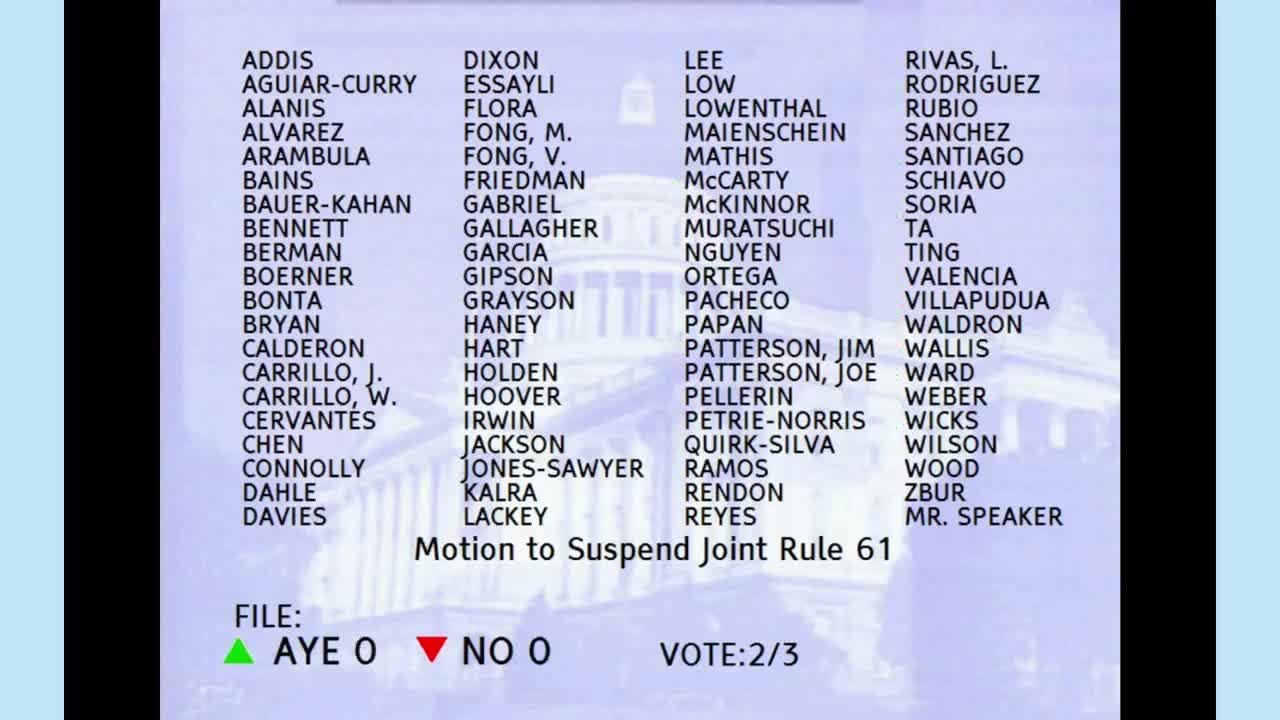
Bill Author

Bill Co-Author(s):