SB 862: Santa Cruz Metropolitan Transit District: transaction and use tax rates.
- Session Year: 2023-2024
- House: Senate
- Latest Version Date: 2023-09-30
Current Status:
Passed
(2023-09-30: Chaptered by Secretary of State. Chapter 296, Statutes of 2023.)
Introduced
In Committee
First Chamber
In Committee
Second Chamber
Enacted
(1)Existing law authorizes various specified cities and counties, subject to certain limitations and approval requirements, to levy a transactions and use tax for general or specific purposes, in accordance with the procedures and requirements set forth in the Transactions and Use Tax Law. A provision of the Transactions and Use Tax Law prohibits the combined rate of all taxes that may be imposed in accordance with that law in a county from exceeding 2%.
Existing law, the Santa Cruz Metropolitan Transit District Act of 1967, authorizes the County of Santa Cruz to organize and incorporate the Santa Cruz Metropolitan Transit District, as provided. Existing law, among other things, authorizes the board of directors of the district to impose transactions and use taxes in accordance with the Transactions and Use Tax Law by an ordinance approved by 2/3 of the electors voting on the measure at a special election called for that purpose. Existing law provides that, notwithstanding the 2% combined rate limit under the Transactions and Use Tax Law, a transactions and use tax rate imposed by the board pursuant to these provisions on or before January 1, 2020, are not considered for purposes of that combined rate limit.
This bill would authorize the board to impose a retail transactions and use tax after January 1, 2024, that is excluded from the 2% combined rate limit, if the board adopts an ordinance approving the tax before January 1, 2035, and if the total tax rate excluded under the authority added by the bill does not exceed 1/2 %.
(2)This bill would make legislative findings and declarations as to the necessity of a special statute for the County of Santa Cruz.
(1)Existing law authorizes various specified cities and counties, subject to certain limitations and approval requirements, to levy a transactions and use tax for general or specific purposes, in accordance with the procedures and requirements set forth in the Transactions and Use Tax Law. A provision of the Transactions and Use Tax Law prohibits the combined rate of all taxes that may be imposed in accordance with that law in a county from exceeding 2%.
Existing law, the Santa Cruz Metropolitan Transit District Act of 1967, authorizes the County of Santa Cruz to organize and incorporate the Santa Cruz Metropolitan Transit District, as provided. Existing law, among other things, authorizes the board of directors of the district to impose transactions and use taxes in accordance with the Transactions and Use Tax Law by an ordinance approved by 2/3 of the electors voting on the measure at a special election called for that purpose. Existing law provides that, notwithstanding the 2% combined rate limit under the Transactions and Use Tax Law, a transactions and use tax rate imposed by the board pursuant to these provisions on or before January 1, 2020, are not considered for purposes of that combined rate limit.
This bill would authorize the board to impose a retail transactions and use tax after January 1, 2024, that is excluded from the 2% combined rate limit, if the board adopts an ordinance approving the tax before January 1, 2035, and if the total tax rate excluded under the authority added by the bill does not exceed 1/2 %.
(2)This bill would make legislative findings and declarations as to the necessity of a special statute for the County of Santa Cruz.
(1)Existing law authorizes various specified cities and counties, subject to certain limitations and approval requirements, to levy a transactions and use tax for general or specific purposes, in accordance with the procedures and requirements set forth in the Transactions and Use Tax Law. A provision of the Transactions and Use Tax Law prohibits the combined rate of all taxes that may be imposed in accordance with that law in a county from exceeding 2%.
Existing law, the Santa Cruz Metropolitan Transit District Act of 1967, authorizes the County of Santa Cruz to organize and incorporate the Santa Cruz Metropolitan Transit District, as provided. Existing law, among other things, authorizes the board of directors of the district to impose transactions and use taxes in accordance with the Transactions and Use Tax Law by an ordinance approved by 2/3 of the electors voting on the measure at a special election called for that purpose. Existing law provides that, notwithstanding the 2% combined rate limit under the Transactions and Use Tax Law, a transactions and use tax rate imposed by the board pursuant to these provisions on or before January 1, 2020, are not considered for purposes of that combined rate limit.
This bill would instead establish a combined rate limit for transactions and use taxes of 3% for taxes approved by the board before January 1, 2035. authorize the board to impose a retail transactions and use tax after January 1, 2024, that is excluded from the 2% combined rate limit, if the board adopts an ordinance approving the tax before January 1, 2035, and if the total tax rate excluded under the authority added by the bill does not exceed 1/2 %.
(2)This bill would make legislative findings and declarations as to the necessity of a special statute for the County of Santa Cruz.
(1)Existing law authorizes various specified cities and counties, subject to certain limitations and approval requirements, to levy a transactions and use tax for general or specific purposes, in accordance with the procedures and requirements set forth in the Transactions and Use Tax Law. A provision of the Transactions and Use Tax Law prohibits the combined rate of all taxes that may be imposed in accordance with that law in a county from exceeding 2%.
Existing law, the Santa Cruz Metropolitan Transit District Act of 1967, authorizes the County of Santa Cruz to organize and incorporate the Santa Cruz Metropolitan Transit District, as provided. Existing law, among other things, authorizes the board of directors of the district to impose transactions and use taxes in accordance with the Transactions and Use Tax Law by an ordinance approved by 2/3 of the electors voting on the measure at a special election called for that purpose. Existing law provides that, notwithstanding the 2% combined rate limit under the Transactions and Use Tax Law, a transactions and use tax rate imposed by the board pursuant to these provisions on or before January 1, 2020, are not considered for purposes of that combined rate limit.
This bill would instead establish a combined rate limit for transactions and use taxes of 3% for taxes approved by the board before January 1, 2035.
(2)This bill would make legislative findings and declarations as to the necessity of a special statute for the County of Santa Cruz.
Existing law, added by the Governors Reorganization Plan No. 1 of 1991, creates the Department of Pesticide Regulation and authorizes the Director of Pesticide Regulation, among other things, to adopt regulations for the issuance and renewal of licenses and certificates for pest control operations. Existing law establishes the Agricultural Pest Control Advisory Committee within the department for the purposes of advising the director in all matters concerning licensing, certification, and regulation of persons and firms licensed or certified for pest control operations. Existing law sets forth the composition of the advisory committee, including one member representing the general public. Existing law requires the advisory committee to be appointed by either the Secretary for Environmental Protection or the director.This bill would increase from one to 2 the members representing the general public and would make a conforming change. The bill would instead require members of the advisory committee to be appointed only by the director.Existing law law, added by the Governors Reorganization Plan No. 1 of 1991, creates the Department of Pesticide Regulation and authorizes the Director of Pesticide Regulation, among other things, to adopt regulations for the issuance and renewal of licenses and certificates for pest control operations. Existing law establishes the Agricultural Pest Control Advisory Committee within the Department of Food and Agriculture department for the purposes of advising the Secretary of Food and Agriculture director in all matters concerning licensing, certification, and regulation of persons and firms licensed or certified for pest control operations. Existing law sets forth the composition of the advisory committee, including one member representing the general public. Existing law requires the advisory committee to be appointed by either the Secretary for Environmental Protection or the director.
This bill would increase from one to 2 the members representing the general public and would make a conforming change. The bill would instead require members of the advisory committee to be appointed only by the director.
Existing law establishes the Agricultural Pest Control Advisory Committee within the Department of Food and Agriculture for the purposes of advising the Secretary of Food and Agriculture in all matters concerning licensing, certification, and regulation of persons and firms licensed or certified for pest control operations. Existing law sets forth the composition of the advisory committee, including one member representing the general public.
This bill would increase from one to 2 the members representing the general public and would make a conforming change.
(a)A retail transactions and use tax ordinance may be adopted by the board in accordance with the provisions of Part 1.6 (commencing with Section 7251) of Division 2 of the Revenue and Taxation Code, provided that two-thirds of the electors voting on the measure vote to authorize its enactment at a special election called for that purpose by the board.
(b)Notwithstanding Section 7251.1 of the Revenue and Taxation Code, a transactions and use tax rate imposed pursuant to subdivision (a) on or before January 1, 2020, shall not be considered for purposes of the combined rate limit established by that section.
(c)(1)In addition to any other taxes imposed pursuant to this section, the board may impose a retail transactions and use tax pursuant to subdivision (a) after January 1, 2024, if both of the following conditions are met:
(A)The board adopts the ordinance approving the tax before January 1, 2035.
(B)The total tax rate under this subdivision is set at a rate of no more than 0.5 percent.
(2)Notwithstanding Section 7251.1 of the Revenue and Taxation Code, a transactions and use tax rate imposed pursuant to this subdivision shall not be considered for purposes of the combined rate limit established by that section.
SEC. 2.The Legislature finds and declares that a special statute is necessary and that a general statute cannot be made applicable within the meaning of Section 16 of Article IV of the California Constitution because of the unique fiscal pressures being experienced in the County of Santa Cruz.
(a)A retail transactions and use tax ordinance may be adopted by the board in accordance with the provisions of Part 1.6 (commencing with Section 7251) of Division 2 of the Revenue and Taxation Code, provided that two-thirds of the electors voting on the measure vote to authorize its enactment at a special election called for that purpose by the board.
(b)Notwithstanding Section 7251.1 of the Revenue and Taxation Code, a transactions and use tax rate imposed pursuant to subdivision (a) on or before January 1, 2020, shall not be considered for purposes of the combined rate limit established by that section.
(c)(1)In addition to any other taxes imposed pursuant to this section, the board may impose a retail transactions and use tax pursuant to subdivision (a) after January 1, 2024, if both of the following conditions are met:
(A)The board adopts the ordinance approving the tax before January 1, 2035.
(B)The total tax rate under this subdivision is set at a rate of no more than 0.5 percent.
(2)Notwithstanding Section 7251.1 of the Revenue and Taxation Code, a transactions and use tax rate imposed pursuant to this subdivision shall not be considered for purposes of the combined rate limit established by that section.
SEC. 2.The Legislature finds and declares that a special statute is necessary and that a general statute cannot be made applicable within the meaning of Section 16 of Article IV of the California Constitution because of the unique fiscal pressures being experienced in the County of Santa Cruz.
(a)A retail transactions and use tax ordinance may be adopted by the board in accordance with the provisions of Part 1.6 (commencing with Section 7251) of Division 2 of the Revenue and Taxation Code, provided that two-thirds of the electors voting on the measure vote to authorize its enactment at a special election called for that purpose by the board.
(b)Notwithstanding Section 7251.1 of the Revenue and Taxation Code, a transactions and use tax rate imposed pursuant to subdivision (a) on or before January 1, 2020, shall not be considered for purposes of the combined rate limit established by that section, if section.
(c)(1)In addition to any other taxes imposed pursuant to this section, the board may impose a retail transactions and use tax pursuant to subdivision (a) after January 1, 2024, if both of the following conditions are met:
(1)(A)The board adopts the ordinance approving the tax before January 1, 2035.
(2)(B)The total tax rate excluded from consideration by this subdivision from the combined rate limit established by Section 7251.1 of the Revenue and Taxation Code shall not exceed one percent. under this subdivision is set at a rate of no more than 0.5 percent.
(2)Notwithstanding Section 7251.1 of the Revenue and Taxation Code, a transactions and use tax rate imposed pursuant to this subdivision shall not be considered for purposes of the combined rate limit established by that section.
SEC. 2.The Legislature finds and declares that a special statute is necessary and that a general statute cannot be made applicable within the meaning of Section 16 of Article IV of the California Constitution because of the unique fiscal pressures being experienced in the County of Santa Cruz.
(a)A retail transactions and use tax ordinance may be adopted by the board in accordance with the provisions of Part 1.6 (commencing with Section 7251) of Division 2 of the Revenue and Taxation Code, provided that two-thirds of the electors voting on the measure vote to authorize its enactment at a special election called for that purpose by the board.
(b)Notwithstanding Section 7251.1 of the Revenue and Taxation Code, a transactions and use tax rate imposed pursuant to subdivision (a) on or before the effective date of the act adding this subdivision shall not be considered for purposes of the combined rate limit established by that section. section, if both of the following conditions are met:
(1)The board adopts the ordinance approving the tax before January 1, 2035.
(2)The total tax rate excluded from consideration by this subdivision from the combined rate limit established by Section 7251.1 of the Revenue and Taxation Code shall not exceed one percent.
SEC. 2.The Legislature finds and declares that a special statute is necessary and that a general statute cannot be made applicable within the meaning of Section 16 of Article IV of the California Constitution because of the unique fiscal pressures being experienced in the County of Santa Cruz.
SECTION 1.Section 12042 of the Food and Agricultural Code is amended to read:12042.There is in the department an Agricultural Pest Control Advisory Committee, appointed by the director, consisting of the following members:(a)One member representing agricultural pest control advisers.(b)One member representing agricultural pest control businesses.(c)One member representing pest control maintenance gardeners.(d)One member representing pest control aircraft pilots.(e)One member representing pesticide dealers.(f)One member representing commercial applicator certificate holders.(g)One member representing registrants, as defined in Section 12755.(h)One member representing the California Agricultural Commissioners and Sealers Association.(i)One member representing the University of California, Division of Agriculture and Natural Resources, who is nominated by the board of regents and who specializes in pest management.(j)One member representing the Board of Trustees of the California State University system.(k)One member representing the Board of Governors of the California Community College system.(l)One member representing producers, as defined in Section 56110.(m)Two members representing the general public.SEC. 2.Section 12043 of the Food and Agricultural Code is amended to read:12043.The public members shall be appointed to the committee by the director from nominees recommended by the committee. The public members shall represent the interests of the general public in all matters coming before the committee and shall have the same voting and other rights and immunities as other members of the committee.There is in the department an Agricultural Pest Control Advisory Committee, appointed by the secretary, director, consisting of the following members:
(a)One member representing agricultural pest control advisers.
(b)One member representing agricultural pest control businesses.
(c)One member representing pest control maintenance gardeners.
(d)One member representing pest control aircraft pilots.
(e)One member representing pesticide dealers.
(f)One member representing commercial applicator certificate holders.
(g)One member representing registrants, as defined in Section 12755.
(h)One member representing the California Agricultural Commissioners and Sealers Association.
(i)One member representing the University of California, Division of Agriculture and Natural Resources, who is nominated by the board of regents and who specializes in pest management.
(j)One member representing the Board of Trustees of the California State University system.
(k)One member representing the Board of Governors of the California Community College system.
(l)One member representing producers, as defined in Section 56110.
(m)Two members representing the general public.
SEC. 2.Section 12043 of the Food and Agricultural Code is amended to read:12043.The public members shall be appointed to the committee by the secretary director from nominees recommended by the committee. The public members shall represent the interests of the general public in all matters coming before the committee and shall have the same voting and other rights and immunities as other members of the committee.
There is in the department an Agricultural Pest Control Advisory Committee, appointed by the secretary or director, secretary, consisting of the following members:
(a)One member representing agricultural pest control advisers.
(b)One member representing agricultural pest control businesses.
(c)One member representing pest control maintenance gardeners.
(d)One member representing pest control aircraft pilots.
(e)One member representing pesticide dealers.
(f)One member representing commercial applicator certificate holders.
(g)One member representing registrants, as defined in Section 12755.
(h)One member representing the California Agricultural Commissioners and Sealers Association.
(i)One member representing the University of California, Division of Agriculture and Natural Resources, who is nominated by the board of regents and who specializes in pest management.
(j)One member representing the Board of Trustees of the California State University system.
(k)One member representing the Board of Governors of the California Community College system.
(l)One member representing producers, as defined in Section 56110.
(m)One member Two members representing the general public.
SEC. 2.Section 12043 of the Food and Agricultural Code is amended to read:12043.The public member members shall be appointed to the committee by the director secretary from nominees recommended by the committee. The public member members shall represent the interests of the general public in all matters coming before the committee and shall have the same voting and other rights and immunities as other members of the committee.
|
Date
|
Status
|
|---|---|
| Sep 30, 2023 | Chaptered by Secretary of State. Chapter 296, Statutes of 2023. |
| Sep 30, 2023 | Approved by the Governor. |
| Sep 11, 2023 | Enrolled and presented to the Governor at 3 p.m. |
| Sep 6, 2023 | Assembly amendments concurred in. (Ayes 30. Noes 8. Page 2420.) Ordered to engrossing and enrolling. |
| Aug 30, 2023 | From committee: That the Assembly amendments be concurred in. (Ayes 6. Noes 1. Page 2220.) |
| Aug 25, 2023 | Set for hearing August 30. |
| Aug 24, 2023 | From committee: Be re-referred to Com. on GOV. & F. pursuant to Senate Rule 29.10(d). (Ayes 5. Noes 0. Page 2175.) Re-referred to Com. on GOV. & F. |
| Aug 17, 2023 | Re-referred to Com. on RLS pursuant to Senate Rule 29.10(d). |
| Aug 15, 2023 | In Senate. Concurrence in Assembly amendments pending. |
| Aug 14, 2023 | Read third time. Passed. (Ayes 52. Noes 16. Page 2680.) Ordered to the Senate. |
| Jul 12, 2023 | Read second time. Ordered to third reading. |
| Jul 11, 2023 | From committee: Do pass. (Ayes 6. Noes 3.) (July 10). |
| Jun 29, 2023 | Read second time and amended. Re-referred to Com. on REV. & TAX. |
| Jun 28, 2023 | From committee: Do pass as amended and re-refer to Com. on REV. & TAX. (Ayes 5. Noes 2.) (June 28). |
| Jun 15, 2023 | Re-referred to Coms. on L. GOV. and REV. & TAX. pursuant to Assembly Rule 96. |
| Jun 13, 2023 | From committee with author's amendments. Read second time and amended. Re-referred to Com. on AGRI. |
| May 18, 2023 | Referred to Com. on AGRI. |
| May 11, 2023 | In Assembly. Read first time. Held at Desk. |
| May 11, 2023 | Read third time. Passed. (Ayes 39. Noes 0. Page 1052.) Ordered to the Assembly. |
| May 2, 2023 | Read second time. Ordered to third reading. |
| May 1, 2023 | From committee: Be ordered to second reading pursuant to Senate Rule 28.8. |
| Apr 21, 2023 | Set for hearing May 1. |
| Apr 18, 2023 | From committee: Do pass and re-refer to Com. on APPR. (Ayes 3. Noes 0. Page 768.) (April 18). Re-referred to Com. on APPR. |
| Mar 27, 2023 | From committee with author's amendments. Read second time and amended. Re-referred to Com. on AGRI. |
| Mar 8, 2023 | Set for hearing April 18. |
| Mar 1, 2023 | Referred to Com. on AGRI. |
| Feb 21, 2023 | From printer. May be acted upon on or after March 20. |
| Feb 17, 2023 | Introduced. Read first time. To Com. on RLS. for assignment. To print. |
|
Date
|
Description
|
Location
|
Votes
|
|
|---|---|---|---|---|
| Sep 6, 2023 | Unfinished Business SB862 Laird Concurrence | Senate Floor |
Passed |
|
| Aug 30, 2023 | That the Assembly amendments be concurred in | Senate Standing Committee on Governance and Finance |
Passed |
|
| Aug 14, 2023 | SB 862 Laird Senate Third Reading By Pellerin | Assembly Floor |
Passed |
|
| Jul 10, 2023 | Do pass. | Assembly Standing Committee on Revenue and Taxation |
Passed |
|
| Jun 28, 2023 | Do pass as amended and be re-referred to the Committee on [Revenue and Taxation] | Assembly Standing Committee on Local Government |
Passed |
|
| May 11, 2023 | Senate 3rd Reading SB862 Laird | Senate Floor |
Passed |
|
| Apr 18, 2023 | Do pass, but first be re-referred to the Committee on [Appropriations] | Senate Standing Committee on Agriculture |
Passed |
This list shows positions taken on this bill by organizations on the date displayed, which is linked to the original source.
Positions by individuals are not included.
|
Organization
|
Position
|
Date
|
|---|---|---|
| California Taxpayers Association | ** Against | |
| monterey bay central labor council | ** Support | |
| Santa Cruz Metropolitan Transit District | * Support | Aug 30, 2023 |
| Santa Cruz Metropolitan Transportation District | ** Support | |
| SEIU Local 521 | ** Support | |
| Smart Local 0023 | ** Support |
SENATE RULES COMMITTEE Office of Senate Floor Analyses (916) 651-1520 Fax: (916) 327-4478 | SB 862 |
UNFINISHED BUSINESS
Bill No: SB 862
Author: Laird (D)
Amended: 6/29/23
Vote: 21
PRIOR SENATE VOTES NOT RELEVANT
SENATE GOVERNANCE & FIN. COMMITTEE: 6-1, 8/30/23 (Pursuant to Senate Rule 29.10)
AYES: Caballero, Blakespear, Durazo, Glazer, Skinner, Wiener
NOES: Seyarto
NO VOTE RECORDED: Dahle
ASSEMBLY FLOOR: 52-16, 8/14/23 - See last page for vote
SUBJECT: Santa Cruz Metropolitan Transit District: transaction and use tax rates
SOURCE: Author
DIGEST:
This bill allows the Santa Cruz Metropolitan Transportation District’s board to place a measure before its voters authorizing a district tax above the 2% cap.
Assembly Amendments
delete the previous contents of the bill, and insert the current ones allowing the Santa Cruz Metropolitan Transportation District board to place a district tax measure before voters that if approved, would exceed the 2% cap.
ANALYSIS:
Existing law:
- Imposes the sales tax on every retailer engaged in business in this state that sells tangible personal property, and requires them to collect the appropriate tax from the purchase and remit the amount to the California Department of Tax and Fee Administration.
- Applies whenever a retail sale is made, which is basically any sale other than one for resale in the regular course of business.
- Provides that unless the person pays the sales tax to the retailer, he or she is liable for the use tax, which is imposed on any person consuming tangible personal property in the state. The use tax rate is the same rate as the sales tax rate, and must be remitted on or before the last day of the month following the quarterly period in which the person made the purchase.
- Levies the sales and use tax at a current rate of 7.25%.
- States that taxes levied by local governments are either general taxes, subject to majority approval of its voters, or special taxes, subject to 2/3 vote (California Constitution, Article XIII C).
- Allows cities, counties, and specified special districts to increase the sales and use tax applied within their jurisdictions, also known as district or transactions and use taxes, for either specific or general purposes pursuant to the California Constitution’s voter approval requirements.
- Allows counties to impose a district tax solely in the unincorporated area of a county (AB 2119, Stone, Chapter 148, Statutes of 2014).
- Caps the maximum district tax rate at 2% within a county; however, allows exceptions from the cap for the Cities of El Cerrito and Santa Fe Springs, Contra Costa County, San Mateo County, Sonoma County (and any city in Sonoma County), the Transportation Agency for Monterey County, and the Los Angeles Metropolitan Transportation Authority, among others.
- Establishes the Santa Cruz County Metropolitan Transportation District (SC Metro), and authorizes it to impose a district tax up to 0.5%.
- Provides that SC Metro’s district tax does not count against the 2% countywide cap (AB 723, Quirk, Chapter 747, Statutes of 2019).
This bill:
- Allows SC Metro’s board to impose a district tax above the 2% cap if:
- The board adopts the ordinance approving the tax before January 1, 2035, and
- The rate of the additional tax does not exceed 0.5 percent.
- Clarifies the application of the cap to its additional tax.
- Makes a conforming change to provisions added by AB 723.
- Includes a legislative finding justifying the need for special legislation.
Background
Santa Cruz County imposes two countywide district taxes, one at 0.25% and another at 0.5%, and another district tax that applies only in the unincorporated area of 0.5%. Additionally, the Santa Cruz County Metropolitan Transportation District (SC Metro), established by the Legislature in 1967, imposes its own 0.5% tax, bringing the rate to 1.75% in county unincorporated area, Several cities within the County, including Capitola (0.5%), Santa Cruz (0.75%), Scotts Valley (1.25%), and Watsonville (1.25%) impose their own citywide district taxes.
In 2019, Governor Newsom vetoed AB 618 (Stone), which permitted the Cities of Emeryville (Alameda County) and Scotts Valley (Santa Cruz County) to impose a tax of up to 0.25% that exceeded the 2% cap. The veto message stated that it was unclear whether authorization was needed because both had room within the cap to impose the tax. In response, the Legislature enacted AB 723 (Quirk), which provided that SC Metro’s district tax, imposed since 1979, did not count against the cap. The bill also provided that neither the tax imposed by BART nor the tax imposed by the Alameda County Transportation Commission counted against the 2% cap in Alameda County.
As a result, AB 723 created more room under the cap for Alameda County, and cities in Alameda and Santa Cruz counties to impose district taxes, which the Legislature then applied to Contra Costa County a year later (SB 1349, Glazer, Chapter 369, Statutes of 2020). Scotts Valley and Watsonville used the additional room under the cap to impose additional district taxes in the last three years, which resulted in the combined county district taxes (0.75%), plus those city ones (1.25%), precluding further countywide taxes in Santa Cruz County.
FISCAL EFFECT: Appropriation: No Fiscal Com.: No Local: No
SUPPORT: (Verified 8/31/23)
Monterey Bay Central Labor Council
Santa Cruz Metropolitan Transportation District
SEIU Local 521
SMART Local 0023
OPPOSITION: (Verified 8/31/23)
California Taxpayers Association
ARGUMENTS IN SUPPORT: According to the author, “The Santa Cruz Metropolitan Transit District (Santa Cruz METRO) will soon be facing a fiscal cliff which threatens the public’s access to transit and our state’s climate goals. To address this, Senate Bill 862 will allow voters to decide if the county should raise the combined tax rate limit above 2%. If this proposal is approved, Santa Cruz METRO could go to the voters to generate additional revenue to address the agency’s fiscal needs, and continue to improve its services to meet state and local environmental, equity, and access objectives. This includes funding for its ParaCruz service, a paratransit service for those with various forms of functional needs, and making improvements to its fixed route bus service.”
ARGUMENTS IN OPPOSITION: According to the California Taxpayers Association, “California has the highest state-level sales and use tax rate in the country, and several cities in California, including Santa Cruz, have even higher rates. The sales and use tax is a regressive tax that has the greatest impact on low-income residents because it makes it more expensive for these taxpayers to purchase everyday necessities. Inflation has increased the cost of everyday goods, which in turn increases the sales tax that is imposed as a percentage of the retail price. Adding even more to the cost of living with a sales tax increase would harm Californians, and will disproportionately impact the state’s most vulnerable residents. In 1953, the Senate Committee on State and Local Taxation recommended that California adopt a uniform state and local sales tax with a rate cap. The cap has served the state well, and should not be circumvented.”
ASSEMBLY FLOOR: 52-16, 8/14/23
AYES: Addis, Aguiar-Curry, Alvarez, Arambula, Bains, Bennett, Berman, Bonta, Bryan, Calderon, Juan Carrillo, Wendy Carrillo, Connolly, Mike Fong, Friedman, Gabriel, Gipson, Grayson, Haney, Hart, Holden, Irwin, Jackson, Jones-Sawyer, Kalra, Lee, Low, Lowenthal, Maienschein, McKinnor, Ortega, Pacheco, Papan, Pellerin, Petrie-Norris, Ramos, Rendon, Reyes, Luz Rivas, Rodriguez, Blanca Rubio, Santiago, Ting, Valencia, Villapudua, Ward, Weber, Wicks, Wilson, Wood, Zbur, Robert Rivas
NOES: Chen, Megan Dahle, Davies, Dixon, Essayli, Flora, Vince Fong, Hoover, Lackey, Mathis, Jim Patterson, Joe Patterson, Sanchez, Ta, Waldron, Wallis
NO VOTE RECORDED: Alanis, Bauer-Kahan, Boerner, Cervantes, Gallagher, Garcia, McCarty, Muratsuchi, Stephanie Nguyen, Quirk-Silva, Schiavo, Soria
Prepared by: Colin Grinnell / GOV. & F. / (916) 651-4119
8/31/23 16:18:12
**** END ****
SENATE COMMITTEE ON GOVERNANCE AND FINANCE
Senator Anna M. Caballero, Chair
2023 - 2024 Regular
Bill No: | SB 862 | Hearing Date: | 8/30/23 |
Author: | Laird | Tax Levy: | No |
Version: | 6/29/23 | Fiscal: | No |
Consultant: | Grinnell | ||
Santa Cruz Metropolitan Transit District: transaction and use tax rates
Allows the Santa Cruz Metropolitan Transportation Authority’s board to place a measure before its voters authorizing a district tax above the 2% cap.
Background
Sales and Use Taxes. State law imposes the sales tax on every retailer “engaged in business in this state” that sells tangible personal property, and requires them to register with the California Department of Tax and Fee Administration (CDTFA) and remit tax to CDFTA. Sales tax applies whenever a retail sale occurs, which is generally any sale other than one for resale in the regular course of business. The current rate is 7.25% as shown in the table below.
Rate | Jurisdiction | Purpose/Authority | |
|---|---|---|---|
3.9375% | State (General Fund) | State general purposes | |
1.0625% |
| Local governments to fund local public safety services | |
0.50% | State (1991 Realignment) | Local governments to fund health and welfare programs | |
0.50% | State (Proposition 172 - 1993) | Local governments to fund public safety services | |
1.25% | Local (City/County) 1.00% City and County | City and county general operations Dedicated to county transportation purposes | |
7.25% | Total Statewide Rate |
Unless the purchaser pays the sales tax to the retailer, he or she is liable for the use tax, which the law imposes on any person consuming tangible personal property in the state. The use tax is the same rate as the sales tax, and like the sales tax, must be remitted on or before the last day of the month following the quarterly period in which the person made the purchase.
District Taxes. The California Constitution states that taxes levied by local governments are either general taxes, subject to majority approval of its voters, or special taxes, subject to 2/3 vote (Article XIII C). Proposition 13 (1978) required a 2/3 vote of each house of the Legislature for state tax increases, and 2/3 vote for local special taxes. Proposition 62 (1986) prohibited local agencies from imposing general taxes without majority approval of local voters, and a 2/3 vote for special taxes. Proposition 218 (1996) extended those vote thresholds to charter cities, and limited local agencies’ powers to levy new assessments, fees, and taxes. Local agencies generally propose to increase taxes by adopting an ordinance or a resolution at a public hearing.
State law allows cities, counties, and specified special districts to increase the sales and use tax applicable in their jurisdiction, also known as district or transactions and use taxes. Generally, local agencies impose these taxes throughout the entire area of a single county, the entire unincorporated area within a single county, or a single incorporated city, except for those imposed by the Bay Area Rapid Transit (BART) District (which covers Alameda, Contra Costa, and the City and County of San Francisco) and the Sonoma-Marin Rail Transit District (which includes Sonoma and Marin counties). As of April 1, 2023, local agencies impose 411 district taxes for general or special purposes – 67 are imposed countywide, four are imposed in unincorporated county areas, and 340 are imposed citywide.
Since the Legislature enacted district taxes in 1969, it has capped district tax rates, with a current countywide cap of 2%. The cap applies countywide, so if one agency imposes a district tax, it limits the ability of another agency in that county that shares the jurisdiction to do so to any remaining room under 2%. For example, if a city imposes a 1% tax, the county in which the city is located or a special district serving that city could not impose one above 1%, unless the Legislature enacts an exemption. The Legislature has enacted several exceptions to the 2% cap, including, among others, in the cities of Alameda, Berkeley, Emeryville, and Santa Fe Springs; as well as Alameda, Contra Costa, and Santa Clara counties.
Santa Cruz County. Santa Cruz County imposes two countywide district taxes, one at 0.25% and another at 0.5%, and another district tax that applies only in the unincorporated area of 0.5%. Additionally, the Santa Cruz County Metropolitan Transportation Authority (SC Metro), established by the Legislature in 1967, imposes its own 0.5% tax, bringing the rate to 1.75% in county unincorporated area, Several cities within the County, including Capitola (0.5%), Santa Cruz (0.75%), Scotts Valley (1.25%), and Watsonville (1.25%) impose their own citywide district taxes.
AB 618 and AB 723. In 2019, Governor Newsom vetoed AB 618 (Stone), which permitted the Cities of Emeryville (Alameda County) and Scotts Valley (Santa Cruz County) to impose a tax of up to 0.25% that exceeded the 2% cap. The veto message stated that it was unclear whether authorization was needed because both had room within the cap to impose the tax. In response, the Legislature enacted AB 723 (Quirk), which provided that SC Metro’s district tax, imposed since 1979, did not count against the cap. The bill also provided that neither the tax imposed by BART nor the tax imposed by the Alameda County Transportation Commission counted against the 2% cap in Alameda County.
As a result, AB 723 created more room under the cap for Alameda County, and cities in Alameda and Santa Cruz counties to impose district taxes, which the Legislature then applied to Contra Costa County a year later (SB 1349, Glazer, 2020). Scotts Valley and Watsonville used the additional room under the cap to impose additional district taxes in the last three years, which resulted in the combined county district taxes (0.75%), plus those city ones (1.25%), precluding further countywide taxes in Santa Cruz County.
SC Metro argues that higher capital costs and declining revenues resulting from the COVID-19 pandemic, as well as maintaining and enhancing service levels, requires additional revenues from a new district tax, which is currently precluded by the 2% cap. The author wants to allow SC Metro to impose a district tax of up to 0.5% in excess of the 2% cap.
Proposed Law
Senate Bill 862 allows SC Metro’s board to impose a district tax above the 2% cap if:
- The board adopts the ordinance approving the tax before January 1, 2035; and
- The rate of the additional tax does not exceed 0.5 percent.
The measure clarifies the application of the cap to its additional tax, makes a conforming change to provisions added by AB 723, and includes a legislative finding justifying the need for special legislation.
State Revenue Impact
No estimate.
Comments
1. Purpose of the bill. According to the author, “The Santa Cruz Metropolitan Transit District (Santa Cruz METRO) will soon be facing a fiscal cliff which threatens the public’s access to transit and our state’s climate goals. To address this, Senate Bill 862 will allow voters to decide if the county should raise the combined tax rate limit above 2%. If this proposal is approved, Santa Cruz METRO could go to the voters to generate additional revenue to address the agency’s fiscal needs, and continue to improve its services to meet state and local environmental, equity, and access objectives. This includes funding for its ParaCruz service, a paratransit service for those with various forms of functional needs, and making improvements to its fixed route bus service.”
2. Too high? California’s sales and use tax rate is high compared to other states, especially when incorporating locally imposed district taxes. Tax experts generally agree that sales and use taxes are regressive, meaning the tax incidence falls more on low-income individuals than high-income individuals because those of lesser means generally spend a greater percentage of their income on taxable sales, even if California’s exempts many necessities such as food and prescription medication. When combining current rates imposed by the county and some of its cities. SC Metro’s current 0.5% tax, SB 862 could lead to a rate of 10.25% in Scotts Valley and Watsonville if SC Metro imposes the maximum tax rate allowed under the bill. While local voters must approve any tax, the Committee may wish to consider whether SB 862 allows for rates that are too high.
3. Related legislation. There are currently four proposals under consideration in the Legislature regarding district tax authority.
- AB 1256 (Wood) authorizes the Humboldt County Board of Supervisors to impose a district tax for general or transportation purposes that exceeds the 2% countywide cap. The Committee approved the measure on June 7th, and it is currently pending on the Senate Floor.
- AB 1385 (E. Garcia) increases from 1% to 1.5% the maximum district tax that can be imposed by the Riverside County Transportation Commission. The Committee approved the measure on July 5th, and it is currently pending on the Senate Floor.
- AB 1679 (Santiago) allows Los Angeles County impose a district tax up to 0.5% that exceeds the 2% cap, including by citizen’s initiative, if it replaces Measure H’s current 0.25% tax that funds homelessness programs in Los Angeles County. The Committee approved the measure on July 12th, and it is currently pending on the Senate Floor.
- SB 335 (Cortese) allows Santa Clara County to impose a district tax for general or specific purposes to support countywide programs at a rate of no more than .625% that exceeds the 2% cap. This version of SB 335 was not heard in the Senate, and is currently pending on the Assembly Floor.
4. Special legislation. The California Constitution prohibits special legislation when a general law can apply (Section 16 of Article IV). SB 862 contains findings and declarations explaining the need for legislation that applies only to Santa Cruz County because of its unique fiscal pressures.
5. 29.10(d). As introduced and approved by the Senate, SB 862 increased the number of public members on the Agricultural Pest Control Advisory Committee within the California Department of Pesticide Regulation (DPR) from one to two. On June 13th, the author amended the bill to remove those contents and insert its current ones. Because this topic was never heard in the Senate, the Senate Rules Committee referred the amended bill under Senate Rule 29.10(d) to the Senate Governance and Finance Committee for a hearing on the Assembly’s amendments. At its hearing, the Committee can:
- Hold the bill;
- Recommend that the Assembly amendments be concurred in;
- Recommend that the Assembly amendments not be concurred in;
- Recommend that the Assembly amendments be taken up for consideration; or
- Re-refer the measure to another committee.
Assembly Actions
Assembly Local Government Committee: 5-2
Assembly Revenue and Taxation Committee: 6-3
Assembly Floor: 52-16
Support and Opposition
(8/28/23)
Support:
Santa Cruz Metropolitan Transit District
SEIU 521
Smart Local 0023
Opposition:
California Taxpayers Association
-- END --
SENATE THIRD READING
STR Bill Id:SB 862
Author:(Laird)
As Amended Ver:June 29, 2023
Majority vote
SUMMARY
Authorizes the board of directors of the Santa Cruz Metropolitan Transit District (SC Metro) to impose a retail transactions and use tax (TUT) after January 1, 2024, that is excluded from the 2% combined rate limit, if certain conditions are met.
Major Provisions
- Provides that, in addition to any other taxes imposed pursuant to Public Utilities Code Section 98290, SC Metro's board may impose a retail TUT after January 1, 2024, if both of the following conditions are met:
- The board adopts the ordinance approving the tax before January 1, 2035.
- The total tax rate is set at a rate of no more than 0.5%.
- Provides that a TUT rate imposed pursuant to this bill shall not be considered for purposes of the combined rate limit established by law.
COMMENTS
- Sales and Use Taxes. State law imposes the sales tax on every retailer "engaged in business in this state" that sells tangible personal property, and requires them to register with the California Department of Tax and Fee Administration (CDTFA), as well as collect the appropriate tax at purchase and remit the amount to CDFTA. Sales tax applies whenever a retail sale occurs, which is generally any sale other than one for resale in the regular course of business. The current rate is 7.25% as shown in the table below.
Rate | Jurisdiction | Purpose/Authority | |
|---|---|---|---|
3.9375% | State (General Fund) | State general purposes | |
1.0625% |
| Local governments to fund local public safety services | |
0.50% | State (1991 Realignment) | Local governments to fund health and welfare programs | |
0.50% | State (Proposition 172 - 1993) | Local governments to fund public safety services | |
1.25% | Local (City/County) 1.00% City and County 0.25% County | City and county general operations Dedicated to county transportation purposes | |
7.25% | Total Statewide Rate |
Unless the purchaser pays the sales tax to the retailer, he or she is liable for the use tax, which the law imposes on any person consuming tangible personal property in the state. The use tax is the same rate as the sales tax, and also like the sales tax, must be remitted on or before the last day of the month following the quarterly period in which the person made the purchase.
- Transactions and Use Taxes. The California Constitution states that taxes levied by local governments are either general taxes, subject to majority approval of its voters, or special taxes, subject to 2/3 vote (California Constitution Article XIII C). Proposition 13 (1978) required a 2/3 vote of each house of the Legislature for state tax increases, and 2/3 vote for local special taxes. Proposition 62 (1986) prohibited local agencies from imposing general taxes without majority approval of local voters. Proposition 218 (1996) extended those vote thresholds to charter cities, and limited local agencies' powers to levy new assessments, fees, and taxes. Local agencies generally propose to increase taxes by adopting an ordinance or a resolution at a public hearing.
State law allows cities, counties, and specified special districts to increase the sales and use tax applicable in their jurisdiction, also known as district taxes or TUTs. Prior to 2003, cities lacked the ability to place TUTs before their voters without first obtaining approval by the Legislature to bring an ordinance before the city council, and, if approved at the council level, to the voters. This was remedied by SB 566 (Scott), Chapter 709, Statutes of 2003. SB 566 also contained provisions to increase a county's TUT cap because of the possibility that certain counties were going to run out of room under their caps, if cities within those counties approved TUTs.
Generally, the combined TUT rate imposed within a local jurisdiction cannot exceed 2%. To determine whether a county has reached this rate limitation, all countywide taxes and the highest combined rate imposed by a city within the county are counted towards the county's rate limit. For example, if a county imposes three 0.5% countywide taxes and two cities within the county each impose a 0.5% tax, the combined rate in those two cities would be 2%. In such a circumstance, the two cities could not impose another TUT, and the county could not impose another countywide TUT, absent special authority to exceed the rate limitation.
As of April 1, 2023, local jurisdictions impose a combined 411 TUTs for general or special purposes. Generally, TUTs are levied throughout the entire area of a single county, the entire unincorporated area within a single county, or a single incorporated city, except for those imposed by the Bay Area Rapid Transit (BART) District (Alameda, Contra Costa, and San Francisco counties) and the Sonoma-Marin Rail Transit District (Sonoma and Marin counties). Of the 411 TUTs, 67 are imposed countywide, four are imposed in unincorporated county areas, and 340 are imposed citywide.
- Santa Cruz County. Santa Cruz County has eight district taxes levied within its borders—three countywide taxes (two for transportation purposes and one for public library purpose), one county unincorporated area tax, and four city-wide taxes. Currently, two of the three Santa Cruz County countywide district taxes remain subject to the 2.00% combined rate limitation, while one, the SC Metro, is exempt. The current TUT rate in the cities of Scotts Valley and Watsonville are 9.75%.
AB 723 (Quirk), Chapter 747, Statutes of 2019, exempted specified TUTs imposed by the San Francisco Bay Area Rapid Transit District (BART), the Alameda County Transportation Commission, and the SC Metro from counting against the combined tax rate limit in Alameda County and Santa Cruz County, respectively. SC Metro currently imposes a .5% TUT within Santa Cruz County.
According to the Author
According to the author, "The Santa Cruz Metropolitan Transit District (Santa Cruz METRO) will soon be facing a fiscal cliff which threatens the public's access to transit and our state's climate goals. To address this, Senate Bill 862 will allow voters to decide if the county should raise the combined tax rate limit above 2%. If this proposal is approved, Santa Cruz METRO could go to the voters to generate additional revenue to address the agency's fiscal needs, and continue to improve its services to meet state and local environmental, equity, and access objectives. This includes funding for its ParaCruz service, a paratransit service for those with various forms of functional needs, and making improvements to its fixed route bus service."
Arguments in Support
According to SC Metro, "The tax measure this bill would authorize is critical to METRO's long-term fiscal health and to maintaining and expanding access to transit service to most vulnerable California in METRO's service territory.
"Current law authorizes cities, counties, and special districts to increase the transaction and use tax applicable in their jurisdiction to fund local priorities, including transportation projects and services. Current law also generally caps the total of all transaction and use taxes in a county (or combined rate) at 2%. That said, the Legislature has routinely reviewed and provided exemptions to the 2% limit to localities and special districts via statute, thus authorizing greater taxing capacity in these jurisdictions, to further support local priorities. SB 862 builds on the past practice, which supports 'self-help' by providing that a transaction and use tax rate of up to 1% imposed by Santa Cruz METRO's Board of Directors before January 1, 2035, is not considered for purposes of the 2% combined tax rate limit in the County of Santa Cruz. In doing so, SB 862 would authorize METRO to pursue a transaction and use tax above the combined tax rate limit in 2024, as is currently being scoped.
"Metro is pursuing a new tax measure in 2024 to: 1) address an impending fiscal cliff caused by higher capital and operating costs and the impacts of the COIVD-19 pandemic on the agency's ridership and revenue streams; 2) offset growing cost pressures associated with, and deliver service improvements to, METRO's ParaCruz service; and 3) continue to enhance its fixed route service. In pursuing this new tax measure, METRO would be heeding the Legislature's guidance to California's transit agencies to take local actions to address funding challenges and to continue to improve transit service to grow ridership and deliver environmental, mobility, and access benefits to Californians. This measure is a critical component of METRO's efforts to double its ridership and revamp its system."
Arguments in Opposition
According to the California Taxpayers Association, "California has the highest state-level sales and use tax rate in the country, and several cities in California, including Santa Cruz, have even higher rates. The sales and use tax is a regressive tax that has the greatest impact on low-income residents because it makes it more expensive for these taxpayers to purchase everyday necessities. Inflation has increased the cost of everyday goods, which in turn increases the sales tax that is imposed as a percentage of the retail price. Adding even more to the cost of living with a sales tax increase would harm Californians, and will disproportionately impact the state's most vulnerable residents.
"...Businesses engaged in manufacturing and research-and-development activities face a significant sales and use tax burden in California. Under existing law, when a business purchases manufacturing or R&D equipment, the purchase is subject to a one-time local sales tax of 1.25 percent plus any additional voter-approved transactions and use taxes. Taxing business inputs increases overall production costs for everyday goods produced in California. Authorizing Santa Cruz to exceed the 2 percent transactions and use tax cap would increase the cost of doing business for critical industries in the area.
"...Unlike the federal government, which receives an exemption for all state and local sales taxes, purchases made by municipal and state agencies are subject to state and local sales taxes. Increasing the local sales tax would increase costs for purchases made by cities and counties, public school districts, and universities operating in the county.
"...In 1953, the Senate Committee on State and Local Taxation recommended that California adopt a uniform state and local sales tax with a rate cap. The committee reported that with a cap, the local sales tax would have a 'minimum adverse' impact on taxpayers. The committee noted the following principles to consider when adopting sales tax changes: '[Local sales and use taxes] may and frequently do place unduly heavy compliance costs upon retailers'; and 'Local business taxes levied under various ordinances and at different rates may produce artificial and unfair discrimination between retailers in the jurisdictions.' The cap has served the state well, and should not be circumvented."
FISCAL COMMENTS
None.
VOTES
SENATE FLOOR: 39-0-1
YES: Allen, Alvarado-Gil, Archuleta, Ashby, Atkins, Becker, Blakespear, Bradford, Caballero, Cortese, Dahle, Dodd, Durazo, Eggman, Glazer, Gonzalez, Hurtado, Jones, Laird, Limón, McGuire, Menjivar, Min, Newman, Nguyen, Niello, Ochoa Bogh, Padilla, Portantino, Roth, Rubio, Seyarto, Skinner, Smallwood-Cuevas, Stern, Umberg, Wahab, Wiener, Wilk
ABS, ABST OR NV: Grove
ASM LOCAL GOVERNMENT: 5-2-1
YES: Aguiar-Curry, Grayson, Pacheco, Ramos, Wilson
NO: Dixon, Waldron
ABS, ABST OR NV: Boerner
ASM REVENUE AND TAXATION: 6-3-2
YES: Irwin, Bains, Grayson, Pacheco, Valencia, Zbur
NO: Wallis, Jim Patterson, Ta
ABS, ABST OR NV: Petrie-Norris, Luz Rivas
UPDATED
VERSION: June 29, 2023
CONSULTANT: Jimmy MacDonald / L. GOV. / (916) 319-3958 FN: 0001213
Date of Hearing: July 10, 2023
ASSEMBLY COMMITTEE ON REVENUE AND TAXATION
Jacqui Irwin, Chair
SBPCA Bill Id:SB 862
Author:(Laird) – As Amended Ver:June 29, 2023
Majority vote.
SENATE VOTE: 39-0
SUBJECT: Santa Cruz Metropolitan Transit District: transaction and use tax rates
SUMMARY: Authorizes the board of directors of the Santa Cruz Metropolitan Transit District (District) to impose a retail transactions and use tax (TUT) after January 1, 2024, that is excluded from the 2% combined rate limit, if the board adopts an ordinance approving the tax before January 1, 2035, and the total tax rate excluded under the authority added by this bill does not exceed 0.5%. Specifically, this bill:
- Provides that, in addition to any other taxes imposed pursuant to Public Utilities Code (PUC) Section 98290, the District's board may impose a retail TUT after January 1, 2024, if both of the following conditions are met:
- The board adopts the ordinance approving the tax before January 1, 2035; and,
- The total tax rate under this bill's new authority is set at a rate of no more than 0.5%.
- Provides that notwithstanding Revenue and Taxation Code (R&TC) Section 7251.1, a TUT rate imposed pursuant to this bill shall not be considered for purposes of the 2% combined rate limit.
- Finds and declares that a special statute is necessary and that a general statute cannot be made applicable within the meaning of Section 16 of Article IV of the California Constitution because of the unique fiscal pressures being experienced in the County of Santa Cruz.
EXISTING LAW:
- Authorizes various local governmental entities, subject to certain limitations and approval requirements, to levy a TUT, in accordance with the procedures and requirements set forth in the TUT Law. (R&TC Section 7251 et seq.)
- Provides that the combined rate of all taxes that may be imposed in accordance with the TUT Law in a county shall not exceed 2%. (R&TC Section 7251.1.)
- Authorizes the County of Santa Cruz to organize and incorporate the District, as provided. (PUC Section 98020.)
- Authorizes the District's board of directors to impose a TUT in accordance with the TUT Law by an ordinance approved by 2/3 of the electors voting on the measure at a special election called for that purpose. (PUC Section 98290.)
- Provides that, notwithstanding the 2% combined rate limit under the TUT Law, a TUT rate imposed by the District under the above provisions on or before January 1, 2020, shall not be considered for purposes of the combined rate limit. (PUC Section 98290.)
FISCAL EFFECT: None
COMMENTS:
- The author has provided the following statement in support of this bill:
The Santa Cruz Metropolitan Transit District (Santa Cruz METRO) will soon be facing a fiscal cliff which threatens the public's access to transit and our state's climate goals. To address this, Senate Bill 862 will allow voters to decide if the county should raise the combined tax rate limit above 2%. If this proposal is approved, Santa Cruz METRO could go to the voters to generate additional revenue to address the agency's fiscal needs, and continue to improve its services to meet state and local environmental, equity, and access objectives. This includes funding for its ParaCruz service, a paratransit service for those with various forms of functional needs, and making improvements to its fixed route bus service.
- This bill is sponsored by the Santa Cruz Metropolitan Transit District, which notes the following:
METRO is pursuing a new tax measure in 2024 to: 1) address an impending fiscal cliff caused by higher capital and operating costs and the impacts of the COVID-19 pandemic on the agency's ridership and revenue streams; 2) offset growing cost pressures associated with, and deliver service improvements to, METRO's ParaCruz service; and 3) continue to enhance its fixed route service. In pursuing this new tax measure, METRO would be heeding the Legislature's guidance to California's transit agencies to take local actions to address funding challenges and to continue to improve transit service to grow ridership and deliver environmental, mobility, and access benefits to Californians. This measure is a critical component of METRO's efforts to double its ridership and revamp its system.
- This bill is opposed by the California Taxpayers Association, which notes:
Businesses engaged in manufacturing and research-and-development activities face a significant sales and use tax burden in California. Under existing law, when a business purchases manufacturing or R&D equipment, the purchase is subject to a one-time local sales tax of 1.25 percent plus any additional voter-approved transactions and use taxes. Taxing business inputs increases overall production costs for everyday goods produced in California. Authorizing Santa Cruz to exceed the 2 percent transactions and use tax cap would increase the cost of doing business for critical industries in the area.
- Committee Staff Comments:
- What would this bill do? This bill would authorize the District's board of directors to impose a retail TUT after January 1, 2024 that is excluded from the 2% combined rate limit if the board adopts an ordinance approving the tax before January 1, 2035 and the total tax rate excluded under the authority added by this bill does not exceed 0.5%.
- Need for this bill: The author's office notes that this bill is needed because two cities in Santa Cruz County have already reached their TUT limit. Specifically, the author notes:
Santa Cruz METRO is pursuing a new transaction and use tax on the November 2024 ballot to address the agency's mid-to-long-term fiscal challenges and to support the agency in meeting its access and service quality goals. Unfortunately, two localities in the County of Santa Cruz – the Cities of Scotts Valley and Watsonville – have reached their combined tax rate limit, preventing Santa Cruz METRO from proceeding with a county-wide tax without an additional exemption to the 2% limit.
- A well-established precedent: It should be noted that the Legislature has, on numerous occasions, granted specific statutory authority to exceed the general 2% rate limitation. Specifically, such authority has been granted to the Counties of Alameda, Contra Costa, Los Angeles, Monterey, San Francisco, San Mateo, Santa Clara, Sonoma, and Ventura and the cities of Alameda, Berkeley, El Cerrito, and Santa Fe Springs.
- A less than perfect tax: The sales tax has been widely criticized as a regressive exaction that most heavily impacts those least able to pay. For example, a survey by the Nevada Legislative Counsel Bureau long ago concluded that in the case of a retail sales tax with food exempt, "the lowest income group would experience the highest ratio of tax to income . . . ." [Survey of Sales Taxes Applicable to Nevada 59 (Bull. No. 3, May, 1948).] Others, however, contend that a degree of progressivity is provided via the various exemptions built into most state sales tax laws (i.e., for certain necessities of life such as food, housing, and medical care). In addition, the author notes the following:
METRO has high ridership and high average productivity for a small transit operator, owing to the county's large student population, constrained and congested corridors, aging population and the high cost of housing, all of which serve to create a large population of transit dependent riders. Data from METRO's 2019 Onboard Transit Ridership Survey (OTRS) indicate that 65% of METRO's customers earn less than $24,000 (44% have an annual household income of <$15,000), and 60% report riding METRO five or more days per week (OTRS, 2019). More recent survey work conducted in 2023 revealed that over 60% of METRO customers do not have access to a car. The Watsonville service area, from which nearly half of METRO's service originates, comprises eight U.S. Census Tracts designated as Historically Disadvantaged Communities (HDCs). 84% of the population in this area is of Hispanic/Latino origin.
Nevertheless, it should be noted that California already has a relatively high sales tax rate. High rates arguably promote non-compliance and encourage out-of-state purchases, placing California retailers at a competitive disadvantage. High rates also risk impacting consumer decision making, which runs counter to widely accepted principles of sound tax policy.
- Double referral: This bill was double referred with the Assembly Committee on Local Government, which passed this bill on June 28, 2023, 5-2. For additional discussion of this bill's provisions, please refer to the analysis prepared by the Assembly Committee on Local Government.
- Related legislation:
- AB 1256 (Wood) would authorize the Humboldt County Board of Supervisors to impose a TUT for the support of countywide transportation programs at a rate of no more than 1% that would, in combination with other TUTs, exceed the combined rate limit of 2%, as specified. AB 1256 is currently on the Senate Third Reading File.
- SB 335 (Cortese) would authorize the County of Santa Clara to impose a TUT for general or specific purposes to support countywide programs at a rate of no more than 0.625% that would, in combination with all taxes imposed in accordance with the TUT Law, exceed the combined rate limit of 2%, as specified. SB 335 is pending hearing along with this bill.
REGISTERED SUPPORT / OPPOSITION:
Support
Santa Cruz Metropolitan Transit District (Sponsor)
Opposition
California Taxpayers Association
Analysis Prepared by: M. David Ruff / REV. & TAX. / (916) 319-2098
Date of Hearing: June 28, 2023
ASSEMBLY COMMITTEE ON LOCAL GOVERNMENT
Cecilia Aguiar-Curry, Chair
SBPCA Bill Id:SB 862
Author:(Laird) – As Amended Ver:June 13, 2023
SENATE VOTE: 39-0
SUBJECT: Santa Cruz Metropolitan Transit District: transaction and use tax rates.
SUMMARY: Specifies that a Transactions and Use Tax (TUT) imposed by the Santa Cruz Metropolitan Transit District (SC Metro) shall not be considered for the purposes of the 2% combined rate limit if specific conditions are met. Specifically, this bill:
- Specifies that a TUT rate imposed by SC Metro shall not be considered for purposes of the combined rate limit established by law, if both of the following conditions are met:
- The board adopts the ordinance approving a tax before January 1, 2035.
- The total tax rate excluded from consideration by 1) above, from the combined rate limit established by law shall not exceed 1%.
- Finds and declares that a special statute is necessary and that a general statute cannot be made applicable because of the unique fiscal pressures being experience in the County of Santa Cruz.
EXISTING LAW:
- Provides that a retail TUT may be adopted by the SC Metro board in accordance with law, provided that two-thirds of the electors voting on the measure vote to authorize its enactment at a special election called for that purpose by the SC Metro board. [Public Utilities Code (PUC) § 98290]
- Specifies that a TUT rate imposed pursuant to 1) above, on or before January 1, 2020, shall not be considered for the purposes of the combined rate limit established by law. (PUC § 98290)
FISCAL EFFECT: None.
COMMENTS:
- Sales and Use Taxes. State law imposes the sales tax on every retailer “engaged in business in this state” that sells tangible personal property, and requires them to register with the California Department of Tax and Fee Administration (CDTFA), as well as collect the appropriate tax at purchase and remit the amount to CDFTA. Sales tax applies whenever a retail sale occurs, which is generally any sale other than one for resale in the regular course of business. The current rate is 7.25% as shown in the table below.
Rate | Jurisdiction | Purpose/Authority | |
|---|---|---|---|
3.9375% | State (General Fund) | State general purposes | |
1.0625% |
| Local governments to fund local public safety services | |
0.50% | State (1991 Realignment) | Local governments to fund health and welfare programs | |
0.50% | State (Proposition 172 - 1993) | Local governments to fund public safety services | |
1.25% | Local (City/County) |
| |
7.25% | Total Statewide Rate |
Unless the purchaser pays the sales tax to the retailer, he or she is liable for the use tax, which the law imposes on any person consuming tangible personal property in the state. The use tax is the same rate as the sales tax, and also like the sales tax, must be remitted on or before the last day of the month following the quarterly period in which the person made the purchase.
- Transactions and Use Taxes. The California Constitution states that taxes levied by local governments are either general taxes, subject to majority approval of its voters, or special taxes, subject to 2/3 vote (Article XIII C). Proposition 13 (1978) required a 2/3 vote of each house of the Legislature for state tax increases, and 2/3 vote for local special taxes. Proposition 62 (1986) prohibited local agencies from imposing general taxes without majority approval of local voters, and a 2/3 vote for special taxes. Proposition 218 (1996) extended those vote thresholds to charter cities, and limited local agencies’ powers to levy new assessments, fees, and taxes. Local agencies generally propose to increase taxes by adopting an ordinance or a resolution at a public hearing.
State law allows cities, counties, and specified special districts to increase the sales and use tax applicable in their jurisdiction, also known as district taxes or TUTs. Prior to 2003, cities lacked the ability to place TUTs before their voters without first obtaining approval by the Legislature to bring an ordinance before the city council, and, if approved at the council level, to the voters. This was remedied by SB 566 (Scott), Chapter 709, Statutes of 2003. SB 566 also contained provisions to increase a county's TUT cap because of the possibility that certain counties were going to run out of room under their caps, if cities within those counties approved TUTs.
Generally, the combined TUT rate imposed within a local jurisdiction cannot exceed 2%. To determine whether a county has reached this rate limitation, all countywide taxes and the highest combined rate imposed by a city within the county are counted towards the county's rate limit. For example, if a county imposes three 0.5% countywide taxes and two cities within the county each impose a 0.5% tax, the combined rate in those two cities would be 2%. In such a circumstance, the two cities could not impose another TUT, and the county could not impose another countywide TUT, absent special authority to exceed the rate limitation.
As of April 1, 2023, local jurisdictions impose a combined 411 TUTs for general or special purposes. Generally, TUTs are levied throughout the entire area of a single county, the entire unincorporated area within a single county, or a single incorporated city, except for those imposed by the Bay Area Rapid Transit (BART) District (Alameda, Contra Costa, and San Francisco counties) and the Sonoma-Marin Rail Transit District (Sonoma and Marin counties). Of the 411 TUTs, 67 are imposed countywide, four are imposed in unincorporated county areas, and 340 are imposed citywide.
- Santa Cruz County. Santa Cruz County has eight district taxes levied within its borders—three countywide taxes (two for transportation purposes and one for public library purpose), one county unincorporated area tax, and four city-wide taxes. Currently, two of the three Santa Cruz County countywide district taxes remain subject to the 2.00% combined rate limitation, while one, the SC Metro, is exempt. The current TUT rate in the cities of Scotts Valley and Watsonville are 9.75%.
AB 723 (Quirk), Chapter 747, Statutes of 2019, exempted specified TUTs imposed by the San Francisco Bay Area Rapid Transit District (BART), the Alameda County Transportation Commission, and the SC Metro from counting against the combined tax rate limit in Alameda County and Santa Cruz County, respectively. SC Metro currently imposes a .5% TUT within Santa Cruz County.
- Bill Summary and Author’s Statement. This bill specifies that a TUT rate of up to 1% imposed by SC Metro before January 1, 2035 is not considered for purposes of the 2% combined tax rate limit. SC Metro is the sponsor of this bill.
According to the author, “The Santa Cruz Metropolitan Transit District (Santa Cruz METRO) will soon be facing a fiscal cliff which threatens the public’s access to transit and our state’s climate goals. To address this, Senate Bill 862 will allow voters to decide if the county should raise the combined tax rate limit above 2%. If this proposal is approved, Santa Cruz METRO could go to the voters to generate additional revenue to address the agency’s fiscal needs, and continue to improve its services to meet state and local environmental, equity, and access objectives. This includes funding for its ParaCruz service, a paratransit service for those with various forms of functional needs, and making improvements to its fixed route bus service.”
- Policy Considerations. The Committee may wish to consider the following:
- Too High? California’s sales tax rate is currently at 7.25%, which is high compared to other states, especially when incorporating locally imposed TUTs. Some tax experts argue that sales and use taxes are regressive, meaning that the tax incidence falls more on low-income individuals than high-income individuals because those of lesser means generally spend a greater percentage of their income on taxable sales, instead of intangible products or services which are not taxed. With this bill, the sales tax rate could grow higher than 10% in some areas of Santa Cruz County. While any increase would have to be approved by the voters, the Committee may wish to consider whether SB 862 allows for rates that are too high.
- Is Clarity Needed? In 2019, the Legislature approved, but the Governor vetoed AB 618 (Stone). This bill would have permitted the Cities of Emeryville (Alameda County) and Scotts Valley (Santa Cruz County) to impose a tax of up to 0.25% that exceeds the 2% cap. The veto message stated that it was unclear whether authorization was needed because both had room within the cap to impose the tax. In response, the Legislature enacted AB 723, which provided, among other provisions that the existing .5% SC Metro TUT did not count against the 2% cap in Santa Cruz County. This was a departure from the numerous bills directly authorizing agencies to impose a new tax above the 2% rate limit. Instead of explicitly allowing a tax above the cap, AB 723 created more room under it in Santa Cruz to impose new TUTs.
- Too High? California’s sales tax rate is currently at 7.25%, which is high compared to other states, especially when incorporating locally imposed TUTs. Some tax experts argue that sales and use taxes are regressive, meaning that the tax incidence falls more on low-income individuals than high-income individuals because those of lesser means generally spend a greater percentage of their income on taxable sales, instead of intangible products or services which are not taxed. With this bill, the sales tax rate could grow higher than 10% in some areas of Santa Cruz County. While any increase would have to be approved by the voters, the Committee may wish to consider whether SB 862 allows for rates that are too high.
Due to the existing .5% TUT that was exempted by AB 723, the sponsors have indicated that this bill will ultimately allow SC Metro to prospectively impose an additional .5% TUT (for a total of 1%) that is not subject to the 2% combined rate limit. However, as currently drafted, it is not entirely clear how this bill will effect the exemption provided by AB 723. In order to avoid any potential confusion, the Committee may wish to consider if additional clarification is needed.
- Committee Amendments. In response to the policy consideration above, the Committee may wish to consider amending the bill as follows:
98290. (a) A retail transactions and use tax ordinance may be adopted by the board in accordance with the provisions of Part 1.6 (commencing with Section 7251) of Division 2 of the Revenue and Taxation Code, provided that two-thirds of the electors voting on the measure vote to authorize its enactment at a special election called for that purpose by the board.
(b) Notwithstanding Section 7251.1 of the Revenue and Taxation Code, a transactions and use tax rate imposed pursuant to subdivision (a) on or before January 1, 2020 shall not be considered for purposes of the combined rate limit established by that section. section, if both of the following conditions are met:
(1) The board adopts the ordinance approving the tax before January 1, 2035.
(2) The total tax rate excluded from consideration by this subdivision from the combined rate limit established by Section 7251.1 of the Revenue and Taxation Code shall not exceed one percent.
(c)(1) In addition to any other taxes imposed pursuant to this section, the board may impose a retail transactions and use tax pursuant to subdivision (a) after January 1, 2024 if both of the following requirements are met:
(A)The board adopts the ordinance approving the tax before January 1, 2035.
(B) The total tax rate under this subdivision is set at a rate of no more than 0.5 percent.
(2) Notwithstanding Section 7251.1 of the Revenue and Taxation Code, a transactions and use tax rate imposed pursuant to this subdivision shall not be considered for purposes of the combined rate limit established by that section.
- Related Legislation. AB 1256 (Wood) authorizes Humboldt County to impose a TUT that exceeds the 2% statutory limitation. AB 1256 was heard in this Committee on April 19 and passed with a 5-2 vote.
AB 1385 (Garcia) authorizes the Riverside County Transportation Commission to impose a maximum TUT of 1.5%. AB 1385 was heard in this Committee on May 3 and passed with a vote of 5-2.
SB 335 (Cortese) allows Santa Clara County to impose a TUT to support countywide programs and general services at a rate of no more than .625% that would, in combination with all taxes imposed, exceed the 2% cap established by law, if specified conditions are met. SB 335 is currently pending in this Committee.
- Prior Legislation. AB 618 (Stone) of 2019 would have permitted the Cities of Emeryville (Alameda County) and Scotts Valley (Santa Cruz County) to impose a tax of up to 0.25% that exceeds the 2% cap. AB 618 was vetoed with a message that stated, “The Cities of Emeryville and Scotts Valley have not yet reached the statewide cap of 2 percent, making it unclear why additional tax authority is needed.”
SB 1349 (Glazer), Chapter 369, Statutes of 2020, permitted Contra Costa County, and cities within Contra Costa County, additional legal flexibility to impose local TUTs.
AB 2453 (Bennett), Chapter 286, Statutes of 2022, authorized the Ventura County Transportation Commission to impose a TUT of no more than 0.5% that does not count against the cap in Ventura County.
- Arguments in Support. According to SC Metro, “The tax measure this bill would authorize is critical to METRO’s long-term fiscal health and to maintaining and expanding access to transit service to most vulnerable California in METRO’s service territory.
“Current law authorizes cities, counties, and special districts to increase the transaction and use tax applicable in their jurisdiction to fund local priorities, including transportation projects and services. Current law also generally caps the total of all transaction and use taxes in a county (or combined rate) at 2%. That said, the Legislature has routinely reviewed and provided exemptions to the 2% limit to localities and special districts via statute, thus authorizing greater taxing capacity in these jurisdictions, to further support local priorities. SB 862 builds on the past practice, which supports ‘self-help’ by providing that a transaction and use tax rate of up to 1% imposed by Santa Cruz METRO’s Board of Directors before January 1, 2035, is not considered for purposes of the 2% combined tax rate limit in the County of Santa Cruz. In doing so, SB 862 would authorize METRO to pursue a transaction and use tax above the combined tax rate limit in 2024, as is currently being scoped.
“Metro is pursuing a new tax measure in 2024 to: 1) address an impending fiscal cliff caused by higher capital and operating costs and the impacts of the COIVD-19 pandemic on the agency’s ridership and revenue streams; 2) offset growing cost pressures associated with, and deliver service improvements to, METRO’s ParaCruz service; and 3) continue to enhance its fixed route service. In pursuing this new tax measure, METRO would be heeding the Legislature’s guidance to California’s transit agencies to take local actions to address funding challenges and to continue to improve transit service to grow ridership and deliver environmental, mobility, and access benefits to Californians. This measure is a critical component of METRO’s efforts to double its ridership and revamp its system.”
- Arguments in Opposition. According to the California Taxpayers Association, “California has the highest state-level sales and use tax rate in the country, and several cities in California, including Santa Cruz, have even higher rates. The sales and use tax is a regressive tax that has the greatest impact on low-income residents because it makes it more expensive for these taxpayers to purchase everyday necessities. Inflation has increased the cost of everyday goods, which in turn increases the sales tax that is imposed as a percentage of the retail price. Adding even more to the cost of living with a sales tax increase would harm Californians, and will disproportionately impact the state’s most vulnerable residents.
“...Businesses engaged in manufacturing and research-and-development activities face a significant sales and use tax burden in California. Under existing law, when a business purchases manufacturing or R&D equipment, the purchase is subject to a one-time local sales tax of 1.25 percent plus any additional voter-approved transactions and use taxes. Taxing business inputs increases overall production costs for everyday goods produced in California. Authorizing Santa Cruz to exceed the 2 percent transactions and use tax cap would increase the cost of doing business for critical industries in the area.
“...Unlike the federal government, which receives an exemption for all state and local sales taxes, purchases made by municipal and state agencies are subject to state and local sales taxes. Increasing the local sales tax would increase costs for purchases made by cities and counties, public school districts, and universities operating in the county.
“...In 1953, the Senate Committee on State and Local Taxation recommended that California adopt a uniform state and local sales tax with a rate cap. The committee reported that with a cap, the local sales tax would have a ‘minimum adverse’ impact on taxpayers. The committee noted the following principles to consider when adopting sales tax changes: ‘[Local sales and use taxes] may and frequently do place unduly heavy compliance costs upon retailers’; and ‘Local business taxes levied under various ordinances and at different rates may produce artificial and unfair discrimination between retailers in the jurisdictions.’ The cap has served the state well, and should not be circumvented.”
- Double-Referral. This bill is double-referred to the Assembly Committee on Revenue and Taxation.
REGISTERED SUPPORT / OPPOSITION:
Support
Santa Cruz Metropolitan Transit District [SPONSOR]
Opposition
California Taxpayers Association
Analysis Prepared by: Jimmy MacDonald / L. GOV. / (916) 319-3958
SENATE RULES COMMITTEE Office of Senate Floor Analyses (916) 651-1520 Fax: (916) 327-4478 | SB 862 |
THIRD READING
Bill No: SB 862
Author: Laird (D)
Amended: 3/27/23
Vote: 21
SENATE AGRICULTURE COMMITTEE: 3-0, 4/18/23
AYES: McGuire, Grove, Alvarado-Gil
NO VOTE RECORDED: Padilla
SENATE APPROPRIATIONS COMMITTEE: Senate Rule 28.8
SUBJECT: Pest control: Agricultural Pest Control Advisory Committee
SOURCE: Author
DIGEST:
This bill increases the public members on the Agricultural Pest Control Advisory Committee within the California Department of Pesticide Regulation (DPR) from one to two members.
ANALYSIS:
Existing law:
- Establishes the Agricultural Pest Control Advisory Committee (APCAC) within the California Department Pesticide Regulation (DPR) to identify the needs of licensees and certificate holders and advise the director of DPR on its licensing and certification, educational requirements, study materials, and examinations to ensure pest control is safely performed by competent and responsible individuals and businesses licensed or certified.
- Establishes 13 members of APCAC, who are to be appointed by the secretary or director of DPR.
This bill:
- Adds an additional member representing the general public.
- Makes technical changes.
FISCAL EFFECT: Appropriation: No Fiscal Com.: Yes Local: No
SUPPORT: (Verified 5/2/23)
None received
OPPOSITION: (Verified 5/2/23)
None received
ARGUMENTS IN SUPPORT: According to the author:
“SB 862 ensures greater transparency of pesticide use in business, consumer, and commercial affairs. Increasing consumer representation on the Agricultural Pest Control Advisory Committee (APCAC) is vital to empowering consumer voices in the committee’s recommendations to the Director of the Department of Pesticide Regulation.”
“Similarly, in 2008, I introduced the Invasive Pest Planning Act, AB 2763, which aimed to put in place a pest planning process that prevents the kind of public fear and confusion experienced with the Light Brown Apple Moth (LBAM). With SB 862, transparency about environmental related issues is addressed. The bill will ensure that the APCAC’s board decisions, recommendations, and advisory include diverse perspectives and appropriately represent the public on issues that affect all Californians.”
Prepared by: Reichel Everhart / AGRI. / (916) 651-1508
5/3/23 15:16:16
**** END ****
SENATE COMMITTEE ON AGRICULTURE
Senator Melissa Hurtado, Chair
2023 - 2024 Regular
Bill No: SB 862 Hearing Date: 4/18/2023
Author: | Laird | ||
Version: | 3/27/23 Amended | ||
Urgency: | No | Fiscal: | Yes |
Consultant: | Reichel Everhart | ||
Subject: Pest control: Agricultural Pest Control Advisory Committee
SUMMARY
:
This bill would increase the public members on the Agricultural Pest Control Advisory Committee within the California Department of Pesticide Regulation (DPR) from one to two members.
BACKGROUND AND EXISTING LAW
:
Food and Agricultural Code Section 12042 establishes the Agricultural Pest Control Advisory Committee (APCAC) within the California Department Pesticide Regulation (DPR). The purpose of the Committee is to identify the needs of licensees and certificate holders and advise the director of DPR on its licensing and certification, educational requirements, study materials, and examinations to ensure pest control is safely performed by competent and responsible individuals and businesses licensed or certified.
Current law establishes 13 members of APCAC, who are to be appointed by the secretary or director of DPR:
- One member representing agricultural pest advisers
- One member representing agricultural pest control businesses
- One member representing agricultural pest control maintenance gardeners
- One member representing pest control aircraft pilots
- One member representing pesticide dealers
- One member representing commercial applicator certificate holders
- One member representing registrants, as defined in the Food and Agricultural Code, Section 12755
- FAC 12755 defines “registrant” to mean a person who has registered a pesticide and has obtained a certificate of registration from the department
- One member representing the California Agricultural Commissioners and Sealers Association
- One member representing the University of California, Division of Agriculture and Natural Resources, who is nominated by the board of regents and who specializes in pest management
- One member representing the Board of Trustees of the California State University system
- One member representing the Board of Governors of the California Community College system
- One member representing producers, as defined in Food and Agricultural Code Section 56110
- FAC 56110 defines “producer” to mean any person that is engaged in the business of growing or producing any farm product
- One member representing the general public
PROPOSED LAW
:
This bill:
- Would add an additional member representing the general public.
- Makes technical changes.
ARGUMENTS IN SUPPORT:
According to the author:
“SB 862 ensures greater transparency of pesticide use in business, consumer, and commercial affairs. Increasing consumer representation on the Agricultural Pest Control Advisory Committee (APCAC) is vital to empowering consumer voices in the committee’s recommendations to the Director of the Department of Pesticide Regulation.
Similarly, in 2008, I introduced the Invasive Pest Planning Act, AB 2763, which aimed to put in place a pest planning process that prevents the kind of public fear and confusion experienced with the Light Brown Apple Moth (LBAM). With SB 862, transparency about environmental related issues is addressed. The bill will ensure that the APCAC’s board decisions, recommendations, and advisory include diverse perspectives and appropriately represent the public on issues that affect all Californians.”
ARGUMENTS IN OPPOSITION:
None received.
RELATED LEGISLATION
:
SB 489 Laird (Chapter 677, Statutes of 2022): Authorized the state to advance funds for planning, engineering, designing, and constructing the flood control project for the Pajaro River in the Counties of Monterey and Santa Cruz.
AB 2763 Laird (Chapter 573, Statutes of 2008): Required the Department of Food and Agriculture to (1) develop and maintain a list of invasive animals, plants, and insects likely to enter California, and (2) plan for appropriate responses to these possible pests.
SUPPORT
: (As of 4/14/23)
None received.
OPPOSITION
: (As of 4/14/23)
None received
-- END --
Discussed in Hearing
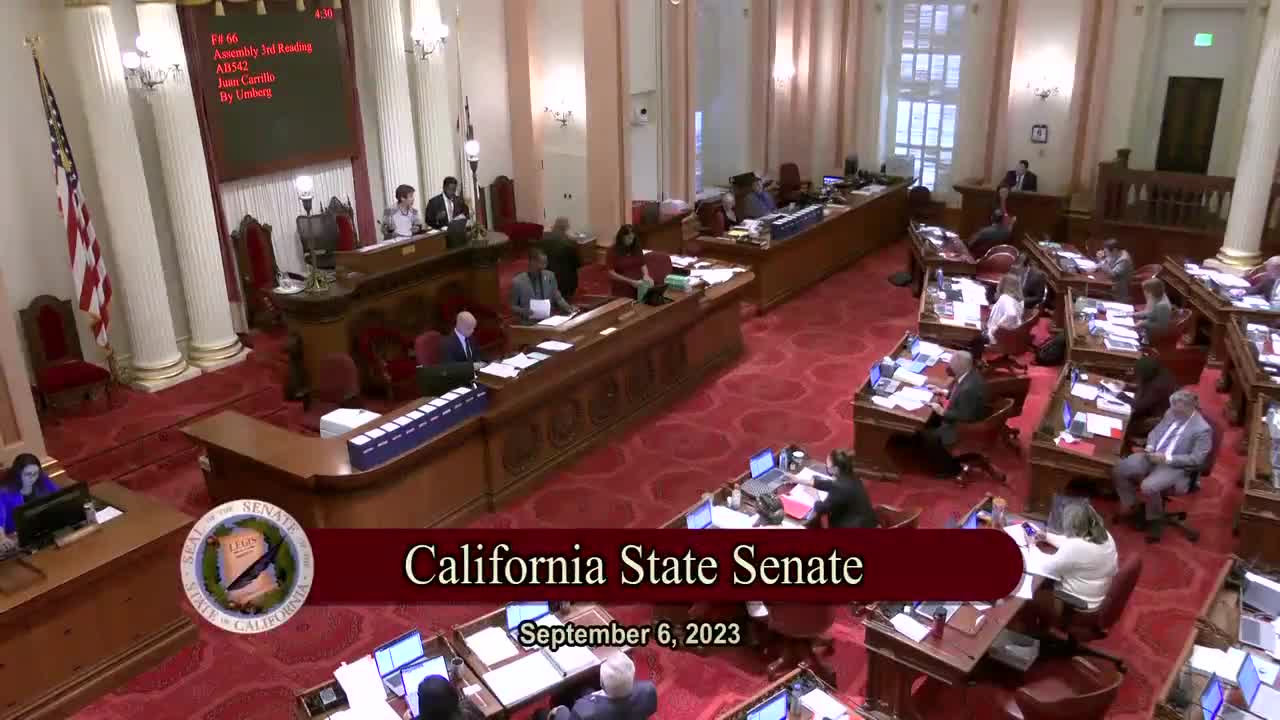 3MIN
Senate Floor
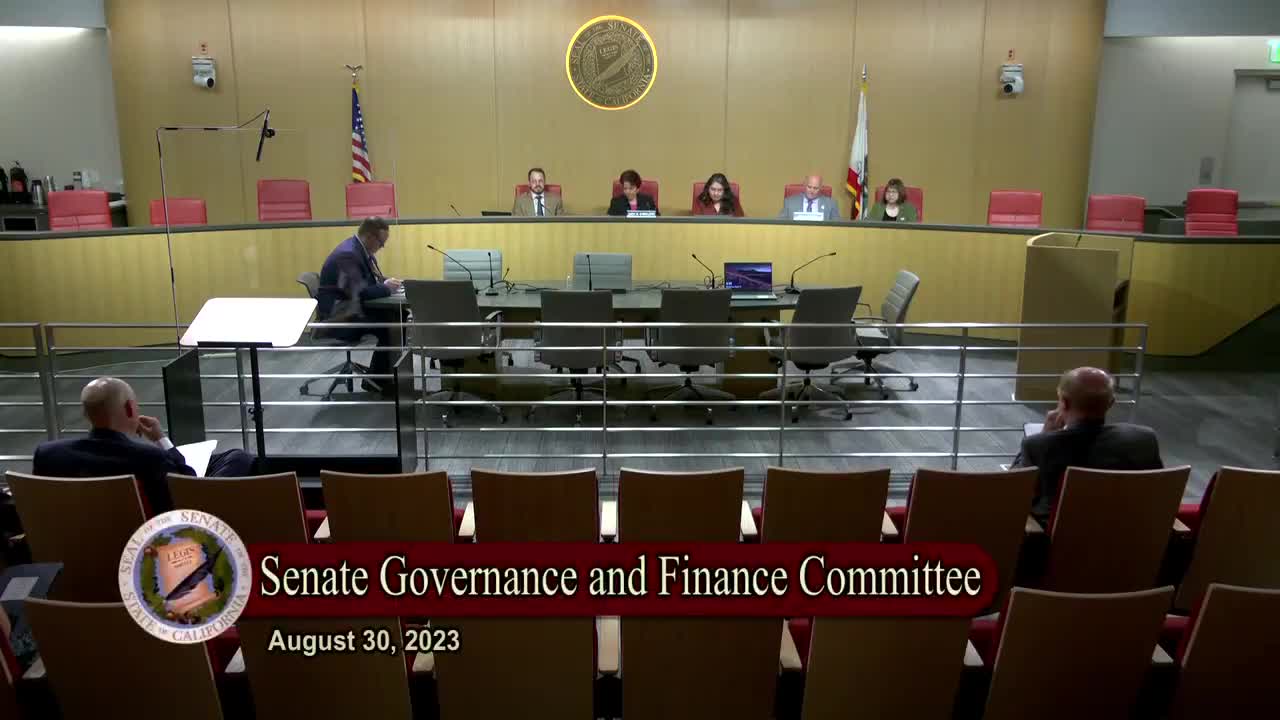 19MIN
Senate Standing Committee on Governance and Finance
 1MIN
Assembly Floor
 7MIN
Assembly Standing Committee on Revenue and Taxation
 5MIN
Assembly Standing Committee on Local Government
 2MIN
Senate Floor
 2MIN
Senate Standing Committee on Agriculture
Bill Author
Bill Co-Author(s):