SB 90: Health care coverage: insulin affordability.
- Session Year: 2023-2024
- House: Senate
- Latest Version Date: 2023-09-14
Current Status:
Failed
(2024-01-25: Stricken from file.)
Introduced
In Committee
First Chamber
In Committee
Second Chamber
Enacted
What does this bill do?
Most California health plans and disability insurance policies that cover prescriptions would have to limit a patient’s out‑of‑pocket cost for insulin to $35 for a 30‑day supply, and high‑deductible plans could not apply the deductible or other cost sharing to insulin unless federal rules require it. The bill also requires plans to cover at least two insulins of each drug type (or one if only one exists) and to provide diabetes self‑management training and related supplies when medically necessary.
The summary is provided by generative AI which can make mistakes. For original language, please view the details in the table below.
Existing law, the Knox-Keene Health Care Service Plan Act of 1975, provides for the licensure and regulation of health care service plans by the Department of Managed Health Care and makes a willful violation of the acts requirements a crime. Existing law provides for the regulation of health insurers by the Department of Insurance. Existing law requires a health care service plan contract or disability insurance policy issued, amended, delivered, or renewed on or after January 1, 2000, that covers prescription benefits to include coverage for insulin if it is determined to be medically necessary.
This bill would prohibit a health care service plan contract or a disability insurance policy, as specified, issued, amended, delivered, or renewed on or after January 1, 2024, or a contract or policy offered in the individual or small group market on or after January 1, 2025, from imposing a copayment, coinsurance, deductible, or other out-of-pocket expense of more than $35 for a 30-day supply of an insulin prescription drug, and would prohibit a high deductible health plan from imposing a deductible, coinsurance, or other cost sharing on an insulin prescription drug, as specified. Because a willful violation of these provisions by a health care service plan would be a crime, the bill would impose a state-mandated local program.
The California Constitution requires the state to reimburse local agencies and school districts for certain costs mandated by the state. Statutory provisions establish procedures for making that reimbursement.
This bill would provide that no reimbursement is required by this act for a specified reason.
Existing law, the Knox-Keene Health Care Service Plan Act of 1975, provides for the licensure and regulation of health care service plans by the Department of Managed Health Care and makes a willful violation of the acts requirements a crime. Existing law provides for the regulation of health insurers by the Department of Insurance. Existing law requires a health care service plan contract or disability insurance policy issued, amended, delivered, or renewed on or after January 1, 2000, that covers prescription benefits to include coverage for insulin if it is determined to be medically necessary.
This bill would prohibit a health care service plan contract or a disability insurance policy, as specified, issued, amended, delivered, or renewed on or after January 1, 2024, or a contract or policy offered in the individual or small group market on or after January 1, 2025, from imposing a copayment copayment, coinsurance, deductible, or other out-of-pocket expense of more than $35 for a 30-day supply of an insulin prescription drug or imposing a deductible, coinsurance, or other cost sharing on an insulin prescription drug, and would prohibit a high deductible health plan from imposing a deductible, coinsurance, or other cost sharing on an insulin prescription drug, as specified. Because a willful violation of these provisions by a health care service plan would be a crime, the bill would impose a state-mandated local program.
The California Constitution requires the state to reimburse local agencies and school districts for certain costs mandated by the state. Statutory provisions establish procedures for making that reimbursement.
This bill would provide that no reimbursement is required by this act for a specified reason.
Existing law, the Knox-Keene Health Care Service Plan Act of 1975, provides for the licensure and regulation of health care service plans by the Department of Managed Health Care and makes a willful violation of the acts requirements a crime. Existing law provides for the regulation of health insurers by the Department of Insurance. Existing law requires a health care service plan contract or disability insurance policy issued, amended, delivered, or renewed on or after January 1, 2000, that covers prescription benefits to include coverage for insulin if it is determined to be medically necessary.
This bill would prohibit a health care service plan contract or a disability insurance policy, as specified, issued, amended, delivered, or renewed on or after January 1, 2024, or a contract or policy offered in the individual or small group market on or after January 1, 2025, from imposing a copayment of more than $35 for a 30-day supply of an insulin prescription drug or imposing a deductible, coinsurance, or other cost sharing on an insulin prescription drug, and would prohibit a high deductible health plan from imposing a deductible, coinsurance, or other cost sharing on an insulin prescription drug, as specified. Because a willful violation of these provisions by a health care service plan would be a crime, the bill would impose a state-mandated local program.
The California Constitution requires the state to reimburse local agencies and school districts for certain costs mandated by the state. Statutory provisions establish procedures for making that reimbursement.
This bill would provide that no reimbursement is required by this act for a specified reason.
Existing law, the Knox-Keene Health Care Service Plan Act of 1975, provides for the licensure and regulation of health care service plans by the Department of Managed Health Care and makes a willful violation of the acts requirements a crime. Existing law provides for the regulation of health insurers by the Department of Insurance. Existing law requires a health care service plan contract or disability insurance policy issued, amended, delivered, or renewed on or after January 1, 2000, that covers prescription benefits to include coverage for insulin if it is determined to be medically necessary.
This bill would prohibit a health care service plan contract or a disability insurance policy, as specified, issued, amended, delivered, or renewed on or after January 1, 2024, from imposing a deductible on an insulin prescription drug or imposing a copayment of more than $35 for a 30-day supply of an insulin prescription drug or imposing a deductible, coinsurance, or other cost sharing on an insulin prescription drug, except as specified for and would prohibit a high deductible health plan. plan from imposing a deductible, coinsurance, or other cost sharing on an insulin prescription drug, as specified. Because a willful violation of these provisions by a health care service plan would be a crime, the bill would impose a state-mandated local program.
The California Constitution requires the state to reimburse local agencies and school districts for certain costs mandated by the state. Statutory provisions establish procedures for making that reimbursement.
This bill would provide that no reimbursement is required by this act for a specified reason.
Existing law, the Knox-Keene Health Care Service Plan Act of 1975, provides for the licensure and regulation of health care service plans by the Department of Managed Health Care and makes a willful violation of the acts requirements a crime. Existing law provides for the regulation of health insurers by the Department of Insurance. Existing law requires a health care service plan contract or disability insurance policy issued, amended, delivered, or renewed on or after January 1, 2000, that covers prescription benefits to include coverage for insulin if it is determined to be medically necessary.
This bill would prohibit a health care service plan contract or a disability insurance policy, as specified, issued, amended, delivered, or renewed on or after January 1, 2024, from imposing a deductible on an insulin prescription drug or imposing a copayment of more than $35 for a 30-day supply of an insulin prescription drug, except as specified for a high deductible health plan. Because a willful violation of these provisions by a health care service plan would be a crime, the bill would impose a state-mandated local program.
The California Constitution requires the state to reimburse local agencies and school districts for certain costs mandated by the state. Statutory provisions establish procedures for making that reimbursement.
This bill would provide that no reimbursement is required by this act for a specified reason.
(a)The Legislature finds and declares all of the following:
(1)Approximately 263,000 Californians are diagnosed with type 1 diabetes each year. Approximately 4,037,000 Californian adults have diabetes.
(2)Every Californian with type 1 diabetes, and many with type 2 diabetes, rely on daily doses of insulin to survive.
(3)Insulin prices have nearly tripled, creating financial hardships for people who rely on it to survive.
(4)One in four people using insulin have reported insulin underuse due to the high cost of insulin.
(5)Imposing a deductible on insulin, and requiring individuals to meet that deductible, creates a financial burden that presents a barrier to accessing insulin.
(6)Diabetes is the seventh leading cause of death, and it is a leading cause of disabling and life-threatening complications, including heart disease, stroke, kidney failure, amputation of the lower extremities, and new cases of blindness among adults.
(7)Studies have shown that managing diabetes can prevent complications and medical emergencies associated with diabetes that result in emergency room visits, hospitalizations, and costly treatments.
(b)Therefore, it is the intent of the Legislature to enact legislation on important policies to reduce the costs for Californians with diabetes to obtain lifesaving and life-sustaining insulin.
SEC. 2.Section 1367.51 of the Health and Safety Code is amended to read:1367.51.(a)A health care service plan contract, except a specialized health care service plan contract, that is issued, amended, delivered, or renewed on or after January 1, 2000, and that covers hospital, medical, or surgical expenses shall include coverage for the following equipment and supplies for the management and treatment of insulin-using diabetes, non-insulin-using diabetes, and gestational diabetes as medically necessary, even if the items are available without a prescription:
(1)Blood glucose monitors and blood glucose testing strips.
(2)Blood glucose monitors designed to assist the visually impaired.
(3)Insulin pumps and all related necessary supplies.
(4)Ketone urine testing strips.
(5)Lancets and lancet puncture devices.
(6)Pen delivery systems for the administration of insulin.
(7)Podiatric devices to prevent or treat diabetes-related complications.
(8)Insulin syringes.
(9)Visual aids, excluding eyewear, to assist the visually impaired with proper dosing of insulin.
(b)A health care service plan contract, except a specialized health care service plan contract, that is issued, amended, delivered, or renewed on or after January 1, 2000, that covers prescription benefits shall include coverage for the following prescription items if the items are determined to be medically necessary:
(1)Insulin. For a health care service plan contract, except a specialized health care service plan contract, that is issued, amended, delivered, or renewed on or after January 1, 2024, that covers prescription benefits, coverage shall include all dosage forms and concentrations of at least two insulins for each insulin drug type, within the insulin class, of the relevant United States Pharmacopeia therapeutic category. If there is only one insulin for a given drug type, then only one insulin, in all dosage forms and concentrations, shall be covered.
(2)Prescriptive medications for the treatment of diabetes.
(3)Glucagon.
(c)The copayments and deductibles for the benefits specified in subdivisions (a) and (b) shall not exceed those established for similar benefits within the given plan.
(d)(1)Notwithstanding subdivision (c), a health care service plan contract that is issued, amended, or renewed on or after January 1, 2024, or a contract offered in the individual or small group market on or after January 1, 2025, shall not impose a copayment, coinsurance, deductible, or other out-of-pocket expense on an insulin prescription drug that exceeds thirty-five dollars ($35) for a 30-day supply.
(2)If a health care service plan contract for an individual or small group product maintains a drug formulary grouped into tiers, as long as there are at least two insulins of each drug type, in all forms and concentrations, on a preferred tier, the out-of-pocket cap of not more than thirty-five dollars ($35) for a 30-day supply, pursuant to paragraph (1), shall apply only to insulin prescription drugs that are in Tier 1 and Tier 2. If there is only one insulin for a given drug type, then, as to that insulin, this requirement shall be met by placing that one insulin on Tier 1 or Tier 2. For purposes of this paragraph, drug type means rapid acting, rapid acting inhaled, regular or short acting, intermediate acting, long acting, ultra-long acting, and premixed.
(3)If a contract is a high deductible health plan under the definition set forth in Section 223(c)(2) of Title 26 of the United States Code, the contract shall not impose a deductible, coinsurance, or any other cost sharing on an insulin prescription drug, unless not applying the deductible, coinsurance, or any other cost sharing to an insulin prescription drug would conflict with federal requirements for high deductible health plans.
(4)For purposes of this subdivision, insulin prescription drug means a prescription drug product that contains insulin and is used to control blood glucose levels to treat diabetes.
(e)A health care service plan shall provide coverage for diabetes outpatient self-management training, education, and medical nutrition therapy necessary to enable an enrollee to properly use the equipment, supplies, and medications set forth in subdivisions (a) and (b), and additional diabetes outpatient self-management training, education, and medical nutrition therapy upon the direction or prescription of those services by the enrollees participating physician. If a plan delegates outpatient self-management training to contracting providers, the plan shall require contracting providers to ensure that diabetes outpatient self-management training, education, and medical nutrition therapy are provided by appropriately licensed or registered health care professionals.
(f)The diabetes outpatient self-management training, education, and medical nutrition therapy services identified in subdivision (e) shall be provided by appropriately licensed or registered health care professionals as prescribed by a participating health care professional legally authorized to prescribe the service. These benefits shall include, but not be limited to, instruction that will enable diabetic patients and their families to gain an understanding of the diabetic disease process, and the daily management of diabetic therapy, in order to thereby avoid frequent hospitalizations and complications.
(g)The copayments for the benefits specified in subdivision (e) shall not exceed those established for physician office visits by the plan.
(h)A health care service plan governed by this section shall disclose the benefits covered pursuant to this section in the plans evidence of coverage and disclosure forms.
(i)A health care service plan shall not reduce or eliminate coverage as a result of this section.
(j)This section does not deny or restrict in any way the departments authority to ensure plan compliance with this chapter if a plan provides coverage for prescription drugs.
SEC. 3.Section 10176.61 of the Insurance Code is amended to read:10176.61.(a)An insurer issuing, amending, delivering, or renewing a disability insurance policy on or after January 1, 2000, that covers hospital, medical, or surgical expenses shall include coverage for the following equipment and supplies for the management and treatment of insulin-using diabetes, non-insulin-using diabetes, and gestational diabetes as medically necessary, even if the items are available without a prescription:
(1)Blood glucose monitors and blood glucose testing strips.
(2)Blood glucose monitors designed to assist the visually impaired.
(3)Insulin pumps and all related necessary supplies.
(4)Ketone urine testing strips.
(5)Lancets and lancet puncture devices.
(6)Pen delivery systems for the administration of insulin.
(7)Podiatric devices to prevent or treat diabetes-related complications.
(8)Insulin syringes.
(9)Visual aids, excluding eyewear, to assist the visually impaired with proper dosing of insulin.
(b)An insurer issuing, amending, delivering, or renewing a disability insurance policy on or after January 1, 2000, that covers prescription benefits shall include coverage for the following prescription items if the items are determined to be medically necessary:
(1)Insulin. For a disability insurance policy issued, amended, delivered, or renewed on or after January 1, 2024, that covers prescription benefits, coverage shall include all dosage forms and concentrations of at least two insulins for each insulin drug type, within the insulin class, of the relevant United States Pharmacopeia therapeutic category. If there is only one insulin for a given drug type, then only one insulin, in all dosage forms and concentrations, shall be covered.
(2)Prescriptive medications for the treatment of diabetes.
(3)Glucagon.
(c)The coinsurances and deductibles for the benefits specified in subdivisions (a) and (b) shall not exceed those established for similar benefits within the given policy.
(d)(1)Notwithstanding subdivision (c), a disability insurance policy that is issued, amended, or renewed on or after January 1, 2024, or a policy offered in the individual or small group market on or after January 1, 2025, shall not impose a copayment, coinsurance, deductible, or other out-of-pocket expense on an insulin prescription drug that exceeds thirty-five dollars ($35) for a 30-day supply.
(2)If a disability insurance policy for an individual or small group product maintains a drug formulary grouped into tiers, as long as there are at least two insulins of each drug type, in all forms and concentrations, on a preferred tier, the out-of-pocket cap of not more than thirty-five dollars ($35) for a 30-day supply, pursuant to paragraph (1), shall apply only to insulin prescription drugs that are in Tier 1 and Tier 2. If there is only one insulin for a given drug type, then, as to that insulin, this requirement shall be met by placing that one insulin on Tier 1 or Tier 2. For purposes of this paragraph, drug type means rapid acting, rapid acting inhaled, regular or short acting, intermediate acting, long acting, ultra-long acting, and premixed.
(3)If a policy is a high deductible health plan under the definition set forth in Section 223(c)(2) of Title 26 of the United States Code, the policy shall not impose a deductible, coinsurance, or any other cost sharing on an insulin prescription drug, unless not applying the deductible, coinsurance, or any other cost sharing to an insulin prescription drug would conflict with federal requirements for high deductible health plans.
(4)For purposes of this subdivision, insulin prescription drug means a prescription drug product that contains insulin and is used to control blood glucose levels to treat diabetes.
(e)An insurer shall provide coverage for diabetes outpatient self-management training, education, and medical nutrition therapy necessary to enable an insured to properly use the equipment, supplies, and medications set forth in subdivisions (a) and (b) and additional diabetes outpatient self-management training, education, and medical nutrition therapy upon the direction or prescription of those services by the insureds participating physician. If an insurer delegates outpatient self-management training to contracting providers, the insurer shall require contracting providers to ensure that diabetes outpatient self-management training, education, and medical nutrition therapy are provided by appropriately licensed or registered health care professionals.
(f)The diabetes outpatient self-management training, education, and medical nutrition therapy services identified in subdivision (e) shall be provided by appropriately licensed or registered health care professionals as prescribed by a health care professional legally authorized to prescribe the services.
(g)The coinsurances and deductibles for the benefits specified in subdivision (e) shall not exceed those established for physician office visits by the insurer.
(h)Every disability insurer governed by this section shall disclose the benefits covered pursuant to this section in the insurers evidence of coverage and disclosure forms.
(i)An insurer shall not reduce or eliminate coverage as a result of this section.
(j)This section does not apply to vision-only, dental-only, accident-only, specified disease, hospital indemnity, Medicare supplement, long-term care, or disability income insurance, except that for accident-only, specified disease, and hospital indemnity insurance coverage, benefits under this section only apply to the extent that the benefits are covered under the general terms and conditions that apply to all other benefits under the policy. This section does not impose a new benefit mandate on accident-only, specified disease, or hospital indemnity insurance.
SEC. 4.No reimbursement is required by this act pursuant to Section 6 of Article XIIIB of the California Constitution because the only costs that may be incurred by a local agency or school district will be incurred because this act creates a new crime or infraction, eliminates a crime or infraction, or changes the penalty for a crime or infraction, within the meaning of Section 17556 of the Government Code, or changes the definition of a crime within the meaning of Section 6 of Article XIIIB of the California Constitution.
(a)The Legislature finds and declares all of the following:
(1)Approximately 263,000 Californians are diagnosed with type 1 diabetes each year. Approximately 4,037,000 Californian adults have diabetes.
(2)Every Californian with type 1 diabetes, and many with type 2 diabetes, rely on daily doses of insulin to survive.
(3)Insulin prices have nearly tripled, creating financial hardships for people who rely on it to survive.
(4)One in four people using insulin have reported insulin underuse due to the high cost of insulin.
(5)Imposing a deductible on insulin, and requiring individuals to meet that deductible, creates a financial burden that presents a barrier to accessing insulin.
(6)Diabetes is the seventh leading cause of death, and it is a leading cause of disabling and life-threatening complications, including heart disease, stroke, kidney failure, amputation of the lower extremities, and new cases of blindness among adults.
(7)Studies have shown that managing diabetes can prevent complications and medical emergencies associated with diabetes that result in emergency room visits, hospitalizations, and costly treatments.
(b)Therefore, it is the intent of the Legislature to enact legislation on important policies to reduce the costs for Californians with diabetes to obtain lifesaving and life-sustaining insulin.
SEC. 2.Section 1367.51 of the Health and Safety Code is amended to read:1367.51.(a)A health care service plan contract, except a specialized health care service plan contract, that is issued, amended, delivered, or renewed on or after January 1, 2000, and that covers hospital, medical, or surgical expenses shall include coverage for the following equipment and supplies for the management and treatment of insulin-using diabetes, non-insulin-using diabetes, and gestational diabetes as medically necessary, even if the items are available without a prescription:
(1)Blood glucose monitors and blood glucose testing strips.
(2)Blood glucose monitors designed to assist the visually impaired.
(3)Insulin pumps and all related necessary supplies.
(4)Ketone urine testing strips.
(5)Lancets and lancet puncture devices.
(6)Pen delivery systems for the administration of insulin.
(7)Podiatric devices to prevent or treat diabetes-related complications.
(8)Insulin syringes.
(9)Visual aids, excluding eyewear, to assist the visually impaired with proper dosing of insulin.
(b)A health care service plan contract, except a specialized health care service plan contract, that is issued, amended, delivered, or renewed on or after January 1, 2000, that covers prescription benefits shall include coverage for the following prescription items if the items are determined to be medically necessary:
(1)Insulin. For a health care service plan contract, except a specialized health care service plan contract, that is issued, amended, delivered, or renewed on or after January 1, 2024, that covers prescription benefits, coverage shall include all dosage forms and concentrations of at least two insulins for each insulin drug type, within the insulin class, of the relevant United States Pharmacopeia therapeutic category. If there is only one insulin for a given drug type, then only one insulin, in all dosage forms and concentrations, shall be covered.
(2)Prescriptive medications for the treatment of diabetes.
(3)Glucagon.
(c)The copayments and deductibles for the benefits specified in subdivisions (a) and (b) shall not exceed those established for similar benefits within the given plan.
(d)(1)Notwithstanding subdivision (c), a health care service plan contract that is issued, amended, or renewed on or after January 1, 2024, or a contract offered in the individual or small group market on or after January 1, 2025, shall not impose a copayment copayment, coinsurance, deductible, or other out-of-pocket expense on an insulin prescription drug that exceeds thirty-five dollars ($35) for a 30-day supply, and shall not impose a deductible, coinsurance, or any other cost sharing on an insulin prescription drug. supply.
(2)If a health care service plan contract for an individual or small group product maintains a drug formulary grouped into tiers, the copayment as long as there are at least two insulins of each drug type, in all forms and concentrations, on a preferred tier, the out-of-pocket cap of not more than thirty-five dollars ($35) for a 30-day supply, pursuant to paragraph (1), shall apply only to insulin prescription drugs that are in Tier 1 and Tier 2. If there is only one insulin for a given drug type, then, as to that insulin, this requirement shall be met by placing that one insulin on Tier 1 or Tier 2. For purposes of this paragraph, drug type means rapid acting, rapid acting inhaled, regular or short acting, intermediate acting, long acting, ultra-long acting, and premixed.
(3)If a contract is a high deductible health plan under the definition set forth in Section 223(c)(2) of Title 26 of the United States Code, the contract shall not impose a deductible, coinsurance, or any other cost sharing on an insulin prescription drug, unless not applying the deductible, coinsurance, or any other cost sharing to an insulin prescription drug would conflict with federal requirements for high deductible health plans.
(4)For purposes of this subdivision, insulin prescription drug means a prescription drug product that contains insulin and is used to control blood glucose levels to treat diabetes.
(e)A health care service plan shall provide coverage for diabetes outpatient self-management training, education, and medical nutrition therapy necessary to enable an enrollee to properly use the equipment, supplies, and medications set forth in subdivisions (a) and (b), and additional diabetes outpatient self-management training, education, and medical nutrition therapy upon the direction or prescription of those services by the enrollees participating physician. If a plan delegates outpatient self-management training to contracting providers, the plan shall require contracting providers to ensure that diabetes outpatient self-management training, education, and medical nutrition therapy are provided by appropriately licensed or registered health care professionals.
(f)The diabetes outpatient self-management training, education, and medical nutrition therapy services identified in subdivision (e) shall be provided by appropriately licensed or registered health care professionals as prescribed by a participating health care professional legally authorized to prescribe the service. These benefits shall include, but not be limited to, instruction that will enable diabetic patients and their families to gain an understanding of the diabetic disease process, and the daily management of diabetic therapy, in order to thereby avoid frequent hospitalizations and complications.
(g)The copayments for the benefits specified in subdivision (e) shall not exceed those established for physician office visits by the plan.
(h)A health care service plan governed by this section shall disclose the benefits covered pursuant to this section in the plans evidence of coverage and disclosure forms.
(i)A health care service plan shall not reduce or eliminate coverage as a result of this section.
(j)This section does not deny or restrict in any way the departments authority to ensure plan compliance with this chapter if a plan provides coverage for prescription drugs.
SEC. 3.Section 10176.61 of the Insurance Code is amended to read:10176.61.(a)An insurer issuing, amending, delivering, or renewing a disability insurance policy on or after January 1, 2000, that covers hospital, medical, or surgical expenses shall include coverage for the following equipment and supplies for the management and treatment of insulin-using diabetes, non-insulin-using diabetes, and gestational diabetes as medically necessary, even if the items are available without a prescription:
(1)Blood glucose monitors and blood glucose testing strips.
(2)Blood glucose monitors designed to assist the visually impaired.
(3)Insulin pumps and all related necessary supplies.
(4)Ketone urine testing strips.
(5)Lancets and lancet puncture devices.
(6)Pen delivery systems for the administration of insulin.
(7)Podiatric devices to prevent or treat diabetes-related complications.
(8)Insulin syringes.
(9)Visual aids, excluding eyewear, to assist the visually impaired with proper dosing of insulin.
(b)An insurer issuing, amending, delivering, or renewing a disability insurance policy on or after January 1, 2000, that covers prescription benefits shall include coverage for the following prescription items if the items are determined to be medically necessary:
(1)Insulin. For a disability insurance policy issued, amended, delivered, or renewed on or after January 1, 2024, that covers prescription benefits, coverage shall include all dosage forms and concentrations of at least two insulins for each insulin drug type, within the insulin class, of the relevant United States Pharmacopeia therapeutic category. If there is only one insulin for a given drug type, then only one insulin, in all dosage forms and concentrations, shall be covered.
(2)Prescriptive medications for the treatment of diabetes.
(3)Glucagon.
(c)The coinsurances and deductibles for the benefits specified in subdivisions (a) and (b) shall not exceed those established for similar benefits within the given policy.
(d)(1)Notwithstanding subdivision (c), a disability insurance policy that is issued, amended, or renewed on or after January 1, 2024, or a policy offered in the individual or small group market on or after January 1, 2025, shall not impose a copayment copayment, coinsurance, deductible, or other out-of-pocket expense on an insulin prescription drug that exceeds thirty-five dollars ($35) for a 30-day supply, and shall not impose a deductible, coinsurance, or any other cost sharing on an insulin prescription drug. supply.
(2)If a disability insurance policy for an individual or small group product maintains a drug formulary grouped into tiers, the copayment as long as there are at least two insulins of each drug type, in all forms and concentrations, on a preferred tier, the out-of-pocket cap of not more than thirty-five dollars ($35) for a 30-day supply, pursuant to paragraph (1), shall apply only to insulin prescription drugs that are in Tier 1 and Tier 2. If there is only one insulin for a given drug type, then, as to that insulin, this requirement shall be met by placing that one insulin on Tier 1 or Tier 2. For purposes of this paragraph, drug type means rapid acting, rapid acting inhaled, regular or short acting, intermediate acting, long acting, ultra-long acting, and premixed.
(3)If a policy is a high deductible health plan under the definition set forth in Section 223(c)(2) of Title 26 of the United States Code, the policy shall not impose a deductible, coinsurance, or any other cost sharing on an insulin prescription drug, unless not applying the deductible, coinsurance, or any other cost sharing to an insulin prescription drug would conflict with federal requirements for high deductible health plans.
(4)For purposes of this subdivision, insulin prescription drug means a prescription drug product that contains insulin and is used to control blood glucose levels to treat diabetes.
(e)An insurer shall provide coverage for diabetes outpatient self-management training, education, and medical nutrition therapy necessary to enable an insured to properly use the equipment, supplies, and medications set forth in subdivisions (a) and (b) and additional diabetes outpatient self-management training, education, and medical nutrition therapy upon the direction or prescription of those services by the insureds participating physician. If an insurer delegates outpatient self-management training to contracting providers, the insurer shall require contracting providers to ensure that diabetes outpatient self-management training, education, and medical nutrition therapy are provided by appropriately licensed or registered health care professionals.
(f)The diabetes outpatient self-management training, education, and medical nutrition therapy services identified in subdivision (e) shall be provided by appropriately licensed or registered health care professionals as prescribed by a health care professional legally authorized to prescribe the services.
(g)The coinsurances and deductibles for the benefits specified in subdivision (e) shall not exceed those established for physician office visits by the insurer.
(h)Every disability insurer governed by this section shall disclose the benefits covered pursuant to this section in the insurers evidence of coverage and disclosure forms.
(i)An insurer shall not reduce or eliminate coverage as a result of this section.
(j)This section does not apply to vision-only, dental-only, accident-only, specified disease, hospital indemnity, Medicare supplement, long-term care, or disability income insurance, except that for accident-only, specified disease, and hospital indemnity insurance coverage, benefits under this section only apply to the extent that the benefits are covered under the general terms and conditions that apply to all other benefits under the policy. This section does not impose a new benefit mandate on accident-only, specified disease, or hospital indemnity insurance.
SEC. 4.No reimbursement is required by this act pursuant to Section 6 of Article XIIIB of the California Constitution because the only costs that may be incurred by a local agency or school district will be incurred because this act creates a new crime or infraction, eliminates a crime or infraction, or changes the penalty for a crime or infraction, within the meaning of Section 17556 of the Government Code, or changes the definition of a crime within the meaning of Section 6 of Article XIIIB of the California Constitution.
(a)The Legislature finds and declares all of the following:
(1)Approximately 263,000 Californians are diagnosed with type 1 diabetes each year. Approximately 4,037,000 Californian adults have diabetes.
(2)Every Californian with type 1 diabetes, and many with type 2 diabetes, rely on daily doses of insulin to survive.
(3)Insulin prices have nearly tripled, creating financial hardships for people who rely on it to survive.
(4)One in four people using insulin have reported insulin underuse due to the high cost of insulin.
(5)Imposing a deductible on insulin, and requiring individuals to meet that deductible, creates a financial burden that presents a barrier to accessing insulin.
(6)Diabetes is the seventh leading cause of death, and it is a leading cause of disabling and life-threatening complications, including heart disease, stroke, kidney failure, amputation of the lower extremities, and new cases of blindness among adults.
(7)Studies have shown that managing diabetes can prevent complications and medical emergencies associated with diabetes that result in emergency room visits, hospitalizations, and costly treatments.
(b)Therefore, it is the intent of the Legislature to enact legislation on important policies to reduce the costs for Californians with diabetes to obtain lifesaving and life-sustaining insulin.
SEC. 2.Section 1367.51 of the Health and Safety Code is amended to read:1367.51.(a)A health care service plan contract, except a specialized health care service plan contract, that is issued, amended, delivered, or renewed on or after January 1, 2000, and that covers hospital, medical, or surgical expenses shall include coverage for the following equipment and supplies for the management and treatment of insulin-using diabetes, non-insulin-using diabetes, and gestational diabetes as medically necessary, even if the items are available without a prescription:
(1)Blood glucose monitors and blood glucose testing strips.
(2)Blood glucose monitors designed to assist the visually impaired.
(3)Insulin pumps and all related necessary supplies.
(4)Ketone urine testing strips.
(5)Lancets and lancet puncture devices.
(6)Pen delivery systems for the administration of insulin.
(7)Podiatric devices to prevent or treat diabetes-related complications.
(8)Insulin syringes.
(9)Visual aids, excluding eyewear, to assist the visually impaired with proper dosing of insulin.
(b)A health care service plan contract, except a specialized health care service plan contract, that is issued, amended, delivered, or renewed on or after January 1, 2000, that covers prescription benefits shall include coverage for the following prescription items if the items are determined to be medically necessary:
(1)Insulin.
(2)Prescriptive medications for the treatment of diabetes.
(3)Glucagon.
(c)The copayments and deductibles for the benefits specified in subdivisions (a) and (b) shall not exceed those established for similar benefits within the given plan.
(d)(1)Notwithstanding subdivision (c), a health care service plan contract that is issued, amended, or renewed on or after January 1, 2024, or a contract offered in the individual or small group market on or after January 1, 2025, shall not impose a copayment on an insulin prescription drug that exceeds thirty-five dollars ($35) for a 30-day supply, and shall not impose a deductible, coinsurance, or any other cost sharing on an insulin prescription drug.
(2)If a health care service plan contract for an individual or small group product maintains a drug formulary grouped into tiers, the copayment of not more than thirty-five dollars ($35) for a 30-day supply, pursuant to paragraph (1), shall apply only to insulin prescription drugs that are in Tier 1 and Tier 2.
(2)(3)If a contract is a high deductible health plan under the definition set forth in Section 223(c)(2) of Title 26 of the United States Code, the contract shall not impose a deductible, coinsurance, or any other cost sharing on an insulin prescription drug, unless not applying the deductible, coinsurance, or any other cost sharing to an insulin prescription drug would conflict with federal requirements for high deductible health plans.
(3)When the state has the capacity to label or produce an insulin prescription drug, the deductible and copayment limitations in paragraph (1) shall also apply to an insulin prescription drug, or any therapeutic equivalent insulin prescription drug, that is labeled or produced by the state.(4)For purposes of this subdivision, insulin prescription drug means a prescription drug product that contains insulin and is used to control blood glucose levels to treat diabetes.
(e)A health care service plan shall provide coverage for diabetes outpatient self-management training, education, and medical nutrition therapy necessary to enable an enrollee to properly use the equipment, supplies, and medications set forth in subdivisions (a) and (b), and additional diabetes outpatient self-management training, education, and medical nutrition therapy upon the direction or prescription of those services by the enrollees participating physician. If a plan delegates outpatient self-management training to contracting providers, the plan shall require contracting providers to ensure that diabetes outpatient self-management training, education, and medical nutrition therapy are provided by appropriately licensed or registered health care professionals.
(f)The diabetes outpatient self-management training, education, and medical nutrition therapy services identified in subdivision (e) shall be provided by appropriately licensed or registered health care professionals as prescribed by a participating health care professional legally authorized to prescribe the service. These benefits shall include, but not be limited to, instruction that will enable diabetic patients and their families to gain an understanding of the diabetic disease process, and the daily management of diabetic therapy, in order to thereby avoid frequent hospitalizations and complications.
(g)The copayments for the benefits specified in subdivision (e) shall not exceed those established for physician office visits by the plan.
(h)A health care service plan governed by this section shall disclose the benefits covered pursuant to this section in the plans evidence of coverage and disclosure forms.
(i)A health care service plan shall not reduce or eliminate coverage as a result of this section.
(j)This section does not deny or restrict in any way the departments authority to ensure plan compliance with this chapter if a plan provides coverage for prescription drugs.
SEC. 3.Section 10176.61 of the Insurance Code is amended to read:10176.61.(a)An insurer issuing, amending, delivering, or renewing a disability insurance policy on or after January 1, 2000, that covers hospital, medical, or surgical expenses shall include coverage for the following equipment and supplies for the management and treatment of insulin-using diabetes, non-insulin-using diabetes, and gestational diabetes as medically necessary, even if the items are available without a prescription:
(1)Blood glucose monitors and blood glucose testing strips.
(2)Blood glucose monitors designed to assist the visually impaired.
(3)Insulin pumps and all related necessary supplies.
(4)Ketone urine testing strips.
(5)Lancets and lancet puncture devices.
(6)Pen delivery systems for the administration of insulin.
(7)Podiatric devices to prevent or treat diabetes-related complications.
(8)Insulin syringes.
(9)Visual aids, excluding eyewear, to assist the visually impaired with proper dosing of insulin.
(b)An insurer issuing, amending, delivering, or renewing a disability insurance policy on or after January 1, 2000, that covers prescription benefits shall include coverage for the following prescription items if the items are determined to be medically necessary:
(1)Insulin.
(2)Prescriptive medications for the treatment of diabetes.
(3)Glucagon.
(c)The coinsurances and deductibles for the benefits specified in subdivisions (a) and (b) shall not exceed those established for similar benefits within the given policy.
(d)(1)Notwithstanding subdivision (c), a disability insurance policy that is issued, amended, or renewed on or after January 1, 2024, or a policy offered in the individual or small group market on or after January 1, 2025, shall not impose a copayment on an insulin prescription drug that exceeds thirty-five dollars ($35) for a 30-day supply, and shall not impose a deductible, coinsurance, or any other cost sharing on an insulin prescription drug.
(2)If a disability insurance policy for an individual or small group product maintains a drug formulary grouped into tiers, the copayment of not more than thirty-five dollars ($35) for a 30-day supply, pursuant to paragraph (1), shall apply only to insulin prescription drugs that are in Tier 1 and Tier 2.
(2)(3)If a policy is a high deductible health plan under the definition set forth in Section 223(c)(2) of Title 26 of the United States Code, the policy shall not impose a deductible, coinsurance, or any other cost sharing on an insulin prescription drug, unless not applying the deductible, coinsurance, or any other cost sharing to an insulin prescription drug would conflict with federal requirements for high deductible health plans.
(3)When the state has the capacity to label or produce an insulin prescription drug, the deductible and copayment limitations in paragraph (1) shall also apply to an insulin prescription drug, or any therapeutic equivalent insulin prescription drug, that is labeled or produced by the state.(4)For purposes of this subdivision, insulin prescription drug means a prescription drug product that contains insulin and is used to control blood glucose levels to treat diabetes.
(e)An insurer shall provide coverage for diabetes outpatient self-management training, education, and medical nutrition therapy necessary to enable an insured to properly use the equipment, supplies, and medications set forth in subdivisions (a) and (b) and additional diabetes outpatient self-management training, education, and medical nutrition therapy upon the direction or prescription of those services by the insureds participating physician. If an insurer delegates outpatient self-management training to contracting providers, the insurer shall require contracting providers to ensure that diabetes outpatient self-management training, education, and medical nutrition therapy are provided by appropriately licensed or registered health care professionals.
(f)The diabetes outpatient self-management training, education, and medical nutrition therapy services identified in subdivision (e) shall be provided by appropriately licensed or registered health care professionals as prescribed by a health care professional legally authorized to prescribe the services.
(g)The coinsurances and deductibles for the benefits specified in subdivision (e) shall not exceed those established for physician office visits by the insurer.
(h)Every disability insurer governed by this section shall disclose the benefits covered pursuant to this section in the insurers evidence of coverage and disclosure forms.
(i)An insurer shall not reduce or eliminate coverage as a result of this section.
(j)This section does not apply to vision-only, dental-only, accident-only, specified disease, hospital indemnity, Medicare supplement, long-term care, or disability income insurance, except that for accident-only, specified disease, and hospital indemnity insurance coverage, benefits under this section only apply to the extent that the benefits are covered under the general terms and conditions that apply to all other benefits under the policy. This section does not impose a new benefit mandate on accident-only, specified disease, or hospital indemnity insurance.
SEC. 4.No reimbursement is required by this act pursuant to Section 6 of Article XIIIB of the California Constitution because the only costs that may be incurred by a local agency or school district will be incurred because this act creates a new crime or infraction, eliminates a crime or infraction, or changes the penalty for a crime or infraction, within the meaning of Section 17556 of the Government Code, or changes the definition of a crime within the meaning of Section 6 of Article XIIIB of the California Constitution.
(a)The Legislature finds and declares all of the following:
(1)Approximately 263,000 Californians are diagnosed with type 1 diabetes each year. Approximately 4,037,000 Californian adults have diabetes.
(2)Every Californian with type 1 diabetes, and many with type 2 diabetes, rely on daily doses of insulin to survive.
(3)Insulin prices have nearly tripled, creating financial hardships for people who rely on it to survive.
(4)One in four people using insulin have reported insulin underuse due to the high cost of insulin.
(5)Imposing a deductible on insulin, and requiring individuals to meet that deductible, creates a financial burden that presents a barrier to accessing insulin.
(6)Diabetes is the seventh leading cause of death, and it is a leading cause of disabling and life-threatening complications, including heart disease, stroke, kidney failure, amputation of the lower extremities, and new cases of blindness among adults.
(7)Studies have shown that managing diabetes can prevent complications and medical emergencies associated with diabetes that result in emergency room visits, hospitalizations, and costly treatments.
(b)Therefore, it is the intent of the Legislature to enact legislation on important policies to reduce the costs for Californians with diabetes to obtain lifesaving and life-sustaining insulin.
SEC. 2.Section 1367.51 of the Health and Safety Code is amended to read:1367.51.(a)A health care service plan contract, except a specialized health care service plan contract, that is issued, amended, delivered, or renewed on or after January 1, 2000, and that covers hospital, medical, or surgical expenses shall include coverage for the following equipment and supplies for the management and treatment of insulin-using diabetes, non-insulin-using diabetes, and gestational diabetes as medically necessary, even if the items are available without a prescription:
(1)Blood glucose monitors and blood glucose testing strips.
(2)Blood glucose monitors designed to assist the visually impaired.
(3)Insulin pumps and all related necessary supplies.
(4)Ketone urine testing strips.
(5)Lancets and lancet puncture devices.
(6)Pen delivery systems for the administration of insulin.
(7)Podiatric devices to prevent or treat diabetes-related complications.
(8)Insulin syringes.
(9)Visual aids, excluding eyewear, to assist the visually impaired with proper dosing of insulin.
(b)A health care service plan contract, except a specialized health care service plan contract, that is issued, amended, delivered, or renewed on or after January 1, 2000, that covers prescription benefits shall include coverage for the following prescription items if the items are determined to be medically necessary:
(1)Insulin.
(2)Prescriptive medications for the treatment of diabetes.
(3)Glucagon.
(c)The copayments and deductibles for the benefits specified in subdivisions (a) and (b) shall not exceed those established for similar benefits within the given plan.
(d)(1)Notwithstanding subdivision (c), a health care service plan contract that is issued, amended, or renewed on or after January 1, 2024, shall not impose a deductible on an insulin prescription drug and shall not impose a copayment on an insulin prescription drug that exceeds thirty-five dollars ($35) for a 30-day supply. supply, and shall not impose a deductible, coinsurance, or any other cost sharing on an insulin prescription drug.
(2)For a health care service plan contract that If a contract is a high deductible health plan under the definition set forth in Section 223(c)(2) of Title 26 of the United States Code, paragraph (1) shall apply only to an insulin prescription drug that is included as preventive care for the purposes of Section 223(c)(2)(C) of Title 26 of the United States Code. the contract shall not impose a deductible, coinsurance, or any other cost sharing on an insulin prescription drug, unless not applying the deductible, coinsurance, or any other cost sharing to an insulin prescription drug would conflict with federal requirements for high deductible health plans.
(3)When the state has the capacity to label or produce an insulin prescription drug, the deductible and copayment limitation limitations in paragraph (1) shall also apply to an insulin prescription drug product, drug, or any therapeutic equivalent, equivalent insulin prescription drug, that is labeled or produced by the state.
(4)For purposes of this subdivision, insulin prescription drug means a prescription drug product that contains insulin and is used to control blood glucose levels to treat diabetes.
(e)A health care service plan shall provide coverage for diabetes outpatient self-management training, education, and medical nutrition therapy necessary to enable an enrollee to properly use the equipment, supplies, and medications set forth in subdivisions (a) and (b), and additional diabetes outpatient self-management training, education, and medical nutrition therapy upon the direction or prescription of those services by the enrollees participating physician. If a plan delegates outpatient self-management training to contracting providers, the plan shall require contracting providers to ensure that diabetes outpatient self-management training, education, and medical nutrition therapy are provided by appropriately licensed or registered health care professionals.
(f)The diabetes outpatient self-management training, education, and medical nutrition therapy services identified in subdivision (e) shall be provided by appropriately licensed or registered health care professionals as prescribed by a participating health care professional legally authorized to prescribe the service. These benefits shall include, but not be limited to, instruction that will enable diabetic patients and their families to gain an understanding of the diabetic disease process, and the daily management of diabetic therapy, in order to thereby avoid frequent hospitalizations and complications.
(g)The copayments for the benefits specified in subdivision (e) shall not exceed those established for physician office visits by the plan.
(h)A health care service plan governed by this section shall disclose the benefits covered pursuant to this section in the plans evidence of coverage and disclosure forms.
(i)A health care service plan shall not reduce or eliminate coverage as a result of this section.
(j)This section does not deny or restrict in any way the departments authority to ensure plan compliance with this chapter if a plan provides coverage for prescription drugs.
SEC. 3.Section 10176.61 of the Insurance Code is amended to read:10176.61.(a)An insurer issuing, amending, delivering, or renewing a disability insurance policy on or after January 1, 2000, that covers hospital, medical, or surgical expenses shall include coverage for the following equipment and supplies for the management and treatment of insulin-using diabetes, non-insulin-using diabetes, and gestational diabetes as medically necessary, even if the items are available without a prescription:
(1)Blood glucose monitors and blood glucose testing strips.
(2)Blood glucose monitors designed to assist the visually impaired.
(3)Insulin pumps and all related necessary supplies.
(4)Ketone urine testing strips.
(5)Lancets and lancet puncture devices.
(6)Pen delivery systems for the administration of insulin.
(7)Podiatric devices to prevent or treat diabetes-related complications.
(8)Insulin syringes.
(9)Visual aids, excluding eyewear, to assist the visually impaired with proper dosing of insulin.
(b)An insurer issuing, amending, delivering, or renewing a disability insurance policy on or after January 1, 2000, that covers prescription benefits shall include coverage for the following prescription items if the items are determined to be medically necessary:
(1)Insulin.
(2)Prescriptive medications for the treatment of diabetes.
(3)Glucagon.
(c)The coinsurances and deductibles for the benefits specified in subdivisions (a) and (b) shall not exceed those established for similar benefits within the given policy.
(d)(1)Notwithstanding subdivision (c), a disability insurance policy that is issued, amended, or renewed on or after January 1, 2024, shall not impose a deductible on an insulin prescription drug and shall not impose a copayment on an insulin prescription drug that exceeds thirty-five dollars ($35) for a 30-day supply. supply, and shall not impose a deductible, coinsurance, or any other cost sharing on an insulin prescription drug.
(2)For a disability insurance policy that If a policy is a high deductible health plan under the definition set forth in Section 223(c)(2) of Title 26 of the United States Code, paragraph (1) shall apply only to an insulin prescription drug that is included as preventive care for the purposes of Section 223(c)(2)(C) of Title 26 of the United States Code. the policy shall not impose a deductible, coinsurance, or any other cost sharing on an insulin prescription drug, unless not applying the deductible, coinsurance, or any other cost sharing to an insulin prescription drug would conflict with federal requirements for high deductible health plans.
(3)When the state has the capacity to label or produce an insulin prescription drug, the deductible and copayment limitation limitations in paragraph (1) shall also apply to an insulin prescription drug product, drug, or any therapeutic equivalent, equivalent insulin prescription drug, that is labeled or produced by the state.
(4)For purposes of this subdivision, insulin prescription drug means a prescription drug product that contains insulin and is used to control blood glucose levels to treat diabetes.
(e)An insurer shall provide coverage for diabetes outpatient self-management training, education, and medical nutrition therapy necessary to enable an insured to properly use the equipment, supplies, and medications set forth in subdivisions (a) and (b) and additional diabetes outpatient self-management training, education, and medical nutrition therapy upon the direction or prescription of those services by the insureds participating physician. If an insurer delegates outpatient self-management training to contracting providers, the insurer shall require contracting providers to ensure that diabetes outpatient self-management training, education, and medical nutrition therapy are provided by appropriately licensed or registered health care professionals.
(f)The diabetes outpatient self-management training, education, and medical nutrition therapy services identified in subdivision (e) shall be provided by appropriately licensed or registered health care professionals as prescribed by a health care professional legally authorized to prescribe the services.
(g)The coinsurances and deductibles for the benefits specified in subdivision (e) shall not exceed those established for physician office visits by the insurer.
(h)Every disability insurer governed by this section shall disclose the benefits covered pursuant to this section in the insurers evidence of coverage and disclosure forms.
(i)An insurer shall not reduce or eliminate coverage as a result of this section.
(j)This section does not apply to vision-only, dental-only, accident-only, specified disease, hospital indemnity, Medicare supplement, long-term care, or disability income insurance, except that for accident-only, specified disease, and hospital indemnity insurance coverage, benefits under this section only apply to the extent that the benefits are covered under the general terms and conditions that apply to all other benefits under the policy. This section does not impose a new benefit mandate on accident-only, specified disease, or hospital indemnity insurance.
SEC. 4.No reimbursement is required by this act pursuant to Section 6 of Article XIIIB of the California Constitution because the only costs that may be incurred by a local agency or school district will be incurred because this act creates a new crime or infraction, eliminates a crime or infraction, or changes the penalty for a crime or infraction, within the meaning of Section 17556 of the Government Code, or changes the definition of a crime within the meaning of Section 6 of Article XIIIB of the California Constitution.
(a)The Legislature finds and declares all of the following:
(1)Approximately 263,000 Californians are diagnosed with type 1 diabetes each year. Approximately 4,037,000 Californian adults have diabetes.
(2)Every Californian with type 1 diabetes, and many with type 2 diabetes, rely on daily doses of insulin to survive.
(3)Insulin prices have nearly tripled, creating financial hardships for people who rely on it to survive.
(4)One in four people using insulin have reported insulin underuse due to the high cost of insulin.
(5)Imposing a deductible on insulin, and requiring individuals to meet that deductible, creates a financial burden that presents a barrier to accessing insulin.
(6)Diabetes is the seventh leading cause of death, and it is a leading cause of disabling and life-threatening complications, including heart disease, stroke, kidney failure, amputation of the lower extremities, and new cases of blindness among adults.
(7)Studies have shown that managing diabetes can prevent complications and medical emergencies associated with diabetes that result in emergency room visits, hospitalizations, and costly treatments.
(b)Therefore, it is the intent of the Legislature to enact legislation on important policies to reduce the costs for Californians with diabetes to obtain lifesaving and life-sustaining insulin.
SEC. 2.Section 1367.51 of the Health and Safety Code is amended to read:1367.51.(a)Every A health care service plan contract, except a specialized health care service plan contract, that is issued, amended, delivered, or renewed on or after January 1, 2000, and that covers hospital, medical, or surgical expenses shall include coverage for the following equipment and supplies for the management and treatment of insulin-using diabetes, non-insulin-using diabetes, and gestational diabetes as medically necessary, even if the items are available without a prescription:
(1)Blood glucose monitors and blood glucose testing strips.
(2)Blood glucose monitors designed to assist the visually impaired.
(3)Insulin pumps and all related necessary supplies.
(4)Ketone urine testing strips.
(5)Lancets and lancet puncture devices.
(6)Pen delivery systems for the administration of insulin.
(7)Podiatric devices to prevent or treat diabetes-related complications.
(8)Insulin syringes.
(9)Visual aids, excluding eyewear, to assist the visually impaired with proper dosing of insulin.
(b)Every A health care service plan contract, except a specialized health care service plan contract, that is issued, amended, delivered, or renewed on or after January 1, 2000, that covers prescription benefits shall include coverage for the following prescription items if the items are determined to be medically necessary:
(1)Insulin.
(2)Prescriptive medications for the treatment of diabetes.
(3)Glucagon.
(c)The copayments and deductibles for the benefits specified in subdivisions (a) and (b) shall not exceed those established for similar benefits within the given plan.
(d)(1)Notwithstanding subdivision (c), a health care service plan contract that is issued, amended, or renewed on or after January 1, 2024, shall not impose a deductible on an insulin prescription drug and shall not impose a copayment on an insulin prescription drug that exceeds thirty-five dollars ($35) for a 30-day supply.
(2)For a health care service plan contract that is a high deductible health plan under the definition set forth in Section 223(c)(2) of Title 26 of the United States Code, paragraph (1) shall apply only to an insulin prescription drug that is included as preventive care for the purposes of Section 223(c)(2)(C) of Title 26 of the United States Code.
(3)When the state has the capacity to label or produce an insulin prescription drug, the copayment limitation in paragraph (1) shall apply to an insulin prescription drug product, or any therapeutic equivalent, labeled or produced by the state.
(4)For purposes of this subdivision, insulin prescription drug means a prescription drug that contains insulin and is used to control blood glucose levels to treat diabetes.
(d)Every(e)A health care service plan shall provide coverage for diabetes outpatient self-management training, education, and medical nutrition therapy necessary to enable an enrollee to properly use the equipment, supplies, and medications set forth in subdivisions (a) and (b), and additional diabetes outpatient self-management training, education, and medical nutrition therapy upon the direction or prescription of those services by the enrollees participating physician. If a plan delegates outpatient self-management training to contracting providers, the plan shall require contracting providers to ensure that diabetes outpatient self-management training, education, and medical nutrition therapy are provided by appropriately licensed or registered health care professionals.
(e)(f)The diabetes outpatient self-management training, education, and medical nutrition therapy services identified in subdivision (d) (e) shall be provided by appropriately licensed or registered health care professionals as prescribed by a participating health care professional legally authorized to prescribe the service. These benefits shall include, but not be limited to, instruction that will enable diabetic patients and their families to gain an understanding of the diabetic disease process, and the daily management of diabetic therapy, in order to thereby avoid frequent hospitalizations and complications.
(f)(g)The copayments for the benefits specified in subdivision (d) (e) shall not exceed those established for physician office visits by the plan.
(g)Every(h)A health care service plan governed by this section shall disclose the benefits covered pursuant to this section in the plans evidence of coverage and disclosure forms.
(h)(i)A health care service plan may shall not reduce or eliminate coverage as a result of the requirements of this section.
(i)Nothing in this section shall be construed to(j)This section does not deny or restrict in any way the departments authority to ensure plan compliance with this chapter when if a plan provides coverage for prescription drugs.
SEC. 3.Section 10176.61 of the Insurance Code is amended to read:10176.61.(a)Every An insurer issuing, amending, delivering, or renewing a disability insurance policy on or after January 1, 2000, that covers hospital, medical, or surgical expenses shall include coverage for the following equipment and supplies for the management and treatment of insulin-using diabetes, non-insulin-using diabetes, and gestational diabetes as medically necessary, even if the items are available without a prescription:
(1)Blood glucose monitors and blood glucose testing strips.
(2)Blood glucose monitors designed to assist the visually impaired.
(3)Insulin pumps and all related necessary supplies.
(4)Ketone urine testing strips.
(5)Lancets and lancet puncture devices.
(6)Pen delivery systems for the administration of insulin.
(7)Podiatric devices to prevent or treat diabetes-related complications.
(8)Insulin syringes.
(9)Visual aids, excluding eyewear, to assist the visually impaired with proper dosing of insulin.
(b)Every An insurer issuing, amending, delivering, or renewing a disability insurance policy on or after January 1, 2000, that covers prescription benefits shall include coverage for the following prescription items if the items are determined to be medically necessary:
(1)Insulin.
(2)Prescriptive medications for the treatment of diabetes.
(3)Glucagon.
(c)The coinsurances and deductibles for the benefits specified in subdivisions (a) and (b) shall not exceed those established for similar benefits within the given policy.
(d)(1)Notwithstanding subdivision (c), a disability insurance policy that is issued, amended, or renewed on or after January 1, 2024, shall not impose a deductible on an insulin prescription drug and shall not impose a copayment on an insulin prescription drug that exceeds thirty-five dollars ($35) for a 30-day supply.
(2)For a disability insurance policy that is a high deductible health plan under the definition set forth in Section 223(c)(2) of Title 26 of the United States Code, paragraph (1) shall apply only to an insulin prescription drug that is included as preventive care for the purposes of Section 223(c)(2)(C) of Title 26 of the United States Code.
(3)When the state has the capacity to label or produce an insulin prescription drug, the copayment limitation in paragraph (1) shall apply to an insulin prescription drug product, or any therapeutic equivalent, labeled or produced by the state.
(4)For purposes of this subdivision, insulin prescription drug means a prescription drug that contains insulin and is used to control blood glucose levels to treat diabetes.
(d)Every(e)An insurer shall provide coverage for diabetes outpatient self-management training, education, and medical nutrition therapy necessary to enable an insured to properly use the equipment, supplies, and medications set forth in subdivisions (a) and (b) and additional diabetes outpatient self-management training, education, and medical nutrition therapy upon the direction or prescription of those services by the insureds participating physician. If an insurer delegates outpatient self-management training to contracting providers, the insurer shall require contracting providers to ensure that diabetes outpatient self-management training, education, and medical nutrition therapy are provided by appropriately licensed or registered health care professionals.
(e)(f)The diabetes outpatient self-management training, education, and medical nutrition therapy services identified in subdivision (d) (e) shall be provided by appropriately licensed or registered health care professionals as prescribed by a health care professional legally authorized to prescribe the services.
(f)(g)The coinsurances and deductibles for the benefits specified in subdivision (d) (e) shall not exceed those established for physician office visits by the insurer.
(g)(h)Every disability insurer governed by this section shall disclose the benefits covered pursuant to this section in the insurers evidence of coverage and disclosure forms.
(h)(i)An insurer may shall not reduce or eliminate coverage as a result of the requirements of this section.
(i)(j)This section does not apply to vision-only, dental-only, accident-only, specified disease, hospital indemnity, Medicare supplement, long-term care, or disability income insurance, except that for accident-only, specified disease, and hospital indemnity insurance coverage, benefits under this section only apply to the extent that the benefits are covered under the general terms and conditions that apply to all other benefits under the policy. Nothing in this section may be construed as imposing This section does not impose a new benefit mandate on accident-only, specified disease, or hospital indemnity insurance.
SEC. 4.No reimbursement is required by this act pursuant to Section 6 of Article XIIIB of the California Constitution because the only costs that may be incurred by a local agency or school district will be incurred because this act creates a new crime or infraction, eliminates a crime or infraction, or changes the penalty for a crime or infraction, within the meaning of Section 17556 of the Government Code, or changes the definition of a crime within the meaning of Section 6 of Article XIIIB of the California Constitution.
|
Date
|
Status
|
|---|---|
| Jan 25, 2024 | Veto sustained. |
| Jan 25, 2024 | Stricken from file. |
| Oct 7, 2023 | In Senate. Consideration of Governor's veto pending. |
| Oct 7, 2023 | Vetoed by the Governor. |
| Sep 18, 2023 | Enrolled and presented to the Governor at 3 p.m. |
| Sep 12, 2023 | Assembly amendments concurred in. (Ayes 39. Noes 0. Page 2670.) Ordered to engrossing and enrolling. |
| Sep 11, 2023 | In Senate. Concurrence in Assembly amendments pending. |
| Sep 11, 2023 | Read third time. Passed. (Ayes 79. Noes 0. Page 3139.) Ordered to the Senate. |
| Sep 6, 2023 | Read third time and amended. |
| Sep 6, 2023 | Ordered to third reading. |
| Aug 17, 2023 | Read second time. Ordered to third reading. |
| Aug 16, 2023 | From committee: Do pass. (Ayes 16. Noes 0.) (August 16). |
| Jun 21, 2023 | From committee: Do pass and re-refer to Com. on APPR. (Ayes 14. Noes 0.) (June 20). Re-referred to Com. on APPR. |
| May 26, 2023 | Referred to Com. on HEALTH. |
| May 23, 2023 | In Assembly. Read first time. Held at Desk. |
| May 22, 2023 | Read third time. Passed. (Ayes 40. Noes 0. Page 1216.) Ordered to the Assembly. |
| May 18, 2023 | Read second time. Ordered to third reading. |
| May 18, 2023 | From committee: Do pass. (Ayes 7. Noes 0. Page 1160.) (May 18). |
| May 12, 2023 | Set for hearing May 18. |
| May 8, 2023 | May 8 hearing: Placed on APPR suspense file. |
| May 2, 2023 | Set for hearing May 8. |
| May 1, 2023 | Read second time and amended. Re-referred to Com. on APPR. |
| Apr 27, 2023 | From committee: Do pass as amended and re-refer to Com. on APPR. (Ayes 10. Noes 0. Page 940.) (April 26). |
| Apr 18, 2023 | Set for hearing April 26. |
| Apr 17, 2023 | April 19 set for second hearing canceled at the request of author. |
| Apr 12, 2023 | Set for hearing April 19. |
| Apr 10, 2023 | April 12 set for first hearing canceled at the request of author. |
| Apr 3, 2023 | Set for hearing April 12. |
| Mar 21, 2023 | From committee with author's amendments. Read second time and amended. Re-referred to Com. on HEALTH. |
| Jan 25, 2023 | Referred to Com. on HEALTH. |
| Jan 18, 2023 | From printer. May be acted upon on or after February 17. |
| Jan 17, 2023 | Introduced. Read first time. To Com. on RLS. for assignment. To print. |
|
Date
|
Description
|
Location
|
Votes
|
|
|---|---|---|---|---|
| Sep 12, 2023 | Unfinished Business SB90 Wiener et al. Concurrence | Senate Floor |
Passed |
|
| Sep 11, 2023 | SB 90 Wiener Senate Third Reading By Weber | Assembly Floor |
Passed |
|
| Aug 16, 2023 | Do pass. | Assembly Standing Committee on Appropriations |
Passed |
|
| Jun 20, 2023 | Do pass and be re-referred to the Committee on [Appropriations] | Assembly Standing Committee on Health |
Passed |
|
| May 22, 2023 | Senate 3rd Reading SB90 Wiener et al. | Senate Floor |
Passed |
|
| May 18, 2023 | Do pass | Senate Standing Committee on Appropriations |
Passed |
|
| May 8, 2023 | Placed on suspense file | Senate Standing Committee on Appropriations |
Passed |
|
| Apr 26, 2023 | Do pass as amended, but first amend, and re-refer to the Committee on [Appropriations] | Senate Standing Committee on Health |
Passed |
This list shows positions taken on this bill by organizations on the date displayed, which is linked to the original source.
Positions by individuals are not included.
|
Organization
|
Position
|
Date
|
|---|---|---|
| AARP | ** Support | |
| AFSCME | ** Support | |
| American College Of Obstetricians And Gynecologists District Ix | ** Support | |
| American Diabetes Association | ** Support | |
| AmericaS Health Insurance Plans | ** Against | |
| Association Of California Life & Health Insurance Companies | ** Against | |
| Association of California State Employees with Disabilities | ** Support | |
| Association Of Regional Center Agencies | ** Support | |
| Biocom California | ** Support | |
| California Academy Of Family Physicians | ** Support | |
| California Agents And Health Insurance Professionals | ** Support | |
| California Alliance For Retired Americans | ** Support | |
| California Association For Health Services At Home | ** Support | |
| California Association Of Health Plans | ** Against | |
| California Black Health Network | ** Support | |
| California Chamber Of Commerce | ** Against | |
| California Chronic Care Coalition | ** Support | |
| California Health Benefits Review Program | * Indeterminate | Apr 26, 2023 |
| California Podiatric Medical Association | ** Support | |
| California Society of Health System Pharmacists | ** Support | |
| California State Council of Service Employees International Union | ** Support | |
| City of Long Beach | ** Support | |
| Color Health, Inc. | ** Support | |
| Cystic Fibrosis Foundation | ** Support | |
| Health Access California | ** Support | |
| Indivisible Yolo | ** Support | |
| Insulin4All | ** Support | |
| san francisco marin medical society | ** Support | |
| UCLA Chapter of Universities Allied Essential Medicine | ** Support |
SENATE RULES COMMITTEE Office of Senate Floor Analyses (916) 651-1520 Fax: (916) 327-4478 | SB 90 |
VETO
Bill No: SB 90
Author: Wiener (D), et al.
Amended: 9/6/23
Vote: 27
SENATE HEALTH COMMITTEE: 10-0, 4/26/23
AYES: Eggman, Glazer, Gonzalez, Hurtado, Limón, Menjivar, Roth, Rubio, Wahab, Wiener
NO VOTE RECORDED: Nguyen, Grove
SENATE APPROPRIATIONS COMMITTEE: 7-0, 5/18/23
AYES: Portantino, Jones, Ashby, Bradford, Seyarto, Wahab, Wiener
SENATE FLOOR: 40-0, 5/22/23
AYES: Allen, Alvarado-Gil, Archuleta, Ashby, Atkins, Becker, Blakespear, Bradford, Caballero, Cortese, Dahle, Dodd, Durazo, Eggman, Glazer, Gonzalez, Grove, Hurtado, Jones, Laird, Limón, McGuire, Menjivar, Min, Newman, Nguyen, Niello, Ochoa Bogh, Padilla, Portantino, Roth, Rubio, Seyarto, Skinner, Smallwood-Cuevas, Stern, Umberg, Wahab, Wiener, Wilk
SENATE FLOOR: 39-0, 9/12/23
AYES: Allen, Alvarado-Gil, Archuleta, Ashby, Atkins, Becker, Blakespear, Bradford, Cortese, Dahle, Dodd, Durazo, Eggman, Glazer, Gonzalez, Grove, Hurtado, Jones, Laird, Limón, McGuire, Menjivar, Min, Newman, Nguyen, Niello, Ochoa Bogh, Padilla, Portantino, Roth, Rubio, Seyarto, Skinner, Smallwood-Cuevas, Stern, Umberg, Wahab, Wiener, Wilk
NO VOTE RECORDED: Caballero
ASSEMBLY FLOOR: 79-0, 9/11/23 - See last page for vote
SUBJECT: Health care coverage: insulin affordability
SOURCE: American Diabetes Association
DIGEST:
This bill prohibits a health plan contract or disability insurance policy that is issued, amended, or renewed on or after January 1, 2024, or plan or policy offered in in the individual or small group market on or after January 1, 2025, from imposing a copayment, deductible, coinsurance, or any other out-of-pocket expense on an insulin prescription drug that exceeds $35 for a 30-day supply, as specified.
ANALYSIS:
Existing law:
- Establishes the Department of Managed Health Care (DMHC) to regulate health plans under the Knox-Keene Health Care Service Plan Act of 1975 (Knox-Keene Act) and the California Department of Insurance (CDI) to regulate health insurers. [Health and Safety Code (HSC) §1340, et seq., and Insurance Code (INS) §106, et seq.]
- Establishes the Kaiser Small Group Health Maintenance Organization (HMO) as California's essential health benefits (EHBs) benchmark under the Affordable Care Act (ACA), California health insurance mandates, and the ten ACA mandated benefits, including prescription drug coverage. Non-grandfathered individual and small group health plan contracts and insurance policies are required to cover EHBs. [HSC §1367.005 and INS §10112.27]
- Prohibits, with respect to an individual or group health plan contract or health insurance policy that covers EHBs, the copayment, coinsurance, or any other form of cost-sharing for a covered outpatient prescription drug for an individual prescription for a supply of up to 30 days from exceeding $250; for a product with an actuarial value (AV) at or equivalent to a Bronze level, limits cost-sharing to not more than $500 for a supply of up to 30 days; and for a high deductible health plan (HDHP) the $250 and $500 limits apply only after the deductible requirement is met. [HSC §1342.73 and INS §10123.1932]
- Requires that, if a health plan contract or insurance policy for a nongrandfathered individual or small group product maintains a drug formulary grouped into tiers that includes a fourth tier, the contract or policy to use the following definitions for each tier of the drug formulary:
- Tier one to consist of most generic drugs and low-cost preferred brand name drugs;
- Tier two to consist of nonpreferred generic drugs, preferred brand name drugs, and any other drugs recommended by the plan’s or insurer’s pharmacy and therapeutics committee based on safety, efficacy, and cost;
- Tier three to consist of nonpreferred brand name drugs or drugs that are recommended by the pharmacy and therapeutics committee based on safety, efficacy, and cost, or that generally have a preferred and often less costly therapeutic alternative at a lower tier; and,
- Tier four to consist of drugs that are biologics, drugs that the Food and Drug Administration (FDA) of the United States Department of Health and Human Services (HHS) or the manufacturer requires to be distributed through a specialty pharmacy, drugs that require the enrollee to have special training or clinical monitoring for self-administration, or drugs that cost the health plan more than $600 net of rebates for a one-month supply. [HSC §1342.73 and INS §10123.1932]
- Requires every health plan contract and health insurance policy that cover hospital, medical, or surgical expenses to include coverage for equipment and supplies for the management and treatment of insulin using diabetes, non-insulin-using diabetes, and gestational diabetes as medically necessary, even if the items are available without a prescription. Requires coverage for medically necessary insulin, prescriptive medications for the treatment of diabetes, and glucagon. [HSC §1367.51 and INS §10176.61]
- Requires every plan and policy to provide coverage for diabetes outpatient self-management training, education, and medical nutrition therapy that meets specified requirements including that it is provided by an appropriately licensed or registered heath care professional. [HSC §1367.51 and INS §10176.61]
This bill:
- Prohibits a health plan contract or disability insurance policy that is issued, amended, or renewed on or after January 1, 2024, or a contract offered in the individual or small group market on or after January 1, 2025, from imposing a copayment, deductible or any other out-of-pocket expense on an insulin prescription drug that exceeds $35 for a 30-day supply.
- Requires, if a contract or policy for an individual or small group product maintains a drug formulary grouped into tiers, as long as there are at least two insulins of each drug type, in all forms and concentrations, on a preferred tier, the $35 copayment cap to apply only to insulin prescription drugs that are in Tier 1 and Tier 2. If there is only one insulin for a given drug type, then, as to that insulin, requires that one insulin to be on either Tier 1 or Tier 2.
- Prohibits an “HDHP,” as defined in federal law, from imposing a deductible, coinsurance, or any other cost-sharing on an insulin prescription drug, unless it conflicts with federal requirements for HDHPs.
- Requires, when the state has the capacity to label or produce an insulin prescription drug, the deductible and copayment limitations to also apply to an insulin prescription drug, or any therapeutic equivalent insulin prescription drug, that is labeled or produced by the state.
- Defines “insulin prescription drug” as a prescription drug product that contains insulin and is used to control blood glucose levels to treat diabetes.
Comments
Author’s statement. According to the author, this bill prohibits health insurers and HMOs from imposing a deductible on an insulin prescription drug, or a copayment for an insulin prescription drug that exceeds $35 for a 30-day supply. This legislation comes at a critical time, as the Attorney General filed a lawsuit against the nation's largest insulin makers and pharmacy benefit managers (PBMs) for driving up the cost of the lifesaving drug through unlawful, unfair, and deceptive business practices. Additionally, Congress capped co-pays at $35 for Medicare but protections for private health plans were stripped out. While the timeline for California to begin manufacturing its own insulin is still unclear, this bill would continue to fill in this gap for many patients. This bill ensures Californians don’t have to ration insulin or choose between their insulin and rent.
Inflation Reduction Act. According to a Data Point brief published by the U.S. HHS, Assistant Secretary for Planning and Evaluation, the federal Inflation Reduction Act of 2022 requires effective January 1, 2023, people enrolled in a Medicare Part D prescription drug plan or a Medicare Advantage plan with prescription drug coverage to have no deductible for covered insulin products and have a copayment cap of $35 per month supply of each covered insulin product. Effective July 1, 2023, Medicare Part B beneficiaries or those enrolled in a Medicare Advantage plan who use an insulin pump furnished via durable medical equipment will no longer have to pay a deductible for insulin and will have a copayment cap of $35 per month supply for their Part B covered insulin.
California manufacturing. California has a $50 million contract with the nonprofit generic drug and pharmaceutical company, Civica Rx, to produce the three most commonly used long-acting and rapid-acting types of insulin in both vial and pen forms under a state label called CalRx. Federal approval from the FDA is expected in 2024 and the products will be available publicly shortly thereafter. Civica has announced that the manufacturer suggested prices will be the following: a) A 10mL vial will be made available for no more than $30 (normally $300); and b) A box of 5 pre-filled 3mL pens will be made available for no more than $55 (normally more than $500). CalRx plans to make biosimilar insulins available for Glargine, Aspart, and Lispro (expected to be interchangeable with Lantus, Humalog, and Novolog respectively). For CalRx, no new prescription will be needed. Californians will be able to ask for the CalRx generic at their local pharmacy or via mail order pharmacies. Pharmacies must agree to order and stock the product. Cal Rx insulin prices are estimated to be about 90% lower than list prices for branded products, saving patients between $2,000 and $4,000 annually.
Voluntary price cuts. In March 2023, Eli Lilly, Novo Nordisk, and Sanofi who make up roughly 90% of the U.S. insulin market, all announced they will cap or cut the cost of many of their insulin products. Eli Lilly announced price reductions of 70% for its most commonly prescribed insulins and an expansion of its Insulin Value Program that caps patient out-of-pocket costs at $35 or less per month. Novo Nordisk is also reducing the list price of unbranded biologics to match the lowered price of each respective branded insulin. These changes will go into effect on January 1, 2024. Sanofi announced that it will cut the list price of Lantus (insulin glargine injection), its most widely prescribed insulin in the U.S., by 78%. The company also will establish a $35 cap on out-of-pocket costs for Lantus for all patients with commercial insurance. In June 2022, Sanofi also launched an unbranded Lantus biologic at 60% lower than the Lantus list price, and capped out-of-pocket costs on insulin to $35 for all people without insurance. Finally, Sanofi will also cut the list price of its short-acting Apidra (insulin glulisine injection) by 70%.
Covered California conducted an analysis of a substantially similar bill, SB 473 (Bates, 2022), and analyzed a $35 cap on insulin drugs listed under the Tier 2 category of “preferred drugs.” Based on 2022 plan designs, capping Tier 2 insulin drugs alone would have rendered Covered California’s bronze plans out of compliance with federal and state laws pertaining to AV, requiring cost-sharing adjustments to be made in other benefit categories. This bill applies a $35 cap to all insulin drugs, which would put additional pressure on Covered California’s ability to offer products consistent with federal AV requirements. As such, Covered California recommended narrowing the $35 cap to insulin drugs listed in Tier 1 and Tier 2 for the individual and small group markets (to exclude “non-preferred,” more costly drugs commonly listed in Tiers 3 and 4 of drug formularies).
Attorney General action. In January 2023, California Attorney General Rob Bonta announced a lawsuit against the nation's largest insulin makers (Eli Lilly, Novo Nordisk, and Sanofi) and three PBMs (CVS Caremark, Express Scripts, and Optum Rx) for driving up the cost of insulin through unlawful, unfair, and deceptive business practices in violation of California's Unfair Competition Law. The lawsuit alleges these manufacturers and PBMs have leveraged their market power to overcharge patients. The complaint alleges the defendants separately conspired to artificially inflate prices while agreeing to provide secret rebates in an attempt to obtain preferred positions on drug formularies.
FISCAL EFFECT: Appropriation: No Fiscal Com.: Yes Local: Yes
According to the Assembly Appropriations Committee, CDI estimates costs of $12,000 in fiscal year (FY) 2023-24, $16,000 in FY 2024-25, and $6,000 per year thereafter (Insurance Fund).
DMHC estimates minor and absorbable costs.
SUPPORT: (Verified 9/11/23)
American Diabetes Association (source)
AARP
AFSCME
American College of Obstetricians and Gynecologists District IX
Association of California State Employees with Disabilities
Association of Regional Center Agencies
Biocom California
California Academy of Family Physicians
California Agents and Health Insurance Professionals
California Alliance for Retired Americans
California Association for Health Services At Home
California Black Health Network
California Chronic Care Coalition
California Podiatric Medical Association
California Society of Health System Pharmacists
California State Council of Service Employees International Union
City of Long Beach
Color Health, Inc.
Cystic Fibrosis Foundation
Health Access California
Indivisible CA-StateStrong
Indivisible Yolo
Insulin4All
San Francisco Marin Medical Society
UCLA Chapter of Universities Allied Essential Medicine
Eight individuals
OPPOSITION: (Verified 9/11/23)
America’s Health Insurance Plans
Association of California Life & Health Insurance Companies
California Association of Health Plans
California Chamber of Commerce
ARGUMENTS IN SUPPORT: The American Diabetes Association (ADA) writes that according to the Centers for Disease Control and Prevention more than three million, or 10.2% of California’s adult populations, has been diagnosed with diabetes. The prevalence increases with age, one out of every six adult Californians aged 65 and above have type two diabetes, and this rate is higher among ethnic/racial minorities and Californians with low family income. A 2018 ADA patient survey confirmed that many individuals who face high out-of-pocket costs for insulin are not adhering to their diabetes care plan- and are instead rationing insulin for financial reasons. Insulin is essential to maintaining appropriate blood glucose levels and reducing the risk of serious complications such as cardiovascular disease, blindness, amputation of the lower extremities, kidney disease and death. When insulin is not taken appropriately, the risk of serious complications and death increases quickly.
The California Black Health Network writes that according to the HHS Office of Minority Health, 13.4% of Black men and 12.7% of Black women have been diagnosed with diabetes. Blacks are twice as likely to develop type two diabetes as Whites. They are twice as likely as non-Hispanic Whites to die from diabetes.
ARGUMENTS IN OPPOSITION: The Association of California Life & Health Insurance Companies and the California Association of Health Plans write that concern over affordability is further underscored in the California Health Benefits Review Program report, as it projects premiums to rise by approximately $62 million. Changing prescription drug benefits in this manner makes it difficult for plans and insurers to meet their statutorily required AV percentages, especially in bronze plans. If a mandated reduction in cost-sharing impacts the AV, plans and insurers may be forced to increase other cost-sharing components in order to keep the overall benefit design within the required AV limits. Currently, prescription drugs are the second highest expense incurred by health plans and insurers. Given the recent news about pharmaceutical companies promising to lower their decade’s long rampant price increases, there is further evidence that big pharma companies alone control the underlying price of their products. Previous to these most recent announcements we had seen non-stop price hikes by the drug companies, including a 55% average rise in the cost of insulin since 2014 with no end in sight. The increase far outpaced inflation, without any major medical improvements to the drug. This bill mandating a specific limit on the cost-sharing of a very specific piece of the overall health benefit plan will not achieve the goal of affordable or sustainable healthcare for all.
GOVERNOR'S VETO MESSAGE:
This bill would prohibit health plans from imposing a copayment of more than $35 for a 30-day supply of an insulin prescription drug.
This bill would prohibit health plans from imposing a copayment of more than $35 for a 30-day supply of an insulin prescription drug. Bringing down the costs of prescription drugs, and particularly insulin, has long been a priority of mine. People should not be forced to go into debt to get lifesaving medicines. In March, I announced the state's partnership with Civica to create our own line of CalRx biosimilar insulins that will cost no more than $30 per l 0ml vial or $55 for five 3ml cartridges. This is a fraction of the current price for most insulins, and CalRx biosimilar insulins will be available to insured and uninsured patients nationwide. With CalRx, we are getting at the underlying cost, which is the true sustainable solution to high-cost pharmaceuticals. With copay caps however, the long-term costs are still passed down to consumers through higher premiums from health plans. As a state, we have led the nation in our efforts and investments to address the true underlying costs of insulin prescription affordability.
ASSEMBLY FLOOR: 79-0, 9/11/23
AYES: Addis, Aguiar-Curry, Alanis, Alvarez, Arambula, Bains, Bauer-Kahan, Bennett, Berman, Boerner, Bonta, Bryan, Calderon, Juan Carrillo, Wendy Carrillo, Cervantes, Chen, Connolly, Megan Dahle, Davies, Dixon, Flora, Mike Fong, Vince Fong, Friedman, Gabriel, Gallagher, Garcia, Gipson, Grayson, Haney, Hart, Holden, Hoover, Irwin, Jackson, Jones-Sawyer, Kalra, Lackey, Lee, Low, Lowenthal, Maienschein, Mathis, McCarty, McKinnor, Muratsuchi, Stephanie Nguyen, Ortega, Pacheco, Papan, Jim Patterson, Joe Patterson, Pellerin, Petrie-Norris, Quirk-Silva, Ramos, Rendon, Reyes, Luz Rivas, Rodriguez, Blanca Rubio, Sanchez, Santiago, Schiavo, Soria, Ta, Ting, Valencia, Villapudua, Waldron, Wallis, Ward, Weber, Wicks, Wilson, Wood, Zbur, Robert Rivas
NO VOTE RECORDED: Essayli
Prepared by: Teri Boughton / HEALTH / (916) 651-4111
10/19/23 11:06:02
**** END ****
SENATE RULES COMMITTEE Office of Senate Floor Analyses (916) 651-1520 Fax: (916) 327-4478 | SB 90 |
UNFINISHED BUSINESS
Bill No: SB 90
Author: Wiener (D), et al.
Amended: 9/6/23
Vote: 21
SENATE HEALTH COMMITTEE: 10-0, 4/26/23
AYES: Eggman, Glazer, Gonzalez, Hurtado, Limón, Menjivar, Roth, Rubio, Wahab, Wiener
NO VOTE RECORDED: Nguyen, Grove
SENATE APPROPRIATIONS COMMITTEE: 7-0, 5/18/23
AYES: Portantino, Jones, Ashby, Bradford, Seyarto, Wahab, Wiener
SENATE FLOOR: 40-0, 5/22/23
AYES: Allen, Alvarado-Gil, Archuleta, Ashby, Atkins, Becker, Blakespear, Bradford, Caballero, Cortese, Dahle, Dodd, Durazo, Eggman, Glazer, Gonzalez, Grove, Hurtado, Jones, Laird, Limón, McGuire, Menjivar, Min, Newman, Nguyen, Niello, Ochoa Bogh, Padilla, Portantino, Roth, Rubio, Seyarto, Skinner, Smallwood-Cuevas, Stern, Umberg, Wahab, Wiener, Wilk
ASSEMBLY FLOOR: 79-0, 9/11/23 - See last page for vote
SUBJECT: Health care coverage: insulin affordability
SOURCE: American Diabetes Association
DIGEST:
This bill prohibits a health plan contract or disability insurance policy that is issued, amended, or renewed on or after January 1, 2024, or plan or policy offered in in the individual or small group market on or after January 1, 2025, from imposing a copayment, deductible, coinsurance, or any other out-of-pocket expense on an insulin prescription drug that exceeds $35 for a 30-day supply, as specified.
Assembly Amendments
- Require coverage in a health plan contract or disability insurance policy, except a specialized health plan contract, issued, amended, delivered, or renewed on or after January 1, 2024, that covers prescription benefits, to include all dosage forms and concentrations of at least two insulins for each insulin drug type, within the insulin class, of the relevant United States Pharmacopeia therapeutic category; and, if there is only one insulin for a given drug type, then only one insulin, in all dosage forms and concentrations to be covered.
- Apply the $35 per 30-day supply limit also to coinsurance or other out-of-pocket expenses.
- Clarify the Tier 1 or Tier 2 coverage requirement as it relates to whether or not there is one drug type or more than one drug type; and, define drug type as rapid acting, rapid acting inhaled, regular or short acting, intermediate acting, long acting, ultra-long acting, and premixed.
ANALYSIS:
Existing law:
- Establishes the Department of Managed Health Care (DMHC) to regulate health plans under the Knox-Keene Health Care Service Plan Act of 1975 (Knox-Keene Act) and the California Department of Insurance (CDI) to regulate health insurers. [Health and Safety Code (HSC) §1340, et seq., and Insurance Code (INS) §106, et seq.]
- Establishes the Kaiser Small Group Health Maintenance Organization (HMO) as California's essential health benefits (EHBs) benchmark under the Affordable Care Act (ACA), California health insurance mandates, and the ten ACA mandated benefits, including prescription drug coverage. Non-grandfathered individual and small group health plan contracts and insurance policies are required to cover EHBs. [HSC §1367.005 and INS §10112.27]
- Prohibits, with respect to an individual or group health plan contract or health insurance policy that covers EHBs, the copayment, coinsurance, or any other form of cost-sharing for a covered outpatient prescription drug for an individual prescription for a supply of up to 30 days from exceeding $250; for a product with an actuarial value (AV) at or equivalent to a Bronze level, limits cost-sharing to not more than $500 for a supply of up to 30 days; and for a high deductible health plan (HDHP) the $250 and $500 limits apply only after the deductible requirement is met. [HSC §1342.73 and INS §10123.1932]
- Requires that, if a health plan contract or insurance policy for a nongrandfathered individual or small group product maintains a drug formulary grouped into tiers that includes a fourth tier, the contract or policy to use the following definitions for each tier of the drug formulary:
- Tier one shall consist of most generic drugs and low-cost preferred brand name drugs.
- Tier two shall consist of nonpreferred generic drugs, preferred brand name drugs, and any other drugs recommended by the plan’s or insurer’s pharmacy and therapeutics committee based on safety, efficacy, and cost.
- Tier three shall consist of nonpreferred brand name drugs or drugs that are recommended by the pharmacy and therapeutics committee based on safety, efficacy, and cost, or that generally have a preferred and often less costly therapeutic alternative at a lower tier.
- Tier four shall consist of drugs that are biologics, drugs that the Food and Drug Administration (FDA) of the United States Department of Health and Human Services (HHS) or the manufacturer requires to be distributed through a specialty pharmacy, drugs that require the enrollee to have special training or clinical monitoring for self-administration, or drugs that cost the health plan more than $600 net of rebates for a one-month supply. [HSC §1342.73 and INS §10123.1932]
- Requires every health plan contract and health insurance policy that cover hospital, medical, or surgical expenses to include coverage for equipment and supplies for the management and treatment of insulin using diabetes, non-insulin-using diabetes, and gestational diabetes as medically necessary, even if the items are available without a prescription. Requires coverage for medically necessary insulin, prescriptive medications for the treatment of diabetes, and glucagon. [HSC §1367.51 and INS §10176.61]
- Requires every plan and policy to provide coverage for diabetes outpatient self-management training, education, and medical nutrition therapy that meets specified requirements including that it is provided by an appropriately licensed or registered heath care professional. [HSC §1367.51 and INS §10176.61]
This bill:
- Prohibits a health plan contract or disability insurance policy that is issued, amended, or renewed on or after January 1, 2024, or a contract offered in the individual or small group market on or after January 1, 2025, from imposing a copayment, deductible or any other out-of-pocket expense on an insulin prescription drug that exceeds $35 for a 30-day supply.
- Requires, if a contract or policy for an individual or small group product maintains a drug formulary grouped into tiers, as long as there are at least two insulins of each drug type, in all forms and concentrations, on a preferred tier, the $35 copayment cap to apply only to insulin prescription drugs that are in Tier 1 and Tier 2. If there is only one insulin for a given drug type, then, as to that insulin, requires that one insulin to be on either Tier 1 or Tier 2.
- Prohibits an “HDHP,” as defined in federal law, from imposing a deductible, coinsurance, or any other cost-sharing on an insulin prescription drug, unless it conflicts with federal requirements for HDHPs.
- Requires, when the state has the capacity to label or produce an insulin prescription drug, the deductible and copayment limitations to also apply to an insulin prescription drug, or any therapeutic equivalent insulin prescription drug, that is labeled or produced by the state.
- Defines “insulin prescription drug” as a prescription drug product that contains insulin and is used to control blood glucose levels to treat diabetes.
Comments
Author’s statement. According to the author, this bill prohibits health insurers and HMOs from imposing a deductible on an insulin prescription drug, or a copayment for an insulin prescription drug that exceeds $35 for a 30-day supply. This legislation comes at a critical time, as the Attorney General filed a lawsuit against the nation's largest insulin makers and pharmacy benefit managers (PBMs) for driving up the cost of the lifesaving drug through unlawful, unfair, and deceptive business practices. Additionally, Congress capped co-pays at $35 for Medicare but protections for private health plans were stripped out. While the timeline for California to begin manufacturing its own insulin is still unclear, this bill would continue to fill in this gap for many patients. This bill ensures Californians don’t have to ration insulin or choose between their insulin and rent.
Inflation Reduction Act. According to a Data Point brief published by the U.S. HHS, Assistant Secretary for Planning and Evaluation, the federal Inflation Reduction Act of 2022 requires effective January 1, 2023, people enrolled in a Medicare Part D prescription drug plan or a Medicare Advantage plan with prescription drug coverage to have no deductible for covered insulin products and have a copayment cap of $35 per month supply of each covered insulin product. Effective July 1, 2023, Medicare Part B beneficiaries or those enrolled in a Medicare Advantage plan who use an insulin pump furnished via durable medical equipment will no longer have to pay a deductible for insulin and will have a copayment cap of $35 per month supply for their Part B covered insulin.
California manufacturing. California has a $50 million contract with the nonprofit generic drug and pharmaceutical company, Civica Rx, to produce the three most commonly used long-acting and rapid-acting types of insulin in both vial and pen forms under a state label called CalRx. Federal approval from the FDA is expected in 2024 and the products will be available publicly shortly thereafter. Civica has announced that the manufacturer suggested prices will be the following: a) A 10mL vial will be made available for no more than $30 (normally $300); and b) A box of 5 pre-filled 3mL pens will be made available for no more than $55 (normally more than $500). CalRx plans to make biosimilar insulins available for Glargine, Aspart, and Lispro (expected to be interchangeable with Lantus, Humalog, and Novolog respectively). For CalRx, no new prescription will be needed. Californians will be able to ask for the CalRx generic at their local pharmacy or via mail order pharmacies. Pharmacies must agree to order and stock the product. Cal Rx insulin prices are estimated to be about 90% lower than list prices for branded products, saving patients between $2,000 and $4,000 annually.
Voluntary price cuts. In March 2023, Eli Lilly, Novo Nordisk, and Sanofi who make up roughly 90% of the U.S. insulin market, all announced they will cap or cut the cost of many of their insulin products. Eli Lilly announced price reductions of 70% for its most commonly prescribed insulins and an expansion of its Insulin Value Program that caps patient out-of-pocket costs at $35 or less per month. Novo Nordisk is also reducing the list price of unbranded biologics to match the lowered price of each respective branded insulin. These changes will go into effect on January 1, 2024. Sanofi announced that it will cut the list price of Lantus (insulin glargine injection), its most widely prescribed insulin in the U.S., by 78%. The company also will establish a $35 cap on out-of-pocket costs for Lantus for all patients with commercial insurance. In June 2022, Sanofi also launched an unbranded Lantus biologic at 60% lower than the Lantus list price, and capped out-of-pocket costs on insulin to $35 for all people without insurance. Finally, Sanofi will also cut the list price of its short-acting Apidra (insulin glulisine injection) by 70%.
Covered California conducted an analysis of a substantially similar bill, SB 473 (Bates of 2022), and analyzed a $35 cap on insulin drugs listed under the Tier 2 category of “preferred drugs.” Based on 2022 plan designs, capping Tier 2 insulin drugs alone would have rendered Covered California’s bronze plans out of compliance with federal and state laws pertaining to AV, requiring cost-sharing adjustments to be made in other benefit categories. This bill applies a $35 cap to all insulin drugs, which would put additional pressure on Covered California’s ability to offer products consistent with federal AV requirements. As such, Covered California recommended narrowing the $35 cap to insulin drugs listed in Tier 1 and Tier 2 for the individual and small group markets (to exclude “non-preferred,” more costly drugs commonly listed in Tiers 3 and 4 of drug formularies).
Attorney General action. In January 2023, California Attorney General Rob Bonta announced a lawsuit against the nation's largest insulin makers (Eli Lilly, Novo Nordisk, and Sanofi) and three PBMs (CVS Caremark, Express Scripts, and Optum Rx) for driving up the cost of insulin through unlawful, unfair, and deceptive business practices in violation of California's Unfair Competition Law. The lawsuit alleges these manufacturers and PBMs have leveraged their market power to overcharge patients. The complaint alleges the defendants separately conspired to artificially inflate prices while agreeing to provide secret rebates in an attempt to obtain preferred positions on drug formularies.
FISCAL EFFECT: Appropriation: No Fiscal Com.: Yes Local: Yes
According to the Assembly Appropriations Committee, CDI estimates costs of $12,000 in fiscal year (FY) 2023-24, $16,000 in FY 2024-25, and $6,000 per year thereafter (Insurance Fund).
DMHC estimates minor and absorbable costs.
SUPPORT: (Verified 9/11/23)
American Diabetes Association (source)
AARP
AFSCME
American College of Obstetricians and Gynecologists District IX
Association of California State Employees with Disabilities
Association of Regional Center Agencies
Biocom California
California Academy of Family Physicians
California Agents and Health Insurance Professionals
California Alliance for Retired Americans
California Association for Health Services At Home
California Black Health Network
California Chronic Care Coalition
California Podiatric Medical Association
California State Council of Service Employees International Union
City of Long Beach
Color Health, Inc.
Cystic Fibrosis Foundation
Health Access California
Indivisible CA-StateStrong
Indivisible Yolo
Insulin4All
San Francisco Marin Medical Society
UCLA Chapter of Universities Allied Essential Medicine
Eight individuals
OPPOSITION: (Verified 9/11/23)
America’s Health Insurance Plans
Association of California Life & Health Insurance Companies
California Association of Health Plans
California Chamber of Commerce
ARGUMENTS IN SUPPORT: The American Diabetes Association (ADA) writes that according to the Centers for Disease Control and Prevention more than three million, or 10.2% of California’s adult populations, has been diagnosed with diabetes. The prevalence increases with age, one out of every six adult Californians aged 65 and above have type two diabetes, and this rate is higher among ethnic/racial minorities and Californians with low family income. A 2018 ADA patient survey confirmed that many individuals who face high out-of-pocket costs for insulin are not adhering to their diabetes care plan- and are instead rationing insulin for financial reasons. Insulin is essential to maintaining appropriate blood glucose levels and reducing the risk of serious complications such as cardiovascular disease, blindness, amputation of the lower extremities, kidney disease and death. When insulin is not taken appropriately, the risk of serious complications and death increases quickly.
The California Black Health Network writes that according to the HHS Office of Minority Health, 13.4% of Black men and 12.7% of Black women have been diagnosed with diabetes. Blacks are twice as likely to develop type two diabetes as Whites. They are twice as likely as non-Hispanic Whites to die from diabetes.
ARGUMENTS IN OPPOSITION: The Association of California Life & Health Insurance Companies (ACLHIC) and the California Association of Health Plans (CAHP) write that concern over affordability is further underscored in the California Health Benefits Review Program (CHBRP) report, as it projects premiums to rise by approximately $62 million. Changing prescription drug benefits in this manner makes it difficult for plans and insurers to meet their statutorily required AV percentages, especially in bronze plans. If a mandated reduction in cost-sharing impacts the AV, plans and insurers may be forced to increase other cost-sharing components in order to keep the overall benefit design within the required AV limits. Currently, prescription drugs are the second highest expense incurred by health plans and insurers. Given the recent news about pharmaceutical companies promising to lower their decade’s long rampant price increases, there is further evidence that big pharma companies alone control the underlying price of their products. Previous to these most recent announcements we had seen non-stop price hikes by the drug companies, including a 55% average rise in the cost of insulin since 2014 with no end in sight. The increase far outpaced inflation, without any major medical improvements to the drug. This bill mandating a specific limit on the cost-sharing of a very specific piece of the overall health benefit plan will not achieve the goal of affordable or sustainable healthcare for all.
ASSEMBLY FLOOR: 79-0, 9/11/23
AYES: Addis, Aguiar-Curry, Alanis, Alvarez, Arambula, Bains, Bauer-Kahan, Bennett, Berman, Boerner, Bonta, Bryan, Calderon, Juan Carrillo, Wendy Carrillo, Cervantes, Chen, Connolly, Megan Dahle, Davies, Dixon, Flora, Mike Fong, Vince Fong, Friedman, Gabriel, Gallagher, Garcia, Gipson, Grayson, Haney, Hart, Holden, Hoover, Irwin, Jackson, Jones-Sawyer, Kalra, Lackey, Lee, Low, Lowenthal, Maienschein, Mathis, McCarty, McKinnor, Muratsuchi, Stephanie Nguyen, Ortega, Pacheco, Papan, Jim Patterson, Joe Patterson, Pellerin, Petrie-Norris, Quirk-Silva, Ramos, Rendon, Reyes, Luz Rivas, Rodriguez, Blanca Rubio, Sanchez, Santiago, Schiavo, Soria, Ta, Ting, Valencia, Villapudua, Waldron, Wallis, Ward, Weber, Wicks, Wilson, Wood, Zbur, Robert Rivas
NO VOTE RECORDED: Essayli
Prepared by: Teri Boughton / HEALTH / (916) 651-4111
9/11/23 20:06:37
**** END ****
SENATE THIRD READING
STR Bill Id:SB 90
Author:(Wiener)
As Amended Ver:September 6, 2023
Majority vote
SUMMARY
Prohibits a health plan contract or disability insurance policy, issued, amended, or renewed on or after January 1, 2024, or a contract or policy offered in the individual or small group market on or after January 1, 2025, from imposing a copayment, coinsurance, deductible, or other out-of-pocket expense on an insulin prescription drug that exceeds $35 for a 30-day supply. Requires the copayment, if a health plan contract or disability insurance policy for an individual or small group product maintains a drug formulary grouped into tiers, of not more than $35 for a 30-day supply, to apply only to insulin prescription drugs that are in Tier 1 and Tier 2, as long as there are at least two insulins of each drug type, in all forms and concentrations, on a preferred tier. Specifies that if there is only one insulin for a given drug type, then, as to that insulin, the copay cap requirement is met by placing that one insulin on Tier 1 or Tier 2.
Major Provisions
COMMENTS
According to the California Health Benefits Review Program (CHBRP), diabetes is one of the most common chronic conditions in California and the United States and 11.6% of the adult population in California has been diagnosed with diabetes. Approximately 3.8% of adults aged 18 to 44, 16% of adults aged 45 to 64, and 23.5% of adults aged over 65 have diabetes.
CHBRP found literature identifying disparities in diabetes by race/ethnicity, gender, age, level of education and income. In California, Hispanic people (10.7%), Black people (13.9%), American Indian/Alaska Natives (13.7%), and Asian/Pacific Islanders (9.6%) have higher prevalence of Type 2 diabetes mellitus than non-Hispanic whites.
- CHBRP analysis. CHBRP states the following in its analysis of this bill:
- Impact on expenditures. Based on claims data, the average cost of insulin per prescription per month is $521. For enrollees whose claims do not exceed the cost-sharing cap at baseline, the average cost sharing for insulin is $13, and for those enrollees whose claims exceed the cost sharing cap at baseline, the average cost sharing for insulin is $61. Postmandate, cost sharing for enrollees who had claims exceeding the cap would experience a 67% reduction in cost sharing, resulting in an average cost share of $20 per month. This bill would increase total net annual expenditures by $30,028,000 or 0.02% for enrollees with Department of Managed Health Care (DMHC) and California Department of Insurance (CDI)-regulated policies. This is due to an increase in $62,458,000 in total health insurance premiums paid by employers and enrollees due to the cost sharing cap, adjusted by a $32,430,000 decrease in enrollee expenses. CHBRP estimates that total premiums for non-California Public Employees' Retirement System (CalPERS) employers purchasing group health insurance would increase by $34,151,000, or 0.06%. Total premiums for purchasers of individual market health insurance would increase by $17,359,000, or 0.08%. Changes in premiums as a result of this bill would vary by market segment. The greatest change in premiums as a result of this bill is for small-group (0.10% increase) and individual (0.08%) plans in the DMHC-regulated market and small-group (0.09% increase) and individual (0.08% increase) in the CDI-regulated market. Based on the medical effectiveness review, which examined the literature on outcomes associated with better adherence to insulin, CHBRP assumed a 10% decrease in diabetes-related emergency department visits due to increased insulin utilization stemming from better adherence to insulin prescription regimens for those who underuse. Offsets stemming from this reduction in diabetes-related emergency department visits are estimated to result in $2,495,000 lower allowed costs postmandate in 2024.
For baseline insulin users, this bill’s caps on cost sharing only impact those enrollees who are above the cap at baseline. Overall, 45% of enrollees who use insulin at baseline would experience changes in cost sharing. CHBRP states that it is possible that some enrollees who had deferred insulin treatment due to cost could begin using insulin postmandate; thus, this group of enrollees would incur cost sharing postmandate, whereas they did not have cost sharing at baseline. However, this group is estimated to be relatively small. Literature suggests approximately 2.5% of people who were prescribed insulin never started their prescription in the past year due to cost. Thus, for some enrollees, cost sharing may be the sole barrier to filling their insulin prescription. The enrollees most likely to experience the greatest cost-sharing reductions postmandate are those who are enrolled in plans that require significant deductibles to be met before coinsurance or copayment is applied to the insulin purchase. Cost sharing reductions due to this bill are the greatest for enrollees who have the highest cost sharing for insulin at baseline. Among the enrollees impacted by the cost sharing cap, enrollees with cost sharing expenditures for insulin in the top 1% at baseline have an annual savings of greater than $1,852.
- Covered California - Enrollees with individual coverage purchased through Covered California would experience an average reduction in cost sharing of $0.29 per member per month (PMPM) and an increase in premiums of $0.51 PMPM. This results in a total change in expenditures of 0.03%.
- Medi-Cal - Since this bill only impacts DMHC-regulated pharmacy benefits, Medi-Cal managed care plans are not subject to the provisions of this bill.
- CalPERS - For CalPERS HMO enrollees, the impact on premiums is $0, because there are no enrollees for whom cost sharing for insulin prescriptions is higher than the cap at baseline.
- Number of Uninsured in California - Since the change in average premiums does not exceed 1% for any market segment, CHBRP would expect no measurable change in the number of uninsured persons due to this bill.
- Public Health. In the first year postmandate, 55,098 enrollees who exceed the insulin cost sharing cap at baseline would have reduced cost sharing. CHBRP projects that as a result, there would be a 6.6% increase in utilization of insulin among these enrollees. CHBRP found a preponderance of evidence that cost sharing for insulin is effective in improving adherence to insulin in patients with diabetes, and insufficient evidence on the effect of cost sharing for diabetes-related health outcomes. Therefore, this bill may result in improved glycemic control, a reduction in healthcare utilization such as emergency department visits, a reduction in long-term complications attributable to diabetes, and improved quality of life for enrollees that experience a decrease in cost sharing and improved insulin adherence or begin using insulin due to reduced costs.
- State and federal law. Existing law requires health plans and insurers to cover insulin. Additionally, SB 852 (Pan), Chapter 207, Statutes of 2020, requires the California Health and Human Services Agency to enter into partnerships to increase patient access to affordable drugs, including producing or distributing generic prescription drugs and at least one form of insulin. California announced in March 2023 that Civica Rx, a nonprofit generic drug and pharmaceutical company, will develop and manufacture three types of insulin. Civica has announced a suggested retail price for a 10mL vial of insulin will be no more than $30 and a 5-pack of 3mL pens will be no more than $55, including the cost of distribution and pharmacy dispensing. Existing California law limits cost sharing for prescription drugs to up to $250 for a 30-day supply. Separate pharmacy deductibles are limited to $500 for nongrandfathered individual and small-group plans and policies. At least 22 states and Washington, DC, have passed laws that limit cost sharing (copayment, coinsurance, and deductibles) for insulin, as of January 2023. Limits of cost sharing range between $100 per prescription to $25 per prescription.
The federal Inflation Reduction Act of 2022 requires all Medicare drug prescription plans (Medicare Part D) to comply with cost sharing limits of $35 per 30-day insulin prescription by March 2023. Additionally, starting July 1, 2023, this $35 cost-sharing limit will apply to insulin used in traditional insulin pumps, which are covered by Medicare Part B. Cost-sharing limits include coinsurance and copayments, and prohibit insulin from being subject to the deductible.
In March 2023, several manufacturers of insulin announced changes to pricing of insulin products in the United States (U.S.). Eli Lilly, the largest manufacturer of insulin, Novo Nordisk, and Sanofi have announced several changes to insulin prices and out-of-pocket costs. Eli Lilly and Sanofi will cap out-of-pocket costs of insulin to $35 for people who have health insurance and all three companies will lower the list price of multiple insulin products.
- Insulin prices. A 2020 RAND study (study) notes that insulin prices have increased dramatically over the past decade in the U.S. The study found that manufacturer prices in the U.S. were considerably higher (often five to 10 times higher) than those in other specified countries for all insulins combined and for different types of insulin. In January 2023, California AG Rob Bonta filed a lawsuit against the nation's largest insulin makers and PBMs for driving up the cost of the lifesaving drug through unlawful, unfair, and deceptive business practices in violation of California's Unfair Competition Law. The lawsuit alleges manufacturers Eli Lilly, Novo Nordisk, and Sanofi, and pharmacy benefit managers CVS Caremark, Express Scripts, and OptumRx, have leveraged their market power to overcharge patients.
According to the Author
This bill prohibits health insurers and HMOs from imposing a deductible on an insulin prescription drug, or a copayment for an insulin prescription drug that exceeds $35 for a 30 day supply. This bill comes at a critical time, as the Attorney General (AG) filed a lawsuit against the nation's largest insulin makers and pharmacy benefit managers (PBMs) for driving up the cost of the lifesaving drug through unlawful, unfair, and deceptive business practices. The author states that additionally, Congress capped copays at $35 for Medicare but protections for private health plans were stripped out. While the timeline for California to begin manufacturing its own insulin is still unclear, this bill would continue to fill in this gap for many patients. The author concludes that this bill ensures Californians do not have to ration insulin or choose between their insulin and rent.
Arguments in Support
The American Diabetes Association (ADA), sponsor of this bill, writes that in 2018, the average annual healthcare deductible was $1,402 for single and $2,706 for family coverage. This bill prohibits HMOs and insurance companies from requiring Californians to spend thousands of dollars on their deductible before being able to access their copay for insulin. The ADA notes this bill is part of a movement that is sweeping the nation to protect people living with diabetes who need insulin to survive. To date, over 20 states and Washington, DC have passed legislation to limit out-of-pocket costs for insulin. In addition, Congress in 2022 passed $35 copay cap and deductible exemption for insulin in the Inflation Reduction Act. Further, President Biden urged Congress and the nation in his State of the Union address to "cap the cost of insulin for everybody at $35." The ADA concludes that it is time the California Legislature answer this call for affordable insulin.
Arguments in Opposition
The Association of California Life and Health Insurance Companies (ACLHIC) and the California Association of Health Plans (CAHP) state that addressing the affordability of prescription drugs and the ability of those who need them to absorb their rising cost is a critical and continuing issue. It is the underlying rise of prescription drug prices that drives the need for cost-sharing, and factors greatly into the increasing costs of health care. Currently, prescription drugs are the second highest expense incurred by health plans and insurers. Given the recent news about pharmaceutical companies promising to lower their decades long rampant price increases, there is further evidence that big pharma companies alone control the underlying price of their products. ACLHIC and CAHP hope that the other manufacturers of insulin join them in lowering their prices. Previous to these most recent announcements we had seen non-stop price hikes by the drug companies, including a 55% average rise in the cost of insulin since 2014 with no end in sight. The increase far outpaced inflation, without any major medical improvements to the drug. This bill mandating a specific limit on the cost sharing of a very specific piece of the overall health benefit plan will not achieve the goal of affordable or sustainable healthcare for all. Instead, ACLHIC and CAHP concludes that this bill should focus on drug companies lowering their prices and hold them accountable for driving up the cost of the drug and driving up premium costs for all Californians.
FISCAL COMMENTS
According to the Assembly Appropriations Committee, CDI estimates costs of $12,000 in fiscal year (FY) 2023-24, $16,000 in FY 2024-25, and $6,000 per year thereafter (Insurance Fund).
DMHC estimates minor and absorbable costs.
VOTES
SENATE FLOOR: 40-0-0
YES: Allen, Alvarado-Gil, Archuleta, Ashby, Atkins, Becker, Blakespear, Bradford, Caballero, Cortese, Dahle, Dodd, Durazo, Eggman, Glazer, Gonzalez, Grove, Hurtado, Jones, Laird, Limón, McGuire, Menjivar, Min, Newman, Nguyen, Niello, Ochoa Bogh, Padilla, Portantino, Roth, Rubio, Seyarto, Skinner, Smallwood-Cuevas, Stern, Umberg, Wahab, Wiener, Wilk
ASM HEALTH: 14-0-1
YES: Wood, Waldron, Aguiar-Curry, Arambula, Boerner, Wendy Carrillo, Vince Fong, Maienschein, McCarty, Joe Patterson, Rodriguez, Santiago, Villapudua, Weber
ABS, ABST OR NV: Flora
ASM APPROPRIATIONS: 16-0-0
YES: Holden, Megan Dahle, Bryan, Calderon, Wendy Carrillo, Dixon, Mike Fong, Hart, Lowenthal, Mathis, Papan, Pellerin, Sanchez, Soria, Weber, Wilson
UPDATED
VERSION: September 6, 2023
CONSULTANT: Kristene Mapile / HEALTH / (916) 319-2097 FN: 0001723
SENATE THIRD READING
STR Bill Id:SB 90
Author:(Wiener)
As Amended Ver:May 1, 2023
Majority vote
SUMMARY
Prohibits a health plan contract or disability insurance policy, issued, amended, or renewed on or after January 1, 2024, or a contract or policy offered in the individual or small group market on or after January 1, 2025, from imposing a copayment on an insulin prescription drug that exceeds $35 for a 30-day supply, and from imposing a deductible, coinsurance, or any other cost sharing. Requires the copayment, if a health plan contract or disability insurance policy for an individual or small group product maintains a drug formulary grouped into tiers, of not more than $35 for a 30-day supply, to apply only to insulin prescription drugs that are in Tier 1 and Tier 2.
Major Provisions
COMMENTS
According to the California Health Benefits Review Program (CHBRP), diabetes is one of the most common chronic conditions in California and the United States and 11.6% of the adult population in California has been diagnosed with diabetes. Approximately 3.8% of adults aged 18 to 44, 16% of adults aged 45 to 64, and 23.5% of adults aged over 65 have diabetes.
CHBRP found literature identifying disparities in diabetes by race/ethnicity, gender, age, level of education and income. In California, Hispanic people (10.7%), Black people (13.9%), American Indian/Alaska Natives (13.7%), and Asian/Pacific Islanders (9.6%) have higher prevalence of Type 2 diabetes mellitus than non-Hispanic whites.
- CHBRP analysis. CHBRP states the following in its analysis of this bill:
- Impact on expenditures. Based on claims data, the average cost of insulin per prescription per month is $521. For enrollees whose claims do not exceed the cost-sharing cap at baseline, the average cost sharing for insulin is $13, and for those enrollees whose claims exceed the cost sharing cap at baseline, the average cost sharing for insulin is $61. Postmandate, cost sharing for enrollees who had claims exceeding the cap would experience a 67% reduction in cost sharing, resulting in an average cost share of $20 per month. This bill would increase total net annual expenditures by $30,028,000 or 0.02% for enrollees with Department of Managed Health Care (DMHC) and California Department of Insurance (CDI)-regulated policies. This is due to an increase in $62,458,000 in total health insurance premiums paid by employers and enrollees due to the cost sharing cap, adjusted by a $32,430,000 decrease in enrollee expenses. CHBRP estimates that total premiums for non-California Public Employees' Retirement System (CalPERS) employers purchasing group health insurance would increase by $34,151,000, or 0.06%. Total premiums for purchasers of individual market health insurance would increase by $17,359,000, or 0.08%. Changes in premiums as a result of this bill would vary by market segment. The greatest change in premiums as a result of this bill is for small-group (0.10% increase) and individual (0.08%) plans in the DMHC-regulated market and small-group (0.09% increase) and individual (0.08% increase) in the CDI-regulated market. Based on the medical effectiveness review, which examined the literature on outcomes associated with better adherence to insulin, CHBRP assumed a 10% decrease in diabetes-related emergency department visits due to increased insulin utilization stemming from better adherence to insulin prescription regimens for those who underuse. Offsets stemming from this reduction in diabetes-related emergency department visits are estimated to result in $2,495,000 lower allowed costs postmandate in 2024.
For baseline insulin users, this bill’s caps on cost sharing only impact those enrollees who are above the cap at baseline. Overall, 45% of enrollees who use insulin at baseline would experience changes in cost sharing. CHBRP states that it is possible that some enrollees who had deferred insulin treatment due to cost could begin using insulin postmandate; thus, this group of enrollees would incur cost sharing postmandate, whereas they did not have cost sharing at baseline. However, this group is estimated to be relatively small. Literature suggests approximately 2.5% of people who were prescribed insulin never started their prescription in the past year due to cost. Thus, for some enrollees, cost sharing may be the sole barrier to filling their insulin prescription. The enrollees most likely to experience the greatest cost-sharing reductions postmandate are those who are enrolled in plans that require significant deductibles to be met before coinsurance or copayment is applied to the insulin purchase. Cost sharing reductions due to this bill are the greatest for enrollees who have the highest cost sharing for insulin at baseline. Among the enrollees impacted by the cost sharing cap, enrollees with cost sharing expenditures for insulin in the top 1% at baseline have an annual savings of greater than $1,852.
- Covered California - Enrollees with individual coverage purchased through Covered California would experience an average reduction in cost sharing of $0.29 per member per month (PMPM) and an increase in premiums of $0.51 PMPM. This results in a total change in expenditures of 0.03%.
- Medi-Cal - Since this bill only impacts DMHC-regulated pharmacy benefits, Medi-Cal managed care plans are not subject to the provisions of this bill.
- CalPERS - For CalPERS HMO enrollees, the impact on premiums is $0, because there are no enrollees for whom cost sharing for insulin prescriptions is higher than the cap at baseline.
- Number of Uninsured in California - Since the change in average premiums does not exceed 1% for any market segment, CHBRP would expect no measurable change in the number of uninsured persons due to this bill.
- Public Health. In the first year postmandate, 55,098 enrollees who exceed the insulin cost sharing cap at baseline would have reduced cost sharing. CHBRP projects that as a result, there would be a 6.6% increase in utilization of insulin among these enrollees. CHBRP found a preponderance of evidence that cost sharing for insulin is effective in improving adherence to insulin in patients with diabetes, and insufficient evidence on the effect of cost sharing for diabetes-related health outcomes. Therefore, this bill may result in improved glycemic control, a reduction in healthcare utilization such as emergency department visits, a reduction in long-term complications attributable to diabetes, and improved quality of life for enrollees that experience a decrease in cost sharing and improved insulin adherence or begin using insulin due to reduced costs.
- State and federal law. Existing law requires health plans and insurers to cover insulin. Additionally, SB 852 (Pan), Chapter 207, Statutes of 2020, requires the California Health and Human Services Agency to enter into partnerships to increase patient access to affordable drugs, including producing or distributing generic prescription drugs and at least one form of insulin. California announced in March 2023 that Civica Rx, a nonprofit generic drug and pharmaceutical company, will develop and manufacture three types of insulin. Civica has announced a suggested retail price for a 10mL vial of insulin will be no more than $30 and a 5-pack of 3mL pens will be no more than $55, including the cost of distribution and pharmacy dispensing. Existing California law limits cost sharing for prescription drugs to up to $250 for a 30-day supply. Separate pharmacy deductibles are limited to $500 for nongrandfathered individual and small-group plans and policies. At least 22 states and Washington, DC, have passed laws that limit cost sharing (copayment, coinsurance, and deductibles) for insulin, as of January 2023. Limits of cost sharing range between $100 per prescription to $25 per prescription.
The federal Inflation Reduction Act of 2022 requires all Medicare drug prescription plans (Medicare Part D) to comply with cost sharing limits of $35 per 30-day insulin prescription by March 2023. Additionally, starting July 1, 2023, this $35 cost-sharing limit will apply to insulin used in traditional insulin pumps, which are covered by Medicare Part B. Cost-sharing limits include coinsurance and copayments, and prohibit insulin from being subject to the deductible.
In March 2023, several manufacturers of insulin announced changes to pricing of insulin products in the U.S. Eli Lilly, the largest manufacturer of insulin, Novo Nordisk, and Sanofi have announced several changes to insulin prices and out-of-pocket costs. Eli Lilly and Sanofi will cap out-of-pocket costs of insulin to $35 for people who have health insurance and all three companies will lower the list price of multiple insulin products.
- Insulin prices. A 2020 RAND study (study) notes that insulin prices have increased dramatically over the past decade in the U.S. The study found that manufacturer prices in the U.S. were considerably higher (often five to 10 times higher) than those in other specified countries for all insulins combined and for different types of insulin. In January 2023, California AG Rob Bonta filed a lawsuit against the nation's largest insulin makers and PBMs for driving up the cost of the lifesaving drug through unlawful, unfair, and deceptive business practices in violation of California's Unfair Competition Law. The lawsuit alleges manufacturers Eli Lilly, Novo Nordisk, and Sanofi, and pharmacy benefit managers CVS Caremark, Express Scripts, and OptumRx, have leveraged their market power to overcharge patients.
According to the Author
This bill prohibits health insurers and HMOs from imposing a deductible on an insulin prescription drug, or a copayment for an insulin prescription drug that exceeds $35 for a 30 day supply. This bill comes at a critical time, as the Attorney General (AG) filed a lawsuit against the nation's largest insulin makers and pharmacy benefit managers (PBMs) for driving up the cost of the lifesaving drug through unlawful, unfair, and deceptive business practices. The author states that additionally, Congress capped copays at $35 for Medicare but protections for private health plans were stripped out. While the timeline for California to begin manufacturing its own insulin is still unclear, this bill would continue to fill in this gap for many patients. The author concludes that this bill ensures Californians do not have to ration insulin or choose between their insulin and rent.
Arguments in Support
The American Diabetes Association (ADA), sponsor of this bill, writes that in 2018, the average annual healthcare deductible was $1,402 for single and $2,706 for family coverage. This bill prohibits HMOs and insurance companies from requiring Californians to spend thousands of dollars on their deductible before being able to access their copay for insulin. The ADA notes this bill is part of a movement that is sweeping the nation to protect people living with diabetes who need insulin to survive. To date, over 20 states and Washington, DC have passed legislation to limit out-of-pocket costs for insulin. In addition, Congress in 2022 passed $35 copay cap and deductible exemption for insulin in the Inflation Reduction Act. Further, President Biden urged Congress and the nation in his State of the Union address to "cap the cost of insulin for everybody at $35." The ADA concludes that it is time the California Legislature answer this call for affordable insulin.
Arguments in Opposition
The Association of California Life and Health Insurance Companies (ACLHIC) and the California Association of Health Plans (CAHP) state that addressing the affordability of prescription drugs and the ability of those who need them to absorb their rising cost is a critical and continuing issue. It is the underlying rise of prescription drug prices that drives the need for cost-sharing, and factors greatly into the increasing costs of health care. Currently, prescription drugs are the second highest expense incurred by health plans and insurers. Given the recent news about pharmaceutical companies promising to lower their decades long rampant price increases, there is further evidence that big pharma companies alone control the underlying price of their products. ACLHIC and CAHP hope that the other manufacturers of insulin join them in lowering their prices. Previous to these most recent announcements we had seen non-stop price hikes by the drug companies, including a 55% average rise in the cost of insulin since 2014 with no end in sight. The increase far outpaced inflation, without any major medical improvements to the drug. This bill mandating a specific limit on the cost sharing of a very specific piece of the overall health benefit plan will not achieve the goal of affordable or sustainable healthcare for all. Instead, ACLHIC and CAHP concludes that this bill should focus on drug companies lowering their prices and hold them accountable for driving up the cost of the drug and driving up premium costs for all Californians.
FISCAL COMMENTS
According to the Assembly Appropriations Committee, CDI estimates costs of $12,000 in fiscal year (FY) 2023-24, $16,000 in FY 2024-25, and $6,000 per year thereafter (Insurance Fund).
DMHC estimates minor and absorbable costs.
VOTES
SENATE FLOOR: 40-0-0
YES: Allen, Alvarado-Gil, Archuleta, Ashby, Atkins, Becker, Blakespear, Bradford, Caballero, Cortese, Dahle, Dodd, Durazo, Eggman, Glazer, Gonzalez, Grove, Hurtado, Jones, Laird, Limón, McGuire, Menjivar, Min, Newman, Nguyen, Niello, Ochoa Bogh, Padilla, Portantino, Roth, Rubio, Seyarto, Skinner, Smallwood-Cuevas, Stern, Umberg, Wahab, Wiener, Wilk
ASM HEALTH: 14-0-1
YES: Wood, Waldron, Aguiar-Curry, Arambula, Boerner, Wendy Carrillo, Vince Fong, Maienschein, McCarty, Joe Patterson, Rodriguez, Santiago, Villapudua, Weber
ABS, ABST OR NV: Flora
ASM APPROPRIATIONS: 16-0-0
YES: Holden, Megan Dahle, Bryan, Calderon, Wendy Carrillo, Dixon, Mike Fong, Hart, Lowenthal, Mathis, Papan, Pellerin, Sanchez, Soria, Weber, Wilson
UPDATED
VERSION: May 1, 2023
CONSULTANT: Kristene Mapile / HEALTH / (916) 319-2097 FN: 0001258
Date of Hearing: August 16, 2023
ASSEMBLY COMMITTEE ON APPROPRIATIONS
Chris Holden, Chair
SBPCA Bill Id:SB 90
Author:(Wiener) – As Amended Ver:May 1, 2023
Policy Committee: | Health | Vote: | 14 - 0 |
|
| ||
|
|
Urgency: No State Mandated Local Program: Yes Reimbursable: No
SUMMARY:
This bill prohibits a health care service plan (health plan) or insurance policy that covers hospital, medical, or surgical expenses (insurance policy) in the individual or small group market from imposing a copayment of more than $35 and other cost sharing for a 30-day supply of an insulin prescription drug.
If the health plan or insurance policy maintains a formulary grouped into tiers, the bill applies only to Tier 1 and Tier 2 drugs, which include most generic drugs and low-cost preferred brand name drugs, nonpreferred generic drugs, preferred brand name drugs, and any other drugs recommended by the health plan or insurer’s pharmacy and therapeutics committee.
FISCAL EFFECT:
The Department of Insurance (CDI) estimates costs of $12,000 in fiscal year (FY) 2023-24, $16,000 in FY 2024-25, and $6,000 per year thereafter (Insurance Fund).
The Department of Managed Health Care (DMHC) estimates minor and absorbable costs.
COMMENTS:
- Purpose. This bill is sponsored by the American Diabetes Association. According to the author:
Senate Bill 90 prohibits health insurers and health maintenance organizations (HMO) from imposing a deductible on an insulin prescription drug, or a copayment for an insulin prescription drug that exceeds thirty five dollars ($35) for a thirty (30) day supply. This legislation comes at a critical time, as the Attorney General filed a lawsuit against the nation's largest insulin makers and pharmacy benefit managers (PBMs) for driving up the cost of the lifesaving drug through unlawful, unfair, and deceptive business practices. Additionally, Congress capped co-pays at $35 for Medicare but protections for private health plans were stripped out. While the timeline for California to begin manufacturing its own insulin is still unclear, SB 90 would continue to fill in this gap for many patients. This bill ensures Californians don’t have to ration insulin or choose between their insulin and rent.
- California Health Benefits Review Program (CHBRP) Analysis.
Cost Sharing. CHBRP estimates the average monthly cost of an insulin prescription is $521. For enrollees whose claims do not exceed the cost-sharing cap at baseline, the average cost sharing for insulin is $13, and for those enrollees whose claims exceed the cost sharing cap at baseline, the average cost sharing for insulin is $61. Postmandate, cost sharing for enrollees who had claims exceeding the cap would experience a 67% reduction in cost sharing, resulting in an average cost share of $20 per month.
The enrollees most likely to experience the greatest cost-sharing reductions postmandate are those whose coverage requires significant deductibles be met before coinsurance or copayment is applied to the insulin purchase. Enrollees with cost sharing expenditures for insulin in the top 1% at baseline will have an annual savings of more than $1,852.
Enrollees with individual coverage purchased through Covered California would experience an average reduction in cost sharing of $0.29 per member per month (PMPM) and an increase in premiums of $0.51 PMPM, and a total change in expenditures of 0.03%. Medi-Cal and CalPERS enrollees’ coverage would not be affected.
Aggregate Effects. CHBRP also estimates this bill would have the following effects:
- Total net annual expenditures for enrollees with DMHC- and CDI-regulated policies increase by $30 million (0.02%), attributable to an increase of $62.5 million in total health insurance premiums paid by employers and enrollees due to the cost sharing cap, adjusted by a $32.4 million decrease in enrollee expenses.
- Total premiums for non-CalPERS employers purchasing group health insurance increase by $34.2 million, or 0.06%.
- Total premiums for purchasers of individual market health insurance increase by $17.4 million, or 0.08%.
- Changes in premiums as a result of this bill would vary by market segment. The greatest change in premiums as a result of this bill is for small-group plans (0.10% increase) and individual plans (0.08%) in the DMHC-regulated market and small-group policies (0.09% increase) and individual policies (0.08% increase) in the CDI-regulated market.
- Reduction in diabetes-related emergency department (ED) visits, resulting in $2.5 million lower allowed costs postmandate in 2024, based on a 10% decrease in diabetes-related ED visits due to increased insulin utilization stemming from better adherence to insulin prescription regimens.
Public Health. CHBRP projects this bill may result in improved glycemic control, a reduction in healthcare utilization such as emergency department visits, a reduction in long-term complications attributable to diabetes, and improved quality of life for enrollees that experience a decrease in cost sharing and improved insulin adherence or begin using insulin due to reduced costs.
CHBRP notes reductions in significant complications or comorbidities may take years to develop but are not trivial. Similarly, significant differences in disability and absenteeism may also take years to develop. This bill is unlikely to impact these public health outcomes statewide, but could make a substantial difference in long-term healthcare spending, morbidity, and mortality.
- Opposition. The Association of California Life and Health Insurance Companies (ACLHIC) and the California Association of Health Plans (CAHP) state that the rise of prescription drug prices drives the need for cost-sharing and factors greatly into the increasing costs of health care. ACLHIC and CAHP contend the recent promises by pharmaceutical companies to lower their decades-long rampant price increases is evidence that big pharmaceutical companies alone control the underlying price of their products. ACLHIC and CAHP note that prior to these recent announcements we had seen non-stop hikes in drug prices, including a 55% average rise in the cost of insulin since 2014, far outpacing inflation, without any major medical improvements to the drug. ACLHIC and CAHP argue this bill mandating a specific limit on the cost sharing of a very specific piece of the overall health benefit plan will not achieve the goal of affordable or sustainable healthcare for all. Instead, ACLHIC and CAHP conclude, this bill should focus on drug companies lowering their prices and holding them accountable for driving up the cost of the drug and driving up premium costs for all.
- Related Legislation.
- AB 948 (Berman) makes permanent existing law that prohibits, until January 1, 2024, the copayment, coinsurance, or any other form of cost sharing for a covered outpatient prescription drug for an individual prescription from exceeding $250 for a supply of up to 30 days, except as specified. AB 948 is pending on the Senate floor.
- SB 873 (Bradford) requires an enrollee’s or insured’s defined cost sharing for each prescription drug to be calculated at the point of sale based on a price that is reduced by an amount equal to 90% of all rebates received. SB 873 is pending in this committee.
- Prior Legislation.
- SB 852 (Pan), Chapter 207, Statutes of 2020, required the California Health and Human Services Agency to enter into partnerships to increase patient access to affordable drugs, including producing or distributing generic prescription drugs and at least one form of insulin. The Governor announced in March 2023 that Civica Rx, a nonprofit generic drug and pharmaceutical company, will develop and manufacture three types of insulin. Civica has announced a suggested retail price for a 10 mL vial of insulin will be no more than $30 and a 5-pack of 3 mL pens will be no more than $55, including the cost of distribution and pharmacy dispensing.
- AB 97 (Nazarian), of the 2021-22 Legislative Session, would have prohibited a health plan or insurance policy that covers hospital, medical, and surgical benefits from imposing a deductible on insulin. AB 97 was held in Senate Appropriations Committee.
- AB 2203 (Nazarian), of the 2019-20 Legislative Session, would have established a copayment cap for insulin and prohibited a health plan or insurance policy from imposing cost sharing on a covered insulin prescription, except for a copayment not to exceed $50 per 30-day supply of insulin, and no more than $100 total per month. AB 2203 would have authorized the Attorney General (AG) to investigate pricing of prescription insulin drugs to ensure adequate pricing protections for consumers. AB 2203 was never heard in Senate Health Committee.
- SB 473 (Bates), of the 2021-22 Legislative Session, would have prohibited a health plan or insurance policy from imposing a cost sharing requirement, except for a copayment not to exceed $35 per month per each dosage form of insulin product on a covered insulin prescription, and from imposing a deductible requirement on benefits related to managing and treating diabetes. SB 473 was held in this committee.
- SB 852 (Pan), Chapter 207, Statutes of 2020, required the California Health and Human Services Agency to enter into partnerships to increase patient access to affordable drugs, including producing or distributing generic prescription drugs and at least one form of insulin. The Governor announced in March 2023 that Civica Rx, a nonprofit generic drug and pharmaceutical company, will develop and manufacture three types of insulin. Civica has announced a suggested retail price for a 10 mL vial of insulin will be no more than $30 and a 5-pack of 3 mL pens will be no more than $55, including the cost of distribution and pharmacy dispensing.
Analysis Prepared by: Allegra Kim / APPR. / (916) 319-2081
Date of Hearing: June 20, 2023
ASSEMBLY COMMITTEE ON HEALTH
Jim Wood, Chair
SBPCA Bill Id:SB 90
Author:(Wiener) – As Amended Ver:May 1, 2023
SENATE VOTE: 40-0
SUBJECT: Health care coverage: insulin affordability.
SUMMARY: Prohibits a health plan contract or disability insurance policy, from imposing a copayment on an insulin prescription drug that exceeds $35 for a 30-day supply, and from imposing a deductible, coinsurance, or any other cost sharing. Specifically, this bill:
- Prohibits a health plan contract or disability insurance policy, issued, amended, or renewed on or after January 1, 2024, or a contract or policy offered in the individual or small group market on or after January 1, 2025, from imposing a copayment on an insulin prescription drug that exceeds $35 for a 30-day supply, and from imposing a deductible, coinsurance, or any other cost sharing.
- Requires the copayment, if a health plan contract or disability insurance policy for an individual or small group product maintains a drug formulary grouped into tiers, of not more than $35 for a 30-day supply, to apply only to insulin prescription drugs that are in Tier 1 and Tier 2.
- Prohibits the contract or policy, if a contract or policy is a high deductible health plan (HDHP) as defined in federal law, from imposing a deductible, coinsurance, or any other cost sharing on an insulin prescription drug, unless not applying the deductible, coinsurance, or any other cost sharing to an insulin prescription drug would conflict with federal HDHP requirements.
- Defines insulin prescription drug to mean a prescription drug product that contains insulin and is used to control blood glucose levels to treat diabetes.
- Makes various findings and declarations, including the following:
- Insulin prices have nearly tripled, creating financial hardships for people who rely on it to survive;
- One in four people using insulin have reported insulin underuse due to the high cost of insulin; and,
- Imposing a deductible on insulin, and requiring individuals to meet that deductible, creates a financial burden that presents a barrier to accessing insulin.
EXISTING LAW:
- Establishes the Department of Managed Health Care (DMHC) to regulate health plans and the California Department of Insurance (CDI) to regulate health insurance. [Health and Safety Code (HSC) §1340, et seq. and Insurance Code (INS) §106, et seq.]
- Establishes as California's essential health benefits (EHBs), the Kaiser Small Group Health Maintenance Organization (HMO) benchmark plan, existing California mandates, and 10 Patient Protection and Affordable Care Act mandated benefits, including prescription drugs. [HSC §1367.005 and INS §10112.27]
- Prohibits, with respect to an individual or group health plan contract or health insurance policy that covers EHBs, the copayment, coinsurance, or any other form of cost sharing for a covered outpatient prescription drug for an individual prescription for a supply of up to 30 days from exceeding $250; and for a product with an actuarial value at or equivalent to a bronze level, limits cost sharing to not more than $500 for a supply of up to 30 days. Specifies that for a HDHP, the $250 or $500 limits apply only after an enrollee or insured’s deductible is met. [HSC §1342.71(a) and INS §10123.193(a)]
- Establishes definitions for each tier of a health plan contract or health insurance policy for a nongrandfathered individual or small group product that maintains a drug formulary grouped into tiers:
- Tier one to consist of most generic drugs and low-cost preferred brand name drugs;
- Tier two to consist of nonpreferred generic drugs, preferred brand name drugs, and any other drugs recommended by the health plan or insurer’s pharmacy and therapeutics committee based on safety, efficacy, and cost;
- Tier three to consist of nonpreferred brand name drugs or drugs that are recommended by the health plan or insurer’s pharmacy and therapeutics committee based on safety, efficacy, and cost, or that generally have a preferred and often less costly therapeutic alternative at a lower tier; and,
- Tier four to consist of drugs that are biologics, drugs that the Food and Drug Administration (FDA) or the manufacturer requires to be distributed through a specialty pharmacy, drugs that require the enrollee to have special training or clinical monitoring for self-administration, or drugs that cost the health plan more than $600 net of rebates for a one-month supply.
Permits health plans and health insurers to maintain a drug formulary with fewer than four tiers. Prevents the law from being construed to require a health plan or health insurer to impose cost sharing, or to require cost sharing for prescription drugs that state or federal law otherwise requires to be provided without cost sharing. [HSC §1342.71(b) and INS §10123.193(b)]
- Sunsets 3) and 4) above on January 1, 2024. [HSC §1342.71(d) and INS §10123.193(d)]
- Requires every health plan contract and health insurance policy that cover hospital, medical, or surgical expenses to include coverage for equipment and supplies for the management and treatment of diabetes using insulin, non-insulin-using diabetes, and gestational diabetes as medically necessary, even if the items are available without a prescription. Requires coverage for medically necessary insulin, prescriptive medications for the treatment of diabetes, and glucagon. [HSC §1367.51 and INS §10176.61]
- Requires every plan and policy to provide coverage for diabetes outpatient self-management training, education, and medical nutrition therapy that meets specified requirements including that it is provided by an appropriately licensed or registered heath care professional. [HSC §1367.51 and INS §10176.61]
FISCAL EFFECT: According to the Senate Appropriations Committee,
- The DMHC estimates minor and absorbable costs to administer the provisions; and,
- The CDI estimates costs of $12,000 in 2023-24, $16,000 in 2024-25 and $6,000 in 2025-26 and ongoing thereafter to administer the provisions (Insurance Fund).
COMMENTS:
- PURPOSE OF THIS BILL. According to the author, this bill prohibits health insurers and HMOs from imposing a deductible on an insulin prescription drug, or a copayment for an insulin prescription drug that exceeds $35 for a 30 day supply. This bill comes at a critical time, as the Attorney General (AG) filed a lawsuit against the nation's largest insulin makers and pharmacy benefit managers (PBMs) for driving up the cost of the lifesaving drug through unlawful, unfair, and deceptive business practices. The author states that additionally, Congress capped copays at $35 for Medicare but protections for private health plans were stripped out. While the timeline for California to begin manufacturing its own insulin is still unclear, this bill would continue to fill in this gap for many patients. The author concludes that this bill ensures Californians do not have to ration insulin or choose between their insulin and rent.
- BACKGROUND. According to the California Health Benefits Review Program (CHBRP), diabetes is one of the most common chronic conditions in California and the United States and 11.6% of the adult population in California has been diagnosed with diabetes. Approximately 3.8% of adults aged 18 to 44, 16% of adults aged 45 to 64, and 23.5% of adults aged over 65 have diabetes.
CHBRP found literature identifying disparities in diabetes by race/ethnicity, gender, age, level of education and income. In California, Hispanic people (10.7%), Black people (13.9%), American Indian/Alaska Natives (13.7%), and Asian/Pacific Islanders (9.6%) have higher prevalence of Type 2 diabetes mellitus (T2DM) than non-Hispanic whites. This is consistent with racial/ethnic differences found nationally: prevalence of diagnosed diabetes was highest among American Indians/Alaska Natives (14.7%), people of Hispanic origin (12.5%), and non-Hispanic Black people (11.7%), followed by non-Hispanic Asian people (9.2%) and non-Hispanic whites (7.5%). However, whites are more likely to develop T1DM than Black people and Hispanic/Latino people. Multiple studies have shown that compared to non-Hispanic whites, non-Hispanic Black people and Mexican Americans have increased insulin resistance and differences in insulin secretion. The prevalence of diabetes is similar between men (11.5%) and women (11.7%) in California. This trend is consistent with national prevalence rates: approximately 11.8% of men in the United States have diabetes, while 11.0% of women do.
- CHBRP analysis. AB 1996 (Thomson), Chapter 795, Statutes of 2002, requests the University of California to assess legislation proposing a mandated benefit or service and prepare a written analysis with relevant data on the medical, economic, and public health impacts of proposed health plan and health insurance benefit mandate legislation. CHBRP was created in response to AB 1996. SB 125 (Hernandez), Chapter 9, Statutes of 2015, added an impact assessment on EHBs, and legislation that impacts health insurance benefit designs, cost sharing, premiums, and other health insurance topics. CHBRP states the following in its analysis of this bill:
- Enrollees covered. CHBRP estimates at baseline there are 123,442 enrollees who use insulin in commercial and CalPERS DMHC-regulated plans and CDI-regulated policies, where 68,344 enrollees using insulin have cost sharing that does not exceed this bill’s cost sharing cap (55%). CHBRP estimates 55,098 enrollees (45%) using insulin have cost sharing that exceeds this bill’s cap. Postmandate, 100% of enrollees with cost sharing that exceeds the cap at baseline would have cost sharing below the cap.
- Impact on expenditures. Based on claims data, the average cost of insulin per prescription per month is $521. For enrollees whose claims do not exceed the cost-sharing cap at baseline, the average cost sharing for insulin is $13, and for those enrollees whose claims exceed the cost sharing cap at baseline, the average cost sharing for insulin is $61. Postmandate, cost sharing for enrollees who had claims exceeding the cap would experience a 67% reduction in cost sharing, resulting in an average cost share of $20 per month. This bill would increase total net annual expenditures by $30,028,000 or 0.02% for enrollees with DMHC and CDI-regulated policies. This is due to an increase in $62,458,000 in total health insurance premiums paid by employers and enrollees due to the cost sharing cap, adjusted by a $32,430,000 decrease in enrollee expenses. CHBRP estimates that total premiums for non-CalPERS employers purchasing group health insurance would increase by $34,151,000, or 0.06%. Total premiums for purchasers of individual market health insurance would increase by $17,359,000, or 0.08%. Changes in premiums as a result of this bill would vary by market segment. The greatest change in premiums as a result of this bill is for small-group (0.10% increase) and individual (0.08%) plans in the DMHC-regulated market and small-group (0.09% increase) and individual (0.08% increase) in the CDI-regulated market. Based on the medical effectiveness review, which examined the literature on outcomes associated with better adherence to insulin, CHBRP assumed a 10% decrease in diabetes-related emergency department visits due to increased insulin utilization stemming from better adherence to insulin prescription regimens for those who underuse. Offsets stemming from this reduction in diabetes-related emergency department visits are estimated to result in $2,495,000 lower allowed costs postmandate in 2024.
- CHBRP analysis. AB 1996 (Thomson), Chapter 795, Statutes of 2002, requests the University of California to assess legislation proposing a mandated benefit or service and prepare a written analysis with relevant data on the medical, economic, and public health impacts of proposed health plan and health insurance benefit mandate legislation. CHBRP was created in response to AB 1996. SB 125 (Hernandez), Chapter 9, Statutes of 2015, added an impact assessment on EHBs, and legislation that impacts health insurance benefit designs, cost sharing, premiums, and other health insurance topics. CHBRP states the following in its analysis of this bill:
For baseline insulin users, this bill’s caps on cost sharing only impact those enrollees who are above the cap at baseline. Overall, 45% of enrollees who use insulin at baseline would experience changes in cost sharing. CHBRP states that it is possible that some enrollees who had deferred insulin treatment due to cost could begin using insulin postmandate; thus, this group of enrollees would incur cost sharing postmandate, whereas they did not have cost sharing at baseline. However, this group is estimated to be relatively small. Literature suggests approximately 2.5% of people who were prescribed insulin never started their prescription in the past year due to cost. Thus, for some enrollees, cost sharing may be the sole barrier to filling their insulin prescription. The enrollees most likely to experience the greatest cost-sharing reductions postmandate are those who are enrolled in plans that require significant deductibles to be met before coinsurance or copayment is applied to the insulin purchase. Cost sharing reductions due to this bill are the greatest for enrollees who have the highest cost sharing for insulin at baseline. Among the enrollees impacted by the cost sharing cap, enrollees with cost sharing expenditures for insulin in the top 1% at baseline have an annual savings of greater than $1,852.
- Covered California —Enrollees with individual coverage purchased through Covered California would experience an average reduction in cost sharing of $0.29 per member per month (PMPM) and an increase in premiums of $0.51 PMPM. This results in a total change in expenditures of 0.03%.
- Medi-Cal – Since this bill only impacts DMHC-regulated pharmacy benefits, Medi-Cal managed care plans are not subject to the provisions of this bill.
- CalPERS - For CalPERS HMO enrollees, the impact on premiums is $0, because there are no enrollees for whom cost sharing for insulin prescriptions is higher than the cap at baseline.
- Number of Uninsured in California - Since the change in average premiums does not exceed 1% for any market segment, CHBRP would expect no measurable change in the number of uninsured persons due to this bill.
- EHBs. This bill does not to exceed the definition of EHBs in California.
- Medical effectiveness. CHBRP found a preponderance of evidence from studies on cost-related insulin use/adherence that cost sharing affects insulin use and adherence in patients with diabetes. These studies provided a preponderance of evidence that higher cost sharing reduces adherence to insulin, and lower cost sharing increases adherence to insulin. CHBRP found insufficient evidence on the associated effect of cost sharing for insulin on diabetes-related health outcomes, including hemoglobin levels, outpatient visits, emergency department visits, hospitalizations, long-term complications, and disability/absenteeism rates overall. Though the studies presented did report on these health and utilization outcomes, CHBRP notes that the findings were not specific to the effect of insulin alone but combined with use of other oral antidiabetic medications and testing supplies.
- Public Health. In the first year postmandate, 55,098 enrollees who exceed the insulin cost sharing cap at baseline would have reduced cost sharing. CHBRP projects that as a result, there would be a 6.6% increase in utilization of insulin among these enrollees. CHBRP found a preponderance of evidence that cost sharing for insulin is effective in improving adherence to insulin in patients with diabetes, and insufficient evidence on the effect of cost sharing for diabetes-related health outcomes. Therefore, this bill may result in improved glycemic control, a reduction in healthcare utilization such as emergency department visits, a reduction in long-term complications attributable to diabetes, and improved quality of life for enrollees that experience a decrease in cost sharing and improved insulin adherence or begin using insulin due to reduced costs.
- Long-term impacts. CHBRP estimates annual insulin utilization after the initial 12 months from the enactment of this bill would likely stay similar to utilization estimates during the first 12 months postmandate. Health care utilization due to improved diabetes management may change in the long term. Reductions in significant complications or comorbidities may take years to develop but are not trivial. Similarly, significant differences in disability and absenteeism may also take years to develop. This bill is unlikely to impact these public health outcomes statewide, but at a person-level it could make a substantial difference in long-term healthcare spending, morbidity, and mortality. CHBRP estimates that this bill would improve disparities related to income for some enrollees who have cost related barriers to insulin use. CHBRP is unable to estimate reductions in existing disparities. However, because the prevalence of diabetes is higher for Black people than for white people, and there is evidence that cost-related medication nonadherence is also higher among Black people, it is possible that this disparity may be reduced for the population this bill impacts. CHBRP notes that because of the lack of evidence that reduced cost sharing for insulin reduces mortality, the impact of this bill on premature mortality is unknown. However, well controlled blood glucose results in fewer diabetes related comorbidities (blindness, amputations, kidney disease, etc.). Therefore, for those patients who attain good glycemic control through increased adherence to insulin, these diabetes-related comorbidities that are known to lead to premature death could be prevented, delayed, or ameliorated.
- State and federal law. Existing law requires health plans and insurers to cover insulin. Additionally, SB 852 (Pan), Chapter 207, Statutes of 2020, requires the California Health and Human Services Agency to enter into partnerships to increase patient access to affordable drugs, including producing or distributing generic prescription drugs and at least one form of insulin. California announced in March 2023 that Civica Rx, a nonprofit generic drug and pharmaceutical company, will develop and manufacture three types of insulin. Civica has announced a suggested retail price for a 10mL vial of insulin will be no more than $30 and a 5-pack of 3mL pens will be no more than $55, including the cost of distribution and pharmacy dispensing. Existing California law limits cost sharing for prescription drugs to up to $250 for a 30-day supply. Separate pharmacy deductibles are limited to $500 for nongrandfathered individual and small-group plans and policies. At least 22 states and Washington, DC, have passed laws that limit cost sharing (copayment, coinsurance, and deductibles) for insulin, as of January 2023. Limits of cost sharing range between $100 per prescription to $25 per prescription.
The federal Inflation Reduction Act of 2022 requires all Medicare drug prescription plans (Medicare Part D) to comply with cost sharing limits of $35 per 30-day insulin prescription by March 2023. Additionally, starting July 1, 2023, this $35 cost-sharing limit will apply to insulin used in traditional insulin pumps, which are covered by Medicare Part B. Cost-sharing limits include coinsurance and copayments, and prohibit insulin from being subject to the deductible.
In March 2023, several manufacturers of insulin announced changes to pricing of insulin products in the U.S. Eli Lilly, the largest manufacturer of insulin, Novo Nordisk, and Sanofi have announced several changes to insulin prices and out-of-pocket costs. Eli Lilly and Sanofi will cap out-of-pocket costs of insulin to $35 for people who have health insurance and all three companies will lower the list price of multiple insulin products.
- Insulin prices. A 2020 RAND study (study) notes that insulin prices have increased dramatically over the past decade in the U.S. The study found that manufacturer prices in the U.S. were considerably higher (often five to 10 times higher) than those in other specified countries for all insulins combined and for different types of insulin. The key findings include the following:
- Although the ratio of U.S. to other-country prices varied depending on the comparison country and insulin category, U.S. prices were always higher (often five to 10 times higher) than those in other countries;
- U.S. prices were higher for analog versus human insulins in nearly all comparison countries;
- The overlap between the presentations of insulin sold in the U.S. and comparison countries was generally high, although there were differences in market shares across categories of insulin;
- The U.S. was unusual among comparison countries in permitting distribution of several types of insulin over the counter. However, U.S. manufacturer prices were still much higher than those in comparison countries even in categories in which U.S. distribution is entirely over the counter; and,
- Although the authors focused their analysis on manufacturer prices rather than on net prices after potential rebates, the analysis suggests that U.S. insulin prices would still have been considerably higher, about four times higher, than those in other countries even when accounting for potential rebates.
- Insulin prices. A 2020 RAND study (study) notes that insulin prices have increased dramatically over the past decade in the U.S. The study found that manufacturer prices in the U.S. were considerably higher (often five to 10 times higher) than those in other specified countries for all insulins combined and for different types of insulin. The key findings include the following:
In January 2023, California AG Rob Bonta filed a lawsuit against the nation's largest insulin makers and PBMs for driving up the cost of the lifesaving drug through unlawful, unfair, and deceptive business practices in violation of California's Unfair Competition Law. The lawsuit alleges manufacturers Eli Lilly, Novo Nordisk, and Sanofi, and pharmacy benefit managers CVS Caremark, Express Scripts, and OptumRx, have leveraged their market power to overcharge patients.
- SUPPORT. The American Diabetes Association (ADA), sponsor of this bill, writes that in 2018, the average annual healthcare deductible was $1,402 for single and $2,706 for family coverage. This bill prohibits HMOs and insurance companies from requiring Californians to spend thousands of dollars on their deductible before being able to access their copay for insulin. The ADA notes this bill is part of a movement that is sweeping the nation to protect people living with diabetes who need insulin to survive. To date, over 20 states and Washington, DC have passed legislation to limit out-of-pocket costs for insulin. In addition, Congress in 2022 passed $35 copay cap and deductible exemption for insulin in the Inflation Reduction Act. Further, President Biden urged Congress and the nation in his State of the Union address to “cap the cost of insulin for everybody at $35.” The ADA concludes that it is time the California Legislature answer this call for affordable insulin.
- OPPOSITION. The Association of California Life and Health Insurance Companies (ACLHIC) and the California Association of Health Plans (CAHP) state that addressing the affordability of prescription drugs and the ability of those who need them to absorb their rising cost is a critical and continuing issue. It is the underlying rise of prescription drug prices that drives the need for cost-sharing, and factors greatly into the increasing costs of health care. Currently, prescription drugs are the second highest expense incurred by health plans and insurers. Given the recent news about pharmaceutical companies promising to lower their decades long rampant price increases, there is further evidence that big pharma companies alone control the underlying price of their products. ACLHIC and CAHP hope that the other manufacturers of insulin join them in lowering their prices. Previous to these most recent announcements we had seen non-stop price hikes by the drug companies, including a 55% average rise in the cost of insulin since 2014 with no end in sight. The increase far outpaced inflation, without any major medical improvements to the drug. This bill mandating a specific limit on the cost sharing of a very specific piece of the overall health benefit plan will not achieve the goal of affordable or sustainable healthcare for all. Instead, ACLHIC and CAHP concludes that this bill should focus on drug companies lowering their prices and hold them accountable for driving up the cost of the drug and driving up premium costs for all Californians.
- RELATED LEGISLATION.
- AB 948 (Berman) makes permanent existing law that prohibits, until January 1, 2024, the copayment, coinsurance, or any other form of cost sharing for a covered outpatient prescription drug for an individual prescription from exceeding $250 for a supply of up to 30 days, except as specified. AB 948 is pending in Senate Health Committee.
- SB 421 (Limon) makes permanent in existing law that prohibits, until January 1, 2024, an individual or group health plan contract or health insurance policy, that provides coverage for prescribed, orally administered anticancer medications used to kill or slow the growth of cancerous cells from requiring an enrollee or insured to pay a total amount of copayments and coinsurance that exceeds $250 for an individual prescription of up to a 30-day supply of a prescribed orally administered anticancer medication, as specified. SB 421 is pending in Assembly Appropriations Committee.
- SB 873 (Bradford) requires an enrollee’s or insured’s defined cost sharing for each prescription drug to be calculated at the point of sale based on a price that is reduced by an amount equal to 90% of all rebates received, or to be received, in connection with the dispensing or administration of the drug. Requires a health plan or health insurer to, among other things, pass through to each enrollee or insured at the point of sale a good faith estimate of the enrollee’s or insured’s decrease in cost sharing. SB 873 is pending in Assembly Health Committee.
- PREVIOUS LEGISLATION.
- SB 473 (Bates) of 2021 would have prohibited a health plan contract or a health insurance policy from imposing a cost sharing requirement, except for a copayment not to exceed $35 per month per each dosage form of insulin product on a covered insulin prescription, and from imposing a deductible requirement on benefits related to managing and treating diabetes, as specified. SB 473 was held in Assembly Appropriations Committee.
- AB 97 (Nazarian) of 2021 would have prohibited a health plan contract or disability insurance policy that covers hospital, medical and surgical benefits from imposing a deductible on an insulin prescription drug except for a HDHP, as defined. AB 97 was held in Senate Appropriations Committee.
- AB 2203 (Nazarian) of 2020 would have established a copayment cap for insulin and prohibits a health plan contract or a health insurance policy that is issued, amended, delivered, or renewed on or after January 1, 2021, from imposing cost sharing on a covered insulin prescription, except for a copayment not to exceed $50 per 30-day supply of insulin, and no more than $100 total per month, regardless of the amount or type of insulin. Would have authorized the AG to investigate pricing of prescription insulin drugs to ensure adequate pricing protections for consumers, and would authorize the AG, by November 1, 2022, to issue and make publicly available a report detailing its findings from any insulin pricing investigations. Would have exempted trade secret or proprietary business information submitted to the AG pursuant to these provisions from specified disclosure requirements. AB 2203 was never heard in Senate Health Committee.
- SB 17 (Hernandez), Chapter 603, Statutes of 2017, requires health plans and insurers that report rate information through the existing large and small group rate review process to also report specified information related to prescription drug pricing to DMHC and CDI. Requires DMHC and CDI to compile specified information into a consumer-friendly report that demonstrates the overall impact of drug costs on health care premiums. Requires drug manufacturers to notify specified purchasers, in writing at least 90 days prior to the planned effective date, if it is increasing the wholesale acquisition cost of a prescription drug by specified amounts. Requires drug manufacturers to notify Office of Statewide Health Planning and Development (OSHPD now the Department of Health Care Access and Information) three days after federal FDA approval when introducing a new drug to market, as specified. Requires drug manufacturers to provide specified information to OSHPD related to the drug’s price.
REGISTERED SUPPORT / OPPOSITION:
Support
AARP
AFSCME
American College of Obstetricians and Gynecologists District Ix
American Diabetes Association
Association of California State Employees with Disabilities
Association of Regional Center Agencies
California Academy of Family Physicians
California Agents and Health Insurance Professionals
California Association for Health Services at Home
California Black Health Network
California Chronic Care Coalition
California Podiatric Medical Association
California Society of Health System Pharmacists
City of Long Beach
Color Health, Inc.
Health Access California
Indivisible Ca: Statestrong
San Francisco Marin Medical Society
Opposition
Association of California Life and Health Insurance Companies
California Association of Health Plans
Analysis Prepared by: Kristene Mapile / HEALTH / (916) 319-2097
SENATE RULES COMMITTEE Office of Senate Floor Analyses (916) 651-1520 Fax: (916) 327-4478 | SB 90 |
THIRD READING
Bill No: SB 90
Author: Wiener (D), et al.
Amended: 5/1/23
Vote: 21
SENATE HEALTH COMMITTEE: 10-0, 4/26/23
AYES: Eggman, Glazer, Gonzalez, Hurtado, Limón, Menjivar, Roth, Rubio, Wahab, Wiener
NO VOTE RECORDED: Nguyen, Grove
SENATE APPROPRIATIONS COMMITTEE: 7-0, 5/18/23
AYES: Portantino, Jones, Ashby, Bradford, Seyarto, Wahab, Wiener
SUBJECT: Health care coverage: insulin affordability
SOURCE: American Diabetes Association
DIGEST:
This bill prohibits a health plan contract or disability insurance policy that is issued, amended, or renewed on or after January 1, 2024, or plan or policy offered in in the individual or small group market on or after January 1, 2025, from imposing a copayment on an insulin prescription drug that exceeds $35 for a 30-day supply, and from imposing a deductible, coinsurance, or any other cost-sharing on an insulin prescription drug, as specified.
ANALYSIS:
Existing law:
- Establishes the Department of Managed Health Care (DMHC) to regulate health plans under the Knox-Keene Health Care Service Plan Act of 1975 (Knox-Keene Act) and the California Department of Insurance (CDI) to regulate health insurers. [HSC §1340, et seq., and INS §106, et seq.]
- Establishes the Kaiser Small Group Health Maintenance Organization (HMO) as California's essential health benefits (EHBs) benchmark under the Affordable Care Act (ACA), California health insurance mandates, and the ten ACA mandated benefits, including prescription drug coverage. Non-grandfathered individual and small group health plan contracts and insurance policies are required to cover EHBs. [HSC §1367.005 and INS §10112.27]
- Prohibits, with respect to an individual or group health plan contract or health insurance policy that covers EHBs, the copayment, coinsurance, or any other form of cost-sharing for a covered outpatient prescription drug for an individual prescription for a supply of up to 30 days from exceeding $250; for a product with an actuarial value (AV) at or equivalent to a Bronze level, limits cost-sharing to not more than $500 for a supply of up to 30 days; and for a high deductible health plan (HDHP) the $250 and $500 limits apply only after the deductible requirement is met. [HSC §1342.73 and INS §10123.1932]
- Requires if a health plan contract or insurance policy for a nongrandfathered individual or small group product maintains a drug formulary grouped into tiers that includes a fourth tier, the contract or policy to use the following definitions for each tier of the drug formulary:
- Tier one shall consist of most generic drugs and low-cost preferred brand name drugs.
- Tier two shall consist of nonpreferred generic drugs, preferred brand name drugs, and any other drugs recommended by the plan’s or insurer’s pharmacy and therapeutics committee based on safety, efficacy, and cost.
- Tier three shall consist of nonpreferred brand name drugs or drugs that are recommended by the pharmacy and therapeutics committee based on safety, efficacy, and cost, or that generally have a preferred and often less costly therapeutic alternative at a lower tier.
- Tier four shall consist of drugs that are biologics, drugs that the Food and Drug Administration (FDA) of the United States Department of Health and Human Services (HHS) or the manufacturer requires to be distributed through a specialty pharmacy, drugs that require the enrollee to have special training or clinical monitoring for self-administration, or drugs that cost the health plan more than $600 net of rebates for a one-month supply. [HSC §1342.73 and INS §10123.1932]
- Requires every health plan contract and health insurance policy that cover hospital, medical, or surgical expenses to include coverage for equipment and supplies for the management and treatment of insulin using diabetes, non-insulin-using diabetes, and gestational diabetes as medically necessary, even if the items are available without a prescription. Requires coverage for medically necessary insulin, prescriptive medications for the treatment of diabetes, and glucagon. [HSC §1367.51 and INS §10176.61]
- Requires every plan and policy to provide coverage for diabetes outpatient self-management training, education, and medical nutrition therapy that meets specified requirements including that it is provided by an appropriately licensed or registered heath care professional. [HSC §1367.51 and INS §10176.61]
This bill:
- Prohibits a health plan contract or disability insurance policy that is issued, amended, or renewed on or after January 1, 2024, or a contract offered in the individual or small group market on or after January 1, 2025, from imposing a copayment on an insulin prescription drug that exceeds $35 for a 30-day supply, and from imposing a deductible, coinsurance, or any other cost-sharing on an insulin prescription drug.
- Requires, if a contract or policy for an individual or small group product maintains a drug formulary grouped into tiers, the $35 copayment cap to apply only to insulin prescription drugs that are in Tier 1 and Tier 2.
- Prohibits an “HDHP,” as defined in federal law, from imposing a deductible, coinsurance, or any other cost-sharing on an insulin prescription drug, unless it conflicts with federal requirements for HDHPs.
- Requires, when the state has the capacity to label or produce an insulin prescription drug, the deductible and copayment limitations to also apply to an insulin prescription drug, or any therapeutic equivalent insulin prescription drug, that is labeled or produced by the state.
- Defines “insulin prescription drug” as a prescription drug product that contains insulin and is used to control blood glucose levels to treat diabetes.
Comments
According to the author, this bill prohibits health insurers and HMOs from imposing a deductible on an insulin prescription drug, or a copayment for an insulin prescription drug that exceeds $35 for a 30-day supply. This legislation comes at a critical time, as the Attorney General filed a lawsuit against the nation's largest insulin makers and pharmacy benefit managers (PBMs) for driving up the cost of the lifesaving drug through unlawful, unfair, and deceptive business practices. Additionally, Congress capped co-pays at $35 for Medicare but protections for private health plans were stripped out. While the timeline for California to begin manufacturing its own insulin is still unclear, this bill would continue to fill in this gap for many patients. This bill ensures Californians don’t have to ration insulin or choose between their insulin and rent.
Inflation Reduction Act. According to a Data Point brief published by the U.S. HHS, Assistant Secretary for Planning and Evaluation, the federal Inflation Reduction Act of 2022 requires effective January 1, 2023, people enrolled in a Medicare Part D prescription drug plan or a Medicare Advantage plan with prescription drug coverage to have no deductible for covered insulin products and have a copayment cap of $35 per month supply of each covered insulin product. Effective July 1, 2023, Medicare Part B beneficiaries or those enrolled in a Medicare Advantage plan who use an insulin pump furnished via durable medical equipment will no longer have to pay a deductible for insulin and will have a copayment cap of $35 per month supply for their Part B covered insulin.
California manufacturing. California has a $50 million contract with the nonprofit generic drug and pharmaceutical company, Civica Rx, to produce the three most commonly used long-acting and rapid-acting types of insulin in both vial and pen forms under a state label called CalRx. Federal approval from the FDA is expected in 2024 and the products will be available publicly shortly thereafter. Civica has announced that the manufacturer suggested prices will be the following: a) A 10mL vial will be made available for no more than $30 (normally $300); and b) A box of 5 pre-filled 3mL pens will be made available for no more than $55 (normally more than $500). CalRx plans to make biosimilar insulins available for Glargine, Aspart, and Lispro (expected to be interchangeable with Lantus, Humalog, and Novolog respectively). For CalRx, no new prescription will be needed. Californians will be able to ask for the CalRx generic at their local pharmacy or via mail order pharmacies. Pharmacies must agree to order and stock the product. Cal Rx insulin prices are estimated to be about 90% lower than list prices for branded products, saving patients between $2,000 and $4,000 annually.
Voluntary price cuts. In March 2023, Eli Lilly, Novo Nordisk, and Sanofi who make up roughly 90% of the U.S. insulin market, all announced they will cap or cut the cost of many of their insulin products. Eli Lilly announced price reductions of 70% for its most commonly prescribed insulins and an expansion of its Insulin Value Program that caps patient out-of-pocket costs at $35 or less per month. Novo Nordisk is also reducing the list price of unbranded biologics to match the lowered price of each respective branded insulin. These changes will go into effect on January 1, 2024. Sanofi announced that it will cut the list price of Lantus (insulin glargine injection), its most widely prescribed insulin in the U.S., by 78%. The company also will establish a $35 cap on out-of-pocket costs for Lantus for all patients with commercial insurance. In June 2022, Sanofi also launched an unbranded Lantus biologic at 60% lower than the Lantus list price, and capped out-of-pocket costs on insulin to $35 for all people without insurance. Finally, Sanofi will also cut the list price of its short-acting Apidra (insulin glulisine injection) by 70%.
California Health Benefits Review Program (CHBRP) analysis. AB 1996 (Thomson, Chapter 795, Statutes of 2002) requests the University of California to assess legislation proposing a mandated benefit or service and prepare a written analysis with relevant data on the medical, economic, and public health impacts of proposed health plan and health insurance benefit mandate legislation. CHBRP was created in response to AB 1996, and reviewed this bill. Key findings include:
Coverage impacts and enrollees covered. Of the 123,442 insulin users in affected state regulated plans, CHBRP estimates 55,098 enrollees (45%) using insulin have cost-sharing that exceeds the cap in this bill.
Medical effectiveness. CHBRP found a preponderance of evidence from seven cross-sectional and retrospective studies that cost-sharing affects insulin use and adherence in patients with diabetes. These studies provided a preponderance of evidence that higher cost-sharing reduces adherence to insulin, and lower cost-sharing increases adherence to insulin. CHBRP found insufficient evidence on the associated effect of cost-sharing for insulin on diabetes-related health outcomes, including HbA1c levels, outpatient visits, emergency department visits, hospitalizations, long-term complications, and disability/absenteeism rates overall. Though the studies presented did report on these health and utilization outcomes, the findings were not specific to the effect of insulin alone but combined with use of other oral antidiabetic medications and testing supplies.
Utilization. CHBRP assumes that utilization decreases by 8% when cost-sharing doubles. Based on this assumption, CHBRP estimates a 67% reduction in cost-sharing for those enrollees who have cost-sharing exceeding the cost-sharing cap at baseline, and therefore estimates a 6.6% increase in utilization of insulin for those enrollees if this bill is enacted. CHBRP notes that literature suggests approximately 2.5% of people who were prescribed insulin never started their prescription in the past year due to cost. This group is estimated to be very small.
Impact on cost-sharing. Based on Milliman’s 2021 Consolidated Health Cost Guidelines Sources Database claims data, the average cost of insulin per prescription per month is $521, the average insulin cost-sharing for over a majority of enrollees (65%) in affected state regulated plans is $13, but the average cost-sharing for those with cost-sharing that exceeds the cap in this bill is $61. Cost-sharing reductions due to this bill are the greatest for enrollees who have the highest cost-sharing for insulin in higher deductible plans. Those enrollees with cost-sharing expenditures for insulin in the top 1% at baseline would have an annual savings of greater than $1,852 if this bill were enacted.
Impact on expenditures. Total health insurance premiums paid by employers, employees, and individuals/families, including people who receive reduced cost-sharing under this bill will experience an estimated increase of $62,458,000. Changes in premiums vary by market segment. The greatest change in premiums as a result of this bill is for small-group (0.10% increase) and individual (0.08% increase) plans in the DMHC-regulated market and small-group (0.09% increase) and individual (0.08% increase) in the CDI-regulated market. Total cost-sharing for affected enrollees will decrease an estimated $32,430,000. CHBRP assumes a 10% decrease in diabetes-related emergency department visits due to increased insulin utilization stemming from better adherence to insulin prescription regimens for those who underuse. Offsets stemming from this reduction in diabetes-related emergency department visits are estimated to result in $2,495,000 lower allowed costs post mandate in 2024.
Covered California conducted an analysis of a substantially similar bill, SB 473 (Bates of 2022), and analyzed a $35 cap on insulin drugs listed under the Tier 2 category of “preferred drugs.” Based on 2022 plan designs, capping Tier 2 insulin drugs alone would have rendered Covered California’s bronze plans out of compliance with federal and state laws pertaining to AV, requiring cost-sharing adjustments to be made in other benefit categories. This bill applies a $35 cap to all insulin drugs, which would put additional pressure on Covered California’s ability to offer products consistent with federal AV requirements. As such, Covered California recommended narrowing the $35 cap to insulin drugs listed in Tier 1 and Tier 2 for the individual and small group markets (to exclude “non-preferred,” more costly drugs commonly listed in Tiers 3 and 4 of drug formularies).
Attorney General action. In January 2023, California Attorney General Rob Bonta announced a lawsuit against the nation's largest insulin makers (Eli Lilly, Novo Nordisk, and Sanofi) and three PBMs (CVS Caremark, Express Scripts, and Optum Rx) for driving up the cost of insulin through unlawful, unfair, and deceptive business practices in violation of California's Unfair Competition Law. The lawsuit alleges these manufacturers and PBMs have leveraged their market power to overcharge patients. The complaint alleges the defendants separately conspired to artificially inflate prices while agreeing to provide secret rebates in an attempt to obtain preferred positions on drug formularies.
FISCAL EFFECT: Appropriation: No Fiscal Com.: Yes Local: Yes
According to the Senate Appropriations Committee,
- The DMHC estimates minor and absorbable costs to administer the provisions.
- The CDI estimates costs of $12,000 in 2023-24, $16,000 in 2024-25 and $6,000 in 2025-26 and ongoing thereafter to administer the provisions (Insurance Fund).
SUPPORT: (Verified 5/19/23)
American Diabetes Association (source)
AARP
AFSCME
American College of Obstetricians and Gynecologists District IX
Association of Regional Center Agencies
Biocom California
California Academy of Family Physicians
California Alliance for Retired Americans
California Association for Health Services At Home
California Black Health Network
California Chronic Care Coalition
California Podiatric Medical Association
California State Council of Service Employees International Union
City of Long Beach
Cystic Fibrosis Foundation
Health Access California
Indivisible CA StateStrong
Indivisible Yolo
Insulin4All
San Francisco Marin Medical Society
UCLA Chapter of Universities Allied Essential Medicine
Six individuals
OPPOSITION: (Verified 5/19/23)
America’s Health Insurance Plans
Association of California Life & Health Insurance Companies
California Association of Health Plans
California Chamber of Commerce
ARGUMENTS IN SUPPORT: The American Diabetes Association (ADA) writes that according to the Centers for Disease Control and Prevention more than three million, or 10.2% of California’s adult populations, has been diagnosed with diabetes. The prevalence increases with age, one out of every six adult Californians aged 65 and above have type two diabetes, and this rate is higher among ethnic/racial minorities and Californians with low family income. A 2018 ADA patient survey confirmed that many individuals who face high out-of-pocket costs for insulin are not adhering to their diabetes care plan- and are instead rationing insulin for financial reasons. Insulin is essential to maintaining appropriate blood glucose levels and reducing the risk of serious complications such as cardiovascular disease, blindness, amputation of the lower extremities, kidney disease and death. When insulin is not taken appropriately, the risk of serious complications and death increases quickly. The California Black Health Network (CBHN) writes that according to the HHS Office of Minority Health, 13.4% of Black men and 12.7% of Black women have been diagnosed with diabetes. Blacks are twice as likely to develop type two diabetes as Whites. They are twice as likely as non-Hispanic Whites to die from diabetes.
ARGUMENTS IN OPPOSITION: The Association of California Life and Health Insurance Companies (ACLHIC) and the California Association of Health Plans (CAHP) write that concern over affordability is further underscored in the CHBRP report, as it projects premiums to rise by approximately $62 million. Changing prescription drug benefits in this manner makes it difficult for plans and insurers to meet their statutorily required AV percentages, especially in bronze plans. If a mandated reduction in cost-sharing impacts the AV, plans and insurers may be forced to increase other cost-sharing components in order to keep the overall benefit design within the required AV limits. Currently, prescription drugs are the second highest expense incurred by health plans and insurers. Given the recent news about pharmaceutical companies promising to lower their decade’s long rampant price increases, there is further evidence that big pharma companies alone control the underlying price of their products. Previous to these most recent announcements we had seen non-stop price hikes by the drug companies, including a 55% average rise in the cost of insulin since 2014 with no end in sight. The increase far outpaced inflation, without any major medical improvements to the
drug. This bill mandating a specific limit on the cost-sharing of a very specific piece of the overall health benefit plan will not achieve the goal of affordable or sustainable healthcare for all.
Prepared by: Teri Boughton / HEALTH / (916) 651-4111
5/20/23 12:41:00
**** END ****
SENATE COMMITTEE ON APPROPRIATIONS
Senator Anthony Portantino, Chair
2023 - 2024 Regular Session
SB 90 (Wiener) - Health care coverage: insulin affordability
Version: May 1, 2023 | Policy Vote: HEALTH 10 - 0 |
Urgency: No | Mandate: Yes |
Hearing Date: May 8, 2023 | Consultant: Agnes Lee |
Bill Summary:
SB 90 would prohibit a health plan contract or insurance policy that is issued, amended, or renewed on or after January 1, 2024, or a health plan contract or insurance policy offered in the individual or small group market on or after January 1, 2025, from imposing a copayment on an insulin prescription drug that exceeds thirty-five dollars $35 for a 30-day supply, and from imposing a deductible, coinsurance, or any other cost sharing on an insulin prescription drug, as defined.
Fiscal Impact:
- The Department of Managed Health Care estimates minor and absorbable costs to administer the provisions.
- The California Department of Insurance estimates costs of $12,000 in 2023-24, $16,000 in 2024-25 and $6,000 in 2025-26 and ongoing thereafter to administer the provisions (Insurance Fund).
Background:
The Department of Managed Health Care (DMHC) regulates health plans under the Knox-Keene Act and the California Department of Insurance (CDI) regulates health insurance.
Current law requires every health plan contract and health insurance policy that covers hospital, medical, or surgical expenses to include coverage for equipment and supplies for the management and treatment of insulin using diabetes, non-insulin-using diabetes, and gestational diabetes as medically necessary, even if the items are available without a prescription. The law requires coverage for medically necessary insulin, prescriptive medications for the treatment of diabetes, and glucagon. Copayments and deductibles for these benefits cannot exceed those established for similar benefits within the given plan.
If a health plan contract or insurance policy for an individual or small group product maintains a drug formulary grouped into tiers that includes a fourth tier, a health plan or insurer must use the following definitions for each tier of the drug formulary:
(A) Tier one shall consist of most generic drugs and low-cost preferred brand name drugs.
(B) Tier two shall consist of nonpreferred generic drugs, preferred brand name drugs, and any other drugs recommended by the health plan’s or insurer’s pharmacy and therapeutics committee based on safety, efficacy, and cost.
(C) Tier three shall consist of nonpreferred brand name drugs or drugs that are recommended by the health plan’s or insurer’s pharmacy and therapeutics committee based on safety, efficacy, and cost, or that generally have a preferred and often less costly therapeutic alternative at a lower tier.
(D) Tier four shall consist of drugs that are biologics, drugs that the Food and Drug Administration of the United States Department of Health and Human Services or the manufacturer requires to be distributed through a specialty pharmacy, drugs that require the enrollee to have special training or clinical monitoring for self-administration, or drugs that cost the health plan or insurer more than six hundred dollars ($600) net of rebates for a one-month supply.
Proposed Law:
Specific provisions of the bill would:
- Prohibit a health plan contract or insurance policy that is issued, amended, or renewed on or after January 1, 2024, or a health plan contract or insurance policy offered in the individual or small group market on or after January 1, 2025, from imposing a copayment on an insulin prescription drug that exceeds thirty-five dollars $35 for a 30-day supply, and from imposing a deductible, coinsurance, or any other cost sharing on an insulin prescription drug, as defined.
- Require that if a health plan contract or insurance policy for an individual or small group product maintains a drug formulary grouped into tiers, the copayment of not more than thirty-five dollars ($35) for a 30-day supply, will apply only to insulin prescription drugs that are in Tier 1 and Tier 2.
- Prohibit a contract or policy that is a “high deductible health plan,” as defined, from imposing a deductible, coinsurance, or any other cost sharing on an insulin prescription drug, unless not applying the deductible, coinsurance, or any other cost sharing to an insulin prescription drug would conflict with federal requirements for high deductible health plans.
Related Legislation:
SB 473 (Bates, 2021) included provisions related to health plan and insurer coverage of insulin products and limits on cost-sharing. This bill was held on the suspense file in the Assembly Appropriations Committee.
Staff Comments:
According to the California Health Benefits Review Program (CHBRP), SB 90 (as introduced) would increase total net annual expenditures by $30,028,000 for DMHC-regulated plans and CDI-regulated policies. This is due to an increase in $62,458,000 in total health insurance premiums paid by employers and enrollees due to the cost-sharing cap, adjusted by a $32,430,000 decrease in enrollee expenses. CHBRP estimates no impact to Medi-Cal managed care plans and no impact on CalPERS HMO premiums.
-- END --
SENATE COMMITTEE ON HEALTH
Senator Dr. Susan Talamantes Eggman, Chair
BILL NO: SB 90
AUTHOR: | Wiener | ||
VERSION: | March 21, 2023 | ||
HEARING DATE: | April 26, 2023 | ||
CONSULTANT: | Teri Boughton | ||
SUBJECT: Health care coverage: insulin affordability
SUMMARY:
- Prohibits a health plan contract or disability insurance policy that is issued, amended, or renewed on or after January 1, 2024, from imposing a copayment on an insulin prescription drug that exceeds $35 for a 30-day supply, and from imposing a deductible, coinsurance, or any other cost-sharing on an insulin prescription drug, as specified.
Existing law:
- Establishes the Department of Managed Health Care (DMHC) to regulate health plans under the Knox-Keene Health Care Service Plan Act of 1975 (Knox-Keene Act) and the California Department of Insurance (CDI) to regulate health insurers. [HSC §1340, et seq., and INS §106, et seq.]
- Establishes the Kaiser Small Group Health Maintenance Organization (HMO) as California's essential health benefits (EHBs) benchmark under the Affordable Care Act (ACA), California health insurance mandates, and the ten ACA mandated benefits, including prescription drug coverage. Non-grandfathered individual and small group health plan contracts and insurance policies are required to cover EHBs. [HSC §1367.005 and INS §10112.27]
- Prohibits, with respect to an individual or group health plan contract or health insurance policy that covers EHBs, the copayment, coinsurance, or any other form of cost-sharing for a covered outpatient prescription drug for an individual prescription for a supply of up to 30 days from exceeding $250; for a product with an actuarial value (AV) at or equivalent to a Bronze level, limits cost-sharing to not more than $500 for a supply of up to 30 days; and for a high deductible health plan (HDHP) the $250 and $500 limits apply only after the deductible requirement is met. [HSC §1342.73 and INS §10123.1932]
- Prohibits a nongrandfathered individual or small group health plan contract or insurance policy from having an annual deductible for outpatient drugs, if any, from exceeding twice the amount specified in 3) above. [HSC §1342.73 and INS §10123.1932]
- Requires if a health plan contract or insurance policy for a nongrandfathered individual or small group product maintains a drug formulary grouped into tiers that includes a fourth tier, the contract or policy to use the following definitions for each tier of the drug formulary:
- Tier one shall consist of most generic drugs and low-cost preferred brand name drugs.
- Tier two shall consist of nonpreferred generic drugs, preferred brand name drugs, and any other drugs recommended by the plan’s or insurer’s pharmacy and therapeutics committee based on safety, efficacy, and cost.
- Tier three shall consist of nonpreferred brand name drugs or drugs that are recommended by the pharmacy and therapeutics committee based on safety, efficacy, and cost, or that generally have a preferred and often less costly therapeutic alternative at a lower tier.
- Tier four shall consist of drugs that are biologics, drugs that the Food and Drug Administration (FDA) of the United States Department of Health and Human Services (HHS) or the manufacturer requires to be distributed through a specialty pharmacy, drugs that require the enrollee to have special training or clinical monitoring for self-administration, or drugs that cost the health plan more than $600 net of rebates for a one-month supply. [HSC §1342.73 and INS §10123.1932]
- Permits contracts and policies to maintain a drug formulary with fewer than four tiers, but not more than four tiers. A health plan or insurer is not limited from placing any drug in a lower tier. [HSC §1342.73 and INS §10123.1932]
- Requires every health plan contract and health insurance policy that cover hospital, medical, or surgical expenses to include coverage for equipment and supplies for the management and treatment of insulin using diabetes, non-insulin-using diabetes, and gestational diabetes as medically necessary, even if the items are available without a prescription. Requires coverage for medically necessary insulin, prescriptive medications for the treatment of diabetes, and glucagon. [HSC §1367.51 and INS §10176.61]
- Prohibits the copayments and deductibles for the benefits specified in 7) above from exceeding those established for similar benefits within the given plan. [HSC §1367.51 and INS §10176.61]
- Requires every plan and policy to provide coverage for diabetes outpatient self-management training, education, and medical nutrition therapy that meets specified requirements including that it is provided by an appropriately licensed or registered heath care professional. [HSC §1367.51 and INS §10176.61]
- Limits the maximum amount a health plan or health insurer can require an enrollee or insured to pay at the point of sale for a covered prescription drug to the lesser of the following:
- The applicable cost-sharing amount for the prescription drug; or,
- The retail price. [HSC §1367.47 and INS §10123.65]
- Prohibits a health plan or health insurer from requiring a pharmacist or pharmacy to charge or collect from an enrollee or insured a cost-sharing amount that exceeds the total retail price for the prescription drug. Requires the payment rendered to constitute the applicable cost-sharing and apply to the deductible, if any, and also to the maximum out-of-pocket limit in the same manner as if the enrollee or insured had purchased the prescription drug by paying the cost-sharing amount. [HSC §1367.47 and INS §10123.65]
This bill:
- Prohibits a health plan contract or disability insurance policy that is issued, amended, or renewed on or after January 1, 2024, from imposing a copayment on an insulin prescription drug that exceeds $35 for a 30-day supply, and from imposing a deductible, coinsurance, or any other cost-sharing on an insulin prescription drug.
- Prohibits an “HDHP,” as defined in federal law, from imposing a deductible, coinsurance, or any other cost-sharing on an insulin prescription drug, unless it conflicts with federal requirements for HDHPs.
- Requires, when the state has the capacity to label or produce an insulin prescription drug, the deductible and copayment limitations to also apply to an insulin prescription drug, or any therapeutic equivalent insulin prescription drug, that is labeled or produced by the state.
- Defines “insulin prescription drug” as a prescription drug product that contains insulin and is used to control blood glucose levels to treat diabetes.
FISCAL EFFECT:
This bill has not been analyzed by a fiscal committee.
COMMENTS:
- Author’s statement. According to the author, this bill prohibits health insurers and HMOs from imposing a deductible on an insulin prescription drug, or a copayment for an insulin prescription drug that exceeds $35 for a 30-day supply. This legislation comes at a critical time, as the Attorney General filed a lawsuit against the nation's largest insulin makers and pharmacy benefit managers (PBMs) for driving up the cost of the lifesaving drug through unlawful, unfair, and deceptive business practices. Additionally, Congress capped co-pays at $35 for Medicare but protections for private health plans were stripped out. While the timeline for California to begin manufacturing its own insulin is still unclear, this bill would continue to fill in this gap for many patients. This bill ensures Californians don’t have to ration insulin or choose between their insulin and rent.
- Inflation Reduction Act. According to a Data Point brief published by the U.S. HHS, Assistant Secretary for Planning and Evaluation, the federal Inflation Reduction Act of 2022 requires effective January 1, 2023, people enrolled in a Medicare Part D prescription drug plan or a Medicare Advantage plan with prescription drug coverage to have no deductible for covered insulin products and have a copayment cap of $35 per month supply of each covered insulin product. Effective July 1, 2023, Medicare Part B beneficiaries or those enrolled in a Medicare Advantage plan who use an insulin pump furnished via durable medical equipment will no longer have to pay a deductible for insulin and will have a copayment cap of $35 per month supply for their Part B covered insulin. Effective January 1, 2024, one year after the $35 cap, eligibility for the Part D Low-Income Subsidy will expand from 135% of the Federal Poverty Level (FPL) to 150% of FPL, which will allow these enrollees to further reduce their out-of-pocket costs for insulin and other medications. President Biden has included in his budget proposal to extend the cap to people with private insurance.
- 2021 Rand report. Key findings from “Comparing Insulin Prices in the United States to Other Countries,” are below:
- Although the ratio of U.S. to other-country prices varied depending on the comparison country and insulin category, U.S. prices were always higher (often five to ten times higher) than those in other countries.
- U.S. prices were higher for analog versus human insulins in nearly all comparison countries.
- The overlap between the presentations of insulin sold in the U.S. and comparison countries was generally high, although there were differences in market shares across categories of insulin.
- The U.S. was unusual among comparison countries in permitting distribution of several types of insulin over the counter. However, U.S. manufacturer prices were still much higher than those in comparison countries even in categories in which U.S. distribution is entirely over the counter.
- Although the authors focused their analysis on manufacturer prices rather than on net prices after potential rebates, the analysis suggests that U.S. insulin prices would still have been considerably higher, about four times higher, than those in other countries even when accounting for potential rebates.
- For context, in 2018 the U.S. average price per standard unit of insulin was $98.70, Chile was $21.48, and Canada was $12.
- California manufacturing. California has a $50 million contract with the nonprofit generic drug and pharmaceutical company, Civica Rx, to produce the three most commonly used long-acting and rapid-acting types of insulin in both vial and pen forms under a state label called CalRx. Civica was chosen to be CalRx’s first manufacturing partner because of their commitment to sell insulin to all consumers at single, low transparent prices. There are two major steps when making insulin: a) manufacturing the drug substance, which is the active ingredient used to make the drug product; and, b) finishing and filling it into vials or pens. Civica is working with GeneSys Biologics to co-develop the drug substance for the three CalRx biosimilar insulins. The filling and finishing of the three insulins will be done at Civica’s state-of- the-art 140,000 square-foot manufacturing plant, being built in Petersburg, Virginia. Federal approval from the FDA is expected in 2024 and the products will be available publicly shortly thereafter. Civica has announced that the manufacturer suggested prices will be the following: a) A 10mL vial will be made available for no more than $30 (normally $300); and b) A box of 5 pre-filled 3mL pens will be made available for no more than $55 (normally more than $500).
Another $50 million will be used to support the construction of an insulin manufacturing facility based in California. CalRx plans to make biosimilar insulins available for Glargine, Aspart, and Lispro (expected to be interchangeable with Lantus, Humalog, and Novolog respectively). For CalRx, no new prescription will be needed. Californians will be able to ask for the CalRx generic at their local pharmacy or via mail order pharmacies. Pharmacies must agree to order and stock the product. Cal Rx insulin prices are estimated to be about 90% lower than list prices for branded products, saving patients between $2,000 and $4,000 annually.
- Voluntary price cuts. In March 2023, Eli Lilly, Novo Nordisk, and Sanofi who make up roughly 90% of the U.S. insulin market, all announced they will cap or cut the cost of many of their insulin products. Eli Lilly announced price reductions of 70% for its most commonly prescribed insulins and an expansion of its Insulin Value Program that caps patient out-of-pocket costs at $35 or less per month. Lilly is taking these actions to make it easier to access Lilly insulin and help Americans who may have difficulty navigating a complex healthcare system that may keep them from getting affordable insulin. Novo Nordisk announced it is lowering the U.S. list prices of several insulin products by up to 75%. Products include both pre-filled pens and vials of long-acting, bolus short-acting and pre-mix insulins. Novo Nordisk is also reducing the list price of unbranded biologics to match the lowered price of each respective branded insulin. These changes will go into effect on January 1, 2024. Sanofi announced that it will cut the list price of Lantus (insulin glargine injection), its most widely prescribed insulin in the U.S., by 78%. The company also will establish a $35 cap on out-of-pocket costs for Lantus for all patients with commercial insurance. In June 2022, Sanofi also launched an unbranded Lantus biologic at 60% lower than the Lantus list price, and capped out-of-pocket costs on insulin to $35 for all people without insurance. Finally, Sanofi will also cut the list price of its short-acting Apidra (insulin glulisine injection) by 70%.
- California Health Benefits Review Program (CHBRP) analysis. AB 1996 (Thomson, Chapter 795, Statutes of 2002) requests the University of California to assess legislation proposing a mandated benefit or service and prepare a written analysis with relevant data on the medical, economic, and public health impacts of proposed health plan and health insurance benefit mandate legislation. CHBRP was created in response to AB 1996, and reviewed this bill. Key findings include:
- Coverage impacts and enrollees covered. Of the 123,442 insulin users in affected state regulated plans, CHBRP estimates 55,098 enrollees (45%) using insulin have cost-sharing that exceeds the cap in this bill.
- Medical effectiveness. CHBRP found a preponderance of evidence from seven cross-sectional and retrospective studies that cost-sharing affects insulin use and adherence in patients with diabetes. These studies provided a preponderance of evidence that higher cost-sharing reduces adherence to insulin, and lower cost-sharing increases adherence to insulin. CHBRP found insufficient evidence on the associated effect of cost-sharing for insulin on diabetes-related health outcomes, including HbA1c levels, outpatient visits, emergency department visits, hospitalizations, long-term complications, and disability/absenteeism rates overall. Though the studies presented did report on these health and utilization outcomes, the findings were not specific to the effect of insulin alone but combined with use of other oral antidiabetic medications and testing supplies. There were several limitations that contributed to the gradings provided in this review, most notably the inherent differences between the types of diabetes conditions and the multifaceted nature of diabetes treatment. This resulted in a literature base that is not as rigorous and thereby limiting the certainty of conclusions drawn from the evidence.
- Utilization. CHBRP assumes that utilization decreases by 8% when cost-sharing doubles. Based on this assumption, CHBRP estimates a 67% reduction in cost-sharing for those enrollees who have cost-sharing exceeding the cost-sharing cap at baseline, and therefore estimates a 6.6% increase in utilization of insulin for those enrollees if this bill is enacted. CHBRP notes that literature suggests approximately 2.5% of people who were prescribed insulin never started their prescription in the past year due to cost. This group is estimated to be very small.
- Medi-Cal. Medi-Cal enrollees do not have cost-sharing for insulin and are not affected by this bill.
- Impact on cost-sharing. Based on Milliman’s 2021 Consolidated Health Cost
Guidelines Sources Database claims data, the average cost of insulin per prescription per month is $521, the average insulin cost-sharing for over a majority of enrollees (65%) in affected state regulated plans is $13, but the average cost-sharing for those with cost-sharing that exceeds the cap in this bill is $61. Cost-sharing reductions due to this bill are the greatest for enrollees who have the highest cost-sharing for insulin in higher deductible plans. Those enrollees with cost-sharing expenditures for insulin in the top 1% at baseline would have an annual savings of greater than $1,852 if this bill were enacted. Affected enrollees with coverage purchased through Covered California would experience an average reduction in cost-sharing of $0.29 per member per month and an increase in premiums of $0.51 per member per month (for all enrollees). This results in a total change in expenditures of 0.03%. - Impact on expenditures. Total health insurance premiums paid by employers, employees, and individuals/families, including people who receive reduced cost-sharing under this bill will experience an estimated increase of $62,458,000. Changes in premiums vary by market segment. The greatest change in premiums as a result of this bill is for small-group (0.10% increase) and individual (0.08% increase) plans in the DMHC-regulated market and small-group (0.09% increase) and individual (0.08% increase) in the CDI-regulated market. Total cost-sharing for affected enrollees will decrease an estimated $32,430,000. CHBRP assumes a 10% decrease in diabetes-related emergency department visits due to increased insulin utilization stemming from better adherence to insulin prescription regimens for those who underuse. Offsets stemming from this reduction in diabetes-related emergency department visits are estimated to result in $2,495,000 lower allowed costs post mandate in 2024.
- CalPERS. There are no CalPERS enrollees for whom cost-sharing for insulin prescriptions is higher than the cap under this bill, so premium impact for CalPERS enrollees is zero.
- Public health. This bill may result in improved glycemic control, a reduction in healthcare utilization such as emergency department visits, a reduction in long-term complications attributable to diabetes, and improved quality of life for enrollees that experience a decrease in cost-sharing and improved insulin adherence or begin using insulin due to reduced costs. CHBRP estimates that this bill would improve disparities
related to income for some enrollees who have cost-related barriers to insulin use. CHBRP is unable to estimate reductions in existing disparities. However, because the prevalence of diabetes is higher for Black people than for White people, and there is evidence that cost-related medication nonadherence is also higher among Black people, it is possible that this disparity may be reduced for the population this bill impacts.
Because of the lack of evidence that reduced cost-sharing for insulin reduces mortality, the impact of this bill on premature mortality is unknown. However, well-controlled blood glucose results in fewer diabetes-related comorbidities (blindness, amputations, kidney disease, etc.). Therefore, for those patients who attain good glycemic control through increased adherence to insulin, these diabetes-related comorbidities that are
known to lead to premature death could be prevented, delayed, or ameliorated. - EHBs. CHBRP indicates this bill does not exceed the definition of EHBs which means the state would not have to defray federal subsidy costs for individuals who qualify for federal premium tax credits through Covered California.
- Coverage impacts and enrollees covered. Of the 123,442 insulin users in affected state regulated plans, CHBRP estimates 55,098 enrollees (45%) using insulin have cost-sharing that exceeds the cap in this bill.
- Covered California Standard Plan Designs. Covered California is California’s state based marketplace (or exchange), which was created as a result of the federal ACA. Covered California makes health insurance plans available to purchase for individuals (and families) and small employers. Qualified individuals can also get financial assistance when purchasing individual/family policies through Covered California. State and federal law require plans sold in the individual and small group market to meet 90/80/70/60% AV requirements. This means that a platinum plan with 90% AV requires the plan to pay on average 90% of the cost of covered benefits and the enrollee pays 10% in the form of cost-sharing. These tend to be higher cost premium plans with the lowest cost-sharing requirements. On the other end, a bronze plan has a 60% AV which means the plan pays on average 60% of costs of covered benefits and the enrollee pays 40% in the form of cost-sharing. Bronze are typically the lowest cost premium plans but have the highest enrollee cost-sharing. There is some room allowance, referred to as de minimis range, which allows designs to fall a little outside the AV ranges but beyond that the products that fall outside of the AV requirements cannot be sold.
Covered California indicates that legislation, such as this bill, that limits cost-sharing for specific drugs or medical services could impact Covered California’s ability to set standard benefit designs, which also impact individual and small group products offered outside of Covered California. Reducing the cost-sharing for one benefit could result in higher cost-sharing for other benefits. To illustrate how this works using the Silver 70 AV product from 2023, when the exact same plan design was run through the 2024 AV calculator (a federal instrument that is updated annually to reflect medical, pharmacy, and other trends), Covered California, with the consultation of their plan management advisory committee, decided on the following cost-sharing requirements for 2024:- Increased medical deductible by $650 (from $4750 to $5400)
- Increased drug deductibles by $65 (from $85 to $150)
- Increased maximum out of pocket by $350 (from $8,750 to $9,100)
- Increased emergency room copay by $50 (from $400 to $450)
- Increased copays by $5 for the following services: primary care, mental health and substance use disorder services, speech therapy, occupational and physical therapy, and specialist visits
- Increased Tier 1 generic drugs by $3 (from $16 to $19) with no deductible
- Increased outpatient coinsurance to 30% for outpatient facility/physician fees
Covered California conducted an analysis of a substantially similar bill, SB 473 (Bates of 2022), and analyzed a $35 cap on insulin drugs listed under the Tier 2 category of “preferred drugs.” Based on 2022 plan designs, capping Tier 2 insulin drugs alone would have rendered Covered California’s bronze plans out of compliance with federal and state laws pertaining to AV, requiring cost-sharing adjustments to be made in other benefit categories. This bill applies a $35 cap to all insulin drugs, which would put additional pressure on Covered California’s ability to offer products consistent with federal AV requirements. As such, Covered California recommends narrowing the $35 cap to insulin drugs listed in Tier 1 and Tier 2 for the individual and small group markets (to exclude “non-preferred,” more costly drugs commonly listed in Tiers 3 and 4 of drug formularies). This tailored approach coupled with a delayed implementation to 2025 for the individual and small group market limits the AV impact and allows Covered California to prospectively build the $35 limitation for Tier 1 and Tier 2 insulin into the following year’s standard benefit design.
- Attorney General action. In January 2023, California Attorney General Rob Bonta announced a lawsuit against the nation's largest insulin makers (Eli Lilly, Novo Nordisk, and Sanofi) and three PBMs (CVS Caremark, Express Scripts, and Optum Rx) for driving up the cost of insulin through unlawful, unfair, and deceptive business practices in violation of California's Unfair Competition Law. The lawsuit alleges these manufacturers and PBMs have leveraged their market power to overcharge patients. The complaint alleges the defendants separately conspired to artificially inflate prices while agreeing to provide secret rebates in an attempt to obtain preferred positions on drug formularies.
- Prior legislation. SB 473 (Bates of 2022) would have required a health plan or insurance policy to cover all available dosage forms and concentrations of insulin for a copayment of no more than $35 for a monthly supply. SB 473 was held in the Assembly Appropriations Committee.
AB 97 (Nazarian of 2021) would have prohibited a health plan contract or disability insurance policy from imposing a deductible on an insulin prescription drug. AB 97 was held in the Senate Appropriations Committee.
SB 852 (Pan, Chapter 207, Statutes of 2020) requires the California Health and Human Services Agency to enter into partnerships to increase competition, lower prices, and address shortages in the market for generic prescription drugs, to reduce the cost of prescription drugs for public and private purchasers, taxpayers, and consumers, and, to increase patient access to affordable drugs. Included in SB 852 is that partnerships include the production of at least one form of insulin, provided that a viable pathway for manufacturing a more affordable form of insulin exists.
AB 2203 (Nazarian of 2020) would have established a copayment cap for insulin and prohibited a health plan contract or a health insurance policy from imposing cost-sharing on a covered insulin prescription, except for a copayment not to exceed $50 per 30-day supply of insulin, and no more than $100 total per month, regardless of the amount or type of insulin. AB 2203 would have authorized the Attorney General to investigate pricing of prescription insulin drugs made available to California consumers, considering the role of each entity in the entire supply chain, to ensure adequate consumer protections in pricing of prescription insulin drugs and determine whether additional consumer protections are needed, as specified. Due to the shortened Legislative calendar brought on by the COVID-19 pandemic, AB 2203 was not set for a hearing in the Senate Health Committee.
- Support. The American Diabetes Association (ADA) writes that according to the Centers for Disease Control and Prevention more than three million, or 10.2% of California’s adult populations, has been diagnosed with diabetes. The prevalence increases with age—one out of every six adult Californians aged 65 and above have type two diabetes—and this rate is higher among ethnic/racial minorities and Californians with low family income. A 2018 ADA patient survey confirmed that many individuals who face high out-of-pocket costs for insulin are not adhering to their diabetes care plan- and are instead rationing insulin for financial reasons. Insulin is essential to maintaining appropriate blood glucose levels and reducing the risk of serious complications such as cardiovascular disease, blindness, amputation of the lower extremities, kidney disease and death. When insulin is not taken appropriately, the risk of serious complications and death increases quickly. In 2018, the average annual healthcare deductible was $1,402 for single and $2,706 for family coverage. This bill would prohibit HMOs and insurance companies from requiring Californians to spend thousands of dollars on their deductible before being able to access their copay for insulin. The California Black Health Network (CBHN) writes that according to the HHS Office of Minority Health, 13.4% of Black men and 12.7% of Black women have been diagnosed with diabetes. Blacks are twice as likely to develop type two diabetes as Whites. They are twice as likely as non-Hispanic Whites to die from diabetes. Californians with diabetes rely on daily doses of insulin for survival. Without access to insulin, patients can develop serious health complications, including cardiovascular disease, blindness, and kidney disease. CBHN writes this bill will protect patient health and safety by ensuring affordable access to insulin for those who depend on it for survival, and it is a critical step forward toward making insulin affordable for all and save more lives. Health Access California writes prescription drug costs are too high, which has serious consequences for consumers’ ability to afford their medications and their health. For insulin, the price hikes are especially outrageous because the innovators behind insulin donated the patent a century ago as a life-saving drug for those with diabetes. Despite this, in the last few decades, insulin price hikes have driven up costs for consumers, moving from the modest costs for generic drugs to prices that often lead to insulin being on the highest cost tier for prescription drugs. A vial of insulin that costs $21 in 1999 costs $332 per vial as of 2019. Even those with coverage end up paying a lot in cost-sharing as a result.
- Opposition. The Association of California Life and Health Insurance Companies (ACLHIC) and the California Association of Health Plans (CAHP) write that concern over affordability is further underscored in the CHBRP report, as it projects premiums to rise by approximately $62 million. Changing prescription drug benefits in this manner makes it difficult for plans and insurers to meet their statutorily required AV percentages, especially in bronze plans. If a mandated reduction in cost-sharing impacts the AV, plans and insurers may be forced to increase other cost-sharing components in order to keep the overall benefit design within the required AV limits. The opponents ask if the supporters of this bill are prepared to tell policymakers which services should see an increase in out-of-pocket costs if this bill is implemented. Currently, prescription drugs are the second highest expense incurred by health plans and insurers. Given the recent news about pharmaceutical companies promising to lower their decade’s long rampant price increases, there is further evidence that big pharma companies alone control the underlying price of their products. Previous to these most recent announcements we had seen non-stop price hikes by the drug companies, including a 55% average rise in the cost of insulin since 2014 with no end in sight. The increase far outpaced inflation, without any major medical improvements to the drug. This bill mandating a specific limit on the cost-sharing of a very specific piece of the overall health benefit plan will not achieve the goal of affordable or sustainable healthcare for all. Instead, this bill should focus on drug companies lowering their prices and hold them accountable for driving up the cost of the drug and driving up premium costs for all Californians. The California Chamber of Commerce writes Governor Newsom recently announced that CalRx has secured a contract with Civica to make $30 insulin available to Californians. This process should be seen to fruition prior to implementing a coverage mandate. When looking at the coverage mandate cost increases in isolation they seem tolerable, however, this bill must be considered in context. Premiums for employers and enrollees consistently increase year after year due to a number of issues including benefit mandates. The 2022 Kaiser Family Foundation Employer Health Benefits Survey indicated that the average premium for family coverage has increased 20% over the last five years and 43% over the last 10 years. Additionally, for job-based coverage, the average annual premium for single coverage was $7,911. On average, covered workers contribute 17% of the premium for single coverage and 28% of the premium for family coverage. California should not increase health care coverage costs for employers and employees with another mandate.
- Policy comments. This is one out of at least four Senate Bills with cost-sharing limitations that the committee will be hearing, and there are at least seven Assembly Bills. Each bill on its own may or may not impact AV issues but together, there most definitely is an impact. As Covered California indicates, there are tradeoffs that come with bills that impose cost-sharing restrictions. Specifically, other equally important services may have higher cost-sharing requirements applied to offset the impacts of these bills. Policymakers should understand and be comfortable with these tradeoffs as these bills are being evaluated. Covered California has provided technical assistance amendments related to this bill to minimize the impacts, which Committee members may wish to consider. The author has agreed to take the amendments suggested by Covered California.
- Amendments.
- It is not clear why this bill subject’s drugs or therapeutic equivalents labeled or produced by the state to the requirements of this bill. If those drugs or therapeutics are covered by a plan they would be subject to this bill so this provision seems unnecessary.
- The technical assistance suggested by Covered California includes the following amendments in both the Health and Safety and Insurance Codes:
- It is not clear why this bill subject’s drugs or therapeutic equivalents labeled or produced by the state to the requirements of this bill. If those drugs or therapeutics are covered by a plan they would be subject to this bill so this provision seems unnecessary.
(d) (1) Notwithstanding subdivision (c), a health care service plan contract that is issued, amended, or renewed on or after January 1, 2024, or for contracts offered in the individual or small group market on or after January 1, 2025, shall not impose a copayment on an insulin prescription drug that exceeds thirty-five dollars ($35) for a 30-day supply, and shall not impose a deductible, coinsurance, or any other cost sharing on an insulin prescription drug.
(2) If a health care service plan contract for an individual or small group product maintains a drug formulary grouped into tiers, the copayment of not more than thirty-five dollars ($35) for a 30-day supply, pursuant to subdivision (d)(1), shall apply only to insulin prescription drugs that are in Tier 1 and Tier 2.
SUPPORT AND OPPOSITION:
Support: American Diabetes Association (sponsor)
AARP
AFSCME
American College of Obstetricians and Gynecologists District IX
Association of Regional Center Agencies
Biocom California
California Alliance for Retired Americans
California Association for Health Services At Home
California Black Health Network
California Chronic Care Coalition
California Podiatric Medical Association
California State Council of Service Employees International Union
City of Long Beach
Cystic Fibrosis Foundation
Health Access California
Indivisible CA StateStrong
San Francisco Marin Medical Society
UCLA Chapter of Universities Allied Essential Medicine
Six individuals
Oppose: America’s Health Insurance Plans
Association of California Life & Health Insurance Companies
California Association of Health Plans
California Chamber of Commerce
-- END –
Discussed in Hearing
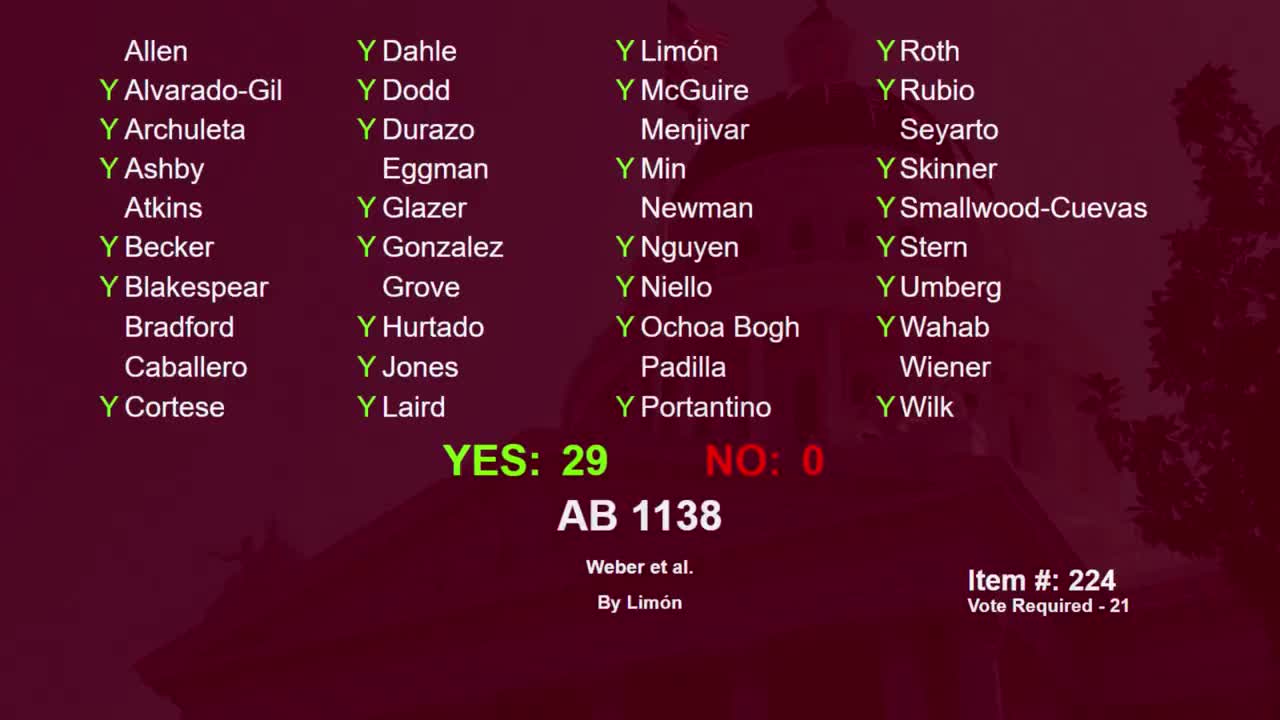 2MIN
Senate Floor
 2MIN
Assembly Floor
 48SEC
Assembly Floor
 1MIN
Assembly Standing Committee on Appropriations
 13MIN
Assembly Standing Committee on Health
 40SEC
Senate Floor
 18MIN
Senate Standing Committee on Health
Bill Author




