SCR 21: Clean energy: hydrogen.
- Session Year: 2023-2024
- House: Senate
- Latest Version Date: 2023-08-23
Current Status:
Passed
(2023-08-23: Chaptered by Secretary of State. Res. Chapter 136, Statutes of 2023.)
Introduced
In Committee
First Chamber
In Committee
Second Chamber
Enacted
This measure would urge the Alliance for Renewable Clean Hydrogen Energy Systems to prioritize renewable, clean hydrogen for California, as provided.
This measure would urge the Alliance for Renewable Clean Hydrogen Energy Systems to prioritize renewable, clean hydrogen for California, as provided.
This measure would urge the Alliance for Renewable Clean Hydrogen Energy Systems to prioritize renewable, clean hydrogen for California, as provided.
This measure would urge the Alliance for Renewable Clean Hydrogen Energy Systems to prioritize renewable, clean hydrogen for California, as provided.
WHEREAS, California is experiencing the dire effects of climate change; and
WHEREAS, California has long been at the forefront of the clean energy transition, including hydrogen as a core piece with the goal of 200 hydrogen refueling stations by 2025 and numerous ongoing hydrogen production and research projects; and
WHEREAS, The State Air Resources Board noted in its 2020 Mobile Source Strategy planning document, approximately 25 percent of Californias future vehicle mix is likely to utilize hydrogen fuel cells due to the subset of the vehicle market that will still require frequent fast refueling, particularly in larger vehicle classes; and
WHEREAS, Heavy-duty trucks represent just 2 percent of the traffic on California roads, but account for 9 percent of the states greenhouse-gas emissions, 32 percent of its nitrogen-oxide emissions, and 3 percent of its particulate emissions; and
WHEREAS, Hydrogen has the potential to be transformative for the heavy-duty transportation sector to cut emissions and meet state climate goals and its success as a climate solution will depend on the state championing best practices on hydrogen production, distribution, storage, and use; and
WHEREAS, The federal government has also acknowledged the potential of hydrogen, with the Biden Administrations Hydrogen Energy Earthshot Challenge aiming to reduce the cost of hydrogen by 80 percent within one decade and the Infrastructure Investment and Jobs Act (IIJA) aiming to establish a network of regional hubs that will deploy clean hydrogen technologies at scale; and
WHEREAS, The IIJA appropriates $8 billion over five or more years to establish at least 4, and up to 10, regional hydrogen hubs to build self-sustaining hydrogen economies of producers, infrastructure, and users, administered by the United States Department of Energy, with a 1:1 cost share from award recipients; and
WHEREAS, The Alliance for Renewable Clean Hydrogen Energy Systems (ARCHES) has been formed in partnership with the Governors Office of Business and Economic Development and the University of California as Californias public-private hydrogen hub consortium to accelerate the development and deployment of clean, renewable hydrogen projects and infrastructure; and
WHEREAS, ARCHES is applying for the IIJA funding to generate Californias clean hydrogen ecosystem; now, therefore, be it
Resolved by the Senate of the State of California, the Assembly thereof concurring, That the Legislature urges ARCHES to prioritize renewable, clean hydrogen for California, focus its efforts in communities with the largest pollution burden for an environmentally just transition, invest in energy systems and hydrogen production and distribution infrastructure through a multisector approach, ensure projects minimize hydrogen leakage risk, develop public policy that enables early markets scalable with private capital, and prioritize the hardest-to-abate sectors with the largest emissions profiles to create economically sustainable markets; and be it further
Resolved, That the Secretary of the Senate transmit copies of this resolution to the author for appropriate distribution.
WHEREAS, California is experiencing the dire effects of climate change; and
WHEREAS, California has long been at the forefront of the clean energy transition, including hydrogen as a core piece with the goal of 200 hydrogen refueling stations by 2025 and numerous ongoing hydrogen production and research projects; and
WHEREAS, The State Air Resources Board noted in its 2020 Mobile Source Strategy planning document, approximately 25 percent of Californias future vehicle mix is likely to utilize hydrogen fuel cells due to the subset of the vehicle market that will still require frequent fast refueling, particularly in larger vehicle classes; and
WHEREAS, Heavy-duty trucks represent just 2 percent of the traffic on California roads, but account for 9 percent of the states greenhouse-gas emissions, 32 percent of its nitrogen-oxide emissions, and 3 percent of its particulate emissions; and
WHEREAS, Hydrogen has the potential to be transformative for the heavy-duty transportation sector to cut emissions and meet state climate goals; goals and its success as a climate solution will depend on the state championing best practices on hydrogen production, distribution, storage, and use; and
WHEREAS, The federal government has also acknowledged the potential of hydrogen, with the Biden Administrations Hydrogen Energy Earthshot Challenge aiming to reduce the cost of hydrogen by 80 percent within one decade and the Infrastructure Investment and Jobs Act (IIJA) aiming to establish a network of regional hubs that will deploy clean hydrogen technologies at scale; and
WHEREAS, The IIJA appropriates $8 billion over five or more years to establish at least 4, and up to 10, regional hydrogen hubs to build self-sustaining hydrogen economies of producers, infrastructure, and users, administered by the United States Department of Energy, with a 1:1 cost share from award recipients; and
WHEREAS, The Alliance for Renewable Clean Hydrogen Energy Systems (ARCHES) has been formed in partnership with the Governors Office of Business and Economic Development and the University of California as Californias public-private hydrogen hub consortium to accelerate the development and deployment of clean, renewable hydrogen projects and infrastructure; and
WHEREAS, ARCHES is applying for the IIJA funding to generate Californias clean hydrogen ecosystem; now, therefore, be it
Resolved by the Senate of the State of California, the Assembly thereof concurring, That the Legislature urges ARCHES to prioritize renewable, clean hydrogen for California, focus its efforts in communities with the largest pollution burden for an environmentally just transition, invest in energy systems and hydrogen production and distribution infrastructure through a multisector approach, ensure projects minimize hydrogen leakage risk, develop public policy that enables early markets scalable with private capital, and prioritize the hardest-to-abate sectors with the largest emissions profiles to create economically sustainable markets; and be it further
Resolved, That the Secretary of the Senate transmit copies of this resolution to the author for appropriate distribution.
WHEREAS, California is experiencing the dire effects of climate change; and
WHEREAS, California has long been at the forefront of the clean energy transition, including hydrogen as a core piece with the goal of 200 hydrogen refueling stations by 2025 and numerous ongoing hydrogen production and research projects; and
WHEREAS, The State Air Resources Board noted in its 2020 Mobile Source Strategy planning document, approximately 25 percent of Californias future vehicle mix is likely to utilize hydrogen fuel cells due to the subset of the vehicle market that will still require frequent fast refueling, particularly in larger vehicle classes; and
WHEREAS, Heavy-duty trucks represent just 2 percent of the traffic on California roads, but account for 9 percent of the states greenhouse-gas emissions, 32 percent of its nitrogen-oxide emissions, and 3 percent of its particulate emissions; and
WHEREAS, Hydrogen has the potential to be transformative for the heavy-duty transportation sector to cut emissions and meet state climate goals; and
WHEREAS, The federal government has also acknowledged the potential of hydrogen, with the Biden Administrations Hydrogen Energy Earthshot Challenge aiming to reduce the cost of hydrogen by 80 percent within one decade and the Infrastructure Investment and Jobs Act (IIJA) aiming to establish a network of regional hubs that will deploy clean hydrogen technologies at scale; and
WHEREAS, The IIJA appropriates $8 billion over five or more years to establish at least 4, and up to 10, regional hydrogen hubs to build self-sustaining hydrogen economies of producers, infrastructure, and users, administered by the United States Department of Energy, with a 1:1 cost share from award recipients; and
WHEREAS, The Alliance for Renewable Clean Hydrogen Energy Systems (ARCHES) has been formed in partnership with the Governors Office of Business and Economic Development and the University of California as Californias public-private hydrogen hub consortium to accelerate the development and deployment of clean, renewable hydrogen projects and infrastructure; and
WHEREAS, ARCHES is applying for the IIJA funding to generate Californias clean hydrogen ecosystem; now, therefore, be it
Resolved by the Senate of the State of California, the Assembly thereof concurring, That the Legislature urges ARCHES to prioritize renewable, clean hydrogen for California, focus its efforts in communities with the largest pollution burden for an environmentally just transition, invest in energy systems and hydrogen production and distribution infrastructure through a multisector approach, develop public policy that enables early markets scalable with private capital, and prioritize the hardest-to-abate sectors with the largest emissions profiles to create economically sustainable markets; and be it further
Resolved, That the Secretary of the Senate transmit copies of this resolution to the author for appropriate distribution.
|
Date
|
Status
|
|---|---|
| Aug 23, 2023 | Chaptered by Secretary of State. Res. Chapter 136, Statutes of 2023. |
| Aug 23, 2023 | Enrolled and filed with the Secretary of State at 2 p.m. |
| Aug 15, 2023 | In Senate. Ordered to engrossing and enrolling. |
| Aug 14, 2023 | Coauthors revised. |
| Aug 14, 2023 | Read. Adopted. (Ayes 74. Noes 0. Page 2685.) Ordered to the Senate. |
| Jul 6, 2023 | From committee: Be adopted. Ordered to consent calendar. (Ayes 15. Noes 0.) (July 5). |
| May 4, 2023 | Referred to Com. on TRANS. |
| Apr 27, 2023 | In Assembly. Held at Desk. |
| Apr 27, 2023 | Read. Adopted. (Ayes 38. Noes 0. Page 919.) Ordered to the Assembly. |
| Mar 21, 2023 | Read second time and amended. Ordered to third reading. |
| Mar 20, 2023 | From committee: Be adopted as amended. (Ayes 7. Noes 0. Page 353.) (March 15). |
| Feb 17, 2023 | Set for hearing March 15. |
| Feb 15, 2023 | Re-referred to Com. on E.Q. |
| Feb 8, 2023 | Introduced. Referred to Com. on RLS. |
|
Date
|
Description
|
Location
|
Votes
|
|
|---|---|---|---|---|
| Aug 14, 2023 | SCR 21 Archuleta Consent Calendar Second Day Regular Session | Assembly Floor |
Passed |
|
| Jul 5, 2023 | Be adopted. To Consent Calendar. | Assembly Standing Committee on Transportation |
Passed |
|
| Apr 27, 2023 | Senate 3rd Reading SCR21 Archuleta et al. | Senate Floor |
Passed |
|
| Mar 15, 2023 | Be adopted as amended | Senate Standing Committee on Environmental Quality |
Passed |
This list shows positions taken on this bill by organizations on the date displayed, which is linked to the original source.
Positions by individuals are not included.
|
Organization
|
Position
|
Date
|
|---|---|---|
| Tuolumne County Supervisor, Jaron E. Brandon | ** Support |
Date of Hearing: July 5, 2023
ASSEMBLY COMMITTEE ON TRANSPORTATION
Laura Friedman, Chair
SBPCA Bill Id:SCR 21
Author:(Archuleta) – As Amended Ver:March 21, 2023
SENATE VOTE: 38-0
SUBJECT: Clean energy: hydrogen
SUMMARY: Resolves that the Legislature urges the Alliance for Renewable Clean Energy Systems (ARCHES) to prioritize renewable, clean hydrogen for California. Specifically, this resolution:
- Urges ARCHES to:
- Focus its efforts in communities with the largest pollution burden for an environmentally just transition;
- Invest in energy systems and hydrogen production and distribution infrastructure through a multisector approach;
- Ensure projects minimize hydrogen leakage risk;
- Develop public policy that enables early markets scalable with private capital; and,
- Prioritize the hardest-to-abate sectors with the largest emissions profiles to create economically sustainable markets.
EXISTING LAW:
- Defines “green electrolytic hydrogen” as hydrogen produced through electrolysis, not including hydrogen manufactured using steam reforming or any other conversion technology that produces hydrogen from a fossil fuel feedstock. (Public Utilities Code (PUC) 400.2)
- Requires the Public Utilities Commission (PUC), California Energy Commission (CEC), and Air Resources Board (CARB) to consider green electrolytic hydrogen an eligible form of energy storage and consider its potential uses. (PUC 400.3)
- Declares the policy of the state to achieve net zero greenhouse gas (GHG) emissions as soon as possible, but no later than 2045, and to achieve and maintain net negative GHG emissions thereafter. (Health and Safety Code 38562.2)
FISCAL EFFECT: This resolution is keyed non-fiscal by the Legislative Counsel.
COMMENTS: The federal government is investing money in hydrogen and the state has an opportunity to bring money to California to serve the development and deployment of clean, renewable hydrogen projects and infrastructure. The Legislature has a responsibility to ensure that hydrogen funding prioritizes renewable, clean hydrogen for use in hard-to-abate sectors in California.
The state has ambitious goals to reduce GHG emissions as part of its climate action plan. SB 32 (Pavley), Chapter 249, Statutes of 2016 built upon the Global Warming Solutions Act of 2006 and enacted a goal of reducing GHG emissions to 40% below 1990 levels by 2030. AB 1279 (Muratsuchi), Chapter 337, Statutes of 2022 enacted a goal of carbon neutrality by 2045.
The three largest sources of GHG emissions in California are transportation, electric power, and industrial. According to CARB’s GHG Inventory for 2000-2020 by Economic Sector, in 2019 transportation contributed 166 million metric tons of carbon dioxide (MMT CO2e), industry 88 MMT CO2e, and electrical power generation 59 MMT CO2e. GHG emissions from these sectors are the result of burning fossil fuels, such as coal, oil, natural gas, gasoline and diesel.
Hydrogen has potential as an environmentally friendly alternative to fossil fuels. When hydrogen is used in fuel cell electric vehicles, the resulting emissions are only water vapor and warm air as exhaust. Therefore, fuel cell electric vehicles that run on hydrogen are considered zero-emission vehicles. As a carbon-free fuel in industrial applications, the direct combustion of hydrogen releases no CO2. Hydrogen has multiple possible end-uses. It is important for policy makers to identify the promising applications for hydrogen, because while the use of hydrogen is zero-emission, the production of hydrogen by various methods has differing environmental impacts.
The majority of hydrogen today is produced by steam methane reformation of natural gas, a process which splits hydrogen from the methane and creates CO2 as a byproduct. Electrolysis, or using electricity to split water, is the lowest carbon-intensive way to make hydrogen, particularly when the electricity utilized is generated by a zero-carbon resource, such as solar power or wind. Electrolysis is currently the most expensive production pathway, and current efforts are focused on scaling and reducing costs for clean hydrogen production.
The environmental impacts of hydrogen, including effects on climate and air quality, can range from very favorable to very unfavorable, depending on production, delivery, end use, and the fuel the hydrogen is replacing. For example, hydrogen produced with fossil fuels and used in a combustion application that replaces a renewable energy source is not a good environmental solution. However, hydrogen produced with zero-carbon energy and used in a zero-emission application that replaces diesel combustion has clear climate and air quality benefits.
ARCHES is California’s public-private hydrogen hub consortium to accelerate the development and deployment of clean, renewable hydrogen projects and infrastructure. The US Department of Energy will award $8 billion to up to 10 regional hydrogen hubs to build self-sustaining hydrogen economies of producers, infrastructure, and users. In partnership with the Governor’s Office of Business and Economic Development (GO-Biz), ARCHES unites key public and private stakeholders to build the framework for a California renewable, clean hydrogen hub.
According to the author, “Under the US Infrastructure Investment and Jobs Act, Congress allocated $8 billion for the creation of multiple hubs dubbed “Hydrogen Hubs” to support clean hydrogen in the United States. California’s application is being led by the Alliance for Renewable Clean Hydrogen Energy Systems or ARCHES. [This resolution] simply recognizes ARCHES’ hard work and urges them to prioritize renewable, clean hydrogen for California.”
Related legislation: AB 1550 (Bennett of 2023) requires, on and after January 1, 2045, all hydrogen produced and used in California for the generation of electricity or fueling of vehicles be "green hydrogen" and makes a facility that generates electricity using green hydrogen an eligible renewable energy resource. This bill is currently on the Assembly floor inactive file.
REGISTERED SUPPORT / OPPOSITION:
Support
Tuolumne County Supervisor, Jaron E. Brandon
Opposition
None on file
Analysis Prepared by: Christine Casey / TRANS. / (916) 319-2093
SENATE RULES COMMITTEE Office of Senate Floor Analyses (916) 651-1520 Fax: (916) 327-4478 | SCR 21 |
THIRD READING
Bill No: SCR 21
Author: Archuleta (D), et al.
Amended: 3/21/23
Vote: 21
SENATE ENVIRONMENTAL QUALITY COMMITTEE: 7-0, 3/15/23
AYES: Allen, Dahle, Gonzalez, Hurtado, Menjivar, Nguyen, Skinner
SUBJECT: Clean energy: hydrogen
SOURCE: Author
DIGEST:
This resolution recognizes the importance of hydrogen as part of the clean energy transition, recognizes the Alliance for Renewable Clean Hydrogen Energy Systems (ARCHES), and urges ARCHES to prioritize renewable, clean hydrogen for the state.
ANALYSIS: Existing federal law defines “clean hydrogen” in the Infrastructure Investment and Jobs Act (IIJA) as hydrogen produced with a carbon intensity equal to or less than 2 kg of carbon dioxide-equivalent produced at the site of production per kilogram of hydrogen produced. This definition may be adjusted for five years after the passage of the IIJA in consultation with federal agencies and stakeholders. (IIJA Sec. 40315 (a))
Existing state law:
- Requires, under the Global Warming Solutions Act of 2006, the California Air Resources Board (CARB) to approve a statewide greenhouse gas (GHG) emissions limit equivalent to the statewide GHG emissions level in 1990 to be achieved by 2020 (AB 32, Nunez, Chapter 488, Statutes of 2006) and to ensure that statewide GHG emissions are reduced to at least 40% below the 1990 level by 2030 (SB 32, Pavley, Chapter 249, Statutes of 2016). (Health and Safety Code (HSC) § 38500 et seq.)
- States, under the California Climate Crisis Act (AB 1279, Muratsuchi, Chapter 337, Statutes of 2022), that it is the policy of the state to achieve net zero GHG emissions no later than 2045, and to ensure that by 2045 statewide anthropogenic GHG emissions are reduced to at least 85% below the 1990 level. (HSC § 38562.2)
- Defines “green electrolytic hydrogen” as hydrogen gas produced through electrolysis and does not include hydrogen gas manufactured using steam reforming or any other conversion technology that produces hydrogen from fossil fuels. (PUC § 400.2)
- Defines “clean hydrogen” as hydrogen produced from eligible renewable energy resources. (Government Code (GOV) § 12100.161)
- Defines “renewable hydrogen” as hydrogen derived from (a) electrolysis of water or aqueous solutions using renewable electricity; (b) catalytic cracking or steam methane reforming of biomethane; or (c) thermochemical conversion of biomass, including the organic portion of municipal solid waste. (CCR § 95481)
This resolution:
- Recognizes that California is at the forefront of the clean energy transition as it experiences the consequences of climate change.
- Finds that hydrogen fuel cells are a core piece of the clean energy transition to meet state climate goals, particularly in the heavy-duty transportation sector.
- States that the federal government has acknowledged the importance of advancing hydrogen through the Biden Administration’s Hydrogen Earthshot Challenge which aims to dramatically reduce the cost of hydrogen over a decade. To this aim, the IIJA administers $8 billion towards establishing a network of regional hydrogen hubs.
- States that ARCHES was formed as California’s public-private hydrogen hub consortium in partnership with the Governor's Office of Business and Economic Development (GO-Biz) and the University of California, and that ARCHES is applying for IIJA’s hydrogen hub funding.
- Urges ARCHES to prioritize renewable, clean hydrogen for California.
- Urges ARCHES to focus efforts on communities with the largest pollution burden, invest in a multisector approach, enable early markets scalable with private capital, and prioritize the hardest-to-abate sectors.
Background
- The many (potential) uses of hydrogen. Hydrogen has many applications, including: oil refining, ammonia and fertilizer production and other industrial and chemical processes; storing renewable electricity; as fuel for on-road, off-road, rail, aviation, and maritime transportation; displacing coking coal used in the production of steel; and fueling industrial thermal applications. In practice today, almost all of the hydrogen produced in the United States is used for refining petroleum, treating metals, producing fertilizer, and processing foods. While technology continues to improve, experts say many of hydrogen’s most promising applications, such as storing energy from intermittent renewable energy sources in fuel cells, are still likely at least several years away and costs need to fall significantly to be commercially viable.
- Not all hydrogen production is climate-friendly. Hydrogen can be produced through thermochemical processes, electrolytic processes, biological processes, or direct solar water splitting processes. Today, most hydrogen is produced from methane contained in natural gas, a non-renewable resource, using a process called natural gas reforming. CARB’s 2022 Scoping Plan states that carbon capture and storage (CCS) can support hydrogen production when emissions are involved until such time as there is sufficient renewable power for electrolysis and an abundant water source.
The Scoping Plan recognizes hydrogen produced from electrolysis as a zero carbon option consistent with the state’s carbon neutrality targets. In this process, an electric current splits water into hydrogen and oxygen. If the electricity is produced by renewable sources, the resulting hydrogen will be considered renewable as well. Hydrogen production via electrolysis lends itself well to synergy with intermittent power generation, characteristic of numerous renewable energy sources such as wind or solar. However, the production costs need to fall significantly to compete with more mature production pathways such as natural gas reforming.
In addition, while the U.S. Department of Energy (DOE) expects that hydrogen production from natural gas will be supplemented with production from renewable energy sources over time, there is a high degree of uncertainty around the availability of renewable energy to support both electrification of existing sectors and the production of hydrogen through electrolysis: CARB determined that producing hydrogen required under the Scoping Plan Scenario with electrolysis would require about 10 gigawatts of additional solar capacity.
- Federal initiatives to develop hydrogen capacity. The U.S. DOE established its Energy Earthshots Initiative which aims to accelerate clean energy breakthroughs. The Hydrogen Shot, set in 2021, is the first of the Initiative’s goals: it aims to reduce the cost of clean hydrogen by 80% by 2031. Currently, hydrogen from renewable energy costs about $5/kg. On November 15, 2021, President Biden signed the IIJA which appropriates $8 billion over five or more years to establish at least four and up to 10 regional hydrogen hubs, with at least one hub focused on renewable sources. Hubs should create a network of clean hydrogen producers, consumers, and infrastructure to deliver clean hydrogen at a cost of $2/kg by 2026 and $1/kg by 2031. If the Hydrogen Shot goals are achieved, scenarios show the opportunity for at least a five-fold increase in clean hydrogen use, 16% carbon dioxide emission reduction by 2050, $140 billion in revenues, and 700,000 jobs by 2030.
- Hydrogen initiatives in California. CARB’s 2022 Scoping Plan notes that the state must increase its hydrogen supply about 1,700 times to meet its climate goals. SB 1075 (Skinner, Chapter 363, Statutes of 2022) directed CARB, in consultation with the CPUC and CEC, to develop an evaluation including policy recommendations regarding the use of green hydrogen, the potential use for other forms of hydrogen (not green hydrogen), health and environmental impacts of various forms of hydrogen, and strategies to support hydrogen infrastructure. AB 157 (Committee on Budget, Chapter 570, Statutes of 2022) authorized the GO-Biz to support an application to the DOE’s regional hydrogen hubs program. It further stipulated that grants made from this federal program support clean hydrogen specifically.
ARCHES was formed in partnership with GO-Biz and the University of California. According to its mission statement, ARCHES “is a public-private partnership to create a sustainable statewide clean hydrogen hub in California and beyond, utilizing local renewable resources to produce hydrogen with the objective to fully decarbonize the regional economy, while prioritizing environmental justice, equity, economic leadership and workforce development.” ARCHES is applying for IIJA funding to become a regional hydrogen hub.
It is the intention of ARCHES to only fund the production and use of hydrogen (a) produced with renewable resources and (b) that meet or exceed federal carbon intensity requirements on a life cycle emission basis. To be accepted as part of the state hydrogen hub, such electrolytic hydrogen projects will have to undergo rigorous analysis to show they do not emit criteria emissions, toxics, or noxious odors that harm local communities.
Comments
- Purpose of Bill. According to the author, “Under the US Infrastructure Investment and Jobs Act, Congress allocated $8 billion for the creation of multiple hubs, dubbed “Hydrogen Hubs” to support clean hydrogen in the United States. California’s application is being led by the Alliance for Renewable Clean Hydrogen Energy Systems or ARCHES. Senate Concurrent Resolution 21 simply recognizes ARCHES hard work and urges them to prioritize renewable, clean hydrogen for California.”
- What does “renewable, clean hydrogen” mean? U.S. and California law use the terms “green,” “clean,” “renewable,” and “green electrolytic” to describe hydrogen production. Some of these are used interchangeably and some are not defined in statute. “Green hydrogen” is not explicitly defined in state law; SB 439 (Archuleta, 2021) would have defined it as hydrogen not produced from fossil fuel feedstock sources, with a range of possible production methods. “Clean hydrogen” and “green electrolytic hydrogen” are used in other places in California statute as presented in the “Existing Law” section of this analysis. In CARB’s 2022 Scoping Plan, “renewable hydrogen” and “green hydrogen” are interchangeable and are not limited to only electrolytic hydrogen produced from renewables. Other terms that are sometimes used include gray hydrogen, which is made from fossil fuels through steam methane reforming, and blue hydrogen, which is gray hydrogen with added carbon capture and storage.
It is worth noting that while this resolution directs ARCHES to prioritize renewable, clean hydrogen, California statute does not currently define “renewable, clean hydrogen.”
Defining “renewable, clean hydrogen” in statute necessitates a number of important considerations. Past legislation (e.g. SB 1369, Skinner, Chapter 567, Statutes of 2018) has focused on producing hydrogen through electrolysis, which can be carbon-neutral if powered using renewable energy. Alternative production methods could also be viable low- or zero-carbon options and be especially valuable while renewable energy resources may be limited. The 2020 Lawrence Livermore National Laboratory report “Getting to Neutral” considers gasification of biomass to hydrogen to be the most promising strategy for achieving negative carbon emissions in California. Biomethane to generate hydrogen could come from forest or agricultural waste resulting from forest management and other natural and working lands management practices, with possible net negative carbon outcomes. The report finds that building about 50-100 facilities in California to utilize existing biomass waste streams would generate nearly four million tons of hydrogen per year and avoid or remove more carbon dioxide emissions than emitted from all passenger vehicles in California combined, at costs on par with those under California’s Cap-and-Trade program.
Federal law defines “clean hydrogen” in the IIJA as hydrogen produced with a carbon intensity equal to or less than 2 kg of carbon dioxide-equivalent per kilogram of hydrogen produced, a technology-agnostic definition. The lifetime carbon emissions and air quality impacts of various hydrogen production mechanisms will need to be considered to determine a state definition for “renewable, clean” hydrogen.
- Let’s not accidentally warm the planet some more. Hydrogen gas acts as an indirect GHG through its reactions with other gases in the atmosphere. The release of hydrogen causes methane to persist in the atmosphere longer, which is a GHG 28 times more potent than carbon dioxide when considered over the timescale of a century. Hydrogen also increases the concentration of ozone and of water vapor, both of which cause the atmosphere to trap more heat. As the state builds up its hydrogen infrastructure, it is therefore important to minimize leaks that could release hydrogen into the atmosphere, contributing to warming and wasting a valuable product. Leaks are of particular concern from hydrogen storage facilities and transportation pipelines. A 2022 study commissioned by the California Public Utilities Commission (CPUC) as part of its Renewable Gas Rulemaking stressed that pumping hydrogen through existing natural gas pipelines risks leaks. Hydrogen does not act like the gases such pipelines were designed for and can degrade steel pipelines and permeate through plastic pipes. Amendments taken in the Senate Environmental Quality Committee addressed these concerns by adding wording to the resolution that (a) acknowledges that best practices regarding hydrogen production, storage, transportation, and use will be necessary to ensure it furthers the state’s climate goals and (b) urges ARCHES to ensure projects minimize hydrogen leakage risk.
Related/Prior Legislation
AB 1550 (Bennett, 2023), as currently written, requires, on and after January 1, 2045, that all hydrogen produced and used in California for the generation of electricity or fueling of vehicles be green hydrogen. At the time of writing this analysis, the bill was pending referral.
SB 1075 (Skinner, Chapter 363, Statutes of 2022) directed CARB, in consultation with the CPUC and CEC, to develop an evaluation by June 1, 2024, which includes, among other topics, policy recommendations regarding the use of green hydrogen in the state, an estimate of reduced GHG emissions achievable through the use of green hydrogen, the cost of green hydrogen, the potential use for other forms of hydrogen (not green hydrogen), health and environmental impacts of various forms of hydrogen, and strategies to support hydrogen infrastructure.
AB 157 (Committee on Budget, Chapter 570, Statutes of 2022) authorized GO-Biz, until July 1, 2025, to support an application to receive funding from the regional clean hydrogen hubs program established by the Secretary of Energy. It stated that such funding shall support projects in California that, among other things, focus on the production of clean hydrogen toward a goal to produce or use at least 15,000 tons per day of clean hydrogen in California by 2030 and maximize socioeconomic, workforce, equity, air quality, and health benefits.
SB 439 (Archuleta, 2021) would have defined “green hydrogen” as hydrogen not produced from fossil fuel feedstock sources. Eligible processes included electrolysis, conversion of renewable gases and liquids including steam methane reforming of biomethane, the conversion of biomass to hydrogen, and waste or byproduct hydrogen from non-fossil fuel industrial processes. The bill’s hearing was canceled at the request of the author.
SB 662 (Archuleta, 2019) would have required that on a statewide basis, not less than 33.3% of the hydrogen produced or dispensed in California for motor vehicles be renewable hydrogen and that the renewable hydrogen percentage be increased to 44% by December 31, 2024, 52% by December 31, 2027, 60% by December 31, 2030, and that by December 31, 2045, 100% of the hydrogen produced or dispensed in California for motor vehicles be either renewable hydrogen or clean hydrogen produced using zero-carbon resources. The bill died in the Assembly Utilities and Energy Committee.
SB 1369 (Skinner, Chapter 567, Statutes of 2018) required the CPUC, CARB, and CEC to consider green electrolytic hydrogen an eligible form of energy storage, and to consider other potential uses of green electrolytic hydrogen. It defined “green electrolytic hydrogen” as hydrogen gas produced for electrolysis, excluding hydrogen gas manufactured using steam reforming or any other technology using a fossil fuel feedstock.
FISCAL EFFECT: Appropriation: No Fiscal Com.: No Local: No
SUPPORT: (Verified 3/22/23)
One individual
OPPOSITION: (Verified 3/22/23)
None received
Prepared by: Theresa Keates / E.Q. / (916) 651-4108
3/22/23 13:52:56
**** END ****
SENATE COMMITTEE ON ENVIRONMENTAL QUALITY
Senator Allen, Chair
2023 - 2024 Regular
Bill No: SCR 21
Author: | Archuleta | ||
Version: | 2/8/2023 | Hearing Date: | 3/15/2023 |
Urgency: | No | Fiscal: | No |
Consultant: | Theresa Keates | ||
SUBJECT: Clean energy: hydrogen
DIGEST: This resolution recognizes the importance of hydrogen as part of the clean energy transition, recognizes the Alliance for Renewable Clean Hydrogen Energy Systems (ARCHES), and urges ARCHES to prioritize renewable, clean hydrogen for the state.
ANALYSIS:
Existing law:
- Under the Global Warming Solutions Act of 2006, requires the California Air Resources Board (CARB) to approve a statewide greenhouse gas (GHG) emissions limit equivalent to the statewide GHG emissions level in 1990 to be achieved by 2020 (AB 32, Nunez, 2006) and to ensure that statewide GHG emissions are reduced to at least 40% below the 1990 level by 2030 (SB 32, Pavley, 2016). (Health and Safety Code (HSC) § 38500 et seq.)
- Under the California Climate Crisis Act (AB 1279, Muratsuchi, 2022), states that it is the policy of the state to achieve net zero GHG emissions no later than 2045, and to ensure that by 2045 statewide anthropogenic GHG emissions are reduced to at least 85% below the 1990 level. (HSC § 38562.2)
- Defines “green electrolytic hydrogen” as hydrogen gas produced through electrolysis and does not include hydrogen gas manufactured using steam reforming or any other conversion technology that produces hydrogen from fossil fuels. (PUC § 400.2)
- Defines “clean hydrogen” as hydrogen produced from eligible renewable energy resources. (Government Code (GOV) § 12100.161)
- Defines “renewable hydrogen” as hydrogen derived from (1) electrolysis of water or aqueous solutions using renewable electricity; (2) catalytic cracking or steam methane reforming of biomethane; or (3) thermochemical conversion of biomass, including the organic portion of municipal solid waste. (CCR § 95481)
- Federal law defines “clean hydrogen” in the Infrastructure Investment and Jobs Act (IIJA) as hydrogen produced with a carbon intensity equal to or less than 2 kg of carbon dioxide-equivalent produced at the site of production per kilogram of hydrogen produced. This definition may be adjusted for 5 years after the passage of the IIJA in consultation with federal agencies and stakeholders. (IIJA Sec. 40315 (a))
This resolution:
- Recognizes that California is at the forefront of the clean energy transition as it experiences the consequences of climate change.
- Finds that hydrogen fuel cells are a core piece of the clean energy transition to meet state climate goals, particularly in the heavy-duty transportation sector.
- States that the federal government has acknowledged the importance of advancing hydrogen through the Biden Administration’s Hydrogen Earthshot Challenge which aims to dramatically reduce the cost of hydrogen over a decade. To this aim, the IIJA administers $8 billion towards establishing a network of regional hydrogen hubs.
- States that the Alliance for Renewable Clean Hydrogen Energy Systems (ARCHES) was formed as California’s public-private hydrogen hub consortium in partnership with the GO-Biz and the University of California, and that ARCHES is applying for IIJA’s hydrogen hub funding.
- Urges ARCHES to prioritize renewable, clean hydrogen for California.
- Urges ARCHES to focus efforts on communities with the largest pollution burden, invest in a multisector approach, enable early markets scalable with private capital, and prioritize the hardest-to-abate sectors.
Background
- The many (potential) uses of hydrogen. Hydrogen has many applications, including: oil refining, ammonia and fertilizer production and other industrial and chemical processes; storing renewable electricity; as fuel for on-road, off-road, rail, aviation, and maritime transportation; displacing coking coal used in the production of steel; and fueling industrial thermal applications. In practice today, almost all of the hydrogen produced in the United States is used for refining petroleum, treating metals, producing fertilizer, and processing foods. While technology continues to improve, experts say many of hydrogen’s most promising applications, such as storing energy from intermittent renewable energy sources in fuel cells, are still likely at least several years away and costs need to fall significantly to be commercially viable.
- Not all hydrogen production is climate-friendly. Hydrogen can be produced through thermochemical processes, electrolytic processes, biological processes, or direct solar water splitting processes. Today, most hydrogen is produced from methane contained in natural gas, a non-renewable resource, using a process called natural gas reforming. CARB’s 2022 Scoping Plan states that carbon capture and storage (CCS) can support hydrogen production when emissions are involved until such time as there is sufficient renewable power for electrolysis and an abundant water source.
The Scoping Plan recognizes hydrogen produced from electrolysis as a zero carbon option consistent with the state’s carbon neutrality targets. In this process, an electric current splits water into hydrogen and oxygen. If the electricity is produced by renewable sources, the resulting hydrogen will be considered renewable as well. Hydrogen production via electrolysis lends itself well to synergy with intermittent power generation, characteristic of numerous renewable energy sources such as wind or solar. However, the production costs need to fall significantly to compete with more mature production pathways such as natural gas reforming.
In addition, while the U.S. Department of Energy (DOE) expects that hydrogen production from natural gas will be supplemented with production from renewable energy sources over time, there is a high degree of uncertainty around the availability of renewable energy to support both electrification of existing sectors and the production of hydrogen through electrolysis: CARB determined that producing hydrogen required under the Scoping Plan Scenario with electrolysis would require about 10 gigawatts of additional solar capacity.
- Federal initiatives to develop hydrogen capacity. The U.S. DOE established its Energy Earthshots Initiative which aims to accelerate clean energy breakthroughs. The Hydrogen Shot, set in 2021, is the first of the Initiative’s goals: it aims to reduce the cost of clean hydrogen by 80% by 2031. Currently, hydrogen from renewable energy costs about $5/kg. On November 15, 2021, President Biden signed the IIJA which appropriates $8 billion over 5 or more years to establish at least 4 and up to 10 regional hydrogen hubs, with at least one hub focused on renewable sources. Hubs should create a network of clean hydrogen producers, consumers, and infrastructure to deliver clean hydrogen at a cost of $2/kg by 2026 and $1/kg by 2031. If the Hydrogen Shot goals are achieved, scenarios show the opportunity for at least a 5-fold increase in clean hydrogen use, 16% carbon dioxide emission reduction by 2050, $140 billion in revenues, and 700,000 jobs by 2030.
- Hydrogen initiatives in California. CARB’s 2022 Scoping Plan notes that the state must increase its hydrogen supply about 1,700 times to meet its climate goals. SB 1075 (Skinner, Chapter 363, Statutes of 2022) directed CARB, in consultation with the CPUC and CEC, to develop an evaluation including policy recommendations regarding the use of green hydrogen, the potential use for other forms of hydrogen (not green hydrogen), health and environmental impacts of various forms of hydrogen, and strategies to support hydrogen infrastructure. AB 157 (Committee on Budget, Chapter 570, Statutes of 2022) authorized the Governor's Office of Business and Economic Development (GO-Biz) to support an application to the DOE’s regional hydrogen hubs program. It further stipulated that grants made from this federal program support clean hydrogen specifically.
The Alliance for Renewable Clean Hydrogen Energy Systems (ARCHES) was formed in partnership with GO-Biz and the University of California. According to its mission statement, ARCHES “is a public-private partnership to create a sustainable statewide clean hydrogen hub in California and beyond, utilizing local renewable resources to produce hydrogen with the objective to fully decarbonize the regional economy, while prioritizing environmental justice, equity, economic leadership and workforce development.” ARCHES is applying for IIJA funding to become a regional hydrogen hub.
It is the intention of ARCHES to only fund the production and use of hydrogen 1) produced with renewable resources and 2) that meet or exceed federal carbon intensity requirements on a life cycle emission basis. To be accepted as part of the state hydrogen hub, such electrolytic hydrogen projects will have to undergo rigorous analysis to show they do not emit criteria emissions, toxics, or noxious odors that harm local communities.
Comments
- Purpose of Bill. According to the author, “Under the US Infrastructure Investment and Jobs Act, Congress allocated $8 billion for the creation of multiple hubs, dubbed “Hydrogen Hubs” to support clean hydrogen in the United States. California’s application is being led by the Alliance for Renewable Clean Hydrogen Energy Systems or ARCHES. Senate Concurrent Resolution 21 simply recognizes ARCHES hard work and urges them to prioritize renewable, clean hydrogen for California.”
- What does “renewable, clean hydrogen” mean? U.S. and California law use the terms “green,” “clean,” “renewable,” and “green electrolytic” to describe hydrogen production. Some of these are used interchangeably and some are not defined in statute. “Green hydrogen” is not explicitly defined in state law; SB 439 (Archuleta, 2021) would have defined it as hydrogen not produced from fossil fuel feedstock sources, with a range of possible production methods. “Clean hydrogen” and “green electrolytic hydrogen” are used in other places in California statute as presented in the “Existing Law” section of this analysis. In CARB’s 2022 Scoping Plan, “renewable hydrogen” and “green hydrogen” are interchangeable and are not limited to only electrolytic hydrogen produced from renewables. Other terms that are sometimes used include gray hydrogen, which is made from fossil fuels through steam methane reforming, and blue hydrogen, which is gray hydrogen with added carbon capture and storage.
Moving forward, it is worth noting that while this resolution directs ARCHES to prioritize renewable, clean hydrogen, California statute does not currently define “renewable, clean hydrogen.”
Defining “renewable, clean hydrogen” in statute necessitates a number of important considerations. Past legislation (e.g. SB 1369, Skinner, Chapter 567, Statues of 2018) has focused on producing hydrogen through electrolysis, which can be carbon-neutral if powered using renewable energy. Alternative production methods could also be viable low- or zero-carbon options and be especially valuable while renewable energy resources may be limited. The 2020 Lawrence Livermore National Laboratory report “Getting to Neutral” considers gasification of biomass to hydrogen to be the most promising strategy for achieving negative carbon emissions in California. Biomethane to generate hydrogen could come from forest or agricultural waste resulting from forest management and other natural and working lands management practices, with possible net negative carbon outcomes. The report finds that building about 50-100 facilities in California to utilize existing biomass waste streams would generate nearly 4 million tons of hydrogen per year and avoid or remove more carbon dioxide emissions than emitted from all passenger vehicles in California combined, at costs on par with those under California’s Cap-and-Trade program.
Federal law defines “clean hydrogen” in the IIJA as hydrogen produced with a carbon intensity equal to or less than 2 kg of carbon dioxide-equivalent per kilogram of hydrogen produced, a technology-agnostic definition. The lifetime carbon emissions and air quality impacts of various hydrogen production mechanisms will need to be considered to determine a state definition for “renewable, clean” hydrogen.
- Let’s not accidentally warm the planet some more. Hydrogen gas acts as an indirect GHG through its reactions with other gases in the atmosphere. The release of hydrogen causes methane to persist in the atmosphere longer, which is a GHG 28 times more potent than carbon dioxide when considered over the timescale of a century. Hydrogen also increases the concentration of ozone and of water vapor, both of which cause the atmosphere to trap more heat. As the state builds up its hydrogen infrastructure, it is therefore important to minimize leaks that could release hydrogen into the atmosphere, contributing to warming and wasting a valuable product. Leaks are of particular concern from hydrogen storage facilities and transportation pipelines. A 2022 study commissioned by the California Public Utilities Commission (CPUC) as part of its Renewable Gas Rulemaking stressed that pumping hydrogen through existing natural gas pipelines risks leaks. Hydrogen does not act like the gases such pipelines were designed for and can degrade steel pipelines and permeate through plastic pipes. The committee may wish to add wording to the resolution that (1) acknowledges that best practices regarding hydrogen production, storage, transportation, and use will be necessary to ensure it furthers the state’s climate goals and (2) urges ARCHES to ensure projects minimize hydrogen leakage risk.
- Committee amendments. Staff recommends the committee adopt the bolded amendments contained in comment 3 above.
Related/Prior Legislation
AB 1550 (Bennett, 2023): As currently written, this bill would require, on and after January 1, 2045, that all hydrogen produced and used in California for the generation of electricity or fueling of vehicles be green hydrogen. At the time of writing this analysis, this bill was pending referral.
SB 439 (Archuleta, 2021): This bill would have defined “green hydrogen” as hydrogen not produced from fossil fuel feedstock sources. Eligible processes included electrolysis, conversion of renewable gases and liquids including steam methane reforming of biomethane, the conversion of biomass to hydrogen, and waste or byproduct hydrogen from non-fossil fuel industrial processes. This bill’s hearing was canceled at the request of the author.
SB 662 (Archuleta, 2019): This bill would have required that on a statewide basis, not less than 33.3% of the hydrogen produced or dispensed in California for motor vehicles be renewable hydrogen and that the renewable hydrogen percentage be increased to 44% by December 31, 2024, 52% by December 31, 2027, 60% by December 31, 2030, and that by December 31, 2045, 100% of the hydrogen produced or dispensed in California for motor vehicles be either renewable hydrogen or clean hydrogen produced using zero-carbon resources. This bill died in the Assembly Utilities and Energy Committee.
AB 157 (Committee on Budget, Chapter 570, Statues of 2022): This bill authorized GO-Biz, until July 1, 2025, to support an application to receive funding from the regional clean hydrogen hubs program established by the Secretary of Energy. It stated that such funding shall support projects in California that, among other things, focus on the production of clean hydrogen toward a goal to produce or use at least 15,000 tons per day of clean hydrogen in California by 2030 and maximize socioeconomic, workforce, equity, air quality, and health benefits.
SB 1075 (Skinner, Chapter 363, Statutes of 2022): This bill directed CARB, in consultation with the CPUC and CEC, to develop an evaluation by June 1, 2024 which includes, among other topics, policy recommendations regarding the use of green hydrogen in the state, an estimate of reduced GHG emissions achievable through the use of green hydrogen, the cost of green hydrogen, the potential use for other forms of hydrogen (not green hydrogen), health and environmental impacts of various forms of hydrogen, and strategies to support hydrogen infrastructure.
SB 1369 (Skinner, Chapter 567, Statutes of 2018): This bill required the CPUC, CARB, and CEC to consider green electrolytic hydrogen an eligible form of energy storage, and to consider other potential uses of green electrolytic hydrogen. It defines “green electrolytic hydrogen” as hydrogen gas produced for electrolysis, excluding hydrogen gas manufactured using steam reforming or any other technology using a fossil fuel feedstock.
SOURCE:
Author
SUPPORT:
None received
OPPOSITION:
None received
-- END --
Discussed in Hearing
View Older Hearings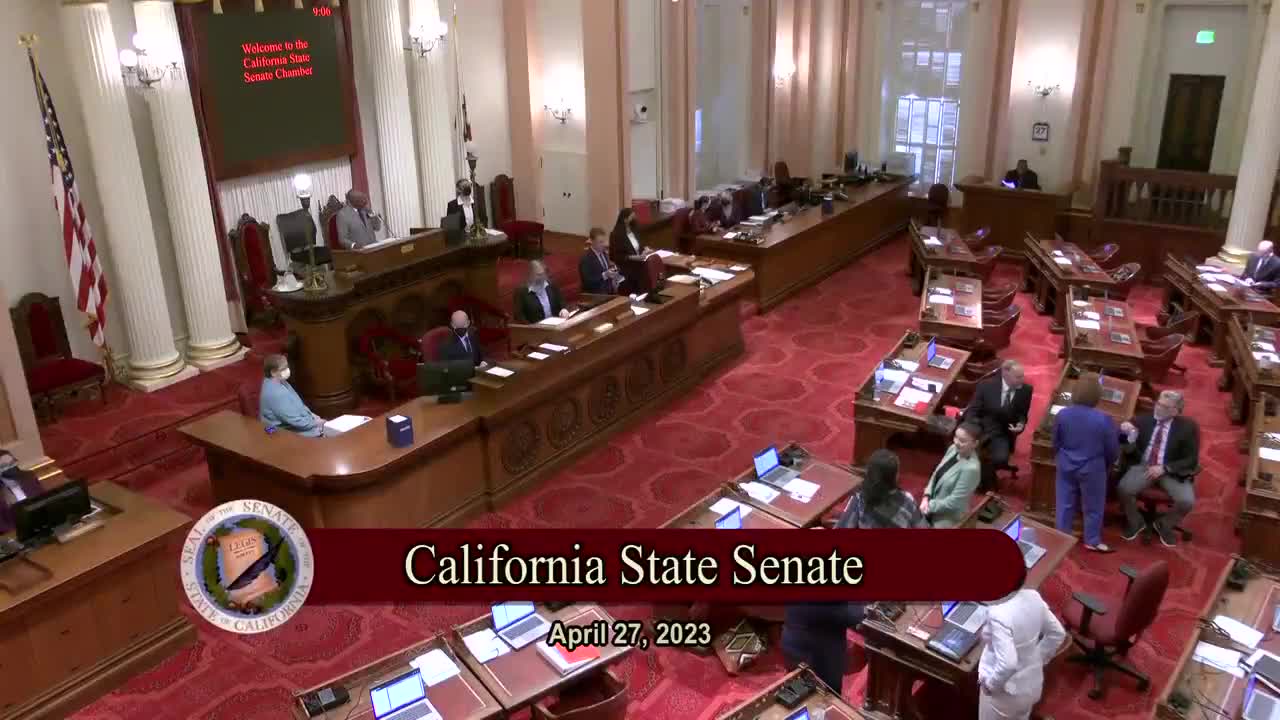
Bill Author
Bill Co-Author(s):