SCR 47: Chief Justice Rose Elizabeth Bird Justice For All Plaza.
- Session Year: 2023-2024
- House: Senate
- Latest Version Date: 2023-08-24
Current Status:
Passed
(2023-08-24: Chaptered by Secretary of State. Res. Chapter 141, Statutes of 2023.)
Introduced
In Committee
First Chamber
In Committee
Second Chamber
Enacted
What does this bill do?
This resolution names the central plaza of the California State Capitol World Peace Rose Garden in Sacramento the Chief Justice Rose Elizabeth Bird Justice for All Plaza. It asks the Department of General Services to estimate costs for plaques and markers and, if private donations pay for them, to install the signage.
The summary is provided by generative AI which can make mistakes. For original language, please view the details in the table below.
This measure would designate the plaza at the center of the California State Capitol World Peace Rose Garden in the City of Sacramento as the Chief Justice Rose Elizabeth Bird Justice For All Plaza. The measure would also request the Department of General Services to determine the cost of erecting appropriate plaques and markers showing the designation and, upon receiving donations, to cover the cost to erect signage.
This measure would designate the plaza at the center of the California State Capitol World Peace Rose Garden in the City of Sacramento as the Chief Justice Rose Elizabeth Bird Justice For All Plaza. The measure would also request the Department of General Services to determine the cost of erecting appropriate plaques and markers showing the designation and, upon receiving donations, to cover the cost to erect signage.
This measure would designate the plaza at the center of the California State Capitol World Peace Rose Garden in the City of Sacramento as the Chief Justice Rose Elizabeth Bird Justice For All Plaza. The measure would also request the Department of General Services to determine the cost of erecting appropriate plaques and markers showing the designation and, upon receiving donations, to cover the cost to erect signage.
This measure would designate the plaza at the center of the California State Capitol World Peace Rose Garden in the City of Sacramento as the Chief Justice Rose Elizabeth Bird Justice For All Plaza. The measure would also request the Department of General Services to determine the cost of erecting appropriate plaques and markers showing the designation and, upon receiving donations, to cover the cost to erect signage.
WHEREAS, In 1977, Rose Elizabeth Bird was appointed as the first female Chief Justice of California by Governor Edmund G. Brown Jr. During her tenure, she was the first woman to serve as Chair of the Judicial Council; and
WHEREAS, Rose Bird was known among colleagues and the public as a dedicated protector of justice on the Supreme Court. She was an active writer, penning numerous opinions that upheld Californias environmental laws and consumer protections; and
WHEREAS, Rose Bird was a strong advocate against the unlawful implementation of the death penalty and joined a court majority in 61 cases to return death penalty convictions to the trial court for additional review; and
WHEREAS, Rose Bird brought many improvements to the California Supreme Court itself. She oversaw major advancements in court technology, including the first purchase of computers for the justices and staff. She also expanded the courts hiring processes to reach people who had not historically been able to seek employment with the court; and
WHEREAS, Rose Bird was the first woman to serve as a cabinet member for a California governor when she was appointed in 1975 as the Secretary of the Agriculture and Services Agency; and
WHEREAS, During her tenure as Secretary of the Agriculture and Services Agency, Rose Bird prioritized the health and safety of farmworkers by banning the short-handled hoe that forced workers to stoop over for hours. She also helped write the Agricultural Labor Relations Act that gives farmworkers the right to select and join unions for the purpose of collective bargaining; and
WHEREAS, In 1966, Rose Bird was the first female deputy public defender in Santa Clara County and, in 1965, the first female law clerk on the Supreme Court of Nevada; and
WHEREAS, Rose Bird was a trailblazer for women in law and has no state recognition for her contributions to the State of California. Few state buildings and parks are named after female contributors to California law; and
WHEREAS, It is the intent of the Legislature to commemorate Rose Birds many accomplishments in Californias legal and justice systems; now, therefore, be it
Resolved by the Senate of the State of California, the Assembly thereof concurring, That the plaza at the center of the California State Capitol World Peace Rose Garden, located at 1317 15th Street in the City of Sacramento, be designated as the Chief Justice Rose Elizabeth Bird Justice for All Plaza; and be it further
Resolved, That the Department of General Services is requested to determine the cost of erecting appropriate plaques and markers, consistent with the signage requirements for state buildings, showing this special designation and, upon receiving donations from nonstate sources, to cover that cost to erect signage; and be it further
Resolved, That the Secretary of the Senate transmit copies of this resolution to the author for appropriate distribution.
WHEREAS, In 1977, Rose Elizabeth Bird was appointed as the first female Chief Justice of the California Supreme Court California by Governor Edmund G. Brown Jr. During her tenure, she was the first woman to serve as Chair of the Judicial Council; and
WHEREAS, Rose Bird was known among colleagues and the public as a dedicated protector of justice on the Supreme Court. She was an active writer, penning numerous opinions that upheld Californias environmental laws and consumer protections; and
WHEREAS, Rose Bird was a strong advocate against the unlawful implementation of the death penalty and joined a court majority in 61 cases to return death penalty convictions to the trial court for additional review; and
WHEREAS, Rose Bird brought many improvements to the California Supreme Court itself. She oversaw major advancements in court technology, including the first purchase of computers for the justices and staff. She also expanded the courts hiring processes to reach people who had not historically been able to seek employment with the court; and
WHEREAS, Rose Bird was the first woman to serve as a cabinet member for a California governor when she was appointed in 1975 as the Secretary of Agriculture; the Agriculture and Services Agency; and
WHEREAS, During her tenure as Secretary of Agriculture, the Agriculture and Services Agency, Rose Bird prioritized the health and safety of farmworkers by banning the short-handled hoe that forced workers to stoop over for hours. She also helped write the Agricultural Labor Relations Act that gives farmworkers the right to select and join unions for the purpose of collective bargaining; and
WHEREAS, In 1966, Rose Bird was the first female deputy public defender in Santa Clara County and, in 1965, the first female law clerk on the Supreme Court of Nevada; and
WHEREAS, Rose Bird was a trailblazer for women in law and has no state recognition for her contributions to the State of California. Few state buildings and parks are named after female contributors to California law; and
WHEREAS, It is the intent of the Legislature to commemorate Rose Birds many accomplishments in Californias legal and justice systems; now, therefore, be it
Resolved by the Senate of the State of California, the Assembly thereof concurring, That the plaza at the center of the California State Capitol World Peace Rose Garden, located at 1317 15th Street in the City of Sacramento, be designated as the Chief Justice Rose Elizabeth Bird Justice for All Plaza; and be it further
Resolved, That the Department of General Services is requested to determine the cost of erecting appropriate plaques and markers, consistent with the signage requirements for state buildings, showing this special designation and, upon receiving donations from nonstate sources, to cover that cost to erect signage; and be it further. further
Resolved, That the Secretary of the Senate transmit copies of this resolution to the author for appropriate distribution.
WHEREAS, In 1977, Rose Elizabeth Bird was appointed as the first female Chief Justice of the California Supreme Court by Governor Edmund G. Brown Jr. During her tenure, she was the first woman to serve as Chair of Judicial Council; and
WHEREAS, Rose Bird was known among colleagues and the public as a dedicated protector of justice on the Supreme Court. She was an active writer, penning numerous opinions that upheld Californias environmental laws and consumer protections; and
WHEREAS, Rose Bird was a strong advocate against the unlawful implementation of the death penalty and joined a court majority in 61 cases to return death penalty convictions to the trial court for additional review; and
WHEREAS, Rose Bird brought many improvements to the California Supreme Court itself. She oversaw major advancements in court technology, including the first purchase of computers for the justices and staff. She also expanded the courts hiring processes to reach people who had not historically been able to seek employment with the court; and
WHEREAS, Rose Bird was the first woman to serve as a cabinet member for a California governor when she was appointed in 1975 as the Secretary of Agriculture; and
WHEREAS, During her tenure as Secretary of Agriculture, Rose Bird prioritized the health and safety of farmworkers by banning the short-handled hoe that forced workers to stoop over for hours. She also helped write the Agricultural Labor Relations Act that gives farmworkers the right to select and join unions for the purpose of collective bargaining; and
WHEREAS, In 1966, Rose Bird was the first female deputy public defender in Santa Clara County and, in 1965, the first female clerk on the Supreme Court of Nevada; and
WHEREAS, Rose Bird was a trailblazer for women in law and has no state recognition for her contributions to the State of California. Few state buildings and parks are named after female contributors to California law; and
WHEREAS, It is the intent of the Legislature to commemorate Rose Birds many accomplishments in Californias legal and justice systems; now, therefore, be it
Resolved by the Senate of the State of California, the Assembly thereof concurring, That the plaza at the center of the California State Capitol World Peace Rose Garden, located at 1317 15th Street in the City of Sacramento, be designated as the Chief Justice Rose Elizabeth Bird Justice for All Plaza; and be it further
Resolved, That the Department of General Services is requested to determine the cost of erecting appropriate plaques and markers, consistent with the signage requirements for state buildings, showing this special designation and, upon receiving donations from nonstate sources, to cover that cost to erect signage; and be it further.
Resolved, That the Secretary of the Senate transmit copies of this resolution to the author for appropriate distribution.
|
Date
|
Status
|
|---|---|
| Aug 24, 2023 | Chaptered by Secretary of State. Res. Chapter 141, Statutes of 2023. |
| Aug 24, 2023 | Enrolled and filed with the Secretary of State at 2 p.m. |
| Aug 21, 2023 | In Senate. Ordered to engrossing and enrolling. |
| Aug 17, 2023 | Read. Adopted. (Ayes 60. Noes 11. Page 2738.) Ordered to the Senate. |
| Aug 17, 2023 | Coauthors revised. |
| Jul 12, 2023 | From committee: Be adopted. Ordered to third reading. (Ayes 11. Noes 3.) (July 12). |
| Jun 21, 2023 | From committee: Be adopted and re-refer to Com. on APPR. (Ayes 4. Noes 2.) (June 21). Re-referred to Com. on APPR. |
| Jun 15, 2023 | Referred to Com. on A. & A.R. |
| May 18, 2023 | In Assembly. Held at Desk. |
| May 18, 2023 | Read. Adopted. (Ayes 30. Noes 7. Page 1102.) Ordered to the Assembly. |
| May 9, 2023 | Read second time. Ordered to third reading. |
| May 8, 2023 | From committee: Be ordered to second reading pursuant to Senate Rule 28.8. |
| May 2, 2023 | From committee with author's amendments. Read second time and amended. Re-referred to Com. on APPR. |
| May 1, 2023 | Set for hearing May 8. |
| Apr 25, 2023 | From committee: Be adopted and re-refer to Com. on APPR. (Ayes 10. Noes 2. Page 874.) (April 25). Re-referred to Com. on APPR. |
| Apr 18, 2023 | Set for hearing April 25. |
| Apr 12, 2023 | Re-referred to Com. on G.O. |
| Mar 28, 2023 | Introduced. Referred to Com. on RLS. |
|
Date
|
Description
|
Location
|
Votes
|
|
|---|---|---|---|---|
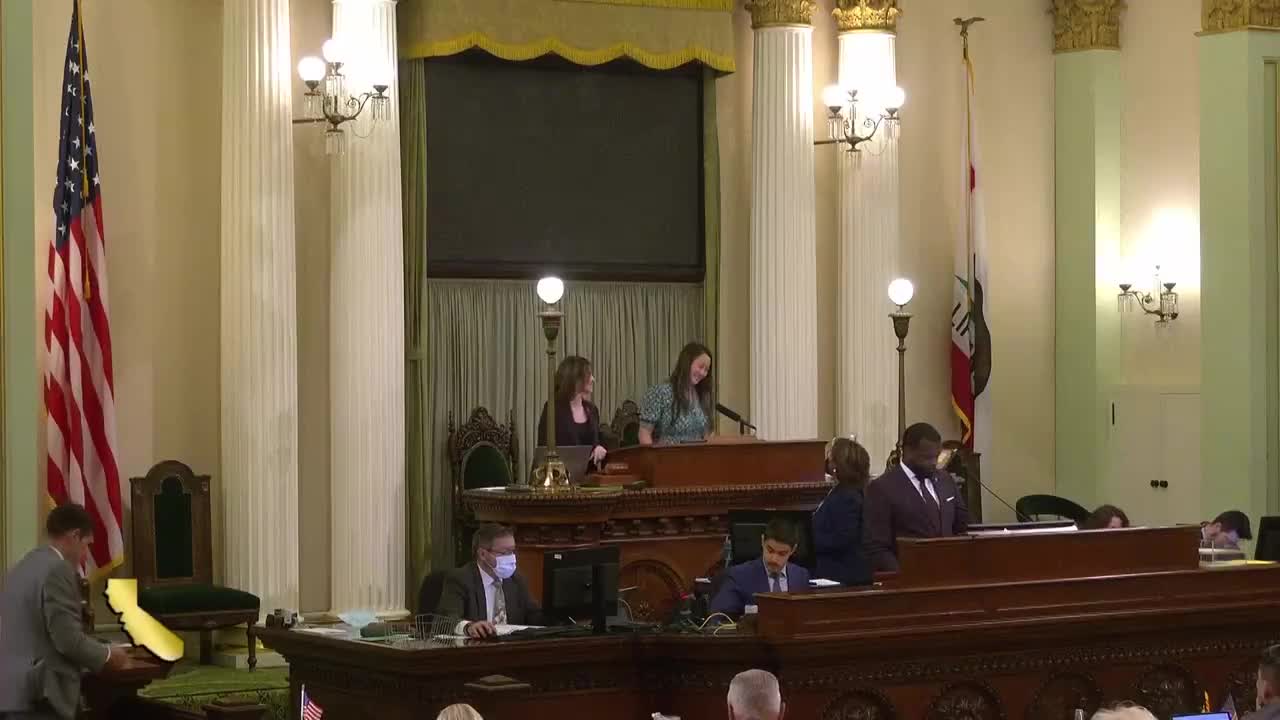
| Aug 17, 2023 | SCR 47 Glazer Senate Third Reading By Aguiar-Curry | Assembly Floor |
Passed |
|
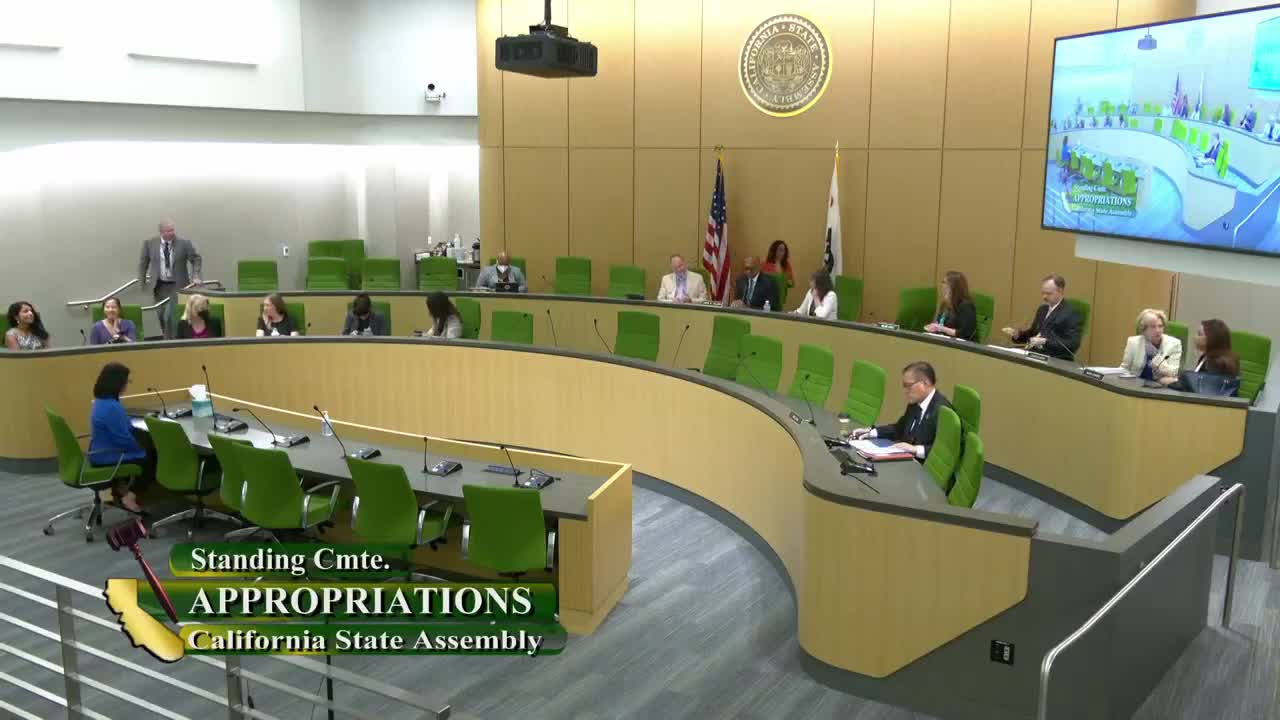
| Jul 12, 2023 | Be adopted. To third reading. | Assembly Standing Committee on Appropriations |
Passed |
|
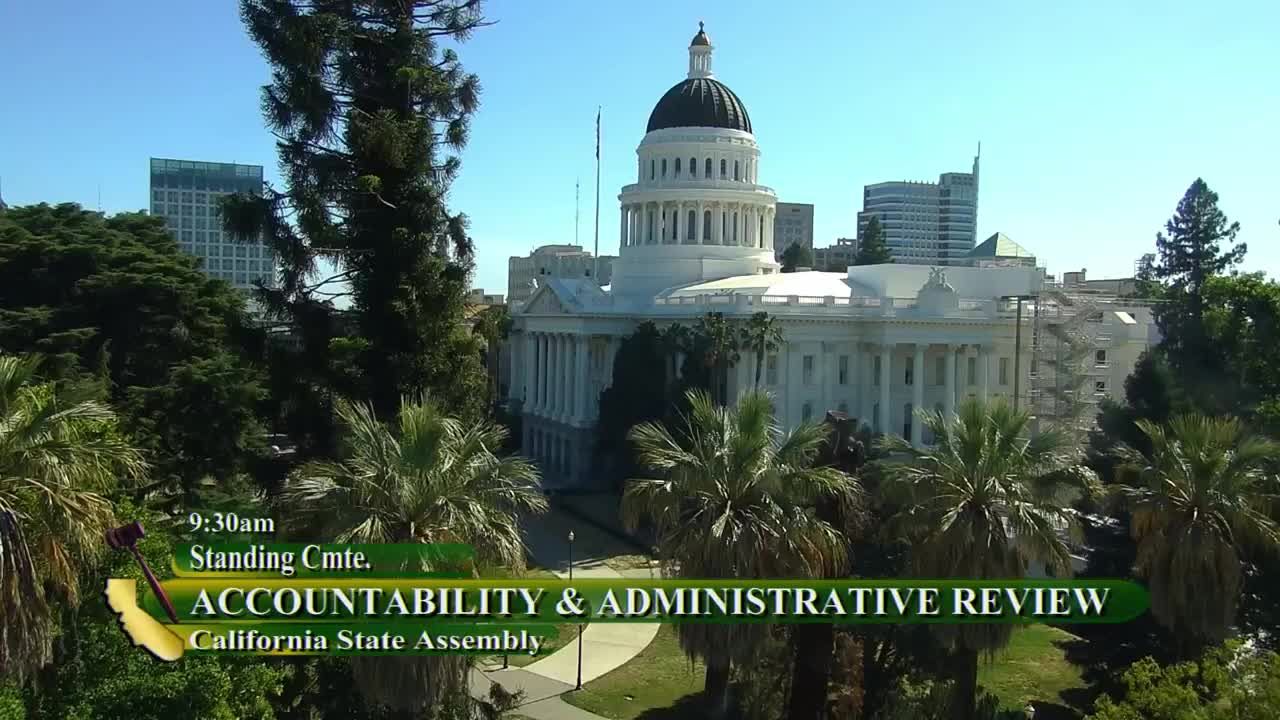
| Jun 21, 2023 | Be adopted and re-referred to the Committee on [Appropriations] | Assembly Standing Committee on Accountability and Administrative Review |
Passed |
|
| May 18, 2023 | Senate 3rd Reading SCR47 Glazer et al. | Senate Floor |
Passed |
|
| Apr 25, 2023 | Be adopted, but first be re-referred to the Committee on [Appropriations] | Senate Standing Committee on Governmental Organization |
Passed |
This list shows positions taken on this bill by organizations on the date displayed, which is linked to the original source.
Positions by individuals are not included.
|
Organization
|
Position
|
Date
|
|---|---|---|
| International World Peace Garden | * Support | Jul 12, 2023 |
| International World Peace Garden | * Support | Jun 21, 2023 |
| International World Peace Rose Gardens | ** Support | |
| Women Lawyers of Sacramento | ** Support |
SENATE THIRD READING
STR Bill Id:SCR 47
Author:(Glazer)
As Amended Ver:May 2, 2023
Majority vote
SUMMARY
This resolution designates the plaza at the center of the California State Capitol World Peace Rose Garden in the City of Sacramento as the Chief Justice Rose Elizabeth Bird Justice For All Plaza.
Major Provisions
- Makes findings about the legal career and accomplishments of Rose Elizabeth Bird, including that she was the first woman to serve on the California Supreme Court, first woman Chief Justice of California, and first woman appointed by a Governor as a cabinet secretary.
- Makes findings that, as Secretary of the Agriculture and Services Agency in the 1970s, she prioritized the health and safety of farmworkers by banning the short-handled hoe that forced workers to stoop over for hours and by helping write the Agricultural Labor Relations Act that gives farmworkers the right to join unions for collective bargaining.
- Makes findings that, despite being a trailblazer for women in law and other accomplishments in California's legal and justice systems, there is no state recognition for her contributions to the state.
- Designates the plaza at the center of the California State Capitol World Peace Rose Garden, located at 1317 15th Street in the City of Sacramento, as the "Chief Justice Rose Elizabeth Bird Justice for All Plaza."
- Requests the Department of General Services (DGS) to determine the cost of erecting appropriate plaques and markers, consistent with the signage requirements for state buildings, showing this special designation and, upon receiving donations from non-state sources, to cover that cost to erect signage.
COMMENTS
- According to the Author: "Despite the many glass ceilings Chief Justice Rose Elizabeth Bird broke through for women in law and government, she still has no public recognition in California. She was the first female law clerk for the Nevada State Supreme Court, first female public defender in Santa Clara County, first female cabinet member for a California governor, first female chair of Judicial Council, and first female Chief Justice of California. Yet, even 36 years after her time as Chief Justice of California, there is still no public recognition of the important contributions she made to California. This resolution would appropriately commemorate Chief Justice Rose Elizabeth Bird's service to California and important accomplishments for women in law."
- Honoring Rose Bird in the State Capitol World Peace Rose Garden. ACR 46 (Alpert, Res. Chapter 98, Statutes of 1995) recommended that a privately funded World Peace Rose Garden Memorial be established at the State Capitol Park grounds. The International World Peace Rose Gardens (IWPRG) organization is nonprofit incorporated in 1988 for the purpose of creating beautiful rose gardens on public, accessible sites as a place for visitors to gather, enjoy beauty and be inspired to promote world peace, unity, friendship and cultural diversity. IWPRG and the California State Capitol Museum eventually established the garden in 2003 as a joint project. Today, the Victorian-designed garden sits on approximately half an acre in State Capitol Park and features about 650 roses in over 140 varieties of colors and fragrances. Numerous benches, along with 44 winning "Inspirational Messages of Peace" by youth engraved on individual plaques, are placed throughout the garden to inspire visitors. Walkways lead to a small courtyard plaza with a fountain in the center, and a heart-shaped seating wall surrounds an elegant square Peace Pavilion. This plaza portion of the garden is the site of plaques and markers requested by this resolution. The author indicates that he has collaborated with IWPRG on the plans to honor Bird as described in this resolution.
- Role of DGS and Private Funds. This resolution requests DGS to determine the cost of erecting appropriate plaques and markers, consistent with the signage requirements for state buildings, showing this special designation. Similar to recent resolutions to honor former state officials, private donations will cover the cost. DGS will erect the signage after these non-state donations are received.
- Rose Elizabeth Bird – Humble Beginnings to First Woman Chief Justice. Rose Elizabeth Bird was born outside of Tucson, Arizona, on November 2, 1936, as the third child and only daughter of Harry Dalton Bird and Anne Walsh Bird.[1] She was raised on a chicken ranch near the Tohono O'odham Indian Reservation (then called the Papago Indian Reservation) with her older brothers Jack and Philip. Her parents had moved west from New York City after her father, a traveling salesman, lost his career and savings with the 1929 stock market crash. Her mother had worked as a teacher before marrying Harry around 1930, a time when women were often required to quit teaching upon marriage.
Once in Arizona, while Harry focused on farming, Anne worked as a laundress and at other odd jobs while raising Rose and the two boys. At the onset of World War II, she was one of the first women hired at Davis Monthan Air Force Base near Tucson. During that period, Anne became a single mother. She lost her job at the base after the war ended, struggled to find comparable work, and then moved back to New York in 1950 with the children. Rose was 14 years old. The Birds resided in Sherburne, in upstate New York, and Sea Cliff, in Long Island, New York, where Rose concentrated on her high school studies and received scholarships to attend Long Island University. Her mother encouraged her to avoid being pigeonholed in traditional female courses of study.
Politics and Public Service. As an undergraduate, Bird at first chose a career in journalism, and majored in English, graduating magna cum laude from Long Island University in 1958. She worked for a year as a secretary at the Brooklyn Polytechnic Institute in New York to save money for graduate school. In 1959, she moved to California to study political science at the University of California (UC), Berkeley. While a graduate student, she worked as a research assistant and teaching assistant and received a Ford Foundation Fellowship grant in 1960. She was selected to intern as a legislative assistant with state lawmaker Gordon Winton in the California State Assembly, followed by a consultant position with the Assembly Committee on Government Organization during 1961.
During this time, Bird also became acquainted with California's future Governor Edmund G. ("Jerry") Brown, who was an undergraduate student at UC, Berkeley.
A Pioneering Woman Lawyer. Bird attended UC, Berkeley's Boalt Hall School of Law and received her J.D. in 1965, one of only eight women graduates in a class of more than 200 students. She graduated with distinction and top awards for best oral advocacy and brief writing. She then became the first woman to clerk for the Chief Justice of the Nevada Supreme Court. In 1966, she became the first woman hired as a public defender in Santa Clara County where she worked for eight years. In addition to her trial practice, she became chief of the office's appellate division, briefing and arguing cases before the California Supreme Court, the California Courts of Appeal, and federal courts, and held leadership positions with several bar associations. From 1972 to 1974, she was one of the first women to teach at Stanford Law School.
First Woman Cabinet Secretary – Protecting Farmworkers. By the summer of 1974, Bird had left the public defender position for private practice. She volunteered with Jerry Brown's 1974 campaign for Governor and became a trusted advisor. In 1975, newly elected Governor Brown appointed Bird as Secretary of the Agriculture and Services Agency, making her the first woman to serve as a Cabinet Secretary in California history.[2] As Secretary, a position then typically held by growers, Bird advanced the rights of farmworkers. She banned the short-handled hoe, a tool that required field hands to spend much of their day bent halfway to the ground. She also helped write and get enacted the Agricultural Labor Relations Act, which extended union and collective bargaining rights to farmworkers.
First Woman on State Supreme Court, First Woman Chief Justice. In 1977, Governor Brown appointed Bird, then 41 years old, as California's Chief Justice, making her the first woman to serve on the California Supreme Court and the first woman in the chief justice role. At the time, a woman had served as chief justice in only one other state – North Carolina. She was the first woman to serve as head of any of California's three branches of government.
Bird led a liberal majority on the court that issued decisions to strengthen environmental protections, consumer rights, labor rights, access to abortion, and free speech; prohibit bias in jury selection based on race, gender or other characteristics; and prohibit discrimination by public employers based on sexual orientation – in many cases finding broader protections in the state constitution than under federal constitutional rights.
Bird was often a lone dissenter. In her first year on the court, Bird wrote the only dissent in the decision that upheld the constitutionality of Proposition 13, the property tax initiative overwhelmingly approved by voters in 1978. She concluded that the measure violated the federal equal protection clause by creating inequality in taxation for similarly situated home owners. During her tenure on the court, Bird participated in review of 61 death sentence convictions, and voted to overturn the death sentence in all of them.
As Chief Justice, Bird also was the chair of the Judicial Council, which enacts rules of court and sets policy for the state's judicial system. She brought greater efficiency to court administration with improved procedures and new technologies, including purchase of the first computers for use by justices and their staffs. She made other changes, such as ending the practice of holding judicial conferences at expensive resorts. She also created an "Advisory Committee on Gender Bias in the Courts," the first such committee focusing on bias in the courts in California and reported to also be the first in the nation.
Tributes by fellow Supreme Court justices when she died, as documented by the California Supreme Court Historical Society, [3] included this description by Justice Cruz Reynoso of Bird's leadership:
My own observation is that as Chief Justice, she had three passions. Her first passion was the law. [She] honored the law, even when she disagreed with it. Her second passion [was] an abiding faith that the law should protect all, the weak and the strong. Those who were weak in political or economic power could look to the black robes for protection, be they consumers, renters, farmworkers or those politically unloved. The third passion was her conviction that justice would be best served if those black robes were on the shoulders of judges representing both genders and all ethnic and racial groups who make California home.
Among First Justices Voted Off the Court. Bird faced criticism from powerful interests and those uncomfortable with a young woman in charge since the first hearings on her appointment in 1977. She narrowly won her confirmation vote in the1978 election, and she faced several efforts to recall her in the early 1980s, although each failed to qualify for the ballot. By mid-1985, opponents were organizing to defeat her in the 1986 election with a campaign focused on her death penalty record, calling her soft on crime. On November 4, 1986, by wide margins, voters denied new terms to Bird and two other liberal justices appointed by Governor Brown, the first time justices were voted off the court since 1934 when California instituted judicial retention elections. Many contemporaneous news reports and historical accounts claim that Bird lost because she was too liberal and out of touch with an electorate that had become more conservative, while others claim that big business interests exploited and hid behind the emotional death penalty issue in a brutal anti-Bird campaign actually aimed at putting a conservative majority on the court. An interview videotaped just 10 days before the 1986 election reveals Bird's own view of these events.[4]
Life After the Court. After serving as Chief Justice, Bird lived her remaining years in Palo Alto, California, where she cared for her elderly mother until her passing in 1991. Bird also occasionally wrote newspaper commentary and articles, co-authored a book on constitutional law, presented speeches, and made appearances as a political commentator. She also taught law at Golden Gate University in San Francisco and University of Sydney in Australia during the early 1990s, and volunteered in her community at various charities helping underserved populations. An indication of her relative obscurity at this stage of life are several reports that, when she volunteered at a Palo Alto legal clinic, she spent several months filing and photocopying documents for others before horrified aides realized who "Rose" really was. The author of this resolution indicates that honoring her in the Capitol rose garden plaza will help Californians learn more about Bird's trailblazing career and many contributions to the state.
At age 63, on December 4, 1999, Bird died at the Stanford Medical Center from complications from breast cancer, a disease she had been fighting since 1976.
Arguments in Support
In support of this resolution, the IWPRG organization writes:
"Rose Bird accomplished many 'firsts' for women in law, including being the first female chief justice of the California Supreme Court. In breaking through numerous glass ceilings, she helped open previously closed doors for many women in law. We believe her life would be an inspiration to the many children who exit the buses in front of the World Peace Rose Garden when they visit the State Capitol on field trips."
Arguments in Opposition
None on file.
FISCAL COMMENTS
According to the Assembly Appropriations Committee, one-time minor and absorbable costs to DGS to determine the cost of installing signage, with the actual cost of signage and installation covered by non-state donations. DGS will also incur ongoing maintenance costs of an unknown, but likely minor and absorbable, amount.
VOTES
SENATE FLOOR: 30-7-3
YES: Allen, Archuleta, Ashby, Atkins, Becker, Blakespear, Bradford, Caballero, Cortese, Durazo, Eggman, Glazer, Hurtado, Laird, Limón, McGuire, Menjivar, Min, Newman, Padilla, Portantino, Roth, Rubio, Skinner, Smallwood-Cuevas, Stern, Umberg, Wahab, Wiener, Wilk
NO: Dahle, Grove, Jones, Nguyen, Niello, Ochoa Bogh, Seyarto
ABS, ABST OR NV: Alvarado-Gil, Dodd, Gonzalez
ASM ACCOUNTABILITY AND ADMINISTRATIVE REVIEW: 4-2-1
YES: Petrie-Norris, Bains, Stephanie Nguyen, Rodriguez
NO: Dixon, Davies
ABS, ABST OR NV: Wilson
ASM APPROPRIATIONS: 11-3-2
YES: Holden, Bonta, Wendy Carrillo, Mike Fong, Hart, Lowenthal, Papan, Pellerin, Soria, Weber, Wilson
NO: Megan Dahle, Dixon, Sanchez
ABS, ABST OR NV: Bryan, Mathis
UPDATED
VERSION: May 2, 2023
CONSULTANT: Jacqueline Kinney / A. & A.R. / (916) 319-3600 FN: 0001218
The historical records of Rose Bird are at the Bancroft Library at the University of California, Berkeley, with a biography (quoted from here) and finding aid at Rose Bird papers, 1930-1999 (cdlib.org). ↑
At the time, this was a massive state agency with Bird having administrative responsibility over 12 different entities – Department of Industrial Relations, Food and Agriculture, Consumer Affairs, General Services, Veterans Affairs, Franchise Tax Board, State Personnel Board, Fire Marshal, State Teachers Retirement System, Public Employment Retirement System, Museum of Science and Industry, and California Public Broadcasting Commission. ↑
Rose Elizabeth Bird / California Supreme Court History: Justices | CSCHS. ↑
https://www.c-span.org/video/?150722-1/california-judical-recall. ↑
Date of Hearing: July 12, 2023
ASSEMBLY COMMITTEE ON APPROPRIATIONS
Chris Holden, Chair
SBPCA Bill Id:SCR 47
Author:(Glazer) – As Amended Ver:May 2, 2023
Policy Committee: | Accountability and Administrative Review | Vote: | 4 - 2 |
|
| ||
|
|
Urgency: State Mandated Local Program: Reimbursable: No
SUMMARY:
This resolution designates the plaza at the center of the California State Capitol World Peace Rose Garden as the Chief Justice Rose Elizabeth Bird Justice For All Plaza.
The Department of General Services (DGS) must determine the cost of erecting appropriate designating plaques and markers and erect such signage upon receiving donations to cover the cost from non-state sources.
FISCAL EFFECT:
One-time minor and absorbable costs to DGS to determine the cost of installing signage, with the actual cost of signage and installation covered by non-state donations. DGS will also incur ongoing maintenance costs of an unknown, but likely minor and absorbable, amount.
COMMENTS:
- Purpose. According to the author:
This recognition in the State Capitol Park would honor [Chief Justice Rose Elizabeth Bird’s] historic career and trailblazing legacy. Despite the many glass ceilings [she] broke through for women in law and government, she still has no public recognition in California. She was the first female law clerk for the Nevada State Supreme Court, first female public defender in Santa Clara County, first female cabinet member for a California governor, first female chair of the Judicial Council, and first female Chief Justice of California. Yet, even 36 years after her time as Chief Justice of California, there is still no public recognition of the important contributions she made to California.
This resolution is supported by Women Lawyers of Sacramento and the International World Peace Rose Gardens (IWPRG), which notes the State Capitol World Peace Rose Garden was dedicated to women, children, and their families, so “honoring Chief Justice Rose Bird is consistent with the original intent to honor women, especially women who are historical figures that often do not get the recognition they deserve.”
- State Capitol World Peace Rose Garden. IWPRG is a nonprofit organization formed to create beautiful rose gardens on public, accessible sites as a place for visitors to gather, enjoy beauty, and be inspired to promote world peace, unity, friendship, and cultural diversity. In 2003, IWPRG and the California State Capitol Museum jointly established the World Peace Rose Garden in the State Capitol Park. Today, the garden sits on approximately half an acre in the park and features about 650 roses in over 140 varieties of colors and fragrances, with walkways leading to a small courtyard plaza with a fountain in the center.
This resolution designates the plaza at the center of the garden in recognition of Chief Justice Bird. According to the Assembly Accountability and Administrative Review Committee’s analysis of this resolution, the author indicates he has collaborated with IWPRG on these plans to honor Chief Justice Bird.
- Prior Resolutions. SCR 70 (Caballero), Resolution Chapter 177, Statutes of 2022, designated the East End Complex-Block 171 in Sacramento as the Mario Obledo Building.
SCR 31 (Bradford), Resolution Chapter 1, Statutes of 2020, named the public street, circle, and plaza at 914 and 915 Capitol Mall in Sacramento as the Willie L. Brown, Jr. Circle and Plaza.
Analysis Prepared by: Irene Ho / APPR. / (916) 319-2081
Discussed in Hearing
 4MIN
Assembly Floor
 5MIN
Assembly Standing Committee on Appropriations
 9MIN
Assembly Standing Committee on Accountability and Administrative Review
Bill Author

Bill Co-Author(s):