SJR 2: Climate change: Fossil Fuel Non-Proliferation Treaty.
- Session Year: 2023-2024
- House: Senate
- Latest Version Date: 2023-09-08
Current Status:
Passed
(2023-09-08: Chaptered by Secretary of State. Res. Chapter 153, Statutes of 2023.)
Introduced
In Committee
First Chamber
In Committee
Second Chamber
Enacted
This measure would, among other things, formally endorse the call for a Fossil Fuel Non-Proliferation Treaty, state Californias agreement with the principle of the nonproliferation of fossil fuels, and urge the United States government to join in formally developing a Fossil Fuel Non-Proliferation Treaty.
This measure would, among other things, formally endorse the call for a Fossil Fuel Non-Proliferation Treaty, state Californias agreement with the principle of the nonproliferation of fossil fuels, and urge the United States government to join in formally developing a Fossil Fuel Non-Proliferation Treaty.
This measure would, among other things, formally endorse the call for a Fossil Fuel Non-Proliferation Treaty, state Californias agreement with the principle of nonproliferation of fossil fuels, and urge the United States government to join in formally developing a Fossil Fuel Non-Proliferation Treaty.
This measure would, among other things, formally endorse the call for a Fossil Fuel Non-Proliferation Treaty, state Californias agreement with the principle of nonproliferation of fossil fuels, and urge the United States government to join in formally developing a Fossil Fuel Non-Proliferation Treaty.
This measure would, among other things, formally endorse the call for a Fossil Fuel Non-Proliferation Treaty, state Californias agreement with the principle of nonproliferation of fossil fuels, and urge the United States government to join in formally developing a Fossil Fuel Non-Proliferation Treaty.
WHEREAS, The scientific consensus is clear that human activities are primarily responsible for accelerating global climate change, and that the climate crisis now represents one of the preeminent threats to global civilization; and
WHEREAS, Fossil fuels are the largest contributor to global climate change, accounting for 75 percent of greenhouse gas emissions; and
WHEREAS, The Intergovernmental Panel on Climate Change (IPCC) Sixth Assessment Report Synthesis Report, approved by 195 member states in March 2023, notes that greatly reduced fossil fuel use would be fundamental to limiting warming and warned that existing fossil fuel infrastructure was already sufficient to breach the 1.5 degrees Celsius limit; and
WHEREAS, In 2021, the United Nations Human Rights Council adopted landmark legislation, Resolution 48/13, recognizing a clean, healthy, and sustainable environment is a human right; and
WHEREAS, The Paris Agreement makes no mention of coal, oil, and gas, an omission with respect to the supply and production of fossil fuels, the largest source of greenhouse gas emissions, that needs to be collectively addressed by other means; and
WHEREAS, The Glasgow Climate Pact improved only incrementally in calling for a phasedown of unabated coal, not a phaseout of all fossil fuels; and
WHEREAS, Changes in Californias climate are already being felt with extreme wildfires, heat waves, droughts, and increasingly severe storms, as well as rising sea levels, coastal inundation, and ocean warming; and
WHEREAS, Our entire community is impacted by the health and safety risks of fossil fuel expansion, particularly those who also face socioeconomic and health inequities, including low-income families, those experiencing homelessness, people of color and Indigenous peoples, youth, seniors, those experiencing mental health challenges and physical disabilities, and people with health conditions; and
WHEREAS, Youth and future generations have the most to lose from a lack of immediate action to stop fossil fuel expansion as they face major and lifelong health, ecological, social, and economic impacts from climate change, including food and water shortages, infectious diseases, and natural disasters; and
WHEREAS, The International Monetary Fund found that the fossil fuel industry was globally subsidized by $11,000,000 per minute in 2020, siphoning away funding needed by cities, communities, and other industries; and
WHEREAS, According to the United Nations Environment Programme Production Gap Report, governments and the fossil fuel industry are currently planning to produce about 110 percent more fossil fuels by 2030 than what is needed to limit warming to 1.5 degrees Celsius and avert catastrophic climate disruption; and
WHEREAS, The International Institute for Sustainable Development has found a large consensus across all published studies that developing new oil and gas fields is incompatible with the 1.5 degrees Celsius target, including the International Energy Agency that found that there are no new oil and gas fields approved for development in our [1.5 degrees Celsius] pathway; and
WHEREAS, A clean energy transition presents greater economic opportunities than continued dependence on fossil fuel use and extraction; and
WHEREAS, Our community is committed, as part of our climate emergency response, to a just energy transition and to ambitious investments in green infrastructure and workforce training, and industries that will create high-paying and skilled union jobs and rapidly decarbonize our economy; and
WHEREAS, California recognizes that it is the urgent responsibility and moral obligation of wealthy fossil fuel producers to manage the decline and phaseout of existing production; and
WHEREAS, A global initiative is underway calling for a Fossil Fuel Non-Proliferation Treaty that would provide a global mechanism to end new fossil fuel exploration and expansion, manage a phaseout of existing production in line with the global commitment to limit warming to 1.5 degrees Celsius, and accelerate equitable transition plans; and
WHEREAS, The Fossil Fuel Non-Proliferation Treaty has been formally called for by Vanuatu at the United Nations General Assembly and by Tuvalu at the Sharm el-Sheikh Climate Change Conference (COP 27) in addition to public endorsements from the World Health Organization, the European Parliament, the Vatican, and over 70 cities and subnational governments globally, including the California Cities of Los Angeles, Hayward, Richmond, Santa Ana, and Sebastopol, as well as the Hawaii State Legislature; now, therefore, be it
Resolved by the Senate and the Assembly of the State of California, jointly, That the Legislature formally endorses the call for a Fossil Fuel Non-Proliferation Treaty; and be it further
Resolved, That the Legislature urges the United States government to join the global community in formally developing a Fossil Fuel Non-Proliferation Treaty as an international mechanism to manage a global transition away from coal, oil, and gas; and be it further
Resolved, That California agrees with the principle of the nonproliferation of fossil fuels and the need to end the expansion of new coal, oil, and gas production; and be it further
Resolved, That California affirms the need for a plan to phase out existing fossil fuel production that prioritizes the most impacted workers and local government services with short- and long-term investments that include enforceable labor standards, such as prevailing wages, apprenticeship opportunities, and project labor agreements, to protect workers and communities; and be it further
Resolved, That the Legislature affirms its ongoing commitment to the goals of the Paris Agreement, the United Nations Sustainable Development Goals, and the greenhouse gas reduction targets as called for by the IPCC, and intends to meet its proportionate greenhouse gas reductions under the Paris Agreement; and be it further
Resolved, That the Secretary of the Senate transmit copies of this resolution to the President and Vice President of the United States, to the Speaker and Minority Leader of the House of Representatives, to the Majority and Minority Leaders of the Senate, to each Senator and Representative from California in the Congress of the United States, to the Governor, to the mayor of each city in California, to the United Nations Secretary-General, and to the United Nations High Commissioner for Human Rights.
WHEREAS, The scientific consensus is clear that human activities are primarily responsible for accelerating global climate change, and that the climate crisis now represents one of the preeminent threats to global civilization; and
WHEREAS, Fossil fuels are the largest contributor to global climate change, accounting for 75 percent of greenhouse gas emissions; and
WHEREAS, The Intergovernmental Panel on Climate Change (IPCC) Sixth Assessment Report from Working Group III, Synthesis Report, approved by 195 member states in April 2022, March 2023, notes that greatly reduced fossil fuel use would be fundamental to limiting warming and warned that existing fossil fuel infrastructure was already sufficient to breach the 1.5 degrees Celsius limit; and
WHEREAS, In 2021, the United Nations Human Rights Council adopted landmark legislation, Resolution 48/13, recognizing a clean, healthy, and sustainable environment is a human right; and
WHEREAS, The Paris Agreement makes no mention of coal, oil, and gas, an omission with respect to the supply and production of fossil fuels, the largest source of greenhouse gas emissions, that needs to be collectively addressed by other means; and
WHEREAS, The Glasgow Climate Pact improved only incrementally in calling for a phasedown of unabated coal, not a phaseout of all fossil fuels; and
WHEREAS, Changes in Californias climate are already being felt with extreme wildfires, heat waves, droughts, and increasingly severe storms, as well as rising sea levels, coastal inundation, and ocean warming; and
WHEREAS, Our entire community is impacted by the health and safety risks of fossil fuel expansion, particularly those who also face socioeconomic and health inequities, including low-income families, those experiencing homelessness, people of color and Indigenous peoples, youth, seniors, those experiencing mental health challenges and physical disabilities, and people with health conditions; and
WHEREAS, Youth and future generations have the most to lose from a lack of immediate action to stop fossil fuel expansion as they face major and lifelong health, ecological, social, and economic impacts from climate change, including food and water shortages, infectious diseases, and natural disasters; and
WHEREAS, The International Monetary Fund found that the fossil fuel industry was globally subsidized by $11,000,000 per minute in 2020, siphoning away funding needed by cities, communities, and other industries; and
WHEREAS, According to the United Nations Environmental Program Environment Programme Production Gap Report, governments and the fossil fuel industry are currently planning to produce about 110 percent more fossil fuels by 2030 than what is needed to limit warming to 1.5 degrees Celsius and avert catastrophic climate disruption; and
WHEREAS, The International Institute for Sustainable Development has found a large consensus across all published studies that developing new oil and gas fields is incompatible with the 1.5 degrees Celsius target, including the International Energy Agency that found that there are no new oil and gas fields approved for development in our [1.5 degrees Celsius] pathway; and
WHEREAS, A clean energy transition presents greater economic opportunities than continued dependence on fossil fuel use and extraction; and
WHEREAS, Our community is committed, as part of our climate emergency response, to a just energy transition and to ambitious investments in green infrastructure and workforce training, and industries that will create high-paying and skilled union jobs and rapidly decarbonize our economy; and
WHEREAS, California recognizes that it is the urgent responsibility and moral obligation of wealthy fossil fuel producers to manage the decline and phaseout of existing production; and
WHEREAS, A global initiative is underway calling for a Fossil Fuel Non-Proliferation Treaty that would provide a global mechanism to end new fossil fuel exploration and expansion, manage a phaseout of existing production in line with the global commitment to limit warming to 1.5 degrees Celsius, and accelerate equitable transition plans; and
WHEREAS, The Fossil Fuel Non-Proliferation Treaty has been formally called for by Vanuatu at the United Nations General Assembly and by Tuvalu at the Sharm el-Sheikh Climate Change Conference (COP 27) in addition to public endorsements from the World Health Organization, the European Parliament, the Vatican, and over 70 cities and subnational governments globally, including the California Cities of Los Angeles, Hayward, Richmond, Santa Ana, and Sebastopol, as well as the Hawaii State Legislature; now, therefore, be it
Resolved by the Senate and the Assembly of the State of California, jointly, That the Legislature formally endorses the call for a Fossil Fuel Non-Proliferation Treaty; and be it further
Resolved, That the Legislature urges the United States government to join the global community in formally developing a Fossil Fuel Non-Proliferation Treaty as an international mechanism to manage a global transition away from coal, oil, and gas; and be it further
Resolved, That California agrees with the principle of the nonproliferation of fossil fuels and the need to end the expansion of new coal, oil, and gas production; and be it further
Resolved, That California affirms the need for a plan to phase out existing fossil fuel production that prioritizes the most impacted workers and local government services with short- and long-term investments that include enforceable labor standards, such as prevailing wages, apprenticeship opportunities, and project labor agreements, to protect workers and communities; and be it further
Resolved, That the Legislature affirms its ongoing commitment to the goals of the Paris Agreement, the United Nations Sustainable Development Goals, and the greenhouse gas reduction targets as called for by the IPCC, and intends to meet its proportionate greenhouse gas reductions under the Paris Agreement; and be it further
Resolved, That the Secretary of the Senate transmit copies of this resolution to the President and Vice President of the United States, to the Speaker and Minority Leader of the House of Representatives, to the Majority and Minority Leaders of the Senate, to each Senator and Representative from California in the Congress of the United States, to the Governor, to the mayor of each city in California, to the United Nations Secretary General, Secretary-General, and to the United Nations High Commissioner for Human Rights.
WHEREAS, The scientific consensus is clear that human activities are primarily responsible for accelerating global climate change, and that the climate crisis now represents one of the preeminent threats to global civilization; and
WHEREAS, Fossil fuels are the largest contributor to global climate change, accounting for 75 percent of greenhouse gas emissions; and
WHEREAS, The Intergovernmental Panel on Climate Change (IPCC) Sixth Assessment Report from Working Group III, approved by 195 member states in April 2022, notes that greatly reduced fossil fuel use would be fundamental to limiting warming and warned that existing fossil fuel infrastructure was already sufficient to breach the 1.5 degrees Celsius limit; and
WHEREAS, In 2021, the United Nations Human Rights Council adopted landmark legislation, Resolution 48/13, recognizing a clean, healthy, and sustainable environment is a human right; and
WHEREAS, The Paris Agreement makes no mention of coal, oil, and gas, an omission with respect to the supply and production of fossil fuels, the largest source of greenhouse gas emissions, that needs to be collectively addressed by other means; and
WHEREAS, The Glasgow Climate Pact improved only incrementally in calling for a phasedown of unabated coal, not a phaseout of all fossil fuels; and
WHEREAS, Changes in Californias climate are already being felt with extreme wildfires, heat waves, droughts, and increasingly severe storms, as well as rising sea levels, coastal inundation, and ocean warming; and
WHEREAS, Our entire community is impacted by the health and safety risks of fossil fuel expansion, particularly those who also face socioeconomic and health inequities, including low-income families, those experiencing homelessness, people of color and Indigenous peoples, youth, seniors, those experiencing mental health challenges and physical disabilities, and people with health conditions; and
WHEREAS, Youth and future generations have the most to lose from a lack of immediate action to stop fossil fuel expansion as they face major and lifelong health, ecological, social, and economic impacts from climate change, including food and water shortages, infectious diseases, and natural disasters; and
WHEREAS, The International Monetary Fund found that the fossil fuel industry was globally subsidized by $11,000,000 per minute in 2020, siphoning away funding needed by cities, communities, and other industries; and
WHEREAS, According to the United Nations Environmental Program Production Gap Report, governments and the fossil fuel industry are currently planning to produce about 110 percent more emissions fossil fuels by 2030 than what is needed to limit warming to 1.5 degrees Celsius and avert catastrophic climate disruption; and
WHEREAS, The International Institute for Sustainable Development has found a large consensus across all published studies that developing new oil and gas fields is incompatible with the 1.5 degrees Celsius target, including the International Energy Agency that found that there are no new oil and gas fields approved for development in our [1.5 degrees Celsius] pathway; and
WHEREAS, A clean energy transition presents greater economic opportunities than continued dependence on fossil fuel use and extraction; and
WHEREAS, Our community is committed, as part of our climate emergency response, to a just energy transition and to ambitious investments in green infrastructure and workforce training, and industries that will create high-paying and skilled union jobs and rapidly decarbonize our economy; and
WHEREAS, California recognizes that it is the urgent responsibility and moral obligation of wealthy fossil fuel producers to manage the decline and phaseout of existing production; and
WHEREAS, A global initiative is underway calling for a Fossil Fuel Non-Proliferation Treaty that would provide a global mechanism to end new fossil fuel exploration and expansion, manage a phaseout of existing production in line with the global commitment to limit warming to 1.5 degrees Celsius, and accelerate equitable transition plans; and
WHEREAS, The Fossil Fuel Non-Proliferation Treaty has been formally called for by Vanuatu at the United Nations General Assembly and by Tuvalu at the Sharm el-Sheikh Climate Change Conference (COP 27) in addition to public endorsements from the World Health Organization, the European Parliament, the Vatican, and over 70 cities and subnational governments globally, including the California Cities of Los Angeles, Hayward, Richmond, Santa Ana, and Sebastopol, as well as the Hawaii State Legislature; now, therefore, be it
Resolved by the Senate and the Assembly of the State of California, jointly, That the Legislature formally endorses the call for a Fossil Fuel Non-Proliferation Treaty; and be it further
Resolved, That the Legislature urges the United States government to join the global community in formally developing a Fossil Fuel Non-Proliferation Treaty as an international mechanism to manage a global transition away from coal, oil, and gas; and be it further
Resolved, That California agrees with the principle of the nonproliferation of fossil fuels and the need to end the expansion of new coal, oil, and gas production; and be it further
Resolved, That California affirms the need for a plan to phase out existing fossil fuel production that prioritizes the most impacted workers and local government services with short- and long-term investments that include enforceable labor standards, such as prevailing wages, apprenticeship opportunities, and project labor agreements, to protect workers and communities; and be it further
Resolved, That the Legislature affirms its ongoing commitment to the goals of the Paris Agreement, the United Nations Sustainable Development Goals, and the greenhouse gas reduction targets as called for by the IPCC, and intends to meet its proportionate greenhouse gas reductions under the Paris Agreement; and be it further
Resolved, That the Secretary of the Senate transmit copies of this resolution to the President and Vice President of the United States, to the Speaker and Minority Leader of the House of Representatives, to the Majority and Minority Leaders of the Senate, to each Senator and Representative from California in the Congress of the United States, to the Governor, to each the mayor of the several cities, each city in California, to the United Nations Secretary General, and to the United Nations High Commissioner for Human Rights.
WHEREAS, The scientific consensus is clear that human activities are primarily responsible for accelerating global climate change, and that the climate crisis now represents one of the preeminent threats to global civilization; and
WHEREAS, Fossil fuels are the largest contributor to global climate change, accounting for 75 percent of greenhouse gas emissions; and
WHEREAS, The Intergovernmental Panel on Climate Change (IPCC) Sixth Assessment Report from Working Group III, approved by 195 member states in April 2022, notes that greatly reduced fossil fuel use would be fundamental to limiting warming and warned that existing fossil fuel infrastructure was already sufficient to breach the 1.5 degrees Celsius limit; and
WHEREAS, In 2021, the United Nations Human Rights Council adopted landmark legislation, Resolution 48/13, recognizing a clean, healthy, and sustainable environment is a human right; and
WHEREAS, The Paris Agreement makes no mention of coal, oil, and gas, an omission with respect to the supply and production of fossil fuels, the largest source of greenhouse gas emissions, that needs to be collectively addressed by other means; and
WHEREAS, The Glasgow Climate Pact improved only incrementally in calling for a phasedown of unabated coal, not a phaseout of all fossil fuels; and
WHEREAS, Changes in Californias climate are already being felt with extreme wildfires, heat waves, droughts, and increasingly severe storms, as well as rising sea levels, coastal inundation, and ocean warming; and
WHEREAS, Our entire community is impacted by the health and safety risks of fossil fuel expansion, particularly those who also face socioeconomic and health inequities, including low-income families, those experiencing homelessness, people of color and Indigenous peoples, youth, seniors, those experiencing mental health challenges and physical disabilities, and people with health conditions; and
WHEREAS, Youth and future generations have the most to lose from a lack of immediate action to stop fossil fuel expansion as they face major and lifelong health, ecological, social, and economic impacts from climate change, including food and water shortages, infectious diseases, and natural disasters; and
WHEREAS, The International Monetary Fund found that the fossil fuel industry was globally subsidized by $11,000,000 per minute in 2020, siphoning away funding needed by cities, communities, and other industries; and
WHEREAS, According to the United Nations Environmental Program Production Gap Report, governments and the fossil fuel industry are currently planning to produce about 110 percent more emissions by 2030 than what is needed to limit warming to 1.5 degrees Celsius and avert catastrophic climate disruption; and
WHEREAS, The International Institute for Sustainable Development has found a large consensus across all published studies that developing new oil and gas fields is incompatible with the 1.5 degrees Celsius target, including the International Energy Agency that found that there are no new oil and gas fields approved for development in our [1.5 degrees Celsius] pathway; and
WHEREAS, A clean energy transition presents greater economic opportunities than continued dependence on fossil fuel use and extraction; and
WHEREAS, Our community is committed, as part of our climate emergency response, to a just energy transition and to ambitious investments in green infrastructure and workforce training, and industries that will create high-paying and skilled union jobs and rapidly decarbonize our economy; and
WHEREAS, California recognizes that it is the urgent responsibility and moral obligation of wealthy fossil fuel producers to manage the decline and phaseout of existing production; and
WHEREAS, A global initiative is underway calling for a Fossil Fuel Non-Proliferation Treaty that would provide a global mechanism to end new fossil fuel exploration and expansion, manage a phaseout of existing production in line with the global commitment to limit warming to 1.5 degrees Celsius, and accelerate equitable transition plans; and
WHEREAS, The Fossil Fuel Non-Proliferation Treaty has been formally called for by Vanuatu at the United Nations General Assembly and by Tuvalu at the Sharm el-Sheikh Climate Change Conference (COP 27) in addition to public endorsements from the World Health Organization, the European Parliament, the Vatican, and over 70 cities and subnational governments globally, including the California Cities of Los Angeles, Hayward, Richmond, Santa Ana, and Sebastopol, as well as the Hawaii State Legislature; now, therefore, be it
Resolved by the Senate and the Assembly of the State of California, jointly, That the Legislature formally endorses the call for a Fossil Fuel Non-Proliferation Treaty; and be it further
Resolved, That the Legislature urges the United States government to join the global community in formally developing a Fossil Fuel Non-Proliferation Treaty as an international mechanism to manage a global transition away from coal, oil, and gas; and be it further
Resolved, That California agrees with the principle of the nonproliferation of fossil fuels and the need to end the expansion of new coal, oil, and gas production; and be it further
Resolved, That California affirms the need for a plan to phase out existing fossil fuel production that prioritizes the most impacted workers and local government services with short- and long-term investments that include enforceable labor standards, such as prevailing wages, apprenticeship opportunities, and project labor agreements, to protect workers and communities; and be it further
Resolved, That the Legislature affirms its ongoing commitment to the goals of the Paris Agreement, the United Nations Sustainable Development Goals, and the greenhouse gas reduction targets as called for by the IPCC, and intends to meet its proportionate greenhouse gas reductions under the Paris Agreement; and be it further
Resolved, That the Secretary of the Senate transmit copies of this resolution to the President and Vice President of the United States, to the Speaker and Minority Leader of the House of Representatives, to the Majority and Minority Leaders of the Senate, to each Senator and Representative from California in the Congress of the United States, to the Governor, to each mayor of the several cities, to the United Nations Secretary General, and to the United Nations High Commissioner for Human Rights.
|
Date
|
Status
|
|---|---|
| Sep 8, 2023 | Chaptered by Secretary of State. Res. Chapter 153, Statutes of 2023. |
| Sep 8, 2023 | Enrolled and filed with the Secretary of State at 2 p.m. |
| Sep 1, 2023 | In Senate. Ordered to engrossing and enrolling. |
| Sep 1, 2023 | Read. Adopted. (Ayes 50. Noes 14. Page 2883.) Ordered to the Senate. |
| Jul 11, 2023 | Coauthors revised. |
| Jul 11, 2023 | From committee: Be adopted. Ordered to third reading. (Ayes 8. Noes 3.) (July 10). |
| May 26, 2023 | Referred to Com. on NAT. RES. |
| May 15, 2023 | In Assembly. Held at Desk. |
| May 15, 2023 | Read. Adopted. (Ayes 28. Noes 7. Page 1072.) Ordered to the Assembly. |
| Apr 19, 2023 | From committee: Be adopted. Ordered to third reading. (Ayes 5. Noes 2. Page 794.) (April 19). |
| Mar 30, 2023 | From committee with author's amendments. Read second time and amended. Re-referred to Com. on E.Q. |
| Mar 27, 2023 | Set for hearing April 19. |
| Mar 16, 2023 | From committee with author's amendments. Read second time and amended. Re-referred to Com. on E.Q. |
| Mar 1, 2023 | Re-referred to Com. on E.Q. |
| Feb 17, 2023 | Introduced. Referred to Com. on RLS. |
|
Date
|
Description
|
Location
|
Votes
|
|
|---|---|---|---|---|
| Sep 1, 2023 | SJR 2 Gonzalez Senate Third Reading By Kalra | Assembly Floor |
Passed |
|
| Jul 10, 2023 | Be adopted. To third reading. | Assembly Standing Committee on Natural Resources |
Passed |
|
| May 15, 2023 | Senate 3rd Reading SJR2 Gonzalez et al. | Senate Floor |
Passed |
|
| Apr 19, 2023 | Be adopted. Ordered to third reading | Senate Standing Committee on Environmental Quality |
Passed |
This list shows positions taken on this bill by organizations on the date displayed, which is linked to the original source.
Positions by individuals are not included.
|
Organization
|
Position
|
Date
|
|---|---|---|
| 1000 Grandmothers for Future Generations | * Support | Jul 10, 2023 |
| 198 Methods | ** Support | |
| 350 Bay Area Action | * Support | Jul 10, 2023 |
| 350 Sacramento | * Support | Jul 10, 2023 |
| 350 Ventura County Climate Hub | * Support | Jul 10, 2023 |
| Abibinsroma Foundation | ** Support | |
| Accelerate Neighborhood Climate Action | ** Support | |
| Advocating for Humanity | ** Support | |
| African Solution | ** Support | |
| Alliance for Just Money | ** Support | |
| Alliance of Nurses for Healthy Environments | ** Support | |
| Amnesty International USA | ** Support | |
| Animals are Sentient Beings, INC. | ** Support | |
| asian pacific environment network | ** Support | |
| Biofuelwatch | ** Support | |
| Biofuelwatch | * Support | Apr 19, 2023 |
| Breast Cancer Action | ** Support | |
| Businesses for a Livable Climate | ** Support | |
| California Kitchen | ** Support | |
| California Nurses for Environmental Health and Justice | ** Support | |
| California Small Business Alliance | ** Support | |
| Call to Action Colorado | ** Support | |
| Carmelite Ngo | ** Support | |
| CatholicNetwork US | ** Support | |
| Center For Biological Diversity Inc | * Support | Jul 10, 2023 |
| Center for International Environmental Law | ** Support | |
| Center on Race, Poverty & the Environment | ** Support | |
| Central Valley Air Quality Coalition | ** Support | |
| Citizens' Climate Lobby Canada | ** Support | |
| Clean Earth 4 Kids | * Support | Jul 10, 2023 |
| Climate Action California | * Support | Jul 10, 2023 |
| Climate Emergency Australia | ** Support | |
| Climate Hawks Vote | ** Support | |
| Climate Health Now | ** Support | |
| Co Businesses for A Livable Climate | ** Support | |
| Colorbrightongreen | ** Support | |
| Communities for a Better Environment | ** Support | |
| Community for Sustainable Energy | ** Support | |
| Community Initiatives for Development in Pakistan | ** Support | |
| Connie Anderson Dba Grandmaloutunes | ** Support | |
| Cowichan Climate Hub | ** Support | |
| Democrats of Rossmoor | ** Support | |
| Dibeen | ** Support | |
| Divest Oregon | ** Support | |
| Divest Parliament | ** Support | |
| Earth Guardians | ** Support | |
| Eco Equity | ** Support | |
| Elders Climate Action | ** Support | |
| Elders Climate Action Socal Chapter | ** Support | |
| Environmental Investigation Agency | ** Support | |
| Environmental Justice Ministry Cedar Lane Unitarian Universalist Church | ** Support | |
| Extinction Rebellion Peace | ** Support | |
| Fossil Free California | ** Support | |
| Fossil Fuel Non-proliferation Treaty | ** Support | |
| Fox Valley Citizens for Peace & Justice | ** Support | |
| Fridays for Future US | ** Support | |
| Fridays for Future Windhoek | ** Support | |
| Fridaysforfuture Orangecounty | ** Support | |
| Gen-z for Change | ** Support | |
| George Mason University Center for Climate Change Communication | ** Support | |
| Global Exchange | ** Support | |
| Global Justice Now | ** Support | |
| Global Warming Mitigation Project | ** Support | |
| Global Witness | ** Support | |
| Gower St | ** Support | |
| Grassroots Global Justice Alliance | ** Support | |
| Greater New Orleans Housing Alliance | ** Support | |
| Green America | ** Support | |
| Greenfaith | ** Support | |
| Greenpeace Usa | ** Support | |
| Hindus for Human Rights | ** Support | |
| Hollywood Climate Summit | ** Support | |
| Honor the Earth | ** Support | |
| I-70 Citizens Advisory Group | ** Support | |
| Indigenous Environmental Network | ** Support | |
| Indigenous Environmental Network | * Support | Apr 19, 2023 |
| Indivisible California | * Support | Jul 10, 2023 |
| Institute for Agriculture and Trade Policy | ** Support | |
| Larimer Alliance for Health, Safety and Environment | ** Support | |
| Last Chance Alliance | * Support | Jul 10, 2023 |
| Laudato Si' Movement Africa | ** Support | |
| Littleton Business Alliance | ** Support | |
| Media Alliance | ** Support | |
| Mental Health & Inclusion Ministries | ** Support | |
| Mind Eye World | ** Support | |
| Mobilizeto | ** Support | |
| Montbello Neighborhood Improvement Association | ** Support | |
| Mothers Out Front California | ** Support | |
| Mothers Out Front Sf | ** Support | |
| Movement Rights | ** Support | |
| Moveon.org Hoboken Resist | ** Support | |
| North America Climate, Conservation, and Environment | ** Support | |
| North Range Concerned Citizens | ** Support | |
| Oil & Gas Action Network | ** Support | |
| Pacan | ** Support | |
| Pacific Environment | ** Support | |
| Parents for Future Global | ** Support | |
| Parents for Future Miami | ** Support | |
| Parliament of The World's Religions | ** Support | |
| Physicians for Social Responsibility - Los Angeles | ** Support | |
| Plastic Free Fridays | ** Support | |
| Power Shift Africa | ** Support | |
| Primavera Zur | ** Support | |
| Public Citizen | ** Support | |
| Rainforest Action Network | ** Support | |
| Rapidshift Network | ** Support | |
| Rodzice Dla Klimatu - Parents for Future Poland | ** Support | |
| Safe Cities | ** Support | |
| San Francisco Bay Area Physicians for Social Responsibility | * Support | Jul 10, 2023 |
| Santa Cruz Climate Action Network | ** Support | Jul 10, 2023 |
| Save EPA | ** Support | |
| See | ** Support | |
| Sierra Club California | ** Support | |
| Solidarityinfoservice | ** Support | |
| Spirit of the Sun, Inc. | ** Support | |
| Stamp Out Poverty | ** Support | |
| Stand.earth | ** Support | |
| Sunflower Alliance | ** Support | |
| Sustainable Mill Valley | ** Support | |
| Sustainable Rossmoor | ** Support | |
| System Change Not Climate Change | ** Support | |
| Talanoa Institute | ** Support | |
| Terra Advocati | ** Support | |
| The Climate Center | ** Support | |
| The Green House Connection Center | ** Support | |
| The Phoenix Group | ** Support | |
| Third ACT Educators | ** Support | |
| This! Is What We Did | ** Support | |
| Unite North Metro Denver | ** Support | |
| Vote Earth Now | ** Support | |
| Wall of Women | ** Support | |
| Way of The Sacred Mountain | ** Support | |
| We, the World Botswana Chapter | ** Support | |
| Western Slope Businesses for A Livable Climate | ** Support | |
| Whatnext? | ** Support | |
| Women's Earth and Climate Action Network | ** Support | |
| Women's International League for Peace and Freedom, Ghana | ** Support | |
| Women's International League for Peace and Freedom, US | ** Support | |
| Women’s International League for Peace and Freedom | ** Support | |
| Womxn From the Mountain | ** Support | |
| Working for Racial Equity | ** Support | |
| Youth for Climate Turkey | ** Support |
SENATE THIRD READING
STR Bill Id:SJR 2
Author:(Gonzalez)
As Amended Ver:March 30, 2023
Majority vote
SUMMARY
Formally endorses the call for a Fossil Fuel Non-Proliferation Treaty (Treaty), states California's agreement with the principle of nonproliferation of fossil fuels, and urges the United States government to join in formally developing a Fossil Fuel Non-Proliferation Treaty.
Major Provisions
- Urges the United States government to join the global community in formally developing the Treaty as an international mechanism to manage a global transition away from coal, oil, and gas.
- Resolves that California agrees with the principle of the nonproliferation of fossil fuels and the need to end the expansion of new coal, oil, and gas production.
- Affirms the need for a plan to phase out existing fossil fuel production that prioritizes the most impacted workers and local government services with short- and long-term investments that include enforceable labor standards, such as prevailing wages, apprenticeship opportunities, and project labor agreements to protect workers and communities.
- Affirms its ongoing commitment to the goals of the Paris Agreement, the United Nations Sustainable Development Goals, and the GHG reduction targets as called for by the International Panel on Climate Change and intends to meet its proportionate greenhouse gas (GHG) reductions under the Paris Agreement.
COMMENTS
Fossil fuels continue to dominate the global energy system, accounting for 81% of primary energy demand and demand is growing. "Non-proliferation" is a term that first emerged in the context of stopping the proliferation of nuclear weapons and is used to mean curb a rapid spread. The Treaty is a landmark international agreement that originated from grassroots efforts and came into effect in 1970 to prevent the spread of nuclear weapons. The Nuclear Non-Proliferation Treaty was used as a model for the Fossil Fuel Non-Proliferation Treaty Initiative.
In April 2021, the Treaty Initiative coordinated a letter signed by 100 Nobel laureates, including scientists, peace makers, writers, and the Dalai Lama, urging world leaders "to take concrete steps to phase out fossil fuels in order to prevent catastrophic climate change."
The open letter highlighted a report from the United Nations Environment Programme, stating that "120% more coal, oil, and gas will be produced by 2030 than is consistent with limiting warming to 1.5°C."
As of 2022, the planet had already warmed 1.1 degrees Celsius. Avoiding a 1.5-degree increase may be out of reach. Scientists report a 50% chance global temperatures will hit the 1.5-degree threshold, at least temporarily, within the next five years. Meanwhile, global emissions continue to rise.
According to the Author
SJR 2 will take the bold and urgently needed step of adding California to the growing list of governments and organizations calling for the creation of a Fossil Fuel Non-Proliferation Treaty. This resolution urges the US Government to enter into negotiations to create a global commitment to ending fossil fuel production, while protecting the hard-working communities employed by the fossil fuel industry. California is a pioneer when it comes to clean energy development, but so far has not taken steps to guarantee a phasedown of existing fossil fuel production. By joining the coalition in support of this Treaty, and declaring the state's support for its tenets, California has the opportunity to continue being a leader in the fight against the climate crisis.
Arguments in Support
350.org writes, "With a Fossil Fuel Treaty, the state of California takes leaps and bounds to protect communities of color and the rights of Indigenous Peoples, whose homes have become sacrifice zones on the frontlines of fossil fuel extraction. The Fossil Fuel Treaty puts the rights and needs of these people first. As the world's fifth biggest economy, California's support for a Fossil Fuel Treaty will encourage decision makers across the globe to engage with this bold, new proposal our planet so sorely needs."
Arguments in Opposition
None on file
FISCAL COMMENTS
None
VOTES
SENATE FLOOR: 28-7-5
YES: Allen, Archuleta, Ashby, Atkins, Becker, Blakespear, Bradford, Caballero, Cortese, Dodd, Durazo, Eggman, Glazer, Gonzalez, Laird, Limón, McGuire, Menjivar, Min, Newman, Padilla, Portantino, Roth, Skinner, Stern, Umberg, Wahab, Wiener
NO: Dahle, Grove, Jones, Nguyen, Niello, Ochoa Bogh, Seyarto
ABS, ABST OR NV: Alvarado-Gil, Hurtado, Rubio, Smallwood-Cuevas, Wilk
ASM NATURAL RESOURCES: 8-3-0
YES: Luz Rivas, Addis, Friedman, Muratsuchi, Pellerin, Ward, Wood, Zbur
NO: Flora, Hoover, Mathis
UPDATED
VERSION: March 30, 2023
CONSULTANT: Paige Brokaw / NAT. RES. / (916) 319-2092 FN: 0001209
Date of Hearing: July 10, 2023
ASSEMBLY COMMITTEE ON NATURAL RESOURCES
Luz Rivas, Chair
SBPCA Bill Id:SJR 2
Author:(Gonzalez) – As Amended Ver:March 30, 2023
SENATE VOTE: 28-7
SUBJECT: Climate change: Fossil Fuel Non-Proliferation Treaty
SUMMARY: Formally endorses the call for a Fossil Fuel Non-Proliferation Treaty (Treaty), states California’s agreement with the principle of nonproliferation of fossil fuels, and urges the United States government to join in formally developing a Fossil Fuel Non-Proliferation Treaty.
EXISTING LAW:
- Requires, pursuant to the California Global Warming Solutions Act [(AB 32), Nuñez, Chapter 488, Statutes of 2006], ARB to adopt a statewide greenhouse gas (GHG) emissions limit equivalent to 1990 levels by 2020, reduce GHG emissions at least 85% below the 1990 level by 2045, and establishes a goal of zero net carbon emissions by 2045, commonly known as carbon neutrality. (Health and Safety Code (HSC) 38500 et seq.)
- Finds and declares that global warming poses a serious threat to the economic well-being, public health, natural resources, and the environment of California. The potential adverse impacts of global warming include the exacerbation of air quality problems, a reduction in the quality and supply of water to the state from the Sierra snowpack, a rise in sea levels resulting in the displacement of thousands of coastal businesses and residences, damage to marine ecosystems and the natural environment, and an increase in the incidences of infectious diseases, asthma, and other human health-related problems. (HSC 38501(a))
- Pursuant to Governor Newsom’s direction, requires the State Air Resources Board (ARB) to evaluate how to phase out oil extraction by 2045 through the climate change scoping plan, the state’s comprehensive, multi-year regulatory and programmatic plan to achieve required reductions in GHG emissions. (Executive Order N-79-20)
- Declares, pursuant to SCR 53 (McGuire), Res. Chapter 119, Statutes of 2022, that a climate emergency threatens the state, the nation, the planet, the natural world, and all of humanity.
THIS BILL:
- Formally endorses the call for the Treaty.
- Urges the United States government to join the global community in formally developing theTreaty as an international mechanism to manage a global transition away from coal, oil, and gas.
- Resolves that California agrees with the principle of the nonproliferation of fossil fuels and the need to end the expansion of new coal, oil, and gas production.
- Affirms the need for a plan to phase out existing fossil fuel production that prioritizes the most impacted workers and local government services with short- and long-term investments that include enforceable labor standards, such as prevailing wages, apprenticeship opportunities, and project labor agreements to protect workers and communities.
- Affirms its ongoing commitment to the goals of the Paris Agreement, the United Nations Sustainable Development Goals, and the GHG reduction targets as called for by the International Panel on Climate Change and intends to meet its proportionate GHG reductions under the Paris Agreement.
FISCAL EFFECT: Non-fiscal
COMMENTS:
- California’s climate goals. California has aggressively adopted GHG reduction targets to reduce the state’s portfolio of climate emissions and facilitate emissions reductions across virtually every sector and region. But the impacts of climate change are still happening. Extreme heat, rising sea levels, ongoing drought, flooding, and wildfires have had direct impacts on public health, infrastructure, people’s livelihoods, and local and state economies. The need to further reduce GHGs to spare the most significant impacts of climate change are critical to managing our resources and species’ survival.
According to ARB’s GHG inventory data for 2020, the most recent year available, overall emissions have dropped 20% since 2000 with sector-by-sector levels varying. Emissions related to the production and distribution of electricity, for example, have dropped 43%, the largest decline of any sector. Emissions related to the high global warming potential gases (e.g. sulfur hexafluoride, nitrogen trifluoride, perfluorocarbons, and hydrofluorocarbons), however, have increased more than 230%.
The United Nations-sponsored Paris Agreement, to which the United States is a party, calls on member governments to limit the global temperature increase to below 2 degrees Celsius over pre-industrial levels. It also urges efforts to limit the increase to 1.5 degrees Celsius (or 2.7 degrees Fahrenheit). Past the 1.5-degree threshold, climate impacts may be more intense, longer lasting, or irreversible.
As of 2022, the planet had already warmed 1.1 degrees Celsius. Avoiding a 1.5-degree increase may be out of reach. Scientists report a 50% chance global temperatures will hit the 1.5-degree threshold, at least temporarily, within the next five years. Meanwhile, global emissions continue to rise.
- Oil & gas in California. According to data cited in ARB’s Draft Scoping Plan for 2022, the total oil extracted in California peaked at 402 million barrels in 1986, and has decreased by an average of six million barrels per year. This steadily decreasing production of crude in California is expected to continue as the state’s oil fields deplete.
However, California remains the third largest oil and gas producing state, and as of 2022, produced 3% of the crude oil of the nation. That same year, California supplied about 26% of all oil going into the state’s 17 oil refineries.
Transportation accounts for 37% of all GHG emissions in the state, considering the tailpipe emissions alone. When emissions from refining and oil and gas extraction operations are included, transportation accounts for about half of the state’s GHG emissions portfolio (or about 184.6 million metric tons of GHG in 2020).
California has an ambitious goals to reduce petroleum use in California up to 50% from 2015 levels by 2030 and phase out passenger combustion-engine cars by 2035 to meet our climate neutrality goals.
- The Fossil Fuel Non-Proliferation Treaty. Fossil fuels continue to dominate the global energy system, accounting for 81% of primary energy demand and demand is growing. “Non-proliferation” is a term that first emerged in the context of stopping the proliferation of nuclear weapons and is used to mean curb a rapid spread. The Treaty is a landmark international agreement that originated from grassroots efforts and came into effect in 1970 to prevent the spread of nuclear weapons. The Nuclear Non-Proliferation Treaty was used as a model for the Fossil Fuel Non-Proliferation Treaty Initiative.
The Treaty started in 2019 through a Climate Breakthrough award and is an international climate policy proposal for a new treaty to manage a global just transition away from coal, oil and gas. It would complement the Paris Agreement and states that it draws lessons from other treaties that have successfully managed threats of landmines, tobacco, chemical weapons, ozone-depleting chemicals and nuclear weapons.
In April 2021, the Treaty Initiative coordinated a letter signed by 100 Nobel laureates, including scientists, peace makers, writers, and the Dalai Lama, urging world leaders "to take concrete steps to phase out fossil fuels in order to prevent catastrophic climate change."
The open letter highlighted a report from the United Nations Environment Programme, stating that "120% more coal, oil, and gas will be produced by 2030 than is consistent with limiting warming to 1.5°C.”
- Cost of climate change. California Fourth Climate Change Assessment found that the costs to adapt to the impacts of climate change will be incredibly high. Specifically, the report found it could soon cost Californians $200 million a year in increased energy bills to keep homes air conditioned; $3 billion from the effects of a long drought on agriculture; and, $18 billion to replace buildings inundated by rising seas. It also underscores the loss of life from heat waves, which could add more than 11,000 heat-related deaths a year by 2050 in California, and carry an estimated $50 billion annual price tag.
- SJR 2. This resolution states that California agrees with the principle of the nonproliferation of fossil fuels and the need to end the expansion of new coal, oil, and gas production, and urges the federal government to formally develop the Treaty as an international mechanism to manage a global transition away from coal, oil, and gas.
REGISTERED SUPPORT / OPPOSITION:
Support
350 Bay Area
350 Bay Area Action
350 Conejo
350 Sacramento
350.org
Abibinsroma Foundation
Accelerate Neighborhood Climate Action
Advocating for Humanity
African Solution
Alliance for Just Money
Alliance of Nurses for Healthy Environments
Amnesty International USA
Animals are Sentient Beings, INC.
Asian Pacific Environment Network
Biofuelwatch
Breast Cancer Action
Businesses for A Livable Climate
California Kitchen
California Nurses for Environmental Health and Justice
California Small Business Alliance
Call to Action Colorado
Carmelite Ngo
Catholicnetwork US
Center for Biological Diversity
Center for International Environmental Law
Center on Race, Poverty & the Environment
Central Valley Air Quality Coalition
Citizens' Climate Lobby Canada
Cleanearth4kids.org
Climate Action Rhode Island-350
Climate Emergency Australia
Climate Hawks Vote
Climate Health Now
Co Businesses for A Livable Climate
Colorbrightongreen
Communities for A Better Environment
Community for Sustainable Energy
Community Initiatives for Development in Pakistan (CIDP)
Connie Anderson Dba Grandmaloutunes
Cowichan Climate Hub
Democrats of Rossmoor
Dibeen
Divest Oregon
Divest Parliament
Earth Guardians
Eco Equity
Elders Climate Action
Elders Climate Action Socal Chapter
Environmental Investigation Agency
Environmental Justice Ministry Cedar Lane Unitarian Universalist Church
Extinction Rebellion Peace
Fossil Free California
Fossil Fuel Non-proliferation Treaty
Fox Valley Citizens for Peace & Justice
Fridays for Future US
Fridays for Future Windhoek
Fridaysforfuture Orangecounty
Gen-z for Change
George Mason University Center for Climate Change Communication
Global Exchange
Global Justice Now
Global Warming Mitigation Project
Global Witness
Gower St
Grassroots Global Justice Alliance
Greater New Orleans Housing Alliance
Green America
Greenfaith
Greenpeace USA
Hindus for Human Rights
Hollywood Climate Summit
Honor the Earth
I-70 Citizens Advisory Group
Indigenous Environmental Network
Indivisible Ambassadors
Institute for Agriculture and Trade Policy
Larimer Alliance for Health, Safety and Environment
Laudato Si' Movement Africa
Littleton Business Alliance
Mayfair Park Neighborhood Association Board
Media Alliance
Mental Health & Inclusion Ministries
Mind Eye World
Mobilizeto
Montbello Neighborhood Improvement Association
Mothers Out Front California
Mothers Out Front Sf
Movement Rights
Moveon.org Hoboken Resist
North American Climate, Conservation and Environment
North Range Concerned Citizens
Oil & Gas Action Network
Pacan
Pacific Environment
Parents for Future Global
Parents for Future Miami
Parliament of The World's Religions
Physicians for Social Responsibility - Los Angeles
Plastic Free Fridays
Power Shift Africa
Primavera Zur
Public Citizen
Rainforest Action Network
Rapidshift Network
Rodzice Dla Klimatu - Parents for Future Poland
Safe Cities
San Francisco Bay Physicians for Social Responsibility
Santa Cruz Climate Action Network
Save Epa (former Employees)
See (social Eco Education)
Sierra Club California
Solidarityinfoservice
Spirit of The Sun, INC.
Stamp Out Poverty
Stand.earth
Sunflower Alliance
Sustainable Mill Valley
Sustainable Rossmoor
System Change Not Climate Change
Talanoa Institute
Terra Advocati
The Climate Center
The Green House Connection Center
The Phoenix Group
Third ACT Educators
This! Is What We Did
Unite North Metro Denver
Vote Earth Now
Wall of Women
Way of The Sacred Mountain
We, the World Botswana Chapter
Western Slope Businesses for A Livable Climate
Whatnext?
Women's Earth and Climate Action Network (WECAN)
Women's International League for Peace and Freedom, Ghana
Women's International League for Peace and Freedom, US
Women’s International League for Peace and Freedom
Womxn From the Mountain
Working for Racial Equity
Youth for Climate Turkey
Opposition
None on file
Analysis Prepared by: Paige Brokaw / NAT. RES. /
SENATE RULES COMMITTEE Office of Senate Floor Analyses (916) 651-1520 Fax: (916) 327-4478 | SJR 2 |
THIRD READING
Bill No: SJR 2
Author: Gonzalez (D), et al.
Amended: 3/30/23
Vote: 21
SENATE ENVIRONMENTAL QUAL. COMMITTEE: 5-2, 4/19/23
AYES: Allen, Gonzalez, Limón, Menjivar, Skinner
NOES: Dahle, Nguyen
SUBJECT: Climate change: Fossil Fuel Non-Proliferation Treaty
SOURCE: Author
DIGEST:
This resolution endorses, formally, the call for a Fossil Fuel Non-Proliferation Treaty, state California’s agreement with the principle of non-proliferation of fossil fuels, and urges the United States government to join in formally developing a Fossil Fuel Non-Proliferation Treaty.
ANALYSIS: Existing law, under the Global Warming Solutions Act of 2006 and updates thereof (Health and Safety Code (HSC) § 38500 et seq.):
- Requires the California Air Resources Board (CARB) to ensure that statewide greenhouse gas (GHG) emissions are reduced to at least 40% below the 1990 level by 2030 (SB 32, Pavley, Chapter 249, Statutes of 2016).
- States, under the California Climate Crisis Act (AB 1279, Muratsuchi, Chapter 337, Statutes of 2022), that it is the policy of the state to achieve net zero GHG emissions no later than 2045, and to ensure that by 2045 statewide anthropogenic GHG emissions are reduced to at least 85% below the 1990 level.
This resolution:
- Acknowledges the urgency of climate action, the need to reduce fossil fuel production and consumption, and the lack of fossil fuel phase down goals in existing international climate agreements.
- Recognizes the global initiative calling for a Fossil Fuel Non-Proliferation Treaty and its existing endorsements.
- States that the Legislature endorses the call for a Fossil Fuel Non-Proliferation Treaty and urges the United States government to formally develop a Fossil Fuel Non-Proliferation Treaty.
- States that California affirms the need to end expansion of new coal, oil, and gas production and for a plan for phasing out existing fossil fuel production, prioritizing the most impacted workers and local government services.
- States that the Legislature affirms its commitment to the goals of the Paris Agreement, the United Nations Sustainable Development Goals, and the GHG reduction targets called for by the Intergovernmental Panel on Climate Change (IPCC).
Background
The case for ending fossil fuel development. Worldwide, GHG emissions have continued to increase. The Intergovernmental Panel on Climate Change (IPCC)’s Sixth Assessment. The Assessment warns that projected cumulative future carbon dioxide emissions over the lifetime of existing and planned fossil fuel infrastructure given current operating trends are approximately equal to the remaining carbon budget for limiting warming to 2°C. Other reports reflect this finding. The 2021 Production Gap Report by leading research institutes and the United Nations Environment Programme (UNEP) found that governments still plan to produce more than double the amount of fossil fuels in 2030 than what would be consistent with limiting global warming to 1.5°C and 45% more than consistent with 2°C. A 2022 report from the International Institute for Sustainable Development outlined that developing any new oil and gas fields is incompatible with limiting warming to 1.5°C. To stay within the 1.5°C goal, global oil and gas production would need to decrease by at least 65% by 2050. A 2021 scientific study published in the high-profile journal Nature investigated how much of the world’s fossil fuel resources need to stay in the ground in order to meet climate goals. It found that nearly 60% of oil and fossil methane gas reserves and 90% of coal must remain unextracted by 2050 for the world to stay within 1.5°C of warming. To be on track to meet this, the study found that oil and gas production must decline globally by 3% each year until 2050.
Parties to the 2015 Paris Agreement pledged to limit global warming to well below 2°C and to pursue efforts to limit the temperature increase to 1.5°C relative to pre-industrial times. Despite the importance of scaling down fossil fuel production, the Paris Agreement does not reference fossil fuels. Glasgow Climate Pact signatories agreed to phase out inefficient fossil fuel subsidies and phase down unabated coal power (not a phase out of all fossil fuels). Though leadership on fossil fuel abatement is still lacking, reporting and monitoring of supply-side measures may be a powerful climate change mitigation tool with the potential to be easier than monitoring GHG emissions that are much harder to track.
The Fossil Fuel Non-Proliferation Treaty. Fossil fuels continue to dominate the global energy system, accounting for 81% of primary energy demand and demand is growing. The Fossil Fuel Non-Proliferation Treaty (Treaty) Initiative started in 2019 through a Climate Breakthrough award and is an international climate policy proposal for a new treaty to manage a global just transition away from coal, oil and gas. “Non-proliferation” is a term that first emerged in the context of stopping the proliferation of nuclear weapons and is used to mean curbing a rapid spread. The Treaty would complement the Paris Agreement and has three key pillars:
- Non-proliferation: Preventing the proliferation of coal, oil and gas by ending all new exploration and production.
- A fair phase out: Equitably winding down existing stockpiles and production in line with the Paris Agreement’s 1.5°C goal, where wealthy nations with capacity and historical responsibility transition fastest.
- Peaceful transition: Fast-tracking, supporting, and financing a coordinated and just global transition to 100% renewable energy so that no worker, community or country is left behind.
The Treaty Initiative emerged from a number of international climate meetings between 2015 and 2017, where a fossil fuel phase out was most strongly called for by representatives from the Global South. The Treaty has been formally called for by the Pacific Island nations Vanuatu and Tuvalu. It has public endorsements from the World Health Organization, the European Parliament, the Vatican, and over 70 subnational governments globally, including the Hawaii State Legislature and the California cities of Los Angeles, Hayward, Richmond, Santa Ana, and Sebastopol. It is also endorsed by 101 Nobel Laureates, over 2,500 scientists and academics, and over 800 civil society organizations.
California’s current fossil fuel status. Despite California’s legal commitments to developing clean energy resources, in 2021 the state was the seventh-largest producer of crude oil in the U.S. and ranks third-highest in crude oil refining capacity. California remains the largest consumer of jet fuel and second-largest consumer of motor gasoline in the country. In 2021, only 33.6% of California’s energy production came from renewable sources, with natural gas (a fossil fuel) remaining the state’s largest source of energy generation. In a July 2022 letter to CARB, Governor Newsom requested that state agencies plan for an energy transition that avoids the need for new natural gas plants to meet our long-term energy goals while ensuring reliability and meeting growing demand for electricity to urgently move away from fossil fuels. In April 2021, Governor Newsom directed the Department of Conservation’s Geologic Energy Management Division (CalGEM) to initiate regulatory action to end the issuance of new permits for hydraulic fracturing (“fracking”) by January 2024 and directed CARB to analyze pathways to phase out fossil fuel production by 2045. However, there remains no statutory obligation for the state to meet the 2045 fossil fuel production phase out target the Governor called for.
(NOTE: See the Senate Environmental Quality Committee for detailed background of this bill.)
Comments
Purpose of Bill. According to the author, “SJR 2 will take the bold and urgently needed step of adding California to the growing list of governments and organizations calling for the creation of a Fossil Fuel Non-Proliferation Treaty. This resolution urges the US Government to enter into negotiations to create a global commitment to ending fossil fuel production, while protecting the hard-working communities employed by the fossil fuel industry. California is a pioneer when it comes to clean energy development, but so far has not taken steps to guarantee a phasedown of existing fossil fuel production. By joining the coalition in support of this Treaty, and declaring the state’s support for its tenets, California has the opportunity to continue being a leader in the fight against the climate crisis.”
Statement of values. As a resolution, this measure is a statement of values with no commitment to action. It expresses state support for a Fossil Fuel Non-Proliferation Treaty and urges the same from the federal government. Previous resolutions such as AJR 4 (C. Garcia, Chapter 77, Statutes of 2021) similarly urged the federal government to sign on to an international agreement. However, no Fossil Fuel Non-Proliferation Treaty text yet exists. Rather, the Treaty Initiative’s current purpose is to promote the idea of fossil fuel non-proliferation and garner support, following the process of previous similar grassroots movements. Even without universal adoption of a treaty and even before text is in place, support in concept can influence new norms. California, as the world’s fourth largest economy, has an important role to play in climate leadership. The federal government has not shown consistent leadership in phasing out fossil fuel development, with a recent example of the Biden Administration’s March 2023 approval of the Willow oil drilling project in Alaska, a project that would generate enough oil to release 9.2 million metric tons of GHG emissions a year, equivalent to adding 2 million gas-powered cars to the roads. This resolution urges California to express stronger ambition to curtailing the production of new fossil fuels.
Climate change and equity. The effects of climate change to date have been felt the world over, but the most dire consequences have often struck those least able to defend themselves. The people worldwide suffering the most from the consequences of climate change are often the ones least responsible for causing it. This is true both in California and worldwide. As the 2017 Lofoten Declaration states, “it is the urgent responsibility and moral obligation of wealthy fossil fuel producers to lead in putting an end to fossil fuel development and to manage the decline of existing production.” Should reaching net zero GHG emissions be delayed and rapid warming continue, experts predict unprecedented numbers of deaths, ecosystem destruction, and human migration. The IPCC’s most recent Sixth Assessment recognizes the importance of equity in climate change mitigation, as does the Fossil Fuel Non-Proliferation Treaty, which calls for an equitable phase down of fossil fuel production in which wealthy nations with capacity and historical responsibility transition fastest. Through the adoption of this measure, California could strengthen its climate leadership role, including acknowledging the importance of considering impacts to disadvantaged communities both in the state and globally.
Related/Prior Legislation
SCR 53 (McGuire, Resolution Chapter 119, Statutes of 2022) declared that a climate emergency threatens the state, the nation, the planet, the natural world, and all of humanity.
AJR 4 (C. Garcia, Res. Chapter 77, Statutes of 2021) declared California to be in favor of the United States’ ratification of the Basel Convention on the Control of Transboundary Movements of Hazardous Wastes and Their Disposal (1989), which was amended in 2019 to include shipments of plastic waste.
FISCAL EFFECT: Appropriation: No Fiscal Com.: No Local: No
SUPPORT: (Verified 4/19/23)
1000 Grandmothers for Future Generations
198 Methods
350 Bay Area
350 Bay Area Action
350 Conejo / San Fernando Valley
350 Sacramento
350.org
Abibinsroma Foundation
African Solution
Alliance for Just Money
Alliance of Nurses for Healthy Environments
Animals are Sentient Beings, Inc.
Asian Pacific Environmental Network
Biofuelwatch
Breast Cancer Action
California Kitchen
California Nurses for Environmental Health and Justice
Center for Biological Diversity
Center for International Environmental Law
Center on Race, Poverty & the Environment
Central Valley Air Quality Coalition
Citizens' Climate Lobby Canada
Cleanearth4kids.org
Climate Action Rhode Island-350
Climate Emergency Australia
Climate Hawks Vote
Colorbrightongreen
Communities for A Better Environment
Community Initiatives for Development in Pakistan
Connie Anderson Dba Grandmaloutunes
Cowichan Climate Hub
Dibeen
Divest Oregon
Earth Guardians
Eco Equity
Elders Climate Action
Elders Climate Action SoCal Chapter
Environmental Investigation Agency
Environmental Justice Ministry Cedar Lane Unitarian Universalist Church
Extinction Rebellion Peace
Fossil Free California
Fossil Fuel Non-Proliferation Treaty
Fox Valley Citizens for Peace & Justice
Fridays for Future Windhoek
Gen-z for Change
George Mason University Center for Climate Change Communication
Global Exchange
Global Warming Mitigation Project
Global Witness
Grassroots Global Justice Alliance
Green America
Greenfaith
Greenpeace USA
Hindus for Human Rights
Hollywood Climate Summit
Honor the Earth
Indigenous Environmental Network
Media Alliance
Mobilizeto
Mothers Out Front California
Moveon.org Hoboken Resist
North American Climate, Conservation and Environment
Oil & Gas Action Network
Pacan
Pacific Environment
Parents for Future Global
Parents for Future Miami
Parliament of the World's Religions
Plastic Free Fridays
Power Shift Africa
Safe Cities
San Francisco Bay Physicians for Social Responsibility
Santa Cruz Climate Action Network
SEE (Social Eco Education)
Solidarityinfoservice
Stamp Out Poverty
Stand.earth
Sunflower Alliance
Sustainable Mill Valley
Talanoa Institute
Terra Advocati
The Climate Center
The Phoenix Group
Third ACT Educators
This! Is What We Did
Vote Earth Now
We, the World Botswana Chapter
Whatnext?
Women's Earth and Climate Action Network
Women's International League for Peace and Freedom
Women's International League for Peace and Freedom, Ghana
Women's International League for Peace and Freedom, US
Youth for Climate Turkey
OPPOSITION: (Verified 4/19/23)
None received
ARGUMENTS IN SUPPORT: According to Stand.earth, “California is on the frontlines of the climate crisis, facing wildfires, choking air pollution and declining public health, drought and reduced freshwater supply that threatens frontline and Indigenous communities, and ecosystems across the state. Sadly, California and the United States are disproportionate contributors to the climate crisis, particularly because of the oil and gas industries - now is the time to turn the page on that history. SJR 2 (Gonzalez) demands a different reality, one that prioritizes human and planetary wellbeing, by removing the main driver of these climate threats — coal, oil, and gas. As the world’s fifth biggest economy, California has already indicated that it envisions its future to be free of fossil fuels, having joined the Beyond Oil and Gas Alliance in 2021 and planning to ban new fracking by 2024. SJR 2 (Gonzalez) continues this critical momentum by calling for this missing international framework and mechanism to manage a global, just transition away from all fossil fuels and towards equitable renewable energy for all.”
Prepared by: Theresa Keates / E.Q. / (916) 651-4108
4/19/23 15:20:00
**** END ****
SENATE COMMITTEE ON ENVIRONMENTAL QUALITY
Senator Allen, Chair
2023 - 2024 Regular
Bill No: SJR 2
Author: | Gonzalez | ||
Version: | 3/30/2023 | Hearing Date: | 4/19/2023 |
Urgency: | No | Fiscal: | No |
Consultant: | Theresa Keates | ||
SUBJECT: Climate change: Fossil Fuel Non-Proliferation Treaty
DIGEST: This resolution would formally endorse the call for a Fossil Fuel Non-Proliferation Treaty, state California’s agreement with the principle of non-proliferation of fossil fuels, and urge the United States government to join in formally developing a Fossil Fuel Non-Proliferation Treaty.
ANALYSIS:
Existing law:
Under the Global Warming Solutions Act of 2006 and updates thereof (Health and Safety Code (HSC) § 38500 et seq.):
- Requires the California Air Resources Board (CARB) to ensure that statewide greenhouse gas (GHG) emissions are reduced to at least 40% below the 1990 level by 2030 (SB 32, Pavley, Chapter 249, Statutes of 2016).
- Requires CARB to prepare and approve a scoping plan for achieving the maximum technologically feasible and cost-effective reductions in GHG emissions and to update the scoping plan at least once every 5 years.
- Requires CARB when adopting regulations, to the extent feasible and in furtherance of achieving the statewide GHG emissions goal, to do the following:
- Ensure that activities undertaken to comply with the regulations do not disproportionately impact low-income communities.
- Ensure that activities pursuant to the regulations do not interfere with efforts to achieve and maintain federal and state ambient air quality standards and to reduce toxic air contaminant emissions.
- Consider overall societal benefits, including reductions in other air pollutants, diversification of energy sources, and other benefits to the economy, environment, and public health.
- Consider cost-effectiveness of these regulations.
- Under the California Climate Crisis Act (AB 1279, Muratsuchi, Chapter 337, Statutes of 2022), states that it is the policy of the state to achieve net zero GHG emissions no later than 2045, and to ensure that by 2045 statewide anthropogenic GHG emissions are reduced to at least 85% below the 1990 level.
This resolution:
- Acknowledges the urgency of climate action, the need to reduce fossil fuel production and consumption, and the lack of fossil fuel phase down goals in existing international climate agreements.
- Recognizes the global initiative calling for a Fossil Fuel Non-Proliferation Treaty and its existing endorsements.
- States that the Legislature endorses the call for a Fossil Fuel Non-Proliferation Treaty and urges the United States government to formally develop a Fossil Fuel Non-Proliferation Treaty.
- States that California affirms the need to end expansion of new coal, oil, and gas production and for a plan for phasing out existing fossil fuel production, prioritizing the most impacted workers and local government services.
- States that the Legislature affirms its commitment to the goals of the Paris Agreement, the United Nations Sustainable Development Goals, and the GHG reduction targets called for by the Intergovernmental Panel on Climate Change (IPCC).
Background
- The case for ending fossil fuel development. Worldwide, GHG emissions have continued to increase. The Intergovernmental Panel on Climate Change (IPCC), an intergovernmental body of the United Nations formed in 1988, is often seen as the leading international body of scientists on climate change. Since its landmark Fifth Assessment Report in 2014 declaring that, to ensure that the most harmful impacts of climate change are avoided, global warming should not surpass 2°C (3.6°F), its recommendations have only become more urgent. In 2018, it released a special report stating that warming should not surpass 1.5℃ (2.7°F). The latest IPCC Synthesis Report was released on March 20, 2023, the final phase of the IPCC’s Sixth Assessment.
The IPCC’s Sixth Assessment (Assessment) stated that we have already warmed the planet by 1.1°C above pre-industrial levels, leading to an increase in frequency and severity of extreme weather events that have caused increasingly dangerous impacts on nature and people in every region of the world. The Assessment asserts that global emissions will need to be cut by almost half by 2030 if warming is to be limited to 1.5°C.
The Assessment warns that projected cumulative future carbon dioxide emissions over the lifetime of existing and planned fossil fuel infrastructure given current operating trends are approximately equal to the remaining carbon budget for limiting warming to 2°C. Other reports reflect this finding. The 2021 Production Gap Report by leading research institutes and the United Nations Environment Programme (UNEP) found that governments still plan to produce more than double the amount of fossil fuels in 2030 than what would be consistent with limiting global warming to 1.5°C and 45% more than consistent with 2°C. A 2022 report from the International Institute for Sustainable Development outlined that developing any new oil and gas fields is incompatible with limiting warming to 1.5°C. To stay within the 1.5°C goal, global oil and gas production would need to decrease by at least 65% by 2050. A 2021 scientific study published in the high-profile journal Nature investigated how much of the world’s fossil fuel resources need to stay in the ground in order to meet climate goals. It found that nearly 60% of oil and fossil methane gas reserves and 90% of coal must remain unextracted by 2050 for the world to stay within 1.5°C of warming. To be on track to meet this, the study found that oil and gas production must decline globally by 3% each year until 2050.
Parties to the 2015 Paris Agreement pledged to limit global warming to well below 2°C and to pursue efforts to limit the temperature increase to 1.5°C relative to pre-industrial times. Despite the importance of scaling down fossil fuel production, the Paris Agreement does not reference fossil fuels. Glasgow Climate Pact signatories agreed to phase out inefficient fossil fuel subsidies and phase down unabated coal power (not a phase out of all fossil fuels). Though leadership on fossil fuel abatement is still lacking, reporting and monitoring of supply-side measures may be a powerful climate change mitigation tool with the potential to be easier than monitoring GHG emissions that are much harder to track.
- The Fossil Fuel Non-Proliferation Treaty. Fossil fuels continue to dominate the global energy system, accounting for 81% of primary energy demand and demand is growing. “Non-proliferation” is a term that first emerged in the context of stopping the proliferation of nuclear weapons and is used to mean curb a rapid spread. The Nuclear Non-Proliferation Treaty is a landmark international agreement that originated from grassroots efforts and came into effect in 1970 to prevent the spread of nuclear weapons. The Nuclear Non-Proliferation Treaty was used as a model for the Fossil Fuel Non-Proliferation Treaty Initiative.
The Fossil Fuel Non-Proliferation Treaty (Treaty) Initiative started in 2019 through a Climate Breakthrough award and is an international climate policy proposal for a new treaty to manage a global just transition away from coal, oil and gas. It would complement the Paris Agreement and states that it draws lessons from other treaties that have successfully managed threats of landmines, tobacco, chemical weapons, ozone-depleting chemicals and nuclear weapons. The Treaty proposal has three key pillars:
- Non-proliferation: Preventing the proliferation of coal, oil and gas by ending all new exploration and production.
- A fair phase out: Equitably winding down existing stockpiles and production in line with the Paris Agreement’s 1.5°C goal, where wealthy nations with capacity and historical responsibility transition fastest.
- Peaceful transition: Fast-tracking, supporting, and financing a coordinated and just global transition to 100% renewable energy so that no worker, community or country is left behind.
The Treaty Initiative emerged from a number of international climate meetings between 2015 and 2017, where a fossil fuel phase out was most strongly called for by representatives from the Global South. The Treaty has been formally called for by the Pacific Island nations Vanuatu and Tuvalu. It has public endorsements from the World Health Organization, the European Parliament, the Vatican, and over 70 subnational governments globally, including the Hawaii State Legislature and the California cities of Los Angeles, Hayward, Richmond, Santa Ana, and Sebastopol. It is also endorsed by 101 Nobel Laureates, over 2,500 scientists and academics, and over 800 civil society organizations.
- Climate change in California. California is already experiencing the harmful effects of climate change, including an increase in extreme heat events, drought, floods, wildfire, sea level rise, and more. According to the most recent California Climate Change Assessment, by 2100, the average annual maximum daily temperature is projected to increase by 3.1 - 4.9°C (5.6 - 8.8°F), water supply from snowpack is projected to decline by two-thirds, the average area burned in wildfires could increase by 77%, and 31-67% of Southern California beaches may completely erode without large-scale human intervention, all under business-as-usual and moderate GHG reduction pathways. Eight out of the past ten years have had significantly below average precipitation. The state had experienced a degree of wildfire activity by 2020 that California’s Fourth Climate Change Assessment initially forecasted to not occur until 2050. 2020 and 2021 saw more area burned than the previous seven years combined. We can expect effects such as these as well as extreme weather events to increase over time until global GHG emissions are significantly reduced. Acknowledging the damage already occurring, SCR 53 (McGuire, Resolution Chapter 119, Statutes of 2022) declared climate change to be an emergency.
- The cost of climate change. The consequences of climate change come with a huge price tag that is only increasing. In 2020, wildfires in California amounted to economic losses of over $19 billion. In 2018, a record-setting year for fire-related economic losses, some estimates place than number as high as $148.5 billion considering indirect effects such as health impacts. The Natural Resources Defense Council (NRDC) estimates that under a business-as-usual scenario, between the years 2025 and 2100, the cost of providing water to the western states in the U.S. will increase from $200 billion to $950 billion per year, nearly an estimated 1% of the United States' gross domestic product.
There is a human cost to climate change as well. In addition to capital losses, climate change affects physical health, mental health, food security, and more. It results in population migrations as it displaces people from their homes. The dollar amounts of these human costs are difficult to quantify. Taking action to mitigate climate change damage – by reducing emissions, protecting vulnerable communities, and limiting warming – of course also cost money. However, it is important that those costs be compared to the monumental costs of inaction.
- California’s current fossil fuel status. Despite California’s legal commitments to developing clean energy resources, in 2021 the state was the seventh-largest producer of crude oil in the U.S. and ranks third-highest in crude oil refining capacity. California remains the largest consumer of jet fuel and second-largest consumer of motor gasoline in the country. In a July 2022 letter to CARB, Governor Newsom requested that state agencies plan for an energy transition that avoids the need for new natural gas plants to meet our long-term energy goals while ensuring reliability and meeting growing demand for electricity to urgently move away from fossil fuels. In April 2021, Governor Newsom directed the Department of Conservation’s Geologic Energy Management Division (CalGEM) to initiate regulatory action to end the issuance of new permits for hydraulic fracturing (“fracking”) by January 2024 and directed CARB to analyze pathways to phase out fossil fuel production by 2045.
However, there remains no statutory obligation for the state to meet that 2045 fossil fuel production phase out target the Governor called for. In 2021, California joined the Beyond Oil & Gas Alliance (BOGA), the first international diplomatic initiative focused on the need to end the expansion of oil and gas production as a key tool to limit warming to 1.5ºC. However, California is ineligible to be a core member of the coalition because it has not committed to ending new drilling for oil and gas. In 2021, only 33.6% of California’s energy production came from renewable sources, with natural gas (a fossil fuel) remaining the state’s largest source of energy generation.
Comments
- Purpose of Bill. According to the author, “SJR 2 will take the bold and urgently needed step of adding California to the growing list of governments and organizations calling for the creation of a Fossil Fuel Non-Proliferation Treaty. This resolution urges the US Government to enter into negotiations to create a global commitment to ending fossil fuel production, while protecting the hard-working communities employed by the fossil fuel industry. California is a pioneer when it comes to clean energy development, but so far has not taken steps to guarantee a phasedown of existing fossil fuel production. By joining the coalition in support of this Treaty, and declaring the state’s support for its tenets, California has the opportunity to continue being a leader in the fight against the climate crisis.”
- Statement of values. As a resolution, this measure is a statement of values with no commitment to action. It expresses state support for a Fossil Fuel Non-Proliferation Treaty and urges the same from the federal government. Previous resolutions such as AJR 4 (C. Garcia, Resolution Chapter 77, Statutes of 2021) similarly urged the federal government to sign on to an international agreement. However, no Fossil Fuel Non-Proliferation Treaty text yet exists. Rather, the Treaty Initiative’s current purpose is to promote the idea of fossil fuel non-proliferation and garner support, following the process of previous similar grassroots movements. Even without universal adoption of a treaty and even before text is in place, support in concept can influence new norms. California, as the world’s fourth largest economy, has an important role to play in climate leadership. The federal government has not shown consistent leadership in phasing out fossil fuel development, with a recent example of the Biden Administration’s March 2023 approval of the Willow oil drilling project in Alaska, a project that would generate enough oil to release 9.2 million metric tons of GHG emissions a year, equivalent to adding 2 million gas-powered cars to the roads. This resolution urges California to express stronger ambition to curtailing the production of new fossil fuels.
- Climate change and equity. The effects of climate change to date have been felt the world over, but the most dire consequences have often struck those least able to defend themselves. The people worldwide suffering the most from the consequences of climate change are often the ones least responsible for causing it. This is true both in California and worldwide. As the 2017 Lofoten Declaration states, “it is the urgent responsibility and moral obligation of wealthy fossil fuel producers to lead in putting an end to fossil fuel development and to manage the decline of existing production.”
Should reaching net zero GHG emissions be delayed and rapid warming continue, experts predict unprecedented numbers of deaths, ecosystem destruction, and human migration. The IPCC’s most recent Sixth Assessment recognizes the importance of equity in climate change mitigation, as does the Fossil Fuel Non-Proliferation Treaty, which calls for an equitable phase down of fossil fuel production in which wealthy nations with capacity and historical responsibility transition fastest. Through the adoption of this measure, California could strengthen its climate leadership role, including acknowledging the importance of considering impacts to disadvantaged communities both in the state and globally.
Related/Prior Legislation
SCR 53 (McGuire, Res. Chapter 119, Statutes of 2022) declared that a climate emergency threatens the state, the nation, the planet, the natural world, and all of humanity.
AJR 4 (C. Garcia, Res. Chapter 77, Statutes of 2021) declared California to be in favor of the United States’ ratification of the Basel Convention on the Control of Transboundary Movements of Hazardous Wastes and Their Disposal (1989), which was amended in 2019 to include shipments of plastic waste.
SOURCE:
Stand.earth
SUPPORT:
1000 Grandmothers for Future Generations
198 Methods
350 Bay Area
350 Bay Area Action
350 Conejo / San Fernando Valley
350 Sacramento
350.org
Abibinsroma Foundation
African Solution
Alliance for Just Money
Alliance of Nurses for Healthy Environments
Animals are Sentient Beings, INC.
Asian Pacific Environmental Network
Biofuelwatch
Breast Cancer Action
California Kitchen
California Nurses for Environmental Health and Justice
Center for Biological Diversity
Center for International Environmental Law
Center on Race, Poverty & the Environment
Central Valley Air Quality Coalition
Citizens' Climate Lobby Canada
Cleanearth4kids.org
Climate Action Rhode Island-350
Climate Emergency Australia
Climate Hawks Vote
Colorbrightongreen
Communities for A Better Environment
Community Initiatives for Development in Pakistan (CIDP)
Connie Anderson Dba Grandmaloutunes
Cowichan Climate Hub
Dibeen
Divest Oregon
Earth Guardians
Eco Equity
Elders Climate Action
Elders Climate Action Socal Chapter
Environmental Investigation Agency
Environmental Justice Ministry Cedar Lane Unitarian Universalist Church
Extinction Rebellion Peace
Fossil Free California
Fossil Fuel Non-proliferation Treaty
Fox Valley Citizens for Peace & Justice
Fridays for Future Windhoek
Gen-z for Change
George Mason University Center for Climate Change Communication
Global Exchange
Global Warming Mitigation Project
Global Witness
Grassroots Global Justice Alliance
Green America
Greenfaith
Greenpeace USA
Hindus for Human Rights
Hollywood Climate Summit
Honor the Earth
Indigenous Environmental Network
Media Alliance
Mobilizeto
Mothers Out Front California
Moveon.org Hoboken Resist
North American Climate, Conservation and Environment (NACCE)
Oil & Gas Action Network
Pacan
Pacific Environment
Parents for Future Global
Parents for Future Miami
Parliament of The World's Religions
Plastic Free Fridays
Power Shift Africa
Safe Cities
San Francisco Bay Physicians for Social Responsibility
Santa Cruz Climate Action Network
See (social Eco Education)
Solidarityinfoservice
Stamp Out Poverty
Stand.earth
Sunflower Alliance
Sustainable Mill Valley
Talanoa Institute
Terra Advocati
The Climate Center
The Phoenix Group
Third ACT Educators
This! Is What We Did
Vote Earth Now
We, the World Botswana Chapter
Whatnext?
Women's Earth and Climate Action Network (WECAN)
Women's International League for Peace and Freedom
Women's International League for Peace and Freedom, Ghana
Women's International League for Peace and Freedom, US
Youth for Climate Turkey
OPPOSITION:
None received
ARGUMENTS IN SUPPORT:
According to Stand.earth, “California is on the frontlines of the climate crisis, facing wildfires, choking air pollution and declining public health, drought and reduced freshwater supply that threatens frontline and Indigenous communities, and ecosystems across the state. Sadly, California and the United States are disproportionate contributors to the climate crisis, particularly because of the oil and gas industries - now is the time to turn the page on that history. SJR 2 (Gonzalez) demands a different reality, one that prioritizes human and planetary wellbeing, by removing the main driver of these climate threats — coal, oil, and gas. As the world’s fifth biggest economy, California has already indicated that it envisions its future to be free of fossil fuels, having joined the Beyond Oil and Gas Alliance in 2021 and planning to ban new fracking by 2024. SJR 2 (Gonzalez) continues this critical momentum by calling for this missing international framework and mechanism to manage a global, just transition away from all fossil fuels and towards equitable renewable energy for all.”
ARGUMENTS IN OPPOSITION:
None received
-- END --
Discussed in Hearing
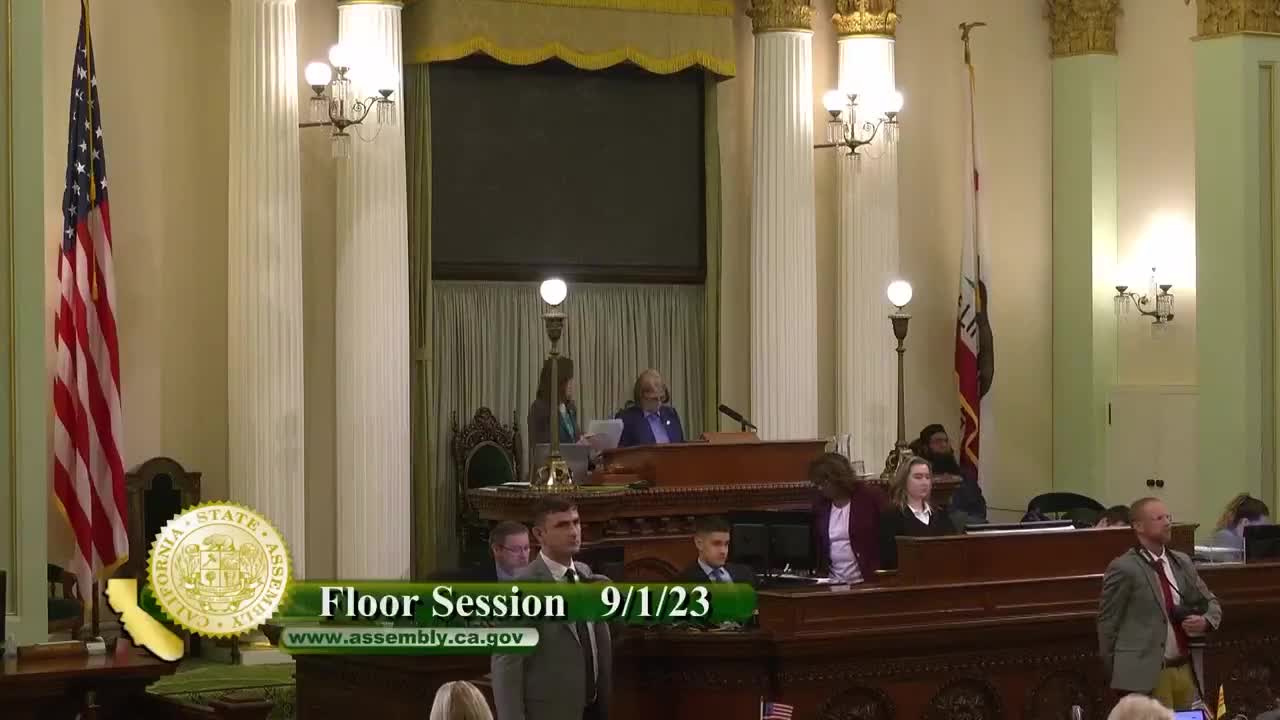 1MIN
Assembly Floor
 7MIN
Assembly Standing Committee on Natural Resources
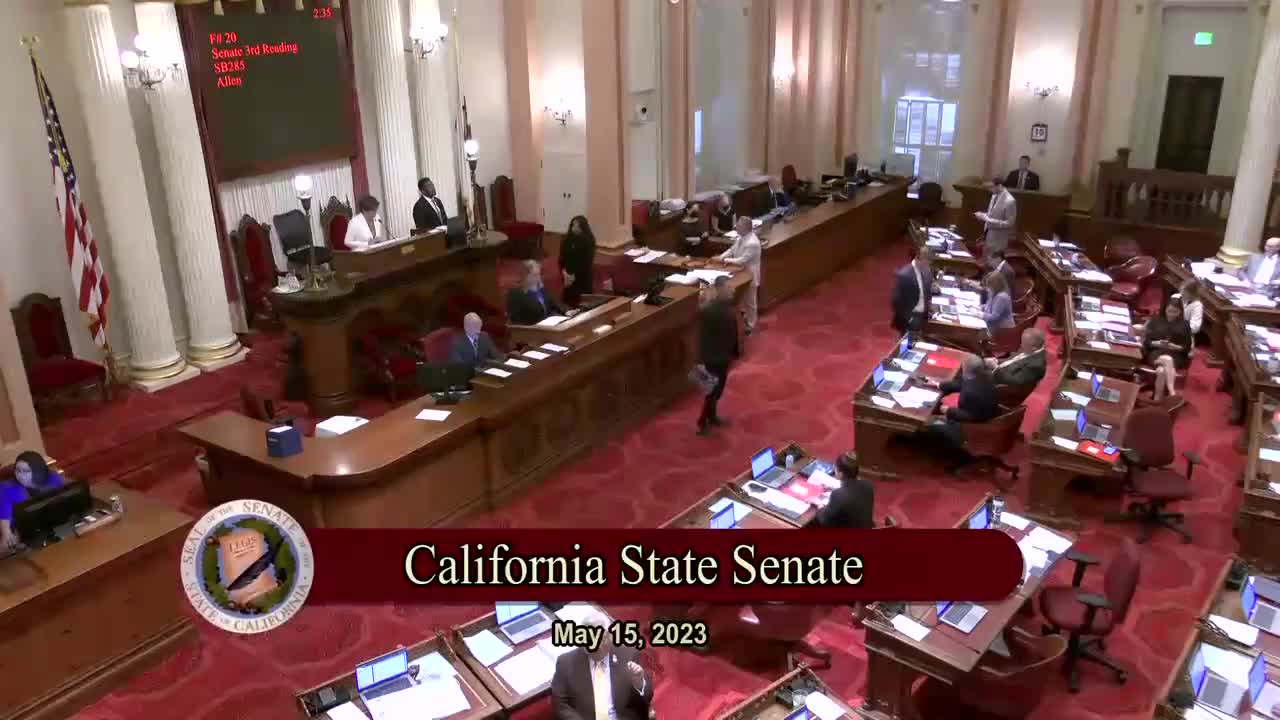 2MIN
Senate Floor
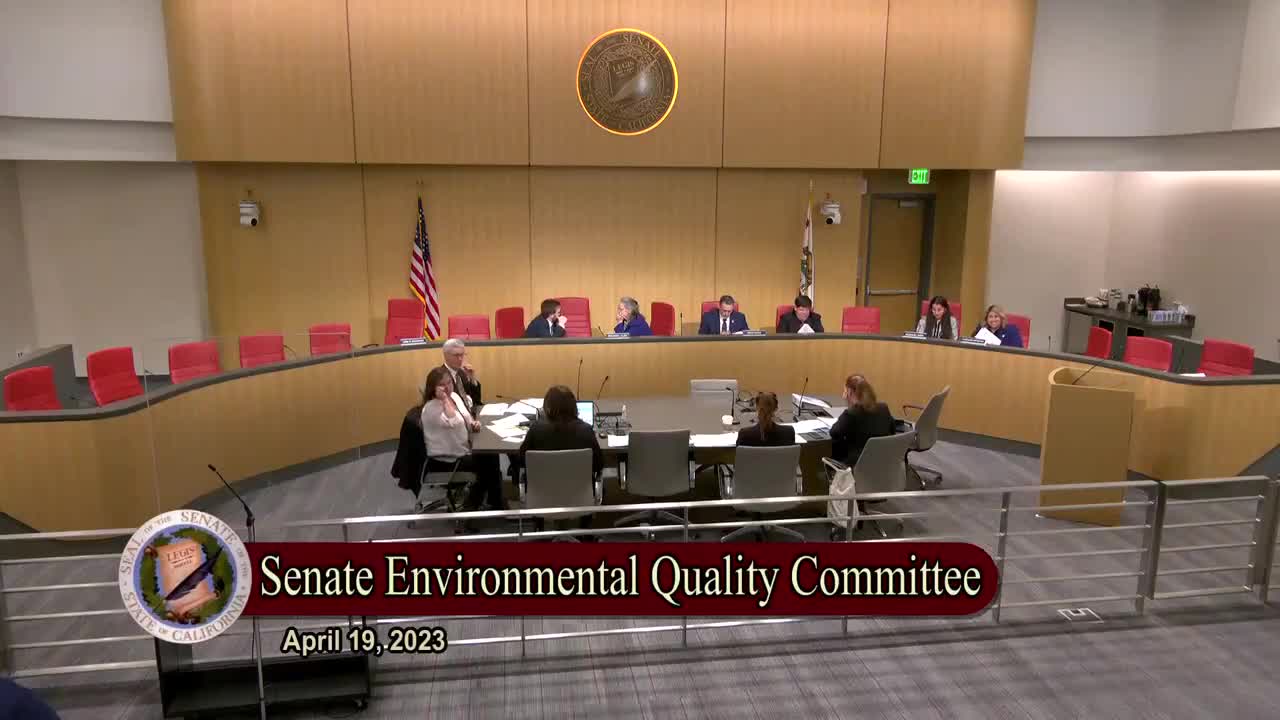 10MIN
Senate Standing Committee on Environmental Quality
Bill Author

Bill Co-Author(s):