SJR 5: Office of Management and Budget: Uniform Guidance.
- Session Year: 2023-2024
- House: Senate
- Latest Version Date: 2024-02-15
Current Status:
Passed
(2024-02-15: Chaptered by Secretary of State. Res. Chapter 5, Statutes of 2024.)
Introduced
In Committee
First Chamber
In Committee
Second Chamber
Enacted
This measure would urge the federal Office of Management and Budget to update its Uniform Guidance in order to improve job creation, quality, and equity.
This measure would urge the federal Office of Management and Budget to update its Uniform Guidance in order to improve job creation, quality, and equity.
This measure would urge the federal Office of Management and Budget to update its Uniform Guidance in order to improve job creation, quality, and equity.
WHEREAS, Since 1988, the federal Office of Management and Budget (OMB) established federal grant rules, now known as the Uniform Guidance (2 C.F.R. Part 200), that have severely limited state and local governments from implementing substantive procurement standards that promote good jobs and equity; and
WHEREAS, State and local governments are prohibited from using local hire (hiring people from a specific geographic region) in federally funded procurements; and
WHEREAS, The Uniform Guidance has impeded the implementation of policies, including targeted hire provisions and project labor agreements; and
WHEREAS, This language has hindered state and local governments efforts to put local or disadvantaged residents to work rebuilding infrastructure in their own communities; and
WHEREAS, No empirical evidence has been cited that shows local hire has an adverse impact on bid competition or cost; and
WHEREAS, The United States Congress itself has never prohibited local hire or targeted hire; and
WHEREAS, The 2015 Obama-Biden Administrations Local Labor Hiring Pilot Program allowed grant recipients to use local hire programs to successfully increase social, economic, and racial equity in their communities; and
WHEREAS, The Infrastructure Investment and Jobs Act allowed for local hire to be used in transportation construction projects; and
WHEREAS, Local hire programs address the fundamental goal of having residents participate in infrastructure investments in their own towns and cities; and
WHEREAS, Targeted hire programs can also increase opportunities for workers of color, women, veterans, returning community members, and others historically excluded from meaningful employment; now, therefore, be it
Resolved by the Senate and the Assembly of the State of California, jointly, That the Legislature urges the Office of Management and Budget to update its Uniform Guidance to explicitly allow states and localities to implement strong procurement standards that advance high-quality jobs and equitable hiring, including lifting the local hire prohibition on federally funded projects, and in so doing empower California lawmakers and agencies to create equitable infrastructure jobs that can strengthen our cities, counties, and state; and be it further
Resolved, That the Secretary of the Senate transmit copies of this resolution to the President and the Vice President of the United States, the federal Office of Management and Budget, and to the author for appropriate distribution.
|
Date
|
Status
|
|---|---|
| Feb 15, 2024 | Chaptered by Secretary of State. Res. Chapter 5, Statutes of 2024. |
| Feb 15, 2024 | Enrolled and filed with the Secretary of State at 2 p.m. |
| Feb 12, 2024 | In Senate. Ordered to engrossing and enrolling. |
| Feb 8, 2024 | Read. Adopted. (Ayes 61. Noes 0. Page 4040.) Ordered to the Senate. |
| Feb 8, 2024 | Coauthors revised. |
| Feb 5, 2024 | Ordered to third reading. |
| Feb 5, 2024 | From inactive file. |
| Feb 1, 2024 | Notice of intention to remove from inactive file given by Assembly Member Gipson. |
| Sep 14, 2023 | Ordered to inactive file on request of Assembly Member Bryan. |
| Aug 30, 2023 | From committee: Be adopted. Ordered to third reading. (Ayes 6. Noes 0.) (August 30). |
| Jul 10, 2023 | Referred to Com. on L. & E. |
| Jun 22, 2023 | In Assembly. Held at Desk. |
| Jun 22, 2023 | Read. Adopted. (Ayes 32. Noes 7. Page 1680.) Ordered to the Assembly. |
| Jun 14, 2023 | From committee: Be adopted. Ordered to third reading. (Ayes 4. Noes 1. Page 1563.) (June 14). |
| Jun 5, 2023 | Set for hearing June 14. |
| May 17, 2023 | Re-referred to Com. on L., P.E. & R. |
| May 4, 2023 | Introduced. Referred to Com. on RLS. |
|
Date
|
Description
|
Location
|
Votes
|
|
|---|---|---|---|---|
| Feb 8, 2024 | SJR 5 Durazo Senate Third Reading By Gipson | Assembly Floor |
Passed |
|
| Aug 30, 2023 | Be adopted. To third reading. | Assembly Standing Committee on Labor and Employment |
Passed |
|
| Jun 22, 2023 | Senate 3rd Reading SJR5 Durazo et al. | Senate Floor |
Passed |
|
| Jun 14, 2023 | Be adopted. Ordered to third reading | Senate Standing Committee on Labor, Public Employment and Retirement |
Passed |
This list shows positions taken on this bill by organizations on the date displayed, which is linked to the original source.
Positions by individuals are not included.
|
Organization
|
Position
|
Date
|
|---|---|---|
| Center on Race, Poverty & the Environment | ** Support | |
| Courage California | ** Support | |
| Dream.org | ** Support | |
| Economic Policy Institute | ** Support | |
| Emerald Cities Collaborative | ** Support | |
| In the Public Interest | ** Support | |
| International Association of Sheet Metal, Air, Rail, and Transportation Workers | ** Support | |
| International Union of Painters & Allied Trades | ** Support | |
| Jobs Move America | * Support | Aug 30, 2023 |
| jobs with justice | ** Support | |
| Los Angeles Alliance for a New Economy | ** Support | |
| Move LA | ** Support | |
| National Employment Law Project | ** Support | |
| PolicyLink | ** Support | |
| SEIU California State Council | ** Support | |
| Service Employees International Union | ** Support | |
| Workers Defense Project | ** Support | |
| Working Family Solidarity | ** Support | |
| Workplace Justice Lab at Rutgers University | ** Support |
SENATE THIRD READING
STR Bill Id:SJR 5
Author:(Durazo)
As Introduced Ver:May 4, 2023
Majority vote
SUMMARY
Urges the Office of Management and Budget (OMB) to update its Uniform Guidance to explicitly allow states and localities to implement strong procurement standards that advance high-quality jobs and equitable hiring, including lifting the local hire prohibition on federally funded projects.
Major Provisions
- Finds that the OMB since 1988 established federal grant rules, now known as the Uniform Guidance (2 Code of Federal Regulations Part 200), that have severely limited state and local governments from implementing substantive procurement standards that promote good jobs and equity.
- Finds that state and local governments are prohibited from using local hire in federally funded procurements.
- Finds that the Uniform Guidance has impeded the implementation of policies, including targeted hire provisions and project labor agreements and has hindered state and local governments' efforts to put local or disadvantaged residents to work rebuilding infrastructure in their own communities.
- Finds that no empirical evidence has been cited that shows local hire has an adverse impact on bid competition or cost.
- Finds that the 2015 Obama-Biden Administration's Local Labor Hiring Pilot Program allowed grant recipients to use local hire programs to successfully increase social, economic, and racial equity in their communities.
- Finds that the Infrastructure Investment and Jobs Act allowed for local hire to be used in transportation construction projects.
- Finds that local hire programs address the fundamental goal of having residents participate in infrastructure investments in their own towns and cities.
- Finds that targeted hire programs can increase opportunities for workers of color, women, veterans, returning community members, and others historically excluded from meaningful employment.
- Calls upon the OMB to update its Uniform Guidance to explicitly allow states and localities to implement strong procurement standards that advance high-quality jobs and equitable hiring, including lifting the local hire prohibition on federally funded projects, and in so doing empower California lawmakers and agencies to create equitable infrastructure jobs that can strengthen our cities, counties, and state.
COMMENTS
Considerable research demonstrates the benefits of using targeted hire and local hiring programs for state or municipal infrastructure projects. For example, the United STates Department of Transportation ran a Local Labor Hiring Pilot Program from 2015-2017 for transportation- related construction projects. A 2021 analysis of nine of the local hire projects in comparison with nine non-local hire projects led to two important conclusions: 1) the use of local hire provisions did not result in decreased market participation by potential bidders and 2) there was no systematic difference in bid amounts between the local hire and non-local hire projects.[1] In addition, studies have linked targeted hire programs to a number of socio-economic benefits. Overall these programs "improve economic opportunities for underserved communities and increase employment access for underrepresented workers. Since these jobs provide family-sustaining wages and benefits, as well as workforce development training, targeted hire initiatives can greatly increase workers' earning potential, both short and long term.[2]" Women- and minority-owned businesses may also stand to benefit from targeted hiring. This practice "can create prospects for small and women-and-minority owned businesses (WMBEs) by setting goals for their participation and creating infrastructure to build their capacity.[3]"
According to the Author
"In my city of Los Angeles, we've seen huge successes from projects that require contractors to hire their workers from local communities and from targeted groups, like those returning from incarceration, veterans, and other systems-impacted individuals. But many of these programs were only possible with local and federal pilot funding. The unclear and prohibitive federal grant rules have hampered cities and states from leveraging the opportunity to use federal dollars to support workers in local communities. Now, we have the opportunity to change these restrictive grant rules and bring proven, successful workforce programs to federally funded projects. By acting now, we can not only bring needed infrastructure funding to our districts, but also make enormous inroads in amplifying financial security and equity in our communities.
I believe that a few minor changes to the Uniform Guidance will allow the Biden Administration to achieve its stated goals of using federally funded procurement as a tool to address historic inequities, lift millions of struggling Americans - particularly people of color - out of the current economic crisis, and ensure the historic investments from the American Rescue Plan, the Infrastructure Investment and Jobs Act, the Inflation Reduction Act, and the CHIPS and Science Act create transformative change in hundreds of industries across the United States.
Moreover, modernizing federal grant rules will enhance my efforts for enforceable job commitments in our state contracting, procurement, and subsidy programs. Through our state budget process I have successfully championed high road labor standards for $1.5 billion zero-
emission school bus contracts. Last year my SB 674 (Durazo), Chapter 875, Statutes of 2022, was signed and will apply a high road jobs framework on zero-emission transit and charging stations through a High Road Jobs in Transportation-Related Public Contracts and Grants Pilot Program. Focused on non-construction jobs, such as manufacturing, maintenance, services and operations, this new law will require our California Department of General Services and Department of Transportation to apply standards for good jobs in contracts for zero-emission transit vehicles or electric vehicle supply equipment valued at $10 million or more. Removing the federal prohibition on local hire and providing clarity on targeted hire will allow us to apply these community benefits to projects and programs that have a mix of federal, state, and local funds to maximize our success.
By modernizing these federal grant rules, we can create programs that create more good, middle class jobs for Californians. Enforceable job standards and community benefits in the green economy has been a priority for me in my state legislation and the California State Budget. It is not enough to finance and incentivize green transportation and other major climate projects; we have to ensure that the people building these projects have access to quality jobs and that California is not subsidizing low-road companies. We have a legal and moral responsibility to protect taxpayer investments. The research is clear that absent state policy these green jobs will not be the well-paid career quality jobs that currently exist in fossil fuel industries. The conflict with the new economy is that fossil fuel jobs pay approximately 40% higher than green economy jobs. This rule change will generate safe, family-supporting career-track jobs in our communities."
In addition, the author contends that the joint resolution maximizes benefits for underserved communities because "in the 1980s, the Reagan Administration created a set of regulations, called the Uniform Guidance, which dictate how local and state governments can use federal grant funding. These regulations limit what terms cities and states can add to their contracts and have impeded their ability to incorporate beneficial and effective policies in their federally-funded public contracts. These regulations continue to be a major roadblock in local and state governments' ability to implement policies that support their communities.
For example, local hire policies establish hiring preferences that connect local residents to meaningful career opportunities for projects happening in their communities. Until 2021, however, federal regulations prohibited cities and states from utilizing local hire programs in most federally-funded projects. After years of advocacy by community and labor groups, the federal government took action to allow policy makers to incorporate local and economically-targeted hiring preferences on transportation construction projects only, through a provision in the Infrastructure Investment and Jobs Act. While this was an important improvement, its scope is limited–it does not extend the use of local hire to other critical areas, such as manufacturing, service, or water and energy infrastructure projects. In fact, other than transportation construction projects, all local hire and local sourcing policies attached to federal funds are strictly prohibited.
This near-total prohibition on local hire has real consequences for residents and their communities. A recent study conducted by Jobs to Move America on the Department of Transportation's Local Labor Hiring Pilot Program found that using local hire policies in federally-funded contracts actually helps create stronger local economies, advance racial and gender equity, and increase the ways cities and states can create good jobs while building and repairing infrastructure."
Arguments in Support
A coalition of worker organizations, including Jobs to Move America, sponsor of this bill, state, "Federal investments in California's infrastructure, such as broadband expansion, water infrastructure, and public transit, are vital to helping the state recover from the pandemic and
create a more resilient future. Right now, the federal Office of Management and Budget (OMB)is considering updates to the Uniform Guidance. This is a critical opportunity to change these grant rules for the better, allowing governing bodies like the California State Legislature to enact policies that amplify the benefits of these infrastructure projects for communities across the state.
We encourage the Legislature to send a strong message to the OMB that California's leaders support updating the Uniform Guidance so that state and local leaders can utilize policies that create fulfilling, safe, high-road jobs for workers in their communities–especially for people of color, women, returning citizens, veterans, and other workers facing barriers to employment."
Arguments in Opposition
None on file.
FISCAL COMMENTS
None. This bill is keyed non-fiscal by the Legislative Counsel.
VOTES
SENATE FLOOR: 32-7-1
YES: Allen, Alvarado-Gil, Archuleta, Ashby, Atkins, Becker, Blakespear, Bradford, Caballero, Cortese, Dodd, Durazo, Glazer, Gonzalez, Hurtado, Laird, Limón, McGuire, Menjivar, Min, Newman, Padilla, Portantino, Roth, Rubio, Skinner, Smallwood-Cuevas, Stern, Umberg, Wahab, Wiener, Wilk
NO: Dahle, Grove, Jones, Nguyen, Niello, Ochoa Bogh, Seyarto
ABS, ABST OR NV: Eggman
ASM LABOR AND EMPLOYMENT: 6-0-1
YES: Kalra, Chen, Haney, Ortega, Reyes, Ward
ABS, ABST OR NV: Flora
UPDATED
VERSION: May 4, 2023
CONSULTANT: Megan Lane / L. & E. / (916) 319-2091 FN: 0001416
Date of Hearing: August 30, 2023
ASSEMBLY COMMITTEE ON LABOR AND EMPLOYMENT
Ash Kalra, Chair
SBPCA Bill Id:SJR 5
Author:(Durazo) – As Introduced Ver:May 4, 2023
SENATE VOTE: 32-7
SUBJECT: Office of Management and Budget: Uniform Guidance
SUMMARY: Urges the Office of Management and Budget (OMB) to update its Uniform Guidance to explicitly allow states and localities to implement strong procurement standards that advance high-quality jobs and equitable hiring, including lifting the local hire prohibition on federally funded projects. Specifically, this resolution:
- Finds that the OMB since 1988 established federal grant rules, now known as the Uniform Guidance (2 C.F.R. Part 200), that have severely limited state and local governments from implementing substantive procurement standards that promote good jobs and equity.
- Finds that state and local governments are prohibited from using local hire in federally funded procurements.
- Finds that the Uniform Guidance has impeded the implementation of policies, including targeted hire provisions and project labor agreements and has hindered state and local governments’ efforts to put local or disadvantaged residents to work rebuilding infrastructure in their own communities.
- Finds that no empirical evidence has been cited that shows local hire has an adverse impact on bid competition or cost.
- Finds that the 2015 Obama-Biden Administration’s Local Labor Hiring Pilot Program allowed grant recipients to use local hire programs to successfully increase social, economic, and racial equity in their communities.
- Finds that the Infrastructure Investment and Jobs Act allowed for local hire to be used in transportation construction projects.
- Finds that local hire programs address the fundamental goal of having residents participate in infrastructure investments in their own towns and cities.
- Finds that targeted hire programs can increase opportunities for workers of color, women, veterans, returning community members, and others historically excluded from meaningful employment.
- Calls upon the OMB to update its Uniform Guidance to explicitly allow states and localities to implement strong procurement standards that advance high-quality jobs and equitable hiring, including lifting the local hire prohibition on federally funded projects, and in so doing empower California lawmakers and agencies to create equitable infrastructure jobs that can strengthen our cities, counties, and state.
EXISTING FEDERAL LAW:
- States that in order to ensure objective contractor performance and eliminate unfair competitive advantage, contractors that develop or draft specifications, requirements, statements of work, or invitations for bids or requests for proposals must be excluded from competing for such procurements. Situations that are considered to be restrictive of competition include, among other things, the following:
- Placing unreasonable requirements on firms in order for them to qualify to do business;
- Requiring unnecessary experience and excessive bonding; and
- Noncompetitive pricing practices between firms or between affiliated companies. 2 C.F.R Part 200.319 (b).
- Requires a non-Federal entity to conduct procurements in a manner that prohibits the use of statutorily or administratively imposed state, local, or tribal geographical preferences in the evaluation of bids or proposals, except in those cases where applicable Federal statutes expressly mandate or encourage geographic preference. 2 C.F.R Part 200.319 (c).
FISCAL EFFECT: This resolution is keyed non-fiscal.
COMMENTS: Considerable research demonstrates the benefits of using targeted hire and local hiring programs for state or municipal infrastructure projects. For example, the U.S. Department of Transportation ran a Local Labor Hiring Pilot Program from 2015-2017 for transportation- related construction projects. A 2021 analysis of nine of the local hire projects in comparison with nine non-local hire projects led to two important conclusions: 1) the use of local hire provisions did not result in decreased market participation by potential bidders and 2) there was no systematic difference in bid amounts between the local hire and non-local hire projects.[1] In addition, studies have linked targeted hire programs to a number of socio-economic benefits. Overall these programs “improve economic opportunities for underserved communities and increase employment access for underrepresented workers. Since these jobs provide family-sustaining wages and benefits, as well as workforce development training, targeted hire initiatives can greatly increase workers’ earning potential, both short and long term.[2]” Women- and minority-owned businesses may also stand to benefit from targeted hiring. This practice “can create prospects for small and women-and-minority owned businesses (WMBEs) by setting goals for their participation and creating infrastructure to build their capacity.[3]”
According to the author, “In my city of Los Angeles, we’ve seen huge successes from projects that require contractors to hire their workers from local communities and from targeted groups, like those returning from incarceration, veterans, and other systems-impacted individuals. But many of these programs were only possible with local and federal pilot funding. The unclear and prohibitive federal grant rules have hampered cities and states from leveraging the opportunity to use federal dollars to support workers in local communities. Now, we have the opportunity to change these restrictive grant rules and bring proven, successful workforce programs to federally funded projects. By acting now, we can not only bring needed infrastructure funding to our districts, but also make enormous inroads in amplifying financial security and equity in our communities.
I believe that a few minor changes to the Uniform Guidance will allow the Biden Administration to achieve its stated goals of using federally funded procurement as a tool to address historic inequities, lift millions of struggling Americans - particularly people of color - out of the current economic crisis, and ensure the historic investments from the American Rescue Plan, the Infrastructure Investment and Jobs Act, the Inflation Reduction Act, and the CHIPS and Science Act create transformative change in hundreds of industries across the United States.
Moreover, modernizing federal grant rules will enhance my efforts for enforceable job commitments in our state contracting, procurement, and subsidy programs. Through our state budget process I have successfully championed high road labor standards for $1.5 billion zero-
emission school bus contracts. Last year my Senate Bill 674 (Chapter 875, Statutes of 2022) was signed and will apply a high road jobs framework on zero-emission transit and charging stations through a High Road Jobs in Transportation-Related Public Contracts and Grants Pilot Program. Focused on non-construction jobs, such as manufacturing, maintenance, services and operations, this new law will require our California Department of General Services and Department of Transportation to apply standards for good jobs in contracts for zero-emission transit vehicles or electric vehicle supply equipment valued at $10 million or more. Removing the federal prohibition on local hire and providing clarity on targeted hire will allow us to apply these community benefits to projects and programs that have a mix of federal, state, and local funds to maximize our success.
By modernizing these federal grant rules, we can create programs that create more good, middle class jobs for Californians. Enforceable job standards and community benefits in the green economy has been a priority for me in my state legislation and the California State Budget. It is not enough to finance and incentivize green transportation and other major climate projects; we have to ensure that the people building these projects have access to quality jobs and that California is not subsidizing low-road companies. We have a legal and moral responsibility to protect taxpayer investments. The research is clear that absent state policy these green jobs will not be the well-paid career quality jobs that currently exist in fossil fuel industries. The conflict with the new economy is that fossil fuel jobs pay approximately 40% higher than green economy jobs. This rule change will generate safe, family-supporting career-track jobs in our communities.”
In addition, the author contends that the joint resolution maximizes benefits for underserved communities because “in the 1980s, the Reagan Administration created a set of regulations, called the Uniform Guidance, which dictate how local and state governments can use federal grant funding. These regulations limit what terms cities and states can add to their contracts and have impeded their ability to incorporate beneficial and effective policies in their federally-funded public contracts. These regulations continue to be a major roadblock in local and state governments’ ability to implement policies that support their communities.
For example, local hire policies establish hiring preferences that connect local residents to meaningful career opportunities for projects happening in their communities. Until 2021, however, federal regulations prohibited cities and states from utilizing local hire programs in most federally-funded projects. After years of advocacy by community and labor groups, the federal government took action to allow policy makers to incorporate local and economically-targeted hiring preferences on transportation construction projects only, through a provision in the Infrastructure Investment and Jobs Act. While this was an important improvement, its scope is limited–it does not extend the use of local hire to other critical areas, such as manufacturing, service, or water and energy infrastructure projects. In fact, other than transportation construction projects, all local hire and local sourcing policies attached to federal funds are strictly prohibited.
This near-total prohibition on local hire has real consequences for residents and their communities. A recent study conducted by Jobs to Move America on the Department of Transportation’s Local Labor Hiring Pilot Program found that using local hire policies in federally-funded contracts actually helps create stronger local economies, advance racial and gender equity, and increase the ways cities and states can create good jobs while building and repairing infrastructure.”
Arguments in Support
A coalition of worker organizations, including Jobs to Move America, sponsor of the bill, state, “Federal investments in California’s infrastructure, such as broadband expansion, water
infrastructure, and public transit, are vital to helping the state recover from the pandemic and
create a more resilient future. Right now, the federal Office of Management and Budget (OMB)
is considering updates to the Uniform Guidance. This is a critical opportunity to change these
grant rules for the better, allowing governing bodies like the California State Legislature to enact
policies that amplify the benefits of these infrastructure projects for communities across the state.
We encourage the Legislature to send a strong message to the OMB that California’s leaders
support updating the Uniform Guidance so that state and local leaders can utilize policies that
create fulfilling, safe, high-road jobs for workers in their communities–especially for people of
color, women, returning citizens, veterans, and other workers facing barriers to employment.”
Arguments in Opposition
None on file.
REGISTERED SUPPORT / OPPOSITION:
Support
Jobs to Move America (Sponsor)
Center on Race, Poverty & the Environment
Courage California
Dream.org
Economic Policy Institute
Emerald Cities Collaborative
In the Public Interest
International Association of Sheet Metal, Air, Rail, and Transportation Workers
International Union of Painters & Allied Trades
Jobs With Justice
Los Angeles Alliance for a New Economy
Move LA
National Employment Law Project
PolicyLink
SEIU California State Council
Service Employees International Union
Workers Defense Project
Working Family Solidarity
Workplace Justice Lab at Rutgers University
Opposition
None on file.
Analysis Prepared by: Megan Lane / L. & E. /
SENATE RULES COMMITTEE Office of Senate Floor Analyses (916) 651-1520 Fax: (916) 327-4478 | SJR 5 |
THIRD READING
Bill No: SJR 5
Author: Durazo (D), et al.
Introduced: 5/4/23
Vote: 21
SENATE LABOR, PUB. EMP. & RET. COMMITTEE: 4-1, 6/14/23
AYES: Cortese, Durazo, Laird, Smallwood-Cuevas
NOES: Wilk
SUBJECT: Office of Management and Budget: Uniform Guidance
SOURCE: Jobs to Move America
DIGEST:
This resolution urges the Office of Management and Budget (OMB) to update its Uniform Guidance to explicitly allow states and localities to implement strong procurement standards that advance high quality jobs and equitable hiring, including lifting the local hire prohibition on federally funded projects, and in so doing empower California lawmakers and agencies to create equitable infrastructure jobs that can strengthen our cities, counties, and the state.
ANALYSIS:
Existing federal law:
- Requires OMB to establish requirements for the administration of federal awards and fixed-price contracts and subcontracts, except unless otherwise specified.
- Prescribes instructions and other pre-award matters to be used by federal awarding agencies in the program planning, announcement, application, and award process.
- Requires a federal awarding agency to manage and administer the Federal award in a manner so as to ensure that Federal funding is expended and associated programs are implemented in full accordance with the U.S. Constitution, Federal Law, and public policy requirements: Including, but not limited to, those protecting free speech, religious liberty, public welfare, the environment, and prohibiting discrimination.
- Provides a recipient non-federal entity must conduct procurements in a manner that prohibits the use of statutorily or administratively imposed state, local, or tribal geographical preferences in the evaluation of bids or proposals, except in those cases where applicable federal statutes expressly mandate or encourage geographic preference. When contracting for architectural and engineering services, geographic location may be a selection criterion provided its application leaves an appropriate number of qualified firms, given the nature and size of the project, to compete for the contract.
- Provides a recipient non-federal entity must take all necessary affirmative steps to assure that minority businesses, women's business enterprises, and labor surplus area firms are used when possible.
Existing state law provides the state shall not grant preferential treatment to any individual or group on the basis of race, sex, color, ethnicity, or national origin in the operation of public employment, public education, or public contracting. (Article 1 §31 of the California Constitution)
This resolution:
- Urges OMB to update its Uniform Guidance to improve job creation, quality, and equity.
- Makes various findings:
- Since 1988, OMB established federal grant rules, now known as the Uniform Guidance that have severely limited state and local governments from implementing substantive procurement standards that promote good jobs and equity.
- State and local governments are prohibited from using local hire (hiring people from a specific geographic region) in federally funded procurements.
- The Uniform Guidance has impeded the implementation of policies, including targeted hire provisions and project labor agreements.
- The Uniform Guidance has hindered state and local government efforts to put local or disadvantaged residents to work rebuilding infrastructure in their own communities.
- No empirical evidence has been cited that shows local hire has an adverse impact on bid competition or cost.
- The United States Congress itself has never prohibited local hire or targeted hire.
- The 2015 Obama-Biden Administration’s Local Labor Hiring Pilot Program allowed grant recipients to use local hire programs to successfully increase social, economic, and racial equity in their communities.
- The Infrastructure Investment and Jobs Act allowed for local hire to be used in transportation construction projects.
- Local hire programs address the fundamental goal of having residents participate in infrastructure investments in their own towns and cities.
- Targeted hire programs can also increase opportunities for workers of color, women, veterans, returning community members, and others historically excluded from meaningful employment.
- Resolves that the Legislature urges OMB to update its Uniform Guidance to explicitly allow states and localities to implement strong procurement standards that advance high quality jobs and equitable hiring, including lifting the local hire prohibition on federally funded projects, and in so doing empower California lawmakers and agencies to create equitable infrastructure jobs that can strengthen our cities, counties, and state.
Background
Following the passage of transparency measures in the American Recovery and Reinvestment Act of 2009, President Obama issued Executive Order 13576 Delivering an Efficient, Effective, and Accountable Government, which outlined the creation of the Government Accountability and Transparency Board. The board was charged with developing a strategic direction for enhancing the transparency of federal spending, including the awarding and use of federal grants. This work ultimately informed OMBs Uniform Guidance. Since December 2014, the Uniform Guidance has regulated the federal grant process by consolidating eight sets of federal regulations into one to streamline the proposal submission and award management process.
In March 2023, the Senate Budget Subcommittee #5 on Corrections, Public Safety, Judiciary, Labor and Transportation and Senate Committee on Labor, Public Employment and Retirement held a joint oversight hearing to examine recent federal investments and how California can maximize those investments by creating high quality jobs and assess how jobs can be created within communities and regions in need. A recurring theme was the necessity to strengthen procurement and contracting to empower disadvantaged communities to obtain equity goals while building a green economy. One challenge to this is Proposition 209, which not only ended race-conscious programs, but also ended the collection of procurement data related to race, ethnicity, and gender in most jurisdictions of California.
FISCAL EFFECT: Appropriation: No Fiscal Com.: No Local: No
SUPPORT: (Verified 6/14/23)
Jobs to Move America (source)
Center on Race, Poverty & the Environment
Courage California
Dream.org
Emerald Cities Collaborative
In the Public Interest
International Association of Sheet Metal, Air, Rail, and Transportation Workers
International Union of Painters & Allied Trades
Jobs With Justice
Los Angeles Alliance for a New Economy
Move LA
National Employment Law Project
PolicyLink
SEIU California State Council
Service Employees International Union
Workers Defense Project
Workplace Justice Lab at Rutgers University
OPPOSITION: (Verified 6/14/23)
None received
ARGUMENTS IN SUPPORT: According to the author:
In my city of Los Angeles, we’ve seen huge successes from projects that require contractors to hire their workers from local communities and from targeted groups, like those returning from incarceration, veterans, and other systems-impacted individuals. But many of these programs were only possible with local and federal pilot funding. The unclear and prohibitive federal grant rules have hampered cities and states from leveraging the opportunity to use federal dollars to support workers in local communities. Now, we have the opportunity to change these restrictive grant rules and bring proven, successful workforce programs to federally funded projects. By acting now, we can not only bring needed infrastructure funding to our districts, but also make enormous inroads in amplifying financial security and equity in our communities.
I believe that a few minor changes to the Uniform Guidance will allow the Biden Administration to achieve its stated goals of using federally funded procurement as a tool to address historic inequities, lift millions of struggling Americans - particularly people of color - out of the current economic crisis, and ensure the historic investments from the American Rescue Plan, the Infrastructure Investment and Jobs Act, the Inflation Reduction Act, and the CHIPS and Science Act create transformative change in hundreds of industries across the United States.
Moreover, modernizing federal grant rules will enhance my efforts for enforceable job commitments in our state contracting, procurement, and subsidy programs. Through our state budget process I have successfully championed high road labor standards for $1.5 billion zero-emission school bus contracts. Last year my Senate Bill 674 (Chapter 875, Statutes of 2022) was signed and will apply a high road jobs framework on zero-emission transit and charging stations through a High Road Jobs in Transportation-Related Public Contracts and Grants Pilot Program. Focused on non-construction jobs, such as manufacturing, maintenance, services and operations, this new law will require our California Department of General Services and Department of Transportation to apply standards for good jobs in contracts for zero-emission transit vehicles or electric vehicle supply equipment valued at $10 million or more. Removing the federal prohibition on local hire and providing clarity on targeted hire will allow us to apply these community benefits to projects and programs that have a mix of federal, state, and local funds to maximize our success.
By modernizing these federal grant rules, we can create programs that create more good, middle class jobs for Californians. Enforceable job standards and community benefits in the green economy has been a priority for me in my state legislation and the California State Budget. It is not enough to finance and incentivize green transportation and other major climate projects; we have to ensure that the people building these projects have access to quality jobs and that California is not subsidizing low-road companies. We have a legal and moral responsibility to protect taxpayer investments. The research is clear that absent state policy these green jobs will not be the well-paid career quality jobs that currently exist in fossil fuel industries. The conflict with the new economy is that fossil fuel jobs pay approximately 40% higher than green economy jobs. This rule change will generate safe, family-supporting career-track jobs in our communities.
Prepared by: Dawn Clover / L., P.E. & R. / (916) 651-1556
6/14/23 13:21:13
**** END ****
SENATE COMMITTEE ON LABOR, PUBLIC EMPLOYMENT AND RETIREMENT
Senator Dave Cortese, Chair
2023 - 2024 Regular
Bill No: SJR 5 Hearing Date: June 14, 2023
Author: | Durazo | ||
Version: | May 4, 2023 | ||
Urgency: |
| Fiscal: | No |
Consultant: | Dawn Clover | ||
SUBJECT: Office of Management and Budget: Uniform Guidance
KEY ISSUE
Should the Legislature urge the federal Office of Management and Budget to update its Uniform Guidance in order to improve job creation, quality, and equity?
ANALYSIS
Existing federal law:
- Requires the Office of Management and Budget (OMB) to establish requirements for the administration of federal awards and fixed-price contracts and subcontracts, except unless otherwise specified. (2 C.F.R. §§200)
- Prescribes instructions and other pre-award matters to be used by federal awarding agencies in the program planning, announcement, application, and award process. (2 C.F.R. §200.201-200.216)
- Requires a federal awarding agency to manage and administer the Federal award in a manner so as to ensure that Federal funding is expended and associated programs are implemented in full accordance with the U.S. Constitution, Federal Law, and public policy requirements: Including, but not limited to, those protecting free speech, religious liberty, public welfare, the environment, and prohibiting discrimination. (2 C.F.R. §200.300)
- Provides a recipient non-federal entity must conduct procurements in a manner that prohibits the use of statutorily or administratively imposed state, local, or tribal geographical preferences in the evaluation of bids or proposals, except in those cases where applicable federal statutes expressly mandate or encourage geographic preference. When contracting for architectural and engineering services, geographic location may be a selection criterion provided its application leaves an appropriate number of qualified firms, given the nature and size of the project, to compete for the contract. (2 C.F.R. §200.319(c))
- Provides a recipient non-federal entity must take all necessary affirmative steps to assure that minority businesses, women's business enterprises, and labor surplus area firms are used when possible. (2 C.F.R. §200.321)
Existing state law:
- Provides the state shall not grant preferential treatment to any individual or group on the basis of race, sex, color, ethnicity, or national origin in the operation of public employment, public education, or public contracting. (Article 1 §31 of the California Constitution)
This resolution:
- Urges the OMB to update its Uniform Guidance to improve job creation, quality, and equity.
- Finds the following:
- Since 1988, OMB established federal grant rules, now known as the Uniform Guidance that have severely limited state and local governments from implementing substantive procurement standards that promote good jobs and equity.
- State and local governments are prohibited from using local hire (hiring people from a specific geographic region) in federally funded procurements.
- The Uniform Guidance has impeded the implementation of policies, including targeted hire provisions and project labor agreements.
- The Uniform Guidance has hindered state and local government efforts to put local or disadvantaged residents to work rebuilding infrastructure in their own communities.
- No empirical evidence has been cited that shows local hire has an adverse impact on bid competition or cost.
- The United States Congress itself has never prohibited local hire or targeted hire.
- The 2015 Obama-Biden Administration’s Local Labor Hiring Pilot Program allowed grant recipients to use local hire programs to successfully increase social, economic, and racial equity in their communities.
- The Infrastructure Investment and Jobs Act allowed for local hire to be used in transportation construction projects.
- Local hire programs address the fundamental goal of having residents participate in infrastructure investments in their own towns and cities.
- Targeted hire programs can also increase opportunities for workers of color, women, veterans, returning community members, and others historically excluded from meaningful employment.
- Since 1988, OMB established federal grant rules, now known as the Uniform Guidance that have severely limited state and local governments from implementing substantive procurement standards that promote good jobs and equity.
- Resolves that the Legislature urges OMB to update its Uniform Guidance to explicitly allow states and localities to implement strong procurement standards that advance high quality jobs and equitable hiring, including lifting the local hire prohibition on federally funded projects, and in so doing empower California lawmakers and agencies to create equitable infrastructure jobs that can strengthen our cities, counties, and state.
- Resolves that the Secretary of the Senate shall transmit copies of this resolution to the President and the Vice President of the United States, OMB, and to the author for appropriate distribution.
COMMENTS
1. Need for this bill?
Following the passage of transparency measures in the American Recovery and
Reinvestment Act of 2009, President Obama issued Executive Order 13576 – Delivering an
Efficient, Effective, and Accountable Government, which outlined the creation of the Government Accountability and Transparency Board. The board was charged with developing a strategic direction for enhancing the transparency of federal spending, including the awarding and use of federal grants. This work ultimately informed OMBs Uniform Guidance. Since December 2014, the Uniform Guidance has regulated the federal grant process by consolidating eight sets of federal regulations into one to streamline the proposal submission and award management process.
In March 2023, the author’s budget subcommittee and this committee held a joint
oversight hearing to examine recent federal investments and how California can
maximize those investments by creating high quality jobs and assess how jobs can be created
within communities and regions in need. A recurring theme was the necessity to strengthen
procurement and contracting to empower disadvantaged communities to obtain equity goals
while building a green economy. One challenge to this is Proposition 209, which not only
ended race-conscious programs, but also ended the collection of procurement data related to
race, ethnicity, and gender in most jurisdictions of California.[1]
According to the author, “In my city of Los Angeles, we’ve seen huge successes from projects that require contractors to hire their workers from local communities and from targeted groups, like those returning from incarceration, veterans, and other systems-impacted individuals. But many of these programs were only possible with local and federal pilot funding. The unclear and prohibitive federal grant rules have hampered cities and states from leveraging the opportunity to use federal dollars to support workers in local communities. Now, we have the opportunity to change these restrictive grant rules and bring proven, successful workforce programs to federally funded projects. By acting now, we can not only bring needed infrastructure funding to our districts, but also make enormous inroads in amplifying financial security and equity in our communities.
I believe that a few minor changes to the Uniform Guidance will allow the Biden Administration to achieve its stated goals of using federally funded procurement as a tool to address historic inequities, lift millions of struggling Americans - particularly people of color - out of the current economic crisis, and ensure the historic investments from the American Rescue Plan, the Infrastructure Investment and Jobs Act, the Inflation Reduction Act, and the CHIPS and Science Act create transformative change in hundreds of industries across the United States.
Moreover, modernizing federal grant rules will enhance my efforts for enforceable job commitments in our state contracting, procurement, and subsidy programs. Through our state budget process I have successfully championed high road labor standards for $1.5 billion zero-emission school bus contracts. Last year my Senate Bill 674 (Chapter 875, Statutes of 2022) was signed and will apply a high road jobs framework on zero-emission transit and charging stations through a High Road Jobs in Transportation-Related Public Contracts and Grants Pilot Program. Focused on non-construction jobs, such as manufacturing, maintenance, services and operations, this new law will require our California Department of General Services and Department of Transportation to apply standards for good jobs in contracts for zero-emission transit vehicles or electric vehicle supply equipment valued at $10 million or more. Removing the federal prohibition on local hire and providing clarity on targeted hire will allow us to apply these community benefits to projects and programs that have a mix of federal, state, and local funds to maximize our success.
By modernizing these federal grant rules, we can create programs that create more good, middle class jobs for Californians. Enforceable job standards and community benefits in the green economy has been a priority for me in my state legislation and the California State Budget. It is not enough to finance and incentivize green transportation and other major climate projects; we have to ensure that the people building these projects have access to quality jobs and that California is not subsidizing low-road companies. We have a legal and moral responsibility to protect taxpayer investments. The research is clear that absent state policy these green jobs will not be the well-paid career quality jobs that currently exist in fossil fuel industries. The conflict with the new economy is that fossil fuel jobs pay approximately 40% higher than green economy jobs. This rule change will generate safe, family-supporting career-track jobs in our communities.”
2. Proponent Arguments
According to Jobs to Move America, “Current federal grant rules hinder the ability of city and state officials to incorporate policies that create good jobs for their communities, promote greater racial and gender equity in their spending, and protect workers through workforce transition plans when using federal funds. For example, local hire programs can help connect local residents to meaningful career opportunities for projects happening in their communities. However, under current regulations, cities and states are prohibited from using local hire programs in most federally-funded projects.
Federal investments in California’s infrastructure, such as broadband expansion, water infrastructure, and public transit, are vital to helping the state recover from the pandemic and create a more resilient future. Right now, the federal Office of Management and Budget (OMB) is considering updates to the Uniform Guidance. This is a critical opportunity to change these grant rules for the better, allowing governing bodies like the California State Legislature to enact policies that amplify the benefits of these infrastructure projects for communities across the state.
We encourage the Legislature to send a strong message to the OMB that California’s leaders support updating the Uniform Guidance so that state and local leaders can utilize policies that create fulfilling, safe, high-road jobs for workers in their communities–especially for people of color, women, returning citizens, veterans, and other workers facing barriers to employment.”
3. Opponent Arguments:
None received
4. Prior Legislation:
SB 822 (Durazo, 2023) would create the California Workforce Innovation and Opportunity Act to assist state agencies in advancing high quality jobs with investments in the energy, resources, and transportation sectors and expand access to those jobs through education and training and requires state agencies receiving climate investments to enter into a memorandum of understanding with the California Workforce Development Board to coordinate economic and workforce development planning, analysis, and implementation activities.
SUPPORT
Jobs to Move America (Sponsor)
Center on Race, Poverty & the Environment
Courage California
Dream.org
Emerald Cities Collaborative
In the Public Interest
International Association of Sheet Metal, Air, Rail, and Transportation Workers (SMART)
International Union of Painters & Allied Trades (IUPAT)
Jobs With Justice
Los Angeles Alliance for a New Economy (LAANE)
Move LA
National Employment Law Project
PolicyLink
SEIU California State Council
Service Employees International Union
Workers Defense Project
Workplace Justice Lab at Rutgers University
OPPOSITION
None received
-- END --
Discussed in Hearing
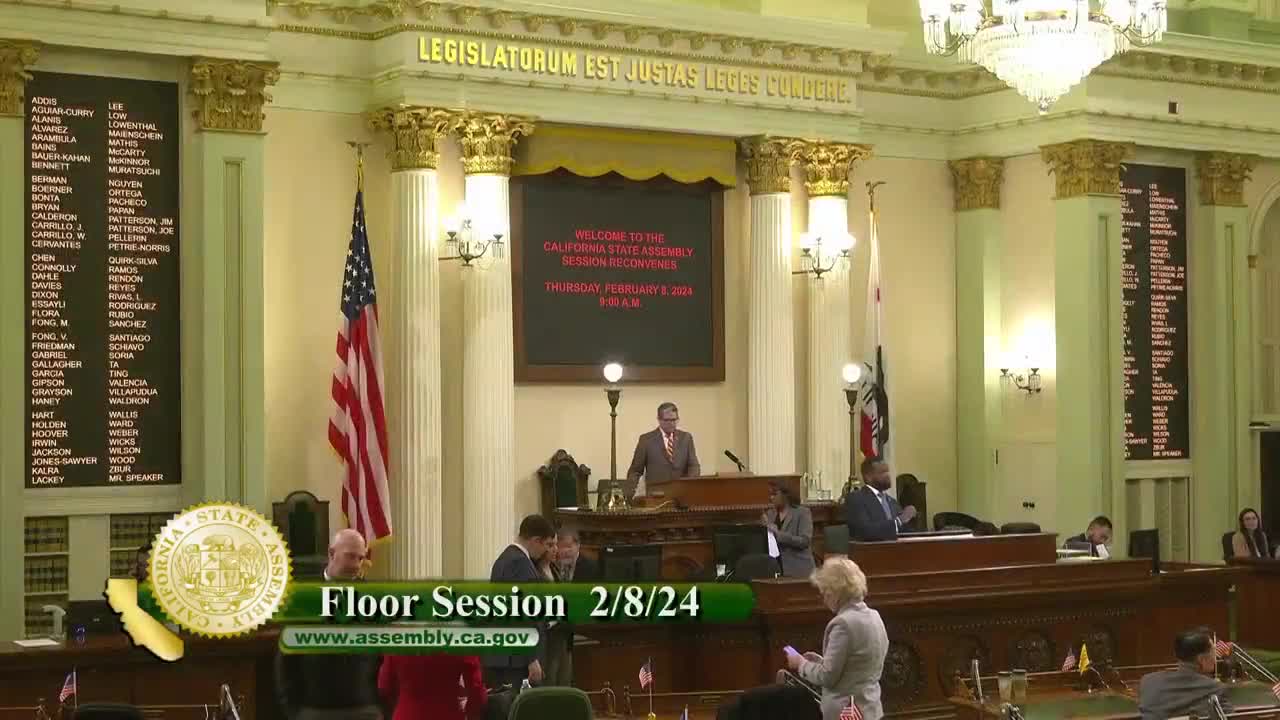 2MIN
Assembly Floor
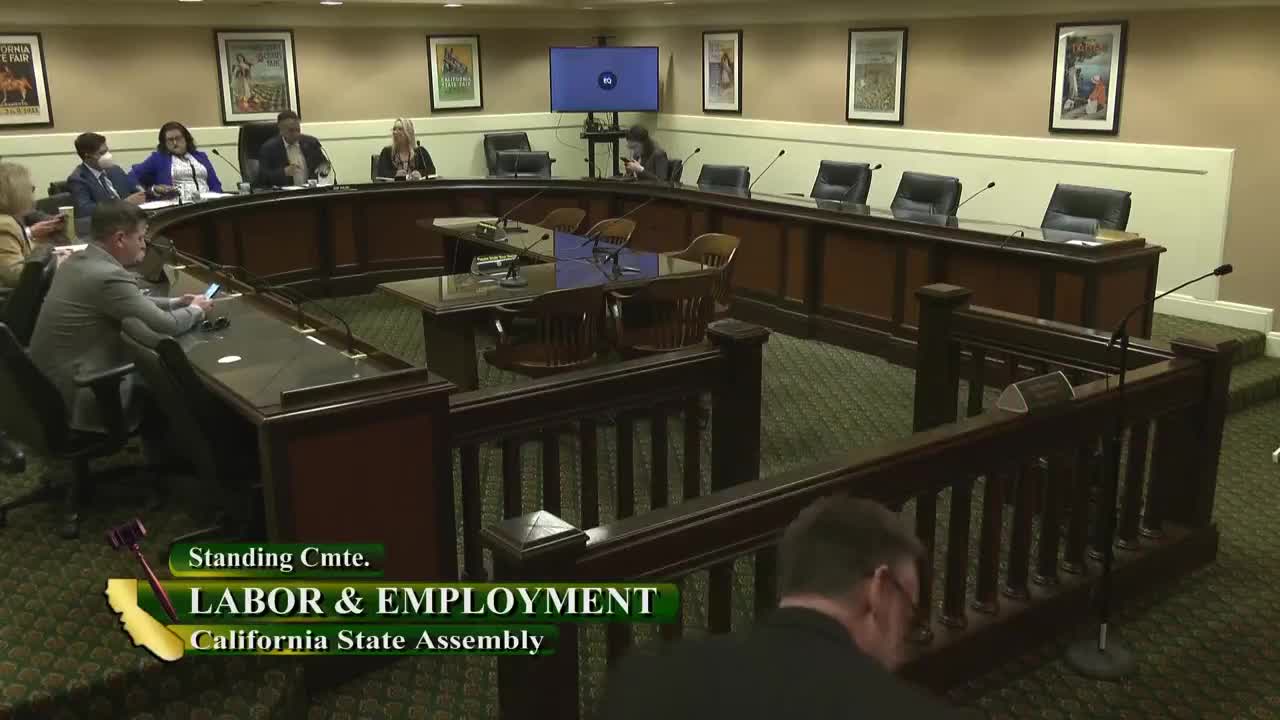 11MIN
Assembly Standing Committee on Labor and Employment
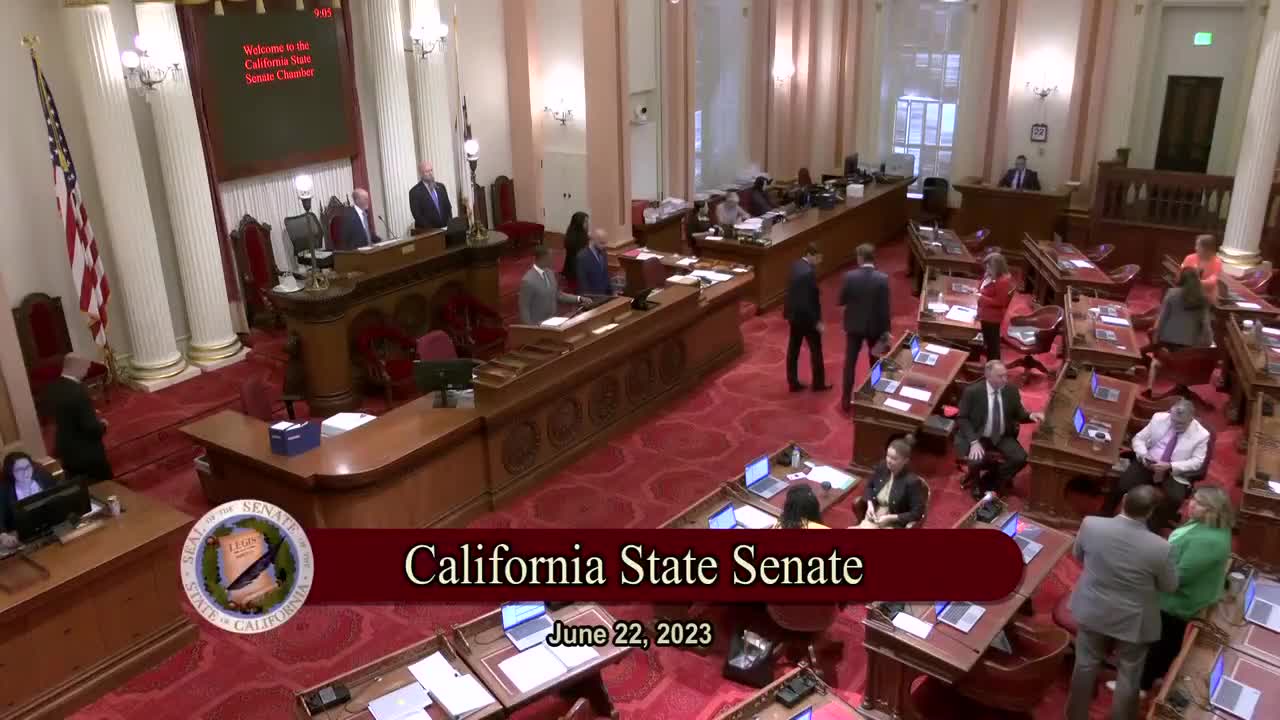 4MIN
Senate Floor
Bill Author

Bill Co-Author(s):