AB 1045: California State University and University of California: financial incentives: nonprofit organizations: service learning.
- Session Year: 2025-2026
- House: Assembly
- Latest Version Date: 2025-05-23
Current Status:
In Progress
(2025-08-29: In committee: Held under submission.)
Introduced
In Committee
Awaiting First Chamber Vote
Passed First Chamber
In Committee
Awaiting Second Chamber Vote
Passed Second Chamber
Enacted
The Donahoe Higher Education Act sets forth the missions and functions of Californias public segments of higher education and their respective institutions of higher education. The California State University, under the administration of the Trustees of the California State University, and the University of California, under the administration of the Regents of the University of California, are 2 of the segments. Provisions of the act apply to the University of California only to the extent that the Regents of the University of California act, by appropriate resolution, to make them applicable.
This bill would require authorize California State University and University of California campuses that choose to participate to provide financial incentives to partnering nonprofit organizations for purposes of facilitating service learning programs and opportunities for undergraduate students.
The Donahoe Higher Education Act sets forth the missions and functions of Californias public segments of higher education and their respective institutions of higher education. The California State University, under the administration of the Trustees of the California State University, and the University of California, under the administration of the Regents of the University of California, are 2 of the segments. Provisions of the act apply to the University of California only to the extent that the Regents of the University of California act, by appropriate resolution, to make them applicable.
This bill would require California State University and University of California campuses that choose to participate to provide financial incentives to partnering nonprofit organizations for purposes of facilitating service learning programs and opportunities for undergraduate students.
(a)For purposes of this section, the following definitions apply:
(1)Financial incentives includes stipends to supervise students during their service learning placement.
(2)Nonprofit organization means a tax-exempt organization as defined under Section 501(c)(3) of the Internal Revenue Code that partners with a participating institution to implement this section.
(3)Participating institution means a California State University or University of California campus that chooses to implement this section.
(4)Service learning means an educational approach that intentionally combines meaningful community service activities with instruction and reflection to support student progress toward academic and civic engagement learning objectives while meeting societal needs.
(5)Student means an undergraduate student enrolled at a participating institution.
(b)A participating institution shall may allocate funds to provide financial incentives to nonprofit organizations for purposes of facilitating service learning programs and opportunities for students.
(c)A participating institution shall may use existing resources or secure additional funding, such as private donations or grants, to implement this section.
(a)For purposes of this section, the following definitions apply:
(1)Financial incentives includes stipends to supervise students during their service learning placement.
(2)Nonprofit organization means a tax-exempt organization as defined under Section 501(c)(3) of the Internal Revenue Code that partners with a participating institution to implement this section.
(3)Participating institution means a California State University or University of California campus that chooses to implement this section.
(4)Service learning means an educational approach that intentionally combines meaningful community service activities with instruction and reflection to support student progress toward academic and civic engagement learning objectives while meeting societal needs.
(5)Student means an undergraduate student enrolled at a participating institution.
(b)A participating institution shall allocate funds to provide financial incentives to nonprofit organizations for purposes of facilitating service learning programs and opportunities for students.
(c)A participating institution shall use existing resources or secure additional funding, such as private donations or grants, to implement this section.
|
Date
|
Status
|
|---|---|
| Aug 29, 2025 | In committee: Held under submission. |
| Jul 7, 2025 | In committee: Referred to APPR. suspense file. |
| Jun 25, 2025 | From committee: Do pass and re-refer to Com. on APPR. (Ayes 7. Noes 0.) (June 25). Re-referred to Com. on APPR. |
| Jun 11, 2025 | Referred to Com. on ED. |
| Jun 3, 2025 | In Senate. Read first time. To Com. on RLS. for assignment. |
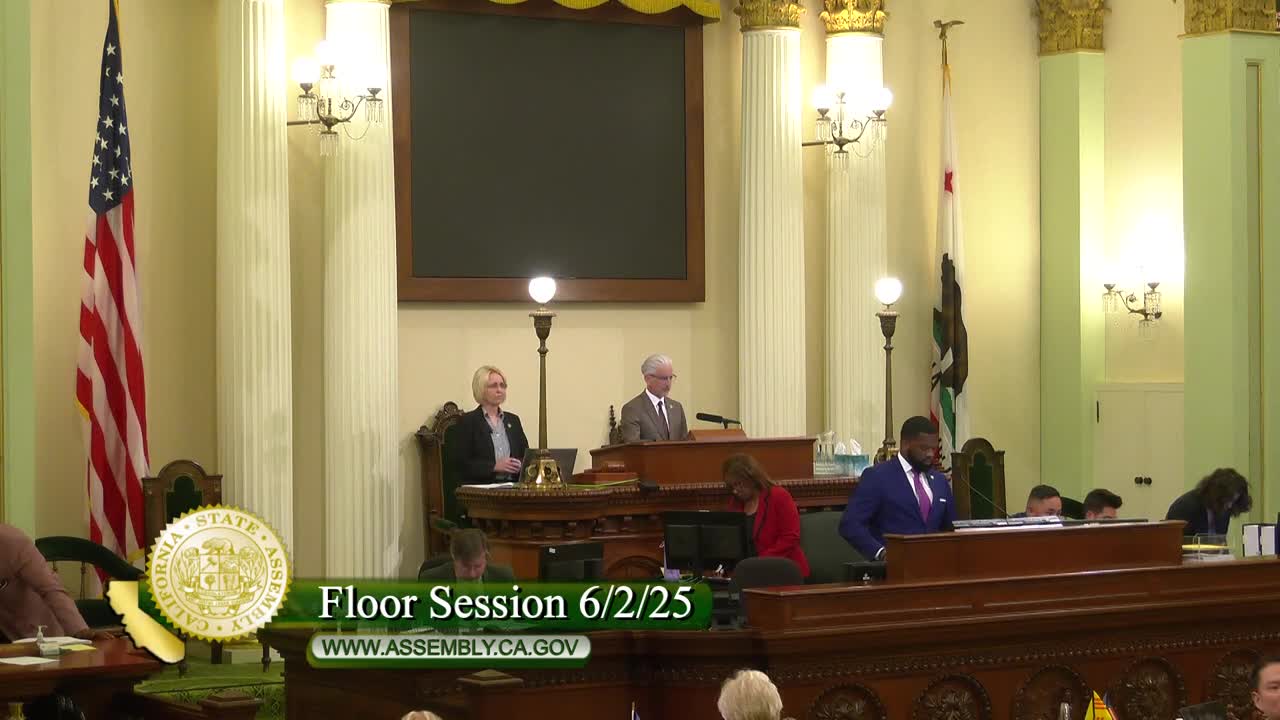
| Jun 2, 2025 | Read third time. Passed. Ordered to the Senate. (Ayes 73. Noes 4. Page 1915.) |
| May 27, 2025 | Read second time. Ordered to third reading. |
| May 23, 2025 | Assembly Rule 63 suspended. (Ayes 51. Noes 16. Page 1644.) |
| May 23, 2025 | From committee: Amend, and do pass as amended. (Ayes 11. Noes 2.) (May 23). |
| May 23, 2025 | Read second time and amended. Ordered returned to second reading. |
| May 14, 2025 | In committee: Set, first hearing. Referred to APPR. suspense file. |
| Apr 30, 2025 | From committee: Do pass and re-refer to Com. on APPR. (Ayes 7. Noes 2.) (April 29). Re-referred to Com. on APPR. |
| Mar 10, 2025 | Referred to Com. on HIGHER ED. |
| Feb 21, 2025 | From printer. May be heard in committee March 23. |
| Feb 20, 2025 | Read first time. To print. |
|
Date
|
Description
|
Location
|
Votes
|
|
|---|---|---|---|---|
| Jul 7, 2025 | Placed on suspense file | Senate Standing Committee on Appropriations |
Passed |
|
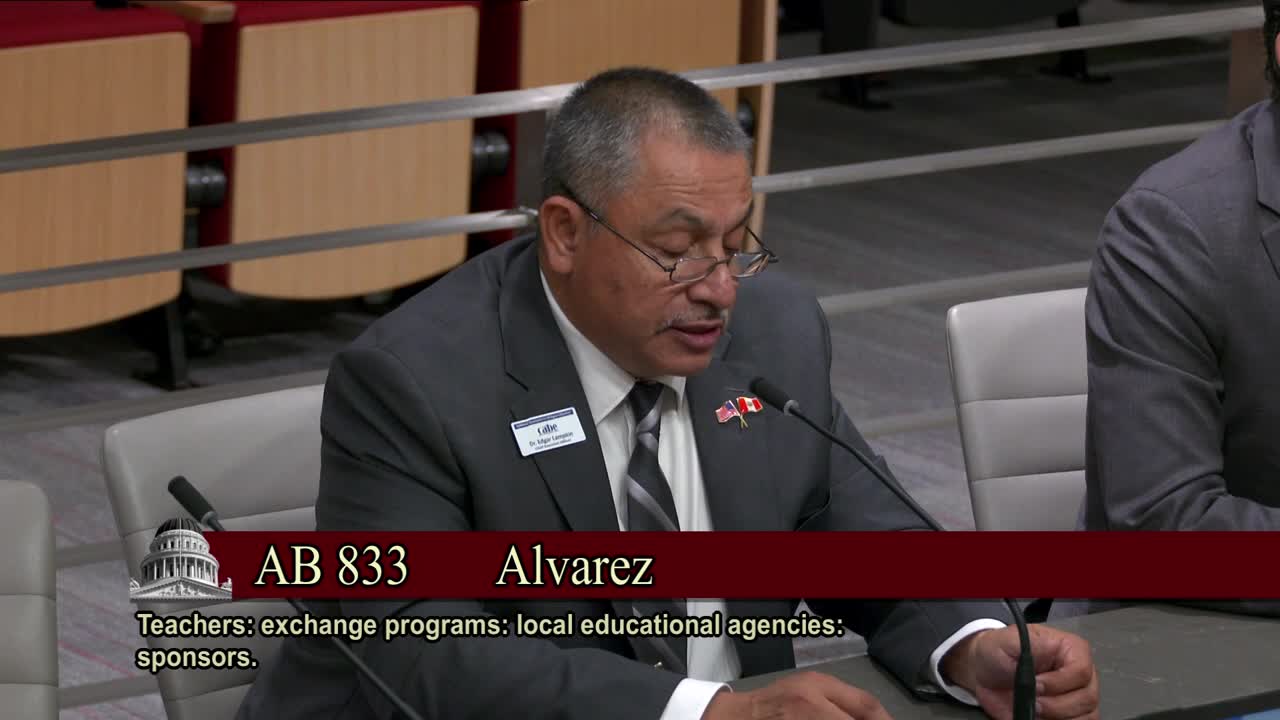
| Jun 25, 2025 | Do pass, but first be re-referred to the Committee on [Appropriations] | Senate Standing Committee on Education |
Passed |
|
| Jun 2, 2025 | AB 1045 Ávila Farías Assembly Third Reading | Assembly Floor |
Passed |
|
| May 23, 2025 | Do pass as amended. | Assembly Standing Committee on Appropriations |
Passed |
|
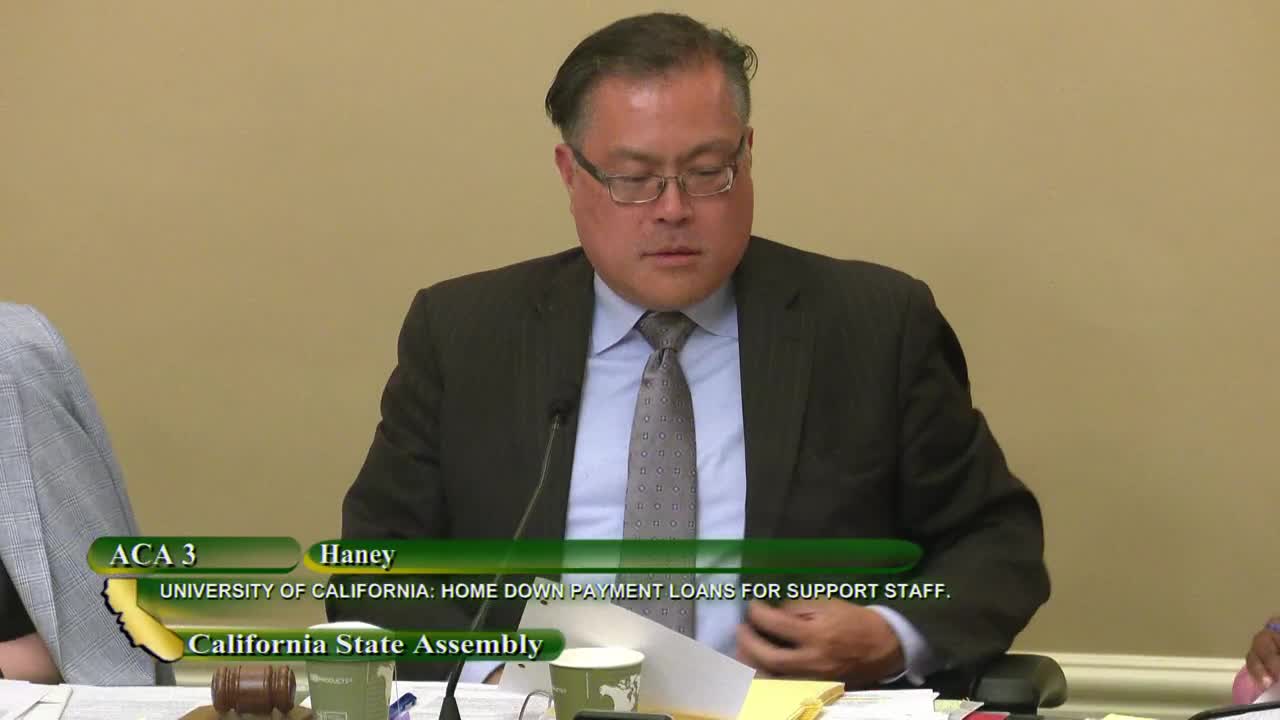
| Apr 29, 2025 | Do pass and be re-referred to the Committee on [Appropriations] | Assembly Standing Committee on Higher Education |
Passed |
This list shows positions taken on this bill by organizations on the date displayed, which is linked to the original source.
Positions by individuals are not included.
|
Organization
|
Position
|
Date
|
|---|---|---|
| California Association Of Nonprofits | ** Support | |
| GENup | ** Support | |
| Jewish Family and Children's Services of San Francisco, the Peninsula, Marin and Sonoma Counties | ** Support |
SENATE COMMITTEE ON EDUCATION
Senator Sasha Renée Pérez, Chair
2025 - 2026 Regular
Bill No: Hearing Date: June 25, 2025
Author: | Ávila Farías | ||
Version: |
| ||
Urgency: | Fiscal: | ||
Consultant: | |||
Subject:
SUMMARY
This bill authorizes a participating California State University (CSU) or University of California (UC) campus to use existing resources or outside funds to provide financial incentives to nonprofit organizations for purposes of facilitating service learning programs and opportunities for students.
BACKGROUND
- Establishes the UC as a public trust to be administered by the Regents of the
UC; and, grants the Regents full powers of organization and government, subject only to such legislative control as may be necessary to insure security of its funds, compliance with the terms of its endowments, statutory requirements around competitive bidding and contracts, sales of property and the purchase of materials, goods and services. (Article IX, Section (9)(a) of the California Constitution)
- Establishes the CSU system, made of 23 campuses, and bestows upon the CSU Trustees, through the Board of Trustees, the power, duties, and functions with respect to the management, administration, and control of the CSU system. (Education Code (EC) § 66606 and § 89030, et seq.)
- Establishes the Donahoe Higher Education Act and assigns the missions of the CSU and the UC. (EC § 66010, et seq.)
ANALYSIS
This bill:
- Authorizes a participating CSU or UC campus to allocate funds to provide financial incentives to nonprofit organizations for purposes of facilitating service learning programs and opportunities for students.
- Authorizes a participating CSU or UC to use existing resources or secure additional funding, such as private donations or grants, to implement the bill’s provisions.
- Defines various terms for purposes of the bill, including:
- “Financial incentives” to include stipends to supervise students during their
service learning placement.
- “Nonprofit organization” to mean a tax-exempt organization as defined
under Section 501(c)(3) of the Internal Revenue Code that partners with a participating institution to implement the bill’s provisions.
- “Service learning” to mean an educational approach that intentionally
combines meaningful community service activities with instruction and reflection to support student progress toward academic and civic engagement learning objectives while meeting societal needs.
- “Student” to mean an undergraduate student enrolled at a participating
institution.
STAFF COMMENTS
- Need for the bill. According to the author, “Service-learning is a creative educational approach that incorporates classroom learning objectives with community engagement and service. Studies have shown the positive impact and value service-learning provides, both in the classroom and in the local community. So much so, the UC and CSU have committed to expanding their efforts to integrating career-relevant knowledge and skills through avenues such as service-learning in the coming decade. Despite the benefits service-learning and other “learn by doing” approaches provide, there are limited financial incentives to facilitate these types of learning programs and opportunities for undergraduate students attending California public universities.
“AB 1045 authorizes participating California State University and University of California campuses to provide financial incentives to partnering nonprofit organizations to facilitate service learning programs and opportunities for undergraduate students. This bill will not only assist our public universities in reaching their goals but further enrich their student’s education and experience as well.”
- What is service learning? Service learning has many definitions. In general, service learning connects academic course content to practical community experience that contribute to students’ academic and professional development. Service learning projects are intended to provide reciprocal benefits to enhance student knowledge related to their course topic and address the needs of a community organization to increase their capacity to serve. The bill describes service-learning opportunities to mean an educational approach that intentionally combines meaningful community service activities with instruction and reflection to support student progress toward academic and civic engagement learning objectives while meeting societal needs.
- Secures organizational partners through financial incentives. The proposed financial incentives aim to encourage collaboration between nonprofit organizations and CSU or UC campuses. In exchange, these nonprofit organizations would offer supervised service-learning opportunities for students. It seems that the organization retains the financial incentive rather than passing it on to the student. This bill authorizes both the use of existing and donated funds for this purpose.
- Existing service learning opportunities for students. Both the UC and CSU offer service-learning opportunities at varying degrees within their respective systems. The CSU reports that during the 2023-24 academic year, campus centers for community engagement and service learning, in partnership with 1,000 faculty and 3,723 community organizations, have enabled 72,000 CSU students to participate in an academic community-engaged learning or hands-on community service experiences. The centers have offered more than 2,800 service-learning sections to more than 43,000 students who contributed upward of 752,000 hours of service-connected coursework. At UC, every undergraduate UC campus offers a broad spectrum of services designed to help connect students with credit-bearing and non-credit-bearing opportunities for research, internships, and community service. Options range from on-campus research projects with individual faculty members to local off-campus internships to global research- and service-oriented opportunities. According to the UC Undergraduate Experience Survey, about four-fifths of bachelor’s degree recipients reported in 2024 during the graduation term that they had participated in a research activity, an internship, or an academic service learning experience, a five-percentage-point increase from 2022.
With regard to financial incentives, the CSU reports that campuses provide financial incentives and support to organizational partners. Common examples include mini-grants through AmeriCorps or other grants, course development funding that includes partner compensation, supplies or small grants for days of service, coverage of student placement costs (e.g., TB tests, background checks), and in-kind support such as workshops or nonprofit board support, including serving on boards, assisting with board training or development. Committee staff understands this is also similar to how it works at UC. Given that colleges have the partnerships this bill seeks to promote, the committee may wish to consider whether it is necessary to authorize CSU and UC to take on tasks they are already performing.
- Prior legislation.
AB 2152 (McCarty, 2024) would have, commencing with the 2026–27 academic year, required each CSU and UC campus to provide on its internet website information on service learning programs and opportunities for undergraduate students. AB 2152l commencing with students graduating in the 2033–34 academic year, would have required the CSU and the UC, for at least three campuses each, as specified, to adopt a pilot program making the completion of a service learning program a graduation requirement. AB 2152 was held on the Suspense File in the Assembly Committee on Appropriations.
AB 1390 (McCarty, 2023) was substantially similar to AB 2152 (McCarty), as described above. AB 1390 was held on the Suspense File in the Assembly Committee on Appropriations.
SUPPORT
None received
OPPOSITION
None received
-- END --
ASSEMBLY THIRD READING
ATR Bill Id:AB 1045
Author:(Ávila Farías)
As Amended Ver:May 23, 2025
Majority vote
SUMMARY
Authorizes California State University (CSU) and University of California (UC) campuses that choose to participate to provide financial incentives to partnering nonprofit organizations for purposes of facilitating service learning programs and opportunities for undergraduate students.
Major Provisions
- Authorizes a participating campus of the CSU or UC that chooses to participate, as enumerated in the summary above, to use existing resources or secure additional funding, such as private donations or grants, to implement this measure.
- Defines the following terms for purposes of this measure:
- "Financial incentives" includes stipends to supervise students during their service learning placement;
- "Nonprofit organization" means a tax-exempt organization as defined under Section 501(c)(3) of the Internal Revenue Code that partners with a participating institution to implement this section;
- "Participating institution" means a CSU or UC campus that chooses to implement this section;
- "Service learning" means an educational approach that intentionally combines meaningful community service activities with instruction and reflection to support student progress toward academic and civic engagement learning objectives while meeting societal needs; and,
- "Student" means an undergraduate student enrolled at a participating institution.
COMMENTS
What is service learning? According to an article, entitled, Service-Learning in Nonprofit Organizations: Motivations, Expectations, and Outcomes, as published Spring 2006 by the Michigan Journal of Community Service Learning, service learning is a form of experiential learning in which classroom instruction is reinforced by community service. The article finds that service learning has become a common and well accepted curricular component at many institutions of higher learning in the nation. The article contends that service learning benefits students in two major areas: (1) students’ education is enhanced in many ways, including, but not limited to: improving critical thinking skills; integrating theory and practice; and, improving communication skills; and, (2) students are more likely to be engaged citizens throughout adulthood.
There are various types of service learning and projects these can include:
- Direct service – which includes tutoring, serving meals, working with patients, helping a refugee family, walking foster dogs, or participating in events at a nursing or skilled facilities home.
- Indirect service – which is doing something behind the scenes to assist, such as organizing a fundraising event, working in a resale shop, stocking a food pantry, collecting donations, or planting trees. Fields such an environmental studies and sociology tend to offer more indirect service opportunities.
- Advocacy – which can take the form of students writing letters to government officials and educating others about possible policy changes utilizing various methods. Political science and criminal justice classes often feature more advocacy service opportunities.
Current service learning partnerships at the CSU and UC. The Center for Community Engagement at the CSU provides opportunities for CSU students to become engaged in their communities. For 20 years, the CSU has partnered with local communities for student placement and initiatives. According to the CSU, there are more than 5,800 partnerships within the communities they serve with more than 67,000 engaged CSU undergraduates and more than 3,500 service learning courses available.
Currently, CSU at Monterey Bay (CSUMB) is the only public university in California, and one of the few nationwide, that has made service learning a graduation requirement for all undergraduate students. Students generally complete two components of the CSUMB service learning requirement: lower division Civics/Service Learning; and, upper division Service Learning. Students entering CSUMB as lower division students will need to complete both requirements; however, students entering as upper division transfer students only need to complete the upper division requirement.
The lower division Civics/Service requirement is a three unit course that requires 25 hours of community service. This class is intended to provide a foundation in civic knowledge, skills, and attitudes to inform service and civic action work in the community. All Civics/Service Learning classes require students to complete 25 hours of service off-campus with a local organization. In addition, students complete a Civic Action project.
The upper division Service Learning classes require students to complete 30 hours of service off-campus with a community organization in a field related to their major. Focusing on the student's field of study and/or professional application.
Each semester, the various CSUMB departments offer over 50 upper division Service Learning classes. Some fields of study, such as Liberal Studies, Environmental Studies, and Human Development & Family Studies, require two service learning classes.
According to the UC, undergraduates learn inside and outside of the classroom, including through research opportunities, internships, and service learning. These experiences are particularly important in providing students with career-relevant knowledge and skills.
The UC Undergraduate Experience Survey, provides metrics to assess participation in these activities. Overall, about four-fifths of bachelor's degree recipients reported in 2024 during the graduation term that they had participated in a research activity, an internship, or an academic service learning experience, with five percentage points increase from 2022 at 75%. The participation rate in 2020 (62%) was lower than that in other years due to the effect of the COVID-19 pandemic.
In response to the UC Multi-Year Compact Goal, UC will continue to expand efforts to integrate career-relevant knowledge and skills into the educational experience, in part, by establishing a goal of enabling all students to participate in at least one semester of undergraduate research, internships, and/or relevant on-campus or community service learning experiences.
This measure provides a participating campus of the CSU or UC to provide financial incentives to nonprofit organizations for purposes of facilitating service learning programs and opportunities for students.
While the measure also authorizes a participating campus of the CSU or UC to secure additional funding, such as private donations or grants in order to implement the provisions of this measure, it also requires a participating campus of the CSU or UC to use existing resources in order to implement the measure. With the CSU and UC facing a 3% budget cut in State appropriated funding, it is presently unclear, shy private donations, if the CSU or UC would be able to fund this.
Further, the CSU and UC already have robust service learning programs, this measure could enhance the programs and partnerships with nonprofit organizations, but, is it an appropriate use of State resources to be provided as an incentive for nonprofit entities to participate in service learning with the CSU and UC?
Additionally, as currently drafted, it is unclear if the CSU and UC campuses who choose to participate under the provisions of this measure, would need to establish new partnerships with nonprofit organizations. If new partnerships need to be established, it is unclear how said partnerships would be created.
According to the Author
According to the author, "service-learning is a creative educational approach that incorporates classroom learning objectives with community engagement and service. Studies have shown the positive impact and value service-learning provides, both in the classroom and in the local community. So much so, the UC and CSU have committed to expanding their efforts to integrating career-relevant knowledge and skills through avenues such as service-learning in the coming decade. Despite the benefits service-learning and other 'learn by doing' approaches provide, there are limited financial incentives to facilitate these types of learning programs and opportunities for undergraduate students attending California public universities."
Further the author contends that, "AB 1045 authorizes participating CSU and UC campuses to provide financial incentives to partnering nonprofit organizations to facilitate service learning programs and opportunities for undergraduate students. This bill will not only assist our public universities in reaching their goals but further enrich their student’s education and experience as well."
Arguments in Support
According to GENup, "universities across California have service learning initiatives of varying scopes. CSU Monterey Bay, for example, has implemented a service learning graduation requirement for all undergraduate students across every major, successfully integrating it into campus culture. While a campus-wide graduation requirement is unlikely to be feasible for most universities, scaling down this model to a single 'department' or 'college' at a small group of pilot campuses is indeed practical. There are likely several universities who have departments on campus – especially in the social sciences – that have already integrated service learning into their programs to an extent that it would not require much additional effort to turn it into a graduation requirement for a chosen subset of students."
GENup contends that, "young people clearly state that they are looking for more service opportunities and ways to learn about the systemic factors shaping the communities where they study and live. Nonprofits are in need of talented human capital but are often short on funds to hire permanent staff. And our society desperately needs to build bridges and increase understanding between people with different life experiences."
Arguments in Opposition
None on file.
FISCAL COMMENTS
According to the Assembly Committee on Appropriations, while this bill does not require a UC or CSU to provide financial incentives for service learning partnerships, to the extent the bill results in increased demand for such programs it may create ongoing General Fund cost pressures of an unknown but potentially significant amount, possibly in the low hundreds of thousands of dollars to millions of dollars, for any CSU or UC campus that wishes to participate in this voluntary program to provide financial incentives, coordinate the service opportunities, and hire additional FTE as needed to administer the program.
VOTES
ASM HIGHER EDUCATION: 7-2-1
YES: Fong, Boerner, Jackson, Muratsuchi, Patel, Celeste Rodriguez, Sharp-Collins
NO: DeMaio, Jeff Gonzalez
ABS, ABST OR NV: Tangipa
ASM APPROPRIATIONS: 11-2-2
YES: Wicks, Arambula, Calderon, Caloza, Elhawary, Fong, Mark González, Hart, Pacheco, Pellerin, Solache
NO: Dixon, Tangipa
ABS, ABST OR NV: Sanchez, Ta
UPDATED
VERSION: May 23, 2025
CONSULTANT: Jeanice Warden / HIGHER ED. / (916) 319-3960 FN: 0000861
Date of Hearing: May 14, 2025
ASSEMBLY COMMITTEE ON APPROPRIATIONS
Buffy Wicks, Chair
ABPCA Bill Id:AB 1045
Author:(Ávila Farías) – As Introduced Ver:February 20, 2025
Policy Committee: | Higher Education | Vote: | 7 - 2 |
|
| ||
|
|
Urgency: No State Mandated Local Program: No Reimbursable: No
SUMMARY:
This bill requires a California State University (CSU) or a University of California (UC) campus that chooses to participate in offering service learning programs to provide financial incentives to nonprofit organizations to facilitate such programs and opportunities for students.
Specifically, this bill defines service learning as an educational approach intentionally combining meaningful community service activities with instruction and reflection to support student progress toward academic and civic engagement while meeting societal needs.
FISCAL EFFECT:
Ongoing General Fund cost pressures of an unknown but potentially significant amount, possibly in the low hundreds of thousands of dollars to millions of dollars, for any CSU or UC campus that wishes to participate in this voluntary program to provide the financial incentives, coordinate the service opportunities, and hire additional FTE as needed to administer the program.
COMMENTS:
- Purpose. According to the author:
Service-learning is a creative educational approach that incorporates classroom learning objectives with community engagement and service. Studies have shown the positive impact and value service-learning provides, both in the classroom and in the local community. So much so, the UC and CSU have committed to expanding their efforts to integrating career-relevant knowledge and skills through avenues such as service-learning in the coming decade. Despite the benefits service-learning and other ‘learn by doing’ approaches provide, there are limited financial incentives to facilitate these types of learning programs and opportunities for undergraduate students attending California public universities.
- Background. According to the Michigan Journal of Community Service Learning, service learning is a form of experiential learning in which classroom instruction is reinforced by community service. Further, the journal purports that service learning benefits students in two major areas: (1) it enhances students’ education in many ways, including, but not limited to: improving critical thinking skills; integrating theory and practice, and improving communication skills, and (2) improves likelihood students become more engaged citizens throughout adulthood.
Generally, service learning includes three types of service or projects, among others, which are the following:
- Direct service: includes tutoring, serving meals, working with patients, helping a refugee family, walking foster dogs, or participating in events at a nursing or skilled facilities home.
- Indirect service: working behind the scenes to assist, such as organizing a fundraising event, working in a resale shop, stocking a food pantry, collecting donations, or planting trees. Fields such an environmental studies and sociology tend to offer more indirect service opportunities.
- Advocacy: activities such as students writing letters to government officials and educating others about possible policy changes utilizing various methods. Political science and criminal justice classes often feature more advocacy service opportunities.
According to the CSU, there are more than 5,800 partnerships within the communities they serve with more than 67,000 engaged CSU undergraduates and more than 3,500 service learning courses available. At the UC, about 80% of bachelor’s degree recipients reported in 2024 during the graduation term that they had participated in a research activity, an internship, or an academic service learning experience, representing a 5% increase from 2022.
This bill requires a participating campus of the CSU or UC to provide financial incentives to nonprofit organizations for purposes of facilitating service learning programs and opportunities for students.
While the measure authorizes a participating campus of the CSU or UC to secure additional funding for implementation, such as private donations or grants, it also requires a participating campus of the CSU or UC to use existing resources to implement its requirements.
Analysis Prepared by: Aaron Heredia / APPR. / (916) 319-2081
Date of Hearing: April 29, 2025
ASSEMBLY COMMITTEE ON HIGHER EDUCATION
Mike Fong, Chair
ABPCA Bill Id:AB 1045 (
Author:Ávila Farías) – As Introduced Ver:February 20, 2025
SUBJECT: California State University and University of California: financial incentives: nonprofit organizations: service learning.
SUMMARY: Requires California State University (CSU) and University of California (UC) campuses that choose to participate to provide financial incentives to partnering nonprofit organizations for purposes of facilitating service learning programs and opportunities for undergraduate students. Specifically, this bill:
- Stipulates that a participating campus of the CSU or UC who chooses to participate, must allocate funds to provide financial incentives to nonprofit organizations for purposes of facilitating service learning programs and opportunities for students.
- Requires that a participating campus of the CSU or UC that chooses to participate, must use existing resources or secure additional funding, such as private donations or grants, to implement this measure.
- Defines the following terms for purposes of this measure:
- “Financial incentives” includes stipends to supervise students during their service learning placement;
- “Nonprofit organization” means a tax-exempt organization as defined under Section 501(c)(3) of the Internal Revenue Code that partners with a participating institution to implement this section;
- “Participating institution” means a CSU or UC campus that chooses to implement this section;
- “Service learning” means an educational approach that intentionally combines meaningful community service activities with instruction and reflection to support student progress toward academic and civic engagement learning objectives while meeting societal needs; and,
- “Student” means an undergraduate student enrolled at a participating institution.
EXISTING LAW:
- Establishes the UC as a public trust to be administered by the Regents of the UC; and, grants the Regents full powers of organization and government, subject only to such legislative control as may be necessary to insure security of its funds, compliance with the terms of its endowments, statutory requirements around competitive bidding and contracts, sales of property and the purchase of materials, goods and services (Article IX, Section (9)(a) of the California Constitution).
- Establishes the CSU system, made of 23 campuses, and bestows upon the CSU Trustees, through the Board of Trustees, the power, duties, and functions with respect to the management, administration, and control of the CSU system (Education Code (EC) Sections 66606 and 89030, et seq.).
- Establishes the Donahoe Higher Education Act and assigns the missions of the CSU and the UC (EC Section 66010, et seq.).
FISCAL EFFECT: Unknown
COMMENTS: Need for the measure. According to the author, “service-learning is a creative educational approach that incorporates classroom learning objectives with community engagement and service. Studies have shown the positive impact and value service-learning provides, both in the classroom and in the local community. So much so, the UC and CSU have committed to expanding their efforts to integrating career-relevant knowledge and skills through avenues such as service-learning in the coming decade. Despite the benefits service-learning and other ‘learn by doing’ approaches provide, there are limited financial incentives to facilitate these types of learning programs and opportunities for undergraduate students attending California public universities.”
Further the author contends that, “AB 1045 authorizes participating CSU and UC campuses to provide financial incentives to partnering nonprofit organizations to facilitate service learning programs and opportunities for undergraduate students. This bill will not only assist our public universities in reaching their goals but further enrich their student’s education and experience as well.”
What is service learning? According to an article, entitled, Service-Learning in Nonprofit Organizations: Motivations, Expectations, and Outcomes, as published Spring 2006 by the Michigan Journal of Community Service Learning, service learning is a form of experiential learning in which classroom instruction is reinforced by community service. The article finds that service learning has become a common and well accepted curricular component at many institutions of higher learning in the nation. The article contends that service learning benefits students in two major areas: (1) students’ education is enhanced in many ways, including, but not limited to: improving critical thinking skills; integrating theory and practice; and, improving communication skills; and, (2) students are more likely to be engaged citizens throughout adulthood.
Committee Staff understands there are various types of service learning and projects these can include:
- Direct service – which includes tutoring, serving meals, working with patients, helping a refugee family, walking foster dogs, or participating in events at a nursing or skilled facilities home.
- Indirect service – which is doing something behind the scenes to assist, such as organizing a fundraising event, working in a resale shop, stocking a food pantry, collecting donations, or planting trees. Fields such an environmental studies and sociology tend to offer more indirect service opportunities.
- Advocacy – which can take the form of students writing letters to government officials and educating others about possible policy changes utilizing various methods. Political science and criminal justice classes often feature more advocacy service opportunities.
Current service learning partnerships at the CSU and UC. The Center for Community Engagement at the CSU provides opportunities for CSU students to become engaged in their communities. For 20 years, the CSU has partnered with local communities for student placement and initiatives. According to the CSU, there are more than 5,800 partnerships within the communities they serve with more than 67,000 engaged CSU undergraduates and more than 3,500 service learning courses available.
Currently, CSU at Monterey Bay (CSUMB) is the only public university in California, and one of the few nationwide, that has made service learning a graduation requirement for all undergraduate students. Students generally complete two components of the CSUMB service learning requirement: lower division Civics/Service Learning; and, upper division Service Learning. Students entering CSUMB as lower division students will need to complete both requirements; however, students entering as upper division transfer students only need to complete the upper division requirement.
The lower division Civics/Service requirement is a three unit course that requires 25 hours of community service. This class is intended to provide a foundation in civic knowledge, skills, and attitudes to inform service and civic action work in the community. All Civics/Service Learning classes require students to complete 25 hours of service off-campus with a local organization. In addition, students complete a Civic Action project.
The upper division Service Learning classes require students to complete 30 hours of service off-campus with a community organization in a field related to their major. Focusing on the student’s field of study and/or professional application.
Each semester, the various CSUMB departments offer over 50 upper division Service Learning classes. Some fields of study, such as Liberal Studies, Environmental Studies, and Human Development & Family Studies, require two service learning classes.
According to the UC, undergraduates learn inside and outside of the classroom, including through research opportunities, internships, and service learning. These experiences are particularly important in providing students with career-relevant knowledge and skills.
The UC Undergraduate Experience Survey, provides metrics to assess participation in these activities. Overall, about four-fifths of bachelor’s degree recipients reported in 2024 during the graduation term that they had participated in a research activity, an internship, or an academic service learning experience, with five percentage points increase from 2022 at 75%. The participation rate in 2020 (62%) was lower than that in other years due to the effect of the COVID-19 pandemic.
The bar graphs from the UC, on page four of this analysis, show the increase of student participation over the span of several years.
Committee Staff understands that in response to the UC Multi-Year Compact Goal, UC will continue to expand efforts to integrate career-relevant knowledge and skills into the educational experience, in part, by establishing a goal of enabling all students to participate in at least one semester of undergraduate research, internships, and/or relevant on-campus or community service learning experiences.
Committee comments. This measure provides a participating campus of the CSU or UC to provide financial incentives to nonprofit organizations for purposes of facilitating service learning programs and opportunities for students.
While the measure also authorizes a participating campus of the CSU or UC to secure additional funding, such as private donations or grants in order to implement the provisions of this measure, it also requires a participating campus of the CSU or UC to use existing resources in order to implement the measure. With the CSU and UC facing an 8% budget cut in State appropriated funding, it is presently unclear, shy private donations, if the CSU or UC would be able to fund this.
Moving forward, the author may wish to delete the requirement that the CSU and UC have to use existing resources in order to provide financial incentives.
Further, the CSU and UC already have robust service learning programs, this measure could enhance the programs and partnerships with nonprofit organizations, but, the Committee may wish to examine if it is an appropriate use of State resources to be provided as an incentive for nonprofit entities to participate in service learning with the CSU and UC?
Additionally, as currently drafted, it is unclear if the CSU and UC campuses who choose to participate under the provisions of this measure, would need to establish new partnerships with nonprofit organizations. If new partnerships need to be established, it is unclear how said partnerships would be created.
Moving forward, the author may wish to work with the CSU and UC in order to determine if this measure is implementable.
Arguments in support. According to GENup, “universities across California have service learning initiatives of varying scopes. CSU Monterey Bay, for example, has implemented a service learning graduation requirement for all undergraduate students across every major, successfully integrating it into campus culture. While a campus-wide graduation requirement is unlikely to be feasible for most universities, scaling down this model to a single ‘department’ or ‘college’ at a small group of pilot campuses is indeed practical. There are likely several universities who have departments on campus – especially in the social sciences – that have already integrated service learning into their programs to an extent that it would not require much additional effort to turn it into a graduation requirement for a chosen subset of students.”
GENup contends that, “young people clearly state that they are looking for more service opportunities and ways to learn about the systemic factors shaping the communities where they study and live. Nonprofits are in need of talented human capital but are often short on funds to hire permanent staff. And our society desperately needs to build bridges and increase understanding between people with different life experiences.”
Prior legislation. AB 2152 (McCarty), of the 2023-24 Legislative Session, which was held on the Suspense File in the Assembly Committee on Appropriations, would, in part, commencing with the 2026–27 academic year, require each CSU and UC campus to provide on its internet website information on service learning programs and opportunities for undergraduate students. The bill, commencing with students graduating in the 2033–34 academic year, would require the CSU and the UC, for at least 3 campuses each, as specified, to adopt a pilot program making the completion of a service learning program a graduation requirement.
AB 1390 (McCarty), of the 2023-24 Legislative Session, which was held on the Suspense File in the Assembly Committee on Appropriations, was substantially similar to AB 2152 (McCarty), as described above.
REGISTERED SUPPORT / OPPOSITION:
Support
California Association of Nonprofits
GENup (Generation Up)
Jewish Family and Children's Services of San Francisco, the Peninsula, Marin and Sonoma Counties (Sponsor)
Opposition
None on file.
Analysis Prepared by: Jeanice Warden / HIGHER ED. / (916) 319-3960
Discussed in Hearing
 3MIN
Senate Standing Committee on Education
 1MIN
Assembly Floor
 5MIN
Assembly Standing Committee on Higher Education
Bill Author
Bill Co-Author(s):