AB 1227: Wildfire safety: fuels reduction projects.
- Session Year: 2025-2026
- House: Assembly
- Latest Version Date: 2025-07-17
Current Status:
In Progress
(2025-08-29: In committee: Held under submission.)
Introduced
In Committee
Awaiting First Chamber Vote
Passed First Chamber
In Committee
Awaiting Second Chamber Vote
Passed Second Chamber
Enacted
Existing law, the California Emergency Services Act, authorizes the Governor to declare a state of emergency during conditions of disaster or extreme peril to persons or property. Existing law authorizes the Governor, during a state of emergency, to suspend any regulatory statute, or statute prescribing the procedure for conduct of state business, or the orders, rules, or regulations of any state agency, if the Governor determines and declares that strict compliance with any statute, order, rule, or regulation would in any way prevent, hinder, or delay the mitigation of the effects of the emergency.
Under the authority of the California Emergency Services Act, on March 1, 2025, Governor Gavin Newsom issued a proclamation of a state of emergency that suspends applicable state statutes, rules, regulations, and requirements that fall within the jurisdiction of boards, departments, and offices within the California Environmental Protection Agency or the Natural Resources Agency to the extent necessary for expediting critical fuels reduction projects, as provided. The proclamation requires an individual or entity desiring to conduct a critical fuels reduction project to request the secretary of the appropriate agency to make a determination that the proposed project is eligible for the suspension and requires the California Environmental Protection Agency and the Natural Resources Agency to maintain on their respective internet website a list of all suspensions approved.
This bill would, on or before January 31, 2026, require the California Environmental Protection Agency and the Natural Resources Agency to each report to the Legislature information on the implementation of the above-described proclamation of emergency, as provided.
The California Environmental Quality Act (CEQA) requires a lead agency, as defined, to prepare, or cause to be prepared, and certify the completion of an environmental impact report on a project that it proposes to carry out or approve that may have a significant effect on the environment or to adopt a negative declaration if it finds that the project will not have that effect. CEQA also requires a lead agency to prepare a mitigated negative declaration for a project that may have a significant effect on the environment if revisions in the project would avoid or mitigate that effect and there is no substantial evidence that the project, as revised, would have a significant effect on the environment. CEQA exempts from its requirements certain projects.
This bill would, until January 1, 2028, exempt from CEQA critical fuels reduction projects conducted in communities located in very high fire hazard severity zones, as provided. The bill would require the lead agency to hold a noticed public meeting to hear and respond to public comments before determining that a project is exempt and would require the lead agency to provide notice of the public meeting on its internet website at least 30 days before the public meeting. The bill would require the lead agency, if it determines that a project is not subject to CEQA and approves or carries out that project, to file a notice of exemption with the Office of Land Use and Climate Innovation and with the clerk of the county in which the project will be located. Because a lead agency would be required to determine whether a project qualifies for this exemption, the bill would impose a state-mandated local program.
The California Constitution requires the state to reimburse local agencies and school districts for certain costs mandated by the state. Statutory provisions establish procedures for making that reimbursement.
This bill would provide that no reimbursement is required by this act for a specified reason.
Existing law, the California Emergency Services Act, authorizes the Governor to declare a state of emergency during conditions of disaster or extreme peril to persons or property. Existing law authorizes the Governor, during a state of emergency, to suspend any regulatory statute, or statute prescribing the procedure for conduct of state business, or the orders, rules, or regulations of any state agency, if the Governor determines and declares that strict compliance with any statute, order, rule, or regulation would in any way prevent, hinder, or delay the mitigation of the effects of the emergency.
Under the authority of the California Emergency Services Act, on March 1, 2025, Governor Gavin Newsom issued a proclamation of a state of emergency that suspends applicable state statutes, rules, regulations, and requirements that fall within the jurisdiction of boards, departments, and offices within the California Environmental Protection Agency or the Natural Resources Agency to the extent necessary for expediting critical fuels reduction projects, as provided. The proclamation requires an individual or entity desiring to conduct a critical fuels reduction project to request the secretary of the appropriate agency to make a determination that the proposed project is eligible for the suspension and requires the California Environmental Protection Agency and the Natural Resources Agency to maintain on their respective internet website a list of all suspensions approved.
This bill would, on or before January 31, 2026, require the California Environmental Protection Agency and the Natural Resources Agency to each report to the Legislature information on the implementation of the above-described proclamation of emergency, as provided.
The California Environmental Quality Act (CEQA) requires a lead agency, as defined, to prepare, or cause to be prepared, and certify the completion of an environmental impact report on a project that it proposes to carry out or approve that may have a significant effect on the environment or to adopt a negative declaration if it finds that the project will not have that effect. CEQA also requires a lead agency to prepare a mitigated negative declaration for a project that may have a significant effect on the environment if revisions in the project would avoid or mitigate that effect and there is no substantial evidence that the project, as revised, would have a significant effect on the environment. CEQA exempts from its requirements certain projects.
This bill would, until January 1, 2028, exempt from CEQA critical fuels reduction projects conducted in communities located in very high fire hazard severity zones, as provided. Because a lead agency would be required to determine whether a project qualifies for this exemption, the bill would impose a state-mandated local program.
The California Constitution requires the state to reimburse local agencies and school districts for certain costs mandated by the state. Statutory provisions establish procedures for making that reimbursement.
This bill would provide that no reimbursement is required by this act for a specified reason.
Existing law, the California Emergency Services Act, authorizes the Governor to declare a state of emergency during conditions of disaster or extreme peril to persons or property. Existing law authorizes the Governor, during a state of emergency, to suspend any regulatory statute, or statute prescribing the procedure for conduct of state business, or the orders, rules, or regulations of any state agency, if the Governor determines and declares that strict compliance with any statute, order, rule, or regulation would in any way prevent, hinder, or delay the mitigation of the effects of the emergency.
Under the authority of the California Emergency Services Act, on March 1, 2025, Governor Gavin Newsom issued a proclamation of a state of emergency that suspends applicable state statutes, rules, regulations, and requirements that fall within the jurisdiction of boards, departments, and offices within the California Environmental Protection Agency or the Natural Resources Agency to the extent necessary for expediting critical fuels reduction projects, as provided. The proclamation requires an individual or entity desiring to conduct a critical fuels reduction project to request the secretary of the appropriate agency to make a determination that the proposed project is eligible for the suspension and requires the California Environmental Protection Agency and the Natural Resources Agency to maintain on their respective internet website a list of all suspensions approved.
This bill would, on or before January 31, 2026, require the California Environmental Protection Agency and the Natural Resources Agency to each report to the Legislature information on the implementation of the above-described proclamation of emergency, as provided.
The California Environmental Quality Act (CEQA) requires a lead agency, as defined, to prepare, or cause to be prepared, and certify the completion of an environmental impact report (EIR) on a project that it proposes to carry out or approve that may have a significant effect on the environment or to adopt a negative declaration if it finds that the project will not have that effect. CEQA also requires a lead agency to prepare a mitigated negative declaration for a project that may have a significant effect on the environment if revisions in the project would avoid or mitigate that effect and there is no substantial evidence that the project, as revised, would have a significant effect on the environment. CEQA exempts from its requirements certain projects.
This bill would exempt a wildfire prevention project, as described, from the requirements of CEQA, except as provided. would, until January 1, 2028, exempt from CEQA critical fuels reduction projects conducted in communities located in very high fire hazard severity zones, as provided. Because a lead agency would be required to determine whether a project qualifies for this exemption, the bill would impose a state-mandated local program.
The California Constitution requires the state to reimburse local agencies and school districts for certain costs mandated by the state. Statutory provisions establish procedures for making that reimbursement.
This bill would provide that no reimbursement is required by this act for a specified reason.
The California Environmental Quality Act (CEQA) requires a lead agency, as defined, to prepare, or cause to be prepared, and certify the completion of an environmental impact report (EIR) on a project that it proposes to carry out or approve that may have a significant effect on the environment or to adopt a negative declaration if it finds that the project will not have that effect. CEQA also requires a lead agency to prepare a mitigated negative declaration for a project that may have a significant effect on the environment if revisions in the project would avoid or mitigate that effect and there is no substantial evidence that the project, as revised, would have a significant effect on the environment. CEQA exempts from its requirements certain projects.
This bill would exempt a wildfire prevention project, as described, from the requirements of CEQA, except as provided. Because a lead agency would be required to determine whether a project qualifies for this exemption, the bill would impose a state-mandated local program.
The California Constitution requires the state to reimburse local agencies and school districts for certain costs mandated by the state. Statutory provisions establish procedures for making that reimbursement.
This bill would provide that no reimbursement is required by this act for a specified reason.
(a)Without limiting any other statutory or categorical exemption provided under this division and subject to subdivision (b), this division does not apply to a critical fuels reduction project conducted in a community located in a very high fire hazard severity zone as identified by the State Fire Marshal pursuant to Section 51178 of the Government Code or Section 4202 or as designated by an ordinance pursuant to Section 51179 of the Government Code that does at least one of the following:
(1)Removes hazardous, dead, or dying trees.
(2)Removes vegetation for the creation of strategic fuel breaks as identified by approved fire prevention plans, including CAL FIRE Unit Fire Plans or Community Wildfire Protection Plans.
(3)Removes vegetation along roadways, highways, and freeways for the creation of safer ingress and egress routes for the public and responders and to reduce roadside ignitions.
(4)Removes vegetation using cultural traditional ecological knowledge for cultural burning or prescribed fire treatments or both of those types of treatments for fuels reduction projects.
(5)Maintains previously established fuel breaks or fuel modification projects.
(b)For purposes of paragraphs (2) to (4), inclusive, and (3), subdivision (a) only applies if the vegetation removed for the critical fuels reduction project meets all of the following requirements:
(1)The vegetation is a nonnative species.
(2)The vegetation is eight inches or less in diameter.
(3)The vegetation is a common species.
(c)Before determining that a project is not subject to this division pursuant to this section, the lead agency shall hold a noticed public meeting on the project to hear and respond to public comments. The lead agency shall provide notice of the public meeting on its internet website at least 30 days before the public meeting.
(d)If the lead agency determines that a project is not subject to this division pursuant to this section, and the lead agency determines to approve or carry out that project, the lead agency shall file a notice of exemption with the Office of Land Use and Climate Innovation and the county clerk in the county in which the project is located in the manner specified in subdivisions (b) and (c) of Section 21152.
(c)(e)This section shall remain in effect only until January 1, 2028, and as of that date is repealed.
SEC. 2.On or before January 31, 2026, the Natural Resources Agency and the California Environmental Protection Agency shall, in accordance with Section 9795 of the Government Code, each report to the Legislature on the implementation of the proclamation of a state of emergency issued by Governor Gavin Newsom on March 1, 2025, that suspends applicable state statutes, rules, regulations, and requirements that fall within the jurisdiction of boards, departments, and offices within the California Environmental Protection Agency or the Natural Resources Agency to the extent necessary for expediting critical fuels reduction projects. The report from each of those agencies shall contain all of the following information:
(a)A list of all entities that requested the secretary of the reporting agency to make a determination that the requested activity is eligible for the suspension as a critical fuels reduction project under the proclamation.
(b)A list of all entities that used the suspension provided under the proclamation by either reporting agency or both reporting agencies after the reporting agency made the determination on eligibility for the suspension.
(c)Detailed information on the projects of each entity for which the suspension was provided, including location, treatment, and acreage.
(d)Information on how the project for which suspension was provided advances the states wildfire mitigation and forest health treatment goals.
(e)Information about instances in which any project for which suspension was provided failed to comply with the 2020 Statewide FiresEnvironmental Protection Plan and to what extent the noncompliance is known.
SEC. 3.No reimbursement is required by this act pursuant to Section 6 of Article XIIIB of the California Constitution because a local agency or school district has the authority to levy service charges, fees, or assessments sufficient to pay for the program or level of service mandated by this act, within the meaning of Section 17556 of the Government Code.
(a)Subject Without limiting any other statutory or categorical exemption provided under this division and subject to subdivision (b), this division does not apply to a critical fuels reduction project conducted in a community located in a very high fire hazard severity zone as identified by the State Fire Marshal pursuant to Section 51178 of the Government Code or Section 4202 or as designated by an ordinance pursuant to Section 51179 of the Government Code that does at least one of the following:
(1)Removes hazardous, dead, or dying trees.
(2)Removes vegetation for the creation of strategic fuel breaks as identified by approved fire prevention plans, including CAL FIRE Unit Fire Plans or Community Wildfire Protection Plans.
(3)Removes vegetation along roadways, highways, and freeways for the creation of safer ingress and egress routes for the public and responders and to reduce roadside ignitions.
(4)Removes vegetation using cultural traditional ecological knowledge for cultural burning or prescribed fire treatments or both of those types of treatments for fuels reduction projects.
(5)Maintains previously established fuel breaks or fuel modification projects.
(b)For purposes of paragraphs (2) to (4), inclusive, subdivision (a) applies if the critical fuels reduction project meets all of the following requirements:
(1)The vegetation is a nonnative species.
(2)The vegetation is eight inches or less in diameter.
(3)The vegetation is a common species.
(c)This section shall remain in effect only until January 1, 2028, and as of that date is repealed.
SEC. 2.On or before January 31, 2026, the Natural Resources Agency and the California Environmental Protection Agency shall, in accordance with Section 9795 of the Government Code, each report to the Legislature on the implementation of the proclamation of a state of emergency issued by Governor Gavin Newsom on March 1, 2025, that suspends applicable state statutes, rules, regulations, and requirements that fall within the jurisdiction of boards, departments, and offices within the California Environmental Protection Agency or the Natural Resources Agency to the extent necessary for expediting critical fuels reduction projects. The report from each of those agencies shall contain all of the following information:
(a)A list of all entities that requested the secretary of the reporting agency to make a determination that the requested activity is eligible for the suspension as a critical fuels reduction project under the proclamation.
(b)A list of all entities that used the suspension provided under the proclamation by either reporting agency or both reporting agencies after the reporting agency made the determination on eligibility for the suspension.
(c)Detailed information on the projects of each entity for which the suspension was provided, including location, treatment, and acreage.
(d)Information on how the project for which suspension was provided advances the states wildfire mitigation and forest health treatment goals.
(e)Information about instances in which any project for which suspension was provided failed to comply with the 2020 Statewide FiresEnvironmental Protection Plan and to what extent the noncompliance is known.
SEC. 3.No reimbursement is required by this act pursuant to Section 6 of Article XIIIB of the California Constitution because a local agency or school district has the authority to levy service charges, fees, or assessments sufficient to pay for the program or level of service mandated by this act, within the meaning of Section 17556 of the Government Code.
(a)Subject to subdivision (b), this division does not apply to a critical fuels reduction project conducted in a community located in a very high fire hazard severity zone as identified by the State Fire Marshal pursuant to Section 51178 of the Government Code or Section 4202 or as designated by an ordinance pursuant to Section 51179 of the Government Code that does at least one of the following:
(1)Removes hazardous, dead, or dying trees.
(2)Removes vegetation for the creation of strategic fuel breaks as identified by approved fire prevention plans, including CAL FIRE Unit Fire Plans or Community Wildfire Protection Plans.
(3)Removes vegetation along roadways, highways, and freeways for the creation of safer ingress and egress routes for the public and responders and to reduce roadside ignitions.
(4)Removes vegetation using cultural traditional ecological knowledge for cultural burning or prescribed fire treatments or both of those types of treatments for fuels reduction projects.
(5)Maintains previously established fuel breaks or fuel modification projects.
(b)For purposes of paragraphs (2) to (4), inclusive, subdivision (a) applies if the critical fuels reduction project meets all of the following requirements:
(1)The vegetation is a nonnative species.
(2)The vegetation is eight inches or less in diameter.
(3)The vegetation is a common species.
(c)This section shall remain in effect only until January 1, 2028, and as of that date is repealed.
SEC. 2.On or before January 31, 2026, the Natural Resources Agency and the California Environmental Protection Agency shall, in accordance with Section 9795 of the Government Code, each report to the Legislature on the implementation of the proclamation of a state of emergency issued by Governor Gavin Newsom on March 1, 2025, that suspends applicable state statutes, rules, regulations, and requirements that fall within the jurisdiction of boards, departments, and offices within the California Environmental Protection Agency or the Natural Resources Agency to the extent necessary for expediting critical fuels reduction projects. The report from each of those agencies shall contain all of the following information:
(a)A list of all entities that requested the secretary of the reporting agency to make a determination that the requested activity is eligible for the suspension as a critical fuels reduction project under the proclamation.
(b)A list of all entities that used the suspension provided under the proclamation by either reporting agency or both reporting agencies after the reporting agency made the determination on eligibility for the suspension.
(c)Detailed information on the projects of each entity for which the suspension was provided, including location, treatment, and acreage.
(d)Information on how the project for which suspension was provided advances the states wildfire mitigation and forest health treatment goals.
(e)Information about instances in which any project for which suspension was provided failed to comply with the 2020 Statewide FiresEnvironmental Protection Plan and to what extent the noncompliance is known.
SEC. 2.SEC. 3.No reimbursement is required by this act pursuant to Section 6 of Article XIIIB of the California Constitution because a local agency or school district has the authority to levy service charges, fees, or assessments sufficient to pay for the program or level of service mandated by this act, within the meaning of Section 17556 of the Government Code.
(a)Except as provided in subdivision (d) of Section 4799.05, this division does not apply to a wildfire prevention project.
(b)For purposes of this section, wildfire prevention project includes, but is not limited to, installation and maintenance of fuel breaks, fuels reduction, roadside fuels reduction, forest thinning, prescribed fire, reforestation, reforestation, prescribed fire, timber harvesting, fuel treatments in the wildland-urban interface, dead fuel removal, and other projects that reasonably could be considered fuels reduction or vegetation management.
SEC. 2.No reimbursement is required by this act pursuant to Section 6 of Article XIIIB of the California Constitution because a local agency or school district has the authority to levy service charges, fees, or assessments sufficient to pay for the program or level of service mandated by this act, within the meaning of Section 17556 of the Government Code.
(a)Except as provided in subdivision (d) of Section 4799.05, this division does not apply to a wildfire prevention project.
(b)For purposes of this section, wildfire prevention project includes, but is not limited to, installation and maintenance of fuel breaks, fuels reduction, roadside fuels reduction, forest thinning, prescribed fire, reforestation, timber harvesting, fuel treatments in the wildland-urban interface, dead fuel removal, and other projects that reasonably could be considered fuels reduction or vegetation management.
SEC. 2.No reimbursement is required by this act pursuant to Section 6 of Article XIIIB of the California Constitution because a local agency or school district has the authority to levy service charges, fees, or assessments sufficient to pay for the program or level of service mandated by this act, within the meaning of Section 17556 of the Government Code.
|
Date
|
Status
|
|---|---|
| Aug 29, 2025 | In committee: Held under submission. |
| Aug 25, 2025 | In committee: Referred to suspense file. |
| Aug 13, 2025 | In committee: Hearing postponed by committee. |
| Jul 17, 2025 | Read second time and amended. Re-referred to Com. on APPR. |
| Jul 16, 2025 | From committee: Amend, and do pass as amended and re-refer to Com. on APPR. with recommendation: To Consent Calendar. (Ayes 7. Noes 0.) (July 16). |
| Jul 2, 2025 | From committee: Do pass and re-refer to Com. on N.R. & W. with recommendation: To Consent Calendar. (Ayes 8. Noes 0.) (July 2). Re-referred to Com. on N.R. & W. |
| Jun 19, 2025 | From committee chair, with author's amendments: Amend, and re-refer to committee. Read second time, amended, and re-referred to Com. on E.Q. |
| Jun 18, 2025 | Referred to Coms. on E.Q. and N.R. & W. |
| Jun 5, 2025 | In Senate. Read first time. To Com. on RLS. for assignment. |
| Jun 4, 2025 | Read third time. Passed. Ordered to the Senate. (Ayes 76. Noes 0. Page 2059.) |
| May 27, 2025 | Read second time. Ordered to third reading. |
| May 23, 2025 | From committee: Do pass. (Ayes 14. Noes 0.) (May 23). |
| May 14, 2025 | In committee: Set, first hearing. Referred to APPR. suspense file. |
| May 5, 2025 | Re-referred to Com. on APPR. |
| May 1, 2025 | Read second time and amended. |
| Apr 30, 2025 | From committee: Amend, and do pass as amended and re-refer to Com. on APPR. (Ayes 14. Noes 0.) (April 28). |
| Apr 21, 2025 | Re-referred to Com. on NAT. RES. |
| Apr 11, 2025 | From committee chair, with author's amendments: Amend, and re-refer to Com. on NAT. RES. Read second time and amended. |
| Apr 10, 2025 | Assembly Rule 47.1 invoked. (Ellis). |
| Mar 10, 2025 | Referred to Com. on NAT. RES. |
| Feb 24, 2025 | Read first time. |
| Feb 22, 2025 | From printer. May be heard in committee March 24. |
| Feb 21, 2025 | Introduced. To print. |
|
Date
|
Description
|
Location
|
Votes
|
|
|---|---|---|---|---|
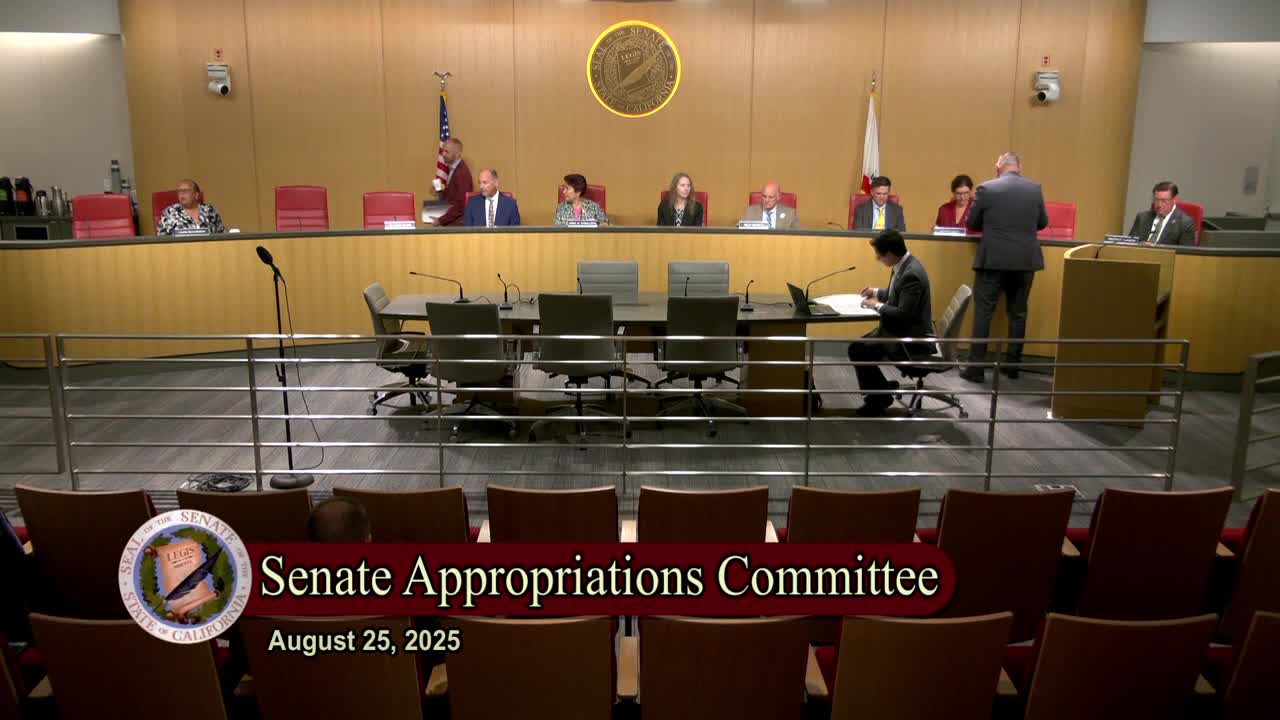
| Aug 25, 2025 | Placed on suspense file | Senate Standing Committee on Appropriations |
Passed |
|
| Jul 16, 2025 | Do pass as amended, but first amend, and re-refer to the Committee on [Appropriations] with the recommendation: To Consent Calendar | Senate Standing Committee on Natural Resources and Water |
Passed |
|
| Jul 2, 2025 | Do pass, but first be re-referred to the Committee on [Natural Resources and Water] with the recommendation: To Consent Calendar | Senate Standing Committee on Environmental Quality |
Passed |
|
| Jun 4, 2025 | AB 1227 Ellis Assembly Third Reading | Assembly Floor |
Passed |
|
| May 23, 2025 | Do pass. | Assembly Standing Committee on Appropriations |
Passed |
|
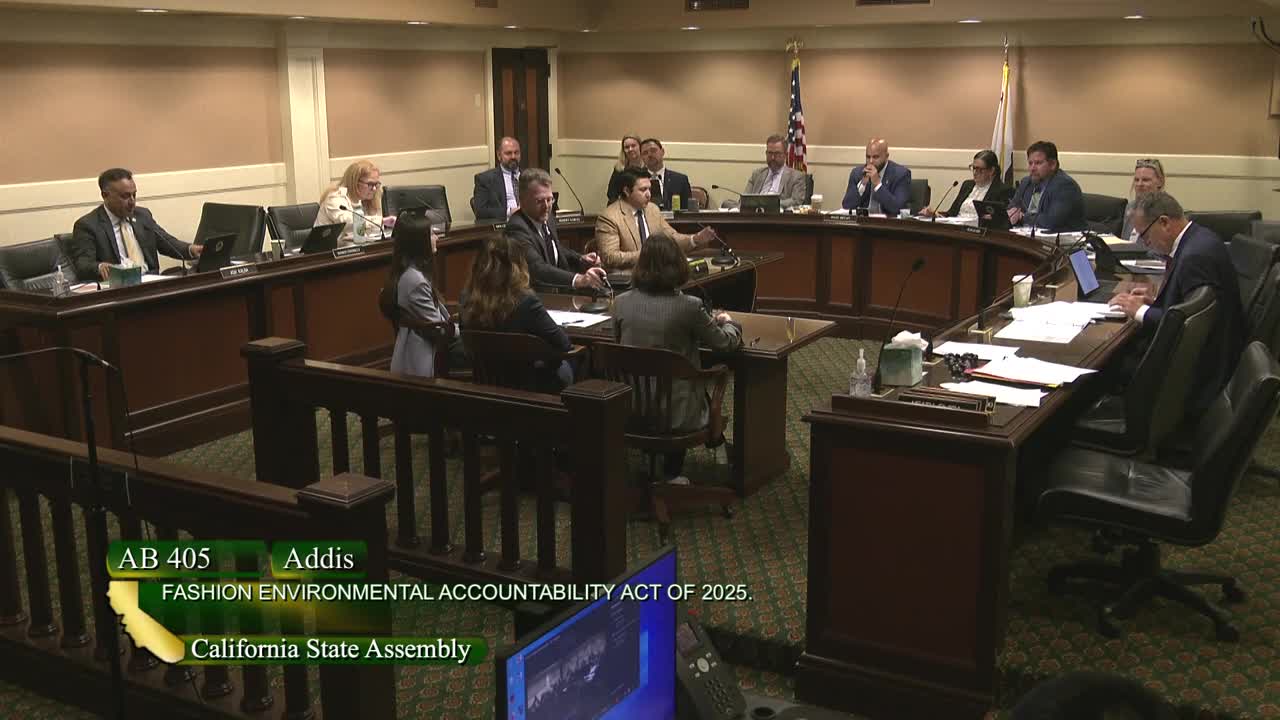
| Apr 28, 2025 | Do pass as amended and be re-referred to the Committee on [Appropriations] | Assembly Standing Committee on Natural Resources |
Passed |
This list shows positions taken on this bill by organizations on the date displayed, which is linked to the original source.
Positions by individuals are not included.
|
Organization
|
Position
|
Date
|
|---|---|---|
| Associated General Contractors, California Chapters | ** Support | |
| Independent Insurance Agents & Brokers of California, Inc. | ** Support | |
| Rural County Representatives of California | ** Support |
SENATE COMMITTEE ON APPROPRIATIONS
Senator Anna Caballero, Chair
2025 - 2026 Regular Session
AB 1227 (Ellis) - Wildfire safety: fuels reduction projects
Version: July 17, 2025 | Policy Vote: E.Q. 8 - 0, N.R. & W. 7 - 0 |
Urgency: No | Mandate: Yes |
Hearing Date: August 25, 2025 | Consultant: Ashley Ames |
Bill Summary:
This bill would exempt from the California Environmental Quality Act (CEQA) certain critical fuels reduction projects, and would require specified reporting.
Fiscal Impact:
- The California Environmental Protection Agency (CalEPA) estimates limited-term costs of approximately $265,000 annually for two years (General Fund) for one limited-term position to coordinate the work of various departments and agencies to implement the requirements of this bill.
- The California Natural Resources Agency (CNRA), the Department of Forestry and Fire Protection (CalFire), and other affected departments anticipate minor and absorbable costs.
Background:
The Senate Environmental Quality Committee summarizes CEQA as follows:
CEQA was enacted by the Legislature and signed into law by Governor Ronald Reagan in 1970. While it has evolved into a very complex Act over the past 55 years, at its core the basic principles of CEQA are relatively simple. It is designed to (a) make government agencies and the public aware of the environmental impacts of a proposed project, (b) ensure the public can take part in the review process, and (c) identify and implement measures to mitigate or eliminate any negative impact the project may have on the environment. CEQA is self-executing statute that is enforced by civil lawsuits that can challenge any project’s environmental review. Public agencies, as well as private individuals and organizations, can file lawsuits under CEQA.
CEQA statutes are found in Division 13 of the Public Resources Code (PRC), and CNRA adopts regulations known as the CEQA Guidelines.
Categorical Exemptions. In addition to statutory exemptions, CEQA Guidelines include categorical exemptions that apply to some fuel reduction projects, including fuel management activities within 30 feet of structures to reduce the volume of flammable vegetation, provided that the activities will not result in the taking of endangered, rare, or threatened plant or animal species or significant erosion and sedimentation of surface waters. This exemption applies to fuel management activities within 100 feet of a structure if the public agency having fire protection responsibility for the area has determined that 100 feet of fuel clearance is required due to extra hazardous fire conditions.
Unlike statutory exemptions, categorical exemptions are not absolute. A categorical exemption may be denied or challenged if any of the following apply:
- The project results in damage to scenic resources within a highway officially designated as a state scenic highway.
- The project site is on a hazardous waste site.
- The project may cause substantial adverse change in the significance of a historical resource.
- There is a reasonable possibility of significant effect on the environment due to unusual circumstances;
- Significant cumulative impacts from projects of the same type will result; or
- For certain categorical exemptions, the project will have impacts on a uniquely sensitive environment.
January 2025 Los Angeles Wildfires. The new year started ominously in southern California, when during its first week a strong high-pressure system over the Great Basin triggered powerful Santa Ana winds. The Los Angeles area hadn’t seen any measurable rainfall for eight months and was in a state of moderate drought. On January 6, the National Weather Service (NWS) issued a red flag warning predicting hurricane strength winds.
Around 10:30 the next morning, dispatch officers began receiving reports of a fast-moving fire in the mountains near Pacific Palisades. Eventually the Palisades Fire became the most destructive fire in City of Los Angeles history – 12 people were killed, 23,448 acres burned, and according to the Department of Forestry and Fire Protection’s damage assessment report, 6,833 structures were damaged or destroyed.
Later in the evening on the 7th, a fire began in the San Gabriel Mountains and Santa Ana winds pushed the flames into the foothill communities of Altadena, Pasadena, and Sierra Madre. The Eaton Fire burned 14,021 acres and damaged or destroyed 10,488 structures. 18 people, all from the predominantly Black neighborhood in west Altadena, were killed. The fire became the fifth most deadly and second most destructive in California history.
Administration’s response. Governor Newsom, in response to the Los Angeles wildfires, issued a number of executive orders and proclamations to aid recovery, protect victims, fast-track wildfire safety regulations, and facilitate wildfire prevention projects.
Notably, the State of Emergency Proclamation on March 1, 2025 (Proclamation) suspended state statutes, rules, regulations, and requirements under the jurisdiction of CNRA and EPA boards, departments, and offices in order to expedite critical fuel reduction projects, specifically including CEQA and the California Coastal Act. These projects include:
- Removal of hazardous, dead, and/or dying trees;
- Creation of strategic fuel breaks;
- Community defensible space;
- Roadside fuel reduction;
- Cultural burning or prescribed fire; or
- Maintenance of established fuel breaks.
Individuals or entities who wish to conduct fuel reduction projects under this Proclamation must first seek a determination from the CNRA and/or EPA Secretaries that the proposed activity is eligible for this suspension. These projects must be initiated before the end of calendar year 2025.
2020 Statewide Fires-Environmental Protection Plan. This document comprises the Environmental Protection Plan (EPP) to support Private Property Debris Removal (PPDR) program for the 2020 statewide fires. Executive Orders and related Proclamations authorize the suspension of state statutes with “waivers” authorized by the EPA and CNRA Secretaries to expedite the recovery of the counties impacted by the fires. This EPP is the basis for each Agency Secretary to approve Environmental Waivers for the performance of the PPDR.
The purpose of the EPP is to document how the PPDR will be managed to comply with applicable environmental laws and regulations by implementation of Post Fire Statewide
Best Management Practices (BMPs) developed by each agency.
Proposed Law:
This bill would exempt from CEQA certain critical fuels reduction projects, and require CNRA and CalEPA to report to the Legislature on the implementation of Governor Newsom’s March 1, 2025, state of emergency proclamation. Specifically, this bill would:
- Exempt from CEQA a critical fuels reduction project that:
- Is located in a very high fire hazard severity zone (VHFHSZ);
- Does one of the following:
- Removes hazardous, dead, or dying trees;
- Creates a strategic fuel break;
- Removes vegetation along roadways;
- Removes vegetation using cultural burning or prescribed fire; or
- Maintains previously established fuel breaks.
- Require a critical fuels reduction project under ii and iii above to only apply if the vegetation removed for the critical fuels reduction project meets all of the following requirements:
- The vegetation is a nonnative species;
- The vegetation is 8 inches or less in diameter; and
- The vegetation is a common species.
- Provide that, before determining that a project is not subject to this division pursuant to this section, the lead agency shall hold a noticed public meeting on the project to hear and respond to public comments.
- Require the lead agency to provide notice of the public meeting on its internet website at least 30 days before the public meeting.
- Provide that, if the lead agency determines that a project is not subject to this division pursuant to this section, and the lead agency determines to approve or carry out that project, the lead agency shall file a notice of exemption with the Office of Land Use and Climate Innovation and the county clerk in the county in which the project is located in the manner specified in subdivisions (b) and (c) of Section 21152.
- Sunset this exemption on January 1, 2028.
- Require CNRA and EPA to submit a report to the Legislature on the implementation of the Governor’s state of emergency proclamation issued on March 1, 2025.
- Require the report to include all of the following information:
- A list of all entities that requested the secretary of the reporting agency to make a determination that the requested activity is eligible for the suspension as a critical fuels reduction project under the proclamation.
- A list of all entities that used the suspension provided under the proclamation.
- The projects of each entity for which the suspension was provided.
- How the project for which suspension was provided advances the state’s wildfire mitigation and forest health treatment goals.
- Instances in which any project for which suspension was provided failed to comply with the 2020 Statewide Fires–Environmental Protection Plan and to what extent the noncompliance is known.
- Require the report be submitted by January 31, 2026.
Related Legislation:
SB 131 (Committee on Budget and Fiscal Review, Chapter 24, Statutes of 2024), a budget trailer bill, exempts from CEQA certain wildfire risk reduction projects.
AB 66 (Tangipa, 2025) would exempt from CEQA certain road construction projects to facilitate emergency evacuation.
AB 623 (Dixon, 2025) would exempt fuel modification projects for maintaining defensible space from CEQA.
AB 687 (Patterson, 2025) would authorize projects exclusively for noncommercial wildfire fuels reduction in timberland, paid for in part or in whole with public funds, to prepare a timber harvesting plan as an alternative to complying with CEQA.
Staff Comments:
This year’s resources budget trailer bill, SB 131 (Chapter 24, Statutes of 2025), also exempts from CEQA certain wildfire risk reduction projects:
- Prescribed fire or fuel reduction.
- These projects must meet additional requirements such as size limitations; Department of Fish and Wildlife (CDFW) consultation; avoiding impacts to riparian areas and water quality; and protecting tribal cultural resources.
- Defensible space fire clearance of up to 100 feet around a public roadway, as specified.
- Residential home hardening or defensible space within 200 feet of a legal structure located in a high or VH FHSZ.
- A fuel break up to 200 feet from structures.
-- END --
SENATE COMMITTEE ON NATURAL RESOURCES AND WATER
Senator Monique Limón, Chair
2025 - 2026 Regular
Bill No: AB Hearing Date: July 16, 2025
Author: | |||
Version: | Amended | ||
Urgency: | Fiscal: | ||
Consultant: | |||
Subject: Wildfire safety: fuels reduction projects
SUMMARY
This bill would exempt from the California Environmental Quality Act (CEQA) certain critical fuels reduction projects, and require the California Natural Resources and Environmental Protection Agencies (CNRA and EPA, respectively) to report to the Legislature on the implementation of Governor Newsom’s March 1, 2025, state of emergency proclamation.
BACKGROUND AND EXISTING LAW
CEQA. The Senate Environmental Quality Committee summarizes CEQA as follows:
CEQA was enacted by the Legislature and signed into law by Governor Ronald Reagan in 1970. While it has evolved into a very complex Act over the past 55 years, at its core the basic principles of CEQA are relatively simple. It is designed to (a) make government agencies and the public aware of the environmental impacts of a proposed project, (b) ensure the public can take part in the review process, and (c) identify and implement measures to mitigate or eliminate any negative impact the project may have on the environment. CEQA is self-executing statute that is enforced by civil lawsuits that can challenge any project’s environmental review. Public agencies, as well as private individuals and organizations, can file lawsuits under CEQA.
CEQA statutes are found in Division 13 of the Public Resources Code (PRC), and CNRA adopts regulations known as the CEQA Guidelines.
Categorical Exemptions. In addition to statutory exemptions, CEQA Guidelines include categorical exemptions that apply to some fuel reduction projects, including fuel management activities within 30 feet of structures to reduce the volume of flammable vegetation, provided that the activities will not result in the taking of endangered, rare, or threatened plant or animal species or significant erosion and sedimentation of surface waters. This exemption applies to fuel management activities within 100 feet of a structure if the public agency having fire protection responsibility for the area has determined that 100 feet of fuel clearance is required due to extra hazardous fire conditions.
Unlike statutory exemptions, categorical exemptions are not absolute. A categorical exemption may be denied or challenged if any of the following apply:
- The project results in damage to scenic resources within a highway officially designated as a state scenic highway.
- The project site is on a hazardous waste site.
- The project may cause substantial adverse change in the significance of a historical resource.
- There is a reasonable possibility of significant effect on the environment due to unusual circumstances;
- Significant cumulative impacts from projects of the same type will result; or
- For certain categorical exemptions, the project will have impacts on a uniquely sensitive environment.
January 2025 Los Angeles Wildfires. The new year started ominously in southern California, when during its first week a strong high-pressure system over the Great Basin triggered powerful Santa Ana winds. The Los Angeles area hadn’t seen any measurable rainfall for eight months and was in a state of moderate drought. On January 6, the National Weather Service (NWS) issued a red flag warning predicting hurricane strength winds.
Around 10:30 the next morning, dispatch officers began receiving reports of a fast-moving fire in the mountains near Pacific Palisades. Eventually the Palisades Fire became the most destructive fire in City of Los Angeles history – 12 people were killed, 23,448 acres burned, and according to the Department of Forestry and Fire Protection’s damage assessment report, 6,833 structures were damaged or destroyed.
Later in the evening on the 7th, a fire began in the San Gabriel Mountains and Santa Ana winds pushed the flames into the foothill communities of Altadena, Pasadena, and Sierra Madre. The Eaton Fire burned 14,021 acres and damaged or destroyed 10,488 structures. 18 people, all from the predominantly Black neighborhood in west Altadena, were killed. The fire became the fifth most deadly and second most destructive in California history.
Administration’s response. Governor Newsom, in response to the Los Angeles wildfires, issued a number of executive orders and proclamations to aid recovery, protect victims, fast-track wildfire safety regulations, and facilitate wildfire prevention projects.
Notably, the State of Emergency Proclamation on March 1, 2025 (Proclamation) suspended state statutes, rules, regulations, and requirements under the jurisdiction of CNRA and EPA boards, departments, and offices in order to expedite critical fuel reduction projects, specifically including CEQA and the California Coastal Act. These projects include:
- Removal of hazardous, dead, and/or dying trees;
- Creation of strategic fuel breaks;
- Community defensible space;
- Roadside fuel reduction;
- Cultural burning or prescribed fire; or
- Maintenance of established fuel breaks.
Individuals or entities who wish to conduct fuel reduction projects under this Proclamation must first seek a determination from the CNRA and/or EPA Secretaries that the proposed activity is eligible for this suspension. These projects must be initiated before the end of calendar year 2025.
2020 Statewide Fires-Environmental Protection Plan. This document comprises the Environmental Protection Plan (EPP) to support Private Property Debris Removal (PPDR) program for the 2020 statewide fires. Executive Orders and related Proclamations authorize the suspension of state statutes with “waivers” authorized by the EPA and CNRA Secretaries to expedite the recovery of the counties impacted by the fires. This EPP is the basis for each Agency Secretary to approve Environmental Waivers for the performance of the PPDR.
The purpose of the EPP is to document how the PPDR will be managed to comply with applicable environmental laws and regulations by implementation of Post Fire Statewide
Best Management Practices (BMPs) developed by each agency.
Existing Law:
- Establishes the maintenance of a quality environment for the people of the state now and in the future as a matter of statewide concern (PRC §21000).
- Declares that it is the policy of the state that public agencies should not approve projects without feasible alternatives or feasible mitigation measures available which would substantially lessen the significant environmental effects of such projects (PRC §21002).
- Declares that in the event specific economic, social, or other conditions make infeasible project alternatives or mitigation measures, individual projects may be approved despite one or more significant effects (PRC §21002).
- Exempts from CEQA certain wildfire risk reduction projects (PRC §21080.49).
- Establishes a “Class 4” Categorical Exemption from CEQA for “minor alterations to lands” include fuel management activities within up to 100 feet of structures (14 CCR 15304).
PROPOSED LAW
This bill would:
- Exempt from CEQA a critical fuels reduction project that:
- Is located in a very high fire hazard severity zone (VHFHSZ);
- Does one of the following:
- Removes hazardous, dead, or dying trees;
- Creates a strategic fuel break;
- Removes vegetation along roadways;
- Removes vegetation using cultural burning or prescribed fire; or
- Maintains previously established fuel breaks.
- Require a critical fuels reduction project under ii) - iv) above to meet the following requirements:
- The vegetation is a nonnative species;
- The vegetation is 8 inches or less in diameter; and
- The vegetation is a common species.
- Sunsets this exemption on January 1, 2028.
- Requires CNRA and EPA to submit a report to the Legislature on the implementation of the Governor’s state of emergency proclamation issued on March 1, 2025.
- Requires the report to include all of the following information:
- A list of all entities that requested the secretary of the reporting agency to make a determination that the requested activity is eligible for the suspension as a critical fuels reduction project under the proclamation.
- A list of all entities that used the suspension provided under the proclamation.
- The projects of each entity for which the suspension was provided.
- How the project for which suspension was provided advances the state’s wildfire mitigation and forest health treatment goals.
- Instances in which any project for which suspension was provided failed to comply with the 2020 Statewide Fires–Environmental Protection Plan and to what extent the noncompliance is known.
- Requires the report be submitted by January 31, 2026.
ARGUMENTS IN SUPPORT
According to the author, “With California facing increasingly devastating wildfires year after year, timely wildfire prevention projects have never been more important. CEQA has consistently proven to be a roadblock for effective wildfire prevention projects, causing costly and time-consuming delays. AB 1227 will exempt wildfire prevention projects from the requirements of CEQA, ensuring that California is able to prevent and mitigate future wildfires.”
ARGUMENTS IN OPPOSITION
None received.
COMMENTS
Double referral. This bill is double referred to the Senate Committee on Environmental Quality. The Environmental Quality Committee heard this bill on July 2, 2025, and pass the bill 8-0. Comments regarding issues under the jurisdiction of the Environmental Quality Committee are included here for context and thoroughness only.
Other recent CEQA exemptions. This year’s resources budget trailer bill, SB 131 (Chapter 24, Statutes of 2025), also exempts from CEQA certain wildfire risk reduction projects:
- Prescribed fire or fuel reduction.
- These projects must meet additional requirements such as size limitations; Department of Fish and Wildlife (CDFW) consultation; avoiding impacts to riparian areas and water quality; and protecting tribal cultural resources.
- Defensible space fire clearance of up to 100 feet around a public roadway, as specified.
- Residential home hardening or defensible space within 200 feet of a legal structure located in a high or VH FHSZ.
- A fuel break up to 200 feet from structures.
Inadvertently excludes the cultural burning it aims to promote. This bill would require that projects using cultural traditional ecological knowledge should only apply to nonnative vegetation species. This requirement would be incongruous with certain cultural burning objectives. For example, in the Klamath region, conifers such as firs are encroaching on oak woodland habitat, crowding out plants used for basketry, food, and other items of cultural importance. Cultural fire can help remove small diameter young firs, preventing them from growing larger and overtaking the oaks. Cultural burning to restore oak woodlands would not be eligible for this exemption, as conifers are native species. The Committee may wish to amend this bill to exclude cultural burning from the requirements related to vegetation species. [See AMENDMENT #1]
Clarify applicability of requirements. For certain projects, they must meet three requirements – that the vegetation is a nonnative species, is 8 inches or less in diameter, and is a common species. The Committee may wish to amend the bill to clarify that those vegetation standards apply to the vegetation being removed for the project. [See AMENDMENT #1]
Public notification and tracking. In the Governor’s Proclamation, agencies wishing to use the CEQA exemption must request such permission to do from the Secretaries of CNRA and/or EPA, and both agencies are required to maintain on their website a list of all suspensions approved under the Proclamation. This provides a “second opinion” on a project’s suitability for this exemption, and allows the public to track its use around the state.
Projects requesting to use the exemption in the Proclamation must be initiated by the end of this calendar year. This bill, by and large, extends the Governor’s Proclamation exemption by two years, but does not contain provisions for that “second opinion” or public posting of projects being undertaken pursuant to this Proclamation.
The Committee may wish to amend the bill to incorporate a public meeting so that public can be made aware of and comment on the proposed project, in lieu of the Secretaries approving the exemption. The Committee may also wish to require lead agencies to file a notice of exemption to the Office of Land Use and Climate Innovation, as well as the county clerk, so that the use of this exemption can be tracked over time to understand the effectiveness of this exemption. These amendments are largely aligned with the proposed requirements in AB 66 (Tangipa), which is set to be heard in this Committee on July 16, 2025. [See AMENDMENT #2]
Related Legislation
SB 131 (Committee on Budget and Fiscal Review, Chapter 24, Statutes of 2024), a budget trailer bill, exempts from CEQA certain wildfire risk reduction projects.
AB 66 (Tangipa, 2025) exempts from CEQA certain road construction projects to facilitate emergency evacuation. This bill is pending before this committee
AB 623 (Dixon, 2025) exempts fuel modification projects for maintaining defensible space from CEQA. This bill was referred to, but never heard in, the Assembly Natural Resources Committee.
AB 687 (Patterson, 2025) authorizes projects exclusively for noncommercial wildfire fuels reduction in timberland, paid for in part or in whole with public funds, to prepare a timber harvesting plan as an alternative to complying with CEQA. This bill is pending before this committee.
SUGGESTED AMENDMENTS
AMENDMENT 1
Sec. 21080.06 is amended to read:
[…]
(b) For purposes of paragraphs (2) and (3) to (4), inclusive, subdivision (a) only applies if the vegetation removed for critical fuels reduction project meets all of the following requirements:
(1) The vegetation is a nonnative species.
(2) The vegetation is eight inches or less in diameter.
(3) The vegetation is a common species.
AMENDMENT 2
Sec. 21080.06 is amended to read:
[…]
(c) Before determining that a project is not subject to this division pursuant to this section, the lead agency shall hold a noticed public meeting on the project to hear and respond to public comments. The lead agency shall provide notice of the public meeting on its internet website at least 30 days before the public meeting.
(d) If the lead agency determines that a project is not subject to this division pursuant to this section, and the lead agency determines to approve or carry out that project, the lead agency shall file a notice of exemption with the Office of Land Use and Climate Innovation and the county clerk in the county in which the project is located in the manner specified in subdivisions (b) and (c) of Section 21152.
(e) This section shall remain in effect only until January 1, 2028, and as of that date is repealed.
SUPPORT
Associated General Contractors, California Chapters
Independent Insurance Agents & Brokers of California, INC.
Rural County Representatives of California (RCRC)
OPPOSITION
None Received
-- END --
ASSEMBLY THIRD READING
ATR Bill Id:AB 1227
Author:(Ellis and Gallagher)
As Amended Ver:May 1, 2025
Majority vote
SUMMARY
Exempts specified wildfire prevention projects from the California Environmental Quality Act (CEQA).
Major Provisions
- Exempts from CEQA specified critical fuels reduction project conducted in a community located in a very high fire hazard severity zone as identified by the State Fire Marshal.
- Provides that specified projects must meet specifying requirements.
- Sunsets the CEQA exemption for critical fuels reduction project covered under the bill on 1, 2028.
- Requires, on or before January 31, 2026, the Natural Resources Agency (NRA) and the California Environmental Protection Agency (CalEPA) to report to the Legislature on the implementation of the proclamation of a state of emergency issued by Governor Gavin Newsom on March 1, 2025, that suspends applicable state statutes, rules, regulations, and requirements that fall within the jurisdiction of boards, departments, and offices within the California Environmental Protection Agency or the Natural Resources Agency to the extent necessary for expediting critical fuels reduction projects.
- Provides that no reimbursement is required by this act pursuant to Section 6 of Article XIII B of the California Constitution.
COMMENTS
On January 7, multiple major wildfires erupted concurrently in Los Angeles burning an area nearly the size of Washington, D.C., killing 28 people, and damaging or destroying nearly 16,000 structures. In response, on March 1 the Governor issued an emergency proclamation ordering a suspension of all laws, regulations, rules, and requirements that fall within the jurisdiction of boards, departments, and offices within CalEPA and NRA to be suspended for expediting critical fuels reduction projects initiated this calendar year.
Under the proclamation's exemptions, there is a process established for use of the exemptions. Entities are required to ask NRA to make a determination that the activities are eligible under the proclamation, and all of the departments and agencies under NRA and CalEPA will post on their respective websites the approved CEQA and Coastal Act exemptions. Further, any activity conducted under the temporary exemptions is still required to comply with the state Environmental Protection Plan
This bill limits the CEQA exemption to two years for vegetation management projects conducted in communities in very high fire hazard severity zones, and requires, on or before January 31, 2026, NRA and CalEPA to each report to the Legislature on the implementation of the emergency proclamation.
CalEPA notes, as of March 1, it has received and is reviewing 31 requests from entities wishing to conduct fuels reduction activities pursuant to the emergency proclamation.
According to the Author
Government agencies should not be forced to wait for paperwork and environmental impact reports before they can clear brush or cut firebreaks. The California Environmental Quality Act was never meant to stop life-saving wildfire prevention efforts, but that's exactly what it's doing. AB 1227 cuts through bureaucratic red tape and allows wildfire prevention projects to move forward without CEQA delays, ensuring that California is better prepared to prevent and mitigate the next catastrophic wildfire event.
Arguments in Support
The Rural County Representatives of California writes that AB 1227 builds upon the temporary exemption provided by Governor Newsom's recent emergency proclamation. CEQA compliance and documents take time and money – which are both often in short supply for many of these types of projects. These permitting challenges present significant and potentially catastrophic risk for many living in rural and wildland urban interface communities. While some existing CEQA exemptions for emergency actions, existing facilities, and minor alterations to land may be useful for some fuels management projects, they may not cover all situations, including wildfire prevention projects. As such, additional statutory exemption provides much more utility that is desperately needed.
Arguments in Opposition
None on file
FISCAL COMMENTS
According to the Assembly Appropriations Committee:
- This bill appears to align with the Governor's March 1, 2025, emergency proclamation, which, as discussed below, suspends CEQA (among other laws) for certain fuels reduction projects.
- As for the reporting requirement, the emergency proclamation simply requires each agency to maintain on its website a list of all suspensions approved under the proclamation. However, the report required by this bill is more detailed and prescriptive. It is reasonable to assume agencies may incur costs to complete the report required by the bill.
- For its part, CalEPA estimates General Fund costs of approximately $265,000 annually for two years for one limited-term position to coordinate the work of various departments and agencies to implement the requirements of this bill. The California Department of Forestry and Fire Protection did not have a fiscal estimate available at the time this analysis was prepared. NRA reports minor and absorbable costs.
VOTES
ASM NATURAL RESOURCES: 14-0-0
YES: Bryan, Alanis, Connolly, Ellis, Flora, Garcia, Haney, Hoover, Kalra, Muratsuchi, Pellerin, Schultz, Wicks, Zbur
ASM APPROPRIATIONS: 14-0-1
YES: Wicks, Arambula, Calderon, Caloza, Dixon, Elhawary, Fong, Mark González, Hart, Pacheco, Pellerin, Solache, Ta, Tangipa
ABS, ABST OR NV: Sanchez
UPDATED
VERSION: May 1, 2025
CONSULTANT: Paige Brokaw / NAT. RES. / (916) 319-2092 FN: 0000559
Date of Hearing: May 14, 2025
ASSEMBLY COMMITTEE ON APPROPRIATIONS
Buffy Wicks, Chair
ABPCA Bill Id:AB 1227
Author:(Ellis) – As Amended Ver:May 1, 2025
Policy Committee: | Natural Resources | Vote: | 14 - 0 |
|
| ||
|
|
Urgency: No State Mandated Local Program: Yes Reimbursable: No
SUMMARY:
This bill exempts specified fuels reduction projects from the California Environmental Quality Act (CEQA) until January 1, 2028, and requires the California Natural Resources Agency (CNRA) and the California Environmental Protection Agency (CalEPA) to report to the Legislature on the implementation of a recent emergency proclamation by the Governor intended to expedite fuels reduction projects.
Specifically, this bill, among other things:
1) Exempts from CEQA, until January 1, 2028, a critical fuels reduction project conducted in a community located in a very high fire hazard severity zone (FHSZ) as identified by the State Fire Marshal, as specified, that does at least one of the following:
a) Removes hazardous, dead, or dying trees.
b) Removes vegetation for the creation of strategic fuel breaks as identified by approved fire prevention plans, as specified.
c) Removes vegetation along roadways, highways, and freeways for the creation of safer ingress and egress routes for the public and responders and to reduce roadside ignitions.
d) Removes vegetation using cultural traditional ecological knowledge for cultural burning or prescribed fire treatments or both of those types of treatments for fuels reduction projects.
e) Maintains previously established fuel breaks or fuel modification projects.
2) For purposes of items b, c, and d, above, the CEQA exemption applies if the critical fuels reduction project meets all of the following requirements: the vegetation is (a) a nonnative species, (b) eight inches or less in diameter, and (c) a common species.
3) Requires CNRA and CalEPA, by January 31, 2026, to each report to the Legislature on the implementation of the proclamation of a state of emergency issued by Governor Gavin Newsom on March 1, 2025, that suspends applicable state statutes, rules, regulations, and requirements that fall within the jurisdiction of boards, departments, and offices within CalEPA or CNRA to the extent necessary for expediting critical fuels reduction projects. Requires the report from each agency to contain specified information.
FISCAL EFFECT:
This bill appears to align with the Governor’s March 1, 2025, emergency proclamation, which, as discussed below, suspends CEQA (among other laws) for certain fuels reduction projects. CalEPA notes, as of March 1, it has received and is reviewing 31 requests from entities wishing to conduct fuels reduction activities pursuant to the emergency proclamation. To the extent state agencies are already engaging in this work and do not plan to request additional funding for implementation of the emergency proclamation, it is not clear to this committee that these same agencies would incur additional costs in the short-term to implement the section of this bill that exempts a similar universe of projects from CEQA. However, because emergency proclamations may be rescinded in the future, it seems reasonable to attribute costs to the bill.
As for the reporting requirement, the emergency proclamation simply requires each agency to maintain on its website a list of all suspensions approved under the proclamation. However, the report required by this bill is more detailed and prescriptive (see below for more information). It is reasonable to assume agencies may incur costs to complete the report required by the bill.
For its part, CalEPA estimates General Fund costs of approximately $265,000 annually for two years for one limited-term position to coordinate the work of various departments and agencies to implement the requirements of this bill. The California Department of Forestry and Fire Protection (CAL FIRE) did not have a fiscal estimate available at the time this analysis was prepared. CNRA reports minor and absorbable costs.
COMMENTS:
1) Purpose. According to the author:
Government agencies should not be forced to wait for paperwork and environmental impact reports before they can clear brush or cut firebreaks. The California Environmental Quality Act was never meant to stop life-saving wildfire prevention efforts, but that’s exactly what it’s doing. AB 1227 cuts through bureaucratic red tape and allows wildfire prevention projects to move forward without CEQA delays, ensuring that California is better prepared to prevent and mitigate the next catastrophic wildfire event.
2) Background. On January 7, multiple major wildfires erupted concurrently in Los Angeles, burning an area nearly the size of Washington, D.C., killing 28 people, and damaging or destroying nearly 16,000 structures. In response, Governor Newsom issued Executive Order (EO) N-4-25 exempting rebuilding efforts from CEQA and the Coastal Act to accelerate redevelopment, and issued EO N-18-25 to provide local agencies moderate and high fire hazard maps and compel the development of “Zone 0” regulations for defensible space for ember resistance around homes. Further, on March 1, the Governor issued an emergency proclamation ordering a suspension of all laws, regulations, rules, and requirements that fall within the jurisdiction of boards, departments, and offices within CalEPA and CNRA to the extent necessary for expediting critical fuels reduction projects, as defined, initiated this calendar year.
The proclamation requires an entity that wishes to conduct activities under the suspension to first request that the appropriate agency secretary, or the secretary’s designee, make a determination that the proposed activity is eligible to be conducted under the suspension. The proclamation further requires each agency to maintain on its website a list of all suspensions approved under the proclamation. Any activity conducted under the temporary exemption is still required to comply with the State Environmental Protection Plan, or a comparable plan describing how such an action will balance expeditious fuels reduction and environmental protection.
This bill provides a CEQA exemption for two years for a critical fuels reduction project conducted in a community located in a very high FHSZ and that meets certain criteria, and requires CNRA and CalEPA to each report to the Legislature on implementation of the emergency proclamation. The bill requires the report to include a list of all entities that requested the secretary of the reporting agency to make the aforementioned eligibility determination; a list of all entities that used the suspension; detailed information on the projects of each entity for which the suspension was provided, including location, treatment, and acreage; information on how the project for which suspension was provided advances the state’s wildfire mitigation and forest health treatment goals; and information about instances in which any project for which suspension was provided failed to comply with the “2020 Statewide Fires – Environmental Protection Plan” and to what extent the noncompliance is known.
Writing in support, the Independent Insurance Agents & Brokers of California (IIABCal) contends that while environmental review is a core component of the state’s land use policies, current CEQA requirements “can significantly delay implementation of urgent, science-backed fuels reduction work – particularly in very high fire hazard severity zones where time is of the essence.” IIABCal contends the exemption in the bill is narrowly tailored to ensure only the most critical mitigation activities qualify, such as removing hazardous vegetation, creating strategic fuel breaks, maintaining existing defensible space, and improving ingress and egress routes for first responders and residents, and that projects must occur in communities designated as very high FHSZs and meet additional criteria related to vegetation type and treatment method.
Analysis Prepared by: Nikita Koraddi / APPR. / (916) 319-2081
Date of Hearing: April 28, 2025
ASSEMBLY COMMITTEE ON NATURAL RESOURCES
Isaac G. Bryan, Chair
ABPCA Bill Id:AB 1227 (
Author:Ellis) – As Amended Ver:April 11, 2025
SUBJECT: California Environmental Quality Act: exemption: wildfire prevention projects
SUMMARY: Exempts specified wildfire prevention projects from the California Environmental Quality Act (CEQA).
EXISTING LAW, pursuant to CEQA (Public Resources Code (PRC) 21000-21189.70.10):
- Requires a lead agency, as defined, to prepare, or cause to be prepared, and certify the completion of an environmental impact report (EIR) on a project that it proposes to carry out or approve that may have a significant effect on the environment or to adopt a negative declaration if it finds that the project will not have that effect.
- Requires a lead agency to prepare a mitigated negative declaration for a project that may have a significant effect on the environment if revisions in the project would avoid or mitigate that effect and there is no substantial evidence that the project, as revised, would have a significant effect on the environment.
- Defines “project” as an activity that may cause either a direct physical change in the environment, or a reasonably foreseeable indirect physical change in the environment, and that is any of the following:
- An activity directly undertaken by any public agency;
- An activity undertaken by a person that is supported, in whole or in part, through contracts, grants, subsidies, loans, or other forms of assistance from one or more public agencies; and,
- An activity that involves the issuance to a person of a lease, permit, license, certificate, or other entitlement for use by one or more public agencies.
THIS BILL:
- Exempts wildfire prevention projects from CEQA.
- Defines “wildfire prevention project” as the installation and maintenance of fuel breaks, fuels reduction, roadside fuels reduction, forest thinning, prescribed fire, reforestation, timber harvesting, fuel treatments in the wildland-urban interface, dead fuel removal, and other projects that reasonably could be considered fuels reduction or vegetation management.
- Provides that no reimbursement is required by this bill pursuant to the California Constitution.
FISCAL EFFECT: Unknown
COMMENTS:
- Author’s statement:
Government agencies should not be forced to wait for paperwork and environmental impact reports before they can clear brush or cut firebreaks. The California Environmental Quality Act was never meant to stop life-saving wildfire prevention efforts, but that’s exactly what it’s doing. AB 1227 cuts through bureaucratic red tape and allows wildfire prevention projects to move forward without CEQA delays, ensuring that California is better prepared to prevent and mitigate the next catastrophic wildfire event.
- Emergency proclamation. On January 7, multiple major wildfires erupted concurrently in Los Angeles burning an area nearly the size of Washington, D.C., killing 28 people and damaging or destroying nearly 16,000 structures. In response, Governor Newsom issued Executive Order (EO) N-4-25 exempting rebuilding efforts from CEQA and the Coastal Act to accelerate redevelopment, and issued EO N-18-25 to provide local agencies moderate and high fire hazard maps and compel the development of “zone 0” regulations for defensible space for ember resistance around homes. Further, on March 1 the Governor issued an emergency proclamation ordering a suspension of all laws, regulations, rules, and requirements that fall within the jurisdiction of boards, departments, and offices within the California Environmental Protection Agency (CalEPA) and the California Natural Resources Agency (NRA) to be suspended for expediting critical fuels reduction projects initiated this calendar year.
Fuels reduction projects include:
- Removal of hazardous, dead, and/or dying trees;
- Removal of vegetation for the creation of strategic fuel breaks as identified by approved fire prevention plans, including without limitation CAL FIRE Unit Fire Plans or Community Wildfire Preparedness Plans;
- Removal of vegetation for community defensible space;
- Removal of vegetation along roadways, highways, and freeways for the creation of safer ingress and egress routes for the public and responders and to reduce roadside ignitions;
- Removal of vegetation using cultural traditional ecological knowledge for cultural burning and/or prescribed fire treatments for fuels reduction; or,
- Maintenance of previously-established fuel breaks or fuels modification projects.
Under the proclamation’s exemptions, there is a process established for use of the exemptions. Entities are required to ask NRA to make a determination that the activities are eligible under the proclamation, and all of the departments and agencies under NRA and CalEPA will post on their respective websites the approved CEQA and Coastal Act exemptions. Further, any activity conducted under the temporary exemptions is still required to comply with the state Environmental Protection Plan
- This bill. This bill would exempt a suite of unspecified wildfire prevention projects that may be covered under existing exemptions, including the emergency proclamation from CEQA.
- Committee amendments. The committee may wish to consider seeing how implementation of the Governor’s emergency proclamation is implemented before adopting these exemptions indefinitely, and amend the bill to limit the CEQA exemption to 2 years for vegetation management projects conducted in communities in very high fire hazard severity zones, and require, on or before January 31, 2026, NRA and CalEPA to each report to the Legislature on the implementation of the emergency proclamation.
- Related legislation:
- AB 442 (Hadwick) exempts from CEQA all prescribed fire, thinning, or fuel reduction projects undertaken within a community with a single ingress and egress evacuation route. This bill is referred to the Assembly Natural Resources Committee.
- AB 623 (Dixon) exempts from CEQA and the California Coastal Act fuel modification projects to maintain defensible space of 100 feet from each side and from the front and rear of a building or structure or a fuel reduction project to prevent and contain the spread of wildfires. This bill is referred to the Assembly Natural Resources Committee.
- AB 687 (Patterson) authorizes projects exclusively for noncommercial wildfire fuels reduction in timberland, paid for in part or in whole with public funds, to prepare a timber harvesting plan (THP) as an alternative to complying with CEQA, and would require these projects to be regulated as timber operations. AB 687 is referred to the Assembly Appropriations Committee.
REGISTERED SUPPORT / OPPOSITION:
Support
Independent Insurance Agents & Brokers of California, Inc.
Opposition
None on file
Analysis Prepared by: Paige Brokaw / NAT. RES. /
Discussed in Hearing
 39SEC
Senate Standing Committee on Appropriations
 1MIN
Assembly Floor
 8MIN
Assembly Standing Committee on Natural Resources


Bill Co-Author(s):