AB 1380: Wildland firefighters: Formerly Incarcerated Firefighter Certification and Employment Program.
- Session Year: 2025-2026
- House: Assembly
- Latest Version Date: 2025-05-23
Current Status:
In Progress
(2025-08-29: In committee: Held under submission.)
Introduced
In Committee
Awaiting First Chamber Vote
Passed First Chamber
In Committee
Awaiting Second Chamber Vote
Passed Second Chamber
Enacted
Existing law establishes in the Natural Resources Agency the Department of Forestry and Fire Protection, and requires the department to be responsible for, among other things, fire protection and prevention, as provided.
Existing law establishes the California Conservation Camp program for the purpose of having incarcerated persons work on projects supervised by the department. Existing law requires the department to utilize incarcerated persons assigned to conservation camps in performing fire prevention, fire control, and other work at the department.
This bill would require the department to, in partnership with the Department of Corrections and Rehabilitation and the California Conservation Camp program, implement a standardized process to ensure that all individuals who complete the departments firefighting training program (FFT program) while incarcerated receive official written certification before their release, as specified. The bill would require this certification to be adequate for employment at the department in the classification of Fire Fighter 1.
The bill would require the department to, on or before January 1, 2027, ensure a minimum percentage of Fire Fighter 1 classification positions are reserved for the hiring of formerly incarcerated individuals, as provided.The bill would require the department to, on or before January 1, 2027, award hiring preference under Category Placement 2 to qualified formerly incarcerated individuals who apply for positions with the department.
The bill would also require the department to track the number of incarcerated individuals who have completed the FFT program to ensure a sufficient number of Fire Fighter 1 classification positions are available, program and are set to be released within 90 days, develop and implement policies and procedures to track and report the outcomes of the Formerly Incarcerated Firefighter Certification and Employment Program, and report annually to the Legislature on the implementation and effectiveness of the program, as provided.
The bill would make these provisions operative only upon an appropriation by the Legislature for its purposes, as provided.
Existing law establishes in the Natural Resources Agency the Department of Forestry and Fire Protection, and requires the department to be responsible for, among other things, fire protection and prevention, as provided.
Existing law establishes the California Conservation Camps Camp program for the purpose of having incarcerated persons work on projects supervised by the department. Existing law requires the department to utilize incarcerated persons assigned to conservation camps in performing fire prevention, fire control, and other work at the department.
This bill would establish the Formerly Incarcerated Handcrew Employment Program and require the department to establish an entry-level handcrew member classification for qualified formerly incarcerated individuals, as defined, with the same union representation and organizational rights as other department employees, as provided.The bill would require the department, in partnership with specified state agencies, to implement a process to ensure qualified formerly incarcerated individuals receive official certification as wildland firefighters before their release from prison. The bill would require the department to hire qualified formerly incarcerated individuals as handcrew members and provide necessary transitional support, as provided.This bill would require the department to, in partnership with the Department of Corrections and Rehabilitation and the California Conservation Camp program, implement a standardized process to ensure that all individuals who complete the departments firefighting training program (FFT program) while incarcerated receive official written certification before their release, as specified. The bill would require this certification to be adequate for employment at the department in the classification of Fire Fighter 1.
The bill would require the department to, on or before January 1, 2027, ensure a minimum percentage of Fire Fighter 1 classification positions are reserved for the hiring of formerly incarcerated individuals, as provided.
The bill would also require the department to track the number of incarcerated individuals who have completed specified firefighting training the FFT program to ensure a sufficient number of handcrew member Fire Fighter 1 classification positions are available, develop and implement policies and procedures to track and report the outcomes of the program, Formerly Incarcerated Firefighter Certification and Employment Program, and report annually to the Legislature on the implementation and effectiveness of the program, as provided.
The bill would make these provisions operative only upon an appropriation by the Legislature for its purposes, as provided.
Existing law establishes in the Natural Resources Agency the Department of Forestry and Fire Protection, and requires the department to be responsible for, among other things, fire protection and prevention, as provided.
Existing law establishes the California Conservation Corps in the Natural Resources Agency and requires the corps to implement and administer various training and educational programs, as specified. Existing law establishes the California Conservation Camps for the purpose of having incarcerated persons work on projects supervised by the Department of Forestry and Fire Protection. department. Existing law requires the department to utilize incarcerated persons assigned to concentration conservation camps in performing fire prevention, fire control, and other work at the department.
This bill would state the intent of the Legislature to enact legislation that would require the Department of Forestry and Fire Protection, the California Conservation Camps program, and the California Conservation Corps, in partnership with the Department of Corrections and Rehabilitation, to provide wildland firefighter certification to incarcerated individuals who have successfully completed the required training before or upon release.This bill would establish the Formerly Incarcerated Handcrew Employment Program and require the department to establish an entry-level handcrew member classification for qualified formerly incarcerated individuals, as defined, with the same union representation and organizational rights as other department employees, as provided.
The bill would require the department, in partnership with specified state agencies, to implement a process to ensure qualified formerly incarcerated individuals receive official certification as wildland firefighters before their release from prison. The bill would require the department to hire qualified formerly incarcerated individuals as handcrew members and provide necessary transitional support, as provided.
The bill would also require the department to track the number of incarcerated individuals who have completed specified firefighting training to ensure a sufficient number of handcrew member positions are available, develop and implement policies and procedures to track and report the outcomes of the program, and report annually to the Legislature on the implementation and effectiveness of the program, as provided.
The bill would make these provisions operative only upon an appropriation by the Legislature for its purposes, as provided.
Existing law establishes the California Conservation Corps in the Natural Resources Agency and requires the corps to implement and administer various training and educational programs, as specified. Existing law establishes the California Conservation Camps for the purpose of having incarcerated persons work on projects supervised by the Department of Forestry and Fire Protection. Existing law requires the department to utilize incarcerated persons assigned to concentration camps in performing fire prevention, fire control, and other work at the department.
This bill would state the intent of the Legislature to enact legislation that would require the Department of Forestry and Fire Protection, the California Conservation Camps program, and the California Conservation Corps, in partnership with the Department of Corrections and Rehabilitation, to provide wildland firefighter certification to incarcerated individuals who have successfully completed the required training before or upon release.
(a)(1)Within six months from the date this chapter becomes operative, as described in subdivision (g), the department shall, in partnership with the Department of Corrections and Rehabilitation and the California Conservation Camp program, implement a standardized process to ensure that all individuals who successfully complete the departments firefighting training program (FFT program) while incarcerated receive official written certification before their release from prison. That certification shall be considered adequate for employment at the department in the classification of Fire Fighter 1.
(2)The official written certification pursuant to paragraph (1) shall include, but is not limited to, the following certifications:
(A)L180 Human Factors in the Wildland Fire Service.(B)S130 Wildland Fire Safety Training.(C)S190 Introduction to Wildland Fire Behavior.(D)Public Safety First Aid.(E)Fire Protection Orientation.(F)Confined Space Rescue Awareness.(G)Fire Fighter 1B: HazMat Certificate.(A)CAL-FIRE Forestry Training.
(B)S-190 Introduction to Wildland Fire Behavior.
(b)On or before January 1, 2027, the department shall ensure a minimum percentage of Fire Fighter Classification 1 positions are reserved for the hiring of qualified formerly incarcerated individuals as follows: award hiring preference under Category Placement 2 to qualified formerly incarcerated individuals who apply for positions with the department.
(c)Nothing in this section shall preclude the department from placing a formerly incarcerated person in a higher category for hiring based on their level of training, certification, employment history, or other factors.
(1)Subject to the receipt of a sufficient quantity of job applications from qualified formerly incarcerated individuals, the department shall reserve at least fifteen percent of all vacant Fire Fighter 1 classification positions each year for the hiring of qualified formerly incarcerated individuals.(2)If in any year the department does not receive enough applications from qualified formerly incarcerated individuals to meet the percentage threshold pursuant to paragraph (1), the department shall nevertheless remain in compliance with this subdivision if the following conditions are meet:(A)The department took meaningful steps to recruit qualified formerly incarcerated individuals to comply with paragraph (1).(B)The department hired all qualified formerly incarcerated individuals who submitted an application that year.(c)(d)The department shall, in partnership with the Department of Corrections and Rehabilitation, annually track the number of incarcerated individuals who have completed the FFT program and are set to be released from prison within the next 90 days to ensure a sufficient number of vacant Fire Fighter 1 classification positions are a available for hiring purposes. 90 days.
(d)(e)Nothing in this section shall preclude other state agencies with wildland management responsibilities from establishing similar pathways to support wildfire prevention, mitigation, and response efforts with priority hiring reserved for formerly incarcerated individuals who completed the FFT program.
(e)(f)The department shall develop and implement policies and procedures to track and report the outcomes of this chapter, including, but not limited to, the number of participants hired, retention rates, and career advancement opportunities.
(f)(g)(1)For three years from the date this chapter becomes operative, as described in subdivision (g), (h), the department shall submit an annual report to the Legislature on the implementation and effectiveness of this chapter, including recommendations for improvement.
(2)A report submitted to the Legislature pursuant to this subdivision shall be submitted in compliance with Section 9795 of the Government Code.
(g)(h)This chapter shall become operative only upon an appropriation by the Legislature for its purposes in the annual Budget Act or any other statute.
(h)(i)For the purposes of this section, qualified formerly incarcerated individual means any formerly incarcerated individual who completed the FFT program and has a valid certification pursuant to subdivision (a).
(a)(1)Within six months from the date this chapter becomes operative, as described in subdivision (g), the department shall, in partnership with the Department of Corrections and Rehabilitation and the California Conservation Camp program, implement a standardized process to ensure that all individuals who successfully complete the departments firefighting training program (FFT program) while incarcerated receive official written certification before their release from prison. That certification shall be considered adequate for employment at the department in the classification of Fire Fighter 1.
(2)The official written certification pursuant to paragraph (1) shall include, but is not limited to, the following certifications:
(A)L180 Human Factors in the Wildland Fire Service.
(B)S130 Wildland Fire Safety Training.
(C)S190 Introduction to Wildland Fire Behavior.
(D)Public Safety First Aid.
(E)Fire Protection Orientation.
(F)Confined Space Rescue Awareness.
(G)Fire Fighter 1B: HazMat Certificate.
(b)On or before January 1, 2027, the department shall ensure a minimum percentage of Fire Fighter Classification 1 positions are reserved for the hiring of qualified formerly incarcerated individuals as follows:
(1)Subject to the receipt of a sufficient quantity of job applications from qualified formerly incarcerated individuals, the department shall reserve at least fifteen percent of all vacant Fire Fighter 1 classification positions each year for the hiring of qualified formerly incarcerated individuals.
(2)If in any year the department does not receive enough applications from qualified formerly incarcerated individuals to meet the percentage threshold pursuant to paragraph (1), the department shall nevertheless remain in compliance with this subdivision if the following conditions are meet:
(A)The department took meaningful steps to recruit qualified formerly incarcerated individuals to comply with paragraph (1).
(B)The department hired all qualified formerly incarcerated individuals who submitted an application that year.
(c)The department shall, in partnership with the Department of Corrections and Rehabilitation, annually track the number of incarcerated individuals who have completed the FFT program and are set to be released from prison within the next 90 days to ensure a sufficient number of vacant Fire Fighter 1 classification positions are a available for hiring purposes.
(d)Nothing in this section shall preclude other state agencies with wildland management responsibilities from establishing similar pathways to support wildfire prevention, mitigation, and response efforts with priority hiring reserved for formerly incarcerated individuals who completed the FFT program.
(e)The department shall develop and implement policies and procedures to track and report the outcomes of this chapter, including, but not limited to, the number of participants hired, retention rates, and career advancement opportunities.
(f)(1)For three years from the date this chapter becomes operative, as described in subdivision (g), the department shall submit an annual report to the Legislature on the implementation and effectiveness of this chapter, including recommendations for improvement.
(2)A report submitted to the Legislature pursuant to this subdivision shall be submitted in compliance with Section 9795 of the Government Code.
(g)This chapter shall become operative only upon an appropriation by the Legislature for its purposes in the annual Budget Act or any other statute.
(h)For the purposes of this section, qualified formerly incarcerated individual means any formerly incarcerated individual who completed the FFT program and has a valid certification pursuant to subdivision (a).
SECTION 1.Chapter 2 (commencing with Section 4960) is added to Part 4 of Division 4 of the Public Resources Code, to read:2.Formerly Incarcerated Handcrew Employment Program4960.(a)For purposes of this chapter, qualified formerly incarcerated individual means any formerly incarcerated individual who completed the departments firefighting training program (FFT program) while incarcerated.(b)The Formerly Incarcerated Handcrew Employment Program is hereby established within the department. For purposes of the program, the department shall establish an entry-level handcrew member classification for qualified formerly incarcerated individuals.(c)The department shall, in partnership with the Department of Corrections and Rehabilitation, the California Conservation Camp program, and the California Conservation Corps, implement a process to ensure that qualified formerly incarcerated individuals receive official certification as wildland firefighters before their release from prison.(d)The Department of Corrections and Rehabilitation, in coordination with the department, shall be responsible for coordinating with any other relevant state agencies to remove any administrative barriers that delay employment opportunities postrelease for qualified formerly incarcerated individuals.(e)The department shall hire qualified formerly incarcerated individuals as handcrew members and provide the necessary transitional support, including, but not limited to, job placement assistance, mentorship programs, training, continuing education, and career development resources.(f)The department shall, in partnership with the Department of Corrections and Rehabilitation, annually track the number of incarcerated individuals who have completed the FFT program and are set to be released from prison within the next 90 days to ensure a sufficient number of vacant handcrew member positions are available for hiring purposes.(g)Nothing in this section shall preclude other state agencies with wildland management responsibilities from establishing similar entry-level positions to support wildfire prevention, mitigation, and response efforts with priority hiring reserved for qualified formerly incarcerated individuals. (h)The department shall develop and implement policies and procedures to track and report the outcomes of the Formerly Incarcerated Handcrew Employment Program, including, but not limited to, the number of participants hired, retention rates, and career advancement opportunities.(i)The formerly incarcerated handcrew members described in this section shall have the same rights to union representation and organizing as other department employees. The pay scale for handcrew members described in this section shall be developed by the department in negotiations with the appropriate union, which is presumed to be the same union that represents employees in the Fire Fighter 1 classification.(j)(1)For three years from the date this chapter becomes operative, the department shall submit an annual report to the Legislature on the implementation and effectiveness of the Formerly Incarcerated Handcrew Employment Program, including recommendations for improvement.(2)A report submitted to the Legislature pursuant to this subdivision shall be submitted in compliance with Section 9795 of the Government Code.(k)This chapter shall become operative only upon an appropriation by the Legislature for its purposes in the annual Budget Act or any other statute.(a)For purposes of this chapter, qualified formerly incarcerated individual means any formerly incarcerated individual who completed the departments firefighting training program (FFT program) while incarcerated.
(b)The Formerly Incarcerated Handcrew Employment Program is hereby established within the department. For purposes of the program, the department shall establish an entry-level handcrew member classification for qualified formerly incarcerated individuals.
(c)The department shall, in partnership with the Department of Corrections and Rehabilitation, the California Conservation Camp program, and the California Conservation Corps, implement a process to ensure that qualified formerly incarcerated individuals receive official certification as wildland firefighters before their release from prison.
(d)The Department of Corrections and Rehabilitation, in coordination with the department, shall be responsible for coordinating with any other relevant state agencies to remove any administrative barriers that delay employment opportunities postrelease for qualified formerly incarcerated individuals.
(e)The department shall hire qualified formerly incarcerated individuals as handcrew members and provide the necessary transitional support, including, but not limited to, job placement assistance, mentorship programs, training, continuing education, and career development resources.
(f)The department shall, in partnership with the Department of Corrections and Rehabilitation, annually track the number of incarcerated individuals who have completed the FFT program and are set to be released from prison within the next 90 days to ensure a sufficient number of vacant handcrew member positions are available for hiring purposes.
(g)Nothing in this section shall preclude other state agencies with wildland management responsibilities from establishing similar entry-level positions to support wildfire prevention, mitigation, and response efforts with priority hiring reserved for qualified formerly incarcerated individuals.
(h)The department shall develop and implement policies and procedures to track and report the outcomes of the Formerly Incarcerated Handcrew Employment Program, including, but not limited to, the number of participants hired, retention rates, and career advancement opportunities.
(i)The formerly incarcerated handcrew members described in this section shall have the same rights to union representation and organizing as other department employees. The pay scale for handcrew members described in this section shall be developed by the department in negotiations with the appropriate union, which is presumed to be the same union that represents employees in the Fire Fighter 1 classification.
(j)(1)For three years from the date this chapter becomes operative, the department shall submit an annual report to the Legislature on the implementation and effectiveness of the Formerly Incarcerated Handcrew Employment Program, including recommendations for improvement.
(2)A report submitted to the Legislature pursuant to this subdivision shall be submitted in compliance with Section 9795 of the Government Code.
(k)This chapter shall become operative only upon an appropriation by the Legislature for its purposes in the annual Budget Act or any other statute.
SECTION 1.It is the intent of the Legislature to enact legislation that would require the Department of Forestry and Fire Protection, the California Conservation Camps program, and the California Conservation Corps, in partnership with the Department of Corrections and Rehabilitation, to provide wildland firefighter certification to incarcerated individuals who have successfully completed the required training before or upon release.It is the intent of the Legislature to enact legislation that would require the Department of Forestry and Fire Protection, the California Conservation Camps program, and the California Conservation Corps, in partnership with the Department of Corrections and Rehabilitation, to provide wildland firefighter certification to incarcerated individuals who have successfully completed the required training before or upon release.
|
Date
|
Status
|
|---|---|
| Aug 29, 2025 | In committee: Held under submission. |
| Aug 18, 2025 | In committee: Referred to suspense file. |
| Jul 15, 2025 | From committee: Do pass and re-refer to Com. on APPR. with recommendation: To Consent Calendar. (Ayes 6. Noes 0.) (July 15). Re-referred to Com. on APPR. |
| Jun 24, 2025 | From committee: Do pass and re-refer to Com. on PUB. S. (Ayes 7. Noes 0.) (June 24). Re-referred to Com. on PUB. S. |
| Jun 11, 2025 | Referred to Coms. on N.R. & W. and PUB. S. |
| Jun 3, 2025 | In Senate. Read first time. To Com. on RLS. for assignment. |
| Jun 2, 2025 | Read third time. Passed. Ordered to the Senate. (Ayes 76. Noes 0. Page 1924.) |
| May 27, 2025 | Read second time. Ordered to third reading. |
| May 23, 2025 | Assembly Rule 63 suspended. (Ayes 51. Noes 16. Page 1644.) |
| May 23, 2025 | Read second time and amended. Ordered returned to second reading. |
| May 23, 2025 | From committee: Amend, and do pass as amended. (Ayes 11. Noes 2.) (May 23). |
| May 14, 2025 | In committee: Set, first hearing. Referred to APPR. suspense file. |
| Apr 30, 2025 | From committee: Do pass and re-refer to Com. on APPR. (Ayes 8. Noes 0.) (April 29). Re-referred to Com. on APPR. |
| Apr 22, 2025 | From committee: Do pass and re-refer to Com. on PUB. S. (Ayes 9. Noes 4.) (April 21). Re-referred to Com. on PUB. S. |
| Apr 21, 2025 | Re-referred to Com. on NAT. RES. |
| Apr 10, 2025 | From committee chair, with author's amendments: Amend, and re-refer to Com. on NAT. RES. Read second time and amended. |
| Mar 25, 2025 | Re-referred to Com. on NAT. RES. |
| Mar 24, 2025 | Referred to Coms. on NAT. RES. and PUB. S. |
| Mar 24, 2025 | From committee chair, with author's amendments: Amend, and re-refer to Com. on NAT. RES. Read second time and amended. |
| Feb 24, 2025 | Read first time. |
| Feb 22, 2025 | From printer. May be heard in committee March 24. |
| Feb 21, 2025 | Introduced. To print. |
|
Date
|
Description
|
Location
|
Votes
|
|
|---|---|---|---|---|
| Aug 18, 2025 | Placed on suspense file | Senate Standing Committee on Appropriations |
Passed |
|
| Jul 15, 2025 | Do pass, but first be re-referred to the Committee on [Appropriations] with the recommendation: To Consent Calendar | Senate Standing Committee on Public Safety |
Passed |
|
| Jun 24, 2025 | Do pass, but first be re-referred to the Committee on [Public Safety] | Senate Standing Committee on Natural Resources and Water |
Passed |
|
| Jun 2, 2025 | AB 1380 Elhawary Assembly Third Reading | Assembly Floor |
Passed |
|
| May 23, 2025 | Do pass as amended. | Assembly Standing Committee on Appropriations |
Passed |
|
| Apr 29, 2025 | Do pass and be re-referred to the Committee on [Appropriations] | Assembly Standing Committee on Public Safety |
Passed |
|
| Apr 21, 2025 | Do pass and be re-referred to the Committee on [Public Safety] | Assembly Standing Committee on Natural Resources |
Passed |
This list shows positions taken on this bill by organizations on the date displayed, which is linked to the original source.
Positions by individuals are not included.
|
Organization
|
Position
|
Date
|
|---|---|---|
| Aclu California Action | ** Support | |
| Cal Fire Local 2881 | ** Against | |
| California Black Power Network | ** Support | |
| California Forestry Association | ** Support | |
| California Professional Firefighters | ** Against | |
| California Public Defenders Association | ** Support | |
| Californians for Safety and Justice | ** Support | |
| Californians United for a Responsible Budget | ** Support | |
| Communities United for Restorative Youth Justice | ** Support | |
| Courage California | ** Support | |
| Debt Free Justice California | ** Support | |
| Drug Policy Alliance | ** Support | |
| Ella Baker Center For Human Rights | ** Support | |
| Fair Chance Project | ** Support | |
| Friends Committee On Legislation Of California | ** Support | |
| Grip Training Institute | ** Support | |
| Initiate Justice | ** Support | |
| Justice2jobs Coalition | ** Support | |
| LA Defensa | ** Support | |
| Michelson Center For Public Policy | ** Support | |
| Prosecutors Alliance of California | ** Support | |
| Roberts Enterprise Development Fund | ** Support | |
| Rubicon Programs | ** Support | |
| San Francisco Public Defender | ** Support | |
| Santa Clara County District Attorneys Office | ** Support | |
| Sister Warriors Freedom Coalition | ** Support | |
| Smart Justice California | ** Support | |
| The Change Parallel Project | ** Support | |
| The Forestry and Fire Recruitment Program | ** Support | |
| The W. Haywood Burns Institute | ** Support | |
| Vera Institute Of Justice | ** Support |
SENATE COMMITTEE ON
Senator Anna Caballero, Chair
2025 - 2026 Regular Session
AB 1380 (Elhawary) - Wildland firefighters: Formerly Incarcerated Firefighter Certification and Employment Program
Version: | Policy Vote: |
Urgency: | Mandate: |
Hearing Date: | Consultant: |
Bill Summary:
This bill would direct the Department of Forestry and Fire Protection (CalFire) to implement a standardized process to ensure that all individuals who complete the department’s firefighting training program while incarcerated receive official written certification before their release; require the Department to award hiring preference to qualified formerly incarcerated individuals; and track incarcerated individuals who have completed the firefighting training program and report to the Legislature the effectiveness of the program
Fiscal Impact:
- Unknown but potentially significant ongoing costs (General Fund) to CalFire and the California Department of Corrections and Rehabilitation (CDCR) to implement a standardized process to ensure that all individuals who complete the department’s firefighting training program (FFT program) while incarcerated receive official written certification before their release, as specified; to award hiring preferences; and to track data, develop and implement policies and procedures, and report to the Legislature, among other things.
Background:
The Legislature created the California Conservation Camp program to provide for the training and use of inmates and wards assigned thereto to perform public conservation projects, including, but not limited to, forest fire prevention and control, forest and watershed management, recreation, fish and game management, soil conservation, and forest and watershed revegetation (PRC § 4951). Conservation Camps receive prisoners committed to the custody of CDCR and are supervised by employees of the Department (PRC § 4952).
January 2025 Los Angeles Wildfires. Fourteen wildfires burned across Southern California in January. The two most notable – the Palisades and the Eaton fires – began burning on the same day, scorching over 37,000 acres, destroying over 18,000 structures, and tragically claiming the lives of 30 people. At one point, over 1,100 incarcerated hand crew members were in Southern California supporting the wildfire response – nearly the entire program. The incarcerated crew members were praised while the program received some scrutiny over the crews’ pay. The Pine Grove Youth Conservation Camp was recently honored on the Senate Floor for their work protecting communities during the Southern California Wildfires.
Ventura Training Center. The Department received an appropriation of $18.8 million in the Budget Act of 2018 to renovate the Ventura Training Center (VTC) and open an enhanced firefighter training and certification program. Developed by the Department, CDCR, the California Conservation Corps (CCC), and in partnership with the Anti-Recidivism Coalition, VTC provides formerly-incarcerated hand crew members an opportunity to continue using the skills and knowledge they worked to achieve while participating in the Conservation Camp Program.
Proposed Law:
This bill would:
- Require the Department, within six months of the operative date of this bill, and in partnership with CDCR, to implement a standardized process to ensure incarcerated firefighters receive official written certification before their release from prison.
- Require the Department, on or before January 1, 2027, to award hiring preference under Category Placement 2 to qualified formerly incarcerated firefighters who apply for positions with the Department.
- Require the Department, in partnership with CDCR, to track the number of incarcerated individuals who have completed firefighting training program and are set to be released from prison within 90 days of completing the firefighting training program.
- Require the Department to develop and implement policies and procedures to track and report the outcomes of this bill, including but not limited to:
- The number of participants hired,
- Retention rates, and
- Career advancement opportunities.
- Require the Department, for three years from the date this bill becomes operative, to submit an annual report to the Legislature on the implementation and effectiveness of this bill.
- Establish that this bill shall only become operative upon an appropriation by the Legislature for its purpose.
Related Legislation:
AB 247 (Bryan) would require an incarcerated individual hand crew member, in addition to receiving credits, to be paid an hourly wage equal to $19 while assigned to an active fire incident.
AB 619 (Ransom) would require CAL FIRE and CDCR to jointly evaluate the Ventura Training Center and report to the Legislature on its evaluation.
AB 409 (Weber, 2023) was nearly identical to this bill. That bill was referred to the Natural Resources Committee, but pulled by the author.
SB 936 (Glazer, 2021) would have required, upon an appropriation, the director of the CCC to establish a forestry training center in northern California in partnership with CAL FIRE and CDCR to provide enhanced training, education, work experience, and job readiness for entry-level forestry and vegetation management jobs. This bill was vetoed by the Governor.
AB 2126 (Eggman), Chapter 362, Statutes of 2018, requires the CCC to establish a forestry corps program to accomplish certain objectives including developing and implementing forest health projects, as provided, and establishing forestry corps crews.
-- END --
SENATE COMMITTEE ON PUBLIC SAFETY
Senator Jesse Arreguín, Chair
2025 - 2026 Regular
Bill No: AB 1380 Hearing Date: July 15, 2025
Author: | Elhawary | ||
Version: | May 23, 2025 | ||
Urgency: | No | Fiscal: | Yes |
Consultant: | SJ | ||
Subject: Wildland firefighters: Formerly Incarcerated Firefighter Certification and Employment Program
HISTORY
Source: Michelson Center for Public Policy
Initiate Justice Action
Prosecutors Alliance
Prior Legislation: AB 2147 (Reyes), Ch. 60, Stats. of 2020
AB 278 (McCarty), Ch. 571, Stats. of 2019
AB 1668 (Carrillo), Ch. 587, Stats. of 2019
Support: ACLU California Action; California Black Power Network; California Forestry Association; California Public Defenders Association; Californians for Safety and Justice; Communities United for Restorative Youth Justice; Courage California; Debt Free Justice California; Drug Policy Alliance; Ella Baker Center for Human Rights; Friends Committee on Legislation of California; Grip Training Institute; Initiate Justice; Justice2Jobs Coalition; LA Defensa; Prosecutors Alliance of California; Roberts Enterprise Development Fund; Rubicon Programs; San Francisco Public Defender; Santa Clara County District Attorney’s Office; Sister Warriors Freedom Coalition; Smart Justice California; The Forestry and Fire Recruitment Program; The W. Haywood Burns Institute; Vera Institute of Justice
Opposition: None known
Assembly Floor Vote: 76 - 0
PURPOSE
The purpose of this bill is to require the Department of Forestry and Fire Protection (Cal Fire) to partner with the California Department of Corrections and Rehabilitation (CDCR) and the California Conservation Camp program to implement a standardized process so that fire camp participants who successfully complete Cal Fire’s firefighting training program (FFT) receive an official certification prior to release; and to require Cal Fire to award hiring preference to formerly incarcerated individuals who have completed the FFT program, have a valid certification for positions, and apply for positions with the department on or before January 1, 2027.
Existing law establishes the Cal Fire to oversee and administer programs related to forest health and fire prevention and response. (Pub. Resources Code, § 701.)
Existing law establishes the California Conservation Corps (CCC) in the Natural Resources Agency and requires the CCC to implement and administer the conservation corps program. (Pub. Resources Code, § 14001.)
Existing law establishes the California Conservation Camp program to be operated by CDCR in conjunction with Cal Fire to provide for training and use of inmates assigned to the camps to perform public conservation projects including, but not limited to, forest fire prevention and control, forest and watershed management, recreation, fish and game management, soil conservation, and forest and watershed revegetation. (Pub. Resources Code, § 4951.)
Existing law defines “California Conservation Camps” as any camps established for the purpose of receiving wards or incarcerated individuals who are committed to the custody of CDCR, and in which the work projects performed by the wards or incarcerated individuals are supervised by CDCR employees. (Pub. Resources Code, § 4952.)
Existing law requires CDCR to utilize incarcerated individuals and wards assigned to conservation camps in performing fire prevention, fire control, and other work of the department. (Pub. Resources Code, § 4953, subd. (a).)
Existing law establishes the Education and Employment Reentry Program within the CCC and authorizes the director of CCC to enroll formerly incarcerated individuals who successfully served on a California Conservation Camp program crew for participation as a program member by the Director of Cal Fire and the Secretary of CDCR. (Pub. Res. Code, § 14415.1.)
Existing law authorizes any department, division, bureau, commission or other agency of the State of California or the Federal Government to use or cause to be used individuals confined in the state prisons to perform work necessary and proper to be done by them at permanent, temporary, and mobile camps to be established under this article. Authorizes the director to enter into contracts for the purposes of work, as specified. (Pen. Code, § 2780.)
This bill requires Cal Fire, in partnership with CDCR and the California Conservation Camp program, to implement a standardized process to ensure that all individuals who successfully complete Cal Fire’s FFT program while incarcerated receive official written certification before their release from prison. Specifies that Cal Fire implement this process within six months from the date the provisions of this bill become operative.
This bill requires the official written certification include the following certifications:
- CAL-FIRE Forestry Training.
- S-190 Introduction to Wildland Fire Behavior.
This bill requires Cal Fire to award hiring preference under Category Placement 2 to qualified formerly incarcerated individuals who apply for positions with the department on or before January 1, 2027.
This bill defines “qualified formerly incarcerated individual” as any formerly incarcerated individual who completed the FFT program and has a valid certification.
This bill provides that nothing in its provisions precludes Cal Fire from placing a formerly incarcerated person in a higher category for hiring based on their level of training, certification, employment history, or other factors.
This bill requires Cal Fire, in partnership with CDCR, to track the number of incarcerated individuals who have completed the FFT program and are set to be released from prison within 90 days.
This bill specifies that nothing in its provisions precludes other state agencies with wildland management responsibilities from establishing similar pathways to support wildfire prevention, mitigation, and response efforts with priority hiring reserved for formerly incarcerated individuals who completed the FFT program.
This bill requires Cal Fire to develop and implement policies and procedures to track and report outcomes, including, but not limited to, the number of participants hired, retention rates, and career advancement opportunities.
This bill requires Cal Fire to submit an annual report to the Legislature on the bill’s implementation, including recommendations for improvement, for three years following its operative date.
This bill provides that it becomes operative only upon an appropriation by the Legislature for its purposes in the annual Budget Act or any other statute.
COMMENTS
- Need For This Bill
According to the author:
AB 1380 is a restorative justice measure that creates a real path to employment for formerly incarcerated individuals who trained and served in California’s fire camps. Despite gaining hands-on experience fighting wildfires alongside CAL FIRE, these individuals are often released without certification and shut out of the very workforce they helped sustain.
By requiring CAL FIRE and CDCR to issue formal certification and establishing a pathway to Firefighter I positions for qualified former fire camp participants, AB 1380 invests in rehabilitation, reduces recidivism, strengthens our firefighting workforce, and promotes equity by ensuring that those most impacted by the justice system have the opportunity to serve their communities with dignity.
- Conservation (Fire) Camp
CDCR, in cooperation with Cal Fire and the Los Angeles County Fire Department, jointly operates 35 conservation camps, commonly referred to as fire camps, in 25 counties across the state. Conservation Camp Program participants support state, local and federal government agencies as they respond to emergencies such as fires, floods, and other natural or manmade disasters, and complete community service projects when not assigned to an emergency.
All fire camps are minimum-security facilities which are overseen by CDCR employees. Participants are supervised by Cal Fire staff when responding to a wildfire or working on a conservation project. (See <https://www.cdcr.ca.gov/facility-locator/conservation-camps/faq-conservation-fire-camp-program/>.)
Incarcerated individual participating in fire camps receive the same entry-level training as Cal Fire’s seasonal firefighters as well as ongoing training from Cal Fire throughout their time in the program. An incarcerated person must volunteer for the fire camp program, and some individuals are ineligible for fire camp assignment based on their convictions, including convictions for sex offenses, arson, and escape with force or violence. (https://www.cdcr.ca.gov/facility-locator/conservation-camps/faq-conservation-fire-camp-program/.)
Individuals who volunteer for fire camp must complete Cal Fire’s Firefighting Training Program, and program participants become certified wildland firefighters after completing this training. (<https://www.cdcr.ca.gov/facility-locator/conservation-camps/faq-conservation-fire-camp-program/>)
- Ventura Training Center
In an effort to expand employment opportunities to formerly incarcerated firefighters who served in a fire camp, the Ventura Training Center (VTC) was established at the Ventura Conservation Camp. Cal Fire, CDCR, and CCC, in partnership with the Anti-Recidivism Coalition, developed an enhanced firefighter training and certification program. The VTC program runs for 18 months, divided into three phases of training. The program began operating in October 2018. (<https://www.cdcr.ca.gov/facility-locator/conservation-camps/ventura/>
In order to be eligible for VTC, participants must have had minimum-custody status while incarcerated and were determined to be eligible after a review of their behavior in prison, medical and mental health issues, and time remaining to serve. Participants must also be recommended by Cal Fire, have no serious rules violations while serving at a fire camp or while on parole or probation; and have no conditions of parole or community supervision requirements that would restrict their participation in the program. (<https://www.cdcr.ca.gov/facility-locator/conservation-camps/ventura/>)
In addition to the job training provided at VTC, participants receive life skills training and resources, including employment skill assessments, money management, technology education, tutoring, career planning, developing resumes and cover letters, and searching and applying for employment, from the Anti-Recidivism Coalition.
- Employment Opportunities Following Release
Formerly incarcerated firefighters are eligible for employment with Cal Fire, the U.S. Forest Service, and interagency hot shot crews. Prior to the enactment of AB 2147 (Reyes), Chapter 60, Statutes of 2020, formerly incarcerated firefighters were often unable to seek additional firefighting employment opportunities due to their felony convictions because a felony conviction serves as a bar to obtaining an Emergency Medical Technician (EMT) certification which is required by many municipal fire departments.
AB 2147 enacted Penal Code section 1203.4b which allows a formerly incarcerated firefighter to petition the court to withdraw their guilty plea or nolo contendere, set aside their guilty verdict in a conviction, and/or terminate parole or post release community supervision. Because individuals who are eligible for an expungement under Penal Code section 1203.4b continue to face challenges, AB 245 (Reyes) was introduced this year to automate elements of the process.
- Effect of This Bill
This bill expands upon prior efforts to increase post-release job opportunities for fire camp participants. Specifically, this bill requires Cal Fire to partner with CDCR and the fire camp program to implement a standardized process so that fire camp participants who successfully complete Cal Fire’s FFT program receive an official certification prior to release. This bill also requires Cal Fire to award hiring preference to formerly incarcerated individuals who have completed the FFT program, have a valid certification, and apply for positions with the department on or before January 1, 2027.
- Argument in Support
The Ella Baker Center for Human Rights writes:
AB 1380 because it honors the labor and lived experience of incarcerated firefighters by providing official certifications for completed training and codifying hiring preference for qualified formerly incarcerated individuals. Too often, people who put their lives on the line while incarcerated are shut out of these same careers once released due to a lack of certification or institutional barriers. This bill creates a clear and just pathway into a stable career, supports successful reentry, and advances economic opportunity for people impacted by incarceration.
This bill would require the Department of Forestry and Fire Protection, in partnership with the Department of Corrections and Rehabilitation, to implement a standardized process to certify the completion of wildland firefighting training for incarcerated individuals before release. These certifications, which include S-190, S-130, Human Factors, HazMat, and others, would meet the requirements for entry-level Firefighter positions. Specifically, AB 1380 would require CALFIRE to award hiring preference to formerly incarcerated firefighters who apply for Category 2 positions.
In addition, the bill directs the state to actively track individuals completing the FFT program, monitor outcomes, and report back to the Legislature on the program’s effectiveness. This ensures transparency, accountability, and ongoing investment in successful reentry pathways.
-- END --
SENATE COMMITTEE ON NATURAL RESOURCES AND WATER
Senator Monique Limón, Chair
2025 - 2026 Regular
Bill No: AB Hearing Date: June 24, 2025
Author: | Elhawary | ||
Version: | May 23, 2025 Amended | ||
Urgency: | No | Fiscal: | Yes |
Consultant: | Edith Hannigan | ||
Subject: Wildland firefighters: Formerly Incarcerated Firefighter Certification and Employment Program
SUMMARY
This bill would direct the Department of Forestry and Fire Protection (Department) to implement a standardized process to ensure that all individuals who complete the department’s firefighting training program while incarcerated receive official written certification before their release; require the Department to award hiring preference to qualified formerly incarcerated individuals; and track incarcerated individuals who have completed the firefighting training program and report to the Legislature the effectiveness of the program.
BACKGROUND AND EXISTING LAW
California Department of Corrections and Rehabilitation (CDCR). CDCR is established in Chapter 1, Title 7, Part 3, of the Penal Code (PEN). The objective of adult incarceration in CDCR is to facilitate the successful reintegration of individuals in CDCR’s care back to their communities equipped with the tools to be drug-free, healthy, and employable members of society by providing education, treatment, and rehabilitative and restorative justice programs, all in a safe and humane environment (PEN § 5000).
Department of Forestry and Fire Protection. The Department of Forestry and Fire Protection (Department) is established within the Natural Resources Agency (Public Resources Code (PRC) § 701). The Department is responsible for the fire protection, fire prevention, maintenance, and enhancement of the state’s forest, range, and brushland resources, contract fire protection, associated emergency services, and assistance in civil disasters and other nonfire emergencies (PRC § 713).
California Conservation Camp Program. The Legislature created the California Conservation Camp program to provide for the training and use of inmates and wards assigned thereto to perform public conservation projects, including, but not limited to, forest fire prevention and control, forest and watershed management, recreation, fish and game management, soil conservation, and forest and watershed revegetation (PRC § 4951). Conservation Camps receive prisoners committed to the custody of CDCR and are supervised by employees of the Department (PRC § 4952).
January 2025 Los Angeles Wildfires. Fourteen wildfires burned across Southern California in January. The two most notable – the Palisades and the Eaton fires – began burning on the same day, scorching over 37,000 acres, destroying over 18,000 structures, and tragically claiming the lives of 30 people. At one point, over 1,100 incarcerated hand crew members were in Southern California supporting the wildfire response – nearly the entire program.[1] The incarcerated crew members were praised while the program received some scrutiny over the crews’ pay. The Pine Grove Youth Conservation Camp was recently honored on the Senate Floor for their work protecting communities during the Southern California Wildfires.[2]
Ventura Training Center. The Department received an appropriation of $18.8 million in the Budget Act of 2018 to renovate the Ventura Training Center (VTC) and open an enhanced firefighter training and certification program. Developed by the Department, CDCR, the California Conservation Corps (CCC), and in partnership with the Anti-Recidivism Coalition, VTC provides formerly-incarcerated hand crew members an opportunity to continue using the skills and knowledge they worked to achieve while participating in the Conservation Camp Program.
Existing law:
- Establishes the Conservation Camp Program (PRC) §§ 4951, 4952).
- The inmates and wards assigned to the Conservation Camp program may perform fire prevention, fire control, and other work of the Department, or under an agreement, with a local, state, or federal agency or qualified nonprofit organization (PRC § 4953).
- Conservation Camp inmates and wards may be utilized in the rescue of lost or injured persons, the saving of life, and the protection of property, watershed revegetation, and work necessary to prevent flood damage to land after a fire (PRC § 4957).
- Conservation Camp inmates and wards may be perform work to prevent flood damage to land resulting from levee breaks or overflows (PRC § 4958).
- Establishes the Division of Apprenticeship Standards within the California Apprenticeship Council (Division) (Labor Code (LAB) § 3070). The Division shall issue rules and regulations which establish standards for firefighter occupations, as those occupations are submitted by the California Firefighter Joint Apprenticeship Committee (CAL-JAC) (PRC § 3071).
- Establishes a statewide firefighter preapprenticeship program designed to recruit candidates from underrepresented groups (Health and Safety Code (HSC) § 13159.15).
PROPOSED LAW
This bill would:
- Require the Department, within six months of the operative date of this bill, and in partnership with CDCR, to implement a standardized process to ensure incarcerated firefighters receive official written certification before their release from prison.
- Require the Department, on or before January 1, 2027, to award hiring preference under Category Placement 2 to qualified formerly incarcerated firefighters who apply for positions with the Department.
- Require the Department, in partnership with CDCR, to track the number of incarcerated individuals who have completed firefighting training program and are set to be released from prison within 90 days of completing the firefighting training program.
- Require the Department to develop and implement policies and procedures to track and report the outcomes of this bill, including but not limited to:
- The number of participants hired,
- Retention rates, and
- Career advancement opportunities.
- Require the Department, for three years from the date this bill becomes operative, to submit an annual report to the Legislature on the implementation and effectiveness of this bill.
- Establish that this bill shall only become operative upon an appropriation by the Legislature for its purpose.
ARGUMENTS IN SUPPORT
According to the author, “AB 1380 is a restorative justice measure that creates a real path to employment for formerly incarcerated individuals who trained and served in California’s fire camps. Despite gaining hands-on experience fighting wildfires alongside [the Department], these individuals are often released without certification and shut out of the very workforce they helped sustain.
“By requiring [the Department] and CDCR to issue formal certification and establishing a pathway to Firefighter I positions for qualified former fire camp participants, AB 1380 invests in rehabilitation, reduces recidivism, strengthens our firefighting workforce, and promotes equity by ensuring that those most impacted by the justice system have the opportunity to serve their communities with dignity.”
ARGUMENTS IN OPPOSITION
None received.
COMMENTS
This bill is double-referred. This committee is the first committee of referral. Elements of this bill under the jurisdiction of the Senate Public Safety Committee are included here for context and completeness only.
On-the-job training for in-demand skills... To participate in the Conservation Camp program, incarcerated individuals must pass a physical fitness test and the Department’s Firefighter Training (FFT) program – four days of classroom training and four days of field training. Program participants become certified wildland firefighters. Some prisons have partnerships with community colleges, providing correspondence courses and other opportunities. Sonora County’s Columbia College, for example, offers a fire science certification course. Fire crew members can earn a certificate that transfers their credits to a two- or four-year program after release.
…does not always transfer to callbacks. A 2003 study found that formerly incarcerated people are one-half to one-third as likely to receive callbacks from employers.[3] In 2018, California made it illegal for employers with five or more employees to inquire about the conviction history of a job candidate until a conditional job offer has been made (AB 1008 (McCarty, Chapter 789, Statutes of 2017)). Other obstacles to transferring in-custody firefighting training to post-release careers is achieving postsecondary degrees, needing to duplicate training already achieved while incarcerated, and lack of access to reentry support services.
Appropriate categories for earned experience. Entry-level firefighters at the Department are granted the civil service classification of Fire Fighter I. Successful applicants to the Department’s Fire Fighter I classification are placed into one of four categories depending on their experiences:
Category 0: The applicant has returnee rights to a Department Unit.
Category 1: The applicant is considered "fully trained" and has provided an acceptable document showing completion of ALL of the required training.
Category 2: The applicant is considered "partially trained" and has provided an acceptable document showing completion of at least one of the required trainings, or one of the desirable trainings.
Category 3: The applicant has not provided acceptable documentation for any of the required trainings, or desirable trainings.
After AB 1008 was enacted, formerly incarcerated hand crew members struggled to demonstrate their experience without pre-emptively disclosing their conviction history. By receiving a certification from the Department, they can be appropriately placed into the Category 2 placement as they were prior to AB 1008.
SUPPORT
Initiate Justice Action (co-sponsor)
Michelson Center for Public Policy (co-sponsor)
Prosecutors Alliance of California, a Project of Tides Advocacy (co-sponsor)
The Forestry and Fire Recruitment Program (co-sponsor)
ACLU California Action
California Black Power Network
California for Safety and Justice
Communities United for Restorative Youth Justice (CURYJ)
Courage California
Debt Free Justice California
Drug Policy Alliance 1
Friends Committee on Legislation of California
Initiate Justice Action
Justice2jobs Coalition
La Defensa
Rubicon Programs
San Francisco Public Defender
Sister Warriors Freedom Coalition
Smart Justice California, a Project of Tides Advocacy
The W. Haywood Burns Institute
Vera Institute of Justice
OPPOSITION
None Received
-- END --
“Running to Danger and Saving Lives.” Sam Levin, in The Guardian. January 15, 2025. https://www.theguardian.com/us-news/2025/jan/15/california-fire-incarcerated-firefighters-prisons. Accessed April 26, 2025. ↑
“Pine Grove youth honored by state legislature.” April 15, 2025, CDCR. https://www.cdcr.ca.gov/insidecdcr/2025/04/15/pine-grove-youth-honored-by-state-legislature/. Accessed April 26, 2025. ↑
Pager, Devah. 2003. “The Mark of a Criminal Record.” American Journal of Sociology 108(5): 937–75. ↑
ASSEMBLY THIRD READING
ATR Bill Id:AB 1380
Author:(Elhawary)
As Amended Ver:May 23, 2025
Majority vote
SUMMARY
Requires the Department of Forestry and Fire Prevention (CAL FIRE), in partnership with the Department of Corrections and Rehabilitation (CDCR) and the California Conservation Camp program, to implement a standardized process to ensure that all individuals who complete CAL FIRE’s firefighting training program (FFT program) while incarcerated receive official written certification before their release.
Major Provisions
- Requires, within six months from the date bill this becomes operative, CAL FIRE, in partnership with CDCR and the California Conservation Camp program, to implement a standardized process to ensure that all individuals who successfully complete CAL FIRE's FFT program while incarcerated receive official written certification before their release from prison.
- Requires the official written certification to include certifications for CAL-FIRE Forestry Training and S-190 Introduction to Wildland Fire Behavior.
- Requires, on or before January 1, 2027, CAL FIRE award hiring preference under Category Placement 2 to qualified formerly incarcerated individuals who apply for positions with CAL FIRE. Provides that this bill does not preclude CAL FIRE from placing a formerly incarcerated person in a higher category for hiring based on their level of training, certification, employment history, or other factors.
- Requires CAL FIRE, in partnership with CDCR, to track the number of incarcerated individuals who have completed the FFT program and are set to be released from prison within the next 90 days.
- Provides that nothing in this bill precludes other state agencies with wildland management responsibilities from establishing similar pathways to support wildfire prevention, mitigation, and response efforts with priority hiring reserved for formerly incarcerated individuals who completed the FFT program.
- Requires CAL FIRE to develop and implement policies and procedures to track and report the outcomes of this bill, including, but not limited to, the number of participants hired, retention rates, and career advancement opportunities.
- Requires, for three years from the date this bill becomes operative, CAL FIRE to submit an annual report to the Legislature on the implementation and effectiveness of this bill, including recommendations for improvement.
- Provides that this bill shall only become operative only upon an appropriation by the Legislature for its purposes in the annual Budget Act or any other statute.
- Defines, for purposes of this bill, "qualified formerly incarcerated individual" as any formerly incarcerated individual who completed the FFT program and has a valid certification.
COMMENTS
Today, inmate firefighters form handcrews, creating breaks in vegetation and carving out swaths of barren soil that deny flames fuel to go further. They manage these perimeters by hand, using chainsaws, shovels, and axes. Firefighting provides job skills training that can be employed post release and a sense of purpose during incarceration. Currently, there are approximately 1,600.
The primary mission of the Conservation Camp Program is to support state, local, and federal government agencies as they respond to emergencies such as fires, floods, and other natural or manmade disasters. CDCR, in cooperation with CAL FIRE and the Los Angeles County Fire Department, jointly operates 30 conservation camps, commonly referred to as fire camps, across 30 counties. All camps are minimum-security facilities, staffed with correctional staff, and typically located within a few miles of a small population center. CAL FIRE is allocated up to 2,584 spaces for incarcerated firefighters; currently there are approximately 1,125 incarcerated persons serving at fire camps, 1,011 of whom are fire-line qualified.
In addition to inmate firefighters, camp inmates can work as support staff. All inmates receive the same entry-level training as CAL FIRE's seasonal firefighters, in addition to ongoing training from CAL FIRE throughout the time they are in the program. An inmate must volunteer for the fire camp program; no inmate is involuntarily assigned to work in a fire camp. Volunteers must have "minimum custody" status, or the lowest classification for inmates based on their sustained good behavior in prison, their conforming to rules within the prison and participation in rehabilitative programming. Some conviction offenses automatically make an inmate ineligible for conservation camp assignment, even if they have minimum custody status. Those convictions include sexual offenses, arson, and any history of escape with force or violence.
The crews at the conservation camps, known as "fire crews" or "hand crews," are available to respond to all types of emergencies, including wildfires, floods, search, and rescue. The crews perform more than 3 million hours of emergency response work each year. When not assigned to emergency response or pre-fire project work, crews undertake labor-intensive project work on public lands. Fire crews conduct critical hazard fuels reduction projects in support of the state and federal fire plans, repair and maintain public infrastructure, and implement other community-service projects.
According to the Author
AB 1380 is a restorative justice measure that creates a real path to employment for formerly incarcerated individuals who trained and served in California's fire camps. Despite gaining hands-on experience fighting wildfires alongside CAL FIRE, these individuals are often released without certification and shut out of the very workforce they helped sustain.
By requiring CAL FIRE and CDCR to issue formal certification and reserving 15% of vacant Firefighter I positions for qualified former fire camp participants, AB 1380 invests in rehabilitation, reduces recidivism, strengthens our firefighting workforce, and promotes equity by ensuring that those most impacted by the justice system have the opportunity to serve their communities with dignity.
Arguments in Support
The American Civil Liberties Union California Action writes that the Conservation Camp Program, dually run by CAL FIRE and CDCR, provides incarcerated hand crews with training in services such as wildland fire safety, basic fire suppression, chainsaw competency, and other types of training. However, the agencies do not currently have a process to issue official certifications for every completed training. This means that incarcerated individuals are putting in the work to fulfill these essential training requirements but are not receiving the recognition and credentialing. Without these certifications, incarcerated individuals can't qualify for entry-level positions in firefighting upon release, and would likely have to repeat certifications, which can be both costly and cumbersome. AB 1380 recognizes the heroism, bravery, sacrifice and commitment of incarcerated handcrews by creating gainful employment opportunities.
Arguments in Opposition
No opposition on file for the current version of the bill
FISCAL COMMENTS
According to the Assembly Appropriations Committee, CAL FIRE did not have a fiscal estimate available at the time this analysis was prepared. However, the committee anticipates this bill will likely result in ongoing General Fund costs of an unknown amount, possibly in the low hundreds of thousands of dollars, for CAL FIRE to develop and administer a standardized process to provide the required written certification to qualified individuals, develop a process to award hiring preference to qualified formerly incarcerated individuals, as provided, and comply with reporting requirements.
The fiscal year (FY) 2024-25 budget allocated $199 million (mostly General Fund) and 338 positions for CAL FIRE to begin implementing a shorter workweek for its firefighters (from 72 hours to 66 hours). The Legislative Analyst's Office expects the cost of the proposal to increase in the coming years as CAL FIRE phases in the changes, rising to $770 million on an ongoing annual basis. LAO estimates that by the time the change to the workweek is fully implemented in FY 2028-29, CAL FIRE positions focused on wildfire response will increase to roughly 12,900. It is not clear how these ongoing efforts at CAL FIRE will intersect with the requirements of this bill.
Ongoing General Fund costs of an unknown amount, potentially in the low hundreds of thousands of dollars, for CDCR to assist with implementation of this bill. While CAL FIRE is likely to incur the bulk of the costs associated with providing the additional training, CDCR would need to establish a standardized process to ensure every individual who completes CAL FIRE's FFT program while incarcerated receives official written certification prior to release. CDCR would need to coordinate with CAL FIRE to obtain the certificates, upload them to each individual's electronic file, and ensure staff are trained to provide a printed copy upon release.
VOTES
ASM NATURAL RESOURCES: 9-4-1
YES: Bryan, Connolly, Garcia, Haney, Kalra, Pellerin, Schultz, Wicks, Zbur
NO: Alanis, Ellis, Flora, Hoover
ABS, ABST OR NV: Muratsuchi
ASM PUBLIC SAFETY: 8-0-1
YES: Schultz, Alanis, Mark González, Bonta, Harabedian, Nguyen, Ramos, Sharp-Collins
ABS, ABST OR NV: Lackey
ASM APPROPRIATIONS: 11-2-2
YES: Wicks, Arambula, Calderon, Caloza, Elhawary, Fong, Mark González, Hart, Pacheco, Pellerin, Solache
NO: Dixon, Tangipa
ABS, ABST OR NV: Sanchez, Ta
UPDATED
VERSION: May 23, 2025
CONSULTANT: Paige Brokaw / NAT. RES. / (916) 319-2092 FN: 0000704
Date of Hearing: May 14, 2025
ASSEMBLY COMMITTEE ON APPROPRIATIONS
Buffy Wicks, Chair
ABPCA Bill Id:AB 1380
Author:(Elhawary) – As Amended Ver:April 10, 2025
Policy Committee: | Natural Resources | Vote: | 9 - 4 |
Public Safety | 8 - 0 | ||
|
|
Urgency: No State Mandated Local Program: No Reimbursable: No
SUMMARY:
This bill requires the Department of Forestry and Fire Protection (CAL FIRE), in partnership with the California Department of Corrections and Rehabilitation (CDCR) and the California Conservation Camp program (CCP), to provide official certification for all individuals who complete CAL FIRE’s firefighting training (FFT) program while incarcerated, and requires CAL FIRE to reserve a minimum percentage of Fire Fighter 1 classification positions for qualified formerly incarcerated individuals.
Specifically, this bill, among other things:
- Requires CAL FIRE, within six months from the date this bill becomes operative (upon appropriation), in partnership with CDCR and CCP, to implement a standardized process to ensure all individuals who successfully complete CAL FIRE’s FFT program while incarcerated receive official written certification before their release from prison. Requires the certification be considered adequate for employment at CAL FIRE in the classification of Fire Fighter 1. The bill requires the official written certification to include several specified certifications.
- Requires CAL FIRE, by January 1, 2027, to ensure a minimum percentage of Fire Fighter 1 classification positions are reserved for the hiring of qualified formerly incarcerated individuals as follows:
- Requires CAL FIRE, subject to the receipt of a sufficient quantity of job applications from qualified formerly incarcerated individuals, to reserve at least 15% of all vacant Fire Fighter 1 classification positions each year for the hiring of qualified formerly incarcerated individuals.
- Provides that CAL FIRE, if in any year it does not receive enough applications from qualified formerly incarcerated individuals to meet the 15% threshold, shall nevertheless remain in compliance with this bill if the following conditions are met: i) CAL FIRE took meaningful steps to recruit qualified formerly incarcerated individuals to comply with the 15% threshold, and ii) CAL FIRE hired all qualified formerly incarcerated individuals who submitted an application that year.
- Requires CAL FIRE, subject to the receipt of a sufficient quantity of job applications from qualified formerly incarcerated individuals, to reserve at least 15% of all vacant Fire Fighter 1 classification positions each year for the hiring of qualified formerly incarcerated individuals.
- Requires CAL FIRE, in partnership with CDCR, to annually track the number of incarcerated individuals who have completed the FFT program and are set to be released from prison within the next 90 days to ensure a sufficient number of vacant Fire Fighter 1 classification positions are available for hiring purposes.
- Requires CAL FIRE to develop and implement policies and procedures to track and report the outcomes of this bill, as specified.
- Requires CAL FIRE, for three years from the date this bill becomes operative, to submit an annual report to the Legislature on the implementation and effectiveness of this bill, including recommendations for improvement.
FISCAL EFFECT:
1) CAL FIRE did not have a fiscal estimate available at the time this analysis was prepared. However, the committee anticipates this bill will result in ongoing General Fund costs of an unknown but significant amount, potentially in the millions of dollars annually. The bill requires the official written certification to include a number of specific certifications. However, CAL FIRE provides only a subset of the trainings and certifications listed in the bill to incarcerated individuals as part of the department’s FFT program. For example, CAL FIRE does not provide the “confined space rescue awareness” or “public safety first aid” trainings to incarcerated individuals. The department would likely need to hire more staff and identify additional facilities to provide the expanded training.
CAL FIRE is likely to also incur costs to implement the minimum hiring requirements, engage in expanded recruitment efforts, implement the required policies and procedures, and comply with the reporting requirements.
The fiscal year (FY) 2024-25 budget allocated $199 million (mostly General Fund) and 338 positions for CAL FIRE to begin implementing a shorter workweek for its firefighters (from 72 hours to 66 hours). The Legislative Analyst’s Office expects the cost of the proposal to increase in the coming years as CAL FIRE phases in the changes, rising to $770 million on an ongoing annual basis. LAO estimates that by the time the change to the workweek is fully implemented in FY 2028-29, CAL FIRE positions focused on wildfire response will increase to roughly 12,900. It is not clear how these ongoing efforts at CAL FIRE will intersect with the requirements of this bill.
2) Ongoing General Fund costs of an unknown amount, potentially in the low hundreds of thousands of dollars, for CDCR to assist with implementation of this bill. While CAL FIRE is likely to incur the bulk of the costs associated with providing the additional training, CDCR would need to establish a standardized process to ensure every individual who completes CAL FIRE’s FFT program while incarcerated receives official written certification prior to release. CDCR would need to coordinate with CAL FIRE to obtain the certificates, upload them to each individual’s electronic file, and ensure staff are trained to provide a printed copy upon release.
COMMENTS:
1) Purpose. According to the author:
AB 1380 is a restorative justice measure that creates a real path to employment for formerly incarcerated individuals who trained and served in California’s fire camps. Despite gaining hands-on experience fighting wildfires alongside CAL FIRE, these individuals are often released without certification and shut out of the very workforce they helped sustain. By requiring CAL FIRE and CDCR to issue formal certification and establishing a pathway to Firefighter I positions for qualified former fire camp participants, AB 1380 invests in rehabilitation, reduces recidivism, strengthens our firefighting workforce, and promotes equity by ensuring that those most impacted by the justice system have the opportunity to serve their communities with dignity.
2) Background. CCP. CDCR, in cooperation with CAL FIRE and the Los Angeles County Fire Department, jointly operates 35 conservation camps, commonly known as fire camps, located in 25 counties across California. Camp participants support local, state, and federal agencies as they respond to all types of emergencies such as fires, floods, and other natural or manmade disasters. Crews also maintain parks and assist with sand bagging during flood fighting operations and reforestation. The program paves the way for several job opportunities and benefits after release, including advanced training and criminal record expungement. These pathways allow formerly incarcerated individuals to seek professional emergency response certifications that were not previously available to them.
This bill requires CAL FIRE, in partnership with CDCR and CCP, to implement a standardized process to ensure all individuals who successfully complete CAL FIRE’s FFT program while incarcerated receive official written certification before their release from prison, and requires the certification be considered adequate for employment at CAL FIRE in the classification of Fire Fighter 1. The State Fire Marshal’s Training Procedures Manual is intended to provide standardization for training and certification programs; it does not appear to have specific guidance for formerly incarcerated individuals.
Hiring Prioritization. Though their numbers have fluctuated over the years, inmate firefighters have generally comprised approximately one-third of California’s firefighting force. The bill requires CAL FIRE to reserve at least 15% of its Fire Fighter 1 positions for qualified formerly incarcerated individuals. The Firefighter Candidate Testing Center maintains a list of eligible candidates to be used by California fire departments during their hiring process. According to the California Professional Firefighters (CPF), there are currently more than 4,000 individuals on list who have completed the physical agility and written exams through the Firefighting Joint Apprenticeship Committee and are actively trying to get hired by CAL FIRE. This bill prioritizes formerly incarcerated inmates ahead of those existing eligible candidates.
Writing in support, a coalition of organizations notes that CDCR and CAL FIRE do not have a process to issue official certifications for every completed training under CCP. The coalition argues this bill “would require CAL FIRE to ensure a pathway to employment for committed and qualified fire camp participants who wish to continue to pursue a career in firefighting after being released from prison.”
Writing in an oppose-unless-amended position, CPF argues that creating a hiring requirement for CAL FIRE that only formerly incarcerated individuals are eligible for is “extremely concerning and does not take into account the thousands of women and men who have put in time and effort to become a firefighter but through no fault of their own cannot be considered for an open position.” Further, CPF notes that over the last several years, the state has established several different pathways for previously incarcerated individuals, including the Ventura Training Center, which was established specifically to provide opportunities for those who served on incarcerated individual hand crews to continue training in the pursuit of jobs after incarceration, “and many graduates of the VTC are currently employed by CAL FIRE.”
Analysis Prepared by: Nikita Koraddi / APPR. / (916) 319-2081
Date of Hearing:
Chief Counsel: Andrew Ironside
ASSEMBLY COMMITTEE ON PUBLIC SAFETY
Nick Schultz, Chair
ABPCA Bill Id:AB 1380
Author:(Elhawary) – As Amended Ver:April 10, 2025
SUMMARY:
Requires the Department of Forestry and Fire Protection (CAL FIRE), in partnership with the California Department of Corrections and Rehabilitation (CDCR) and the California Conservation Camp program (CCC), to provide for official certification for all individuals who complete CAL FIRE’s firefighting training (FFT) program while incarcerated. Specifically, this bill:
- Requires CAL FIRE, within six months from the date this chapter becomes operative, in partnership with CDCR and CCC, to implement a standardized process to ensure that all individuals who successfully complete the department’s FFT program while incarcerated receive official written certification before their release from prison.
- Requires that certification to be considered adequate for employment at CAL FIRE in the classification of Fire Fighter 1.
- Requires the official written certification to include, but is not limited to, the following certifications:
- L180 Human Factors in the Wildland Fire Service.
- S130 Wildland Fire Safety Training.
- S190 Introduction to Wildland Fire Behavior.
- Public Safety First Aid.
- Fire Protection Orientation.
- Confined Space Rescue Awareness.
- Fire Fighter 1B: HazMat Certificate.
- L180 Human Factors in the Wildland Fire Service.
- Requires the CAL FIRE, on or before January 1, 2027, to ensure a minimum percentage of Fire Fighter Classification 1 positions are reserved for the hiring of qualified formerly incarcerated individuals as follows:
- CAL FIRE, subject to the receipt of a sufficient quantity of job applications from qualified formerly incarcerated individuals, to reserve at least 15 percent of all vacant Fire Fighter 1 classification positions each year for the hiring of qualified formerly incarcerated individuals.
- If in any year the department does not receive enough applications from qualified formerly incarcerated individuals to meet the specified percentage threshold, the department shall nevertheless remain in compliance with this subdivision if the following conditions are meet:
- CAL FIRE took meaningful steps to recruit qualified formerly incarcerated individuals to comply with the 15 percent threshold.
- CAL FIRE hired all qualified formerly incarcerated individuals who submitted an application that year.
- CAL FIRE, subject to the receipt of a sufficient quantity of job applications from qualified formerly incarcerated individuals, to reserve at least 15 percent of all vacant Fire Fighter 1 classification positions each year for the hiring of qualified formerly incarcerated individuals.
- Requires CAL FIRE, in partnership with the CDCR, to annually track the number of incarcerated individuals who have completed the FFT program and are set to be released from prison within the next 90 days to ensure a sufficient number of vacant Fire Fighter 1 classification positions are available for hiring purposes.
- Provides that these provisions do not preclude other state agencies with wildland management responsibilities from establishing similar pathways to support wildfire prevention, mitigation, and response efforts with priority hiring reserved for formerly incarcerated individuals who completed the FFT program.
- Requires CAL FIRE develop and implement policies and procedures to track and report the outcomes of this chapter, including, but not limited to, the number of participants hired, retention rates, and career advancement opportunities.
- Provides that for three years from the date this bill becomes operative, CAL FIRE shall submit an annual report to the Legislature on the implementation and effectiveness of this chapter, including recommendations for improvement.
- Defines “qualified formerly incarcerated individual” as any formerly incarcerated individual who completed the FFT program and has a valid certification, as specified.
- Makes all of the above contingent upon appropriation by the Legislature.
EXISTING LAW:
- Establishes CAL FIRE in the California Natural Resources Agency (NRA) to provide fire protection and prevention services, as specified. (Pub. Res. Code, §§ 701-701.6.)
- Establishes the CCC in the NRA and requires the CCC to implement and administer the conservation corps program. (Pub. Res. Code, § 14001.)
- Establishes the CCC for the purpose of having incarcerated persons work on projects supervised by CAL FIRE. (Pub. Res. Code, § 4951.)
- Requires CAL FIRE to utilize inmates and wards assigned to conservation camps in performing fire prevention, fire control, and department work. (Pub. Res. Code, § 4953.)
- Establishes the Education and Employment Reentry Program within the CCC and authorizes the director of CCC to enroll formerly incarcerated individuals who successfully served on a California Conservation Camp program crew for participation as a program member by the Director of CAL FIRE and the Secretary of CDCR. (Pub. Res. Code, § 14415.1.)
- States any department, division, bureau, commission or other agency of the State of California or the Federal Government may use or cause to be used convicts confined in the state prisons to perform work necessary and proper to be done by them at permanent, temporary, and mobile camps to be established under this article. The director may enter into contracts for the purposes of work, as specified. (Pen. Code, § 2780.)
- Requires money received from the rendering of services under the prison camp work program be paid to the Treasurer monthly and shall be credited to the support appropriation of the prison rendering such services, in augmentation thereof. The appropriation to be credited shall be the appropriation current at the time of rendering the services. (Pen. Code, § 2780.1.)
- Authorizes the Director of Corrections, during declared fire emergencies, to allow the CAL FIRE to use prisoners for fire suppression efforts outside of the boundaries of California, not to exceed a distance in excess of 25 miles from the California border, along the borders of Oregon, Nevada, or Arizona. (Pen. Code, § 2780.5.)
- States all money received in the Inmate Welfare Fund of CDCR is hereby appropriated for educational, recreational, and other purposes at the various prison camps and shall be expended by the secretary upon warrants drawn upon the State Treasury by the Controller after approval of the claims by the Department of General Services. It is the intent of the Legislature that moneys in this fund only be expended on services other than those that the department is required to provide to inmates. (Pen. Code, § 2786.)
- Provides that if a defendant successfully participated in the CCC program as an incarcerated individual hand crew member, as determined by the Secretary of CDCR, or successfully participated as a member of a county incarcerated individual hand crew, as determined by the appropriate county authority, or successfully participated at an institutional firehouse, as determined by the Secretary of CDCR, and has been released from custody, the defendant is eligible for expungement relief, except that incarcerated individuals who have been convicted of specified violent crimes are automatically ineligible for relief. (Pen. Code, § 1203.4b, subd.v(a)(1).)
FISCAL EFFECT:
Unknown
COMMENTS:
- Author's Statement: According to the author, “AB 1380 is a restorative justice measure that creates a real path to employment for formerly incarcerated individuals who trained and served in California’s fire camps. Despite gaining hands-on experience fighting wildfires alongside CAL FIRE, these individuals are often released without certification and shut out of the very workforce they helped sustain.
“By requiring CAL FIRE and CDCR to issue formal certification and establishing a pathway to Firefighter I positions for qualified former fire camp participants, AB 1380 invests in rehabilitation, reduces recidivism, strengthens our firefighting workforce, and promotes equity by ensuring that those most impacted by the justice system have the opportunity to serve their communities with dignity.” - Inmate Fire and Hand Crews: According to the California Department of Corrections and Rehabilitation (CDCR):
CDCR initiated the Conservation (Fire) Camp Program to provide able-bodied incarcerated people the opportunity to work on meaningful projects throughout the state. The CDCR road camps were established in 1915. During World War II, much of the work force that was used by the Division of Forestry (now known as CAL FIRE), was depleted.
CDCR provided the needed work force by having incarcerated people occupy “temporary camps” to augment the regular firefighting forces. During WWII, were 41 “interim camps,” which would become the foundation for the network of camps in operation today. In 1946, the Rainbow Conservation Camp opened as the first permanent male conservation camp. Rainbow made history again when it converted to a female camp in 1983. The Los Angeles County Fire Department (LAC), in contract with the CDCR, opened five camps in Los Angeles County in the 1980’s.[1]
California Conservation Camp participants make up 27% of the state’s firefighting force. The demographics are similar to the demographics of California’s general incarcerated population: while most people involved are adult males, women and juveniles may also participate in fire camps. CDCR employees oversee the fire camps, which are all minimum-security facilities.
When responding to a wildfire or working on conservation projects, a Cal Fire captain is responsible for the incarcerated inmates’ custody. The fire captain acts as the supervisor for the hand crew, which can include up to 17 people. Custody transfers back to correctional staff when the hand crews end their shift and return to either the fire location camp or a base camp. Cal Fire assigns conservation projects for the crews. Prior to the start of a project, CDCR and Cal Fire staff members evaluate the project site to ensure there are no security issues.[2]
Incarcerated people convicted of homicide, kidnapping, rape, child molestation, any offense for which sex offender registration is required, any offense punishable by death or life in prison, escape, or arson are automatically ineligible for fire camps. (Pen. Code, § 1203.4b, sub. (a)(1)(A-H).) Fire camp participants must also have “minimum custody” status, or the lowest-security classification based on their sustained good behavior in prison and participation in rehabilitative programming. Participants must also have eight years or less remaining on their sentence to be considered. Participants also have to be medically cleared to participate in a fire crew.
- Ventura Training Center: The VTC began training participants in October 2018.[3] It accepts trainees who have recently been part of a trained firefighting workforce housed in fire camps or institutional firehouses operated by CAL FIRE and CDCR.[4] To offer formerly-incarcerated firefighters an opportunity to continue using the skills and knowledge they worked to achieve while participating in the Conservation Camp Program, CALFIRE, CCC, and CDCR, in partnership with the Anti-Recidivism Coalition (ARC), developed an enhanced firefighter training and certification program at the VTC in Ventura County.[5] Participants in the 18-month certification program are provided with additional rehabilitation and job training skills to help them be more successful after completion of the program.[6] Cadets who complete the program will be qualified to apply for entry-level firefighting jobs with local, state, and federal firefighting agencies.[7]
CDCR parole agents are on duty at VTC on a daily basis. Through a contract with CDCR’s Division of Rehabilitative Programs (DRP), ARC provides life skills training and resources, including education and employment assistance, and community service referrals. VTC has enrolled 432 cadets to date, and only 272 currently have jobs – 78 of which are not employed in a fire related role.[8] That results in a 63% employment rate. Requiring an evaluation of VTC could identify obstacles that prevent more VTC graduates from securing full-time employment, which could facilitate the reintegration of trained individuals into the workforce and augment the state's firefighting capacity. - Additional Considerations
- Hiring Preferences: The bill requires CAL FIRE to have at least 15% of its Fire Fighter 1 positions reserved for qualified formerly incarcerated individuals. The Firefighter Candidate Testing Center maintains a list of eligible candidates to be used by California fire departments during their hiring process. According to the California Professional Firefighters, there are currently more than 4,000 individuals on list that have completed the physical agility and written exams through the Firefighting Joint Apprenticeship Committee and are actively trying to get hired by CAL FIRE.
- CAL FIRE Employment and Supervised Release: This bill would require CAL FIRE to hire a minimum number of formerly incarcerated individuals who have successfully completed the FFT program. People released from CDCR custody after having participated in a fire camp will be placed on either parole or postrelease community supervision, both of which require those individuals to comply with specified terms and conditions. Among others, the terms and conditions of parole or PRCS almost always include limitations on travel beyond a certain distance from the individual’s residence, at least without prior authorization from the supervising agent. CAL FIRE responds to emergencies throughout the state, often requiring firefighters to travel far from where they live, sometimes even outside the state. (Cf. Pen. Code, § 2780.5.) As such, whether a person on parole or PRCS would be able to fulfill the obligations of a firefighter during the period of supervision is unclear.
- Argument in Support: According to Initiate Justice Action, a cosponsor of the bill, “The Conservation Camp Program, dually run by CAL FIRE and CDCR, provides incarcerated hand crews with training in services such as wildland fire safety (S-130), basic fire suppression (S-100), chainsaw competency, and other types of training. However, the agencies do not currently have a process to issue official certifications for every completed training. This means that incarcerated individuals are putting in the work to fulfill these essential training requirements but are not receiving the recognition and credentialing. Without these certifications, incarcerated individuals can’t qualify for entry-level positions in firefighting upon release, and would likely have to recomplete them, which can be both costly and cumbersome. It makes little sense for the state to expend the time and resources to train incarcerated people in firefighting skills
“AB 1380 recognizes the heroism, bravery, sacrifice and commitment of incarcerated handcrews by creating gainful employment opportunities. These entry-level certifications play a vital role in the livelihood of these individuals, allowing them to apply for the entry level Firefighter Level 1 positions with the Department of Forestry and Fire Protection (CAL FIRE). Importantly, the bill would require CAL FIRE to ensure that a percentage of Firefighter Level 1 positions be made available for committed and qualified fire camp participants who wish to continue to pursue a career in firefighting after being released from prison.
“California is experiencing more frequent and devastating fires causing historic levels of burned property, and lives lost. According to CAL FIRE, in 2025 there have already been 57,768 acres burned, of which the Palisades and Eaton fires alone burned 37,728 acres. Every year, California’s firefighting force is composed of incarcerated men and women, fighting fires alongside County firefighters and CAL FIRE. Incarcerated hand crews put their lives on the line to defend life and property, just like professional firefighters. The program is also a key part of California’s efforts to end recidivism - according to CDCR, individuals who participated in the fire camps for one year or longer had a significantly lower recidivism rate (31.6%) than those who did not (45.2%).” - Argument in Opposition: According to California Professional Firefighters, “AB 1380, as recently amended, would among other things require CAL FIRE to reserve 15% of vacant positions to be filled with formerly incarcerated individuals.
“Let us preface our concerns by saying CAL FIRE’s respect for the work of inmates and efforts towards providing a pathway to employment is a matter of record. Inmates who excel during their time in the camp have found entry in programs teaching fire prevention and suppression skills and have for decades been hired by the Department. We have extraordinary managers who overcame tough times to be excellent leaders in CAL FIRE.
“During the January firestorms in Los Angeles County there was significant media coverage and public conversation about the courageous work of the brave firefighters on the front lines, as well as the work of the incarcerated individual hand crew members. Additionally, we are also aware that firefighter staffing levels or shortages were a hot topic of conversation. It is immensely important that we share that there are literally thousands of Californians with various levels of previous training and experience that are actively trying to get hired as a full-time firefighter in this state.
“In fact, the California Firefighter Joint Apprenticeship Committee (Cal-JAC), which is co-sponsored by the Office of the State Fire Marshal and California Professional Firefighters, maintains a Statewide Eligibility List of eligible candidates that have passed the Firefighter Candidate Testing Center’s written and physical agility tests. There are currently about 4,000 people on this list. These individuals may have also already worked to get their Firefighter 1 Certification, EMT certification or Paramedic license. Any “shortage” of firefighters is not a result of a limited number of applicants but rather limitations on the investments made by fire departments throughout the State.
“Creating a hiring requirement for CAL FIRE that only formerly incarcerated individuals are eligible for is extremely concerning and does not take into account the thousands of women and men who have put in time and effort to become a firefighter but through no fault of their own cannot be considered for an open position. The only similar hiring preference we are aware of that currently exists is for former military personnel.
“Over the last several years, the State has established several different pathways for previously incarcerated individuals. The Ventura Training Center (VTC) was established specifically to provide opportunities for those who served on incarcerated individual hand crews to continue training in the pursuit of jobs after incarceration, and many graduates of the VTC are currently employed by CAL FIRE.
“Additionally, the Legislature passed and the Governor signed AB 1668 (Carrillo, 2019) which established the statutory structure for the Employment and Education Reentry Program. We continue to advocate that the state should fund this program that would provide training opportunities in forest management and vegetation management occupations, where there is currently a strong demand for workforce and extensive job opportunities.
“Along with this program the Legislature passed and the Governor signed AB 2147 (Reyes, 2020), which provides a pathway for record expungement for those who served in Conservation Camps.
“Finally, this measure creates significant new training requirements for incarcerated hand crew members that are not attached to the job duties performed when they are in one of these camps. Currently, training for those who participate in a Conservation Camp includes one week of classroom training (29 hours) and one week of field training. Estimates suggest that training to the standards in AB 1380 will take five weeks to complete. Because of the new time demands, CAL FIRE would likely require the training prior to service on the fire line. Further, the measure provides no direction on what happens if crew members cannot pass or complete that training.
“Rather than move forward with this measure, we would respectfully recommend collaboration on funding and further development of the existing Employment and Education Reentry Program.” - Related Legislation:
- AB 247 (Bryan) requires incarcerated individual hand crew members, from county jails, to be paid an hourly wage of $19 and to have the wage rate updated on an annual basis. AB 247 is pending in the Assembly Appropriations Committee
- AB 619 (Ransom) requires CAL FIRE and CDCR to jointly evaluate the Ventura Training Center (VTC) and report to the Legislature on its evaluation. AB 619 is scheduled for hearing today in this committee.
- AB 247 (Bryan) requires incarcerated individual hand crew members, from county jails, to be paid an hourly wage of $19 and to have the wage rate updated on an annual basis. AB 247 is pending in the Assembly Appropriations Committee
- Prior Legislation: AB 2147 (Reyes), Chapter 60, Statutes of 2020, provides an expedited expungement pathway for formerly incarcerated people who have successfully participated as incarcerated firefighters in the state’s Conservation Camp Program. Many former incarcerated firefighters from fire camps go on to gain employment with CAL FIRE, the USFS and interagency hotshot crews.
REGISTERED SUPPORT / OPPOSITION:
Support
ACLU California Action
California for Safety and Justice
California Public Defenders Association (CPDA)
Californians United for a Responsible Budget
Communities United for Restorative Youth Justice (CURYJ)
Courage California
Debt Free Justice California
Ella Baker Center for Human Rights
Fair Chance Project
Friends Committee on Legislation of California
Initiate Justice
Initiate Justice Action
LA Defensa
Michelson Center for Public Policy
Prosecutors Alliance Action
Rubicon Programs
San Francisco Public Defender
The Change Parallel Project
The W. Haywood Burns Institute
Vera Institute of Justice
Oppose Unless Amended
Cal Fire Local 2881
California Professional Firefighters
Analysis Prepared by:
Andrew Ironside / PUB. S. / (916) 319-3744
See https://www.cdcr.ca.gov/facility-locator/conservation-camps/faq-conservation-fire-camp-program/, last visited March 14, 2025. ↑
See https://www.cdcr.ca.gov/facility-locator/conservation-camps/faq-conservation-fire-camp-program/, last visited March 14, 2025. ↑
Ventura Training Center, California Department of Corrections and Rehabilitation (CDCR) <https://www.cdcr.ca.gov/facility-locator/conservation-camps/ventura/> [as of Apr. 24, 2025]. ↑
Ibid. ↑
Ibid. ↑
Ibid. ↑
Ventura Training Center, Anti-Recidivism Coalition (ARC) <https://antirecidivism.org/our-programs/vtc/> [as of Apr. 24, 2025]. ↑
Ibid. ↑
Date of Hearing: April 21, 2025
ASSEMBLY COMMITTEE ON NATURAL RESOURCES
Isaac G. Bryan, Chair
ABPCA Bill Id:AB 1380 (
Author:Elhawary) – As Amended Ver:April 10, 2025
SUBJECT: Wildland firefighters: Formerly Incarcerated Firefighter Certification and Employment Program
SUMMARY: Requires the Department of Forestry and Fire Prevention (CAL FIRE), in partnership with the Department of Corrections and Rehabilitation (CDCR) and the California Conservation Camp program, to implement a standardized process to ensure that all individuals who complete CAL FIRE’s firefighting training program (FFT program) while incarcerated receive official written certification before their release, and requires this certification to be adequate for employment at CAL FIRE in the classification of Fire Fighter 1.
EXISTING LAW:
- Establishes CAL FIRE in the California Natural Resources Agency (NRA) to provide fire protection and prevention services, as specified.
- Establishes the California Conservation Camps for the purpose of having incarcerated persons work on projects supervised by CAL FIRE. Establishes the policy of this state to require the inmates and wards assigned to such camps to perform public conservation projects including, but not limited to, forest fire prevention and control, forest and watershed management, recreation, fish and game management, soil conversion, and forest and watershed revegetation. (Public Resources Code (PRC) 4951)
- Requires CAL FIRE to utilize inmates and wards assigned to conservation camps in performing fire prevention, fire control, and other work of CAL FIRE. (PRC 4953)
THIS BILL:
- Requires, within six months from the date bill this becomes operative, CAL FIRE, in partnership with CDCR and the California Conservation Camp program, to implement a standardized process to ensure that all individuals who successfully complete CAL FIRE’s FFT program while incarcerated receive official written certification before their release from prison.
- Requires that certification to be considered adequate for employment at CAL FIRE in the classification of Fire Fighter 1.
- Requires the official written certification to include, but not limited to, the following certifications:
- L180 Human Factors in the Wildland Fire Service;
- S130 Wildland Fire Safety Training;
- S190 Introduction to Wildland Fire Behavior;
- Public Safety First Aid;
- Fire Protection Orientation;
- Confined Space Rescue Awareness; and,
- Fire Fighter 1B: HazMat Certificate.
- Requires, on or before January 1, 2027, CAL FIRE to ensure a minimum percentage of Fire Fighter Classification 1 positions are reserved for the hiring of qualified formerly incarcerated individuals as follows:
- Subject to the receipt of a sufficient quantity of job applications from qualified formerly incarcerated individuals, CAL FIRE is required to reserve at least 15% of all vacant Fire Fighter 1 classification positions each year for the hiring of qualified formerly incarcerated individuals.
- If in any year CAL FIRE does not receive enough applications from qualified formerly incarcerated individuals to meet the 15%, CAL FIRE is required to nevertheless remain in compliance with this bill if the following conditions are meet:
- CAL FIRE took meaningful steps to recruit qualified formerly incarcerated individuals to comply; and,
- CAL FIRE hired all qualified formerly incarcerated individuals who submitted an application that year.
- Requires CAL FIRE, in partnership with CDCR, to annually track the number of incarcerated individuals who have completed the FFT program and are set to be released from prison within the next 90 days to ensure a sufficient number of vacant Fire Fighter 1 classification positions are available for hiring purposes.
- Provides that nothing in this bill precludes other state agencies with wildland management responsibilities from establishing similar pathways to support wildfire prevention, mitigation, and response efforts with priority hiring reserved for formerly incarcerated individuals who completed the FFT program.
- Requires CAL FIRE to develop and implement policies and procedures to track and report the outcomes of this bill, including, but not limited to, the number of participants hired, retention rates, and career advancement opportunities.
- Requires, for three years from the date this bill becomes operative, CAL FIRE to submit an annual report to the Legislature on the implementation and effectiveness of this bill, including recommendations for improvement.
- Provides that this bill shall only become operative only upon an appropriation by the Legislature for its purposes in the annual Budget Act or any other statute.
- Defines, for purposes of this bill, “qualified formerly incarcerated individual” as any formerly incarcerated individual who completed the FFT program and has a valid certification.
FISCAL EFFECT: Unknown
COMMENTS:
- Author’s statement:
AB 1380 is a restorative justice measure that creates a real path to employment for formerly incarcerated individuals who trained and served in California’s fire camps. Despite gaining hands-on experience fighting wildfires alongside CAL FIRE, these individuals are often released without certification and shut out of the very workforce they helped sustain.
By requiring CAL FIRE and CDCR to issue formal certification and reserving 15% of vacant Firefighter I positions for qualified former fire camp participants, AB 1380 invests in rehabilitation, reduces recidivism, strengthens our firefighting workforce, and promotes equity by ensuring that those most impacted by the justice system have the opportunity to serve their communities with dignity.
- Inmate fire fighters. After inmates were dispatched to extinguish a 1944 fire in Southern California near a forestry camp, the state created the Rainbow Conservation Camp in 1946 near San Diego. It was administered through an agreement between the corrections and forestry departments, and established a model for the camps we have now. Today, inmate firefighters form handcrews, creating breaks in vegetation and carving out swaths of barren soil that deny flames fuel to go further. They manage these perimeters by hand, using chainsaws, shovels, and axes. Firefighting provides job skills training that can be employed post release and a sense of purpose during incarceration.
California’s inmate firefighter ranks have plummeted in recent years, due in part to measures to reduce the prison population under Governor Newsom and hastened by the early release of non-violent offenders during the pandemic. In 2011, more than 4,000 incarcerated individuals were in a firefighting program; currently, there are approximately 1,600. Though their numbers have fluctuated over the years, they have generally comprised approximately one-third of California’s firefighting force.
- Conservation Camp Program. The primary mission of the Conservation Camp Program is to support state, local, and federal government agencies as they respond to emergencies such as fires, floods, and other natural or manmade disasters. CDCR, in cooperation with CAL FIRE and the Los Angeles County Fire Department, jointly operates 30 conservation camps, commonly referred to as fire camps, across 30 counties. All camps are minimum-security facilities, staffed with correctional staff, and typically located within a few miles of a small population center. CAL FIRE is allocated up to 2,584 spaces for incarcerated firefighters; currently there are approximately 1,125 incarcerated persons serving at fire camps, 1,011 of whom are fire-line qualified.
In addition to inmate firefighters, camp inmates can work as support staff. All inmates receive the same entry-level training as CAL FIRE's seasonal firefighters, in addition to ongoing training from CAL FIRE throughout the time they are in the program. An inmate must volunteer for the fire camp program; no inmate is involuntarily assigned to work in a fire camp. Volunteers must have “minimum custody” status, or the lowest classification for inmates based on their sustained good behavior in prison, their conforming to rules within the prison and participation in rehabilitative programming. Some conviction offenses automatically make an inmate ineligible for conservation camp assignment, even if they have minimum custody status. Those convictions include sexual offenses, arson, and any history of escape with force or violence.
The crews at the conservation camps, known as “fire crews” or “hand crews,” are available to respond to all types of emergencies, including wildfires, floods, search, and rescue. Fire crew participants are paid between $5-$10 per day (paid by CDCR), and an additional $1 per hour (paid by CAL FIRE) when fighting an active fire. The crews perform more than 3 million hours of emergency response work each year. When not assigned to emergency response or pre-fire project work, crews undertake labor-intensive project work on public lands. Fire crews conduct critical hazard fuels reduction projects in support of the state and federal fire plans, repair and maintain public infrastructure, and implement other community-service projects.
- Firefighting training program. CAL FIRE operates three training centers that include core and ancillary learning spaces to provide realistic operational environments to conduct readiness training for CAL FIRE’s workforce. At these three instructional facilities, CAL FIRE provides year-round training in fire prevention and protection, emergency response, law enforcement and enhancement of natural resource systems. Additionally, personnel from allied fire protection and law enforcement agencies throughout California and the nation attend courses during the academic year.
- This bill. AB 1380 requires CAL FIRE, in partnership with CDCR and the California Conservation Camp program, to implement a standardized process to ensure that all individuals who successfully complete CAL FIRE’s FFT program while incarcerated receive official written certification before their release from prison, and requires that certification to be considered adequate for employment at CAL FIRE in the classification of Fire Fighter 1.
The State Fire Marshal’s Training Procedures Manual is intended to provide standardization for the training and certification program; it does not have specific guidance for formerly incarcerate individuals.
A Fire Fighter 1 is an entry-level position for seasonal firefighters, requiring basic training and skills for fire suppression, wildland firefighting, and hazardous materials response. This position involves suppressing various fires, assisting with maintenance and repairs, and performing other related duties under supervision. This bill requires the certification for inmate firefighters to include various qualifications.
- Hiring prioritization. The bill requires CAL FIRE to have at least 15% of its Fire Fighter 1 positions reserved for qualified formerly incarcerated individuals.
The Firefighter Candidate Testing Center maintains a list of eligible candidates to be used by California fire departments during their hiring process. According to the California Professional Firefighters, there are currently more than 4,000 individuals on list that have completed the physical agility and written exams through the Firefighting Joint Apprenticeship Committee and are actively trying to get hired by CAL FIRE. This bill prioritizes formerly incarcerated inmates ahead of those existing eligible candidates.
- 66-hour work week. The state is in the process of implementing a 66-hour work week plan for the state’s firefighters. Unit 8 (CAL FIRE Local 2881), which represents most of CAL FIRE’s positions, such as Fire Captains, Fire Apparatus Engineers, Fire Fighter IIs, and Fire Fighter Is, executed a Memorandum of Understanding (MOU) with the state in September 2022 to, among other things, reduce the CAL FIRE firefighter workweek from 72 hours to 66 hours—a 24-hour reduction per 28-day pay period. By FY 2028-29, the state is committed to adding 2,457 new permanent positions to CAL FIRE.
According to the Legislative Analyst’s Office (LAO), the proposal extends the peak staffing period from five months to nine months, resulting in additional CAL FIRE firefighters being on duty at any given time because there will be more engines deployed overall. Further, by extending peak season for an additional four months, the plan will significantly increase the number of firefighters on duty throughout the whole year. The permanent personnel would allow CAL FIRE to adjust its staffing rotation to a platoon model in which firefighters would rotate on and off duty together as a group rather than individually. The LAO estimates that by the time the change to the workweek is fully implemented in 2028-29, CAL FIRE positions focused on wildfire response will increase roughly to 12,900.
The author may wish to work with CAL FIRE to ascertain how the requirements of this bill fit into the 66-hour work week implementation plan.
- Double referral. This bill is also referred to the Assembly Public Safety Committee.
- Relevant legislation:
AB 247 (Bryan) requires an incarcerated individual hand crew member, in addition to receiving credits, to be paid an hourly wage equal to $19 while assigned to an active fire incident. This bill is referred to the Assembly Appropriations Committee.
AB 619 (Ransom) requires CAL FIRE and CDCR to jointly evaluate the Ventura Training Center and report to the Legislature on its evaluation. This bill is referred to the Assembly Appropriations Committee.
AB 409 (Weber, 2023) was nearly identical to this bill. That bill was referred to the Natural Resources Committee, but pulled by the author.
SB 936 (Glazer, 2021) would have required, upon an appropriation, the director of the CCC to establish a forestry training center in northern California in partnership with CAL FIRE and CDCR to provide enhanced training, education, work experience, and job readiness for entry-level forestry and vegetation management jobs. This bill was vetoed by the Governor.
AB 2126 (Eggman), Chapter 362, Statutes of 2018, requires the CCC to establish a forestry corps program to accomplish certain objectives including developing and implementing forest health projects, as provided, and establishing forestry corps crews.
REGISTERED SUPPORT / OPPOSITION:
Support
California for Safety and Justice
Californians United for a Responsible Budget
Communities United for Restorative Youth Justice
Courage California
Debt Free Justice California
Ella Baker Center for Human Rights
Fair Chance Project
Friends Committee on Legislation of California
Initiate Justice Action
LA Defensa
Prosecutors Alliance Action
The Change Parallel Project
The W. Haywood Burns Institute
Vera Institute of Justice
Opposition
California Professional Firefighters
State council of the International Association of Fire Fighters
Analysis Prepared by: Paige Brokaw / NAT. RES. /
Discussed in Hearing
 15MIN
Senate Standing Committee on Natural Resources and Water
 1MIN
Assembly Floor
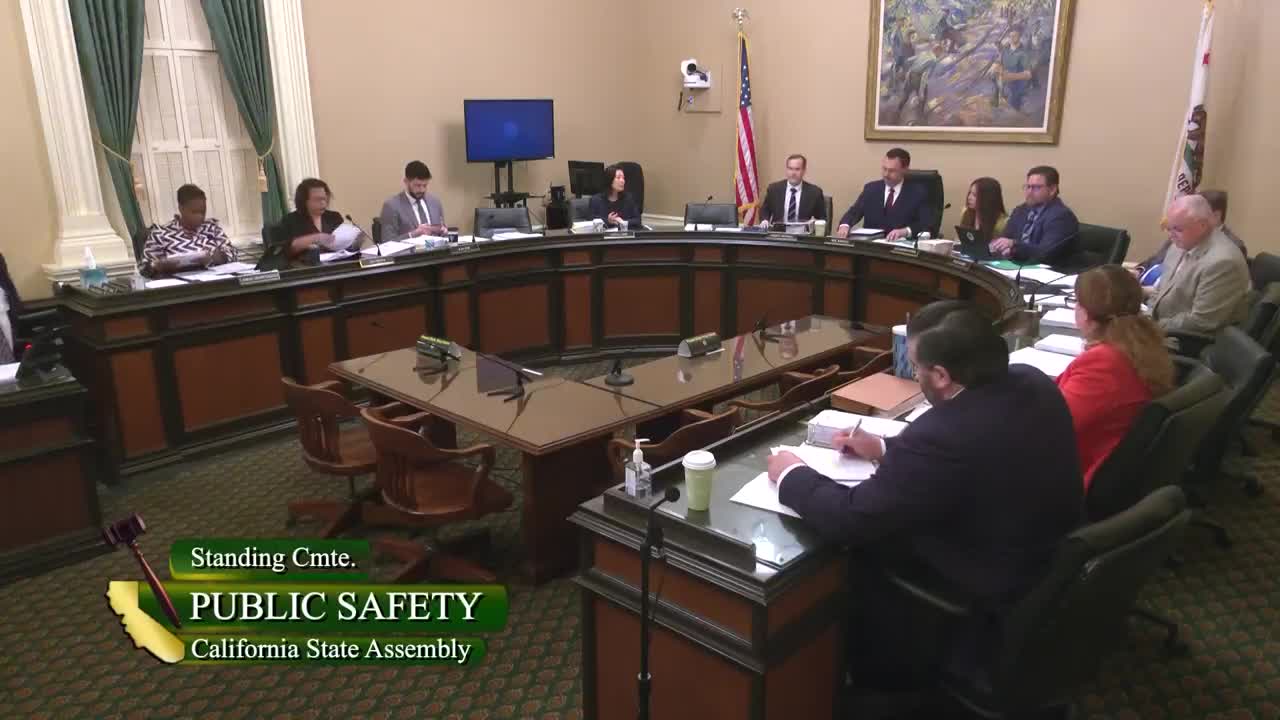 15MIN
Assembly Standing Committee on Public Safety
 23MIN
Assembly Standing Committee on Natural Resources
Bill Author

Bill Co-Author(s):