AB 2521: California Council on Science and Technology: water availability study: Central Valley.
- Session Year: 2025-2026
- House: Assembly
- Latest Version Date: 2026-07-02
Current Status:
In Progress
(2026-08-13: In committee: Held under submission.)
Introduced
In Committee
Awaiting First Chamber Vote
Passed First Chamber
In Committee
Awaiting Second Chamber Vote
Passed Second Chamber
Enacted
Existing law establishes the Department of Water Resources within the Natural Resources Agency and vests it with various powers and duties related to water. Existing law requires the State Water Resources Control Board to administer a water rights program pursuant to which the board grants and revokes permits and licenses to appropriate water. Existing law authorizes any person who has an urgent need to divert and use water to apply for, and authorizes the board to issue, a conditional, temporary permit, as prescribed.
Existing law finds and declares that the California Council on Science and Technology (CCST) was organized as a nonprofit corporation at the request of the Legislature for the specific purpose of offering expert advice to the state government on public policy issues significantly related to science and technology.
This bill would, on or before January 1, 2028, require the Department of Water Resources, in consultation with the State Water Resources Control Board and the Department of Fish and Wildlife, to select 2 watersheds that are within, or drain into, the Central Valley to conduct a watershedwide water availability study. The bill would, subject to an appropriation by the Legislature, request CCST to, in consultation with the Department of Water Resources and the board, undertake and complete a comprehensive study of water availability in the selected watersheds. The bill would require the study to, among other things, determine daily flow rates in rivers, streams, and creeks in the watersheds over the past 30 years to the extent data is available. The bill would require the study to be completed within 2 years of the Legislature appropriating money for purposes of undertaking the study. The bill would state the intent of the Legislature for the water availability study to serve as the water availability analysis for future applications to the board for standard or temporary permits for diversion of water to underground storage in the selected watersheds.
This bill would make legislative findings and declarations as to the necessity of a special statute for the Central Valley.
Existing law establishes the Department of Water Resources within the Natural Resources Agency and vests it with various powers and duties related to water. Existing law requires the State Water Resources Control Board to administer a water rights program pursuant to which the board grants and revokes permits and licenses to appropriate water. Existing law authorizes any person who has an urgent need to divert and use water to apply for, and authorizes the board to issue, a conditional, temporary permit, as prescribed.
Existing law finds and declares that the California Council on Science and Technology (CCST) was organized as a nonprofit corporation at the request of the Legislature for the specific purpose of offering expert advice to the state government on public policy issues significantly related to science and technology.
This bill would, on or before January 1, 2028, require the Department of Water Resources, in consultation with the State Water Resources Control Board and the Department of Fish and Wildlife, to select 2 watersheds that are within, or drain into, the Central Valley to conduct a watershedwide water availability study. The bill would, subject to an appropriation by the Legislature, request CCST to, in consultation with the Department of Water Resources and the board, undertake and complete a comprehensive study of water availability in the selected watersheds. The bill would require the study to, among other things, determine daily flow rates in rivers, streams, and creeks in the watersheds over the past 30 years to the extent data is available. The bill would state the intent of the Legislature for the water availability study to serve as the water availability analysis for future applications to the board for standard or temporary permits for diversion of water to underground storage in the selected watersheds.
This bill would make legislative findings and declarations as to the necessity of a special statute for the Central Valley.
Existing law, the Sustainable Groundwater Management Act, requires all groundwater basins designated as high- or medium-priority basins by the Department of Water Resources to be managed under a groundwater sustainability plan or coordinated groundwater sustainability plans, except as specified. Existing law defines various terms for purposes of the act.This bill would add the defined term best available science for purposes of the act.Existing law, the Sustainable Groundwater Management Act, requires all groundwater basins designated as high- or medium-priority basins by the Department of Water Resources to be managed under a groundwater sustainability plan or coordinated groundwater sustainability plans, except as specified. Existing law defines various terms for purposes of the act.
This bill would add the defined term best available science for purposes of the act.
Existing law creates the San Francisco Bay Conservation and Development Commission, and prescribes the membership and functions and duties of the commission with regard to regulating development in specified areas along the San Francisco Bay.This bill would make nonsubstantive changes to those provisions prescribing the membership of the commission.Existing law creates the San Francisco Bay Conservation and Development Commission, and prescribes the membership and functions and duties of the commission with regard to regulating development in specified areas along the San Francisco Bay.
This bill would make nonsubstantive changes to those provisions prescribing the membership of the commission.
(a)The department, in consultation with the board and the Department of Fish and Wildlife, shall select, on or before January 1, 2028, two watersheds that are within, or drain into, the Central Valley to conduct a watershedwide water availability study.
(b)The Legislature requests that the California Council on Science and Technology, in consultation with the department and the board, subject to an appropriation by the Legislature for this purpose, undertake and complete a comprehensive study of water availability in the watersheds selected pursuant to subdivision (a). The study shall accomplish, but is not limited to, all of the following:
(1)Determine daily flow rates in rivers, streams, and creeks in the watersheds over the past 30 years to the extent data is available.
(2)Quantify the maximum allowable diversions under existing permits, licenses, and claims in the watersheds.
(3)Quantify water actually diverted under existing permits, licenses, and claims in the watersheds over the past 30 years to the extent data is available.
(4)Identify and quantify any water quality or environmental flow requirements, including water quality requirements under licenses from the Federal Energy Regulatory Commission, in rivers, streams, and creeks in the watersheds.
(5)Determine when and under what conditions water is available in excess of existing claims and regulatory requirements.
(c)The comprehensive study of water availability described in subdivision (b) shall be completed within two years of the Legislature appropriating money for purposes of undertaking the study.
(c)(d)It is the intent of the Legislature that the study completed pursuant to this section will serve as the water availability analysis for future applications to the board for standard or temporary permits for diversion of water to underground storage in the watersheds selected pursuant to subdivision (a).
SEC. 2.The Legislature finds and declares that a special statute is necessary and that a general statute cannot be made applicable within the meaning of Section 16 of Article IV of the California Constitution because of the necessity for more groundwater recharge in the Central Valley to increase water supplies, protect communities from flooding, halt land subsidence that damages infrastructure, and prepare California for the next drought.
(a)The department, in consultation with the board and the Department of Fish and Wildlife, shall select, on or before January 1, 2028, two watersheds that are within, or drain into, the Central Valley to conduct a watershedwide water availability study.
(b)The Legislature requests that the California Council on Science and Technology, in consultation with the department and the board, subject to an appropriation by the Legislature for this purpose, undertake and complete a comprehensive study of water availability in the watersheds selected pursuant to subdivision (a). The study shall accomplish, but is not limited to, all of the following:
(1)Determine daily flow rates in rivers, streams, and creeks in the watersheds over the past 30 years to the extent data is available.
(2)Quantify the maximum allowable diversions under existing permits, licenses, and claims in the watersheds.
(3)Quantify water actually diverted under existing permits, licenses, and claims in the watersheds over the past 30 years to the extent data is available.
(4)Identify and quantify any water quality or environmental flow requirements, including water quality requirements under licenses from the Federal Energy Regulatory Commission, in rivers, streams, and creeks in the watersheds.
(5)Determine when and under what conditions water is available in excess of existing claims and regulatory requirements.
(c)It is the intent of the Legislature that the study completed pursuant to this section will serve as the water availability analysis for future applications to the board for standard or temporary permits for diversion of water to underground storage in the watersheds selected pursuant to subdivision (a).
SEC. 2.The Legislature finds and declares that a special statute is necessary and that a general statute cannot be made applicable within the meaning of Section 16 of Article IV of the California Constitution because of the necessity for more groundwater recharge in the Central Valley to increase water supplies, protect communities from flooding, halt land subsidence that damages infrastructure, and prepare California for the next drought.
SECTION 1.Section 10721 of the Water Code is amended to read:10721.Unless the context otherwise requires, the following definitions govern the construction of this part:(a)Adjudication action means an action filed in the superior or federal district court to determine the rights to extract groundwater from a basin or store water within a basin, including, but not limited to, actions to quiet title respecting rights to extract or store groundwater or an action brought to impose a physical solution on a basin.(b)Basin means a groundwater basin or subbasin identified and defined in Bulletin 118 or as modified pursuant to Chapter 3 (commencing with Section 10722).(c)Best available science means the use of sufficient and credible information and data, specific to the decision being made and the timeframe available for making that decision, that is consistent with scientific and engineering professional standards of practice. (d)Bulletin 118 means the departments report entitled Californias Groundwater: Bulletin 118 updated in 2003, as it may be subsequently updated or revised in accordance with Section 12924.(e)Coordination agreement means a legal agreement adopted between two or more groundwater sustainability agencies that provides the basis for coordinating multiple agencies or groundwater sustainability plans within a basin pursuant to this part.(f)De minimis extractor means a person who extracts, for domestic purposes, two acre-feet or less per year.(g)Governing body means the legislative body of a groundwater sustainability agency.(h)Groundwater means water beneath the surface of the earth within the zone below the water table in which the soil is completely saturated with water, but does not include water that flows in known and definite channels unless included pursuant to Section 10722.5.(i)Groundwater extraction facility means a device or method for extracting groundwater from within a basin.(j)Groundwater recharge or recharge means the augmentation of groundwater, by natural or artificial means.(k)Groundwater sustainability agency means one or more local agencies that implement the provisions of this part. For purposes of imposing fees pursuant to Chapter 8 (commencing with Section 10730) or taking action to enforce a groundwater sustainability plan, groundwater sustainability agency also means each local agency comprising the groundwater sustainability agency if the plan authorizes separate agency action. (l)Groundwater sustainability plan or plan means a plan of a groundwater sustainability agency proposed or adopted pursuant to this part.(m)Groundwater sustainability program means a coordinated and ongoing activity undertaken to benefit a basin, pursuant to a groundwater sustainability plan.(n)In-lieu use means the use of surface water by persons that could otherwise extract groundwater in order to leave groundwater in the basin.(o)Local agency means a local public agency that has water supply, water management, or land use responsibilities within a groundwater basin.(p)Operator means a person operating a groundwater extraction facility. The owner of a groundwater extraction facility shall be conclusively presumed to be the operator unless a satisfactory showing is made to the governing body of the groundwater sustainability agency that the groundwater extraction facility actually is operated by some other person.(q)Owner means a person owning a groundwater extraction facility or an interest in a groundwater extraction facility other than a lien to secure the payment of a debt or other obligation.(r)Personal information has the same meaning as defined in Section 1798.3 of the Civil Code.(s)Planning and implementation horizon means a 50-year time period over which a groundwater sustainability agency determines that plans and measures will be implemented in a basin to ensure that the basin is operated within its sustainable yield.(t)Public water system has the same meaning as defined in Section 116275 of the Health and Safety Code.(u)Recharge area means the area that supplies water to an aquifer in a groundwater basin.(v)Sustainability goal means the existence and implementation of one or more groundwater sustainability plans that achieve sustainable groundwater management by identifying and causing the implementation of measures targeted to ensure that the applicable basin is operated within its sustainable yield.(w)Sustainable groundwater management means the management and use of groundwater in a manner that can be maintained during the planning and implementation horizon without causing undesirable results.(x)Sustainable yield means the maximum quantity of water, calculated over a base period representative of long-term conditions in the basin and including any temporary surplus, that can be withdrawn annually from a groundwater supply without causing an undesirable result.(y)Undesirable result means one or more of the following effects caused by groundwater conditions occurring throughout the basin:(1)Chronic lowering of groundwater levels indicating a significant and unreasonable depletion of supply if continued over the planning and implementation horizon. Overdraft during a period of drought is not sufficient to establish a chronic lowering of groundwater levels if extractions and groundwater recharge are managed as necessary to ensure that reductions in groundwater levels or storage during a period of drought are offset by increases in groundwater levels or storage during other periods.(2)Significant and unreasonable reduction of groundwater storage.(3)Significant and unreasonable seawater intrusion.(4)Significant and unreasonable degraded water quality, including the migration of contaminant plumes that impair water supplies.(5)Significant and unreasonable land subsidence that substantially interferes with surface land uses.(6)Depletions of interconnected surface water that have significant and unreasonable adverse impacts on beneficial uses of the surface water.(z)Water budget means an accounting of the total groundwater and surface water entering and leaving a basin including the changes in the amount of water stored.(aa)Watermaster means a watermaster appointed by a court or pursuant to other law.(ab)Water year means the period from October 1 through the following September 30, inclusive.(ac)Wellhead protection area means the surface and subsurface area surrounding a water well or well field that supplies a public water system through which contaminants are reasonably likely to migrate toward the water well or well field.Unless the context otherwise requires, the following definitions govern the construction of this part:
(a)Adjudication action means an action filed in the superior or federal district court to determine the rights to extract groundwater from a basin or store water within a basin, including, but not limited to, actions to quiet title respecting rights to extract or store groundwater or an action brought to impose a physical solution on a basin.
(b)Basin means a groundwater basin or subbasin identified and defined in Bulletin 118 or as modified pursuant to Chapter 3 (commencing with Section 10722).
(c)Best available science means the use of sufficient and credible information and data, specific to the decision being made and the timeframe available for making that decision, that is consistent with scientific and engineering professional standards of practice.
(c)(d)Bulletin 118 means the departments report entitled Californias Groundwater: Bulletin 118 updated in 2003, as it may be subsequently updated or revised in accordance with Section 12924.
(d)(e)Coordination agreement means a legal agreement adopted between two or more groundwater sustainability agencies that provides the basis for coordinating multiple agencies or groundwater sustainability plans within a basin pursuant to this part.
(e)(f)De minimis extractor means a person who extracts, for domestic purposes, two acre-feet or less per year.
(f)(g)Governing body means the legislative body of a groundwater sustainability agency.
(g)(h)Groundwater means water beneath the surface of the earth within the zone below the water table in which the soil is completely saturated with water, but does not include water that flows in known and definite channels unless included pursuant to Section 10722.5.
(h)(i)Groundwater extraction facility means a device or method for extracting groundwater from within a basin.
(i)(j)Groundwater recharge or recharge means the augmentation of groundwater, by natural or artificial means.
(j)(k)Groundwater sustainability agency means one or more local agencies that implement the provisions of this part. For purposes of imposing fees pursuant to Chapter 8 (commencing with Section 10730) or taking action to enforce a groundwater sustainability plan, groundwater sustainability agency also means each local agency comprising the groundwater sustainability agency if the plan authorizes separate agency action.
(k)(l)Groundwater sustainability plan or plan means a plan of a groundwater sustainability agency proposed or adopted pursuant to this part.
(l)(m)Groundwater sustainability program means a coordinated and ongoing activity undertaken to benefit a basin, pursuant to a groundwater sustainability plan.
(m)(n)In-lieu use means the use of surface water by persons that could otherwise extract groundwater in order to leave groundwater in the basin.
(n)(o)Local agency means a local public agency that has water supply, water management, or land use responsibilities within a groundwater basin.
(o)(p)Operator means a person operating a groundwater extraction facility. The owner of a groundwater extraction facility shall be conclusively presumed to be the operator unless a satisfactory showing is made to the governing body of the groundwater sustainability agency that the groundwater extraction facility actually is operated by some other person.
(p)(q)Owner means a person owning a groundwater extraction facility or an interest in a groundwater extraction facility other than a lien to secure the payment of a debt or other obligation.
(q)(r)Personal information has the same meaning as defined in Section 1798.3 of the Civil Code.
(r)(s)Planning and implementation horizon means a 50-year time period over which a groundwater sustainability agency determines that plans and measures will be implemented in a basin to ensure that the basin is operated within its sustainable yield.
(s)(t)Public water system has the same meaning as defined in Section 116275 of the Health and Safety Code.
(t)(u)Recharge area means the area that supplies water to an aquifer in a groundwater basin.
(u)(v)Sustainability goal means the existence and implementation of one or more groundwater sustainability plans that achieve sustainable groundwater management by identifying and causing the implementation of measures targeted to ensure that the applicable basin is operated within its sustainable yield.
(v)(w)Sustainable groundwater management means the management and use of groundwater in a manner that can be maintained during the planning and implementation horizon without causing undesirable results.
(w)(x)Sustainable yield means the maximum quantity of water, calculated over a base period representative of long-term conditions in the basin and including any temporary surplus, that can be withdrawn annually from a groundwater supply without causing an undesirable result.
(x)(y)Undesirable result means one or more of the following effects caused by groundwater conditions occurring throughout the basin:
(1)Chronic lowering of groundwater levels indicating a significant and unreasonable depletion of supply if continued over the planning and implementation horizon. Overdraft during a period of drought is not sufficient to establish a chronic lowering of groundwater levels if extractions and groundwater recharge are managed as necessary to ensure that reductions in groundwater levels or storage during a period of drought are offset by increases in groundwater levels or storage during other periods.
(2)Significant and unreasonable reduction of groundwater storage.
(3)Significant and unreasonable seawater intrusion.
(4)Significant and unreasonable degraded water quality, including the migration of contaminant plumes that impair water supplies.
(5)Significant and unreasonable land subsidence that substantially interferes with surface land uses.
(6)Depletions of interconnected surface water that have significant and unreasonable adverse impacts on beneficial uses of the surface water.
(y)(z)Water budget means an accounting of the total groundwater and surface water entering and leaving a basin including the changes in the amount of water stored.
(z)(aa)Watermaster means a watermaster appointed by a court or pursuant to other law.
(aa)(ab)Water year means the period from October 1 through the following September 30, inclusive.
(ab)(ac)Wellhead protection area means the surface and subsurface area surrounding a water well or well field that supplies a public water system through which contaminants are reasonably likely to migrate toward the water well or well field.
SECTION 1.Section 66620 of the Government Code is amended to read:66620.The San Francisco Bay Conservation and Development Commission is hereby created. The commission shall consist of 27 members, as follows:(a)One member appointed by the Division Engineer, United States Army Engineers, South Pacific Division, from their staff.(b)One member appointed by the Administrator of the United States Environmental Protection Agency, from their staff.(c)One member appointed by the Secretary of Transportation from their staff.(d)One member appointed by the Director of Finance, from their staff.(e)One member appointed by the Secretary of Resources, from their staff.(f)One member appointed by the State Lands Commission, who shall be a member of that commission or from its staff.(g)One member appointed by the San Francisco Bay Regional Water Quality Control Board, who shall be a member of that board.(h)Nine county representatives consisting of one member of the board of supervisors representative of each of the nine San Francisco Bay area counties, appointed by the board of supervisors in each county. Each county representative shall be a supervisor representing a supervisorial district that includes within its boundaries lands lying within San Francisco Bay.(i)(1)Four city representatives appointed by the Association of Bay Area Governments from among the residents of the bayside cities in each of the following areas:(A)North BayMarin, Sonoma, Napa, and Solano Counties;(B)East BayContra Costa County (west of Pittsburg) and Alameda County north of the southern boundary of Hayward;(C)South BayAlameda County south of the southern boundary of Hayward, Santa Clara County, and San Mateo County south of the northern boundary of Redwood City;(D)West BaySan Mateo County north of the northern boundary of Redwood City, and the City and County of San Francisco.(2)Each city representative shall be an elected city official.(j)Seven representatives of the public, who shall be residents of the San Francisco Bay area. Five of the representatives shall be appointed by the Governor and their appointments shall be subject to confirmation by the Senate. One of the representatives shall be appointed by the Committee on Rules of the Senate, and one by the Speaker of the Assembly.The San Francisco Bay Conservation and Development Commission is hereby created. The commission shall consist of 27 members, as follows:
(a)One member appointed by the Division Engineer, United States Army Engineers, South Pacific Division, from his or her their staff.
(b)One member appointed by the Administrator of the United States Environmental Protection Agency, from his or her their staff.
(c)One member appointed by the Secretary of Transportation from his or her their staff.
(d)One member appointed by the Director of Finance, from his or her their staff.
(e)One member appointed by the Secretary of Resources, from his or her their staff.
(f)One member appointed by the State Lands Commission, who shall be a member of that commission or from its staff.
(g)One member appointed by the San Francisco Bay Regional Water Quality Control Board, who shall be a member of that board.
(h)Nine county representatives consisting of one member of the board of supervisors representative of each of the nine San Francisco Bay area counties, appointed by the board of supervisors in each county. Each county representative shall be a supervisor representing a supervisorial district which that includes within its boundaries lands lying within San Francisco Bay.
(i)(1)Four city representatives appointed by the Association of Bay Area Governments from among the residents of the bayside cities in each of the following areas:
(1)(A)North BayMarin, Sonoma, Napa, and Solano Counties;
(2)(B)East BayContra Costa County (west of Pittsburg) and Alameda County north of the southern boundary of Hayward;
(3)(C)South BayAlameda County south of the southern boundary of Hayward, Santa Clara County, and San Mateo County south of the northern boundary of Redwood City;
(4)(D)West BaySan Mateo County north of the northern boundary of Redwood City, and the City and County of San Francisco.
Each(2)Each city representative shall be an elected city official.
(j)Seven representatives of the public, who shall be residents of the San Francisco Bay area. Five of the representatives shall be appointed by the Governor and their appointments shall be subject to confirmation by the Senate. One of the representatives shall be appointed by the Committee on Rules of the Senate, and one by the Speaker of the Assembly.
|
Date
|
Status
|
|---|---|
| Aug 13, 2026 | In committee: Held under submission. |
| Aug 3, 2026 | In committee: Referred to APPR. suspense file. |
| Jul 2, 2026 | Read second time and amended. Re-referred to Com. on APPR. |
| Jul 1, 2026 | From committee: Amend, and do pass as amended and re-refer to Com. on APPR. (Ayes 6. Noes 0.) (July 1). |
| Jun 10, 2026 | Referred to Com. on N.R. & W. |
| May 28, 2026 | In Senate. Read first time. To Com. on RLS. for assignment. |
| May 27, 2026 | Read third time. Passed. Ordered to the Senate. (Ayes 60. Noes 9.) |
| May 27, 2026 | Read third time. Passed. Ordered to the Senate. (Ayes 60. Noes 9. Page 5466.) |
| May 27, 2026 | Read third time. Passed. Ordered to the Senate. |
| May 18, 2026 | Read second time. Ordered to third reading. |
| May 14, 2026 | From committee: Do pass. (Ayes 11. Noes 1.) (May 14). |
| May 6, 2026 | In committee: Set, first hearing. Referred to APPR. suspense file. |
| Apr 23, 2026 | From committee: Do pass and re-refer to Com. on APPR. (Ayes 8. Noes 0.) (April 23). Re-referred to Com. on APPR. |
| Apr 16, 2026 | Re-referred to Com. on W., P., & W. |
| Apr 15, 2026 | From committee chair, with author's amendments: Amend, and re-refer to Com. on W., P., & W. Read second time and amended. |
| Mar 23, 2026 | Re-referred to Com. on W., P., & W. |
| Mar 19, 2026 | Referred to Com. on W., P., & W. |
| Mar 19, 2026 | From committee chair, with author's amendments: Amend, and re-refer to Com. on W., P., & W. Read second time and amended. |
| Feb 21, 2026 | From printer. May be heard in committee March 23. |
| Feb 20, 2026 | Read first time. To print. |
|
Date
|
Description
|
Location
|
Votes
|
|
|---|---|---|---|---|
| Aug 3, 2026 | Placed on suspense file | Senate Standing Committee on Appropriations |
Passed |
|
| Jul 1, 2026 | Do pass as amended, but first amend, and re-refer to the Committee on [Appropriations] | Senate Standing Committee on Natural Resources and Water |
Passed |
|
| May 27, 2026 | AB 2521 Papan Assembly Third Reading | Assembly Floor |
Passed |
|
| May 14, 2026 | Do pass. | Assembly Standing Committee on Appropriations |
Passed |
|
| Apr 23, 2026 | Do pass and be re-referred to the Committee on [Appropriations] | Assembly Standing Committee on Water, Parks, and Wildlife |
Passed |
This list shows positions taken on this bill by organizations on the date displayed, which is linked to the original source.
Positions by individuals are not included.
|
Organization
|
Position
|
Date
|
|---|---|---|
| Valley Ag Water Coalition | ** Against |
SENATE COMMITTEE ON
Senator Sabrina Cervantes, Chair
2025 - 2026 Regular Session
AB 2521 (Papan) - California Council on Science and Technology: water availability study: Central Valley
Version: | Policy Vote: |
Urgency: | Mandate: |
Hearing Date: | Consultant: |
Bill Summary:
This bill would, upon appropriation, request that the California Council on Science and Technology (CCST) undertake two watershed-wide water availability studies for watersheds that are within, or drain into, the Central Valley to help facilitate groundwater recharge permitting.
Fiscal Impact:
- One-time costs, likely in the millions of dollars (General Fund or special fund), for CCST to undertake and complete a comprehensive study of water availability in the two selected watersheds. CCST estimated a cost of about $1.5 million for an 18-month study on a prior version of this bill, while the Department of Water Resources (DWR) notes that a useful study could cost $2 million to $4 million and would ultimately depend upon the level of detail needed or the end use of the studies.
- The State Water Board estimates ongoing costs of $500,000 annually (General Fund) to assist CCST with understanding information related to water right permits, licenses, and claims, ensure the study produces information that could potentially be used in future permit applications, and, after the study's release, assist applicants in making use of it for their permit applications.
- DWR anticipates its costs would be minor and absorbable.
Background:
Groundwater makes up roughly 40 percent of California's water supply in an average year and 60 percent or more in dry years, and interest in recharging aquifers during wet periods has grown since the Sustainable Groundwater Management Act passed in 2014. Recharge at scale requires a water right, and obtaining one requires a water availability analysis — an assessment of whether water is actually available to divert, paid for by each applicant separately. The state also funds watershed-scale hydrological studies through DWR, which serve a broader planning purpose and are budgeted accordingly.
Cost of the water availability analysis. A water availability analysis is a necessary part of any water right application, required under Water Code Section 1260, which obligates an applicant to set forth sufficient information to demonstrate a reasonable likelihood that unappropriated water is available for the proposed appropriation. The analysis can be time-consuming and costly, often exceeding $50,000. The State Water Board currently allows an expedited form of analysis for temporary groundwater recharge permits, known as the 90/20 method: water is treated as available for diversion on a given day if instream flow exceeds the flow that typically occurs in 90 percent of years, and then only up to 20 percent of total flow at that time.
Cost as a barrier to permitting. The Assembly Water, Parks and Wildlife Committee held an outcomes review hearing on AB 658 (Arambula, 2019), which established the five-year temporary permit for groundwater recharge. Permittees testified that the cost of the water availability analysis was a barrier to obtaining a permit, and some stated they would not have pursued one without financial support from DWR to complete the analysis. Witnesses put the cost of an analysis for a five-year permit at around $50,000.
Existing watershed studies and their cost. DWR conducts watershed-scale studies that provide state, federal, and local agencies a shared technical and hydrological foundation for coordinating water management. Its San Joaquin Basin Flood-MAR studies cover the Calaveras, Stanislaus, Tuolumne, Merced, and Upper San Joaquin watersheds and evaluate how the basin can manage water resources across extreme wet years and long dry periods; DWR used eight models and generated more than eight million data points. That study cost $20 million. Planned studies of the Tulare and Sacramento River watersheds are estimated at $14 million to $20 million. DWR notes that its existing studies do not compare water that may be available in a watershed against the uses and desired uses of water, which would be pertinent to underground storage permitting, but could serve as a starting point.
CCST's funding. CCST is a nonprofit organization established at the Legislature's request in 1988. It receives funding from philanthropic foundations, public and private higher education institutions, federally funded research institutions, the state, investment income, and individual donations, and reported $8.4 million in revenues in 2025.
Proposed Law:
This bill would:
- Require DWR, in consultation with the State Water Board and the California Department of Fish and Wildlife, to select, on or before January 1, 2028, two watersheds that are within, or drain into, the Central Valley to conduct a watershed-wide water availability study.
- Request that CCST, in consultation with DWR and the State Water Board, and subject to appropriation, undertake and complete a comprehensive study of water availability in the selected watersheds.
- Require the study to accomplish, but not be limited to, all of the following:
- Determine daily flow rates in rivers, streams, and creeks in the watersheds over the past 30 years to the extent data is available.
- Quantify the maximum allowable diversions under existing permits, licenses, and claims in the watersheds.
- Quantify water actually diverted under existing permits, licenses, claims in the watersheds over the past 30 years to the extent data is available.
- Identify and quantify any water quality or environmental flow requirements, including water quality requirements under licenses from the Federal Energy Regulatory Commission, in rivers, streams, and creeks in the watersheds.
- Determine when and under what conditions water is available in excess of existing claims and regulatory requirements.
- Require the study to be completed within two years of the Legislature appropriating money for purposes of undertaking the study.
- Declare that it is the intent of the Legislature that the above-described study will serve as a water availability analysis for future applications to the State Water Board for standard or temporary permits for diversion of water to underground storage in the selected watersheds.
- Make legislative findings and declarations as to the necessity of a special statute for the Central Valley.
Related Legislation:
AB 2026 (Aguiar-Curry, 2026) would revise and recast the conditions for the appropriative water right exemption for diversions of floodflows for groundwater recharge, expand the definition of "urgent need" for temporary permits to include diversions to augment a basin's recharge in support of its sustainability goal, exempt the State Water Board's issuance of a temporary permit from the California Environmental Quality Act and from lake or streambed alteration agreement requirements, and require the board to compile and post information on permits issued and diversions conducted under temporary permits.
AB 658 (Arambula, 2019) authorized a groundwater sustainability agency or local agency to apply for, and the State Water Board to issue, a conditional temporary permit for the diversion of surface water to underground storage that advances the sustainability goal of a groundwater basin, and to petition for a corresponding temporary change order. Both run five years. The bill required the board to post information on the effectiveness of those provisions by December 31, 2024.
-- END --
SENATE COMMITTEE ON NATURAL RESOURCES AND WATER
Senator Josh Becker, Chair
2025 - 2026 Regular
Bill No: AB Hearing Date: July 1, 2026
Author: | |||
Version: | Amended | ||
Urgency: | Fiscal: | ||
Consultant: | |||
Subject: California Council on Science and Technology: water availability study: Central Valley
SUMMARY
This bill would request that the California Council on Science and Technology undertake two watershed-wide water availability studies for watersheds that are within, or drain into, the Central Valley to help facilitate groundwater recharge permitting.
BACKGROUND AND EXISTING LAW
Groundwater, generally.
Groundwater makes up a significant portion of the state’s water supply, and can serve as a buffer against the impacts of drought and climate change. During an average year, groundwater makes up approximately 40 percent of the State’s total water supply, and 60 percent or more during dry years. It is a major source of the state’s drinking water supply and, according to the State Water Resources Control Board (State Water Board), approximately 33 million Californians use groundwater for drinking or other household uses.
Groundwater recharge occurs when water seeps into the ground to replenish underground aquifers and can play an important role in water management in California. Many areas throughout California already participate in groundwater recharge activities. Although some recharge happens incidentally, with water flowing into the ground from rivers, unlined canals, or excess irrigation, intentional recharge can restore groundwater levels and store water for later use. This occurs through active management when individuals or agencies divert water from a waterway to farmland or a settling basin where the water can gradually percolate down into the aquifer. Rates of recharge vary by soil type and conditions, but it is generally not a rapid process. Active groundwater recharge requires advance planning and infrastructure to be successful.
Recharge can also help mitigate impacts from groundwater pumping, such as dry wells or subsidence, while providing wetland habitat for birds, reducing flood risk, and storing water for droughts.
Increased interest in groundwater recharge.
Interest in expanding groundwater recharge has increased since the passage of the Sustainable Groundwater Management Act (SGMA). In a 2020 study reviewing groundwater sustainability plans (GSPs) developed under SGMA and submitted for critically overdrafted basins in the San Joaquin Valley, Public Polic Institute of California (PPIC) shows that, collectively, the GSPs intend to recharge nearly 1 million acre-feet (MAF) of water annually to address groundwater overdraft.[1] This is significant given that PPIC estimates that groundwater overdraft in the San Joaquin Valley for the 1987-2017 period was nearly 2 MAF annually.[2]
How Much Water Is Available for Recharge in the Central Valley?
Further analysis by PPIC in June 2025 found that in 2023 as much as 11.2 MAF from the Sacramento River and 3.4 MAF from the San Joaquin River may have been available for groundwater recharge.[3] It is important to note that 2023 was considered a “very wet year,” whereas 2024 and 2025 have been drier. According to the PPIC report “over the past two decades, wet years occurred five times (2006, 2011 2017, 2019, and 2023). In such years, there is so much water in the system that some additional recharge could occur without causing environmental or downstream tradeoffs, and there are likely also periods where more recharge would be possible if tradeoffs were properly managed. We do not explore the potential for available water from large storms during drier years, which might offer more limited opportunities for recharge … . These situations are ripe for further analysis, given their potential for extending the active season for recharge and for enabling incremental progress even in years that are not classified as wet.” (Emphasis added).
Water availability analysis. A water availability analysis is a necessary part of any water right application and helps to determine whether there is actually water available to be diverted from the stream, river, or water body subject to the application. This information is required per Water Code §1260: An applicant for a permit to appropriate water shall set forth all of the following: … “(k) Sufficient information to demonstrate a reasonable likelihood that unappropriated water is available for the proposed appropriation.” The water availability analysis can be a time-consuming and costly (oftentimes exceeding $50,000) part of the application process. The State Water Board currently allows for an expedited form of water availability analysis for temporary permits for groundwater recharge that is referred to as the “90/20 method.” This is the method the State Water Board uses to determine whether there is enough water to divert. Generally, it states that water is available for diversion on a given day if the instream flow exceeds the flow that typically occurs in 90% of the years but only up to 20% of the total flow at that time.
California Council on Science and Technology (CCST). CCST was uniquely established at the request of the Legislature in 1988 for the specific purpose of offering expert advice to state government on public policy issues significantly related to science and technology. CCST’s mission is to “serve as a trusted, nonpartisan source of expert science and technology advice for California policymakers, powered by a world-class partner network.” CCST draws from a network of California’s major research institutions including the University of California, the California State University system, the California Community Colleges, Stanford University, the University of Southern California, and the California Institute of Technology as well as the National Laboratories in California (e.g., Lawrence Berkeley and Lawrence Livermore). The Legislature has formally requested that CCST complete various studies and analyses in the past (see Existing Law, below) and partners with CCST on the Science and Technology Policy Fellowship program to place a cohort of PhD scientists and engineers directly into policymaker offices in the Legislature and Executive Branch.
Existing law:
- Establishes the State Water Board (Water Code (WAT) §§175 et seq.) to administer California’s water rights system (WAT §§1050 et seq.). Authorizes the State Water Board to issue water rights (WAT §§1250 et seq.), collect data on water use under water rights (WAT §§5100 et seq.), enforce water right violations (WAT §§1845 et seq.), and enforce the water right priority system (WAT §§1450 et seq.), among other powers.
- Exempts the temporary diversion of floodflows for groundwater recharge from requirements to obtain a water right if specified conditions are met (WAT §1242.1).
- Authorizes the State Water Board to issue a temporary urgency permit (water right) so long as the diversion does not harm other lawful users of water and meets other conditions. Temporary urgency permits shall automatically expire after 180 days, unless renewed (WAT §§ 1425 et seq.).
- Authorizes the State Water Board to issue a temporary permit (water right) to divert water for groundwater recharge so long as the diversion does not harm other lawful users of water and meets other conditions. Temporary permits for groundwater recharge shall automatically expire after five years, unless renewed (WAT §§ 1433 et seq.).
- Requests that CCST undertake and complete a study on gas pipeline specifications and prescribes criteria for the study (Public Utilities Code §784.1).
- Authorizes the Department of Food and Agriculture to contract with CCST to review the work of the Food Biotechnology Task Force (Food and Agriculture Code §492).
- Requests that CCST assess, in its discretion, the infrastructure project types, scale, and pace necessary to achieve the state’s energy, climate change, and air quality goals (Health and Safety Code §38592.1).
PROPOSED LAW
This bill would:
- Require the Department of Water Resources (DWR), in consultation with the State Water Board and the California Department of Fish and Wildlife, to select, on or before January 1, 2028, two watersheds that are within, or drain into, the Central Valley to conduct a watershed-wide water availability study.
- Request that CCST, in consultation with DWR and the State Water Board, and subject to appropriation, undertake and complete a comprehensive study of water availability in the selected watersheds.
- Require the study to accomplish, but not be limited to, all of the following:
- Determine daily flow rates in rivers, streams, and creeks in the watersheds over the past 30 years to the extent data is available.
- Quantify the maximum allowable diversions under existing permits, licenses, and claims in the watersheds.
- Quantify water actually diverted under existing permits, licenses, claims in the watersheds over the past 30 years to the extent data is available.
- Identify and quantify any water quality or environmental flow requirements, including water quality requirements under licenses from the Federal Energy Regulatory Commission, in rivers, streams, and creeks in the watersheds.
- Determine when and under what conditions water is available in excess of existing claims and regulatory requirements.
- Declare that it is the intent of the Legislature that the above-described study will serve as a water availability analysis for future applications to the State Water Board for standard or temporary permits for diversion of water to underground storage in the selected watersheds.
ARGUMENTS IN SUPPORT
According to the author, “California’s hydrology is altering before our eyes as a result of the changing climate. This shift is causing not only extreme swings between the wet and dry periods that have always been a characteristic of California’s climate, but is also leading to a diminished snowpack, our largest, natural water reservoir. California’s system of reservoirs and conveyance was designed to capture runoff from a gradually melting snowpack to ensure sufficient water supplies for the dry summer months; however, as the runoff comes earlier or not at all due to warming temperatures, we need to adapt and change our water management approach.”
“One key strategy in making this shift is to significantly increase the amount of water we recharge into our aquifers during wet periods so that we have water during the dry summer months and inevitable droughts. While progress is being made to expedite permitting processes for groundwater recharge, we are not getting the job done. One key hang-up is determining when there is water in excess of what is necessary to satisfy existing water rights and regulatory requirements that can be diverted for recharge. This bill will alleviate this choke point by calling for the completion of a watershed-wide water availability analysis that water right applicants can use to determine how much and when water is available for recharge. This programmatic approach to groundwater recharge will help us meet our ambitious goals and make us more climate resilient.”
ARGUMENTS IN OPPOSITION
Writing in opposition, Valley Ag Water Coalition list three main concerns. First, that “the legislation would not require the State Water Board to accept the results of the CCST study in support of an application or even require the [State Water Board] to consider the results” and “therefore, there might not be any benefit conferred on an applicant.” Second, that “the results of a CCST study could differ from prior water supply assessments conducted by applicants in the same watershed, or differ from recent work conducted by [DWR].” Third, the coalition points out that a funding source has not been identified and is concerned that the Water Rights Fees that are imposed on all permitees and licensees would be relied upon to pay for the costs of the study.
COMMENTS
This bill. There is broad consensus around the need to do more groundwater recharge, but disputes about when excess water or “floodflows” are available for recharge and will not injure other water right holders or the environment are proving very difficult. This bill attempts to create an objective study to settle this question of when there is excess water available for recharge in the selected watersheds.
Tick, tock. The effectiveness of a report or study is largely dependent on its timeliness. As such, given the recent increased interest in recharging groundwater basins, it may be a good idea to make sure that the report proposed by this bill is produced in a timely manner.
The Committee may wish to consider requiring the water availability study proposed by the bill to be completed within 2 years of receiving an appropriation. See Amendment 1.
SUGGESTED AMENDMENTS
AMENDMENT 1
Amend Water Code Section 1259.7 to add a new subdivision (c) as follows:
(c) The comprehensive study of water availability described in subdivision (b) shall be completed within 2 years the Legislature appropriating money for the purpose of undertaking the study.
(c)(d) It is the intent of the Legislature … .
SUPPORT
None received
OPPOSITION
Valley Ag Water Coalition
-- END --
Ellen Hanak, Jelena Jezdimirovic, Alvar Escriva-Bou, Andrew Ayres, A Review of Groundwater Sustainability Plans in the San Joaquin Valley, (San Francisco: PPIC, 2020),p. 6. ↑
Ibid, 1. ↑
Ellen Hanak, Spencer Cole, Greg Gartrell, Caitlin Peterson, How Much Water Is Available for Recharge in the Central Valley?, (San Francisco: PPIC, 2025), pp. 12 and 15. ↑
ASSEMBLY THIRD READING
ATR Bill Id:AB 2521
Author:(Papan)
As Amended Ver:April 15, 2026
Majority vote
SUMMARY
Requests that the California Council on Science and Technology (CCST) undertake two watershed-wide water availability studies to help facilitate groundwater recharge permitting.
Major Provisions
- Requires the Department of Water Resources (DWR), in consultation with the State Water Resources Control Board (State Water Board) and the Department of Fish and Wildlife (DFW), to select two watersheds that drain into the Central Valley for a watershed-wide water availability study.
- Requests that CCST, upon appropriation of funding for this purpose by the Legislature, undertake and complete watershed-wide water availability studies in the watersheds selected by DWR.
- Requires the watershed-wide water availability study to accomplish the following:
- Determine daily flow rates in rivers and streams over the past 30 years;
- Quantify maximum allowable diversion under existing permits, licenses, and claims in the watershed;
- Quantify water diverted under existing permits, licenses, and claims over the past 30 years, to the extent data is available;
- Identify and quantify any water quality or environmental flow requirements on rivers and streams in the watershed; and
- Determine when and under what conditions water is available in excess of existing claims and regulatory requirements.
- States that it is the intent of the Legislature that the watershed-wide water availability analyses be used for future applications to divert water to underground storage.
COMMENTS
Groundwater is an important source of supply for California's communities, economy, and diverse natural resources. Groundwater recharge occurs when water on the Earth's surface percolates down through layers of soil and earth into aquifers. Recharge occurs naturally when it rains and when water moves through rivers, streams, and creeks. It can also occur through active management when individuals or agencies divert water from a waterway to farmland or a settling basin where the water can gradually percolate down into the aquifer. Rates of recharge vary by soil type and conditions, but it is generally not a rapid process. Active groundwater recharge requires advance planning and infrastructure to be successful.
Interest in expanding groundwater recharge has increased since the passage of the Sustainable Groundwater Management Act (SGMA) in 2014. In a 2020 study reviewing groundwater sustainability plans (GSPs) developed under SGMA and submitted for critically overdrafted basins in the San Joaquin Valley, the Public Policy Institute of California (PPIC) shows that, collectively, the GSPs intend to recharge nearly 1 million acre-feet (MAF) of water annually to address groundwater overdraft. This is significant given that PPIC estimates that groundwater overdraft in the San Joaquin Valley for the 1987-2017 period was nearly 2 MAF annually. Further analysis by PPIC found that in 2023 as much as 11.2 MAF from the Sacramento River and 3.4 MAF from the San Joaquin River may have been available for groundwater recharge.
The importance of groundwater recharge has also been recognized in numerous state plans and strategies including, The California Water Plan: Update 2023, Governor Newsom's California's Water Supply Strategy: Adapting to a Hotter, Drier Future (August 2022), the Water Resilience Portfolio (2020), and the California Water Action Plan (2014).
A water right or permit is required to capture water during high-flow or flood events and store it for later use. A permanent right takes a great deal of time and resources to obtain; as a result, many entities interested in groundwater recharge have pursued a temporary (180-day) permit instead. Whether pursuing a permanent (a process that can take more than seven years) or temporary permit, stakeholders have expressed frustration with the permitting process for groundwater recharge. A 2023 survey on groundwater recharge in the San Joaquin Valley conducted by PPIC indicates that 32% of respondents report a "permitting or regulatory barrier" to implementing groundwater recharge projects (contrast with 49% of respondents that report an "infrastructure" barrier and 23% that report a "cost or funding barrier").
A water availability analysis is a necessary part of any water right application and helps to determine whether there is actually water available to be diverted from the stream, river, or water body subject to the application. This information is required per Water Code § 1260: An applicant for a permit to appropriate water shall set forth all of the following: … "(k) Sufficient information to demonstrate a reasonable likelihood that unappropriated water is available for the proposed appropriation."
CCST was uniquely established at the request of the Legislature in 1988 for the specific purpose of offering expert advice to state government on public policy issues significantly related to science and technology. CCST's mission is to "serve as a trusted, nonpartisan source of expert science and technology advice for California policymakers, powered by a world-class partner network." CCST draws from a network of California's major research institutions including the University of California, the California State University system, the California Community Colleges, Stanford University, the University of Southern California, and the California Institute of Technology as well as the National Laboratories in California (e.g., Lawrence Berkeley and Lawrence Livermore). The Legislature has formally requested that CCST complete various studies and analyses in the past (see Existing Law) and partners with CCST on the Science and Technology Policy Fellowship program to place a cohort of PhD scientists and engineers directly into policymaker offices in the Legislature and Executive Branch. This bill requests CCST undertake the development of watershed-wide water availability analyses, subject to an appropriation of funding for that purpose.
According to the Author
California's hydrology is altering before our eyes as a result of the changing climate. This shift is causing not only extreme swings between the wet and dry periods that have always been a characteristic of California's climate, but is also leading to a diminished snowpack, our largest, natural water reservoir. California's system of reservoirs and conveyance was designed to capture runoff from a gradually melting snowpack to ensure sufficient water supplies for the dry summer months; however, as the runoff comes earlier or not at all due to warming temperatures, we need to adapt and change our water management approach.
One key strategy in making this shift is to significantly increase the amount of water we recharge into our aquifers during wet periods so that we have water during the dry summer months and inevitable droughts. While progress is being made to expedite permitting processes for groundwater recharge, we are not getting the job done. One key hang-up is determining when there is water in excess of what is necessary to satisfy existing water rights and regulatory requirements that can be diverted for recharge. This bill will alleviate this choke point by calling for the completion of a watershed-wide water availability analysis that water right applicants can use to determine how much and when water is available for recharge. This programmatic approach to groundwater recharge will help us meet our ambitious goals and make us more climate resilient.
Arguments in Support
None on file.
Arguments in Opposition
None on file.
FISCAL COMMENTS
According to the Assembly Appropriations Committee, this bill has the following fiscal impact:
1) DWR anticipates costs to select watersheds and consult with CCST to be relatively minor, primarily because DWR is already actively engaged in conducting watershed studies, which provide a basis for strategies that state, federal, and local agencies can use to better coordinate, prepare for climate extremes, and safeguard communities, farms, and ecosystems into the future.
For example, DWR's San Joaquin Basin Flood-MAR Watershed Studies cover the Calaveras, Stanislaus, Tuolumne, Merced, and Upper San Joaquin watersheds and evaluate how the basin can better manage water resources in extreme wet years and long dry periods. DWR utilized eight different models to develop the watershed studies for the San Joaquin Basin, which generated more than eight million data points.
While these studies do not juxtapose water that may be available in the watershed to the uses and desired uses of water – which would be pertinent to using this information for future underground storage permits – DWR notes they could serve as a starting point for CCST's comprehensive study.
2) State Water Board estimates ongoing annual General Fund costs of about $500,000 to consult and coordinate with DWR and CCST. State Water Board notes it would first need to assist CCST with understanding information related to water right permits, licenses, and claims and help ensure the study produces information that could potentially be used in future permit applications. After the release of the study, State Water Board anticipates ongoing work to assist applicants in making use of the study – and the resulting water availability analysis – in their applications to the board for standard or temporary permits for diversion of water to underground storage in the watersheds selected by DWR.
3) CCST estimates a one-time General Fund cost of about $1.5 million for an 18-month study of two watersheds. CCST receives funding from a variety of sources, such as philanthropic foundations, public and private higher education institutions, federally funded research institutions, the state, investment income, and donations from individuals. CCST reported $8.4 million in revenues in 2025.
4) DFW anticipates costs to consult with CCST are minor and absorbable.
The Legislative Analyst's Office recently warned of General Fund structural deficits of around $35 billion per year in the 2027-28 fiscal year and ongoing.
VOTES
ASM WATER, PARKS, AND WILDLIFE: 8-0-5
YES: Papan, Alvarez, Ávila Farías, Bennett, Boerner, Caloza, Hart, Rogers
ABS, ABST OR NV: Jeff Gonzalez, Alanis, Bains, Gallagher, Celeste Rodriguez
ASM APPROPRIATIONS: 11-1-3
YES: Wicks, Aguiar-Curry, Calderon, Caloza, Fong, Mark González, Krell, Pacheco, Pellerin, Sharp-Collins, Solache
NO: Tangipa
ABS, ABST OR NV: Hoover, Dixon, Ta
UPDATED
VERSION: April 15, 2026
CONSULTANT: Pablo Garza / W., P., & W. / (916) 319-2096 FN: 0002730
Date of Hearing: May 6, 2026
ASSEMBLY COMMITTEE ON APPROPRIATIONS
Buffy Wicks, Chair
ABPCA Bill Id:AB 2521
Author:(Papan) – As Amended Ver:April 15, 2026
Policy Committee: | Water, Parks and Wildlife | Vote: | 8 - 0 |
|
| ||
|
|
Urgency: No State Mandated Local Program: No Reimbursable: No
SUMMARY:
This bill requires the Department of Water Resources (DWR) to select two watersheds to conduct a watershed-wide water availability study and requests that the California Council on Science and Technology (CCST) complete a study of water availability in the watersheds selected by DWR.
Specifically, this bill:
1) Requires DWR, in consultation with the State Water Resources Control Board (State Water Board) and the Department of Fish and Wildlife (CDFW), to select, by January 1, 2028, two watersheds that are within, or drain into, the Central Valley to conduct a watershed-wide water availability study.
2) Requests that CCST, in consultation with DWR and the State Water Board, subject to an appropriation by the Legislature for this purpose, complete a comprehensive study of water availability in the watersheds selected by DWR and requires the study to do the following:
a) Determine daily flow rates in rivers, streams, and creeks in the watersheds over the past 30 years to the extent data is available.
b) Quantify the maximum allowable diversions under existing permits, licenses, and claims in the watersheds.
c) Quantify water actually diverted under existing permits, licenses, and claims in the watersheds over the past 30 years to the extent data is available.
d) Identify and quantify any water quality or environmental flow requirements, including water quality requirements under licenses from the Federal Energy Regulatory Commission, in rivers, streams, and creeks in the watersheds.
e) Determine when and under what conditions water is available in excess of existing claims and regulatory requirements.
3) States the intent of the Legislature that the study completed pursuant to this bill will serve as the water availability analysis for future applications to the State Water Board for standard or temporary permits for diversion of water to underground storage in the watersheds selected by DWR.
FISCAL EFFECT:
1) DWR anticipates costs to select watersheds and consult with CCST to be relatively minor, primarily because the department is already actively engaged in conducting watershed studies, which provide a basis for strategies that state, federal, and local agencies can use to better coordinate, prepare for climate extremes, and safeguard communities, farms, and ecosystems into the future.
For example, DWR’s San Joaquin Basin Flood-MAR Watershed Studies cover the Calaveras, Stanislaus, Tuolumne, Merced, and Upper San Joaquin watersheds and evaluate how the basin can better manage water resources in extreme wet years and long dry periods. DWR utilized eight different models to develop the watershed studies for the San Joaquin Basin, which generated more than eight million data points.
While these studies do not juxtapose water that may be available in the watershed to the uses and desired uses of water – which would be pertinent to using this information for future underground storage permits – DWR notes they could serve as a starting point for CCST’s comprehensive study.
2) State Water Board estimates ongoing annual General Fund costs of about $500,000 to consult and coordinate with DWR and CCST. State Water Board notes it would first need to assist CCST with understanding information related to water right permits, licenses, and claims and help ensure the study produces information that could potentially be used in future permit applications. After the release of the study, State Water Board anticipates ongoing work to assist applicants in making use of the study – and the resulting water availability analysis – in their applications to the board for standard or temporary permits for diversion of water to underground storage in the watersheds selected by DWR.
3) CCST estimates a one-time General Fund cost of about $1.5 million for an 18-month study of two watersheds. CCST receives funding from a variety of sources, such as philanthropic foundations, public and private higher education institutions, federally funded research institutions, the state, investment income, and donations from individuals. CCST reported $8.4 million in revenues in 2025.
4) CDFW anticipates costs to consult with CCST are minor and absorbable.
The Legislative Analyst’s Office recently warned of General Fund structural deficits of around $35 billion per year in the 2027-28 fiscal year and ongoing.
COMMENTS:
1) Purpose. According to the author:
While progress is being made to expedite permitting processes for groundwater recharge, we are not getting the job done. One key hang-up is determining when there is water in excess of what is necessary to satisfy existing water rights and regulatory requirements that can be diverted for recharge. This bill will alleviate this choke point by calling for the completion of a watershed-wide water availability analysis that water right applicants can use to determine how much and when water is available for recharge. This programmatic approach to groundwater recharge will help us meet our ambitious goals and make us more climate resilient.
2) Background. Groundwater Recharge. Groundwater is an important source of supply for California’s communities, economy, and diverse natural resources. Recharge occurs naturally when it rains and when water moves through rivers, streams, and creeks. It can also occur through active management when individuals or agencies divert water from a waterway to farmland or a settling basin where the water can gradually percolate down into the aquifer. Interest in expanding groundwater recharge has increased since the passage of the Sustainable Groundwater Management Act in 2014, and the importance of groundwater recharge is recognized in numerous state plans and strategies.
A water right or permit is required to capture water during high-flow or flood events and store it for later use. A permanent right takes considerable time and resources to obtain; as a result, many entities interested in groundwater recharge have pursued a temporary (180-day) permit instead. Whether pursuing a permanent (a process that can take more than seven years) or temporary permit, stakeholders have expressed frustration with the permitting process for groundwater recharge.
Water Availability Analysis. A water availability analysis is a necessary part of any water right application and helps to determine whether there is water available to be diverted from the stream, river, or water body subject to the application.
The Assembly Water, Parks, and Wildlife (WPW) Committee notes it recently held an outcomes review informational hearing on AB 658 (Arambula), Chapter 678, Statutes of 2019, and heard testimony from several permittees about their experience obtaining and implementing the five-year permit to recharge groundwater established by AB 658. Among other issues, the permittees testified that the cost of the water availability analysis was a barrier to obtaining a five-year permit and some of the witnesses stated they would not have pursued a permit if they had not received financial support from DWR to complete the necessary water availability analysis. Witnesses indicated that a water availability analysis for a five-year permit costs around $50,000. According to the WPW Committee, one of the goals of this bill is to relieve permittees of this cost by requiring a watershed-wide water availability analysis that can be used in the permitting process for a groundwater recharge project.
CCST. CCST is a non-partisan, nonprofit organization established by the Legislature in 1988. CCST convenes experts from the state’s academic and research institutions and responds to the Governor, the Legislature, and other state entities who request independent and objective assessment of public policy issues affecting the state relating to science and technology. CCST’s publications undergo a rigorous study and peer review process. CCST has published reports on a wide variety of topics, such as underground natural gas storage, biomethane, orphan wells, fumigant use in CA and an assessment of alternatives, the state’s energy future, and reports on wildfire smoke and economic impacts.
Analysis Prepared by: Nikita Koraddi / APPR. / (916) 319-2081
Date of Hearing: April 23, 2026
ASSEMBLY COMMITTEE ON WATER, PARKS, AND WILDLIFE
Diane Papan, Chair
ABPCA Bill Id:AB 2521 (
Author:Papan) – As Amended Ver:April 15, 2026
SUBJECT: California Council on Science and Technology: water availability study: Central Valley
SUMMARY: Requests that the California Council on Science and Technology (CCST) undertake two watershed-wide water availability studies to help facilitate groundwater recharge permitting. Specifically, this bill:
- Requires the Department of Water Resources (DWR), in consultation with the State Water Resources Control Board (State Water Board) and the Department of Fish and Wildlife, to select two watersheds that drain into the Central Valley for a watershed-wide water availability study.
- Requests that CCST, upon appropriation of funding for this purpose by the Legislature, undertake and complete watershed-wide water availability studies in the watersheds selected by DWR.
- Requires the watershed-wide water availability study to accomplish the following:
- Determine daily flow rates in rivers and streams over the past 30 years;
- Quantify maximum allowable diversion under existing permits, licenses, and claims in the watershed;
- Quantify water diverted under existing permits, licenses, and claims over the past 30 years, to the extent data is available;
- Identify and quantify any water quality or environmental flow requirements on rivers and streams in the watershed; and
- Determine when and under what conditions water is available in excess of existing claims and regulatory requirements.
- States that it is the intent of the Legislature that the watershed-wide water availability analyses be used for future applications to divert water to underground storage.
- Finds and declares that a special statute is necessary due to the need to increase groundwater recharge in the Central Valley to increase water supplies, protect communities from flooding, halt land subsidence that damages infrastructure, and prepare California for the next drought.
EXISTING LAW:
- Establishes the State Water Board (Water Code § 175 et seq.) to administer California’s water rights system (Water Code § 1050 et seq.). Authorizes the State Water Board to issue water rights (Water Code § 1250 et seq.), collect data on water use under water rights (Water Code § 5100 et seq.), enforce water right violations (Water Code § 1845 et seq.), and enforce the water right priority system (Water Code § 1450 et seq.), among other powers.
- Exempts the temporary diversion of floodflows for groundwater recharge from requirements to obtain a water right if specified conditions are met (Water Code § 1242.1).
- Authorizes the State Water Board to issue a temporary urgency permit (water right) so long as the diversion does not harm other lawful users of water and meets other conditions. Temporary urgency permits shall automatically expire after 180 days, unless renewed (Water Code § 1425 et seq.).
- Authorizes the State Water Board to issue a temporary permit (water right) to divert water for groundwater recharge so long as the diversion does not harm other lawful users of water and meets other conditions. Temporary permits for groundwater recharge shall automatically expire after five years, unless renewed (Water Code § 1433 et seq.).
- Requests that CCST undertake and complete a study on gas pipeline specifications and prescribes criteria for the study (Public Utilities Code § 784.1).
- Authorizes the Department of Food and Agriculture to contract with CCST to review the work of the Food Biotechnology Task Force (Food and Agriculture Code § 492).
- Requests that CCST assess, in its discretion, the infrastructure project types, scale, and pace necessary to achieve the state’s energy, climate change, and air quality goals (Health and Safety Code § 38592.1).
FISCAL EFFECT: Unknown. This bill is keyed fiscal.
COMMENTS:
- Purpose of this bill. According to the author:
California’s hydrology is altering before our eyes as a result of the changing climate. This shift is causing not only extreme swings between the wet and dry periods that have always been a characteristic of California’s climate, but is also leading to a diminished snowpack, our largest, natural water reservoir. California’s system of reservoirs and conveyance was designed to capture runoff from a gradually melting snowpack to ensure sufficient water supplies for the dry summer months; however, as the runoff comes earlier or not at all due to warming temperatures, we need to adapt and change our water management approach.
One key strategy in making this shift is to significantly increase the amount of water we recharge into our aquifers during wet periods so that we have water during the dry summer months and inevitable droughts. While progress is being made to expedite permitting processes for groundwater recharge, we are not getting the job done. One key hang-up is determining when there is water in excess of what is necessary to satisfy existing water rights and regulatory requirements that can be diverted for recharge. This bill will alleviate this choke point by calling for the completion of a watershed-wide water availability analysis that water right applicants can use to determine how much and when water is available for recharge. This programmatic approach to groundwater recharge will help us meet our ambitious goals and make us more climate resilient.
- Background. Groundwater is an important source of supply for California’s communities, economy, and diverse natural resources. Groundwater recharge occurs when water on the Earth’s surface percolates down through layers of soil and earth into aquifers. Recharge occurs naturally when it rains and when water moves through rivers, streams, and creeks. It can also occur through active management when individuals or agencies divert water from a waterway to farmland or a settling basin where the water can gradually percolate down into the aquifer. Rates of recharge vary by soil type and conditions, but it is generally not a rapid process. Active groundwater recharge requires advance planning and infrastructure to be successful.
Interest in expanding groundwater recharge has increased since the passage of the Sustainable Groundwater Management Act (SGMA) in 2014. In a 2020 study reviewing groundwater sustainability plans (GSPs) developed under SGMA and submitted for critically overdrafted basins in the San Joaquin Valley, the Public Policy Institute of California (PPIC) shows that, collectively, the GSPs intend to recharge nearly 1 million acre-feet (MAF) of water annually to address groundwater overdraft.[1] This is significant given that PPIC estimates that groundwater overdraft in the San Joaquin Valley for the 1987-2017 period was nearly 2 MAF annually.[2] Further analysis by PPIC found that in 2023 as much as 11.2 MAF from the Sacramento River and 3.4 MAF from the San Joaquin River may have been available for groundwater recharge.[3]
The importance of groundwater recharge has also been recognized in numerous state plans and strategies:
- The California Water Plan: Update 2023 – see Recommendations (and associated sub-actions) 2.1, 3.1, 3.3, 4.2, and 6.2.
- Governor Newsom’s California’s Water Supply Strategy: Adapting to a Hotter, Drier Future (August 2022) – see Action 2.1 that calls for an increase in annual groundwater recharge of 500,000 AF.
- Water Resilience Portfolio (2020) – see Actions 3, 5, 11, and 16.
- The California Water Action Plan (2014) – see Actions 2, 4, and 6.
A water right or permit is required to capture water during high-flow or flood events and store it for later use. A permanent right takes a great deal of time and resources to obtain; as a result, many entities interested in groundwater recharge have pursued a temporary (180-day) permit instead. Whether pursuing a permanent (a process that can take more than seven years) or temporary permit, stakeholders have expressed frustration with the permitting process for groundwater recharge. A 2023 survey on groundwater recharge in the San Joaquin Valley conducted by PPIC indicates that 32% of respondents report a “permitting or regulatory barrier” to implementing groundwater recharge projects (contrast with 49% of respondents that report an “infrastructure” barrier and 23% that report a “cost or funding barrier”).[4]
Water availability analysis. A water availability analysis is a necessary part of any water right application and helps to determine whether there is actually water available to be diverted from the stream, river, or water body subject to the application. This information is required per Water Code § 1260: An applicant for a permit to appropriate water shall set forth all of the following: … “(k) Sufficient information to demonstrate a reasonable likelihood that unappropriated water is available for the proposed appropriation.”
The Committee held an outcomes review informational hearing on AB 658 (Arambula) on March 10, 2026 and heard testimony from several permittees about their experience obtaining and implementing the 5-year permit to recharge groundwater established by AB 658. Among other issues, the permittees testified that the cost of the water availability analysis was a barrier to obtaining a 5-year permit and some of the witnesses stated they would not have pursued a permit if they had not received financial support from DWR to complete the necessary water availability analysis. Witnesses indicated that a water availability analysis for a 5-year permit cost around $50,000. One of the goals of this bill is to relieve permittees of this cost by requiring a watershed-wide water availability analysis that can be used in the permitting process for a groundwater recharge project.
CCST. CCST was uniquely established at the request of the Legislature in 1988 for the specific purpose of offering expert advice to state government on public policy issues significantly related to science and technology. CCST’s mission is to “serve as a trusted, nonpartisan source of expert science and technology advice for California policymakers, powered by a world-class partner network.” CCST draws from a network of California’s major research institutions including, the University of California, the California State University system, the California Community Colleges, Stanford University, the University of Southern California, and the California Institute of Technology as well as the National Laboratories in California (e.g., Lawrence Berkeley and Lawrence Livermore). The Legislature has formally requested that CCST complete various studies and analyses in the past (see Existing Law) and partners with CCST on the Science and Technology Policy Fellowship program to place a cohort of PhD scientists and engineers directly into policymaker offices in the Legislature and Executive Branch. This bill requests CCST undertake the development of watershed-wide water availability analyses, subject to an appropriation of funding for that purpose.
- Related legislation. AB 2026 (Aguiar-Curry) of the current legislative session makes numerous changes to existing authority and permitting processes to expedite groundwater recharge projects. AB 2026 is pending in the Assembly Appropriations Committee.
AB 658 (Arambula), Chapter 678, Statutes of 2019, authorizes a groundwater sustainability agency or other local agency to apply for a five-year temporary permits to divert water to underground storage if certain requirements are met.
REGISTERED SUPPORT / OPPOSITION:
Support
None on file
Opposition
None on file
Analysis Prepared by: Pablo Garza / W., P., & W. / (916) 319-2096
Ellen Hanak, Jelena Jezdimirovic, Alvar Escriva-Bou, Andrew Ayres, A Review of Groundwater Sustainability Plans in the San Joaquin Valley, (San Francisco: PPIC, 2020), 6. ↑
Ibid, 1. ↑
Ellen Hanak, Spencer Cole, Greg Gartrell, Caitlin Peterson, How Much Water Is Available for Recharge in the Central Valley?, (San Francisco: PPIC, 2025), 12 and 15. ↑
Caitlin Peterson, Ellen Hanak, Zaire Joaquín Morales, Replenishing Groundwater in the San Joaquin Valley: 2024 Update, (San Francisco: PPIC, 2024), 21. ↑
Discussed in Hearing
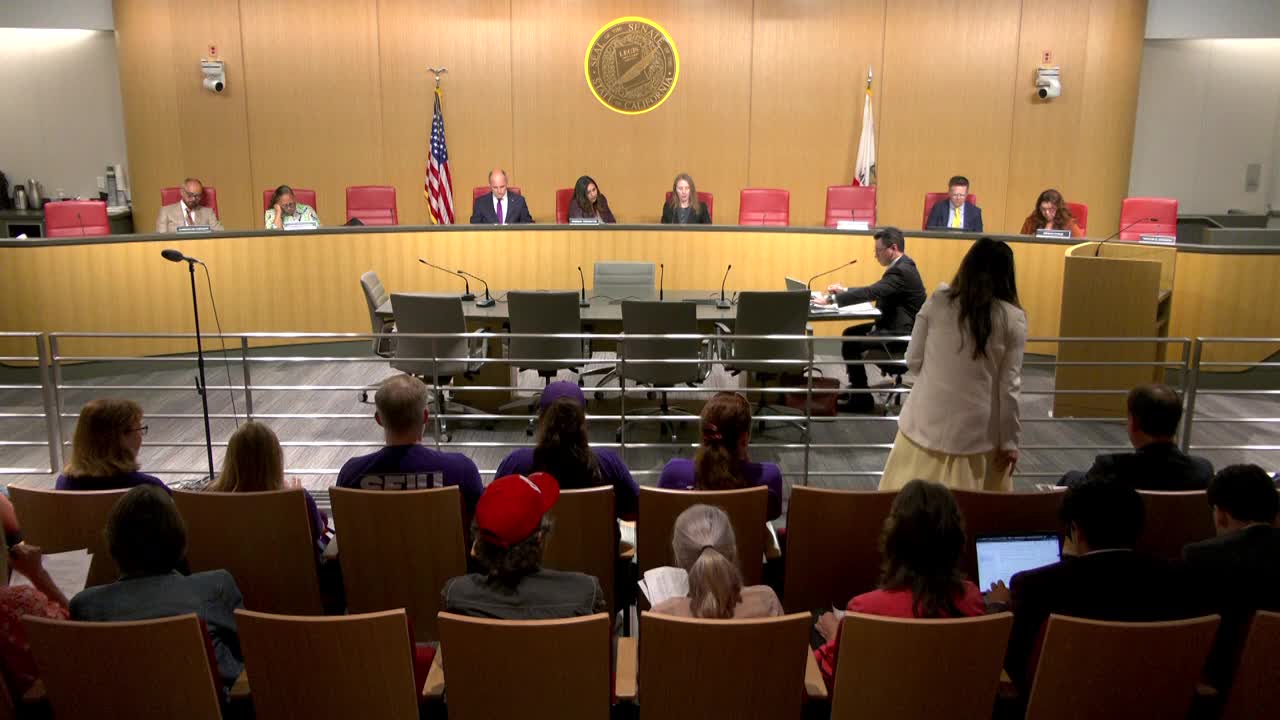 1MIN
Senate Standing Committee on Appropriations
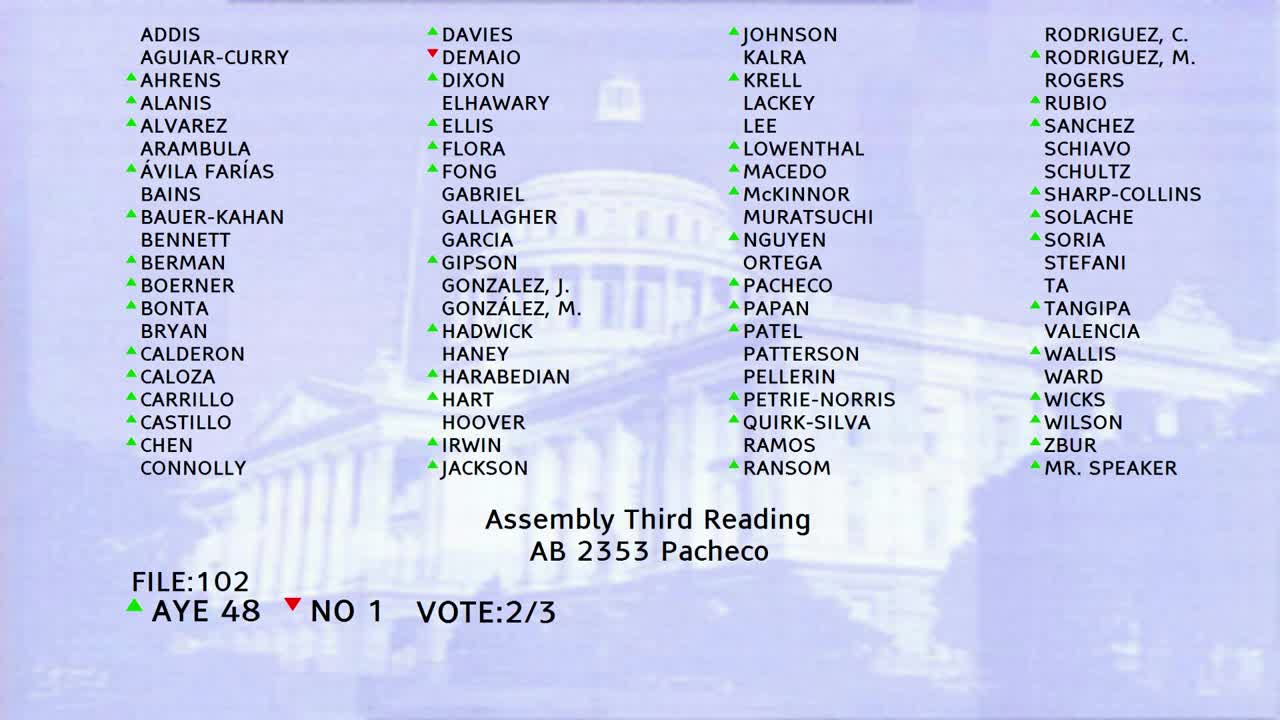 1MIN
Assembly Floor
 11MIN
Assembly Standing Committee on Water, Parks, and Wildlife
Bill Author
Bill Co-Author(s):