AB 938: Criminal procedure: sentencing.
- Session Year: 2025-2026
- House: Assembly
- Latest Version Date: 2025-07-09
Current Status:
In Progress
(2025-08-29: In committee: Held under submission.)
Introduced
In Committee
Awaiting First Chamber Vote
Passed First Chamber
In Committee
Awaiting Second Chamber Vote
Passed Second Chamber
Enacted
What does this bill do?
The bill lets people who were arrested or convicted of crimes while they were victims of human trafficking, intimate partner violence, or sexual violence ask a court to erase those arrests and convictions for any offense except murder (with felony murder treated separately). It also expands a defense for having been coerced into committing a crime to cover violent felonies except murder, and requires courts to order agencies — including probation, corrections, parole, and the Department of Justice — to seal and destroy related records and notify the petitioner when DOJ complies.
The summary is provided by generative AI which can make mistakes. For original language, please view the details in the table below.
Existing law allows a person who was arrested or convicted of a nonviolent offense while they were a victim of human trafficking, intimate partner violence, or sexual violence, to petition the court, under penalty of perjury, for vacatur relief. Existing law requires, to receive that relief, that the crime for which the person was arrested or convicted was a nonviolent offense and that the person establish, by clear and convincing evidence, that the arrest or conviction was the direct result of being a victim of human trafficking, intimate partner violence, or sexual violence. Existing law authorizes the court to vacate the conviction if it concludes that the petitioner was a victim of one of those crimes at the time of the alleged commission of the offense, the arrest was a direct result of being a victim of that offense, and the vacatur is in the best interest of justice.
This bill would allow that relief for a person arrested or convicted of any offense. offense, except murder, as specified. Because this bill would authorize more petitions to be filed under penalty of perjury, by expanding the scope of the crime of perjury, this bill would impose a state-mandated local program.
If a court issues an order for a person who was arrested or convicted of an offense while they were a victim of intimate partner violence or sexual violence, existing law requires the court to order the law enforcement agency having jurisdiction over the offense, the Department of Justice, and any law enforcement agency that arrested the petitioner or participated in the arrest of the petitioner to seal their records of the arrest and the court order to seal and destroy the records within 3 years from the date of the arrest, or within one year after the court order is granted, whichever occurs later, and thereafter to destroy their records of the arrest and the court order to seal and destroy those records.
This bill would require the court to also order any law enforcement agency that has taken action or maintains records related to or because of the offense, including, but not limited to, departments of probation, rehabilitation, corrections, and parole, to seal and destroy their records. The bill would require those agencies to seal their records of arrest and the court order to seal and destroy the records within one year from the date of arrest, or within 90 days after the court order is granted, whichever occurs later. The bill would require the agencies to destroy these records within one year of the date of the court order. By increasing duties on local law enforcement, this bill would impose a state-mandated local program. The bill would also require the Department of Justice to notify the petitioner and the petitioners counsel that the department has complied with the order to seal the arrest records by the applicable deadline.
Existing law creates an affirmative defense against a charge of a crime that the person was coerced to commit the offense as a direct result of being a victim of human trafficking, intimate partner violence, or sexual violence at the time of the offense and when the person had reasonable fear of harm. Existing law prohibits this defense from being used with respect to a violent felony, as defined.
This bill would allow that defense to be used with respect to a violent felony, except for murder, as specified.
The California Constitution requires the state to reimburse local agencies and school districts for certain costs mandated by the state. Statutory provisions establish procedures for making that reimbursement.
This bill would provide that with regard to certain mandates no reimbursement is required by this act for a specified reason.
With regard to any other mandates, this bill would provide that, if the Commission on State Mandates determines that the bill contains costs so mandated by the state, reimbursement for those costs shall be made pursuant to the statutory provisions noted above.
Existing law allows a person who was arrested or convicted of a nonviolent offense while they were a victim of human trafficking, intimate partner violence, or sexual violence, to petition the court, under penalty of perjury, for vacatur relief. Existing law requires, to receive that relief, that the crime for which the person was arrested or convicted was a nonviolent offense and that the person establish, by clear and convincing evidence, that the arrest or conviction was the direct result of being a victim of human trafficking, intimate partner violence, or sexual violence. Existing law authorizes the court to vacate the conviction if it concludes that the petitioner was a victim of one of those crimes at the time of the alleged commission of the offense, the arrest was a direct result of being a victim of that offense, and the vacatur is in the best interest of justice.
This bill would allow that relief for a person arrested or convicted of any offense. Because this bill would authorize more petitions to be filed under penalty of perjury, by expanding the scope of the crime of perjury, this bill would impose a state-mandated local program.
If a court issues an order for a person who was arrested or convicted of an offense while they were a victim of intimate partner violence or sexual violence, existing law requires the court to order the law enforcement agency having jurisdiction over the offense, the Department of Justice, and any law enforcement agency that arrested the petitioner or participated in the arrest of the petitioner to seal their records of the arrest and the court order to seal and destroy the records within 3 years from the date of the arrest, or within one year after the court order is granted, whichever occurs later, and thereafter to destroy their records of the arrest and the court order to seal and destroy those records.
This bill would require the court to also order any law enforcement agency that has taken action or maintains records related to or because of the offense, including, but not limited to, departments of probation, rehabilitation, corrections, and parole, to seal and destroy their records. The bill would require those agencies to seal their records of arrest and the court order to seal and destroy the records within one year from the date of arrest, or within 90 days after the court order is granted, whichever occurs later. The bill would require the agencies to destroy these records within one year of the date of the court order. By increasing duties on local law enforcement, this bill would impose a state-mandated local program. The bill would also require the Department of Justice to notify the petitioner and the petitioners counsel that the department has complied with the order to seal the arrest records by the applicable deadline.
Existing law creates an affirmative defense against a charge of a crime that the person was coerced to commit the offense as a direct result of being a victim of human trafficking, intimate partner violence, or sexual violence at the time of the offense and when the person had reasonable fear of harm. Existing law prohibits this defense from being used with respect to a violent felony, as defined.
This bill would allow that defense to be used with respect to a violent felony, except for murder, as specified.
The California Constitution requires the state to reimburse local agencies and school districts for certain costs mandated by the state. Statutory provisions establish procedures for making that reimbursement.
This bill would provide that with regard to certain mandates no reimbursement is required by this act for a specified reason.
With regard to any other mandates, this bill would provide that, if the Commission on State Mandates determines that the bill contains costs so mandated by the state, reimbursement for those costs shall be made pursuant to the statutory provisions noted above.
Existing law allows a person who was arrested or convicted of a nonviolent offense while they were a victim of human trafficking, intimate partner violence, or sexual violence, to petition the court, under penalty of perjury, for vacatur relief. Existing law requires, to receive that relief, that the crime for which the person was arrested or convicted was a nonviolent offense and that the person establish, by clear and convincing evidence, that the arrest or conviction was the direct result of being a victim of human trafficking, intimate partner violence, or sexual violence. Existing law authorizes the court to vacate the conviction if it concludes that the petitioner was a victim of one of those crimes at the time of the alleged commission of the offense, the arrest was a direct result of being a victim of that offense, and the vacatur is in the best interest of justice.
This bill would allow that relief for a person arrested or convicted of any offense. The bill would also authorize relief for a person whose offense was related, rather than directly related, to being a victim of human trafficking, intimate partner violence, or sexual violence. Because this bill would authorize more petitions to be filed under penalty of perjury, by expanding the scope of the crime of perjury, this bill would impose a state-mandated local program.
If a court issues an order for a person who was arrested or convicted of an offense while they were a victim of intimate partner violence or sexual violence, existing law requires the court to order the law enforcement agency having jurisdiction over the offense, the Department of Justice, and any law enforcement agency that arrested the petitioner or participated in the arrest of the petitioner to seal their records of the arrest and the court order to seal and destroy the records within 3 years from the date of the arrest, or within one year after the court order is granted, whichever occurs later, and thereafter to destroy their records of the arrest and the court order to seal and destroy those records.
This bill would require the court to also order any law enforcement agency that has taken action or maintains records related to or because of the offense, including, but not limited to, departments of probation, rehabilitation, corrections, and parole, to seal and destroy their records. The bill would require those agencies to seal their records of arrest and the court order to seal and destroy the records within one year from the date of arrest, or within 90 days after the court order is granted, whichever occurs later. The bill would require the agencies to destroy these records within one year of the date of the court order. By increasing duties on local law enforcement, this bill would impose a state-mandated local program. The bill would also require the Department of Justice to notify the petitioner and the petitioners counsel that the department has complied with the order to seal the arrest records by the applicable deadline.
Existing law creates an affirmative defense against a charge of a crime that the person was coerced to commit the offense as a direct result of being a victim of human trafficking, intimate partner violence, or sexual violence at the time of the offense and when the person had reasonable fear of harm. Existing law prohibits this defense from being used with respect to a violent felony, as defined.
This bill would allow that defense to be used with respect to a violent felony. felony, except for murder, as specified.
The California Constitution requires the state to reimburse local agencies and school districts for certain costs mandated by the state. Statutory provisions establish procedures for making that reimbursement.
This bill would provide that with regard to certain mandates no reimbursement is required by this act for a specified reason.
With regard to any other mandates, this bill would provide that, if the Commission on State Mandates determines that the bill contains costs so mandated by the state, reimbursement for those costs shall be made pursuant to the statutory provisions noted above.
Existing law allows a person who was arrested or convicted of a nonviolent offense while they were a victim of human trafficking, intimate partner violence, or sexual violence, to petition the court, under penalty of perjury, for vacatur relief. Existing law requires, to receive that relief, that the crime for which the person was arrested or convicted was a nonviolent offense and that the person establish, by clear and convincing evidence, that the arrest or conviction was the direct result of being a victim of human trafficking, intimate partner violence, or sexual violence. Existing law authorizes the court to vacate the conviction if it concludes that the petitioner was a victim of one of those crimes at the time of the alleged commission of the offense, the arrest was a direct result of being a victim of that offense, and the vacatur is in the best interest of justice.
This bill would allow that relief for a person arrested or convicted of any offense. The bill would also authorize relief for a person whose offense was related, rather than directly related, to being a victim of human trafficking, intimate partner violence, or sexual violence. Because this bill would authorize more petitions to be filed under penalty of perjury, by expanding the scope of the crime of perjury, this bill would impose a state-mandated local program.
If a court issues an order for a person who was arrested or convicted of an offense while they were a victim of intimate partner violence or sexual violence, existing law requires the court to order the law enforcement agency having jurisdiction over the offense, the Department of Justice, and any law enforcement agency that arrested the petitioner or participated in the arrest of the petitioner to seal their records of the arrest and the court order to seal and destroy the records within 3 years from the date of the arrest, or within one year after the court order is granted, whichever occurs later, and thereafter to destroy their records of the arrest and the court order to seal and destroy those records.
This bill would require the court to also order any law enforcement agency that has taken action or maintains records related to or because of the offense, including, but not limited to, departments of probation, rehabilitation, corrections, and parole, to seal and destroy their records. The bill would require those agencies to seal their records of arrest and the court order to seal and destroy the records within one year from the date of arrest, or within 90 days after the court order is granted, whichever occurs later. The bill would require the agencies to destroy these records within one year of the date of the court order. By increasing duties on local law enforcement, this bill would impose a state-mandated local program. The bill would also require the Department of Justice to notify the petitioner and the petitioners counsel that the department has complied with the order to seal the arrest records by the applicable deadline.
Existing law creates an affirmative defense against a charge of a crime that the person was coerced to commit the offense as a direct result of being a victim of human trafficking, intimate partner violence, or sexual violence at the time of the offense and when the person had reasonable fear of harm. Existing law prohibits this defense from being used with respect to a violent felony, as defined.
This bill would allow that defense to be used with respect to a violent felony.
The California Constitution requires the state to reimburse local agencies and school districts for certain costs mandated by the state. Statutory provisions establish procedures for making that reimbursement.
This bill would provide that with regard to certain mandates no reimbursement is required by this act for a specified reason.
With regard to any other mandates, this bill would provide that, if the Commission on State Mandates determines that the bill contains costs so mandated by the state, reimbursement for those costs shall be made pursuant to the statutory provisions noted above.
(a)(1)If a person was arrested for or convicted of an offense committed while they were a victim of human trafficking, including, but not limited to, prostitution as described in subdivision (b) of Section 647, the person may petition the court for vacatur relief of their convictions, arrests, and adjudications under this section.
(2)The petitioner shall establish, by clear and convincing evidence, that the arrest or conviction was the direct result of being a victim of human trafficking that establishes that the person lacked the requisite intent to commit the offense. Upon this showing, the court shall find that the person lacked the requisite intent to commit the offense and shall therefore vacate the conviction as invalid due to legal defect at the time of the arrest or conviction.
(b)(1)The petition for relief shall be submitted under penalty of perjury and shall describe all of the available grounds and evidence that the petitioner was a victim of human trafficking and the arrest or conviction of an offense was the direct result of being a victim of human trafficking. This petition for relief does not apply to a conviction for the offense of murder, except in cases of felony murder pursuant to subdivision (e) of Section 189.
(2)A judge of the court, in addition to any other certifying entity, shall review and may sign any certification request submitted by or on behalf of the petitioner pursuant to Sections 679.10, 679.11, and 679.13, regardless of the outcome of a petition raised under this section.
(c)The petition for relief and supporting documentation shall be served on the state or local prosecutorial agency that obtained the conviction for which vacatur is sought or with jurisdiction over charging decisions with regard to the arrest. The state or local prosecutorial agency shall have 45 days from the date of receipt of service to respond to the petition for relief.
(d)If opposition to the petition is not filed by the applicable state or local prosecutorial agency, the court shall deem the petition unopposed and may grant the petition.
(e)The court may, with the agreement of the petitioner and all of the involved state or local prosecutorial agencies, consolidate into one hearing a petition with multiple convictions from different jurisdictions.
(f)If the petition is opposed or if the court otherwise deems it necessary, the court shall schedule a hearing on the petition. The hearing may consist of the following:
(1)Testimony by the petitioner, which may be required in support of the petition.
(2)Evidence and supporting documentation in support of the petition.
(3)Opposition evidence presented by any of the involved state or local prosecutorial agencies that obtained the conviction.
(g)After considering the totality of the evidence presented, the court may vacate the conviction and the arrests and issue an order if it finds all of the following:
(1)That the petitioner was a victim of human trafficking at the time of the alleged commission of the qualifying offense.
(2)The arrest for or conviction of the offense was a direct result of being a victim of human trafficking.
(3)It is in the best interest of justice.
(h)An order of vacatur shall do all of the following:
(1)Set forth a finding that the petitioner was a victim of human trafficking at the time of the alleged commission of the offense and therefore lacked the requisite intent to commit the offense.
(2)Set aside the arrest, finding of guilt, or the adjudication and dismiss the accusation or information against the petitioner as invalid due to a legal defect at the time of arrest or conviction.
(3)Notify the Department of Justice that the petitioner was a victim of human trafficking at the time of the alleged commission of the offense and of the relief that has been ordered.
(i)(1)The collection of restitution, fines, and fees imposed as a result of an offense that is the subject of the petition shall be stayed while the petition is pending.
(2)If the petition is granted, unpaid restitution, fines, and fees shall be vacated. Any unpaid restitution, fines, or fees vacated pursuant to this paragraph shall not affect any victims eligibility when applying for compensation from the California Victim Compensation Board.
(j)A person who was arrested as, or found to be, a person described in Section 602 of the Welfare and Institutions Code because they are alleged to have committed an offense while they were a victim of human trafficking, including, but not limited to, prostitution, as described in subdivision (b) of Section 647, may petition the court for relief under this section. If the petitioner establishes that the arrest or adjudication was the direct result of being a victim of human trafficking, the petitioner is entitled to a rebuttable presumption that the requirements for relief have been met.
(k)(1)If the court issues an order pursuant to this section, the court shall also order all of the following agencies to seal and destroy their records:
(A)Any law enforcement agency having jurisdiction over the offense.
(B)The Department of Justice.
(C)Any law enforcement agency that arrested the petitioner.
(D)Any law enforcement agency that participated in the arrest of the petitioner.
(E)Any law enforcement agency that has taken action or maintains records related to or because of the offense, including, but not limited to, a department of probation, rehabilitation, corrections, or parole.
(2)Any government agency described in paragraph (1) shall seal its records of arrest and the court order to seal and destroy the records within one year from the date of arrest or within 90 days after the court order is granted, whichever occurs later. The agency shall thereafter destroy their records of the arrest and court order to seal and destroy those records within one year of the date of the court order.
(3)If requested by the petitioner, the court shall file as confidential the final court order granting the petition.
(4)The court shall provide the petitioner a certified copy of any court order concerning the sealing and destruction of the arrest records. The court shall provide the petitioner and petitioners counsel a copy of any form that the court submits to any agency, including the Department of Justice, related to the sealing and destruction of the arrest records.
(5)The Department of Justice shall notify the petitioner and the petitioners counsel that the department has complied with the order to seal the arrest records by the applicable deadline.
(l)A petition pursuant to this section shall be made and heard at any time. The right to petition for relief pursuant to this section does not expire with the passage of time. A court shall not refuse to hear a petition that was properly made pursuant to this section on the basis of the petitioners outstanding fines, fees, or restitution, or the petitioners failure to meet the conditions of probation.
(m)(1)For the purposes of this section, official documentation of a petitioners status as a victim of human trafficking may be introduced as evidence that their alleged participation in the offense was the result of their status as a victim of human trafficking.
(2)For the purposes of this subdivision, official documentation means any documentation issued by a federal, state, or local agency that tends to show the petitioners status as a victim of human trafficking. Official documentation shall not be required for the issuance of an order issued pursuant to this section.
(n) If the petition is unopposed, the petitioner may appear at all hearings on the petition, if any, by counsel. If the petition is opposed and the court orders a hearing for relief on the petition, the petitioner shall appear in person unless the court finds a compelling reason why the petitioner cannot attend the hearing, in which case the petitioner may appear by telephone, videoconference, or by other electronic means established by the court.
(o)Notwithstanding any other law, a petitioner who has obtained an order pursuant to this section may lawfully deny or refuse to acknowledge an arrest, conviction, or adjudication that is set aside pursuant to the order and may lawfully state that they were not arrested, adjudicated, or convicted of any charge vacated pursuant to the order.
(p)Notwithstanding any other law, the records of the arrest, conviction, or adjudication shall not be distributed to any state licensing board.
(q)The record of a proceeding related to a petition pursuant to this section that is accessible by the public shall not disclose the petitioners full name.
(r)A court that grants relief pursuant to this section, a state or local prosecutorial agency, any law enforcement agency that arrested or participated in the arrest of the petitioner, or any law enforcement agency that has taken action or maintains records related to or because of the offense being vacated pursuant to this section, including, but not limited to, a department of probation, rehabilitation, corrections, or parole, shall take additional action as appropriate under the circumstances to carry out the purposes of this section.
(s)If the court denies the application because the evidence is insufficient to establish grounds for vacatur, the denial may be without prejudice. The court may state the reasons for its denial in writing or on the record that is memorialized by transcription, audiotape, or videotape, and, if those reasons are based on curable deficiencies in the application, allow the applicant a reasonable time period to cure the deficiencies upon which the court based the denial.
(t)The court shall provide the petitioner with a copy of an order issued pursuant to this section, as applicable, and inform the petitioner that they may thereafter state that they were not arrested for the charge, or adjudicated or convicted of the charge, that was vacated.
(u)Proceedings under this section constitute a postconviction proceeding under Section 1171.
(v)For the purposes of this section, the following terms apply:
(1)Vacate means that the arrest and any adjudications or convictions suffered by the petitioner are deemed not to have occurred and that all records in the case are sealed and destroyed pursuant to this section.
(2)Victim of human trafficking means the victim of a crime described in subdivisions (a), (b), and (c) of Section 236.1.
SEC. 2.Section 236.15 of the Penal Code is amended to read:236.15.(a)(1)If a person was arrested for or convicted of an offense committed while the person was a victim of intimate partner violence or sexual violence, the person may petition the court for vacatur relief of their convictions, arrests, and adjudications under this section.
(2)The petitioner shall establish, by clear and convincing evidence, that the arrest or conviction was the direct result of being a victim of intimate partner violence or sexual violence that establishes that the person lacked the requisite intent to commit the offense. Upon this showing, the court shall find that the person lacked the requisite intent to commit the offense and shall therefore vacate the conviction as invalid due to legal defect at the time of the arrest or conviction.
(b)(1)The petition for relief shall be submitted under penalty of perjury and shall describe all of the available grounds and evidence that the petitioner was a victim of intimate partner violence or sexual violence and the arrest or conviction of an offense was the direct result of being a victim of intimate partner violence or sexual violence. This petition for relief does not apply to a conviction for the offense of murder, except in cases of felony murder pursuant to subdivision (e) of Section 189.
(2)A judge of the court, in addition to any other certifying entity, shall review and may sign any certification request submitted by or on behalf of the petitioner pursuant to Sections 679.10, 679.11, and 679.13, regardless of the outcome of a petition raised under this section.
(c)The petition for relief and supporting documentation shall be served on the state or local prosecutorial agency that obtained the conviction for which vacatur is sought or with jurisdiction over charging decisions with regard to the arrest. The state or local prosecutorial agency shall have 45 days from the date of receipt of service to respond to the petition for relief.
(d)If opposition to the petition is not filed by the applicable state or local prosecutorial agency, the court shall deem the petition unopposed and may grant the petition.
(e)The court may, with the agreement of the petitioner and all of the involved state or local prosecutorial agencies, consolidate into one hearing a petition with multiple convictions from different jurisdictions.
(f)If the petition is opposed or if the court otherwise deems it necessary, the court shall schedule a hearing on the petition. The hearing may consist of the following:
(1)Testimony by the petitioner, which may be required in support of the petition.
(2)Evidence and supporting documentation in support of the petition.
(3)Opposition evidence presented by any of the involved state or local prosecutorial agencies that obtained the conviction.
(g)After considering the totality of the evidence presented, the court may vacate the conviction and arrests and issue an order if it finds all of the following:
(1)That the petitioner was a victim of intimate partner violence or sexual violence at the time of the alleged commission of the qualifying offense.
(2)The arrest or conviction of the offense was a direct result of being a victim of intimate partner violence or sexual violence.
(3)It is in the best interest of justice.
(h)An order of vacatur shall do all of the following:
(1)Set forth a finding that the petitioner was a victim of intimate partner violence or sexual violence at the time of the alleged commission of the offense and therefore lacked the requisite intent to commit the offense.
(2)Set aside the arrest, finding of guilt, or the adjudication and dismiss the accusation or information against the petitioner as invalid due to a legal defect at the time of the arrest or conviction.
(3)Notify the Department of Justice that the petitioner was a victim of intimate partner violence or sexual violence at the time of the alleged commission of the offense and of the relief that has been ordered.
(i)(1)The collection of restitution, fines, and fees imposed as a result of an offense that is the subject of the petition shall be stayed while the petition is pending.
(2)If the petition is granted, unpaid restitution, fines, and fees shall be vacated. Any unpaid restitution, fines, or fees vacated pursuant to this paragraph shall not affect any victims eligibility when applying for compensation from the California Victim Compensation Board.
(j)A person who was arrested as, or found to be, a person described in Section 602 of the Welfare and Institutions Code because they are alleged to have committed an offense while they were a victim of intimate partner violence or sexual violence may petition the court for relief under this section. If the petitioner establishes that the arrest or adjudication was the direct result of being a victim of intimate partner violence or sexual violence, the petitioner is entitled to a rebuttable presumption that the requirements for relief have been met.
(k)(1)If the court issues an order pursuant to this section, the court shall also order all of the following agencies to seal and destroy their records:
(A)Any law enforcement agency having jurisdiction over the offense.
(B)The Department of Justice.
(C)Any law enforcement agency that arrested the petitioner.
(D)Any law enforcement agency that participated in the arrest of the petitioner.
(E)Any law enforcement agency that has taken action or maintains records related to or because of the offense, including, but not limited to, a department of probation, rehabilitation, corrections, or parole.
(2)Any government agency described in paragraph (1) shall seal its records of arrest and the court order to seal and destroy the records within one year from the date of arrest or within 90 days after the court order is granted, whichever occurs later. The agency shall thereafter destroy their records of the arrest and court order to seal and destroy those records within one year of the date of the court order.
(3)If requested by the petitioner, the court shall file as confidential the final court order granting the petition.
(4)The court shall provide the petitioner a certified copy of any court order concerning the sealing and destruction of the arrest records. The court shall provide the petitioner and petitioners counsel a copy of any form that the court submits to any agency, including the Department of Justice, related to the sealing and destruction of the arrest records.
(5)The Department of Justice shall notify the petitioner and the petitioners counsel that the department has complied with the order to seal the arrest records by the applicable deadline.
(l)A petition pursuant to this section shall be made and heard at any time. The right to petition for relief pursuant to this section does not expire with the passage of time. A court shall not refuse to hear a petition that was properly made pursuant to this section on the basis of the petitioners outstanding fines, fees, or restitution, or the petitioners failure to meet the conditions of probation.
(m)(1)For the purposes of this section, official documentation of a petitioners status as a victim of intimate partner violence or sexual violence may be introduced as evidence that their alleged participation in the offense was the result of their status as a victim of intimate partner violence or sexual violence.
(2)For the purposes of this subdivision, official documentation means any documentation issued by a federal, state, or local agency that tends to show the petitioners status as a victim of intimate partner violence or sexual violence. Official documentation shall not be required for the issuance of an order issued pursuant to this section.
(n)If the petition is unopposed, the petitioner may appear at all hearings on the petition, if any, by counsel. If the petition is opposed and the court orders a hearing for relief on the petition, the petitioner shall appear in person unless the court finds a compelling reason why the petitioner cannot attend the hearing, in which case the petitioner may appear by telephone, videoconference, or by other electronic means established by the court.
(o)Notwithstanding any other law, a petitioner who has obtained an order pursuant to this section may lawfully deny or refuse to acknowledge an arrest, conviction, or adjudication that is set aside pursuant to the order and may lawfully state that they were not arrested, adjudicated, or convicted of any charge vacated pursuant to the order.
(p)Notwithstanding any other law, the records of the arrest, conviction, or adjudication shall not be distributed to any state licensing board.
(q)The record of a proceeding related to a petition pursuant to this section that is accessible by the public shall not disclose the petitioners full name.
(r)A court that grants relief pursuant to this section, a state or local prosecutorial agency, any law enforcement agency that arrested or participated in the arrest of the petitioner, or any law enforcement agency that has taken action or maintains records related to or because of the offense being vacated pursuant to this section, including, but not limited to, a department of probation, rehabilitation, corrections, or parole, shall take additional action as appropriate under the circumstances to carry out the purposes of this section.
(s)If the court denies the application because the evidence is insufficient to establish grounds for vacatur, the denial may be without prejudice. The court may state the reasons for its denial in writing or on the record that is memorialized by transcription, audiotape, or videotape, and if those reasons are based on curable deficiencies in the application, allow the applicant a reasonable time period to cure the deficiencies upon which the court based the denial.
(t)The court shall provide the petitioner with a copy of an order issued pursuant to this section, as applicable, and inform the petitioner that they may thereafter state that they were not arrested for the charge, or adjudicated or convicted of the charge, that was vacated.
(u)Proceedings under this section constitute a postconviction proceeding under Section 1171.
(v)For the purposes of this section, vacate means that the arrest and any adjudications or convictions suffered by the petitioner are deemed not to have occurred and that all records in the case are sealed and destroyed pursuant to this section.
SEC. 3.Section 236.23 of the Penal Code is amended to read:236.23.(a)In addition to any other affirmative defense, it is a defense to a charge of a crime that the person was coerced to commit the offense as a direct result of being a human trafficking victim at the time of the offense and had a reasonable fear of harm. This defense does not apply to murder, except in cases of felony murder pursuant to subdivision (e) of Section 189.
(b)(1)A defendant asserting the affirmative defense specified in subdivision (a) has the burden of establishing the affirmative defense by a preponderance of the evidence.
(2)A judge of the court, in addition to any other certifying entity, shall review and may sign any certification request submitted by a defendant asserting the affirmative defense specified in subdivision (a), pursuant to Sections 679.10, 679.11, and 679.13, regardless of the outcome of an affirmative defense raised under this section.
(c)Certified records of a federal, state, tribal, or local court or governmental agency documenting the persons status as a victim of human trafficking at the time of the offense, including identification of a victim of human trafficking by a peace officer pursuant to Section 236.2 and certified records of approval notices or enforcement certifications generated from federal immigration proceedings, may be presented to establish an affirmative defense pursuant to this section. Information contained in governmental agency reports, which is relevant to the identification of a victim of human trafficking by a peace officer pursuant to Section 236.2, may be presented pursuant to this subdivision even if a peace officer did not make an identification pursuant to Section 236.2.
(d)The affirmative defense may be asserted at any time before the entry of a plea of guilty or nolo contendere or admission to the truth of the charges and before the conclusion of any trial for the offense. If asserted before the preliminary hearing held in a case, the affirmative defense shall, upon request by the defendant, be determined at the preliminary hearing.
(e)If the defendant prevails on the affirmative defense provided under subdivision (a), the defendant is entitled to all of the following relief:
(1)(A)The court shall order that all records in the case be sealed pursuant to Section 851.86.
(B)Records that have been sealed pursuant to this paragraph may be accessed, inspected, or utilized by law enforcement for subsequent investigatory purposes involving persons other than the defendant.
(2)The person shall be released from all penalties and disabilities resulting from the charge, and all actions and proceedings by law enforcement personnel, courts, or other government employees that led to the charge shall be deemed not to have occurred.
(3)(A)The person may in all circumstances state that they have never been arrested for, or charged with, the crime that is the subject of the charge or conviction, including, without limitation, in response to questions on employment, housing, financial aid, or loan applications.
(B)The person may not be denied rights or benefits, including, without limitation, employment, housing, financial aid, welfare, or a loan or other financial accommodation, based on the arrest or charge or their failure or refusal to disclose the existence of or information concerning those events.
(C)The person may not be thereafter charged or convicted of perjury or otherwise of giving a false statement by reason of having failed to disclose or acknowledge the existence of the charge, or any arrest, indictment, trial, or other proceedings related thereto.
(f)If, in a proceeding pursuant to Section 602 of the Welfare and Institutions Code, the juvenile court finds that the offense on which the proceeding is based was committed as a direct result of the minor being a human trafficking victim, and the affirmative defense established in subdivision (a) is established by a preponderance of the evidence, the court shall dismiss the proceeding and order the relief prescribed in Section 786 of the Welfare and Institutions Code.
SEC. 4.Section 236.24 of the Penal Code is amended to read:236.24.(a)In addition to any other affirmative defense, it is a defense to a charge of a crime that the person was coerced to commit the offense as a direct result of being a victim of intimate partner violence or sexual violence at the time of the offense and had a reasonable fear of harm. This defense does not apply to murder, except in cases of felony murder pursuant to subdivision (e) of Section 189.
(b)(1)A defendant asserting the affirmative defense specified in subdivision (a) has the burden of establishing the affirmative defense by a preponderance of the evidence.
(2)A judge of the court, in addition to any other certifying entity, shall review and may sign any certification request submitted by a defendant asserting the affirmative defense specified in subdivision (a), pursuant to Sections 679.10, 679.11, and 679.13, regardless of the outcome of an affirmative defense raised under this section.
(c)Certified records of a federal, state, tribal, or local court or governmental agency documenting the persons status as a victim of intimate partner violence or sexual violence at the time of the offense, including identification of a victim of intimate partner violence or sexual violence by a peace officer and certified records of approval notices or enforcement certifications generated from federal immigration proceedings, may be presented to establish an affirmative defense pursuant to this section. Information contained in governmental agency reports, which is relevant to the identification of a victim of intimate partner violence or sexual violence, may be presented pursuant to this subdivision even if the defendant was not then identified as a victim of intimate partner violence or sexual violence.
(d)The affirmative defense may be asserted at any time before the entry of a plea of guilty or nolo contendere or admission to the truth of the charges and before the conclusion of any trial for the offense. If asserted before the preliminary hearing held in a case, the affirmative defense shall, upon request by the defendant, be determined at the preliminary hearing.
(e)If the defendant prevails on the affirmative defense provided under subdivision (a), the defendant is entitled to all of the following relief:
(1)(A)The court shall order that all records in the case be sealed pursuant to Section 851.86.
(B)Records that have been sealed pursuant to this paragraph may be accessed, inspected, or utilized by law enforcement for subsequent investigatory purposes involving persons other than the defendant.
(2)The person shall be released from all penalties and disabilities resulting from the charge, and all actions and proceedings by law enforcement personnel, courts, or other government employees that led to the charge shall be deemed not to have occurred.
(3)(A)The person may in all circumstances state that they have never been arrested for, or charged with, the crime that is the subject of the charge or conviction, including, without limitation, in response to questions on employment, housing, financial aid, or loan applications.
(B)The person may not be denied rights or benefits, including, without limitation, employment, housing, financial aid, welfare, or a loan or other financial accommodation, based on the arrest or charge or their failure or refusal to disclose the existence of or information concerning those events.
(C)The person may not be thereafter charged or convicted of perjury or otherwise of giving a false statement by reason of having failed to disclose or acknowledge the existence of the charge, or any arrest, indictment, trial, or other proceedings related thereto.
(f)If, in a proceeding pursuant to Section 602 of the Welfare and Institutions Code, the juvenile court finds that the offense on which the proceeding is based was committed as a direct result of the minor being a victim of intimate partner violence or sexual violence, and the affirmative defense established in subdivision (a) is established by a preponderance of the evidence, the court shall dismiss the proceeding and order the relief prescribed in Section 786 of the Welfare and Institutions Code.
SEC. 5.No reimbursement is required by this act pursuant to Section 6 of Article XIIIB of the California Constitution for certain costs that may be incurred by a local agency or school district because, in that regard, this act creates a new crime or infraction, eliminates a crime or infraction, or changes the penalty for a crime or infraction, within the meaning of Section 17556 of the Government Code, or changes the definition of a crime within the meaning of Section 6 of Article XIIIB of the California Constitution.
However, if the Commission on State Mandates determines that this act contains other costs mandated by the state, reimbursement to local agencies and school districts for those costs shall be made pursuant to Part 7 (commencing with Section 17500) of Division 4 of Title 2 of the Government Code.
(a)(1)If a person was arrested for or convicted of an offense committed while they were a victim of human trafficking, including, but not limited to, prostitution as described in subdivision (b) of Section 647, the person may petition the court for vacatur relief of their convictions, arrests, and adjudications under this section.
(2)In order to establish eligibility for vacatur, the The petitioner shall establish, by clear and convincing evidence, that the arrest or conviction was the direct result of being a victim of human trafficking that establishes that the person lacked the requisite intent to commit the offense. Upon this showing, the court shall find that the person lacked the requisite intent to commit the offense and shall therefore vacate the conviction as invalid due to legal defect at the time of the arrest or conviction.
(b)(1)The petition for relief shall be submitted under penalty of perjury and shall describe all of the available grounds and evidence that the petitioner was a victim of human trafficking and the arrest or conviction of an offense was the direct result of being a victim of human trafficking.
(2)A judge of the court, in addition to any other certifying entity, shall review and may sign any certification request submitted by or on behalf of the petitioner pursuant to Sections 679.10, 679.11, and 679.13, regardless of the outcome of a petition raised under this section.
(c)The petition for relief and supporting documentation shall be served on the state or local prosecutorial agency that obtained the conviction for which vacatur is sought or with jurisdiction over charging decisions with regard to the arrest. In the case of a warrant arrest, the petitioner shall serve the prosecutorial agency with jurisdiction over the warrant. The state or local prosecutorial agency shall have 45 days from the date of receipt of service to respond to the petition for relief.
(d)If opposition to the petition is not filed by the applicable state or local prosecutorial agency, the court shall deem the petition unopposed and may grant the petition.
(e)The court may, with the agreement of the petitioner and all of the involved state or local prosecutorial agencies, consolidate into one hearing a petition with multiple convictions from different jurisdictions.
(f)If the petition is opposed or if the court otherwise deems it necessary, the court shall schedule a hearing on the petition. The hearing may consist of the following:
(1)Testimony by the petitioner, which may be required in support of the petition.
(2)Evidence and supporting documentation in support of the petition.
(3)Opposition evidence presented by any of the involved state or local prosecutorial agencies that obtained the conviction.
(g)After considering the totality of the evidence presented, the court may vacate the conviction and the arrests and issue an order if it finds all of the following:
(1)That the petitioner was a victim of human trafficking at the time of the alleged commission of the qualifying offense.
(2)The arrest for or conviction of the offense was a direct result of being a victim of human trafficking.
(3)It is in the best interest of justice.
(h)An order of vacatur shall do all of the following:
(1)Set forth a finding that the petitioner was a victim of human trafficking at the time of the alleged commission of the offense and therefore lacked the requisite intent to commit the offense.
(2)Set aside the arrest, finding of guilt, or the adjudication and dismiss the accusation or information against the petitioner as invalid due to a legal defect at the time of arrest or conviction.
(3)Notify the Department of Justice that the petitioner was a victim of human trafficking at the time of the alleged commission of the offense and of the relief that has been ordered.
(i)(1)The collection of restitution, fines, and fees imposed as a result of an offense that is the subject of the petition shall be stayed while the petition is pending.
(2)If the petition is granted, unpaid restitution, fines, and fees shall be vacated. Any unpaid restitution, fines, or fees vacated pursuant to this paragraph shall not affect any victims eligibility when applying for compensation from the California Victim Compensation Board.
(j)A person who was arrested as, or found to be, a person described in Section 602 of the Welfare and Institutions Code because they are alleged to have committed an offense while they were a victim of human trafficking, including, but not limited to, prostitution, as described in subdivision (b) of Section 647, may petition the court for relief under this section. If the petitioner establishes that the arrest or adjudication was the direct result of being a victim of human trafficking, the petitioner is entitled to a rebuttable presumption that the requirements for relief have been met.
(k)(1)If the court issues an order pursuant to this section, the court shall also order all of the following agencies to seal and destroy their records:
(A)Any law enforcement agency having jurisdiction over the offense.
(B)The Department of Justice.
(C)Any law enforcement agency that arrested the petitioner.
(D)Any law enforcement agency that participated in the arrest of the petitioner.
(E)Any law enforcement agency that has taken action or maintains records related to or because of the offense, including, but not limited to, a department of probation, rehabilitation, corrections, or parole.
(2)Any government agency described in paragraph (1) shall seal its records of arrest and the court order to seal and destroy the records within one year from the date of arrest or within 90 days after the court order is granted, whichever occurs later. The agency shall thereafter destroy their records of the arrest and court order to seal and destroy those records within one year of the date of the court order.
(3)If requested by the petitioner, the court shall file as confidential the final court order granting the petition.
(4)The court shall provide the petitioner a certified copy of any court order concerning the sealing and destruction of the arrest records. The court shall provide the petitioner and petitioners counsel a copy of any form that the court submits to any agency, including the Department of Justice, related to the sealing and destruction of the arrest records.
(5)The Department of Justice shall notify the petitioner and the petitioners counsel that the department has complied with the order to seal the arrest records by the applicable deadline.
(l)A petition pursuant to this section shall be made and heard at any time. The right to petition for relief pursuant to this section does not expire with the passage of time. A court shall not refuse to hear a petition that was properly made pursuant to this section on the basis of the petitioners outstanding fines, fees, or restitution, or the petitioners failure to meet the conditions of probation.
(m)(1)For the purposes of this section, official documentation of a petitioners status as a victim of human trafficking may be introduced as evidence that their alleged participation in the offense was the result of their status as a victim of human trafficking.
(2)For the purposes of this subdivision, official documentation means any documentation issued by a federal, state, or local agency that tends to show the petitioners status as a victim of human trafficking. Official documentation shall not be required for the issuance of an order issued pursuant to this section.
(n) If the petition is unopposed, the petitioner may appear at all hearings on the petition, if any, by counsel. If the petition is opposed and the court orders a hearing for relief on the petition, the petitioner shall appear in person unless the court finds a compelling reason why the petitioner cannot attend the hearing, in which case the petitioner may appear by telephone, videoconference, or by other electronic means established by the court.
(o)Notwithstanding any other law, a petitioner who has obtained an order pursuant to this section may lawfully deny or refuse to acknowledge an arrest, conviction, or adjudication that is set aside pursuant to the order and may lawfully state that they were not arrested, adjudicated, or convicted of any charge vacated pursuant to the order.
(p)Notwithstanding any other law, the records of the arrest, conviction, or adjudication shall not be distributed to any state licensing board.
(q)The record of a proceeding related to a petition pursuant to this section that is accessible by the public shall not disclose the petitioners full name.
(r)A court that grants relief pursuant to this section, a state or local prosecutorial agency, any law enforcement agency that arrested or participated in the arrest of the petitioner, or any law enforcement agency that has taken action or maintains records related to or because of the offense being vacated pursuant to this section, including, but not limited to, a department of probation, rehabilitation, corrections, or parole, shall take additional action as appropriate under the circumstances to carry out the purposes of this section.
(s)If the court denies the application because the evidence is insufficient to establish grounds for vacatur, the denial may be without prejudice. The court may state the reasons for its denial in writing or on the record that is memorialized by transcription, audiotape, or videotape, and, if those reasons are based on curable deficiencies in the application, allow the applicant a reasonable time period to cure the deficiencies upon which the court based the denial.
(t)The court shall provide the petitioner with a copy of an order issued pursuant to this section, as applicable, and inform the petitioner that they may thereafter state that they were not arrested for the charge, or adjudicated or convicted of the charge, that was vacated.
(u)(1)For the purposes of this section, vacate(u)Proceedings under this section constitute a postconviction proceeding under Section 1171.
(v)For the purposes of this section, the following terms apply:
(1)Vacate means that the arrest and any adjudications or convictions suffered by the petitioner are deemed not to have occurred and that all records in the case are sealed and destroyed pursuant to this section.
(2)Victim of human trafficking means the victim of a crime described in subdivisions (a), (b), and (c) of Section 236.1.
SEC. 2.Section 236.15 of the Penal Code is amended to read:236.15.(a)(1)If a person was arrested for or convicted of an offense committed while the person was a victim of intimate partner violence or sexual violence, the person may petition the court for vacatur relief of their convictions, arrests, and adjudications under this section.
(2)The petitioner shall establish, by clear and convincing evidence, that the arrest or conviction was the direct result of being a victim of intimate partner violence or sexual violence that establishes that the person lacked the requisite intent to commit the offense. Upon this showing, the court shall find that the person lacked the requisite intent to commit the offense and shall therefore vacate the conviction as invalid due to legal defect at the time of the arrest or conviction.
(b)(1)The petition for relief shall be submitted under penalty of perjury and shall describe all of the available grounds and evidence that the petitioner was a victim of intimate partner violence or sexual violence and the arrest or conviction of an offense was the direct result of being a victim of intimate partner violence or sexual violence.
(2)A judge of the court, in addition to any other certifying entity, shall review and may sign any certification request submitted by or on behalf of the petitioner pursuant to Sections 679.10, 679.11, and 679.13, regardless of the outcome of a petition raised under this section.
(c)The petition for relief and supporting documentation shall be served on the state or local prosecutorial agency that obtained the conviction for which vacatur is sought or with jurisdiction over charging decisions with regard to the arrest. In the case of a warrant arrest, the petitioner shall serve the prosecutorial agency with jurisdiction over the warrant. The state or local prosecutorial agency shall have 45 days from the date of receipt of service to respond to the petition for relief.
(d)If opposition to the petition is not filed by the applicable state or local prosecutorial agency, the court shall deem the petition unopposed and may grant the petition.
(e)The court may, with the agreement of the petitioner and all of the involved state or local prosecutorial agencies, consolidate into one hearing a petition with multiple convictions from different jurisdictions.
(f)If the petition is opposed or if the court otherwise deems it necessary, the court shall schedule a hearing on the petition. The hearing may consist of the following:
(1)Testimony by the petitioner, which may be required in support of the petition.
(2)Evidence and supporting documentation in support of the petition.
(3)Opposition evidence presented by any of the involved state or local prosecutorial agencies that obtained the conviction.
(g)After considering the totality of the evidence presented, the court may vacate the conviction and expunge the arrests and issue an order if it finds all of the following:
(1)That the petitioner was a victim of intimate partner violence or sexual violence at the time of the alleged commission of the qualifying offense.
(2)The arrest or conviction of the offense was a direct result of being a victim of intimate partner violence or sexual violence.
(3)It is in the best interest of justice.
(h)An order of vacatur shall do all of the following:
(1)Set forth a finding that the petitioner was a victim of intimate partner violence or sexual violence at the time of the alleged commission of the offense and therefore lacked the requisite intent to commit the offense.
(2)Set aside the arrest, finding of guilt, or the adjudication and dismiss the accusation or information against the petitioner as invalid due to a legal defect at the time of the arrest or conviction.
(3)Notify the Department of Justice that the petitioner was a victim of intimate partner violence or sexual violence at the time of the alleged commission of the offense and of the relief that has been ordered.
(i)(1)The collection of restitution, fines, and fees imposed as a result of an offense that is the subject of the petition shall be stayed while the petition is pending.
(2)If the petition is granted, unpaid restitution, fines, and fees shall be vacated. Any unpaid restitution, fines, or fees vacated pursuant to this paragraph shall not affect any victims eligibility when applying for compensation from the California Victim Compensation Board.
(j)A person who was arrested as, or found to be, a person described in Section 602 of the Welfare and Institutions Code because they are alleged to have committed an offense while they were a victim of intimate partner violence or sexual violence may petition the court for relief under this section. If the petitioner establishes that the arrest or adjudication was the direct result of being a victim of intimate partner violence or sexual violence, the petitioner is entitled to a rebuttable presumption that the requirements for relief have been met.
(k)(1)If the court issues an order pursuant to this section, the court shall also order all of the following agencies to seal and destroy their records:
(A)Any law enforcement agency having jurisdiction over the offense.
(B)The Department of Justice.
(C)Any law enforcement agency that arrested the petitioner.
(D)Any law enforcement agency that participated in the arrest of the petitioner.
(E)Any law enforcement agency that has taken action or maintains records related to or because of the offense, including, but not limited to, a department of probation, rehabilitation, corrections, or parole.
(2)Any government agency described in paragraph (1) shall seal its records of arrest and the court order to seal and destroy the records within one year from the date of arrest or within 90 days after the court order is granted, whichever occurs later. The agency shall thereafter destroy their records of the arrest and court order to seal and destroy those records within one year of the date of the court order.
(3)If requested by the petitioner, the court shall file as confidential the final court order granting the petition.
(4)The court shall provide the petitioner a certified copy of any court order concerning the sealing and destruction of the arrest records. The court shall provide the petitioner and petitioners counsel a copy of any form that the court submits to any agency, including the Department of Justice, related to the sealing and destruction of the arrest records.
(5)The Department of Justice shall notify the petitioner and the petitioners counsel that the department has complied with the order to seal the arrest records by the applicable deadline.
(l)A petition pursuant to this section shall be made and heard at any time. The right to petition for relief pursuant to this section does not expire with the passage of time. A court shall not refuse to hear a petition that was properly made pursuant to this section on the basis of the petitioners outstanding fines, fees, or restitution, or the petitioners failure to meet the conditions of probation.
(m)(1)For the purposes of this section, official documentation of a petitioners status as a victim of intimate partner violence or sexual violence may be introduced as evidence that their alleged participation in the offense was the result of their status as a victim of intimate partner violence or sexual violence.
(2)For the purposes of this subdivision, official documentation means any documentation issued by a federal, state, or local agency that tends to show the petitioners status as a victim of intimate partner violence or sexual violence. Official documentation shall not be required for the issuance of an order issued pursuant to this section.
(n)If the petition is unopposed, the petitioner may appear at all hearings on the petition, if any, by counsel. If the petition is opposed and the court orders a hearing for relief on the petition, the petitioner shall appear in person unless the court finds a compelling reason why the petitioner cannot attend the hearing, in which case the petitioner may appear by telephone, videoconference, or by other electronic means established by the court.
(o)Notwithstanding any other law, a petitioner who has obtained an order pursuant to this section may lawfully deny or refuse to acknowledge an arrest, conviction, or adjudication that is set aside pursuant to the order and may lawfully state that they were not arrested, adjudicated, or convicted of any charge vacated pursuant to the order.
(p)Notwithstanding any other law, the records of the arrest, conviction, or adjudication shall not be distributed to any state licensing board.
(q)The record of a proceeding related to a petition pursuant to this section that is accessible by the public shall not disclose the petitioners full name.
(r)A court that grants relief pursuant to this section, a state or local prosecutorial agency, any law enforcement agency that arrested or participated in the arrest of the petitioner, or any law enforcement agency that has taken action or maintains records related to or because of the offense being vacated pursuant to this section, including, but not limited to, a department of probation, rehabilitation, corrections, or parole, shall take additional action as appropriate under the circumstances to carry out the purposes of this section.
(s)If the court denies the application because the evidence is insufficient to establish grounds for vacatur, the denial may be without prejudice. The court may state the reasons for its denial in writing or on the record that is memorialized by transcription, audiotape, or videotape, and if those reasons are based on curable deficiencies in the application, allow the applicant a reasonable time period to cure the deficiencies upon which the court based the denial.
(t)The court shall provide the petitioner with a copy of an order issued pursuant to this section, as applicable, and inform the petitioner that they may thereafter state that they were not arrested for the charge, or adjudicated or convicted of the charge, that was vacated.
(u)Proceedings under this section constitute a postconviction proceeding under Section 1171.
(u)(v)For the purposes of this section, vacate means that the arrest and any adjudications or convictions suffered by the petitioner are deemed not to have occurred and that all records in the case are sealed and destroyed pursuant to this section.
SEC. 3.Section 236.23 of the Penal Code is amended to read:236.23.(a)In addition to any other affirmative defense, it is a defense to a charge of a crime that the person was coerced to commit the offense as a direct result of being a human trafficking victim at the time of the offense and had a reasonable fear of harm. This defense does not apply to murder, except in cases of felony murder pursuant to subdivision (e) of Section 189.
(b)(1)A defendant asserting the affirmative defense specified in subdivision (a) has the burden of establishing the affirmative defense by a preponderance of the evidence.
(2)A judge of the court, in addition to any other certifying entity, shall review and may sign any certification request submitted by a defendant asserting the affirmative defense specified in subdivision (a), pursuant to Sections 679.10, 679.11, and 679.13, regardless of the outcome of an affirmative defense raised under this section.
(c)Certified records of a federal, state, tribal, or local court or governmental agency documenting the persons status as a victim of human trafficking at the time of the offense, including identification of a victim of human trafficking by a peace officer pursuant to Section 236.2 and certified records of approval notices or enforcement certifications generated from federal immigration proceedings, may be presented to establish an affirmative defense pursuant to this section. Information contained in governmental agency reports, which is relevant to the identification of a victim of human trafficking by a peace officer pursuant to Section 236.2, may be presented pursuant to this subdivision even if a peace officer did not make an identification pursuant to Section 236.2.
(d)The affirmative defense may be asserted at any time before the entry of a plea of guilty or nolo contendere or admission to the truth of the charges and before the conclusion of any trial for the offense. If asserted before the preliminary hearing held in a case, the affirmative defense shall, upon request by the defendant, be determined at the preliminary hearing.
(e)If the defendant prevails on the affirmative defense provided under subdivision (a), the defendant is entitled to all of the following relief:
(1)(A)The court shall order that all records in the case be sealed pursuant to Section 851.86.
(B)Records that have been sealed pursuant to this paragraph may be accessed, inspected, or utilized by law enforcement for subsequent investigatory purposes involving persons other than the defendant.
(2)The person shall be released from all penalties and disabilities resulting from the charge, and all actions and proceedings by law enforcement personnel, courts, or other government employees that led to the charge shall be deemed not to have occurred.
(3)(A)The person may in all circumstances state that they have never been arrested for, or charged with, the crime that is the subject of the charge or conviction, including, without limitation, in response to questions on employment, housing, financial aid, or loan applications.
(B)The person may not be denied rights or benefits, including, without limitation, employment, housing, financial aid, welfare, or a loan or other financial accommodation, based on the arrest or charge or their failure or refusal to disclose the existence of or information concerning those events.
(C)The person may not be thereafter charged or convicted of perjury or otherwise of giving a false statement by reason of having failed to disclose or acknowledge the existence of the charge, or any arrest, indictment, trial, or other proceedings related thereto.
(f)If, in a proceeding pursuant to Section 602 of the Welfare and Institutions Code, the juvenile court finds that the offense on which the proceeding is based was committed as a direct result of the minor being a human trafficking victim, and the affirmative defense established in subdivision (a) is established by a preponderance of the evidence, the court shall dismiss the proceeding and order the relief prescribed in Section 786 of the Welfare and Institutions Code.
SEC. 4.Section 236.24 of the Penal Code is amended to read:236.24.(a)In addition to any other affirmative defense, it is a defense to a charge of a crime that the person was coerced to commit the offense as a direct result of being a victim of intimate partner violence or sexual violence at the time of the offense and had a reasonable fear of harm. This defense does not apply to murder, except in cases of felony murder pursuant to subdivision (e) of Section 189.
(b)(1)A defendant asserting the affirmative defense specified in subdivision (a) has the burden of establishing the affirmative defense by a preponderance of the evidence.
(2)A judge of the court, in addition to any other certifying entity, shall review and may sign any certification request submitted by a defendant asserting the affirmative defense specified in subdivision (a), pursuant to Sections 679.10, 679.11, and 679.13, regardless of the outcome of an affirmative defense raised under this section.
(c)Certified records of a federal, state, tribal, or local court or governmental agency documenting the persons status as a victim of intimate partner violence or sexual violence at the time of the offense, including identification of a victim of intimate partner violence or sexual violence by a peace officer and certified records of approval notices or enforcement certifications generated from federal immigration proceedings, may be presented to establish an affirmative defense pursuant to this section. Information contained in governmental agency reports, which is relevant to the identification of a victim of intimate partner violence or sexual violence, may be presented pursuant to this subdivision even if the defendant was not then identified as a victim of intimate partner violence or sexual violence.
(d)The affirmative defense may be asserted at any time before the entry of a plea of guilty or nolo contendere or admission to the truth of the charges and before the conclusion of any trial for the offense. If asserted before the preliminary hearing held in a case, the affirmative defense shall, upon request by the defendant, be determined at the preliminary hearing.
(e)If the defendant prevails on the affirmative defense provided under subdivision (a), the defendant is entitled to all of the following relief:
(1)(A)The court shall order that all records in the case be sealed pursuant to Section 851.86.
(B)Records that have been sealed pursuant to this paragraph may be accessed, inspected, or utilized by law enforcement for subsequent investigatory purposes involving persons other than the defendant.
(2)The person shall be released from all penalties and disabilities resulting from the charge, and all actions and proceedings by law enforcement personnel, courts, or other government employees that led to the charge shall be deemed not to have occurred.
(3)(A)The person may in all circumstances state that they have never been arrested for, or charged with, the crime that is the subject of the charge or conviction, including, without limitation, in response to questions on employment, housing, financial aid, or loan applications.
(B)The person may not be denied rights or benefits, including, without limitation, employment, housing, financial aid, welfare, or a loan or other financial accommodation, based on the arrest or charge or their failure or refusal to disclose the existence of or information concerning those events.
(C)The person may not be thereafter charged or convicted of perjury or otherwise of giving a false statement by reason of having failed to disclose or acknowledge the existence of the charge, or any arrest, indictment, trial, or other proceedings related thereto.
(f)If, in a proceeding pursuant to Section 602 of the Welfare and Institutions Code, the juvenile court finds that the offense on which the proceeding is based was committed as a direct result of the minor being a victim of intimate partner violence or sexual violence, and the affirmative defense established in subdivision (a) is established by a preponderance of the evidence, the court shall dismiss the proceeding and order the relief prescribed in Section 786 of the Welfare and Institutions Code.
SEC. 5.No reimbursement is required by this act pursuant to Section 6 of Article XIIIB of the California Constitution for certain costs that may be incurred by a local agency or school district because, in that regard, this act creates a new crime or infraction, eliminates a crime or infraction, or changes the penalty for a crime or infraction, within the meaning of Section 17556 of the Government Code, or changes the definition of a crime within the meaning of Section 6 of Article XIIIB of the California Constitution.
However, if the Commission on State Mandates determines that this act contains other costs mandated by the state, reimbursement to local agencies and school districts for those costs shall be made pursuant to Part 7 (commencing with Section 17500) of Division 4 of Title 2 of the Government Code.
(a)(1)If a person was arrested for or convicted of an offense committed while they were a victim of human trafficking, including, but not limited to, prostitution as described in subdivision (b) of Section 647, the person may petition the court for vacatur relief of their convictions, arrests, and adjudications under this section.
(2)In order to establish eligibility for vacatur, the petitioner shall establish, by clear and convincing evidence, that the arrest or conviction was the direct result of being a victim of human trafficking that establishes that the person lacked the requisite intent to commit the offense. Upon this showing, the court shall find that the person lacked the requisite intent to commit the offense and shall therefore vacate the conviction as invalid due to legal defect at the time of the arrest or conviction.
(b)The petition for relief shall be submitted under penalty of perjury and shall describe all of the available grounds and evidence that the petitioner was a victim of human trafficking and the arrest or conviction of an offense was the direct result of being a victim of human trafficking.
(c)The petition for relief and supporting documentation shall be served on the state or local prosecutorial agency that obtained the conviction for which vacatur is sought or with jurisdiction over charging decisions with regard to the arrest. In the case of a warrant arrest, the petitioner shall serve the prosecutorial agency with jurisdiction over the warrant. The state or local prosecutorial agency shall have 45 days from the date of receipt of service to respond to the petition for relief.
(d)If opposition to the petition is not filed by the applicable state or local prosecutorial agency, the court shall deem the petition unopposed and may grant the petition.
(e)The court may, with the agreement of the petitioner and all of the involved state or local prosecutorial agencies, consolidate into one hearing a petition with multiple convictions from different jurisdictions.
(f)If the petition is opposed or if the court otherwise deems it necessary, the court shall schedule a hearing on the petition. The hearing may consist of the following:
(1)Testimony by the petitioner, which may be required in support of the petition.
(2)Evidence and supporting documentation in support of the petition.
(3)Opposition evidence presented by any of the involved state or local prosecutorial agencies that obtained the conviction.
(g)After considering the totality of the evidence presented, the court may vacate the conviction and the arrests and issue an order if it finds all of the following:
(1)That the petitioner was a victim of human trafficking at the time of the alleged commission of the qualifying offense.
(2)The arrest for or conviction of the offense was a direct result of being a victim of human trafficking.
(3)It is in the best interest of justice.
(h)An order of vacatur shall do all of the following:
(1)Set forth a finding that the petitioner was a victim of human trafficking at the time of the alleged commission of the offense and therefore lacked the requisite intent to commit the offense.
(2)Set aside the arrest, finding of guilt, or the adjudication and dismiss the accusation or information against the petitioner as invalid due to a legal defect at the time of arrest or conviction.
(3)Notify the Department of Justice that the petitioner was a victim of human trafficking at the time of the alleged commission of the offense and of the relief that has been ordered.
(i)(1)The collection of restitution, fines, and fees imposed as a result of an offense that is the subject of the petition shall be stayed while the petition is pending.
(2)If the petition is granted, unpaid restitution, fines, and fees shall be vacated.
(j)A person who was arrested as, or found to be, a person described in Section 602 of the Welfare and Institutions Code because they are alleged to have committed an offense while they were a victim of human trafficking, including, but not limited to, prostitution, as described in subdivision (b) of Section 647, may petition the court for relief under this section. If the petitioner establishes that the arrest or adjudication was the direct result of being a victim of human trafficking, the petitioner is entitled to a rebuttable presumption that the requirements for relief have been met.
(k)(1)If the court issues an order pursuant to this section, the court shall also order all of the following agencies to seal and destroy their records:
(A)Any law enforcement agency having jurisdiction over the offense.
(B)The Department of Justice.
(C)Any law enforcement agency that arrested the petitioner.
(D)Any law enforcement agency that participated in the arrest of the petitioner.
(E)Any law enforcement agency that has taken action or maintains records related to or because of the offense, including, but not limited to, a department of probation, rehabilitation, corrections, or parole.
(2)Any government agency described in paragraph (1) shall seal its records of arrest and the court order to seal and destroy the records within one year from the date of arrest or within 90 days after the court order is granted, whichever occurs later. The agency shall thereafter destroy their records of the arrest and court order to seal and destroy those records within one year of the date of the court order.
(3)If requested by the petitioner, the court shall file as confidential the final court order granting the petition.
(4)The court shall provide the petitioner a certified copy of any court order concerning the sealing and destruction of the arrest records. The court shall provide the petitioner and petitioners counsel a copy of any form that the court submits to any agency, including the Department of Justice, related to the sealing and destruction of the arrest records.
(5)The Department of Justice shall notify the petitioner and the petitioners counsel that the department has complied with the order to seal the arrest records by the applicable deadline.
(l)A petition pursuant to this section shall be made and heard at any time. The right to petition for relief pursuant to this section does not expire with the passage of time. A court shall not refuse to hear a petition that was properly made pursuant to this section on the basis of the petitioners outstanding fines, fees, or restitution, or the petitioners failure to meet the conditions of probation.
(m)(1)For the purposes of this section, official documentation of a petitioners status as a victim of human trafficking may be introduced as evidence that their alleged participation in the offense was the result of their status as a victim of human trafficking.
(2)For the purposes of this subdivision, official documentation means any documentation issued by a federal, state, or local agency that tends to show the petitioners status as a victim of human trafficking. Official documentation shall not be required for the issuance of an order issued pursuant to this section.
(n) If the petition is unopposed, the petitioner may appear at all hearings on the petition, if any, by counsel. If the petition is opposed and the court orders a hearing for relief on the petition, the petitioner shall appear in person unless the court finds a compelling reason why the petitioner cannot attend the hearing, in which case the petitioner may appear by telephone, videoconference, or by other electronic means established by the court.
(o)Notwithstanding any other law, a petitioner who has obtained an order pursuant to this section may lawfully deny or refuse to acknowledge an arrest, conviction, or adjudication that is set aside pursuant to the order and may lawfully state that they were not arrested, adjudicated, or convicted of any charge vacated pursuant to the order.
(p)Notwithstanding any other law, the records of the arrest, conviction, or adjudication shall not be distributed to any state licensing board.
(q)The record of a proceeding related to a petition pursuant to this section that is accessible by the public shall not disclose the petitioners full name.
(r)A court that grants relief pursuant to this section, a state or local prosecutorial agency, any law enforcement agency that arrested or participated in the arrest of the petitioner, or any law enforcement agency that has taken action or maintains records related to or because of the offense being vacated pursuant to this section, including, but not limited to, a department of probation, rehabilitation, corrections, or parole, shall take additional action as appropriate under the circumstances to carry out the purposes of this section.
(s)If the court denies the application because the evidence is insufficient to establish grounds for vacatur, the denial may be without prejudice. The court may state the reasons for its denial in writing or on the record that is memorialized by transcription, audiotape, or videotape, and, if those reasons are based on curable deficiencies in the application, allow the applicant a reasonable time period to cure the deficiencies upon which the court based the denial.
(t)The court shall provide the petitioner with a copy of an order issued pursuant to this section, as applicable, and inform the petitioner that they may thereafter state that they were not arrested for the charge, or adjudicated or convicted of the charge, that was vacated.
(u)(1)For the purposes of this section, vacate means that the arrest and any adjudications or convictions suffered by the petitioner are deemed not to have occurred and that all records in the case are sealed and destroyed pursuant to this section.
(2)Victim of human trafficking means the victim of a crime described in subdivisions (a), (b), and (c) of Section 236.1.
SEC. 2.Section 236.15 of the Penal Code is amended to read:236.15.(a)(1)If a person was arrested for or convicted of an offense committed while the person was a victim of intimate partner violence or sexual violence, the person may petition the court for vacatur relief of their convictions, arrests, and adjudications under this section.
(2)The petitioner shall establish, by clear and convincing evidence, that the arrest or conviction was the direct result of being a victim of intimate partner violence or sexual violence that establishes that the person lacked the requisite intent to commit the offense. Upon this showing, the court shall find that the person lacked the requisite intent to commit the offense and shall therefore vacate the conviction as invalid due to legal defect at the time of the arrest or conviction.
(b)The petition for relief shall be submitted under penalty of perjury and shall describe all of the available grounds and evidence that the petitioner was a victim of intimate partner violence or sexual violence and the arrest or conviction of an offense was the direct result of being a victim of intimate partner violence or sexual violence.
(c)The petition for relief and supporting documentation shall be served on the state or local prosecutorial agency that obtained the conviction for which vacatur is sought or with jurisdiction over charging decisions with regard to the arrest. In the case of a warrant arrest, the petitioner shall serve the prosecutorial agency with jurisdiction over the warrant. The state or local prosecutorial agency shall have 45 days from the date of receipt of service to respond to the petition for relief.
(d)If opposition to the petition is not filed by the applicable state or local prosecutorial agency, the court shall deem the petition unopposed and may grant the petition.
(e)The court may, with the agreement of the petitioner and all of the involved state or local prosecutorial agencies, consolidate into one hearing a petition with multiple convictions from different jurisdictions.
(f)If the petition is opposed or if the court otherwise deems it necessary, the court shall schedule a hearing on the petition. The hearing may consist of the following:
(1)Testimony by the petitioner, which may be required in support of the petition.
(2)Evidence and supporting documentation in support of the petition.
(3)Opposition evidence presented by any of the involved state or local prosecutorial agencies that obtained the conviction.
(g)After considering the totality of the evidence presented, the court may vacate the conviction and expunge the arrests and issue an order if it finds all of the following:
(1)That the petitioner was a victim of intimate partner violence or sexual violence at the time of the alleged commission of the qualifying offense.
(2)The arrest or conviction of the offense was a direct result of being a victim of intimate partner violence or sexual violence.
(3)It is in the best interest of justice.
(h)An order of vacatur shall do all of the following:
(1)Set forth a finding that the petitioner was a victim of intimate partner violence or sexual violence at the time of the alleged commission of the offense and therefore lacked the requisite intent to commit the offense.
(2)Set aside the arrest, finding of guilt, or the adjudication and dismiss the accusation or information against the petitioner as invalid due to a legal defect at the time of the arrest or conviction.
(3)Notify the Department of Justice that the petitioner was a victim of intimate partner violence or sexual violence at the time of the alleged commission of the offense and of the relief that has been ordered.
(i)(1)The collection of restitution, fines, and fees imposed as a result of an offense that is the subject of the petition shall be stayed while the petition is pending.
(2)If the petition is granted, unpaid restitution, fines, and fees shall be vacated.
(j)A person who was arrested as, or found to be, a person described in Section 602 of the Welfare and Institutions Code because they are alleged to have committed an offense while they were a victim of intimate partner violence or sexual violence may petition the court for relief under this section. If the petitioner establishes that the arrest or adjudication was the direct result of being a victim of intimate partner violence or sexual violence, the petitioner is entitled to a rebuttable presumption that the requirements for relief have been met.
(k)(1)If the court issues an order pursuant to this section, the court shall also order all of the following agencies to seal and destroy their records:
(A)Any law enforcement agency having jurisdiction over the offense.
(B)The Department of Justice.
(C)Any law enforcement agency that arrested the petitioner.
(D)Any law enforcement agency that participated in the arrest of the petitioner.
(E)Any law enforcement agency that has taken action or maintains records related to or because of the offense, including, but not limited to, a department of probation, rehabilitation, corrections, or parole.
(2)Any government agency described in paragraph (1) shall seal its records of arrest and the court order to seal and destroy the records within one year from the date of arrest or within 90 days after the court order is granted, whichever occurs later. The agency shall thereafter destroy their records of the arrest and court order to seal and destroy those records within one year of the date of the court order.
(3)If requested by the petitioner, the court shall file as confidential the final court order granting the petition.
(4)The court shall provide the petitioner a certified copy of any court order concerning the sealing and destruction of the arrest records. The court shall provide the petitioner and petitioners counsel a copy of any form that the court submits to any agency, including the Department of Justice, related to the sealing and destruction of the arrest records.
(5)The Department of Justice shall notify the petitioner and the petitioners counsel that the department has complied with the order to seal the arrest records by the applicable deadline.
(l)A petition pursuant to this section shall be made and heard at any time. The right to petition for relief pursuant to this section does not expire with the passage of time. A court shall not refuse to hear a petition that was properly made pursuant to this section on the basis of the petitioners outstanding fines, fees, or restitution, or the petitioners failure to meet the conditions of probation.
(m)(1)For the purposes of this section, official documentation of a petitioners status as a victim of intimate partner violence or sexual violence may be introduced as evidence that their alleged participation in the offense was the result of their status as a victim of intimate partner violence or sexual violence.
(2)For the purposes of this subdivision, official documentation means any documentation issued by a federal, state, or local agency that tends to show the petitioners status as a victim of intimate partner violence or sexual violence. Official documentation shall not be required for the issuance of an order issued pursuant to this section.
(n)If the petition is unopposed, the petitioner may appear at all hearings on the petition, if any, by counsel. If the petition is opposed and the court orders a hearing for relief on the petition, the petitioner shall appear in person unless the court finds a compelling reason why the petitioner cannot attend the hearing, in which case the petitioner may appear by telephone, videoconference, or by other electronic means established by the court.
(o)Notwithstanding any other law, a petitioner who has obtained an order pursuant to this section may lawfully deny or refuse to acknowledge an arrest, conviction, or adjudication that is set aside pursuant to the order and may lawfully state that they were not arrested, adjudicated, or convicted of any charge vacated pursuant to the order.
(p)Notwithstanding any other law, the records of the arrest, conviction, or adjudication shall not be distributed to any state licensing board.
(q)The record of a proceeding related to a petition pursuant to this section that is accessible by the public shall not disclose the petitioners full name.
(r)A court that grants relief pursuant to this section, a state or local prosecutorial agency, any law enforcement agency that arrested or participated in the arrest of the petitioner, or any law enforcement agency that has taken action or maintains records related to or because of the offense being vacated pursuant to this section, including, but not limited to, a department of probation, rehabilitation, corrections, or parole, shall take additional action as appropriate under the circumstances to carry out the purposes of this section.
(s)If the court denies the application because the evidence is insufficient to establish grounds for vacatur, the denial may be without prejudice. The court may state the reasons for its denial in writing or on the record that is memorialized by transcription, audiotape, or videotape, and if those reasons are based on curable deficiencies in the application, allow the applicant a reasonable time period to cure the deficiencies upon which the court based the denial.
(t)The court shall provide the petitioner with a copy of an order issued pursuant to this section, as applicable, and inform the petitioner that they may thereafter state that they were not arrested for the charge, or adjudicated or convicted of the charge, that was vacated.
(u)For the purposes of this section, vacate means that the arrest and any adjudications or convictions suffered by the petitioner are deemed not to have occurred and that all records in the case are sealed and destroyed pursuant to this section.
SEC. 3.Section 236.23 of the Penal Code is amended to read:236.23.(a)In addition to any other affirmative defense, it is a defense to a charge of a crime that the person was coerced to commit the offense as a direct result of being a human trafficking victim at the time of the offense and had a reasonable fear of harm. This defense does not apply to murder, except in cases of felony murder pursuant to subdivision (e) of Section 189.
(b)A defendant asserting the affirmative defense specified in subdivision (a) has the burden of establishing the affirmative defense by a preponderance of the evidence.
(c)Certified records of a federal, state, tribal, or local court or governmental agency documenting the persons status as a victim of human trafficking at the time of the offense, including identification of a victim of human trafficking by a peace officer pursuant to Section 236.2 and certified records of approval notices or enforcement certifications generated from federal immigration proceedings, may be presented to establish an affirmative defense pursuant to this section. Information contained in governmental agency reports, which is relevant to the identification of a victim of human trafficking by a peace officer pursuant to Section 236.2, may be presented pursuant to this subdivision even if a peace officer did not make an identification pursuant to Section 236.2.
(d)The affirmative defense may be asserted at any time before the entry of a plea of guilty or nolo contendere or admission to the truth of the charges and before the conclusion of any trial for the offense. If asserted before the preliminary hearing held in a case, the affirmative defense shall, upon request by the defendant, be determined at the preliminary hearing.
(e)If the defendant prevails on the affirmative defense provided under subdivision (a), the defendant is entitled to all of the following relief:
(1)(A)The court shall order that all records in the case be sealed pursuant to Section 851.86.
(B)Records that have been sealed pursuant to this paragraph may be accessed, inspected, or utilized by law enforcement for subsequent investigatory purposes involving persons other than the defendant.
(2)The person shall be released from all penalties and disabilities resulting from the charge, and all actions and proceedings by law enforcement personnel, courts, or other government employees that led to the charge shall be deemed not to have occurred.
(3)(A)The person may in all circumstances state that they have never been arrested for, or charged with, the crime that is the subject of the charge or conviction, including without limitation including, without limitation, in response to questions on employment, housing, financial aid, or loan applications.
(B)The person may not be denied rights or benefits, including, without limitation, employment, housing, financial aid, welfare, or a loan or other financial accommodation, based on the arrest or charge or their failure or refusal to disclose the existence of or information concerning those events.
(C)The person may not be thereafter charged or convicted of perjury or otherwise of giving a false statement by reason of having failed to disclose or acknowledge the existence of the charge, or any arrest, indictment, trial, or other proceedings related thereto.
(f)If, in a proceeding pursuant to Section 602 of the Welfare and Institutions Code, the juvenile court finds that the offense on which the proceeding is based was committed as a direct result of the minor being a human trafficking victim, and the affirmative defense established in subdivision (a) is established by a preponderance of the evidence, the court shall dismiss the proceeding and order the relief prescribed in Section 786 of the Welfare and Institutions Code.
SEC. 4.Section 236.24 of the Penal Code is amended to read:236.24.(a)In addition to any other affirmative defense, it is a defense to a charge of a crime that the person was coerced to commit the offense as a direct result of being a victim of intimate partner violence or sexual violence at the time of the offense and had a reasonable fear of harm. This defense does not apply to murder, except in cases of felony murder pursuant to subdivision (e) of Section 189.
(b)A defendant asserting the affirmative defense specified in subdivision (a) has the burden of establishing the affirmative defense by a preponderance of the evidence.
(c)Certified records of a federal, state, tribal, or local court or governmental agency documenting the persons status as a victim of intimate partner violence or sexual violence at the time of the offense, including identification of a victim of intimate partner violence or sexual violence by a peace officer and certified records of approval notices or enforcement certifications generated from federal immigration proceedings, may be presented to establish an affirmative defense pursuant to this section. Information contained in governmental agency reports, which is relevant to the identification of a victim of intimate partner violence or sexual violence, may be presented pursuant to this subdivision even if the defendant was not then identified as a victim of intimate partner violence or sexual violence.
(d)The affirmative defense may be asserted at any time before the entry of a plea of guilty or nolo contendere or admission to the truth of the charges and before the conclusion of any trial for the offense. If asserted before the preliminary hearing held in a case, the affirmative defense shall, upon request by the defendant, be determined at the preliminary hearing.
(e)If the defendant prevails on the affirmative defense provided under subdivision (a), the defendant is entitled to all of the following relief:
(1)(A)The court shall order that all records in the case be sealed pursuant to Section 851.86.
(B)Records that have been sealed pursuant to this paragraph may be accessed, inspected, or utilized by law enforcement for subsequent investigatory purposes involving persons other than the defendant.
(2)The person shall be released from all penalties and disabilities resulting from the charge, and all actions and proceedings by law enforcement personnel, courts, or other government employees that led to the charge shall be deemed not to have occurred.
(3)(A)The person may in all circumstances state that they have never been arrested for, or charged with, the crime that is the subject of the charge or conviction, including without limitation including, without limitation, in response to questions on employment, housing, financial aid, or loan applications.
(B)The person may not be denied rights or benefits, including, without limitation, employment, housing, financial aid, welfare, or a loan or other financial accommodation, based on the arrest or charge or their failure or refusal to disclose the existence of or information concerning those events.
(C)The person may not be thereafter charged or convicted of perjury or otherwise of giving a false statement by reason of having failed to disclose or acknowledge the existence of the charge, or any arrest, indictment, trial, or other proceedings related thereto.
(f)If, in a proceeding pursuant to Section 602 of the Welfare and Institutions Code, the juvenile court finds that the offense on which the proceeding is based was committed as a direct result of the minor being a victim of intimate partner violence or sexual violence, and the affirmative defense established in subdivision (a) is established by a preponderance of the evidence, the court shall dismiss the proceeding and order the relief prescribed in Section 786 of the Welfare and Institutions Code.
SEC. 5.No reimbursement is required by this act pursuant to Section 6 of Article XIIIB of the California Constitution for certain costs that may be incurred by a local agency or school district because, in that regard, this act creates a new crime or infraction, eliminates a crime or infraction, or changes the penalty for a crime or infraction, within the meaning of Section 17556 of the Government Code, or changes the definition of a crime within the meaning of Section 6 of Article XIIIB of the California Constitution.
However, if the Commission on State Mandates determines that this act contains other costs mandated by the state, reimbursement to local agencies and school districts for those costs shall be made pursuant to Part 7 (commencing with Section 17500) of Division 4 of Title 2 of the Government Code.
(a)(1)If a person was arrested for or convicted of any nonviolent an offense committed while they were a victim of human trafficking, including, but not limited to, prostitution as described in subdivision (b) of Section 647, the person may petition the court for vacatur relief of their convictions, arrests, and adjudications under this section. The
(2)In order to establish eligibility for vacatur, the petitioner shall establish, by clear and convincing evidence, that the arrest or conviction was the direct result of being a victim of human trafficking that demonstrates that establishes that the person lacked the requisite intent to commit the offense. Upon this showing, the court shall find that the person lacked the requisite intent to commit the offense and shall therefore vacate the conviction as invalid due to legal defect at the time of the arrest or conviction.
(b)The petition for relief shall be submitted under penalty of perjury and shall describe all of the available grounds and evidence that the petitioner was a victim of human trafficking and the arrest or conviction of a nonviolent an offense was the direct result of being a victim of human trafficking.
(c)The petition for relief and supporting documentation shall be served on the state or local prosecutorial agency that obtained the conviction for which vacatur is sought or with jurisdiction over charging decisions with regard to the arrest. In the case of a warrant arrest, the petitioner shall serve the prosecutorial agency with jurisdiction over the warrant. The state or local prosecutorial agency shall have 45 days from the date of receipt of service to respond to the petition for relief.
(d)If opposition to the petition is not filed by the applicable state or local prosecutorial agency, the court shall deem the petition unopposed and may grant the petition.
(e)The court may, with the agreement of the petitioner and all of the involved state or local prosecutorial agencies, consolidate into one hearing a petition with multiple convictions from different jurisdictions.
(f)If the petition is opposed or if the court otherwise deems it necessary, the court shall schedule a hearing on the petition. The hearing may consist of the following:
(1)Testimony by the petitioner, which may be required in support of the petition.
(2)Evidence and supporting documentation in support of the petition.
(3)Opposition evidence presented by any of the involved state or local prosecutorial agencies that obtained the conviction.
(g)After considering the totality of the evidence presented, the court may vacate the conviction and the arrests and issue an order if it finds all of the following:
(1)That the petitioner was a victim of human trafficking at the time of the alleged commission of the qualifying crime. offense.
(2)The arrest for or conviction of the crime offense was a direct result of being a victim of human trafficking.
(3)It is in the best interest of justice.
(h)An order of vacatur shall do all of the following:
(1)Set forth a finding that the petitioner was a victim of human trafficking at the time of the alleged commission of the qualifying crime offense and therefore lacked the requisite intent to commit the offense.
(2)Set aside the arrest, finding of guilt, or the adjudication and dismiss the accusation or information against the petitioner as invalid due to a legal defect at the time of arrest or conviction.
(3)Notify the Department of Justice that the petitioner was a victim of human trafficking when they committed the crime at the time of the alleged commission of the offense and of the relief that has been ordered.
(i)Notwithstanding this section, a petitioner shall not be relieved of any financial restitution order that directly benefits the victim of a nonviolent crime unless it has already been paid. With the exception of restitution, the collection of fines imposed as a result of a nonviolent offense that is the subject of the petition shall be stayed while the petition is pending.(i)(1)The collection of restitution, fines, and fees imposed as a result of an offense that is the subject of the petition shall be stayed while the petition is pending.
(2)If the petition is granted, unpaid restitution, fines, and fees shall be vacated.
(j)A person who was arrested as, or found to be, a person described in Section 602 of the Welfare and Institutions Code because they committed a qualifying nonviolent are alleged to have committed an offense while they were a victim of human trafficking, including, but not limited to, prostitution, as described in subdivision (b) of Section 647, may petition the court for relief under this section. If the petitioner establishes that the arrest or adjudication was the direct result of being a victim of human trafficking, the petitioner is entitled to a rebuttable presumption that the requirements for relief have been met.
(k)(1)If the court issues an order as described in subdivision (a) or (j), pursuant to this section, the court shall also order all of the following agencies to seal and destroy their records:
(A)Any law enforcement agency having jurisdiction over the offense.
(B)The Department of Justice.
(C)Any law enforcement agency that arrested the petitioner.
(D)Any law enforcement agency that participated in the arrest of the petitioner.
(E)Any law enforcement agency that has taken action or maintains records related to or because of the offense, including, but not limited to, departments a department of probation, rehabilitation, corrections, and or parole.
(2)Any government agency described in paragraph (1) shall seal its records of arrest and the court order to seal and destroy the records within one year from the date of arrest or within 90 days after the court order is granted, whichever occurs later. The agency shall thereafter destroy their records of the arrest and court order to seal and destroy those records within one year of the date of the court order.
(3)If requested by the petitioner, the court shall file as confidential the final court order granting the petition.
(3)(4)The court shall provide the petitioner a certified copy of any court order concerning the sealing and destruction of the arrest records. The court shall provide the petitioner and petitioners counsel a copy of any form that the court submits to any agency, including the Department of Justice, related to the sealing and destruction of the arrest records.
(4)(5)The Department of Justice shall notify the petitioner and the petitioners counsel that the department has complied with the order to seal the arrest records by the applicable deadline.
(l)A petition pursuant to this section shall be made and heard at any time after the person has ceased to be a victim of human trafficking or at any time after the petitioner has sought services for being a victim of human trafficking, whichever occurs later, subject to reasonable concerns for the safety of the petitioner, family members of the petitioner, or other victims of human trafficking who may be jeopardized by the bringing of the application or for other reasons consistent with the purposes of this section. time. The right to petition for relief pursuant to this section does not expire with the passage of time and may be made at any time after the time specified in this subdivision. time. A court shall not refuse to hear a petition that was properly made pursuant to this section on the basis of the petitioners outstanding fines and fees fines, fees, or restitution, or the petitioners failure to meet the conditions of probation.
(m)(1)For the purposes of this section, official documentation of a petitioners status as a victim of human trafficking may be introduced as evidence that their alleged participation in the offense was the result of their status as a victim of human trafficking.
(2)For the purposes of this subdivision, official documentation means any documentation issued by a federal, state, or local agency that tends to show the petitioners status as a victim of human trafficking. Official documentation shall not be required for the issuance of an order described in subdivision (a). issued pursuant to this section.
(n) If the petition is unopposed, the petitioner may appear at all hearings on the petition, if any, by counsel. If the petition is opposed and the court orders a hearing for relief on the petition, the petitioner shall appear in person unless the court finds a compelling reason why the petitioner cannot attend the hearing, in which case the petitioner may appear by telephone, videoconference, or by other electronic means established by the court.
(o)Notwithstanding any other law, a petitioner who has obtained an order pursuant to this section may lawfully deny or refuse to acknowledge an arrest, conviction, or adjudication that is set aside pursuant to the order. order and may lawfully state that they were not arrested, adjudicated, or convicted of any charge vacated pursuant to the order.
(p)Notwithstanding any other law, the records of the arrest, conviction, or adjudication shall not be distributed to any state licensing board.
(q)The record of a proceeding related to a petition pursuant to this section that is accessible by the public shall not disclose the petitioners full name.
(r)A court that grants relief pursuant to this section may take additional action as appropriate under the circumstances to carry out the purposes of this section.(r)A court that grants relief pursuant to this section, a state or local prosecutorial agency, any law enforcement agency that arrested or participated in the arrest of the petitioner, or any law enforcement agency that has taken action or maintains records related to or because of the offense being vacated pursuant to this section, including, but not limited to, a department of probation, rehabilitation, corrections, or parole, shall take additional action as appropriate under the circumstances to carry out the purposes of this section.
(s)If the court denies the application because the evidence is insufficient to establish grounds for vacatur, the denial may be without prejudice. The court may state the reasons for its denial in writing or on the record that is memorialized by transcription, audiotape, or videotape, and, if those reasons are based on curable deficiencies in the application, allow the applicant a reasonable time period to cure the deficiencies upon which the court based the denial.
(t)For the purposes of this section, the following terms apply:(1)Nonviolent offense means any offense not listed in subdivision (c) of Section 667.5.(t)The court shall provide the petitioner with a copy of an order issued pursuant to this section, as applicable, and inform the petitioner that they may thereafter state that they were not arrested for the charge, or adjudicated or convicted of the charge, that was vacated.
(2)Vacate(u)(1)For the purposes of this section, vacate means that the arrest and any adjudications or convictions suffered by the petitioner are deemed not to have occurred and that all records in the case are sealed and destroyed pursuant to this section. The court shall provide the petitioner with a copy of the orders described in subdivisions (a), (j), and (k), as applicable, and inform the petitioner that they may thereafter state that they were not arrested for the charge, or adjudicated or convicted of the charge, that was vacated.
(3)(2)Victim of human trafficking means the victim of a crime described in subdivisions (a), (b), and (c) of Section 236.1.
SEC. 2.Section 236.15 of the Penal Code is amended to read:236.15.(a)(1)If a person was arrested for or convicted of any nonviolent an offense committed while the person was a victim of intimate partner violence or sexual violence, the person may petition the court for vacatur relief of their convictions, arrests, and adjudications under this section.
The(2)The petitioner shall establish, by clear and convincing evidence, that the arrest or conviction was the direct result of being a victim of intimate partner violence or sexual violence that demonstrates establishes that the person lacked the requisite intent to commit the offense. Upon this showing, the court shall find that the person lacked the requisite intent to commit the offense and shall therefore vacate the conviction as invalid due to legal defect at the time of the arrest or conviction.
(b)The petition for relief shall be submitted under penalty of perjury and shall describe all of the available grounds and evidence that the petitioner was a victim of intimate partner violence or sexual violence and the arrest or conviction of a nonviolent an offense was the direct result of being a victim of intimate partner violence or sexual violence.
(c)The petition for relief and supporting documentation shall be served on the state or local prosecutorial agency that obtained the conviction for which vacatur is sought or with jurisdiction over charging decisions with regard to the arrest. In the case of a warrant arrest, the petitioner shall serve the prosecutorial agency with jurisdiction over the warrant. The state or local prosecutorial agency shall have 45 days from the date of receipt of service to respond to the petition for relief.
(d)If opposition to the petition is not filed by the applicable state or local prosecutorial agency, the court shall deem the petition unopposed and may grant the petition.
(e)The court may, with the agreement of the petitioner and all of the involved state or local prosecutorial agencies, consolidate into one hearing a petition with multiple convictions from different jurisdictions.
(f)If the petition is opposed or if the court otherwise deems it necessary, the court shall schedule a hearing on the petition. The hearing may consist of the following:
(1)Testimony by the petitioner, which may be required in support of the petition.
(2)Evidence and supporting documentation in support of the petition.
(3)Opposition evidence presented by any of the involved state or local prosecutorial agencies that obtained the conviction.
(g)After considering the totality of the evidence presented, the court may vacate the conviction and expunge the arrests and issue an order if it finds all of the following:
(1)That the petitioner was a victim of intimate partner violence or sexual violence at the time of the alleged commission of the qualifying crime. offense.
(2)The arrest or conviction of the crime offense was a direct result of being a victim of intimate partner violence or sexual violence.
(3)It is in the best interest of justice.
(h)An order of vacatur shall do all of the following:
(1)Set forth a finding that the petitioner was a victim of intimate partner violence or sexual violence at the time of the alleged commission of the qualifying crime offense and therefore lacked the requisite intent to commit the offense.
(2)Set aside the arrest, finding of guilt, or the adjudication and dismiss the accusation or information against the petitioner as invalid due to a legal defect at the time of the arrest or conviction.
(3)Notify the Department of Justice that the petitioner was a victim of intimate partner violence or sexual violence when they committed the crime at the time of the alleged commission of the offense and of the relief that has been ordered.
(i)Notwithstanding this section, a petitioner shall not be relieved of any financial restitution order that directly benefits the victim of a nonviolent offense unless it has already been paid.(i)(1)The collection of restitution, fines, and fees imposed as a result of an offense that is the subject of the petition shall be stayed while the petition is pending.
(2)If the petition is granted, unpaid restitution, fines, and fees shall be vacated.
(j)A person who was arrested as, or found to be, a person described in Section 602 of the Welfare and Institutions Code because they committed a qualifying nonviolent are alleged to have committed an offense while they were a victim of intimate partner violence or sexual violence may petition the court for relief under this section. If the petitioner establishes that the arrest or adjudication was the direct result of being a victim of intimate partner violence or sexual violence, the petitioner is entitled to a rebuttable presumption that the requirements for relief have been met.
(k)If the court issues an order as described in subdivision (a) or (j), the court shall also order the law enforcement agency having jurisdiction over the offense, the Department of Justice, and any law enforcement agency that arrested the petitioner or participated in the arrest of the petitioner to seal their records of the arrest and the court order to seal and destroy the records within three years from the date of the arrest or within one year after the court order is granted, whichever occurs later and thereafter to destroy their records of the arrest and the court order to seal and destroy those records. The court shall provide the petitioner a copy of any court order concerning the destruction of the arrest records.(l)A petition pursuant to this section shall be made and heard within a reasonable time after the person has ceased to be a victim of intimate partner violence or sexual violence or within a reasonable time after the petitioner has sought services for being a victim of intimate partner violence or sexual violence, whichever occurs later, subject to reasonable concerns for the safety of the petitioner, family members of the petitioner, or other victims of intimate partner violence or sexual violence who may be jeopardized by the bringing of the application or for other reasons consistent with the purposes of this section.(k)(1)If the court issues an order pursuant to this section, the court shall also order all of the following agencies to seal and destroy their records:
(A)Any law enforcement agency having jurisdiction over the offense.
(B)The Department of Justice.
(C)Any law enforcement agency that arrested the petitioner.
(D)Any law enforcement agency that participated in the arrest of the petitioner.
(E)Any law enforcement agency that has taken action or maintains records related to or because of the offense, including, but not limited to, a department of probation, rehabilitation, corrections, or parole.
(2)Any government agency described in paragraph (1) shall seal its records of arrest and the court order to seal and destroy the records within one year from the date of arrest or within 90 days after the court order is granted, whichever occurs later. The agency shall thereafter destroy their records of the arrest and court order to seal and destroy those records within one year of the date of the court order.
(3)If requested by the petitioner, the court shall file as confidential the final court order granting the petition.
(4)The court shall provide the petitioner a certified copy of any court order concerning the sealing and destruction of the arrest records. The court shall provide the petitioner and petitioners counsel a copy of any form that the court submits to any agency, including the Department of Justice, related to the sealing and destruction of the arrest records.
(5)The Department of Justice shall notify the petitioner and the petitioners counsel that the department has complied with the order to seal the arrest records by the applicable deadline.
(l)A petition pursuant to this section shall be made and heard at any time. The right to petition for relief pursuant to this section does not expire with the passage of time. A court shall not refuse to hear a petition that was properly made pursuant to this section on the basis of the petitioners outstanding fines, fees, or restitution, or the petitioners failure to meet the conditions of probation.
(m)(1)For the purposes of this section, official documentation of a petitioners status as a victim of intimate partner violence or sexual violence may be introduced as evidence that their alleged participation in the offense was the result of their status as a victim of intimate partner violence or sexual violence. For
(2)For the purposes of this subdivision, official documentation means any documentation issued by a federal, state, or local agency that tends to show the petitioners status as a victim of intimate partner violence or sexual violence. Official documentation shall not be required for the issuance of an order described in subdivision (a). issued pursuant to this section.
(n)A petitioner, or their attorney, may be excused from appearing in person at a hearing for relief pursuant to this section only if the court finds a compelling reason why the petitioner cannot attend the hearing, in which case the petitioner may appear telephonically, via videoconference, or by other electronic means established by the court.(n)If the petition is unopposed, the petitioner may appear at all hearings on the petition, if any, by counsel. If the petition is opposed and the court orders a hearing for relief on the petition, the petitioner shall appear in person unless the court finds a compelling reason why the petitioner cannot attend the hearing, in which case the petitioner may appear by telephone, videoconference, or by other electronic means established by the court.
(o)Notwithstanding any other law, a petitioner who has obtained an order pursuant to this section may lawfully deny or refuse to acknowledge an arrest, conviction, or adjudication that is set aside pursuant to the order. order and may lawfully state that they were not arrested, adjudicated, or convicted of any charge vacated pursuant to the order.
(p)Notwithstanding any other law, the records of the arrest, conviction, or adjudication shall not be distributed to any state licensing board.
(q)The record of a proceeding related to a petition pursuant to this section that is accessible by the public shall not disclose the petitioners full name.
(r)A court that grants relief pursuant to this section may take additional action as appropriate under the circumstances to carry out the purposes of this section.(r)A court that grants relief pursuant to this section, a state or local prosecutorial agency, any law enforcement agency that arrested or participated in the arrest of the petitioner, or any law enforcement agency that has taken action or maintains records related to or because of the offense being vacated pursuant to this section, including, but not limited to, a department of probation, rehabilitation, corrections, or parole, shall take additional action as appropriate under the circumstances to carry out the purposes of this section.
(s)If the court denies the application because the evidence is insufficient to establish grounds for vacatur, the denial may be without prejudice. The court may state the reasons for its denial in writing or on the record that is memorialized by transcription, audiotape, or videotape, and if those reasons are based on curable deficiencies in the application, allow the applicant a reasonable time period to cure the deficiencies upon which the court based the denial.
(t)For the purposes of this section, the following terms apply:(1)Nonviolent offense means any offense not listed in subdivision (c) of Section 667.5.(t)The court shall provide the petitioner with a copy of an order issued pursuant to this section, as applicable, and inform the petitioner that they may thereafter state that they were not arrested for the charge, or adjudicated or convicted of the charge, that was vacated.
(2)Vacate(u)For the purposes of this section, vacate means that the arrest and any adjudications or convictions suffered by the petitioner are deemed not to have occurred and that all records in the case are sealed and destroyed pursuant to this section. The court shall provide the petitioner with a copy of the orders described in subdivisions (a), (j), and (k), as applicable, and inform the petitioner that they may thereafter state that they were not arrested for the charge, or adjudicated or convicted of the charge, that was vacated.
SEC. 3.Section 236.23 of the Penal Code is amended to read:236.23.(a)In addition to any other affirmative defense, it is a defense to a charge of a crime that the person was coerced to commit the offense as a direct result of being a human trafficking victim at the time of the offense and had a reasonable fear of harm. This defense does not apply to a violent felony, as defined in subdivision (c) of Section 667.5.
(b)A defendant asserting the affirmative defense specified in subdivision (a) has the burden of establishing the affirmative defense by a preponderance of the evidence.
(c)Certified records of a federal, state, tribal, or local court or governmental agency documenting the persons status as a victim of human trafficking at the time of the offense, including identification of a victim of human trafficking by a peace officer pursuant to Section 236.2 and certified records of approval notices or enforcement certifications generated from federal immigration proceedings, may be presented to establish an affirmative defense pursuant to this section. Information contained in governmental agency reports, which is relevant to the identification of a victim of human trafficking by a peace officer pursuant to Section 236.2, may be presented pursuant to this subdivision even if a peace officer did not make an identification pursuant to Section 236.2.
(d)The affirmative defense may be asserted at any time before the entry of a plea of guilty or nolo contendere or admission to the truth of the charges and before the conclusion of any trial for the offense. If asserted before the preliminary hearing held in a case, the affirmative defense shall, upon request by the defendant, be determined at the preliminary hearing.
(e)If the defendant prevails on the affirmative defense provided under subdivision (a), the defendant is entitled to all of the following relief:
(1)(A)The court shall order that all records in the case be sealed pursuant to Section 851.86.
(B)Records that have been sealed pursuant to this paragraph may be accessed, inspected, or utilized by law enforcement for subsequent investigatory purposes involving persons other than the defendant.
(2)The person shall be released from all penalties and disabilities resulting from the charge, and all actions and proceedings by law enforcement personnel, courts, or other government employees that led to the charge shall be deemed not to have occurred.
(3)(A)The person may in all circumstances state that they have never been arrested for, or charged with, the crime that is the subject of the charge or conviction, including without limitation in response to questions on employment, housing, financial aid, or loan applications.
(B)The person may not be denied rights or benefits, including, without limitation, employment, housing, financial aid, welfare, or a loan or other financial accommodation, based on the arrest or charge or their failure or refusal to disclose the existence of or information concerning those events.
(C)The person may not be thereafter charged or convicted of perjury or otherwise of giving a false statement by reason of having failed to disclose or acknowledge the existence of the charge, or any arrest, indictment, trial, or other proceedings related thereto.
(f)If, in a proceeding pursuant to Section 602 of the Welfare and Institutions Code, the juvenile court finds that the offense on which the proceeding is based was committed as a direct result of the minor being a human trafficking victim, and the affirmative defense established in subdivision (a) is established by a preponderance of the evidence, the court shall dismiss the proceeding and order the relief prescribed in Section 786 of the Welfare and Institutions Code.
SEC. 4.Section 236.24 of the Penal Code is amended to read:236.24.(a)In addition to any other affirmative defense, it is a defense to a charge of a crime that the person was coerced to commit the offense as a direct result of being a victim of intimate partner violence or sexual violence at the time of the offense and had a reasonable fear of harm. This defense does not apply to a violent felony, as defined in subdivision (c) of Section 667.5.
(b)A defendant asserting the affirmative defense specified in subdivision (a) has the burden of establishing the affirmative defense by a preponderance of the evidence.
(c)Certified records of a federal, state, tribal, or local court or governmental agency documenting the persons status as a victim of intimate partner violence or sexual violence at the time of the offense, including identification of a victim of intimate partner violence or sexual violence by a peace officer and certified records of approval notices or enforcement certifications generated from federal immigration proceedings, may be presented to establish an affirmative defense pursuant to this section. Information contained in governmental agency reports, which is relevant to the identification of a victim of intimate partner violence or sexual violence, may be presented pursuant to this subdivision even if the defendant was not then identified as a victim of intimate partner violence or sexual violence.
(d)The affirmative defense may be asserted at any time before the entry of a plea of guilty or nolo contendere or admission to the truth of the charges and before the conclusion of any trial for the offense. If asserted before the preliminary hearing held in a case, the affirmative defense shall, upon request by the defendant, be determined at the preliminary hearing.
(e)If the defendant prevails on the affirmative defense provided under subdivision (a), the defendant is entitled to all of the following relief:
(1)(A)The court shall order that all records in the case be sealed pursuant to Section 851.86.
(B)Records that have been sealed pursuant to this paragraph may be accessed, inspected, or utilized by law enforcement for subsequent investigatory purposes involving persons other than the defendant.
(2)The person shall be released from all penalties and disabilities resulting from the charge, and all actions and proceedings by law enforcement personnel, courts, or other government employees that led to the charge shall be deemed not to have occurred.
(3)(A)The person may in all circumstances state that they have never been arrested for, or charged with, the crime that is the subject of the charge or conviction, including without limitation in response to questions on employment, housing, financial aid, or loan applications.
(B)The person may not be denied rights or benefits, including, without limitation, employment, housing, financial aid, welfare, or a loan or other financial accommodation, based on the arrest or charge or their failure or refusal to disclose the existence of or information concerning those events.
(C)The person may not be thereafter charged or convicted of perjury or otherwise of giving a false statement by reason of having failed to disclose or acknowledge the existence of the charge, or any arrest, indictment, trial, or other proceedings related thereto.
(f)If, in a proceeding pursuant to Section 602 of the Welfare and Institutions Code, the juvenile court finds that the offense on which the proceeding is based was committed as a direct result of the minor being a victim of intimate partner violence or sexual violence, and the affirmative defense established in subdivision (a) is established by a preponderance of the evidence, the court shall dismiss the proceeding and order the relief prescribed in Section 786 of the Welfare and Institutions Code.
SEC. 5.No reimbursement is required by this act pursuant to Section 6 of Article XIIIB of the California Constitution for certain costs that may be incurred by a local agency or school district because, in that regard, this act creates a new crime or infraction, eliminates a crime or infraction, or changes the penalty for a crime or infraction, within the meaning of Section 17556 of the Government Code, or changes the definition of a crime within the meaning of Section 6 of Article XIIIB of the California Constitution.
However, if the Commission on State Mandates determines that this act contains other costs mandated by the state, reimbursement to local agencies and school districts for those costs shall be made pursuant to Part 7 (commencing with Section 17500) of Division 4 of Title 2 of the Government Code.
|
Date
|
Status
|
|---|---|
| Aug 29, 2025 | In committee: Held under submission. |
| Aug 18, 2025 | In committee: Referred to suspense file. |
| Jul 9, 2025 | Read second time and amended. Re-referred to Com. on APPR. |
| Jul 8, 2025 | From committee: Amend, and do pass as amended and re-refer to Com. on APPR. (Ayes 4. Noes 1.) (July 8). |
| Jun 25, 2025 | From committee chair, with author's amendments: Amend, and re-refer to committee. Read second time, amended, and re-referred to Com. on PUB. S. |
| Jun 24, 2025 | In committee: Set, first hearing. Hearing canceled at the request of author. |
| Jun 11, 2025 | Referred to Com. on PUB. S. |
| Jun 3, 2025 | In Senate. Read first time. To Com. on RLS. for assignment. |
| Jun 2, 2025 | Read third time. Passed. Ordered to the Senate. (Ayes 48. Noes 21. Page 1930.) |
| May 27, 2025 | Read second time. Ordered to third reading. |
| May 23, 2025 | From committee: Do pass. (Ayes 11. Noes 3.) (May 23). |
| Apr 9, 2025 | In committee: Set, first hearing. Referred to APPR. suspense file. |
| Apr 1, 2025 | Re-referred to Com. on APPR. |
| Mar 28, 2025 | Read second time and amended. |
| Mar 27, 2025 | From committee: Amend, and do pass as amended and re-refer to Com. on APPR. (Ayes 7. Noes 1.) (March 25). |
| Mar 3, 2025 | Referred to Com. on PUB. S. |
| Feb 20, 2025 | From printer. May be heard in committee March 22. |
| Feb 19, 2025 | Read first time. To print. |
|
Date
|
Description
|
Location
|
Votes
|
|
|---|---|---|---|---|
| Aug 18, 2025 | Placed on suspense file | Senate Standing Committee on Appropriations |
Passed |
|
| Jul 8, 2025 | Do pass as amended, but first amend, and re-refer to the Committee on [Appropriations] | Senate Standing Committee on Public Safety |
Passed |
|
| Jun 2, 2025 | AB 938 Bonta Assembly Third Reading | Assembly Floor |
Passed |
|
| May 23, 2025 | Do pass. | Assembly Standing Committee on Appropriations |
Passed |
|
| Mar 25, 2025 | Do pass as amended and be re-referred to the Committee on [Appropriations] | Assembly Standing Committee on Public Safety |
Passed |
This list shows positions taken on this bill by organizations on the date displayed, which is linked to the original source.
Positions by individuals are not included.
|
Organization
|
Position
|
Date
|
|---|---|---|
| Aclu California Action | ** Support | |
| Arcadia Police Officers' Association | ** Against | |
| Brea Police Association | ** Against | |
| Burbank Police Officers' Association | ** Against | |
| California Association of School Police Chiefs | ** Against | |
| California Attorneys For Criminal Justice | ** Support | |
| California Coalition for Women Prisoners | ** Support | |
| California Coalition of School Safety Professionals | ** Against | |
| California District Attorneys Association | ** Against | |
| California Narcotic Officers' Association | ** Against | |
| California Police Chiefs Association | ** Against | |
| California Public Defenders Association | ** Support | |
| California Reserve Peace Officers Association | ** Against | |
| Californians for Safety and Justice | ** Support | |
| CLAREMONT POLICE OFFICERS ASSOCIATION | ** Against | |
| Coalition to Abolish Slavery & Trafficking (Cast) | ** Support | |
| Corona Police Officers Association | ** Against | |
| Culver City Police Officers' Association | ** Against | |
| Ella Baker Center For Human Rights | ** Support | |
| Felony Murder Elimination Project | ** Support | |
| Fullerton Police Officers' Association | ** Against | |
| Initiate Justice | ** Support | |
| Initiate Justice Action | ** Support | |
| Interface Children and Family Services | ** Support | |
| Justice2jobs Coalition | ** Support | |
| LA Defensa | ** Support | |
| Los Angeles Center for Law and Justice | ** Support | |
| Los Angeles School Police Management Association | ** Against | |
| los angeles school police officers association | ** Against | |
| Loyola Law School, the Sunita Jain Anti-trafficking Initiative | ** Support | |
| Murrieta Police Officers' Association | ** Against | |
| National Center for Youth Law | ** Support | |
| Newport Beach Police Association | ** Against | |
| Palos Verdes Police Officers Association | ** Against | |
| PLACER COUNTY DEPUTY SHERIFFS ASSOCIATION | ** Against | |
| Pomona Police Officers' Association | ** Against | |
| RIVERSIDE POLICE OFFICERS ASSOCIATION | ** Against | |
| Riverside Sheriffs' Association | ** Against | |
| Rubicon Programs | ** Support | |
| San Francisco Public Defender | ** Support | |
| Santa Ana Police Officers Association | ** Against | |
| Sister Warriors Freedom Coalition | ** Support | |
| Smart Justice California, a project of Tides Advocacy | ** Support | |
| Southern California Partners for Global Justice | ** Support | |
| The Change Parallel Project | ** Support | |
| The Religious Sisters of Charity | ** Support | |
| Valor US | ** Support | |
| Vera Institute Of Justice | ** Support |
SENATE COMMITTEE ON APPROPRIATIONS
Senator Anna Caballero, Chair
2025 - 2026 Regular Session
AB 938 (Bonta) - Criminal procedure: sentencing
Version: July 9, 2025 | Policy Vote: PUB. S. 4 - 1 |
Urgency: No | Mandate: Yes |
Hearing Date: August 18, 2025 | Consultant: Liah Burnley |
Bill Summary:
AB 938 expands vacatur relief to a person arrested for or convicted of any offense, except murder, committed while they were a victim of human trafficking, including, but not limited to, prostitution, or a victim of intimate partner violence or sexual violence.
Fiscal Impact:
- Costs (General Fund, local funds) of an unknown amount to DOJ and law enforcement agencies to seal and destroy records upon a court order granting vacatur relief. Actual costs will depend on the number of petitions granted and the amount of workload associated with sealing and destruction of records. Local law enforcement agency costs may be required to be reimbursed by the General Fund if the Commission on State Mandates determines the duties imposed by this bill constitute a reimbursable state mandate.
- Unknown, potential costs to the state funded trial court system (Trial Court Trust Fund, General Fund) to adjudicate the vacatur petitions specified in this bill. The fiscal impact of this bill to the courts will depend on many unknowns, including the numbers of people who request relief and the factors unique to each case. An eight-hour court day costs approximately $10,500 in staff in workload. If court days exceed 10, costs to the trial courts could reach hundreds of thousands of dollars. While the courts are not funded on a workload basis, an increase in workload could result in delayed court services and would put pressure on the General Fund to fund additional staff and resources and to increase the amount appropriated to backfill for trial court operations.
- Unknown potentially significant cost savings to county jails (local funds) to the extent this bill reduces incarceration by vacating convictions. The average annual cost to incarcerate one person in county jail varies by county, but likely ranges from $70,000 to $90,000 per year. For example, in 2021, Los Angeles County budgeted $1.3 billion for jail spending, including $89,580 per incarcerated person. Actual savings will depend on the number of convictions vacated and the length of each sentence.
- The California Department of Corrections and Rehabilitation (CDCR) anticipates cost pressures in several areas, potentially resulting in General Fund costs of at least $500,000 annually. These costs would primarily stem from increased staffing needs for record processing, as well as possible updates to information technology systems.
By expanding eligibility for vacatur relief, this bill is expected to increase the number of court orders received by CDCR’s Case Records office. Upon receiving a court order, CDCR would be responsible for sealing and destroying applicable records within a defined timeframe of receiving the court order. CDCR anticipates the need for additional staff to manage this increased workload and potential IT system modifications for tracking and compliance. Additionally, the bill would require that the collection of all restitution, fines, and fees is stayed while the petition is pending. CDCR would need to ensure appropriate tracking when such petitions are pending.
To the extent this bill may result in an increase in in-person, court-ordered appearances, CDCR anticipates an increased staff workload related to any necessary transportation. While difficult to estimate, the fiscal impact of such transportation could be in the low hundreds of thousands, depending on the number of individuals eligible and seeking this relief.
However, there could be significant cost savings to the California Department of Corrections and Rehabilitation (General Fund) to the extent people successfully have their convictions vacated. The Legislative Analyst’s Office (LAO) estimates the average annual cost to incarcerate one person in state prison is $133,000. The annual cost of operating a mental health crisis bed at CDCR is around $400,000. Thus, if even if just one person serves one less year in state prison under this bill, it will result in cost savings to CDCR.
Background:
According to the Coalition to Abolish Slavery & Trafficking (Cast), a co-sponsor of this bill: "Despite California's commitment to protecting survivors, survivors are often arrested and punished for protecting their or their family's lives. A 2023 National Survivor Survey by the Polaris Institute found that 90% of trafficked individuals with criminal records had offenses directly tied to their exploitation. The criminalization of victims by California's legal system leaves survivors without access to resources for survival, like housing, employment, education, and financial independence, and subjects them to continued cycles of violence, homelessness, and poverty. The criminalization of survivors exacerbates cycles of trauma and harm and undermines community well being and safety. Additionally, immigrant and refugee survivors face the added threat of detention and deportation when they enter the criminal legal system.
"Too often, victims and survivors of violence are blocked from the opportunity to heal because their trauma is used against them, ignored, or not accounted for during legal proceedings. Vacatur relief and affirmative defense are legal remedies with the legislative intent of preventing the incarceration of individuals who can demonstrate, by clear and convincing evidence, that they were forced to commit a crime.
"AB 938 would recognize the trauma and coercion many survivors face, offering a path to justice by acknowledging their criminalization was a result of their experience of intimate partner violence, human trafficking, or sexual violence. It offers a path to justice and empowers survivors to rebuild their lives without the burden of a record tied to their abuse."
Proposed Law:
- Expands vacatur relief to a person was arrested for or convicted of any offense, except murder, committed while they were a victim of human trafficking, including, but not limited to, prostitution, or a victim of intimate partner violence or sexual violence.
- Provides that, if the petition is granted, unpaid restitution, fines, and fees shall be vacated. Any unpaid restitution, fines, or fees vacated shall not affect any victim’s eligibility when applying for compensation from the California Victim Compensation Board.
- Requires, if requested by the petitioner, the court to file as confidential the final court order granting the petition.
- Allows a petition to be brought at anytime.
- Requires state or local prosecutorial agency, any law enforcement agency that arrested or participated in the arrest of the petitioner, or any law enforcement agency that has taken action or maintains records related to or because of the offense being vacated pursuant to this section, including, but not limited to, a department of probation, rehabilitation, corrections, or parole, to seal and destroy records, as specified.
-- END --
ASSEMBLY THIRD READING
ATR Bill Id:AB 938
Author:(Bonta)
As Amended Ver:March 28, 2025
Majority vote
SUMMARY
Expands vacatur relief and affirmative defenses available to victims of human trafficking, intimate partner violence or sexual violence to apply to any crime.
Major Provisions
- Authorizes vacatur relief for crimes committed by a victim of human trafficking, intimate partner violence or sexual violence to apply to “violent” felonies, which are currently the only excluded crimes under existing law.
- Provides that if the petition for vacatur is granted, unpaid restitution, fines, and fees shall be vacated.
- States if requested by the petitioner for vacatur relief, the court shall file as confidential the final court order granting the petition.
- Requires the court, when issuing a vacatur order for a victim of human trafficking, intimate partner violence or sexual violence, to also order any law enforcement agency that has taken action or maintains records related to or because of the offenses to seal and destroy their records, as specified.
- Requires sealing and destruction of records held by government agencies related to or because of the offense for which vacatur is granted for a victim of intimate partner violence or sexual violence, and requires the Department of Justice (DOJ) to notify the petitioner and the petitioner’s counsel that the department has complied with the order to seal the arrest records by the applicable deadlines, making the remedy conform with the sealing and destruction of records for vacatur relief for victims of human trafficking.
- Authorizes the affirmative defense of coercion for victims of human trafficking, intimate partner violence and sexual violence to apply to any crime except for murder.
- Makes other conforming and technical changes.
COMMENTS
According to the Author
"California has made progress in protecting survivors of human trafficking, intimate partner violence, and sexual exploitation, yet gaps in the law continue to leave many with criminal records for actions they were coerced into committing. These convictions create lasting barriers to employment, housing, and education. AB 938 expands access to post-conviction relief, ensuring survivors can present the full context of their victimization in court.
"Marginalized communities—Black, Brown, Indigenous, immigrant, and LGBTQ+ survivors—are disproportionately affected by systemic biases and criminalization. AB 938 strengthens legal protections, recognizing that survivors need support, not punishment.
"Several states, including New York, Georgia, Nebraska, Louisiana, and Wyoming, have already expanded vacatur relief and affirmative defenses for survivors. AB 938 aligns California with these efforts, ensuring a more just and trauma-informed legal process.
"This bill is about fairness and safety. It provides a pathway for survivors to rebuild their lives while reinforcing California's commitment to a justice system that is responsive to the complexities of human trafficking and intimate partner violence."
Arguments in Support
According to Californians for Safety and Justice, a co-sponsor of this bill: "Despite California's commitment to protecting survivors, survivors are often arrested and punished for protecting their or their family's lives. A 2023 National Survivor Survey by the Polaris Institute found that 90% of trafficked individuals with criminal records had offenses directly tied to their exploitation. The criminalization of victims by California's legal system leaves survivors without access to resources for survival, like housing, employment, education, and financial independence, and subjects them to continued cycles of violence, homelessness, and poverty. The criminalization of survivors exacerbates cycles of trauma and harm and undermines community well being and safety. Additionally, immigrant and refugee survivors face the added threat of detention and deportation when they enter the criminal legal system.
"Too often, victims and survivors of violence are blocked from the opportunity to heal because their trauma is used against them, ignored, or not accounted for during legal proceedings. Vacatur relief and affirmative defense are legal remedies with the legislative intent of preventing the incarceration of individuals who can demonstrate, by clear and convincing evidence, that they were forced to commit a crime.
"AB 938 would recognize the trauma and coercion many survivors face, offering a path to justice by acknowledging their criminalization was a result of their experience of intimate partner violence, human trafficking, or sexual violence. It offers a path to justice and empowers survivors to rebuild their lives without the burden of a record tied to their abuse."
Arguments in Opposition
According to California District Attorneys Association: "The vacatur relief provisions – Penal Code section 236.14 and 236.15 – were enacted in 2016 and 2021, respectively. The statutes provide that individuals arrested or convicted of a nonviolent offense while they were a victim of human trafficking, intimate partner violence, or sexual violence may petition the court for relief. Importantly, both provisions specifically exclude violent offenders such as murderers, rapists, kidnappers and other serious offenders who committed offenses listed in Penal Code section 667.5(c). In addition, both provisions also require that the commission of an offense was the direct result of being a victim of human trafficking, intimate partner violence, or sexual violence.
"AB 938 removes both the exclusion for violent offenses and the requirement of a direct nexus to the underlying offense. The bill provides that vacatur relief is available for any offense, including violent offenses. Thus, convicted murderers, rapists and kidnappers, among other violent offenders, would be eligible for relief. And, if relief is granted, AB 938 would also require that any victim restitution order be vacated and that the arrest or conviction be deemed never to have occurred with all records sealed. Furthermore, this bill expands existing limited affirmative defenses to apply to all offenses, including violent crimes.
"Because AB 938 mandates such drastic action as expanding relief to violent offenders, removing a direct nexus, and negatively impacting victims' rights, CDAA must oppose the bill."
FISCAL COMMENTS
According to the Assembly Appropriations Committee:
- Cost pressures (Trial Court Trust Fund, General Fund) to the courts to adjudicate additional petitions for vacatur relief authorized by this bill. Actual costs will depend on the number of petitions filed and the amount of court time needed to adjudicate each petition. It generally costs approximately $1,000 to operate a courtroom for one hour. If 150 petitions are filed and each requires one hour of court time to resolve, total workload cost to the courts would be about $150,000. Although courts are not funded on the basis of workload, increased pressure on the Trial Court Trust Fund may create a demand for increased funding for courts from the General Fund. The fiscal year 2024-25 state budget provides $37.3 million ongoing General Fund to backfill declining revenue to the Trial Court Trust Fund.
- Costs (General Fund, local funds) of an unknown amount to DOJ and law enforcement agencies to seal and destroy records upon a court order granting vacatur relief. Actual costs will depend on the number of petitions granted and the amount of workload associated with sealing and destruction of records. Local law enforcement agency costs may be required to be reimbursed by the General Fund if the Commission on State Mandates determines the duties imposed by this bill constitute a reimbursable state mandate.
- Possible future cost savings to the counties and the California Department of Corrections and Rehabilitation, to the extent this bill reduces incarceration by vacating convictions.
VOTES
ASM PUBLIC SAFETY: 7-1-1
YES: Schultz, Mark González, Haney, Harabedian, Nguyen, Ramos, Sharp-Collins
NO: Lackey
ABS, ABST OR NV: Alanis
ASM APPROPRIATIONS: 11-3-1
YES: Wicks, Arambula, Calderon, Caloza, Elhawary, Fong, Mark González, Hart, Pacheco, Pellerin, Solache
NO: Dixon, Ta, Tangipa
ABS, ABST OR NV: Sanchez
UPDATED
VERSION: March 28, 2025
CONSULTANT: Stella Choe / PUB. S. / (916) 319-3744 FN: 0000647
ASSEMBLY THIRD READING
ATR Bill Id:AB 938
Author:(Bonta)
As Amended Ver:March 28, 2025
Majority vote
SUMMARY
Expands vacatur relief and affirmative defenses available to victims of human trafficking, intimate partner violence or sexual violence to apply to any crime.
Major Provisions
- Authorizes vacatur relief for crimes committed by a victim of human trafficking, intimate partner violence or sexual violence to apply to "violent" felonies, which are currently the only excluded crimes under existing law.
- Changes the requirement that the offense for which vacatur relief is requested is related, rather than directly related, to being a victim of human trafficking, intimate partner violence or sexual violence.
- Provides that if the petition for vacatur is granted, unpaid restitution, fines, and fees shall be vacated.
- States if requested by the petitioner for vacatur relief, the court shall file as confidential the final court order granting the petition.
- Requires the court, when issuing a vacatur order for a victim of human trafficking, intimate partner violence or sexual violence, to also order any law enforcement agency that has taken action or maintains records related to or because of the offenses to seal and destroy their records, as specified.
- Requires sealing and destruction of records held by government agencies related to or because of the offense for which vacatur is granted for a victim of intimate partner violence or sexual violence, and requires the Department of Justice (DOJ) to notify the petitioner and the petitioner's counsel that the department has complied with the order to seal the arrest records by the applicable deadlines, making the remedy conform with the sealing and destruction of records for vacatur relief for victims of human trafficking.
- Authorizes the affirmative defense of coercion for victims of human trafficking, intimate partner violence and sexual violence to apply to "violent" felonies, which are currently the only excluded crimes under existing law.
- Makes other conforming and technical changes.
COMMENTS
According to the Author
"California has made progress in protecting survivors of human trafficking, intimate partner violence, and sexual exploitation, yet gaps in the law continue to leave many with criminal records for actions they were coerced into committing. These convictions create lasting barriers to employment, housing, and education. AB 938 expands access to post-conviction relief, ensuring survivors can present the full context of their victimization in court.
"Marginalized communities—Black, Brown, Indigenous, immigrant, and LGBTQ+ survivors—are disproportionately affected by systemic biases and criminalization. AB 938 strengthens legal protections, recognizing that survivors need support, not punishment.
"Several states, including New York, Georgia, Nebraska, Louisiana, and Wyoming, have already expanded vacatur relief and affirmative defenses for survivors. AB 938 aligns California with these efforts, ensuring a more just and trauma-informed legal process.
"This bill is about fairness and safety. It provides a pathway for survivors to rebuild their lives while reinforcing California's commitment to a justice system that is responsive to the complexities of human trafficking and intimate partner violence."
Arguments in Support
According to Californians for Safety and Justice, a co-sponsor of this bill: "Despite California's commitment to protecting survivors, survivors are often arrested and punished for protecting their or their family's lives. A 2023 National Survivor Survey by the Polaris Institute found that 90% of trafficked individuals with criminal records had offenses directly tied to their exploitation. The criminalization of victims by California's legal system leaves survivors without access to resources for survival, like housing, employment, education, and financial independence, and subjects them to continued cycles of violence, homelessness, and poverty. The criminalization of survivors exacerbates cycles of trauma and harm and undermines community well being and safety. Additionally, immigrant and refugee survivors face the added threat of detention and deportation when they enter the criminal legal system.
"Too often, victims and survivors of violence are blocked from the opportunity to heal because their trauma is used against them, ignored, or not accounted for during legal proceedings. Vacatur relief and affirmative defense are legal remedies with the legislative intent of preventing the incarceration of individuals who can demonstrate, by clear and convincing evidence, that they were forced to commit a crime.
"AB 938 would recognize the trauma and coercion many survivors face, offering a path to justice by acknowledging their criminalization was a result of their experience of intimate partner violence, human trafficking, or sexual violence. It offers a path to justice and empowers survivors to rebuild their lives without the burden of a record tied to their abuse."
Arguments in Opposition
According to California District Attorneys Association: "The vacatur relief provisions – Penal Code section 236.14 and 236.15 – were enacted in 2016 and 2021, respectively. The statutes provide that individuals arrested or convicted of a nonviolent offense while they were a victim of human trafficking, intimate partner violence, or sexual violence may petition the court for relief. Importantly, both provisions specifically exclude violent offenders such as murderers, rapists, kidnappers and other serious offenders who committed offenses listed in Penal Code section 667.5(c). In addition, both provisions also require that the commission of an offense was the direct result of being a victim of human trafficking, intimate partner violence, or sexual violence.
"AB 938 removes both the exclusion for violent offenses and the requirement of a direct nexus to the underlying offense. The bill provides that vacatur relief is available for any offense, including violent offenses. Thus, convicted murderers, rapists and kidnappers, among other violent offenders, would be eligible for relief. And, if relief is granted, AB 938 would also require that any victim restitution order be vacated and that the arrest or conviction be deemed never to have occurred with all records sealed. Furthermore, this bill expands existing limited affirmative defenses to apply to all offenses, including violent crimes.
"Because AB 938 mandates such drastic action as expanding relief to violent offenders, removing a direct nexus, and negatively impacting victims' rights, CDAA must oppose the bill."
FISCAL COMMENTS
According to the Assembly Appropriations Committee:
- Cost pressures (Trial Court Trust Fund, General Fund) to the courts to adjudicate additional petitions for vacatur relief authorized by this bill. Actual costs will depend on the number of petitions filed and the amount of court time needed to adjudicate each petition. It generally costs approximately $1,000 to operate a courtroom for one hour. If 150 petitions are filed and each requires one hour of court time to resolve, total workload cost to the courts would be about $150,000. Although courts are not funded on the basis of workload, increased pressure on the Trial Court Trust Fund may create a demand for increased funding for courts from the General Fund. The fiscal year 2024-25 state budget provides $37.3 million ongoing General Fund to backfill declining revenue to the Trial Court Trust Fund.
- Costs (General Fund, local funds) of an unknown amount to DOJ and law enforcement agencies to seal and destroy records upon a court order granting vacatur relief. Actual costs will depend on the number of petitions granted and the amount of workload associated with sealing and destruction of records. Local law enforcement agency costs may be required to be reimbursed by the General Fund if the Commission on State Mandates determines the duties imposed by this bill constitute a reimbursable state mandate.
- Possible future cost savings to the counties and the California Department of Corrections and Rehabilitation, to the extent this bill reduces incarceration by vacating convictions.
VOTES
ASM PUBLIC SAFETY: 7-1-1
YES: Schultz, Mark González, Haney, Harabedian, Nguyen, Ramos, Sharp-Collins
NO: Lackey
ABS, ABST OR NV: Alanis
ASM APPROPRIATIONS: 11-3-1
YES: Wicks, Arambula, Calderon, Caloza, Elhawary, Fong, Mark González, Hart, Pacheco, Pellerin, Solache
NO: Dixon, Ta, Tangipa
ABS, ABST OR NV: Sanchez
UPDATED
VERSION: March 28, 2025
CONSULTANT: Stella Choe / PUB. S. / (916) 319-3744 FN: 0000647
Date of Hearing: April 9, 2025
ASSEMBLY COMMITTEE ON APPROPRIATIONS
Buffy Wicks, Chair
ABPCA Bill Id:AB 938
Author:(Bonta) – As Amended Ver:March 28, 2025
Policy Committee: | Public Safety | Vote: | 7 - 1 |
|
| ||
|
|
Urgency: No State Mandated Local Program: Yes Reimbursable: Yes
SUMMARY:
This bill expands affirmative defenses and vacatur relief eligibility for a person who committed an offense while they were the victim of human trafficking, intimate partner violence, or sexual violence (a “qualifying victim”).
Specifically, among other provisions, this bill:
- Allows a qualifying victim to assert, as an affirmative defense at trial, that they committed a violent offense as a direct result of being a victim of the above-listed crimes. Under the bill, this defense may not be asserted by a qualifying victim charged with murder, except for felony murder.
- Allows a qualifying victim arrested for or convicted of a violent offense to file a petition seeking vacatur relief.
- Requires a court that grants a vacatur petition to vacate the petitioner’s unpaid restitution, fines, and fees.
- Requires a court that grants a qualifying victim’s petition for vacatur to order specified law enforcement agencies and the Department of Justice (DOJ) to seal and destroy related records, and requires DOJ to notify the qualifying victim once the department has fulfilled this obligation.
FISCAL EFFECT:
- Cost pressures (Trial Court Trust Fund, General Fund) to the courts to adjudicate additional petitions for vacatur relief authorized by this bill. Actual costs will depend on the number of petitions filed and the amount of court time needed to adjudicate each petition. It generally costs approximately $1,000 to operate a courtroom for one hour. If 150 petitions are filed and each requires one hour of court time to resolve, total workload cost to the courts would be about $150,000. Although courts are not funded on the basis of workload, increased pressure on the Trial Court Trust Fund may create a demand for increased funding for courts from the General Fund. The fiscal year 2024-25 state budget provides $37.3 million ongoing General Fund to backfill declining revenue to the Trial Court Trust Fund.
- Costs (General Fund, local funds) of an unknown amount to DOJ and law enforcement agencies to seal and destroy records upon a court order granting vacatur relief. Actual costs will depend on the number of petitions granted and the amount of workload associated with sealing and destruction of records. Local law enforcement agency costs may be required to be reimbursed by the General Fund if the Commission on State Mandates determines the duties imposed by this bill constitute a reimbursable state mandate.
- Possible future cost savings to the counties and the California Department of Corrections and Rehabilitation, to the extent this bill reduces incarceration by vacating convictions.
COMMENTS:
- Purpose. According to the author:
Marginalized communities—Black, Brown, Indigenous, immigrant, and LGBTQ+ survivors—are disproportionately affected by systemic biases and criminalization. AB 938 strengthens legal protections, recognizing that survivors need support, not punishment. Several states, including New York, Georgia, Nebraska, Louisiana, and Wyoming, have already expanded vacatur relief and affirmative defenses for survivors. AB 938 aligns California with these efforts, ensuring a more just and trauma-informed legal process.
- Background. Vacatur relief is a process through which a qualifying victim can petition a court to vacate and seal arrests, convictions, or juvenile adjudications that were a direct result of being a victim. In California, victims of human trafficking, intimate partner violence, or sexual violence are qualifying victims who may petition for vacatur relief. The California Penal Code contains a list of offenses designated as “violent” felonies, including murder, voluntary manslaughter, rape by force or fear, lewd acts on a child under 14, kidnapping, and any felony in which the defendant inflicts great bodily injury, among others. Under existing law, vacatur relief may be granted only for nonviolent offenses – offenses that do not appear on the violent felony list.
This bill makes several changes to expand eligibility for vacatur relief and the affirmative defenses available to qualifying victims at trial. Most significantly, the bill makes any offense – violent or nonviolent – committed by a qualifying victim eligible for vacatur relief. The bill also permits a person charged with any violent offense (except for murder) to assert a related affirmative defense at trial. By way of illustration, consider a person who was the victim of human trafficking and carried out a robbery as a direct result of coercion and pressure from their trafficker. Under this bill, at trial, the person could assert a defense based on their status as a victim and may be acquitted. If the person has already been convicted of robbery, this bill would make the person eligible to petition the court for vacatur relief; if the court grants the petition, the person’s robbery conviction would be vacated and related records would be sealed or destroyed.
- Prior Legislation. AB 2354 (Bonta), of the 2023-24 Legislative Session, would have extended vacatur relief to violent felonies, eliminated the requirement that a petitioner’s offense be “directly” related to their victim status to be eligible for relief, and required a court to grant an unopposed petition for vacatur, among other provisions. AB 2354 was held on this committee’s suspense file.
Analysis Prepared by: Annika Carlson / APPR. / (916) 319-2081
Date of Hearing:
Deputy Chief Counsel: Stella Choe
ASSEMBLY COMMITTEE ON PUBLIC SAFETY
Nick Schultz, Chair
ABPCA Bill Id:AB 938
Author:(Bonta) – As Amended Ver:March 28, 2025
SUMMARY:
Expands vacatur relief and affirmative defenses available to victims of human trafficking, intimate partner violence or sexual violence to apply to any crime. Specifically, this bill:
- Authorizes vacatur relief for crimes committed by a victim of human trafficking, intimate partner violence or sexual violence to apply to “violent” felonies, which are currently the only excluded crimes under existing law.
- Changes the requirement that the offense for which vacatur relief is requested is related, rather than directly related, to being a victim of human trafficking, intimate partner violence or sexual violence.
- Provides that if the petition for vacatur is granted, unpaid restitution, fines, and fees shall be vacated.
- States if requested by the petitioner for vacatur relief, the court shall file as confidential the final court order granting the petition.
- Requires the court, when issuing a vacatur order for a victim of human trafficking, intimate partner violence or sexual violence, to also order any law enforcement agency that has taken action or maintains records related to or because of the offenses to seal and destroy their records, as specified.
- Requires sealing and destruction of records held by government agencies related to or because of the offense for which vacatur is granted for a victim of intimate partner violence or sexual violence, and requires the Department of Justice (DOJ) to notify the petitioner and the petitioner’s counsel that the department has complied with the order to seal the arrest records by the applicable deadlines, making the remedy conform with the sealing and destruction of records for vacatur relief for victims of human trafficking.
- Authorizes the affirmative defense of coercion for victims of human trafficking, intimate partner violence and sexual violence to apply to “violent” felonies, which are currently the only excluded crimes under existing law.
- Makes other conforming and technical changes.
EXISTING LAW:
- Authorizes a person who was arrested for or convicted of any nonviolent offense, as defined, committed while they were a victim of human trafficking, intimate partner violence, or sexual violence to petition the court for vacatur relief of their convictions, arrests, and adjudications. (Pen. Code, §§ 236.14, subd. (a) and 236.15, subd. (a).)
- Requires a petitioner to establish by clear and convincing evidence, that the arrest or conviction was the direct result of being a victim of human trafficking, intimate partner violence, or sexual violence that demonstrates that the person lacked the requisite intent to commit the offense and upon such a showing, requires the court to find that the person lacked the requisite intent to commit the offense and vacate the conviction as invalid due to legal defect. (Pen. Code, §§ 236.14, subd. (a) and 236.15, subd. (a).)
- Provides that the petition for relief shall be submitted under penalty of perjury and shall describe all of the available grounds and evidence that the petitioner was a victim of human trafficking, intimate partner violence, or sexual violence and the arrest or conviction of a nonviolent offense was the direct result of being a victim of human trafficking. (Pen. Code, §§ 236.14, subd. (b) and 236.15, subd. (b).)
- Authorizes a court, after considering the totality of the evidence presented, to vacate the conviction and arrests if it finds all of the following:
- The petitioner was a victim of human trafficking, intimate partner violence or sexual violence at the time of the alleged commission of the offense;
- The arrest for or conviction of the crime was a direct result of being a victim of human trafficking, intimate partner violence or sexual violence; and,
- It is in the best interests of justice. (Pen. Code, §§ 236.14, subd. (g) and 236.15, subd. (g).)
- The petitioner was a victim of human trafficking, intimate partner violence or sexual violence at the time of the alleged commission of the offense;
- States that an order of vacatur shall do all of the following:
- Set forth a finding that the petitioner was a victim of human trafficking, intimate partner violence or sexual violence at the time of the alleged commission of the qualifying crime and therefore lacked the requisite intent to commit the offense;
- Set aside the arrest, finding of guilt, or the adjudication and dismiss the accusation or information against the petitioner as invalid due to a legal defect at the time of arrest or conviction; and,
- Notify the DOJ that the petitioner was a victim of human trafficking, intimate partner violence or sexual violence when they committed the crime and of the relief that has been ordered. (Pen. Code, §§ 236.14, subd. (h) and 236.15, subd. (h).)
- Set forth a finding that the petitioner was a victim of human trafficking, intimate partner violence or sexual violence at the time of the alleged commission of the qualifying crime and therefore lacked the requisite intent to commit the offense;
- Provides that a petitioner shall not be relieved of any financial restitution order that directly benefits the victim of a nonviolent offense unless it has already been paid. (Pen. Code, §§ 236.14, subd. (i) and 236.15, subd. (i).)
- States that a petitioner who was adjudicated as a minor for committing a qualifying nonviolent offense while they were a victim of human trafficking, intimate partner violence or sexual violence who establishes that the arrest or adjudication was the direct result of being a victim of human trafficking, , intimate partner violence or sexual violence is entitled to a rebuttable presumption that the requirements for relief have been met. (Pen. Code, §§ 236.14, subd. (j) and 236.15, subd. (j).)
- Provides that if the court issues an order vacating the conviction or arrest, the court shall also order all of the following agencies to seal and destroy their records:
- Any law enforcement agency having jurisdiction over the offense;
- The DOJ;
- Any law enforcement agency that arrested the petitioner;
- Any law enforcement agency that participated in the arrest of the petitioner; and,
- Any law enforcement agency that has taken action or maintains records because of the offense, including, but not limited to, departments of probation, rehabilitation, corrections, and parole. (Pen. Code, §§ 236.14, subd. (k).)
- Any law enforcement agency having jurisdiction over the offense;
- States that a petition for vacatur shall be made and heard at any time after the person has ceased to be a victim of human trafficking, intimate partner violence, or sexual violence, or at any time the petitioner has sought services for being a victim of human trafficking, intimate partner violence, or sexual violence, whichever occurs later. (Pen. Code, §§ 236.14, subd. (l) and 236.15, subd. (l).)
- Contains the following definitions:
- “Nonviolent offense” means any offense not listed in subdivision (c) of Section 667.5.
- “Vacate” means that the arrest and any adjudications or convictions suffered by the petitioner are deemed not to have occurred and that all records in the case are sealed and destroyed. (Pen. Code, §§ 236.14, subd. (t) and 236.15, subd. (t).)
- “Nonviolent offense” means any offense not listed in subdivision (c) of Section 667.5.
- Includes the following offenses within the definition of “violent felony”:
- Murder or voluntary manslaughter;
- Mayhem;
- Rape or spousal rape accomplished by means of force or threats of retaliation;
- Sodomy by force or fear of immediate bodily injury on the victim or another person;
- Oral copulation by force or fear of immediate bodily injury on the victim or another person;
- Lewd acts on a child under the age of 14 years, as defined;
- Any felony punishable by death or imprisonment in the state prison for life;
- Any felony in which the defendant inflicts great bodily injury on any person other than an accomplice, or any felony in which the defendant has used a firearm, as specified;
- Any robbery;
- Arson of a structure, forest land, or property that causes great bodily injury;
- Arson that causes an inhabited structure or property to burn;
- Sexual penetration accomplished against the victim's will by means of force, menace or fear of immediate bodily injury on the victim or another person;
- Attempted murder;
- Explosion or attempted explosion of a destructive device with the intent to commit murder;
- Explosion or ignition of any destructive device or any explosive which causes bodily injury to any person;
- Explosion of a destructive device which causes death or great bodily injury;
- Kidnapping;
- Assault with intent to commit mayhem, rape, sodomy or oral copulation;
- Continuous sexual abuse of a child;
- Carjacking, as defined;
- Forcible rape or penetration of genital or anal openings by a foreign object;
- Felony extortion;
- Threats to victims or witnesses, as specified;
- First degree burglary, as defined, where it is proved that another person other than an accomplice, was present in the residence during the burglary;
- Use of a firearm during the commission of specified crimes;
- Possession, development, production, and transfers of weapons of mass destruction; and,
- Rape of an intoxicated person wherein it is pleaded and proved that the defendant caused the intoxication by administering a controlled substance to the victim with the intent to sexually assault them. (Pen. Code, § 667.5, subd. (c).)
- Murder or voluntary manslaughter;
- Provides that if a person was arrested for or convicted of any nonviolent offense committed while the person was a victim of intimate partner violence or sexual violence, the person may petition the court for vacatur relief of their convictions, arrests and adjudications. (Pen. Code, § 236.15, subd. (a).)
- Requires a petitioner to establish, by clear and convincing evidence, that the arrest or conviction was the direct result of being a victim of intimate partner violence or sexual violence that demonstrates that the person lacked the requisite intent to commit the offense. Upon this showing, the court shall find that the person lacked the requisite intent to commit the offense and shall therefore vacate the conviction as invalid due to legal defect at the time of the arrest or conviction. (Ibid.)
- States that in addition to any other affirmative defense, it is a defense to a charge of a crime that the person was coerced to commit the offense as a direct result of being a victim of human trafficking, intimate partner violence, or sexual violence at the time of the offense and had a reasonable fear of harm. This defense does not apply to a violent felony, as defined in subdivision (c) of Penal Code section 667.5. (Pen. Code, §§ 236.23, subd. (a) and 236.24, subd. (a).)
- States that the defendant asserting the affirmative defense above has the burden of establishing the affirmative defense by a preponderance of the evidence. (Pen. Code, §§ 236.23, subd. (b) amd 236.24, subd. (b).)
- Provides that the affirmative defense may be asserted at any time before the entry of a guilty or nolo contendere or admission to the truth of the charges and before conclusion of any trial for the offense. If asserted before the preliminary hearing held in a case, the affirmative defense shall, upon request by the defendant, be determined at the preliminary hearing. (Pen. Code, §§ 236.23, subd. (d) and 236.24, subd. (d).)
- States that if the defendant prevails on the affirmative defense above, the defendant is entitled to all of the following relief:
- All records in the case shall be sealed; records that have been sealed may be accessed, inspected, or utilized by law enforcement for subsequent investigatory purposes involving persons other than the defendant; and,
- The person shall be released from all penalties and disabilities resulting from the charge, and all actions and proceedings as provided. (Pen. Code, §§ 236.23, subd. (e) and 236.24, subd. (e).)
FISCAL EFFECT:
Unknown
COMMENTS:
- Author's Statement: According to the author, "California has made progress in protecting survivors of human trafficking, intimate partner violence, and sexual exploitation, yet gaps in the law continue to leave many with criminal records for actions they were coerced into committing. These convictions create lasting barriers to employment, housing, and education. AB 938 expands access to post-conviction relief, ensuring survivors can present the full context of their victimization in court.
“Marginalized communities—Black, Brown, Indigenous, immigrant, and LGBTQ+ survivors—are disproportionately affected by systemic biases and criminalization. AB 938 strengthens legal protections, recognizing that survivors need support, not punishment.
“Several states, including New York, Georgia, Nebraska, Louisiana, and Wyoming, have already expanded vacatur relief and affirmative defenses for survivors. AB 938 aligns California with these efforts, ensuring a more just and trauma-informed legal process.
“This bill is about fairness and safety. It provides a pathway for survivors to rebuild their lives while reinforcing California’s commitment to a justice system that is responsive to the complexities of human trafficking and intimate partner violence.”
- Expansion of Vacatur Relief: Existing law authorizes vacatur relief for victims of human trafficking who have been arrested or convicted of nonviolent crimes. (Pen. Code, § 236.14.) A nonviolent crime is any offense that is not listed as a violent felony. (Pen. Code, § 236.14, subd. (t)(1).)
The law allows a person to file a petition with the court, under penalty of perjury, and shall establish by clear and convincing evidence that the arrest of conviction was the direct result of being a victim of human trafficking. (Pen. Code, § 236.14, subd. (a).) The state or local prosecutorial agency shall have 45 days from the date of receipt of service to respond to the petition for relief. If the petition is opposed, then the court shall hold a hearing. (Pen. Code, § 236.14, subds. (c). If opposition is not filed by the applicable state or local prosecutorial agency, the court shall deem the petition unopposed and may grant the petition. (Pen. Code, § 236.14, subd. (d).) Petitioners, who were minors at the time of the offense who establish that the arrest or adjudication was the direct result of being a victim of human trafficking, are entitled to a rebuttable presumption that the requirements for relief have been met. (Pen. Code, § 236.14, subd. (i).) If opposition is filed, or if the court otherwise deems it necessary, the court shall schedule a hearing on the petition. (Pen. Code, § 236.14, subd. (f).)
If, after considering the totality of evidence presented, the court finds that the petitioner was a victim of human trafficking at the time of the crime, the arrest or conviction was a direct result of being a victim of human trafficking, and it is in the best interest of justice, the court may vacate the conviction and arrests and issue an order reflecting the court’s determination. (Pen. Code, § 236.14, subds. (g)-(h).) The petitioner shall not be relieved of any financial restitution order that directly benefits the victim of the crime, unless it is already paid. (Pen. Code, § 236.14, subd. (i).)
The term “vacate” for purposes of vacatur relief means “the arrest and any adjudications or convictions suffered by the petitioner are deemed not to have occurred and that all records in the case are sealed and destroyed. The court shall provide the petitioner with a copy of the orders and inform the petitioner that they may thereafter state that they were not arrested for, or adjudicated or convicted of, the charge that was vacated.” (Pen. Code, § 236.14, subd. (t)(2).)
Existing law contains a substantially similar vacatur statute applicable to victims of intimate partner violence or sexual violence. (Pen. Code, § 236.15.) This bill makes technical and conforming changes to make this statute operate more similarly to the human trafficking vacatur law in terms of record sealing and destruction and how to proceed on unopposed petitions. For both types of vacatur petitions, this bill provides more specific destruction of records requirements to carry out the purposes of vacatur.
Additionally, existing law under both types of vacatur petitions prohibit a petitioner who is granted vacatur relief from being relieved of any financial restitution order that directly benefits the victim of a nonviolent crime unless it has already been paid. This bill instead provides that if the petition is granted, unpaid restitution, fines, and fees shall be vacated. Because vacatur relief makes it so that the conviction should not have occurred due to the petitioner’s lack of intent to commit the crime, the restitution and fines tied to the conviction should not continue to be imposed.
As discussed above, existing law only authorizes vacatur relief for nonviolent offenses which has been defined to include any crime that is not a “violent” felony. This bill allows a person to seek vacatur relief for any crime, including a “violent” felony arrest or conviction. “Violent” felony offenses generally involve some level of force or threats of violence and can range from robbery to murder. Existing law requires the petitioner to show that the arrest or conviction was directly related to being a victim of human trafficking, intimate partner violence, or sexual violence. This bill instead requires a showing that the arrest or conviction was related to being a victim.
- Affirmative Defenses: A person who is forced to commit an illegal act may be excused of guilt for the crime. Under existing law, the affirmative defense of duress is available to defendants who commit a crime “under threats or menaces sufficient to show that they had reasonable cause to and did believe their lives would be endangered if they refused.” (Pen. Code, § 26, subd. (6).) A threat of future harm is not sufficient; the danger to life must have been immediate. (CALCRIM No. 3402.)
Duress is not a defense to murder, unless the charge is felony-murder in which case duress can be used to negate the underlying felony. (Pen. Code, § 26; People v. Anderson (2002) 28 Cal.4th 767, 784.) The rationale behind allowing duress as a defense for any crime except murder is explained as follows:
The basic rationale behind allowing the defense of duress for other crimes "is that, for reasons of social policy, it is better that the defendant, faced with a choice of evils, choose to do the lesser evil (violate the criminal law) in order to avoid the greater evil threatened by the other person." (Fn. omitted.) This rationale, however, "is strained when a defendant is confronted with taking the life of an innocent third person in the face of a threat on his own life. . . . When the defendant commits murder under duress, the resulting harm--i.e. the death of an innocent person--is at least as great as the threatened harm--i.e. the death of the defendant." (People v. Anderson, supra, 28 Cal.4th at p. 772, citing U.S. v. LaFleur (1992) 971 F.2d 200, 205.)
The court must instruct the jury on the defense of duress when it is requested by the defendant and there is substantial evidence supporting the defense. (CALCRIM No. 3402.) Substantial evidence means evidence of a defense, which, if believed, would be sufficient for a reasonable jury to find a reasonable doubt as to the defendant’s guilt. (People v. Salas (2006) 37 Cal.4th 967, 982–983.) If the prosecutor cannot prove beyond a reasonable doubt that the defendant did not act under duress, the jury must find the defendant not guilty of the underlying crime. (CALCRIM No. 3402.)
Existing law provides a separate affirmative defense to a crime if the defendant establishes by a preponderance of the evidence that they were “coerced to commit the offense as a direct result of being a human trafficking victim at the time of the offense and had a reasonable fear of harm.” (Pen. Code, § 263.23, subd. (a)-(b).) This defense does not apply to a violent felony. (Pen. Code, § 263.23, subd. (a).) This defense may be asserted at any time prior to the entry of a guilty plea and before the conclusion of any trial for the offense. (Pen. Code, 236.23, subd. (d).) If the defendant prevails on the defense, the defendant is entitled to have the records related to the case sealed and to be generally released from all penalties and disabilities resulting from the charge. (Pen. Code, § 263.23, subd. (e).) A substantially similar affirmative defense exists for victims of intimate partner violence or sexual violence who was coerced to commit a nonviolent crime. (Pen. Code, § 236.24.)
There is no requirement in the affirmative defense statutes that “the accused act at the behest of the trafficker or that the trafficker be aware that the victim was planning or had committed a crime. Rather, the coercion suffered by the accused must result directly from his status as a victim. That coercion may, but need not, be provided directly by the trafficker.” (In re D.C. (2021) 60 Cal.App.5th 915, 920.) The statutes do “not require the trafficker to have direct involvement in, or even knowledge of, the minor's crime for the defense to apply.” (Id. at p. 921.)
The specific affirmative defense by a human trafficking victim was enacted in 2016. (AB 1761 (Weber) Ch. 636, Stats. 2016.) This was the same year that the Legislature enacted vacatur relief for victims of human trafficking. (SB 823 (Block), Chapter 650, Statutes of 2016.) The affirmative defense for victims of intimate partner violence or sexual violence was enacted in 2020. (AB 124 (Kamlager), Chapter 695, Statutes of 2021.)
A victim of human trafficking may have been able to raise the issue of duress at trial prior to the enactment of the specific coercion affirmative defense but the likelihood of success may have been low without Legislative intent to provide this specific avenue for victims. (See People v. Cross (2019) Cal.App.Unpub. LEXIS 1966 [three out of four convictions overturned for co-defendant who unsuccessfully raised duress as an affirmative defense because she was a victim of human trafficking].) For those who were not able to raise this defense or were unsuccessful in raising this defense, the vacatur avenue provides a way for that information to be considered post-conviction.
The rationale for leniency under the law provided by the affirmative defense and vacatur relief provisions for victims is the same – the person was coerced to commit a crime and thus should not be guilty of the crime. This concept is very similar to the defense of duress. However, as noted above, there is a long-standing legal principle making the defense of duress unavailable when a defendant is charged with murder.
This bill removes the exclusion of violent felonies, including murder, for vacatur relief and affirmative defenses for victims of human trafficking, intimate partner violence and sexual violence. Allowing the use of the affirmative defense of coercion for victims of specified crimes to apply without limitation conflicts with the rationale behind the defense. Specifically, that a person’s criminal liability for committing a crime should not be negated when the crime committed may be more serious than the harm that the person could face if they were to resist the coercion.
- Retroactivity: Retroactivity[1] means whether a change in sentencing or constitutional interpretation should be applied to cases where the penalty may already be imposed and appeals exhausted. As a general matter, Penal Code section 3 states “No part of it (meaning the codes) is retroactive, unless expressly so declared.” If retroactivity is not specified, the law is not applied retroactively. However, beginning in 1965, if a defendant’s case is still pending at the time of the change and the law seeks to lessen a criminal penalty, they may be eligible for application of the new law. (In re Estrada (1965) 63 Cal.2d 740, 746 (hereinafter “Estrada”).) This is known as the “final judgement rule.”
Estrada and other cases since 1965 have held “new laws that reduce the punishment for a crime are presumptively to be applied to defendants whose judgments are not yet final.” (People v. Conley (2016) 63 Cal.4th 646, 656, citing Estrada, 63 Cal.2d at 746).).
The Estrada presumption [of retroactivity] stems from our understanding that when the Legislature determines a lesser punishment is appropriate for a particular offense or class of people, it generally does not wish the previous, greater punishment—which it now deems too severe—to apply going forward. We presume the Legislature intends the reduced penalty to be used instead in all cases in which there is no judgment or a nonfinal one, and in which it is constitutionally permissible for the new law to control. (People v. Padilla (2022) 13 Cal.5th 152, 162, emphasis added.)
Finality is broadly construed by the courts, but generally means where a criminal proceeding has not yet reached final disposition in the highest court authorized to review it. (People v. Esquivel (2021) 11 Cal.5th 671, 677.)
Recently, we held that ‘a convicted defendant who [was] placed on probation after imposition of sentence [was] suspended, and who [did] not timely appeal from the order granting probation, [could] take advantage of ameliorative statutory amendments that [took] effect during a later appeal from a judgment revoking probation and imposing sentence.’ We reasoned that the defendant's “prosecution had not been ‘reduced to final judgment at the time the ameliorative legislation was enacted as the criminal proceeding … [meaning it] ha[d] not yet reached final disposition in the highest court authorized to review it (Internal citations omitted).” (People v. Esquivel, supra, 11 Cal.5th at 677, citing People v. McKenzie (2020) 9 Cal.5th 40, 43-45.)[2]
Estrada’s inference of retroactivity has been applied when the Legislature creates “a concrete avenue for certain individuals charged with a criminal offense to be treated more leniently or to avoid punishment altogether.” (Burgos, supra in footnote, 16 Cal.5th at p. 13 citing People v. Frahs (2020) 9 Cal.5th 618, 624; see also People v. Wright (2006) 40 Cal.4th 81 [newly enacted affirmative defense applies retroactively].)
This bill would allow a victim of human trafficking, intimate partner violence or sexual violence to raise these specific affirmative defenses when charged with a “violent” felony, and if successful, the petitioners would avoid conviction and punishment for those crimes. Thus Estrada would apply the benefit of the change to the law retroactively to nonfinal cases without specific direction from the Legislature.
As for the changes to the vacatur provisions made by this bill to authorize its use for “violent” felony arrests and convictions, the existing statutes already provide that a petition for vacatur does not expire with the passage of time, thus it appears the Legislature has provided specific direction that the statutes are to apply retroactively.
- Argument in Support: According to Californians for Safety and Justice, a co-sponsor of this bill: “Despite California’s commitment to protecting survivors, survivors are often arrested and punished for protecting their or their family’s lives. A 2023 National Survivor Survey by the Polaris Institute found that 90% of trafficked individuals with criminal records had offenses directly tied to their exploitation.5 The criminalization of victims by California’s legal system leaves survivors without access to resources for survival, like housing, employment, education, and financial independence, and subjects them to continued cycles of violence, homelessness, and poverty.6 The criminalization of survivors exacerbates cycles of trauma and harm and undermines community well being and safety. Additionally, immigrant and refugee survivors face the added threat of detention and deportation when they enter the criminal legal system.
“Too often, victims and survivors of violence are blocked from the opportunity to heal because their trauma is used against them, ignored, or not accounted for during legal proceedings. Vacatur relief and affirmative defense are legal remedies with the legislative intent of preventing the incarceration of individuals who can demonstrate, by clear and convincing evidence, that they were forced to commit a crime.
“AB 938 would recognize the trauma and coercion many survivors face, offering a path to justice by acknowledging their criminalization was a result of their experience of intimate partner violence, human trafficking, or sexual violence. It offers a path to justice and empowers survivors to rebuild their lives without the burden of a record tied to their abuse.”
- Argument in Opposition: According to California District Attorneys Association: “The vacatur relief provisions – Penal Code section 236.14 and 236.15 – were enacted in 2016 and 2021, respectively. The statutes provide that individuals arrested or convicted of a nonviolent offense while they were a victim of human trafficking, intimate partner violence, or sexual violence may petition the court for relief. Importantly, both provisions specifically exclude violent offenders such as murderers, rapists, kidnappers and other serious offenders who committed offenses listed in Penal Code section 667.5(c). In addition, both provisions also require that the commission of an offense was the direct result of being a victim of human trafficking, intimate partner violence, or sexual violence.
“AB 938 removes both the exclusion for violent offenses and the requirement of a direct nexus to the underlying offense. The bill provides that vacatur relief is available for any offense, including violent offenses. Thus, convicted murderers, rapists and kidnappers, among other violent offenders, would be eligible for relief. And, if relief is granted, AB 938 would also require that any victim restitution order be vacated and that the arrest or conviction be deemed never to have occurred with all records sealed. Furthermore, this bill expands existing limited affirmative defenses to apply to all offenses, including violent crimes.
“Because AB 938 mandates such drastic action as expanding relief to violent offenders, removing a direct nexus, and negatively impacting victims’ rights, CDAA must oppose the bill.”
- Related Legislation: AB 633 (Krell) would expand vacatur relief for victims of human trafficking to apply to any crime if the petitioner was a minor at the time of the offense. AB 633 is schedule for hearing today in this committee.
- Prior Legislation:
- AB 2534 (Bonta), of the 2023-2024 Legislative Session, would have, among other things, expanded vacatur relief for victims of human trafficking, intimate partner violence and sexual violence to apply to any offense. AB 2534 was held on the Suspense File of the Assembly Committee on Appropriations.
- AB 1497 (Haney), of the 2023-2024 Legislative Session, would have, among other things, expanded vacatur relief to violent felony offenses for victims of human trafficking, intimate partner violence, and sexual violence. AB 1497 was held on the Suspense File of the Assembly Committee on Appropriations.
- AB 2169 (Gipson), Chapter 776, Statutes of 2022, clarified that vacatur relief for offenses committed while the petitioner was a victim of human trafficking, intimate partner violence, or sexual violence demonstrates that the petitioner lacked the requisite intent to commit the offense and that the conviction is invalid due to legal defect.
- AB 124 (Kamlager), Chapter 695, Statutes of 2021, required courts to consider if specified trauma to a defendant and other factors contributed to the commission of an offense when making sentencing and resentencing determinations and expanded the affirmative defense of coercion for human trafficking victims and extended it and vacatur relief to victims of intimate partner violence and sexual violence.
- AB 262 (Patterson), Chapter 193, Statutes of 2021, provided that a person, when petitioning to vacate a non-violent conviction because the petitioner was a victim of human trafficking, to appear at the court hearings by counsel and removed time limitations to bring the petitions.
- AB 2868 (Patterson), of the 2019-2020 Legislative Session, would have provided additional legal rights in the judicial process when a victim of human trafficking petitions the court to vacate a conviction for a non-violent crime that was committed while the petitioner was a victim of human trafficking. AB 2868 was not heard in this committee.
- AB 2869 (Patterson), of the 2019-2020 Legislative Session, would have allowed a petitioner, on a petition to vacate a non-violent conviction because the petitioner was victim of human trafficking and the conviction that was a direct result of being a victim of human trafficking, to appear at the court hearings by counsel. AB 2869 was not heard in this committee.
- SB 823 (Block), Chapter 650, Statutes of 2016, allowed a person arrested for or convicted of a non-violent crime while they were a human trafficking victim to apply to the court to vacate the conviction and seal and destroy records of arrest.
- AB 1761 (Weber), Chapter 636, Statutes of 2016, created an affirmative defense against a charge of a crime, other than a serious or violent crime or human trafficking, if the person was coerced to commit the offense as a direct result of being a human trafficking victim at the time of the offense and had reasonable fear of harm.
- AB 1762 (Campos) of the 2015-2016 Legislative Session, would have allowed a person convicted of a nonviolent crime while he or she was human trafficking victim to apply to the court to vacate the conviction upon a showing of clear and convincing evidence. AB 1762 was vetoed.
- AB 1585 (Alejo), Chapter 708, Statutes of 2014, provided that a defendant who has been convicted of solicitation or prostitution may petition the court to set aside the conviction if the defendant can establish by clear and convincing evidence that the conviction was the result of his or her status as a victim of human trafficking.
REGISTERED SUPPORT / OPPOSITION:
Support
ACLU California Action
California Attorneys for Criminal Justice
California Coalition for Women Prisoners
California Public Defenders Association (CPDA)
Californians for Safety and Justice (CSJ)
Coalition to Abolish Slavery and Trafficking
Ella Baker Center for Human Rights
Felony Murder Elimination Project
Initiate Justice
Initiate Justice Action
Interface Children and Family Services
Justice2jobs Coalition
LA Defensa
Los Angeles Center for Law and Justice
Loyola Law School, the Sunita Jain Anti-trafficking Initiative
National Center for Youth Law
Rubicon Programs
San Francisco Public Defender
Sister Warriors Freedom Coalition
Smart Justice California, a Project of Tides Advocacy
Southern California Partners for Global Justice
The Change Parallel Project
The Religious Sisters of Charity
Valor US
Vera Institute of Justice
Oppose
Arcadia Police Officers' Association
Brea Police Association
Burbank Police Officers' Association
California Association of School Police Chiefs
California Coalition of School Safety Professionals
California District Attorneys Association
California Narcotic Officers' Association
California Police Chiefs Association
California Reserve Peace Officers Association
Claremont Police Officers Association
Corona Police Officers Association
Culver City Police Officers' Association
Fullerton Police Officers' Association
Los Angeles School Police Management Association
Los Angeles School Police Officers Association
Murrieta Police Officers' Association
Newport Beach Police Association
Palos Verdes Police Officers Association
Placer County Deputy Sheriffs' Association
Pomona Police Officers' Association
Riverside Police Officers Association
Riverside Sheriffs' Association
Santa Ana Police Officers Association
Analysis Prepared by:
Stella Choe / PUB. S. / (916) 319-3744
The California Supreme Court in People v. Burgos (2024) 16 Cal.5th 1 ruled that a defendant was not eligible for a bifurcated trial on a gang enhancement pursuant to Penal Code section 1109, as enacted in 2021 (Stats. 2021, ch. 699, § 5.) The Court correctly rejected Estrada as applied to the defendant’s case because Penal Code section 1109 was not a criminal penalty reduction, but rather a “prophylactic rule of criminal procedure….” Accordingly, the general rule rejecting retroactivity unless otherwise specified by the statute controlled. In his concurrence, Justice Gorban asked the Legislature to consider the retroactive application of new laws, particularly where the statute is not a clear reduction of a criminal penalty, and to express their intent regarding whether any changes in that kind of legislation should be applied retroactively.
See also Padilla, supra, 13 Cal.5th at 161 (holding that “non-final” includes any case remanded following a habeas petition.) ↑
Date of Hearing:
Deputy Chief Counsel: Stella Choe
ASSEMBLY COMMITTEE ON PUBLIC SAFETY
Nick Schultz, Chair
ABPCA Bill Id:AB 938
Author:(Bonta) – As Introduced Ver:February 19, 2025
SUMMARY:
Expands vacatur relief and affirmative defenses available to victims of human trafficking, intimate partner violence or sexual violence to apply to any crime. Specifically, this bill:
- Authorizes vacatur relief for crimes committed by a victim of human trafficking, intimate partner violence or sexual violence to apply to “violent” felonies, which are currently the only excluded crimes under existing law.
- Changes the requirement that the offense for which vacatur relief is requested is related, rather than directly related, to being a victim of human trafficking, intimate partner violence or sexual violence.
- Provides that if the petition for vacatur is granted, unpaid restitution, fines, and fees shall be vacated.
- States if requested by the petitioner for vacatur relief, the court shall file as confidential the final court order granting the petition.
- Requires the court, when issuing a vacatur order for a victim of human trafficking, intimate partner violence or sexual violence, to also order any law enforcement agency that has taken action or maintains records related to or because of the offenses to seal and destroy their records, as specified.
- Requires sealing and destruction of records held by government agencies related to or because of the offense for which vacatur is granted for a victim of intimate partner violence or sexual violence, and requires the Department of Justice (DOJ) to notify the petitioner and the petitioner’s counsel that the department has complied with the order to seal the arrest records by the applicable deadlines, making the remedy conform with the sealing and destruction of records for vacatur relief for victims of human trafficking.
- Authorizes the affirmative defense of coercion for victims of human trafficking, intimate partner violence and sexual violence to apply to “violent” felonies, which are currently the only excluded crimes under existing law.
- Makes other conforming and technical changes.
EXISTING LAW:
- Authorizes a person who was arrested for or convicted of any nonviolent offense, as defined, committed while they were a victim of human trafficking, intimate partner violence, or sexual violence to petition the court for vacatur relief of their convictions, arrests, and adjudications. (Pen. Code, §§ 236.14, subd. (a) and 236.15, subd. (a).)
- Requires a petitioner to establish by clear and convincing evidence, that the arrest or conviction was the direct result of being a victim of human trafficking, intimate partner violence, or sexual violence that demonstrates that the person lacked the requisite intent to commit the offense and upon such a showing, requires the court to find that the person lacked the requisite intent to commit the offense and vacate the conviction as invalid due to legal defect. (Pen. Code, §§ 236.14, subd. (a) and 236.15, subd. (a).)
- Provides that the petition for relief shall be submitted under penalty of perjury and shall describe all of the available grounds and evidence that the petitioner was a victim of human trafficking, intimate partner violence, or sexual violence and the arrest or conviction of a nonviolent offense was the direct result of being a victim of human trafficking. (Pen. Code, §§ 236.14, subd. (b) and 236.15, subd. (b).)
- Authorizes a court, after considering the totality of the evidence presented, to vacate the conviction and arrests if it finds all of the following:
- The petitioner was a victim of human trafficking, intimate partner violence or sexual violence at the time of the alleged commission of the offense;
- The arrest for or conviction of the crime was a direct result of being a victim of human trafficking, intimate partner violence or sexual violence; and,
- It is in the best interests of justice. (Pen. Code, §§ 236.14, subd. (g) and 236.15, subd. (g).)
- The petitioner was a victim of human trafficking, intimate partner violence or sexual violence at the time of the alleged commission of the offense;
- States that an order of vacatur shall do all of the following:
- Set forth a finding that the petitioner was a victim of human trafficking, intimate partner violence or sexual violence at the time of the alleged commission of the qualifying crime and therefore lacked the requisite intent to commit the offense;
- Set aside the arrest, finding of guilt, or the adjudication and dismiss the accusation or information against the petitioner as invalid due to a legal defect at the time of arrest or conviction; and,
- Notify the DOJ that the petitioner was a victim of human trafficking, intimate partner violence or sexual violence when they committed the crime and of the relief that has been ordered. (Pen. Code, §§ 236.14, subd. (h) and 236.15, subd. (h).)
- Set forth a finding that the petitioner was a victim of human trafficking, intimate partner violence or sexual violence at the time of the alleged commission of the qualifying crime and therefore lacked the requisite intent to commit the offense;
- Provides that a petitioner shall not be relieved of any financial restitution order that directly benefits the victim of a nonviolent offense unless it has already been paid. (Pen. Code, §§ 236.14, subd. (i) and 236.15, subd. (i).)
- States that a petitioner who was adjudicated as a minor for committing a qualifying nonviolent offense while they were a victim of human trafficking, intimate partner violence or sexual violence who establishes that the arrest or adjudication was the direct result of being a victim of human trafficking, , intimate partner violence or sexual violence is entitled to a rebuttable presumption that the requirements for relief have been met. (Pen. Code, §§ 236.14, subd. (j) and 236.15, subd. (j).)
- Provides that if the court issues an order vacating the conviction or arrest, the court shall also order all of the following agencies to seal and destroy their records:
- Any law enforcement agency having jurisdiction over the offense;
- The DOJ;
- Any law enforcement agency that arrested the petitioner;
- Any law enforcement agency that participated in the arrest of the petitioner; and,
- Any law enforcement agency that has taken action or maintains records because of the offense, including, but not limited to, departments of probation, rehabilitation, corrections, and parole. (Pen. Code, §§ 236.14, subd. (k).)
- Any law enforcement agency having jurisdiction over the offense;
- States that a petition for vacatur shall be made and heard at any time after the person has ceased to be a victim of human trafficking, intimate partner violence, or sexual violence, or at any time the petitioner has sought services for being a victim of human trafficking, intimate partner violence, or sexual violence, whichever occurs later. (Pen. Code, §§ 236.14, subd. (l) and 236.15, subd. (l).)
- Contains the following definitions:
- “Nonviolent offense” means any offense not listed in subdivision (c) of Section 667.5.
- “Vacate” means that the arrest and any adjudications or convictions suffered by the petitioner are deemed not to have occurred and that all records in the case are sealed and destroyed. (Pen. Code, §§ 236.14, subd. (t) and 236.15, subd. (t).)
- “Nonviolent offense” means any offense not listed in subdivision (c) of Section 667.5.
- Includes the following offenses within the definition of “violent felony”:
- Murder or voluntary manslaughter;
- Mayhem;
- Rape or spousal rape accomplished by means of force or threats of retaliation;
- Sodomy by force or fear of immediate bodily injury on the victim or another person;
- Oral copulation by force or fear of immediate bodily injury on the victim or another person;
- Lewd acts on a child under the age of 14 years, as defined;
- Any felony punishable by death or imprisonment in the state prison for life;
- Any felony in which the defendant inflicts great bodily injury on any person other than an accomplice, or any felony in which the defendant has used a firearm, as specified;
- Any robbery;
- Arson of a structure, forest land, or property that causes great bodily injury;
- Arson that causes an inhabited structure or property to burn;
- Sexual penetration accomplished against the victim's will by means of force, menace or fear of immediate bodily injury on the victim or another person;
- Attempted murder;
- Explosion or attempted explosion of a destructive device with the intent to commit murder;
- Explosion or ignition of any destructive device or any explosive which causes bodily injury to any person;
- Explosion of a destructive device which causes death or great bodily injury;
- Kidnapping;
- Assault with intent to commit mayhem, rape, sodomy or oral copulation;
- Continuous sexual abuse of a child;
- Carjacking, as defined;
- Forcible rape or penetration of genital or anal openings by a foreign object;
- Felony extortion;
- Threats to victims or witnesses, as specified;
- First degree burglary, as defined, where it is proved that another person other than an accomplice, was present in the residence during the burglary;
- Use of a firearm during the commission of specified crimes;
- Possession, development, production, and transfers of weapons of mass destruction; and,
- Rape of an intoxicated person wherein it is pleaded and proved that the defendant caused the intoxication by administering a controlled substance to the victim with the intent to sexually assault them. (Pen. Code, § 667.5, subd. (c).)
- Murder or voluntary manslaughter;
- Provides that if a person was arrested for or convicted of any nonviolent offense committed while the person was a victim of intimate partner violence or sexual violence, the person may petition the court for vacatur relief of their convictions, arrests and adjudications. (Pen. Code, § 236.15, subd. (a).)
- Requires a petitioner to establish, by clear and convincing evidence, that the arrest or conviction was the direct result of being a victim of intimate partner violence or sexual violence that demonstrates that the person lacked the requisite intent to commit the offense. Upon this showing, the court shall find that the person lacked the requisite intent to commit the offense and shall therefore vacate the conviction as invalid due to legal defect at the time of the arrest or conviction. (Ibid.)
- States that in addition to any other affirmative defense, it is a defense to a charge of a crime that the person was coerced to commit the offense as a direct result of being a victim of human trafficking, intimate partner violence, or sexual violence at the time of the offense and had a reasonable fear of harm. This defense does not apply to a violent felony, as defined in subdivision (c) of Penal Code section 667.5. (Pen. Code, §§ 236.23, subd. (a) and 236.24, subd. (a).)
- States that the defendant asserting the affirmative defense above has the burden of establishing the affirmative defense by a preponderance of the evidence. (Pen. Code, §§ 236.23, subd. (b) amd 236.24, subd. (b).)
- Provides that the affirmative defense may be asserted at any time before the entry of a guilty or nolo contendere or admission to the truth of the charges and before conclusion of any trial for the offense. If asserted before the preliminary hearing held in a case, the affirmative defense shall, upon request by the defendant, be determined at the preliminary hearing. (Pen. Code, §§ 236.23, subd. (d) and 236.24, subd. (d).)
- States that if the defendant prevails on the affirmative defense above, the defendant is entitled to all of the following relief:
- All records in the case shall be sealed; records that have been sealed may be accessed, inspected, or utilized by law enforcement for subsequent investigatory purposes involving persons other than the defendant; and,
- The person shall be released from all penalties and disabilities resulting from the charge, and all actions and proceedings as provided. (Pen. Code, §§ 236.23, subd. (e) and 236.24, subd. (e).)
FISCAL EFFECT:
Unknown
COMMENTS:
- Author's Statement: According to the author, "California has made progress in protecting survivors of human trafficking, intimate partner violence, and sexual exploitation, yet gaps in the law continue to leave many with criminal records for actions they were coerced into committing. These convictions create lasting barriers to employment, housing, and education. AB 938 expands access to post-conviction relief, ensuring survivors can present the full context of their victimization in court.
“Marginalized communities—Black, Brown, Indigenous, immigrant, and LGBTQ+ survivors—are disproportionately affected by systemic biases and criminalization. AB 938 strengthens legal protections, recognizing that survivors need support, not punishment.
“Several states, including New York, Georgia, Nebraska, Louisiana, and Wyoming, have already expanded vacatur relief and affirmative defenses for survivors. AB 938 aligns California with these efforts, ensuring a more just and trauma-informed legal process.
“This bill is about fairness and safety. It provides a pathway for survivors to rebuild their lives while reinforcing California’s commitment to a justice system that is responsive to the complexities of human trafficking and intimate partner violence.”
- Expansion of Vacatur Relief: Existing law authorizes vacatur relief for victims of human trafficking who have been arrested or convicted of nonviolent crimes. (Pen. Code, § 236.14.) A nonviolent crime is any offense that is not listed as a violent felony. (Pen. Code, § 236.14, subd. (t)(1).)
The law allows a person to file a petition with the court, under penalty of perjury, and shall establish by clear and convincing evidence that the arrest of conviction was the direct result of being a victim of human trafficking. (Pen. Code, § 236.14, subd. (a).) The state or local prosecutorial agency shall have 45 days from the date of receipt of service to respond to the petition for relief. If the petition is opposed, then the court shall hold a hearing. (Pen. Code, § 236.14, subds. (c). If opposition is not filed by the applicable state or local prosecutorial agency, the court shall deem the petition unopposed and may grant the petition. (Pen. Code, § 236.14, subd. (d).) Petitioners, who were minors at the time of the offense who establish that the arrest or adjudication was the direct result of being a victim of human trafficking, are entitled to a rebuttable presumption that the requirements for relief have been met. (Pen. Code, § 236.14, subd. (i).) If opposition is filed, or if the court otherwise deems it necessary, the court shall schedule a hearing on the petition. (Pen. Code, § 236.14, subd. (f).)
If, after considering the totality of evidence presented, the court finds that the petitioner was a victim of human trafficking at the time of the crime, the arrest or conviction was a direct result of being a victim of human trafficking, and it is in the best interest of justice, the court may vacate the conviction and arrests and issue an order reflecting the court’s determination. (Pen. Code, § 236.14, subds. (g)-(h).) The petitioner shall not be relieved of any financial restitution order that directly benefits the victim of the crime, unless it is already paid. (Pen. Code, § 236.14, subd. (i).)
The term “vacate” for purposes of vacatur relief means “the arrest and any adjudications or convictions suffered by the petitioner are deemed not to have occurred and that all records in the case are sealed and destroyed. The court shall provide the petitioner with a copy of the orders and inform the petitioner that they may thereafter state that they were not arrested for, or adjudicated or convicted of, the charge that was vacated.” (Pen. Code, § 236.14, subd. (t)(2).)
Existing law contains a substantially similar vacatur statute applicable to victims of intimate partner violence or sexual violence. (Pen. Code, § 236.15.) This bill makes technical and conforming changes to make this statute operate more similarly to the human trafficking vacatur law in terms of record sealing and destruction and how to proceed on unopposed petitions. For both types of vacatur petitions, this bill provides more specific destruction of records requirements to carry out the purposes of vacatur.
Additionally, existing law under both types of vacatur petitions prohibit a petitioner who is granted vacatur relief from being relieved of any financial restitution order that directly benefits the victim of a nonviolent crime unless it has already been paid. This bill instead provides that if the petition is granted, unpaid restitution, fines, and fees shall be vacated. Because vacatur relief makes it so that the conviction should not have occurred due to the petitioner’s lack of intent to commit the crime, the restitution and fines tied to the conviction should not continue to be imposed.
As discussed above, existing law only authorizes vacatur relief for nonviolent offenses which has been defined to include any crime that is not a “violent” felony. This bill allows a person to seek vacatur relief for any crime, including a “violent” felony arrest or conviction. “Violent” felony offenses generally involve some level of force or threats of violence and can range from robbery to murder. Existing law requires the petitioner to show that the arrest or conviction was directly related to being a victim of human trafficking, intimate partner violence, or sexual violence. This bill instead requires a showing that the arrest or conviction was related to being a victim.
- Affirmative Defenses: A person who is forced to commit an illegal act may be excused of guilt for the crime. Under existing law, the affirmative defense of duress is available to defendants who commit a crime “under threats or menaces sufficient to show that they had reasonable cause to and did believe their lives would be endangered if they refused.” (Pen. Code, § 26, subd. (6).) A threat of future harm is not sufficient; the danger to life must have been immediate. (CALCRIM No. 3402.)
Duress is not a defense to murder, unless the charge is felony-murder in which case duress can be used to negate the underlying felony. (Pen. Code, § 26; People v. Anderson (2002) 28 Cal.4th 767, 784.) The rationale behind allowing duress as a defense for any crime except murder is explained as follows:
The basic rationale behind allowing the defense of duress for other crimes "is that, for reasons of social policy, it is better that the defendant, faced with a choice of evils, choose to do the lesser evil (violate the criminal law) in order to avoid the greater evil threatened by the other person." (Fn. omitted.) This rationale, however, "is strained when a defendant is confronted with taking the life of an innocent third person in the face of a threat on his own life. . . . When the defendant commits murder under duress, the resulting harm--i.e. the death of an innocent person--is at least as great as the threatened harm--i.e. the death of the defendant." (People v. Anderson, supra, 28 Cal.4th at p. 772, citing U.S. v. LaFleur (1992) 971 F.2d 200, 205.)
The court must instruct the jury on the defense of duress when it is requested by the defendant and there is substantial evidence supporting the defense. (CALCRIM No. 3402.) Substantial evidence means evidence of a defense, which, if believed, would be sufficient for a reasonable jury to find a reasonable doubt as to the defendant’s guilt. (People v. Salas (2006) 37 Cal.4th 967, 982–983.) If the prosecutor cannot prove beyond a reasonable doubt that the defendant did not act under duress, the jury must find the defendant not guilty of the underlying crime. (CALCRIM No. 3402.)
Existing law provides a separate affirmative defense to a crime if the defendant establishes by a preponderance of the evidence that they were “coerced to commit the offense as a direct result of being a human trafficking victim at the time of the offense and had a reasonable fear of harm.” (Pen. Code, § 263.23, subd. (a)-(b).) This defense does not apply to a violent felony. (Pen. Code, § 263.23, subd. (a).) This defense may be asserted at any time prior to the entry of a guilty plea and before the conclusion of any trial for the offense. (Pen. Code, 236.23, subd. (d).) If the defendant prevails on the defense, the defendant is entitled to have the records related to the case sealed and to be generally released from all penalties and disabilities resulting from the charge. (Pen. Code, § 263.23, subd. (e).) A substantially similar affirmative defense exists for victims of intimate partner violence or sexual violence who was coerced to commit a nonviolent crime. (Pen. Code, § 236.24.)
There is no requirement in the affirmative defense statutes that “the accused act at the behest of the trafficker or that the trafficker be aware that the victim was planning or had committed a crime. Rather, the coercion suffered by the accused must result directly from his status as a victim. That coercion may, but need not, be provided directly by the trafficker.” (In re D.C. (2021) 60 Cal.App.5th 915, 920.) The statutes do “not require the trafficker to have direct involvement in, or even knowledge of, the minor's crime for the defense to apply.” (Id. at p. 921.)
The specific affirmative defense by a human trafficking victim was enacted in 2016. (AB 1761 (Weber) Ch. 636, Stats. 2016.) This was the same year that the Legislature enacted vacatur relief for victims of human trafficking. (SB 823 (Block), Chapter 650, Statutes of 2016.) The affirmative defense for victims of intimate partner violence or sexual violence was enacted in 2020. (AB 124 (Kamlager), Chapter 695, Statutes of 2021.)
A victim of human trafficking may have been able to raise the issue of duress at trial prior to the enactment of the specific coercion affirmative defense but the likelihood of success may have been low without Legislative intent to provide this specific avenue for victims. (See People v. Cross (2019) Cal.App.Unpub. LEXIS 1966 [three out of four convictions overturned for co-defendant who unsuccessfully raised duress as an affirmative defense because she was a victim of human trafficking].) For those who were not able to raise this defense or were unsuccessful in raising this defense, the vacatur avenue provides a way for that information to be considered post-conviction.
The rationale for leniency under the law provided by the affirmative defense and vacatur relief provisions for victims is the same – the person was coerced to commit a crime and thus should not be guilty of the crime. This concept is very similar to the defense of duress. However, as noted above, there is a long-standing legal principle making the defense of duress unavailable when a defendant is charged with murder.
This bill removes the exclusion of violent felonies, including murder, for vacatur relief and affirmative defenses for victims of human trafficking, intimate partner violence and sexual violence. Allowing the use of the affirmative defense of coercion for victims of specified crimes to apply without limitation conflicts with the rationale behind the defense. Specifically, that a person’s criminal liability for committing a crime should not be negated when the crime committed may be more serious than the harm that the person could face if they were to resist the coercion.
- Retroactivity: Retroactivity[1] means whether a change in sentencing or constitutional interpretation should be applied to cases where the penalty may already be imposed and appeals exhausted. As a general matter, Penal Code section 3 states “No part of it (meaning the codes) is retroactive, unless expressly so declared.” If retroactivity is not specified, the law is not applied retroactively. However, beginning in 1965, if a defendant’s case is still pending at the time of the change and the law seeks to lessen a criminal penalty, they may be eligible for application of the new law. (In re Estrada (1965) 63 Cal.2d 740, 746 (hereinafter “Estrada”).) This is known as the “final judgement rule.”
Estrada and other cases since 1965 have held “new laws that reduce the punishment for a crime are presumptively to be applied to defendants whose judgments are not yet final.” (People v. Conley (2016) 63 Cal.4th 646, 656, citing Estrada, 63 Cal.2d at 746).).
The Estrada presumption [of retroactivity] stems from our understanding that when the Legislature determines a lesser punishment is appropriate for a particular offense or class of people, it generally does not wish the previous, greater punishment—which it now deems too severe—to apply going forward. We presume the Legislature intends the reduced penalty to be used instead in all cases in which there is no judgment or a nonfinal one, and in which it is constitutionally permissible for the new law to control. (People v. Padilla (2022) 13 Cal.5th 152, 162, emphasis added.)
Finality is broadly construed by the courts, but generally means where a criminal proceeding has not yet reached final disposition in the highest court authorized to review it. (People v. Esquivel (2021) 11 Cal.5th 671, 677.)
Recently, we held that ‘a convicted defendant who [was] placed on probation after imposition of sentence [was] suspended, and who [did] not timely appeal from the order granting probation, [could] take advantage of ameliorative statutory amendments that [took] effect during a later appeal from a judgment revoking probation and imposing sentence.’ We reasoned that the defendant's “prosecution had not been ‘reduced to final judgment at the time the ameliorative legislation was enacted as the criminal proceeding … [meaning it] ha[d] not yet reached final disposition in the highest court authorized to review it (Internal citations omitted).” (People v. Esquivel, supra, 11 Cal.5th at 677, citing People v. McKenzie (2020) 9 Cal.5th 40, 43-45.)[2]
Estrada’s inference of retroactivity has been applied when the Legislature creates “a concrete avenue for certain individuals charged with a criminal offense to be treated more leniently or to avoid punishment altogether.” (Burgos, supra in footnote, 16 Cal.5th at p. 13 citing People v. Frahs (2020) 9 Cal.5th 618, 624; see also People v. Wright (2006) 40 Cal.4th 81 [newly enacted affirmative defense applies retroactively].)
This bill would allow a victim of human trafficking, intimate partner violence or sexual violence to raise these specific affirmative defenses when charged with a “violent” felony, and if successful, the petitioners would avoid conviction and punishment for those crimes. Thus Estrada would apply the benefit of the change to the law retroactively to nonfinal cases without specific direction from the Legislature.
As for the changes to the vacatur provisions made by this bill to authorize its use for “violent” felony arrests and convictions, the existing statutes already provide that a petition for vacatur does not expire with the passage of time, thus it appears the Legislature has provided specific direction that the statutes are to apply retroactively.
- Argument in Support: According to Californians for Safety and Justice, a co-sponsor of this bill: “Despite California’s commitment to protecting survivors, survivors are often arrested and punished for protecting their or their family’s lives. A 2023 National Survivor Survey by the Polaris Institute found that 90% of trafficked individuals with criminal records had offenses directly tied to their exploitation.5 The criminalization of victims by California’s legal system leaves survivors without access to resources for survival, like housing, employment, education, and financial independence, and subjects them to continued cycles of violence, homelessness, and poverty.6 The criminalization of survivors exacerbates cycles of trauma and harm and undermines community well being and safety. Additionally, immigrant and refugee survivors face the added threat of detention and deportation when they enter the criminal legal system.
“Too often, victims and survivors of violence are blocked from the opportunity to heal because their trauma is used against them, ignored, or not accounted for during legal proceedings. Vacatur relief and affirmative defense are legal remedies with the legislative intent of preventing the incarceration of individuals who can demonstrate, by clear and convincing evidence, that they were forced to commit a crime.
“AB 938 would recognize the trauma and coercion many survivors face, offering a path to justice by acknowledging their criminalization was a result of their experience of intimate partner violence, human trafficking, or sexual violence. It offers a path to justice and empowers survivors to rebuild their lives without the burden of a record tied to their abuse.”
- Argument in Opposition: According to California District Attorneys Association: “The vacatur relief provisions – Penal Code section 236.14 and 236.15 – were enacted in 2016 and 2021, respectively. The statutes provide that individuals arrested or convicted of a nonviolent offense while they were a victim of human trafficking, intimate partner violence, or sexual violence may petition the court for relief. Importantly, both provisions specifically exclude violent offenders such as murderers, rapists, kidnappers and other serious offenders who committed offenses listed in Penal Code section 667.5(c). In addition, both provisions also require that the commission of an offense was the direct result of being a victim of human trafficking, intimate partner violence, or sexual violence.
“AB 938 removes both the exclusion for violent offenses and the requirement of a direct nexus to the underlying offense. The bill provides that vacatur relief is available for any offense, including violent offenses. Thus, convicted murderers, rapists and kidnappers, among other violent offenders, would be eligible for relief. And, if relief is granted, AB 938 would also require that any victim restitution order be vacated and that the arrest or conviction be deemed never to have occurred with all records sealed. Furthermore, this bill expands existing limited affirmative defenses to apply to all offenses, including violent crimes.
“Because AB 938 mandates such drastic action as expanding relief to violent offenders, removing a direct nexus, and negatively impacting victims’ rights, CDAA must oppose the bill.”
- Related Legislation: AB 633 (Krell) would expand vacatur relief for victims of human trafficking to apply to any crime if the petitioner was a minor at the time of the offense. AB 633 is schedule for hearing today in this committee.
- Prior Legislation:
- AB 2534 (Bonta), of the 2023-2024 Legislative Session, would have, among other things, expanded vacatur relief for victims of human trafficking, intimate partner violence and sexual violence to apply to any offense. AB 2534 was held on the Suspense File of the Assembly Committee on Appropriations.
- AB 1497 (Haney), of the 2023-2024 Legislative Session, would have, among other things, expanded vacatur relief to violent felony offenses for victims of human trafficking, intimate partner violence, and sexual violence. AB 1497 was held on the Suspense File of the Assembly Committee on Appropriations.
- AB 2169 (Gipson), Chapter 776, Statutes of 2022, clarified that vacatur relief for offenses committed while the petitioner was a victim of human trafficking, intimate partner violence, or sexual violence demonstrates that the petitioner lacked the requisite intent to commit the offense and that the conviction is invalid due to legal defect.
- AB 124 (Kamlager), Chapter 695, Statutes of 2021, required courts to consider if specified trauma to a defendant and other factors contributed to the commission of an offense when making sentencing and resentencing determinations and expanded the affirmative defense of coercion for human trafficking victims and extended it and vacatur relief to victims of intimate partner violence and sexual violence.
- AB 262 (Patterson), Chapter 193, Statutes of 2021, provided that a person, when petitioning to vacate a non-violent conviction because the petitioner was a victim of human trafficking, to appear at the court hearings by counsel and removed time limitations to bring the petitions.
- AB 2868 (Patterson), of the 2019-2020 Legislative Session, would have provided additional legal rights in the judicial process when a victim of human trafficking petitions the court to vacate a conviction for a non-violent crime that was committed while the petitioner was a victim of human trafficking. AB 2868 was not heard in this committee.
- AB 2869 (Patterson), of the 2019-2020 Legislative Session, would have allowed a petitioner, on a petition to vacate a non-violent conviction because the petitioner was victim of human trafficking and the conviction that was a direct result of being a victim of human trafficking, to appear at the court hearings by counsel. AB 2869 was not heard in this committee.
- SB 823 (Block), Chapter 650, Statutes of 2016, allowed a person arrested for or convicted of a non-violent crime while they were a human trafficking victim to apply to the court to vacate the conviction and seal and destroy records of arrest.
- AB 1761 (Weber), Chapter 636, Statutes of 2016, created an affirmative defense against a charge of a crime, other than a serious or violent crime or human trafficking, if the person was coerced to commit the offense as a direct result of being a human trafficking victim at the time of the offense and had reasonable fear of harm.
- AB 1762 (Campos) of the 2015-2016 Legislative Session, would have allowed a person convicted of a nonviolent crime while he or she was human trafficking victim to apply to the court to vacate the conviction upon a showing of clear and convincing evidence. AB 1762 was vetoed.
- AB 1585 (Alejo), Chapter 708, Statutes of 2014, provided that a defendant who has been convicted of solicitation or prostitution may petition the court to set aside the conviction if the defendant can establish by clear and convincing evidence that the conviction was the result of his or her status as a victim of human trafficking.
REGISTERED SUPPORT / OPPOSITION:
Support
ACLU California Action
California Attorneys for Criminal Justice
California Coalition for Women Prisoners
California Public Defenders Association (CPDA)
Californians for Safety and Justice (CSJ)
Coalition to Abolish Slavery and Trafficking
Ella Baker Center for Human Rights
Felony Murder Elimination Project
Initiate Justice
Initiate Justice Action
Interface Children and Family Services
Justice2jobs Coalition
LA Defensa
Los Angeles Center for Law and Justice
Loyola Law School, the Sunita Jain Anti-trafficking Initiative
National Center for Youth Law
Rubicon Programs
San Francisco Public Defender
Sister Warriors Freedom Coalition
Smart Justice California, a Project of Tides Advocacy
Southern California Partners for Global Justice
The Change Parallel Project
The Religious Sisters of Charity
Valor US
Vera Institute of Justice
Oppose
Arcadia Police Officers' Association
Brea Police Association
Burbank Police Officers' Association
California Association of School Police Chiefs
California Coalition of School Safety Professionals
California District Attorneys Association
California Narcotic Officers' Association
California Police Chiefs Association
California Reserve Peace Officers Association
Claremont Police Officers Association
Corona Police Officers Association
Culver City Police Officers' Association
Fullerton Police Officers' Association
Los Angeles School Police Management Association
Los Angeles School Police Officers Association
Murrieta Police Officers' Association
Newport Beach Police Association
Palos Verdes Police Officers Association
Placer County Deputy Sheriffs' Association
Pomona Police Officers' Association
Riverside Police Officers Association
Riverside Sheriffs' Association
Santa Ana Police Officers Association
Analysis Prepared by:
Stella Choe / PUB. S. / (916) 319-3744
The California Supreme Court in People v. Burgos (2024) 16 Cal.5th 1 ruled that a defendant was not eligible for a bifurcated trial on a gang enhancement pursuant to Penal Code section 1109, as enacted in 2021 (Stats. 2021, ch. 699, § 5.) The Court correctly rejected Estrada as applied to the defendant’s case because Penal Code section 1109 was not a criminal penalty reduction, but rather a “prophylactic rule of criminal procedure….” Accordingly, the general rule rejecting retroactivity unless otherwise specified by the statute controlled. In his concurrence, Justice Gorban asked the Legislature to consider the retroactive application of new laws, particularly where the statute is not a clear reduction of a criminal penalty, and to express their intent regarding whether any changes in that kind of legislation should be applied retroactively.
See also Padilla, supra, 13 Cal.5th at 161 (holding that “non-final” includes any case remanded following a habeas petition.) ↑
Discussed in Hearing
 1MIN
Senate Standing Committee on Appropriations
 21MIN
Senate Standing Committee on Public Safety
 2MIN
Assembly Floor
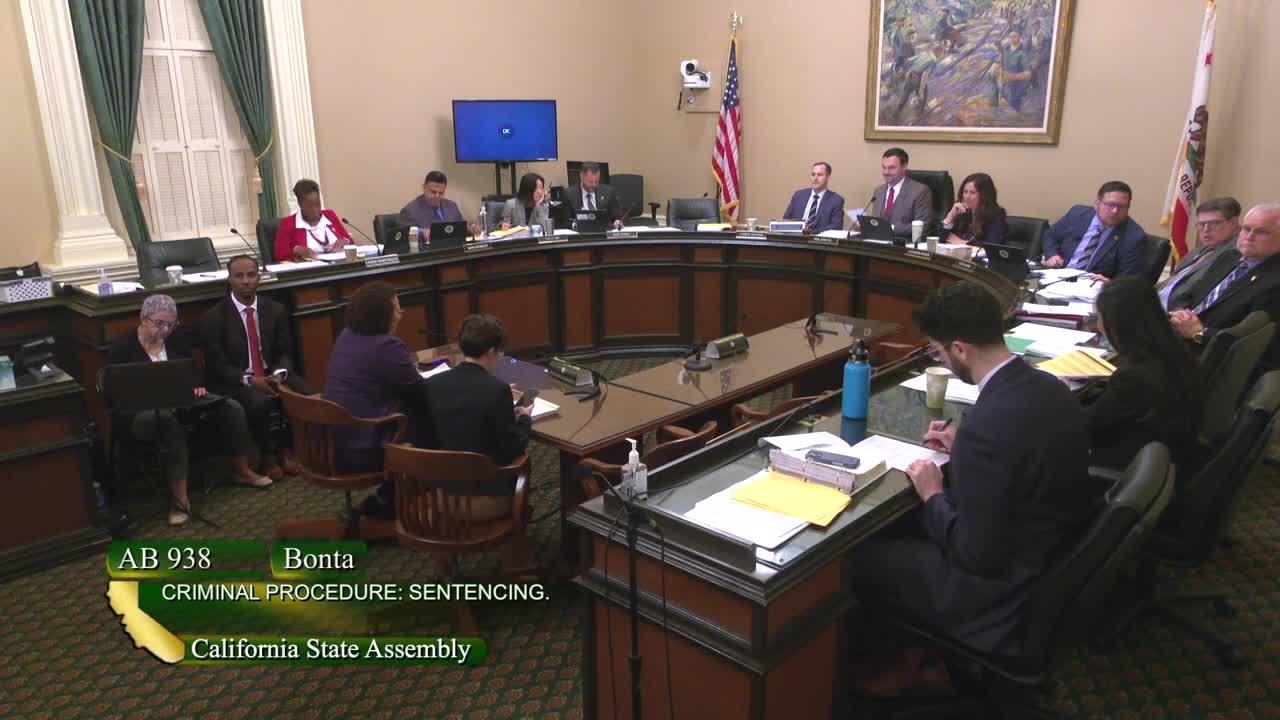 28MIN
Assembly Standing Committee on Public Safety
Bill Author


