AB 942: Electricity: climate credits.
- Session Year: 2025-2026
- House: Assembly
- Latest Version Date: 2025-07-17
Current Status:
In Progress
(2025-08-29: From committee: Do pass and re-refer to Com. on RLS. (Ayes 5. Noes 2.) (August 29). Re-referred to Com. on RLS.)
Introduced
In Committee
Awaiting First Chamber Vote
Passed First Chamber
In Committee
Awaiting Second Chamber Vote
Passed Second Chamber
Enacted
The California Global Warming Solutions Act of 2006 establishes the State Air Resources Board as the state agency responsible for monitoring and regulating sources emitting greenhouse gases. The act authorizes the state board to include the use of market-based compliance mechanisms in regulating those emissions. The implementing regulations adopted by the state board provide for the direct allocation of greenhouse gas allowances to electrical corporations pursuant to a market-based compliance mechanism.
Existing law vests the Public Utilities Commission (PUC) with regulatory authority over public utilities, including electrical corporations. Existing law requires the PUC to continue a program of assistance to low-income electric and gas customers with annual household incomes that are no greater than 200% of the federal poverty guidelines, as specified, which is referred to as the California Alternate Rates for Energy (CARE) program. Existing law also requires the PUC to continue a program of assistance to residential customers of the states 3 largest electrical corporations consisting of households of 3 or more persons with total household annual gross income levels between 200% and 250% of the federal poverty guideline level, which is referred to as the Family Electric Rate Assistance (FERA) program.
Existing law, except as provided, requires revenues received by an electrical corporation as a result of the direct allocation of greenhouse gas allowances to be credited directly to residential, small business, and emissions-intensive trade-exposed retail customers of the electrical corporation, commonly known as the California Climate Credit.
This bill would exclude residential customers from receiving the California Climate Credit if they are not enrolled in the CARE or FERA program and their total electricity bills for the previous year were less than $300.
Under existing law, a violation of the Public Utilities Act, or of an order, decision, rule, direction, demand, or requirement of the commission, is a crime.
Because the provisions of this bill would be part of the Public Utilities Act, and a violation of a commission action implementing its requirements would be a crime, the bill would impose a state-mandated local program.
The California Constitution requires the state to reimburse local agencies and school districts for certain costs mandated by the state. Statutory provisions establish procedures for making that reimbursement.
This bill would provide that no reimbursement is required by this act for a specified reason.
Existing law vests the Public Utilities Commission with regulatory authority over public utilities, including electrical corporations, while local publicly owned electric utilities are generally under the direction of their governing boards. Existing law requires each electrical utility, including each electrical corporation, local publicly owned electric utility, electrical cooperative, or other entity that offers electrical service, except as specified, to develop a standard contract or tariff that provides for net energy metering (NEM), which, among other things, compensates each eligible customer-generator, as defined, for the electricity it generated during a preceding 12-month period that exceeds the electricity supplied by the electrical utility through the electrical grid to the eligible customer-generator during that same period, as provided. Existing law requires each electrical utility to make the contract or tariff available to eligible customer-generators, upon request, on a first-come-first-served basis until the time that the total rated generating capacity used by those eligible customer-generators exceeds 5% of the electrical utilitys aggregate customer peak demand, except as specified. This contract or tariff is commonly known as NEM 1.0.Existing law requires the commission to develop an additional standard contract or tariff, which may include NEM, for eligible customer-generators that are customers of large electrical corporations, as defined. Existing law requires each large electrical corporation to offer this standard contract or tariff to its eligible customer-generators beginning July 1, 2017, or before that date if ordered to do so by the commission because it has reached the above-mentioned 5% NEM 1.0 program limit, and prohibits limiting the amount of generating capacity or the number of new eligible customer-generators entitled to receive service pursuant to this standard contract or tariff, as specified. This contract or tariff is commonly known as NEM 2.0. Existing law authorizes the commission to revise the standard contract or tariff as appropriate to achieve specified objectives.Pursuant to its authority, the commission adopted Decision 22-12-056 (December 19, 2022), commonly known as the net billing tariff, that creates a successor tariff to the NEM 1.0 and 2.0 tariffs and includes specified elements, including, among other things, retail export compensation rates based on hourly avoided cost calculator values averaged across days in a month, as specified, and an avoided cost calculator plus adder, based on cents per kilowatt-hour exported, available during the first 5 years of the successor tariff, as specified, known as the avoided cost calculator plus glide path.This bill would, on and after January 1, 2026, for a large electrical corporation customer that becomes a new eligible customer-generator by purchasing real property that contains a renewable electrical generation facility upon which a prior eligible customer-generator took service, require the new eligible customer-generator to take service under the then-current applicable tariff adopted by the commission after December 1, 2022, disqualify the new eligible customer-generator from eligibility for the avoided cost calculator plus glide path, as specified, and require the new eligible customer-generator to pay all nonbypassable charges that are applicable to customers that are not eligible customer-generators.This bill would authorize the commission to adopt a new tariff for a new eligible customer-generator that purchased real property that contains a renewable electrical generation facility, and to require those eligible customer-generators to use that new tariff if it results in a lower cost impact on customers who are not eligible customer-generators than the prior tariff that was applicable to those eligible customer-generators, as provided.Existing law, the California Global Warming Solutions Act of 2006, designates the State Air Resources Board as the state agency charged with monitoring and regulating sources of emissions of greenhouse gases and requires the state board to ensure that statewide greenhouse gas emissions are reduced to at least 40% below the 1990 level by 2030. The act, until January 1, 2031, authorizes the state board to adopt a regulation establishing a market-based compliance mechanism that meets certain requirements. Pursuant to this authority, the state board adopted the Cap-and-Trade Program that, among other things, makes certain electrical distribution utilities eligible for direct allocation of greenhouse gas allowances, as specified.Existing law requires the commission to require revenues, including any accrued interest, received by an electrical corporation as a result of the direct allocation of greenhouse gas allowances to electric utilities pursuant to the program, as provided, to be credited directly to the residential, small business, and emissions-intensive trade-exposed retail customers of the electrical corporation.This bill would, beginning January 1, 2026, disqualify eligible customer-generators from receiving this credit.The bill would exempt from its provisions new eligible customer-generators that are public schools or agricultural customers.Under existing law, a violation of any order, decision, rule, direction, demand, or requirement of the commission is a crime.Because a violation of a commission action implementing this bills requirements would be a crime, the bill would impose a state-mandated local program.The California Constitution requires the state to reimburse local agencies and school districts for certain costs mandated by the state. Statutory provisions establish procedures for making that reimbursement.This bill would provide that no reimbursement is required by this act for a specified reason.Existing law vests the Public Utilities Commission with regulatory authority over public utilities, including electrical corporations, while local publicly owned electric utilities are generally under the direction of their governing boards. Existing law requires each electrical utility, including each electrical corporation, local publicly owned electric utility, electrical cooperative, or other entity that offers electrical service, except as specified, to develop a standard contract or tariff that provides for net energy metering (NEM), which, among other things, compensates each eligible customer-generator, as defined, for the electricity it generated during a preceding 12-month period that exceeds the electricity supplied by the electrical utility through the electrical grid to the eligible customer-generator during that same period, as provided. Existing law requires each electrical utility to make the contract or tariff available to eligible customer-generators, upon request, on a first-come-first-served basis until the time that the total rated generating capacity used by those eligible customer-generators exceeds 5% of the electrical utilitys aggregate customer peak demand, except as specified. This contract or tariff is commonly known as NEM 1.0.
Existing law requires the commission to develop an additional standard contract or tariff, which may include NEM, for eligible customer-generators that are customers of large electrical corporations, as defined. Existing law requires each large electrical corporation to offer this standard contract or tariff to its eligible customer-generators beginning July 1, 2017, or before that date if ordered to do so by the commission because it has reached the above-mentioned 5% NEM 1.0 program limit, and prohibits limiting the amount of generating capacity or the number of new eligible customer-generators entitled to receive service pursuant to this standard contract or tariff, as specified. This contract or tariff is commonly known as NEM 2.0. Existing law authorizes the commission to revise the standard contract or tariff as appropriate to achieve specified objectives.
Pursuant to its authority, the commission adopted Decision 22-12-056 (December 19, 2022), commonly known as the net billing tariff, that creates a successor tariff to the NEM 1.0 and 2.0 tariffs and includes specified elements, including, among other things, retail export compensation rates based on hourly avoided cost calculator values averaged across days in a month, as specified, and an avoided cost calculator plus adder, based on cents per kilowatt-hour exported, available during the first 5 years of the successor tariff, as specified, known as the avoided cost calculator plus glide path.
This bill would, on and after January 1, 2026, for a large electrical corporation customer that becomes a new eligible customer-generator by purchasing real property that contains a renewable electrical generation facility upon which a prior eligible customer-generator took service, require the new eligible customer-generator to take service under the then-current applicable tariff adopted by the commission after December 1, 2022, would disqualify the new eligible customer-generator from eligibility for the avoided cost calculator plus glide path, as specified, and would require the new eligible customer-generator to pay all nonbypassable charges that are applicable to customers that are not eligible customer-generators.
This bill would authorize the commission to adopt a new tariff for a new eligible customer-generator that purchased real property that contains a renewable electrical generation facility, and to require those eligible customer-generators to use that new tariff if it results in a lower cost impact on customers who are not eligible customer-generators than the prior tariff that was applicable to those eligible customer-generators, as provided.
Existing law, the California Global Warming Solutions Act of 2006, designates the State Air Resources Board as the state agency charged with monitoring and regulating sources of emissions of greenhouse gases and requires the state board to ensure that statewide greenhouse gas emissions are reduced to at least 40% below the 1990 level by 2030. The act, until January 1, 2031, authorizes the state board to adopt a regulation establishing a market-based compliance mechanism that meets certain requirements. Pursuant to this authority, the state board adopted the Cap-and-Trade Program that, among other things, makes certain electrical distribution utilities eligible for direct allocation of greenhouse gas allowances, as specified.
Existing law requires the commission to require revenues, including any accrued interest, received by an electrical corporation as a result of the direct allocation of greenhouse gas allowances to electric utilities pursuant to the program, as provided, to be credited directly to the residential, small business, and emissions-intensive trade-exposed retail customers of the electrical corporation.
This bill would, beginning January 1, 2026, disqualify eligible customer-generators from receiving this credit.
The bill would exempt from its provisions new eligible customer-generators that are public schools or agricultural customers.
Under existing law, a violation of any order, decision, rule, direction, demand, or requirement of the commission is a crime.
Because a violation of a commission action implementing this bills requirements would be a crime, the bill would impose a state-mandated local program.
The California Constitution requires the state to reimburse local agencies and school districts for certain costs mandated by the state. Statutory provisions establish procedures for making that reimbursement.
This bill would provide that no reimbursement is required by this act for a specified reason.
Existing law vests the Public Utilities Commission with regulatory authority over public utilities, including electrical corporations, while local publicly owned electric utilities are generally under the direction of their governing boards. Existing law requires each electrical utility, including each electrical corporation, local publicly owned electric utility, electrical cooperative, or other entity that offers electrical service, except as specified, to develop a standard contract or tariff that provides for net energy metering (NEM), which, among other things, compensates each eligible customer-generator, as defined, for the electricity it generated during a preceding 12-month period that exceeds the electricity supplied by the electrical utility through the electrical grid to the eligible customer-generator during that same period, as provided. Existing law requires each electrical utility to make the contract or tariff available to eligible customer-generators, upon request, on a first-come-first-served basis until the time that the total rated generating capacity used by those eligible customer-generators exceeds 5% of the electrical utilitys aggregate customer peak demand, except as specified. This contract or tariff is commonly known as NEM 1.0.
Existing law requires the commission to develop an additional standard contract or tariff, which may include NEM, for eligible customer-generators that are customers of large electrical corporations, as defined. Existing law requires each large electrical corporation to offer this standard contract or tariff to its eligible customer-generators beginning July 1, 2017, or before that date if ordered to do so by the commission because it has reached the above-mentioned 5% NEM 1.0 program limit, and prohibits limiting the amount of generating capacity or the number of new eligible customer-generators entitled to receive service pursuant to this standard contract or tariff, as specified. This contract or tariff is commonly known as NEM 2.0. Existing law authorizes the commission to revise the standard contract or tariff as appropriate to achieve specified objectives.
Pursuant to its authority, the commission adopted Decision 22-12-056 (December 19, 2022), commonly known as the net billing tariff, that creates a successor tariff to the NEM 1.0 and 2.0 tariffs and includes specified elements, including, among other things, retail export compensation rates based on hourly avoided cost calculator values averaged across days in a month, as specified, and an avoided cost calculator plus adder, based on cents per kilowatt-hour exported, available during the first 5 years of the successor tariff, as specified, known as the avoided cost calculator plus glide path.
This bill would provide that, on and after July 1, 2026, an eligible customer-generator that has taken service pursuant to NEM 1.0 or 2.0 for 10 or more years is no longer entitled to take service under that contract or tariff. The bill would require that eligible customer-generator to take service under the then-current applicable tariff adopted by the commission after December 1, 2022, disqualify that eligible customer-generator from eligibility for the avoided cost calculator plus glide path, as specified, and would require the eligible customer-generator to pay all nonbypassable charges that are applicable to customers that are not eligible customer-generators.This bill would, on and after January 1, 2026, for a customer that becomes a new eligible customer-generator by purchasing real property that contains a renewable electrical generation facility upon which a prior eligible customer-generator took service, require the new eligible customer-generator to take service under the then-current applicable tariff adopted by the commission after December 1, 2022, would disqualify the new eligible customer-generator from eligibility for the avoided cost calculator plus glide path, as specified, and would require the new eligible customer-generator to pay all nonbypassable charges that are applicable to customers that are not eligible customer-generators.
This bill would authorize the commission to adopt a new tariff for an above-described eligible customer-generator that has taken service pursuant to NEM 1.0 or 2.0 for 10 or more years, or a new eligible customer-generator that purchased real property that contains a renewable electrical generation facility, and to require those eligible customer-generators to use that new tariff if it results in a lower cost impact on customers who are not eligible customer-generators than the prior tariff that was applicable to those eligible customer-generators, as provided.
Existing law, the California Global Warming Solutions Act of 2006, designates the State Air Resources Board as the state agency charged with monitoring and regulating sources of emissions of greenhouse gases and requires the state board to ensure that statewide greenhouse gas emissions are reduced to at least 40% below the 1990 level by 2030. The act, until January 1, 2031, authorizes the state board to adopt a regulation establishing a market-based compliance mechanism that meets certain requirements. Pursuant to this authority, the state board adopted the Cap-and-Trade Program that, among other things, makes certain electrical distribution utilities eligible for direct allocation of greenhouse gas allowances, as specified.
Existing law requires the commission to require revenues, including any accrued interest, received by an electrical corporation as a result of the direct allocation of greenhouse gas allowances to electric utilities pursuant to the program, as provided, to be credited directly to the residential, small business, and emissions-intensive trade-exposed retail customers of the electrical corporation.
This bill would, beginning January 1, 2026, disqualify eligible customer-generators from receiving this credit.
Under existing law, a violation of any order, decision, rule, direction, demand, or requirement of the commission is a crime.
Because a violation of a commission action implementing this bills requirements would be a crime, the bill would impose a state-mandated local program.
The California Constitution requires the state to reimburse local agencies and school districts for certain costs mandated by the state. Statutory provisions establish procedures for making that reimbursement.
This bill would provide that no reimbursement is required by this act for a specified reason.
Existing law vests the Public Utilities Commission with regulatory authority over public utilities, including electrical corporations, while local publicly owned electric utilities are generally under the direction of their governing boards. Existing law requires each electrical utility, including each electrical corporation, local publicly owned electric utility, electrical cooperative, or other entity that offers electrical service, except as specified, to develop a standard contract or tariff that provides for net energy metering (NEM), which, among other things, compensates each eligible customer-generator, as defined, for the electricity it generated during a preceding 12-month period that exceeds the electricity supplied by the electrical utility through the electrical grid to the eligible customer-generator during that same period, as provided. Existing law requires each electrical utility to make the contract or tariff available to eligible customer-generators, upon request, on a first-come-first-served basis until the time that the total rated generating capacity used by those eligible customer-generators exceeds 5% of the electrical utilitys aggregate customer peak demand, except as specified. This contract or tariff is commonly known as NEM 1.0.
Existing law requires the commission to develop an additional standard contract or tariff, which may include NEM, for eligible customer-generators that are customers of large electrical corporations, as defined. Existing law requires each large electrical corporation to offer this standard contract or tariff to its eligible customer-generators beginning July 1, 2017, or before that date if ordered to do so by the commission because it has reached the above-mentioned 5% NEM 1.0 program limit, and prohibits limiting the amount of generating capacity or the number of new eligible customer-generators entitled to receive service pursuant to this standard contract or tariff, as specified. This contract or tariff is commonly known as NEM 2.0. Existing law authorizes the commission to revise the standard contract or tariff as appropriate to achieve specified objectives.
Pursuant to its authority, the commission adopted Decision 22-12-056 (December 19, 2022), commonly known as the net billing tariff, that creates a successor tariff to the NEM 1.0 and 2.0 tariffs and includes specified elements, including, among other things, retail export compensation rates based on hourly avoided cost calculator values averaged across days in a month, as specified, and an avoided cost calculator plus adder, based on cents per kilowatt-hour exported, available during the first 5 years of the successor tariff, as specified, known as the avoided cost calculator plus glide path.
This bill would provide that, on and after July 1, 2026, an eligible customer-generator that has taken service pursuant to NEM 1.0 or 2.0 for 10 or more years is no longer entitled to take service under that contract or tariff. The bill would require that eligible customer-generator to take service under the then-current applicable tariff adopted by the commission after December 1, 2022, disqualify that eligible customer-generator from eligibility for the avoided cost calculator plus glide path, as specified, and would require the eligible customer-generator to pay all nonbypassable charges that are applicable to customers that are not eligible customer-generators.
This bill would, on and after January 1, 2026, for a customer that becomes a new eligible customer-generator by purchasing real property that contains a renewable electrical generation facility upon which a prior eligible customer-generator took service, require the new eligible customer-generator to take service under the then-current applicable tariff adopted by the commission after December 1, 2022, would disqualify the new eligible customer-generator from eligibility for the avoided cost calculator plus glide path, as specified, and would require the new eligible customer-generator to pay all nonbypassable charges that are applicable to customers that are not eligible customer-generators.
This bill would authorize the commission to adopt a new tariff for an above-described eligible customer-generator that has taken service pursuant to NEM 1.0 or 2.0 for 10 or more years, or a new eligible customer-generator that purchased real property that contains a renewable electrical generation facility, and to require those eligible customer-generators to use that new tariff if it results in a lower cost impact on customers who are not eligible customer-generators than the prior tariff that was applicable to those eligible customer-generators, as provided.
Existing law, the California Global Warming Solutions Act of 2006, designates the State Air Resources Board as the state agency charged with monitoring and regulating sources of emissions of greenhouse gases and requires the state board to ensure that statewide greenhouse gas emissions are reduced to at least 40% below the 1990 level by 2030. The act, until January 1, 2031, authorizes the state board to adopt a regulation establishing a market-based compliance mechanism that meets certain requirements. Pursuant to this authority, the state board adopted the Cap-and-Trade Program that, among other things, makes certain electrical distribution utilities eligible for direct allocation of greenhouse gas allowances, as specified.
Existing law requires the commission to require revenues, including any accrued interest, received by an electrical corporation as a result of the direct allocation of greenhouse gas allowances to electric utilities pursuant to the program, as provided, to be credited directly to the residential, small business, and emissions-intensive trade-exposed retail customers of the electrical corporation.
This bill would, beginning January 1, 2026, disqualify eligible customer-generators from receiving this credit.
Under existing law, a violation of any order, decision, rule, direction, demand, or requirement of the commission is a crime.
Because a violation of a commission action implementing this bills requirements would be a crime, the bill would impose a state-mandated local program.
The California Constitution requires the state to reimburse local agencies and school districts for certain costs mandated by the state. Statutory provisions establish procedures for making that reimbursement.
This bill would provide that no reimbursement is required by this act for a specified reason.
Existing law authorizes the Public Utilities Commission to fix the rates and charges for every public utility, and requires that those rates and charges be just and reasonable. Existing law requires a public utility to furnish and maintain adequate, efficient, just, and reasonable service, instrumentalities, equipment, and facilities as are necessary to promote the safety, health, comfort, and convenience of its patrons, its employees, and the public.This bill would make nonsubstantive changes to those requirements.Existing law authorizes the Public Utilities Commission to fix the rates and charges for every public utility, and requires that those rates and charges be just and reasonable. Existing law requires a public utility to furnish and maintain adequate, efficient, just, and reasonable service, instrumentalities, equipment, and facilities as are necessary to promote the safety, health, comfort, and convenience of its patrons, its employees, and the public.
This bill would make nonsubstantive changes to those requirements.
(a)Except as provided in subdivision (c), subdivisions (c) and (d), the commission shall require revenues, including any accrued interest, received by an electrical corporation as a result of the direct allocation of greenhouse gas allowances to electric utilities pursuant to subdivision (b) of Section 95890 of Title 17 of the California Code of Regulations to be credited directly to the residential, small business, and emissions-intensive trade-exposed retail customers of the electrical corporation.
(b)Not later than January 1, 2013, the commission shall require the adoption and implementation of a customer outreach plan for each electrical corporation, including, but not limited to, such measures as notices in bills and through media outlets, for purposes of obtaining the maximum feasible public awareness of the crediting of greenhouse gas allowance revenues. Costs associated with the implementation of this plan are subject to recovery in rates pursuant to Section 454.
(c)The commission may allocate up to 15 percent of the revenues, including any accrued interest, received by an electrical corporation as a result of the direct allocation of greenhouse gas allowances to electrical distribution utilities pursuant to subdivision (b) of Section 95890 of Title 17 of the California Code of Regulations, for clean energy and energy efficiency projects established pursuant to statute that are administered by the electrical corporation, or a qualified third-party administrator as approved by the commission, and that are not otherwise funded by another funding source.
(d)A residential customer who is not enrolled in the California Alternate Rates for Energy (CARE) program pursuant to Section 739.1 or the Family Electric Rate Assistance Program (FERA) pursuant to Section 739.12, and whose total annual electricity bills from the previous year is less than three hundred dollars ($300), shall not receive the credit described in subdivision (a).
SEC. 2.No reimbursement is required by this act pursuant to Section 6 of Article XIIIB of the California Constitution because the only costs that may be incurred by a local agency or school district will be incurred because this act creates a new crime or infraction, eliminates a crime or infraction, or changes the penalty for a crime or infraction, within the meaning of Section 17556 of the Government Code, or changes the definition of a crime within the meaning of Section 6 of Article XIIIB of the California Constitution.
SECTION 1.The Legislature finds and declares all of the following:(a)Senate Bill 100 of the 201718 Regular Session (Chapter 312 of the Statutes of 2018) established the state policy that eligible renewable energy resources and zero-carbon resources supply 100 percent of all retail sales of electricity to California end-use customers by 2045. Senate Bill 1020 of the 202122 Regular Session (Chapter 361 of the Statutes of 2022) established the same 100 percent renewable energy procurement standard for electricity serving all state agencies by 2035.(b)Senate Bill 1078 of the 200102 Regular Session (Chapter 516 of the Statutes of 2002) established the California Renewables Portfolio Standard Program, which has been subsequently amended to require all load-serving entities to procure 60 percent of their electricity portfolios from eligible renewable energy resources by 2030.(c)Rooftop solar has been integral towards meeting the states clean energy goals, with over 2,000,000 solar installations in California as of 2024.(d)Subsidies for residential rooftop solar have been provided to spur installation since the enactment of Senate Bill 656 of the 199596 Regular Session (Chapter 369 of the Statutes of 1995). These subsidies offer solar customers credits on their electricity bills for the self-generated electricity they send back to the electrical grid.(e)The current rates of these subsidies create a significant shortfall for covering the fixed costs of the electrical grid, and nonsolar ratepayers make up the difference, often referred to as a cost shift.(f)According to the Public Advocates Office of the Public Utilities Commission, this cost shift on nonrooftop solar customers of Pacific Gas and Electric Company, Southern California Edison Company, and San Diego Gas & Electric Company has grown from $3.4 billion annually in 2021 to $8.5 billion annually by the end of 2024. These trends suggest that the cost shift will continue to grow.(g)For the average nonsolar ratepayer, this cost shift accounts for 21 to 27 percent, inclusive, of their electricity bill.(h)In 2023, the average annual household income of residential rooftop solar customers was an estimated $115,000.(i)Conversely, in 2021, low-income customers that were enrolled in the California Alternate Rates for Energy program represented 28 percent of total residential customers, but only 13.1 percent of these customers benefited from rooftop solar subsidy programs.(j)As the overall cost of living increases in the state, the Legislature must mitigate cost shift inequities and reduce utility bills by evaluating programs funded by utility ratepayers.SEC. 2.Section 2827.2 is added to the Public Utilities Code, to read:2827.2.(a)On and after January 1, 2026, all of the following shall apply to a customer of a large electrical corporation that becomes a new eligible customer-generator by purchasing real property that contains a renewable electrical generation facility upon which a prior eligible customer-generator took service:(1)The new eligible customer-generator shall take service under the then-current applicable tariff adopted by the commission pursuant to Section 2827.1 after December 1, 2022.(2)The new eligible customer-generator shall not be eligible for the avoided cost calculator plus glide path provided in commission Decision 22-12-056 (December 19, 2022), Order Instituting Rulemaking to Revisit Net Energy Metering Tariffs Pursuant to Decision 16-01-044, and to Address Other Issues Related to Net Energy Metering.(3)The new eligible customer-generator shall pay all nonbypassable charges applicable to customers who are not eligible customer-generators.(b)The commission may adopt a new tariff for new eligible customer-generators described in subdivision (a), and may require those eligible customer-generators to use that new tariff if it results in a lower cost impact on customers who are not eligible customer-generators than the prior tariff that was applicable to those eligible customer-generators.(c)On and after January 1, 2026, eligible customer-generators shall not receive the customer credit provided in Section 748.5.(d)This section does not apply to new eligible customer-generators that are public schools or agricultural customers.(e)For purposes of this section, all of the following definitions apply:(1)Eligible customer-generator has the same meaning as defined in Section 2827.(2)Large electrical corporation has the same meaning as defined in Section 2827.(3)Public school means a school operated by a school district as described in Section 41302.5 of the Education Code, a charter school that has been granted a charter pursuant to the Charter Schools Act of 1992 (Part 26.8 (commencing with Section 47600) of Division 4 of Title 2 of the Education Code), or a public higher education entity as described in Section 66010 of the Education Code.(4)Renewable electrical generation facility has the same meaning as in Section 2827. SEC. 3.No reimbursement is required by this act pursuant to Section 6 of Article XIIIB of the California Constitution because the only costs that may be incurred by a local agency or school district will be incurred because this act creates a new crime or infraction, eliminates a crime or infraction, or changes the penalty for a crime or infraction, within the meaning of Section 17556 of the Government Code, or changes the definition of a crime within the meaning of Section 6 of Article XIIIB of the California Constitution.The Legislature finds and declares all of the following:
(a)Senate Bill 100 of the 201718 Regular Session (Chapter 312 of the Statutes of 2018) established the state policy that eligible renewable energy resources and zero-carbon resources supply 100 percent of all retail sales of electricity to California end-use customers by 2045. Senate Bill 1020 of the 202122 Regular Session (Chapter 361 of the Statutes of 2022) established the same 100 percent renewable energy procurement standard for electricity serving all state agencies by 2035.
(b)Senate Bill 1078 of the 200102 Regular Session (Chapter 516 of the Statutes of 2002) established the California Renewables Portfolio Standard Program, which has been subsequently amended to require all load-serving entities to procure 60 percent of their electricity portfolios from eligible renewable energy resources by 2030.
(c)Rooftop solar has been integral towards meeting the states clean energy goals, with over 2,000,000 solar installations in California as of 2024.
(d)Subsidies for residential rooftop solar have been provided to spur installation since the enactment of Senate Bill 656 of the 199596 Regular Session (Chapter 369 of the Statutes of 1995). These subsidies offer solar customers credits on their electricity bills for the self-generated electricity they send back to the electrical grid.
(e)The current rates of these subsidies create a significant shortfall for covering the fixed costs of the electrical grid, and nonsolar ratepayers make up the difference, often referred to as a cost shift.
(f)According to the Public Advocates Office of the Public Utilities Commission, this cost shift on nonrooftop solar customers of Pacific Gas and Electric Company, Southern California Edison Company, and San Diego Gas & Electric Company has grown from $3.4 billion annually in 2021 to $8.5 billion annually by the end of 2024. These trends suggest that the cost shift will continue to grow.
(g)For the average nonsolar ratepayer, this cost shift accounts for 21 to 27 percent, inclusive, of their electricity bill.
(h)In 2023, the average annual household income of residential rooftop solar customers was an estimated $115,000.
(i)Conversely, in 2021, low-income customers that were enrolled in the California Alternate Rates for Energy program represented 28 percent of total residential customers, but only 13.1 percent of these customers benefited from rooftop solar subsidy programs.
(j)As the overall cost of living increases in the state, the Legislature must mitigate cost shift inequities and reduce utility bills by evaluating programs funded by utility ratepayers.
SEC. 2.Section 2827.2 is added to the Public Utilities Code, to read:2827.2.(a)On and after January 1, 2026, all of the following shall apply to a customer of a large electrical corporation that becomes a new eligible customer-generator by purchasing real property that contains a renewable electrical generation facility upon which a prior eligible customer-generator took service:
(1)The new eligible customer-generator shall take service under the then-current applicable tariff adopted by the commission pursuant to Section 2827.1 after December 1, 2022.
(2)The new eligible customer-generator shall not be eligible for the avoided cost calculator plus glide path provided in commission Decision 22-12-056 (December 19, 2022), Order Instituting Rulemaking to Revisit Net Energy Metering Tariffs Pursuant to Decision 16-01-044, and to Address Other Issues Related to Net Energy Metering.
(3)The new eligible customer-generator shall pay all nonbypassable charges applicable to customers who are not eligible customer-generators.
(b)The commission may adopt a new tariff for new eligible customer-generators described in subdivision (a), and may require those eligible customer-generators to use that new tariff if it results in a lower cost impact on customers who are not eligible customer-generators than the prior tariff that was applicable to those eligible customer-generators.
(c)On and after January 1, 2026, eligible customer-generators shall not receive the customer credit provided in Section 748.5.
(d)This section does not apply to new eligible customer-generators that are public schools or agricultural customers.
(d)(e)For purposes of this section, both all of the following definitions apply:
(1)Eligible customer-generator has the same meaning as defined in Section 2827.
(2)Large electrical corporation has the same meaning as defined in Section 2827.
(3)Public school means a school operated by a school district as described in Section 41302.5 of the Education Code, a charter school that has been granted a charter pursuant to the Charter Schools Act of 1992 (Part 26.8 (commencing with Section 47600) of Division 4 of Title 2 of the Education Code), or a public higher education entity as described in Section 66010 of the Education Code.
(2)(4)Renewable electrical generation facility has the same meaning as in Section 2827.
SEC. 3.No reimbursement is required by this act pursuant to Section 6 of Article XIIIB of the California Constitution because the only costs that may be incurred by a local agency or school district will be incurred because this act creates a new crime or infraction, eliminates a crime or infraction, or changes the penalty for a crime or infraction, within the meaning of Section 17556 of the Government Code, or changes the definition of a crime within the meaning of Section 6 of Article XIIIB of the California Constitution.
The Legislature finds and declares all of the following:
(a)Senate Bill 100 of the 201718 Regular Session (Chapter 312 of the Statutes of 2018) established the state policy that eligible renewable energy resources and zero-carbon resources supply 100 percent of all retail sales of electricity to California end-use customers by 2045. Senate Bill 1020 of the 202122 Regular Session (Chapter 361 of the Statutes of 2022) established the same 100 percent renewable energy procurement standard for electricity serving all state agencies by 2035.
(b)Senate Bill 1078 of the 200102 Regular Session (Chapter 516 of the Statutes of 2002) established the California Renewables Portfolio Standard Program, which has been subsequently amended to require all load-serving entities to procure 60 percent of their electricity portfolios from eligible renewable energy resources by 2030.
(c)Rooftop solar has been integral towards meeting the states clean energy goals, with over 2,000,000 solar installations in California as of 2024.
(d)Subsidies for residential rooftop solar have been provided to spur installation since the enactment of Senate Bill 656 of the 199596 Regular Session (Chapter 369 of the Statutes of 1995). These subsidies offer solar customers credits on their electricity bills for the self-generated electricity they send back to the electrical grid.
(e)The current rates of these subsidies create a significant shortfall for covering the fixed costs of the electrical grid, and nonsolar ratepayers make up the difference, often referred to as a cost shift.
(f)According to the Public Advocates Office of the Public Utilities Commission, this cost shift on nonrooftop solar customers of Pacific Gas and Electric Company, Southern California Edison Company, and San Diego Gas & Electric Company has grown from $3.4 billion annually in 2021 to $8.5 billion annually by the end of 2024. These trends suggest that the cost shift will continue to grow.
(g)For the average nonsolar ratepayer, this cost shift accounts for 21 to 27 percent, inclusive, of their electricity bill.
(h)In 2023, the average annual household income of residential rooftop solar customers was an estimated $115,000.
(i)Conversely, in 2021, low-income customers that were enrolled in the California Alternate Rates for Energy program represented 28 percent of total residential customers, but only 13.1 percent of these customers benefited from rooftop solar subsidy programs.
(j)As the overall cost of living increases in the state, the Legislature must mitigate cost shift inequities and reduce utility bills by evaluating programs funded by utility ratepayers.
SEC. 2.Section 2827.2 is added to the Public Utilities Code, to read:2827.2.(a)(1)Notwithstanding Section 2827, Section 2827.1, and any decision of the commission, on and after July 1, 2026, an eligible customer-generator that has taken service for 10 or more years pursuant to a standard contract or tariff developed pursuant to Section 2827 or 2827.1 shall no longer be entitled to take service under that standard contract or tariff.(2)On and after July 1, 2026, all of the following shall apply to the eligible customer-generator described in paragraph (1):(A)The eligible customer-generator shall take service under the then-current applicable tariff adopted by the commission pursuant to Section 2827.1 after December 1, 2022.(B)The eligible customer-generator shall not be eligible for the avoided cost calculator plus glide path provided in commission Decision 22-12-056 (December 19, 2022), Order Instituting Rulemaking to Revisit Net Energy Metering Tariffs Pursuant to Decision 16-01-044, and to Address Other Issues Related to Net Energy Metering.(C)The eligible customer-generator shall pay all nonbypassable charges that are applicable to customers that are not eligible customer-generators.(b)On2827.2.(a)On and after January 1, 2026, all of the following shall apply to a customer that becomes a new eligible customer-generator by purchasing real property that contains a renewable electrical generation facility upon which a prior eligible customer-generator took service:
(1)The new eligible customer-generator shall take service under the then-current applicable tariff adopted by the commission pursuant to Section 2827.1 after December 1, 2022.
(2)The new eligible customer-generator shall not be eligible for the avoided cost calculator plus glide path provided in commission Decision 22-12-056 (December 19, 2022), Order Instituting Rulemaking to Revisit Net Energy Metering Tariffs Pursuant to Decision 16-01-044, and to Address Other Issues Related to Net Energy Metering.
(3)The new eligible customer-generator shall pay all nonbypassable charges applicable to customers who are not eligible customer-generators.
(c)(b)The commission may adopt a new tariff for eligible customer-generators described in subdivision (a) or new eligible customer generators customer-generators described in subdivision (b), (a), and may require those eligible customer-generators to use that new tariff if it results in a lower cost impact on customers who are not eligible customer-generators than the prior tariff that was applicable to those eligible customer-generators.
(d)(c)On and after January 1, 2026, eligible customer-generators shall not receive the customer credit provided in Section 748.5.
(e)(d)For purposes of this section, both of the following definitions apply:
(1)Eligible customer-generator has the same meaning as defined in Section 2827.
(2)Renewable electrical generation facility has the same meaning as in Section 2827.
SEC. 3.No reimbursement is required by this act pursuant to Section 6 of Article XIIIB of the California Constitution because the only costs that may be incurred by a local agency or school district will be incurred because this act creates a new crime or infraction, eliminates a crime or infraction, or changes the penalty for a crime or infraction, within the meaning of Section 17556 of the Government Code, or changes the definition of a crime within the meaning of Section 6 of Article XIIIB of the California Constitution.
The Legislature finds and declares all of the following:
(a)Senate Bill 100 of the 201718 Regular Session (Chapter 312 of the Statutes of 2018) established the state policy that eligible renewable energy resources and zero-carbon resources supply 100 percent of all retail sales of electricity to California end-use customers by 2045. Senate Bill 1020 of the 202122 Regular Session (Chapter 361 of the Statutes of 2022) established the same 100 percent renewable energy procurement standard for electricity serving all state agencies by 2035.
(b)Senate Bill 1078 of the 200102 Regular Session (Chapter 516 of the Statutes of 2002) established the California Renewables Portfolio Standard Program, which has been subsequently amended to require all load-serving entities to procure 60 percent of their electricity portfolios from eligible renewable energy resources by 2030.
(c)Rooftop solar has been integral towards meeting the states clean energy goals, with over 2,000,000 solar installations in California as of 2024.
(d)Subsidies for residential rooftop solar have been provided to spur installation since the enactment of Senate Bill 656 of the 199596 Regular Session (Chapter 369 of the Statutes of 1995). These subsidies offer solar customers credits on their electricity bills for the self-generated electricity they send back to the electrical grid.
(e)The current rates of these subsidies create a significant shortfall for covering the fixed costs of the electrical grid, and nonsolar ratepayers make up the difference, often referred to as a cost shift.
(f)According to the Public Advocates Office of the Public Utilities Commission, this cost shift on nonrooftop solar customers of Pacific Gas and Electric Company, Southern California Edison Company, and San Diego Gas & Electric Company has grown from $3.4 billion annually in 2021 to $8.5 billion annually by the end of 2024. These trends suggest that the cost shift will continue to grow.
(g)For the average nonsolar ratepayer, this cost shift accounts for 21 to 27 percent, inclusive, of their electricity bill.
(h)In 2023, the average annual household income of residential rooftop solar customers was an estimated $115,000.
(i)Conversely, in 2021, low-income customers that were enrolled in the California Alternate Rates for Energy program represented 28 percent of total residential customers, but only 13.1 percent of these customers benefited from rooftop solar subsidy programs.
(j)As the overall cost of living increases in the state, the Legislature must mitigate cost shift inequities and reduce utility bills by evaluating programs funded by utility ratepayers.
SEC. 2.Section 2827.2 is added to the Public Utilities Code, to read:2827.2.(a)(1)Notwithstanding Section 2827, Section 2827.1, and any decision of the commission, on and after July 1, 2026, an eligible customer-generator that has taken service for 10 or more years pursuant to a standard contract or tariff developed pursuant to Section 2827 or 2827.1 shall no longer be entitled to take service under that standard contract or tariff.
(2)On and after July 1, 2026, all of the following shall apply to the eligible customer-generator described in paragraph (1):
(A)The eligible customer-generator shall take service under the then-current applicable tariff adopted by the commission pursuant to Section 2827.1 after December 1, 2022.
(B)The eligible customer-generator shall not be eligible for the avoided cost calculator plus glide path provided in commission Decision 22-12-056 (December 19, 2022), Order Instituting Rulemaking to Revisit Net Energy Metering Tariffs Pursuant to Decision 16-01-044, and to Address Other Issues Related to Net Energy Metering.
(C)The eligible customer-generator shall pay all nonbypassable charges that are applicable to customers that are not eligible customer-generators.
(b)On and after January 1, 2026, all of the following shall apply to a customer that becomes a new eligible customer-generator by purchasing real property that contains a renewable electrical generation facility upon which a prior eligible customer-generator took service:
(1)The new eligible customer-generator shall take service under the then-current applicable tariff adopted by the commission pursuant to Section 2827.1 after December 1, 2022.
(2)The new eligible customer-generator shall not be eligible for the avoided cost calculator plus glide path provided in commission Decision 22-12-056 (December 19, 2022), Order Instituting Rulemaking to Revisit Net Energy Metering Tariffs Pursuant to Decision 16-01-044, and to Address Other Issues Related to Net Energy Metering.
(3)The new eligible customer-generator shall pay all nonbypassable charges applicable to customers who are not eligible customer-generators.
(c)The commission may adopt a new tariff for eligible customer-generators described in subdivision (a) or new eligible customer generators described in subdivision (b), and may require those eligible customer-generators to use that new tariff if it results in a lower cost impact on customers who are not eligible customer-generators than the prior tariff that was applicable to those eligible customer-generators.
(d)On and after January 1, 2026, eligible customer-generators shall not receive the customer credit provided in Section 748.5.
(e)For purposes of this section, both of the following definitions apply:
(1)Eligible customer-generator has the same meaning as defined in Section 2827.
(2)Renewable electrical generation facility has the same meaning as in Section 2827.
SEC. 3.No reimbursement is required by this act pursuant to Section 6 of Article XIIIB of the California Constitution because the only costs that may be incurred by a local agency or school district will be incurred because this act creates a new crime or infraction, eliminates a crime or infraction, or changes the penalty for a crime or infraction, within the meaning of Section 17556 of the Government Code, or changes the definition of a crime within the meaning of Section 6 of Article XIIIB of the California Constitution.
SECTION 1.Section 451 of the Public Utilities Code is amended to read:451.(a)All charges demanded or received by any public utility, or by any two or more public utilities, for any product or commodity furnished or to be furnished or any service rendered or to be rendered shall be just and reasonable. Every unjust or unreasonable charge demanded or received for that product, commodity, or service is unlawful.(b)Every public utility shall furnish and maintain adequate, efficient, just, and reasonable service, instrumentalities, equipment, and facilities, including telephone facilities, as defined in Section 54.1 of the Civil Code, as are necessary to promote the safety, health, comfort, and convenience of its patrons, its employees, and the public.(c)All rules made by a public utility affecting or pertaining to its charges or service to the public shall be just and reasonable.(a)All charges demanded or received by any public utility, or by any two or more public utilities, for any product or commodity furnished or to be furnished or any service rendered or to be rendered shall be just and reasonable. Every unjust or unreasonable charge demanded or received for such product or commodity that product, commodity, or service is unlawful.
Every(b)Every public utility shall furnish and maintain such adequate, efficient, just, and reasonable service, instrumentalities, equipment, and facilities, including telephone facilities, as defined in Section 54.1 of the Civil Code, as are necessary to promote the safety, health, comfort, and convenience of its patrons, its employees, and the public.
All(c)All rules made by a public utility affecting or pertaining to its charges or service to the public shall be just and reasonable.
|
Date
|
Status
|
|---|---|
| Aug 29, 2025 | From committee: Do pass and re-refer to Com. on RLS. (Ayes 5. Noes 2.) (August 29). Re-referred to Com. on RLS. |
| Aug 18, 2025 | In committee: Referred to suspense file. |
| Jul 17, 2025 | Read second time and amended. Re-referred to Com. on APPR. |
| Jul 16, 2025 | From committee: Amend, and do pass as amended and re-refer to Com. on APPR. (Ayes 9. Noes 4.) (July 15). |
| Jun 18, 2025 | Referred to Com. on E., U & C. |
| Jun 4, 2025 | In Senate. Read first time. To Com. on RLS. for assignment. |
| Jun 3, 2025 | Read third time. Passed. Ordered to the Senate. (Ayes 46. Noes 14. Page 2029.) |
| Jun 3, 2025 | Assembly Rule 69(d) suspended. (Ayes 56. Noes 17. Page 2028.) |
| Jun 2, 2025 | Read third time and amended. Ordered to third reading. (Page 1952.) |
| May 22, 2025 | Read second time. Ordered to third reading. |
| May 21, 2025 | From committee: Do pass. (Ayes 9. Noes 1.) (May 21). |
| May 14, 2025 | In committee: Hearing postponed by committee. |
| May 6, 2025 | Re-referred to Com. on APPR. |
| May 5, 2025 | Read second time and amended. |
| May 1, 2025 | From committee: Amend, and do pass as amended and re-refer to Com. on APPR. (Ayes 10. Noes 5.) (April 30). |
| Mar 26, 2025 | Re-referred to Com. on U. & E. |
| Mar 25, 2025 | From committee chair, with author's amendments: Amend, and re-refer to Com. on U. & E. Read second time and amended. |
| Mar 24, 2025 | Referred to Com. on U. & E. |
| Feb 20, 2025 | From printer. May be heard in committee March 22. |
| Feb 19, 2025 | Read first time. To print. |
|
Date
|
Description
|
Location
|
Votes
|
|
|---|---|---|---|---|
| Aug 29, 2025 | Do pass, but first be re-referred to the Committee on [Rules] | Senate Standing Committee on Appropriations |
Passed |
|
| Aug 18, 2025 | Placed on suspense file | Senate Standing Committee on Appropriations |
Passed |
|
| Jul 15, 2025 | Do pass as amended, but first amend, and re-refer to the Committee on [Appropriations] | Senate Standing Committee on Energy, Utilities and Communications |
Passed |
|
| Jun 3, 2025 | AB 942 Calderon Assembly Third Reading | Assembly Floor |
Passed |
|
| May 21, 2025 | Do pass. | Assembly Standing Committee on Appropriations |
Passed |
|
| Apr 30, 2025 | Do pass as amended and be re-referred to the Committee on [Appropriations] | Assembly Standing Committee on Utilities and Energy |
Passed |
This list shows positions taken on this bill by organizations on the date displayed, which is linked to the original source.
Positions by individuals are not included.
|
Organization
|
Position
|
Date
|
|---|---|---|
| 1000 Grandmothers for Future Generations | ** Against | |
| 350: Bay Area Action, Bay Area Group, Conejo / San Fernando Valley, Humboldt, | ** Against | |
| 4Terra Investments | ** Against | |
| ACT Now Bay Area | ** Against | |
| Advanced Energy United | ** Against | |
| Aft Guild, Local 1931 | ** Against | |
| Agricultural Council Of California | ** Against | |
| Agricultural Energy Consumers Association | ** Against | |
| Alameda County Democratic Party | ** Against | |
| Alameda County Office Of Education | ** Against | |
| Albany Climate Action Coalition | ** Against | |
| Aliados Health | ** Against | |
| Alliance Of Californians For Community Empowerment | ** Against | |
| American Bird Conservancy | ** Against | |
| Anahuak Youth Soccer Association | ** Against | |
| Angeles, Southland Legislative Alliance, and Ventura County Climate Hub | ** Against | |
| Association for Energy Affordability, Inc. | ** Against | |
| Audubon California | ** Against | |
| Aurora Solar | ** Against | |
| Ban SUP | ** Against | |
| Bay Area Clean Air Coalition | ** Against | |
| Bay Area-System Change Not Climate Change | ** Against | |
| Berkeley Electrification Working Group | ** Against | |
| Beth Eden Baptist Church | ** Against | |
| Bowman Change, Inc. | ** Against | |
| CA Cotton Ginners & Growers Association | ** Against | |
| Cafe Coop | ** Against | |
| Cal Poly Initiative for Climate Leadership and Resilience | ** Against | |
| California African American Chamber Of Commerce | ** Support | |
| California Alliance for Community Energy | ** Against | |
| California Asian Pacific Chamber Of Commerce | ** Support | |
| California Association Of Local Housing Finance Agencies | ** Against | |
| California Association Of Realtors | ** Against | |
| California Association Of School Business Officials | ** Against | |
| California Building Industry Association | ** Against | |
| California Citrus Mutual | ** Against | |
| California Climate & Agricultural Network | ** Against | |
| California Cotton Growers Association | ** Against | |
| California Democratic Party Rural Caucus | ** Against | |
| California Democratic Renters Council | ** Against | |
| California Energy Storage Alliance | ** Against | |
| California Environmental Justice Coalition | ** Against | |
| California Farm Bureau Federation | ** Against | |
| California Federation of Labor Unions, Afl-cio | ** Support | |
| California Fresh Fruit Association | ** Against | |
| California Hispanic Chambers Of Commerce | ** Support | |
| California Interfaith Power and Light | ** Against | |
| California Large Energy Consumers Association | ** Against | |
| California League of Food Producers | ** Against | |
| California Native Plant Society | ** Against | |
| California Poultry Federation | ** Against | |
| California Public Interest Research Group | ** Against | |
| California School Boards Association | ** Against | |
| California Solar & Storage Association | ** Against | |
| California State Association Of Electrical Workers | ** Support | |
| California Tomato Growers Association | ** Against | |
| California Wind Energy Association | ** Support | |
| Californians for Energy Choice | ** Against | |
| Californians for Western Wilderness | ** Against | |
| Center For Biological Diversity | ** Against | |
| Center for Community Energy | ** Against | |
| Center for Sustainable Energy | ** Against | |
| Centro Binacional Para El Desarrollo Indígena Oaxaqueño | ** Against | |
| Change Begins With Me | ** Against | |
| Citizens' Climate Lobby Santa Cruz Chapter | ** Against | |
| City of Berkeley | ** Against | |
| City Of Huntington Beach | ** Against | |
| City of Stockton Mayor | ** Against | |
| Clean Solar | ** Against | |
| cleanearth4kids.org | ** Against | |
| Climate Action California | ** Against | |
| Climate Action Mendocino | ** Against | |
| Climate Breakthrough | ** Against | |
| Climate Changemakers | ** Against | |
| Climate Hawks Vote | ** Against | |
| Coachella Valley Housing Coalition | ** Against | |
| Coalition For Adequate School Housing | ** Against | |
| Coalition for Environmental Equity and Economics | ** Against | |
| Coalition of California Utility Employees | ** Support | |
| COFEM | ** Against | |
| Comite Pro Uno | ** Against | |
| Community Corporation of Santa Monica | ** Against | |
| Consejo de Federaciones Mexicanas | ** Against | |
| Consumer Watchdog | ** Against | |
| Contra Costa Health Services | ** Against | |
| Contra Costa, San Jose, Santa Cruz County, Santa Cruz - Friends of the | ** Against | |
| Cool OC | ** Against | |
| County of Fresno | ** Against | |
| Courageous Resistance and Indivisible of the Desert | ** Against | |
| Culver City Democratic Club | ** Against | |
| Davis United Methodist Church | ** Against | |
| Dean Democratic Club of Silicon Valley | ** Against | |
| DEMOCRATIC CLUB OF WEST ORANGE COUNTY | ** Against | |
| DEMOCRATS OF GREATER IRVINE | ** Against | |
| Designing Accessible Communities | ** Against | |
| Doty Bros Construction Company | ** Support | |
| E & J Gallo Winery | ** Against | |
| EAH Housing | ** Against | |
| East Area Progressive Democrats | ** Against | |
| East Bay Housing Organizations | ** Against | |
| Ecology Center | ** Against | |
| Eden Housing | ** Against | |
| EJCW | ** Against | |
| Elder Climate Action, NorCal | ** Against | |
| Elder Climate Action, SoCal | ** Against | |
| Emerging Leaders Program of the Leadership Institute At Allen Temple Baptist Church | ** Against | |
| Environment California | ** Against | |
| Environment, and Ventura | ** Against | |
| Environmental Action | ** Against | |
| Environmental Justice Coalition for Water | ** Against | |
| Environmental Working Group | ** Against | |
| Environteers.org | ** Against | |
| Essex Property Trust | ** Against | |
| Fecamin | ** Against | |
| Federación De Clubes Colima | ** Against | |
| Federación De Clubes Y Asociaciones | ** Against | |
| Federación De Guanajuatenses | ** Against | |
| Federación De Nayaritas En Estados Unidos | ** Against | |
| Federación Duranguenese USA | ** Against | |
| Fix the Cost Shift | ** Support | |
| Forefront Power LLC | ** Against | |
| Fortune | ** Against | |
| FracTracker Alliance | ** Against | |
| Fram Energy | ** Against | |
| Fraternidad Sinaloense De California Fsc | ** Against | |
| Fresh Air Vallejo | ** Against | |
| Fresno Housing Authority | ** Against | |
| Fridays for Future | ** Against | |
| Fridays for Future Palo Alto | ** Against | |
| Glendale Environmental Coalition | ** Against | |
| Good Neighbor Steering Committee of Benicia | ** Against | |
| Green the Church | ** Against | |
| Greenbank Associates | ** Against | |
| Greenpeace Usa | ** Against | |
| Grid Alternatives | ** Against | |
| Grower-Shipper Association | ** Against | |
| Hammond Climate Solutions Foundation | ** Against | |
| Hogan Mfg | ** Against | |
| Humboldt County Democratic Central Committee | ** Against | |
| HW Power, Inc. | ** Support | |
| Indivisible California Green Team | ** Against | |
| Indivisible Green Team | ** Against | |
| Indivisible Marin | ** Against | |
| Indivisible ReSisters Contra Costa | ** Against | |
| Indivisible San Jose | ** Against | |
| Indivisible Santa Cruz County | ** Against | |
| Indivisibles: California Green Team, California StateStrong, Marin, Resisters | ** Against | |
| Inspiration Transportation | ** Against | |
| Jerry Dyer, Mayor of City of Fresno | ** Against | |
| KDF COMMUNITIES LLC | ** Against | |
| Local Clean Energy Alliance | ** Against | |
| Long Beach Alliance for Clean Energy | ** Against | |
| Long Beach Gray Panthers | ** Against | |
| Los Angeles Unified School District | ** Against | |
| Mcgee Avenue Baptist Church | ** Against | |
| MERUELO ENTERPRISES INC. | ** Support | |
| MidPen Housing | ** Against | |
| Milk Producers Council | ** Against | |
| morongo basin conservation association | ** Against | |
| Mujeres de la Tierra | ** Against | |
| Mujeres Unidas Sirviendo Activamente Musa | ** Against | |
| Napa Climate Now | ** Against | |
| Napa Valley Community Housing | ** Against | |
| National CORE | ** Against | |
| Nisei Farmers League | ** Against | |
| Oil and Gas Action Network | ** Against | |
| Opposition | ** Against | |
| Organización Regional De Oaxaca Por El Respeto Y LA Defensa De Nuestra Cultura | ** Against | |
| Our City San Francisco | ** Against | |
| Pacific Environment | ** Against | |
| Pacific Gas And Electric Company | ** Support | |
| Pearlx Infrastructure LLC | ** Against | |
| PEARLX INFRASTRUCTURE, LLC | ** Against | |
| peninsula interfaith climate action | ** Against | |
| Phippen | ** Against | |
| Planning And Conservation League | ** Against | |
| Project Green Home | ** Against | |
| Public Advocates Office | ** Support | |
| Reclaim Our Power | ** Against | |
| Resources for Community Development | ** Against | |
| Rhoades Planning Group | ** Against | |
| Rooted in Resistance | ** Against | |
| Sacramento, San Diego, Santa Barbara, SoCal Climate Action, South Bay Los | ** Against | |
| San Diego Earthworks | ** Against | |
| San Diego Gas and Electric Company | ** Support | |
| San Diego Unified School District | ** Against | |
| San Diego350 | ** Against | |
| San Francisco Bay Area Physicians for Social Responsibility | ** Against | |
| San Joaquin Urban Native Council | ** Against | |
| San Luis Obispo Mothers for Peace | ** Against | |
| San Mateo Climate Action Team | ** Against | |
| Santa Cruz Climate Action Network | ** Against | |
| santa cruz indivisible | ** Against | |
| Santa Monica Democratic Club | ** Against | |
| School Energy Coalition | ** Against | |
| School Project for Utility Rate Reduction | ** Against | |
| Scientist Rebellion Turtle Island West | ** Against | |
| Sdrpu | ** Against | |
| Sierra Club California | ** Against | |
| SoCal Elders Climate Action | ** Against | |
| Socioenergetics Foundation | ** Against | |
| Solano County Democratic Central Committee | ** Against | |
| Solar Energy Industry Association | ** Against | |
| Solar Rights Alliance | ** Against | |
| Solar United Neighbors Action | ** Against | |
| Sonoma County Climate Activist Network | ** Against | |
| Sonoma County Democratic Party | ** Against | |
| Sonora USA | ** Against | |
| Southern California Edison | ** Support | |
| Stand.earth | ** Against | |
| State Building and Construction Trades Council | ** Support | |
| Steering Committee | ** Against | |
| Sunflower Alliance | ** Against | |
| Sustainable Marin | ** Against | |
| Sustainable Rossmoor | ** Against | |
| Sustainable Systems Research Foundation | ** Against | |
| Ten Strands | ** Against | |
| The Austin Group | ** Against | |
| The Clean Coalition | ** Against | |
| The Climate Alliance | ** Against | |
| The Climate Center | ** Against | |
| The Climate Reality Project - Orange County | ** Against | |
| The Climate Reality Project San Diego | ** Against | |
| The Federation of Hidalguenses in California | ** Against | |
| The Utility Reform Network | ** Support | |
| Third ACT | ** Against | |
| Third Act Bay Area | ** Against | |
| Third ACT SoCal | ** Against | |
| Tnp Farms | ** Against | |
| Todos Unidos | ** Against | |
| Torrance Democratic Club | ** Against | |
| Ucsd Green New Deal | ** Against | |
| UndauntedK12 | ** Against | |
| Unitarian Universalist Church in Redwood City | ** Against | |
| United Contractors | ** Against | |
| United Democrats of Southern Solano County | ** Against | |
| United Nations Association - East Bay | ** Against | |
| Urban Ecology Project | ** Against | |
| Valley Center Municipal Water District | ** Against | |
| Valley Center-pauma Unified School District | ** Against | |
| Vindium Real Estate | ** Against | |
| Vote Solar | ** Against | |
| Western Center on Law & Poverty, INC. | ** Against | |
| Western Growers Association | ** Against | |
| Western Tree Nut Association | ** Against | |
| Wine Institute | ** Against | |
| Zerow.org | ** Against |
SENATE COMMITTEE ON
Senator Anna Caballero, Chair
2025 - 2026 Regular Session
AB 942 (Calderon) - Electricity: climate credits
Version: | Policy Vote: |
Urgency: | Mandate: |
Hearing Date: | Consultant: |
Bill Summary:
This bill would exclude residential customers from receiving the California Climate Credit if they are not enrolled in the California Alternate Rates for Energy (CARE) or Family Electric Rate Assistance Program (FERA) program and their total electricity bills for the previous year were less than $300.
Fiscal Impact:
- The California Public Utilities Commission (CPUC) estimates ongoing costs of about $300,000 annually (ratepayer funds) to consider, through a proceeding, several aspects of how to implement the bill, as well as to introduce an additional factor into forecasting (i.e., the number of customers with less than $300 total annual bills), which would need to be factored into the climate credit forecasts according to an approved method. Annually, CPUC would conduct additional analysis to investigate which customers and if those customers were disproportionality in DACs, Tribal, or other communities of concern, fell below the $300 threshold. Further, the CPUC would need to determine if outcomes aligned with the Commission’s and State’s energy equity and affordability goals as well as the legislative intent of the bill.
Background:
Net Energy Metering (NEM) tariff. Electric utility customers have long subsidized the cost of customer-sited electricity generation from renewable resources, which is largely electricity generated by rooftop solar. The vast majority of rooftop solar customers are enrolled in NEM 1.0 or NEM Successor (NEM 2.0) tariffs, established under Public Utilities Code §§2827 and 2827.1, respectively. The NEM tariff supports onsite renewable energy (largely rooftop solar) installations designed to offset a portion, or all, of the customer’s electrical energy usage. Under NEM, customers receive a bill credit (in dollars) based on the retail rate (including generation, transmission, and distribution rate components) for any excess generation (in kWh) that is exported back to the grid. In periods when a customer’s bill is negative (because the amount of energy the solar system exported to the grid exceeded the amount of energy consumed by the customer), the bill credits are carried forward up to one year, at which point customers may elect to receive net surplus compensation for any electricity produced in excess of on-site energy usage. Customers taking service under NEM 2.0 pay the cost to connect to the grid, take service on a “time-of-use” rate plan, and pay “non-bypassable” charges that are not offset with surplus energy credits.
Successor tariff adopted. In August 2020, the CPUC initiated Rulemaking (R. 20-08-020) to develop a successor to the NEM 2.0 tariff, as part of the requirement in statute and a commitment in a previous decision to review the current tariff to address the shift in costs to nonparticipating customers. In December 2022 (D. 22-12-056), the CPUC adopted a new version of the NEM tariff, now known as the Net Billing Tariff (NBT), which adjusts the compensation for solar energy electricity exported back to the electric grid with a reduced amount of compensation from systems that were installed after to April 15, 2023. The CPUC decision revises the NEM tariff to improve price signals by better aligning them with the electric grid’s conditions, both day and night. The updated billing structure of the tariff is designed to optimize grid use by the tariff’s customers and incentivize adoption of combined solar and storage systems. The successor tariff also replaces retail rate compensation for exported energy with Avoided Cost Calculator values that vary according to grid needs. To ensure the sustainable growth of customer-sited renewable distributed generation, the successor tariff provides a glide path in the form of an adder based on the values in the Avoided Cost Calculator. The glide path allows for a transition period for the solar industry to adapt to a solar paired with storage marketplace. The CPUC intends for the changes to help meet California’s climate goals and increase reliability, while promoting affordability across all income levels. The changes to the tariff also result in a longer payback period of nine years. Opponents to the CPUC decision filed a lawsuit challenging the decision. The case is currently pending at the California Supreme Court, with a possible decision within the next 90 days.
Proposed Law:
This bill would exclude residential customers from receiving the California Climate Credit if they are not enrolled in the CARE or FERA program and their total electricity bills for the previous year were less than $300.
Related Legislation:
AB 745 (Irwin) of 2025, would make changes to the allocation distribution of the California Climate Credit by electrical corporations on residential customers’ utility bills so that the credit is issued during specified summer months and based on volumetric electricity usage, instead of a lump-sum amount.
AB 1104 (Pellerin) of 2025, would authorize a renewable electrical generation facility to be eligible to receive service pursuant to a NEM tariff if restitution has been made to the affected workers and all associated penalties and fines have been paid when there has been a willful violation of prevailing wage requirements.
SB 254 (Becker) of 2025, among its many provisions, requires the CPUC to require electrical corporations to distribute the California Climate Credit where low-income customers receive a higher amount and the credit is distributed during high demand months.
SB 1374 (Becker) of 2024, makes changes to a November 2023 decision by the CPUC concerning the NEM program, including the compensation treatment of electric utility customers of apartment buildings and public schools who install solar and other renewable generating facilities on the customer’s side of the meter. The bill was vetoed by the Governor.
AB 1070 (Lorena Gonzalez, Chapter 662, Statutes of 2017) requires the Contractors State Licensing Board in collaboration with the CPUC to develop and make available a "solar energy system disclosure document" for solar energy customers, compile an annual report documenting consumer complaints relating to solar contractors and, develop standardized inputs and assumptions to be used in the calculation and presentation of electric utility bill savings to a consumer.
AB 327 (Perea, Chapter 611, Statutes of 2013) instituted several rate reforms and required the CPUC to adopt a successor NEM tariff no later than December 31, 2015.
SB 656 (Alquist, Chapter 369, Statutes of 1995) required every electric utility, including electrical corporations, which offer residential service to develop a standard tariff providing for NEM to eligible customer-generators. Applies only to those systems that produce up to 10 KW and would be restricted to 0.1 percent of a utility’s peak demand.
-- END --
SENATE COMMITTEE ON ENERGY, UTILITIES AND COMMUNICATIONS
Senator Josh Becker, Chair
2025 - 2026 Regular
Bill No: Hearing Date: 7/15/2025
Author: | |||
Version: | Amended | ||
Urgency: | Fiscal: | ||
Consultant: | |||
SUBJECT:
DIGEST: This bill modifies the terms applicable to customer-generators participating in the Net Energy Metering (NEM) tariff, including by requiring customer-generators of electrical corporations to be transferred to a new tariff when the property has been sold; and to exempt customers participating in NEM from receiving the climate credit.
ANALYSIS:
Existing law:
- Establishes and vests the California Public Utilities Commission (CPUC) with regulatory authority over public utilities, including electrical corporations. (Article XII of the California Constitution)
- Requires that all charges demanded or received by any public utility for any product, commodity or service be just and reasonable. (Public Utilities Code §451)
- Requires each electrical utility, including each electrical corporation, local publicly owned electric utility (POU), electrical cooperative, or other entity that offers electrical service, except as specified, to develop a standard contract or tariff that provides for NEM, which, among other things, compensates each eligible customer-generator, as defined, for the electricity it generated during a preceding 12-month period that exceeds the electricity supplied by the electrical utility through the electrical grid to the eligible customer-generator during that same period, as provided. Requires each electrical utility to make the contract or tariff available to eligible customer-generators, upon request, on a first-come-first-served basis until the time that the total rated generating capacity used by those eligible customer-generators exceeds five percent of the electrical utility’s aggregate customer peak demand, except as specified. This contract or tariff is commonly known as NEM 1.0. (Public Utilities Code §2827)
- Requires the CPUC to develop an additional standard contract or tariff, which may include NEM, for eligible customer-generators that are customers of large electrical corporations, as defined. Requires each large electrical corporation to offer this standard contract or tariff to its eligible customer-generators beginning July 1, 2017, or before that date if ordered to do so by the CPUC because it has reached the above-mentioned five percent NEM 1.0 program limit, and prohibits limiting the amount of generating capacity or the number of new eligible customer-generators entitled to receive service pursuant to this standard contract or tariff, as specified. This contract or tariff is commonly known as NEM 2.0. Authorizes the CPUC to revise the standard contract or tariff as appropriate to achieve specified objectives. (Public Utilities Code §2827.1)
- Designates the California Air Resources Board (CARB), pursuant to the California Global Warming Solutions Act of 2006, as the state agency charged with monitoring and regulating sources of emissions of greenhouse gases (GHGs) and requires the CARB to ensure that statewide GHG emissions are reduced to at least 40% below the 1990 level by 2030. Authorizes, until January 1, 2031, the CARB to adopt a regulation establishing a market-based compliance mechanism that meets certain requirements. Pursuant to this authority, CARB adopted the Cap-and-Trade Program that, among other things, makes certain electrical distribution utilities eligible for direct allocation of greenhouse gas allowances, as specified. (Health and Safety Code §38500 et seq.)
- Requires the CPUC to require revenues, including any accrued interest, received by an electrical corporation as a result of the direct allocation of GHG allowances to electric utilities pursuant to the program, as provided, to be credited directly to the residential, small business, and emissions-intensive trade-exposed retail customers of the electrical corporation. (Public Utilities Code §748.5)
This bill:
- Requires a new eligible customer-generator for a large electrical corporation, on and after January 1, 2026, that purchased real property that contains a renewable electrical generation facility upon which a prior eligible customer-generator took service, to:
- Take service under the then-current applicable tariff adopted by the CPUC after December 1, 2022;
- Disqualifies the new eligible customer-generator from eligibility for the avoided cost calculator plus glide path, as specified; and
- Requires the new eligible customer-generator to pay all non-bypassable charges that are applicable to customers that are not eligible customer-generators.
- Authorizes the CPUC to adopt a new tariff for a new eligible customer-generator that purchased real property that contains a renewable electrical generation facility, and to require those eligible customer-generators to use that new tariff if it results in a lower cost impact on customers who are not eligible customer-generators than the prior tariff that was applicable to those eligible customer-generators, as provided.
- Disqualifies, beginning January 1, 2026, eligible customer-generators from receiving the climate credit.
- Exempts from this bill’s provisions new eligible customer-generators that are public schools or agricultural customers.
Background
Net Energy Metering (NEM) tariff. Electric utility customers have long subsidized the cost of customer-sited electricity generation from renewable resources, which is largely electricity generated by rooftop solar. The vast majority of rooftop solar customers are enrolled in NEM 1.0 or NEM Successor (NEM 2.0) tariffs, established under Public Utilities Code §§2827 and 2827.1, respectively. The NEM tariff supports onsite renewable energy (largely rooftop solar) installations designed to offset a portion, or all, of the customer’s electrical energy usage. Under NEM, customers receive a bill credit (in dollars) based on the retail rate (including generation, transmission, and distribution rate components) for any excess generation (in kWh) that is exported back to the grid. In periods when a customer’s bill is negative (because the amount of energy the solar system exported to the grid exceeded the amount of energy consumed by the customer), the bill credits are carried forward up to one year, at which point customers may elect to receive net surplus compensation for any electricity produced in excess of on-site energy usage. Customers taking service under NEM 2.0 pay the cost to connect to the grid, take service on a “time-of-use” rate plan, and pay “non-bypassable” charges that are not offset with surplus energy credits.
Successor tariff adopted. In August 2020, the CPUC initiated Rulemaking (R. 20-08-020) to develop a successor to the NEM 2.0 tariff, as part of the requirement in statute and a commitment in a previous decision to review the current tariff to address the shift in costs to nonparticipating customers. In December 2022 (D. 22-12-056), the CPUC adopted a new version of the NEM tariff, now known as the Net Billing Tariff (NBT), which adjusts the compensation for solar energy electricity exported back to the electric grid with a reduced amount of compensation from systems that were installed after to April 15, 2023. The CPUC decision revises the NEM tariff to improve price signals by better aligning them with the electric grid’s conditions, both day and night. The updated billing structure of the tariff is designed to optimize grid use by the tariff’s customers and incentivize adoption of combined solar and storage systems. The successor tariff also replaces retail rate compensation for exported energy with Avoided Cost Calculator values that vary according to grid needs. To ensure the sustainable growth of customer-sited renewable distributed generation, the successor tariff provides a glide path in the form of an adder based on the values in the Avoided Cost Calculator. The glide path allows for a transition period for the solar industry to adapt to a solar paired with storage marketplace. The CPUC intends for the changes to help meet California’s climate goals and increase reliability, while promoting affordability across all income levels. The changes to the tariff also result in a longer payback period of nine years. Opponents to the CPUC decision filed a lawsuit challenging the decision. The case is currently pending at the California Supreme Court, with a possible decision within the next 90 days.
Comments
Need for this bill. According to the author:
California has been a leader in renewable energy development as we build towards a more sustainable future. While rooftop solar is an essential tool in our fight against climate change, the current solar subsidies have shifted the costs of maintaining the grid onto those who cannot afford or have the option to install solar panels. AB 942 seeks modest, timely changes to the net energy metering subsidies that reduce the cost shift on non-solar customers. Our energy bills are becoming increasingly unaffordable, and we must address this ratepayer inequity. This bill strikes a more fair balance of preserving the benefits of rooftop solar, while also instituting a more equitable system for all ratepayers.”
NEM cited as driver of costs on electricity bills. The premise of this bill is that changes are needed to help provide electric IOU customers with relief from high electric utility bills. The proponents of this bill contend that the NEM program is a driver of much of the costs embedded in electric rates. Their arguments were bolstered by the February 2025 CPUC Response to the Governor’s Executive Order N-5-24 directing the CPUC to identify ways the Legislature and CPUC can address affordability. In the report, the CPUC stated that “NEM program costs are one of the largest contributors to rising electricity rates for customers that do not have rooftop solar.” The CPUC further stated that NEM programs increase electricity by: (1) customers pay for the generation that is exported to the grid from another customer’s NEM system at a higher (retail) rate than other available generation (especially utility-scale solar); and (2) customers pay for the part of the bill savings experienced by NEM customers because the program allows rooftop solar customers to bypass their share of direct costs to maintain the electric grid. The CPUC further states that IOU customers without rooftop solar pay this increased costs to NEM customers for 20 years after the grid interconnection dates.
Debate regarding the NEM cost-shift. In noting the costs borne by non-NEM customers, the CPUC cited the Public Advocates Office (PAO) estimates that the cost shift from NEM to non-solar ratepayers rose 150%, from $3.4 billion in 2021 to $8.5 billion in 2024. The cost shift will continue to rise as retail rates increase. The PAO also notes that these systems are rapidly paying for themselves. For NEM 2.0 customers, they estimate the return on investment occurring in as little as 4-5 years. Subsequently, NEM customers then receive a windfall as they are subsidized for an additional 15 to 16 years. (NBT customers also benefit from a generous payback period of an estimated under 10 years.) On the other hand, the solar industry and many of its supporters, dispute the PAO’s estimates. They released their own report, with their own estimates, Rooftop Solar Reduces Costs for all Ratepayers by M.Cubed Consulting and the California Solar & Storage Association (CALSSA). The report argues that rooftop solar customers provided a net benefit of $1.5 billion to all California ratepayers in 2024 by helping to reduce peak electricity demand and thereby resulting in eliminating the need for more electric grid capital infrastructure. Nonetheless, this is a philosophical argument regarding the value of solar to the electric grid that impacts the support for the various costs and benefits estimates. This has been a consistent dispute on these issues, including several years ago when the Sacramento Municipal Utility District (SMUD) attempted to impose a grid charge on rooftop solar customers in its service territories. SMUD ended up returning to the drawing board and instead adjusted rates for all customers.
Modifies terms for customer-generators when property is sold. This bill requires that any properties with NEM installations that are sold require the new customer to take service under the NBT, instead of the NEM tariff the solar system was originally connect to and prohibits this customer from the avoided cost calculator plus glidepath. Additionally, the new customer would be required to pay all non-bypassable charges applicable to customers who are NEM customers. Much of the opposition to this bill is in relation to this section of the proposed bill. Opponents argue that the “contract” for the NEM system was promised to be 20 years and this bill would destroy that contract. There is much dispute between the supporters of this bill and the opponents of this bill as to whether the NEM tariff and related interconnection agreements constitute a contract. The opponents of this bill point to the interconnection agreement language that states a 20 year term and also the CPUC consumer protection guide that also references solar contract. In either case, NEM customers are interconnecting with expectations that their systems can continue to benefit from the NEM tariff for 20 years. Importantly, the CPUC opted to not change existing customers’ NEM tariffs retroactively when it was updating NEM tariffs. Additionally, the new federal administration is taking many actions to further hamper the deployment of solar, including rolling back federal tax credits in the recently adopted budget reconciliation bill.
Exempts NEM customers from California Climate Credit. Additionally, other provisions of this bill would exempt customer-generators from the California Climate Credit – a twice yearly credit on electric IOU bills. As a result, any residential, small business, and energy-intensive trade-exposed customers who are customer-generators would all be exempted from the Climate Credit distribution. Several opponents to this bill also raise concerns with these provisions in this bill, including California Large Energy Consumers Association.
Two million NEM customers with a fraction in multifamily properties. Many of these customers are tenants in these buildings who benefit from the NEM tariffs but who have no say if the property is sold (the same can be said if they are renting a single family home). A number of organizations representing entities focused on multifamily housing have also raised concerns that this bill would unduly impact tenants many who are low-income. They share that multifamily properties are sold often, with an average hold period of 6.6 years. They also share that the CPUC has opted not to keep the NEM legacy period with the system rather than with the sale of the property.
Amendments. The author and Chair of the committee have agreed to amendments to restructure the bill. The contents of the bill concerning NEM tariffs (and related finding and declarations) would be removed from the bill. The language concerning the Climate Credit would be restructured so as to not single-out NEM customers, and instead exempt residential customers whose electric utility bills for the entire previous year cumulatively amount to less than $300. The approach is likely to capture NEM customers who receive compensation from exporting their electricity or reduce their loads from the use of their systems, but also any other customer whose utility bills for the entire previous year do not total more than $300. These could be customers with second homes or who aren’t spending much time at home. In this regard, the Climate Credit (which for the large electrical corporations this past year was over $100 for every residential customer) can be better targeted to those who might be in more need of support to reduce the costs of their electric utility bill. In order to preserve customers’ expectations when they connected to the NEM tariff, the author and committee may wish to delete the contents of this bill. Instead, the author and committee may wish to amend this bill to replace the contents of the bill with language that would exempt any residential customer from the California Climate Credit if their electric utility bills for the previous year did not total more than $300 cumulatively.
Prior/Related Legislation
AB 745 (Irwin) of 2025, makes changes to the allocation distribution of the California Climate Credit by electrical corporations on residential customers’ utility bills so that the credit is issued during specified summer months and based on volumetric electricity usage, instead of a lump-sum amount. The bill is pending before this committee.
AB 1104 (Pellerin) of 2025, authorizes a renewable electrical generation facility to be eligible to receive service pursuant to a NEM tariff if restitution has been made to the affected workers and all associated penalties and fines have been paid when there has been a willful violation of prevailing wage requirements. The bill is pending in the Senate Appropriations Committee.
SB 254 (Becker) of 2025, among its many provisions, requires the CPUC to require electrical corporations to distribute the California Climate Credit where low-income customers receive a higher amount and the credit is distributed during high demand months. The bill is pending in the Assembly Utilities and Energy Committee.
SB 1374 (Becker) of 2024, makes changes to a November 2023 decision by the CPUC concerning the NEM program, including the compensation treatment of electric utility customers of apartment buildings and public schools who install solar and other renewable generating facilities on the customer’s side of the meter. The bill was vetoed by the Governor.
AB 1070 (Lorena Gonzalez, Chapter 662, Statutes of 2017) requires the Contractors State Licensing Board in collaboration with the CPUC to develop and make available a "solar energy system disclosure document" for solar energy customers, compile an annual report documenting consumer complaints relating to solar contractors and, develop standardized inputs and assumptions to be used in the calculation and presentation of electric utility bill savings to a consumer.
AB 327 (Perea, Chapter 611, Statutes of 2013) instituted several rate reforms and required the CPUC to adopt a successor NEM tariff no later than December 31, 2015.
SB 656 (Alquist, Chapter 369, Statutes of 1995) required every electric utility, including electrical corporations, which offer residential service to develop a standard tariff providing for NEM to eligible customer-generators. Applies only to those systems that produce up to 10 KW and would be restricted to 0.1 percent of a utility’s peak demand.
FISCAL EFFECT: Appropriation: Fiscal Com.: Local:
SUPPORT:
California State Association of Electrical Workers (Co-Sponsor)
Coalition of California Utility Employees (Co-Sponsor)
California African American Chamber of Commerce
California Asian Pacific Chamber of Commerce
California Federation of Labor Unions, AFL-CIO
California Hispanic Chambers of Commerce
California Wind Energy Association
Doty Bros Construction Company
Fix the Cost Shift
HW Power, Inc.
Meruelo Enterprises Inc.
Pacific Gas and Electric Company
Public Advocates Office
San Diego Gas and Electric Company
Southern California Edison
State Building and Construction Trades Council
The Utility Reform Network
Seven Individuals
OPPOSITION:
1000 Grandmothers for Future Generations
350: Bay Area Action, Bay Area Group, Conejo / San Fernando Valley, Humboldt,
Sacramento, San Diego, Santa Barbara, SoCal Climate Action, South Bay Los
Angeles, Southland Legislative Alliance, and Ventura County Climate Hub
4Terra Investments
ACT Now Bay Area
AFT Guild, Local 1931
Alameda County Democratic Party
Albany Climate Action Coalition
Aliados Health
American Bird Conservancy
Audubon California
Ban Sup
Bay Area Clean Air Coalition
Bay Area System Change Not Climate Change
Berkeley Electrification Working Group
Bowman Change, Inc.
California Alliance for Community Energy
California Association of Local Housing Finance Agencies
California Association of Realtors
California Building Industry Association
California Democratic Party Rural Caucus
California Democratic Renters Council
California Interfaith Power and Light
California Native Plant Society
California Public Interest Research Group
California Solar & Storage Association
Californians for Energy Choice
Californians for Western Wilderness
Center for Biological Diversity
Center for Community Energy
Center for Sustainable Energy
Change Begins With Me
Citizens' Climate Lobby, Santa Cruz Chapter
City of Berkeley
City of Huntington Beach
CleanEarth4Kids.org
Climate Action California
Climate Action Mendocino
Climate Breakthrough
Climate Changemakers
Climate Hawks Vote
Coachella Valley Housing Coalition
Coalition for Environmental Equity and Economics
Comite Pro Uno
Community Corporation of Santa Monica
Consejo De Federaciones Mexicanas
Consumer Watchdog
Contra Costa Health Services
Cool OC
Courageous Resistance and Indivisible of the Desert
Culver City Democratic Club
Davis United Methodist Church
Dean Democratic Club of Silicon Valley
Democratic Club of West Orange County
Democrats of Greater Irvine
EAH Housing
East Area Progressive Democrats
East Bay Housing Organizations
Ecology Center
Eden Housing
Elder Climate Action, NorCal
Elders Climate Action, SoCal
Environment California
Environmental Action
Environmental Justice Coalition for Water
Environmental Working Group
Environteers.org
Essex Property Trust
Fractracker Alliance
Fram Energy
Fresh Air Vallejo
Fresno Housing Authority
Fridays for Future Palo Alto
Glendale Environmental Coalition
Good Neighbor Steering Committee of Benicia
Green the Church
Greenbank Associates
Greenpeace USA
Grid Alternatives
Hammond Climate Solutions Foundation
Humboldt County Democratic Central Committee
Indivisibles: California Green Team, California StateStrong, Marin, Resisters
Contra Costa, San Jose, Santa Cruz County, Santa Cruz - Friends of the
Environment, and Ventura
Inspiration Transportation
KDF Communities, LLC
Local Clean Energy Alliance
Long Beach Alliance for Clean Energy
Long Beach Gray Panthers
Midpen Housing
Morongo Basin Conservation Association
Napa Climate Now!
Napa Valley Community Housing
National Core
Oil and Gas Action Network
Our City San Francisco
Pacific Environment
PearlX Infrastructure, LLC
Peninsula Interfaith Climate Action
Planning and Conservation League
Project Green Home
Reclaim Our Power!
Resources for Community Development
Rhoades Planning Group
Rooted in Resistance
San Diego Earthworks
San Francisco Bay Area Physicians for Social Responsibility
San Joaquin Urban Native Council
San Luis Obispo Mothers for Peace
San Mateo Climate Action Team
Santa Cruz Climate Action Network
Santa Monica Democratic Club
Scientist Rebellion Turtle Island West
SDRPU
Sierra Club California
SocioEnergetics Foundation
Solano County Democratic Central Committee
Solar Energy Industry Association
Solar Rights Alliance
Solar United Neighbors Action
Sonoma County Democratic Party
Stand.earth
Sunflower Alliance
Sustainable Marin
Sustainable Rossmoor
Sustainable Systems Research Foundation
Ten Strands
The Austin Group
The Climate Alliance
The Climate Center
The Climate Reality Project - Orange County
The Climate Reality Project - San Diego
Third ACT
Third ACT Bay Area
Third ACT SoCal
Torrance Democratic Club
UCSD Green New Deal
Undauntedk12
Unitarian Universalist Church in Redwood City
United Contractors
United Democrats of Southern Solano County
United Nations Association - East Bay
Urban Ecology Project
Vindium Real Estate
Vote Solar
Western Center on Law & Poverty, Inc.
ZeroW.org
OPPOSITION, Unless Amended:
Agricultural Council of California
Agricultural Energy Consumers Association
Alameda County Office of Education
California Association of School Business Officials
California Citrus Mutual
California Climate & Agricultural Network
California Cotton Growers Association
California Farm Bureau Federation
California Fresh Fruit Association
California Large Energy Consumers Association
California League of Food Producers
California Poultry Federation
California School Boards Association
California Tomato Growers Association
Coalition for Adequate School Housing
County of Fresno
Grower-shipper Association
Los Angeles Unified School District
Milk Producers Council
Nisei Farmers League
School Energy Coalition
Western Growers Association
Western Tree Nut Association
Wine Institute
ARGUMENTS IN SUPPORT: According to the Coalition of California Utility Employees and the California State Association of Electrical Workers:
One of the largest contributors to significantly increased electricity rates in recent years is the rooftop solar subsidy under net energy metering. PG&E’s rates, for example, increased $0.11 above inflation from 2018 to 2024. $0.05 of the $0.11 increase is from NEM. Californians need electricity bill relief. Fortunately, with AB 942, the Legislature can save electric ratepayers without rooftop solar an estimated $1.3 billion in 2026 and $58 billion from 2026 to 2043 by reducing the inequitable cost shift under NEM. …It is beyond debate that continuing the NEM subsidy until 2043 is neither just nor reasonable. It is unjust, unreasonable and unsustainable for Californians to continue shoveling billions of dollars every year to an industry when it is no longer justified nor fair to non-solar customers, particularly when the burden falls hardest on low-income customers. AB 942 provides solutions to reduce the NEM cost shift and provide electricity bill relief to non-solar customers while continuing to provide generous incentives to solar customers through the NBT.
ARGUMENTS IN OPPOSITION: According to the California Realtors Association:
Homeowners who have invested in solar systems or who wish to purchase a home with solar systems should not be penalized for their commitment to clean energy and their efforts to lower their households’ sky-rocketing electricity bills. Most California homeowners who invested in solar in California did so under long, typically 20-year contracts with their investor-owned utilities. These homeowners made a financial decision to invest in solar based on the NEM rules and the incentives in place at the time of installation. Many homeowners also were told or had representations made that solar would add value to their home, particularly at the time of sale, in addition to furthering clean energy goals. AB 942 undermines these expectations by altering the financial benefits of solar ownership at the time of sale, diminishing both the value of the solar investment and the home itself.
-- END --
ASSEMBLY THIRD READING
ATR Bill Id:AB 942
Author:(Calderon)
As Amended Ver:June 2, 2025
Majority vote
SUMMARY
Modifies the terms applicable to customer-generators – who in nearly every case have rooftop solar panels – participating in the Net Energy Metering program (NEM) in two ways: 1) requires new property owners inheriting solar systems to take service under the current, not the inherited, NEM tariff; and 2) ends the Climate Credit allocations to NEM customers starting on January 1, 2026.
Additionally requires these customer-generators pay all nonbypassable charges and not be eligible for a transitional period when compensation rates for the exported solar are gradually adjusted. The bill also authorizes the California Public Utilities Commission (CPUC) to adopt a new tariff for the customer-generator property owner if the tariff results in lower costs to ratepayers not participating in NEM as a customer-generator.
Exempts from the bill new customer-generators that are public schools or agricultural customers.
Major Provisions
COMMENTS
Electric ratepayers have long subsidized customer-sited renewable electricity, primarily rooftop solar, through NEM tariffs. State law requires utilities to offer NEM to customers with onsite renewable systems, compensating them for excess electricity exported to the grid.
California launched its NEM program in 1997 following SB 656 (Alquist), Chapter 369, Statutes of 1995, allowing customers to offset energy costs with bill credits for surplus solar generation. Most grid-connected solar systems use NEM. The original program, "NEM 1.0," aimed to boost adoption rather than be cost-effective, helping drive down solar costs between 2006 and 2012.
The Legislature called for the revision of NEM 1.0 per AB 327 (Perea), Chapter 611, Statutes of 2013) primarily to address the cost associated with the full retail credits available under the tariff. In response, the CPUC introduced "NEM 2.0" in 2016. NEM 2.0 required customers to pay interconnection fees, adopt time-of-use rates, and cover certain fixed charges. In 2020, the CPUC began work on a successor tariff, ultimately adopting the Net Billing Tariff (NBT), or "NEM 3.0," in December 2022. Effective April 15, 2023, NBT again reduced the value of the NEM tariff and incentivized installation of rooftop solar paired with on-site energy storage. NBT did not apply retroactively to NEM 1.0 or 2.0 customers.
As of 2024, California's NEM program supported 1.8 million installations totaling about 16 gigawatts of generation capacity which can meet up to 25% of the state's midday electricity demand.
Critics of the NEM program assert the cost of the NEM subsidy to ratepayers who do not have rooftop solar exceeds the benefits. In addition, many note that ratepayers who install rooftop solar and enjoy the NEM-subsidized rates tend to be more affluent than ratepayers in general. Several independent studies have substantiated these claims, though the market has evolved over the last 20 years and continues to evolve.
Representatives of the rooftop solar industry and its supporters object to these assertions, contending that many studies are based on faulty assumptions and fail to adequately consider the values provided by rooftop solar installation, such as avoided transmission costs, resiliency, and avoided land use.
Recently, the CPUC – in responding to Governor Newsom's Executive Order N-5-24 on energy affordability – suggested various reforms to the NEM/NBT program. The CPUC specifically noted systems could be converted to the NBT when the home changes ownership. This bill brings forward this policy, in an effort to lower electricity costs to most Californians. The author estimates $2.5 billion in savings through 2043 from the home sale provision; and $1.1 billion reallocated through 2030 for the Climate Credit provision. The opponents of this measure object to these estimated savings.
According to the Author
According to the author, "California has been a global leader in renewable energy development. While rooftop solar is an essential tool in our fight against climate change, current solar subsidies have shifted the costs of maintaining the grid onto those who do not utilize solar panels. AB 942 seeks modest, timely changes to the net energy metering subsidies that reduce the cost shift on non-solar customers. Our energy bills are becoming increasingly unaffordable, and we must address this ratepayer inequity. This bill strikes a fair balance by preserving the benefits of rooftop solar, while also instituting a more equitable system for all ratepayers."
Arguments in Support
This bill is supported by a coalition of IOUs, the Utility Reform Network, the California Wind Energy Association, the Energy Transition Collective, and various labor organizations, with the Coalition of California Utility Employees and the California State Association of Electrical Workers sponsoring. The proponents largely motivate this bill as an affordability measure, driven by the inequity of the solar cost-shift, which they note "cost non-NEM customer $8.5 billion" and that "21% to 27% of the average non-solar customer bill subsidizes NEM customers." The State Building and Construction Trades Council notes this creates an "unjust, unreasonable, and unsustainable" situation.
Arguments in Opposition
The bill is opposed by a large coalition of environmental, clean air, and climate organizations; various 350, Indivisible, and democratic clubs; and a host of agricultural, water, educational, and solar organizations and businesses. The opposition notes the bill "would break long-standing contracts on two million solar consumers" who made early investments in clean energy resources. The opposition also urges focus on "the real source of high rates: increased utility spending."
FISCAL COMMENTS
According to the Assembly Committee on Appropriations, this bill will result in no costs to the CPUC, as the bill provides the CPUC the authority to adopt a new tariff, but does not require the CPUC do so, and the CPUC has authority to adopt such a tariff under existing law.
VOTES
ASM UTILITIES AND ENERGY: 10-5-3
YES: Petrie-Norris, Calderon, Fong, Mark González, Harabedian, Papan, Rogers, Solache, Ta, Zbur
NO: Patterson, Davies, Irwin, Schiavo, Wallis
ABS, ABST OR NV: Boerner, Chen, Hart
ASM APPROPRIATIONS: 9-1-5
YES: Wicks, Calderon, Caloza, Elhawary, Fong, Mark González, Pacheco, Solache, Ta
NO: Tangipa
ABS, ABST OR NV: Sanchez, Arambula, Dixon, Hart, Pellerin
UPDATED
VERSION: June 2, 2025
CONSULTANT: Laura Shybut / U. & E. / (916) 319-2083 FN: 0000965
ASSEMBLY THIRD READING
ATR Bill Id:AB 942
Author:(Calderon)
As Amended Ver:May 5, 2025
Majority vote
SUMMARY
Modifies the terms applicable to customer-generators – who in nearly every case have rooftop solar panels – participating in the Net Energy Metering program (NEM) in two ways: 1) requires new property owners inheriting solar systems to take service under the current, not the inherited, NEM tariff; and 2) ends the Climate Credit allocations to NEM customers starting on January 1, 2026.
Additionally requires these customer-generators pay all nonbypassable charges and not be eligible for a transitional period when compensation rates for the exported solar are gradually adjusted. The bill also authorizes the California Public Utilities Commission (CPUC) to adopt a new tariff for the customer-generator property owner if the tariff results in lower costs to ratepayers not participating in NEM as a customer-generator.
Major Provisions
COMMENTS
Electric ratepayers have long subsidized customer-sited renewable electricity, primarily rooftop solar, through NEM tariffs. State law requires utilities to offer NEM to customers with onsite renewable systems, compensating them for excess electricity exported to the grid.
California launched its NEM program in 1997 following SB 656 (Alquist, Chapter 369, Statutes of 1995), allowing customers to offset energy costs with bill credits for surplus solar generation. Most grid-connected solar systems use NEM. The original program, "NEM 1.0," aimed to boost adoption rather than be cost-effective, helping drive down solar costs between 2006 and 2012.
The Legislature called for the revision of NEM 1.0 per AB 327 (Perea, Chapter 611, Statutes of 2013) primarily to address the cost associated with the full retail credits available under the tariff. In response, the CPUC introduced "NEM 2.0" in 2016. NEM 2.0 required customers to pay interconnection fees, adopt time-of-use rates, and cover certain fixed charges. In 2020, the CPUC began work on a successor tariff, ultimately adopting the Net Billing Tariff (NBT), or "NEM 3.0," in December 2022. Effective April 15, 2023, NBT again reduced the value of the NEM tariff and incentivized installation of rooftop solar paired with on-site energy storage. NBT did not apply retroactively to NEM 1.0 or 2.0 customers.
As of 2024, California's NEM program supported 1.8 million installations totaling about 16 gigawatts of generation capacity which can meet up to 25% of the state's midday electricity demand.
Critics of the NEM program assert the cost of the NEM subsidy to ratepayers who do not have rooftop solar exceeds the benefits. In addition, many note that ratepayers who install rooftop solar and enjoy the NEM-subsidized rates tend to be more affluent than ratepayers in general. Several independent studies have substantiated these claims, though the market has evolved over the last 20 years and continues to evolve.
Representatives of the rooftop solar industry and its supporters object to these assertions, contending that many studies are based on faulty assumptions and fail to adequately consider the values provided by rooftop solar installation, such as avoided transmission costs, resiliency, and avoided land use.
Recently, the CPUC – in responding to Governor Newsom's Executive Order N-5-24 on energy affordability – suggested various reforms to the NEM/NBT program. The CPUC specifically noted systems could be converted to the NBT when the home changes ownership. This bill brings forward this policy, in an effort to lower electricity costs to most Californians. The author estimates $2.5 billion in savings through 2043 from the home sale provision; and $1.1 billion reallocated through 2030 for the Climate Credit provision. The opponents of this measure object to these estimated savings.
According to the Author
According to the author, "California has been a global leader in renewable energy development. While rooftop solar is an essential tool in our fight against climate change, current solar subsidies have shifted the costs of maintaining the grid onto those who do not utilize solar panels. AB 942 seeks modest, timely changes to the net energy metering subsidies that reduce the cost shift on non-solar customers. Our energy bills are becoming increasingly unaffordable, and we must address this ratepayer inequity. This bill strikes a fair balance by preserving the benefits of rooftop solar, while also instituting a more equitable system for all ratepayers."
Arguments in Support
This bill is supported by a coalition of IOUs, the Utility Reform Network, the California Wind Energy Association, the Energy Transition Collective, and various labor organizations, with the Coalition of California Utility Employees and the California State Association of Electrical Workers sponsoring. The proponents largely motivate this bill as an affordability measure, driven by the inequity of the solar cost-shift, which they note "cost non-NEM customer $8.5 billion" and that "21% to 27% of the average non-solar customer bill subsidizes NEM customers." The State Building and Construction Trades Council notes this creates an "unjust, unreasonable, and unsustainable" situation.
Arguments in Opposition
The bill is opposed by a large coalition of environmental, clean air, and climate organizations; various 350, Indivisible, and democratic clubs; and a host of agricultural, water, educational, and solar organizations and businesses. The opposition notes the bill "would break long-standing contracts on two million solar consumers" who made early investments in clean energy resources. The opposition also urges focus on "the real source of high rates: increased utility spending."
FISCAL COMMENTS
According to the Assembly Committee on Appropriations, this bill will result in no costs to the CPUC, as the bill provides the CPUC the authority to adopt a new tariff, but does not require the CPUC do so, and the CPUC has authority to adopt such a tariff under existing law.
VOTES
ASM UTILITIES AND ENERGY: 10-5-3
YES: Petrie-Norris, Calderon, Fong, Mark González, Harabedian, Papan, Rogers, Solache, Ta, Zbur
NO: Patterson, Davies, Irwin, Schiavo, Wallis
ABS, ABST OR NV: Boerner, Chen, Hart
ASM APPROPRIATIONS: 9-1-5
YES: Wicks, Calderon, Caloza, Elhawary, Fong, Mark González, Pacheco, Solache, Ta
NO: Tangipa
ABS, ABST OR NV: Sanchez, Arambula, Dixon, Hart, Pellerin
UPDATED
VERSION: May 5, 2025
CONSULTANT: Laura Shybut / U. & E. / (916) 319-2083 FN: 0000472
Date of Hearing: May 21, 2025
ASSEMBLY COMMITTEE ON APPROPRIATIONS
Buffy Wicks, Chair
ABPCA Bill Id:AB 942
Author:(Calderon) – As Amended Ver:May 5, 2025
Policy Committee: | Utilities and Energy | Vote: | 10 - 5 |
|
| ||
|
|
Urgency: No State Mandated Local Program: Yes Reimbursable: No
SUMMARY:
This bill modifies the terms applicable to customer-generators (who in every case, or nearly every case, have solar electricity-generating panels installed on their rooftops) participating in the Net Energy Metering program (NEM) in two ways.
First, the bill requires, on or after January 1, 2026, a new property owner inheriting a solar system on the purchased property to take NEM service on whichever tariff (generally, the terms governing compensation for electricity generated by the customer-generator) is current after December 1, 2022, and requires these customer-generators pay all nonbypassable charges and not be eligible for a transitional period when compensation rates for the exported solar are gradually adjusted. In addition, the bill authorizes the California Public Utilities Commission (CPUC) to adopt a new tariff for the customer-generator property owner if the tariff results in lower costs to ratepayers not participating in NEM as a customer-generator.
Second, effective January 1, 2026, the bill prohibits NEM customers from receiving the Climate Credit.
FISCAL EFFECT:
No costs to the CPUC, as the bill provides the CPUC the authority to adopt a new tariff, but does not require the CPUC do so, and the CPUC has authority to adopt such a tariff under existing law.
COMMENTS:
Investor-owned utility (IOU) ratepayers have long subsidized the cost of customer-sited electricity generation from renewable resources, which has overwhelmingly meant electricity generated by rooftop solar. One of the primary forms of subsidy has been the availability of NEM tariffs, which state law requires each electrical IOU to offer to any customer with rooftop solar (or other on-site renewable generating facility). Under the tariff, such a customer is to be compensated by the IOU for the electricity the customer exports to the electric grid in excess of the electricity the customer draws from the grid.
The NEM tariff has undergone several iterations. Under the original NEM tariff, often referred to as NEM 1.0, a participating customer received a credit on their monthly utility bill for generation not consumed onsite, equal to the retail electricity rate in effect at the time of generation. The customer could use such credits to offset most of the customer’s electric bill, including fixed charges and transmission and generation charges.
The tariff was not meant to be cost-effective. Rather, the NEM tariff, and the larger state program, was meant to encourage adoption of rooftop solar so that manufacturing and installation costs could come down. And the program achieved its goal: rooftop solar installation grew considerably from 2006 through 2012.
The Legislature passed AB 327 (Perea), Chapter 611, Statutes of 2013, which directed the CPUC to make a number of reforms to the NEM tariff. Principal among the reforms was the requirement the CPUC base the NEM tariff on electrical system costs and benefits to nonparticipating ratepayers. In response, the CPUC, in January 2016, issued a decision (Decision 16-01-044) to require a customer on the NEM tariff to: (a) pay a one-time interconnection fee to cover the costs of interconnection to the electric grid; (b) pay monthly nonbypassable charges that support “public-purpose programs,” such as low-income rate subsidies; and (c) be on a time-of-use (TOU) rate schedule, so that the customer is compensated for the electricity the customer exports to the grid in an amount equal to the retail price of electricity when the electricity is generated. In 2016, the CPUC issued a revised NEM tariff, known as NEM 2.0, which decreased the value of the NEM tariff substantially.
Nonetheless, installation of rooftop solar continued to grow, considerably.
Critics of past NEM subsidy amounts assert the cost of the subsidy to ratepayers who do not have rooftop solar exceeds the benefits those ratepayers receive from the existence of NEM-subsidized rooftop solar. In addition, many note that ratepayers who install rooftop solar and enjoy the NEM-subsidized rates tend to be more affluent than ratepayers in general. Several independent studies have substantiated these claims.
Representatives of the rooftop solar industry and its supporters object, contending the CPUC-commissioned studies are based on faulty assumptions and fail to adequately consider the values provided by rooftop solar installation, such as avoided transmission costs, resiliency and avoided land use.
The CPUC again revised the NEM tariff on December 15, 2022. This revision, known as NEM 3.0, again reduced the value of the NEM tariff and incentivized installation of rooftop solar paired with on-site energy storage.
The author describes California as “a global leader in renewable energy development” and rooftop solar “an essential tool in our fight against climate change.” Nonetheless, the author asserts that “current solar subsidies have shifted the costs of maintaining the grid onto those who do not utilize solar panels.” The author contends this bill “strikes a fair balance by preserving the benefits of rooftop solar, while also instituting a more equitable system for all ratepayers,” though the latest amendments to the bill significantly pare back its ambition.
Even so, the bill is still opposed by those who benefit from the existing NEM tariffs—both the rooftop solar industry and rooftop solar owners—and some organizations that advocate for clean energy policy.
Analysis Prepared by: Jay Dickenson / APPR. / (916) 319-2081
Date of Hearing: April 30, 2025
ASSEMBLY COMMITTEE ON UTILITIES AND ENERGY
Cottie Petrie-Norris, Chair
ABPCA Bill Id:AB 942 (
Author:Calderon) – As Amended Ver:March 25, 2025
SUBJECT: Net energy metering: eligible customer-generators: tariffs
SUMMARY: Makes three changes to Net Energy Metering (NEM) customer-generator arrangements: 1) sunsets legacy NEM contracts after 10 years; 2) requires new property owners inheriting solar systems to take service under the current, not the inherited, NEM tariff; and 3) ends Climate Credit allocations to NEM customers starting on January 1, 2026. Specifically, this bill:
- Requires, on or after July 1, 2026, any eligible customer-generator that has taken service for 10 or more years under a NEM tariff to move to whichever tariff is current after December 1, 2022. Specifies these customer-generators shall pay all nonbypassable charges, and shall not be eligible for a transitional period where compensation rates for the exported solar are gradually adjusted (i.e., the “avoided cost calculator glide path”).
- Requires, on or after January 1, 2026, new property owners inheriting solar systems on their purchased property to take NEM service on whichever tariff is current after December 1, 2022. Specifies these customer-generators shall pay all nonbypassable charges, and shall not be eligible for a transitional period where compensation rates for the exported solar are gradually adjusted (i.e., the “avoided cost calculator glide path”).
- Authorizes the California Public Utilities Commission (CPUC) to adopt a new tariff for the customer-generators who are subject to either the 10-year transition or the new property transition of 1) and 2) above. Authorizes the CPUC to require the new tariff if it results in lower cost to ratepayers not participating in a NEM tariff.
- Starting January 1, 2026, requires NEM customers to no longer receive the Climate Credit.
EXISTING LAW:
- Requires every electric utility, defined to include electrical corporations, local publicly owned electric utilities, and electrical cooperatives, to develop a standard contract or tariff for NEM, for generation by a renewable electrical generation facility, and to make this contract or tariff available to eligible customer-generators, upon request on a first-come-first-served basis until the time that the total rated generating capacity used by eligible customer generators exceeds five percent of the electric utility’s aggregate customer peak demand. (Public Utilities Code § 2827)
- Requires the CPUC, for a large electrical corporation, as defined, to have developed a second standard contract or tariff to provide NEM to additional eligible customer-generators in the electrical corporation’s service territory and imposes no limitation on the number of new eligible customer-generators entitled to receive service pursuant to this second standard contract or tariff. (Public Utilities Code § 2827.1)
- Requires the CPUC to ensure that the second standard contract or tariff made available to eligible customer-generators by large electrical corporations ensures that customer-sited renewable distributed generation continues to grow sustainably. Requires the CPUC, in developing this standard contract or tariff, to include specific alternatives designed for growth among residential customers in disadvantaged communities. (Public Utilities Code § 2827.1(b)(1))
- Establishes the policy that all of the state's retail electricity be supplied with a mix of RPS-eligible and zero-carbon resources by December 31, 2045, and 100% of electricity procured to serve all state agencies by December 31, 2035, for a total of 100% clean energy. Requires the California Public Utilities Commission (CPUC), in consultation with the California Energy Commission (CEC), California Air Resources Board (CARB), and all California balancing authorities, to issue a joint report to the Legislature by January 1, 2021, reviewing and evaluating the 100% clean energy policy. (Public Utilities Code § 454.53)
- Requires the CPUC to allocate up to 15% of revenues received by an electrical investor-owned utility (IOU) as a result of the direct allocation of greenhouse gas (GHG) allowances to electrical distribution utilities to be used for clean energy and energy efficiency projects; and otherwise requires revenues to be credited directly to residential, small business, and emission-intensive trade-exposed customers. This direct crediting is known as the “Climate Credit.” (Public Utilities Code 748.5)
FISCAL EFFECT: Unknown. This bill is keyed fiscal, and will be referred to the Assembly Committee on Appropriations for its review.
CONSUMER COST IMPACTS: Unknown. This bill will result in cost increases to certain solar customers. Opponents to this measure state it will impact 2 million solar customers; however, that number seems to capture all NEM customers in the state,[1] of which this bill will impact a subset at any given time. Proponents of this measure claim significant savings will result to non-NEM-participants, which comprise the majority of electricity customers. The author estimates $54.4 billion in savings through 2043 from the 10-year sunset provision; $2.5 billion in savings through 2043 from the home sale provision; and $1.1 billion reallocated through 2030 for the Climate Credit provision.[2]
BACKGROUND:
Net Energy Metering (NEM) – Electric ratepayers have long subsidized the cost of customer-sited electricity generation from renewable resources, which has overwhelmingly meant electricity generated by rooftop solar. One of the primary forms of subsidy has been the availability of NEM tariffs, which state law requires each electrical IOU to offer to any customer with rooftop solar (or other on-site renewable generating facility). Under the tariff, such a customer is compensated by the utility for the electricity the customer exports to the electric grid in excess of the electricity the customer draws from the grid.
California’s NEM program started in 1997, prompted by SB 656 (Alquist, Chapter 369, Statutes of 1995). It allows customers who install eligible renewable electrical generation facilities to serve onsite energy needs and receive credits on their electric bills for surplus energy sent to the electric grid. Most customer-sited, grid-connected solar in California is interconnected through NEM tariffs. Enrollment in the first NEM program, now colloquially known as “NEM 1.0,” continued and was phased out between 2016 and 2017. NEM 1.0 was not meant to be cost-effective. Rather, the NEM tariff, and the larger state program, was meant to encourage adoption of rooftop solar so that manufacturing and installation costs could come down. This effort was successful: rooftop solar installation grew considerably from 2006 through 2012.
The Legislature called for the revision of NEM 1.0 per AB 327 (Perea, Chapter 611, Statutes of 2013) primarily to address the cost associated with the full retail credits available under the tariff. The CPUC responded with what is commonly referred to as NEM 2.0 in 2016. Customers taking service under that tariff – NEM 2.0 – pay the cost to connect to the grid; take service on a “time-of-use” rate plan; and pay “non-bypassable” charges that are not offset with surplus energy credits. On August 27, 2020, the CPUC initiated Rulemaking 20-08-020 to develop a successor to the NEM 2.0 tariff, as part of the requirement in statute and a commitment in a previous decision to review the current tariff to address the shift in costs to nonparticipating customers. The CPUC released a proposed decision in December 2021.[3] However, the final decision was delayed while the CPUC considered party comments and evaluated alternatives. On December 15, 2022 the CPUC adopted a new decision establishing the Net Billing Tariff (NBT), or colloquially NEM 3.0.[4]
The NBT applied to customers who submit an interconnection application on or after April 15, 2023. The NBT made a number of changes from NEM 2.0, replacing export compensation tied to the retail rate with the avoided cost calculator (ACC) rate. The retail rate is typically a fixed amount, around 30-40¢/kWh, depending on service territory.[5] The ACC-calculated rate is variable, changing for each hour per month, with different values on weekends versus weekdays. These values are meant to track grid conditions, and can range from 0.03-0.05¢/kWh on the low end for most months of the year to over $1-$4/kWh on the high end for select evenings (5-7pm) in August-October.[6]
The NBT eliminated the netting interval, meaning customers’ imports on the first meter channel are charged the import retail rate (fixed, usually higher prices), and all recorded exports on the second meter channel are credited the retail export compensation rate (variable, only high during certain evenings).[7] The consequence of eliminating the netting interval is that behind-the-meter consumption is incentivized (it effectively earns the retail rate), encouraging customers to install both electric vehicle charging equipment and battery storage paired with their solar. The NBT decision also did not affect existing rooftop solar customers; those legacy NEM 1.0 and NEM 2.0 customers remain on their tariff. The NBT decision also did not include any charges unique to solar customers (despite early draft decisions doing that). The result of these changes led to a drop in the compensation rooftop solar customers will receive, increasing the payback period to 9 years.[8]
According to the Distributed Generation Statistics database, as of 2024, the NEM program had enabled 1.8 million project installations, equating to roughly 16 gigawatts (GWs) of customer-sited renewable generation, almost all of which is rooftop solar.[9] Now, NEM systems reduce the demand on the electric grid by as much as 25% during midday when the sun is shining.[10]
Figure 1: Cumulative NEM Solar PV Projects in California, 2002-2025[11]

The California Climate Credit – California ratepayers receive regular bill credits as part of the proceeds arising from their utility’s participation in the state’s cap-and-trade program. The cap-and-trade program applies to facilities that emit more than 25,000 metric tons of carbon dioxide equivalents per year, as well as any facilities with lower emissions that opt-in to the program. These facilities include large electric power plants, large industrial plants, and fuel distributors (e.g., natural gas and petroleum).
The California Air Resources Board (CARB) distributes allowances to the cap-and-trade market through direct allocation to regulated entities and through the sale at auction to all market participants. Electric and natural gas IOUs are required to consign to auction a certain portion of the GHG allowances they receive. The proceeds generated from such sales must be primarily used for the benefit of retail ratepayers. For electric IOUs customers, these funds are returned via a credit on their utility bills, known as the Climate Credit. Statute requires 85% of the funds to be used for the Climate Credit and permits the CPUC to allocate the remaining 15% for clean energy and energy efficiency projects. Proceeds are returned to customers via three mechanisms – the industrial assistance credit, the small business climate credit, and the residential Climate Credit. The residential Climate Credit is provided on residential customers’ bills twice annually in the spring and fall
COMMENTS:
- Author’s Statement. According to the author, “California has been a global leader in renewable energy development. While rooftop solar is an essential tool in our fight against climate change, current solar subsidies have shifted the costs of maintaining the grid onto those who do not utilize solar panels. AB 942 seeks modest, timely changes to the net energy metering subsidies that reduce the cost shift on non-solar customers. Our energy bills are becoming increasingly unaffordable, and we must address this ratepayer inequity. This bill strikes a fair balance by preserving the benefits of rooftop solar, while also instituting a more equitable system for all ratepayers.”
- Purpose of Bill. Rooftop solar is key to California’s clean energy future, and the state has led the nation with over 2 million rooftop solar systems installed.[12] This growth has largely been driven by Net Energy Metering (NEM), a program that gives solar customers financial benefits for generating their own electricity. While the NEM subsidy has successfully supported solar adoption, it has faced growing criticism, with many calling for reforms to reduce its value – particularly for existing customers – so that non-solar customers aren’t left covering a disproportionate share of the costs.
Under NEM, solar customers reduce their bills by using their own electricity and selling extra power back to the grid. The value of that exported power depends on which vintage of NEM the customer-generator enjoys, as discussed previously. These arrangements often don’t fully cover the fixed costs of maintaining the electric grid and funding public programs. The author points to a NEM 2.0 study to justify this, noting NEM 2.0 customers pay only 9–18% of their actual service costs while the remaining 82–91% is paid by non-solar customers.[13] While recent reforms to the NEM value, under the Net Billing Tariff (NBT) mentioned above, have lessened this, the CPUC recently reported the NBT still results in cost borne by nonparticipants at about 76-82% of what was borne under NEM 2.0.[14]
The author – along with academics,[15] labor, the CPUC, the Public Advocates Office (PAO), environmental organizations,[16] and utilities – point to the cost of the NEM/NBT program as a contributor to California’s high electricity bills. Recently, the CPUC in responding to Governor Newsom’s Executive Order N-5-24 on energy affordability, suggested various reforms to the NEM/NBT program, specifically to 1) shorten the legacy periods, noting almost all NEM customers have more than 10 years before they will be defaulted onto NBT; 2) tie compensation for excess generation from solar systems to rates in effect when NEM customers interconnected; 3) establish a Grid Benefits Charge for NEM and NBT customers; and 4) tie legacy periods to the customer, not the system. The CPUC specifically noted systems could be converted to the NBT when the home changes ownership.[17]
This bill brings forward two of the four policies suggested by the CPUC, in an effort to lower electricity costs to most Californians.
- The Cost Shift. Whether one believes the policies put forward in this measure will result in actual cost savings to non-NEM customers will largely be determined by the belief – or disbelief – in the solar cost-shift. Cost shifting and cost effectiveness are heavily contested concepts. The controversy associated with NEM is that the customers with NEM (most of whom have roof-top solar) are subsidized by customers without NEM (i.e. “non-participants”). Extensive study has occurred over the past decade describing and categorizing the cost shift. According to a recent report by PAO, the annual cost of NEM on non-participants has approximately doubled since 2021, resulting in an estimated $8.5 billion for the program in 2024 alone.[18] For reference, PAO notes the cost of NEM was approximately $3.4 billion in 2021.
The CPUC in its annual utility cost report has noted “three critical and overlapping policy fronts must be actively managed to address the risk of high electric rates.” These include ballooning wildfire expenses, the need to ensure low-income customers benefit from electrification, and the need to mitigate cost shifts from DER incentives.[19]
Opponents of this bill, however, repeatedly call the “so-called ‘cost-shift’ a utility fabrication.” They raise issue with a number of details in the calculations used by PAO and others to quantify the cost shift. In February 2025, solar advocates released a report titled “Rooftop Solar Reduces Costs for All Ratepayers” by M.Cubed Consulting and the California Solar & Storage Association (CALSSA). The report challenges the notion that rooftop solar leads to a cost shift burdening non-solar customers. Instead, it claims that rooftop solar provided a net benefit of $1.5 billion to all California ratepayers in 2024, primarily by reducing peak electricity demand and deferring expensive grid infrastructure investments.[20] The report argues that rooftop solar not only benefits individual adopters but also contributes to overall grid efficiency and cost savings for all ratepayers.
This report, and the analysis behind it, has been the subject of extensive spreadsheet exchanges, most notably by the PAO[21] and Professor Severin Borenstein at the University of California Berkeley.[22] The critiques to the report center on the methodology, highlighting issues such as the inclusion of self-consumed solar energy in cost calculations and the use of average retail rates and accounting for time-of-use variations. Borenstein argues that these factors lead to an underestimation of the actual cost shift by the report’s authors.
This debate over the “cost-shift” may lead observers to wonder what is accurate: do rooftop solar systems result in $8.5 billion in costs to non-participants, as asserted by the PAO? Or $4 billion as calculated by Borenstein? Or does it result in $1.5 billion in grid benefits as asserted by the rooftop solar industry? Regardless of numbers, most of the debate boils down to a philosophical discussion around “self-generation” and grid usage. Supporters of rooftop solar state their on-site “self-generation” reduces overall grid usage. While likely accurate on a going-forward basis – although the degree of that reduction is also part of the extensive cost-shift discussion – this view often ignores the grid costs already in place at time of install. Because most operational and capital costs (i.e., grid costs) are fixed in advance and allocated on an annual basis, programs that provide rate relief for one customer group results in a shift of those operational and fixed costs to another. The first group gets a rate or bill decrease, while the second group gets a rate increase.[23]
- Contractual Obligations. Regardless of which side of the cost-shift debate one may fall, the actual result of this measure will be to change the subsidies approximately 2 million Californians receive. This change won’t occur overnight; nor will it occur on January 1, 2026, should this bill become law. As noted above, the CPUC has reported almost all NEM customers have more than 10 years before they will be defaulted onto NBT.[24] Homes sparingly turn over in the state, below 300,000 annually for the last few years.[25] Likely only a fraction of those homes would have a solar system and be subject to this measure. However, the proponents of this measure claim significant savings will result to non-NEM-participants in the future. As noted above, the author estimates $54.4 billion in savings through 2043 from the 10-year sunset provision; $2.5 billion in savings through 2043 from the home sale provision; and $1.1 billion reallocated through 2030 for the Climate Credit provision.[26]
While these savings may benefit non-NEM-participants, NEM-participants would experience bill increases. The fairness of such an action not only depends on one’s view of the cost-shift, but also whether one views the NEM tariff as a “contract” or binding agreement to the customer-generators. Opponents note this bill would “break 2 million rooftop solar contracts.” The sponsors of this bill state this “claim is baseless.” They note “there is no such thing as a NEM contract. NEM is an electric rate structure… The 20-year legacy period for solar customers to access a NEM rate structure was created entirely by the CPUC in its decisions [D. 14-03-041; D. 16-01-044] adopting these rate structures so that before transitioning to a newly adopted rate structure customers had a reasonable opportunity to recoup their solar system investments.”[27]
While accurate that the CPUC has the authority to change the NEM rate structure, as the 2022 NBT decision demonstrates, the CPUC has to date declined to adopt any changes retroactively. The bill sponsors point to IOU interconnection agreements as evidence that the customer-generator is aware that the NEM tariff is not a binding contract, where these agreements note the rate schedules “shall at all times be subject to such changes or modifications by the Commission..”[28]
The CPUC’s literature to solar customers, however, does not clarify this matter. A 2016 Decision directed CPUC Energy Division staff, in collaboration with stakeholders, to consider NEM consumer protection measures.[29] In September 2018, the CPUC adopted a process to create a solar information packet for consumers,[30] now called the “California Solar Consumer Protection Guide.” The CPUC requires solar companies to collect signed copies of the Guide to ensure customers are aware of their rights prior to signing up for solar. Last updated in March 2022, the Guide notes “Currently PG&E, SCE, and SDG&E customers are guaranteed NEM for 20 years from the time their solar system starts operating. Your electricity rate, however, is subject to change.”[31] It is confusing to state NEM is both guaranteed but also subject to change. It is unclear how customers interpret such a provision.
The Guide also consistently calls the solar arrangement a “contract.” In addition, pursuant to AB 1070 (Lorena Gonzalez, Chapter 662, Statutes of 2017) the Contractors State License Board (CSLB) and the CPUC developed a "solar energy system disclosure document" for solar energy customers. That document, required to be printed on the front page of all solar system paperwork, also is called a “contract.”[32] While this may appear just a matter of semantics, the consistent messaging to solar customers is that they are engaging in a contract, and one – as noted by the CPUC materials to these customers – that is guaranteed for 20 years. Given this, the committee may wish to proceed cautiously, and recommend striking subdivision (a) of § 2827.2 of the bill, which would remove the 10-year sunset.
- Market Implications. Many of California’s rooftop solar companies are publicly-traded companies operating in a market, and needing to attract investors to keep company activities operational. One financial strategy emerging over the last decade has been the creation of asset-back securities (ABS) secured by solar financing agreements. An ABS is a group of loans that are bundled together for the purpose of being sold to investors. Investors purchase these bundled loans, and receive the interest and principal payments. Financial institutions commonly do this with any consistent revenue stream, such as car loans, credit card debt, or mortgages. These loans are then bundled into ABS that are bought to make claim on the cash flows generated by these grouped assets.
Within the California solar industry, the committee is aware of two structures regarding asset backed securities:
- Some percentage of a customer’s savings from NEM (or the NBT) is passed through to the security holder. Under this scenario, the security holder would absorb any change in the tariff.
- A customer’s payments on their solar system lease go to the security holder. Under this scenario, the customer absorbs any change to the tariff.
If solar contracts are bundled into ABS, altering the terms of those agreements – as proposed by this measure – can impact the value and risk profile of the underlying securities. Investors in ABS would likely rely on predictable cash flows from solar customers, and if those revenues are reduced due to policy shifts, the market value of the securities may decline. This could lead to investor losses, reduced financing for future solar projects, and even legal challenges. However, many factors go into this scenario. ABS is just one type of debt financing for solar. While a growing segment of solar financing – with over $13 billion of solar ABS issued since 2013[33] – it is unclear how retroactive changes to NEM arrangements may impact the industry or the investor community as a whole.
- Along for the Ride. While much of the discussion, and the principal focus of this analysis, has been the impact of this bill on residential rooftop solar customers in IOU territory, this bill’s impact is broader than just those customers. Multifamily housing, eligible for both NEM and Virtual-NEM tariffs, would be impacted. In those arrangements landlords would be making decisions about selling properties that could impact the NEM benefit enjoyed by the tenant. Schools, agriculture, and other commercial or industrial customers also participate in NEM arrangements and would be impacted. Collectively, these non-residential groups make up approximately 30% of the NEM market, as shown in Figure 2. Rooftop solar arrangements in publicly owned utility territories would also be subject to this measure. The variations in the ownership arrangements across these sectors, utilities, and program designs are numerous; the unique impacts of this bill felt by each of these variations is currently not fully known by the committee.
Figure 2: NEM Sector information, ~1.55 million projects were included.[34]

- Related Legislation.
AB 1104 (Pellerin) exempts solar energy producers with an unspecified number of solar facilities selling power to an unspecified number of customers from state law applicable to “electrical corporations.” Additionally, provides that if a renewable energy facility (like a solar or wind project) is built and receives electric service under a standard contract or tariff, the entity that hires a contractor to build the facility is not considered an “awarding body” under California public works law. Status: Set for hearing in this committee on April 30, 2025.
- Prior Legislation.
AB 2256 (Friedman) directs the CPUC to conduct an independent cost-of-service analysis evaluating the standard contract or tariff developed by the CPUC’s decision, “Decision Revising Net Energy Metering Tariff and Subtariffs,” issued December 15, 2022. Status: Held – Assembly Committee on Appropriations.
SB 1374 (Becker, 2024) makes changes to a November 2023 decision by the CPUC concerning the NEM program, including the compensation treatment of electric utility customers of apartment buildings and public schools who install solar and other renewable generating facilities on the customer’s side of the meter. Status: Returned without Governor’s signature.
AB 1139 (Lorena Gonzalez) directed the CPUC to adopt a new NEM standard contract or tariff, which the bill defines as the "replacement tariff," by August 1, 2022, and requires an electrical IOU to offer the replacement tariff to an eligible customer-generator by December 31, 2023. If the CPUC fails to act, the CPUC is required to adopt a new tariff under terms prescribed by the bill. Status: Died – Assembly Inactive file.
AB 1070 (Lorena Gonzalez) requires the CSLB in collaboration with the CPUC to develop and make available a "solar energy system disclosure document" (disclosure) for solar energy customers, compile an annual report documenting consumer complaints relating to solar contractors and, develop standardized inputs and assumptions to be used in the calculation and presentation of electric utility bill savings to a consumer. Status: Chapter 662, Statutes of 2017.
AB 327 (Perea) instituted several rate reforms and required the CPUC to adopt a successor NEM tariff no later than December 31, 2015. Status: Chapter 611, Statutes of 2013.
SB 656 (Alquist) required every electric utility, including electrical corporations, which offer residential service to develop a standard tariff providing for NEM to eligible customer-generators. Applies only to those systems that produce up to 10 kilowatts and would be restricted to 0.1 percent of a utility’s peak demand. Status: Chapter 369, Statutes of 1995.
REGISTERED SUPPORT / OPPOSITION:
Support
California Federation of Labor Unions, Afl-cio
California State Association of Electrical Workers – co-sponsor
California Wind Energy Association
Coalition of California Utility Employees – co-sponsor
Edison International and Affiliates, Including Southern California Edison
Pacific Gas and Electric Company and its Affiliated Entities
San Diego Gas and Electric Company
State Building and Construction Trades Council
The Utility Reform Network (TURN)
Oppose
1000 Grandmothers for Future Generation
350 Bay Area Action
350 Conejo / San Fernando Valley
350 Humboldt
350 Sacramento
350 Santa Barbara
350 South Bay Los Angeles
350 Southland Legislative Alliance
350 Ventura County Climate Hub
ACT Now Bay Area
Advanced Energy United
Aft Guild, Local 1931
Alameda County Office of Education
Alliance of Californians for Community Empowerment (ACCE)
Anahuak Youth Soccer Association
Association for Energy Affordability, INC.
Aurora Solar
Ban Sup (single Use Plastic)
Bay Area Clean Air Coalition
Beth Eden Baptist Church
Bowman Change, INC.
Cafe Coop
Cal Poly Initiative for Climate Leadership and Resilience
California Alliance for Community Energy
California Association of School Business Officials (CASBO)
California Democratic Renters Council
California Energy Storage Alliance
California Environmental Justice Coalition
California Interfaith Power and Light
California's Coalition for Adequate School Housing (CASH)
Californians for Energy Choice
Californians for Western Wilderness
Calpirg
Center for Biological Diversity
Center for Community Energy
Center for Sustainable Energy
Centro Binacional Para El Desarrollo Indígena Oaxaqueño
Change Begins With Me
Citizens' Climate Lobby, Santa Cruz Chapter
City of Stockton Mayor
Clean Solar
Cleanearth4kids.org
Climate Action California
Climate Action Mendocino
Climate Breakthrough
Climate Hawks Vote
Climate Reality Project San Diego
Climate Reality Project, Orange County Chapter
Coalition for Environmental Equity and Economics (CEEE)
Cofem (the Mexican Federations in the United States)
Comite Pro Uno
Community Corp. of Santa Monica
Consumer Watchdog
Courageous Resistance and Indivisible of the Desert
Davis United Methodist Church
Dean Democratic Club of Silicon Valley
Democratic Club of West Orange County
Designing Accessible Communities
E & J Gallo Winery
Eah Housing
Ecology Center
Ejcw (environmental Coalition for Water Justice)
Emerging Leaders Program of the Leadership Institute At Allen Temple Baptist Church
Environment California
Environmental Action
Environmental Justice Coalition for Water
Environmental Working Group
Environteers.org
Fecamin (federation of Clubs and Associations of Michoacanos in North America)
Federación De Clubes Colima
Federación De Clubes Y Asociaciones
Federación De Guanajuatenses
Federación De Nayaritas En Estados Unidos
Federación Duranguenese USA
Forefront Power, LLC
Fortune
Fractracker Alliance
Fraternidad Sinaloense De California Fsc
Fresh Air Vallejo
Fresno County Board of Supervisors
Fridays for Future
Glendale Environmental Coalition
Good Neighbor Steering Committee of Benicia
Green the Church
Hammond Climate Solutions Foundation
Hogan Mfg
Humboldt County Democratic Central Committee
Indivisible California Green Team
Indivisible Green Team
Indivisible Marin
Indivisible Resisters Contra Costa
Indivisible San Jose
Indivisible Santa Cruz County
Inspiration Transportation
Jerry Dyer, Mayor of City of Fresno
Local Clean Energy Alliance
Long Beach Alliance for Clean Energy
Long Beach Gray Panthers
Los Angeles Unified School District
Mcgee Avenue Baptist Church
Morongo Basin Conservation Association
Mujeres De LA Tierra
Mujeres Unidas Sirviendo Activamente Musa
Napa Climate Now!/350 Bay Area Group
Norcal Elder Climate Action
Oil & Gas Action Network
Organización Regional De Oaxaca Por El Respeto Y LA Defensa De Nuestra Cultura
Our City San Francisco
Pearlx Infrastructure, LLC
Peninsula Interfaith Climate Action
Phippen
Project Green Home
Reclaim Our Power Utility Justice Campaign
Reclaim Our Power!
Resources for Community Development
Rooted in Resistance
Rooted in Resistance (indivisible Ventura)
San Diego Earthworks
San Diego Unified School District
San Diego350
San Francisco Bay Physicians for Social Responsibility
San Joaquin Urban Native Council
San Luis Obispo Mothers for Peace
San Mateo Climate Action Team
Santa Cruz Climate Action Network
Santa Cruz Indivisible
School Energy Coalition
School Project for Utility Rate Reduction (SPURR)
Scientist Rebellion Turtle Island West
Sdrpu
Sierra Club California
Socal 350 Climate Action
Socal Elders Climate Action
Socioenergetics Foundation
Solar Energy Industry Association
Solar Rights Alliance
Solar United Neighbors Action
Sonoma County Climate Activist Network (SOCOCAN!)
Sonora USA
Stand.earth
Steering Committee
Sunflower Alliance
Sustainable Marin
Sustainable Systems Research Foundation
The Clean Coalition
The Climate Alliance
The Climate Center
The Federation of Hidalguenses in California
Third ACT
Third ACT Socal
Tnp Farms
Todos Unidos
Torrance Democratic Club
Ucsd Green New Deal
Undauntedk12
Unitarian Universalist Church in Redwood City
United Democrats of Southern Solano County
Urban Ecology Project
Valley Center Municipal Water District
Valley Center-pauma Unified School District
Vote Solar
Zerow.org
Oppose Unless Amended
Agricultural Council of California
Agricultural Energy Consumers Association
CA Cotton Ginners & Growers Association
California Citrus Mutual
California Climate and Agriculture Network
California Farm Bureau
California Fresh Fruit Association
California League of Food Producers
California Poultry Federation
California Tomato Growers Association
Grower-shipper Association of Central California
Milk Producers Council
Nisei Farmers League
Western Growers Association
Western Tree Nut Association
Wine Institute
Analysis Prepared by: Laura Shybut / U. & E. / (916) 319-2083
California Distributed Generation Statistics notes 1.8+million cumulative NEM projects in state as of Q1 2025. https://www.californiadgstats.ca.gov/charts/nem/ ↑
These numbers have not been verified by the committee. They were provided as a supplemental analysis by the author. ↑
See Decision Revising Net Energy Metering and Subtariffs, CPUC, December 13, 2021, at: https://docs.cpuc.ca.gov/PublishedDocs/Efile/G000/M430/K903/430903088.PDF ↑
D. 22-12-056 ↑
See PG&E’s 2024 residential TOU at ~45¢ here: https://view.officeapps.live.com/op/view.aspx?src=https://www.pge.com/assets/rates/tariffs/Res_Inclu_TOU_Current.xlsx ↑
Values relative to SDG&E’s Energy Export Credits under the NBT; https://www.sdge.com/solar/solar-billing-plan/export-pricing ↑
Pg. 129, D. 22-12-056 ↑
CPUC, “Fact Sheet: Modernizing NEM to Meet California’s Reliability and Climate Goals;” November 10, 2022. https://www.cpuc.ca.gov/-/media/cpuc-website/divisions/energy-division/documents/net-energy-metering-nem/nemrevisit/final-fact-sheet-nem.pdf ↑
https://www.californiadgstats.ca.gov/charts/nem/ ↑
CPUC Fact Sheet; “Modernizing California’s Net Energy Metering Program to Meet our Clean Energy Goals.” December 13, 2021. ↑
Downloaded on 04.25.2025 from https://www.californiadgstats.ca.gov/charts/ ↑
https://www.californiadgstats.ca.gov/charts/nem/ ↑
Verdant, NEM 2.0 Lookback Study; January 21, 2021; https://www.cpuc.ca.gov/-/media/cpuc-website/divisions/energy-division/documents/net-energy-metering-nem/nem-evaluation/nem-2_lookback_study.pdf ↑
Pg. 12; CPUC; Response to Executive Order N-5-24; February 18, 2025; https://www.cpuc.ca.gov/-/media/cpuc-website/industries-and-topics/reports/cpuc-response-to-executive-order-n-5-24.pdf ↑
https://energyathaas.wordpress.com/2024/04/22/californias-exploding-rooftop-solar-cost-shift/ ↑
Such as NRDC, https://www.nrdc.org/bio/julia-lamare/californias-nem-30-must-grow-rooftop-solar-sustainably ↑
Pg. 16-17; CPUC; Response to Executive Order N-5-24; February 18, 2025; https://www.cpuc.ca.gov/-/media/cpuc-website/industries-and-topics/reports/cpuc-response-to-executive-order-n-5-24.pdf ↑
CalPAO, “Rooftop solar incentive to cost customers without solar an estimated $8.5 billion by the end of 2024.” August 22, 2024. https://www.publicadvocates.cpuc.ca.gov/press-room/reports-and-analyses/nem-cost-shift-methodology-fact-sheet-2024 ↑
Pg. 17, CPUC, 2022 Senate Bill 695 Report, May 2022. https://www.cpuc.ca.gov/-/media/cpuc-website/divisions/office-of-governmental-affairs-division/reports/2022/2022-sb-695-report.pdf ↑
McCann, Heavner, Del Chiaro; Rooftop Solar Reduces Costs for All Ratepayers; February 2025; https://mcubedecon.com/wp-content/uploads/2025/02/calssa_rooftop-solar-reduces-costs-for-all-ratepayers-2025.pdf ↑
Shelly Lyser, “Response to Claims that Rooftop Solar Creates Net Benefits for Non-Solar Customers;” PAO; November 25, 2024; https://www.publicadvocates.cpuc.ca.gov/press-room/commentary/241125-nem-cost-shift-rebuttal ↑
Severin Borenstein, “Reply to Richard McCann’s “How California’s Rooftop Solar Customers Benefit Other Ratepayers Financially to the Tune of $1.5 Billion;” updated February 3, 2025; https://faculty.haas.berkeley.edu/borenste/ResponseMcCann250127.pdf ↑
Shelly Lyser, “Response to Claims that Rooftop Solar Creates Net Benefits for Non-Solar Customers;” PAO; November 25, 2024; https://www.publicadvocates.cpuc.ca.gov/press-room/commentary/241125-nem-cost-shift-rebuttal ↑
Pg. 16-17; CPUC; Response to Executive Order N-5-24; February 18, 2025; https://www.cpuc.ca.gov/-/media/cpuc-website/industries-and-topics/reports/cpuc-response-to-executive-order-n-5-24.pdf ↑
https://www.paloaltoonline.com/real-estate/2024/01/31/california-sees-biggest-drop-in-annual-homes-sales-since-2007/?utm_source=chatgpt.com ↑
These numbers have not been verified by the committee. They were provided as a supplemental analysis by the author. ↑
Scott Wetch; AB 942 sponsor letter to Chair Petrie-Norris; “Re: AB 942 – False Claims by the Rooftop Solar Industry;” April 21, 2025. ↑
Southern California Edison’s NBT or NEM Solar and Wind Generating Facility 10kW or less Interconnection Agreement; pg. 5, Sec. 12; https://edisonintl.sharepoint.com/teams/Public/TM2/Shared%20Documents/Forms/AllItems.aspx?id=%2Fteams%2FPublic%2FTM2%2FShared%20Documents%2FPublic%2FRegulatory%2FTariff%2DSCE%20Tariff%20Books%2FElectric%2FForms%2FInterconnection%20Agreements%2FELECTRIC%5FFORMS%5F14%2D923%2Epdf&parent=%2Fteams%2FPublic%2FTM2%2FShared%20Documents%2FPublic%2FRegulatory%2FTariff%2DSCE%20Tariff%20Books%2FElectric%2FForms%2FInterconnection%20Agreements&p=true&ga=1 ↑
CPUC D. 16-01-044; http://docs.cpuc.ca.gov/PublishedDocs/Published/G000/M158/K181/158181678.pdf ↑
CPUC D.18-09-044; http://docs.cpuc.ca.gov/PublishedDocs/Published/G000/M230/K892/230892616.PDF ↑
Pg. 17; CPUC; California Solar Consumer Protection Guide; March 2022; https://www.cpuc.ca.gov/-/media/cpuc-website/divisions/energy-division/documents/solar-guide/solarguide22_011922.pdf ↑
https://www.cslb.ca.gov/Resources/Contractors/SolarDisclosureDoc.pdf ↑
Project Bond Focus; “U.S. Residential Solar ABS 101;” January 2022; https://www.ca-cib.com/sites/default/files/2022-03/Project-Bond-Focus-Solar-ABS-2022.pdf ↑
https://www.californiadgstats.ca.gov/charts/ ↑
Discussed in Hearing
 24MIN
Senate Standing Committee on Energy, Utilities and Communications
 6MIN
Assembly Floor
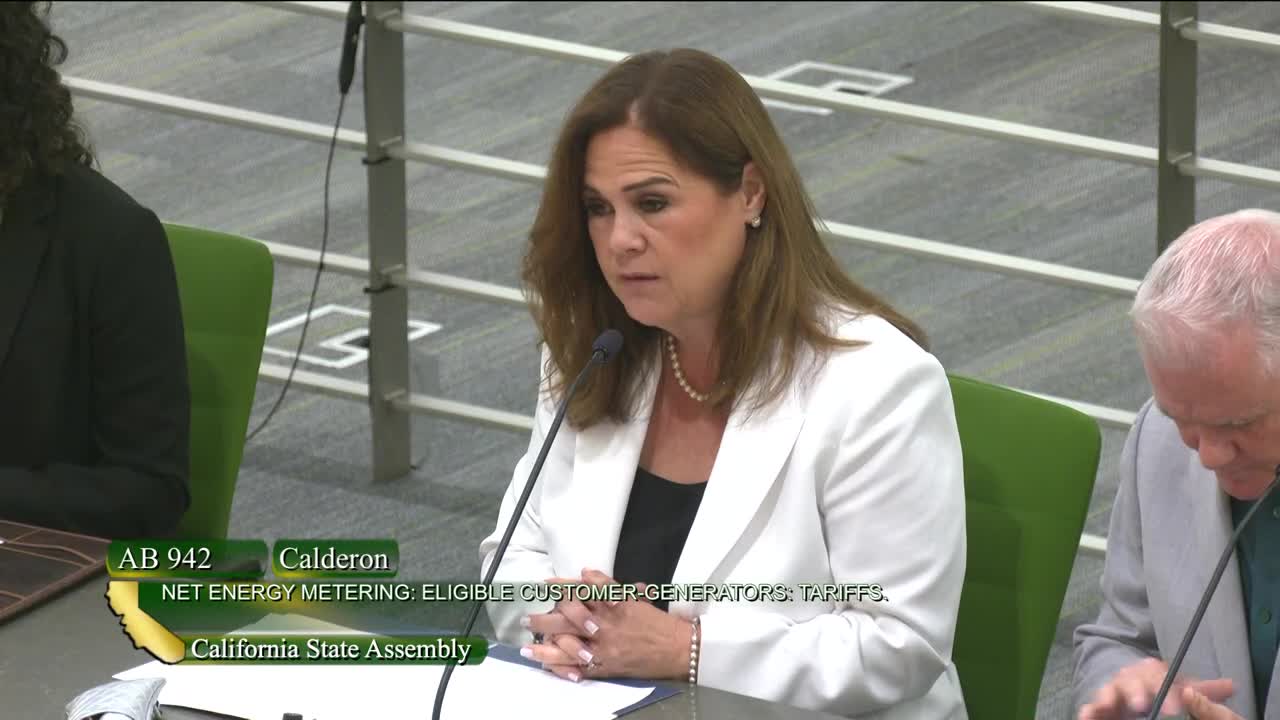 25MIN
Assembly Standing Committee on Appropriations
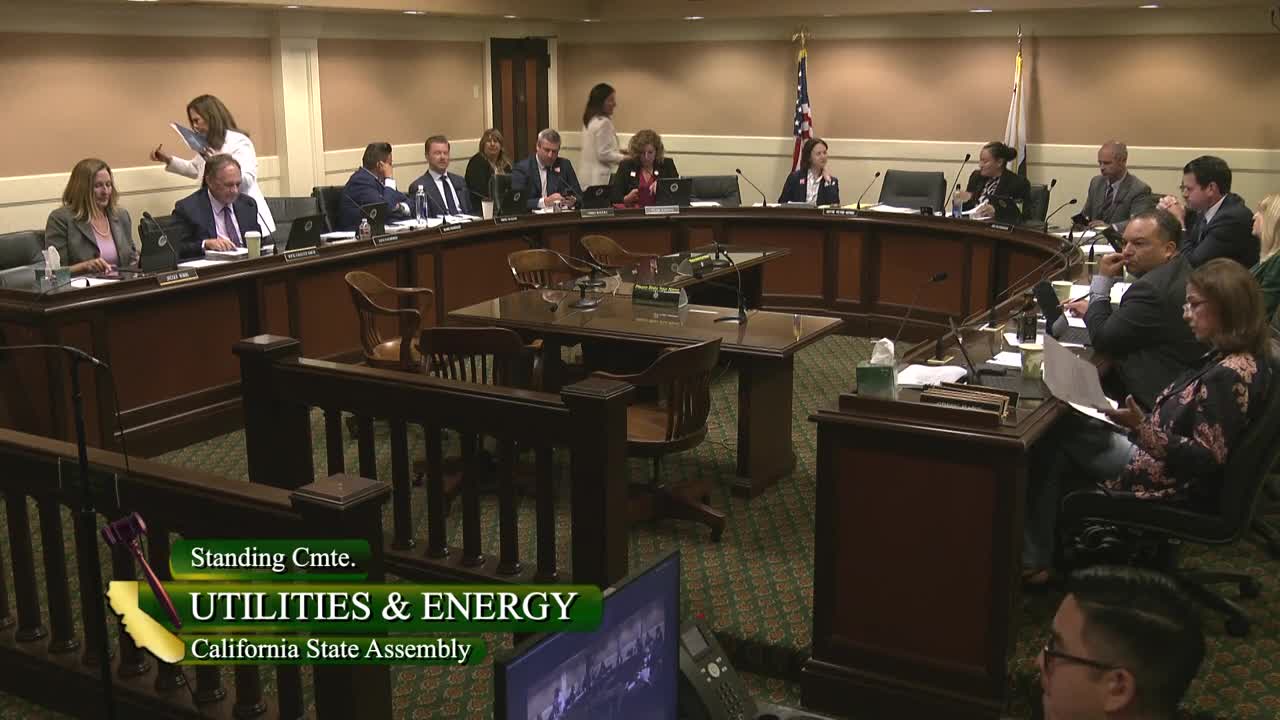 59MIN
Assembly Standing Committee on Utilities and Energy
Bill Author
Bill Co-Author(s):