AB 2410: Wildfire safety: fuels reduction projects: California Environmental Quality Act.
- Session Year: 2025-2026
- House: Assembly
- Latest Version Date: 2026-07-09
Current Status:
In Progress
(2026-08-13: In committee: Held under submission.)
Introduced
In Committee
Awaiting First Chamber Vote
Passed First Chamber
In Committee
Awaiting Second Chamber Vote
Passed Second Chamber
Enacted
The California Environmental Quality Act (CEQA) requires a lead agency, as defined, to prepare, or cause to be prepared, and certify the completion of an environmental impact report on a project that it proposes to carry out or approve that may have a significant effect on the environment or to adopt a negative declaration if it finds that the project will not have that effect. CEQA also requires a lead agency to prepare a mitigated negative declaration for a project that may have a significant effect on the environment if revisions in the project would avoid or mitigate that effect and there is no substantial evidence that the project, as revised, would have a significant effect on the environment. CEQA exempts from its requirements certain projects.
This bill would, until January 1, 2030, exempt from CEQA critical fuels reduction projects that address extremely flammable species, are conducted in communities located in high fire threat districts or very high fire hazard severity zones, as provided. zones, and remove specified nonnative species or common species. The bill would require projects exempt from CEQA pursuant to this exemption to comply with the best management practices under the 2025 Statewide Fuels Reduction Environmental Protection Plan, as provided. The bill would require a lead agency carrying out a project exempt from CEQA pursuant to this exemption to consult with the Department of Fish and Wildlife, as provided, and to, within 90 days of project completion, submit a notice of project completion and a final compliance determination regarding the 2025 Statewide Fuels Reduction Environmental Protection Plan to the Secretary of the Natural Resources Agency and the Secretary for Environmental Protection, as provided. The bill would require, on or before March 1, 2028, and annually thereafter, the Secretary of the Natural Resources Agency to, in consultation with the Secretary for Environmental Protection, submit a report to the Legislature with specified information summarizing the implementation of these provisions during the preceding calendar year. Because a lead agency would be required to determine whether a project qualifies for this exemption, the bill would impose a state-mandated local program.
Existing law, the California Coastal Act of 1976, among other things, requires anyone wishing to perform or undertake any development in the coastal zone, except as specified, in addition to obtaining any other permit required by law from any local government or from any state, regional, or local agency, to obtain a coastal development permit from the California Coastal Commission or a local government, as provided. The act generally requires each local government lying in whole or in part within the coastal zone to prepare a local coastal program for that portion of the coastal zone within its jurisdiction and prescribes procedures for the preparation, approval, and certification of local coastal programs. The act generally prohibits, after certification of a local coastal program and all implementing actions within the affected area, the commission from exercising its coastal development permit review authority over any new development within the area to which the certified local coastal program, or any portion thereof, applies. Under the act, this prohibition does not apply to specified types of development including development proposed or undertaken on any tidelands, submerged lands, or on public trust lands. The act provides that a coastal development permit is not required for specified types of development in specified areas, as provided.This bill would provide that, until January 1, 2030, a coastal development permit is not required for critical fuels reduction projects, as provided. The bill would add these critical fuels reduction projects to the list of specified types of development that the above-described prohibition on the commission exercising its coastal development permit review authority does not apply to. The act provides for the certification of public works plans by the commission and for limited review by the commission for projects contained in a public works plan after certification.This bill would require, on or before January 1, 2028, the commission to report to the Legislature certain information on fuel modification and reduction projects, including the number of fuel modification or reduction projects requested under a public works plan from January 1, 2020, to December 31, 2026, inclusive, among other information.The California Constitution requires the state to reimburse local agencies and school districts for certain costs mandated by the state. Statutory provisions establish procedures for making that reimbursement.
This bill would provide that no reimbursement is required by this act for a specified reason.
The California Environmental Quality Act (CEQA) requires a lead agency, as defined, to prepare, or cause to be prepared, and certify the completion of an environmental impact report on a project that it proposes to carry out or approve that may have a significant effect on the environment or to adopt a negative declaration if it finds that the project will not have that effect. CEQA also requires a lead agency to prepare a mitigated negative declaration for a project that may have a significant effect on the environment if revisions in the project would avoid or mitigate that effect and there is no substantial evidence that the project, as revised, would have a significant effect on the environment. CEQA exempts from its requirements certain projects.
This bill would, until January 1, 2030, exempt from CEQA critical fuels reduction projects conducted in communities located in high fire threat districts or very high fire hazard severity zones, as provided. Because a lead agency would be required to determine whether a project qualifies for this exemption, the bill would impose a state-mandated local program.
Existing law, the California Coastal Act of 1976, among other things, requires anyone wishing to perform or undertake any development in the coastal zone, except as specified, in addition to obtaining any other permit required by law from any local government or from any state, regional, or local agency, to obtain a coastal development permit from the California Coastal Commission or a local government, as provided. The act generally requires each local government lying in whole or in part within the coastal zone to prepare a local coastal program for that portion of the coastal zone within its jurisdiction and prescribes procedures for the preparation, approval, and certification of local coastal programs. The act generally prohibits, after certification of a local coastal program and all implementing actions within the affected area, the commission from exercising its coastal development permit review authority over any new development within the area to which the certified local coastal program, or any portion thereof, applies. Under the act, this prohibition does not apply to specified types of development including development proposed or undertaken on any tidelands, submerged lands, or on public trust lands. The act provides that a coastal development permit is not required for specified types of development in specified areas, as provided.
The bill would add critical fuels reduction projects to the list of specified types of development that the above-described prohibition on the commission exercising its coastal development permit review authority does not apply to.The act provides that a coastal development permit is not required for specified types of development in specified areas, including, among other types of development, repair or maintenance activities that do not result in an addition to, or an enlargement or expansion of, the object of those repair or maintenance activities, as provided.This bill would remove the above-described requirement that the repair or maintenance activities do not result in an addition to, or enlargement or expansion, of the object of the activities. The bill would provide that, until January 1, 2030, a coastal development permit is not required for critical fuels reduction projects, as provided. The bill would add these critical fuels reduction projects to the list of specified types of development that the above-described prohibition on the commission exercising its coastal development permit review authority does not apply to.
The act provides for the certification of public works plans by the commission and for limited review by the commission for projects contained in a public works plan after certification.
This bill would require, on or before January 1, 2028, the commission to report to the Legislature certain information on fuel modification and reduction projects, including the number of fuel modification or reduction projects requested under a public works plan from January 1, 2020, to December 31, 2026, inclusive, among other information.
The California Constitution requires the state to reimburse local agencies and school districts for certain costs mandated by the state. Statutory provisions establish procedures for making that reimbursement.
This bill would provide that no reimbursement is required by this act for a specified reason.
The California Environmental Quality Act (CEQA) requires a lead agency, as defined, to prepare, or cause to be prepared, and certify the completion of an environmental impact report on a project that it proposes to carry out or approve that may have a significant effect on the environment or to adopt a negative declaration if it finds that the project will not have that effect. CEQA also requires a lead agency to prepare a mitigated negative declaration for a project that may have a significant effect on the environment if revisions in the project would avoid or mitigate that effect and there is no substantial evidence that the project, as revised, would have a significant effect on the environment. CEQA exempts from its requirements certain projects.
This bill would, until January 1, 2030, exempt from CEQA critical fuels reduction projects conducted in communities located in high fire threat districts or very high fire hazard severity zones, as provided. The bill would require the lead agency to hold a noticed public meeting to hear and respond to public comments before determining that a project is exempt and would require the lead agency to provide notice of the public meeting on its internet website at least 30 days before the public meeting. The bill would require the lead agency, if it determines that a project is not subject to CEQA and approves or carries out that project, to file a notice of exemption with the Office of Land Use and Climate Innovation and with the clerk of the county in which the project will be located. Because a lead agency would be required to determine whether a project qualifies for this exemption, the bill would impose a state-mandated local program.
Existing law, the California Coastal Act of 1976, among other things, requires anyone wishing to perform or undertake any development in the coastal zone, except as specified, in addition to obtaining any other permit required by law from any local government or from any state, regional, or local agency, to obtain a coastal development permit from the California Coastal Commission or a local government, as provided. The act provides that a coastal development permit is not required for specified types of development in specified areas, as provided. generally requires each local government lying in whole or in part within the coastal zone to prepare a local coastal program for that portion of the coastal zone within its jurisdiction and prescribes procedures for the preparation, approval, and certification of local coastal programs. The act generally prohibits, after certification of a local coastal program and all implementing actions within the affected area, the commission from exercising its coastal development permit review authority over any new development within the area to which the certified local coastal program, or any portion thereof, applies. Under the act, this prohibition does not apply to specified types of development including development proposed or undertaken on any tidelands, submerged lands, or on public trust lands.
The bill would add critical fuels reduction projects to the list of specified types of development that the above-described prohibition on the commission exercising its coastal development permit review authority does not apply to.
The act provides that a coastal development permit is not required for specified types of development in specified areas, including, among other types of development, repair or maintenance activities that do not result in an addition to, or an enlargement or expansion of, the object of those repair or maintenance activities, as provided.
This bill would remove the above-described requirement that the repair or maintenance activities do not result in an addition to, or enlargement or expansion, of the object of the activities. The bill would provide that that, until January 1, 2030, a coastal development permit is not required for critical fuels reduction projects, as provided.
The California Constitution requires the state to reimburse local agencies and school districts for certain costs mandated by the state. Statutory provisions establish procedures for making that reimbursement.
This bill would provide that no reimbursement is required by this act for a specified reason.
Existing law, the California Emergency Services Act, authorizes the Governor to declare a state of emergency during conditions of disaster or extreme peril to persons or property. Existing law authorizes the Governor, during a state of emergency, to suspend any regulatory statute, or statute prescribing the procedure for conduct of state business, or the orders, rules, or regulations of any state agency, if the Governor determines and declares that strict compliance with any statute, order, rule, or regulation would in any way prevent, hinder, or delay the mitigation of the effects of the emergency.
Under the authority of the California Emergency Services Act, on March 1, 2025, Governor Gavin Newsom issued a proclamation of a state of emergency that suspends applicable state statutes, rules, regulations, and requirements that fall within the jurisdiction of boards, departments, and offices within the California Environmental Protection Agency or the Natural Resources Agency to the extent necessary for expediting critical fuels reduction projects, as provided. The proclamation requires an individual or entity desiring to conduct a critical fuels reduction project to request the secretary of the appropriate agency to make a determination that the proposed project is eligible for the suspension and requires the California Environmental Protection Agency and the Natural Resources Agency to maintain on their respective internet website a list of all suspensions approved.
This bill would, on or before January 31, 2028, require the California Environmental Protection Agency and the Natural Resources Agency to each report to the Legislature information on the implementation of the above-described proclamation of emergency, as provided.
The California Environmental Quality Act (CEQA) requires a lead agency, as defined, to prepare, or cause to be prepared, and certify the completion of an environmental impact report on a project that it proposes to carry out or approve that may have a significant effect on the environment or to adopt a negative declaration if it finds that the project will not have that effect. CEQA also requires a lead agency to prepare a mitigated negative declaration for a project that may have a significant effect on the environment if revisions in the project would avoid or mitigate that effect and there is no substantial evidence that the project, as revised, would have a significant effect on the environment. CEQA exempts from its requirements certain projects.
This bill would, until January 1, 2030, exempt from CEQA critical fuels reduction projects conducted in communities located in high fire threat districts or very high fire hazard severity zones, as provided. The bill would require the lead agency to hold a noticed public meeting to hear and respond to public comments before determining that a project is exempt and would require the lead agency to provide notice of the public meeting on its internet website at least 30 days before the public meeting. The bill would require the lead agency, if it determines that a project is not subject to CEQA and approves or carries out that project, to file a notice of exemption with the Office of Land Use and Climate Innovation and with the clerk of the county in which the project will be located. Because a lead agency would be required to determine whether a project qualifies for this exemption, the bill would impose a state-mandated local program.
Existing law, the California Coastal Act of 1976, among other things, requires anyone wishing to perform or undertake any development in the coastal zone, except as specified, in addition to obtaining any other permit required by law from any local government or from any state, regional, or local agency, to obtain a coastal development permit from the California Coastal Commission or a local government, as provided. The act provides that a coastal development permit is not required for specified types of development in specified areas, as provided.
This bill would provide that a coastal development permit is not required for critical fuels reduction projects, as provided.
The California Constitution requires the state to reimburse local agencies and school districts for certain costs mandated by the state. Statutory provisions establish procedures for making that reimbursement.
This bill would provide that no reimbursement is required by this act for a specified reason.
(a)Without limiting any other statutory or categorical exemption provided under this division and subject to subdivision (b), this division does not apply to a critical fuels reduction project that addresses extremely flammable species and is conducted in a community located in a high fire threat district as determined by the Public Utilities Commission, or very high fire hazard severity zone as identified by the State Fire Marshal pursuant to Section 51178 of the Government Code or Section 4202 or as designated by an ordinance pursuant to Section 51179 of the Government Code that does at least one of the following: removes nonnative species 12 inches or less in diameter at breast height or a common species 8 inches or less in diameter at breast height.
(1)Removes hazardous, dead, or dying trees.(2)Removes vegetation for the creation of strategic fuel breaks as identified by approved fire prevention plans, including CAL-FIRE Unit Fire Plans or community wildfire protection plans.(3)Removes vegetation along roadways, highways, and freeways for the creation of safer ingress and egress routes for the public and first responders and to reduce roadside ignitions.(4)Removes vegetation around electric utility lines, poles, and rights-of-way to reduce the risk of wildfire and fire-related service outages.(5)Removes vegetation using cultural traditional ecological knowledge for cultural burning or prescribed fire treatments or both of those types of treatments for fuels reduction projects.(6)Maintains previously established fuel breaks or fuel modification projects.(b)For purposes of paragraphs (2) and (3), subdivision (a) only applies if the vegetation removed for the critical fuels reduction project meets all of the following requirements:(1)The vegetation is a nonnative species.(2)The vegetation is 12 inches or less in diameter.(3)The vegetation is a common species.(c)(b)(1)Projects exempt from this division pursuant to this section shall comply with the best management practices under the 2025 Statewide Fuels Reduction Environmental Protection Plan as prepared by the Natural Resources Agency and the California Environmental Protection Agency. Agency, or its successor document.
(2)A projects compliance with the 2025 Statewide Fuels Reduction Environmental Protection Plan pursuant to paragraph (1) does not exempt the project from a requirement to obtain a permit pursuant to any other law.
(c)The lead agency carrying out a project exempt from this division pursuant to this section shall consult with the Department of Fish and Wildlife to ensure that, to the extent feasible, the project is designed to avoid or minimize impacts to rare, threatened, and endangered plants and wildlife and wildlife nursery sites, including nesting rookeries, spawning areas, fawning areas, and maternal roosts.
(d)Within 90 days of project completion, the lead agency shall submit a notice of project completion and a final determination of compliance with the 2025 Statewide Fuels Reduction Environmental Protection Plan to the Secretary of the Natural Resources Agency and the Secretary for Environmental Protection. The final compliance determination shall include all of the following information:
(1)The 2025 Statewide Fuels Reduction Environmental Protection Plan measures implemented.
(2)Any deviations from the approved project description or 2025 Statewide Fuels Reduction Environmental Protection Plan requirements and the reasons for those deviations.
(3)The status of all required mitigation, restoration, monitoring, and maintenance activities.
(4)Documentation or other evidence sufficient to demonstrate implementation of applicable 2025 Statewide Fuels Reduction Environmental Protection Plan requirements and any measures resulting from consultation with the Department of Fish and Wildlife.
(5)Documentation or other evidence of achievement of all required permits.
(e)The Secretary of the Natural Resources Agency and the Secretary for Environmental Protection may audit project records maintained pursuant to subdivision (d) to evaluate compliance with this chapter and the 2025 Statewide Fuels Reduction Environmental Protection Plan and may issue recommendations to improve implementation of this section.
(f)On or before March 1, 2028, and annually thereafter, the Secretary of the Natural Resources Agency, in consultation with the Secretary for Environmental Protection, shall submit a report to the Legislature, in compliance with Section 9795 of the Government Code, that summarizes implementation of this chapter during the preceding calendar year. The report shall include, at a minimum, all of the following information:
(1)The number of projects determined eligible under this chapter.
(2)The location, acreage, and project type of each project.
(3)The permitting or environmental compliance mechanisms used.
(4)The lead agency responsible for project oversight.
(5)A summary of compliance with the 2025 Statewide Fuels Reduction Environmental Protection Plan, including any identified instances of noncompliance and corrective actions taken.
(6)A summary of mitigation measures implemented.
(7)A summary of ecological monitoring results and any recommendations for improving the 2025 Statewide Fuels Reduction Environmental Protection Plan based on projects exempt from this division pursuant to this section or implementation of this chapter.
(8)Recommendations for statutory or administrative changes to improve wildfire resilience while protecting fish, wildlife, water quality, and other natural resources.
(d)(g) This section shall remain in effect only until January 1, 2030, and as of that date is repealed.
SEC. 2.Section 30519 of the Public Resources Code is amended to read:30519.(a)Except for appeals to the commission, as provided in Section 30603, after a local coastal program, or any portion thereof, has been certified and all implementing actions within the area affected have become effective, the development review authority provided for in Chapter 7 (commencing with Section 30600) shall no longer be exercised by the commission over any new development proposed within the area to which the certified local coastal program, or any portion thereof, applies and shall at that time be delegated to the local government that is implementing the local coastal program or any portion thereof.(b)Subdivision (a) shall not apply to any development proposed or undertaken on any tidelands, submerged lands, or on public trust lands, whether filled or unfilled, lying within the coastal zone, nor shall it apply to a critical fuels reduction project pursuant to subdivision (j) of Section 30610, any development proposed or undertaken within ports covered by Chapter 8 (commencing with Section 30700) or within any state university or college within the coastal zone; however, this section shall apply to any development proposed or undertaken by a port or harbor district or authority on lands or waters granted by the Legislature to a local government whose certified local coastal program includes the specific development plans for the district or authority.(c)The commission may, from time to time, recommend to the appropriate local government local coastal program amendments to accommodate uses of greater than local importance, which uses are not permitted by the applicable certified local coastal program. These uses may be listed generally or the commission may recommend specific uses of greater than local importance for consideration by the appropriate local government.SEC. 3.Section 30610 of the Public Resources Code is amended to read:30610.Notwithstanding any other provision of this division, a coastal development permit shall not be required pursuant to this chapter for the following types of development and in the following areas:(a)Improvements to existing single-family residences; provided, however, that the commission shall specify, by regulation, those classes of development that involve a risk of adverse environmental effect and shall require that a coastal development permit be obtained pursuant to this chapter.(b)Improvements to a structure other than a single-family residence or a public works facility; provided, however, that the commission shall specify, by regulation, those types of improvements that (1) involve a risk of adverse environmental effect, (2) adversely affect public access, or (3) involve a change in use contrary to any policy of this division. Any improvement so specified by the commission shall require a coastal development permit.(c)Maintenance dredging of existing navigation channels or moving dredged material from those channels to a disposal area outside the coastal zone, pursuant to a permit from the United States Army Corps of Engineers.(d)Repair or maintenance activities that do not result in an addition to, or enlargement or expansion of, repair or maintenance activities; provided, however, that if the commission determines that certain extraordinary methods of repair and maintenance involve a risk of substantial adverse environmental impact, it shall, by regulation, require that a permit be obtained pursuant to this chapter.(e)Any category of development, or any category of development within a specifically defined geographic area, that the commission, after public hearing, and by two-thirds vote of its appointed members, has described or identified and with respect to which the commission has found that there is no potential for any significant adverse effect, either individually or cumulatively, on coastal resources or on public access to, or along, the coast and, where the exclusion precedes certification of the applicable local coastal program, that the exclusion will not impair the ability of local government to prepare a local coastal program.(f)The installation, testing, and placement in service or the replacement of a necessary utility connection between an existing service facility and a development approved pursuant to this division; provided, however, that the commission may, where necessary, require reasonable conditions to mitigate any adverse impacts on coastal resources, including scenic resources.(g)(1)The replacement of a structure, other than a public works facility, destroyed by a disaster. The replacement structure shall conform to applicable existing zoning requirements, shall be for the same use as the destroyed structure, shall not exceed either the floor area, height, or bulk of the destroyed structure by more than 10 percent, and shall be sited in the same location on the affected property as the destroyed structure.(2)For purposes of this subdivision, the following definitions apply:(A)Bulk means total interior cubic volume as measured from the exterior surface of the structure.(B)Disaster means a situation in which the force or forces that destroyed the structure to be replaced were beyond the control of its owner.(C)Structure includes landscaping and any erosion control structure or device which is similar to that which existed prior to the occurrence of the disaster.(h)Any activity anywhere in the coastal zone that involves the conversion of any existing multiple-unit residential structure to a time-share project, estate, or use, as defined in Section 11212 of the Business and Professions Code. If any improvement to an existing structure is otherwise exempt from the permit requirements of this division, no coastal development permit shall be required for that improvement on the basis that it is to be made in connection with any conversion exempt pursuant to this subdivision. The division of a multiple-unit residential structure into condominiums, as defined in Section 783 of the Civil Code, shall not be considered a time-share project, estate, or use for purposes of this subdivision.(i)(1)Any proposed development that the executive director finds to be a temporary event that does not have any significant adverse impact upon coastal resources within the meaning of guidelines adopted pursuant to this subdivision by the commission. The commission shall, after public hearing, adopt guidelines to implement this subdivision to assist local governments and persons planning temporary events in complying with this division by specifying the standards that the executive director shall use in determining whether a temporary event is excluded from permit requirements pursuant to this subdivision. The guidelines adopted pursuant to this subdivision shall be exempt from the review of the Office of Administrative Law and from the requirements of Chapter 3.5 (commencing with Section 11340) of Part 1 of Division 3 of Title 2 of the Government Code.(2)Exclusion or waiver from the coastal development permit requirements of this division pursuant to this subdivision does not diminish, waive, or otherwise prevent the commission from asserting and exercising its coastal development permit jurisdiction over any temporary event at any time if the commission determines that the exercise of its jurisdiction is necessary to implement the coastal resource protection policies of Chapter 3 (commencing with Section 30200).(j)(1)A critical fuels reduction project, subject to paragraph (2), that does at least one of the following: (A)Removes hazardous, dead, or dying trees.(B)Removes vegetation for the creation of strategic fuel breaks as identified by approved fire prevention plans, including CAL-FIRE Unit Fire Plans or community wildfire protection plans.(C)Removes vegetation along roadways, highways, and freeways for the creation of safer ingress and egress routes for the public and first responders and to reduce roadside ignitions.(D)Removes vegetation using cultural traditional ecological knowledge for cultural burning or prescribed fire treatments or both of those types of treatments for fuels reduction projects.(E)Removes vegetation around electric utility lines, poles, and rights-of-way to reduce the risk of wildfire and fire-related service outages.(F)Maintains previously established fuel breaks or fuel modification projects.(2)For purposes of subparagraphs (B) and (C) of paragraph (1), paragraph (1) only applies if the vegetation removed for critical fuel reductions projects meets all of the following requirements: (A)The vegetation is a nonnative species.(B)The vegetation is 12 inches or less in diameter.(C)The vegetation is a common species.(3)Projects pursuant to this subdivision shall comply with the best management practices under the 2025 Statewide Fuels Reduction Environmental Protection Plan as prepared by the Natural Resources Agency and the California Environmental Protection Agency.(4)This subdivision shall remain in effect only until January 1, 2030.SEC. 4.Section 30618 is added to the Public Resources Code, immediately following Section 30617, to read:30618.(a)On or before January 1, 2028, the commission shall, in accordance with Section 9795 of the Government Code, report to the Legislature all of the following information:(1)The number of coastal development permit applications for fuel modification or reduction projects received annually by the commission from January 1, 2020, to December 31, 2026, inclusive, including, to the extent this information is available to the commission, both of the following:(A)The number of applications for fuel modification or reductions projects that were approved or denied.(B)The number of notices received from local governments with certified local coastal programs pursuant to Section 30603 for coastal development permit applications for fuel modification or reduction projects that the applicant acted upon.(2)The acreage of fuel modification or reduction projects approved annually under coastal development permits from January 1, 2020, to December 31, 2026, inclusive.(3)The average time annually, from January 1, 2020, to December 31, 2026, inclusive, for a coastal development permit to be approved by the commission for a fuel modification or reduction project after submission of a complete coastal development permit application.(4)The number of fuel modification or reduction projects requested under a public works plan from January 1, 2020, to December 31, 2026, inclusive.(5)The average time annually, from January 1, 2020, to December 31, 2026, inclusive, for the commission to approve a fuel modification or reduction project under a public works plan.(b)This section shall remain in effect only until January 1, 2029, and as of that date is repealed.SEC. 5.SEC. 2.No reimbursement is required by this act pursuant to Section 6 of Article XIIIB of the California Constitution because a local agency or school district has the authority to levy service charges, fees, or assessments sufficient to pay for the program or level of service mandated by this act, within the meaning of Section 17556 of the Government Code.
(a)Without limiting any other statutory or categorical exemption provided under this division and subject to subdivision (b), this division does not apply to a critical fuels reduction project conducted in a community located in a high fire threat district as determined by the Public Utilities Commission, or very high fire hazard severity zone as identified by the State Fire Marshal pursuant to Section 51178 of the Government Code or Section 4202 or as designated by an ordinance pursuant to Section 51179 of the Government Code that does at least one of the following:
(1)Removes hazardous, dead, or dying trees.
(2)Removes vegetation for the creation of strategic fuel breaks as identified by approved fire prevention plans, including CAL-FIRE Unit Fire Plans or community wildfire protection plans.
(3)Removes vegetation along roadways, highways, and freeways for the creation of safer ingress and egress routes for the public and first responders and to reduce roadside ignitions.
(4)Removes vegetation around electric utility lines, poles, and rights-of-way to reduce the risk of wildfire and fire-related service outages.
(5)Removes vegetation using cultural traditional ecological knowledge for cultural burning or prescribed fire treatments or both of those types of treatments for fuels reduction projects.
(6)Maintains previously established fuel breaks or fuel modification projects.
(b)For purposes of paragraphs (2) and (3), subdivision (a) only applies if the vegetation removed for the critical fuels reduction project meets all of the following requirements:
(1)The vegetation is a nonnative species.
(2)The vegetation is 12 inches or less in diameter.
(3)The vegetation is a common species.
(c)Projects exempt from this division pursuant to this section shall comply with the best management practices under the 2025 Statewide Fuels Reduction Environmental Protection Plan as prepared by the Natural Resources Agency and the California Environmental Protection Agency.
(c)(d) This section shall remain in effect only until January 1, 2030, and as of that date is repealed.
SEC. 2.Section 30519 of the Public Resources Code is amended to read:30519.(a)Except for appeals to the commission, as provided in Section 30603, after a local coastal program, or any portion thereof, has been certified and all implementing actions within the area affected have become effective, the development review authority provided for in Chapter 7 (commencing with Section 30600) shall no longer be exercised by the commission over any new development proposed within the area to which the certified local coastal program, or any portion thereof, applies and shall at that time be delegated to the local government that is implementing the local coastal program or any portion thereof.
(b)Subdivision (a) shall not apply to any development proposed or undertaken on any tidelands, submerged lands, or on public trust lands, whether filled or unfilled, lying within the coastal zone, nor shall it apply to a critical fuels reduction project, project pursuant to subdivision (j) of Section 30610, any development proposed or undertaken within ports covered by Chapter 8 (commencing with Section 30700) or within any state university or college within the coastal zone; however, this section shall apply to any development proposed or undertaken by a port or harbor district or authority on lands or waters granted by the Legislature to a local government whose certified local coastal program includes the specific development plans for the district or authority.
(c)The commission may, from time to time, recommend to the appropriate local government local coastal program amendments to accommodate uses of greater than local importance, which uses are not permitted by the applicable certified local coastal program. These uses may be listed generally or the commission may recommend specific uses of greater than local importance for consideration by the appropriate local government.
SEC. 3.Section 30610 of the Public Resources Code is amended to read:30610.Notwithstanding any other provision of this division, a coastal development permit shall not be required pursuant to this chapter for the following types of development and in the following areas:
(a)Improvements to existing single-family residences; provided, however, that the commission shall specify, by regulation, those classes of development that involve a risk of adverse environmental effect and shall require that a coastal development permit be obtained pursuant to this chapter.
(b)Improvements to a structure other than a single-family residence or a public works facility; provided, however, that the commission shall specify, by regulation, those types of improvements that (1) involve a risk of adverse environmental effect, (2) adversely affect public access, or (3) involve a change in use contrary to any policy of this division. Any improvement so specified by the commission shall require a coastal development permit.
(c)Maintenance dredging of existing navigation channels or moving dredged material from those channels to a disposal area outside the coastal zone, pursuant to a permit from the United States Army Corps of Engineers.
(d)Repair or maintenance activities that do not result in an addition to, or enlargement or expansion of, repair or maintenance activities; provided, however, that if the commission determines that certain extraordinary methods of repair and maintenance involve a risk of substantial adverse environmental impact, it shall, by regulation, require that a permit be obtained pursuant to this chapter.
(e)Any category of development, or any category of development within a specifically defined geographic area, that the commission, after public hearing, and by two-thirds vote of its appointed members, has described or identified and with respect to which the commission has found that there is no potential for any significant adverse effect, either individually or cumulatively, on coastal resources or on public access to, or along, the coast and, where the exclusion precedes certification of the applicable local coastal program, that the exclusion will not impair the ability of local government to prepare a local coastal program.
(f)The installation, testing, and placement in service or the replacement of a necessary utility connection between an existing service facility and a development approved pursuant to this division; provided, however, that the commission may, where necessary, require reasonable conditions to mitigate any adverse impacts on coastal resources, including scenic resources.
(g)(1)The replacement of a structure, other than a public works facility, destroyed by a disaster. The replacement structure shall conform to applicable existing zoning requirements, shall be for the same use as the destroyed structure, shall not exceed either the floor area, height, or bulk of the destroyed structure by more than 10 percent, and shall be sited in the same location on the affected property as the destroyed structure.
(2)For purposes of this subdivision, the following definitions apply:
(A)Bulk means total interior cubic volume as measured from the exterior surface of the structure.
(B)Disaster means a situation in which the force or forces that destroyed the structure to be replaced were beyond the control of its owner.
(C)Structure includes landscaping and any erosion control structure or device which is similar to that which existed prior to the occurrence of the disaster.
(h)Any activity anywhere in the coastal zone that involves the conversion of any existing multiple-unit residential structure to a time-share project, estate, or use, as defined in Section 11212 of the Business and Professions Code. If any improvement to an existing structure is otherwise exempt from the permit requirements of this division, no coastal development permit shall be required for that improvement on the basis that it is to be made in connection with any conversion exempt pursuant to this subdivision. The division of a multiple-unit residential structure into condominiums, as defined in Section 783 of the Civil Code, shall not be considered a time-share project, estate, or use for purposes of this subdivision.
(i)(1)Any proposed development that the executive director finds to be a temporary event that does not have any significant adverse impact upon coastal resources within the meaning of guidelines adopted pursuant to this subdivision by the commission. The commission shall, after public hearing, adopt guidelines to implement this subdivision to assist local governments and persons planning temporary events in complying with this division by specifying the standards that the executive director shall use in determining whether a temporary event is excluded from permit requirements pursuant to this subdivision. The guidelines adopted pursuant to this subdivision shall be exempt from the review of the Office of Administrative Law and from the requirements of Chapter 3.5 (commencing with Section 11340) of Part 1 of Division 3 of Title 2 of the Government Code.
(2)Exclusion or waiver from the coastal development permit requirements of this division pursuant to this subdivision does not diminish, waive, or otherwise prevent the commission from asserting and exercising its coastal development permit jurisdiction over any temporary event at any time if the commission determines that the exercise of its jurisdiction is necessary to implement the coastal resource protection policies of Chapter 3 (commencing with Section 30200).
(j)(1)A critical fuels reduction project, subject to paragraph (2), that does at least one of the following:
(A)Removes hazardous, dead, or dying trees.
(B)Removes vegetation for the creation of strategic fuel breaks as identified by approved fire prevention plans, including CAL-FIRE Unit Fire Plans or community wildfire protection plans.
(C)Removes vegetation along roadways, highways, and freeways for the creation of safer ingress and egress routes for the public and first responders and to reduce roadside ignitions.
(D)Removes vegetation using cultural traditional ecological knowledge for cultural burning or prescribed fire treatments or both of those types of treatments for fuels reduction projects.
(E)Removes vegetation around electric utility lines, poles, and rights-of-way to reduce the risk of wildfire and fire-related service outages.
(F)Maintains previously established fuel breaks or fuel modification projects.
(2)For purposes of subparagraphs (B) and (C) of paragraph (1), paragraph (1) only applies if the vegetation removed for critical fuel reductions projects meets all of the following requirements:
(A)The vegetation is a nonnative species.
(B)The vegetation is 12 inches or less in diameter.
(C)The vegetation is a common species.
(3)Projects pursuant to this subdivision shall comply with the best management practices under the 2025 Statewide Fuels Reduction Environmental Protection Plan as prepared by the Natural Resources Agency and the California Environmental Protection Agency.
(3)(4)This subdivision shall remain in effect only until January 1, 2030.
SEC. 4.Section 30618 is added to the Public Resources Code, immediately following Section 30617, to read:30618.(a)On or before January 1, 2028, the commission shall, in accordance with Section 9795 of the Government Code, report to the Legislature all of the following information:
(1)The number of coastal development permit applications for fuel modification or reduction projects received annually by the commission from January 1, 2020, to December 31, 2026, inclusive, including, to the extent this information is available to the commission, both of the following:
(A)The number of applications for fuel modification or reductions projects that were approved or denied.
(B)The number of notices received from local governments with certified local coastal programs pursuant to Section 30603 for coastal development permit applications for fuel modification or reduction projects that the applicant acted upon.
(2)The acreage of fuel modification or reduction projects approved annually under coastal development permits from January 1, 2020, to December 31, 2026, inclusive.
(3)The average time annually, from January 1, 2020, to December 31, 2026, inclusive, for a coastal development permit to be approved by the commission for a fuel modification or reduction project after submission of a complete coastal development permit application.
(4)The number of fuel modification or reduction projects requested under a public works plan from January 1, 2020, to December 31, 2026, inclusive.
(5)The average time annually, from January 1, 2020, to December 31, 2026, inclusive, for the commission to approve a fuel modification or reduction project under a public works plan.
(b)This section shall remain in effect only until January 1, 2029, and as of that date is repealed.
SEC. 4.SEC. 5.No reimbursement is required by this act pursuant to Section 6 of Article XIIIB of the California Constitution because a local agency or school district has the authority to levy service charges, fees, or assessments sufficient to pay for the program or level of service mandated by this act, within the meaning of Section 17556 of the Government Code.
(a)Without limiting any other statutory or categorical exemption provided under this division and subject to subdivision (b), this division does not apply to a critical fuels reduction project conducted in a community located in a high fire threat district as determined by the Public Utilities Commission, or very high fire hazard severity zone as identified by the State Fire Marshal pursuant to Section 51178 of the Government Code or Section 4202 or as designated by an ordinance pursuant to Section 51179 of the Government Code that does at least one of the following:
(1)Removes hazardous, dead, or dying trees.
(2)Removes vegetation for the creation of strategic fuel breaks as identified by approved fire prevention plans, including CAL-FIRE Unit Fire Plans or community wildfire protection plans.
(3)Removes vegetation along roadways, highways, and freeways for the creation of safer ingress and egress routes for the public and first responders and to reduce roadside ignitions.
(4)Removes vegetation around electric utility lines, poles, and rights-of-way to reduce the risk of wildfire and fire-related service outages.
(4)(5)Removes vegetation using cultural traditional ecological knowledge for cultural burning or prescribed fire treatments or both of those types of treatments for fuels reduction projects.
(5)(6)Maintains previously established fuel breaks or fuel modification projects.
(b)For purposes of paragraphs (2) and (3), subdivision (a) only applies if the vegetation removed for the critical fuels reduction project meets all of the following requirements:
(1)The vegetation is a nonnative species.
(2)The vegetation is eight 12 inches or less in diameter.
(3)The vegetation is a common species.
(c)Before determining that a project is not subject to this division pursuant to this section, the lead agency shall hold a noticed public meeting on the project to hear and respond to public comments. The lead agency shall provide notice of the public meeting on its internet website at least 30 days before the public meeting.(d)If the lead agency determines that a project is not subject to this division pursuant to this section, and the lead agency determines to approve or carry out that project, the lead agency shall file a notice of exemption with the Office of Land Use and Climate Innovation and the county clerk in the county in which the project is located in the manner specified in subdivisions (b) and (c) of Section 21152.(e)(c) This section shall remain in effect only until January 1, 2030, and as of that date is repealed.
SEC. 2.Section 30519 of the Public Resources Code is amended to read:30519.(a)Except for appeals to the commission, as provided in Section 30603, after a local coastal program, or any portion thereof, has been certified and all implementing actions within the area affected have become effective, the development review authority provided for in Chapter 7 (commencing with Section 30600) shall no longer be exercised by the commission over any new development proposed within the area to which the certified local coastal program, or any portion thereof, applies and shall at that time be delegated to the local government that is implementing the local coastal program or any portion thereof.
(b)Subdivision (a) shall not apply to any development proposed or undertaken on any tidelands, submerged lands, or on public trust lands, whether filled or unfilled, lying within the coastal zone, nor shall it apply to a critical fuels reduction project, any development proposed or undertaken within ports covered by Chapter 8 (commencing with Section 30700) or within any state university or college within the coastal zone; however, this section shall apply to any development proposed or undertaken by a port or harbor district or authority on lands or waters granted by the Legislature to a local government whose certified local coastal program includes the specific development plans for such the district or authority.
(c)The commission may, from time to time, recommend to the appropriate local government local coastal program amendments to accommodate uses of greater than local importance, which uses are not permitted by the applicable certified local coastal program. These uses may be listed generally or the commission may recommend specific uses of greater than local importance for consideration by the appropriate local government.
SEC. 2.SEC. 3.Section 30610 of the Public Resources Code is amended to read:30610.Notwithstanding any other provision of this division, a coastal development permit shall not be required pursuant to this chapter for the following types of development and in the following areas:
(a)Improvements to existing single-family residences; provided, however, that the commission shall specify, by regulation, those classes of development that involve a risk of adverse environmental effect and shall require that a coastal development permit be obtained pursuant to this chapter.
(b)Improvements to a structure other than a single-family residence or a public works facility; provided, however, that the commission shall specify, by regulation, those types of improvements that (1) involve a risk of adverse environmental effect, (2) adversely affect public access, or (3) involve a change in use contrary to any policy of this division. Any improvement so specified by the commission shall require a coastal development permit.
(c)Maintenance dredging of existing navigation channels or moving dredged material from those channels to a disposal area outside the coastal zone, pursuant to a permit from the United States Army Corps of Engineers.
(d)Repair or maintenance activities that do not result in an addition to, or enlargement or expansion of, the object of those repair or maintenance activities; activities; provided, however, that if the commission determines that certain extraordinary methods of repair and maintenance involve a risk of substantial adverse environmental impact, it shall, by regulation, require that a permit be obtained pursuant to this chapter.
(e)Any category of development, or any category of development within a specifically defined geographic area, that the commission, after public hearing, and by two-thirds vote of its appointed members, has described or identified and with respect to which the commission has found that there is no potential for any significant adverse effect, either individually or cumulatively, on coastal resources or on public access to, or along, the coast and, where the exclusion precedes certification of the applicable local coastal program, that the exclusion will not impair the ability of local government to prepare a local coastal program.
(f)The installation, testing, and placement in service or the replacement of a necessary utility connection between an existing service facility and a development approved pursuant to this division; provided, however, that the commission may, where necessary, require reasonable conditions to mitigate any adverse impacts on coastal resources, including scenic resources.
(g)(1)The replacement of a structure, other than a public works facility, destroyed by a disaster. The replacement structure shall conform to applicable existing zoning requirements, shall be for the same use as the destroyed structure, shall not exceed either the floor area, height, or bulk of the destroyed structure by more than 10 percent, and shall be sited in the same location on the affected property as the destroyed structure.
(2)For purposes of this subdivision, the following definitions apply:
(A)Disaster means a situation in which the force or forces that destroyed the structure to be replaced were beyond the control of its owner.(B)(A)Bulk means total interior cubic volume as measured from the exterior surface of the structure.
(B)Disaster means a situation in which the force or forces that destroyed the structure to be replaced were beyond the control of its owner.
(C)Structure includes landscaping and any erosion control structure or device which is similar to that which existed prior to the occurrence of the disaster.
(h)Any activity anywhere in the coastal zone that involves the conversion of any existing multiple-unit residential structure to a time-share project, estate, or use, as defined in Section 11212 of the Business and Professions Code. If any improvement to an existing structure is otherwise exempt from the permit requirements of this division, no coastal development permit shall be required for that improvement on the basis that it is to be made in connection with any conversion exempt pursuant to this subdivision. The division of a multiple-unit residential structure into condominiums, as defined in Section 783 of the Civil Code, shall not be considered a time-share project, estate, or use for purposes of this subdivision.
(i)(1)Any proposed development that the executive director finds to be a temporary event that does not have any significant adverse impact upon coastal resources within the meaning of guidelines adopted pursuant to this subdivision by the commission. The commission shall, after public hearing, adopt guidelines to implement this subdivision to assist local governments and persons planning temporary events in complying with this division by specifying the standards that the executive director shall use in determining whether a temporary event is excluded from permit requirements pursuant to this subdivision. The guidelines adopted pursuant to this subdivision shall be exempt from the review of the Office of Administrative Law and from the requirements of Chapter 3.5 (commencing with Section 11340) of Part 1 of Division 3 of Title 2 of the Government Code.
(2)Exclusion or waiver from the coastal development permit requirements of this division pursuant to this subdivision does not diminish, waive, or otherwise prevent the commission from asserting and exercising its coastal development permit jurisdiction over any temporary event at any time if the commission determines that the exercise of its jurisdiction is necessary to implement the coastal resource protection policies of Chapter 3 (commencing with Section 30200).
(j)(1)A critical fuels reduction project, subject to paragraph (2), that does at least one of the following:
(A)Removes hazardous, dead, or dying trees.
(B)Removes vegetation for the creation of strategic fuel breaks as identified by approved fire prevention plans, including CAL-FIRE Unit Fire Plans or community wildfire protection plans.
(C)Removes vegetation along roadways, highways, and freeways for the creation of safer ingress and egress routes for the public and first responders and to reduce roadside ignitions.
(D)Removes vegetation using cultural traditional ecological knowledge for cultural burning or prescribed fire treatments or both of those types of treatments for fuels reduction projects.
(E)Removes vegetation around electric utility lines, poles, and rights-of-way to reduce the risk of wildfire and fire-related service outages.
(E)(F)Maintains previously established fuel breaks or fuel modification projects.
(2)For purposes of subparagraphs (B) and (C) of paragraph (1), paragraph (1) only applies if the vegetation removed for critical fuel reductions projects meets all of the following requirements:
(A)The vegetation is a nonnative species.
(B)The vegetation is eight 12 inches or less in diameter.
(C)The vegetation is a common species.
(3)This subdivision shall remain in effect only until January 1, 2030.
SEC. 3.On or before January 31, 2028, the Natural Resources Agency and the California Environmental Protection Agency shall, in accordance with Section 9795 of the Government Code, each report to the Legislature on the implementation of the proclamation of a state of emergency issued by Governor Gavin Newsom on March 1, 2025, that suspends applicable state statutes, rules, regulations, and requirements that fall within the jurisdiction of boards, departments, and offices within the California Environmental Protection Agency or the Natural Resources Agency to the extent necessary for expediting critical fuels reduction projects. The report from each of those agencies shall contain all of the following information:(a)A list of all entities that requested the secretary of the reporting agency to make a determination that the requested activity is eligible for the suspension as a critical fuels reduction project under the proclamation.(b)A list of all entities that used the suspension provided under the proclamation by either reporting agency or both reporting agencies after the reporting agency made the determination on eligibility for the suspension.(c)Detailed information on the projects of each entity for which the suspension was provided, including location, treatment, and acreage.(d)Information on how the project for which suspension was provided advances the states wildfire mitigation and forest health treatment goals.(e)Information about instances in which any project for which suspension was provided failed to comply with the 2020 Statewide FiresEnvironmental Protection Plan and to what extent the noncompliance is known.SEC. 4.No reimbursement is required by this act pursuant to Section 6 of Article XIIIB of the California Constitution because a local agency or school district has the authority to levy service charges, fees, or assessments sufficient to pay for the program or level of service mandated by this act, within the meaning of Section 17556 of the Government Code.
(a)Without limiting any other statutory or categorical exemption provided under this division and subject to subdivision (b), this division does not apply to a critical fuels reduction project conducted in a community located in a high fire threat district as determined by the Public Utilities Commission, or very high fire hazard severity zone as identified by the State Fire Marshal pursuant to Section 51178 of the Government Code or Section 4202 or as designated by an ordinance pursuant to Section 51179 of the Government Code that does at least one of the following:
(1)Removes hazardous, dead, or dying trees.
(2)Removes vegetation for the creation of strategic fuel breaks as identified by approved fire prevention plans, including CAL-FIRE Unit Fire Plans or community wildfire protection plans.
(3)Removes vegetation along roadways, highways, and freeways for the creation of safer ingress and egress routes for the public and first responders and to reduce roadside ignitions.
(4)Removes vegetation using cultural traditional ecological knowledge for cultural burning or prescribed fire treatments or both of those types of treatments for fuels reduction projects.
(5)Maintains previously established fuel breaks or fuel modification projects.
(b)For purposes of paragraphs (2) and (3), subdivision (a) only applies if the vegetation removed for the critical fuels reduction project meets all of the following requirements:
(1)The vegetation is a nonnative species.
(2)The vegetation is eight inches or less in diameter.
(3)The vegetation is a common species.
(c)Before determining that a project is not subject to this division pursuant to this section, the lead agency shall hold a noticed public meeting on the project to hear and respond to public comments. The lead agency shall provide notice of the public meeting on its internet website at least 30 days before the public meeting.
(d)If the lead agency determines that a project is not subject to this division pursuant to this section, and the lead agency determines to approve or carry out that project, the lead agency shall file a notice of exemption with the Office of Land Use and Climate Innovation and the county clerk in the county in which the project is located in the manner specified in subdivisions (b) and (c) of Section 21152.
(e) This section shall remain in effect only until January 1, 2030, and as of that date is repealed.
SEC. 2.Section 30610 of the Public Resources Code is amended to read:30610.Notwithstanding any other provision of this division, no a coastal development permit shall not be required pursuant to this chapter for the following types of development and in the following areas:
(a)Improvements to existing single-family residences; provided, however, that the commission shall specify, by regulation, those classes of development which that involve a risk of adverse environmental effect and shall require that a coastal development permit be obtained pursuant to this chapter.
(b)Improvements to any a structure other than a single-family residence or a public works facility; provided, however, that the commission shall specify, by regulation, those types of improvements which that (1) involve a risk of adverse environmental effect, (2) adversely affect public access, or (3) involve a change in use contrary to any policy of this division. Any improvement so specified by the commission shall require a coastal development permit.
(c)Maintenance dredging of existing navigation channels or moving dredged material from those channels to a disposal area outside the coastal zone, pursuant to a permit from the United States Army Corps of Engineers.
(d)Repair or maintenance activities that do not result in an addition to, or enlargement or expansion of, the object of those repair or maintenance activities; provided, however, that if the commission determines that certain extraordinary methods of repair and maintenance involve a risk of substantial adverse environmental impact, it shall, by regulation, require that a permit be obtained pursuant to this chapter.
(e)Any category of development, or any category of development within a specifically defined geographic area, that the commission, after public hearing, and by two-thirds vote of its appointed members, has described or identified and with respect to which the commission has found that there is no potential for any significant adverse effect, either individually or cumulatively, on coastal resources or on public access to, or along, the coast and, where the exclusion precedes certification of the applicable local coastal program, that the exclusion will not impair the ability of local government to prepare a local coastal program.
(f)The installation, testing, and placement in service or the replacement of any a necessary utility connection between an existing service facility and any a development approved pursuant to this division; provided, however, that the commission may, where necessary, require reasonable conditions to mitigate any adverse impacts on coastal resources, including scenic resources.
(g)(1)The replacement of any a structure, other than a public works facility, destroyed by a disaster. The replacement structure shall conform to applicable existing zoning requirements, shall be for the same use as the destroyed structure, shall not exceed either the floor area, height, or bulk of the destroyed structure by more than 10 percent, and shall be sited in the same location on the affected property as the destroyed structure.
(2)As used in this subdivision: For purposes of this subdivision, the following definitions apply:
(A)Disaster means any a situation in which the force or forces which that destroyed the structure to be replaced were beyond the control of its owner.
(B)Bulk means total interior cubic volume as measured from the exterior surface of the structure.
(C)Structure includes landscaping and any erosion control structure or device which is similar to that which existed prior to the occurrence of the disaster.
(h)Any activity anywhere in the coastal zone that involves the conversion of any existing multiple-unit residential structure to a time-share project, estate, or use, as defined in Section 11212 of the Business and Professions Code. If any improvement to an existing structure is otherwise exempt from the permit requirements of this division, no coastal development permit shall be required for that improvement on the basis that it is to be made in connection with any conversion exempt pursuant to this subdivision. The division of a multiple-unit residential structure into condominiums, as defined in Section 783 of the Civil Code, shall not be considered a time-share project, estate, or use for purposes of this subdivision.
(i)(1)Any proposed development which that the executive director finds to be a temporary event which that does not have any significant adverse impact upon coastal resources within the meaning of guidelines adopted pursuant to this subdivision by the commission. The commission shall, after public hearing, adopt guidelines to implement this subdivision to assist local governments and persons planning temporary events in complying with this division by specifying the standards which that the executive director shall use in determining whether a temporary event is excluded from permit requirements pursuant to this subdivision. The guidelines adopted pursuant to this subdivision shall be exempt from the review of the Office of Administrative Law and from the requirements of Chapter 3.5 (commencing with Section 11340) of Part 1 of Division 3 of Title 2 of the Government Code.
(2)Exclusion or waiver from the coastal development permit requirements of this division pursuant to this subdivision does not diminish, waive, or otherwise prevent the commission from asserting and exercising its coastal development permit jurisdiction over any temporary event at any time if the commission determines that the exercise of its jurisdiction is necessary to implement the coastal resource protection policies of Chapter 3 (commencing with Section 30200).
(j)(1)A critical fuels reduction project, subject to paragraph (2), that does at least one of the following:
(A)Removes hazardous, dead, or dying trees.
(B)Removes vegetation for the creation of strategic fuel breaks as identified by approved fire prevention plans, including CAL-FIRE Unit Fire Plans or community wildfire protection plans.
(C)Removes vegetation along roadways, highways, and freeways for the creation of safer ingress and egress routes for the public and first responders and to reduce roadside ignitions.
(D)Removes vegetation using cultural traditional ecological knowledge for cultural burning or prescribed fire treatments or both of those types of treatments for fuels reduction projects.
(E)Maintains previously established fuel breaks or fuel modification projects.
(2)For purposes of subparagraphs (B) and (C) of paragraph (1), paragraph (1) only applies if the vegetation removed for critical fuel reductions projects meets all of the following requirements:
(A)The vegetation is a nonnative species.
(B)The vegetation is eight inches or less in diameter.
(C)The vegetation is a common species.
SEC. 3.On or before January 31, 2028, the Natural Resources Agency and the California Environmental Protection Agency shall, in accordance with Section 9795 of the Government Code, each report to the Legislature on the implementation of the proclamation of a state of emergency issued by Governor Gavin Newsom on March 1, 2025, that suspends applicable state statutes, rules, regulations, and requirements that fall within the jurisdiction of boards, departments, and offices within the California Environmental Protection Agency or the Natural Resources Agency to the extent necessary for expediting critical fuels reduction projects. The report from each of those agencies shall contain all of the following information:
(a)A list of all entities that requested the secretary of the reporting agency to make a determination that the requested activity is eligible for the suspension as a critical fuels reduction project under the proclamation.
(b)A list of all entities that used the suspension provided under the proclamation by either reporting agency or both reporting agencies after the reporting agency made the determination on eligibility for the suspension.
(c)Detailed information on the projects of each entity for which the suspension was provided, including location, treatment, and acreage.
(d)Information on how the project for which suspension was provided advances the states wildfire mitigation and forest health treatment goals.
(e)Information about instances in which any project for which suspension was provided failed to comply with the 2020 Statewide FiresEnvironmental Protection Plan and to what extent the noncompliance is known.
SEC. 4.No reimbursement is required by this act pursuant to Section 6 of Article XIIIB of the California Constitution because a local agency or school district has the authority to levy service charges, fees, or assessments sufficient to pay for the program or level of service mandated by this act, within the meaning of Section 17556 of the Government Code.
|
Date
|
Status
|
|---|---|
| Aug 13, 2026 | In committee: Held under submission. |
| Aug 3, 2026 | In committee: Referred to APPR. suspense file. |
| Jul 9, 2026 | Read second time and amended. Re-referred to Com. on APPR. |
| Jul 9, 2026 | From committee: Amend, and do pass as amended and re-refer to Com. on APPR. (Ayes 7. Noes 0.) (July 1). |
| Jun 24, 2026 | From committee: Do pass and re-refer to Com. on N.R. & W. (Ayes 6. Noes 0.) (June 24). Re-referred to Com. on N.R. & W. |
| Jun 10, 2026 | Referred to Coms. on E.Q. and N.R. & W. |
| May 28, 2026 | In Senate. Read first time. To Com. on RLS. for assignment. |
| May 27, 2026 | Read third time. Passed. Ordered to the Senate. (Ayes 60. Noes 1.) |
| May 27, 2026 | Read third time. Passed. Ordered to the Senate. (Ayes 60. Noes 1. Page 5463.) |
| May 27, 2026 | Read third time. Passed. Ordered to the Senate. |
| May 18, 2026 | Read second time. Ordered to third reading. |
| May 14, 2026 | From committee: Do pass. (Ayes 15. Noes 0.) (May 14). |
| May 6, 2026 | In committee: Set, first hearing. Referred to APPR. suspense file. |
| Apr 23, 2026 | Re-referred to Com. on APPR. |
| Apr 22, 2026 | Read second time and amended. |
| Apr 21, 2026 | From committee: Amend, and do pass as amended and re-refer to Com. on APPR. (Ayes 11. Noes 0.) (April 20). |
| Apr 14, 2026 | Re-referred to Com. on NAT. RES. |
| Apr 13, 2026 | From committee chair, with author's amendments: Amend, and re-refer to Com. on NAT. RES. Read second time and amended. |
| Mar 9, 2026 | Referred to Com. on NAT. RES. |
| Feb 21, 2026 | From printer. May be heard in committee March 23. |
| Feb 20, 2026 | Read first time. To print. |
|
Date
|
Description
|
Location
|
Votes
|
|
|---|---|---|---|---|
| Aug 3, 2026 | Placed on suspense file | Senate Standing Committee on Appropriations |
Passed |
|
| Jul 1, 2026 | Do pass as amended, but first amend, and re-refer to the Committee on [Appropriations] | Senate Standing Committee on Natural Resources and Water |
Passed |
|
| Jun 24, 2026 | Do pass, but first be re-referred to the Committee on [Natural Resources and Water] | Senate Standing Committee on Environmental Quality |
Passed |
|
| May 27, 2026 | AB 2410 Ellis Assembly Third Reading | Assembly Floor |
Passed |
|
| May 14, 2026 | Do pass. | Assembly Standing Committee on Appropriations |
Passed |
|
| Apr 20, 2026 | Do pass as amended and be re-referred to the Committee on [Appropriations] | Assembly Standing Committee on Natural Resources |
Passed |
This list shows positions taken on this bill by organizations on the date displayed, which is linked to the original source.
Positions by individuals are not included.
|
Organization
|
Position
|
Date
|
|---|---|---|
| Association of California Water Agencies (ACWA) | ** Support | |
| California Association Of Realtors | ** Support | |
| California Chaparral Institute | ** Against | |
| California Farm Bureau Federation | ** Support | |
| California Native Plant Society | ** Against | |
| California State Association of Counties (CSAC) | ** Support | |
| Center For Biological Diversity | ** Against | |
| Endangered Habitats League | ** Against | |
| League Of California Cities | ** Support | |
| Orange County Fire Authority | ** Support | |
| Pacific Gas And Electric Company | ** Support | |
| Planning And Conservation League | ** Against | |
| Rural County Representatives of California | ** Support | |
| Sierra Club | ** Against | |
| State Alliance for Firesafe Road Regulations | ** Against | |
| State Alliance for Firesafe Road Regulations (SAFRR) | ** Against |
SENATE COMMITTEE ON
Senator Sabrina Cervantes, Chair
2025 - 2026 Regular Session
AB 2410 (Ellis) - Wildfire safety: fuels reduction projects: California Environmental Quality Act
Version: | Policy Vote: |
Urgency: | Mandate: |
Hearing Date: | Consultant: |
Bill Summary:
This bill would exempt from the California Environmental Quality Act (CEQA) critical fuels reduction projects that target extremely flammable species, take place in communities within high fire threat districts or very high fire hazard severity zones, and remove specified nonnative or common species, as provided.
Fiscal Impact:
- The Department of Parks and Recreation (State Parks) estimates ongoing costs of roughly $3.2 million in the first year and $2.7 million annually thereafter (General Fund) to navigate project review, work with utility companies, and conduct assessments related to proposed projects in and near State Parks managed lands. This bill would significantly increase the number of critical fuels reductions projects in and adjacent to State Parks, which would require significant engagement from State Parks staff to avoid and minimize detrimental impacts to the State Park System. State Parks notes that, while the specific exemption in this bill would sunset on January 1, 2030, there would be a continued need for these positions as these types of projects will continue to increase throughout the state.
- The Department of Conservation (DOC) estimates ongoing costs of about $1.4 million in the first year and $1.1 million annually thereafter (Timber Regulation and Forest Restoration Fund [TRFRF]) to provide program leadership; liaison with applicants and partner agencies; oversee implementation of the review program conduct project reviews, site inspections, compliance and performance monitoring, technical analyses, and reporting; and provide project geospatial tracking analysis, field data processing, analysis and validation, and data management; among other things.
- The Department of Fish and Wildlife (CDFW) estimates ongoing costs of $672,000 in the first year and $645,000 annually thereafter (TRFRF or General Fund) to consult with lead agencies and handle workload associated with potential increases in discretionary permitting activities.
- The California Environmental Protection Agency (CalEPA) estimates ongoing costs of approximately $265,000 (General Fund) annually to coordinate the work of various departments and agencies to implement the requirements of this bill.
- The State Water Board anticipates ongoing annual costs of approximately $250,000 (TRFRF or General Fund) for staff to issue permits to critical fuels reduction projects, conduct inspections, ensure water quality is protected from these activities, and to support CalEPA in developing the annual report.
- The California Natural Resources Agency (CNRA) estimates ongoing costs of $240,000 annually (TRFRF or General Fund) to manage the regulatory suspension process, offer integrated resource management guidance, coordinate efforts across agencies to bolster wildfire resilience projects, audit project records, issue recommendations to improve implementation, and report to the Legislature. CNRA's responsibilities would span intake, review, and approval of suspension requests, development of standardized procedures, risk assessment, management of complex cases, and serving as the main point of contact for both applicants and the public.
Background:
CEQA already exempts a range of vegetation management work, including three exemptions added by SB 131 (Committee on Budget and Fiscal Review, Chapter 24, Statutes of 2025) for evacuation-route clearance, home hardening and defensible space within 200 feet of a structure in a high or very high fire hazard severity zone (VHFHSZ), and fuel breaks extending up to 200 feet from structures. Categorical exemptions in the CEQA guidelines cover related maintenance and minor alteration work (14 CCR §§15301, 15304). The California Vegetation Treatment Program (CalVTP), developed by the Board of Forestry, offers streamlined CEQA compliance for wildland-urban interface fuel reduction, but only to public agencies — private applicants bear their own review costs.
In the Coastal Zone, the Coastal Commission's public works plans (PWPs) overlay CalVTP so that compliance satisfies both CEQA and the Coastal Act, eliminating the cost and delay of individual coastal development permits. PWPs authorize streamlined review for 10 years, can be completed faster than a typical local CDP, and allow work to start within 30 days of certification without local review — roughly 350,000 acres have been certified since 2021.
Following the January 2025 Los Angeles wildfires, Governor Newsom suspended CalEPA and CNRA requirements to expedite critical fuels reduction projects, extending the proclamation through March 1, 2026 with applications accepted through May 1, 2026. Covered work includes hazardous tree removal, strategic fuel breaks, community defensible space, roadway clearance, cultural burning and prescribed fire treatments, and maintenance of existing fuel breaks. The exemptions carry ongoing administrative workload: entities must obtain an eligibility determination from CNRA, CNRA and CalEPA departments must post approved exemptions on their websites, and projects must still comply with the state Environmental Protection Plan.
The California Earthquake Authority's April report, prepared under a 2025 legislative directive, recommends putting fast-track permitting authority for these short-term projects into statute.
Proposed Law:
This bill would:
- Exempt from CEQA, until January 1, 2030, critical fuels reduction projects that address extremely flammable species, are conducted in communities located in high fire threat districts or very high fire hazard severity zones, and remove specified nonnative or common species.
- Require projects exempt under this provision to comply with the best management practices in the 2025 Statewide Fuels Reduction Environmental Protection Plan.
- Require a lead agency carrying out an exempt project to consult with the Department of Fish and Wildlife and, within 90 days of project completion, submit a notice of project completion and a final compliance determination regarding the 2025 Statewide Fuels Reduction Environmental Protection Plan to the Secretary of the Natural Resources Agency and the Secretary for Environmental Protection.
- Require the Secretary of the Natural Resources Agency, on or before March 1, 2028, and annually thereafter, in consultation with the Secretary for Environmental Protection, to submit a report to the Legislature summarizing implementation of these provisions during the preceding calendar year.
- Impose a state-mandated local program, because lead agencies would be required to determine whether a project qualifies for the exemption.
- Provide that no reimbursement would be required because lead agencies have the authority to levy service charges, fees, or assessments sufficient to cover costs.
Related Legislation:
SB 1370 (Stern) would allow expedited authorization for wildfire mitigation projects under 3,000 acres and completed in less than 2 years.
AB 2102 (DeMaio, 2026) would exempt wildfire fuel reduction activities from CEQA when conducted by property owners on private property.
SB 675 (Limón, Chapter 772, Statutes of 2024) establishes a Range Management Advisory Committee to develop guidance for prescribed grazing plans and update the Wildfire Fore Resilience Action Plan and expand eligibility for fire prevention and home hardening education activities.
AB 1227 (Ellis, 2025) was amended last year in the Assembly Natural Resources Committee to contain language similar to portions of this bill. It died in this committee.
AB 623 (Dixon, 2025) would have provided exemptions from CEQA and the Coastal Act for fuel modification projects that maintain defensible space. Additionally exempts electrical grid resilience projects from CEQA. This bill was held in the Assembly Appropriations Committee.
-- END --
SENATE COMMITTEE ON NATURAL RESOURCES AND WATER
Senator Josh Becker, Chair
2025 - 2026 Regular
Bill No: Hearing Date: July 1, 2026
Author: | |||
Version: | Amended | ||
Urgency: | Fiscal: | ||
Consultant: | |||
Subject:
SUMMARY
This bill would exempt certain critical fuel reduction projects from the California Environmental Quality Act (CEQA) and the California Coastal Act of 1976 (Coastal Act).
BACKGROUND AND EXISTING LAW
California wildfire risk and management. In 2025, the Department of Forestry and Fire Protection (Department) reported 2,353 wildfires and more than 76,000 acres impacted.[1] Since the beginning of 2026, California has already had 2,087 wildfires and more than 60,000 acres affected. Climate change is worsening wildfires throughout the state due to extreme heat, drought, and low precipitation.[2] More than 2.3 million acres of land have been designated as high or very high fire hazard severity zones by the State Fire Marshal.[3]
Existing CEQA exemptions for vegetation management. There are more than a dozen statutory exemptions to CEQA in Public Resources Code (PRC) §21080 (among other stand-alone statutory exemptions), including the following exemptions approved in SB 131 (Committee on Budget and Fiscal Review), Chapter 24, Statutes of 2025:
- A project consisting of “defensible space” fire clearance of up to 100 feet, as measured from the center line of the roadway, for a public roadway identified as an egress and evacuation route for a subdivision or community of 30 or more dwelling units, to remove flammable vegetation or trees of less than 12 inches in diameter as measured at chest height.
- A project consisting of the establishment or enhancement of residential home hardening or defensible space for wildfire risk reduction within 200 feet of a legal structure located in a high or very high fire hazard severity zone (VHFHSZ).
- A project consisting of a fuel break that extends up to 200 feet from structures, including the clearance of flammable vegetation and trees less than 12 inches in diameter as measured at chest height.
The CEQA guidelines (Title 14, Division 6, Chapter 3 of the California Code of Regulations (CCR)), provide categorical exemptions for vegetation management projects, including:
- Class 1 exemption covers the repair, maintenance, or minor alteration of existing public or private facilities, or topographical features, such as maintenance of existing landscaping, and involving negligible or no expansion of existing or former use. (14 CCR 15301)
- Class 4 exemption is for minor public or private alterations which do not involve removal of healthy, mature, scenic trees except for forestry or agricultural purposes. This includes, but is not limited to, fuel management activities within 30 feet of structures to reduce the volume of flammable vegetation. (14 CCR 15304)
Additionally, the California Vegetation Treatment Program (CalVTP) – a CEQA-compliant program for wildfire resilience projects— was developed by the Board of Forestry and Fire Protection to reduce hazardous vegetation around communities in the wildland-urban interface, to construct fuel breaks, and to restore healthy ecological fire regimes. This streamlined CEQA compliance program is only available to public agencies.
Vegetation management in the Coastal Zone. To complement CalVTP, the Coastal Commission (Commission) developed the use of public works plans (PWPs) to streamline fuel reduction projects in the Coastal Zone. The PWP functions like an overlay to CalVTP, so that following the PWP guarantees both CEQA and Coastal Act compliance. This approach allows applicants to safeguard sensitive biological resources and improve forest health without having to apply for individual coastal development permits (CDPs). PWPs authorize projects with streamlined review and without the need for additional coastal permits over 10 years. PWPs can be completed in less time than a typical local CDP, and once certified, work can proceed within 30 days and no local review is required. Since 2021, approximately 350,000 acres in the Coastal Zone have been certified for wildfire vegetation treatment under PWPs across the coastal zone.
Governor’s emergency proclamation. In response to the January 2025 wildfires that burned multiple communities in Los Angeles, Governor Newsom issued an emergency proclamation ordering a suspension of all laws, regulations, rules, and requirements that fall within the jurisdiction of boards, departments, and offices within the California Natural Resources Agency (CNRA) and California Environmental Protection Agency (CalEPA) for expediting critical fuels reduction projects initiated in 2025. On December 31, 2025, Governor Newsom extended the emergency proclamation from March 1, 2026, and through this extension, project streamlining applications are being accepted through May 1, 2026.
Critical fuels reduction projects include:
- Removal of hazardous, dead, and/or dying trees;
- Removal of vegetation for the creation of strategic fuel breaks as identified by approved fire prevention plans, including without limitation Department Unit Fire Plans or Community Wildfire Preparedness Plans;
- Removal of vegetation for community defensible space;
- Removal of vegetation along roadways, highways, and freeways for the creation of safer ingress and egress routes for the public and responders and to reduce roadside ignitions;
- Removal of vegetation using cultural traditional ecological knowledge for cultural burning and/or prescribed fire treatments for fuels reduction; and,
- Maintenance of previously-established fuel breaks or fuels modification projects.
Under the proclamation’s exemptions, there is a process established for use of the exemptions. Entities are required to ask CNRA to make a determination that the activities are eligible under the proclamation, and all of the departments and agencies under CNRA and CalEPA will post on their respective websites the approved CEQA and Coastal Act exemptions. Further, any activity conducted under the temporary exemptions is still required to comply with the state Environmental Protection Plan (EPP).
SB 254 Report. In 2025, the Legislature assigned the California Earthquake Authority (CEA) the task of conducting a study and reporting on options to enhance natural catastrophe resiliency while meeting California’s climate change and clean energy goals. The CEA’s report, Enhancing California’s Resiliency to Natural Catastrophes: Senate Bill 254 (2025) Study Report, released April 7, recommends establishing in statute the authority to facilitate ongoing fast-track environmental permitting for critical, short-term projects covered under the Governor’s emergency proclamation.
Electric grid projects. Electrical infrastructure is a common ignition point for wildfires, as evidenced by some of the most destructive wildfires in California’s very recent wildfire history. California’s investor-owned utilities (IOUs) (private electrical corporations regulated by the Public Utilities Commission (PUC)) are responsible and accountable for ensuring safe operations of their transmission and distribution infrastructure, which includes vegetation management around that electrical infrastructure. There are various laws requiring an electric utility in the state responsibility areas to maintain vegetation management around and adjacent to any pole or tower that supports a switch, fuse, transformer, lightning arrester, line junction, or dead end or corner pole, a firebreak that consists of a clearing of not less than 10 feet in each direction from the outer circumference of such pole or tower. Utilities are also required to cut, trim, or fell any dead trees, trees weakened by decay or disease, and trees or portions thereof that are leaning toward a line that can contact the line from the side, or may fall on the line. Many vegetation management activities conducted by utilities are treated as maintenance of existing facilities, which can fall under a CEQA categorical exemption.
Existing Law:
- Pursuant to CEQA (Public Resources Code (PRC) §§21000 et seq.):
- Requires a lead agency, as defined, to prepare, or cause to be prepared, and certify the completion of an environmental impact report (EIR) on a project that it proposes to carry out or approve that may have a significant effect on the environment or to adopt a negative declaration if it finds that the project will not have that effect.
- Requires a lead agency to prepare a mitigated negative declaration for a project that may have a significant effect on the environment if revisions in the project would avoid or mitigate that effect and there is no substantial evidence that the project, as revised, would have a significant effect on the environment.
- Defines “project” as an activity that may cause either a direct physical change in the environment, or a reasonably foreseeable indirect physical change in the environment.
- Pursuant to the Coastal Act (PRC §§30000 et seq.):
- Requires any person wishing to perform or undertake any development in the coastal zone, in addition to obtaining any other permit required by law from any local government or from any state, regional, or local agency, to obtain a CDP from the Coastal Commission or a local jurisdiction with a certified local coastal program (LCP).
- Requires, after a LCP is certified, all development review to be delegated to the local government, except for development on any tidelands, submerged lands, or on public trust lands; any development proposed or undertaken within ports; or, any development within any state university or college within the coastal zone.
- Defines “development” to mean, among other things, the placement or erection of any solid material or structure on land or in water. “Structure” includes, but is not limited to, any building, road, pipe, flume, conduit, siphon, aqueduct, telephone line, and electrical power transmission and distribution line.
- Provides specified CDP exemptions for emergency work. Provides further specified CDP exemptions for specific categories of projects.
- Authorizes, to promote greater efficiency with planning, PWPs as an alternative to project-by-project CDP review for public works projects carried out by public agencies.
- Defines “high fire threat district” as areas identified as tier 2 (elevated) or tier 3 (extreme) fire risk on the fire-threat map maintained by the PUC. (Public Utilities Code §3280 (j))
PROPOSED LAW
This bill would:
- Until January 1, 2030, exempt certain critical fuels reduction projects from CEQA.
- The projects must be in a high fire threat district or very high fire hazard severity zone.
- The project must perform at least one of the following:
- Remove hazardous, dead, or dying trees.
- Remove vegetation for the creation of strategic fuel breaks as identified by approved fire prevention plans, including Department Unit Fire Plans or community wildfire protection plans.
- Remove vegetation along roadways, highways, and freeways for the creation of safer ingress and egress routes for the public and first responders and to reduce roadside ignitions.
- Remove vegetation around electric utility lines, poles, and rights-of-way to reduce the risk of wildfire and fire-related service outages.
- Remove vegetation using cultural traditional ecological knowledge for cultural burning or prescribed fire treatments or both of those types of treatments for fuels reduction projects.
- Maintain previously established fuel breaks or fuel modification projects.
- For projects under ii.) and iii.), the vegetation removed must meet all of the following requirements:
- The vegetation is a nonnative species.
- The vegetation is 12 inches or less in diameter.
- The vegetation is a common species.
- Require projects exempt from CEQA, pursuant to this bill, to comply with the best management practices under the 2025 State Fuels Reduction Environmental Protection Plan.
- Authorize the Coastal Commission to exercise authority over certain critical fuels reduction projects, regardless of any certified LCPs.
- Exempt, until January 1, 2030, a critical fuels reduction project, as provided, from the requirement to procure a CDP.
- The projects must be in a high fire threat district or very high fire hazard severity zone
- The project must perform at least one of the following:
- Remove hazardous, dead, or dying trees.
- Remove vegetation for the creation of strategic fuel breaks as identified by approved fire prevention plans, including Department Unit Fire Plans or community wildfire protection plans.
- Remove vegetation along roadways, highways, and freeways for the creation of safer ingress and egress routes for the public and first responders and to reduce roadside ignitions.
- Remove vegetation around electric utility lines, poles, and rights-of-way to reduce the risk of wildfire and fire-related service outages.
- Remove vegetation using cultural traditional ecological knowledge for cultural burning or prescribed fire treatments or both of those types of treatments for fuels reduction projects.
- Maintain previously established fuel breaks or fuel modification projects.
- For projects under ii.) and iii.), the vegetation removed must meet all of the following requirements:
- The vegetation is a nonnative species.
- The vegetation is 12 inches or less in diameter.
- The vegetation is a common species.
- Requires projects exempt from a CDP, pursuant to this bill, to comply with the best management practices under the 2025 State Fuels Reduction Environmental Protection Plan
- Require the Coastal Commission, on or before January 1, 2028, to report to the Legislature all of the following information:
- The number of CDP applications for fuel modification or reduction projects received annually by the Coastal Commission from January 1, 2020, to December 31, 2026, inclusive, including, to the extent this information is available to the Commission, both of the following:
- The number of applications for fuel modification or reductions projects that were approved or denied.
- The number of notices received from local governments with certified local coastal programs pursuant to Section 30603 for CDP applications for fuel modification or reduction projects that the applicant acted upon.
- The acreage of fuel modification or reduction projects approved annually under CDPs from January 1, 2020, to December 31, 2026, inclusive.
- The average time annually, from January 1, 2020, to December 31, 2026, inclusive, for a CDP to be approved by the Coastal Commission for a fuel modification or reduction project after submission of a complete CDP application.
- The number of fuel modification or reduction projects requested under a PWP from January 1, 2020, to December 31, 2026, inclusive.
- The average time annually, from January 1, 2020, to December 31, 2026, inclusive, for the Coastal Commission to approve a fuel modification or reduction project under a PWP.
- The number of CDP applications for fuel modification or reduction projects received annually by the Coastal Commission from January 1, 2020, to December 31, 2026, inclusive, including, to the extent this information is available to the Commission, both of the following:
ARGUMENTS IN SUPPORT
According to the author, “CEQA and the Coastal Act’s purpose is to prevent significant environmental damage and to improve the quality of California’s environment. However, these statutes have become known to delay or hinder critically needed wildfire prevention projects, such as fuels reductions. With California facing increasingly disastrous wildfires year after year, it is more important than ever to ensure that critical wildfire prevention projects can be carried out in a timely manner. AB 2410 will exempt fuels reduction projects in Very High Fire Hazard Severity Zones and High Fire Threat Districts from the requirements of CEQA and the Coastal Act. By exempting these projects, AB 2410 ensures that necessary fuels reduction projects are streamlined.”
Writing in support, Rural County Representatives of California writes, “
Wildfire risk reduction is paramount for communities in the wildland-urban interface (WUI). Beyond those communities, fuel management benefits accrue statewide, by reducing fire intensity, reducing response costs and risks, mitigating emissions from wildfires, and avoiding smoke exposure in communities even over one hundred miles away. [The Department’s] Fire Hazard Severity Zone maps present a sobering view of how dramatically the state’s wildfire patterns and potential impacts have been exacerbated by climate change and inattention to fuels treatment. Those trends continue to highlight the urgent need to expedite wildfire risk mitigation at the community and parcel level.
“RCRC supports AB 2410 because it creates a narrow CEQA exemption for wildfire fuel reduction projects in the areas with the most acute needs. AB 2410 is narrowly crafted to provide a temporary exemption for the removal of non-native species that are 12” in diameter or less. AB 2410 supplements and enhances some of the existing exemptions and efficiencies already in place to expedite fuel management work, including [the] Vegetation Treatment Program (VTP) Environmental Impact Report (EIR). AB 2410 also builds upon the temporary exemption provided by Governor Newsom’s recent emergency proclamation. CEQA compliance and documents take time and money –both of which are often in short supply for many of these types of projects. Worse yet, litigation-related risks are also a significant concern for any projects subject to CEQA both in terms of costs and delays. These permitting challenges present significant and potentially catastrophic risk for many living in rural and WUI communities. While some existing CEQA exemptions for emergency actions, existing facilities, and minor alterations to land may be useful for some fuels management projects, they may not cover all situations, including wildfire prevention projects. As such, an additional statutory exemption provides much more utility that is desperately needed.”
ARGUMENTS IN OPPOSITION
Writing in opposition, the Endangered Habitats League and California Chaparral Institute state, “The authors of the bill may not be aware of the Department of Forestry and Fire Protection Vegetation Treatment Program (VTP) programmatic EIR that already covers the full suite of activities encompassed by this bill and provides streamlined environmental review for them. The VTP is in effect and is currently being updated with the benefit of scientific input from the California Wildfire and Forest Resilience Task Force. The bill is thus not only unnecessary but severely undermines the VTP process.”
“The suite of exempted activities provides no definitions or legitimate parameters for “fuel breaks” or other interventions, creating open-ended impacts. Is a fuel break 100 feet wide or is it 1,000 feet wide? As long as it’s part of an undefined “fire prevention plan” there is no analysis of impacts whatsoever. This is why the VTP, which provides guidance in the context of expedited CEQA review, is the superior approach.”
A coalition of environmental and planning organizations write, “The bill also creates a Coastal Act exemption for these projects, removing accountability for the incredibly unique geologic and ecosystem conditions of California’s coasts. Indeed, most of the vegetation management areas in the coastal zone are Environmentally Sensitive Habitat Areas (ESHA). The Coastal Act’s oversight can account for the role of vegetation in erosion control, water filtration, and state coastal habitat. Without any consideration of these distinctive conditions, well-meaning but flawed projects can create legitimate threats for coastal protection and public safety.”
“The continued removal of CEQA and the Coastal Act from this wide range of projects would continue almost in full the temporary emergency proclamation instituted in reaction to the devastating LA fires in early 2025, but without even the minimal protections provided in that proclamation. One year removed, this critical issue deserves a more nuanced reevaluation of state policy to ensure that lessons from the fires and from the emergency proclamation’s implementation are fully realized, rather than adopting large-scale exemptions indefinitely.”
COMMENTS
Double referral and Senate Environmental Quality Amendments. This bill was referred to this committee and the Senate Committee on Environmental Quality. This committee is the committee of second referral; the Environmental Quality Committee heard this bill on June 24, 2026, and the bill was passed with a vote of 6-0-1. Amendments proposed by the Senate Environmental Quality Committee were accepted by the author in that Committee and will be crossed by this committee.
These amendments:
- Specify that the CEQA exemption in this bill does not exempt the lead agency from any other permits required to complete the project.
- Require that the entity carrying out the project to consult with the Department of Fish and Wildlife to ensure that, to the extent feasible, the project is designed to avoid or minimize impacts to rare, threatened, and endangered plants and wildlife and wildlife nursery sites, including nesting rookeries, spawning areas, fawning areas, and maternal roosts.
Issues discussed in this analysis under the jurisdiction of the Environmental Quality Committee are included here for context and completeness only.
Overlap with SB 1370 (Stern and Becker, 2026). Amended on June 11, 2026, SB 1370 codifies the Governor’s Emergency Proclamation and formalizes the review process under the Statewide Environmental Protection Plan. It also adds monitoring requirements. This bill is pending hearing in the Assembly Natural Resources Committee.
The committee may wish to amend this bill to strike the components of the CEQA exemption that overlap with SB 1370. [SEE Amendment #?]
In order to improve public transparency, environmental monitoring, and adaptative management, the committee may wish to amend this bill to require lead agencies to file a completion report with CNRA describing the implementation of this exemption on a project-by-project basis.
The committee may wish to further amend this bill to require CNRA report to the Legislature on the use of this exemption. [SEE Amendment #1].
Coastal Act Streamlining. As discussed above, the PWP review process has led to 350,000 acres in the Coastal Zone certified for wildfire vegetation treatment under PWPs. This streamlined process offers approval for up to ten years, allowing project proponents to bypass a lengthy CDP process while also ensuring environmental protections are adhered to.
Given the success of the PWP program for critical fuels reduction projects, the committee may wish to amend this bill to strike the exemption for such projects from the Coastal Act.
A drafting error in a previous version of this bill led to the inadvertent deletion of the phrase “the object of those” in language regarding an unrelated Coastal Act exemption. The exemption relates to repair or maintenance activities. The committee may wish to amend this bill to add in that phrase to retain the meaning of this existing exemption. [SEE Amendments # 2, 3, and 4]
Related legislation
SB 1370 (Stern and Becker, 2026) codifies the Governor’s Emergency Proclamation relating to CEQA exemptions for critical fuels reduction projects.
AB 1227 (Ellis, 2025) would have contained language identical to the language in sections 1 and 3 of this bill. It was held in the Senate Appropriations Committee.
AB 623 (Dixon, 2025) would have provided exemptions from CEQA and the Coastal Act for fuel modification projects that maintain defensible space. Additionally exempts electrical grid resilience projects from CEQA. This bill was held in the Assembly Appropriations Committee.
SUGGESTED AMENDMENTS
AMENDMENT 1
The Amendments agreed to by the author in the Senate Environmental Quality Committee
AMENDMENT 2
Amend section 21080.06 as follows:
21080.06. (a) Without limiting any other statutory or categorical exemption provided under this division and subject to subdivision (b), this division does not apply to a critical fuels reduction project that addresses extremely flammable species and is conducted in a community located in a high fire threat district as determined by the Public Utilities Commission, or very high fire hazard severity zone as identified by the State Fire Marshal pursuant to Section 51178 of the Government Code or Section 4202 or as designated by an ordinance pursuant to Section 51179 of the Government Code that removes nonnative species 12 inches or less in diameter at breast height or a common species 8 inches or less in diameter at breast height. does at least one of the following:
(1) Removes hazardous, dead, or dying trees.
(2) Removes vegetation for the creation of strategic fuel breaks as identified by approved fire prevention plans, including CAL-FIRE Unit Fire Plans or community wildfire protection plans.
(3) Removes vegetation along roadways, highways, and freeways for the creation of safer ingress and egress routes for the public and first responders and to reduce roadside ignitions.
(4) Removes vegetation around electric utility lines, poles, and rights-of-way to reduce the risk of wildfire and fire-related service outages.
(5) Removes vegetation using cultural traditional ecological knowledge for cultural burning or prescribed fire treatments or both of those types of treatments for fuels reduction projects.
(6) Maintains previously established fuel breaks or fuel modification projects.
(b) For purposes of paragraphs (2) and (3), subdivision (a) only applies if the vegetation removed for the critical fuels reduction project meets all of the following requirements:
(1) The vegetation is a nonnative species.
(2) The vegetation is 12 inches or less in diameter.
(3) The vegetation is a common species.
(c)(b)(1) Projects exempt from this division pursuant to this section shall comply with the best management practices under the 2025 Statewide Fuels Reduction Environmental Protection Plan as prepared by the Natural Resources Agency and the California Environmental Protection Agency, or as it may be updated.
(2) A project in compliance with the 2025 Statewide Fuels Reduction Environmental Protection Plan pursuant to paragraph (1) does not exempt the project from a requirement to obtain a permit pursuant to any other law.
(c) The lead agency carrying out a project exempt from this division pursuant to this section shall consult with the Department of Fish and Wildlife to ensure that, to the extent feasible, the project is designed to avoid or minimize impacts to rare, threatened, and endangered plants and wildlife and wildlife nursery sites, including nesting rookeries, spawning areas, fawning areas, and maternal roosts.(d) Within 90 days of project completion, the lead agency shall submit a notice of project completion and a final compliance determination to the Secretary of the Natural Resources Agency and the Secretary for Environmental Protection. The determination shall include the information:
(1)The Environmental Protection Plan measures implemented.
(2) Any deviations from the approved project description or Environmental Protection Plan requirements and the reasons for those deviations.
(3) The status of all required mitigation, restoration, monitoring, and maintenance activities.
(4) Documentation or other evidence sufficient to demonstrate implementation of applicable Environmental Protection Plan requirements and any measures resulting from consultation with the Department of Fish and Wildlife.
(5) Documentation or other evidence of achievement of all required permits.
(e) The Secretaries may audit project records maintained pursuant to subdivision (d) to evaluate compliance with this chapter and the Environmental Protection Plan and may issue recommendations to improve implementation of this section.
(f) On or before March 1 of each year, beginning in 2028, the Secretary of the Natural Resources Agency, in consultation with the Secretary for Environmental Protection, shall submit a report to the Legislature summarizing implementation of this chapter during the preceding calendar year. The report shall include, at a minimum:
(1) The number of projects determined eligible under this chapter.
(2) The location, acreage, and project type for each project.
(3) The permitting or environmental compliance mechanisms used.
(4) The lead agency responsible for project oversight.
(5) A summary of compliance with the Environmental Protection Plan, including any identified instances of noncompliance and corrective actions taken.
(6) A summary of mitigation measures implemented.
(7) A summary of ecological monitoring results and any recommendations for improving the Environmental Protection Plan or implementation of this chapter.
(8) Recommendations for statutory or administrative changes to improve wildfire resilience while protecting fish, wildlife, water quality, and other natural resources.
(dg) This section shall remain in effect only until January 1, 2030, and as of that date is repealed.
AMENDMENT 3
Delete section 2 of the bill.
AMENDMENT 4
Amend section 3 of the bill as follows:
30610. […]
(d) Repair or maintenance activities that do not result in an addition to, or enlargement or expansion of, the object of those repair or maintenance activities; provided, however, that if the commission determines that certain extraordinary methods of repair and maintenance involve a risk of substantial adverse environmental impact, it shall, by regulation, require that a permit be obtained pursuant to this chapter.
[…]
Strike proposed section (j)
AMENDMENT 4
Delete section 4 of the bill.
SUPPORT
Association of California Water Agencies (ACWA)
California Association of Realtors
California Farm Bureau Federation
California State Association of Counties (CSAC)
League of California Cities
Orange County Fire Authority
Pacific Gas and Electric Company
OPPOSITION
California Chaparral Institute
California Native Plant Society
Center for Biological Diversity
Endangered Habitats League
Planning and Conservation League
Sierra Club
State Alliance for Firesafe Road Regulations (SAFRR)
-- END --
CalFire (2026) Our Impact: Statistics. https://www.fire.ca.gov/our-impact/statistics ↑
CARB. Wildfires & Climate Change. https://ww2.arb.ca.gov/wildfires-climate-change ↑
Cart, J. (2025) More than 2 million acres of local land in California designated as ‘high’ or ‘very high’ fire danger areas, CalMatters. https://calmatters.org/environment/wildfires/2025/02/california-wildlfires-high-hazard-new-maps/ ↑
SENATE COMMITTEE ON ENVIRONMENTAL QUALITY
Senator Blakespear, Chair
2025 - 2026 Regular
Bill No: AB 2410
Author: | Ellis and Gallagher | ||
Version: | 4/22/2026 | Hearing Date: | 6/24/26 |
Urgency: | No | Fiscal: | Yes |
Consultant: | Alyssa Poletti | ||
SUBJECT: Wildfire safety: fuels reduction projects: California Environmental Quality Act: California Coastal Act
DIGEST: This bill exempts specified critical wildfire prevention projects from the California Environmental Quality Act (CEQA) and the California Coastal Act (Coastal Act).
ANALYSIS:
Existing law:
- CEQA requires lead agencies with the principal responsibility for carrying out or approving a project to prepare a negative declaration (ND), mitigated negative declaration (MND), or environmental impact report (EIR) for the project, unless the project is exempt from CEQA. (Public Resources Code (PRC) §21000 et seq.). If a project may have a significant effect on the environment, the lead agency must prepare a draft EIR. (CEQA Guidelines §15064(a)(1), (f)(1))
- Establishes the California Coastal Act which:
- Requires any person wishing to perform or undertake any development in the coastal zone, in addition to obtaining any other permit required by law from any local government or from any state, regional, or local agency, to obtain a coastal development permit (CDP).
- Requires, after a local coastal plan (LCP) is certified, all development review to be delegated to the local government, except for development on any tidelands, submerged lands, or on public trust lands; any development proposed or undertaken within ports; or, any development within any state university or college within the coastal zone.
- Defines “development” to mean, among other things, the placement or erection of any solid material or structure on land or in water. “Structure” includes, but is not limited to, any building, road, pipe, flume, conduit, siphon, aqueduct, telephone line, and electrical power transmission and distribution line.
- Provides specified CDP exemptions for emergency work. Provides further specified CDP exemptions for specific categories of projects.
- Authorizes, to promote greater efficiency with planning, public works plans (PWP) as an alternative to project-by-project CDP review for public works projects carried out by public agencies. (Public Resources Code (PRC) § 30000 et seq.):
- Defines “high fire threat district” as areas identified as tier 2 (elevated) or tier 3 (extreme) fire risk on the fire-threat map maintained by the Public Utilities Commission (PUC). (Public Utilities Code § 3280 (j))
- Requires the State Fire Marshal to identify areas in the state as moderate, high, and very high fire hazard severity zones based on fuel loading, slope, fire weather, and other relevant factors including areas where winds have been identified by the Office of the State Fire Marshal as a major cause of wildfire spread. (Government Code (GOV) § 51178)
- Requires a local agency to designate moderate, high, and very high fire hazard severity zones based recommendations from the State Fire Marshal. (Government Code (GOV) § 51179)
This bill:
- Exempts from CEQA a critical fuels reduction project conducted in a community located in a high fire threat district as determined by the PUC, or very high fire hazard severity zone (VHFHSZ) as identified by the State Fire Marshal or as designated by a local government that does at least one of the following:
- Removes hazardous, dead, or dying trees.
- Removes vegetation for the creation of strategic fuel breaks as identified by approved fire prevention plans, including CAL-FIRE Unit Fire Plans or community wildfire protection plans.
- Removes vegetation along roadways, highways, and freeways for the creation of safer ingress and egress routes for the public and first responders and to reduce roadside ignitions.
- Removes vegetation around electric utility lines, poles, and rights-of-way to reduce the risk of wildfire and fire-related service outages.
- Removes vegetation using cultural traditional ecological knowledge for cultural burning or prescribed fire treatments or both of those types of treatments for fuels reduction projects.
- Maintains previously established fuel breaks or fuel modification projects.
- Provides that specified projects are eligible for the exemption only if the vegetation removed for the critical fuels reduction project meets all of the following requirements:
- The vegetation is a nonnative species;
- The vegetation is 12 inches or less in diameter; and,
- The vegetation is a common species.
- Specifies that projects eligible for the exemption must comply with the best management practices under 2025 Statewide Fuels Reduction Environmental Protection Plan prepared by the California Natural Resources Agency (CNRA) and the California Environmental Protection Agency (CalEPA)
- Sunsets the CEQA exemption on January 1, 2030.
- Exempts from the Coastal Act a critical fuels reduction project that does at least one of the following:
- Removes hazardous, dead, or dying trees.
- Removes vegetation for the creation of strategic fuel breaks as identified by approved fire prevention plans, including CAL-FIRE Unit Fire Plans or community wildfire protection plans.
- Removes vegetation along roadways, highways, and freeways for the creation of safer ingress and egress routes for the public and first responders and to reduce roadside ignitions.
- Removes vegetation using cultural traditional ecological knowledge for cultural burning or prescribed fire treatments or both of those types of treatments for fuels reduction projects.
- Removes vegetation around electric utility lines, poles, and rights-of-way to reduce the risk of wildfire and fire-related service outages.
- Maintains previously established fuel breaks or fuel modification projects.
- Provides that specified projects are eligible for the exemption only if the vegetation removed for the critical fuels reduction project meets all of the following requirements:
- The vegetation is a nonnative species;
- The vegetation is 12 inches or less in diameter; and,
- The vegetation is a common species.
- Sunsets the Coastal Act exemption on January 1, 2030.
- Provides that no reimbursement is required by this act pursuant to Section 6 of Article XIII B of the California Constitution.
- Requires the California Coastal Commission, on or before January 1, 2028, to report to the Legislature the following information from between January 1, 2020 to December 31, 2026 inclusive:
- The number of coast development permit applications for fuel modification received annually by the commission;
- The acreage of fuel modification or reduction projects approved annually;
- The average time annually for a coastal development permit to be approved by the commission for a fuel modification or reduction project after submission of an application; and
- The number of fuel modification or reduction projects requested under a public works plan.
Background
- The A, B, C’s of CEQA. CEQA is designed to (a) make government agencies and the public aware of the environmental impacts of a proposed project, (b) ensure the public can take part in the review process, and (c) identify and implement measures to mitigate or eliminate any negative impact the project may have on the environment. CEQA is enforced by civil lawsuits that can challenge any project’s environmental review. Nonprofits, private individuals, public agencies, advocacy groups, and other organizations can all file lawsuits under CEQA.
Under CEQA, projects (unless they have a specific exemption) must undergo environmental analysis. This process starts with an initial study which determines what level of further environmental review is needed for a given project. If a project has no significant effects on the environment, or if those effects can be fully mitigated, the project can move forward with a negative declaration (ND) or mitigated negative declaration (MND). If the initial study finds that the project has potential significant effects on the environment, then a full EIR is conducted.
An EIR provides thorough environmental review of a proposed project, analyzing the significant direct and indirect environmental impacts of a proposed project on water quality, transportation, air quality and greenhouse gas emissions, terrestrial and aquatic biological resources, surface and subsurface hydrology, land use and agricultural resources, aesthetics, geology and soils, recreation, public services and utilities such as water supply and wastewater disposal, and cultural resources, among other factors. The EIR also includes proposed mitigation measures for any significant effects that it identifies and considers alternatives to the proposed project.
- California wildfire risk and management. In 2025, CalFire reports that there were 2,353 wildfires and more than 76,000 acres impacted.[1] Since the beginning of 2026, California has already had 2,087 wildfires and more than 60,000 acres affected. Climate change is worsening wildfires throughout the state due to extreme heat, drought, and low precipitation.[2] More than 2.3 million acres of land have been designated as high or very high fire hazard severity zones by the State Fire Marshal.[3]
Fuel reduction, the removal of flammable vegetative material, is one strategy to reduce wildfire risk. In response to the growing wildfire risk in California, Governor Newsom issued an emergency proclamation to expedite fuel reduction projects.[4] CNRA and CalEPA developed the “Statewide Fuels Reduction Environmental Protection Plan” to provide best practices for fuel removal projects.[5] The best practices include but are not limited to: maintaining inspection access for state agencies, consulting with appropriate state agencies such as the California Department of Fish and Wildlife or CalFire as needed, ensuring certified or license supervision of the project, mitigating impacts to sensitive resources (e.g. a tribal cultural resource, a coastal zone sensitive habitat, riparian and water quality, habitat for fish and wildlife species, geological hazards, etc.), sanitizing equipment to prevent the spread of invasive plant species, and protecting public safety.
- Existing CEQA exemptions for vegetation management. There are more than a dozen statutory exemptions to CEQA in PRC § 21080 (among other stand-alone statutory exemptions), including the following exemptions approved in SB 131 (Committee on Budget and Fiscal Review, Chapter 24, Statutes of 2025):
- A project consisting of “defensible space” fire clearance of up to 100 feet, as measured from the center line of the roadway, for a public roadway identified as an egress and evacuation route for a subdivision or community of 30 or more dwelling units, to remove flammable vegetation or trees of less than 12 inches in diameter as measured at chest height;
- A project consisting of the establishment or enhancement of residential home hardening or defensible space for wildfire risk reduction within 200 feet of a legal structure located in a high or VHFHSZ; and
- A project consisting of a fuel break that extends up to 200 feet from structures, including the clearance of flammable vegetation and trees less than 12 inches in diameter as measured at chest height.
The CEQA guidelines (Title 14, Division 6, Chapter 3 of the California Code of Regulations (CCR)), provide categorical exemptions for vegetation management projects, including:
- Class 1 exemption covers the repair, maintenance, or minor alteration of existing public or private facilities, or topographical features, such as maintenance of existing landscaping, and involving negligible or no expansion of existing or former use. (14 CCR § 15301)
- Class 4 exemption is for minor public or private alterations which do not involve removal of healthy, mature, scenic trees except for forestry or agricultural purposes. This includes, but is not limited to, fuel management activities within 30 feet of structures to reduce the volume of flammable vegetation. (14 CCR § 15304)
Additionally, the California Vegetation Treatment Program (CalVTP) – a CEQA-compliant program for wildfire resilience projects— was developed by the Board of Forestry to reduce hazardous vegetation around communities in the wildland-urban interface, to construct fuel breaks, and to restore healthy ecological fire regimes. This streamlined CEQA compliance program is only available to public agencies.
- Vegetation management in the Coastal Zone. To complement CalVTP, the Commission developed the use of public works plans (PWPs) to streamline fuel reduction projects in the Coastal Zone. The PWP functions like an overlay to CalVTP, so that following the PWP guarantees both CEQA and Coastal Act compliance. This approach allows applicants to safeguard sensitive biological resources and improve forest health without having to apply for individual CDPs. PWPs authorize projects with streamlined review and without the need for additional coastal permits over 10 years. PWPs can be completed in less time than a typical local CDP, and once certified, work can proceed within 30 days and no local review is required. Since 2021, approximately 350,000 acres in the Coastal Zone has been certified for wildfire vegetation treatment under PWPs across the coastal zone.
- Governor’s emergency proclamation. In response to the January 2025 wildfires that burned multiple communities in Los Angeles, Governor Newsom issued an emergency proclamation ordering a suspension of all laws, regulations, rules, and requirements that fall within the jurisdiction of boards, departments, and offices within the California Environmental Protection Agency (CalEPA) and the California Natural Resources Agency (CNRA) for expediting critical fuels reduction projects initiated in 2025. On December 31, 2025, Governor Newsom extended the emergency proclamation to March 1, 2026, and through this extension, project streamlining applications are being accepted through May 1, 2026.
For the purposes of the Governor’s emergency proclamation, critical fuels reduction projects included:
- Removal of hazardous, dead, and/or dying trees;
- Removal of vegetation for the creation of strategic fuel breaks as identified by approved fire prevention plans, including without limitation CAL FIRE Unit Fire Plans or Community Wildfire Preparedness Plans;
- Removal of vegetation for community defensible space;
- Removal of vegetation along roadways, highways, and freeways for the creation of safer ingress and egress routes for the public and responders and to reduce roadside ignitions;
- Removal of vegetation using cultural traditional ecological knowledge for cultural burning and/or prescribed fire treatments for fuels reduction; or,
- Maintenance of previously-established fuel breaks or fuels modification projects.
Under the proclamation’s exemptions, there is a process established for use of the exemptions. Entities are required to ask CNRA to make a determination that the activities are eligible under the proclamation, and all of the departments and agencies under CNRA and CalEPA will post on their respective websites the approved CEQA and Coastal Act exemptions. Further, any activity conducted under the temporary exemptions is still required to comply with the state Environmental Protection Plan.
In 2025, the Legislature assigned the California Earthquake Authority (CEA) the task of conducting a study and reporting on options to enhance natural catastrophe resiliency while meeting California’s climate change and clean energy goals. The CEA’s report, Enhancing California’s Resiliency to Natural Catastrophes: Senate Bill 254 (2025) Study Report, released April 7 of this year, recommends establishing in statute the authority to facilitate ongoing fast-track environmental permitting for critical, short-term projects covered under the Governor’s emergency proclamation.[6]
This bill codifies those exemptions under CEQA and the Coastal Act until January 1, 2030.
Comments
- Purpose of Bill. According to the author, “CEQA and the Coastal Act’s purpose is to prevent significant environmental damage and to improve the quality of California’s environment. However, these statutes have become known to delay or hinder critically needed wildfire prevention projects, such as fuels reductions. With California facing increasingly disastrous wildfires year after year, it is more important than ever to ensure that critical wildfire prevention projects can be carried out in a timely manner. AB 2410 will exempt fuels reduction projects in Very High Fire Hazard Severity Zones and High Fire Threat Districts from the requirements of CEQA and the Coastal Act. By exempting these projects, AB 2410 ensures that necessary fuels reduction projects are streamlined.”
- Protecting wildlife. Undoubtably wildfires are a threat to ecosystems and endangered species, as well as to the everyday Californian. However, extending emergency provisions without proper considerations of wildlife may exacerbate the problem. Proper wildfire management should not harm the ecosystem before a fire has the chance to. The committee may wish to consider the following requirement for CEQA exemption eligibility: the lead agency shall consult with the Department of Fish and Wildlife to ensure that, to the extent feasible, the project is designed to avoid or minimize impacts to rare, threatened, endangered plants and wildlife and wildlife nursery sites, including nesting rookeries, spawning areas, fawning areas, and maternal roosts.
- Technical and clarifying amendments. Understanding that fuel reduction projects may need permits beyond CEQA, the committee may wish to consider specifying that a project with this CEQA exemption is still required to obtain any permit required by any state agency pursuant to any other law.
- Committee amendments. Staff recommends the committee adopt the bolded amendments contained in comments 2 and 3.
Due to timing constraints, these changes must be amended into the bill as part of the actions taken by the next committee. Should the author commit to taking these amendments, the motion in this committee will be “do pass” with that understanding.
DOUBLE REFERRAL:
If this measure is approved by the Senate Environmental Quality Committee, the do pass motion must include the action to re-refer the bill to the Senate Natural Resources and Water Committee.
Related/Prior Legislation
SB 1370 (Stern) allows expedited authorization for wildfire mitigation projects under 3,000 acres and completed in less than 2 years. This bill was referred to Assembly Natural Resources.
AB 2102 (DeMaio, 2026) exempts wildfire fuel reduction activities from CEQA when conducted by property owners on private property. The bill was referred to the Assembly Natural Resources Committee and Assembly Emergency Management Committee.
SB 675 (Limón, Chapter 772, Statutes of 2024) establishes a Range Management Advisory Committee to develop guidance for prescribed grazing plans and update the Wildfire Fore Resilience Action Plan and expand eligibility for fire prevention and home hardening education activities.
AB 1227 (Ellis, 2025) was amended last year in the Assembly Natural Resources Committee to contain language identical to the language in sections 1 and 3 of this bill. It was held in the Senate Appropriations Committee.
AB 623 (Dixon, 2025) provides exemptions from CEQA and the Coastal Act for fuel modification projects that maintain defensible space. Additionally exempts electrical grid resilience projects from CEQA. This bill was held in the Assembly Appropriations Committee.
SOURCE:
Author
SUPPORT:
Association of California Water Agencies (ACWA)
California Association of Realtors
California Farm Bureau Federation
Rural County Representatives of California (RCRC)
OPPOSITION:
None received
-- END --
CalFire (2026) Our Impact: Statistics. https://www.fire.ca.gov/our-impact/statistics ↑
CARB. Wildfires & Climate Change. https://ww2.arb.ca.gov/wildfires-climate-change ↑
Cart, J. (2025) More than 2 million acres of local land in California designated as ‘high’ or ‘very high’ fire danger areas, CalMatters. https://calmatters.org/environment/wildfires/2025/02/california-wildlfires-high-hazard-new-maps/ ↑
CalEPA (2025) Emergency Proclamations, Executive Orders, and Secretarial Suspensions: Wildfire Risk – Fast-Tracking Critical Fuels Reduction Projects https://calepa.ca.gov/disaster/emergency-proclamations-and-executive-orders/ ↑
CNRA & CalEPA (2025) Statewide Fuels Reduction Environmental Protection Plan. https://mrca.ca.gov/wp-content/uploads/2025/09/Statewide-Fuels-Reduction-Environmental-Protection-Plan.pdf ↑
California Earthquake Authority (2026) Enhancing California’s Resiliency to Natural Catastrophes Senate Bill 254 (2025) Study Report. https://www.cawildfirefund.com/sites/wildfire/files/documents/2026/sb-254-natcatresiliencyreprt-4-7-26v3.pdf ↑
ASSEMBLY THIRD READING
ATR Bill Id:AB 2410
Author:(Ellis and Gallagher)
As Amended Ver:April 22, 2026
Majority vote
SUMMARY
Exempts specified critical wildfire prevention projects from the California Environmental Quality Act (CEQA) and the California Coastal Act (Coastal Act).
Major Provisions
- Exempts from CEQA specified critical fuels reduction projects conducted in a community located in a high fire threat district as determined by the Public Utilities Commission, or very high fire hazard severity zone (VHFHSZ) as identified by the State Fire Marshal or as designated by a local government.
- Provides that specified projects are eligible for the exemption only if the vegetation removed for the critical fuels reduction project meets specified requirements.
- Requires projects exempt from CEQA to comply with the best management practices under the 2025 Statewide Fuels Reduction Environmental Protection Plan as prepared by the Natural Resources Agency (NRA) and the California Environmental Protection Agency (CalEPA).
- Sunsets the CEQA exemption on January 1, 2030.
- Provides that critical fuels projects are governed solely by the California Coastal Commission (Commission) regardless of whether there is a certified local coastal plan where the projects occur.
- Requires projects exempt from CEQA to comply with the best management practices under the 2025 Statewide Fuels Reduction Environmental Protection Plan.
- Exempts from the Coastal Act specified critical fuels reduction projects.
- Sunsets the Coastal Act exemption on January 1, 2030.
COMMENTS
In response to the January 2025 wildfires that burned multiple communities in Los Angeles, Governor Newsom issued an emergency proclamation ordering a suspension of all laws, regulations, rules, and requirements that fall within the jurisdiction of boards, departments, and offices within CalEPA and NRA for expediting critical fuels reduction projects initiated in 2025. On December 31, 2025, Governor Newsom extended the emergency proclamation from March 1, 2026, and through this extension, project streamlining applications are being accepted through May 1, 2026.
Under the proclamation′s exemptions, there is a process established for use of the exemptions. Entities are required to ask NRA to make a determination that the activities are eligible under the proclamation, and all of the departments and agencies under NRA and CalEPA will post on their respective websites the approved CEQA and Coastal Act exemptions. Further, any activity conducted under the temporary exemptions is still required to comply with the state Environmental Protection Plan.
In 2025, the Legislature assigned the California Earthquake Authority (CEA) the task of conducting a study and reporting on options to enhance natural catastrophe resiliency while meeting California′s climate change and clean energy goals. The CEA′s report, Enhancing California′s Resiliency to Natural Catastrophes: Senate Bill 254 (2025) Study Report, released April 7, recommends establishing in statute the authority to facilitate ongoing fast-track environmental permitting for critical, short-term projects covered under the Governor′s emergency proclamation.
This bill codifies those exemptions under CEQA and the Coastal Act, and projects that remove vegetation around electric utility lines, poles, and rights-of-way to reduce the risk of wildfire and fire-related service outages, until January 1, 2030.
According to the Author
With California facing increasingly devastating wildfires year after year, timely wildfire prevention projects have never been more important. CEQA and the Coastal Act have consistently proven to be roadblocks for effective fuels reduction projects, causing costly and time-consuming delays. AB 2410 will exempt targeted fuels reduction projects from the requirements of CEQA and the Coastal Act, ensuring that California is able to prevent and mitigate future wildfires.
Arguments in Support
Rural County Representatives of California supports AB 2410 because it creates a narrow CEQA exemption for wildfire fuel reduction projects in the areas with the most acute needs. AB 2410 is narrowly crafted to provide a temporary exemption for the removal of non-native species that are 12″″ in diameter or less. AB 2410 supplements and enhances some of the existing exemptions and efficiencies already in place to expedite fuel management work, including CAL FIRE′s Vegetation Treatment Program Environmental Impact Report (EIR). AB 2410 also builds upon the temporary exemption provided by Governor Newsom′s recent emergency proclamation. CEQA compliance and documents take time and money – both of which are often in short supply for many of these types of projects. Worse yet, litigation-related risks are also a significant concern for any projects subject to CEQA both in terms of costs and delays. These permitting challenges present significant and potentially catastrophic risk for many living in rural and WUI communities. While some existing CEQA exemptions for emergency actions, existing facilities, and minor alterations to land may be useful for some fuels management projects, they may not cover all situations, including wildfire prevention projects. As such, an additional statutory exemption provides much more utility that is desperately needed.
Arguments in Opposition
Endangered Habitats League writes that authors of the bill may not be aware of the CAL FIRE Vegetation Treatment Program (VTP) programmatic EIR that already covers the full suite of activities encompassed by this bill and provides streamlined environmental review for them. The VTP is in effect and is currently being updated with the benefit of scientific input from the California Wildfire and Forest Resilience Task Force. The bill this thus not only unnecessary but severely undermines the VTP process. Further, while the bill′s provisions would not apply to native vegetation in some circumstances, there is a massive loophole for undefined ″cultural burning″ and for ″prescribed fire″ of any type. CEQA review is essential for both cultural practices and prescribed burning, which will impact native vegetation and wildlife and will lead to invasion by highly flammable non-native grasses and weeds. CEQA review provides the opportunity to assess and balance such factors, and once again should defer to the VTP programmatic EIR. It is important to note that during the era of indigenous cultural burning, there were no invasive non-native species.
FISCAL COMMENTS
According to the Assembly Appropriations Committee:
- NRA estimates annual General Fund costs of $240,000 until 2030 for one senior environmental scientist specialist to help manage the regulatory suspension process, offer integrated resource management guidance, coordinate efforts across agencies, develop standardized procedures, review suspension requests, and serve as the primary point of contact for both applicants and the public.
- The Commission estimates annual General Fund costs of about $1.5 million for three years for six positions to review proposed fuels reduction projects – including project location, purpose, methods, targeted species, and plant size – throughout the coastal zone to determine and document whether each project meets the criteria for exemption from the Coastal Act and gather and review Commission and local government permit records for fuel modification or reduction projects in the coastal zone from 2020 through 2026, and synthesize data from these records for the required report to the Legislature.
- The State Water Resources Control Board estimates annual costs of $500,000 (Timber Regulation and Forest Restoration Fund or General Fund) until 2030 to review and inspect exempt critical fuels reduction projects to ensure water quality is protected from these activities, consistent with the 2025 Statewide Fuels Reduction Environmental Protection Plan.
- Costs of an unknown amount to the California Department of Forestry and Fire Protection to implement this bill (General Fund or special fund).
- CalEPA anticipates any costs associated with this bill are likely absorbable within existing resources.
VOTES
ASM NATURAL RESOURCES: 11-0-3
YES: Bryan, Ellis, Alanis, Garcia, Haney, Hoover, Kalra, Macedo, Pellerin, Schultz, Wicks
ABS, ABST OR NV: Connolly, Muratsuchi, Zbur
ASM APPROPRIATIONS: 15-0-0
YES: Wicks, Hoover, Aguiar-Curry, Calderon, Caloza, Dixon, Fong, Mark González, Krell, Pacheco, Pellerin, Sharp-Collins, Solache, Ta, Tangipa
UPDATED
VERSION: April 22, 2026
CONSULTANT: Paige Brokaw / NAT. RES. / (916) 319-2092 FN: 0002605
Date of Hearing: May 6, 2026
ASSEMBLY COMMITTEE ON APPROPRIATIONS
Buffy Wicks, Chair
ABPCA Bill Id:AB 2410
Author:(Ellis) – As Amended Ver:April 22, 2026
Policy Committee: | Natural Resources | Vote: | 11 - 0 |
|
| ||
|
|
Urgency: No State Mandated Local Program: Yes Reimbursable: No
SUMMARY:
This bill exempts certain wildfire prevention projects from the California Environmental Quality Act (CEQA) and the California Coastal Act until 2030.
Specifically, this bill:
1) Exempts from CEQA and the requirement to obtain a coastal development permit (CDP) from the California Coastal Commission (Commission), until January 1, 2030, a “critical fuels reduction project” conducted in a community located in a high fire threat district that does at least one of the following: (a) removes hazardous, dead, or dying trees; (b) removes vegetation for the creation of strategic fuel breaks as identified by approved fire prevention plans, as specified; (c) removes vegetation along roadways, highways, and freeways for the creation of safer ingress and egress routes for the public and first responders and to reduce roadside ignitions; (d) removes vegetation around electric utility lines, poles, and rights-of-way to reduce the risk of wildfire and fire-related service outages; (e) removes vegetation using cultural traditional ecological knowledge for cultural burning or prescribed fire treatments or both of those types of treatments for fuels reduction projects; and (f) maintains previously established fuel breaks or fuel modification projects.
2) For items b) and c), above, the exemptions apply only if the vegetation removed for the project is a nonnative species, is 12 inches or less in diameter, and is a common species.
3) Requires exempt projects to comply with the best management practices under the 2025 Statewide Fuels Reduction Environmental Protection Plan as prepared by the California Natural Resources Agency (CNRA) and the California Environmental Protection Agency (CalEPA).
4) Provides that for a critical fuels reduction project (as defined above), development review authority shall be exercised by the Commission, regardless of whether there is a certified Local Coastal Program where the project occurs.
5) Requires the Commission to submit a report to the Legislature by January 1, 2028, with specified information, including the acreage of fuel modification or reduction projects approved annually under CDPs from January 1, 2020, to December 31, 2026.
FISCAL EFFECT:
As discussed in the background, this bill partially codifies a 2025 emergency proclamation (EP) that suspends all statutes, regulations, rules, and requirements that fall under the jurisdiction of CalEPA and CNRA for critical fuels reduction projects. This bill limits the exemptions to CEQA and the Coastal Act and, like the EP, requires exempt projects to comply with an environmental protection plan. While there is significant overlap in the types of projects eligible for the exemptions, there are some differences; for example, the bill includes (whereas the EP does not) projects that remove vegetation around electric utility lines, poles, and rights-of-way to reduce the risk of wildfire and fire-related service outages. Also, while the EP explicitly requires CNRA or CalEPA to make a determination about project eligibility, the bill does not. Regardless, it is reasonable to assume CalEPA and CNRA – and their respective boards, departments, and offices, as applicable – will need to evaluate, track, and monitor proposed and approved projects.
1) CNRA estimates annual General Fund costs of $240,000 until 2030 for one senior environmental scientist specialist to help manage the regulatory suspension process, offer integrated resource management guidance, coordinate efforts across agencies, develop standardized procedures, review suspension requests, and serve as the primary point of contact for both applicants and the public. While the bill largely continues workload created by the EP, CNRA asserts it has had to divert staff from other important duties to implement the EP, which is unsustainable on an ongoing basis.
2) The Commission estimates annual General Fund costs of about $1.5 million for three years for six positions to (a) review proposed fuels reduction projects – including project location, purpose, methods, targeted species, and plant size – throughout the coastal zone to determine and document whether each project meets the criteria for exemption from the Coastal Act and (b) gather and review Commission and local government permit records for fuel modification or reduction projects in the coastal zone from 2020 through 2026, and synthesize data from these records for the required report to the Legislature.
Like CNRA, the Commission notes that when the Governor declares an emergency that requires action by the Commission, the Commission rearranges its existing staffing capacity to fully comply with the Governor’s directive for the duration of the emergency. In the case of the aforementioned EP, the Commission has had to redirect multiple ecology and planning staff from their assigned duties to instead review proposed vegetation management projects as quickly as possible. The Commission notes that this type of temporary rearrangement is feasible for a brief emergency period, but it may come at the cost of the Commission acting expeditiously on its other responsibilities. Therefore, the Commission asserts it will require resources to implement this bill while fulfilling its existing statutory obligations.
It is not clear to the committee the extent to which any reduction in workload or cost savings resulting from the Coastal Act and CDP exemption may offset the Commission’s costs associated with this bill.
3) The State Water Resources Control Board (State Water Board) estimates annual costs of $500,000 (Timber Regulation and Forest Restoration Fund or General Fund) until 2030 to review and inspect exempt critical fuels reduction projects to ensure water quality is protected from these activities, consistent with the 2025 Statewide Fuels Reduction Environmental Protection Plan. Since the EP went into effect, the State Water Board and its Regional Water Quality Control Boards (Regional Water Boards) have reviewed hundreds of applications and have had to redirect staff from other responsibilities (including work related to the California Vegetation Treatment Program (CalVTP), Timber Harvest Plan reviews and inspections, 401 water quality certifications, and dredge and fill permits). Because projects exempt from CEQA or the Coastal Act under this bill are not exempt from other requirements (such as the Porter-Cologne Act), the State Water Board and Regional Water Boards anticipate increased workload as a result of this bill.
4) Costs of an unknown amount to the California Department of Forestry and Fire Protection (CAL FIRE) to implement this bill (General Fund or special fund). Under the EP, CAL FIRE helps review and approve projects, identify and flag issues with projects, and provide consultation.
5) For its part, CalEPA anticipates any costs associated with this bill are likely absorbable within existing resources.
The Legislative Analyst’s Office recently warned of General Fund structural deficits of around $35 billion per year in the 2027-28 fiscal year and ongoing.
COMMENTS:
1) Purpose. According to the author:
With California facing increasingly devastating wildfires year after year, timely wildfire prevention projects have never been more important. CEQA and the Coastal Act have consistently proven to be roadblocks for effective fuels reduction projects, causing costly and time-consuming delays. AB 2410 will exempt targeted fuels reduction projects from the requirements of CEQA and the Coastal Act, ensuring that California is able to prevent and mitigate future wildfires.
2) Background. There are numerous statutory and categorial exemptions available for certain types of projects related to vegetation management, defensible space, home hardening, fuel breaks, and similar purposes (see the Assembly Natural Resources Committee’s analysis of this bill for more details on these exemptions). In addition, CalVTP streamlines CEQA compliance for fuel reduction projects by public agencies. To complement CalVTP, the Commission developed the use of Public Works Plans (PWPs) to streamline fuel reduction projects in the coastal zone. A PWP functions like an overlay to CalVTP, so that following the PWP guarantees both CEQA and Coastal Act compliance.
In March 2025, following the devastating Los Angeles fires, the Governor issued an EP ordering a suspension of all statutes, regulations, rules, and requirements (including, but not limited to, CEQA and the Coastal Act) that fall within the jurisdiction of the boards, departments, and offices within CalEPA and CNRA to the extent necessary for expediting critical fuels reduction projects initiated in 2025. In December 2025, the Governor decreed that a project must be initiated by May 1, 2026, to be eligible for the streamlined process. The EP requires an individual or entity who wishes to conduct an activity under the suspension to first request that the appropriate agency secretary or secretary’s designee make a determination that the proposed activity is eligible for the suspension and requires the relevant secretary to use “sound direction” in applying this authority to ensure the suspension serves the purpose of accelerating critical fuels reduction projects, while at the same time protecting public health and the environment. The EP requires each agency to maintain on its website a list of all approved suspensions. The EP requires any activity conducted under the suspension to comply with the state Environmental Protection Plan or a comparable plan, as specified.
In 2025, the Legislature required the California Earthquake Authority (CEA) to conduct a study and report on options to enhance natural catastrophe resiliency. In its report, released in April 2026, the CEA recommends establishing “in statute the authority to facilitate ongoing fast-track environmental permitting for critical, short-term projects” covered under the Governor’s EP.
Analysis Prepared by: Nikita Koraddi / APPR. / (916) 319-2081
Date of Hearing: April 20, 2026
ASSEMBLY COMMITTEE ON NATURAL RESOURCES
Isaac G. Bryan, Chair
ABPCA Bill Id:AB 2410 (
Author:Ellis) – As Amended Ver:April 13, 2026
SUBJECT: Wildfire safety: fuels reduction projects: California Environmental Quality Act: California Coastal Act
SUMMARY: Exempts specified critical wildfire prevention projects from the California Environmental Quality Act (CEQA) and the California Coastal Act (Coastal Act).
EXISTING LAW:
- Pursuant to CEQA (Public Resources Code (PRC) 21000 et seq.):
- Requires a lead agency, as defined, to prepare, or cause to be prepared, and certify the completion of an environmental impact report (EIR) on a project that it proposes to carry out or approve that may have a significant effect on the environment or to adopt a negative declaration if it finds that the project will not have that effect.
- Requires a lead agency to prepare a mitigated negative declaration for a project that may have a significant effect on the environment if revisions in the project would avoid or mitigate that effect and there is no substantial evidence that the project, as revised, would have a significant effect on the environment.
- Defines “project” as an activity that may cause either a direct physical change in the environment, or a reasonably foreseeable indirect physical change in the environment.
- Pursuant to the California Coastal Act (PRC 30000 et seq.):
- Requires any person wishing to perform or undertake any development in the coastal zone, in addition to obtaining any other permit required by law from any local government or from any state, regional, or local agency, to obtain a coastal development permit (CDP).
- Requires, after a local coastal plan (LCP) is certified, all development review to be delegated to the local government, except for development on any tidelands, submerged lands, or on public trust lands; any development proposed or undertaken within ports; or, any development within any state university or college within the coastal zone.
- Defines “development” to mean, among other things, the placement or erection of any solid material or structure on land or in water. “Structure” includes, but is not limited to, any building, road, pipe, flume, conduit, siphon, aqueduct, telephone line, and electrical power transmission and distribution line.
- Provides specified CDP exemptions for emergency work. Provides further specified CDP exemptions for specific categories of projects.
- Authorizes, to promote greater efficiency with planning, public works plans (PWP) as an alternative to project-by-project CDP review for public works projects carried out by public agencies.
- Defines “high fire threat district” as areas identified as tier 2 (elevated) or tier 3 (extreme) fire risk on the fire-threat map maintained by the Public Utilities Commission (PUC). (Public Utilities Code 3280 (j))
THIS BILL:
- Exempts from CEQA a critical fuels reduction project conducted in a community located in a high fire threat district as determined by the PUC, or very high fire hazard severity zone (VHFHSZ) as identified by the State Fire Marshal or as designated by a local government that does at least one of the following:
- Removes hazardous, dead, or dying trees.
- Removes vegetation for the creation of strategic fuel breaks as identified by approved fire prevention plans, including CAL-FIRE Unit Fire Plans or community wildfire protection plans.
- Removes vegetation along roadways, highways, and freeways for the creation of safer ingress and egress routes for the public and first responders and to reduce roadside ignitions.
- Removes vegetation around electric utility lines, poles, and rights-of-way to reduce the risk of wildfire and fire-related service outages.
- Removes vegetation using cultural traditional ecological knowledge for cultural burning or prescribed fire treatments or both of those types of treatments for fuels reduction projects.
- Maintains previously established fuel breaks or fuel modification projects.
- Provides that specified projects are eligible for the exemption only if the vegetation removed for the critical fuels reduction project meets all of the following requirements:
- The vegetation is a nonnative species;
- The vegetation is 12 inches or less in diameter; and,
- The vegetation is a common species.
- Sunsets the CEQA exemption on January 1, 2030.
- Provides that critical fuels projects are governed solely by the California Coastal Commission (Commission) regardless of whether there is a certified LCP where the projects occur.
- Exempts from the Coastal Act a critical fuels reduction project that does at least one of the following:
- Removes hazardous, dead, or dying trees.
- Removes vegetation for the creation of strategic fuel breaks as identified by approved fire prevention plans, including CAL-FIRE Unit Fire Plans or community wildfire protection plans.
- Removes vegetation along roadways, highways, and freeways for the creation of safer ingress and egress routes for the public and first responders and to reduce roadside ignitions.
- Removes vegetation using cultural traditional ecological knowledge for cultural burning or prescribed fire treatments or both of those types of treatments for fuels reduction projects.
- Removes vegetation around electric utility lines, poles, and rights-of-way to reduce the risk of wildfire and fire-related service outages.
- Maintains previously established fuel breaks or fuel modification projects.
- Provides that specified projects are eligible for the exemption only if the vegetation removed for the critical fuels reduction project meets all of the following requirements:
- The vegetation is a nonnative species;
- The vegetation is 12 inches or less in diameter; and,
- The vegetation is a common species.
- Sunsets the Coastal Act exemption on January 1, 2030.
- Provides that no reimbursement is required by this act pursuant to Section 6 of Article XIII B of the California Constitution.
FISCAL EFFECT: Unknown
COMMENTS:
- Author’s statement:
With California facing increasingly devastating wildfires year after year, timely wildfire prevention projects have never been more important. CEQA and the Coastal Act have consistently proven to be roadblocks for effective fuels reduction projects, causing costly and time-consuming delays. AB 2410 will exempt targeted fuels reduction projects from the requirements of CEQA and the Coastal Act, ensuring that California is able to prevent and mitigate future wildfires.
- Existing CEQA exemptions for vegetation management. There are more than a dozen statutory exemptions to CEQA in PRC 21080 (among other stand-alone statutory exemptions), including the following exemptions approved in SB 131 (Committee on Budget and Fiscal Review), Chapter 24, Statutes of 2025:
- A project consisting of “defensible space” fire clearance of up to 100 feet, as measured from the center line of the roadway, for a public roadway identified as an egress and evacuation route for a subdivision or community of 30 or more dwelling units, to remove flammable vegetation or trees of less than 12 inches in diameter as measured at chest height.
- A project consisting of the establishment or enhancement of residential home hardening or defensible space for wildfire risk reduction within 200 feet of a legal structure located in a high or VHFHSZ.
- A project consisting of a fuel break that extends up to 200 feet from structures, including the clearance of flammable vegetation and trees less than 12 inches in diameter as measured at chest height.
The CEQA guidelines (Title 14, Division 6, Chapter 3 of the California Code of Regulations (CCR)), provide categorical exemptions for vegetation management projects, including:
- Class 1 exemption covers the repair, maintenance, or minor alteration of existing public or private facilities, or topographical features, such as maintenance of existing landscaping, and involving negligible or no expansion of existing or former use. (CCR 15301)
- Class 4 exemption is for minor public or private alterations which do not involve removal of healthy, mature, scenic trees except for forestry or agricultural purposes. This includes, but is not limited to, fuel management activities within 30 feet of structures to reduce the volume of flammable vegetation. (CCR 15304)
Additionally, the California Vegetation Treatment Program (CalVTP) – a CEQA-compliant program for wildfire resilience projects— was developed by the Board of Forestry to reduce hazardous vegetation around communities in the wildland-urban interface, to construct fuel breaks, and to restore healthy ecological fire regimes. This streamlined CEQA compliance program is only available to public agencies.
- Vegetation management in the Coastal Zone. To complement CalVTP, the Commission developed the use of PWPs to streamline fuel reduction projects in the Coastal Zone. The PWP functions like an overlay to CalVTP, so that following the PWP guarantees both CEQA and Coastal Act compliance. This approach allows applicants to safeguard sensitive biological resources and improve forest health without having to apply for individual CDPs. PWPs authorize projects with streamlined review and without the need for additional coastal permits over 10 years. PWPs can be completed in less time than a typical local CDP, and once certified, work can proceed within 30 days and no local review is required. Since 2021, approximately 350,000 acres in the Coastal Zone has been certified for wildfire vegetation treatment under PWPs across the coastal zone.
- Governor’s emergency proclamation. In response to the January 2025 wildfires that burned multiple communities in Los Angeles, Governor Newsom issued an emergency proclamation ordering a suspension of all laws, regulations, rules, and requirements that fall within the jurisdiction of boards, departments, and offices within the California Environmental Protection Agency (CalEPA) and the California Natural Resources Agency (NRA) for expediting critical fuels reduction projects initiated in 2025. On December 31, 2025, Governor Newsom extended the emergency proclamation from March 1, 2026, and through this extension, project streamlining applications are being accepted through May 1, 2026.
Critical fuels reduction projects included:
- Removal of hazardous, dead, and/or dying trees;
- Removal of vegetation for the creation of strategic fuel breaks as identified by approved fire prevention plans, including without limitation CAL FIRE Unit Fire Plans or Community Wildfire Preparedness Plans;
- Removal of vegetation for community defensible space;
- Removal of vegetation along roadways, highways, and freeways for the creation of safer ingress and egress routes for the public and responders and to reduce roadside ignitions;
- Removal of vegetation using cultural traditional ecological knowledge for cultural burning and/or prescribed fire treatments for fuels reduction; or,
- Maintenance of previously-established fuel breaks or fuels modification projects.
Under the proclamation’s exemptions, there is a process established for use of the exemptions. Entities are required to ask NRA to make a determination that the activities are eligible under the proclamation, and all of the departments and agencies under NRA and CalEPA will post on their respective websites the approved CEQA and Coastal Act exemptions. Further, any activity conducted under the temporary exemptions is still required to comply with the state Environmental Protection Plan.
In 2025, the Legislature assigned the California Earthquake Authority (CEA) the task of conducting a study and reporting on options to enhance natural catastrophe resiliency while meeting California’s climate change and clean energy goals. The CEA’s report, Enhancing California’s Resiliency to Natural Catastrophes: Senate Bill 254 (2025) Study Report, released April 7, recommends establishing in statute the authority to facilitate ongoing fast-track environmental permitting for critical, short-term projects covered under the Governor’s emergency proclamation.
This bill codifies those exemptions under CEQA and the Coastal Act until January 1, 2030.
- Electric grid projects. Electrical infrastructure is a common ignition point for wildfires, as evidenced by some of the most destructive wildfires in California’s very recent wildfire history. California’s investor-owned utilities (IOUs) (private electrical corporations regulated by the PUC) are responsible and accountable for ensuring safe operations of their transmission and distribution infrastructure, which includes vegetation management around that electrical infrastructure. There are various laws requiring an electric utility in the state responsibility areas to maintain vegetation management around and adjacent to any pole or tower that supports a switch, fuse, transformer, lightning arrester, line junction, or dead end or corner pole, a firebreak that consists of a clearing of not less than 10 feet in each direction from the outer circumference of such pole or tower. Utilities are also required to cut, trim, or fell any dead trees, trees weakened by decay or disease, and trees or portions thereof that are leaning toward a line that can contact the line from the side, or may fall on the line. Many vegetation management activities conducted by utilities are treated as maintenance of existing facilities, which can fall under a CEQA categorical exemption.
This bill exempts projects that remove vegetation around electric utility lines, poles, and rights-of-way to reduce the risk of wildfire and fire-related service outages from CEQA and the Coastal Act.
- Committee amendments. The Committee may wish to consider amending the bill as follows:
- Link the exemption from LCP review to the Coastal Act exemptions in PRC 30610 (j).
- Require the critical fuels reduction projects exempt from CEQA and the Coastal Act to comply with the environmental program akin to the critical fuels reduction projects exempt under the Governor’s emergency proclamation.
- Require the Commission to report to the Legislature on CDP approvals for fuel modification projects and use of PWPs for fuel modification projects, and the average time it takes under each process for a project to be approved.
- Related legislation:
AB 1227 (Ellis, 2025) was amended last year in the Assembly Natural Resources Committee to contain language identical to the language in sections 1 and 3 of this bill. It was held in the Senate Appropriations Committee.
AB 623 (Dixon, 2025) provides exemptions from CEQA and the Coastal Act for fuel modification projects that maintain defensible space. Additionally exempts electrical grid resilience projects from CEQA. This bill was held in the Assembly Appropriations Committee.
REGISTERED SUPPORT / OPPOSITION:
Support
California Farm Bureau Federation
Orange County Fire Authority
Pacific Gas and Electric Company
Opposition
California Chaparral Institute
California Native Plant Society
Center for Biological Diversity
Endangered Habitats League
Planning and Conservation League
Sierra Club
State Alliance for Firesafe Road Regulations
Analysis Prepared by: Paige Brokaw / NAT. RES. /
Discussed in Hearing
 2MIN
Senate Standing Committee on Appropriations
 11MIN
Senate Standing Committee on Natural Resources and Water
 7MIN
Senate Standing Committee on Environmental Quality
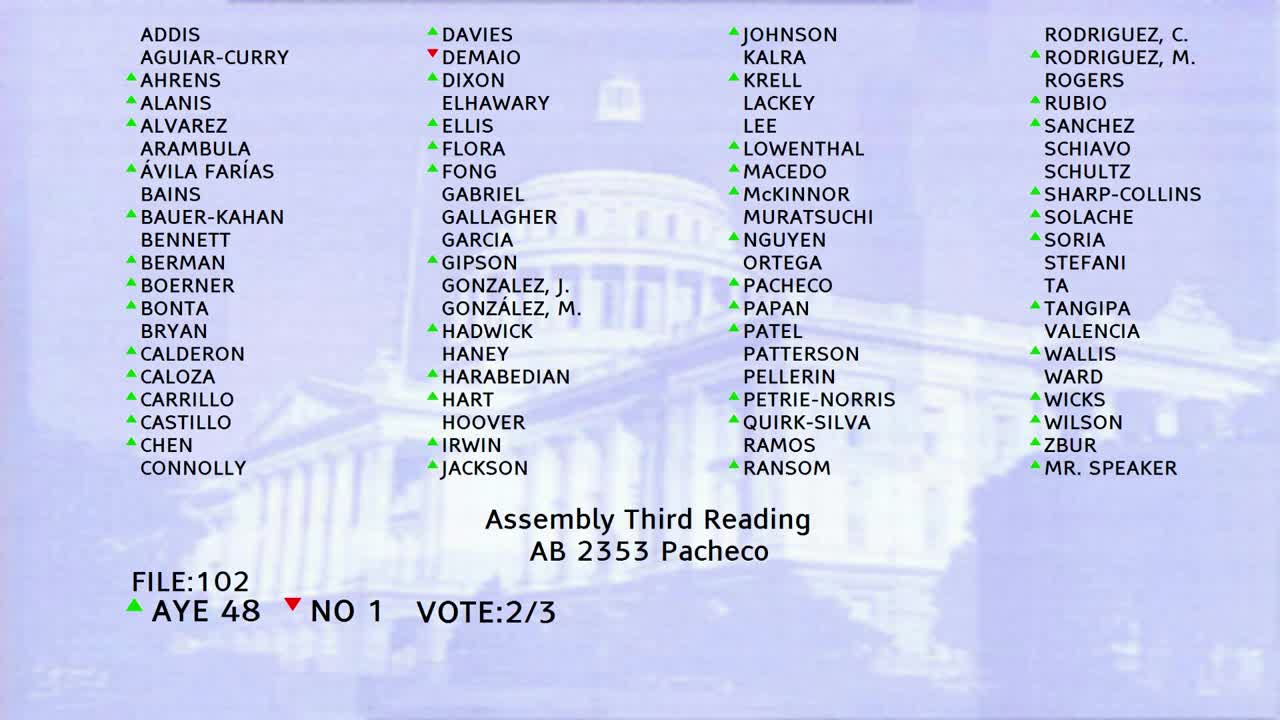 29SEC
Assembly Floor
 10MIN