AJR 31: Restoration of the Voting Rights Act of 1965.
- Session Year: 2025-2026
- House: Assembly
- Latest Version Date: 2026-05-13
Current Status:
In Progress
(2026-08-30: Ordered to inactive file at the request of Senator Ashby.)
Introduced
In Committee
Awaiting First Chamber Vote
Passed First Chamber
In Committee
Awaiting Second Chamber Vote
Passed Second Chamber
Enacted
What does this bill do?
This resolution asks Congress to pass, and the President to sign, laws that restore and strengthen the Voting Rights Act of 1965 to better protect voters of color. It urges reestablishing a preclearance system so jurisdictions with histories of discrimination must get federal approval before changing voting rules. It also asks Congress to adopt a results-based standard that stops and fixes practices that dilute minority voting power, instead of requiring proof of secret intent.
The summary is provided by generative AI which can make mistakes. For original language, please view the details in the table below.
This measure would call on Congress to enact legislation that restores and strengthens the full protections of the Voting Rights Act of 1965, and it would call on the President to sign the legislation.
WHEREAS, The right to vote is preservative of all other rights and is the cornerstone of representative democracy, and any erosion of that right threatens the legitimacy of democratic governance itself; and
WHEREAS, Following the Civil War, the Fifteenth Amendment promised that no citizen would be denied or abridged the right to vote on account of race or color, yet states across the former Confederacy quickly devised new methods of disenfranchisement, including poll taxes, literacy tests, grandfather clauses, White primaries, and violent intimidation, effectively nullifying the Amendments guarantee for nearly a century; and
WHEREAS, The Voting Rights Act of 1965 stands as one of the most consequential civil rights statutes in the nations history, enacted only after generations of racial terror, exclusion, and violence designed to suppress the political power of African Americans; and
WHEREAS, That violence included widespread lynching and brutality against Black Americans who sought to register or vote, with historians documenting massacres such as the Colfax Massacre of 1873 in Louisiana and the Hamburg Massacre of 1876 in South Carolina, where dozens of Black citizens were slaughtered by White mobs explicitly seeking to suppress Black political participation; and
WHEREAS, Countless ordinary citizens, faith leaders, and civil rights workers bled and died to secure meaningful access to the ballot, including the Reverend George W. Lee and Lamar Ditney Smith, both murdered in Mississippi in 1955 for encouraging Black voter registration; Herbert Lee, killed in 1961; Medgar Evers, assassinated in 1963; the murders of James Chaney, Andrew Goodman, and Michael Schwerner during the Freedom Summer of 1964; and Jimmie Lee Jackson, fatally shot by a state trooper in 1965 while peacefully marching for voting rights; and
WHEREAS, The events of Bloody Sunday exposed to the world the violent denial of voting rights in the United States when hundreds of peaceful demonstrators, led by figures such as civil rights icon John Lewis, were brutally beaten on the Edmund Pettus Bridge in Selma, Alabama, creating the moral and political urgency that led directly to the passage of the Voting Rights Act of 1965; and
WHEREAS, Congress designed Sections 2 and 5 of the Voting Rights Act to serve as complementary safeguards, with Section 2 to prohibit discriminatory voting practices nationwide, and Section 5 to prevent such practices before they could take effect in jurisdictions with a history of discrimination; and
WHEREAS, For decades, these provisions worked together to dismantle discriminatory barriers and increase minority voter registration, and the Voting Rights Act became widely regarded as the most effective civil rights statute in American history; and
WHEREAS, Congress has repeatedly reaffirmed the necessity of these protections through overwhelming, bipartisan reauthorizations, recognizing that the fight against racial discrimination in voting is an ongoing American imperative, not a partisan issue; and
WHEREAS, The Voting Rights Act was reauthorized and signed into law by Republican Presidents Richard Nixon in 1970, Gerald Ford in 1975, Ronald Reagan in 1982, and George W. Bush in 2006, with the 2006 reauthorization passing the United States Senate by a unanimous vote of 98-0 and the House of Representatives by a vote of 390-33; and
WHEREAS, In Shelby County v. Holder, 570 U.S. 529 (2013), the United States Supreme Court invalidated the Section 4(b) coverage formula, effectively disabling the Section 5 preclearance regime and prompting Justice Ruth Bader Ginsburg to warn in dissent that discarding preclearance while it remained effective was like throwing away your umbrella in a rainstorm because you are not getting wet; and
WHEREAS, In the years following Shelby County, numerous states enacted restrictive voting measures, including racial gerrymanders, polling-place closures, voter ID, and new barriers to registration, that disproportionately burdened Black, Latino, Native American, and Asian American voters; and
WHEREAS, On April 29, 2026, the Supreme Court issued its decision in Louisiana v. Callais, sharply narrowing the scope of Section 2 by requiring plaintiffs to show a heightened form of intent and by rejecting long-standing precedent that allowed courts to consider the real-world effects of vote dilution; and
WHEREAS, In her dissent in Callais, Justice Elena Kagan warned that the Courts reasoning renders Section 2 all but a dead letter, stripping it of the practical force Congress intended, abandoning the lessons of history, and leaving minority voters without meaningful recourse against discrimination; and
WHEREAS, The dissent further emphasized that Congress designed Section 2 to be a results-based standard precisely because discriminatory intent is often concealed behind facially neutral justifications, and that requiring proof of intent ignores the amendments Congress passed and President Reagan signed into law in 1982; and
WHEREAS, Taken together, these decisions represent a systematic dismantling of the Voting Rights Acts core protections, creating an urgent and escalating threat to equal access to the ballot and undermining a core pillar of the nations commitment to a multiracial democracy; and
WHEREAS, The systematic weakening of these protections threatens to reverse decades of progress toward an inclusive democracy and risks entrenching structural inequities in political representation at a time when the United States is more diverse than at any point in its history; and
WHEREAS, Without immediate congressional action, such as the passage of the John R. Lewis Voting Rights Advancement Act, communities of color across the nation face renewed risks of vote dilution, discriminatory redistricting, and barriers to participation reminiscent of the very conditions that gave rise to the Voting Rights Act; and
WHEREAS, The State of California has a strong and compelling interest in safeguarding democratic participation and ensuring that federal protections remain robust, enforceable, and accessible to all voters in a multiracial democracy; now, therefore, be it
Resolved by the Assembly and the Senate of the State of California, jointly, That the Legislature of the State of California respectfully and urgently calls upon the Congress of the United States to act with all deliberate speed to enact legislation that restores and strengthens the full protections of the Voting Rights Act of 1965; and be it further
Resolved, That Congress must act without delay to reverse the erosion of voting rights protections and to reaffirm its constitutional authority to enforce the guarantees of the Fifteenth Amendment; and be it further
Resolved, That the Legislature urges Congress to restore a functional preclearance regime, including a modernized coverage formula grounded in contemporary evidence of discrimination, ensuring that jurisdictions with a record of discriminatory practices must obtain federal approval before implementing voting changes; and be it further
Resolved, That the Legislature urges Congress to codify a robust, results-based standard under Section 2, consistent with the principles articulated in Thornburg v. Gingles, 478 U.S. 30 (1986), and decades of lower court precedent, to explicitly reject the intent-focused narrowing adopted in Louisiana v. Callais and provide meaningful remedies to prevent and redress racial vote dilution and discriminatory districting; and be it further
Resolved, That the Legislature calls on Congress to honor the bipartisan legacy of the Voting Rights Act by ensuring that its protections remain fully effective in the face of contemporary threats; and be it further
Resolved, That the Legislature urges the President of the United States to sign such legislation promptly upon its passage; and be it further
Resolved, That the Chief Clerk of the Assembly transmit copies of this resolution to the President and Vice President of the United States, to the Speaker of the House of Representatives, to the Majority Leader of the Senate, and to each Senator and Representative from California in the Congress of the United States.
|
Date
|
Status
|
|---|---|
| Aug 30, 2026 | Ordered to inactive file at the request of Senator Ashby. |
| Jun 30, 2026 | From committee: Be adopted. Ordered to Third Reading. (Ayes 4. Noes 1.) (June 30). |
| May 27, 2026 | Referred to Com. on E. & C.A. |
| May 18, 2026 | In Senate. To Com. on RLS. |
| May 14, 2026 | Adopted and to Senate. (Ayes 52. Noes 20. Page 5034.) |
| May 14, 2026 | Adopted and to Senate. (Ayes 60. Noes 11.) |
| May 14, 2026 | Assembly Rule 63 suspended. (Ayes 52. Noes 20.) |
| May 14, 2026 | Assembly Rule 63 suspended. (Page 5034.) |
| May 14, 2026 | Coauthors revised. |
| May 14, 2026 | From printer. |
| May 14, 2026 | Without reference to committee. |
| May 13, 2026 | Introduced. To print. |
|
Date
|
Description
|
Location
|
Votes
|
|
|---|---|---|---|---|
| Jun 30, 2026 | Be adopted. Ordered to third reading | Senate Standing Committee on Elections and Constitutional Amendments |
Passed |
|
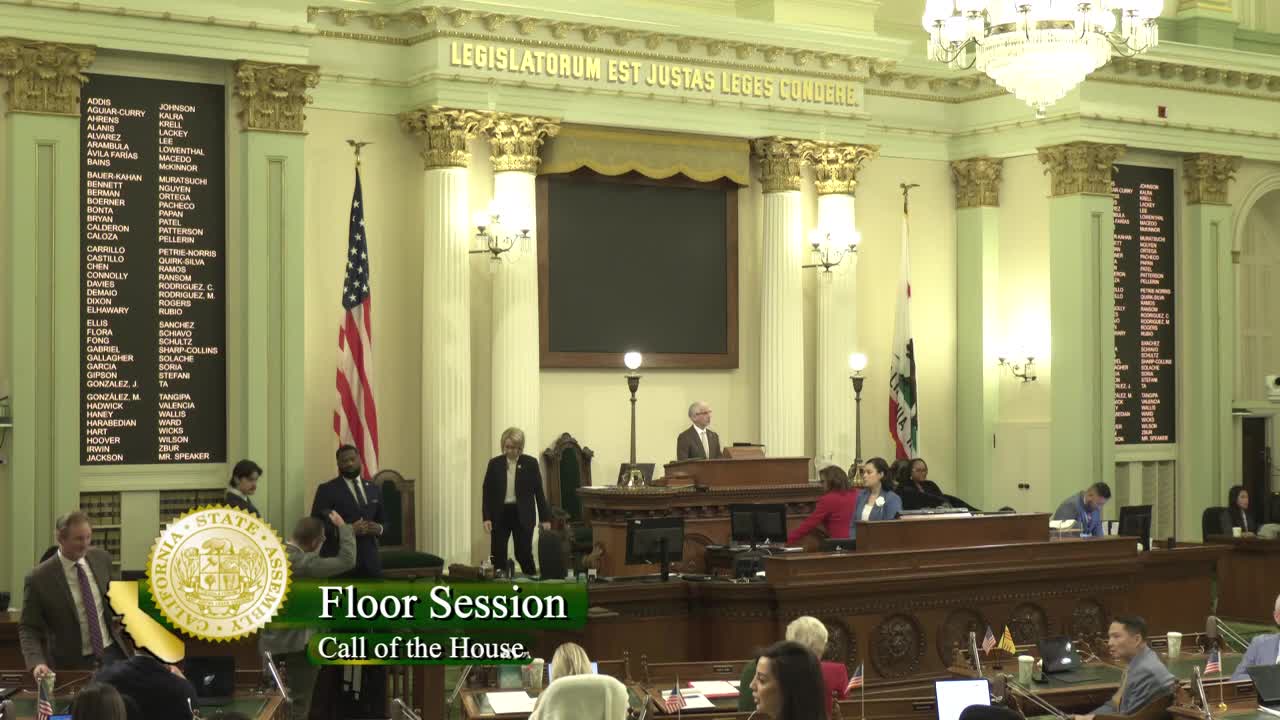
| May 14, 2026 | AJR 31 Assembly Third Reading By BRYAN | Assembly Floor |
Passed |
This list shows positions taken on this bill by organizations on the date displayed, which is linked to the original source.
Positions by individuals are not included.
|
Organization
|
Position
|
Date
|
|---|---|---|
| California Legislative Black Caucus | ** Support |
SENATE RULES COMMITTEE Office of Senate Floor Analyses (916) 651-4171 | AJR 31 |
THIRD READING
Bill No: AJR 31
Author: Bryan (D), Bonta (D), Elhawary (D), Gipson (D), Jackson (D), McKinnor (D), Ransom (D), Sharp-Collins (D) and Wilson (D), et al.
Introduced: 5/13/26
Vote: 21
SENATE ELECTIONS & C.A. COMMITTEE: 4-1, 6/30/26
AYES: Wiener, Allen, Cervantes, Umberg
NOES: Choi
ASSEMBLY FLOOR: 60-11, 5/14/26 - See last page for vote
SUBJECT: Restoration of the Voting Rights Act of 1965
SOURCE: California Legislative Black Caucus
DIGEST:
This resolution urges Congress to enact legislation to restore and strengthen the full protections of the Voting Rights Act of 1965 (VRA).
ANALYSIS:
Existing law:
- Provides, pursuant to the 15th Amendment to the U.S. Constitution, that “[t]he right of citizens of the United States to vote shall not be denied or abridged by the United States or by any state on account of race, color, or previous condition of servitude.” The 15th Amendment authorizes Congress to enact legislation to enforce its provisions.
- Prohibits, pursuant to Section 2 of the VRA, among other provisions, any “voting qualification or prerequisite to voting or standard, practice, or procedure” from being imposed by any “state or political subdivision in a manner which results in a denial or abridgement of the right of any citizen of the United States to vote on account of race or color.” Section 5 of the VRA requires certain states and covered jurisdictions to receive approval for any changes to law and practices affecting voting practices and procedures.
This resolution:
- Calls upon Congress to act with all deliberate speed to enact legislation to restore and strengthen the full protections of the VRA.
- Urges Congress to restore a functional preclearance regime, including a modernized coverage formula grounded in contemporary evidence of discrimination, ensuring that jurisdictions with a record of discriminatory practices must obtain federal approval before implementing voting changes.
- Urges Congress to codify a robust, results-based standard under Section 2 of the VRA to explicitly reject the intent-focused narrowing of the VRA created by the U.S. Supreme Court’s decision in Louisiana v. Callais and provide meaningful remedies to prevent and redress racial vote dilution and discriminatory districting.
- Calls on Congress to honor the bipartisan legacy of the VRA by ensuring its protections remain fully effective in the face of contemporary threats.
- Urges the President to sign such legislation promptly upon its passage.
Background
In 1965, Congress determined that state officials were failing to comply with the provisions of the 15th Amendment. As a result, Congress passed and President Johnson signed the VRA. The VRA, among other provisions, prohibits any “voting qualification or prerequisite to voting or standard, practice, or procedure” from being imposed by any “[s]tate or political subdivision in a manner which results in a denial or abridgement of the right of any citizen of the United States to vote on account of race or color.”
Section 2 of the VRA is a nationwide prohibition against voting practices and procedures, including redistricting plans and at-large election systems, poll worker hiring, and voting registration procedures, that discriminate on the basis of race, color, or membership in a language minority group. In Louisiana v. Callais, the U.S. Supreme Court ruled in April 2026 that Louisiana’s congressional map was unconstitutional because race was used prominently used in its design. The Court held that complying with Section 2 of the VRA did not justify race-based redistricting unless it met strict constitutional limits. The ramifications of this decision are not fully known, but other states are evaluating how this decision affects a jurisdiction’s current boundaries.
Section 2 also allowed the U.S. Attorney General or affected private citizens to bring lawsuits in federal court to challenge practices that may violate the VRA. In 2021, in Brnovich v. DNC, the U.S. Supreme Court made it more difficult to bring voter suppression claims through the judicial process.
Section 4 of the VRA set the criteria for determining whether a jurisdiction is covered under certain provisions of the VRA, including the requirement for review of changes affecting voting under Section 5.
Section 5 of the VRA requires certain states and covered jurisdictions to receive approval for any changes to law and practices affecting voting from the U.S. Department of Justice or the U.S. District Court of the District of Columbia to ensure the changes do not have the purpose or effect of “denying or abridging the right to vote on account of race or color.” This is also known as a “preclearance” requirement.
The U.S. Supreme Court, in Shelby County v. Holder in 2013, held that a coverage formula in Section 4 of the VRA is unconstitutional and can no longer be used as a basis for subjecting jurisdictions to preclearance under Section 5 of the VRA. The Court did not directly strike down Section 5, which contains the preclearance requirements, but without Section 4, no jurisdiction will be subject to Section 5 preclearance unless Congress enacts a new coverage formula.
Comments
Author’s Statement. The house is on fire. The systems that were erected to protect minority representation after the unconscionable actions of a nation that violently subjugated its Black citizens, are now again being used as an apparatus of oppression, repression and suppression. The Constitution is not self-executing. A brief journey into the electoral history of much of the nation shows that violence and terror have gone hand in hand with regulatory and legislative restrictions to crush the dreams and steal the future of Black communities by ensuring their voices were ignored and their votes did not count.
If our voice is our power, and voting is the primary expression of that power, the protections of access to the ballot box are the foundations on which we secure a just and fair democratic society.
We have seen these hurdles before—poll taxes, literacy tests, and moral character exams—all facially race-neutral, but all with the clear intent and effect of suppressing the Black vote. Injustice anywhere is a threat to justice everywhere: California must not be silent. We are more than three-fifths of a human. We are not going back.
Related/prior legislation
SB 1164 (Cervantes) of 2026, among other provisions, repeals and replaces the California Voting Rights Act of 2001 with a state voting rights act that seeks to protect voters from voter suppression and vote dilution. The bill also creates a procedure for preclearance based off of the federal VRA.
FISCAL EFFECT: Appropriation: No Fiscal Com.: No Local: No
SUPPORT: (Verified 7/1/26)
California Legislative Black Caucus (source)
OPPOSITION: (Verified 7/1/26)
None received
ASSEMBLY FLOOR: 60-11, 5/14/26
AYES: Addis, Aguiar-Curry, Ahrens, Alanis, Alvarez, Ávila Farías, Bains, Bauer-Kahan, Bennett, Berman, Boerner, Bonta, Bryan, Calderon, Caloza, Carrillo, Connolly, Elhawary, Fong, Gabriel, Garcia, Gipson, Mark González, Haney, Harabedian, Hart, Irwin, Jackson, Kalra, Krell, Lee, Lowenthal, McKinnor, Muratsuchi, Nguyen, Ortega, Pacheco, Papan, Patel, Pellerin, Petrie-Norris, Quirk-Silva, Ramos, Ransom, Michelle Rodriguez, Rogers, Blanca Rubio, Schiavo, Schultz, Sharp-Collins, Solache, Soria, Stefani, Valencia, Wallis, Ward, Wicks, Wilson, Zbur, Rivas
NOES: Chen, DeMaio, Dixon, Ellis, Gallagher, Hadwick, Johnson, Macedo, Patterson, Sanchez, Tangipa
NO VOTE RECORDED: Arambula, Castillo, Davies, Flora, Jeff Gonzalez, Hoover, Lackey, Celeste Rodriguez, Ta
Prepared by: Scott Matsumoto / E. & C.A. / (916) 651-4106
7/1/26 16:55:29
**** END ****
SENATE COMMITTEE ON
ELECTIONS AND CONSTITUTIONAL AMENDMENTS
Senator Scott Wiener, Chair
2025 - 2026 Regular
Bill No: Hearing Date: 6/30/26
Author: | |||
Version: |
| ||
Urgency: | Fiscal: | ||
Consultant: | |||
Subject:
DIGEST
This resolution urges Congress to enact legislation to restore and strengthen the full protections of the Voting Rights Act of 1965 (VRA).
ANALYSIS
Existing law:
- Provides, pursuant to the 15th Amendment to the U.S. Constitution, that “[t]he right of citizens of the United States to vote shall not be denied or abridged by the United States or by any state on account of race, color, or previous condition of servitude.” The 15th Amendment authorizes Congress to enact legislation to enforce its provisions.
- Prohibits, pursuant to Section 2 of the VRA, among other provisions, any “voting qualification or prerequisite to voting or standard, practice, or procedure” from being imposed by any “state or political subdivision in a manner which results in a denial or abridgement of the right of any citizen of the United States to vote on account of race or color.” Section 5 of the VRA requires certain states and covered jurisdictions to receive approval for any changes to law and practices affecting voting practices and procedures.
This resolution:
- Calls upon Congress to act with all deliberate speed to enact legislation to restore and strengthen the full protections of the VRA.
- Urges Congress to restore a functional preclearance regime, including a modernized coverage formula grounded in contemporary evidence of discrimination, ensuring that jurisdictions with a record of discriminatory practices must obtain federal approval before implementing voting changes.
- Urges Congress to codify a robust, results-based standard under Section 2 of the VRA to explicitly reject the intent-focused narrowing of the VRA created by the U.S. Supreme Court’s decision in Louisiana v. Callais and provide meaningful remedies to prevent and redress racial vote dilution and discriminatory districting.
- Calls on Congress to honor the bipartisan legacy of the VRA by ensuring its protections remain fully effective in the face of contemporary threats.
- Urges the President to sign such legislation promptly upon its passage.
BACKGROUND
In 1965, Congress determined that state officials were failing to comply with the provisions of the 15th Amendment. As a result, Congress passed and President Johnson signed the VRA. The VRA, among other provisions, prohibits any “voting qualification or prerequisite to voting or standard, practice, or procedure” from being imposed by any “[s]tate or political subdivision in a manner which results in a denial or abridgement of the right of any citizen of the United States to vote on account of race or color.”
Section 2 of the VRA is a nationwide prohibition against voting practices and procedures, including redistricting plans and at-large election systems, poll worker hiring, and voting registration procedures, that discriminate on the basis of race, color, or membership in a language minority group. In Louisiana v. Callais, the U.S. Supreme Court ruled in April 2026 that Louisiana’s congressional map was unconstitutional because race was used prominently used in its design. The Court held that complying with Section 2 of the VRA did not justify race-based redistricting unless it met strict constitutional limits. The ramifications of this decision are not fully known, but other states are evaluating how this decision affects a jurisdiction’s current boundaries.
Section 2 also allowed the U.S. Attorney General or affected private citizens to bring lawsuits in federal court to challenge practices that may violate the VRA. In 2021, in Brnovich v. DNC, the U.S. Supreme Court made it more difficult to bring voter suppression claims through the judicial process.
Section 4 of the VRA set the criteria for determining whether a jurisdiction is covered under certain provisions of the VRA, including the requirement for review of changes affecting voting under Section 5.
Section 5 of the VRA requires certain states and covered jurisdictions to receive approval for any changes to law and practices affecting voting from the U.S. Department of Justice or the U.S. District Court of the District of Columbia to ensure the changes do not have the purpose or effect of “denying or abridging the right to vote on account of race or color.” This is also known as a “preclearance” requirement.
The U.S. Supreme Court, in Shelby County v. Holder in 2013, held that a coverage formula in Section 4 of the VRA is unconstitutional and can no longer be used as a basis for subjecting jurisdictions to preclearance under Section 5 of the VRA. The Court did not directly strike down Section 5, which contains the preclearance requirements, but without Section 4, no jurisdiction will be subject to Section 5 preclearance unless Congress enacts a new coverage formula.
COMMENTS
Author’s Statement. The house is on fire. The systems that were erected to protect minority representation after the unconscionable actions of a nation that violently subjugated its Black citizens, are now again being used as an apparatus of oppression, repression and suppression. The Constitution is not self-executing. A brief journey into the electoral history of much of the nation shows that violence and terror have gone hand in hand with regulatory and legislative restrictions to crush the dreams and steal the future of Black communities by ensuring their voices were ignored and their votes did not count.
If our voice is our power, and voting is the primary expression of that power, the protections of access to the ballot box are the foundations on which we secure a just and fair democratic society.
We have seen these hurdles before—poll taxes, literacy tests, and moral character exams—all facially race-neutral, but all with the clear intent and effect of suppressing the Black vote. Injustice anywhere is a threat to justice everywhere: California must not be silent. We are more than three-fifths of a human. We are not going back.
RELATED/PRIOR LEGISLATION
SB 1164 (Cervantes) of 2026, among other provisions, repeals and replaces the California Voting Rights Act of 2001 with a state voting rights act that seeks to protect voters from voter suppression and vote dilution. The bill also creates a procedure for preclearance based off of the federal VRA.
PRIOR ACTION
Assembly Floor: |
POSITIONS
Sponsor: California Legislative Black Caucus
Support: None received
Oppose: None received
-- END --
ASSEMBLY THIRD READING
ATR Bill Id:AJR 31
Author:(Bryan, et al.)
As Introduced Ver:May 13, 2026
Majority vote
SUMMARY
Calls on Congress to restore and strengthen the protections of the federal Voting Rights Act (VRA) of 1965.
Major Provisions
- Calls upon Congress to act with all deliberate speed to enact legislation that restores and strengthens the full protections of the VRA.
- Urges Congress to restore a functional preclearance regime, including a modernized coverage formula grounded in contemporary evidence of discrimination, ensuring that jurisdictions with a record of discriminatory practices must obtain federal approval before implementing voting changes.
- Urges Congress to codify a robust, results-based standard under Section 2, consistent with the principles articulated in Thornburg v. Gingles, 478 U.S. 30 (1986) (Gingles), and decades of lower court precedent, to explicitly reject the intent-focused narrowing adopted in Louisiana v. Callais (Callais) and provide meaningful remedies to prevent and redress racial vote dilution and discriminatory districting.
- Calls on Congress to honor the bipartisan legacy of the VRA by ensuring that its protections remain fully effective in the face of contemporary threats.
- Urges the President to sign such legislation promptly upon its passage.
COMMENTS
The 15th Amendment to the United States (US) Constitution provides, in part, that "[t]he right of citizens of the United States to vote shall not be denied or abridged by the United States or by any state on account of race, color, or previous condition of servitude." Additionally, the 15th Amendment authorizes Congress to enact legislation to enforce its provisions. The 15th Amendment was ratified in February 1870.
In 1965, Congress determined that state officials were failing to comply with the provisions of the 15th Amendment. Congressional hearings found that litigation to eliminate discriminatory election practices was largely ineffective, because states and local jurisdictions would institute new discriminatory practices to replace any such practices that were struck down in court. As a result, Congress passed and President Johnson signed the VRA. The VRA, among other provisions, prohibits any "voting qualification or prerequisite to voting or standard, practice, or procedure" from being imposed by any "State or political subdivision in a manner which results in a denial or abridgement of the right of any citizen of the United States to vote on account of race or color."
Section 2 of the VRA, as originally enacted, prohibited any "voting qualification or prerequisite to voting, or standard, practice, or procedure [from being] imposed or applied by any State or political subdivision to deny or abridge the right of any citizen of the United States to vote on account of race or color." Amendments to the VRA adopted in 1982 specified that a violation of Section 2 of the VRA could be proved by showing that a policy or procedure had a discriminatory effect, and made it clear that those challenging such a policy or procedure did not have to prove that it had a discriminatory purpose.
Gingles was the first case in which the US Supreme Court had the opportunity to consider those 1982 amendments to Section 2. In its decision, the Gingles court established a new standard for a plaintiff to establish that an election system dilutes the voting strength of a protected minority group in violation of the VRA. Specifically, the US Supreme Court announced three preconditions that a plaintiff first must establish to prove that an election system diluted the voting strength of a minority group:
(1) The minority community is sufficiently large and geographically compact that it is possible to create a district in which the minority could constitute a majority in a single-member district;
(2) The minority community is politically cohesive, in that a significant portion of the minority group usually supports the same candidates; and,
(3) There is racially polarized voting among the majority community, which usually (but not necessarily always), allows the majority voting as a bloc to defeat the minority's preferred candidate.
Section 5 of the VRA requires certain covered jurisdictions to receive approval for any changes to law and practices affecting voting from the US Department of Justice or the US District Court for the District of Columbia to ensure that the changes do not have the purpose or effect of "denying or abridging the right to vote on account of race or color." The requirement to obtain approval under Section 5 is commonly referred to as a "preclearance" requirement. The jurisdictions subject to that preclearance requirement were identified based on a formula found in Section 4(b) of the VRA.
While much of the VRA is permanent, certain special provisions of the VRA are temporary, including Section 5. When the VRA was enacted, Section 5 was scheduled to expire in five years. Subsequently, Congress extended those provisions for another five years in 1970, an additional seven years in 1975, and an additional 25 years in 1982, and again for an additional 25 years in 2006.
On June 25, 2013, the US Supreme Court, in Shelby County v. Holder, held that the coverage formula in Section 4(b) of the VRA is unconstitutional and can no longer be used as a basis for subjecting jurisdictions to pre-clearance under Section 5 of the VRA. The Court stated that although the formula was rational and necessary at the time of its enactment, it is no longer responsive to current conditions. While the Court did not strike down Section 5, its invalidation of the coverage formula in Section 4(b) means that no jurisdiction is subject to Section 5 unless and until Congress enacts a new coverage formula.
Last month, the US Supreme Court ruled in Callais that a Louisiana congressional district map that included two majority-minority districts among the state's six congressional districts was unconstitutional. While upholding the constitutionality of Section 2 of the VRA, the majority opinion of the court also "update[d] the Gingles framework" to establish additional criteria for evaluating claims under Section 2, including a requirement that plaintiffs in a Section 2 case demonstrate that a challenged district map was the result of intentional racial discrimination. A dissenting opinion in the case concluded that those changes "render[] Section 2 all but a dead letter."
According to the Author
"The house is on fire. The systems that were erected to protect minority representation after the unconscionable actions of a nation that violently subjugated its Black citizens, are now again being used as an apparatus of oppression, repression and suppression. The Constitution is not self-executing - a brief journey into the electoral history of much of the nation shows that violence and terror have gone hand in hand with regulatory and legislative restrictions to crush the dreams and steal the future of Black communities by ensuring their voices were ignored and their votes did not count.
"If our voice is our power, and voting is the primary expression of that power, the protections of access to the ballot box are the foundations on which we secure a just and fair democratic society.
"We've seen these hurdles before—poll taxes, literacy tests, and moral character exams—all facially race-neutral, but all with the clear intent and effect of suppressing the Black vote. Injustice anywhere is a threat to justice everywhere: California must not be silent. We are more than three-fifths of a human. We are not going back."
Arguments in Support
None received.
Arguments in Opposition
None received.
FISCAL COMMENTS
None. This resolution is keyed non-fiscal by the Legislative Counsel.
VOTES
UPDATED
VERSION: May 13, 2026
CONSULTANT: Ethan Jones / ELECTIONS / (916) 319-2094 FN: 0002559
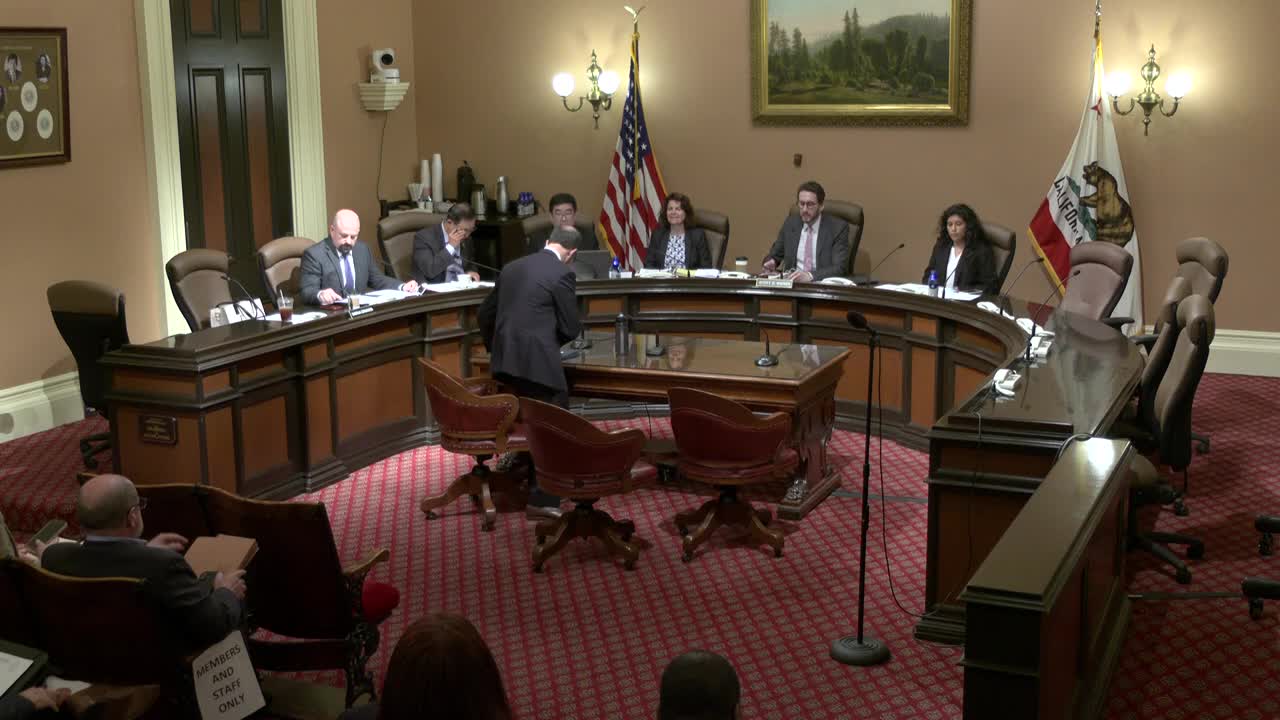
Discussed in Hearing
 1MIN
Senate Standing Committee on Elections and Constitutional Amendments
 1H
Assembly Floor
Bill Author









Bill Co-Author(s):