AB 2612: Building standards: qualified plug-in photovoltaic systems.
- Session Year: 2025-2026
- House: Assembly
- Latest Version Date: 2026-06-29
Current Status:
In Progress
(2026-08-13: In committee: Held under submission.)
Introduced
In Committee
Awaiting First Chamber Vote
Passed First Chamber
In Committee
Awaiting Second Chamber Vote
Passed Second Chamber
Enacted
What does this bill do?
This bill allows the state to create building rules so qualified plug‑in solar systems can serve as a power source inside the electrical circuits of newly built houses, apartment buildings, and nonresidential developments, affecting residents, landlords, builders, and equipment makers. It requires the housing department to research and propose standards with public and industry input. The standards must let the systems plug into a receptacle, include grid‑protective and rapid‑shutdown features, provide limited backup power during outages, and meet the National Electrical Code, California Electrical Code, and UL 3700 safety certification.
The summary is provided by generative AI which can make mistakes. For original language, please view the details in the table below.
Existing law establishes the Department of Housing and Community Development in the Business, Consumer Services, and Housing Agency. Existing law, the California Building Standards Law, establishes the California Building Standards Commission. Existing law requires the commission to approve and adopt building standards and to codify those standards in the California Building Standards Code. Existing law, the State Housing Law, establishes statewide construction and occupancy standards for buildings used for human habitation.
Existing law, until January 1, 2033, requires the commission and the department, commencing with the next triennial edition of the code adopted after January 1, 2023, to research and develop, and authorizes the commission and the department to propose for adoption by the commission, mandatory building standards for the installation of electric vehicle charging stations in existing multifamily dwellings, hotels, motels, and nonresidential developments, as specified.
This bill would authorize the commission, commencing with the first triennial edition of the code adopted after June 1, 2031, to adopt, approve, codify, and publish building energy standards for building electrical circuit features to enable a qualified plug-in photovoltaic system, as defined, to function as an energy source within the electrical circuit of a single-family residential dwelling, multiunit residential dwelling, or nonresidential development, that is constructed after that edition is adopted, as specified. The bill would, for purposes of that requirement, require the department to research, develop, and propose for adoption building energy standards for a qualified plug-in photovoltaic system to function as an energy source within the electrical circuit of a single-family residential dwelling, multiunit residential dwelling, or nonresidential development, as specified. The bill would require the commission and the department, in satisfying those requirements, to, among other things, consult with certain interested parties and invite the participation of the public at large in the development of those building energy standards through open consensus-based processes.
Existing law establishes the Department of Housing and Community Development in the Business, Consumer Services, and Housing Agency. Existing law, the California Building Standards Law, establishes the California Building Standards Commission. Existing law requires the commission to approve and adopt building standards and to codify those standards in the California Building Standards Code. Existing law, the State Housing Law, establishes statewide construction and occupancy standards for buildings used for human habitation.
Existing law, until January 1, 2033, requires the commission and the department, commencing with the next triennial edition of the code adopted after January 1, 2023, to research and develop, and authorizes the commission and the department to propose for adoption by the commission, mandatory building standards for the installation of electric vehicle charging stations in existing multifamily dwellings, hotels, motels, and nonresidential developments, as specified.
This bill would require authorize the commission, commencing with the first triennial edition of the code adopted after June 1, 2031, to adopt, approve, codify, and publish mandatory building energy standards for new construction building electrical circuit features to enable a qualified plug-in photovoltaic system, as defined, to function as an energy source within the electrical circuit of a single-family residential dwellings, dwelling, multiunit residential dwellings, dwelling, or nonresidential developments electrical circuit, development, that is constructed after that edition is adopted, as specified. The bill would, for purposes of that requirement, require the department to research, develop, and propose for adoption mandatory building standards for a qualified plug-in photovoltaic system to function as an energy source within the electrical circuit of a single-family residential dwellings, dwelling, multiunit residential dwellings, dwelling, or nonresidential developments electrical circuit. development, as specified. The bill would require the commission and the department, in satisfying those requirements, to, among other things, consult with certain interested parties and invite the participation of the public at large in the development of those building energy standards through open consensus-based processes.
Existing law establishes the Department of Housing and Community Development in the Business, Consumer Services, and Housing Agency. Existing law, the California Building Standards Law, establishes the California Building Standards Commission. Existing law requires the commission to approve and adopt building standards and to codify those standards in the California Building Standards Code. Existing law, the State Housing Law, establishes statewide construction and occupancy standards for buildings used for human habitation.
Existing law, until January 1, 2033, requires the commission and the department, commencing with the next triennial edition of the code adopted after January 1, 2023, to research and develop, and authorizes the commission and the department to propose for adoption by the commission, mandatory building standards for the installation of electric vehicle charging stations in existing multifamily dwellings, hotels, motels, and nonresidential developments, as specified.
This bill would require the commission, commencing with the next first triennial edition of the code, code adopted after June 1, 2031, to adopt, approve, codify, and publish mandatory building energy standards for new construction building electrical circuit features to enable a qualified plug-in photovoltaic systems system, as defined, to function as an energy source within a single-family residential dwellings dwellings, multiunit residential dwellings, or nonresidential developments electrical circuit, as specified. The bill would, for purposes of that requirement, require the department to research, develop, and propose for adoption mandatory building standards for a qualified plug-in photovoltaic system to function as an energy source within a single-family residential dwellings, multiunit dwellings residential dwellings, or nonresidential developments electrical circuit. The bill would require the commission and the department, in satisfying those requirements, to, among other things, consult with certain interested parties and invite the participation of the public at large in the development of those building energy standards through open consensus-based processes.
Existing law establishes the Department of Housing and Community Development in the Business, Consumer Services, and Housing Agency. Existing law, the California Building Standards Law, establishes the California Building Standards Commission. Existing law requires the commission to approve and adopt building standards and to codify those standards in the California Building Standards Code. Existing law, the State Housing Law, establishes statewide construction and occupancy standards for buildings used for human habitation.
Existing law, until January 1, 2033, requires the commission and the department, commencing with the next triennial edition of the code adopted after January 1, 2023, to research and develop, and authorizes the commission and the department to propose for adoption by the commission, mandatory building standards for the installation of electric vehicle charging stations in existing multifamily dwellings, hotels, motels, and nonresidential developments, as specified.
This bill would require the commission, commencing with the next triennial edition of the code, to adopt, approve, codify, and publish mandatory standards for building electrical circuit features to enable qualified plug-in photovoltaic systems to function as an energy source within a residential dwellings or nonresidential developments electrical circuit, as specified. The bill would, for purposes of that requirement, require the department to research, develop, and propose for adoption mandatory building standards for a qualified plug-in photovoltaic system to function as an energy source within a multiunit dwellings electrical circuit. The bill would require the commission and the department, in satisfying those requirements, to, among other things, consult with certain interested parties and invite the participation of the public at large in the development of those building standards through open consensus-based processes.
(a)The Legislature finds and declares all of the following:
(1)The health and well-being of California residents depends on maintaining affordability and improving resiliency at a time of increased cost pressure on the electricity grid.
(2)When paired with energy storage and smart power control, onsite solar generation is an affordable option to increase clean energy availability, reliability, and resiliency.
(3)Californias rooftop solar policy is an integral part of the states clean energy achievements with millions of solar systems installed to date.
(4)California renters, apartment dwellers, condominium residents, and low-income households can particularly benefit from additional options for onsite solar systems.
(5)To expand onsite solar access for renters and multiunit dwellers, European countries, such as the United Kingdom and Germany, developed standards and adopted policies to allow their residents to easily integrate small solar systems into homes with a class of portable technologies known as plug-in photovoltaic systems.
(6)The ability to use a plug-in photovoltaic system as an energy source within the home circuit requires the establishment of safety standards and appropriate product certifications to prevent overloading onsite circuits or unintended energy export onto the distribution grid.
(b)It is the intent of the Legislature to do all of the following:
(1)Ensure the safety of plug-in photovoltaic systems as an affordable option for California residents and businesses, especially renters, multiunit dwellers and local small businesses, to increase energy affordability and resiliency.
(2)Ensure plug-in photovoltaic systems can integrate with onsite electrical systems with applicable product standards and building energy standards.
(3)Ensure California renters, multiunit dwellers, and small businesses can safely use plug-in photovoltaic systems to meet their energy affordability and resiliency needs.
SEC. 2.Section 18944.23 is added to the Health and Safety Code, following 18944.21, to read:18944.23.(a)(1)Commencing with the first triennial edition of the California Building Standards Code (Title 24 of the California Code of Regulations) adopted after June 1, 2031, the commission may adopt, approve, codify, and publish building energy standards for building electrical circuit features to enable a qualified plug-in photovoltaic system to function as an energy source within the electrical circuit of a single-family residential dwelling, multiunit residential dwelling, or nonresidential development, that is constructed after the adoption of the first triennial edition of the California Building Standards Code (Title 24 of the California Code of Regulations) after June 1, 2031.
(2)For purposes of paragraph (1), the Department of Housing and Development shall research, develop, and propose for adoption building energy standards for a qualified plug-in photovoltaic system to function as an energy source within the electrical circuit of a single-family residential dwelling, multiunit residential dwelling, or nonresidential development, that is constructed after the adoption of the first triennial edition of the California Building Standards Code (Title 24 of the California Code of Regulations) after June 1, 2031.
(b)In satisfying the requirements of subdivision (a), the commission and the Department of Housing and Community Development shall do all of the following:
(1)Consult with interested parties, including, but not limited to, the State Energy Resources Conservation and Development Commission, electrical safety standard setting bodies, photovoltaic and battery equipment manufacturers, commercial building and apartment owners, and the building industry.
(2)Invite the participation of the public at large in the development of those building energy standards through open consensus-based processes.
(3)Propose new construction building electrical standards that allow a qualified plug-in photovoltaic system with appropriate grid protective functions and rapid shutdown features to function as an energy source for a buildings electrical circuit by connecting to a receptacle.
(4)Propose building circuit design features to allow a qualified plug-in photovoltaic system to provide limited backup power functions during outages.
(c)For purposes of this section, qualified plug-in photovoltaic system means a device that meets all of the following conditions:
(1)It is designed to be connected to a buildings electrical system through a receptacle.
(2)It is intended to offset the customers onsite electricity consumption.
(3)It meets the standards of the most recent version of the National Electrical Code, as published by the National Fire Protection Association, and of the California Electrical Code (Part 3 (commencing with Section 89.101.1) of Title 24 of the California Code of Regulations).
(4)It is certified as a plug-in photovoltaic system by the Underwriters Laboratories to UL 3700 to function as a plug-in energy source to a buildings electrical system with safety features to prevent fire and electrical hazards.
(a)The Legislature finds and declares all of the following:
(1)The health and well-being of California residents depends on maintaining affordability and improving resiliency at a time of increased cost pressure on the electricity grid.
(2)When paired with energy storage and smart power control, onsite solar generation is an affordable option to increase clean energy availability, reliability, and resiliency.
(3)Californias rooftop solar policy is an integral part of the states clean energy achievements with millions of solar systems installed to date.
(4)California renters, apartment dwellers, condominium residents, and low-income households can particularly benefit from additional options for onsite solar systems.
(5)To expand onsite solar access for renters and multiunit dwellers, European countries, such as the United Kingdom and Germany, developed standards and adopted policies to allow their residents to easily integrate small solar systems into homes with a class of portable technologies known as plug-in photovoltaic systems.
(6)The ability to use a plug-in photovoltaic system as an energy source within the home circuit requires the establishment of safety standards and appropriate product certifications to prevent overloading onsite circuits or unintended energy export onto the distribution grid.
(b)It is the intent of the Legislature to do all of the following:
(1)Ensure the safety of plug-in photovoltaic systems as an affordable option for California residents and businesses, especially renters, multiunit dwellers and local small businesses, to increase energy affordability and resiliency.
(2)Ensure plug-in photovoltaic systems can integrate with onsite electrical systems with applicable product standards and building energy standards.
(3)Ensure California renters, multiunit dwellers, and small businesses can safely use plug-in photovoltaic systems to meet their energy affordability and resiliency needs.
SEC. 2.Section 18944.23 is added to the Health and Safety Code, following 18944.21, to read:18944.23.(a)(1)Commencing with the first triennial edition of the California Building Standards Code (Title 24 of the California Code of Regulations) adopted after June 1, 2031, the commission may adopt, approve, codify, and publish building energy standards for building electrical circuit features to enable a qualified plug-in photovoltaic system to function as an energy source within the electrical circuit of a single-family residential dwelling, multiunit residential dwelling, or nonresidential development, that is constructed after the adoption of the first triennial edition of the California Building Standards Code (Title 24 of the California Code of Regulations) after June 1, 2031.
(2)For purposes of paragraph (1), the Department of Housing and Development shall research, develop, and propose for adoption building energy standards for a qualified plug-in photovoltaic system to function as an energy source within the electrical circuit of a single-family residential dwelling, multiunit residential dwelling, or nonresidential development, that is constructed after the adoption of the first triennial edition of the California Building Standards Code (Title 24 of the California Code of Regulations) after June 1, 2031.
(b)In satisfying the requirements of subdivision (a), the commission and the Department of Housing and Community Development shall do all of the following:
(1)Consult with interested parties, including, but not limited to, the State Energy Resources Conservation and Development Commission, electrical safety standard setting bodies, photovoltaic and battery equipment manufacturers, commercial building and apartment owners, and the building industry.
(2)Invite the participation of the public at large in the development of those building energy standards through open consensus-based processes.
(3)Propose new construction building electrical standards that allow a qualified plug-in photovoltaic system with appropriate grid protective functions and rapid shutdown features to function as an energy source for a buildings electrical circuit by connecting to a standard alternating current electrical outlet. receptacle.
(4)Propose building circuit design features to allow a qualified plug-in photovoltaic system to provide limited backup power functions during outages.
(c)For purposes of this section, qualified plug-in photovoltaic system means a device that meets all of the following conditions:
(1)It is designed to be connected to a buildings electrical system through a standard electrical outlet. receptacle.
(2)It is intended to offset the customers onsite electricity consumption.
(3)It meets the standards of the most recent version of the National Electrical Code, as published by the National Fire Protection Association, and of the California Electrical Code (Part 3 (commencing with Section 89.101.1) of Title 24 of the California Code of Regulations).
(4)It is certified as a plug-in photovoltaic system by the Underwriters Laboratories under to UL 3700, or an equivalent nationally recognized testing laboratory under a product certification standard comparable to UL 3700, 3700 to function as a plug-in energy source to a buildings electrical system with safety features to prevent fire and electrical hazards.
(a)The Legislature finds and declares all of the following:
(1)The health and well-being of California residents depends on maintaining affordability and improving resiliency at a time of increased cost pressure on the electricity grid.
(2)When paired with energy storage and smart power control, onsite solar generation is an affordable option to increase clean energy availability, reliability, and resiliency.
(3)Californias rooftop solar policy is an integral part of the states clean energy achievements with millions of solar systems installed to date.
(4)California renters, apartment dwellers, condominium residents, and low-income households can particularly benefit from additional options for onsite solar systems.
(5)To expand on-site onsite solar access for renters and multiunit dwellers, European countries, such as the United Kingdom and Germany, developed standards and adopted policies to allow their residents to easily integrate small solar systems into homes with a class of portable technologies known as plug-in photovoltaic systems.
(6)The ability to use a plug-in photovoltaic system as an energy source within the home circuit requires the establishment of safety standards and appropriate product certifications to prevent overloading onsite circuits or unintended energy export onto the distribution grid.
(b)It is the intent of the Legislature to do all of the following:
(1)Ensure the safety of plug-in photovoltaic systems as an affordable option for California residents and businesses, especially renters, multiunit dwellers and local small businesses, to increase energy affordability and resiliency.
(2)Ensure plug-in photovoltaic systems can integrate with onsite electrical systems with applicable product standards and building energy standards.
(3)Ensure California renters, multiunit dwellers, and small businesses can safely use plug-in photovoltaic systems to meet their energy affordability and resiliency needs.
SEC. 2.Section 18944.23 is added to the Health and Safety Code, following 18944.21, to read:18944.23.(a)(1)Commencing with the first triennial edition of the California Building Standards Code (Title 24 of the California Code of Regulations), Regulations) adopted after June 1, 2031, the commission shall may adopt, approve, codify, and publish mandatory building energy standards for new construction building electrical circuit features to enable a qualified plug-in photovoltaic system to function as an energy source within the electrical circuit of a single-family residential dwellings, dwelling, multiunit residential dwellings, dwelling, or nonresidential developments electrical circuit. development, that is constructed after the adoption of the first triennial edition of the California Building Standards Code (Title 24 of the California Code of Regulations) after June 1, 2031.
(2)For purposes of paragraph (1), the Department of Housing and Development shall research, develop, and propose for adoption mandatory new construction building standards for a qualified plug-in photovoltaic system to function as an energy source within the electrical circuit of a single-family residential dwellings, dwelling, multiunit residential dwellings, dwelling, or nonresidential developments electrical circuit. development, that is constructed after the adoption of the first triennial edition of the California Building Standards Code (Title 24 of the California Code of Regulations) after June 1, 2031.
(b)In satisfying the requirements of subdivision (a), the commission and the Department of Housing and Community Development shall do all of the following:
(1)Consult with interested parties, including, but not limited to, the State Energy Resources Conservation and Development Commission, electrical safety standard setting bodies, photovoltaic and battery equipment manufacturers, commercial building and apartment owners, and the building industry.
(2)Invite the participation of the public at large in the development of those building energy standards through open consensus-based processes.
(3)Propose new construction building electrical standards that allow a qualified plug-in photovoltaic system with appropriate grid protective functions and rapid shutdown features to function as an energy source for a buildings electrical circuit by connecting to a standard alternating current electrical outlet.
(4)Propose building circuit design features to allow a qualified plug-in photovoltaic system to provide limited backup power functions during outages.
(c)For purposes of this section, qualified plug-in photovoltaic system means a device that meets all of the following conditions:
(1)It is designed to be connected to a buildings electrical system through a standard electrical outlet.
(2)It is intended to offset the customers onsite-electricity onsite electricity consumption.
(3)It meets the standards of the most recent version of the National Electrical Code, as published by the National Fire Protection Association, and of the California Electrical Code (Part 3 (commencing with Section 89.101.1) of Title 24 of the California Code of Regulations).
(4)It is certified as a plug-in photovoltaic system by the Underwriters Laboratories under UL 3700, or an equivalent nationally recognized testing laboratory under a product certification standard comparable to UL 3700, to function as a plug-in energy source to a buildings electrical system with safety features to prevent fire and electrical hazards.
REVISIONS: HeadingLine 2.(a)The Legislature finds and declares all of the following:
(1)The health and well-being of California residents depends on maintaining affordability and improving resiliency at a time of increased cost pressure on the electricity grid.
(2)When paired with energy storage and smart power control, onsite solar generation is an affordable option to increase clean energy availability, reliability, and resiliency.
(3)Californias rooftop solar policy is an integral part of the states clean energy achievements with millions of solar systems installed on single-family homes. to date.
(4)California renters, apartment dwellers, condominium residents, and low-income households, however, have largely been excluded from the clean energy and resiliency benefits of households can particularly benefit from additional options for onsite solar systems.
(5)To allow expand on-site solar access for renters and multifamily unit dwellers to access onsite solar generation, multiunit dwellers, European countries, such as the United Kingdom and Germany, developed standards and adopted policies to allow their residents to easily integrate small solar systems into homes with a class of portable technologies known as plug-in photovoltaic systems.
(6)The ability to use a plug-in photovoltaic system as an energy source within the home circuit requires the establishment of safety standards and appropriate product certifications to prevent overloading onsite circuits or unintended energy export onto the distribution grid.
(b)It is the intent of the Legislature to do all of the following:
(1)Ensure the safety of plug-in photovoltaic systems as an affordable option for California residents and businesses, especially renters, multiunit dwellers and local small businesses, to increase energy affordability and resiliency through the development of applicable building electricity standards. resiliency.
(2)Ensure plug-in photovoltaic systems can integrate with onsite electrical systems if applicable safety and certification standards are adopted to prevent circuit overloading and electrical fire risks. with applicable product standards and building energy standards.
(3)Ensure California renters and multifamily unit dwellers renters, multiunit dwellers, and small businesses can safely use plug-in photovoltaic systems to meet their energy affordability and resiliency needs.
SEC. 2.Section 18944.23 is added to the Health and Safety Code, following 18944.21, to read:18944.23.(a)(1)Commencing with the next first triennial edition of the California Building Standards Code (Title 24 of the California Code of Regulations), adopted after January 1, 2027, June 1, 2031, the commission shall adopt, approve, codify, and publish mandatory building energy standards for new construction building electrical circuit features to enable a qualified plug-in photovoltaic system to function as an energy source within a residential dwellings single-family residential dwellings, multiunit residential dwellings, or nonresidential developments electrical circuit.
(2)For purposes of paragraph (1), the Department of Housing and Development shall research, develop, and propose for adoption mandatory new construction building standards for a qualified plug-in photovoltaic system to function as an energy source within a multiunit dwellings single-family residential dwellings, multiunit residential dwellings, or nonresidential developments electrical circuit.
(b)In satisfying the requirements of subdivision (a), the commission and the Department of Housing and Community Development shall do all the following:
(1)Consult with interested parties, including, but not limited to, the State Energy Resources Conservation and Development Commission, electrical safety standard setting bodies, photovoltaic and battery equipment manufacturers, commercial building and apartment owners, and the building industry.
(2)Invite the participation of the public at large in the development of those building energy standards through open consensus-based processes.
(3)Propose new construction building electrical standards that allow a qualified plug-in photovoltaic system with appropriate grid protective functions and rapid shutdown features to function as an energy source for a buildings electrical circuit by connecting to a standard alternating current electrical outlet with a ground fault circuit interrupter. outlet.
(4)Propose product requirements building circuit design features to allow a qualified plug-in photovoltaic system to isolate from the premises wiring in order to provide limited backup power functions during outages.
(c)For purposes of this section, qualified plug-in photovoltaic system means a photovoltaic system that is certified by the Underwriters Laboratories, or an equivalent nationally recognized testing laboratory, to function as a plug-in energy source within a buildings electrical circuit with safety features to prevent circuit overloading and unintended export onto the distribution grid. device that meets all of the following conditions:
(1)It is designed to be connected to a buildings electrical system through a standard electrical outlet.
(2)It is intended to offset the customers onsite-electricity consumption.
(3)It meets the standards of the most recent version of the National Electrical Code, as published by the National Fire Protection Association, and of the California Electrical Code (Part 3 (commencing with Section 89.101.1) of Title 24 of the California Code of Regulations).
(4)It is certified as a plug-in photovoltaic system by the Underwriters Laboratories under UL 3700, or an equivalent nationally recognized testing laboratory under a product certification standard comparable to UL 3700, to function as a plug-in energy source to a buildings electrical system with safety features to prevent fire and electrical hazards.
(a)The Legislature finds and declares all of the following:
(1)The health and well-being of California residents depends on maintaining affordability and improving resiliency at a time of increased cost pressure on the electricity grid.
(2)When paired with energy storage and smart power control, onsite solar generation is an affordable option to increase clean energy availability, reliability, and resiliency.
(3)Californias rooftop solar policy is an integral part of the states clean energy achievements with millions of solar systems installed on single-family homes.
(4)California renters, apartment dwellers, condominium residents, and low-income households, however, have largely been excluded from the clean energy and resiliency benefits of onsite solar systems.
(5)To allow renters and multifamily unit dwellers to access onsite solar generation, European countries, such as the United Kingdom and Germany, developed standards and adopted policies to allow their residents to easily integrate small solar systems into homes with a class of portable technologies known as plug-in photovoltaic systems.
(6)The ability to use a plug-in photovoltaic system as an energy source within the home circuit requires the establishment of safety standards and appropriate product certifications to prevent overloading onsite circuits or unintended energy export onto the distribution grid.
(b)It is the intent of the Legislature to do all of the following:
(1)Ensure the safety of plug-in photovoltaic systems as an affordable option for California residents and businesses, especially multiunit dwellers and local small businesses, to increase energy affordability and resiliency through the development of applicable building electricity standards.
(2)Ensure plug-in photovoltaic systems can integrate with onsite electrical systems if applicable safety and certification standards are adopted to prevent circuit overloading and electrical fire risks.
(3)Ensure California renters and multifamily unit dwellers and small businesses can safely use plug-in photovoltaic systems to meet their energy affordability and resiliency needs.
SEC. 2.Section 18944.23 is added to the Health and Safety Code, following 18944.21, to read:18944.23.(a)(1)Commencing with the next triennial edition of the California Building Standards Code (Title 24 of the California Code of Regulations), adopted after January 1, 2027, the commission shall adopt, approve, codify, and publish mandatory building standards for building electrical circuit features to enable a qualified plug-in photovoltaic system to function as an energy source within a residential dwellings or nonresidential developments electrical circuit.
(2)For purposes of paragraph (1), the Department of Housing and Development shall research, develop, and propose for adoption mandatory building standards for a qualified plug-in photovoltaic system to function as an energy source within a multiunit dwellings electrical circuit.
(b)In satisfying the requirements of subdivision (a), the commission and the Department of Housing and Community Development shall do all the following:
(1)Consult with interested parties, including, but not limited to, the State Energy Resources Conservation and Development Commission, electrical safety standard setting bodies, photovoltaic and battery equipment manufacturers, commercial building and apartment owners, and the building industry.
(2)Invite the participation of the public at large in the development of those building standards through open consensus-based processes.
(3)Propose building electrical standards that allow a qualified plug-in photovoltaic system with appropriate grid protective functions and rapid shutdown features to function as an energy source for a buildings electrical circuit by connecting to a standard alternating current electrical outlet with a ground fault circuit interrupter.
(4)Propose product requirements to allow a qualified plug-in photovoltaic system to isolate from the premises wiring in order to provide limited backup power functions during outages.
(c)For purposes of this section, qualified plug-in photovoltaic system means a photovoltaic system that is certified by the Underwriters Laboratories, or an equivalent nationally recognized testing laboratory, to function as a plug-in energy source within a buildings electrical circuit with safety features to prevent circuit overloading and unintended export onto the distribution grid.
|
Date
|
Status
|
|---|---|
| Aug 13, 2026 | In committee: Held under submission. |
| Aug 3, 2026 | In committee: Referred to APPR. suspense file. |
| Jun 29, 2026 | Read second time and amended. Re-referred to Com. on APPR. |
| Jun 25, 2026 | From committee: Amend, and do pass as amended and re-refer to Com. on APPR. (Ayes 10. Noes 0.) (June 24). |
| Jun 10, 2026 | Referred to Com. on HOUSING. |
| May 27, 2026 | In Senate. Read first time. To Com. on RLS. for assignment. |
| May 26, 2026 | Read third time. Passed. Ordered to the Senate. (Ayes 70. Noes 5.) |
| May 26, 2026 | Read third time. Passed. Ordered to the Senate. (Ayes 70. Noes 5. Page 5387.) |
| May 26, 2026 | Read third time. Passed. Ordered to the Senate. |
| May 19, 2026 | Read second time. Ordered to third reading. |
| May 18, 2026 | Read second time and amended. Ordered returned to second reading. |
| May 14, 2026 | Joint Rule 62(a), file notice suspended. |
| May 14, 2026 | Joint Rule 62(a), file notice suspended. (Page 5030.) |
| May 14, 2026 | From committee: Amend, and do pass as amended. (Ayes 11. Noes 1.) (May 14). |
| May 13, 2026 | In committee: Set, first hearing. Referred to APPR. suspense file. |
| Apr 23, 2026 | From committee: Do pass and re-refer to Com. on APPR. (Ayes 18. Noes 0.) (April 22). Re-referred to Com. on APPR. |
| Apr 23, 2026 | Coauthors revised. |
| Apr 20, 2026 | Re-referred to Com. on U. & E. |
| Apr 16, 2026 | Read second time and amended. |
| Apr 15, 2026 | From committee: Amend, and do pass as amended and re-refer to Com. on U. & E. (Ayes 12. Noes 0.) (April 15). |
| Apr 7, 2026 | Re-referred to Com. on H. & C.D. |
| Apr 6, 2026 | From committee chair, with author's amendments: Amend, and re-refer to Com. on H. & C.D. Read second time and amended. |
| Mar 16, 2026 | Referred to Coms. on H. & C.D. and U. & E. |
| Feb 21, 2026 | From printer. May be heard in committee March 23. |
| Feb 20, 2026 | Read first time. To print. |
|
Date
|
Description
|
Location
|
Votes
|
|
|---|---|---|---|---|
| Aug 3, 2026 | Placed on suspense file | Senate Standing Committee on Appropriations |
Passed |
|
| Jun 24, 2026 | Do pass as amended, but first amend, and re-refer to the Committee on [Appropriations] | Senate Standing Committee on Housing |
Passed |
|
| May 26, 2026 | AB 2612 Schultz Assembly Third Reading | Assembly Floor |
Passed |
|
| May 14, 2026 | Do pass as amended. | Assembly Standing Committee on Appropriations |
Passed |
|
| Apr 22, 2026 | Do pass and be re-referred to the Committee on [Appropriations] | Assembly Standing Committee on Utilities and Energy |
Passed |
|
| Apr 15, 2026 | Do pass as amended and be re-referred to the Committee on [Utilities and Energy] | Assembly Standing Committee on Housing and Community Development |
Passed |
This list shows positions taken on this bill by organizations on the date displayed, which is linked to the original source.
Positions by individuals are not included.
|
Organization
|
Position
|
Date
|
|---|---|---|
| Advanced Energy United | ** Support | |
| California Apartment Association | ** Support | |
| Edison International And Affiliates, Including Southern California Edison | ** Support | |
| Enphase Energy | ** Support | |
| Pacific Gas And Electric Company And Its Affiliated Entities | ** Support |
SENATE COMMITTEE ON
Senator Sabrina Cervantes, Chair
2025 - 2026 Regular Session
AB 2612 (Schultz) - Building standards: qualified plug-in photovoltaic systems
Version: | Policy Vote: |
Urgency: | Mandate: |
Hearing Date: | Consultant: |
Bill Summary:
AB 2612 would require the Department of Housing and Community Development (HCD) to research, develop, and propose for adoption by the California Building Standards Commission (CBSC), standards for a qualified plug-in photovoltaic system to function as an energy source within the electrical circuit of a single-family residential dwelling, multiunit residential dwelling, or nonresidential development. The bill would authorize the CBSC to adopt, approve, codify, and publish specified standards for applicable building electrical circuit features, commencing with the first triennial edition of the California Building Standards Code adopted after June 1, 2031, as specified.
Fiscal Impact:
- HCD estimates ongoing costs of approximately $597,000 annually for 3.0 PY of analyst staff to consult with specified interested parties, including participation from the public at large, and research, develop, and propose building standards to the CBSC for adoption in the next triennial edition of the Building Standards Code after June 1, 2031. Staff estimates that this workload could likely be accomplished over three years with limited-term staff, rather than permanent positions, beginning in 2028-29. (General Fund)
- The CBSC estimates costs of $257,000 in 2032-33 and $264,000 in 2033-34 for 1.0 PY two-year limited term staff (Electrical Engineer) to research, develop, and propose for adoption the specified building standards, including: participation in the specified consultation and public meeting requirements, coordinating technical and safety electrical standards with relevant state agencies; preparing technical rational, studies, and cost benefit analyses; developing training and education materials; and responding to technical inquiries. (Building Standard Administration Special Revolving Fund, DGS Service Revolving Fund)
- Unknown, likely minor costs for the California Energy Commission to consult with HCD and the CBSC in an advisory capacity. (Energy Resources Program Account)
Background:
Existing law, the California Building Standards Law, authorizes the CBSC to approve and adopt building standards through a triennial rulemaking process to revise and update the California Building Standards Code. There are approximately twenty state agencies that develop building standards for submittal to the CBSC for review, approval, and adoption. HCD is responsible for proposing building standards to the BSC for residential buildings, including hotels, motels, lodging houses, apartment houses, dwellings, buildings and structures. HCD is also the proposing agency for residential electric standards that are published in the California Electric Code section of the Building Standards Code, but the California Energy Commission may participate in an advisory capacity. In the absence of a designated state agency, the CBSC is required to adopt specific building standards, as prescribed. Building standards take effect 180 days after they are published, unless a different date is specified. The most recent update to the California Building Standards Code, the 2025 Triennial Edition, is in effect from January 1, 2026 until December 31, 2028.
Plug-in solar, small photovoltaic systems are small, portable solar panels, typically under 2 kilowatts that can be plugged directly into a wall outlet to offset a portion of a households energy consumption. These devices have become popular in Europe and are gaining popularity in the United States as simple, inexpensive options for reducing energy costs. Plug-in photovoltaic systems can be mounted on fences or on balconies and can be moved from one residence to the next, which makes them an attractive option for renters. These systems do not power an entire house like rooftop solar but can be utilized to offset household energy consumption and reduce costs.
Proposed Law:
AB 2612 would require HCD to research, develop, and propose for adoption building standards for a qualified plug-in photovoltaic system to function as an energy source within the electrical circuit of a single-family residential dwelling, multiunit residential dwelling, or nonresidential development that is constructed after the adoption of the first triennial edition of the Building Standards Code after June 1, 2031.
The bill would also authorize the CBSC, commencing with the first triennial edition of the Building Standards Code adopted after June 1, 2031, to adopt, approve, codify, and publish applicable building energy standards for building electrical circuit features to enable a qualified plug-in photovoltaic system to function as an energy source, as specified, for structures constructed after the adoption of the Building Standards Cod after June 1, 2031.
The bill would require HCD and the CBSC to do all of the following, relative to the adoption and publication of the specified standards:
- Consult with interested parties, including, the CEC, electrical safety standard setting bodies, photovoltaic and battery equipment manufacturers, commercial building and apartment owners, and the building industry.
- Invite the participation of the public at large in the development of those building standards through open consensus-based processes.
- Propose new construction building electrical standards that allow a qualified plug-in photovoltaic system with appropriate grid protective functions and rapid shutdown features to function as an energy source for a building's electrical circuit by connecting to a standard alternating current electrical outlet.
- Propose building circuit design features to allow a qualified plug-in photovoltaic system to provide limited backup power functions during outages.
For purposes of this bill, a “qualified plug-in photovoltaic system” is defined as a device that meets all of the following conditions:
- It is designed to be connected to a building's electrical system through a standard electrical outlet.
- It is intended to offset the customer's on-site electricity consumption.
- It meets the standards of the most recent version of the National Electrical Code, as published by the National Fire Protection Association, and of the California Electrical Code, as specified.
- It is certified as a plug-in photovoltaic system, as specified, to function as a plug-in energy source to a building’s electrical system with safety features to prevent fire and electrical hazards.
Related Legislation:
SB 868 (Wiener), which is currently pending in the Assembly Appropriations Committee, would exempt portable solar devices from state law and electric utility rules regarding requirements to connect to the electrical distribution system, otherwise known as interconnection.
AB 130 (Budget Committee), Chap. 22/2025, included provisions to impose a six-year moratorium on the proposal or adoption of new state building standards and modifications to building standards affecting residential units (new and existing) until June 1, 2031.
Staff Comments:
This bill is intended to establish safety standards for the installation and operation of portable, plug-in photovoltaic devices that can connect directly to an electrical outlet. According to the author, “By establishing safety certifications and circuit standards for these devices, the bill seeks to give renters and multifamily residents a practical, low-cost way to generate their own clean energy onsite, reduce their electricity bills, and improve energy resilience — without requiring the permanent rooftop solar installations that have long been out of reach for non-homeowners.”
-- END --
SENATE COMMITTEE ON HOUSING
Senator Jesse Arreguín, Chair
2025 - 2026 Regular
Bill No: AB 2612 Hearing Date: 6/24/2026
Author: | Schultz | ||
Version: | 5/18/2026 Amended | ||
Urgency: | No | Fiscal: | Yes |
Consultant: | Hank Brady | ||
SUBJECT: Building standards: qualified plug-in photovoltaic systems
DIGEST: This bill permits the California Building Standards Commission (BSC) to adopt, approve, codify, and publish building energy standards for building electrical circuit features to enable a qualified plug-in photovoltaic (PV) system to function as an energy source within the electrical circuit of single-family residential dwelling, multiunit residential dwelling, or nonresidential development. This bill also directs the BSC to commence this update with the first triennial edition of the California Building Standards Code (Title 24 of the California Code of Regulations), adopted after June 1, 2031.
ANALYSIS:
Existing law:
- Authorizes the BSC to approve and adopt building standards. Every three years, BSC, in coordination with relevant state agencies, undertakes rulemaking to revise and update the California Building Standards Code (Title 24 of the California Code of Regulations). These building codes serve as the basis for the design and construction of buildings in California.
- Prohibits the BSC and any other adopting agency, from October 1, 2025, until June 1, 2031, from considering, approving, or adopting any proposed building standards affecting residential units, with limited exceptions. Prohibits a city or county from making changes or modifications to building standards affecting residential units, including to green building standards, from October 1, 2025 until June 1, 2031, with limited exceptions. Requires BSC to reject a modification or change to any building standard affecting a residential unit filed by the governing body of a city or county, from October 1, 2025, until June 1, 2031, with limited exceptions.
This bill:
- Defines "qualified plug-in PV system” to mean a device that meets all of the following conditions:
- It is designed to be connected to a building's electrical system through a standard electrical outlet;
- It is intended to offset the customer's on-site electricity consumption;
- It meets the standards of the most recent version of the National Electrical Code, as published by the National Fire Protection Association, and of the California Electrical Code, as specified; and,
- It is certified as a plug-in photovoltaic system by the Underwriters Laboratories as specified.
- Authorizes BSC, beginning with the first triennial addition of the California Building Standards Code adopted after January 1, 2031, to adopt, approve, codify, and publish building energy standards for building electrical circuit features to enable a qualified plug-in PV system to function as an energy source within the electrical circuit of a single-family residential dwelling, multi-unit residential dwelling, or nonresidential development constructed after the adoption of the first triennial edition of the California Building Standards Code after June 1, 2031.
- Requires BSC and the Department Housing and Community Development (HCD) to do all the following in the process of developing building standards relative to a qualified plug in PV system:
- Consult with interested parties, including, but not limited to, the California Energy Commission (CEC), electrical safety standard setting bodies, photovoltaic and battery equipment manufacturers, commercial building and apartment owners, and the building industry;
- Invite the participation of the public at large in the development of those building standards through open consensus-based processes;
- Propose new construction building electrical standards that allow a qualified plug-in photovoltaic system with appropriate grid protective functions and rapid shutdown features to function as an energy source for a building's electrical circuit by connecting to a standard alternating current electrical outlet; and,
- Propose building circuit design features to allow a qualified plug-in photovoltaic system to provide limited backup power functions during outages.
Background
Building Standards. The California Building Standards Law establishes the process for adopting state building standards by the BSC. Statewide building standards are intended to provide uniformity in building across the state. The BSC’s duties include the following: receiving proposed building standards from state agencies for consideration in each triennial and intervening building code adoption cycle; reviewing and approving building standards submitted by state agencies; adopting building standards for state buildings where no other state agency is authorized by law; and publishing the approved building standards in the California Building Standards Code.
Most building standards currently in use in California are developed and vetted at the national level every three years by technical organizations, academics, and trade associations that develop national consensus standards, which are then incorporated into the International Building Code (IBC), the national model code used by most US jurisdictions. At the state level, state agencies with authority over specified occupancies then review the IBC and amend as necessary for California's specific needs. There are approximately 20 state agencies that develop building standards and propose them for adoption to the BSC.
After the proposal of building standards by state agencies, the standards undergo a public vetting process. A code advisory committee composed of experts in a particular scope of code reviews the proposed standards, followed by public review. The proposing agency considers feedback and may then amend the standards and re-submit them to the BSC for consideration. BSC reviews and adopts the standards and files them with the Secretary of State for codification and publishing, and there is a 180-day period during which local agencies file modifications and changes to the state codes (though they are not limited to this window). The new codes then take effect January 1 of the subsequent year following publication. Updates and changes to building standards are adopted on two timelines: through the triennial code adoption cycle which occurs every three years. Regulatory activities for each cycle begin over two years before the effective date of the codes.
AB 130 (Committee on Budget, Chapter 22, Statutes of 2025) imposed a six-year moratorium on the proposal or adoption of new state building standards and modifications to building standards affecting residential units (new and existing) from October 1, 2025 until June 1, 2031.
Comments
- Author’s statement. “AB 2612 (Schultz) aims to expand access to affordable solar energy for Californians who have historically been excluded from rooftop solar benefits — particularly renters, apartment dwellers, and low-income households. The bill directs the California Building Standards Commission to develop and adopt mandatory building standards that would allow portable, plug-in solar generation devices (small solar panels that connect directly to a standard electrical outlet) to safely function as an energy source within residential and nonresidential electrical systems. By establishing safety certifications and circuit standards for these devices, the bill seeks to give renters and multifamily residents a practical, low-cost way to generate their own clean energy onsite, reduce their electricity bills, and improve energy resilience — without requiring the permanent rooftop solar installations that have long been out of reach for non-homeowners.”
- California Building Codes. California’s Building Standards Code has 12 parts. Each covers a different discipline (such as mechanical, plumbing, electrical, energy, or fire), and each part has both a proposing agency (which drafts standards) and an adopting agency (which formally and lawfully approves them). Addressing how plug-in solar products interact with electrical circuits would fall under Part 3 – the California Electrical Code. Under this section and specifically for residential electrical standards, HCD is the proposing agency and BSC is the adopting agency. Other agencies, such as the CEC, may participate in an advisory capacity. Recent legislation delayed any adoption of new building codes (with some exceptions) until June 1, 2031, for residential units. Development of relevant building codes for nonresidential units remains ongoing. For example, the CEC adopts new building energy efficiency standards every three years, and standards become effective one year after their adoption. The 2025 Energy Codes went into effect January 1, 2026, and the CEC is already in development on their 2028 Energy Codes.
- Plug-in Photovoltaic System. Plug-in solar, small photovoltaic systems are small, portable solar panels, typically under 2 kilowatts that can be plugged directly into a wall outlet to offset a portion of a households energy consumption. These devices have become popular in Europe and are gaining popularity in the United States as simple, inexpensive options for reducing energy costs. Plug-in photovoltaic systems can be mounted on fences or on balconies and can be moved from one residence to the next, an attractive option for renters. These systems do not power an entire house like rooftop solar, but can offset consumption.
This bill allows new building electrical codes to be established for plug-in solar systems to safely function as an energy source by ensuring compatibility with electrical circuits. The goal of this bill is to ensure that plug-in solar systems are able to safely connect to a building’s electrical system, providing the user of the product with the benefits of a distributed energy resource.
- Future proofing? This bill does not establish safety standards or direct the appropriate state agency to adopt safety standards for these devices. The focus of this bill is on updates to building codes for the electrical circuit changes needed for safe plug-in solar use. If the new codes are established, they will apply only to new construction. This means that there will be older buildings without adequate protection for plug-in solar products. Moreover, the building standards called for in this bill cannot be adopted until after June 1, 2031, as a result of recently passed legislation that prohibited any new residential building standards codes from being adopted. Because plug-in solar products are already commercially available and the technology is rapidly evolving, this bill is unlikely to meaningfully address the safety concerns surrounding these products in the near term. It is plausible that by 2031, when the requirements in this bill would go into effect, these plug-in solar products will be mainstream.
- Amendments. The author identified a typographical error in the bill that specifies that HCD shall propose “building energy standards,” rather than “building standards.: Due to timing the author was not able to amend the bill to correct this issue before committee. The Committee may wish to adopt this author’s amendment.
Related/Prior Legislation
SB 868 (Wiener, 2026) —would exempt portable solar devices from state law and electric utility rules regarding requirements to connect to the electrical distribution system, known as interconnection. This bill is pending in the Assembly Appropriations Committee.
AB 130 (Committee on Budget, Chapter 22, Statutes of 2025) — prohibits the BSC and any other adopting agency, from October 1, 2025, until June 1, 2031, from considering, approving, or adopting any proposed building standards affecting residential units, with limited exceptions. Prohibits a city or county from making changes or modifications to building standards affecting residential units, including to green building standards, from October 1, 2025 until June 1, 2031, with limited exceptions. Requires BSC to reject a modification or change to any building standard affecting a residential unit filed by the governing body of a city or county, from October 1, 2025, until June 1, 2031, with limited exceptions.
FISCAL EFFECT: Appropriation: Fiscal Com.: Local:
POSITIONS: (Communicated to the committee before noon on Wednesday, June 17th, 2026.)
SUPPORT:
Advanced Energy United
California Apartment Association
OPPOSITION:
None received.
-- END --
ASSEMBLY THIRD READING
ATR Bill Id:AB 2612
Author:(Schultz)
As Amended Ver:May 18, 2026
Majority vote
SUMMARY
Permits the California Building Standards Commission (CBSC) to adopt, approve, codify, and publish building energy standards for building electrical circuit features to enable a qualified plug-in photovoltaic (PV) system to function as an energy source within the electrical circuit of single-family residential dwelling, multiunit residential dwelling, or nonresidential development. Directs the CBSC to commence this update with the first triennial edition of the California Building Standards Code (Title 24 of the California Code of Regulations), adopted after June 1, 2031.
Major Provisions
- Defines "qualified plug-in photovoltaic system (PV)" to mean a device that meets all of the following conditions:
- It is designed to be connected to a building's electrical system through a standard electrical outlet;
- It is intended to offset the customer's on-site electricity consumption;
- It meets the standards of the most recent version of the National Electrical Code, as published by the National Fire Protection Association, and of the California Electrical Code, as specified; and
- It is certified as a plug-in photovoltaic system by the Underwriters Laboratories as specified.
- Requires the Department of Housing and Community Development (HCD) to research, develop, and propose for adoption building standards for a qualified plug-in PV system to function as an energy source within the electrical circuit of a single-family residential dwelling, multiunit residential dwelling, or nonresidential development, that is constructed after the adoption of the first triennial edition of the California Building Standards Code (Title 24 of the California Code of Regulations) that is adopted after June 1, 2031.
- Requires CBSC and HCD to do all the following in the process of developing the building standards:
- Consult with interested parties, including, but not limited to, the State Energy Resources Conservation and Development Commission, electrical safety standard setting bodies, photovoltaic and battery equipment manufacturers, commercial building and apartment owners, and the building industry;
- Invite the participation of the public at large in the development of those building standards through open consensus-based processes;
- Propose new construction building electrical standards that allow a qualified plug-in photovoltaic system with appropriate grid protective functions and rapid shutdown features to function as an energy source for a building's electrical circuit by connecting to a standard alternating current electrical outlet; and
- Propose building circuit design features to allow a qualified plug-in photovoltaic system to isolate from the premises wiring in order to provide limited backup power functions during outages.
COMMENTS
Background on Building Standards: The California Building Standards Law establishes the process for adopting state building standards by the CBSC. Statewide building standards are intended to provide uniformity in building across the state. The CBSC’s duties include the following: receiving proposed building standards from state agencies for consideration in each triennial and intervening building code adoption cycle; reviewing and approving building standards submitted by state agencies; adopting building standards for state buildings where no other state agency is authorized by law; and publishing the approved building standards in the California Building Standards Code (California Code of Regulations, Title 24).
Most building standards currently in use in California are developed and vetted at the national level every three years by technical organizations, academics, and trade associations that develop national consensus standards, which are then incorporated into the International Building Code (IBC), the national model code used by most US jurisdictions. At the state level, state agencies with authority over specified occupancies then review the IBC and amend as necessary for California's specific needs. There are approximately 20 state agencies that develop building standards and propose them for adoption to the CBSC.
After the proposal of building standards by state agencies, the standards undergo a public vetting process. A code advisory committee composed of experts in a particular scope of code reviews the proposed standards, followed by public review. The proposing agency considers feedback and may then amend the standards and re-submit them to the CBSC for consideration. CBSC reviews and adopts the standards and files them with the Secretary of State for codification and publishing, and there is a 180-day period during which local agencies file modifications and changes to the state codes (though they are not limited to this window). The new codes then take effect January 1 of the subsequent year following publication. Updates and changes to building standards are adopted on two timelines: through the triennial code adoption cycle which occurs every three years. Regulatory activities for each cycle begin over two years before the effective date of the codes.
Numerous Additional Directives and Mandates in Recent Years: The Legislature has passed, and the Governor has signed, multiple additional directives to research and propose new building standards in recent years around proposals like rainwater catchment, electric vehicle charging, water efficiency and reuse, adaptive reuse projects, "single stair" apartments exceeding three stories, and beyond. Some of the most impactful mandates in recent years have also come from outside stakeholders or the adopting agencies themselves (rather than the Legislature), like solar panel mandates and fire sprinkler requirements. There are a number of legitimate and important concerns that are addressed by these and many other elements of building standards for housing. However, the framework for proposing and adopting new standards leaves agencies in silos with regard to the volume or costs of new proposals that counterpart agencies are also simultaneously developing. Cost analyses are performed on each individual modification or for each respective chapter, not on the accumulation of the entirety of changes in each intervening or triennial cycle across all agencies. Holistic review is therefore difficult, and while individual standards may increase costs by what appears a reasonable amount, from a different lens, the cost of the totality of all cumulative changes may be less reasonable. In addition, cost impacts to affordable housing developments are less visible in these analyses as these increased costs are indirectly borne by the state via higher per-unit development costs in the state's grant, tax credit, and loan financing programs rather than extrapolated as a direct impact to the state budget in the evaluation process.
Six Year Freeze: In 2025, AB 130 (Committee on Budget), Chapter 22, imposed a six-year moratorium on the proposal or adoption of new state building standards and modifications to building standards affecting residential units (new and existing) from June 1, 2025 until June 1, 2031. There are a few exceptions to the state moratorium are provided – first, if the standards are proposed via the existing emergency standards process outlined in HSC 18937 and the CBSC agrees with the proposing agency that the standards meet the criteria for emergency adoption and several other specific exemptions. The moratorium would only apply to standards affecting residential units, meaning standards for nonresidential buildings would remain unaffected.
AB 130 also imposed a six-year moratorium on the adoption of new local amendments and modifications to building standards affecting residential units (new and existing) from June 1, 2025 until June 1, 2031. Local agencies would be permitted to re-file amendments or modifications that are substantially equivalent to those that they already had in effect as of January 1, 2025 – in effect, a "hold harmless" to allow the reauthorization of any local standards that are already in place – but new amendments impacting residential units would not be permitted unless they meet limited exceptions. Those exceptions are similar to the state exceptions, including for emergency reasons, for home hardening, or those proposed by a fire protection district that relate to home hardening under specified law allowing for fire protection districts to make such changes.
Individuals may still choose to exceed the state baseline codes, as they always have the option to do. In addition, code proposals impacting new and existing non-residential buildings would still be permitted to continue as expected. All the items contained in the most recent triennial code that were to take effect January 1, 2026 went into effect as planned, as those codes have already been adopted by the CBSC at their recent meetings on February 26-28, 2025 and December 17-19, 2024. Code agencies have the option to bring new proposals to the CBSC to address pressing health and safety issues through the emergency standards process if there is sufficient justification for the urgency of those standards. Further, agencies and stakeholders may continue to work on other non-emergency proposals and could have them ready to propose immediately upon expiration of the moratorium.
Plug-in Photovoltaic System: Plug-in solar, small photovoltaic systems are small, portable solar panels, typically under 2 kilowatts that can be plugged directly into a wall outlet to offset a portion of a households energy consumption. These devices have become popular in Europe and are gaining popularity in the United States as simple, inexpensive options for reducing energy costs. Plug-in photovoltaic systems can be mounted on fences or on balconies and can be moved from one residence to the next, an attractive option for renters. These systems do not power an entire house like rooftop solar, but can be used like energy efficient appliances.[1]
This bill would require HCD to research and propose mandatory building standards for newly constructed single-family and multi-family housing for "qualified plug-in photovoltaic systems" that can be plugged into a standard outlet. As part of the process of developing standards, HCD would be required to consult with the State Energy Resources Conservation and Development Commission, electrical safety standard setting bodies, photovoltaic and battery equipment manufacturers, commercial building and apartment owners, and the building industry. HCD would be required to invite the public at large to participate in the development of those building energy standards through open consensus-based processes.
According to the Author
"AB 2612 (Schultz) aims to expand access to affordable solar energy for Californians who have historically been excluded from rooftop solar benefits — particularly renters, apartment dwellers, and low-income households. The bill directs the California Building Standards Commission to develop and adopt mandatory building standards that would allow portable, plug-in solar generation devices (small solar panels that connect directly to a standard electrical outlet) to safely function as an energy source within residential and nonresidential electrical systems. By establishing safety certifications and circuit standards for these devices, the bill seeks to give renters and multifamily residents a practical, low-cost way to generate their own clean energy onsite, reduce their electricity bills, and improve energy resilience — without requiring the permanent rooftop solar installations that have long been out of reach for non-homeowners."
Arguments in Support
According to Enphase Energy, "AB 2612 takes a thoughtful and long-term approach to ensure California residents and businesses can safely and seamlessly integrate plug-in photovoltaic systems into the built environment. AB 2612 would ensure that plug-in photovoltaic systems can be safely integrated into new buildings and complimentary building electrical circuit features, in tandem with appropriate product safety features certified by a nationally recognized testing laboratory to the Underwriter Laboratory's UL 3700 standard, or a comparable set of safety standards."
Arguments in Opposition
None on file.
FISCAL COMMENTS
According to the Assembly Committee on Appropriations:
- CBSC, within the Department of General Services (DGS), indicates, because it lacks the authority and expertise for this type of building standard, it would incur costs of $521,000 to hire a two-year limited-term electrical engineer to research, develop, and propose the subject standards during fiscal years (FYs) 2032-33 and 2033-34 (DGS Service Revolving Fund).
CBSC notes the necessity of using the DGS Service Revolving Fund for the limited-term electrical engineer results in a corresponding increase to the total amount state agencies would need to pay as their proportionate share of the fund during FYs 2032-33 and 2033-34. In this way this bill also has an unknown fiscal impact to the State Fire Marshal, Office of Statewide Hospital Planning and Development, Division of the State Architect, Energy Commission, and other proposing and adopting agencies during those fiscal years.
- HCD estimates ongoing General Fund costs of $597,000 for three analyst positions to propose a new process to meet the bill’s requirements, incorporate the new building standards into the general process and coordinate with CBSC on various matters.
The Legislative Analyst's Office recently warned of General Fund structural deficits of around $35 billion per year in the 2027-28 fiscal year and ongoing.
VOTES
ASM HOUSING AND COMMUNITY DEVELOPMENT: 12-0-0
YES: Haney, Patterson, Ávila Farías, Caloza, Garcia, Kalra, Lee, Quirk-Silva, Ta, Tangipa, Wicks, Wilson
ASM UTILITIES AND ENERGY: 18-0-0
YES: Petrie-Norris, Patterson, Boerner, Calderon, Chen, Davies, Mark González, Harabedian, Hart, Irwin, Kalra, Papan, Rogers, Schiavo, Schultz, Ta, Wallis, Zbur
ASM APPROPRIATIONS: 11-1-3
YES: Wicks, Aguiar-Curry, Calderon, Caloza, Fong, Mark González, Krell, Pacheco, Pellerin, Sharp-Collins, Solache
NO: Tangipa
ABS, ABST OR NV: Hoover, Dixon, Ta
UPDATED
VERSION: May 18, 2026
CONSULTANT: Lisa Engel / H. & C.D. / (916) 319-2085 FN: 0002586
Date of Hearing: May 13, 2026
ASSEMBLY COMMITTEE ON APPROPRIATIONS
Buffy Wicks, Chair
ABPCA Bill Id:AB 2612
Author:(Schultz) – As Amended Ver:April 16, 2026
Policy Committee: | Housing and Community Development | Vote: | 12 - 0 |
Utilities and Energy | 18 - 0 | ||
|
|
Urgency: No State Mandated Local Program: No Reimbursable: No
SUMMARY:
This bill authorizes the California Building Standards Commission (CBSC), beginning with the first triennial addition of the building code adopted after January 1, 2031, to adopt building energy standards for building electrical circuit features to enable a qualified plug-in photovoltaic (PV) system to function as an energy source within the electrical circuit of single-family residential dwelling, multiunit residential dwelling, or nonresidential development.
Specifically, this bill:
- Authorizes CBSC, beginning with the first triennial addition of the California Building Standards Code (Title 24 of the California Code of Regulations) adopted after January 1, 2031, to adopt, approve, codify, and publish building energy standards for building electrical circuit features to enable a qualified plug-in PV system to function as an energy source within the electrical circuit of a single-family residential dwelling, multi-unit residential dwelling, or nonresidential development constructed after the adoption of the first triennial edition of the California Building Standards Code after June 1, 2031.
- For purposes of the authorization above, requires the Department of Housing and Community Development (HCD) to research, develop, and propose for adoption building standards for a qualified plug-in PV system to function as described above.
- Requires CBSC and HCD to take specified actions while developing the building standards, including, among other items, consulting with the California Energy Commission and other stakeholders, inviting the participation of the public at large, and proposing new standards and circuit design features that allow a qualified plug-in PV system to meet specified conditions.
- Defines “qualified plug-in PV system” to mean a device that (a) is designed to be connected to a building’s electrical system through a standard electrical outlet, (b) is intended to offset the customer’s on-site electricity consumption, (c) meets the standards of the most recent version of the National Electrical Code, as specified, and (d) is certified as a plug-in PV system by the Underwriters Laboratories as specified.
FISCAL EFFECT:
- CBSC, within the Department of General Services (DGS), indicates, because it lacks the authority and expertise for this type of building standard, it would incur costs of $521,000 to hire a two-year limited-term electrical engineer to research, develop, and propose the subject standards during fiscal years (FYs) 2032-33 and 2033-34 (DGS Service Revolving Fund).
CBSC notes the necessity of using the DGS Service Revolving Fund for the limited-term electrical engineer results in a corresponding increase to the total amount state agencies would need to pay as their proportionate share of the fund during FYs 2032-33 and 2033-34. In this way this bill also has an unknown fiscal impact to the State Fire Marshal, Office of Statewide Hospital Planning and Development, Division of the State Architect, Energy Commission, and other proposing and adopting agencies during those fiscal years.
- HCD estimates ongoing General Fund costs of $597,000 for three analyst positions to propose a new process to meet the bill’s requirements, incorporate the new building standards into the general process and coordinate with CBSC on various matters.
The Legislative Analyst’s Office recently warned of General Fund structural deficits of around $35 billion per year in the 2027-28 fiscal year and ongoing.
COMMENTS:
- Purpose. According to the author:
[This bill] aims to expand access to affordable solar energy for Californians who have historically been excluded from rooftop solar benefits — particularly renters, apartment dwellers, and low-income households. The bill directs the CBSC to develop and adopt mandatory building standards that would allow portable, plug-in solar generation devices (small solar panels that connect directly to a standard electrical outlet) to safely function as an energy source within residential and nonresidential electrical systems. By establishing safety certifications and circuit standards for these devices, the bill seeks to give renters and multifamily residents a practical, low-cost way to generate their own clean energy onsite, reduce their electricity bills, and improve energy resilience — without requiring the permanent rooftop solar installations that have long been out of reach for non-homeowners.
- Background. Building Standards. The California Building Standards Law establishes the process for adopting state building standards by the California Building Standard Commission (CBSC). There are approximately 20 state agencies that develop building standards and propose them for adoption to the CBSC, most commonly HCD, the State Fire Marshall, and the Division of the State Architect. The CBSC publishes the approved building standards in the California Building Standards Code.
California’s Building Standards Code has multiple parts. Each covers a different discipline, such as mechanical, plumbing, electrical, energy, or fire, and each part has both a proposing agency and an adopting agency. The proposal in this bill falls under California Electrical Code. Under this section and specifically for residential electrical standards, HCD is the proposing agency. Other agencies, such as the CEC, may participate in an advisory capacity.
Recent legislation delayed any adoption of new building codes (with some exceptions) until June 1, 2031, for residential units. Development of relevant building codes for nonresidential units remains ongoing. For example, the CEC adopts new building energy efficiency standards every three years, and standards become effective one year after their adoption. The 2025 Energy Codes went into effect January 1, 2026, and the CEC is already in development on their 2028 Energy Codes
This bill requires HCD to research and propose mandatory building standards for newly constructed single-family and multi-family housing for “qualified plug-in photovoltaic systems” that can be plugged into a standard outlet.
Plug-in PV Systems. Plug-in solar PV systems are small, portable solar panels, typically under two kilowatts that can be plugged directly into a wall outlet to offset a portion of a household’s energy consumption. These devices have become popular in Europe and are gaining popularity in the United States as simple, inexpensive options for reducing energy costs. Plug-in photovoltaic systems can be mounted on fences or on balconies and can be moved from one residence to the next, an attractive option for renters. These systems do not power an entire house like rooftop solar but can be used like energy efficient appliances.
There are a number of safety concerns surrounding plug-in solar products in the U.S. This bill allows new building electrical codes to be established for plug-in solar systems to safely function as an energy source by ensuring compatibility with electrical circuits.
- Related Legislation. SB 868 (Weiner), of this legislative session, exempts portable solar devices, as defined, from state law and electric utility rules regarding requirements to connect to the electrical distribution system, known as interconnection. SB 868 is pending in Senate Appropriations Committee.
Analysis Prepared by: Jennifer Swenson / APPR. / (916) 319-2081
Date of Hearing: April 22, 2026
ASSEMBLY COMMITTEE ON UTILITIES AND ENERGY
Cottie Petrie-Norris, Chair
ABPCA Bill Id:AB 2612 (
Author:Schultz) – As Amended Ver:April 16, 2026
SUBJECT: Building standards: qualified plug-in photovoltaic systems
SUMMARY: Permits the California Building Standards Commission (CBSC) to adopt, approve, codify, and publish building energy standards for building electrical circuit features to enable a qualified plug-in photovoltaic (PV) system to function as an energy source within the electrical circuit of single-family residential dwelling, multiunit residential dwelling, or nonresidential development. Directs the CBSC to commence this update with the first triennial edition of the California Building Standards Code (Title 24 of the California Code of Regulations), adopted after June 1, 2031. Specifically, this bill:
- Makes a number of findings, declarations, and legislative intents regarding the accessibility of onsite solar systems.
- Clarifies that the building energy standards are for dwellings or development that is constructed after the adoption of the first triennial edition of the California Building Standards Code (Title 24 of the California Code of Regulations) that is adopted after June 1, 2031.
- Requires the Department of Housing and Community Development (HCD) to research, develop, and propose for adoption building standards for a qualified plug-in PV system to function as an energy source within the electrical circuit of a single-family residential dwelling, multiunit residential dwelling, or nonresidential development, that is constructed after the adoption of the first triennial edition of the California Building Standards Code (Title 24 of the California Code of Regulations) that is adopted after June 1, 2031.
- Requires the CBSC and HCD to do all of the following when developing the new building standards:
- Consult with interested parties, including, but not limited to, the California Energy Commission (CEC), electrical safety standard setting bodies, PV and battery equipment manufacturers, commercial building and apartment owners, and the building industry.
- Invite the participation of the public at large in the development of those building energy standards through open consensus-based processes.
- Propose new construction building electrical standards that allow a qualified plug-in PV system with appropriate grid protective functions and rapid shutdown features to function as an energy source for a building’s electrical circuit by connecting to a standard alternating current electrical outlet.
- Propose building circuit design features to allow a qualified plug-in PV system to provide limited backup power funding during outages.
- Defines “qualified plug-in photovoltaic system” as a device that meets the following conditions:
- It is designed to be connected to a building’s electrical system through a standard electrical outlet.
- It is intended to offset the customer’s onsite electricity consumption.
- It meets the standards of the most recent version of the National Electrical Code, as published by the National Fire Protection Association, and of the California Electrical Code, as specified.
- It is certified as a plug-in PV system by the Underwriters Laboratories as specified.
EXISTING LAW:
- Establishes the CBSC within the Government Operations Agency and requires CBSC to receive proposed building standards from state agencies for consideration on a 3-year code adoption cycle, with procedures that ensure adequate public participation, notice, and justification, technical review, and opportunities for advisory input before adoption by CBSC. (Health and Safety Code Section §§ 18920, 18942)
- Requires any building standard adopted or proposed by state agencies to be submitted to, and approved or adopted by, the CBSC prior to codification. Requires building standards submitted for approval to include an analysis written by the agency proposing the standards, which justifies the approval using specified criteria (Health and Safety Code § 18930)
- Prohibits any building standards affecting residential units from being considered, approved or adopted by CBSC from October 1, 2025, to June 1, 2031, with some exceptions for emergencies and other specified conditions. (Health and Safety Code § 18929.1)
- Requires the CEC to regulate lighting, insulation, climate, and other building design and construction standards that increase efficiency in the use of energy and water; energy and water conservation design standards; and standards for minimum levels of operating efficiency for energy- and water-efficient appliances. Local governments may not issue permits for construction and installation projects that fail to comply with the CEC’s certified efficiency standards. (Public Resources Code §§ 25402, 25402.1)
FISCAL EFFECT: Unknown. This bill is keyed fiscal and will be referred to the Assembly Committee on Appropriations for its review.
BACKGROUND:
What is plug-in solar? Plug-in solar, also called balcony solar or portable solar, refers to a solar power system that is generally not permanently mounted to a customer's roof or the ground, and can be plugged into a conventional power outlet rather than being permanently wired to the electrical system of the building.[1] Plug-in solar energy systems are currently available for retail sale in some markets, including via Amazon and from Bright Savers, a nonprofit focused on making plug-in solar more accessible.[2] These units are referred to as “balcony solar,” given their use by residents living in high-rise multi-housing units in throughout Europe, and are especially popular in Germany.[3] Proponents for plug-in solar systems contend that these systems can be purchased by a resident and plugged into a standard electrical outlet without involvement from the utility, an electrician, or local building code officials. This is counter to the treatment of rooftop and ground-mounted solar energy systems, which are installed with code compliance, hard-wired to the building’s electrical system, and checked for safety. Instead, plug-in solar systems consist of two or more PV (solar) panels equipped with a microinverter, a cord that can plug into a standard electrical outlet (110/120V), and a tripod or mounting hardware (such as to place on a balcony). Some systems may also come with a battery. The microinverter converts the direct current (DC) electricity generated by the solar panels into alternating current (AC) electricity and feeds that generated AC back into the home’s existing branch circuit. That electricity is then used by appliances on the same circuit or elsewhere in the home, reducing the amount of power drawn from the electric distribution grid. A single solar panel at peak output could generate enough electricity to power a standard refrigerator, computer, and some lights.
Plug-in solar safety risks – In a late 2025 white paper, “Interactions of Plug-in Photovoltaic with Protection of Existing Power Systems,”[4] by Underwriters Laboratories (UL) Solutions, outlined safety concerns regarding plug-in solar. UL notes the risks of overload current produced from these plug-in systems that can pose a risk of fire or shock through damaged conductors, insulation, and/or equipment connected to the circuit. The white paper contemplated various solutions to address the overcurrent risk, including a dedicated circuit with unique plug-in PV receptacle (therefore, not a standard electrical wall outlet). In January 2026, UL Solutions debuted a “Testing and Certification Framework for Safer Plug-In Solar Across the United States.”[5] The framework provides a pathway for manufacturers to certify and test their plug-in solar systems using the UL 3700, which defines construction, performance, and labeling criteria tailored to plug-in solar systems. These include considerations such as requiring a qualified professional, generally an electrician, to do some additional work to protect buildings’ wiring systems from potential shock. While the considerations from UL, are rooted in safety, they run counter to the key benefits of plug-in solar – namely, it being a turnkey, out of the box system, not needing special equipment nor qualified professionals to install.
Plug-in solar has been successful in European markets, particularly in Germany, despite these safety concerns. Indeed, Germany is often cited as a model for the use of plug-in solar, but there are different electrical systems and policies that make this comparison incomplete. For example, German outlets are recessed into the wall, which helps protect users from accidental contact with plug prongs that may still be energized while being inserted or removed, posing a shock hazard. Germany also initially authorized a 600W limit, which was subsequently raised to 800W to align with the lower limit of regulation under the European Network Code.[6] In the U.S., there has yet to be wide-spread adoption of plug-in solar systems. Utah is the only state to adopt legislation authorizing the use of plug-in solar without utility approval.[7] Roughly half of the states in the country had or have pending legislation modeled after Utah’s law. In some states, the efforts for similar legislation have been stymied due to safety concerns, including Washington[8] and Arizona.[9] However, other states such as Virginia[10] and Maine,[11] have recently passed legislation that is largely similar to Utah’s. And while Utah’s effort is seeking to enable the adoption of plug-in solar equipment, the law does require devices to meet full system-level certification from a nationally recognized testing organization (like UL). To the committee’s knowledge, no commercially available plug-in solar system has achieved that certification to date;[12] meaning, the law effectively freezes adoption of these kits until manufacturers respond to the newly created legal market.
California Building Codes – California’s Building Standards Code (California Code of Regulations, Title 24) has 12 parts. Each covers a different discipline, such as mechanical, plumbing, electrical, energy, or fire, and each part has both a proposing agency (which drafts standards) and an adopting agency (which formally and lawfully approves them). Addressing how plug-in solar products interact with electrical circuits would fall under Part 3 – the California Electrical Code. Under this section and specifically for residential electrical standards, HCD is the proposing agency and CBSC is the adopting agency. Other agencies, such as the CEC, may participate in an advisory capacity. Recent legislation delayed any adoption of new building codes (with some exceptions) until June 1, 2031, for residential units.[13] Development of relevant building codes for nonresidential units remains ongoing. For example, the CEC adopts new building energy efficiency standards every three years, and standards become effective one year after their adoption. The 2025 Energy Codes went into effect January 1, 2026, and the CEC is already in development on their 2028 Energy Codes.
COMMENTS:
- Author’s Statement. According to the author, “AB 2612 (Schultz) aims to expand access to affordable solar energy for Californians who have historically been excluded from rooftop solar benefits — particularly renters, apartment dwellers, and low-income households. The bill directs the California Building Standards Commission to develop and adopt mandatory building standards that would allow portable, plug-in solar generation devices (small solar panels that connect directly to a standard electrical outlet) to safely function as an energy source within residential and nonresidential electrical systems. By establishing safety certifications and circuit standards for these devices, the bill seeks to give renters and multifamily residents a practical, low-cost way to generate their own clean energy onsite, reduce their electricity bills, and improve energy resilience — without requiring the permanent rooftop solar installations that have long been out of reach for non-homeowners.”
- Purpose of Bill. AB 2612 allows new building electrical codes to be established for plug-in solar systems to safely function as an energy source by ensuring compatibility with electrical circuits. The goal of this bill is to ensure that plug-in solar systems are able to safely connect to a building’s electrical system, providing the user of the product with the benefits of a distributed energy resource.
However, as detailed above, there are a number of safety concerns surrounding plug-in solar products in the U.S. Through the new building electrical codes, this bill would require newly constructed buildings’ electrical circuits to be compatible with “qualified” plug-in solar systems. As defined in the bill, qualified systems meet a number of safety requirements on the product side, including meeting standards established in the National Electrical Code and certified under the UL 3700 (or similar) requirements. While not explicitly addressing the safety of plug-in solar products, this bill directs the appropriate entities to consider building codes appropriate for this technology, so consumers can more safely use plug-in solar products.
- Future protections? The focus of this bill is on updates to building codes for the electrical circuit changes needed for safe plug-in solar use. If the new codes are established, they will apply only to new construction. This means that there will be plenty of older buildings without adequate protection for plug-in solar products. Moreover, the building standards called for in this bill cannot be adopted until after June 1, 2031, as a result of recently passed legislation that prohibited any new residential building standards codes from being adopted.[14] Because plug-in solar products are already commercially available and the technology is rapidly evolving, this bill is unlikely to meaningfully address the safety concerns surrounding these products in the near term. It is plausible that by 2031, when the requirements in this bill would go into effect, these plug-in solar products will be mainstream (like in Germany). Therefore, additional regulations may be necessary to ensure these products can be used safely in California. If plug-in solar products gain traction here, the technology itself should be required to independently adopt safety standards like those outlined by UL,[15] rather than tying all safety considerations to the buildings hosting the technology. Because this legislation does not impose immediate safety requirements, the Legislature should consider whether and how plug-in solar developers should bear responsibility for product safety in the interim. Relying on any future building standards to address this technology risks being reactive rather than preventative.
- Double referred. This bill is double referred. It was first heard in the Assembly Committee on Housing and Community Development on April 15, 2026, and passed with minor amendments (12-0).
- Related Legislation.
AB 2200 (Hart) exempts greenhouse facilities from the California Energy Code's double-paned glazing requirement, allowing single-paned windows paired with thermal curtains or equivalent technologies to qualify as code-compliant. Additionally, directs the Building Standards Commission to codify permanent standards for this alternative approach in the next triennial code update. Status: passed this committee on April 8th (17-0) and is pending hearing in the Assembly Committee on Appropriations.
AB 2458 (Bennet) requires that appliances that are rented, leased, imported, or distributed meet efficiency standards set by the CEC and prohibits the sale or offering for sale of appliances in California that do not comply with applicable standards and are not certified to the CEC. Status: passed this committee on April 8th (17-0) and is pending hearing in the Assembly Committee on Appropriations.
SB 868 (Wiener) exempts portable solar devices from state law and electric utility rules regarding requirements to connect to the electrical distribution system, known as interconnection. The bill authorizes electrical corporations or local publicly owned electric utilities to require customers to notify them via an online registration form. Status: passed the Senate Committee on Energy, Utilities, and Communications on March 17th (14-0) and is set for hearing in the Senate Committee on Appropriations on April 20th.
- Prior Legislation.
AB 130 (Assembly Committee on Budget), among its many provisions, prohibits any building standards affecting residential units from being considered, approved, or adopted from October 1, 2025, to June 1, 2031. Status: Chapter 22, Statutes of 2025.
AB 1738 (Boerner) requires the Department of Housing and Community Development (HCD) to research and develop building standards for electric vehicle charging stations when retrofits are completed in existing residential structures and gives HCD the option of proposing those standards for adoption. Status: Chapter 687, Statutes of 2022.
REGISTERED SUPPORT / OPPOSITION:
Support
Advanced Energy United
California Apartment Association
Enphase Energy
Pacific Gas and Electric Company and its Affiliated Entities
Support If Amended
Edison International and Affiliates, Including Southern California Edison
Analysis Prepared by: Alexa Cohill-Milanick / U. & E. / (916) 319-2083
https://permitpower.org/wp-content/uploads/sites/35/2026/01/Safety-of-Plug-in-Solar-fact-sheet.pdf ↑
https://www.brightsaver.org/about ↑
https://grist.org/buildings/how-germany-outfitted-half-a-million-balconies-with-solar-panels/ ↑
UL Solutions, White Paper: “Interactions of Plug-in PV with Protection of Existing Power Systems,” 2025. https://www.ul.com/insights/safety-considerations-plug-photovoltaic-pipv-systems ↑
https://www.ul.com/news/ul-solutions-debuts-testing-and-certification-framework-safer-plug-solar-across-united-states ↑
Gerber et al., Barriers to Balcony Solar and Plug-In Distributed Energy Resources in the United States. Energies. 2025; 18(8):2132. https://doi.org/10.3390/en18082132 ↑
House Bill 340: https://le.utah.gov/~2025/bills/static/HB0340.html ↑
SB 6050: https://app.leg.wa.gov/billsummary/?BillNumber=6050&Chamber=Senate&Year=2025 ↑
SB 2843: https://legiscan.com/AZ/bill/HB2843/2026 ↑
HB 395 and SB 250, https://www.utilitydive.com/news/virginia-legislature-passes-balcony-solar-bill/814582/ ↑
LD 1730 ↑
Individual components have, but not the full kit as the law requires; https://www.ul.com/news/ul-solutions-debuts-testing-and-certification-framework-safer-plug-solar-across-united-states ↑
HSC § 18929.1 ↑
HSC § 18929.1 ↑
UL 3700 ↑
Date of Hearing: April 15, 2026
ASSEMBLY COMMITTEE ON HOUSING AND COMMUNITY DEVELOPMENT
Matt Haney, Chair
ABPCA Bill Id:AB 2612 (
Author:Schultz) – As Introduced Ver:February 20, 2026
SUBJECT: Building standards: qualified plug-in photovoltaic systems
SUMMARY: Requires the California Building Standards Commission (CBSC), beginning with the first triennial addition of the budling code adopted after by January 1, 2031, to adopt, approve, codify, and publish mandatory building energy standards for new construction building electrical circuit features to enable a qualified plug-in photovoltaic system to function as an energy source within a single-family residential dwelling, multi-family residential dwelling, or nonresidential development’s electrical circuit. Specifically, this bill:
- Defines “qualified plug-in photovoltaic system” to mean a device that meets all of the following conditions:
- It is designed to be connected to a building’s electrical system through a standard electrical outlet;
- It is intended to offset the customer’s on-site electricity consumption;
- It meets the standards of the most recent version of the National Electrical Code, as published by the National Fire Protection Association, and of the California Electrical Code, as specified; and
- It is certified as a plug-in photovoltaic system by the Underwriters Laboratories as specified.
- Requires the Department of Housing and Development (HCD) to research, develop, and propose for adoption mandatory new construction building standards for a qualified plug-in photovoltaic system to function as an energy source within a single-family residential dwelling, multi-family residential dwelling, or nonresidential development’s electrical circuit.
- Requires CBSC and HCD to do all the following in the process of developing the building standards:
- Consult with interested parties, including, but not limited to, the State Energy Resources Conservation and Development Commission, electrical safety standard setting bodies, photovoltaic and battery equipment manufacturers, commercial building and apartment owners, and the building industry;
- Invite the participation of the public at large in the development of those building standards through open consensus-based processes;
- Propose new construction building electrical standards that allow a qualified plug-in photovoltaic system with appropriate grid protective functions and rapid shutdown features to function as an energy source for a building’s electrical circuit by connecting to a standard alternating current electrical outlet; and
- Propose building circuit design features to allow a qualified plug-in photovoltaic system to isolate from the premises wiring in order to provide limited backup power functions during outages.
EXISTING LAW:
- Establishes the CBSC within the Government Operations Agency and requires CBSC to receive proposed building standards from state agencies for consideration on a 3-year code adoption cycle, with procedures that ensure adequate public participation, notice and justification, technical review, and opportunities for advisory input before adoption by CBSC. (Health and Safety Code (HSC) Section 18920 and 18942)
- Requires any building standard adopted or proposed by state agencies to be submitted to, and approved or adopted by, the CBSC prior to codification. Requires building standards submitted for approval to include an analysis written by the agency proposing the standards which justifies the approval using the following criteria:
- The proposed building standard does not conflict with, overlap, or duplicate other building standards;
- The proposed standard is within the parameters established by enabling legislation and is not expressly within the exclusive jurisdiction of another agency;
- The public interest requires the adoption of the building standard, which includes, but is not limited to, health and safety, resource efficiency, fire safety, seismic safety, building and building system performance, and consistency with environmental, public health, and accessibility statutes and regulations;
- The proposed standard is not unreasonable, arbitrary, unfair, or capricious;
- The cost to the public is reasonable, based on the overall benefit to be derived;
- The proposed standard is not unnecessarily ambiguous or vague;
- The applicable national specifications, published standards, and model codes have been incorporated where appropriate;
- The format of the proposed standard is consistent with that adopted by the CBSC; and
- The proposed standard, if it promotes fire and panic safety, as determined by the SFM, has the written approval of the SFM. (HSC 18930)
- Prohibits the CBSC and any other adopting agency, from June 1, 2025, until June 1, 2031, from considering, approving, or adopting any proposed building standards affecting residential units unless any of the following conditions are met:
- The CBSC deems those changes necessary as emergency standards to protect health and safety;
- The building standards are related to home hardening and are proposed for adoption by the Office of the State Fire Marshal (SFM);
- The building standards are proposed for adoption in relation to the SFM's study of standards for single-exit, single stairway apartment houses with more than two dwelling units in buildings above three stories; or
- The building standards are proposed for adoption pursuant to an adaptive reuse standards working group, to reduce potable water use in new residential buildings, or to support risk-based water quality standards for the onsite treatment and reuse of nonpotable water for certain residential buildings, as specified. (HSC 18929.1)
- Prohibits a city or county from making changes or modifications to building standards affecting residential units, including to green building standards, from June 1, 2025 until June 1, 2031, unless one of the following conditions is met:
- The changes or modifications are substantially equivalent to changes or modifications that were previously filed by the governing body of the city or county and were in effect as of January 1, 2025;
- The CBSC deems those changes or modifications necessary as emergency standards to protect health and safety;
- The changes or modifications relate to home hardening; or
- The building standards relate to home hardening and are proposed for adoption by a fire protection district pursuant to existing provisions governing the proposal of new standards by fire protection districts. (HSC 18929.1)
- Requires CBSC to reject a modification or change to any building standard affecting a residential unit filed by the governing body of a city or county, from June 1, 2025, until June 1, 2031, unless one of the conditions in 2) above is met. (HSC 18929.1)
FISCAL EFFECT: Unknown.
COMMENTS:
Author’s Statement: According to the author, “AB 2612 (Schultz) aims to expand access to affordable solar energy for Californians who have historically been excluded from rooftop solar benefits — particularly renters, apartment dwellers, and low-income households. The bill directs the California Building Standards Commission to develop and adopt mandatory building standards that would allow portable, plug-in solar generation devices (small solar panels that connect directly to a standard electrical outlet) to safely function as an energy source within residential and nonresidential electrical systems. By establishing safety certifications and circuit standards for these devices, the bill seeks to give renters and multifamily residents a practical, low-cost way to generate their own clean energy onsite, reduce their electricity bills, and improve energy resilience — without requiring the permanent rooftop solar installations that have long been out of reach for non-homeowners.”
Background on Building Standards: The California Building Standards Law establishes the process for adopting state building standards by the CBSC. Statewide building standards are intended to provide uniformity in building across the state. The CBSC’s duties include the following: receiving proposed building standards from state agencies for consideration in each triennial and intervening building code adoption cycle; reviewing and approving building standards submitted by state agencies; adopting building standards for state buildings where no other state agency is authorized by law; and publishing the approved building standards in the California Building Standards Code (California Code of Regulations, Title 24).
Most building standards currently in use in California are developed and vetted at the national level every three years by technical organizations, academics, and trade associations that develop national consensus standards, which are then incorporated into the International Building Code (IBC), the national model code used by most US jurisdictions. At the state level, state agencies with authority over specified occupancies then review the IBC and amend as necessary for California’s specific needs. There are approximately 20 state agencies that develop building standards and propose them for adoption to the CBSC.
After the proposal of building standards by state agencies, the standards undergo a public vetting process. A code advisory committee composed of experts in a particular scope of code reviews the proposed standards, followed by public review. The proposing agency considers feedback and may then amend the standards and re-submit them to the CBSC for consideration. CBSC reviews and adopts the standards and files them with the Secretary of State for codification and publishing, and there is a 180-day period during which local agencies file modifications and changes to the state codes (though they are not limited to this window). The new codes then take effect January 1 of the subsequent year following publication. Updates and changes to building standards are adopted on two timelines: through the triennial code adoption cycle which occurs every three years. Regulatory activities for each cycle begin over two years before the effective date of the codes.
Local Amendments to State Codes: Local governments are provided wide latitude to make changes and modifications to the state baseline codes – so long as they exceed or are more protective than the state baseline, not a reduction – and for codes affecting residential buildings (excluding energy “reach codes” which follow a different process), neither the CBSC nor statute requires the local modifications to include any cost determinations or economic impact analysis. Local governments simply have to include a finding in their filing with the CBSC that the modifications are “reasonably necessary because of local climatic, geological, or topographical conditions” (HSC 17958.7) or environmental conditions for green building standards. CBSC does not currently have the authority to review these findings for validity, merits, or the justification of reasonableness, nor do the local amendments have to follow the Administrative Procedures Act (APA) or more rigorous state review criteria requiring state building standards to “not [be] unreasonable, arbitrary, unfair, or capricious, in whole or in part” (HSC 18930(a)(4)) or have a “cost to the public [that is] reasonable, based on the overall benefit to be derived from the building standards” (HSC 18930(a)(5)).
Numerous Additional Directives and Mandates in Recent Years: The Legislature has passed, and the Governor has signed, multiple additional directives to research and propose new building standards in recent years around proposals like rainwater catchment, electric vehicle charging, water efficiency and reuse, adaptive reuse projects, “single stair” apartments exceeding three stories, and beyond. Some of the most impactful mandates in recent years have also come from outside stakeholders or the adopting agencies themselves (rather than the Legislature), like solar panel mandates and fire sprinkler requirements. There are a number of legitimate and important concerns that are addressed by these and many other elements of building standards for housing. However, the framework for proposing and adopting new standards leaves agencies in silos with regard to the volume or costs of new proposals that counterpart agencies are also simultaneously developing. Cost analyses are performed on each individual modification or for each respective chapter, not on the accumulation of the entirety of changes in each intervening or triennial cycle across all agencies. Holistic review is therefore difficult, and while individual standards may increase costs by what appears a reasonable amount, from a different lens, the cost of the totality of all cumulative changes may be less reasonable. In addition, cost impacts to affordable housing developments are less visible in these analyses as these increased costs are indirectly borne by the state via higher per-unit development costs in the state’s grant, tax credit, and loan financing programs rather than extrapolated as a direct impact to the state budget in the evaluation process.
Six Year Freeze: In 2025, AB 130 (Committee on Budget), Chapter 22, imposed a six-year moratorium on the proposal or adoption of new state building standards and modifications to building standards affecting residential units (new and existing) from June 1, 2025 until June 1, 2031. There are a few exceptions to the state moratorium are provided – first, if the standards are proposed via the existing emergency standards process outlined in HSC 18937 and the CBSC agrees with the proposing agency that the standards meet the criteria for emergency adoption and several other specific exemptions. The moratorium would only apply to standards affecting residential units, meaning standards for nonresidential buildings would remain unaffected.
AB 130 also imposed a six-year moratorium on the adoption of new local amendments and modifications to building standards affecting residential units (new and existing) from June 1, 2025 until June 1, 2031. Local agencies would be permitted to re-file amendments or modifications that are substantially equivalent to those that they already had in effect as of January 1, 2025 – in effect, a “hold harmless” to allow the reauthorization of any local standards that are already in place – but new amendments impacting residential units would not be permitted unless they meet limited exceptions. Those exceptions are similar to the state exceptions, including for emergency reasons, for home hardening, or those proposed by a fire protection district that relate to home hardening under specified law allowing for fire protection districts to make such changes.
Individuals may still choose to exceed the state baseline codes, as they always have the option to do. In addition, code proposals impacting new and existing non-residential buildings would still be permitted to continue as expected. All the items contained in the most recent triennial code that were to take effect January 1, 2026 went into effect as planned, as those codes have already been adopted by the CBSC at their recent meetings on February 26-28, 2025 and December 17-19, 2024. Code agencies have the option to bring new proposals to the CBSC to address pressing health and safety issues through the emergency standards process if there is sufficient justification for the urgency of those standards. Further, agencies and stakeholders may continue to work on other non-emergency proposals and could have them ready to propose immediately upon expiration of the moratorium.
Plug-in Photovoltaic System: Plug-in solar, small photovoltaic systems are small, portable solar panels, typically under 2 kilowatts that can be plugged directly into a wall outlet to offset a portion of a households energy consumption. These devices have become popular in Europe and are gaining popularity in the United States as simple, inexpensive options for reducing energy costs. Plug-in photovoltaic systems can be mounted on fences or on balconies and can be moved from one residence to the next, an attractive option for renters. These systems do not power an entire house like rooftop solar, but can be used like energy efficient appliances.[1]
This bill would require HCD to research and propose mandatory building standards for newly constructed single-family and multi-family housing for “qualified plug-in photovoltaic systems” that can be plugged into a standard outlet. As part of the process of developing standards, HCD would be required to consult with the State Energy Resources Conservation and Development Commission, electrical safety standard setting bodies, photovoltaic and battery equipment manufacturers, commercial building and apartment owners, and the building industry. HCD would be required to invite the public at large to participate in the development of those building energy standards through open consensus-based processes.
Arguments in Support: According to Enphase Energy, “AB 2612 takes a thoughtful and long-term approach to ensure California residents and businesses can safely and seamlessly integrate plug-in photovoltaic systems into the built environment. AB 2612 would ensure that plug-in photovoltaic systems can be safely integrated into new buildings and complimentary building electrical circuit features, in tandem with appropriate product safety features certified by a nationally recognized testing laboratory to the Underwriter Laboratory’s UL 3700 standard, or a comparable set of safety standards.”
Arguments in Opposition: None on file.
Committee Amendments: As discussed, the Legislature has placed six-year freeze on the adoption of new building standards. This bill requires the building standards that would be developed for “qualified plug-in photovoltaic systems” to sync with that pause, requiring the standards to be made as part of the 2031 building standards update.
To give HCD and CBSC the authority to evaluate building standards and determine if they are appropriate and necessary, the committee may wish to consider the following amendment:
18944.23. (a) (1) Commencing with the first triennial edition of the California Building Standards Code (Title 24 of the California Code of Regulations), adopted after June 1, 2031, the commission shall may adopt, approve, codify, and publish mandatory building energy standards for new construction building electrical circuit features to enable a qualified plug-in photovoltaic system to function as an energy source within the electrical circuit of a single-family residential dwelling’s, dwelling, multiunit residential dwelling’s, dwelling, or nonresidential development’s electrical circuit. development, that is constructed after the adoption of the first triennial edition of the California Building Standards Code (Title 24 of the California Code of Regulations) that is adopted after June 1, 2031.
(2) For purposes of paragraph (1), the Department of Housing and Development shall research, develop, and propose for adoption mandatory new construction building standards for a qualified plug-in photovoltaic system to function as an energy source within the electrical circuit of a single-family residential dwelling’s, dwelling, multiunit residential dwelling’s, dwelling, or nonresidential development’s electrical circuit. development, that is constructed after the adoption of the first triennial edition of the California Building Standards Code (Title 24 of the California Code of Regulations) that is adopted after June 1, 2031.
Related Legislation:
SB 868 (Weiner) (2026) Would exempt portable solar devices, as defined, from state law and electric utility rules regarding requirements to connect to the electrical distribution system, known as interconnection. This bill passed out of Senate Committee on Energy, Utilities, and Communication 14-0 and is pending a hearing in Senate Appropriations Committee.
Double-Referred: This bill was also referred to the Assembly Committee on Utilities and Energy where it will be heard should it pass out of this committee.
REGISTERED SUPPORT / OPPOSITION:
Support
California Apartment Association
Enphase Energy
Opposition
None on file.
Analysis Prepared by: Lisa Engel / H. & C.D. / (916) 319-2085
Discussed in Hearing
 6MIN
Senate Standing Committee on Housing
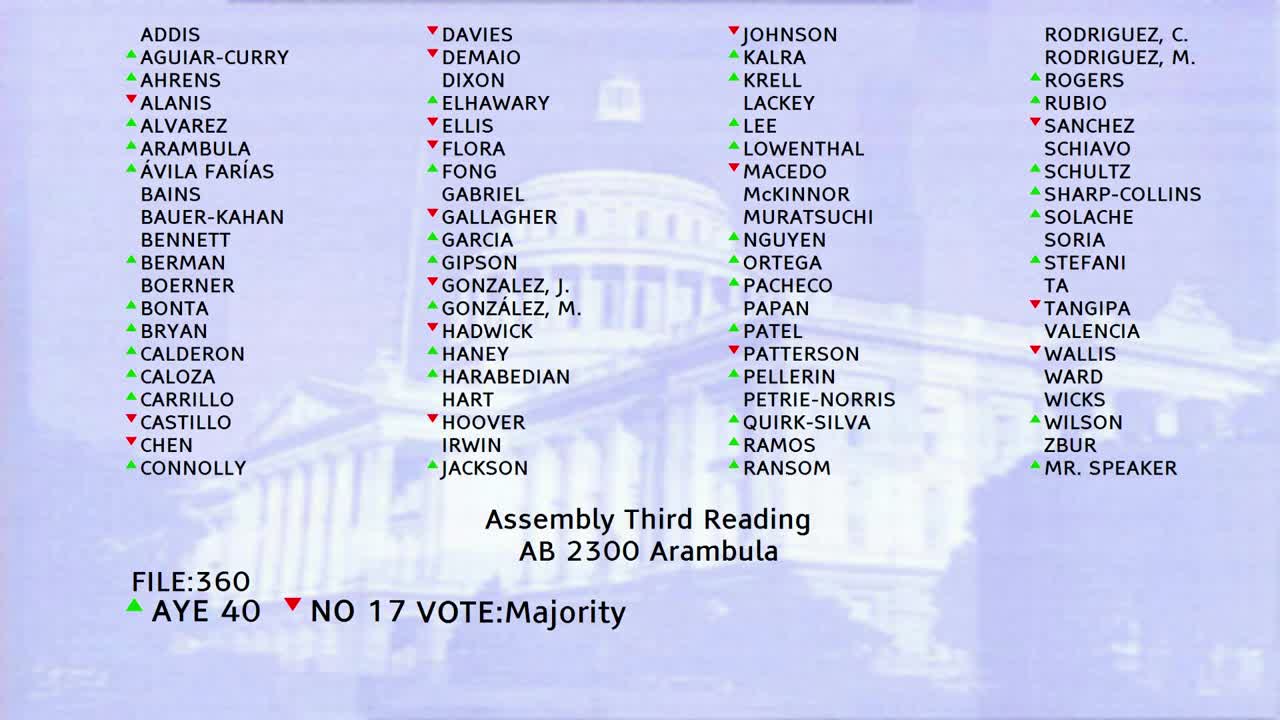 1MIN
Assembly Floor
 6MIN
Assembly Standing Committee on Utilities and Energy
 11MIN
Assembly Standing Committee on Housing and Community Development
Bill Author

Bill Co-Author(s):