AB 2639: Merced County Flood Control District: assessment.
- Session Year: 2025-2026
- House: Assembly
- Latest Version Date: 2026-06-25
Current Status:
In Progress
(2026-08-13: In committee: Held under submission.)
Introduced
In Committee
Awaiting First Chamber Vote
Passed First Chamber
In Committee
Awaiting Second Chamber Vote
Passed Second Chamber
Enacted
What does this bill do?
This bill requires the Legislative Analyst’s Office to evaluate how well the Merced County Flood Control District is working and to recommend ways to modernize it. The review must compare Merced’s district to other California flood control districts and be sent to the Legislature and Governor by July 1, 2027.
The summary is provided by generative AI which can make mistakes. For original language, please view the details in the table below.
Existing law, the Merced County Flood Control District Act, establishes the Merced County Flood Control District to control the flood and stormwaters of the district, which consists of all the territory of the County of Merced.
This bill would require the district to coordinate its flood control planning and response operations with other local agencies located completely or partially in the County of Merced, including, but not limited to, cities and districts with responsibilities for surface water management or flood control. By imposing additional requirements on the Merced County Flood Control District, the bill would impose a state-mandated local program.The California Constitution requires the state to reimburse local agencies and school districts for certain costs mandated by the state. Statutory provisions establish procedures for making that reimbursement.This bill would provide that, if the Commission on State Mandates determines that the bill contains costs mandated by the state, reimbursement for those costs shall be made pursuant to the statutory provisions noted above.This bill would require the Legislative Analysts Office to conduct and submit to the Legislature and the Governor an assessment, on or before July 1, 2027, evaluating the efficacy of the Merced County Flood Control District, as prescribed.
Existing law, the Merced County Flood Control District Act, establishes the Merced County Flood Control District to control the flood and stormwaters of the district, which consists of all the territory of the County of Merced.
This bill would require the district to coordinate its flood control planning and response operations with other local agencies located completely or partially in the County of Merced, including, but not limited to, cities and districts with responsibilities for surface water management or flood control. By imposing additional requirements on the Merced County Flood Control District, the bill would impose a state-mandated local program.
The California Constitution requires the state to reimburse local agencies and school districts for certain costs mandated by the state. Statutory provisions establish procedures for making that reimbursement.
This bill would provide that, if the Commission on State Mandates determines that the bill contains costs mandated by the state, reimbursement for those costs shall be made pursuant to the statutory provisions noted above.
Existing law authorizes certain actions to be taken by cities, counties, or other local agencies to prepare a community within their jurisdiction against flood risk.This bill would state the intent of the Legislature to enact future legislation relating to the protection of disadvantaged communities from flooding.Existing law authorizes certain actions to be taken by cities, counties, or other local agencies to prepare a community within their jurisdiction against flood risk.
This bill would state the intent of the Legislature to enact future legislation relating to the protection of disadvantaged communities from flooding.
(a)The Legislative Analysts Office shall conduct an assessment, on or before July 1, 2027, evaluating the efficacy of the Merced County Flood Control District.
(b)The results of the final assessment shall be reported, in writing, to the Legislature and the Governor on or before July 1, 2027. The final assessment shall include, but not be limited to, both of the following:
(1)Comparing the Merced County Flood Control District to flood control districts in other regions of the state.
(2)Policy recommendations on how the Merced County Flood Control District could be modernized to meet the needs of the County of Merced.
(c)The report submitted to the Legislature pursuant to subdivision (b) shall be submitted in compliance with Section 9795 of the Government Code.
(d)This section shall become inoperative on July 1, 2028, and, as of January 1, 2029, is repealed.
SECTION 1.Section 5.1 is added to the Merced County Flood Control District Act (Chapter 1311 of the Statutes of 1982), to read:SEC. 5.1.The district shall coordinate its flood control planning and response operations with other local agencies located completely or partially in the County of Merced, including, but not limited to, cities and districts with responsibilities for surface water management or flood control.SEC. 2.If the Commission on State Mandates determines that this act contains costs mandated by the state, reimbursement to local agencies and school districts for those costs shall be made pursuant to Part 7 (commencing with Section 17500) of Division 4 of Title 2 of the Government Code.The district shall coordinate its flood control planning and response operations with other local agencies located completely or partially in the County of Merced, including, but not limited to, cities and districts with responsibilities for surface water management or flood control.
SEC. 2.If the Commission on State Mandates determines that this act contains costs mandated by the state, reimbursement to local agencies and school districts for those costs shall be made pursuant to Part 7 (commencing with Section 17500) of Division 4 of Title 2 of the Government Code.
SECTION 1.It is the intent of the Legislature to enact future legislation relating to the protection of disadvantaged communities from flooding.It is the intent of the Legislature to enact future legislation relating to the protection of disadvantaged communities from flooding.
|
Date
|
Status
|
|---|---|
| Aug 13, 2026 | In committee: Held under submission. |
| Aug 10, 2026 | In committee: Referred to APPR. suspense file. |
| Aug 5, 2026 | Re-referred to Com. on APPR. |
| Jul 2, 2026 | From committee: Do pass and re-refer to Com. on RLS. (Ayes 6. Noes 0.) (July 1). Re-referred to Com. on RLS. |
| Jun 25, 2026 | From committee chair, with author's amendments: Amend, and re-refer to committee. Read second time, amended, and re-referred to Com. on L. GOV. |
| Jun 10, 2026 | Referred to Com. on L. GOV. |
| May 27, 2026 | In Senate. Read first time. To Com. on RLS. for assignment. |
| May 26, 2026 | Read third time. Passed. Ordered to the Senate. (Ayes 78. Noes 0.) |
| May 26, 2026 | Read third time. Passed. Ordered to the Senate. (Ayes 78. Noes 0. Page 5337.) |
| May 26, 2026 | Read third time. Passed. Ordered to the Senate. |
| May 18, 2026 | Read second time. Ordered to third reading. |
| May 14, 2026 | Joint Rule 62(a), file notice suspended. (Page 5030.) |
| May 14, 2026 | Joint Rule 62(a), file notice suspended. |
| May 14, 2026 | From committee: Do pass. (Ayes 15. Noes 0.) (May 14). |
| May 13, 2026 | In committee: Set, first hearing. Referred to APPR. suspense file. |
| Apr 23, 2026 | From committee: Do pass and re-refer to Com. on APPR. (Ayes 10. Noes 0.) (April 22). Re-referred to Com. on APPR. |
| Mar 23, 2026 | Re-referred to Com. on L. GOV. |
| Mar 19, 2026 | Referred to Com. on L. GOV. |
| Mar 19, 2026 | From committee chair, with author's amendments: Amend, and re-refer to Com. on L. GOV. Read second time and amended. |
| Feb 21, 2026 | From printer. May be heard in committee March 23. |
| Feb 20, 2026 | Read first time. To print. |
|
Date
|
Description
|
Location
|
Votes
|
|
|---|---|---|---|---|
| Aug 10, 2026 | Placed on suspense file | Senate Standing Committee on Appropriations |
Passed |
|
| Jul 1, 2026 | Do pass, but first be re-referred to the Committee on [Rules] | Senate Standing Committee on Local Government |
Passed |
|
| May 26, 2026 | AB 2639 Soria Assembly Third Reading | Assembly Floor |
Passed |
|
| May 14, 2026 | Do pass. | Assembly Standing Committee on Appropriations |
Passed |
|
| Apr 22, 2026 | Do pass and be re-referred to the Committee on [Appropriations] | Assembly Standing Committee on Local Government |
Passed |
This list shows positions taken on this bill by organizations on the date displayed, which is linked to the original source.
Positions by individuals are not included.
SENATE COMMITTEE ON
Senator Sabrina Cervantes, Chair
2025 - 2026 Regular Session
AB 2639 (Soria) - Merced County Flood Control District: assessment
Version: | Policy Vote: |
Urgency: | Mandate: |
Hearing Date: | Consultant: |
Bill Summary:
AB 2639 would require the Legislative Analyst’s Office (LAO) to conduct an assessment to evaluate the efficacy of the Merced County Flood Control District (District) and report to the Legislature by July 1, 2027.
Fiscal Impact:
- This bill creates one-time General Fund cost pressures, likely over $50,000, for staff workload to conduct an assessment of the efficacy of the District by July 1, 2027. By directing LAO staff to complete this assessment, the bill would reduce the LAO's capacity to fulfill other legislative mandates and requests, as the LAO's budget is constrained by the Legislature's constitutional spending cap, as specified by Proposition 140 (1990). See Staff Comments.
Background:
The District was established in statute by AB 2926 (Thurman), Chap.1311/1982, as a countywide special district tasked with controlling flood and storm waters in the county, and protecting the watersheds, harbors, public highways, life, and property in Merced County from damage due to flood and stormwater. The District is a dependent special district where the Merced County Board of Supervisors serves as ex officio members of the governing board. The District appears to mainly operate through Merced County Department of Public Works and Building & Safety Division in cooperation with other local groups, including the Merced County Streams Group and the Merced Irrigation District to handle runoff and mitigate overflow risks from local streams and creeks.
According to the 2018 Merced Integrated Regional Water Management Plan Update: “Flooding in the Region is typically caused by infrequent, severe winter storms, combined with snowmelt runoff from the foothills east of Merced County. Runoff from these storm events traverses the Region via numerous creeks and rivers, ultimately draining to the San Joaquin River. The relatively flat topography of the Planning Area causes floodwaters exceeding the banks of these rivers and streams to spread out over large areas.…According to FEMA, approximately 380,000 acres in Merced County are located within a 100-year (1% annual chance exceedance) floodplain. A significant component of flooding in urban areas appears to be caused by flow over the southern and/or northern banks of Bear Creek, around the confluence of Black Rascal Creek with Bear Creek. In the unincorporated areas, Miles Creek can overflow its banks to flood portions of Planada, which is exacerbated when Bear Creek overflows into Miles Creek. Mariposa Creek overflow impacts the community of Le Grand.”
Proposed Law:
AB 2639 would require the LAO to conduct an assessment by July 1, 2027 evaluating the efficacy of the District that includes the following:
- A comparison of the District to flood control districts in other regions of the state.
- Policy recommendations on how the District could be modernized to meet the needs of the County of Merced.
The results of the final assessment must be reported to the Legislature and Governor by July 1, 2027, and the provisions of the bill would be inoperative on July 1, 2028 and repealed one year thereafter.
Staff Comments:
The LAO itself is a part of the Legislature, and the office is funded from the Legislature’s budget. Specifically, the LAO receives an annual transfer from both the Senate and the Assembly to fund its operations. As noted previously, Proposition 140, approved by the voters in 1990, capped the Legislature’s budget. Since that time, funding for the LAO has accounted for less than 3 percent of the Legislature’s annual budget. Under the requirements of Proposition 140, any additional resources for the LAO would have to come from the Legislature’s budget. To the extent that this bill and others that place new reporting requirements on the LAO create workload that cannot be absorbed, funding for any new positions would result in direct reductions in resources available in the Legislature’s budget.
Staff notes that the assessment required by this bill, focused on the efficacy and operations of a single dependent special district, is not typical of the fiscal and budget-related analysis on topics of statewide significance that is usually conducted by LAO staff.
-- END --
SENATE COMMITTEE ON LOCAL GOVERNMENT
Senator María Elena Durazo, Chair
2025 - 2026 Regular
Bill No: | AB 2639 | Hearing Date: | 7/1/26 |
Author: | Soria | Fiscal: | No |
Version: | 6/25/26 | Consultant: | Vargas |
Merced County Flood Control District: assessment
Require the Legislative Analyst’s Office to conduct and submit to the Legislature and Governor an assessment evaluating the efficacy of the Merced County Flood Control District on or before July 1, 2027.
Background
Legislative Analyst’s Office. The Legislative Analyst’s Office (LAO) provides fiscal and policy advice to the Legislature. It is known for its fiscal and programmatic expertise and nonpartisan analyses of the state budget. The office serves as the “eyes and ears” for the Legislature to ensure that the executive branch is implementing legislative policy in a cost efficient and effective manner. The LAO is a staff resource to all legislators. The LAO performs the following functions:
- Budget “Control,” which allows the LAO to review requests by the administration to make changes to the budget after it is enacted. These reviews are used primarily by members of the JLBC and the fiscal committees;
- Special Reports, which allows the LAO to prepare special reports on the state budget and topics of interest to the Legislature;
- Initiatives and Ballot Measures, which allows the LAO to estimate the fiscal effect on state and local government of all proposed initiatives (prior to circulation) and prepare analyses of all measures that qualify for the statewide ballot; and
- Forecasting, which allows the LAO to forecast the state revenues and expenditures.
Merced County Flood Control District. In 1982, AB 2926 established the Merced County Flood Control District (the District) by the Legislature (Thurman). It was tasked with controlling flood and storm waters, and the protection of watercourses, watersheds, harbors, public highways, life and property from damage or destruction from such waters. The District is a dependent district where the Board of Supervisors serve as ex officio members of the governing board.
The author wants the LAO to evaluate the efficacy of the Merced County Flood Control District.
Proposed Law
Assembly Bill 2639 requires, on or before July 1, 2027, the LAO to conduct an assessment evaluating the efficacy of the Merced County Flood Control District. AB 2639 requires written reports to the Legislature and the Governor that include:
- A comparison of the Merced County Flood Control District to other flood control districts in other regions of the state; and
- Policy recommendations on how the Merced County Flood Control District could be modernized to meet the needs of the County of Merced.
The report is subject to existing legislative reporting requirements, including submission of an electronic copy to Secretary of the Senate, the Chief Clerk of the Assembly and the Legislative Counsel.
AB 2639 becomes inoperative on July 1, 2028 and is repealed on January 1, 2029.
Comments
1. Purpose of the bill. According to the author, “The Merced Flood Control District was established through legislation in 1982 to receive and manage funds for flood management in Merced County. This legislation made the County of Merced the acting Flood Control District to receive funding and conduct flood control projects in the county while coordinating with other entities. However, the structure of this flood control district has not been updated in over 40 years. AB 2639 Directs the LAO to evaluate the Merced County Flood Control District and provide policy recommendations for modernizing the District to serve the needs of the people of Merced County.”
2. Necessary? According to the LAO, the estimated cost of producing a bill in 2001-02 was $17,890. The LAO regularly receives requests from the Legislature to conduct analyses and studies as part of its core responsibilities. Because the Legislature can request such work without legislation, the Committee may wish to consider if AB 2639 is necessary.
3. Gut and amend. As introduced and approved by the Assembly, AB 2639 contained provisions related to coordination of flood control planning in the County of Merced. Amendments taken in the Senate deleted the initial contents of AB 2639 and inserted the current language relating to an assessment of the Merced County Flood Control District by the LAO.
Assembly Actions
Prior votes not relevant to the current version of the bill.
Support and Opposition
(6/26/26)
Support: None Submitted
Opposition: None Submitted
-- END --
ASSEMBLY THIRD READING
ATR Bill Id:AB 2639
Author:(Soria)
As Amended Ver:March 19, 2026
Majority vote
SUMMARY
Requires the Merced County Flood Control District (District) to coordinate its flood control planning with other local agencies.
Major Provisions
- Requires the District to coordinate its flood control planning and response operations with other local agencies located completely or partially in Merced County, including, but not limited to, cities and districts with responsibilities for surface water management or flood control.
- Provides that if the Commission on State Mandates determines this bill contains costs mandated by the state, reimbursement to local agencies and school district for those costs shall be made.
COMMENTS
- Central Valley Flood Protection. The Central Valley Flood Protection Board (CVFPB), originally chartered in 1911 as the Reclamation Board, serves as the liaison between the State of California, Central Valley residents, property owners, Central Valley agencies, and the United States government, with the mission ″to reduce the risk of catastrophic flooding to people and property within the California central valley″ while also considering environmental and habitat concerns.
The level of flood risk in California′s Central Valley is among the highest in the nation. According to the CV Flood Plan 2022 Update, 1.23 million people and more than $223 billion in structures and property are at risk from flooding. With historic storms like the Great Flood of 1862 and even more recent events like the series of atmospheric river-fed storms from winter 2023, human-made flood management efforts struggle to compete against the natural state of the Central Valley.
Cities and counties in the Sacramento-San Joaquin Valley that are protected by the State Plan of Flood Control are prohibited from approving new development or increasing the housing density within existing developments unless there is flood protection that meets the ″urban level of flood protection,″ the level of protection necessary to withstand a flood event that has a 1-in-200 chance of occurring in any given year (sometimes referred to as a ″200-year flood″). Areas that do not have an urban level of flood protection must achieve, or make adequate progress towards achieving, the urban level of flood protection by 2025. These requirements were enacted by the Legislature in 2007 as part of a comprehensive flood package resulting from increased awareness of the flood threat to Central Valley communities in the wake of Hurricane Katrina. One bill in the package, SB 5 (Machado, 2007), required the Department of Water Resources (DWR) and the CVFPB to prepare and adopt a Central Valley Flood Protection Plan by 2012, and established certain flood protection requirements for certain local land-use decisions consistent with the Central Valley Protection Plan.
- Merced Regional Flood Control. According to the 2018 Merced Integrated Regional Water Management Plan Update, ″Flooding in the Region is typically caused by infrequent, severe winter storms, combined with snowmelt runoff from the foothills east of Merced County. Runoff from these storm events traverses the Region via numerous creeks and rivers, ultimately draining to the San Joaquin River. The relatively flat topography of the Planning Area causes floodwaters exceeding the banks of these rivers and streams to spread out over large areas.
″The Merced Region has a long history of active stormwater and flood management, dating back to development of the original Merced County Streams Group project under authorization of the Flood Control Act of 1944 as part of the comprehensive plan for flood control for the Sacramento and San Joaquin River Basins.
″…According to FEMA, approximately 380,000 acres in Merced County are located within a 100-year (1% annual chance exceedance) floodplain. A significant component of flooding in urban areas appears to be caused by flow over the southern and/or northern banks of Bear Creek, around the confluence of Black Rascal Creek with Bear Creek. In the unincorporated areas, Miles Creek can overflow its banks to flood portions of Planada, which is exacerbated when Bear Creek overflows into Miles Creek. Mariposa Creek overflow impacts the community of Le Grand.
″Flood legislation passed in 2007 established a 200-year (0.5% annual chance exceedance) level of flood protection as the standard for urban development. This means that development in a moderate-flood (FEMA Zone B and the 0.2 Percent Annual Chance Flood Hazard) or high-flood hazard zone (FEMA Zones A, AE, A1-30, AH, AO, AR and A99) would only be allowed if the permitting agency found, based on substantial evidence in the record, that urban or urbanizing areas would be protected to a 200-year-flood level. This applies to all developed areas with population of at least 10,000 (or with plans to reach 10,000 within 10 years).″
- Merced County Flood Control District. AB 2926 (Thurman), Chapter 1311, Statutes of 1982, created the countywide district under the District Act. The District is tasked with controlling flood and storm waters of the District and to protect from damage from flood and storm water the watersheds, harbors, public highways, life, and property in the District. The District is a dependent district where the Board of Supervisors serves ex officio members of the governing board.
- Recent Example of Flooding in Merced County. On January 9, 2023, hundreds of households were affected in Planada, an unincorporated area of Merced County, when floodwaters breached the banks of nearby Miles Creek. According to a University of California of Merced, Community and Labor Center Research Brief from May 2023, ″Over seven hundred Planada households experienced economic losses following a major flood disaster on January 9, 2023. These losses ranged from property damage inside the home (e.g. furniture, boiler, electrical wiring, foundation) to outside of the home (e.g. vehicles for going to work), and the loss of work. A UC Merced Community and Labor Center analysis examines data from the Planada Community Needs Assessment Survey 2023. It finds that most (83%) Planada households experienced at least one form of economic loss following the flood, whether through missed work or property damaged as a result of the flood. At the same time, it also finds that most households did not have access to key forms of disaster aid following the flood.″
According to the Author
″The Merced Flood Control District was established through legislation in 1982 to receive and manage funds for flood management in Merced County. While this legislation gave the County of Merced the power to establish a separate flood control district, they have instead operated as the acting Merced Flood Control District under the authority provided by that legislation. However, the County is not the only local entity concerned with flood control within its boundaries.
″In addition to the County, Merced Irrigation District and the various cities in Merced′s primary flood zones also manage waterways and undertake flood management projects relevant to the region. AB 2639 simply directs the Merced Flood Control District to coordinate with entities like these when conducting their flood control and management functions. This coordination will help all these entities protect the residents of Merced County from flooding.″
Arguments in Support
None on file.
Arguments in Opposition
None on file.
FISCAL COMMENTS
According to the Assembly Appropriations Committee:
No state costs. Local costs of an unknown amount, but likely significant, in excess of $150,000, to the District, Merced County, and local agencies located completely or partially within the county for staff to coordinate flood control planning and response operations. The bill does not specify, but specific tasks may include interagency coordination though joint meetings, sharing data and documentation, soliciting input from impacted agencies, providing training, preparing joint reports, or other coordinating efforts.
Merced County contains six incorporated cities, numerous unincorporated communities and towns, and several relevant special districts.
These costs are reimbursable by the state, subject to a determination by the Commission on State Mandates.
The Legislative Analyst′s Office recently warned of General Fund structural deficits of around $35 billion per year in the 2027-28 fiscal year and ongoing.
VOTES
ASM LOCAL GOVERNMENT: 10-0-0
YES: Carrillo, Ta, Johnson, Pacheco, Ramos, Ransom, Blanca Rubio, Stefani, Ward, Wilson
ASM APPROPRIATIONS: 15-0-0
YES: Wicks, Hoover, Aguiar-Curry, Calderon, Caloza, Dixon, Fong, Mark González, Krell, Pacheco, Pellerin, Sharp-Collins, Solache, Ta, Tangipa
UPDATED
VERSION: March 19, 2026
CONSULTANT: Jimmy MacDonald / L. GOV. / (916) 319-3958 FN: 0002640
Date of Hearing: May 13, 2026
ASSEMBLY COMMITTEE ON APPROPRIATIONS
Buffy Wicks, Chair
ABPCA Bill Id:AB 2639
Author:(Soria) – As Amended Ver:March 19, 2026
Policy Committee: | Local Government | Vote: | 10 - 0 |
|
| ||
|
|
Urgency: No State Mandated Local Program: Yes Reimbursable: Yes
SUMMARY:
This bill requires the Merced County Flood Control District (District) to coordinate its flood control planning and response operations with other local agencies located completely or partially in Merced County, including, but not limited to, cities and districts with responsibilities for surface water management or flood control.
FISCAL EFFECT:
No state costs. Local costs of an unknown amount, but likely significant, in excess of $150,000, to the District, Merced County, and local agencies located completely or partially within the county for staff to coordinate flood control planning and response operations. The bill does not specify, but specific tasks may include interagency coordination though joint meetings, sharing data and documentation, soliciting input from impacted agencies, providing training, preparing joint reports, or other coordinating efforts.
Merced County contains six incorporated cities, numerous unincorporated communities and towns, and several relevant special districts.
These costs are reimbursable by the state, subject to a determination by the Commission on State Mandates.
The Legislative Analyst’s Office recently warned of General Fund structural deficits of around $35 billion per year in the 2027-28 fiscal year and ongoing.
COMMENTS:
- Purpose. According to the author:
The Merced Flood Control District was established through legislation in 1982 to receive and manage funds for flood management in Merced County. While this legislation gave the County of Merced the power to establish a separate flood control district, they have instead operated as the acting Merced Flood Control District under the authority provided by that legislation. However, the County is not the only local entity concerned with flood control within its boundaries.
In addition to the County, Merced Irrigation District and the various cities in Merced’s primary flood zones also manage waterways and undertake flood management projects relevant to the region. [This bill] simply directs the Merced Flood Control District to coordinate with entities like these when conducting their flood control and management functions.
- Background. Merced County Flood Control District. AB 2926 (Thurman), Chapter 1311, Statutes of 1982, created the countywide district under the District Act. The District is tasked with controlling flood and storm waters in the District and protecting the watersheds, harbors, public highways, life, and property in the District from flood and storm water damage. The District is a dependent district where the Board of Supervisors serves as ex officio members of the governing board.
Merced Regional Flood Control. According to the 2018 Merced Integrated Regional Water Management Plan Update:
Flooding in the Region is typically caused by infrequent, severe winter storms, combined with snowmelt runoff from the foothills east of Merced County. Runoff from these storm events traverses the Region via numerous creeks and rivers, ultimately draining to the San Joaquin River. The relatively flat topography of the Planning Area causes floodwaters exceeding the banks of these rivers and streams to spread out over large areas.
The Merced Region has a long history of active stormwater and flood management, dating back to development of the original Merced County Streams Group project under authorization of the Flood Control Act of 1944 as part of the comprehensive plan for flood control for the Sacramento and San Joaquin River Basins.
According to FEMA, approximately 380,000 acres in Merced County are located within a 100-year floodplain. A significant component of flooding in urban areas appears to be caused by flow over the southern and/or northern banks of Bear Creek, around the confluence of Black Rascal Creek with Bear Creek. In the unincorporated areas, Miles Creek can overflow its banks to flood portions of Planada, which is exacerbated when Bear Creek overflows into Miles Creek. Mariposa Creek overflow impacts the community of Le Grand.
In January 2023, hundreds of households were affected in Planada, an unincorporated area of Merced County, when floodwaters breached the banks of nearby Miles Creek. According to a University of California of Merced, “Over seven hundred Planada households experienced economic losses following a major flood disaster on January 9, 2023. These losses ranged from property damage inside the home to outside of the home and the loss of work.”
The author asserts this bill will help protect the residents of Merced County from flooding.
Analysis Prepared by: Jennifer Swenson / APPR. / (916) 319-2081
Date of Hearing: April 22, 2026
ASSEMBLY COMMITTEE ON LOCAL GOVERNMENT
Juan Carrillo, Chair
ABPCA Bill Id:AB 2639 (
Author:Soria) – As Amended Ver:March 19, 2026
SUBJECT: Merced County Flood Control District: local government coordination.
SUMMARY: Requires the Merced County Flood Control District (District) to coordinate its flood control planning with other local agencies. Specifically, this bill:
- Requires the District to coordinate its flood control planning and response operations with other local agencies located completely or partially in Merced County, including, but not limited to, cities and districts with responsibilities for surface water management or flood control.
- Provides that if the Commission on State Mandates determines this bill contains costs mandated by the state, reimbursement to local agencies and school district for those costs shall be made.
FISCAL EFFECT: This bill is keyed fiscal and contains a state mandated local program.
COMMENTS:
- Bill Summary and Author’s Statement. This bill requires the Merced County Flood Control District (District) to coordinate its flood control planning and response operations with other local agencies. The bill is sponsored by the author.
According to the author, “The Merced Flood Control District was established through legislation in 1982 to receive and manage funds for flood management in Merced County. While this legislation gave the County of Merced the power to establish a separate flood control district, they have instead operated as the acting Merced Flood Control District under the authority provided by that legislation. However, the County is not the only local entity concerned with flood control within its boundaries.
“In addition to the County, Merced Irrigation District and the various cities in Merced’s primary flood zones also manage waterways and undertake flood management projects relevant to the region. AB 2639 simply directs the Merced Flood Control District to coordinate with entities like these when conducting their flood control and management functions. This coordination will help all these entities protect the residents of Merced County from flooding.”
- Central Valley Flood Protection. The Central Valley Flood Protection Board (CVFPB), originally chartered in 1911 as the Reclamation Board, serves as the liaison between the State of California, Central Valley residents, property owners, Central Valley agencies, and the United States government, with the mission “to reduce the risk of catastrophic flooding to people and property within the California central valley” while also considering environmental and habitat concerns.
The level of flood risk in California's Central Valley is among the highest in the nation. According to the CV Flood Plan 2022 Update, 1.23 million people and more than $223 billion in structures and property are at risk from flooding. With historic storms like the Great Flood of 1862 and even more recent events like the series of atmospheric river-fed storms from winter 2023, human-made flood management efforts struggle to compete against the natural state of the Central Valley.
Cities and counties in the Sacramento-San Joaquin Valley that are protected by the State Plan of Flood Control are prohibited from approving new development or increasing the housing density within existing developments unless there is flood protection that meets the "urban level of flood protection," the level of protection necessary to withstand a flood event that has a 1-in-200 chance of occurring in any given year (sometimes referred to as a "200-year flood"). Areas that do not have an urban level of flood protection must achieve, or make adequate progress towards achieving, the urban level of flood protection by 2025. These requirements were enacted by the Legislature in 2007 as part of a comprehensive flood package resulting from increased awareness of the flood threat to Central Valley communities in the wake of Hurricane Katrina. One bill in the package, SB 5 (Machado, 2007), required the Department of Water Resources (DWR) and the CVFPB to prepare and adopt a Central Valley Flood Protection Plan by 2012, and established certain flood protection requirements for certain local land-use decisions consistent with the Central Valley Protection Plan.
- Merced Regional Flood Control. According to the 2018 Merced Integrated Regional Water Management Plan Update, “Flooding in the Region is typically caused by infrequent, severe winter storms, combined with snowmelt runoff from the foothills east of Merced County. Runoff from these storm events traverses the Region via numerous creeks and rivers, ultimately draining to the San Joaquin River. The relatively flat topography of the Planning Area causes floodwaters exceeding the banks of these rivers and streams to spread out over large areas.
“The Merced Region has a long history of active stormwater and flood management, dating back to development of the original Merced County Streams Group project under authorization of the Flood Control Act of 1944 as part of the comprehensive plan for flood control for the Sacramento and San Joaquin River Basins.
“…According to FEMA, approximately 380,000 acres in Merced County are located within a 100-year (1% annual chance exceedance) floodplain. A significant component of flooding in urban areas appears to be caused by flow over the southern and/or northern banks of Bear Creek, around the confluence of Black Rascal Creek with Bear Creek. In the unincorporated areas, Miles Creek can overflow its banks to flood portions of Planada, which is exacerbated when Bear Creek overflows into Miles Creek. Mariposa Creek overflow impacts the community of Le Grand.
“Flood legislation passed in 2007 established a 200-year (0.5% annual chance exceedance) level of flood protection as the standard for urban development. This means that development in a moderate-flood (FEMA Zone B and the 0.2 Percent Annual Chance Flood Hazard) or high-flood hazard zone (FEMA Zones A, AE, A1-30, AH, AO, AR and A99) would only be allowed if the permitting agency found, based on substantial evidence in the record, that urban or urbanizing areas would be protected to a 200-year-flood level. This applies to all developed areas with population of at least 10,000 (or with plans to reach 10,000 within 10 years).”
- Merced County Flood Control District. AB 2926 (Thurman), Chapter 1311, Statutes of 1982, created the countywide district under the District Act. The District is tasked with controlling flood and storm waters of the District and to protect from damage from flood and storm water the watersheds, harbors, public highways, life, and property in the District. The District is a dependent district where the Board of Supervisors serves ex officio members of the governing board.
- Recent Example of Flooding in Merced County. On January 9, 2023, hundreds of households were affected in Planada, an unincorporated area of Merced County, when floodwaters breached the banks of nearby Miles Creek. According to a University of California of Merced, Community and Labor Center Research Brief from May 2023, “Over seven hundred Planada households experienced economic losses following a major flood disaster on January 9, 2023. These losses ranged from property damage inside the home (e.g. furniture, boiler, electrical wiring, foundation) to outside of the home (e.g. vehicles for going to work), and the loss of work. A UC Merced Community and Labor Center analysis examines data from the Planada Community Needs Assessment Survey 2023. It finds that most (83%) Planada households experienced at least one form of economic loss following the flood, whether through missed work or property damaged as a result of the flood. At the same time, it also finds that most households did not have access to key forms of disaster aid following the flood.”
- Arguments in Support. None on file.
- Arguments in Opposition. None on file.
REGISTERED SUPPORT / OPPOSITION:
Support
None on file
Opposition
None on file
Analysis Prepared by: Jimmy MacDonald / L. GOV. / (916) 319-3958
Discussed in Hearing
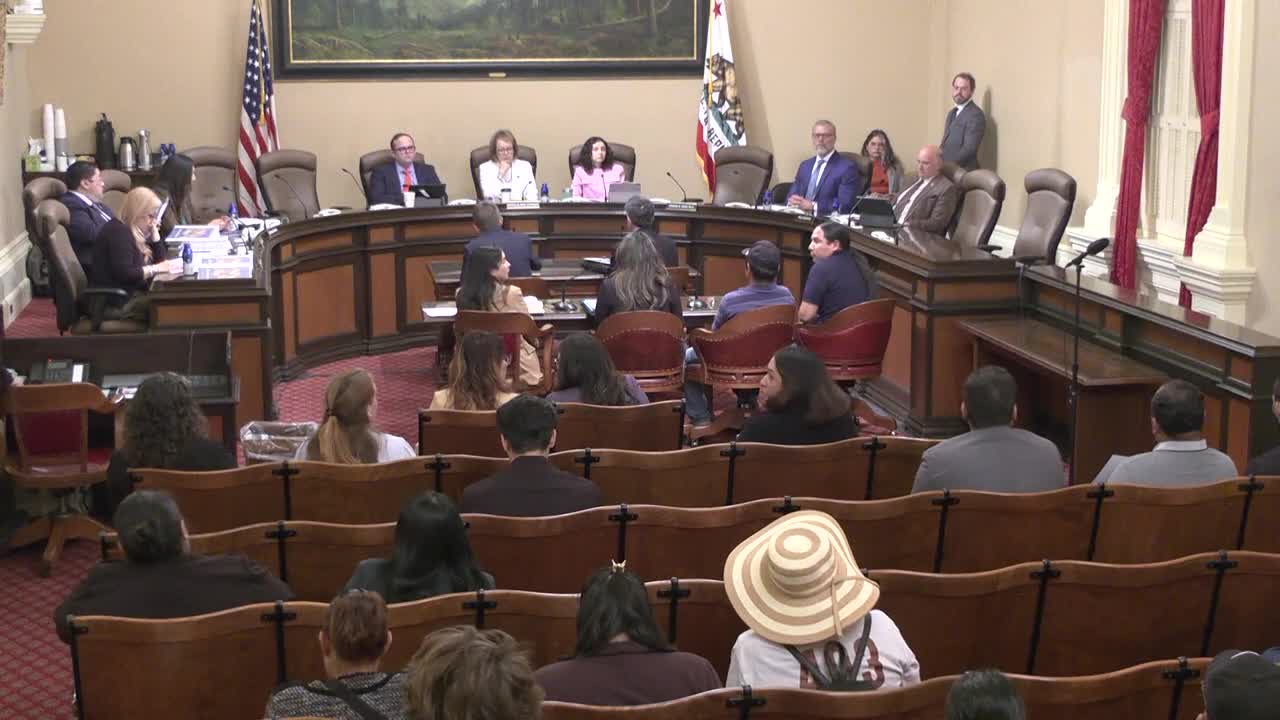 3MIN
Senate Standing Committee on Local Government
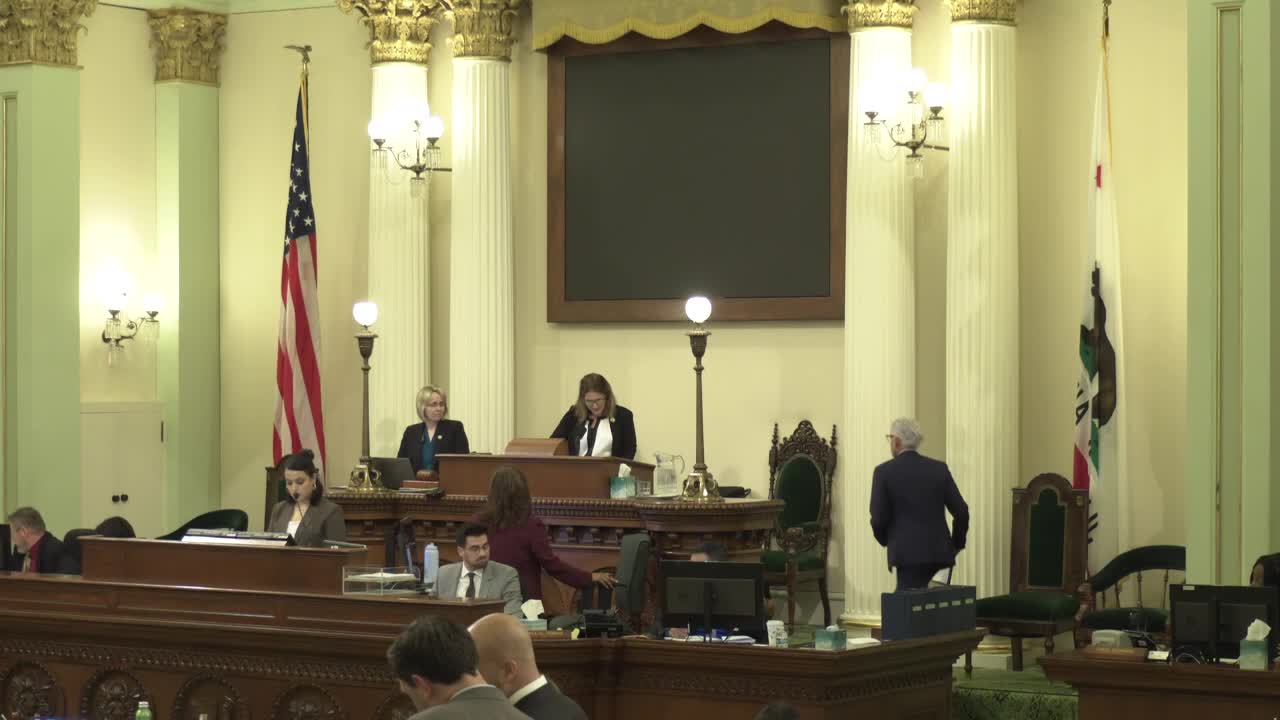 1MIN
Assembly Floor
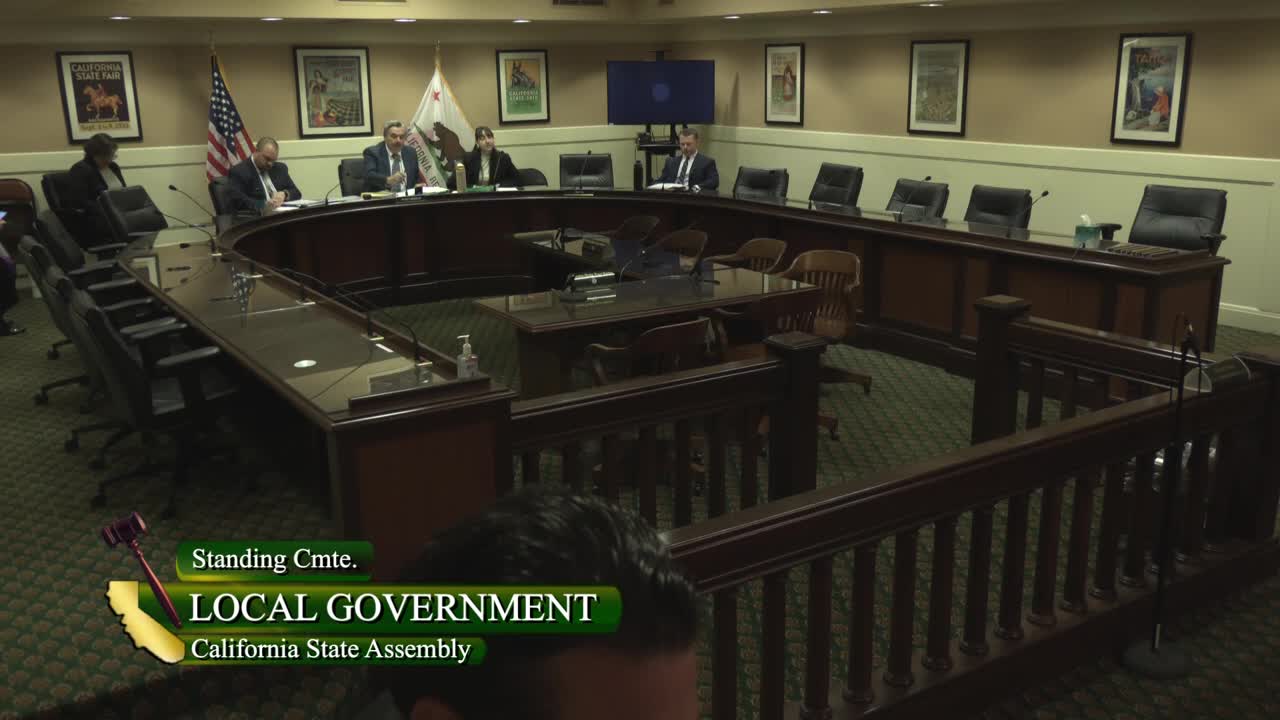 2MIN
Assembly Standing Committee on Local Government
Bill Author

Bill Co-Author(s):