AB 1574: The Tribal Foster Care Prevention Program.
- Session Year: 2025-2026
- House: Assembly
- Latest Version Date: 2026-01-12
Current Status:
In Progress
(2026-08-13: In committee: Held under submission.)
Introduced
In Committee
Awaiting First Chamber Vote
Passed First Chamber
In Committee
Awaiting Second Chamber Vote
Passed Second Chamber
Enacted
What does this bill do?
This bill creates the Tribal Foster Care Prevention Program to give funding to federally recognized Indian tribes in California so they can run services that keep tribal children with their families and prevent foster care placements. Tribes that sign an agreement with the state can receive annual allocations, may name another group to manage the money, must report how many children and families were served, and are not required to pay a share of the costs.
The summary is provided by generative AI which can make mistakes. For original language, please view the details in the table below.
Existing federal law, the Indian Child Welfare Act of 1978 (ICWA), governs the proceedings for determining the placement of an Indian child when that child is removed from the custody of the childs parent or guardian. Existing law specifies that the state is committed to protecting the essential tribal relations and best interest of an Indian child by promoting practices in accordance with ICWA. Existing law also provides for the state and an Indian tribe to enter into an agreement regarding the care and custody of Indian children and jurisdiction over Indian child custody proceedings. Existing law establishes, in order to provide additional funds to eligible Indian tribes that have entered into an agreement with the state pursuant to those provisions, the Tribally Approved Homes Compensation Program to provide funds to recruit and approve homes for the purpose of foster or adoptive placement of an Indian child and the Tribal Dependency Representation Program to provide funds to pay for legal counsel to represent the Indian tribe in a California Indian child custody proceeding.
This bill would establish the Tribal Foster Care Prevention Program to provide funding to assist any federally recognized Indian tribe located in California, or with lands that extend into California, in funding the costs associated with services aimed at preserving families and preventing the entry of children into foster care. The bill would require an Indian tribe that seeks funding for this purpose to submit an annual letter of interest to the department. The bill would require the department, subject to an appropriation in the annual Budget Act for this purpose, to provide each Indian tribe that enters into a specified agreement and submits a letter of interest an annual allocation. The bill would require an Indian tribe that receives funds to submit a progress report regarding the number of Indian children and their families served to the department on or before September 30 following the close of the fiscal year in which funding was received.
This bill would authorize the department to issue written guidance to implement, interpret, or make specific these provisions without taking any regulatory action.
(a)The Legislature finds and declares all of the following:
(1)Native American children continue to be overrepresented in the California foster care system.
(2)The historic policies of the state and federal governments have specifically targeted Native American children for removal from their families and tribal communities, the legacy of which continues to ripple through generations of Native American families in California.
(3)The historic policies of the state and federal governments specifically have not honored treaty obligations to tribal nations in California that would have provided for the health and welfare of tribal children and families.
(4)Tribal nations within California know best how to preserve tribal families but lack funding on par with counties to support culturally responsive family preservation programs.
(b)It is the intent of the Legislature in enacting this act to support tribal nations in California in developing and implementing prevention programs and to ensure equitable funding for Californias tribal families.
SEC. 2.Section 10553.16 is added to the Welfare and Institutions Code, to read:10553.16.(a)The Tribal Foster Care Prevention Program is hereby established to provide the funding described in this section to assist any federally recognized Indian tribe located in California, or with lands that extend into California, in funding the costs associated with services, to be determined by the Indian tribe, aimed at preserving families and preventing the entry of children into foster care. An Indian tribe may designate another entity to administer the allocation of funds on a tribes behalf upon designation by the tribe for this purpose. There shall be no tribal share of cost for any agreement executed under this section.
(b)To be eligible for an allocation of funds under this section, an Indian tribe shall enter into an agreement with the department pursuant to subdivision (a) of Section 10553.1 or in accordance with Section 1919 of Title 25 of the United States Code.
(c)An Indian tribe that seeks funding pursuant to this section shall submit an annual letter of interest to the State Department of Social Services. The letter shall include both of the following:
(1)The name of the tribe and the identified contact person.
(2)The approximate number of Indian children, as defined by Section 224.1, who are members of the tribe that were in foster care in the previous fiscal year.
(d)Subject to an appropriation in the annual Budget Act for the express purpose described in this section, the State Department of Social Services shall provide each eligible Indian tribe, as described in subdivision (a), that enters into an agreement pursuant to subdivision (b) and submits a letter of interest pursuant to subdivision (c), an annual allocation. The allocation methodology and the implementation plan shall be established by the department in government-to-government consultation with tribes. The department shall provide an update to legislative staff and stakeholders on the progress of implementation of this section by February 1, 2028.
(e)An Indian tribe that receives funds pursuant to this section shall submit a progress report to the department. The progress report shall be submitted on or before September 30 following the close of the fiscal year in which funding was received. The report shall include both of the following:
(1)The total number of children and their families that were served with prevention services funded with moneys received pursuant to the Tribal Foster Care Prevention Program in the previous fiscal year.
(2)The approximate number of Indian children, as defined by Section 224.1, of the tribe that were in foster care in the previous fiscal year.
(f)The department may seek federal approvals or waivers necessary to claim federal reimbursement under Title IV-E of the federal Social Security Act (42 U.S.C. Sec. 670 et seq.) in order to maximize funding for the purposes described in this section. The federal approvals the department may seek pursuant to this subdivision may include authorization for the department to make agreements with federally recognized tribes in California as described in Section 10553.1 for the sole purpose of administering prevention programs pursuant to Chapter 7 (commencing with Section 16585) of Part 4.
(g)Notwithstanding the rulemaking provisions of the Administrative Procedure Act (Chapter 3.5 (commencing with Section 11340) of Part 1 of Division 3 of Title 2 of the Government Code), the department may implement, interpret, or make specific this section without taking any regulatory action.
(h)This section shall be implemented only to the extent that funding is expressly provided in the annual Budget Act for this purpose.
REVISIONS: HeadingLines 4 and 5.|
Date
|
Status
|
|---|---|
| Aug 13, 2026 | In committee: Held under submission. |
| Jun 29, 2026 | In committee: Referred to APPR. suspense file. |
| Jun 16, 2026 | From committee: Do pass and re-refer to Com. on APPR. with recommendation: To Consent Calendar. (Ayes 5. Noes 0.) (June 15). Re-referred to Com. on APPR. |
| Jun 3, 2026 | Referred to Com. on HUMAN S. |
| May 21, 2026 | In Senate. Read first time. To Com. on RLS. for assignment. |
| May 21, 2026 | Read third time. Passed. Ordered to the Senate. (Ayes 74. Noes 0. Page 5187.) |
| May 21, 2026 | Read third time. Passed. Ordered to the Senate. (Ayes 74. Noes 0.) |
| May 18, 2026 | Read second time. Ordered to third reading. |
| May 14, 2026 | Coauthors revised. |
| May 14, 2026 | From committee: Do pass. (Ayes 15. Noes 0.) (May 14). |
| Apr 22, 2026 | In committee: Set, first hearing. Referred to APPR. suspense file. |
| Mar 11, 2026 | Coauthors revised. |
| Mar 11, 2026 | From committee: Do pass and re-refer to Com. on APPR. (Ayes 6. Noes 0.) (March 10). Re-referred to Com. on APPR. |
| Feb 2, 2026 | Referred to Com. on HUM. S. |
| Jan 13, 2026 | From printer. May be heard in committee February 12. |
| Jan 12, 2026 | Read first time. To print. |
|
Date
|
Description
|
Location
|
Votes
|
|
|---|---|---|---|---|
| Jun 29, 2026 | Placed on suspense file | Senate Standing Committee on Appropriations |
Passed |
|
| Jun 15, 2026 | Do pass, but first be re-referred to the Committee on [Appropriations] with the recommendation: To Consent Calendar | Senate Standing Committee on Human Services |
Passed |
|
| May 21, 2026 | AB 1574 Rogers Assembly Third Reading | Assembly Floor |
Passed |
|
| May 14, 2026 | Do pass. | Assembly Standing Committee on Appropriations |
Passed |
|
| Mar 10, 2026 | Do pass and be re-referred to the Committee on [Appropriations] | Assembly Standing Committee on Human Services |
Passed |
This list shows positions taken on this bill by organizations on the date displayed, which is linked to the original source.
Positions by individuals are not included.
|
Organization
|
Position
|
Date
|
|---|---|---|
| Agua Caliente Band Of Cahuilla Indians | ** Support | |
| Alliance for Children's Rights | ** Support | |
| Berry Creek Rancheria of Maidu Indians of California | ** Support | |
| CA Commission on the Status of Women and Girls | ** Support | |
| California Behavioral Health Association | ** Support | |
| California Family Resource Association | ** Support | |
| California Tribal Families Coalition (sponsor) | ** Support | |
| California Valley Miwok Tribe | ** Support | |
| Child Abuse Prevention Center | ** Support | |
| Habematolel Pomo Of Upper Lake | ** Support | |
| Kno'qoti Native Wellness INC | ** Support | |
| Pechanga Band Of Luiseno Mission Indians | ** Support | |
| Prevent Child Abuse California | ** Support | |
| Rincon Band of Luiseo Indians | ** Support | |
| Safe Kids California | ** Support | |
| Santa Ynez Band Of Chumash Indians | ** Support | |
| Soboba Band Of Luiseno Indians | ** Support | |
| The Cahto Tribe of The Laytonville Rancheria | ** Support | |
| Tolowa Dee-ni' Nation | ** Support | |
| Yurok Tribe | ** Support |
SENATE COMMITTEE ON
Senator Sabrina Cervantes, Chair
2025 - 2026 Regular Session
AB 1574 (Rogers) - The Tribal Foster Care Prevention Program
Version: | Policy Vote: |
Urgency: | Mandate: |
Hearing Date: | Consultant: |
Bill Summary:
AB 1574 would establish the Tribal Foster Care Prevention Program.
Fiscal Impact:
- Unknown ongoing General Fund costs, potentially low millions, to provide funding to Indian tribes for prevention services.
- The California Department of Social Services (CDSS) estimates General Fund costs of $1,902,000 in 2026-27, $1,856,000 in 2027-28, and $1,494,000 annually thereafter for state administration.
Background:
The federal Indian Child Welfare Act (ICWA) establishes minimum federal standards for state courts to meet any time an Indian child is removed from their family or custodial home and placed in foster care or adoptive homes. Current state law requires CDSS, upon an Indian tribe’s request, to enter into an agreement with any Indian tribe, tribal organization, or tribal consortium located in California or with lands that extend into this state regarding the care and custody of Indian children and jurisdiction over Indian child custody proceedings. An Indian tribe, tribal organization, or tribal consortium that is a party to an agreement is, in accordance with the agreement, eligible to receive allocations of child welfare services funds. Current state law also authorizes an Indian tribe, consortium of tribes, or tribal organization (that has entered into an agreement with CDSS) to receive federal funding under the federal Family First Prevention Services Act of 2018 for prevention services that are provided for children who are at imminent risk of entering foster care.
Proposed Law:
Specific provisions of the bill would:
- Establish the Tribal Foster Care Prevention Program to provide the funding to assist any federally recognized Indian tribe located in California, or with lands that extend into California, in funding the costs associated with services, to be determined by the Indian tribe, aimed at preserving families and preventing the entry of children into foster care; and prohibit a tribal share of cost.
- Require, subject to an appropriation in the annual Budget Act, the CDSS to provide each eligible Indian tribe, as described, an annual allocation.
- Require CDSS to provide an update to legislative staff and stakeholders on the progress of implementation by February 1, 2028.
- Condition implementation only to the extent that funding is expressly provided in the annual Budget Act for this purpose.
Related Legislation:
AB 1378 (Rogers, 2025) would have imposed requirements regarding child welfare services prevention funding for Indian tribes. The bill was vetoed by the Governor.
-- END --
SENATE COMMITTEE ON HUMAN SERVICES
Senator Becker, Chair
2025 - 2026 Regular
Bill No: | AB 1574 | ||
Author: | Rogers | ||
Version: | January 12, 2026 | Hearing Date: | June 15, 2026 |
Urgency: | No | Fiscal: | Yes |
Consultant: | Heather Hopkins | ||
Subject: The Tribal Foster Care Prevention Program
SUMMARY
This bill establishes the Tribal Foster Care Prevention Program to provide funding to assist tribes with funding services aimed at preserving families and preventing the entry of children into foster care.
ABSTRACT
Existing Law:
- Requires the California Department of Social Services (CDSS), notwithstanding any other law, upon an Indian tribe’s request, to enter into an agreement with any Indian tribe, tribal organization, or tribal consortium located in California or with lands that extend into this state regarding the care and custody of Indian children and jurisdiction over Indian child custody proceedings, including, but not limited to, agreements that provide for orderly adjudication of, and transfer of jurisdiction on a case-by-case basis for, cases subject to exclusive tribal or state jurisdiction, or for concurrent jurisdiction between the state and tribes. (Welfare and Institutions Code (WIC) 10553.1(a))
- Provides there shall be no tribal share of costs for any agreement under (1) above. Requires an agreement concerning the provision of child welfare services to ensure that a tribe, tribal organization, or tribal consortium meets current service delivery standards. (WIC 10553.1(b))
- Requires, upon the effective date of an agreement authorized by (1) above, the tribe, tribal organization, or tribal consortium to comply with fiscal reporting requirements specified by CDSS for federal and state reimbursement of child welfare services funds or Aid to Families with Dependent Children-Foster Care services for programs operated under the agreement. (WIC 10553.1(c))
- Requires an Indian tribe, tribal organization, or tribal consortium that is a party to an agreement under (1) above, in accordance with the agreement, to be eligible to receive allocations of child welfare services funds. (WIC 10553.1(d))
- Permits an Indian tribe, tribal organization, or tribal consortium that is a party to an agreement under (1) above to, in accordance with the agreement, be eligible to receive an allocation of child welfare services funds to assist in funding the startup costs associated with establishing a comprehensive child welfare services program. Requires the allocation to be available for expenditure by the Indian tribe, tribal organization, or tribal consortium for three years of the agreement. Specifies this shall be implemented only to the extent that funding is expressly provided in the annual Budget Act for these purposes. (WIC 10553.1(e))
- Specifies that implementation of an agreement under (1) above does not impose liability upon, or to require indemnification by, the participating county or the State of California for any act or omission performed by an officer, agent, or employee of the participating tribe, tribal organization, or tribal consortium. (WIC 10553.1(f))
- Declares it is the Legislature’s intent to exercise the option afforded to states under the Family First Prevention Services Act (FFPSA) to receive federal financial participation for the prevention services that are provided for a candidate for foster care or a pregnant or parenting foster youth, and their parents or kin caregivers, and the allowable costs for the proper and efficient administration of the program. (WIC 16585(a))
- Declares it is the Legislature’s intent that the prevention services under FFPSA will improve outcomes for children and families, reduce entries into foster care, and reduce disproportionate entries into foster care of children and youth of color, Native American and Alaskan Native children and youth, and lesbian, gay, bisexual, transgender, queer, and plus (LGBTQ+) children and youth. (WIC 16585(b)(2))
- Declares it is the Legislature’s intent that the prevention services under FFPSA will be provided in a manner that reaffirms the commitments to Indian children, Indian families, and Indian tribes. States there is no resource more vital to the continued existence and integrity of Indian tribes than their children, and the State of California has an interest in ensuring that prevention services are provided in a manner consistent with the federal Indian Child Welfare Act of 1978 (ICWA). (WIC 16585(b)(3))
- Requires CDSS to consult with Indian tribes on the development of a statewide prevention plan to provide prevention services under FFPSA, associated allocation policies, and procedures for an Indian tribe, consortium of tribes, or tribal organization that has entered into an agreement with the state. (WIC 16587(b))
- Requires CDSS to negotiate in good faith with the Indian tribe, organization, or consortium in the state that requests development of an agreement with the state to administer all or part of the programs under Title IV-E of the Social Security Act on behalf of the Indian children who are under the authority of the tribe, organization, or consortium. (WIC 16000.6)
- Establishes Cal-ICWA and provides that a determination by an Indian tribe that an unmarried person, who is under 18 years of age, is either (1) a member or citizen of an Indian tribe, or (2) eligible for membership or citizenship in an Indian tribe and a biological child of a member or citizen of an Indian tribe shall constitute a significant political affiliation with the tribe and shall require the application of the federal ICWA and other applicable state and federal law to the proceedings. (WIC 224(c))
- Establishes ICWA, which provides guidance to states regarding the jurisdictional requirements, proceedings of tribal courts, and the custody proceedings involving the removal of Indian children from the custody of their parents. (25 United States Code (U.S.C.) 1901 et seq.)
- Outlines federal regulations under ICWA and provides for active efforts and child custody proceedings, and clarifies tribal jurisdiction. (25 Code of Federal Regulations (CFR) 23)
- Implements the federal Social Security Act amendment under FFPSA allowing states and tribes to opt in to providing prevention services and receiving federal financial participation for the cost of those services. (42 U.S.C. 671(e))
- Implements the federal Social Security Act amendment under the Fostering Connections to Success and Increasing Adoptions Act that provides that states shall negotiate in good faith with any Indian tribe, tribal organization or tribal consortium in the state that requests to develop an agreement with the state to administer all, or part of, a Title IV-E program on behalf of Indian children. (42 U.S.C. 671(a)(32))
This Bill:
- Makes legislative findings and declarations regarding the overrepresentation of Native American children in the foster care system as well as the historic policies of the state and federal governments that have negatively impacted Native American families.
- Makes legislative findings and declarations that tribal nations within California know best how to preserve tribal families but lack funding on par with counties to support culturally responsive family preservation programs.
- Provides that it is the intent of the Legislature in enacting this act to support tribal nations in California in developing and implementing prevention programs and to ensure equitable funding for California’s tribal families.
- Creates the Tribal Foster Care Prevention Program to provide funding to assist any federally recognized Indian tribe located in California, or with lands that extend into California, in funding the costs associated with services, to be determined by the Indian tribe, aimed at preserving families and preventing the entry of children into foster care.
- Provides that an Indian tribe may designate another entity to administer the allocation of funds on a tribe’s behalf upon designation by the tribe for this purpose.
- Provides that there shall be no tribal share of cost for any agreement executed under the provisions of this bill.
- Provides that to be eligible for an allocation of funds under this bill, an Indian tribe shall enter into an agreement with CDSS.
- Provides that an Indian tribe that seeks funding pursuant to this bill shall submit an annual letter of interest to CDSS that includes the following:
- The name of the tribe and the identified contact person.
- The approximate number of Indian children who are members of the tribe that were in foster care in the previous fiscal year.
- Provides that, subject to an appropriation in the annual Budget Act, CDSS shall provide each eligible Indian tribe that enters into an agreement and submits a letter of interest an annual allocation. Provides that the allocation methodology and the implementation plan shall be established by CDSS in government-to-government consultation with tribes.
- Requires CDSS to provide an update to legislative staff and stakeholders on the progress of implementation of the provisions of this bill by February 1, 2028.
- Requires any Indian tribe that receives funds to submit a progress report to CDSS on or before September 30 following the close of the fiscal year in which funding was received. The report shall include both of the following:
- The total number of children and their families that were served with prevention services funded with moneys received pursuant to the Tribal Foster Care Prevention Program in the previous fiscal year.
- The approximate number of Indian children of the tribe that were in foster care in the previous fiscal year.
- Provides that CDSS may seek federal approvals or waivers necessary to claim federal reimbursement under Title IV-E of the federal Social Security Act (42 U.S.C. Sec. 670 et seq.) in order to maximize funding for the purposes described in this section.
- Provides that the provisions of this bill shall be implemented only to the extent that funding is expressly provided in the annual Budget Act for this purpose.
FISCAL IMPACT
According to the Assembly Appropriations Committee:
This bill will result in ongoing General Fund (GF) costs likely in the low millions of dollars annually to provide funding to eligible tribes and to cover costs for CDSS to administer and support the program. This estimate is based on the following:
- Estimated GF costs in the range of $3 million to $8 million annually for grant funding to participating tribes for prevention services. The actual cost will depend on the number of participating tribes and the amount of the grant to each tribe, which the bill does not specify.
For context, CDSS currently runs a tribal funding program, which provides $75,000 annually to each participating tribe. Of the 109 eligible tribes, an average of 50 tribes participate each year, requiring a GF annual allocation of approximately $3.75 million. If 75 tribes participated, GF grants costs would be $5.6 million.
- Estimated ongoing GF costs of an unknown amount, but likely in the mid-hundreds of thousands of dollars annually to CDSS to administer the program and provide technical support to tribes. CDSS would likely need several staff positions and an attorney to set up the program, develop the agreements, review letters of interest, and provide technical assistance to tribes receiving grants. Actual costs will depend on tribe participation and the level of CDSS support sought or required by tribes.
The author is requesting $2.4 million in the 2026-27 state budget to support this bill; $2.3 million to provide grants to tribes ($46,000 per tribe for 50 tribes) and $106,000 for one staff position for state administration by CDSS.
The Legislative Analyst’s Office recently warned of General Fund structural deficits of around $35 billion per year in the 2027-28 fiscal year and ongoing.
BACKGROUND AND DISCUSSION
Purpose of the Bill:
According to the author, “California is proudly home to the highest Native American population per capita of any state. For many generations, tribal nations and their families have been profoundly affected by state and federal laws and policies that have marginalized their communities. Despite the widespread condemnation of historic removal of indigenous children from their community, our government has not enough to break the cycle of families being broken up. Native American children continue to be disproportionately represented in the California child welfare system, with their rates of involvement two and a half times higher than those of White children. That is a shocking and sad statistic. Entry into foster care devastates Native American families and serves as a pipeline to the high rates of missing and murdered indigenous persons. AB 1574 aims to address these historic disparities by providing Tribes with resources equal to those of county agencies, empowering them to offer direct, preventative services that help keep families together before intervention from child welfare services becomes necessary. This bill is good policy, but more importantly, it’s the right thing to do for California’s kids.”
Child Welfare System (CWS)
The CWS is the system of intervention of child abuse and neglect. This system provides services to children who have been abused or neglected and their families. The goal of this system is to keep children in their home when it is safe, and when the child is at risk, to develop an alternative plan as quickly as possible[1]. Social workers in each county receive reports of abuse or neglect, and work to investigate and resolve those reports. When the investigation substantiates the allegations of abuse or neglect, a family is either provided with services to ensure a child’s wellbeing and avoid court involvement, or a child is removed from the family and placed into foster care. In 2025, the state’s child welfare agencies received 398,861 reports of abuse or neglect. Of these, 45,856 reports contained substantiated allegations, and 17,886 children were removed from their homes and placed into foster care via the CWS system.
Indian Child Welfare Act (ICWA)
In the 1970s, a multiyear Congressional investigation found that Indian children were being removed from their homes at significantly high rates, and that such removal was often unwarranted. Indian children were being removed at rates as high as 25% to 35% and these children were then often placed in non-Indian foster homes.
In response to this investigation, ICWA was enacted by Congress in 1978 to address states “often fail[ing] to recognize the essential tribal relations of Indian people and the cultural and social standards prevailing in Indian communities and families,” and the resulting unwarranted removal of Indian children. Congress’s goal through the enactment of ICWA was to “protect the best interests of Indian children and to promote the stability and security of Indian tribes and families.”[2] In an effort to meet this goal, ICWA established minimum federal standards for state courts to meet any time an Indian child is removed from their family or custodial home and placed in foster care or adoptive homes. This results in a presumption that it is in the best interest of the Indian child to retain tribal ties.
Among other things, ICWA sets forth minimum federal standards by: (1) establishing jurisdictional requirements; (2) allowing for notice of and intervention in Indian child custody proceedings by a tribe; and (3) providing that the acts, records, and judicial proceedings of tribal courts are entitled to full faith and credit to the same extent that the acts, records, or judicial proceedings of another state would be. In addition, ICWA prohibits a court from terminating parental rights without proof beyond a reasonable doubt and without clear and convincing evidence, including the testimony of a qualified expert, that continued custody by the child’s parent or Indian custodian is likely to result in serious emotional or physical damage to the child.
ICWA authorized states to establish higher standards that go above the federal baseline. In 2006, California adopted state-level implementation of ICWA through the passage of SB 678 (Ducheny, Chapter 838, Statutes 2006). SB 687 established Cal-ICWA, revising and recasting portions of state code that address Indian child custody proceedings and codifying into state law various provisions of ICWA, the Bureau of Indian Affairs Guidelines for State courts, and state Rules of Court. As a result, in any child custody proceeding in which the court knows or has reason to know that an Indian child is involved, the child’s tribe must be notified of the proceeding and of their right to intervene in the proceeding. Of the 58,841 children and youth in the state’s CWS system as of January 1, 2026, including those receiving family maintenance, 1,467 were ICWA-eligible.
The Families First Prevention Services Act (FFPSA)
In 2018, Congress passed, and the President signed, the Bipartisan Budget Act of 2018, which included the FFPSA. The FFPSA included two major reforms in how federal Title IV-E funds can be used. First, it reformed the way child welfare financing worked, allowing federal dollars to be used for prevention services, rather than only after a child has been removed from their family and placed into foster care. Second, it limited federal financial support for children and teens in group care. Under the FFPSA, placements in settings with more than six children for more than two weeks will generally not be eligible for federal funding. The combination of these changes impacts both how services are delivered and how they are reimbursed, with a continued focus on the benefits of children remaining in the home or in the care of family members.
Prior to the passage of the FFPSA, Title IV-E funds could only be used for the costs of foster care maintenance, administrative expenses related to program management, training of staff and foster parents, and adoption assistance. The focus of these federal dollars was on after a child had been removed from the home, not before. With the changes, federal dollars can now be used before a child is removed as a prevention measure, in addition to if they are removed and placed into care. The FFPSA helped move the CWS from one that is reactionary to one that also includes prevention.
The FFPSA has multiple parts, and California has opted into Part I and Part IV. Under Part I, states can receive Title IV-E dollars for prevention services. Under the FFPSA, there are two specific groups that are eligible for prevention services. First is a child who is a “candidate for foster care” but can remain safely at home or in a kinship placement with receipt of evidence-based services or programs categorically identified in the Family First Act. These services and programs include mental health, substance abuse, and in-home parenting services that have a well-supported, supported, or promising evidence base, as defined in the Act. The FFPSA allows states the discretion to determine who is a “candidate for foster care” so long as the child meets the following parameters: the child is at imminent risk of entering foster care; the child can remain safely in their home or in a kinship placement as long as services or programs that are necessary to prevent the entry of the child into foster care are provided; and includes a child whose adoption or guardianship arrangement is at risk of a disruption or dissolution that would result in a foster care placement. Second is a child in foster care who is pregnant or parenting. The prevention services can be provided to the child or youth as well as parents or caregivers, so long as the child fits the above criteria. Tribes are eligible to claim Title IV-E funds for prevention services. Currently two tribes are receiving one-time state block grant dollars under the FFPSA program.
Tribal Children in the CWS
Tribal children are disproportionally represented in the CWS. The Legislative Analyst’s Office writes in their 2024 report[3] on disproportionalities and disparities in the CWS:
“Studies estimate that 25 percent to 35 percent of all tribal children were removed from their parents and communities under federal policies that existed through the 1970s. Specifically, these policies aimed to displace and assimilate tribal communities by placing children in white, English‑speaking settings. Due in part to these policies, Native American families disproportionately continue to experience risk factors for child maltreatment such as isolation from family and community. While the federal and state governments have taken steps to address these discriminatory policies, they continue to impact Native American communities in California.”
The report goes on to describe how federal child welfare policies, such as Indian boarding schools and the Indian adoptions project, aimed to “remove children from their homes, tribes, languages, and culture and place them into white, English‑speaking settings,” even when relative or other tribal placements were available. The report concludes, “Research has found these policies contributed to intergenerational trauma, disproportionate exposure to risk factors for child maltreatment within Native American communities, and persistent child welfare system overrepresentation.”
Even with the passage of FFPSA, tribal children continue to be overrepresented in the CWS. With only two tribes eligible for the funding, it leaves 107 tribes at a disadvantage to provide prevention services to their communities. Prevention programs in tribal communities outside of FFPSA funding have proven incredible successful. The Indian Tribal Council, Inc. is a consortium of nine tribes in San Diego County. They have created the My Two Aunties Program based on tribal values of the communities it serves. The program incorporates hands on lessons, activities, and is a family strengthening program where families learn how to have a healthy pregnancy and how to be prepared for the birth of the baby. Lessons include prenatal care, infant care, toddler care, life skills and healthy living for the family.[4] According to information provided by the author’s office, this program has reduced the number of Native American children in foster care from 487 to 10, a 98% reduction. This bill seeks to provide funding to create and build on already existing tribal specific programs to address the specific needs of their communities and decrease the overrepresentation of tribal children in the CWS.
Related/Prior Legislation:
AB 1378 (Ramos, 2025) would have expanded the circumstances when CDSS is required to enter into an agreement with a tribe to also include when the agreement would prevent entry into foster care and for the sole purpose of the administration of prevention programs. AB 1378 was vetoed by Governor Newsom.
COMMENTS
This bill would establish the Tribal Foster Care Prevention Program to provide funding to assist tribes in funding services aimed at preserving families and preventing the entry of children into foster care. Native American children are far more likely to enter into the CWS than white children. Research at the national level shows the overrepresentation of American Indian/Alaka Native children often starts with reports of abuse and neglect at rates proportionate to their population but grows higher at each major decision point in child welfare.[5] This bill seeks to reduce these rates by providing additional funding for prevention programs to provide services to families and communities to lower the number of families and children involved in the CWS. With Native American children so disproportionately represented in the CWS, this funding could be especially impactful.
PRIOR VOTES
| |
Assembly Floor: | 74 - 0 |
Assembly Appropriations Committee: | 15 - 0 |
Assembly Human Services Committee: | 6 - 0 |
POSITIONS
Support:
California Tribal Families Coalition (Sponsor)
Alliance for Children's Rights
Berry Creek Rancheria of Maidu Indians of California
CA Commission on the Status of Women and Girls
California Behavioral Health Association
Habematolel Pomo of Upper Lake
Santa Ynez Band of Chumash Indians
Oppose:
None received
-- END --
ASSEMBLY THIRD READING
ATR Bill Id:AB 1574
Author:(Rogers)
As Introduced Ver:January 12, 2026
Majority vote
SUMMARY
Establishes a Tribal Foster Care Prevention Program to assist Indian tribes with the costs associated with services to prevent the entry of children into foster care.
Major Provisions
- Establishes a Tribal Foster Care Prevention Program to provide funding to assist any federally recognized Indian tribe located in California, or with lands that extend into California, in funding the costs associated with services, to be determined by the Indian tribe, aimed at preserving families and preventing the entry of children into foster care.
- Authorizes an Indian tribe to designate another entity to administer the allocation of funds on a tribe's behalf and specifies there shall be no tribal share of cost for any agreement executed under these provisions.
- Requires an Indian tribe, to be eligible for an allocation of funds, to enter into an agreement with the California Department of Social Services (CDSS) pursuant to existing state and federal law.
- Requires an Indian tribe that seeks funding to submit an annual letter of interest to CDSS with specified information.
- Requires CDSS, subject to an appropriation, to provide an annual allocation to each eligible Indian tribe that enters into an agreement and submits a letter of interest.
- Requires the allocation methodology and the implementation plan to be established by CDSS in government-to-government consultation with tribes.
- Requires CDSS to provide an update to legislative staff and stakeholders on the progress of implementation of these provisions by February 1, 2028.
- Requires an Indian tribe that receives funds to submit a progress report to CDSS, to be submitted on or before September 30 following the close of the fiscal year in which funding was received.
- Authorizes CDSS to seek federal approvals or waivers necessary to claim federal reimbursement under Title IV-E of the federal Social Security Act in order to maximize funding. Authorizes the federal approvals CDSS is permitted to seek to include authorization for CDSS to make agreements with federally recognized tribes in California for the sole purpose of administering prevention programs.
- Authorizes CDSS to implement, interpret, or make specific these provisions without taking any regulatory action.
COMMENTS
Background: Indian Child Welfare Act. Prior to the mid-1970s, Indian children faced high rates of removal, estimated to be as high as 25-35% of all Indian children, from their families, and subsequent placement in non-Indian homes. A years-long Congressional investigation in the 1970s determined that the four leading factors that contributed to removal of children and unnecessary termination of parental rights were: state child welfare standards for assessing families lacking cultural competence; due-process violations against Indian children and their parents that existed on a system-wide basis; economic incentives that favored the removal of Indian children from their families and communities; and, "social conditions existing in Indian country." The Congressional investigation also found that states often failed to recognize the tribal relations of Indian people and their cultural and social standards when carrying out child custody proceedings.
In response, Congress enacted federal legislation, the Indian Child Welfare Act (ICWA) (25 U.S.C. Section 1901 et seq.), to address a number of the issues related to the custody of Indian children and, ultimately, to ensure the preservation of Native American families, tribes, and tribal cultures. ICWA established minimum standards with which state courts must comply any time an Indian child is removed from their family or custodial home and placed in foster care or adoptive homes. It does not prohibit states from establishing higher standards. SB 678 (Ducheny), Chapter 838, Statutes of 2006, established Cal-ICWA, which revised and recast the portions of state code that address Indian child custody proceedings by codifying into state law various provisions of ICWA, the Bureau of Indian Affairs Guidelines for State Courts, and state Rules of Court.
Family First Prevention Act. On February 9, 2018, President Trump signed House Resolution. 1892 (Larson), P.L. 115-123, which included the Family First Prevention Services Act (FFPSA) to reform child welfare services systems on a national basis by adopting two major changes to how federal funds could be used by states. The first element included the expansion of Title IV-E funds to focus on prevention services. Title IV-E of the Social Security Act is the largest federal funding source for state child welfare agencies and provides uncapped reimbursement for the costs of foster care, adoption, and guardianship. FFPSA expanded the allowable use of Title IV-E funds to include services that would prevent the entry of children into foster care. Prior to FFPSA, states were permitted to use federal Title IV-E funds for children only once they were placed in foster care.
Title IV-E is a reimbursement program, not a block grant, which means states and tribes are required to spend their own funds on eligible services and then seek reimbursement. Under FFPSA, states are able to claim federal reimbursement for approved prevention services prior to a child being placed in foster care in order to allow candidates for foster care to remain with their parents. Allowable services under FFPSA that are eligible for Title IV-E funds include: mental health and substance abuse prevention and treatment services provided by a qualified clinician; and in-home parent skills-based programs, including parenting skills training, parent education, and individual and family counseling.
This bill would create the Tribal Foster Care Prevention Services Program that would allow tribes to receive funding from CDSS to administer prevention services for tribal children and families at risk of entering foster care. Tribes seeking funding would be required to submit an annual letter of interest to CDSS so that CDSS can, upon an appropriation, provide an annual allocation to each eligible Indian tribe that enters into an agreement and submits a letter of interest.
Unequal Access to Prevention Funds. Existing law allows CDSS to enter into agreements with Indian tribes within the state to administer all or part of the programs under Title IV-E of the Social Security Act, which include the following programs: Foster Care Services; Adoption Services; and Kinship Guardianship Services. This bill seeks to clarify that Prevention Services are also included.
Under FFPSA, to qualify for funding, prevention services must meet specific evidence-based criteria. Programs are rated as either promising, supported, or well-supported by the Title IV-E Prevention Services Clearinghouse to ensure that the services are backed by research and have demonstrated effectiveness in preventing foster care placements. However, tribes are not required to comply with the evidence-based services requirements in the design of service programs. The Children's Bureau issued guidance to states with Title IV-E agreements with tribes dated December 20, 2024. The guidance states, "…tribal title IV-E agencies have flexibility to claim title IV-E funds for prevention services and programs they deem culturally appropriate and that meet the unique needs and context of the tribal community, including traditional healing programs consistent with meeting mental health and substance abuse treatment needs of children, parents and/or caretakers/caregivers."
Access to FFPSA funding for tribal communities is contingent upon a tribe's status as a Title IV-E tribe, meaning a tribe that has entered into a direct Title IV-E agreement with the federal Administration for Children and Families, which makes achieving this designation a resource-intensive and administratively complex process, requiring tribes to develop infrastructure, staffing capacity, data systems, and tribal law that meet federal requirements that poses a significant undertaking for many tribal nations, particularly smaller tribes with limited administrative bandwidth. As a result, there are currently only two out of 109 tribes that have entered into an agreement with CDSS under the Title IV-E authority. The sponsors report there are many tribes in California that do not have the capacity or desire to administer foster care, adoption and kinship guardian programs, but are eager to administer prevention programs.
Tribes that are not Title IV-E-eligible face significant constraints in accessing prevention funding allocated to California. This creates an inequity in which the vast majority of California tribal communities whose children are disproportionately represented in the child welfare system are unable to directly draw down prevention dollars that are expressly intended to serve families like theirs. The practical effect is that federal prevention resources appropriated for California may go underutilized by tribal communities, even as those communities face compounding child welfare challenges.
According to the Author
"California is proudly home to the highest Native American population per capita of any state. For many generations, tribal nations and their families have been profoundly affected by state and federal laws and policies that have marginalized their communities. Despite the widespread condemnation of historic removal of indigenous children from their community, our government has not enough to break the cycle of families being broken up. Native American children continue to be disproportionately represented in the California child welfare system, with their rates of involvement two and a half times higher than those of White children. That is a shocking and sad statistic. Every one of those kids represents a family that has been torn apart. [This bill] aims to address these historic disparities by providing Tribes with resources equal to those of county agencies, empowering them to offer direct, preventative services that help keep families together before intervention from child welfare services becomes necessary. This bill is good policy, but more importantly, it's the right thing to do for California's kids."
Arguments in Support
The California Tribal Families Coalition, a co-sponsor of this measure, state, "Supporting Tribes to provide services directly to children and families will lead to improvements in the long-term outcomes for Native American children and could lead to significant savings for both the state and counties. Tribal programs are the first stop for children and families in need, and are important partners for county child welfare services in providing the active efforts to prevent family separation, as required under the Indian Child Welfare Act and its California incarnation the Cal-ICWA."
Arguments in Opposition
None on file.
FISCAL COMMENTS
According to the Assembly Appropriations Committee on April 22, 2026:
This bill will result in ongoing General Fund (GF) costs likely in the low millions of dollars annually to provide funding to eligible tribes and to cover costs for CDSS to administer and support the program. This estimate is based on the following:
- Estimated GF costs in the range of $3 million to $8 million annually for grant funding to participating tribes for prevention services. The actual cost will depend on the number of participating tribes and the amount of the grant to each tribe, which the bill does not specify.
For context, CDSS currently runs a tribal funding program, which provides $75,000 annually to each participating tribe. Of the 109 eligible tribes, an average of 50 tribes participate each year, requiring a GF annual allocation of approximately $3.75 million. If 75 tribes participated, GF grants costs would be $5.6 million.
- Estimated ongoing GF costs of an unknown amount, but likely in the mid-hundreds of thousands of dollars annually to CDSS to administer the program and provide technical support to tribes. CDSS would likely need several staff positions and an attorney to set up the program, develop the agreements, review letters of interest, and provide technical assistance to tribes receiving grants. Actual costs will depend on tribe participation and the level of CDSS support sought or required by tribes.
The author is requesting $2.4 million in the 2026-27 state budget to support this bill; $2.3 million to provide grants to tribes ($46,000 per tribe for 50 tribes) and $106,000 for one staff position for state administration by CDSS.
The Legislative Analyst's Office recently warned of General Fund structural deficits of around $35 billion per year in the 2027-28 fiscal year and ongoing.
VOTES
ASM HUMAN SERVICES: 6-0-1
YES: Lee, Castillo, Calderon, Elhawary, Jackson, Tangipa
ABS, ABST OR NV: Celeste Rodriguez
ASM APPROPRIATIONS: 15-0-0
YES: Wicks, Hoover, Aguiar-Curry, Calderon, Caloza, Dixon, Fong, Mark González, Krell, Pacheco, Pellerin, Sharp-Collins, Solache, Ta, Tangipa
UPDATED
VERSION: January 12, 2026
CONSULTANT: Jessica Langtry / HUM. S. / (916) 319-2089 FN: 0002751
Date of Hearing: April 22, 2026
ASSEMBLY COMMITTEE ON APPROPRIATIONS
Buffy Wicks, Chair
ABPCA Bill Id:AB 1574
Author:(Rogers) – As Introduced Ver:January 12, 2026
Policy Committee: | Human Services | Vote: | 6 - 0 |
|
| ||
|
|
Urgency: No State Mandated Local Program: No Reimbursable: No
SUMMARY:
This bill establishes the Tribal Foster Care Prevention Program to provide funding to assist Indian tribes with services to prevent the entry of children into foster care, The bill relies on an appropriation in the annual budget act to fund the program,
Specifically, this bill:
- Establishes the Tribal Foster Care Prevention Program to assist any federally recognized Indian tribe located in California, or with lands that extend into California, in funding the costs associated with services, to be determined by the Indian tribe, aimed at preserving families and preventing the entry of children into foster care.
- Requires the California Department of Social Servies (CDSS), subject to an appropriation, to provide an annual allocation to each eligible Indian tribe that enters into an agreement with and submits a letter of interest to CDSS.
- Requires CDSS to establish the allocation methodology and the implementation plan in government-to-government consultation with tribes.
- Requires CDSS, by February 1, 2028, to provide an update to legislative staff and stakeholders on the implementation of these provisions.
- Requires an Indian tribe that receives funds to submit a progress report to CDSS by September 30 following the close of the fiscal year in which funding was received.
- Authorizes CDSS to seek federal approval or waivers necessary to claim federal reimbursement under Title IV-E of the federal Social Security Act to maximize funding, including authorization for CDSS to make agreements with federally recognized tribes in California for the sole purpose of administering prevention programs.
- Specifies these provisions are to be implemented only to the extent that funding is provided in the annual Budget Act.
FISCAL EFFECT:
This bill will result in ongoing General Fund (GF) costs likely in the low millions of dollars annually to provide funding to eligible tribes and to cover costs for CDSS to administer and support the program. This estimate is based on the following:
- Estimated GF costs in the range of $3 million to $8 million annually for grant funding to participating tribes for prevention services. The actual cost will depend on the number of participating tribes and the amount of the grant to each tribe, which the bill does not specify.
For context, CDSS currently runs a tribal funding program, which provides $75,000 annually to each participating tribe. Of the 109 eligible tribes, an average of 50 tribes participate each year, requiring a GF annual allocation of approximately $3.75 million. If 75 tribes participated, GF grants costs would be $5.6 million.
- Estimated ongoing GF costs of an unknown amount, but likely in the mid-hundreds of thousands of dollars annually to CDSS to administer the program and provide technical support to tribes. CDSS would likely need several staff positions and an attorney to set up the program, develop the agreements, review letters of interest, and provide technical assistance to tribes receiving grants. Actual costs will depend on tribe participation and the level of CDSS support sought or required by tribes.
The author is requesting $2.4 million in the 2026-27 state budget to support this bill; $2.3 million to provide grants to tribes ($46,000 per tribe for 50 tribes) and $106,000 for one staff position for state administration by CDSS.
The Legislative Analyst’s Office recently warned of General Fund structural deficits of around $35 billion per year in the 2027-28 fiscal year and ongoing.
COMMENTS:
- Purpose. According to the author:
Native American children continue to be disproportionately represented in the California child welfare system, with their rates of involvement two and a half times higher than those of White children. [This bill] aims to address these historic disparities by providing Tribes with resources equal to those of county agencies, empowering them to offer direct, preventative services that help keep families together before intervention from child welfare services becomes necessary.
- Background. The Indian Child Welfare Act (ICWA). In 1978, the United States enacted the ICWA to establish minimum standards that state courts must follow when removing Indian children from their homes and placing them in foster care or adoptive homes. ICWA is supplemented by federal regulations governing notice and the funding and administration of tribal Indian child and family service programs authorized under ICWA.
SB 678 (Ducheny), Chapter 838, Statutes of 2006, established Cal-ICWA, which revised and recast portions of state code that address Indian child custody proceedings by codifying into state law various provisions of ICWA, the Bureau of Indian Affairs Guidelines for State Courts, and state Rules of Court. Over the years, additional changes have been made to California’s statutes to better implement ICWA.
Existing state law establishes the Tribally Approved Homes Compensation Program to provide $75,000 annually, subject to an appropriation in the annual Budget Act, to eligible Indian tribes to assist in funding the costs of recruiting and approving homes for foster or adoptive placement of an Indian child. An Indian tribe must submit a letter of interest to CDSS each year to receive funding and funded tribes must submit annual progress reports.
Title IV-E. Title IV-E of the Social Security Act is the largest federal funding source for state child welfare agencies and provides uncapped reimbursement for the costs of foster care, adoption, and guardianship. In 2018, federal law expanded the allowable use of Title IV-E funds to include services that would prevent the entry of children into foster care.
Existing law authorizes CDSS to enter into agreements with Indian tribes within the state to administer all or part of the programs under Title IV-E. Tribal access to these services is contingent upon a tribe's status as a Title IV-E tribe, meaning a tribe has entered into a direct Title IV-E agreement with the federal Administration for Children and Families.
According to the author and sponsors, because the administration of these programs requires tribes to have extensive existing administrative and social services capacity, only two out of 109 tribes have agreements with CDSS under this authority. The sponsors assert there are many tribes in California without the capacity or desire to administer foster care, adoption, or kinship guardian programs, but that are eager to administer prevention programs.
Last year’s AB 1378 (Rogers) tried to address this by requiring CDSS to enter into agreements with tribes, at their request, for prevention-only services using federal Title IV-E funding. AB 1378 was vetoed by the Governor who cited concerns regarding the federal legalities of such agreements.
This bill responds to the Governor’s concerns by creating a program, not connected to Title IV-E agreements or federal funding and modeled after the Tribally Approved Homes Compensation Program, that allows tribes to acquire state funding through CDSS to administer services to help prevent the entry of tribal children into foster care.
Analysis Prepared by: Jennifer Swenson / APPR. / (916) 319-2081
Date of Hearing: March 10, 2026
ASSEMBLY COMMITTEE ON HUMAN SERVICES
Alex Lee, Chair
ABPCA Bill Id:AB 1574 (
Author:Rogers) – As Introduced Ver:January 12, 2026
SUBJECT: The Tribal Foster Care Prevention Program
SUMMARY: Establishes a Tribal Foster Care Prevention Program to assist Indian tribes with the costs associated with services to prevent the entry of children into foster care. Specifically, this bill:
- Establishes a Tribal Foster Care Prevention Program to provide funding to assist any federally recognized Indian tribe located in California, or with lands that extend into California, in funding the costs associated with services, to be determined by the Indian tribe, aimed at preserving families and preventing the entry of children into foster care.
- Authorizes an Indian tribe to designate another entity to administer the allocation of funds on a tribe’s behalf and specifies there shall be no tribal share of cost for any agreement executed under these provisions.
- Requires an Indian tribe, to be eligible for an allocation of funds, to enter into an agreement with the California Department of Social Services (CDSS) pursuant to existing state and federal law.
- Requires an Indian tribe that seeks funding to submit an annual letter of interest to CDSS with the following:
- The name of the tribe and the identified contact person; and,
- The approximate number of Indian children, as defined by existing law, who are members of the tribe that were in foster care in the previous fiscal year.
- Requires CDSS, subject to an appropriation in the annual Budget Act for the express purpose described in these provisions, to provide an annual allocation to each eligible Indian tribe that enters into an agreement and submits a letter of interest.
- Requires the allocation methodology and the implementation plan to be established by CDSS in government-to-government consultation with tribes.
- Requires CDSS to provide an update to legislative staff and stakeholders on the progress of implementation of these provisions by February 1, 2028.
- Requires an Indian tribe that receives funds to submit a progress report to CDSS, to be submitted on or before September 30 following the close of the fiscal year in which funding was received. Requires the report to include both of the following:
- The total number of children and their families that were served with prevention services funded with moneys received pursuant to the Tribal Foster Care Prevention Program in the previous fiscal year; and,
- The approximate number of Indian children of the tribe that were in foster care in the previous fiscal year.
- Authorizes CDSS to seek federal approvals or waivers necessary to claim federal reimbursement under Title IV-E of the federal Social Security Act in order to maximize funding. Authorizes the federal approvals CDSS is permitted to seek to include authorization for CDSS to make agreements with federally recognized tribes in California for the sole purpose of administering prevention programs.
- Authorizes CDSS, notwithstanding the rulemaking provisions of the Administrative Procedure Act, to implement, interpret, or make specific these provisions without taking any regulatory action.
- Specifies these provisions shall be implemented only to the extent that funding is expressly provided in the annual Budget Act for this purpose.
EXISTING LAW:
State law
- Requires CDSS, notwithstanding any other law, upon an Indian tribe’s request, to enter into an agreement with any Indian tribe, tribal organization, or tribal consortium located in California or with lands that extend into this state, regarding the care and custody of Indian children and jurisdiction over Indian child custody proceedings, including, but not limited to, agreements that provide for orderly adjudication of, and transfer of jurisdiction on a case-by-case basis for, cases subject to exclusive tribal or state jurisdiction, or for concurrent jurisdiction between the state and tribes. (Welfare and Institutions Code [WIC] § 10553.1(a))
- Provides there shall be no tribal share of costs for any agreement between a tribe and CDSS regarding the care and custody of Indian children. Requires an agreement concerning the provision of child welfare services to ensure that a tribe, tribal organization, or tribal consortium meets current service delivery standards. (WIC § 10553.1(b))
- Requires, upon the effective date of an agreement, the tribe, tribal organization, or tribal consortium to comply with fiscal reporting requirements specified by CDSS for federal and state reimbursement of child welfare services funds or Aid to Families with Dependent Children-Foster Care services for programs operated under the agreement. (WIC § 10553.1(c))
- Requires an Indian tribe, tribal organization, or tribal consortium that is a party to an agreement, in accordance with the agreement, to be eligible to receive allocations of child welfare services funds. (WIC § 10553.1(d))
- Permits an Indian tribe, tribal organization, or tribal consortium that is a party to an agreement, to, in accordance with the agreement, be eligible to receive an allocation of child welfare services funds to assist in funding the startup costs associated with establishing a comprehensive child welfare services program. Requires the allocation to be available for expenditure by the Indian tribe, tribal organization, or tribal consortium for three years of the agreement. Specifies this shall be implemented only to the extent that funding is expressly provided in the annual Budget Act for these purposes. (WIC § 10553.1(e))
- Declares legislative intent to exercise the option afforded to states under the federal Family First Prevention Act (FFPSA) to receive federal financial participation for the prevention services that are provided for a candidate for foster care or a pregnant or parenting foster youth, and their parents or kin caregivers, and the allowable costs for the proper and efficient administration of the program. (WIC § 16585(a))
- Declares legislative intent that the prevention services under FFPSA will be provided in a manner that reaffirms the commitments to Indian children, Indian families, and Indian tribes. There is no resource more vital to the continued existence and integrity of Indian tribes than their children, and the State of California has an interest in ensuring that prevention services are provided in a manner consistent with the federal Indian Child Welfare Act of 1978 (ICWA). (WIC § 16585(b)(3))
- Requires CDSS to consult with Indian tribes on the development of a statewide prevention plan to provide prevention services under FFPSA, associated allocation policies, and procedures for an Indian tribe, consortium of tribes, or tribal organization that has entered into an agreement with the state. (WIC § 16587(b))
- Requires CDSS to negotiate in good faith with the Indian tribe, organization, or consortium in the state that requests development of an agreement with the state to administer all or part of the programs under Title IV-E of the Social Security Act on behalf of the Indian children who are under the authority of the tribe, organization, or consortium. (WIC § 16000.6)
- Establishes Cal-ICWA and provides that a determination by an Indian tribe that an unmarried person, who is under 18 years of age, is either (1) a member or citizen of an Indian tribe or (2) eligible for membership or citizenship in an Indian tribe and a biological child of a member or citizen of an Indian tribe shall constitute a significant political affiliation with the tribe and shall require the application of the federal ICWA and other applicable state and federal law to the proceedings. (WIC § 224(e))
Federal law
- Establishes ICWA, which provides guidance to states regarding the jurisdictional requirements, proceedings of tribal courts, and the custody proceedings involving the removal of Indian children from the custody of their parents. (25 United States Code [U.S.C.] § 1901 et seq.)
- Outlines federal regulations under ICWA and provides for active efforts and child custody proceedings, and clarifies tribal jurisdiction. (25 Code of Federal Regulations § 23)
- Implements the federal Social Security Act amendment under FFPSA allowing states and tribes to opt in to providing prevention services and receiving federal financial participation for the cost of those services. (42 U.S.C. § 671(e))
- Implements the federal Social Security Act amendment under the Fostering Connections to Success and Increasing Adoptions Act that provides that states shall negotiate in good faith with any Indian tribe, tribal organization, or tribal consortium in the state that requests to develop an agreement with the state to administer all, or part of, a Title IV-E program on behalf of Indian children. (42 U.S.C. § 671(a)(32))
FISCAL EFFECT: Unknown, this bill has not been analyzed by a fiscal committee.
COMMENTS:
Background: Indian Child Welfare Act. Prior to the mid-1970s, Indian children faced high rates of removal, estimated to be as high as 25-35% of all Indian children, from their families, and subsequent placement in non-Indian homes. A years-long Congressional investigation in the 1970s determined that the four leading factors that contributed to removal of children and unnecessary termination of parental rights were: state child welfare standards for assessing families lacking cultural competence; due-process violations against Indian children and their parents that existed on a system-wide basis; economic incentives that favored the removal of Indian children from their families and communities; and, “social conditions existing in Indian country.” This term specifically referred to the pervasive poverty and substandard housing on reservations, which were used by state social workers as grounds for child removal, regardless of the supportive nature of those homes. The Congressional investigation also found that states often failed to recognize the tribal relations of Indian people and their cultural and social standards when carrying out child custody proceedings.
In response, Congress enacted federal legislation, ICWA (25 U.S.C. § 1901 et seq.), to address a number of the issues related to the custody of Indian children and, ultimately, to ensure the preservation of Native American families, tribes, and tribal cultures. ICWA established minimum standards with which state courts must comply any time an Indian child is removed from their family or custodial home and placed in foster care or adoptive homes. It does not prohibit states from establishing higher standards. SB 678 (Ducheny), Chapter 838, Statutes of 2006, established Cal-ICWA, which revised and recast the portions of state code that address Indian child custody proceedings by codifying into state law various provisions of ICWA, the Bureau of Indian Affairs Guidelines for State Courts, and state Rules of Court.
Family First Prevention Act. On February 9, 2018, President Trump signed H.R. 1892 (Larson), P.L. 115-123, which included FFPSA to reform child welfare services systems on a national basis by adopting two major changes to how federal funds could be used by states. The first element included the expansion of Title IV-E funds to focus on prevention services. Title IV-E of the Social Security Act is the largest federal funding source for state child welfare agencies and provides uncapped reimbursement for the costs of foster care, adoption, and guardianship. FFPSA expanded the allowable use of Title IV-E funds to include services that would prevent the entry of children into foster care. Prior to FFPSA, states were permitted to use federal Title IV-E funds for children only once they were placed in foster care.
Title IV-E is a reimbursement program, not a block grant, which means states and tribes are required to spend their own funds on eligible services and then seek reimbursement. Under FFPSA, states are able to claim federal reimbursement for approved prevention services prior to a child being placed in foster care in order to allow candidates for foster care to remain with their parents. Allowable services under FFPSA that are eligible for Title IV-E funds include: mental health and substance abuse prevention and treatment services provided by a qualified clinician; and in-home parent skills-based programs, including parenting skills training, parent education, and individual and family counseling.
The second component of FFPSA included the goal of reducing states’ use of congregate or residential group care, commonly referred to as group homes, and due to state-level reforms implemented in 2017 to California’s child welfare system, has already been a priority which has resulted in an increase in home-based placements.
This bill would create the Tribal Foster Care Prevention Services Program that would allow tribes to receive funding from CDSS to administer prevention services for tribal children and families at risk of entering foster care. Tribes seeking funding would be required to submit an annual letter of interest to CDSS so that CDSS can, upon an appropriation, provide an annual allocation to each eligible Indian tribe that enters into an agreement and submits a letter of interest.
Unequal Access to Prevention Funds. Existing law allows CDSS to enter into agreements with Indian tribes within the state to administer all or part of the programs under Title IV-E of the Social Security Act, which include the following programs: Foster Care Services; Adoption Services; and Kinship Guardianship Services. This bill seeks to clarify that Prevention Services are also included.
Under FFPSA, to qualify for funding, prevention services must meet specific evidence-based criteria. Programs are rated as either promising, supported, or well-supported by the Title IV-E Prevention Services Clearinghouse to ensure that the services are backed by research and have demonstrated effectiveness in preventing foster care placements. However, tribes are not required to comply with the evidence-based services requirements in the design of service programs. The Children’s Bureau issued guidance to states with Title IV-E agreements with tribes dated December 20, 2024. The guidance states, “…tribal title IV-E agencies have flexibility to claim title IV-E funds for prevention services and programs they deem culturally appropriate and that meet the unique needs and context of the tribal community, including traditional healing programs consistent with meeting mental health and substance abuse treatment needs of children, parents and/or caretakers/caregivers.”
Access to FFPSA funding for tribal communities is contingent upon a tribe's status as a Title IV-E tribe, meaning a tribe that has entered into a direct Title IV-E agreement with the federal Administration for Children and Families, which makes achieving this designation a resource-intensive and administratively complex process, requiring tribes to develop infrastructure, staffing capacity, data systems, and tribal law that meet federal requirements that poses a significant undertaking for many tribal nations, particularly smaller tribes with limited administrative bandwidth. As a result, there are currently only two out of 109 tribes that have entered into an agreement with CDSS under the Title IV-E authority. The sponsors report there are many tribes in California that do not have the capacity or desire to administer foster care, adoption and kinship guardian programs, but are eager to administer prevention programs.
Tribes that are not Title IV-E-eligible face significant constraints in accessing prevention funding allocated to California. This creates an inequity in which the vast majority of California tribal communities whose children are disproportionately represented in the child welfare system are unable to directly draw down prevention dollars that are expressly intended to serve families like theirs. The practical effect is that federal prevention resources appropriated for California may go underutilized by tribal communities, even as those communities face compounding child welfare challenges.
Challenges Facing California in Accessing FFPSA Funds. The state budget for 2021-22 provided $222.4 million in one-time block grant funding to counties to begin planning and implementation of FFPSA. These federal Title IV-E prevention dollars represent an uncapped funding stream which would be a significant source of revenue for California's child welfare prevention infrastructure. However, California counties are currently unable to claim federal Title IV-E reimbursement for prevention services that have been delivered. The Legislative Analyst’s Office released a report on January 28, 2026, that identifies the state's legacy child welfare data system as the central impediment to this because the existing system does not meet federal requirements for the individual-level prevention services tracking and outcomes reporting necessary to support Title IV-E claiming.
In order to be compliant with federal requirements, California approved the development of a new system in 2012. The state continues to work on developing the new data system, the Child Welfare System‑California Automated Response and Engagement System or CWS-CARES, but it is still not currently functional. CWS-CARES is intended to bring the state into federal compliance and unlock prevention claiming among other functions. Because the statewide launch of CWS-CARES Version 1 is not planned until October 2026, counties are only permitted to claim Title IV-E reimbursement for administrative and training costs, not for the direct prevention services they are delivering to families. This means that California counties are actively providing FFPSA-eligible prevention services but are unable to receive federal reimbursement for those services until the data system comes online. Because there is no cap on the dollar-for-dollar match, it is not possible to quantify the exact dollar amount the state is missing out.
This has implications for tribal communities, which already face structural barriers to accessing FFPSA prevention funding.
Governor’s Veto Message: This bill is similar in intent to AB 1378 (Rogers) of 2025, which was vetoed by Governor Newsom. The Governor’s veto message stated:
“This bill would require the California Department of Social Services (CDSS) to enter into agreements with tribes, at their request, to prevent entries into foster care, specifying that such agreements would be made solely for the purpose of administering prevention services funded by the federal Family First Prevention Services Act. The bill would also require CDSS to provide funding to tribes to support the cost of legal representation for a child and their parent in foster care proceedings.
“I recognize the long-standing disparities faced by tribal children and their families, especially by governmental entities, and sincerely appreciate the author's intent to provide prevention services to at-risk tribal families. However, the specific approach proposed by this bill contains significant fiscal, legal, and programmatic issues. It is unclear whether the types of agreements proposed by this bill can be used to access federal funds. Requiring CDSS to enter into such agreements would create significant uncertainties about how these agreements could be implemented and how funding would be provided.
“Acknowledging the volatility of the current political and fiscal landscapes, my Administration proposed an alternative approach, consistent with the intent of this bill, that could have substantially benefited some of the most vulnerable tribal children and families. Unfortunately, this alternative was not accepted, leaving this bill deeply flawed.”
In order to address Governor Newsom’s concerns stated above the Author states, “[This bill], much like AB 1378, aims to prevent tribal children from entering foster care while also reflecting the suggestions listed in the veto AB 1378 message. AB 1378 was vetoed because of concerns that California could not allow partial Title 4-E agreements because the bill increased the scope of Title 4-E agreements. This was concerning to CDSS because Title 4-E agreements are federally funded and therefore inflexible. To address these concerns, [this bill] does not touch Title 4-E agreements or any federal funding.”
Author’s Statement: According to the Author, “California is proudly home to the highest Native American population per capita of any state. For many generations, tribal nations and their families have been profoundly affected by state and federal laws and policies that have marginalized their communities. Despite the widespread condemnation of historic removal of indigenous children from their community, our government has not enough to break the cycle of families being broken up. Native American children continue to be disproportionately represented in the California child welfare system, with their rates of involvement two and a half times higher than those of White children. That is a shocking and sad statistic. Every one of those kids represents a family that has been torn apart. [This bill] aims to address these historic disparities by providing Tribes with resources equal to those of county agencies, empowering them to offer direct, preventative services that help keep families together before intervention from child welfare services becomes necessary. This bill is good policy, but more importantly, it’s the right thing to do for California’s kids.”
Equity Implications: The provisions of this bill seek to establish a program under CDSS to provide funding so that tribes in California can administer prevention programs to children and families at risk of entering child welfare. The program structure proposed by this legislation would address the continued inequity in funding that tribes experience to care directly for their children and families and would result in the reduction of tribal children in foster care.
Through this legislation, tribes will have the same access to prevention program funding that other community-based service providers already have. Access to funding on par with counties will allow tribes to provide culturally driven prevention services in a manner that respects the sovereign status of tribal nations in California.
RELATED AND PRIOR LEGISLATION:
AB 1378 (Rogers) of 2025, would have expanded circumstances when CDSS is required, upon an Indian tribe's request, to enter into an agreement with a tribe to include when the agreement would prevent entry into foster care, and would have authorized the agreement to be made for the sole purpose of the administration of prevention programs. AB 1378 would have required CDSS, subject to an appropriation, to provide funding to tribes to support the cost of legal representation for a child and their parent in foster care proceedings. AB 1378 was vetoed by Governor Newsom.
REGISTERED SUPPORT / OPPOSITION:
Support
California Tribal Families Coalition (Co-Sponsor)
Pechanga Band of Luiseno Mission Indians (Co-Sponsor)
Yurok Tribe (Co-Sponsor)
Agua Caliente Band of Cahuilla Indians
California Family Resource Association
California Valley Miwok Tribe
Child Abuse Prevention Center and its Affiliates Safe Kids California, Prevent Child Abuse California and the California Family Resource Association
Habematolel Pomo of Upper Lake
Kno'qoti Native Wellness INC
Rincon Band of Luiseño Indians
Soboba Band of Luiseno Indians
The Cahto Tribe of the Laytonville Rancheria
Tolowa Dee-ni' Nation
Opposition
No opposition on file.
Analysis Prepared by: Jessica Langtry / HUM. S. / (916) 319-2089
Discussed in Hearing
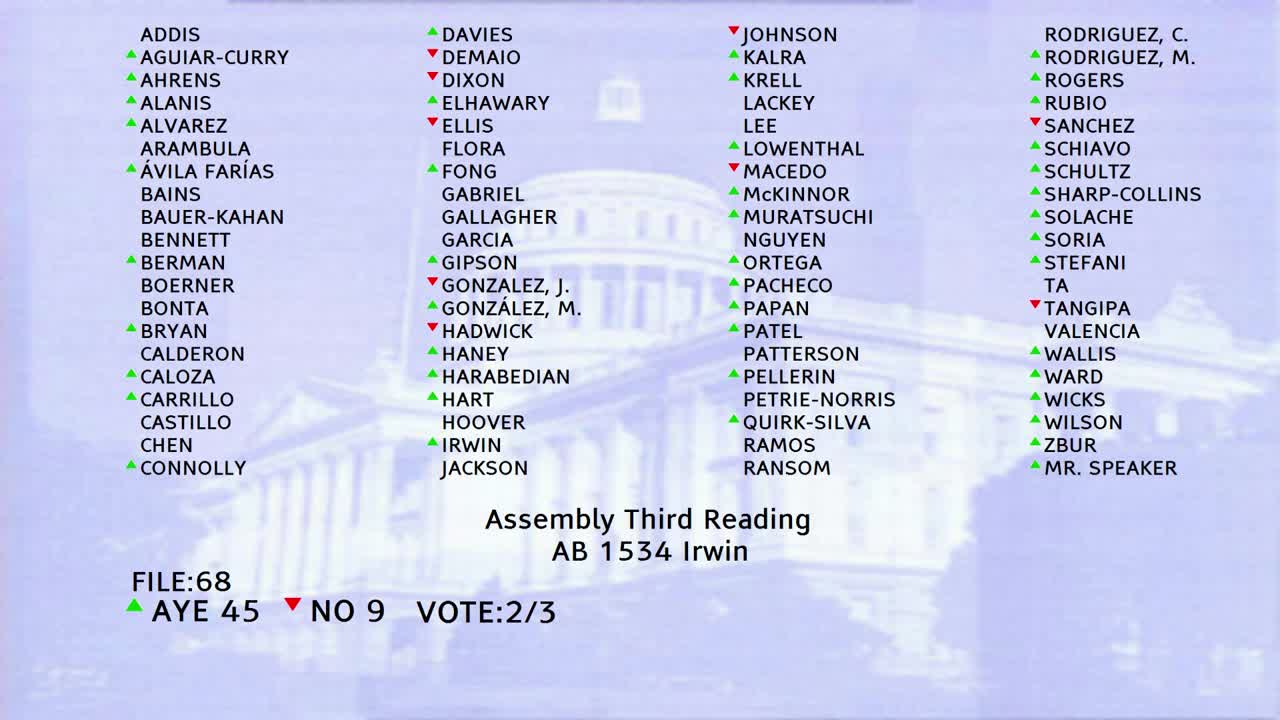 1MIN
Assembly Floor
 32MIN
Assembly Standing Committee on Appropriations
 10MIN