AB 1872: False reporting.
- Session Year: 2025-2026
- House: Assembly
- Latest Version Date: 2026-02-12
Current Status:
In Progress
(2026-08-13: In committee: Held under submission.)
Introduced
In Committee
Awaiting First Chamber Vote
Passed First Chamber
In Committee
Awaiting Second Chamber Vote
Passed Second Chamber
Enacted
What does this bill do?
The bill increases penalties for people who knowingly make false emergency reports or who repeatedly call 911 to annoy or harass others. A second or later offense can bring harsher punishment — including possible felony charges — if the person was 18 or older when they committed the earlier offense. It also makes anyone convicted pay the reasonable cost of the emergency response and any property damage caused by that response.
The summary is provided by generative AI which can make mistakes. For original language, please view the details in the table below.
Existing law makes it a misdemeanor to report an emergency to specified government entities knowing that report to be false. Existing law makes it a misdemeanor to initiate communication with the 911 emergency system with the intent to annoy or harass another person.
This bill would make a 2nd or subsequent violation of these provisions punishable as a misdemeanor or felony for a person who was 18 years of age or older at the time the person committed the prior offense or offenses. By increasing the penalty for existing crimes, the bill would impose a state-mandated local program.
Existing law makes an individual convicted of the crimes described above liable to a public agency for the reasonable costs of an emergency response by the public agency.
The bill would extend those liability provisions to property damage incurred as a result of the emergency response.
The California Constitution requires the state to reimburse local agencies and school districts for certain costs mandated by the state. Statutory provisions establish procedures for making that reimbursement.
This bill would provide that no reimbursement is required by this act for a specified reason.
(a)Any (1)An individual who reports, or causes any report to be made, to any a city, county, city and county, or state department, district, agency, division, commission, or board, that an emergency exists, knowing that the report is false, is guilty of a misdemeanor and upon conviction thereof shall be punishable by imprisonment in a county jail for a period not exceeding one year, or by a fine not exceeding one thousand dollars ($1,000), or by both that imprisonment and fine.
(2)A second or subsequent violation of paragraph (1) is punishable by imprisonment in a county jail for a period not exceeding one year, by a fine not exceeding one thousand dollars ($1,000), by both that imprisonment and fine, or by imprisonment pursuant to subdivision (h) of Section 1170. This paragraph shall not apply to a person who was under 18 years of age at the time the person committed the prior offense or offenses.
(b)Any An individual who reports, or causes any a report to be made, to any a city, county, city and county, or state department, district, agency, division, commission, or board, that an emergency exists, who knows that the report is false, and who knows or should know that the response to the report is likely to cause death or great bodily injury, and great bodily injury or death is sustained by any person as a result of the false report, is guilty of a felony and upon conviction thereof shall be punishable by imprisonment pursuant to subdivision (h) of Section 1170, or by a fine of not more than exceeding ten thousand dollars ($10,000), or by both that imprisonment and fine.
(c)Emergency as used in this section means any a condition that results in, or could result in, the response of a public official in an authorized emergency vehicle, aircraft, or vessel, any condition that jeopardizes or could jeopardize public safety and results in, or could result in, the evacuation of any an area, building, structure, vehicle, or of any other place that any an individual may enter, or any a situation that results in or could result in activation of the Emergency Alert System pursuant to Section 8594 of the Government Code. An activation or possible activation of the Emergency Alert System pursuant to Section 8594 of the Government Code shall not constitute an emergency for purposes of this section if it occurs as the result of a report made or caused to be made by a parent, guardian, or lawful custodian of a child that is based on a good faith belief that the child is missing.
(d)Nothing in this section precludes This section does not preclude punishment for the conduct described in subdivision (a) or (b) under any other section of law providing that provides for greater punishment for that conduct.
(e)Any An individual convicted of violating this section, based upon a report that resulted in an emergency response, is liable to a public agency for the reasonable costs of the emergency response by that public agency. agency and is liable to another party for property damage incurred by the other party as a result of the emergency response.
SEC. 2.Section 653x of the Penal Code is amended to read:653x.(a)(1)A person who telephones or uses an electronic communication device to initiate communication with the 911 emergency system with the intent to annoy or harass another person is guilty of a misdemeanor punishable by a fine of not more than exceeding one thousand dollars ($1,000), by imprisonment in a county jail for not more than exceeding six months, or by both the that fine and imprisonment. Nothing in this This section shall not apply to telephone calls or communications using electronic devices made in good faith.
(2)A second or subsequent violation of paragraph (1) is punishable by imprisonment in a county jail for a period not exceeding one year, by a fine not exceeding one thousand dollars ($1,000), by both that imprisonment and fine, or by imprisonment pursuant to subdivision (h) of Section 1170. This paragraph shall not apply to a person who was under 18 years of age at the time the person committed the prior offense or offenses.
(b)An intent to annoy or harass is established by proof of repeated calls or communications over a period of time, however short, that are unreasonable under the circumstances.
(c)Upon conviction of a violation of this section, a person also an individual shall be liable for all the reasonable costs incurred by any an unnecessary emergency response. response, including property damage incurred by any party as a result of the emergency response.
SEC. 3.No reimbursement is required by this act pursuant to Section 6 of Article XIIIB of the California Constitution because the only costs that may be incurred by a local agency or school district will be incurred because this act creates a new crime or infraction, eliminates a crime or infraction, or changes the penalty for a crime or infraction, within the meaning of Section 17556 of the Government Code, or changes the definition of a crime within the meaning of Section 6 of Article XIIIB of the California Constitution.
|
Date
|
Status
|
|---|---|
| Aug 13, 2026 | In committee: Held under submission. |
| Aug 3, 2026 | In committee: Referred to APPR. suspense file. |
| Jun 24, 2026 | From committee: Do pass and re-refer to Com. on APPR. (Ayes 5. Noes 0.) (June 23). Re-referred to Com. on APPR. |
| Jun 3, 2026 | Referred to Com. on PUB. S. |
| May 21, 2026 | In Senate. Read first time. To Com. on RLS. for assignment. |
| May 21, 2026 | Read third time. Passed. Ordered to the Senate. (Ayes 65. Noes 0. Page 5200.) |
| May 21, 2026 | Read third time. Passed. Ordered to the Senate. (Ayes 65. Noes 0.) |
| May 18, 2026 | Read second time. Ordered to third reading. |
| May 14, 2026 | From committee: Do pass. (Ayes 15. Noes 0.) (May 14). |
| Apr 8, 2026 | In committee: Set, first hearing. Referred to APPR. suspense file. |
| Mar 18, 2026 | From committee: Do pass and re-refer to Com. on APPR. (Ayes 9. Noes 0.) (March 17). Re-referred to Com. on APPR. |
| Mar 2, 2026 | Referred to Com. on PUB. S. |
| Feb 13, 2026 | From printer. May be heard in committee March 15. |
| Feb 12, 2026 | Read first time. To print. |
|
Date
|
Description
|
Location
|
Votes
|
|
|---|---|---|---|---|
| Aug 3, 2026 | Placed on suspense file | Senate Standing Committee on Appropriations |
Passed |
|
| Jun 23, 2026 | Do pass, but first be re-referred to the Committee on [Appropriations] | Senate Standing Committee on Public Safety |
Passed |
|
| May 21, 2026 | AB 1872 Ta Assembly Third Reading | Assembly Floor |
Passed |
|
| May 14, 2026 | Do pass. | Assembly Standing Committee on Appropriations |
Passed |
|
| Mar 17, 2026 | Do pass and be re-referred to the Committee on [Appropriations] | Assembly Standing Committee on Public Safety |
Passed |
This list shows positions taken on this bill by organizations on the date displayed, which is linked to the original source.
Positions by individuals are not included.
|
Organization
|
Position
|
Date
|
|---|---|---|
| Aclu California Action | ** Against | |
| Antelope Valley Union High School District | ** Support | |
| Brentwood Union School District | ** Support | |
| California Attorneys For Criminal Justice | ** Against | |
| California District Attorneys Association | ** Support | |
| California Public Defenders Association | ** Against | |
| California State Sheriffs' Association | ** Support | |
| California State Sheriffs’ Association | ** Support | |
| Capistrano Unified School District | ** Support | |
| Ceres Unified School District | ** Support | |
| Chaffey Joint Union High School District | ** Support | |
| City of Los Alamitos | ** Support | |
| El Monte Union High School District | ** Support | |
| Ella Baker Center For Human Rights | ** Against | |
| Garden Grove Unified School District | ** Support | |
| Golden Valley Unified School District | ** Support | |
| Hope School District | ** Support | |
| Huntington Beach Union High School District | ** Support | |
| Local 148 Los Angeles County Public Defender’s Union | ** Against | |
| Madera Unified School District | ** Support | |
| Newport-Mesa Unified School District | ** Support | |
| Pacific Union Elementary School District | ** Support | |
| Peace Officers Research Association Of California | ** Support | |
| Perris Union High School District | ** Support | |
| Redondo Beach Unified School District | ** Support | |
| San Diego County Office of Education | ** Support | |
| San Francisco Public Defender | ** Against | |
| Smart Justice California | ** Against | |
| South Monterey County Joint Union High School District | ** Support | |
| Tehachapi Unified School District | ** Support | |
| Temple City Unified School District | ** Support |
SENATE COMMITTEE ON
Senator Sabrina Cervantes, Chair
2025 - 2026 Regular Session
AB 1872 (Ta) - False reporting
Version: | Policy Vote: |
Urgency: | Mandate: |
Hearing Date: | Consultant: |
Bill Summary:
AB 1872 would make a second or subsequent violation of swatting an alternate felony-misdemeanor. The bill would extend liability provisions for the reasonable costs of an emergency response to include property damage incurred as a result of the emergency response.
Fiscal Impact:
Unknown costs to the counties to incarcerate if the felony sentence is imposed. This felony is punishable by 16 months, 2 year or 3 years in county jail. The average annual cost to incarcerate one person in county jail is approximately $80,000. In 2021 Los Angeles County budgeted $1.3 billion for jail costs with $90,000 per incarcerated person. Actual incarceration costs to counties will depend on the number of convictions and the length of each sentence. Generally, county incarceration costs are not reimbursable state mandates pursuant to Proposition 30 (2012).
Unknown, potentially significant costs to the courts to adjudicate new penalties depending on many unknowns, including the numbers of people charged and the factors unique to each case. An eight-hour court day costs approximately $10,500 based on the hourly rate of court personnel including at minimum the judge, clerk, bailiff, court reporter, jury administrator, administrative staff, and jury per-diems. While the courts are not funded on a workload basis, an increase in workload could result in delayed court services and would put pressure on the General Fund to fund additional staff and resources. The FY 2026-27 Budget appropriated $70 million General Fund for this purpose (Trial Court Trust Fund, General Fund).
Proposed Law:
This bill provides that a second or subsequent offense of (1) reporting an “emergency” to a government entity, knowing that the report is false or telephoning or using an electronic communication device to contact 911 with the intent to annoy or harass another person is an alternate felony-misdemeanor. The increased penalties for a second or subsequent offense for swatting does not apply to a person who was under 18 years of age at the time they committed the prior offense or offenses.
Related Legislation: AB 327 (Ta), 2025, proposed increasing the penalty for a second or subsequent offense of swatting from a misdemeanor to an alternative felony-misdemeanor. AB 327 was held on the committee’s suspense file.
AB 2609 (Ta), 2024, was substantially similar to AB 327 (Ta) but did not alter a swatting defendant’s liability for damages. AB 2609 was held on the Assembly Appropriations Committee’s suspense file.
SENATE COMMITTEE ON PUBLIC SAFETY
Senator Jesse Arreguín, Chair
2025 - 2026 Regular
Bill No: AB 1872 Hearing Date: June 23, 2026
Author: | Ta | ||
Version: | February 12, 2026 | ||
Urgency: | No | Fiscal: | Yes |
Consultant: | NDT | ||
Subject: False reporting
HISTORY
Source: California Civil Liberties Advocacy
Prior Legislation: AB 327 (Ta), held at Senate Appropriation, 2025
AB 2609 (Ta), held at Assembly Appropriations, 2024
AB 1775 (Jones-Sawyer), Ch. 327, Stats. of 2020
AB 1769 (Rodriguez), Ch. 96, Stats. of 2016
AB 1976 (Benoit), Ch. 89, Stats. of 2008
AB 2225 (Mountjoy), Ch. 227, Stats. of 2006
AB 911 (Longville), Ch. 295, Stats. of 2004
SB 2057 (O’Connell), Ch. 521, Stats. of 2002
AB 2741 (Cannella), Ch. 262, Stats. of 1994
Support: California State Sheriffs’ Association; Peace Officers Research Association of California; San Diego County Office of Education
Opposition: ACLU California Action; California Attorneys for Criminal Justice; California Public Defenders Association; Ella Baker Center for Human Rights; Local 148 Los Angeles County Public Defender’s Union; San Francisco Public Defender; Smart Justice California
Assembly Floor Vote: 65 - 0
PURPOSE
The purpose of this bill is to make a second or subsequent violation of making a false report, known as “swatting,” a wobbler.
Existing law makes reporting to a government agency that an emergency exists while knowing that the report is false a misdemeanor punishable by imprisonment in county jail for up to one year, a fine of up to $1,000, or both. (Pen. Code, § 148.3, subd. (a).)
Existing law makes knowingly making a false report of an emergency to a government agency, knowing that the response to the report is likely to cause death or great bodily injury, and great bodily injury or death results, a felony punishable by imprisonment in county jail for 16 months, 2 years, or 3 years. (Pen. Code, § 148.3, subd. (b).)
Existing law provides that a person who telephones or uses an electronic communication device to initiate communication with the 911 emergency system with the intent to annoy or harass another person is guilty of a misdemeanor punishable by a fine of up to $1,000, by imprisonment in a county jail for up to six months, or both. (Pen. Code, § 653x, subd. (a).)
Existing law provides that an intent to annoy or harass is established by proof of repeated calls or communications over a period of time, however short, that are unreasonable under the circumstances. (Pen. Code, § 653x, subd. (b).)
Existing law provides that an individual is liable to a public agency for the reasonable costs of the emergency response by that public agency when convicted of knowingly making a false report or calling 911 with the intent to annoy or harass another person. (Pen. Code, §§ 148.3, subd. (e), 653x, subd. (c).)
Existing law makes knowingly allowing the use of or using the 911 emergency system for any reason other than an emergency an infraction, as specified, and escalates the monetary penalty for the infraction for subsequent violations. (Pen. Code, § 653y, subd. (a).)
Existing law makes knowingly allowing the use of or using the 911 emergency system for the purpose of harassing another punishable by a fine of $250 or a misdemeanor punishable by up to six months in county jail, by a fine of up to $1,000, or both; a second or subsequent offense is a misdemeanor punishable by up to six months in county jail, by a fine of up to $1,000, or both. (Pen. Code, § 653y, subd. (b).)
Existing law makes knowingly allowing the use of or using the 911 emergency system for the purpose of harassing another person, and that act is a hate crime or violation of a condition of probation, a misdemeanor punishable by up to one year in county jail, by a fine of between $500 and $2,000, or both. (Pen. Code, § 653y, subd. (c).)
Existing law makes it a misdemeanor to knowingly file a false report with law enforcement that a felony or misdemeanor has been committed. (Pen. Code, § 148.5, subd. (a).)
Existing law defines “emergency” as any condition that results in, or could result in, the response of a public official in an authorized emergency vehicle, aircraft, or vessel, any condition that jeopardizes or could jeopardize public safety and results in, or could result in, the evacuation of any area, building, structure, vehicle, or of any other place that any individual may enter, or any situation that results in or could result in activation of the Emergency Alert System, as specified. (Pen. Code, § 148.3, subd. (c).)
This bill provides that a second or subsequent offense of reporting an “emergency” to a government entity, knowing that the report is false, is punishable by up to one year in county jail, by a fine of up to $1,000, by both imprisonment and a fine, or by a felony punishable by imprisonment for 16 months, 2 years, or 3 years.
This bill provides that a second of subsequent offense of telephoning or using an electronic communication device to contact 911 with the intent to annoy or harass another person is a misdemeanor punishable by up to one year in county jail, by a fine of up to $1,000, by both imprisonment and a fine, or of a felony punishable by imprisonment for 16 months, 2 years, or 3 years.
This bill provides that the increased penalties for a second or subsequent offense for swatting does not apply to a person who was under 18 years of age at the time they committed the prior offense or offenses.
This bill clarifies that the reasonable costs for which an individual convicted of the above crimes could be liable include property damage incurred by any party as a result of the emergency response.
COMMENTS
- Need for This Bill
According to the author:
According to the Educator’s School Safety Network, 63.8% of all violent incidents at schools in the past year were the result of false active shooter reports—a shocking 546% increase from 2018 to 2023. Put simply, swatting puts children, teachers, and other innocent members of our community in immediate jeopardy.
Any person, including school faculty, students, and public servants, can easily be a target of swatting regardless of position or politics. This serious crime wastes public resources, leads to property damage, causes undue stress for the victims, and risks serious injury or death. Swatting is more than just a threat to the safety of individuals, including our school faculty, students, public officials, and their families – it’s an affront to democracy. By granting judicial discretion to address the crime of swatting as a wobbler, AB 1872 will help crack down on such a dangerous crime to keep our schools and communities safe.
- Incidences of False Reporting
“Swatting” refers to calling 911 or otherwise falsely reporting an emergency at a location in an attempt to draw a law enforcement response, often a SWAT team, to that location. It can be done to a private individual or, commonly, to a school.[1] There have been numerous high-profile swatting instances in recent years.[2] According to Politico, “A broad range of politicians and other public figures have been targeted by swatting calls for a variety of reasons...” The pranks are designed to fool unsuspecting police into responding with force, sometimes with their arms drawn.[3]
The FBI recently launched a “Virtual Command Center” in partnership with state and local law enforcement to help track and prevent swatting incidents.[4] “The initiative allows police and intelligence fusion centers to share details of swatting incidents taking place within their jurisdictions, providing authorities nationwide with a “common operating picture”
regarding the nature of the threat, and can assist in identifying whether the same perpetrator is responsible for multiple incidents.”[5]
- Existing Penalties for False Reporting
There are several criminal offenses that may be charged if a person engages in swatting. Under existing law, it is a misdemeanor punishable by up to one year in county jail to use the 911 emergency system to harass another person if the conduct qualifies as a hate crime, as specified. (Pen. Code, § 653y, subd. (c).) Where no evidence of hate crime exists, knowingly using the 911 emergency system for the purpose of harassing another is an alternate infraction-misdemeanor for a first offense, and a straight misdemeanor for a second or subsequent offense. In these circumstances, a misdemeanor for a first offense would carry possible imprisonment in county jail for up to six months, whereas a second or subsequent offense carries a punishment of up to one year in county jail. (Pen. Code, § 653y, subd. (b)(1) & (2).)
Similarly, existing law makes it a misdemeanor to knowingly file a false police report; to file a petition for a gun violence restraining order knowing that the information in the petition is false or with the intent to harass; and, to willfully and maliciously sound a false alarm of fire. (Pen. Code, §§ 148.5, subd. (a), 18200, 148.4, subd. (a)). Like “swatting,” these acts all require agencies to divert resources from legitimate duties to handle false reports; and, in many cases, these acts could cause potentially volatile interactions between emergency responders and those targeted by a false report.
Finally, existing law already provides for up to three years in county jail for “swatting” when the false report results in death or great bodily injury if the person knew or should have known that that result was likely. (Pen. Code, § 148.3, subd. (b); see also Pen. Code, § 148.4, subd. (b) [false fire alarm resulting in serious bodily injury or death].)
- Enhanced Sentencing and Deterrence
Research shows that increasing the severity of the punishment does little to deter crime. According to the National Institute of Justice, an agency of the U.S. Department of Justice, “Laws and policies designed to deter crime by focusing mainly on increasing the severity of punishment are ineffective partly because criminals know little about the sanctions for specific crimes. More severe punishments do not ‘chasten’ individuals convicted of crimes, and prisons may exacerbate recidivism… Studies show that for most individuals convicted of a crime, short to moderate prison sentences may be a deterrent but longer prison terms produce only a limited deterrent effect. In addition, the crime prevention benefit falls far short of the social and economic costs.”[6]
- Effect of This Bill
This bill modernizes false reporting laws, by covering not just false police reports or 911 calls, but also false reports that could be made to a government entity online or on their social media. This bill allows for felony punishment of up to three years for swatting even when there was no injury. As a result, a person convicted of swatting when no injury results could receive the same, or an even longer, sentence as another person whose conduct resulted in great bodily injury or death.
This bill is arguably inconsistent with penalties for similar conduct under existing law. Filing a false police report, filing a fraudulent gun violence restraining order petition, sounding a false fire alarm, and knowingly using the 911 system to harass another person — even as a hate crime — are all straight misdemeanors. This bill would largely duplicate criminal punishments that already exist in criminal law.
- Argument in Support
According to the San Diego County Office of Education:
According to our law enforcement partners, there were 12 documented school-related swatting incidents which resulted in some sort of law enforcement response in calendar year 2025 in San Diego County. So far in calendar year 2026, there have been 24 documented school-related swatting incidents in the county. That is a 100% increase just in the first half of the year.
Each false report of an active shooter triggers a full law enforcement response, sends hundreds of students into lockdown, and leaves teachers and children shaken long after the all-clear is given. The disruption to learning is real, but the psychological toll is worse. Students who have experienced a swatting event carry that fear back into the classroom with them.
AB 1872 addresses a clear gap in current law. This bill establishes a “wobbler” framework, which gives prosecutors the flexibility to match the severity of the charge to the severity of the offense, a proportionality that current law does not provide. Under this bill, a second or subsequent offense could be punishable as a felony with fines and imprisonment for 16 months, two years, or three years. We also appreciate that the bill exempts minors and first-time offenders from felony exposure, striking a reasonable balance between accountability and proportionality for younger offenders.
Swatting is cheap to execute and, under existing law, carries consequences that do not match the harm caused. AB 1872 changes that calculus in a way that is long overdue. Anything the state can do to assist schools in dealing with these incidences is a step in the right direction. We feel increased deterrence is the best place to start.
- Argument in Opposition
According to the California Public Defenders Association:
AB 1872 would increase the penalty from a misdemeanor to a wobbler (misdemeanor or felony), for 1) a second or subsequent violation of falsely reporting an emergency to specified government entities or 2) initiating communication with the 911 emergency operating system intending to annoy or harass another individual.
While well intentioned, AB 1872 is misguided because it is ineffective, wastes resources and causes harm. It will not make California communities safer. The reason is simple, AB 1872 would increase penalties, but many decades of experience have proven that increasing the severity of punishment does little to deter crime. According to the National Institute of Justice, laws and policies designed to deter crime by focusing mainly on increasing the severity of punishment are ineffective, partly because criminals know little about the sanctions for specific crimes. More severe punishments do not “chasten” individuals convicted of crimes, and prisons may actually exacerbate recidivism.
AB 1872 wastes resources because long jail sentences not only fail to deter crime but are expensive. The Bureau of Justice Statistics estimates that the United States spends more than $80 billion each year to keep roughly 2.3 million people behind bars. Many experts say that figure is a gross underestimate, though, because it leaves out myriad hidden costs that are often borne by prisoners and their families, with women overwhelmingly shouldering the financial burden. The practical effect is that increased punishments have a ripple effect on the incarcerated person’s loved ones. In fact, many families spend hundreds of dollars each month to feed, clothe, and stay connected to someone behind bars, paying for health care, personal hygiene items, and phone calls and other forms of communication.
Incarceration due to AB 1872 may actually create or worsen symptoms of mental illness. Research shows that, while it varies from person to person, incarceration is linked to mood disorders including major depressive disorder and bipolar disorder. The carceral environment can be inherently damaging to mental health by removing people from society and eliminating meaning and purpose from their lives. This is exacerbated by the appalling conditions common in prisons and jails such as overcrowding, solitary confinement, and routine exposure to violence which can have further negative effects. Researchers have even theorized that incarceration can lead to “Post-Incarceration Syndrome,” a syndrome similar to Post-Traumatic Stress Disorder (“PTSD”), meaning that even after serving their official sentences, many people continue to suffer the mental effects.
When laws and policies are changed to reduce reliance on law enforcement and incarcerating people for longer periods of time, resources can instead be invested in supportive services that prevent crime more effectively and far more cheaply rather than endlessly cycling people through courts, jails, and back onto the streets. Moreover, it increases public safety when limited law enforcement resources and courts are used to address violent crime.
-- END --
Educator’s School Safety Network. (2025) Violent threats and incidents in schools: an analysis of the 2024-2025 school year https://static1.squarespace.com/static/55674542e4b074aad07152ba/t/68dabb08443fb32120878c8e/1759165192457/2024-2025SY+Report.Violent+threat+and+incidents+in+schools-www.eschoolsafety.org.pdf ↑
Politico. (Jan. 2024) California lieutenant governor ‘swatted’ after push to boot Trump from ballot https://www.politico.com/news/2024/01/04/california-lieutenant-governor-swatted-after-push-to-boot-trump-from-ballot-00133952 ↑
Ibid. ↑
NBCNews.com (June 2023) The FBI has formed a national database to track and prevent ‘swatting’ https://www.nbcnews.com/news/us-news/fbi-formed-national-database-track-prevent-swatting-rcna91722 ↑
CNN.com (Jan. 2024) High-profile political figures are the targets in latest wave of ‘swatting’ incidents. Why the trend is so alarming https://www.cnn.com/2024/01/14/us/swatting-incidents-trend-explained/index.html ↑
National Institute of Justice (May 2016). Five Things about Deterrence https://www.ojp.gov/pdffiles1/nij/247350.pdf ↑
ASSEMBLY THIRD READING
ATR Bill Id:AB 1872
Author:(Ta)
As Introduced Ver:February 12, 2026
Majority vote
SUMMARY
Increases the punishment for a second or subsequent offense of "swatting" from a misdemeanor to an alternate felony-misdemeanor.
Major Provisions
- Provides that a second or subsequent offense of reporting an "emergency" to a government entity, knowing that the report is false, is punishable by up to one year in county jail, by a fine of up to $1,000, by both imprisonment and a fine, or by a felony punishable by imprisonment for 16 months, two years, or three years.
- Provides that a second of subsequent offense of telephoning or using an electronic communication device to contact 911 with the intent to annoy or harass another person is a misdemeanor punishable by up to one year in county jail, by a fine of up to $1,000, by both imprisonment and a fine, or of a felony punishable by imprisonment for 16 months, two years, or three years.
- Provides that the increased penalties for a second or subsequent offense for swatting does not apply to a person who was under 18 years of age at the time they committed the prior offense or offenses.
- Clarifies that the reasonable costs for which an individual convicted of the above crimes could be liable include property damage incurred by any party as a result of the emergency response.
COMMENTS
This Bill is Inconsistent with Other Provisions of Law: This bill would increase the punishment for "swatting" from a misdemeanor to a wobbler. However, allowing for an alternate misdemeanor-felony in swatting cases is arguably inconsistent with provisions of law intended to prohibit similar conduct and prevent similar harms.
For example, AB 1775 (Jones-Sawyer), Chapter 327, Statutes of 2020, made a number of changes in criminal and civil law to discourage individuals from using 911 or other communications with law enforcement to harass people. That bill was an explicit response to a number of media reports on people calling 911 and making false claims to harass others, in part because the target individuals were members of a protected class.[1] The threat posed by such reports is likely greater to communities of color, and particularly to Black men.[2]
Under existing law, it is a misdemeanor punishable by up to one year in county jail to use the 911 emergency system to harass another person if the conduct qualifies as a hate crime, as specified. (Pen. Code, Section 653y, subdivision. (c).) Where no evidence of hate crime exists, knowingly using the 911 emergency system for the purpose of harassing another is an alternate infraction-misdemeanor for a first offense, and a straight misdemeanor for a second or subsequent offense. In these circumstances, a misdemeanor for a first offense would carry possible imprisonment in county jail for up to six months, whereas a second or subsequent offense carries a punishment of up to one year in county jail. (Pen. Code, Section 653y, subd. (b)(1) & (2).)
Similarly, existing law makes it a misdemeanor to knowingly file a false police report (Pen. Code, Section 148.5, subd. (a)); to file a petition for a gun violence restraining order knowing that the information in the petition is false or with the intent to harass (Pen. Code, Section 18200); and, to willfully and maliciously sound a false alarm of fire (Pen. Code, Section 148.4, subd. (a)). Like "swatting," these acts all require agencies to divert resources from legitimate duties to handle false reports; and, in many cases, these acts could cause potentially volatile interactions between emergency responders and those targeted by a false report.
Finally, existing law already provides for up to three years in county jail for "swatting" when the false report results in death or great bodily injury if the person knew or should have known that that result was likely. (Pen. Code, Section 148.3, subd. (b); see also Pen. Code, Section 148.4, subd. (b) [false fire alarm resulting in serious bodily injury or death].) This bill would allow for felony punishment of up to three years for swatting even when there was no injury. As a result, a person convicted of swatting when no injury results could receive the same, or an even longer, sentence as another person whose conduct resulted in great bodily injury or death.
According to the Author
"According to the Educator's School Safety Network, 63.8% of all violent incidents at schools in the past year were the result of false active shooter reports—a shocking 546% increase from 2018 to 2023. Put simply, swatting puts children, teachers, and other innocent members of our community in immediate jeopardy.
"Any person, including school faculty, students, and public servants, can easily be a target of swatting regardless of position or politics. This serious crime wastes public resources, leads to property damage, causes undue stress for the victims, and risks serious injury or death. Swatting is more than just a threat to the safety of individuals, including our school faculty, students, public officials, and their families – it's an affront to democracy. By granting judicial discretion to address the crime of swatting as a wobbler, AB 1872 will help crack down on such a dangerous crime to keep our schools and communities safe."
Arguments in Support
According to the City of Los Alamitos, "Swatting poses a direct threat to public safety, but it is especially dangerous when schools and students are involved. Swatting is the malicious act of falsely reporting an emergency, such as an active shooter situation, in order to trigger a large-scale law enforcement response. This not only diverts critical resources away from legitimate emergencies, but it places students and educators in immediate harm's way. According to the Educator's School Safety Network, 63.8% of all violent incidents at schools in the past year were the result of false active shooter reports—a shocking 546% increase from 2018 to 2023."
"These fake threats cause panic and trauma for students, teachers, and parents. The presence of SWAT teams and armed officers on school grounds, responding to a false report, can lead to confusion, fear, and even physical harm. In addition to the emotional toll, the disruption caused by swatting incidents interrupts the learning environment, jeopardizing students' education and well-being. As we have seen, these swatting events can have a lasting psychological impact on those involved, particularly children who should feel safe in their schools."
"AB 1872 provides a necessary response to this growing problem. By allowing the State of California to prosecute swatting as either a misdemeanor or felony, the bill gives law enforcement the tools to appropriately address these crimes based on their severity. It also ensures that victims, including schools and their staff, are compensated for the costs they incur, such as repairs to property or other damage resulting from these false reports."
"The City of Los Alamitos strongly supports AB 1872 as a crucial step in protecting our students, teachers, and the broader community from the dangers of swatting. The safety and security of our schools must remain a top priority, and we believe this bill is an essential tool in ensuring that students can learn in an environment free from fear and disruption."
Arguments in Opposition
According to the ACLU California Action, "California law already provides strong penalties for false emergency reporting. Knowingly making a false report that an emergency exists is a misdemeanor punishable by up to one year in county jail and a fine. If the false report leads to great bodily injury or death, the offense may already be charged as a felony. In addition, existing law allows public agencies to recover the reasonable costs of an emergency response from individuals convicted of swatting."
"AB 1872 escalates penalties by allowing a second or subsequent offense to be charged as a felony and expands liability to include property damage resulting from an emergency response. Increasing punishment in this way is unlikely to deter misconduct but will increase incarceration and impose additional financial penalties on people who are often already struggling economically."
"People in the criminal legal system are overwhelmingly low income. Additional fines, restitution, and civil liability can saddle individuals with debts they have little ability to repay, making reentry more difficult and destabilizing families. Research has consistently found that criminal legal system debt worsens poverty and can force families to cut spending on essential needs such as housing, education, and healthcare."
FISCAL COMMENTS
According to the Assembly Public Safety Committee, "Incarceration costs (local funds, General Fund) to the counties and California Department of Corrections and Rehabilitation (CDCR) of an unknown amount. This bill elevates a second or subsequent swatting offense from a misdemeanor to a wobbler, making it punishable by up to three years in state prison. Actual incarceration costs will depend on the number of convictions, the length of each sentence, and whether each sentence is served in county jail or state prison."
"Because swatting is currently a misdemeanor, county-level conviction data is not available to this committee, and the number of second or subsequent offenders who would be subject to the enhanced penalty cannot be determined. Swatting prosecutions are relatively uncommon compared to other misdemeanor offenses, and the subset involving repeat offenders would be smaller still. However, even a small number of additional felony convictions resulting in state prison commitments would translate into meaningful and ongoing incarceration costs. The Legislative Analyst's Office estimates the average annual cost to incarcerate one person in state prison at $128,000; CDCR estimates $135,921. The average annual cost to incarcerate one person in county jail is approximately $29,000, though costs are higher in larger counties. County incarceration costs are not subject to reimbursement by the state. However, overcrowding in county jails creates cost pressure on the General Fund because the state has historically granted new funding to counties to offset overcrowding resulting from public safety realignment."
"The Legislative Analyst's Office recently warned of General Fund structural deficits of around $35 billion per year beginning in the 2027-28 fiscal year."
VOTES
ASM PUBLIC SAFETY: 9-0-0
YES: Schultz, Alanis, Mark González, Haney, Harabedian, Lackey, Nguyen, Ramos, Sharp-Collins
ASM APPROPRIATIONS: 15-0-0
YES: Wicks, Hoover, Aguiar-Curry, Calderon, Caloza, Dixon, Fong, Mark González, Krell, Pacheco, Pellerin, Sharp-Collins, Solache, Ta, Tangipa
UPDATED
VERSION: February 12, 2026
CONSULTANT: Andrew Ironside / PUB. S. / (916) 319-3744 FN: 0002816
See e.g., North, Amy Cooper's 911 call is part of an all-too-familiar pattern, Vox.com (May 26, 2020) <https://www.vox.com/2020/5/26/21270699/amy-cooper-franklin-templeton-christian-central-park> [last visited Mar. 27, 2024]. ↑
Cf. Premkumar, Police Use of Force and Misconduct in California, PPIC (Oct. 2021) <https://www.ppic.org/publication/police-use-of-force-and-misconduct-in-california/> [last visited Mar. 27, 2024]. ↑
Date of Hearing: April 8, 2026
ASSEMBLY COMMITTEE ON APPROPRIATIONS
Buffy Wicks, Chair
ABPCA Bill Id:AB 1872
Author:(Ta) – As Introduced Ver:February 12, 2026
Policy Committee: | Public Safety | Vote: | 9 - 0 |
|
| ||
|
|
Urgency: No State Mandated Local Program: Yes Reimbursable: No
SUMMARY:
This bill increases the punishment for a second or subsequent offense of swatting from a misdemeanor to an alternate felony-misdemeanor.
Specifically, this bill:
- Makes a second or subsequent offense of reporting a false emergency to a government entity punishable as a “wobbler” — a misdemeanor punishable by up to one year in county jail and a fine of up to $1,000, or a felony punishable by 16 months, two years, or three years.
- Makes a second or subsequent offense of contacting 911 with the intent to annoy or harass punishable as a wobbler under the same terms.
- Excludes from the enhanced penalty any person who was under 18 at the time of the prior offense.
- Clarifies that the reasonable costs for which a convicted person is liable include property damage incurred by any party as a result of the emergency response.
FISCAL EFFECT:
Incarceration costs (local funds, General Fund) to the counties and California Department of Corrections and Rehabilitation (CDCR) of an unknown amount. This bill elevates a second or subsequent swatting offense from a misdemeanor to a wobbler, making it punishable by up to three years in state prison. Actual incarceration costs will depend on the number of convictions, the length of each sentence, and whether each sentence is served in county jail or state prison.
Because swatting is currently a misdemeanor, county-level conviction data is not available to this committee, and the number of second or subsequent offenders who would be subject to the enhanced penalty cannot be determined. Swatting prosecutions are relatively uncommon compared to other misdemeanor offenses, and the subset involving repeat offenders would be smaller still. However, even a small number of additional felony convictions resulting in state prison commitments would translate into meaningful and ongoing incarceration costs. The Legislative Analyst’s Office estimates the average annual cost to incarcerate one person in state prison at $128,000; CDCR estimates $135,921. The average annual cost to incarcerate one person in county jail is approximately $29,000, though costs are higher in larger counties. County incarceration costs are not subject to reimbursement by the state. However, overcrowding in county jails creates cost pressure on the General Fund because the state has historically granted new funding to counties to offset overcrowding resulting from public safety realignment.
The Legislative Analyst’s Office recently warned of General Fund structural deficits of around $35 billion per year beginning in the 2027-28 fiscal year.
COMMENTS:
- Purpose. According to the author,
63.8% of all violent incidents at schools in the past year were the result of false active shooter reports — a shocking 546% increase from 2018 to 2023. Put simply, swatting puts children, teachers, and other innocent members of our community in immediate jeopardy. By granting judicial discretion to address the crime of swatting as a wobbler, AB 1872 will help crack down on such a dangerous crime to keep our schools and communities safe.
2) Background. “Swatting” refers to calling 911 or otherwise falsely reporting an emergency at a location in an attempt to draw a law enforcement response, often a SWAT team, to that location. There are several criminal offenses that may be charged if a person engages in swatting. Under existing law, it is a misdemeanor to knowingly make a false report of an emergency to a state or local department or agency, punishable by up to one year in county jail. It is also a misdemeanor to use an electronic communication device to contact a 911 emergency system with the intent to annoy or harass, punishable by up to six months in county jail. Currently, there is no distinction between the punishment for a first conviction and any subsequent conviction for these offenses. When a false report results in death or great bodily injury and the person knew that result was likely, existing law provides for felony punishment of up to three years.
This bill increases, from a misdemeanor to a wobbler, the penalty for a second or subsequent conviction of each of the swatting offenses described above. A wobbler is an offense that may be charged as a misdemeanor or a felony at the discretion of a prosecutor. A misdemeanor conviction would be punishable by up to one year in county jail; a felony conviction would be punishable by 16 months, two years, or three years in county jail, or state prison if a defendant has certain prior convictions. The bill specifies these increased penalties do not apply to a person who committed the prior offense as a minor. Additionally, the bill makes a convicted defendant liable for property damage incurred by any party as a result of the emergency response — under existing law, liability extends only to the reasonable costs of the emergency response itself, not resulting property damage.
The policy committee analysis raises several concerns. First, the bill would allow felony punishment of up to three years for swatting even when no injury results, meaning a person convicted under this bill could receive the same or a longer sentence than a person whose swatting resulted in great bodily injury or death. Second, the bill is arguably inconsistent with penalties for similar conduct under existing law. Filing a false police report, filing a fraudulent gun violence restraining order petition, sounding a false fire alarm, and knowingly using the 911 system to harass another person — even as a hate crime — are all straight misdemeanors. Finally, research shows that lengthy criminal sentences do not effectively deter crime; the certainty that someone will be punished plays a larger role in deterrence than the length of the potential punishment.
3) Prior Legislation. AB 327 (Ta), of the 2024-25 Legislative Session, was identical to this bill. It was held on the Senate Appropriation’s suspense file.
AB 2609 (Ta), of the 2023-24 Legislative Session, was similar to AB 327 but did not alter a swatting defendant’s liability for damage. AB 2609 was held on this committee’s suspense file.
Analysis Prepared by: Shiran Zohar / APPR. / (916) 319-2081
Date of Hearing:
Chief Counsel: Andrew Ironside
ASSEMBLY COMMITTEE ON
Nick Schultz, Chair
ABPCA Bill Id:
Author:() – As Ver:
SUMMARY:
Increases the punishment for a second or subsequent offense of “swatting” from a misdemeanor to an alternate felony-misdemeanor. Specifically, this bill:
- Provides that a second or subsequent offense of reporting an “emergency” to a government entity, knowing that the report is false, is punishable by up to one year in county jail, by a fine of up to $1,000, by both imprisonment and a fine, or by a felony punishable by imprisonment for 16 months, 2 years, or 3 years.
- Provides that a second of subsequent offense of telephoning or using an electronic communication device to contact 911 with the intent to annoy or harass another person is a misdemeanor punishable by up to one year in county jail, by a fine of up to $1,000, by both imprisonment and a fine, or of a felony punishable by imprisonment for 16 months, 2 years, or 3 years.
- Provides that the increased penalties for a second or subsequent offense for swatting does not apply to a person who was under 18 years of age at the time they committed the prior offense or offenses.
- Clarifies that the reasonable costs for which an individual convicted of the above crimes could be liable include property damage incurred by any party as a result of the emergency response.
EXISTING LAW:
- Makes reporting to a government agency that an emergency exists, knowing that the report is false, a misdemeanor punishable by imprisonment in county jail for up to one year, a fine of up to $1,000, or both. (Pen. Code, § 148.3, subd. (a).)
- Makes knowingly making a false report of an emergency to a government agency, knowing that the response to the report is likely to cause death or great bodily injury, and great bodily injury or death results, a felony punishable by imprisonment in county jail for 16 months, 2 years, or 3 years. (Pen. Code, § 148.3, subd. (b).)
- Provides that a person who telephones or uses an electronic communication device to initiate communication with the 911 emergency system with the intent to annoy or harass another person is guilty of a misdemeanor punishable by a fine of up to $1,000, by imprisonment in a county jail for up to six months, or both. (Pen. Code, § 653x, subd. (a).)
- Provides that an intent to annoy or harass is established by proof of repeated calls or communications over a period of time, however short, that are unreasonable under the circumstances. (Pen. Code, § 653x, subd. (b).)
- Provides that an individual is liable to a public agency for the reasonable costs of the emergency response by that public agency when convicted of knowingly making a false report or calling 911 with the intent to annoy or harass another person. (Pen. Code, § 148.3, subd. (e); Pen. Code, § 653x, subd. (c).)
- Makes knowingly allowing the use of or using the 911 emergency system for any reason other than an emergency an infraction, as specified. (Pen. Code, § 653y, subd. (a).)
- Makes knowingly allowing the use of or using the 911 emergency system for the purpose of harassing another punishable by a fine of $250 or a misdemeanor punishable by up to six months in county jail, by a fine of up to $1,000, or both; a second or subsequent offense is a misdemeanor punishable by up to six months in county jail, by a fine of up to $1,000, or both. (Pen. Code, § 653y, subd. (b).)
- Makes knowingly allowing the use of or using the 911 emergency system for the purpose of harassing another person, and that act is a hate crime or violation of a condition of probation, a misdemeanor punishable by up to one year in county jail, by a fine of between $500 and $2,000, or both. (Pen. Code, § 653y, subd. (c).)
- Makes it a misdemeanor to file a report with law enforcement that that a felony or misdemeanor has been committed, knowing the report to be false. (Pen. Code, § 148.5, subd. (a).)
- Defines “emergency” as any condition that results in, or could result in, the response of a public official in an authorized emergency vehicle, aircraft, or vessel, any condition that jeopardizes or could jeopardize public safety and results in, or could result in, the evacuation of any area, building, structure, vehicle, or of any other place that any individual may enter, or any situation that results in or could result in activation of the Emergency Alert System, as specified. (Pen. Code, § 148.3, subd. (c).)
FISCAL EFFECT:
Unknown
COMMENTS:
- Author's Statement: According to the author, “According to the Educator’s School Safety Network, 63.8% of all violent incidents at schools in the past year were the result of false active shooter reports—a shocking 546% increase from 2018 to 2023. Put simply, swatting puts children, teachers, and other innocent members of our community in immediate jeopardy.
“Any person, including school faculty, students, and public servants, can easily be a target of swatting regardless of position or politics. This serious crime wastes public resources, leads to property damage, causes undue stress for the victims, and risks serious injury or death. Swatting is more than just a threat to the safety of individuals, including our school faculty, students, public officials, and their families – it’s an affront to democracy. By granting judicial discretion to address the crime of swatting as a wobbler, AB 1872 will help crack down on such a dangerous crime to keep our schools and communities safe.” - “Swatting”: According to one security expert, “Swatting involves people making fraudulent 911 calls reporting serious-level criminal threats or violent situations like bomb threats, hostages, killing, etc. to fool the police into raiding the house or business of somebody who is not actually committing a crime.”[1]
There have been numerous high-profile swatting instances in recent years.[2] According to Politico, “A broad range of politicians and other public figures have been targeted by swatting calls for a variety of reasons that aren’t always tied to Trump. The pranks are designed to fool unsuspecting police into responding with force, sometimes with their arms drawn. Callers have reported fake incidents at the homes of Boston Mayor Michelle Wu, a Democrat, and Republican Rep. Majorie Taylor Greene of Georgia has claimed multiple incidents, criticizing the FBI while lauding local police for their response.”[3]
The FBI recently launched a “Virtual Command Center” in partnership with state and local law enforcement to help track and prevent swatting incidents.[4] “The initiative allows police and intelligence fusion centers to share details of swatting incidents taking place within their jurisdictions, providing authorities nationwide with a “common operating picture” regarding the nature of the threat, and can assist in identifying whether the same perpetrator is responsible for multiple incidents.”[5] - This Bill is Inconsistent with Other Provisions of Law: This bill would increase the punishment for “swatting” from a misdemeanor to a wobbler. However, allowing for an alternate misdemeanor-felony in swatting cases is arguably inconsistent with provisions of law intended to prohibit similar conduct and prevent similar harms.
For example, AB 1775 (Jones-Sawyer), Chapter 327, Statutes of 2020, made a number of changes in criminal and civil law to discourage individuals from using 911 or other communications with law enforcement to harass people. That bill was an explicit response to a number of media reports on people calling 911 and making false claims to harass others, in part because the target individuals were members of a protected class.[6] The threat posed by such reports is likely greater to communities of color, and particularly to Black men.[7]
Under existing law, it is a misdemeanor punishable by up to one year in county jail to use the 911 emergency system to harass another person if the conduct qualifies as a hate crime, as specified. (Pen. Code, § 653y, subd. (c).) Where no evidence of hate crime exists, knowingly using the 911 emergency system for the purpose of harassing another is an alternate infraction-misdemeanor for a first offense, and a straight misdemeanor for a second or subsequent offense. In these circumstances, a misdemeanor for a first offense would carry possible imprisonment in county jail for up to six months, whereas a second or subsequent offense carries a punishment of up to one year in county jail. (Pen. Code, § 653y, subd. (b)(1) & (2).)
Similarly, existing law makes it a misdemeanor to knowingly file a false police report (Pen. Code, § 148.5, subd. (a)); to file a petition for a gun violence restraining order knowing that the information in the petition is false or with the intent to harass (Pen. Code, § 18200); and, to willfully and maliciously sound a false alarm of fire (Pen. Code, § 148.4, subd. (a)). Like “swatting,” these acts all require agencies to divert resources from legitimate duties to handle false reports; and, in many cases, these acts could cause potentially volatile interactions between emergency responders and those targeted by a false report.
Finally, existing law already provides for up to three years in county jail for “swatting” when the false report results in death or great bodily injury if the person knew or should have known that that result was likely. (Pen. Code, § 148.3, subd. (b); see also Pen. Code, § 148.4, subd. (b) [false fire alarm resulting in serious bodily injury or death].) This bill would allow for felony punishment of up to three years for swatting even when there was no injury. As a result, a person convicted of swatting when no injury results could receive the same, or an even longer, sentence as another person whose conduct resulted in great bodily injury or death.
- Deterrence: Research shows that increasing the severity of the punishment does little to deter crime. According to the National Institute of Justice, an agency of the U.S. Department of Justice, “Laws and policies designed to deter crime by focusing mainly on increasing the severity of punishment are ineffective partly because criminals know little about the sanctions for specific crimes. More severe punishments do not ‘chasten’ individuals convicted of crimes, and prisons may exacerbate recidivism… Studies show that for most individuals convicted of a crime, short to moderate prison sentences may be a deterrent but longer prison terms produce only a limited deterrent effect. In addition, the crime prevention benefit falls far short of the social and economic costs.”[8]
- Argument in Support: According to the City of Los Alamitos, “Swatting poses a direct threat to public safety, but it is especially dangerous when schools and students are involved. Swatting is the malicious act of falsely reporting an emergency, such as an active shooter situation, in order to trigger a large-scale law enforcement response. This not only diverts critical resources away from legitimate emergencies, but it places students and educators in immediate harm’s way. According to the Educator’s School Safety Network, 63.8% of all violent incidents at schools in the past year were the result of false active shooter reports—a shocking 546% increase from 2018 to 2023.
“These fake threats cause panic and trauma for students, teachers, and parents. The presence of SWAT teams and armed officers on school grounds, responding to a false report, can lead to confusion, fear, and even physical harm. In addition to the emotional toll, the disruption caused by swatting incidents interrupts the learning environment, jeopardizing students' education and well-being. As we have seen, these swatting events can have a lasting psychological impact on those involved, particularly children who should feel safe in their schools.
“AB 1872 provides a necessary response to this growing problem. By allowing the State of California to prosecute swatting as either a misdemeanor or felony, the bill gives law enforcement the tools to appropriately address these crimes based on their severity. It also ensures that victims, including schools and their staff, are compensated for the costs they incur, such as repairs to property or other damage resulting from these false reports.
“The City of Los Alamitos strongly supports AB 1872 as a crucial step in protecting our students, teachers, and the broader community from the dangers of swatting. The safety and security of our schools must remain a top priority, and we believe this bill is an essential tool in ensuring that students can learn in an environment free from fear and disruption.” - Prior Legislation:
- AB 327 (Ta), of the 2025-2026 Legislative Session, was nearly identical to this bill. AB 327 was held in suspense in the Assembly Appropriations Committee.
- AB 2609 (Ta), of the 2023-2024 Legislative Session, was nearly identical to this bill. AB 2609 was held in suspense in the Assembly Appropriations Committee.
- AB 1775 (Jones-Sawyer), Chapter 327, Statutes of 2020, made a number of changes in criminal and civil law to discourage individuals from using 911 or other communications with law enforcement to harass a person because that person belongs to a protected class.
- AB 1769 (Rodriguez) Chapter 96, Statutes of 2016, prohibited contacting the 911 system via electronic communication for the purpose of annoying, harassing, or any purpose other than an emergency.
- AB 538 (Juan Arambula), of the 2009-2010 Legislative Session, would have authorized agencies that provide emergency medical services to report misuse of the 911 system to the public safety entity that originally received the call. Governor Brown vetoed AB 538.
- AB 1976 (Benoit), Chapter 89, Statutes of 2008, increased the penalties for knowingly using the 911 system for any reason other than an emergency.
- AB 2225 (Mountjoy), Chapter 227, Statutes 2006, added activation of the Emergency Alert System to the definition of “emergency” for which an individual making a knowingly false report is guilty of misdemeanor.
- AB 911 (Longville), Chapter 295, Statutes of 2004, created a new infraction for using the 911 telephone system for purposes other than an emergency, as defined.
- SB 2057 (O’Connell), Chapter 521, Statutes of 2002, required the felony offense of knowingly making a false emergency report to public officials that results in great bodily injury or death to include knowledge that great bodily injury or death was likely.
- AB 2741 (Cannella), Chapter 262, Statutes of 1994, made it a misdemeanor to telephone the 911 emergency system with the intent to annoy or harass another person.
- AB 327 (Ta), of the 2025-2026 Legislative Session, was nearly identical to this bill. AB 327 was held in suspense in the Assembly Appropriations Committee.
REGISTERED SUPPORT / OPPOSITION:
Support
Antelope Valley Union High School District
Brentwood Union School District
California District Attorneys Association
California State Sheriffs' Association
Capistrano Unified School District
Ceres Unified School District
Chaffey Joint Union High School District
City of Los Alamitos
El Monte Union High School District
Garden Grove Unified School District
Golden Valley Unified School District
Hope School District
Huntington Beach Union High School District
Madera Unified School District
Newport-mesa Unified School District
Pacific Union Elementary School District
Peace Officers Research Association of California (PORAC)
Perris Union High School District
Redondo Beach Unified School District
South Monterey County Joint Union High School District
Tehachapi Unified School District
Temple City Unified School District
3 Private Individuals
Oppose
ACLU California Action
California Attorneys for Criminal Justice
California Public Defenders Association
Ella Baker Center for Human Rights
Local 148 Los Angeles County Public Defender's Union
San Francisco Public Defender
Smart Justice California, a Project of Beyond Impact
Analysis Prepared by:
Ward, The FBI has formed a national database to track and prevent ‘swatting’, NBCNews.com (June 29, 2023) <https://www.nbcnews.com/news/us-news/fbi-formed-national-database-track-prevent-swatting-rcna91722> [last visited Mar. 27, 2024]. ↑
See e.g., Cadelago, California lieutenant governor ‘swatted’ after push to boot Trump from ballot, Politico.com (Jan. 4, 2024) <https://www.politico.com/news/2024/01/04/california-lieutenant-governor-swatted-after-push-to-boot-trump-from-ballot-00133952> [last visited Mar. 27, 2024]. ↑
Ibid. ↑
Ward, supra. ↑
Campbell, High-profile political figures are the targets in latest wave of ‘swatting’ incidents. Why the trend is so alarming, CNN.com (Jan. 15, 2024) <https://www.cnn.com/2024/01/14/us/swatting-incidents-trend-explained/index.html> [last visited Mar. 27, 2024]. ↑
See e.g., North, Amy Cooper’s 911 call is part of an all-too-familiar pattern, Vox.com (May 26, 2020) <https://www.vox.com/2020/5/26/21270699/amy-cooper-franklin-templeton-christian-central-park> [last visited Mar. 27, 2024]. ↑
Cf. Premkumar, Police Use of Force and Misconduct in California, PPIC (Oct. 2021) <https://www.ppic.org/publication/police-use-of-force-and-misconduct-in-california/> [last visited Mar. 27, 2024]. ↑
National Institute of Justice, Five Things about Deterrence <https://www.ojp.gov/pdffiles1/nij/247350.pdf> [as of Feb. 25, 2025]. ↑
Discussed in Hearing
 14MIN
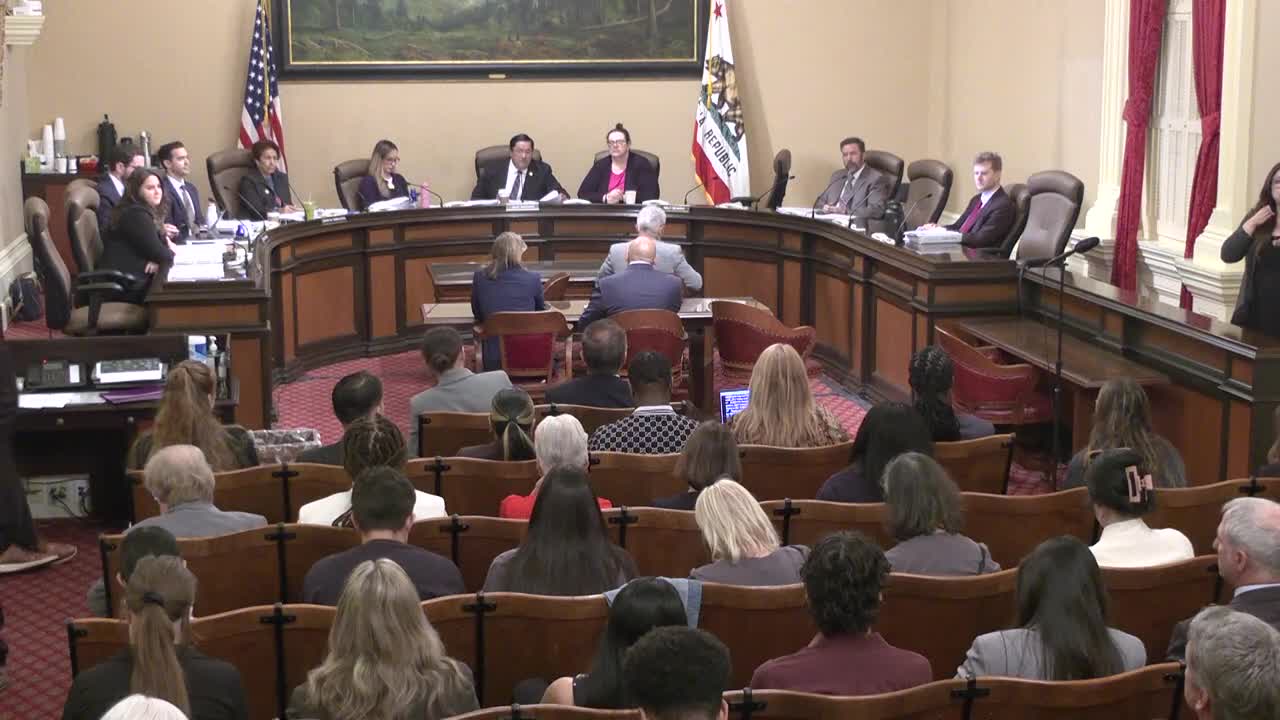
Senate Standing Committee on Public Safety
 1MIN
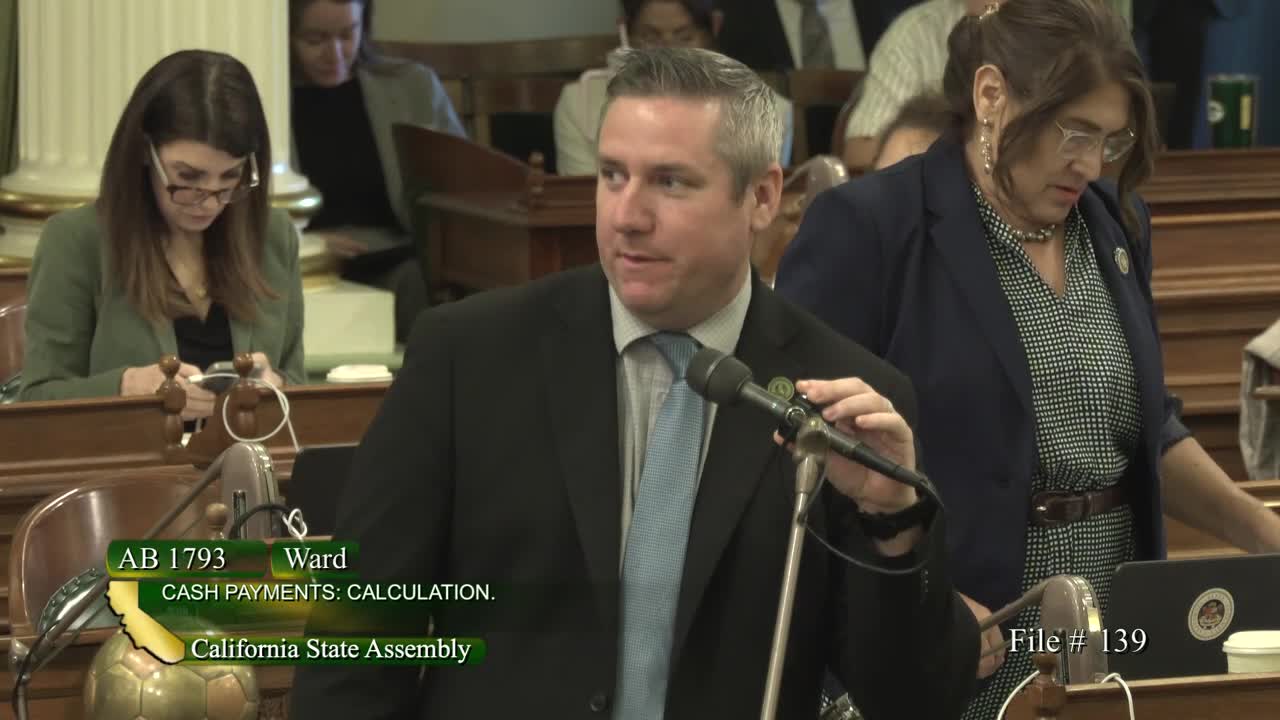
Assembly Floor
 15MIN
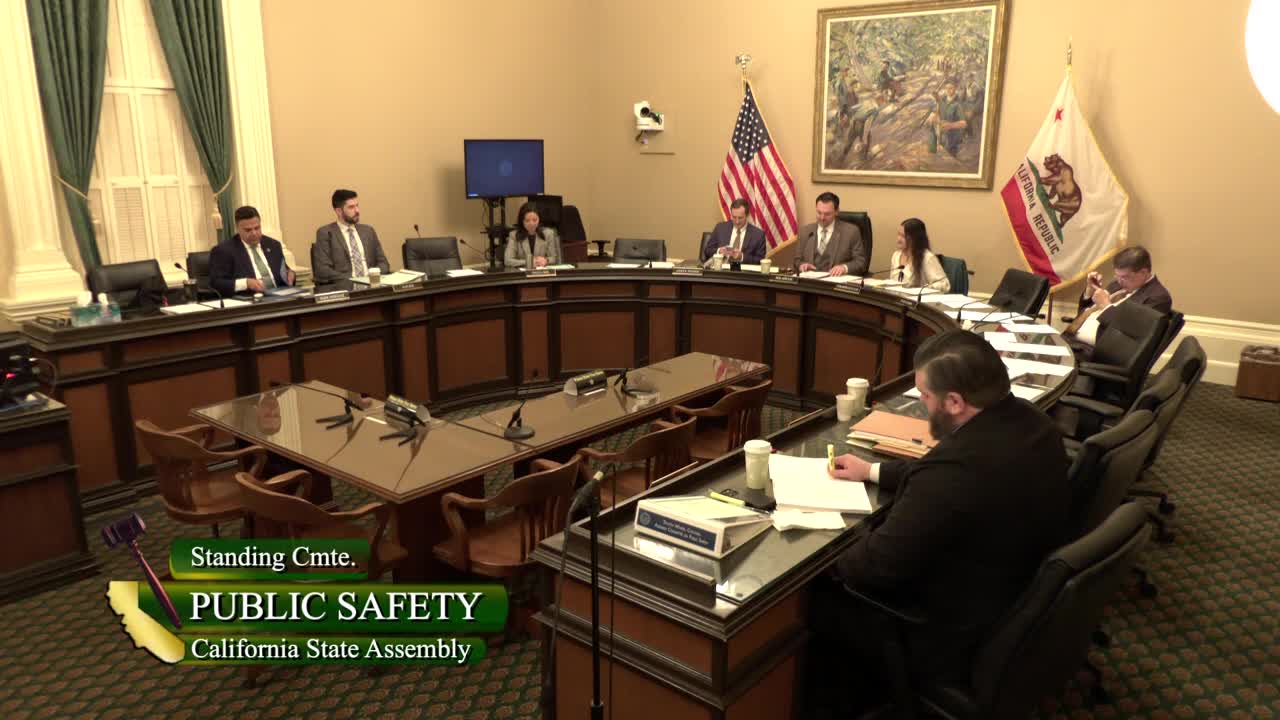
Assembly Standing Committee on Public Safety
Bill Author

Bill Co-Author(s):