AB 957: Cigarette and tobacco products: retail sale: pharmacies.
- Session Year: 2025-2026
- House: Assembly
- Latest Version Date: 2025-04-28
Current Status:
In Progress
(2026-06-22: In committee: Set, first hearing. Hearing canceled at the request of author.)
Introduced
In Committee
Awaiting First Chamber Vote
Passed First Chamber
In Committee
Awaiting Second Chamber Vote
Passed Second Chamber
Enacted
What does this bill do?
The bill bars pharmacies from selling cigarettes or any tobacco products in their stores. It also prevents the state from issuing a cigarette and tobacco retailer license to a pharmacy or to any retail location that contains a pharmacy.
The summary is provided by generative AI which can make mistakes. For original language, please view the details in the table below.
This bill would prohibit a pharmacy from engaging in the retail sale of cigarettes or tobacco products. Because a violation of the bills provisions this provision would be a crime, the bill would impose a state-mandated local program.
Existing law, the Cigarette and Tobacco Products Licensing Act of 2023, requires a retailer to hold a license from the California Department of Tax and Fee Administration to engage in the sale of cigarettes or tobacco products for each retail location. Existing law requires the department to issue a license to a retailer upon receipt of a completed application and payment of required fees, unless certain circumstances apply.
This bill would prohibit the department from issuing a license to a retailer if the retailer is a pharmacy or the application is for a retail location that contains a pharmacy.
The California Constitution requires the state to reimburse local agencies and school districts for certain costs mandated by the state. Statutory provisions establish procedures for making that reimbursement.
This bill would provide that no reimbursement is required by this act for a specified reason.
Existing law, the Cigarette and Tobacco Products Licensing Act of 2023, requires a retailer to hold a license from the State Board of Equalization to engage in the sale of cigarettes or tobacco products, and makes a violation of those provisions a misdemeanor and subject to specified other penalties. Existing law, the Pharmacy Law, provides for the licensure and regulation of pharmacies by the California State Board of Pharmacy, and makes a violation of the Pharmacy Law a misdemeanor.
This bill would prohibit a pharmacy from engaging in the retail sale of cigarettes or tobacco products. Because a violation of the bills provisions would be a crime, the bill would impose a state-mandated local program.
The California Constitution requires the state to reimburse local agencies and school districts for certain costs mandated by the state. Statutory provisions establish procedures for making that reimbursement.
This bill would provide that no reimbursement is required by this act for a specified reason.
A pharmacy shall not engage in the retail sale of cigarettes or tobacco products, as those terms are defined in Section 22971.
SEC. 2.Section 22973.1 of the Business and Professions Code is amended to read:22973.1.(a)The board shall issue a license to a retailer upon receipt of a completed application and payment of the fees prescribed in Section 22973, unless any of the following apply:
(1)The retailer, or if the retailer is not an individual, any person controlling the retailer, has previously been issued a license that is suspended or revoked by the board for violation of any of the provisions of this division.
(2)The application is for a license or renewal of a license for a retail location that is the same retail location as that of a retailer whose license was revoked or is subject to revocation proceedings for violation of any of the provisions of this division, unless:
(A)It has been more than five years since a previous license for the retail location was revoked.
(B)The person applying for the license provides the board with documentation demonstrating that the applicant has acquired or is acquiring the premises or business in an arms length transaction. For purposes of this section, an arms length transaction is defined as a sale in good faith and for valuable consideration that reflects the fair market value in the open market between two informed and willing parties, neither under any compulsion to participate in the transaction. A sale between relatives, related companies or partners, or a sale for the primary purpose of avoiding the effect of the violations of this division that occurred at the retail location, is presumed not to be made at arms length.
(3)The retailer, or if the retailer is not an individual, any person controlling the retailer, has been convicted of a felony pursuant to Section 30473 or 30480 of the Revenue and Taxation Code.
(4)The retailer does not possess all required permits or licenses required under the Revenue and Taxation Code.
(5)The retailer is a pharmacy licensed pursuant to the Pharmacy Act Law (Chapter 9 (commencing with Section 4000) of Division 2).
(6)The application is for a license or renewal of a license for a retail location that contains a pharmacy licensed pursuant to the Pharmacy Law (Chapter 9 (commencing with Section 4000) of Division 2).
(b)(1)Any retailer who is denied a license may petition for a redetermination of the boards denial of the license within 30 days after service upon that retailer of the notice of the denial of the license. If a petition for redetermination is not filed within the 30-day period, the determination of denial becomes final at the expiration of the 30-day period.
(2)Every petition for redetermination shall be in writing and shall state the specific grounds upon which the petition is founded. The petition may be amended to state additional grounds at anytime any time prior to the date on which the board issues its order or decision upon the petition for redetermination.
(3)If the petition for redetermination is filed within the 30-day period, the board shall reconsider the determination of the denial and, if the retailer has so requested in the petition, shall grant the retailer an oral hearing and shall give the retailer at least 10 days notice of the time and place of the hearing. The board may continue the hearing from time to time as may be necessary.
(4)The order or decision of the board upon a petition for redetermination becomes final 30 days after mailing of the notice thereof.
SEC. 3.No reimbursement is required by this act pursuant to Section 6 of Article XIIIB of the California Constitution because the only costs that may be incurred by a local agency or school district will be incurred because this act creates a new crime or infraction, eliminates a crime or infraction, or changes the penalty for a crime or infraction, within the meaning of Section 17556 of the Government Code, or changes the definition of a crime within the meaning of Section 6 of Article XIIIB of the California Constitution.
A pharmacy shall not engage in the retail sale of cigarettes or tobacco products, as those terms are defined in Section 22971.
SEC. 2.Section 22973.1 of the Business and Professions Code is amended to read:22973.1.(a)The board shall issue a license to a retailer upon receipt of a completed application and payment of the fees prescribed in Section 22973, unless any of the following apply:
(1)The retailer, or if the retailer is not an individual, any person controlling the retailer, has previously been issued a license that is suspended or revoked by the board for violation of any of the provisions of this division.
(2)The application is for a license or renewal of a license for a retail location that is the same retail location as that of a retailer whose license was revoked or is subject to revocation proceedings for violation of any of the provisions of this division, unless:
(A)It has been more than five years since a previous license for the retail location was revoked.
(B)The person applying for the license provides the board with documentation demonstrating that the applicant has acquired or is acquiring the premises or business in an arms length transaction. For purposes of this section, an arms length transaction is defined as a sale in good faith and for valuable consideration that reflects the fair market value in the open market between two informed and willing parties, neither under any compulsion to participate in the transaction. A sale between relatives, related companies or partners, or a sale for the primary purpose of avoiding the effect of the violations of this division that occurred at the retail location, is presumed not to be made at arms length.
(3)The retailer, or if the retailer is not an individual, any person controlling the retailer, has been convicted of a felony pursuant to Section 30473 or 30480 of the Revenue and Taxation Code.
(4)The retailer does not possess all required permits or licenses required under the Revenue and Taxation Code.
(5)The retailer is a pharmacy licensed pursuant to the Pharmacy Act (Chapter 9 (commencing with Section 4000) of Division 2).
(b)(1)Any retailer who is denied a license may petition for a redetermination of the boards denial of the license within 30 days after service upon that retailer of the notice of the denial of the license. If a petition for redetermination is not filed within the 30-day period, the determination of denial becomes final at the expiration of the 30-day period.
(2)Every petition for redetermination shall be in writing and shall state the specific grounds upon which the petition is founded. The petition may be amended to state additional grounds at anytime prior to the date on which the board issues its order or decision upon the petition for redetermination.
(3)If the petition for redetermination is filed within the 30-day period, the board shall reconsider the determination of the denial and, if the retailer has so requested in the petition, shall grant the retailer an oral hearing and shall give the retailer at least 10 days notice of the time and place of the hearing. The board may continue the hearing from time to time as may be necessary.
(4)The order or decision of the board upon a petition for redetermination becomes final 30 days after mailing of notice thereof.
SEC. 3.No reimbursement is required by this act pursuant to Section 6 of Article XIIIB of the California Constitution because the only costs that may be incurred by a local agency or school district will be incurred because this act creates a new crime or infraction, eliminates a crime or infraction, or changes the penalty for a crime or infraction, within the meaning of Section 17556 of the Government Code, or changes the definition of a crime within the meaning of Section 6 of Article XIIIB of the California Constitution.
|
Date
|
Status
|
|---|---|
| Jun 22, 2026 | In committee: Set, first hearing. Hearing canceled at the request of author. |
| Jul 7, 2025 | In committee: Reconsideration granted. |
| Jun 30, 2025 | In committee: Set, first hearing. Failed passage. |
| Jun 11, 2025 | Referred to Coms. on B. P. & E.D. and REV. & TAX. |
| Jun 3, 2025 | In Senate. Read first time. To Com. on RLS. for assignment. |
| Jun 2, 2025 | Read third time. Passed. Ordered to the Senate. (Ayes 64. Noes 4. Page 1867.) |
| May 27, 2025 | Read second time. Ordered to third reading. |
| May 23, 2025 | From committee: Do pass. (Ayes 13. Noes 1.) (May 23). |
| May 7, 2025 | In committee: Set, first hearing. Referred to APPR. suspense file. |
| Apr 29, 2025 | Re-referred to Com. on APPR. |
| Apr 28, 2025 | Read second time and amended. |
| Apr 24, 2025 | From committee: Amend, and do pass as amended and re-refer to Com. on APPR. (Ayes 18. Noes 1.) (April 23). |
| Apr 8, 2025 | From committee: Do pass and re-refer to Com. on G.O. (Ayes 12. Noes 0.) (April 8). Re-referred to Com. on G.O. |
| Mar 28, 2025 | Referred to Coms. on B. & P. and G.O. |
| Feb 21, 2025 | From printer. May be heard in committee March 23. |
| Feb 20, 2025 | Read first time. To print. |
|
Date
|
Description
|
Location
|
Votes
|
|
|---|---|---|---|---|
| Jul 7, 2025 | [07-07-2025] hearing: Motion to Reconsider. [Reconsideration Granted.] | Senate Standing Committee on Business, Professions and Economic Development |
Passed |
|
| Jun 30, 2025 | Do pass, but first be re-referred to the Committee on [Revenue and Taxation] | Senate Standing Committee on Business, Professions and Economic Development |
Failed |
|
| Jun 2, 2025 | AB 957 Ortega Assembly Third Reading | Assembly Floor |
Passed |
|
| May 23, 2025 | Do pass. | Assembly Standing Committee on Appropriations |
Passed |
|
| Apr 23, 2025 | Do pass as amended and be re-referred to the Committee on [Appropriations] | Assembly Standing Committee on Governmental Organization |
Passed |
|
| Apr 8, 2025 | Do pass and be re-referred to the Committee on [Governmental Organization] | Assembly Standing Committee on Business and Professions |
Passed |
This list shows positions taken on this bill by organizations on the date displayed, which is linked to the original source.
Positions by individuals are not included.
|
Organization
|
Position
|
Date
|
|---|---|---|
| Alameda County Tobacco Control Coalition | ** Support | |
| American Academy Of Pediatrics, California | ** Support | |
| American Cancer Society Cancer Action Network | ** Support | |
| American Heart Association | ** Support | |
| American Lung Association in California | ** Support | |
| Breathe California | ** Support | |
| California Academy of Preventive Medicine | ** Support | |
| California Medical Association | ** Support | |
| California Orthopedic Association | ** Support | |
| California Pharmacists Association | ** Support | |
| California State Board of Pharmacy | ** Support | |
| Campaign for Tobacco-Free Kids | ** Support | |
| Center For Environmental Health | ** Support | |
| County Health Executives Association Of California | ** Support | |
| County of Santa Clara | ** Support | |
| San Francisco Tobacco Free Coalition | ** Support | |
| Solano County Democratic Central Committee | ** Support | |
| Tobacco Education and Research Oversight Committee | ** Support |
SENATE COMMITTEE ON
BUSINESS, PROFESSIONS AND ECONOMIC DEVELOPMENT
Senator Angelique Ashby, Chair
2025 - 2026 Regular
Bill No: Hearing Date: June 30, 2025
Author: | |||
Version: | April 28, 2025 | ||
Urgency: | No | Fiscal: | Yes |
Consultant: | Sarah Mason | ||
Subject:
SUMMARY:
Prohibits a pharmacy from selling cigarettes or tobacco products.
NOTE:
This bill is double-referred to the Senate Committee on Revenue and Taxation, second.
Existing law:
- Establishes the California State Board of Pharmacy (Board) to administer and enforce the Pharmacy Law. (BPC § 4001)
- Defines “pharmacy” as an area, place, or premises licensed by the Board in which the profession of pharmacy is practiced and where prescriptions are compounded. (BPC § 4037)
- Authorizes a pharmacist to furnish nicotine replacement products for use by prescription only in accordance with standardized procedures and protocols developed and approved by both the BOP and the Medical Board of California in consultation with other appropriate entities and provide smoking cessation services, under certain conditions. (BPC § 4052.9)
- Prohibits a person from conducting a pharmacy in the state unless they are licensed by the Board, and requires a separate license for each of the premises of any person operating a pharmacy in more than one location. (BPC § 4110)
- Requires the Board to take action against any licensee who is guilty of specified unprofessional conduct activity. (BPC § 4301)
- Enacts the Cigarette and Tobacco Products Licensing Act (AB 71, Horton, Chapter 890, Statutes of 2003), which required the Board of Equalization (BOE) to license manufacturers, distributors, wholesalers, importers, and retailers of cigarette or tobacco products who are engaged in business in California. (BPC §§ 22970 et seq.)
- Requires a retailer to obtain a license from the California Department of Tax and Fee Administration (CDTFA) to engage in the sale of cigarettes or tobacco products and specifies causes for denial of a license, including the conviction of specified felonies. (BPC § 22973.1)
- Establishes the Stop Tobacco Access to Kids Enforcement Act (STAKE Act) administered by the California Department of Public Health (CDPH) to reduce the availability of tobacco to those under the age of 21. Allows under the STAKE Act, an enforcing agency, which includes CDPH, the Attorney General, and local law enforcement agencies, to assess civil penalties against any person, firm, or corporation that sells, gives, or in any way furnishes a tobacco product to another person who is under 21 years of age. (BPC §22950 et seq.)
- Defines “Tobacco retailer” as a person who engages in the sale of tobacco products directly to the public from a retail location. A Tobacco retailer includes a person who operates vending machines from which tobacco products are sold in this state. (Health and Safety Code (HSC) § 104559.5)
- Prohibits a tobacco retailer, or any of the tobacco retailer’s agents or employees, from selling, offering for sale, or possessing with the intent to sell or offer for sale, a “flavored tobacco product,” as defined, or a “tobacco product flavor enhancer,” as defined. (HSC §104559.5)
This bill:
- Prohibits a pharmacy from selling cigarettes or tobacco products, as specified.
- Prohibits CDTFA from issuing a license to a retailer to engage in the sale of cigarettes or tobacco products if the retailer is a licensed pharmacy.
FISCAL EFFECT:
This bill is keyed fiscal by Legislative Counsel. According to the Assembly Committee on Appropriations, CDTFA anticipates substantial one-time costs, between $250,001 and $1 million, for computer programming and outreach related to the retailer license application checks. In addition, CDTFA estimates the loss of an estimated 1,098 retail license renewals, resulting in a $290,970 licensing fee revenue loss if no new licenses are established and the license fee does not change. Additionally, CDTFA estimates the proposed legislation could reduce ongoing cigarette and tobacco products tax revenue by $3.04 million due to tobacco products purchasers seeking to purchase cigarette and tobacco products from non-compliant retailers or from the illicit market in some areas where they have no other alternative.
COMMENTS:
- Purpose. This bill is sponsored by the American Lung Society; American Cancer Society, Cancer Action Network; Campaign for Tobacco-Free Kids and; American Heart Association. According to the Author, “California has made so much progress in the fight to prevent needless deaths caused by tobacco, and AB 957 is the next step. As a state we’ve removed smoking rooms from restaurants, increased age requirements, banned flavored tobacco products, and more. But still, every year, 40,000 Californians will die because of smoking and tobacco consumption and $13.29 billion dollars will be spent on smoking-related health care costs. We need to do more…
AB 957 will end the sale of tobacco products in pharmacies. Pharmacies are different from other retailers. Patients trust pharmacies to promote health and prevent harm. Selling a product like tobacco which is known to cause serious illnesses contradicts pharmacists’ oath to 'do no harm.' A 2023 survey showed 67.8% of Californians agreed that pharmacies and drug stores should not sell tobacco products. Banning tobacco sales in pharmacies would help realign these establishments with their core health-promoting values, reinforcing a commitment to public health.”
The Author states that “Although the number of Californians who reportedly smoke has decreased to 8.5%, the negative effects of tobacco use are still widespread today. Tobacco use is still the leading preventable cause of death in the United States. 40,000 California adults die each year because of smoking and tobacco consumption, with 22% of cancer deaths being attributable to smoking. Due to these negative health effects, smoking costs California’s health care system $15.44 billion per year and causes a total of $28.1 billion per year in productivity losses. Additionally, smoking causes $3.85 billion every year in direct costs to Medi-Cal.
The continued prevalence of such a preventable cause of death has caused academic medical professionals, including 98.5% of pharmacist school faculty, to include training on tobacco cessation into school curricula. Pharmacies are trusted institutions dedicated to promoting health and preventing harm, yet selling tobacco—a product known for causing serious illnesses—directly contradicts this mission. Allowing tobacco sales directly undermines the ethical principle of "do no harm" and erodes public trust...
Point-of-sale cigarette marketing can act as a psychological cue to smoke and promote cravings to smoke, urges buy cigarettes, and impulse or unplanned purchases of cigarettes. In an experimental study of 1216 current smokers and recent quitters, researchers reported that exposure to an enclosed (invisible) display compared to an open display of cigarette packs in a virtual store resulted in a lower level of self-rated craving. Observational studies also indicate an association between exposure to pack displays and cravings to smoke. In a qualitative study, researchers conducted semi-structured in depth interviews with 20 participants who had attempted to quit smoking in the previous six months . Many participants indicated that seeing cigarette displays reminded them of smoking and promoted not only cravings but also impulse purchases of cigarettes. Similarly, in a cross-sectional study of 526 current smokers, researchers found that the frequency of noticing cigarette displays was positively related to the probability of getting an urge to buy cigarettes and making an impulse purchase of cigarettes . Similar findings were reported by researchers who conducted intercept interviews with 206 smokers who were observed purchasing cigarettes from retail outlets and found that POS displays were associated with four times as many unplanned purchases as planned purchases . About 22% of the participants in that study reported that they did not plan to purchase cigarettes before entering the store and 20 % indicated that cigarette pack displays encouraged them to purchase cigarettes in that instance. Finally, two other observational studies using the same sample of 999 smokers reported that POS displays and advertisements were associated with more frequent cravings to smoke and that POS marketing was associated with more frequent urges to buy and impulse purchases of cigarettes Continuing to have tobacco visibly available to consumers makes it more likely that they will purchase it and worsen public health…
Research has consistently shown that residential and school proximity to a high density of tobacco retailers results in higher tobacco consumption. For example, one literature review examined 40 research articled and found that “Higher density values were mostly associated with higher smoking prevalence (76.2%), greater tobacco use and smoking initiation (64.3%), and lower cessation outcomes (84.6%).” Another 2021 literature review found that “lower levels of tobacco retailer density and decreased proximity are associated with lower tobacco use”. Another study found that in residential neighborhoods with a higher density of tobacco retailers, 18–24-year-olds were almost 3.75 times (375%) more likely to initiate vaping, and 25-34-year-olds were 18% more likely to initiate smoking. Recognizing this phenomenon, some jurisdictions have utilized licensing and zoning to address this issue. This includes restricting the sale of tobacco in certain types of retailers, restricting the sale of tobacco products near schools and youth-sensitive areas, capping the number of retailers in a geographic areas, capping the number of retailers relative to population size, and requiring a minimum distance between tobacco retailers. The existing local and statewide bans have had noticeable impacts on both the availability of tobacco and the likelihood of tobacco users attempting cessation. After CVS made the decision to stop selling tobacco, counties with multiple CVS locations saw increased quit attempts in the population.
Allowing cigarettes to be sold in pharmacies is akin to the outdated practice of cigarettes being sold in hospitals. Ending the sale of tobacco products in pharmacies would help realign these establishments with their core health-promoting values, reinforcing a commitment to public health.”
- Background.
Board of Pharmacy. The Board licenses and regulates the pharmacy profession and enforces the Pharmacy Law. It oversees 32 licensing programs, including pharmacies as well as a number of specialized pharmacy types. The Board notes in its 2024 sunset review oversight report that its licensees are integral to the delivery of quality health care. They compound, transport, dispense, and store prescription drugs and devices for patients that are essential for patient care and treatment. Pharmacists, as the health care provider, are the most educated on pharmaceutical care and management, convey critical information about drug therapy management to their patients and patients’ representatives, as well as to other health care providers. In addition, the pharmacist’s scope of practice continues to evolve to assume a more active role consistent with their significant education (at least eight years post high school) and the fact that they are readily accessible to consumers. According to the 2024 sunset review oversight report, the Board’s licensing population includes 6,072 pharmacies.
The Board’s inspectors conduct investigations and inspections of pharmacies to carry out Board policy to inspect all pharmacies at least once every four years. A total of 2,969 inspections were completed during Fiscal Year 2023-24. As of July 1, 2024, 80 percent of all licensed pharmacies received a routine inspection within the last four years. While each individual pharmacy location maintains its own separate license, the BOP was recently given authority to bring an action for fines for repeated violations of materially similar provisions of the Pharmacy Law within five years by three or more pharmacies operating under common ownership or management within a chain community pharmacy. For each third and following violation, an administrative fine may be imposed of up to $100,000 per violation. Additionally, the BOP may bring an action against a chain community pharmacy operating under common ownership or management for fines not to exceed $150,000 for any violation of the Pharmacy Law demonstrated to be the result of a written policy or which was expressly encouraged by the common owner or manager.
Pharmacy Climate. Pharmacies throughout the state and nation are struggling to remain economically viable. A study by researchers at UC Berkeley School of Public Health and USC published in the journal Health Affairs in December 2024 found that about 1 in 3 U.S. retail pharmacies have closed since 2010, with the vast majority of states experiencing an overall decline in drugstores in recent years. Data from the National Council for Prescription Drug Programs’ dataQ database was linked to county- and neighborhood-level data from the U.S. Census Bureau and the National Center for Health Statistics to identify all licensed chain and independent pharmacies during the period from 2014–23 to determine when each pharmacy newly opened or permanently closed. Of the 85,359 pharmacies in operation at any point during 2014–22, 28.1 percent had closed by 2023. According to the report, between 2018 and 2021, the number of pharmacies declined in 41 states and during the entire study period, nearly one-third of counties experienced a net decline in pharmacies, affecting 91.6 million people. In seven states, more than half of counties experienced a net decline in pharmacies (Illinois, Maine, Mississippi, New York, Pennsylvania, Rhode Island, and Vermont). At the community level, pharmacy closure rates were higher in predominately Black and Latinx neighborhoods—37.5% and 35.6%, respectively—than predominately white ones (27.7%). According to the study, independent pharmacies were more than twice as likely to close as chain stores. The study notes these were also much more likely to be in Black, Latinx, and low-income neighborhoods, as well as those with disproportionate rates of people with Medicare or Medicaid coverage. Researchers cited independent pharmacies exclusion from preferred pharmacy networks as a contributing factor, nothing that pharmacy benefit managers (PBMs) use preferred pharmacy networks to encourage patients to visit certain locations by offering lower cost-sharing or out-of-pocket costs. They also noted that recent mergers of large pharmacy chains and PBMs also likely contributed to low reimbursements from PBMs at these combined companies to independent pharmacies and rival chain pharmacies.
Restricting Sales. In 2008, San Francisco became the first city in the nation to prohibit the sale of cigarettes and tobacco products at pharmacies, with the ban extending to larger grocery and big-box stores in 2010. Over 40 cities and counties in California have passed ordinances to do the same. In 2018, Massachusetts became the first state to enact a ban on the sale of cigarettes and tobacco products at pharmacies and other health care settings, followed by New York in 2020.
In 2014, CVS stopped selling cigarettes and tobacco products in stores
- Arguments in Support. Supporters echo the Author’s statement and purpose above, noting that pharmacies are trusted institutions dedicated to promoting wellness and preventing harm, yet selling tobacco—a product known for causing serious illnesses—directly contradicts this mission. Tobacco sales in pharmacies directly undermine the ethical principle of "do no harm" and erode public trust.
The success of tobacco-free pharmacy policies has already been demonstrated across 256 municipalities and two states. After CVS voluntarily stopped selling tobacco products in 2014, studies documented decreased cigarette pack sales and increased nicotine patch purchases in states where the chain had a significant presence – clear evidence that such policies can positively impact public health outcomes.”
The Board of Pharmacy cites a policy statement adopted in October 2024 in support: “The California State Board of Pharmacy recognizes that pharmacists are health care providers and pharmacies are in the business of improving customer health; therefore, the board recommends that pharmacies and chain stores that include pharmacies eliminate the sale of tobacco, e-cigarettes and tobacco products, as these products are known to cause cancer, heart disease, lung disease and other health problems.”
SUPPORT AND OPPOSITION:
Support:
Alameda County Tobacco Control Coalition
American Academy of Pediatrics, California
American Lung Association in California
Breathe California
California Academy of Preventive Medicine
California Medical Association (CMA)
California Orthopedic Association
California Pharmacists Association
California State Board of Pharmacy
Center for Environmental Health
County Health Executives Association of California (CHEAC)
County of Santa Clara
San Francisco Tobacco Free Coalition
San Francisco Tobacco-free Coalition
Solano County Democratic Central Committee
Tobacco Education and Research Oversight Committee
Opposition:
None received
-- END --
ASSEMBLY THIRD READING
ATR Bill Id:AB 957
Author:(Ortega)
As Amended Ver:April 28, 2025
Majority vote
SUMMARY
Prohibits a pharmacy from engaging in the sale of cigarettes or tobacco products.
Major Provisions
- Provides that a pharmacy shall not engage in the retail sale of cigarettes or tobacco products, as those terms are defined in the Cigarette and Tobacco Products Licensing Act.
- Prohibits the California Department of Tax and Fee Administration (CDTFA) from issuing a license to a retailer to engage in the sale of cigarettes or tobacco products if the retailer is a licensed pharmacy or is a retail location that contains a pharmacy.
COMMENTS
Pharmacy Law. The California State Board of Pharmacy (BOP) is the regulatory body responsible for overseeing the practice of pharmacy in California. The BOP currently licenses over 50,700 pharmacists, 1,300 advanced practice pharmacists, 4,400 intern pharmacists, and 65,700 pharmacy technicians across 32 licensing programs. The BOP also oversees and licenses pharmacies, clinics, wholesalers, third-party logistic providers, and automated drug delivery systems.
The BOP has its own enforcement staff, which includes field inspectors responsible for conducting investigations and inspections of pharmacies. The BOP's policy is to inspect all pharmacies at least once every four years. A total of 2,969 inspections were completed during Fiscal Year 2023-24. As of July 1, 2024, 80 percent of all licensed pharmacies have received a routine inspection within the last four years; out of the BOP's 6,091 licensed pharmacies, only 317 have never been inspected either through a routine inspection or inspection for another reason, such as investigation of a complaint.
While each individual pharmacy location maintains its own separate license, the BOP was recently given authority to bring an action for fines for repeated violations of materially similar provisions of the Pharmacy Law within five years by three or more pharmacies operating under common ownership or management within a chain community pharmacy. For each third and following violation, an administrative fine may be imposed of up to $100,000 per violation. Additionally, the BOP may bring an action against a chain community pharmacy operating under common ownership or management for fines not to exceed $150,000 for any violation of the Pharmacy Law demonstrated to be the result of a written policy or which was expressly encouraged by the common owner or manager.
Restriction of Cigarette and Tobacco Sales. According to the federal Centers for Disease Control and Prevention, smoking causes cancer, heart disease, stroke, lung diseases, diabetes, and chronic obstructive pulmonary disease. The government has an established policy goal in preventing tobacco use, and there are multiple federally funded campaigns to not just educate consumers about tobacco health considerations, but to discourage smoking and encourage cessation. In California, the Department of Public Health's California Tobacco Control Program states that its focus is to make tobacco "less desirable, less acceptable and less accessible." The California Department of Education similarly provides assistance to schools, school districts, and county offices of education regarding the prevention and cessation of tobacco use.
The Stop Tobacco Access to Kids Enforcement Act (STAKE Act) prohibits the sale of tobacco products to individuals under 21 years old and requires tobacco retailers to post age restriction warning signs. It also enforces compliance through undercover youth decoy operations, imposes fines for violations, and mandates licensing requirements for sellers. The STAKE Act further prohibits advertising of tobacco products on any outdoor billboard located within 1,000 feet of any public or private elementary school, junior high school, or high school, or public playground.
Tobacco-Free Pharmacy Laws. In recent years there have been efforts to prohibit the sale of tobacco products in pharmacies, with advocates arguing that such sales contradicted the core mission of pharmacists to promote health and wellness among their patients. The American Pharmacists Association (APhA) has formally adopted the following policy statement:
- APhA urges pharmacies and facilities that include pharmacies to discontinue the sale of tobacco products.
- APhA urges the federal government and state governments to limit participation in government-funded prescription programs to pharmacies that do not sell tobacco products.
- APhA urges state boards of pharmacy to discontinue issuing and renewing licenses to pharmacies that sell tobacco products and to pharmacies that are in facilities that sell tobacco products.
- APhA urges colleges of pharmacy to only use pharmacies that do not sell tobacco products as experience sites for their students.
- APhA urges the Accreditation Council for Pharmacy Education (ACPE) to adopt the position that college-administered pharmacy experience programs should only use pharmacies that do not sell tobacco products.
- APhA urges pharmacists and student pharmacists who are seeking employment opportunities to first consider positions in pharmacies that do not sell tobacco products.
Many countries, including the United Kingdom, Australia, and most of the provinces and territories of Canada, prohibit the sale of tobacco products in pharmacies. The State of New York began prohibiting the sale of tobacco and vape products in pharmacies beginning in May 2020. California law does place some restrictions on where cigarettes and tobacco products may be sold; for example, the Medicinal and Adult Use Cannabis Regulation and Safety Act prohibits cannabis retailers from selling tobacco products on their licensed premises, and the STAKE Act generally prohibits the sale of tobacco products by self-service display or through a vending machine. However, California law does not currently prohibit the sale of cigarettes or tobacco products in pharmacies.
Meanwhile, local governments have implemented their own restrictions on the sale of cigarettes and tobacco products. In 2008, San Francisco became the first city in the country to ban the sale of tobacco products in pharmacies. This local ordinance was challenged in court by the tobacco company Philip Morris USA, who argued that the ban was unconstitutional under the First Amendment because it would result in the company being unable to advertise in drugstores; however, this argument was unsuccessful. A second lawsuit was brought by Walgreens, who argued that the bill unconstitutionally discriminated against pharmacies while allowing other large retailers and grocery stores to continue to sell tobacco products; this litigation was also ultimately defeated upon appeal. San Francisco would subsequently broaden its ban in 2010 to include big box stores and grocery stores.
Following the success of San Francisco's ban, a number of other jurisdictions passed ordinances to similarly restrict the sale of tobacco products in California, including the City of Richmond and the unincorporated area in Santa Clara County in 2010, and Marin County and the City of Berkeley in 2014. Research has found that cities that pass tobacco-free pharmacy laws are associated with a greater reduction of tobacco retailer density over time. Additionally, in 2014, CVS Health announced that it would be the first major pharmacy chain in the United States to voluntarily stop selling tobacco products in all of its stores.
This bill would impose a statewide ban on the sale of cigarettes and tobacco products in pharmacies. The bill would prohibit pharmacies from engaging in the retail sale of cigarettes or tobacco products under the Pharmacy Law. Additionally, the bill would make licensed pharmacies or retail stores containing pharmacies ineligible for licensure under the Cigarette and Tobacco Products Licensing Act. The author and sponsors contend that this statewide prohibition will further California's longstanding efforts to reduce tobacco use and improve public health.
According to the Author
"California has made so much progress in the fight to prevent needless deaths caused by tobacco, and AB 957 is the next step. As a state we've removed smoking rooms from restaurants, increased age requirements, banned flavored tobacco products, and more. But still, every year, 40,000 Californians will die because of smoking and tobacco consumption and $13.29 billion dollars will be spent on smoking-related health care costs. We need to do more. AB 957 will end the sale of tobacco products in pharmacies. Pharmacies are different from other retailers. Patients trust pharmacies to promote health and prevent harm. Selling a product like tobacco which is known to cause serious illnesses contradicts pharmacists' oath to 'do no harm.' A 2023 survey showed 67.8% of Californians agreed that pharmacies and drug stores should not sell tobacco products. Banning tobacco sales in pharmacies would help realign these establishments with their core health-promoting values, reinforcing a commitment to public health."
Arguments in Support
The American Cancer Society Cancer Action Network, the American Heart Association, the American Lung Association, and the Campaign for Tobacco-Free Kids write jointly in support of this bill, writing: "The success of tobacco-free pharmacy policies has already been demonstrated across 256 municipalities and two states. After CVS voluntarily stopped selling tobacco products in 2014, studies documented decreased cigarette pack sales and increased nicotine patch purchases in states where the chain had a significant presence – clear evidence that such policies can positively impact public health outcomes. Academic medical professionals recognize the importance of addressing tobacco use, with 98.5% of pharmacist school faculty including tobacco cessation training in their curricula. It is time for our pharmacy practices to align with this professional education by eliminating the sale of products that directly contradict healthcare principles. Making pharmacies tobacco-free would help realign these establishments with their core health-promoting values, promote cessation and reinforce a commitment to public health."
Arguments in Opposition
There is no opposition on file.
FISCAL COMMENTS
According to the Assembly Committee on Appropriations, the CDTFA anticipates substantial one-time costs, between $250,001 and $1 million, for computer programming and outreach related to the retailer license application checks; additional estimated loss of revenue to the CDTFA of an estimated 1,098 retail license renewals, resulting in a $290,970 licensing fee revenue loss if no new licenses are established and the license fee does not change; additionally, the CDTFA estimates the proposed legislation could reduce ongoing cigarette and tobacco products tax revenue by $3.04 million due to tobacco products purchasers seeking to purchase cigarette and tobacco products from non-compliant retailers or from the illicit market in some areas where they have no other alternative.
VOTES
ASM BUSINESS AND PROFESSIONS: 12-0-6
YES: Flora, Ahrens, Bains, Caloza, Elhawary, Haney, Irwin, Jackson, Krell, Lowenthal, Nguyen, Pellerin
ABS, ABST OR NV: Berman, Alanis, Bauer-Kahan, Chen, Hadwick, Macedo
ASM GOVERNMENTAL ORGANIZATION: 18-1-3
YES: Blanca Rubio, Davies, Alvarez, Berman, Bryan, Carrillo, Dixon, Fong, Gabriel, Gipson, McKinnor, Nguyen, Pacheco, Ramos, Michelle Rodriguez, Solache, Ta, Valencia
NO: Macedo
ABS, ABST OR NV: Sanchez, Soria, Wallis
ASM APPROPRIATIONS: 13-1-1
YES: Wicks, Arambula, Calderon, Caloza, Dixon, Elhawary, Fong, Mark González, Hart, Pacheco, Pellerin, Solache, Ta
NO: Tangipa
ABS, ABST OR NV: Sanchez
UPDATED
VERSION: April 28, 2025
CONSULTANT: Robert Sumner / B. & P. / (916) 319-3301 FN: 0000553
Date of Hearing: May 7, 2025
ASSEMBLY COMMITTEE ON APPROPRIATIONS
Buffy Wicks, Chair
ABPCA Bill Id:AB 957
Author:(Ortega) – As Amended Ver:April 28, 2025
Policy Committee: | Business and Professions | Vote: | 12 - 0 |
Governmental Organization | 18 - 1 | ||
|
|
Urgency: No State Mandated Local Program: Yes Reimbursable: No
SUMMARY:
This bill prohibits a pharmacy from selling cigarettes or tobacco products, and prohibits the California Department of Tax and Fee Administration (CDTFA) from issuing a cigarette and tobacco license to a pharmacy or to a retailer that contains a pharmacy.
FISCAL EFFECT:
CDTFA anticipates substantial one-time costs, between $250,001 and $1 million, for computer programming and outreach related to the retailer license application checks.
In addition, CDTFA estimates the loss of an estimated 1,098 retail license renewals, resulting in a $290,970 licensing fee revenue loss if no new licenses are established and the license fee does not change. Additionally, CDTFA estimates the proposed legislation could reduce ongoing cigarette and tobacco products tax revenue by $3.04 million due to tobacco products purchasers seeking to purchase cigarette and tobacco products from non-compliant retailers or from the illicit market in some areas where they have no other alternative. (Cigarette and Tobacco Products Compliance Fund, Cigarette and Tobacco Products Tax Fund, California Electronic Cigarette Excise Tax Fund)
COMMENTS:
- Purpose. This bill is sponsored by the American Lung Society, American Cancer Society, Cancer Action Network, Campaign for Tobacco-Free Kids, and the American Heart Association. According to the author:
California has made so much progress in the fight to prevent needless deaths caused by tobacco, and AB 957 is the next step. As a state we’ve removed smoking rooms from restaurants, increased age requirements, banned flavored tobacco products, and more. But still, every year, 40,000 Californians will die because of smoking and tobacco consumption and $13.29 billion dollars will be spent on smoking-related health care costs. We need to do more.
AB 957 will end the sale of tobacco products in pharmacies. Patients trust pharmacies to promote health and prevent harm. Selling a product like tobacco which is known to cause serious illnesses contradicts pharmacists’ oath to 'do no harm.' A 2023 survey showed 67.8% of Californians agreed that pharmacies and drug stores should not sell tobacco products. Banning tobacco sales in pharmacies would help realign these establishments with their core health-promoting values, reinforcing a commitment to public health.
- Background. In recent years, there has been a growing movement to prohibit the sale of tobacco products in pharmacies. Advocates argue that selling tobacco contradicts the core mission of pharmacists—to promote health and wellness among their patients. This push has gained traction as public health organizations, policymakers, and community leaders emphasize the role of pharmacies in fostering healthier lifestyles and reducing the prevalence of tobacco-related illnesses. The American Pharmacists Association has urged all pharmacies and facilities that include pharmacies to stop selling tobacco products. The policy statement also calls for government prescription programs to exclude pharmacies that sell tobacco, state boards to deny licenses to pharmacies selling tobacco, colleges of pharmacy to select only tobacco-free pharmacies as student experience sites, among other policies.
As of 2024, nearly one in five retail pharmacies in California was licensed to sell tobacco. Among retail chains that include pharmacies, several already have no or very few pharmacy locations that are licensed to sell tobacco, namely Walmart (five of 302 locations), Costco (five of 132), CVS (zero of 1,081), and Raley’s (zero of 56). In September 2019, Walmart announced that both Walmart and Sam’s Club locations would no longer sell e-cigarettes or any vaping products.
Sixty-five local jurisdictions in California—comprising 54 cities and 11 counties—have implemented bans on tobacco sales in pharmacies.
Analysis Prepared by: Allegra Kim / APPR. / (916) 319-2081
Date of Hearing: April 23, 2025
ASSEMBLY COMMITTEE ON GOVERNMENTAL ORGANIZATION
Blanca Rubio, Chair
ABPCA Bill Id:AB 957 (
Author:Ortega) – As Introduced Ver:February 20, 2025
NOTE: In addition to this Committee, this bill was referred to the Assembly Committee on Business and Professions, which passed this measure on April 8, 2024 on a vote of 12-0.
SUBJECT: Cigarette and tobacco products: retail sale: pharmacies
SUMMARY: Prohibits a pharmacy from engaging in the sale of cigarettes or tobacco products. Specifically, this bill:
1) Provides that a pharmacy shall not engage in the retail sale of cigarettes or tobacco products, as those terms are defined in the Cigarette and Tobacco Products Licensing Act.
2) Prohibits the California Department of Tax and Fee Administration (CDTFA) from issuing a license to a retailer to engage in the sale of cigarettes or tobacco products if the retailer is a licensed pharmacy.
EXISTING LAW:
1) The Pharmacy Law, provides for the licensure and regulation of pharmacies, pharmacists and wholesalers of dangerous drugs or devices by the Board of Pharmacy. (Business and Professions Code (BPC) § 4000 et seq.)
2) Establishes the California State Board of Pharmacy (BOP) to administer and enforce the Pharmacy Law, comprised of seven pharmacists and six public members. (BPC § 4001)
3) Provides that protection of the public shall be the highest priority for the BOP in exercising its licensing, regulatory, and disciplinary functions. (BPC § 4001.1)
4) Defines “pharmacy” as an area, place, or premises licensed by the BOP in which the profession of pharmacy is practiced and where prescriptions are compounded. (BPC § 4037)
5) Authorizes a pharmacist to furnish nicotine replacement products for use by prescription only in accordance with standardized procedures and protocols developed and approved by both the BOP and the Medical Board of California in consultation with other appropriate entities and provide smoking cessation services, under certain conditions. (BPC § 4052.9)
6) Provides that no person shall conduct a pharmacy in the state unless they have obtained a license from the BOP, and requires a separate license for each of the premises of any person operating a pharmacy in more than one location. (BPC § 4110)
7) Provides that the BOP shall take action against any licensee who is guilty of unprofessional conduct, with various specific examples provided. (BPC § 4301)
8) Enacts the Cigarette and Tobacco Products Licensing Act (AB 71, Horton, Chapter 890, Statutes of 2003), which required the Board of Equalization (BOE) to license manufacturers, distributors, wholesalers, importers, and retailers of cigarette or tobacco products who are engaged in business in California. (BPC §§ 22970 et seq.)
9) In accordance with the Act, every retailer who sells or will sell cigarettes or tobacco products in California is required to obtain a cigarette and tobacco retailer's license from the CDTFA and renew it annually. This licensing requirement is in addition to other permits and licenses that may be required, as specified. A retailer's application fee is $265 per location, and the annual renewal fee is also $265 per location. This fee is unchanged since 2016.
10) Defines “Tobacco retailer” to mean a person who engages in this state in the sale of tobacco products directly to the public from a retail location. A Tobacco retailer includes a person who operates vending machines from which tobacco products are sold in this state. (Health and Safety Code § 104559.5)
11) Directs the California Department of Public Health (CDPH) to administer the Stop Tobacco Access to Kids Enforcement Act (STAKE Act) to reduce the availability of tobacco to those under the age of 21. Allows under the STAKE Act, an enforcing agency, which includes CDPH, the Attorney General, and local law enforcement agencies, to assess civil penalties against any person, firm, or corporation that sells, gives, or in any way furnishes a tobacco product to another person who is under 21 years of age. Convictions by a retailer at one retail location are not accumulated against other locations owned by that retailer. (Business and Professions §22950, et seq.)
12) Prohibits the sale of most flavored tobacco products, including flavored e-cigarettes and menthol cigarettes, as well as tobacco product flavor enhancers, in retail locations, including stores and vending machines, and provided that violations of the flavored tobacco ban were punishable as infractions, with a fine of $250 per violation (SB 793, Hill, Chapter 34, Statutes of 2020).
FISCAL EFFECT: This bill is keyed fiscal by Legislative Counsel.
COMMENTS:
Purpose of the bill. According to the author, “California has made so much progress in the fight to prevent needless deaths caused by tobacco, and AB 957 is the next step. As a state we’ve removed smoking rooms from restaurants, increased age requirements, banned flavored tobacco products, and more. But still, every year, 40,000 Californians will die because of smoking and tobacco consumption and $13.29 billion dollars will be spent on smoking-related health care costs. We need to do more.”
The author states that “AB 957 will end the sale of tobacco products in pharmacies. Pharmacies are different from other retailers. Patients trust pharmacies to promote health and prevent harm. Selling a product like tobacco which is known to cause serious illnesses contradicts pharmacists’ oath to 'do no harm.' A 2023 survey showed 67.8% of Californians agreed that pharmacies and drug stores should not sell tobacco products. Banning tobacco sales in pharmacies would help realign these establishments with their core health-promoting values, reinforcing a commitment to public health.”
What problem does this bill solve? According to background information provided by the author’s office, “although the number of Californians who reportedly smoke has decreased to 8.5%, the negative effects of tobacco use are still widespread today. [1] Tobacco use is still the leading preventable cause of death in the United States.
The continued prevalence of such a preventable cause of death has caused academic medical professionals, including 98.5% of pharmacist school faculty, to include training on tobacco cessation into school curricula. [2] Pharmacies are trusted institutions dedicated to promoting health and preventing harm, yet selling tobacco—a product known for causing serious illnesses—directly contradicts this mission. Allowing tobacco sales directly undermines the ethical principle of "do no harm" and erodes public trust.
Point-of-sale cigarette marketing can act as a psychological cue to smoke and promote cravings to smoke, urges buy cigarettes, and impulse or unplanned purchases of cigarettes. In an experimental study of 1,216 current smokers and recent quitters, researchers reported that exposure to an enclosed (invisible) display compared to an open display of cigarette packs in a virtual store resulted in a lower level of self-rated craving. Observational studies also indicate an association between exposure to pack displays and cravings to smoke. Similarly, in a cross-sectional study of current smokers, researchers found that the frequency of noticing cigarette displays was positively related to the probability of getting an urge to buy cigarettes and making an impulse purchase of cigarettes.
About 22% of the participants in that study reported that they did not plan to purchase cigarettes before entering the store and 20% indicated that cigarette pack displays encouraged them to purchase cigarettes in that instance. [3] Finally, two other observational studies using the same sample of smokers reported that POS displays and advertisements were associated with more frequent cravings to smoke and that POS marketing was associated with more frequent urges to buy and impulse purchases of cigarettes. [4] Continuing to have tobacco visibly available to consumers makes it more likely that they will purchase it and worsen public health.”
Background.
Cigarette smoking causes more than 480,000 deaths each year in the United States (U.S.), or nearly one in five deaths. Smoking causes more deaths each year than the following causes combined: Human immunodeficiency virus, illegal drug use, alcohol use, motor vehicle injuries, and firearm-related incidents. More than 10 times as many U.S. citizens have died prematurely from cigarette smoking than have died in all the wars fought by the U.S. Smoking causes about 90% (or nine out of 10) of all lung cancer deaths. More women die from lung cancer each year than from breast cancer. Smoking causes about 80% (or eight out of 10) of all deaths from chronic obstructive pulmonary disease. Cigarette smoking increases the risk for death from all causes in men and women. In California, smoking-related health care costs $13.29 billion per year and smoking-related losses in productivity totals $10.35 billion per year
Tobacco use has undergone a dramatic shift in public perception. Decades ago, smoking was widely accepted, even glamorized in media and advertising. But with increasing awareness of the serious health risks—like cancer, heart disease, and respiratory issues—public sentiment has changed significantly. Governments and health organizations have played a role in this shift, enforcing stricter regulations, launching anti-tobacco campaigns, and encouraging alternatives like smoking cessation products. Higher taxes on tobacco products and smoking bans in public spaces have also contributed to its declining social acceptance.
Synopsis of the Pharmacy Law. The BOP is the regulatory body responsible for overseeing the practice of pharmacy in California. The BOP currently licenses over 50,700 pharmacists, 1,300 advanced practice pharmacists, 4,400 intern pharmacists, and 65,700 pharmacy technicians across 32 licensing programs. The BOP also oversees and licenses pharmacies, clinics, wholesalers, third-party logistic providers, and automated drug delivery systems.
The BOP has its own enforcement staff, which includes field inspectors responsible for conducting investigations and inspections of pharmacies. The BOP’s policy is to inspect all pharmacies at least once every four years.
While each individual pharmacy location maintains its own separate license, the BOP was recently given authority to bring an action for fines for repeated violations of materially similar provisions of the Pharmacy Law within five years by three or more pharmacies operating under common ownership or management within a chain community pharmacy. For each third and following violation, an administrative fine may be imposed of up to $100,000 per violation. Additionally, the BOP may bring an action against a chain community pharmacy operating under common ownership or management for fines not to exceed $150,000 for any violation of the Pharmacy Law demonstrated to be the result of a written policy or which was expressly encouraged by the common owner or manager.
Do you need a license to sell tobacco in California? Under the California Cigarette and Tobacco Products Licensing Act of 2003, all retailers selling cigarettes and other tobacco products, including electronic smoking devices, must obtain a cigarette and tobacco retailer's license from the CDTFA. This requirement is in addition to any other permits or licenses issued by state or a local government. Each retailer license costs $265 per year and applies to each retail location where tobacco products are sold. The license remains valid for 12 months, beginning in the month it was initially obtained. Retailers must renew their licenses annually, and are not assignable or transferable.
Restriction of Cigarette and Tobacco Sales. According to the federal Centers for Disease Control and Prevention, smoking causes cancer, heart disease, stroke, lung diseases, diabetes, and chronic obstructive pulmonary disease. The government has an established policy goal in preventing tobacco use, and there are multiple federally funded campaigns to not just educate consumers about tobacco health considerations, but to discourage smoking and encourage cessation. In California, the Department of Public Health’s California Tobacco Control Program states that its focus is to make tobacco “less desirable, less acceptable and less accessible.” The California Department of Education similarly provides assistance to schools, school districts, and county offices of education regarding the prevention and cessation of tobacco use.
The STAKE Act prohibits the sale of tobacco products to individuals under 21 years old and requires tobacco retailers to post age restriction warning signs. The STAKE Act generally prohibits retailers from allowing customers to directly access and select tobacco products from open displays. This means products must be kept out of reach and require assistance from a sales employee. It also enforces compliance through undercover youth decoy operations, imposes fines for violations, and mandates licensing requirements for sellers. The STAKE Act further prohibits advertising of tobacco products on any outdoor billboard located within 1,000 feet of any public or private elementary school, junior high school, or high school, or public playground.
General Overview of the Tobacco-Free Push for Pharmacies. In recent years, there has been a growing movement to prohibit the sale of tobacco products in pharmacies. Advocates argue that selling tobacco contradicts the core mission of pharmacists—to promote health and wellness among their patients. This push has gained traction as public health organizations, policymakers, and community leaders emphasize the role of pharmacies in fostering healthier lifestyles and reducing the prevalence of tobacco-related illnesses. [5]
The American Pharmacists Association has urged all pharmacies and facilities that include pharmacies to stop selling tobacco products. The policy statement calls for:
- Pharmacies and facilities that include pharmacies to discontinue tobacco sales.
- Government prescription programs to exclude pharmacies that sell tobacco.
- State boards to deny licenses to pharmacies selling tobacco or operating in facilities that do.
- Colleges of pharmacy to select only tobacco-free pharmacies as student experience sites.
- The Accreditation Council for Pharmacy Education should adopt the position that college-administered pharmacy experience programs should only use pharmacies that do not sell tobacco products;
- Pharmacists and student pharmacists to prioritize employment in tobacco-free pharmacies.
In California, retailers are required to obtain a tobacco retail license from the CDTFA in order to legally sell tobacco products. In January 2023, there were 29,966 tobacco retailers in California. The retailer density was 77 tobacco retailers per 100,000 population. As of 2024, nearly one in five retail pharmacies in California is also licensed to sell tobacco.
Retail Pharmacies Licensed to Sell Tobacco in California by Parent Company (As of February 2025) [6]
Parent Company | Store name(s) | Pharmacies in California | Pharmacies Licensed to Sell Tobacco | % Selling Tobacco |
Rite Aid | Rite Aid | 350 | 322 | 92.0% |
Walgreens | Walgreens | 540 | 396 | 73.3% |
Albertsons | Safeway, Vons, Sav-On, Pavilions | 371 | 269 | 72.5% |
Walmart | Walmart, Sam’s Club | 302 | 5 | 1.76% |
Kroger | Ralphs | 76 | 74 | 97.4% |
Costco | Costco | 132 | 5 | 3.8% |
CVS | CVS (including locations in Target stores | 1,081 | 0 | 0.0% |
Raley’s | Raley’s, Bel Air, Nob Hill | 56 | 0 | 0.0% |
Other | Various* | 3,036 | 5 | 0.2% |
Total | 5,944 | 1,076 | 18.1 |
* Includes independent and health system pharmacies, compounding, mail order, home health care, skilled nursing, etc.
Data source: California Department of Consumer Affairs, California Department of Tax and Fee Administration
Also of note, more pharmacies are being installed in grocery stores by supermarket chains. It has been reported that supermarket pharmacies now account for more than 12% of retail pharmacy prescriptions.
Many countries, including the United Kingdom, Australia, and most of the provinces and territories of Canada, prohibit the sale of tobacco products in pharmacies. The State of New York began prohibiting the sale of tobacco and vape products in pharmacies beginning in May 2020.[7] California law does place some restrictions on where cigarettes and tobacco products may be sold; for example, the Medicinal and Adult Use Cannabis Regulation and Safety Act prohibits cannabis retailers from selling tobacco products on their licensed premises, and the STAKE Act generally prohibits the sale of tobacco products by self-service display or through a vending machine (except in bars where persons under 21 years are not allowed). However, California law does not currently prohibit the sale of cigarettes or tobacco products in pharmacies.
Meanwhile, local governments have implemented their own restrictions on the sale of cigarettes and tobacco products. In 2008, San Francisco became the first city in the country to ban the sale of tobacco products in pharmacies. This local ordinance was challenged in court by the tobacco company Philip Morris USA, who argued that the ban was unconstitutional under the First Amendment because it would result in the company being unable to advertise in drugstores; however, this argument was unsuccessful. A second lawsuit was brought by Walgreens, who argued that the bill unconstitutionally discriminated against pharmacies while allowing other large retailers and grocery stores to continue to sell tobacco products; this litigation was also ultimately defeated upon appeal. San Francisco would subsequently broaden its ban in 2010 to include big box stores and grocery stores.[8]
Following the success of San Francisco’s ban, a number of other jurisdictions passed ordinances to similarly restrict the sale of tobacco products in California, including the City of Richmond and the unincorporated area in Santa Clara County in 2010, and Marin County and the City of Berkeley in 2014. California now has 65 jurisdictions with similar laws. Yet a recent analysis of state data revealed that, as of February 2023, nearly 22% of retail pharmacies in California were licensed to sell tobacco. Nearly all were chain pharmacies.
Two states (New York and Massachusetts) and at least 256 municipalities across the US have passed tobacco-free pharmacy laws. [9] Research has found that cities that pass tobacco-free pharmacy laws are associated with a greater reduction of tobacco retailer density over time.[10] Additionally, in 2014, CVS Health announced that it would be the first major pharmacy chain in the United States to voluntarily stop selling tobacco products in all of its stores. CVS said selling tobacco was “inconsistent with our purpose” of being a health care provider. Across the country, big pharmacy chains have been urged to follow suit but most still sell tobacco where state and local laws allow it. In September 2019, Walmart announced at both its stores and Sam’s Club locations that they would no longer sell e-cigarettes or any vaping products.
In February 2020, Rite Aid announced plans to expedite the removal of cigarettes and other tobacco products from all its stores. The company set a target completion date of 2025 for the phase-out across its more than 2,400 locations in 18 states. Rite Aid emphasized that reducing the availability of cigarettes is a crucial step in combating tobacco use and promoting public health.
Over the years, pharmacies have increasingly shifted their focus toward expanding healthcare services—such as immunizations, health screenings, and medication therapy management—rather than previous traditional revenue-generating activities.
AB 957 would impose a statewide ban on the sale of cigarettes and tobacco products in pharmacies. The bill would prohibit pharmacies from engaging in the retail sale of cigarettes or tobacco products under the Pharmacy Law. Additionally, the bill would make licensed pharmacies ineligible for licensure under the Cigarette and Tobacco Products Licensing Act. The author and sponsors contend that this statewide prohibition will further California’s longstanding efforts to reduce tobacco use and improve public health.
Local ordinances. Many cities and counties across California have enacted local tobacco retailer licensing laws, requiring retailers to pay an annual licensing fee and face potential suspension or revocation if found selling tobacco to minors. As a result, a California retailer selling cigarettes or tobacco products in a jurisdiction with such local regulations must obtain both a state license and a city/county license. Additionally, some local ordinances mandate that tobacco retailers comply with land use and zoning regulations, which may dictate where these businesses can operate. In relation to this bill, a total of 65 local jurisdictions in California—comprising 54 cities and 11 counties—have implemented bans on tobacco sales in pharmacies, ensuring these establishments remain tobacco-free.
California’s Flavored Tobacco Ban. On November 8, 2022, California voters upheld the state law, SB 793 (Hill, Chapter 34, Statutes of 2020) that prohibits a tobacco retailer, or any of the tobacco retailer’s agents or employees, from selling, offering for sale, or possessing with the intent to sell or offer for sale, most flavored tobacco products including flavored e-cigarettes and menthol cigarettes, as well as tobacco product flavor enhancers in retail locations.
AB 935 (Connolly, Chapter 135, Statutes of 2023) reinforced the enforcement of the flavored tobacco retail law and broadening the definition of a retail location. SB 1230 (Rubio, Chapter 462, Statutes of 2024), increased STAKE Act penalties for retailers who sell to minors and strengthened CDTFA’s enforcement authority by allowing them to seize illegal flavored tobacco products found during inspections. AB 3218 (Wood, Chapter 849, Statutes of 2024), required the creation of the Unflavored Tobacco List by the California AG to clearly define which products are legally allowed to be sold by retailers, wholesalers, distributors and delivery sellers in California. The law also updates existing definitions in code and increases penalties on retailers who possess or sell illegal flavored tobacco products.
STAKE Act. Under the STAKE Act, if an employee sells tobacco to an underage individual, the business owner and the employee may be penalized for STAKE Act violations. Violators are subject to license-related penalties. The CDPH has the primary responsibility to enforce the state’s minimum age tobacco sales law. It also enforces compliance through undercover youth decoy operations. Another agency, such as a local enforcement agency, may also conduct inspections and assess penalties for violations. A tobacco license shall also be suspend or revoked for violations at the same location within five years as follows: a 45-day suspension for a third violation, a 90-day suspension for a fourth violation and a revocation for the fifth violation.
In 2024, SB 1230 (Rubio, Chapter 462) increased existing penalties for retailers who sell tobacco products to a person under 21 years of age and for retailers that violate the flavored tobacco sales ban. As of January 1, 2025, the civil penalties for both the STAKE Act violations and the Flavored Tobacco Ban violations increased as follows:
BPC § 22958 (a)(1): Civil Penalties | ||
1st Violation | $1,000 to $1,500 | |
2nd Violation | $2,000 to $3,000 | Within a 5-year period |
3rd Violation | $5,000 to $10,000 | Within a 5-year period |
4th Violation | $10,000 to $20,000 | Within a 5-year period |
5th Violation | $20,000 or more | Within a 5-year period |
If an employee sells tobacco to an underage individual, the business owner can be penalized under the STAKE Act and the employee can be penalized under Penal Code Section 308. This is because the owner and employee are not legally the same violator.
California DOJ Tobacco Grant Program. In May 2024, California continued its investment to support local enforcement efforts to reduce illegal retail sales and marketing of tobacco products to minors and youth with new funding through the 2024-2025 Tobacco Grant Program. The program will allocate approximately $28.5 million in grant funding to eligible local agencies. Eligible local agencies may include police and sheriffs’ departments, district and city attorneys and county counsels, public health departments, cities, counties, and public school/college districts. The Office of the Attorney General administers the Tobacco Grant Program, which has awarded approximately $212 million in competitive grant funding since its inception in 2017.
Proposed Author Amendments in Committee. To reinforce the bill's intent, the author is proposing amendments to clarify that the prohibition on the sale of cigarettes and tobacco encompasses both retail pharmacies and retail locations that contain a pharmacy. The prohibition would be enforced by the CDTFA that would not provide a license to sell cigarettes or tobacco products to retailers that are pharmacies or contain pharmacies.
In Support. The American Cancer Society Cancer Action Network, the American Heart Association, the American Lung Association, and the Campaign for Tobacco-Free Kids write jointly in support of this bill, “The success of tobacco-free pharmacy policies has already been demonstrated across 256 municipalities and two states. After CVS voluntarily stopped selling tobacco products in 2014, studies documented decreased cigarette pack sales and increased nicotine patch purchases in states where the chain had a significant presence – clear evidence that such policies can positively impact public health outcomes. Academic medical professionals recognize the importance of addressing tobacco use, with 98.5% of pharmacist school faculty including tobacco cessation training in their curricula. It is time for our pharmacy practices to align with this professional education by eliminating the sale of products that directly contradict healthcare principles. Making pharmacies tobacco-free would help realign these establishments with their core health-promoting values, promote cessation and reinforce a commitment to public health.”
The American Academy of Pediatrics, California writes, “Pharmacies are trusted healthcare establishments dedicated to promoting wellness and providing medical guidance. The sale of tobacco products in such settings presents a conflicting message, as these products are the leading cause of preventable disease and death. Eliminating tobacco sales in pharmacies aligns their practices with their health-focused mission. AB 957, California can reinforce its commitment to public health and set a precedent for other states to follow. This bill will help de-normalize tobacco use, reduce youth exposure and access to tobacco products, and support pharmacies in upholding their role as health-promoting institutions.”
In opposition. There is no opposition on file.
Related legislation. AB 762 (Irwin) of 2025. This bill would prohibit, on and after January 1, 2026, a person from selling, distributing, or offering for sale a new or refurbished disposable, battery-embedded vapor inhalation device in this state. (Assembly Committee on Business and Professions)
AB 573 (Rogers) of 2025. This bill require a retailer to pay a fee to cover the reasonable regulatory costs of the CDTFA, not to exceed $600, for the issuance or renewal of a license to sell those tobacco products. The bill would require the Legislative Analyst, on or before December 1, 2027, and again on or before December 1, 2029, in collaboration with specified agencies, to prepare and submit reports to the Legislature on the adequacy of funding for the tobacco retailer licensing program and the rate of inspection of retailers. (Assembly Committee on Health)
AB 886 (Krell) of 2025. This bill would require the State Department of Public Health (DPH) to establish and administer a grant program to support research and other efforts toward effective teenage vaping and nicotine cessation strategies. The bill would require the DPH, in consultation with the Tobacco Cessation Policy Research Center, if it chooses to participate, to fund, upon an appropriation by the Legislature, grants to support specified efforts, including education and outreach to schools, health care providers, and community organizations. The bill would authorize grants to be awarded to qualifying entities, including colleges or universities, or to an individual conducting research in the state. (Assembly Committee on Health)
Prior legislation. AB 3218 (Wood), Chapter 849, Statutes of 2024. Required the California Attorney General (AG) to establish and maintain on its website a list of tobacco product brand styles that lack a characterizing flavor, known as the “Unflavored Tobacco List” (UTL). Requires any brand style not on the UTL to be deemed a flavored tobacco product. Permits the AG to deny inclusion of a tobacco product on the UTL.
SB 1230 (Rubio), Chapter 462, Statutes of 2024. Enacted the Strengthen Tobacco Oversight Programs and Seize Illegal Tobacco Products Act, which increases civil penalties on retailers who violate the STAKE Act, and authorizes the CDTFA to seize flavored tobacco products or tobacco product flavor enhancers that violate the flavored tobacco products ban.
AB 935 (Connolly), Chapter 351, Statutes of 2023. Made provisions of current law prohibiting a tobacco retailer, or any of the tobacco retailer's agents or employees, from selling, offering for sale, or possessing with the intent to sell or offer for sale, a flavored tobacco product or a tobacco product flavor enhancer, punishable by civil penalties in the same manner as the STAKE Act.
SB 626 (Rubio), Chapter 182, Statutes of 2023. Eliminated the exemption in existing law allowing smoking in 20% of the guestroom accommodations in a hotel, motel, or similar transient lodging establishment, thereby making all such establishments 100% smoke free.
SB 793 (Hill et al,) Chapter 34, Statutes of 2020. Prohibited a tobacco retailer, or any of its agents or employees, from selling, offering for sale, or possessing with the intent to sell or offer for sale, a flavored tobacco product or a tobacco product flavor enhancer. The bill exempted from this prohibition the sale of hookah water pipes and flavored shisha tobacco products, pipe tobacco, and premium cigars.
SBX2 5 (Leno), Chapter 7, Statutes of 2016. Recasts and broadens the definition of “tobacco product” to include ESDs, and extends current restrictions and prohibitions against the use of tobacco products to ESDs.
SBX2 7 (Hernandez), Chapter 8, Statutes of 2016. Increased the minimum legal age to purchase or consume tobacco from 18 to 21. Removes penalty provisions for those under 21 in possession of tobacco and exempts military personnel from the age increase.
ABX2 7 (Stone), Chapter 4, Statutes of 2016. Extended the workplace-smoking ban and closes loopholes, among other things, to address secondhand smoke.
SB 977 (Pan), Chapter 537, Statutes of 2016. Prohibited a person from smoking a tobacco product, as defined, within 250 feet of a youth sports event, as defined. Broadens the definition of “smoke or smoking” in existing law.
AB 768 (Thurmond), Chapter 779, Statutes of 2015. Prohibited the use or possession of smokeless tobacco products, as defined, on the playing field of a baseball stadium during a professional baseball game or practice.
REGISTERED SUPPORT / OPPOSITION:
Support
American Academy of Pediatrics, California
American Cancer Society Cancer Action Network (Co-Sponsor)
American Heart Association (Co-Sponsor)
American Lung Association (Co-Sponsor)
California Medical Association (CMA)
California Orthopedic Association
California Pharmacists Association
California State Board of Pharmacy
Campaign for Tobacco-Free Kids (Co-Sponsor)
Center for Environmental Health
County Health Executives Association of California (CHEAC)
County of Santa Clara
San Francisco Tobacco-Free Coalition
Opposition
None on file
Analysis Prepared by: Eric Johnson / G.O. / (916) 319-2531
https://www.tobaccofreekids.org/problem/toll-us/california ↑
https://pubmed.ncbi.nlm.nih.gov/37914465/ ↑
doi: 10.1136/tobaccocontrol-2015-052253 ↑
https://pubmed.ncbi.nlm.nih.gov/26377520/ ↑
Wang, Teresa W. et al. “Attitudes Toward Prohibiting Tobacco Sales in Pharmacy Stores Among U.S. Adults.” American journal of preventive medicine vol. 51,6 (2016) ↑
Tobacco Cessation Policy Research Center - University of California - Davis Health ↑
Public Health Law Article 13-F Section 1399-MM-2 ↑
“Ordinance 245-10: Banning the Sale of Tobacco Products in Pharmacies.” City and County of San Francisco. 28 September 2010. http://www.sfbos.org/ftp/uploadedfiles/bdsupvrs/ordinances10/o0245-10.pdf ↑
Tobacco-free pharmacy laws and trends in tobacco retailer density in California and
Massachusetts. Am J Public Health. 2016;106(4):679−685. ↑
Jin, Yue et al. “Tobacco-Free Pharmacy Laws and Trends in Tobacco Retailer Density in California and Massachusetts.” American journal of public health vol. 106,4 (2016) ↑
Discussed in Hearing
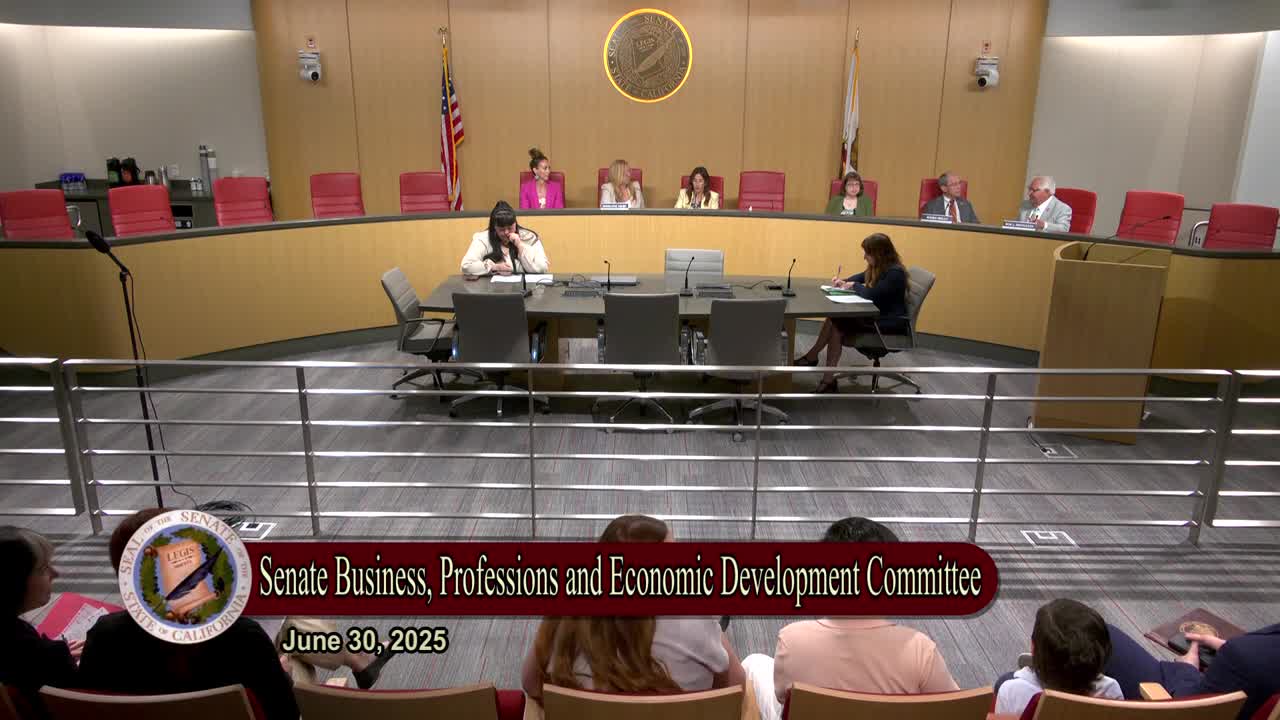 23MIN
Senate Standing Committee on Business, Professions and Economic Development
 55SEC
Assembly Floor
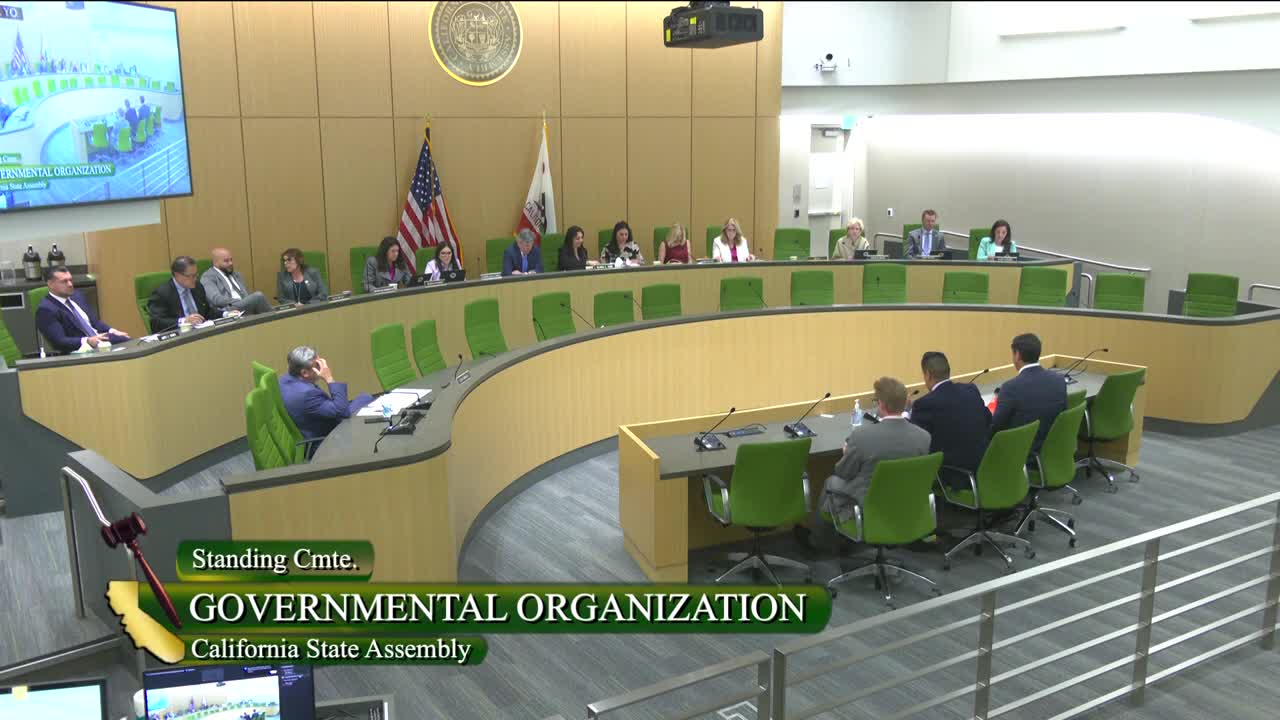 9MIN
Assembly Standing Committee on Governmental Organization
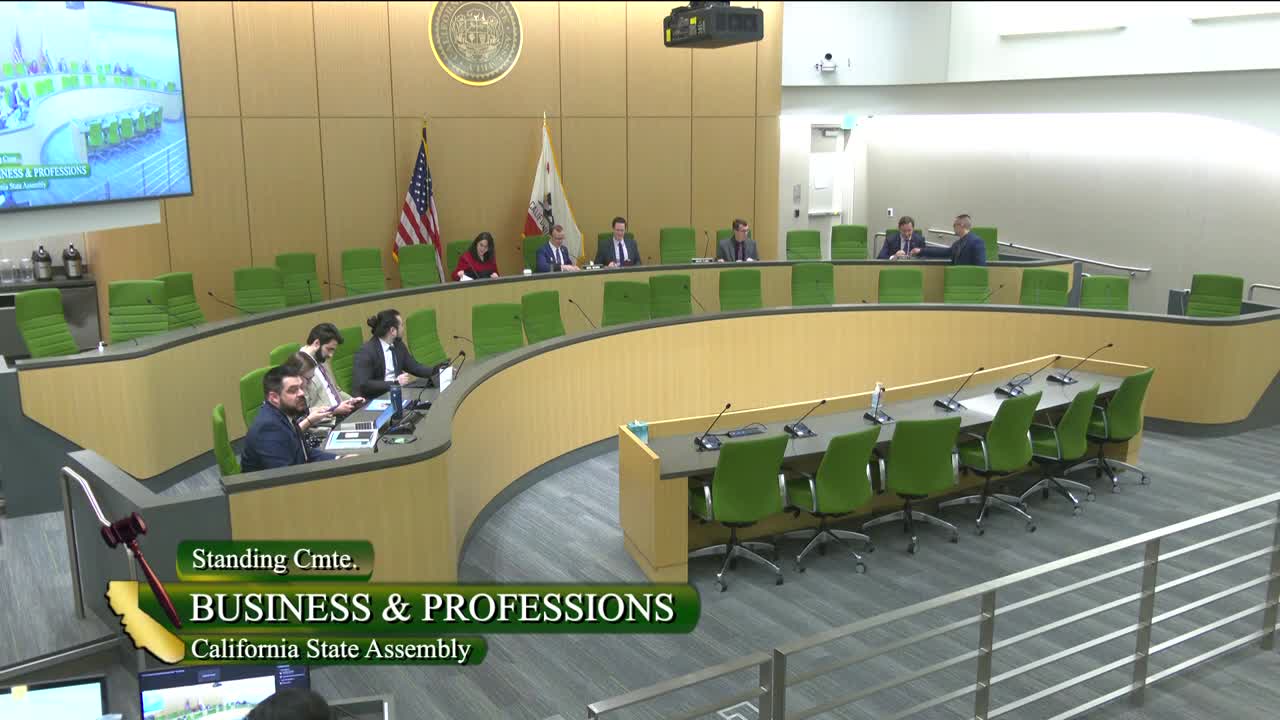 7MIN
Assembly Standing Committee on Business and Professions
Bill Author