SCR 50: Maladaptation.
- Session Year: 2025-2026
- House: Senate
- Latest Version Date: 2025-07-18
Current Status:
Passed
(2025-07-18: Chaptered by Secretary of State. Res. Chapter 149, Statutes of 2025.)
Introduced
In Committee
Awaiting First Chamber Vote
Passed First Chamber
In Committee
Awaiting Second Chamber Vote
Passed Second Chamber
Enacted
This measure would, among other things, recognize the serious and urgent threat maladaptation poses to the success and cost effectiveness of the states climate resilience actions.
This measure would, among other things, recognize the serious and urgent threat maladaptation poses to the success and cost effectiveness of the states climate resilience actions.
This measure would, among other things, recognize the serious and urgent threat maladaptation poses to the success and cost effectiveness of the states climate resilience actions.
WHEREAS, California is experiencing the unprecedented effects of a changing climate that are projected to worsen with even moderate increases in carbon dioxide emissions over the currently estimated 424 parts per million, far above the baseline for a stable environment of 280 parts per million; and
WHEREAS, Exceptionally dry conditions and hurricane-force winds caused the recent wildfires in the Los Angeles area and led to the deaths of 29 people, the destruction of more than 5,000 structures, the displacement of over 100,000 people, a sixteenfold rise in hospital visits due to smoke exposure, and a projected economic loss of over $250 billion; and
WHEREAS, The duration and severity of multiyear wet or dry periods impact Californias social, economic, and natural systems throughout the state and 2025 is expected to be another drought year; and
WHEREAS, Researchers from the University of California, Davis, estimate that in 2015 alone the drought cost Californias agricultural economy $1.84 billion and led to the loss of over 10,000 jobs; the University of California, Los Angeles, found the 22-year-long southwest North American megadrought is the regions driest two decades in 1,200 years; and
WHEREAS, Climate change is predicted to increase both the strength of atmospheric rivers and the frequency of 1-in-1,000-year storms, like those that struck the central coast City of Pajaro in 2023 and the City of Los Angeles in 2024; and
WHEREAS, Extreme heat events are becoming longer lasting, more frequent, and more intense. In the 2022 California coastal inland event alone, there were nearly 200 deaths, more than 140 adverse birth outcomes, over 2,000 hospitalizations, and over 4,200 emergency department visits, all attributable to the extreme heat that affected 34,000,000 people over 14 days with most of the impacts experienced in the health and safety sector; and
WHEREAS, While climate change affects everyone, people of color, immigrants, the elderly, women, California Native American tribes, and lower-income populations experience increased exposure and sensitivity to climate hazards and a reduced capacity to adapt; and
WHEREAS, Californias climate adaptation strategy recognizes that climate change threatens communities and natural places in every part of our state for centuries to come; and
WHEREAS, Avoiding maladaptation means examining any action taken by the state that is ineffective or increases the adverse risk of climate-related outcomes and is crucial to facing the climate crisis our state faces; and
WHEREAS, Only two state planning documents, the Governors Office of Land Use and Climate Innovations (GO-LCI) Planning and Investing for a Resilient California and the Governors Office of Emergency Services California Adaptation Planning Guide, cite processes that avoid maladaptation, indicating that maladaptation-avoidant strategies are not widely dispersed nor comprehensive and deliberate; and
WHEREAS, The costs associated with direct climate impacts by 2050, totaling approximately $113 billion per year, are predominately composed of human mortality, damages to coastal properties, and the threat of droughts and megafloods; and
WHEREAS, These costs will continue to grow, but by taking proactive steps now and integrating a deliberate approach intended to avoid maladaptation, California can minimize future disruption and enable communities, infrastructure, and natural systems to withstand changing average conditions and extreme events; and
WHEREAS, According to a 2024 Climate Resiliency Report, every $1 spent preparing for climate disasters is worth $13 in saved economic costs for the community; and
WHEREAS, Because adaptation investments are primarily publicly funded, the costs of adaptation programs and their resulting benefits must be carefully considered to justify efficient spending and resource allocation; now, therefore, be it
Resolved by the Senate of the State of California, the Assembly thereof concurring, That the Legislature recognizes the serious and urgent threat maladaptation poses to the success and cost effectiveness of the states climate resilience actions; and be it further
Resolved, That the Legislature calls on the GO-LCI to work with other state departments, researchers, and communities to develop and adopt a statewide policy with an agreed upon definition for maladaptation and to evaluate the effectiveness of measures to improve climate resilience; and be it further
Resolved, That the Legislature calls upon GO-LCI to review its policies and plans in the states Adaptation Clearinghouse database and evaluate their progress to determine if any have or are likely to be maladapted; and be it further
Resolved, That the Secretary of the Senate transmit copies of this resolution to the author for appropriate distribution.
|
Date
|
Status
|
|---|---|
| Jul 18, 2025 | Chaptered by Secretary of State. Res. Chapter 149, Statutes of 2025. |
| Jul 18, 2025 | Enrolled and filed with the Secretary of State at 1 p.m. |
| Jul 14, 2025 | In Senate. Ordered to engrossing and enrolling. |
| Jul 10, 2025 | Coauthors revised. |
| Jul 10, 2025 | Read. Adopted. (Page 2507.) Ordered to the Senate. |
| Jun 24, 2025 | From committee: Be adopted. Ordered to third reading. (Ayes 11. Noes 0.) (June 23). |
| Jun 5, 2025 | Referred to Com. on NAT. RES. |
| May 28, 2025 | In Assembly. Held at Desk. |
| May 27, 2025 | Read. Adopted. (Ayes 29. Noes 0. Page 1235.) Ordered to the Assembly. |
| Apr 23, 2025 | From committee: Be adopted. Ordered to third reading. (Ayes 4. Noes 0. Page 840.) (April 22). |
| Apr 4, 2025 | Set for hearing April 22. |
| Apr 2, 2025 | Re-referred to Com. on N.R. & W. |
| Mar 26, 2025 | Introduced. Referred to Com. on RLS. |
|
Date
|
Description
|
Location
|
Votes
|
|
|---|---|---|---|---|
| Jun 23, 2025 | Be adopted. To third reading. | Assembly Standing Committee on Natural Resources |
Passed |
|
| May 27, 2025 | Senate 3rd Reading SCR50 Stern | Senate Floor |
Passed |
|
| Apr 22, 2025 | Be adopted. Ordered to third reading | Senate Standing Committee on Natural Resources and Water |
Passed |
This list shows positions taken on this bill by organizations on the date displayed, which is linked to the original source.
Positions by individuals are not included.
|
Organization
|
Position
|
Date
|
|---|---|---|
| Climate Resolve | ** Support |
SENATE THIRD READING
STR Bill Id:SCR 50
Author:(Stern)
As Introduced Ver:March 26, 2025
Majority vote
SUMMARY
Resolves that the Legislature recognizes the serious and urgent threat maladaptation poses to the success and cost effectiveness of the state′s climate resilience actions. Further resolves that the Legislature calls on the Governor′s Office of Land Use and Climate Innovation (GO-LCI) to work with other state departments, researchers, and communities to develop and adopt a statewide policy with an agreed upon definition of maladaptation and to evaluate the effectiveness of measures to improve climate resilience. Additionally, resolves that the Legislature calls upon GO-LCI to review its policies and plans in the state′s Adaptation Clearinghouse database and to evaluate their progress to determine if any have or are likely to be maladapted.
Major Provisions
COMMENTS
Responding to climate change. Every part of the state is already experiencing the impacts of climate change, from extreme heat, drought, and wildfires, to rising sea levels and storm surges. In order to maintain a safe, livable California for all in the face of global climate change, rapid and far-reaching actions must be taken to address mitigation, adaptation, and resilience. In addition to its efforts to mitigate the worst effects of climate change, the state must also prepare to live with the effects of global warming through adaptation. There is no one-size-fits-all best way to adapt to climate change, and different regions of the state will need to enact different adaptation measures. Climate-proofing California will require careful coordination across all levels of government as we face unprecedented challenges to our infrastructure, health, and economy.
Maladaptation. The Intergovernmental Panel on Climate Change (IPCC) defines maladaptation as ″actions that may lead to increased risk of adverse climate-related outcomes, increased vulnerability to climate change, or diminished welfare, now or in the future.″ Maladaptation can result from well-intentioned efforts that are not well planned. Some examples of maladaptation include things like planting trees to sequester carbon in a manner that ultimately increases wildfire risk and building seawalls to address sea-level rise that exacerbate erosion on adjacent beaches.
According to this resolution, only two state planning documents contain processes to avoid maladaptation – GO-LCI′s Planning and Investment for a Resilient California: A Guidebook for State Agencies (Guidebook) and Governor′s Office of Emergency Services′ (CalOES) California Adaptation Planning Guide (APG). The APG provides guidance to local governments on local adaptation and resiliency planning, and, in its discussion of maladaptation, references ICARP′s adaptation vision and principles. Although the state has undertaken various efforts to study and address the impacts of climate change, there does not appear to be a consistent practice to include maladaptation strategies in those efforts or to evaluate whether state agency efforts to improve climate resilience are maladaptive.
GO-LCI′s Guidebook uses the IPCC definition of maladaptation. CalOES defines ″maladaptation″ as adaptation efforts that worsen a situation, or transfer the challenge form one area, sector, or social group to another. Although similar, it does not appear that there is a consistent state definition for maladaptation.
Current efforts. The state has undertaken various efforts to address climate change and help its communities and residents prepare for its impacts.
- California Climate Assessments. California has produced four comprehensive climate change assessments since 2006. While the assessments have evolved over time, they generally seek to assess climate change impacts and risks and to identify potential solutions to inform policy decisions. The assessments also examine how climate change will affect specific sectors, potential responses, and other policy-driven questions.
According to California′s Fourth Climate Change Assessment, the most recent assessment, California is one of the most ″climate-challenged″ regions of North America and must actively plan and implement strategies to prepare for and adapt to extreme events and shifts in previously ″normal″ averages. This assessment also began to assess the costs of climate change. The emerging findings show that costs associated with direct climate impacts in California by 2050 are dominated by human mortality, damages to coastal properties, and the potential for droughts and mega-floods. The costs are in the order of tens of billions of dollars.
- Safeguarding California. Safeguarding California is the state′s climate adaptation strategy that is updated every three years. In 2018, the California Natural Resources Agency (NRA), in collaboration with other state agencies, updated the Safeguarding California Plan. The plan shows how California′s state government is taking action to respond to climate change. It lays out next steps to achieve the state′s goals and how those objectives will be achieved by articulating over 1,000 ongoing actions and next steps, organized by 76 policy recommendations across 11 policy sectors, which were developed through the scientific and policy expertise of staff from 38 state agencies. The plan first describes overarching strategies recommended by NRA. The document additionally outlines ongoing actions and cost-effective and achievable next steps to make California more resilient to climate change. This roadmap serves as a transparent and accountable tool for the public to evaluate the state′s progress. In 2022, AB 1384 (Gabriel), Chapter 338, Statutes of 2022, updated requirements for the plan to prioritize equity and vulnerable communities and include metrics to measure and evaluate the state′s progress in implementing the plan.
- ICARP. In 2017, the Legislature enacted SB 246 (Wieckowski) Chapter 606, Statutes of 2015, to establish ICARP to coordinate regional and local efforts with state climate adaptation strategies to adapt to the impacts of climate change. They coordinate tools, resources, and technical assistance to local and regional governments to aid in their adaptation and resilience planning. ICARP has multiple parts, including the Technical Advisory Council (TAC), which is comprised of representatives from state agencies, local, regional, and tribal governments, non-profits, academia, and the private sector to support GO-LCI in its goal to facilitate coordination among state, regional and local adaptation and resiliency efforts, with a focus on opportunities to support local actions. ICARP is also responsible for maintaining and updating the state′s adaptation clearinghouse, an online database for adaptation tools and examples of adaptation projects. ICARP′s vision of all Californian′s thriving in the face of a changing climate is guided by seven principles, including avoiding maladaptation by making decisions that do not worsen the situation or transfer impacts from one area, sector, or social group to another.
- Planning and Investing for a Resilient California: A Guidebook for State Agencies. Executive Order B-30-15, issued April 2015, directs state agencies to integrate climate change into all planning and investment decisions, including accounting for current and future climate conditions when making infrastructure investments. In response to the executive order, OPR (now GO-LCI) convened a technical advisory group and produced the Guidebook. The Guidebook provide high level guidance on what future climate conditions to plan for and how state agencies should approach planning in light of a changing climate.
- Health impacts of climate change. Climate change can affect public health in many ways, including from the effects of extreme heat events, wildfires, and worsening air pollution. The Office of Environmental Health Hazard Assessment (OEHHA) has conducted numerous studies on health impacts of climate change. OEHHA has identified high-risk vulnerable population subgroups, including the elderly, children, people with existing health conditions, pregnant individuals, and disadvantaged communities. OEHHA also investigates the health impacts of wildfires and have identified increased adverse health outcomes, such as respiratory and cardiovascular disease, after wildfire smoke exposures.
According to the Author
California is experiencing the unprecedented effects of a changing climate, with impacts projected to worsen with only moderate increases in carbon dioxide emissions from today.
The recent wildfires in Los Angeles were a result of catastrophic conditions caused by hurricane-force winds leading to the deaths of 29 people, the destruction of more than 5,000 structures, the displacement of over 100,000 people, a 16-fold rise in hospital visits due to smoke exposure, and a projected economic loss of $250 billion.
Unfortunately, these fires are not the first and will not be the last catastrophic consequence to climate change impacts left unaddressed. These changes threaten global health and economic stability, with the most severe impacts disproportionately affecting vulnerable populations such as people of color, immigrants, the elderly, women, California Native American tribes, and lower-income populations who experience increased exposure and reduced capacity to adapt to climate hazards.
Recognizing that maladaptation in California′s climate resilience policies poses a serious risk to the success and cost effectiveness of the state′s climate resilience actions, it is imperative that state departments, researchers, and communities work in tandem to identify maladaptation in climate resilience strategies and evaluate the effectiveness of current and future measures.
Arguments in Support
Writing in support when this resolution was in the Senate, Climate Resolve states:
Maladaptation stands in the way of progress and innovation in our fight against climate change. SCR 50 will ensure that state policies are taking climate change into consideration, it will help the state make more informed planning decisions and avoid high costs in the future.
Arguments in Opposition
None on file
FISCAL COMMENTS
Nonfiscal
VOTES
SENATE FLOOR: 29-0-11
YES: Allen, Archuleta, Arreguín, Ashby, Becker, Blakespear, Cabaldon, Caballero, Cervantes, Cortese, Durazo, Gonzalez, Grayson, Hurtado, Laird, Limón, McGuire, McNerney, Menjivar, Padilla, Pérez, Richardson, Rubio, Smallwood-Cuevas, Stern, Umberg, Wahab, Weber Pierson, Wiener
ABS, ABST OR NV: Alvarado-Gil, Choi, Dahle, Grove, Jones, Niello, Ochoa Bogh, Reyes, Seyarto, Strickland, Valladares
ASM NATURAL RESOURCES: 11-0-3
YES: Bryan, Alanis, Connolly, Garcia, Haney, Kalra, Muratsuchi, Pellerin, Schultz, Wicks, Zbur
ABS, ABST OR NV: Ellis, Flora, Hoover
UPDATED
VERSION: March 26, 2025
CONSULTANT: Elizabeth MacMillan / NAT. RES. / (916) 319-2092 FN: 0000987
Date of Hearing: June 23, 2025
ASSEMBLY COMMITTEE ON NATURAL RESOURCES
Isaac G. Bryan, Chair
SBPCA Bill Id:SCR 50
Author:(Stern) – As Introduced Ver:March 26, 2025
SENATE VOTE: 29-0
SUBJECT: Maladaptation
SUMMARY: Resolves that the Legislature recognizes the serious and urgent threat maladaptation poses to the success and cost effectiveness of the state’s climate resilience actions. Further resolves that the Legislature calls on the Governor’s Office of Land Use and Climate Innovation (GO-LCI) to work with other state departments, researchers, and communities to develop and adopt a statewide policy with an agreed upon definition of maladaptation and to evaluate the effectiveness of measures to improve climate resilience. Additionally, resolves that the Legislature calls upon GO-LCI to review its policies and plans in the state’s Adaptation Clearinghouse database and to evaluate their progress to determine if any have or are likely to be maladapted.
EXISTING LAW:
- Renames the prior Office of Planning and Research as the GO-LCI, among other statutory changes, to implement the Budget Act of 2024. (SB 164 [Committee on Budget and Fiscal Review], Chapter 41, Statutes of 2024)
- Establishes GO-LCI as the comprehensive state planning agency, responsible for developing state land use policies, coordinating planning of all state agencies, and assisting and monitoring local and regional planning. (Government Code 65025 et seq.)
- Establishes the Integrated Climate Adaptation and Resiliency Program (ICARP) within the GO-LCI, to coordinate regional and local efforts with state climate adaptation strategies to facilitate the development of holistic, complementary strategies for adaptation. (Public Resources Code (PRC) 71354)
- Requires GO-LCI to coordinate with appropriate entities, including state, regional, or local agencies, to establish a clearinghouse for climate adaptation information for use by state, regional, and local entities. (PRC 71360)
FISCAL EFFECT: Nonfiscal
COMMENTS:
- Responding to climate change. Every part of the state is already experiencing the impacts of climate change, from extreme heat, drought, and wildfires, to rising sea levels and storm surges. In order to maintain a safe, livable California for all in the face of global climate change, rapid and far-reaching actions must be taken to address mitigation, adaptation, and resilience. In addition to its efforts to mitigate the worst effects of climate change, the state must also prepare to live with the effects of global warming through adaptation. There is no one-size-fits-all best way to adapt to climate change, and different regions of the state will need to enact different adaptation measures. Climate-proofing California will require careful coordination across all levels of government as we face unprecedented challenges to our infrastructure, health, and economy.
- Maladaptation. The Intergovernmental Panel on Climate Change (IPCC) defines maladaptation as “actions that may lead to increased risk of adverse climate-related outcomes, increased vulnerability to climate change, or diminished welfare, now or in the future.” Maladaptation can result from well-intentioned efforts that are not well planned. Some examples of maladaptation include things like planting trees to sequester carbon in a manner that ultimately increases wildfire risk and building seawalls to address sea-level rise that exacerbate erosion on adjacent beaches.
According to this resolution, only two state planning documents contain processes to avoid maladaptation – GO-LCI’s Planning and Investment for a Resilient California: A Guidebook for State Agencies (Guidebook) and Governor’s Office of Emergency Services’ (CalOES) California Adaptation Planning Guide (APG). The APG provides guidance to local governments on local adaptation and resiliency planning, and, in its discussion of maladaptation, references ICARP’s adaptation vision and principles. Although the state has undertaken various efforts to study and address the impacts of climate change, there does not appear to be a consistent practice to include maladaptation strategies in those efforts or to evaluate whether state agency efforts to improve climate resilience are maladaptive.
GO-LCI’s Guidebook uses the IPCC definition of maladaptation. CalOES defines “maladaptation” as adaptation efforts that worsen a situation, or transfer the challenge form one area, sector, or social group to another. Although similar, it does not appear that there is a consistent state definition for maladaptation.
- Current efforts. The state has undertaken various efforts to address climate change and help its communities and residents prepare for its impacts.
- California Climate Assessments. California has produced four comprehensive climate change assessments since 2006. While the assessments have evolved over time, they generally seek to assess climate change impacts and risks and to identify potential solutions to inform policy decisions. The assessments also examine how climate change will affect specific sectors, potential responses, and other policy-driven questions.
According to California’s Fourth Climate Change Assessment, the most recent assessment, California is one of the most “climate-challenged” regions of North America and must actively plan and implement strategies to prepare for and adapt to extreme events and shifts in previously “normal” averages. This assessment also began to assess the costs of climate change. The emerging findings show that costs associated with direct climate impacts in California by 2050 are dominated by human mortality, damages to coastal properties, and the potential for droughts and mega-floods. The costs are in the order of tens of billions of dollars.
- Safeguarding California. Safeguarding California is the state’s climate adaptation strategy that is updated every three years. In 2018, the California Natural Resources Agency (NRA), in collaboration with other state agencies, updated the Safeguarding California Plan. The plan shows how California’s state government is taking action to respond to climate change. It lays out next steps to achieve the state’s goals and how those objectives will be achieved by articulating over 1,000 ongoing actions and next steps, organized by 76 policy recommendations across 11 policy sectors, which were developed through the scientific and policy expertise of staff from 38 state agencies. The plan first describes overarching strategies recommended by NRA. The document additionally outlines ongoing actions and cost-effective and achievable next steps to make California more resilient to climate change. This roadmap serves as a transparent and accountable tool for the public to evaluate the state’s progress. In 2022, AB 1384 (Gabriel), Chapter 338, Statutes of 2022, updated requirements for the plan to prioritize equity and vulnerable communities and include metrics to measure and evaluate the state’s progress in implementing the plan.
- ICARP. In 2017, the Legislature enacted SB 246 (Wieckowski) Chapter 606, Statutes of 2015, to establish ICARP to coordinate regional and local efforts with state climate adaptation strategies to adapt to the impacts of climate change. They coordinate tools, resources, and technical assistance to local and regional governments to aid in their adaptation and resilience planning. ICARP has multiple parts, including the Technical Advisory Council (TAC), which is comprised of representatives from state agencies, local, regional, and tribal governments, non-profits, academia, and the private sector to support GO-LCI in its goal to facilitate coordination among state, regional and local adaptation and resiliency efforts, with a focus on opportunities to support local actions. ICARP is also responsible for maintaining and updating the state’s adaptation clearinghouse, an online database for adaptation tools and examples of adaptation projects. ICARP’s vision of all Californian’s thriving in the face of a changing climate is guided by seven principles, including avoiding maladaptation by making decisions that do not worsen the situation or transfer impacts from one area, sector, or social group to another.
- Planning and Investing for a Resilient California: A Guidebook for State Agencies. Executive Order B-30-15, issued April 2015, directs state agencies to integrate climate change into all planning and investment decisions, including accounting for current and future climate conditions when making infrastructure investments. In response to the executive order, OPR (now GO-LCI) convened a technical advisory group and produced the Guidebook. The Guidebook provide high level guidance on what future climate conditions to plan for and how state agencies should approach planning in light of a changing climate.
- Health impacts of climate change. Climate change can affect public health in many ways, including from the effects of extreme heat events, wildfires, and worsening air pollution. The Office of Environmental Health Hazard Assessment (OEHHA) has conducted numerous studies on health impacts of climate change. OEHHA has identified high-risk vulnerable population subgroups, including the elderly, children, people with existing health conditions, pregnant individuals, and disadvantaged communities. OEHHA also investigates the health impacts of wildfires and have identified increased adverse health outcomes, such as respiratory and cardiovascular disease, after wildfire smoke exposures.
- Author’s statement:
California is experiencing the unprecedented effects of a changing climate, with impacts projected to worsen with only moderate increases in carbon dioxide emissions from today.
The recent wildfires in Los Angeles were a result of catastrophic conditions caused by hurricane-force winds leading to the deaths of 29 people, the destruction of more than 5,000 structures, the displacement of over 100,000 people, a 16-fold rise in hospital visits due to smoke exposure, and a projected economic loss of $250 billion.
Unfortunately, these fires are not the first and will not be the last catastrophic consequence to climate change impacts left unaddressed. These changes threaten global health and economic stability, with the most severe impacts disproportionately affecting vulnerable populations such as people of color, immigrants, the elderly, women, California Native American tribes, and lower-income populations who experience increased exposure and reduced capacity to adapt to climate hazards.
Recognizing that maladaptation in California’s climate resilience policies poses a serious risk to the success and cost effectiveness of the state’s climate resilience actions, it is imperative that state departments, researchers, and communities work in tandem to identify maladaptation in climate resilience strategies and evaluate the effectiveness of current and future measures.
REGISTERED SUPPORT / OPPOSITION:
Support
None on file
Opposition
None on file
Analysis Prepared by: Elizabeth MacMillan / NAT. RES. /
SENATE RULES COMMITTEE Office of Senate Floor Analyses (916) 651-1520 Fax: (916) 327-4478 | SCR 50 |
THIRD READING
Bill No: SCR 50
Author: Stern (D)
Introduced: 3/26/25
Vote: 21
SENATE NATURAL RES. & WATER COMMITTEE: 4-0, 4/22/25
AYES: Limón, Allen, Laird, Stern
NO VOTE RECORDED: Seyarto, Grove, Hurtado
SUBJECT: Maladaptation
SOURCE: Author
DIGEST:
This resolution recognizes the serious and urgent threat that maladaptation poses to the success and cost effectiveness of the state’s climate resilience actions; calls on the Governor’s Office of Land Use and Climate Innovation (GO-LCI) to work with other state departments, researchers, and communities to develop and adopt a statewide policy with an agreed upon definition for maladaptation and to evaluate the effectiveness of measures to improve climate resilience; and calls upon GO-LCI to review its policies and plans in the state’s Adaptation Clearinghouse database and evaluate their progress to determine if any have or are likely to be maladapted.
ANALYSIS:
Existing law:
- Establishes GO-LCI as the state’s comprehensive planning agency responsible for long-range planning and research. (Government Code (GOV) §§65025 et seq.)
- Establishes Integrated Climate Adaptation and Resiliency Program (ICARP) at GO-LCI to coordinate regional and local efforts with state climate adaptation strategies in order to facilitate the development of holistic, complimentary strategies for adapting to climate change impacts.
- Requires ICARP to:
- Coordinate local and regional climate adaptation and resilience efforts by promoting and coordinating state agency support of these efforts and informing state-led programs to better reflect the goals, efforts, and challenges faced by local and regional entities pursuing adaptation, preparedness, and resilience.
- Coordinate and maintain the state’s clearinghouse for climate adaptation information. (Public Resources Code (PRC) §71354)
- Coordinate local and regional climate adaptation and resilience efforts by promoting and coordinating state agency support of these efforts and informing state-led programs to better reflect the goals, efforts, and challenges faced by local and regional entities pursuing adaptation, preparedness, and resilience.
- Directs the California Natural Resources Agency to update the Safeguarding California Plan the state’s climate adaptation strategy, every three years. The plan must include:
- Vulnerabilities to climate change by sector, as identified by the lead agency or group of agencies, and regions.
- Priority actions needed to reduce risks in those sectors, as identified by the lead agency or group of agencies.
(PRC §71153)
- Vulnerabilities to climate change by sector, as identified by the lead agency or group of agencies, and regions.
- Directs state agencies to address the vulnerabilities identified in the plan by working to maximize specified objectives, including:
- Promoting the use of the plan to inform planning decisions and ensure that state investments consider climate change impacts.
- Encouraging regional collaborative planning efforts to address regional climate change impacts and adaptation strategies.
(PRC §71154)
- Promoting the use of the plan to inform planning decisions and ensure that state investments consider climate change impacts.
This resolution:
- Recognizes the serious and urgent threat that maladaptation poses to the success and cost effectiveness of the state’s climate resilience actions;
- Calls on GO-LCI to work with other state departments, researchers, and communities to develop and adopt a statewide policy with an agreed upon definition for maladaptation and to evaluate the effectiveness of measures to improve climate resilience; and
- Calls upon GO-LCI to review its policies and plans in the state’s Adaptation Clearinghouse database and evaluate their progress to determine if any have or are likely to be maladapted.
Background
GO-LCI: the agency formerly known as the Office of Planning and Research (OPR). SB 164 (Committee on Budget and Fiscal Review, Chapter 41, Statutes 2024), a general government trailer bill, renamed OPR as GO-LCI, among other statutory changes, to implement the Budget Act of 2024. GO-LCI is the comprehensive state planning agency, responsible for developing state land use policies, coordinating planning of all state agencies, and assisting and monitoring local and regional planning (GOV §65035). According to its website, the agency focuses on areas impacting land use, climate, housing opportunities, community empowerment, and more.
Responding to climate change. Every part of the state is already experiencing the impacts of climate change. In order to maintain a safe, livable California for all in the face of global climate change, rapid and far-reaching actions must be taken, simultaneously, along multiple axes: mitigation, adaptation, and resilience. Independent of efforts to mitigate the worst effects of climate change, the state must also prepare to live with the effects of global warming through adaptation. Adapting to climate change means different things in different contexts; varying geography, populations, and economies mean there is no one-size-fits-all best way to adapt to climate change. Regardless of the efforts made in mitigation and adaptation, the state will still ultimately need to become more resilient to the increasingly frequent and destructive impacts a warming Earth will bring as well. Climate-proofing California will require careful coordination across all levels of government as we face unprecedented challenges to our infrastructure, health, and economy.
[NOTE: See the Senate Natural Resources and Water Committee analysis for detailed background of this bill.]
Comments
Author’s statement. According to the author, “California is experiencing the unprecedented effects of a changing climate, with impacts projected to worsen with only moderate increases in carbon dioxide emissions from today.”
“The recent wildfires in Los Angeles were a result of catastrophic conditions caused by hurricane-force winds leading to the deaths of 29 people, the destruction of more than 5,000 structures, the displacement of over 100,000 people, a 16-fold rise in hospital visits due to smoke exposure, and a projected economic loss of $250 billion.”
“Unfortunately, these fires are not the first and will not be the last catastrophic consequence to climate change impacts left unaddressed. These changes threaten global health and economic stability, with the most severe impacts disproportionately affecting vulnerable populations such as people of color, immigrants, the elderly, women, California Native American tribes, and lower-income populations who experience increased exposure and reduced capacity to adapt to climate hazards.”
“Recognizing that maladaptation in California’s climate resilience policies poses a serious risk to the success and cost effectiveness of the state’s climate resilience actions, it is imperative that state departments, researchers, and communities work in tandem to identify maladaptation in climate resilience strategies and evaluate the effectiveness of current and future measures.”
FISCAL EFFECT: Appropriation: No Fiscal Com.: No Local: No
This resolution is keyed non-fiscal by the Legislative Counsel.
SUPPORT: (Verified 4/23/25)
Climate Resolve
OPPOSITION: (Verified 4/23/25)
None received
ARGUMENTS IN SUPPORT: According to Climate Resolve, “Maladaptation stands in the way of progress and innovation in our fight against climate change. SCR 50 will ensure that state policies are taking climate change into consideration, it will help the state make more informed planning decisions and avoid high costs in the future.”
ARGUMENTS IN OPPOSITION: None received.
Prepared by: Genevieve Wong / N.R. & W. / (916) 651-4116
4/23/25 16:30:30
**** END ****
SENATE COMMITTEE ON NATURAL RESOURCES AND WATER
Senator Monique Limón, Chair
2025 - 2026 Regular
Bill No: SCR Hearing Date: April 22, 2025
Author: | Stern | ||
Version: | March 26, 2025 Introduced | ||
Urgency: |
| Fiscal: | No |
Consultant: | Genevieve Wong | ||
Subject: Maladaptation
SUMMARY
This resolution would recognize the serious and urgent threat that maladaptation poses to the success and cost effectiveness of the state’s climate resilience actions; call on the Governor’s Office of Land Use and Climate Innovation (GO-LCI) to work with other state departments, researchers, and communities to develop and adopt a statewide policy with an agreed upon definition for maladaptation and to evaluate the effectiveness of measures to improve climate resilience; and call upon GO-LCI to review its policies and plans in the state’s Adaptation Clearinghouse database and evaluate their progress to determine if any have or are likely to be maladapted.
BACKGROUND AND EXISTING LAW
Governor’s Office of Land Use and Climate Innovation (GO-LCI): the agency formerly known as the Office of Planning and Research (OPR). SB 164 (Committee on Budget and Fiscal Review, Ch. 41, Stats. 2024), a general government trailer bill, renamed OPR as GO-LCI, among other statutory changes, to implement the Budget Act of 2024. GO-LCI is the comprehensive state planning agency, responsible for developing state land use policies, coordinating planning of all state agencies, and assisting and monitoring local and regional planning (Government Code (GOV) §65035). According to its website, the agency focuses on areas impacting land use, climate, housing opportunities, community empowerment, and more.
Responding to climate change. Every part of the state is already experiencing the impacts of climate change. In order to maintain a safe, livable California for all in the face of global climate change, rapid and far-reaching actions must be taken, simultaneously, along multiple axes: mitigation, adaptation, and resilience. Independent of efforts to mitigate the worst effects of climate change, the state must also prepare to live with the effects of global warming through adaptation. Adapting to climate change means different things in different contexts; varying geography, populations, and economies mean there is no one-size-fits-all best way to adapt to climate change. Regardless of the efforts made in mitigation and adaptation, the state will still ultimately need to become more resilient to the increasingly frequent and destructive impacts a warming Earth will bring as well. Climate-proofing California will require careful coordination across all levels of government as we face unprecedented challenges to our infrastructure, health, and economy.
Current efforts to study climate change. The state has undertaken various efforts to address climate change and help its communities and residents prepare for its impacts. Some of these efforts are described below.
California Climate Assessments. Although not required under existing law, California has produced four comprehensive climate change assessments since 2006. While the assessments have evolved over time, they generally seek to assess climate change impacts and risks and to identify potential solutions to inform policy actions. The assessments also examine how climate change will affect specific sectors, potential responses, and other policy-driven questions.
According to California’s Fourth Climate Change Assessment, the most recent assessment, California is one of the most “climate-challenged” regions of North America and must actively plan and implement strategies to prepare for and adapt to extreme events and shifts in previously “normal” averages. This assessment also began to assess the costs of climate change. The emerging findings show that costs associated with direct climate impacts in California by 2050 are dominated by human mortality, damages to coastal properties, and the potential for droughts and mega-floods. The costs are in the order of tens of billions of dollars.
Safeguarding California. Safeguarding California is the state’s climate adaptation strategy that is updated every 3 years. In 2018, the California Natural Resources Agency (CNRA), in collaboration with other state agencies, updated the Safeguarding California Plan. The plan shows how California’s state government is taking action to respond to climate change. It lays out next steps to achieve the State’s goals and how those objectives will be achieved by articulating over 1,000 ongoing actions and next steps, organized by 76 policy recommendations across 11 policy sectors, which were developed through the scientific and policy expertise of staff from 38 state agencies. The plan first describes overarching strategies recommended by CNRA, the State’s lead agency on climate change adaptation. The document then outlines ongoing actions and cost-effective and achievable next steps to make California more resilient to climate change. This roadmap serves as a transparent and accountable tool for the public to evaluate the State’s progress. It is unclear if the Safeguarding California Plan has been updated since 2018.
In 2022, AB 1384 (Gabriel, Ch. 338, Stats. 2022) updated requirements for the plan to prioritize equity and vulnerable communities and include metrics to measure and evaluate the state’s progress in implementing the plan.
Integrated Climate Adaptation and Resiliency Program (ICARP). In 2017, the Legislature enacted SB 246 (Wieckowski, Ch. 606, Stats. 2015) to establish ICARP to require OPR (now GO-LCI) to coordinate regional and local efforts with state climate adaptation strategies to adapt to the impacts of climate change. They coordinate tools, resources, and technical assistance to local and regional governments to aid in their adaptation and resilience planning. ICARP has multiple parts, including the Technical Advisory Council (TAC), which is made up of representatives from state agencies, local, regional, and tribal governments, non-profits, academia, and the private sector to support GO-LCI in its goal to facilitate coordination among state, regional and local adaptation and resiliency efforts, with a focus on opportunities to support local implementation actions. Another part is the adaptation clearinghouse, an online database for adaptation tools and examples of adaptation projects. ICARP’s vision of all Californian’s thriving in the face of a changing climate is guided by seven principles, including to avoid maladaptation by making decisions that do not worsen the situation or transfer the challenge from one area, sector, or social group to another.
Planning and Investing for a Resilient California: A Guidebook for State Agencies. Executive Order B-30-15, issued April 2015, directed state agencies to integrate climate change into all planning and investment decisions, including accounting for current and future climate conditions when making infrastructure investments. In response to the executive order, OPR (now GO-LCI) convened a technical advisory group and produced the Planning and Investment for a Resilient California: A Guidebook for State Agencies (Guidebook). This guidebook provide high level guidance on what future climate conditions to plan for and how state agencies should approach planning in light of a changing climate.
Human health impacts of climate change. Climate change can affect our health in many ways, including more intense heat waves and wildfires, and worsening the impacts of air pollution. The Office of Environmental Health Hazard Assessment (OEHHA) has conducted numerous studies on health impacts of climate change, focusing on the health impacts of climate change in the general population, and identified high-risk vulnerable population subgroups such as the elderly, children, people with existing health conditions, pregnant individuals, and people from disadvantaged communities. OEHHA also investigates the health impacts of wildfires and have identified increased adverse health outcomes, such as respiratory and cardiovascular disease, after wildfire smoke exposures.
Existing law:
- Establishes GO-LCI as the state’s comprehensive planning agency responsible for long-range planning and research. (Government Code (GOV) §§65025 et seq.)
- Establishes ICARP at GO-LCI to coordinate regional and local efforts with state climate adaptation strategies in order to facilitate the development of holistic, complimentary strategies for adapting to climate change impacts. Requires ICARP to:
- Coordinate local and regional climate adaptation and resilience efforts by promoting and coordinating state agency support of these efforts and informing state-led programs to better reflect the goals, efforts, and challenges faced by local and regional entities pursuing adaptation, preparedness, and resilience.
- Coordinate and maintain the state’s clearinghouse for climate adaptation information.
(Public Resources Code (PRC) §71354)
- Coordinate local and regional climate adaptation and resilience efforts by promoting and coordinating state agency support of these efforts and informing state-led programs to better reflect the goals, efforts, and challenges faced by local and regional entities pursuing adaptation, preparedness, and resilience.
- Establishes ICARP at GO-LCI to coordinate regional and local efforts with state climate adaptation strategies in order to facilitate the development of holistic, complimentary strategies for adapting to climate change impacts. Requires ICARP to:
- Directs CNRA to update the Safeguarding California Plan the state’s climate adaptation strategy, every three years. The plan must include:
- Vulnerabilities to climate change by sector, as identified by the lead agency or group of agencies, and regions.
- Priority actions needed to reduce risks in those sectors, as identified by the lead agency or group of agencies.
(PRC §71153)
- Vulnerabilities to climate change by sector, as identified by the lead agency or group of agencies, and regions.
- Directs state agencies to address the vulnerabilities identified in the plan by working to maximize specified objectives, including:
- Promoting the use of the plan to inform planning decisions and ensure that state investments consider climate change impacts.
- Encouraging regional collaborative planning efforts to address regional climate change impacts and adaptation strategies.
(PRC §71154)
- Promoting the use of the plan to inform planning decisions and ensure that state investments consider climate change impacts.
PROPOSED LAW
This resolution would:
- Recognize the serious and urgent threat that maladaptation poses to the success and cost effectiveness of the state’s climate resilience actions;
- Call on GO-LCI to work with other state departments, researchers, and communities to develop and adopt a statewide policy with an agreed upon definition for maladaptation and to evaluate the effectiveness of measures to improve climate resilience; and
- Call upon GO-LCI to review its policies and plans in the state’s Adaptation Clearinghouse database and evaluate their progress to determine if any have or are likely to be maladapted.
ARGUMENTS IN SUPPORT
According to the author, “California is experiencing the unprecedented effects of a changing climate, with impacts projected to worsen with only moderate increases in carbon dioxide emissions from today.”
“The recent wildfires in Los Angeles were a result of catastrophic conditions caused by hurricane-force winds leading to the deaths of 29 people, the destruction of more than 5,000 structures, the displacement of over 100,000 people, a 16-fold rise in hospital visits due to smoke exposure, and a projected economic loss of $250 billion.”
“Unfortunately, these fires are not the first and will not be the last catastrophic consequence to climate change impacts left unaddressed. These changes threaten global health and economic stability, with the most severe impacts disproportionately affecting vulnerable populations such as people of color, immigrants, the elderly, women, California Native American tribes, and lower-income populations who experience increased exposure and reduced capacity to adapt to climate hazards.”
“Recognizing that maladaptation in California’s climate resilience policies poses a serious risk to the success and cost effectiveness of the state’s climate resilience actions, it is imperative that state departments, researchers, and communities work in tandem to identify maladaptation in climate resilience strategies and evaluate the effectiveness of current and future measures.”
ARGUMENTS IN OPPOSITION
None Received
COMMENTS
What about maladaptation? According to this resolution’s findings, only two state planning documents contain processes to avoid maladaptation – GO-LCI’s Guidebook (discussed above) and Governor’s Office of Emergency Services’ (CalOES) California Adaptation Planning Guide (APG). The APG provides guidance to local governments on local adaptation and resiliency planning, and, in its discussion of maladaptation, refers back to ICARP’s adaptation vision and principles. Although the state has undertaken various efforts to study and address the impacts of climate change, there does not appear to be a consistent practice to include maladaptation strategies in those efforts nor evaluate whether state agency efforts to improve climate resilience are maladaptive.
Further, GO-LCI’s Guidebook describes “maladaptive actions” as actions that may lead to increased risk of adverse climate-related outcomes, increased vulnerability to climate change, or diminished welfare, now or in the future. CalOES defines “maladaptation” as adaptation efforts that worsen a situation, or transfer the challenge form one area, sector, or social group to another. Although similar, it does not appear that there is an agreed upon definition for maladaptation across state agencies.
Related recent legislation
AB 1384 (Gabriel, Ch. 338, Stats. 2021) established the Resiliency Through Adaptation, Economic Vitality, and Equity Act of 2022, which updated requirements for the state’s adaptation strategy, Safeguarding California Plan, to prioritize equity and vulnerable communities in the plan and include metrics to measure and evaluate the state’s progress in implementing the plan, as specified, among others.
SUPPORT
Climate Resolve (sponsor)
OPPOSITION
None Received
-- END --
Discussed in Hearing
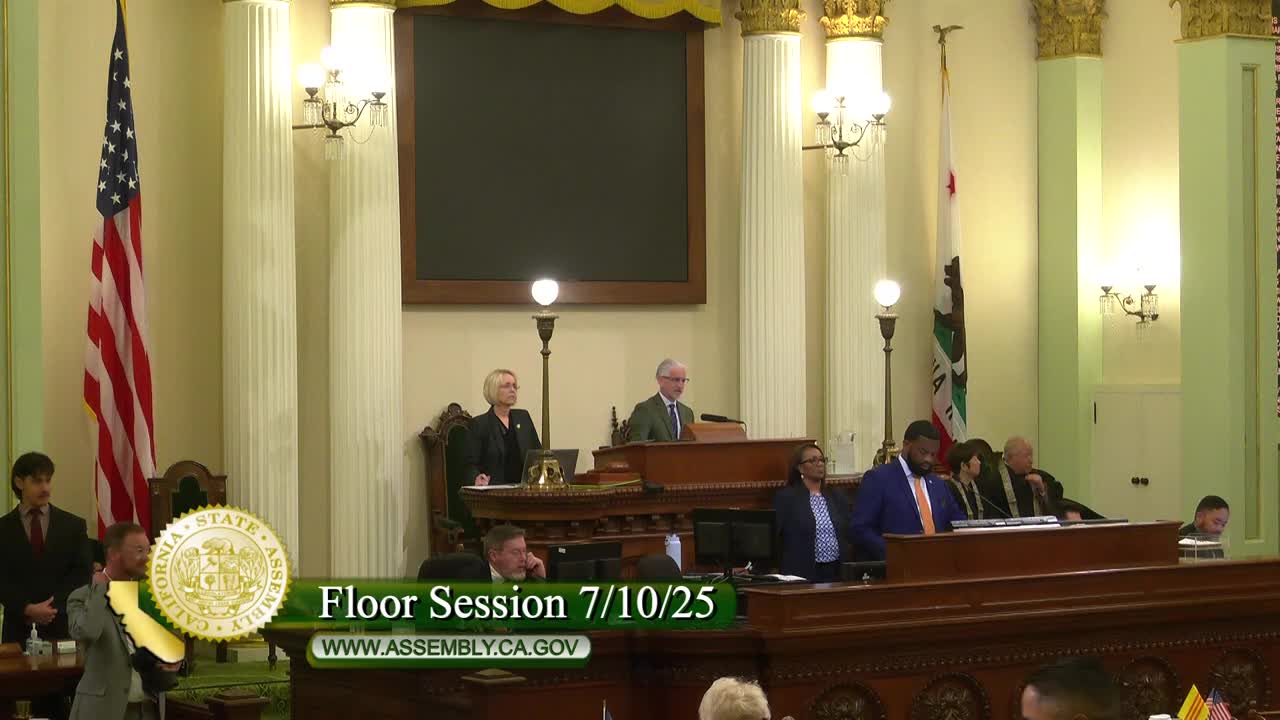 4MIN
Assembly Floor
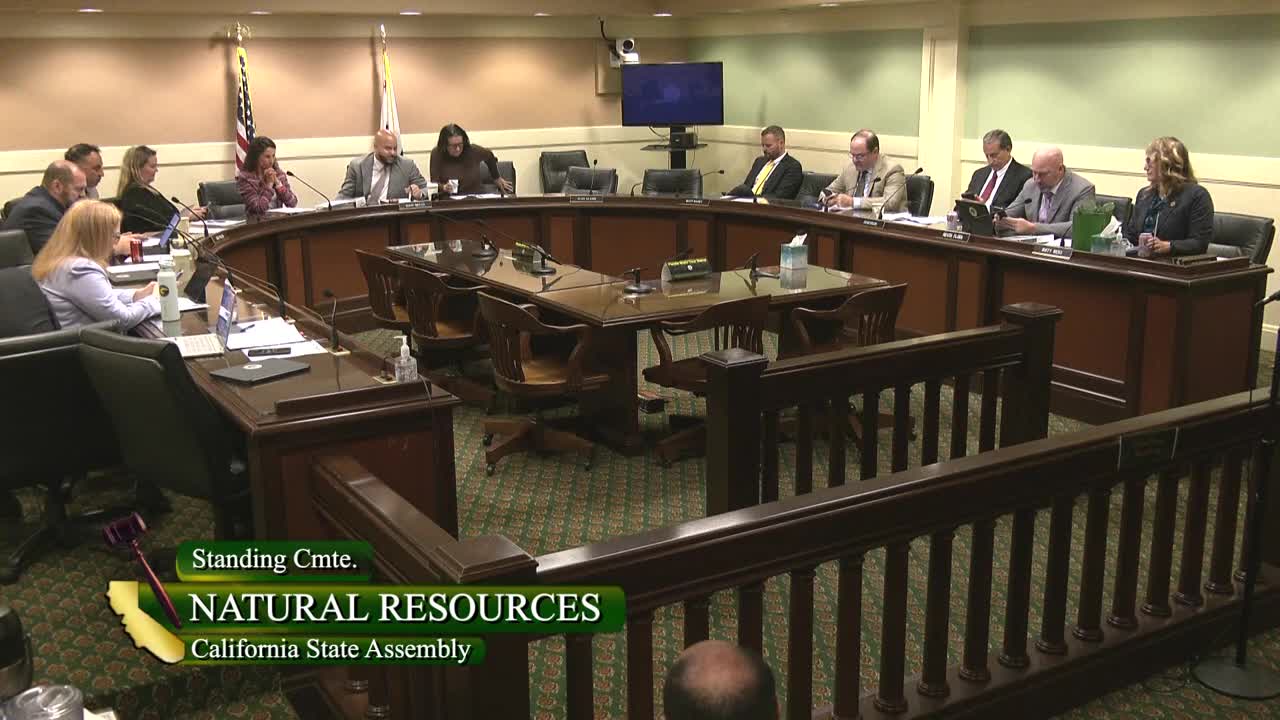 7MIN
Assembly Standing Committee on Natural Resources
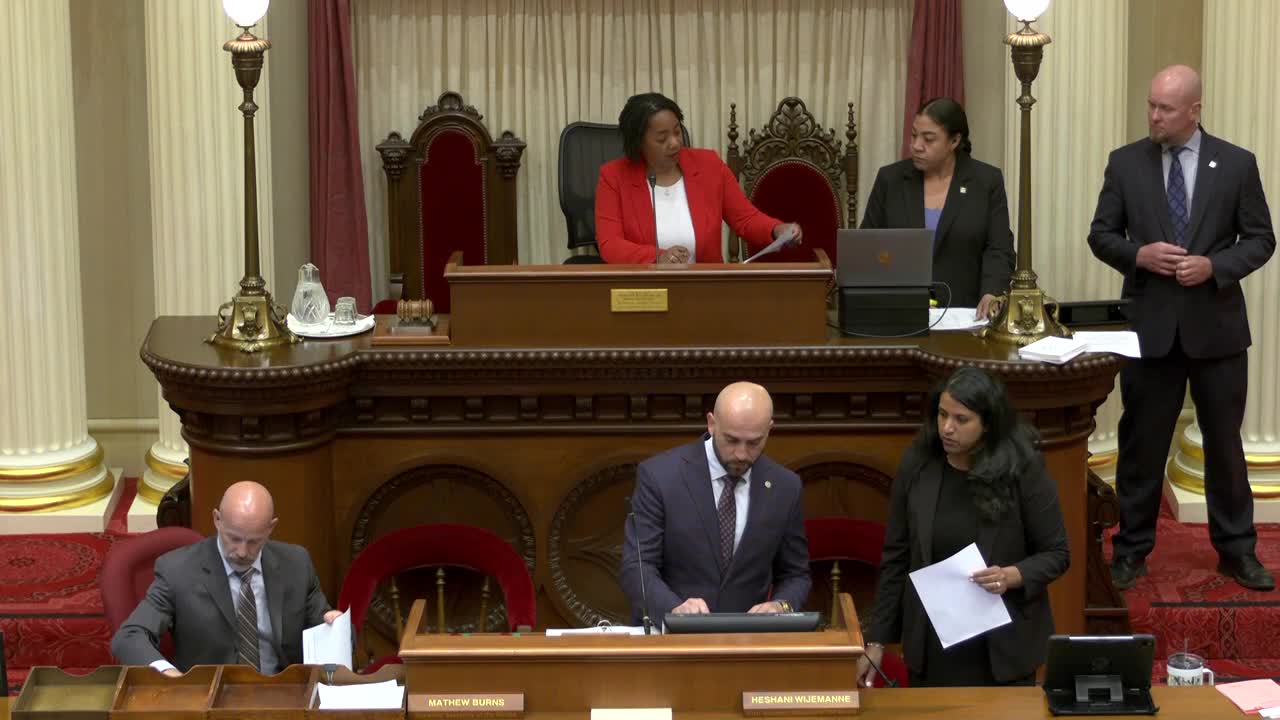 3MIN
Senate Floor
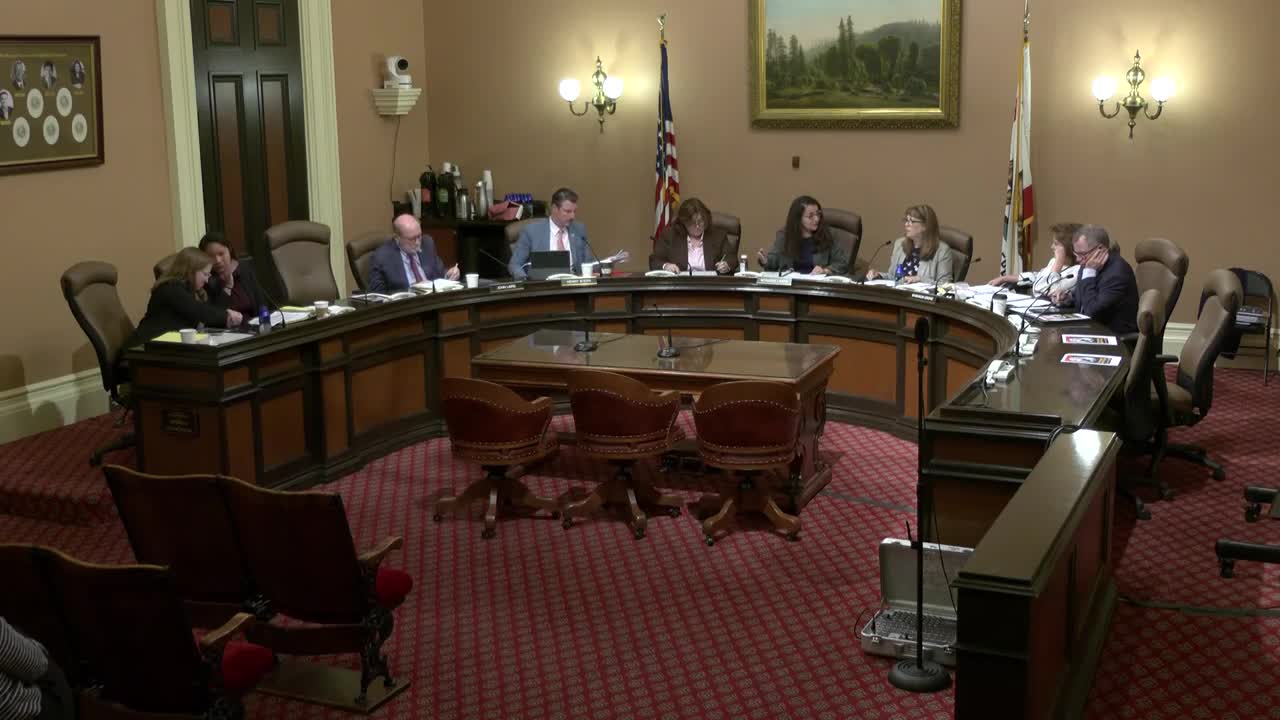 4MIN
Senate Standing Committee on Natural Resources and Water
Bill Author

Bill Co-Author(s):