AB 1341: Contractors: discipline: building law violations.
- Session Year: 2025-2026
- House: Assembly
- Latest Version Date: 2025-07-02
Current Status:
In Progress
(2025-08-25: In committee: Referred to suspense file.)
Introduced
In Committee
Awaiting First Chamber Vote
Passed First Chamber
In Committee
Awaiting Second Chamber Vote
Passed Second Chamber
Enacted
What does this bill do?
The bill broadens what counts as the state’s “building laws,” allowing the Contractors State License Board to discipline licensees who willfully break those rules. It adds Civil Code sections 1689.5–1689.15, moves certain structural pest control rules into the building-law list, and explicitly makes violations involving the practice or unlicensed practice of architects, landscape architects, engineers, geologists/geophysicists, and land surveyors, as well as safety and labor laws, subcontracting rules, well‑drilling rules, certain government-code rules, a fraud-related Penal Code provision, and building-permit laws, grounds for discipline.
The summary is provided by generative AI which can make mistakes. For original language, please view the details in the table below.
Existing law, the Contractors State License Law, establishes the Contractors State License Board to license and regulate contractors. Existing law makes the willful or deliberate disregard and violation of the building laws of the state or of specified other provisions of law law, including certain provisions relating to the business and practice of structural pest control, a cause for disciplinary action against a licensee.
This bill would specify that building laws of the state includes certain prohibitions related to the practice and unlicensed practice of architecture, landscape architecture, engineering, geology or geophysics, and land surveying, and, therefore, would also make a willful or deliberate disregard and violation of those specified prohibitions a cause for disciplinary action against a licensee. The bill would revise and recast the above-described provisions relating to the business and practice of structural pest control to instead be included among the building laws of the state.
Existing law, the Contractors Contractors State License Law, establishes the Contractors Contractors State License Board to license and regulate contractors. Existing law makes the willful or deliberate disregard and violation of the building laws of the state or of specified other provisions of law a cause for disciplinary action against a licensee.
This bill would specify that building laws of the state includes certain prohibitions related to the practice and unlicensed practice of architecture, landscape architecture, engineering, geology or geophysics, and land surveying, and, therefore, would also make a willful or deliberate disregard and violation of those specified prohibitions a cause for disciplinary action against a licensee.
Existing law, the Contractors State License Law, establishes the Contractors State License Board to license and regulate contractors. Existing law makes the willful or deliberate disregard and violation of the building laws of the state or of specified other provisions of law a cause for disciplinary action against a licensee.
This bill would specify that building laws of the state includes certain prohibitions on related to the practice and unlicensed practice of architecture, engineering, geology or geophysics, and land surveying, and, therefore, would also make a willful or deliberate disregard and violation of those specified prohibitions a cause for disciplinary action against a licensee.
Existing law, the Contractors State License Law, establishes the Contractors State License Board to license and regulate contractors. Existing law makes the willful or deliberate disregard and violation of the building laws of the state or of specified other provisions of law a cause for disciplinary action against a licensee.
This bill would specify that building laws of the state includes certain prohibitions on the unlicensed practice of architecture, engineering, and land surveying, and, therefore, would also make a willful or deliberate disregard and violation of those specified prohibitions a cause for disciplinary action against a licensee.
Existing law, the California Public Records Act, requires state and local agencies to make their records available for public inspection, unless an exemption from disclosure applies. The act requires an agency to justify withholding any record by demonstrating that the record in question is exempt under express provisions of the act, or that on the facts of the particular case the public interest served by not disclosing the record clearly outweighs the public interest served by disclosure of the record.This bill would make a nonsubstantive change to the provision requiring justification for withholding any record.Existing law, the California Public Records Act, requires state and local agencies to make their records available for public inspection, unless an exemption from disclosure applies. The act requires an agency to justify withholding any record by demonstrating that the record in question is exempt under express provisions of the act, or that on the facts of the particular case the public interest served by not disclosing the record clearly outweighs the public interest served by disclosure of the record.
This bill would make a nonsubstantive change to the provision requiring justification for withholding any record.
(a)Willful or deliberate disregard and violation of the building laws of the state, or of any political subdivision thereof, or of any of the following references to or provisions of law, constitutes a cause for disciplinary action against a licensee:
(1)Section 8550 or 8556.(2)(1)Sections 1689.5 to 1689.15, inclusive, of the Civil Code.
(3)(2)The safety laws or labor laws or compensation insurance laws or Unemployment Insurance Code of the state.
(4)(3)The Subletting and Subcontracting Fair Practices Act (Chapter 4 (commencing with Section 4100) of Part 1 of Division 2 of the Public Contract Code).
(5)(4)Any provision of the Health and Safety Code or Water Code, relating to the digging, boring, or drilling of water wells.
(6)(5)Any provision of Article 2 (commencing with Section 4216) of Chapter 3.1 of Division 5 of Title 1 of the Government Code.
(7)(6)Section 374.3 of the Penal Code or any substantially similar law or ordinance that is promulgated by a local government agency as defined in Section 82041 of the Government Code.
(8)(7)Any state or local law relating to the issuance of building permits.
(b)As used in this section, building laws of the state includes, without limitation, all of the following:
(1)Section 5536, subdivision (c) of Section 5536.1, and Section 5536.4.
(2)Section 5640.
(3)Section 6787.
(4)Section 7872.
(5)Section 8550 or 8556.
(5)(6)Section 8792.
(a)Willful or deliberate disregard and violation of the building laws of the state, or of any political subdivision thereof, or of any of the following references to or provisions of law, constitutes a cause for disciplinary action against a licensee:
(1)Section 8550 or 8556.
(2)Sections 1689.5 to 1689.15, inclusive, of the Civil Code.
(3)The safety laws or labor laws or compensation insurance laws or Unemployment Insurance Code of the state.
(4)The Subletting and Subcontracting Fair Practices Act (Chapter 4 (commencing with Section 4100) of Part 1 of Division 2 of the Public Contract Code).
(5)Any provision of the Health and Safety Code or Water Code, relating to the digging, boring, or drilling of water wells.
(6)Any provision of Article 2 (commencing with Section 4216) of Chapter 3.1 of Division 5 of Title 1 of the Government Code.
(7)Section 374.3 of the Penal Code or any substantially similar law or ordinance that is promulgated by a local government agency as defined in Section 82041 of the Government Code.
(8)Any state or local law relating to the issuance of building permits.
(b)As used in this section, building laws of the state includes, without limitation, all of the following:
(1)Section 5536, subdivision (c) of Section 5536.1, and Section 5536.4.
(2)Section 5640.
(2)(3)Section 6787.
(3)(4)Section 7872.
(4)(5)Section 8792.
(a)Willful or deliberate disregard and violation of the building laws of the state, or of any political subdivision thereof, or of any of the following references to or provisions of law, constitutes a cause for disciplinary action against a licensee:
(a)(1)Section 8550 or 8556.
(b)(2)Sections 1689.5 to 1689.15, inclusive, of the Civil Code.
(c)(3)The safety laws or labor laws or compensation insurance laws or Unemployment Insurance Code of the state.
(d)(4)The Subletting and Subcontracting Fair Practices Act (Chapter 4 (commencing with Section 4100) of Part 1 of Division 2 of the Public Contract Code).
(e)(5)Any provision of the Health and Safety Code or Water Code, relating to the digging, boring, or drilling of water wells.
(f)(6)Any provision of Article 2 (commencing with Section 4216) of Chapter 3.1 of Division 5 of Title 1 of the Government Code.
(g)(7)Section 374.3 of the Penal Code or any substantially similar law or ordinance that is promulgated by a local government agency as defined in Section 82041 of the Government Code.
(h)(8)Any state or local law relating to the issuance of building permits.
(i)(b)As used in this section, building laws of the state includes, without limitation, all of the following:
(1)Section 5536. 5536, subdivision (c) of Section 5536.1, and Section 5536.4.
(2)Section 6730. 6787.
(3)Sections 8725 and 8726. Section 7872.
(4)Section 8792.
Willful or deliberate disregard and violation of the building laws of the state, or of any political subdivision thereof, or of any of the following references to or provisions of law, constitutes a cause for disciplinary action against a licensee:
(a)Section 8550 or 8556.
(b)Sections 1689.5 to 1689.15, inclusive, of the Civil Code.
(c)The safety laws or labor laws or compensation insurance laws or Unemployment Insurance Code of the state.
(d)The Subletting and Subcontracting Fair Practices Act (Chapter 4 (commencing with Section 4100) of Part 1 of Division 2 of the Public Contract Code).
(e)Any provision of the Health and Safety Code or Water Code, relating to the digging, boring, or drilling of water wells.
(f)Any provision of Article 2 (commencing with Section 4216) of Chapter 3.1 of Division 5 of Title 1 of the Government Code.
(g)Section 374.3 of the Penal Code or any substantially similar law or ordinance that is promulgated by a local government agency as defined in Section 82041 of the Government Code.
(h)Any state or local law relating to the issuance of building permits.
(i)As used in this section, building laws of the state includes, without limitation, all of the following:
(1)Section 5536.
(2)Section 6730.
(3)Sections 8725 and 8726.
SECTION 1.Section 7922.000 of the Government Code is amended to read:7922.000.An agency shall justify withholding any record by demonstrating that the record in question is exempt under express provisions of this division, or that on the facts of the particular case the public interest served by nondisclosure of the record clearly outweighs the public interest served by disclosure of the record.An agency shall justify withholding any record by demonstrating that the record in question is exempt under express provisions of this division, or that on the facts of the particular case the public interest served by not disclosing nondisclosure of the record clearly outweighs the public interest served by disclosure of the record.
|
Date
|
Status
|
|---|---|
| Aug 25, 2025 | In committee: Referred to suspense file. |
| Jul 2, 2025 | Read second time and amended. Re-referred to Com. on APPR. |
| Jul 1, 2025 | From committee: Amend, and do pass as amended and re-refer to Com. on APPR. (Ayes 9. Noes 0.) (June 30). |
| Jun 11, 2025 | In committee: Hearing postponed by committee. |
| May 28, 2025 | Referred to Com. on B. P. & E.D. |
| May 15, 2025 | In Senate. Read first time. To Com. on RLS. for assignment. |
| May 15, 2025 | Read third time. Passed. Ordered to the Senate. (Ayes 70. Noes 0. Page 1557.) |
| May 7, 2025 | Read third time and amended. Ordered to third reading. (Page 1461.) |
| May 7, 2025 | Read third time and amended. Ordered to third reading. |
| May 1, 2025 | Read second time. Ordered to third reading. |
| Apr 30, 2025 | From committee: Do pass. (Ayes 14. Noes 0.) (April 30). |
| Apr 24, 2025 | Re-referred to Com. on APPR. |
| Apr 23, 2025 | Read second time and amended. |
| Apr 22, 2025 | From committee: Amend, and do pass as amended and re-refer to Com. on APPR. (Ayes 18. Noes 0.) (April 22). |
| Mar 25, 2025 | Re-referred to Com. on B. & P. |
| Mar 24, 2025 | Referred to Com. on B. & P. |
| Mar 24, 2025 | From committee chair, with author's amendments: Amend, and re-refer to Com. on B. & P. Read second time and amended. |
| Feb 24, 2025 | Read first time. |
| Feb 22, 2025 | From printer. May be heard in committee March 24. |
| Feb 21, 2025 | Introduced. To print. |
|
Date
|
Description
|
Location
|
Votes
|
|
|---|---|---|---|---|
| Aug 25, 2025 | Placed on suspense file | Senate Standing Committee on Appropriations |
Passed |
|
| Jun 30, 2025 | Do pass as amended, but first amend, and re-refer to the Committee on [Appropriations] | Senate Standing Committee on Business, Professions and Economic Development |
Passed |
|
| May 15, 2025 | AB 1341 Hoover Assembly Third Reading | Assembly Floor |
Passed |
|
| Apr 30, 2025 | Do pass. | Assembly Standing Committee on Appropriations |
Passed |
|
| Apr 22, 2025 | Do pass as amended and be re-referred to the Committee on [Appropriations] | Assembly Standing Committee on Business and Professions |
Passed |
This list shows positions taken on this bill by organizations on the date displayed, which is linked to the original source.
Positions by individuals are not included.
|
Organization
|
Position
|
Date
|
|---|---|---|
| American Council of Engineering Companies, California | ** Support | |
| American Institute Of Architects California | ** Support | |
| Board For Professional Engineers, Land Surveyors And Geologists | ** Support | |
| California & Nevada Civil Engineers and Land Surveyors Association, Inc. | ** Support | |
| California Geotechnical Engineers Association | ** Support | |
| California Land Surveyors Association | ** Support | |
| California State Council Of Laborers | ** Against | |
| Construction Employers Association | ** Against | |
| Contractors State License Board | ** Support | |
| Southern California Contractors Association | ** Against | |
| United Contractors | ** Against |
SENATE COMMITTEE ON
Senator Anna Caballero, Chair
2025 - 2026 Regular Session
AB 1341 (Hoover) - Contractors: discipline: building law violations
Version: | Policy Vote: |
Urgency: | Mandate: |
Hearing Date: | Consultant: |
Bill Summary:
AB 1341 authorizes the Contractors State License Board (CSLB) to take disciplinary action against a licensed contractor who is found to have violated license laws pertaining to the practices of architecture, landscape architecture, engineering, geology, geophysics, and land surveying.
Fiscal Impact:
Unknown potential increase in enforcement workload to the CSLB from disciplinary cases referred from the California Architects Board, Landscape Architects Technical Committee, Structural Pest Control Board, and Board for Professional Engineers, Land Surveyors, and Geologists. To the extent there are a significant number of cases referred, there may corresponding costs to the CSLB for complaint review or disciplinary action, or for increased Attorney General case referrals from appeals. Any penalty revenue resulting from disciplinary action may offset CSLB’s enforcement costs to some extent. Actual fiscal impact to CSLB will depend on the number of cases referred and complexity of any subsequent investigations. CSLB anticipates less than 20 referrals a year, which may be absorbable within existing staff resources (Contractors License Fund).
Staff notes the boards and bureaus within the Department of Consumer Affairs (DCA) are special fund agencies whose activities are funded by regulatory and license fees and generally receive no support from the General Fund. New legislative mandates, even those modest in scope, may in totality create new cost pressures and impact the entity’s operating costs, future budget requests, or license fees.
Background:
Enforcing unlicensed activity is a priority for most programs with the DCA. Not only is unlicensed activity unfair to law abiding licensees when an individual or business operates without a license, it poses a risk to consumers who cannot be assured that the person with whom they are doing business is qualified to provide the services for which a license is required. Additionally, it has been proven that when licensing laws are ignored, other laws, such as those applicable to wage and hour, workers’ compensation insurance, and workplace safety are likely not being followed.
Proposed Law:
- Makes CSLB licensees subject to disciplinary action when found to have violated license laws applicable to land surveyors, professional engineers, geologists, architects, and landscape architects. Specifically, the bill identifies the following additional Business and Professions Code sections referencing specified license laws to be included in “building laws of the state”:
- Section 5536, subdivision (c) of Section 5536.1, and Section 5536.4
- Section 5640.
- Section 6787.
- Section 7872.
- Section 8792.
- Makes other technical and conforming changes.
-- END --
SENATE COMMITTEE ON
BUSINESS, PROFESSIONS AND ECONOMIC DEVELOPMENT
Senator Angelique Ashby, Chair
2025 - 2026 Regular
Bill No: Hearing Date: June 30, 2025
Author: | |||
Version: |
| ||
Urgency: | Fiscal: | ||
Consultant: | |||
Subject:
SUMMARY:
Authorizes the Contractors State License Board (CSLB) to take disciplinary action against a licensed contractor who is found to have violated license laws pertaining to the practices of architecture, landscape architecture, engineering, geology, geophysics, and land surveying.
Existing law:
- Establishes, until January 1, 2029, the CSLB within the DCA to administer and enforce the Contractors State License Law (License Law), which includes the licensing contractors and home improvement salespersons. (Business and Professions Code (BPC) §§ 7000 et seq.)
- Exempts from the License Law an undertaking or project if the aggregate price for labor, materials, and all other items is less than $1,000 so long as that work or operation is considered of casual, minor, or inconsequential nature and the work or operation does not require a building permit. (BPC § 7048)
- Specifies that willful or deliberate disregard and violation of the building laws of the state constitutes a cause for disciplinary action against a CSLB licensee. (BPC § 7110)
- Establishes willful or deliberate disregard for license requirements to practice structural pest control is a building law of this state and cause for disciplinary action against a CSLB licensee. (BPC § 7110 (a))
- Specifies that the CSLB may assess a civil penalty up to $30,000 for specified violations, including willful or deliberate disregard and violation of the building laws of this state, including engaging in the business or practice of structural pest control without a license. (BPC § 7099.2)
- Establishes a California Architects Board (CAB) within DCA to administer and enforce the Architects Practice Act. (BPC § 5510)
- Specifies that it is a misdemeanor, punishable by a fine of not less than $100 nor more than $5,000, or by imprisonment in a county jail not exceeding one year, or by both that fine and imprisonment, for any person who is not licensed to practice architecture to practice architecture in this state, to use any term confusingly similar to the word architect, to use the stamp of a licensed architect, or to advertise or put out any sign, card, or other device that might indicate to the public that the person is an architect, is qualified to engage in the practice of architecture, or is an architectural designer. (BPC § 5536(a))
- Specifies that it is a misdemeanor, punishable by a fine of not less than $100 nor more than $5,000, or by imprisonment in a county jail not exceeding one year, or by fine and imprisonment, for any person who is not licensed to practice architecture to practice architecture in this state to affix a stamp or seal that bears the legend "State of California" or words or symbols that represent or imply that the person is licensed to prepare plans, specifications, or instruments of service. (BPC § 5536(b))
- Does not prohibit any person, including a licensed contractor, to prepare plans, drawings, or specifications for:
Single-family dwellings of woodframe construction not more than two stories and basement in height;
Multiple dwellings containing no more than four dwelling units of woodframe construction not more than two stories and basement in height. However, this paragraph shall not be construed as allowing an unlicensed person to design multiple clusters of up to four dwelling units each to form apartment or condominium complexes where the total exceeds four units on any lawfully divided lot;
Garages or other structures appurtenant to buildings described under subdivision (a), of woodframe construction not more than two stories and basement in height; and
Agricultural and ranch buildings of woodframe construction, unless the building official having jurisdiction deems that an undue risk to the public health, safety, or welfare is involved. (BPC § 5537)
- Prohibits a licensed contractor from performing design services beyond those described in BPC § 5537, except as specified, unless those services are performed by or under the direct supervision of a licensed architect, or a licensed professional or civil engineer, insofar as the professional or civil engineer practices the profession for which they are licensed. Prohibits a licensed contractor from using the title, “architect” unless he or she holds a license as an architect. (BPC § 5537.2)
- Establishes within the DCA, a Board for Professional Engineers, Land Surveyors, and Geologists (BPELSG) to implement and enforce the Professional Engineers Act, Professional Land Surveyors' Act, and the Geologist and Geophysicist Act, which includes licensing electrical, and mechanical engineers, land surveyors, geologists, and geophysicists. (BPC § 6710)
- Specifies that to safeguard life, health, property and public welfare, any person, either in a public or private capacity, except as specifically excepted, who practices, or offers to practice, civil engineering, electrical engineering or mechanical engineering, in any of its branches in this state, including any person employed by the State of California, or any city, county, or city and county, who practices engineering, must submit evidence that they are qualified to practice, and shall be licensed accordingly as a civil engineer, electrical engineer or mechanical engineer by the BPELSG. (BPC § 6730)
- Requires any person practicing, or offering to practice, land surveying in this state to submit evidence that they are qualified to practice and must be licensed under the Professional Land Surveyors' Act. Specifies that it is unlawful for any person to practice, offer to practice, or represent themselves, as a land surveyor in this state, or to set, reset, replace, or remove any survey monument on land in which they have no legal interest, unless they have been licensed or specifically exempted from licensing Professional Land Surveyors' Act. (BPC § 8725).
- Specifies that any person, including any person employed by the state or by a city, county, or city and county within the state, practices land surveying who, either in a public or private capacity, does or offers to do any one or more of the following:
- Locates, relocates, establishes, reestablishes, or retraces the alignment or elevation for any of the fixed works embraced within the practice of civil engineering.
- Determines the configuration or contour of the earth's surface, or the position of fixed objects above, on, or below the surface of the earth by applying the principles of mathematics or photogrammetry.
- Locates, relocates, establishes, reestablishes, or retraces any property line or boundary of any parcel of land, right-of-way, easement, or alignment of those lines or boundaries.
- Makes any survey for the subdivision or resubdivision of any tract of land.
- By the use of the principles of land surveying determines the position for any monument or reference point that marks a property line, boundary, or corner, or sets, resets, or replaces any monument or reference point.
- Geodetic surveying or cadastral surveying, as specified.
- Determines the information shown or to be shown on any map or document prepared or furnished in connection with any one or more of the functions described in (a) to (f) above.
- Indicates, in any capacity or in any manner, by the use of the title "land surveyor" or by any other title or by any other representation that they practice or offer to practice land surveying in any of its branches.
- Procures or offers to procure land surveying work for themselves or others.
- Manages, or conducts as manager, proprietor, or agent, any place of business from which land surveying work is solicited, performed, or practiced.
- Coordinates the work of professional, technical, or special consultants in connection with the activities authorized by this chapter.
- Determines the information shown or to be shown within the description of any deed, trust deed, or other title document prepared for the purpose of describing the limit of real property in connection with any one or more of the functions described in (a) to (f) above.
- Creates, prepares, or modifies electronic or computerized data in the performance of specified activities.
- Renders a statement regarding the accuracy of maps or measured survey data.
(BPC § 8726(a))
- Requires any program within the Department of Consumer Affairs (DCA) to establish a system for the issuance of a citation through regulation to require on any citation, whenever appropriate, an order of abatement fixing a reasonable time for abatement of the violation. (BPC § 125.9(b)(2))
This bill makes CSLB licensees subject to disciplinary action when found to have violated license laws applicable to land surveyors, professional engineers, geologists, architects, and landscape architects.
FISCAL EFFECT:
According to the Assembly Committee on Appropriations, CSLB does not anticipate costs as a result of this bill.
COMMENTS:
- Purpose. This bill is sponsored by the American Council of Engineering Companies, California, American Institute of Architects, California, California & Nevada Civil Engineers and Land Surveyors Association, Inc., and California Land Surveyors Association. The Author states, “It is the responsibility of the state to ensure that those who practice architecture, landscape architecture, engineering, geology or geophysics, or land surveying, have received the appropriate license and training. Industry experts have identified a rise in the unlicensed practice of these disciplines, especially among contractors. Existing law already charges the Contractors’ State License Board with disciplining contractors for violations of the state building laws. AB 1341 simply clarifies that the unlicensed practice of architecture, landscape architecture, engineering, geology or geophysics, or land surveying are included as violations of the state building laws. Ensuring the integrity of these disciplines not only protects consumers, but also promotes fairness among each profession.”
- Background.
Contractors State License Board. The CSLB is responsible for the implementation and enforcement of the License Law, which governs the licensure, practice, and discipline of contractors in California. A license is required for construction projects valued at $1,000 or more, including labor and materials under specified conditions (BPC § 7048). The License Law defines a contractor as, “any person who undertakes to or offers to undertake to, or purports to have the capacity to undertake to, or submits a bid to, or does himself or herself or by or through others, construct, alter, repair, add to, subtract from, improve, move, wreck or demolish any building, highway, road, parking facility, railroad, excavation or other structure, project, development or improvement, or to do any part thereof, including the erection of scaffolding or other structures or works in connection therewith, or the cleaning of grounds or structures in connection therewith, or the preparation and removal of roadway construction zones, lane closures, flagging, or traffic diversions, or the installation, repair, maintenance, or calibration of monitoring equipment for underground storage tanks, and whether or not the performance of work herein described involves the addition to, or fabrication into, any structure, project, development or improvement herein described of any material or article of merchandise.” (BPC § 7026)
The CSLB is authorized to take disciplinary action against licensed and unlicensed contractors who have violated the License Law, but not those who violate license laws of other professional practice acts. Violation of other practice acts are under the jurisdiction of the board charged with administering the practice act. However, the License Law identifies violation of the building laws of this state, including unlicensed activity as a structural pest operator, as cause for disciplinary action (BPC § 7011). CSLB is also empowered to issue civil penalties for these violations up to $30,000 (BPC § 7099.2).
Unlicensed Activity and Consistency with Existing Law. Enforcing unlicensed activity is a priority for most programs with the DCA. Not only is unlicensed activity unfair to law abiding licensees when an individual or business operates without a license, it poses a risk to consumers who cannot be assured that the person with whom they are doing business is qualified to provide the services for which a license is required. Additionally, it has been proven that when licensing laws are ignored, other laws, such as those applicable to wage and hour, workers’ compensation insurance, and workplace safety are likely not being followed.
This bill would provide an additional tool for state regulators to deter unlicensed activity. Specifically, this bill would authorize the CSLB to pursue discipline and/or issue a civil penalty against a licensed contractor for the unlicensed practice of land surveying, and other construction related professions – architecture, landscape architecture, engineering, geology, and geophysics – by including each profession’s license requirements in the definition of building laws of this state.
This bill does not propose a new concept. Consistent with existing law, BPC § 7110 (a), identifies unlicensed activity as a structural pest control operator by a licensed contractor to be cause for disciplinary action against a CSLB licensee. This bill would similarly add unlicensed activity of other relevant building related practice acts with the Business and Professions Code that are administered by programs within the DCA, to the definition of “building laws of this state,” for the purpose of disciplinary or enforcement action by the CSLB.
Unlicensed Practice of Land Surveying. In 2019, the BPELSG reported that it had witnessed a spike in unlicensed activity, largely stemming from the advancement and democratization of technologies (i.e. Global Positioning System (GPS) and Ground Penetrating Radar (GPR) used to render land surveying and geophysical services. At the time, the BPELSG reported that the concern was not so much that laypersons were utilizing these tools, but that unlicensed individuals were interpreting resulting data and making subsequent recommendations, which constitute the practice of land surveying and geophysics in California. BPELGS reported conducting outreach at industry events and formed a relationship with the California Facilities Safe Excavation Board. However, the BPELSG continues to receive complaints about unlicensed activity and encounter businesses with no knowledge of the state’s licensing requirements. Professional stakeholders also contend that certain entities – such as public agencies, developers, and contractors – often perform activities that technically constitute licensed land surveying or civil engineering within their wider scope of work on a project.
In its 2023-24 Sunset Review Report, the BPELSG stated that it is currently seeking ways to enhance the effectiveness of its Enforcement Unit in addressing complaints related to unlicensed practice. While administrative citations are useful for public disclosure, they are often not effective in motivating violators to actually cease activity. The internet is increasingly used for advertising these unlicensed services, further complicating enforcement. Additionally, businesses that may be licensed under other DCA entities, such as CSLB licensees, can often absorb the cost of administrative fines related to unlicensed land surveying or civil engineering activity with otherwise minimal impact on their professional licensure.
Throughout the BPELSG 2024 Sunset Review process, sponsors of this legislation worked with the Assembly Committee on Business and Professions and this Committee to consider additional ways that BPELSG might better combat unlicensed land surveyor activity, including increased and additional fines. These discussions resulted in several substantive reforms that were contained in the AB 3252 (Berman, Chapter 558, Statutes of 2024), including expanding prohibitions related to the impersonation of a licensed engineer, land surveyor or geologist to also include the false use of “in-training” titles, requiring licensees to disclose the existence of professional liability insurance coverage in all client contracts, and additional business disclosure requirements to increase transparency. However, meaningful enforcement against unlicensed activity – particularly by businesses that are otherwise licensed by another state entity – remains challenging.
Opposition Concerns. Contractor labor organizations raised concerns that their members’ use of GPS, GPR, drones or other technology may subject licensed contractor employees to BPELSG license requirements and/or enforcement action. This bill would not prevent contractors from using technology (or any tool or instrument for that matter) in the normal course of work as a contractor. These tools are not referenced by the bill and BPELSG only mentions increased availability to the technology as a contributing factor to the increase in unlicensed activity. This bill does not change existing scope of any of the impacted professions and only references existing law. Consequently, for enforcement action to be taken by BPELSG or CAB for unlicensed activity (which would trigger referral to CSLB), the program of jurisdiction would need to prove that the scope requiring a license was being performed without a license, just as it would under current law.
Opposition also voiced concerns that this bill would blur jurisdictional lines that would encourage competing contractors to file reports of unlicensed activity of the other practice acts with the CSLB or that their employees could be targeted for enforcement. This bill does not change jurisdiction of the CSLB, BPELSG, or CAB. In fact, this bill ensures the program of jurisdiction retains authority to determine who is performing the work of a licensee under each program’s practice act. For example, current practice is when a complaint of unlicensed land surveying activity were to be submitted to CSLB, that complaint would be referred to the BPELSG because CSLB does not have jurisdiction to enforce the Land Surveyors Act. This bill does not change that.
Concerns that contractors could be targeted by BPELSG are not practical. This bill does not require CSLB to take disciplinary action on every case, only authorizing CSLB to take disciplinary action when a contractor is found to be willfully and deliberately in violation of the relevant practice act. To prove a willful and deliberate violation, evidence typically must show the violator had knowledge that a violation is occurring and continued committing the violation. In accordance with BPC § 125.9, BPELSG regulations provide that each citation shall contain an assessment of an administrative fine, an order of abatement fixing a reasonable period of time for abatement of the violation, or both an administrative fine and an order of abatement (Title 16 of the California Code of Regulations (16 CCR) § 472(b)(3)). Additionally, BPELSG regulations require the program to inform the cited that he or she may appeal the citation (16 CCR § 472(b)(6) and (7)). During an appeal, a cited person has the opportunity to demonstrate they were not operating within the scope for which they were cited or that they complied with the order of abatement.
Therefore, to comply with this bill, only after willful and deliberate unlicensed activity is found through investigation by the program of jurisdiction, evidence supports a violation, a citation is issued, the cited person does not comply with an order of abatement, and the appeal process is exhausted with the citation affirmed, would BPELSG refer a case to the CSLB. Additionally, any fines assessed by the CSLB would not go to BPELSG so there is no incentive for BPELSG to target contractors. This bill simply provides incentive for contractors to comply with scope limitations that currently exist in law.
Implementation Issues. The Assembly Committee on Business and Professions identified an implementation issue concerning whether the CSLB would need to initiate its own investigation to substantiate such a violation. The Committee recommended that the author consider clarifying how the BPELSG and CAB might collaborate with the CSLB to notify them of known practice violations by CSLB licensees to streamline the investigation and disciplinary processes. All impacted programs are within DCA and have confirmed this issue will be addressed internally. Therefore, a prescriptive process is not needed in statute at this time.
- Related Legislation. SB 779 (Archuleta of 2025) would increase current minimum civil penalties issued by the CSLB and establish minimum civil penalty amounts where they do not currently exist, including for violations of BPC § 7110, a violation of which would result in a minimum fine of $1,500. This bill is currently in the Assembly Committee on Business and Professions.
AB 3253 (Berman, Chapter 588, Statutes of 2024) extended the sunset date for the BPELSG until January 1, 2029, expanded the BPELSG's authority to take enforcement action against certain unlicensed activities, and made various other technical changes in response to issues raised during the sunset review process.
SB 1454 (Ashby, Chapter 485, Statutes of 2024) extended the sunset date for the CSLB until January 1, 2029, and made various other substantive changes in response to issues raised during the sunset review process.
AB 1747 (Quirk, Chapter 757, Statutes of 2022) added state and local laws relating to issuance of building permits to BPC § 7110 and added a violation of BPC § 7110 to the violations for which a fine of $30,000 could be assessed by the CSLB.
- Arguments in Support. The American Council of Engineering Companies, California, American Institute of Architects, California, California & Nevada Civil Engineers and Land Surveyors Association, Inc., and California Land Surveyors Association (sponsors) write, “The advancement of technologies such as the Global Positions System (GPS) and Ground Penetrating Radar (GPR) are used by laypersons to perform unlicensed land surveying services. While these tools can be used in a variety of productive ways by licensed land surveyors, they are often inconsistent and inaccurate when used by laypersons…AB 1341 will help ensure that consumers large and small are protected from unlicensed practice and ensure appropriate sanctions for those who violate the law.”
The American Society of Civil Engineers, Region 9 (California) (ACSE) writes in support, “ASCE agrees with the sponsors that your AB 1341 would help combat the unlicensed practice of land surveying. The work performed by land surveyors includes the setting of legal property boundaries and locating with high precision the
geospatial location of fixed works in the context of construction and engineering design and is therefore critical to the integrity of engineering design and the construction or modification of any building or infrastructure in the state.
The Board for Professional Engineers, Land Surveyors and Geologists writes, “[w]hen our Board discovers violations of the “building laws of the state” by regulated licensees, these violations are reported to the Contractors State License Board (CSLB). Our Board believes that the language in this bill is consistent with prior communications issued by the CSLB to their licensees where they stated ‘The Contractors State License Board is reminding licensees that their CSLB-issued license does not allow them to perform land surveying and civil engineering work. Performing this type of work with a licensed issued by the Board for Professional Engineers, Land Surveyors, and Geologists could put your CSLB license at risk.’”
The Contractors State License Board notes, “AB 1341 will assist in preventing unlicensed practice of other licensed professions and is in line with CSLB’s efforts to combat the underground economy. CSLB understands the grave harm that unlicensed practice in general causes consumers and its inclusion in Contractors Law may help draw attention to the issue.”
- Arguments in Opposition. The California State Council of Laborers writes in opposition, “California Business and Professions Code section 7110 already grants authority to the Contractors State License Board (CSLB) to take disciplinary action against contractors who violate ‘building laws of the state.’ AB 1341 seems to duplicate these existing enforcement mechanisms. Further, the Laborers’ signatory contractors have been operating ground penetrating radar for at least 20 years and have never needed a survey license. This scope of work is recognized by the Department of Industrial Relations for purposes of prevailing wages. AB 1341 could conflate this work with actual surveying, thus forcing our contractors to obtain surveying licenses.”
The Construction Employers Association, Southern California Contractors Association, and United Contractors write, “[u]nlicensed practice in these specialized professions is already prohibited and enforceable under existing law by the relevant licensing boards. AB 1341 would expand the disciplinary authority of the Contractors State License Board (CSLB) without providing corresponding clarity to contractors regarding the specific scope and boundaries of regulated work. This is particularly problematic given the increasing use of technologies such as drones, GPS, and ground penetrating radar tools that are often used by contractors for project planning, safety, or compliance purposes. Without additional guidance or regulatory clarity, contractors operating in good faith could be subject to CSLB discipline, including license revocation, for inadvertently performing tasks that fall within these professional domains. AB 1341 threatens to upend long-standing statutory exemptions that permit contractors to perform or subcontract specific types of work, such as nonstructural improvements or wood-frame design without needing to hire separately licensed professionals.” - Suggested Amendments.
Renumber bill for clarity. BPC § 7110 currently lists a violation of BPC §§ 8550 and 8556, which are unlicensed activity as a structural pest control operator (enforced by the Structural Pest Control Board, a program within DCA) as subdivision (a)(1). As written, this bill would add license requirements of BPELSG and CAB, also programs within the DCA, as subdivision (b). The Committee recommends renumbering this section to contain unlicensed activity for all DCA programs in one subdivision to avoid any implication that the legislative intent is to treat unlicensed activity for BPELGS and CAB practice acts differently than that of the Structural Pest Control Board.
Amend BPC § 7110 as follows:
(a) Willful or deliberate disregard and violation of the building laws of the state, or of any political subdivision thereof, or of any of the following references to or provisions of law, constitutes a cause for disciplinary action against a licensee:
(1) Section 8550 or 8556.
(2)(1) Sections 1689.5 to 1689.15, inclusive, of the Civil Code.
(3)(2) The safety laws or labor laws or compensation insurance laws or Unemployment Insurance Code of the state.
(4)(3) The Subletting and Subcontracting Fair Practices Act (Chapter 4 (commencing with Section 4100) of Part 1 of Division 2 of the Public Contract Code).
(5)(4) Any provision of the Health and Safety Code or Water Code, relating to the digging, boring, or drilling of water wells.
(6)(5) Any provision of Article 2 (commencing with Section 4216) of Chapter 3.1 of Division 5 of Title 1 of the Government Code.
(7)(6) Section 374.3 of the Penal Code or any substantially similar law or ordinance that is promulgated by a local government agency as defined in Section 82041 of the Government Code.
(8)(7) Any state or local law relating to the issuance of building permits.
(b) As used in this section, “building laws of the state” includes, without limitation, all of the following:
(1) Section 5536, subdivision (c) of Section 5536.1, and Section 5536.4.
(2) Section 5640.
(3) Section 6787.
(4) Section 7872.
(5) Section 8550 or 8556.
(5)(6) Section 8792.
SUPPORT AND OPPOSITION:
Support:
American Council of Engineering Companies, California (sponsor)
American Institute of Architects California (sponsor)
California & Nevada Civil Engineers and Land Surveyors Association, Inc. (sponsor)
California Land Surveyors Association (sponsor)
Board for Professional Engineers, Land Surveyors and Geologists
Contractors State License Board
Opposition:
California State Council of Laborers
Construction Employers’ Association
Southern California Contractors Association
United Contractors
-- END --
ASSEMBLY THIRD READING
ATR Bill Id:AB 1341
Author:(Hoover)
As Amended Ver:May 7, 2025
Majority vote
SUMMARY
Specifies that the unlicensed practice of architecture, landscape architecture, engineering, land surveying, geology or geophysics by a licensed contractor constitutes cause for disciplinary action by the Contractors State License Board (CSLB or board).
Major Provisions
Identifies provisions of the Architects Practice Act, Landscape Architects Practice Act, Professional Engineers Act, Professional Land Surveyors' Act, and the Geologist and Geophysicist Act as building laws of the state, which willful and deliberate disregard of constitutes a cause for disciplinary action against a licensee of the CSLB.
COMMENTS
Contractors State License Board. The CSLB is responsible for the implementation and enforcement of the License Law, which governs the licensure, practice, and discipline of contractors in California. A license is required for construction projects valued at $1,000 or more, including labor and materials. The CSLB issues licenses to business entities and sole proprietors. Each license requires a qualifying individual (a "qualifier") who satisfies the experience and examination requirements for licensure and directly supervises and controls construction work performed under the license.
The CSLB is authorized to take disciplinary action against licensed and unlicensed contractors who have violated the License Law (but not other professional practice acts) and is empowered to use an escalating scale of penalties, ranging from citations and fines (referred to as civil penalties) to license suspension and revocation. Willful and deliberate disregard for the building laws of the state, or of a local jurisdiction, is ground for disciplinary action by the board. However, "building laws of the state" is undefined. This bill would expressly authorize the CSLB to take disciplinary action against a licensed contractor for the unlicensed practice of architecture, engineering, or land surveying, which is a violation of the respective practice acts for those professions.
Unlicensed Practice of Land Surveying. In 2019, the Board of Professional Engineers, Land Surveyors, and Geologists (BPELSG) reported that it had witnessed a spike in unlicensed activity, largely stemming from the advancement and democratization of technologies (I.e. Global Positioning System and Ground Penetrating Radar used to render land surveying and geophysical services. At the time, the BPELSG reported that the concern was not so much that laypersons were utilizing these tools, but that unlicensed individuals were interpreting resulting data and making subsequent recommendations, which constitute the practice of land surveying and geophysics in California. The Board reported conducting outreach at industry events and formed a relationship with the California Facilities Safe Excavation Board. However, the Board continues to receive complaints about unlicensed activity and encounter businesses with no knowledge of the state's licensing requirements. Professional stakeholders contend that certain entities—such as public agencies, developers, and contractors—often perform activities that technically constitute licensed land surveying or civil engineering within their wider scope of work on a project.
In its 2023-24 Sunset Review Report, the BPELSG stated that it is currently seeking ways to enhance the effectiveness of its Enforcement Unit in addressing complaints related to unlicensed practice. While administrative citations are useful for public disclosure, they are often not effective in motivating violators to actually cease activity. The internet is increasingly used for advertising these unlicensed services, complicating enforcement. Additionally, businesses that may be licensed under other DCA entities, such as CSLB licensees, can often absorb the cost of administrative fines related to unlicensed land surveying or civil engineering activity with otherwise minimal impact on their professional licensure. While the Board has authority, through administrative citation, to order individuals advertising in phone directories to disconnect telephone services regulated by the Public Utilities Commission, many unlicensed individuals operate through mobile telephone services, which are not regulated by the PUC. The Board states they are exploring new strategies, such as collaborating with online platforms to educate users about licensure requirements and remove illegal listings.
Throughout the BPELSG's 2024 Sunset Review process, sponsors of this legislation worked with this Committee, and the Senate Committee on Business, Professions, and Economic Development to explore additional ways that Board staff might better combat unlicensed activity and uplift responsible actors, including the potential for increased and additional fines. These discussions resulted in substantive reforms that were contained in the AB 3252 (Berman), Chapter 558, Statutes of 2024, including expanding prohibitions related to the impersonation of a licensed engineer, land surveyor or geologist to also include the false use of "in-training" titles, requiring licensees to disclose the existence of professional liability insurance coverage in all client contracts, and additional business disclosure requirements to increase transparency. Nevertheless, meaningful enforcement against unlicensed activity by the BPELSG—particularly by businesses that are otherwise licensed by another state entity—remains difficult.
Considering that a large number of complaints related to unlicensed activity involve individuals or businesses licensed by the CSLB, the sponsors have put forward this legislation to provide an additional tool for state regulators to deter unlicensed land surveying and civil engineering activity. Under this bill, through clarifying what "building laws of the state" mean for purposes of enforcement, CSLB licensees can be disciplined for willful violation of architect, landscape architect, engineer, land surveyor, geology, and geophysicist licensing requirements.
According to the Author
"It is the responsibility of the state to ensure that those who practice land surveying, engineering, and architecture have received the appropriate license and training. Industry experts have identified a rise in the unlicensed practice of these disciplines among contractors. Existing law already charges the Contractors' State License Board with disciplining contractors for violations of the state building laws. AB 1341 simply clarifies that the unlicensed practice of land surveying, engineering, and architecture are included as violations of the state building laws. Ensuring the integrity of these disciplines not only protects consumers but also promotes fairness among each profession."
Arguments in Support
As co-sponsors of this bill, the California Land Surveyors Association, the California and Nevada Civil Engineers and Land Surveyors Association, the American Council of Engineering Companies of California, and the American Institute of Architects California write in support:
"The work performed by land surveyors includes the setting of legal property boundaries and locating with high precision the geospatial location of fixed works in the context of construction and engineering design and is therefore critical to the integrity of engineering design and the construction or modification of any building or infrastructure in the state.
[The Board for Professional Engineers, Land Surveyors, and Geologists (BPELSG)] skillfully establishes training requirements and oversees the competence and performance of its licensees. Most enforcement actions pursued by BPELSG are related to the conduct of a licensee, but there is an unfortunate and sustained increase in the amount of unlicensed land surveying. The advancement of technologies such as the Global Positioning System (GPS) and Ground Penetrating Radar (GPR) are used by laypersons to perform unlicensed land surveying services. While these tools can be used in a variety of productive ways by licensed land surveyors, they are often inconsistent and inaccurate when used by laypersons.
[...]
While the Board can easily enforce standards of practice against licensees, it has inadequate tools to enforce against those who ignore the licensing requirement entirely. This not only puts the public at risk and causes cost overruns for public agencies, but it harms the licensees who are appropriately trained, pay their licensing fees, and dedicate themselves to meeting the professional standards imposed by the state. These problems are well documented in the last few sunset review processes for BPELSG."
Arguments in Opposition
There is no opposition on file.
FISCAL COMMENTS
According to the Assembly Appropriations Committee:
- CSLB's Enforcement Division anticipates any additional workload to be relatively small (less than 20 referrals a year) and absorbable.
CSLB indicates referrals resulting from this bill would require similar workload to what is currently needed to support a disciplinary action for a finding of unlicensed architecture or land surveying by a CSLB licensee. Such disciplinary actions take about 15 hours each, and the work is performed by the Special Investigator classification. CSLB estimates the total cost for referrals resulting from this bill is approximately $21,000 (300 hours x $70 per hour with benefits), assuming 20 referrals.
- The Board for Professional Engineers, Land Surveyors, and Geologists (BPELSG) anticipates negligible costs. BPELSG would share any documentation of violations with CSLB and estimates referring 10 to 20 cases per year to CSLB.
- The California Architects Board (CAB) anticipates negligible costs, and possible minor savings. CAB currently receives around 10 cases per year forwarded directly from CSLB. CAB anticipates receiving 10 fewer cases per year since CSLB would discipline unlicensed activity themselves.
VOTES
ASM BUSINESS AND PROFESSIONS: 18-0-0
YES: Berman, Flora, Ahrens, Alanis, Bains, Bauer-Kahan, Caloza, Chen, Elhawary, Hadwick, Haney, Irwin, Jackson, Krell, Lowenthal, Macedo, Nguyen, Pellerin
ASM APPROPRIATIONS: 14-0-1
YES: Wicks, Sanchez, Arambula, Calderon, Caloza, Dixon, Elhawary, Fong, Mark González, Hart, Pacheco, Solache, Ta, Alanis
ABS, ABST OR NV: Pellerin
UPDATED
VERSION: May 7, 2025
CONSULTANT: Kaitlin Curry / B. & P. / (916) 319-3301, Edward Franco / B. & P. / (916) 319-3301 FN: 0000360
ASSEMBLY THIRD READING
ATR Bill Id:AB 1341
Author:(Hoover)
As Amended Ver:April 23, 2025
Majority vote
SUMMARY
Specifies that the unlicensed practice of architecture, engineering, land surveying, geography or geophysics by a licensed contractor constitutes cause for disciplinary action by the Contractors State License Board (CSLB or board).
Major Provisions
Identifies provisions of the Architects Practice Act, Professional Engineers Act, Professional Land Surveyors' Act, and the Geologist and Geophysicist Act as building laws of the state, which willful and deliberate disregard of constitutes a cause for disciplinary action against a licensee of the CSLB.
COMMENTS
Contractors State License Board. The CSLB is responsible for the implementation and enforcement of the License Law, which governs the licensure, practice, and discipline of contractors in California. A license is required for construction projects valued at $1,000 or more, including labor and materials. The CSLB issues licenses to business entities and sole proprietors. Each license requires a qualifying individual (a "qualifier") who satisfies the experience and examination requirements for licensure and directly supervises and controls construction work performed under the license.
The CSLB is authorized to take disciplinary action against licensed and unlicensed contractors who have violated the License Law (but not other professional practice acts) and is empowered to use an escalating scale of penalties, ranging from citations and fines (referred to as civil penalties) to license suspension and revocation. Willful and deliberate disregard for the building laws of the state, or of a local jurisdiction, is ground for disciplinary action by the board. However, "building laws of the state" is undefined. This bill would expressly authorize the CSLB to take disciplinary action against a licensed contractor for the unlicensed practice of architecture, engineering, or land surveying, which is a violation of the respective practice acts for those professions.
Unlicensed Practice of Land Surveying. In 2019, the Board of Professional Engineers, Land Surveyors, and Geologists (BPELSG) reported that it had witnessed a spike in unlicensed activity, largely stemming from the advancement and democratization of technologies (I.e. Global Positioning System (GPS) and Ground Penetrating Radar (GPR) used to render land surveying and geophysical services. At the time, the BPELSG reported that the concern was not so much that laypersons were utilizing these tools, but that unlicensed individuals were interpreting resulting data and making subsequent recommendations, which constitute the practice of land surveying and geophysics in California. The Board reported conducting outreach at industry events and formed a relationship with the California Facilities Safe Excavation Board. However, the Board continues to receive complaints about unlicensed activity and encounter businesses with no knowledge of the state's licensing requirements. Professional stakeholders contend that certain entities—such as public agencies, developers, and contractors—often perform activities that technically constitute licensed land surveying or civil engineering within their wider scope of work on a project.
In its 2023-24 Sunset Review Report, the BPELSG stated that it is currently seeking ways to enhance the effectiveness of its Enforcement Unit in addressing complaints related to unlicensed practice. While administrative citations are useful for public disclosure, they are often not effective in motivating violators to actually cease activity. The internet is increasingly used for advertising these unlicensed services, complicating enforcement. Additionally, businesses that may be licensed under other the Department of Consumer Affairs (DCA) entities, such as CSLB licensees, can often absorb the cost of administrative fines related to unlicensed land surveying or civil engineering activity with otherwise minimal impact on their professional licensure. While the Board has authority, through administrative citation, to order individuals advertising in phone directories to disconnect telephone services regulated by the Public Utilities Commission (PUC), many unlicensed individuals operate through mobile telephone services, which are not regulated by the PUC. The Board states they are exploring new strategies, such as collaborating with online platforms to educate users about licensure requirements and remove illegal listings.
Throughout the BPELSG's 2024 Sunset Review process, sponsors of this legislation worked with this Committee, and the Senate Committee on Business, Professions, and Economic Development to explore additional ways that Board staff might better combat unlicensed activity and uplift responsible actors, including the potential for increased and additional fines. These discussions resulted in substantive reforms that were contained in the AB 3252 (Berman, Chapter 558, Statutes of 2024), including expanding prohibitions related to the impersonation of a licensed engineer, land surveyor or geologist to also include the false use of "in-training" titles, requiring licensees to disclose the existence of professional liability insurance coverage in all client contracts, and additional business disclosure requirements to increase transparency. Nevertheless, meaningful enforcement against unlicensed activity by the BPELSG—particularly by businesses that are otherwise licensed by another state entity—remains difficult.
Considering that a large number of complaints related to unlicensed activity involve individuals or businesses licensed by the CSLB, the sponsors have put forward this legislation to provide an additional tool for state regulators to deter unlicensed land surveying and civil engineering activity. Under this bill, through clarifying what "building laws of the state" mean for purposes of enforcement, CSLB licensees can be disciplined for willful violation of engineering, land surveying, or architecture licensing requirements.
According to the Author
"It is the responsibility of the state to ensure that those who practice land surveying, engineering, and architecture have received the appropriate license and training. Industry experts have identified a rise in the unlicensed practice of these disciplines among contractors. Existing law already charges the Contractors' State License Board with disciplining contractors for violations of the state building laws. AB 1341 simply clarifies that the unlicensed practice of land surveying, engineering, and architecture are included as violations of the state building laws. Ensuring the integrity of these disciplines not only protects consumers but also promotes fairness among each profession."
Arguments in Support
As co-sponsors of this bill, the California Land Surveyors Association, the California and Nevada Civil Engineers and Land Surveyors Association, the American Council of Engineering Companies of California, and the American Institute of Architects California write in support:
"The work performed by land surveyors includes the setting of legal property boundaries and locating with high precision the geospatial location of fixed works in the context of construction and engineering design and is therefore critical to the integrity of engineering design and the construction or modification of any building or infrastructure in the state.
[The Board for Professional Engineers, Land Surveyors, and Geologists (BPELSG)] skillfully establishes training requirements and oversees the competence and performance of its licensees. Most enforcement actions pursued by BPELSG are related to the conduct of a licensee, but there is an unfortunate and sustained increase in the amount of unlicensed land surveying. The advancement of technologies such as the Global Positioning System (GPS) and Ground Penetrating Radar (GPR) are used by laypersons to perform unlicensed land surveying services. While these tools can be used in a variety of productive ways by licensed land surveyors, they are often inconsistent and inaccurate when used by laypersons.
[...]
While the Board can easily enforce standards of practice against licensees, it has inadequate tools to enforce against those who ignore the licensing requirement entirely. This not only puts the public at risk and causes cost overruns for public agencies, but it harms the licensees who are appropriately trained, pay their licensing fees, and dedicate themselves to meeting the professional standards imposed by the state. These problems are well documented in the last few sunset review processes for BPELSG."
Arguments in Opposition
There is no opposition on file.
FISCAL COMMENTS
According to the Assembly Appropriations Committee:
- CSLB's Enforcement Division anticipates any additional workload to be relatively small (less than 20 referrals a year) and absorbable.
CSLB indicates referrals resulting from this bill would require similar workload to what is currently needed to support a disciplinary action for a finding of unlicensed architecture or land surveying by a CSLB licensee. Such disciplinary actions take about 15 hours each, and the work is performed by the Special Investigator classification. CSLB estimates the total cost for referrals resulting from this bill is approximately $21,000 (300 hours x $70 per hour with benefits), assuming 20 referrals.
- The Board for Professional Engineers, Land Surveyors, and Geologists (BPELSG) anticipates negligible costs. BPELSG would share any documentation of violations with CSLB and estimates referring 10 to 20 cases per year to CSLB.
- The California Architects Board (CAB) anticipates negligible costs, and possible minor savings. CAB currently receives around 10 cases per year forwarded directly from CSLB. CAB anticipates receiving 10 fewer cases per year since CSLB would discipline unlicensed activity themselves.
VOTES
ASM BUSINESS AND PROFESSIONS: 18-0-0
YES: Berman, Flora, Ahrens, Alanis, Bains, Bauer-Kahan, Caloza, Chen, Elhawary, Hadwick, Haney, Irwin, Jackson, Krell, Lowenthal, Macedo, Nguyen, Pellerin
ASM APPROPRIATIONS: 14-0-1
YES: Wicks, Sanchez, Arambula, Calderon, Caloza, Dixon, Elhawary, Fong, Mark González, Hart, Pacheco, Solache, Ta, Alanis
ABS, ABST OR NV: Pellerin
UPDATED
VERSION: April 23, 2025
CONSULTANT: Kaitlin Curry / Edward Franco / B. & P. / (916) 319-3301 FN: 0000311
Date of Hearing: April 30, 2025
ASSEMBLY COMMITTEE ON APPROPRIATIONS
Buffy Wicks, Chair
ABPCA Bill Id:AB 1341
Author:(Hoover) – As Amended Ver:April 23, 2025
Policy Committee: | Business and Professions | Vote: | 18 – 0 |
|
| ||
|
|
Urgency: No State Mandated Local Program: No Reimbursable: No
SUMMARY:
This bill specifies that the unlicensed practice of architecture, engineering, land surveying, geology, or geophysics by a licensed contractor constitutes cause for disciplinary action by the Contractors State License Board (CSLB).
Specifically, this bill:
Identifies provisions of the Architects Practice Act, the Professional Engineers Act, the Professional Land Surveyors’ Act, and the Geologist and Geophysicist Act as “building laws of the state,” for which willful and deliberate disregard constitutes a cause for disciplinary action against a licensee of the CSLB.
FISCAL EFFECT:
- CSLB’s Enforcement Division anticipates any additional workload to be relatively small (less than 20 referrals a year) and absorbable.
CSLB indicates referrals resulting from this bill would require similar workload to what is currently needed to support a disciplinary action for a finding of unlicensed architecture or land surveying by a CSLB licensee. Such disciplinary actions take about 15 hours each, and the work is performed by the Special Investigator classification. CSLB estimates the total cost for referrals resulting from this bill is approximately $21,000 (300 hours x $70 per hour with benefits), assuming 20 referrals.
- The Board for Professional Engineers, Land Surveyors, and Geologists (BPELSG) anticipates negligible costs. BPELSG would share any documentation of violations with CSLB and estimates referring 10 to 20 cases per year to CSLB.
- The California Architects Board (CAB) anticipates negligible costs, and possible minor savings. CAB currently receives around 10 cases per year forwarded directly from CSLB. CAB anticipates receiving 10 fewer cases per year since CSLB would discipline unlicensed activity themselves.
COMMENTS:
- Purpose. This bill is co-sponsored by the California Land Surveyors Association, the California and Nevada Civil Engineers and Land Surveyors Association, the American Council of Engineering Companies of California, and the American Institute of Architects California. According to the author:
It is the responsibility of the state to ensure that those who practice land surveying, engineering, and architecture have received the appropriate license and training. Industry experts have identified a rise in the unlicensed practice of these disciplines among contractors. Existing law already charges the CSLB with disciplining contractors for violations of the state building laws. [This bill] simply clarifies that the unlicensed practice of land surveying, engineering, and architecture are included as violations of the state building laws. Ensuring the integrity of these disciplines not only protects consumers but also promotes fairness among each profession.
- Background. CSLB. The CSLB, within the Department of Consumer Affairs (DCA), licenses and regulates construction contractors working in California. Existing law requires any contractor performing residential construction or home improvement work valued at over $1,000 to obtain a license and submit a surety bond to the CSLB.
Statute authorizes the CSLB to take disciplinary action against licensed and unlicensed contractors who violate the Contactors State License Law (but not other professional practice acts) and empowers it to use an escalating scale of penalties, ranging from citations and fines, to license suspension and revocation. Willful and deliberate disregard for the “building laws of the state” (undefined in state statute) or of a local jurisdiction, is grounds for disciplinary action by the board.
Unlicensed Activity. BPELSG, under DCA, licenses and regulates the practices of professional engineering, land surveying, geology, and geophysics. In 2019, the BPELSG reported a spike in unlicensed activity, largely stemming from the advancement and availability of technologies, such as Global Positioning Systems (GPS) and Ground Penetrating Radar (GPR), used to render land surveying and geophysical services. At the time, the BPELSG reported concerns that unlicensed individuals were interpreting resulting data and making subsequent recommendations, which constitutes the practice of land surveying and geophysics in California.
As a result of discussions throughout the BPELSG’s 2024 Sunset Review process, AB 3252 (Berman), Chapter 558, Statutes of 2024, among other items, expanded the BPELSG's authority to take enforcement action against certain unlicensed activities.
However, the BPELSG continues to receive complaints about unlicensed activity and finds meaningful enforcement against unlicensed activity difficult. Professional stakeholders contend that certain entities—such as public agencies, developers, and contractors—often perform activities that technically constitute licensed land surveying or civil engineering within their wider scope of work on a project. Further, businesses licensed under other DCA entities, such as CSLB licensees, can often absorb the cost of administrative fines related to unlicensed land surveying or civil engineering activity with otherwise minimal impact on their professional licensure.
Because a large number of complaints related to unlicensed activity involve individuals or businesses licensed by the CSLB, the sponsors want to provide an additional tool for state regulators to deter unlicensed land surveying and civil engineering activity. This bill, by defining “building laws of the state” for purposes of enforcement, allows the CSLB to discipline licensees for willful violation of engineering, land surveying, geophysics, or architecture licensing requirements.
Analysis Prepared by: Jennifer Swenson / APPR. / (916) 319-2081
Date of Hearing: April 22, 2025
ASSEMBLY COMMITTEE ON BUSINESS AND PROFESSIONS
Marc Berman, Chair
ABPCA Bill Id:AB 1341
Author:(Hoover) – As Amended Ver:March 24, 2025
SUBJECT: Contractors: discipline: unlicensed architecture, engineering, or land surveying.
SUMMARY: Specifies that the unlicensed practice of architecture, engineering, and land surveying by a licensed contractor constitutes cause for disciplinary action by the Contractors State License Board (CSLB or board).
EXISTING LAW:
- Establishes, until January 1, 2029, the Contractors State License Board (CSLB) under the Department of Consumer Affairs (DCA) to implement and enforce the Contractors State License Law (License Law), which includes the licensing and regulation of contractors and home improvement salespersons. (Business and Professions Code (BPC) §§ 7000 et seq.)
- Authorizes the Board to appoint a registrar of contractors to be the executive officer and secretary of the CSLB. (BPC § 2011)
- Exempts from the License Law a work or operation on one undertaking or project by one or more contracts if the aggregate price for labor, materials, and all other items is less than $1,000 that work or operation being considered of casual, minor, or inconsequential nature, and the work or operation does not require a building permit. (BPC § 7048)
- Specifies that willful or deliberate disregard and violation of the building laws of the state constitutes a cause for disciplinary action against a licensee. (BPC § 7110)
- Requires the CSLB to promulgate regulations covering the assessment of civil penalties that consider the gravity of the violation, the good faith of the licensee or applicant for licensure being charged, and the history of previous violations. Except as otherwise provided, prohibits the CSLB from assessing a civil penalty that exceeds $8,000. Specifies that the CSLB may assess a civil penalty up to $30,000 for specified violations (e.g., willful or deliberate disregard and violation of state and local building laws; aiding or abetting an unlicensed person to violate the License Law; entering into a contract with an unlicensed person; and committing workers’ compensation fraud). (BPC § 7099.2)
- Establishes within DCA, a California Architects Board to implement and enforce the Architects Practice Act, which includes the licensing and regulation of architects. (BPC § 5510)
- Specifies that it is a misdemeanor, punishable by a fine of not less than $100 nor more than $5,000, or by imprisonment in a county jail not exceeding one year, or by both that fine and imprisonment, for any person who is not licensed to practice architecture to practice architecture in this state, to use any term confusingly similar to the word architect, to use the stamp of a licensed architect, or to advertise or put out any sign, card, or other device that might indicate to the public that the person is an architect, is qualified to engage in the practice of architecture, or is an architectural designer. (BPC § 5536(a))
- Specifies that it is a misdemeanor, punishable by a fine of not less than $100 nor more than $5,000, or by imprisonment in a county jail not exceeding one year, or by both that fine and imprisonment, for any person who is not licensed to practice architecture to affix a stamp or seal that bears the legend “State of California” or words or symbols that represent or imply that the person is so licensed by the state to prepare plans, specifications, or instruments of service. (BPC § 5536(b))
- Prohibits a licensed contractor from performing design services, except as specified, unless those services are performed by or under the direct supervision of a licensed architect, or a licensed professional or civil engineer, insofar as the professional or civil engineer practices the profession for which they are licensed. (BPC § 5537.2(a))
- Prohibits a structural engineer, contractor, professional engineer, civil engineer, landscape architect, and land surveyor from using the title “architect,” unless they hold an architect license. (BPC §§ 5537.1, 5537.2(c), 5537.4, 5537.5, 5537.6, 5537.7)
- Establishes within DCA, a Board for Professional Engineers, Land Surveyors, and Geologists (BPELSG) to implement and enforce the Professional Engineers Act, Professional Land Surveyors’ Act, and the Geologist and Geophysicist Act, which includes the licensing and regulation of civil, electrical, and mechanical engineers, land surveyors, geologists, and geophysicists. (BPC § 6710)
- Specifies that to safeguard life, health, property and public welfare, any person, either in a public or private capacity, except as specifically excepted, who practices, or offers to practice, civil engineering, electrical engineering or mechanical engineering, in any of its branches in this state, including any person employed by the State of California, or any city, county, or city and county, who practices engineering, must submit evidence that they are qualified to practice, and shall be licensed accordingly as a civil engineer, electrical engineer or mechanical engineer by the BPELSG. (BPC § 6730)
- Requires any person practicing, or offering to practice, land surveying in this state to submit evidence that they are qualified to practice and must be licensed under the Professional Land Surveyors’ Act. Specifies that it is unlawful for any person to practice, offer to practice, or represent themselves, as a land surveyor in this state, or to set, reset, replace, or remove any survey monument on land in which they have no legal interest, unless they have been licensed or specifically exempted from licensing Professional Land Surveyors’ Act. (BPC § 8725).
- Specifies that any person, including any person employed by the state or by a city, county, or city and county within the state, practices land surveying who, either in a public or private capacity, does or offers to do any one or more of the following:
- Locates, relocates, establishes, reestablishes, or retraces the alignment or elevation for any of the fixed works embraced within the practice of civil engineering.
- Determines the configuration or contour of the earth’s surface, or the position of fixed objects above, on, or below the surface of the earth by applying the principles of mathematics or photogrammetry.
- Locates, relocates, establishes, reestablishes, or retraces any property line or boundary of any parcel of land, right-of-way, easement, or alignment of those lines or boundaries.
- Makes any survey for the subdivision or resubdivision of any tract of land.
- By the use of the principles of land surveying determines the position for any monument or reference point that marks a property line, boundary, or corner, or sets, resets, or replaces any monument or reference point.
- Geodetic surveying or cadastral surveying, as specified.
- Determines the information shown or to be shown on any map or document prepared or furnished in connection with any one or more of the functions described in (a) to (f) above.
- Indicates, in any capacity or in any manner, by the use of the title “land surveyor” or by any other title or by any other representation that they practice or offer to practice land surveying in any of its branches.
- Procures or offers to procure land surveying work for themselves or others.
- Manages, or conducts as manager, proprietor, or agent, any place of business from which land surveying work is solicited, performed, or practiced.
- Coordinates the work of professional, technical, or special consultants in connection with the activities authorized by this chapter.
- Determines the information shown or to be shown within the description of any deed, trust deed, or other title document prepared for the purpose of describing the limit of real property in connection with any one or more of the functions described in (a) to (f) above.
- Creates, prepares, or modifies electronic or computerized data in the performance of specified activities.
- Renders a statement regarding the accuracy of maps or measured survey data.
- (BPC § 8726(a))
- THIS BILL:
- Identifies provisions of the Architects Practice Act, Professional Engineers Act, and Professional Land Surveyors’ Act as building laws of the state, which willful and deliberate disregard of constitutes a cause for disciplinary action against a licensee of the CSLB.
FISCAL EFFECT: Unknown. This bill has been keyed fiscal by the Legislative Counsel.
COMMENTS:
Purpose. This bill is co-sponsored by the California Land Surveyors Association, the California and Nevada Civil Engineers and Land Surveyors Association, the American Council of Engineering Companies of California, and the American Institute of Architects California. According to the author:
It is the responsibility of the state to ensure that those who practice land surveying, engineering, and architecture have received the appropriate license and training. Industry experts have identified a rise in the unlicensed practice of these disciplines among contractors. Existing law already charges the Contractors’ State License Board with disciplining contractors for violations of the state building laws. AB 1341 simply clarifies that the unlicensed practice of land surveying, engineering, and architecture are included as violations of the state building laws. Ensuring the integrity of these disciplines not only protects consumers but also promotes fairness among each profession.
Background.
Contractors State License Board. The CSLB is responsible for the implementation and enforcement of the License Law, which governs the licensure, practice, and discipline of contractors in California. A license is required for construction projects valued at $1,000 or more, including labor and materials. The CSLB issues licenses to business entities and sole proprietors. Each license requires a qualifying individual (a “qualifier”) who satisfies the experience and examination requirements for licensure and directly supervises and controls construction work performed under the license.
The CSLB is authorized to take disciplinary action against licensed and unlicensed contractors who have violated the License Law (but not other professional practice acts) and is empowered to use an escalating scale of penalties, ranging from citations and fines (referred to as civil penalties) to license suspension and revocation. Willful and deliberate disregard for the building laws of the state, or of a local jurisdiction, is ground for disciplinary action by the board. However, “building laws of the state” is undefined. This bill would expressly authorize the CSLB to take disciplinary action against a licensed contractor for the unlicensed practice of architecture, engineering, or land surveying, which is a violation of the respective practice acts for those professions.
Unlicensed Practice of Land Surveying. In 2019, the BPELSG reported that it had witnessed a spike in unlicensed activity, largely stemming from the advancement and democratization of technologies (I.e. Global Positioning System (GPS) and Ground Penetrating Radar (GPR) used to render land surveying and geophysical services. At the time, the BPELSG reported that the concern was not so much that laypersons were utilizing these tools, but that unlicensed individuals were interpreting resulting data and making subsequent recommendations, which constitute the practice of land surveying and geophysics in California. The Board reported conducting outreach at industry events and formed a relationship with the California Facilities Safe Excavation Board. However, the Board continues to receive complaints about unlicensed activity and encounter businesses with no knowledge of the state’s licensing requirements. Professional stakeholders contend that certain entities—such as public agencies, developers, and contractors—often perform activities that technically constitute licensed land surveying or civil engineering within their wider scope of work on a project.
In its 2023-24 Sunset Review Report, the BPELSG stated that it is currently seeking ways to enhance the effectiveness of its Enforcement Unit in addressing complaints related to unlicensed practice. While administrative citations are useful for public disclosure, they are often not effective in motivating violators to actually cease activity. The internet is increasingly used for advertising these unlicensed services, complicating enforcement. Additionally, businesses that may be licensed under other DCA entities, such as CSLB licensees, can often absorb the cost of administrative fines related to unlicensed land surveying or civil engineering activity with otherwise minimal impact on their professional licensure. While the Board has authority, through administrative citation, to order individuals advertising in phone directories to disconnect telephone services regulated by the Public Utilities Commission (PUC), many unlicensed individuals operate through mobile telephone services, which are not regulated by the PUC. The Board states they are exploring new strategies, such as collaborating with online platforms to educate users about licensure requirements and remove illegal listings.
Throughout the BPELSG’s 2024 Sunset Review process, sponsors of this legislation worked with this Committee, and the Senate Committee on Business, Professions, and Economic Development to explore additional ways that Board staff might better combat unlicensed activity and uplift responsible actors, including the potential for increased and additional fines. These discussions resulted in substantive reforms that were contained in the AB 3252 (Berman, Chapter 558, Statutes of 2024), including expanding prohibitions related to the impersonation of a licensed engineer, land surveyor or geologist to also include the false use of “in-training” titles, requiring licensees to disclose the existence of professional liability insurance coverage in all client contracts, and additional business disclosure requirements to increase transparency. Nevertheless, meaningful enforcement against unlicensed activity by the BPELSG—particularly by businesses that are otherwise licensed by another state entity—remains difficult.
Considering that a large number of complaints related to unlicensed activity involve individuals or businesses licensed by the CSLB, the sponsors have put forward this legislation to provide an additional tool for state regulators to deter unlicensed land surveying and civil engineering activity. Under this bill, through clarifying what “building laws of the state” mean for purposes of enforcement, CSLB licensees can be disciplined for willful violation of engineering, land surveying, or architecture licensing requirements.
Prior Related Legislation. AB 3253 (Berman), Chapter 588, Statutes of 2024, extended the sunset date for the BPELSG until January 1, 2029, expanded the BPELSG's authority to take enforcement action against certain unlicensed activities, and made various other technical changes in response to issues raised during the sunset review process.
ARGUMENTS IN SUPPORT:
As co-sponsors of this bill, the California Land Surveyors Association, the California and Nevada Civil Engineers and Land Surveyors Association, the American Council of Engineering Companies of California, and the American Institute of Architects California write in support:
The work performed by land surveyors includes the setting of legal property boundaries and locating with high precision the geospatial location of fixed works in the context of construction and engineering design and is therefore critical to the integrity of engineering design and the construction or modification of any building or infrastructure in the state.
[The Board for Professional Engineers, Land Surveyors, and Geologists (BPELSG)] skillfully establishes training requirements and oversees the competence and performance of its licensees. Most enforcement actions pursued by BPELSG are related to the conduct of a licensee, but there is an unfortunate and sustained increase in the amount of unlicensed land surveying. The advancement of technologies such as the Global Positioning System (GPS) and Ground Penetrating Radar (GPR) are used by laypersons to perform unlicensed land surveying services. While these tools can be used in a variety of productive ways by licensed land surveyors, they are often inconsistent and inaccurate when used by laypersons.
[...]
While the Board can easily enforce standards of practice against licensees, it has inadequate tools to enforce against those who ignore the licensing requirement entirely. This not only puts the public at risk and causes cost overruns for public agencies, but it harms the licensees who are appropriately trained, pay their licensing fees, and dedicate themselves to meeting the professional standards imposed by the state. These problems are well documented in the last few sunset review processes for BPELSG.
ARGUMENTS IN OPPOSITION:
There is no opposition on file.
IMPLEMENTATION ISSUES:
Investigation Process. Under this bill, “willful or deliberate disregard and violation” of engineering, land surveying, or architecture licensing requirements would constitute a cause for disciplinary action by the CSLB against a licensee. However, it is unclear whether the CSLB would need to initiate its own investigation to substantiate such a violation, or if the disciplinary action can be triggered upon the BPELSG or California Architects Board (CAB) citing a CSLB licensee for unlicensed activity according to their own practice acts. Should this bill move forward, the author may wish to consider clarifying how the BPELSG and CAB might collaborate with the CSLB to notify them of known practice violations by CSLB licensees to streamline the investigation and disciplinary processes.
Relevant Code Sections. According to the author and sponsors, this bill is intended to address activities that CSLB licensees may be practicing that are beyond their scope as contractors. As drafted, however, the bill erroneously references code sections in the Architects Practice Act, Professional Engineers Act, and Professional Land Surveyors’ Act related to the application of the respective chapters, rather than what actions constitute unlicensed practice under each Act. In correspondence to the committee, the BPESLG and the CAB have identified alternative code sections that would allow the CLSB to practically carry out the intent of the legislation. The BPESLG also recommended the addition of a relevant code section from the Geologist and Geophysicist Act for parity with the other professions it regulates.
AMENDMENTS:
To incorporate technical feedback provided by the BPESLG and the CAB, amend the bill as follows:
On page 2 after line 22:
(i) As used in this section, “building laws of the state” includes, without limitation, all of the following:
(1) Section 5536.5536, 5536.1(c), and 5536.4.
(2) Section 6730. Section 6787
(3) Section 7872
(3) Sections 8725 and 8726. (4) Section 8792
REGISTERED SUPPORT:
American Council of Engineering Companies of California (co-sponsor)
American Institute of Architects California (co-sponsor)
Board for Professional Engineers, Land Surveyors, and Geologists
California & Nevada Civil Engineers and Land Surveyors Association (co-sponsor)
California Geotechnical Engineers Association
California Land Surveyors Association (co-sponsor)
REGISTERED OPPOSITION:
There is no opposition on file.
Analysis Prepared by: Kaitlin Curry / B. & P. / (916) 319-3301, Edward Franco / B. & P. / (916) 319-3301
Discussed in Hearing
 19MIN
Senate Standing Committee on Business, Professions and Economic Development
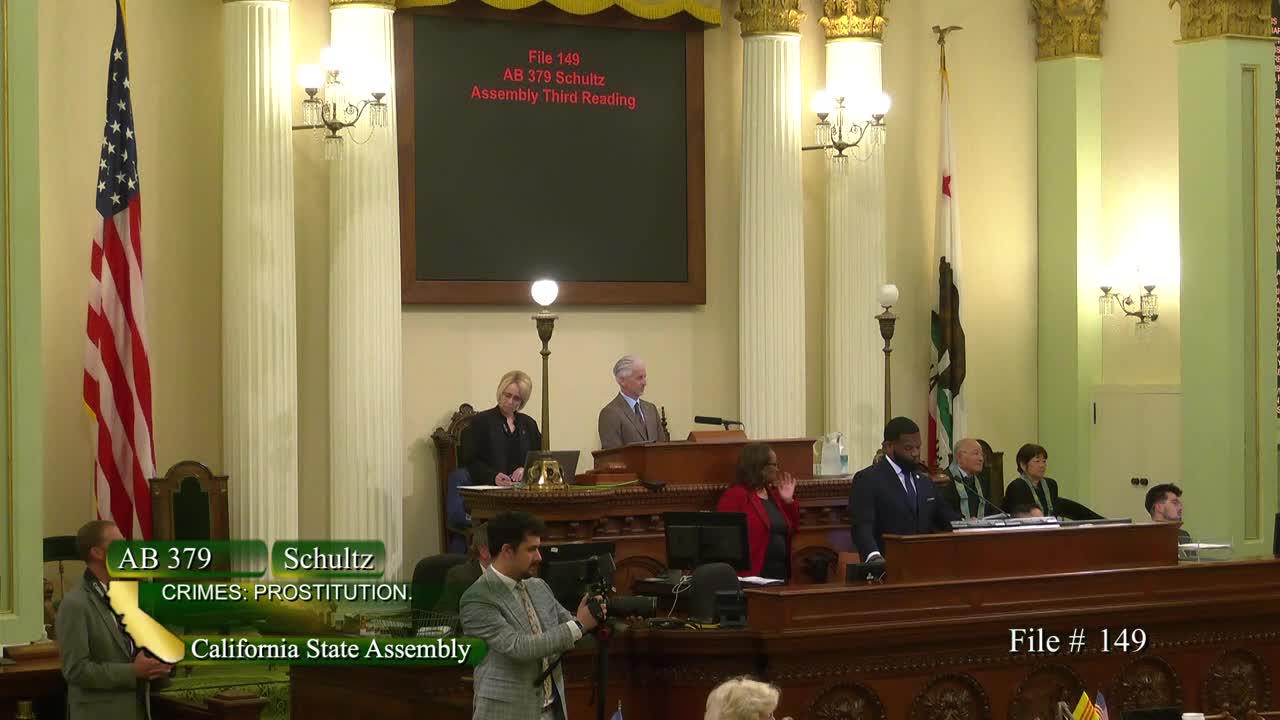 44SEC
Assembly Floor
 7MIN
Assembly Standing Committee on Business and Professions
Bill Author

Bill Co-Author(s):