AB 631: Animals: animal shelters: transparency.
- Session Year: 2025-2026
- House: Assembly
- Latest Version Date: 2025-07-09
Current Status:
In Progress
(2025-08-29: In committee: Held under submission.)
Introduced
In Committee
Awaiting First Chamber Vote
Passed First Chamber
In Committee
Awaiting Second Chamber Vote
Passed Second Chamber
Enacted
Existing law requires all public and private animal shelters to keep accurate records on each animal taken up, medically treated, or impounded, as specified.
This bill would require animal shelters, as defined, to collect and record the number of animals taken in, the source of intake, and the outcomes for all animals, as specified. The bill would require this information to be updated at least once per quarter. The bill would require animal shelters with internet websites to post this information on their internet websites and would require that this information remain publicly accessible for at least 5 years. The bill would require animal shelters that do not have internet websites to make this information publicly available, upon request, for at least 5 years.
To the extent that this bill would impose a new program or higher level of service on public animal control agencies or shelters, the bill would impose a state-mandated local program.
The California Constitution requires the state to reimburse local agencies and school districts for certain costs mandated by the state. Statutory provisions establish procedures for making that reimbursement.
This bill would provide that, if the Commission on State Mandates determines that the bill contains costs mandated by the state, reimbursement for those costs shall be made pursuant to the statutory provisions noted above.
Existing law requires all public and private animal shelters to keep accurate records on each animal taken up, medically treated, or impounded, as specified.
This bill would require animal shelters, as defined, to post on their internet websites, or third-party internet websites, collect and record the number of animals taken in, the source of intake, and the outcomes for all animals, as specified. The bill would require this information to be made publicly accessible, be updated at least once per quarter, and remain publicly accessible updated at least once per quarter. The bill would require animal shelters with internet websites to post this information on their internet websites and would require that this information remain publicly accessible for at least 5 years. The bill would require animal shelters that do not have internet websites to make this information publicly available, upon request, for at least 5 years.
To the extent that this bill would impose a new program or higher level of service on public animal control agencies or shelters, the bill would impose a state-mandated local program.
The California Constitution requires the state to reimburse local agencies and school districts for certain costs mandated by the state. Statutory provisions establish procedures for making that reimbursement.
This bill would provide that, if the Commission on State Mandates determines that the bill contains costs mandated by the state, reimbursement for those costs shall be made pursuant to the statutory provisions noted above.
Existing law requires all public and private animal shelters to keep accurate records on each animal taken up, medically treated, or impounded, as specified.
This bill would require animal shelters, as defined, to post on their internet websites, or third-party internet websites, the number of animals taken in, the source of intake, and the outcomes for all animals, as specified. The bill would require this information to be made publicly accessible, be updated at least once per month, quarter, and remain publicly accessible for at least 5 years.
To the extent that this bill would impose a new program or higher level of service on public animal control agencies or shelters, the bill would impose a state-mandated local program.
The California Constitution requires the state to reimburse local agencies and school districts for certain costs mandated by the state. Statutory provisions establish procedures for making that reimbursement.
This bill would provide that, if the Commission on State Mandates determines that the bill contains costs mandated by the state, reimbursement for those costs shall be made pursuant to the statutory provisions noted above.
Existing law requires all public and private animal shelters to keep accurate records on each animal taken up, medically treated, or impounded, as specified.
This bill would require animal shelters, as defined, to post on their internet websites, or third-party internet websites, the number of animals taken in, the source of intake, and the outcomes for all animals, as specified. The bill would require this information to be made publicly accessible, updated at least once per month, and remain publicly accessible for at least 5 years.
To the extent that this bill would impose a new program or higher level of service on public animal control agencies or shelters, the bill would impose a state-mandated local program.
The California Constitution requires the state to reimburse local agencies and school districts for certain costs mandated by the state. Statutory provisions establish procedures for making that reimbursement.
This bill would provide that, if the Commission on State Mandates determines that the bill contains costs mandated by the state, reimbursement for those costs shall be made pursuant to the statutory provisions noted above.
(a)The Legislature finds and declares all of the following:
(1)The official state pet is the shelter pet, demonstrating that Californians care deeply about the welfare of shelter animals.
(2)Public or private animal control agencies or shelters, societies for the prevention of cruelty to animal shelters, humane society shelters, and rescue groups perform invaluable work to protect the welfare of animals in our communities.
(3)These organizations not only provide critical care and safe refuge for animals in need but also play a vital role in addressing the pet overpopulation crisis through rescue, rehabilitation, and adoption services and spay and neuter programs.
(4)These organizations dedication helps reduce stray animal populations, prevent unnecessary euthanasia, and promote responsible pet ownership, ultimately contributing to healthier, more compassionate communities.
(5)Accurate public reporting on data related to animal intake and outcomes is important to evaluate the effectiveness of existing policy, make evidence-based decisions, and move towards impactful goals to improve animal welfare statewide.
(b)It is the intent of this act to require public and private animal control agencies and shelters, societies for the prevention of cruelty to animal shelters, and humane society shelters to report specified data, and to strongly encourage rescue groups to report specified data.
SECTION 1.SEC. 2.Section 32004 is added to the Food and Agricultural Code, immediately following Section 32003, to read:32004.(a)For purposes of this section, animal both of the following definitions apply:
(1)Animal shelter has the same meaning as defined in Section 30503.5. means a public or private animal control agency or shelter, society for the prevention of cruelty to animals shelter, or humane society shelter.
(2)Rescue group means a for-profit or not-for-profit entity with at least one of its purposes being the sale or placement of animals that have been removed from a public or private animal control agency or shelter, society for the prevention of cruelty to animals shelter, or humane society shelter, or that have been previously owned by a person other than the original breeder of that animal.
(b)An animal shelter shall collect and record all of the following information:
(1)The number of animals taken in with separate categories for dogs, cats, and other animals.
(2) The source of intake separated by category, including, but not limited to, stray animals, surrendered by owner, or transferred from another animal shelter.
(3)The outcomes for all animals separated by category, including, but not limited to, returned to owner, adopted, transferred to another organization, euthanized, died in care, or dead upon arrival.
(c)The information required to be collected and recorded pursuant to subdivision (b) shall be updated at least once per quarter and shall be handled as follows:
(1)If an animal shelter has an internet website, the animal shelter shall post the information on its internet website and the information shall remain publicly accessible on the internet website for at least five years.
(2)If an animal shelter does not have an internet website, the animal shelter shall make the information publicly available, upon request, for at least five years.
(d)For the purpose of developing a holistic picture of the pet overpopulation crisis, rescue groups are encouraged to comply with subdivisions (b) and (c).
(d)(e)Animal shelters and rescue groups with local contracts for animal care are encouraged to make the information available in a downloadable spreadsheet format that may include, but is not limited to, a comma-separated values file or a tab-separated values file and that is compatible with a spreadsheet software application that is widely used at the time of the posting.
SEC. 2.SEC. 3.If the Commission on State Mandates determines that this act contains costs mandated by the state, reimbursement to local agencies and school districts for those costs shall be made pursuant to Part 7 (commencing with Section 17500) of Division 4 of Title 2 of the Government Code.
(a)For purposes of this section, animal shelter has the same meaning as defined in Section 30503.5.
(b)An animal shelter shall post on its internet website, or a third-party internet website that is conspicuously linked on its internet website, collect and record all of the following information:
(1)The number of animals taken in with separate categories for dogs, cats, and other animals.
(2) The source of intake separated by category, including, but not limited to, stray animals, surrendered by owner, or transferred from another animal shelter.
(3)The outcomes for all animals separated by category, including, but not limited to, returned to owner, adopted, transferred to another organization, euthanized, died in care, or dead upon arrival.
(c)The information required to be posted collected and recorded pursuant to subdivision (b) shall be made publicly accessible, be updated on the animal shelters internet website or third-party internet website updated at least once per quarter, and remain publicly accessible for at least five years. quarter and shall be handled as follows:
(1)If an animal shelter has an internet website, the animal shelter shall post the information on its internet website and the information shall remain publicly accessible on the internet website for at least five years.
(2)If an animal shelter does not have an internet website, the animal shelter shall make the information publicly available, upon request, for at least five years.
(d)Animal shelters with local contracts for animal care are encouraged to make the information available in a downloadable spreadsheet format that may include, but is not limited to, a comma-separated values file or a tab-separated values file and that is compatible with a spreadsheet software application that is widely used at the time of the posting.
SEC. 2.If the Commission on State Mandates determines that this act contains costs mandated by the state, reimbursement to local agencies and school districts for those costs shall be made pursuant to Part 7 (commencing with Section 17500) of Division 4 of Title 2 of the Government Code.
(a)For purposes of this section, animal shelter has the same meaning as specified defined in Section 30503.5.
(b)An animal shelter shall post on its internet website, or a third-party internet website that is conspicuously linked on its internet website, all of the following information:
(1)The number of animals taken in with separate categories for dogs, cats, and other animals.
(2) The source of intake separated by category, including, but not limited to, stray animals, surrendered by owner, or transferred from another animal shelter.
(3)The outcomes for all animals separated by category, including, but not limited to, returned to owner, adopted, transferred to another organization, euthanized, died in care, or dead upon arrival.
(c)The information required to be posted pursuant to subdivision (b) shall be made publicly accessible, be updated on the animal shelters internet website or third-party internet website at least once per month, quarter, and remain publicly accessible for at least five years.
(d)Animal shelters with local contracts for animal care are encouraged to make the data information available in a downloadable spreadsheet format that may include, but is not limited to, a comma-separated values file or a tab-separated values file and that is compatible with a spreadsheet software application that is widely used at the time of the posting.
SEC. 2.If the Commission on State Mandates determines that this act contains costs mandated by the state, reimbursement to local agencies and school districts for those costs shall be made pursuant to Part 7 (commencing with Section 17500) of Division 4 of Title 2 of the Government Code.
(a)For purposes of this section, animal shelter has the same meaning as specified in Section 30503.5.
(b)An animal shelter shall post on its internet website, or a third-party internet website that is conspicuously linked on its internet website, all of the following information:
(1)The number of animals taken in with separate categories for dogs, cats, and other animals.
(2) The source of intake separated by category, including, but not limited to, stray animals, surrendered by owner, or transferred from another animal shelter.
(3)The outcomes for all animals separated by category, including, but not limited to, returned to owner, adopted, transferred to another organization, euthanized, died in care, or dead upon arrival.
(c)The information required to be posted pursuant to subdivision (b) shall be made publicly accessible, be updated on the animal shelters internet website or third-party internet website at least once per month, and remain publicly accessible for at least five years.
(d)Animal shelters with local contracts for animal care are encouraged to make the data available in a downloadable spreadsheet format that may include, but is not limited to, a comma-separated values file or a tab-separated values file and that is compatible with a spreadsheet software application that is widely used at the time of the posting.
SEC. 2.If the Commission on State Mandates determines that this act contains costs mandated by the state, reimbursement to local agencies and school districts for those costs shall be made pursuant to Part 7 (commencing with Section 17500) of Division 4 of Title 2 of the Government Code.
|
Date
|
Status
|
|---|---|
| Aug 29, 2025 | In committee: Held under submission. |
| Aug 18, 2025 | In committee: Referred to suspense file. |
| Jul 14, 2025 | From committee: Do pass and re-refer to Com. on APPR. (Ayes 11. Noes 0.) (July 14). Re-referred to Com. on APPR. |
| Jul 9, 2025 | From committee chair, with author's amendments: Amend, and re-refer to committee. Read second time, amended, and re-referred to Com. on B. P. & E.D. |
| Jun 9, 2025 | In committee: Set, first hearing. Testimony taken. Further hearing to be set. |
| May 28, 2025 | From committee chair, with author's amendments: Amend, and re-refer to committee. Read second time, amended, and re-referred to Com. on B. P. & E.D. |
| May 7, 2025 | Referred to Com. on B. P. & E.D. |
| Apr 29, 2025 | In Senate. Read first time. To Com. on RLS. for assignment. |
| Apr 28, 2025 | Read third time. Passed. Ordered to the Senate. (Ayes 72. Noes 0. Page 1318.) |
| Apr 24, 2025 | Read second time. Ordered to third reading. |
| Apr 23, 2025 | From committee: Do pass. (Ayes 15. Noes 0.) (April 23). |
| Apr 3, 2025 | Re-referred to Com. on APPR. |
| Apr 2, 2025 | Read second time and amended. |
| Apr 1, 2025 | From committee: Amend, and do pass as amended and re-refer to Com. on APPR. (Ayes 17. Noes 0.) (April 1). |
| Mar 3, 2025 | Referred to Com. on B. & P. |
| Feb 14, 2025 | From printer. May be heard in committee March 16. |
| Feb 13, 2025 | Read first time. To print. |
|
Date
|
Description
|
Location
|
Votes
|
|
|---|---|---|---|---|
| Aug 18, 2025 | Placed on suspense file | Senate Standing Committee on Appropriations |
Passed |
|
| Jul 14, 2025 | Do pass, but first be re-referred to the Committee on [Appropriations] | Senate Standing Committee on Business, Professions and Economic Development |
Passed |
|
| Apr 28, 2025 | AB 631 Lee Assembly Third Reading | Assembly Floor |
Passed |
|
| Apr 23, 2025 | Do pass. | Assembly Standing Committee on Appropriations |
Passed |
|
| Apr 1, 2025 | Do pass as amended and be re-referred to the Committee on [Appropriations] | Assembly Standing Committee on Business and Professions |
Passed |
This list shows positions taken on this bill by organizations on the date displayed, which is linked to the original source.
Positions by individuals are not included.
|
Organization
|
Position
|
Date
|
|---|---|---|
| American Kennel Club, INC. | ** Support | |
| Angel's Furry Friends | ** Against | |
| Animal Politics with Ed Boks | ** Support | |
| Animal Rescue Mission | ** Support | |
| ANIMAL WELLNESS ACTION | ** Support | |
| Berkeley Animal Rights Center | ** Support | |
| Better Together Forever | ** Support | |
| California Association Of Licensed Investigators | ** Support | |
| Compassionate Bay | ** Support | |
| East Bay SPCA | ** Support | |
| Feline Lucky Adventures | ** Support | |
| Fix Our Shelters | ** Against | |
| Giantmecha | ** Support | |
| Giantmecha Syndicate | ** Support | |
| Greater Los Angeles Animals Spay Neuter Collaborative | ** Support | |
| Hugs and Kisses Animal Fund | ** Support | |
| Humane Society of Imperial County | ** Support | |
| Humane Society of San Bernardino Valley | ** Support | |
| Humane World for Animals | ** Support | |
| Inland Valley Humane Society & S.P.C.A | ** Support | |
| Joybound People & Pets | ** Support | |
| Latino Alliance for Animal Care Foundation | ** Support | |
| Leaders for Ethics, Animals, and The Planet | ** Support | |
| Los Angeles Democrats for the Protection of Animals | ** Support | |
| Lucky Pup Rescue | ** Against | |
| Marin Humane Society | ** Support | |
| Numerous individuals | ** Support | |
| NY 4 Whales | ** Support | |
| Pibbles N Kibbles Animal Rescue | ** Support | |
| Plant-based Advocates | ** Support | |
| Project Minnie | ** Support | |
| San Diego Humane Society And Spca | ** Support | |
| Santa Barbara Humane | ** Support | |
| Seeds 4 Change Now Animal Rescue | ** Support | |
| Seniors Citizens for Humane Education and Legislation | ** Support | |
| Social Compassion In Legislation | ** Support | |
| START Rescue | ** Support | |
| Stray Cat Alliance | ** Support | |
| Students Against Animal Cruelty Club - Hueneme High School | ** Support | |
| The Canine Condition | ** Support | |
| The Fix Project | ** Support | |
| The Pet Loss Support Group | ** Support | |
| Underdog Heroes, INC. | ** Support | |
| Valley Humane Society | ** Support | |
| Women United for Animal Welfare | ** Support | |
| Woods Humane Society | ** Support |
SENATE COMMITTEE ON
Senator Anna Caballero, Chair
2025 - 2026 Regular Session
AB 631 (Lee) - Animals: animal shelters: transparency
Version: | Policy Vote: |
Urgency: | Mandate: |
Hearing Date: | Consultant: |
Bill Summary:
AB 631 requires an animal shelter to collect, record, and post data on the number of animals taken in, the source of intake, and animal outcomes. AB 631 also encourages private rescue groups to collect and post similar data as required by the shelters.
Fiscal Impact:
Unknown potentially reimbursable mandate costs for public animal shelters to collect and post data on animals taken in, and update this data on a quarterly basis (General Fund). Actual costs to the shelters will depend on, among other things, the extent they are already collecting and tracking this information, and if they would need any IT resources to make this information publicly available. To the extent the Commission on State Mandates determines that any of the provisions of this bill create a new program or impose a higher level of service on local agencies, local agencies could claim reimbursement of those costs.
Background:
There are approximately 200 private and public shelters in California, which take in stray, lost, abandoned or surrendered animals. Shelters are primarily operated by local governments, are subject to local funding, and managed by county or city, or city and county employees. Often times, these shelters are additionally staffed with a shelter volunteer workforce and contract with licensed veterinarians or registered veterinary technicians to provide necessary healthcare services to the animals in shelter care. A licensed veterinarian is required to provide all medical services at shelters, with an exception that trained persons can administer: 1) specific vaccinations; 2) nonprescription medications for the control or eradication of internal or external parasites, such as fleas, ticks, or worms; 3) certain medications when the shelter has received a written treatment plan from a licensed veterinarian for a specific animal; and 4) provide euthanasia, which may only be performed using sodium pentobarbital after training.
Shelters are currently required to keep accurate records on each animal taken in, medically treated or impounded. Shelters must record the date the animal is taken up, treated, impounded or euthanized and the record must include the circumstances of each along with a record of the personnel who provided the care and a description of any medical treatment provided. Shelters must also record the final disposition of the animal and the name of whoever provided euthanasia. Because there is not a mandated central data-reporting agency for animal shelters, most data are estimates.
Proposed Law:
- Requires an animal shelter to collect and record all of the following information:
- The number of animals taken in with separate categories for dogs, cats, and other animals.
- The source of intake separated by category, including, but not limited to, stray animals, surrendered by owner, or transferred from another animal shelter.
- The outcomes for all animals separated by category, including, but not limited to, returned to owner, adopted, transferred to another organization, euthanized, died in care, or dead upon arrival.
- Requires the above information to be updated at least once per quarter and be handled as follows:
- If an animal shelter has an internet website, the animal shelter shall post the information on its internet website and the information shall remain publicly accessible on the internet website for at least five years.
- If an animal shelter does not have an internet website, the animal shelter shall make the information publicly available, upon request, for at least five years.
- Encourages rescue groups to comply with the above data collection and recording requirements.
- Encourages animal shelters and rescue groups with local contracts for animal care to make the above information available in a downloadable spreadsheet format that may include, but is not limited to, a comma-separated values file or a tab-separated values file and that is compatible with a spreadsheet software application that is widely used at the time of the posting.
- Defines “animal shelter” to mean a public or private animal control agency or shelter, society for the prevention of cruelty to animals shelter, or humane society shelter.
- Defines “rescue group” to mean a for-profit or not-for-profit entity with at least one of its purposes being the sale or placement of animals that have been removed from a public or private animal control agency or shelter, society for the prevention of cruelty to animals shelter, or humane society shelter, or that have been previously owned by a person other than the original breeder of that animal.
- States legislative findings and declarations.
Related Legislation:
SB 1459 (Nguyen, 2024) was similar to this bill and would have required a public animal shelter to update, at least once per month, any data the animal shelter makes available on its website, and required the posted data to include the number of animals taken in during the prior month and the outcomes for animals over the prior month. SB 1459 was held on the Suspense File in the Assembly Appropriations Committee.
-- END --
SENATE COMMITTEE ON
BUSINESS, PROFESSIONS AND ECONOMIC DEVELOPMENT
Senator Angelique Ashby, Chair
2025 - 2026 Regular
Bill No: AB 631 Hearing Date: July 14, 2025
Author: | Lee | ||
Version: |
| ||
Urgency: | Fiscal: | ||
Consultant: | |||
Subject: Animals: animal shelters: transparency
SUMMARY:
Requires an animal shelter as defined, to post specific data points about animals taken in on its website or a third-party website, as specified. Encourages private rescue groups to post similar data as required by the shelters.
Existing law:
- Requires all public animal shelters, shelters operated by societies for the prevention of cruelty to animals, and humane shelters that contract to perform public animal control services to provide the owners of lost animals and those who find lost animals with all of the following:
- Ability to list the animals they have lost or found on “Lost and Found” lists maintained by the animal shelter;
- Referrals to animals listed that may be the animals the owners or finders have lost or found;
- The telephone numbers and addresses of other animal shelters in the same vicinity;
- Advice as to means of publishing and disseminating information regarding lost animals; and
- Telephone numbers and addresses of volunteer groups that may be of assistance in locating lost animals. (Food and Agricultural Code (FAC) § 32001(a))
- Requires all public and private animal shelters to keep accurate records, for at least three years, on each animal taken up, medically treated, or impounded and requires the records to in include all of the following information and any other information required by the California Veterinary Medical Board:
- The date the animal was taken up, medically treated, euthanized, or impounded;
- The circumstances under which the animal was taken up, medically treated, euthanized, or impounded;
- The names personnel who took up, medically treated, euthanized, or impounded the animal;
- A description of any medical treatment provided to the animal and the name of the veterinarian of record; and
- The final disposition of the animal, including the name of the person who euthanized the animal or the name and address of the adopting party. (FAC § 32003)
- Defines “Animal shelter” to mean a public animal control agency or shelter, society for the prevention of cruelty to animals shelter, humane society shelter, or rescue group. (FAC § 30503.5)
- Defines, “Rescue group” to mean a for-profit or not-for-profit entity or a collaboration of individuals that removes dogs from a public animal control agency or shelter, society for the prevention of cruelty to animals shelter, or humane shelter, or rehomes a dog that has been previously owned by any person other than the original breeder of that dog. (FAC § 30503.5)
- Makes every person who willfully abandons any animal to be guilty of a misdemeanor, except for the release or rehabilitation of native California wildlife pursuant to statute or regulations of the California Department of Fish and Game, now named the California Department of Fish and Wildlife (CDFW). (Penal Code (PC) 597(a).
This bill:
- Defines “animal shelter” for purposes of this bill to mean a public or private animal control agency or shelter, society for the prevention of cruelty to animals shelter, or humane society shelter.
- Defines “rescue group” for purposes of this bill to mean a for-profit or not-for-profit entity with at least one of its purposes being the sale or placement of animals that have been removed from a public or private animal control agency or shelter, society for the prevention of cruelty to animals shelter, or humane society shelter, or that have been previously owned by a person other than the original breeder of that animal.
- Requires an animal shelter to collect and record all of the following information:
- The number of animals taken in with separate categories for dogs, cats, and other animals.
- The source of intake separated by category, including, but not limited to, stray animals, surrendered by owner, or transferred from another animal shelter.
- The outcomes for all animals separated by category, including, but not limited to, returned to owner, adopted, transferred to another organization, euthanized, died in care, or dead upon arrival.
- Requires the information required to be collected in 3) above to be updated at least once per quarter and handled as follows:
- If an animal shelter has an internet website, the animal shelter shall post the information on its internet website and the information shall remain publicly accessible on the internet website for at least five years.
- If an animal shelter does not have an internet website, the animal shelter shall make the information publicly available, upon request, for at least five years.
- Encourages rescue groups to post the data required for shelters to help develop a holistic picture of the pet overpopulation crisis.
- Encourages Animal shelters and rescue groups with local contracts for animal care are encouraged to make the information available in a downloadable spreadsheet format, as specified.
- States that it is the intent of this bill to require public and private animal control agencies and shelters, societies for the prevention of cruelty to animal shelters, and humane society shelters to report specified data, and to strongly encourage rescue groups to report specified data.
- Makes findings and declarations related to the role shelters play in caring for animals in need while also helping to address the pet overpopulation crisis and the importance of data collection related to stray and unwanted animal intake and outcomes.
FISCAL EFFECT:
According to the Assembly Committee on Appropriations, The California Animal Welfare Association, representing animal shelters, reports minimal costs, as shelters already collect the information required by this bill, and there is a free tool a shelter can use to post the data on its website automatically. However, by mandating the collection and publication of the information, this bill eliminates an animal shelter’s ability to stop collecting and reporting the required information, thus imposing ongoing costs of an unknown amount. If the Commission on State Mandates determines provisions of this bill constitute a state-mandated local program, the state would be required to reimburse local governments for the costs of implementing this bill.
COMMENTS:
- Purpose. Social Compassion in Legislation is the sponsor of this bill. According to the Author, “The official state pet is the ‘Shelter Pet.’ This bill will help provide important data about shelter animals so that resources are better optimized to find more pets their forever homes. State, local jurisdictions, and nonprofits invest hundreds of millions of dollars in our shelter system to save animals’ lives. Yet the data these entities rely on to direct these resources is no longer available…This transparency will ensure that the state and other entities are able to direct funding efficiently to shelters with the greatest need, while also giving policymakers a more complete picture of the pet overpopulation problem to make informed policy decisions.”
- Background.
Animal Shelters. Current law FAC § 17005(a) provides that it is the policy of the state not to euthanize an animal if the animal can be adopted into a suitable home. Adoptable animals include only those animals eight weeks of age or older, that have manifested no sign of a behavioral or temperamental defect posing a health or safety risk or otherwise make the animal unsuitable for placement as a pet.
An animal shelter is defined in (FAC § 30503.5) as a public animal control agency or shelter, society for the prevention of cruelty to animals shelter, humane society shelter, or rescue group. Animal control shelters are generally regulated under various provisions in the FAC, the Civil Code and the PC. Public animal control shelters are mandated to provide "necessary and prompt veterinary medical care to animals housed in an animal control shelter" to care for adoptable animals and protect the public. Current laws specify the timeframes for holding animals for owner reunification before adoption, rehoming or euthanizing the animal, and provide requirements for spaying and neutering before animals are adopted or sold.
Since the passage of the Hayden Law in 1998, the aim of California shelter laws are to help return a lost or stray animal to its home, rehome the animal, or find an alternative non-profit or other entity to take the animal prior to a shelter’s last resort of euthanasia. There are approximately 290 private and public shelters in California, which take in stray, lost, abandoned, or surrendered animals. Shelters are primarily operated by local governments. Public shelters are subject to local funding, and managed by county or city, or city and county employees. Often times, these shelters are staffed with a volunteer workforce and contract with licensed veterinarians or registered veterinary technicians to provide necessary healthcare services to the animals in shelter care.
Shelters are currently required to keep accurate records on each animal taken in, medically treated, or impounded. Pursuant to FAC § 32003, shelters must record the date the animal is taken up, treated, impounded or euthanized and the record must include the circumstances of each along with a record of the personnel who provided the care and a description of any medical treatment provided. Lastly, the final disposition of the animal and the name of whoever provided euthanasia. However, the records are not always publicly available or updated. In addition, animal shelters are not mandated to report data about personnel or workforce, the animal care received, or provide information specific to the animal population they interact with, leaving a potential void in official statewide data. Because there is not a mandated statewide central data-reporting agency for animal shelters, most data collected are estimates. In an effort to ensure more accurate and accessible data about animals in shelters in California, this bill would require shelters to provide information on its website about the number of animals that have been taken in by the shelter, whether it’s a dog, cat or another type of animal, the outcome of the animal (adopted, euthanized, transferred, etc.). The information on these animals must be made publicly accessible and updated quarterly. The bill would recommend that the information be made available in a downloadable spreadsheet to help interested parties aggregate statewide data more easily.
As recently amended, this bill will apply only to public or private animal control agency or shelters, society for the prevention of cruelty to animals shelters, or humane society shelters. Instead of mandating that private rescue groups report the data, this bill will simply encourage private rescues to report, the same data points as animal shelters. A comprehensive collection of data from all groups that take in unwanted or rehomed animals will help provide a more comprehensive picture of animal intakes and outcomes and pet overpopulation in California.
Shelter Animals Count provides a national database of animal shelter statistics. However, because there is not a mandate for shelters to report the data, Shelter Animals Count relies on the voluntary reporting from shelters and rescue groups. According to Shelter Animals Count’s 2024 Annual Analysis, 5.7 million dogs and cats entered shelters in 2024. The analysis notes that the numbers are down 11% from 2019; however, that number represents only a 1% decrease from 2023. In a November 22, 2024, Los Angeles Times article, it reported that from January to September 1,124 dogs were euthanized at the city’s six shelters, a 72% increase from the previous year. The article noted that the euthanasia of some of the animals was about a lack of resources to care for the animal as opposed to animal illness or other behavioral issues. The opportunity to collect statewide data will assist in assessment and understanding of public shelter operations across California, which may provide insight into where the best animal outcomes occur and where additional resources may be necessary.
- Related Legislation. AB 1482 (Castillo of 2025), requires an animal shelter to provide public notice regarding the adoption availability of any animal and requires the Department of Food and Agriculture to conduct a study on overcrowding of state animal shelters, among other topics. AB 1482 also makes changes to state law pertaining to dog breeders. (Status: This bill was held in the Assembly Committee on Appropriations)
AB 2012 (Lee of 2024) would have required the CDPH to collect specified data from public animal shelters as part of their annual rabies control activities reporting, and authorized the CDPH to contract out this requirement to a California accredited veterinary school. (Status: This bill died in the Assembly Committee on Appropriations.)
AB 2265 (McCarty of 2024) would have, among other things, required that all animal shelters provide public notice at least 24 hours before a dog or cat is scheduled to be euthanized, to be posted daily on their internet website or Facebook page, and that the notice be physically affixed on the kennel of a dog to cat scheduled to be euthanized, as well as mandated time certain that a dog or cat must be spayed or neutered by an animal shelter upon being given to a foster. (Status: This bill died in the Assembly Committee on Appropriations.)
SB 1358 (Nguyen of 2024) requires the CDPH to collect and report specified data from public animal shelters as part of their annual rabies control activities reporting. (Status: This bill died in the Assembly Committee on Appropriations.)
SB 1459 (Nguyen of 2024) would, among other things, require public animal control agencies and shelters in counties with a population greater than 400,000 to publish and update specified data on their internet website, and exempt a veterinarian or registered veterinary technician from prosecution if they willfully release a cat as part of a trap, neuter, and release activity. (Status: This bill died in the Assembly Committee on Appropriations.)
AB 1988 (Muratsuchi, Chapter 96, Statutes of 2024) authorizes a puppy or kitten relinquished to a public or private animal shelter by the purported owner can be made immediately available for release to a nonprofit organization, animal rescue organization, or adoption organization.
AB 2425 (Essayli of 2024) would, among other things, require an animal shelter to provide public notice regarding the adoption availability of any animal, and require the Department of Food and Agriculture to conduct a study on certain topics, including overcrowding of state animal shelters. The bill would also make changes and additions to state law pertaining to dog breeders. (Status: This bill died in the Assembly Committee on Business and Professions).
ACR 86 (Kalra, Chapter 51, of 2023) encourages the state and local municipalities to develop and fund high-volume spay and neuter clinics across the state to provide sterilization services, and also urges other actions relating to pets, including actions to control animal breeding and encourage spaying and neutering. .
AB 595 (Essayli of 2023) would have required that all animal shelters provide public notice at least 72 hours before euthanizing any animal with information that includes the scheduled euthanasia date and required the CDFA to conduct a study on animal shelter overcrowding and the feasibility of a statewide database for animals scheduled to be euthanized. (Status: This bill died in the Assembly Committee Appropriations)
SB 669 (Cortese Chapter 882, Statutes of 2023) authorized a veterinarian to allow an RVT to act as an agent of the veterinarian for the purpose of establishing the veterinarian-client-patient relationship to administer preventive or prophylactic vaccines or medications for the control or eradication of apparent or anticipated internal or external parasites by satisfying specified criteria.
AB 485 (Williams, Chapter 557, Statutes of 2015) created a voluntary tax return checkoff to provide revenue to a Prevention of Animal Homelessness and Cruelty Fund, which allocates money to local animal shelters to support spay and neuter activities and eliminate dog and cat homelessness.
SB 1323 (Lieu, Chapter 375, Statutes of 2014) appropriated money collected from the Pet Lover’s License Plate Program to the Veterinary Medical Board for the sole and exclusive purpose of funding grants to providers of no-cost or low-cost animal sterilization services.
- Arguments in Support. Social Compassion in Legislation writes in support and notes, “AB 631 will give stakeholders visibility into the numbers of animals entering and exiting our state’s animal shelters and rescues, while helping to ensure funds are spent effectively and efficiently. Additionally, this data will give lawmakers a better picture of the pet overpopulation problem as they move forward with legislative solutions, as well as ensure animal shelter and rescue data is available in the unfortunate event of a zoonotic disease outbreak.”
Humane World for Animals writes in support and notes, “The data points outlined in this bill are standard figures tracked by nearly all organizations and, when used widely, can help states and regions identify community-based solutions.”
The American Kennel Club writes in support and notes, “AB 631 is a simple, easy-to-understand bill that will lead to improved animal welfare and allow policymakers to address any discovered areas of need in the animal shelter system.”
San Diego Humane Society writes in support and notes, “By aligning data practices across agencies, AB 631 will help identify emerging trends, improve resource allocation, and strengthen efforts to reduce euthanasia and improve outcomes for animals in care.”
A broad coalition of supporters note, “AB 631 will give the state, local jurisdictions, and philanthropic organizations the visibility they need to ensure funds are most effectively and efficiently targeted, while giving lawmakers a complete picture of the pet overpopulation problem as they move forward with legislative solutions, as well as ensure animal shelter data is available in the unfortunate event of a zoonotic disease outbreak.”
- Arguments in Opposition. Fix our Shelters writes in opposition and notes, “Most concerning, the bill does not require shelters to report how many stray animals are turned away at their doors—a number crucial to understanding intake trends, unmet community needs, and the accuracy of reported live release rates. This omission creates an incomplete and potentially misleading picture of shelter performance.”
Angels Furry Friends Rescue writes in opposition and notes, “If the goal of AB 631 is true transparency, public shelters and contracted agencies must be held to a higher standard. They should be required to:
- Publish monthly intake/outcome data - Maintain historical data accessible to public
- Track and report animals turned away
- Maintain a public-facing website (with state support for those lacking resources).
- Additional Comments. Animal Rescuers for Change and All Beings Cooperative Rescue, support this bill if it is amended and notes, “Transparency is essential—but it must be accompanied by a clear understanding of the distinct roles and resources of public shelters versus private rescue organizations, and by the creation of a comprehensive data collection, centralized data system to enable effective action.”
SUPPORT AND OPPOSITION:
Support:
Social Compassion in Legislation (source)
American Kennel Club, INC.
Animal Rescue Mission
Animal Wellness Action
Berkeley Animal Rights Center
Better Together Forever
Compassionate Bay
East Bay SPCA
Feline Lucky Adventures
Giantmecha
Greater Los Angeles Animal Spay Neuter Collaborative
Hugs and Kisses Animal Fund
Humane Society of Imperial County
Humane Society of San Bernardino Valley
Humane World for Animals
Inland Valley Humane Society & S.P.C.A.
Joybound People & Pets
Latino Alliance for Animal Care Foundation
Leaders for Ethics, Animals, and the Planet
Los Angeles Democrats for the Protection of Animals
Marin Humane Society
NY 4 Whales
Pibbles N Kibbles Animal Rescue
Plant-based Advocates
Project Minnie
San Diego Humane Society and SPCA
Santa Barbara Humane
Seeds 4 Change Now Animal Rescue
Start Rescue
Stray Cat Alliance
Students Against Animal Cruelty Club - Hueneme High School
The Canine Condition
The Fix Project
The Pet Loss Support Group
Underdog Heroes, INC.
Valley Humane Society
Women United for Animal Welfare
Woods Humane Society
Opposition:
Angel's Furry Friends
Fix Our Shelters
Lucky Pup Rescue
-- END --
SENATE COMMITTEE ON
BUSINESS, PROFESSIONS AND ECONOMIC DEVELOPMENT
Senator Angelique Ashby, Chair
2025 - 2026 Regular
Bill No: AB 631 Hearing Date: June 9, 2025
Author: | Lee | ||
Version: |
| ||
Urgency: | Fiscal: | ||
Consultant: | |||
Subject: Animals: animal shelters: transparency
SUMMARY:
Requires an animal shelter, including a rescue group, as defined, to post specific data points about animals taken in, on its website or a third-party website, as specified.
Existing law:
- Requires all public animal shelters, shelters operated by societies for the prevention of cruelty to animals, and humane shelters that contract to perform public animal control services to provide the owners of lost animals and those who find lost animals with all of the following:
- Ability to list the animals they have lost or found on “Lost and Found” lists maintained by the animal shelter;
- Referrals to animals listed that may be the animals the owners or finders have lost or found;
- The telephone numbers and addresses of other animal shelters in the same vicinity;
- Advice as to means of publishing and disseminating information regarding lost animals; and
- Telephone numbers and addresses of volunteer groups that may be of assistance in locating lost animals. (Food and Agricultural Code (FAC) § 32001(a))
- Requires all public and private animal shelters to keep accurate records, for at least three years, on each animal taken up, medically treated, or impounded and requires the records to in include all of the following information and any other information required by the California Veterinary Medical Board:
- The date the animal was taken up, medically treated, euthanized, or impounded;
- The circumstances under which the animal was taken up, medically treated, euthanized, or impounded;
- The names personnel who took up, medically treated, euthanized, or impounded the animal;
- A description of any medical treatment provided to the animal and the name of the veterinarian of record; and
- The final disposition of the animal, including the name of the person who euthanized the animal or the name and address of the adopting party. (FAC § 32003)
- Defines “Animal shelter” to mean a public animal control agency or shelter, society for the prevention of cruelty to animals shelter, humane society shelter, or rescue group. (FAC § 30503.5)
- Defines, “Rescue group” to mean a for-profit or not-for-profit entity or a collaboration of individuals that removes dogs from a public animal control agency or shelter, society for the prevention of cruelty to animals shelter, or humane shelter, or rehomes a dog that has been previously owned by any person other than the original breeder of that dog. (FAC § 30503.5)
- Makes every person who willfully abandons any animal to be guilty of a misdemeanor, except for the release or rehabilitation of native California wildlife pursuant to statute or regulations of the California Department of Fish and Game, now named the California Department of Fish and Wildlife (CDFW). (Penal Code (PC) 597(a).
This bill:
- Requires an animal shelter as defined, to collect and record all of the following information:
- The number of animals taken in with separate categories for dogs, cats, and other animals;
- The source of intake separated by category including, but not limited to, stray animals, surrendered by owner, or transferred from another shelter; and
- The outcomes for all animals separated by category, including, but not limited to, returned to owner, adopted, transferred to another organization, euthanized, died in care, or dead upon arrival.
- Requires the information to be collected and recorded to be updated at least once per quarter and handled as follows:
- If an animal shelter has a website, the animal shelter must post the information on its website and the information must remain publicly accessible, for at least five years; and,
- If an animal shelter does not have a website, the animal shelter must the make the information publicly available, upon request, for at least five years.
- Encourages animal shelters with local contracts for animal care to make the information available in a downloadable spreadsheet format, that may include, but is not limited to, a comma-separated values file or a tab-separated values file and that is compatible with a spreadsheet software application that is widely used at the time of the posting.
FISCAL EFFECT:
According to the Assembly Committee on Appropriations, The California Animal Welfare Association, representing animal shelters, reports minimal costs, as shelters already collect the information required by this bill, and there is a free tool a shelter can use to post the data on its website automatically. However, by mandating the collection and publication of the information, this bill eliminates an animal shelter’s ability to stop collecting and reporting the required information, thus imposing ongoing costs of an unknown amount. If the Commission on State Mandates determines provisions of this bill constitute a state-mandated local program, the state would be required to reimburse local governments for the costs of implementing this bill.
COMMENTS:
- Purpose. Social Compassion in Legislation is the sponsor of this bill. According to the Author, “The official state pet is the “Shelter Pet.” This bill will help provide important data about shelter animals so that resources are better optimized to find more pets their forever homes.
“State, local jurisdictions, and nonprofits invest hundreds of millions of dollars in our shelter system to save animals’ lives. Yet the data these entities rely on to direct these resources is no longer available.
“This transparency will ensure that the state and other entities are able to direct funding efficiently to shelters with the greatest need, while also giving policymakers a more complete picture of the pet overpopulation problem to make informed policy decisions.”
- Background.
Animal Shelters. Current law, (FAC § 17005(a)) provides that it is the policy of the state not to euthanize an animal if the animal can be adopted into a suitable home. Adoptable animals include only those animals eight weeks of age or older, that have manifested no sign of a behavioral or temperamental defect posing a health or safety risk or otherwise make the animal unsuitable for placement as a pet.
An animal shelter is defined in (FAC § 30503.5) as “a public animal control agency or shelter, society for the prevention of cruelty to animals shelter, humane society shelter, or rescue group”. Animal control shelters are generally regulated under various provisions in the FAC, the Civil Code and the PC. Public animal control shelters are mandated to provide "necessary and prompt veterinary medical care to animals housed in an animal control shelter" to care for adoptable animals and protect the public. Current laws specify the timeframes for holding animals for owner reunification before adoption, rehoming or euthanizing the animal, and provide requirements for spaying and neutering before animals are adopted or sold.
Since the passage of the Hayden Law in 1998, the aim of California shelter laws are to help return a lost or stray animal to its home, rehome the animal, or find an alternative non-profit or other entity to take the animal prior to a shelter’s last resort of euthanasia. There are approximately 290 private and public shelters in California, which take in stray, lost, abandoned, or surrendered animals. Shelters are primarily operated by local governments. Public shelters are subject to local funding, and managed by county or city, or city and county employees. Often times, these shelters are staffed with a volunteer workforce and contract with licensed veterinarians or registered veterinary technicians to provide necessary healthcare services to the animals in shelter care.
Shelters are currently required to keep accurate records on each animal taken in, medically treated, or impounded. Pursuant to FAC § 32003, shelters must record the date the animal is taken up, treated, impounded or euthanized and the record must include the circumstances of each along with a record of the personnel who provided the care and a description of any medical treatment provided. Lastly, the final disposition of the animal and the name of whoever provided euthanasia. However, the records are not always publicly available or updated. In addition, animal shelters are not mandated to report data about personnel or workforce, the animal care received, or provide information specific to the animal population they interact with, leaving a potential void in official statewide data. Because there is not a mandated statewide central data-reporting agency for animal shelters, most data collected are estimates. In an effort to ensure more accurate and accessible data about animals in shelters in California, this bill would require shelters to provide information on its website about the number of animals that have been taken in by the shelter, whether it’s a dog, cat or another type of animal, the outcome of the animal (adopted, euthanized, transferred, etc.). The information on these animals must be made publicly accessible and updated quarterly. The bill would recommend that the information be made available in a downloadable spreadsheet to help interested parties aggregate statewide data more easily. As currently drafted, the provisions of this bill will be applicable to private animal rescue groups along with public shelters.
Shelter Animals Count provides a national database of animal shelter statistics. However, because there is not a mandate for shelters to report the data, Shelter Animals Count relies on the voluntary reporting from shelters and rescue groups. According to Shelter Animals Count’s 2024 Annual Analysis, 5.7 million dogs and cats entered shelters in 2024. The analysis notes that the numbers are down 11% from 2019; however, that number represents only a 1% decrease from 2023. In a November 22, 2024, Los Angeles Times article, it reported that from January to September 1,124 dogs were euthanized at the city’s six shelters, a 72% increase from the previous year. The article noted that the euthanasia of some of the animals was about a lack of resources to care for the animal as opposed to animal illness or other behavioral issues. Being able to collect data statewide, will assist in assessment and understanding of public shelter operations across California, potentially to assist with understanding where better outcomes are achieved and additional resources may be necessary.
- Related Legislation. AB 1482 (Castillo of 2025), requires an animal shelter to provide public notice regarding the adoption availability of any animal and requires the Department of Food and Agriculture to conduct a study on overcrowding of state animal shelters, among other topics. AB 1482 also makes changes to state law pertaining to dog breeders. (Status: This bill was held in the Assembly Committee on Appropriations)
AB 2012 (Lee of 2024) would have required the CDPH to collect specified data from public animal shelters as part of their annual rabies control activities reporting, and authorized the CDPH to contract out this requirement to a California accredited veterinary school. (Status: This bill died in the Assembly Committee on Appropriations.)
AB 2265 (McCarty of 2024) would have, among other things, required that all animal shelters provide public notice at least 24 hours before a dog or cat is scheduled to be euthanized, to be posted daily on their internet website or Facebook page, and that the notice be physically affixed on the kennel of a dog to cat scheduled to be euthanized, as well as mandated time certain that a dog or cat must be spayed or neutered by an animal shelter upon being given to a foster. (Status: This bill died in the Assembly Committee on Appropriations.)
SB 1358 (Nguyen of 2024) requires the CDPH to collect and report specified data from public animal shelters as part of their annual rabies control activities reporting. (Status: This bill died in the Assembly Committee on Appropriations.)
SB 1459 (Nguyen of 2024) would, among other things, require public animal control agencies and shelters in counties with a population greater than 400,000 to publish and update specified data on their internet website, and exempt a veterinarian or registered veterinary technician from prosecution if they willfully release a cat as part of a trap, neuter, and release activity. (Status: This bill died in the Assembly Committee on Appropriations.)
AB 1988 (Muratsuchi, Chapter 96, Statutes of 2024) authorizes a puppy or kitten relinquished to a public or private animal shelter by the purported owner can be made immediately available for release to a nonprofit organization, animal rescue organization, or adoption organization.
AB 2425 (Essayli of 2024) would, among other things, require an animal shelter to provide public notice regarding the adoption availability of any animal, and require the Department of Food and Agriculture to conduct a study on certain topics, including overcrowding of state animal shelters. The bill would also make changes and additions to state law pertaining to dog breeders. (Status: This bill died in the Assembly Committee on Business and Professions).
ACR 86 (Kalra, Chapter 51, of 2023) encourages the state and local municipalities to develop and fund high-volume spay and neuter clinics across the state to provide sterilization services, and also urges other actions relating to pets, including actions to control animal breeding and encourage spaying and neutering. .
AB 595 (Essayli of 2023) would have required that all animal shelters provide public notice at least 72 hours before euthanizing any animal with information that includes the scheduled euthanasia date and required the CDFA to conduct a study on animal shelter overcrowding and the feasibility of a statewide database for animals scheduled to be euthanized. (Status: This bill died in the Assembly Committee Appropriations)
SB 669 (Cortese Chapter 882, Statutes of 2023) authorized a veterinarian to allow an RVT to act as an agent of the veterinarian for the purpose of establishing the veterinarian-client-patient relationship to administer preventive or prophylactic vaccines or medications for the control or eradication of apparent or anticipated internal or external parasites by satisfying specified criteria.
AB 485 (Williams, Chapter 557, Statutes of 2015) created a voluntary tax return checkoff to provide revenue to a Prevention of Animal Homelessness and Cruelty Fund, which allocates money to local animal shelters to support spay and neuter activities and eliminate dog and cat homelessness.
SB 1323 (Lieu, Chapter 375, Statutes of 2014) appropriated money collected from the Pet Lover’s License Plate Program to the Veterinary Medical Board for the sole and exclusive purpose of funding grants to providers of no-cost or low-cost animal sterilization services.
- Arguments in Support. Social Compassion in Legislation writes in support and notes, “AB 631 will give stakeholders visibility into the numbers of animals entering and exiting our state’s animal shelters and rescues, while helping to ensure funds are spent effectively and efficiently. Additionally, this data will give lawmakers a better picture of the pet overpopulation problem as they move forward with legislative solutions, as well as ensure animal shelter and rescue data is available in the unfortunate event of a zoonotic disease outbreak.”
Human World for Animals writes in support and notes, “The data points outlined in this bill are standard figures tracked by nearly all organizations and, when used widely, can help states and regions identify community-based solutions.”
The American Kennel Club writes in support and notes, “AB 631 is a simple, easy-to-understand bill that will lead to improved animal welfare and allow policymakers to address any discovered areas of need in the animal shelter system.”
San Diego Humane Society writes in support and notes, “By aligning data practices across agencies, AB 631 will help identify emerging trends, improve resource allocation, and strengthen efforts to reduce euthanasia and improve outcomes for animals in care.”
A broad coalition of supporters note, “AB 631 will give the state, local jurisdictions, and philanthropic organizations the visibility they need to ensure funds are most effectively and efficiently targeted, while giving lawmakers a complete picture of the pet overpopulation problem as they move forward with legislative solutions, as well as ensure animal shelter data is available in the unfortunate event of a zoonotic disease outbreak.”
- Arguments in Opposition. Lucky Pup Rescue is opposed unless amended and notes that this bill does not include metrics for animals that are turned away or released into communities, and that rescues are being asked to post their intake and outcome statistics but many rescues receive no state or local funding.
Fix our Shelters is opposed unless amended and notes, “We urge the Committee to consider the unintended consequences of this legislation and to adopt amendments that truly serve the public interest without harming the very organizations doing the lifesaving work our shelter system often cannot.”
- Additional Comments. Animal Rescuers for Change and All Beings Cooperative Rescue, support this bill if it is amended and notes, “Transparency is essential—but it must be accompanied by a clear understanding of the distinct roles and resources of public shelters versus private rescue organizations, and by the creation of a comprehensive data collection, centralized data system to enable effective action.”
- Policy Issues for Consideration and Author’s Amendments.
Is the definition of “animal shelter” for purposes of this bill too broad? The definition of “animal shelter” as included in this bill would encompass a “rescue group,” which is defined as “a for-profit or not-for-profit entity or a collaboration of individuals that removes dogs from a public animal control agency or shelter, society for the prevention of cruelty to animals shelter, or humane shelter, or rehomes a dog that has been previously owned by any person other than the original breeder of that dog.” As currently drafted, this bill may be applicable to animal rescues who do not have contracts with local governments, do not accept animals from the general public, and may have limited resources to collect and post such data. In addition, this bill may apply to individuals who rehome their dog or help a neighbor or friend rehome an animal. In addition, within the current definition of rescue group as applicable to this bill, it is unclear if these provisions would apply to cat rescues. The Author should continue to work with stakeholders in the shelter and rescue community to determine those rescues that should report data.
Proposed Author’s Amendments. In order to help clarify the definition of “rescue group”, the author proposes to amend the bill to replace the current definition of “animal shelter” with the following:
- For purposes of this section, “animal shelter” means a public animal control agency or shelter, society for the prevention of cruelty to animals shelter, humane society shelter, or rescue group.
- For purposes of this section, “rescue group” is a not-for-profit entity whose primary purpose is the placement of dogs, cats, or other animals that have been removed from a public animal control agency or shelter, society for the prevention of cruelty to animals shelter, or humane society shelter, or that have been surrendered or relinquished to the entity by the previous owner.
SUPPORT AND OPPOSITION:
Support:
Social Compassion in Legislation (source)
American Kennel Club, INC.
Animal Rescue Mission
Animal Wellness Action
Berkeley Animal Rights Center
Better Together Forever
Compassionate Bay
Feline Lucky Adventures
Giantmecha
Greater Los Angeles Animal Spay Neuter Collaborative
Hugs and Kisses Animal Fund
Humane World for Animals
Latino Alliance for Animal Care Foundation
Leaders for Ethics, Animals, and the Planet
Los Angeles Democrats for the Protection of Animals
NY 4 Whales
Pibbles N Kibbles Animal Rescue
Plant-based Advocates
Project Minnie
San Diego Humane Society and SPCA
Seeds 4 Change Now Animal Rescue
Start Rescue
Students Against Animal Cruelty Club - Hueneme High School
The Canine Condition
The Fix Project
The Pet Loss Support Group
Underdog Heroes, INC.
Women United for Animal Welfare
Numerous Individuals
Opposition:
Fix our Shelters
Lucky Pup Rescue
-- END --
ASSEMBLY THIRD READING
ATR Bill Id:AB 631
Author:(Lee)
As Amended Ver:April 2, 2025
Majority vote
SUMMARY
Requires animal shelters, as defined, to post on their internet websites, or third-party internet websites, the number of animals taken in, the source of intake, and the outcomes for all animals, as specified, and requires that the information be updated at least quarterly, and remain publicly available for at least five years.
Major Provisions
- Requires animal shelters to post on its internet website, or a third-party internet website that is conspicuously linked on its internet website, all of the following information:
- The number of animals taken in with separate categories for dogs, cats, and other animals;
- The source of intake separated by category, including, but not limited to, stray animals, surrendered by owner, or transferred from another animal shelter; and
- The outcomes for all animals separated by category, including, but not limited to, returned to owner, adopted, transferred to another organization, euthanized, died in care, or dead upon arrival.
- Requires the information to be publicly accessible for at least five years, and specifies that the information shall be updated at least once per month.
- Encourages, but does not require, animal shelters with local contracts for animal care to make the data available in a downloadable spreadsheet format that may include, but is not limited to, a comma-separated values file or a tab-separated values file and that is compatible with a spreadsheet software application that is widely used at the time of the posting.
COMMENTS
From 1995 to 2016, the California Department of Public Health (CDPH) collected and reported data consistent with the disclosures required by this bill. However, these reports were based on data voluntarily submitted from public animal shelters alongside mandated reporting on rabies infection and vaccination. This voluntary reporting included data on the number of licensed dogs and cats adopted from their shelters, the number of rabies vaccines administered, intake rates for dogs and cats, euthanasia, and more. In 2017, the CDPH stopped collecting and reporting data on shelter euthanasia.
In recent years, the author and sponsor have put forward bills to explicitly require the CDPH to collect and report these data points from local governments. In addition, the CDPH would also be required to collect data on the number of domestic dogs and cats discharged by local animal control authorities, including, but not limited to: the number reclaimed by owner, adopted, relinquished to a rescue organization, euthanized, died, or transferred to another shelter. Last year's iteration—AB 2012 (Lee)—would also have authorized the CDPH to contract these data collection and reporting requirements to a California-accredited veterinary school. These prior efforts to require that CDPH collect and report animal data have received bipartisan support in this Committee but have nevertheless stalled in the Assembly Appropriations Committee due to administrative cost concerns.
This year, instead of making the CDPH or another state entity responsible for collecting and posting specified animal welfare data, the bill requires animal shelters to post the data themselves and update it monthly. Notably, the bill defines "animal shelters" according to Food and Agricultural Code Section 30503.5, which encompasses "a public animal control agency or shelter, society for the prevention of cruelty to animals shelter, humane society shelter, or rescue group." In other words, all public and private organizations that work in the adoption and rescue of animals would be required to post information specified under this bill, not just those that are publicly funded. This bill would allow animal shelters that do not have their own website to post information on a third-party website, such as petfinder.com. Moreover, the bill encourages animal shelters with local contracts for animal care to post the data as a downloadable spreadsheet. The author contends that this bill is necessary to know how many cats and dogs are euthanized in this state and where, which would help inform decisions about where to prioritize grant funding.
According to the Author
"The official state pet is the "Shelter Pet." This bill will help provide important data about shelter animals so that resources are better optimized to find more pets their forever homes. State, local jurisdictions, and nonprofits invest hundreds of millions of dollars in our shelter system to save animals' lives. Yet the data these entities rely on to direct these resources is no longer available. This transparency will ensure that the state and other entities are able to direct funding efficiently to shelters with the greatest need, while also giving policymakers a more complete picture of the pet overpopulation problem to make informed policy decisions."
Arguments in Support
This bill is sponsored by Social Compassion in Legislation, who write:
"Public and private animal shelters regularly partner with rescues to take animals as fosters, help to facilitate adoptions, and to assist with medical care for the animals. Understanding the intake and outcome data from these rescues is necessary if the public and lawmakers are to have a full grasp of the scope of the animal overpopulation problem in California. It is estimated that our local and state governments spend over $400 million on operating animal shelters. That figure does not include the incalculable millions spent by nonprofit rescue organizations who pull dogs, cats, and various other animals from shelters before they are euthanized in order to save their lives and find them a loving home. Nor does it include the $50 million dollars combined in 2021 and 2022 the state funded to UC Davis to support our state's animal shelters efforts to reduce euthanasia rates, in addition to the approximately $500,000 granted out annually through the Pet Lover's License Plate Fund and the Prevention of Animal Homelessness and Cruelty Voluntary Tax Contribution Fund, combined, for spay and neuter programs. Despite these figures, stakeholders statewide do not have a complete picture of the pet overpopulation problem. [This bill] will give stakeholders visibility into the numbers of animals entering and exiting our state's animal shelters and rescues, while helping to ensure funds are spent effectively and efficiently. Additionally, this data will give lawmakers a better picture of the pet overpopulation problem as they move forward with legislative solutions, as well as ensure animal shelter and rescue data is available in the unfortunate event of a zoonotic disease outbreak."
Arguments in Opposition
None on file.
FISCAL COMMENTS
According to the Assembly Appropriations Committee:
"The California Animal Welfare Association, representing animal shelters, reports minimal costs, as shelters already collect the information required by this bill, and there is a free tool a shelter can use to post the data on its website automatically. However, by mandating the collection and publication of the information, this bill eliminates an animal shelter's ability to stop collecting and reporting the required information, thus imposing ongoing costs of an unknown amount.
If the Commission on State Mandates determines provisions of this bill constitute a state-mandated local program, the state would be required to reimburse local governments for the costs of implementing this bill (General Fund)."
VOTES
ASM BUSINESS AND PROFESSIONS: 17-0-1
YES: Berman, Flora, Ahrens, Alanis, Bains, Caloza, Chen, Elhawary, Hadwick, Haney, Irwin, Jackson, Krell, Lowenthal, Macedo, Nguyen, Pellerin
ABS, ABST OR NV: Bauer-Kahan
ASM APPROPRIATIONS: 15-0-0
YES: Wicks, Sanchez, Arambula, Calderon, Caloza, Dixon, Elhawary, Fong, Mark González, Hart, Pacheco, Pellerin, Solache, Ta, Tangipa
UPDATED
VERSION: April 2, 2025
CONSULTANT: Kaitlin Curry / B. & P. / (916) 319-3301, Edward Franco / B. & P. / (916) 319-3301 FN: 0000265
Date of Hearing: April 23, 2025
ASSEMBLY COMMITTEE ON APPROPRIATIONS
Buffy Wicks, Chair
ABPCA Bill Id:AB 631
Author:(Lee) – As Amended Ver:April 2, 2025
Policy Committee: | Business and Professions | Vote: | 17 - 0 |
|
| ||
|
|
Urgency: No State Mandated Local Program: Yes Reimbursable: Yes
SUMMARY:
This bill requires an animal shelter to post and maintain on its internet website the number and type of animals taken in, the source of intake, and the outcome for every animal, as specified.
Specifically, this bill:
- Defines, by code reference, “animal shelter” to mean a public animal control agency or shelter, society for the prevention of cruelty to animals shelter, humane society shelter, or rescue group.
- Requires an animal shelter to post on its internet website, or a third-party internet website that is conspicuously linked on the shelter’s website, all of the following information:
- The number of animals taken in, with separate categories for dogs, cats, and other animals.
- The source of intake, separated by category, including stray animals, surrendered by owner, or transferred from another animal shelter.
- The outcome for every animal, separated by category, including returned to owner, adopted, transferred to another organization, euthanized, died in care, or dead upon arrival.
- Requires the shelter to update the information at least once per quarter and to make the information publicly accessible for at least five years.
- Encourages animal shelters with local contracts for animal care to make the data available in a downloadable spreadsheet format that may include a comma-separated values file or a tab-separated values file and that is compatible with a spreadsheet software application that is widely used at the time of the posting.
FISCAL EFFECT:
The California Animal Welfare Association, representing animal shelters, reports minimal costs, as shelters already collect the information required by this bill, and there is a free tool a shelter can use to post the data on its website automatically. However, by mandating the collection and publication of the information, this bill eliminates an animal shelter’s ability to stop collecting and reporting the required information, thus imposing ongoing costs of an unknown amount.
If the Commission on State Mandates determines provisions of this bill constitute a state-mandated local program, the state would be required to reimburse local governments for the costs of implementing this bill (General Fund).
COMMENTS:
- Purpose. This bill is sponsored by Social Compassion in Legislation. According to the author:
This bill will help provide important data about shelter animals so that resources are better optimized to find more pets their forever homes.
State, local jurisdictions, and nonprofits invest hundreds of millions of dollars in our shelter system to save animals’ lives. Yet the data these entities rely on to direct these resources is no longer available. This [bill] will ensure that the state and other entities are able to direct funding efficiently to shelters with the greatest need.
- Related and Prior Legislation.
AB 1482 (Essayli), of the current legislative session, requires an animal shelter to provide public notice regarding the adoption availability of any animal and requires the Department of Food and Agriculture (CDFA) to conduct a study on overcrowding of state animal shelters, among other topics. AB 1482 also makes changes to state law pertaining to dog breeders. AB 1482 is pending in the Assembly Committee on Business and Professions.
AB 332 (Lee) and AB 2012 (Lee), of the 2023-24 Legislative Session, would have required the California Department of Public Health (CDPH) to collect specified data from public animal shelters as part of their annual rabies control activities reporting. AB 2012 was held in this committee and AB 332 was held in the Senate Committee on Appropriations.
AB 595 (Essayli), of the 2023-24 Legislative Session, would have required an animal shelter, before euthanizing any dog, cat, or rabbit, to provide 72 hours public notice with information about the animal and that it is subject to euthanasia, and would have required the CDFA to conduct a study on animal shelter overcrowding and the feasibility of a statewide database for animals scheduled to be euthanized. AB 595 was held in this committee.
AB 2265 (McCarty), of the 2023-24 Legislative Session, would have required an animal shelter provide public notice daily on its internet website or Facebook page, at least 24 hours before a dog or cat is scheduled to be euthanized, and that a notice be physically affixed on the kennel of a dog to cat scheduled to be euthanized, among other provisions. AB 2265 was held in this committee.
SB 1459 (Nguyen), of the 2023-24 Legislative Session, was similar to this bill, but required monthly reporting and did not allow a shelter to use a linked website. AB 1459 was held in the Senate Committee on Appropriations.
Analysis Prepared by: Allegra Kim / APPR. / (916) 319-2081
Date of Hearing:
ASSEMBLY COMMITTEE ON BUSINESS AND PROFESSIONS
Marc Berman, Chair
ABPCA Bill Id:AB 631
Author:(Lee) – As Introduced Ver:February 13, 2025
SUBJECT: Animals: animal shelters: transparency.
SUMMARY: Requires animal shelters, as defined, to post on the internet the number of animals taken in, the source of intake, and the outcomes for all animals, as specified, and update this information at least once per month.
EXISTING LAW:
- Governs the operation of animal shelters by, among other things, setting a minimum holding period for stray dogs, cats, and other animals, and requiring animal shelters to ensure that those animals, if adopted, are spayed or neutered and, with exceptions, microchipped. (Food and Agricultural Code (FAC) §§ 30501 et seq.; § 31108.3; §§ 31751 et seq.; §§ 32000 et seq.)
- Defines “animal shelter” as a public animal control agency or shelter, society for the prevention of cruelty to animals shelter, humane society shelter, or rescue group. (FAC § 30503.5)
- Requires that a shelter hold a stray dog for a specified period prior to adoption or euthanasia of a dog, scan the dog for a microchip that identifies the owner of that dog, and make reasonable efforts to contact the owner and notify them that their dog is impounded and is available for redemption. (FAC § 31108)
- Requires that a shelter hold a stray cat for a specified period prior to adoption or euthanasia, scan the cat for a microchip that identifies the owner of that cat, and make reasonable efforts to contact the owner and notify them that their cat is impounded and is available for redemption. (FAC § 31752)
- Requires that a rabbit, guinea pig, hamster, potbellied pig, bird, lizard, snake, turtle, or tortoise that is impounded in a shelter be held for the same period of time, under the same requirements of care, and with the same opportunities for redemption and adoption, as cats and dogs. (FAC § 31753)
- Requires all public animal shelters, shelters operated by societies for the prevention of cruelty to animals, and humane shelters that perform public animal control services, to provide the owners of lost animals and those who find lost animals with all of the following:
- Ability to list the animals they have lost or found on “Lost and Found” lists maintained by the animal shelter.
- Referrals to animals listed that may be the animals the owners or finders have lost or found.
- The telephone numbers and addresses of other animal shelters in the same vicinity.
- Advice as to means of publishing and disseminating information regarding lost animals.
- The telephone numbers and addresses of volunteer groups that may be of assistance in locating lost animals.
- (FAC § 32001)
- Requires all public and private animal shelters to keep accurate records on each animal taken up, medically treated, or impounded, which shall include all of the following information and any other information required by the Veterinary Medical Board of California:
- The date the animal was taken up, medically treated, euthanized, or impounded.
- The circumstances under which the animal was taken up, medically treated, euthanized, or impounded.
- The names of the personnel who took up, medically treated, euthanized, or impounded the animal.
- A description of any medical treatment provided to the animal and the name of the veterinarian of record.
- The final disposition of the animal, including the name of the person who euthanized the animal or the name and address of the adopting party. These records shall be maintained for three years after the date on which the animal’s impoundment ends.
- (FAC § 32003)
- Provides that it is the policy of the state that no adoptable animal should be euthanized if it can be adopted into a suitable home. (Penal Code § 599d; Civil Code § 1834.4)
THIS BILL:
- Requires animal shelters to post on its internet website, or a third-party internet website that is conspicuously linked on its internet website, all of the following information:
- The number of animals taken in with separate categories for dogs, cats, and other animals;
- The source of intake separated by category, including, but not limited to, stray animals, surrendered by owner, or transferred from another animal shelter; and
- The outcomes for all animals separated by category, including, but not limited to, returned to owner, adopted, transferred to another organization, euthanized, died in care, or dead upon arrival.
- Requires the information to be publicly accessible for at least five years, and specifies that the information shall be updated at least once per month.
- Encourages, but does not require, animal shelters with local contracts for animal care to make the data available in a downloadable spreadsheet format that may include, but is not limited to, a comma-separated values file or a tab-separated values file and that is compatible with a spreadsheet software application that is widely used at the time of the posting.
- FISCAL EFFECT: Unknown. This bill is keyed fiscal by the Legislative Counsel.
COMMENTS:
Purpose. This bill is sponsored by Social Compassion in Legislation. According to the author:
The official state pet is the “Shelter Pet.” This bill will help provide important data about shelter animals so that resources are better optimized to find more pets their forever homes. State, local jurisdictions, and nonprofits invest hundreds of millions of dollars in our shelter system to save animals’ lives. Yet the data these entities rely on to direct these resources is no longer available. This transparency will ensure that the state and other entities are able to direct funding efficiently to shelters with the greatest need, while also giving policymakers a more complete picture of the pet overpopulation problem to make informed policy decisions.
Background. From 1995 to 2016, the California Department of Public Health (CDPH) collected and reported data consistent with the disclosures required by this bill. However, these reports were based on data voluntarily submitted from public animal shelters alongside mandated reporting on rabies infection and vaccination. This voluntary reporting included data on the number of licensed dogs and cats adopted from their shelters, the number of rabies vaccines administered, intake rates for dogs and cats, euthanasia, and more. In 2017, the CDPH stopped collecting and reporting data on shelter euthanasia.
In recent years, the author and sponsor have put forward bills to explicitly require the CDPH to collect and report these data points from local governments. In addition, the CDPH would also be required to collect data on the number of domestic dogs and cats discharged by local animal control authorities, including, but not limited to: the number reclaimed by owner, adopted, relinquished to a rescue organization, euthanized, died, or transferred to another shelter. Last year’s iteration—AB 2012 (Lee)—would also have authorized the CDPH to contract these data collection and reporting requirements to a California-accredited veterinary school. These prior efforts to require that CDPH collect and report animal data have received bipartisan support in this Committee but have nevertheless stalled in the Assembly Appropriations Committee due to administrative cost concerns.
This year, instead of making the CDPH or another state entity responsible for collecting and posting specified animal welfare data, the bill requires animal shelters to post the data themselves and update it monthly. Notably, the bill defines “animal shelters” according to Food and Agricultural Code § 30503.5, which encompasses “a public animal control agency or shelter, society for the prevention of cruelty to animals shelter, humane society shelter, or rescue group.” In other words, all public and private organizations that work in the adoption and rescue of animals would be required to post information specified under this bill, not just those that are publicly funded. This bill would allow animal shelters that do not have their own website to post information on a third-party website, such as petfinder.com. Moreover, the bill encourages animal shelters with local contracts for animal care to post the data as a downloadable spreadsheet. The author contends that this bill is necessary to know how many cats and dogs are euthanized in this state and where, which would help inform decisions about where to prioritize grant funding.
Current Related Legislation.
AB 1482 (Essayli) would, among other things, require an animal shelter to provide public notice regarding the adoption availability of any animal and require the Department of Food and Agriculture (CDFA) to conduct a study on certain topics, including overcrowding of state animal shelters. The bill would also make changes and additions to state law pertaining to dog breeders. AB 1482 is pending consideration in this Committee.
Prior Related Legislation.
AB 2012 (Lee) of 2024 would have required the CDPH to collect specified data from public animal shelters as part of their annual rabies control activities reporting, and authorized the CDPH to contract out this requirement to a California accredited veterinary school. That bill was held on suspense in the Assembly Committee on Appropriations.
AB 2265 (McCarty) of 2024 would have, among other things, required that all animal shelters provide public notice at least 24 hours before a dog or cat is scheduled to be euthanized, to be posted daily on their internet website or Facebook page, and that the notice be physically affixed on the kennel of a dog to cat scheduled to be euthanized, as well as mandated time certain that a dog or cat must be spayed or neutered by an animal shelter upon being given to a foster. That bill was held on suspense in the Assembly Committee on Appropriations.
SB 1459 (Nguyen) of 2024 would have, among other things, required public animal control agencies and shelters to publish and update specified data on their internet website beginning January 1, 2026. That bill was held on suspense in the Assembly Committee on Appropriations.
AB 332 (Lee) from 2023 would have required the CDPH to collect and report specified data as part of their rabies control program. That bill was held in the Senate Appropriations Committee.
AB 595 (Essayli) of 2023 would have required animal shelters to provide 72 hours public notice before euthanizing any dog, cat, or rabbit with information that includes information about the animal and that it is subject to euthanasia, and would have required the CDFA to conduct a study on animal shelter overcrowding and the feasibility of a statewide database for animals scheduled to be euthanized. That bill was held on suspense in the Assembly Committee on Appropriations.
AB 2723 (Holden), Chapter 549, Statutes of 2022, established additional requirements for various types of public animal shelters related to microchip registration and the release of dogs and cats.
AB 588 (Chen), Chapter 430, Statutes of 2019, required any shelter or rescue group in California to disclose when a dog with a bite history when it is being adopted out.
ACR 153 (Santiago), Chapter 72, Statutes of 2018, urged communities in California to implement policies that support the adoption of healthy cats and dogs from shelters by 2025.
AB 2791 (Muratsuchi), Chapter 194, Statutes of 2018, permitted a puppy or kitten that is reasonably believed to be unowned and is impounded in a shelter to be immediately made available for release to a nonprofit animal rescue or adoption organization before euthanasia.
SB 1785 (Hayden), Chapter 752, Statutes of 1998, established that the State of California’s policy is that no adoptable animal should be euthanized if it can be adopted into a suitable home.
ARGUMENTS IN SUPPORT:
As the sponsor of this bill, Social Compassion in Legislation writes in support:
Public and private animal shelters regularly partner with rescues to take animals as fosters, help to facilitate adoptions, and to assist with medical care for the animals. Understanding the intake and outcome data from these rescues is necessary if the public and lawmakers are to have a full grasp of the scope of the animal overpopulation problem in California. It is estimated that our local and state governments spend over $400 million on operating animal shelters. That figure does not include the incalculable millions spent by nonprofit rescue organizations who pull dogs, cats, and various other animals from shelters before they are euthanized in order to save their lives and find them a loving home. Nor does it include the $50 million dollars combined in 2021 and 2022 the state funded to UC Davis to support our state’s animal shelters efforts to reduce euthanasia rates, in addition to the approximately $500,000 granted out annually through the Pet Lover’s License Plate Fund and the Prevention of Animal Homelessness and Cruelty Voluntary Tax Contribution Fund, combined, for spay and neuter programs. Despite these figures, stakeholders statewide do not have a complete picture of the pet overpopulation problem. [This bill] will give stakeholders visibility into the numbers of animals entering and exiting our state’s animal shelters and rescues, while helping to ensure funds are spent effectively and efficiently. Additionally, this data will give lawmakers a better picture of the pet overpopulation problem as they move forward with legislative solutions, as well as ensure animal shelter and rescue data is available in the unfortunate event of a zoonotic disease outbreak.
ARGUMENTS IN OPPOSITION:
There is no opposition on file.
POLICY ISSUE(S) FOR CONSIDERATION:
Purpose. This bill requires animal shelters to regularly report specified data on the number of animals in their care but does not prescribe a use for the data. While it is the author’s intent that the data inform state policy and steer the administration of the grants, no entity has been tasked to aggregate and analyze the data.
IMPLEMENTATION ISSUE(S) FOR CONSIDERATION:
Workload and feasibility. This bill would require animal shelters to post specified information on their website or a third-party website every month. A few stakeholders have indicated that they would support this bill if amended to reduce the frequency of the reporting requirement from monthly to quarterly and to exempt organizations that do not maintain a website. The author has agreed to amend the bill to require quarterly reporting in lieu of monthly reporting.
AMENDMENTS:
To limit the frequency with which animal shelters must update the information on their website or a third-party website, amend the bill as follows:
On page 2, after line 16:
(c) The information required to be posted pursuant to subdivision (b) shall be made publicly accessible, be updated on the animal shelter’s internet website or third-party internet website at least once per quarter month, and remain publicly accessible for at least five years.
REGISTERED SUPPORT:
Animal Politics with Ed Boks
Animal Wellness Action
Berkeley Animal Rights Center
Better Together Forever
California Association of Licensed Investigators
Compassionate Bay
Feline Lucky Adventures
Giantmecha Syndicate
Greater Los Angeles Animal Spay Neuter Collaborative
Latino Alliance for Animal Care Coalition
Leaders for Ethics, Animals, and the Planet
NY 4 Whales
Project Minnie
Seniors Citizens for Humane Education and Legislation
Social Compassion in Legislation (sponsor)
Start Rescue
Students Against Animal Cruelty Club - Hueneme High School
Women United for Animal Welfare
489 individuals
REGISTERED OPPOSITION:
There is no opposition on file.
Analysis Prepared by: Edward Franco / B. & P. / (916) 319-3301
Discussed in Hearing
 2MIN
Senate Standing Committee on Appropriations
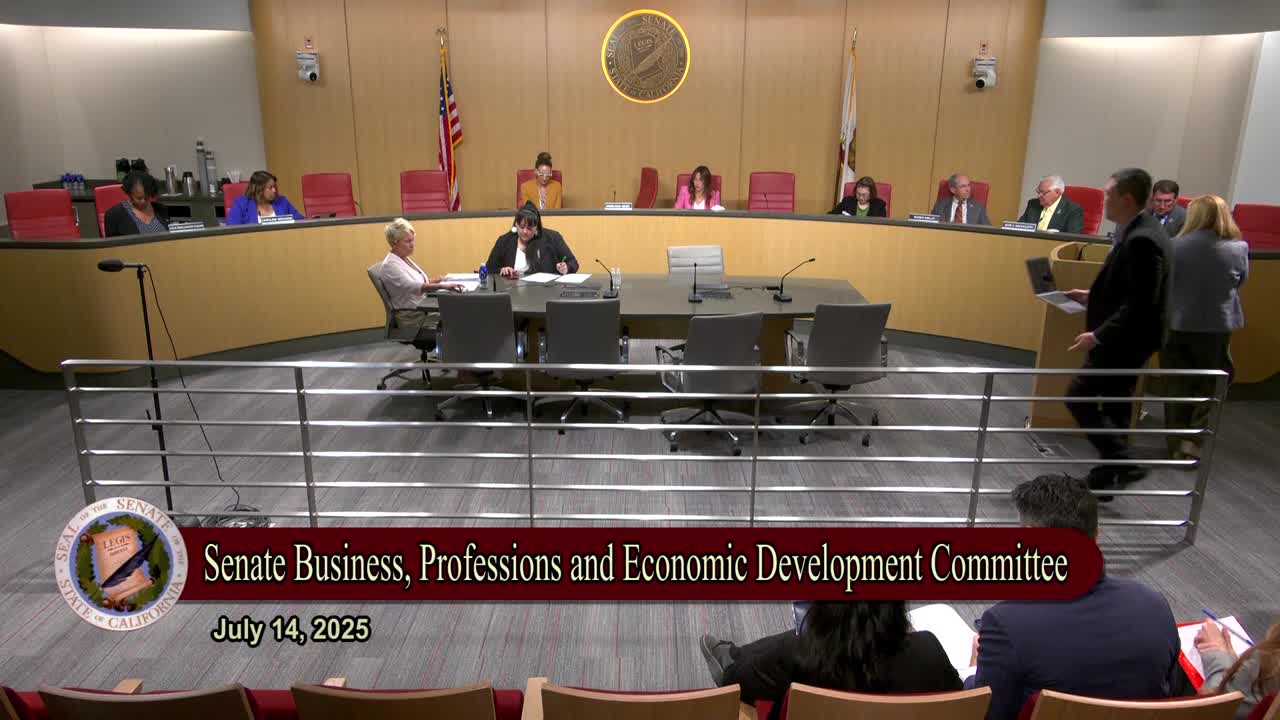 15MIN
Senate Standing Committee on Business, Professions and Economic Development
 19MIN
Senate Standing Committee on Business, Professions and Economic Development
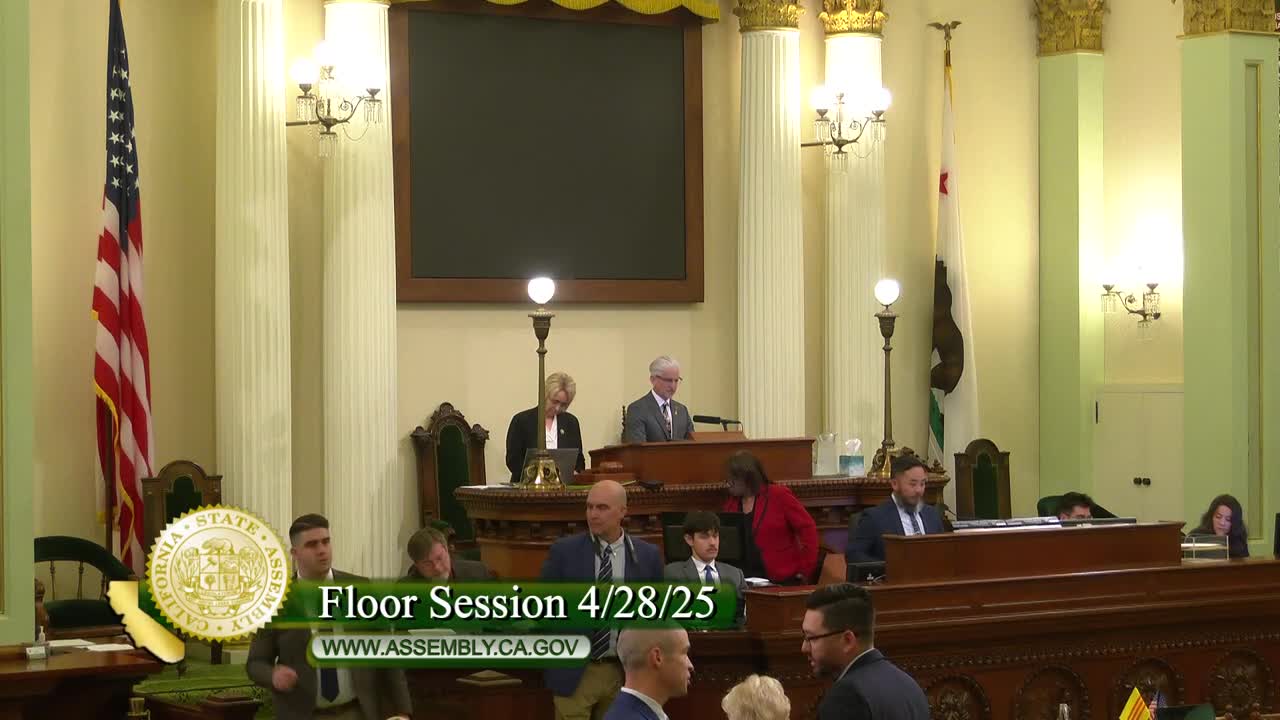 47SEC
Assembly Floor
 1MIN
Assembly Standing Committee on Appropriations
 6MIN
Assembly Standing Committee on Business and Professions
Bill Author

Bill Co-Author(s):