ACR 159: Indigent defense.
- Session Year: 2025-2026
- House: Assembly
- Latest Version Date: 2026-08-20
Current Status:
Passed
(2026-08-20: Chaptered by Secretary of State - Res. Chapter 187, Statutes of 2026.)
Introduced
In Committee
Awaiting First Chamber Vote
Passed First Chamber
In Committee
Awaiting Second Chamber Vote
Passed Second Chamber
Enacted
What does this bill do?
This resolution affirms that indigent defense — legal representation for people who cannot afford a lawyer — and public defenders are essential to due process and equal justice, and says chronic underfunding and greater resources for prosecutors threaten the right to effective counsel. It urges the state to develop statewide approaches using data-driven workload measures, sustainable staffing and funding, better data and transparency, and funding rules that do not favor prosecution over defense.
The summary is provided by generative AI which can make mistakes. For original language, please view the details in the table below.
This measure would affirm the fundamental importance of indigent defense to due process, equal justice, and democratic governance, recognize public defenders as essential protectors of constitutional rights and the rule of law, and encourage the development of statewide approaches to indigent defense.
This measure would affirm the fundamental importance of indigent defense to due process, equal justice, and democratic governance, recognize public defenders as essential protectors of constitutional rights and the rule of law, and encourage the development of statewide approaches to indigent defense.
This measure would affirm the fundamental importance of indigent defense to due process, equal justice, and democratic governance, recognize public defenders as essential protectors of constitutional rights and the rule of law, and encourage the development of statewide approaches to indigent defense.
WHEREAS, The Sixth and Fourteenth Amendments to the United States Constitution guarantee the right to counsel for criminal defendants who cannot afford an attorney, as recognized by the United States Supreme Court in Gideon v. Wainwright (1963) 372 U.S. 335; and
WHEREAS, The California Constitution independently guarantees due process of law and the right to counsel in criminal proceedings; Section 15 of Article I of the California Constitution provides that a defendant in a criminal cause has the right to the assistance of counsel; and
WHEREAS, California statutory law implements and enforces this constitutional mandate, including subdivision (a) of Section 987 and related provisions of the Penal Code, which require the appointment of counsel for indigent defendants and establish the framework through which the state and counties fulfill the right to counsel; and
WHEREAS, These constitutional and statutory guarantees reflect Californias longstanding commitment to the principle that justice must not depend on wealth, status, or access to private resources; and
WHEREAS, Public defenders and other indigent defense providers are the means by which California meets its constitutional and statutory obligations to provide counsel to people who cannot afford to hire an attorney; and
WHEREAS, Effective and meaningful representation is essential to due process, equal protection, and the legitimacy of the criminal legal system, and the right to counsel is not satisfied by the mere appointment of an attorney without adequate time, resources, and support; and
WHEREAS, Public defenders safeguard constitutional rights by enforcing limits on government power, challenging unlawful searches and seizures, ensuring fair trials, protecting against wrongful convictions, and holding the government to its burden of proof; and
WHEREAS, By protecting the constitutional rights of their clients in individual cases, public defenders also protect the constitutional rights of everyone, strengthening the rule of law, preserving civil liberties, and reinforcing public confidence in democratic institutions; and
WHEREAS, There is a growing national consensus, supported by empirical research, that excessive workloads and chronic underresourcing prevent public defenders from providing constitutionally effective representation; the National Public Defense Workload Study 2023 establishes modern, data-driven workload measures demonstrating that prevailing caseloads in many jurisdictions far exceed levels consistent with effective representation; and
WHEREAS, In response to this research and longstanding concerns regarding excessive workloads, the Washington Supreme Court adopted new indigent defense caseload standards in 2025, to be implemented over time, recognizing that excessive caseloads threaten the right to effective assistance of counsel; and
WHEREAS, Public defender offices across the nation, including in California, remain chronically understaffed and underresourced, often lacking sufficient attorneys, investigators, and support staff to meet constitutional obligations; and
WHEREAS, Californias indigent defense system is primarily county-based, and the state does not provide comprehensive or reliable statewide funding to ensure that public defense systems are adequately staffed and resourced to meet constitutional standards; and
WHEREAS, Funding for public defense in California is markedly lower than funding for prosecution, with counties collectively allocating substantially more resources to district attorney offices than to public defender offices, creating systemic imbalance in the adversarial process; and
WHEREAS, State-controlled funding mechanisms and grant programs have historically provided significantly greater support to prosecution-related functions than to indigent defense, reinforcing disparities and limiting counties ability to achieve functional parity between prosecution and defense; and
WHEREAS, Persistent underfunding and lack of parity undermine the fairness and reliability of the justice system, contribute to delays and inefficiencies, increase the risk of wrongful convictions, and erode public trust in the courts; and
WHEREAS, California has both a constitutional obligation and a moral responsibility to ensure that its indigent defense systems are adequately funded, appropriately staffed, and capable of providing effective representation consistent with constitutional mandates; now, therefore, be it
Resolved by the Assembly of the State of California, the Senate thereof concurring, That the Legislature affirms the fundamental importance of indigent defense to due process, equal justice, and democratic governance, and recognizes public defenders as essential protectors of constitutional rights and the rule of law; and be it further
Resolved, That the Legislature acknowledges that chronic underfunding and lack of parity between prosecution and defense threaten the integrity of the adversarial system and the effective assistance of counsel guaranteed by the United States and California Constitutions; and be it further
Resolved, That the Legislature encourages the development of statewide approaches to indigent defense that incorporate empirical workload measures, promote sustainable staffing and funding, improve data collection and transparency, and ensure that state funding structures do not perpetuate inequities between prosecution and defense; and be it further
Resolved, That the Chief Clerk of the Assembly transmit copies of this resolution to the Governor, the Judicial Council of California, the Legislative Analysts Office, the Department of Finance, appropriate legislative committees, and to the author for appropriate distribution.
WHEREAS, The Sixth and Fourteenth Amendments to the United States Constitution guarantee the right to counsel for criminal defendants who cannot afford an attorney, as recognized by the United States Supreme Court in Gideon v. Wainwright (1963) 372 U.S. 335; and
WHEREAS, The California Constitution independently guarantees due process of law and the right to counsel in criminal proceedings; Section 15 of Article I of the California Constitution provides that a defendant in a criminal cause has the right to the assistance of counsel; and
WHEREAS, California statutory law implements and enforces this constitutional mandate, including subdivision (a) of Section 987 and related provisions of the Penal Code, which require the appointment of counsel for indigent defendants and establish the framework through which the state and counties fulfill the right to counsel; and
WHEREAS, These constitutional and statutory guarantees reflect Californias longstanding commitment to the principle that justice must not depend on wealth, status, or access to private resources; and
WHEREAS, Public defenders and other indigent defense providers are the means by which California meets its constitutional and statutory obligations to provide counsel to people who cannot afford to hire an attorney; and
WHEREAS, Effective and meaningful representation is essential to due process, equal protection, and the legitimacy of the criminal legal system, and the right to counsel is not satisfied by the mere appointment of an attorney without adequate time, resources, and support; and
WHEREAS, Public defenders safeguard constitutional rights by enforcing limits on government power, challenging unlawful searches and seizures, ensuring fair trials, protecting against wrongful convictions, and holding the government to its burden of proof; and
WHEREAS, By protecting the constitutional rights of their clients in individual cases, public defenders also protect the constitutional rights of everyone, strengthening the rule of law, preserving civil liberties, and reinforcing public confidence in democratic institutions; and
WHEREAS, There is a growing national consensus, supported by empirical research, that excessive workloads and chronic underresourcing prevent public defenders from providing constitutionally effective representation; the National Public Defense Workload Study 2023 establishes modern, data-driven workload measures demonstrating that prevailing caseloads in many jurisdictions far exceed levels consistent with effective representation; and
WHEREAS, In response to this research and longstanding concerns regarding excessive workloads, the Washington Supreme Court adopted new indigent defense caseload standards in 2025, to be implemented over time, recognizing that excessive caseloads threaten the right to effective assistance of counsel; and
WHEREAS, Public defender offices across the nation, including in California, remain chronically understaffed and underresourced, often lacking sufficient attorneys, investigators, and support staff to meet constitutional obligations; and
WHEREAS, Californias indigent defense system is primarily county-based, and the state does not provide comprehensive or reliable statewide funding to ensure that public defense systems are adequately staffed and resourced to meet constitutional standards; and
WHEREAS, Funding for public defense in California is markedly lower than funding for prosecution, with counties collectively allocating substantially more resources to district attorney offices than to public defender offices, creating systemic imbalance in the adversarial process; and
WHEREAS, State-controlled funding mechanisms and grant programs have historically provided significantly greater support to prosecution-related functions than to indigent defense, reinforcing disparities and limiting counties ability to achieve functional parity between prosecution and defense; and
WHEREAS, Persistent underfunding and lack of parity undermine the fairness and reliability of the justice system, contribute to delays and inefficiencies, increase the risk of wrongful convictions, and erode public trust in the courts; and
WHEREAS, California has both a constitutional obligation and a moral responsibility to ensure that its indigent defense systems are adequately funded, appropriately staffed, and capable of providing effective representation consistent with constitutional mandates; now, therefore, be it
Resolved by the Assembly of the State of California, the Senate thereof concurring, That the Legislature affirms the fundamental importance of indigent defense to due process, equal justice, and democratic governance, and recognizes public defenders as essential protectors of constitutional rights and the rule of law; and be it further
Resolved, That the Legislature acknowledges that chronic underfunding and lack of parity between prosecution and defense threaten the integrity of the adversarial system and the effective assistance of counsel guaranteed by the United States and California Constitutions; and be it further
Resolved, That the Legislature encourages the development of statewide approaches to indigent defense that incorporate empirical workload measures, promote sustainable staffing and funding, improve data collection and transparency, and ensure that state funding structures do not perpetuate inequities between prosecution and defense; and be it further
Resolved, That the Secretary of the Senate transmit copies of this resolution to the Governor, the Judicial Council of California, the Legislative Analysts Office, the Department of Finance, appropriate legislative committees, and to the author for appropriate distribution.
|
Date
|
Status
|
|---|---|
| Aug 20, 2026 | Chaptered by Secretary of State - Res. Chapter 187, Statutes of 2026. |
| Aug 20, 2026 | Enrolled and filed with the Secretary of State at 3:30 p.m. |
| Aug 18, 2026 | Enrolled measure version corrected. |
| Aug 13, 2026 | In Assembly. Ordered to Engrossing and Enrolling. |
| Aug 13, 2026 | Adopted and to Assembly. (Ayes 31. Noes 0.) |
| Aug 13, 2026 | Adopted and to Assembly. (Ayes 31. Noes 0. Page 5353.) |
| May 13, 2026 | From committee: Ordered to third reading. |
| May 5, 2026 | In Senate. To Com. on RLS. |
| May 4, 2026 | Coauthors revised. |
| May 4, 2026 | Adopted and to Senate. (Page 4906.) |
| May 4, 2026 | Adopted and to Senate. |
| Apr 23, 2026 | Ordered to third reading. |
| Apr 23, 2026 | From Consent Calendar. |
| Apr 22, 2026 | From committee: Be adopted. To Consent Calendar. (Ayes 9. Noes 0.) (April 21). |
| Mar 16, 2026 | Referred to Com. on PUB. S. |
| Mar 11, 2026 | From printer. |
| Mar 10, 2026 | Introduced. To print. |
|
Date
|
Description
|
Location
|
Votes
|
|
|---|---|---|---|---|
| Aug 13, 2026 | Assembly 3rd Reading ACR159 Kalra et al. By Reyes | Senate Floor |
Passed |
|
| Apr 21, 2026 | Be adopted. To Consent Calendar. | Assembly Standing Committee on Public Safety |
Passed |
This list shows positions taken on this bill by organizations on the date displayed, which is linked to the original source.
Positions by individuals are not included.
|
Organization
|
Position
|
Date
|
|---|---|---|
| Aclu California Action | ** Support | |
| California Public Defenders Association | ** Support | |
| Ella Baker Center For Human Rights | ** Support | |
| Local 148 Los Angeles County Public Defender’s Union | ** Support | |
| Smart Justice California, a Project of Beyond Impact | ** Support |
SENATE RULES COMMITTEE Office of Senate Floor Analyses (916) 651-4171 | ACR 159 |
THIRD READING
Bill No: ACR 159
Author: Kalra (D), et al.
Introduced: 3/10/26
Vote: 21
SUBJECT: Indigent defense
SOURCE: Author
DIGEST:
This resolution affirms the fundamental importance of indigent defense to due process, equal justice, and democratic governance, recognize public defenders as essential protectors of constitutional rights and the rule of law, and encourages the development of statewide approaches to indigent defense.
ANALYSIS: This resolution makes the following legislative findings:
- The California Constitution independently guarantees due process of law and the right to counsel in criminal proceedings; Section 15 of Article I of the California Constitution provides that a defendant in a criminal cause has the right to the assistance of counsel.
- California’s indigent defense system is primarily county-based, and the state does not provide comprehensive or reliable statewide funding to ensure that public defense systems are adequately staffed and resourced to meet constitutional standards.
- State-controlled funding mechanisms and grant programs have historically provided significantly greater support to prosecution-related functions than to indigent defense, reinforcing disparities and limiting counties’ ability to achieve functional parity between prosecution and defense.
- Persistent underfunding and lack of parity undermine the fairness and reliability of the justice system, contribute to delays and inefficiencies, increase the risk of wrongful convictions, and erode public trust in the courts.
- California has both a constitutional obligation and a moral responsibility to ensure that its indigent defense systems are adequately funded, appropriately staffed, and capable of providing effective representation consistent with constitutional mandates.
This resolution affirms the fundamental importance of indigent defense to due process, equal justice, and democratic governance, recognize public defenders as essential protectors of constitutional rights and the rule of law, and encourages the development of statewide approaches to indigent defense.
FISCAL EFFECT: Appropriation: No Fiscal Com.: No Local: No
SUPPORT: (Verified 5/12/26)
ACLU California Action
California Public Defenders Association
Ella Baker Center for Human Rights
Local 148 Los Angeles County Public Defender’s Union
Smart Justice California, A Project of Beyond Impact
OPPOSITION: (Verified 5/12/26)
None received
Prepared by: Aizenia Randhawa / SFA / (916) 651-4171
5/13/26 16:27:53
**** END ****
ASSEMBLY THIRD READING
ATR Bill Id:ACR 159
Author:(Kalra)
As Introduced Ver:March 10, 2026
Majority vote
SUMMARY
Affirms the fundamental importance of indigent defense to due process, equal justice, and democratic governance.
Major Provisions
- States the Sixth and Fourteenth Amendments to the United States Constitution guarantee the right to counsel for criminal defendants who cannot afford an attorney, as recognized by the United States Supreme Court in Gideon v. Wainwright (1963) 372 U.S. 335;
- States the California Constitution independently guarantees due process of law and the right to counsel in criminal proceedings; Section 15 of Article I of the California Constitution provides that a defendant in a criminal cause has the right to the assistance of counsel;
- States that California statutory law implements and enforces this constitutional mandate, including subdivision (a) of Section 987 and related provisions of the Penal Code, which require the appointment of counsel for indigent defendants and establish the framework through which the state and counties fulfill the right to counsel;
- States that these constitutional and statutory guarantees reflect California's longstanding commitment to the principle that justice must not depend on wealth, status, or access to private resources;
- States that public defenders and other indigent defense providers are the means by which California meets its constitutional and statutory obligations to provide counsel to people who cannot afford to hire an attorney;
- States that effective and meaningful representation is essential to due process, equal protection, and the legitimacy of the criminal legal system, and the right to counsel is not satisfied by the mere appointment of an attorney without adequate time, resources, and support;
- States that public defenders safeguard constitutional rights by enforcing limits on government power, challenging unlawful searches and seizures, ensuring fair trials, protecting against wrongful convictions, and holding the government to its burden of proof;
- States that by protecting the constitutional rights of their clients in individual cases, public defenders also protect the constitutional rights of everyone, strengthening the rule of law, preserving civil liberties, and reinforcing public confidence in democratic institutions;
- States that there is a growing national consensus, supported by empirical research, that excessive workloads and chronic underresourcing prevent public defenders from providing constitutionally effective representation; the National Public Defense Workload Study 2023 establishes modern, data-driven workload measures demonstrating that prevailing caseloads in many jurisdictions far exceed levels consistent with effective representation;
- States that in response to this research and longstanding concerns regarding excessive workloads, the Washington Supreme Court adopted new indigent defense caseload standards in 2025, to be implemented over time, recognizing that excessive caseloads threaten the right to effective assistance of counsel;
- States that public defender offices across the nation, including in California, remain chronically understaffed and underresourced, often lacking sufficient attorneys, investigators, and support staff to meet constitutional obligations;
- States that California's indigent defense system is primarily county-based, and the state does not provide comprehensive or reliable statewide funding to ensure that public defense systems are adequately staffed and resourced to meet constitutional standards;
- States that funding for public defense in California is markedly lower than funding for prosecution, with counties collectively allocating substantially more resources to district attorney offices than to public defender offices, creating systemic imbalance in the adversarial process;
- States that state-controlled funding mechanisms and grant programs have historically provided significantly greater support to prosecution-related functions than to indigent defense, reinforcing disparities and limiting counties' ability to achieve functional parity between prosecution and defense;
- States that persistent underfunding and lack of parity undermine the fairness and reliability of the justice system, contribute to delays and inefficiencies, increase the risk of wrongful convictions, and erode public trust in the courts;
- States that California has both a constitutional obligation and a moral responsibility to ensure that its indigent defense systems are adequately funded, appropriately staffed, and capable of providing effective representation consistent with constitutional mandates; now, therefore, be it;
- Resolves that by the Assembly of the State of California, the Senate thereof concurring, That the Legislature affirms the fundamental importance of indigent defense to due process, equal justice, and democratic governance, and recognizes public defenders as essential protectors of constitutional rights and the rule of law; and be it further
- Resolves that the Legislature acknowledges that chronic underfunding and lack of parity between prosecution and defense threaten the integrity of the adversarial system and the effective assistance of counsel guaranteed by the United States and California Constitutions; and be it further;
- Resolves that the Legislature encourages the development of statewide approaches to indigent defense that incorporate empirical workload measures, promote sustainable staffing and funding, improve data collection and transparency, and ensure that state funding structures do not perpetuate inequities between prosecution and defense; and be it further;
- Resolves that the Secretary of the Senate transmit copies of this resolution to the Governor, the Judicial Council of California, the Legislative Analyst's Office, the Department of Finance, appropriate legislative committees, and to the author for appropriate distribution.
COMMENTS
According to the Author
"The fundamental right to counsel is essential to a fair trial and is guaranteed under the United States and California Constitutions. Public defenders play a critical role in fulfilling this obligation, and in doing so, preserve due process and protect the constitutional rights of not just their clients, but of everyone. However, California is currently facing an escalating recruitment and retention crisis in public defense that has left public defender offices with vacancies they cannot fill. This comes at a time when workloads are increasing beyond ethical limits and constitutional stakes are higher than ever. To address this crisis, especially in this moment, ACR 159 recognizes the fundamental importance of indigent defense in protecting civil liberties and encourages California to develop better statewide support systems."
Arguments in Support
According the California Public Defender's Association, "CPDA is the statewide professional association representing California's public defenders and allied defense members --attorneys, investigators, social workers, and support staff --who stand between the power of the state and the individual rights of those accused of crimes. Our members serve the most vulnerable people in our communities: those who cannot afford private counsel, who are disproportionately people of color, and who too often face a system where public defenders are under-resourced.
"ACR 159 speaks to a truth that is foundational to our democratic system: that the Sixth Amendment guarantee of the right to counsel is meaningless unless that counsel is effective, adequately resourced, and treated as a co-equal pillar of justice alongside prosecution. We are grateful that you are bringing this resolution forward so that the Legislature may affirm these truths.
"California has made important strides in recent years to strengthen its indigent defense system, but significant challenges remain. Public defender offices across the state continue to face crushing caseloads, inadequate funding, and systemic disparities in resources compared to their prosecutorial counterparts. Many counties still rely on flat-fee contract arrangements that create structural conflicts of interest, incentivizing speed over thorough representation. ACR 159 sends a powerful message that the Legislature recognizes these challenges and is committed to addressing them, not as a matter of charity, but as the state's constitutional obligation.
"When public defenders are under-resourced, the consequences extend far beyond their clients. Rushed or inadequate representation results in wrongful convictions, inefficient court proceedings, and decades of costly post-conviction litigation. Black and brown Californians bear the heaviest burden of a system in which the promise of equal justice remains unfulfilled. ACR 159 affirms that the Legislature takes seriously its responsibility to ensure that every Californian, regardless of wealth, race, or geography, receives the effective assistance of counsel to which they are constitutionally entitled.
"On behalf of CPDA, we respectfully urge your "YES" vote on ACR 159 when it comes before you in the Assembly Public Safety Committee."
Arguments in Opposition
None submitted.
FISCAL COMMENTS
Unknown. This resolution is keyed non-fiscal by the Legislative Counsel.
VOTES
ASM PUBLIC SAFETY: 9-0-0
YES: Schultz, Alanis, Mark González, Haney, Harabedian, Lackey, Nguyen, Ramos, Sharp-Collins
UPDATED
VERSION: March 10, 2026
CONSULTANT: Dustin Weber / PUB. S. / (916) 319-3744 FN: 0002419
Date of Hearing:
Counsel: Dustin Weber
ASSEMBLY COMMITTEE ON
Nick Schultz, Chair
ABPCA Bill Id:
Author:() – As Ver:
SUMMARY:
Affirms the fundamental importance of indigent defense to due process, equal justice, and democratic governance. Specifically, this resolution:
- States the Sixth and Fourteenth Amendments to the United States Constitution guarantee the right to counsel for criminal defendants who cannot afford an attorney, as recognized by the United States Supreme Court in Gideon v. Wainwright (1963) 372 U.S. 335;
- States the California Constitution independently guarantees due process of law and the right to counsel in criminal proceedings; Section 15 of Article I of the California Constitution provides that a defendant in a criminal cause has the right to the assistance of counsel;
- States that California statutory law implements and enforces this constitutional mandate, including subdivision (a) of Section 987 and related provisions of the Penal Code, which require the appointment of counsel for indigent defendants and establish the framework through which the state and counties fulfill the right to counsel;
- States that these constitutional and statutory guarantees reflect California’s longstanding commitment to the principle that justice must not depend on wealth, status, or access to private resources;
- States that public defenders and other indigent defense providers are the means by which California meets its constitutional and statutory obligations to provide counsel to people who cannot afford to hire an attorney;
- States that effective and meaningful representation is essential to due process, equal protection, and the legitimacy of the criminal legal system, and the right to counsel is not satisfied by the mere appointment of an attorney without adequate time, resources, and support;
- States that public defenders safeguard constitutional rights by enforcing limits on government power, challenging unlawful searches and seizures, ensuring fair trials, protecting against wrongful convictions, and holding the government to its burden of proof;
- States that by protecting the constitutional rights of their clients in individual cases, public defenders also protect the constitutional rights of everyone, strengthening the rule of law, preserving civil liberties, and reinforcing public confidence in democratic institutions;
- States that there is a growing national consensus, supported by empirical research, that excessive workloads and chronic underresourcing prevent public defenders from providing constitutionally effective representation; the National Public Defense Workload Study 2023 establishes modern, data-driven workload measures demonstrating that prevailing caseloads in many jurisdictions far exceed levels consistent with effective representation;
- States that in response to this research and longstanding concerns regarding excessive workloads, the Washington Supreme Court adopted new indigent defense caseload standards in 2025, to be implemented over time, recognizing that excessive caseloads threaten the right to effective assistance of counsel;
- States that public defender offices across the nation, including in California, remain chronically understaffed and underresourced, often lacking sufficient attorneys, investigators, and support staff to meet constitutional obligations;
- States that California’s indigent defense system is primarily county-based, and the state does not provide comprehensive or reliable statewide funding to ensure that public defense systems are adequately staffed and resourced to meet constitutional standards;
- States that funding for public defense in California is markedly lower than funding for prosecution, with counties collectively allocating substantially more resources to district attorney offices than to public defender offices, creating systemic imbalance in the adversarial process;
- States that state-controlled funding mechanisms and grant programs have historically provided significantly greater support to prosecution-related functions than to indigent defense, reinforcing disparities and limiting counties’ ability to achieve functional parity between prosecution and defense;
- States that persistent underfunding and lack of parity undermine the fairness and reliability of the justice system, contribute to delays and inefficiencies, increase the risk of wrongful convictions, and erode public trust in the courts;
- States that California has both a constitutional obligation and a moral responsibility to ensure that its indigent defense systems are adequately funded, appropriately staffed, and capable of providing effective representation consistent with constitutional mandates; now, therefore, be it;
- Resolves that by the Assembly of the State of California, the Senate thereof concurring, That the Legislature affirms the fundamental importance of indigent defense to due process, equal justice, and democratic governance, and recognizes public defenders as essential protectors of constitutional rights and the rule of law; and be it further
- Resolves that the Legislature acknowledges that chronic underfunding and lack of parity between prosecution and defense threaten the integrity of the adversarial system and the effective assistance of counsel guaranteed by the United States and California Constitutions; and be it further;
- Resolves that the Legislature encourages the development of statewide approaches to indigent defense that incorporate empirical workload measures, promote sustainable staffing and funding, improve data collection and transparency, and ensure that state funding structures do not perpetuate inequities between prosecution and defense; and be it further;
- Resolves that the Secretary of the Senate transmit copies of this resolution to the Governor, the Judicial Council of California, the Legislative Analyst’s Office, the Department of Finance, appropriate legislative committees, and to the author for appropriate distribution.
EXISTING LAW:
- States that in all criminal prosecutions, the accused shall enjoy the right to a speedy and public trial, by an impartial jury of the State and district wherein the crime shall have been committed, which district shall have been previously ascertained by law, and to be informed of the nature and cause of the accusation; to be confronted with the witnesses against him; to have compulsory process for obtaining witnesses in his favor, and to have the Assistance of Counsel for his defense. (U.S. Const., 6th Amend.)
- Establishes that no person shall be held to answer for a capital, or otherwise infamous crime, unless on a presentment or indictment of a Grand Jury; nor shall be compelled in any criminal case to be a witness against himself, nor be deprived of life, liberty, or property, without due process of law. (U.S. Const., 5th Amend.)
- Establishes that a person may not be deprived of life, liberty, or property without due process of law or denied equal protection of the laws. (Cal. Const., art. I, § 7, subd. (a).)
- States that the defendant in a criminal cause has the right to a speedy public trial, to compel attendance of witnesses in the defendant’s behalf, to have the assistance of counsel for the defendant’s defense, to be personally present with counsel, and to be confronted with the witnesses against the defendant. The Legislature may provide for the deposition of a witness in the presence of the defendant and the defendant’s counsel. (Cal. Const., art. I, § 15.)
- Provides that reasonable compensation and necessary expenses be paid to assigned counsel for indigent persons to be paid out of the county general fund, the amount of which shall be determined by the court. (Pen. Code, § 987.2, subd. (a).)
- Provides that in certain counties where the public defender is unavailable and the county and the courts have contracted with one or more responsible attorneys or with a panel of attorneys to provide criminal defense services for indigent defendants, the court shall utilize the services of the county-contracted attorneys prior to assigning any other private counsel. (Pen. Code, § 987.2, subd. (d).)
- States that in cases where counsel is assigned, counsel appointed by the court and any court-appointed licensed private investigator shall have the same rights and privileges to information as the public defender and the public defender investigator. (Pen Code, § 987.2, subd. (f).)
- Establishes that a court-appointed attorney is entitled to reasonable compensation and necessary expenses considering various factors, as defined. (Pen. Code, § 987.13.)
- Mandates counsel be appointed to represent, in a misdemeanor case, a person who desires but is unable to employ counsel, when it appears that the appointment is necessary to provide an adequate and effective defense for the defendant. (Pen. Code, § 987.2, subd. (i).)
- Provides that in capital cases or cases with indigent defendants, counsel may request the court for funds for the specific payment of investigators, experts, and others for the preparation or presentation of the defense. (Pen. Code, § 987.9, subd. (a).)
- States that in assigning defense counsel in felony cases, whether it is the public defender or private counsel, the court shall only assign counsel who represents, on the record, that they will be ready to proceed with the preliminary hearing or trial. (Pen. Code, § 987.05.)
FISCAL EFFECT:
Unknown
COMMENTS:
- Author's Statement: According to the author, “The fundamental right to counsel is essential to a fair trial and is guaranteed under the United States and California Constitutions. Public defenders play a critical role in fulfilling this obligation, and in doing so, preserve due process and protect the constitutional rights of not just their clients, but of everyone. However, California is currently facing an escalating recruitment and retention crisis in public defense that has left public defender offices with vacancies they cannot fill. This comes at a time when workloads are increasing beyond ethical limits and constitutional stakes are higher than ever. To address this crisis, especially in this moment, ACR 159 recognizes the fundamental importance of indigent defense in protecting civil liberties and encourages California to develop better statewide support systems.”
- Spirit of the Resolution: ACR 159 reiterates the importance of our constitutional rights of counsel, reinforces the ongoing understaffing and under-resourcing of public defender offices, and resolves that this disparity in resources for indigent defense undermines the integrity of the system. ACR 159 additionally resolves that the Secretary of the Senate will transmit copies of this resolution to the Governor, the Judicial Council of California, the Legislative Analyst’s Office, the Department of Finance, appropriate legislative committees, and to the author for appropriate distribution.
The right to counsel has a tradition of expansion and support in our country as evidenced by numerous court decisions, its inclusion in the Bill of Rights (U.S. Const., 6th Amend.), and its adherence in difficult times by a prominent attorney, John Adams, who stated, “[N]o [one] in a free country should be denied the right to counsel and a fair trial.”[1] The U.S. Supreme Court, in an important 20th century case, wrote, “In our adversary system of justice, any person haled into court, who is too poor to hire a lawyer, cannot be assured a fair trial unless counsel is provided for him. This seems to us to be an obvious truth.” (Gideon v. Wainwright (1963) 372 U.S. 335, 344.) ACR 159 reminds us of these obligations and principles.
In 2025, AB 690 (Schultz) was introduced to help address the disparities in California’s indigent defense system. According to the author of AB 690:
Many California counties use flat-fee compensation models for indigent defense contracts, paying their attorneys a predetermined amount to take an unrestricted number of cases over a set period of time. Since attorneys are paid a flat rate regardless of the amount of time or work allocated to a case, attorneys are encouraged to prioritize efficiency and cost-effectiveness over their client’s interests. These compensation models create ethical issues for attorneys and contribute to unjust outcomes for clients with a disproportionate impact on lower income people, people of color, and noncitizens. Studies show that attorneys working under flat-fee contract systems rush to dispense with cases quickly, prior to performing necessary investigation or research. Many states have banned flat-fee compensation models and courts in other jurisdictions have found that the economic conflict of interest can create an inference of inadequate representation. The lack of any standard for indigent defense contracts results in a statewide system with disparate outcomes and a lack of transparency or accountability.
A report by the State Bar highlighted many of the issues implicated in this resolution, including workload standards, relative parity in resource availability for cases, and the importance of hourly compensation being on par with prosecuting agencies.[2] One study also noted that regulation of indigent defense contracts could be an important step in improving indigent defense services.[3]
- Argument in Support: According the California Public Defender’s Association, “CPDA is the statewide professional association representing California's public defenders and allied defense members --attorneys, investigators, social workers, and support staff --who stand between the power of the state and the individual rights of those accused of crimes. Our members serve the most vulnerable people in our communities: those who cannot afford private counsel, who are disproportionately people of color, and who too often face a system where public defenders are under-resourced.
“ACR 159 speaks to a truth that is foundational to our democratic system: that the Sixth Amendment guarantee of the right to counsel is meaningless unless that counsel is effective, adequately resourced, and treated as a co-equal pillar of justice alongside prosecution. We are grateful that you are bringing this resolution forward so that the Legislature may affirm these truths.
“California has made important strides in recent years to strengthen its indigent defense system, but significant challenges remain. Public defender offices across the state continue to face crushing caseloads, inadequate funding, and systemic disparities in resources compared to their prosecutorial counterparts. Many counties still rely on flat-fee contract arrangements that create structural conflicts of interest, incentivizing speed over thorough representation. ACR 159 sends a powerful message that the Legislature recognizes these challenges and is committed to addressing them, not as a matter of charity, but as the state’s constitutional obligation.
“When public defenders are under-resourced, the consequences extend far beyond their clients. Rushed or inadequate representation results in wrongful convictions, inefficient court proceedings, and decades of costly post-conviction litigation. Black and brown Californians bear the heaviest burden of a system in which the promise of equal justice remains unfulfilled. ACR 159 affirms that the Legislature takes seriously its responsibility to ensure that every Californian, regardless of wealth, race, or geography, receives the effective assistance of counsel to which they are constitutionally entitled.
“On behalf of CPDA, we respectfully urge your “YES” vote on ACR 159 when it comes before you in the Assembly Public Safety Committee.”
- Argument in Opposition: None submitted.
- Related Legislation: AB 1962 (Hart) would state the intent of the Legislature to enact legislation that would establish the California Indigent Defense Commission, an entity responsible for ensuring that indigent defense services meet constitutional and professional standards. AB 1962 is pending referral.
- Prior Legislation:
- AB 690 (Schultz), of the 2025-2026 Legislative Session, would have required a county or court, when contracting for the provision or administration of indigent defense services, to include certain elements in the contract or other agreement for indigent services. AB 690 was held in suspense in the Senate Appropriations Committee.
- AB 625 (Arambula), Chapter 583, Statutes of 2021, required the State Public Defender, in consultation with the California Public Defenders Association and other subject matter experts, to undertake a study to assess appropriate workloads for public defenders and indigent defense attorneys and submit a report with their findings and recommendations to the Legislature no later than January 1, 2024.
- SB 498 (Umberg), Chapter 688, Statutes of 2021, expanded the definition of “indigent person” by increasing one measure of income eligibility from 125% to 200% of a specified poverty threshold.
REGISTERED SUPPORT / OPPOSITION:
Support
California Public Defenders Association
Ella Baker Center for Human Rights
Local 148 Los Angeles County Public Defender's Union
Smart Justice California, a Project of Beyond Impact
Opposition
None submitted.
Analysis Prepared by:
McCollough, John Adams (2002) p. 66. ↑
Guidelines on Indigent Defense Services Delivery Systems (2006) State Bar of California, at pp. 30-32 <https://www.calbar.ca.gov/Portals/0/documents/ethics/Indigent_Defense_Guidelines_2006.pdf> [as of Apr. 13, 2026]. ↑
Benner, The Presumption of Guilt: Systemic Factors that Contribute to Ineffective Assistance of Counsel in California, (2009) California Western Law Review, at p. 347 (May 7, 2009). <https://papers.ssrn.com/sol3/papers.cfm?abstract_id=1475478> [as of Apr. 13, 2026]. ↑
Discussed in Hearing
View Older Hearings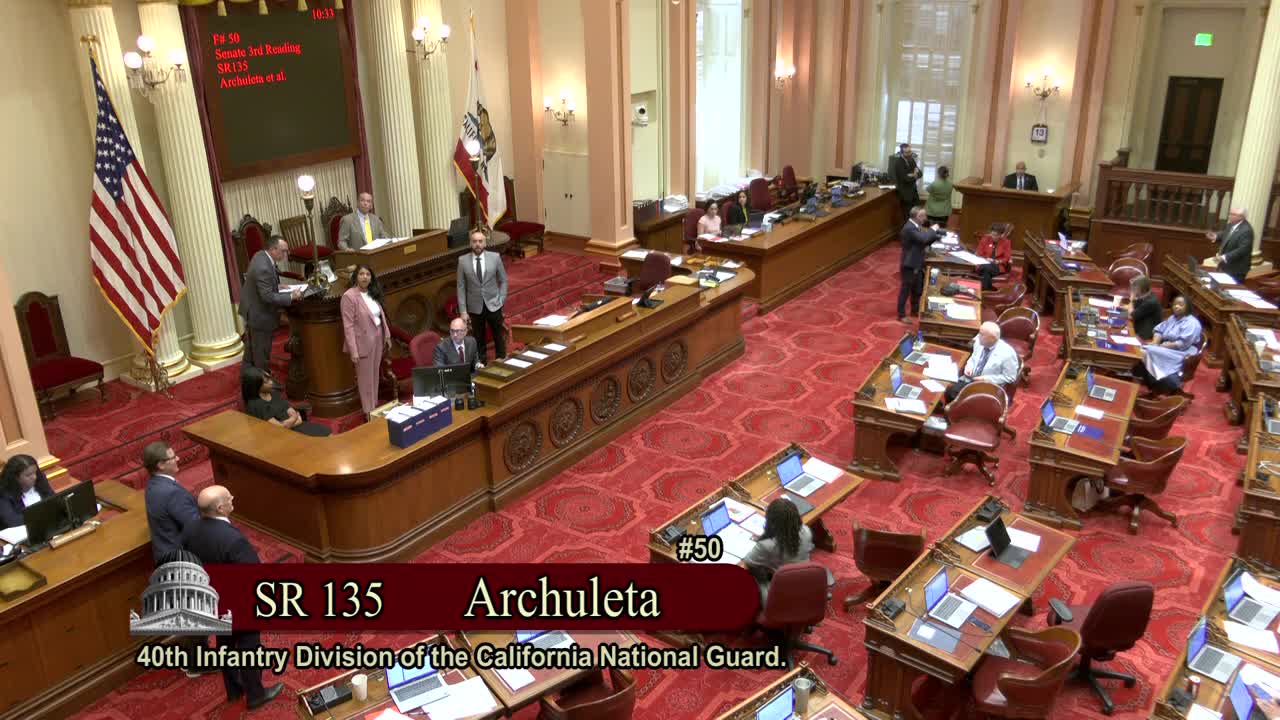
Bill Author

Bill Co-Author(s):