AB 1752: Eminent domain: appraisals.
- Session Year: 2025-2026
- House: Assembly
- Latest Version Date: 2026-05-18
Current Status:
In Progress
(2026-08-13: In committee: Held under submission.)
Introduced
In Committee
Awaiting First Chamber Vote
Passed First Chamber
In Committee
Awaiting Second Chamber Vote
Passed Second Chamber
Enacted
Existing law, the Eminent Domain Law, authorizes a public entity to exercise the power of eminent domain to acquire property for a public use, as specified. Existing law entitles the owner of a property acquired by eminent domain to specified compensation. Existing law requires a public entity to pay reasonable costs, not to exceed $5,000, of an independent appraisal ordered by the owner of a property that the public entity offers to purchase under the threat of eminent domain.
This bill would require a public entity that offers to purchase property under a threat of eminent domain related to specified purposes to pay the full reasonable costs of an independent appraisal ordered by the owner. owner, not to exceed $8,000.
Existing law, the Eminent Domain Law, authorizes a public entity to exercise the power of eminent domain to acquire property for a public use, as specified. Existing law entitles the owner of a property acquired by eminent domain to specified compensation. Existing law requires a public entity to pay reasonable costs, not to exceed $5,000, of an independent appraisal ordered by the owner of a property that the public entity offers to purchase under the threat of eminent domain.
This bill would require a public entity that offers to purchase property under a threat of eminent domain related to specified purposes to pay the full reasonable costs of an independent appraisal ordered by the owner.
(a)A public entity shall offer to pay the reasonable costs, not to exceed five thousand dollars ($5,000), of an independent appraisal ordered by the owner of a property that the public entity offers to purchase under a threat of eminent domain, at the time the public entity makes the offer to purchase the property. The independent appraisal shall be conducted by an appraiser licensed by the Office of Real Estate Appraisers.
(b)For purposes of this section, an offer to purchase a property under a threat of eminent domain is an offer to purchase a property pursuant to any of the following:
(1)Eminent domain.
(2)Following adoption of a resolution of necessity for the property pursuant to Section 1240.040.
(3)Following a statement that the public entity may take the property by eminent domain.
(c)If a public entity offers to purchase property under a threat of eminent domain related to construction of facilities for the isolated transfer of water across the Sacramento-San Joaquin Delta or for high-speed rail purposes, the public entity shall pay the full reasonable costs of an independent appraisal ordered by the owner. owner, not to exceed eight thousand dollars ($8,000).
(a)A public entity shall offer to pay the reasonable costs, not to exceed five thousand dollars ($5,000), of an independent appraisal ordered by the owner of a property that the public entity offers to purchase under a threat of eminent domain, at the time the public entity makes the offer to purchase the property. The independent appraisal shall be conducted by an appraiser licensed by the Office of Real Estate Appraisers.
(b)For purposes of this section, an offer to purchase a property under a threat of eminent domain is an offer to purchase a property pursuant to any of the following:
(1)Eminent domain.
(2)Following adoption of a resolution of necessity for the property pursuant to Section 1240.040.
(3)Following a statement that the public entity may take the property by eminent domain.
(c)If a public entity offers to purchase property under a threat of eminent domain related to construction of facilities for the isolated transfer of water across the Sacramento-San Joaquin Delta or for high-speed rail purposes, the public entity shall pay the full reasonable costs of an independent appraisal ordered by the owner.
|
Date
|
Status
|
|---|---|
| Aug 13, 2026 | In committee: Held under submission. |
| Aug 3, 2026 | In committee: Referred to APPR. suspense file. |
| Jun 24, 2026 | From committee: Do pass and re-refer to Com. on APPR. (Ayes 11. Noes 2.) (June 23). Re-referred to Com. on APPR. |
| Jun 10, 2026 | Referred to Com. on JUD. |
| Jun 1, 2026 | In Senate. Read first time. To Com. on RLS. for assignment. |
| May 28, 2026 | Read third time. Passed. Ordered to the Senate. (Ayes 77. Noes 0. Page 5542.) |
| May 28, 2026 | Read third time. Passed. Ordered to the Senate. (Ayes 77. Noes 0.) |
| May 19, 2026 | Read second time. Ordered to third reading. |
| May 18, 2026 | Read second time and amended. Ordered returned to second reading. |
| May 14, 2026 | From committee: Amend, and do pass as amended. (Ayes 15. Noes 0.) (May 14). |
| Apr 8, 2026 | In committee: Set, first hearing. Referred to APPR. suspense file. |
| Mar 17, 2026 | From committee: Do pass and re-refer to Com. on APPR. with recommendation: To Consent Calendar. (Ayes 12. Noes 0.) (March 17). Re-referred to Com. on APPR. |
| Feb 23, 2026 | Referred to Com. on JUD. |
| Feb 10, 2026 | From printer. May be heard in committee March 12. |
| Feb 9, 2026 | Read first time. To print. |
|
Date
|
Description
|
Location
|
Votes
|
|
|---|---|---|---|---|
| Aug 3, 2026 | Placed on suspense file | Senate Standing Committee on Appropriations |
Passed |
|
| Jun 23, 2026 | Do pass, but first be re-referred to the Committee on [Appropriations] | Senate Standing Committee on Judiciary |
Passed |
|
| May 28, 2026 | AB 1752 Lackey Assembly Third Reading | Assembly Floor |
Passed |
|
| May 14, 2026 | Do pass as amended. | Assembly Standing Committee on Appropriations |
Passed |
|
| Mar 17, 2026 | Do pass and be re-referred to the Committee on [Appropriations] with recommendation: To Consent Calendar | Assembly Standing Committee on Judiciary |
Passed |
This list shows positions taken on this bill by organizations on the date displayed, which is linked to the original source.
Positions by individuals are not included.
|
Organization
|
Position
|
Date
|
|---|---|---|
| Appraisal Institute of California | ** Support | |
| Appraisal Institute Of California Government Relations Committee | ** Support |
SENATE COMMITTEE ON
Senator Sabrina Cervantes, Chair
2025 - 2026 Regular Session
AB 1752 (Lackey) - Eminent domain: appraisals
Version: | Policy Vote: |
Urgency: | Mandate: |
Hearing Date: | Consultant: |
Bill Summary:
AB 1752 increases the maximum amount the Delta Conveyance Project and the High Speed Rail Authority (HSRA) project must offer to pay for the reasonable cost of an independent property appraisal when a property is under threat of eminent domain from $5,000 to $8,000.
Fiscal Impact:
Major costs to the Department of Water Resources (DWR) to cover the increased cost of independent property appraisals. The Delta Conveyance Project will likely need to acquire either an easement or fee title on approximately 485 parcels. Based on experience seeking land access for studies related to the Delta Conveyance Project, DWR expects as many as 70 percent (approximately 339 parcels) of those easements or acquisitions to require eminent domain. For DWR, for example, nearly all of the 485 acquisitions could result in the added cost, or $1,460,000 (485 x $3,000) above that which DWR would incur under existing law. (revenue bonds, General Obligation bonds)
HSRA estimates approximately 600 parcels will be needed for the Merced and Bakersfield extensions. Based on its historical experience, HSRA assumes that owners of approximately 50 percent of these parcels, 300 property owners, will request reimbursement for an independent appraisal over the next two years, for 150 reimbursements annually.
Assuming each reimbursement reaches the $8,000 maximum, annual reimbursement costs would be approximately $1.2 million, compared with $750,000 under the existing $5,000 cap. This bill would therefore result in estimated additional costs of up to $450,000 annually, or approximately $900,000 over the two-year acquisition period. Actual costs would depend on the number of property owners requesting independent appraisals and the reasonable cost of each appraisal.
If owners of all 600 parcels requested reimbursement and every appraisal reached the $8,000 cap, total reimbursement costs would be approximately $4.8 million, compared with $3 million under current law. Accordingly, the maximum incremental cost associated with these extensions could reach $1.8 million. HSRA could incur additional costs during future property-acquisition phases beyond these extensions, depending on the number of affected parcels and appraisal requests.
For DWR, nearly all of the 485 acquisitions could result in the added cost, or $1,460,000 (485 x $3,000) above that which DWR would incur under existing law.
Background:
Eminent domain is the legal authority of a government to take ownership of privately owned property for a public purpose. Whenever a government acquires a property via eminent domain, the government must provide just compensation to the property’s owner. Under existing law, a property owner under threat of eminent domain may obtain an independent appraisal of their property. Existing law requires the acquiring public entity to offer up to $5,000 for an independent appraisal of such a property. This amount has not been adjusted since the law was enacted in 2006.
Staff Comments: Before making an offer to acquire property, HSRA obtains an appraisal from a qualified appraiser and an independent review of that appraisal, both at HSRA’s expense. Existing law also allows the property owner to obtain a separate independent appraisal and receive reimbursement of up to $5,000. HSRA The Authority reports that property owners seeking independent appraisals have historically requested the maximum available reimbursement, which forms the basis for assuming the full $3,000 incremental cost per request.
Increasing the maximum appraisal reimbursement from $5,000 to $8,000 will incentivize more property owners to seek a third appraisal. This sudden surge would allow local appraisers to raise their rates, driving up average appraisal prices across the broader real estate market and significantly increasing overall project costs.
Costs could be higher and could include all parcels as the bill would cause the higher payment “under threat of eminent domain.” This is defined by the bill to include “following the adoption of a resolution of necessity,” and “following a statement that we could use eminent domain.” Where eminent domain is not used, but the property/easement right is being acquired after one of those has occurred, DWR and HSR would be responsible for the $3,000 in higher cost of appraisals even if eminent domain isn’t being used.
Related Legislation:
AB 1033 (Lackey) 2025 proposed increasing the cap for all eminent domain actions to $8,000. AB 1033 was held on this committee’s suspense file.
Senator Thomas Umberg, Chair
2025-2026 Regular Session
Bill No: AB 1752 (Author:Lackey)
Version: May 18, 2026
Hearing Date: June 23, 2026
Fiscal: Yes
Urgency: No
Consultant: ID
SUBJECT
Eminent domain: appraisals
DIGEST
This bill increases from $5,000 to $8,000 the reasonable cost of an independent appraisal that a public entity that made a property owner an offer to purchase under the threat of eminent domain must pay the owner, with respect to threats of eminent domain related to the construction of facilities for the isolated transfer of water across the Sacramento-San Joaquin Delta, or for high-speed rail purposes.
EXECUTIVE SUMMARY
Under the Fifth Amendment of the U.S. Constitution and Article I of the California Constitution, the government may only take private property for public use if it provides just compensation to the property owner; this is referred to as the Takings Clause. The purpose of the Takings Clause is to protect individuals from unjust confiscation of their property by the government, and was “designed to bar Government from forcing some people alone to bear public burdens which, in all fairness and justice, should be borne by the public as a whole.” (Armstrong v. United States (1960) 364 U.S. 40, 49.) When the state or a local government intends to take property through eminent domain, it must follow a specific procedural process detailed in California’s Eminent Domain Law. First, the government will obtain an appraisal of the property and make an offer under threat of eminent domain based on that appraisal. State law requires the government to pay the reasonable costs to the property owner for an independent appraisal when ordered by the property owner, up to $5,000. If the government and the property owner do not agree on a price for the property, the government can move forward with the eminent domain through the adoption of a “resolution of necessity” and a civil action. The $5,000 cap on the reasonable costs of an independent appraisal that the public entity must pay a property owner upon request was placed into law almost twenty years ago.
AB 1752 proposes to increase this cap to $8,000, specifically for threats of eminent domain related to construction of facilities for the Delta conveyance project or for high-speed rail purposes.
AB 1752 is sponsored by the Appraisal Institute of California, and the Committee has received no other letters of support or opposition.
PROPOSED CHANGES TO THE LAW
Existing federal law prohibits the taking of private property for public use without just compensation. (U.S. Const. Art. V.)
Existing state law:
- Provides that private property may be taken or damaged for a public use and only when just compensation, ascertained by a jury unless waived, has first been paid to the owner. (Cal. Const. Art. I, Sec. 19.)
- Provides that the power of eminent domain may be exercised to acquire property only for a public use, and that, where the Legislature provides by statute that a use, purpose, object, or function is one for which the power of eminent domain may be exercised, such action is deemed to be a declaration by the Legislature that such use, purpose, object, or function is a public use. (Code Civ. Proc. § 1240.010.)
- Specifies that a public entity may not commence an eminent domain proceeding until its governing body has adopted a resolution of necessity, and requires that the resolution of necessity include:
- a general statement of the public use for which the property is needed;
- a reference to the statute that authorizes the public entity to acquire property through eminent domain;
- a description of the location of the property and the extent of property to be taken; and
- a declaration that the governing body made specified findings related to the public interest and necessity that require the proposed project, how the project makes the most public good with the least private injury, and the necessity of the property to be taken. (Code Civ. Proc. §§ 1245.220, 1245.230.)
- Requires all actions for eminent domain to be filed in the superior court for the county in which the property is to be taken. (Code Civ. Proc. § 1250.020.)
- Provides that a defendant in an eminent domain proceeding may object to the plaintiff’s right to take, by demurrer or answer, as specified. (Code Civ. Proc. § 1250.350.)
- Provides, in addition to the grounds for objection specified in (5), grounds for objection to the right to take where the plaintiff has not adopted a resolution of necessity that conclusively, as specified, includes the following information:
- the plaintiff is a public entity and has not adopted a resolution of necessity that satisfies the requirements of existing law;
- the public interest and necessity do not require the proposed project;
- the proposed project is not planned or located in the manner that will be most compatible with the greatest public good and the least private injury;
- the property described in the complaint is not necessary for the proposed project; or
- the plaintiff is a quasi-public entity, as specified, and has not satisfied the taking requirements of existing law. (Code Civ. Proc. § 1250.370.)
- Requires a public entity to pay the reasonable cost, not to exceed $5,000, of an independent appraisal, conducted by a licensed appraiser, if ordered by the owner of the property that the public entity offers to purchase under a threat of eminent domain, at the time the public entity makes the offer to purchase the property. (Code Civ. Proc. § 1263.025(a).)
- Specifies that, for the purposes of 7), above, “under threat of eminent domain” means an offer to purchase property pursuant to:
- eminent domain;
- the adoption of a resolution of necessity; or
- a statement that the public entity may take the property by eminent domain. (Code Civ. Proc. § 1263.025(b).)
This bill requires that, if a public entity offers to purchase property under a threat of eminent domain related to construction of facilities for the isolated transfer of water across the Sacramento-San Joaquin Delta, or for high-speed rail purposes, the public entity pay the full reasonable cost of an independent appraisal ordered by the owner, not to exceed $8,000.
COMMENTS
- Author’s statement
In support of this measure, the author states:
This bill provides a fair, reasonable, and necessary update to the reimbursement structure for property owners facing eminent domain actions. AB 1752 provides fairness so that property owners can secure independent licensed appraisals without bearing undue financial burdens.
- Eminent Domain and the Constitution’s takings clause
The Takings Clause of the Fifth Amendment of the U.S. Constitution states that “no private property may be taken for public use, without just compensation.” (U.S. Const., Amend. V.) It is applicable to the actions of state and local governments through the Fourteenth Amendment. (Green v. Frazier (1920) 253 U.S. 233, 238.) The purpose of the Takings Clause is to protect individuals from unjust confiscation of their property by the government, and was “designed to bar Government from forcing some people alone to bear public burdens which, in all fairness and justice, should be borne by the public as a whole.” (Armstrong v. United States (1960) 364 U.S. 40, 49.)
Historically, a taking was considered to have occurred when the government physically took possession of or occupied one’s property. When the government physically acquires private property in these ways, the Fifth Amendment requires the government to provide just compensation for that taking. (Tahoe-Sierra Preservation Council, Inc. v. Tahoe Regional Planning Agency (2002) 535 U.S. 302, 322.) This process, by which government takes a person’s property for compensation, is called eminent domain. However, more recent caselaw on the Takings Clause developed the concept of a “regulatory” taking, in which the government restricts the owner’s use of their property so much as to go too far. (Penn. Coal Co. v. Mahon (1922) 26 U.S. 393.) To determine whether such a restriction amounts to a taking, the Court has balanced a variety of factors, including the economic impact of the regulation, its interference with reasonable investment-based expectations, and the character of the government action. (Penn. Central Transp. Co. v. New York City (1978) 48 U.S. 104, 124.)
When the state or a local government intends to take property through eminent domain, it must follow a specific procedural process detailed in California’s Eminent Domain Law. (Code Civ. Proc. §§ 1230.010 et seq.) Eminent domain cases typically begin with the agency first offering to purchase the property upon threat of eminent domain. The government will obtain an appraisal of the property, and make an offer based on that appraisal. State law requires the government to pay the reasonable costs to the property owner for an independent appraisal when ordered by the property owner. (Code Civ. Proc. § 1263.025.) If the government and the property owner do not agree on a price for the property, the government can move forward with the eminent domain through a hearing and the adoption of a “resolution of necessity” at that hearing. The government may then file a civil action to carry out the eminent domain.
- AB 1752 increases the appraisal cap for the Delta Tunnel and high-speed rail projects
When the government pays for the property owner to obtain an independent appraisal of their property, state law caps the total amount that the government agency must pay for that appraisal at $5,000. (Code Civ. Proc. § 1263.025.) That cap was placed in law by AB 1210 (Torlakson, Ch. 594, Stats. 2006) in 2006, and has not been changed since.
AB 1752 proposes to increase this cap to $8,000 in the circumstance of an eminent domain related to construction facilities for the isolated transfer of water across the Sacramento-San Joaquin Delta or for the high-speed rail project. The author argues that this is needed because the cap is now outdated, as appraisal costs have risen significantly due to a variety of factors, including inflation. According to the author, this cap ultimately requires the property owner to shoulder a significant financial burden when attempting to ensure that they receive a fair market value for their property. This is particularly true, they assert, in cases of partial takings, as such appraisals are more complex.
It certainly is the case that the cost of living has increased considerably since 2006. The U.S. Bureau of Labor Statistics’ Consumer-Price Index Inflation Calculator calculates the change in the value of $5,000 in 2006 to present to be slightly more than $3,000, such that $5,000 in 2006 has the same buying power as slightly more than $8,000 now.[1] However, the current average cost of an appraisal is unclear. This is in part because appraisals can vary considerably depending on the property being appraised and the type of taking involved.
The cost of covering an independent appraisal may also increase the cost to the government of carrying out the public project for which it is taking the property. If the property is of a sufficiently low value, an $8,000 appraisal bill may make the project financially imprudent, or the threat of requesting an independent appraisal could encourage the government agency to increase its offer to avoid having to potentially pay for the appraisal. If the government must conduct eminent domain on many owners for a single project, this added cost also may add up to real money. While requiring the government to pay part or all of the owner’s own appraisal is part of helping the owner feel assured that they are justly compensated for their property, it also adds to the cost of the government’s project.
It also should be noted that a property owner need not obtain an independent appraisal. Since the public agency first obtains its own independent appraisal, the property owner could simply rely upon the appraisal obtained by the government. The government already bore the cost of engaging an appraiser for that appraisal, and yet if the owner wishes to obtain a second appraisal, they can do so and can also charge the government up to the limit that this bill is increasing.
Additionally, AB 1752’s increased limits only apply to two projects: the Delta Conveyance project (the Delta tunnels) and California’s high-speed rail project. The Delta Conveyance project is a major water infrastructure project of the state that would move water around the San Joaquin Delta to route water in Northern California to central and southern California.[2] It has not been without its controversy since its inception, and will undoubtedly require the state to utilize eminent domain in order to build the tunnels and related infrastructure needed for it. The high-speed rail project also has not been without controversy. It was approved by the voters through a state initiative in 2008 (Proposition 1A), and will build a high-speed rail line more than 400 miles to connect Los Angeles and Southern California with the Bay Area and Sacramento.[3] The project is currently projected to be considerably over budget from when it was approved by voters in 2008.[4] It likewise has involved, and will continue to require, eminent domain in order to obtain the land for its lines and train stations.
SUPPORT
Appraisal Institute of California Government Relations Committee (sponsor)
OPPOSITION
None received
RELATED LEGISLATION
Pending Legislation: None known.
Prior Legislation:
AB 1033 (Lackey, 2025) would have increased the limitation on the reasonable cost of an independent appraisal that a public entity that made a property owner an offer to purchase under the threat of eminent domain from $5,000 to $8,000. AB 1033 is currently pending in the Senate Appropriations Committee.
AB 1210 (Torlakson, Ch. 586, Stats. 2006) provided various procedural protections for property owners when subject to a taking of their property by eminent domain, including a requirement that the public entity offering to purchase a property under threat of eminent domain pay the reasonable costs of an independent appraisal at the request of the property owner, not to exceed $5,000.
PRIOR VOTES:
Assembly Floor (Ayes 77, Noes 0)
Assembly Appropriations Committee (Ayes 15, Noes 0)
Assembly Judiciary Committee (Ayes 12, Noes 0)
**************
U.S. Bureau Lab. Statistics, “CPI Inflation Calculator” (accessed Jun. 29, 2025) https://www.bls.gov/data/inflation_calculator.htm. ↑
See, https://www.deltaconveyanceproject.com/about-the-delta-conveyance-project. ↑
https://calmatters.org/economy/2023/03/california-high-speed-rail/. ↑
ASSEMBLY THIRD READING
ATR Bill Id:AB 1752
Author:(Lackey)
As Amended Ver:May 18, 2026
Majority vote
SUMMARY
Requires a public entity to pay the full reasonable costs, not to exceed eight thousand dollars ($8,000), of an independent appraisal ordered by the owner as a part of eminent domain proceedings for specified public works projects.
Major Provisions
Requires, if a public entity offers to purchase property under a threat of eminent domain related to construction of facilities for the isolated transfer of water across the Sacramento-San Joaquin Delta or for high-speed rail purposes, the public entity to pay the full reasonable costs of an independent appraisal ordered by the owner.
COMMENTS
Eminent domain is a constitutionally provided power that enables the government to acquire private property and put such property to a public use. When utilizing the power of eminent domain, the government is required to provide just compensation to the owner of the property to be acquired by the government. Under existing law, a property owner is entitled to an independent appraisal of their property as soon as it becomes a target of eminent domain. The existing law requires the government entity to compensate a property owner for "reasonable costs" of the appraisal. Existing law caps "reasonable costs" at five thousand dollars ($5,000). This bill increases that cap to cover all reasonable appraisal costs for potential takings stemming from the Sacramento-San Joaquin Delta tunnel project as well as land needed for high-speed rail.
The power of eminent domain and the right to a fair appraisal. Recognizing that governments must act in favor of the public interest, both the state and federal constitutions permit the taking of private property for a public use through a process known as eminent domain. The California Constitution permits the taking of property only when the private property owner is provided "just compensation." (California Constitution Article I, Section 19.) In addition to the high-level requirement that an owner is compensated for the property taken for public use, as provided in the constitution, the Code of Civil Procedure provides extensive detail guiding the legal proceedings surrounding the use of eminent domain. (Code of Civil Procedure Section 1263.010 et seq.)
One aspect of the eminent domain process designed to protect private property owners from government overreach is the provision that requires the government seeking to obtain property to assist a property owner in receiving an independent appraisal of the property as soon as the land becomes a candidate for eminent domain. Seeking to protect both the finances of the property owners as well as the taxpayers, the existing law enables the property owner to seek reimbursement for the "reasonable" cost of the appraisal. The existing law statutorily caps these "reasonable" costs at five thousand dollars. However, the author and proponents of this measure note that the appraisal cost cap has not been increased in nearly twenty years.
Although prior legislation to increase the appraisal caps was deemed too costly, this bill seeks to increase the cap for a narrow set of properties impacted by two high-profile state infrastructure projects. Recognizing that the statutory cap on appraisal reimbursements for eminent domain actions had not been raised in nearly 20 years, last year, the author of this bill introduced AB 1033 (Lackey) of the current legislative session to adjust the cap to reflect inflation. That bill was ultimately held on the Senate Appropriations Committee's Suspense File when it was noted that the annual cost to the state may exceed $3.5 million based on an examination of the historic use of eminent domain throughout this decade. Part of that cost analysis reflected the fact that in 2024, approximately 1,300 parcels were subject to eminent domain-related approvals. (Sen. Com. on Appropriations, analysis of Assembly Bill 1033 of the current legislative session as amended May 23, 2025, p. 1.)
Seeking to lower the total number of parcels implicated by this bill, and thus potentially reduce the measure's cost impacts, the author narrowed AB 1033's provisions to only apply to eminent domain-related appraisals of land impacted by the proposed Sacramento-San Joaquin Delta tunnel project and the state's construction of high speed rail in the Central Valley. While it is still unclear how many parcels of land may be needed to complete these projects, or if some of the projects will ever be undertaken, one must surmise that the total properties implicated by this bill will be far less than 1,300 parcels per year.
According to the Author
This bill provides a fair, reasonable, and necessary update to the reimbursement structure for property owners facing eminent domain actions related to the California high-speed rail project or the delta conveyance project. AB 1752 provides fairness so that property owners can secure independent licensed appraisals without bearing undue financial burdens.
A broader bill, that applied to all eminent domain actions, was proposed in 2025, AB 1033 (Lackey) however the costs associated with the bill were significant. In response, AB 1752 is taking a narrower approach specifically focused on two major projects that will likely include eminent domain actions by state agencies.
Arguments in Support
This bill is sponsored by the Appraisal Institute of California. In support of the bill, they write:
Under current law, property owners may obtain reimbursement for an independent appraisal when a public entity seeks to acquire property through eminent domain. However, the existing reimbursement limit of $5,000 can leave property owners responsible for significant out-of-pocket costs when securing a professional appraisal necessary to evaluate the government's offer.
AB 1752 addresses this issue in a targeted manner by requiring full reimbursement of appraisal costs for property owners whose property is subject to eminent domain proceedings associated with the Delta Conveyance Project or the California High-Speed Rail Project. These projects involve complex acquisitions affecting a wide range of property types, where accurate and independent valuation is essential.
Obtaining a credible appraisal is a critical step for property owners seeking to protect their constitutional right to just compensation. By ensuring full reimbursement of appraisal costs in these specific circumstances, AB 1752 helps ensure that property owners are not discouraged from obtaining independent valuations due to financial constraints.
Arguments in Opposition
None on file
FISCAL COMMENTS
According to the Assembly Appropriations Committee, costs of an unknown, but potentially significant, amount to state entities for increased appraisal reimbursements. For high-speed rail, costs would be borne by the High-Speed Rail Authority from the High-Speed Passenger Train Bond Fund (Proposition 1A) and the Greenhouse Gas Reduction Fund (cap-and-trade proceeds). For the Delta Conveyance Project, costs would likely be borne by the Department of Water Resources (DWR), funded by State Water Project revenue — derived from participating public water agencies and repaid through water contractor charges, not the General Fund; costs for habitat or flood management acquisitions have historically been funded by the General Fund or general obligation bonds. The Legislative Analyst's Office recently warned of General Fund structural deficits of around $35 billion per year beginning in the 2027-28 fiscal year.
- The High-Speed Rail Authority (HSRA) estimates it will need approximately 150 parcels per year in the near term as it enters an aggressive acquisition phase for the Merced-to-Bakersfield extensions. Assuming reimbursement costs range from $5,000 to $8,000 per parcel, the HSRA estimates annual costs of $750,000 to $1.2 million for appraisal reimbursements alone — up from the current maximum of $750,000 under the $5,000 cap. Costs could grow as acquisition expands toward San Francisco and Anaheim.
- DWR estimates approximately 1,100 appraisals over a five-year period related to the Delta Conveyance Project. Assuming an appraisal cost of $8,000 — $3,000 more than the current $5,000 cap — total additional costs will likely be in the low millions of dollars.
VOTES
ASM JUDICIARY: 12-0-0
YES: Kalra, Macedo, Bauer-Kahan, Bryan, Connolly, Dixon, Harabedian, Pacheco, Papan, Sanchez, Stefani, Zbur
ASM APPROPRIATIONS: 15-0-0
YES: Wicks, Hoover, Aguiar-Curry, Calderon, Caloza, Dixon, Fong, Mark González, Krell, Pacheco, Pellerin, Sharp-Collins, Solache, Ta, Tangipa
UPDATED
VERSION: May 18, 2026
CONSULTANT: Nicholas Liedtke / JUD. / (916) 319-2334 FN: 0002731
Date of Hearing: April 8, 2026
ASSEMBLY COMMITTEE ON APPROPRIATIONS
Buffy Wicks, Chair
ABPCA Bill Id:AB 1752
Author:(Lackey) – As Introduced Ver:February 9, 2026
Policy Committee: | Judiciary | Vote: | 12 - 0 |
|
| ||
|
|
Urgency: No State Mandated Local Program: No Reimbursable: No
SUMMARY:
This bill removes the $5,000 eminent domain independent appraisal cap to cover all reasonable appraisal costs stemming from the Sacramento-San Joaquin Delta tunnel project and land needed for high-speed rail.
FISCAL EFFECT:
Costs of an unknown, but potentially significant, amount to state entities for increased appraisal reimbursements. For high-speed rail, costs would be borne by the High-Speed Rail Authority from the High-Speed Passenger Train Bond Fund (Proposition 1A) and the Greenhouse Gas Reduction Fund (cap-and-trade proceeds). For the Delta Conveyance Project, costs would likely be borne by the Department of Water Resources (DWR), funded by State Water Project revenue — derived from participating public water agencies and repaid through water contractor charges, not the General Fund; costs for habitat or flood management acquisitions have historically been funded by the General Fund or general obligation bonds. The Legislative Analyst’s Office recently warned of General Fund structural deficits of around $35 billion per year beginning in the 2027-28 fiscal year.
- The High Speed Rail Authority (HSRA) estimates it will need approximately 150 parcels per year in the near term as it enters an aggressive acquisition phase for the Merced-to-Bakersfield extensions. Assuming reimbursement costs range from $5,000 to $10,000 per parcel, the HSRA estimates annual costs of $750,000 to $1.5 million for appraisal reimbursements alone — up from the current maximum of $750,000 under the $5,000 cap. Costs could grow as acquisition expands toward San Francisco and Anaheim.
The HSRA also raises concerns that removing the cap could inflate appraisal costs more broadly. The Authority currently provides two appraisals at its own expense; the third, owner-ordered appraisal is used to negotiate a higher purchase price. Without a cap, the Authority argues, property owners may seek appraisals that support inflated valuations, increasing both the cost of the appraisals and the capital cost of the underlying property acquisitions. This committee is not in a position to evaluate that claim but notes it as a cost risk.
- DWR estimates approximately 1,100 appraisals over a five-year period related to the Delta Conveyance Project. DWR assumes an average appraisal cost of $10,000 — roughly double the current $5,000 cap — and projects that removing the cap would increase the share of landowners requesting independent appraisals from approximately 25 percent to 75 percent. On that basis, DWR estimates total additional costs of approximately $6.9 million over five years, or roughly $1.4 million per year.
COMMENTS:
- Purpose. According to the author,
This bill provides a fair, reasonable, and necessary update to the reimbursement structure for property owners facing eminent domain actions related to the California high-speed rail project or the delta conveyance project. AB 1752 provides fairness so that property owners can secure independent licensed appraisals without bearing undue financial burdens.
- Background. Eminent domain is a constitutionally provided government authority to acquire private property for just compensation and put such property to public use. Under existing law, when a public entity seeks to acquire private property through eminent domain, it must offer to reimburse the property owner for the reasonable cost of an independent appraisal, up to $5,000. That cap has not been adjusted in nearly 20 years and, according to the bill’s sponsor, no longer reflects the actual cost of obtaining an appraisal, particularly for complex takings involving subdivided parcels or partial acquisitions.
This bill targets two large state infrastructure projects: the Sacramento-San Joaquin Delta tunnel (Delta Conveyance Project) and California’s high-speed rail system. Both projects involve significant land acquisition through eminent domain. The HSRA is currently in a heavy acquisition phase, estimating the need for approximately 600 parcels across the Merced and Bakersfield extensions in the near term, with further expansion planned. DWR estimates approximately 1,100 appraisals over a five-year period for the Delta Conveyance Project.
- Prior Legislation. AB 1033 (Lackey, 2025), would have increased the cap for all eminent domain actions to $8,000. AB 1033 was held on the Senate Appropriations Committee suspense file when annual costs to the state were estimated to exceed $3.5 million based on approximately 1,300 parcels subject to eminent domain-related approvals in 2024.
Analysis Prepared by: Shiran Zohar / APPR. / (916) 319-2081
Date of Hearing: March 17, 2026
ASSEMBLY COMMITTEE ON JUDICIARY
Ash Kalra, Chair
ABPCA Bill Id:AB 1752
Author:(Lackey) – As Introduced Ver:February 9, 2026
PROPOSED CONSENT
SUBJECT: Eminent domain: appraisals
KEY ISSUE: should a public entity be required to reimburse a landowner the full reasonable cost of an appraisal if the property being appraised is the subject of eminent domain proceedings because the property is necessary for specified public works projects?
SYNOPSIS
When the government seeks to obtain private property for public use through eminent domain, existing law requires the government to reimburse a private landowner for the costs associated with obtaining an independent appraisal of their property. However, existing law also caps the level of this reimbursement at $5,000. The existing cap has not kept pace with inflation forcing many property owners to pay for a portion of the appraisal or for the appraiser to agree to do the work for the statutory limit.
This bill would remove the cap for appraisals related to eminent domain actions stemming from the Sacramento-San Joaquin Delta tunnel project or the construction of California’s High Speed Rail network. The measure is a more modest version of the author’s AB 1033 (Lackey, 2025) which would have lifted the cap for all eminent domain-related appraisals in California but was held in the Senate Appropriations Committee due to cost concerns.
This measure is sponsored by the Appraisal Institute of California who note that the existing statutory cap no longer reflects the actual cost of obtaining an appraisal for the purposes of eminent domain, especially for complex takings in which an existing property may be subdivided. This measure has no known opposition.
SUMMARY: Requires a public entity to pay the full reasonable costs of an independent appraisal ordered by the owner as a part of eminent domain proceedings for specified public works projects. Specifically, this bill:
- Requires, if a public entity offers to purchase property under a threat of eminent domain related to construction of facilities for the isolated transfer of water across the Sacramento-San Joaquin Delta or for high-speed rail purposes, the public entity to pay the full reasonable costs of an independent appraisal ordered by the owner.
EXISTING LAW:
- Provides that private property may be taken or damaged for a public use and only when just compensation, ascertained by a jury unless waived, has first been paid to the owner. (Cal. Const. art. I, Sec. 19.)
- Provides that the power of eminent domain may be exercised to acquire property only for a public use, and that where the Legislature provides by statute that a use, purpose, object, or function is one for which the power of eminent domain may be exercised, such action is deemed to be a declaration by the Legislature that such use, purpose, object, or function is a public use. (Code of Civil Procedure Section 1240.010.)
- Requires all actions for eminent domain to be filed in the superior court for the county in which the property is to be taken. (Code of Civil Procedure Section 1250.020.)
- Provides that any person who claims a legal or equitable interest in the property described in the complaint may appear in the proceeding. (Code of Civil Procedure Section 1250.030.)
- Provides that a defendant may object to the plaintiff’s right to take, by demurrer or answer, as specified. (Code of Civil Procedure Section 1250.350.)
- Provides that the grounds for objecting to the right to take includes:
- The plaintiff is not authorized by statute to exercise the power of eminent domain for the purpose stated in the complaint;
- The stated purpose is not a public use;
- The plaintiff does not intend to devote the property described in the complaint to the stated purpose;
- There is no reasonable probability that the plaintiff will devote the described property to the stated purpose within seven years, or ten years where the property is taken pursuant to the Federal Aid Highway Act of 1973, or such longer period as is reasonable;
- The described property is not subject to acquisition by the power of eminent domain for the stated purpose;
- The described property is sought to be acquired pursuant to excess condemnation, condemnation for compatible use, or condemnation for more necessary public use but the acquisition does not satisfy the requirements of those provisions;
- The described property is sought to be acquired pursuant to condemnation for more necessary public use but the defendant has the right to continue the public use to which the property is appropriated as a joint use; or
- Any other ground provided by law. (Code of Civil Procedure Section 1250.360.)
- Provides that in addition to the grounds for objection specified in 6), grounds for objection to the right to take where the plaintiff has not adopted a resolution of necessity that conclusively, as specified, includes:
- The plaintiff is a public entity and has not adopted a resolution of necessity that satisfies the requirements of existing law;
- The public interest and necessity do not require the proposed project;
- The proposed project is not planned or located in the manner that will be most compatible with the greatest public good and the least private injury;
- The property described in the complaint is not necessary for the proposed project; or
- The plaintiff is a quasi-public entity, as specified, and has not satisfied the take requirements of existing law. (Code of Civil Procedure Section 1250.370.)
- Requires a public entity to pay the reasonable cost, not to exceed $5,000, the costs of an independent appraisal, conducted by a licensed appraiser, ordered by the owner of a property that the public entity offers to purchase under a threat of eminent domain, at the time the public entity makes the offer to purchase the property. (Code of Civil Procedure Section 1263.025 (a).)
FISCAL EFFECT: As currently in print this bill is keyed fiscal.
COMMENTS: Eminent domain is a constitutionally provided power that enables the government to acquire private property and put such property to a public use. When utilizing the power of eminent domain the government is required to provide just compensation to the owner of the property to be acquired by the government. Under existing law, a property owner is entitled to an independent appraisal of their property as soon as it becomes a target of eminent domain. The existing law requires the government entity to compensate a property owner for “reasonable costs” of the appraisal. Existing law caps “reasonable costs” at five thousand dollars ($5,000). This bill would increase that cap to cover all reasonable appraisal costs for potential takings stemming from the Sacramento-San Joaquin Delta tunnel project as well as land needed for high speed rail. In support of this bill the author states:
This bill provides a fair, reasonable, and necessary update to the reimbursement structure for property owners facing eminent domain actions related to the California high-speed rail project or the delta conveyance project. AB 1752 provides fairness so that property owners can secure independent licensed appraisals without bearing undue financial burdens.
A broader bill, that applied to all eminent domain actions, was proposed in 2025, AB 1033 (Lackey) however the costs associated with the bill were significant. In response, AB 1752 is taking a narrower approach specifically focused on two major projects that will likely include eminent domain actions by state agencies.
The power of eminent domain and the right to a fair appraisal. Recognizing that governments must act in favor of the public interest, both the state and federal constitutions permit the taking of private property for a public use through a process known as eminent domain. The California Constitution permits the taking of property only when the private property owner is provided “just compensation.” (Cal. Const. art. I, Sec. 19.) In addition to the high-level requirement that an owner is compensated for the property taken for public use, as provided in the constitution, the Code of Civil Procedure provides extensive detail guiding the legal proceedings surrounding the use of eminent domain. (Code of Civil Procedure Section 1263.010 et seq.)
One aspect of the eminent domain process designed to protect private property owners from government overreach is the provision that requires the government seeking to obtain property to assist a property owner in receiving an independent appraisal of the property as soon as the land becomes a candidate for eminent domain. Seeking to protect both the finances of the property owners as well as the taxpayers, the existing law enables the property owner to seek reimbursement for the “reasonable” cost of the appraisal. The existing law statutorily caps these “reasonable” costs at five thousand dollars. However, the author and proponents of this measure note that the appraisal cost cap has not been increased in nearly twenty years.
Although prior legislation to increase the appraisal caps was deemed too costly, this bill seeks to increase the cap for a narrow set of properties impacted by two high-profile state infrastructure projects. Recognizing that the statutory cap on appraisal reimbursements for eminent domain actions had not been raised in nearly 20 years, last year, the author of this bill introduced AB 1033 (Lackey, 2025) to adjust the cap to reflect inflation. That bill was ultimately held on the Senate Appropriations Committee’s Suspense File when it was noted that the annual cost to the state may exceed $3.5 million based on an examination of the historic use of eminent domain throughout this decade. Part of that cost analysis reflected the fact that in 2024, approximately 1,300 parcels were subject to eminent domain-related approvals. (Sen. Com. on Appropriations, analysis of Asm. Bill No. 1033 (2025-26 Reg. Session) as amended May 23, 2025, p. 1.)
Seeking to lower the total number of parcels implicated by this bill, and thus potentially reduce the measure’s cost impacts, the author narrowed AB 1033’s provisions to only apply to eminent domain-related appraisals of land impacted by the proposed Sacramento-San Joaquin Delta tunnel project and the state’s construction of high speed rail in the Central Valley. While it is still unclear how many parcels of land may be needed to complete these projects, or if some of the projects will ever be undertaken, one must surmise that the total properties implicated by this bill will be far less than 1,300 parcels per year.
ARGUMENTS IN SUPPORT: This bill is sponsored by the Appraisal Institute of California. In support of the bill, they write:
Under current law, property owners may obtain reimbursement for an independent appraisal when a public entity seeks to acquire property through eminent domain. However, the existing reimbursement limit of $5,000 can leave property owners responsible for significant out-of-pocket costs when securing a professional appraisal necessary to evaluate the government’s offer.
AB 1752 addresses this issue in a targeted manner by requiring full reimbursement of appraisal costs for property owners whose property is subject to eminent domain proceedings associated with the Delta Conveyance Project or the California High-Speed Rail Project. These projects involve complex acquisitions affecting a wide range of property types, where accurate and independent valuation is essential.
Obtaining a credible appraisal is a critical step for property owners seeking to protect their constitutional right to just compensation. By ensuring full reimbursement of appraisal costs in these specific circumstances, AB 1752 helps ensure that property owners are not discouraged from obtaining independent valuations due to financial constraints.
REGISTERED SUPPORT / OPPOSITION:
Support
Appraisal Institute of California (sponsor)
Opposition
None on file
Analysis Prepared by: Nicholas Liedtke / JUD. / (916) 319-2334
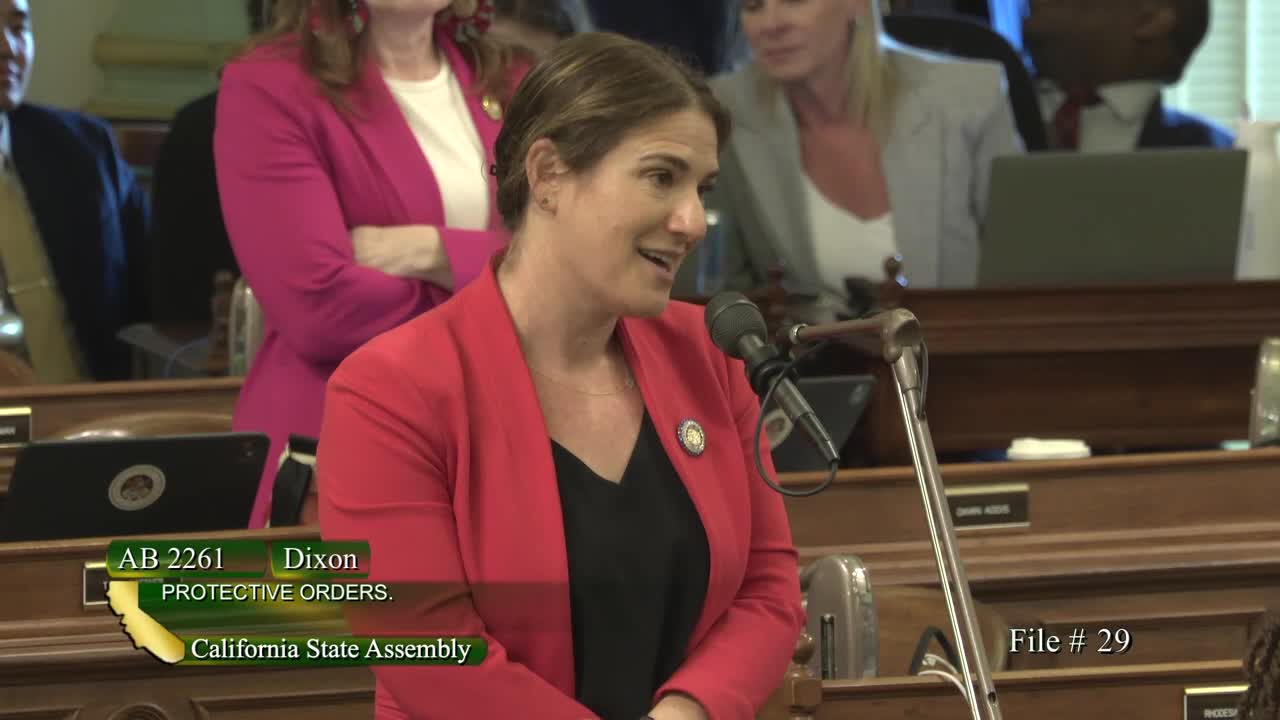
Bill Author

Bill Co-Author(s):