AB 2031: Unclaimed property.
- Session Year: 2025-2026
- House: Assembly
- Latest Version Date: 2026-06-11
Current Status:
In Progress
(2026-08-13: In committee: Held under submission.)
Introduced
In Committee
Awaiting First Chamber Vote
Passed First Chamber
In Committee
Awaiting Second Chamber Vote
Passed Second Chamber
Enacted
What does this bill do?
This bill updates unclaimed property rules for securities and other intangible interests in business associations, including holdings in brokerage accounts. A security can revert to the state if the holder (the company or its agent that keeps the records) does not know the owner's location and the owner has not claimed a payment or contacted the holder for three years; it does not revert if dividends are cashed or auto-deposited at least once every three years or if annual mailings to the owner are not returned as undeliverable, and the rule excludes digital financial assets.
The summary is provided by generative AI which can make mistakes. For original language, please view the details in the table below.
Existing law, the Unclaimed Property Law, governs the disposition of unclaimed property, including the escheat of certain property to the state. Existing law provides that any intangible interest in a business association escheats to this state if (1) the interest in the association is owned by a person who for more than 3 years has neither claimed a dividend or other sum nor corresponded in writing with the association or otherwise indicated an interest, as specified, and (2) the association does not know the location of the owner.
This bill would apply the 2 conditions above to any security or other intangible interest in a business association. The bill would provide that a security or interest does not escheat if either (1) the business association issues to the owner a dividend or other distribution that is, at least once every 3 years, negotiated, redeemed, or automatically deposited in an owners account, as specified, or (2) the business association does not issue dividends or other distributions, or issues dividends that are automatically reinvested in the owners account, and the holders communication to the owner is not returned as undeliverable. The security or interest would escheat to the state, as specified, if the holders communication to the owner is returned as undeliverable. The security or interest would also escheat to the state if the business association or its agent issues a dividend or other distribution to the owner at least once per year, and over a 3-year period none of that dividend or other distribution is negotiated, redeemed, or automatically deposited in an owners account, except as specified. The bill would clarify that its provisions do not apply to a digital financial asset.
Existing law vests the Public Utilities Commission with regulatory authority over public utilities. Existing law prohibits public utilities, other than certain common carriers, from selling, leasing, assigning, mortgaging, or otherwise disposing of, or encumbering, its assets that are necessary or useful in the performance of its duties to the public, unless the public utility has secured an order from the commission to do so for a qualified transaction above $5,000,000 or an approval from the commission through the filing of an advice letter for a qualified transaction at or below $5,000,000. Absent protest or incomplete documentation, existing law requires the commission to approve or deny the advice letter within 120 days of its filing by the applicant public utility.This bill would reduce the time the commission has to approve or deny the advice letter from 120 days to 90 days.Existing law vests the Public Utilities Commission with regulatory authority over public utilities. Existing law prohibits public utilities, other than certain common carriers, from selling, leasing, assigning, mortgaging, or otherwise disposing of, or encumbering, its assets that are necessary or useful in the performance of its duties to the public, unless the public utility has secured an order from the commission to do so for a qualified transaction above $5,000,000 or an approval from the commission through the filing of an advice letter for a qualified transaction at or below $5,000,000. Absent protest or incomplete documentation, existing law requires the commission to approve or deny the advice letter within 120 days of its filing by the applicant public utility.
This bill would reduce the time the commission has to approve or deny the advice letter from 120 days to 90 days.
(a)Subject to Section 1510, any dividend, profit, distribution, interest, payment on principal, or other sum held or owing by a business association for or to its shareholder, certificate holder, member, bondholder, or other security holder, or a participating patron of a cooperative, who has not claimed it, or corresponded in writing with the business association concerning it, within three years after the date prescribed for payment or delivery, escheats to this state.
(b)(1)Subject to Section 1510, any security or other intangible interest in a business association, as evidenced by the stock records or membership records of the holder, escheats to this state if both of the following conditions are satisfied:
(b)(A)Subject to Section 1510, any intangible interest in a business association, as evidenced by the stock records The security or membership records of the association, escheats to this state if (1) the interest in the association is owned by a the person who for more than three years has neither claimed a dividend or other sum referred to in subdivision (a) nor corresponded in writing with the association holder or otherwise indicated an interest in the security or interest as evidenced by a memorandum or other record on file with the association, and (2) the association does not know the location of the owner at the end of the three-year period. With respect to the interest, the business association shall be deemed the holder.
(B)The holder does not know the location of the owner.
(2)The holder shall be deemed to know the location of the owner for purposes of paragraph (1) and the security or other intangible interest in a business association shall not escheat if either of the following conditions is satisfied:
(A)The business association or its agent issues dividends or other distributions to the owner and a dividend or other distribution is, at least once every three years, negotiated, redeemed, or automatically deposited in an owners account maintained by a third-party bank, financial institution, or other business association separate and apart from the business association that issued the dividend or other distribution.
(B)The business association does not issue dividends or other distributions, or the business association issues dividends or other distributions that are automatically reinvested in the owners account, and the holder communicates with the owner via first class mail at least annually and the most recent communication is not returned as undeliverable.
(3)If the holders most recent communication, as described in subparagraph (B) of paragraph (2), is returned as undeliverable, the location of the owner shall be deemed unknown and the security or other intangible interest shall escheat three years after the later of the following:
(A)The date of the owners most recent indication of interest in the security or interest.
(B)The date that the communication sent by the holder or the holders agent to the owner is returned as undeliverable, unless the owner responds to any notice sent pursuant to subdivision (d) or otherwise subsequently indicates an interest in the security or interest prior to the date the security or interest is required to be reported pursuant to Section 1530.
(4)If subparagraph (B) of paragraph (2) does not apply and the business association or its agent issues a dividend or other distribution to the owner at least once per year, and over a three-year period none of those dividends or other distributions are negotiated, redeemed, or automatically deposited in an owners account maintained by a third-party bank, financial institution, or other business association separate and apart from the business association that issued the dividend or other distribution, and the owner has not otherwise indicated an interest in the security or other intangible interest from which the divided or distribution is derived for such period, the location of the owner shall be deemed unknown and the security or interest shall escheat unless the owner responds to any notice sent pursuant to subdivision (d) or otherwise subsequently indicated an interest in the security or interest prior to the date the security or interest is required to be reported pursuant to Section 1530.
(c)Subject to Section 1510, any dividends or other distributions held for or owing to a person at the time the stock or other security to which they attach escheats to this state also escheat to this state as of the same time.
(d)If the business association holder has in its records an address for the apparent owner, which the business associations holders records do not disclose to be inaccurate, with respect to any interest that may escheat pursuant to subdivision (b), if no further action is taken by the business association owner prior to the next reporting deadline specified by Section 1530, the holder shall make reasonable efforts to notify the owner by mail or, if the owner has consented to electronic notice, electronically, that the owners interest in the business association will escheat to the state. The notice shall be given not less than 6 nor more than 12 months before the time the interest in the business association becomes reportable to the Controller in accordance with this chapter. The face of the notice shall contain a heading at the top that reads as follows: THE STATE OF CALIFORNIA REQUIRES US TO NOTIFY YOU THAT YOUR UNCLAIMED PROPERTY MAY BE TRANSFERRED TO THE STATE IF YOU DO NOT CONTACT US, or substantially similar language. The notice required by this subdivision shall specify the time that the interest will escheat and the effects of escheat, including the necessity for filing a claim for the return of the interest. The notice required by this section shall, in boldface type or in a font a minimum of two points larger than the rest of the notice, exclusive of the heading, (1) specify that since the date of last activity, or for the last two years, there has been no owner activity on regarding the deposit, account, shares, or other interest; security; (2) identify the deposit, account, shares, or other interest security by number or identifier, which need not exceed four digits; (3) indicate that the deposit, account, shares, or other interest security is in danger of escheating to the state; and (4) specify that the Unclaimed Property Law requires business associations the holder to transfer funds of a deposit, account, shares, or other interest the security to the state if it the owner has been inactive for three years. years and the holder does not know the location of the owner. It shall also include a form, as prescribed by the Controller, by which the owner may confirm the owners current address. If that form is filled out, signed by the owner, and returned to the holder, it shall be deemed that the business association knows the location of the owner. In lieu of returning the form, the business association holder may provide a telephone number or other electronic means to enable the owner to contact the association. With that contact, as evidenced by a memorandum or other record on file with the business association, the business association shall be deemed to know the location of the owner. holder. The business association holder may impose a service charge on the deposit, account, shares, or other interest owner for this notice and form in an amount not to exceed the administrative cost of mailing or electronically sending the notice and form, and in no case to exceed two dollars ($2).
(e)In addition to the notice required pursuant to subdivision (d), the holder may give additional notice as described in subdivision (d) at any time between the date of last activity by, or communication with, the owner and the date the holder transfers the deposit, shares, or other interest to the Controller.
(f)The interest that escheats pursuant to subdivision (b) shall not be reportable pursuant to Section 1530 unless and until the per share value, as set forth in Section 1172.80 of Title 2 of the California Code of Regulations, is equal to or greater than one cent ($0.01) or the aggregate value of the security held exceeds one thousand dollars ($1,000).
(g)(1)This section applies to all securities or other intangible interests in business associations, regardless of whether they are held by the owner directly, through a brokerage account, or otherwise.
(2)This section does not apply to a digital financial asset as defined in Section 3102 of the Financial Code.
SECTION 1.Section 851 of the Public Utilities Code is amended to read:851.(a)Except as provided in subdivision (c), a public utility, other than a common carrier by railroad subject to Part A of the Interstate Commerce Act (49 U.S.C. Sec. 10101 et seq.), shall not sell, lease, assign, mortgage, or otherwise dispose of, or encumber the whole or any part of, its railroad, street railroad, line, plant, system, or other property necessary or useful in the performance of its duties to the public, or any franchise or permit or any right thereunder, or by any means whatsoever, directly or indirectly, merge or consolidate its railroad, street railroad, line, plant, system, or other property, or franchises or permits or any part thereof, without first having either secured an order from the commission authorizing it to do so for qualified transactions valued above five million dollars ($5,000,000), or for qualified transactions valued at five million dollars ($5,000,000) or less, filed an advice letter and obtained approval from the commission authorizing it to do so. If the advice letter is uncontested, approval may be given by the executive director or the director of the division of the commission having regulatory jurisdiction over the utility. The commission shall determine the types of transactions valued at five million dollars ($5,000,000) or less, that qualify for advice letter handling. For a qualified transaction valued at five million dollars ($5,000,000) or less, the commission may designate a procedure different than the advice letter procedure if it determines that the transaction warrants a more comprehensive review. Absent protest or incomplete documentation, the commission shall approve or deny the advice letter within 90 days of its filing by the applicant public utility. The commission shall reject any advice letter that seeks to circumvent the five-million-dollar ($5,000,000) threshold by dividing a single asset with a value of more than five million dollars ($5,000,000) into component parts, each valued at less than five million dollars ($5,000,000). Every sale, lease, assignment, mortgage, disposition, encumbrance, merger, or consolidation made other than in accordance with the advice letter and approval from the commission authorizing it is void. The permission and approval of the commission to the exercise of a franchise or permit under Article 1 (commencing with Section 1001) of Chapter 5, or the sale, lease, assignment, mortgage, or other disposition or encumbrance of a franchise or permit under this article, shall not revive or validate any lapsed or invalid franchise or permit, or enlarge or add to the powers or privileges contained in the grant of any franchise or permit, or waive any forfeiture.(b)(1)Subdivision (a) shall apply to any transaction described in subparagraph (F) of paragraph (1) of subdivision (b) of Section 854.2.(2)For any transaction described in subparagraph (F) of paragraph (1) of subdivision (b) of Section 854.2, as part of its review under subdivision (a), the commission shall determine whether the transaction is fair and reasonable to affected public utility employees, including both union and nonunion employees.(c)(1)Subdivision (a) shall not apply to an easement, or a change to an easement, that has a ratepayer financial impact valued at one hundred thousand dollars ($100,000) or less if a public utility that is a party to the qualified transaction has gross annual California revenues of five hundred million dollars ($500,000,000) or more.(2)On January 1, 2030, and every five years thereafter, the threshold values specified in paragraph (1) shall be adjusted to reflect any increase in inflation as measured by the Consumer Price Index for All Urban Consumers (CPI-U) published by the United States Bureau of Labor Statistics.(3)Each public utility shall annually file a Tier 1 advice letter with the commission by April 1, with a report of all transactions performed pursuant to paragraph (1), enumerated by date, value, location, and party.(d)This section does not prevent the sale, lease, encumbrance, or other disposition by any public utility of property that is not necessary or useful in the performance of its duties to the public, and any disposition of property by a public utility shall be conclusively presumed to be of property that is not useful or necessary in the performance of its duties to the public, as to any purchaser, lessee, or encumbrancer dealing with that property in good faith for value, provided that this section does not apply to the interchange of equipment in the regular course of transportation between connecting common carriers.(a)Except as provided in subdivision (c), a public utility, other than a common carrier by railroad subject to Part A of the Interstate Commerce Act (49 U.S.C. Sec. 10101 et seq.), shall not sell, lease, assign, mortgage, or otherwise dispose of, or encumber the whole or any part of, its railroad, street railroad, line, plant, system, or other property necessary or useful in the performance of its duties to the public, or any franchise or permit or any right thereunder, or by any means whatsoever, directly or indirectly, merge or consolidate its railroad, street railroad, line, plant, system, or other property, or franchises or permits or any part thereof, without first having either secured an order from the commission authorizing it to do so for qualified transactions valued above five million dollars ($5,000,000), or for qualified transactions valued at five million dollars ($5,000,000) or less, filed an advice letter and obtained approval from the commission authorizing it to do so. If the advice letter is uncontested, approval may be given by the executive director or the director of the division of the commission having regulatory jurisdiction over the utility. The commission shall determine the types of transactions valued at five million dollars ($5,000,000) or less, that qualify for advice letter handling. For a qualified transaction valued at five million dollars ($5,000,000) or less, the commission may designate a procedure different than the advice letter procedure if it determines that the transaction warrants a more comprehensive review. Absent protest or incomplete documentation, the commission shall approve or deny the advice letter within 120 90 days of its filing by the applicant public utility. The commission shall reject any advice letter that seeks to circumvent the five-million-dollar ($5,000,000) threshold by dividing a single asset with a value of more than five million dollars ($5,000,000) into component parts, each valued at less than five million dollars ($5,000,000). Every sale, lease, assignment, mortgage, disposition, encumbrance, merger, or consolidation made other than in accordance with the advice letter and approval from the commission authorizing it is void. The permission and approval of the commission to the exercise of a franchise or permit under Article 1 (commencing with Section 1001) of Chapter 5, or the sale, lease, assignment, mortgage, or other disposition or encumbrance of a franchise or permit under this article, shall not revive or validate any lapsed or invalid franchise or permit, or enlarge or add to the powers or privileges contained in the grant of any franchise or permit, or waive any forfeiture.
(b)(1)Subdivision (a) shall apply to any transaction described in subparagraph (F) of paragraph (1) of subdivision (b) of Section 854.2.
(2)For any transaction described in subparagraph (F) of paragraph (1) of subdivision (b) of Section 854.2, as part of its review under subdivision (a), the commission shall determine whether the transaction is fair and reasonable to affected public utility employees, including both union and nonunion employees.
(c)(1)Subdivision (a) shall not apply to an easement, or a change to an easement, that has a ratepayer financial impact valued at one hundred thousand dollars ($100,000) or less if a public utility that is a party to the qualified transaction has gross annual California revenues of five hundred million dollars ($500,000,000) or more.
(2)On January 1, 2030, and every five years thereafter, the threshold values specified in paragraph (1) shall be adjusted to reflect any increase in inflation as measured by the Consumer Price Index for All Urban Consumers (CPI-U) published by the United States Bureau of Labor Statistics.
(3)Each public utility shall annually file a Tier 1 advice letter with the commission by April 1, with a report of all transactions performed pursuant to paragraph (1), enumerated by date, value, location, and party.
(d)This section does not prevent the sale, lease, encumbrance, or other disposition by any public utility of property that is not necessary or useful in the performance of its duties to the public, and any disposition of property by a public utility shall be conclusively presumed to be of property that is not useful or necessary in the performance of its duties to the public, as to any purchaser, lessee, or encumbrancer dealing with that property in good faith for value, provided that this section does not apply to the interchange of equipment in the regular course of transportation between connecting common carriers.
|
Date
|
Status
|
|---|---|
| Aug 13, 2026 | In committee: Held under submission. |
| Aug 3, 2026 | In committee: Referred to APPR. suspense file. |
| Jul 1, 2026 | From committee: Do pass and re-refer to Com. on APPR. (Ayes 13. Noes 0.) (June 30). Re-referred to Com. on APPR. |
| Jun 15, 2026 | Re-referred to Com. on JUD. |
| Jun 12, 2026 | Withdrawn from committee. |
| Jun 12, 2026 | Re-referred to Com. on RLS. |
| Jun 11, 2026 | From committee chair, with author's amendments: Amend, and re-refer to committee. Read second time, amended, and re-referred to Com. on E., U & C. |
| Jun 3, 2026 | Referred to Com. on E., U & C. |
| May 21, 2026 | In Senate. Read first time. To Com. on RLS. for assignment. |
| May 21, 2026 | Read third time. Passed. Ordered to the Senate. (Ayes 68. Noes 0.) |
| May 21, 2026 | Read third time. Passed. Ordered to the Senate. (Ayes 68. Noes 0. Page 5229.) |
| May 14, 2026 | Read second time. Ordered to Consent Calendar. |
| May 13, 2026 | From committee: Do pass. To Consent Calendar. (Ayes 15. Noes 0.) (May 13). |
| Apr 23, 2026 | From committee: Do pass and re-refer to Com. on APPR. with recommendation: To Consent Calendar. (Ayes 18. Noes 0.) (April 22). Re-referred to Com. on APPR. |
| Mar 2, 2026 | Referred to Com. on U. & E. |
| Feb 18, 2026 | From printer. May be heard in committee March 20. |
| Feb 17, 2026 | Read first time. To print. |
|
Date
|
Description
|
Location
|
Votes
|
|
|---|---|---|---|---|
| Aug 3, 2026 | Placed on suspense file | Senate Standing Committee on Appropriations |
Passed |
|
| Jun 30, 2026 | Do pass, but first be re-referred to the Committee on [Appropriations] | Senate Standing Committee on Judiciary |
Passed |
|
| May 21, 2026 | AB 2031 Petrie-Norris Consent Calendar Second Day | Assembly Floor |
Passed |
|
| May 13, 2026 | Do pass. To Consent Calendar. | Assembly Standing Committee on Appropriations |
Passed |
|
| Apr 22, 2026 | Do pass and be re-referred to the Committee on [Appropriations] with recommendation: To Consent Calendar | Assembly Standing Committee on Utilities and Energy |
Passed |
This list shows positions taken on this bill by organizations on the date displayed, which is linked to the original source.
Positions by individuals are not included.
|
Organization
|
Position
|
Date
|
|---|---|---|
| California Bankers Association | ** Support | |
| California Communications Association (CalCom) | ** Support | |
| Investment Company Institute | ** Support | |
| Securities Industry And Financial Markets Association | ** Support |
SENATE COMMITTEE ON
Senator Sabrina Cervantes, Chair
2025 - 2026 Regular Session
AB 2031 (Petrie-Norris) - Unclaimed property
Version: | Policy Vote: |
Urgency: | Mandate: |
Hearing Date: | Consultant: |
Bill Summary:
AB 2031 would change the statutory standard for determining when securities are considered abandoned for the purposes of inclusion in the Unclaimed Property Program (UPP) with the State Controller’s Office (SCO).
Fiscal Impact:
A reduction in transfers between $490 million and $735 million from FY 2028-29 to FY 2031-32 and $!20 million to $180 million annually thereafter. (General Fund)
A loss of interest earnings between $34 million and $69 million from FY 2028-29 through 2031-32 and $13 million to $26 million annually thereafter. (General Fund)
In addition to the annual reduction in transfers to the General Fund, the bill will have an estimated fiscal impact to the General Fund of between $34 million and $69 million in total between 2028/29 and 2031/32 due to lost interest. Annual impact to the General Fund from lost interest beginning 2031/32 is estimated to be between $13 million and $26 million ongoing.
Background:
The purpose of the UPP is to reunite lost and abandoned property with its rightful owners. The UPP Division receives abandoned property from businesses (holders) and secures the property indefinitely for the owner until it is claimed. State law establishes when property is considered abandoned.
SCO holds securities for 18 months, at which point they are required to be sold and the proceeds transferred into the General Fund.
Under current law, securities are presumed abandoned when both of the following conditions are met:
1) The owner does not indicate interest in the property for a 3-year period and
2) The holder of the investment does not know the location of the owner.
As interpreted by both the courts and the SCO, the criteria in bullet point #2 requires more than the absence of returned mail. That the mail has not been returned as undeliverable, by itself, is insufficient to establish that the holder knows the owner's location.
This bill would substantially narrow the abandonment standard by providing that securities are considered abandoned only if mail sent to the owner is returned as undeliverable.
Proposed Law:
AB 2031 would provide, under the Unclaimed Property Law, that a security or interest that does not escheat to the state if either (1) the business association issues to the owner a dividend or other distribution that is, at least once every three years negotiated, redeemed, or automatically deposited in an owners account or (2) the business association does not issue dividends or other distributions, or issues dividends that are automatically reinvested in the owner’s account and the holder’s communication to the owner is not returned as undeliverable.
Senator Thomas Umberg, Chair
2025-2026 Regular Session
Bill No: AB 2031 (Author:Petrie-Norris)
Version: June 11, 2026
Hearing Date: June 30, 2026
Fiscal: Yes
Urgency: No
Consultant: AM
SUBJECT
Unclaimed property
DIGEST
This bill provides, under the Unclaimed Property Law (UPL), that a security or interest does not escheat to the state if either: the business association issues to the owner a dividend or other distribution that is, at least once every 3 years, negotiated, redeemed, or automatically deposited in an owner’s account, as specified; or the business association does not issue dividends or other distributions, or issues dividends that are automatically reinvested in the owner’s account, and the holder’s communication to the owner is not returned as undeliverable.
EXECUTIVE SUMMARY
Current law, the Unclaimed Property Law, provides for the “escheat” of unclaimed personal property to the state, which is the reversion of property to the state due to the failure of the owner of the property to inherit or claim the property. When property escheats to the state, the state assumes custody of the property in perpetuity, unless and until the owner claims the property. The UPL provides procedures by which the holder of unclaimed property—including specified categories of intangible property—must transfer unclaimed property to the Controller, and for a rightful owner to apply to receive their property (or the monetary value thereof) after it has been transferred to the state. When the Controller takes custody of unclaimed securities listed on an established stock exchange, the Controller is required to sell the securities.
Under the UPL, dividends, profits, distributions, interests, payment on principal, or other sums held or owing by a business association for or to its shareholders escheat to the state when an owner has not claimed it or corresponded in writing with the business association concerning it within three years from payment or delivery. There is an ambiguity under existing law for what constitutes not corresponding in writing. The business associations had generally followed a returned by post office standard (RPO), meaning if they sent mail to the address and file and it was not returned to the business association that meant they had made contact, and property did not need to escheat. The Controller’s Office argues that it should be an inactivity standard. This bill seeks to address this ambiguity by enacting the RPO standard.
The bill is sponsored by the Investment Company Institute and supported by the California Bankers Association and the Securities Industry and Financial Markets Association. No timely opposition was received by the Committee.
PROPOSED CHANGES TO THE LAW
- Establishes the UPL, which establishes when and how intangible property escheats to the state for the state to take custody of, but not own, unclaimed property. (Code Civ. Proc. §§ 1500 et seq.)
- Provides that property received by the state pursuant to the UPL shall not permanently escheat to the state, and that it is the intent of the Legislature that property owners be reunited with their property. (Code Civ. Proc., § 1501.5.)
- Defines the following relevant terms:
- “Unclaimed property,” unless specifically qualified, means all property (1) which is unclaimed, abandoned, escheated, permanently escheated, or distributed to the state, or (2) which, under any provision of law, will become unclaimed, abandoned, escheated, permanently escheated, or distributed to the state, or (3) to the possession of which the state or will become entitled, if not claimed by the person or persons entitled thereto within the time allowed by law, whether or not there has been a judicial determination that such property is unclaimed, abandoned, escheated, permanently escheated, or distributed to the state. (Code Civ. Proc., § 1300(b).)
- “Escheat,” unless specifically qualified, means the vesting in the state of title to property the whereabouts of whose owner is unknown or whose owner is unknown or which a known owner has refused to accept, whether by judicial determination or by operation of law, subject to the right of claimants to appear and claim the escheated property or any portion thereof. (Code Civ. Proc., § 1300(c).)
- “Apparent owner” means the person who appears from the records of the holder to be entitled to property held by the holder. (Code Civ. Proc., § 1501(a).)
- “Business organization” means any private corporation, joint stock company, business trust, partnership, or any association for business purposes of two or more individuals, whether or not for profit, including, but not by way of limitation, a banking organization, financial organization, life insurance corporation, and utility. (Code Civ. Proc., § 1501(c).)
- “Holder” means any person in possession of property subject to the UPL belonging to another, or who is a trustee in case of a trust, or is indebted to another on an obligation subject to the UPL. (Code Civ. Proc., § 1501(e).)
- “Owner” means a depositor in case of a deposit, a beneficiary in case of a trust, or creditor, claimant, or payee in case of any other choses in action, or any person having a legal or equitable interest in property subject to the UPL, or their legal representative. (Code Civ. Proc., § 1501(g).)
- “Person” means any individual, business association, government or governmental subdivision or agency, two or more persons having a joint or common interest, or any other legal or commercial entity, whether that person is acting in their own right or in a representative fiduciary capacity. (Code Civ. Proc., § 1501(h).)
- Provides that all tangible personal property and, subject to 4)-5), all intangible personal property, except as otherwise specified, that is held or owing in the ordinary course of the holder’s business and has remained unclaimed by the owner for more than three years after it became payable or distributable escheats to the state.
- Except where a statute establishes a different notice requirement for specific types of property, notice must be given as provided when the property is valued at $50 or more. The holder shall make reasonable efforts to notify the owner by mail or, if the owner has consented to electronic delivery, electronically; the notice shall be mailed not fewer than 6 and not more than 12 months before the time when the property becomes reportable to the Controller as unclaimed.
- The notice must be accompanied by a form which the owner can return to the holder to indicate that they are active; if the owner signs and returns the phone, the escheat period recommences.
- A holder can provide a telephone number or electronic means for the owner to contact them in lieu of the form. (Code Civ. Proc., § 1520.)
- Provides that, unless otherwise provided, intangible personal property escheats to this state under 3) and 5) when the following conditions are met:
- The last known address, as shown on the records of the holder, of the apparent owner is in this state.
- No address of the apparent owner appears on the records of the holder and (1) the last known address of the apparent owner is in the state; (2) the holder is domiciled in this state and has not previously paid the property to the state of the last known address of the apparent owner; or (3) the holder is a government or governmental subdivision of the state and has not previously paid the property to the state of the last known address of the apparent owner.
- The last known address, as shown on the records of the holder, of the apparent owner is in a state that does not provide by law for the escheat of such property and the holder is (1) domiciled in this state or (2) a government or governmental subdivision or agency of this state.
- The last known address, as shown on the records of the holder, of the apparent owner is in a foreign nation and the holder is (1) domiciled in this state or (2) a government or governmental subdivision or agency of this state. (Code Civ. Proc., § 1510.)
- Establishes the specific conditions under which intangible or personal property held by a business association escheats to the state; intangible property held by a business association generally escheats after three years of specified inactivity by the owner, except as specified. (Code Civ. Proc., §§ 1513-1521.)
- Provides that any person, excluding another state, who claims to have been the owner of property paid or delivered to the Controller under the UPL may file a claim to the property or to the net proceeds from its sale. There is no time limit in which an owner may make a claim.
- “Owner,” for purposes of 9), means the person who had a legal right to the property before its escheat, their heirs or personal representative, their guardian or conservator, or a public administrator acting pursuant to the Probate Code; and also includes specified dissolved organizations.
- The Controller shall consider each claim within 180 days after it is filed to determine if the claimant is the owner.
- If the Controller denies the claim, notice must be given in writing.
- If the Controller fails to make a decision on the claim within 180 days of filing, or denies the claim in whole or in part, the claimant may file an action for review in the superior court. (Code Civ. Proc., §§ 1540, 1541.)
- Provides that, when the Controller takes custody of unclaimed securities listed on an established stock exchange, the Controller shall sell the securities at the prevailing prices on that exchange; other securities may be sold over the counter at prevailing prices or by any other method that the Controller may determine to be advisable. A person making a valid claim for the securities shall be entitled to receive the securities as long as they remain in the custody of the Controller; if they have been sold, the person shall be entitled to receive the net proceeds received by the Controller in the sale. (Code Civ. Proc., § 1563.)
- Provides that any dividend, profit, distribution, interest, payment on principal, or other sum held or owing by a business association for or to its shareholder, certificate holder, member, bondholder, or other security holder, or a participating patron of a cooperative, who has not claimed it, or corresponded in writing with the business association concerning it, within three years after the date prescribed for payment or delivery, escheats to this state. (Code Civ. Proc. § 1516(a).)
- Any intangible interest in a business association, as evidenced by the stock records or membership records of the association, escheats to this state if: (i) the interest in the association is owned by a person who for more than three years has neither claimed a dividend or other sum nor corresponded in writing with the association or otherwise indicated an interest as evidenced by a memorandum or other record on file with the association, and (ii) the association does not know the location of the owner at the end of the three-year period. With respect to the interest, the business association shall be deemed the holder. (Id. at subd. (b).)
This bill:
- Provides that any security or other intangible interest in a business association, as evidenced by the stock records or membership records of the holder, escheats to this state if both of the following conditions are satisfied:
- The security or interest is owned by the person who for more than three years, has neither claimed a dividend or other sum nor corresponded in writing with the holder or otherwise indicated an interest in the security or interest as evidenced by a memorandum or other record on file with the holder; and
- the holder does not know the location of the owner.
- Provides that the holder hall be deemed to know the location of the owner and the security or other intangible interest in a business association shall not escheat if either of the following conditions is satisfied:
- the business association or its agent issues dividends or other distributions to the owner and a dividend or other distribution is, at least once every three years, negotiated, redeemed, or automatically deposited in an owner’s account maintained by a third-party bank, financial institution, or other business association separate and apart from the business association that issued the dividend or other distribution; or
- the business association does not issue dividends or other distributions, or the business association issues dividends or other distributions that are automatically reinvested in the owner’s account, and the holder communicates with the owner via first class mail at least annually and the most recent communication is not returned as undeliverable.
- States that if the holder’s most recent communication in 2)b) is returned as undeliverable, the location of the owner shall be deemed unknown and the security or other intangible interest shall escheat three years after the later of the following:
- the date of the owner’s most recent indication of interest in the security or interest; or
- the date that the communication sent by the holder or the holder’s agent to the owner is returned as undeliverable, unless the owner responds to a required notice or otherwise subsequently indicates an interest in the security or interest prior to the date the security or interest is required to be reported under the UPL.
- Provides that Section 1516 of the Code of Civil Procedure, including the changes made above, apply to all securities or other intangible interests in business associations, regardless of whether they are held by the owner directly, through a brokerage account, or otherwise. Provides that this section and the changes made above do not apply to digital financial assets, as defined.
- Makes various corresponding changes.
COMMENTS
- Stated need for the bill
The author writes:
California’s unclaimed property law for securities is ambiguous in certain areas, which creates significant uncertainty for the state, investors, securities issuers and other parties regarding when securities are required to be escheated. This is a very serious issue because the state is required to liquidate securities after they have been escheated. As a result, any future market appreciation, dividends, or compounding growth are lost forever, permanently depriving investors of future income. The financial impact can be devastating.
AB 2031 would clarify certain provisions of California's unclaimed property laws where ambiguity has created uncertainty regarding when a securities account should be considered truly abandoned to provide certainty for California investors and ensure protection against premature escheatment. Under the bill, where dividends are paid by check to the owner, the holder is presumed to know the owner’s location only if the dividends are cashed at least once every three years (inactivity standard). Where dividends are automatically reinvested in the account, the bill provides that the holder is presumed to know the owner’s location if communications is sent regularly to the owner and is not returned as undeliverable. Lastly, the bill provides, where dividends are automatically paid to a third-party bank account, the deposit of those dividends (rather than a bounce-back by the bank) is treated as contact by the owner, which would prevent escheatment.
- Background on the UPL
The UPL provides for the “escheat” of unclaimed personal property to the state, which is the reversion of property to the state due to the failure of the owner of the property to inherit or claim the property.[1] When property escheats to the state, the state assumes custody of the property in perpetuity, unless and until the owner claims the property.[2] “The UPL is not a permanent or ‘true’ escheat statute” because it does not transfer legal ownership of the property to the state.[3]
There are three significant players under the UPL: the owner, the holder, and the state. The “owner” is the person to whom the property actually belongs.[4] The “holder” is the person who has possession of the property, such as a bank holding funds or a brokerage account holding securities.[5] Holders of unclaimed property have no interest in the unclaimed property; they are simply trustees of the property while the property is in their possession.[6] The third party is the state, which assumes custody of unclaimed property from the holder. The state’s custody has two purposes: by assuming custody of unclaimed property, the state can protect the owner’s interests; and, less altruistically, custody of unclaimed property allows the state to benefit from the use of the unclaimed property until the rightful owner comes along.[7]
The UPL establishes procedures to be followed when property goes unclaimed, generally for a period of three years, and custody reverts to the state.[8] The holder must file an annual report on unclaimed property and turn the property over to the Controller at the time the report is filed.[9] Assuming the Controller does not decline to take custody of the property,[10] the holder then must transfer the property to the Controller within a specified time.[11] The Controller then holds the property or sells it and holds the proceeds in perpetuity, unless and until the rightful owner makes a claim for its return.[12] The Controller retains the interest or other income on property or moneys that accrue after the state takes custody of the property.[13]
- Securities and the UPL
- California law
When the Controller takes custody of unclaimed securities listed on an established stock exchange, the Controller is required to sell the securities at the prevailing prices on that exchange and other securities may be sold over the counter at prevailing prices or by any other method that the Controller may determine to be advisable.[14] If an owner makes a valid claim for the securities, they are entitled to receive the securities as long as they remain in the custody of the Controller; however, if they have been sold, the person is entitled to receive the net proceeds received by the Controller in the sale.[15] (Code Civ. Proc., § 1563.)
Under the UPL, dividends, profits, distributions, interests, payment on principal, or other sums held or owing by a business association for or to its shareholders escheat to the state when an owner has not claimed it or corresponded in writing with the business association concerning it within three years from payment or delivery. There is an ambiguity under existing law for what constitutes not corresponding in writing. The business associations (i.e. holder under the UPL) had generally followed a returned by post office standard (RPO), meaning if they sent mail to the address on file and it was not returned that meant they had made contact, and the securities did not escheat. The Controller’s Office has taken the stance that the standard should be more akin to an inactivity standard.
b. Federal concerns over states’ unclaimed property laws
Congressman Licardo introduced H.R. 8338, the SAFER Act of 2026, to address issues in various state’s unclaimed property laws. H.R. 8338 would require a confirmation of death before any escheatment or no record of contact with a representative of the person or entity for at least 5 years. Senator Elizabeth Warren, Ranking Member of the Senate Banking, Housing, and Urban Affairs Committee, seeking information about states using an “inactivity standard” writes:
Trends in state escheatment laws may be increasing the likelihood that property is designated as unclaimed and turned over to state governments […] [M]any states have started adopting a more aggressive ‘inactivity’ standard… This is exacerbated by the fact that states have also moved to shorten their dormancy period to three years from five. Shortening dormancy periods and starting the clock at the first sign of inactivity in many ways undermines the most common and often prudent strategy for investing, which is to ‘buy and hold.’ Many workers investing for retirement are not constantly checking their accounts, as expected with an investment management professional.”[16]
The main concern with an inactivity standard is that often times investors use a “buy and hold” strategy where shares are not regularly traded on an account and, therefore, activity may be limited. As noted above, when securities escheat to the state the Controller is required to liquidate them, meaning the owner can only recoup the asset at the price it was liquidated at and cannot recover the actual security. This can place the owner at risk of losing out on market gains that occurred after liquidation. Additionally, the liquidation of the assets can trigger unexpected tax liability for the owner. These issues combined can detrimentally affect retirees and others in their retirement and affect estate planning.
- Settlement between Investment Company Institute and the Controller
The Investment Company Institute (ICI), the sponsor of the bill, entered a settlement agreement with the Controller over this ambiguity. ICI instituted an action in Sacramento Superior Court seeking a declaration that a memo drafted by the Controller’s office dated January 8, 2020, provided an interpretation of Section 1516 that was erroneous under existing state law. Committee staff did not see a copy of the memo, but the author and ICI told Committee staff that the memo argued existing law required some form of inactivity standard instead or an RPO standard. The parties entered a settlement where ICI dismissed the suit, the Controller’s Office rescinded the memo, and the parties agreed to engage in good faith communication regarding the interpretation of that section until the end of the 2024-25 Legislative Session. ICI has indicated to the Committee that they have been in discussions with the Controller’s office all year. However, the author and ICI believe that legislative guidance on the issue is needed to address this ambiguity under existing law to protect owners of securities from irreparable harm.
- This bill seeks to adopt an RPO standard under the UPL for securities
In light of the above, this bill seeks to adopt an RPO standard under the UPL for securities. The Revised Uniform Unclaimed Property Act of 2016 (RUUPA) also provides for an RPO standard to trigger dormancy under an unclaimed property statute but also includes email communication prior to sending U.S. mail. This standard seems to provide more protection for owners of securities to ensure that their property is actually unclaimed, especially in light of the unique nature of securities, how investors use them, and the fact that they are liquidated when they escheat to the state.
- Statements in support
The supporters write jointly that:
Many investors maintain long-term investment strategies and may not frequently access, trade, or otherwise interact with their accounts. Investors saving for retirement, education, or other long-term financial goals often intentionally adopt a buy-and-hold approach and may establish automatic dividend reinvestment or distribution arrangements that require little ongoing account activity.
The absence of frequent account activity should not be confused with abandonment. Investors who continue to receive account statements, tax documents, prospectuses, corporate communications, and other account-related correspondence remain aware of their investments and have not lost contact with the institutions holding their assets. […]
The consequences of premature escheatment can be significant. Once securities are transferred to the state, they are typically liquidated. Investors may not discover the transfer until years later, after the value of the securities has appreciated substantially.
In such circumstances, owners generally receive only the proceeds generated from the liquidation of the securities and may lose the opportunity to benefit from subsequent market appreciation, dividends, interest, and long-term compounding.
By contrast, there is little risk associated with maintaining securities in accounts where the holder continues to know the owner’s location. Federal securities laws and regulations require financial institutions to safeguard customer assets and maintain records relating to those accounts. When there is uncertainty about whether an investor has truly lost contact with a financial institution, policymakers should exercise caution before authorizing the transfer and liquidation of investment assets.
SUPPORT
Investment Company Institute (sponsor)
California Bankers Association
Securities Industry and Financial Markets Association
OPPOSITION
None received
RELATED LEGISLATION
Pending Legislation:
SB 1405 (Smallwood-Cuevas, 2026) provides that, to the extent a court determines that the UPL’s provisions relating to the escheat of employee plan distributions are inoperative, preempted, or otherwise limited, in whole or in part, by the federal Employee Retirement Income Security Act of 1974, or any other federal law, those provisions will remain operative in the manner and to the extent allowed pursuant to any federal statute or regulations adopted by the United States Department of Labor; and permits the Controller to enter into a multistate collaborative agreement or other contract for the purpose of ensuring that any property delivered to this state that may be subject to the provisions regarding employee benefit plan distributions complies with federal law. SB 1405 is pending in the Assembly Appropriations Committee.
AB 2335 (Valencia, 2026) requires the Controller, when digital assets are transferred to the Controller under the UPL, to hold the assets as high-quality digital assets, as specified. AB 2335 is pending before this Committee on the same day as this bill.
AB 1447 (Gipson, 2025) amends the Unclaimed Property Law (UPL) to clarify when the State Controller must provide notice by mail to an apparent owner that the apparent owner appears to be entitled to property in excess of $50 that escheated to the Controller under the UPL. AB 1447 is pending on the Senate Floor.
AB 1052 (Valencia, 2025) amends the UPL to provide when and how digital financial assets, as defined, escheat to the state, using a procedure different than that established in SB 822 (Becker, Ch. 660, Stats. 2025). AB 1052 died in the Senate Appropriations Committee.
Prior Legislation:
SB 822 (Becker, Ch. 660, Stats. 2025) amended the UPL to provide when and how digital financial assets, as defined, escheat to the state.
AB 2280 (Reyes, Ch. 282, Stats. 2022) authorized the Controller to establish the California Voluntary Compliance Program, for the voluntary compliance of holders for the purpose of resolving unclaimed property that is due and owing to the state under the UPL.
SB 301 (Min, Ch. 103, Stats. 2021) lowered the amount under the UPL at which point a transfer of unclaimed cash must be paid to the Controller via electronic transfer, from $20,000 to $2,000.
PRIOR VOTES
The prior votes were based on the bill before it was gut and amended on June 11, 2026, and are therefore irrelevant.
**************
Code Civ. Proc., pt. 3, tit. 10, ch. 7, §§ 1500 et seq. ↑
Id., § 1540. ↑
Azure Limited v. I-Flow Corp. (2009) 46 Cal.4th 1323, 1328 (some internal quotation marks removed); Civ. Code, § 1501.5. ↑
Id., § 1501(g). ↑
Id., § 1501(e). ↑
Bank of America v. Cory (1985) 164 Cal.App.3d 66, 74 ↑
Azure Limited, supra, at p. 1328. ↑
Code Civ. Proc., § 1520. ↑
Id., § 1530. ↑
Id.. § 1533. ↑
. Id., § 1532. ↑
Id., §§ 1540, 1563. ↑
Id., § 1562. ↑
Civ. Code § 1563. ↑
Ibid. ↑
U.S. Comm. on Banking, Housing and Urban Affairs, Warren Seeks Data on States Seizing Americans' Unclaimed Assets, (Apr. 16, 2026), available at https://www.banking.senate.gov/newsroom/minority/warren-seeks-data-on-states-seizing-americans-unclaimed-assets. ↑
Date of Hearing: May 13, 2026
ASSEMBLY COMMITTEE ON APPROPRIATIONS
Buffy Wicks, Chair
ABPCA Bill Id:AB 2031
Author:(Petrie-Norris) – As Introduced Ver:February 17, 2026
Policy Committee: | Utilities and Energy | Vote: | 18 - 0 |
|
| ||
|
|
Urgency: No State Mandated Local Program: No Reimbursable: No
SUMMARY:
This bill reduces, from 120 days to 90 days, the time in which the California Public Utilities Commission (CPUC) must approve or deny an unopposed filing by an investor-owned utility (IOU) for sales transactions valued at $5 million or less.
FISCAL EFFECT:
Costs to the CPUC are likely minor and absorbable.
COMMENTS:
Existing law requires the CPUC to complete review of uncontested utility transactions within 120 days. This bill would reduce the review period to 90 days for uncontested transactions valued at $5 million or less. The author contends this change is warranted, because “These lower-value, lower-risk filings don't need four months of review. Extra time doesn't produce better outcomes – it just introduces more delay and leads to higher costs.”
Analysis Prepared by: Jay Dickenson / APPR. / (916) 319-2081
Date of Hearing: April 22, 2026
ASSEMBLY COMMITTEE ON UTILITIES AND ENERGY
Cottie Petrie-Norris, Chair
ABPCA Bill Id:AB 2031 (
Author:Petrie-Norris) – As Introduced Ver:February 17, 2026
SUBJECT: Public utilities: property, franchises, and permits: exemption
SUMMARY: Reduces by 30 days[1] the time the California Public Utilities Commission (CPUC) must approve or deny an unopposed filing by a utility for sales transactions valued at $5 million or less.
EXISTING LAW:
- Establishes that the CPUC has regulatory authority over public utilities, including electrical corporations and gas corporations. (California Constitution Article 12)
- Prohibits a public utility, other than certain common carriers, from selling, leasing, assigning, mortgaging, or otherwise disposing of, or encumbering its assets over $5 million that are necessary or useful in the performance of its duties to the public, unless the public utility has secured an order from the CPUC. For a qualified transaction at or below $5 million, approval from the CPUC can be obtained through an advice letter. (Public Utilities Code § 851)
- Prohibits a person or corporation from merging, acquiring, or controlling any public utility organized and doing business in this state without first securing authorization from the CPUC. Before authorizing the merger, acquisition, or control of any electrical, gas, or telephone corporation, existing law requires the CPUC to consider specified criteria and that the transaction is in the public interest. (Public Utilities Code § 854)
- Defines a change of control to include the voluntary or involuntary change in ownership of assets from an electrical or gas corporation to a public entity. Requires specified workforce protections when a change of control occurs. (Public Utilities Code § 854.2)
- Authorizes the use of the advice letter process by water utilities on matters related to "service of recycled water." (Public Utilities Code § 455.1)
- Authorizes the use of advice letters by oil pipelines in seeking rate changes. (Public Utilities Code § 455.3)
FISCAL EFFECT: Unknown. This bill is keyed fiscal and will be referred to the Assembly Committee on Appropriations for its review.
BACKGROUND:
The History of PUC § 851 – The CPUC must review any transactions involving the selling, buying, merging, or otherwise changing control of a public utility’s assets. These duties of the CPUC are outlined in Public Utilities Code § 851. Section 851 is a broad rule that generally prohibits utilities from allowing other uses or disposal of their property without first obtaining authorization from the CPUC. The original enactment of this statute made no exceptions: any and all transactions needed to go through a formalized ruling of the CPUC.
AB 736 (Horton, Chapter 370, Statutes of 2005), authorized the CPUC to allow the sale or disposal of public utility property through an advice letter process for transactions valued at $5 million or less. Transactions that trigger any CPUC review under CEQA and transactions that result in a "material impact" on the utility's ratebase were not eligible for this expedited treatment. Prior to this change, California law required the CPUC to issue an order before a public utility could engage in such a transaction, regardless of value. The intent of AB 736 was to create in statute an expedited review process for low-value transactions and was modeled after an existing CPUC pilot program.
Reduced approval timelines are the main benefit of the advice letter process over a lengthier and procedure-constrained CPUC proceeding. The advice letter process allows for approval in less than 120 days. CPUC proceedings can take up to 18 months to reach an order.
The CPUC Advice Letter Process – An advice letter is an informal request by a utility for CPUC approval, authorization, or other relief, including an informal request for approval for rates, charges, terms or conditions. The advice letter process is dictated by CPUC General Order 96-B and General Order 173.[2] The goal of the process is to provide a quick and simplified review of utility requests that are expected neither to be controversial nor to raise important policy questions. The advice letter process does not provide for an evidentiary hearing. One of the primary uses of the advice letter process is to review a utility’s request to change its tariffs in a manner previously authorized by statute or CPUC order. Some transactions that fall under Section 851 are also eligible for the advice letter process, as can be seen in Table 1 below.
Table 1: Rule 3 of the CPUC’s General Order 173 Outlining § 851 Transactions Eligible for the Advice Letter Process
Section 851 Advice Letter Filing Criteria | |||
Regulated utilities may file advice letters for transactions that require Commission approval under Section 851 and meet the following criteria: | |||
Criterion | Category | Requirement | Sub-conditions / Details |
a | CEQA Environmental Review | The activity proposed in the transaction will not require environmental review by the Commission as a Lead Agency under the California Environmental Quality Act (CEQA). | (1) A statutory or categorical exemption applies — applicant must provide a Notice of Exemption from the Lead Agency or explain why an exemption applies; OR |
b | Public Interest & Service Quality | The transaction will not have an adverse effect on the public interest or on the ability of the utility to provide safe and reliable service to customers at reasonable rates. |
|
c | Financial Proceeds Handling | Any financial proceeds from the transaction will be handled in one of two approved ways. | (1) Booked to a memorandum account for distribution between shareholders and ratepayers during the next general rate case or other applicable proceeding for that utility; OR |
d | Fee Interest Transfer of Real Property | If the transaction results in a fee interest transfer of real property, the property does not have a fair market value (FMV) in excess of $5 million. | FMV cap: $5,000,000 |
e | Sale of Building(s) | If the transaction results in a sale of a building or buildings (without an accompanying fee interest transfer of the underlying land), the building(s) does not have a fair market value in excess of $5 million. | FMV cap: $5,000,000 |
f | Sale of Depreciable Assets | If the transaction is for the sale of depreciable assets (other than a building or buildings), the assets do not have a fair market value in excess of $5 million. | FMV cap: $5,000,000 |
g | Lease or Lease-Equivalent | If the transfer is a lease or a lease-equivalent, the total net present value (NPV) of the lease payments (including any purchase option) does not have a fair market value in excess of $5 million, and the term of the lease will not exceed 25 years. | NPV cap: $5,000,000 |
h | Easement / Right-of-Way / Less-than-Fee Interest | If the transaction conveys an easement, right-of-way, or other less than fee interest in real property, the fair market value does not exceed $5 million. | FMV cap: $5,000,000 |
i | Ratebase Impact | The transaction will not materially impact the ratebase of the utility. | Does NOT apply to telephone corporations subject to the Uniform Regulatory Framework (URF) or which are not subject to rate of return regulation. |
j | Transfer of Facilities in Regulated Operations | If the transaction is a transfer or change in ownership of facilities currently used in regulated utility operations, the transaction will not result in a significant physical or operational change in the facility. |
|
k | Scope of Review | The transaction does not warrant a more comprehensive review that would be provided through a formal Section 851 application. |
|
COMMENTS:
- Author’s Statement. According to the author, “AB 2031 ensures that for uncontested utility transactions valued at $5 million or less, the California Public Utilities Commission will complete its review within 90 days instead of the current 120 days. These lower-value, lower-risk filings don't need four months of review. Extra time doesn't produce better outcomes - it just introduces more delay and leads to higher costs.”
- Purpose of Bill. Under existing law, the CPUC is required to complete its review of uncontested utility transactions within 120 days. This bill would reduce the review period to 90 days for uncontested transactions valued at $5 million or less. The change is premised on the view that lower-value, uncontested filings present a different risk profile than larger or more complex transactions, and that the existing 120-day timeline may not be necessary for that subset of proceedings. Californians face a high cost of living, which some attribute to development barriers driven by bureaucratic and permitting hurdles. Reducing the review period for these transactions would shorten the time to resolution and may reduce associated administrative costs.
- Related Legislation.
SB 875 (Wiener, 2026) among its provisions, shifts the CPUC review of § 851 transactions to occur after a change in ownership between an IOU and public entity; specifically, after the agreement has been executed (for voluntary transfers) or after condemnation proceedings have concluded (for involuntary transfers) rather than before. Status: set for hearing on April 21, 2026, in the Senate Committee on Energy, Utilities, and Communications.
- Prior Legislation.
AB 420 (Petrie-Norris) exempts certain sales of large investor-owned utilities’ (IOU) property valued at $100,000 or less from review by the CPUC. Authorizes the value threshold to increase with the cost of inflation. Status: Chapter 150, Statutes of 2025.
SB 550 (Hill) requires the CPUC to review specified safety elements for any proposed merger, acquisition or change in control of an electrical or gas IOU. It conditions approval of the transaction on whether it is in the public interest. This bill also clarifies the reviews required by the CPUC for any other asset transactions with a public utility. Status: Chapter 409, Statutes of 2019.
AB 1054 (Holden), among its many provisions, expanded the definition of change of control to include the voluntary or involuntary transfer of an IOU’s assets to a public entity and made changes to the definition for change of control that included specified criteria and thresholds related to the treatment of the workforce. Status: Chapter 79, Statutes of 2019.
AB 698 (Skinner) relaxes that requirement by allowing the CPUC staff to approve the transfer without a vote of the commissioners if the proposal is valued at less than $5 million and is uncontested. Status: Chapter 370, Statutes of 2009.
AB 735 (Horton) Modifies the California Public Utilities Commission's (PUC's) approval process for the sale or transfer of public utility assets by allowing public utilities to sell, or otherwise transfer property valued at less than $5 million if the transfer is approved by PUC through a 120-day advice letter process rather than through a formal proceeding. Status: Chapter 370, Statutes of 2005.
SB 52 (Rosenthal) established criteria that the CPUC must consider in reviewing a merger, acquisition, or change of control related to an IOU. Status: Chapter 484, Statutes of 1989.
REGISTERED SUPPORT / OPPOSITION:
Support
California Communications Association (CalCom)
Opposition
None on file.
Analysis Prepared by: Laura Shybut / U. & E. / (916) 319-2083
Discussed in Hearing
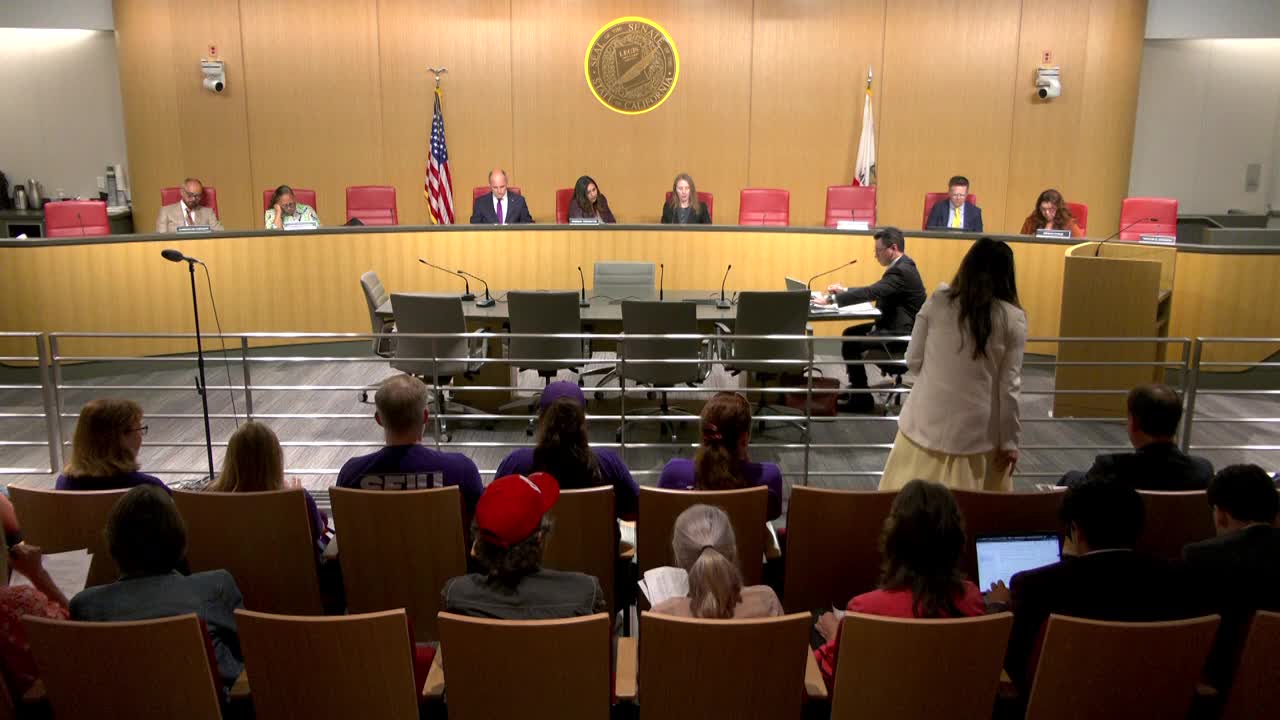 1MIN
Senate Standing Committee on Appropriations
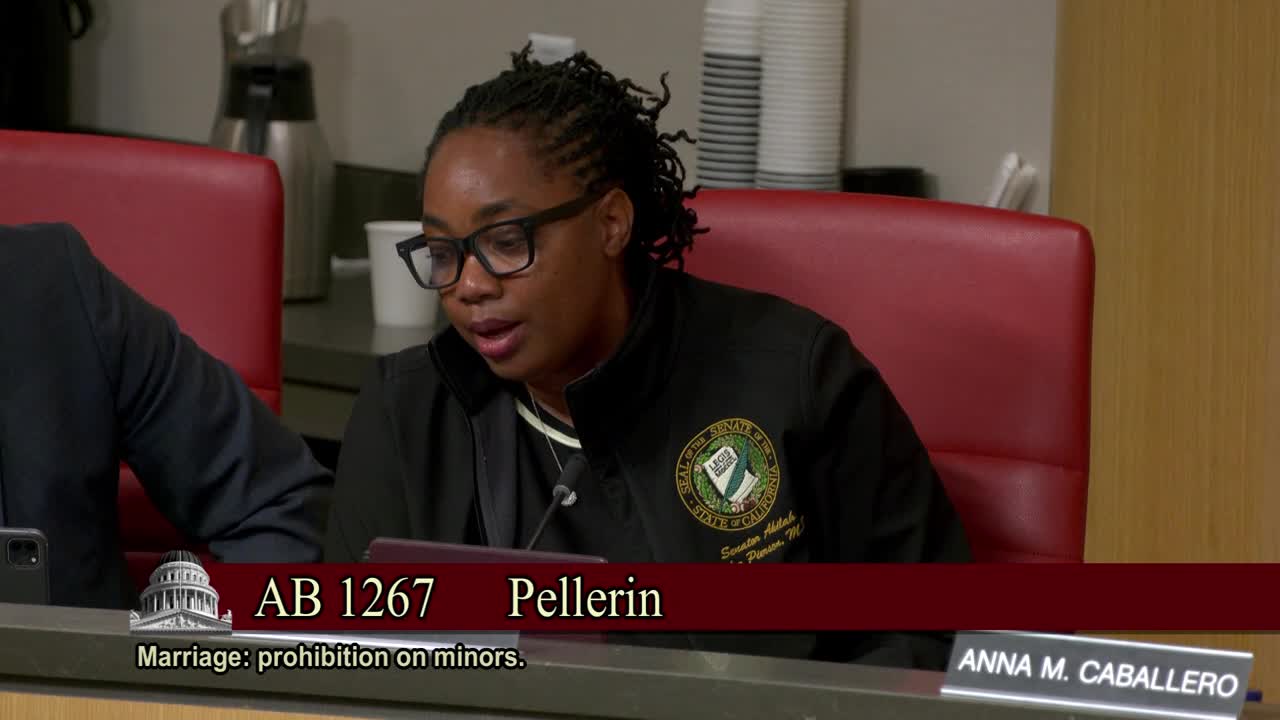 6MIN
Senate Standing Committee on Judiciary
Bill Author

Bill Co-Author(s):