AB 322: Precise geolocation information.
- Session Year: 2025-2026
- House: Assembly
- Latest Version Date: 2025-06-23
Current Status:
In Progress
(2026-08-13: In committee: Held under submission.)
Introduced
In Committee
Awaiting First Chamber Vote
Passed First Chamber
In Committee
Awaiting Second Chamber Vote
Passed Second Chamber
Enacted
Existing law, the California Consumer Privacy Act of 2018 (CCPA), grants a consumer various rights with respect to personal information, as defined, that is collected or sold by a business, as defined, including the right to direct a business that collects sensitive personal information about the consumer to limit its use, as prescribed. Existing law defines sensitive personal information to mean, among other things, personal information that reveals a consumers precise geolocation. Existing law, the California Privacy Rights Act of 2020, approved by the voters as Proposition 24 at the November 3, 2020, statewide general election, amended, added to, and reenacted the CCPA.
This bill would require a business that collects precise geolocation information to prominently display, when information is being collected, a notice to the consumer whose information is being collected that states certain information related to the collection of the information and its use by the business, including the goods or services requested by the consumer for which the business is collecting, processing, or disclosing the geolocation information and a description of how the business will process the geolocation information to carry out those purposes.
This bill would prohibit a business that collects precise geolocation information from, among other things, retaining the information longer than necessary to provide the goods or services requested by the consumer or longer than one year after the consumers last intentional interaction with the business, whichever is earlier.
This bill would declare that its provisions further the purposes and intent of the California Privacy Rights Act of 2020.
Existing law establishes the State Department of Education in state government, and vests the department with specified powers and duties relating to the states public school system, including encouraging and assisting school districts to improve and monitor the health of their pupils. Existing law requires the department, as part of that assistance, to provide information and guidance to schools that request the information and guidance to establish Health Days to provide screenings for common health problems among pupils.This bill would require the department to include county offices of education and charter schools in the above-described provisions. The bill would require the department to encourage school districts, county offices of education, and charter schools to participate in programs that offer reimbursement for school-based health services and school-based mental health services, as provided.Existing law establishes the State Department of Education in state government, and vests the department with specified powers and duties relating to the states public school system, including encouraging and assisting school districts to improve and monitor the health of their pupils. Existing law requires the department, as part of that assistance, to provide information and guidance to schools that request the information and guidance to establish Health Days to provide screenings for common health problems among pupils.
This bill would require the department to include county offices of education and charter schools in the above-described provisions. The bill would require the department to encourage school districts, county offices of education, and charter schools to participate in programs that offer reimbursement for school-based health services and school-based mental health services, as provided.
(a)A business that collects precise geolocation information shall prominently display, when precise geolocation information is being collected, a notice to the consumer whose precise geolocation information is being collected that states all of the following:
(1)The fact that the consumers precise geolocation information is being collected.
(2)The name of the business collecting the consumers precise geolocation information.
(3)A telephone number and an internet website through which the consumer can obtain more information.
(4)The type of precise geolocation information collected, including the precision of the information.
(5)The goods or services requested by the consumer for which the business is collecting, processing, or disclosing the precise geolocation information and a description of how the business will process the precise geolocation information to carry out those purposes.
(6)Any disclosures of the precise geolocation information necessary to provide the goods or services requested by the consumer and the identities of the third parties to whom the precise geolocation information could be disclosed.
(b)A business that collects precise geolocation data shall not do any of the following:
(1)(A)Except as provided in subparagraph (B), collect or process precise geolocation information more than necessary to provide the goods or services requested by the consumer.
(B)(i)A business may collect or process precise geolocation information that is necessary to respond to security incidents, fraud, harassment, malicious or deceptive activities, or any illegal activity targeted at, or involving, the controller or processor or its services or to investigate, report, or prosecute those responsible for any of those actions.
(ii)Precise geolocation information collected and processed under this subparagraph shall not be retained for longer than 30 days.
(2)Retain precise geolocation information longer than necessary to provide the goods or services requested by the consumer or longer than one year after the consumers last intentional interaction with the business, whichever is earlier.
(3)Sell, trade, or lease precise geolocation information to a third party.
(4)Disclose precise geolocation information to a state or local government agency or official unless the agency or official serves the business or service provider of the business with a valid court order issued by a California court or a court order from another jurisdiction that is consistent with Californias laws, including, but not limited to, both of the following:
(A)The Reproductive Privacy Act (Article 2.5 (commencing with Section 123460) of Chapter 2 of Part 2 of Division 106 of the Health and Safety Code).
(B)A foreign penal civil action, as defined in Section 2029.200 of the Code of Civil Procedure.
(5)Disclose precise geolocation information to a federal government agency unless required to do so by federal law.
SEC. 2.The Legislature finds and declares that this act furthers the purposes and intent of the California Privacy Rights Act of 2020.
SECTION 1.Section 33319 of the Education Code is amended to read:33319.(a)The department shall encourage and assist local educational agencies to improve and monitor the health of their pupils. The department shall provide guidance and assist local educational agencies to secure the voluntary assistance of local health professionals, schools of medicine, schools of public health, schools of nursing, voluntary health agencies, and other appropriate entities to provide pupil health screening and appropriate medical referrals and to provide valuable health information to pupils and their parents. The department shall encourage local educational agencies to contact and cooperate with local maternal, child, and adolescent health boards and child health and disability prevention programs established pursuant to Article 6 (commencing with Section 124025) of Chapter 3 of Part 2 of Division 106 of the Health and Safety Code.(b)As part of the assistance provided to local educational agencies pursuant to subdivision (a), the department shall provide information and guidance to local educational agencies that request the information and guidance to establish Health Days to provide screenings for common health problems among pupils and to provide information to pupils and parents on the prevention of illness, proper nutrition, and other aspects of good health. The Health Days should be organized and staffed by school nurses working in cooperation with volunteers from schools of medicine, schools of public health, schools of nursing, voluntary health agencies, health professionals, local maternal, child, and adolescent health boards, and other appropriate entities. Medical screenings and services conducted pursuant to this section shall be conducted in accordance with Chapter 9 (commencing with Section 49400) of Part 27 of Division 4.(c)The department shall encourage local educational agencies to participate in programs that offer reimbursement for school-based health services and school-based mental health services, including, but not limited to, both of the following:(1)The Medi-Cal Billing Option Program for local educational agencies pursuant to Section 14115.8 of the Welfare and Institutions Code.(2)The statewide fee schedule for school-linked outpatient mental health or substance use disorder treatment pursuant to Section 5961.4 of the Welfare and Institutions Code.(d)For purposes of this section, local educational agency means a school district, county office of education, or charter school.(a)The State Department of Education department shall encourage and assist school districts local educational agencies to improve and monitor the health of their pupils. The department shall provide guidance and assist school districts local educational agencies to secure the voluntary assistance of local health professionals, schools of medicine, schools of public health, schools of nursing, voluntary health agencies, and other appropriate entities in order to provide pupil health screening and appropriate medical referrals as well as and to provide valuable health information to pupils and their parents. The department shall encourage school districts local educational agencies to contact and cooperate with the State Maternal, Child, and Adolescent Health Board, with local maternal, child, and adolescent health boards, boards and child health and disability prevention programs established pursuant to Article 6 (commencing with Section 124025) of Chapter 3 of Part 2 of Division 106 of the Health and Safety Code.
As(b)As part of this assistance, the State Department of Education the assistance provided to local educational agencies pursuant to subdivision (a), the department shall provide information and guidance to schools local educational agencies that request the information and guidance, guidance to establish Health Days in order to provide screenings for common health problems among pupils as well as and to provide information to pupils and parents on the prevention of illness, proper nutrition, and other aspects of good health. The Health Days should be organized and staffed by school nurses working in cooperation with volunteers from schools of medicine, schools of public health, schools of nursing, voluntary health agencies, health professionals, local maternal, child, and adolescent health boards, and other appropriate entities. All medical Medical screenings and services conducted pursuant to this section shall be conducted in accordance with Chapter 9 (commencing with Section 49400) of Part 27. 27 of Division 4.
(c)The department shall encourage local educational agencies to participate in programs that offer reimbursement for school-based health services and school-based mental health services, including, but not limited to, both of the following:
(1)The Medi-Cal Billing Option Program for local educational agencies pursuant to Section 14115.8 of the Welfare and Institutions Code.
(2)The statewide fee schedule for school-linked outpatient mental health or substance use disorder treatment pursuant to Section 5961.4 of the Welfare and Institutions Code.
(d)For purposes of this section, local educational agency means a school district, county office of education, or charter school.
|
Date
|
Status
|
|---|---|
| Aug 13, 2026 | In committee: Held under submission. |
| Aug 29, 2025 | In committee: Held under submission. |
| Aug 18, 2025 | In committee: Referred to suspense file. |
| Jul 16, 2025 | From committee: Do pass and re-refer to Com. on APPR. (Ayes 11. Noes 2.) (July 15). Re-referred to Com. on APPR. |
| Jun 25, 2025 | Re-referred to Com. on JUD. |
| Jun 24, 2025 | Withdrawn from committee. |
| Jun 24, 2025 | Re-referred to Com. on RLS. |
| Jun 23, 2025 | From committee chair, with author's amendments: Amend, and re-refer to committee. Read second time, amended, and re-referred to Com. on APPR. |
| Jun 19, 2025 | In committee: Set, first hearing. Hearing canceled at the request of author. |
| Jun 11, 2025 | From committee: Do pass and re-refer to Com. on APPR. (Ayes 4. Noes 0.) (June 11). Re-referred to Com. on APPR. |
| May 7, 2025 | Referred to Com. on ED. |
| Apr 21, 2025 | In Senate. Read first time. To Com. on RLS. for assignment. |
| Apr 21, 2025 | Read third time. Passed. Ordered to the Senate. (Ayes 62. Noes 0. Page 1175.) |
| Apr 10, 2025 | Read second time. Ordered to third reading. |
| Apr 9, 2025 | From committee: Do pass. (Ayes 10. Noes 0.) (April 9). |
| Mar 13, 2025 | From committee: Do pass and re-refer to Com. on APPR. with recommendation: To Consent Calendar. (Ayes 8. Noes 0.) (March 12). Re-referred to Com. on APPR. |
| Feb 10, 2025 | Referred to Com. on ED. |
| Jan 27, 2025 | Read first time. |
| Jan 25, 2025 | From printer. May be heard in committee February 24. |
| Jan 24, 2025 | Introduced. To print. |
|
Date
|
Description
|
Location
|
Votes
|
|
|---|---|---|---|---|
| Aug 18, 2025 | Placed on suspense file | Senate Standing Committee on Appropriations |
Passed |
|
| Jul 15, 2025 | Do pass, but first be re-referred to the Committee on [Appropriations] | Senate Standing Committee on Judiciary |
Passed |
|
| Jun 11, 2025 | Do pass, but first be re-referred to the Committee on [Appropriations] | Senate Standing Committee on Education |
Passed |
|
| Apr 21, 2025 | AB 322 Ward Assembly Third Reading | Assembly Floor |
Passed |
|
| Apr 9, 2025 | Do pass. | Assembly Standing Committee on Appropriations |
Passed |
|
| Mar 12, 2025 | Do pass and be re-referred to the Committee on [Appropriations] with recommendation: To Consent Calendar | Assembly Standing Committee on Education |
Passed |
This list shows positions taken on this bill by organizations on the date displayed, which is linked to the original source.
Positions by individuals are not included.
|
Organization
|
Position
|
Date
|
|---|---|---|
| AAPIs for Civic Empowerment | ** Support | |
| Alameda County Office Of Education | ** Support | |
| Alliance for TransYouth Rights | ** Support | |
| Asian Americans Advancing Justice Southern California | ** Support | |
| Association of National Advertisers | ** Against | |
| Association Of Regional Center Agencies | ** Support | |
| California Association Of School Psychologists | ** Support | |
| California Baptist for Biblical Values | ** Against | |
| California Chamber Of Commerce | ** Against | |
| California Civil Liberties Advocacy | ** Support | |
| California Family Council | ** Against | |
| California Federation of Labor Unions, Afl-cio | ** Support | |
| California Initiative for Technology and Democracy | ** Support | |
| California Nurses Association | ** Support | |
| California Retailers Association | ** Against | |
| California School Boards Association | ** Support | |
| California State Association of Psychiatrists | ** Support | |
| California Youth Empowerment Network | ** Support | |
| Center for Democracy and Technology | ** Support | |
| center for digital democracy | ** Support | |
| CFT- a Union of Educators & Classified Professionals, Aft, Afl-cio | ** Support | |
| Computer And Communications Industry Association | ** Against | |
| Consumer Federation of America | ** Support | |
| Consumer Reports | ** Support | |
| Courage California | ** Support | |
| CTIA | ** Against | |
| Electronic Frontier Foundation | ** Support | |
| Electronic Privacy Information Center | ** Support | |
| Equality California | ** Support | |
| Health Officers Association Of California | ** Support | |
| Kapor Center | ** Support | |
| LGBT Tech | ** Support | |
| Los Angeles County Office Of Education | ** Support | |
| National Alliance on Mental Illness | ** Support | |
| Network Advertising Initiative | ** Against | |
| Office of the Riverside County Superintendent of Schools | ** Support | |
| PFLAG Sacramento | ** Support | |
| San Diego Unified School District | ** Support | |
| Secure Justice | ** Support | |
| Security Industry Association | ** Against | |
| Software & Information Industry Association | ** Against | |
| State Privacy and Security Coalition, Inc. | ** Against | |
| Techca | ** Against | |
| Techequity Action | ** Support | |
| Technet | ** Against | |
| Ultraviolet Action | ** Support | |
| Viet Rainbow of Orange County | ** Support |
SENATE COMMITTEE ON APPROPRIATIONS
Senator Anna Caballero, Chair
2025 - 2026 Regular Session
AB 322 (Ward) - Precise geolocation information
Version: June 23, 2025 | Policy Vote: ED. 4 - 0, JUD. 11 - 2 |
Urgency: No | Mandate: No |
Hearing Date: August 18, 2025 | Consultant: Liah Burnley |
Bill Summary: AB 322
establishes various guardrails for businesses that collect geolocation information.
Fiscal Impact:
- The California Privacy Protection Agency (CPPA) anticipates costs associated with enforcement and potential rulemaking to align existing requirements and implement this section. CPPA currently expect those costs will be absorbable in the near term. However, based on overall compliance with the requirements of the measure, enforcement may require additional resources in the future.
- The Department of Justice (DOJ) estimates a fiscal impact of approximately $400 thousand or less (AG Consumer Privacy Enforcement Subfund). The department notes that implementation of this bill will be dependent upon the appropriation of funds. DOJ will be unable to absorb the costs to comply with or implement the requirements of the bill within existing budgeted resources. The Consumer Protection Section (CPS) within the Public Rights Division anticipates increased workloads in enforcing AB 322 beginning on January 1, 2026, and ongoing. The workload includes enforcement of AB 322. CPS will require additional resources consisting of 1.0 Deputy Attorney General (DAG), and 1.0 Legal Secretary. DOJ also reports that, to the extent there is insufficient cash in the fund at the time of the bill’s implementation, an Unfair Competition Law (UCL) Fund appropriation may be required in lieu of the Attorney General Consumer Privacy Enforcement Subfund.
- Unknown, potentially significant costs to the state funded trial court system (Trial Court Trust Fund, General Fund) to adjudicate civil actions for violations of this bill and to respond to increased warrant applications from local law enforcement agencies. The fiscal impact of this bill to the courts will depend on many unknowns, including the number of cases filed and the factors unique to each case. An eight-hour court day costs approximately $10,500 in staff in workload. While the courts are not funded on a workload basis, an increase in workload could result in delayed court services and would put pressure on the General Fund to fund additional staff and resources and to increase the amount appropriated to backfill for trial court operations.
Background:
Precise geolocation information can expose intimate details of individuals’ lives, revealing where they live, work, worship, seek medical care, and spend their personal time. This information can uncover sensitive details about political affiliations, religious beliefs, health conditions, and personal relationships. Unlike other forms of data, location information is continuously generated and can be tracked in real-time, creating comprehensive surveillance profiles. This bill seeks to address the increased collection, use, and selling of consumers’ precise geolocation information by requiring transparency and placing guardrails on its collection and use.
Proposed Law:
- Requires a business, when collecting precise geolocation information, to display a notice to the consumer whose precise information is being collected that states all of the following:
- The fact that the consumer’s precise geolocation information is being collected;
- The name of the business collecting the consumer’s precise geolocation information;
- A telephone number and an internet website through which the consumer can obtain more information;
- The type of precise geolocation information collected, including the precision of the information;
- The goods or services requested by the consumer for which the business is collecting, processing, or disclosing the precise geolocation information and a description of how the business will process the precise geolocation information to carry out those purposes; and,
- Any disclosures of the precise geolocation information necessary to provide the goods or services requested by the consumer and the identities of the third parties to whom the precise geolocation information could be disclosed.
- Prohibits a business that collects precise geolocation data from doing any of the following:
- Collecting or processing precise geolocation information more than necessary to provide the goods or services requested by the consumer;
- A business may collect or process precise geolocation information that is necessary to respond to security incidents, fraud, harassment, malicious or deceptive activities, or any illegal activity targeted at, or involving, the controller or processor or its services or to investigate, report, or prosecute those responsible for any of those actions. Precise geolocation information collected and processed shall not be retained for longer than 30 days;
- Retaining precise geolocation information longer than necessary to provide the goods or services requested by the consumer or longer than one year after the consumer’s last intentional interaction with the business, whichever is earlier;
- Selling, trading, or leasing precise geolocation information to a third party;
- Disclosing precise geolocation information to a state or local government agency or official unless the agency or official serves a valid court order issued by a California court or a court order from another jurisdiction that is consistent with California’s laws; and,
- Disclosing precise geolocation information to a federal government agency unless required to do so by federal law.
- Collecting or processing precise geolocation information more than necessary to provide the goods or services requested by the consumer;
-- END --
Senator Thomas Umberg, Chair
2025-2026 Regular Session
Bill No: AB 322 (Author:Ward)
Version: June 23, 2025
Hearing Date: July 15, 2025
Fiscal: Yes
Urgency: No
Consultant: CK
SUBJECT
Precise geolocation information
DIGEST
This bill amends the California Consumer Privacy Act of 2018 (CCPA) to provide enhanced protections for consumers’ precise geolocation information.
EXECUTIVE SUMMARY
The CCPA grants consumers certain rights with regard to their personal information, including enhanced notice, access, and disclosure; the right to deletion; and the right to restrict the sale of information. (Civ. Code § 1798.100 et seq.) It places attendant obligations on businesses to respect those rights. The California Privacy Rights Act of 2020 (CPRA) amended the CCPA, limited further amendment, and created a new category of “sensitive personal information” and afforded consumers enhanced rights with respect to that information, including the ability to restrict businesses’ use of that information. This includes precise geolocation information.
Precise geolocation information can expose intimate details of individuals’ lives, revealing where they live, work, worship, seek medical care, and spend their personal time. This information can uncover sensitive details about political affiliations, religious beliefs, health conditions, and personal relationships. Unlike other forms of data, location information is continuously generated and can be tracked in real-time, creating comprehensive surveillance profiles. This bill seeks to address the increased collection, use, and selling of consumers’ precise geolocation information by requiring transparency and placing guardrails on its collection and use. The bill prohibits businesses from selling this intimate information. This bill is sponsored by Consumer Reports and the California Initiative for Technology and Democracy. It is supported by a variety of groups, including Equality California and the California Federation of Labor Unions. The bill is opposed by industry associations, including the Network Advertising Initiative and TechCA.
PROPOSED CHANGES TO THE LAW
Existing law:
- Establishes the CCPA, which grants consumers certain rights with regard to their personal information, including enhanced notice, access, and disclosure; the right to deletion; the right to restrict the sale of information; and protection from discrimination for exercising these rights. It places attendant obligations on businesses to respect those rights. (Civ. Code § 1798.100 et seq.)
- Establishes the CPRA, which amends the CCPA. (Civ. Code § 798.100 et seq.; Proposition 24 (2020).)
- Provides consumers the right to request that a business delete any personal information about the consumer which the business has collected from the consumer. (Civ. Code § 1798.105(a).)
- Requires a business that collects a consumer’s personal information to, at or before the point of collection, inform consumers of the following:
- the categories of personal information to be collected and the purposes for which the categories of personal information are collected or used and whether that information is sold or shared. A business shall not collect additional categories of personal information or use personal information collected for additional purposes that are incompatible with the disclosed purpose for which the personal information was collected without providing the consumer with notice consistent with this section;
- if the business collects sensitive personal information, the categories of sensitive personal information to be collected and the purposes for which the categories of sensitive personal information are collected or used, and whether that information is sold or shared. A business shall not collect additional categories of sensitive personal information or use sensitive personal information collected for additional purposes that are incompatible with the disclosed purpose for which the sensitive personal information was collected without providing the consumer with notice consistent with this section; and
- the length of time the business intends to retain each category of personal information, including sensitive personal information, or if that is not possible, the criteria used to determine that period, provided that a business shall not retain a consumer’s personal information or sensitive personal information for each disclosed purpose for which the personal information was collected for longer than is reasonably necessary for that disclosed purpose. (Civ. Code § 1798.100(a).)
- Grants a consumer the right to request that a business that collects personal information about the consumer disclose to the consumer the following:
- the categories of personal information it has collected about that consumer;
- the categories of sources from which the personal information is collected;
- the business or commercial purpose for collecting, selling, or sharing personal information;
- the categories of third parties with whom the business shares personal information; and
- the specific pieces of personal information it has collected about that consumer. (Civ. Code § 1798.110.)
- Provides consumers the right to request that a business that sells or shares the consumer’s personal information, or that discloses it for a business purpose, disclose to the consumer specified information, including the categories of personal information collected, shared, sold, and disclosed and the categories of third parties receiving the information. (Civ. Code § 1798.115.)
- Provides a consumer the right, at any time, to direct a business that sells or shares personal information about the consumer to third parties not to sell or share the consumer’s personal information. It requires such a business to provide notice to consumers, as specified, that this information may be sold or shared and that consumers have this right to opt out. (Civ. Code § 1798.120.)
- Defines “personal information” as information that identifies, relates to, describes, is reasonably capable of being associated with, or could reasonably be linked, directly or indirectly, with a particular consumer or household. The CCPA provides a nonexclusive series of categories of information deemed to be personal information, including biometric information, geolocation data, and “sensitive personal information.” It does not include publicly available information or lawfully obtained, truthful information that is a matter of public concern. (Civ. Code § 1798.140(v).)
- Extends additional protections to “sensitive personal information,” which is defined as personal information that reveals particularly sensitive information such as a consumer’s “precise geolocation,” which means any data that is derived from a device and that is used or intended to be used to locate a consumer within a geographic area that is equal to or less than the area of a circle with a radius of 1,850 feet, except as prescribed by regulations. (Civ. Code § 1798.140(ae), (w).)
- Provides various exemptions from the obligations imposed by the CCPA, including where they would restrict a business’ ability to comply with federal, state, or local laws. (Civ. Code § 1798.145.)
- Permits amendment of the CPRA by a majority vote of each house of the Legislature and the signature of the Governor, provided such amendments are consistent with and further the purpose and intent of this act as set forth therein. (Proposition 24 § 25 (2020).)
This bill:
- Requires a business that collects precise geolocation information to prominently display, when precise geolocation information is being collected, a notice to the consumer whose precise geolocation information is being collected that states all of the following:
- The fact that the consumer’s precise geolocation information is being collected.
- The name of the business collecting the consumer’s precise geolocation information.
- A telephone number and a website through which the consumer can obtain more information.
- The type of precise geolocation information collected, including the precision of the information.
- The goods or services requested by the consumer for which the business is collecting, processing, or disclosing the precise geolocation information and a description of how the business will process the precise geolocation information to carry out those purposes.
- Any disclosures of the precise geolocation information necessary to provide the goods or services requested by the consumer and the identities of the third parties to whom the precise geolocation information could be disclosed.
- Prohibits a business that collects precise geolocation data from collecting or processing precise geolocation information more than necessary to provide the goods or services requested by the consumer. However, a business may collect or process such information if necessary to respond to security incidents, fraud, harassment, malicious or deceptive activities, or any illegal activity, as specified, or to investigate, report, or prosecute those responsible for any of those actions. Such information may not be retained for longer than 30 days.
- Prohibits a business that collects precise geolocation data from the following:
- Retaining it longer than necessary to provide the goods or services requested by the consumer or longer than one year after the consumer’s last intentional interaction with the business, whichever is earlier.
- Selling, trading, or leasing the information to a third party.
- Disclosing the information to a state or local government agency or official unless the agency or official serves the business or service provider of the business with a valid court order issued by a California court or a court order from another jurisdiction that is consistent with California’s laws, including the Reproductive Privacy Act and a foreign penal civil action, as defined.
- Disclosing the information to a federal government agency unless required to do so by federal law.
- Finds and declares that it furthers the purposes and intent of the CPRA.
COMMENTS
- Tracking your every move
The collection, use, and monetization of precise geolocation data presents significant privacy and safety risks that many consumers may not fully appreciate and which current law may be inadequate to regulate. Precise geolocation data can reveal deeply personal and constitutionally protected behaviors: attending a protest, seeking abortion care or legal services, visiting a place of worship, visiting an LGBTQ community center, or organizing a union. Today, this data is quietly collected by apps and devices, traded by data brokers, and accessed by government agencies—often without a court order or consumer knowledge:
For many of us, our mobile phone is a constant companion, with us wherever we go. It’s also constantly collecting information about us, what we do, and where we do it. And unbeknownst to many of us, once that information is collected, much of it gets sold onwards in a murky marketplace of data brokers and advertisers. Because this market for our data is not transparent, it’s almost impossible to figure out who has information about us and what they’re doing with it.
Our phones can also reveal far more about us than we might realize: important details about our lives and where we’ve been. For example, our phones might be periodically sending their exact location to tech companies. This data can pinpoint our comings and goings with startling precision. Think what this might reveal: what therapist you’re seeing, what medical treatment you’re seeking, your visits to places of worship, and even your reproductive choices. This type of tracking can cause enormous harm to consumers, including stigma, emotional distress, discrimination, or even physical violence.[1]
The scope of the problem is evident from the number of enforcement actions the Federal Trade Commission has taken in recent years:
The Federal Trade Commission is taking action against Gravy Analytics Inc. and its subsidiary Venntel Inc. for unlawfully tracking and selling sensitive location data from users, including selling data about consumers’ visits to health-related locations and places of worship.
Under a proposed order settling the FTC’s allegations, Gravy Analytics and Venntel will be prohibited from selling, disclosing, or using sensitive location data in any product or service, and must establish a sensitive data location program.
The FTC’s complaint alleges that Gravy Analytics and Venntel violated the FTC Act by unfairly selling sensitive consumer location data, and by collecting and using consumers’ location data without obtaining verifiable user consent for commercial and government uses.
According to the complaint, Gravy Analytics continued to use consumers’ location data after learning that consumers didn’t provide informed consent. Gravy Analytics also unfairly sold sensitive characteristics, like health or medical decisions, political activities and religious viewpoints, derived from consumers’ location data.
“Surreptitious surveillance by data brokers undermines our civil liberties and puts servicemembers, union workers, religious minorities, and others at risk,” said Samuel Levine, Director of the FTC’s Bureau of Consumer Protection. “This is the FTC’s fourth action taken this year challenging the sale of sensitive location data, and it’s past time for the industry to get serious about protecting Americans’ privacy.”[2]
- Getting serious about privacy
As stated, the CCPA grants consumers certain rights with regard to their personal information, as defined. With passage of the CPRA in 2020, the CCPA got an overhaul. Consumers are afforded the right to receive notice from businesses at the point of collection of personal information and the right to access that information at any time. The CCPA also grants a consumer the right to request that a business delete any personal information about the consumer the business has collected from the consumer.
The CCPA provides adult consumers the right, at any time, to direct a business not to sell or share personal information about the consumer to third parties. A business that sells personal information to third parties is required to notify consumers that this information may be sold and that they have the right to opt out of such sales.
The CPRA added a new category of information, sensitive information, which includes precise geolocation information, which is defined as any data that is derived from a device and that is used or intended to be used to locate a consumer within a geographic area that is equal to or less than the area of a circle with a radius of 1,850 feet. Consumers are empowered to limit businesses’ use of such information to that use which is necessary to perform the services or provide the goods reasonably expected by an average consumer. However, concerns have been raised that these protections are not enough given the sensitivity of this data and its widespread and systematic collection.
This bill responds to the growing problem by amending the CCPA to require more transparency around when, how, and for what purposes businesses are collecting and using precise geolocation information and placing clear restrictions on what they can do with it.
First, the bill requires that businesses prominently display a notice when precise geolocation information is being collected from a consumer. This must include information about the business collecting it, the basis for the collection, and any disclosures of it necessary to provide the consumer the goods and services requested.
Next, the bill places a number of restrictions on what businesses can do with this information. Businesses are limited to collecting and processing only the precise geolocation information necessary to provide the goods or services requested by the consumer, except as specified, including for responding to security incidents and fraud. Businesses must not retain this information for longer than necessary to provide those goods and services.
To directly address the opaque market for this information, the bill enacts a prohibition on the selling, trading, or leasing of precise geolocation information to a third party. California joins other states, including Oregon and Maryland in so banning sales of this information.[3]
Given the sensitive nature of this information and the increasing hostility from the federal government and other states toward certain communities in California, limitations on sharing with government agencies is also included in the bill. The bill prohibits businesses from disclosing precise geolocation information to a state or local government agency or official unless the agency or official serves the business or service provider of the business with a valid court order issued by a California court or a court order from another jurisdiction that is consistent with California’s laws, specifically including the Reproductive Privacy Act. They are also prevented from disclosing precise geolocation information to a federal government agency unless required to do so by federal law.
Demonstrating the need for this, it has widely been reported that federal agencies, including the United States Immigration and Customs Enforcement (ICE), have contracted with data brokers for their troves of personal information and specifically to get around jurisdictions’ sanctuary laws and “allowing agencies like [ICE] to circumvent traditional avenues of information gathering for which it typically would have to show probable cause.”[4] Such information in the hands of local law enforcement has also raised concerns as multiple California sheriffs have expressed their intention to cooperate with ICE, with one vowing “to work ‘around’ California law to assist federal immigration enforcement.”[5] Recent events here in California underscore the urgent need for such protections. In a recent piece in the Sacramento Bee, entitled “Recent ICE raids expose just how vulnerable our location data is,” the role of location data in the terrorizing of our communities is revealed:
The frightening images of recent Immigration and Customs Enforcement (ICE) raids have sown fear and uncertainty throughout California. As horrifying as these military-type operations are, what’s just as chilling is how it’s happening: the quiet, invisible role of location data in making these raids possible. Through commercial data brokers and partnerships with local law enforcement, ICE has amassed a vast and powerful collection of data that allows them to track individuals’ movements with unnerving precision. This might sound like science fiction, but it’s our present reality. Location surveillance is omnipresent — whether through automated license plate readers, mobile device tracking or facial recognition in public spaces. The same data we generate by simply carrying a phone or driving down the street can now be weaponized against any one of us.
The evidence is right in front of us: In 2019, the American Civil Liberties Union revealed that ICE had been using driver location data from local police to facilitate deportations. More recently, reporting shows how ICE and the Department of Homeland Security are expanding these tools through deals with the Internal Revenue Service and private data brokers.[6]
According to the author:
With the rapid growth of the location data industry, tech companies are quietly harvesting and selling detailed information about where people go—from protests and political gatherings to reproductive health clinics, places of worship, and shelters. Recent reports have revealed that federal agencies, including ICE, have purchased this data to conduct surveillance and detain individuals—sidestepping legal safeguards and public accountability No Californian should have their daily movements tracked, sold, or exploited just for going about their lives. Whether you're commuting to work, visiting a doctor, or dropping your kids off at school, your location data should remain private. AB 322 draws a clear line—it puts the safety and privacy of everyday Californians first.
- Stakeholder positions
Consumer Reports, a sponsor of the bill, emphasizes the need for the bill:
The location information market is a multi-billion-dollar industry centered on collecting and selling people’s everyday comings and goings, often collected from people’s mobile devices and often without their knowledge or explicit consent. Location data is an extremely sensitive form of personal information. Researchers have shown that 95 percent of individuals can be uniquely identified from just four location points in time and 50 percent of individuals can be uniquely identified from just two spatio-temporal points; most companies that collect this information have orders of magnitude more data than that.
Much of this information is amassed by data brokers, entities that compile extensive dossiers on virtually every American that include thousands of data points, including extremely granular information about people’s behavior, as well as inferences about individuals based on their information. Some companies collect and share consumers’ location information as often as every three seconds. This information is then sold and resold, often for marketing but for a variety of other purposes as well, eroding consumers’ basic expectation of privacy in the process. This activity poses a host of significant risks to California residents.
Writing in support, the Alliance for TransYouth Rights states:
As smartphones and connected devices become ever-present in our daily lives, so does the potential for intrusive surveillance. The ability to monitor individuals’ movements with pinpoint accuracy presents risks to personal safety and civil liberties, especially for communities that have historically faced disproportionate levels of surveillance, including immigrants, LGBTQ+ individuals, and people seeking reproductive healthcare.
AB 322 takes a bold and necessary stand for privacy in the 21st century. By banning the sale or lease of precise geolocation data and requiring government agencies to obtain a warrant for access, this bill restores vital safeguards to Californians' digital lives. It reflects and reinforces California’s leadership in technology, civil rights, and consumer protection.
A coalition of industry groups, including TechNet, writes in opposition:
It would be incredibly (and unreasonably) difficult if not impossible to constantly signal to a consumer that location data is being collected when that is necessary for the services. When a business seeks to collect precise geolocation information from a consumer’s device via an app, for example, the app itself is not the entity directly obtaining the consumer’s permission. From both a technical and privacy standpoint, apps receive a device’s precise geolocation information only if device users enable the sharing of that information with specific apps in the devices’ settings menu. In other words, although apps can provide users with information in their apps about how precise geolocation information will be used, the actual act of collecting the information for the first time – and the presentation of notices to consumers when the permission is actually sought – happens in devices’ settings menus, not in apps.
As such, subdivision (a) could be read to mean that apps would be required to somehow present notices to consumers in devices’ settings menus - something apps have no control over. It could also be read to mean that a notice would have to be presented to consumers for the entire duration of time during which their precise geolocation is being collected. This would not be possible to do without significantly degrading consumers’ experiences.
A coalition of advocacy and labor groups, including the California Partnership to End Domestic Violence and the California Federation of Labor Unions, writes in strong support:
Location data is among our most sensitive information. When collected across time, this information can reveal every aspect of a person's life, such as medical conditions, sexual orientation, political activities, and religious beliefs. This type of data has been used by scammers to facilitate financial fraud, retailers to generate differential pricing, and can be aggregated and shared with a number of other bad actors. Additionally, it is imperative we protect the privacy rights of our communities, especially with increased attacks targeting immigrants, Black and Brown community members, LGBTQ people, and individuals seeking reproductive health care. California must take bold action to ensure consumers are protected and their location information is secure. AB 322 answers this call.
SUPPORT
California Initiative for Technology and Democracy (sponsor)
Consumer Reports (sponsor)
AAPIs for Civic Empowerment
Alliance for TransYouth Rights
Asian Americans Advancing Justice Southern California
California Civil Liberties Advocacy
California Federation of Labor Unions, AFL-CIO
California Nurses Association
Center for Democracy and Technology
Center for Digital Democracy
Consumer Federation of America
Courage California
Electronic Frontier Foundation
Electronic Privacy Information Center (EPIC)
Equality California
Kapor Center
LGBT Tech
PFLAG Sacramento
Secure Justice
TechEquity Action
Ultraviolet Action
Viet Rainbow of Orange County
OPPOSITION
Association of National Advertisers
California Baptist for Biblical Values
California Chamber of Commerce
California Retailers Association
Computer and Communications Industry Association
CTIA
Network Advertising Initiative
Security Industry Association
Software Information Industry Association
State Privacy and Security Coalition, Inc.
TechCA
TechNet
RELATED LEGISLATION
Pending Legislation:
SB 44 (Umberg, 2025) amends the CCPA to require a “covered business” to use neural data collected through a brain-computer interface only for the purpose for which it was collected. It requires the covered business to delete the data when the purpose for which it is collected is accomplished. SB 44 is currently in the Senate Appropriations Committee.
SB 361 (Becker, 2025) fortifies the Data Broker Registry law by requiring additional disclosures from data brokers on the types of information collected. SB 361 is currently in the Assembly Appropriations Committee.
AB 894 (Carrillo, 2025) requires a general acute care hospital to inform a patient that the patient may restrict or prohibit the use or disclosure of protected health information in the hospital’s patient directory, as provided for in federal regulations, as specified. AB 894 is currently in the Senate Appropriations Committee.
AB 1337 (Ward, 2025) amends the Information Practices Act (IPA) by expanding the definition of “personal information,” extending its scope to cover local governmental entities, and bolstering protections regarding disclosures and accounting. AB 1337 is currently in this Committee and is being heard the same day as this bill.
Prior Legislation: AB 947 (Gabriel, Ch. 551, Stats. 2023) added citizenship and immigration status to the definition of “sensitive personal information” in the CCPA, affording it greater protections.
PRIOR VOTES:
Prior votes irrelevant to current version of this bill
**************
Carol Kando-Pineda. Consumer Alert: FTC sues company that sells consumers’ sensitive location information (August 29, 2022) FTC, https://consumer.ftc.gov/consumer-alerts/2022/08/ftc-sues-company-sells-consumers-sensitive-location-information. All internet citations are current as of June 27, 2025. ↑
Press Release, FTC Takes Action Against Gravy Analytics, Venntel for Unlawfully Selling Location Data Tracking Consumers to Sensitive Sites (December 3, 2024) FTC, https://www.ftc.gov/news-events/news/press-releases/2024/12/ftc-takes-action-against-gravy-analytics-venntel-unlawfully-selling-location-data-tracking-consumers. ↑
Suzanne Smalley, Oregon becomes second state to ban sale of precise geolocation data (May 28, 2025) The Record, https://therecord.media/oregon-passes-geolocation-kids-data-bill. ↑
Johana Bhuiyan, US immigration agency explores data loophole to obtain information on deportation targets (April 20, 2022) The Guardian, https://www.theguardian.com/us-news/2022/apr/19/us-immigration-agency-data-loophole-information-deportation-targets. ↑
Nigel Duara, A California sheriff is planning to break the state’s sanctuary law. Here’s how (February 28, 2025) CalMatters, https://calmatters.org/justice/2025/02/sanctuary-state-amador-sheriff/; see also Guardian staff, San Diego sheriff says she won’t honor county’s ‘sanctuary’ immigration policy (December 11, 2024) The Guardian, https://www.theguardian.com/us-news/2024/dec/11/san-diego-sanctuary-immigration-deportation-policy#:~:text=San%20Diego%20sheriff%20says%20she,policy%20%7C%20San%20Diego%20%7C%20The%20Guardian. ↑
David Trujillo & Jonathan Mehta Stein, Recent ICE raids expose just how vulnerable our location data is (June 26, 2025) The Sacramento Bee, https://www.sacbee.com/opinion/op-ed/article309312170.html. ↑
SENATE COMMITTEE ON EDUCATION
Senator Sasha Renée Pérez, Chair
2025 - 2026 Regular
Bill No: Hearing Date: June 11, 2025
Author: | Ward | ||
Version: |
| ||
Urgency: | Fiscal: | ||
Consultant: | |||
Subject: .
SUMMARY
This bill requires the California Department of Education (CDE) to encourage local educational agencies (LEAs) to participate in programs that offer reimbursement for school-based health services and school-based mental health services, as specified.
BACKGROUND
Existing law:
- Establishes the Office of School-Based Health at the CDE for the purpose of assisting LEAs regarding the current health-related programs under the purview of the CDE, and requires the scope of the Office to include collaborating with the Department of Health Care Services (DHCS) and other departments in the provision of school-based health services, and assisting LEAs with information on, and participation in specified school-based health programs. (Education Code (EC) § 49419)
- Requires the governing board of any school district to give diligent care to the health and physical development of pupils, and authorizes it to employ properly certified persons to conduct this work. (EC § 49400)
- Requires CDE to provide guidance and assistance to school districts to secure the voluntary assistance of local health professionals, schools of medicine, schools of public health, schools of nursing, voluntary health agencies, and other appropriate entities to provide pupil health screening and appropriate medical referrals, as well as provide health information to pupils and their parents. (EC § 33319)
- Establishes the Medi-Cal program, administered by DHCS, under which eligible low-income individuals receive health care services. (Welfare and Institutions Code (WIC) § 14000 et seq.)
- Authorizes specified services provided by an LEA to Medi-Cal eligible students to be reimbursable under Medi-Cal through the Local Education Agency Billing Option Program (LEA BOP), including health and mental health evaluations, medical transportation, nursing services, occupational therapy, physical therapy, physician services, mental health and counseling services, school health aide services, speech pathology services, audiology services, and targeted case management. (WIC § 14132.06)
- Requires DHCS to amend its Medicaid State Plan with respect to the billing option for services by LEAs, to ensure that schools are reimbursed for all eligible services that they provide that are not precluded by federal requirements. (WIC § 14115.8)
- Requires DHCS to examine methodologies for increasing school participation in the Medi-Cal billing option for LEAs so that schools can meet the healthcare needs of their students. Requires DHCS, to the extent possible, to simplify claiming processes for LEA billing. (WIC § 14115.8)
- Establishes the Children and Youth Behavioral Health Initiative (CYBHI) and requires the DHCS to develop and maintain a school-linked statewide fee schedule for outpatient mental health or substance use disorder treatment provided to a student 25 years or younger at a school site, beginning January 1, 2024. Requires health care service plans, including a Medi-Cal managed care plan, or an insurer, to reimburse school-based services provided to one of its members according to the statewide fee schedule, regardless of whether the provider is within the plan’s or insurer’s contracted provider network. (WIC § 5961.4)
ANALYSIS
This bill:
- Requires CDE to encourage LEAs to participate in programs that offer reimbursement for school-based health services and school-based mental health services, including but not limited to, both of the following:
- The Medi-Cal Billing Option Program for LEAs, as specified.
- The statewide fee schedule for school-linked outpatient mental health or substance use disorder treatment, as specified.
- Defines “local education agencies” to mean a school district, county office of education, or charter school.
- Makes other technical and clarifying changes.
STAFF COMMENTS
- Need for the bill. According to the author, “Impacted especially by the COVID-19 pandemic, school-aged children have reported increased mental illnesses and physical health concerns. It is imperative that the state takes further action to support these youth by making concerted efforts to encourage local educational agencies’ (LEAs) participation in the LEA Billing Option Program and Statewide School-Linked Behavioral Health Fee Schedule. In doing so, there will be an increased access to and leveraging of funds for LEAs which, importantly, will expand access to critical health and mental health services for school-aged children.”
- LEA Medi-Cal Billing Option Program. LEA BOP is a voluntary program overseen by DHCS, in collaboration with CDE, which reimburses LEAs (school districts, county offices of education, charter schools, community colleges, and university campuses) for the federal share of the maximum allowable rate for approved health-related services provided by qualified health service practitioners to Medi-Cal eligible students. Services eligible for reimbursement under the program include, but are not limited to, the following:
- Audiology Services
- Health and Mental Health Evaluation
- Education Assessments
- Medical Transportation
- Nursing Services and Activities of Daily Living
- Nutritional Services
- Occupational Therapy
- Orientation and Mobility
- Physical Therapy
- Psychology and Counseling
- School Health Aide Services
- Speech Therapy
- Targeted Case Management
- Respiratory Therapy
- Vision
Reimbursement is based upon a fee-for-service model, and school expenditures for qualified services rendered are reimbursed at 50% of cost using federal Medicaid matching funds. Under the program, LEAs bill Medi-Cal for the direct medical services they provide to Medi-Cal eligible students. LEAs pay for the services and are reimbursed for the rate relative to the cost of each individual service from federal funds.
- CYBHI Fee Schedule program. The CYBHI is a multiyear, $4.7 billion effort at the core of the Master Plan for Kids’ Mental Health, aimed at overhauling the state’s mental health system and enhancing the pathways connecting families with the needed services. As part of the CYBHI, DHCS was tasked with establishing and maintaining a statewide multi-payer fee schedule for school-linked behavioral health (known as the CYBHI Fee Schedule), enabling LEAs and public institutions of higher education (IHEs) to receive funding for outpatient services rendered at a school or school-linked site. The CYBHI Fee Schedule program establishes the minimum rates at which managed care plans and insurers must reimburse LEAs and IHEs for the provision of covered services for a student at a school site or school-linked location, including on-campus, off-campus and mobile clinic locations. It also provides the appropriate billing codes, rates, and provider types for each service type billable as part of the CYBHI Fee Schedule program. Services provided as part of the fee schedule shall not be subject to copayment, coinsurance, deductible, or any other form of cost sharing. To be eligible for covered services, children and youth must be:
- Under the age of 26;
- Enrolled in public TK-12 schools or IHEs (e.g., California Community Colleges); and
- Covered by Medi-Cal managed care plans, Medi-Cal Fee-for-Service, health care service plans, and disability insurers.
In addition to establishing the CYBHI Fee Schedule, DHCS was tasked with developing and maintaining a school-linked statewide provider network of school-site behavioral health counselors. Since its launch in January 2024, DHCS has approved four cohorts of LEAs to participate in the CYBHI Fee Schedule and statewide provider network, totaling to 485 LEAs serving roughly 3.6 million students enrolled across participating schools. As of May 1, 2025, DHCS has opened applications for its fifth cohort of LEAs and IHEs.
- Encouraging participation. This bill would require CDE to encourage LEAs to participate in programs like LEA BOP and the CYBHI Fee Schedule. According to information provided by the author’s office, the language of the bill is intended to provide CDE with the flexibility necessary to determine how to go about encouraging participation in a way that is efficient and cost effective. At present, CDE and DHCS host informational web pages for LEA BOP and the CYBHI Fee Schedule, respectively, to provide LEAs with application and enrollment process support.
- Related legislation.
AB 1955 (Ward, 2024) would have required the CDE to encourage LEAs to participate in programs that offer reimbursement for school-based health and mental health services. AB 322 is identical to the introduced version of AB 1955 as introduced; however, AB 1955 was amended in the Assembly to address another issue before being heard in the Senate Education Committee.
AB 483 (Muratsuchi, Chapter 527, Statutes of 2023) modified and imposed new requirements related to timelines, reporting, technical assistance, stakeholder engagement, and guidance for the LEA BOP, a program that allows schools to claim reimbursement for a portion of the cost of delivering health services to Medi-Cal eligible students.
AB 133 (Committee on Budget, Chapter 143, Statutes of 2021) established the CYBHI Act, including the development and maintenance of a statewide fee schedule for school-linked outpatient mental health and substance use disorder treatment, and, beginning January 1, 2024, requires the reimbursement providers of such services.
AB 563 (Berman, 2021) would have required CDE to establish an Office of School-Based Health Programs for the purpose of improving the operation of, and participation in, school-based health programs, including the Medi-Cal Administrative Activities claiming process (SMAA) and the LEA BOP. Required that $500,000 in federal reimbursements be made available for transfer through an interagency agreement to CDE for the support of the Office. This bill was held in the Senate Education Committee.
AB 130 (Committee on Budget, Chapter 44, Statutes of 2021) requires the CDE to establish the Office of School-Based Health no later than January 1, 2022, and specified the responsibilities of the office, including assisting LEAs with information on, and participation in, specified school-based health programs, including the LEA BOP; and to appoint a state school nurse consultant by January 1, 2022.
SUPPORT
Alameda County Office of Education
Association of Regional Center Agencies
California Association of School Psychologists
California Youth Empowerment Network
CFT- A Union of Educators & Classified Professionals, AFT, AFL-CIO
Health Officers Association of California
Los Angeles County Office of Education
National Alliance on Mental Illness
Office of the Riverside County Superintendent of Schools
San Diego Unified School District
OPPOSITION
California Family Council
One individual
-- END --
ASSEMBLY THIRD READING
ATR Bill Id:AB 322
Author:(Ward)
As Introduced Ver:January 24, 2025
Majority vote
SUMMARY
Requires the California Department of Education (CDE) to encourage local educational agencies (LEAs) to participate in programs that offer reimbursement for school-based health and mental health services.
Major Provisions
- Requires the CDE to encourage LEAs to participate in programs that offer reimbursement for school-based health and mental health services, including, but not limited to, the Local Education Agency Billing Option Program (LEA BOP), and the statewide fee schedule for school-linked mental health or substance use disorder treatments, as specified.
- Defines "local educational agency" as a school district, county office of education (COE), or charter school.
COMMENTS
Youth mental health crisis. The American Academy of Pediatrics noted in recent guidance that "emotional and behavioral health challenges were of growing concern before the COVID-19 pandemic, and the public health emergency has only exacerbated these challenges. "Prior to the pandemic, the incidence of youth mental health crises was increasing at an alarming rate. Suicide rates among youth ages 10-24 increased by over 57% between 2007 and 2018, and as of 2018, suicide was the second leading cause of death for youth ages 15-19, according to the Centers for Disease Control and Prevention (CDC). Youth visits to pediatric emergency departments for suicide and suicidal ideation also doubled during this time period. (Burstein, 2019)
Wide range of health needs of children and adolescents. In addition to behavioral health issues, there are a multitude of health conditions impacting children and youth that may impact their school attendance and academic performance. More than 1.25 million California children and youth have, or are at increased risk for, a chronic health condition and require care and related services of a type or amount beyond that required by children generally. Their ongoing health problems—physical, behavioral, or developmental—can affect their ability to function and participate in important educational and social activities, and in some cases, can shorten their lives. The vast majority of children with special health care needs nationally (86%) do not receive care that meets federal standards for a well-functioning system. Further, racial/ethnic and socioeconomic inequities in access to care and other supports can lead to poorer outcomes for vulnerable children and their families. (Population Research Bureau)
Linkages between health and educational outcomes. A factor contributing to the demand for increased capacity and collaboration between health and education agencies is the renewed and increasing recognition of the intrinsic connection between student health and academic outcomes. While the associations between physical health problems and school attendance, behavior, and academic achievement have been noted for decades, increasing attention is now being paid to the relationship between adverse childhood experiences (ACEs), student mental health, and academic outcomes. Research has demonstrated a strong association between ACEs and poor performance in school, including a higher risk of learning and behavior problems. Other research into the effects of chronic stress on children (often caused by ACEs) has identified a profound effect on the developing brain, which in turn affects school performance and behavior. This research has led to an increased focus on the provision of health services at schools and is promoting closer connections between health and education agencies.
School-based health services in California. Schools are well positioned to respond to the health and mental health needs of pupils because of their access to children and families. One of the key ways that schools fund school-based health services is through the LEA BOP, which was established in 1993. The program is administered by the DHCS, in collaboration with the CDE. The LEA BOP reimburses LEAs for health-related services provided by qualified health service practitioners to Medi-Cal enrolled students.
This bill would encourage participation in the LEA BOP. The LEA BOP provides federal Medicaid matching funds to LEAs for health-related services provided by specified health practitioners to students enrolled in Medi-Cal. Reimbursement is based upon a fee-for-service model, and school expenditures for qualified services rendered are reimbursed at 50% of the cost using federal Medicaid matching funds. Under the program, LEAs bill Medi-Cal for the direct medical services they provide to Medi-Cal eligible students. LEAs pay for the services and are reimbursed for the rate relative to the cost of each individual service from federal funds.
Multi-payer school-linked statewide fee schedule. The California Youth Behavioral Health Initiative (CYBHI), a $4.6 billion investment, is one of the components of the transformation of California's mental health system to meet the mental health needs of children and youth. As part of the CYBHI, the DHCS, in collaboration with the Department of Managed Health Care (DMHC), developed and will maintain a multi-payer, school-linked statewide fee schedule for outpatient mental health or substance use disorder services provided to a student 25 years of age or younger at or near a school site. DHCS will also develop and maintain a school-linked statewide provider network of behavioral health counselors.
The CYBHI fee schedule is intended to serve as a sustainable funding source for school-linked behavioral health services that:
- Increase access to school-linked behavioral health services for children and youth;
- Create a more approachable billing model for schools and LEAs;
- Ease burdens related to contracting, rate negotiation, and navigation across delivery systems; and,
- Reduce uncertainty around students' coverage.
The CYBHI fee schedule launched on January 1, 2024, with the first cohort of 47 LEAs approved to participate in the CYBHI statewide multi-payer school-linked fee schedule, based upon a determination by the DHCS that they met the readiness requirements. Additional LEAs have been added in subsequent cohorts. To date, implementation of the fee schedule has proven highly problematic and has yet to provide any reimbursements to schools.
According to the Author
According to the author, "Impacted especially by the COVID-19 pandemic, school-aged children have reported increased mental illnesses and physical health concerns. It is imperative that the state takes further action to support these youth by making concerted efforts to encourage LEAs participation in the LEA Billing Option Program and Statewide School-Linked Behavioral Health Fee Schedule. In doing so, there will be an increased access to and leveraging of funds for LEAs which, importantly, will expand access to critical health and mental health services for school-aged children."
Arguments in Support
The California State Association of Psychiatrists writes, "Impacted especially by the COVID-19 pandemic, school-aged children have reported increased mental illnesses and physical health concerns. Data has shown the public health benefits of school-based health services amongst these students. By increasing access to these services, mental illness amongst youth is reduced, better outcomes for chronic conditions occur, and overall school performance is improved.
California has made great strides to enhance access to health and mental health services for school-aged children. Amongst these efforts includes the LEA BOP, California's school-based Medi-Cal program that allows LEAs to draw down federal reimbursements for health-related services provided by qualified health service practitioners to Medi-Cal enrolled students.
AB 322 builds on recent investments in school-based health and mental health by requiring the CDE to encourage LEAs to participate in programs that offer reimbursement for school-based health and mental health services, including but not limited to the LEA BOP and the Statewide School-Linked Behavioral Health Fee Schedule for outpatient mental health and substance use disorder treatment. In doing so, there will be an increased access to and leveraging of funds for LEAs which, importantly, will expand access to critical health and mental health services for school-aged children."
Arguments in Opposition
The California Family Council writes, "AB 322 proposes to expand school-based mental health services, but in doing so, it risks excluding parents from critical decisions regarding their children's well-being. Parents are the primary protectors, nurturers, and guides of their children, and their involvement is essential for ensuring their children receive proper care. By placing mental health interventions within schools — potentially without parental consent or involvement — this bill threatens to sideline parents, leaving children vulnerable to ideologies and influences that may contradict family values.
In particular, the expansion of mental health services in schools is particularly concerning because California mental health professionals and educators have been actively encouraging minors to question their biological sex and adopt alternative gender identities — sometimes without parental knowledge or consent. This not only confuses and disorients children during their most vulnerable stages of development but can also lead to life-altering and irreversible medical treatments.
Instead of fostering true stability, security, and well-being for our youth, these interventions have been shown to increase anxiety, confusion, and depression. Tragically, even with expanded mental health programs, youth suicide rates continue to rise — a tragic reality that reflects the failure of current policies to address the root causes of emotional distress. Expanding this flawed system under AB 322 will only worsen these outcomes."
FISCAL COMMENTS
According to the Assembly Appropriations Committee, "Minor and absorbable General Fund costs to the CDE."
VOTES
ASM EDUCATION: 8-0-1
YES: Muratsuchi, Hoover, Addis, Alvarez, Bonta, Castillo, Lowenthal, Patel
ABS, ABST OR NV: Garcia
ASM APPROPRIATIONS: 10-0-5
YES: Wicks, Arambula, Calderon, Caloza, Elhawary, Fong, Mark González, Hart, Pacheco, Solache
ABS, ABST OR NV: Sanchez, Dixon, Hadwick, Pellerin, Ta
UPDATED
VERSION: January 24, 2025
CONSULTANT: Debbie Look / ED. / (916) 319-2087 FN: 0000240
Date of Hearing: April 9, 2025
ASSEMBLY COMMITTEE ON APPROPRIATIONS
Buffy Wicks, Chair
ABPCA Bill Id:AB 322
Author:(Ward) – As Introduced Ver:January 24, 2025
Policy Committee: | Education | Vote: | 8 - 0 |
|
| ||
|
|
Urgency: No State Mandated Local Program: No Reimbursable: No
SUMMARY:
This bill requires the department of education (CDE) to encourage local educational agencies (LEAs) to participate in programs offering reimbursement for school-based health and mental health services.
Specifically, this bill requires the CDE to encourage LEAs to participate in programs including, but not limited to, the Local Education Agency Billing Option Program (LEA BOP) and the statewide fee schedule for school-linked outpatient mental health or substance abuse disorder treatment.
FISCAL EFFECT:
Minor and absorbable General Fund costs to the CDE.
COMMENTS:
- Purpose. According to the author:
Impacted especially by the COVID-19 pandemic, school-aged children have reported increased mental illnesses and physical health concerns. It is imperative that the state takes further action to support these youth by making concerted efforts to encourage LEAs participation in the LEA Billing Option Program and Statewide School-Linked Behavioral Health Fee Schedule. In doing so, there will be an increased access to and leveraging of funds for LEAs which, importantly, will expand access to critical health and mental health services for school-aged children.
- Background. The LEA BOP allows public schools to receive federal reimbursement through Medi-Cal, the state’s Medicaid program. The program is administered by the Department of Health Care Services (DHCS), in collaboration with CDE. Under LEA BOP, schools are reimbursed for providing certain health services to certain Medi-Cal eligible students. The federal reimbursements cover at least 50% of the cost of providing the service, with the schools covering the remaining cost. Services are delivered to students in Medi-Cal either through schools or through locally contracted practitioners. Schools may be reimbursed for a wide variety of services, including health and mental health education and evaluations, medical transportation, occupational and physical therapy, physician services, speech pathology, and targeted case management.
The 2021 budget act provided funding of over $4 billion to implement the Children and Youth Behavioral Health Initiative. The goal of the initiative is to improve the state’s behavioral health delivery system for youth. One program supported by the initiative directs DHCS to develop and maintain a statewide fee schedule for outpatient mental health or substance use disorder treatment provided by or through schools. Further, the program requires commercial health plans and Medi-Cal to reimburse these services at or above the rate published in the fee schedule. DHCS launched the fee schedule on January 1, 2024. DHCS is beginning implementation of the program at 47 LEAs and is planning to add more.
Both LEA BOP and the Children and Youth Behavioral Health Initiative statewide fee schedule program provide reimbursements to schools for providing health services to students. However, the services and students each program reimburses may differ.
This bill directs CDE to encourage LEAs to participate in LEA BOP and the Children and Youth Behavioral Health Initiative statewide fee schedule program.
Analysis Prepared by: Aaron Heredia / APPR. / (916) 319-2081
Date of Hearing: March 12, 2025
ASSEMBLY COMMITTEE ON EDUCATION
Al Muratsuchi, Chair
ABPCA Bill Id:AB 322 (
Author:Ward) – As Introduced Ver:January 24, 2025
SUBJECT: Pupil health: school-based health services and school-based mental health services
SUMMARY: Requires the California Department of Education (CDE) to encourage local educational agencies (LEAs) to participate in programs that offer reimbursement for school-based health and mental health services. Specifically, this bill:
- Requires the CDE to encourage LEAs to participate in programs that offer reimbursement for school-based health and mental health services, including, but not limited to, the Local Education Agency Billing Option Program (LEA BOP), and the statewide fee schedule for school-linked mental health or substance use disorder treatments, as specified.
- Defines “local educational agency” as a school district, county office of education (COE), or charter school.
- Makes other technical and clarifying changes.
EXISTING LAW:
- Establishes the Office of School-Based Health at the CDE for the purpose of assisting LEAs regarding the current health-related programs under the purview of the CDE, and requires the scope of the Office to include collaborating with the Department of Health Care Services (DHCS) and other departments in the provision of school-based health services, and assisting LEAs with information on, and participation in specified school-based health programs. (Education Code (EC) 49419)
- Requires the governing board of any school district to give diligent care to the health and physical development of pupils, and authorizes it to employ properly certified persons to conduct this work. (EC 49400)
- Establishes the Medi-Cal program, administered by DHCS, under which eligible low-income individuals receive health care services. (Welfare and Institutions Code (WIC) 14000 et seq.)
- Authorizes specified services provided by an LEA to Medi-Cal eligible students to be reimbursable under Medi-Cal through the LEA BOP, including health and mental health evaluations, medical transportation, nursing services, occupational therapy, physical therapy, physician services, mental health and counseling services, school health aide services, speech pathology services, audiology services, and targeted case management. (WIC 14132.06)
- Requires DHCS to amend its Medicaid State Plan with respect to the billing option for services by LEAs, to ensure that schools are reimbursed for all eligible services that they provide that are not precluded by federal requirements. (WIC 14115.8)
- Requires DHCS to examine methodologies for increasing school participation in the Medi-Cal billing option for LEAs so that schools can meet the healthcare needs of their students. Requires DHCS, to the extent possible, to simplify claiming processes for LEA billing. (WIC 14115.8)
- Establishes the Children and Youth Behavioral Health Initiative (CYBHI) and requires the DHCS to develop and maintain a school-linked statewide fee schedule for outpatient mental health or substance use disorder treatment provided to a student 25 years or younger at a school site, beginning January 1, 2024. (WIC 5961.4)
FISCAL EFFECT: Unknown
COMMENTS:
Need for the bill. According to the author, “Impacted especially by the COVID-19 pandemic, school-aged children have reported increased mental illnesses and physical health concerns. It is imperative that the state takes further action to support these youth by making concerted efforts to encourage LEAs participation in the LEA Billing Option Program and Statewide School-Linked Behavioral Health Fee Schedule. In doing so, there will be an increased access to and leveraging of funds for LEAs which, importantly, will expand access to critical health and mental health services for school-aged children.”
Youth mental health crisis. The American Academy of Pediatrics noted in recent guidance that “emotional and behavioral health challenges were of growing concern before the COVID-19 pandemic, and the public health emergency has only exacerbated these challenges.” Prior to the pandemic, the incidence of youth mental health crises was increasing at an alarming rate. Suicide rates among youth ages 10-24 increased by over 57% between 2007 and 2018, and as of 2018, suicide was the second leading cause of death for youth ages 15-19, according to the Centers for Disease Control and Prevention (CDC). Youth visits to pediatric emergency departments for suicide and suicidal ideation also doubled during this time period. (Burstein, 2019)
Since the pandemic began, rates of psychological distress among young people, including symptoms of anxiety, depression, and other mental health disorders, have increased. Mental health issues are the number one reason that California children are hospitalized. In 2022, 19% of child hospitalizations were due to mental diseases and disorders, up from 9% in 2002. (California Department of Health Care Access and Information)
In early 2021, emergency department visits in the U.S. for suspected suicide attempts were 51% higher for adolescent girls and 4% higher for adolescent boys compared to the same period in 2019 (Yard, 2021). In California, 15,030 females and 5,119 males aged 10-25 years old visited emergency rooms in 2021 for self-harm. The gender breakdown reverses for deaths, as 469 males and 156 females died due to suicides. (Griffin, 2022)
Wide range of health needs of children and adolescents. In addition to behavioral health issues, there are a multitude of health conditions impacting children and youth that may impact their school attendance and academic performance. Data from the Population Research Bureau (PRB) identifies the impacts and incidences of childhood conditions:
- More than 1.25 million California children and youth have, or are at increased risk for, a chronic health condition and require care and related services of a type or amount beyond that required by children generally. Their ongoing health problems—physical, behavioral, or developmental—can affect their ability to function and participate in important educational and social activities, and in some cases, can shorten their lives. The vast majority of children with special health care needs nationally (86%) do not receive care that meets federal standards for a well-functioning system. Further, racial/ethnic and socioeconomic inequities in access to care and other supports can lead to poorer outcomes for vulnerable children and their families;
- Asthma is one of the most common chronic diseases among children in the U.S. and is the top reason for missed school days, accounting for more than 5.2 million absences annually. Asthma affects around 6 million children nationwide. Approximately 14.3% of children in California aged 1-17 years have been diagnosed with asthma, which can be life-threatening when it is not managed properly. The CDC estimates that approximately 40% of children with asthma do not have their disease under control. Children who face difficulty accessing quality health care are less likely to have well-controlled asthma; and
- Oral health affects overall health and is essential for healthy development. Tooth decay is the most common chronic disease and the greatest unmet health need among children in California and the U.S. Untreated dental problems such as cavities and gum disease can affect a child's health and quality of life by causing pain, loss of teeth, impaired growth, sleep and speech issues, self-confidence problems, poor school performance, and increased school absences, among other issues. Nationwide, children miss more than 51 million hours of school each year due to dental problems. In California, the disparity in oral health between low- and higher-income children is among the worst in the nation and the state ranks 3rd worst among all states for children with tooth decay or cavities.
Many children are not receiving adequate medical services. A 2018 report by the California State Auditor on the oversight of the delivery of preventative services to children enrolled in the Medi-Cal program found that millions of children do not receive the preventative services to which they are entitled. The report notes that California ranks 40th among all states in providing preventative health services to children and further states:
“According to the U.S. CDC, preventive services significantly reduce the risk of illness, disability, early death, and expensive medical care while providing cost savings. In 2014 the American Academy of Pediatrics published a national report stating that the vaccination of 4.3 million children, a key preventive health service, would prevent approximately 42,000 deaths and 20 million cases of disease, with a net savings of nearly $14 billion in direct costs and $69 billion in total societal costs. A 2015 report published by the National Bureau of Economic Research on the long-term impact of Medicaid expansion analyzed increases in Medicaid spending caused by the expansions and the government’s return on investment. The report found that the government recoups its investment in a child’s preventive care by age 36 through additional tax payments, and preventive services result in the government earning a 550 percent return on investment by age 60.”
Linkages between health and educational outcomes. A factor contributing to the demand for increased capacity and collaboration between health and education agencies is the renewed and increasing recognition of the intrinsic connection between student health and academic outcomes. While the associations between physical health problems and school attendance, behavior, and academic achievement have been noted for decades, increasing attention is now being paid to the relationship between adverse childhood experiences (ACEs), student mental health, and academic outcomes. Research has demonstrated a strong association between ACEs and poor performance in school, including a higher risk of learning and behavior problems. Other research into the effects of chronic stress on children (often caused by ACEs) has identified a profound effect on the developing brain, which in turn affects school performance and behavior. This research has led to an increased focus on the provision of health services at schools and is promoting closer connections between health and education agencies.
School-based health services in California. Schools are well positioned to respond to the health and mental health needs of pupils because of their access to children and families. One of the key ways that schools fund school-based health services is through the LEA BOP, which was established in 1993. The program is administered by the DHCS, in collaboration with the CDE. The LEA BOP reimburses LEAs for health-related services provided by qualified health service practitioners to Medi-Cal enrolled students.
This bill would encourage participation in the LEA BOP. The LEA BOP provides federal Medicaid matching funds to LEAs for health-related services provided by specified health practitioners to students enrolled in Medi-Cal. Reimbursement is based upon a fee-for-service model, and school expenditures for qualified services rendered are reimbursed at 50% of the cost using federal Medicaid matching funds. Under the program, LEAs bill Medi-Cal for the direct medical services they provide to Medi-Cal eligible students. LEAs pay for the services and are reimbursed for the rate relative to the cost of each individual service from federal funds.
LEA covered services can include the following:
- Audiology Services
- Health and Mental Health Evaluation
- Education Assessments
- Medical Transportation
- Nursing Services
- Activities of Daily Living
- Nutritional Services
- Occupational Therapy
- Orientation and Mobility
- Physical Therapy
- Psychology and Counseling
- School Health Aide Services
- Speech Therapy
- Targeted Case Management
- Respiratory Therapy
Multi-payer school-linked statewide fee schedule. The CYBHI, a $4.6 billion investment, is one of the components of the transformation of California's mental health system to meet the mental health needs of children and youth. As part of the CYBHI, the DHCS, in collaboration with the Department of Managed Health Care (DMHC), developed and will maintain a multi-payer, school-linked statewide fee schedule for outpatient mental health or substance use disorder services provided to a student 25 years of age or younger at or near a school site. DHCS will also develop and maintain a school-linked statewide provider network of behavioral health counselors.
Current law requires commercial health plans and the Medi-Cal delivery system, as applicable, to reimburse, at or above the published rates, these school-linked providers, regardless of network provider status, for services furnished to students pursuant to the fee schedule. Further, services provided as part of the fee schedule shall not be subject to copayment, coinsurance, deductible, or any other form of cost sharing.
The fee schedule establishes the minimum rates at which managed care plans (MCPs) must reimburse LEAs and school-linked providers for the provision of services to a student under the age of 26 at a schoolsite, including on-campus, off-campus, and mobile clinic locations. It includes the appropriate billing codes, rates, and provider types for each service type billable as part of the CYBHI fee schedule program.
The CYBHI fee schedule is intended to serve as a sustainable funding source for school-linked behavioral health services that:
- Increase access to school-linked behavioral health services for children and youth;
- Create a more approachable billing model for schools and LEAs;
- Ease burdens related to contracting, rate negotiation, and navigation across delivery systems; and,
- Reduce uncertainty around students’ coverage.
The CYBHI fee schedule launched on January 1, 2024, with the first cohort of 47 LEAs approved to participate in the CYBHI statewide multi-payer school-linked fee schedule, based upon a determination by the DHCS that they met the readiness requirements. Additional LEAs have been added in subsequent cohorts. To date, implementation of the fee schedule has proven highly problematic and has yet to provide any reimbursements to schools.
Arguments in support. The California State Association of Psychiatrists writes, “Impacted especially by the COVID-19 pandemic, school-aged children have reported increased mental illnesses and physical health concerns. Data has shown the public health benefits of school-based health services amongst these students. By increasing access to these services, mental illness amongst youth is reduced, better outcomes for chronic conditions occur, and overall school performance is improved.
California has made great strides to enhance access to health and mental health services for school-aged children. Amongst these efforts includes the Local Educational Agency Medi-Cal Billing Option Program (LEA BOP), California’s school-based Medi-Cal program that allows LEAs to draw down federal match dollars and reimbursements for health-related services already provided by qualified health service practitioners to Medi-Cal enrolled students.
AB 322 builds on recent investments in school-based health and mental health by requiring the California Department of Education to encourage LEAs to participate in programs that offer reimbursement for school-based health and mental health services, including but not limited to the LEA BOP and the Statewide School-Linked Behavioral Health Fee Schedule for outpatient mental health and substance use disorder treatment. In doing so, there will be an increased access to and leveraging of funds for LEAs which, importantly, will expand access to critical health and mental health services for school-aged children.”
Related legislation. AB 1955 (Ward) Chapter 95, Statutes of 2024, was substantially similar to this bill as it was heard by this Committee, but was subsequently amended to address a different topic.
AB 483 (Muratsuchi) Chapter 527, Statutes of 2023, modifies and imposes new requirements related to timelines, reporting, technical assistance, stakeholder engagement, and guidance for the LEA BOP, a program that allows schools to claim reimbursement for a portion of the cost of delivering health services to Medi-Cal eligible students.
AB 912 (Jones-Sawyer) of the 2023-24 Session would have redirected cost savings from Department of Corrections and Rehabilitation prison closures by investing in early violence intervention programs, school-based physical and mental health services, and youth recreational activities. This bill was vetoed by the Governor with the following message:
“While I appreciate the author's commitment to early interdiction and violence reduction efforts, this bill creates new additional cost pressures and must be considered in the annual budget in the context of all state funding priorities.
In partnership with the Legislature, we enacted a budget that closed a shortfall of more than $30 billion through balanced solutions that avoided deep program cuts and protected education, health care, climate, public safety, and social service programs that are relied on by millions of Californians. This year, however, the Legislature sent me bills outside of this budget process that, if all enacted, would add nearly $19 billion of unaccounted costs in the budget, of which $11 billion would be ongoing. With our state facing continuing economic risk and revenue uncertainty, it is important to remain disciplined when considering bills with significant fiscal implications, such as this measure.”
AB 563 (Berman) of the 2021-22 Session would have required CDE to establish an Office of School-Based Health Programs for the purpose of improving the operation of, and participation in, school-based health programs, including the Medi-Cal Administrative Activities claiming process (SMAA) and the LEA BOP. Required that $500,000 in federal reimbursements be made available for transfer through an interagency agreement to CDE for the support of the Office. This bill was held in the Senate Education Committee.
AB 133 (Committee on Budget) Chapter 143, Statutes of 2021, established the CYBHI Act, including the development and maintenance of a statewide fee schedule for school-linked outpatient mental health and substance use disorder treatment, and, beginning January 1, 2024, requires the reimbursement providers of such services.
AB 130 (Committee on Budget) Chapter 44, Statutes of 2021 requires the CDE to establish the Office of School-Based Health no later than January 1, 2022, and specified the responsibilities of the office, including assisting LEAs with information on, and participation in, specified school-based health programs, including the LEA BOP; and to appoint a state school nurse consultant by January 1, 2022.
REGISTERED SUPPORT / OPPOSITION:
Support
Alameda County Office of Education
California School Boards Association
California State Association of Psychiatrists
Office of The Riverside County Superintendent of Schools
Opposition
None on file
Analysis Prepared by: Debbie Look / ED. / (916) 319-2087
Discussed in Hearing
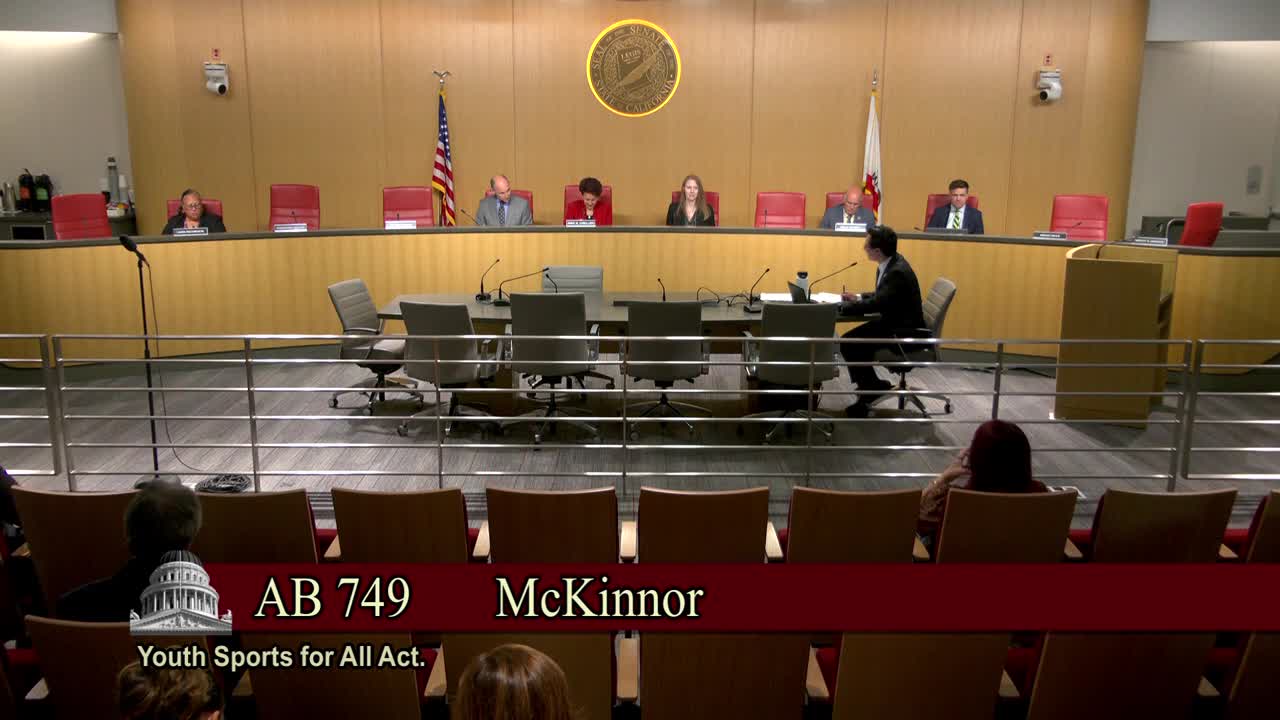 29SEC
Senate Standing Committee on Appropriations
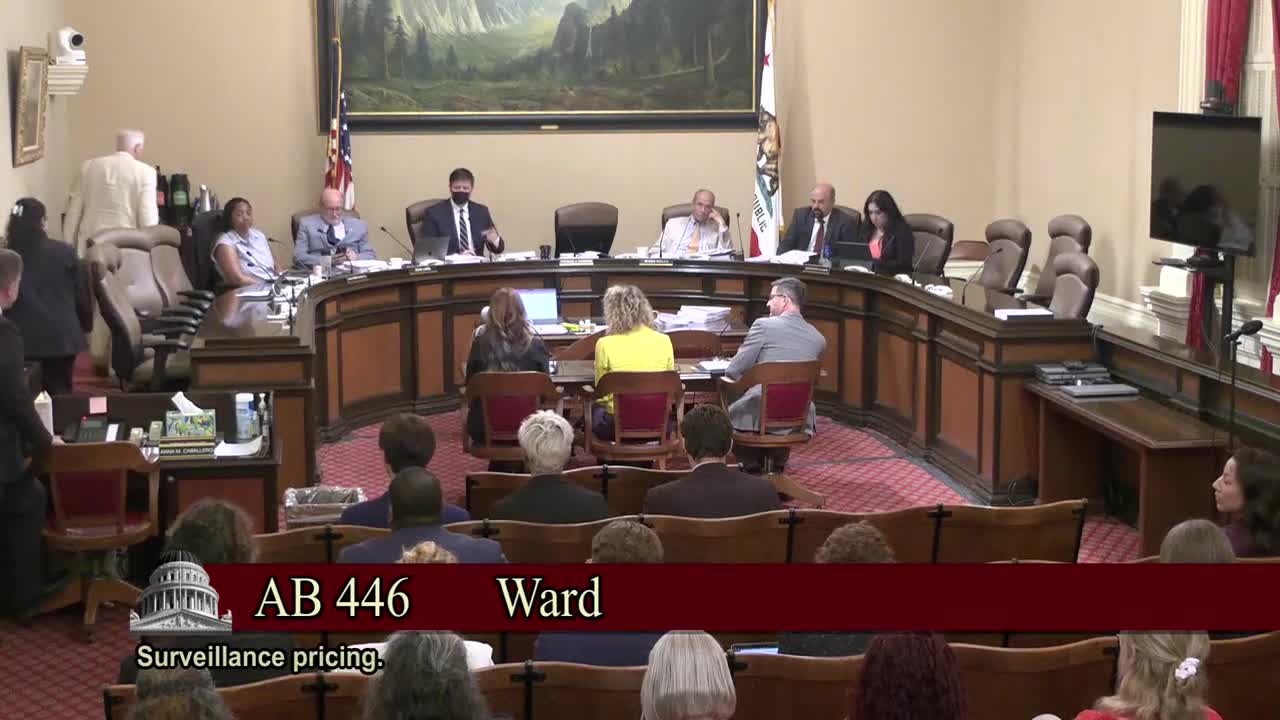 8MIN
Senate Standing Committee on Judiciary
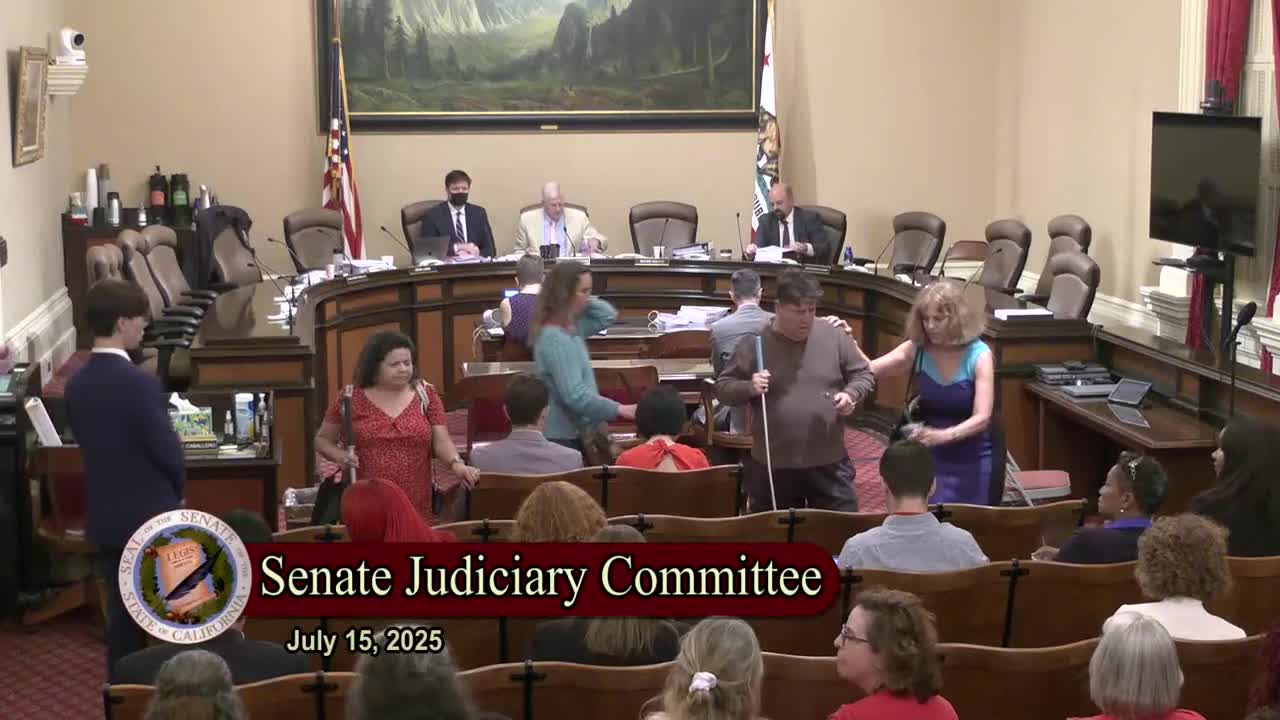 9MIN
Senate Standing Committee on Judiciary
 21MIN
Senate Standing Committee on Education
 53SEC
Assembly Floor
 1MIN
Assembly Standing Committee on Appropriations
Bill Author